Search

December 24, 2019

Photo Essay: The French Chateau Made Famous By a Tissue Tycoon

I have a particular interest in what brings people to California—and what makes them stay here. That's led me to exploring gold mining history as well as the western migration of Midwestern industrialists.


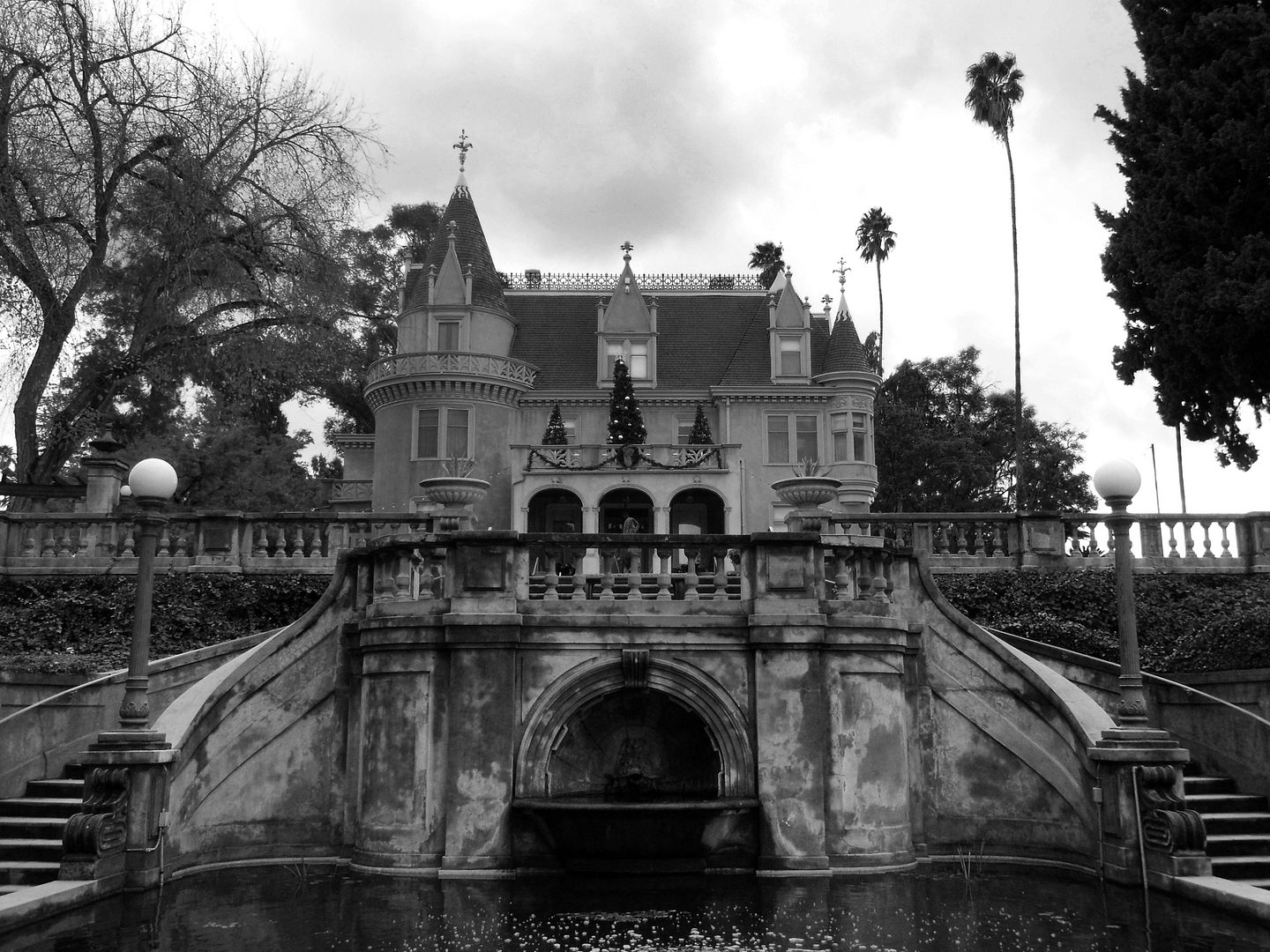
And that's what initially interested me in Kimberly Crest House and Gardens.


Its namesake is John Alfred (J.A.) Kimberly, one of the four founding members of the Kimberly-Clark Paper Company (e.g. brands like Kleenex, Kotex).


The paper magnate was born in Upstate New York—though a little farther east of where I did, outside Albany, in Troy.


He moved to Wisconsin with his family when he was just 8 years old.
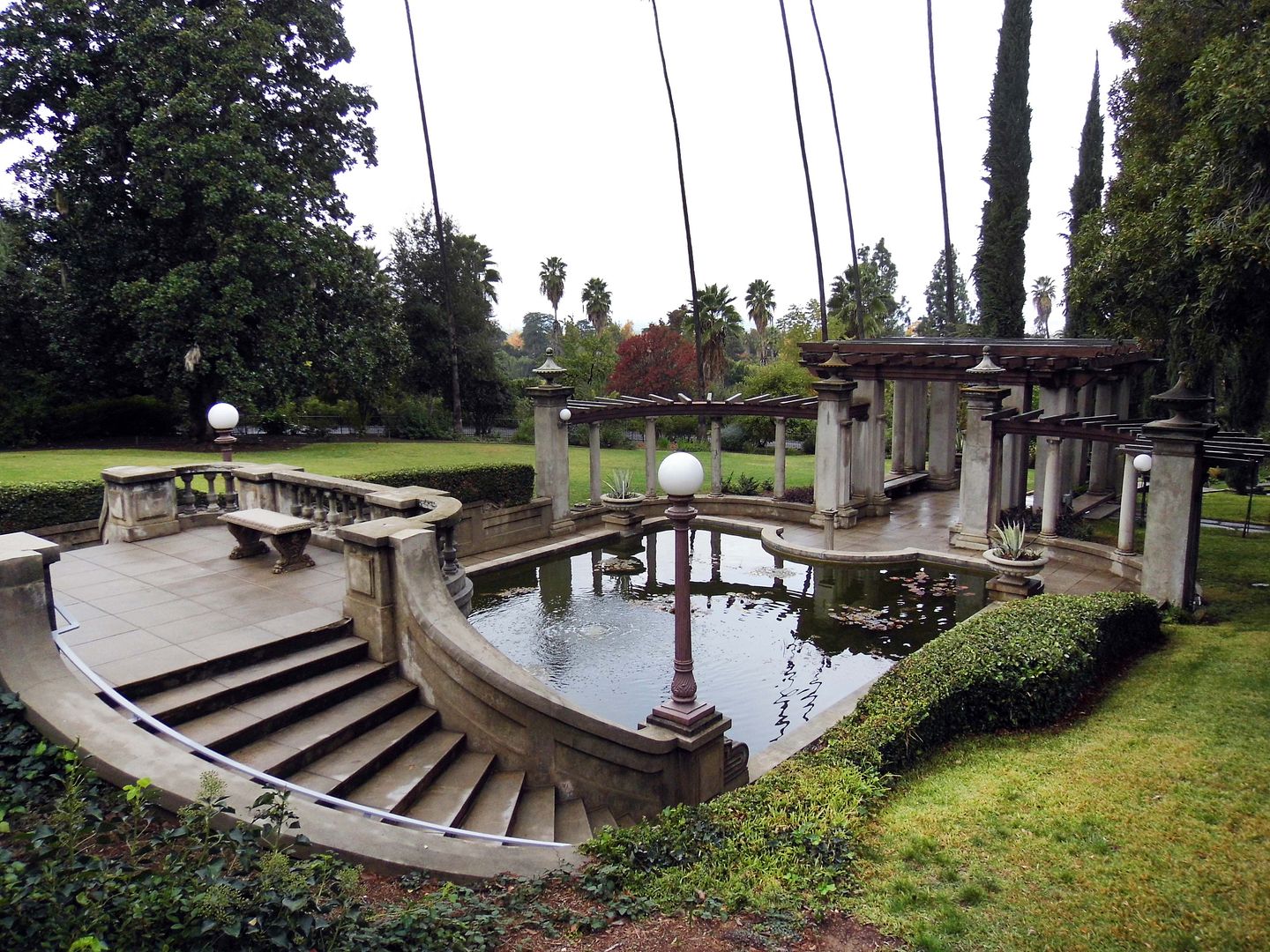


Seeking refuge from those harsh Midwestern winters, J.A. and his wife Helen retired to Redlands in 1905—to a home built in 1897 by fellow Upstate New Yorker, the widow Cornelia Hill.


It's likely that they'd known each other back East. After all, Mrs. Hill had moved to California from the Hudson Valley, not far from the Kimberlys' Lake Mohonk Mountain House in New Paltz, New York.


Mrs. Hill's name may have fallen off of the historic site's nomenclature...
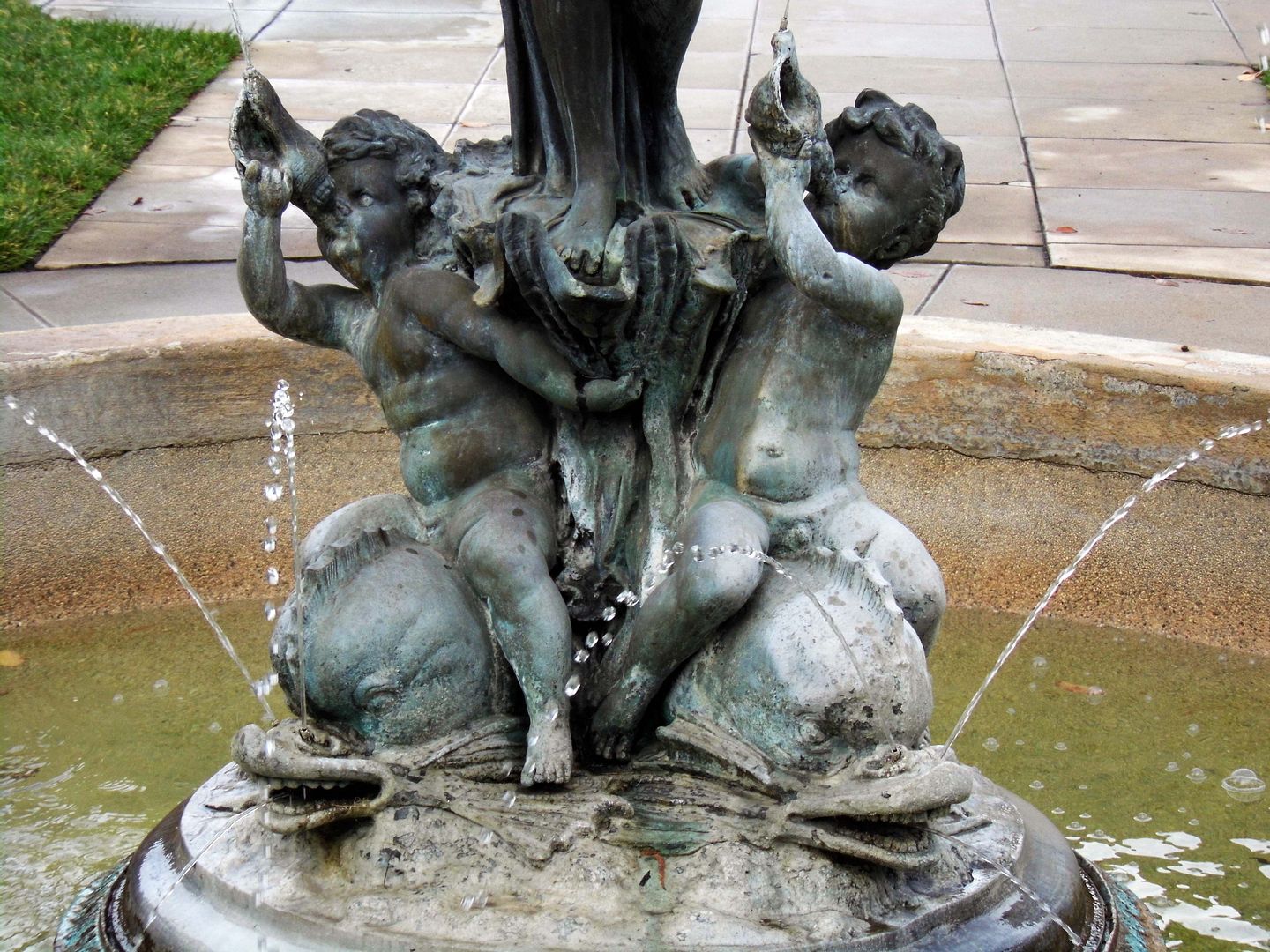


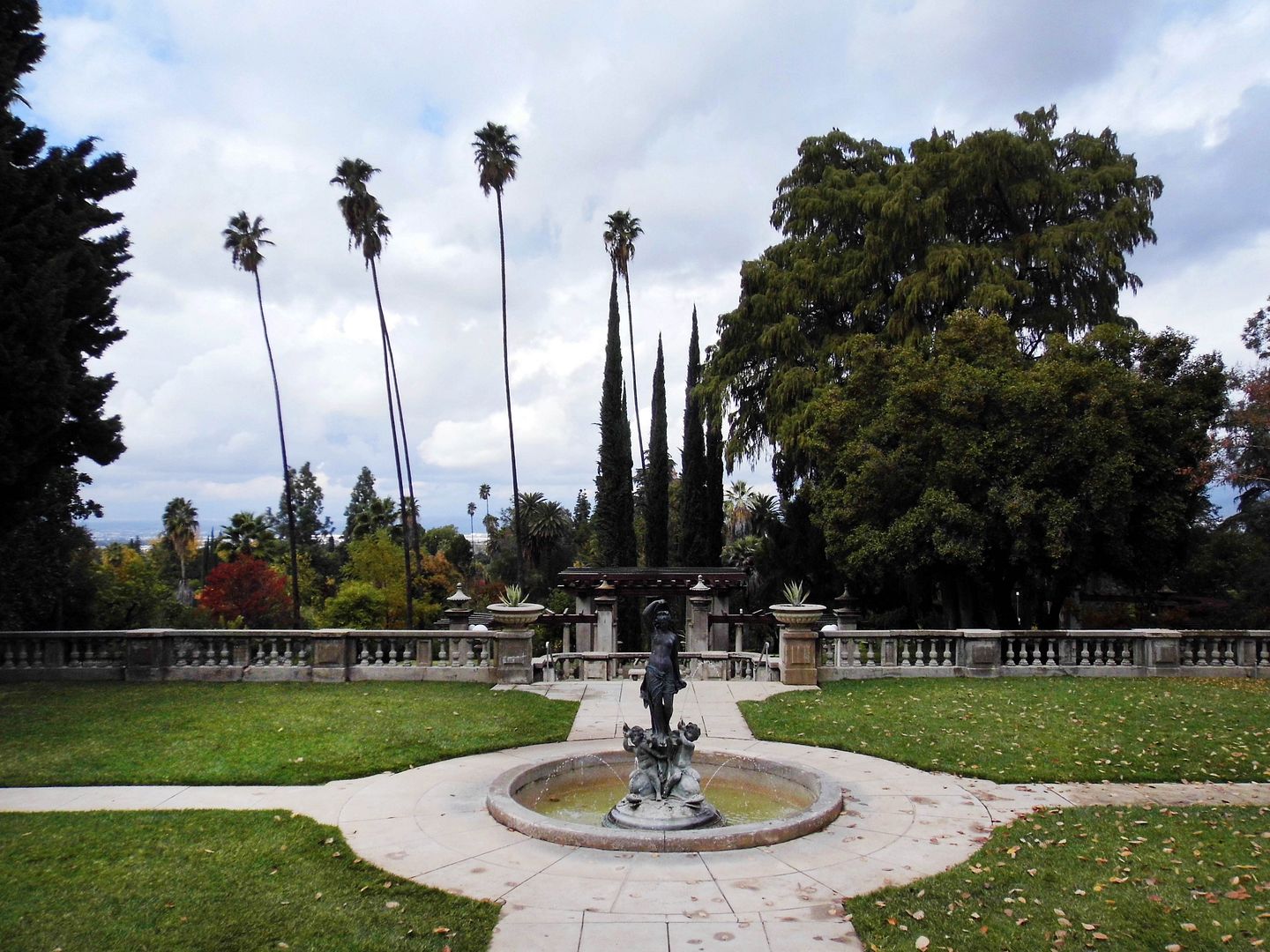
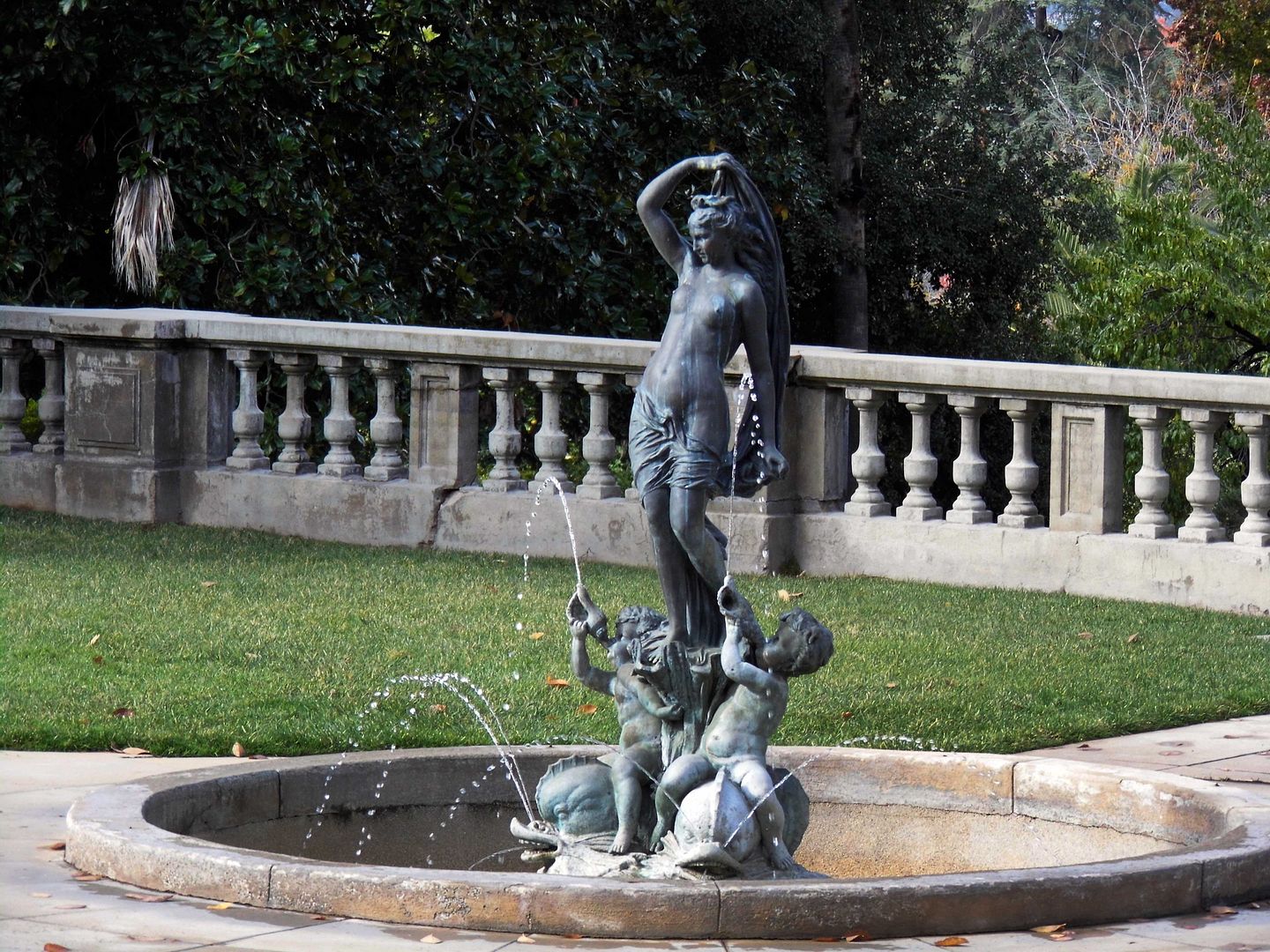
... and the Kimberlys may have replaced her citrus groves with formal, Italian-style gardens (replete with Venus fountain, which Mrs. Kimberly found offensive but kept anyway)...
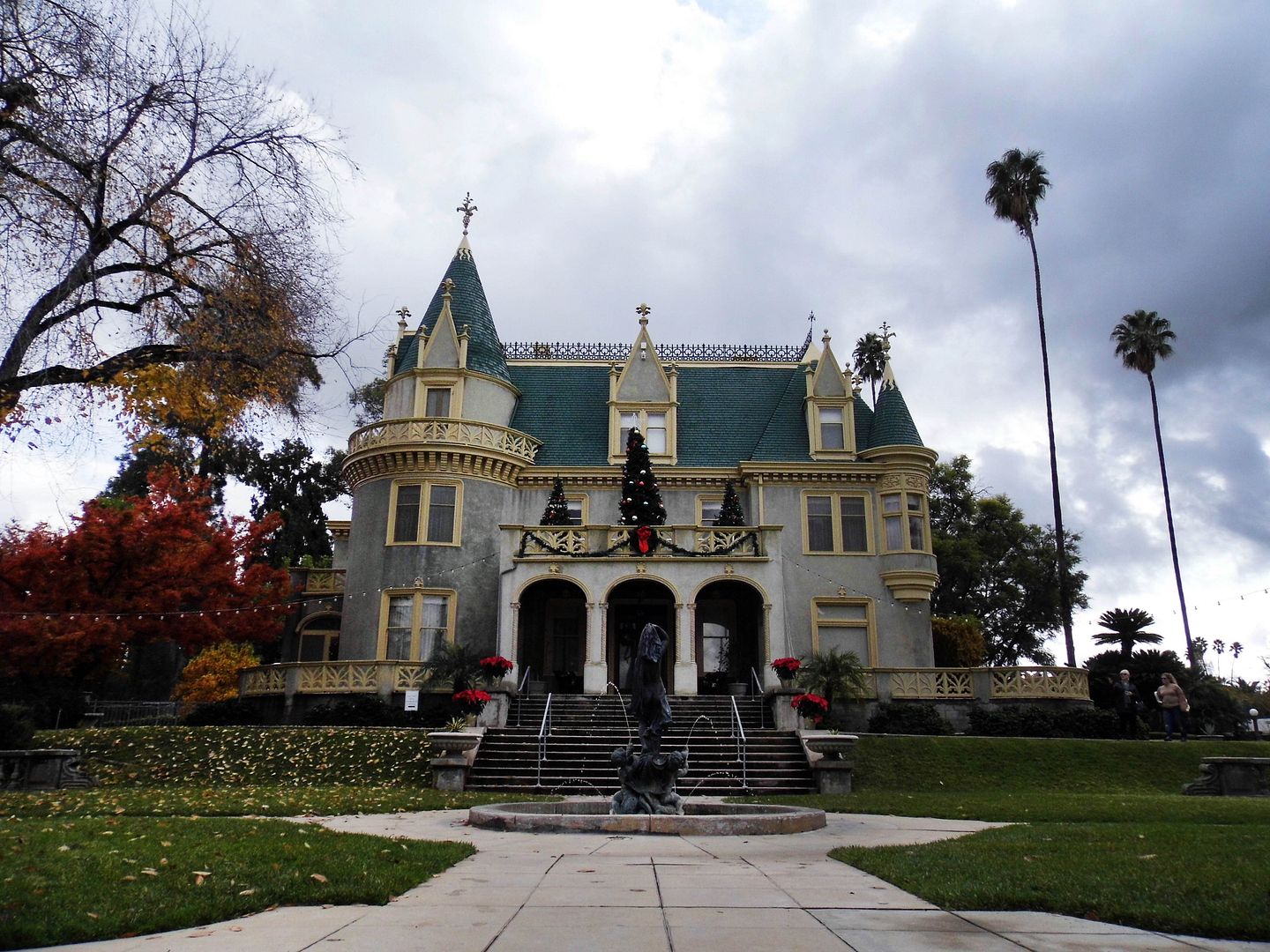


... but the French chateau-style architecture, however, was all at the behest of Mrs. Hill.
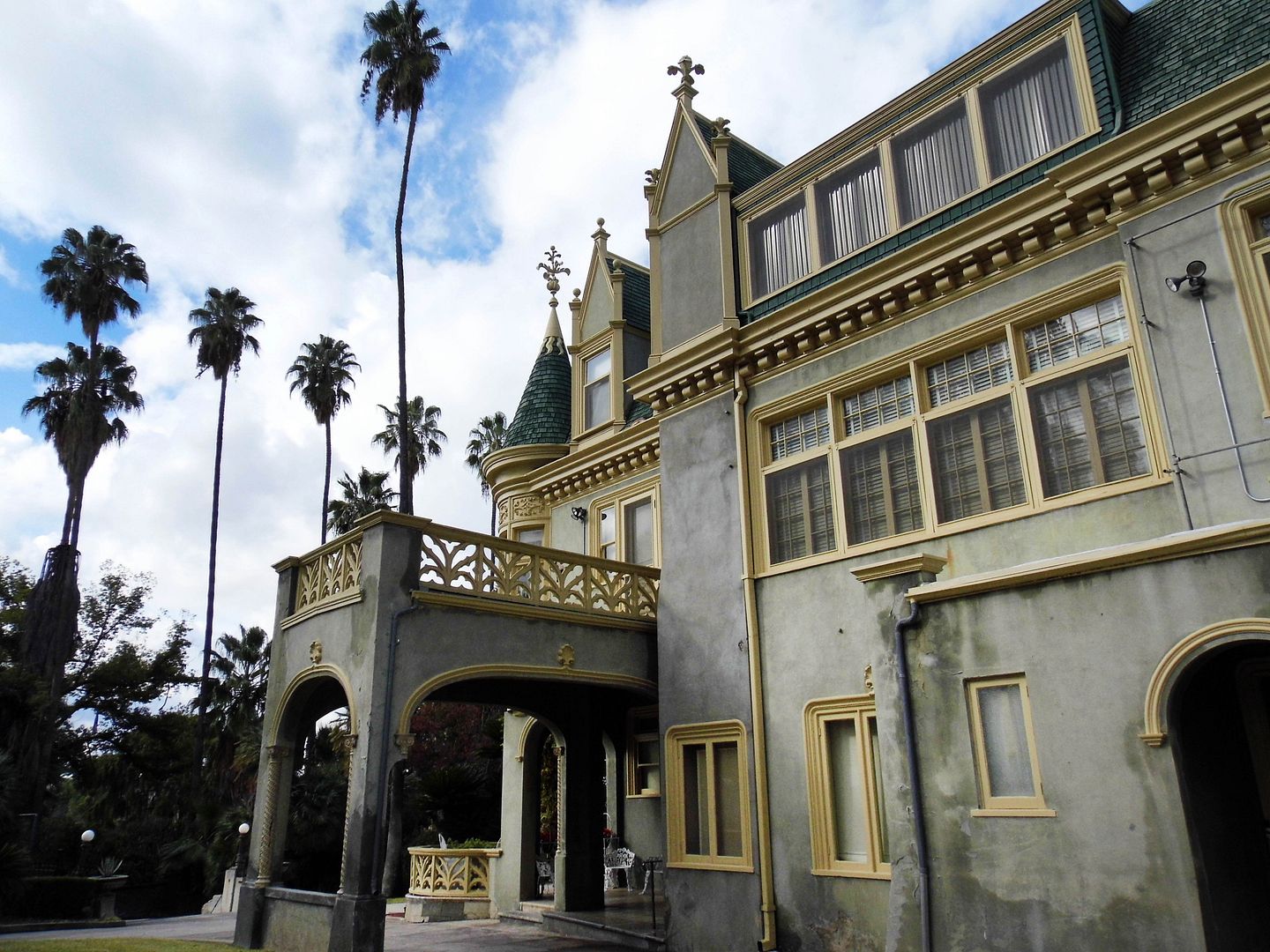


Some might call Kimberly Crest "Châteauesque"—but its "twin," The Lane Mansion, which was built in Hollywood by the same architects 12 years later, is typically referred to simply as "Victorian."
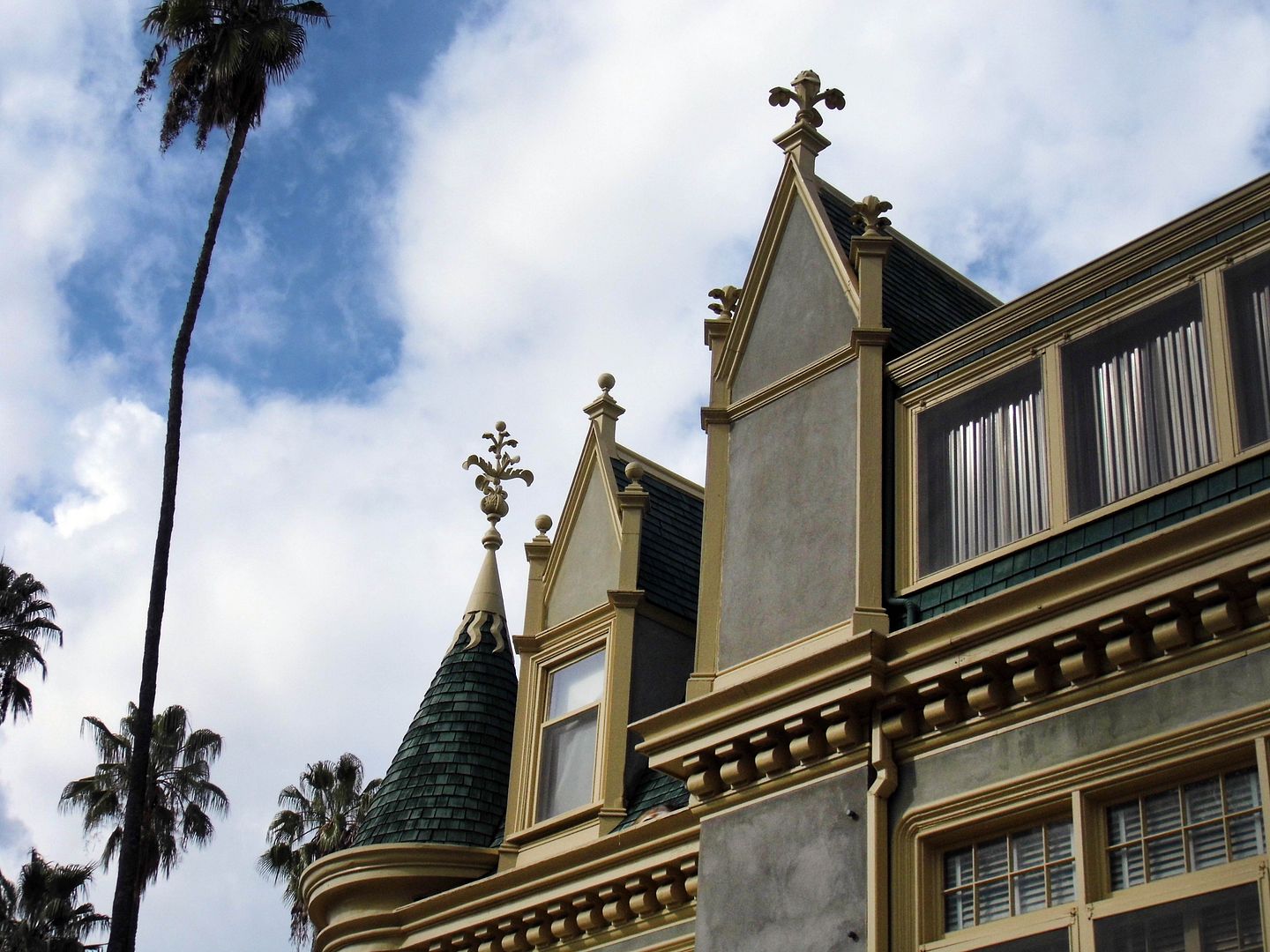


Then again, before becoming The Magic Castle, the Lane Mansion—or "Holly Chateau"—went through a lot of changes that expanded it beyond the original petite footprint of Kimberly Crest, though the original blueprints were nearly identical.
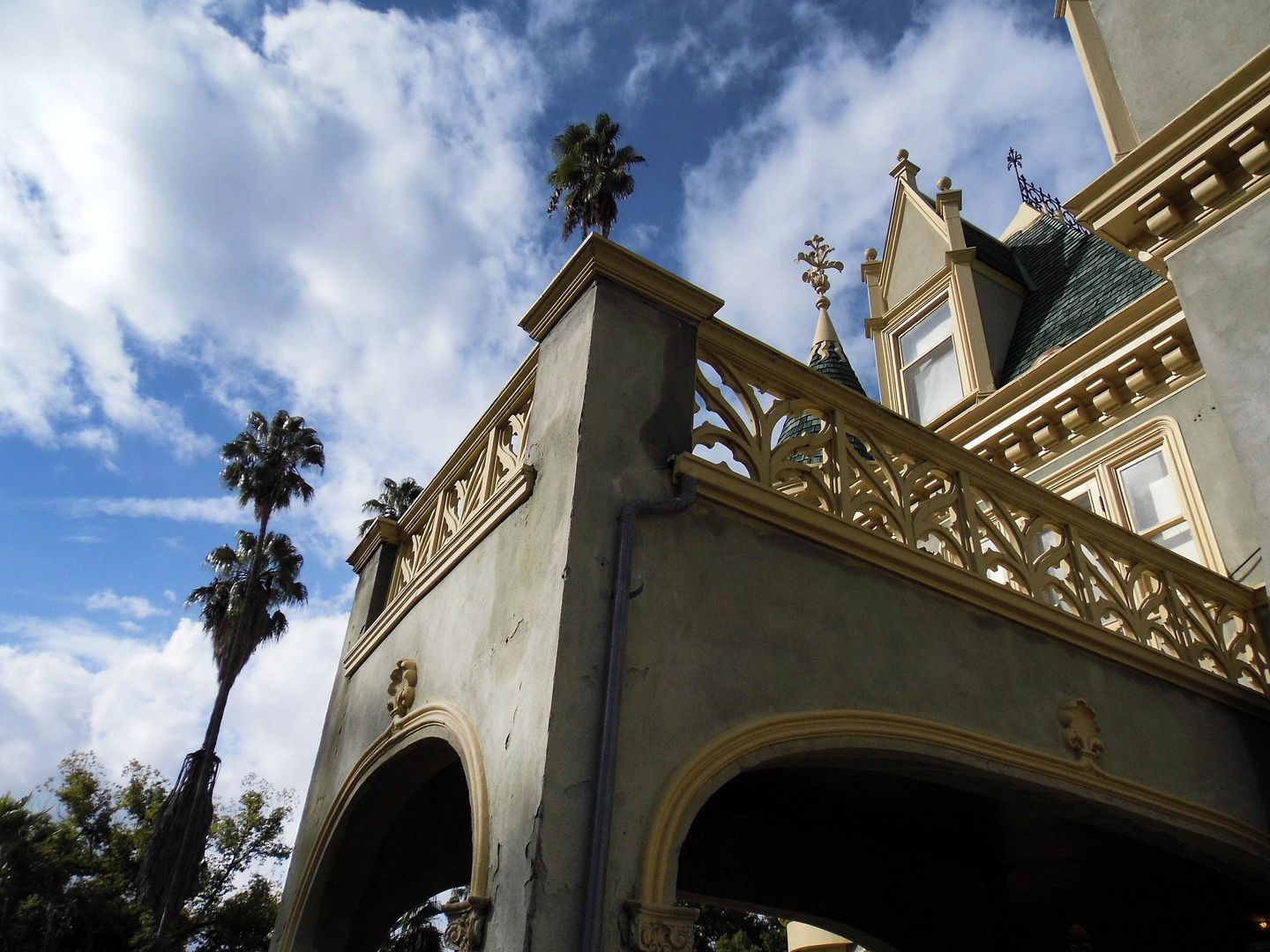


But when architects Oliver Perry Dennis and Lyman Farwell (of the LA partnership Dennis and Farwell) embarked on this chateau for Mrs. Hill, there was nothing else like it in Southern California—much less Redlands.
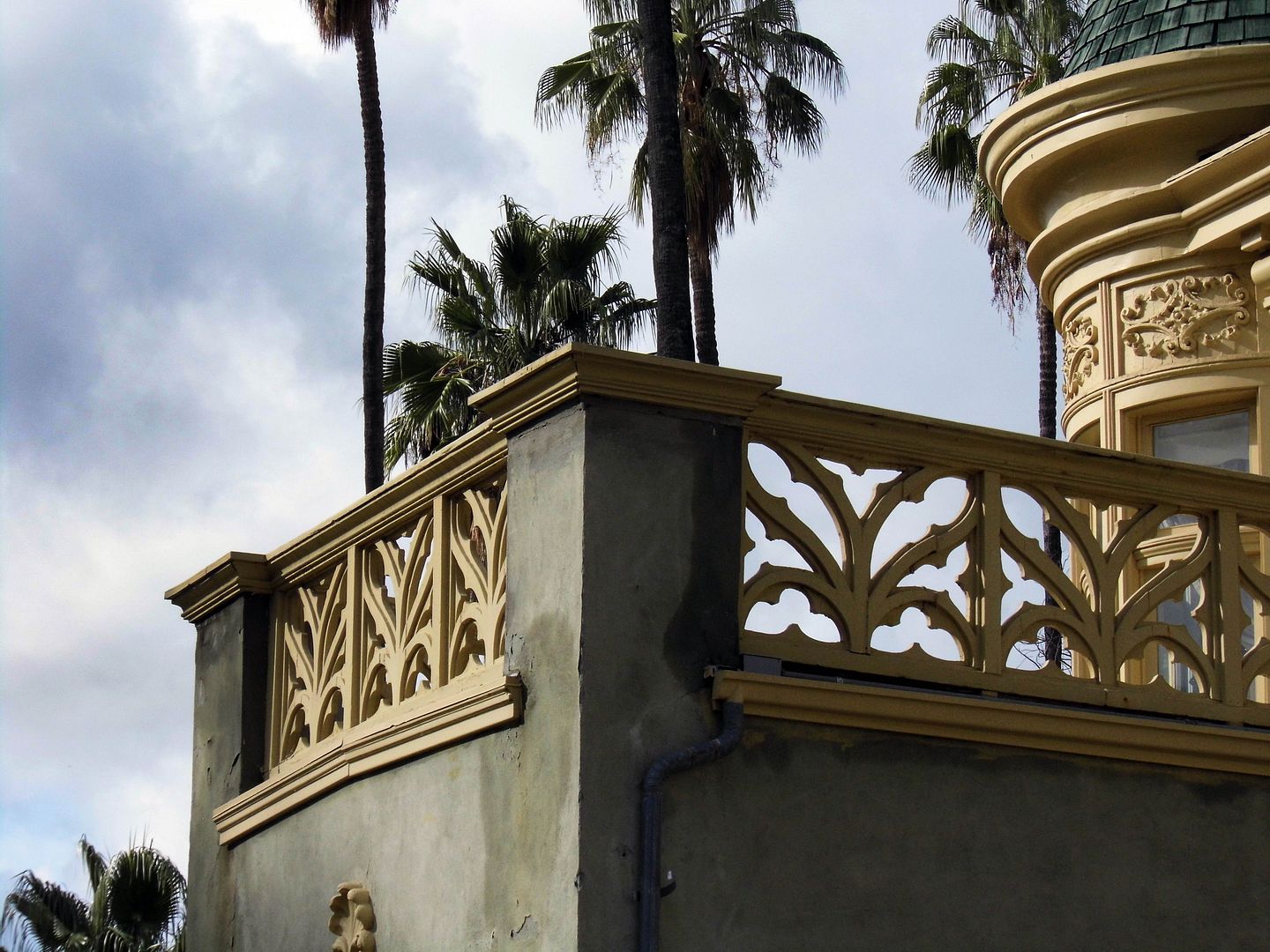


It's still a one-of-a-kind in Redlands, the city of which purchased the property from Mr. and Mrs. Kimberly's daughter, Mary Kimberly Shirk, who lived at the house until she died in 1979.
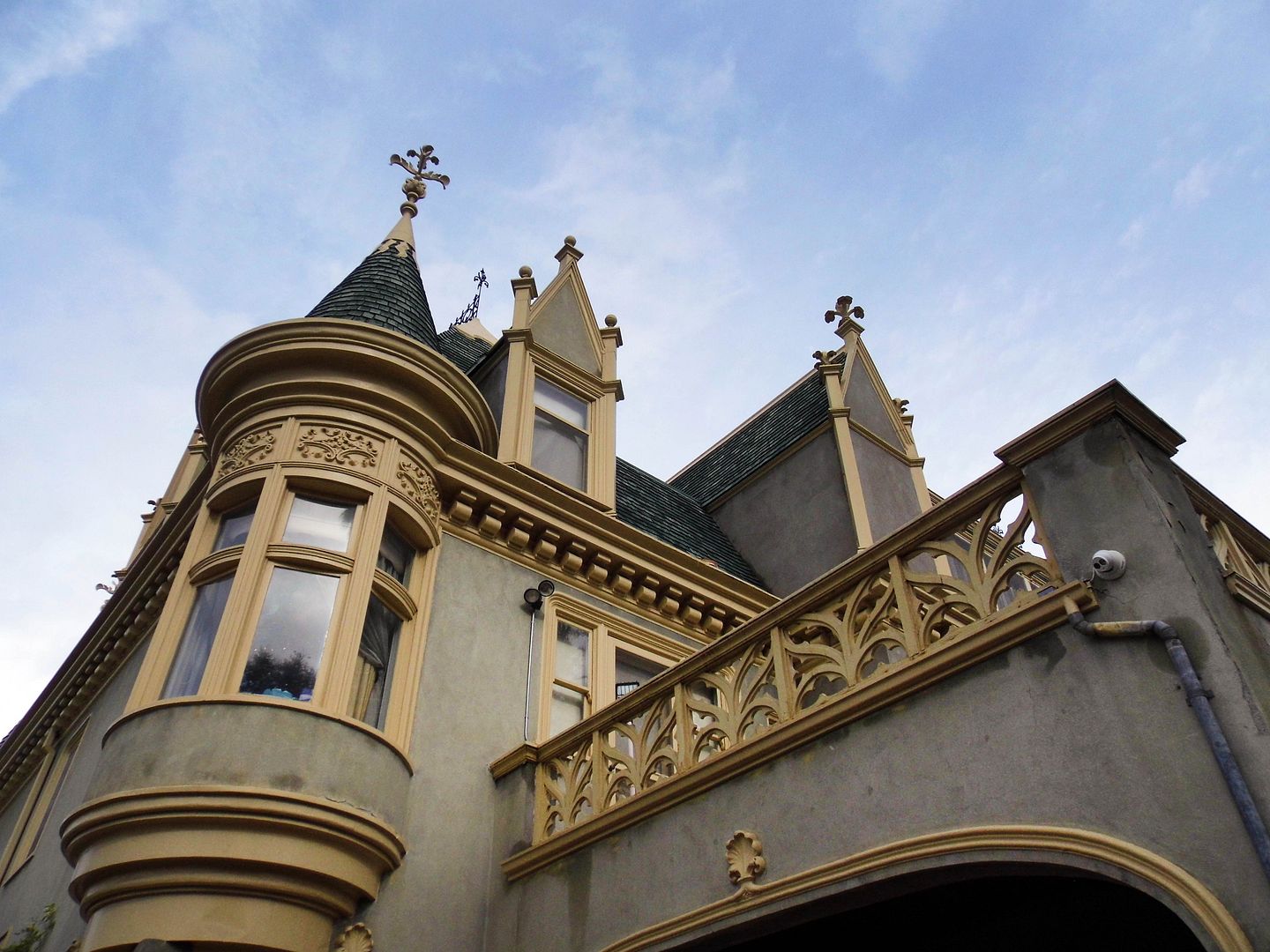


Kimberly Crest House and Gardens, located in the city-created Prospect Park, now belongs to the "people of Redlands"—supposedly in perpetuity.
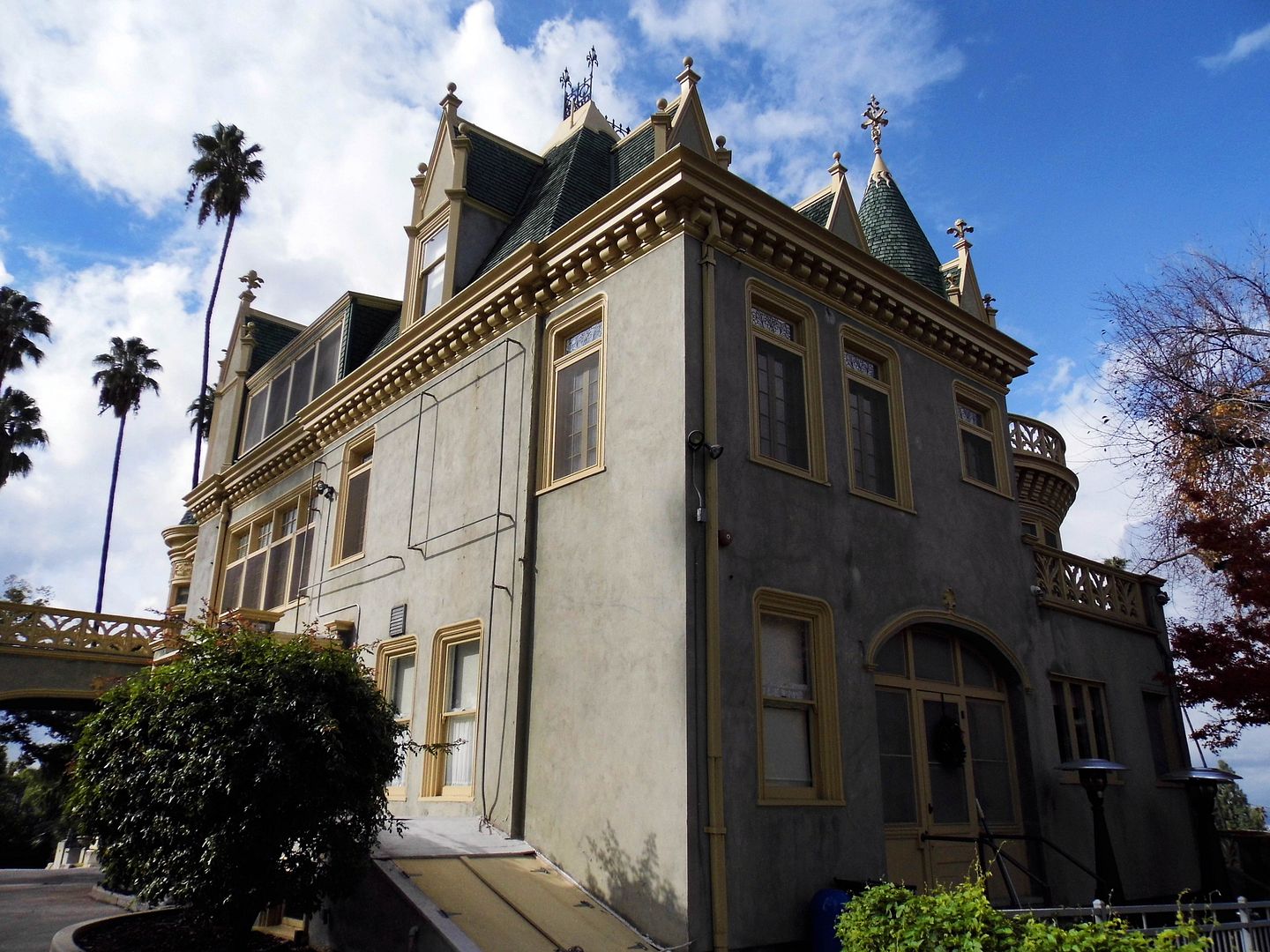


The gardens and fountains actually face the back of the mansion, with the front being located by the porte-cochère. That's where you can also see the windows of the sun room/former sleeping porch by the roofline, and the elevator installed in the 1950s.
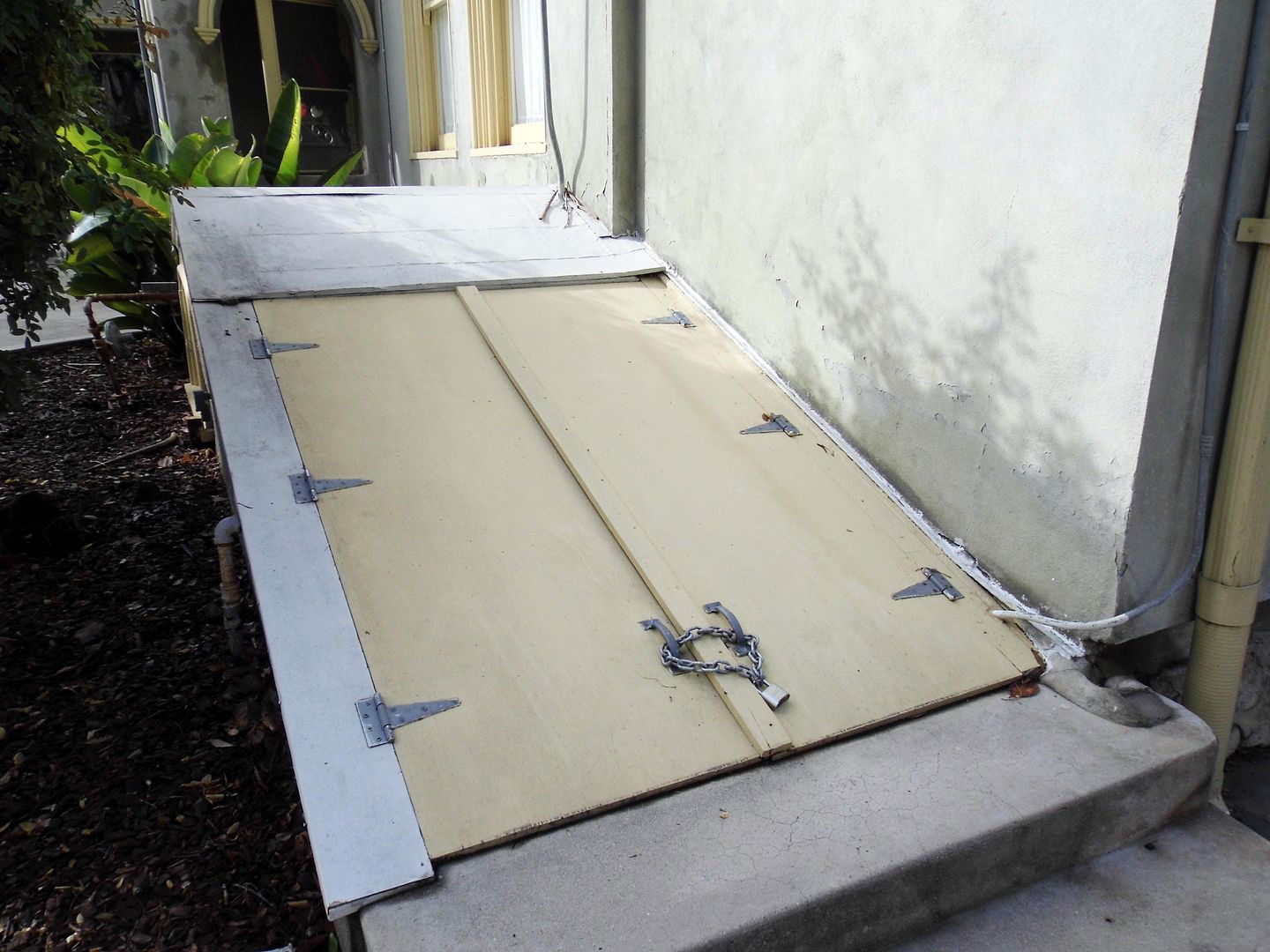


That's also where we climbed down into the basement—an unusual feature in Southern California (because, you know, earthquakes)—much of which is fairly original or at least very old, and currently used for storage.
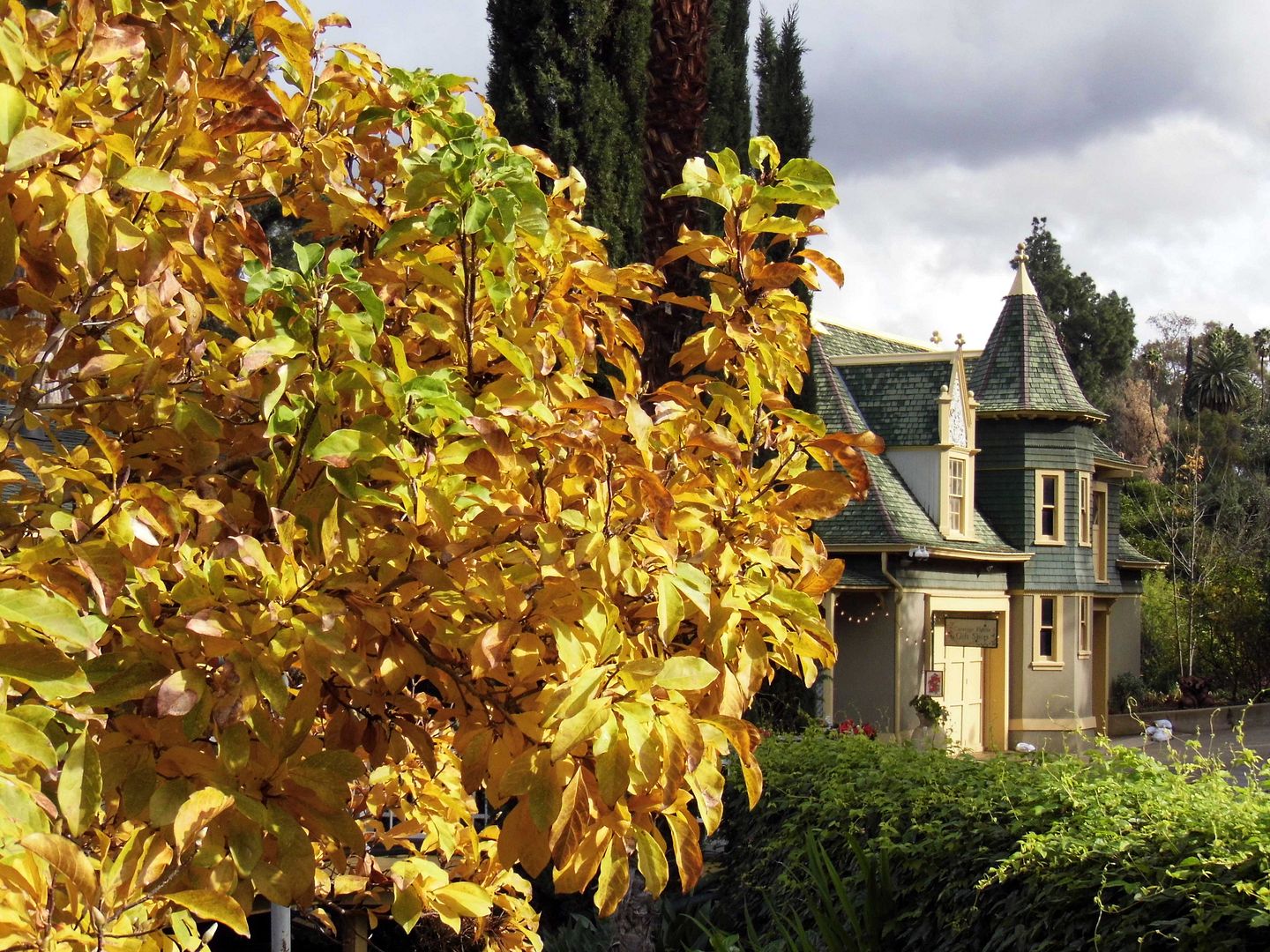


Unfortunately, like many other historic homes, photos are not allowed inside. Many of the items therein are original—including Christmas decorations—so it's well worth taking the tour.
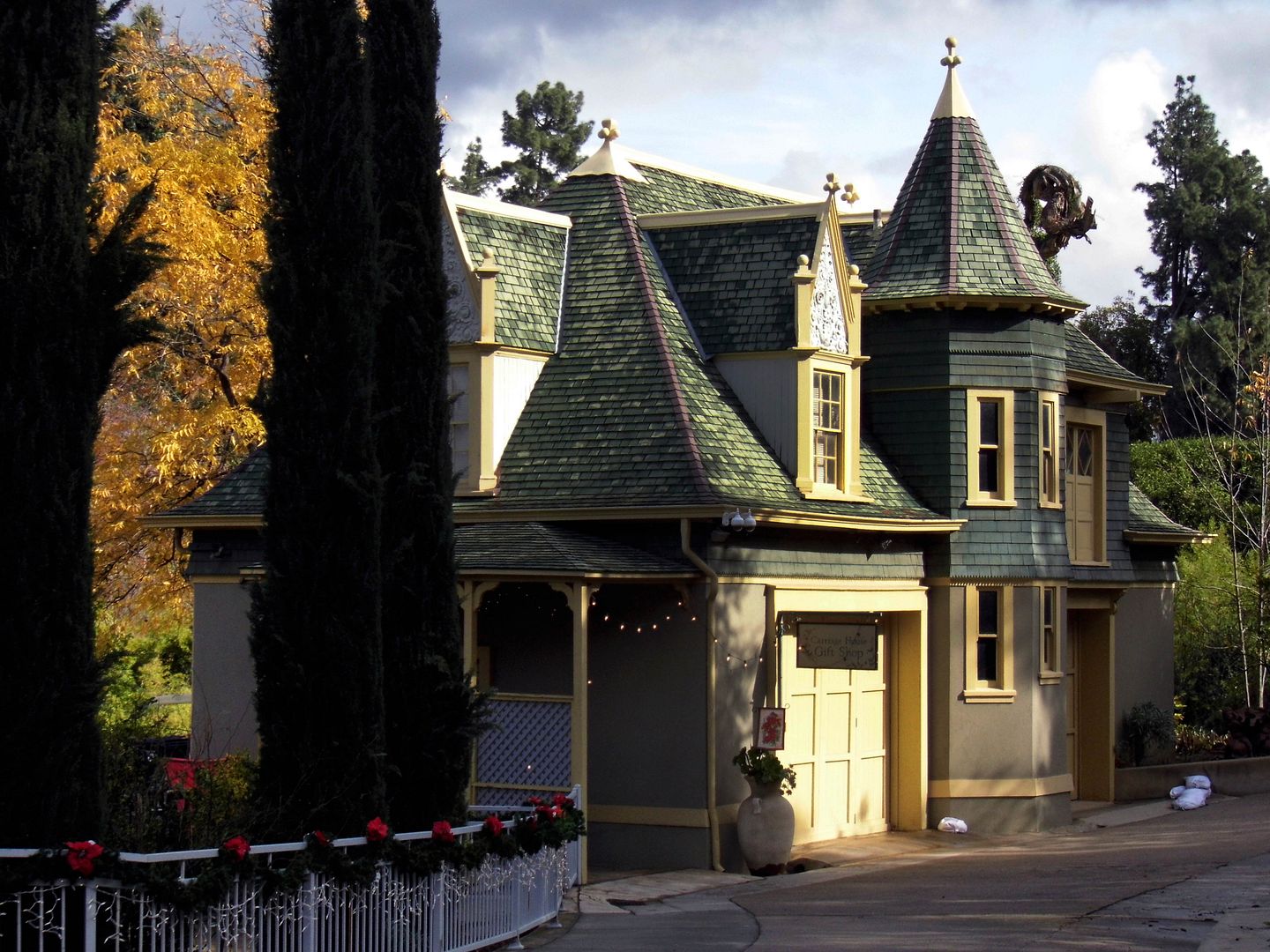


Besides, it's really helpful to have a docent point out and explain some things you might miss on your own...
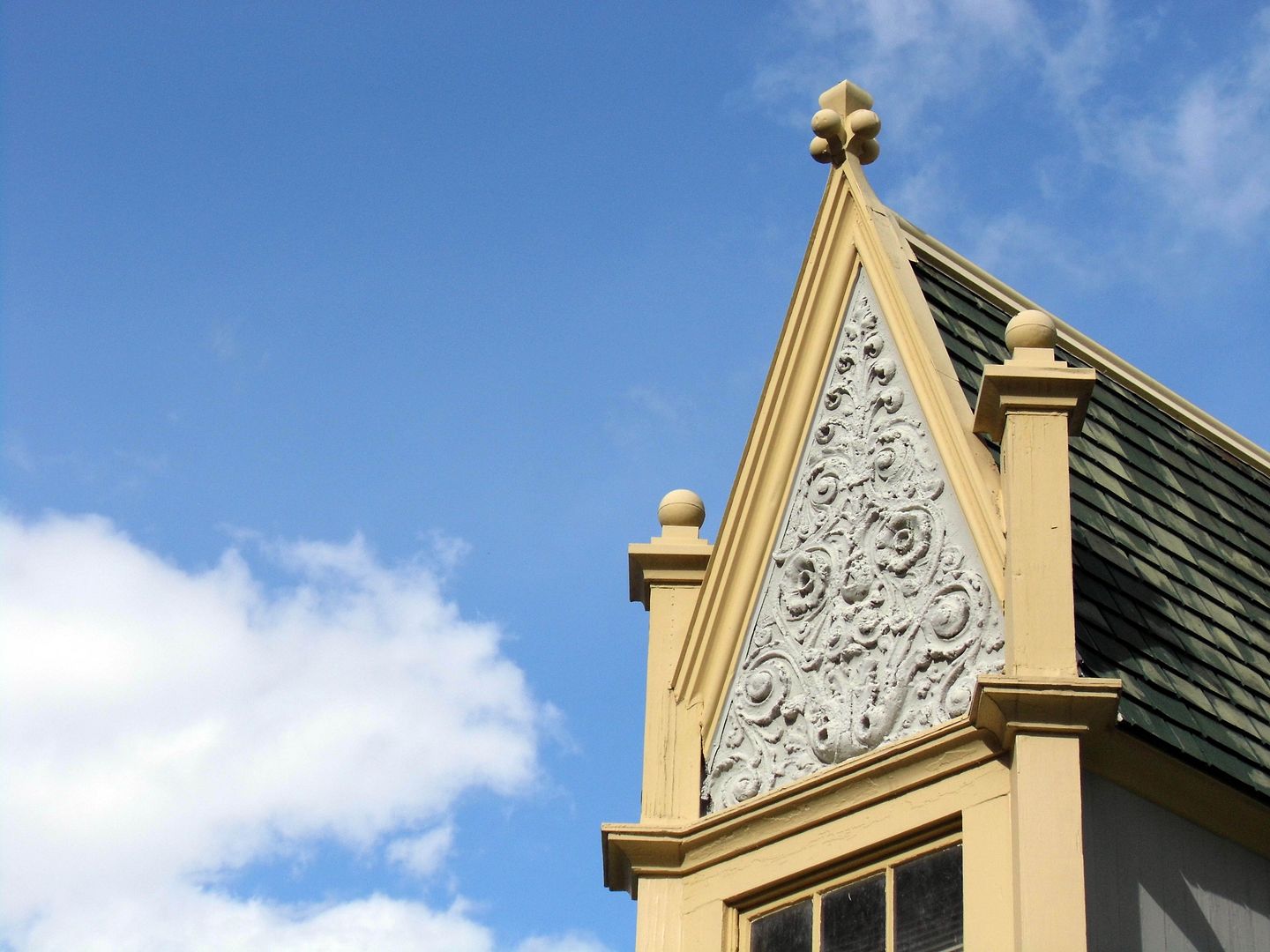


...like how some of the ornamentation on the carriage house (which is meant to be a mini version of the mansion) is missing on the main house because it's never been restored/replaced...
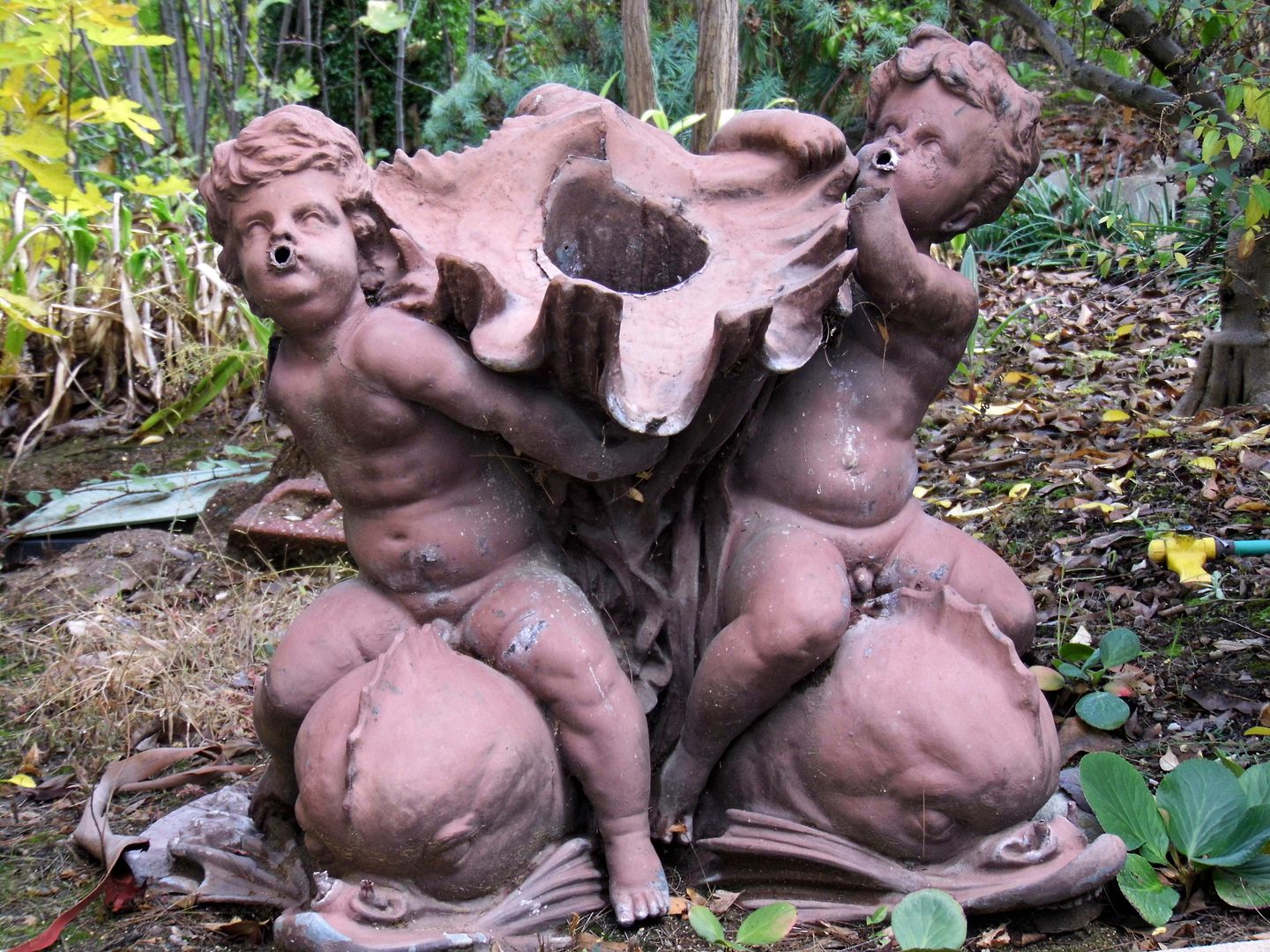


...and how the original Venus fountain, made of cheaper materials than the current bronze iteration, got broken in half by a fallen tree and still sits in pieces by the carriage house.


If Kimberly Crest looks familiar beyond its similarity to The Magic Castle, it might be because it's featured in all the exterior shots of the music video for "Big Love" by Fleetwood Mac. (The interiors were shot on a soundstage.) See video above.

Related Posts:
A Magical Night Out in Hollywood
Photo Essay: The House of Chewing Gum and Roses
Photo Essay: A Mansion Built By A Chewing Gum Fortune But Saved By Lunch Meat
Photo Essay: Kellogg's Ranch, Upon His 158th Birthday
Photo Essay: The Gamble House, Pasadena (Updated for 2017)

December 23, 2019

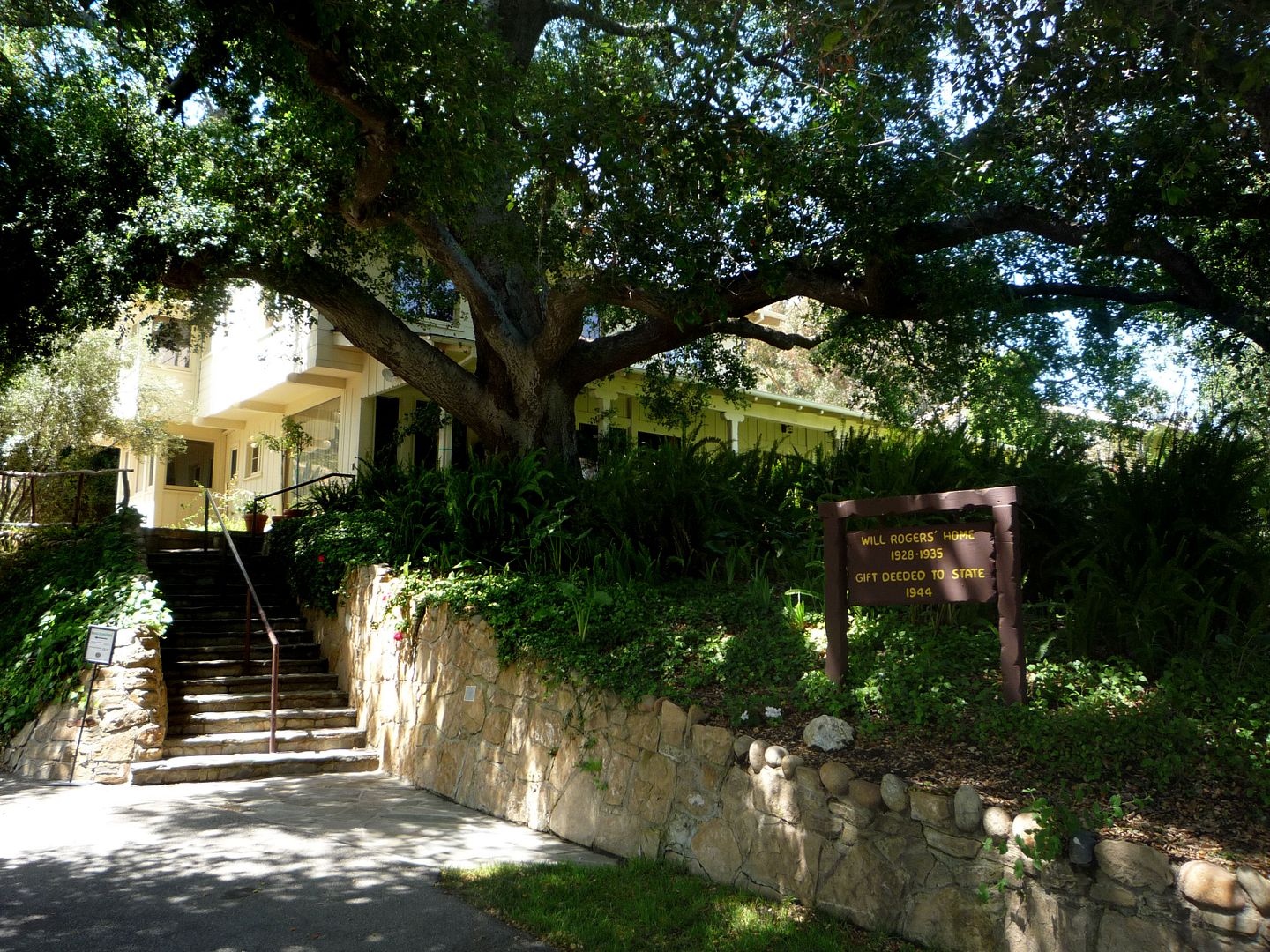
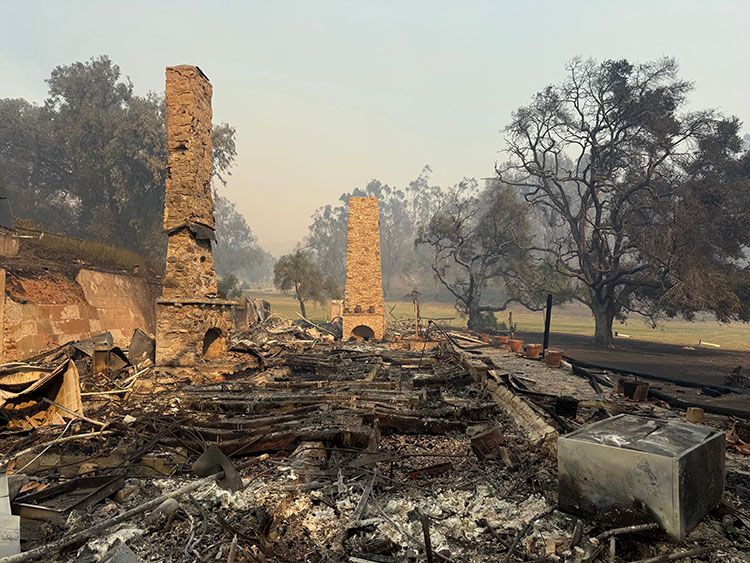
Photo Essay: A Hollywood Horseman's Legacy at Will Rogers State Historic Park [Updated for 2025-Burned Down]

[Last updated 1/8/25 3:02 PM PT—A press release from California State Parks confirms that the historic home and barn at Will Rogers State Park were lost to the Palisades Fire in January 2025.]


For years, "Will Rogers" was just a name to me—of a beach, of a park, and of a state park.

I couldn't have told you the difference between Will Rogers and Roy Rogers if I'd tried.

But then almost three years ago, I joined The Los Angeles Breakfast Club—of which Will Rogers was a rumored member (supposedly, a "Rooster")—and I began to get acquainted with his reputation as a humorist.

The club was founded in 1925—just 10 years before Will Rogers would tragically die in a plane crash. 

Photo taken 2011

The legendary writer and actor spent the last few years of his life at the ranch that would become Will Rogers State Historic Park in 1944, when his widow Betty donated it to the State of California.

Top Posts of 2019

If you're new to my site this year, welcome and thank you for taking the time to discover something new through my travels and adventures.

If you're a returning visitor, thanks as always for your loyalty and attention. I read all comments on this blog and on social, as well as all emails that come in (though I may not reply right away).

This site has always been a passion project for me. I have a few Google Ads enabled and just installed a digital "tip jar" to help fund the research that goes into these posts—but my blog was never meant to become a business on its own.

I am, however, grateful that it's become a powerful online portfolio of my work, which has led to a longstanding gig as "SoCal Wanderer" for KCET in addition to occasional contributions to the public media company's "Lost LA" and "Artbound" columns.

Some challenges this year—at least, on the technical side—included the permanent shutdown of Google+ in April (which really negatively impacted my traffic from both social and organic search) and the Photobucket power outage at the end of December that rendered nearly all of my images temporarily broken.

Regardless, I think 2019 was a good year for both writing and photography, so I'm proud to share the Top 10 posts of the year (for now, without photos):

  1. The Worst of the Superbloom, At Walker CanyonMy heart sank. "People are the worst," I thought, as I climbed higher and away from the crowds.
  2. The Tam O'Shanter: The Storybook Inn That Fed Walt Disney (And His Imagination)Disney animators used to eat there so often, they nicknamed it "the studio commissary."
  3. Photo Essay: Inside the Fence at Surfridge Ghost Town, LAX AdjacentIt's nice to see something good come out of something bad for once.
  4. Photo Essay: The Forgotten Highway Between LA and BakersfieldIt's actually not that easy to follow the entirety of the Old Ridge Route because, like Route 66, its alignment did change—and portions of it were even buried with the construction of the California Aqueduct.
  5. Lost Spirits: The Disneyland of Distilleries (After the Fire)Some things are never really lost, if you can clone them later on.
  6. Photo Essay: The Warehouse Restaurant, A Marina Eatery for 50 Years and CountingOnce a celebrity hangout, The Warehouse appears to be in the capable hands of its current owners, who bought the business in 1996.
  7. Banned from Boeing? Post-Woolsey Fire Edition (Updated)Boeing couldn't possibly be blacklisting me because they didn't want journalists showing up, could they?
  8. Photo Essay: The Town That Built The Hoover DamIf you were going to build something big—really big—in the middle of nowhere, you couldn't expect your workforce to commute.
  9. Reenacting Western Migration, On the Brutal Stagecoach Route Between LA and San DiegoBy all reports, the journey was, quite simply, treacherous—replete with annoyances, discomfort, and plenty of hardship. 
  10. Photo Essay: Riding the Tijuana-Tecate Tourist Train, Upon the 100th Anniversary of "The Impossible Railroad"
    The Tren Turístico is for tourists like me—and it no longer freely crosses back and forth across the U.S.-Mexico border.

I used to set a goal for myself of writing a new post every other day—or, on average, 15 a month, or about 180 a year.

I achieved that goal every year from 2011-15, and came up just a little bit short in 2009-10 and 2016-18.

This year, I had to revise my goal to 2 or 3 posts per week, or somewhere around 100-150 posts for the year. I'm going to come somewhere within that range, though it still feels like I'm falling way short.

If you're hungry for more content than that, I've got a lot of past posts that I continue to update as needed. You can start with my Top Posts of All Time and then move on to the prior years' Top Posts, below.

Related Posts:

Photo Essay: Top Posts of 2018
Photo Essay: Top Posts of 2017
Photo Essay: Top Posts of 2016
Photo Essay: Top Posts of 2015
Photo Essay: Top Posts of 2014
Photo Essay: Top Posts of 2013
Photo Essay: Top Posts of 2012

December 09, 2019

Chasing An Endangered Species of Art at Sunset and Vine

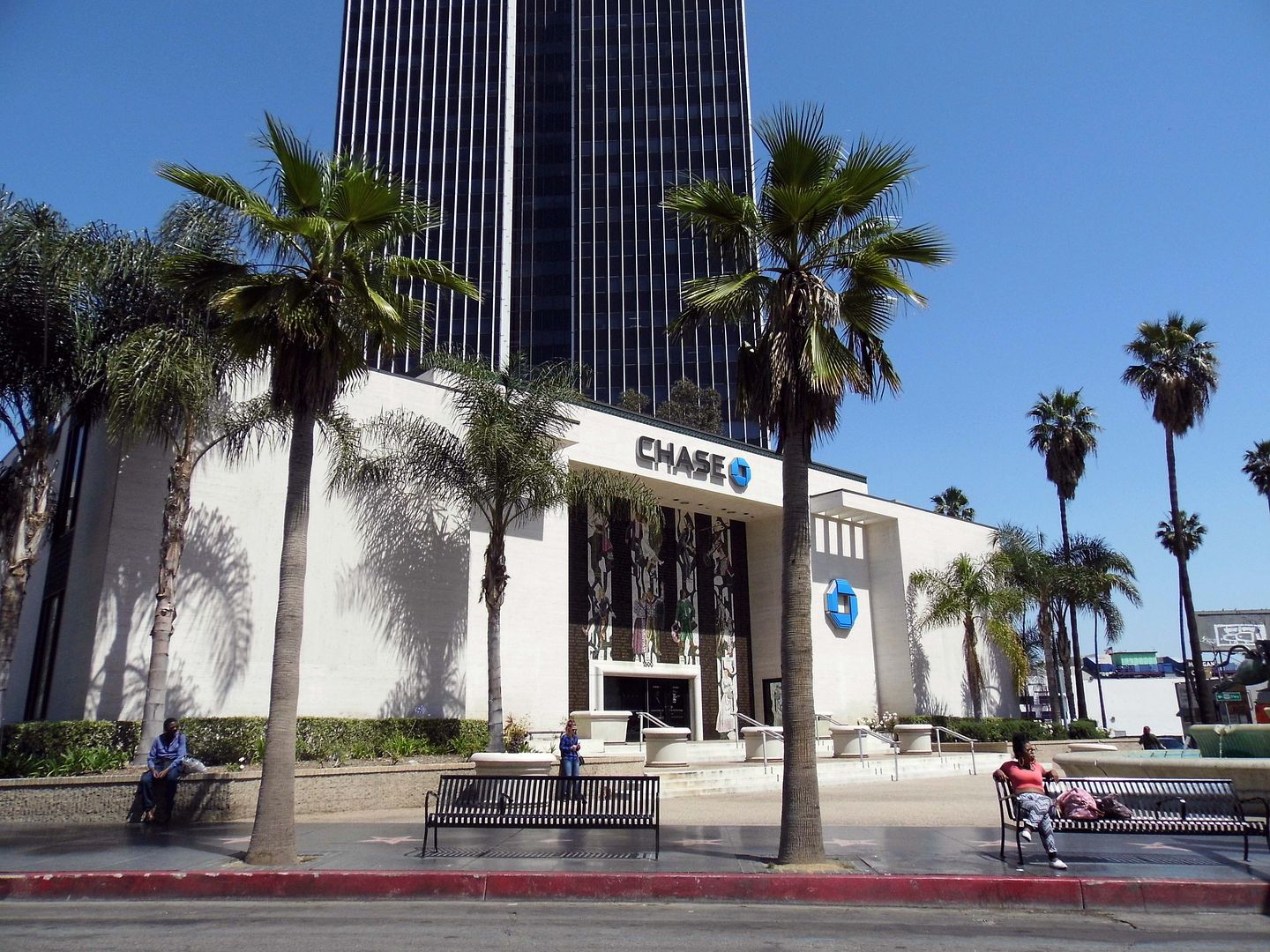
After the devastating removal of the Millard Sheets mural from the former Home Savings in Santa Monica, coupled with the closure of The Marciano Art Foundation, I decided it was time to finally go explore the former Home Savings at Sunset and Vine that features Sheets's most "Hollywood" mosaic ever.


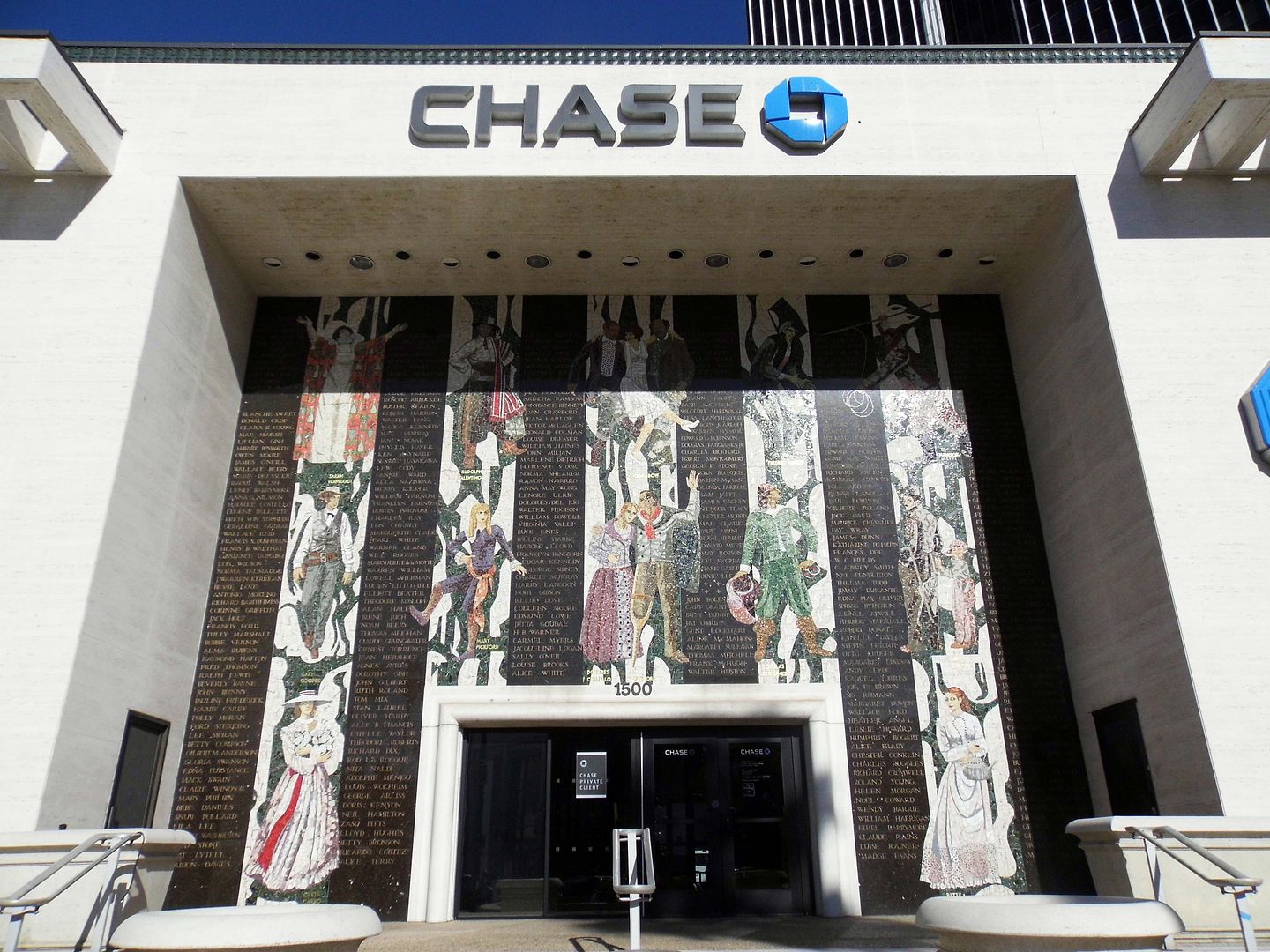
It's a complicated corner—because while what's there now is a masterpiece circa 1968, it nudged out a beloved piece of Hollywood history (much like the Chase Bank did at the site of the Garden of Allah a few miles west down Sunset Boulevard).


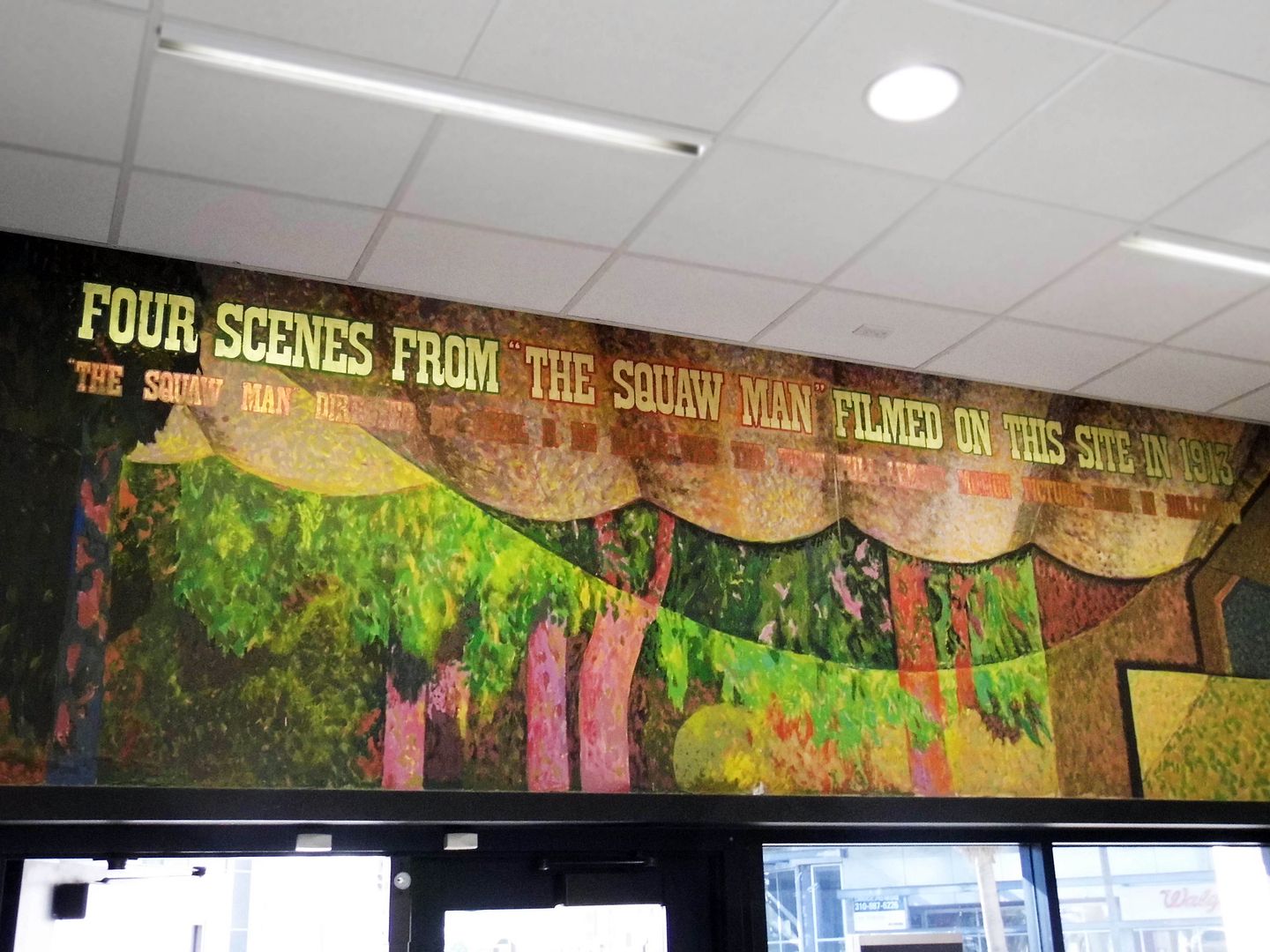
This was the original location of one of Hollywood's first movie studios, Burns and Revier Studio and Laboratory. And this is where the Jesse L. Lasky Feature Play Company filmed parts of Hollywood's first full-length motion picture, The Squaw Man, in 1913. (The studio's Lasky-DeMille Barn, originally used for dressing rooms, was subsequently moved several times—eventually landing in empty lot off Cahuenga, across from the Hollywood Bowl, and housing Hollywood Heritage).


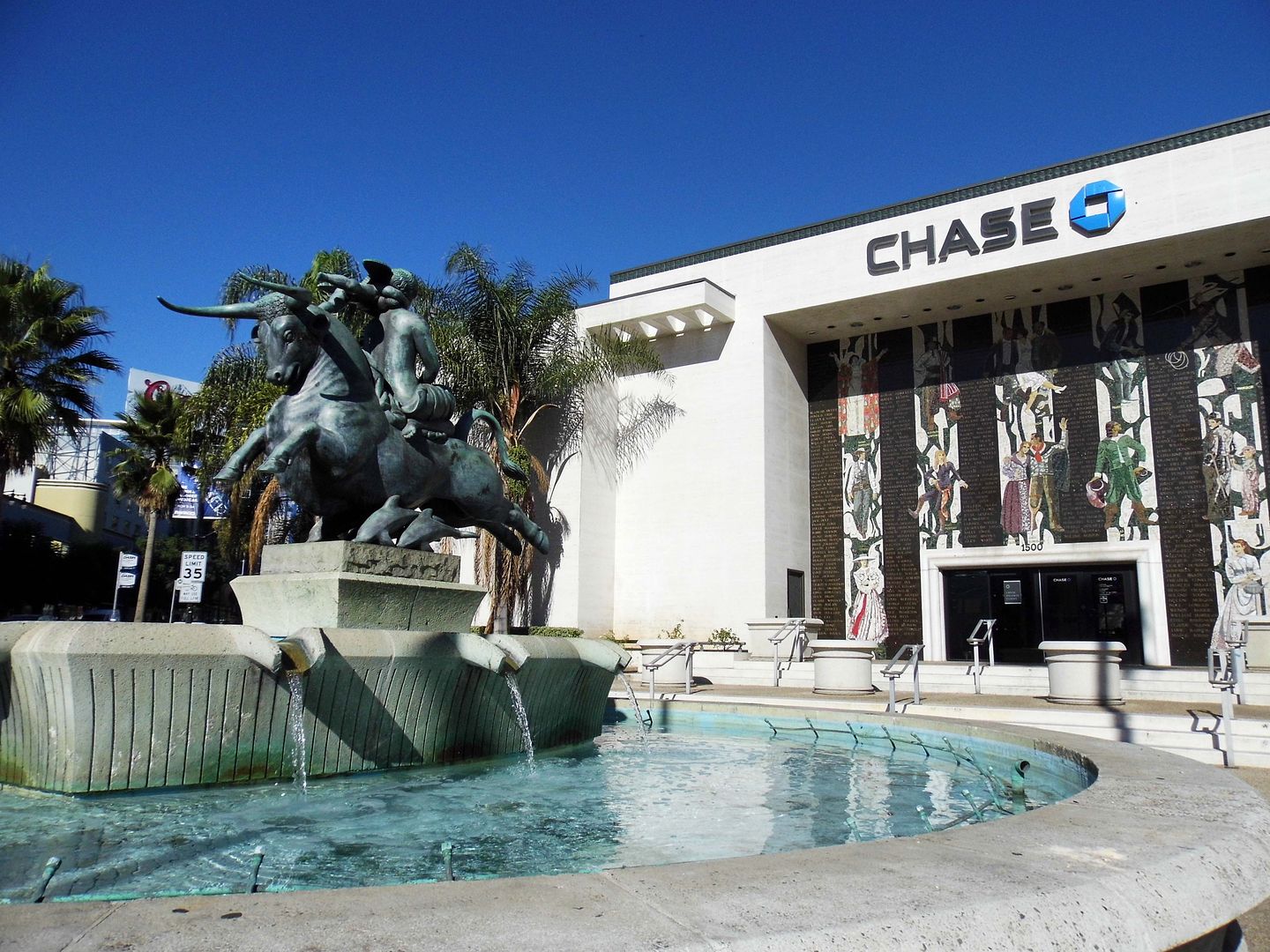
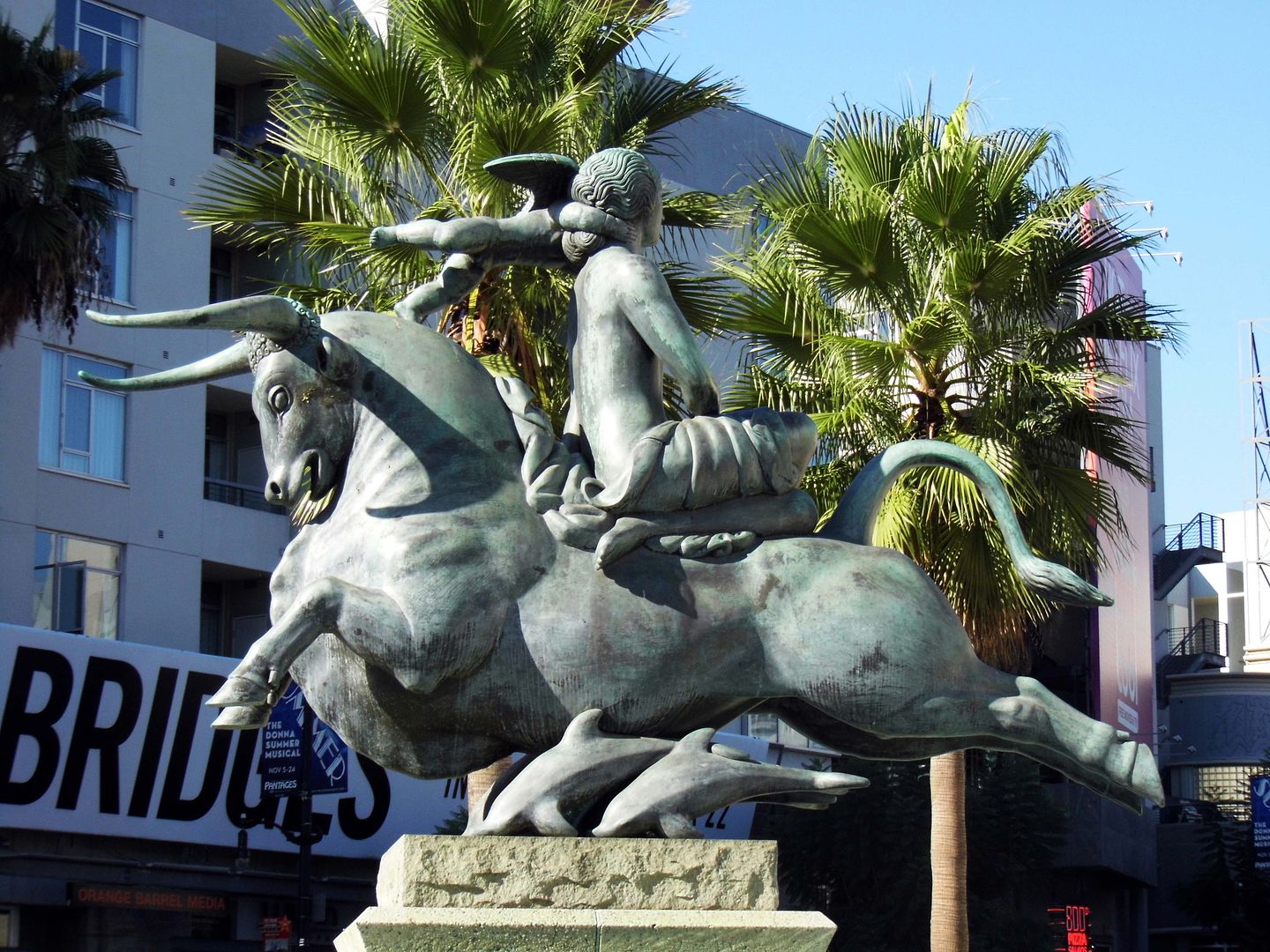
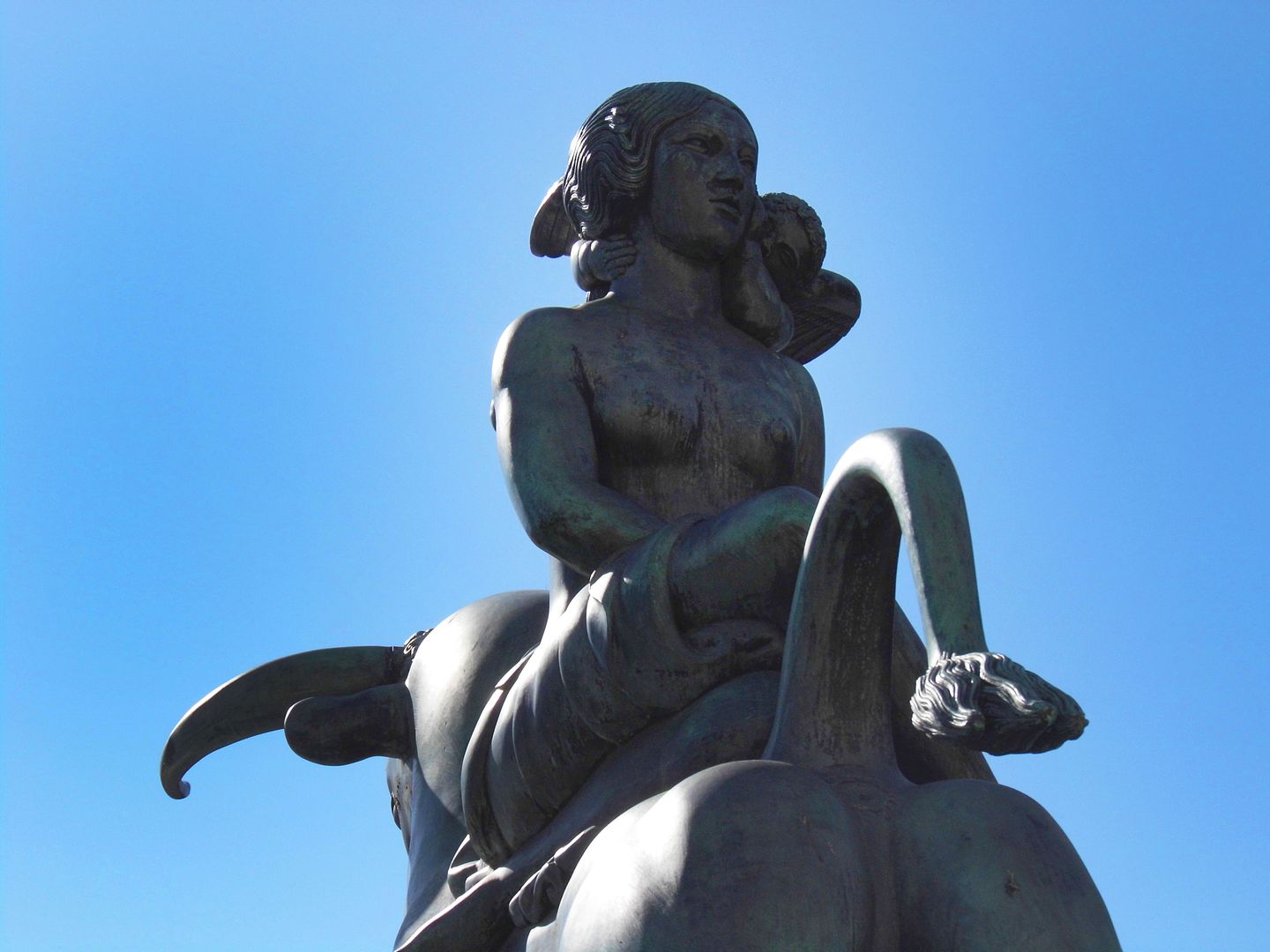
Now it's a showcase for Millard Sheets's architecture and art—about as site-specific as you can get—as well as for an important piece of public art, "The Flight of Europa" by sculptor Paul Manship, best known for his Prometheus sculpture at Rockefeller Center in New York City.


Although the sculpture was reportedly intended for a swimming pool—with water symbolizing the Mediterranean—it's well-suited to the fountain that anchors this corner of Hollywood.


It's an eyecatcher for sure—as Europa, a Phoenician maiden (and namesake of Europe), rides the back of a bull that's actually Zeus in disguise. Cupid whispers in her ear, perhaps preparing her to lose her virginity once they reach Crete.


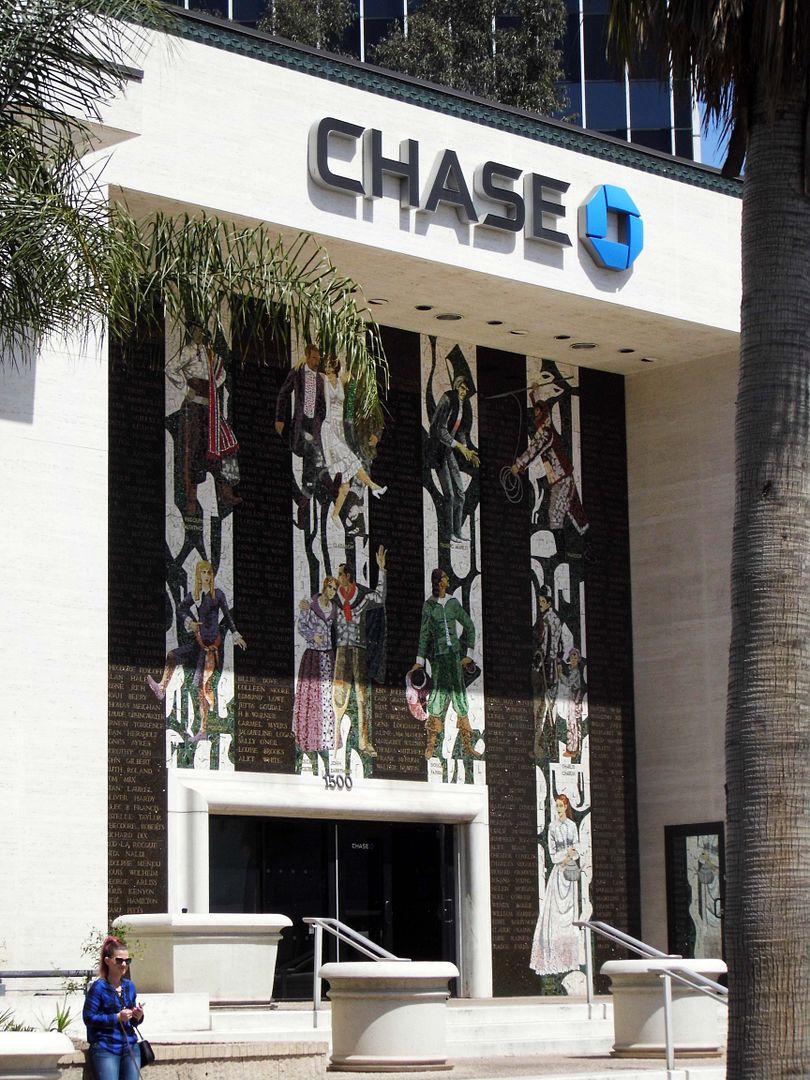
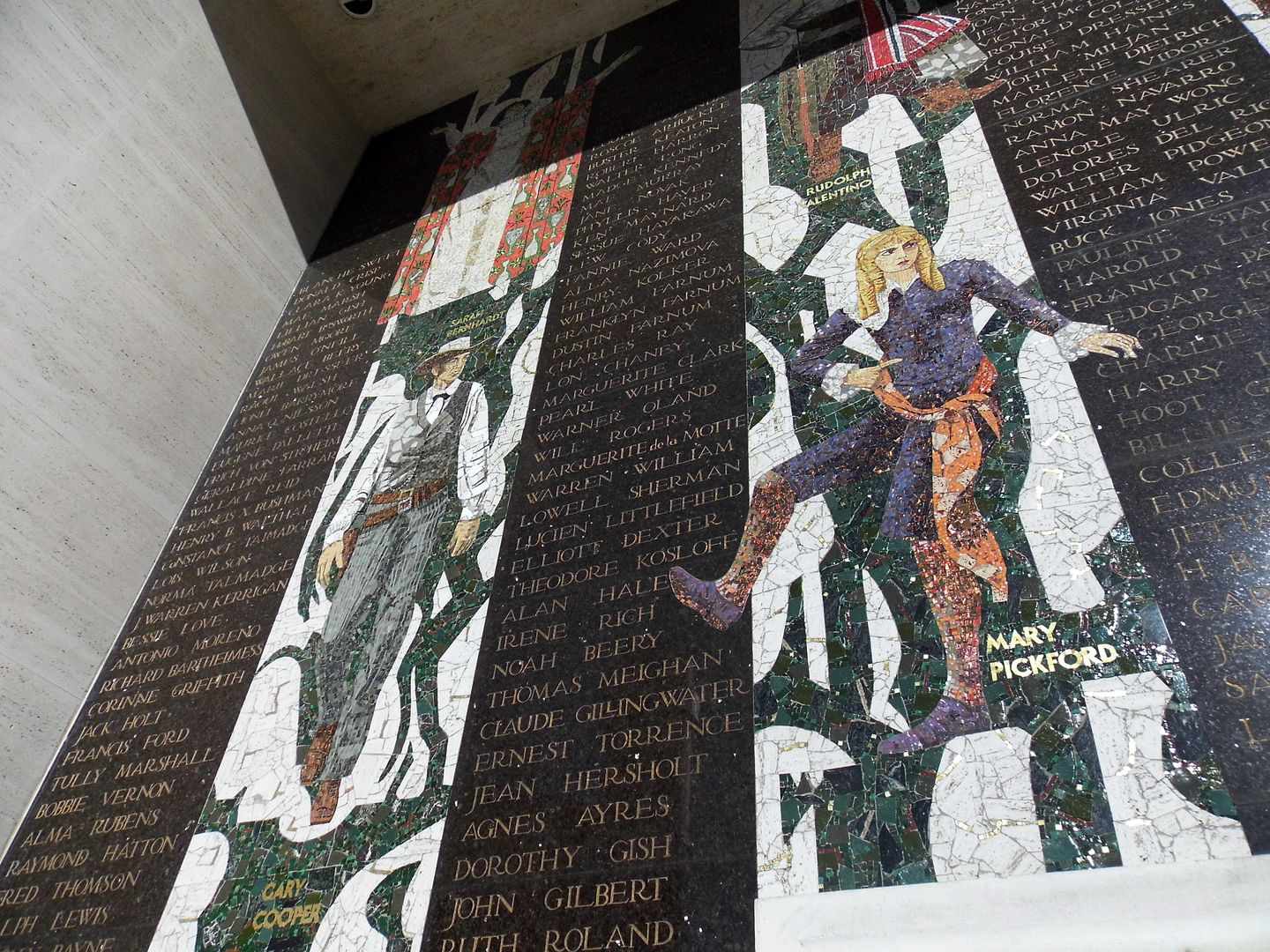
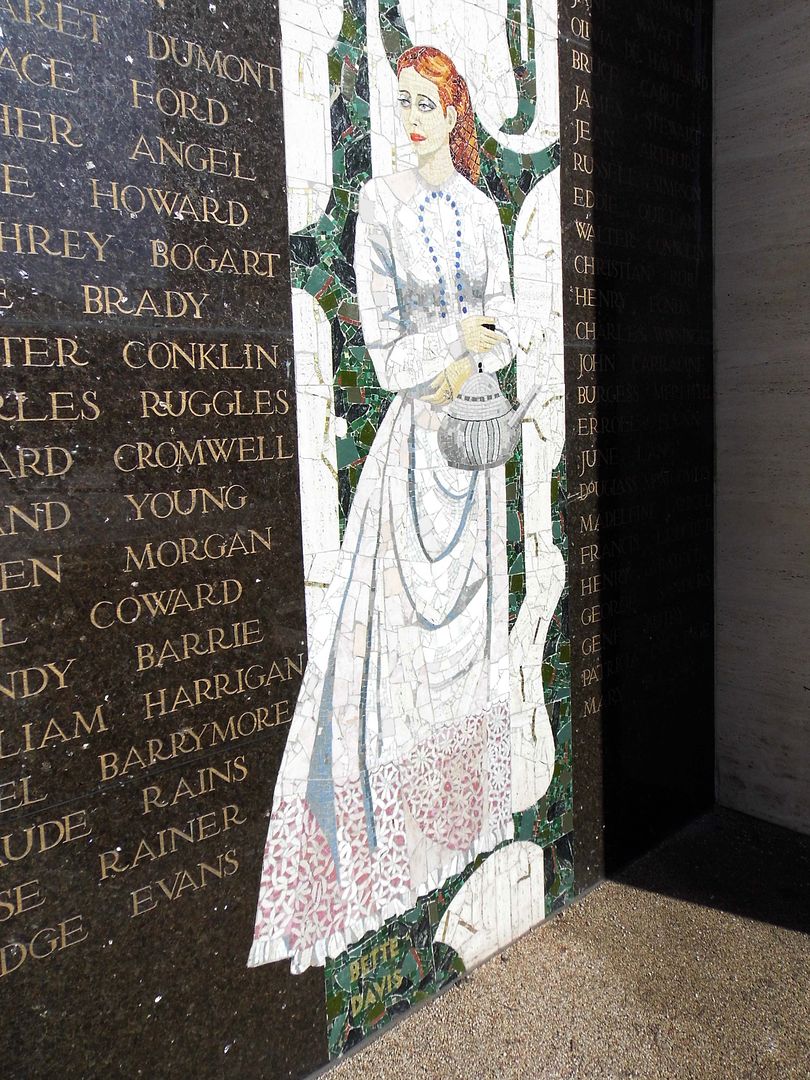
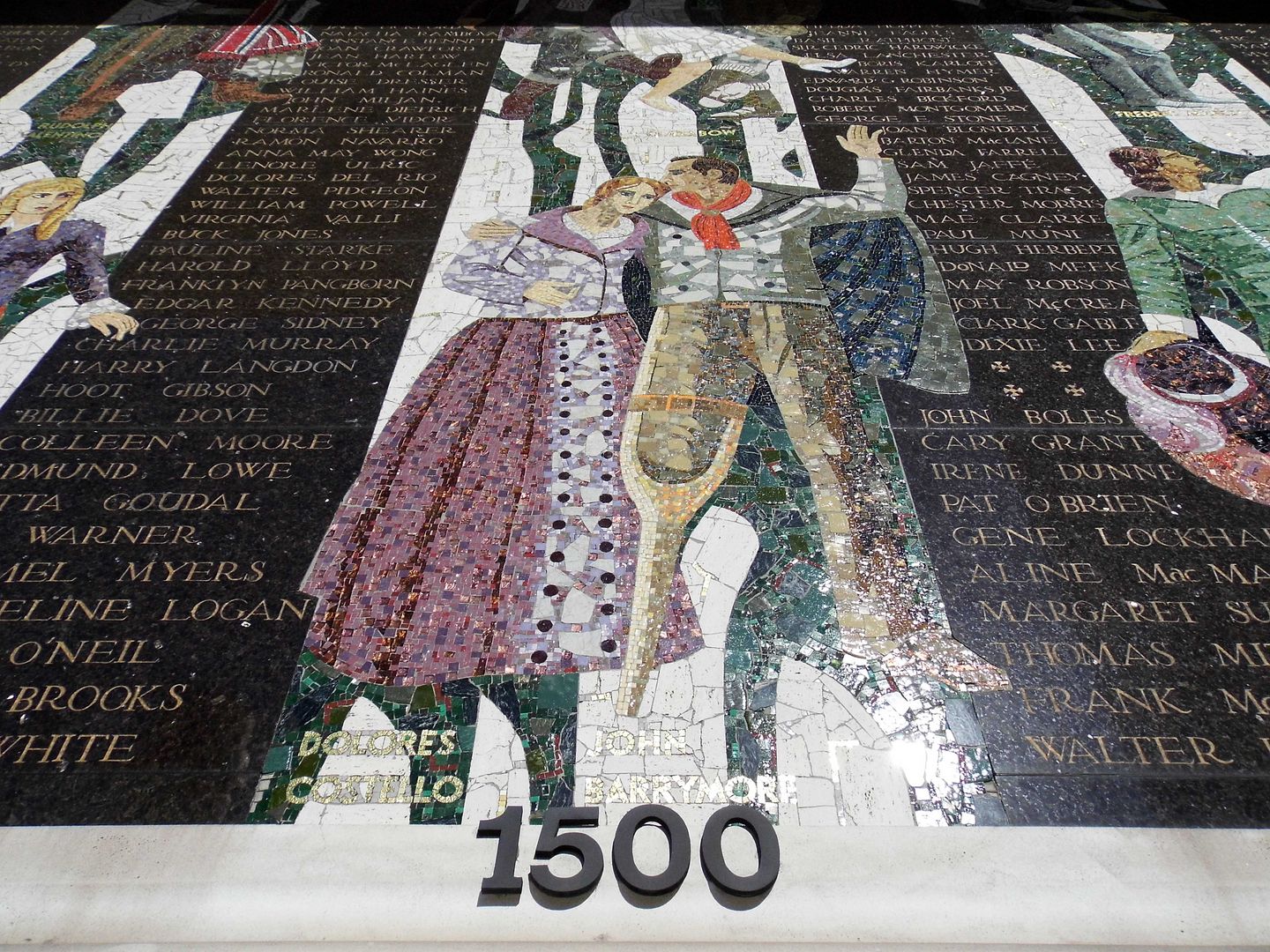
But the real attraction of this mid-century New Formalist-style bank building lies between the black granite panels of the entry façade...


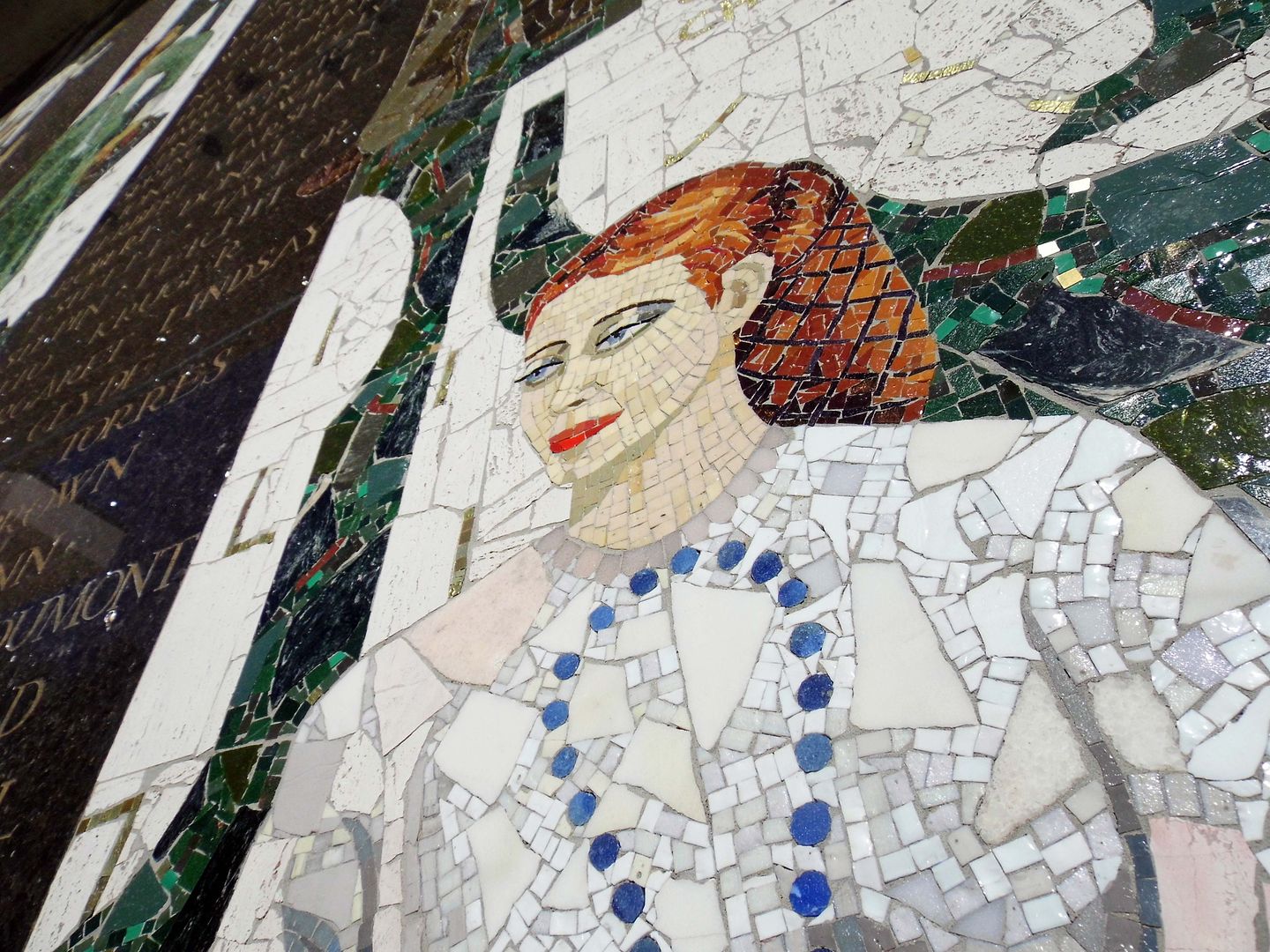
...and that's the mosaic renderings of Hollywood's biggest stars, like Charlie Chaplin, Gary Cooper, Mary Pickford, Rudolph Valentino, Clara Bow...


...and Bette Davis, in character from her Academy Award-winning role in Jezebel.


Among the 40 Home Savings banks that Sheets was commissioned to design, this one was reportedly his favorite. Maybe that'll save it from demolition one day.


I'd driven by this branch so many times but had never even walked up close to it—so I was eager to see what's inside.


Beneath a dropped ceiling in the front lobby, there's a wall mural that pays tribute to The Squaw Man. But otherwise, it's unremarkable—until you reach the back entrance.


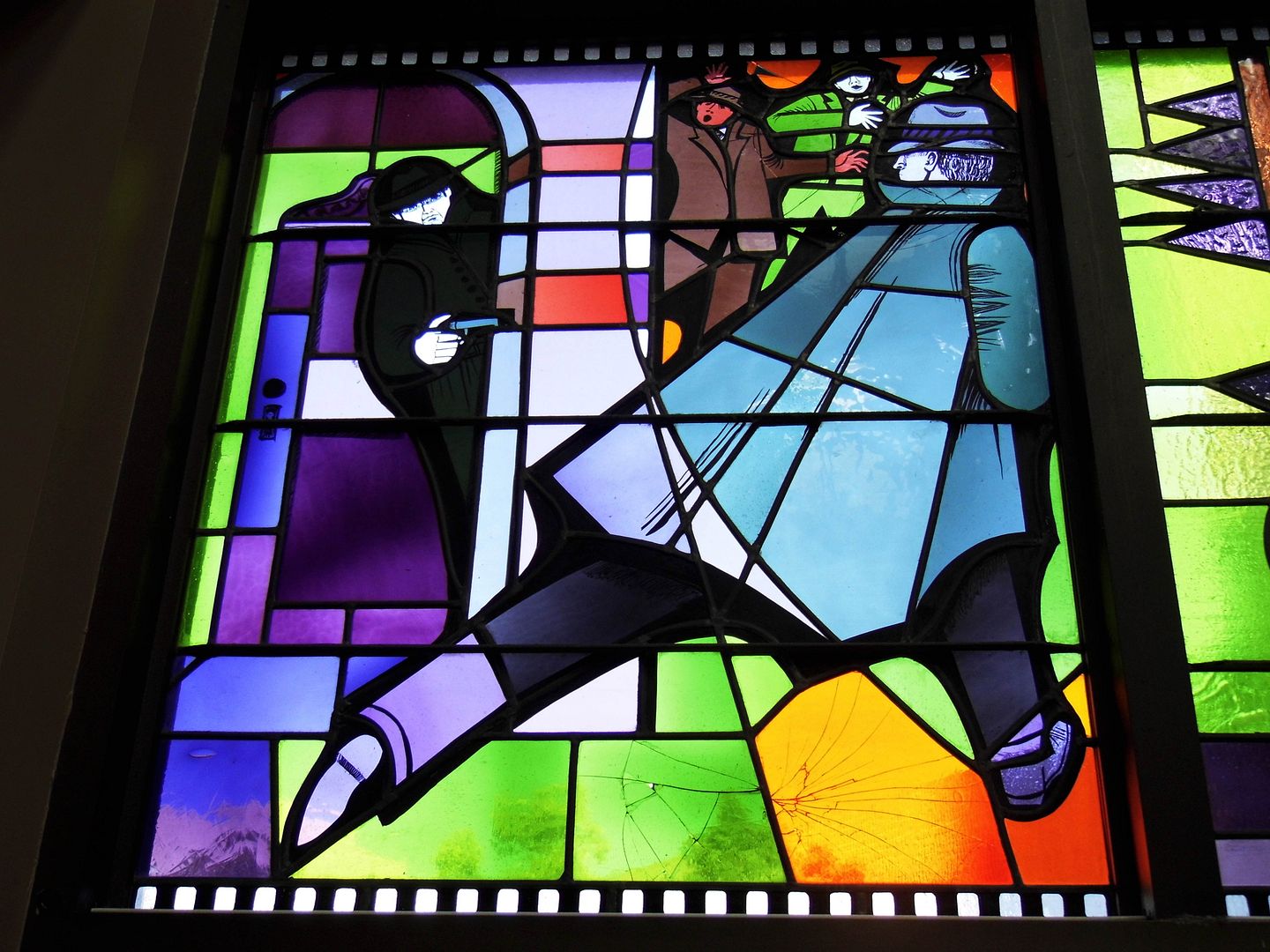
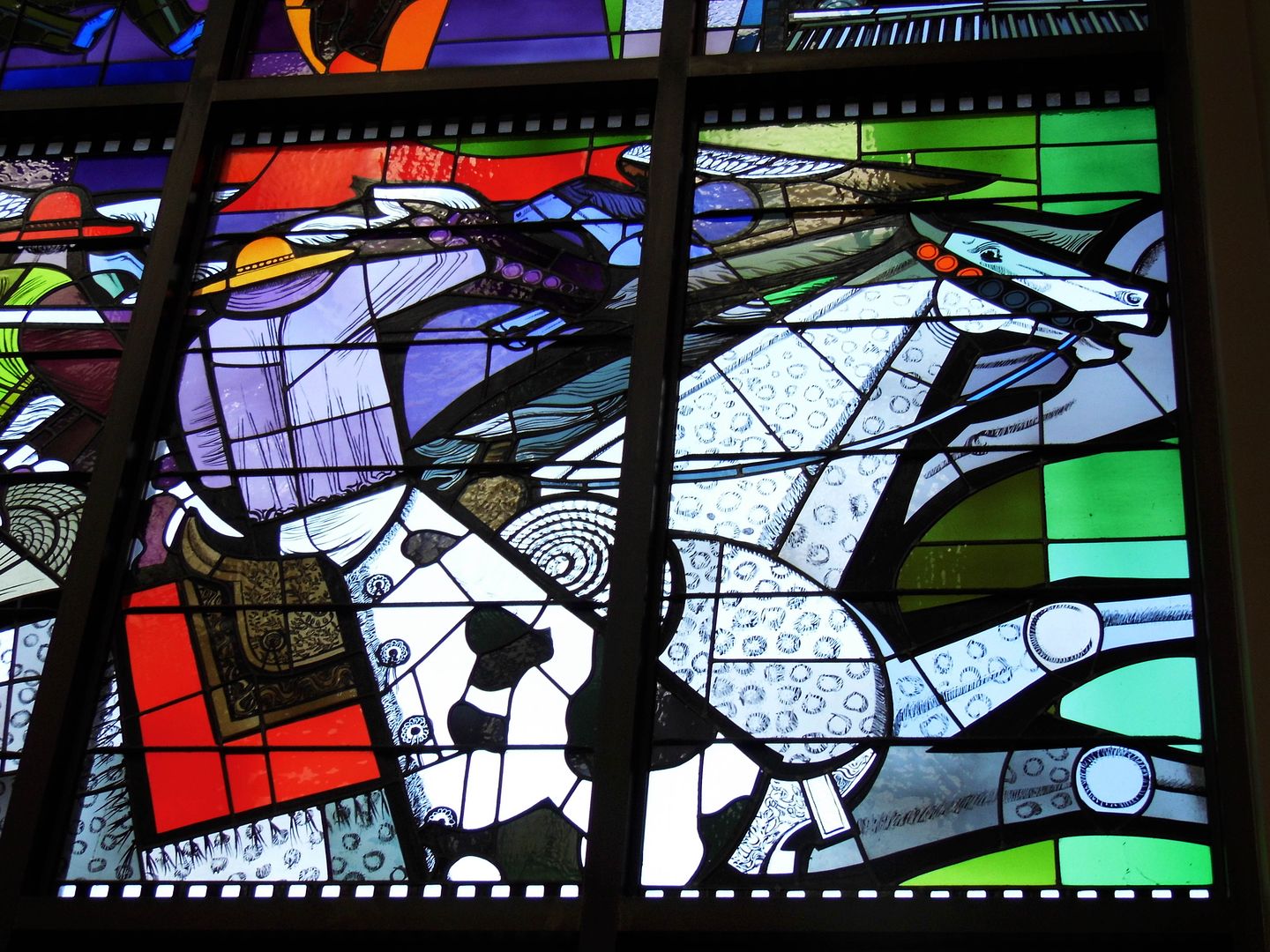
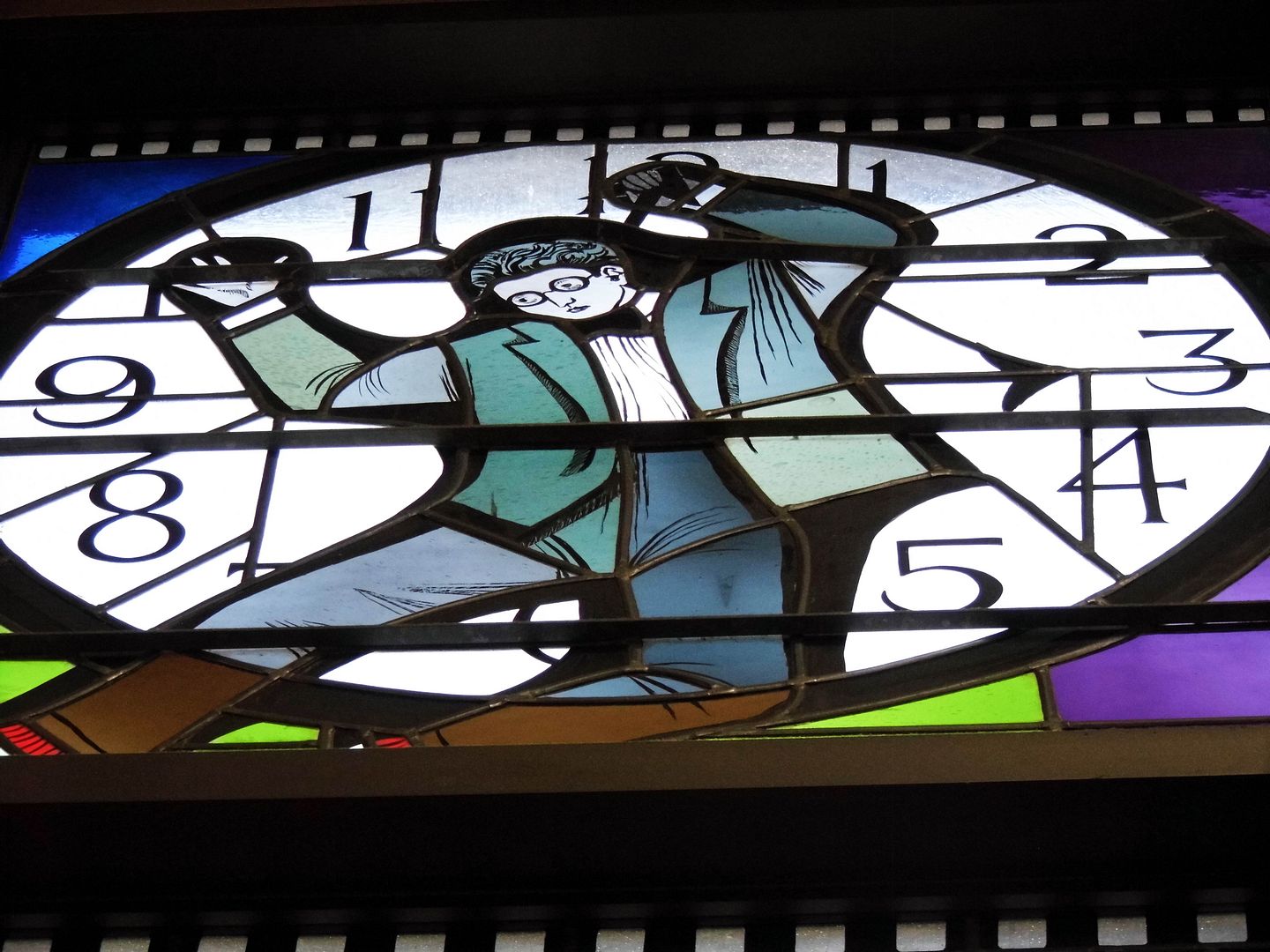
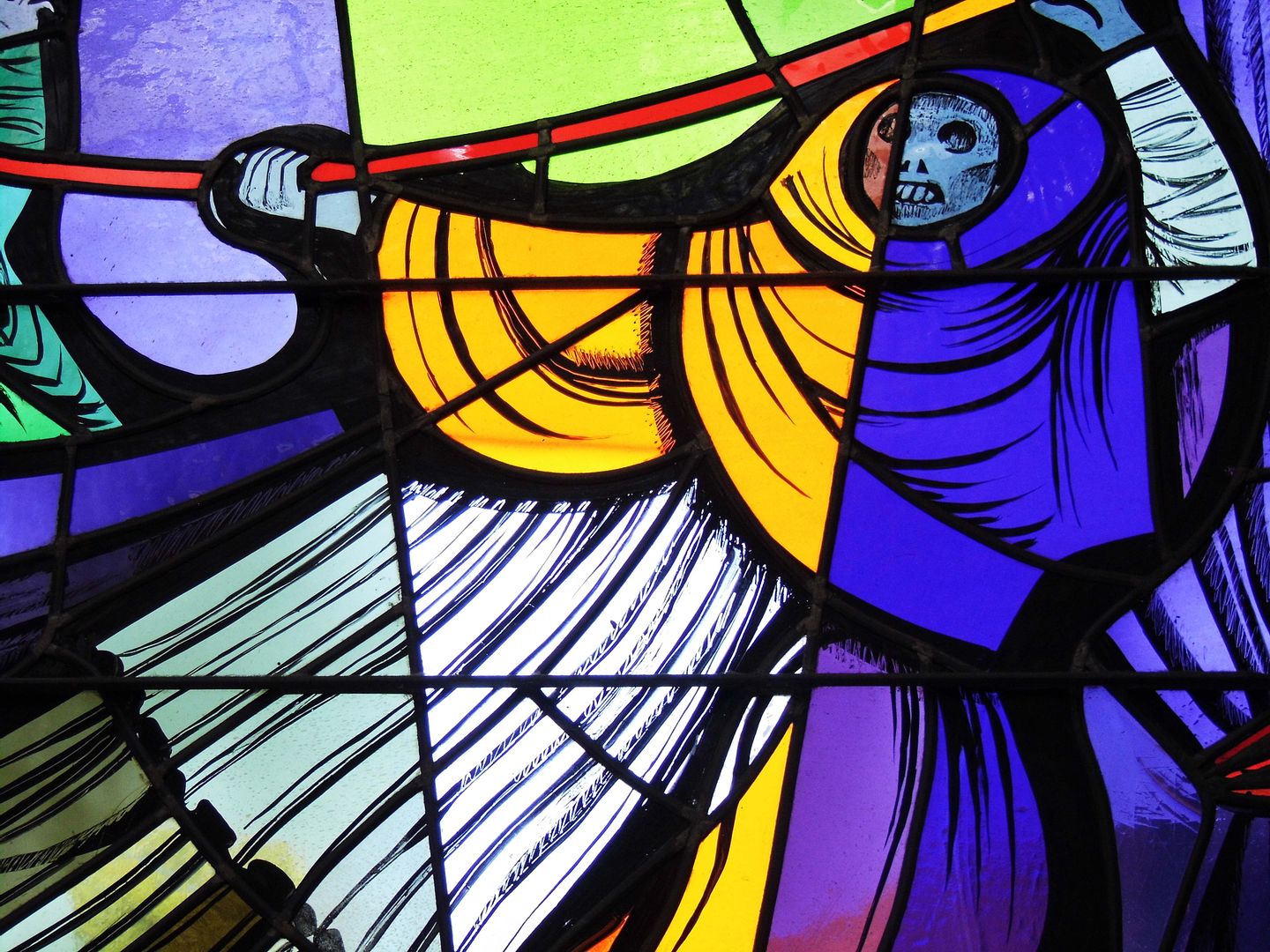
Bidding farewell to those exiting the bank is a unique grouping of stained glass windows by Susan Hertel...


...styled like a series of film strips...


...and depicting famous chase scenes featuring everyone from the Keystone Kops to Harold Lloyd.


Hertel was a frequent collaborator of Sheets, beginning as his art assistant and helping him design several of these Home Savings banks over the course of 26 years. (Fabrications were done off-site.)

What serendipity that these celluloid chases would make their way into what would become a Chase Bank.

Related Posts:
Photo Essay: It's Déjà Vu for Hollywood's Most Famous Imperiled Intersection
Another One Bites the Dust? Santa Monica Edition (Updated for 2019)
Photo Essay: Ever-Changing Hollywood, in Miniature Magic

December 06, 2019

Photo Essay: Ever-Changing Hollywood, in Miniature Magic

We're watching Hollywood change before our very eyes. Some say we're witnessing its disappearance.


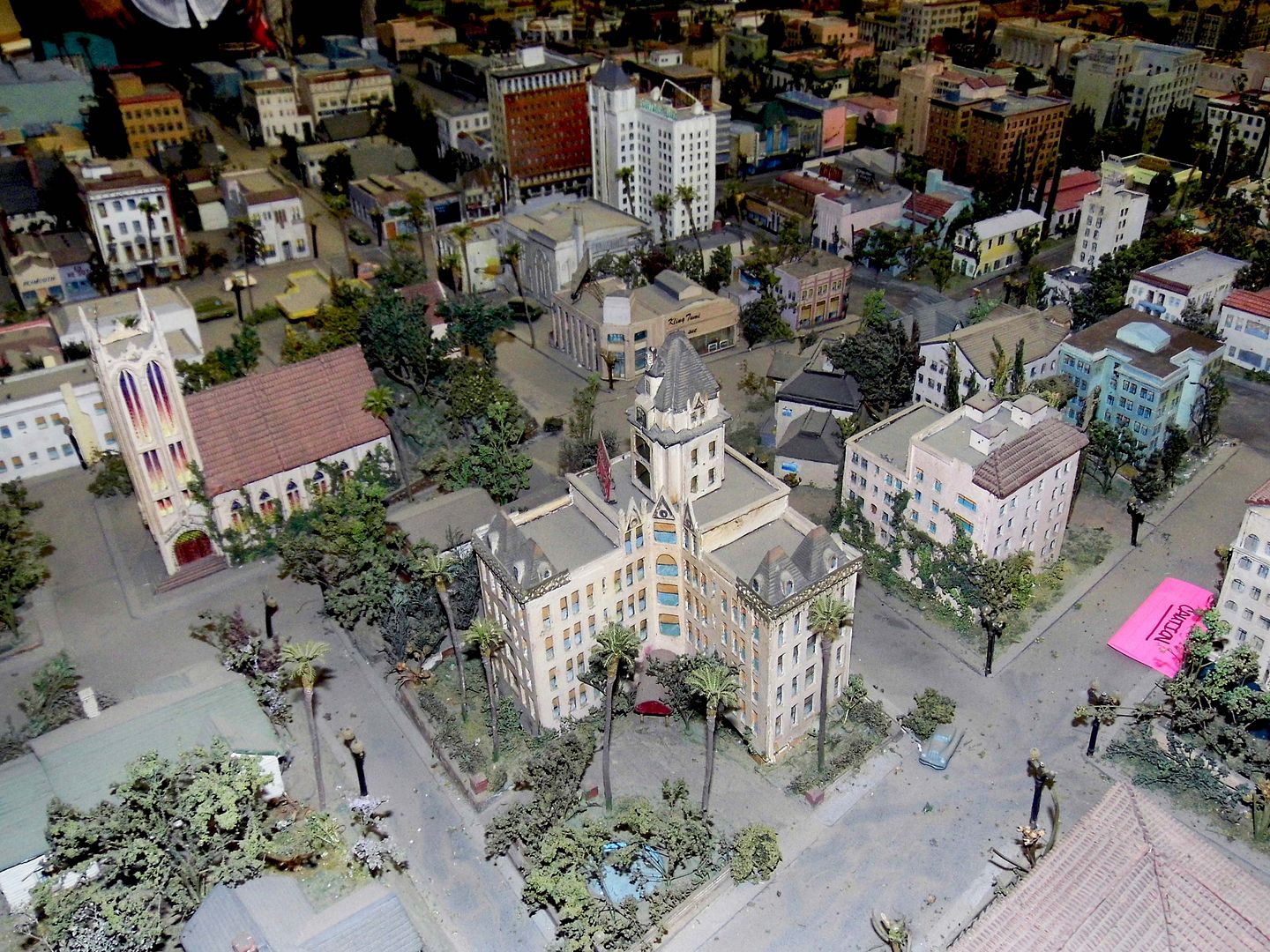
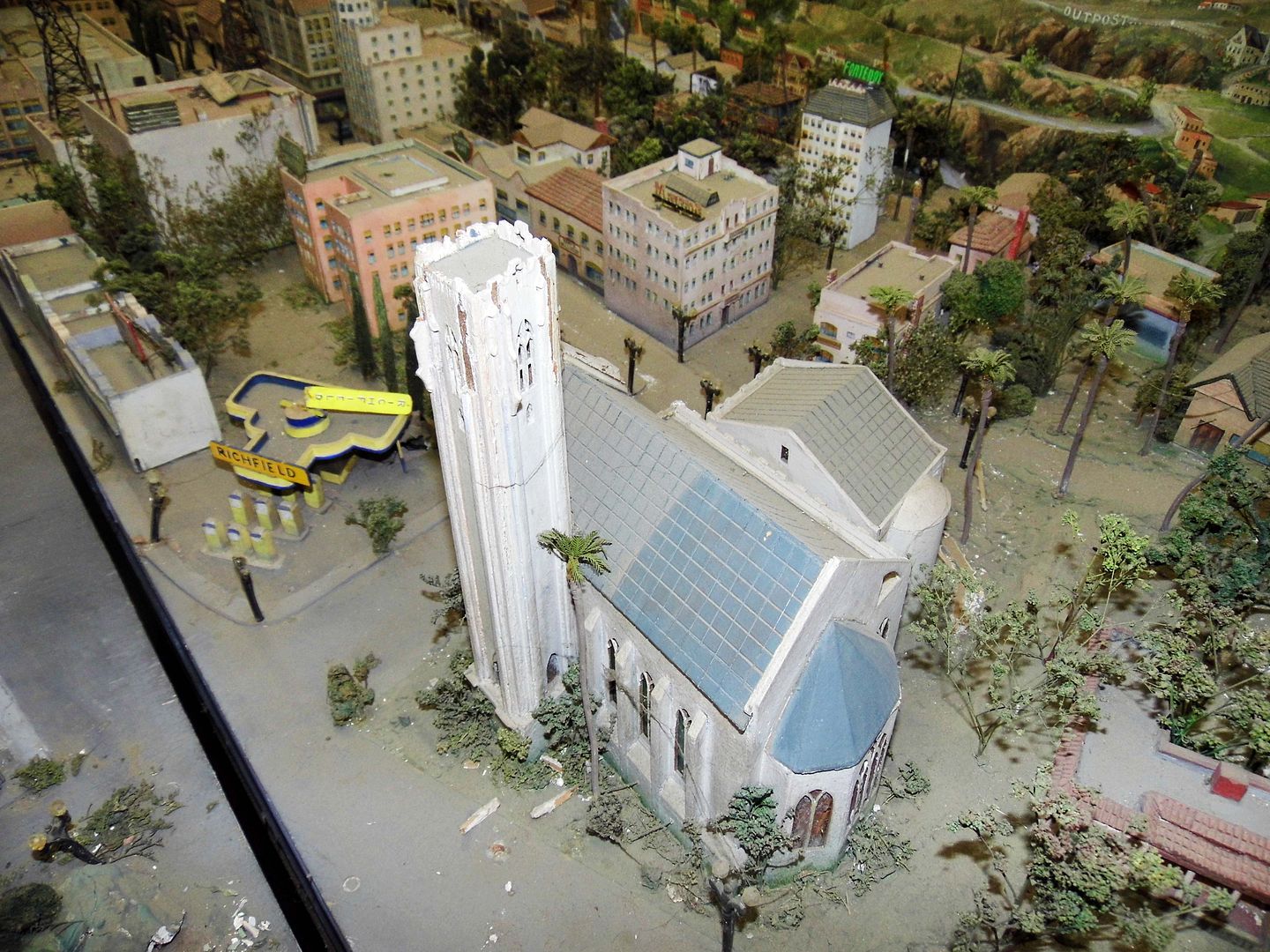
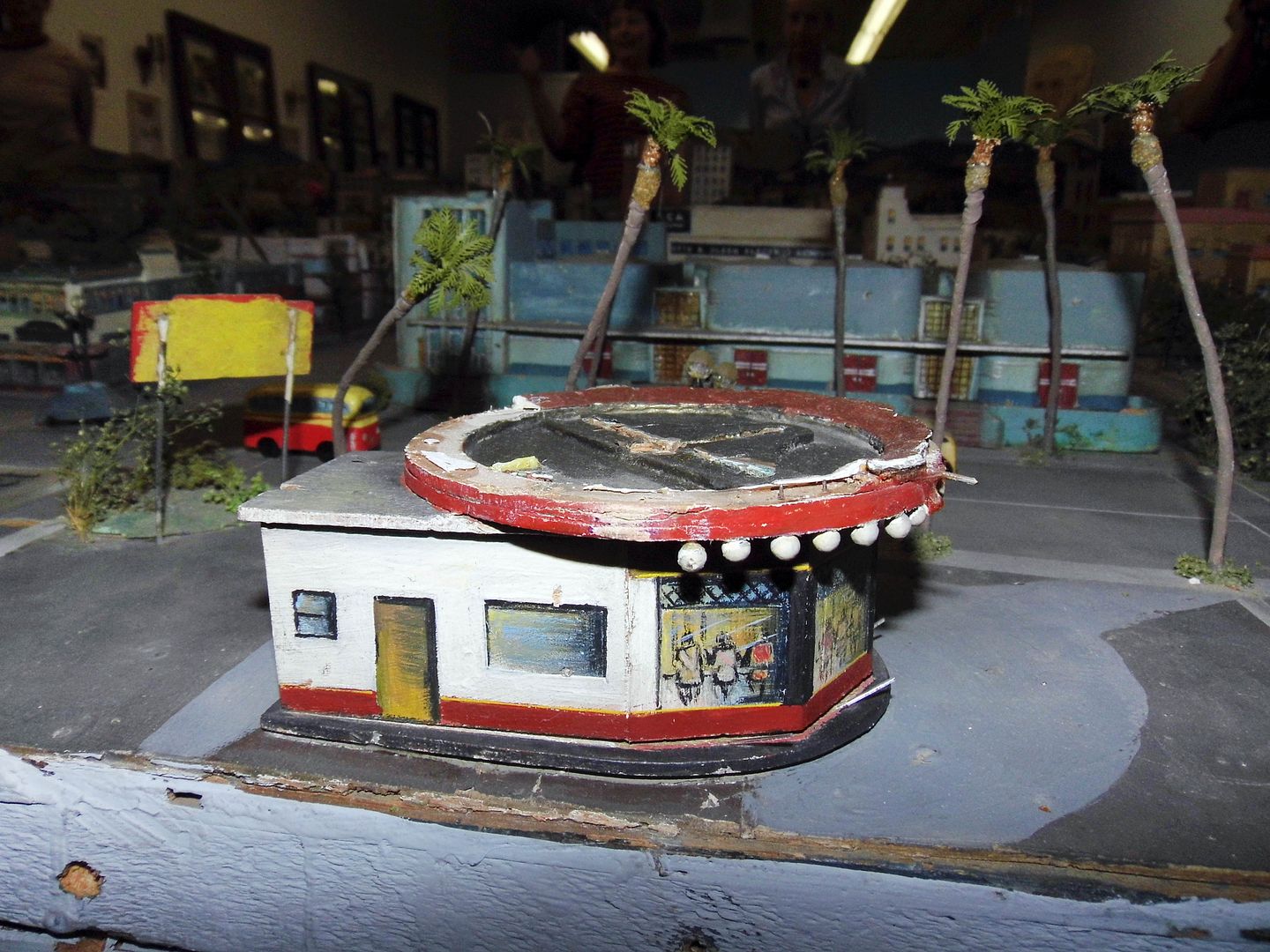
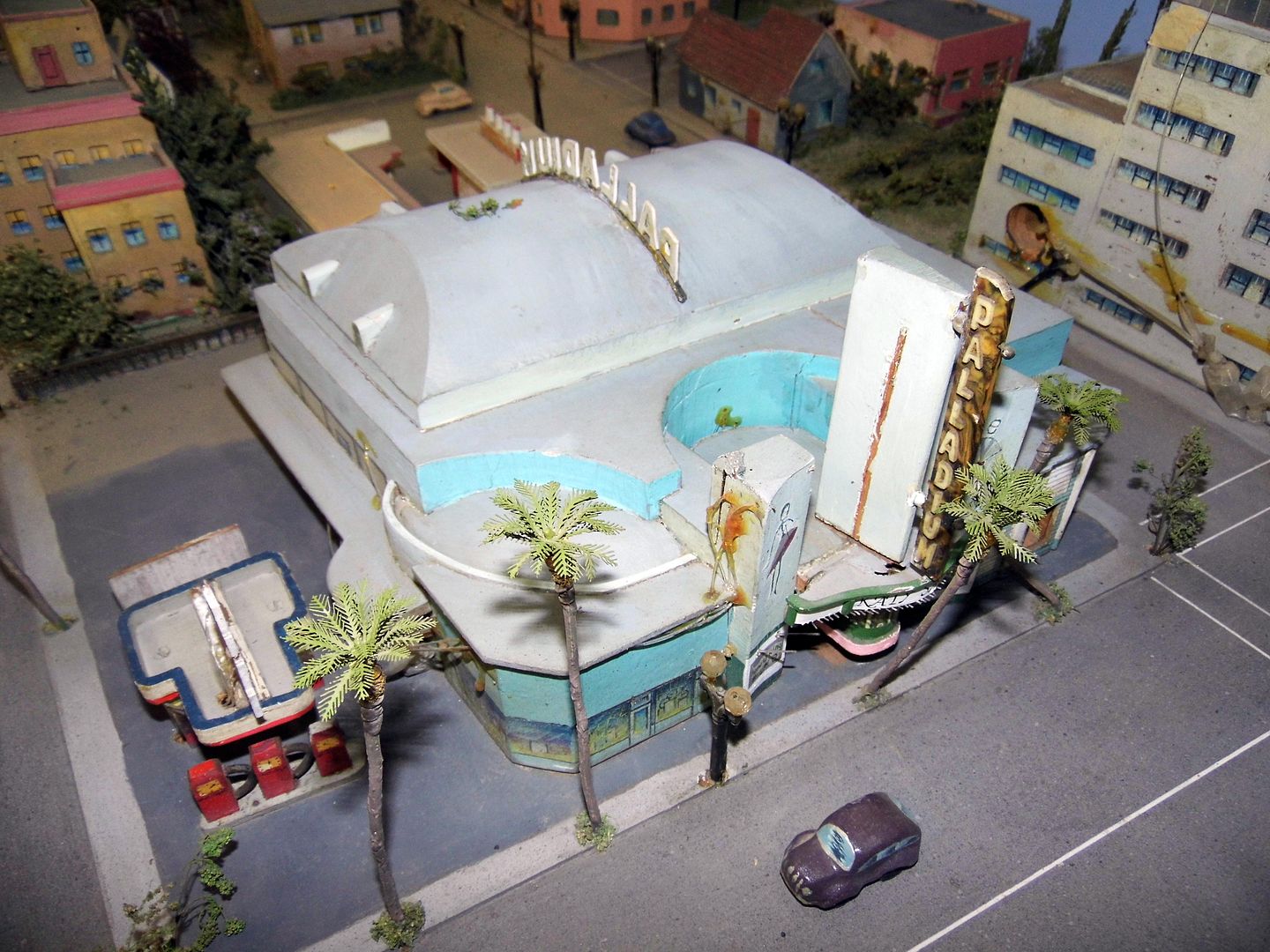
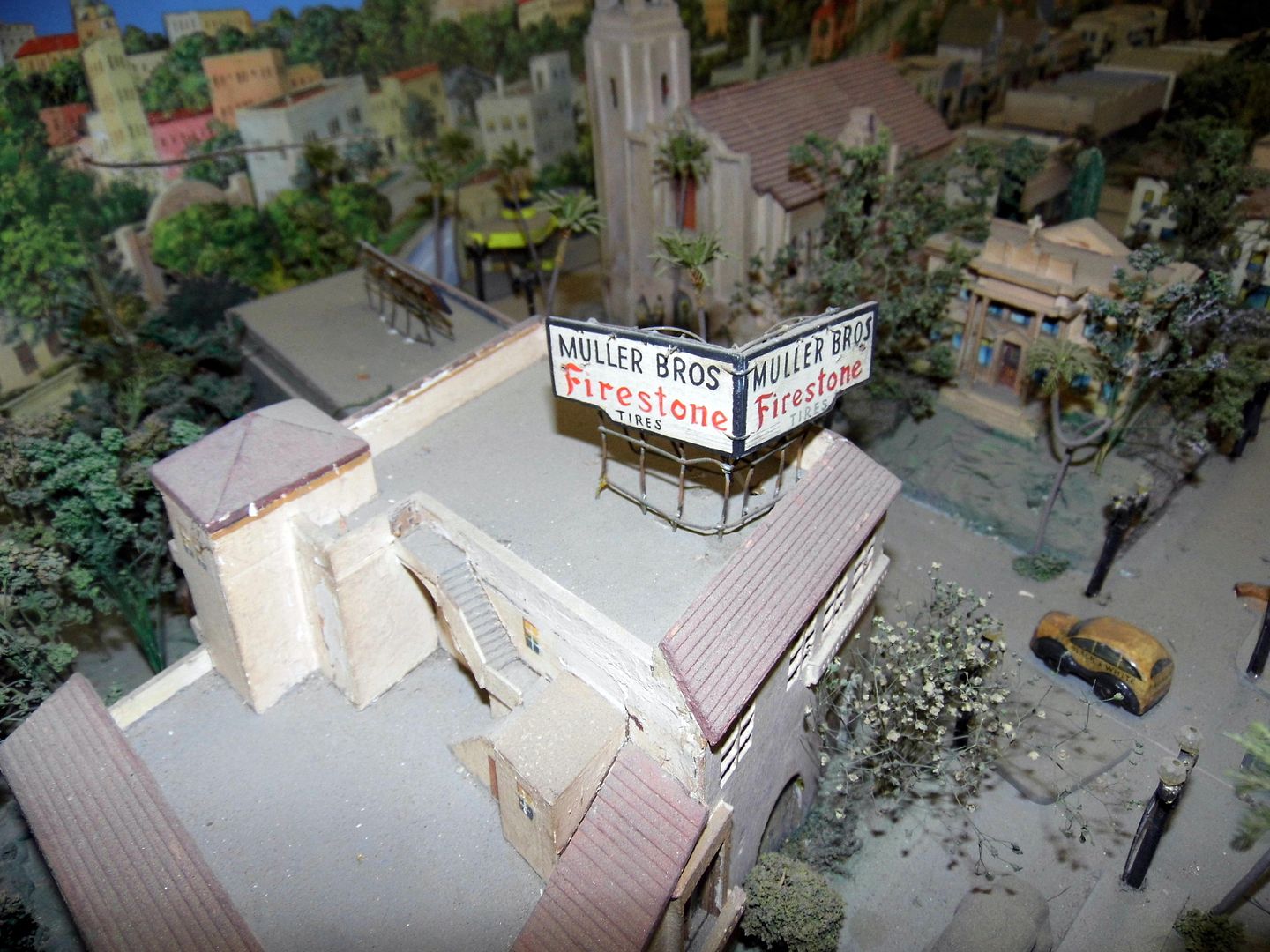
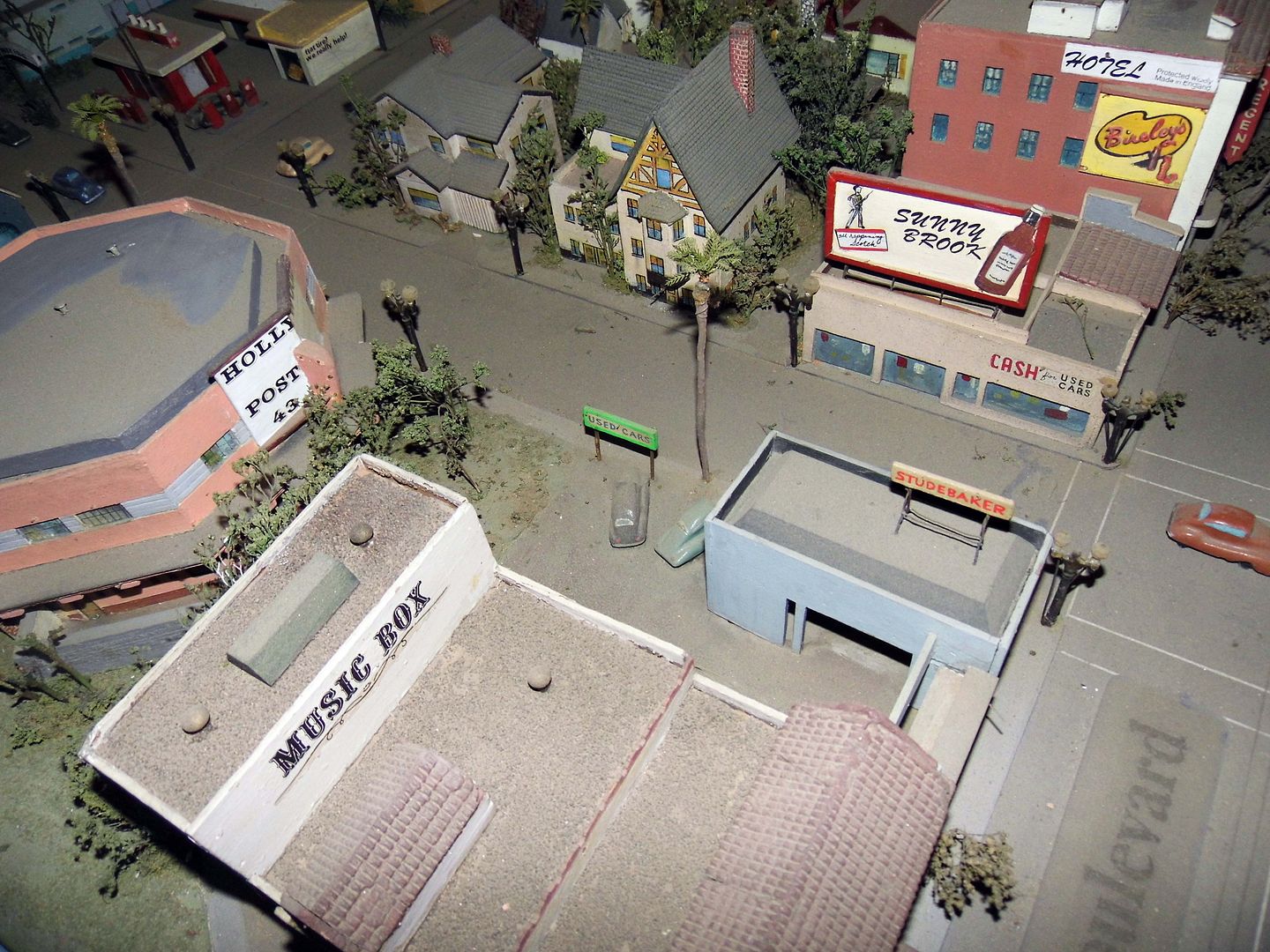
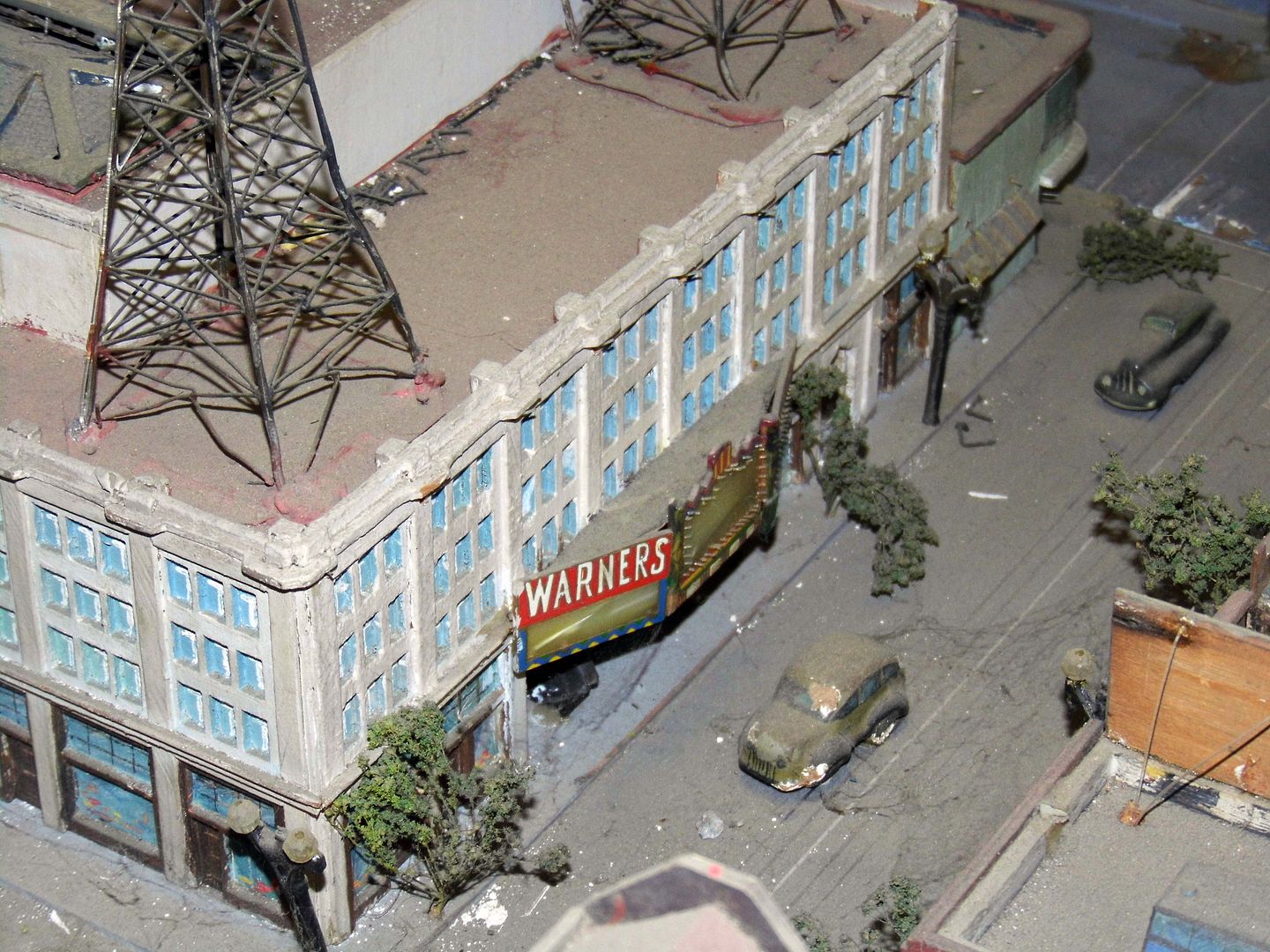
I don't recognize much of what's depicted in the miniature version of Hollywood that's been under the stewardship of Hollywood Heritage since 2014 and undergoing conservation since 2018.


Then again, it isn't 100% accurate. And it wasn't meant to be. The scale model—brainchild of Joe Pellkofer, owner of a Hollywood Cabinet Company—was simply meant to give people in other parts of the country just a taste of what Hollywood was like.


People who'd never been to Hollywood—and would likely never go—wouldn't notice that some streets were missing, or that certain landmarks didn't actually stand right next to each other.


I doubt if any visitor to its exhibition at Macy's in New York City or the Steel Pier in Atlantic City ever balked.


But for those of us who've been here—or live here—it's a natural inclination to compare the fantasy with the reality. And that reality has been changing all the while.


Thanks to the work of craftsmen and artists like Leon Bayard de Volo (the Italian immigrant famous for his work on Knott's Berry Farm's California Mission dioramas), the miniature model was completed in 1945 and went on tour from 1946 to 1948.


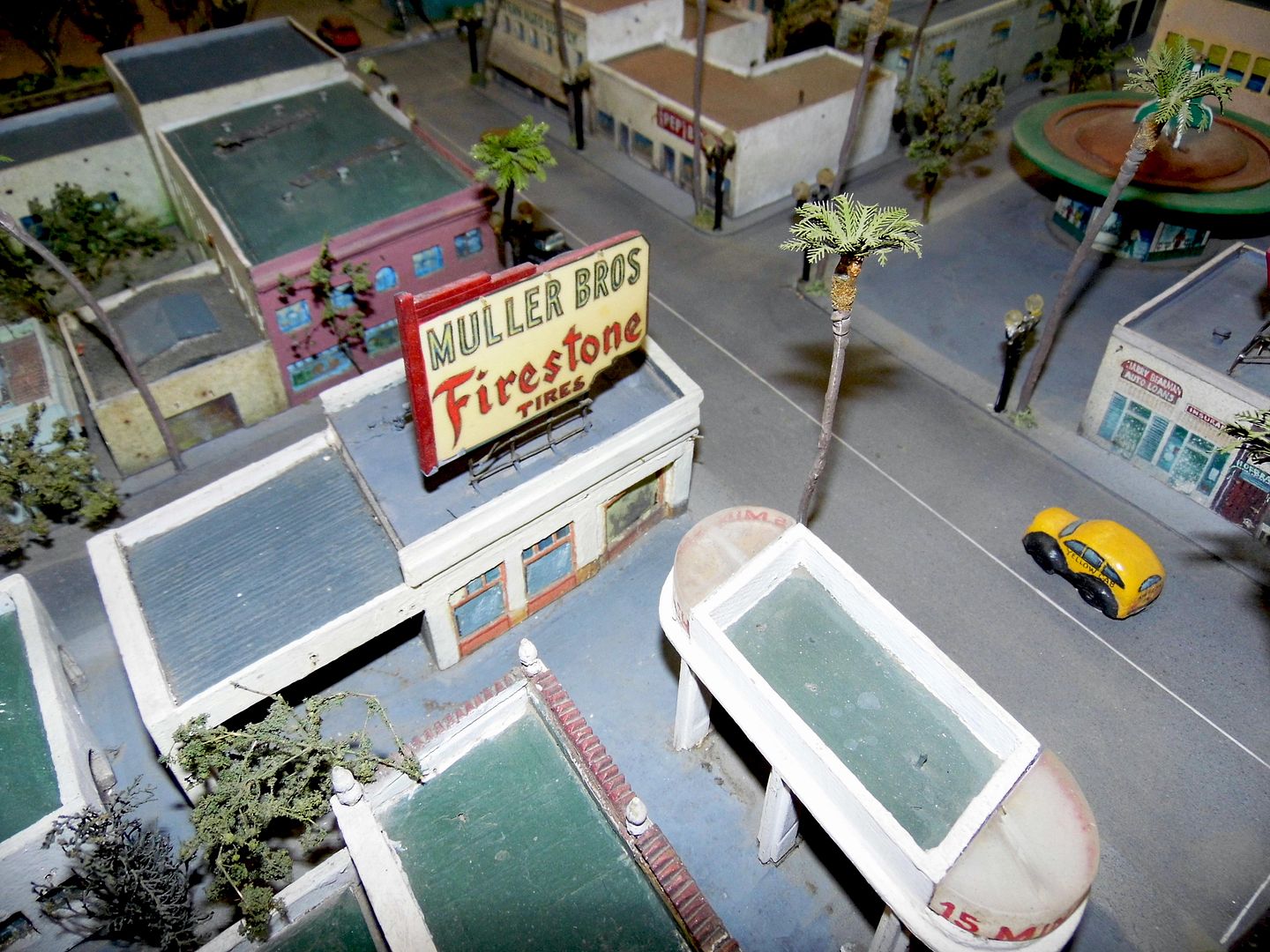
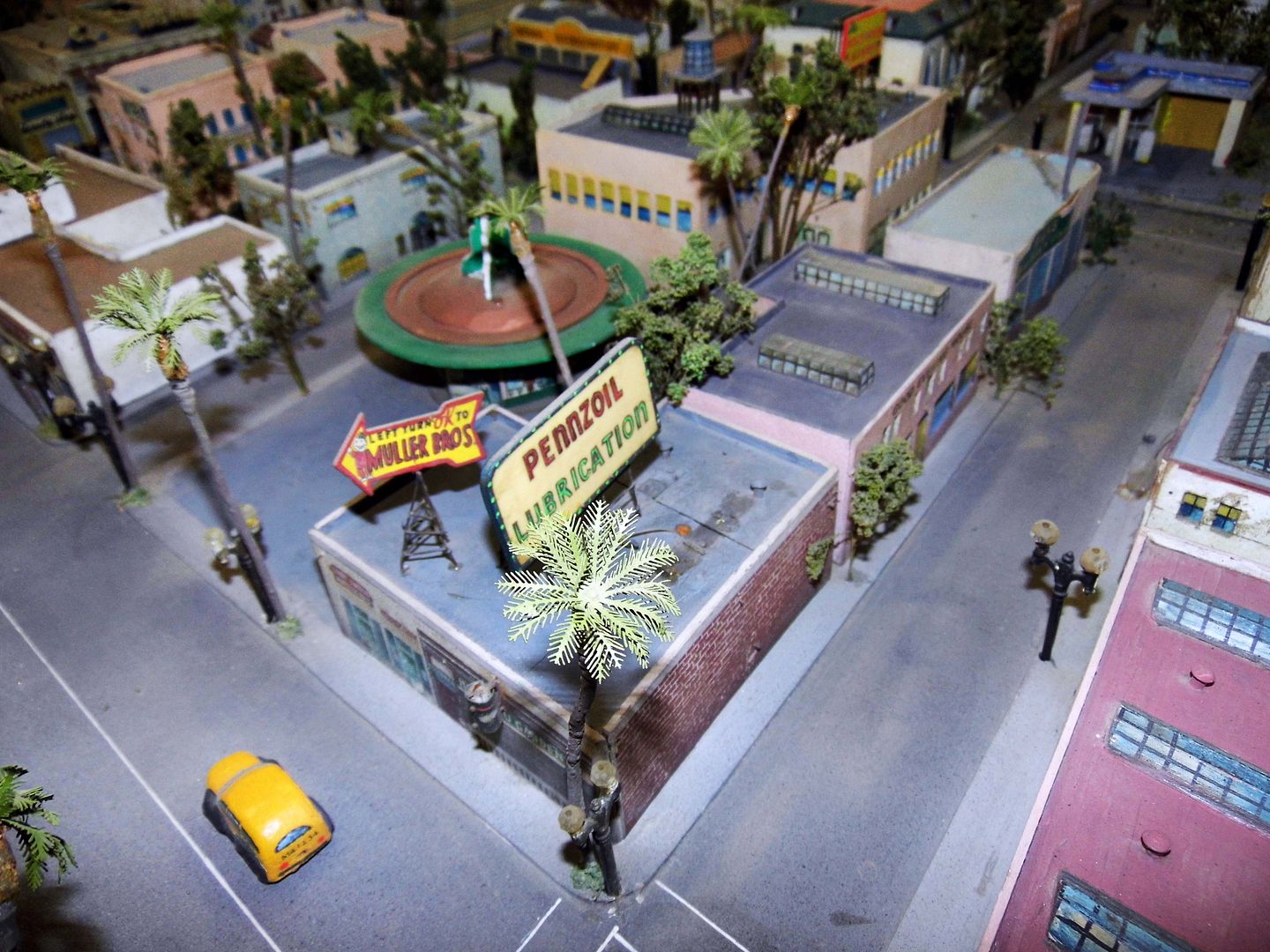
But when the handcrafted miniature was rediscovered and stepped back into the spotlight in 1985, some well-meaning folks at Landmark Entertainment Group updated some details—including names of businesses, giving them "modern" (for the time) signs. (This is probably when fiberoptic lighting was added, too).


So now conservators need to decide whether to keep those modifications (no matter how inappropriate they may have been), or to return everything back to the way it was in 1945.


But maybe Pelkofer intended it always be a work-in-progress, for the ever-changing Hollywood—like how Walt Disney expected his Disneyland to constantly evolve with the times. (And boy, has it ever.)


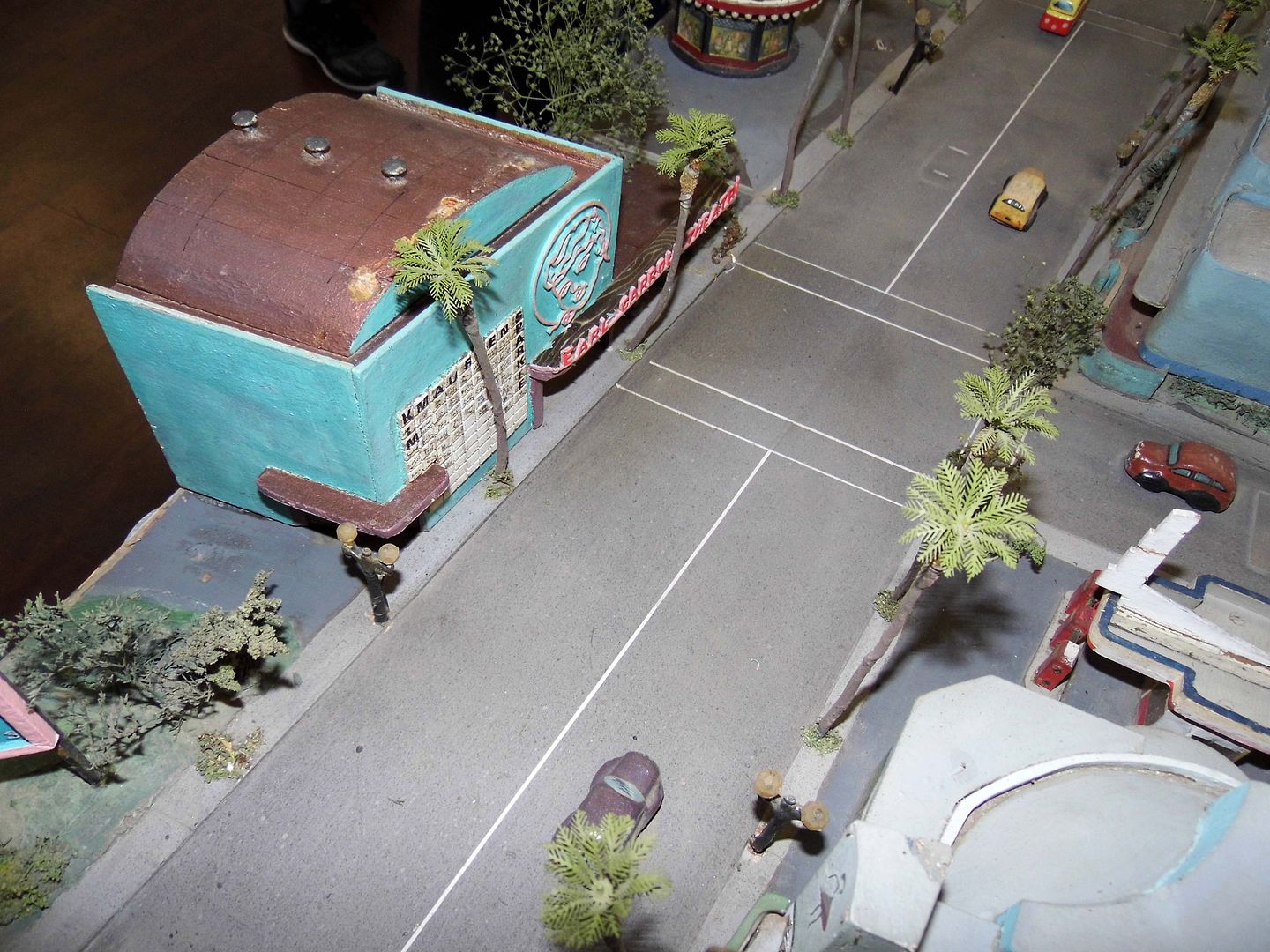
If that were true, that would mean that the Earl Carroll Theatre would've had to have been remodeled into the Nickelodeon Studios, back to the Earl Carroll Theatre, into the old Aquarius Theater (as it's still dressed, from the time warp film shoot of Once Upon a Time in Hollywood), and back AGAIN into the Earl Carroll Theatre, which it's being developed into.


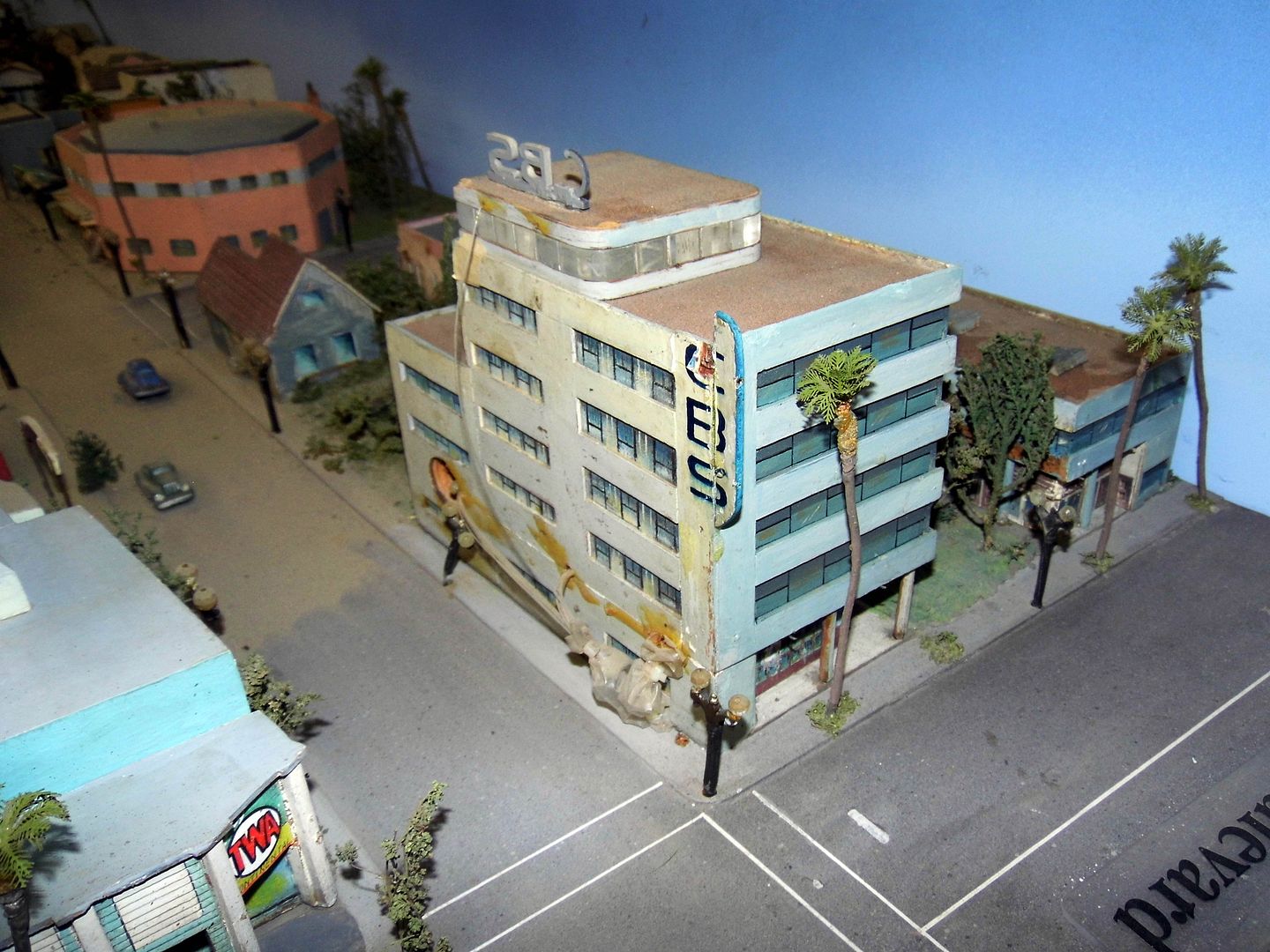
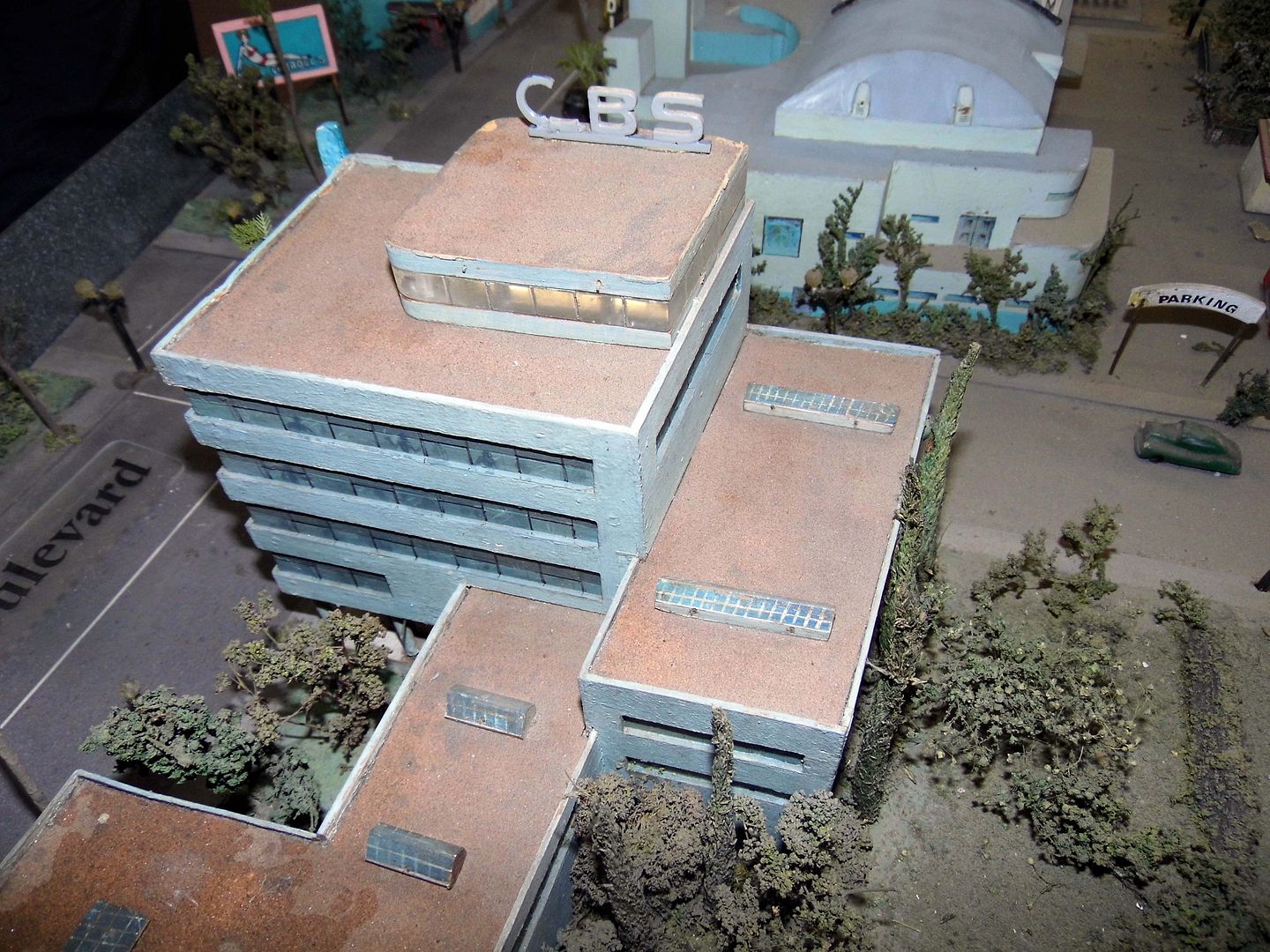
But by the time the old CBS Radio building were to get renovated to become NeueHouse Hollywood (and the ground-floor restaurant, Paley)...


...it might already have been repurposed into something else.


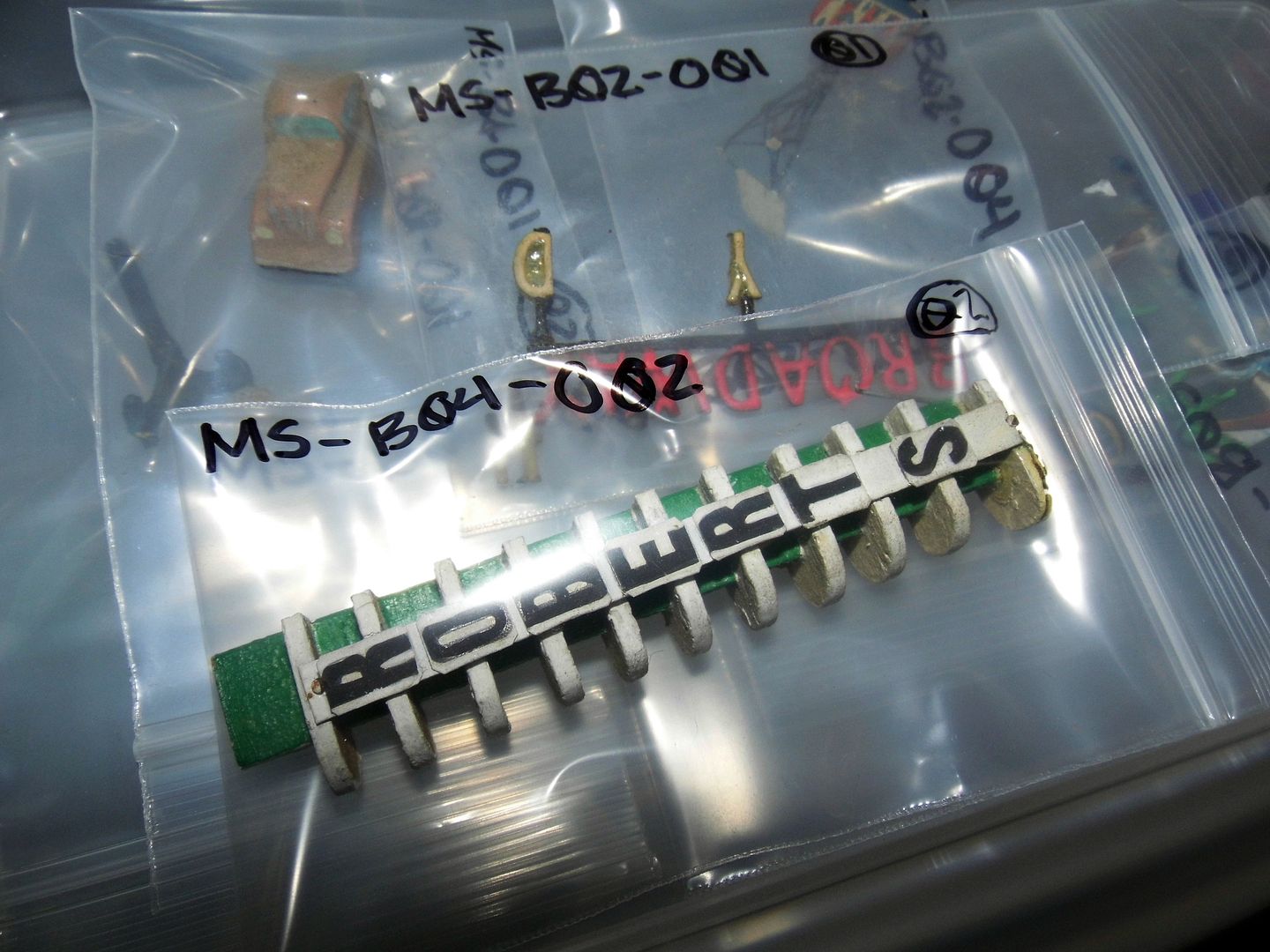
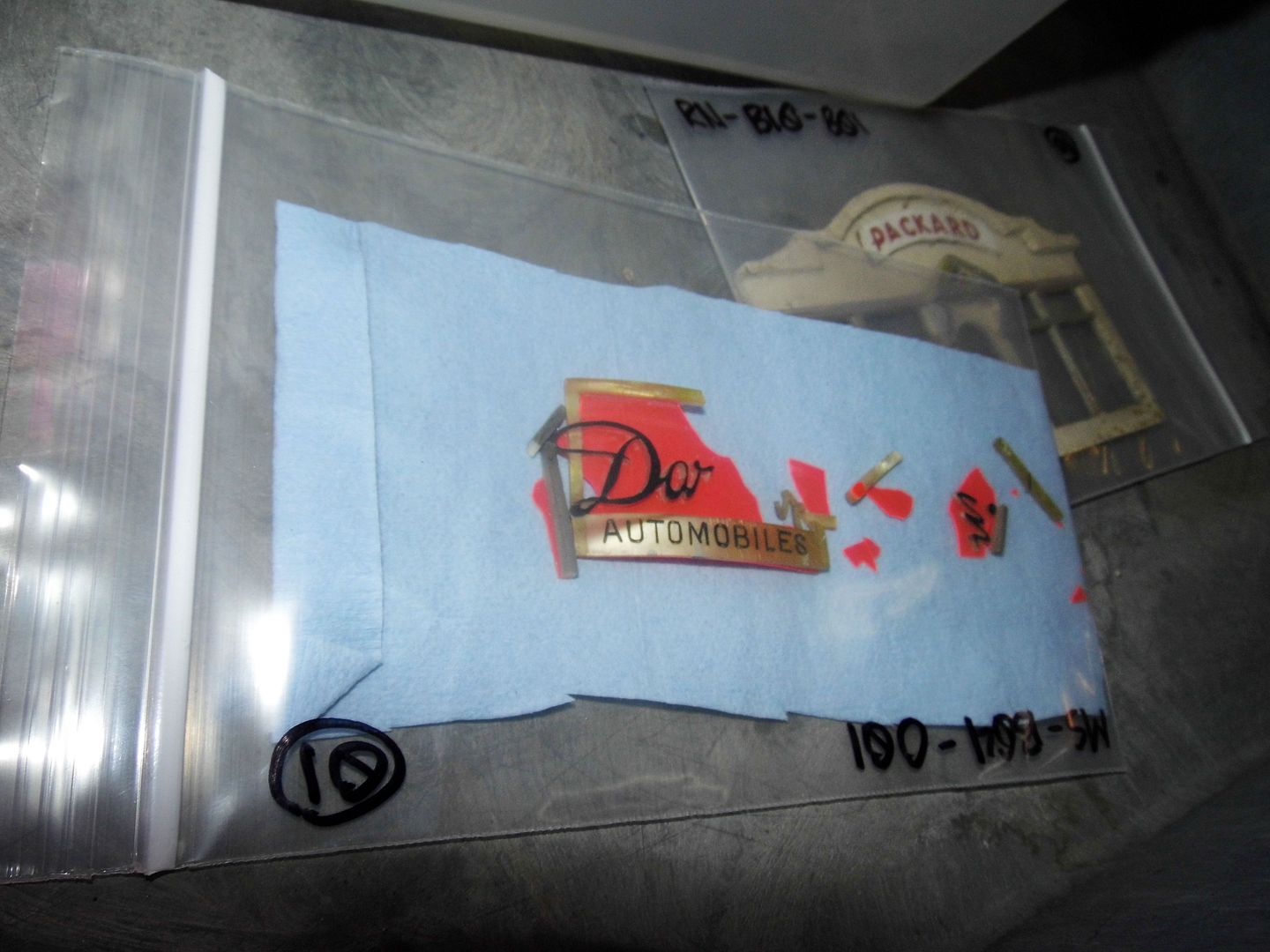
For now, loose pieces are being bagged and catalogued for possible restoration, recreation, and repositioning back onto the miniature...


...or at least as a record of what used to be there.


The big diorama of miniature Hollywood wasn't Pellkofer's only model creation—there were several others, including of individual buildings (some of which got destroyed in transit).


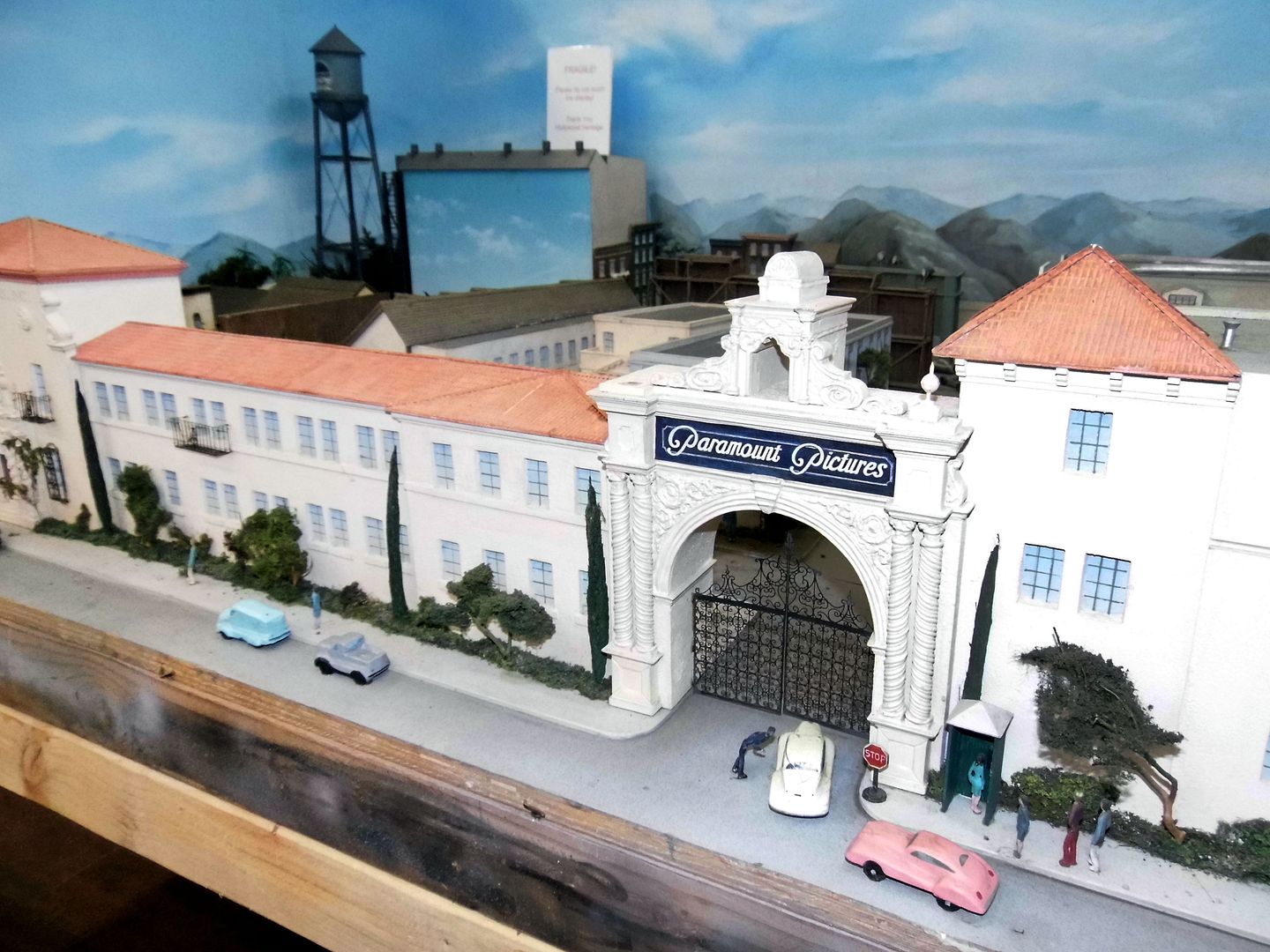
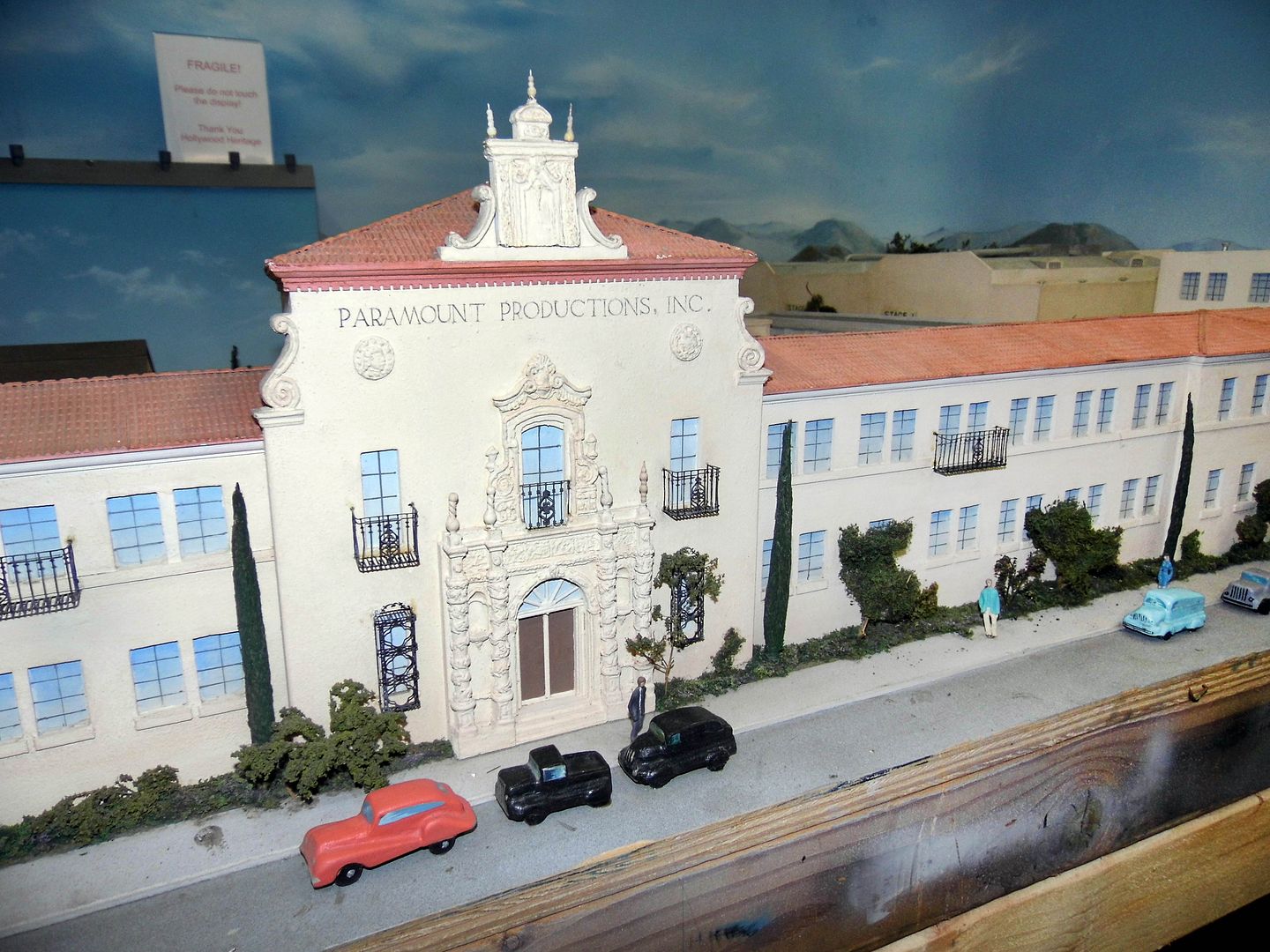
Hollywood Heritage is also in possession of a model of Paramount Studios, circa 1937-38.

You can see them both—being cleaned and restored as I write this—at the Hollywood Heritage annex gallery, situated pretty much exactly where De Longpre Gardens, the studio and residence of Paul de Longpré, stood at the turn of the last century. That's when Hollywood Boulevard was known as Prospect Avenue and the area was a suburban development on land owned by Daeida Wilcox Beveridge—a.k.a. the Wilcox Ranch.

The horticultural collection of De Longpre Gardens had become a huge tourist attraction until the French-born watercolorist died from complications of TB in 1911. 

His mansion was sold and the entire property demolished in 1925, a decade too early to be included in the Hollywood Miniature.

Related Posts:
Standing in the Shadows of Towers In Hollywood (Or, What Will Happen to the Fonda Theatre?)