Search

Showing posts with label AnzaBorrego. Show all posts

April 07, 2021

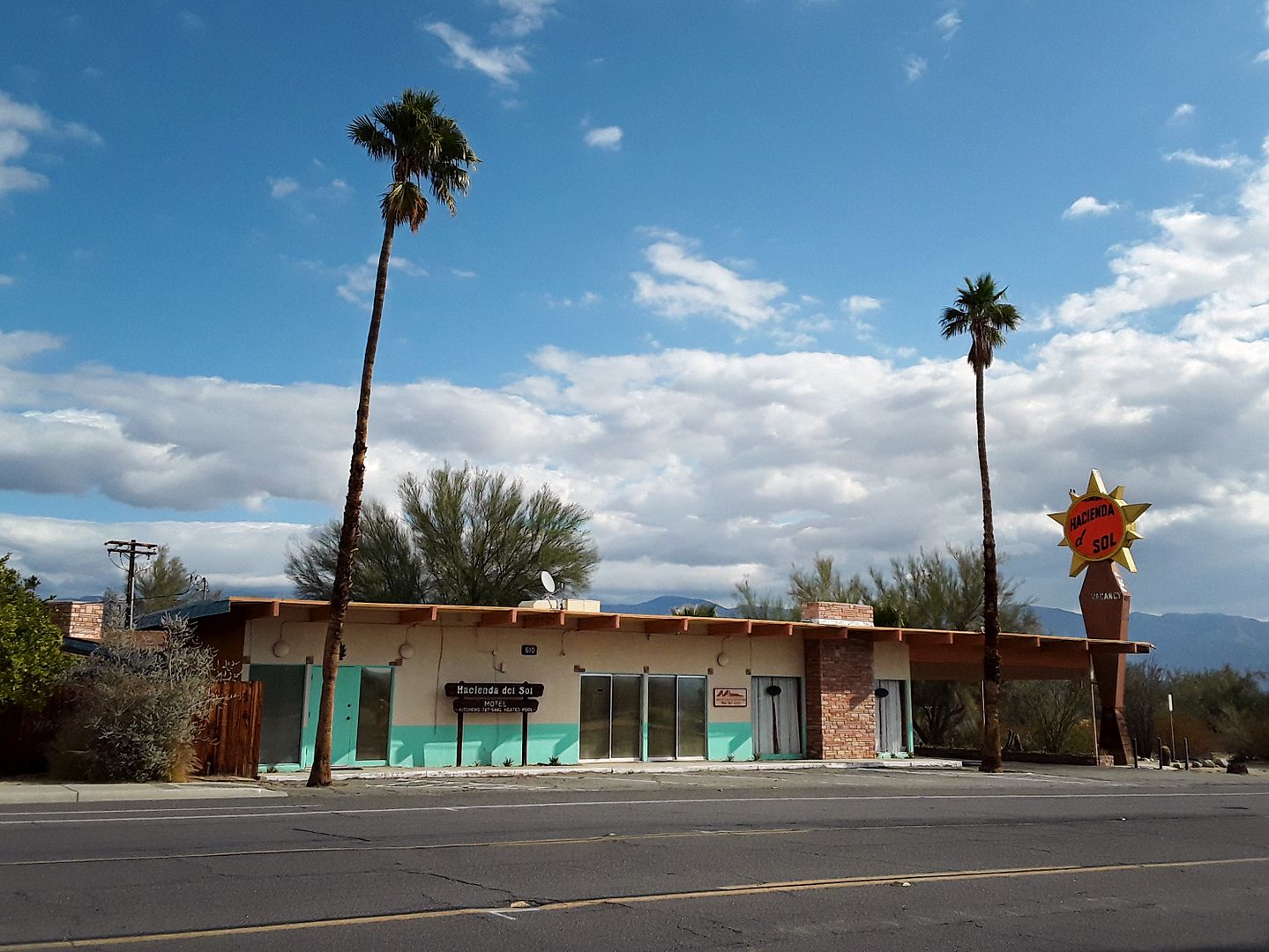
Photo Essay: A Sun-Soaked Stay at a Modernist Hacienda in Borrego Springs

The first time I stayed overnight in Borrego Springs, it was at Palms at Indian Head—a Mid-Century resort palace that still captures my imagination and draws me to visit, even if I haven't booked a room there. 

Since then, I've gone camping in the park, stayed in a tipi in Ranchita, slept on a military cot on my friend's porch in a windstorm, partied hard at the Warner Springs Ranch, and tried out Mid-Century motel life at Stanlunds Inn (the former Guppy Motel) in Borrego.  

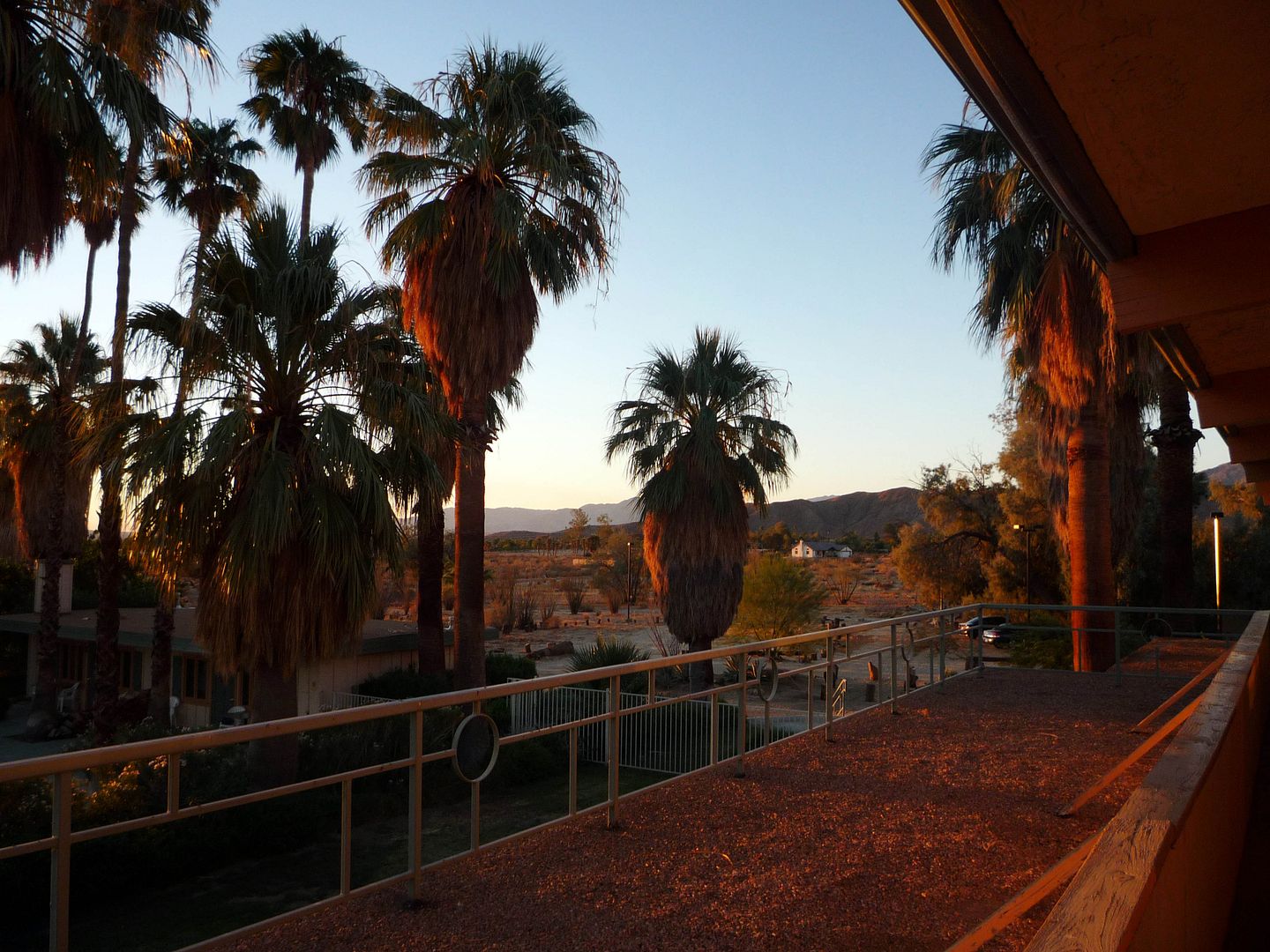
But there's only one place I've returned to for an overnight stay while visiting Anza-Borrego Desert State Park: Boynton's Hacienda del Sol. 


March 27, 2021

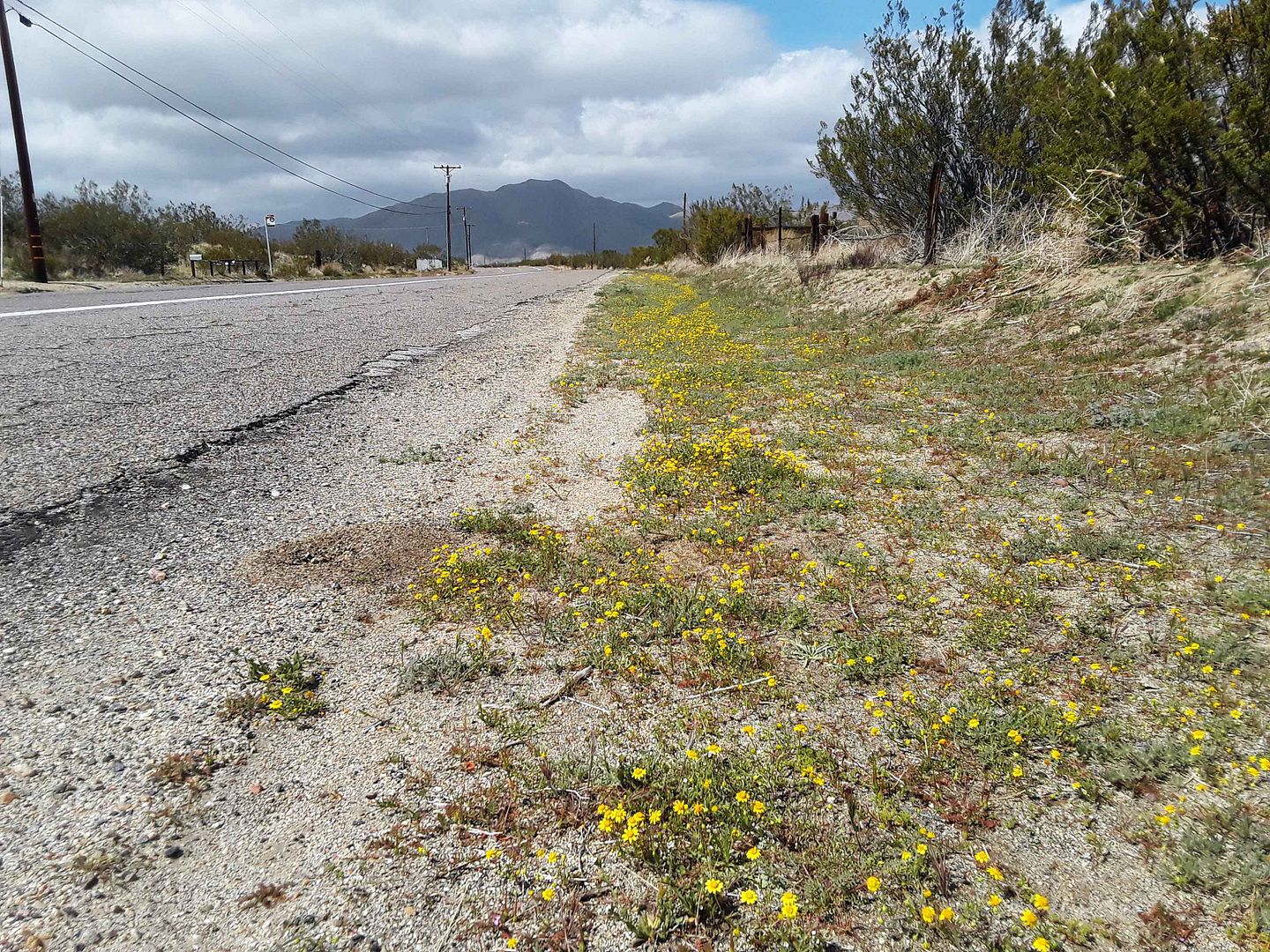
Photo Essay: The Delightfully Uncrowded Bloom at Anza-Borrego Desert State Park

Anza-Borrego hasn't had a "superbloom" since Spring 2019—but I still wanted to go check it out this year, just in case I could find some blooms.
 

April 22, 2019

Photo Essay: The Past Lives of Anza-Borrego Desert State Park

Located in the Colorado Desert portion of San Diego’s East County—between the Cleveland National Forest and the Salton Sea—lies California's largest state park, Anza-Borrego Desert State Park.


Most people just go for the superbloom to look at wildflowers and flowering cacti...


...and miss out on all there is to learn about the history of human (and animal) use of the canyons, dry lakes, valleys, and badlands of the area.


Occasional public tours of the Begole Archaeological Research Center reveal the secret lives of Anza-Borrego's first inhabitants, the Kumeyaay...


...how they gathered food...


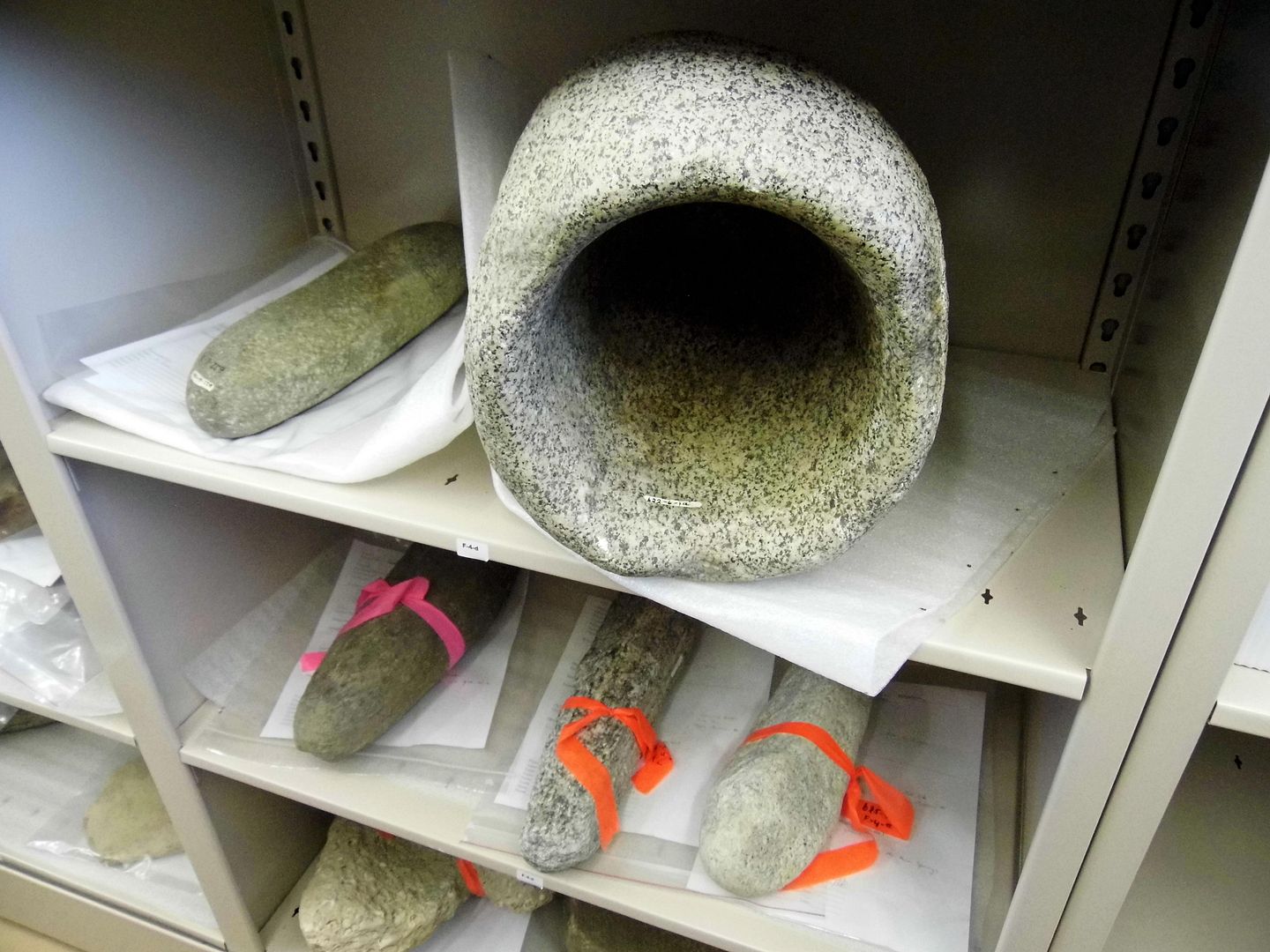
...and prepared it using groundstones (a.k.a. metate, or mortar)...


...and other tools (e.g. mano, or pestle).


More recent human use of the land is now part of the archaeological record, too, from soldiers stationed nearby during World War II...


...to miners looking for a form of calcium carbonate, calcite, which was used in the Norden bombsight technology to improve bomb-dropping accuracy in the wake of the attack on Pearl Harbor.


Traces of the more common lifestyle of the 20th century everyman can be found in the Begole Archaeology Library, which is open to the public on Tuesdays from 10 a.m. to 2 p.m.


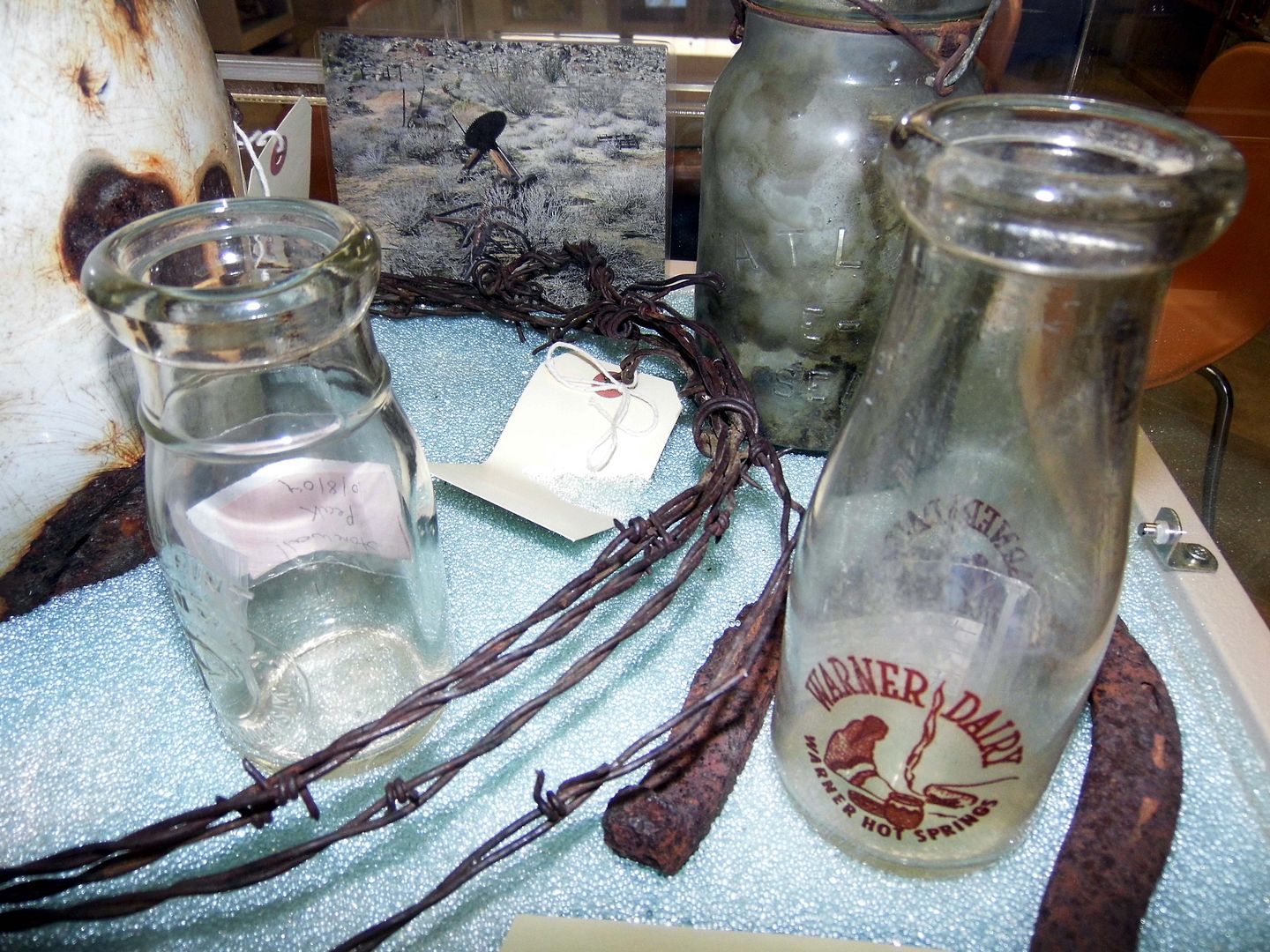
In addition to occasional talks, this non-circulating library also displays rotating exhibits...


...the current one focusing on the Butterfield stagecoach line that ran through Warner Springs and the Carrizo Corridor (now Ocotillo) along the Southern Emigrant Trail.


In The Stout Research Center Laboratory and Paleontology Collection Hall, however, the focus is on non-human animals. 


From modern-day reassembled skeletons of a local mountain lion (Puma concolor) from the early 2000s...


...and a Greater roadrunner (Geococcyx californianus)...


...to examples of the fauna of days gone by, like the fossil cast of a Harlan's giant ground sloth, Paramylodon harlani)...


...and plenty of skulls with jaws of varying sizes...


...you can explore a fraction of what comprises the longest continuous fossil record in North America.


In addition to the ancient and extinct saber-toothed cat (Smilodon fatalis, the California state fossil)...


...there's also the short-faced bear (Arctodus), camels, mammoths, horses and the biggest tortoise you’ve ever seen (Hesperotestudo, a giant relative of the desert tortoise from the Pleistocene).


Their traces have been discovered and catalogued, whether an actual bone (or, say, tooth)...


...or a preserved footprint in prehistoric mud (like that of the large-headed llama, Lamaichnum borregoensis).


In some ways, it feels as though their work has just begun.


A current excavation work in progress is of a mammoth, for which researchers perform precision fossil cleaning with the help of tabletop micro-sandblasters, a dry process also known as "pencil blasting."


Because Anza-Borrego remains undeveloped—and even many of the roads and trails are considered backcountry—new discoveries are coming to light all the time.

And selfishly, I'm glad that most people don't consider the park a major destination outside of the spring wildflower season. Despite its enormous size, Anza-Borrego still feels like a well-kept secret.

I'd kind of like to keep it that way. I'd kind of like to keep it all to myself.

But I'm not very good at keeping secrets.

Related Posts:
Photo Essay: The Creatures That Conquered the Desert
Photo Essay: Antelope Valley Indian Museum, Built into a Butte

April 05, 2019

Photo Essay: The Bygone Celebrity Playground of Borrego Springs

[Last updated 4/6/21 8:27 PM PT—details regarding Hoberg family members clarified]

When I first visited Borrego Springs, nestled in the heart of Anza-Borrego Desert State Park, I'd actually wanted to stay in the nearby mountain resort town of Julian.

But it was September, and apple-picking season was beginning to peak.

The desert, however, was still a little too hot for most tourists, so we had no troubles booking a room in the valley.


I didn't know a thing about Borrego Springs before I visited—save for what a New York Times article had described as something like "The Next Palm Springs That Never Came to Be."


That article suggested we stay at the Palms at Indian Head, and we obeyed. Knowing me, always to root for the underdog, it was the perfect place for me to escape as well.


At the foot of Borrego Palm Canyon, The Palms at Indian Head was originally built in 1947 and opened in 1948 as Hoberg’s Desert Resort, owned by brothers Frank and George Hoberg. In 1950, after Frank's death in 1948, its proprietor became Mildred K. Hoberg, who'd been widowed by a third Hoberg brother, Paul. She moved to the desert with her own widowed mother and three teenage children.


Hoberg sold off the property in the 1950s, remarried, and moved to Northern California. But by 1958—after much of the resort burned down—it had already been rebuilt in a modernist style and renamed “Borrego Palms.”


Eventually, even the new post-and-beam version fell into disrepair and was forgotten, with all eyes shifting to Palm Springs instead. In 1993, new owners started restoring the property to its original splendor, naming it "The Palms" and adding "at Indian Head" after the mountain that rises up behind it, which some say is shaped like the head of a Native American chief.


circa 2008

Unfortunately, the underground observation deck for the swimming pool has been permanently sealed off (though I got a glimpse through it back in 2008 when I stayed there).


circa 2008

The architect of the rebuilt The Palms at Indian Head is unknown—but its design can hold its own among the creations of other desert modernists, like Albert Frey.


circa 2008

And it's in good company, too—as Borrego Springs features architecture (including pioneering use of steel construction) by such Mid-Century luminaries as William Kesling, Cliff May, and William Cody.


circa 2008

Architectural pedigree aside, sunset was absolutely magical at the Palms at Indian Head, as the cottontails emerged from their warrens and hopped freely through the bushes, and the bats began to dive-bomb the placid surface of the swimming pool water (while we were still in it, of course).

circa 2008

Having done it myself, I could also see why the likes of Marilyn Monroe, Clark Gable, Bing Crosby, Orson Welles and other glitterati enjoyed waking up here.


circa 2008

I didn't want to leave, back then—especially not to return to my East Coast life. (It would be another 2+ years before I could move to California permanently.)


circa 2008

The Palms at Indian Head had just been restored, and I was having all these fantasies about becoming its live-in caretaker.


circa 2008

Things like that are possible in the desert, after all.


circa 2008

I liked that Borrego Springs never became the next Palm Springs and retained its remoteness and quietude.


circa 2008

I also loved that the Palms at Indian Head kept the ruins of much of the original property.


You can still walk right through them—despite how architecturally unstable they may seem—though the exterior walls have been painted an incongruous shade of lavender.


There are few signs of trying to demolish the old remains or even make it safer to visit...


...with rusty spikes sticking out at every turn.


It's fascinating to try to piece together the plot of the old Hoberg Resort, walking on sidewalks that led to nowhere, standing behind walls with huge chunks missing out of them.


It's the spooky feeling of walking through someone else's memory...


...piecing the bits together as the details crumble around you.


I wonder what Mrs. Hoberg would think, to see it today.


Original shower stalls and even toilets are still standing, sheltered by salmon- and mint green-colored tile walls.


But beyond this upright skeleton, this standing shell of a bygone resort, there lies the desert...


...wide open and blue, with the day-moon rising and a frondless palm piercing the sky.

Related Posts:
Just Deserts.
Photo Essay: Borrego Springs Ranch (Closed, Reopened as La Casa del Zorro)—Updated for 2019