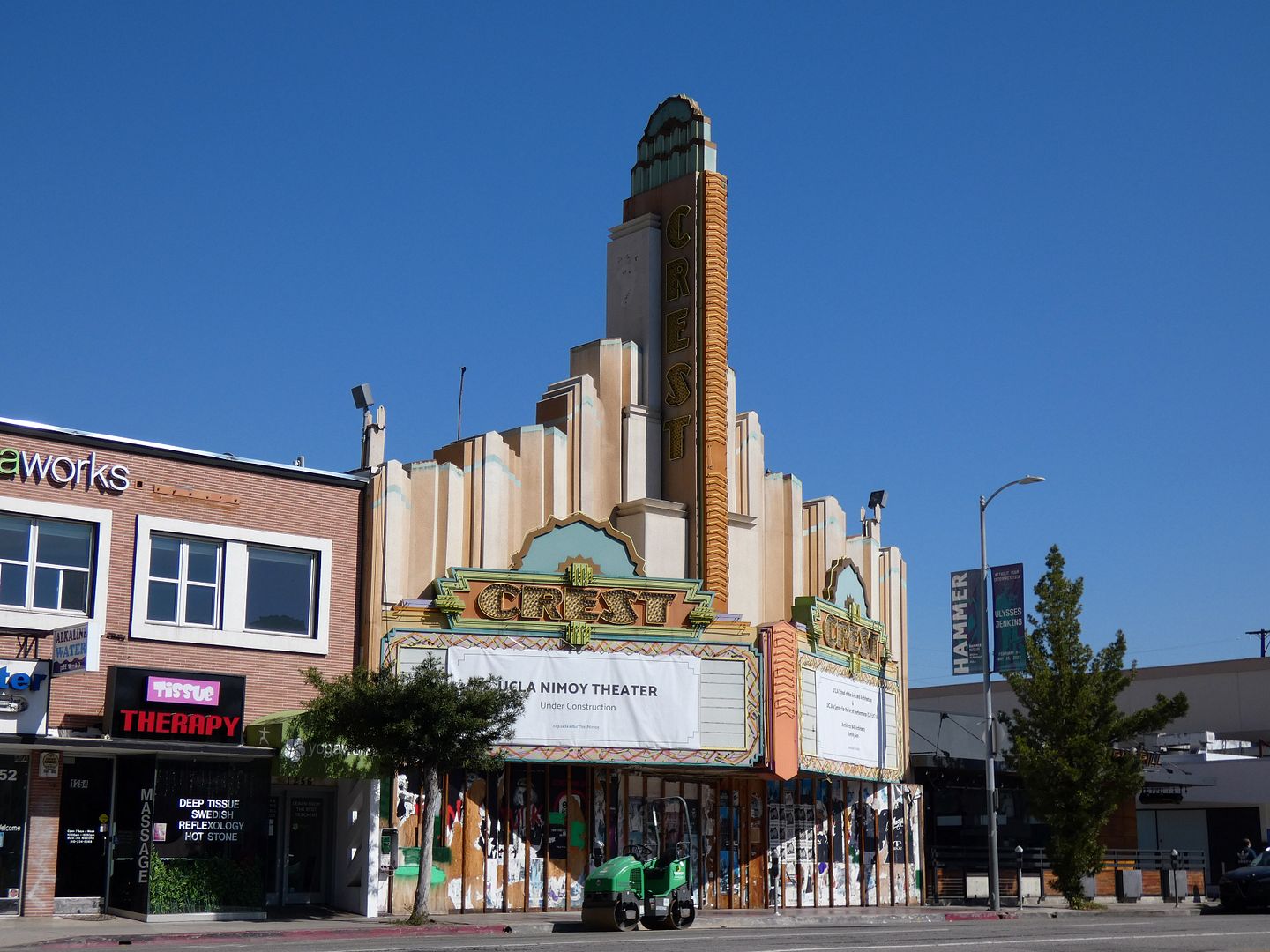
I don't remember why I never saw a movie at the Crest Theatre in Westwood, Los Angeles before it closed for good in 2016. To be honest, I don't really remember it being open or having heard about it hosting any screenings.
circa 2022
I only really took notice of it when it was closed, and then upon the announcement that UCLA was converting it into the "Nimoy Theater" (named after Star Trek actor Leonard Nimoy) for live shows presented by the Center for the Art of Performance. At which point, I became desperate to get in.
In 2013, I reported on a collection of statues at Pierce College in Woodland Hills, California that had been handmade by amateur sculptor John Ehn.
A descendent of pioneers, he'd dubbed himself "The Old Trapper" (or "O.T.") and built a motel (or "lodge") in the Sun Valley neighborhood of the San Fernando Valley in 1941.
Ehn had no training besides briefly shadowing Claude Bell (of Knott's Berry Farm/Cabazon Dinosaurs fame)—but he took it upon himself to tell stories of the Old West through his art, using his family members as models to portray scenes from pioneer family life.
"O.T." died in 1981—and his heirs sold the motel property (or, more accurately, were forced to sell it) to the Burbank-Glendale-Pasadena Airport Authority for the expansion of the airport runways.
The statues were relocated to Pierce College in 1988.
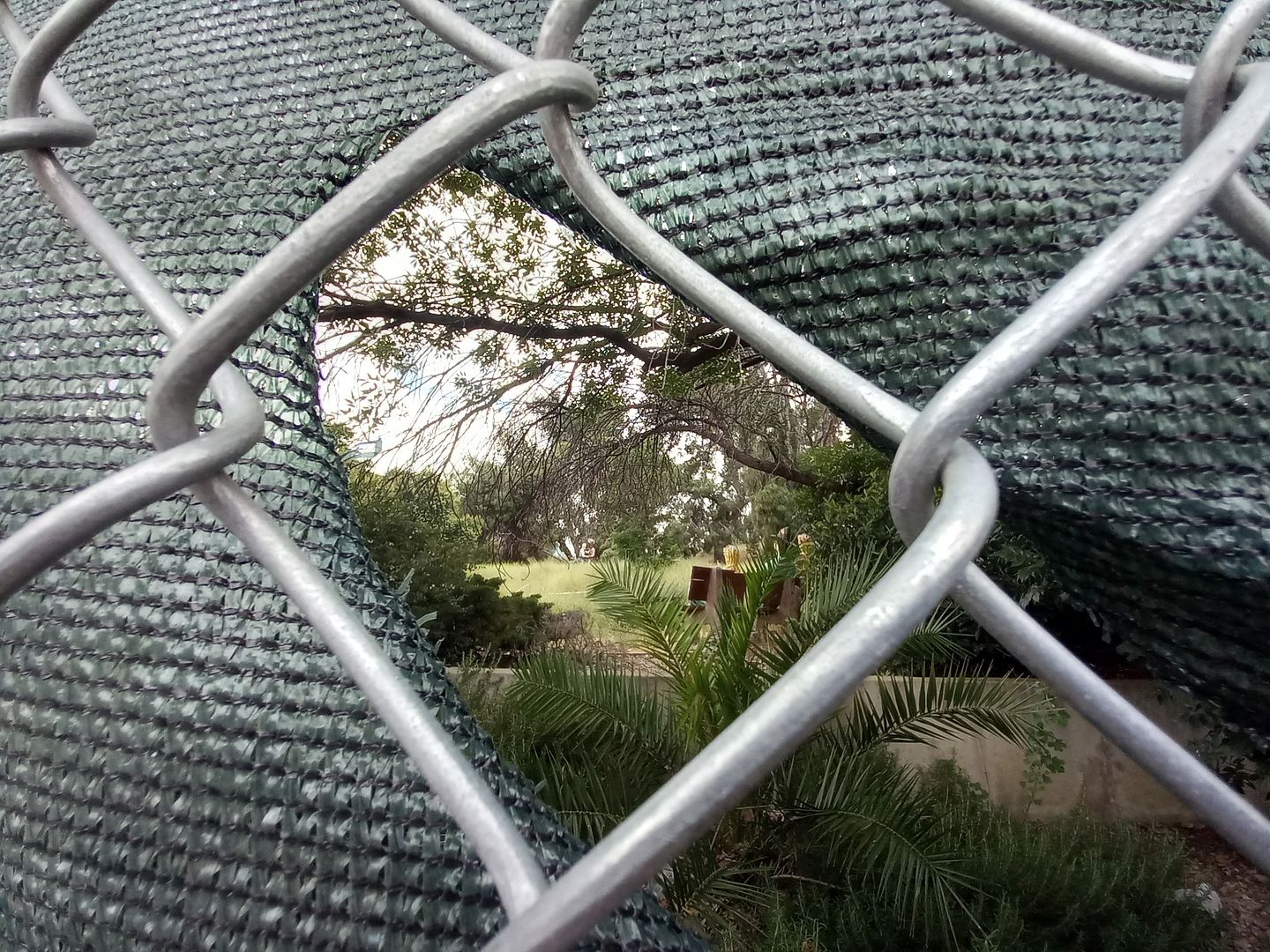
They were always a little bit hard to find—but now they're almost entirely hidden from view.
I've been attending San Diego Architectural Foundation's Open House San Diego for the last few years—even squeezing in a visit a little over a week before everything shut down in 2020.
But this year was different—not because of the pandemic, but because my car has been sitting in the shop (essentially undrivable) since January 17.
I've been getting around on foot and via public transportation (like a good former New Yorker). But that was going to put a cramp in my style somewhat for Open House San Diego.
I knew I could take the Amtrak down to Santa Fe Depot no problem—and that the trolley could get me around to lots of places. But I wouldn't be able to cram very much into one day.
So, I agonized over having to limit myself to just one general area—and having to choose among the dozens of sites (when normally I can cram at least four or five into a day).
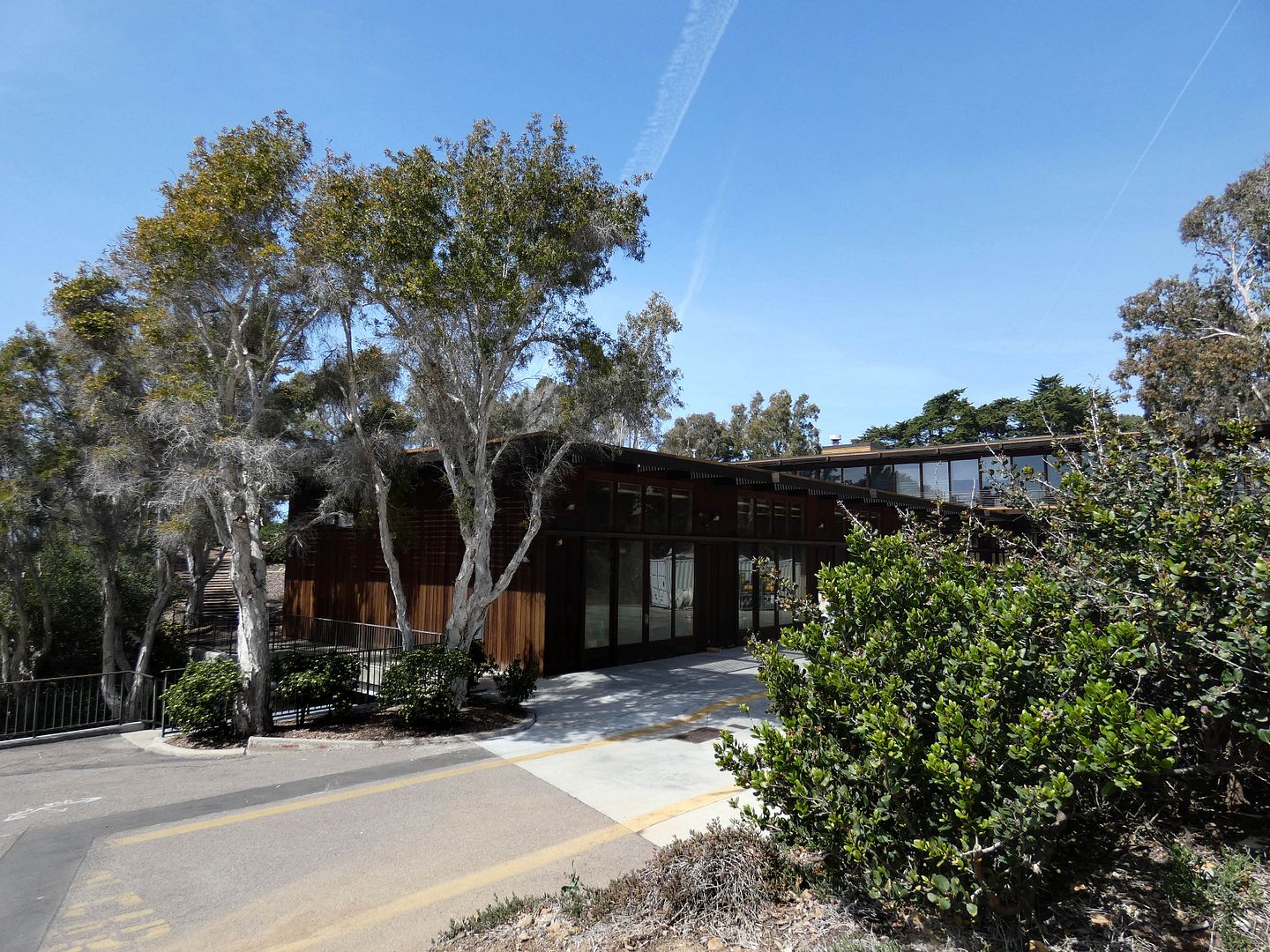
Instead of going for quantity, I went for exclusivity—and chose to keep my reservation to the sold-out tour of the Institute of Geophysics and Planetary Physics (IGPP) Munk Lab at the UC San Diego’s Scripps Institution of Oceanography in La Jolla, co-hosted by AIA San Diego. (Fortunately, I could get pretty close to it by taking the new Blue Line trolley extension to UCSD.)
At some point, I'll get to visit all of the California missions. But for now, I'm slowly ticking them off my list as the opportunities present themselves.
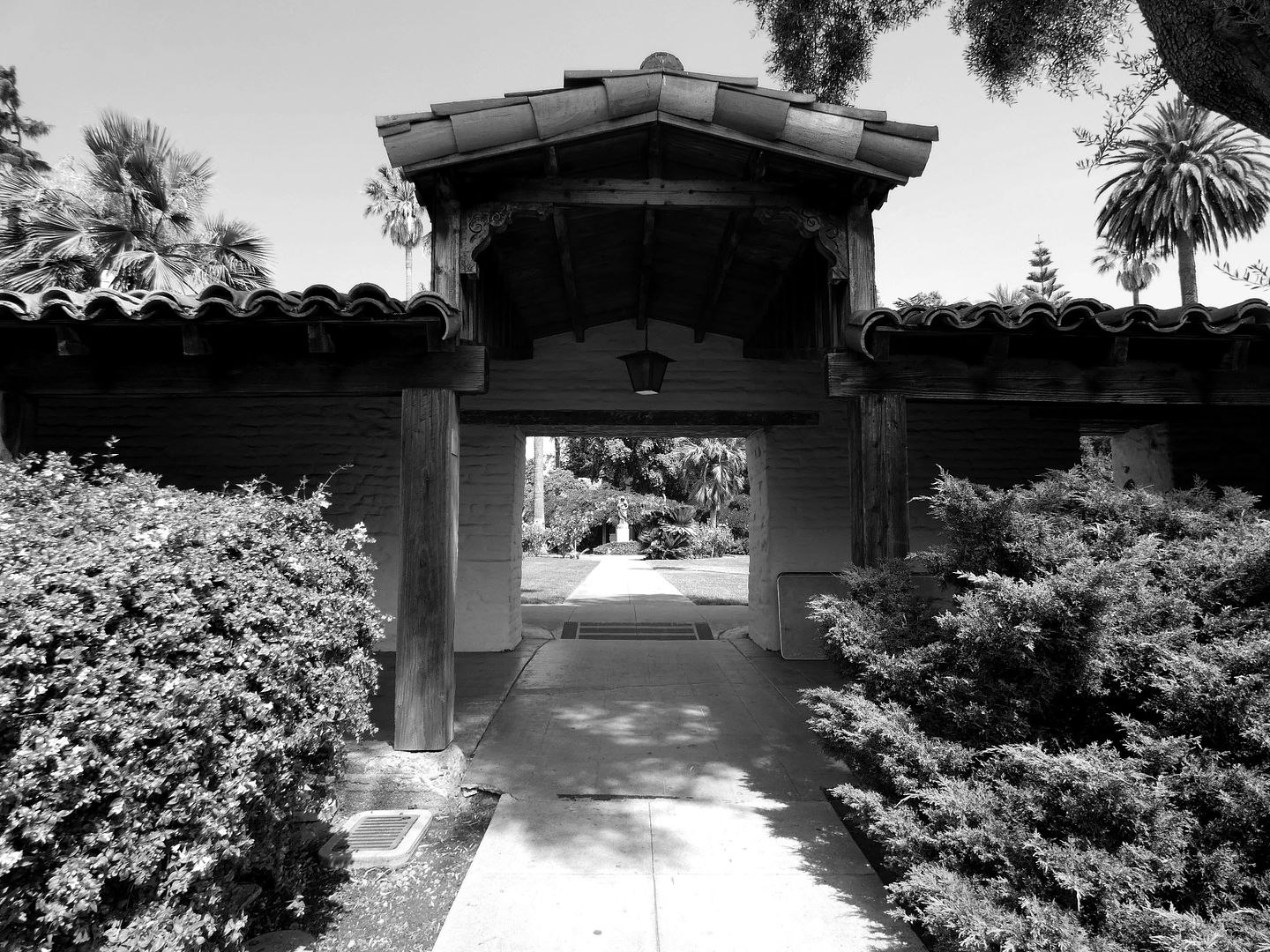
My August trip to San Jose brought me to Mission Santa Clara de Asis—the eighth out of the 21 total, but the first mission to honor a woman.
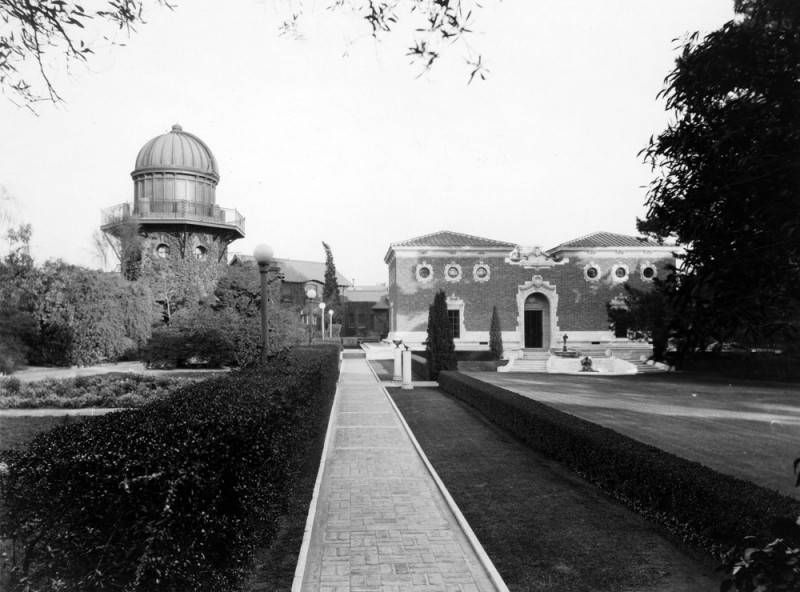
The William Andrews Clark Memorial Library in the West Adams neighborhood of Los Angeles was one of those places I didn't know I wanted to go to until it was closed and I couldn't go.
I think I first heard about it when it was undergoing a restoration (and earthquake retrofitting), sometime between 2015 and 2017. I kept my eye on it—and finally managed to take a tour in 2018.
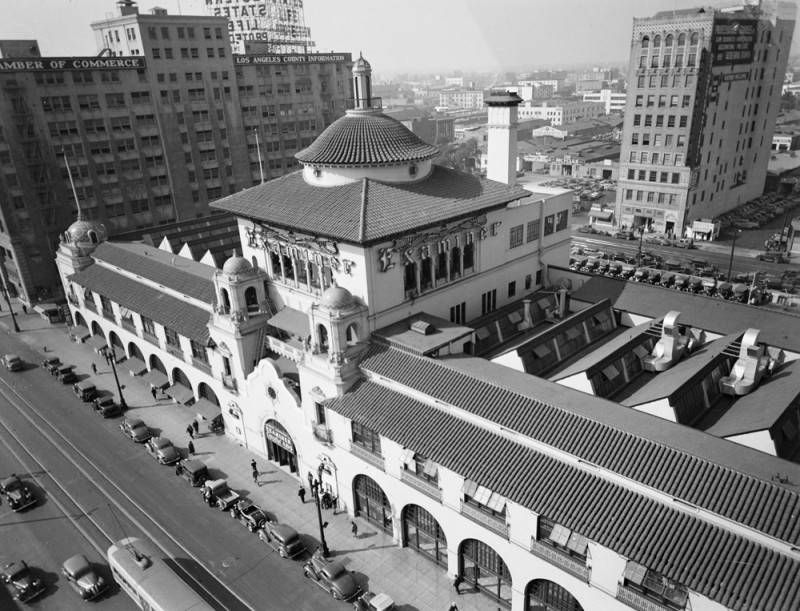
L-R Observatory, library (Photo: Security Pacific National Bank Collection, via LAPL)
It never occurred to me that there'd be any Arts and Crafts activity anywhere in New York State, where I grew up. (I guess I forgot about Stickley.)
But as I was traveling in and out of Buffalo on my way to make a hometown visit to Syracuse a couple of months ago, I arranged a visit to what I discovered is a federally recognized center of the American Arts and Crafts Movement.
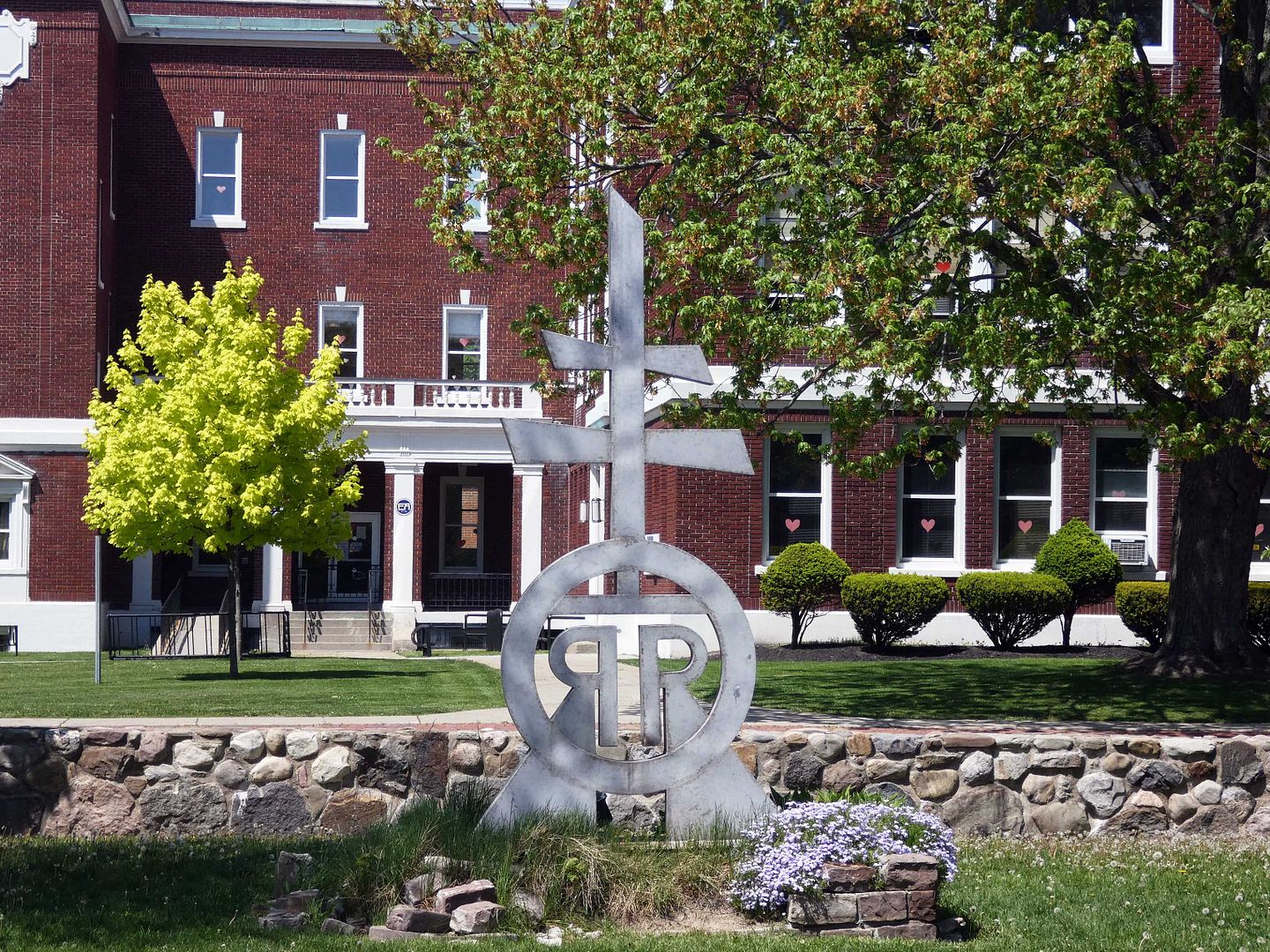
It's the national historic landmark (designated 1986) known as "The Roycroft Shops" (1895-1938)—located in the Buffalo suburb of East Aurora, in Western New York.
The more that our historical town centers get gobbled up by high-rise hotels and other new developments, the more I really appreciate when historical societies save and relocate old buildings to create their own historical villages.
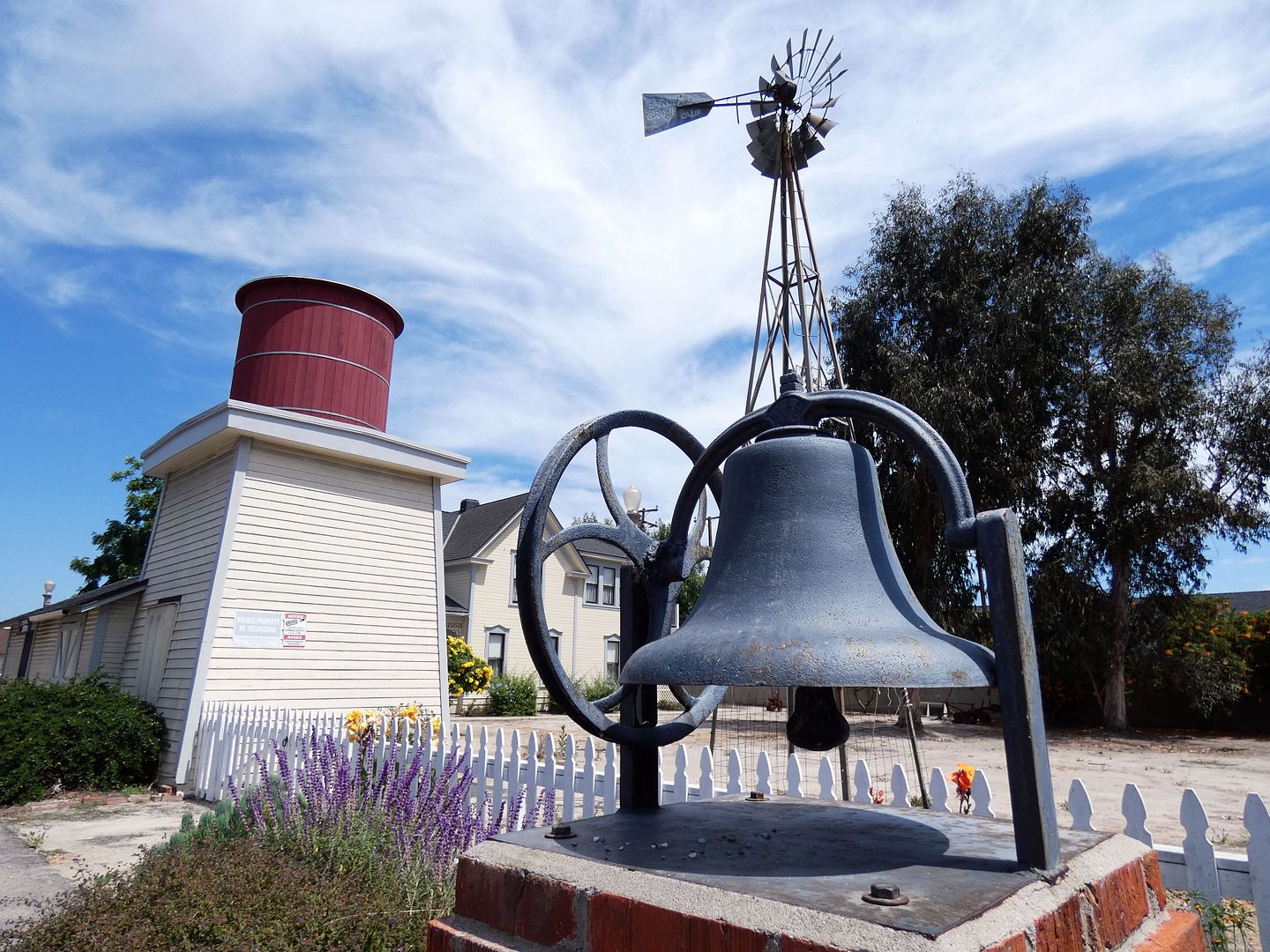
Case in point: Garden Grove Historical Society's time capsule town, located on 2 acres of the former Stanley Ranch, where local pioneer Edward G. Ware settled in 1876 after relocating from Massachusetts.
[Last updated 7/27/25 9:55 PM PT—The Ryan Historic District was officially listed on the National Register for Historic Places in January 2025. For more info, click here and here.]
In 2013, Death Valley Conservancy received a donation of a 40-acre site—3000+ feet above sea level, overlooking the valley below, 15 miles from the main visitors' area at Furnace Creek.
Part of the Hillside Group of mines, it had been the main operation for borate mining in Death Valley for Pacific Coast Borax Company from 1914 to 1927.
Borate ores mined here were transported or processing via the narrow-gauge Death Valley Railroad (dismantled 1931) to its eastern terminus at Death Valley Junction.
In 1927, PCBC relocated its operations to Boron (a.k.a. the Kramer District), where it became known as U.S. Borax as of 1956 and heretofore Rio Tinto, since1968.
Today we know the area simply as Ryan Camp, named after PCBC's field engineer John Ryan—but this conservancy-owned parcel outside the bounds of Death Valley National Park is more than just an old mining ghost town. And it's far from abandoned.
Take one of the tours offered in the spring and fall—led by the full-time, live-in caretaker—and you'll see how Death Valley Conservancy is delivering on its mission to "preserve what is left and restore where possible." And that includes the second life of Ryan, when PCBC got into the tourism business and converted its facilities into the Death Valley View Hotel.
Operated by the Death Valley Hotel Company—whose holdings also included facilities at Death Valley Junction and Furnace Creek (until the 1960s)—it provided desert accommodations full-time until 1930, when the railroad was dismantled.
Visitors would arrive from Death Valley Junction via gas-fueled motor coaches along the former mining rail right-of-way...
...or, after 1930, from Furnace Creek Inn, if it was full and guests came to Ryan to take advantage of overflow accommodations.
Sure, there was a fascination with the hot, unforgiving desert in the early 20th century—but at Ryan and its Death Valley View Hotel, the main attraction wasn't necessarily the view, but rail trips through the workings of the old abandoned borax mines on the "Baby Gage" (more on that in a little bit).
Since tourists had come all that way—and to such a remote area—they'd make a whole trip out of it, staying at the hotel and eating in the dining room that had been fashioned out of the old mining camp's messhall.
There was a kitchen in the back, but I doubt any travelers came here specifically for any of the hotel amenities.
The novelty was in how you'd be surrounded by all this mining stuff—frozen in time and literally frozen on the tracks—and you could pay your respects in a kind of outdoor reliquary of Old West-ament artifacts.
There's another reason why people still visit Ryan, though the property was mothballed by 1962. A film crew made the ridge above the old power house (circa 1924) famous when they featured it in the film Spartacus.
It looks exactly the same now as it did back then. (Scroll to the bottom of this post to watch the clip.)
Of course, the movie's depiction of what's become known as "Spartacus Hill" doesn't show the circa 1924 warehouse that likely also housed staff (including kitchen personnel)...
...though it's fared the hot, dry summers and occasionally snowy winters very well.
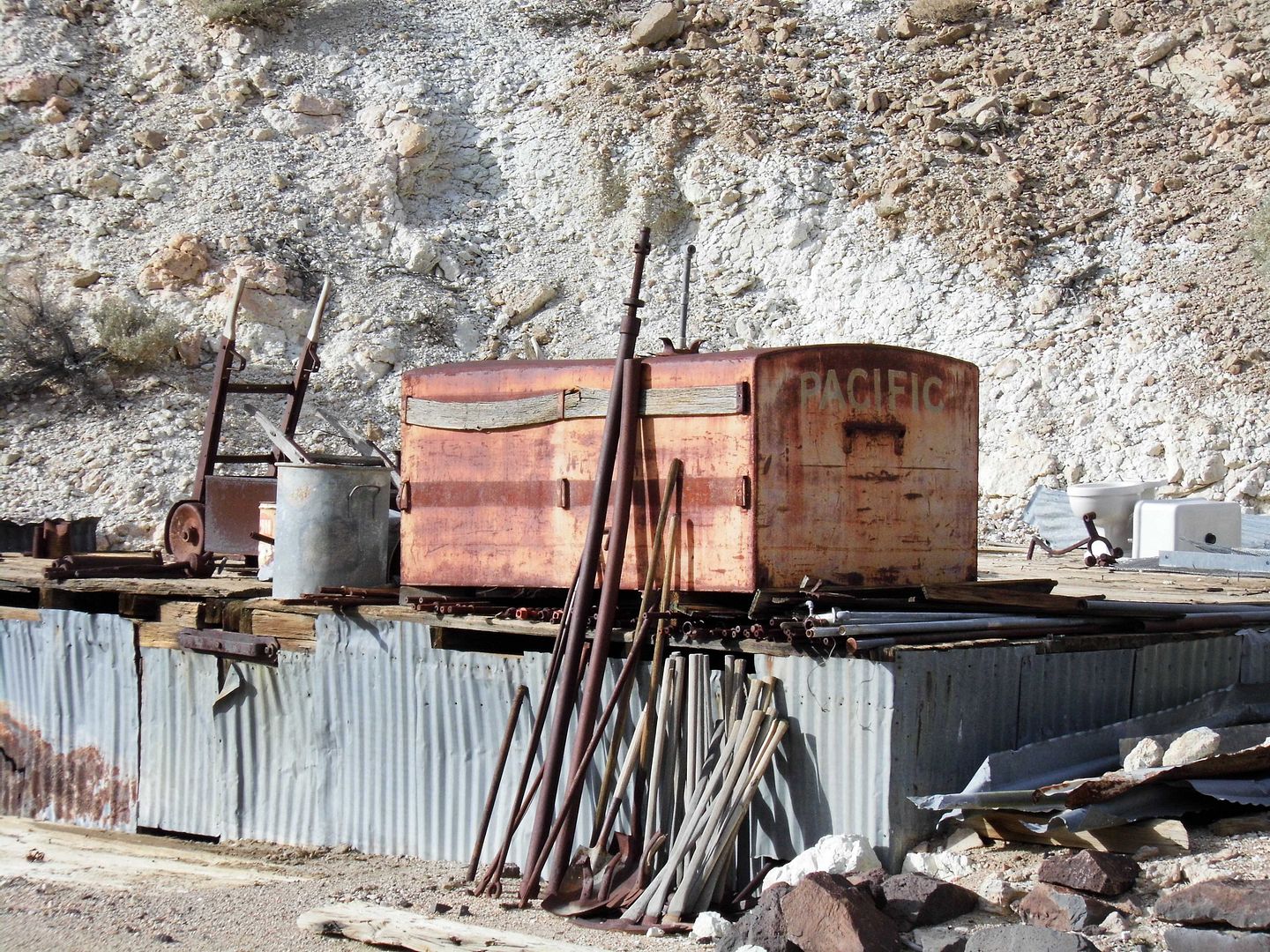
And it's still a kick to see rusty old relics emblazoned with "Pacific" and "U.S. Borax"...
...as well as the old ore cars still in place.
Probably the highlight of the tours given today is the 24-inch baby gauge railway that once hauled water, timber, explosives, and other supplies to the Grandview, Lizzie V. Oakley, and Widow mines to the south for a total of 6 miles.
The "Baby Gage," as they called it, also hauled borate ores back to Ryan, where they were transfer to the Death Valley Railroad and mosey on their way to Death Valley Junction.
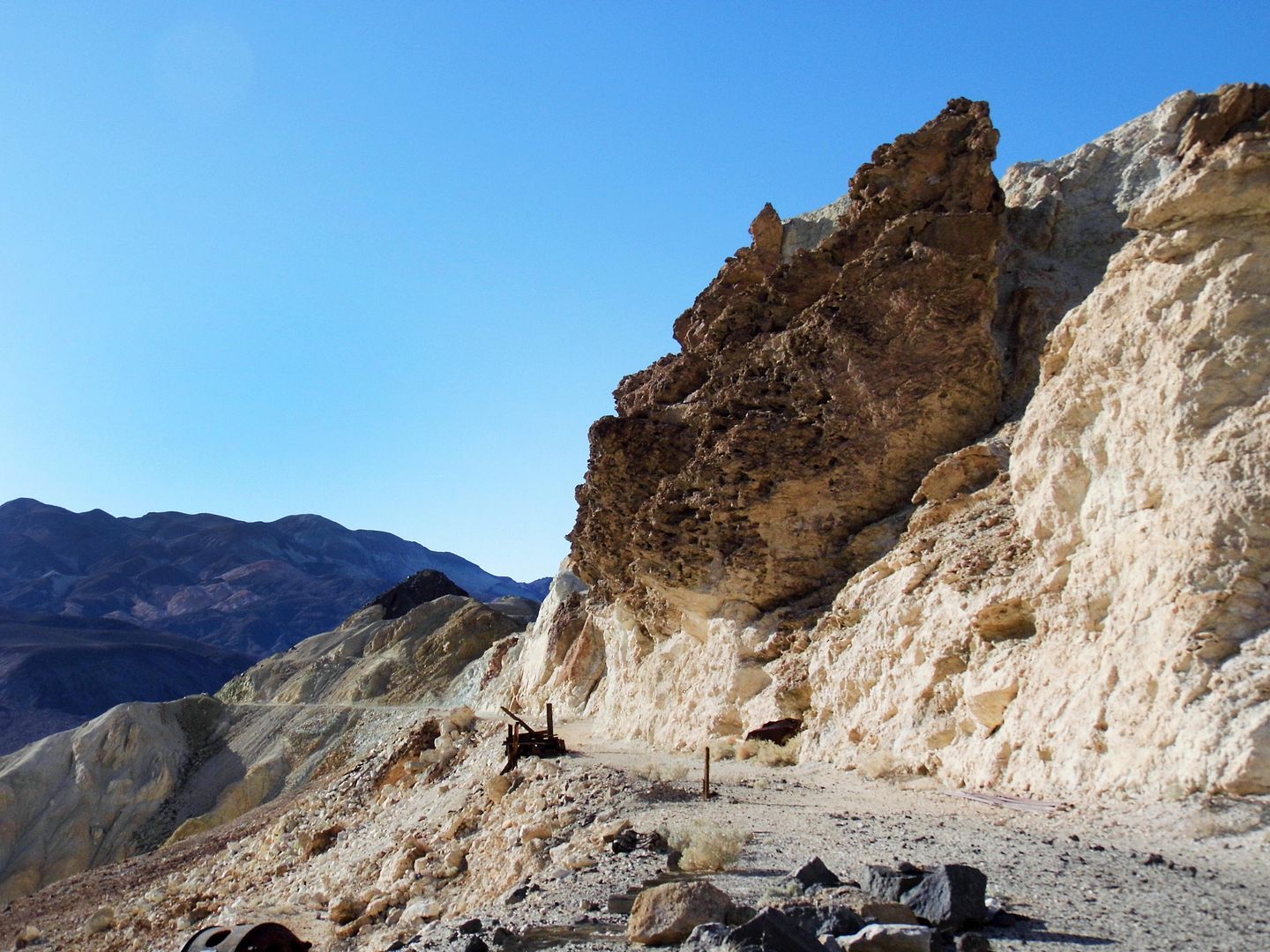
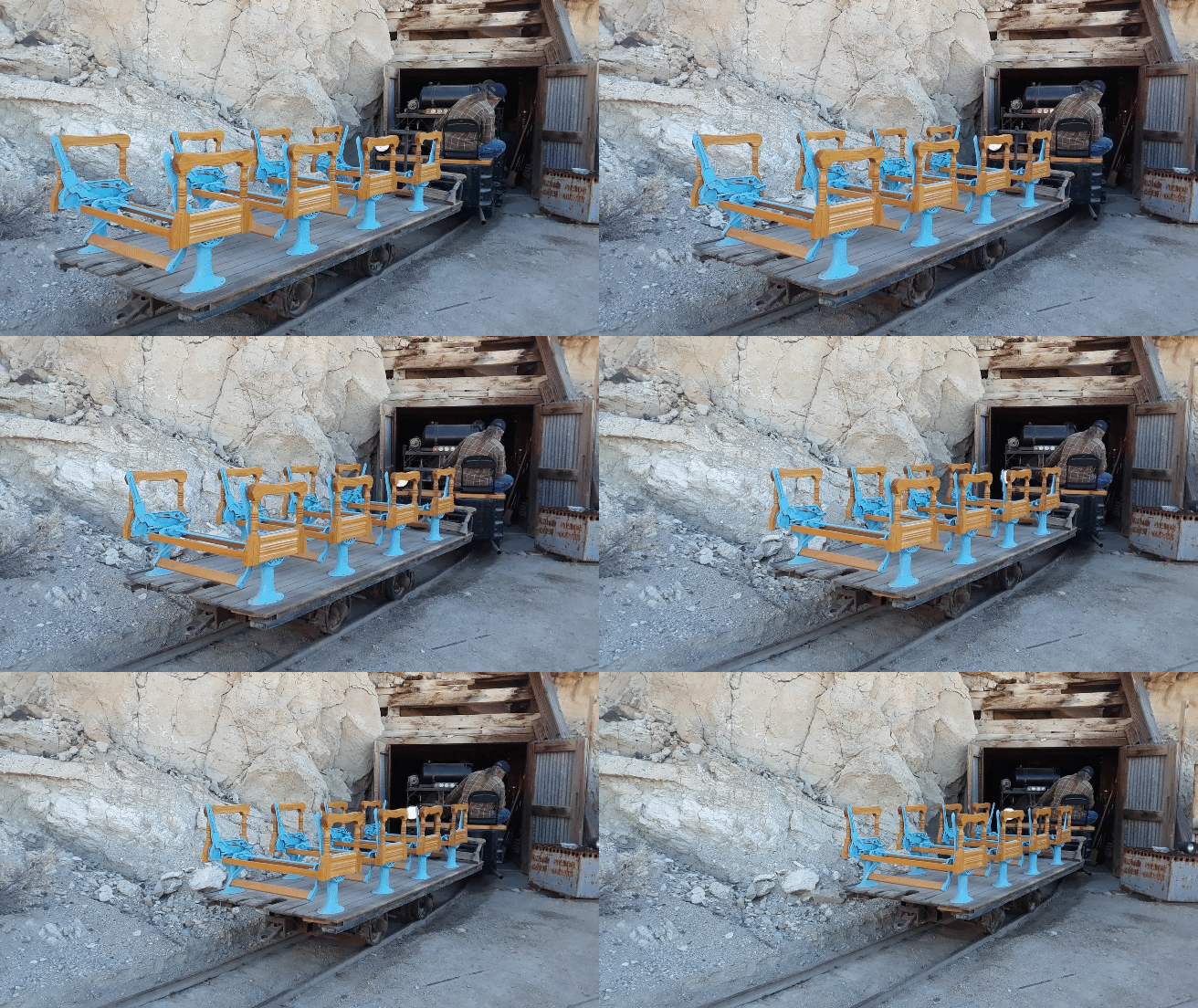
When the Death Valley View Hotel began to welcome tourists to Ryan, its operators added seats to the Baby Gage so it could carry passengers "'round the Funeral Mountains" to the Widow Mine, 4 miles away—right there through that same old haulage tunnel—until it ceased in 1949.
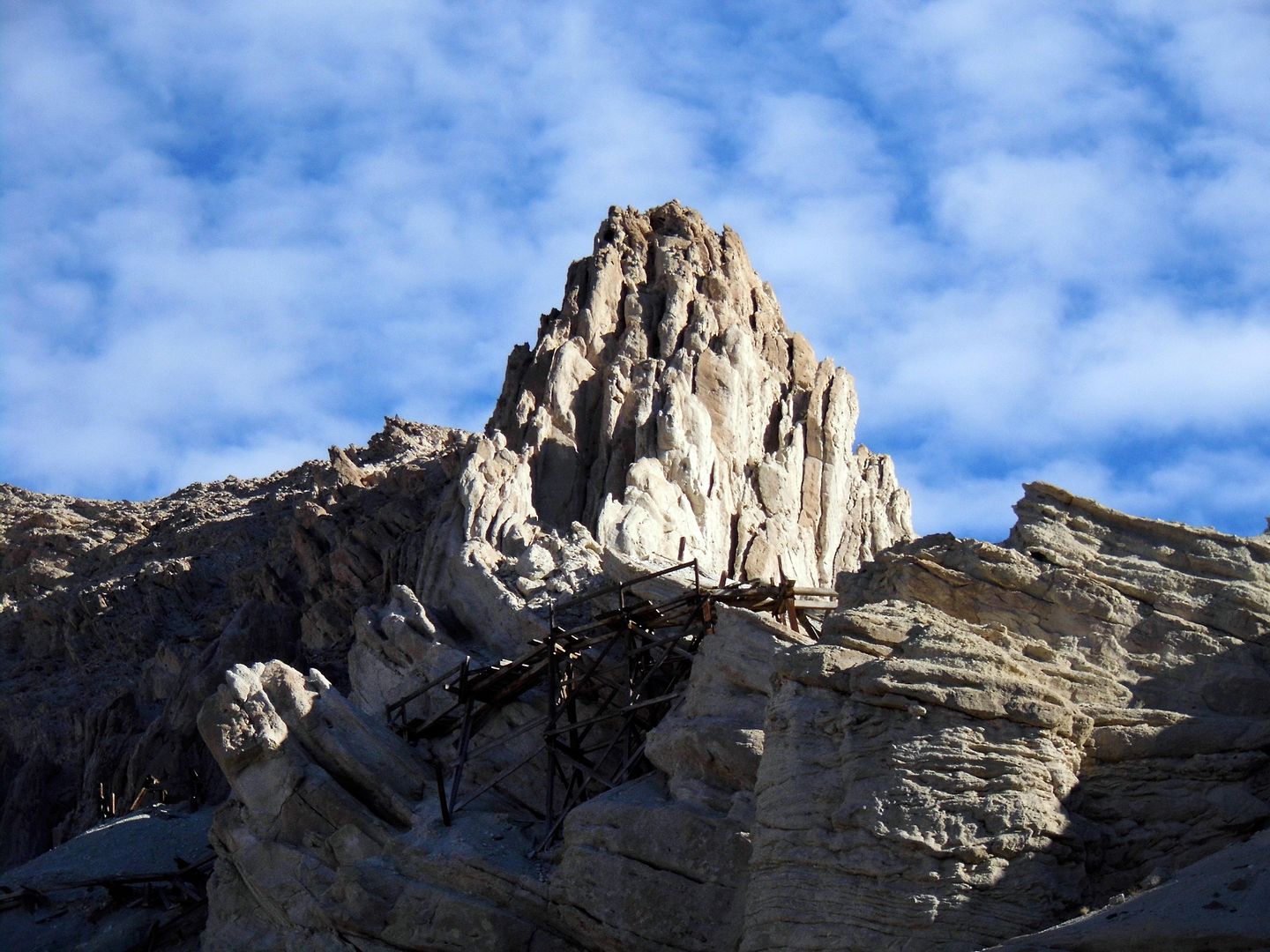
From the present-day Baby Gage display, you can look up and get a good view of the Upper Biddy McCarthy Mine...
...where there are still remains of a skip track, a dump trestle, and who knows what else?
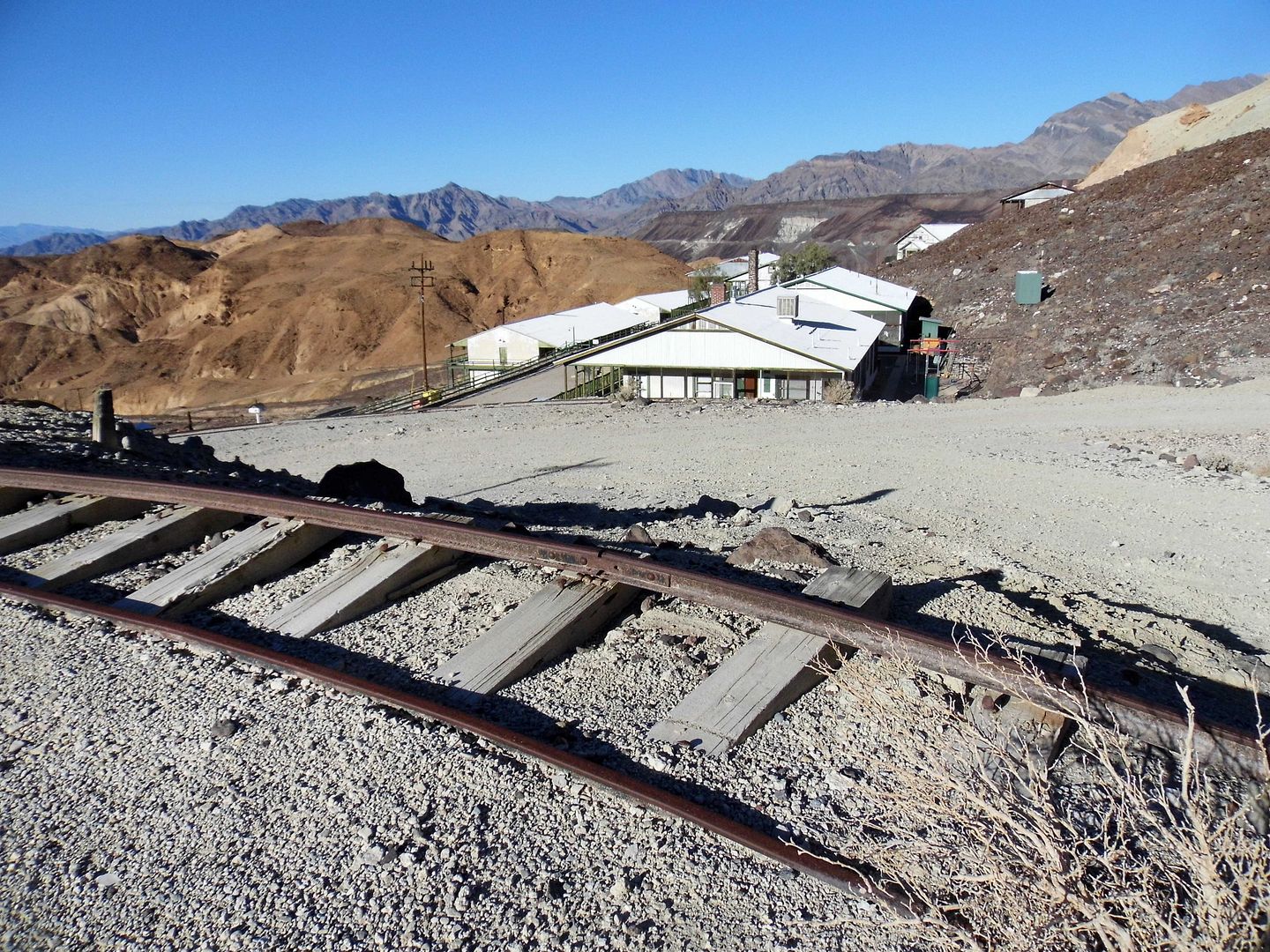
Now, one of the reasons that Ryan lent itself to being repurposed as a destination getaway is because it wasn't just a mine—but an entire company town that was home to the miners, their families (including enough children to necessitate a schoolhouse), and other staff.
And you can still see some of the worker dormitories, staff houses, and guest houses...
...which were outfitted with electricity, steam heat (generated by an oil-fueled boiler), and refrigeration and supported by a sewage system and an ice-making plant.
The huge, two-story house of Superintendent William Smitheram (until 1916) was converted (sometime between 1919 and 1921) into a hospital building, replete with a surgery room—though no surgical team was staffed alongside the nurse who gave onsite care. It later was retrofitted to provide rooms for hotel guests.
With its corrugated galvanized steel paneled roof, Bunkhouse #1 was constructed in 1920 and then converted into Guest House #1 for the hotel.
Its outer stairs and veranda are being restored and/or rebuilt, while the interior guest rooms are being returned to their former glory...
...right down to the 1920s-era patterned carpet, which has been successfully reproduced by Brintons in the UK.
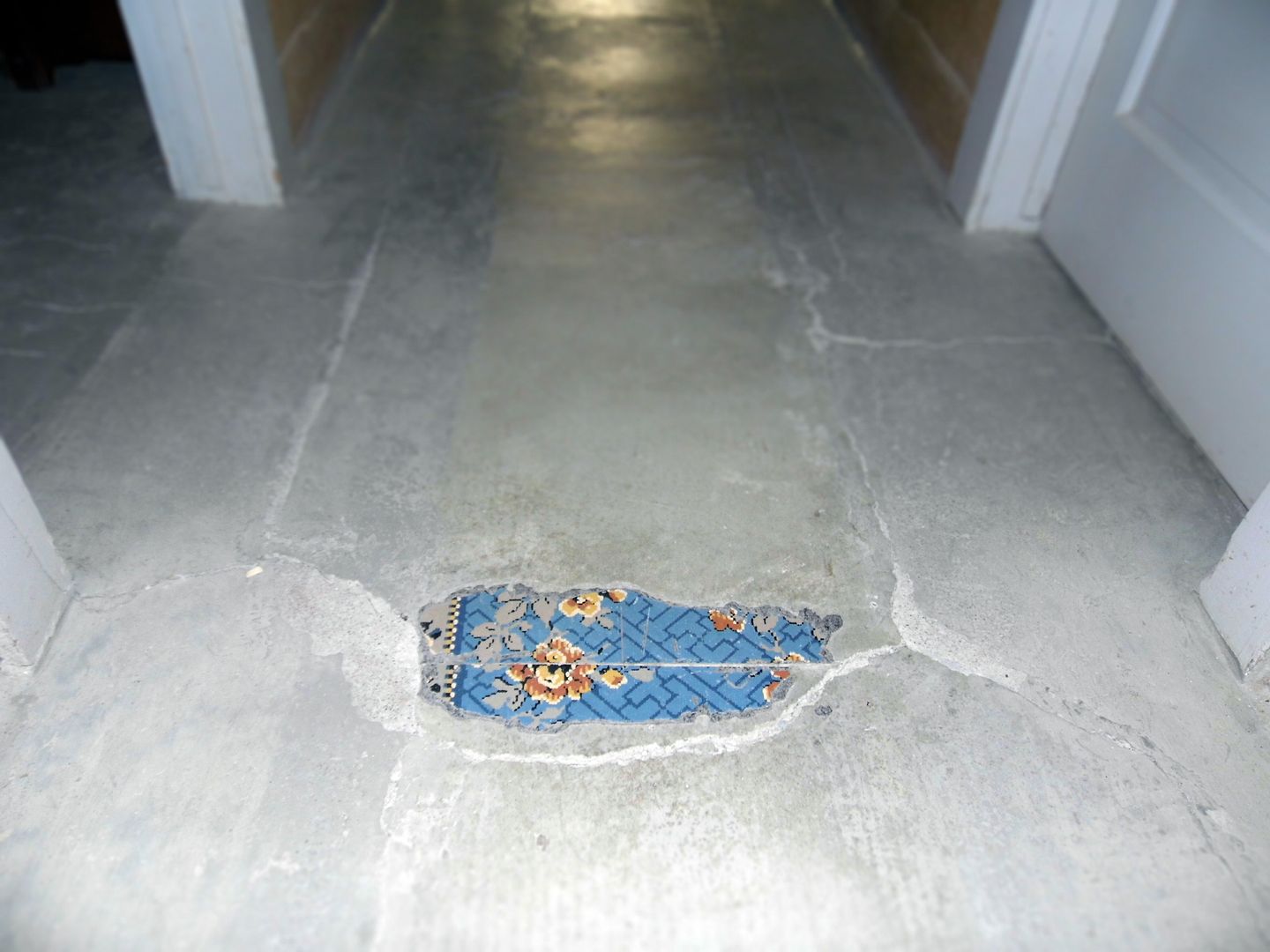
Many different patterns of linoleum once appeared throughout the camp's buildings...
...but what remains now are often just fragments, yet to be identified (much less reproduced).
And there's plenty in Ryan that's gone forever, not to be preserved or restored—like various shops, garages, and cabins that burned down or were demolished or moved elsewhere.
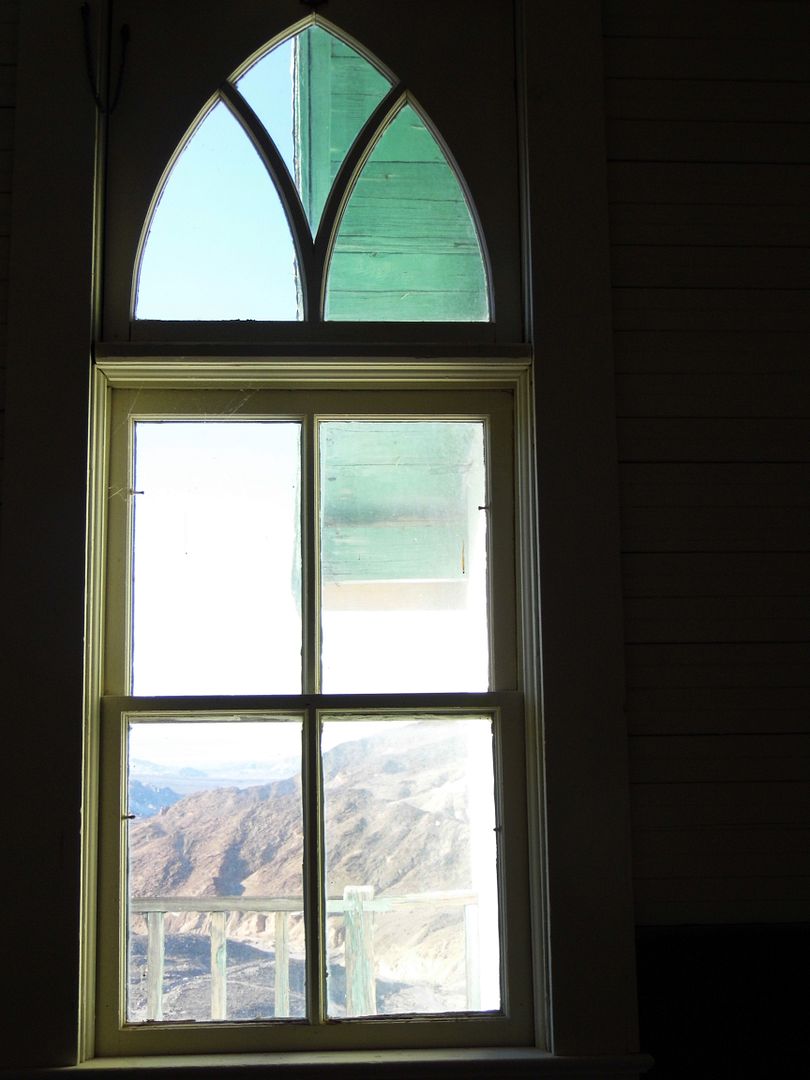
One of Ryan's landmark structures was actually relocated to the camp via rail in 1919—the rec hall (a.k.a. clubhouse a.k.a. dancehall).
It was dedicated in 1907 as St. Mary's Catholic Church in the gold mining camp of Rhyolite, Nevada. It nearly ended up in the Goodsprings mining district, but it moved to Ryan instead.
After its arrival, a stage was added for community meetings and secular recreation, though its interior still evokes an ecclesiastical purpose.
Stabilizing and restoring the rec hall is one of the major undertakings for Death Valley Conservancy's efforts in Ryan right now.
And finally, there's the schoolhouse building (circa sometime between 1919 and 1922)—which, like so many other structures in Ryan, is clad in industrial corrugated metal. A playground stands eerily abandoned in its recess yard.
Inside, the old school desks sit empty, the water-damaged wallpaper curling with every passing day that the bell no longer calls children to class.
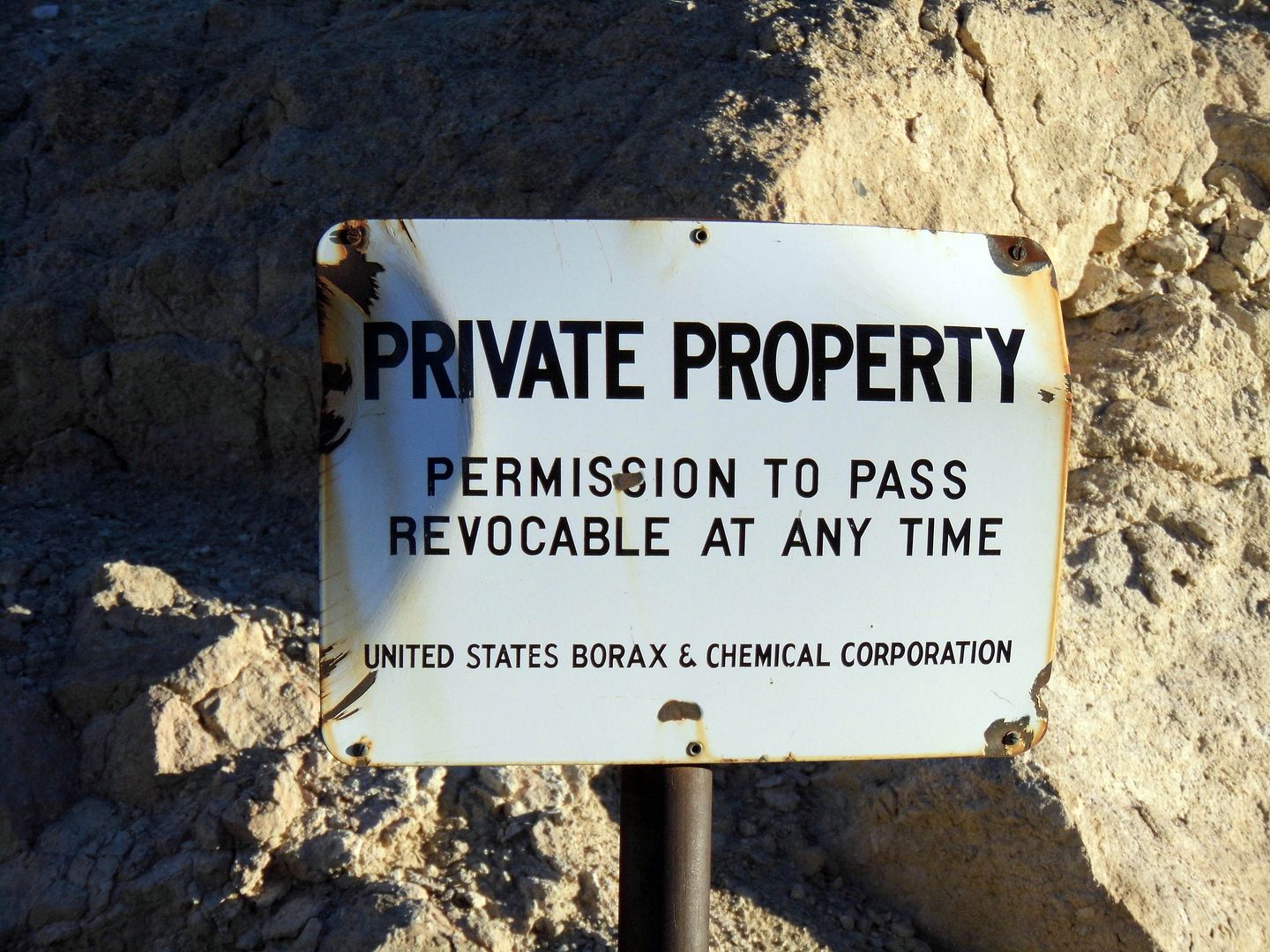
I know it may be tempting to try to catch a glimpse of Ryan, but it is tightly patrolled and non-scheduled visits are strictly prohibited. Trespassing is not tolerated and prosecuted under the fullest extent of the law.
I arranged my visit as part of a public tour in November 2018 and received permission to enter structures and photograph the site.
I would consider the definitive history of Ryan's period of significance in mining and tourism to be the dissertation "Life and work in the Ryan District, Death Valley, California, 1914-1930: a historic context for a borax mining community" by Mary Ringhoff, available to read via USC Digital Library.
For lots more contemporary photos (circa 2012), visit Steve Hall's Death Valley Adventures. For the National Park Service publication "Death Valley Historic Resource Study: A History of Mining," click here.
Three weekends ago, I was still looking for every and any excuse to get out and do something. I found the pandemic restrictions almost liberating—freeing me from my "regular schedule" and allowing me to cross some places off my list.
The only challenge was finding someplace on my list that was actually open and unlocked—and where I was not only allowed to be, but also safe to be.
I didn't have to go far to finally make it to the sculpture garden on the UCLA campus.
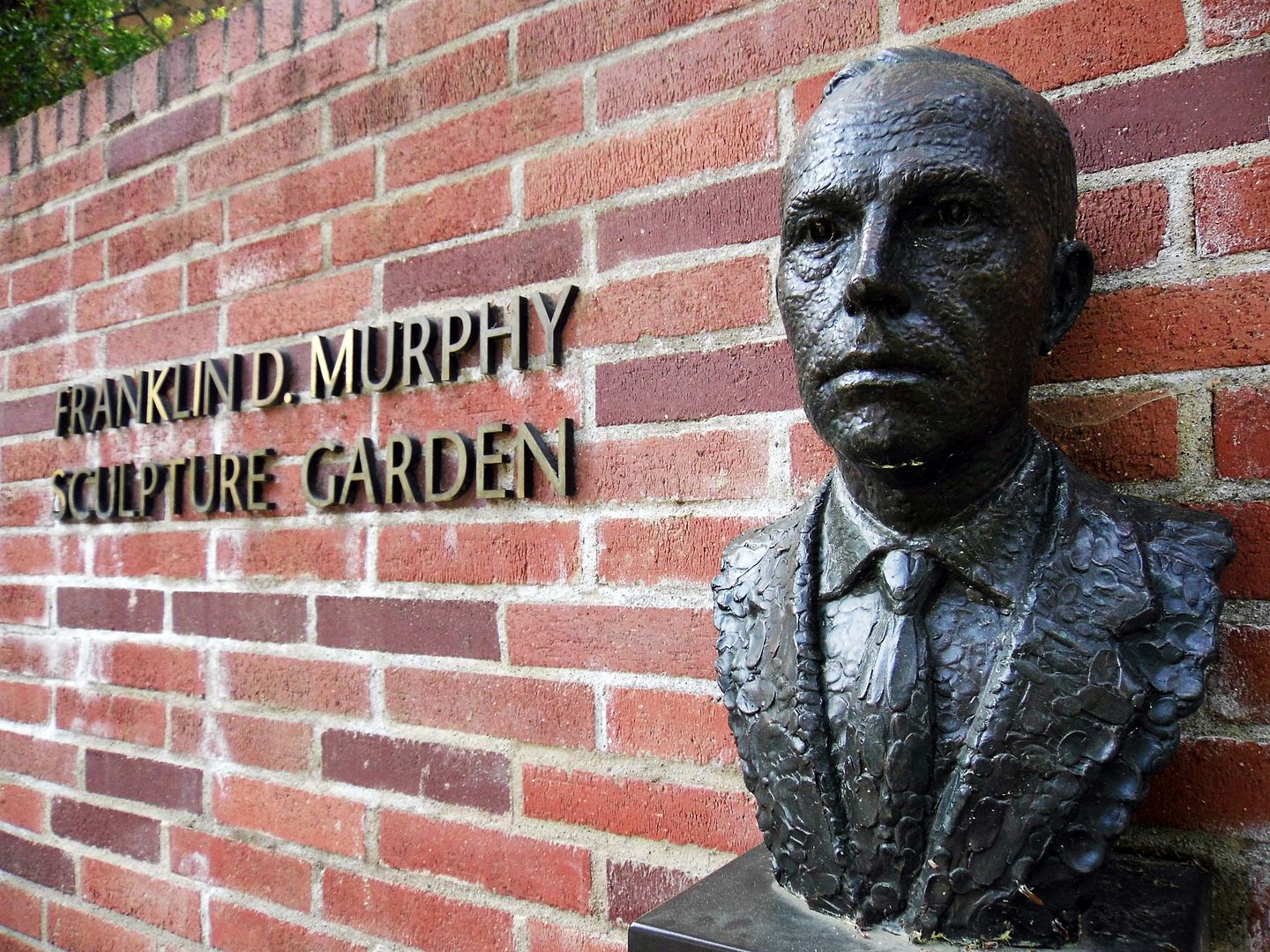
Technically part of the Hammer Museum, also in the Los Angeles neighborhood of Westwood, the Franklin D. Sculpture Garden was dedicated in 1967 and named after the university's third chancellor.
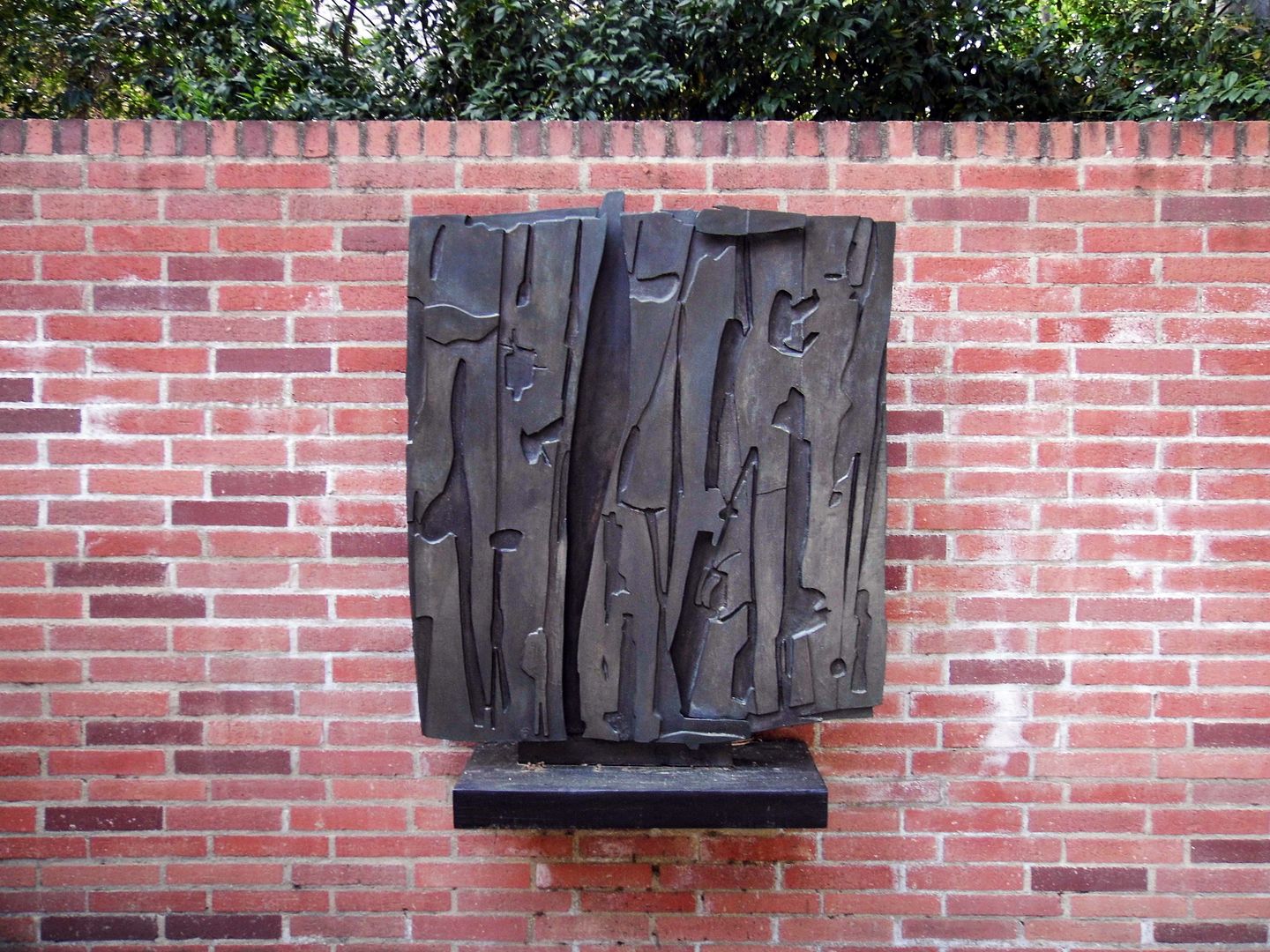
Located on UCLA's north campus, it's a 5-acre sprawl of both figurative and abstract works by sculptors from all over the world—like Italian Pietro Consagra, whose Colloquio Duro ("Difficult Dialogue") bronze relief from 1959 adorns the same wall as the bust of Chancellor Murphy himself (by Eldon C. Tefft, circa 1960).
It's hard to believe that American sculptor Dimitri Hadzi's Elmo III, circa1960, now stands where there once was a parking lot.
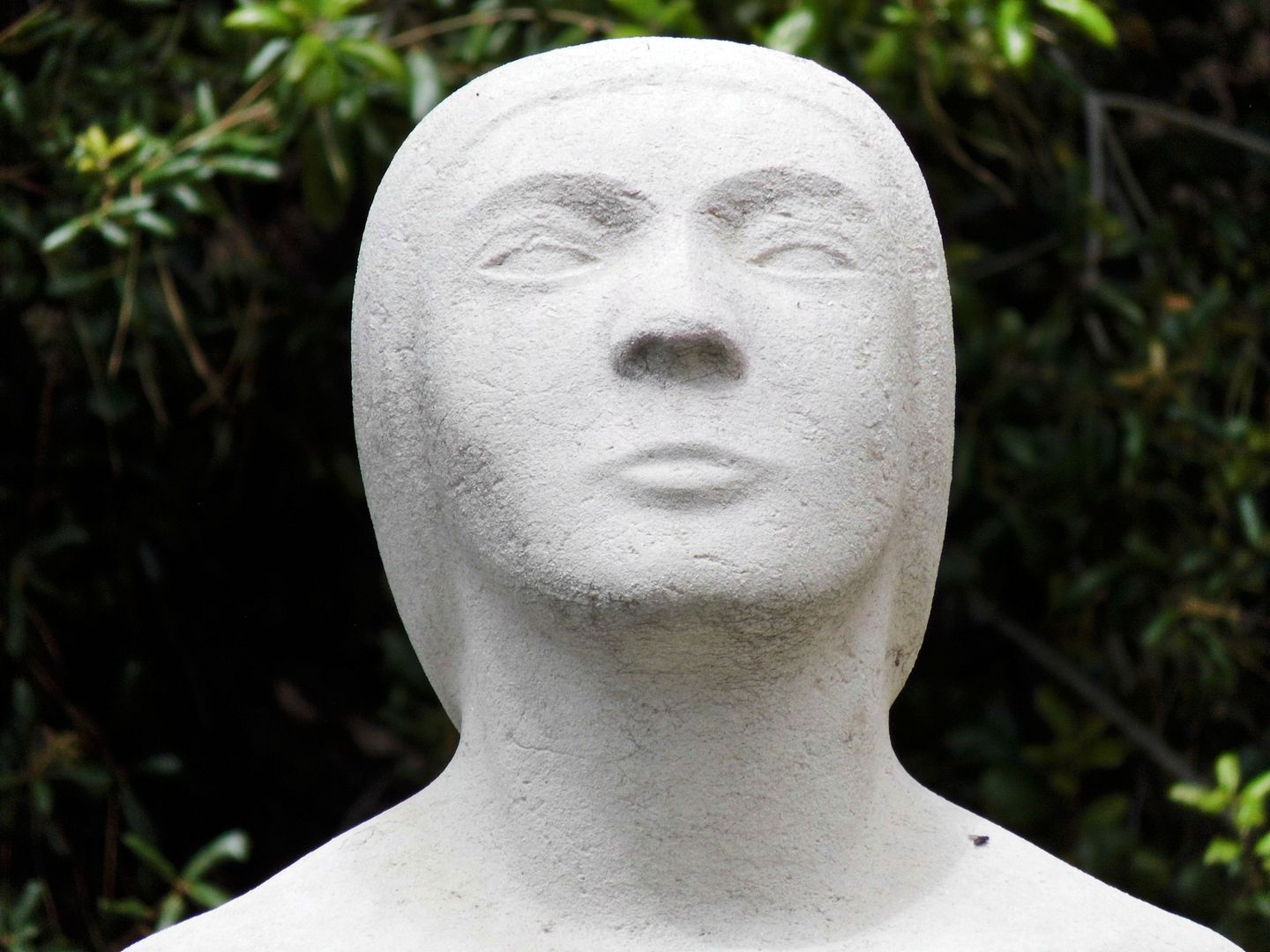
Supervisory landscape architect at the time Ralph Dalton Cornell (of the firm Cornell, Bridgers, and Troller) had to design the garden without knowing what was going to be placed there or where. And yet every placement—like British sculptor Eric Gill's Mulier ("Mother," undated but probably prior to 1911) at the head of a fountain in front of UCLA’s Young Research Library—feels just perfect.
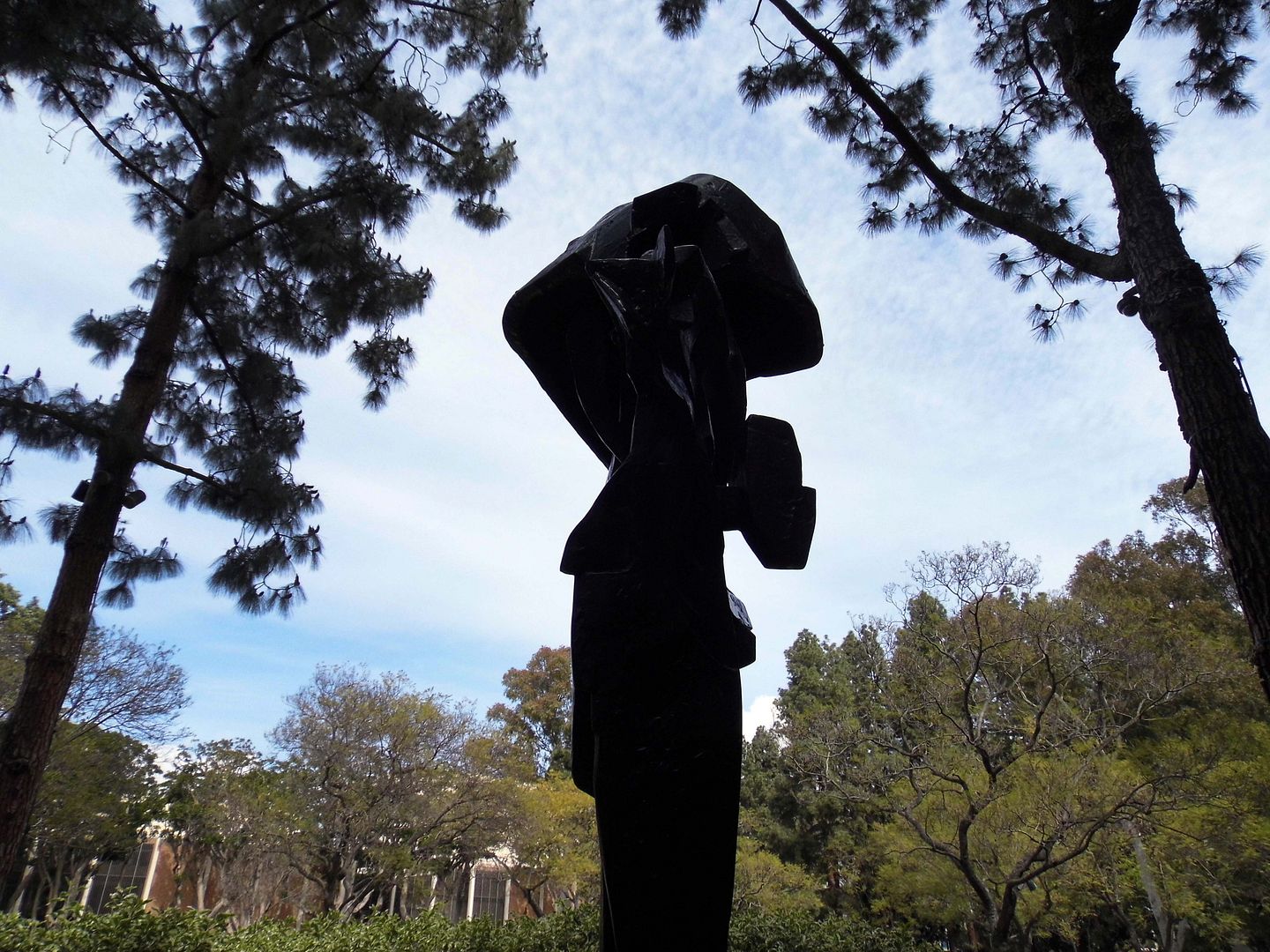
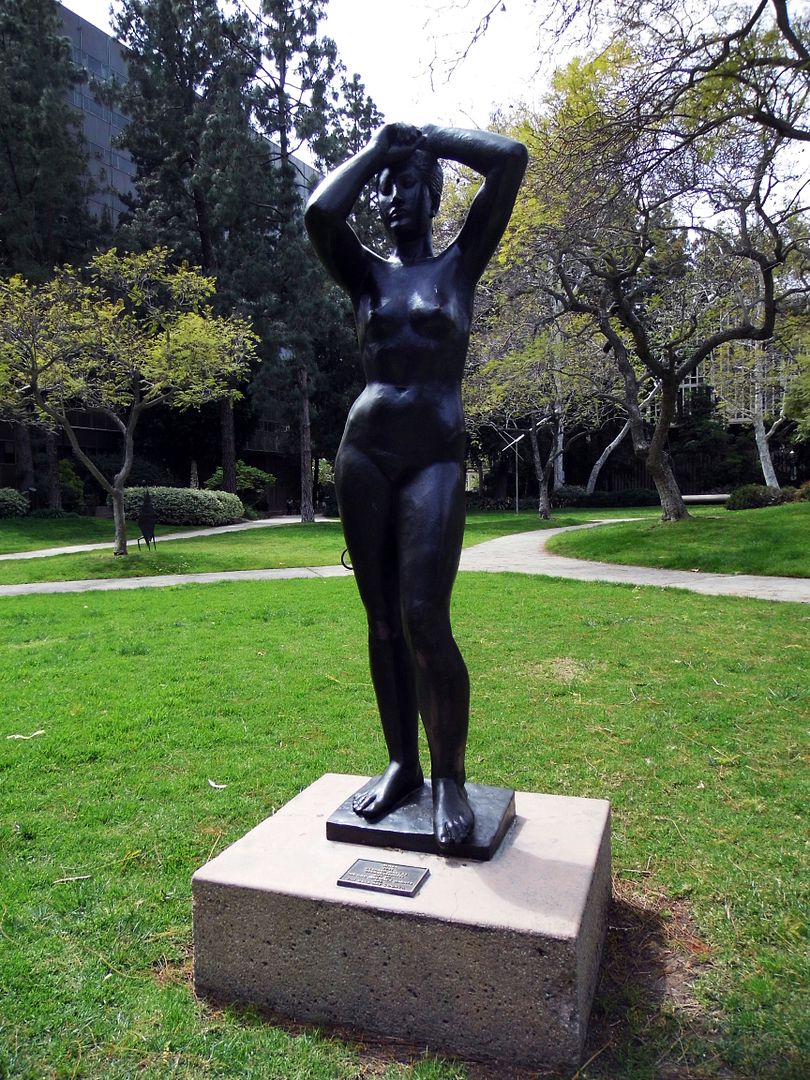
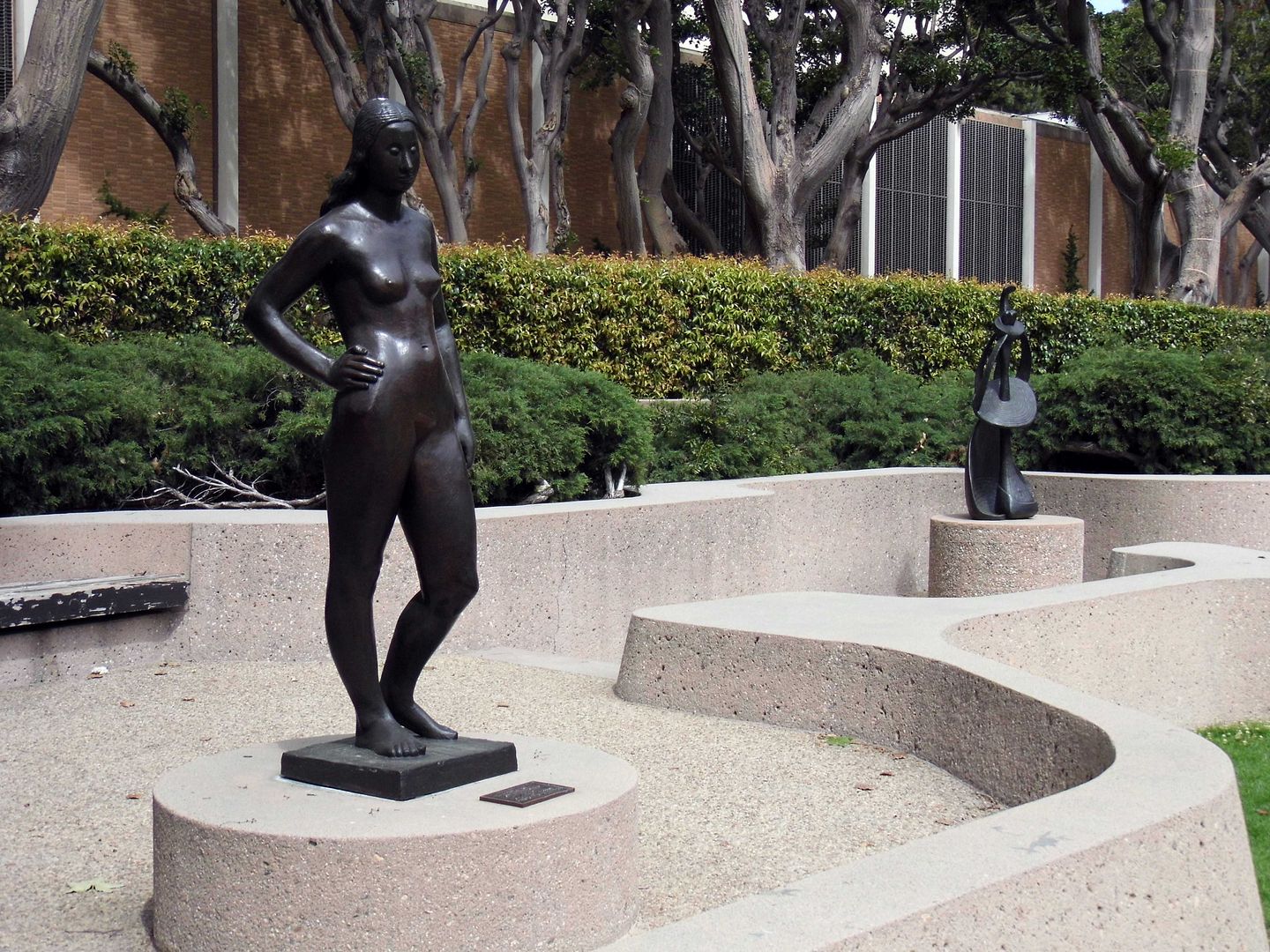
Some of the standouts among the more than 70 sculptures in the garden—for me, anyway—include the bronze Maja by German sculptor Gerhard Marcks (circa 1941)...
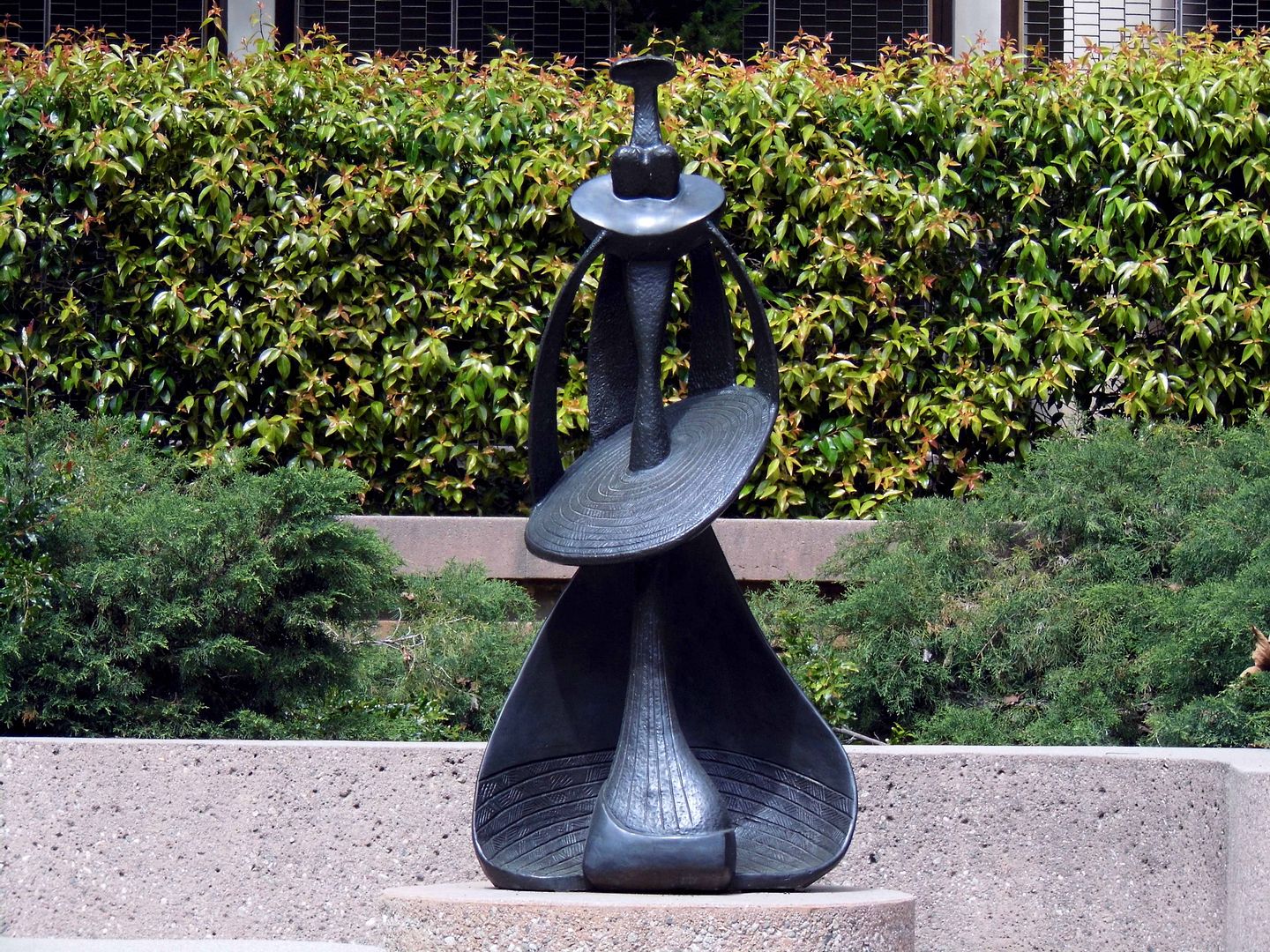
...the bronze Queen of Sheba by Alexander Archipenko, a Ukrainian-born American (circa 1961, and one of an edition of eight)...
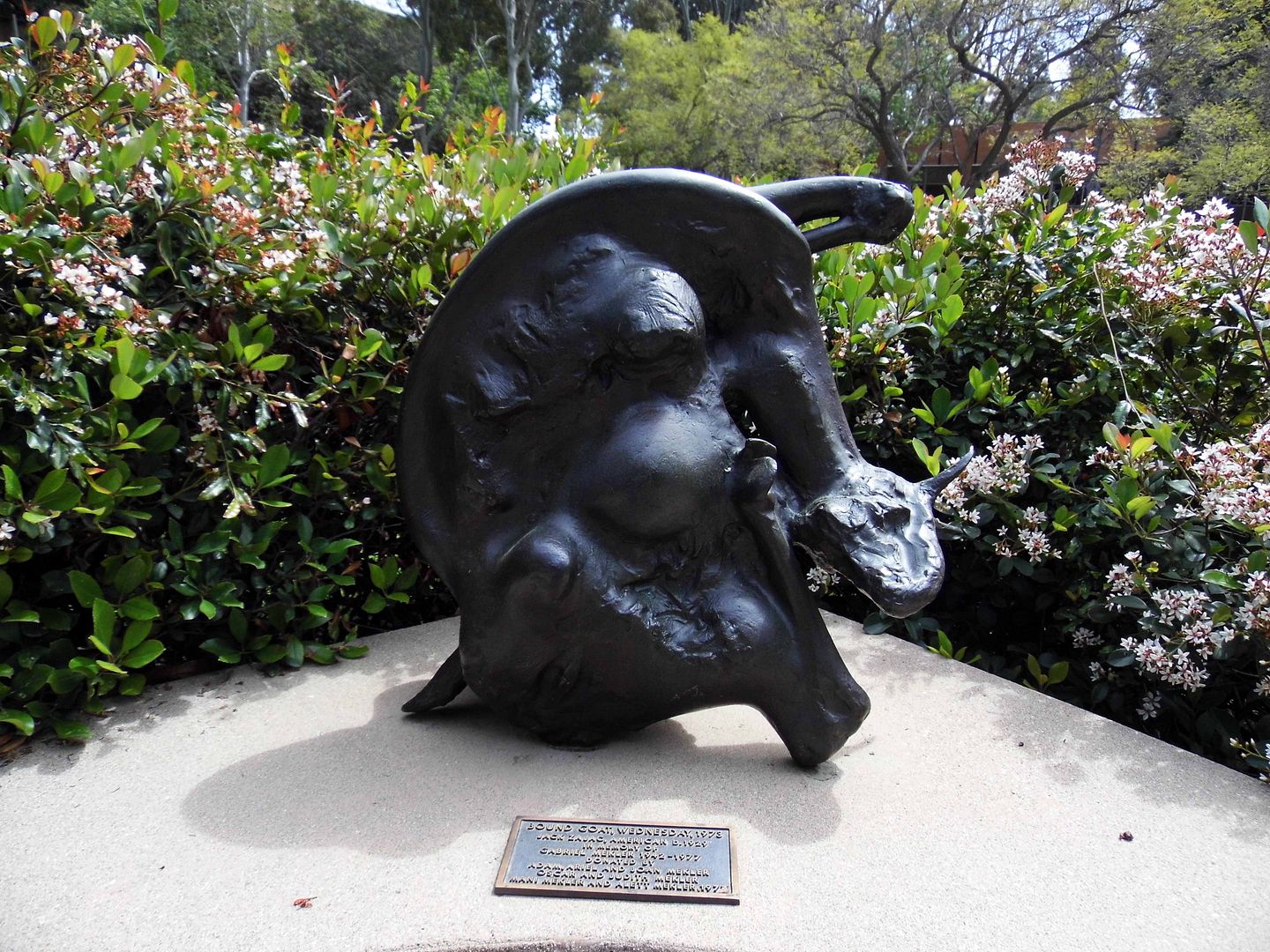
...and Californian surrealist Jack Zajac's Bound goat, Wednesday (circa 1973).
Gerhard Marcks Freya, 1949
The setting is thoroughly Modernist...
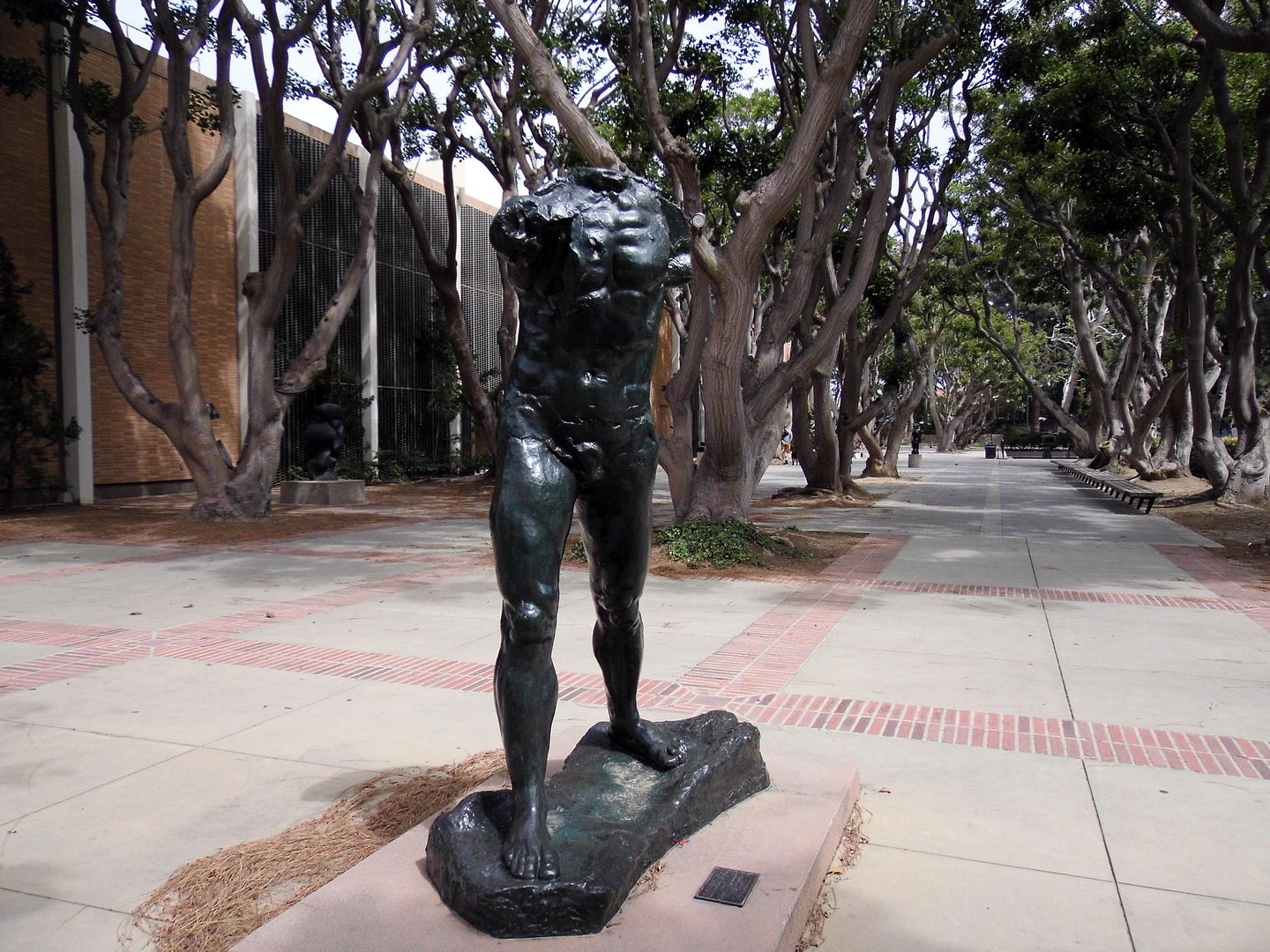
...though not all the pieces in the collection exactly match the setting, like The Walking Man.
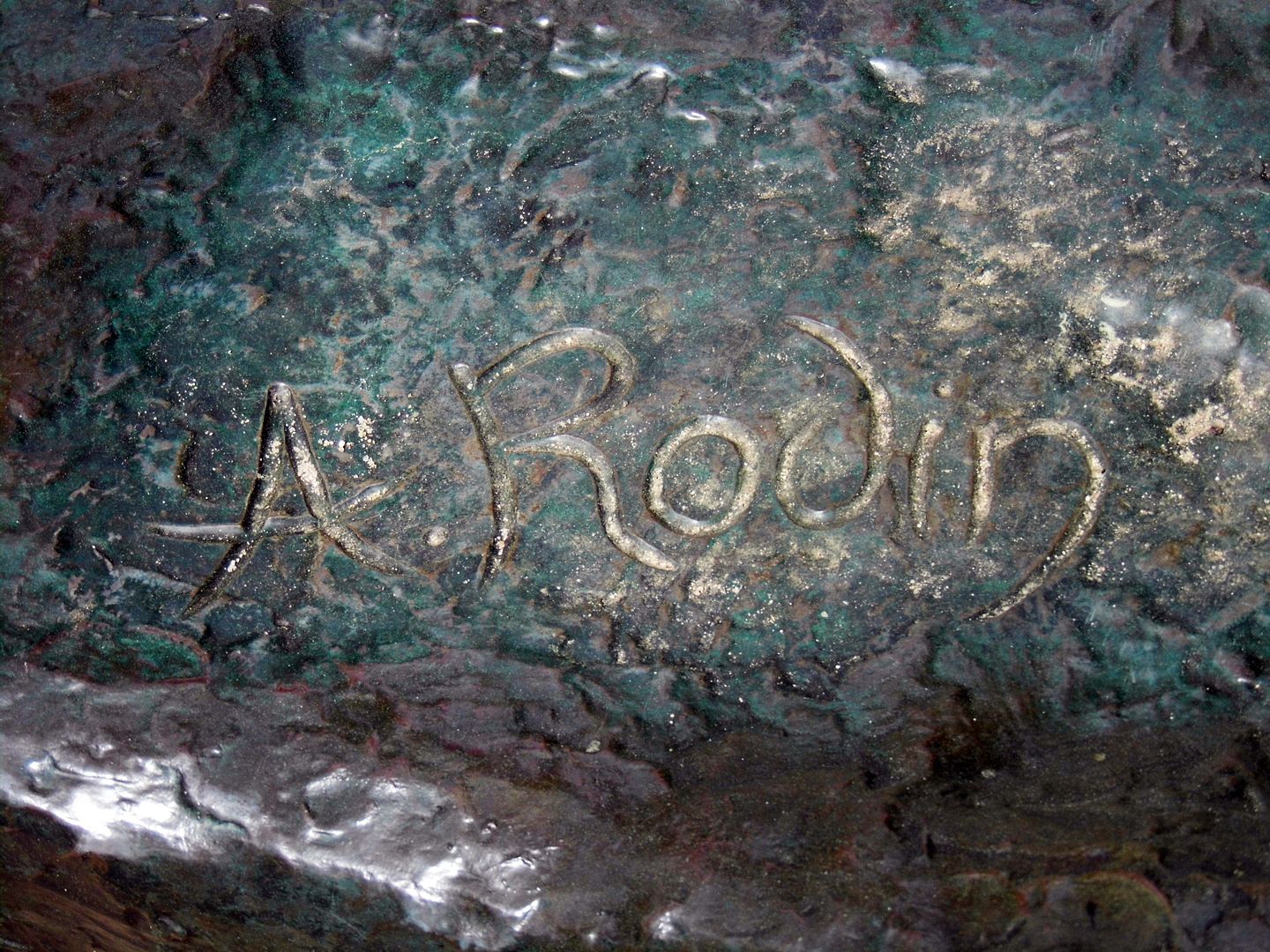
Located at the end of an allée of South African coral trees, Auguste Rodin's L'homme qui marche was first started by the French sculptor in the late 1870s.
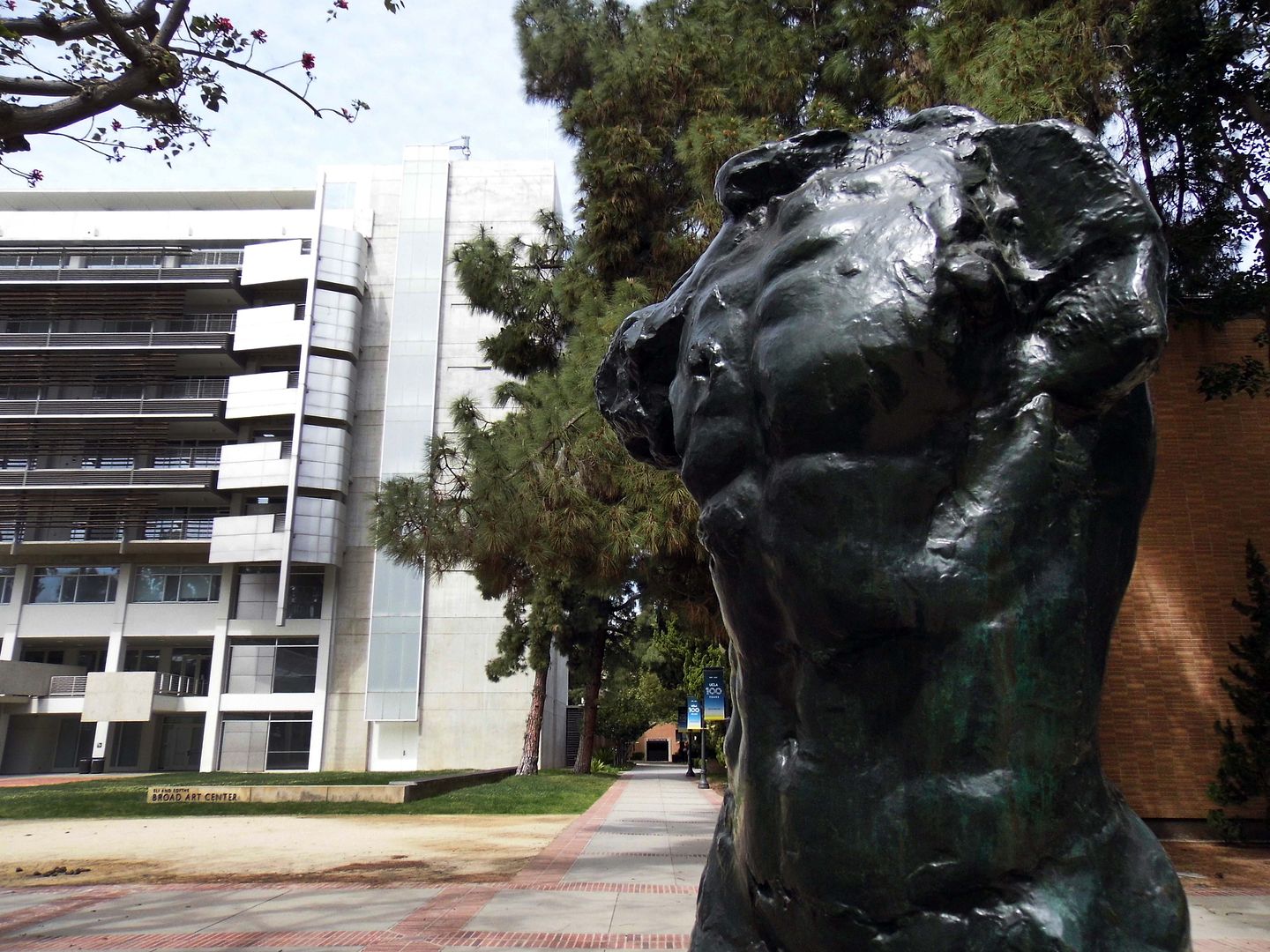
A headless depiction of St. John the Baptist also without arms, it's considered an "unfinished" work of Rodin. This bronze cast—one of an edition of 12, #7 located at the Norton Simon Museum in Pasadena—is dated 1905.
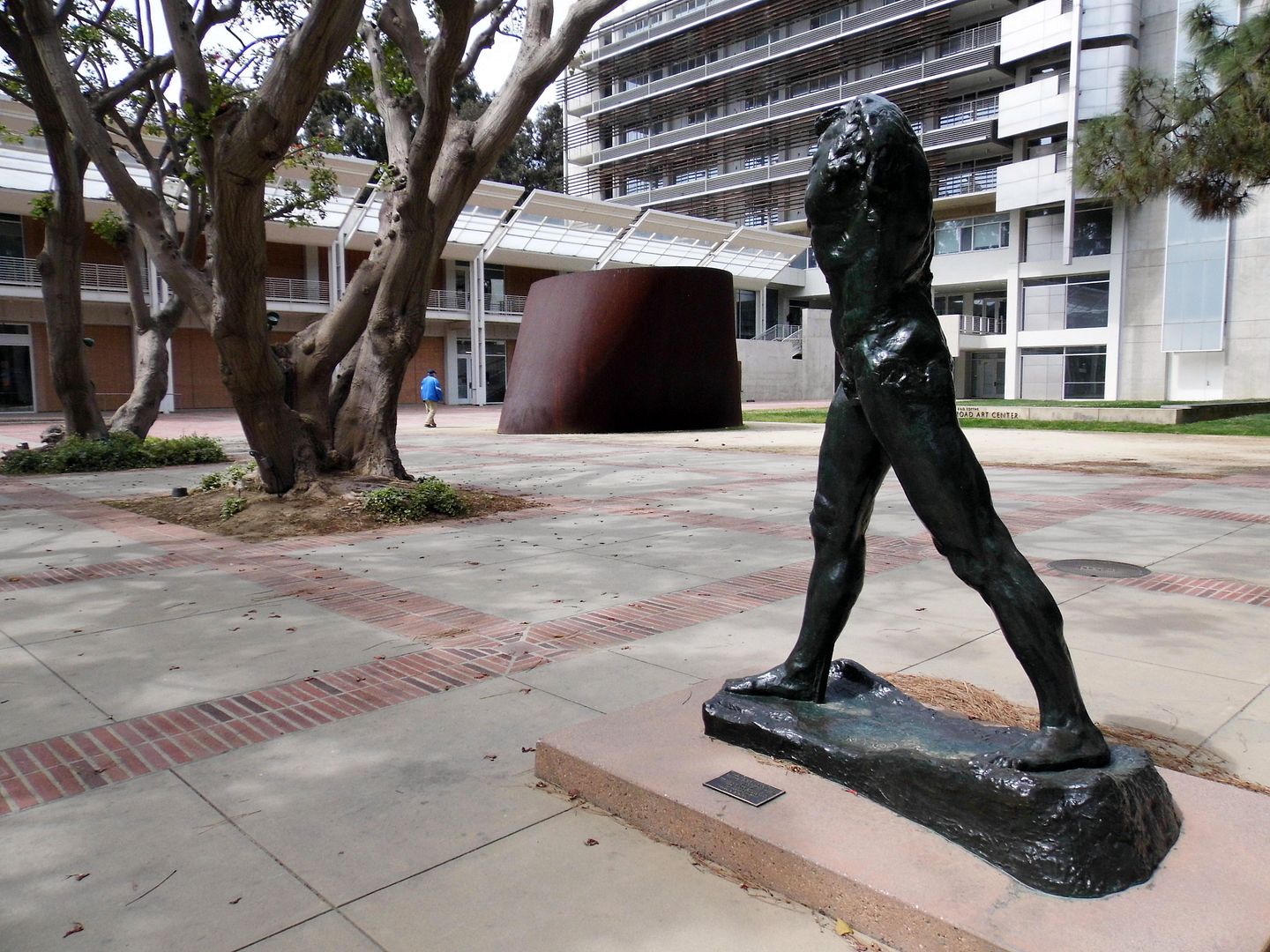
It seems to lead the way towards the campus's Broad Art Center...
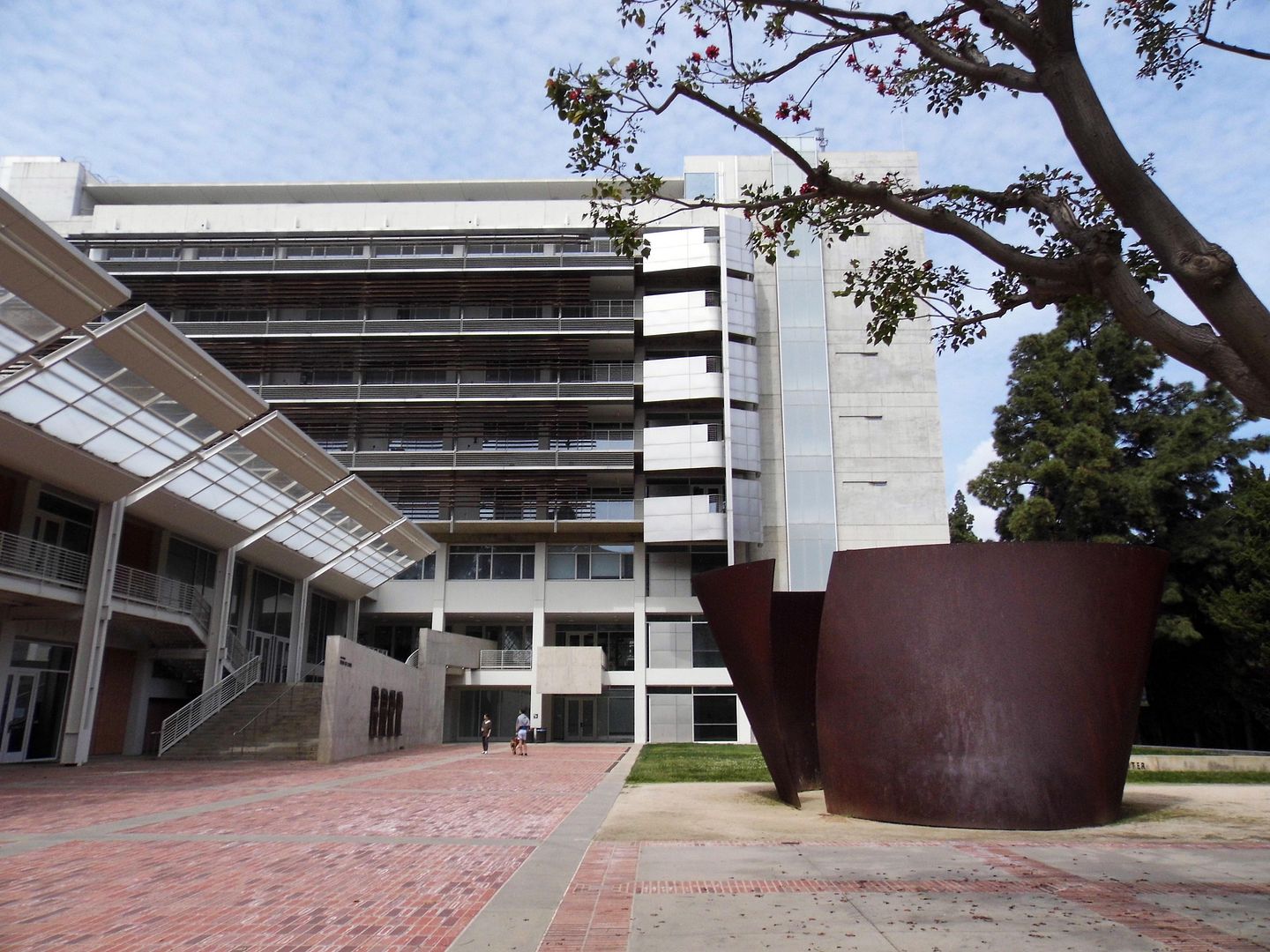
...whose front plaza is anchored by the site-specific installation of T.E.U.C.L.A. (circa 2006) by American artist Richard Serra.
The 42.5-ton piece is part of Serra's Torqued Ellipse series, which he started in 1996—and his first to be on permanent public view in Southern California.
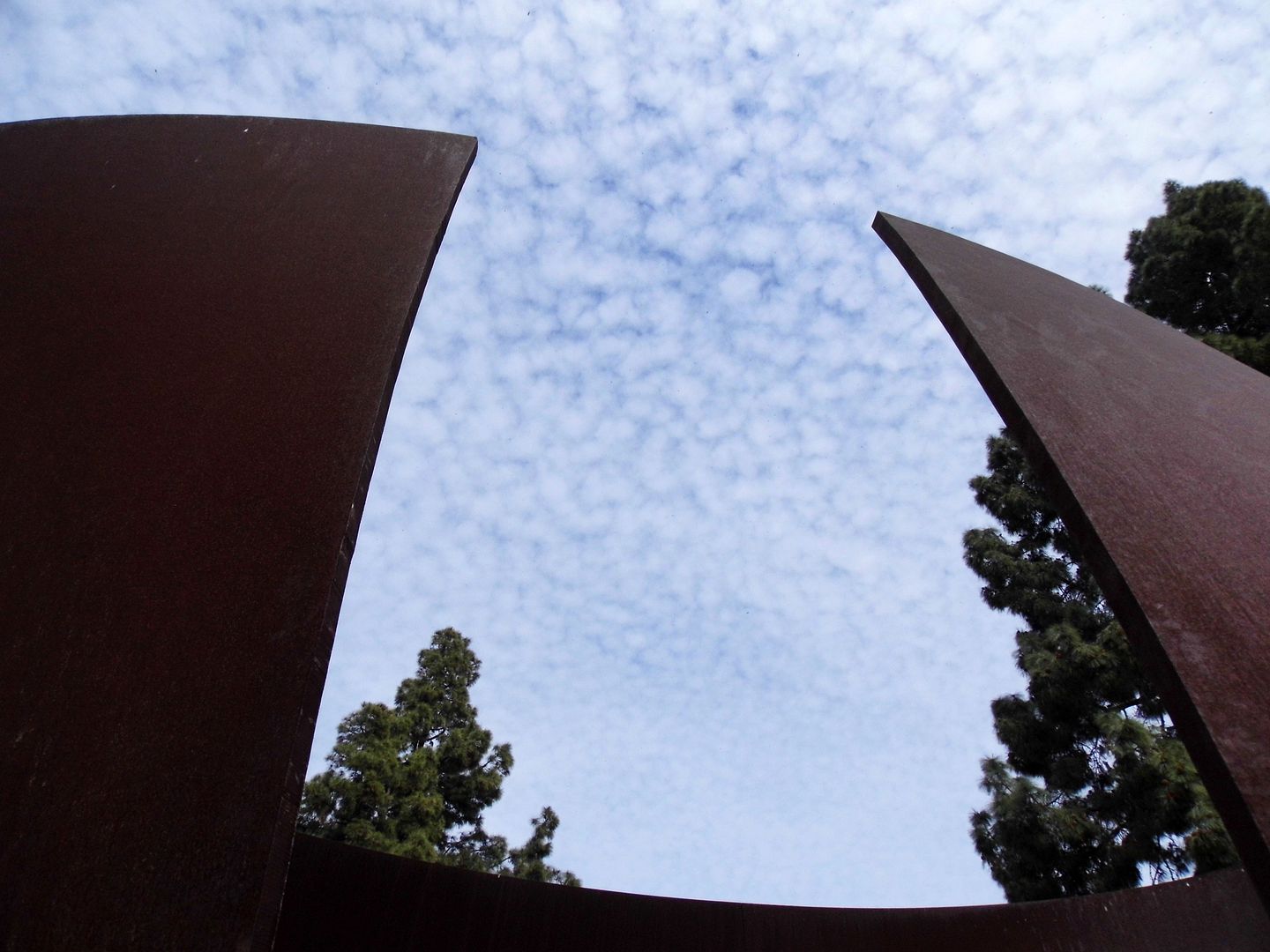
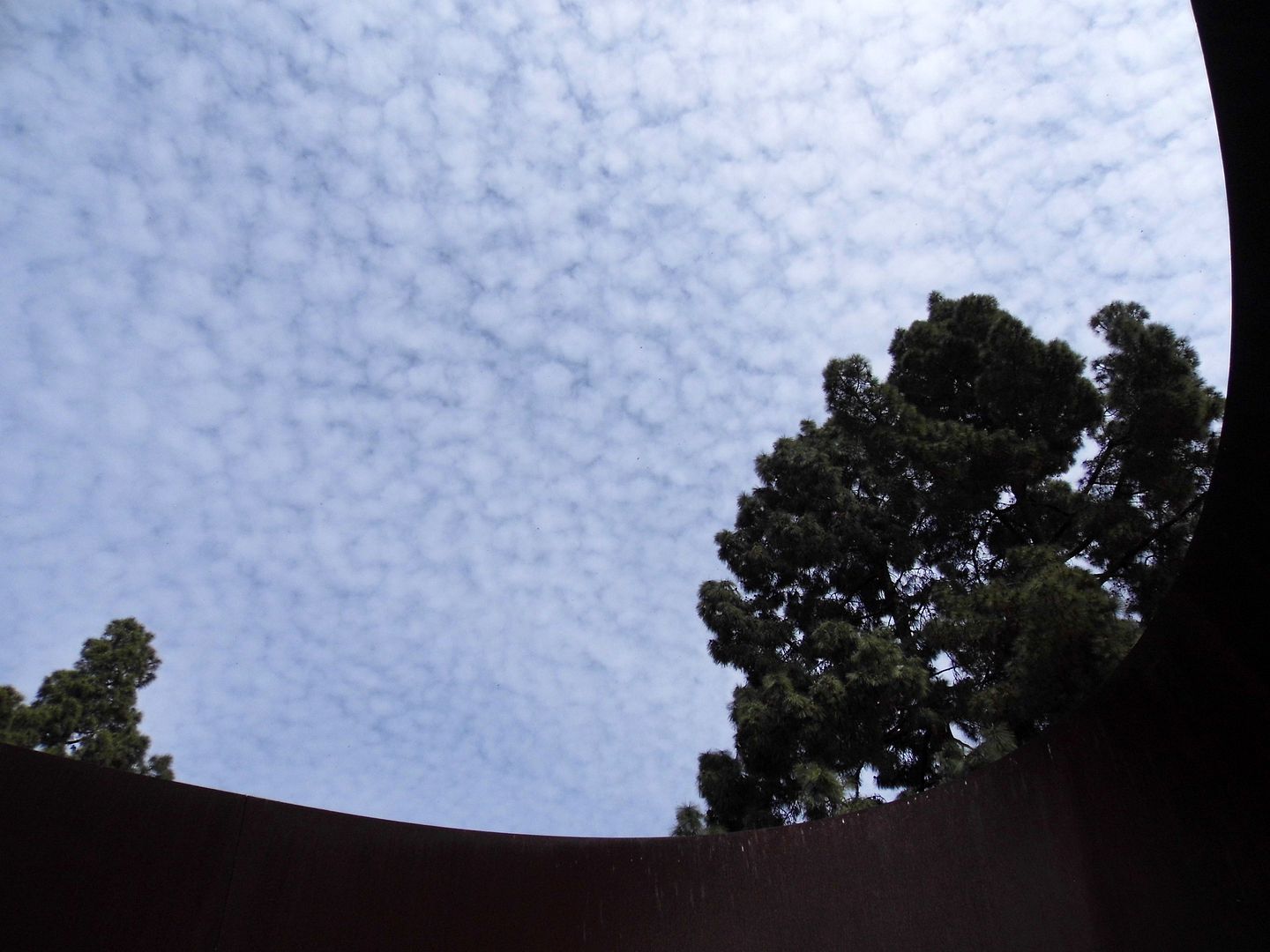
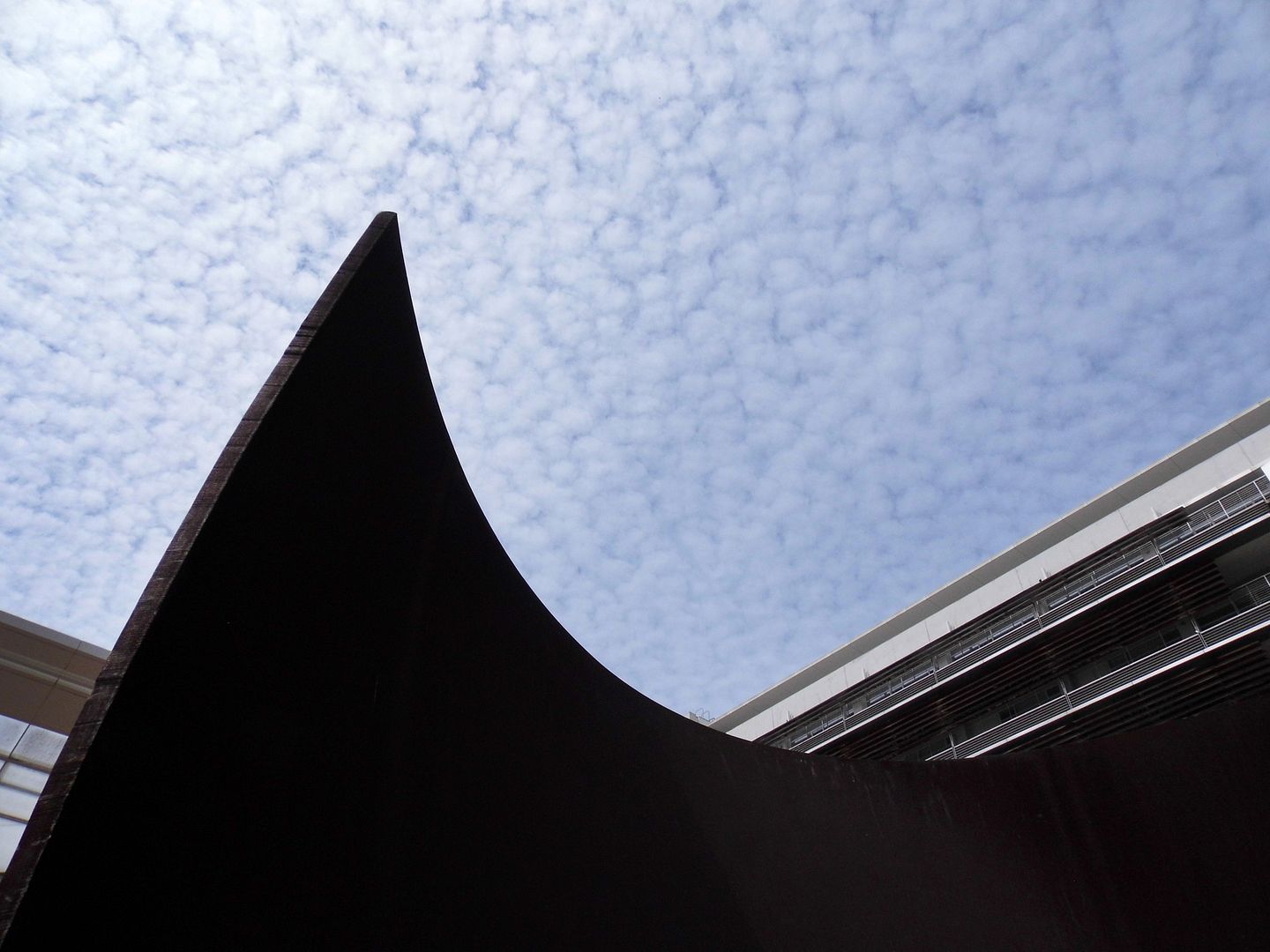
And like the rest of the pieces in the series, Serra created this installation by twisting huge COR-TEN (or "weathering") steel plates into circular or elliptical sculptures that you can walk into and gaze up at the wide-open sky.
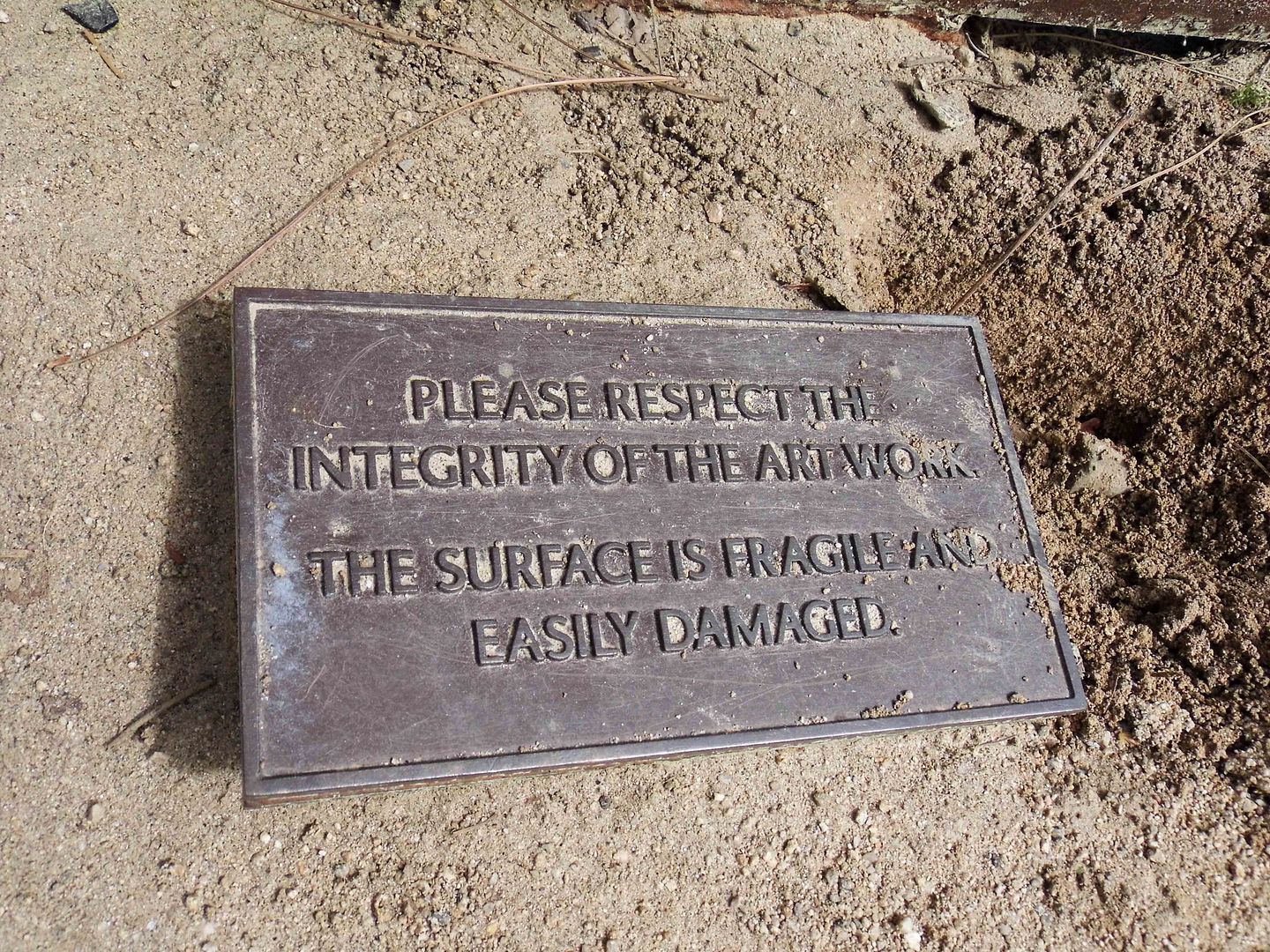
Its characteristic dark patina of rust—with nary an aberration in the color—could take as long as a decade to develop and fully oxidize. (So no touching, please!)
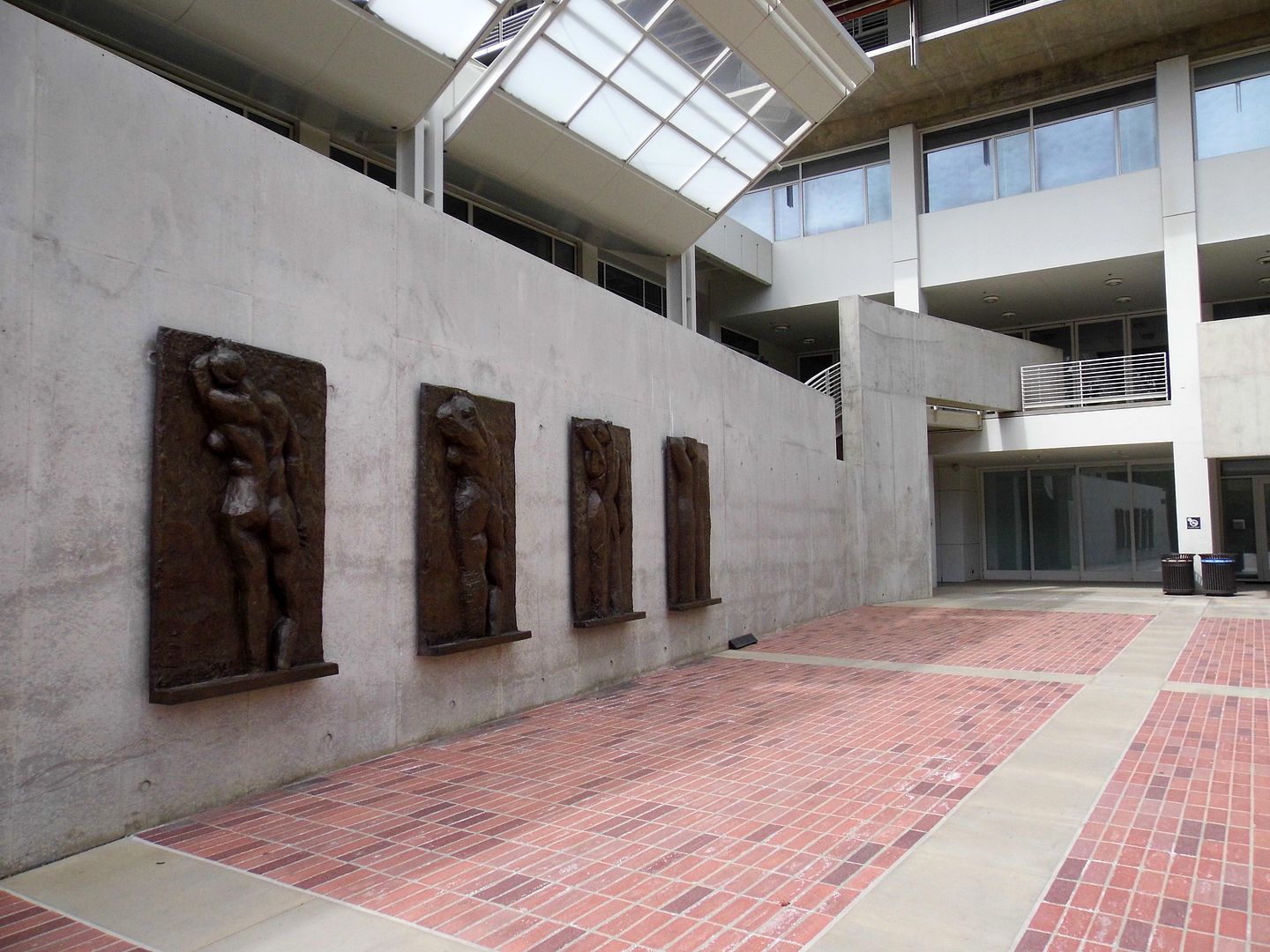
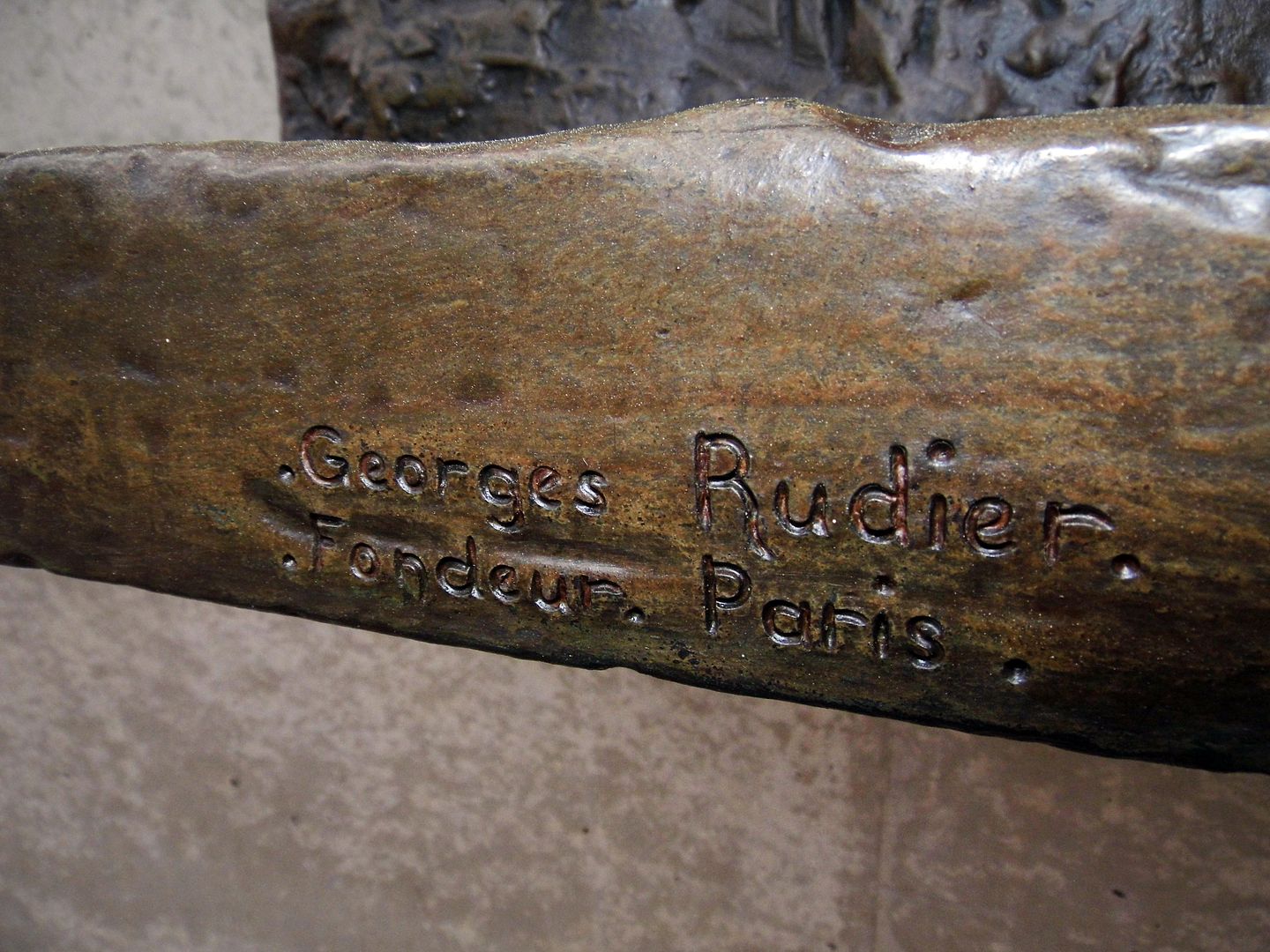
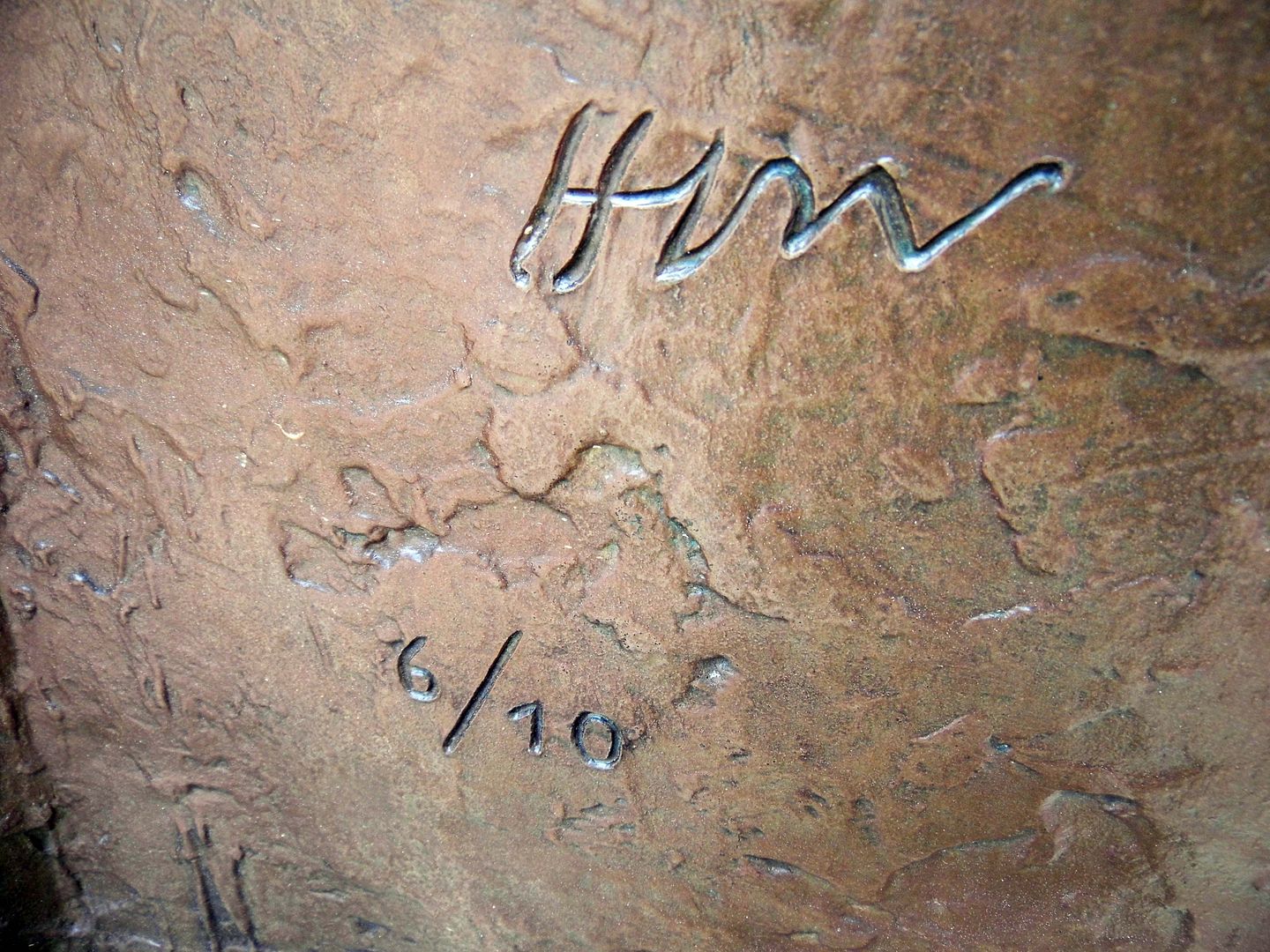
The Serra sculpture also serves as a kind of gateway to Henri Matisse's Bas Relief I-IV (The Back Series)—four bronzed plaster casts that were first modeled for and created, left to right, in 1909, 1913, 1916-7, and 1930.
In 1950, three of them were cast in bronze. Five years later, the fourth one was discovered and also cast in bronze.
These monumental sculptures are also Matisse's largest—with other complete sets housed at MOMA in NYC, the Tate in London, and other major museums in Paris, Zürich, Stuttgart, Houston, Fort Worth, and Washington, DC.
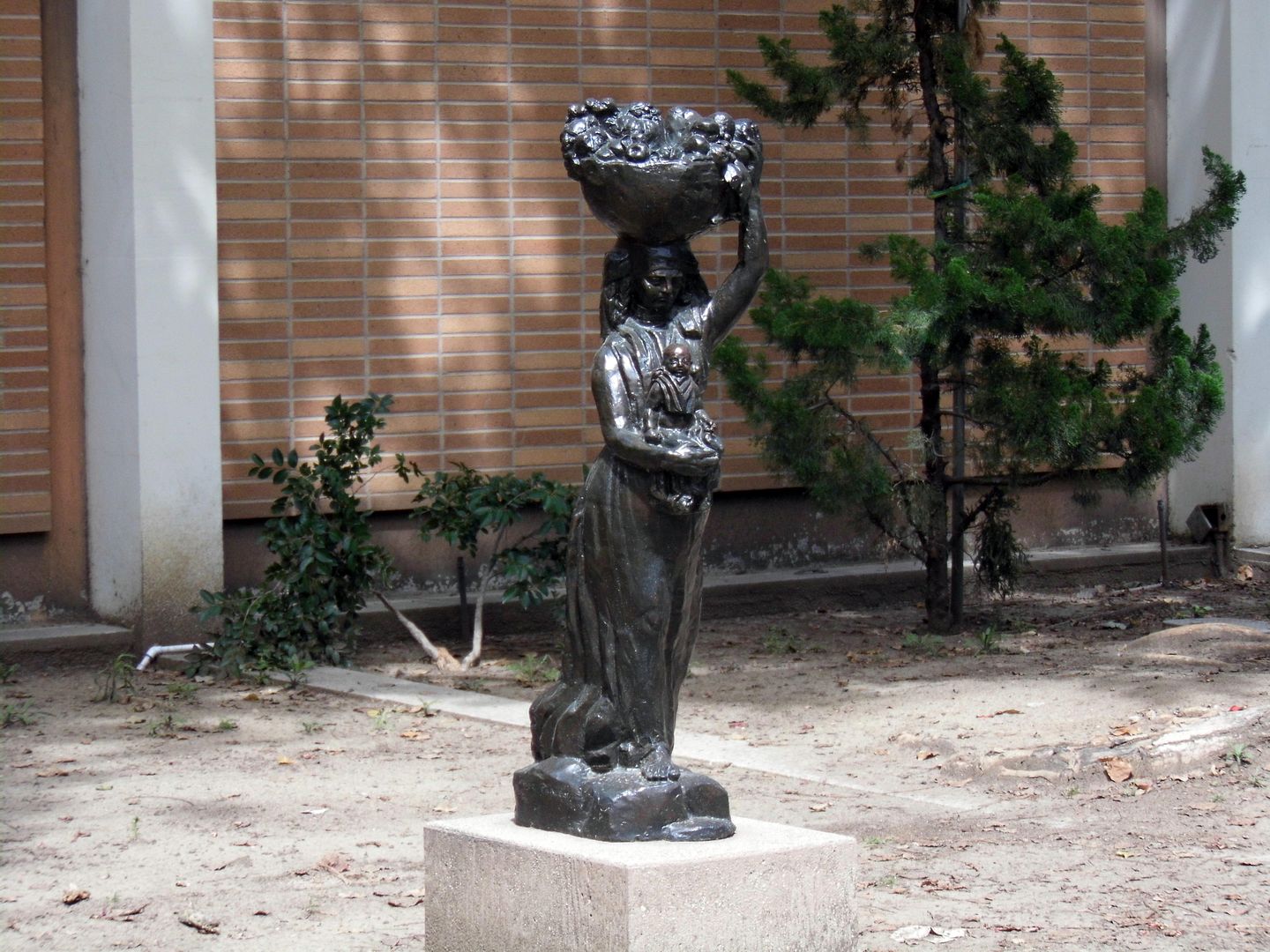
The collection seems particularly well-curated when you encounter works by certain artists that come full circle—like Noble Burdens (Les Nobles Fardeaux, circa 1911) by Antoine Bourdelle, a teacher of Matisse and student of Rodin.
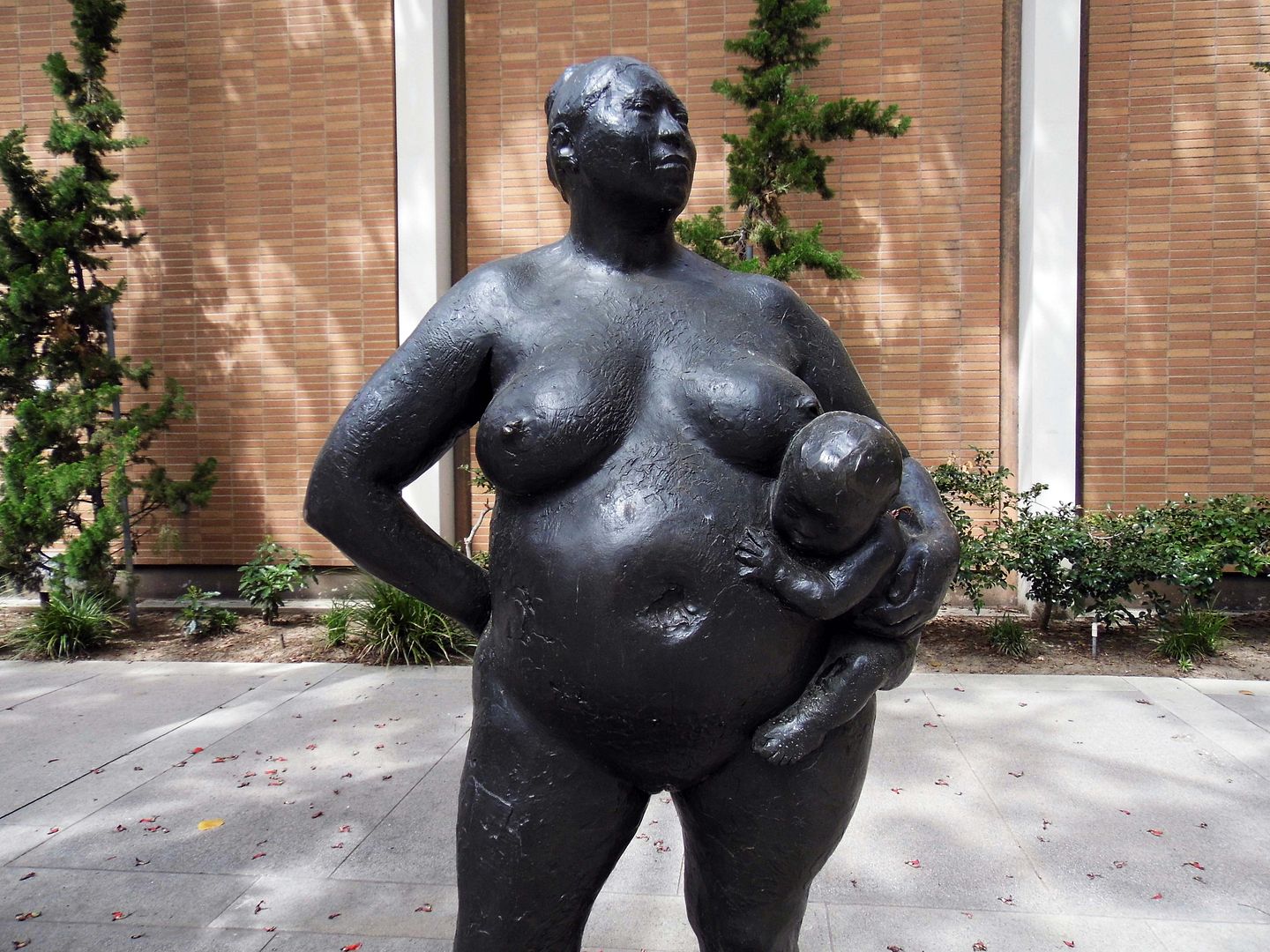
And yet the French masters intermingle with Latin American artists, like the Costa Rican-born Mexican sculptor Francisco Zúñiga, whose Mother With Child At Her Hip (Madre con niño en la cadera, circa 1979) exemplifies his artistic devotion to the female form.
My favorite of all the works, though, was the first one I saw—well, caught a glimpse of as I was driving past a pedestrian entrance in search of a parking spot.
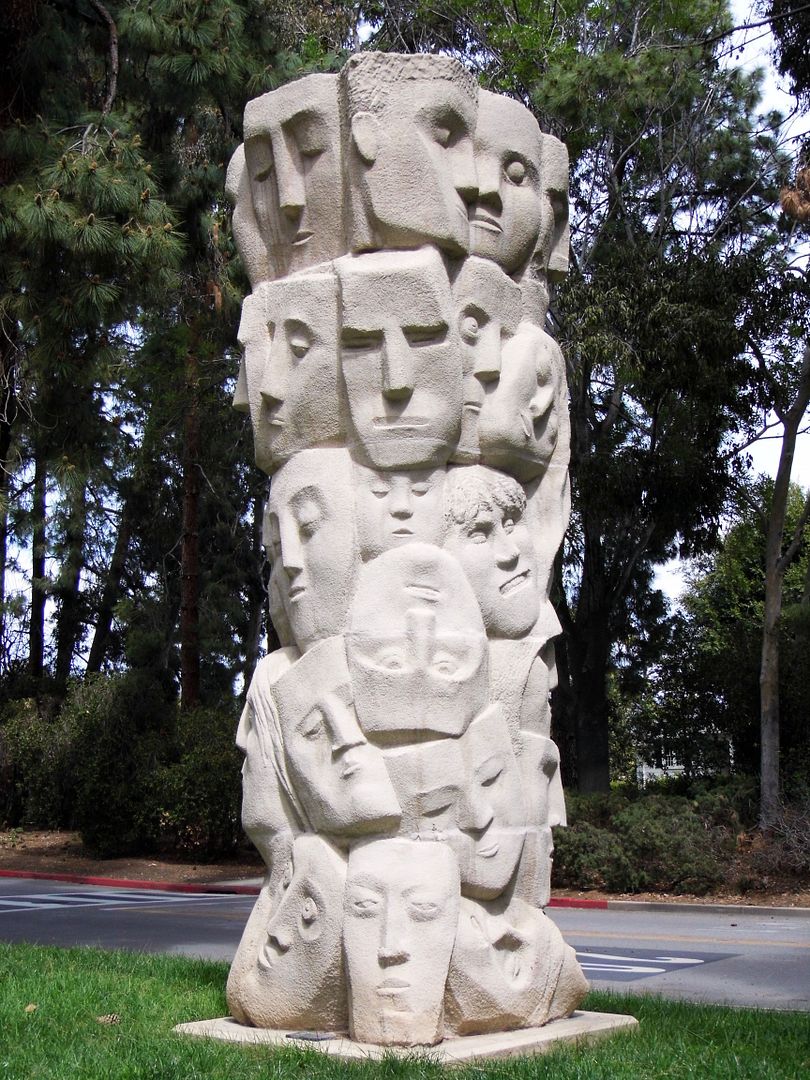
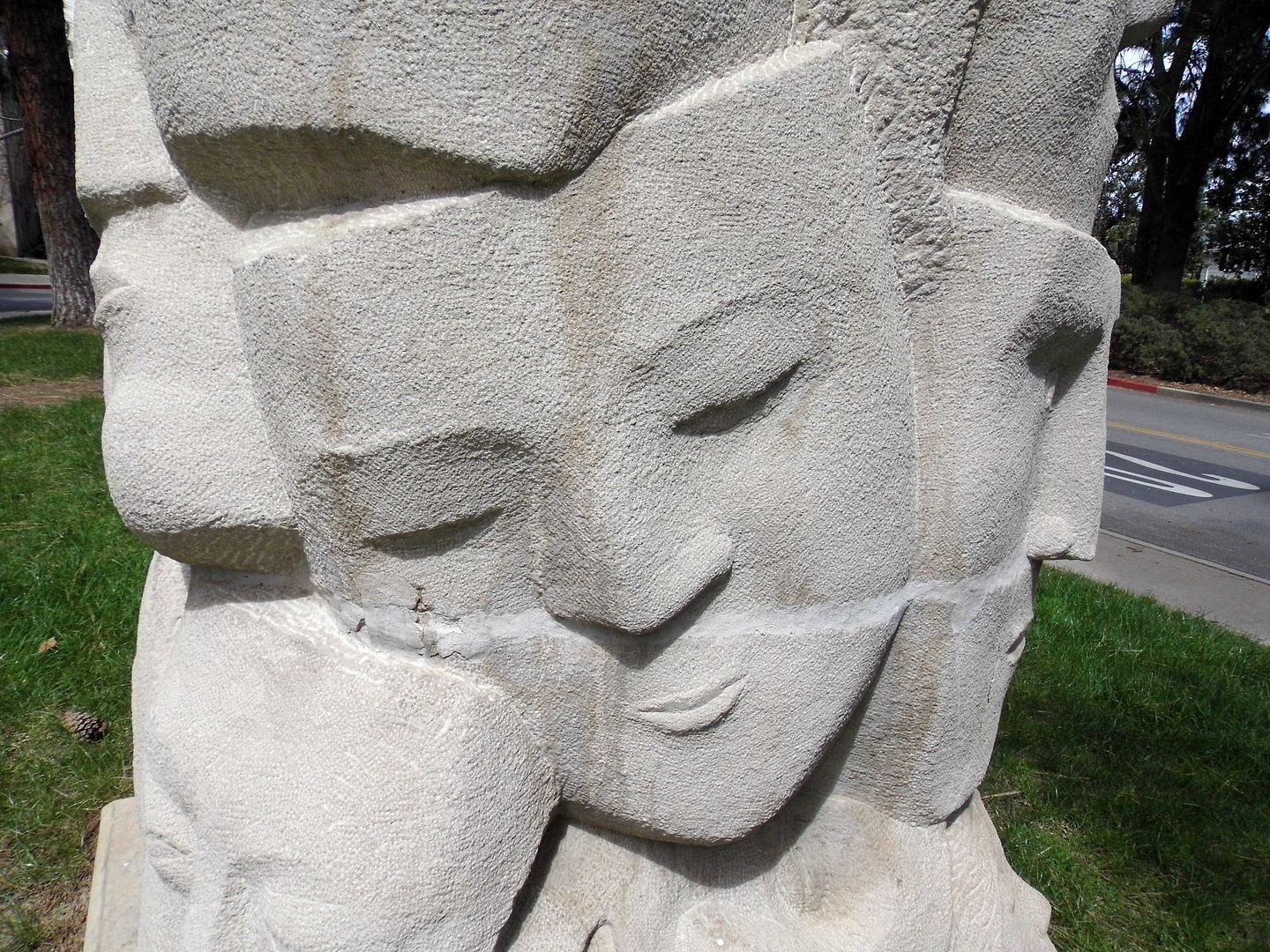
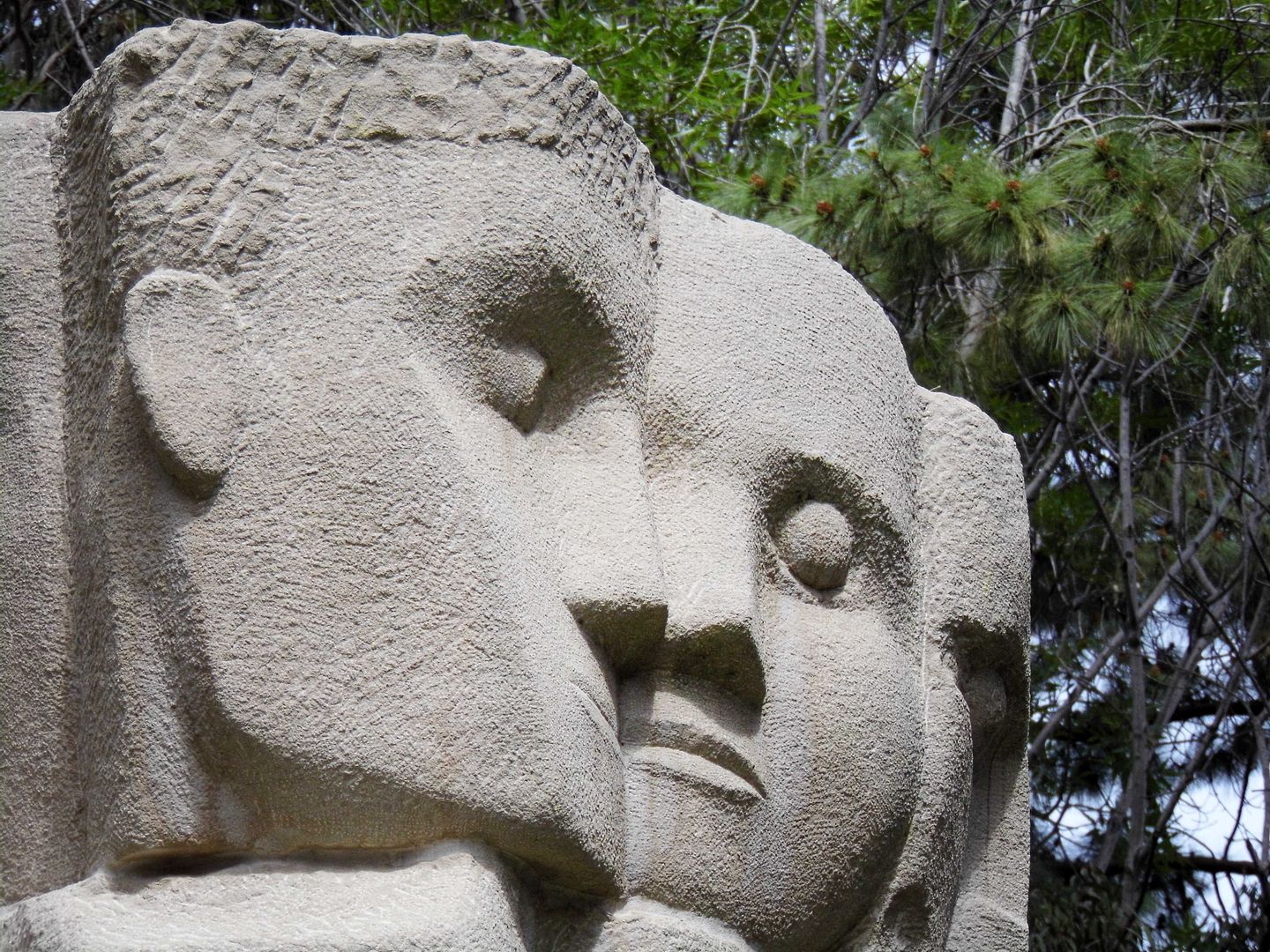
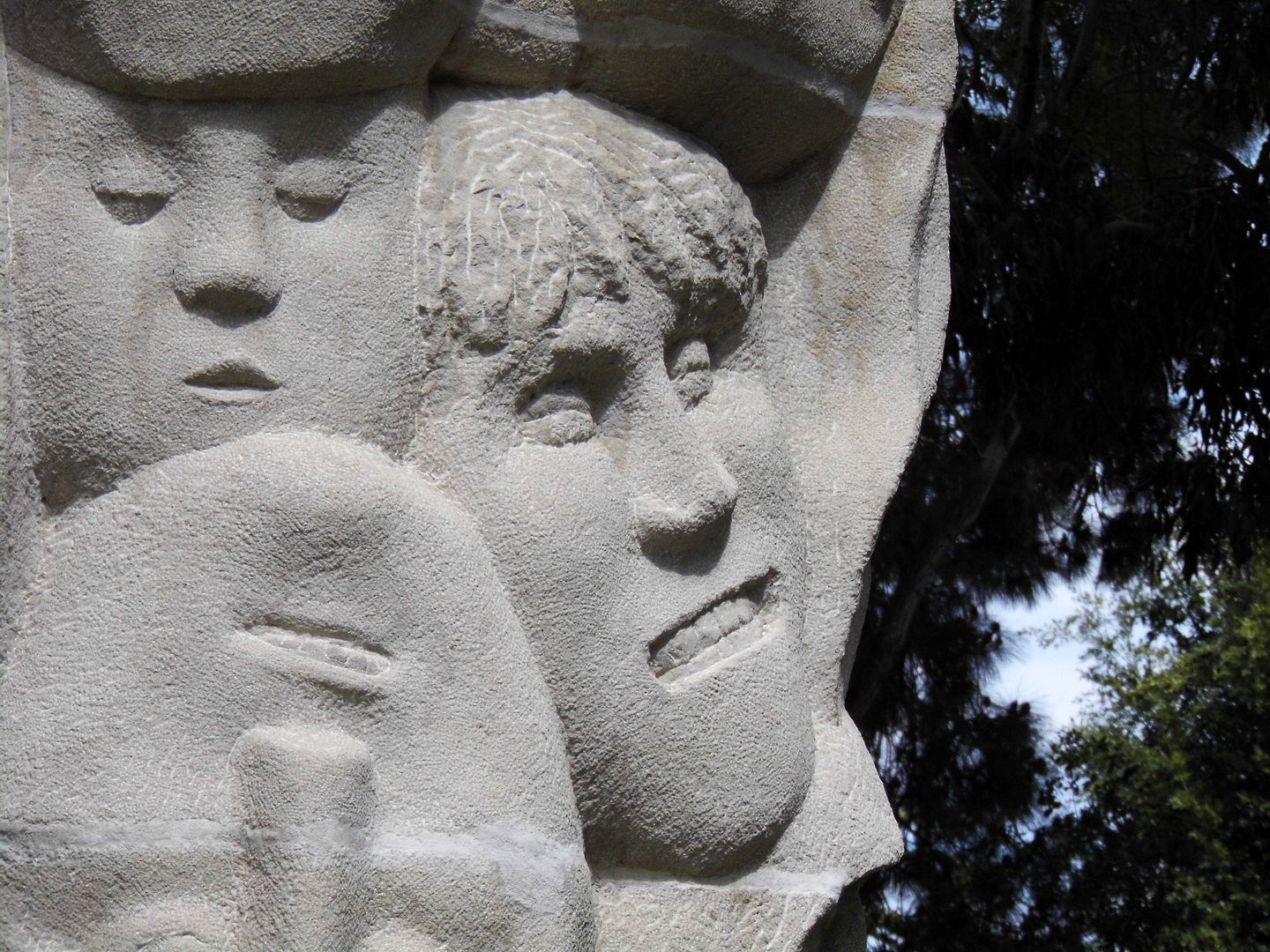
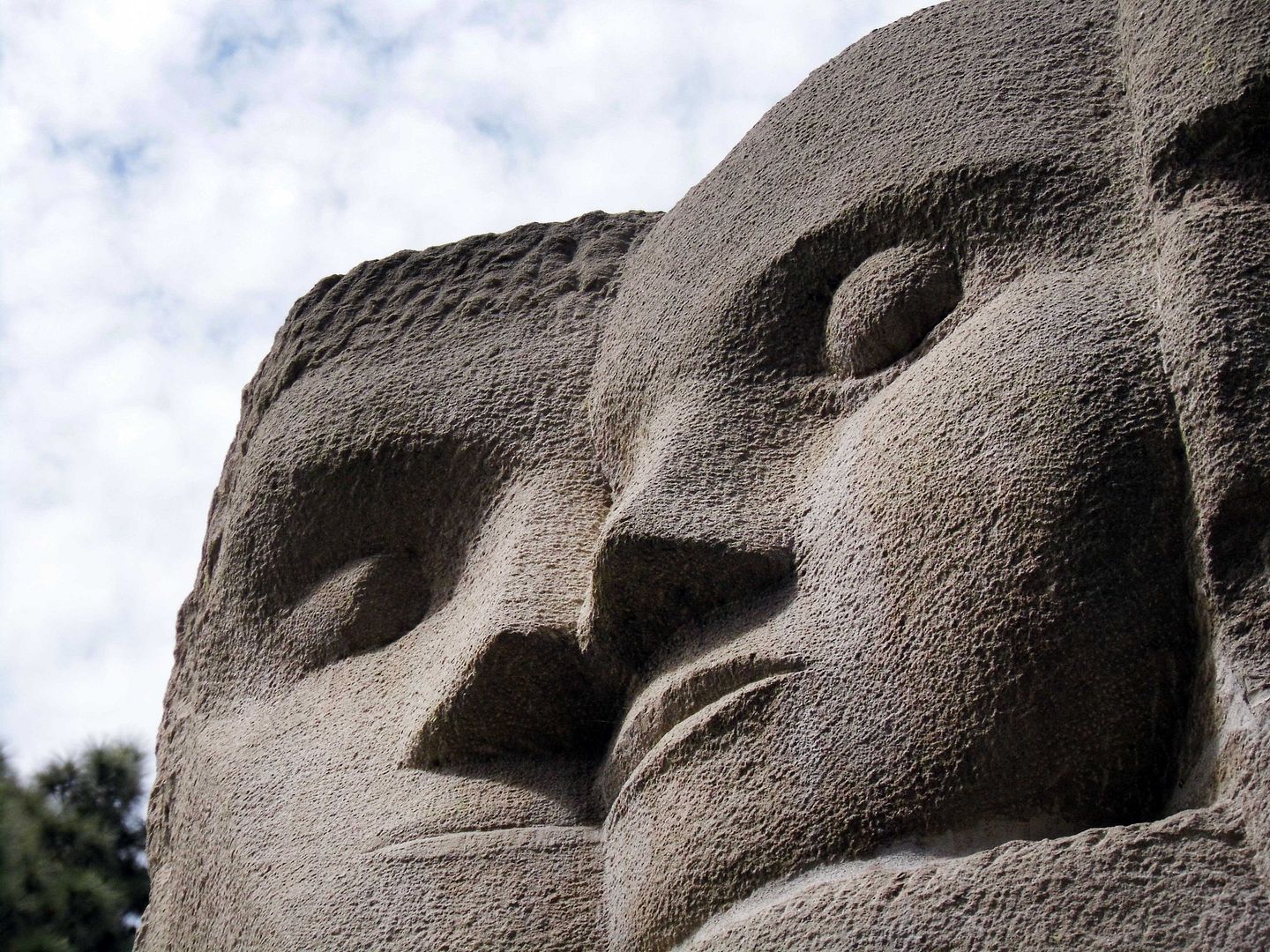
Vienna-born Anna Mahler—daughter of the Austrian composer Gustav Mahler—is the sculptor behind the stone carved Tower of Masks (circa 1961). She also taught art at UCLA in the 1950s, after relocating to Los Angeles from Europe.
The 15-foot-high, 28-ton limestone totem was actually the first sculpture to be installed in the garden—in 1961, six years before its official dedication.
But its been relocated from the Theater Arts Court of Macgowan Hall, part of the UCLA School of Theater, Film and Television—a seemingly fitting setting for an assemblage of theater masks.
The stone pillar is now just east of the official boundaries of the sculpture garden, on an island land-locked between the Macgowan Hall Bus Turnaround and Charles E. Young Drive E.
I spent a long time at the UCLA sculpture garden—where else did I have to go?—but I still sense that I only saw a fraction of it.
I don't know what took me so long to get there, but I'm grateful for the cleared schedule that allowed me to finally make it.