It had been hanging over me for too many years—in retrospect, more than I ever thought it would.
I stopped talking to my parents in January 2007 (I think, I don't remember exactly). At least, that's the last time I ever called them. And they just never called me back.
But since then, I'd been wondering whether they'd ever try reaching out, try making amends. I thought that on my mother's deathbed, she might find God—truly find God, not that fake cult crap she put us through—and finally apologize.
I've thought about her death a lot over the years, mostly because I've always known she always wanted to die. She constantly threatened death—either in a passive way, that ol' "Since this may be my last Christmas..." gag, or in an active way, openly fantasizing about drowning herself in the bathtub.
After all, her physical health was pretty terrible—something I was acutely aware of as far back as third grade. And her mental anguish? Way before that, as far back as I can remember.
So I couldn't help but be curious as to when it would happen, how it would happen, how I would feel, what my dad would do.
How would I even find out that she had died? And what would happen if my dad died first?
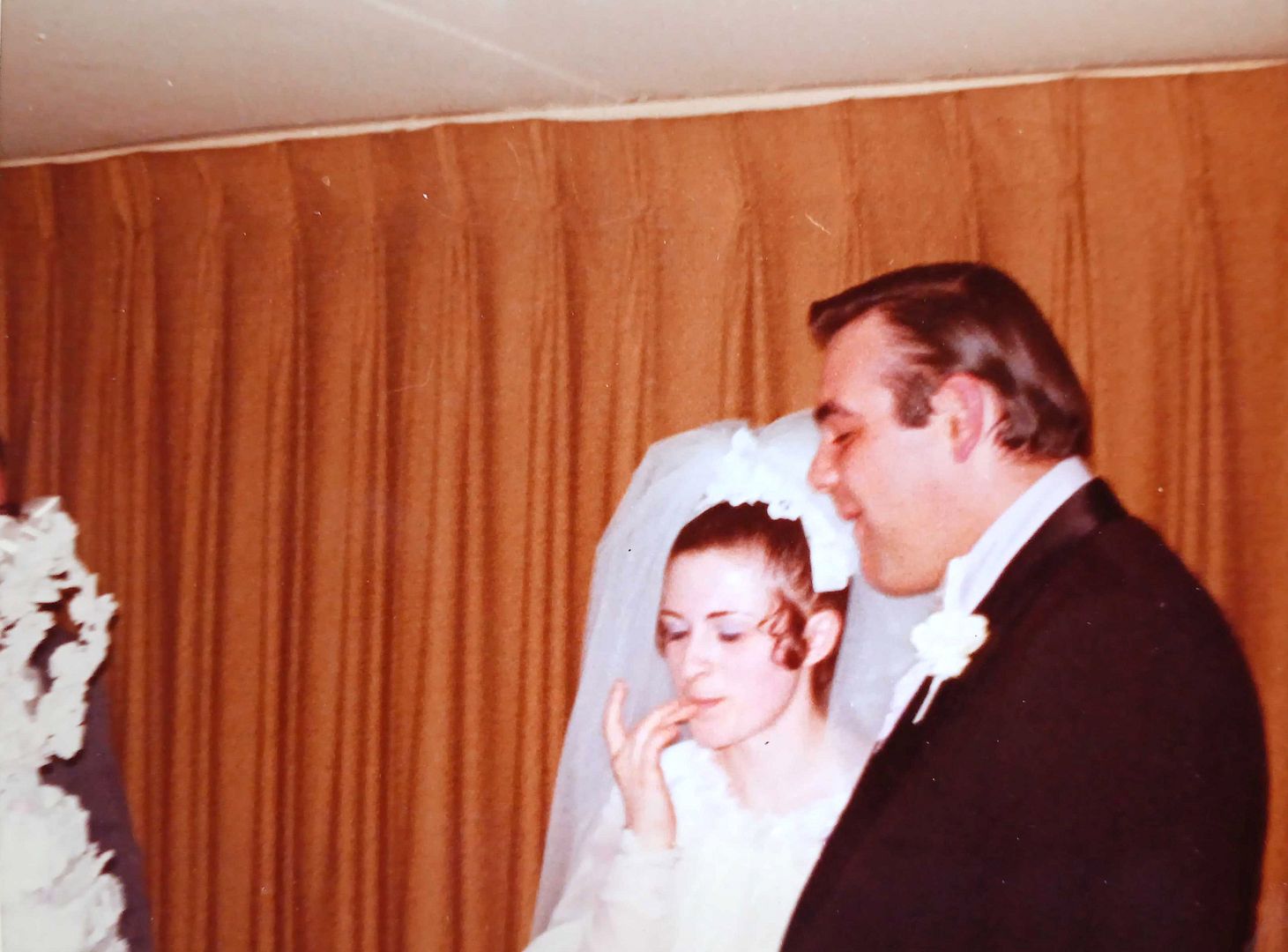
My parents eating cake at their wedding reception, May 4, 1973*
Well, many of those questions have now been answered. My mother died on March 3, 2025. I found out on March 11, when my cousin called me after the funeral service.
I've liked cemeteries for all of my adult life, at least ever since I used to climb up behind Chapel House and spend some quiet time at the Colgate University Cemetery.
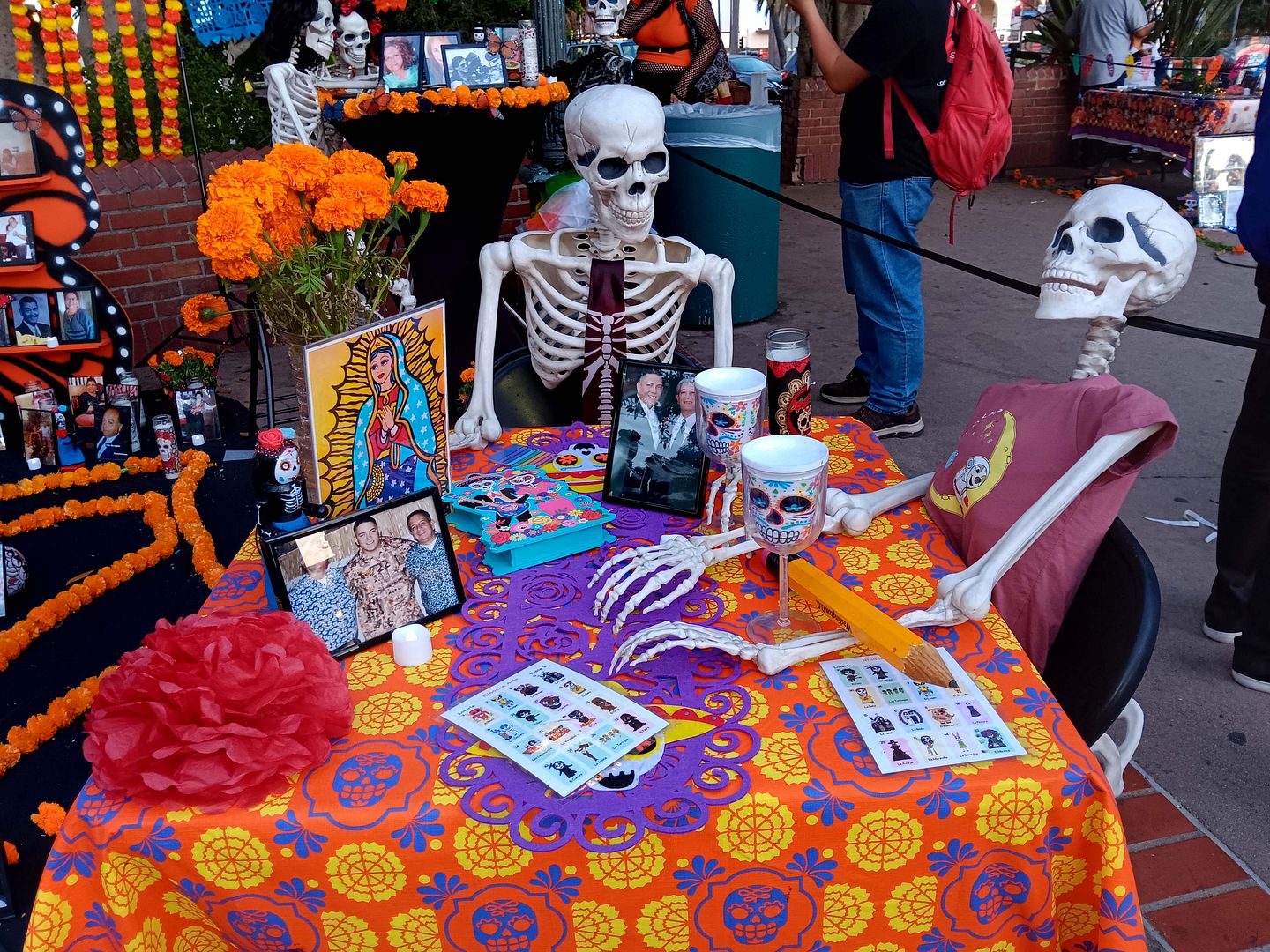
But living in Southern California has taught me a little bit about how Mexican cultures honor the dead in a very living sort of way—namely, building altars (or ofrendas) where they honor the lives of those who've passed by making offerings (like sugar skulls) and setting up photos, dioramas, and more.
At the end of each year now, it's no longer only about reflecting on the new experiences I've had over the last 12 months—but also recognizing how the world around me has changed.
And I can't help but document it.
That brings me back to some places—either physically or just mentally and emotionally—that I thought I'd be "done" with after one visit.
Unfortunately, the scales were tipped way too far in one direction last year. We lost many more people and things than we were able to save.
And, in some cases, it didn't have to be that way.
But life is loss—constant loss, in fact. And the sooner we come to terms with that, the sooner we can get to appreciating what we've got now.
One of my most devastating experiences is whenever I find myself saying, "I never got to go."
But as time passes, the sentiment changes. Now, increasingly, it's the heartbreaking statement, "I never got to go back."
Here are some of the updates I made to past blog posts in 2023, reflecting changes that happened in that year or developments that had happened previously but I only got to documenting that year.
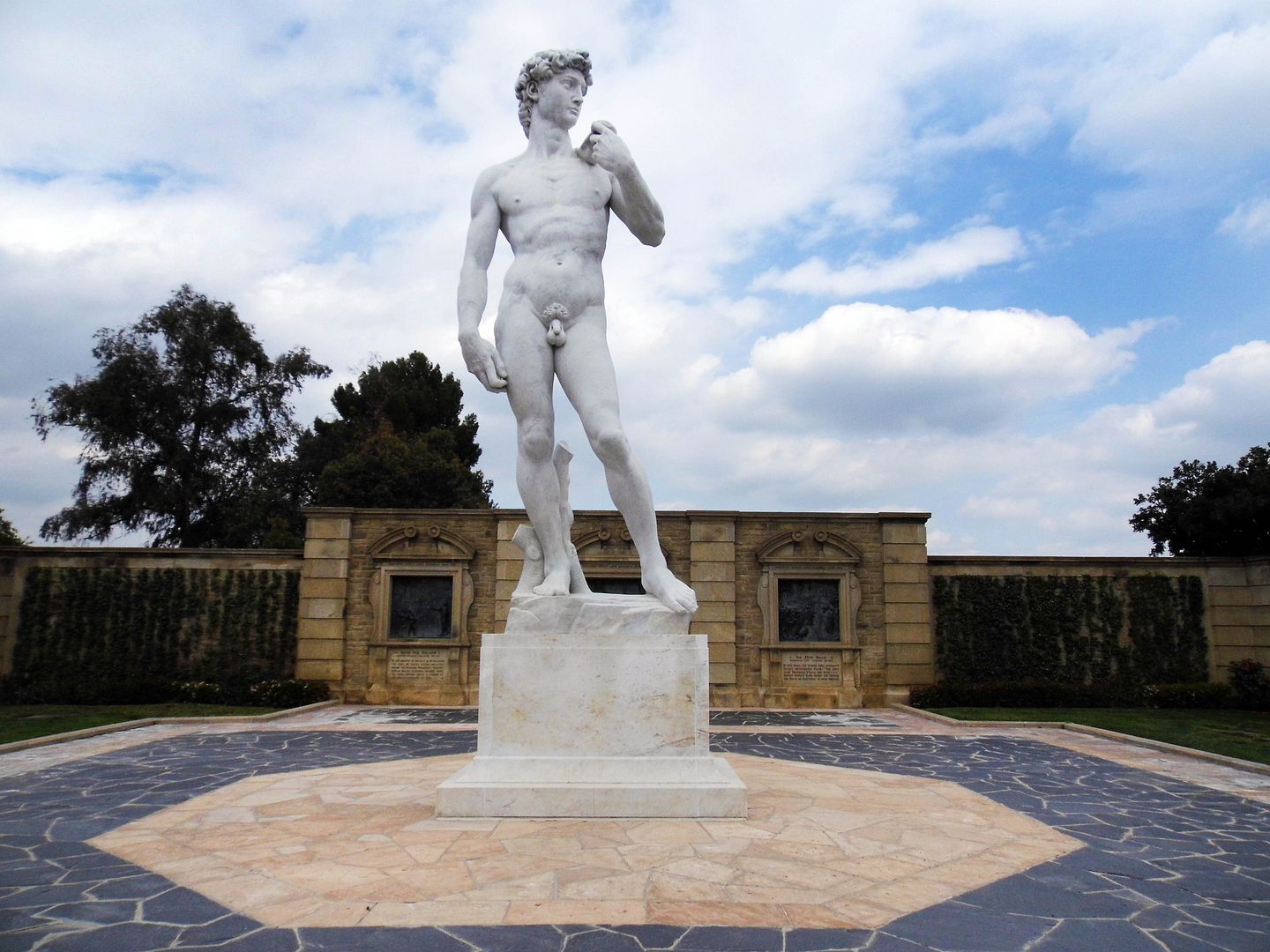
You would think that at a place like Forest Lawn Memorial Park in Glendale—which seems to "let it all hang out" with an explosion of stained glass, mosaic art, and statuary—nothing would be kept close to the vest.
But for all there is for the public to enjoy by taking either a drive or stroll through the massive property...
...there's even more locked away, reserved only for a chosen few.
Sometimes it's kismet when people come into your life by surprise.
I've tried to meet many a star of stage, screen, and song, and I've almost always been disappointed.
But Bob Winter was a different sort of celebrity—a beloved figure in Los Angeles as an architecture historian and academic.
I didn't really understand that, though, when I first encountered Professor Winter (faculty at Occidental College 1963-1994). I only knew him as "Bungalow Bob."
Photo: Bob Winter, 2019 (Angel City Press, via Facebook)
I only met him once, but he made a huge impression on me. And so, upon his recent passing at the age of 94—just after the publication of the sixth edition of the Architectural Guidebook to Los Angeles he co-authored—I thought I'd share my story in tribute to him.
circa 2019
Sometime last year, I'd signed up for a tour of the periphery of the Bungalow Heaven district of Pasadena, California, with the promise of getting inside the infamous bungalow built and once occupied by ceramicist and tilemaker Ernest Batchelder.
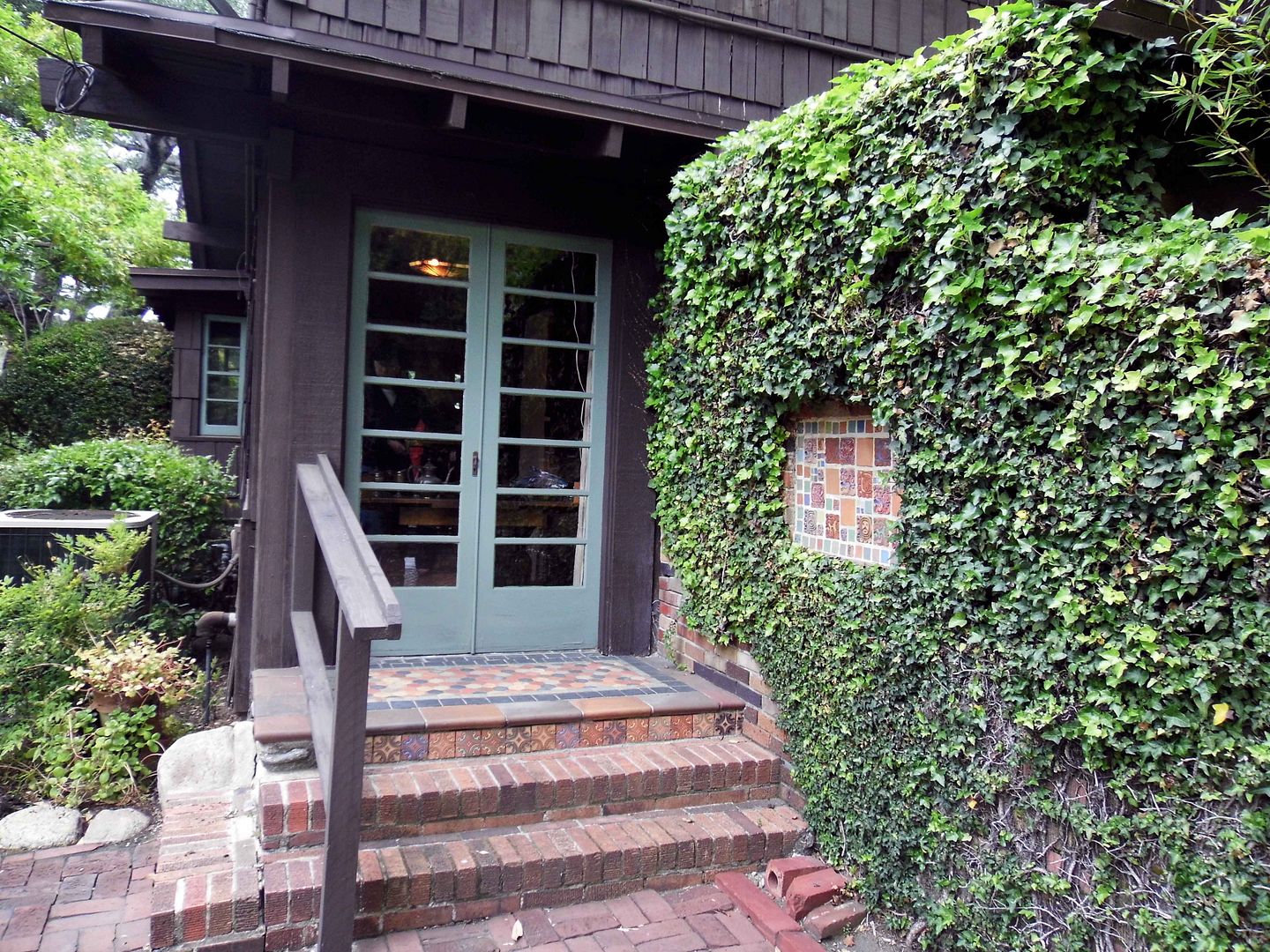
Completed in 1910 just a stone's throw from the lower portion of Pasadena's dry river, the Arroyo Seco, the house is probably the biggest bungalow in the area, appearing more like a cross between a Swiss chalet and a Craftsman cabin in the woods, covered in cedar shakes (some original).
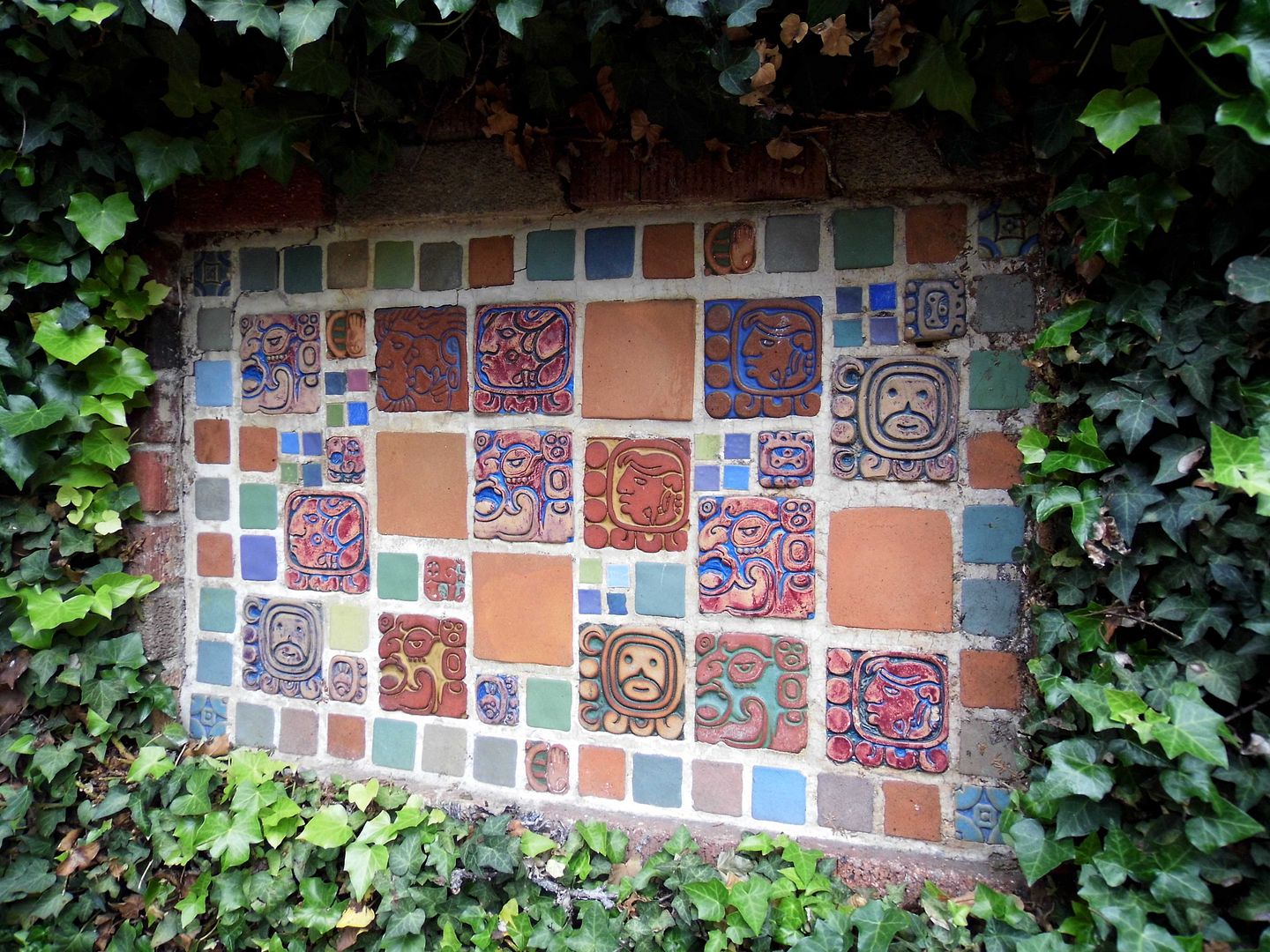
It's unmistakably the work of Batchelder...
circa 2019
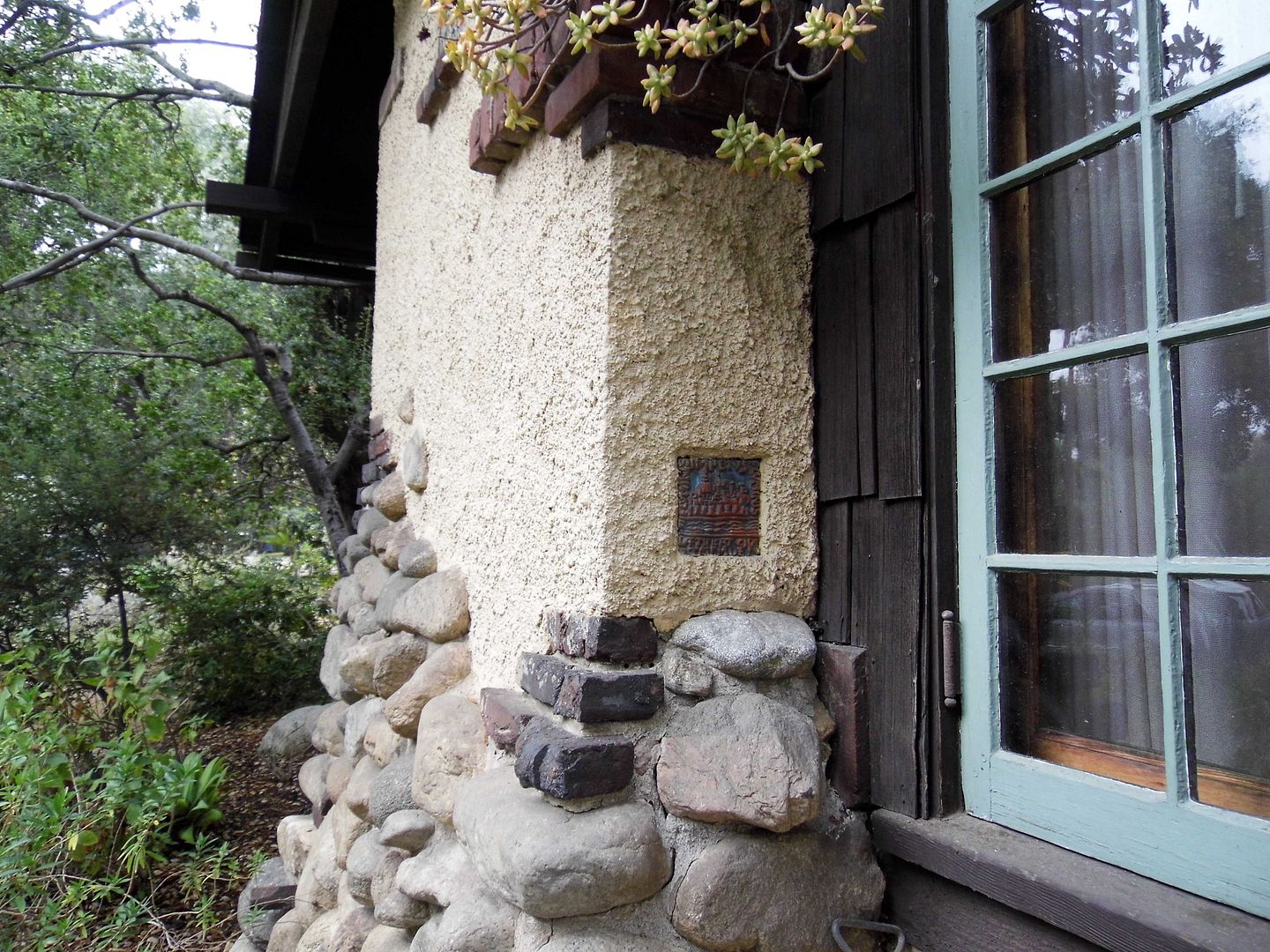
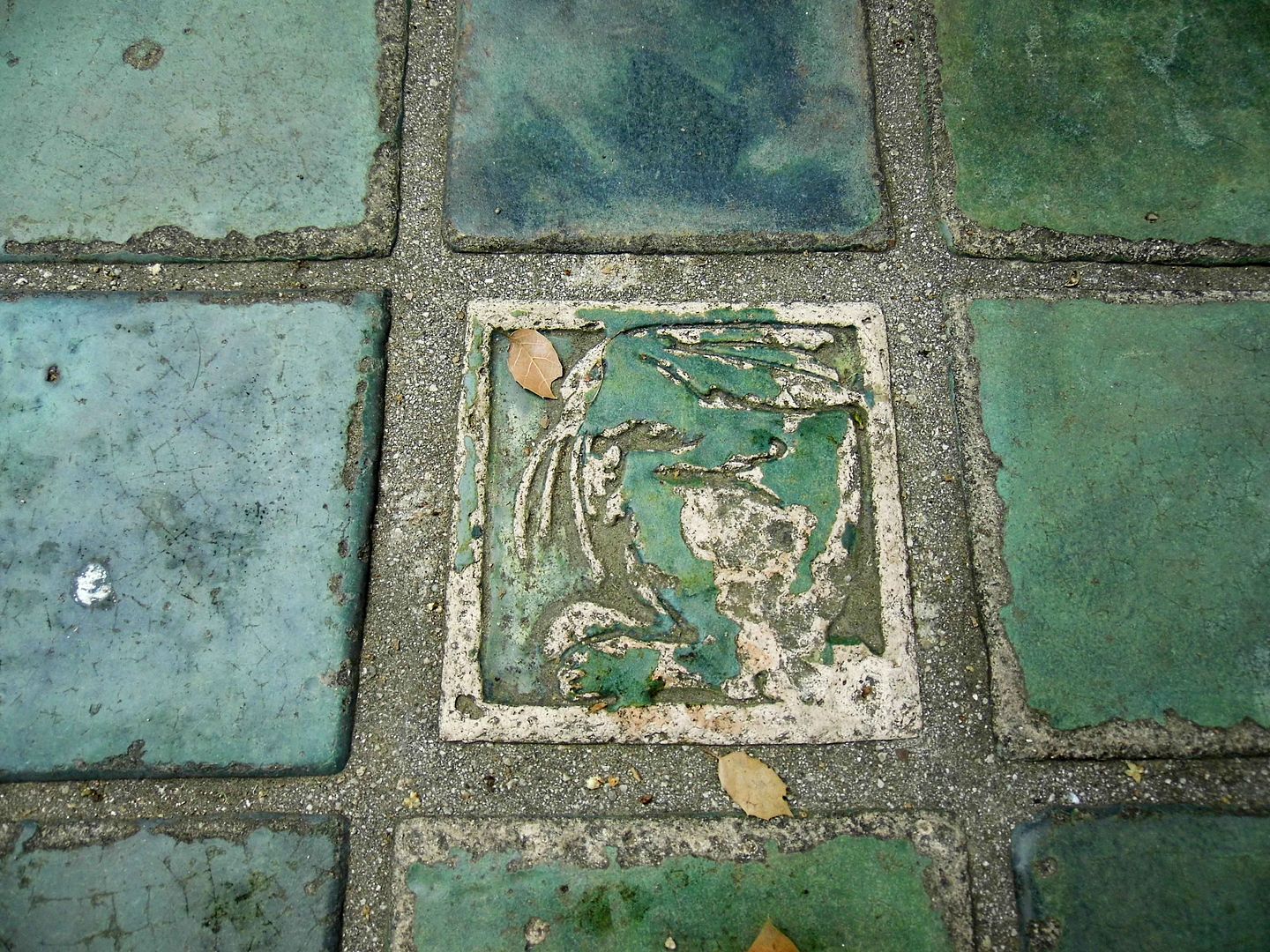
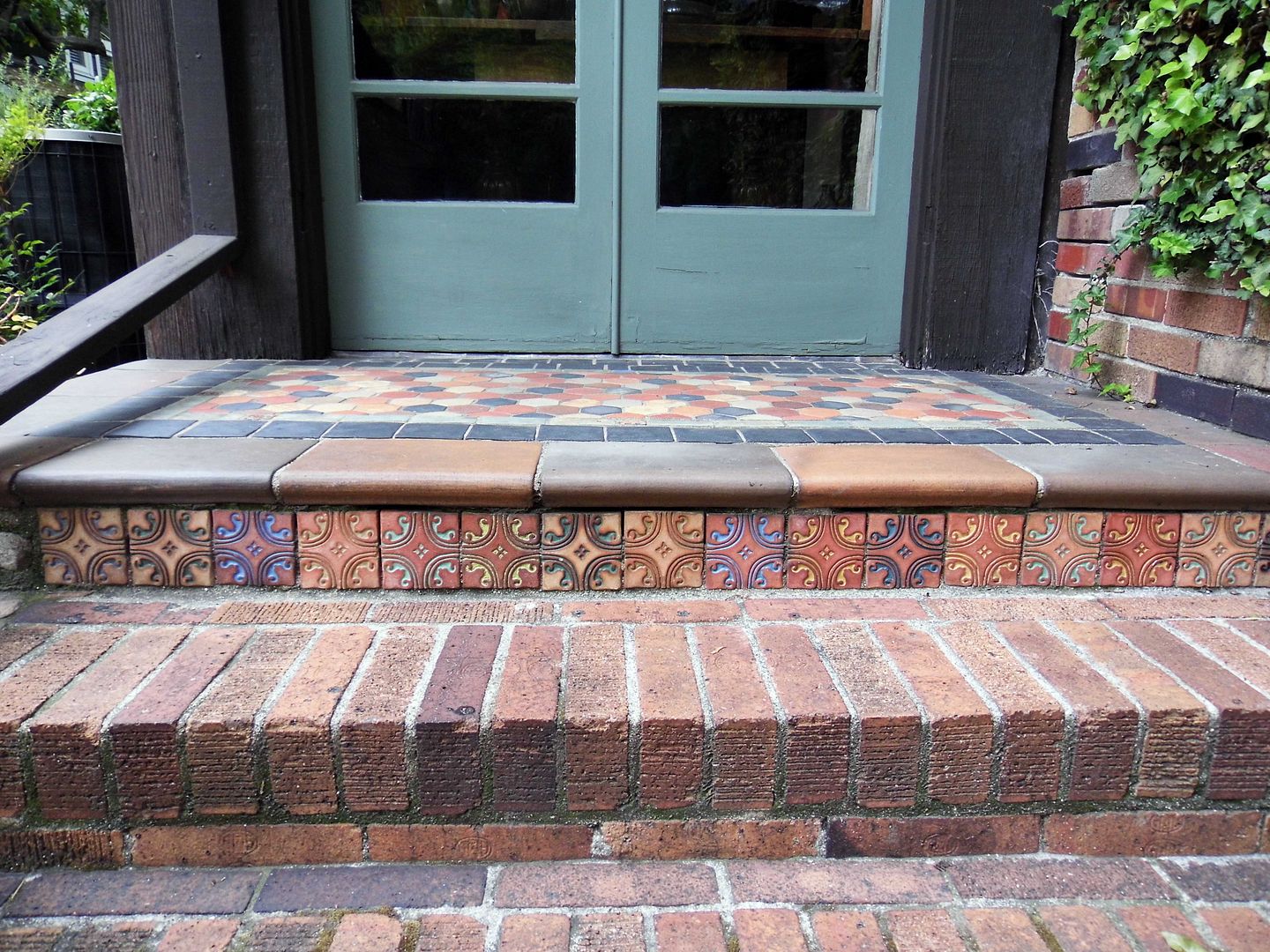
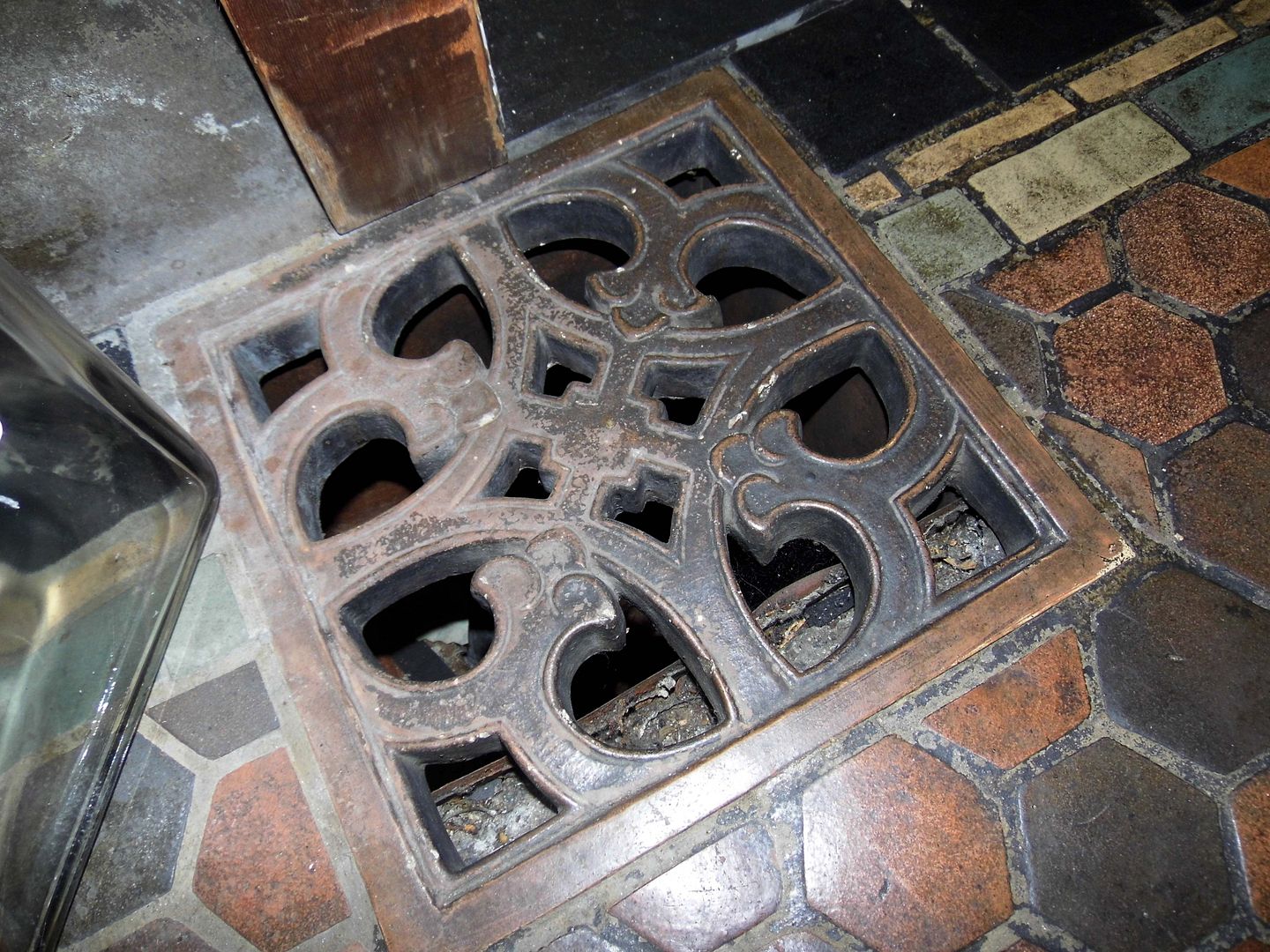
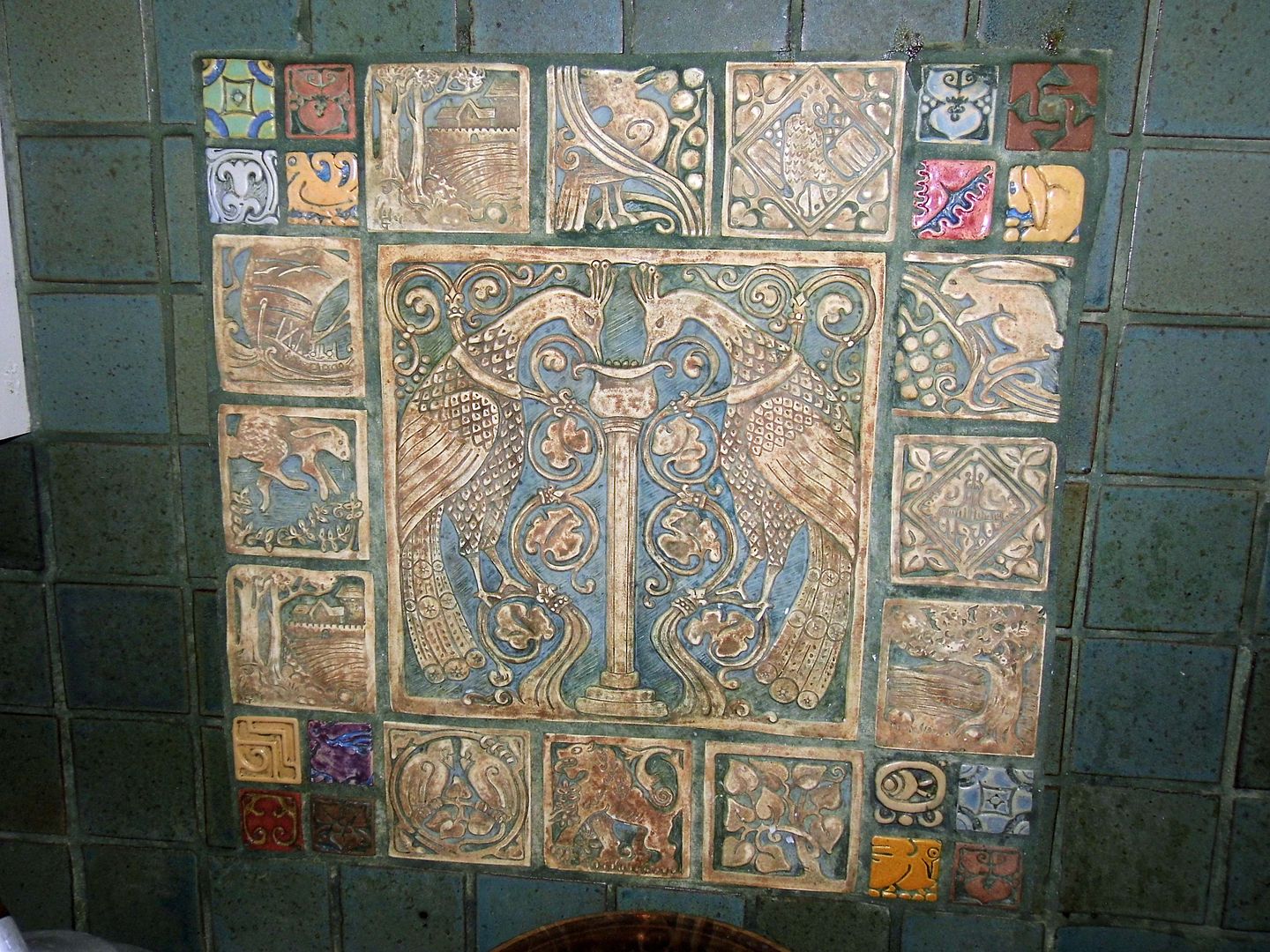
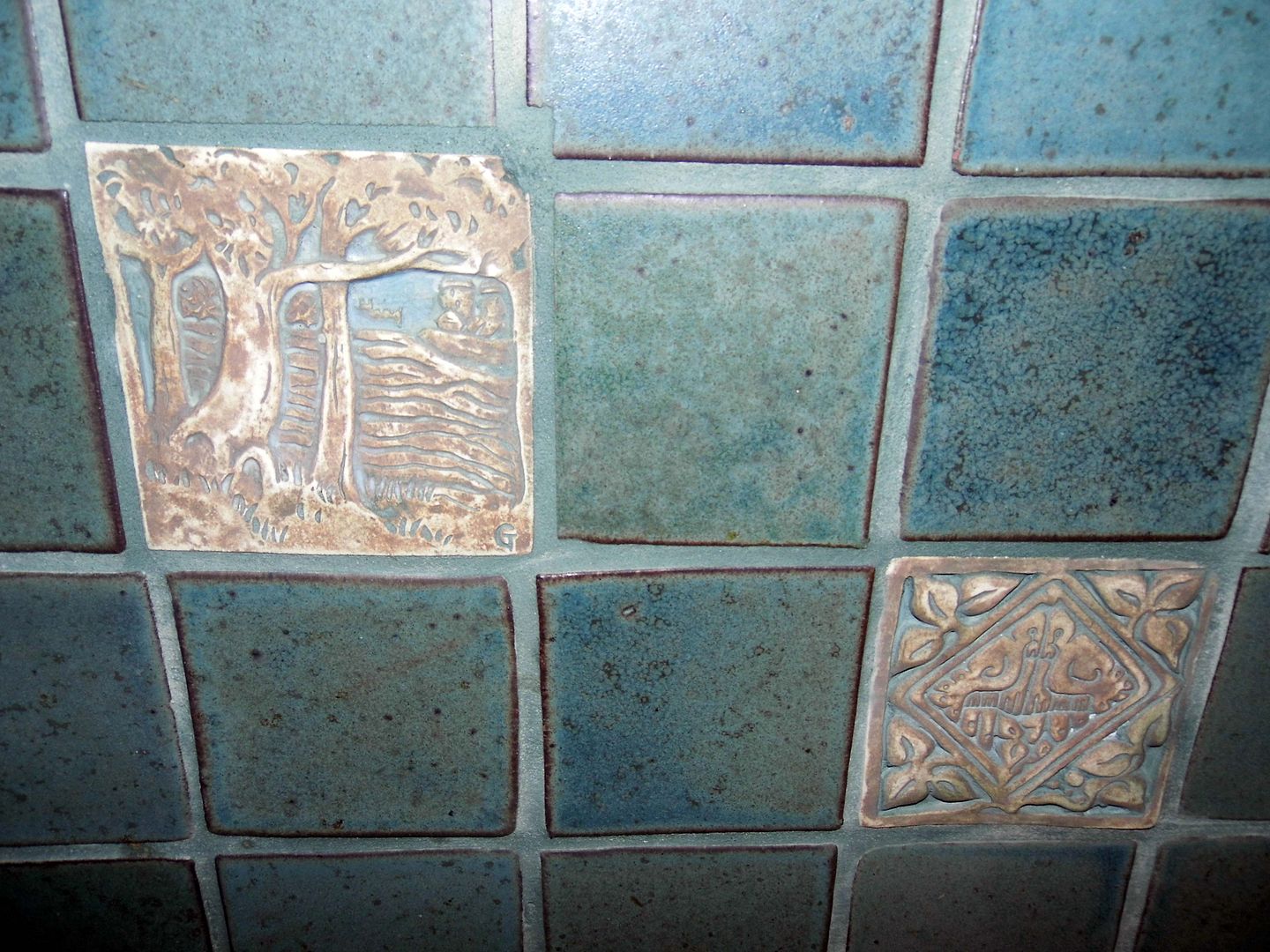
...with tiles embedded in the walkway out front...
circa 2019
...throughout the backyard...
circa 2019
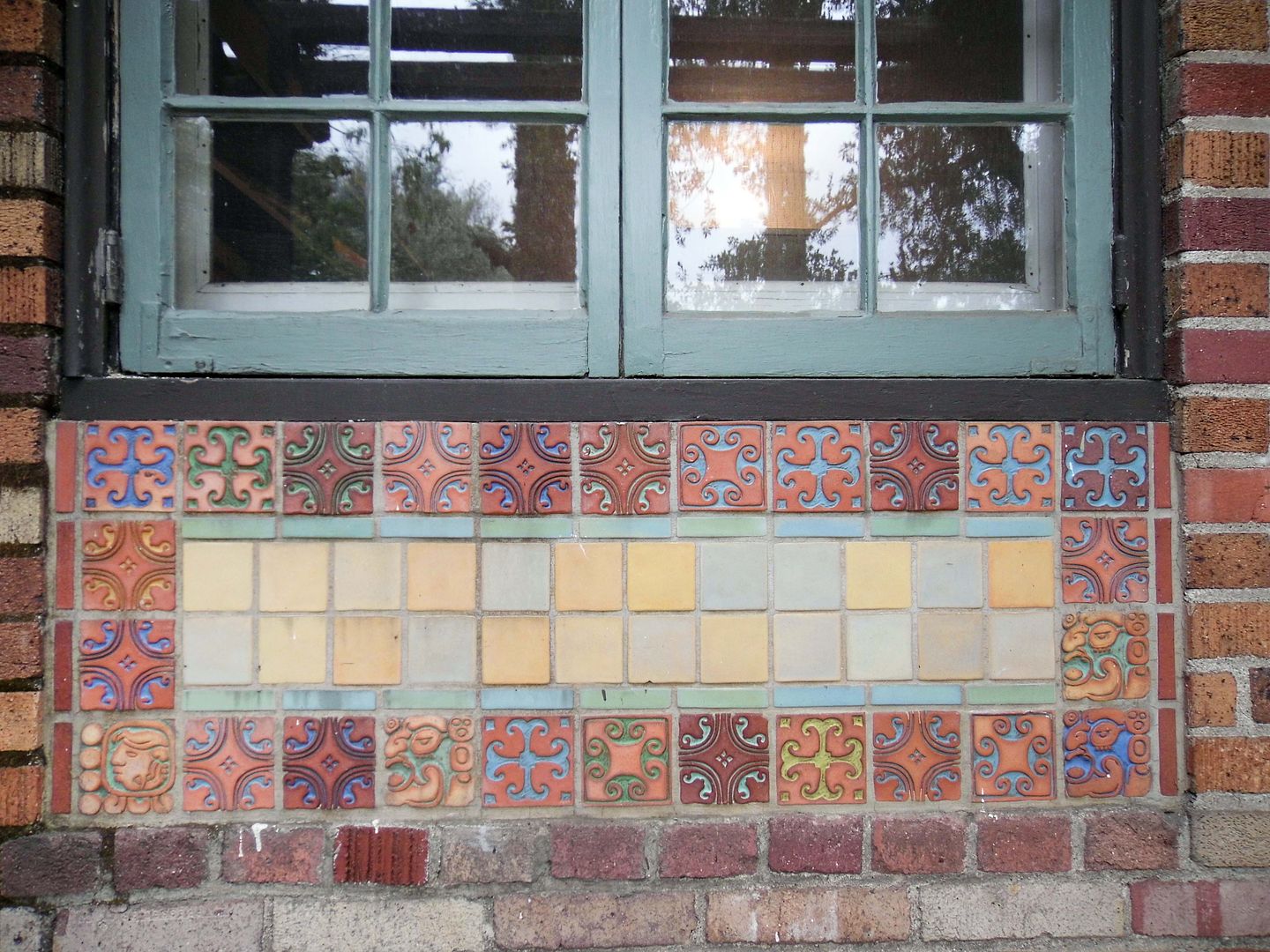
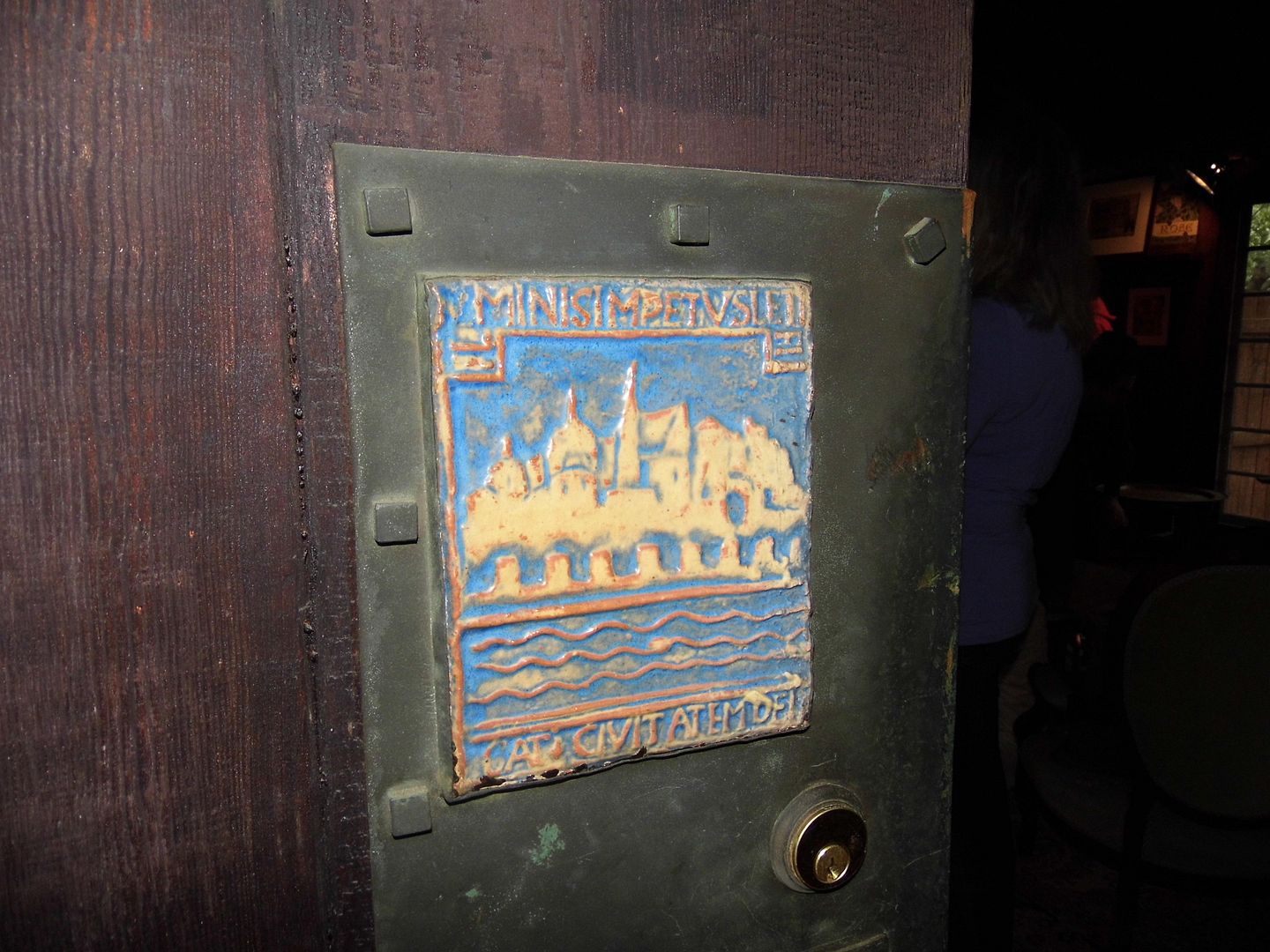
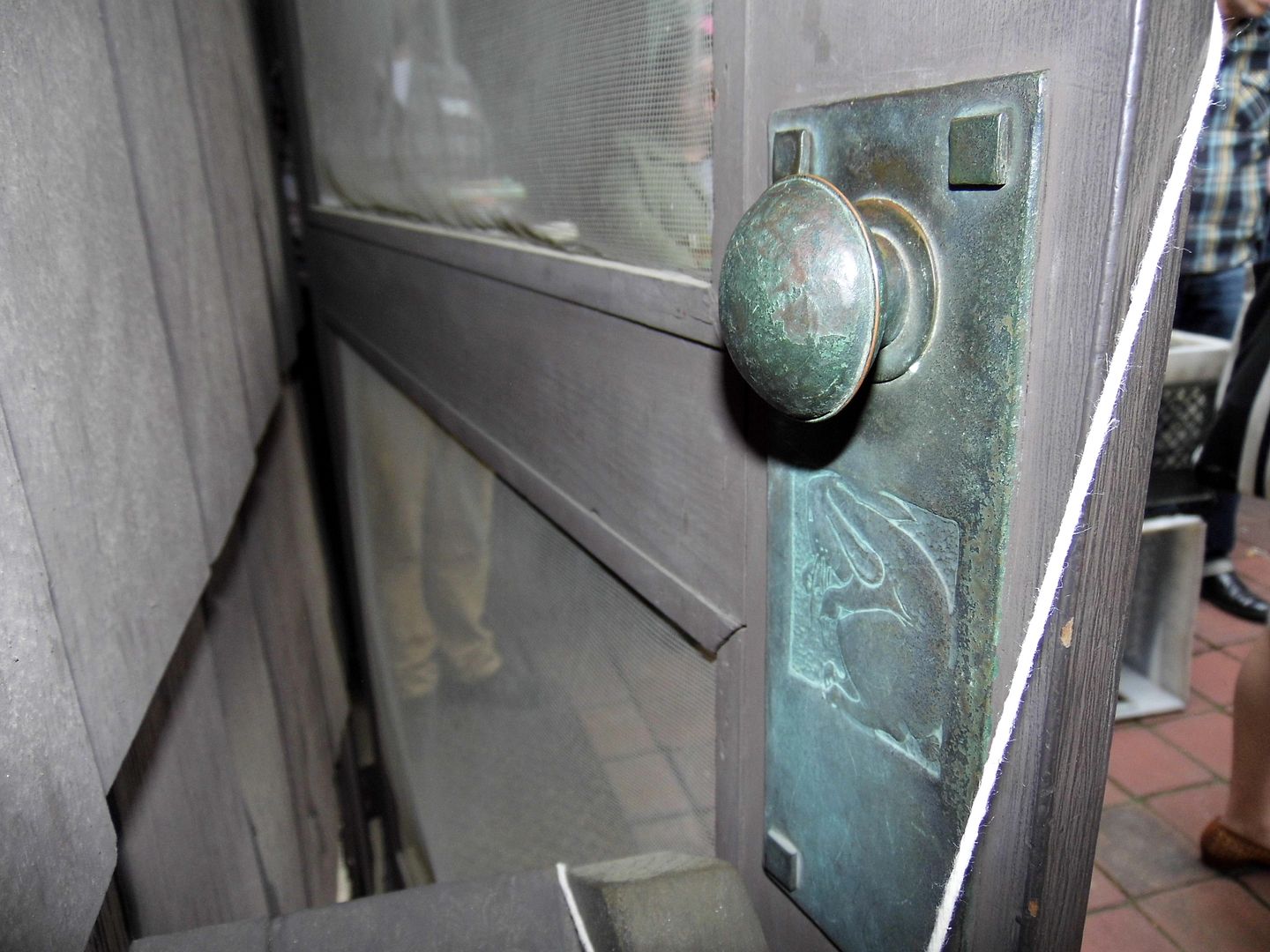
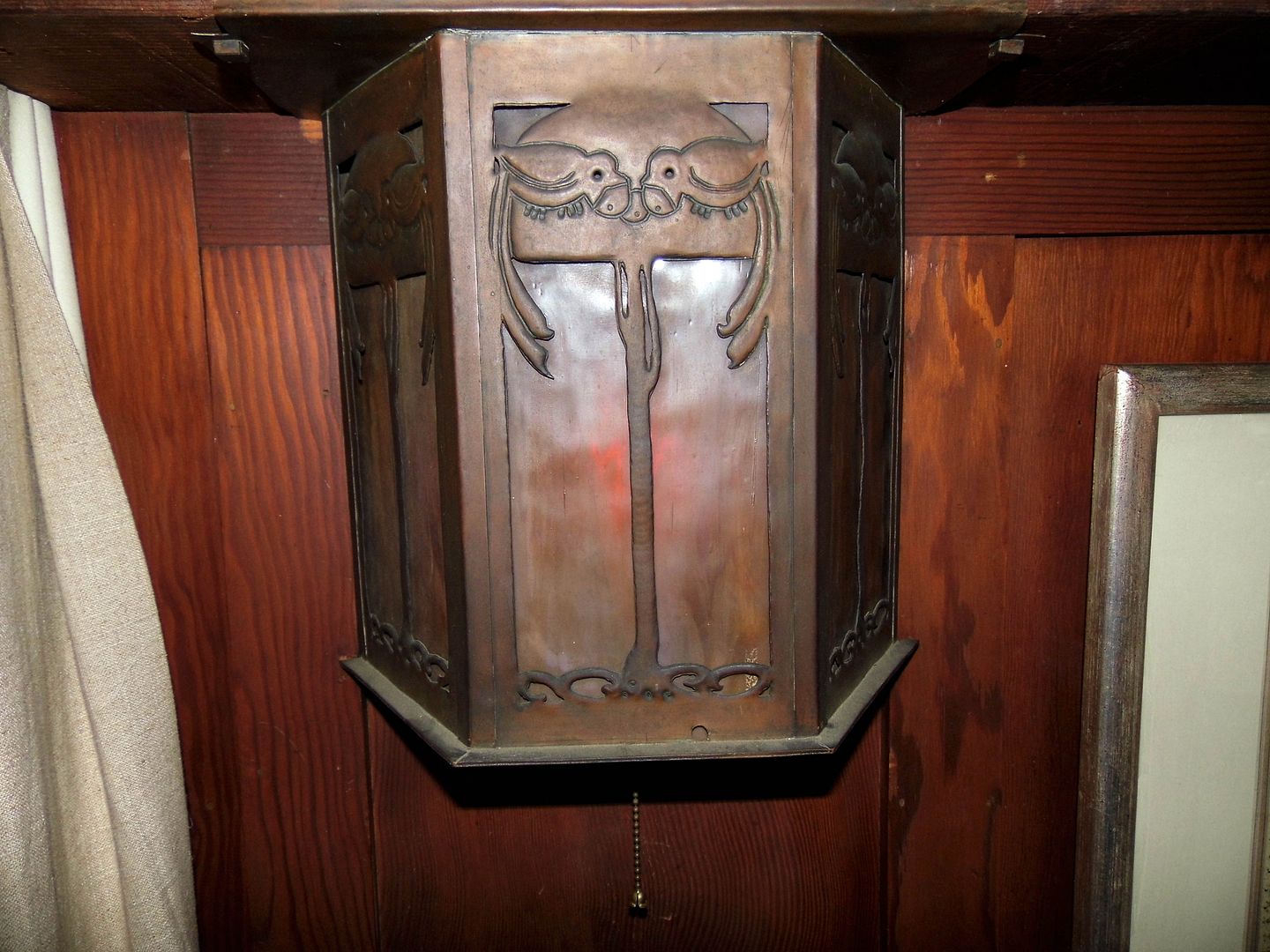
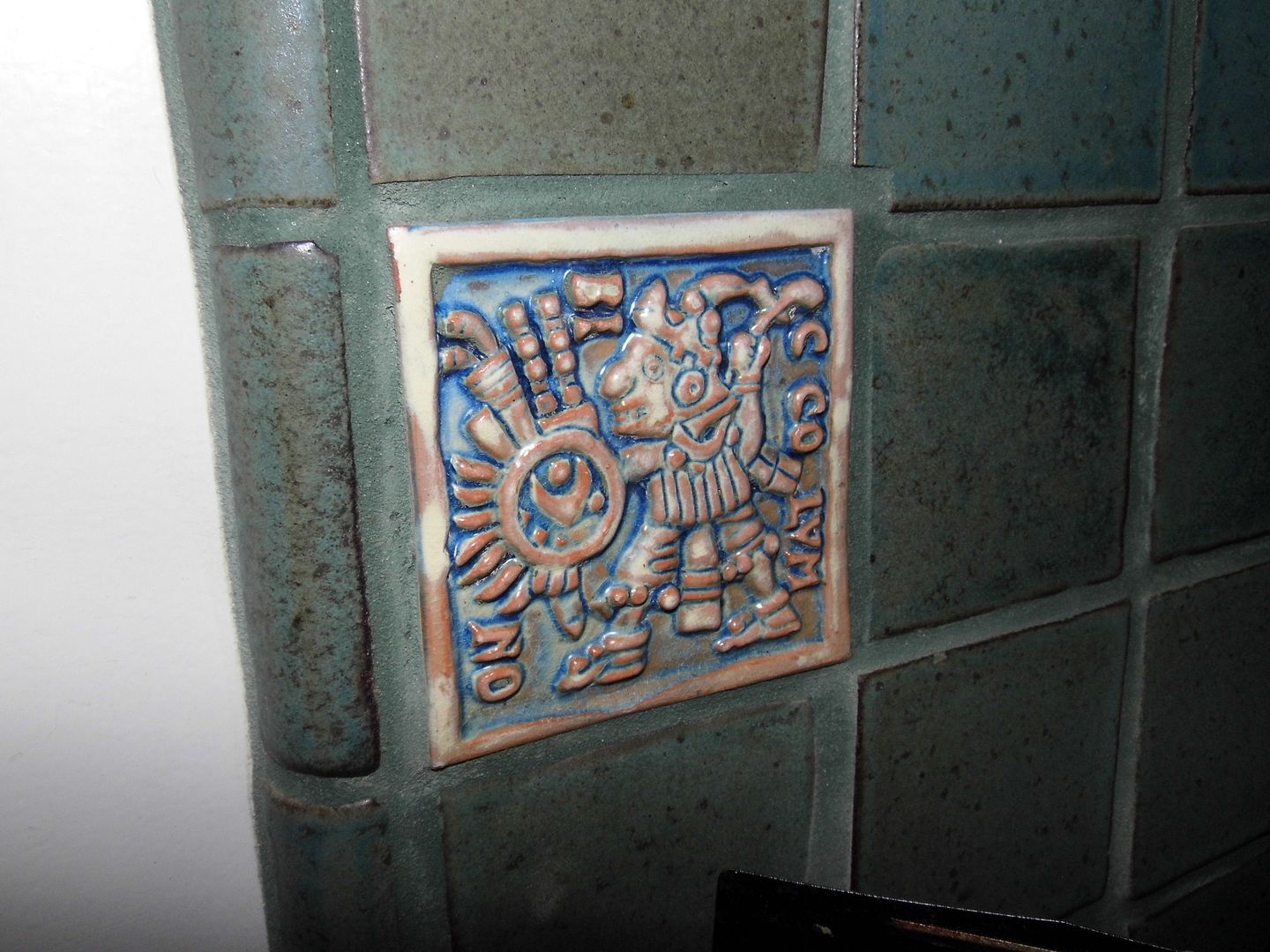
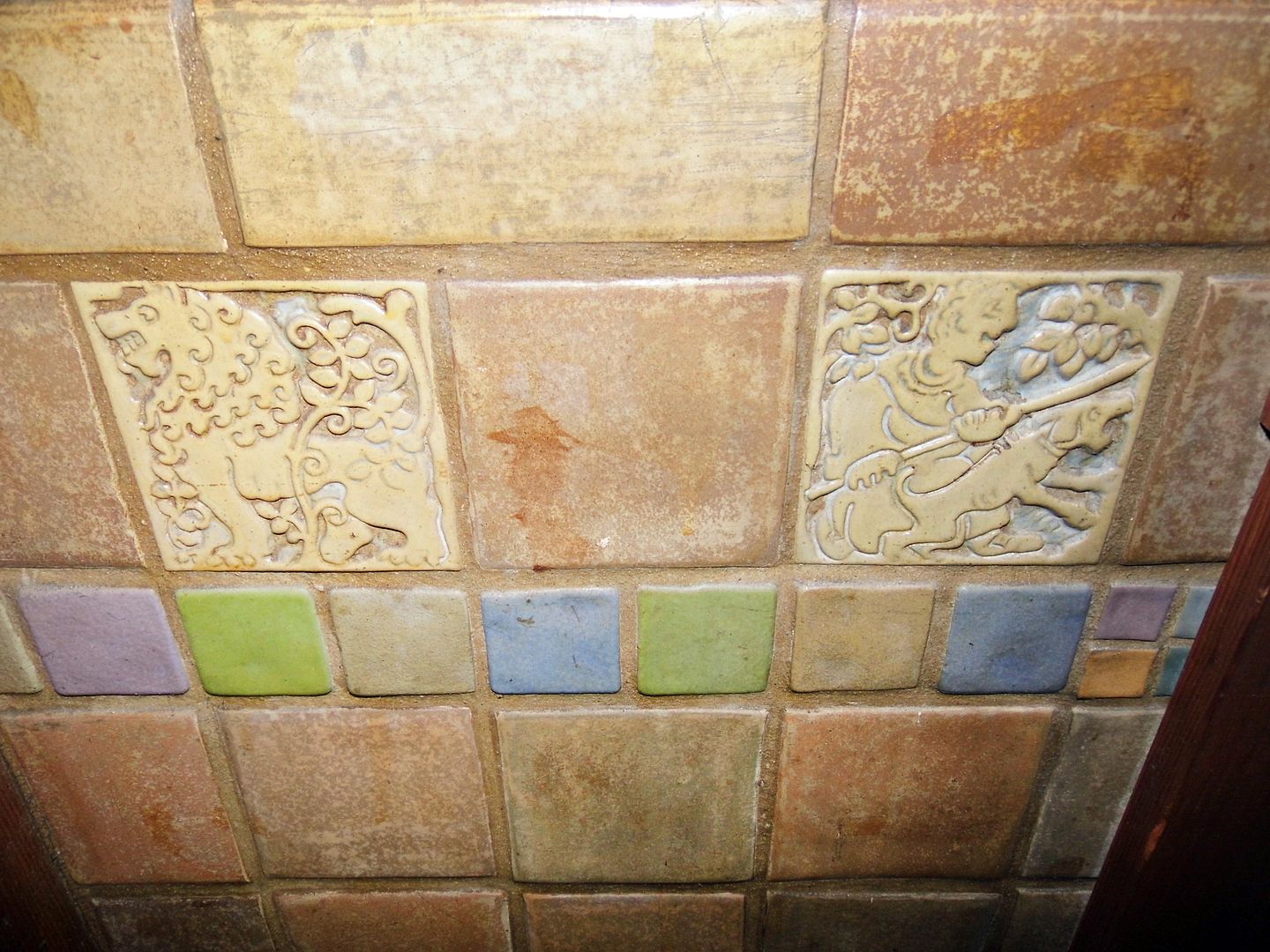
....and both the exterior and interior of the house.
circa 2019
Some appear to be not the work of Batchelder himself...
circa 2019
...but there's no longer anyone to ask who'd know for sure.
Given his residence, which he'd occupied since 1972, Bob had become a de facto Batchelder expert—and even donated several Batchelder tiles (and accompanying archives) to the Pasadena Museum of History and curated the "Batchelder: Tilemaker" exhibit at the museum in its 2016-7 season.
circa 2019
What I didn't fully understand when I first met Bob was that he was an expert a a lot of LA architecture, including the Arts and Crafts movement he helped Angelenos (who he once considered "heathens") gain a new appreciation for.
circa 2019
At the time of my visit, the fifth edition of his LA architectural guide could be found on the coffee tables and nightstands of many an LA-based journalist, historian, and architectural looky-loo—including my own, though I hadn't fully delved into the pages beyond its blue cover by the time I crossed the threshold of Bob's front door.
circa 2019
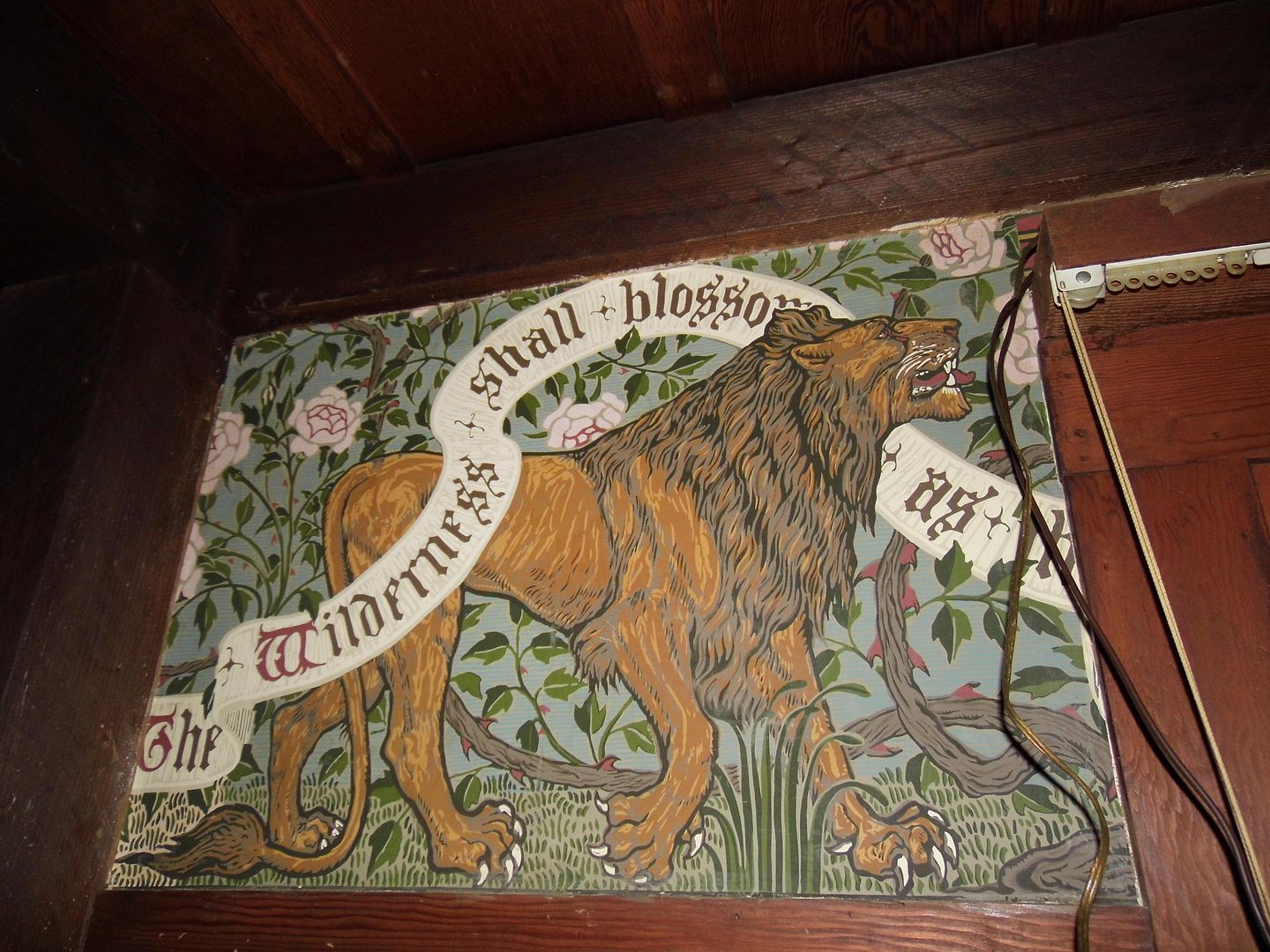
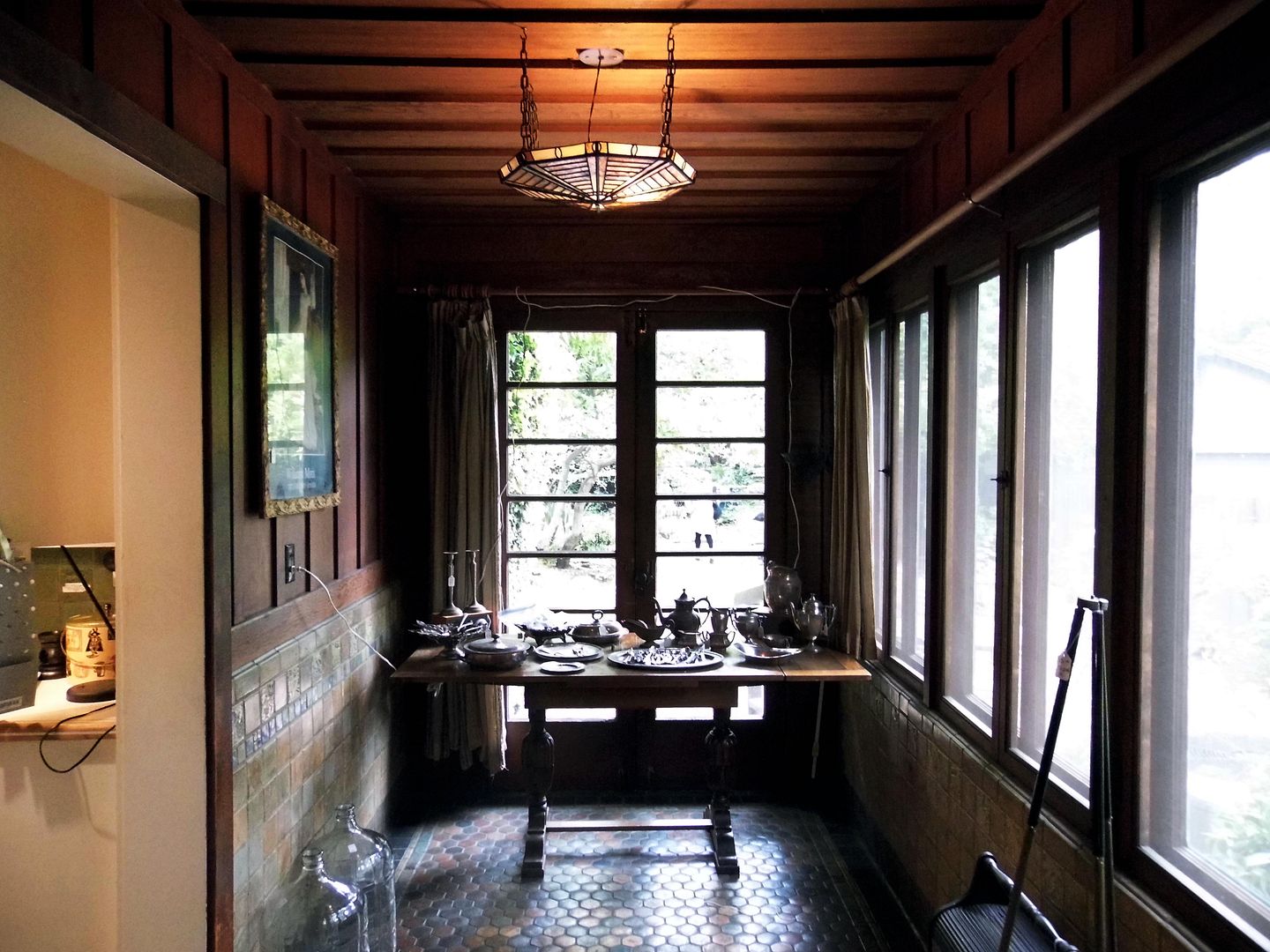
We all gathered in his dimly lit, wood-paneled living room, which is a half-story higher than the adjacent room...
circa 2019
...and he regaled us with stories, giving us a glimpse into his charm and wit.
circa 2019
It was clear that he had a great sense of humor.
circa 2019
Every time he'd say something funny, he'd smack the arm of the rollator he was seated upon as though slapping his own knee in utter glee.
I immediately fell in love with him, but I was eager to explore the rest of the historic property, too.
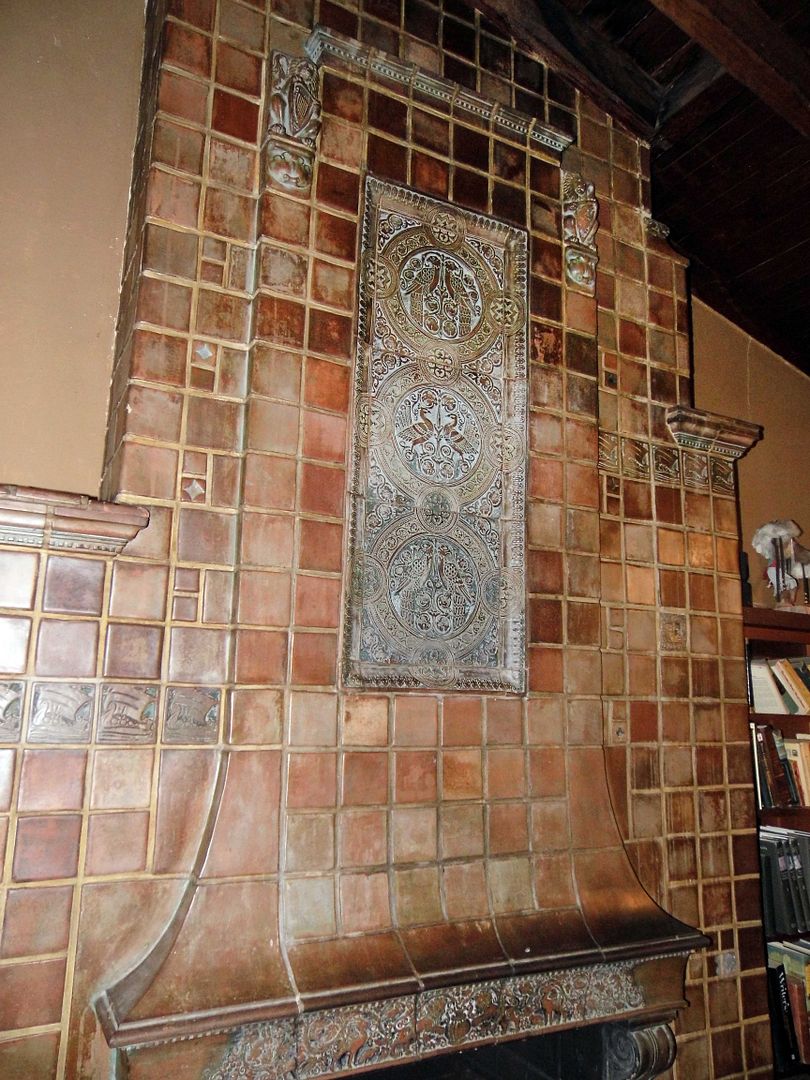
So, I went outside to examine the chimney...
...with its inlaid Batchelder tile...
...and the kiln (which Bob insists Batchelder would've pronounced "kill," dropping the "n")...
...where Batchelder himself had fired up so many tiles for Greene and Greene...
...and other architectural clients, both near and far.
As Bob described in the nomination form for the National Register of Historic Places that he prepared, the backyard serves as a kind of "museum of ideas" for Batchelder's process...
...as well as a gallery of some of his works.
It also exhibits the influence of his wife, Alice Coleman, founder of the Coleman Chamber Music concerts.
But as it turns out, I spent too much time outside, at the tile fountain...
...and the pet cemetery under the old oak, with its tributes to Wispy and Shadow ("a master of his own universe").
I planned on going back inside the house to spend more time with Bob and thank him for his hospitality—but once all the photos were taken and the socializing with fellow tour attendees was done, it was too late.
Bob was tired and done. He didn't entertain visitors much anymore, and we'd tuckered him out.
circa 2019
I never got to see him again.
circa 2019
But I did return to the Batchelder bungalow, for perhaps one last time.
circa 2019
Although Dr. Winter left the house (and presumably, its contents) to Occidental College, where he taught for decades, his belongings were recently sold off in an estate sale.
circa 2019
As shoppers picked through his bedding and dishware and haggled over already rock-bottom prices, I examined the tiles.
circa 2019
I didn't pick up a keepsake at the estate sale—but I didn't really need to.
Dr. Winter will be in my heart—and on my bookshelf—for eternity.
Never in my life did I ever think, "I want to play the harpsichord."
My Grammy was a piano teacher and, until her death in 1985, she taught me to love the percussive banging on keys on hammers on strings as I played the upright in her living room.
In fact I'd only heard the music that comes out of harpsichords—and hadn't seen one up close, much less played one—until just a couple of weeks ago, when I visited Curtis Berak's studio in Downtown LA.
Everybody's got a claim to fame in Hollywood—and Berak is the harpsichord guy, the one who can tune vintage and new ones as well as build his own, even faithful reproductions of antique ones that are considered pretty near perfect.
I wondered what the bag of feathers was for—and it turns out that the traditional manufacture of a harpsichord includes the quill of a raven's wing, used to pluck the strings (rather than hammer on them, like a piano). While many modern makers have replaced the quills with plastic, Berak can make do with feathers from our resident—and abundant—populations of Canadian geese.
And so he's got one of the most faithful Neopolitan-style harpsichords you can find in the Southland—making this and others in his collection in high demand for movie and TV shoots, as well as musical performances and music videos (including Alicia Keys).
The harpsichord, of course, predates the piano—having emerged in the Renaissance period of the 15th century and endured throughout the Baroque period, eventually being eclipsed by the piano.
I that transition from string to percussion, instrument makers somehow dropped their outward expressions of devotion—references to angels and the like—as well as the ornate decoration of the sound cabinet, with birds and flowers having been painted on the surfaces behind the strings.
The Flemish models of harpsichords—particularly those made by the Ruckers family—painted to look like marble and resemble a coffin.
These were the most premium harpsichords of the time—as Berak says, the Stradivarius of the harpsichord—but they were not perfect. The theory was that nothing made by man could be perfect, otherwise it was the devil's work. Because Soli Deo gloria—only God is glory.
`
The harpsichord relayed a message—namely, that the player is transient, the music he plays is transient, and the instrument itself is transient.
And, in fact, each note played on the harpsichord feels too short. There's no sustain pedal. There are no pedals at all.
But pressing each and every harpsichord key—across two parallel keyboards, no less—feels ever so much more satisfying than tickling the ivories ever did.
So goes the glory of the world, or Sic transit gloria mundi. It's nice while it lasts.
It's been years since I've attended Artwalk in Downtown LA. It's always felt like too many people... and not enough art.
But last weekend, I went to the Hwy 62 Art Tours in the high desert communities surrounding Joshua Tree for the second time.
And I think I'll keep going back.
This year my first stop was the tile house of Wonder Valley...
...a "mosaic retreat" crafted out of Mexican tile, fused glass, and found objects by ceramicist and sculptor Perry Hoffman.
The two-bedroom house first became an art project in the year 2000 and was expanded in 2011...
...but Hoffman isn't done with it yet.
It's still a work in progress.
Though I would challenge anyone to find a blank space that needs to be covered.
And if he does cover it all, from floor to ceiling, inside and out...
...won't he just build another addition?
My second stop was The Glass Outhouse Art Gallery, which is entering its 10th season of art...
...and yet I'd only just heard about it this year.
The site used to be a pistol range—but when the owner died, his widow turned it into a not-for-profit art space.
At first just a gallery to showcase her own work and the oddball work of her friends who didn't fit in the traditional "desert landscape" category that most other galleries were looking to fill...
...it's expanded into a full-fledged outdoor art environment...
...with a sculpture garden and solar-lit trails out front...
...as well as a few cautionary tales (like don't get caught nude sunbathing).
This sculpture garden also features found objects galore...
...and that's probably because you can find a lot of stuff out in the desert.
You can get lost in the whimsy and wild.
You can awaken a greater sense of self.
And you can make your life whatever you want it to be.
As if the desert weren't surreal enough on its own, I made my last stop the Dream Wanderer, a roving virtual reality experience that's set up camp in Landers.
I boarded the bus (now parked to stay, at least for a while), strapped on the VR headset, and was taken away to Lily Dale, New York, a town founded in 1879 for spiritualists...
...where dozens of registered mediums (many who are called "Reverend") reside and offer their services of contacting the other side. Some bend spoons. Others heal with their hands.
But during each two-and-a-half-minute segment of the virtual reality show (replete with vibrating chest plate), I enjoyed my time on the fringe.
I walked through a forest, and I floated on a glass lake.
I wondered whether the dreams I've had are simply memories of things that happened while I was asleep.
I pondered what connects me—the essence of me—to my corporeal form and to this world I currently live in.
But in the end, I hoped that the dead aren't really still among us... and that I won't stick around after I die.