
I'm less spontaneous than I used to be. My calendar has gotten more filled with scheduled events, rendering me less likely to wake up and ask myself, "What should I do today?"
But when I saw a last minute notice that the Santa Barbara Theatre Organ Society was having an open console event at the Arlington Theatre in Downtown Santa Barbara last weekend, I knew what I had to do.
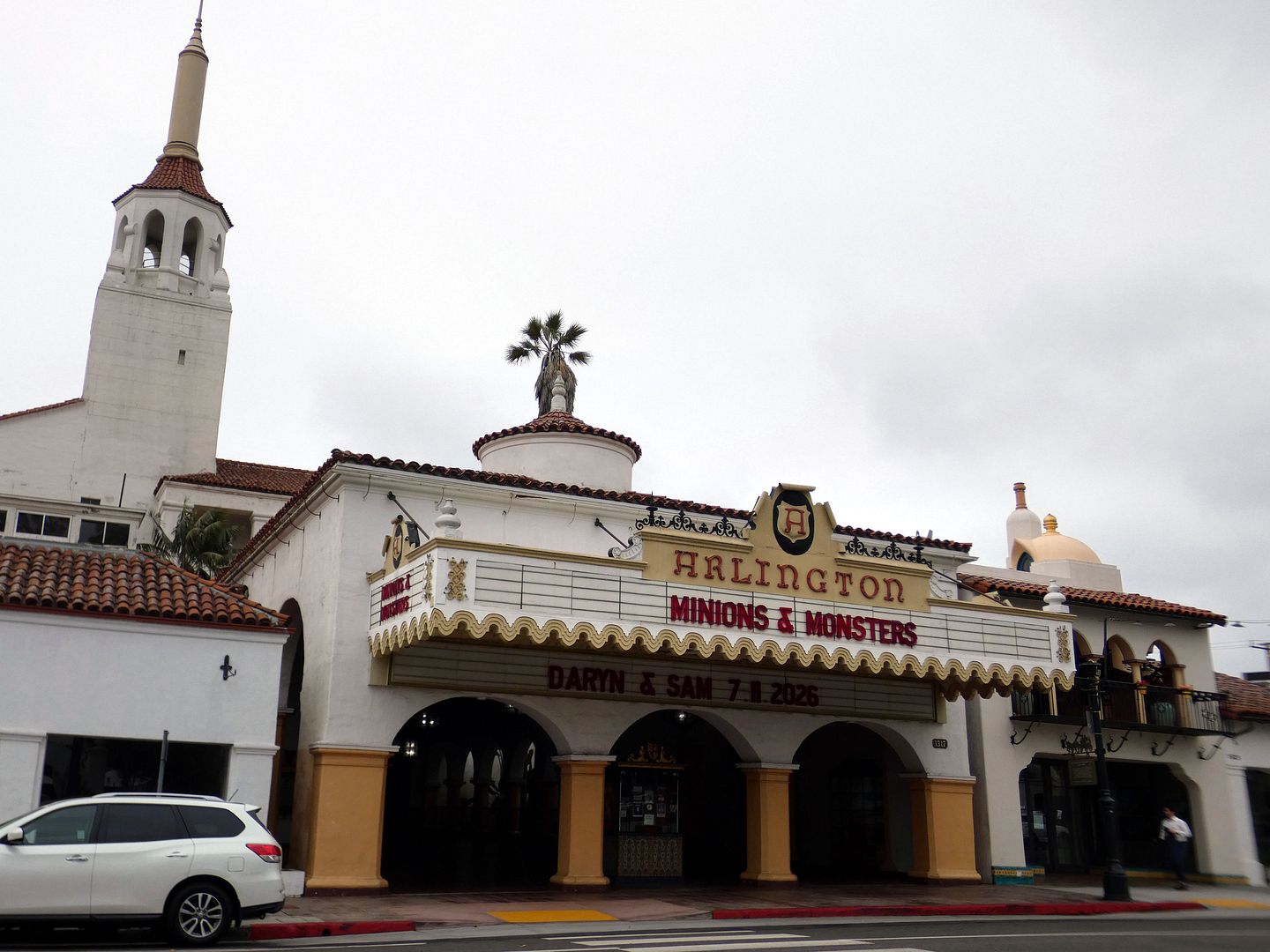
I don't get to Santa Barbara that often, despite it being only 90 miles north of me, and I hadn't been to any of its historic theatres yet. Besides, we'd been having heat advisories in LA for days—so I was grateful for the cloud cover and cooler temperatures up the coast.
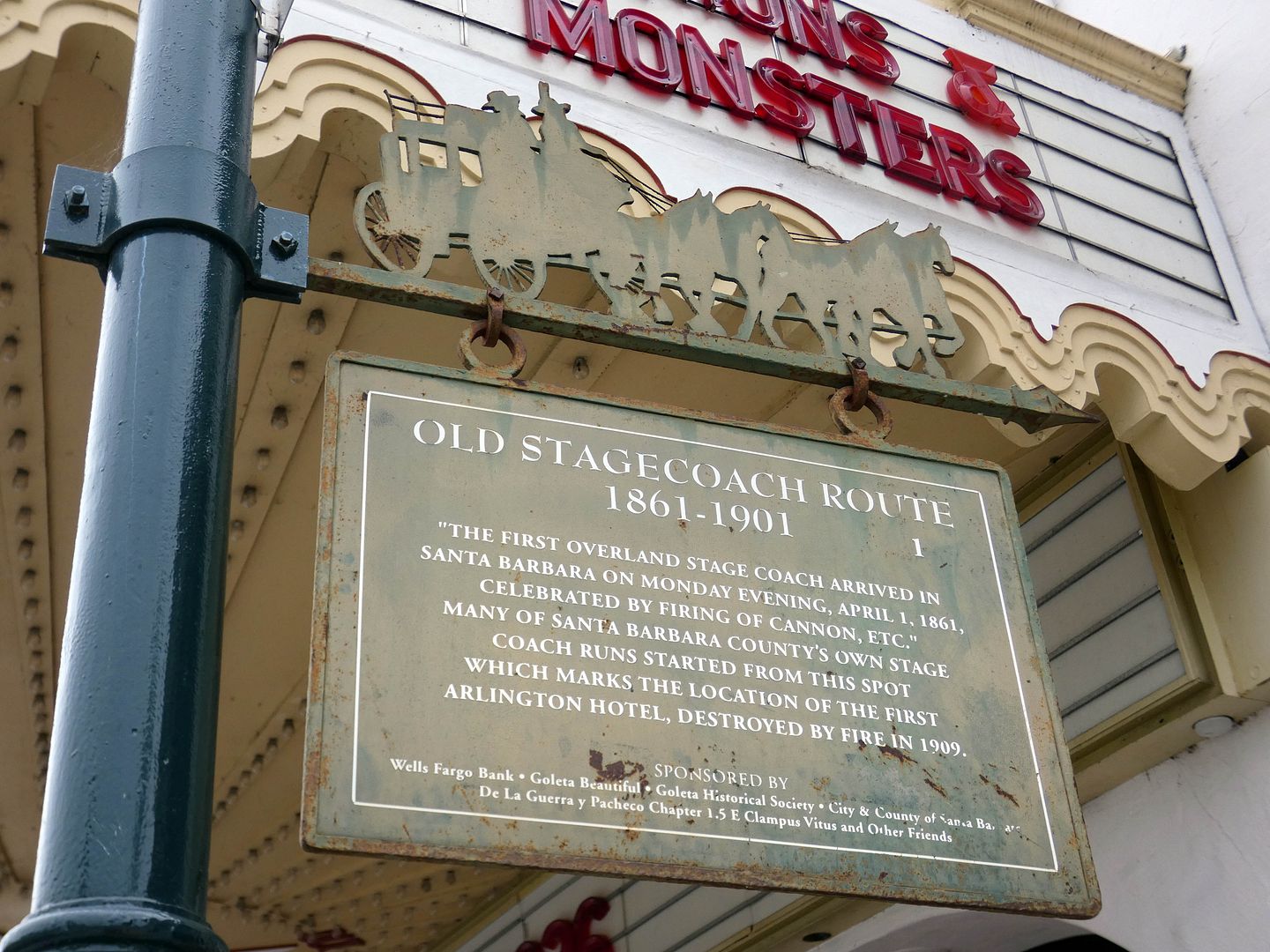
The Arlington is located along the old overland stagecoach route that ran from 1861 to 1901—when the Arlington Hotel stood in this very spot. In 1909, an electrical fire burned the wooden structure down; and in 1911, a newly rebuilt hotel rose in its place. The 1925 Santa Barbara earthquake destroyed the second Arlington Hotel, the remains of which were subsequently razed (along with much of the rest of downtown).

The (hopefully quake-proof) Arlington Theatre was built in 1931 for Fox West Coast Theatres—and in those early years, the studio used it to preview its movie releases outside of LA with major test screenings shown here.
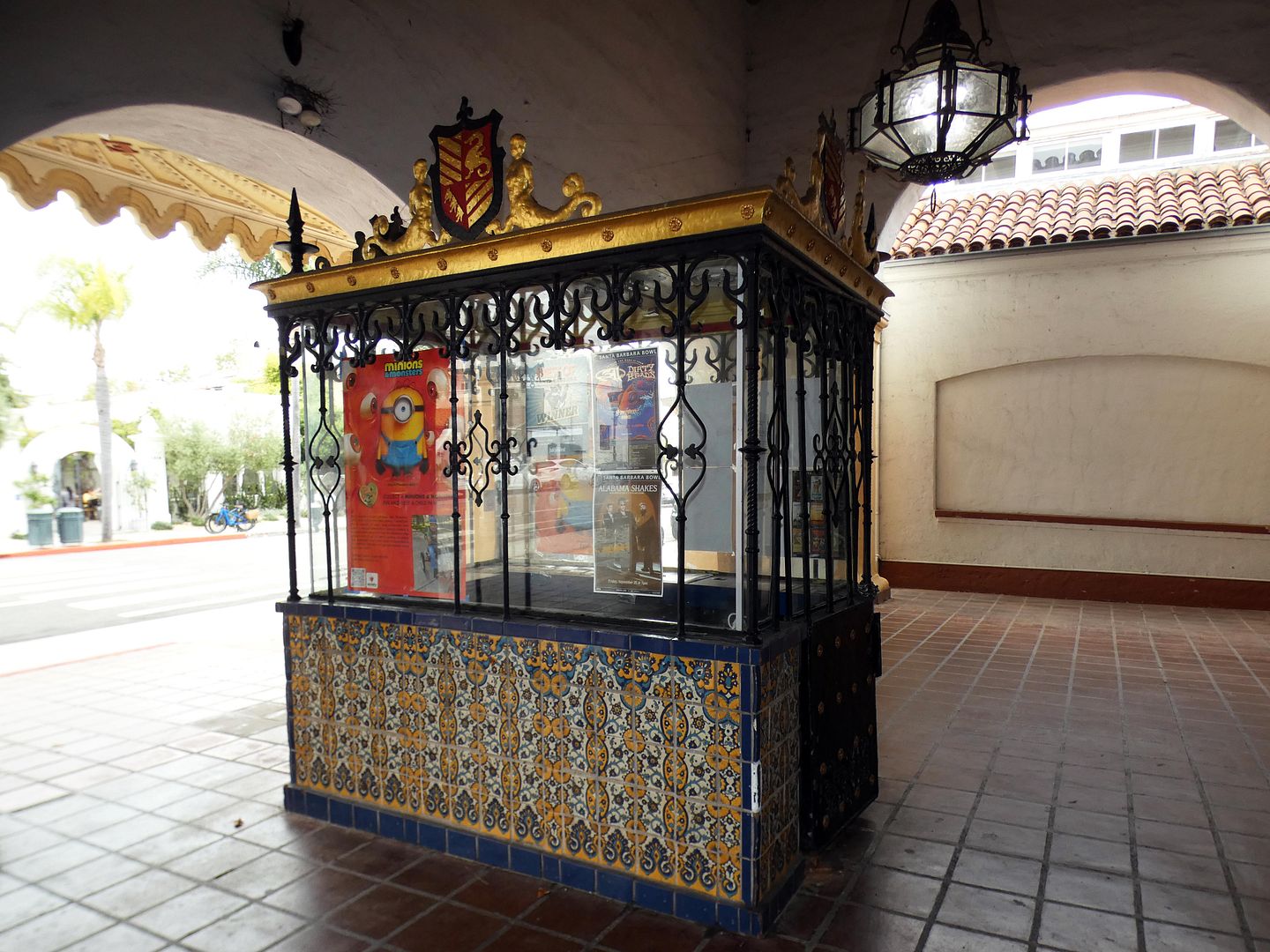

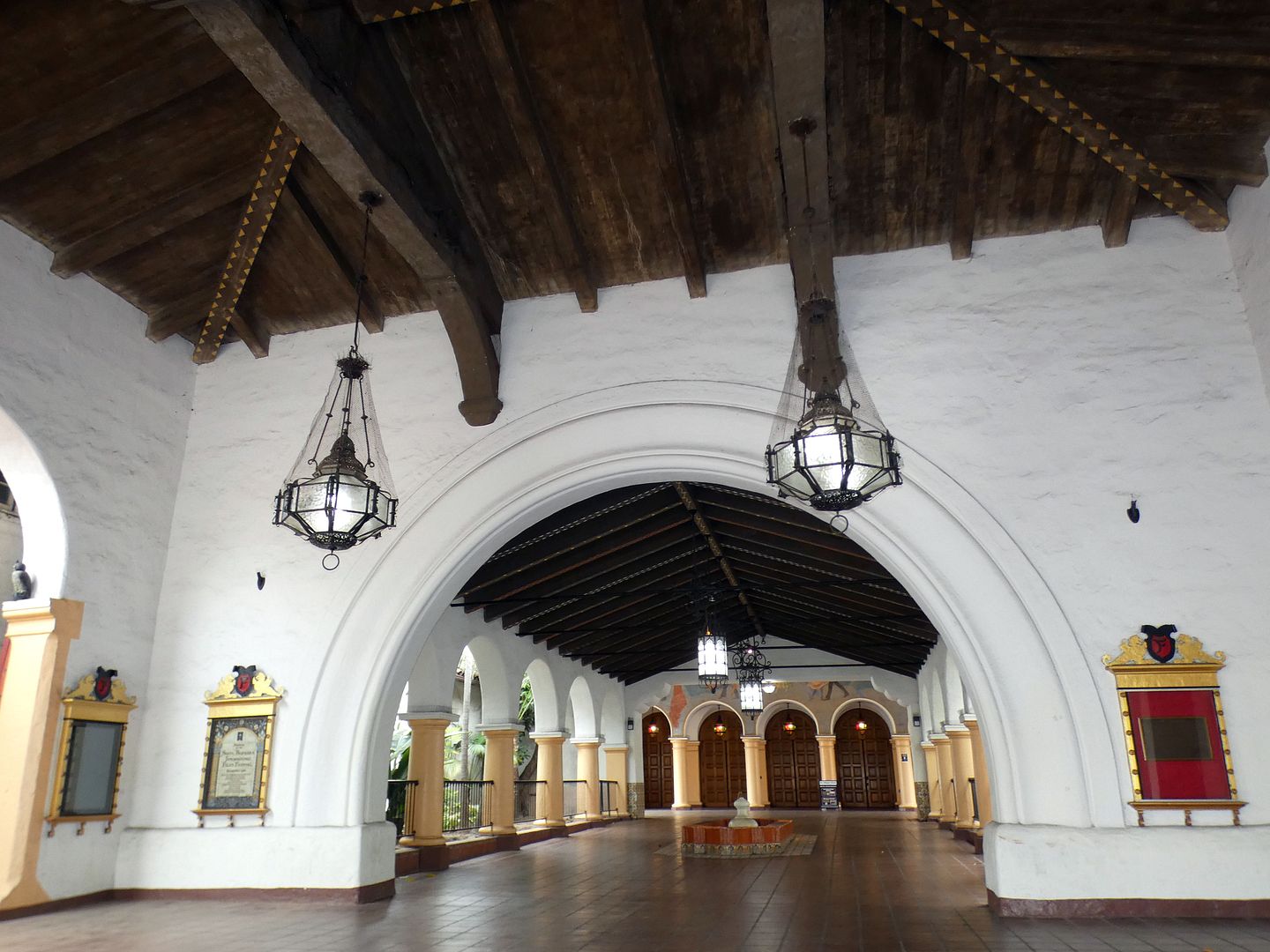
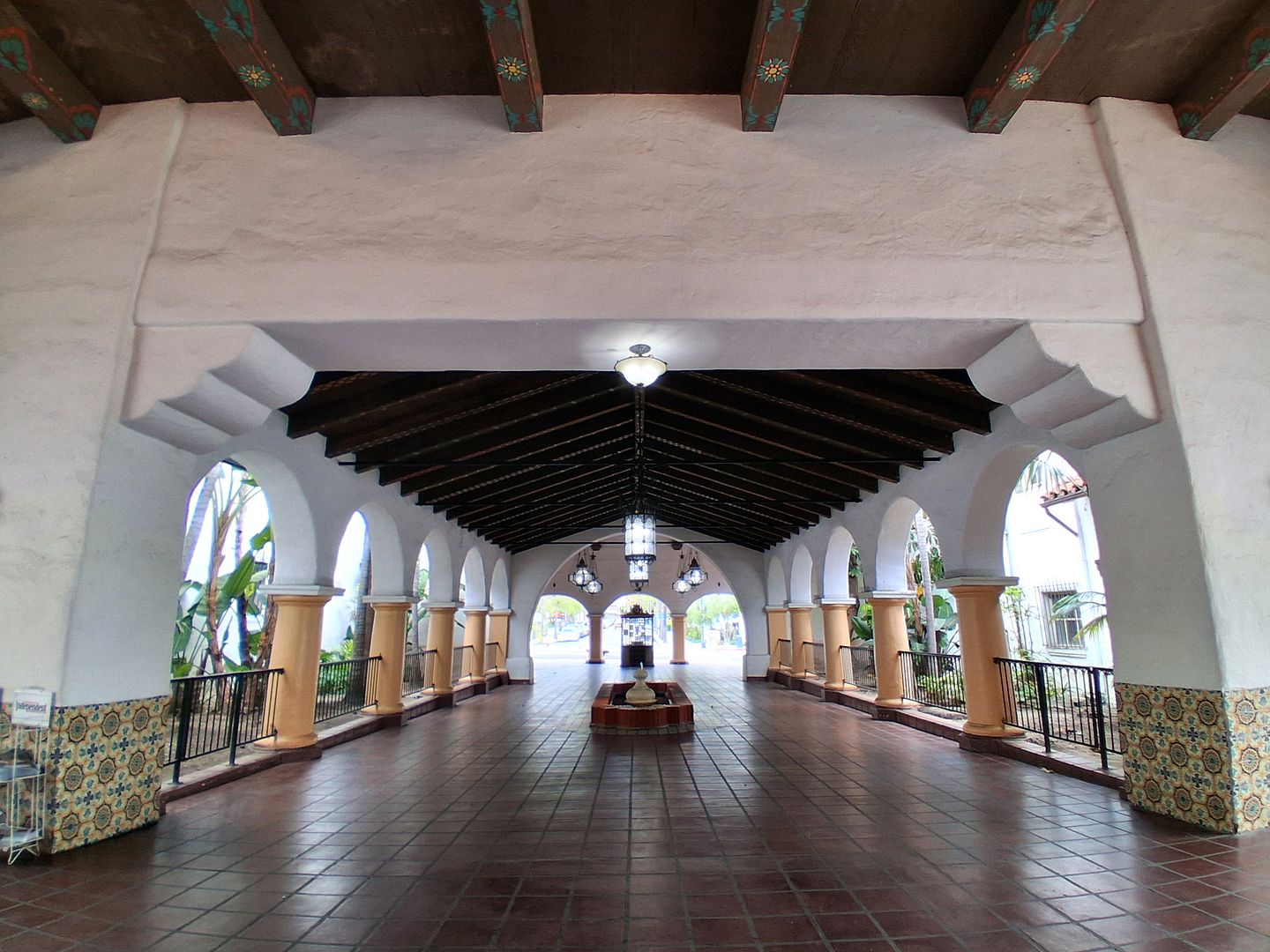
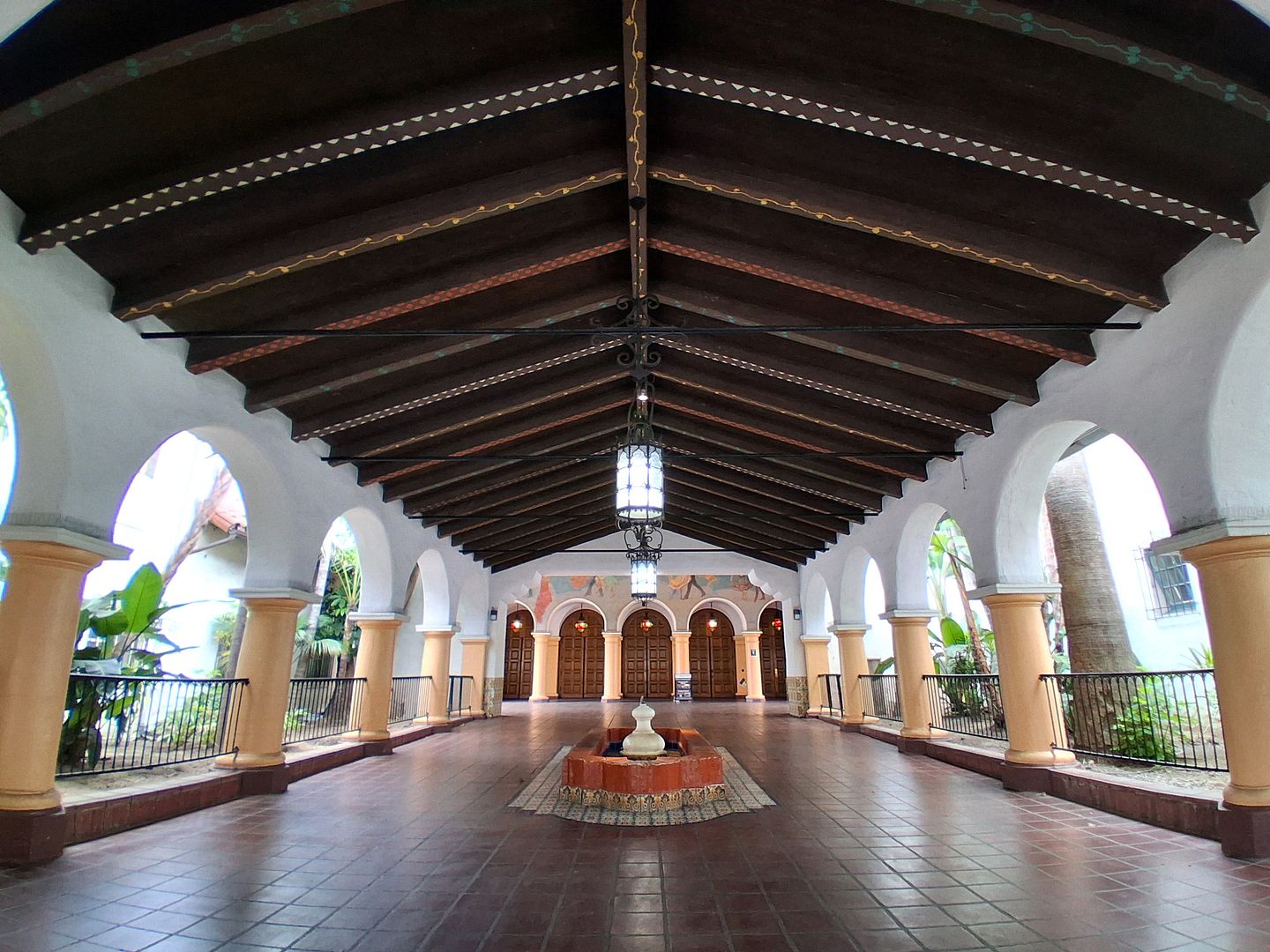



Today, the former Fox Arlington (Metropolitan Theatres took over sometime in the 1950s and bought the building in 1975) operates as a performing arts theatre and first-run cinema...
...showing summer blockbusters like Minions & Monsters and screening selections for the Santa Barbara International Film Festival.
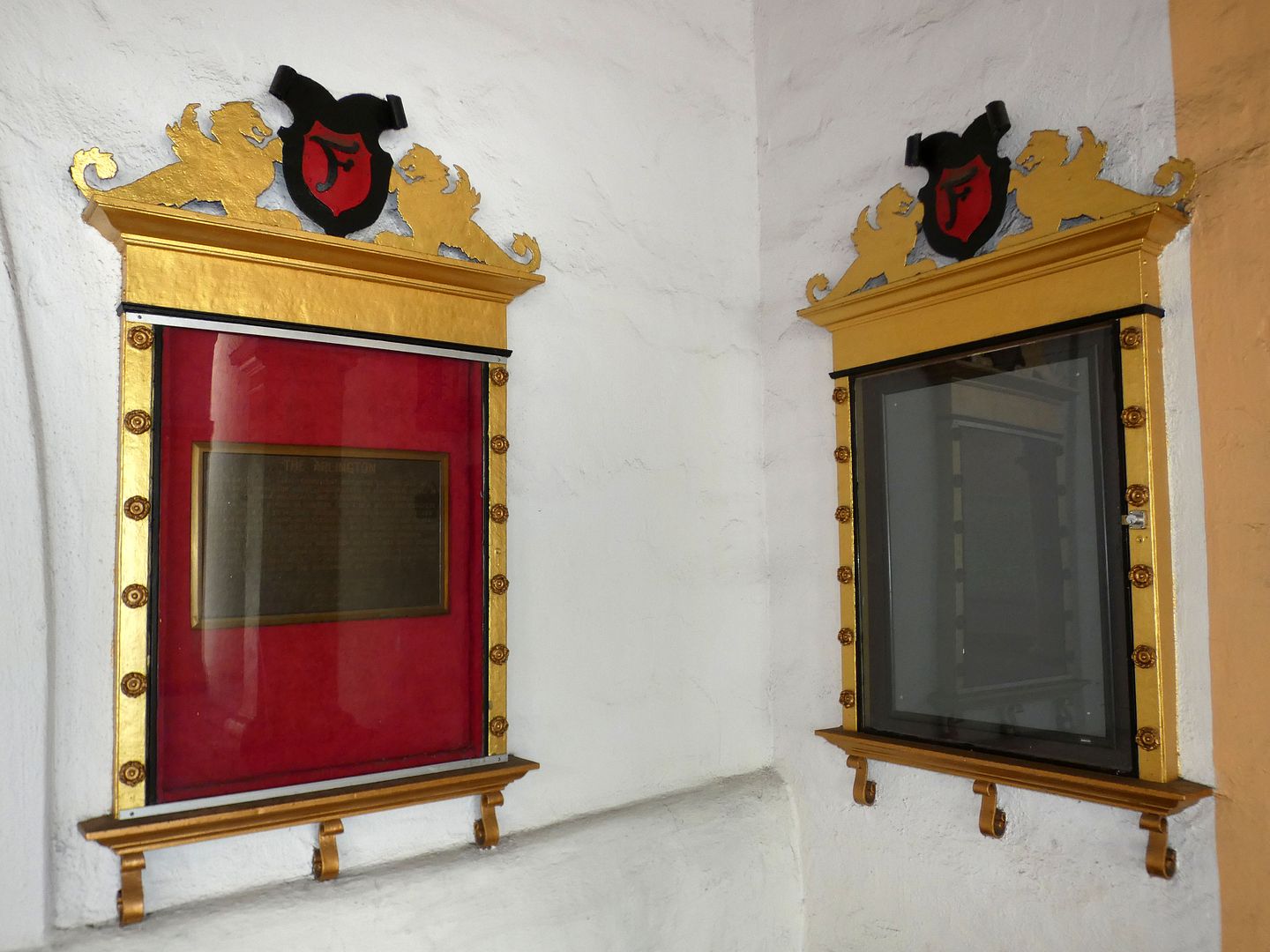
It no longer has official ties with the Fox studio, but you can still find a few "F" letters around.
Like the Egyptian and the Chinese Theatre in Hollywood, the Arlington has a large forecourt...
...but this Paseo is a covered courtyard lobby, replete with soaring Spanish arches and a prototypically Spanish tiled fountain in the center.
It's sometimes attributed to the Mission Revival style of architecture, but it's really a Spanish atmospheric fantasy—evoking less of the California Missions and more of a village in Andalusia. (Spanish Colonial Revival is sometimes used interchangeably with Mission Revival, but in this case I think it's the more accurate term. A 1932 article in Motion Picture Herald called it "truly Spanish.")
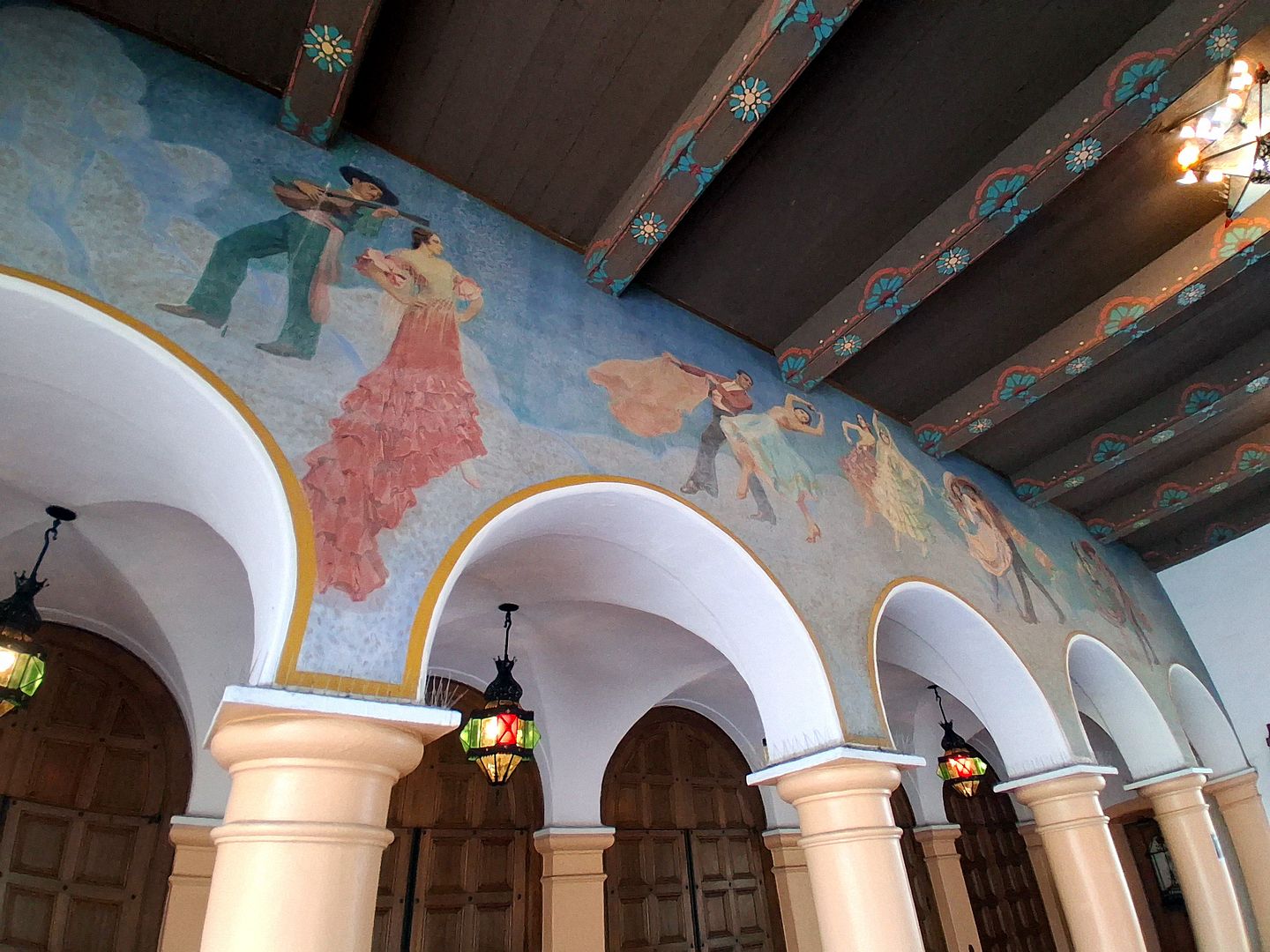
But the architectural team of Edwards and Plunkett included a bit of that Rancho Period nostalgia so associated with Santa Barbara, too—including a mural at the entrance loggia, with traditional Spanish dancers as depicted by artist Samuel Armstrong.
It had taken me two hours to drive there from Beverly Hills, so of course I was running late and showed up with only 30 minutes left to the open house.
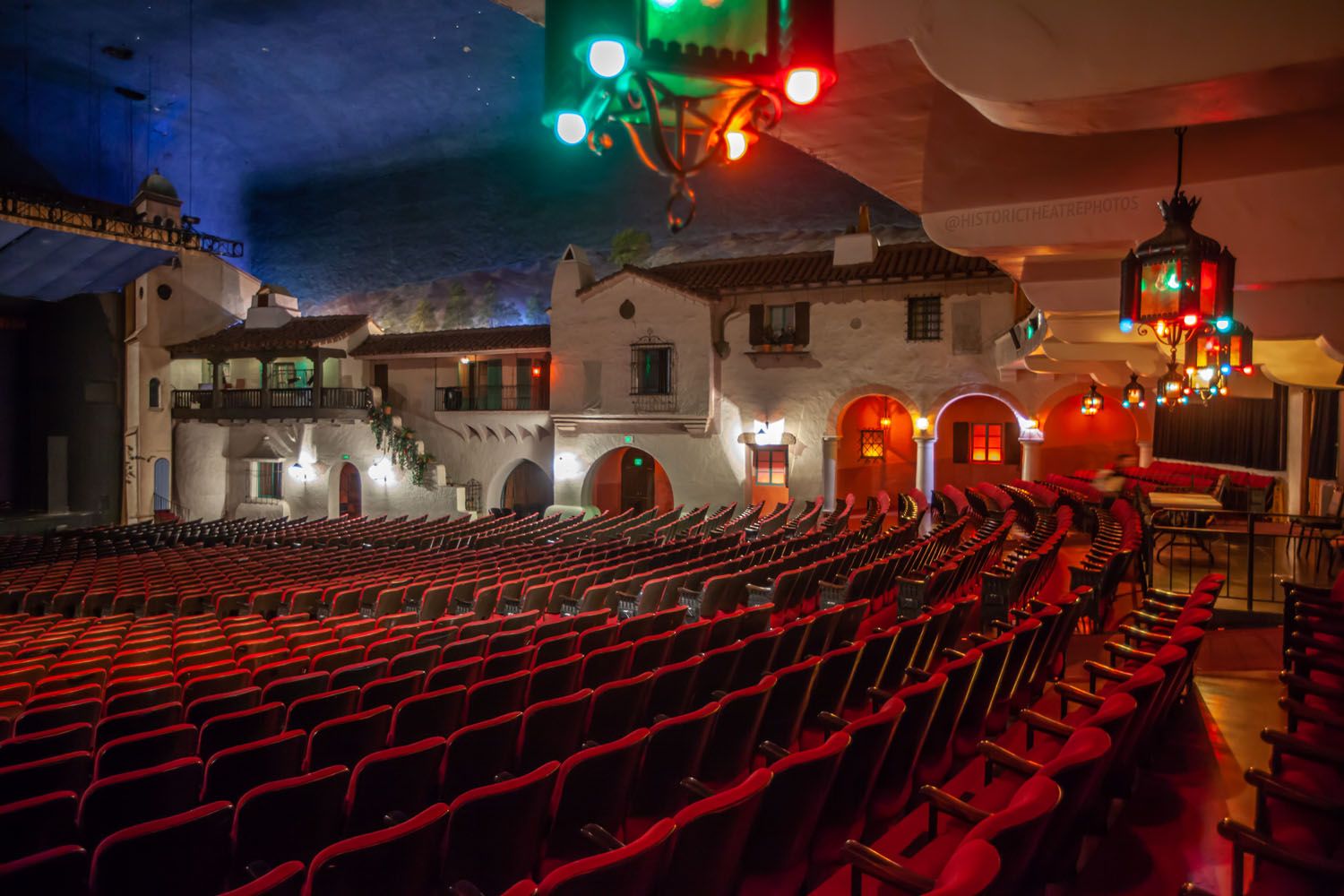
I scrambled to the front of the auditorium, barely noticing that the side walls were formed by three-dimensional Spanish village buildings—roofs, balconies, windows, and all.
Photo: Mike Hume's Historic Theatre Photography (used with permission)
Reportedly the lighting fixtures were painstakingly replicated from measurements of Catalonian street lamps of the 14th, 15th, and 16th centuries.
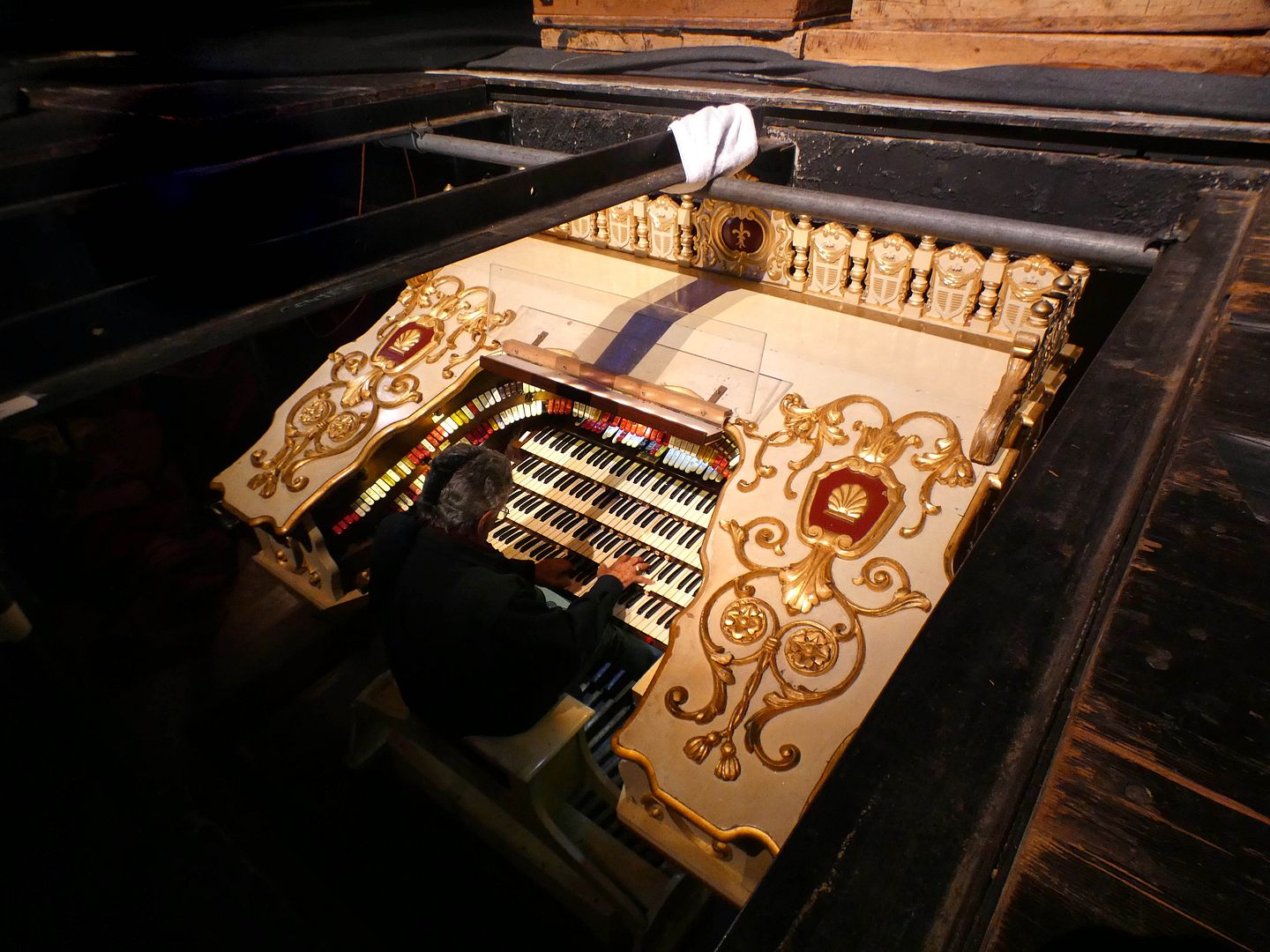
I made a beeline to the organist, who was playing a circa 1928 "Wonder Morton" theatre organ (not a Wurlitzer) from the organ lift located in the center of the curved orchestra pit. It's one of only five of its kind manufactured by Robert-Morton of Van Nuys, California—that is, before the company went out of business in 1931. Because it's an organ meant to accompany silent films, it has some fun practical sound effects like a police whistle, birds chirping, horse hoofs, and an airplane motor.
Originally built for and installed in Loew's Jersey Theatre in Jersey City, New Jersey, it was moved into storage in Dallas in 1977 and brought to Santa Barbara in 1986, when the Santa Barbara Theatre Organ Society lovingly restored it to as-new condition.
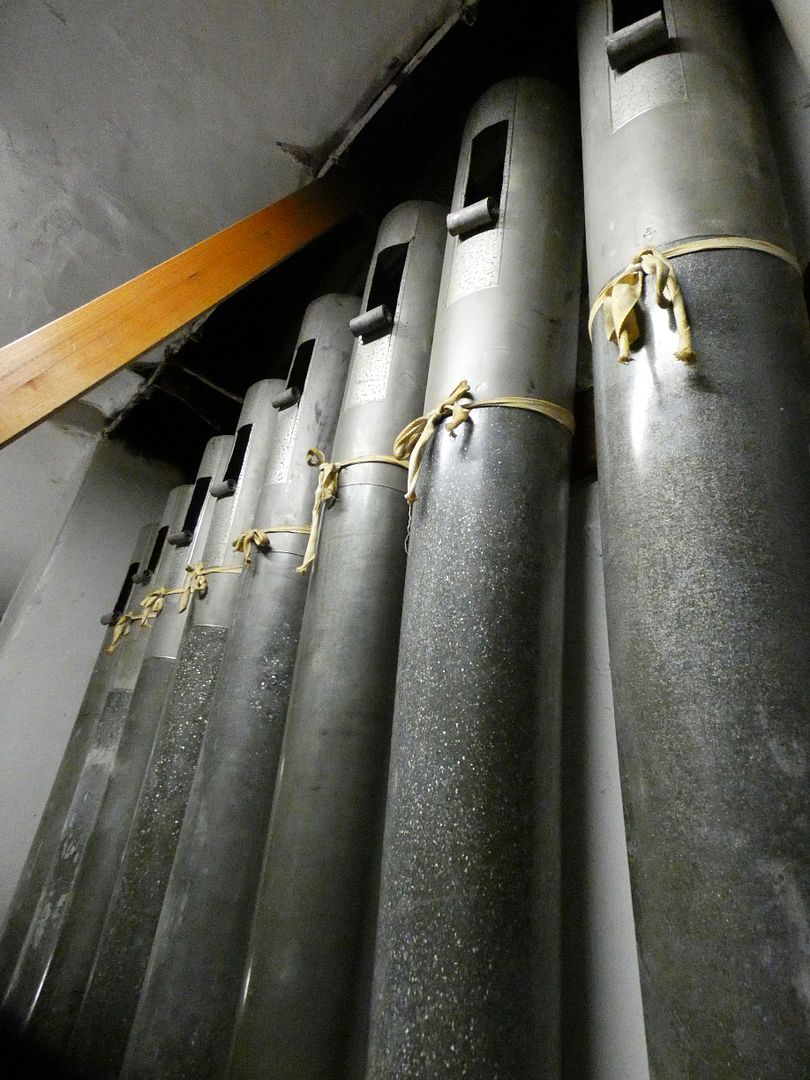
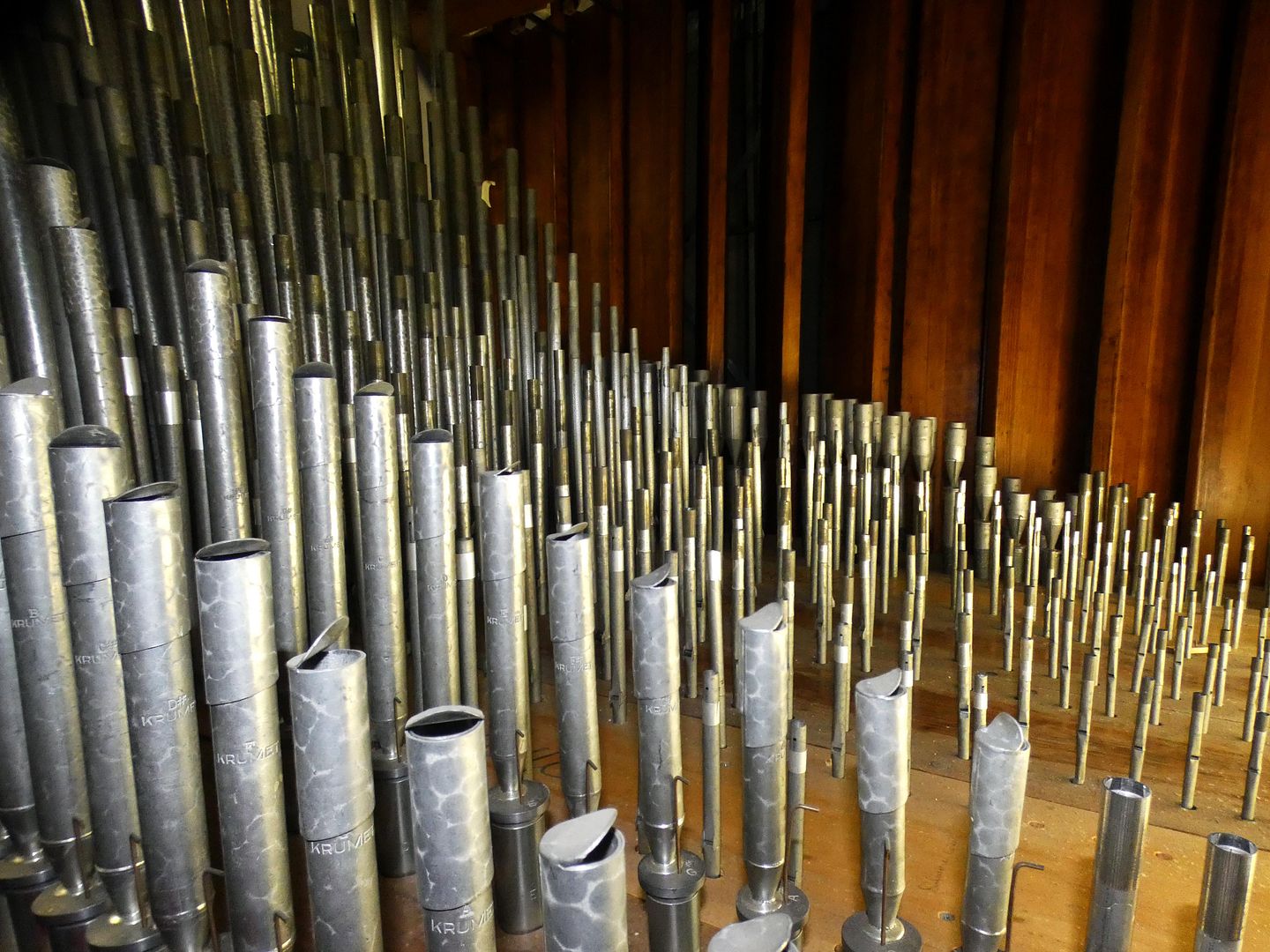
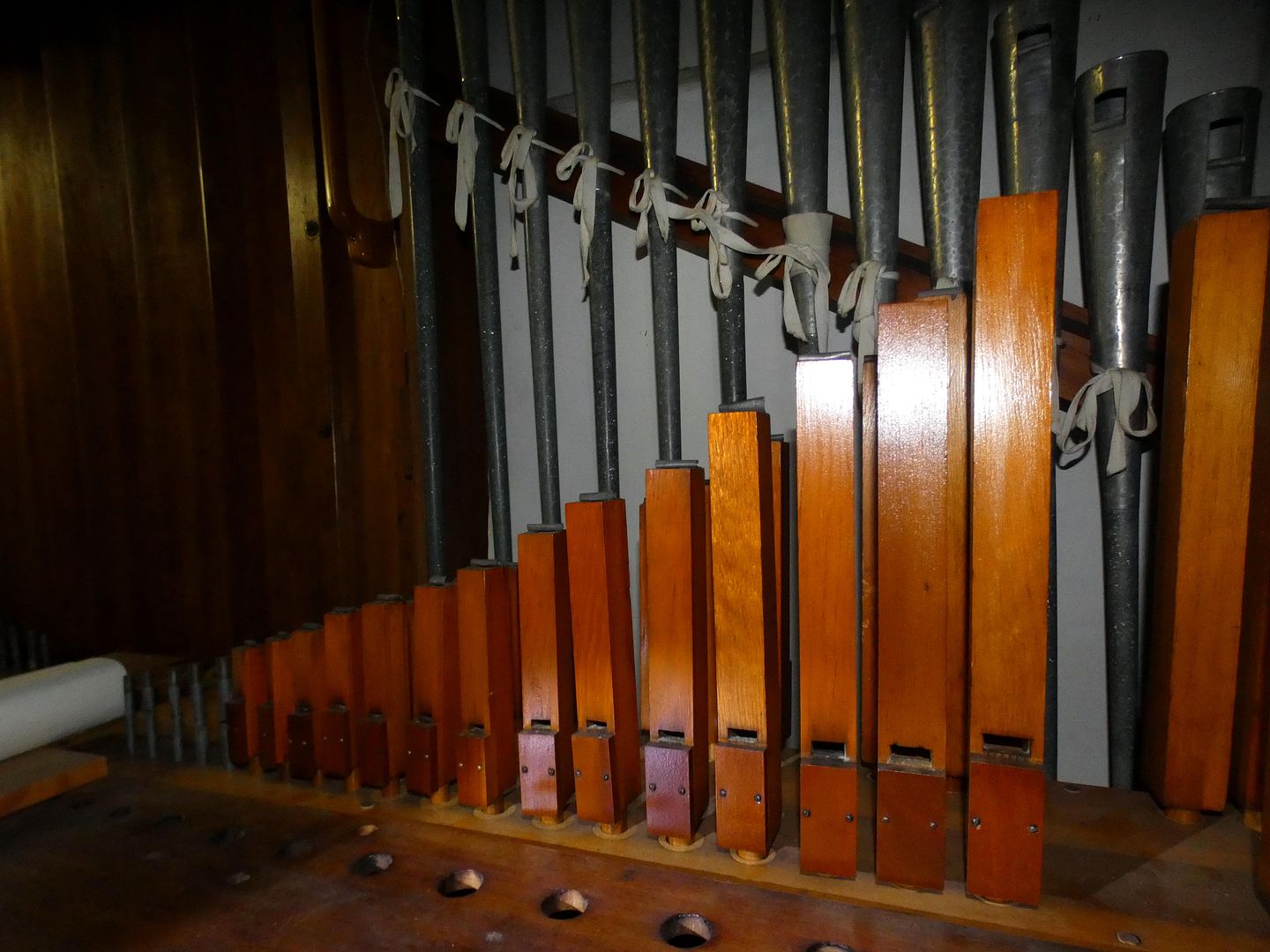
As it was built nearly 100 years ago, it had four keyboards (4-manual) and 24 ranks (individual sets of wind-blown pipes sharing the same tone, like trumpet or some other horn)—but sometime since, it's been expanded to 27 ranks of about 2000 pipes.
This, like many theater organs, is electro-pneumatic—meaning all the pipes (both metal and wooden) and other instruments (including some actual drums and bells) are all air-operated by air valves that are controlled via electrical wires.
Photo: Mike Hume's Historic Theatre Photography (used with permission)
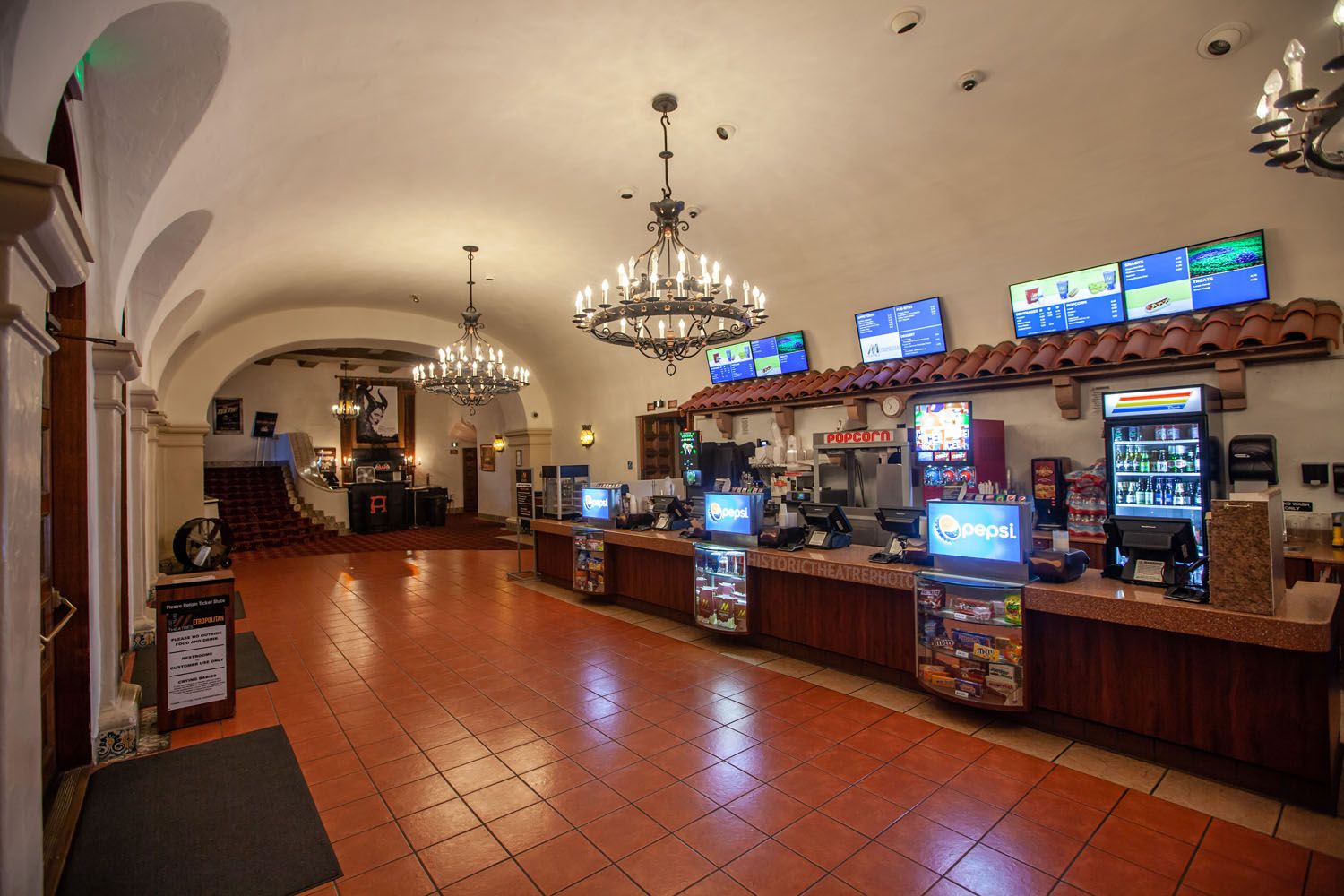
An impromptu tour took us through the pipe chamber at stage right—but there was so much more to behold. My guide could sense my enthusiasm—and since he could tell that I like history, he walked me through the lobby, under those handmade Catalonian chandeliers hanging from a vaulted ceiling, and headed upstairs yet another way.
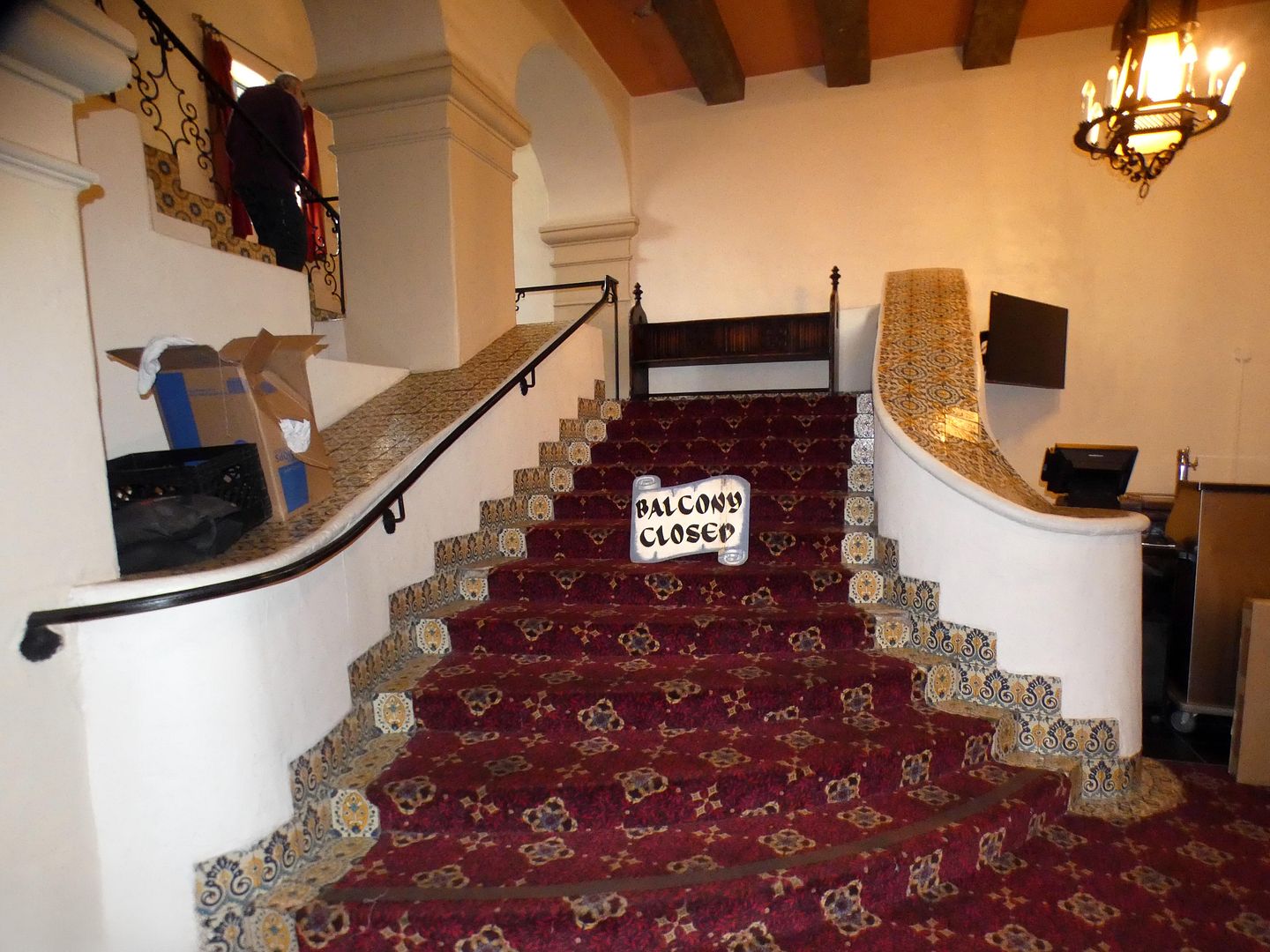
Although the upstairs is officially closed (reportedly they don't use it anymore), we climbed the balcony stairs, admiring the ironwork handrails...
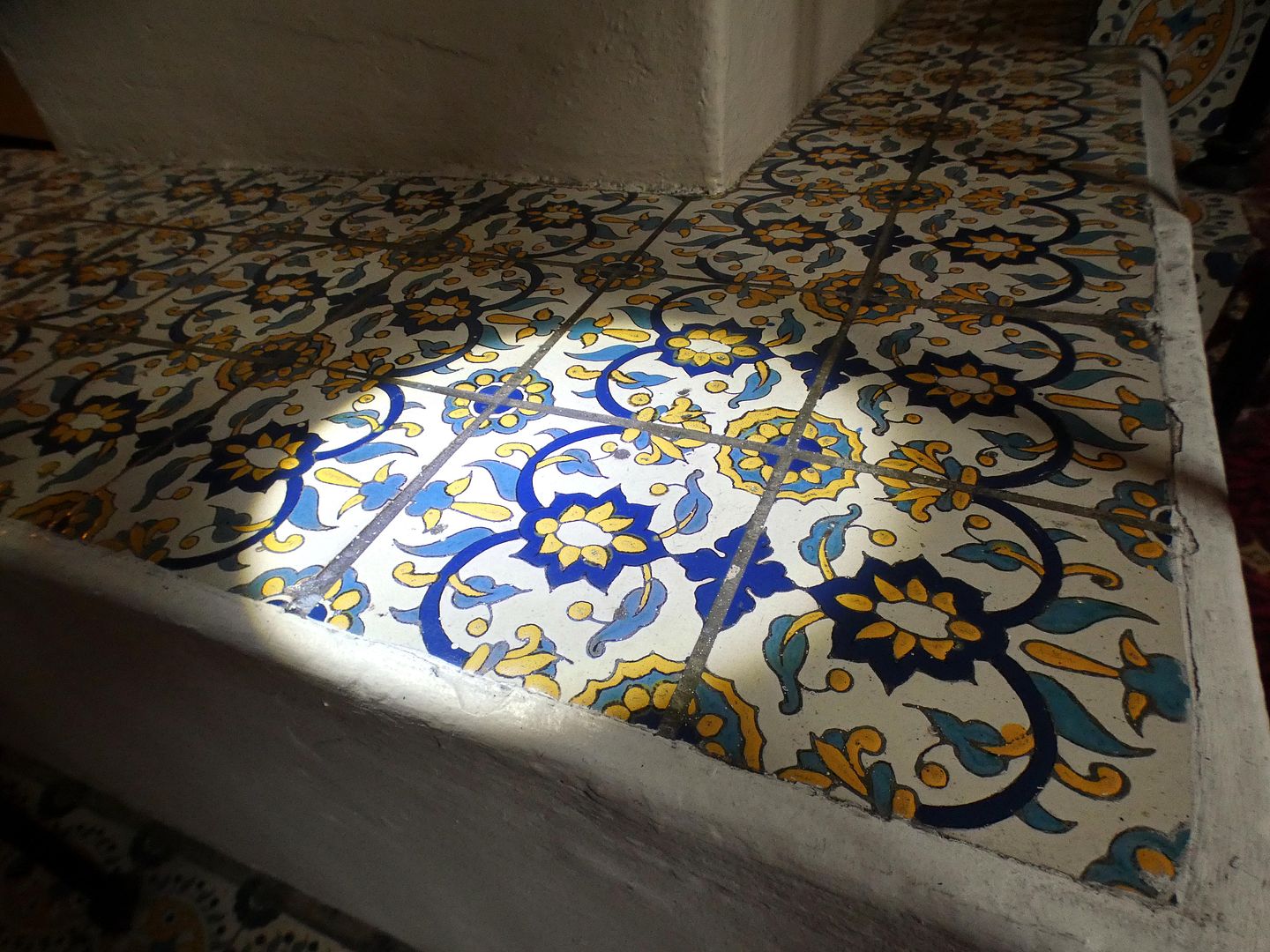
...and glazed Tunisian tiles (as were common at the time at such Santa Barbara locales as Casa del Herrero and the Santa Barbara Courthouse)...
...until we reached the projection room.
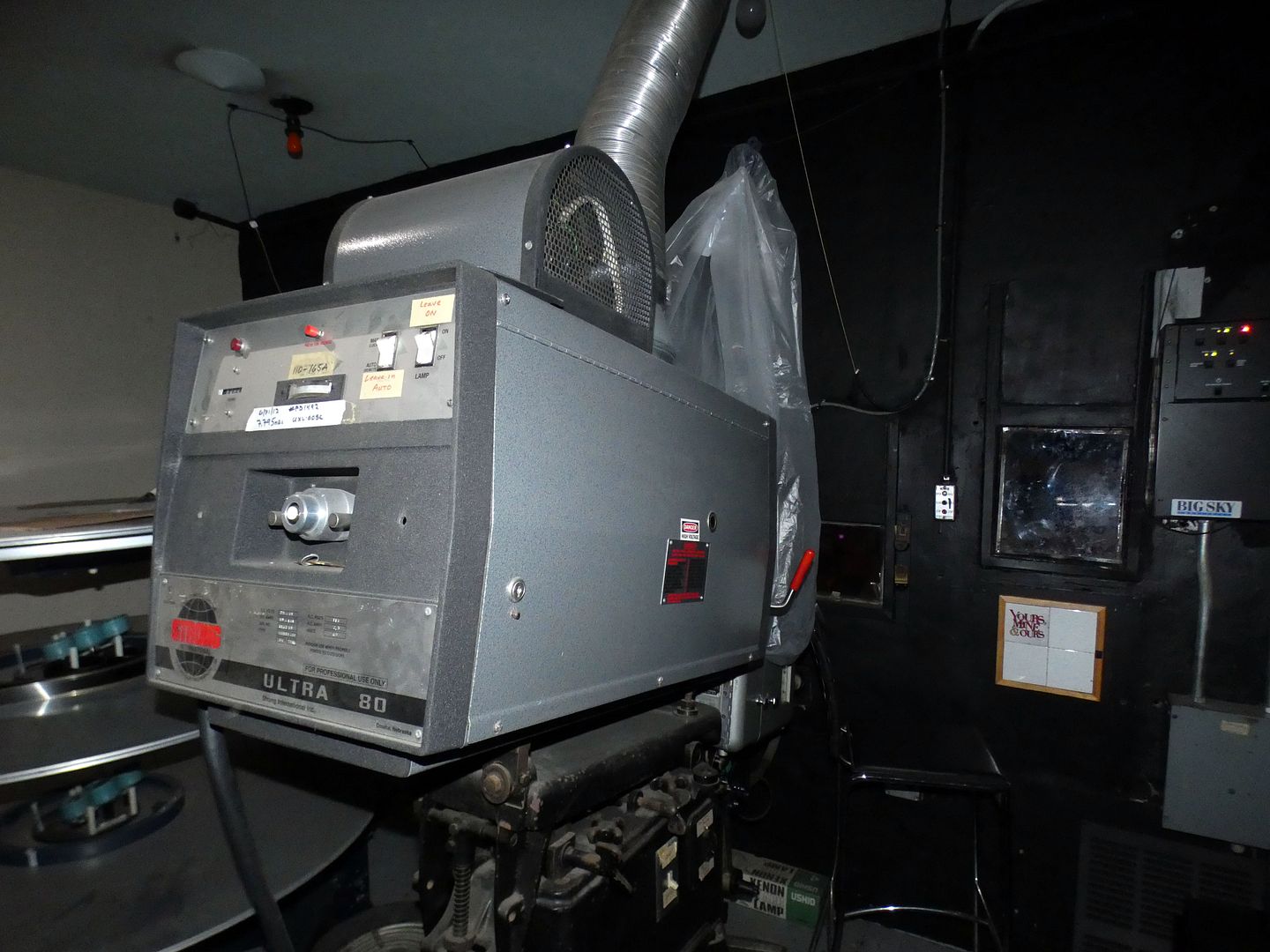
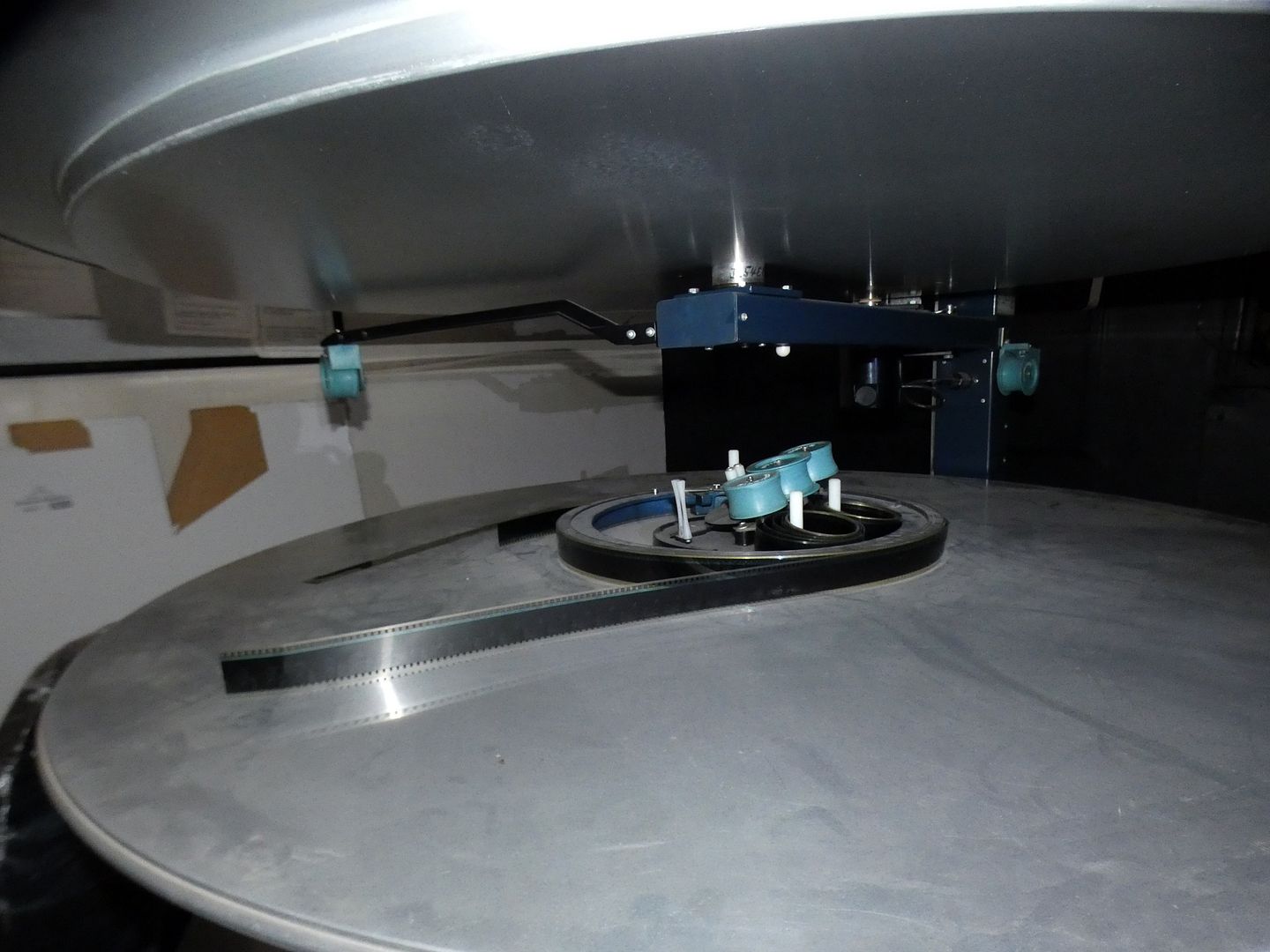
Because the theatre still occasionally screens 35mm film, it's got a Strong International Ultra 80 projector with a platter system in addition to its digital projection equipment.
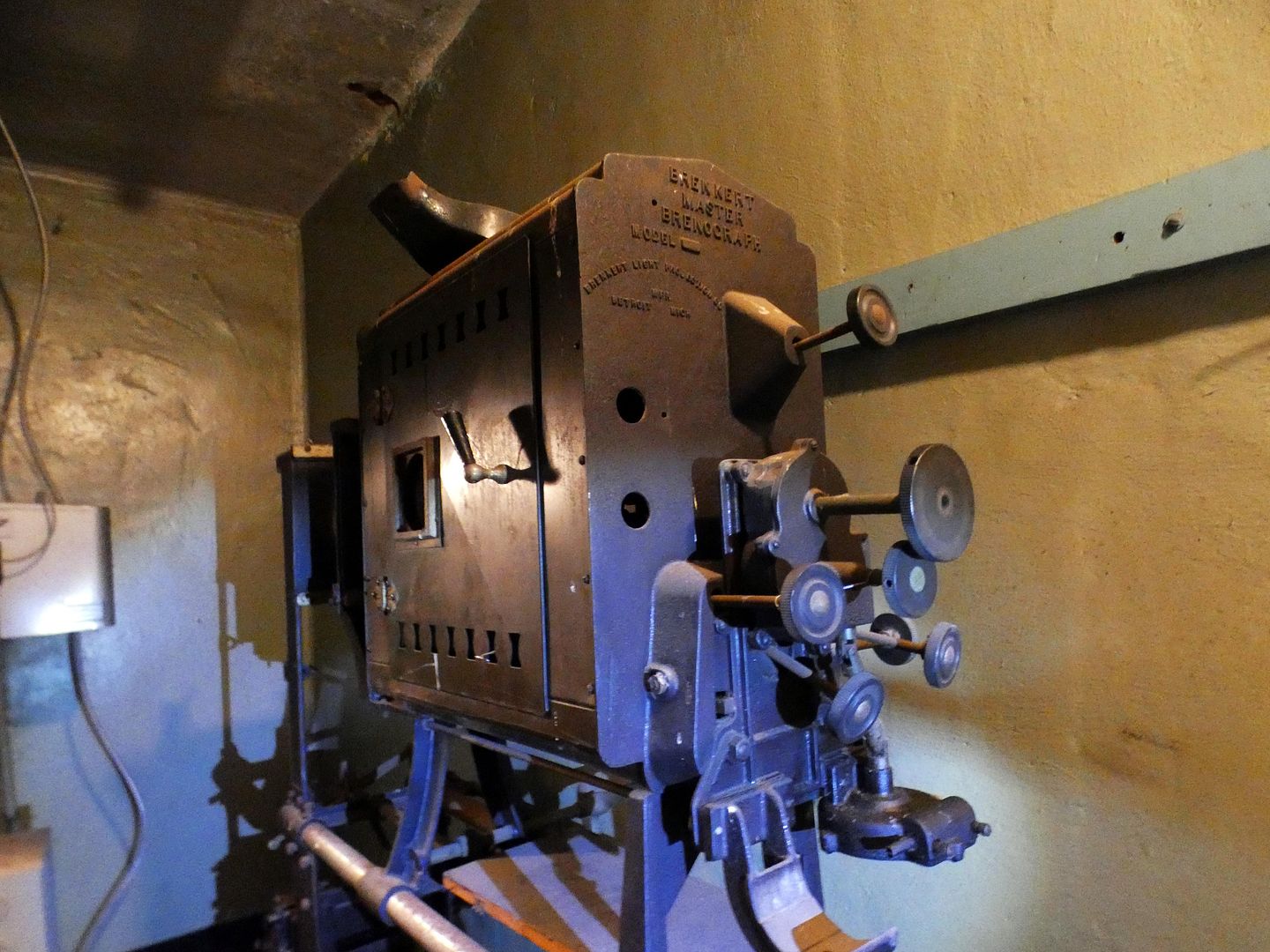
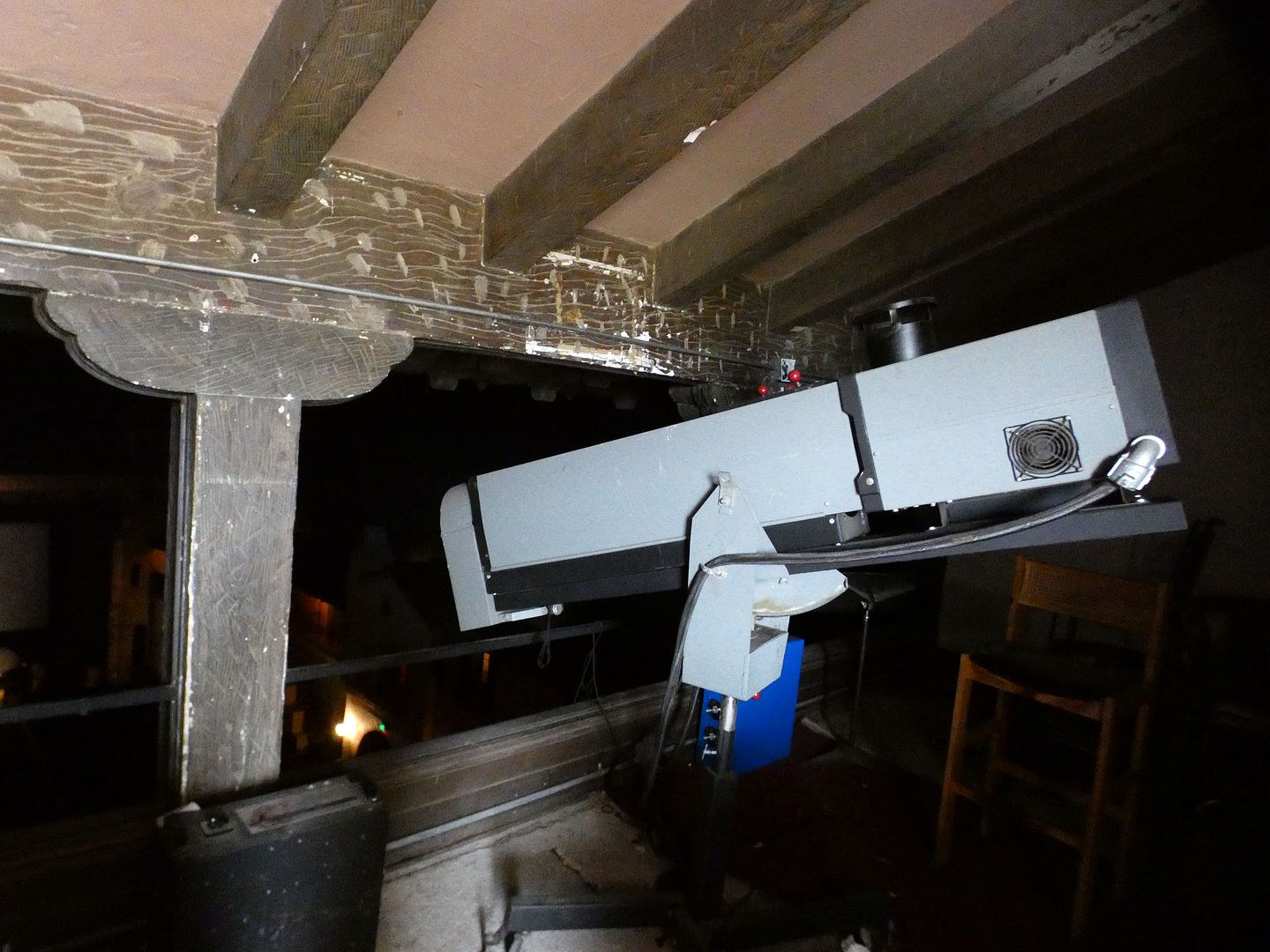
It's also got a couple of antiques tucked away up there, including a Brenkert Master Brenograph projector of special lighting effects, once adding to the atmospheric ambiance of the Andalusian village below.
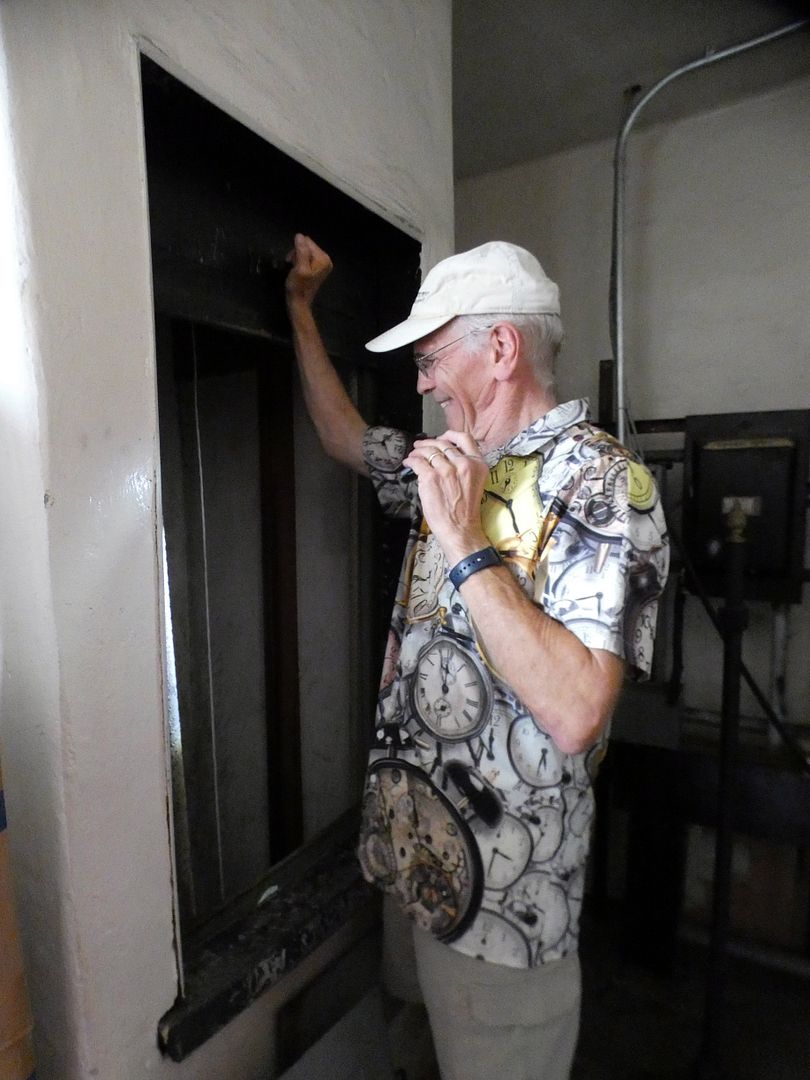
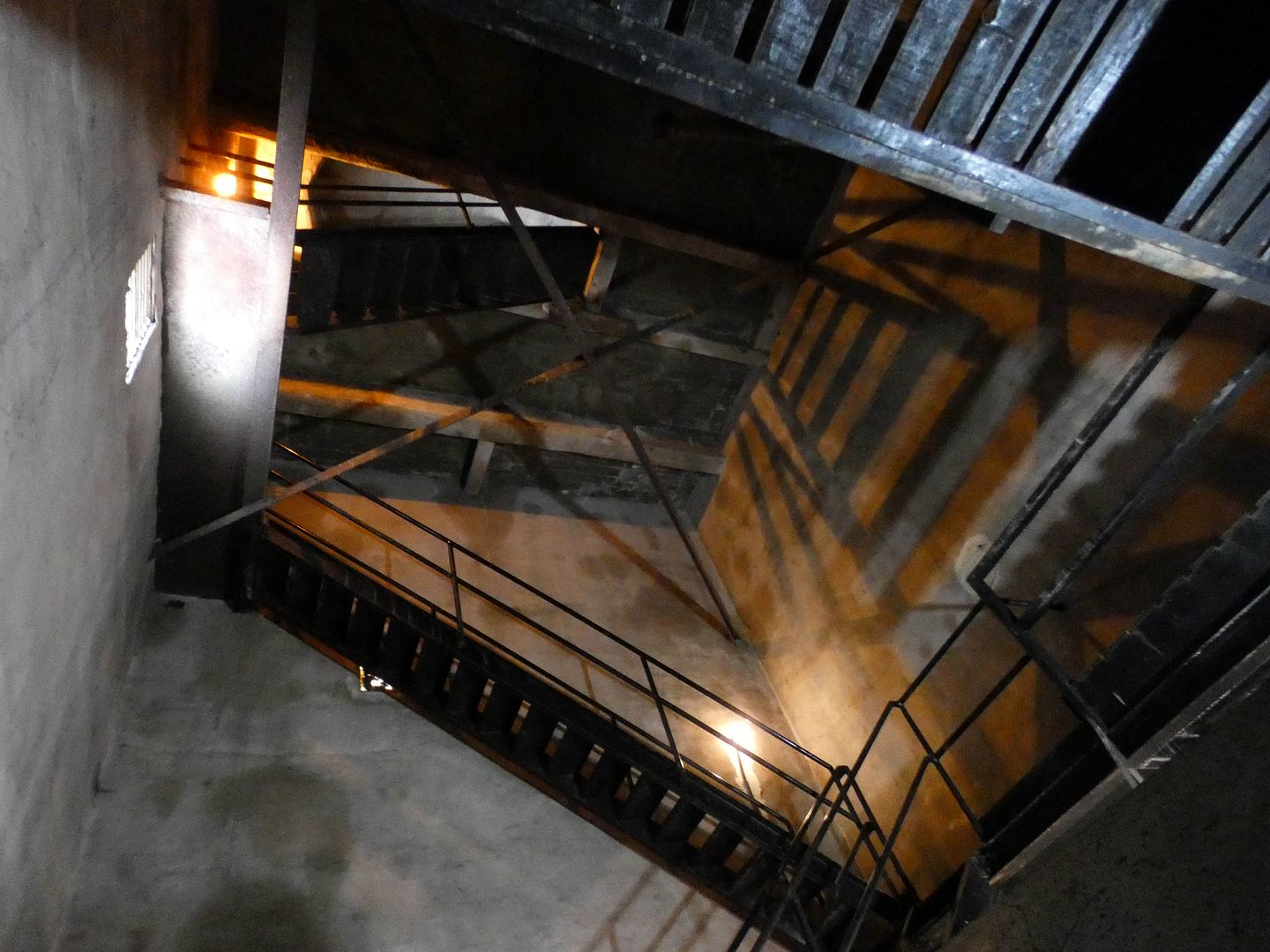
Those 35mm platters were pretty heavy, so the theater used to employ the help of a dumbwaiter (no longer in use, but the shaft is still there).
Among the other areas that are now off-limits to the public are a patio that overlooks the city towards the mountains, reportedly once used by celebrities attending their big Hollywood screenings as nightclub or speakeasy.
They could watch their movies (and observe audience reactions) from a private balcony up there...
...but now it's just used for the back-of-house spotlight.
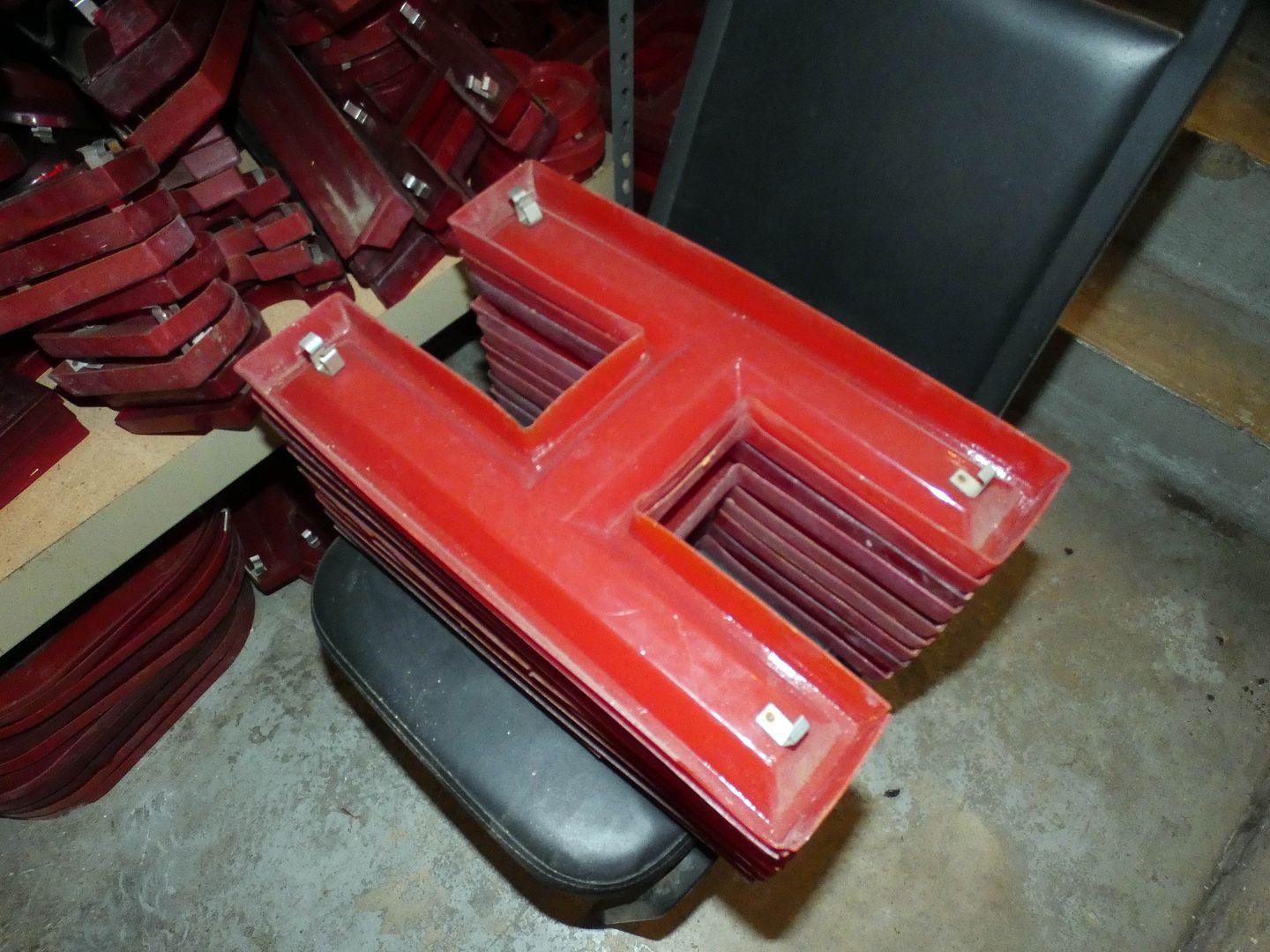
There were so many things to see in such little time, but I delighted at every little detail I could soak in, from the red plastic marquee letters...
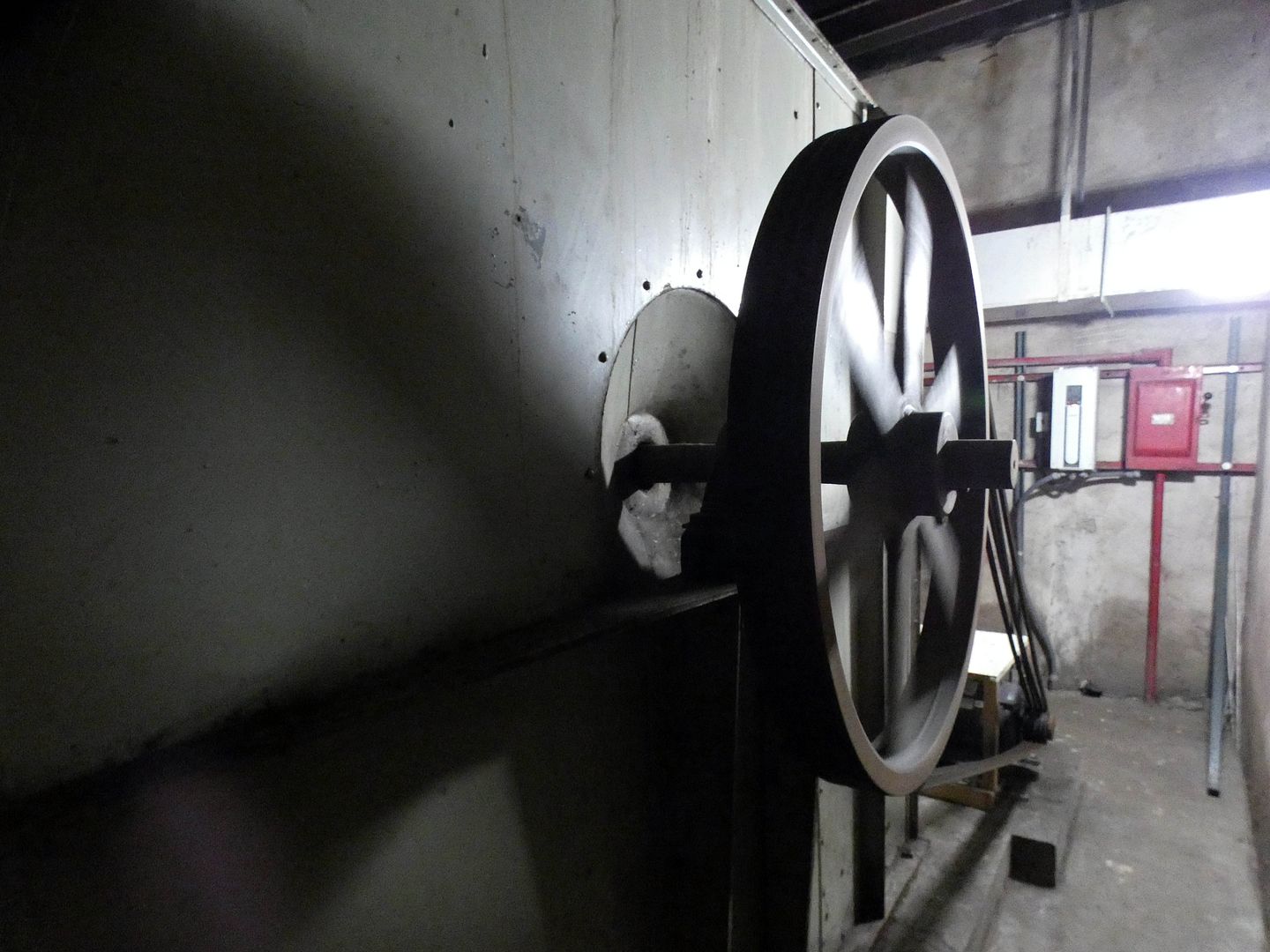
...to the blower that puffs the wind that makes the pipes sing...
...the bottom of the bell tower that never housed any bells (but used to sport a neon sign that spelled F-O-X)...
Photo: Mike Hume's Historic Theatre Photography (used with permission)
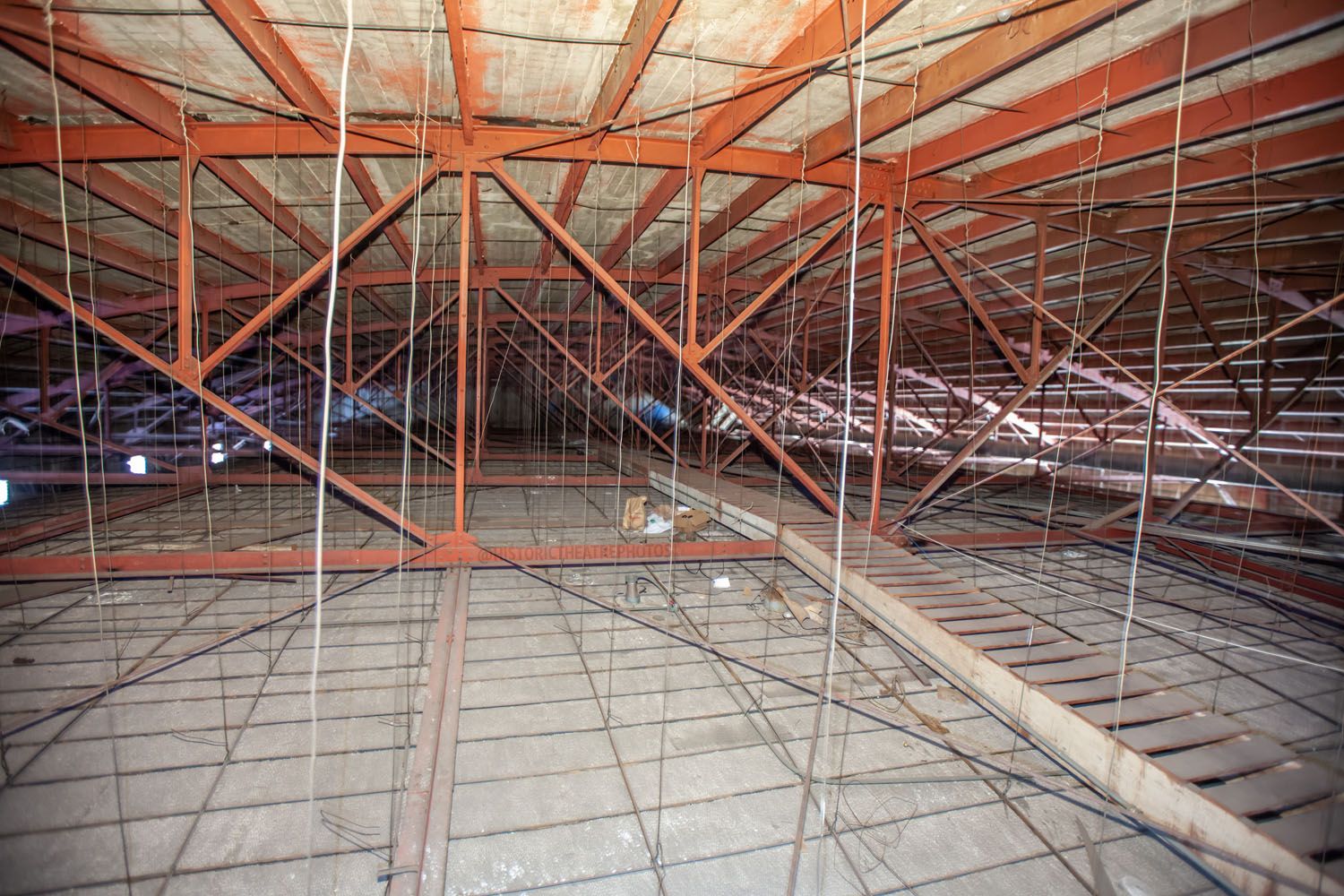
...and the attic above where the ceiling used to twinkle.
There's so much more to say about this theatre, and my visit was by no means comprehensive, but I do think I crammed in a lot in less than an hour—and much more than I ever expected.
For a much more exhaustive exploration, check out my friend Mike Hume's Historic Theatre Photography blog. (And thanks to Mike for letting me share some of his photos on this post, which are credited to him above.)
Related Posts:

This is fantastic! I love the Arlington Theatre!
ReplyDeleteAnd I personally can't think of a better movie to grace such a glorious piece of architecture than 'Minions and Monsters'.
ReplyDeleteDid I say movie, I meant A CINEMATIC TRIUMPH!!
I know you're probably kidding, but I really liked it (although I saw it in 3D at a different movie theatre, not at the Arlington)
DeleteNo worries, just some good-natured ribbing. At this point in history, we can all do with some frivolity in our lives. Case in point:
ReplyDeletehttps://youtu.be/zv7v4MJcD74?si=QHm4y0rNPDRSSKgE