Search

Showing posts with label Islands. Show all posts

March 26, 2026

Photo Essay: A Spring Bloom on the Largest Channel Island—And Its Rare Standout

Many things have fascinated me about Southern California, since before I even moved here—but one of the biggest standouts among those fascinations has been Channel Islands National Park. 

And I treasure each opportunity I get to go. 

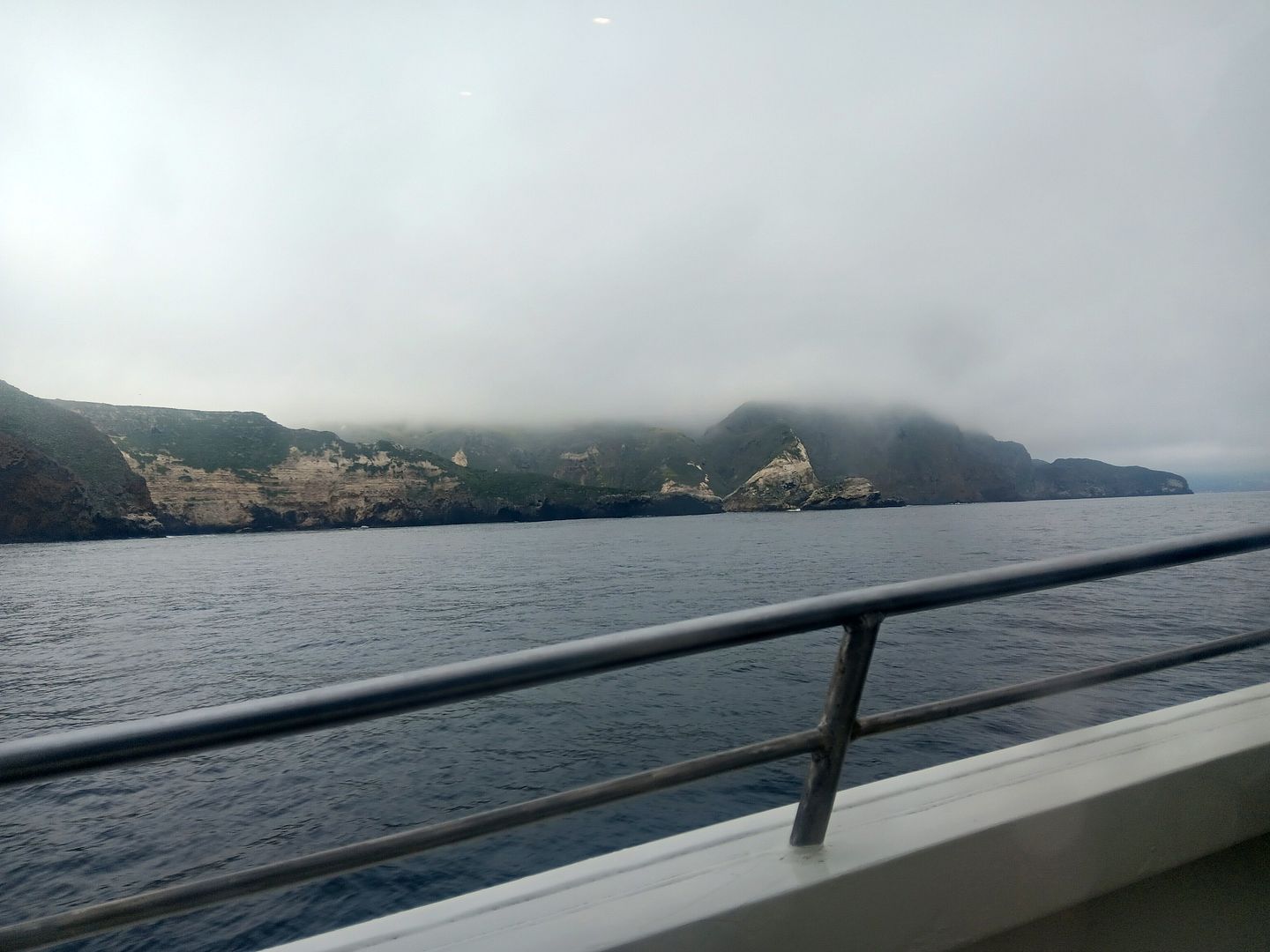
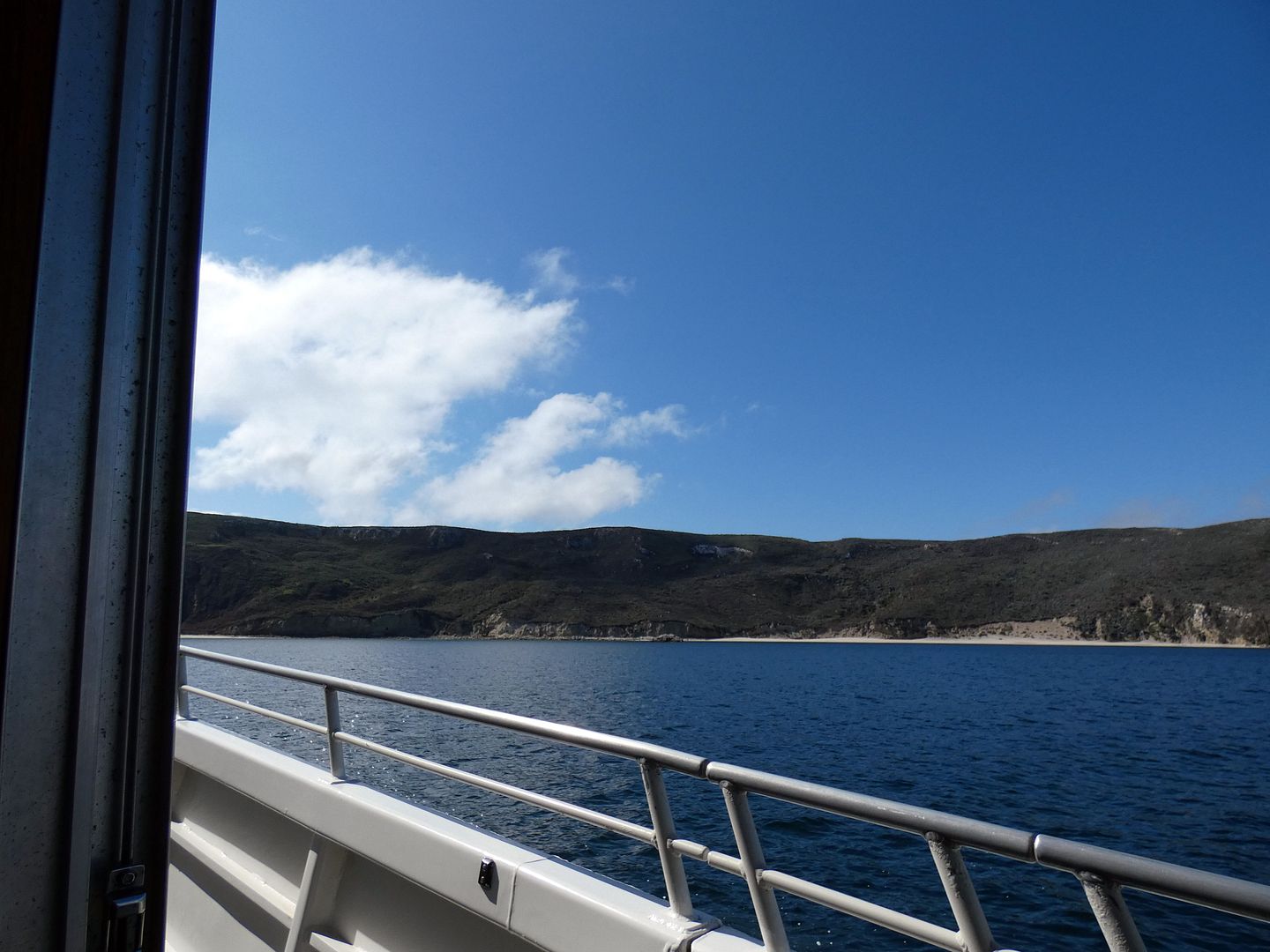
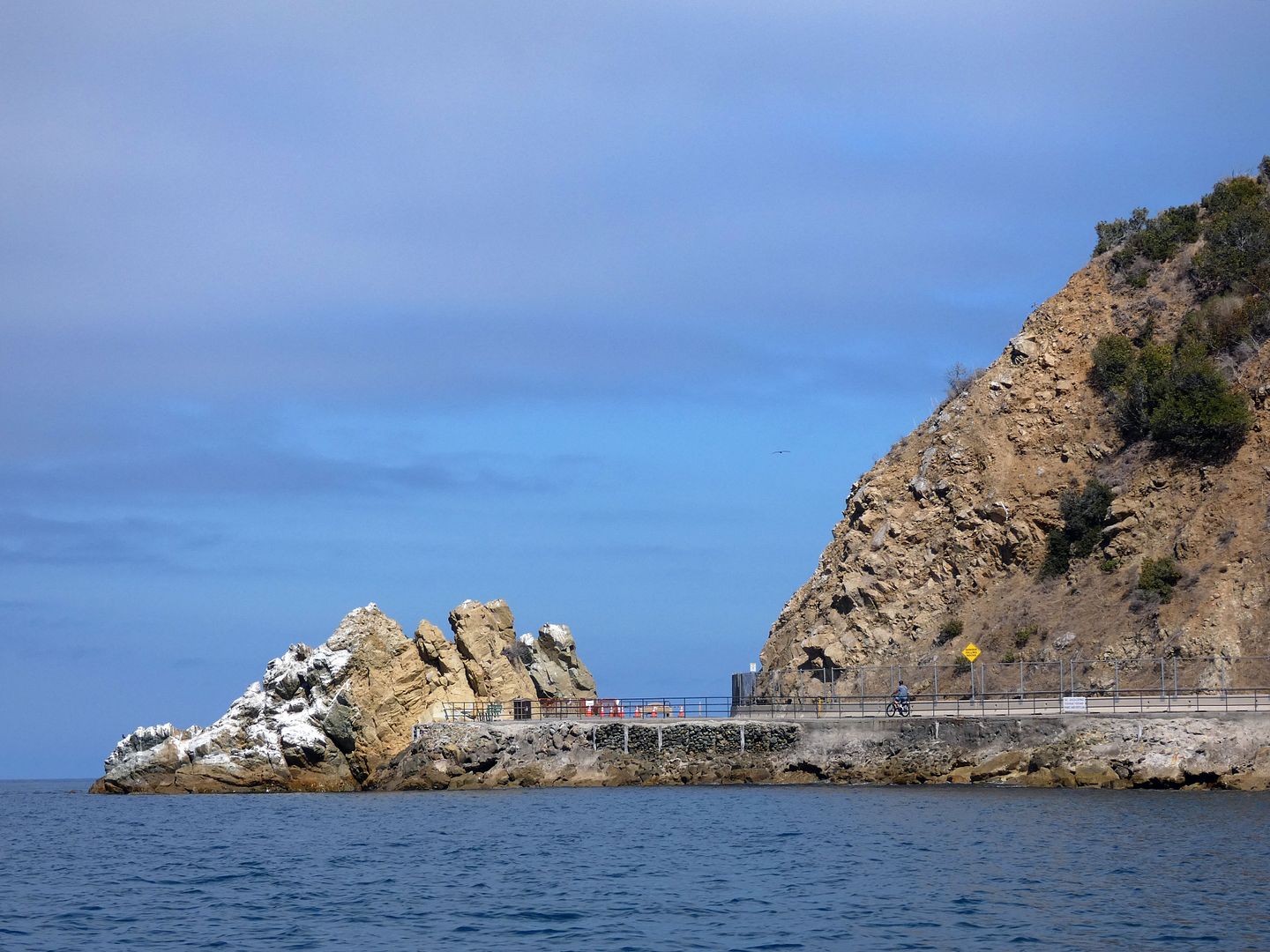
I'm not talking so much about Catalina Island, and its charming beachside town of Avalon—but the wild isles of the archipelago, the national park islands, like San Miguel, Anacapa, Santa Rosa, and Santa Cruz. (Unfortunately, Santa Barbara Island is currently hard to get to because of damage to the dock.)

 
At nearly 100 square miles, the largest of those is Santa Cruz Island—and its multiple anchorages call for many return trips to see as much of it as possible. 

December 26, 2023

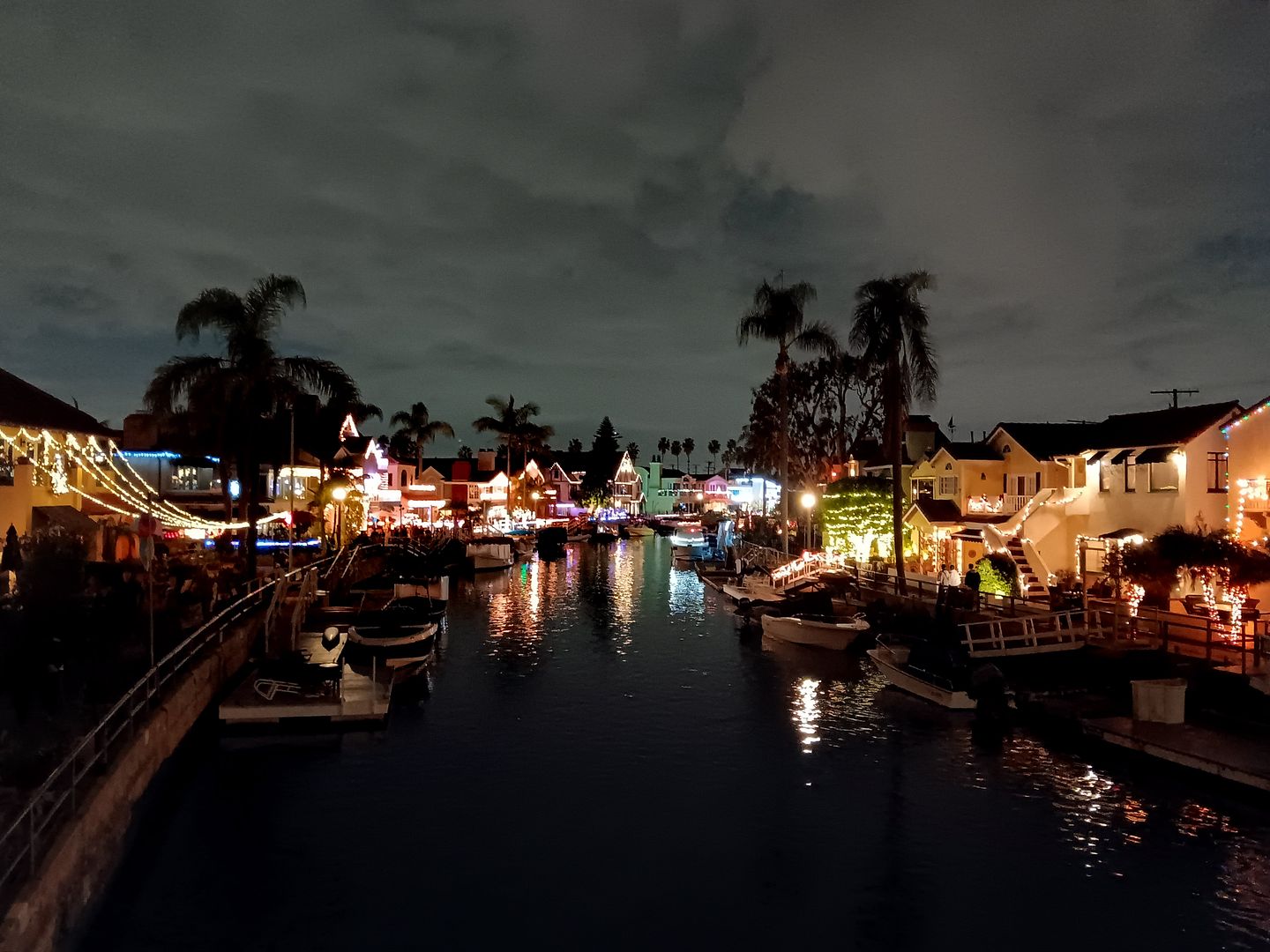
Photo Essay: A Trek Around the Naples Island Christmas Decorations, Along Rivo Alto Canal

"But Sandi, you've done everything in LA!" my friends tell me. Not true, I say. I still have so much more to do. 
    
Take the Naples Canals in Long Beach, for instance. Although I'd ridden a gondola and even kayaked through them, I'd always wanted to check out the Christmas lights there or even attend the annual holiday boat parade—but until this year, I hadn't actually made it there yet.

May 29, 2023

The Wrigleys' Timeless Gift of Timekeeping on Catalina Island: The Chimes Tower

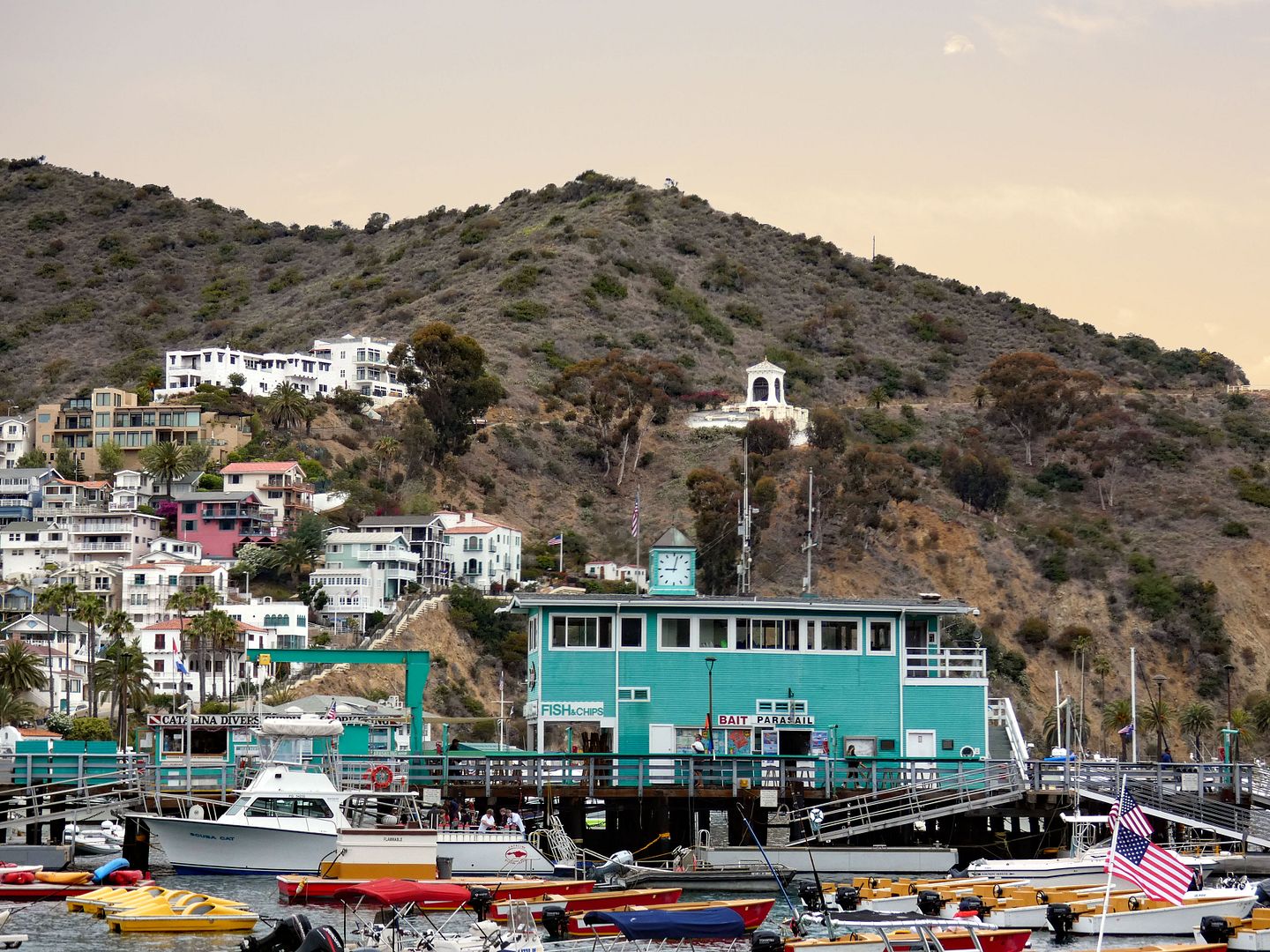
In my last couple of visits to Catalina Island—the only developed tourist attraction in the Channel Islands archipelago off the coast of California—I've been trying to trace some of the remnants of the Wrigleys' time there.

But for all the looking I've done, there's been another clue to the Wrigley history on the island—and that can be found simply by listening. 

Every 15 minutes, you can hear the Westminster chimes of the Catalina Chimes Tower—a set of "cathedral chimes" (like those found at Westminster Abbey) ringing out from atop a hill. (They originally sounded four times an hour from 7 a.m. to 10 p.m. — but now they're only between 8 a.m. and 8 p.m.)

circa 2021, with some Photoshop magic

May 28, 2023

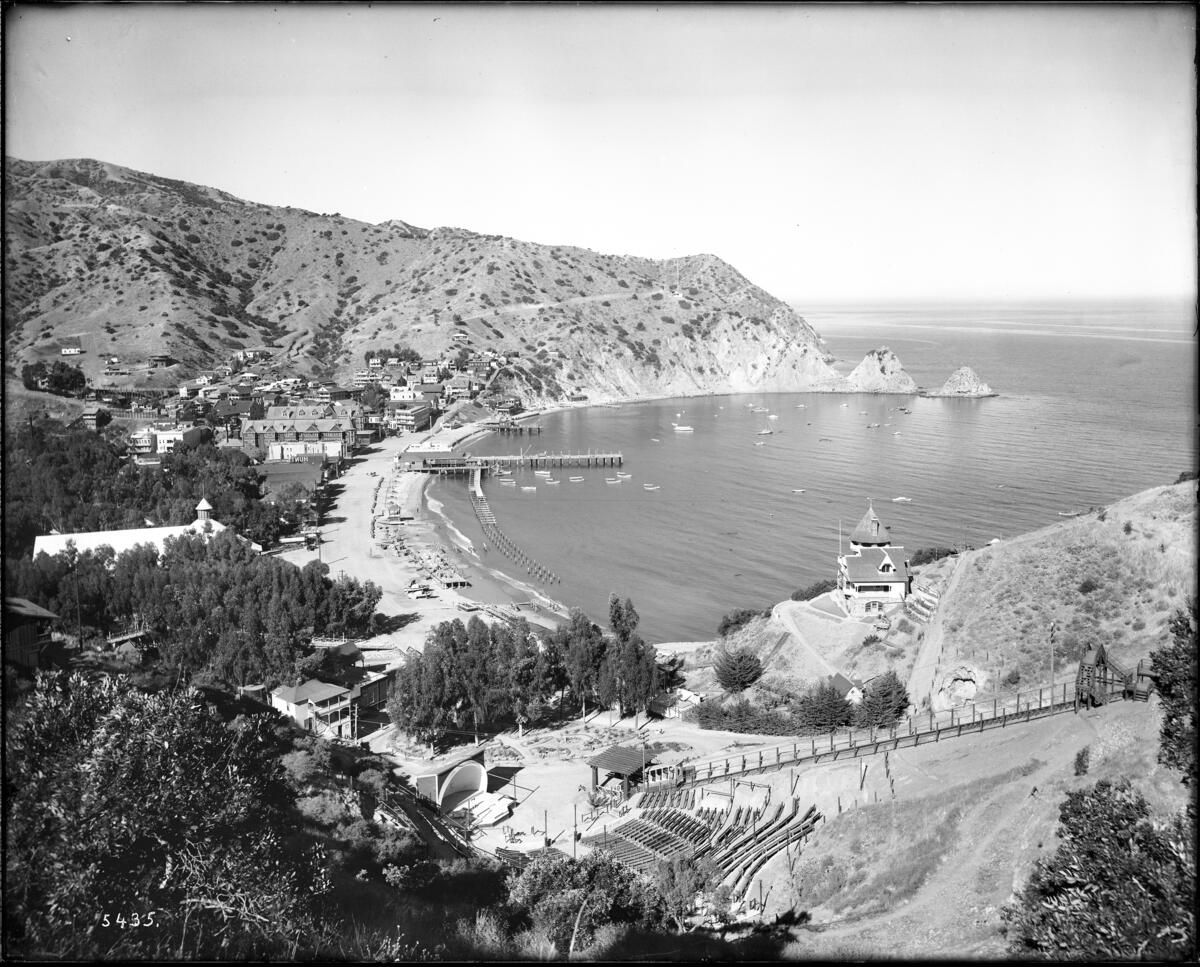
Photo Essay: Catalina Island's Miniature Hollywood Bowl, Abandoned

I first discovered that there were some ruins ripe for exploring on Catalina Island thanks to a KCET video on the former Island Mountain Railway, built by the Banning brothers who owned Catalina Island at the time. (You can watch the video at the bottom of this post.)

The funicular connected the town of Avalon to Pebbly Beach—which was necessary because Pebbly Beach Road hadn't been built yet. 

circa 1914 (Photo: California Historical Society, via USC Digital Libraries) 

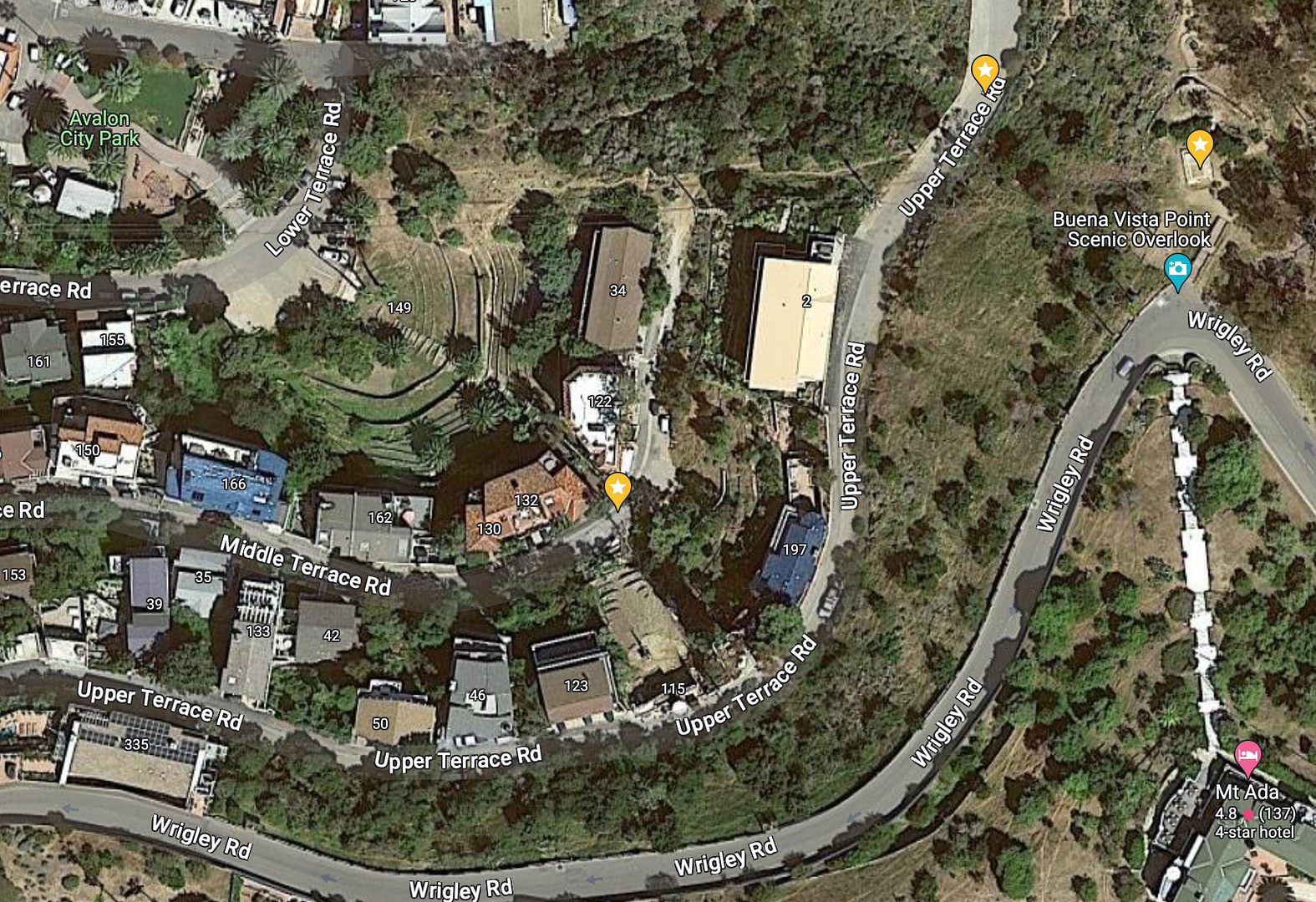
I still haven't made it Buena Vista Point—where a Swiss chalet-style power house for the incline railway attracted tourists to Mount Buena Vista Park, at what was also known then as Avalon Summit.

Google Satellite view

There's apparently a concrete foundation and maybe some other rusty ruins left up there. But there's something else that can be seen, farther down the hill, right next to where one of two funicular cars used to run along the west side of the hill: the old Greek-style amphitheater. 

May 15, 2023

Yet Another Island Gets Added to New York's Five Boroughs

NYC is full of weird experiences—from swimming in a shipping container to picnicking on a former landfill to squishing your toes in the sand of a pretend beach on the East River. 

So, having been away for a while, I was tickled to spend part of my return visit checking out one of the weirder new additions to Manhattan,

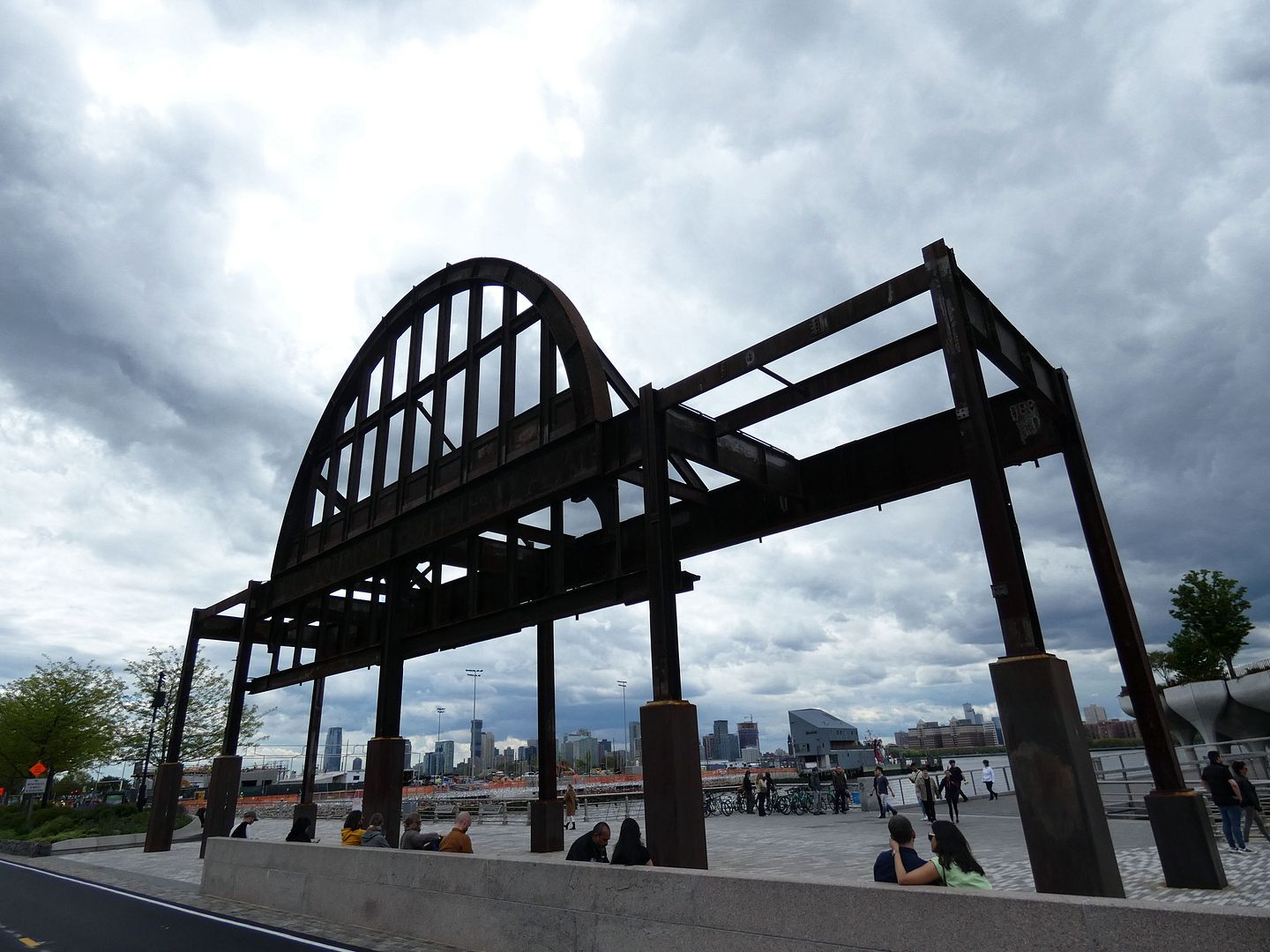
It's Little Island, a manmade park that opened at the former Piers 54 and 55 off of Hudson River Park in May 2021.

 
Pier 54 was once the Cunard-White Star pier, where the RMS Carpathia dropped off Titanic survivors in 1912 and where the British RMS Lusitania departed in 1915 before being torpedoed on its way to London. In 1918, in the final year of WWI, the German U-boat U-55 also sunk the Carpathia. 

October 19, 2022

Photo Essay: Exploring the Navy's Explosive Island Across the Santa Barbara Channel

I'm a completionist. So of course I've been tracking how many of California's Channel Islands I've been to—and how many I can eventually get to. 

I've already been to Catalina, Santa Rosa, Anacapa, Santa Cruz, and San Nicolas. (Santa Barbara is closed until they can fix the anchorage, and San Clemente is off-limits as a Navy station.)


And as of last weekend, I've crossed yet another off my list: San Miguel. 

May 17, 2022

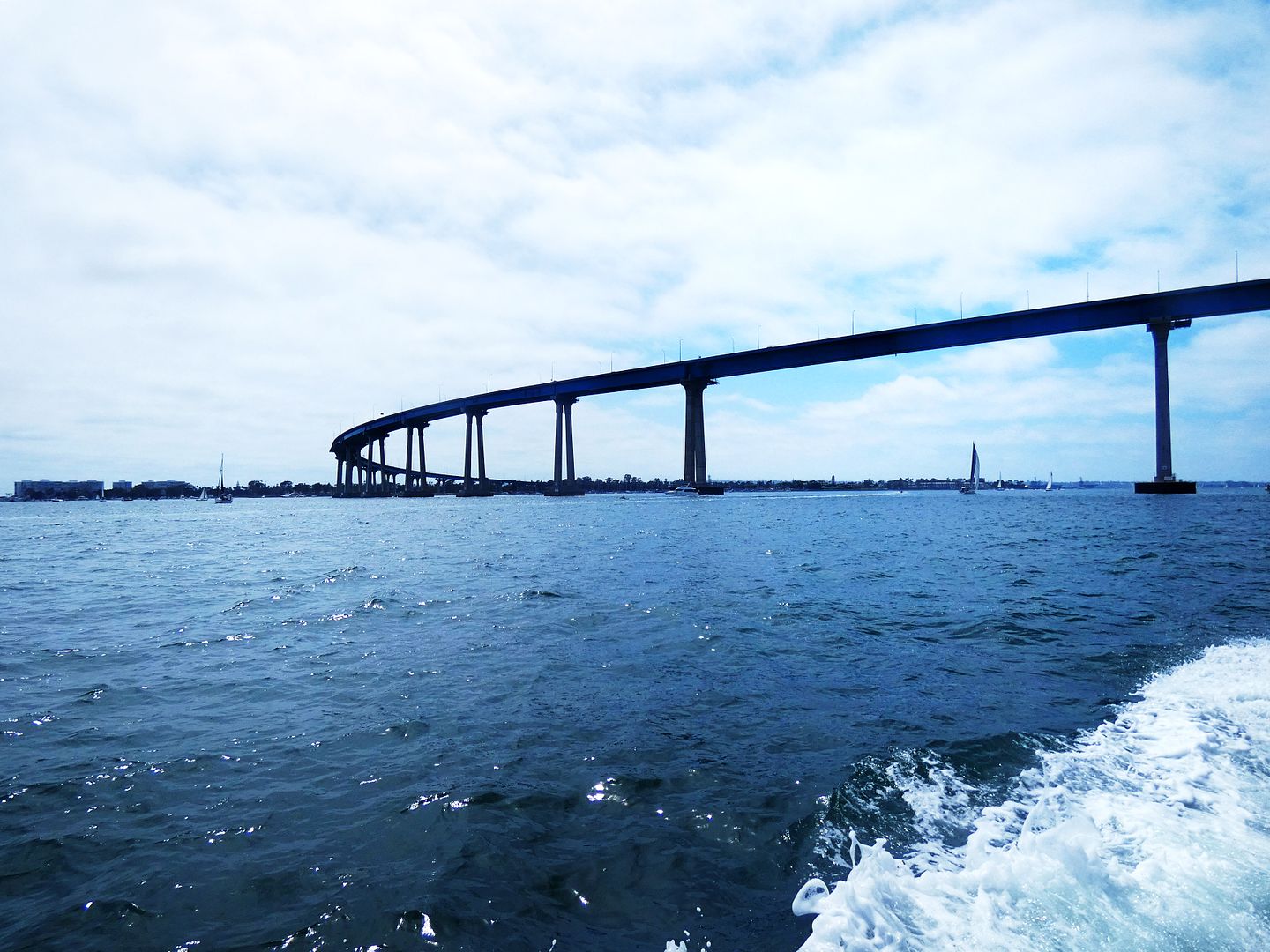
Crossing Over to Coronado On Foot (Or, Bridging the San Diego Bay)

On January 25, 2020, I registered to walk the Navy's 34th annual Bay Bridge Run in May. 

 circa 2021

On April 1, 2020, I received the cancellation notice. And it would be another two years before I could get onto that bridge. 

September 12, 2021

Photo Essay: Off the Shore of Avalon, A Cove for Lovers and Tropical Fish

California's Catalina Island may offer more than 60 miles of coastline—but among its most popular and secluded beaches is Lover's Cove, located between Avalon Bay and Pebbly Beach. 

The rocky shore off Pebbly Beach Road near the rock formation known as Abalone Point leads you to the Lover's Cove State Marine Conservation Area, a protected ocean habitat where sportfishing is prohibited.

September 09, 2021

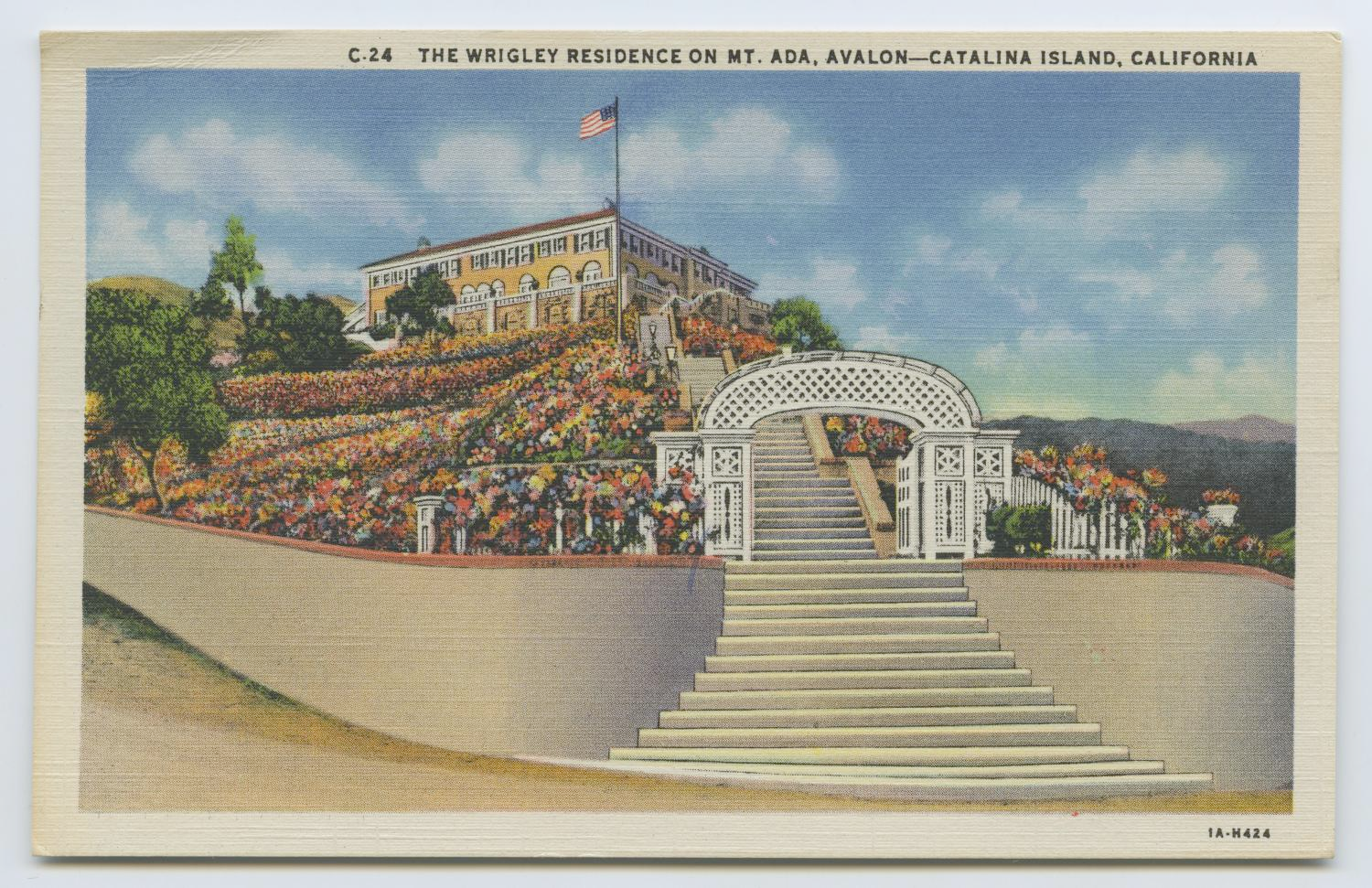
Photo Essay: Mt. Ada on Catalina Island, The Other Wrigley Mansion

Chewing gum magnate William Wrigley Jr. did most of his candy business out of Chicago—but he liked Southern California so much, he bought the island of Catalina in 1911 and spent his summers in the city of Avalon, Los Angeles County, California. 

Postcard by Western Publishing & Novelty Co., Los Angeles (via University of North Texas Libraries)

July 24, 2021

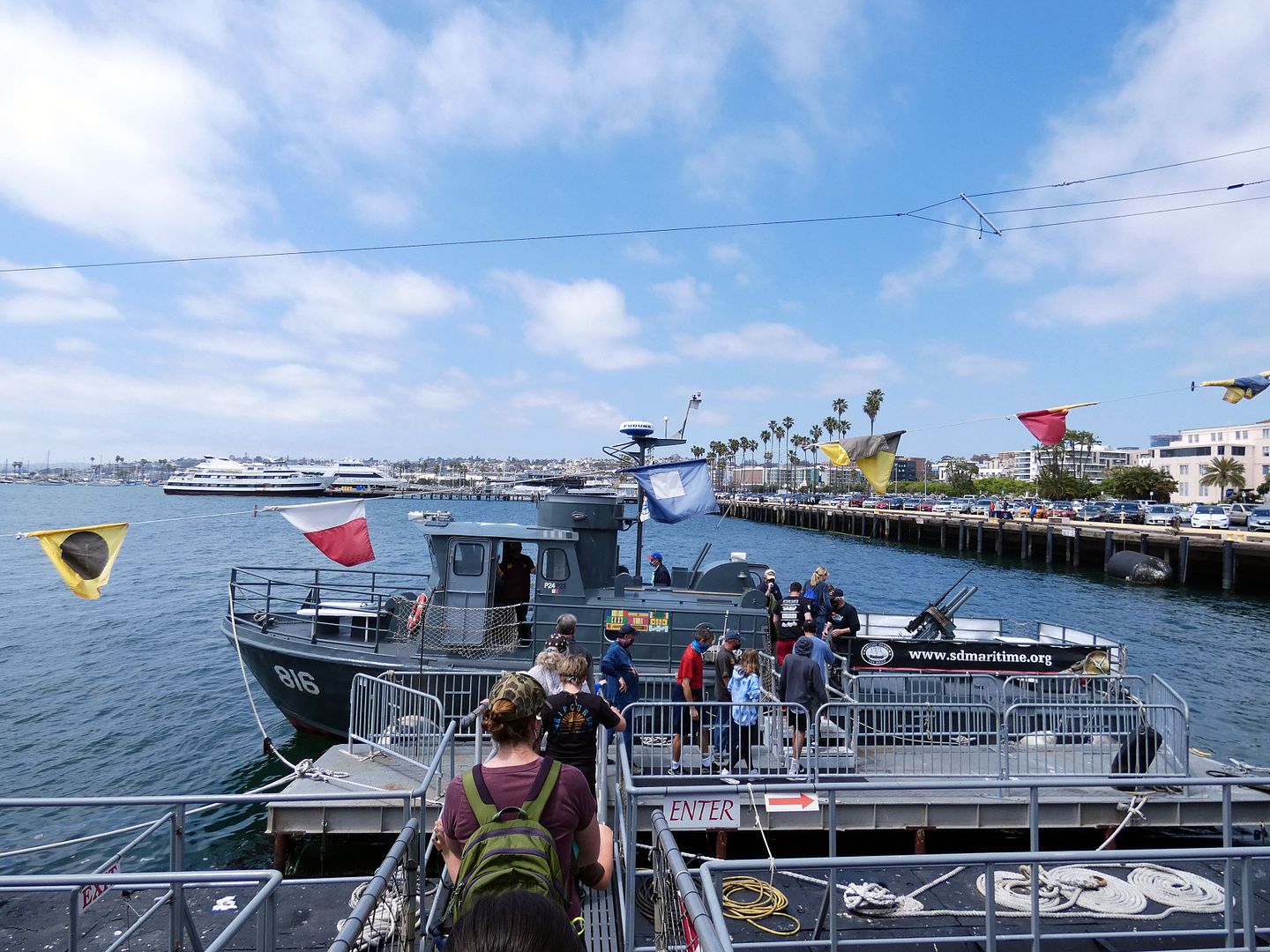
Photo Essay: Paying Tribute Aboard A Restored Navy Swift Boat, the Only Vietnam Memorial You Can Ride

With no plans with family or friends on Memorial Day Weekend this year, I jumped at the chance to drive down to San Diego and take the annual Swift Boat Naval History tour of the Bay with the Maritime Museum. 

January 10, 2021

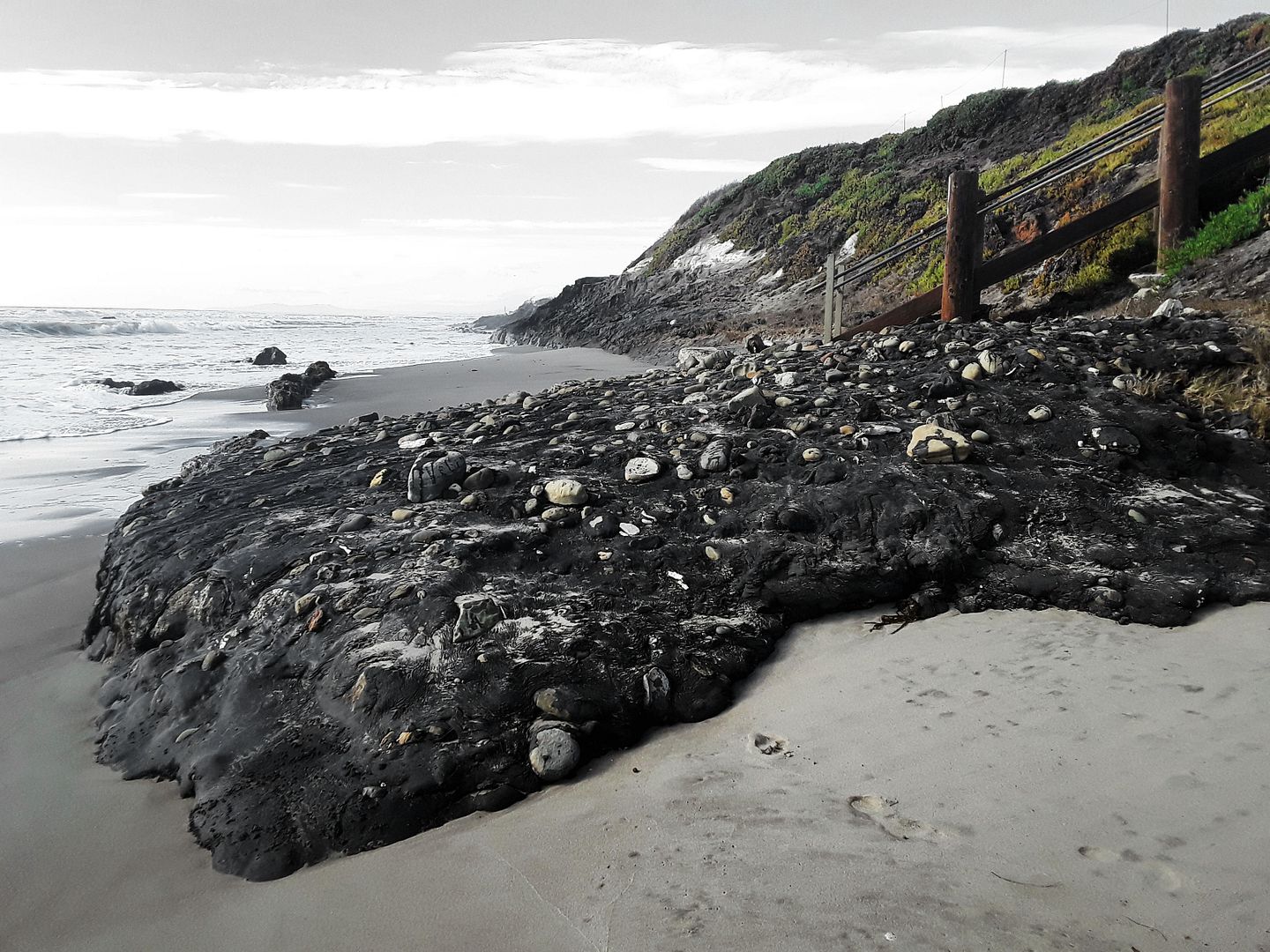
Photo Essay: Tiptoeing Across Carpinteria's 'Black Gold' Beach

Unlike on Hawaii's black sand beaches, the black you'll find on certain SoCal beaches—especially at the southernmost section of Carpinteria State Beach, just south of Santa Barbara—isn't exactly exotic or romantic. 

January 07, 2021

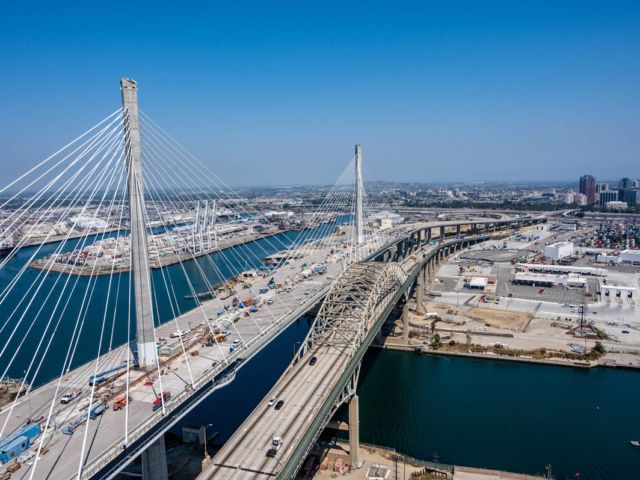
Photo Essay: Driving Back and Forth Across Long Beach's New 'Bridge to Everywhere' (Updated for 2023)

[Last updated 6/3/23 4:15 PM PT—The new name of the bridge has been added below.]

Back in 2019, I took a tour of the construction site of the as-yet-unnamed Gerald Desmond Replacement Bridge in Long Beach (now called the "Long Beach International Gateway")—a project that first began in 2013.

Photo: Courtesy of the Port of Long Beach

And as of October 2020, the new bridge is open for traffic—while the bridge it replaced still stands. 

October 06, 2020

A Last Chance Stay at a Hollywood Producer's Former Fantasy Island Getaway, Paradise Point Resort (For Now)

For my birthday last week, I was at a bit of a loss as to how to celebrate—or whether to even try to celebrate at all. 

After all, it doesn't feel like there's much to celebrate in 2020. 

But I'd already put in for three days off from my dayjob (having planned to attend the now-canceled Central Coast Railroad Festival). And I've only taken one other day off all year (and that was an emergency mental health day during the protests that had police tear-gassing illegal assemblies in my neighborhood). 

It felt like I deserved some vacation days. Even if vacations aren't really a thing right now, with pandemic travel still restricted. 

But over the last six months or so, I have had a couple of good hotel getaways—whether just for the day or for a single overnight a short distance away. 

And because all my trips have been canceled this year, I feel OK about splurging a little on a place I would not normally treat myself to. 

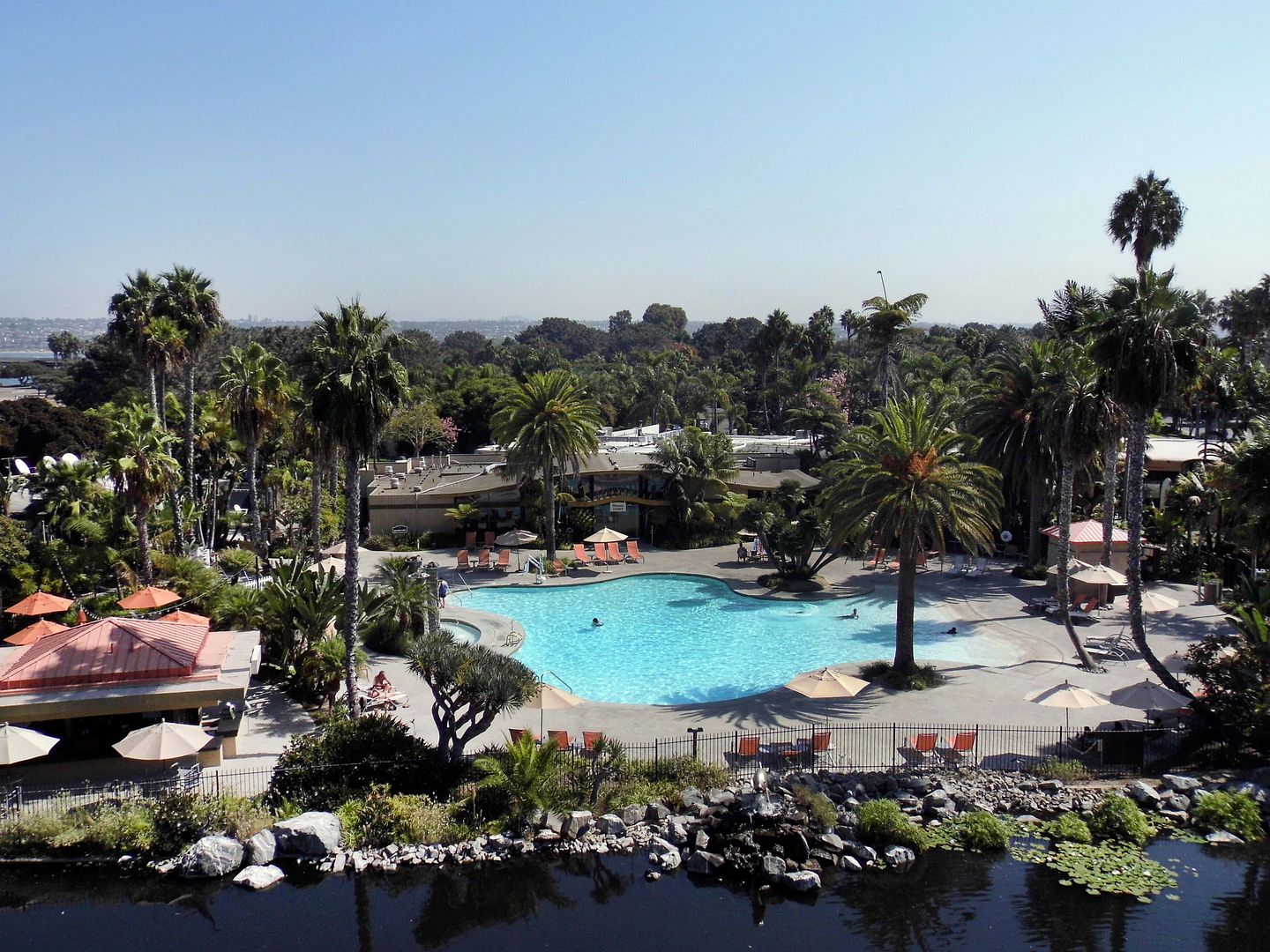
That's how I ended up at Paradise Point Resort in San Diego's Mission Bay. 


I knew it would be a tropical paradise, with outdoor dining and no less than five pools. And I knew that Tiki Oasis had recently held the pandemic version of its convention there—so it might provide some approximation of a tiki-cation. 


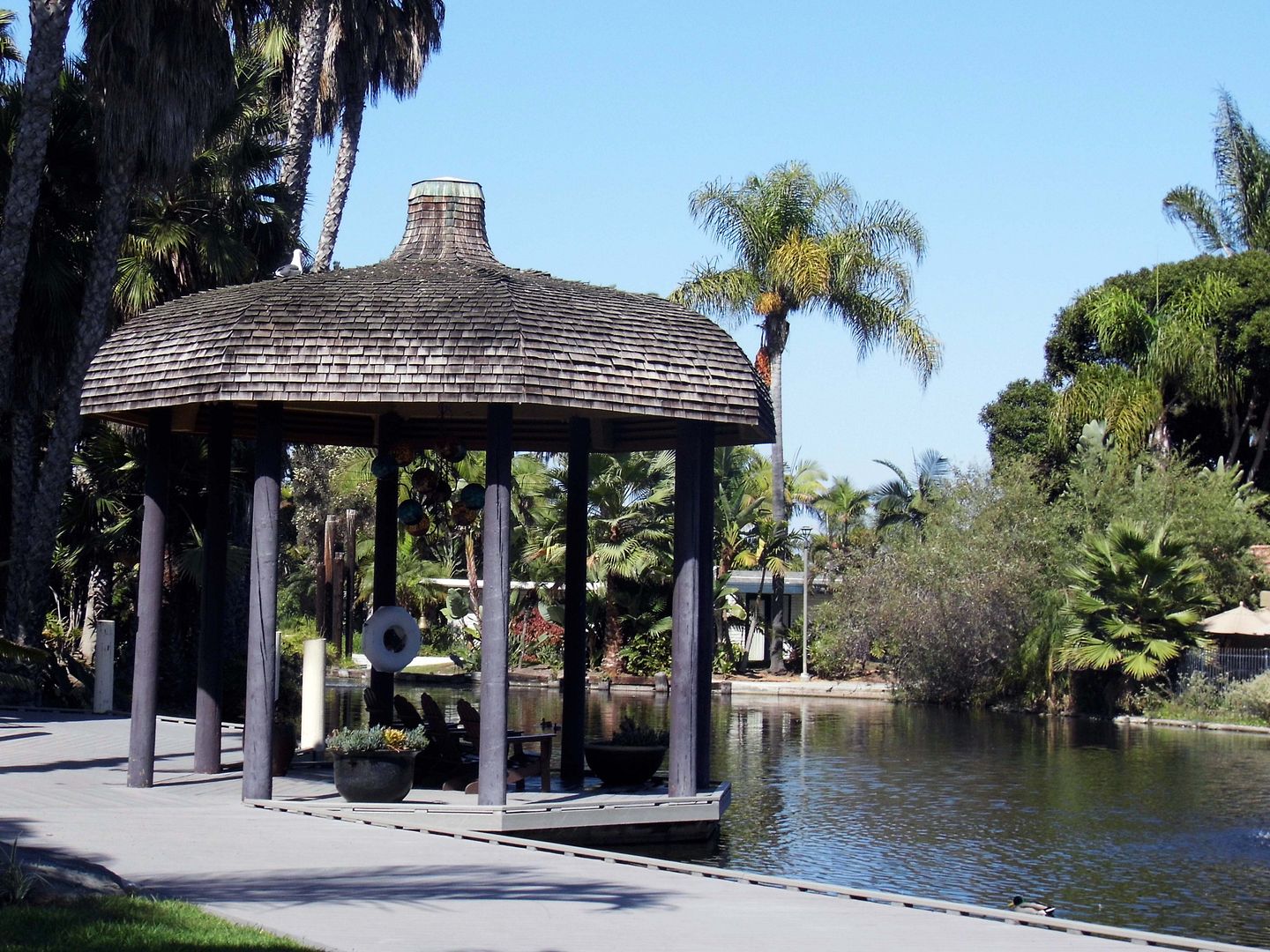
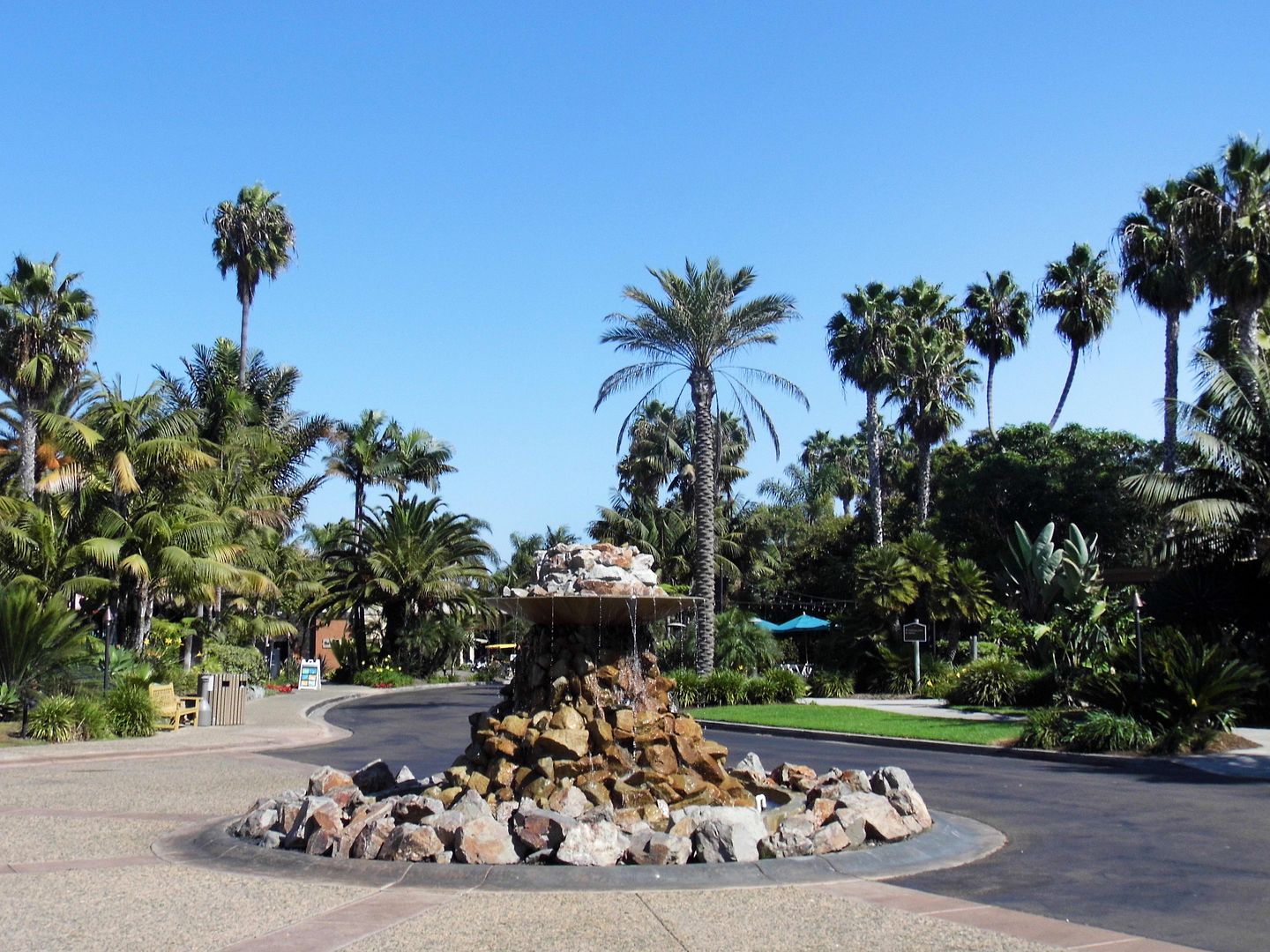
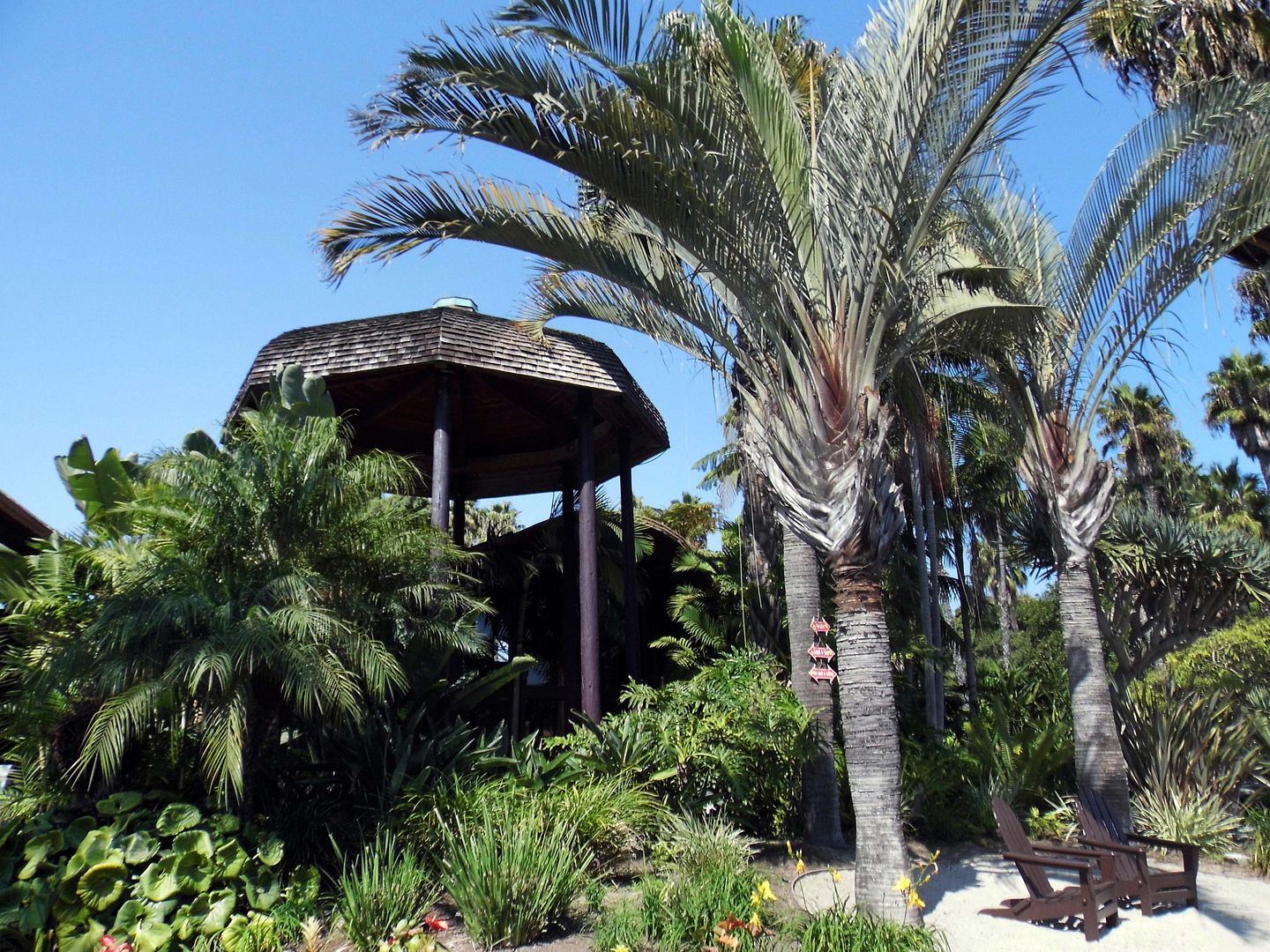
But upon turning down Vacation Road, circling around the entryway fountain and parking within spitting distance of the shake shingle kiosks that line the main lagoon, I had no idea how much history I was about to encounter. 


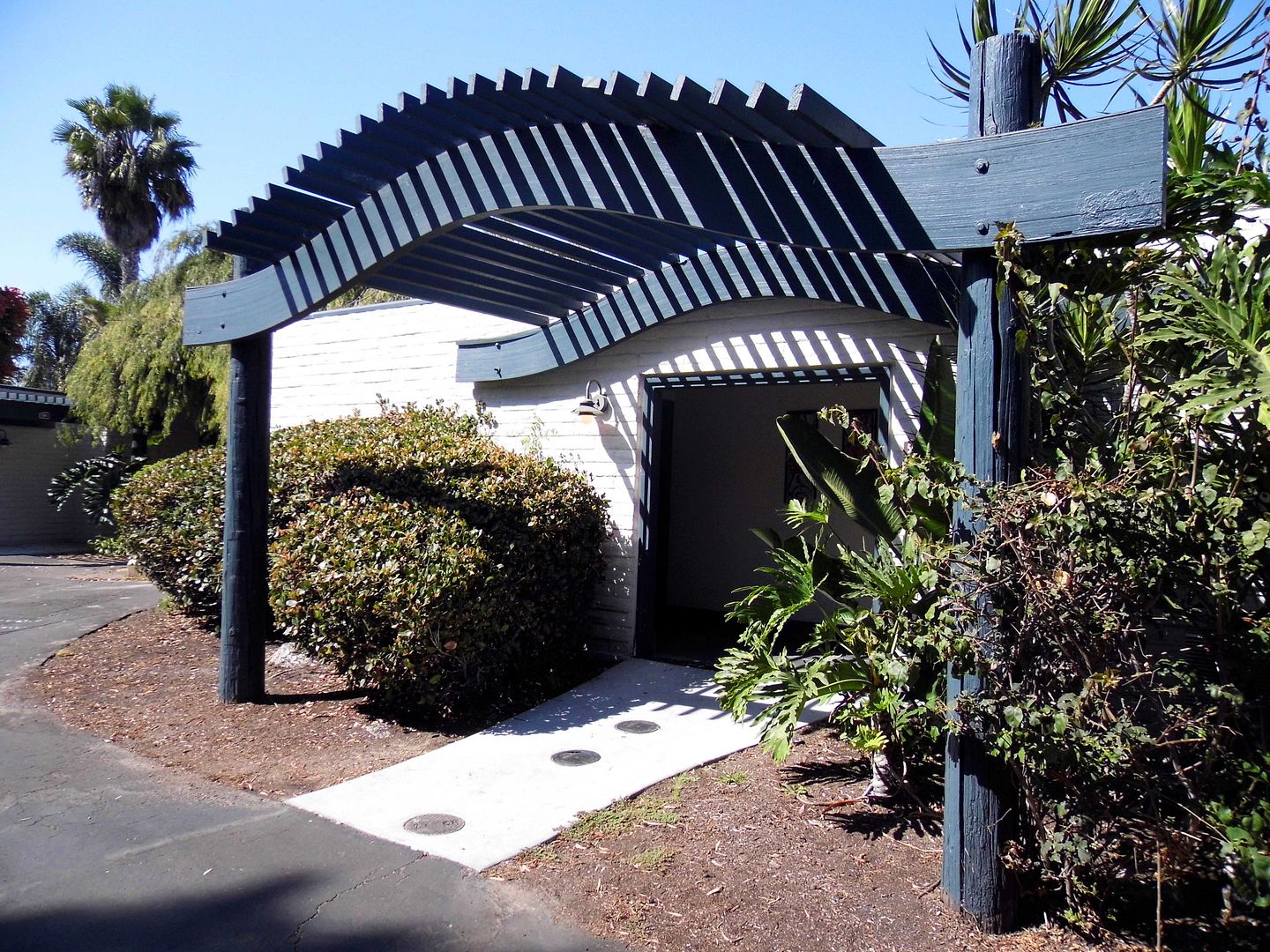
Oh, I'd been to Mission Bay before—to ride The Giant Dipper at the nearby Belmont Park. But I hadn't realized what an influence that wooden rollercoaster (once known as the Earthquake) would have on the local architecture—inspiring the undulating roofline and interior ironwork of the main lobby building of Paradise Point. And that's just for starters. 


The 1920s rollercoaster and the amusement park that contains it actually pre-dated what we know today as the Mission Bay Aquatic Park by decades. It wasn't until 1958 that the San Diego city council approved a master plan to dredge the tidal marsh and create 30 miles of shoreline beaches, grassy knolls, water recreation areas, Sea World, and resorts like Paradise Point—making it the largest man-made aquatic park in the country. 


While that was happening, Hollywood producer Jack Skirball—a Pennsylvania-born former rabbi who left the rabbinate in 1933—had gotten into family entertainment and recreation by delving into bowling alleys. But the bigger fish for him turned out to be transforming a treeless, manmade island called Tierra del Fuego into "Vacation Isle"—home of his South Seas-inspired Vacation Village resort, which opened in 1962.


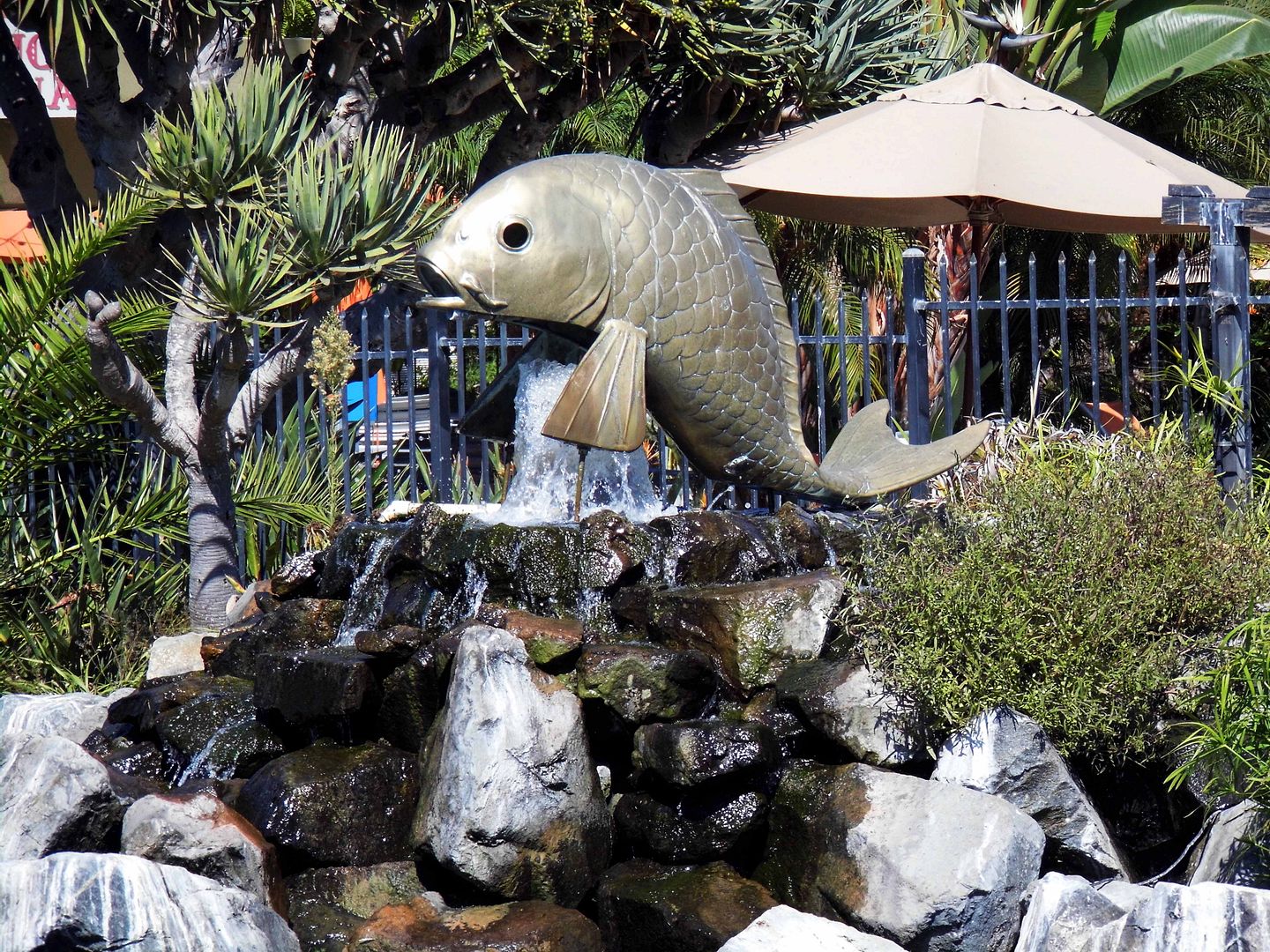
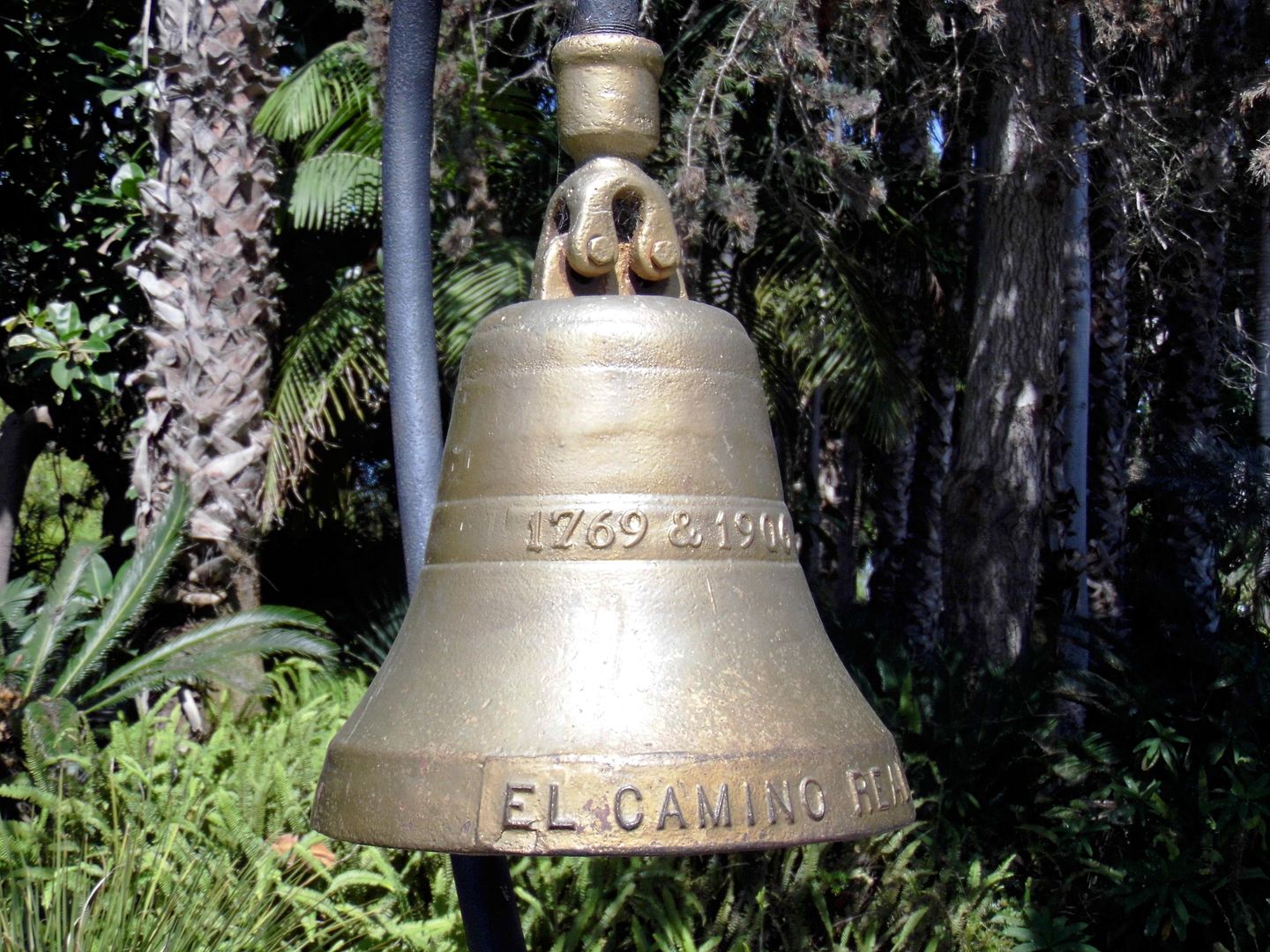
Of course, Skirball made sure Vacation Village had a dash of Hollywood magic here and there—including California's largest collection of original mission bells and screen-used artifacts like the porpoise fountain from the Elizabeth Taylor version of Cleopatra (1963).


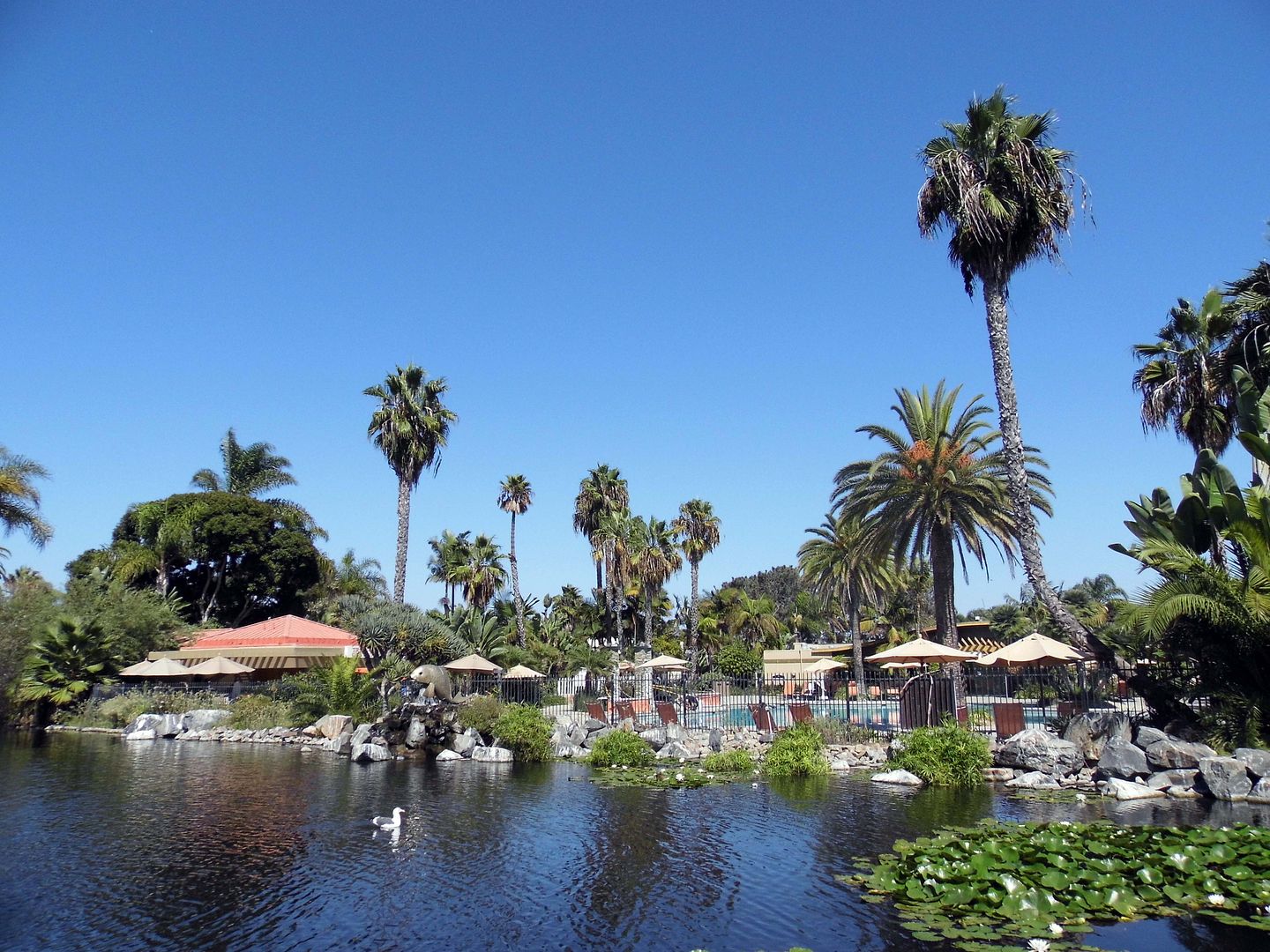
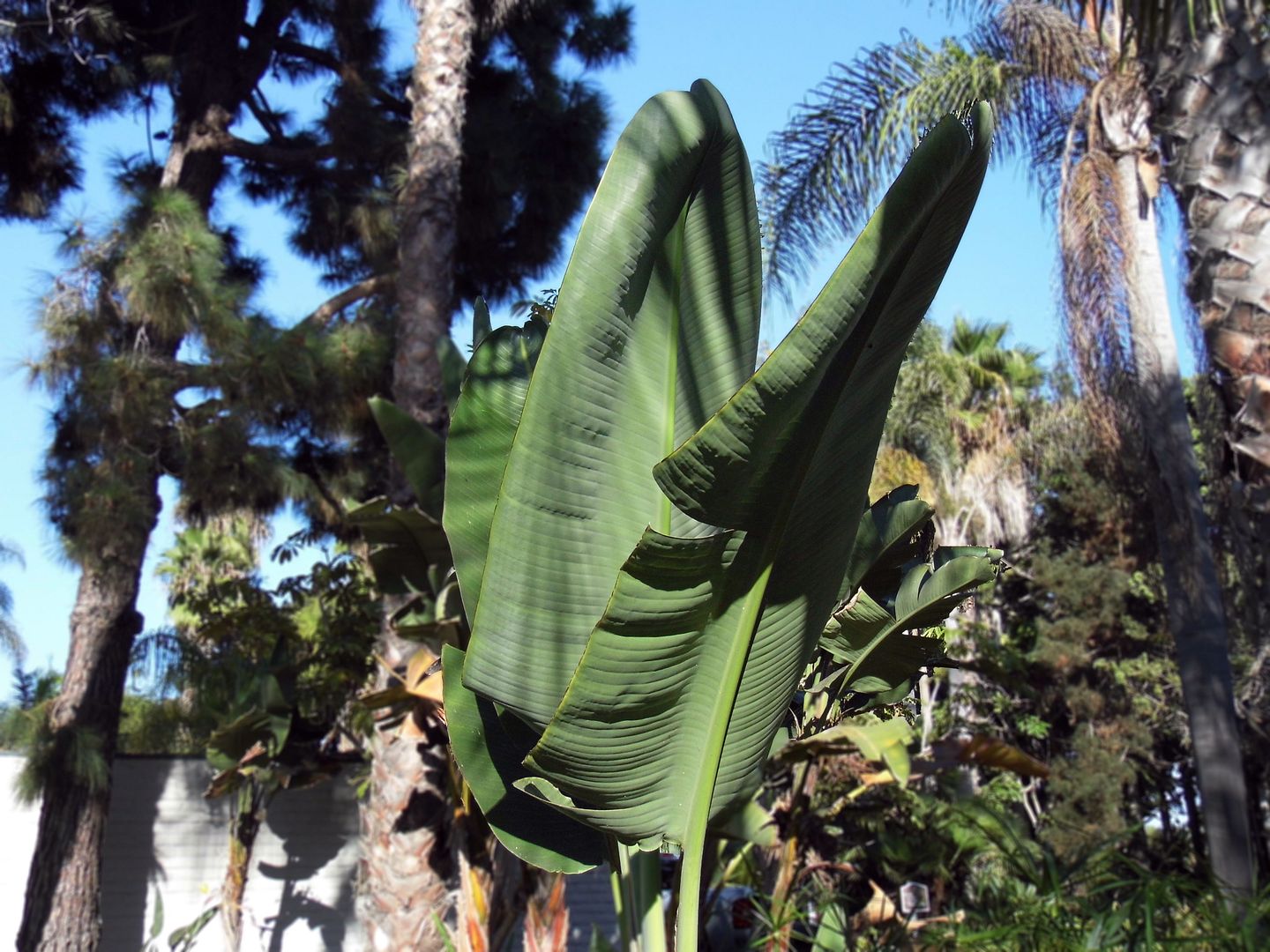
But much of the fantasy comes from the landscape design—whose palm trees, macadamia nut trees, bromeliads, and hundreds of birds-of-paradise transport you to the Canary Islands, or perhaps the South Pacific, or even Madagascar. 


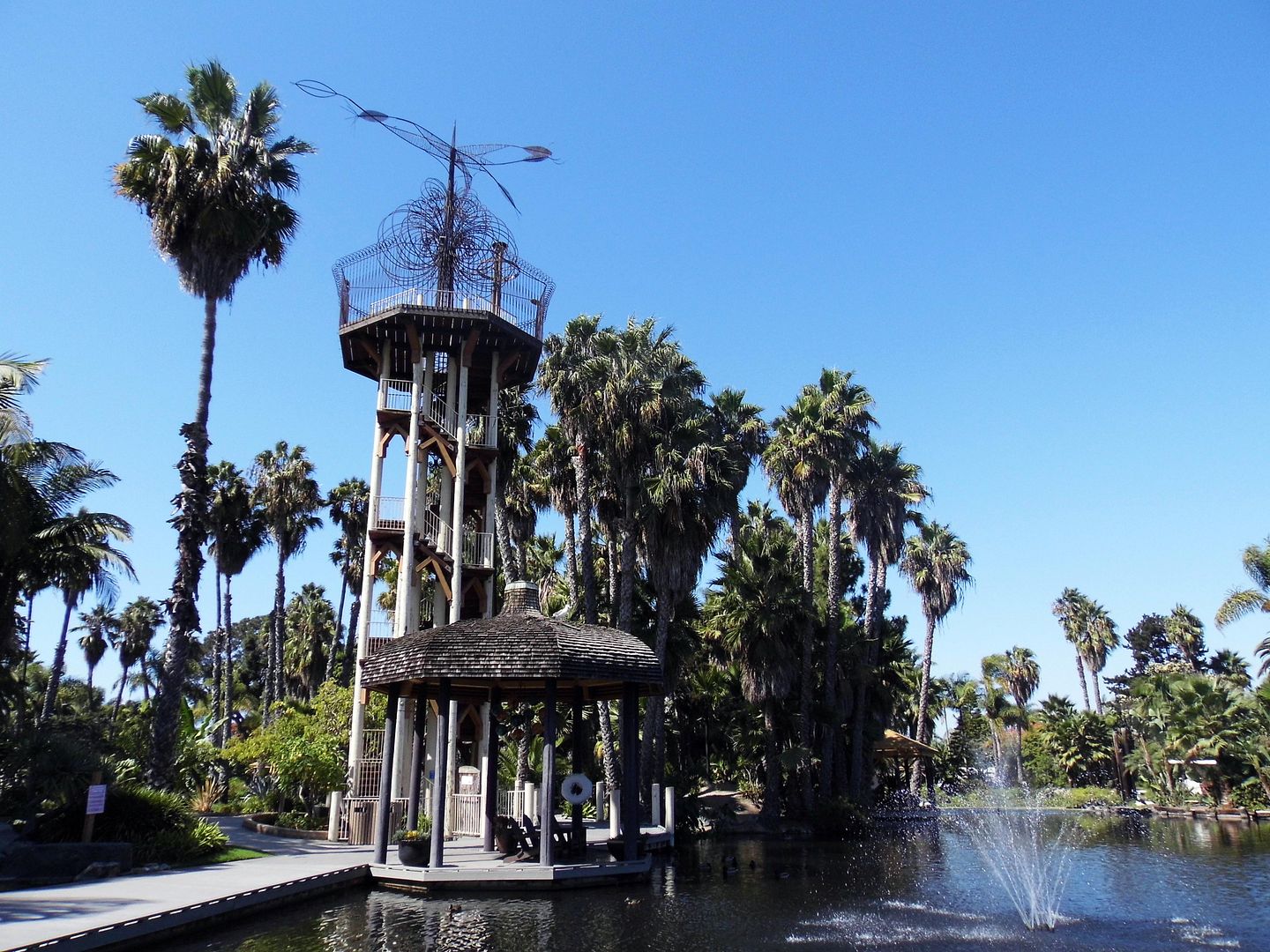
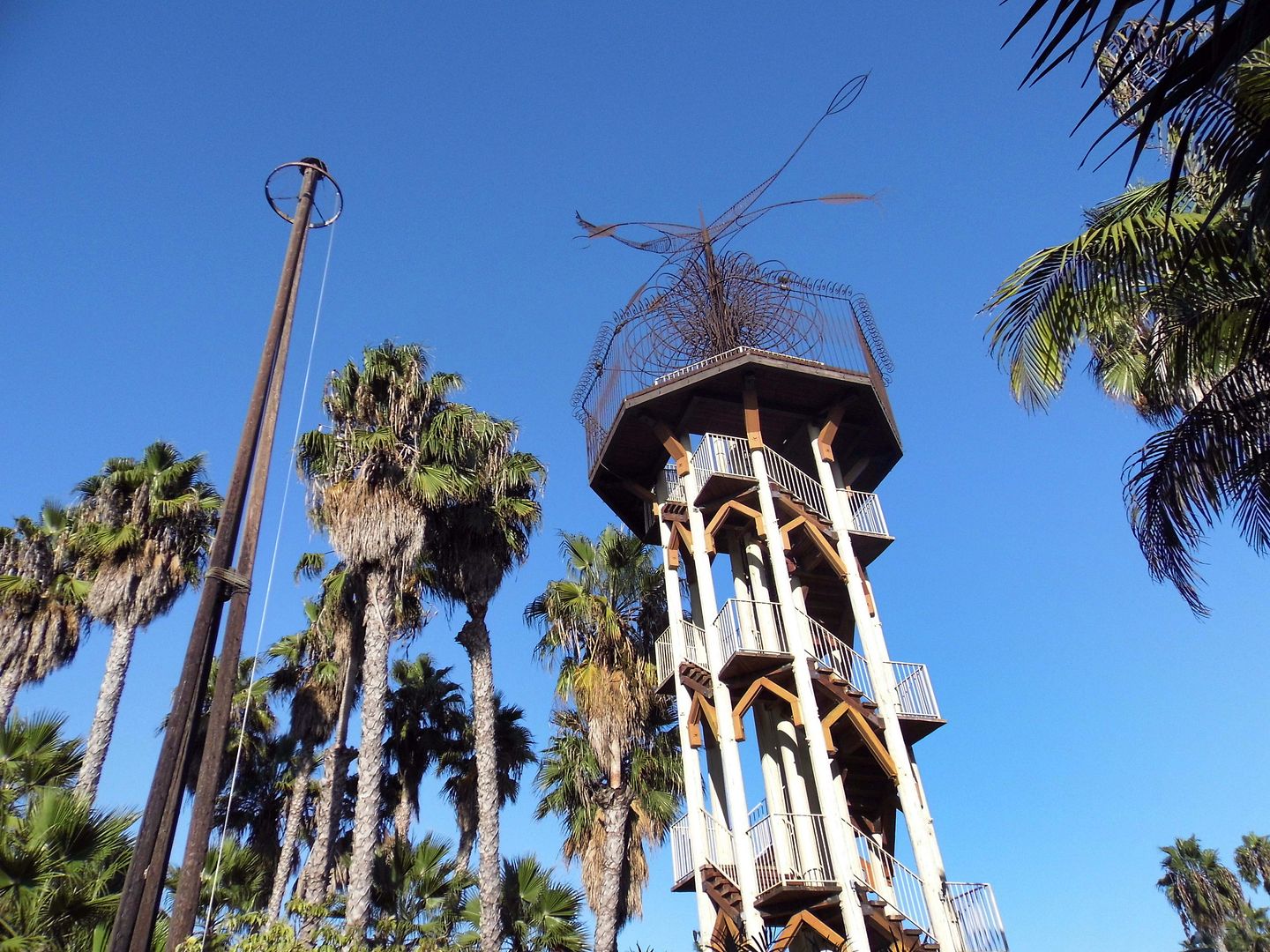
The symbol for the hotel—and still its beacon—is a 70-foot-tall observation tower, designed by the resort's architect, Eldridge "Ted" Spencer of the Palo Alto-based firm Spencer and Lee (perhaps known best for the Ahwahnee Hotel in Yosemite National Park). 


It was built by Robert "Bob" Golden—the son of construction magnate Morley H. Golden and, as of 1956, president of M.H. Golden Construction Company It must've been an engineering feat to make it as sturdy as it still feels. 


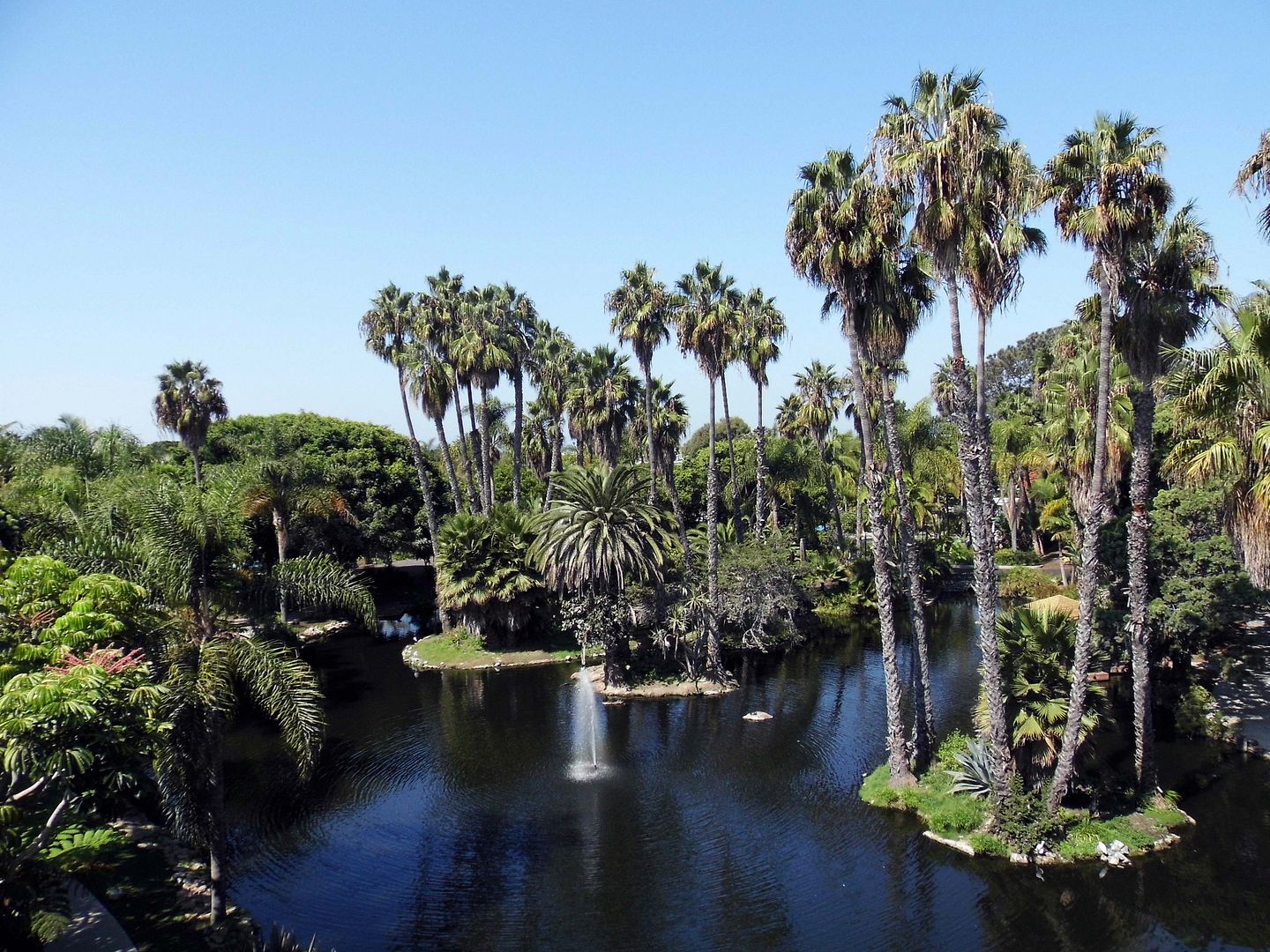
After climbing up an undetermined number of stairs, the view of the main lagoon from up there is breathtaking, fantastical, and transportive. 


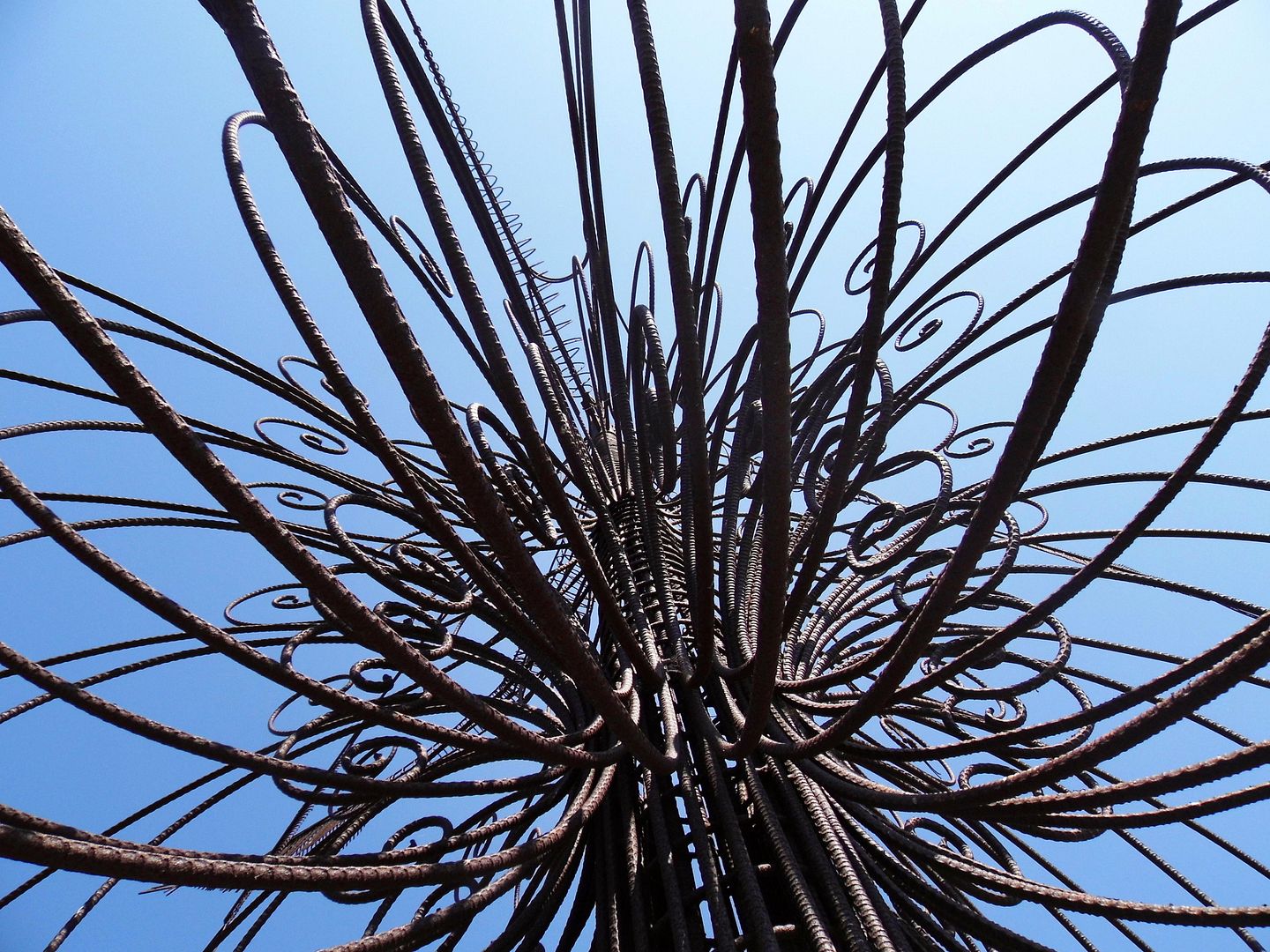
And at the very top, you can be delighted by the whimsical rebar sculpture by Val Agnoli...


...whose uppermost portion is meant to evoke the red-eared slider turtles that populate the waters below. 


After all, this bayside resort offers more watery wonders than just its swimming pools. 


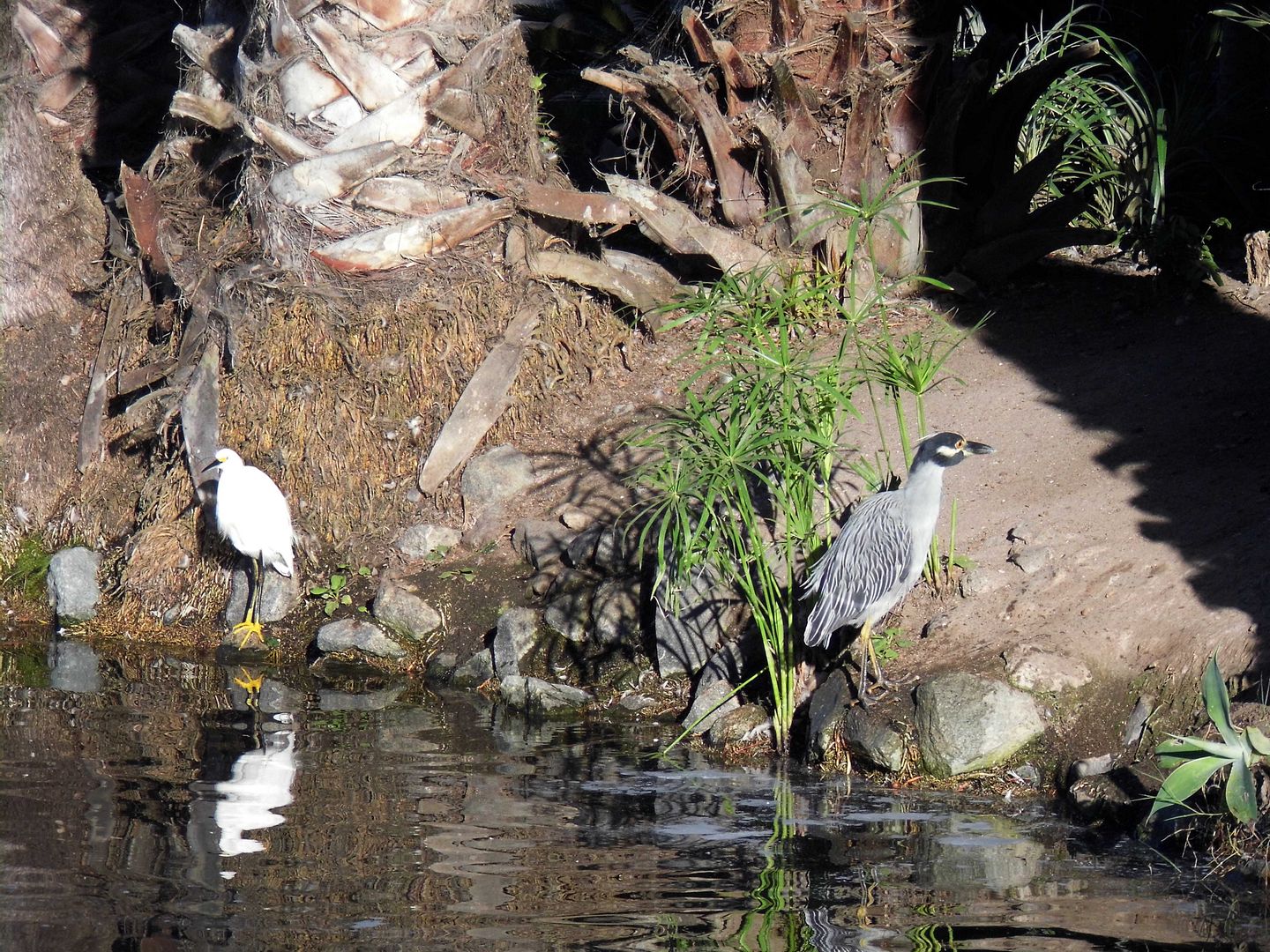
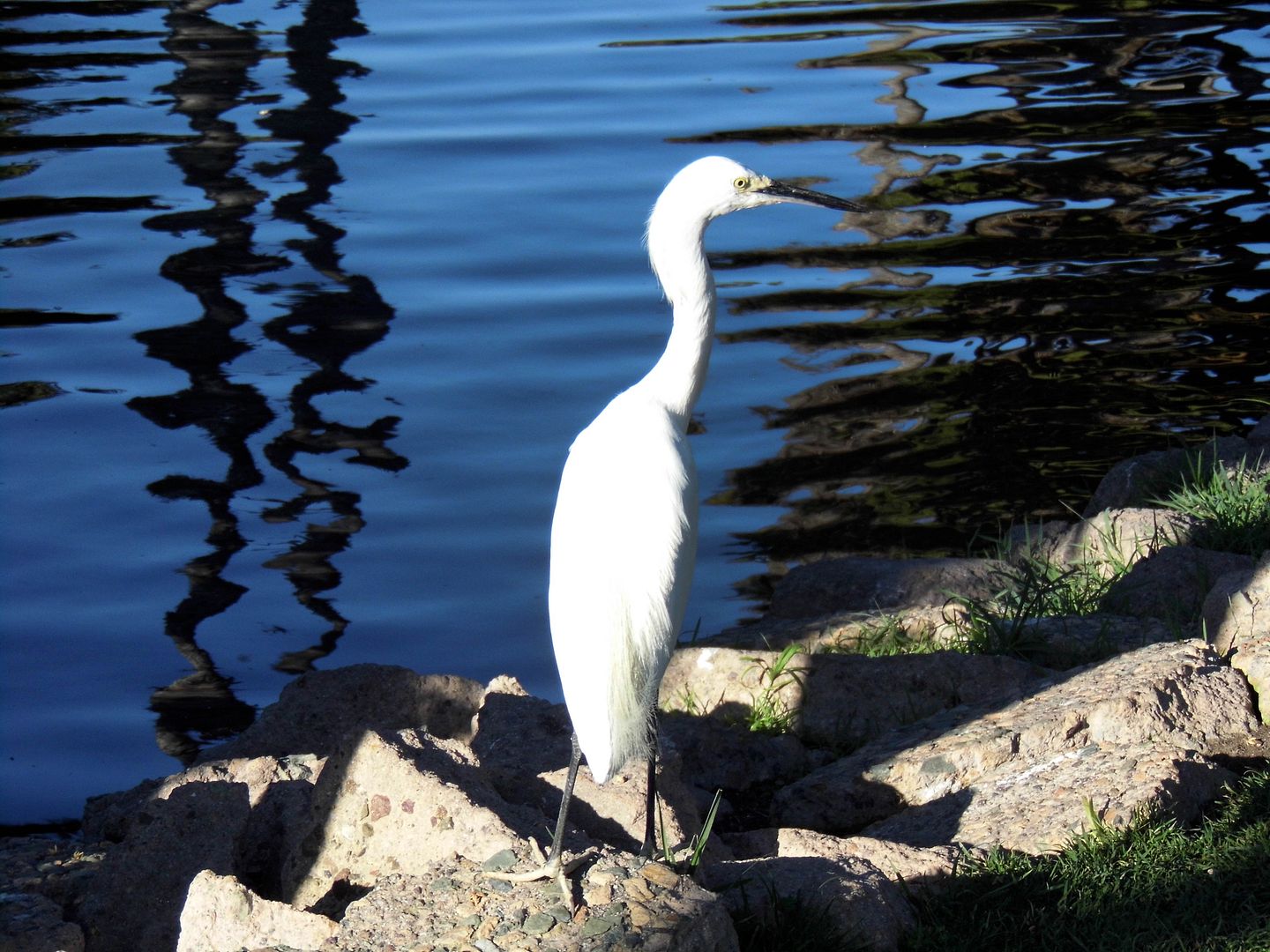
And all that wet stuff is great for attracting shorebirds, like snowy egrets and yellow-crowned night herons, with their yellow feet and eyes...

 
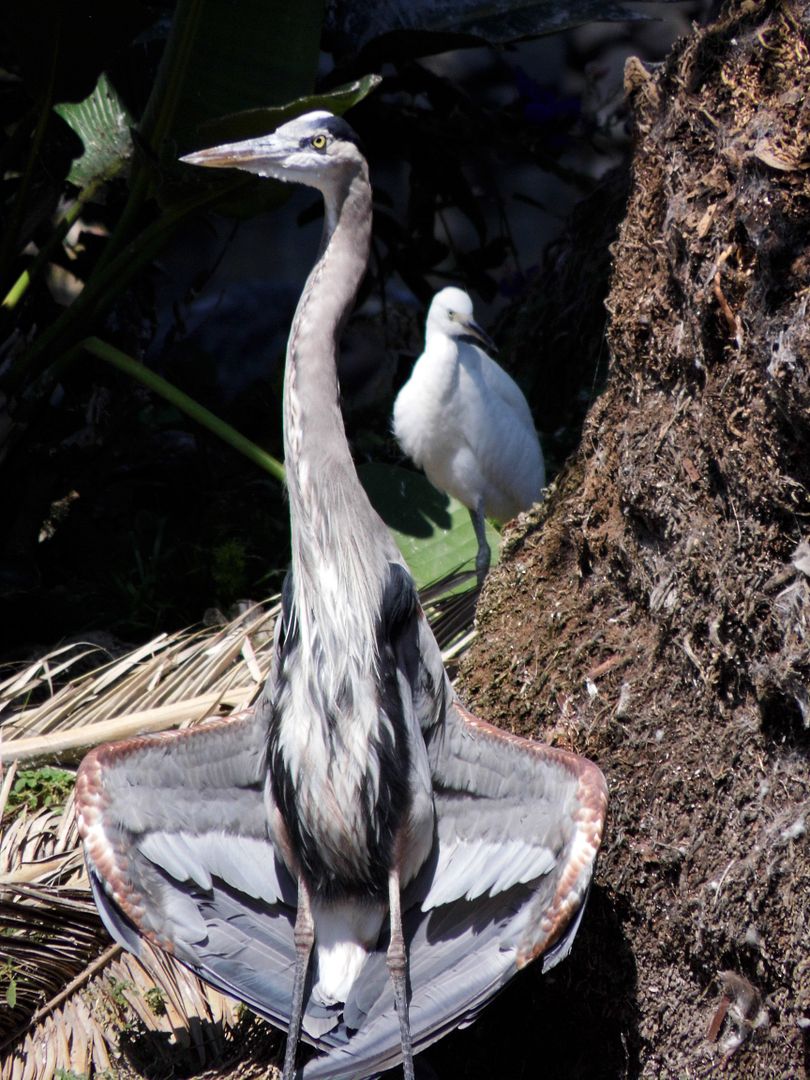
...great blue herons, who sun their wings in a "flasher" pose...

 
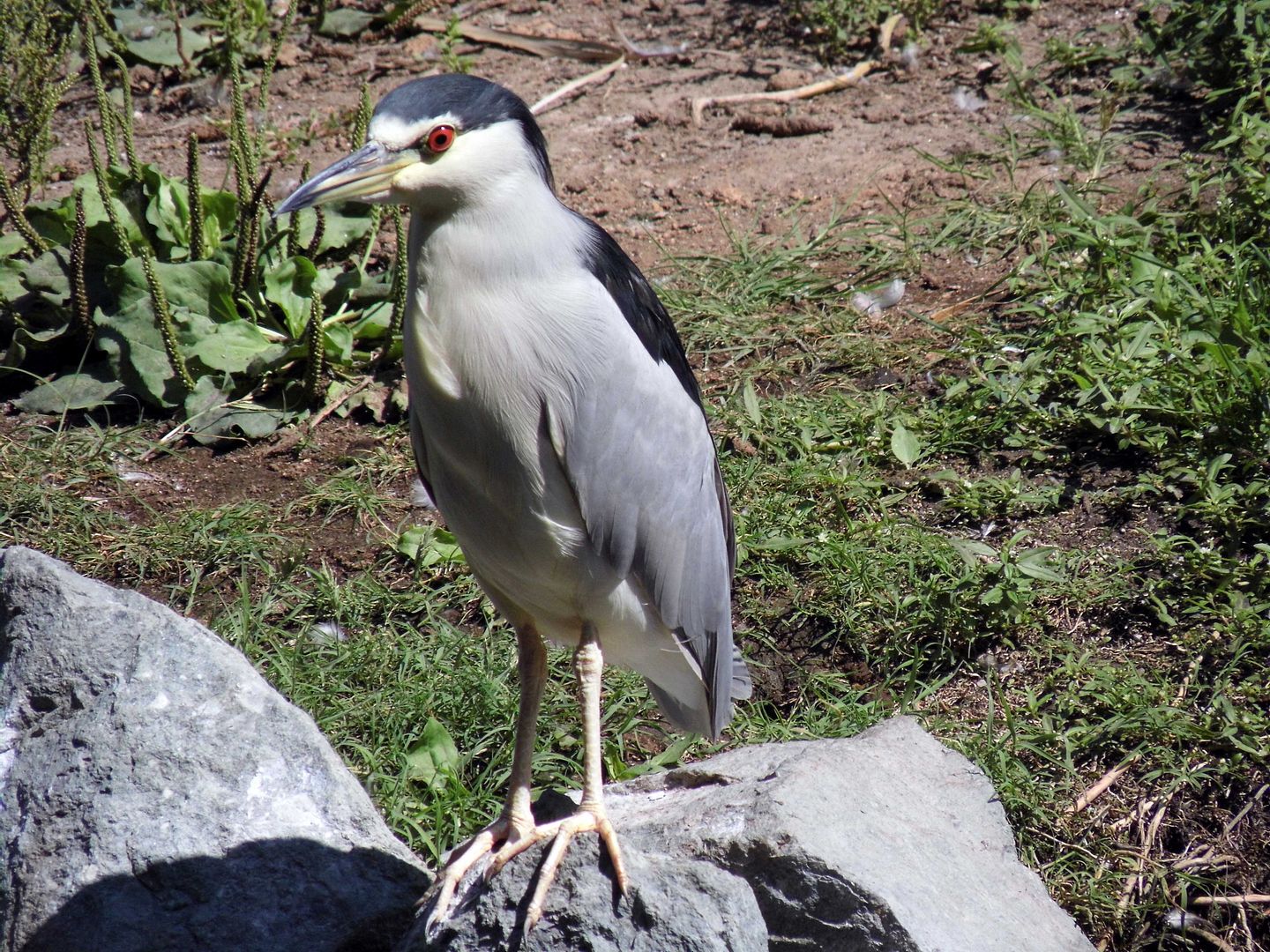
...black-crowned night herons, with their red eyes...
    

...and of course great egrets. 


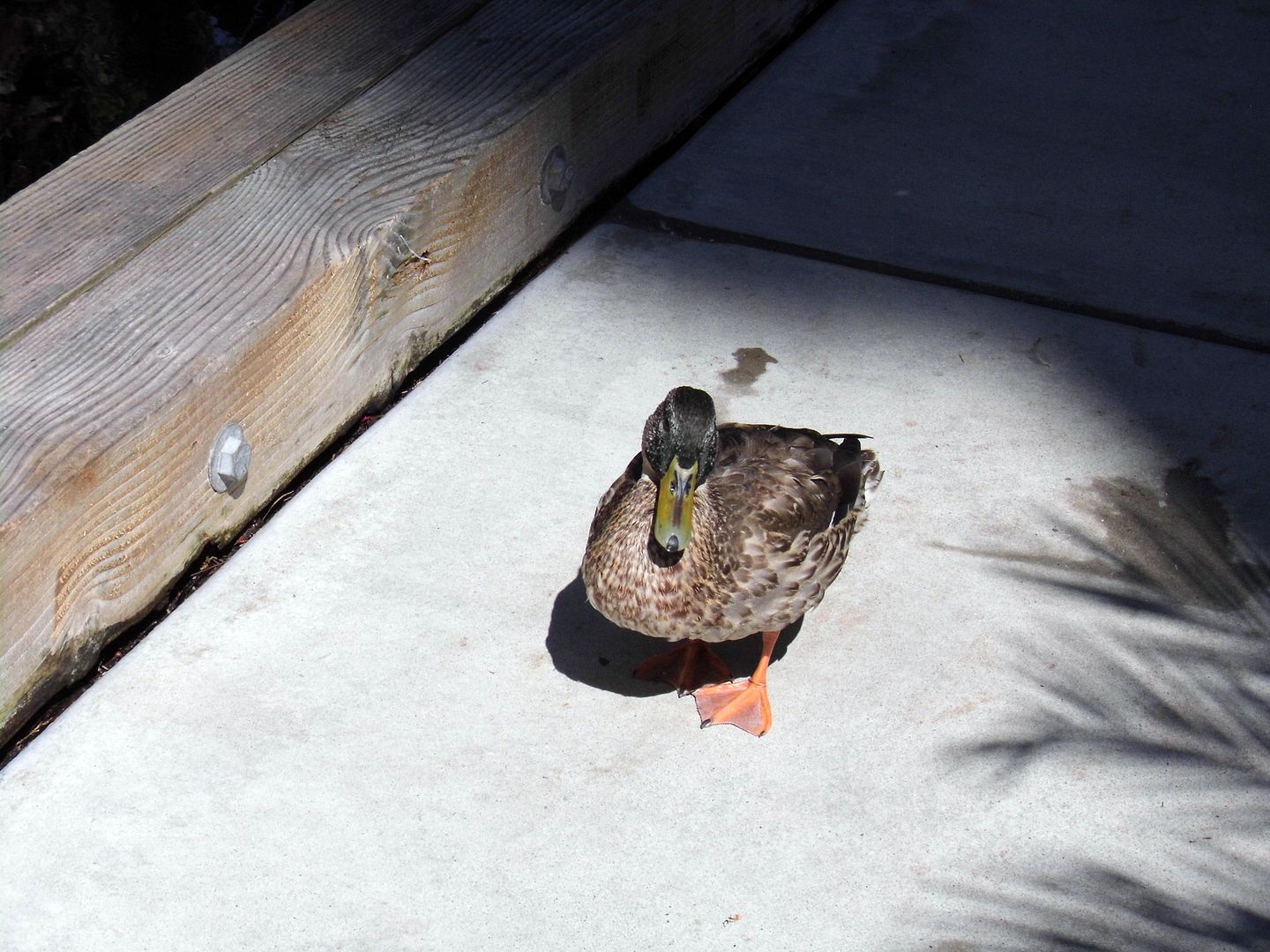
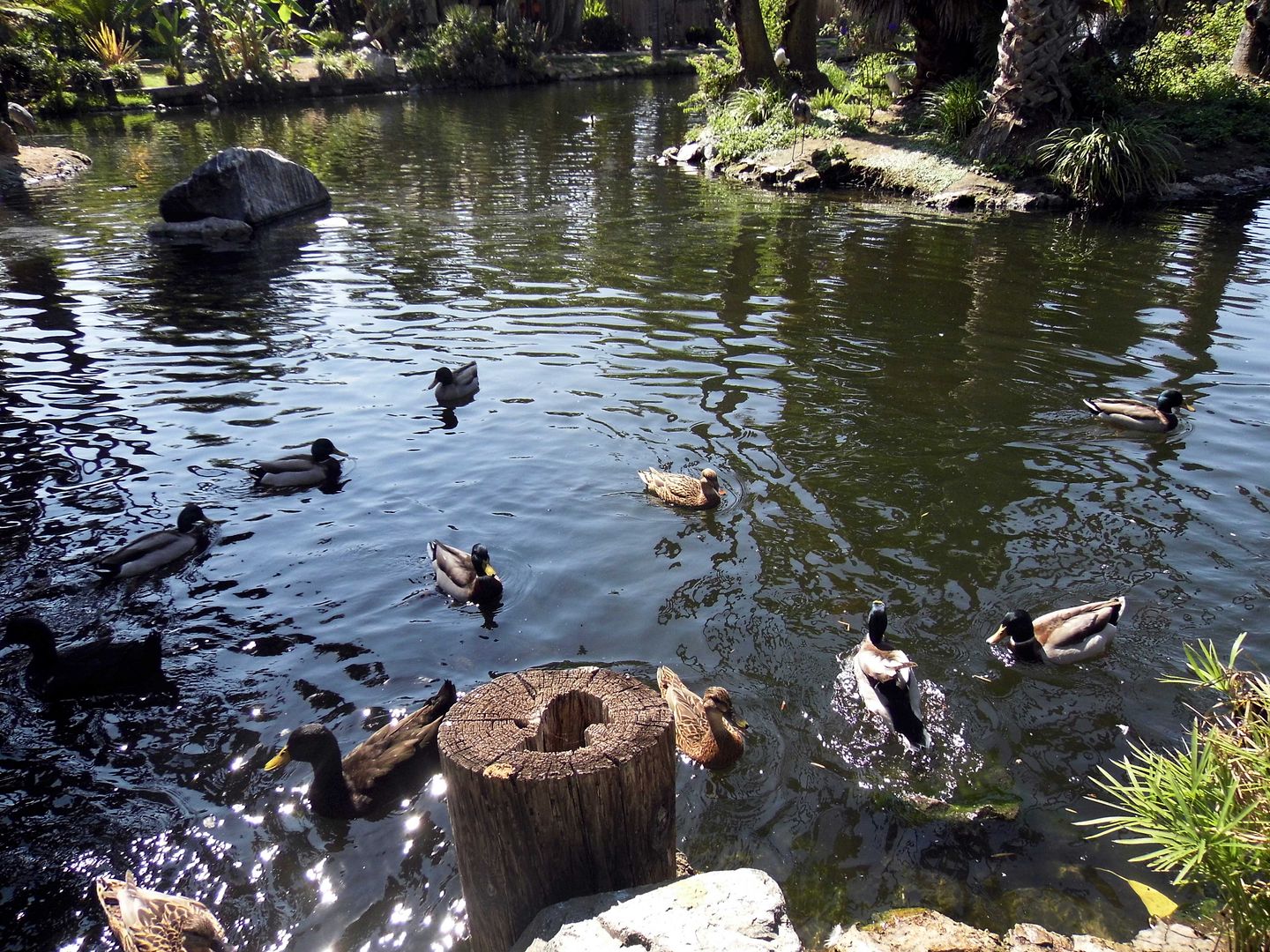
The ducks are particularly friendly—but maybe that's because they know the resort gift shop sells small bags of duck food for just $2. 


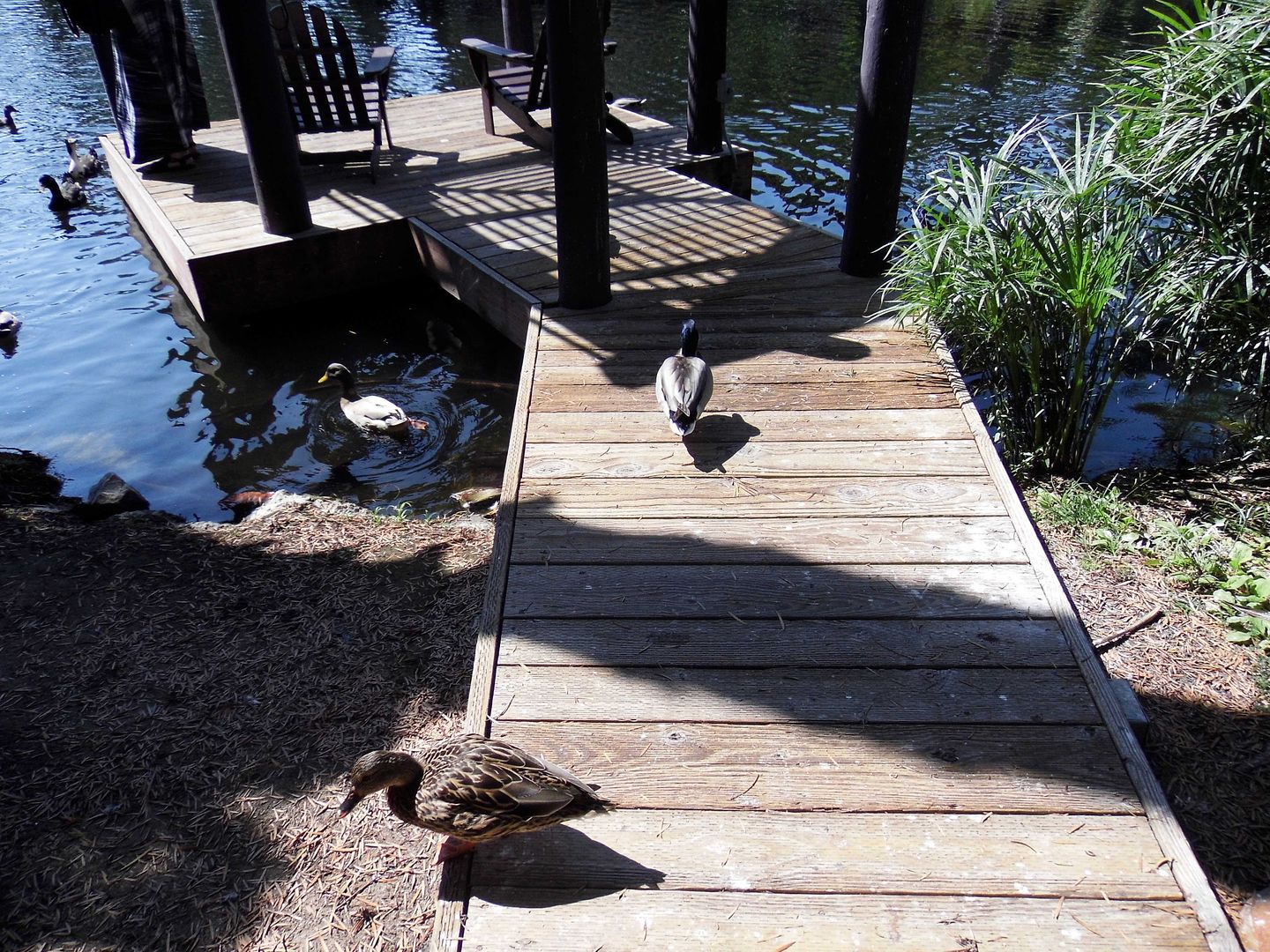
They'll either follow you, while nipping at your shoes and toes, or they'll lead you to Amelio's Dock, where all their friends will be waiting for a snack. 

                        
They compete with the koi for the little tasty pellets—and even though the shop also sells $2 bags of fish food, the koi don't seem to discriminate. 

    
I could easily spend days just wandering the grounds, feeding the birds, and photographing the scenery. 


But I'd only booked one night—fortunately getting upgraded from a standard room to a bungalow with a Giant Dipper-inspired entryway. 

 
Staying in any of the 400+ rooms at Paradise Point was a major treat for me—but when Vacation Village first opened in 1962, its original 150 rooms went for just $8 per night.


That gave guests access to one restaurant, a golf course, and two tennis courts.
            
 
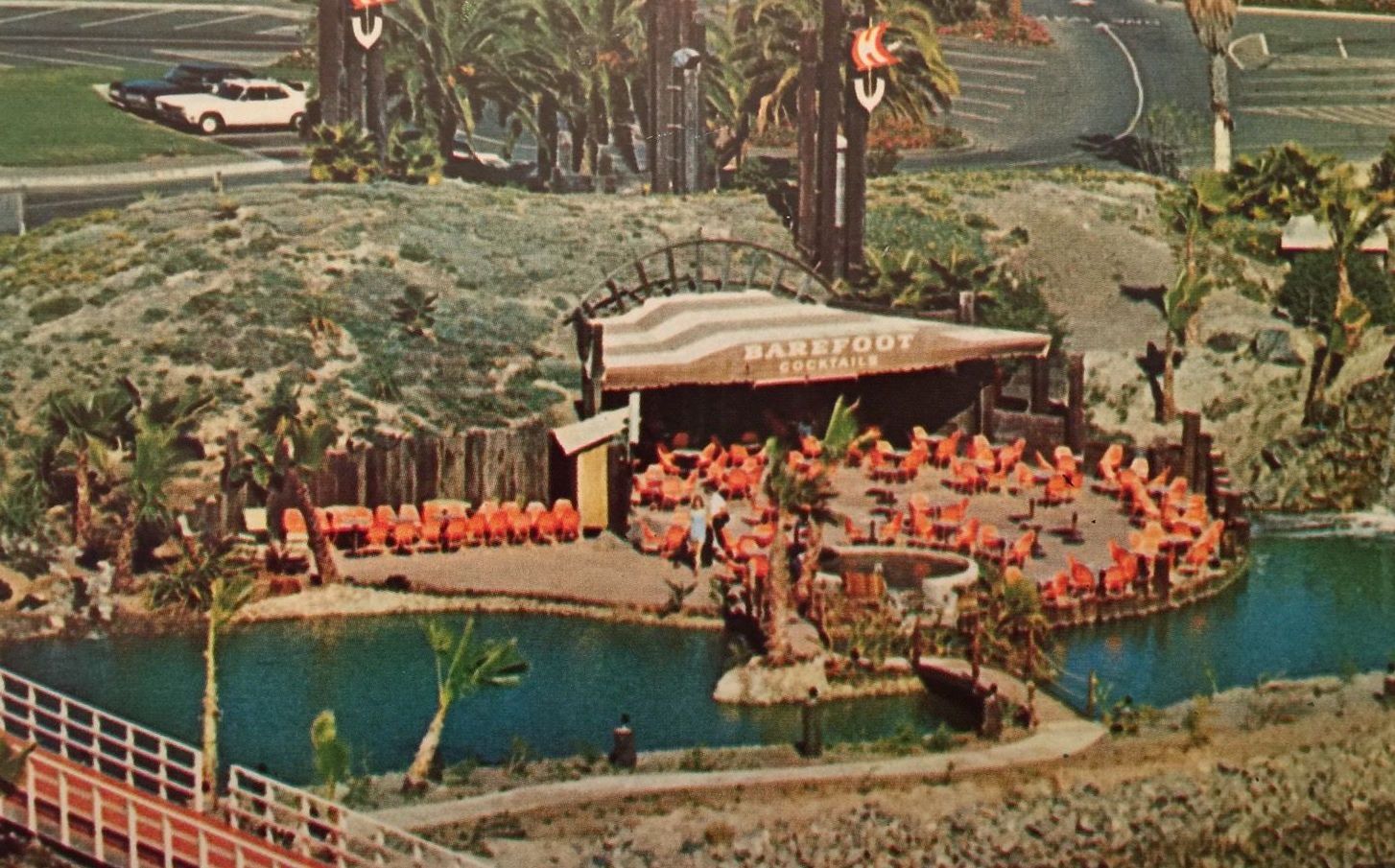
The resort's Barefoot Bar—initially called "The Grotto"—went down in infamy as a kind of Cold War-era beach bunker where you could get "bombed" at the bar but would survive a "bombing" under all that sand. Although the Barefoot Bar operated for a time as a location of Don the Beachcomber (1980-1983), its current iteration has returned to the original theme. 


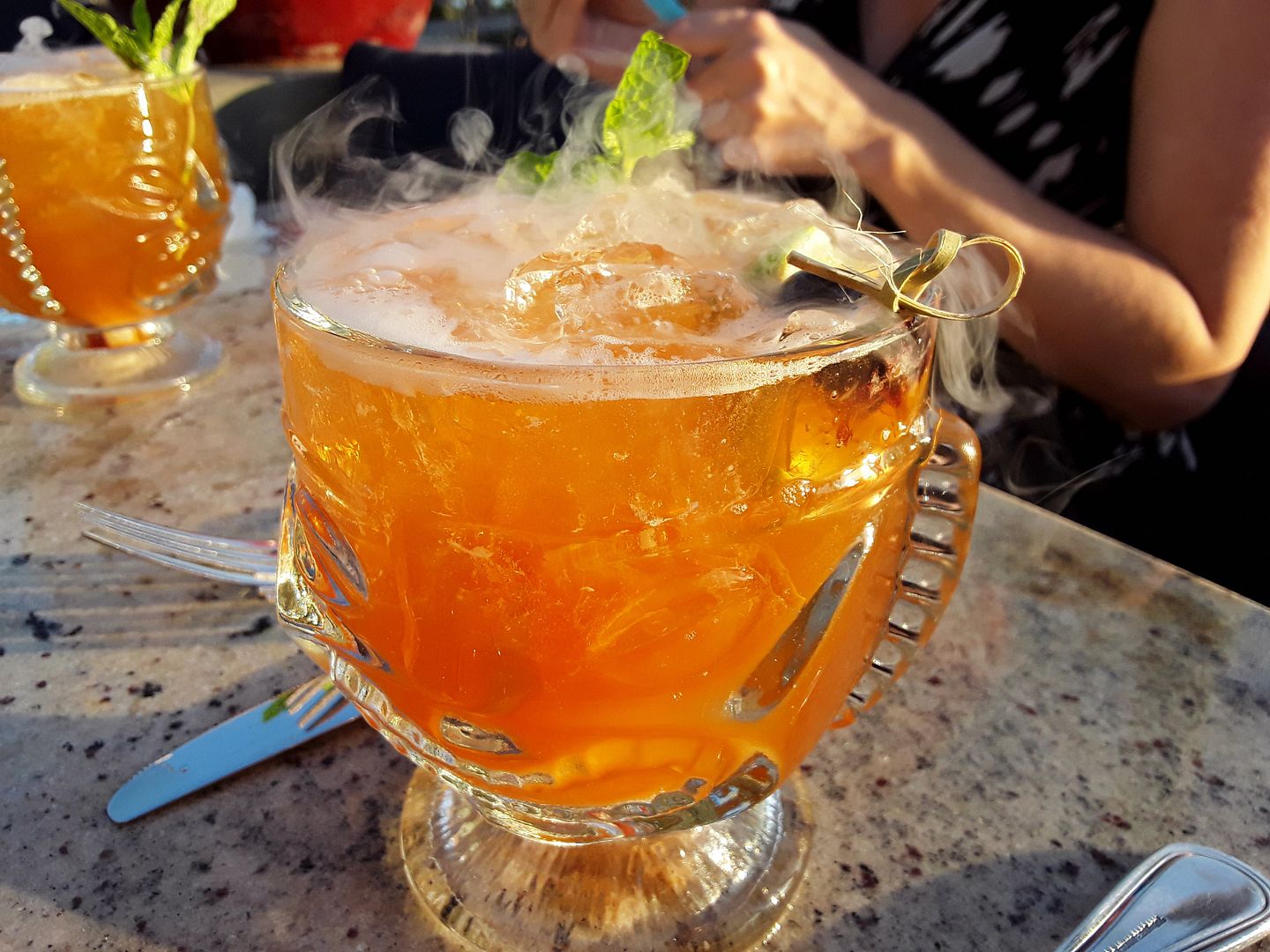
A friend and I enjoyed my birthday dinner at Paradise Point's onsite sit-down restaurant Tidal (formerly Baleen), where we sat by the marina enjoying Paradise Mai Tais in tiki glassware with a dry ice-induced "fog" effect. 
 

As the sun went down behind us, I thought, "This was a really good idea." I felt no birthday despair. No existential dread. No desperation for something epic to happen on the night I turned yet another year older. 

And as it turns out, that might've been my last chance to experience Paradise Point as it is right now—and as it has been since LaSalle Hotel Properties bought it and rebranded it as such in 1998. 

Its owner since late 2018, Pebblebrook Hotel Trust, has entered into a license agreement to turn Paradise Point into one of the first West Coast outposts of Margaritaville hotels and resorts. (Palm Springs hasn't opened yet, but it's already taking reservations.) 

I can only assume that means it will soon be taken over by the Parrotheads who support the "Margaritaville" singer and songwriter Jimmy Buffett. 

And although that may be "tropical"—and some might consider that "paradise"—it is not the same tiki-adjacent experience as Vacation Village or Paradise Point. 

Unfortunately, something like this was probably bound to happen after Skirball cashed out and sold the property in 1983, two years before his death. 

I hope they keep the tower and the rollercoaster architectural references and the birds and the turtles. 

For lots of vintage photos and information, visit ClassicSanDiego.com. 

Related Posts: 

May 09, 2020

Photo Essay: Wrigley Memorial and Botanical Gardens (Or, An Empty Tomb Looms Over Avalon)

Chewing gum magnate William Wrigley Jr. did most of his candy business out of Chicago—but he liked Southern California so much, he bought the island of Catalina in 1911. His wife, Ada, preferred their home in the island community of Avalon to their mansion in Pasadena.

When Wrigley died on January 26, 1932, it was at his Phoenix home—but he wasn't interred in Arizona. His final resting place was to be on Catalina Island, where he'd spent his summers.

The memorial to Wrigley that was subsequently completed in 1934 was designed by the firm of Bennett, Parsons, and Frost of Chicago. It took around three months' worth of excavation to make way for the 232-feet-wide and 180-feet-deep hillside monolith.
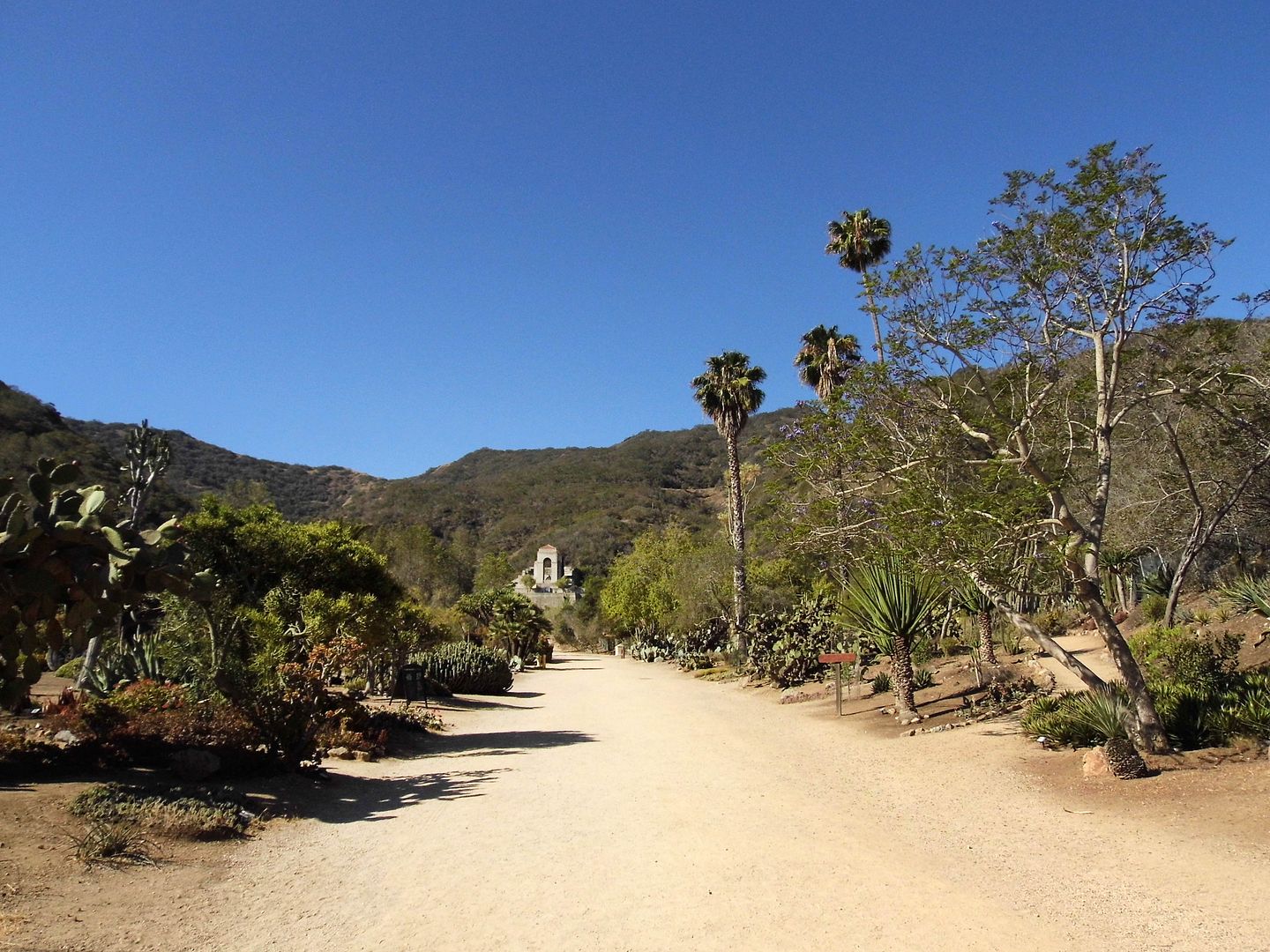


It's now the crown jewel of the Wrigley Botanical Gardens, whose earliest iteration was planted at the behest of William's wife Ada Foote Wrigley by Pasadena horticulturalist Albert Conrad in 1935. You can still see remains of his original Desert Plant Collection.
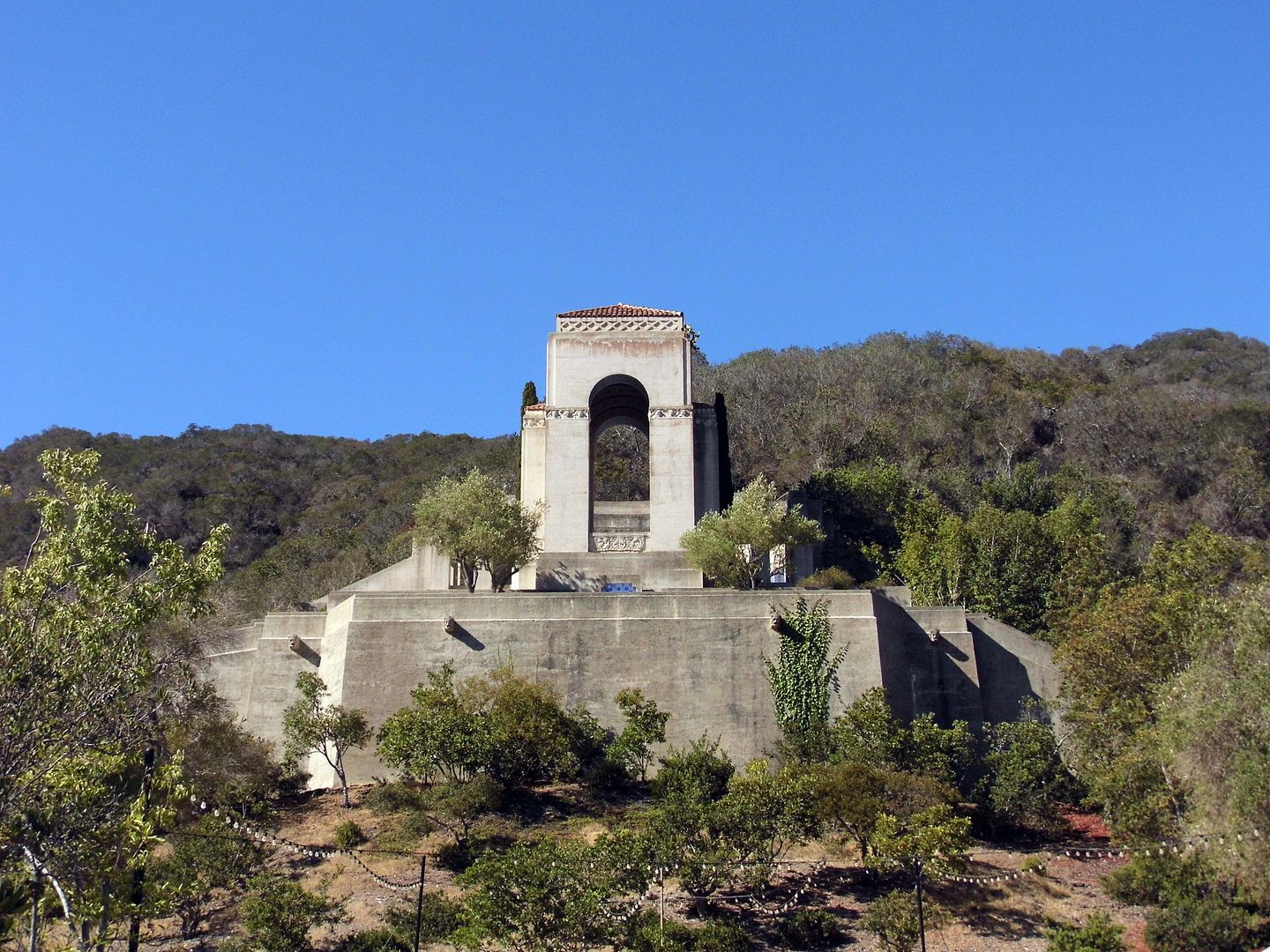


The gardens weren't open to the public at first—until 1947, when Wrigley's remains were relocated to the Sanctuary of Gratitude at Forest Lawn Glendale in order to allow public access. The gardens were later expanded to nearly 40 acres—now also including native and endemic species like the Catalina ironwood (Lyonothamnus floribundus ssp. floribundus), Catalina manzanita (Arctostaphylos catalinae) and Catalina mahogany (Cercocarpus traskiae).


Now, you can hike 1.5 miles up Avalon Canyon Road from town to reach the garden entrance—and once you reach the bottom of the circular stairway, it's another 130 feet to the top of the 80-foot tower.
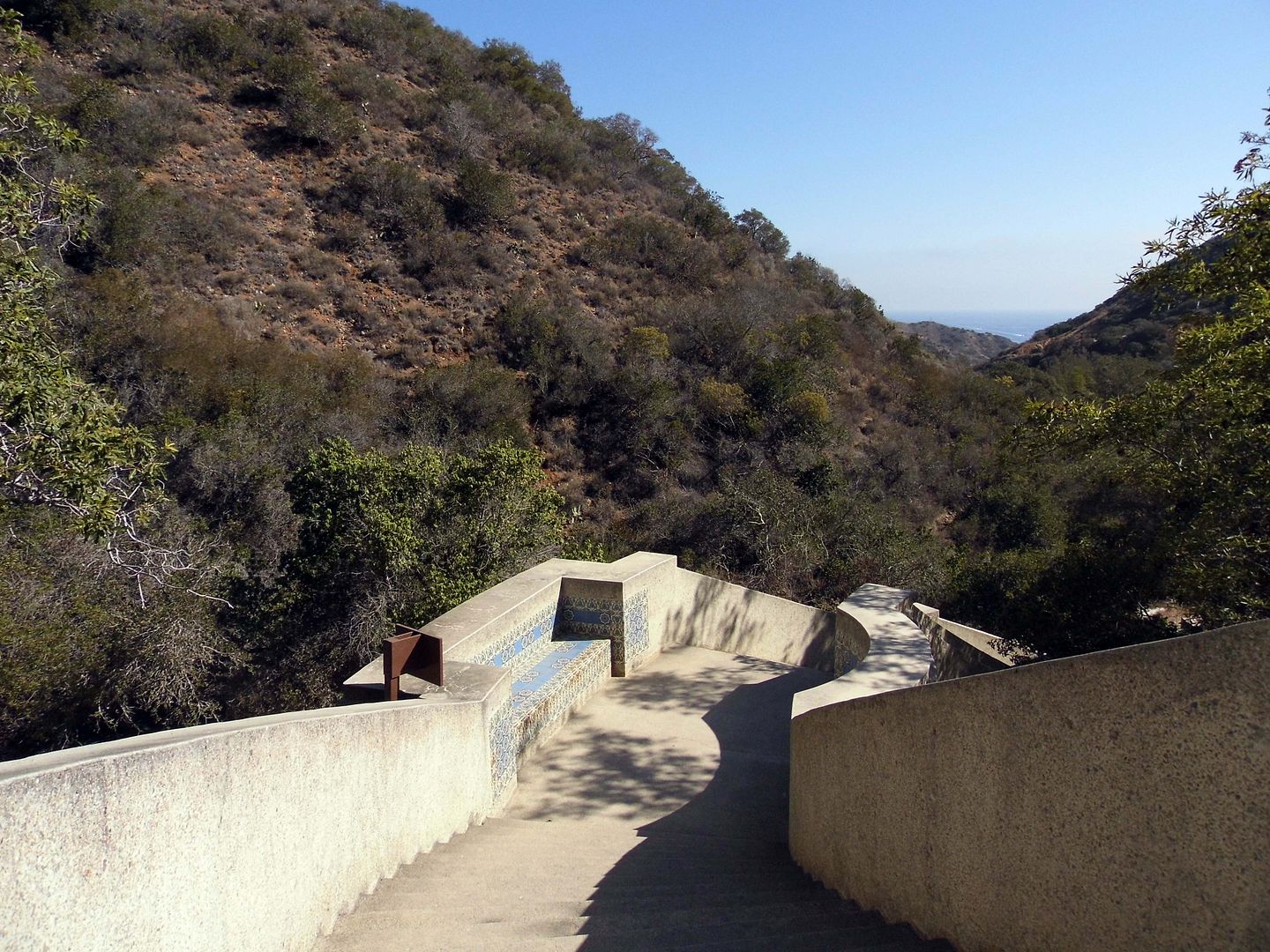


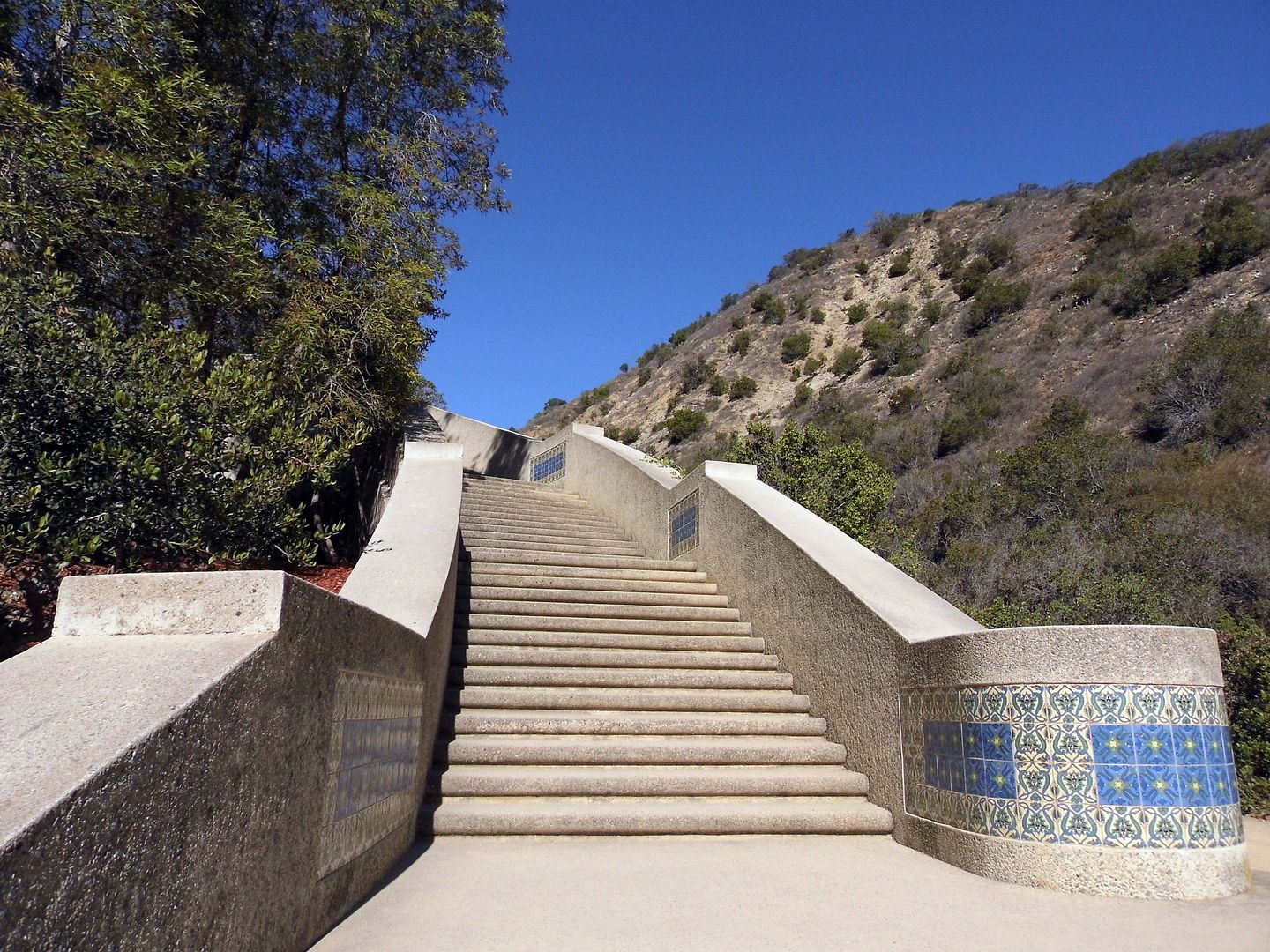
As much as possible at the time, crews constructed the memorial from locally-sourced Catalina materials—including decorative tiles and aggregate rock that had been quarried and crushed on the island at Pebbly Beach Quarry.
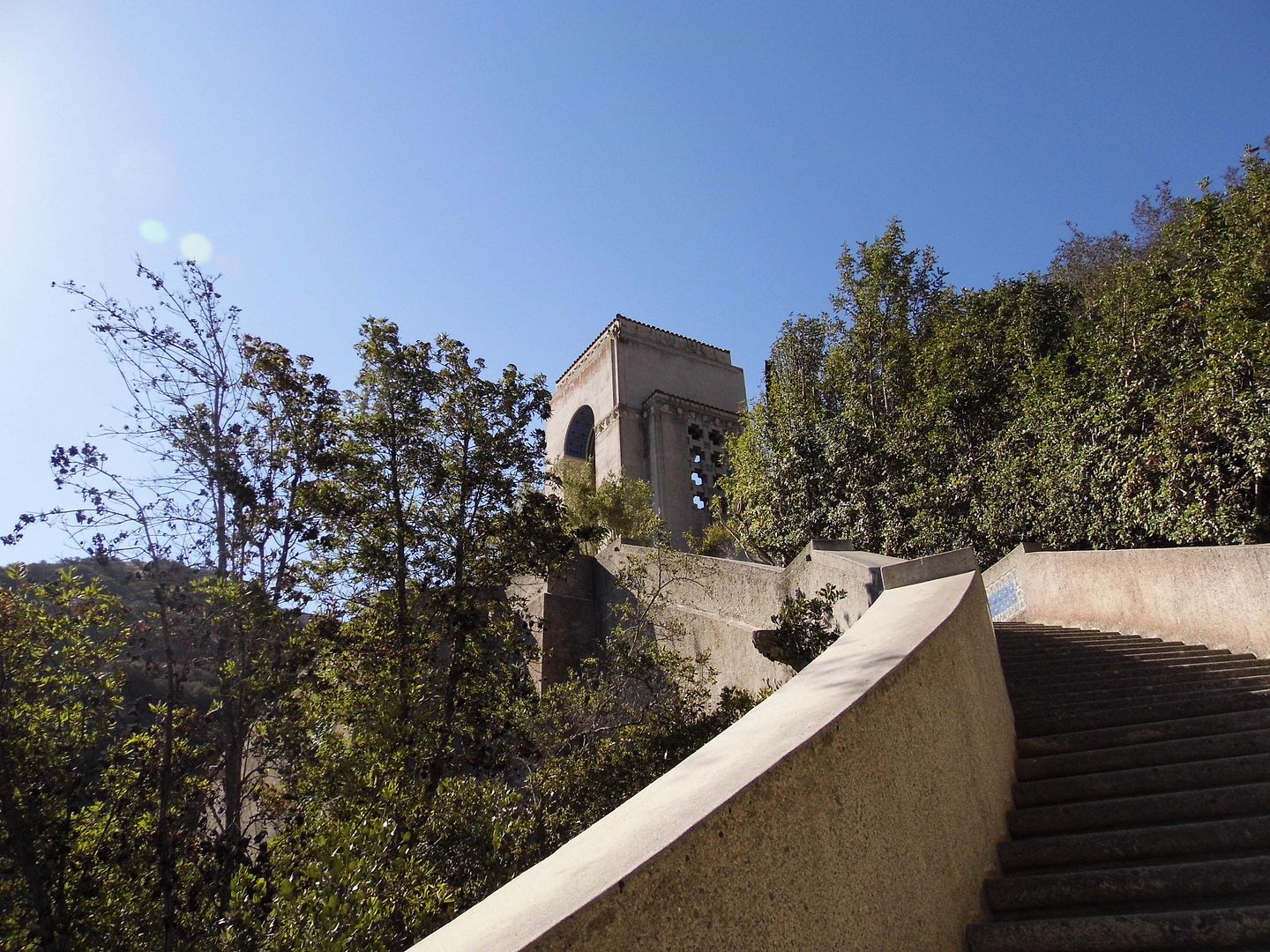


The stone was reinforced by 114 tons of steel, bonded together with white cement, and sandblasted so all the colors would blend in.
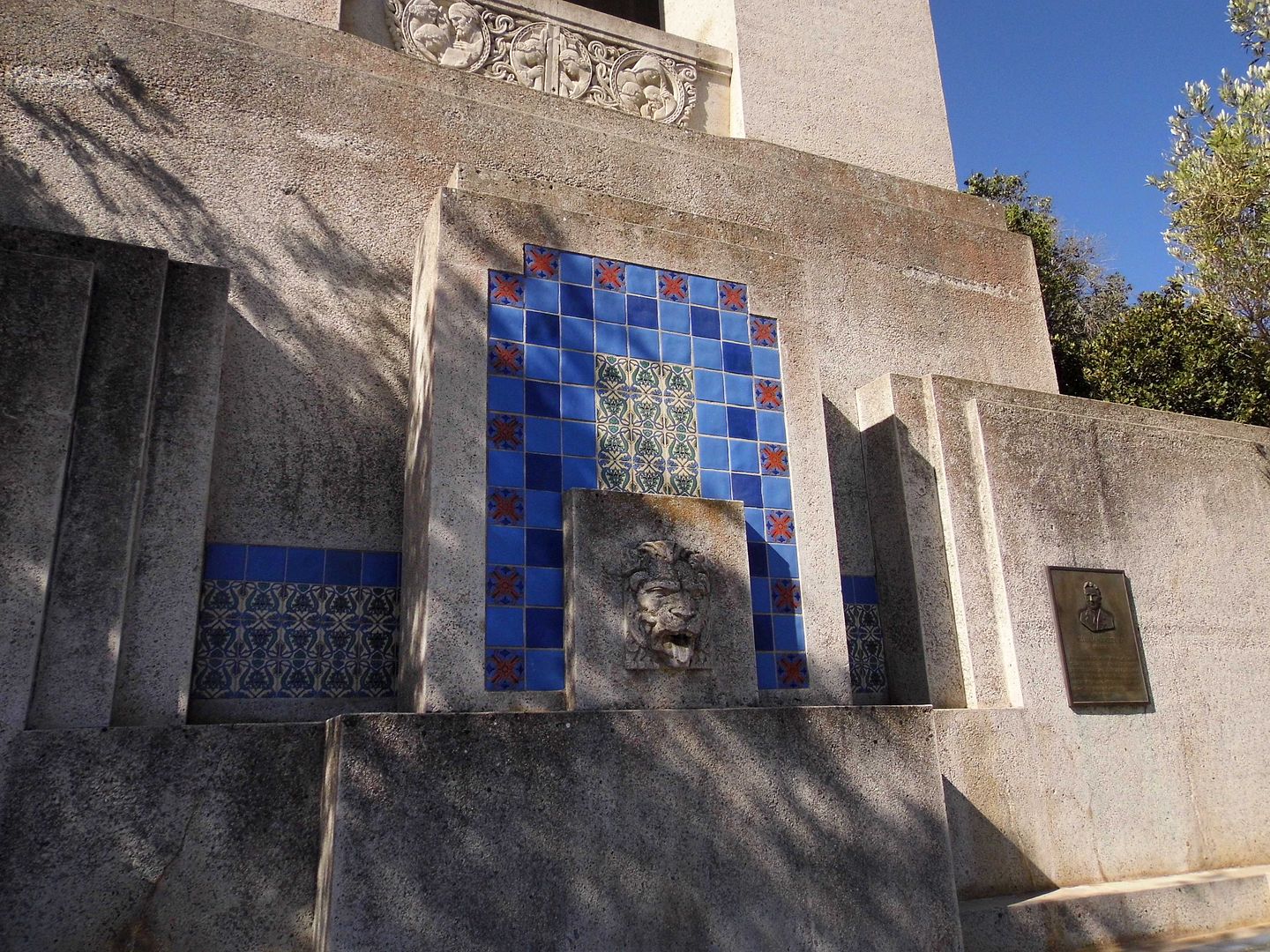


Its design is widely considered Art Deco, at least in part—but being a gargantuan tomb, it also feels fairly Gothic.
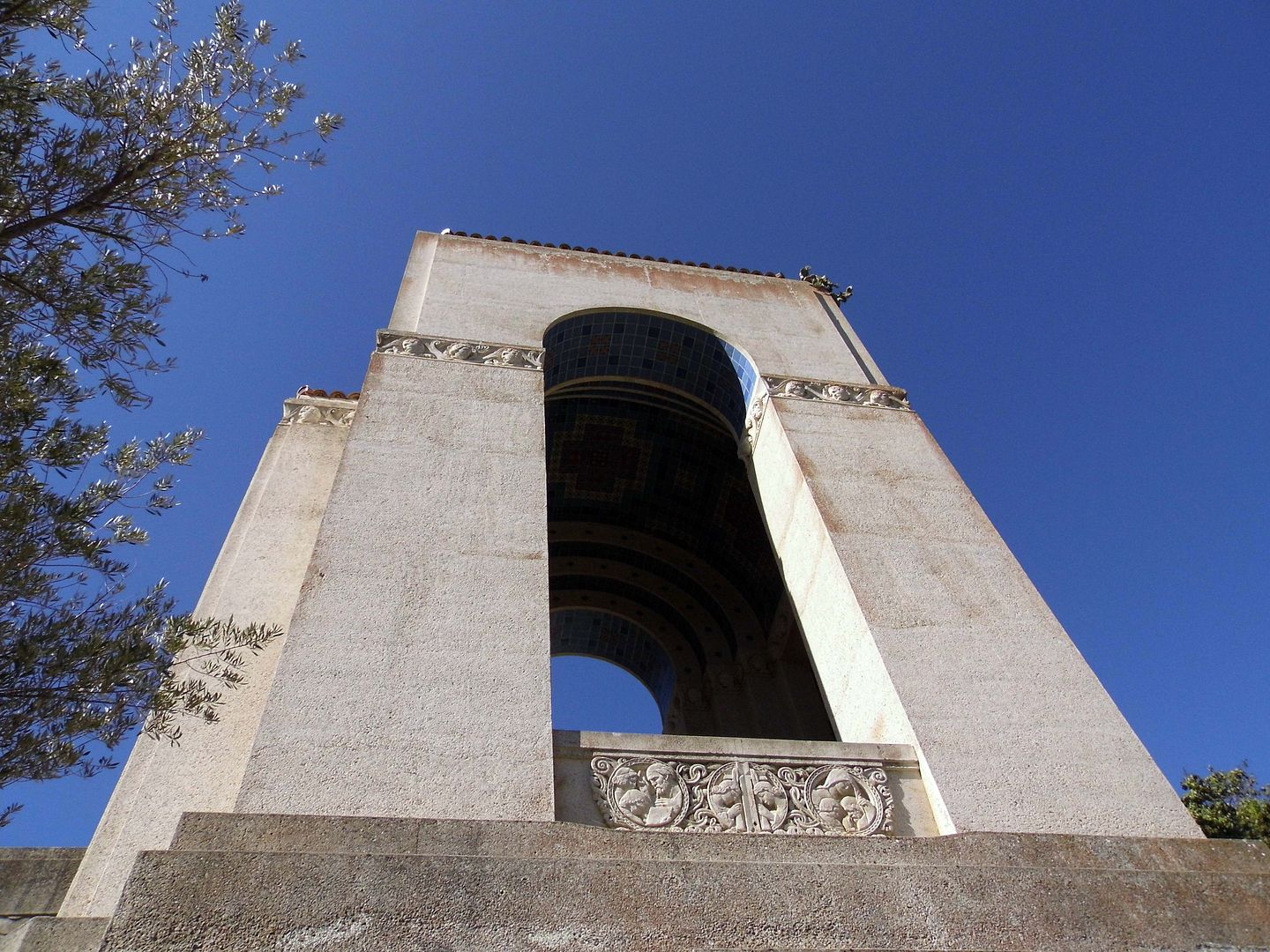


It has a little Spanish Colonial Revival influence in there, too—with striking arches and a red tile roof.
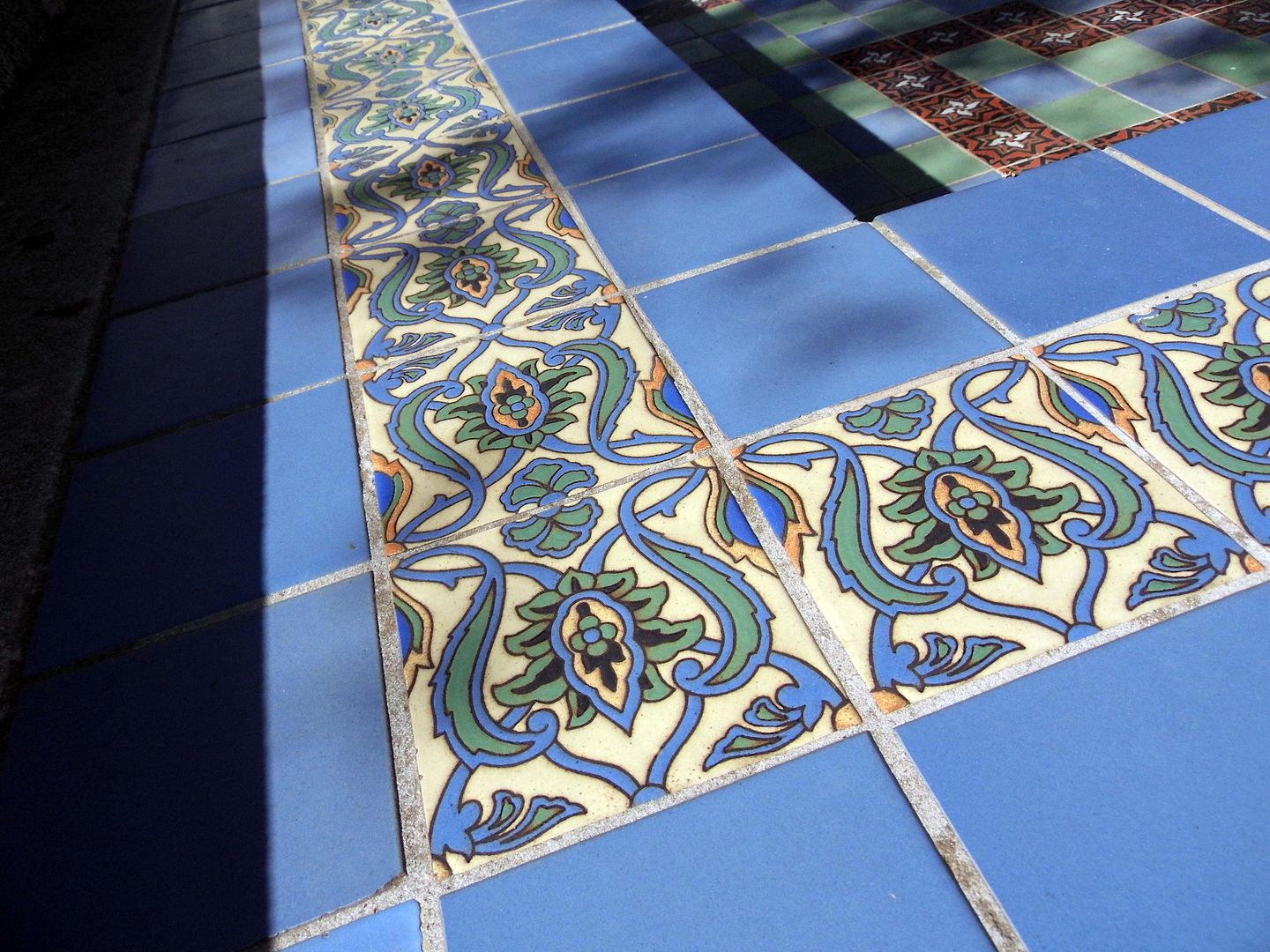


Both the terracotta roof tiles and the handmade glazed tiles (including those in the fountain) came straight from the from Catalina tile plant that Wrigley himself had established on the island.
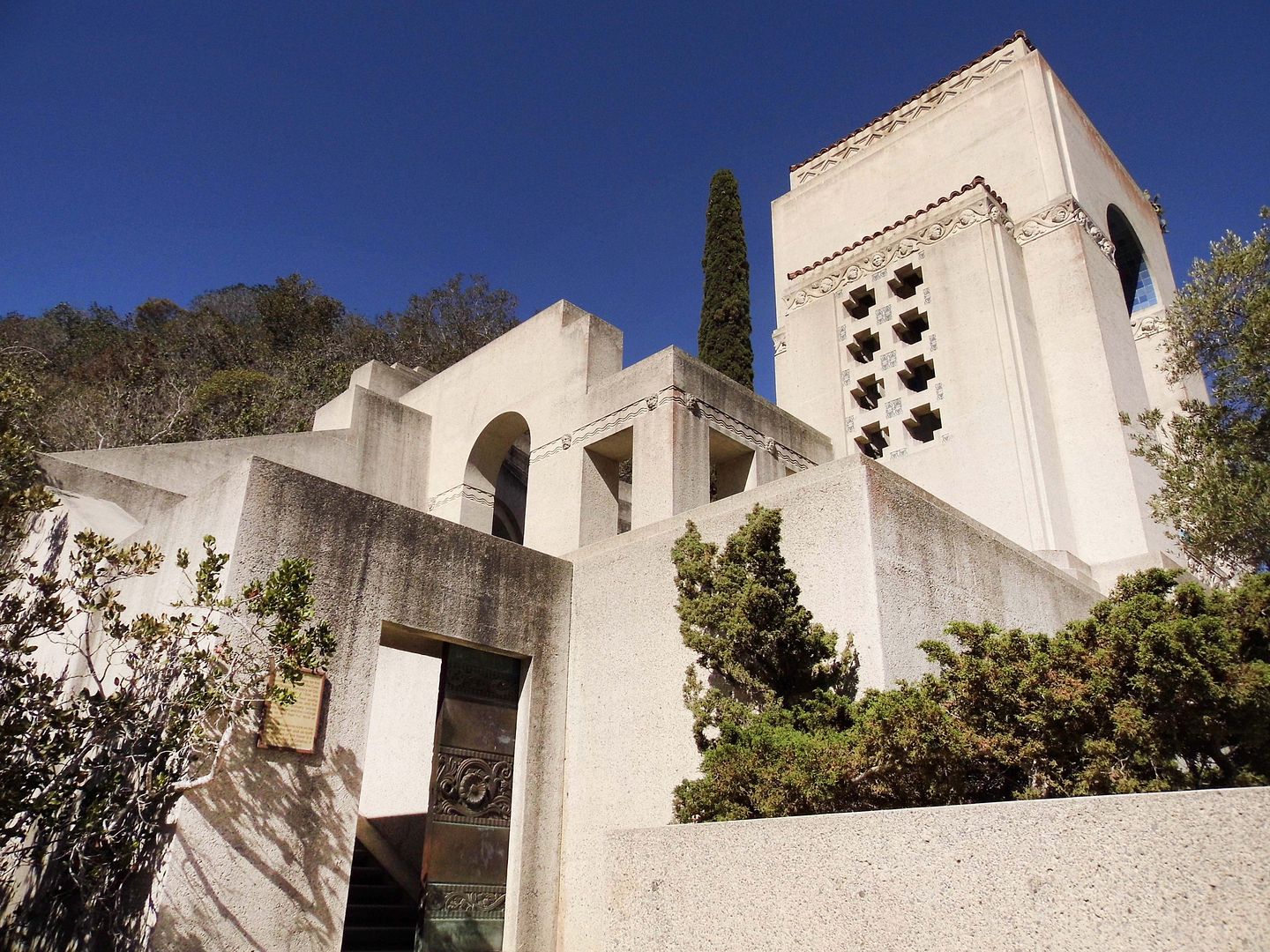


Then again, there isn't much on the island that Wrigley didn't somehow contribute to—from the Casino building to the bison that still roam the island's wild interior.
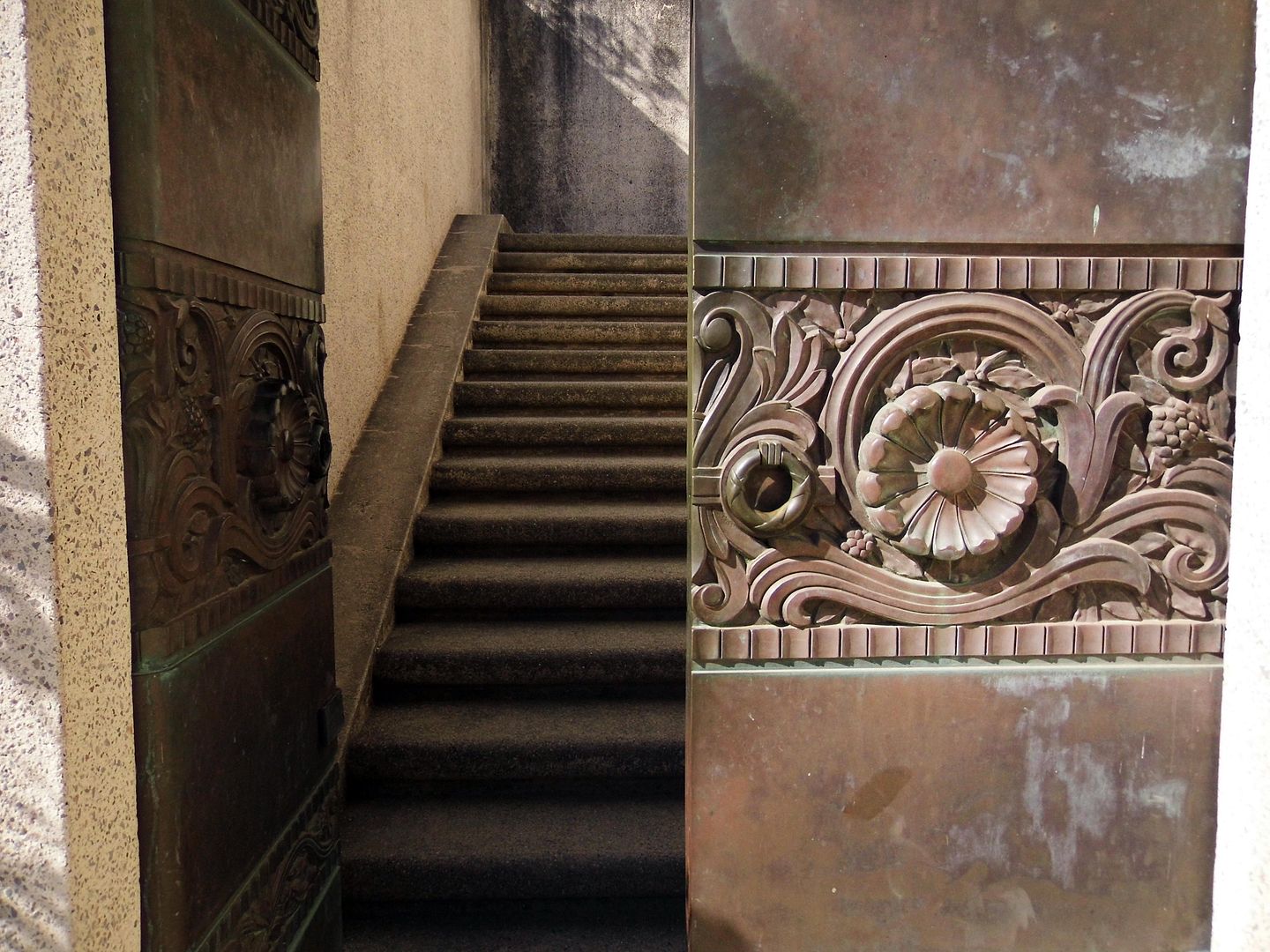


There's lots to admire on your way to the top—and not just the scenery behind you and below.
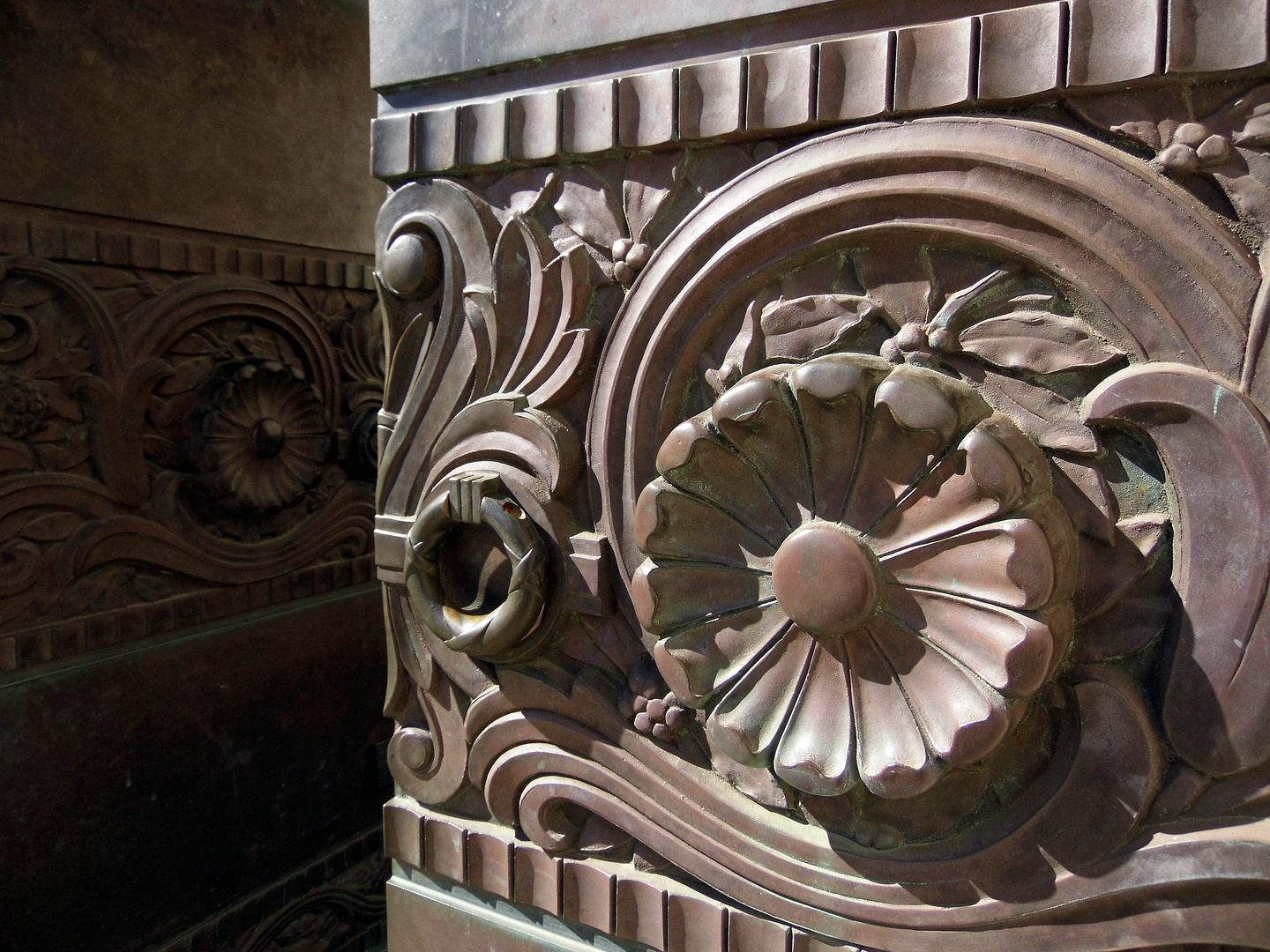


To get to the tower, you have to pass through of of two sets of bronze doors, created in 1934 by Coleman Bronze Company out of both architectural and statuary bronze (90% copper)—at a cost of $8000 each.
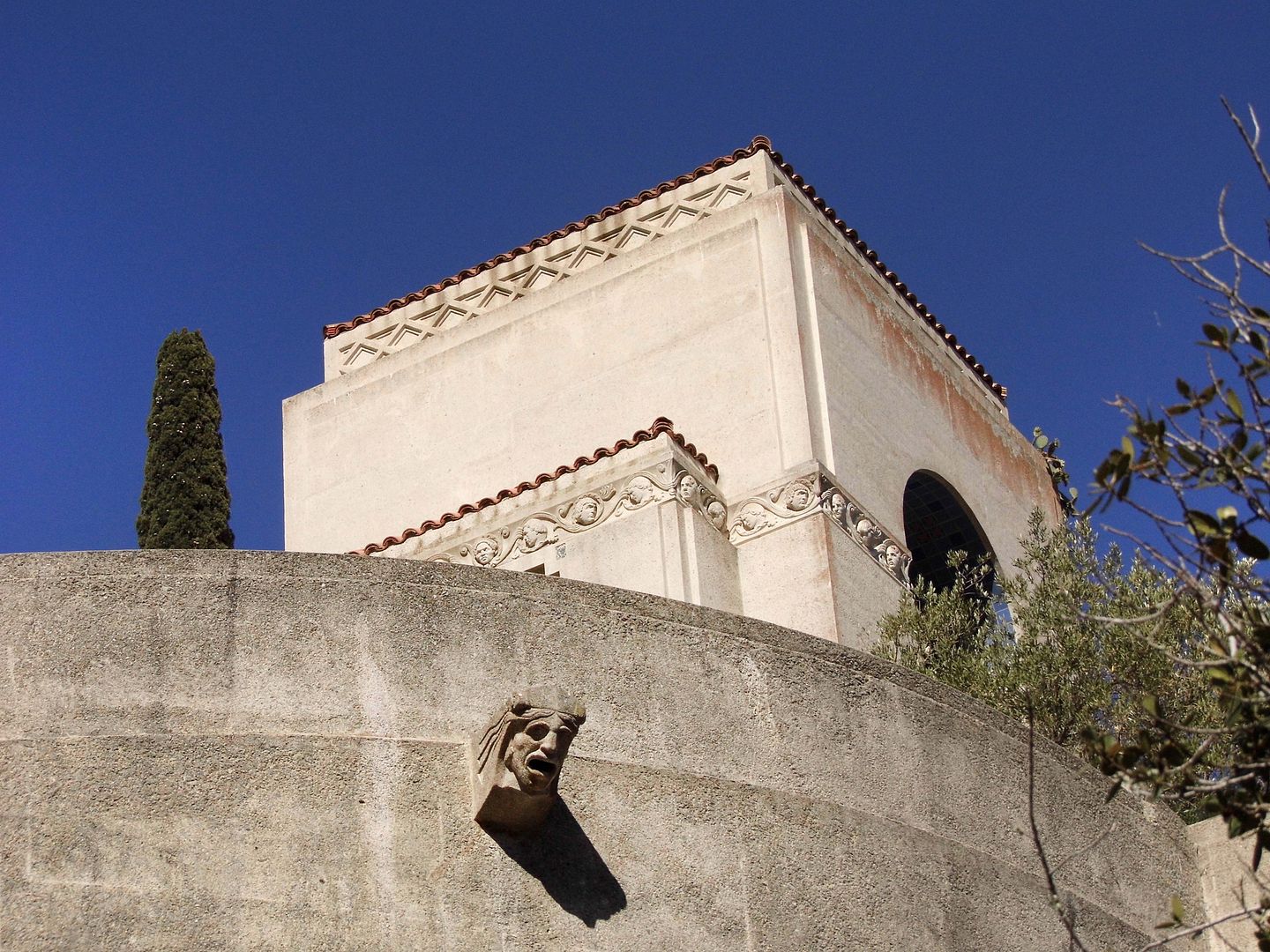


Then there are the gargoyles. You might expect them to be bison—but they're mostly men's faces (with a lion head at the tile fountain).
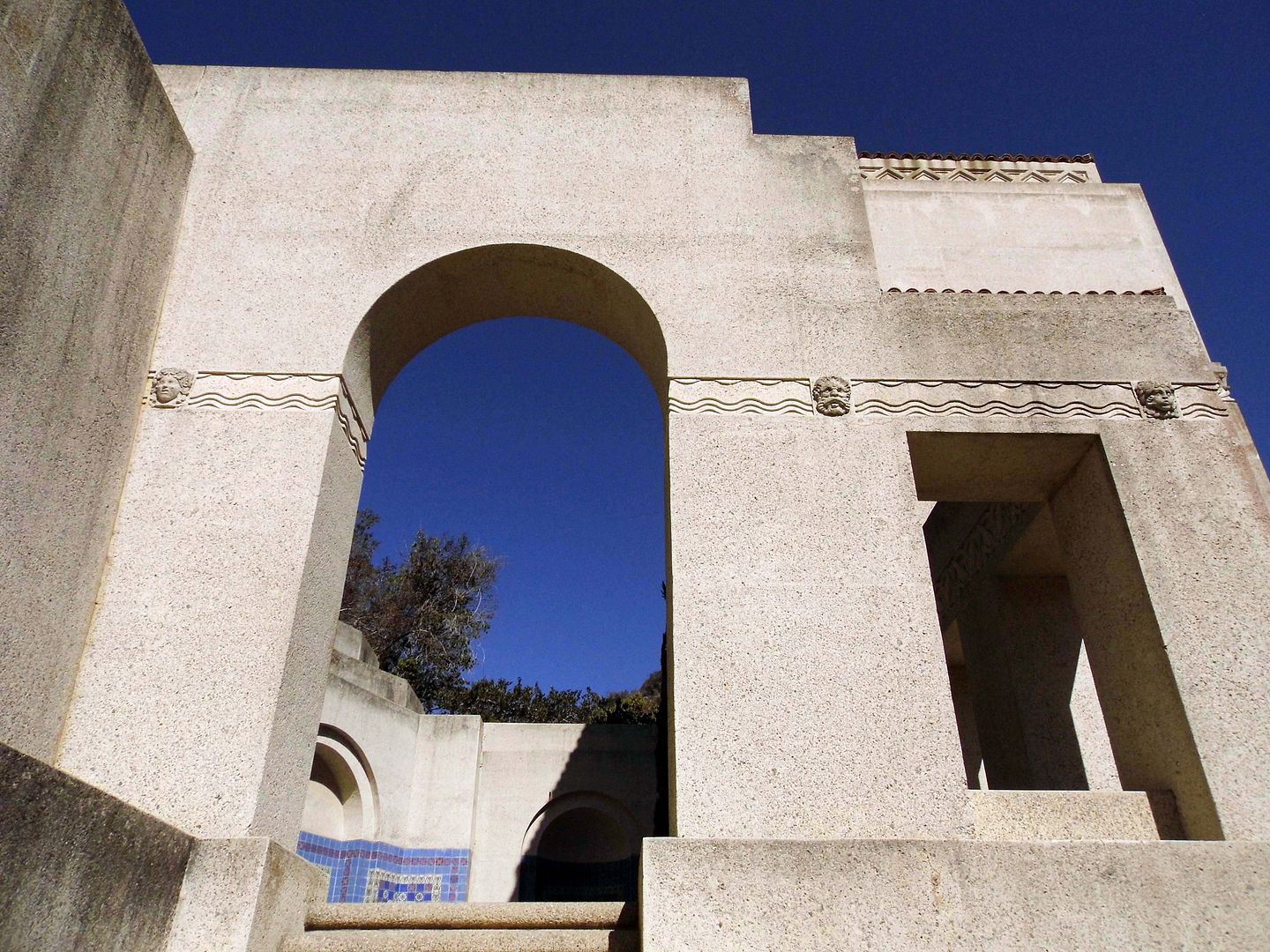


This was all the brainchild of William's wife Ada. She originally envisioned that the memorial would be for the Wrigley family, and not just William—she next to her husband, and the children across the way in the alcoves.
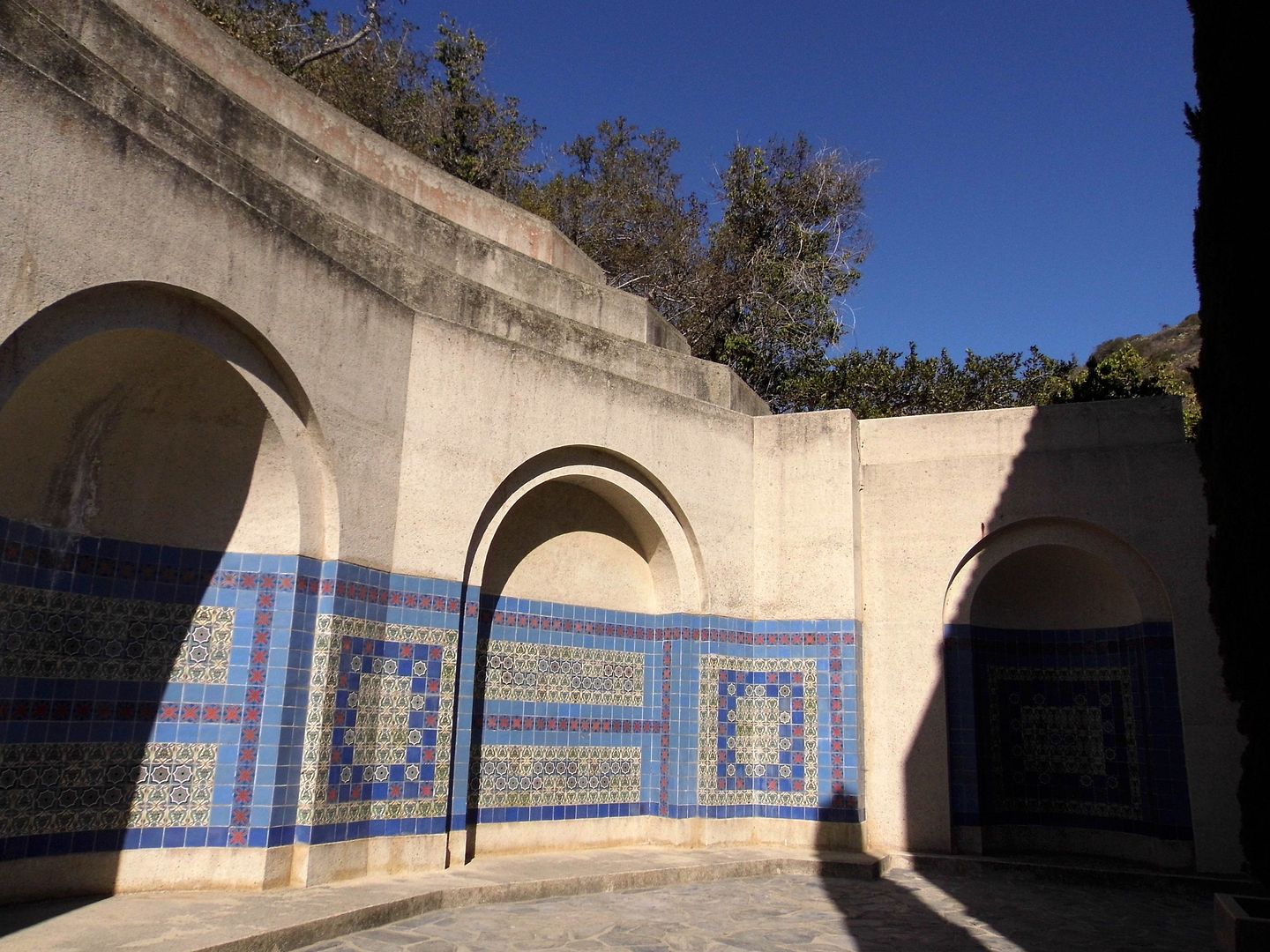


But if that had actually happened, maybe we wouldn't now have the opportunity to stand upon the blue flagstone (or "slate") quarried from the back of Catalina Island at Little Harbor...
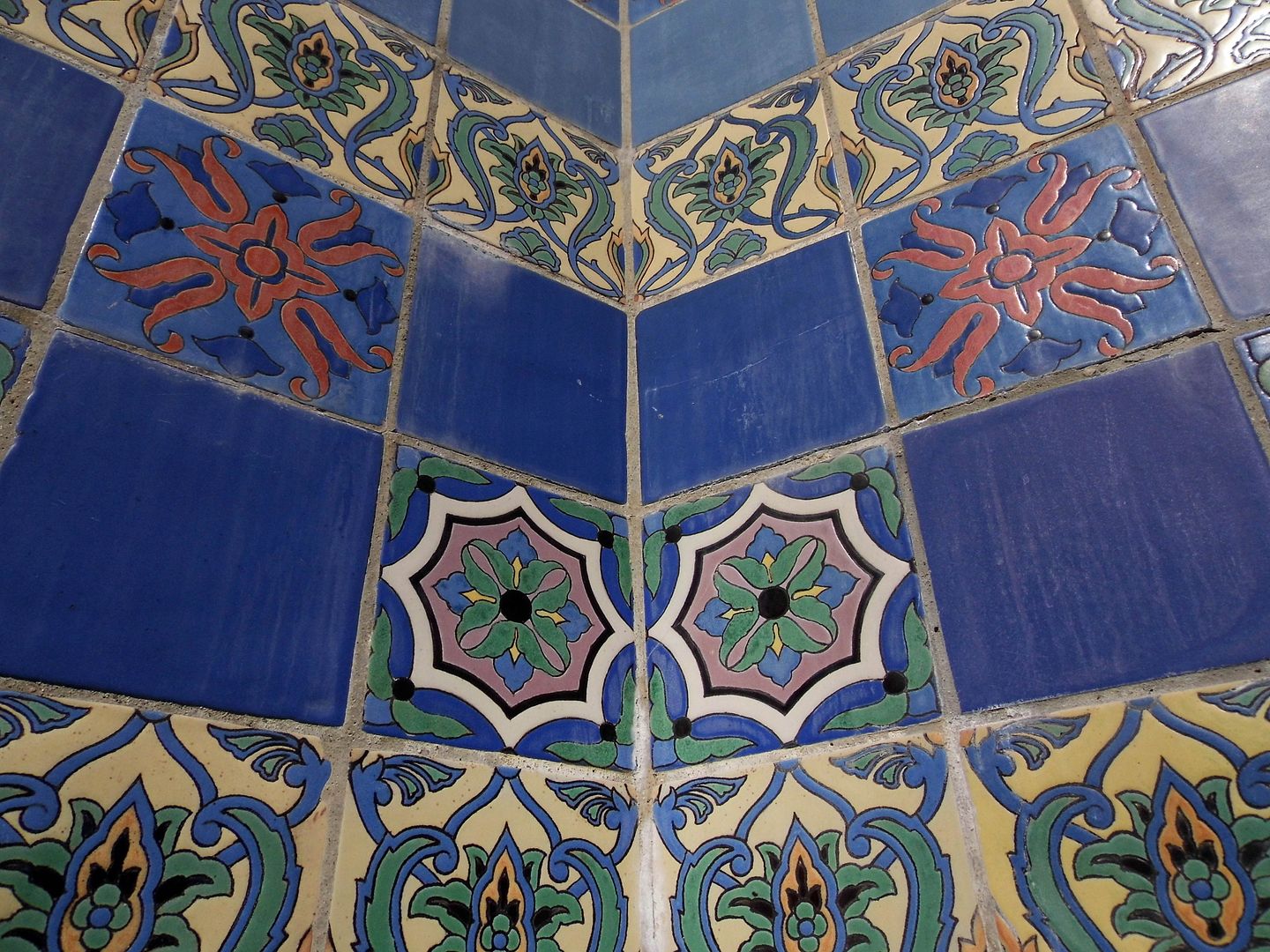


...or so closely examine the rare Catalina Pottery tile (produced only from 1927 to 1937)...
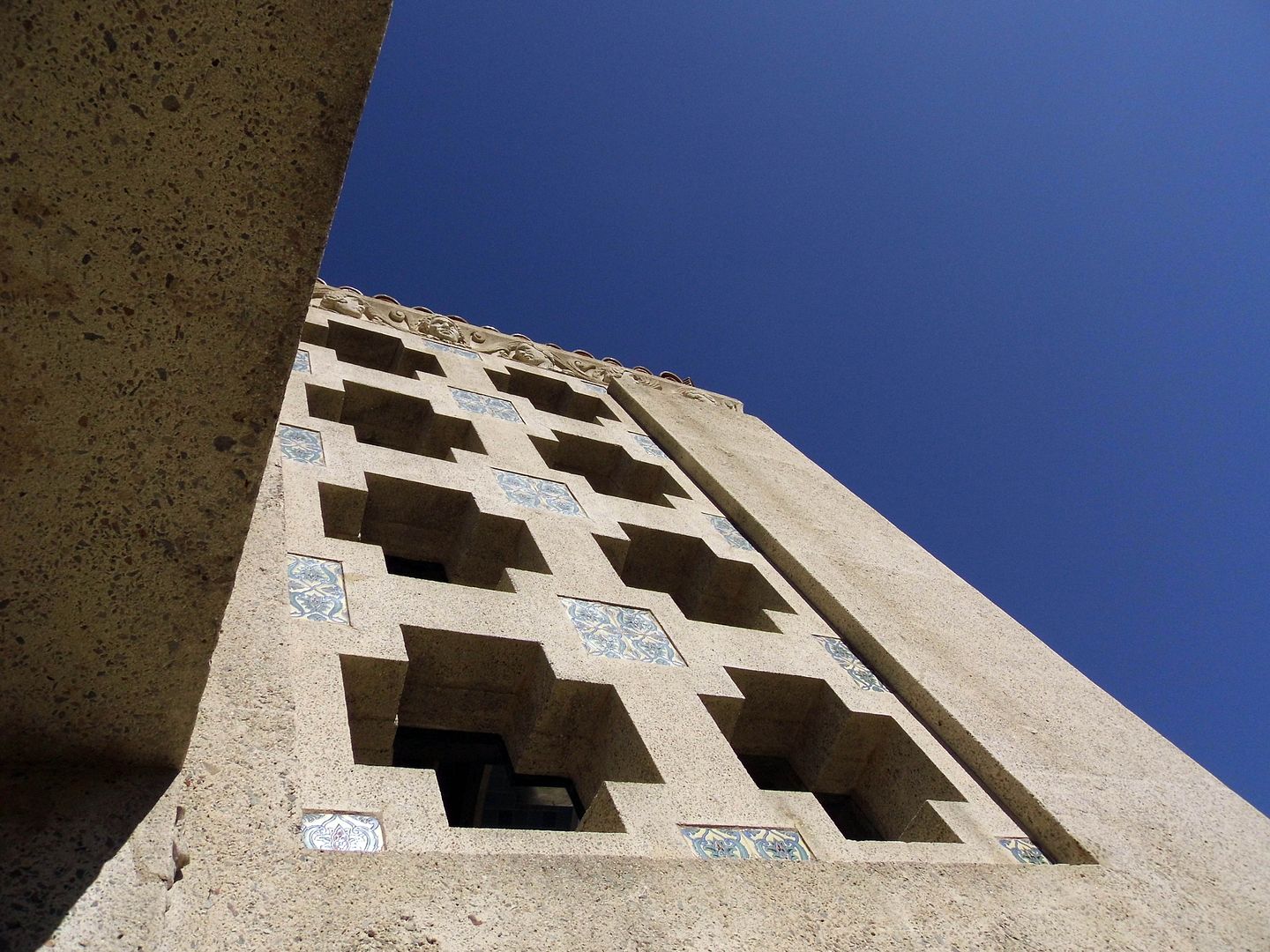


...or bask in the sun alongside carved stonework...
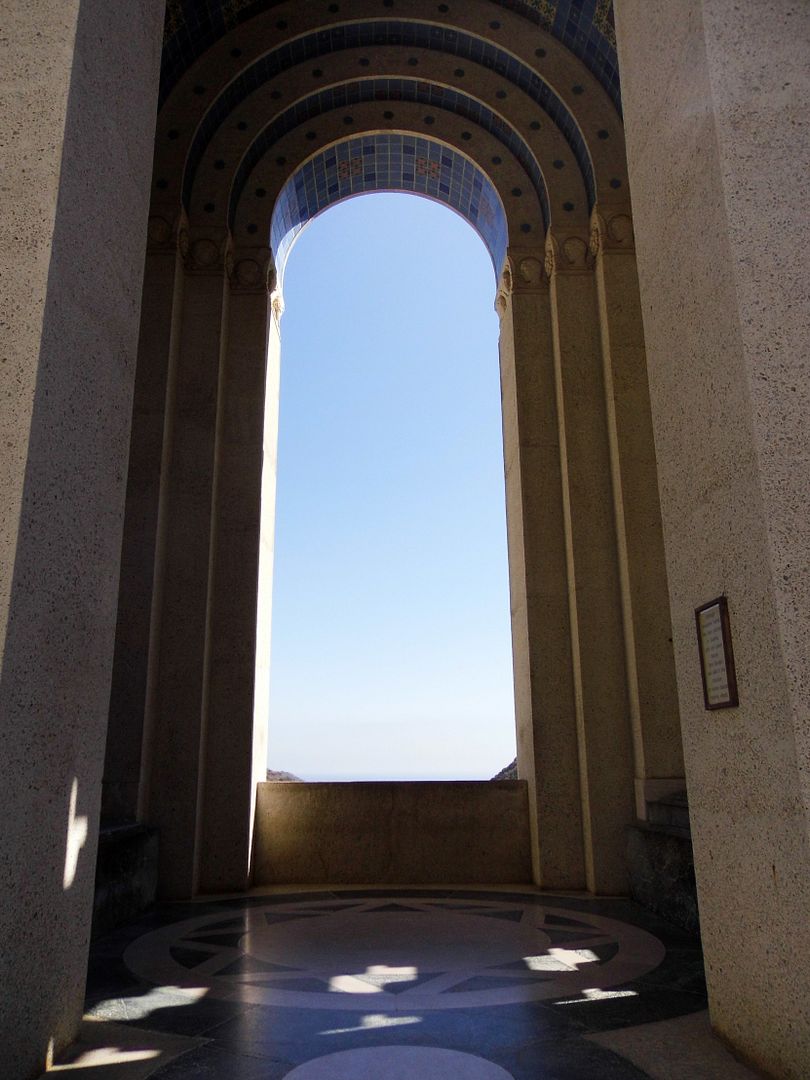


...or stand under the central tiled arch (restored by RTK Studios of Ojai), flanked by pink and green marble from Georgia.
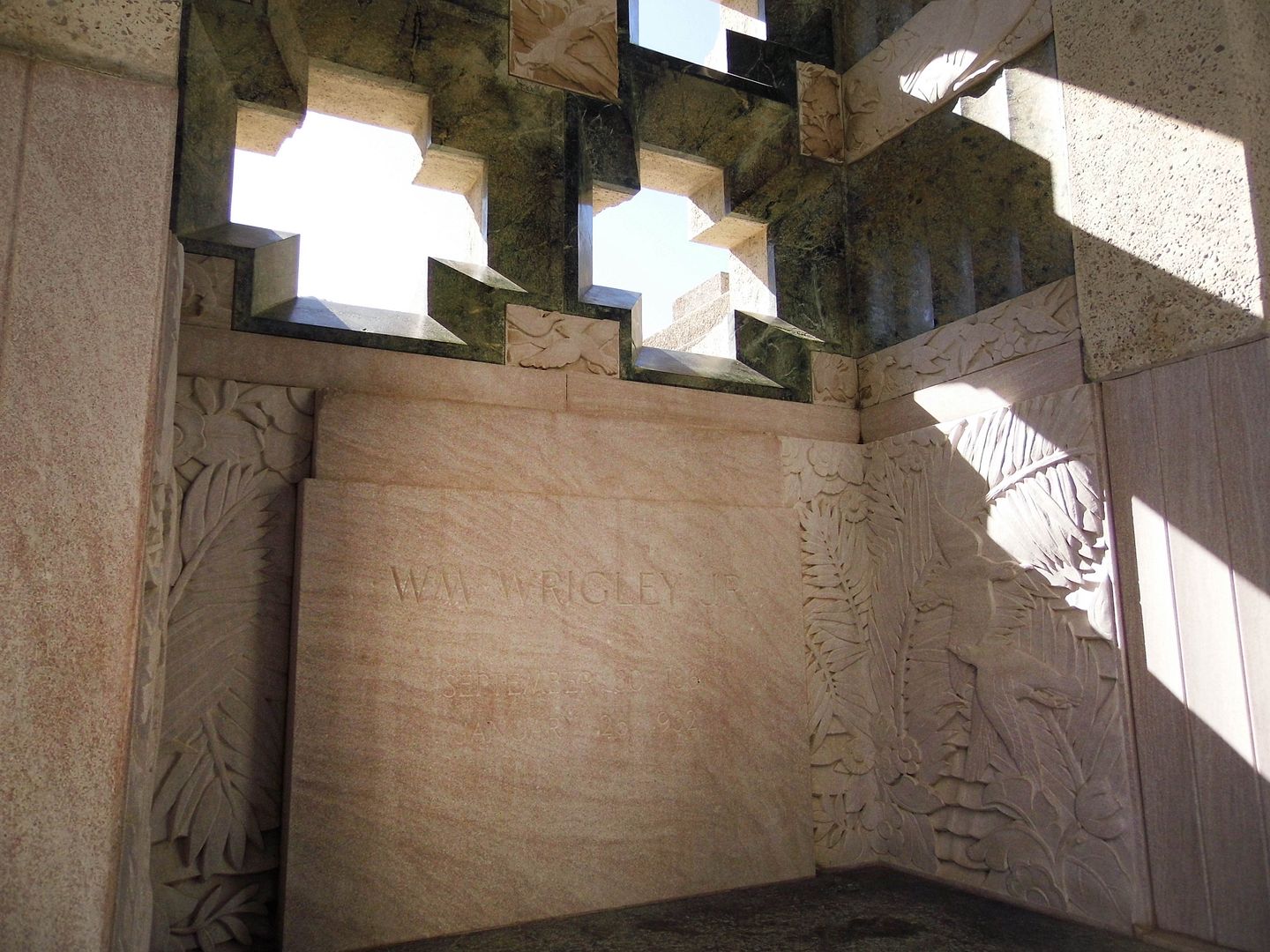


Although Wrigley himself is no longer in there, the outside of the custom-designed crypt features a lovely avian-themed bas-relief (appropriate considering the Wrigleys' Bird Park aviary, 1929-1966) and the original grave memorial marker.
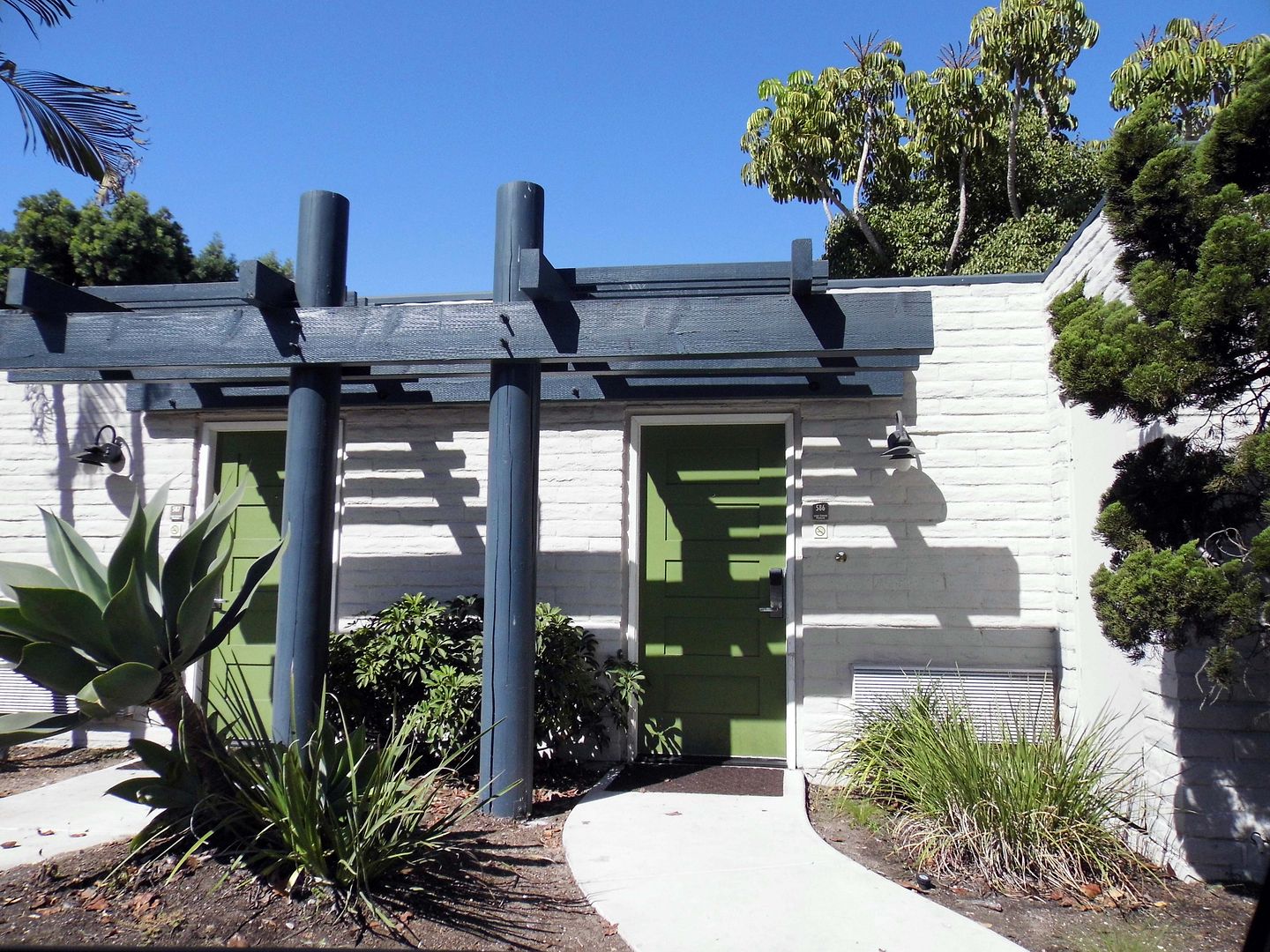
You'd think that they would've found some other place on Catalina Island for Wrigley to spend the rest of eternity, considering how much he loved it.

I'd like to think he doesn't know that he's at Forest Lawn instead.
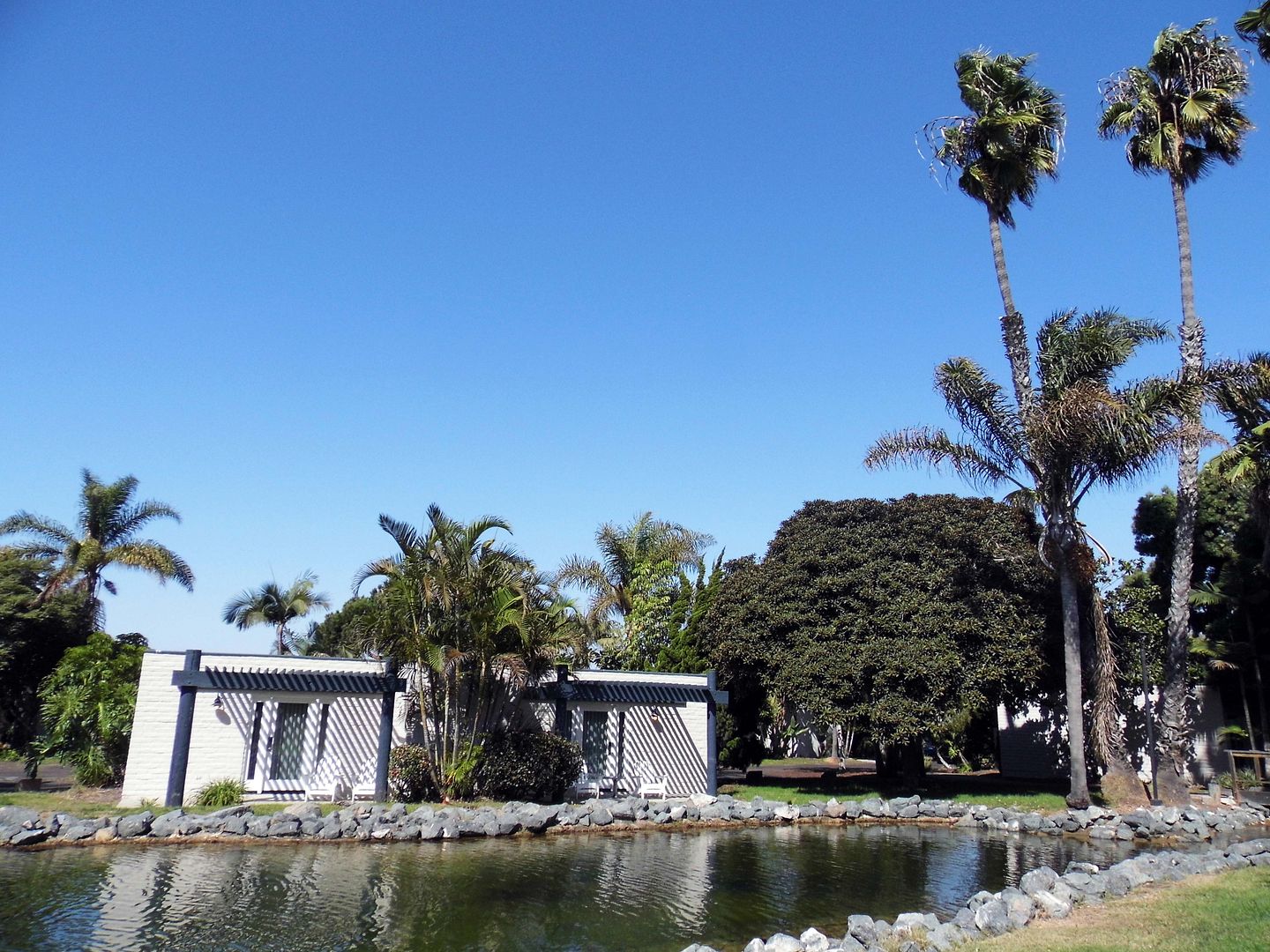
But if his spirit has any sense of place, maybe it's already found its way back to Avalon.

Related Posts:
Photo Essay: The House of Chewing Gum and Roses