Search

July 23, 2026

Photo Essay: A Rare Pipe Organ Hides Inside a Fake Spanish Village in Santa Barbara
I'm less spontaneous than I used to be. My calendar has gotten more filled with scheduled events, rendering me less likely to wake up and ask myself, "What should I do today?"

But when I saw a last minute notice that the Santa Barbara Theatre Organ Society was having an open console event at the Arlington Theatre in Downtown Santa Barbara last weekend, I knew what I had to do.

 
I don't get to Santa Barbara that often, despite it being only 90 miles north of me, and I hadn't been to any of its historic theatres yet. Besides, we'd been having heat advisories in LA for days—so I was grateful for the cloud cover and cooler temperatures up the coast.


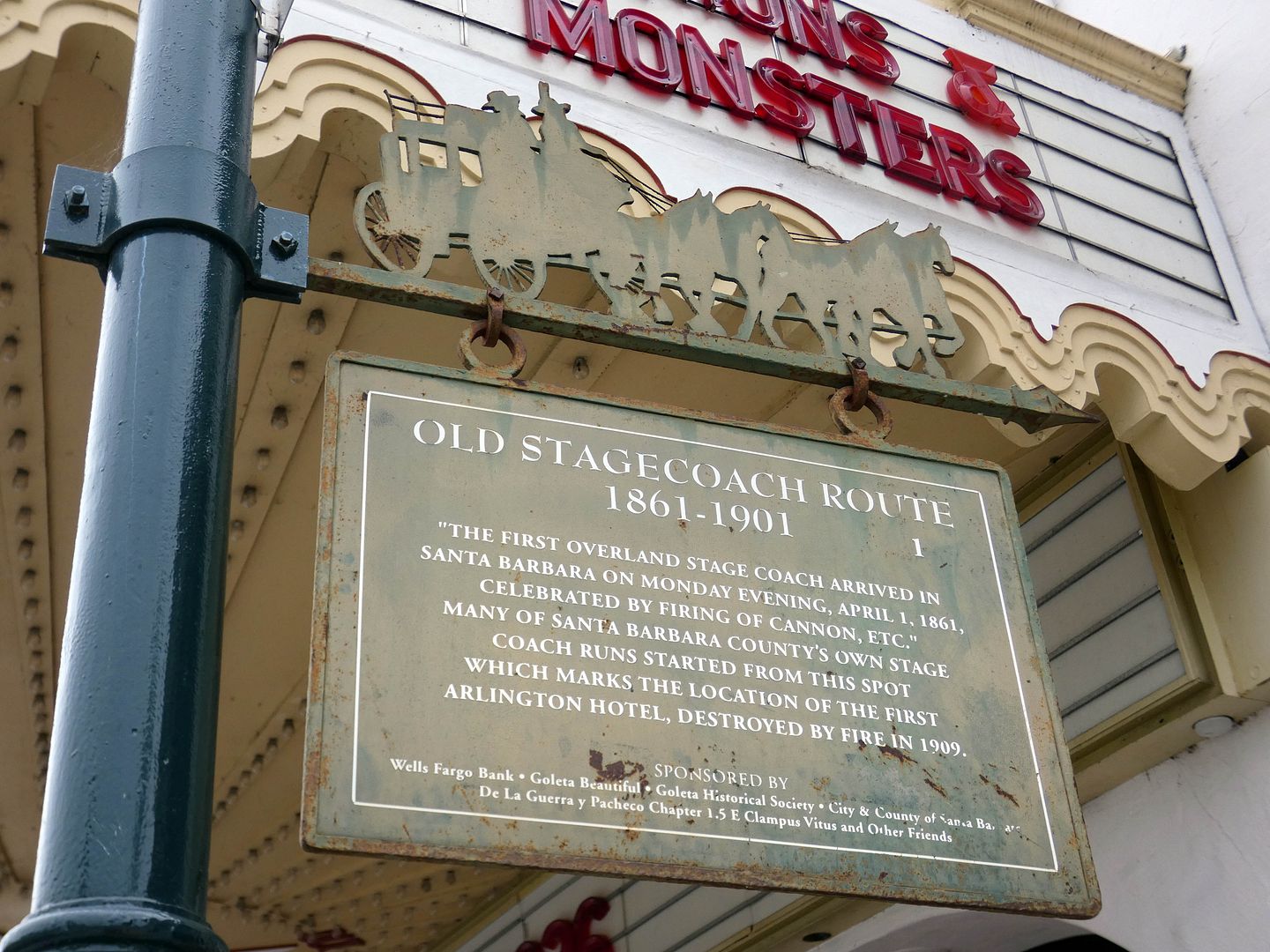
The Arlington is located along the old overland stagecoach route that ran from 1861 to 1901—when the Arlington Hotel stood in this very spot. In 1909, an electrical fire burned the wooden structure down; and in 1911, a newly rebuilt hotel rose in its place. The 1925 Santa Barbara earthquake destroyed the second Arlington Hotel, the remains of which were subsequently razed (along with much of the rest of downtown).

 
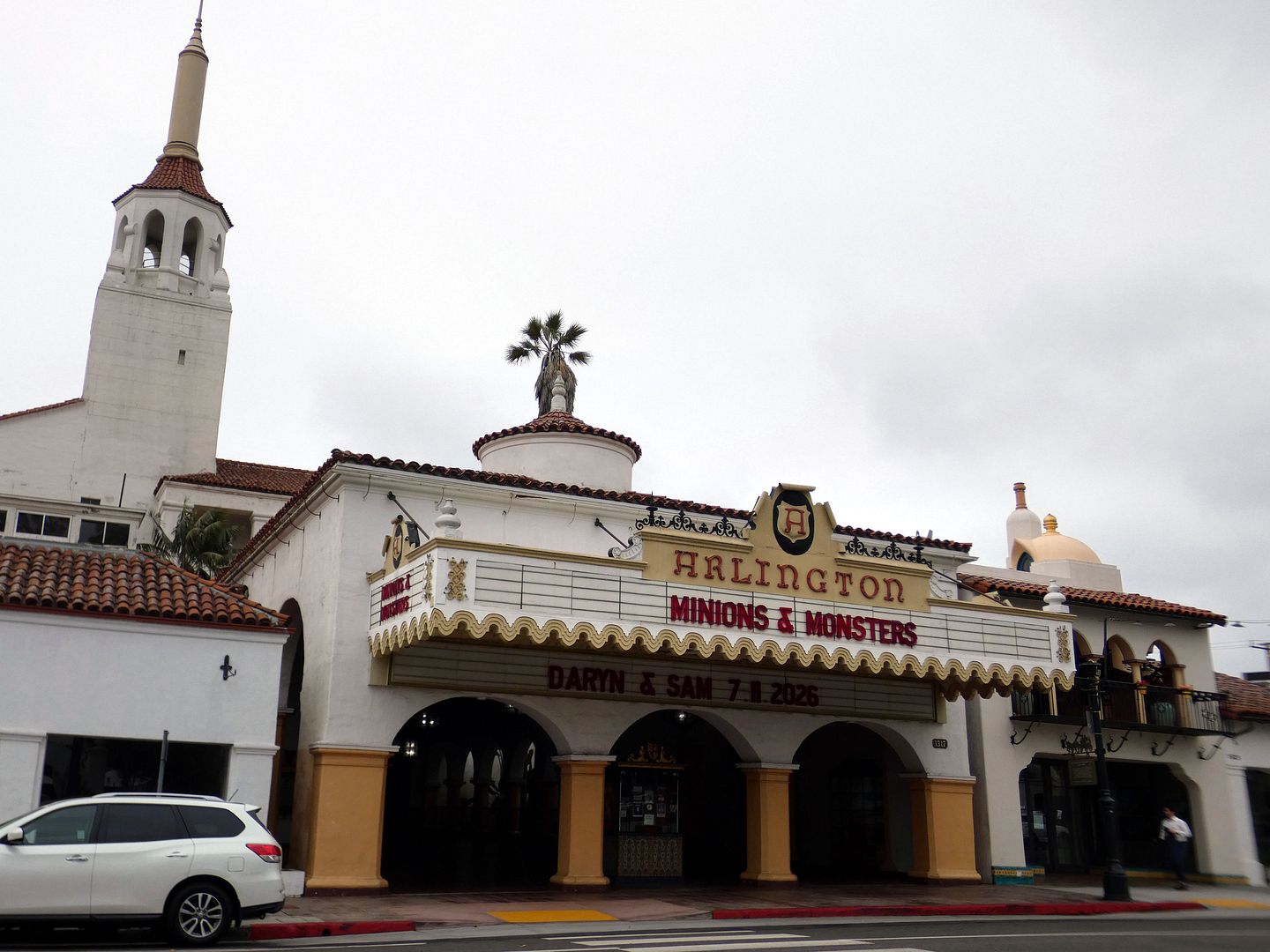
The (hopefully quake-proof) Arlington Theatre was built in 1931 for Fox West Coast Theatres—and in those early years, the studio used it to preview its movie releases outside of LA with major test screenings shown here.
 
 
Today, the former Fox Arlington (Metropolitan Theatres took over sometime in the 1950s and bought the building in 1975) operates as a performing arts theatre and first-run cinema...


...showing summer blockbusters like Minions & Monsters and screening selections for the Santa Barbara International Film Festival.

 
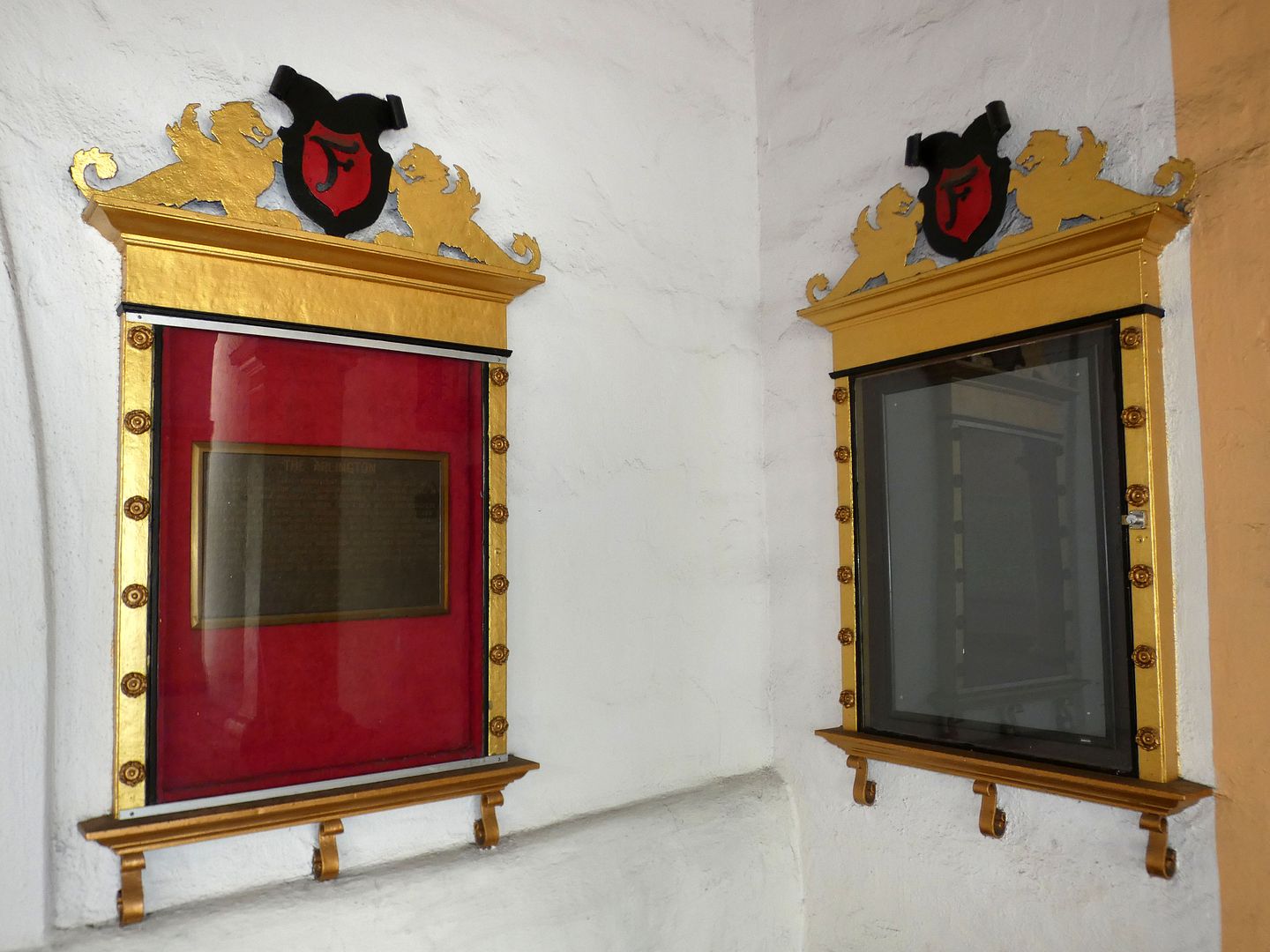
It no longer has official ties with the Fox studio, but you can still find a few "F" letters around.

 
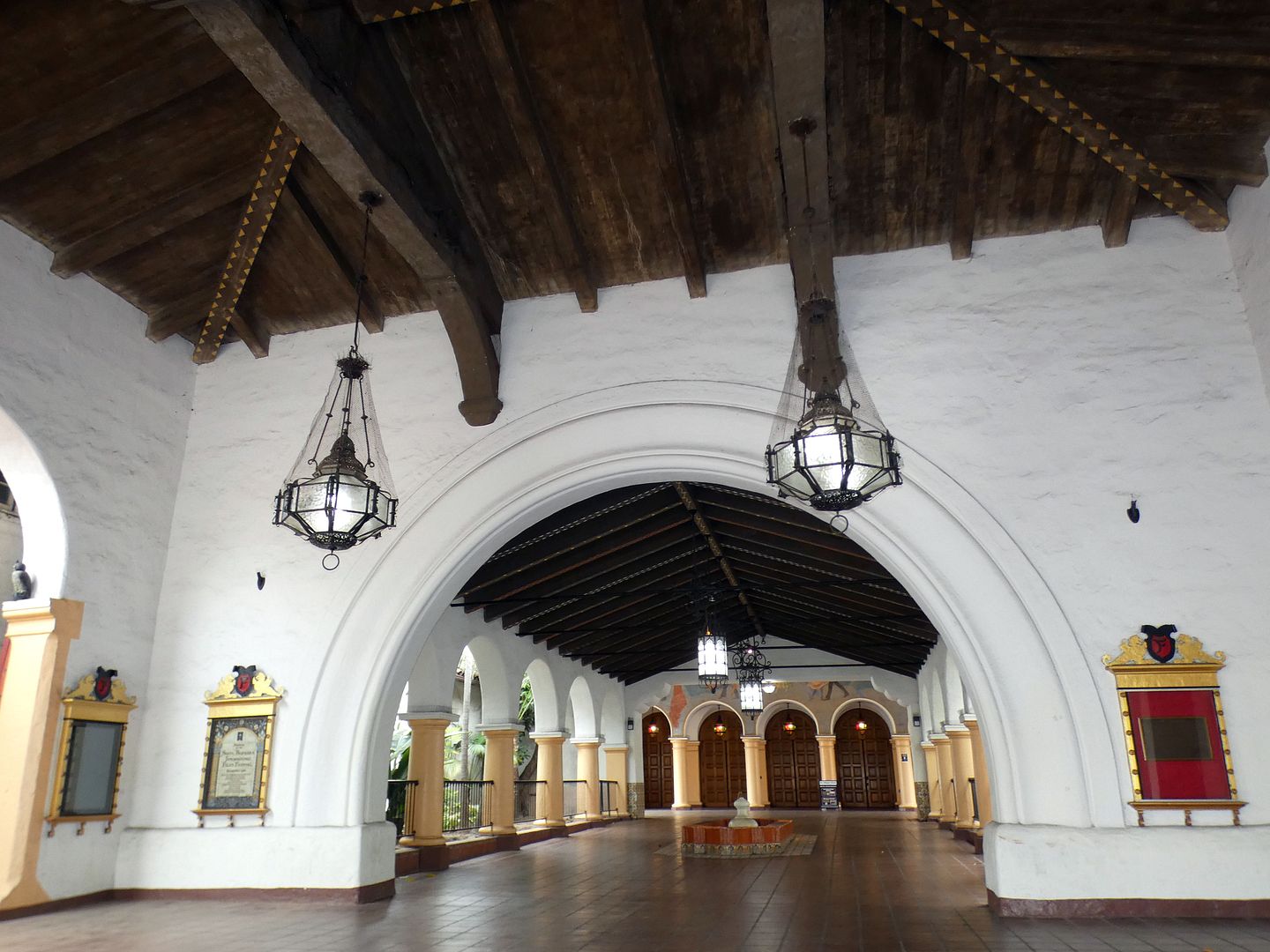
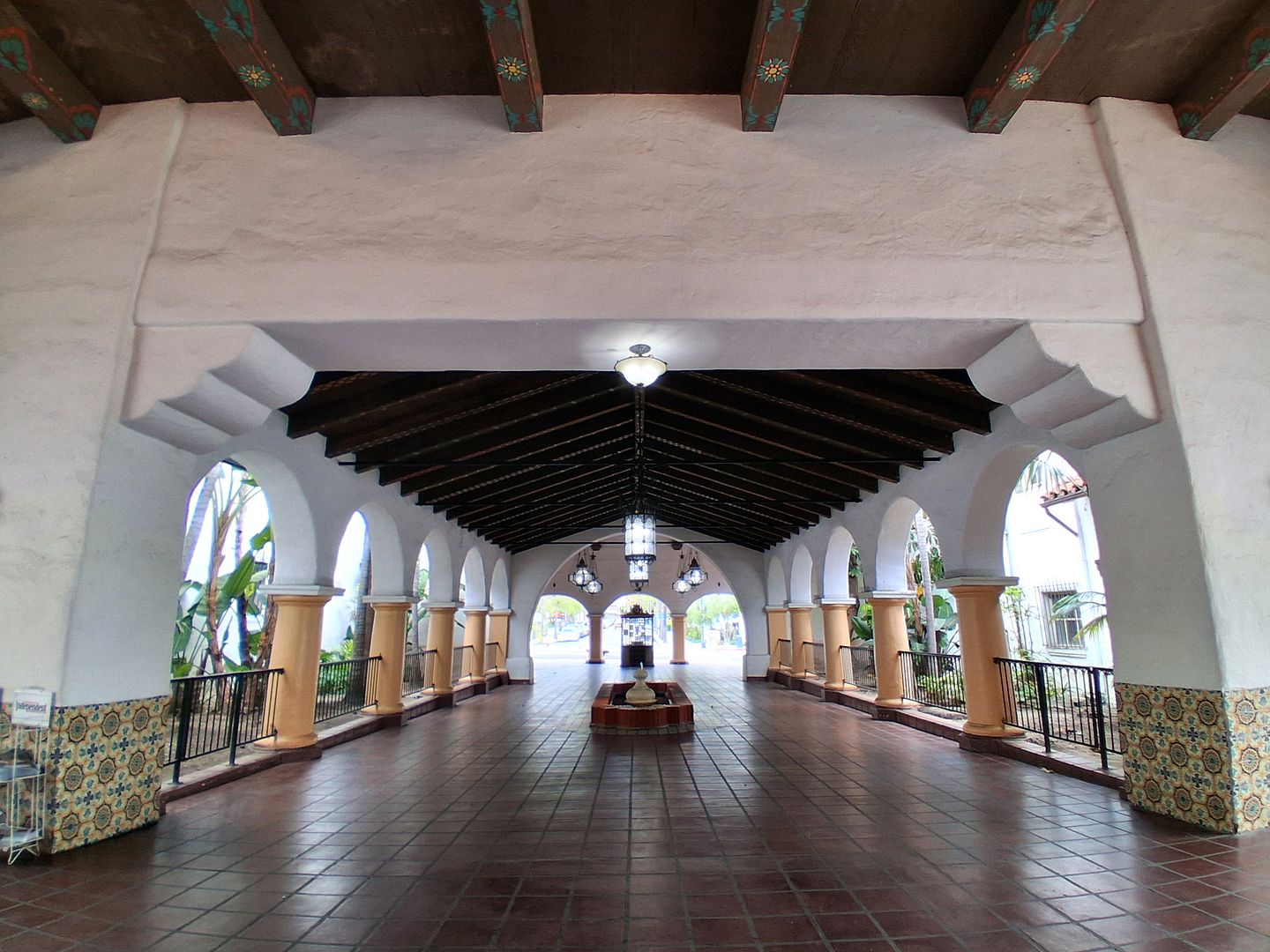
Like the Egyptian and the Chinese Theatre in Hollywood, the Arlington has a large forecourt...

 
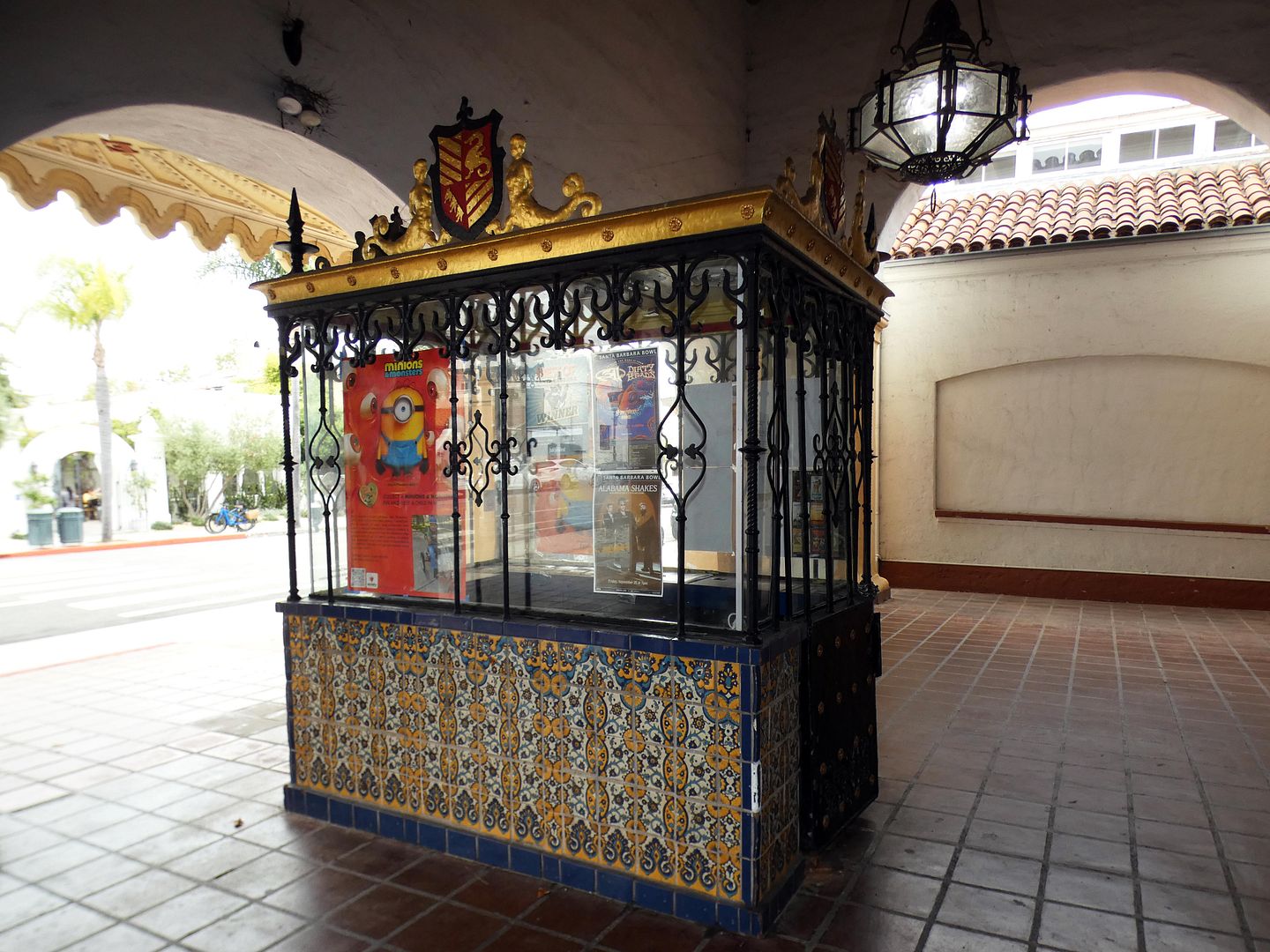
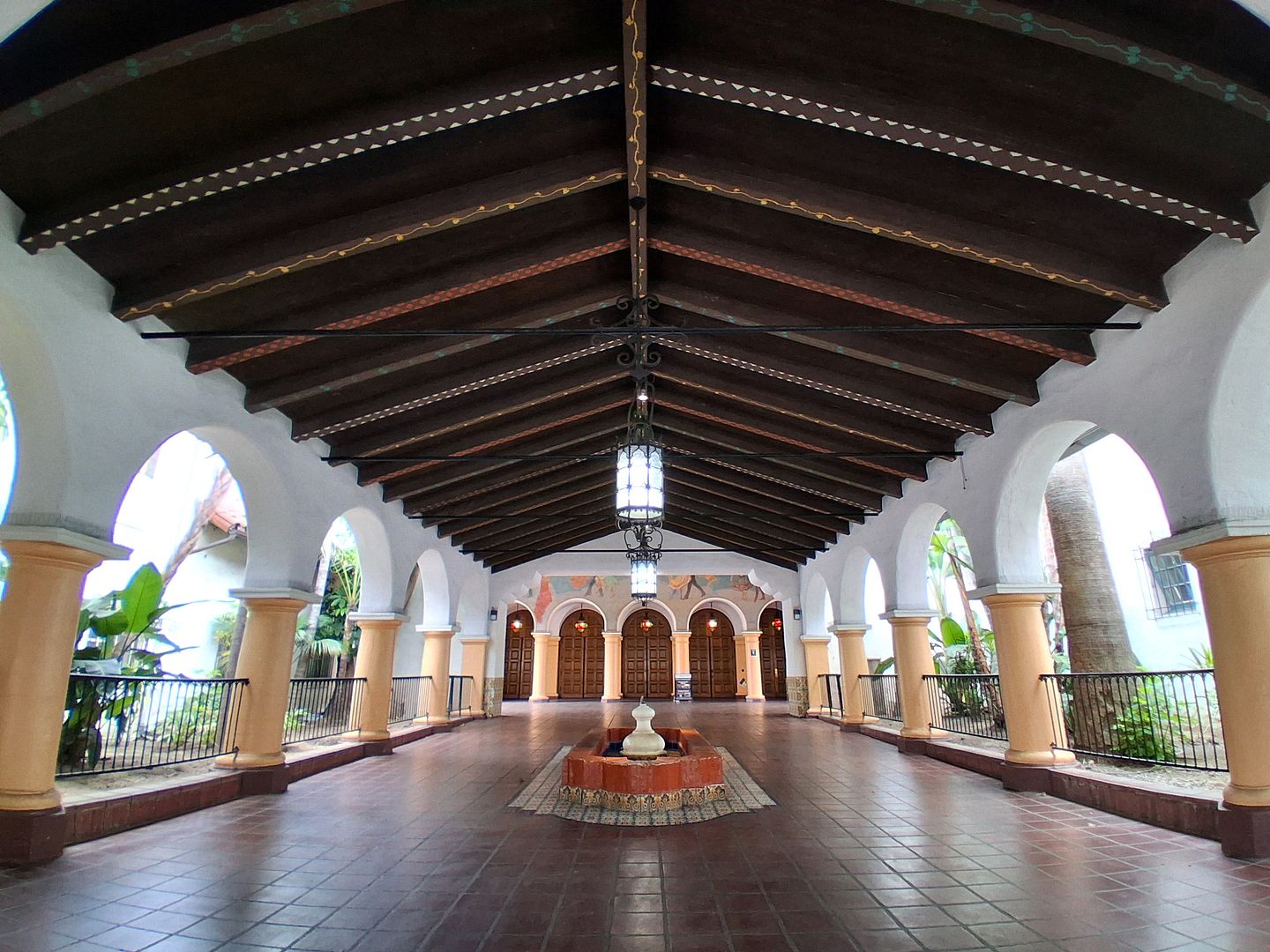
...but this Paseo is a covered courtyard lobby, replete with soaring Spanish arches and a prototypically Spanish tiled fountain in the center.


It's sometimes attributed to the Mission Revival style of architecture, but it's really a Spanish atmospheric fantasy—evoking less of the California Missions and more of a village in Andalusia. (Spanish Colonial Revival is sometimes used interchangeably with Mission Revival, but in this case I think it's the more accurate term. A 1932 article in Motion Picture Herald called it "truly Spanish.")
 
 
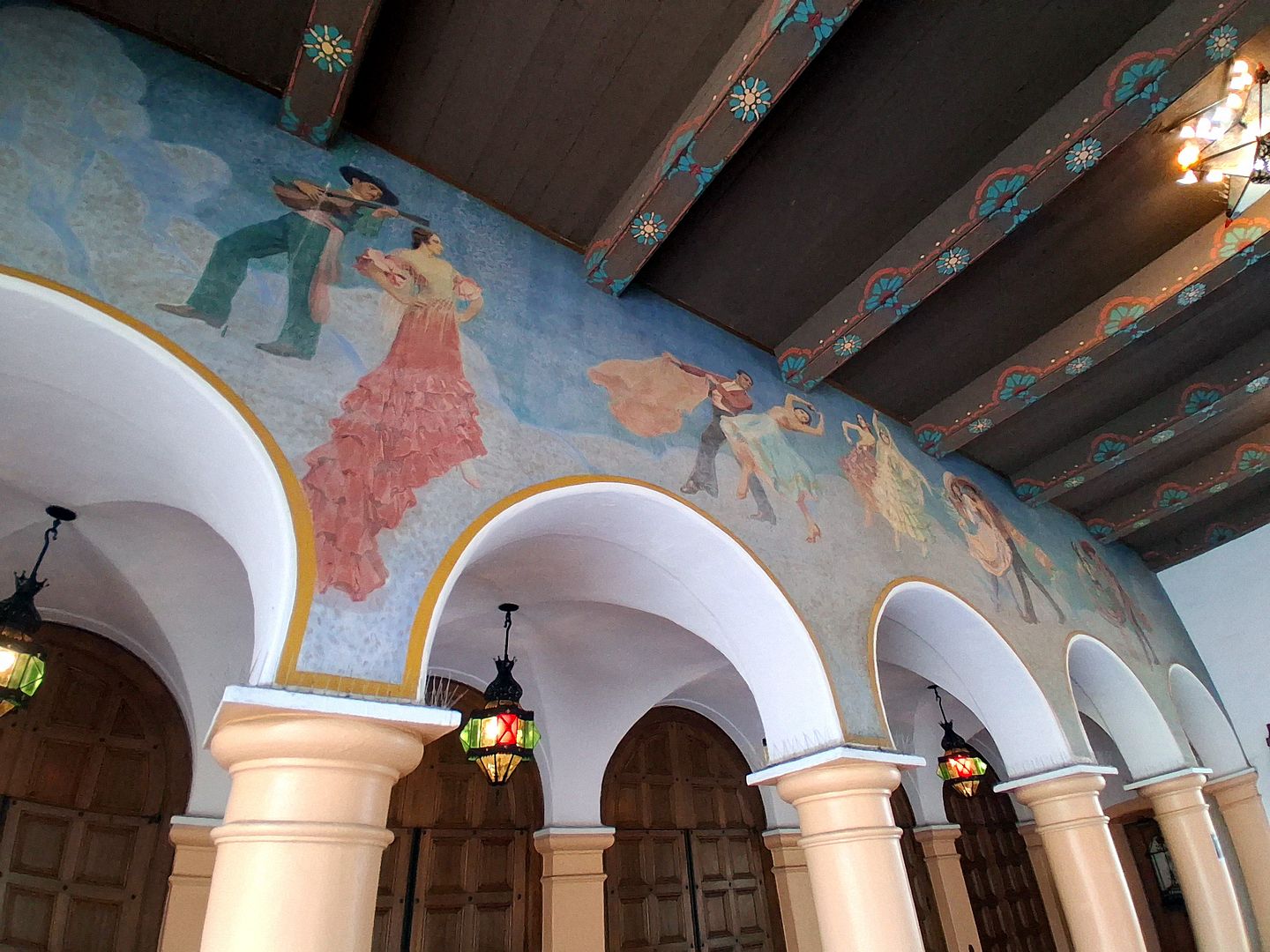
But the architectural team of Edwards and Plunkett included a bit of that Rancho Period nostalgia so associated with Santa Barbara, too—including a mural at the entrance loggia, with traditional Spanish dancers as depicted by artist Samuel Armstrong.

 
It had taken me two hours to drive there from Beverly Hills, so of course I was running late and showed up with only 30 minutes left to the open house.

 
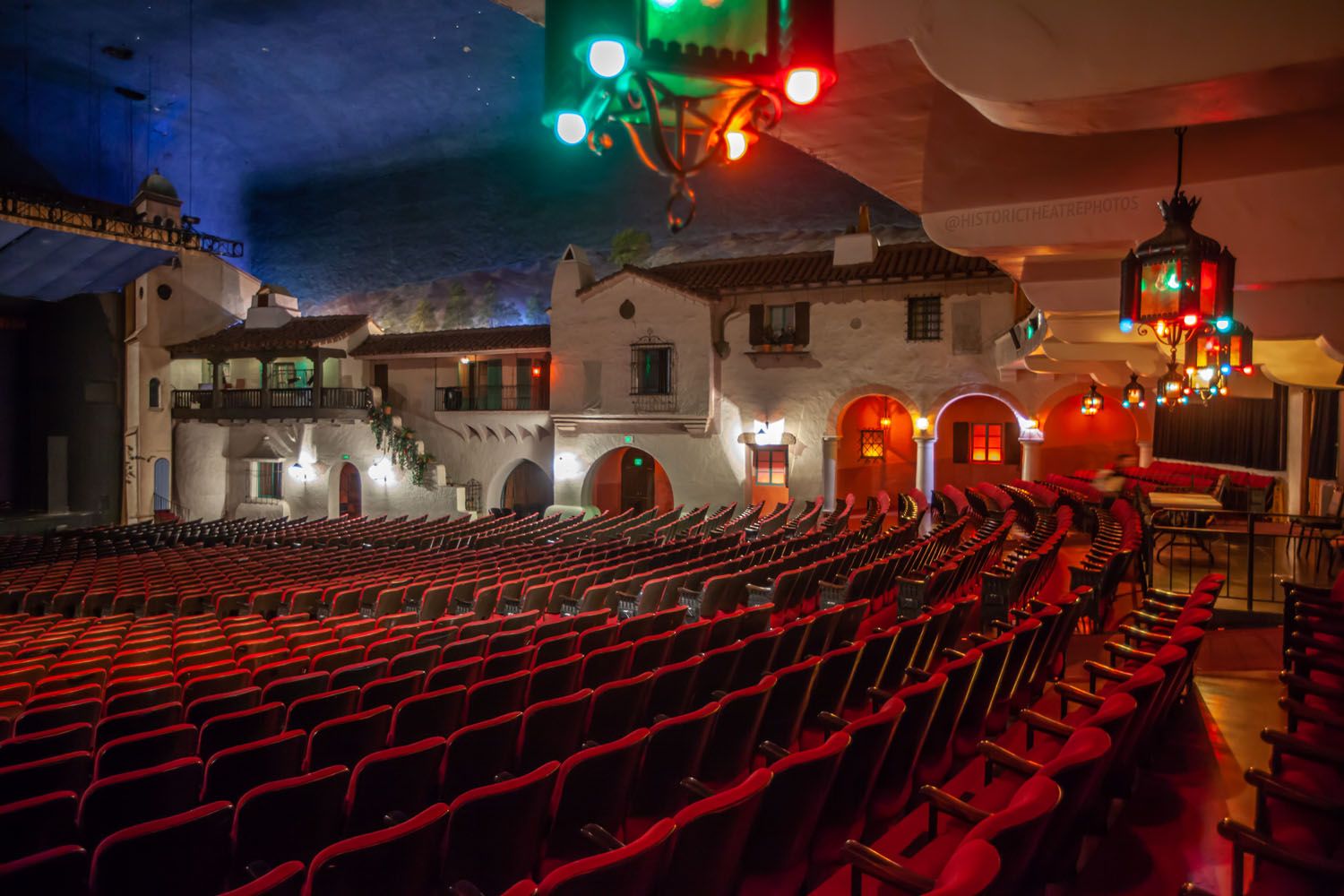
I scrambled to the front of the auditorium, barely noticing that the side walls were formed by three-dimensional Spanish village buildings—roofs, balconies, windows, and all.
 
Photo: Mike Hume's Historic Theatre Photography (used with permission)

Reportedly the lighting fixtures were painstakingly replicated from measurements of Catalonian street lamps of the 14th, 15th, and 16th centuries. 

 
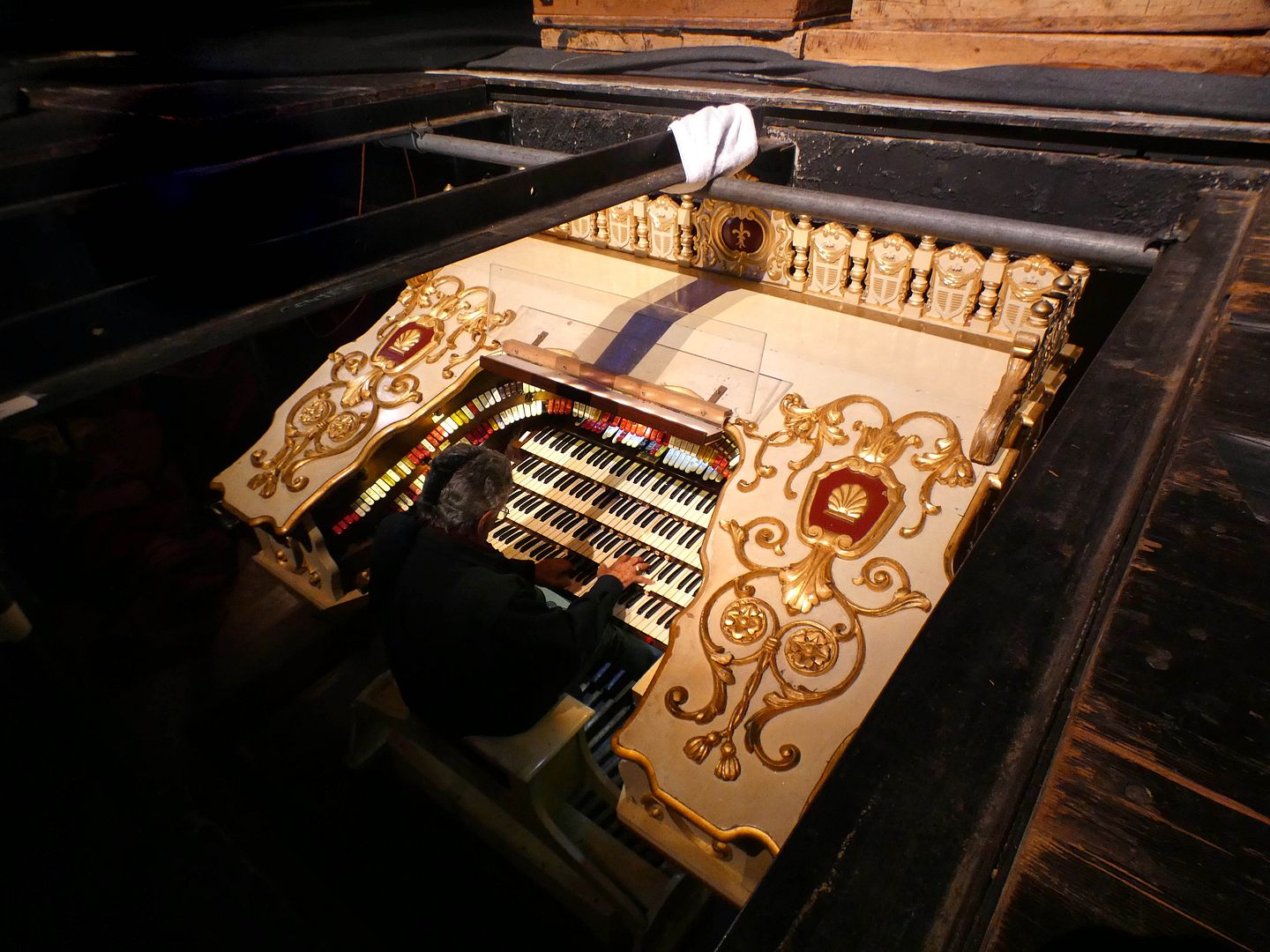
I made a beeline to the organist, who was playing a circa 1928 "Wonder Morton" theatre organ (not a Wurlitzer) from the organ lift located in the center of the curved orchestra pit. It's one of only five of its kind manufactured by Robert-Morton of Van Nuys, California—that is, before the company went out of business in 1931. Because it's an organ meant to accompany silent films, it has some fun practical sound effects like a police whistle, birds chirping, horse hoofs, and an airplane motor.


Originally built for and installed in Loew's Jersey Theatre in Jersey City, New Jersey, it was moved into storage in Dallas in 1977 and brought to Santa Barbara in 1986, when the Santa Barbara Theatre Organ Society lovingly restored it to as-new condition.
 
 
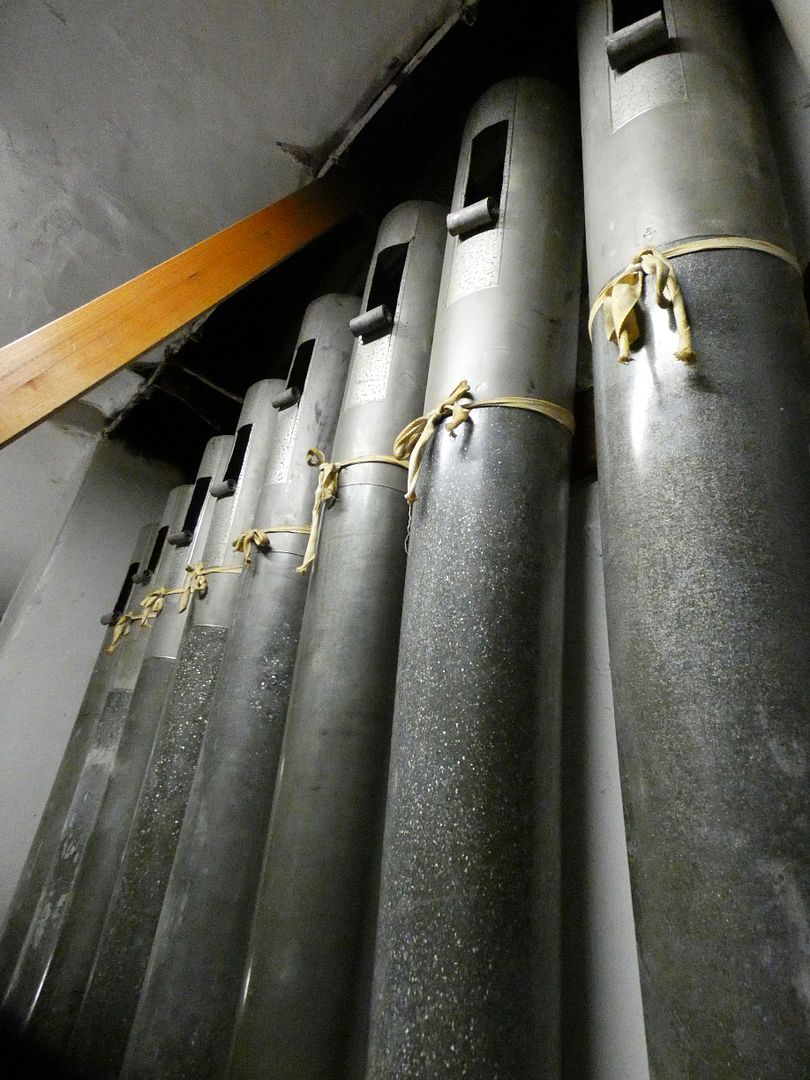
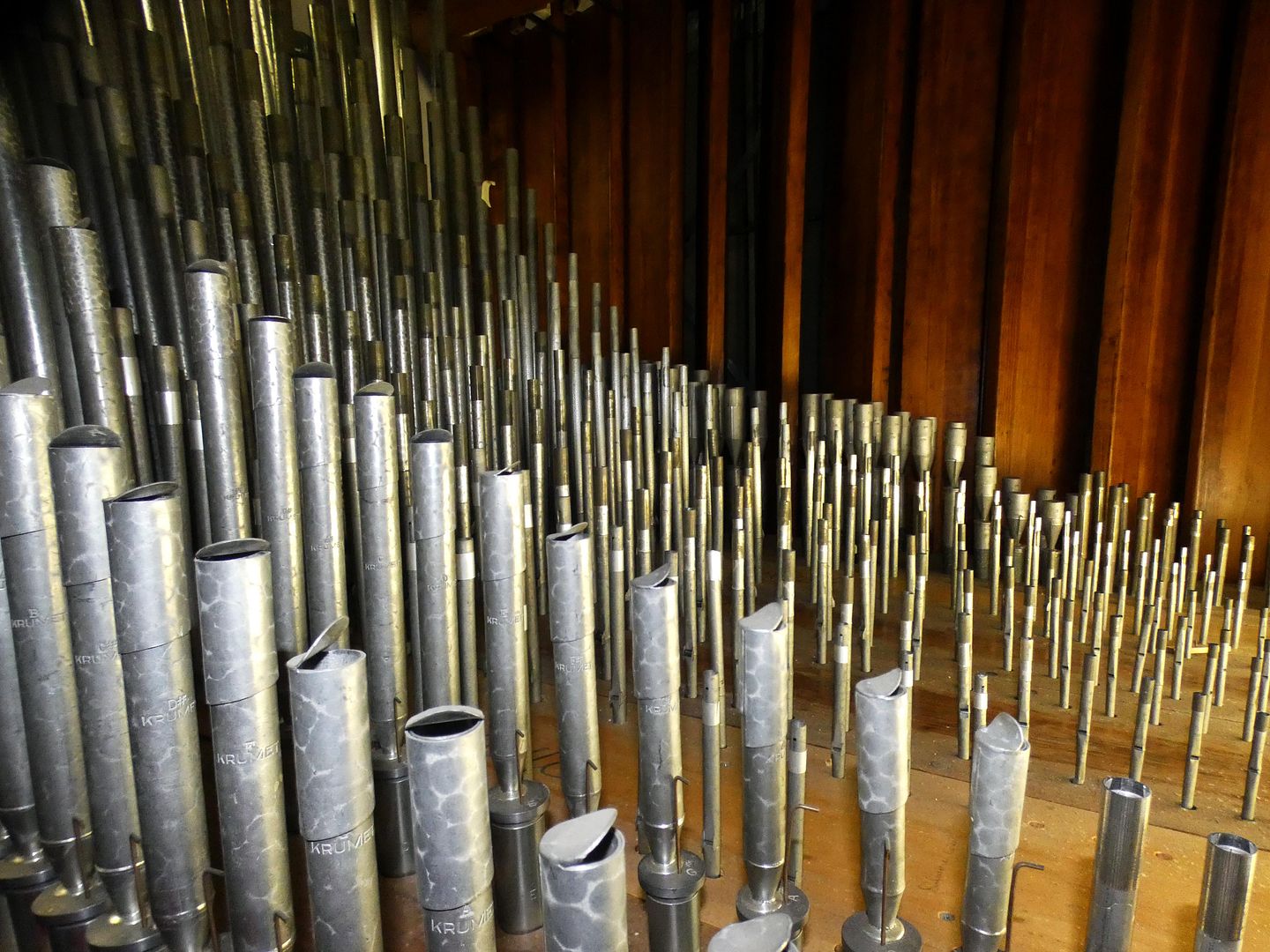
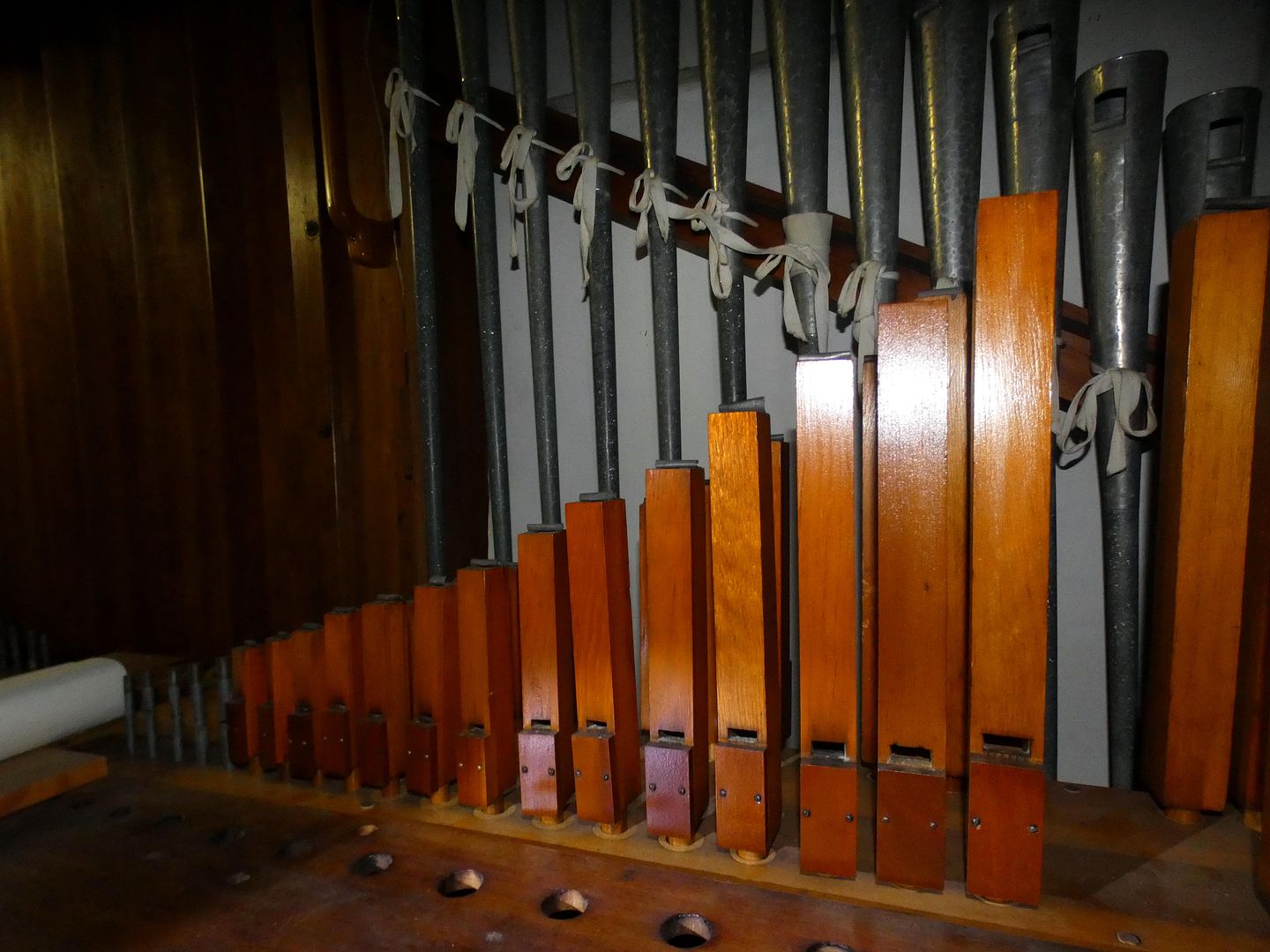
As it was built nearly 100 years ago, it had four keyboards (4-manual) and 24 ranks (individual sets of wind-blown pipes sharing the same tone, like trumpet or some other horn)—but sometime since, it's been expanded to 27 ranks of about 2000 pipes. 

 
This, like many theater organs, is electro-pneumatic—meaning all the pipes (both metal and wooden) and other instruments (including some actual drums and bells) are all air-operated by air valves that are controlled via electrical wires.

Photo: Mike Hume's Historic Theatre Photography (used with permission)

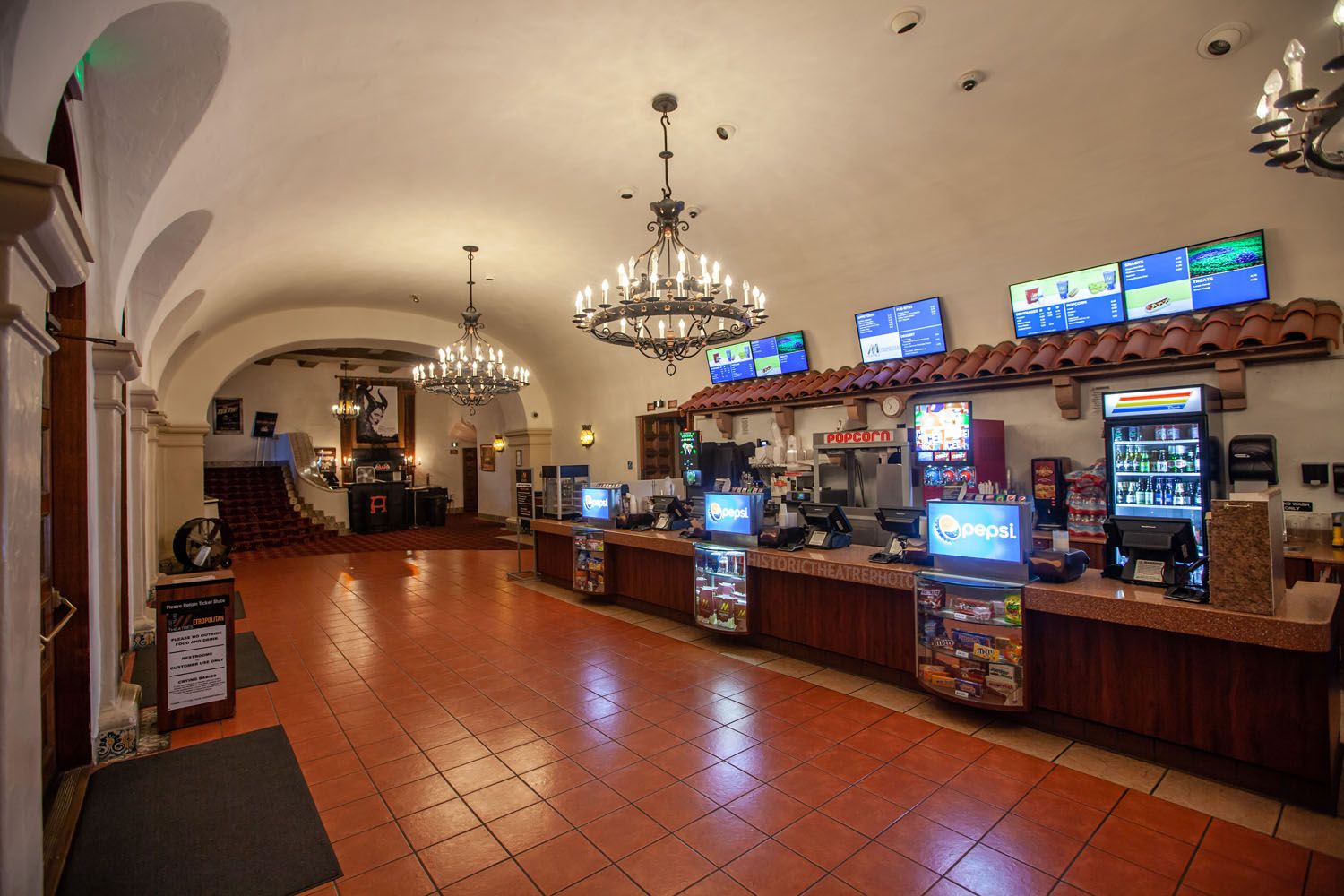
An impromptu tour took us through the pipe chamber at stage right—but there was so much more to behold. My guide could sense my enthusiasm—and since he could tell that I like history, he walked me through the lobby, under those handmade Catalonian chandeliers hanging from a vaulted ceiling, and headed upstairs yet another way. 

 
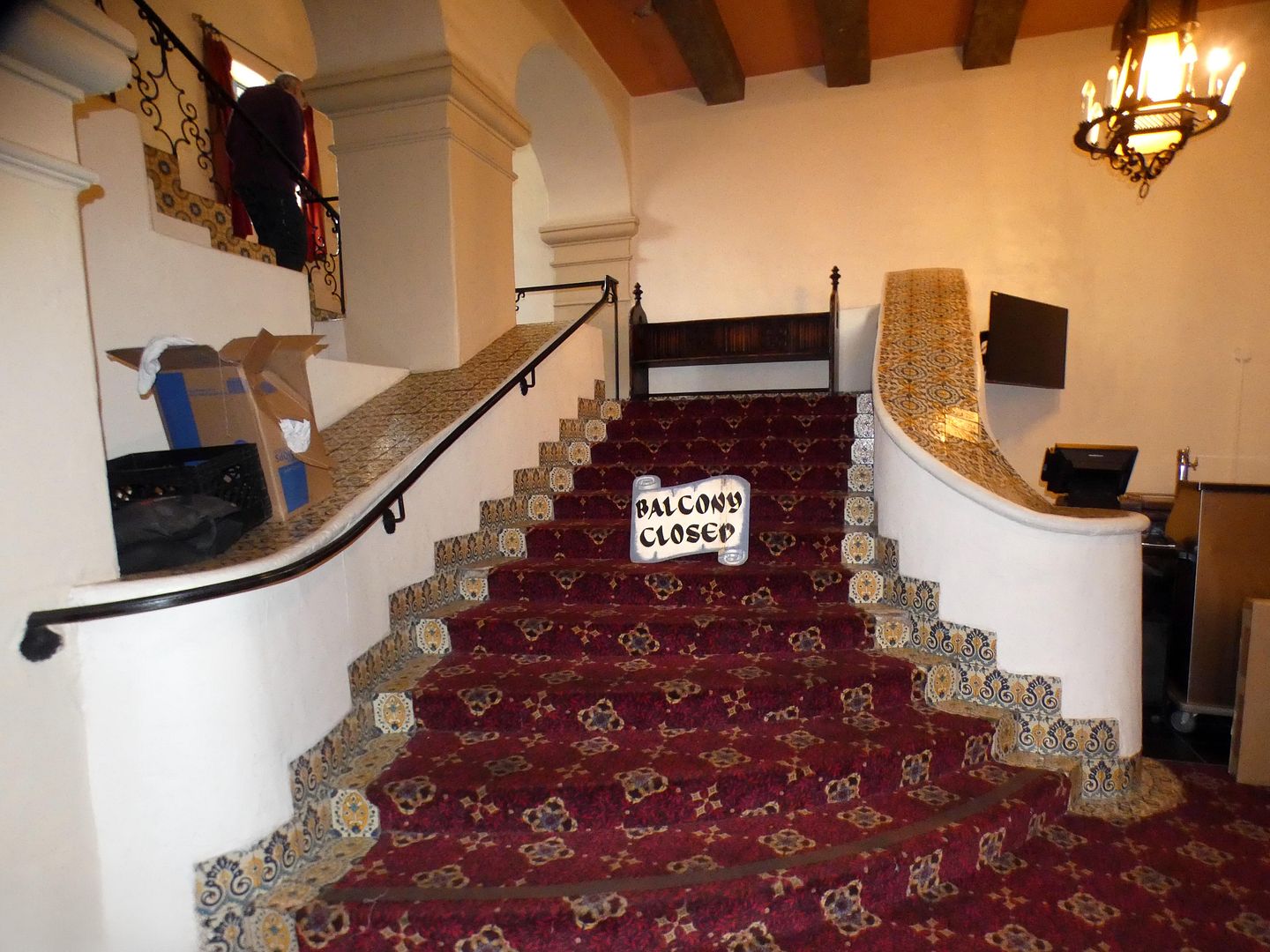
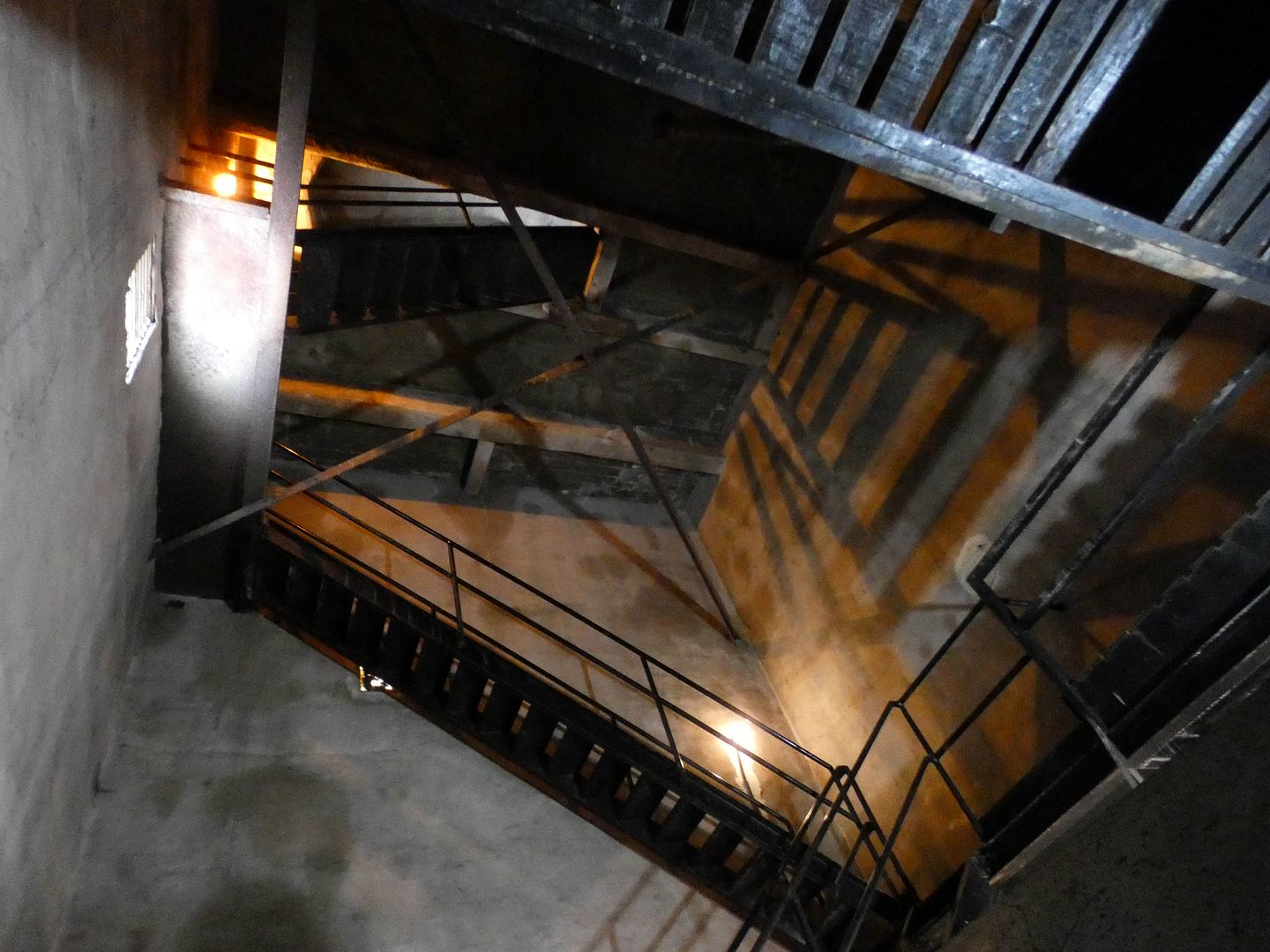
Although the upstairs is officially closed (reportedly they don't use it anymore), we climbed the balcony stairs, admiring the ironwork handrails...


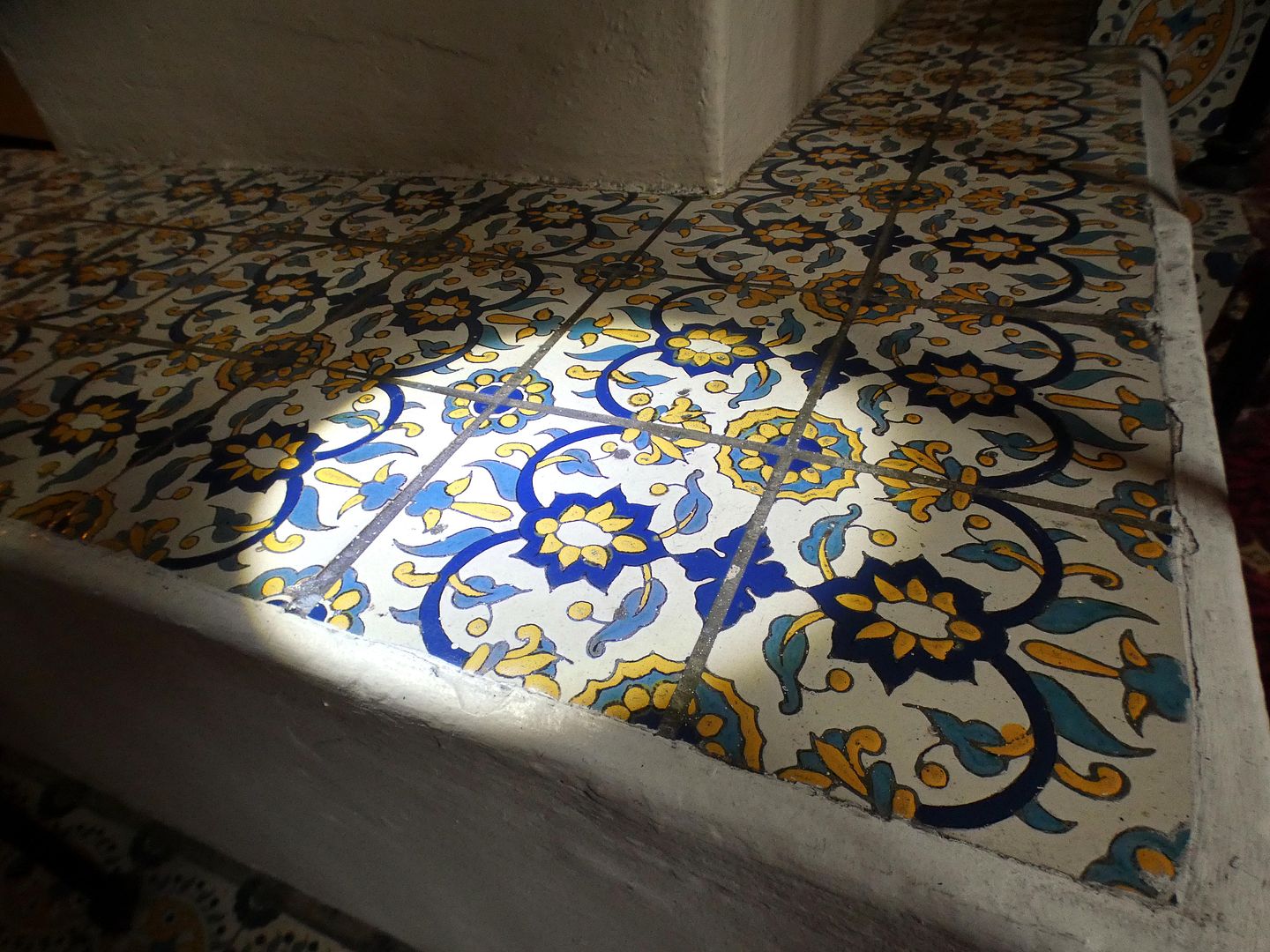
...and glazed Tunisian tiles (as were common at the time at such Santa Barbara locales as Casa del Herrero and the Santa Barbara Courthouse)...
 
 
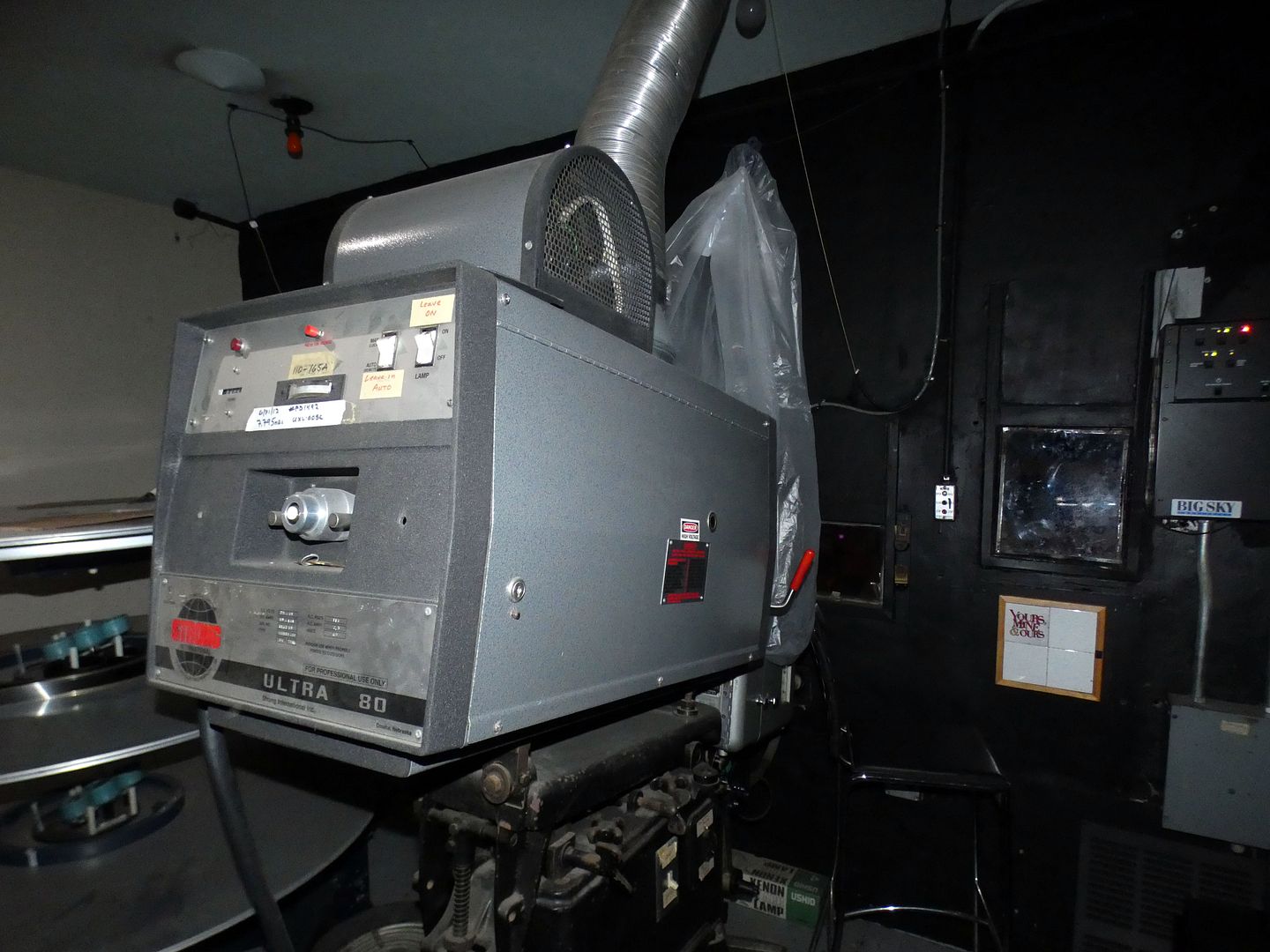
...until we reached the projection room. 


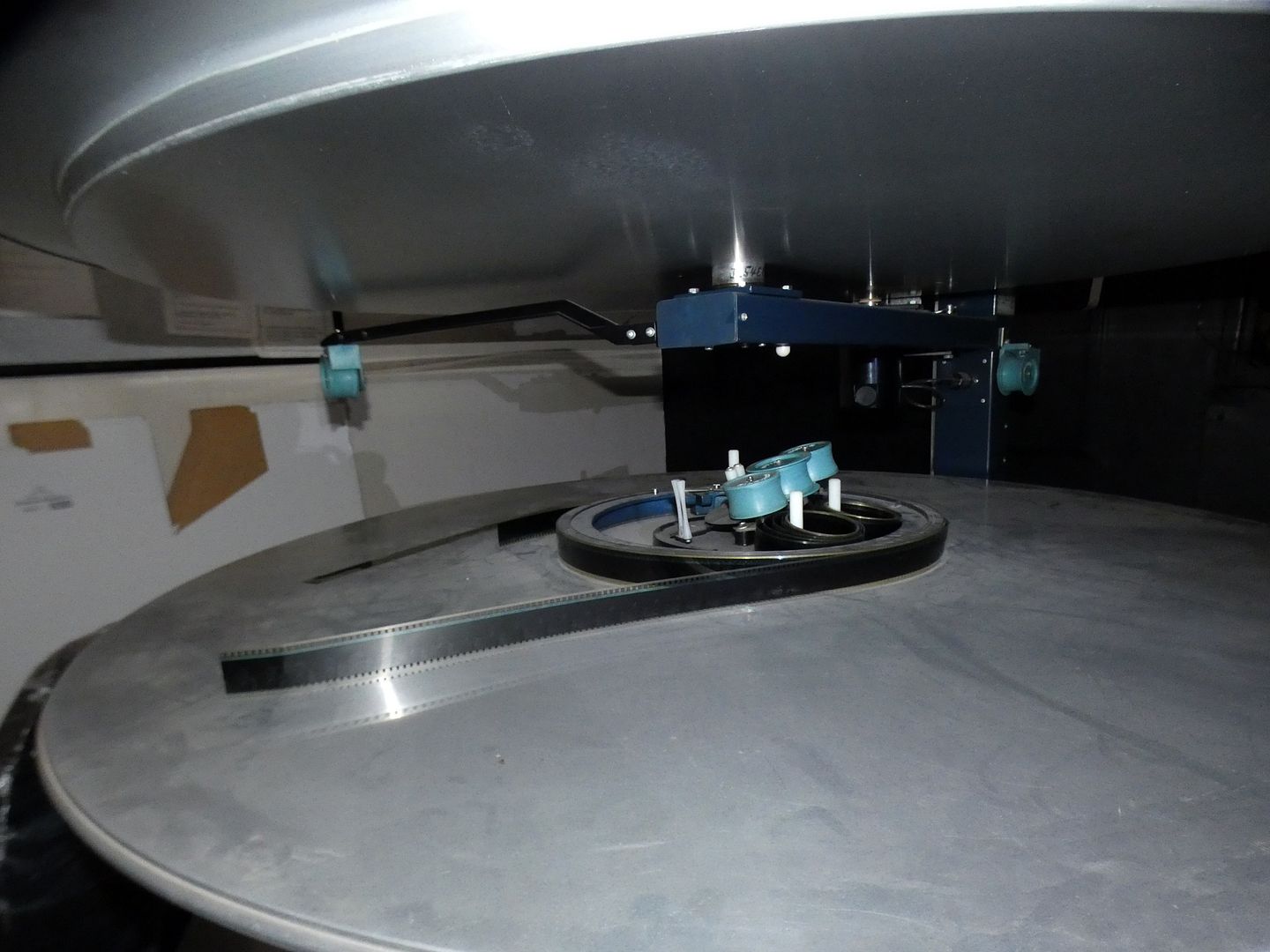
Because the theatre still occasionally screens 35mm film, it's got a Strong International Ultra 80 projector with a platter system in addition to its digital projection equipment. 
 
 
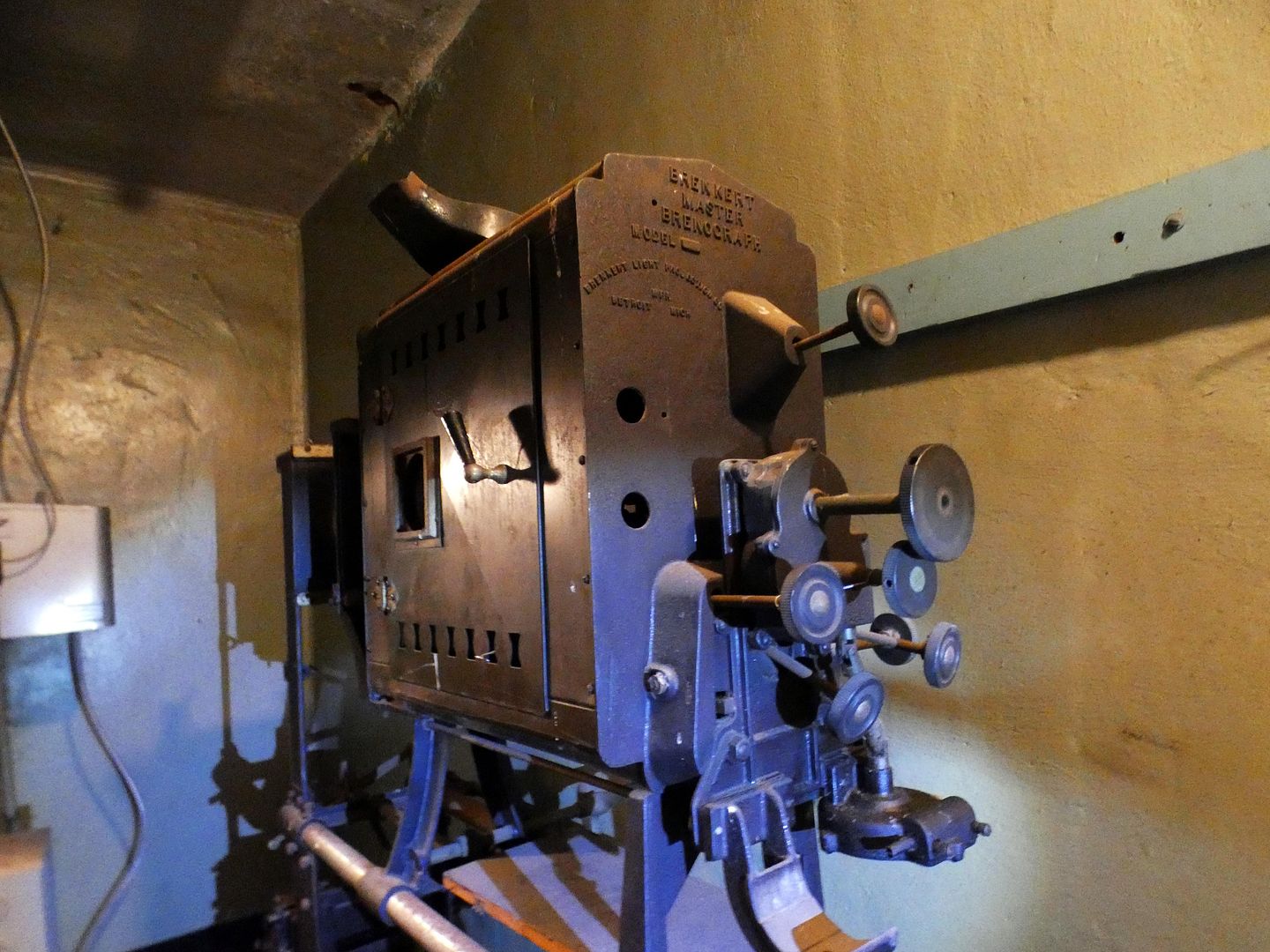
It's also got a couple of antiques tucked away up there, including a Brenkert Master Brenograph projector of special lighting effects, once adding to the atmospheric ambiance of the Andalusian village below. 

 
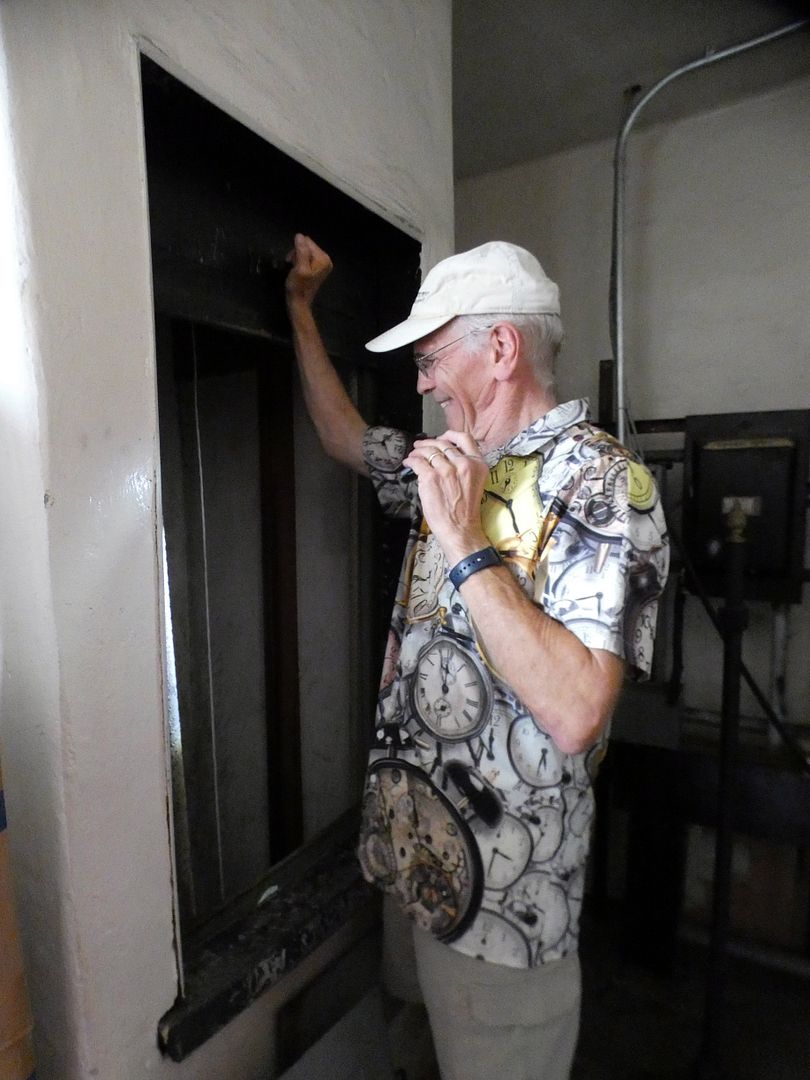
Those 35mm platters were pretty heavy, so the theater used to employ the help of a dumbwaiter (no longer in use, but the shaft is still there). 


Among the other areas that are now off-limits to the public are a patio that overlooks the city towards the mountains, reportedly once used by celebrities attending their big Hollywood screenings as nightclub or speakeasy. 

 
They could watch their movies (and observe audience reactions) from a private balcony up there...


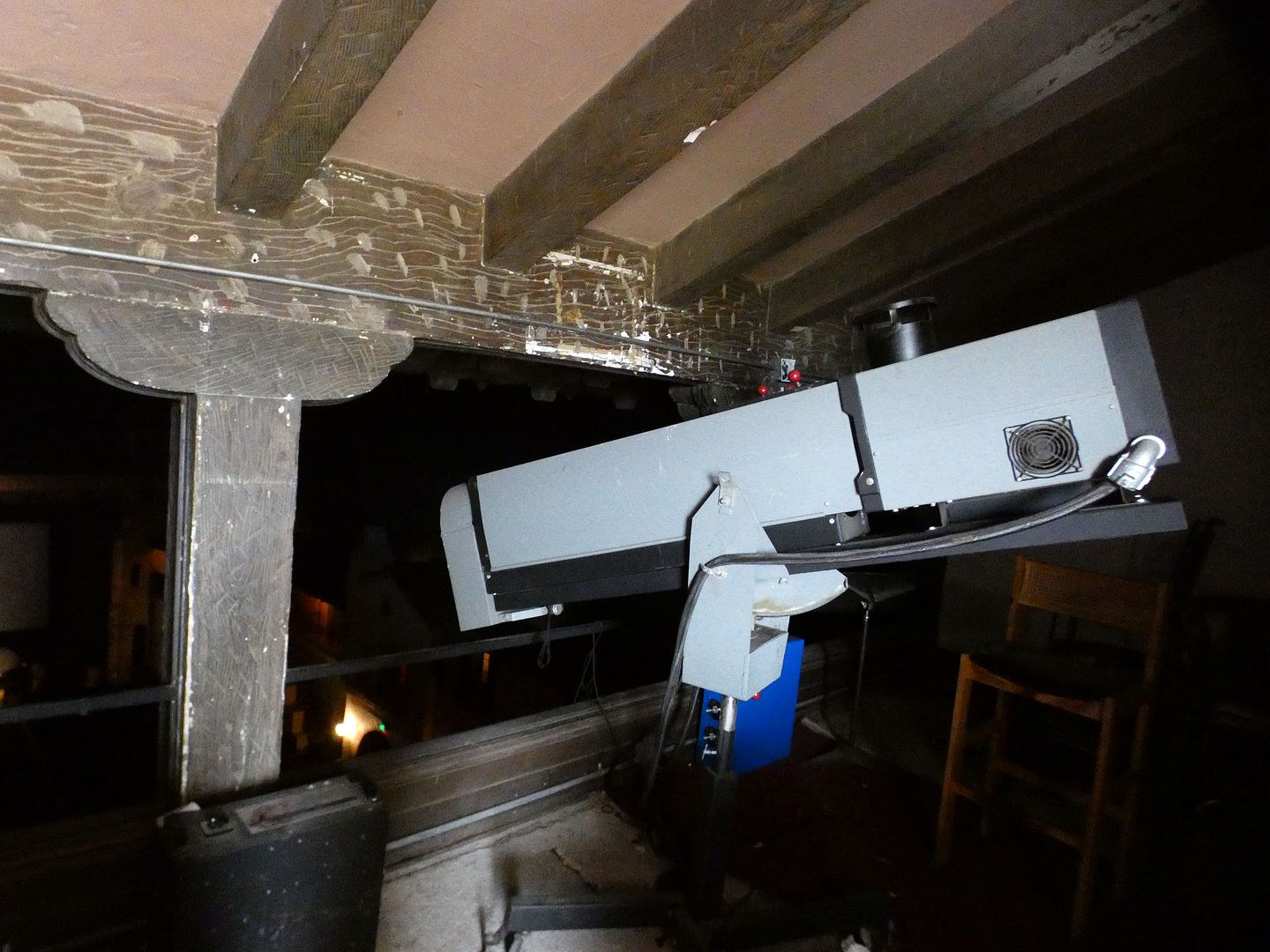
...but now it's just used for the back-of-house spotlight. 
 
 
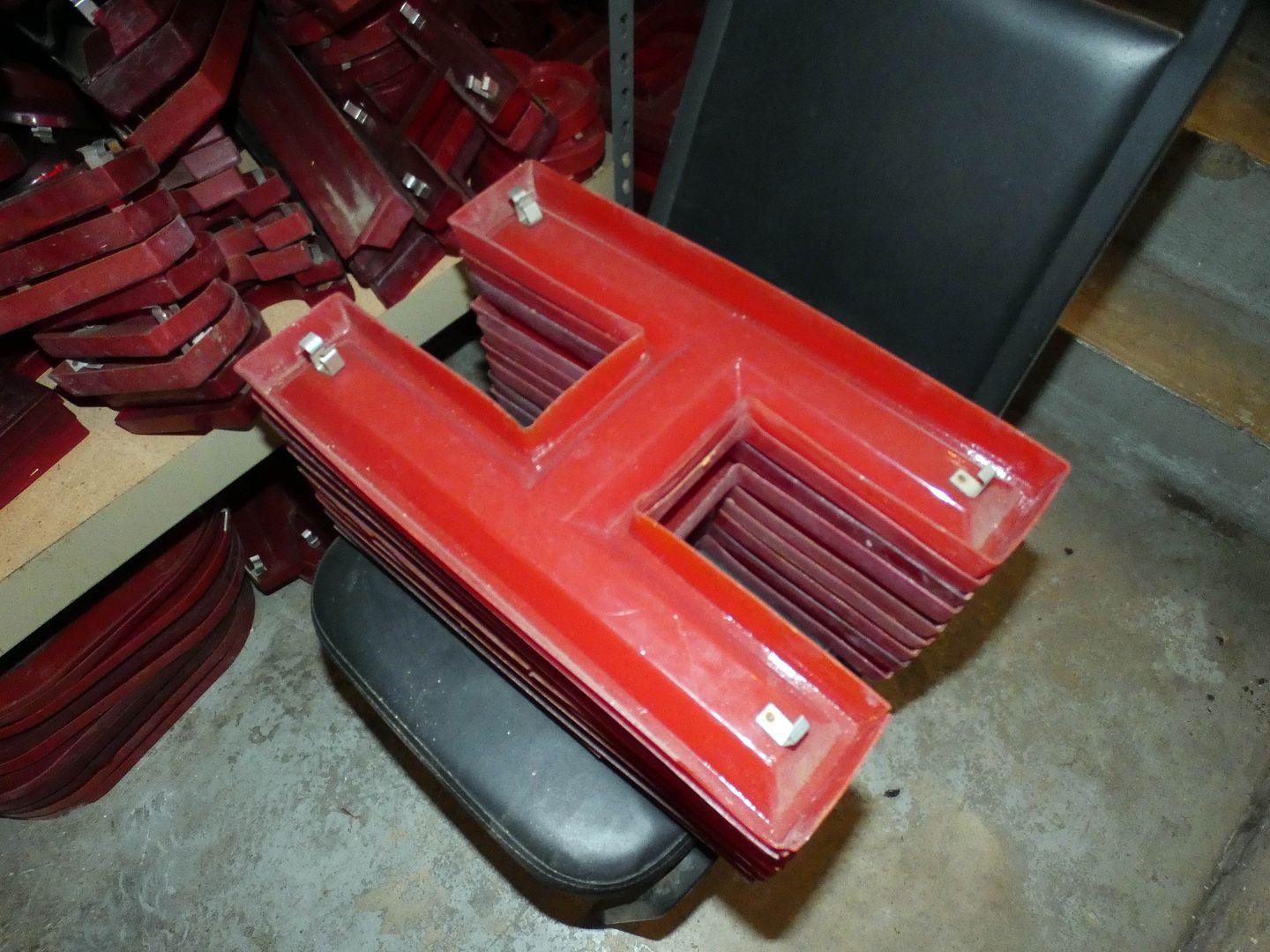
There were so many things to see in such little time, but I delighted at every little detail I could soak in, from the red plastic marquee letters...

 
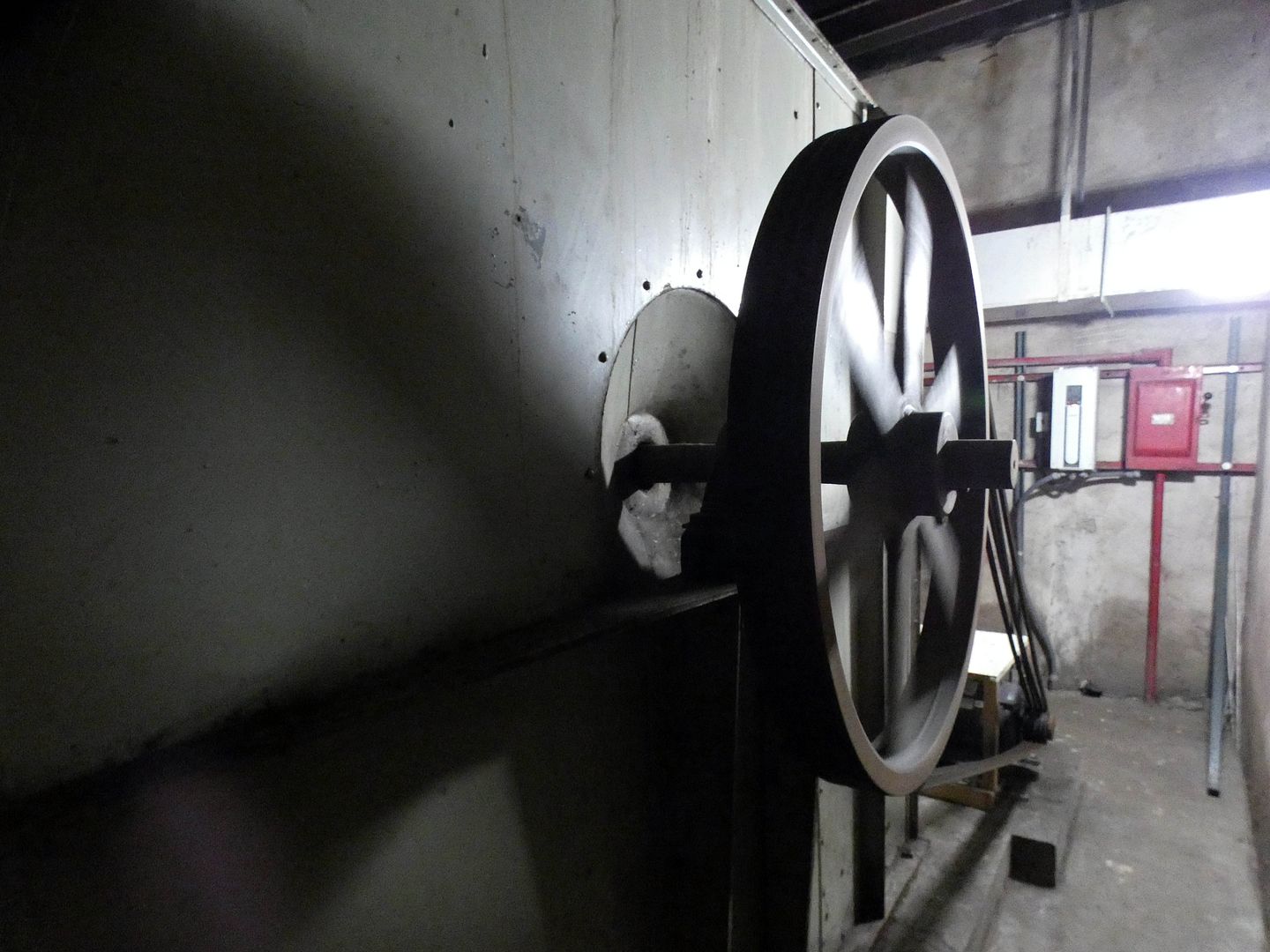
...to the blower that puffs the wind that makes the pipes sing...


...the bottom of the bell tower that never housed any bells (but used to sport a neon sign that spelled F-O-X)...
    
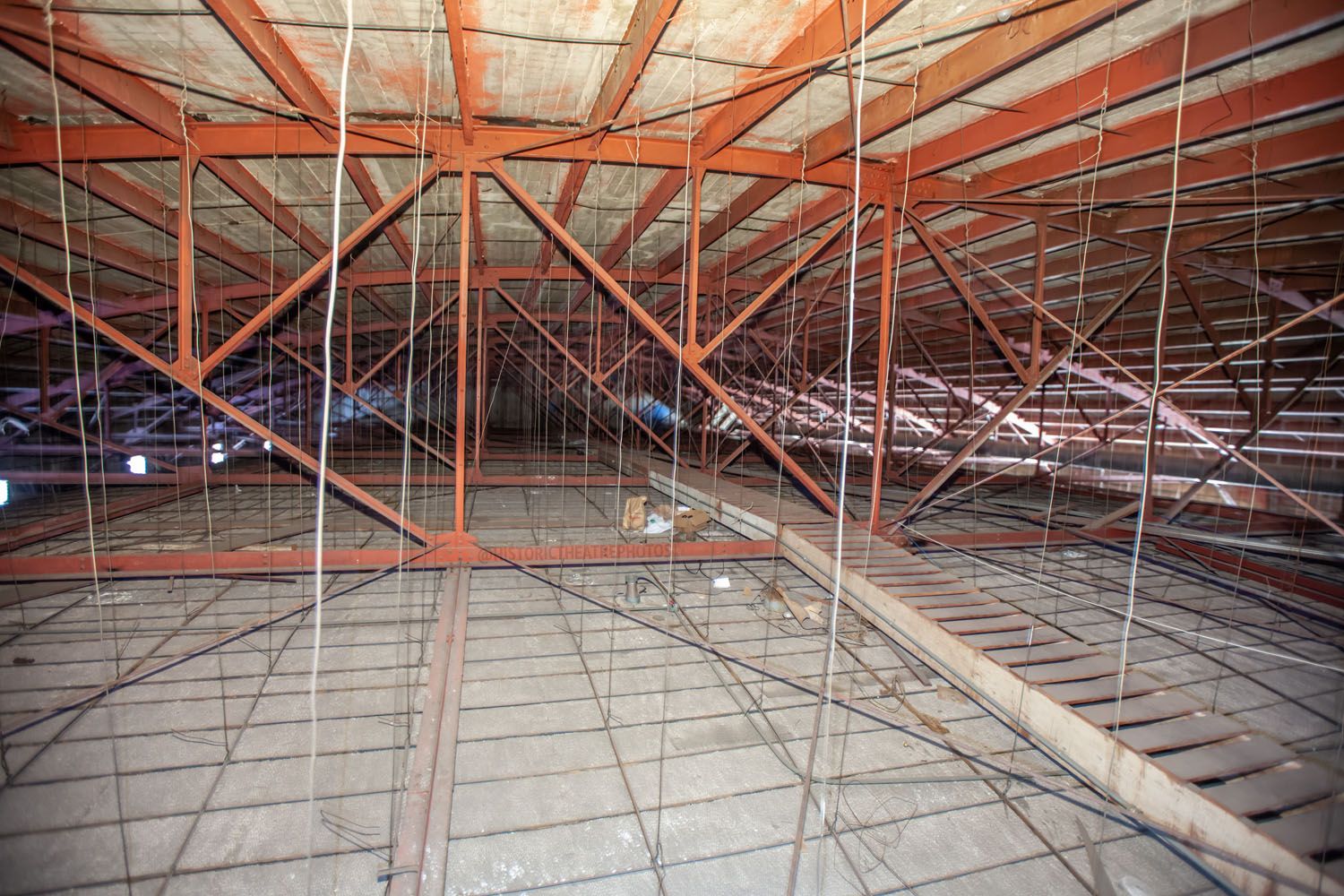
Photo: Mike Hume's Historic Theatre Photography (used with permission)

...and the attic above where the ceiling used to twinkle

There's so much more to say about this theatre, and my visit was by no means comprehensive, but I do think I crammed in a lot in less than an hour—and much more than I ever expected.

For a much more exhaustive exploration, check out my friend Mike Hume's Historic Theatre Photography blog. (And thanks to Mike for letting me share some of his photos on this post, which are credited to him above.)

Related Posts:

July 15, 2026

Photo Essay: Petco Park, A Home Run for the San Diego Padres

I just happened upon a Padres baseball game once many years ago, when I was still living in NYC and in San Diego on a trip (maybe it was for the KIDZ BOP concert at the Spreckels Theatre?). Some coworkers and I swung by Petco Park to see if we could get last minute tickets, and somebody just gave us a handful of free tickets. 

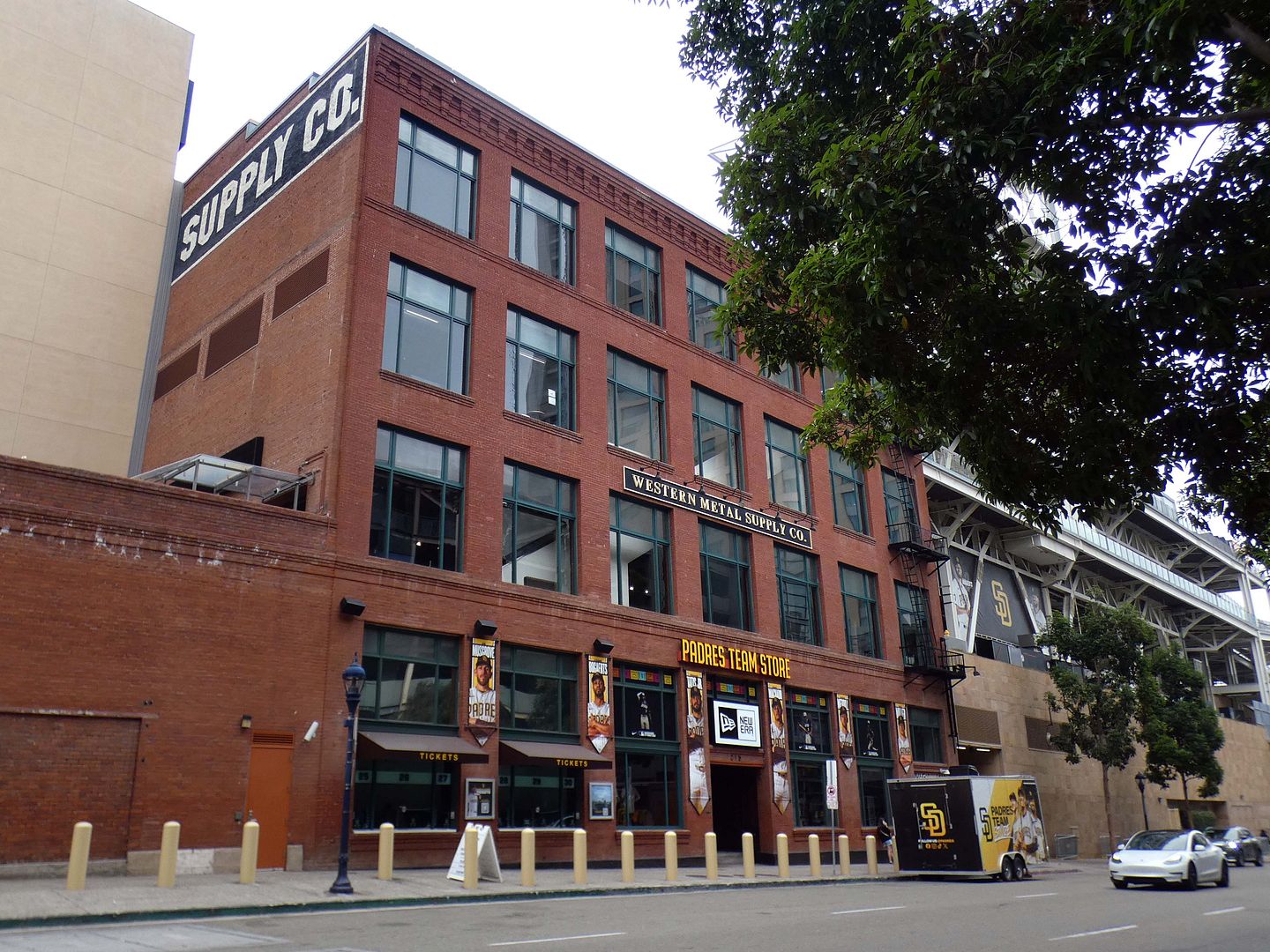
I don't remember much about the game itself. But I do remember the Western Metal Supply Company building.

By then, I'd already started to become interested in old buildings and preservation, having joined the National Trust for Historic Preservation as a member and spent a lot of time poring over monthly issues of Preservation Magazine. So, I was fascinated by how a new ballpark—maybe two or three years old at that point—had been built around a circa 1909 brick building with significant enough history to save it from being torn down. 

 
It was all the way back then, maybe 18 or 19 years ago or so, that I first vowed to take a tour of Petco Park one day. And despite it being incredibly centrally located and easy to reach—a stone's throw from the Gaslamp Quarter, the convention center, and Harbor Drive (where I set off on the Navy Bridge Run in 2022)—it's taken me this long to finally get there.

July 06, 2026

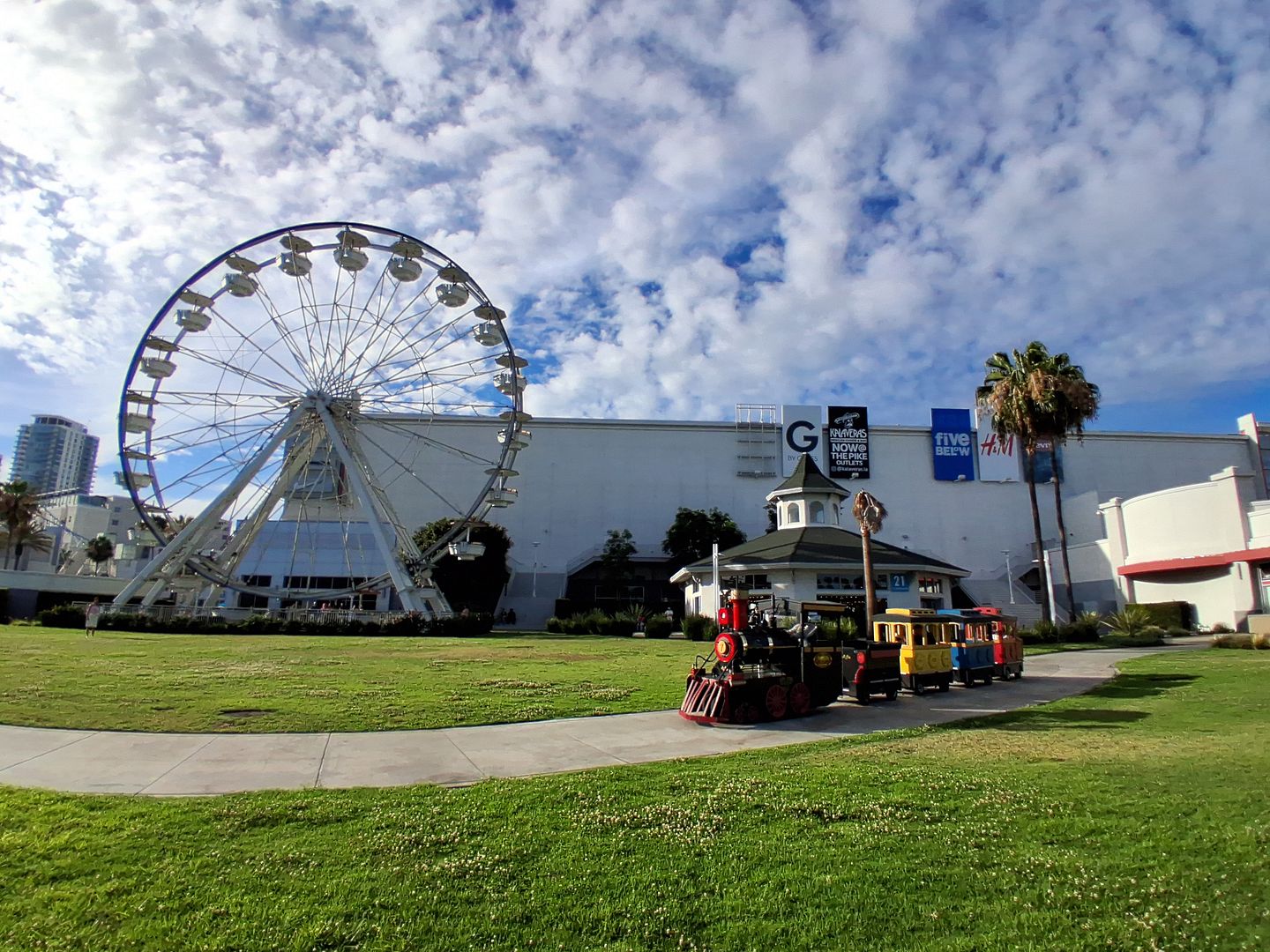
Photo Essay: Riding Every Carousel, Long Beach Pike Edition

I first remember spotting the carousel at the Pike in Long Beach in 2013, on my way to the Aquarium of the Pacific with a friend—one who was too cool for ferris wheels and merry-go-rounds. 

 
I figured I'd get around to going back—and I'm sure I did at some point, but I also remember getting a good look at it when it wasn't operating in 2021, during Covid shutdowns. 

July 05, 2026

Photo Essay: Celebrating America's 250th Birthday with Fireworks Over the Long Beach Harbor

I felt a lot of pressure this year to have a really good Fourth of July. 

Maybe it was because of the Semiquincentennial, a.k.a. America's 250th birthday. I don't remember the Bicentennial in 1976, but it's always seemed like it was such a big deal. With that in mind, the stakes felt even higher this year than they usually do. 

Or maybe it was because of the disappointments of July 4ths past—the promise of fireworks that ended up not being all that visible, the house parties with illegal fireworks that I found more scary than thrilling, the bout with Covid in 2022, being stood up at a Ryan Adam concert in Battery Park in 2003. It all piles on, year after year, making each Independence Day even more important—and stressful—than the last. 

This year, I spent hours poring over local listings of parades and fireworks displays, looking for somewhere I'd be guaranteed a seat and a good view without having to, say, arrive super early or even camp out overnight. I wanted something festive without having to drive too far. 

And I wanted real pyrotechnics, not drones. (I understand these are harmful to wildlife and disturbing to pets and sensory-sensitive people, but I have not yet gotten over my unappeased childhood obsession with them.)

 
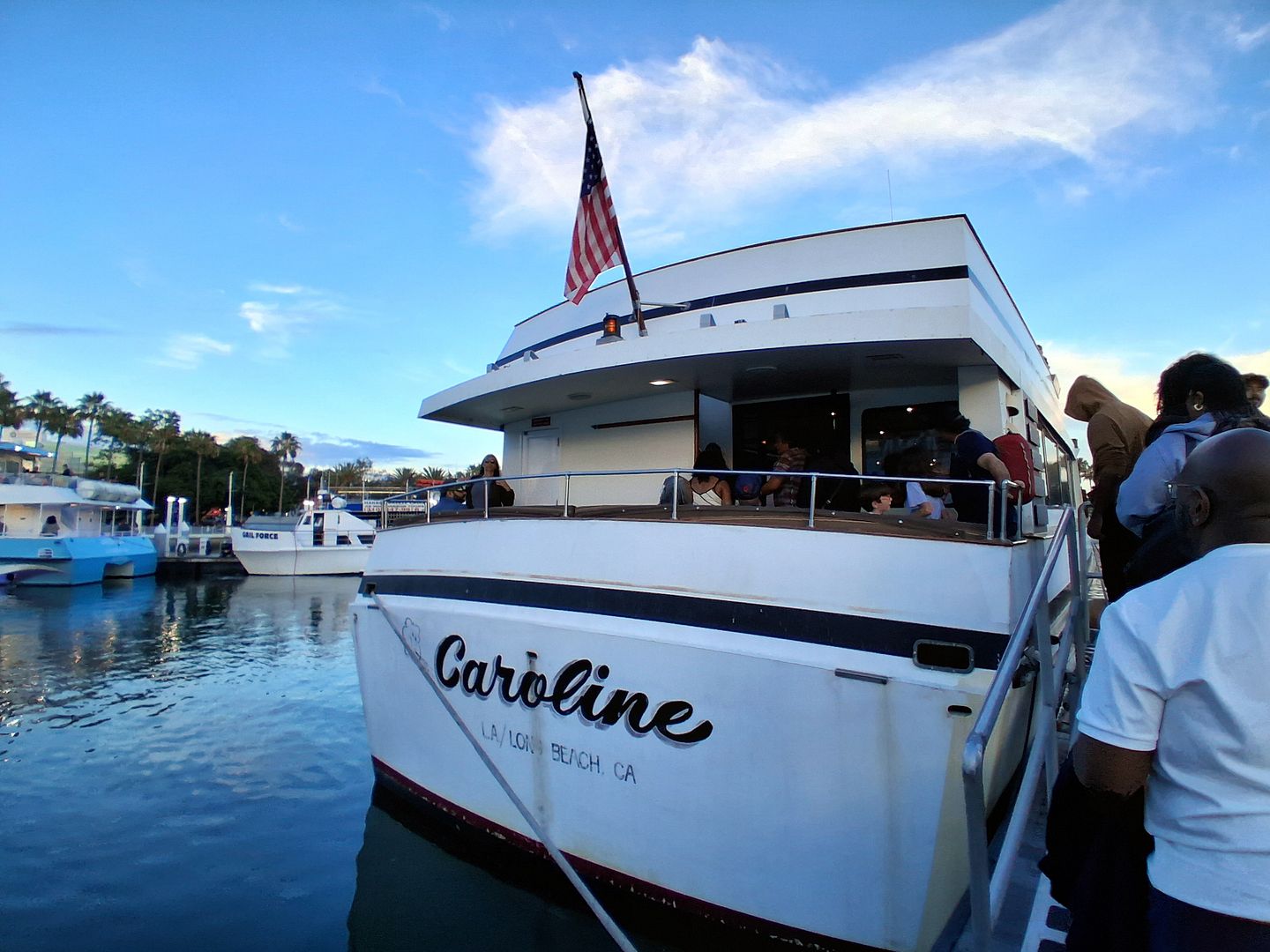
This year, the place to be seemed to be Long Beach—which had expanded its show to three different launch points along the harbor for America 250. Hoping to get a front seat to all three of them, I booked a boat ride with Harbor Breeze Cruises.

June 25, 2026

Photo Essay: Riding An Elevator to Hollywood Streets Too Steep to Drive On

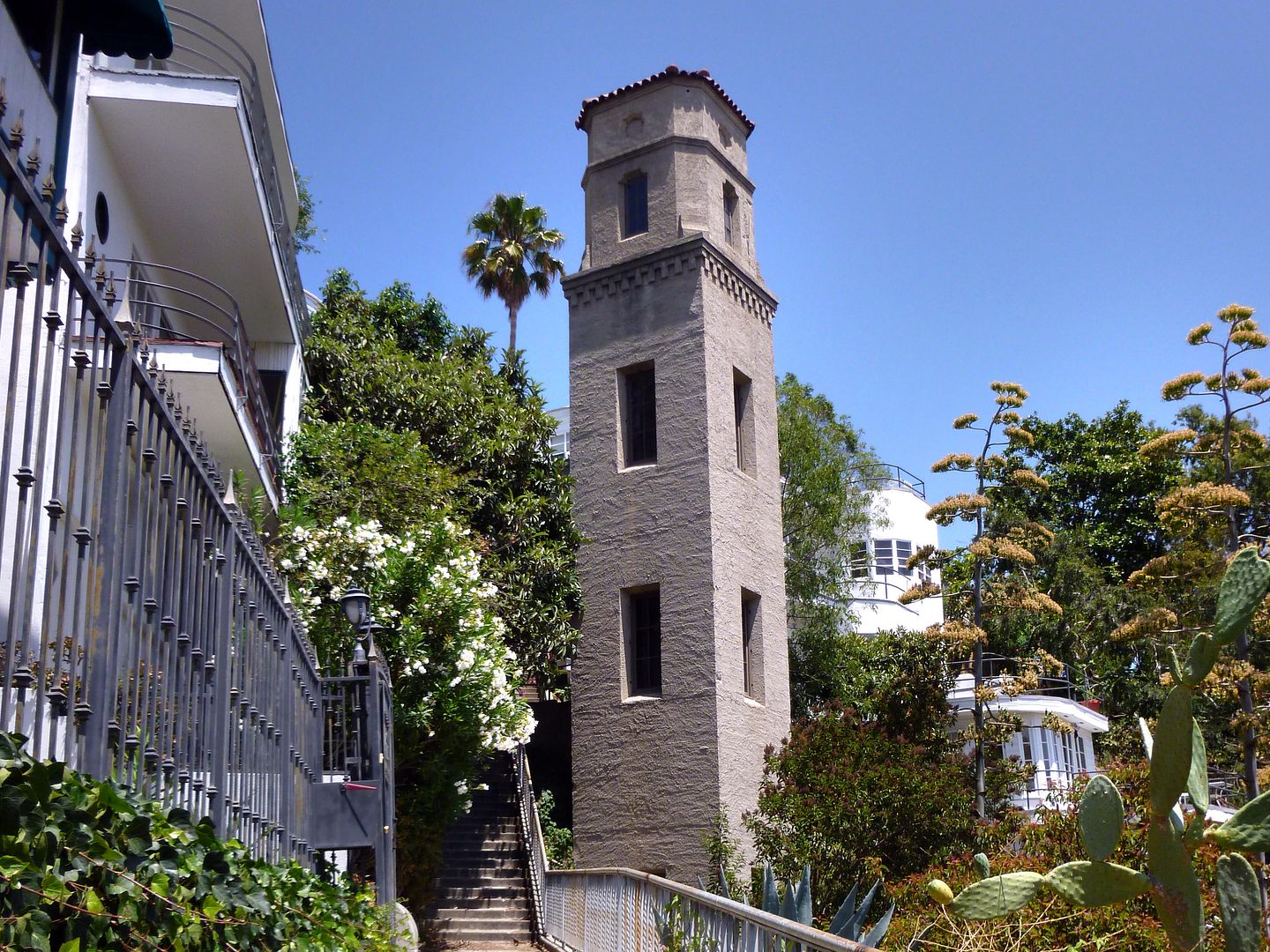
Back in 2013, I became fascinated with a tower in the hills behind the Hollywood Bowl, after coming across it on one of Charles Fleming's Secret Stairs walks. I vowed then that someday I would ride the elevator inside that tower. 

And it's been on my bucket list ever since. 


June 22, 2026

Photo Essay: LACMA Parades Down Wilshire Boulevard to Celebrate New Gallery Grand Opening

OK, let's put aside the fact that I'm mad at LACMA for doing the unthinkable in 2020—demolishing its William Pereira-designed buildings of its original campus, immortalized in Ed Rucha's oil painting Los Angeles County Museum of Art on Fire

Pereira's Bing Theatre was absolutely lovely. I'll never forgive them for what they did. 

But I did join the museum in celebrating the grand opening of its new David Geffen Galleries, which replaced the demolished buildings and expanded the LACMA footprint to the east with a Brutalist, "floating" bridge designed by Swiss architect Peter Zumthor, his first project in the U.S.

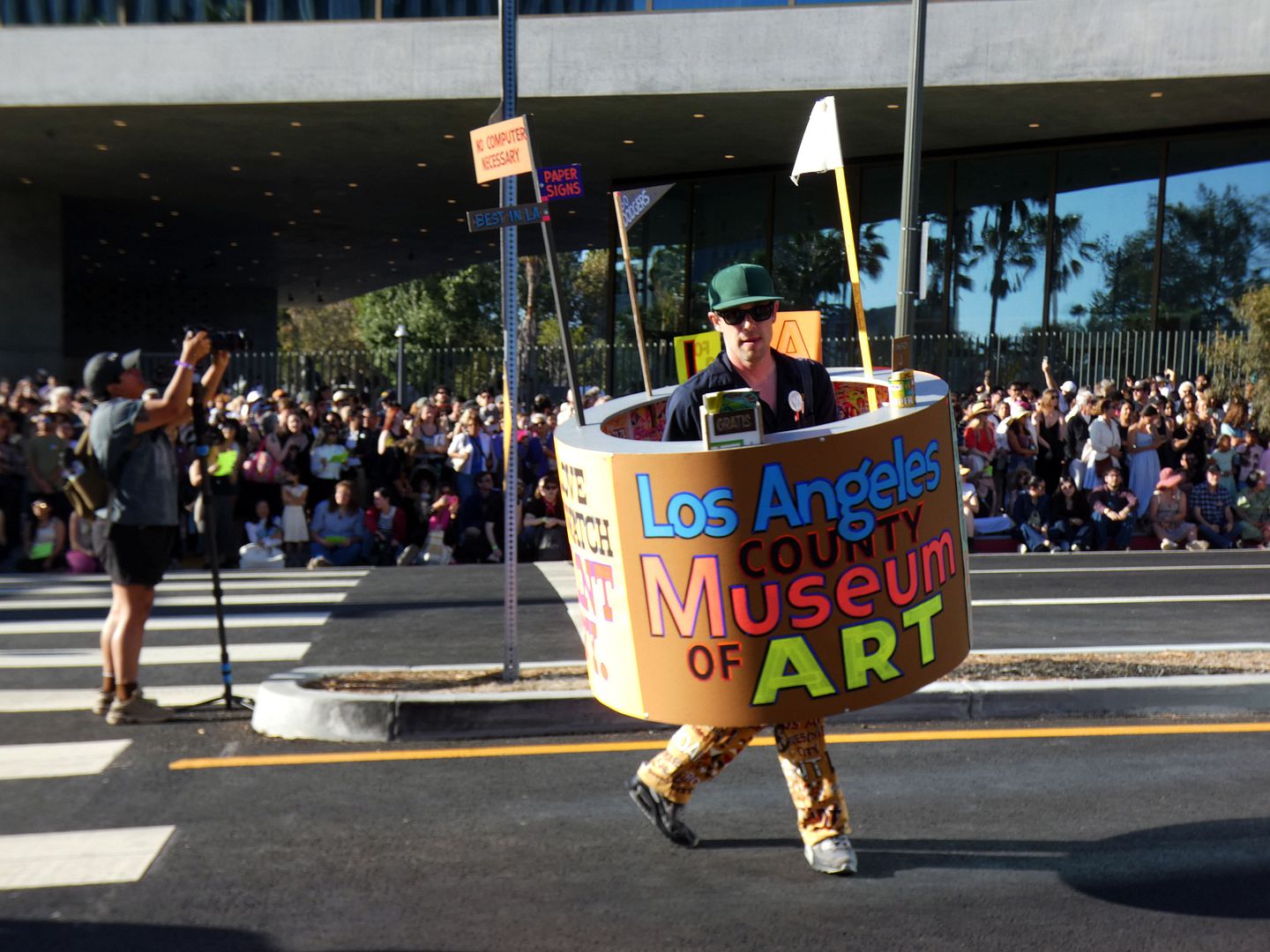
Capping off an all-day block party on Saturday was the first-ever—and perhaps annual—Art Parade, a collaboration between LACMA and gallery owner Jeffrey Deitch. Deitch had curated a similar Art Parade in NYC's SoHo neighborhood from 2005 to 2008, but I somehow missed it then. 

I also missed the street procession that brought Michael Heizer's Levitated Mass boulder to LACMA in 2012. So I wasn't going to skip out on this one—despite the grudge I carry. 

Can of Letters, Ben Klevay

June 14, 2026

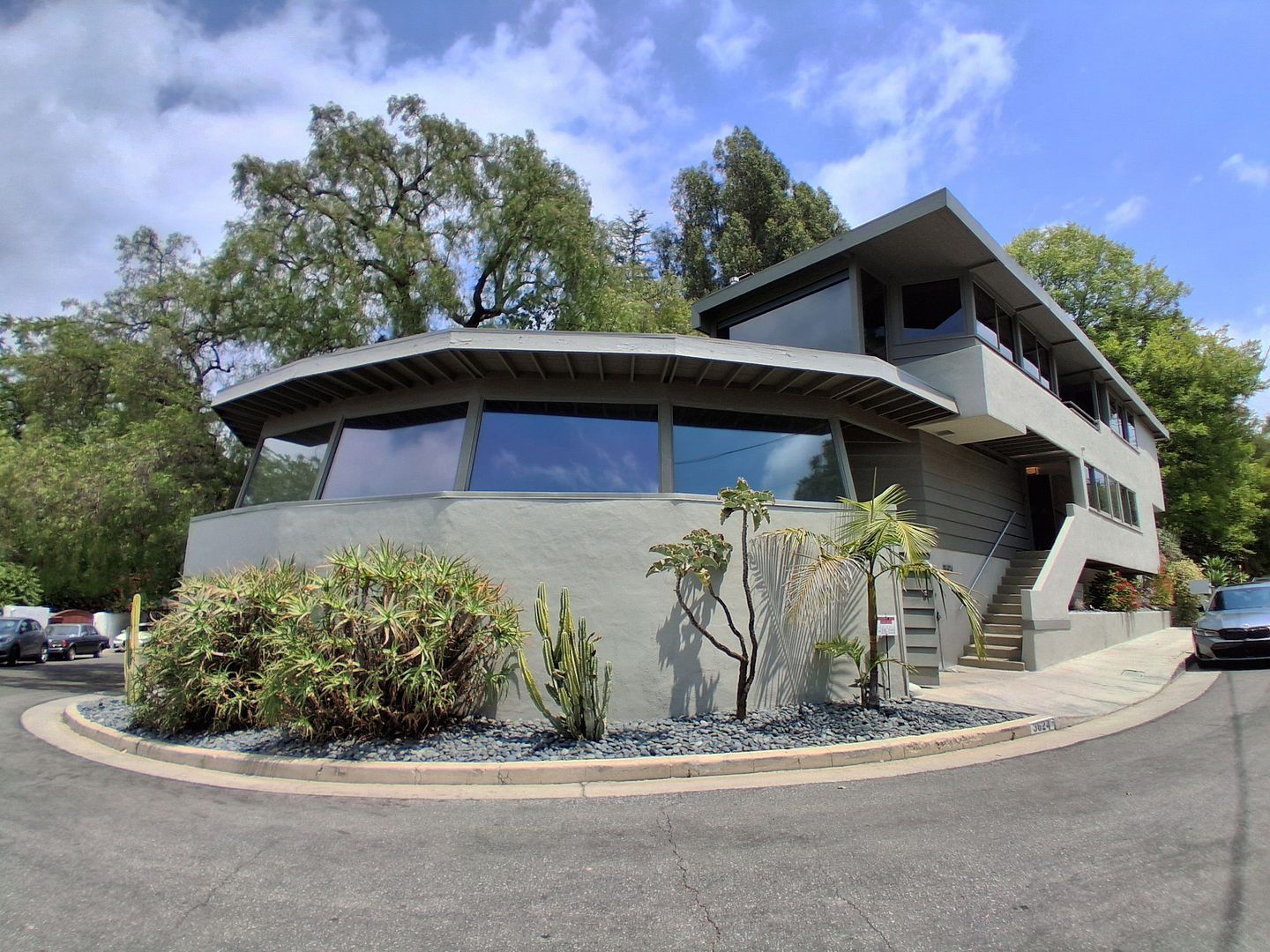
Photo Essay: Schindler's Outer Space Architecture in Studio City, The Roxy Roth House

The Roxy Roth House by architect Rudolph M. Schindler was officially completed in 1946—but by the looks of it, it could've been done in 1964 or 2064.

 
This sculptural architectural masterwork—part of Schindler's "Space Architecture" movement—stands on a Studio City hill as though it landed there from a galaxy far, far away.

June 11, 2026

Swimming Like a Rookie at Fort MacArthur

My swimming tourism thing is nothing new. I tried a lot of different pools when I first moved to Southern California, before I got settled into a routine. And when the old West Hollywood Pool was closed and then demolished during the Covid pandemic, I was forced to find somewhere else to swim my laps (mostly because it was the only thing I wanted to do outdoors, and it wasn't safe to be indoors). 

Once the brand-new West Hollywood aquatic facility opened nearly four years ago, I got lazy and just stuck to my neighborhood. It was so easy. And nice.

But the WeHo pool was closed last week and this week for Pride celebrations—so I've been back on the road, looking for other places to take a dip

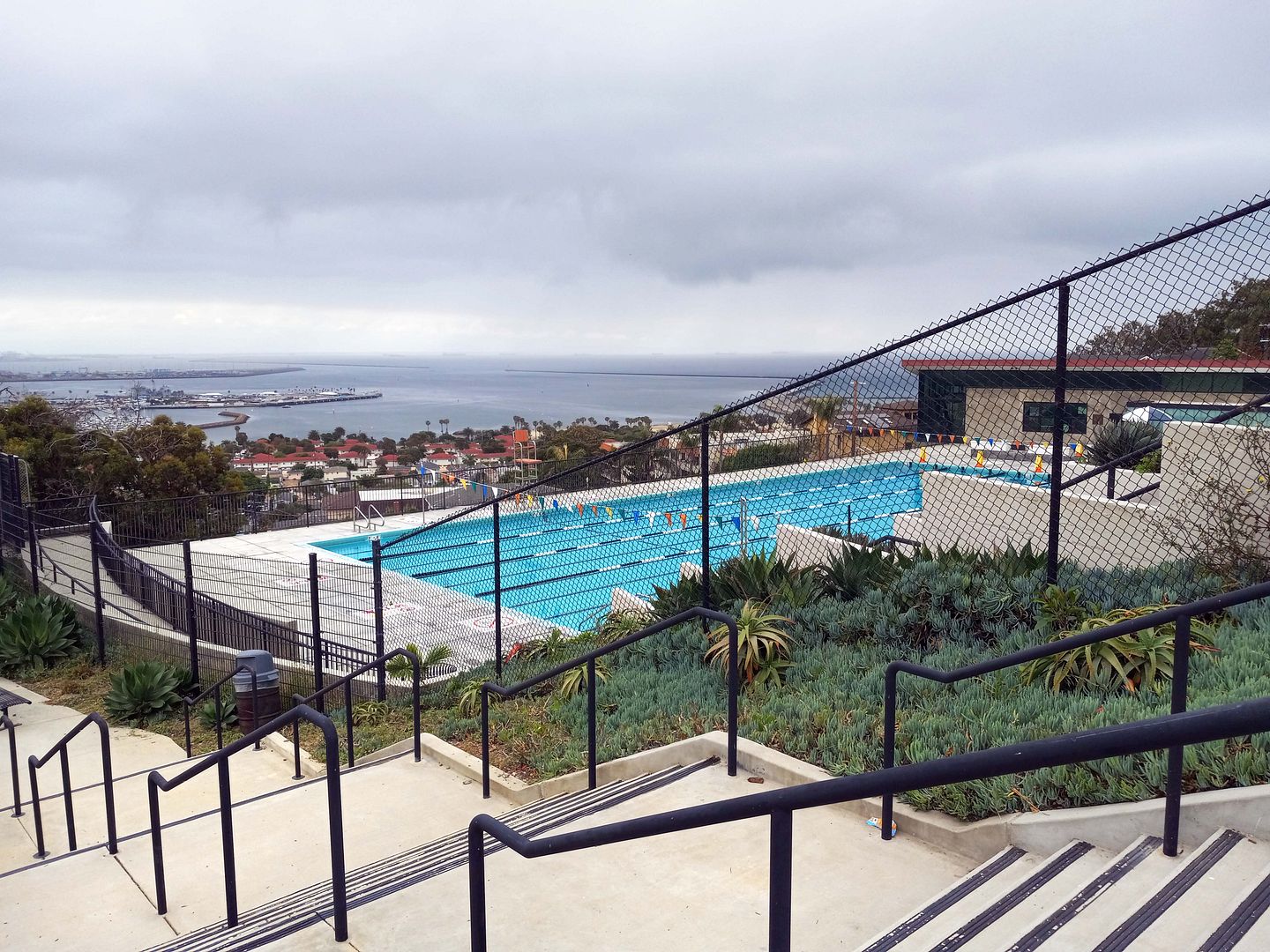
And today brought me to a pool that's long been on my list: the Hey Rookie Pool at Fort MacArthur.

circa 2023

The historic military pool reopened as a public pool in 2017 following a $7.1 million renovation, which repaired safety concerns that had closed and decommissioned it in 1997.

June 07, 2026

Photo Essay: Plunging Into the Biltmore Hotel's Tiled Pool Palace

I haven't written about the Biltmore Hotel in Downtown Los Angeles yet—despite having taken a tour with the Los Angeles Conservancy—because I just didn't think I had anything to add to the existing reporting.

Tichnor Brothers, Publisher, Public domain, via Wikimedia Commons

Located opposite of Pershing Square—once Downtown LA's "Central Park"—the Beaux Arts-style hotel by Schultze and Weaver gets a lot of press coverage, and for good reason. Today, this architectural masterpiece provides luxury accommodations much as it did back in 1923, when it was the largest hotel west of Chicago.

June 01, 2026

An After-Hours Sound Bath Among the Mattresses: Retail Therapy, LA Style

"I love LA," said the woman next to me, as she gathered up her crystals and folded up her sheet. We'd slept next to each other, on two neighboring mattresses, during a sound bath conducted inside the Mattress Central store in Atwater Village. And then we went our separate ways.