
OK, let's put aside the fact that I'm mad at LACMA for doing the unthinkable in 2020—demolishing its William Pereira-designed buildings of its original campus, immortalized in Ed Rucha's oil painting Los Angeles County Museum of Art on Fire.
Pereira's Bing Theatre was absolutely lovely. I'll never forgive them for what they did.
But I did join the museum in celebrating the grand opening of its new David Geffen Galleries, which replaced the demolished buildings and expanded the LACMA footprint to the east with a Brutalist, "floating" bridge designed by Swiss architect Peter Zumthor, his first project in the U.S.
Capping off an all-day block party on Saturday was the first-ever—and perhaps annual—Art Parade, a collaboration between LACMA and gallery owner Jeffrey Deitch. Deitch had curated a similar Art Parade in NYC's SoHo neighborhood from 2005 to 2008, but I somehow missed it then.
I also missed the street procession that brought Michael Heizer's Levitated Mass boulder to LACMA in 2012. So I wasn't going to skip out on this one—despite the grudge I carry.
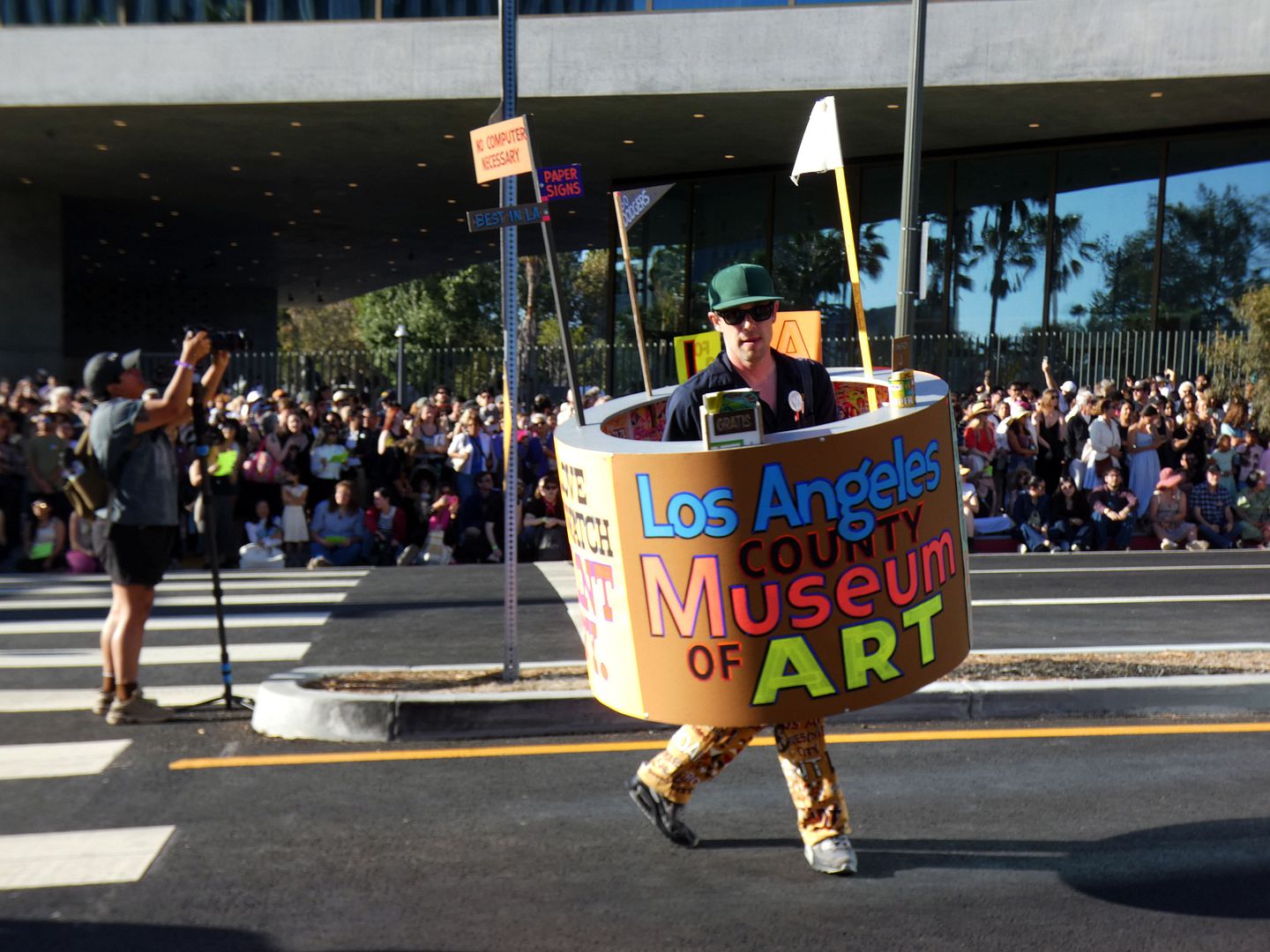
Can of Letters, Ben Klevay
The block party and parade closed Wilshire Boulevard from Fairfax to Curson in the Miracle Mile district of Los Angeles—no small feat, and a bigger interruption than Wilshire had ever seen during construction of the new galleries overhead.
With the parade staging taking up a fair amount of Wilshire at Fairfax, I headed east to find a spot along the curb about at the midway point—situated so that the "new" LACMA campus would provide a backdrop to all of the artful parade entries.
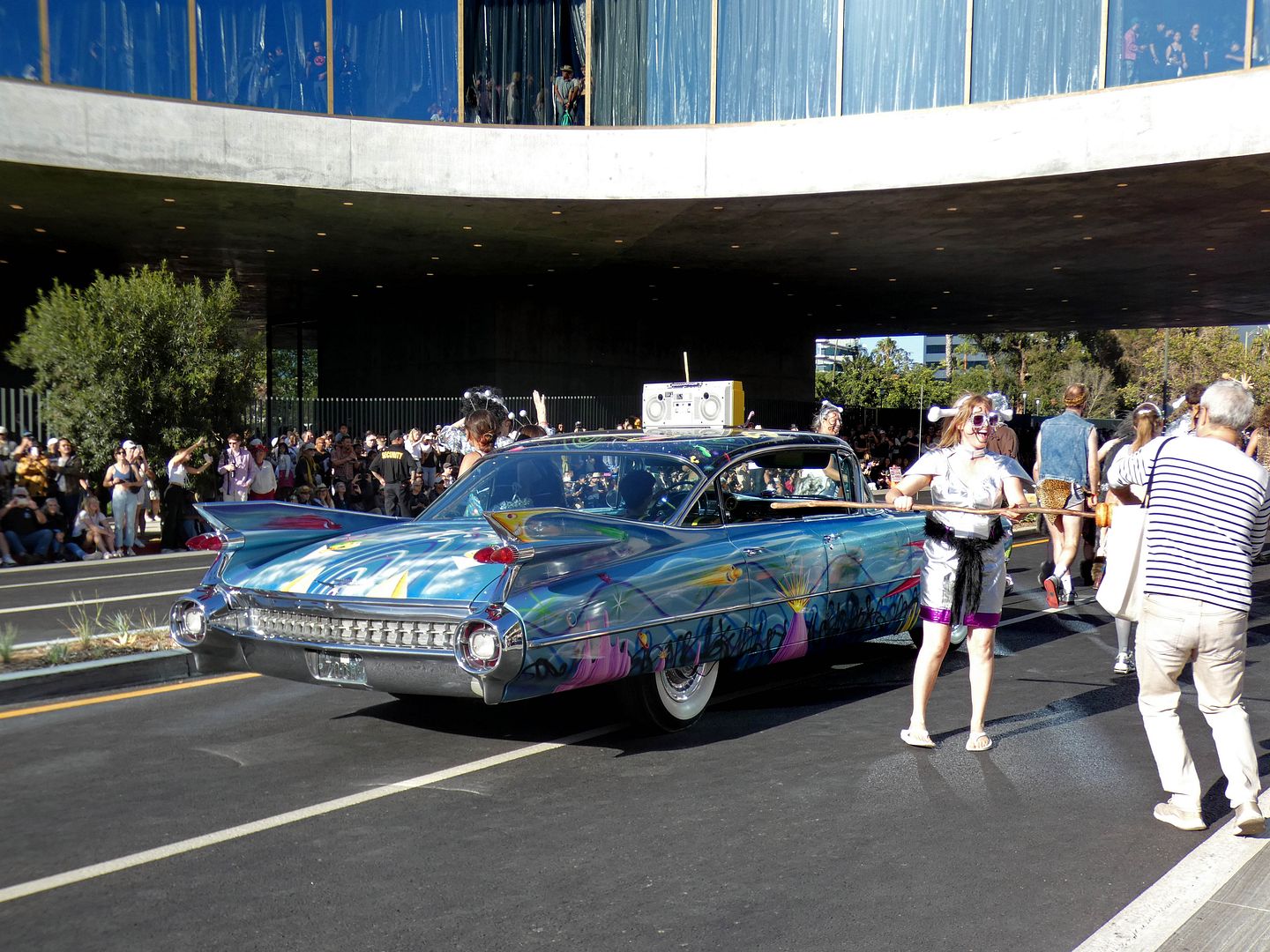
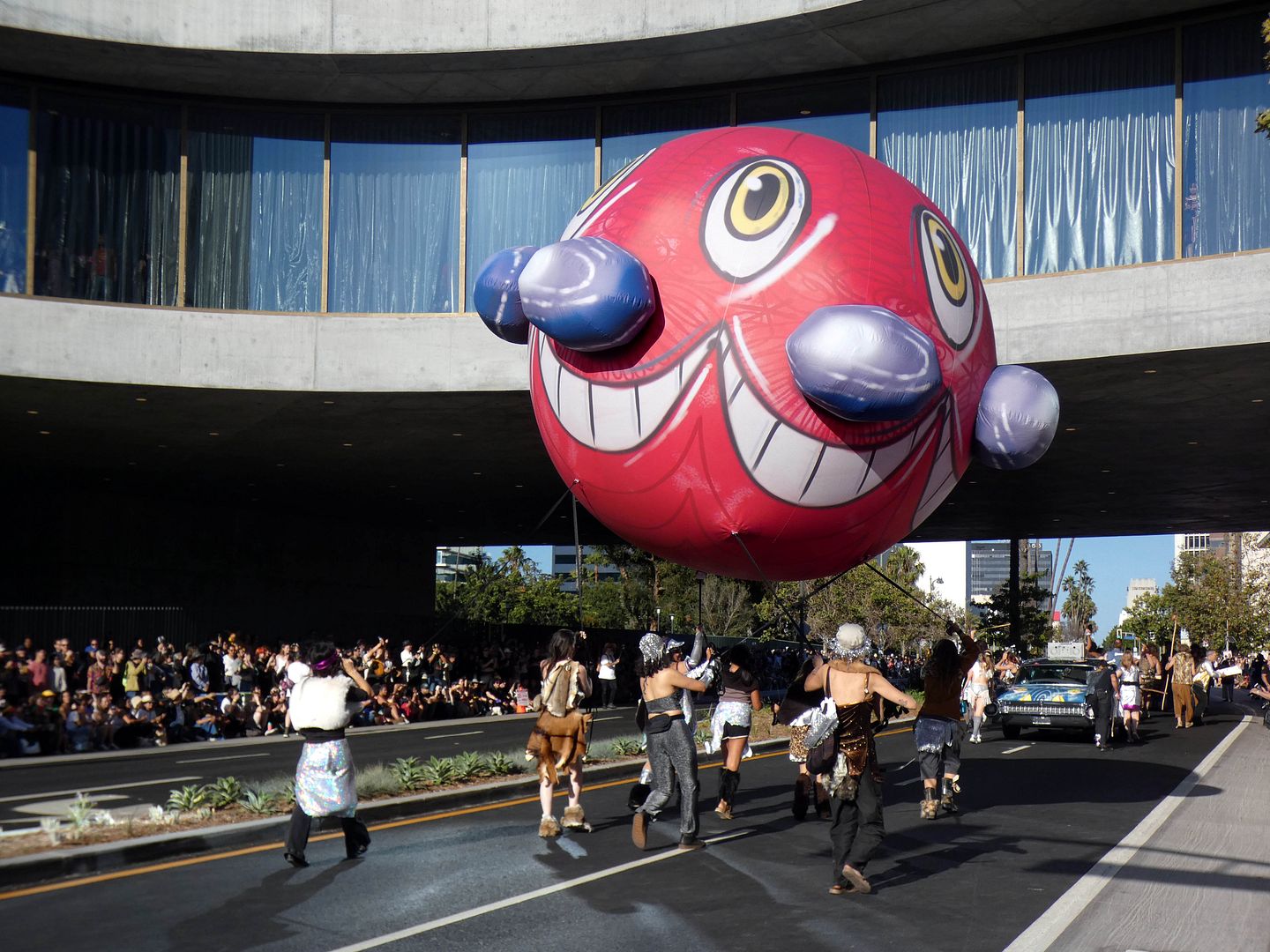
A Kenny Scharf-designed lowrider was followed by a distinctly Scharfian balloon, whose monumental size made it worthy for the Macy's Thanksgiving Day Parade.
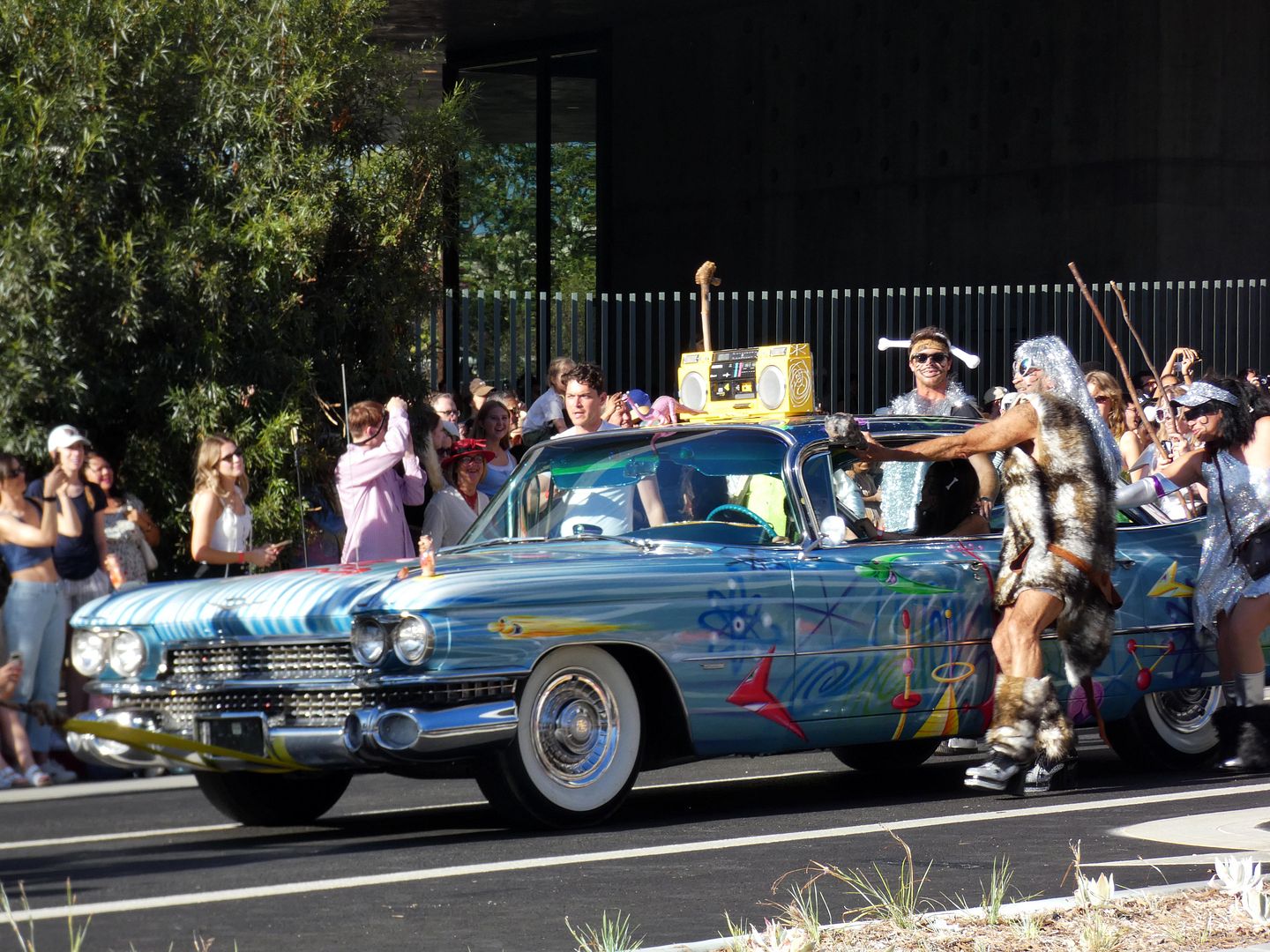
It was the only car, in fact, allowed in the parade—which otherwise required participants' works to be human-powered.
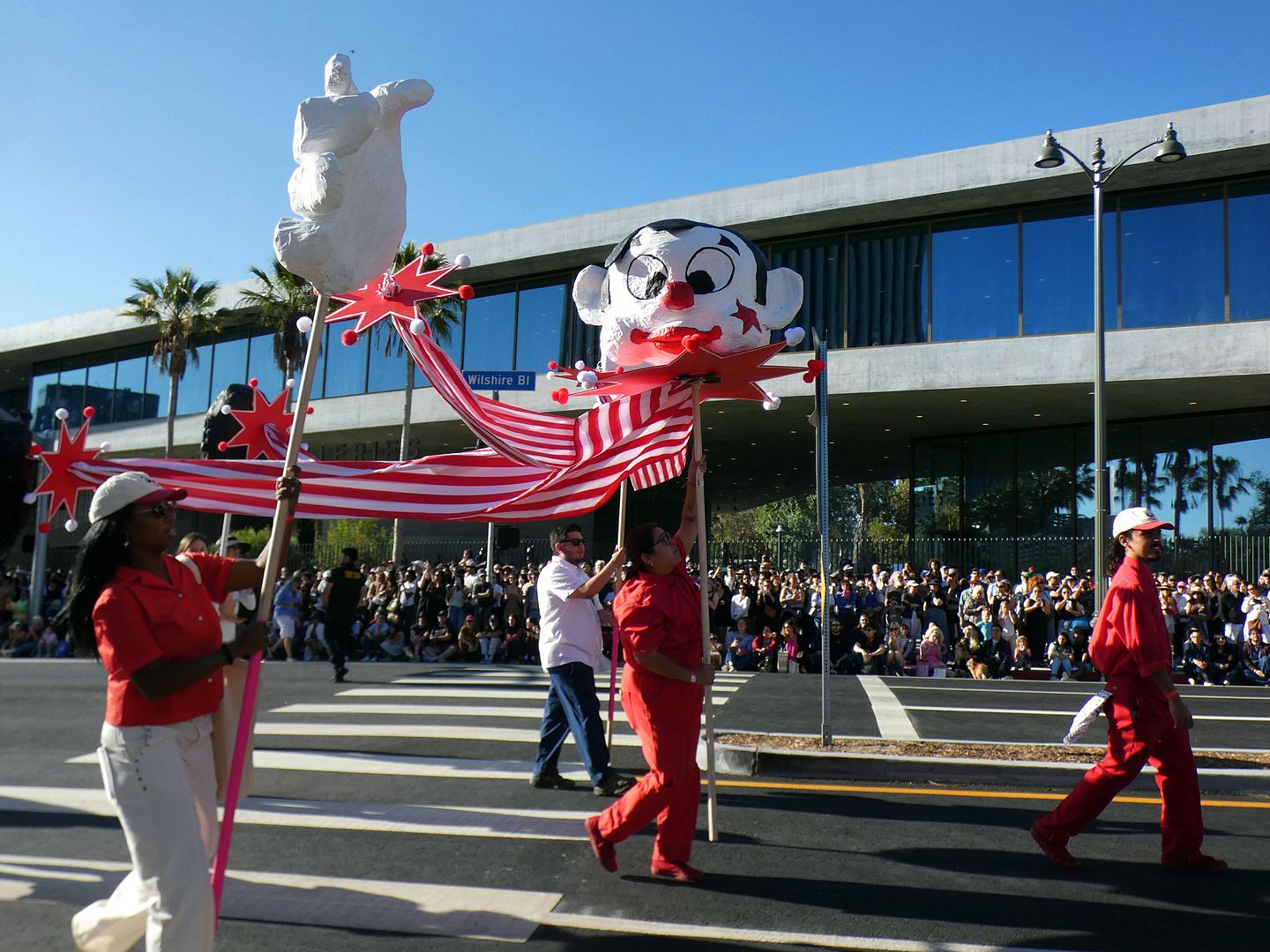
Carryable sculptures were welcome—and for many, including the Bob Baker Marionettes, that meant larger-than-life puppets.
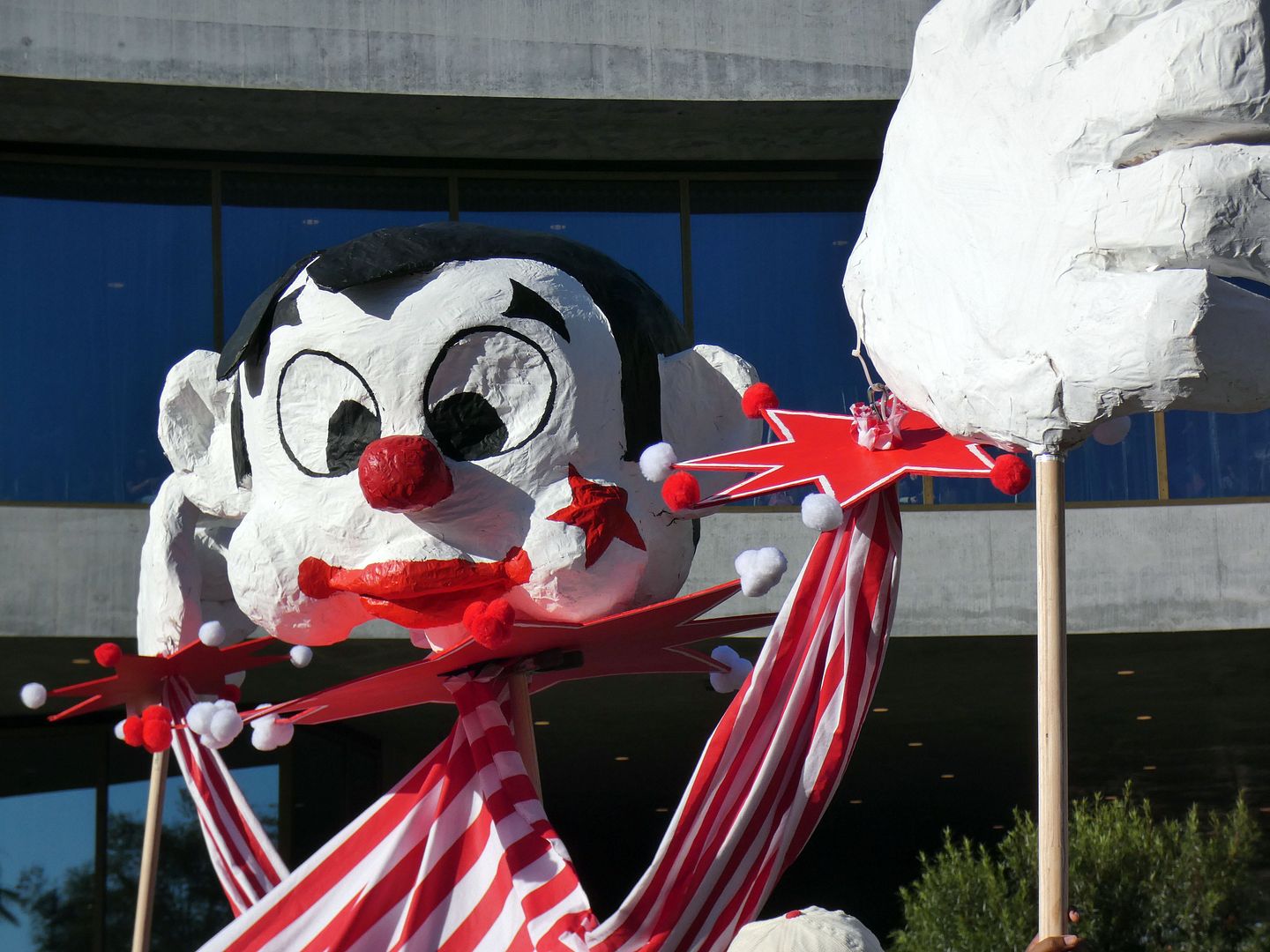
It took several puppeteers to help a giant papier-mâché version of the puppet theater's Wiz Clown make its way down Wilshire—which perfectly set the tone for the all-ages event.
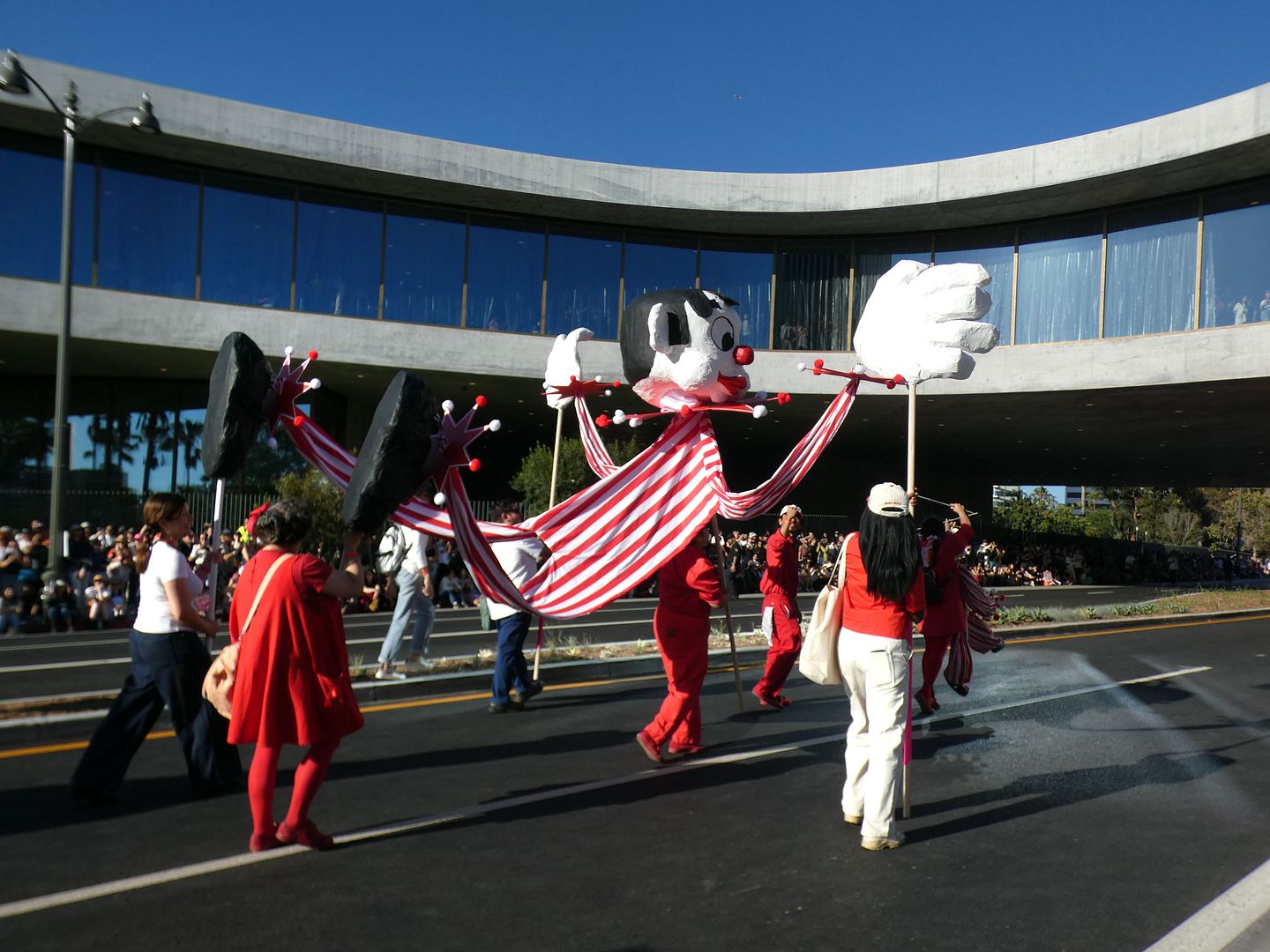
We couldn't believe so many people had gathered in one place in Los Angeles, a city not necessarily known for its parades (unlike New York), to witness this procession. (Technically, the Rose Parade occurs in a different city—Pasadena.)
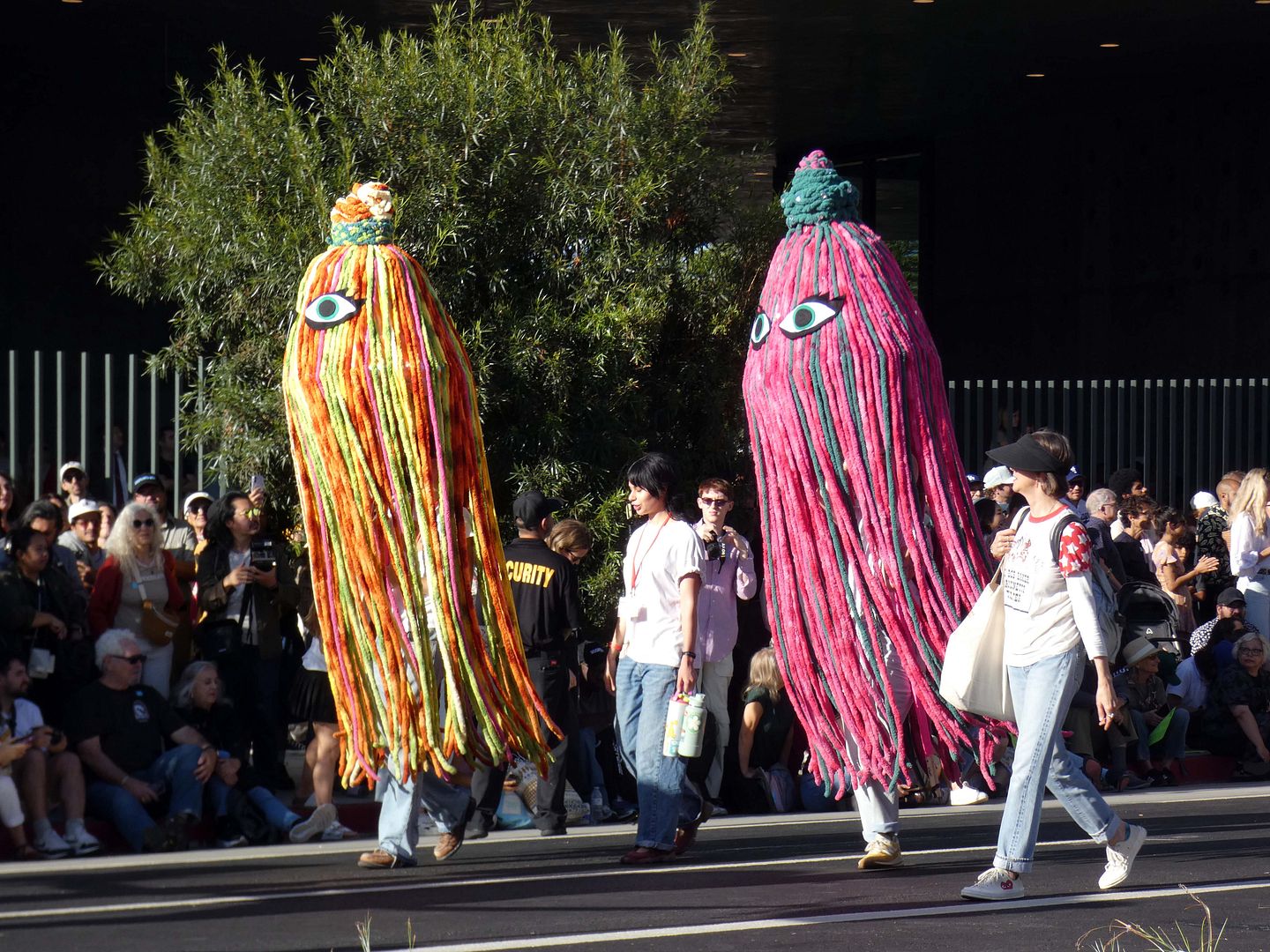
But then again, Bob Baker's puppets are still riding the wave of popularity garnered by appearances at this year's Coachella music festival, where they took the stage with Freak Nature Puppets' "Hair Eyes" creatures just as they did in front of LACMA this past weekend.
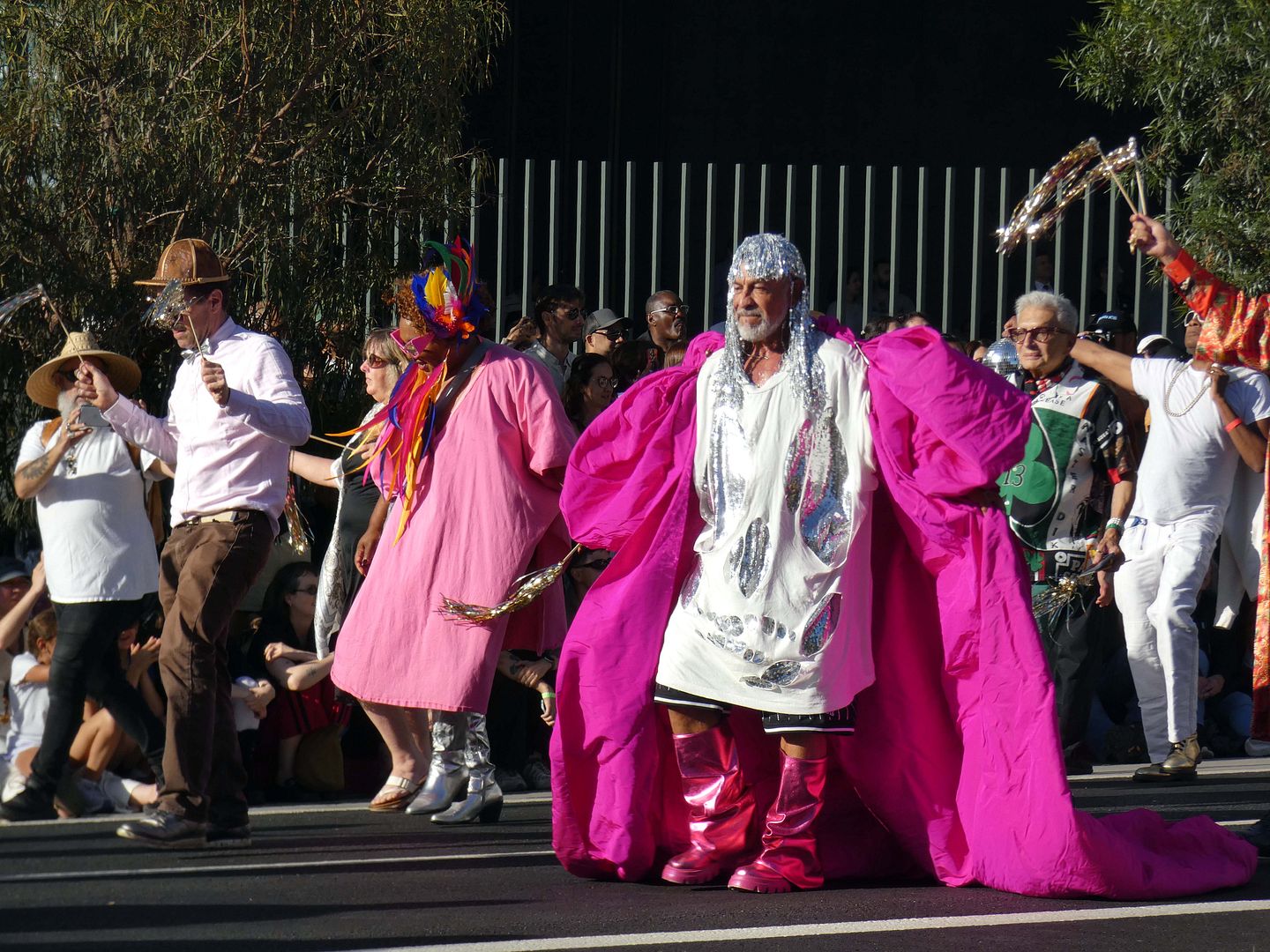
Helping to keep that party atmosphere going was Chicanx artist Nao Bustamante, who brought a "street edition" of her "Brown Disco" installation, a collaboration with East Hollywood gallery Track 16.
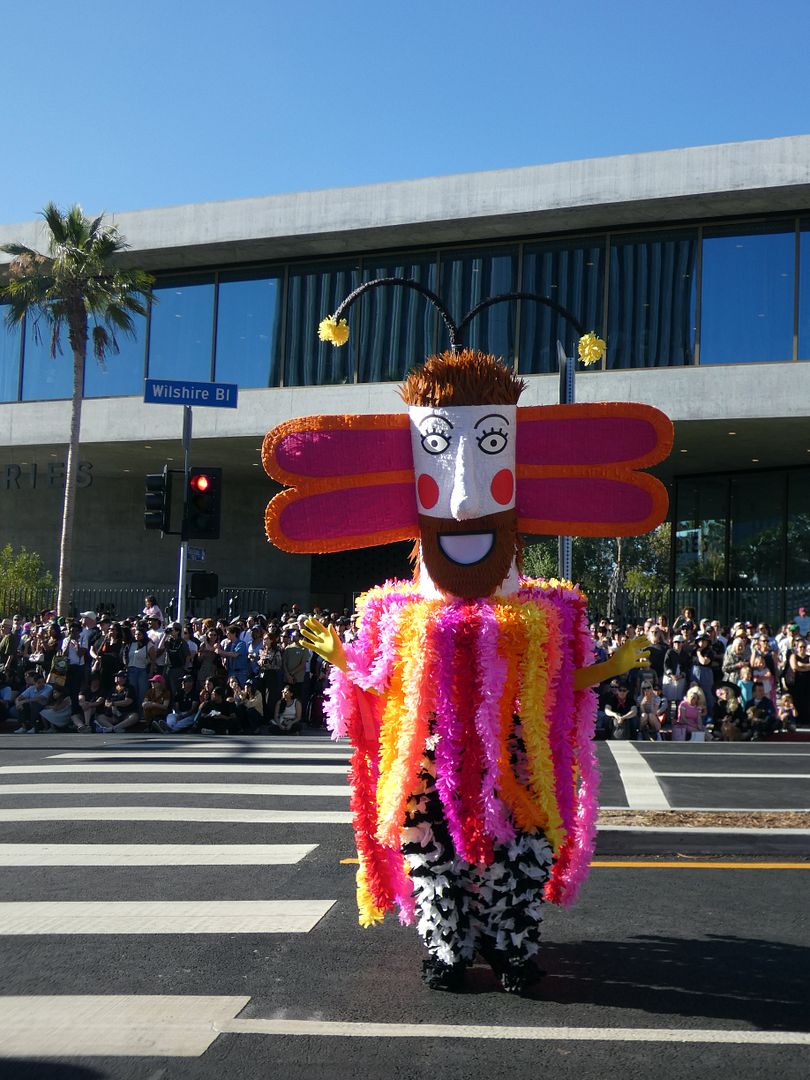
The Art Parade provided the opportunity for human participants to transform themselves into piñatas (like The Piñata Guys, above)...
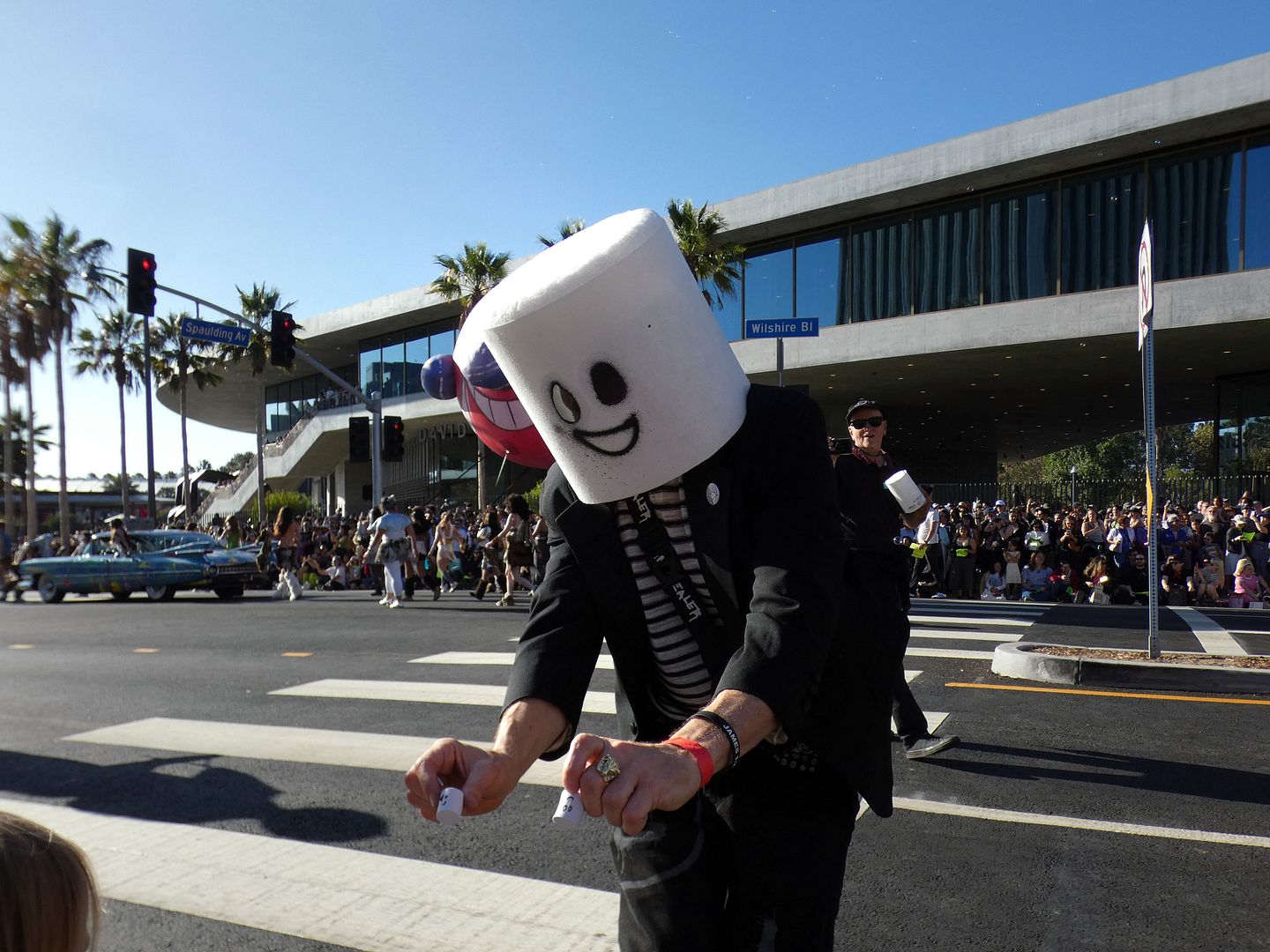
...and Marshmallos (as designed by Gregory Siff, bearing a striking resemblance to Marshmello the DJ).
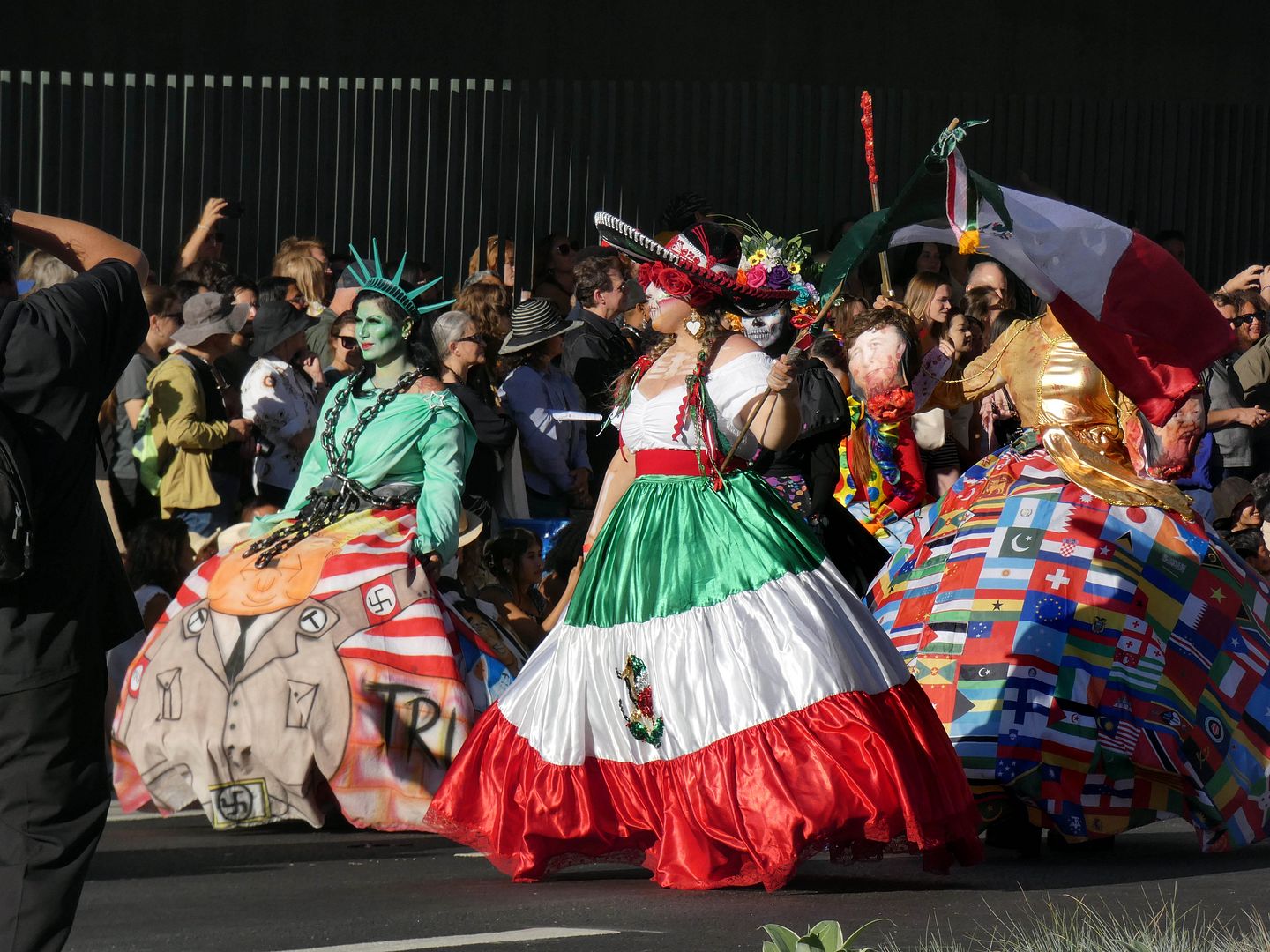
Chicana artist Maria Flores marched as her "La Muerte Maria" Catrina character, with airbrush painted skirt...
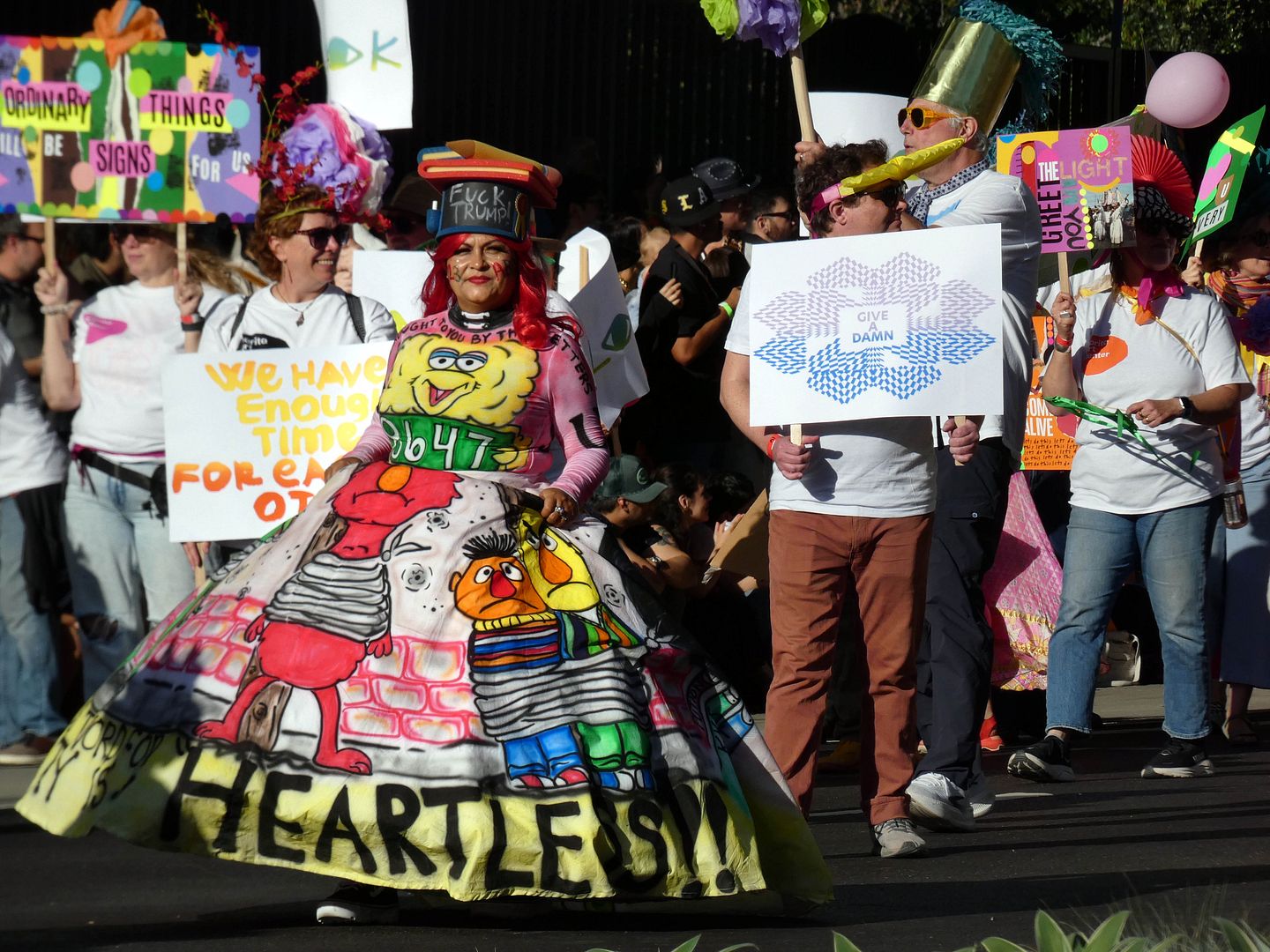
...and Corita Art Center staged a living artwork known as "The Unordinary Procession," inspired by Corita Kent's Mary’s Day celebrations in the mid-1960s.

K-Town's TAG Gallery brought Lady Liberty as part of its "Breath of Freedom" exhibit...
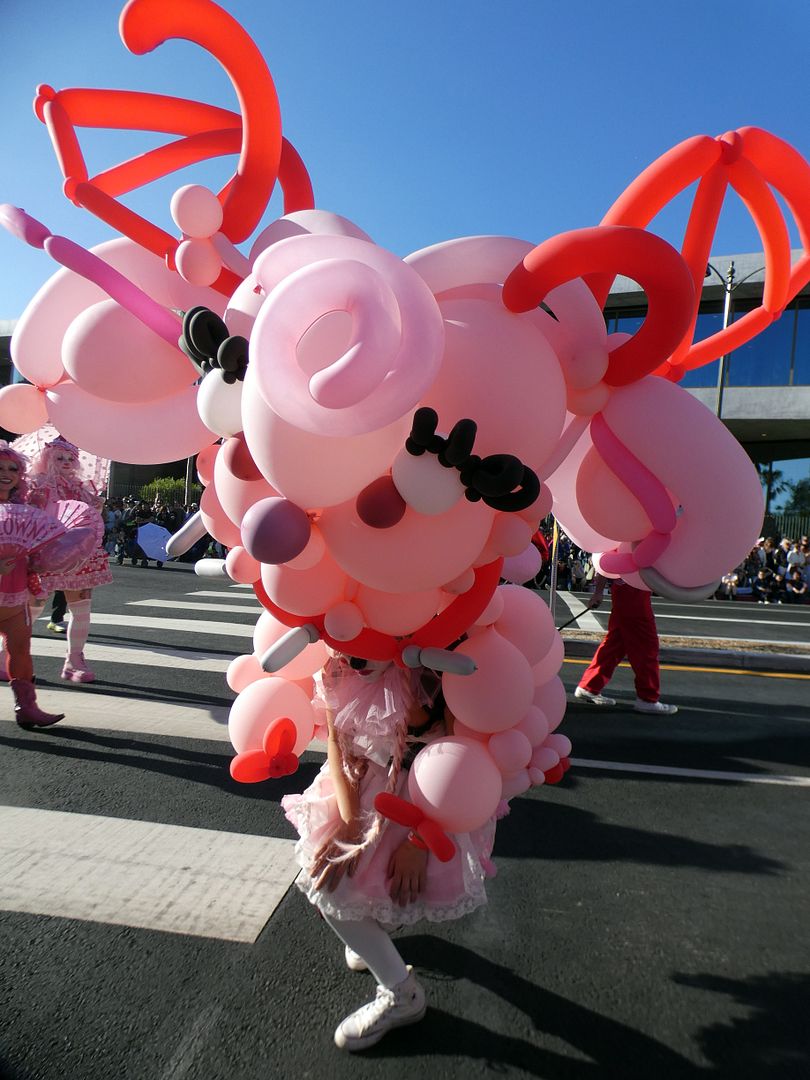
...and artist Linda Chen ("Creepy Linda") showed off her Creepy Gals Land aesthetic in an explosion of pink and red.
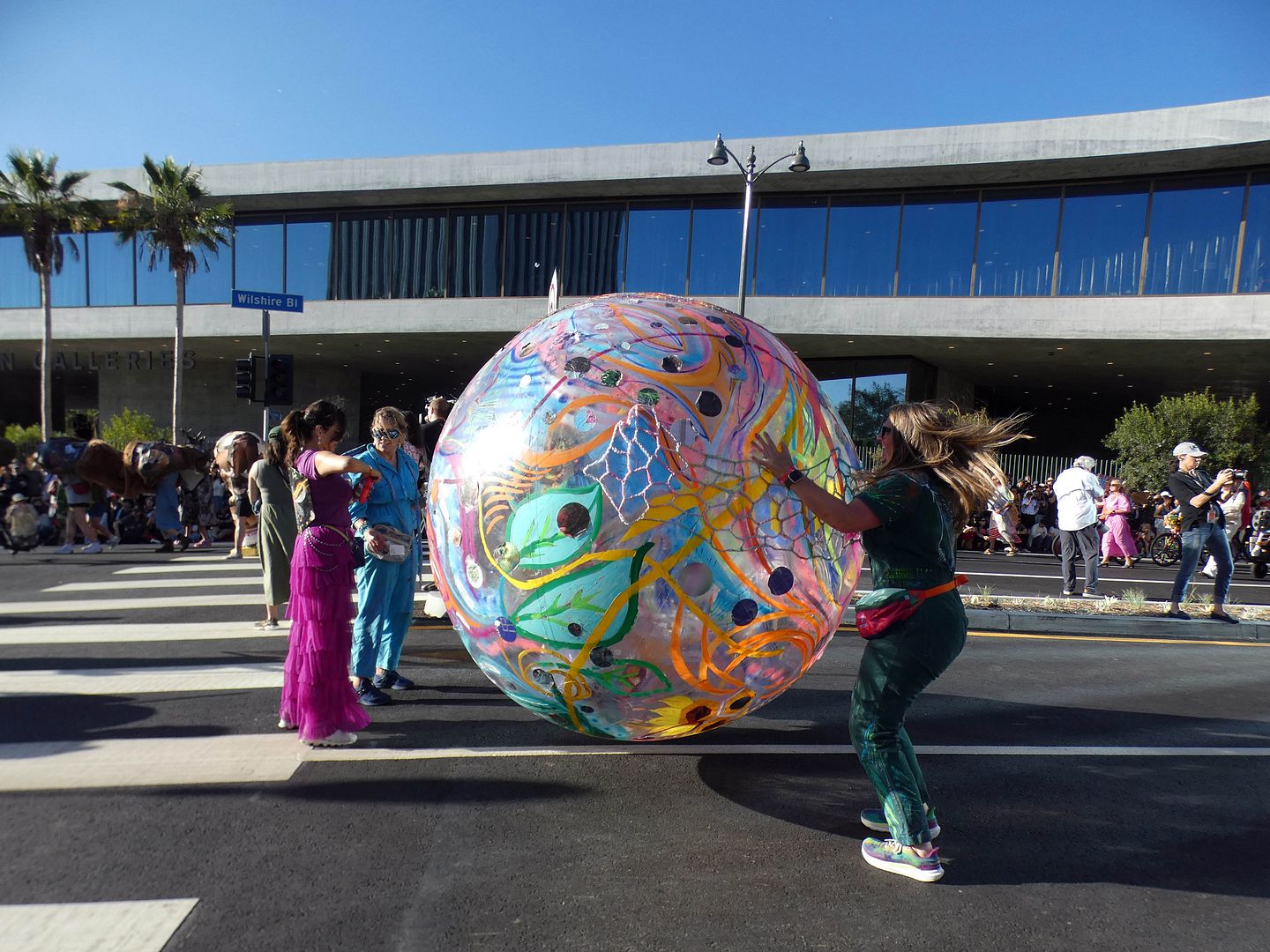
An artsy crew carried Armelle Ngo's painted sphere HELD along the parade route, bouncing a bit as they went...
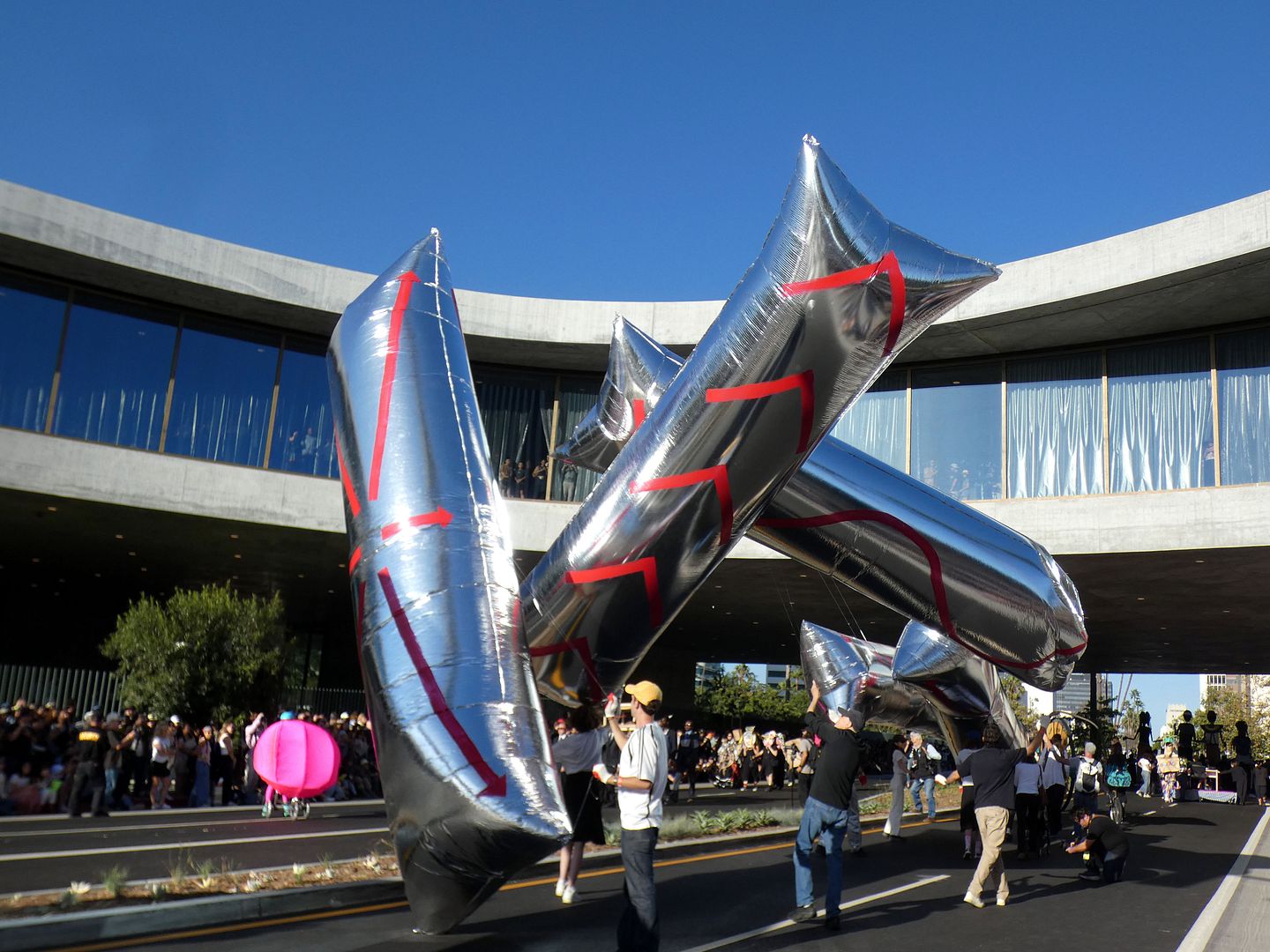
...while the mylar balloons of Madeline Hollander's "Floating Score" evoked Andy Warhol's "Silver Clouds" installation.
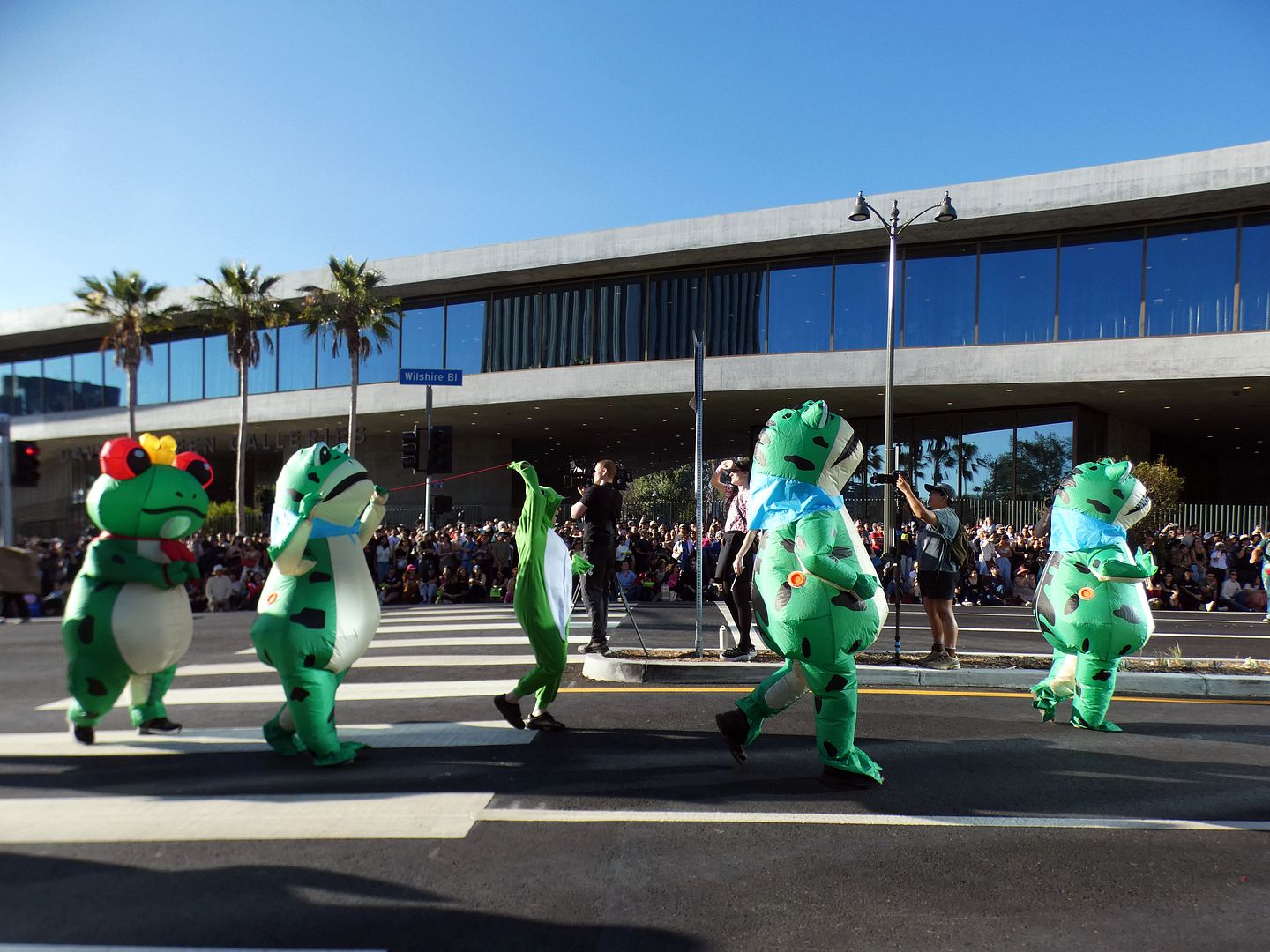
Inflatable frogs represented Rhiannon Aarons' "Amphibian Protocol"...
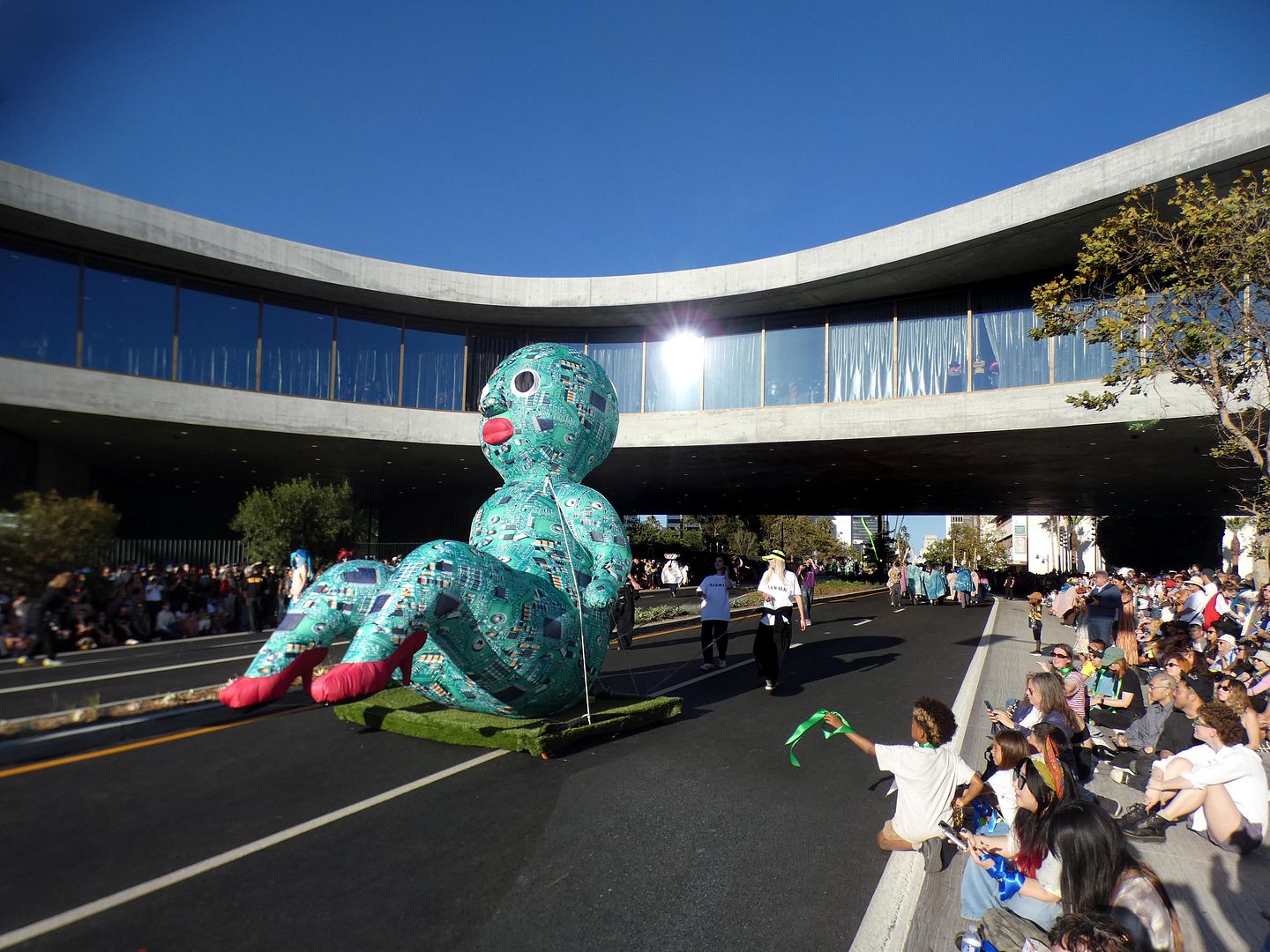
...while an inflatable sculpture called PLUGWALK thrust its creator, recent Chapman University art school graduate Reese King Paddock, into the spotlight with her depiction of a circuit-boarded baby.
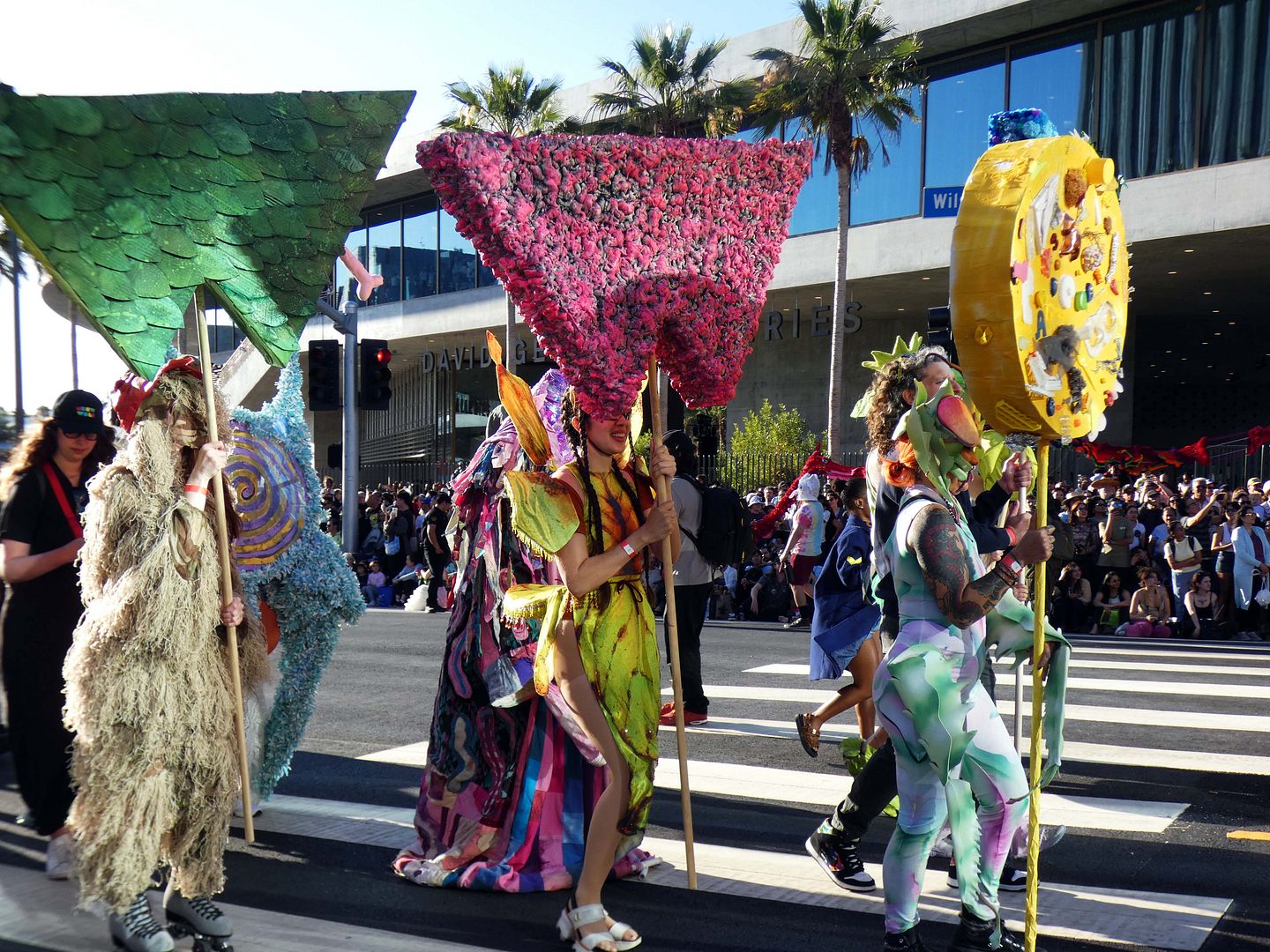
The Meow Wolf art collective made its LA debut ahead of the opening of the new Southern California outpost of its immersive art experiences (slated to open in late 2026).
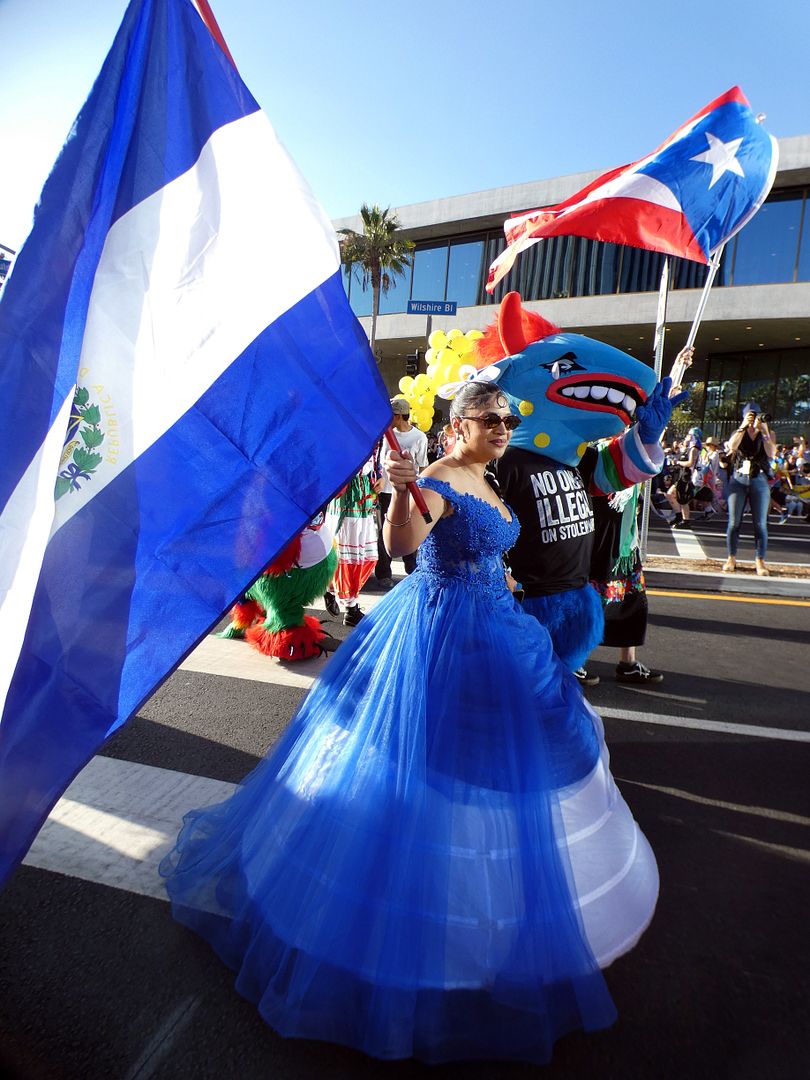
There were some political messages—as you'll find at most parades these days—particularly speaking out against anti-immigration policies and ICE enforcement.
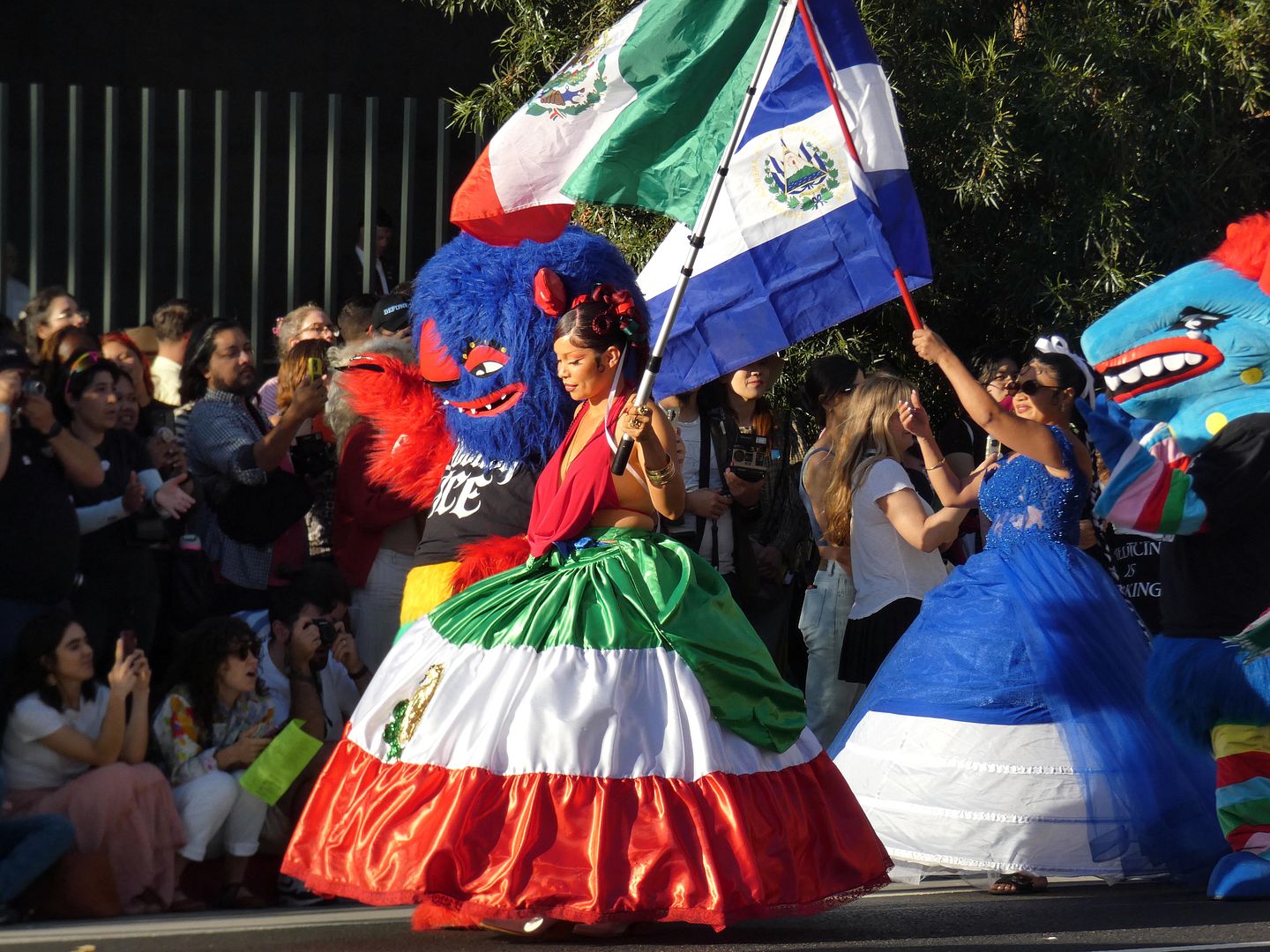
But even the mascots carrying a serious message brought a nice dose of whimsey to the parade.
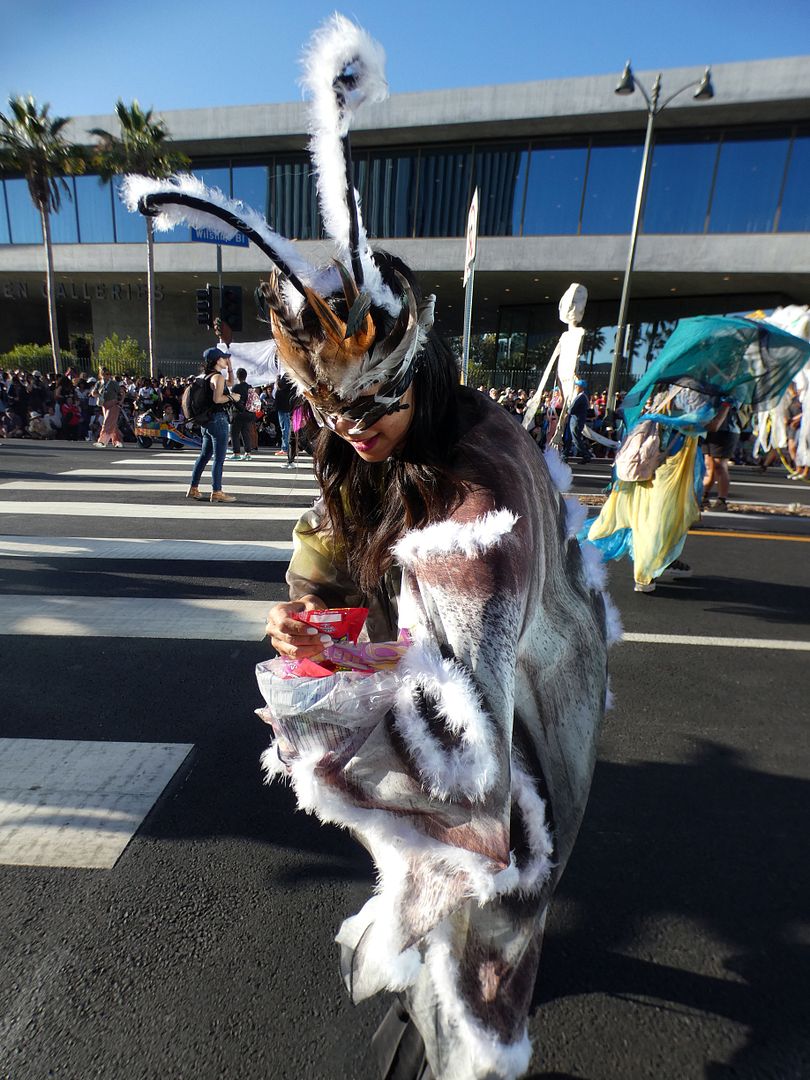
And next you could turn your attention to some kind of creature handing out candy to the kids sitting on the sidelines.
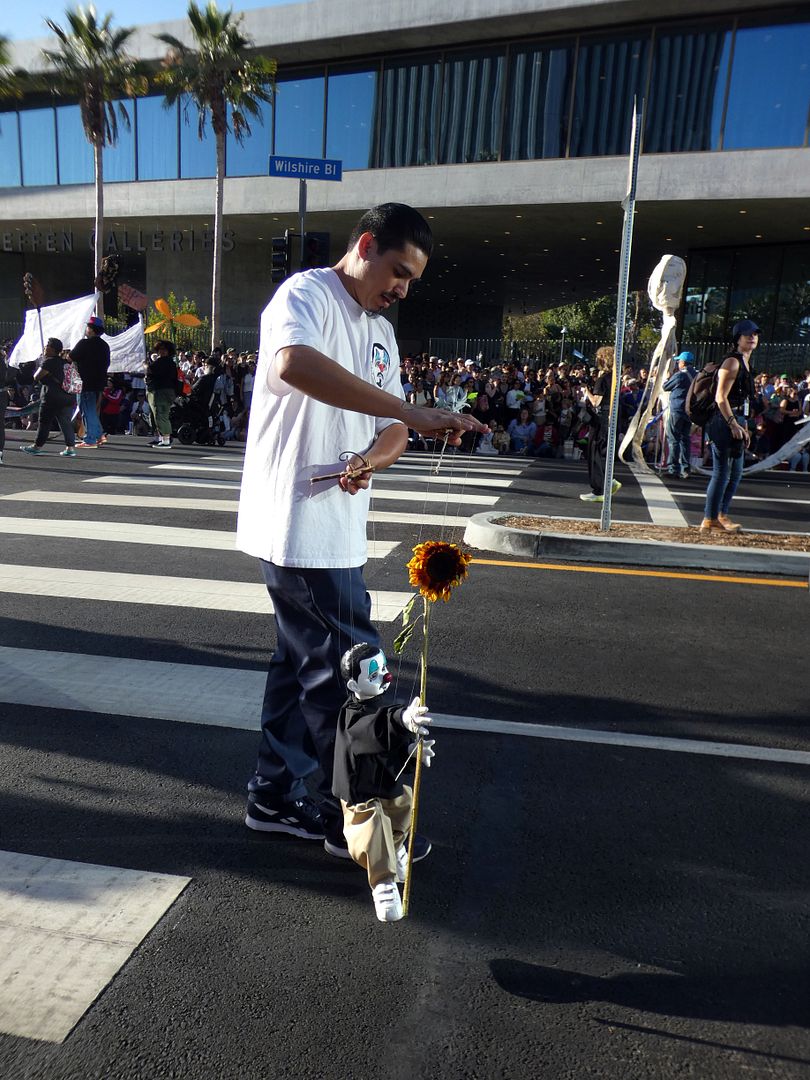
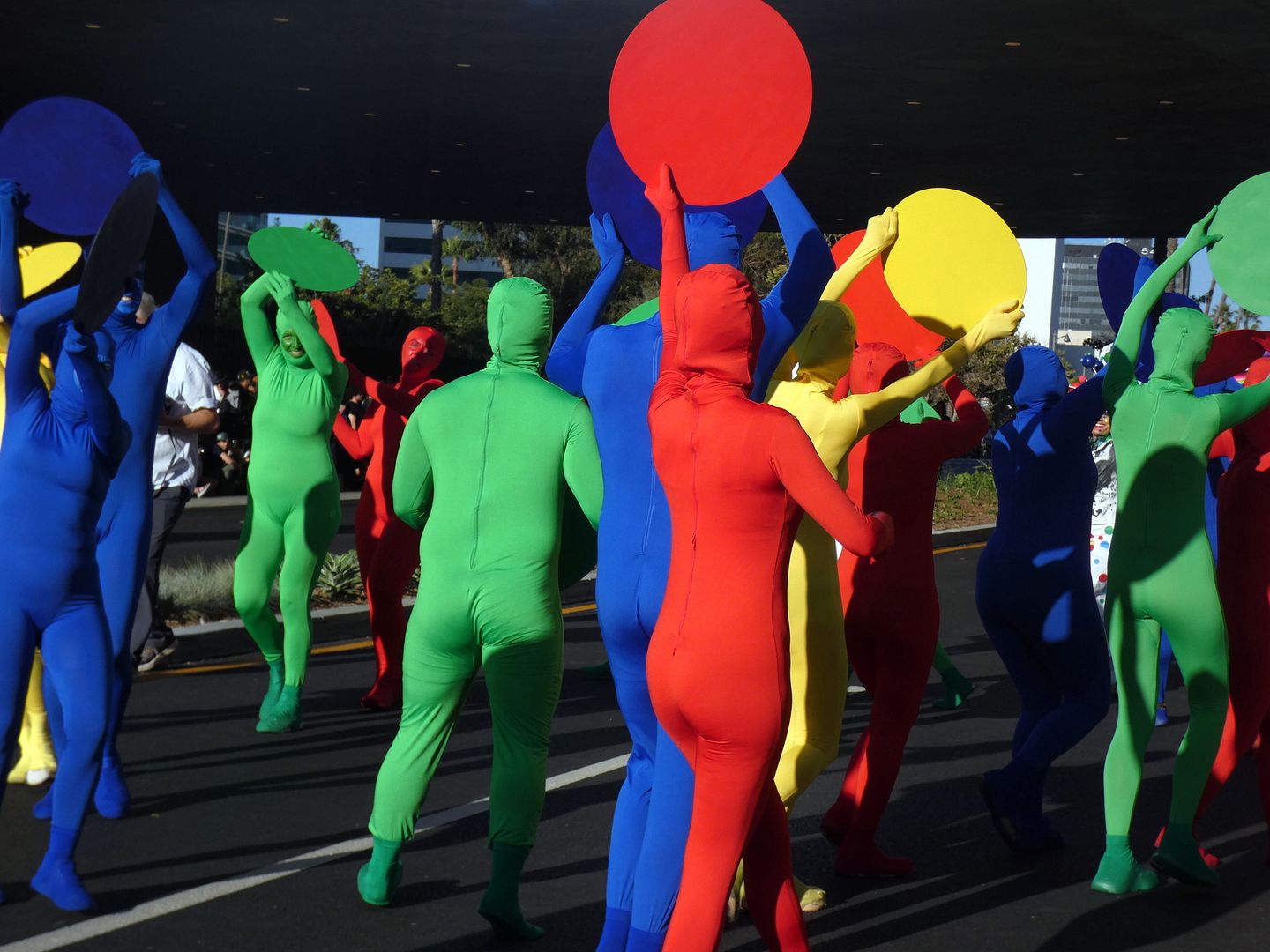

El Triste "The Saddest Puppet In Los Angeles" made an appearance with his puppetmaster, Cain Carias...
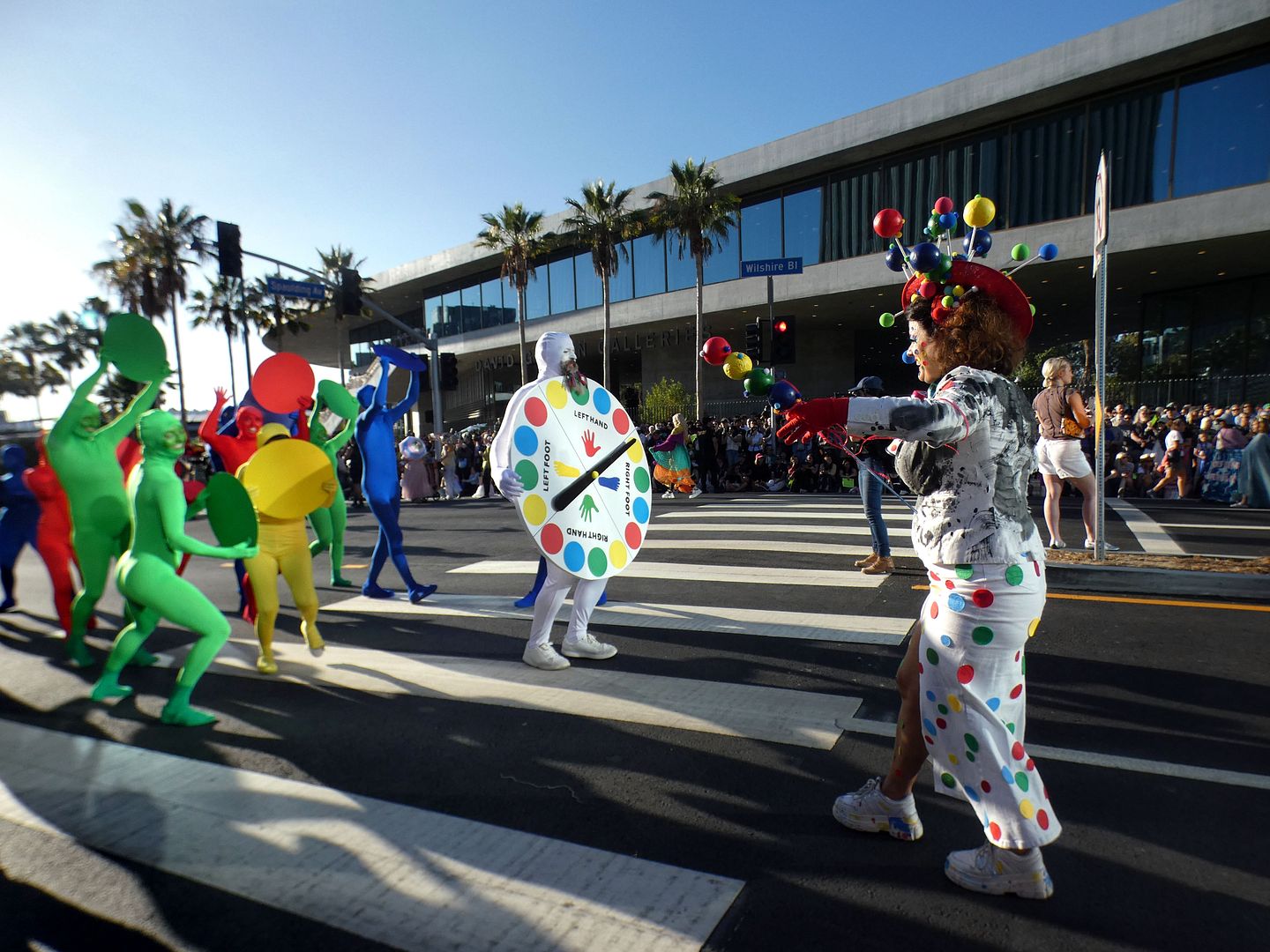
...while Javiera Estrada brought a living, moveable version of her "What Happened to Twister?" immersive installation from the Joy Department of the "Hospital of Emotions" pop-up at St. Vincent Medical Center.
Estrada says that "joy often lives in the messy choreography of being human together."
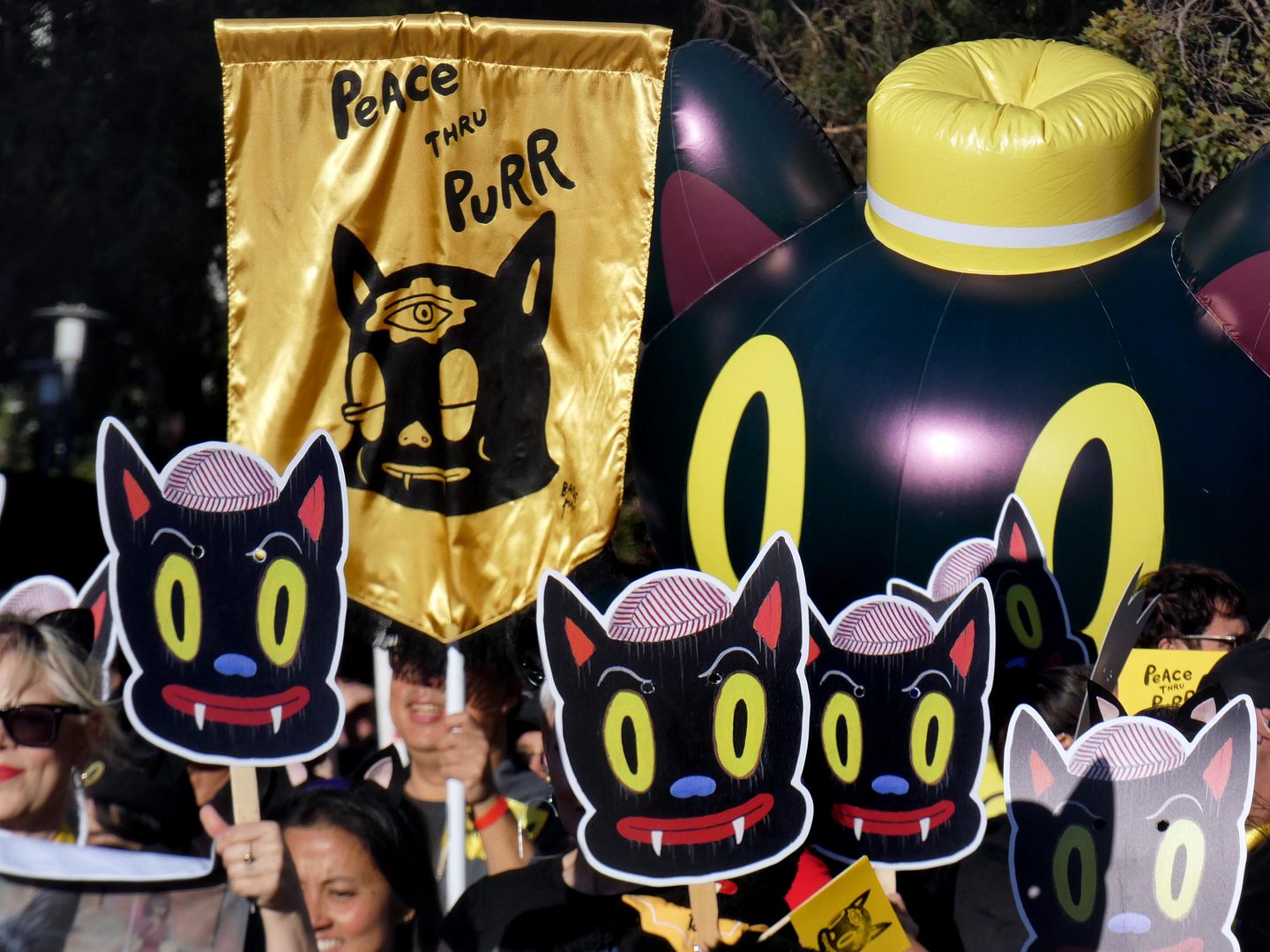
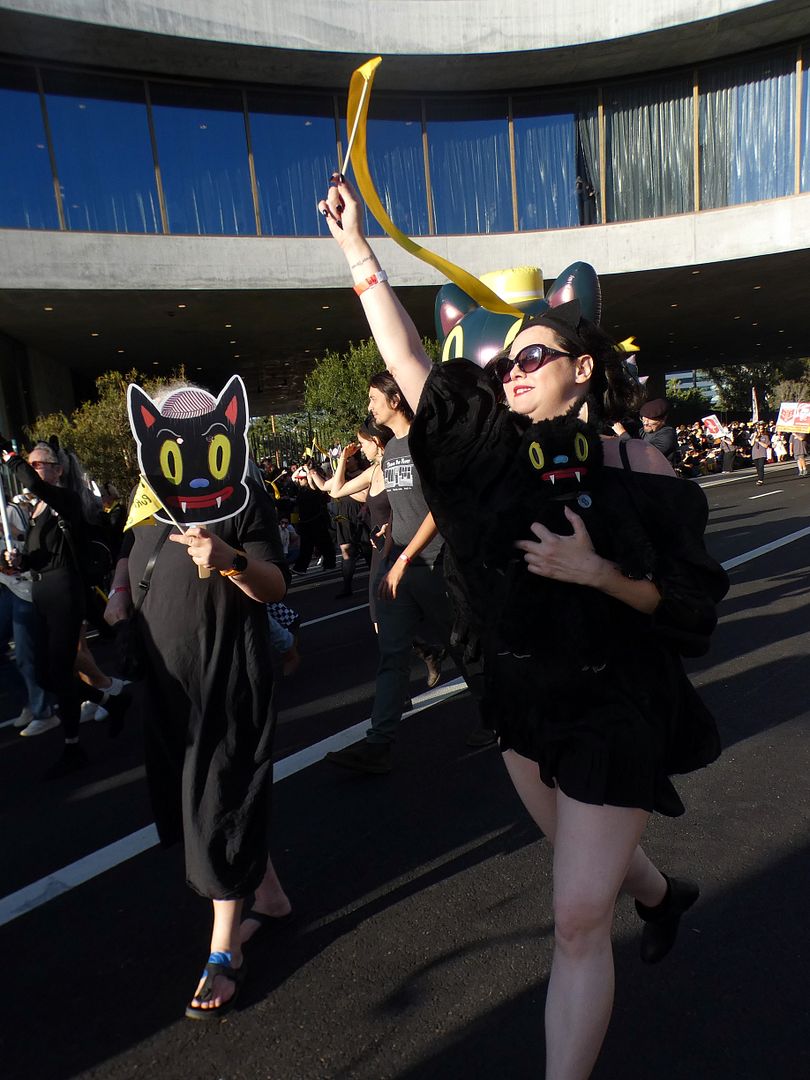
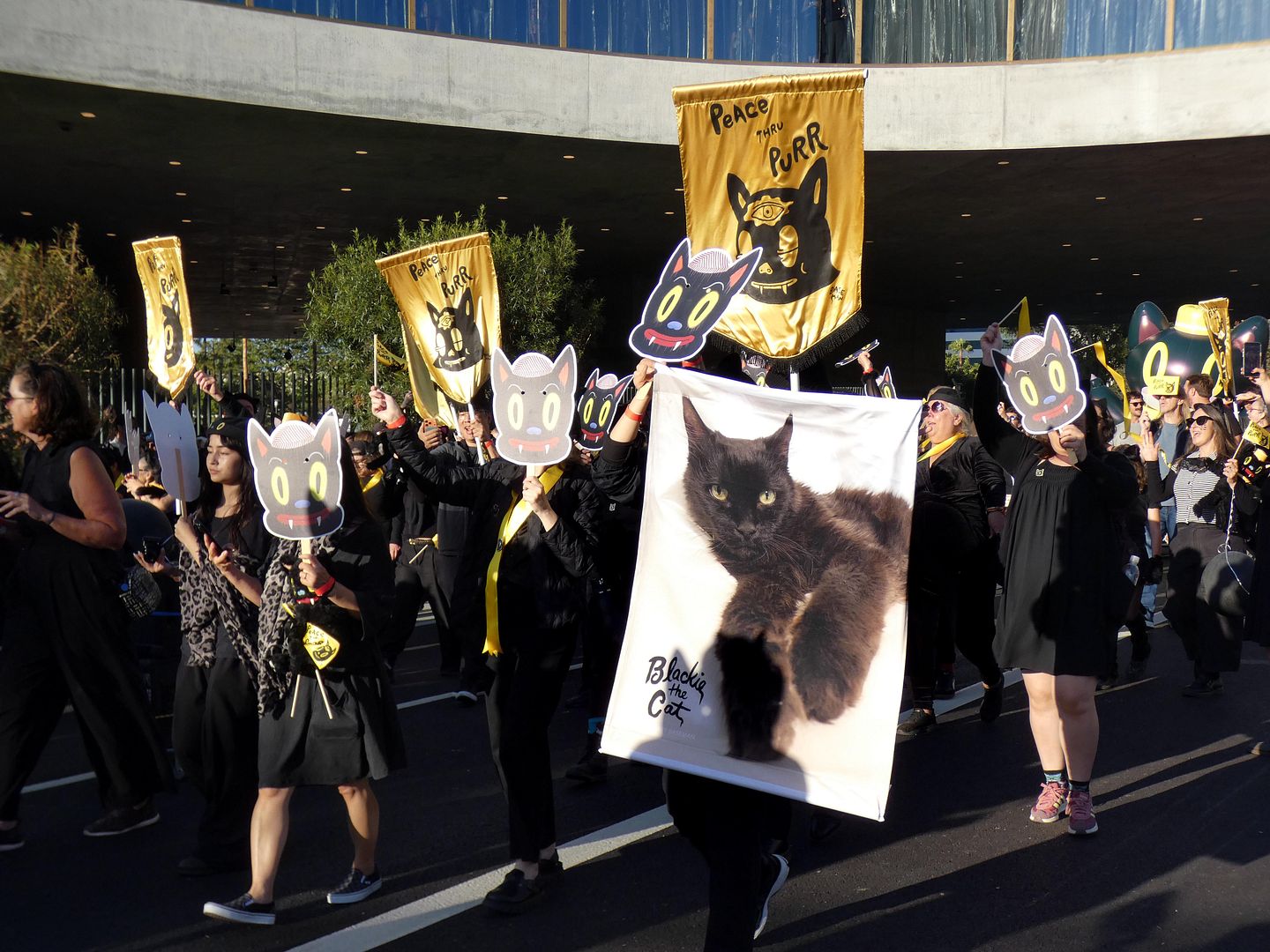
I actually had the chance to participate in the parade this year, as Gary Baseman was signing up volunteers to prance and purr like black cats in his "Peace Thru Purr" parade entry.
I decided I'd rather spectate and document—despite my own affection for black cats and admiration for Baseman's work.
I definitely still felt the positive vibes—and literal vibrations—of Baseman's work, which is largely inspired by and continues the legacy of his dearly departed Blackie the Cat.
While Baseman himself led his cat brigade down Wilshire, Shepard Fairey seemed to be missing from his POWER TO THE PEOPLE parade entry.
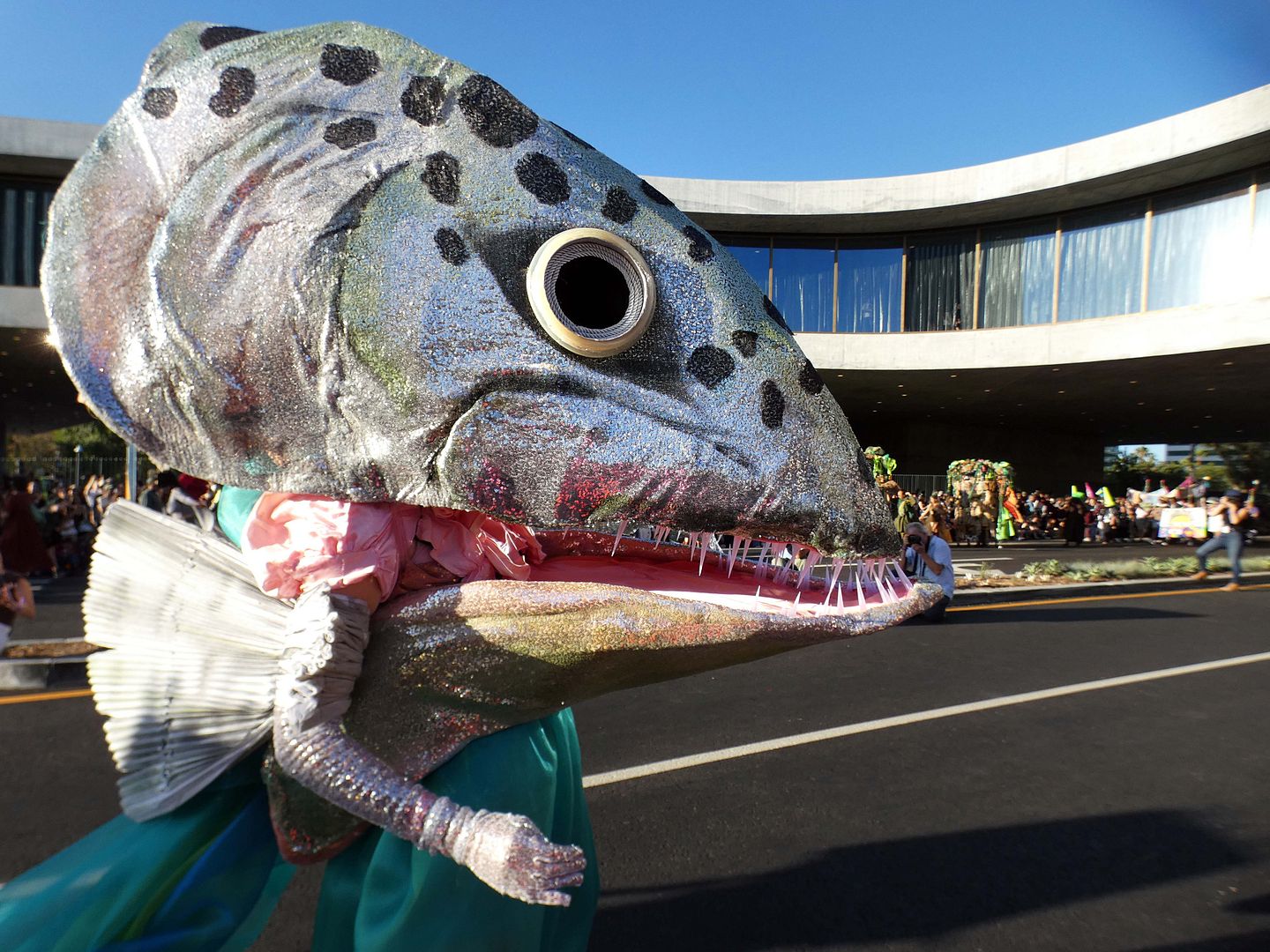
Merissa Mann, known for her fish costumes and environmental art, showed off her "Salmon L.A. River Dance"...
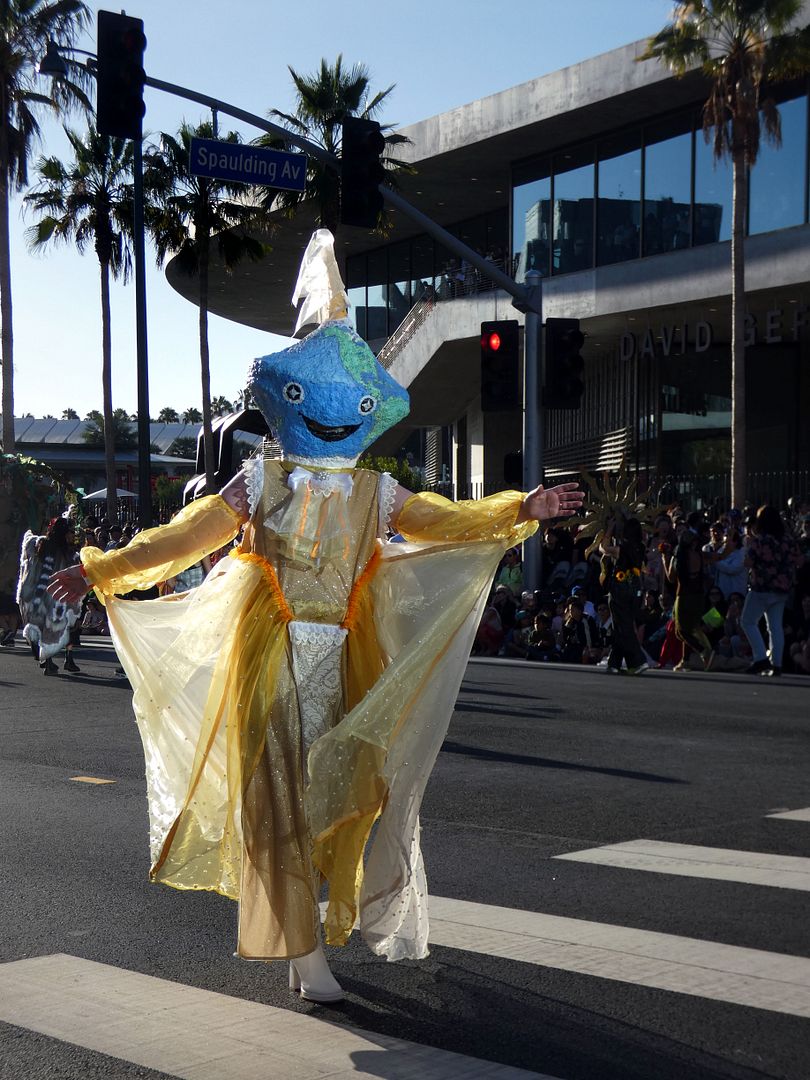
...Dorado 806 Projects' "Solar Return" helped celebrate the summer solstice...
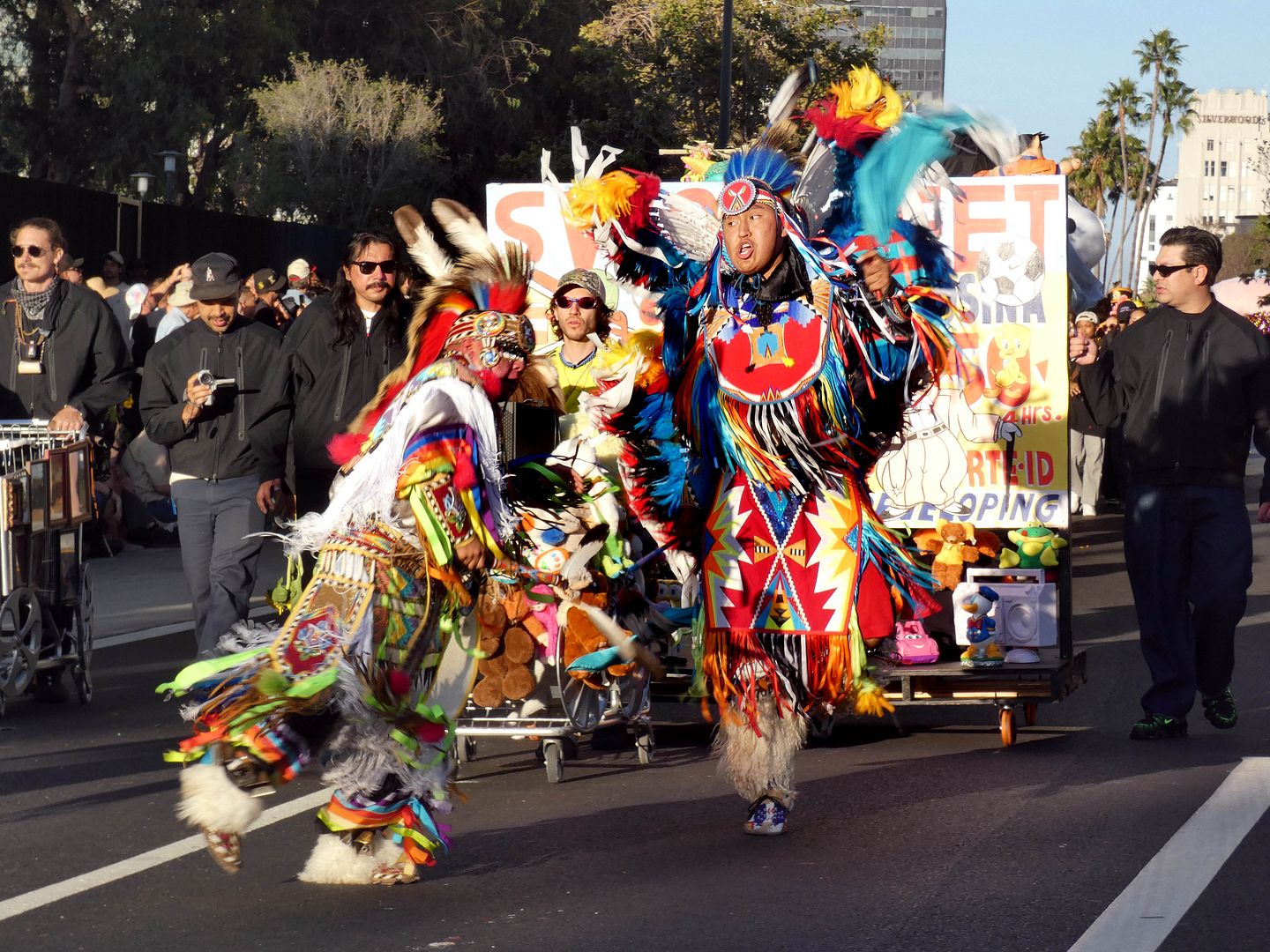
...and, for a time, the parade erupted with the energy of a pow-wow.
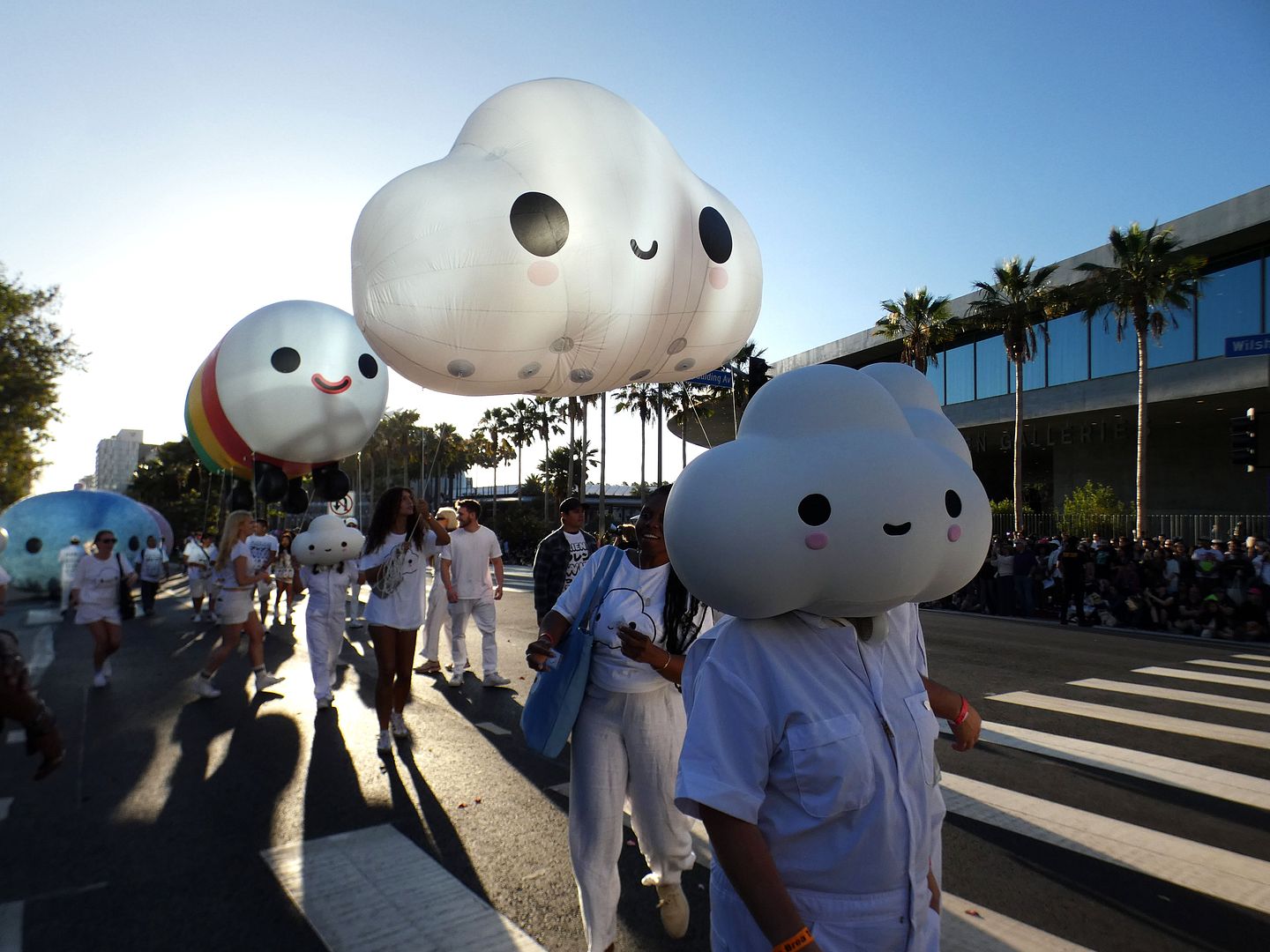
Finally, Friends With You brought its "Little Cloud" balloon—a much larger version of which appeared in the 2018 Macy's Thanksgiving Day Parade—along with two of its furry orbs (we thought they were mochi) to help end the event on a soft, happy note.
The Art Parade felt deliciously analog and countercultural—and a procession like this made the Rose Parade look hilariously stodgy. It was a good move for LACMA to bring both artists and the community together in such a way that made the museum feel like the place to be in that moment.
Will it come back next year? Will it be the same? I'll admit, part of me is doubtful—which is one of the reasons why I had to go this year. After the fact, I wanted to be able to say, "I was there."
Related Posts:

Thank you for your review! It was one of a kind. Felt so good to be marching that parade! Cheers!Armelle
ReplyDelete