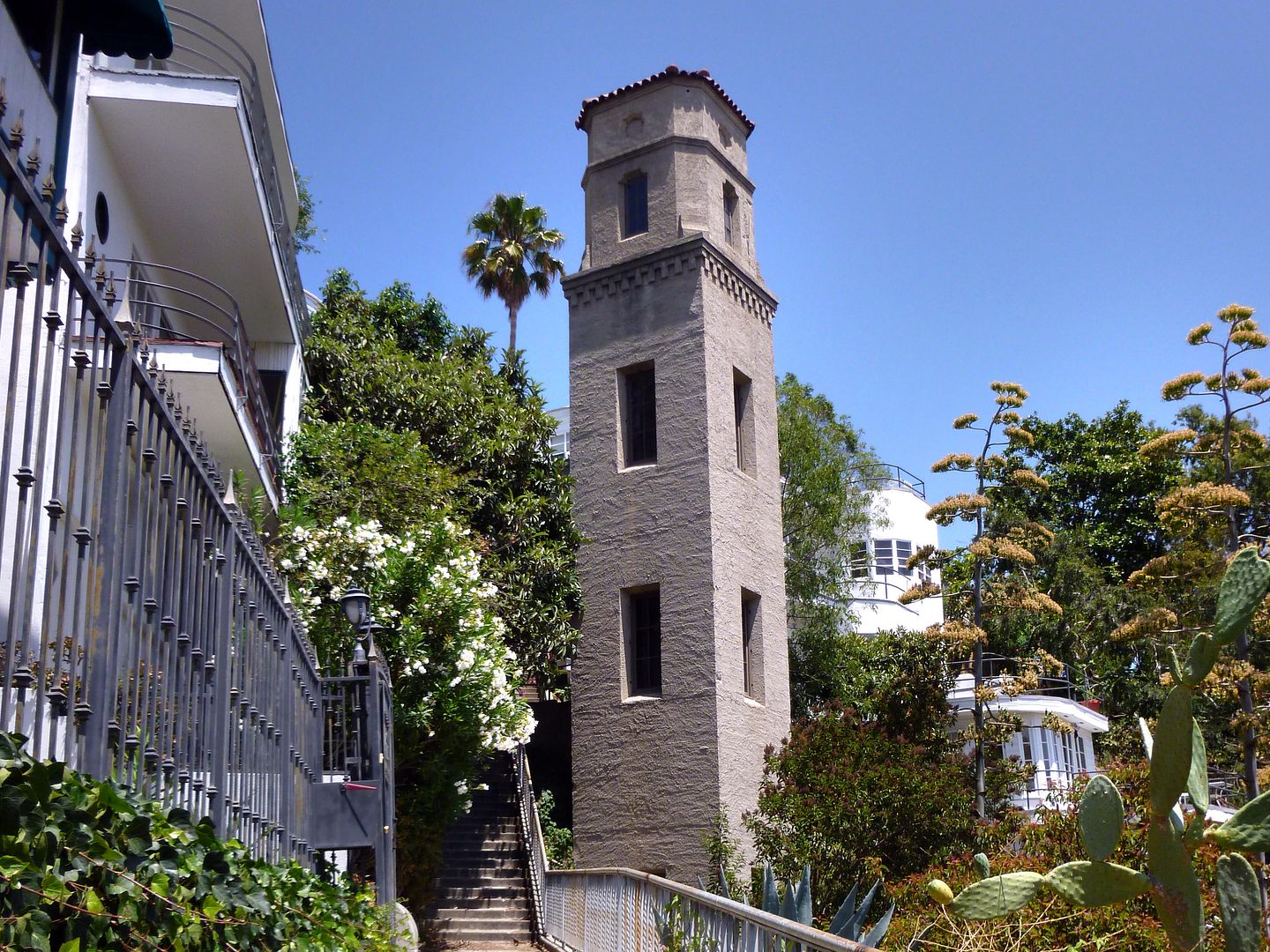
Back in 2013, I became fascinated with a tower in the hills behind the Hollywood Bowl, after coming across it on one of Charles Fleming's Secret Stairs walks. I vowed then that someday I would ride the elevator inside that tower.
When you move from New York City to Los Angeles, everybody outside of LA says, "Oh, but you have to drive."
That's not a bad thing to me. I often wished I had a car when I lived in three of the five boroughs. And by the time I moved from Brooklyn to Manhattan in 2003, I'd been avoiding the subway ride home late at night for years already. At one point when I was making enough money, I took cabs to work every day.
But living in Beverly Hills since 2011, I have felt the pinch of not even having the option to ride the subway. If I wanted to, say, ride the Expo line to an event at the Coliseum (so as to avoid traffic and high parking fees), I'd still have to drive five miles (or 20 minutes) and park my car in the Metro lot.
Thank goodness for the bus lines, which have gotten me where I've needed to go many times when my car has been in the shop and I couldn't afford rideshare.
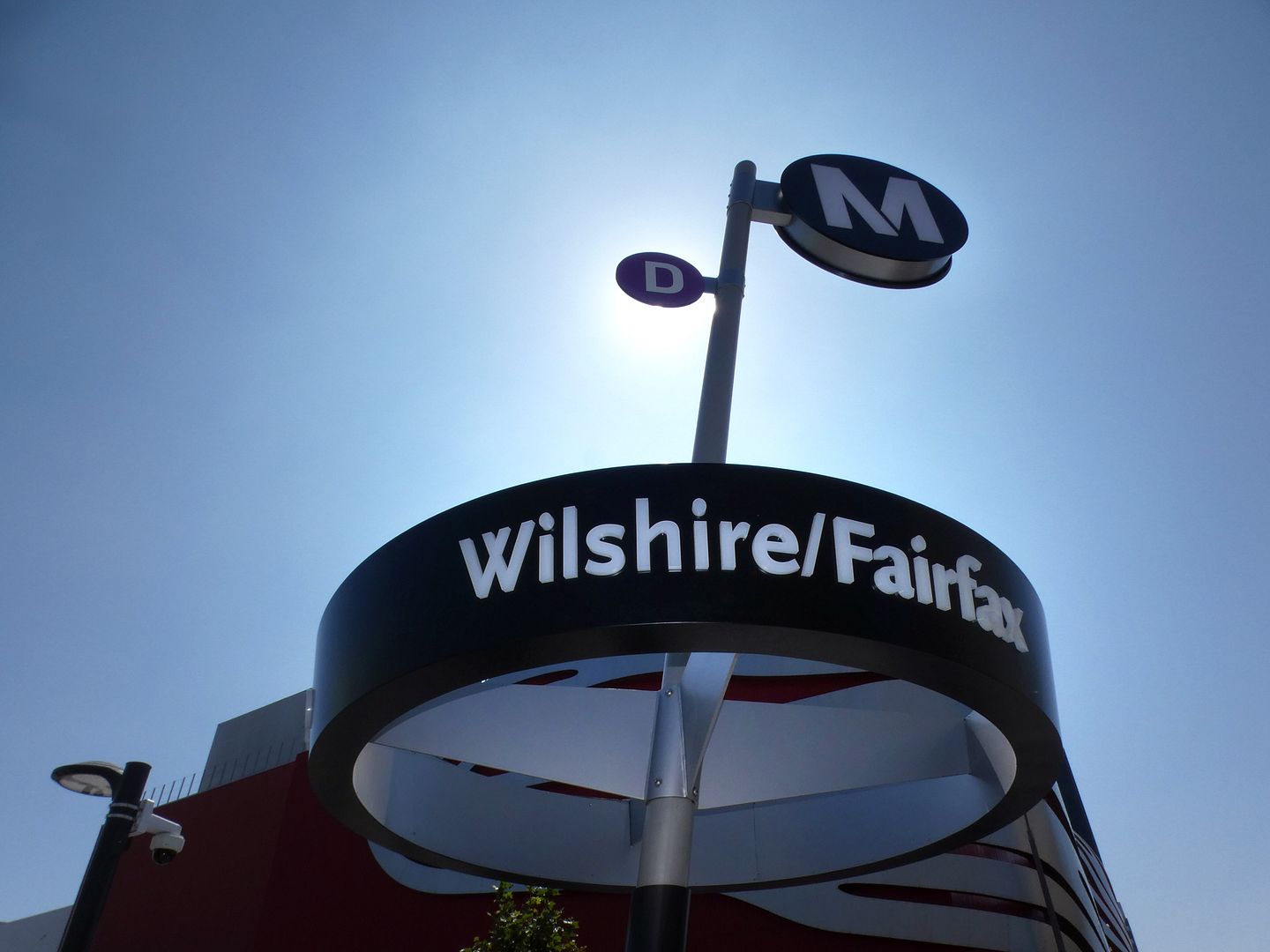
So even though public transit has not been part of my daily routine, I was still excited that the LA subway was finally coming to Beverly Hills, thanks to the Purple Line Extension—or what's now known as "the D."
There are five main movie production studios in Los Angeles, and only four of them give studio tours: Warner Brothers, Paramount, Sony, and Universal. I'd visited them all (plus some smaller ones like the Fox lot, which didn't allow photos) except one—and the one holdout was the one that provides extremely limited public access.
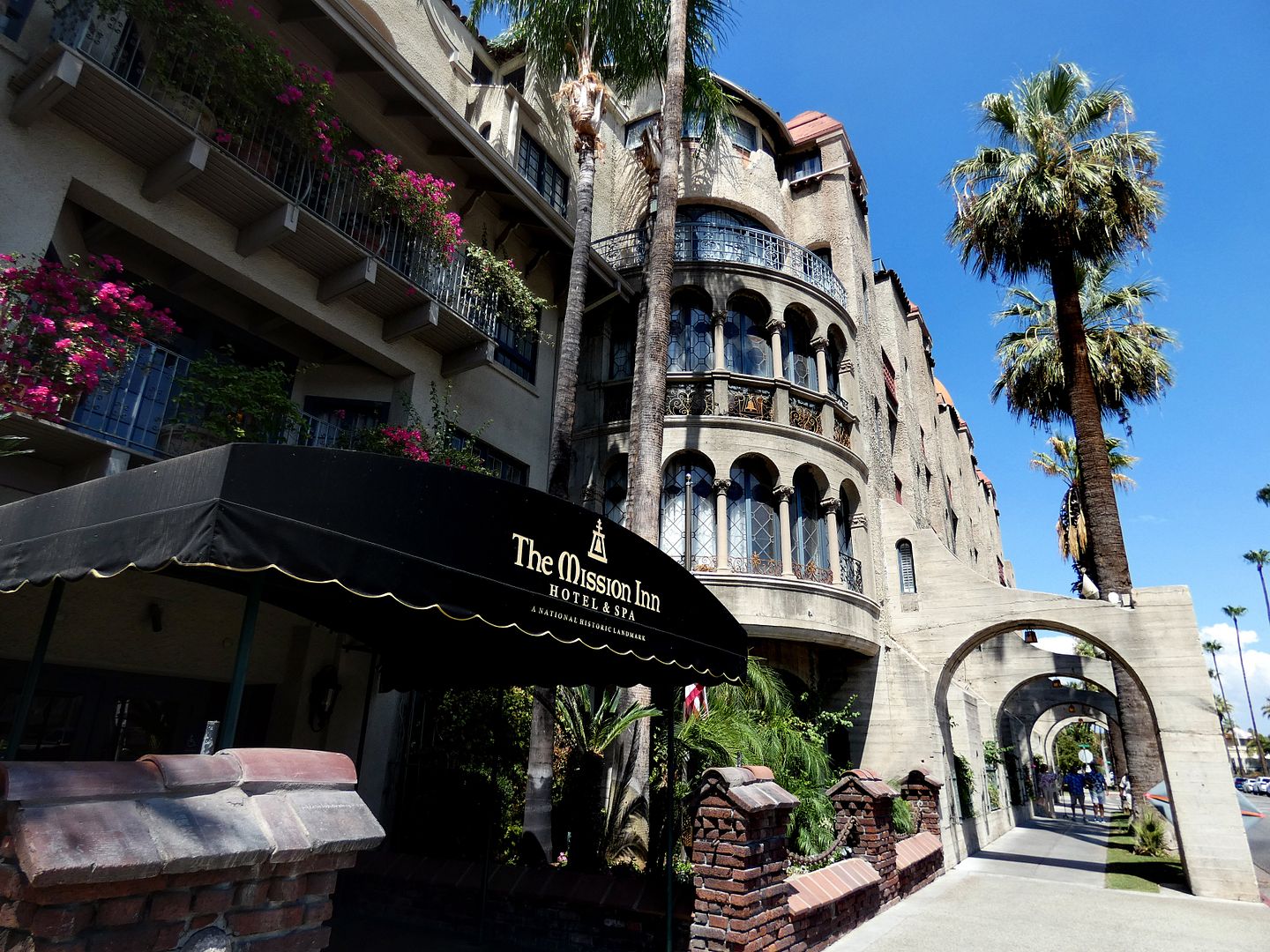
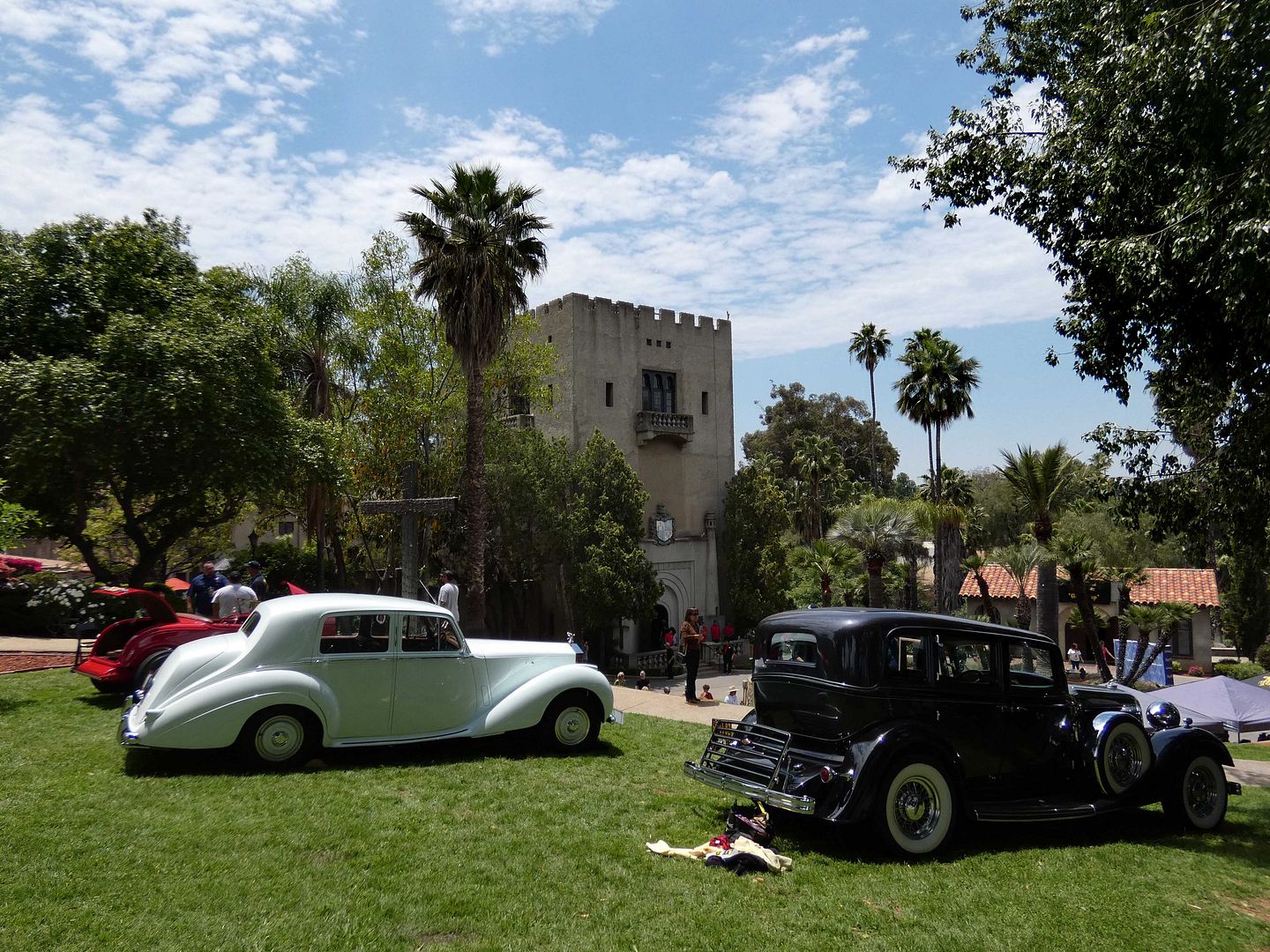
I'd already taken the tour of The Mission Inn in Riverside, California once, in 2015. And normally that would mean I was done with it.
But at Halloweentime this year, the hotel unveiled a series of "Spooktacular" tours that took guests into its underground tunnels—a.k.a. its "catacombs."
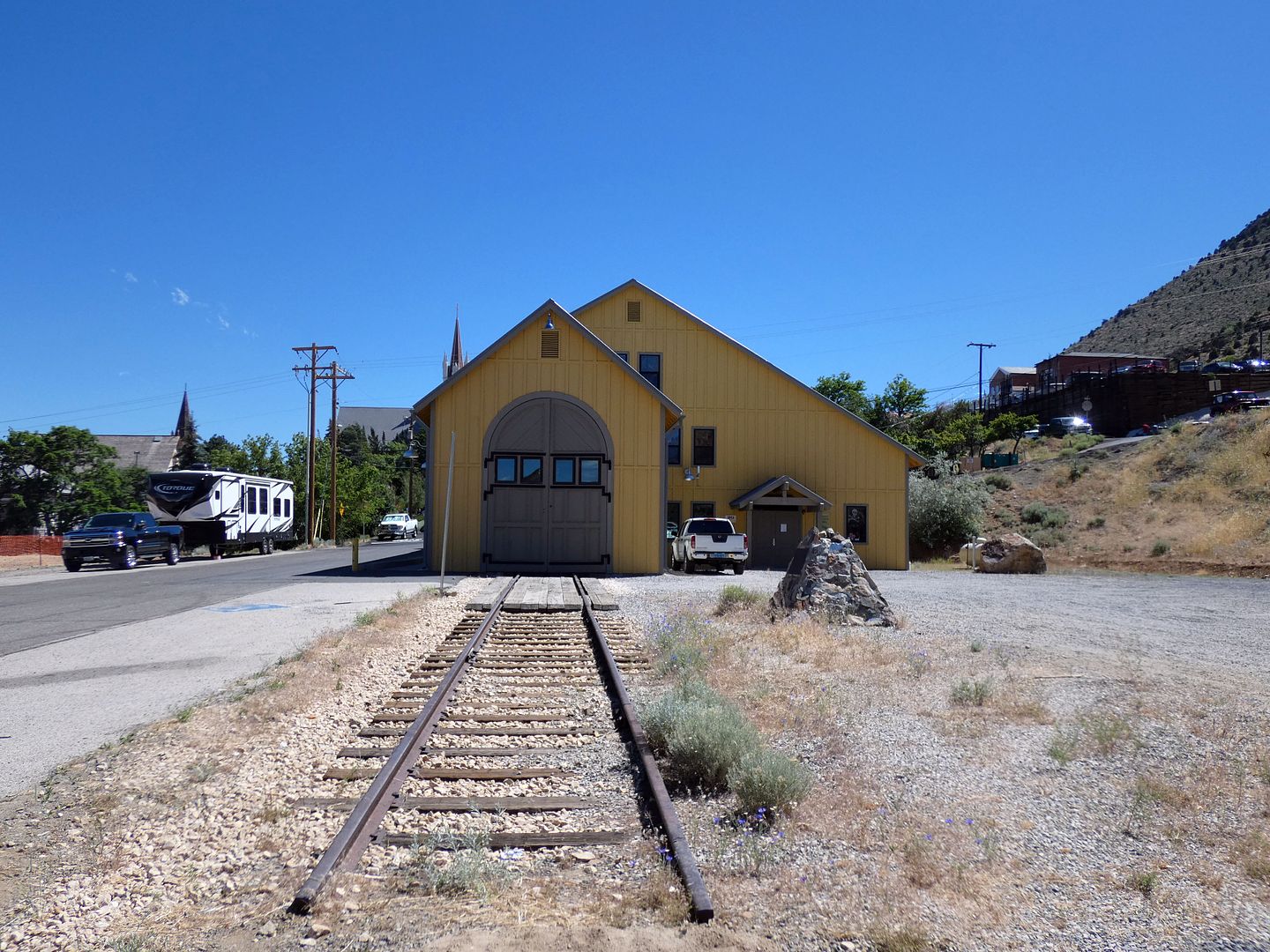
My first trip to Virginia City, Nevada coincided with the 150th anniversary celebration of the Virginia & Truckee Railroad, a.k.a. "Queen of the Short Lines"—so while I was in the area, I wanted to make sure I could experience as much of the V&T as possible.
After having ridden a railbike from Carson City towards Virginia City (where a train also runs, though its schedule didn't mesh with mine), I headed to Virginia City to ride a special train towards Carson City to experience the rail from the other end.
But I had some time to kill before my train departure, so I started snooping around town.
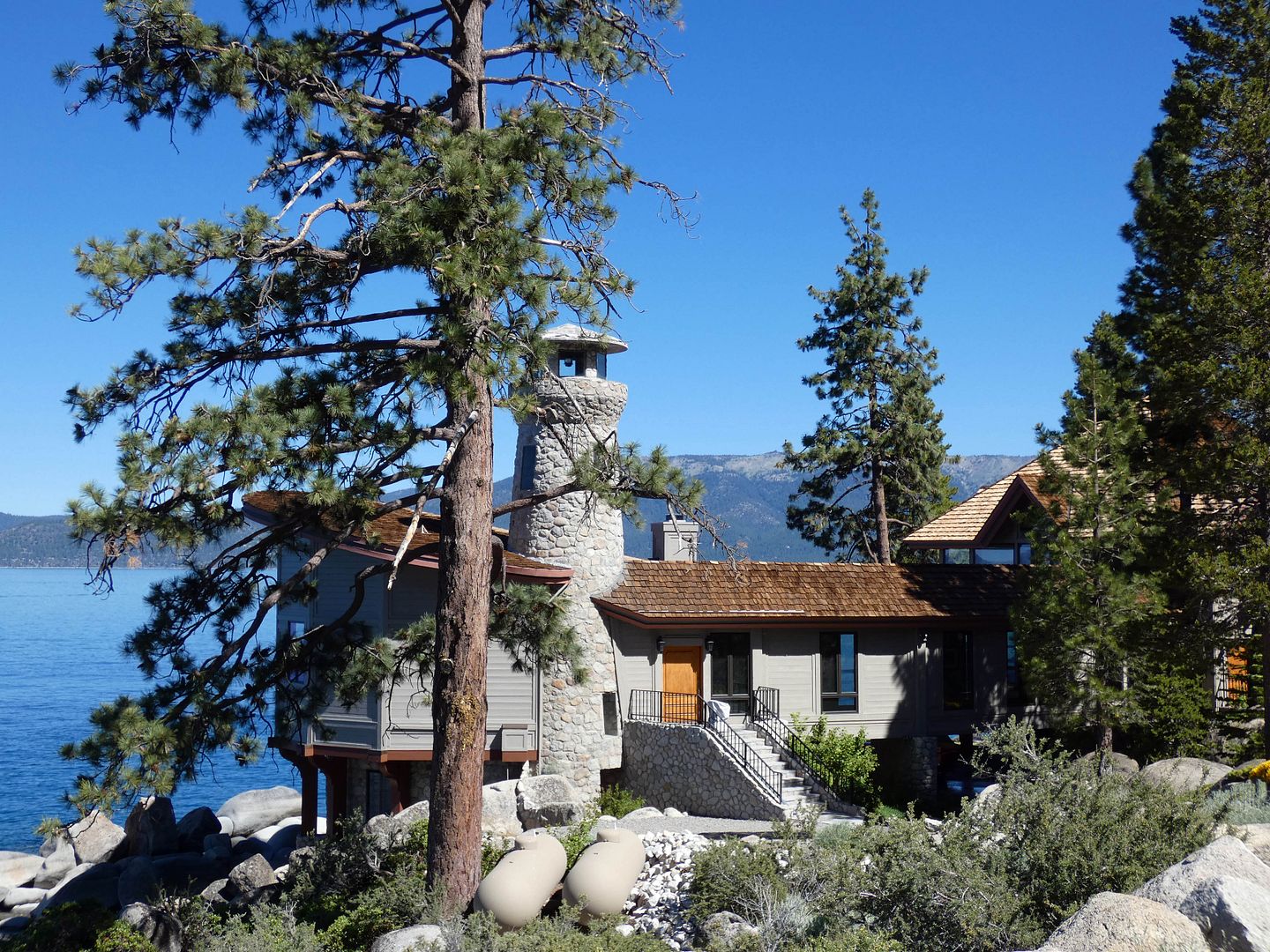
On my way from California to farther east in Nevada, I stopped along the eastern shore of Lake Tahoe (technically in the town of Incline Village, NV) to take a tour of a historic estate known as Thunderbird Lodge.
Locals seem to call it "the old Whittell estate"—named after the eccentric millionaire from San Francisco who built it, George Whittell, Jr.
I've already posted about a couple of adventures I've had recently with Rim of the World Historical Society, based in the mountain communities of the San Bernardino Mountains.
But I haven't shared why I joined the historical society in the first place—and it starts with Huell Howser, the local celebrity of regionally-focused TV shows that highlight various California landmarks and attractions.
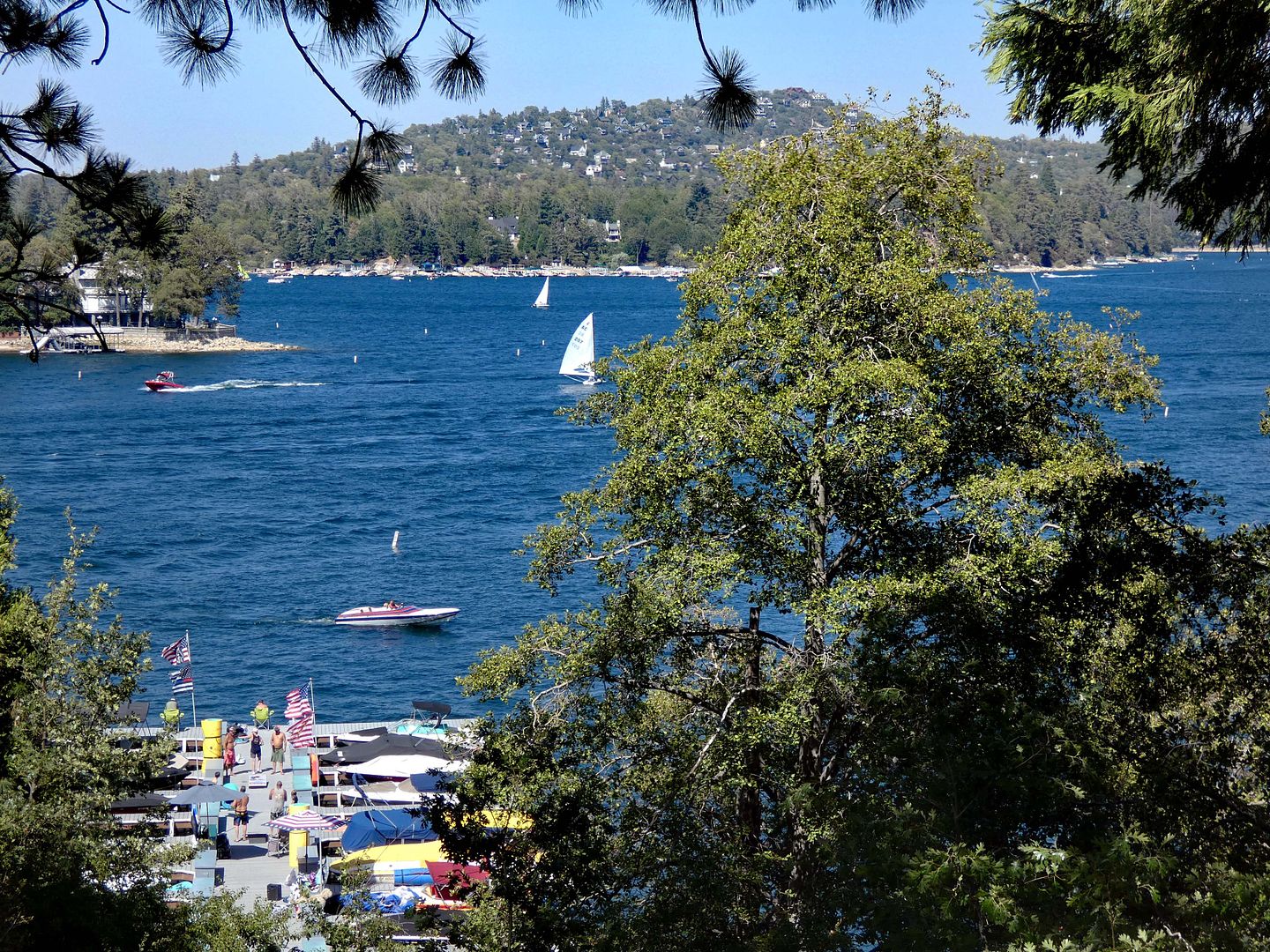
One of the sites he visited for one of his episodes of California's Gold was Lake Arrowhead, California—not just the town, but specifically the lake.
And specifically part of the manmade lake's infrastructure—starting at a stone structure that contains a 19th-century elevator down a 185-foot vertical shaft that leads to "Tunnel #1."
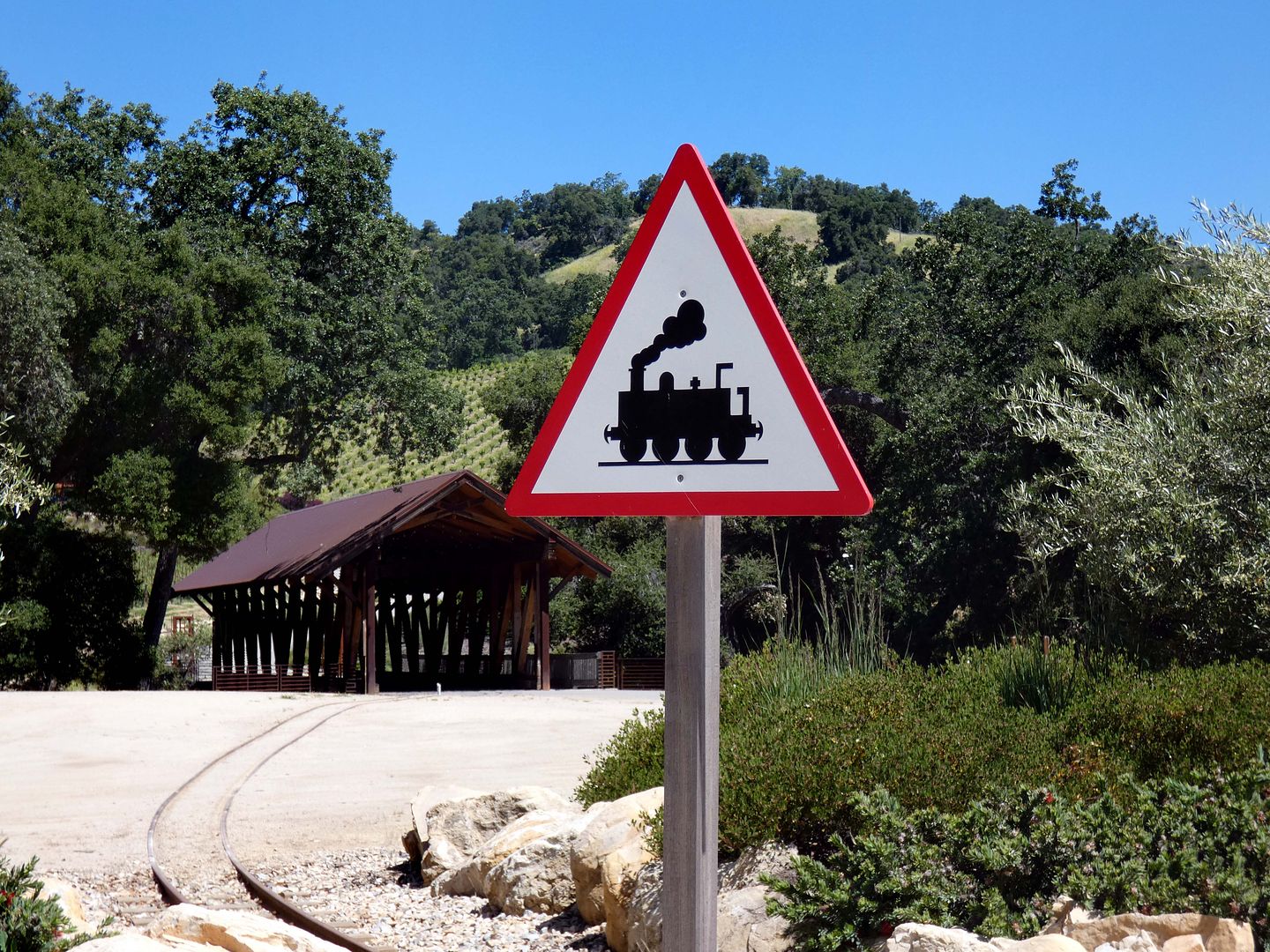
Early on in 2020, I'd booked a trip to attend the Central Coast Railroad Festival in October of that year. I was hoping for a chance to ride the Bitter Creek Western Railroad in Arroyo Grande and the Pacific Coast Railroad on Santa Margarita Ranch.
But the festival, like nearly everything else last year, was cancelled for COVID-19.
Fortunately, the festival resumed on the first weekend of October 2021, and I was able to bump my overnight stay by a year.
But as the festival approached, it seemed as though I wouldn't be able to ride any of those trains—or any trains for that matter.
I considered canceling my trip many times—but I'm glad I didn't.
What appears to be a simple restaurant and tea room in Pasadena, California has a much richer history than meets the eye—one that involves the "foremost designer of residential interiors in Southern California in the 1920s" (according to late architectural historian Robert Winter), military secrets, and maybe even Albert Einstein.
Located in what's now known as the Green Street Village Landmark District, it's currently known as Madeline Garden—but it was designed in 1927 in the Georgian architectural style by Louis du Puget Millar as a studio/office/workshop for renowned interior decorator Edgar James "E.J." Cheesewright and his staff of craftspeople and artisans (including woodcarvers), decorators, and furnishers.
A few years ago, a friend posted about a hike he called the "Tunnels to Nowhere"—and I knew immediately that I had to go.
But there's a limited season for visiting this particular area—when it's not too hot and sun exposed, and not too wet and wintry.
And of course most of my weekends have been filled with other activities, save for the last 8 months of the pandemic.
That being said, I can't remember the last time I went on a proper hike.
I'd gotten it in my head, though, to spend a pandemic weekend with a friend off the beaten path in search of abandoned tunnels along what some people call the "Road to Nowhere." I'd calculated it at around 5 miles roundtrip and 750 elevation change.
That would've been absolutely doable for the 2010 version of me. The 2020 version of me? Not so much.
Spoiler alert: I survived the hike. I even completed the whole thing. But not without crying.
Still, in the end, despite my tears and blisters and bloody socks and embarrassment, it was worth it.
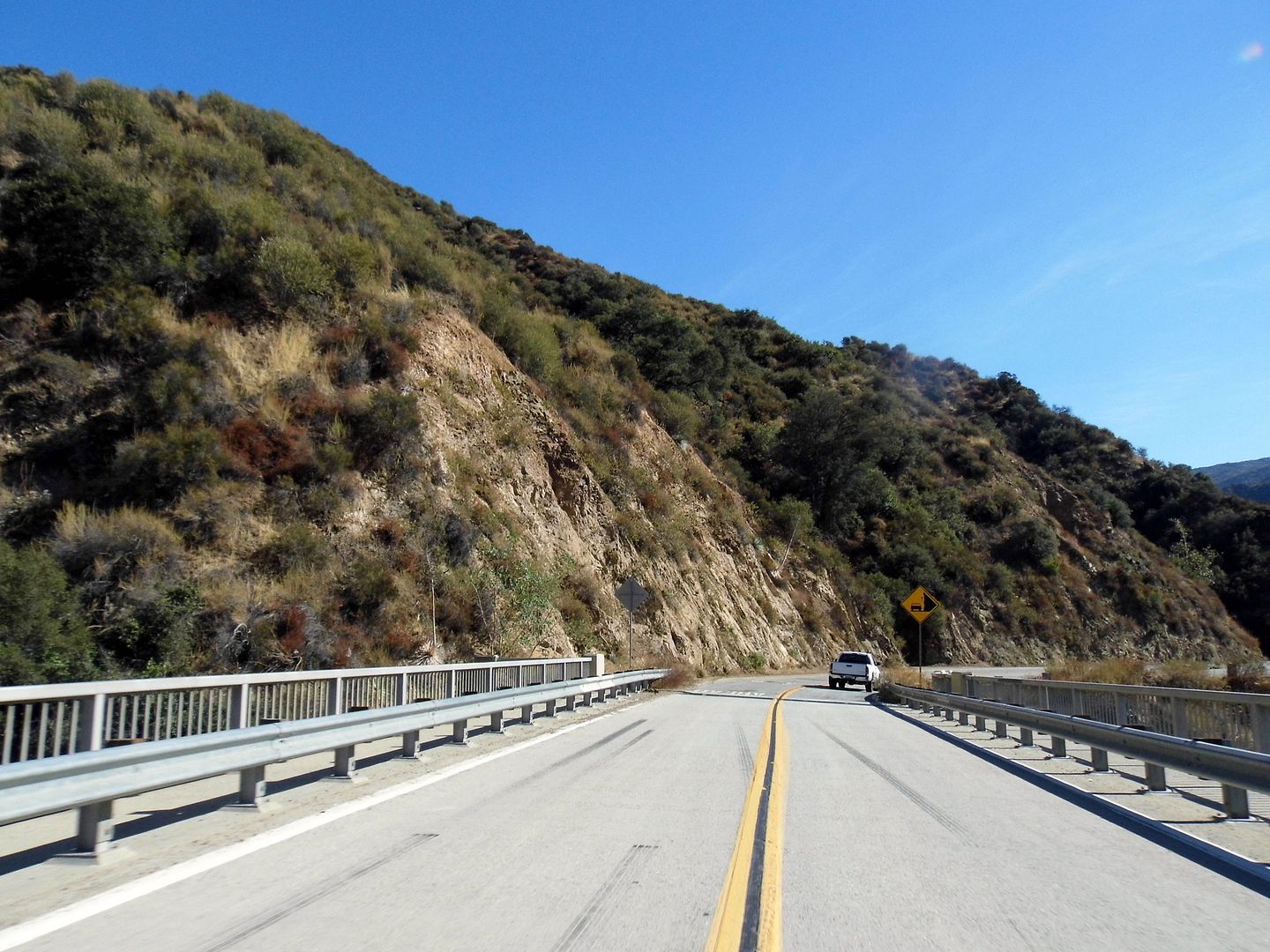
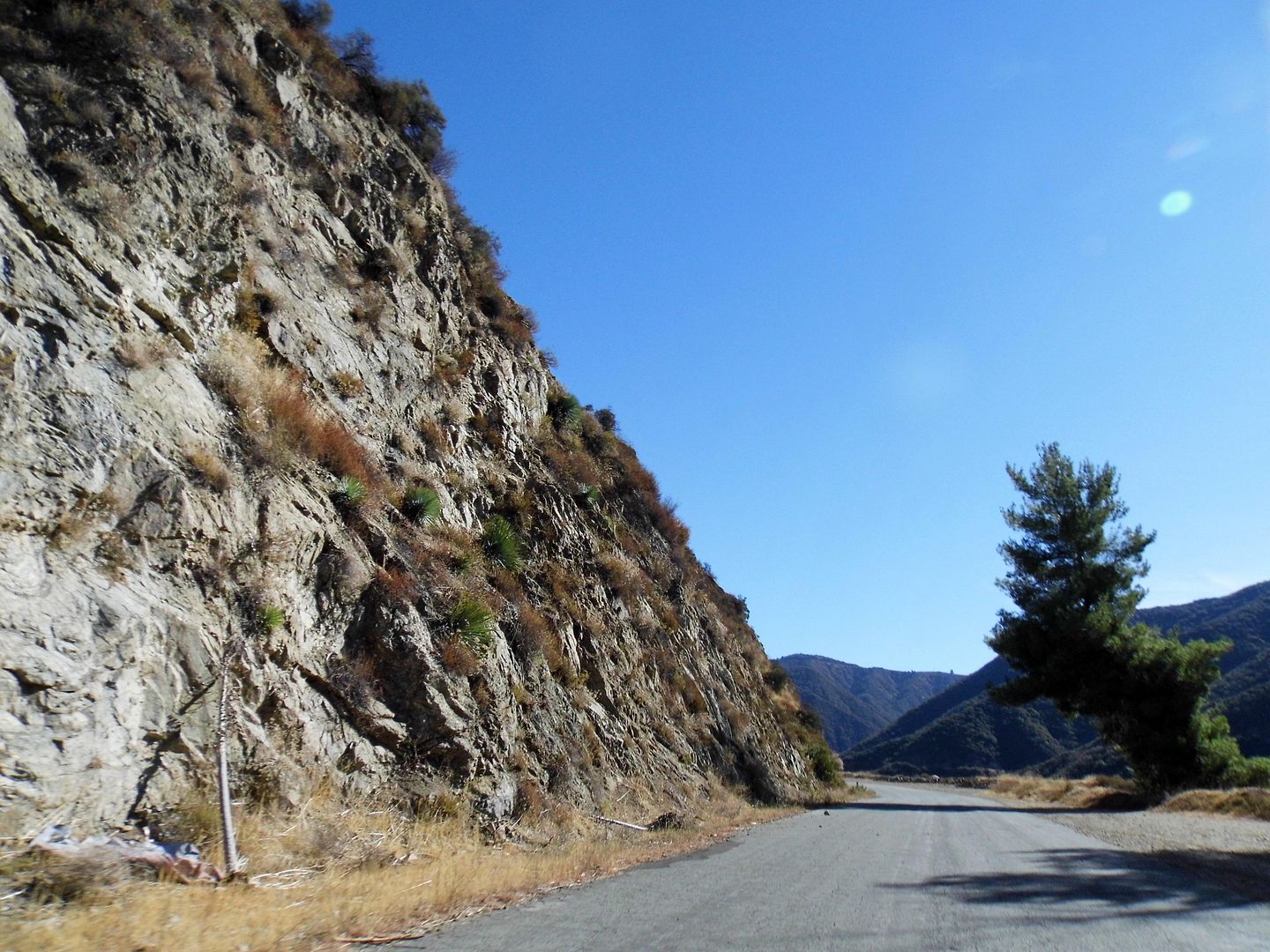
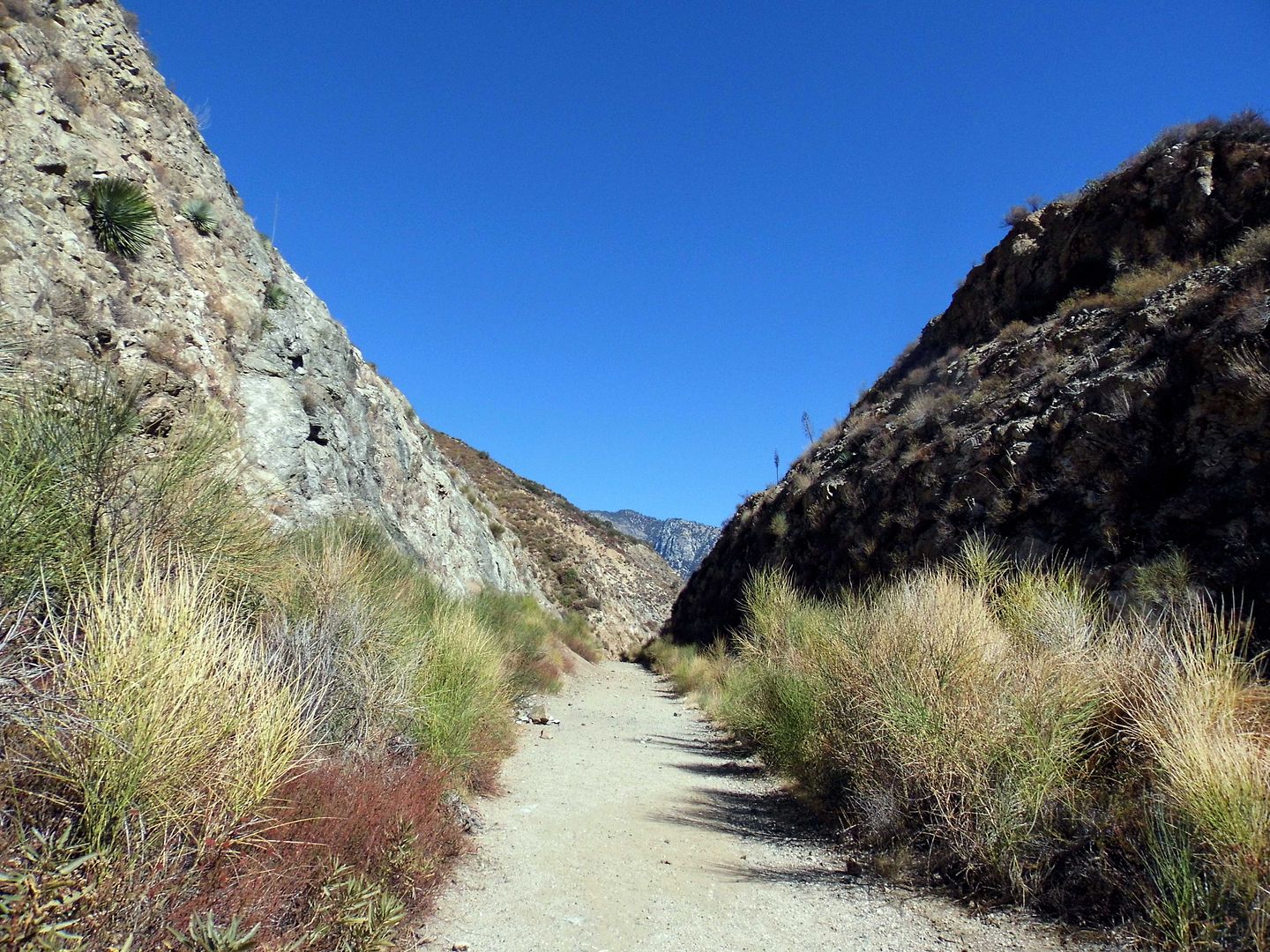
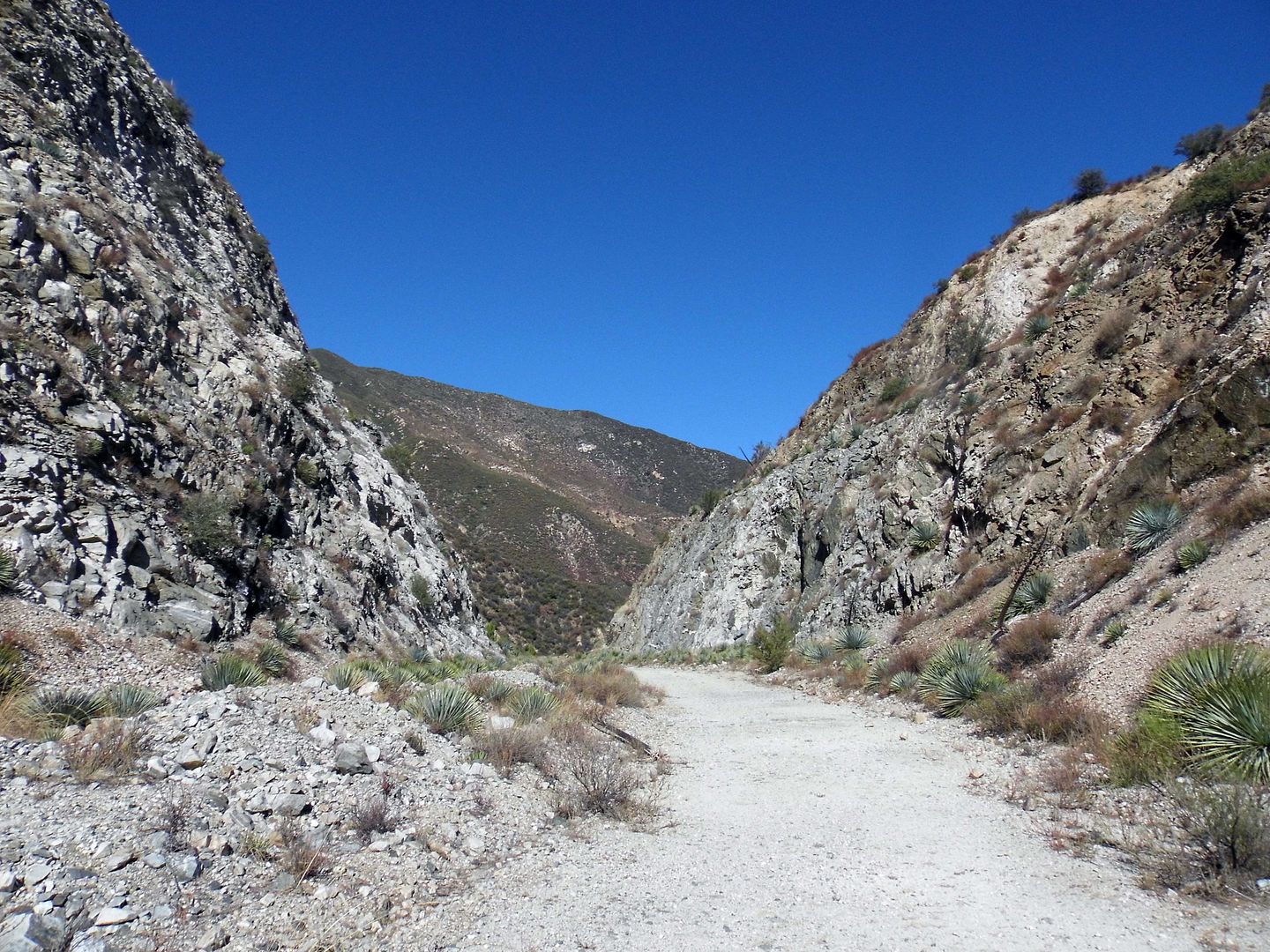
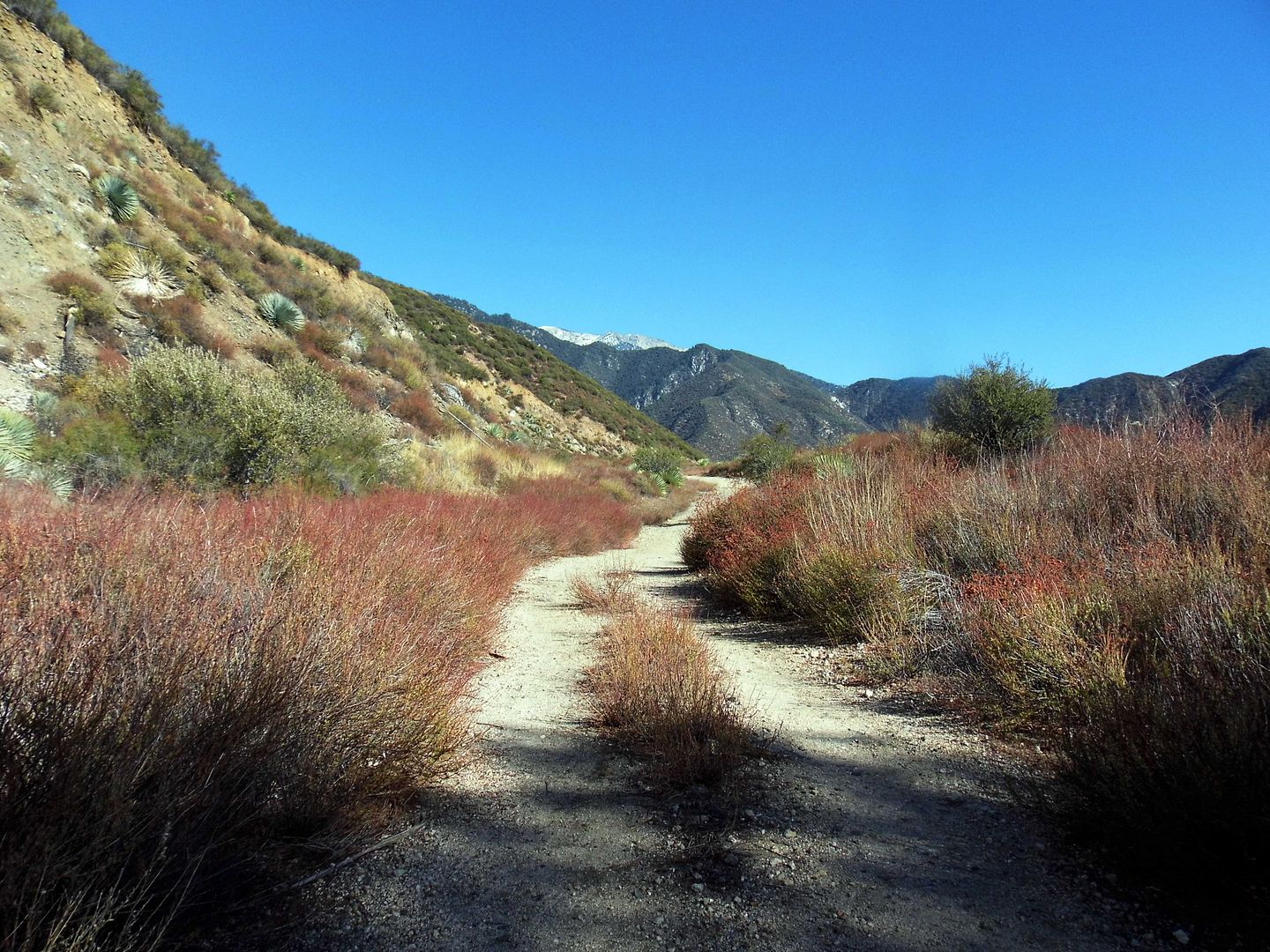
The drive to the trailhead follows the same route as to the Bridge to Nowhere trailhead—following State Route 39 a.k.a. San Gabriel Canyon Road north and turning onto East Fork Road, so named for the eastern fork of the San Gabriel River.
But instead of continuing down East Fork, past retaining walls and drainage channels...
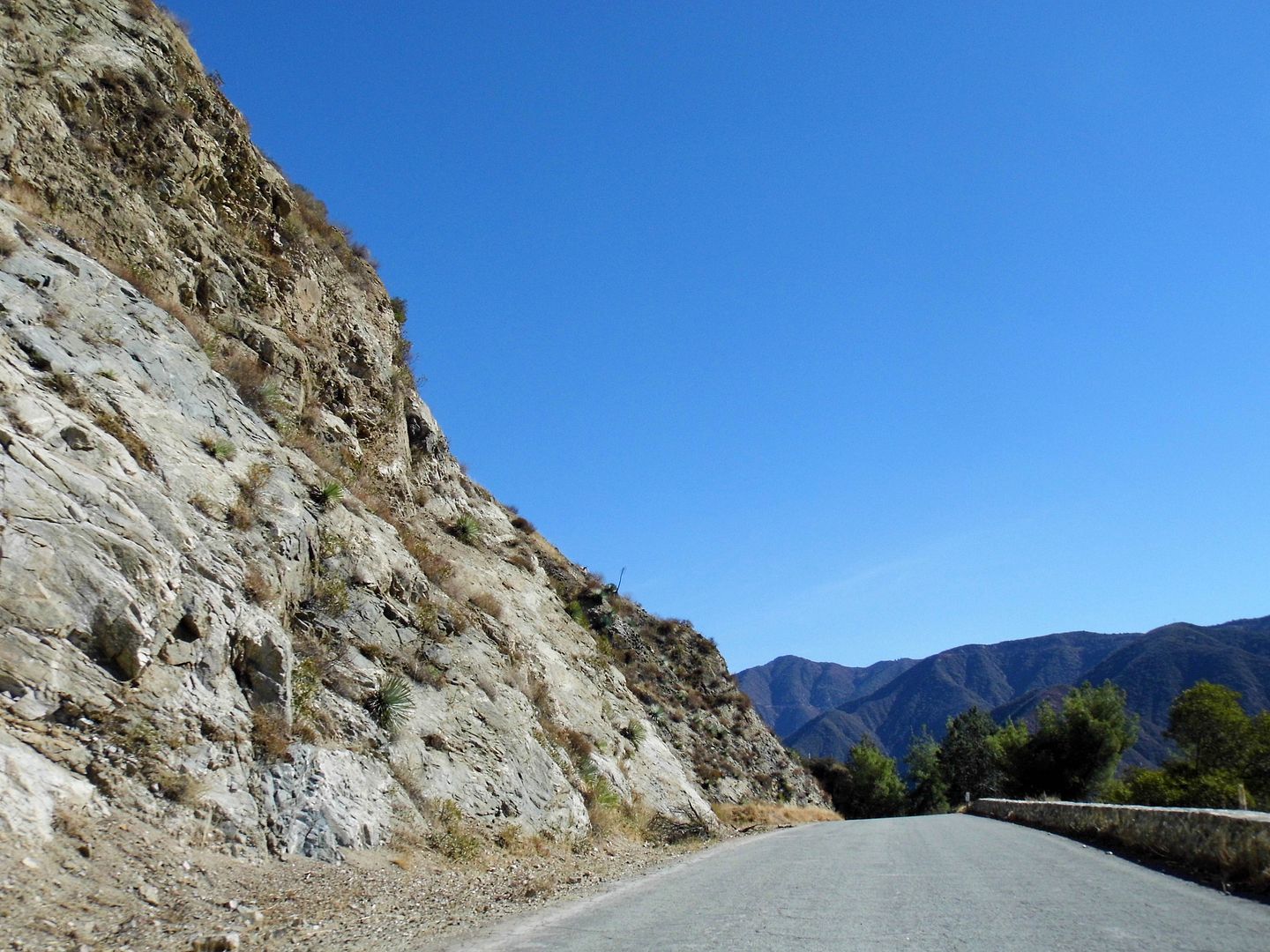
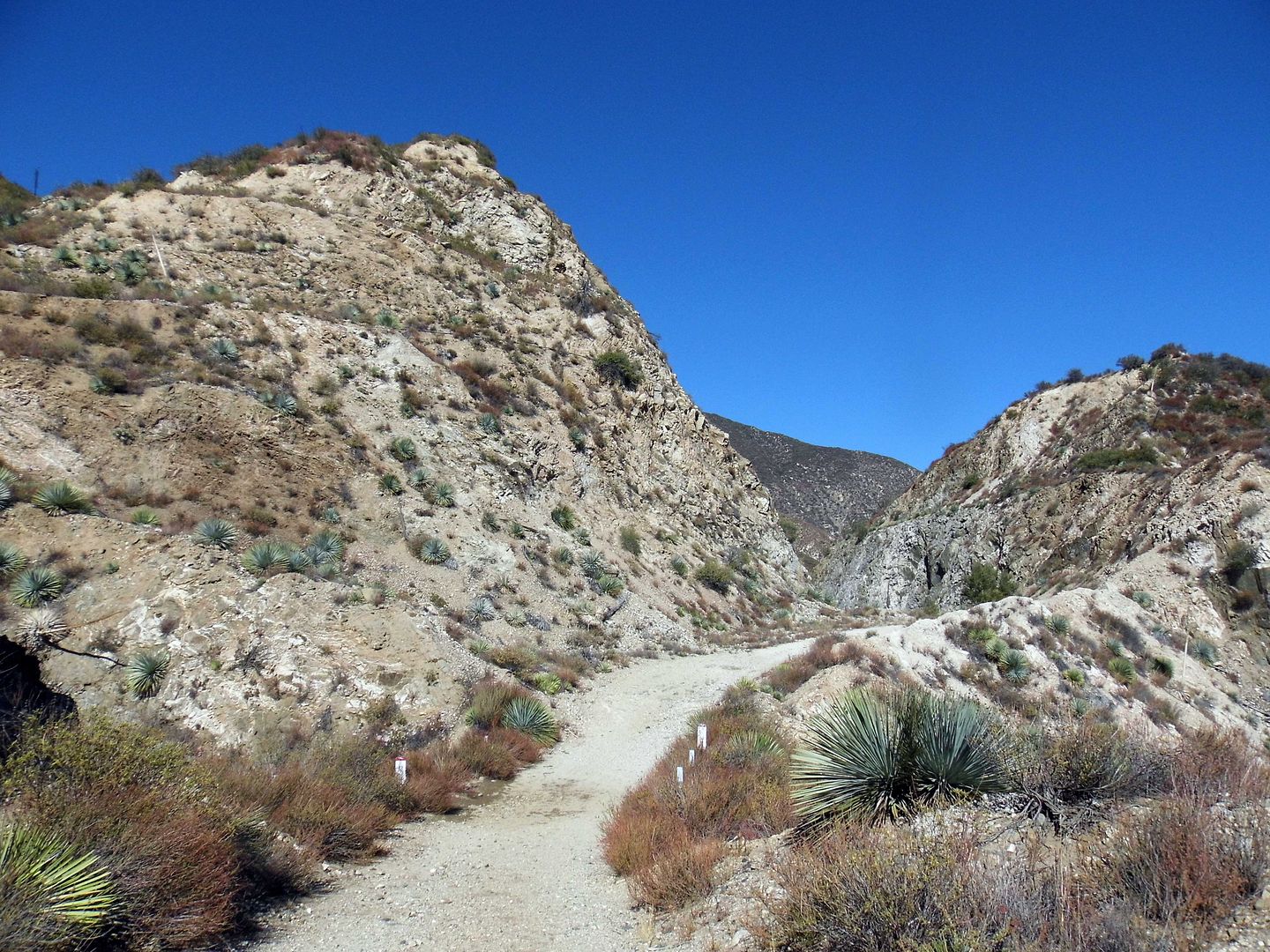
...we turned off to tackle the hairpin curves along Shoemaker Canyon Road, named after miner Alonzo Shoemaker, who prospected the canyon during the mid-1800s.
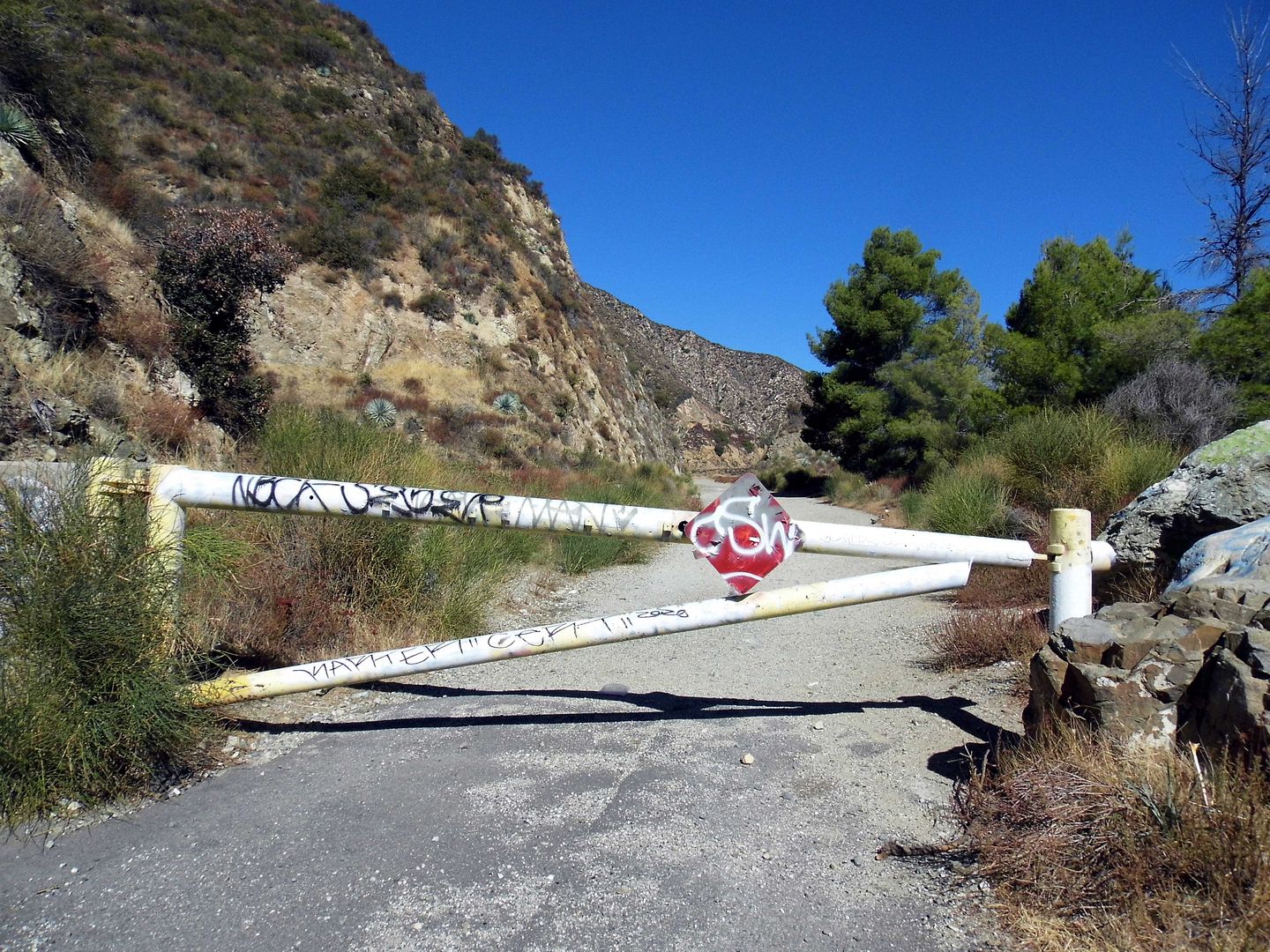
The sign at the juncture warns that Shoemaker Canyon Road is "Not a Through Street"—and true to its word, we hit a locked gate where the pavement ended and parked our cars in the dirt turnout.
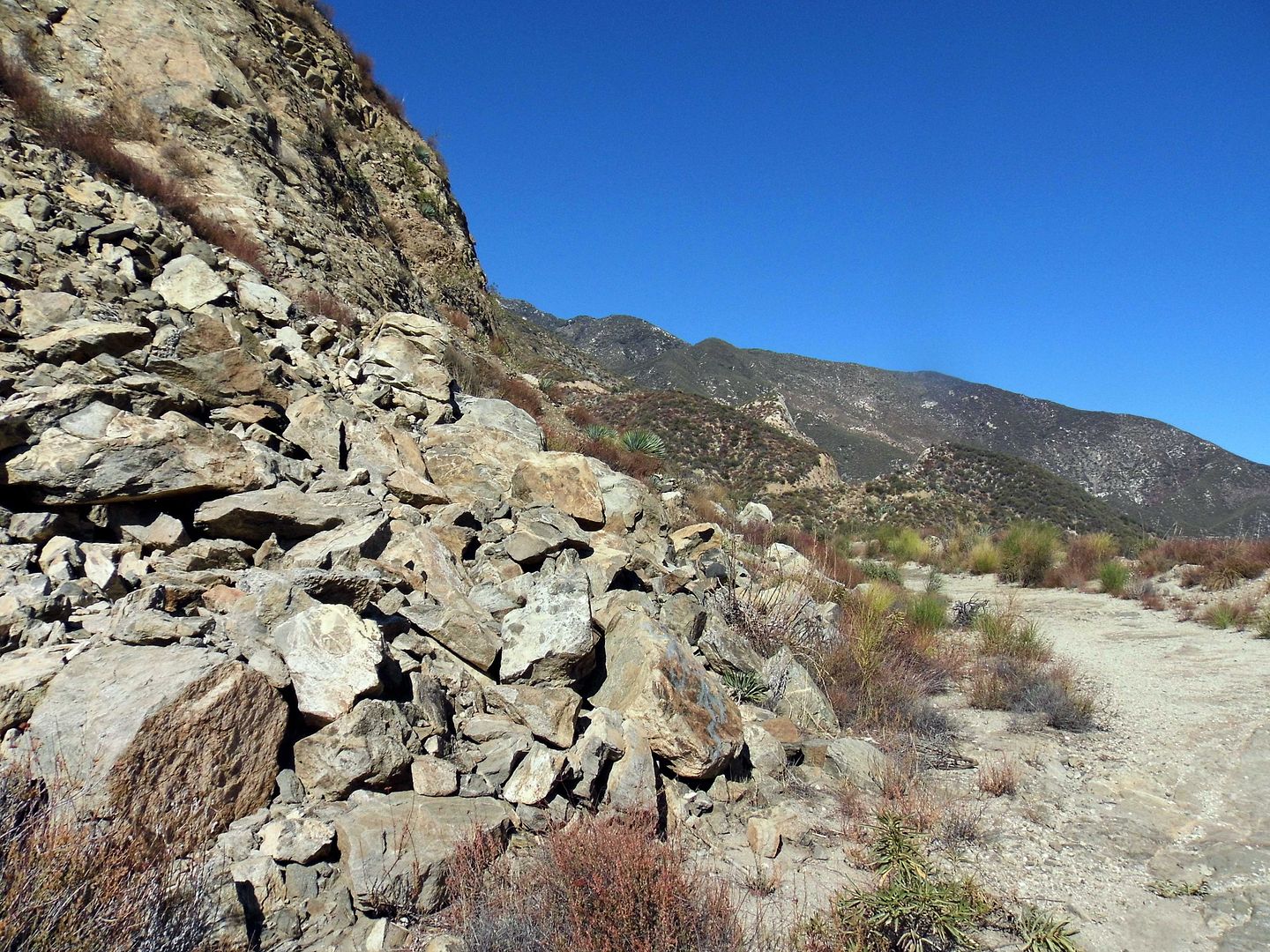
This area of the San Gabriel Mountains is part of what was designated in 1984 as wilderness area to preserve bighorn sheep—the Sheep Mountain Wilderness area.
But before conservationists got ahold of it, the Los Angeles County road division set its sights on it for an entirely different purpose.
They were going to blast through the middle of nowhere to create an evacuation route that connected LA with Largo Vista in the Antelope Valley.
It was during the height of the U.S. Cold War effort to prepare in case of a nuclear bomb attack—which might explain why Shoemaker Canyon Road is sometimes called "Armageddon Highway."
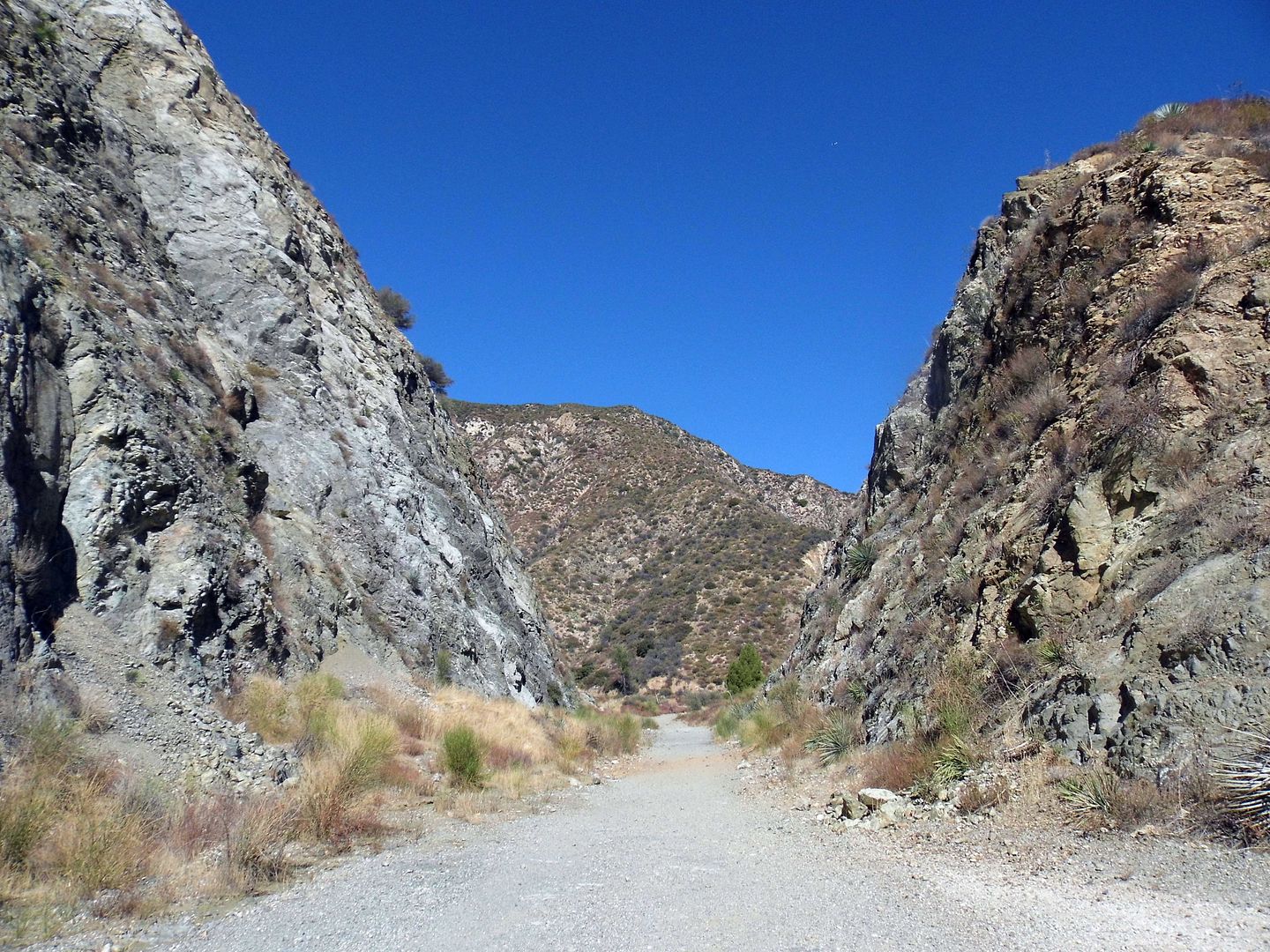
Work on the civil defense project, which was supposed to extend for 25 miles, started in 1956. But by the time construction officially stopped in 1969, only about 4 miles of it had been finished.
Creating all those road cuts through solid rock proved to be too expensive after county budget cuts—and because much of the work on this dangerous terrain was being done by unskilled inmates from the county sheriff's Detention Camp 14, progress was slow-going.
Over the course of its 16 years of construction, the Department of Corrections' involvement in Shoemaker Canyon Road earned it the nickname "Convict Road."
In the end, what probably doomed the project was how the interest in civil defense programs (like fallout shelters and such) waned during the Nixon administration—though it would be another 20 years before the "official" end of the Cold War and the fall of the Berlin wall.
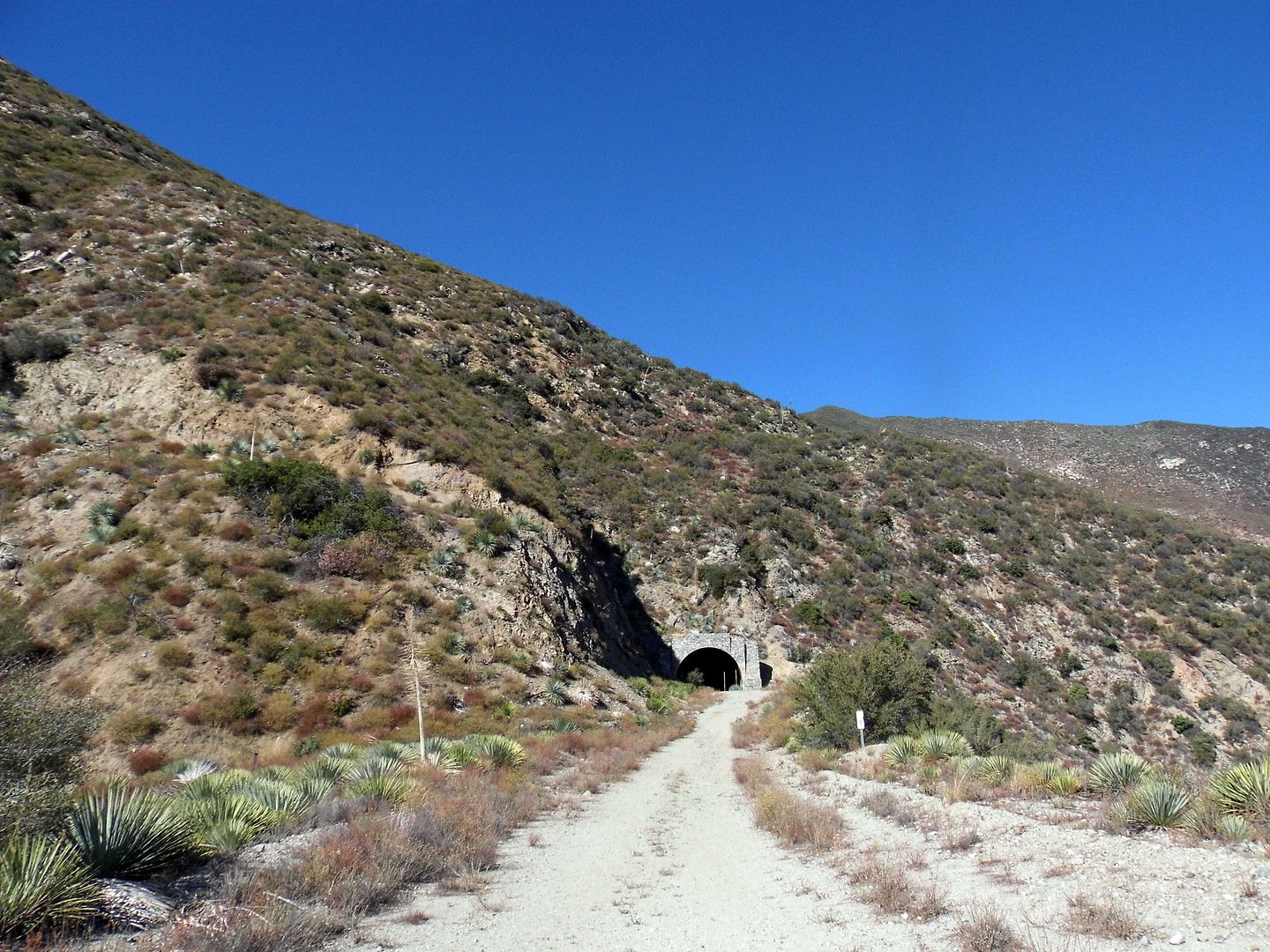
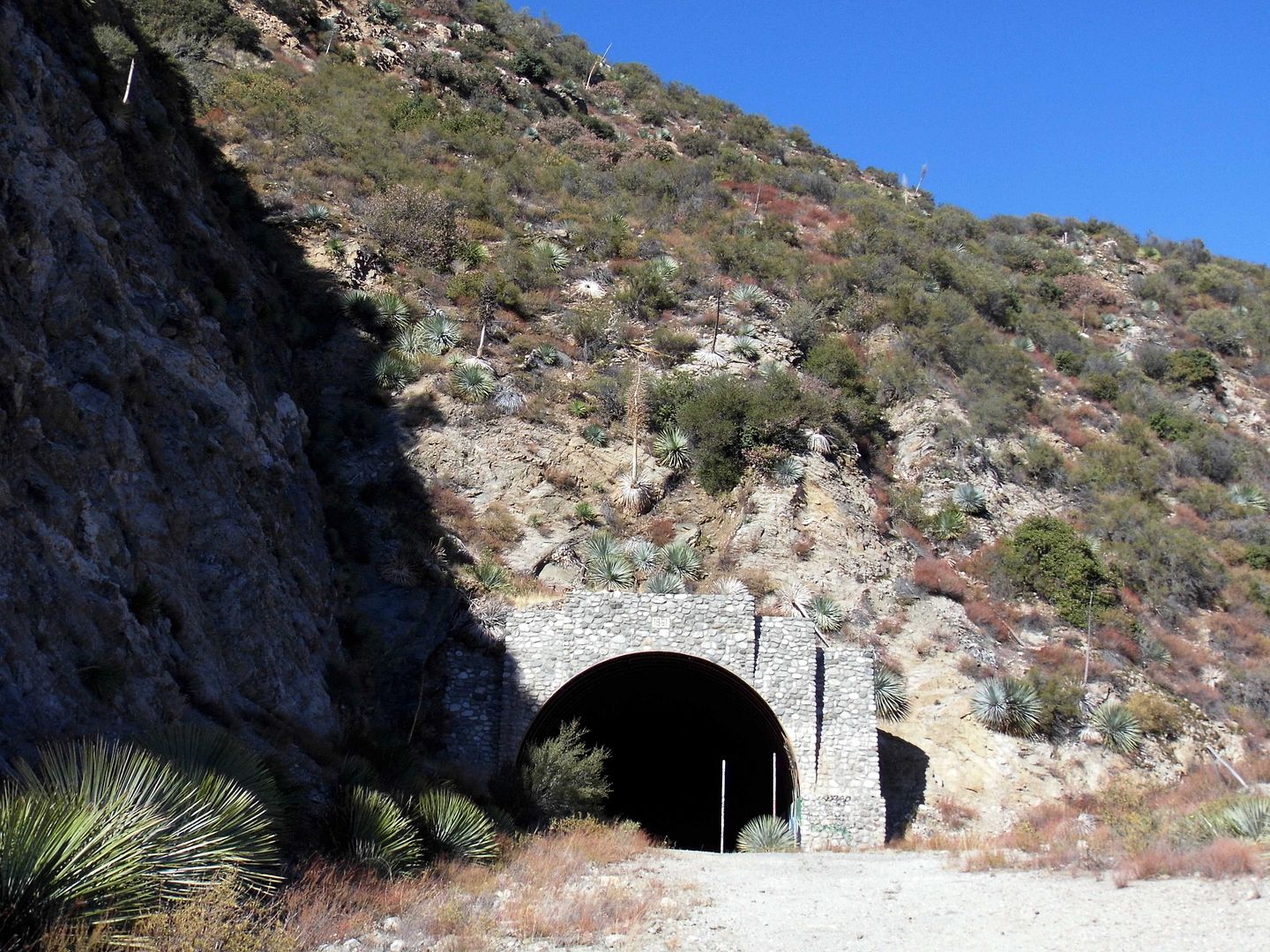
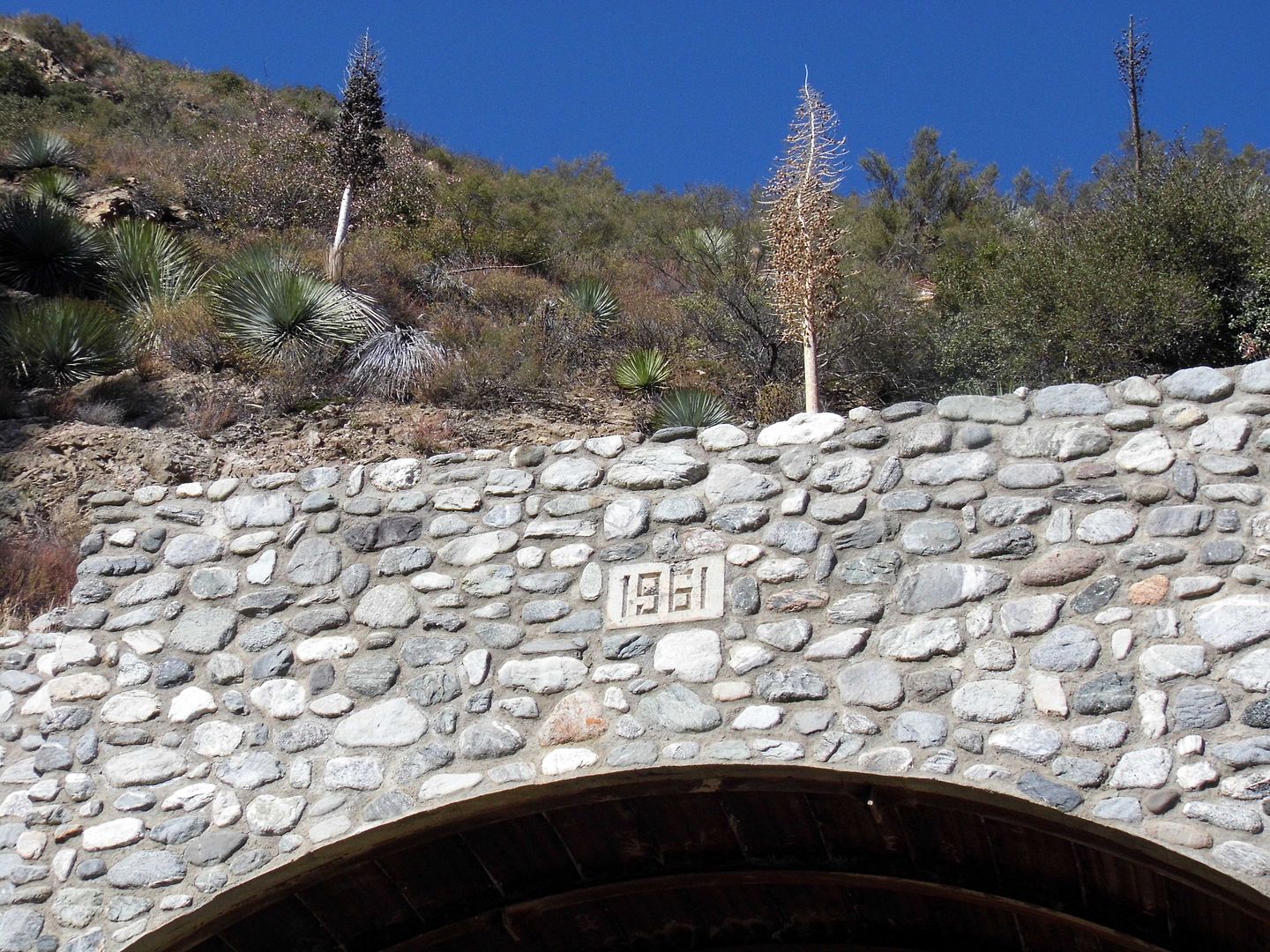
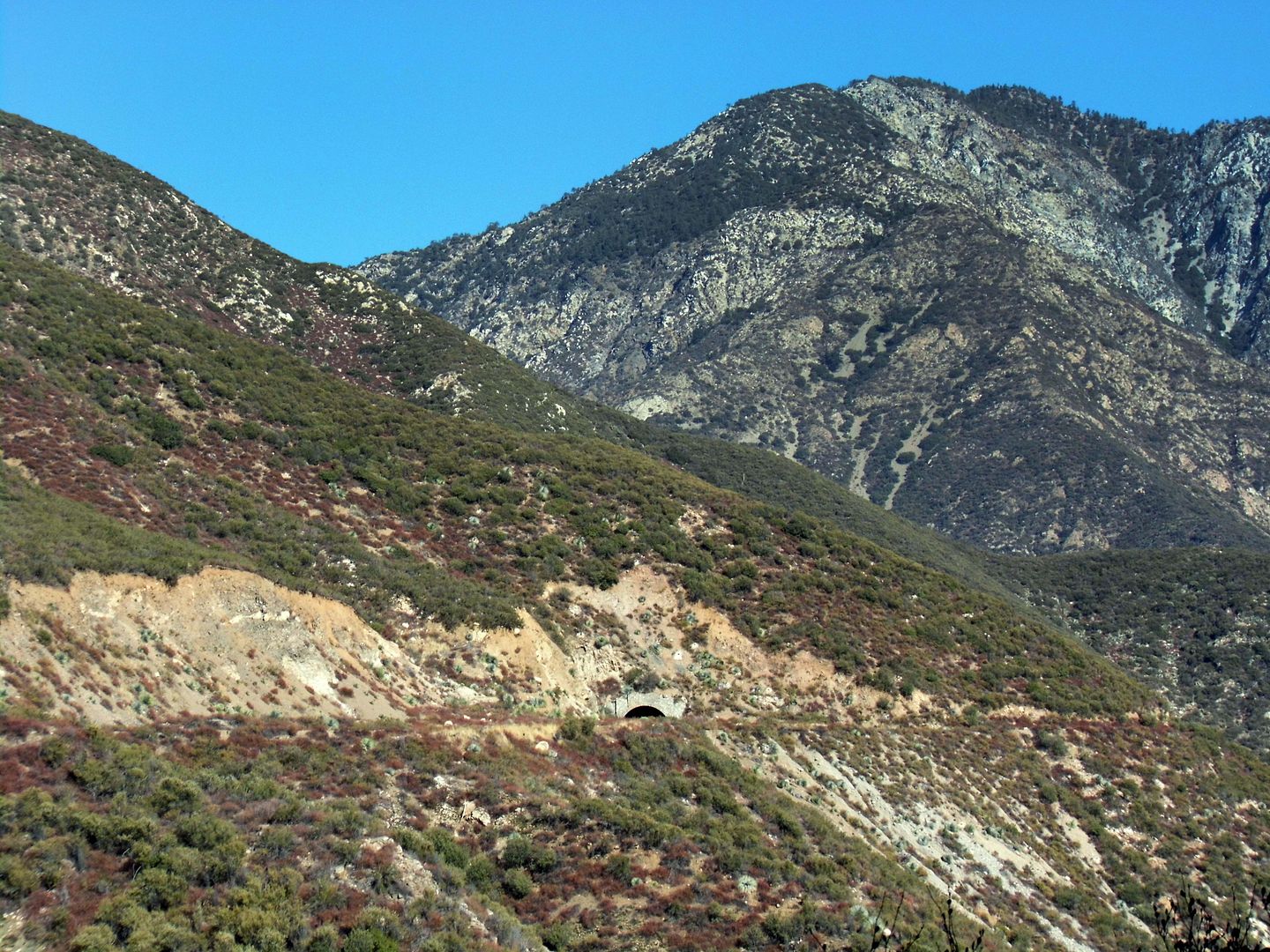
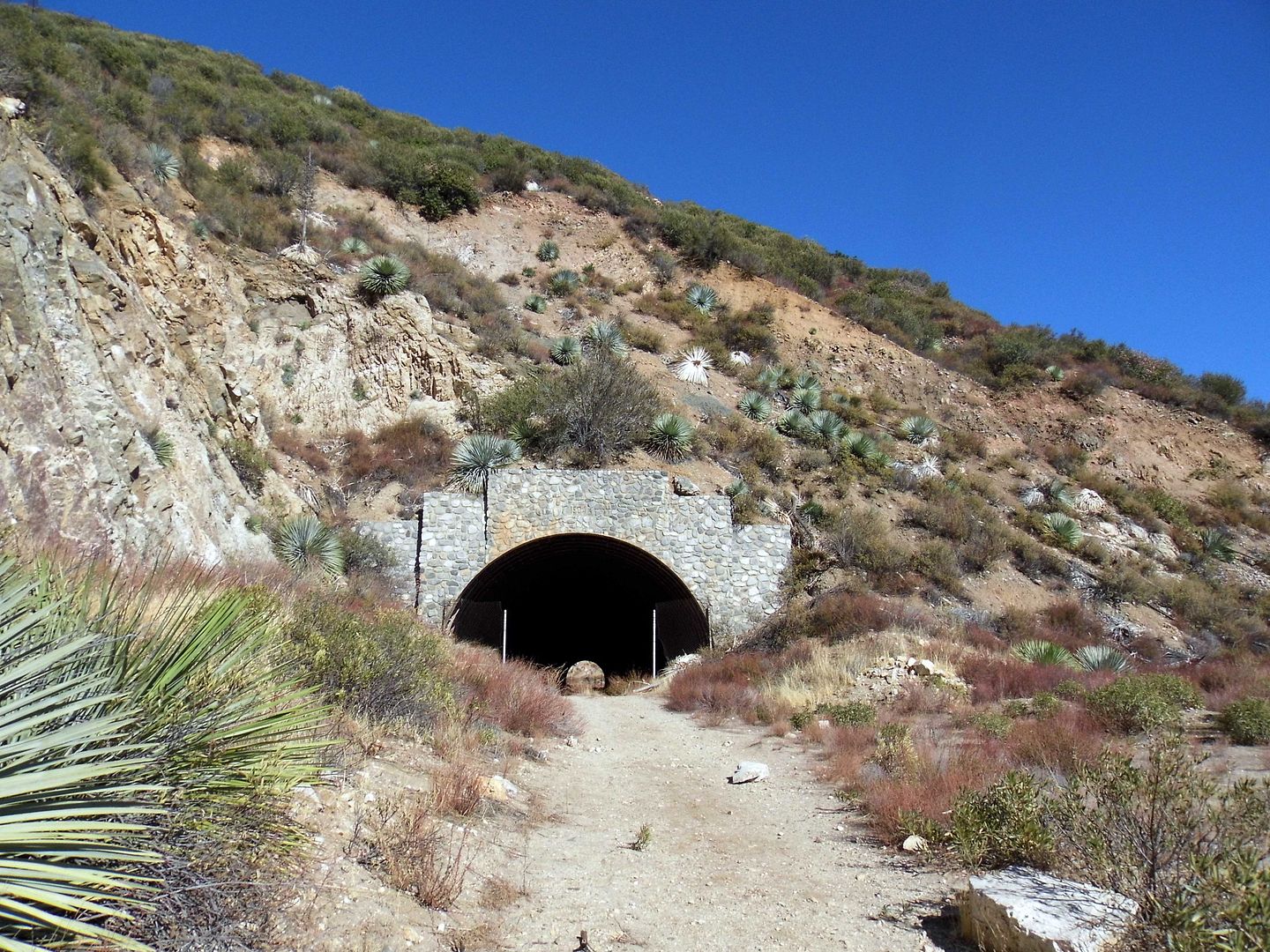
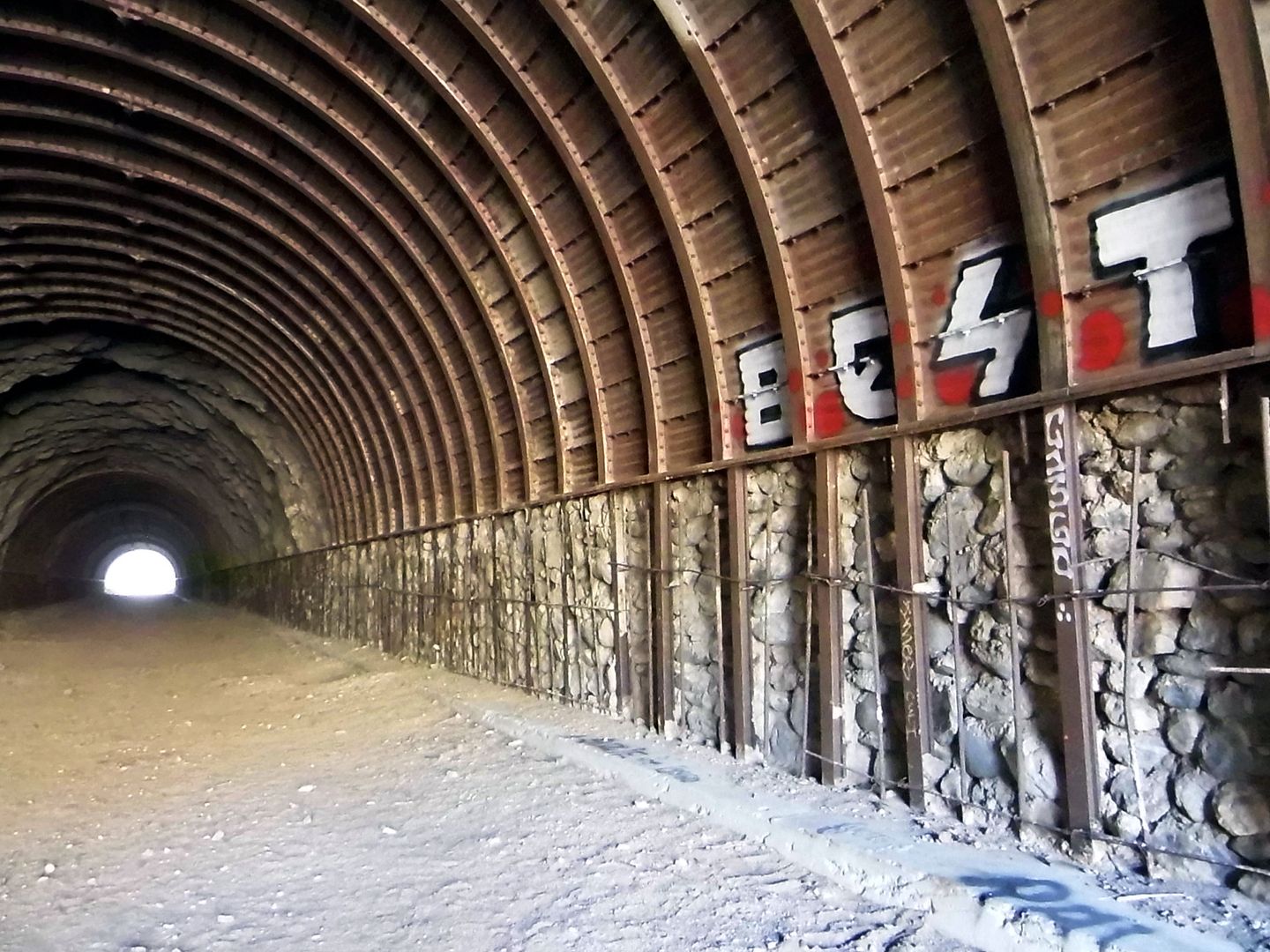
There were two tunnels completed between 1956 and 1969...
...the first as early as 1961.
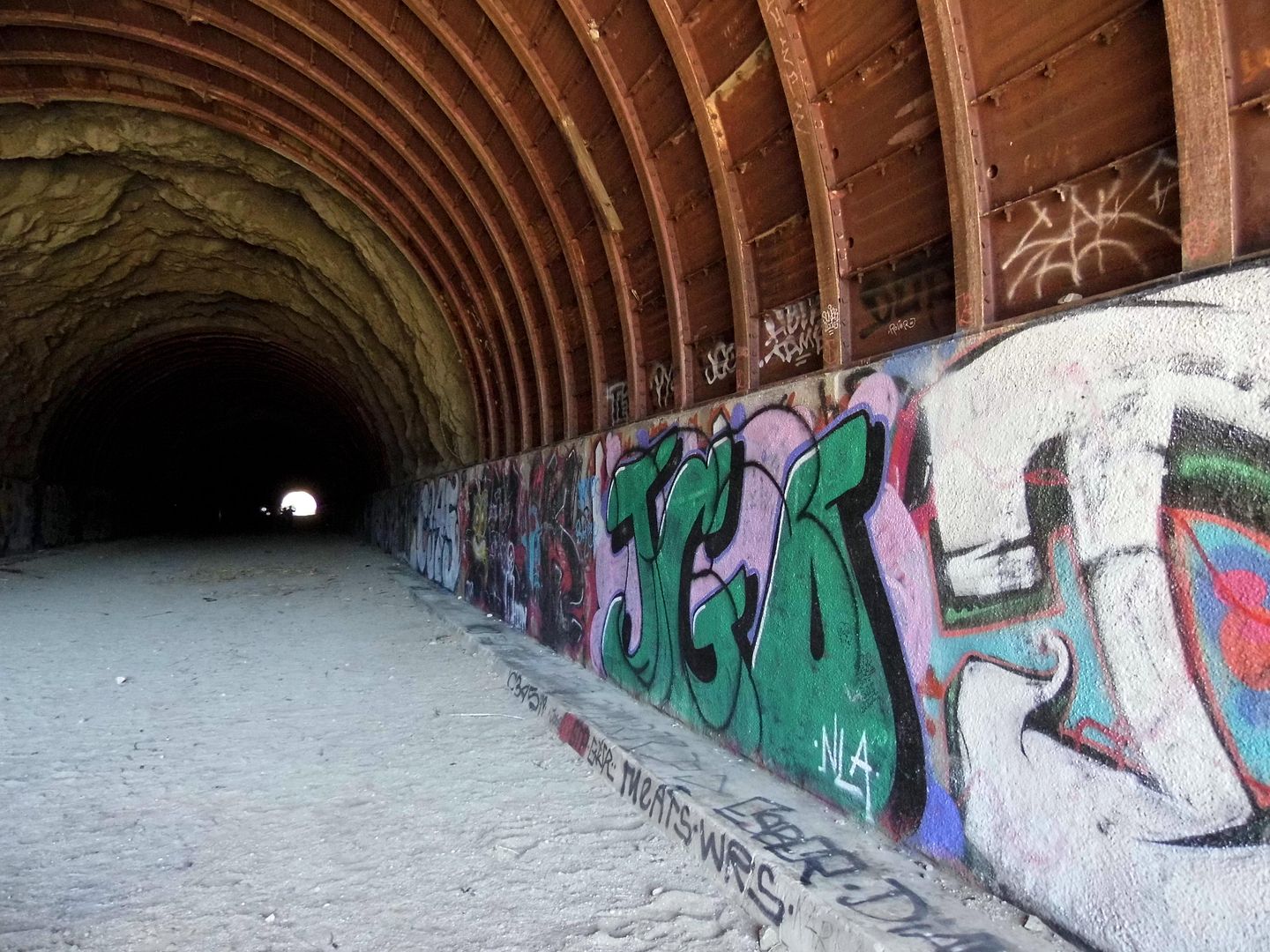
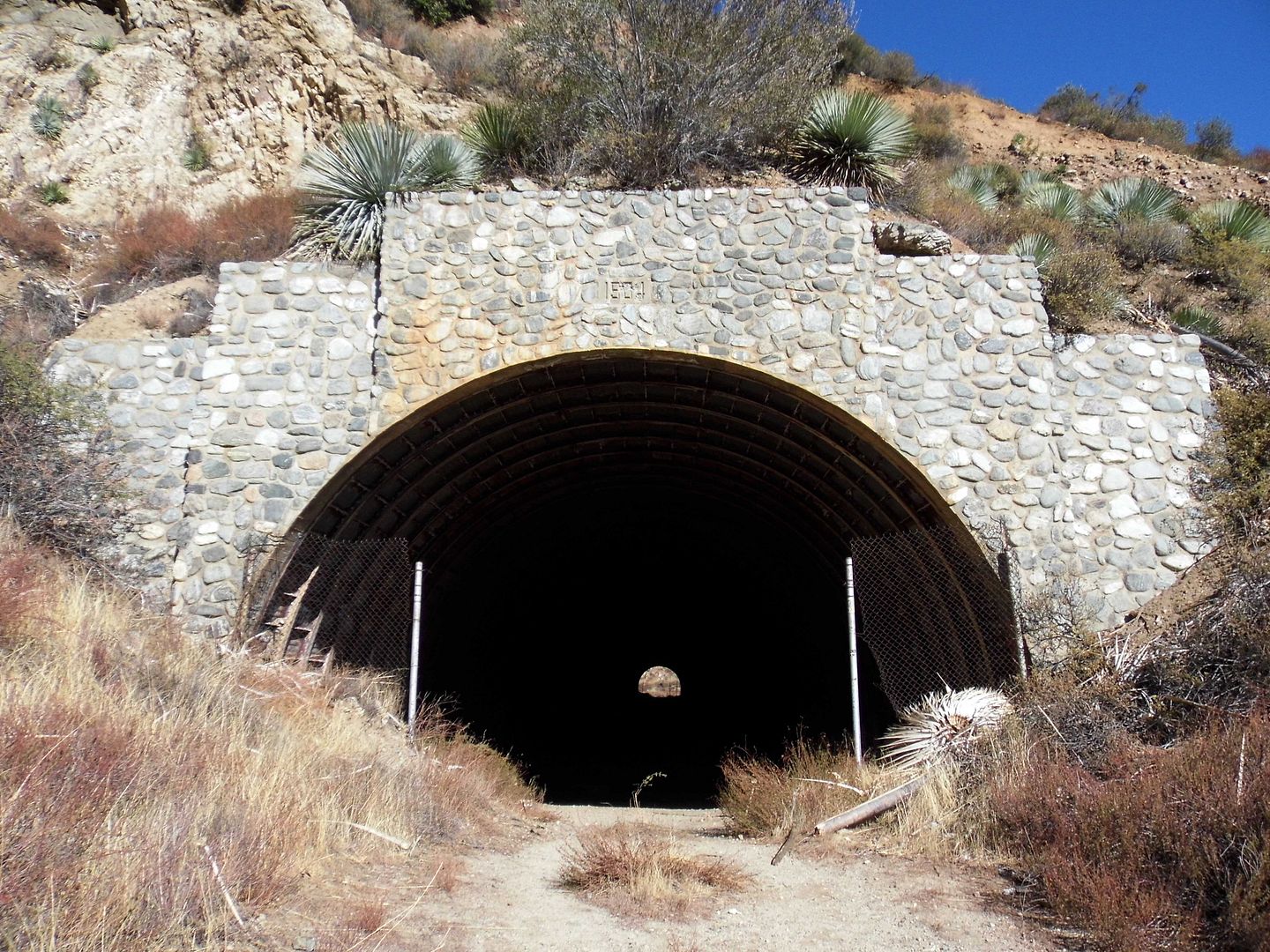
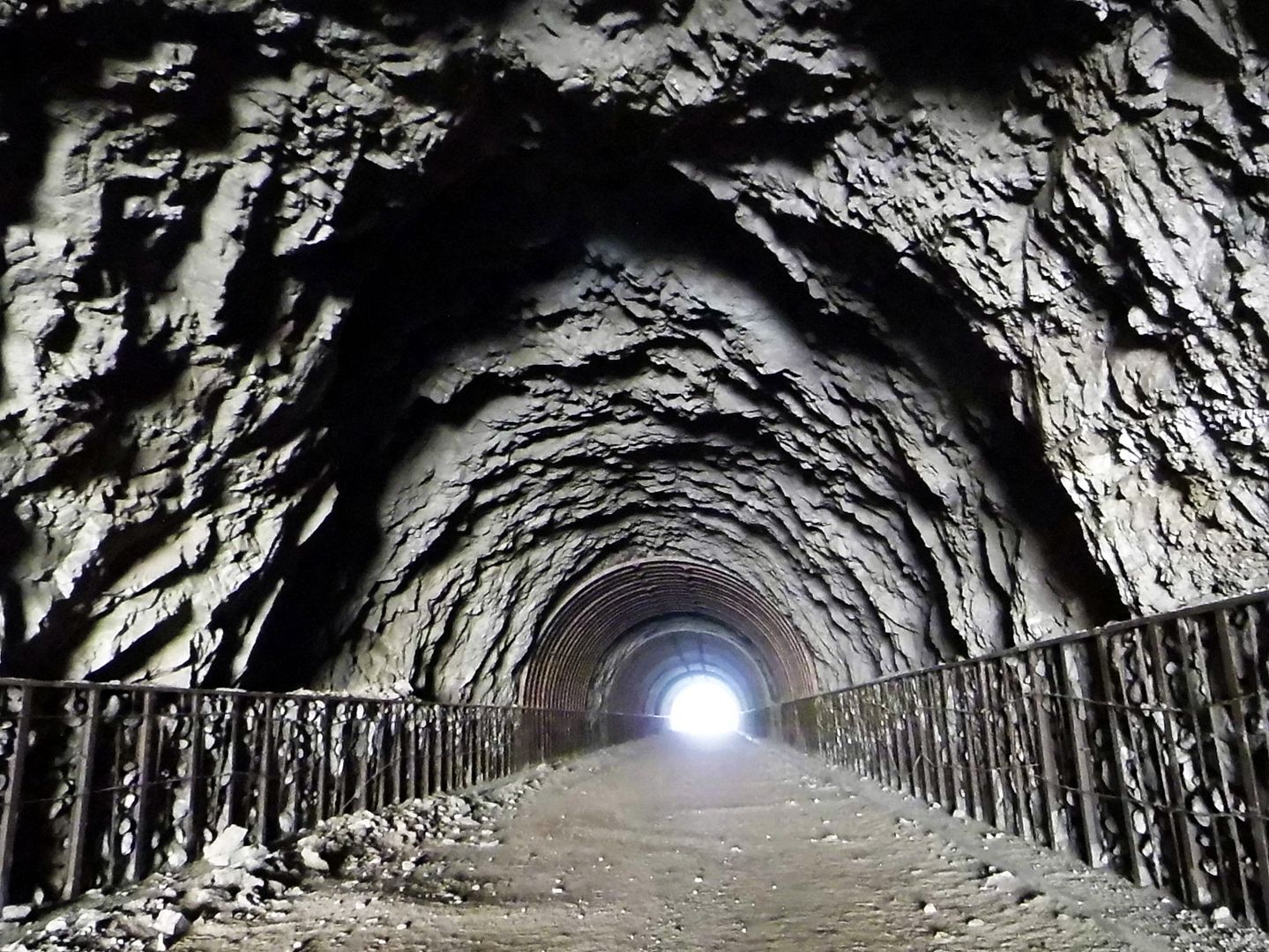
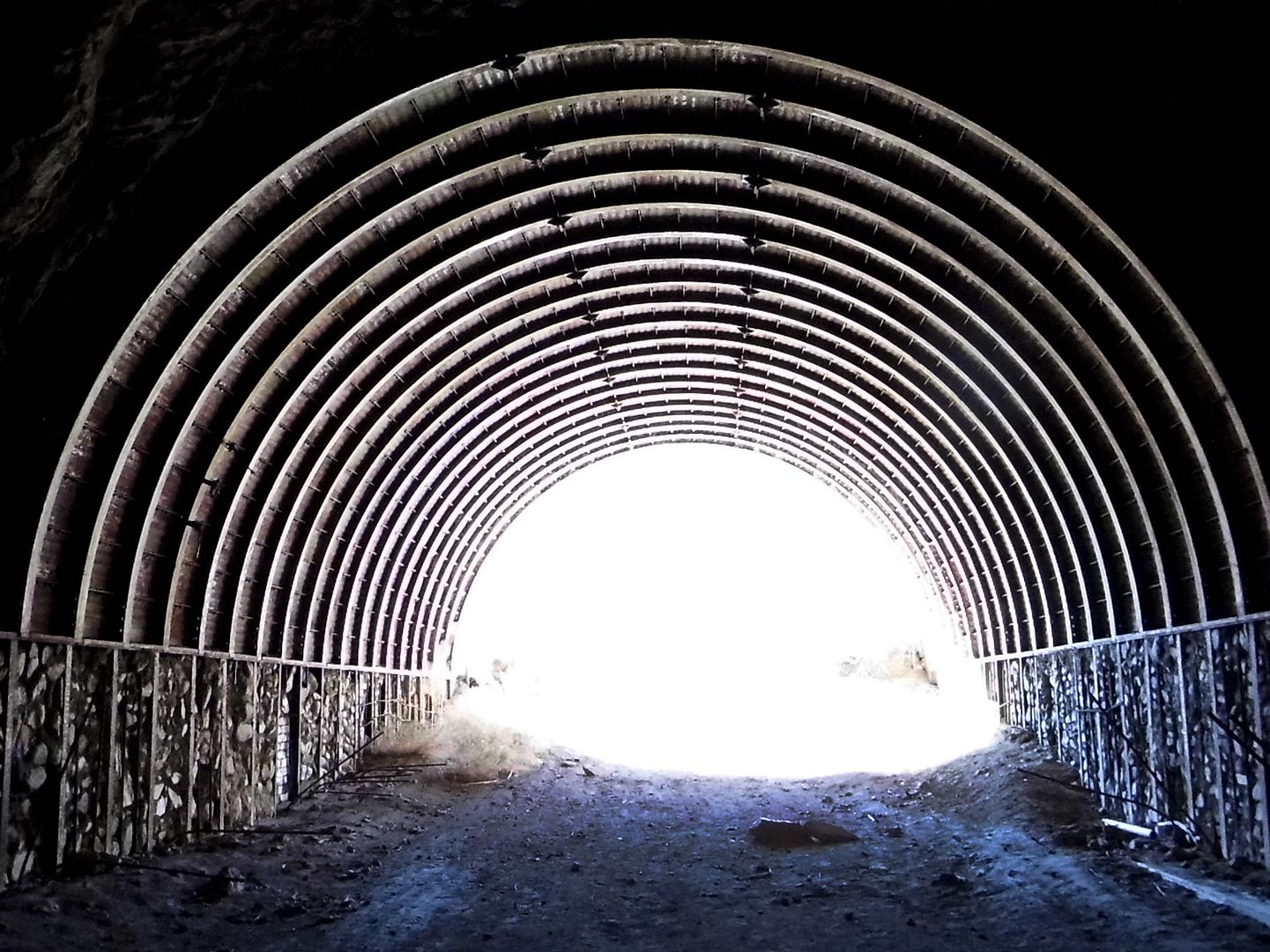
Both tunnels are similar in construction...
...including interlocking steel beams and raw, blasted-through rock...
...although the first one is longer than the second.
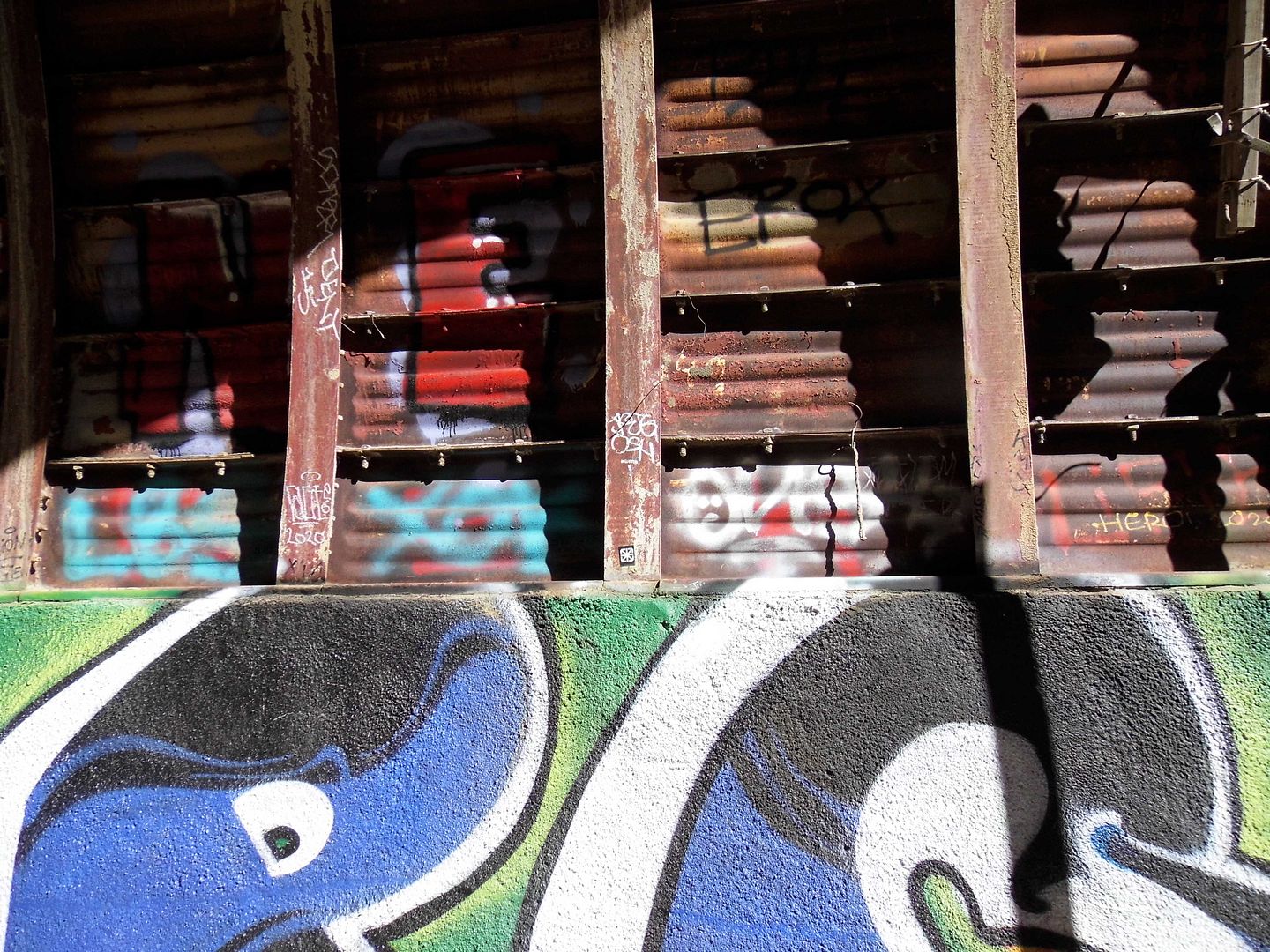
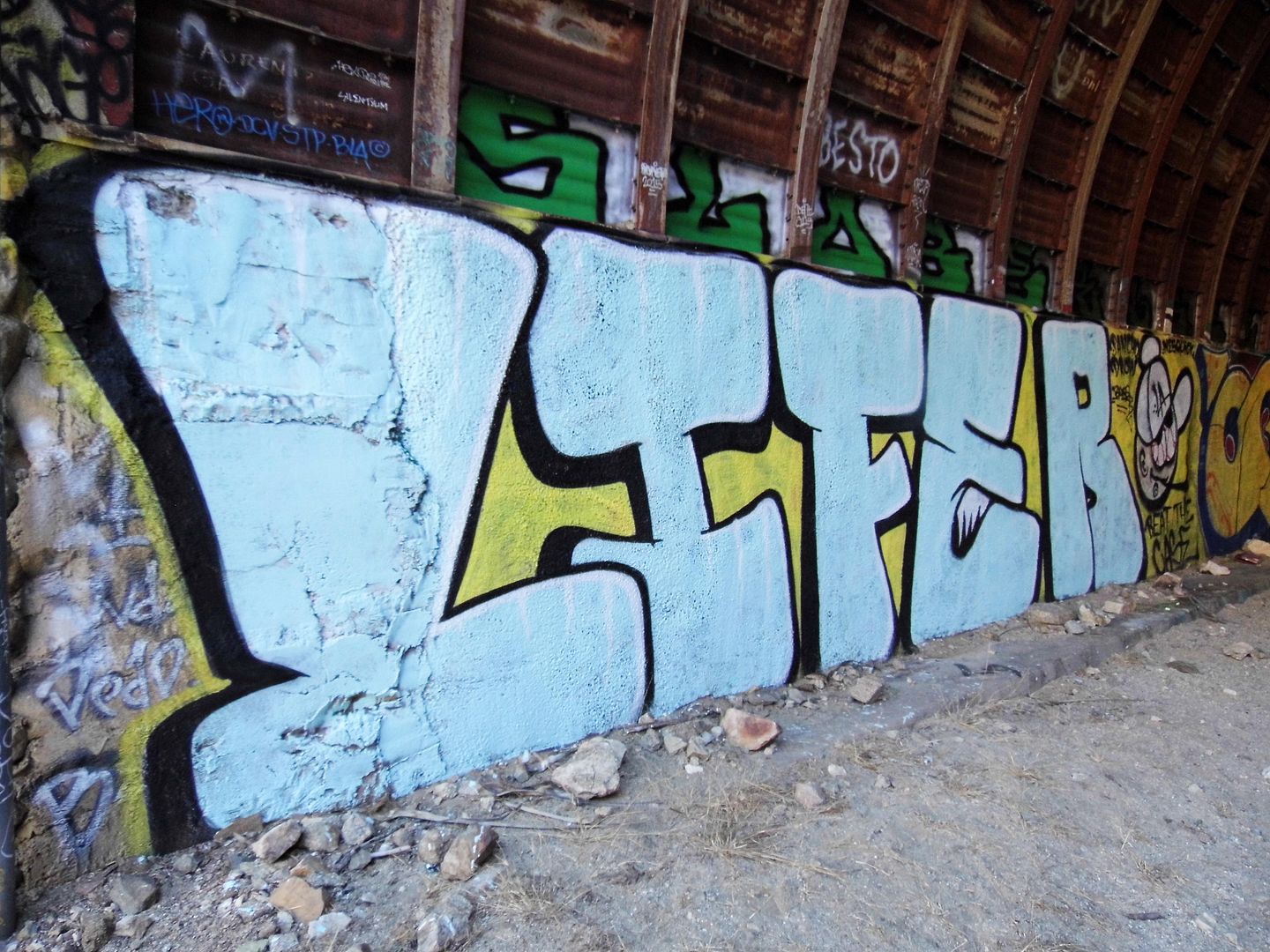
Taggers have made their mark on both abandoned tunnels, as taggers do.
The path to the second tunnel was never bridged...
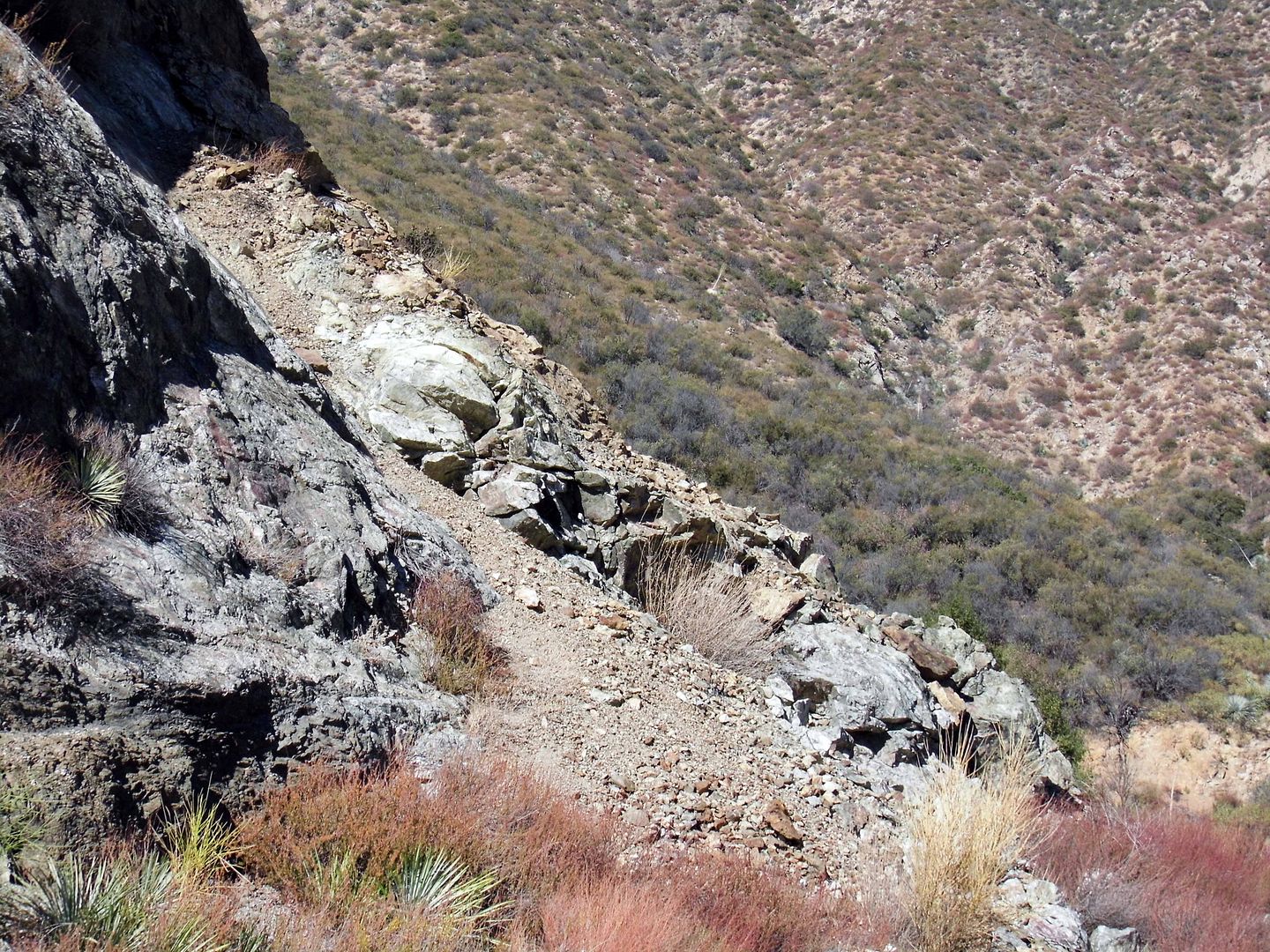
...so to get to it, we had to trudge along a horseshoe-shaped curve on foot.
This later tunnel, circa 1964, marks the end of the hike...
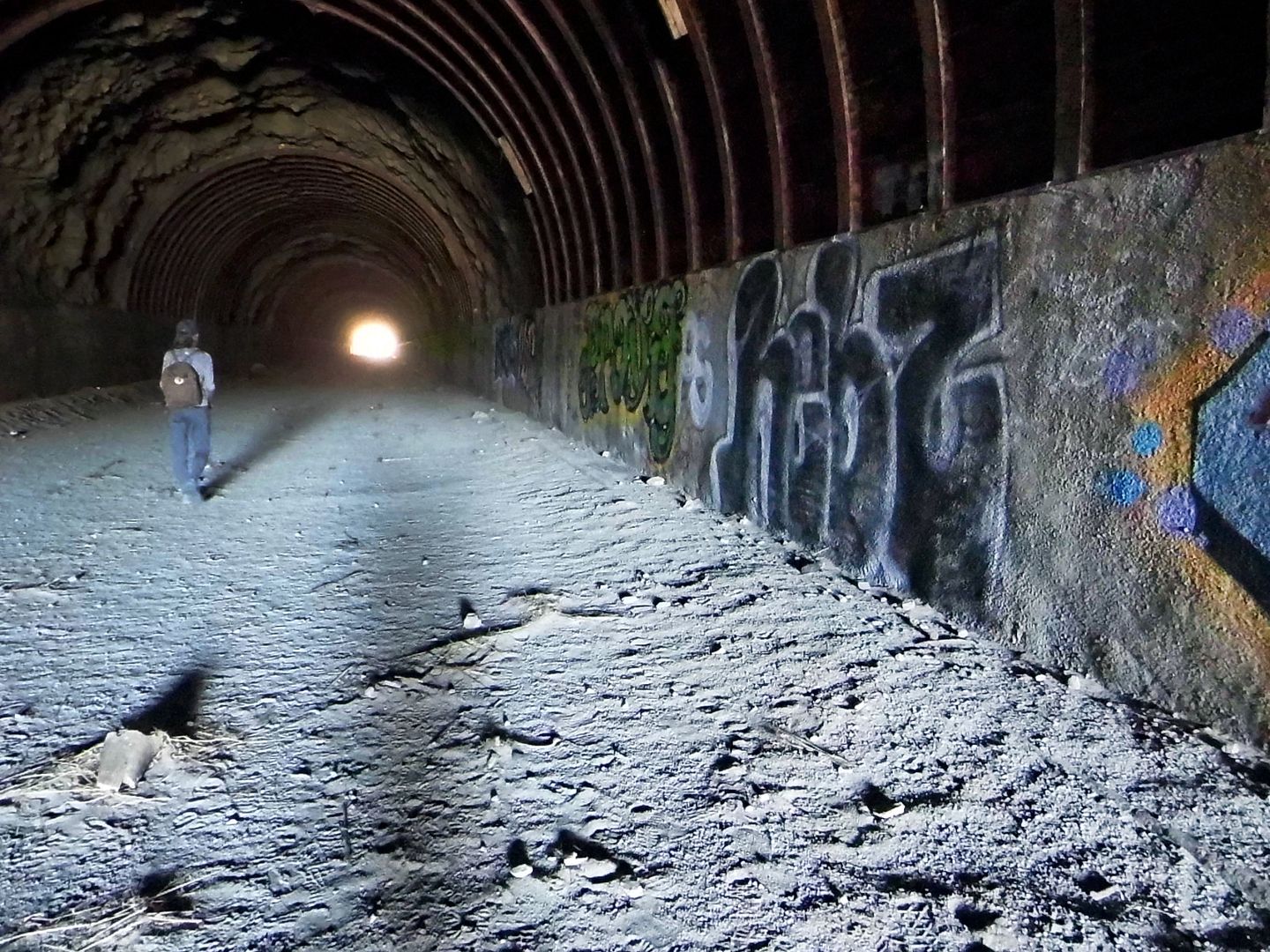
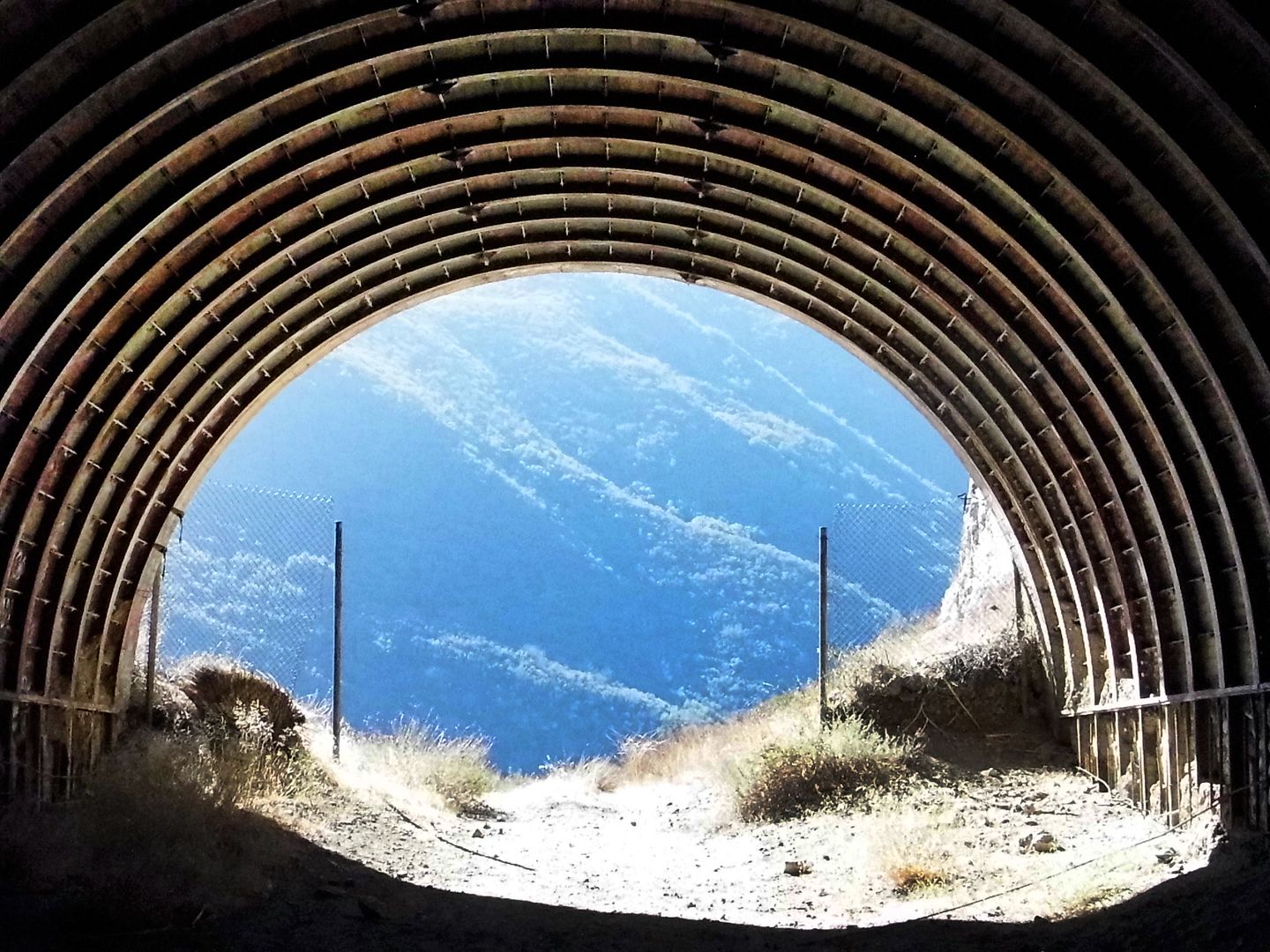
...but of course we couldn't turn around before walking through to the very end.
The second tunnel appears to be more unfinished than its predecessor, with rebar holding in some exposed piles of rocks and cinder blocks.
It was cool and breezy in those tunnels—not dark enough for a flashlight or headlamp, but sheltered enough to make us feel like we were underground, though we could see daylight at both ends.
The completionist in me was relieved to see everything there was to see, especially considering I hadn't been sure I could even make it to the first tunnel.
But as soon as we hit the wilderness on the other side, where the road just kind of ends unceremoniously, I knew we still had to double-back and retrace our steps back to our cars.
It was discouraging to have such a hard time on what would be widely considered a relatively easy hike. But if I never hike again, I'm glad that this will have been my last.
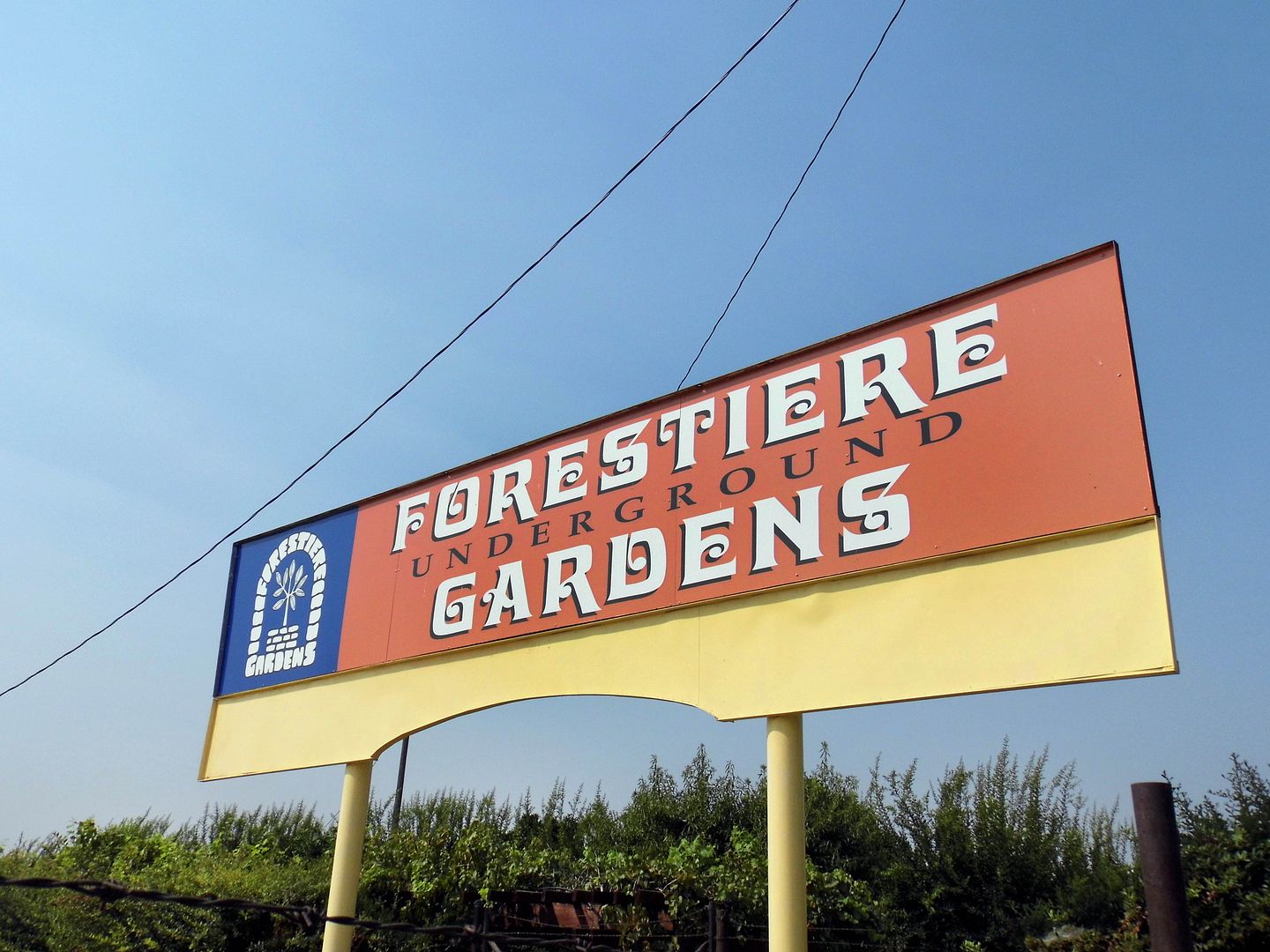
I chose one of the worst heatwave days of the year to cross Forestiere Underground Gardens in California's Central Valley off my list.
But that was just perfect—because its creator, Baldassare Forestiere, dug it out to escape the scorching summertime heat. So, I got to experience it just as he did—and for the very reason he excavated the site in the first place. It's 15 to 20 degrees cooler down there!
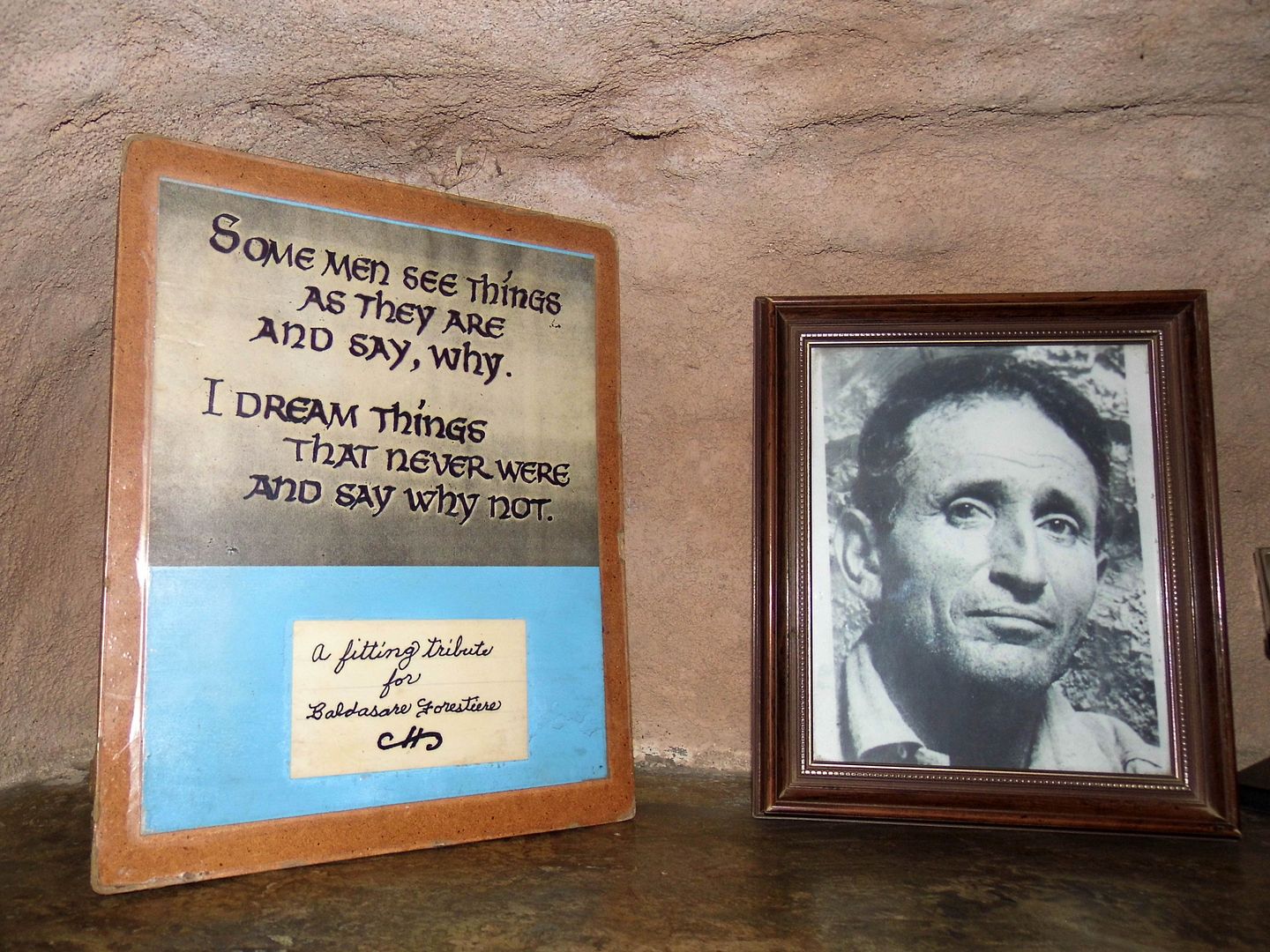
An immigrant from Sicily, Forestiere had become an expert tunneler while working on Boston's subway system. But he hated the snow and cold; so, he fled to California for the promise of a warm, tropical paradise.
Around the turn of the last century, Central Valley land was dirt cheap—and given its reputation as California's breadbasket, and its seemingly healthy topsoil, it's no wonder that Forestiere planned to become a farmer and till the earth.
He close 80 acres of the Winterton Tract, a subdivision of the Fruit Vale Estate, just 7 miles from Fresno's city center. Only, after just a bit of digging, he hit a layer of hard rock formed by the Ice Age —and had to come up with a Plan B.
Already an expert "sandhog," Forestiere made the most of the situation and returned to what he knew best. With just a few hand tools, in 1908 he began carving out what would become a California state landmark and be listed on the National Register of Historic Places.
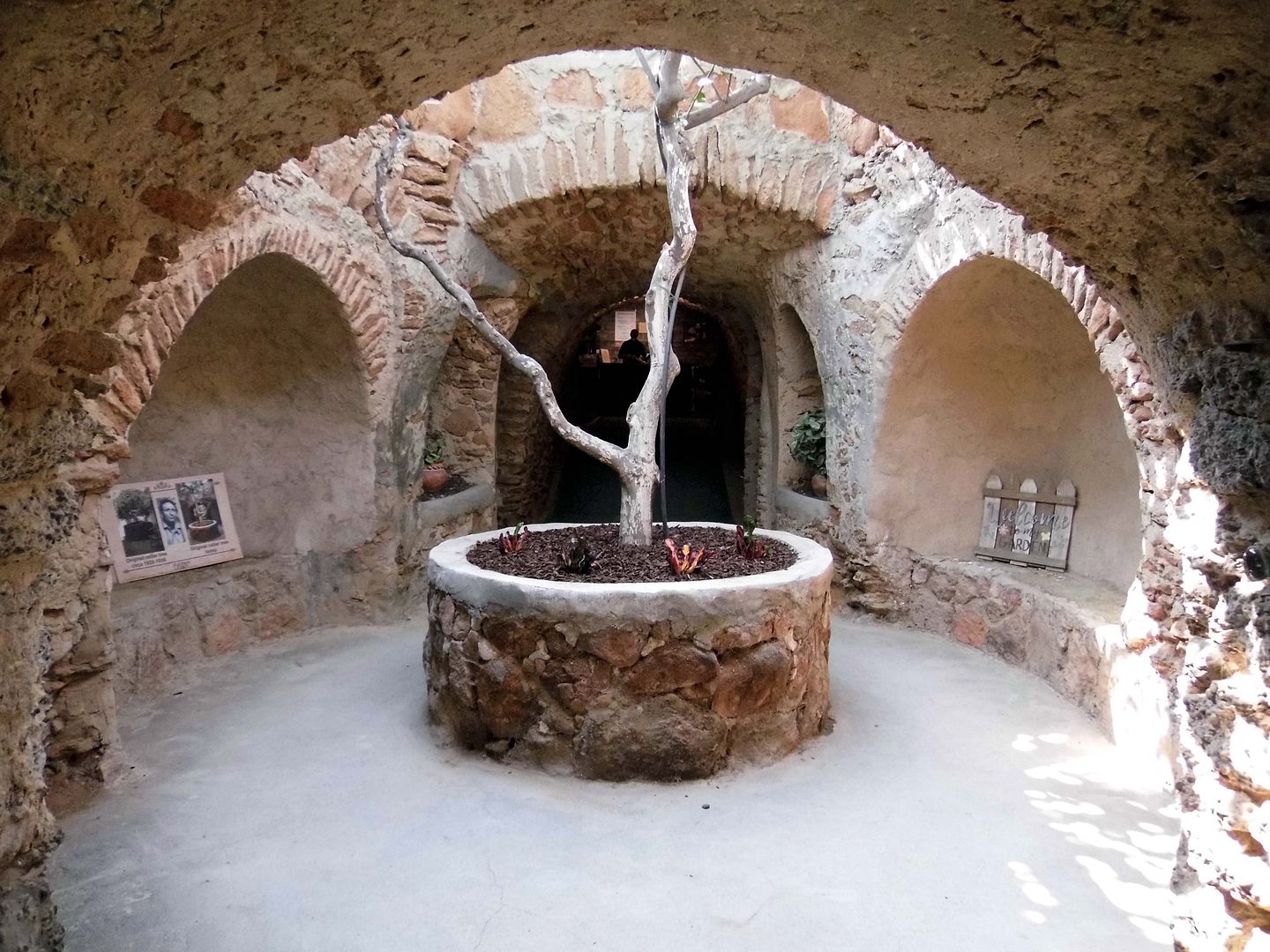
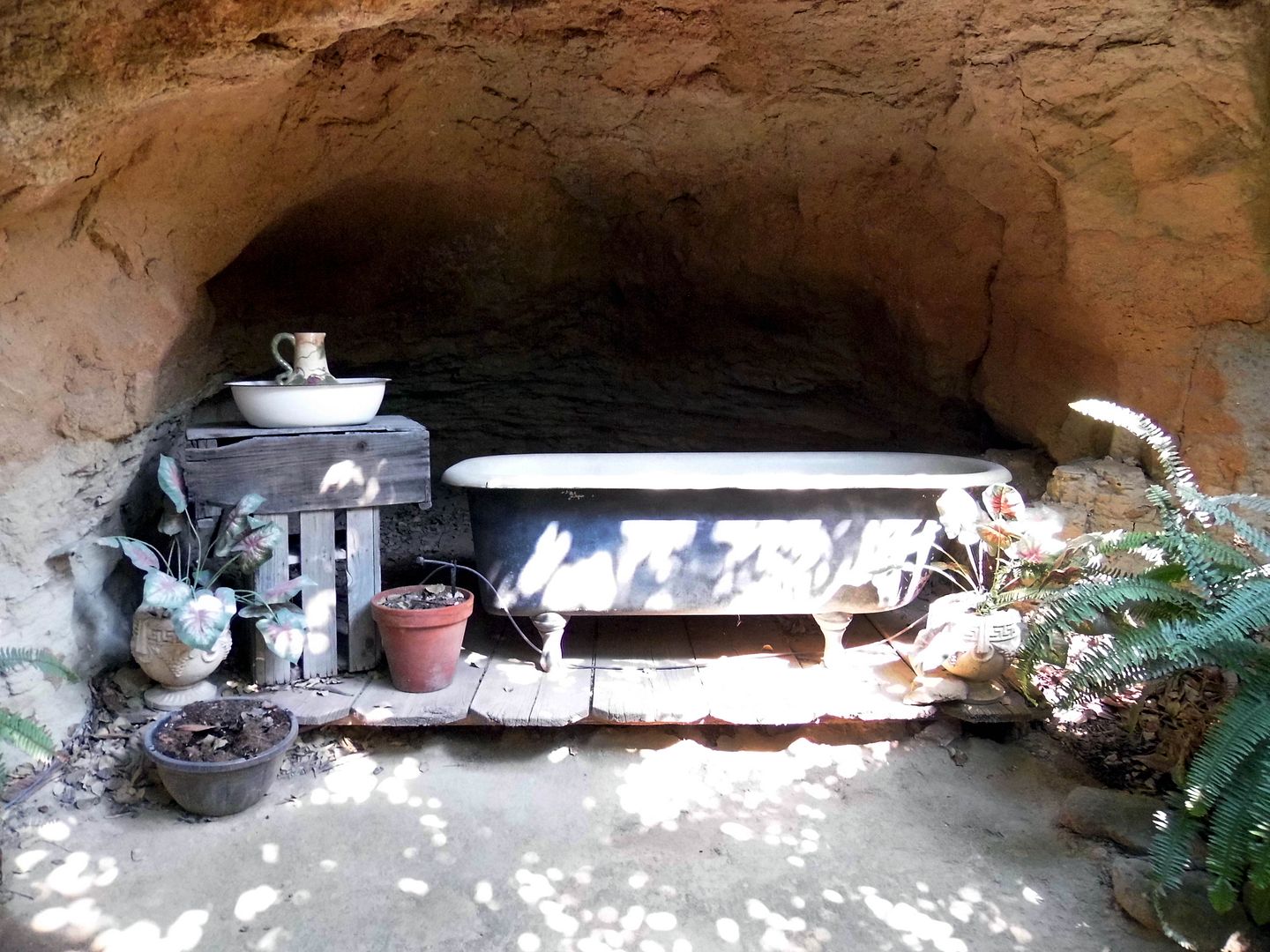
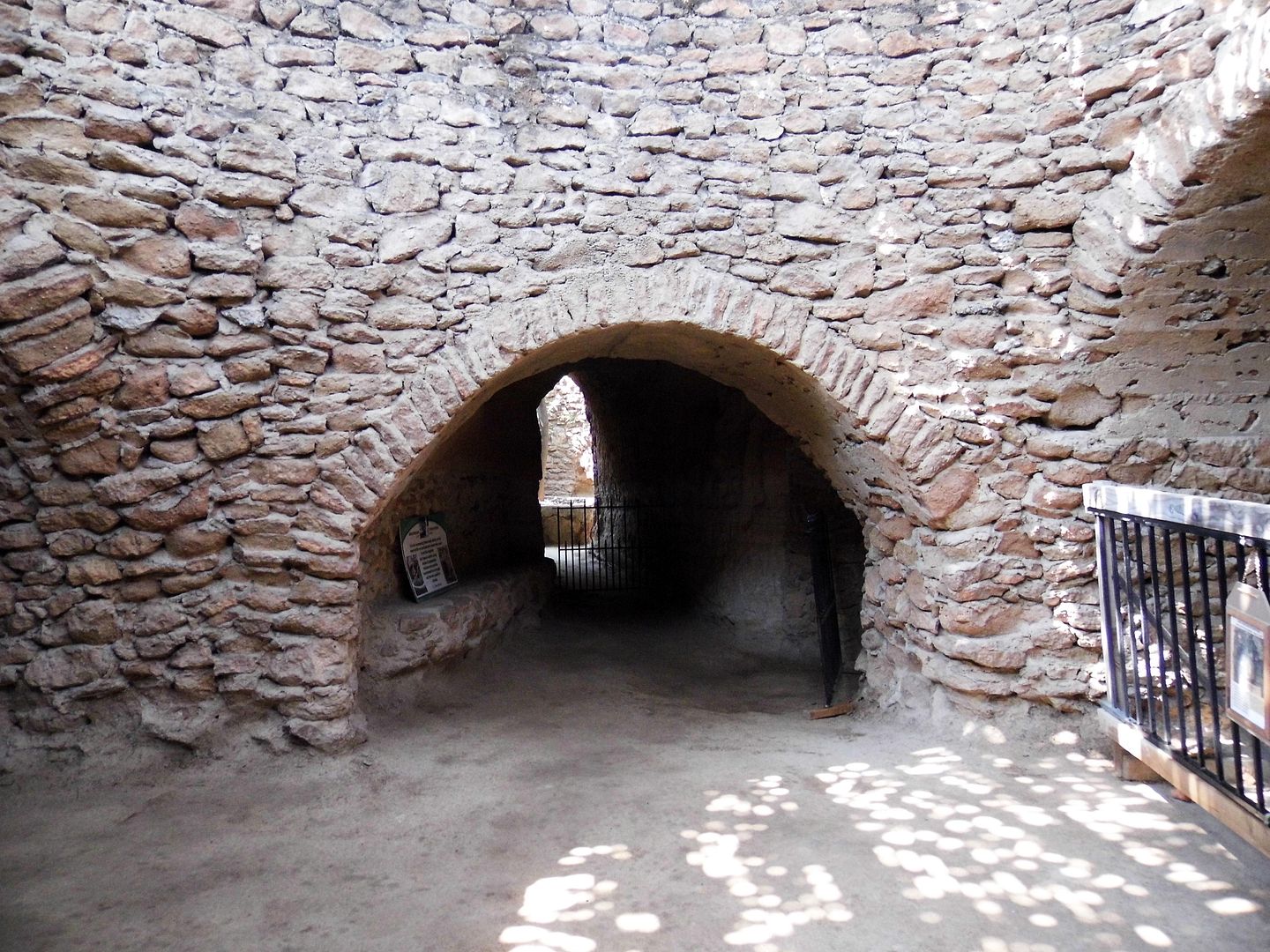
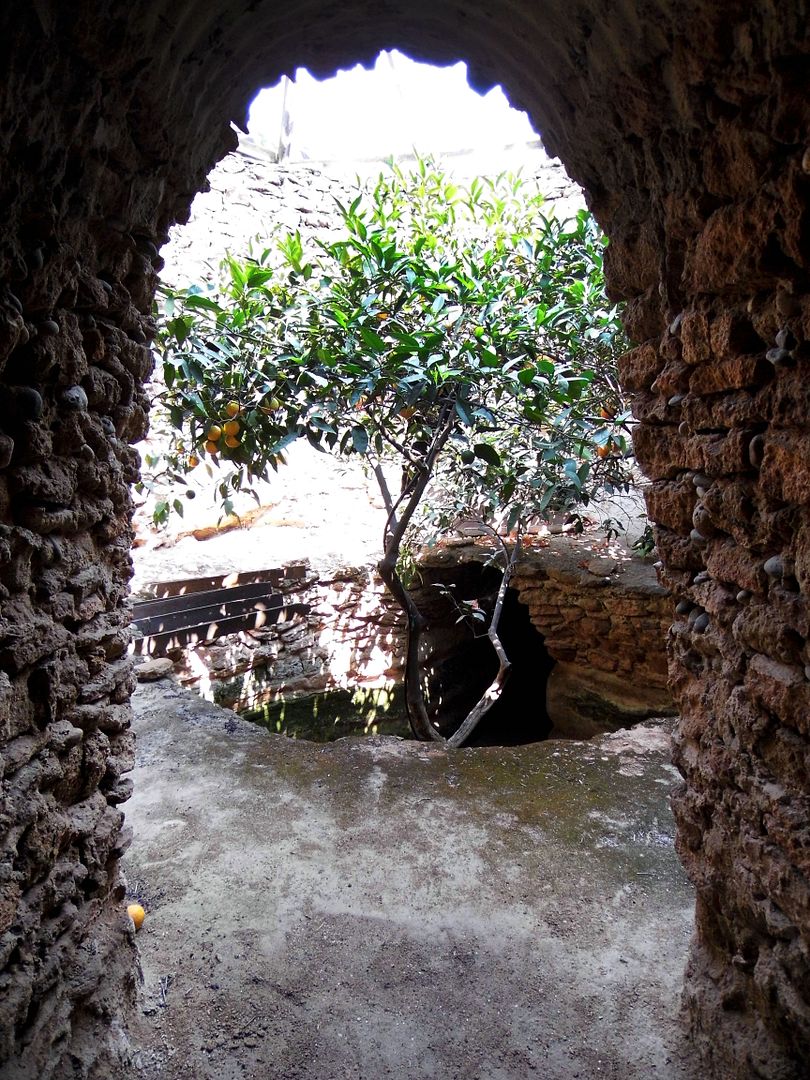
With all the inspiration he needed right inside his own head—and no written plans—Forestiere excavated 10 acres of what some have considered caves or grottos or even catacombs, using traditional architectural and engineering techniques of Roman arches (using wagon wheel molds) and domed ceilings.
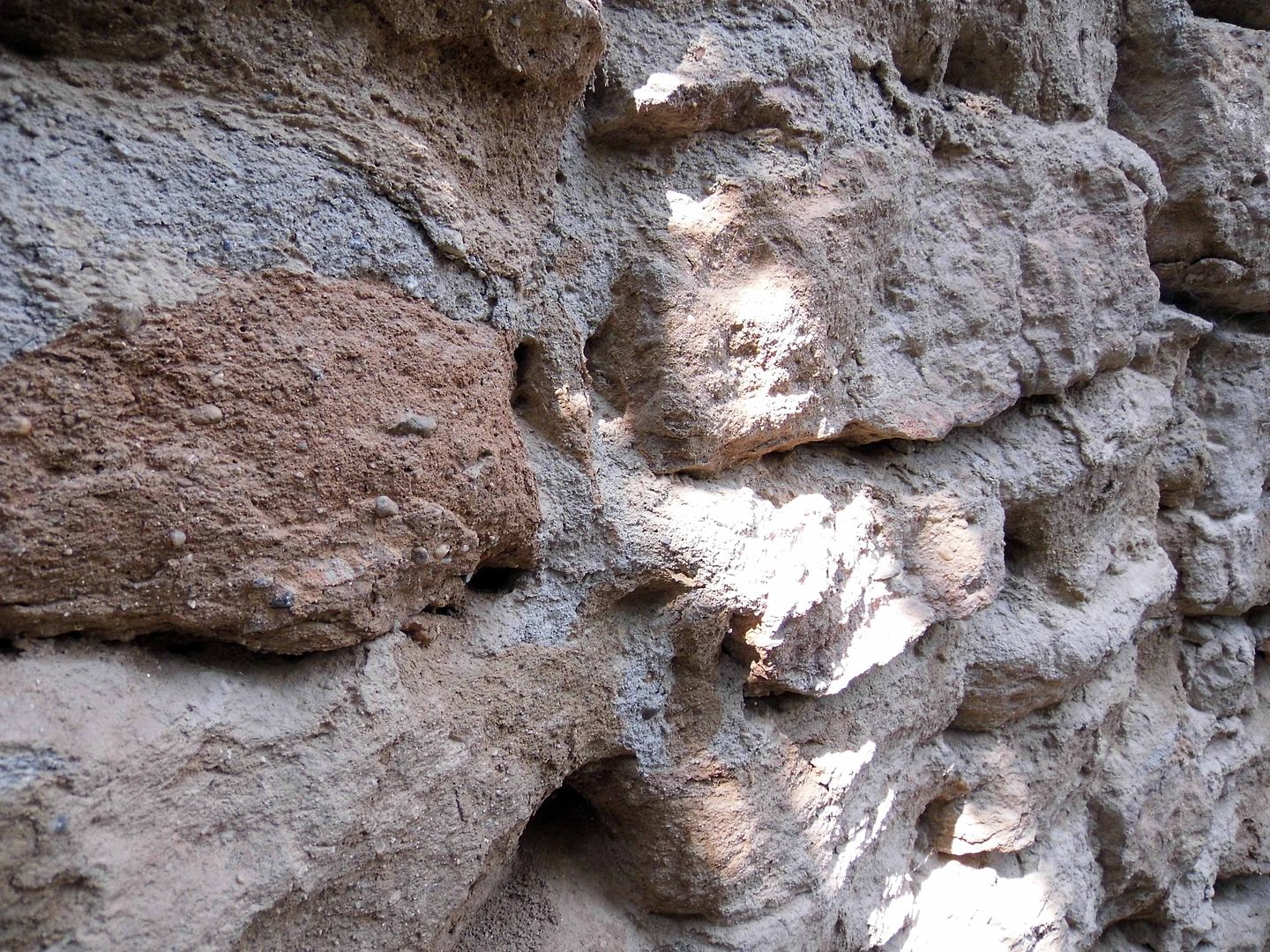
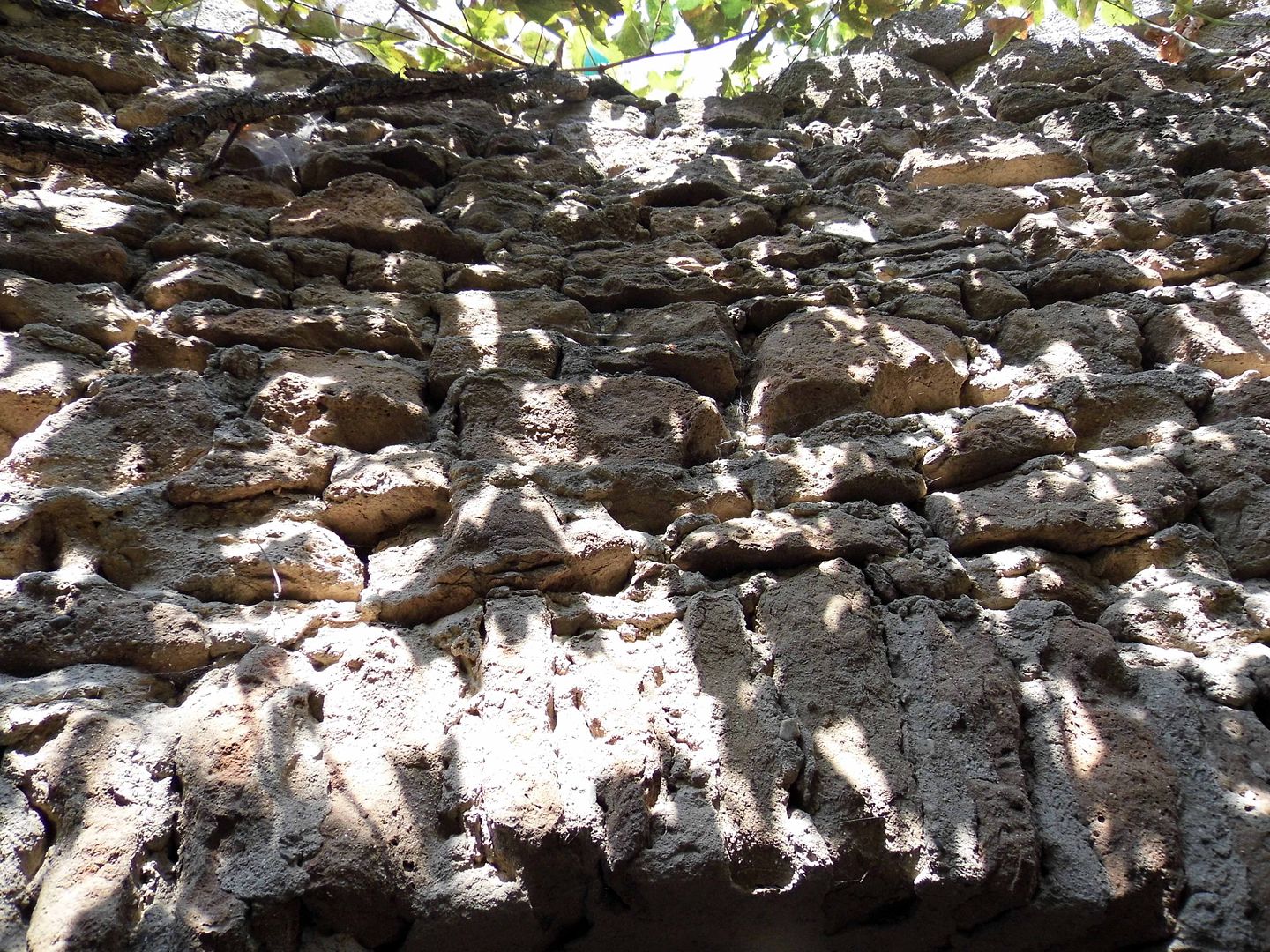
For him, it became home—and that rock-hard material he hit, known as "hardpan," became a sturdy building material for walls, rooms, alcoves, and more.
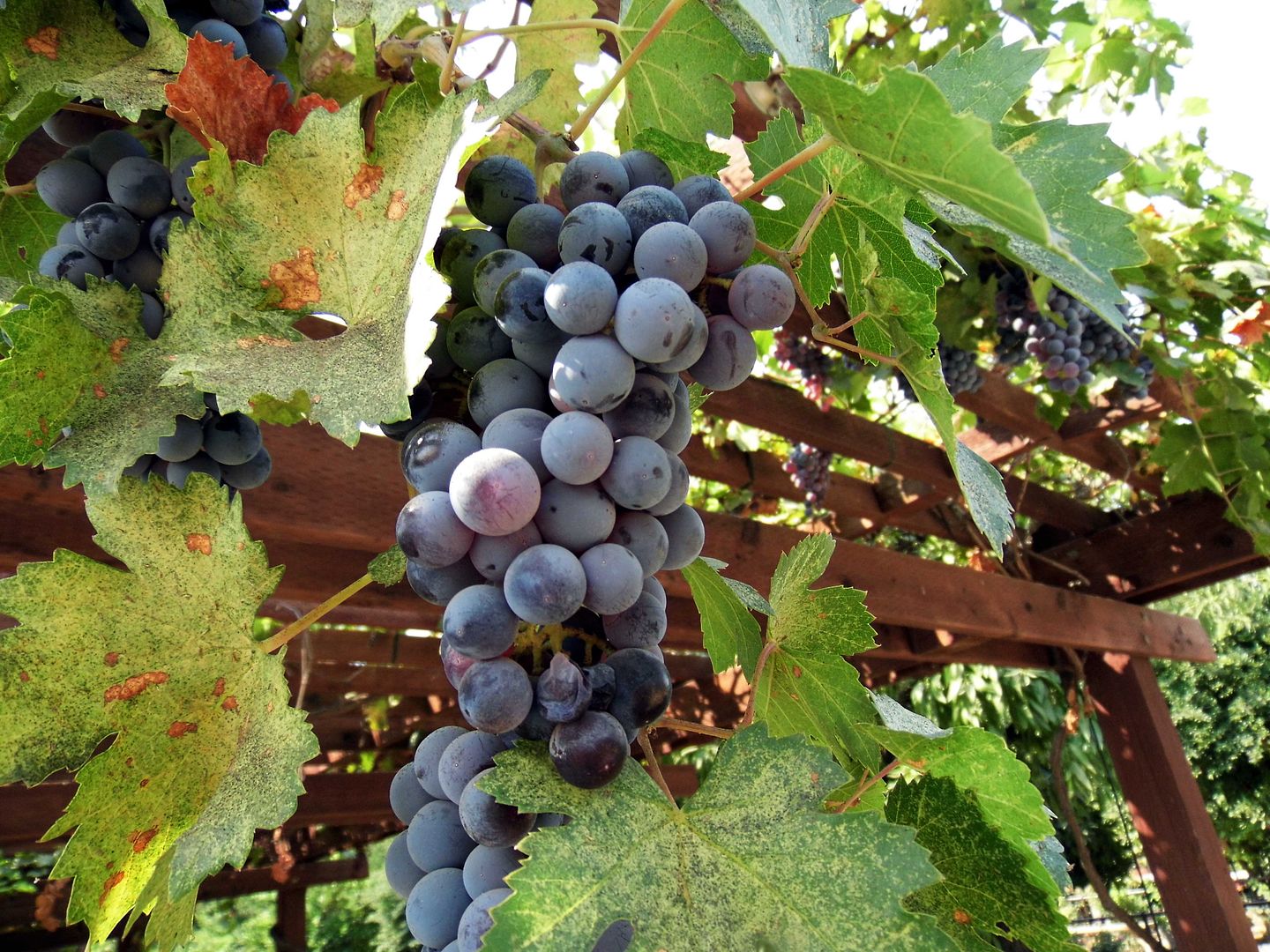
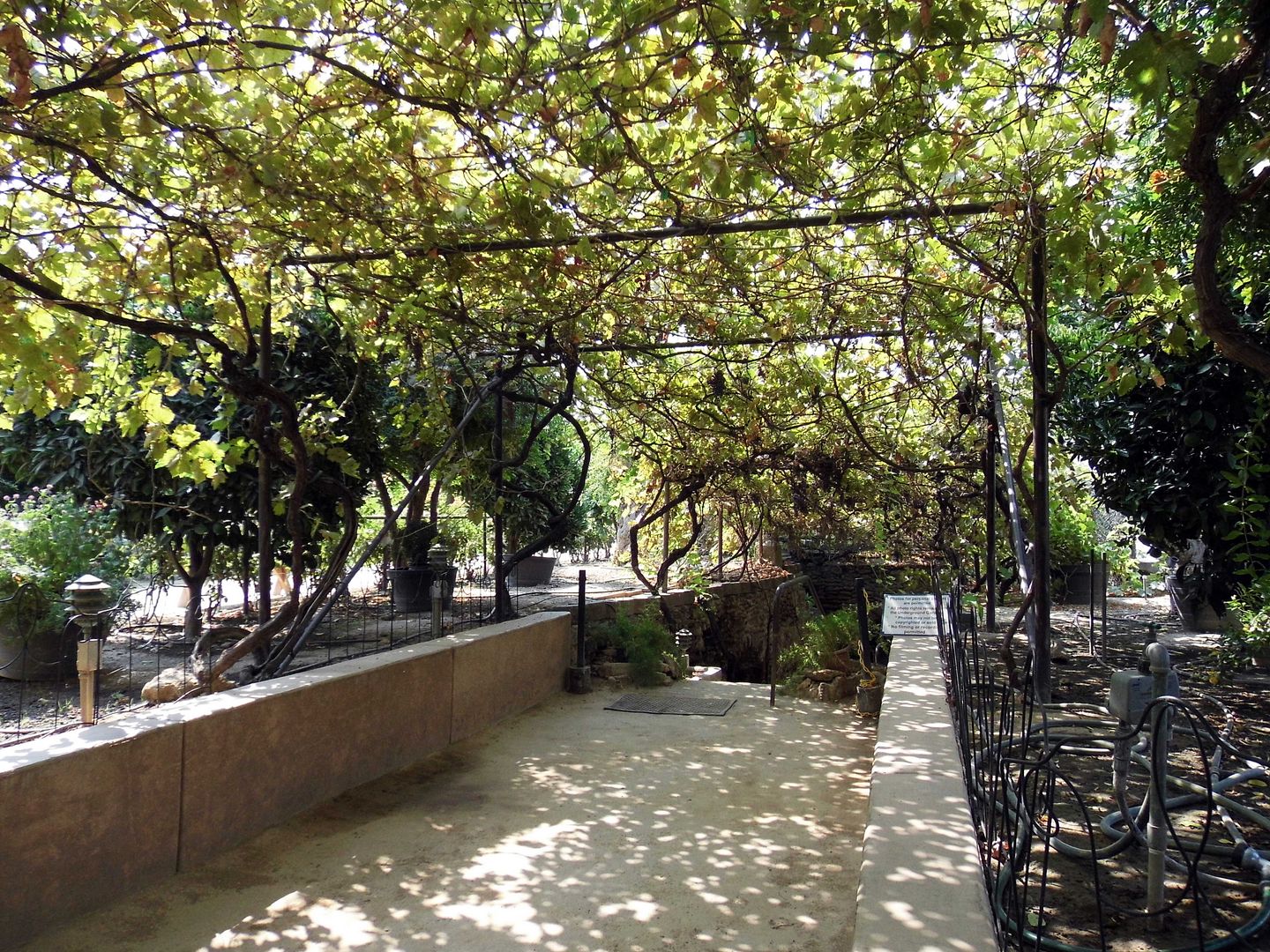
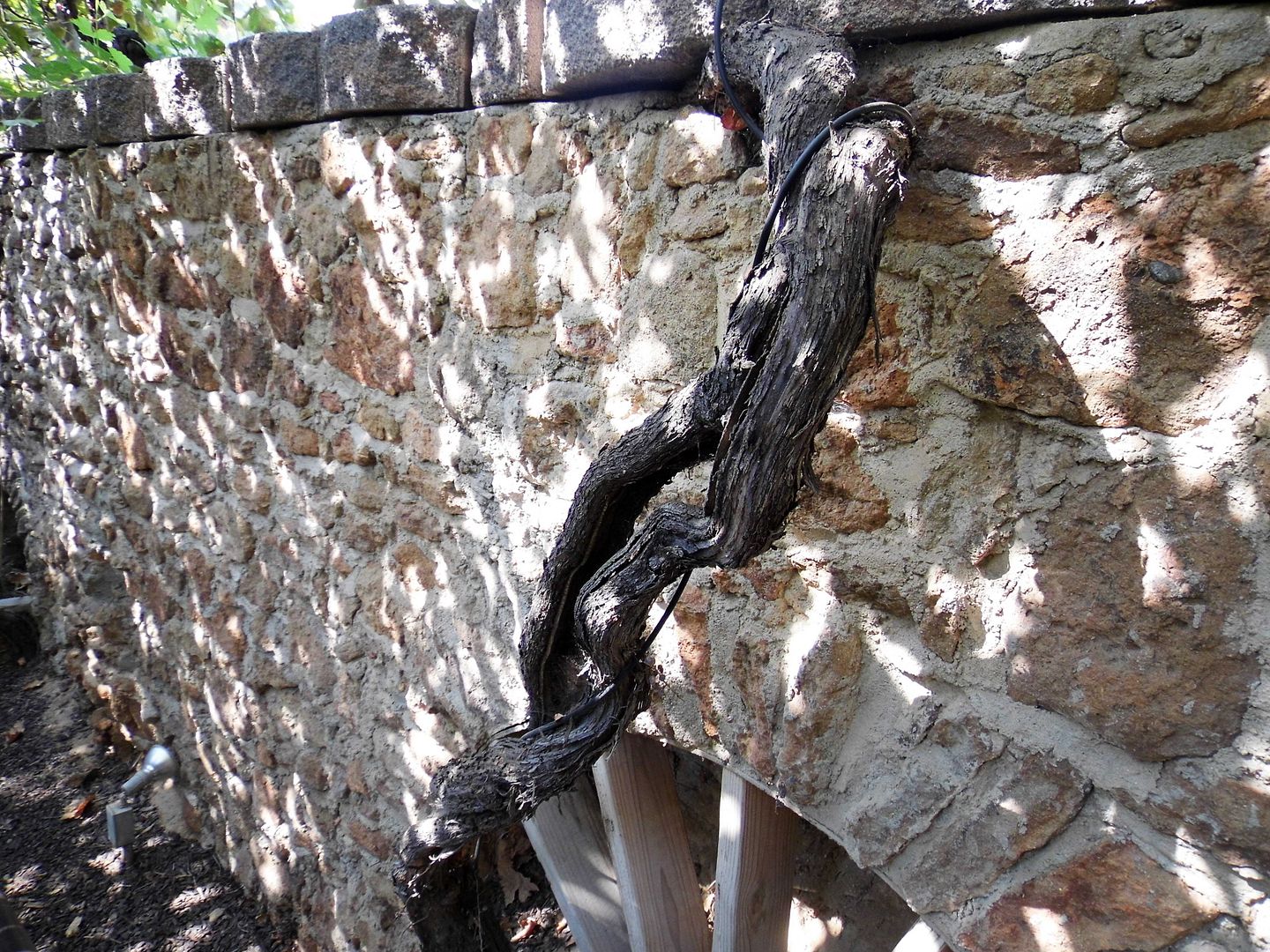
Fortunately, Forestiere didn't have to give up his horticultural dreams—because his construction also included many planters that would contain herbs, fruit trees, and grapevines. Today, there's a vine that's over a century old and has lost only one of its branches out of its original three. It still produces big purple grapes.
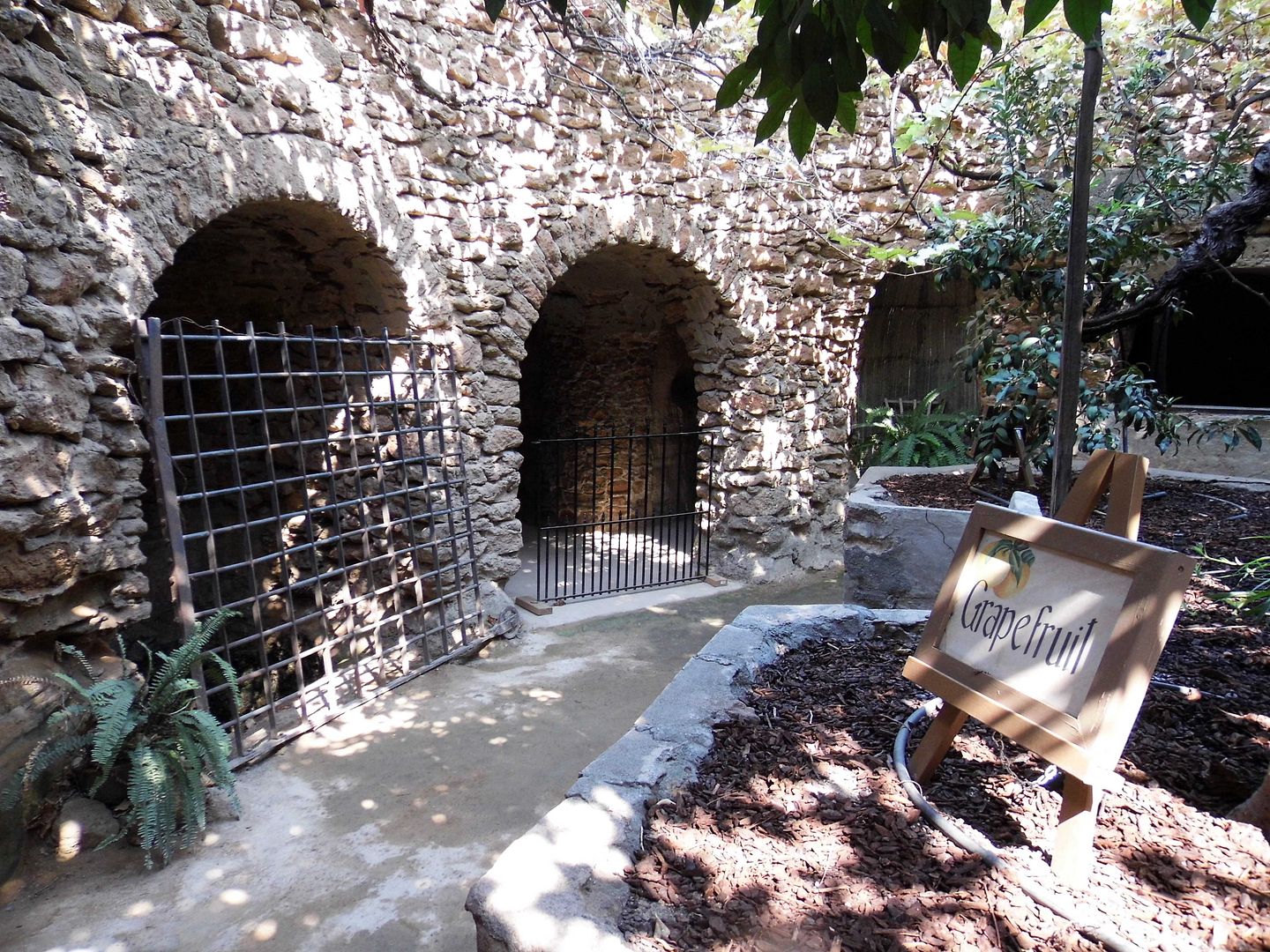
In his underground orchard, Forestiere planted trees that bore tropical citrus like loquat, kumquat, and grapefruit.
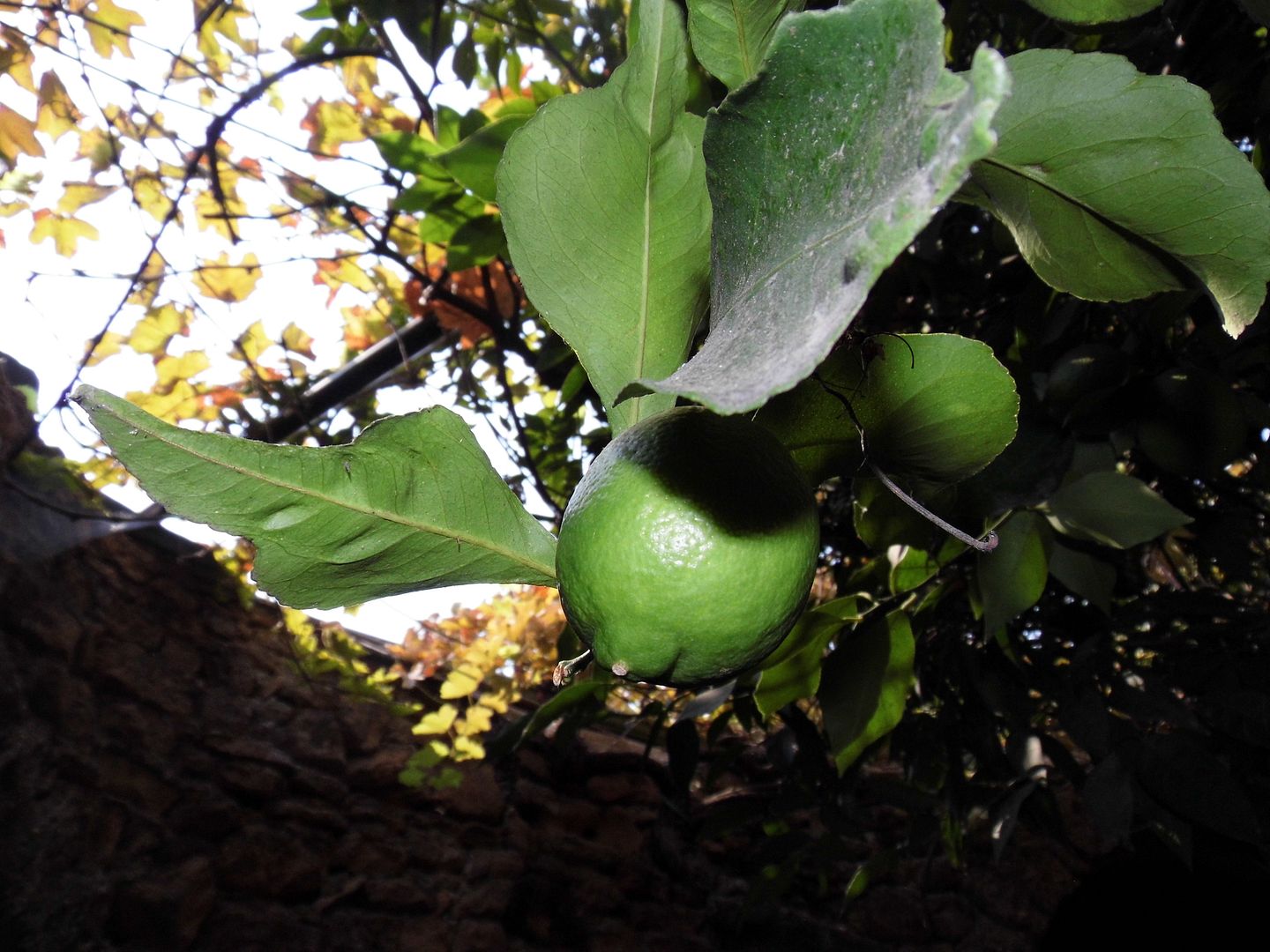
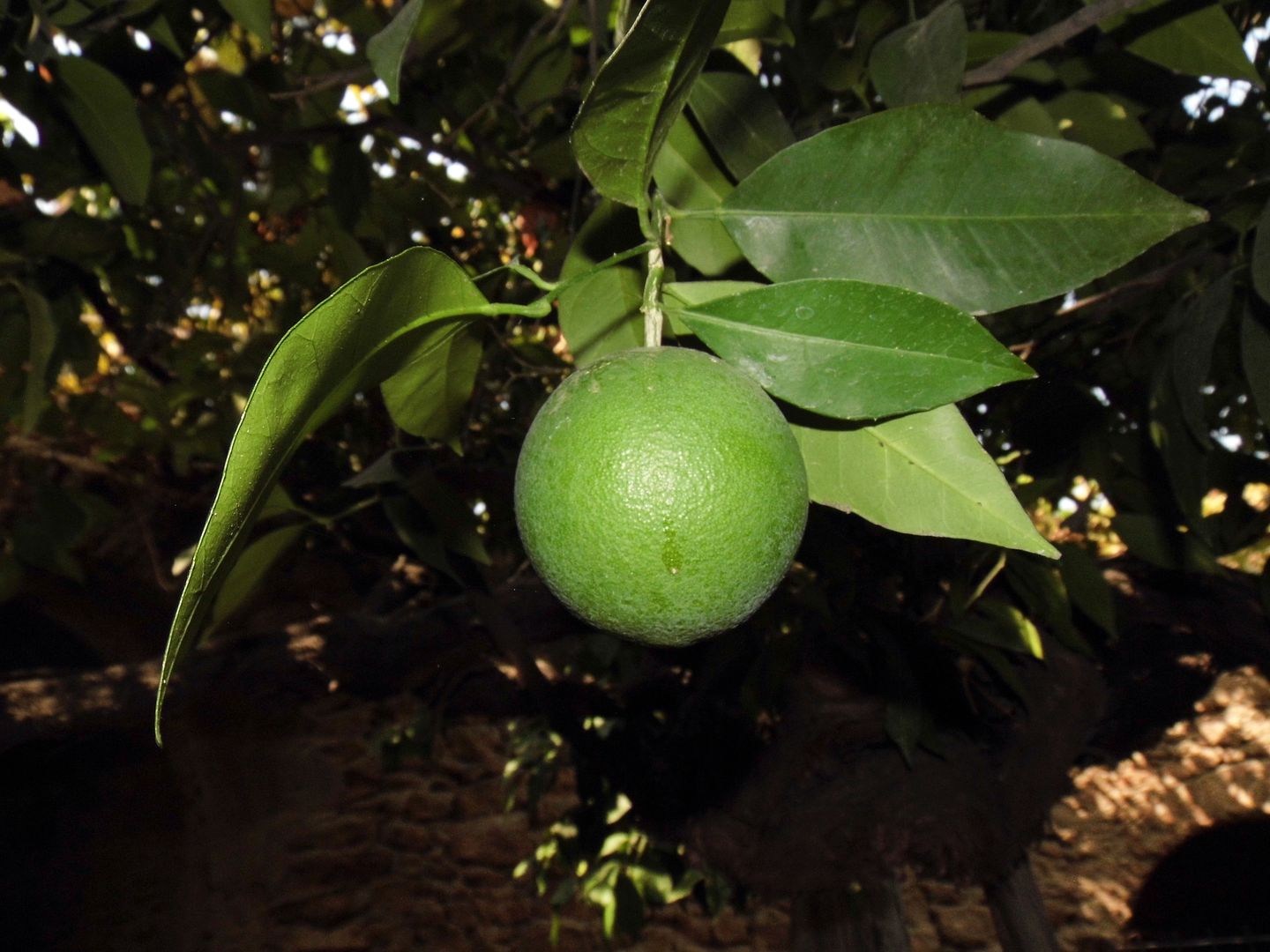
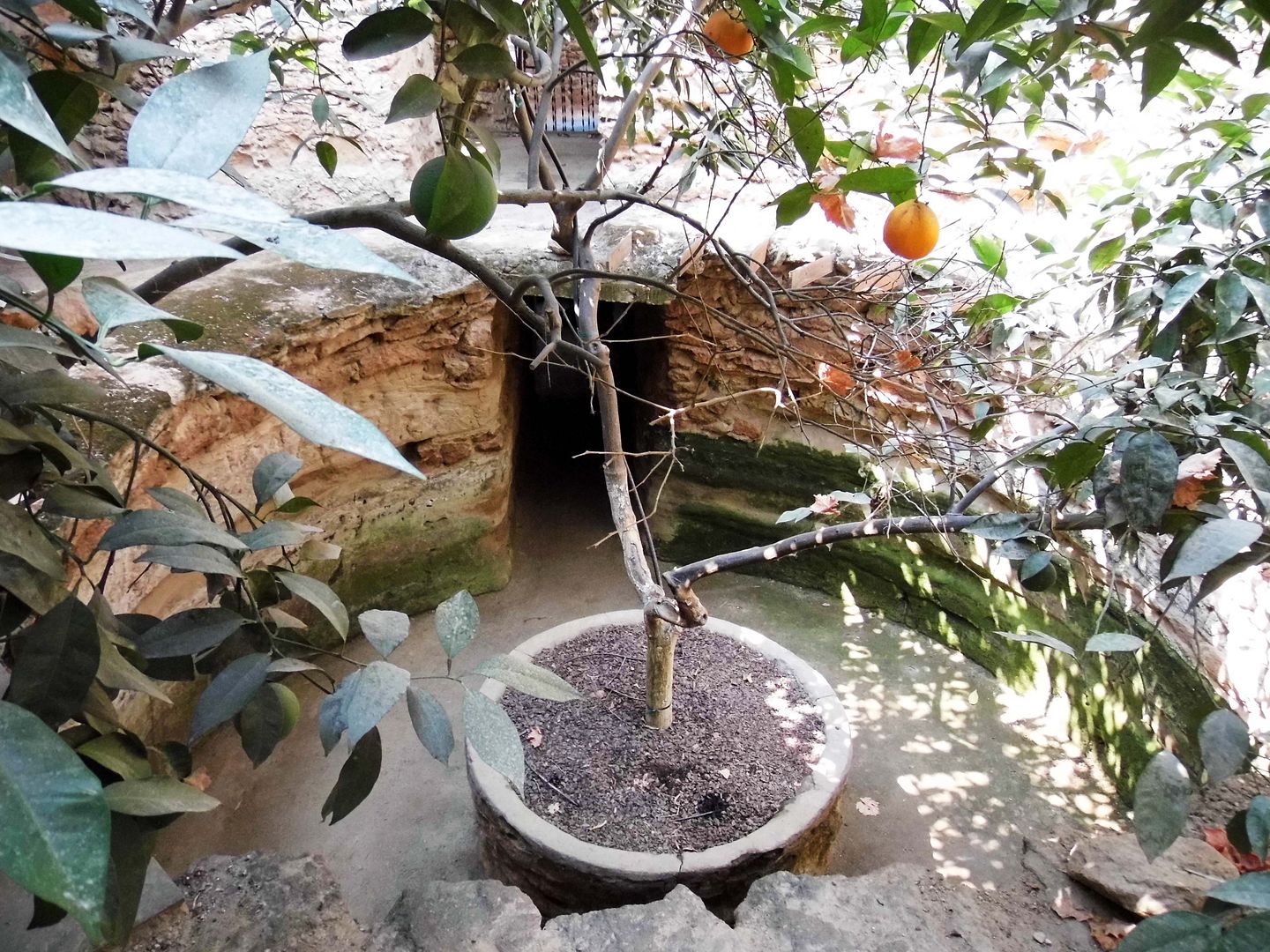
And because he was something of a grafting genius, he even created a citrus-bearing tree that yielded both lemons and oranges.
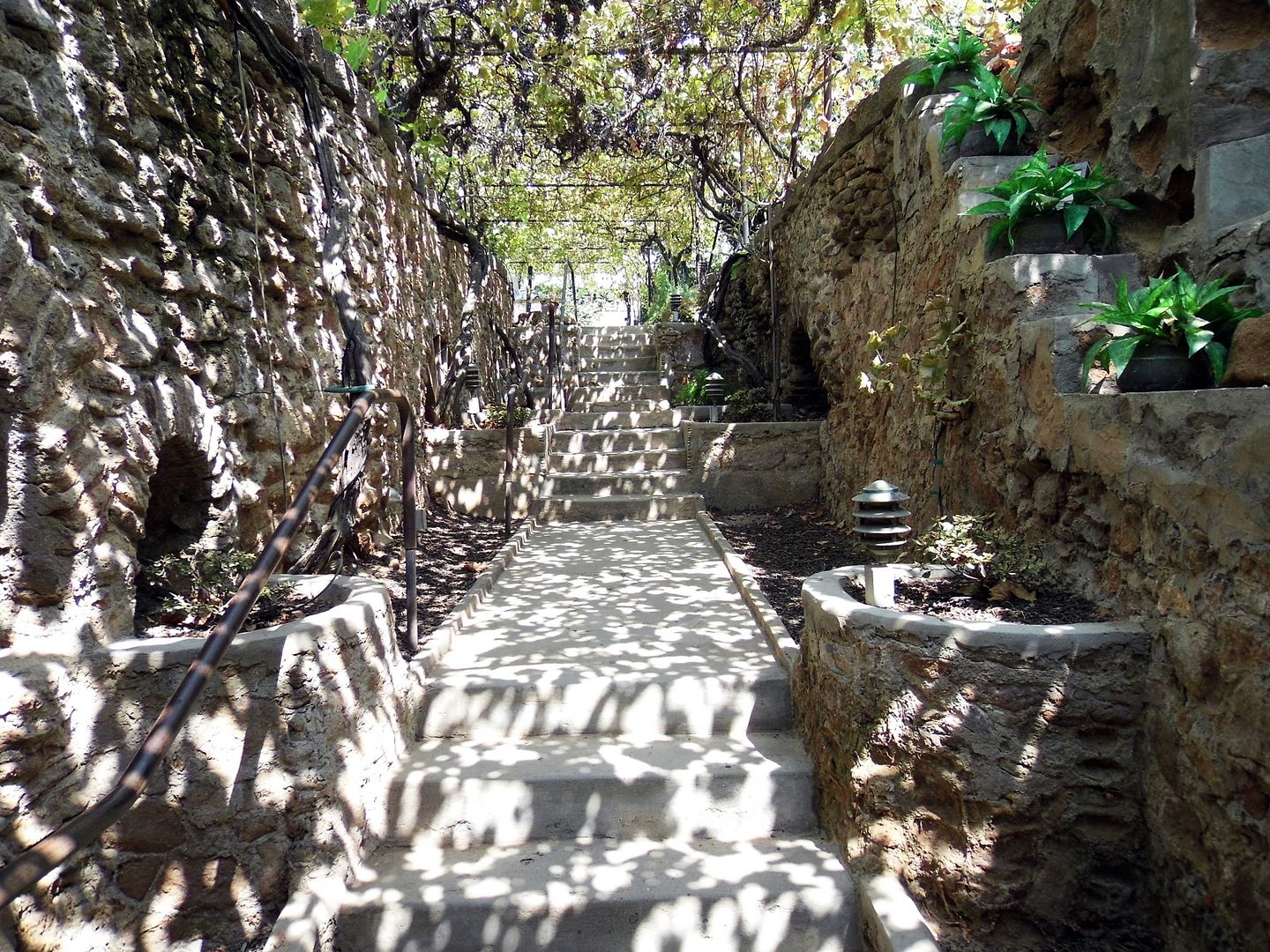
There are now 2 acres "finished" and open for exploring and examining...
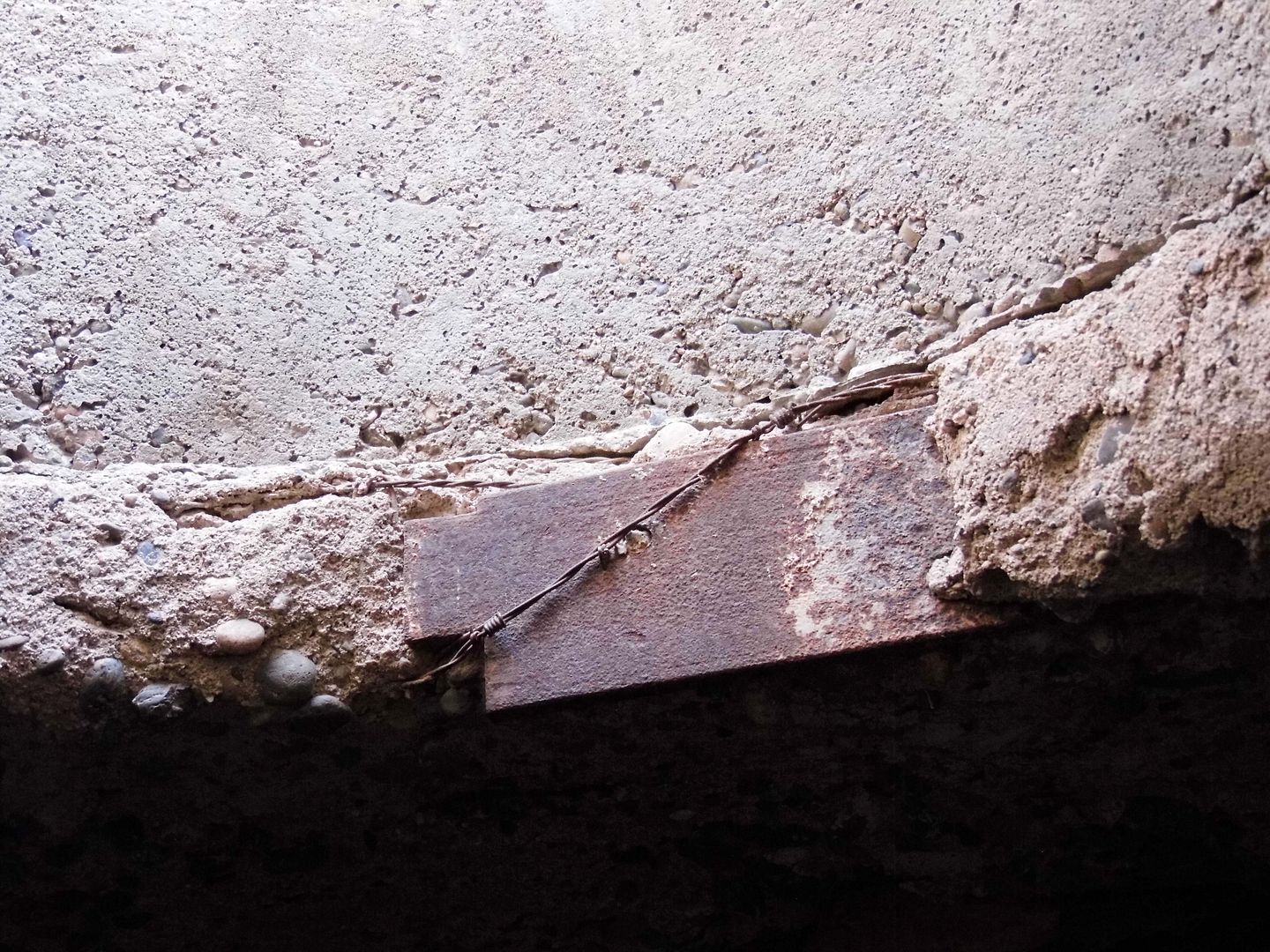
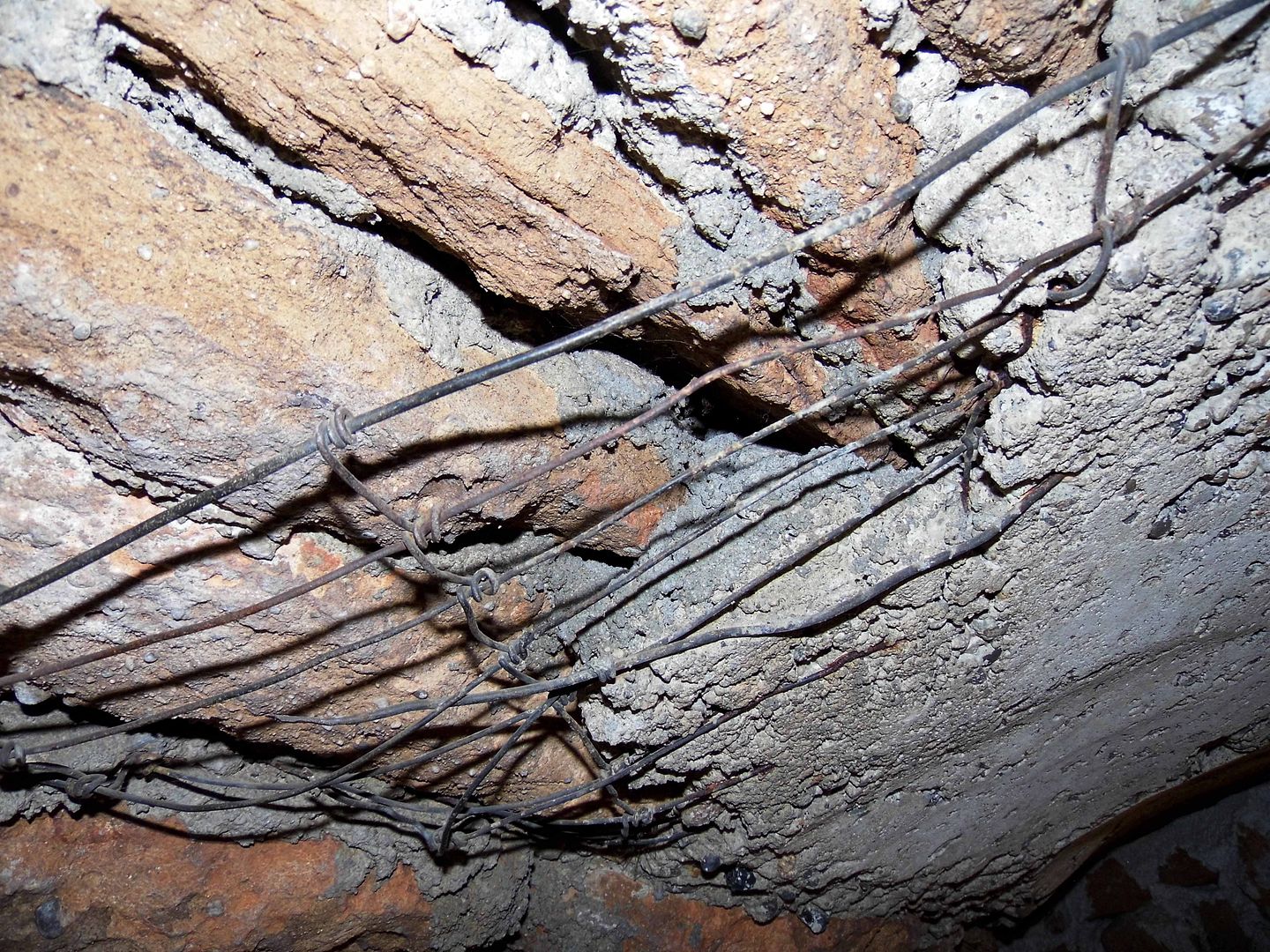
...with recycled building materials hiding in plain sight, like scrap metal and barbed wire...
...and mattress springs.
It's cooler down there not just because of the subterranean location, or the rock walls, but also because of the cross-ventilation. (And, being a devout Catholic, he built the underground gardens literally in the shape of a cross.)
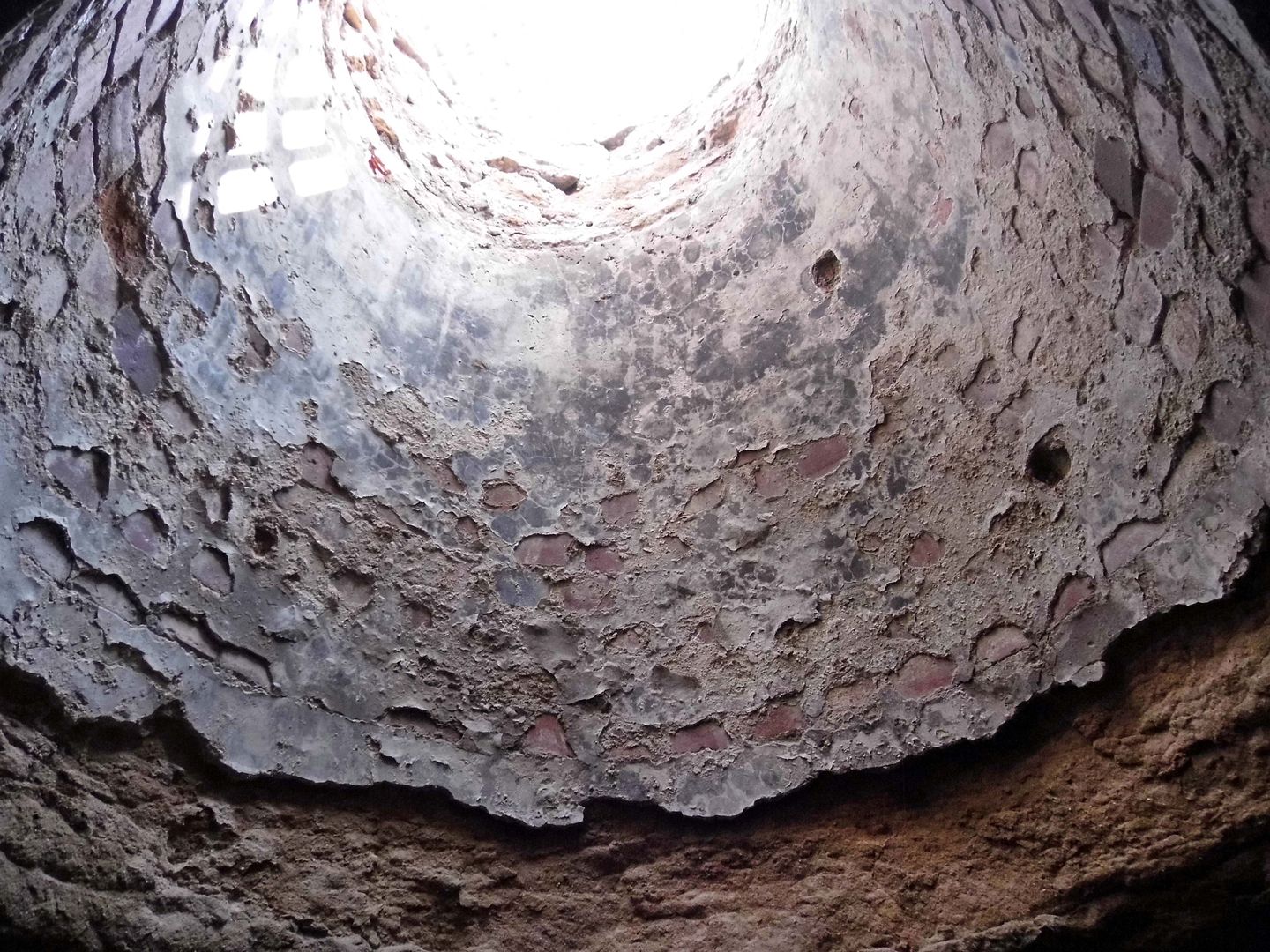
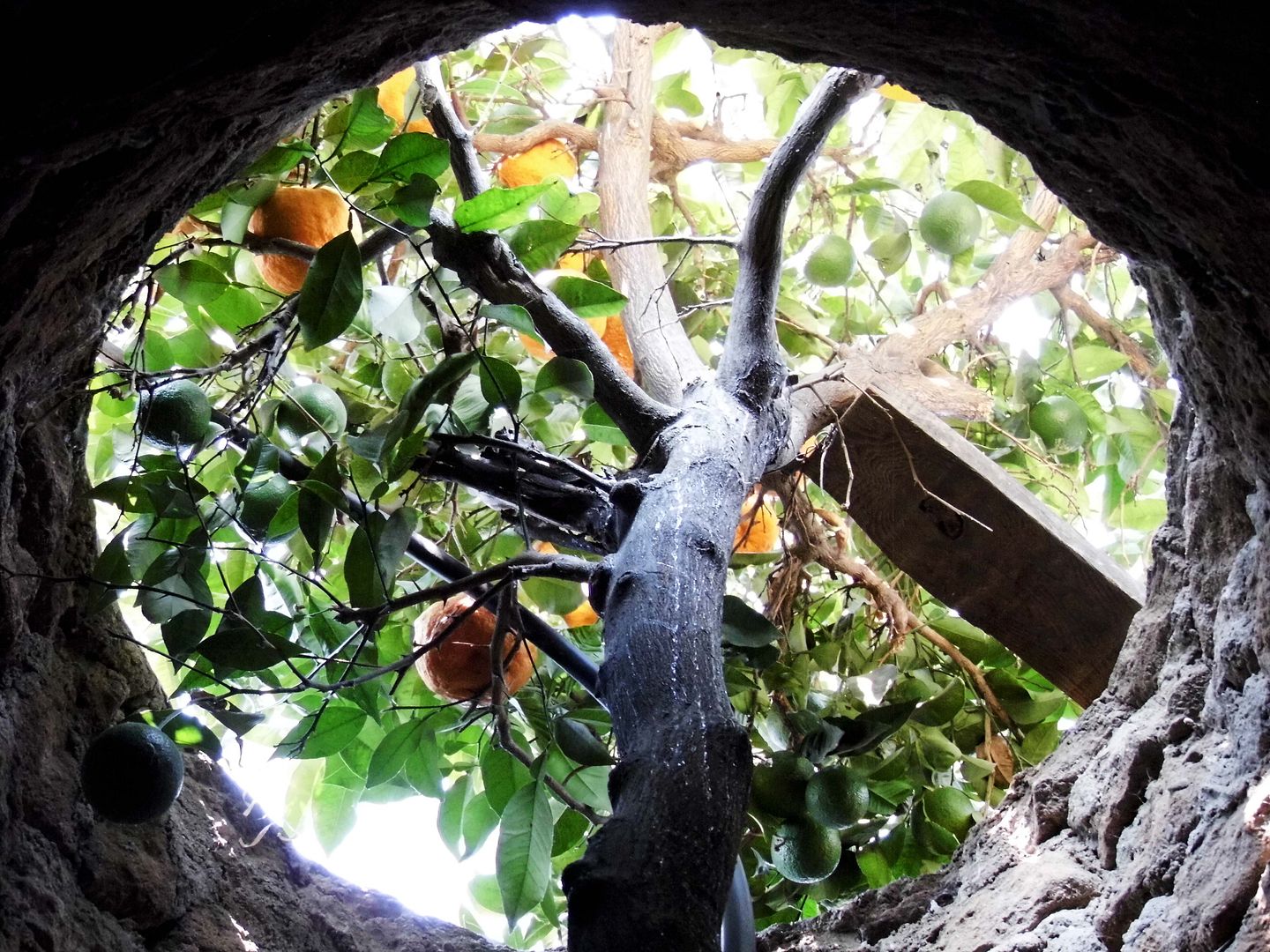
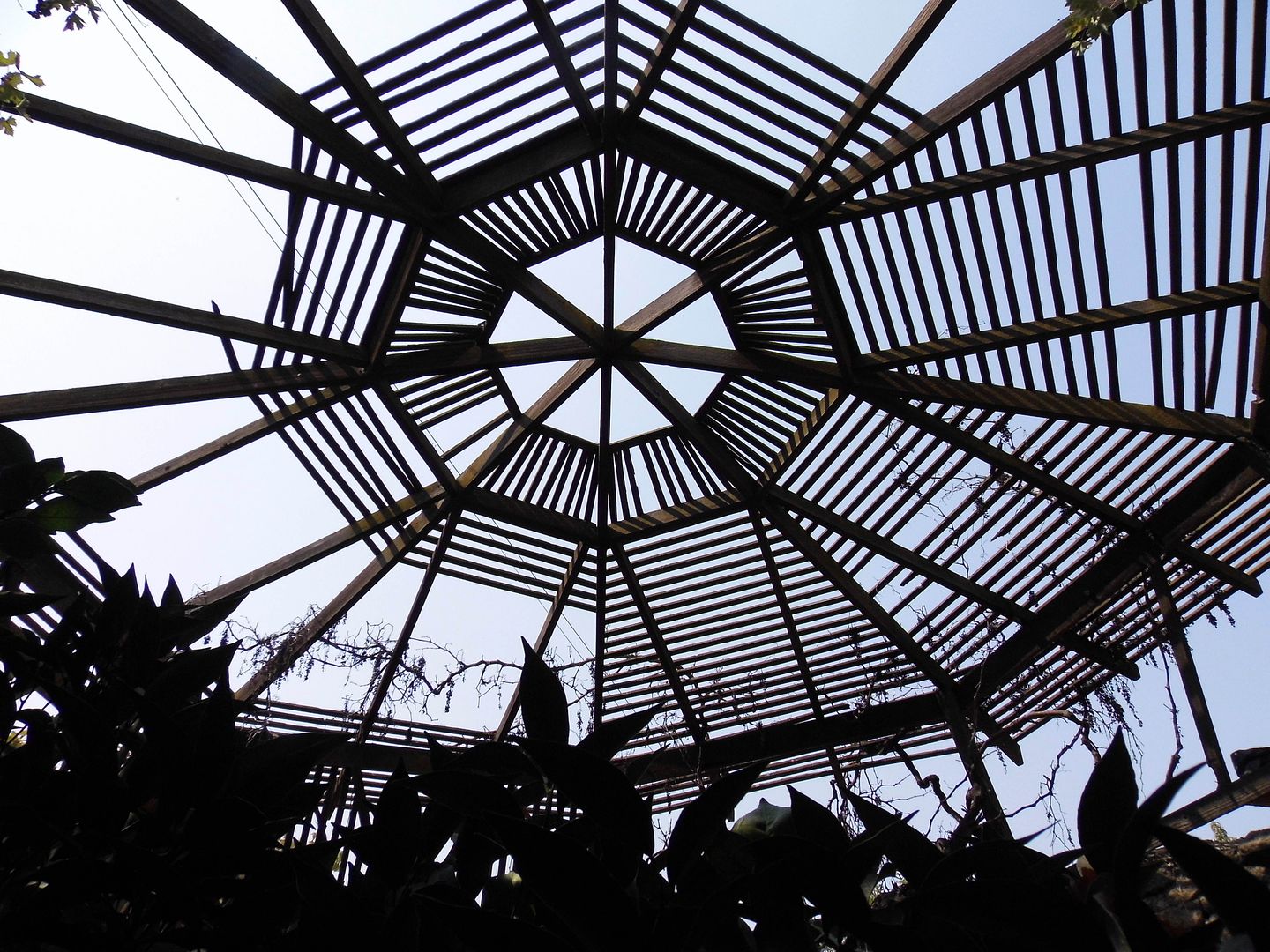
Open-air skylights allow trees to grow towards the sun...
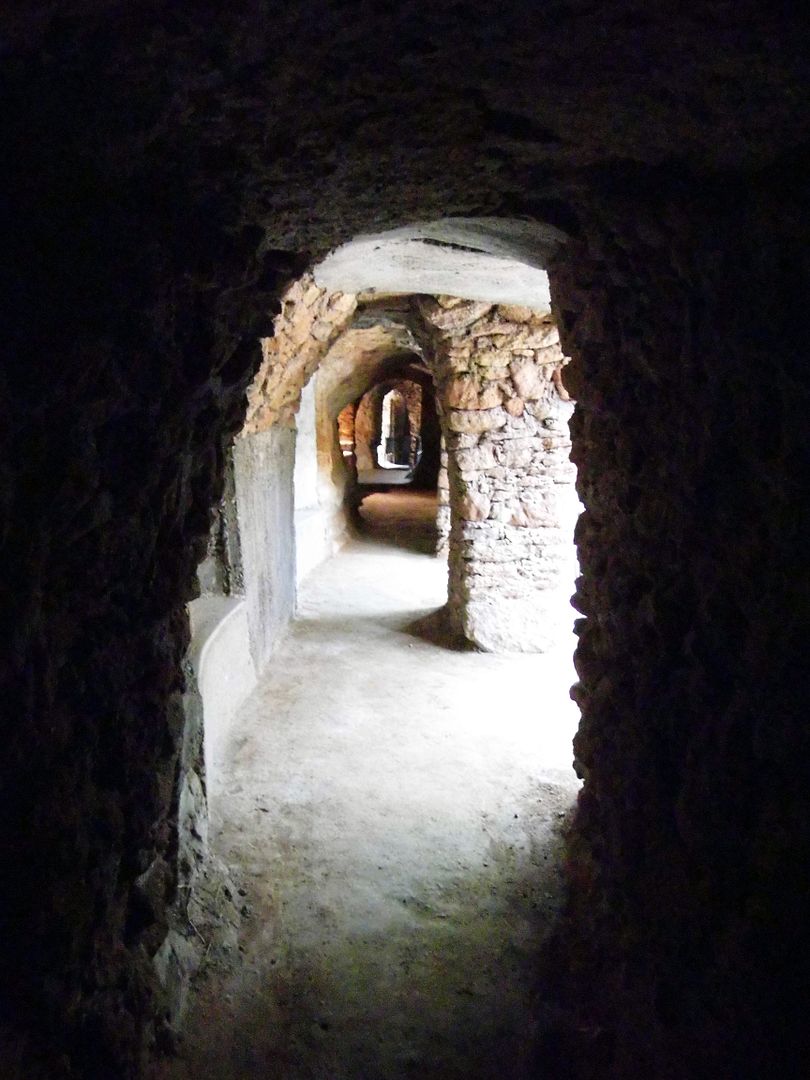
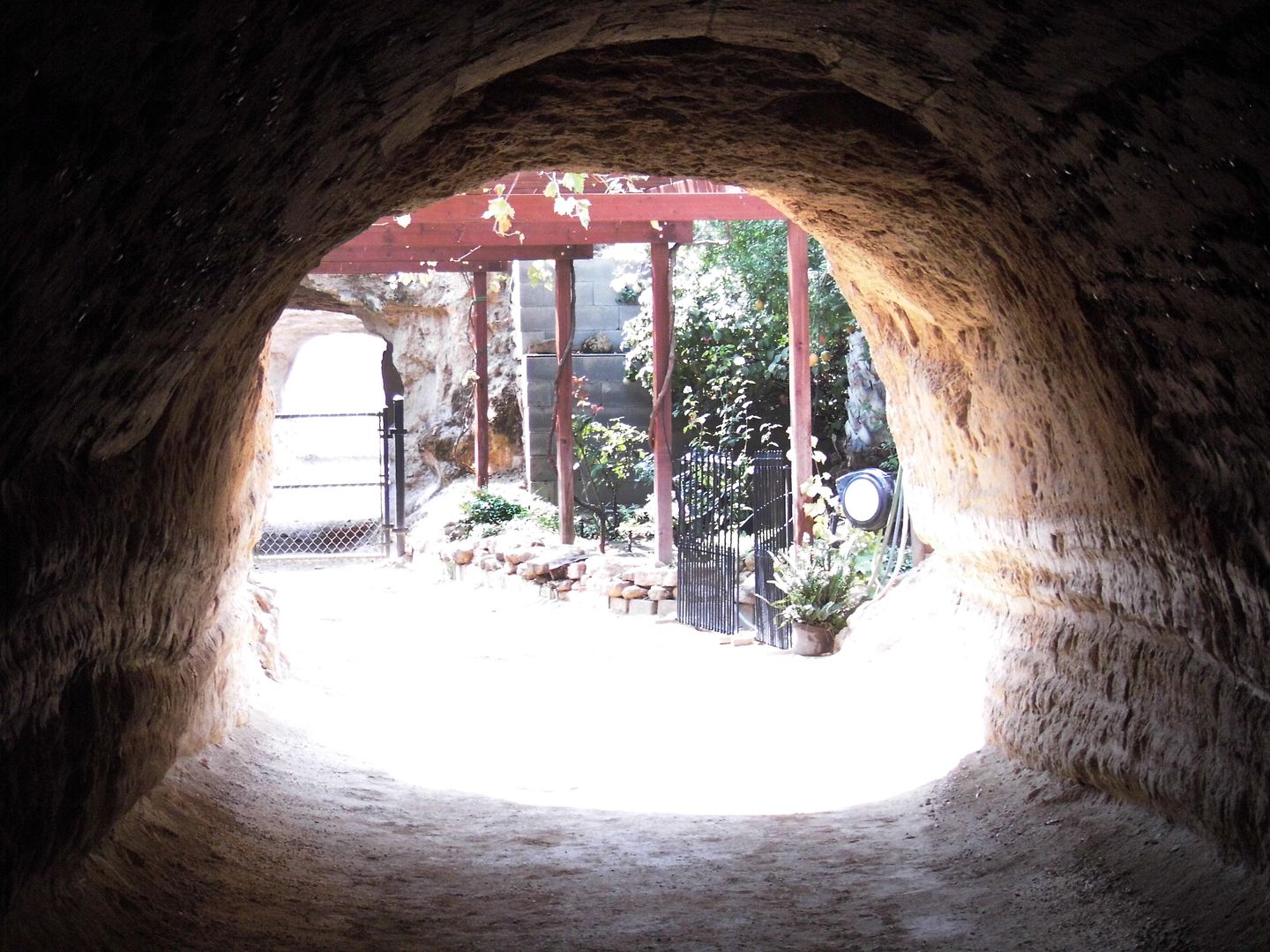
...and many of the arches line up so the air whooshes straight through.
Ultimately, Forestiere designed an entirely self-sufficient dwelling—where he could store rainwater and keep the fish he'd caught alive in a pond until he was ready to eat them.
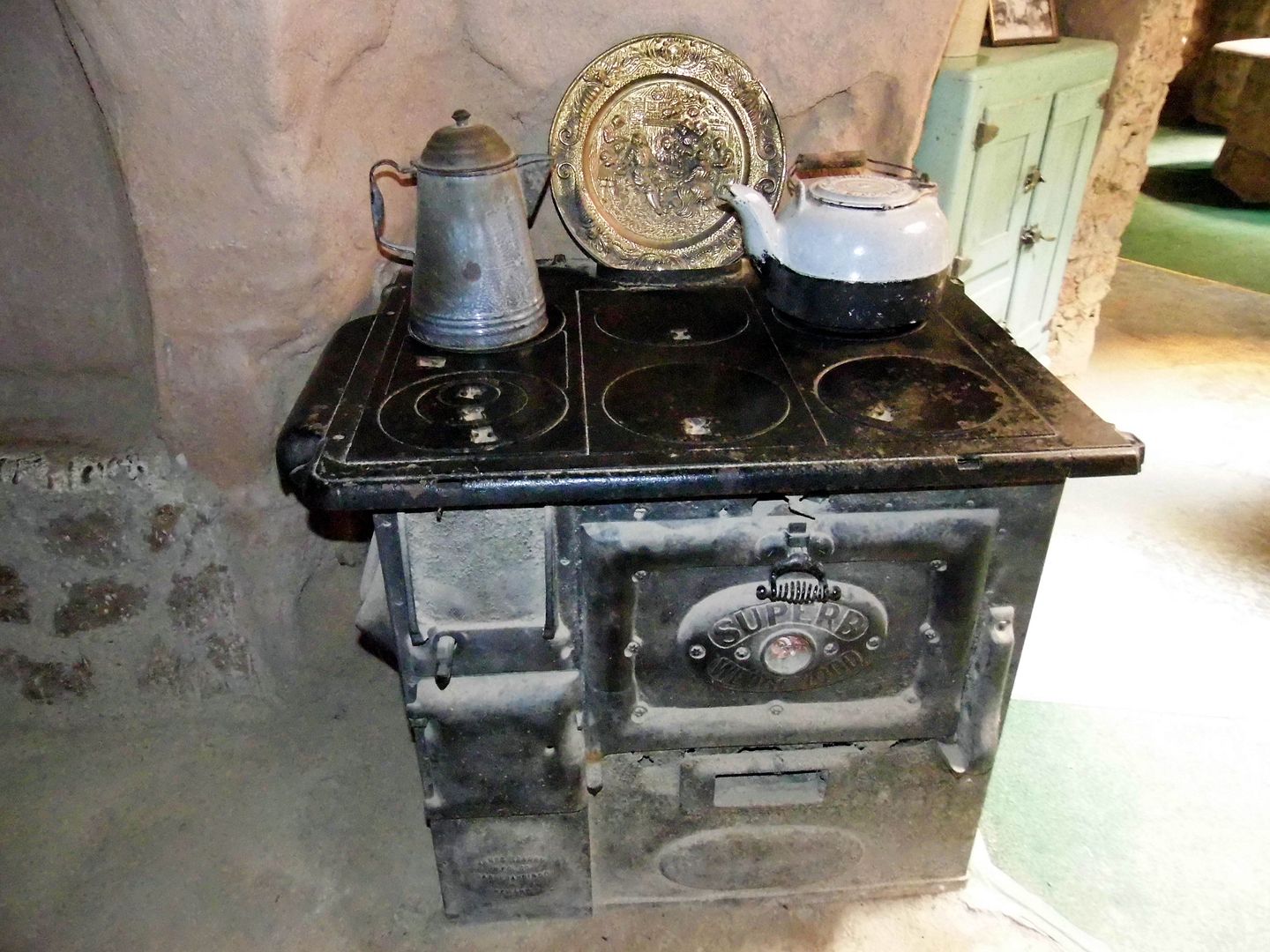
A lifelong bachelor, he'd cook the food he'd grown or caught on his wood-burning stove...
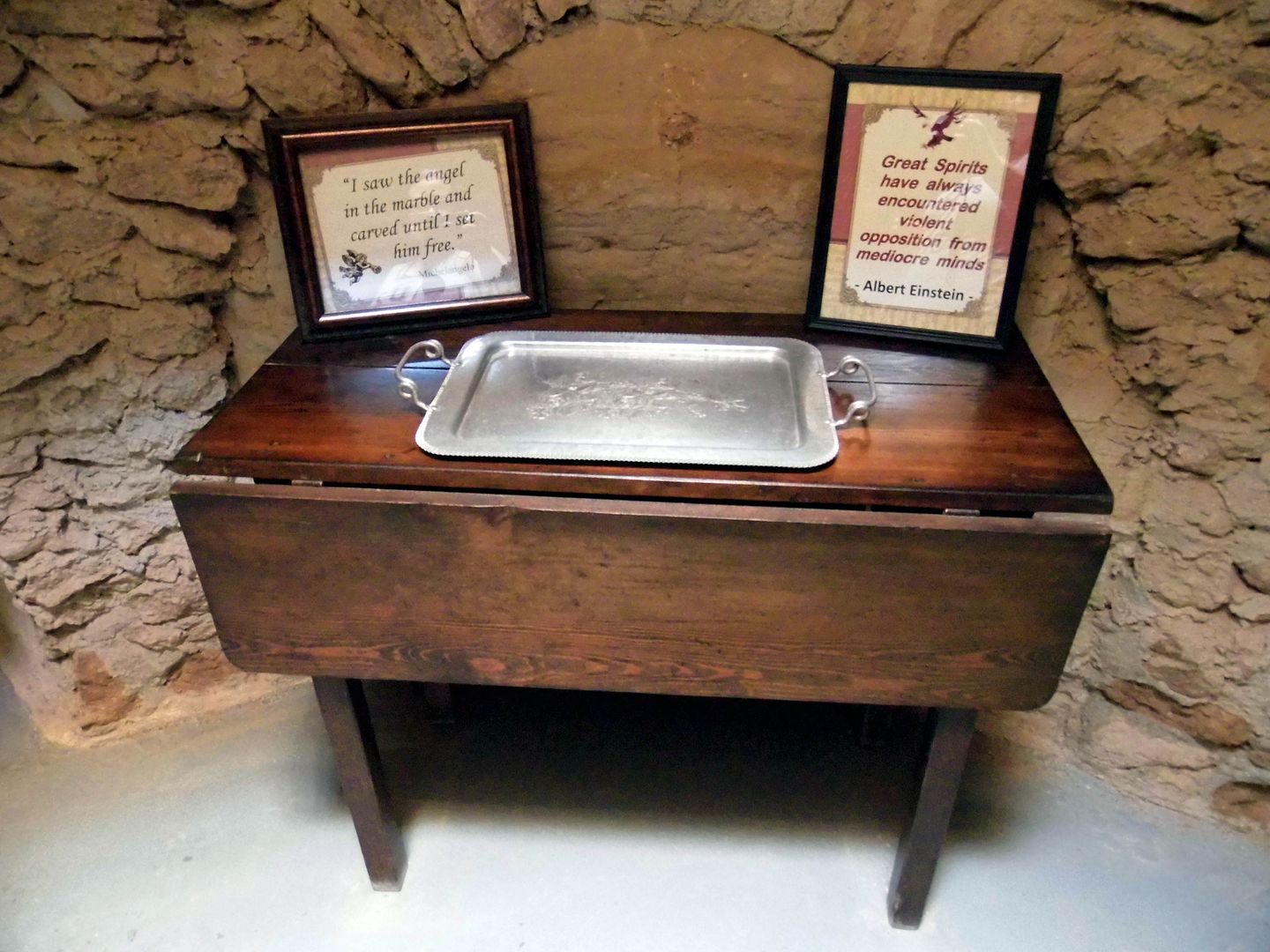
...and wash it down with the wine he'd made himself and stored in bottles in his wine cellar, seated on modular furniture that was built into the walls.
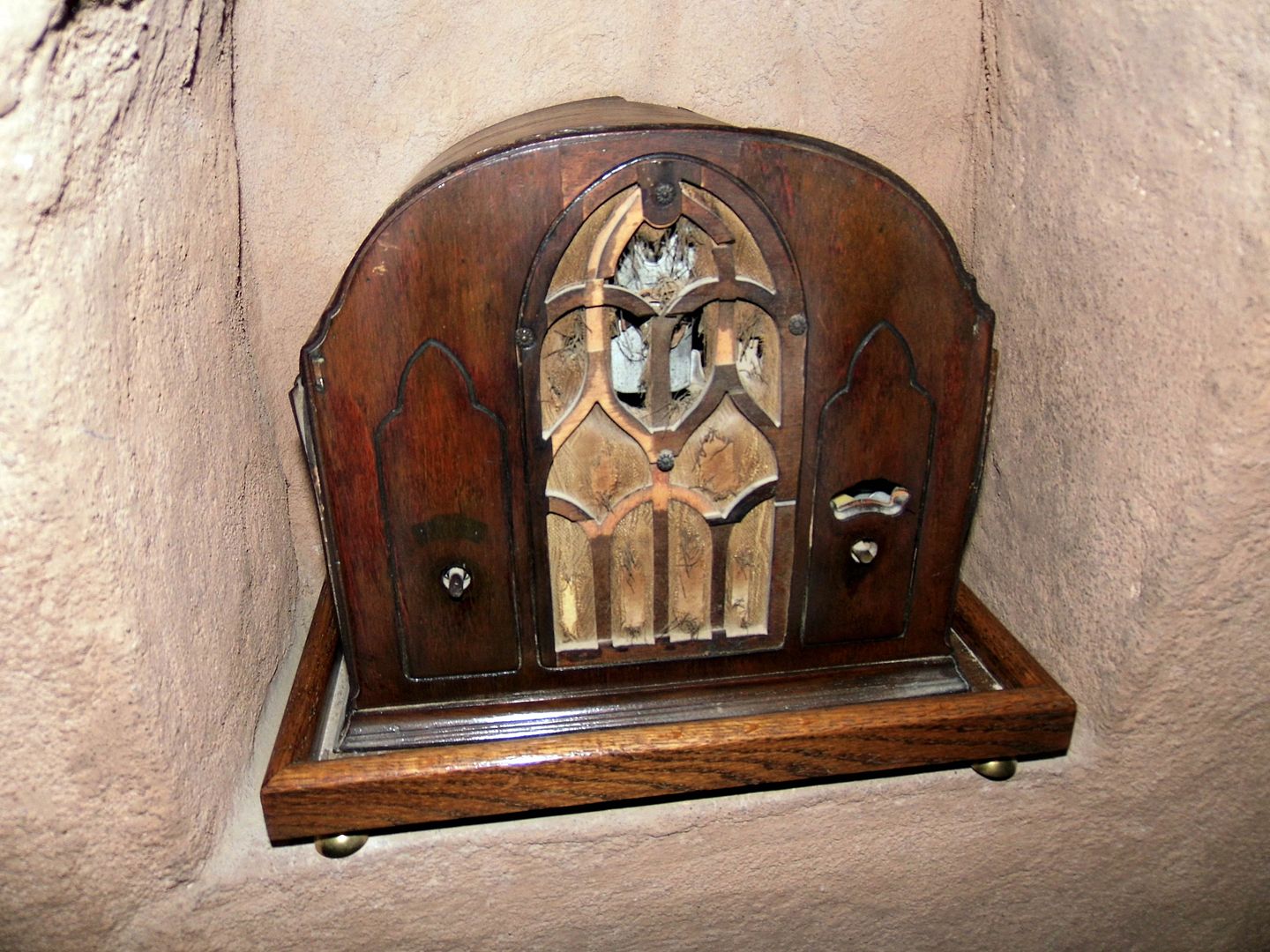
Perhaps he'd be listening to his radio, too—the same radio that's still tucked away in a niche. (He eventually had electricity, but no indoor plumbing.)
During the winter, he'd keep the drafts out by covering the skylights in glass and lighting the fireplace. He also slept in his "winter" bedroom, which wasn't as exposed to the elements as his "summer" bedroom.
Forestiere never meant to keep his underground gardens all to himself. In addition to inviting family and friends over while his unusual palace was still being completed, he'd intended to eventually open it up to the public as a kind of daytime resort or even, as he called it, an "underground hotel."
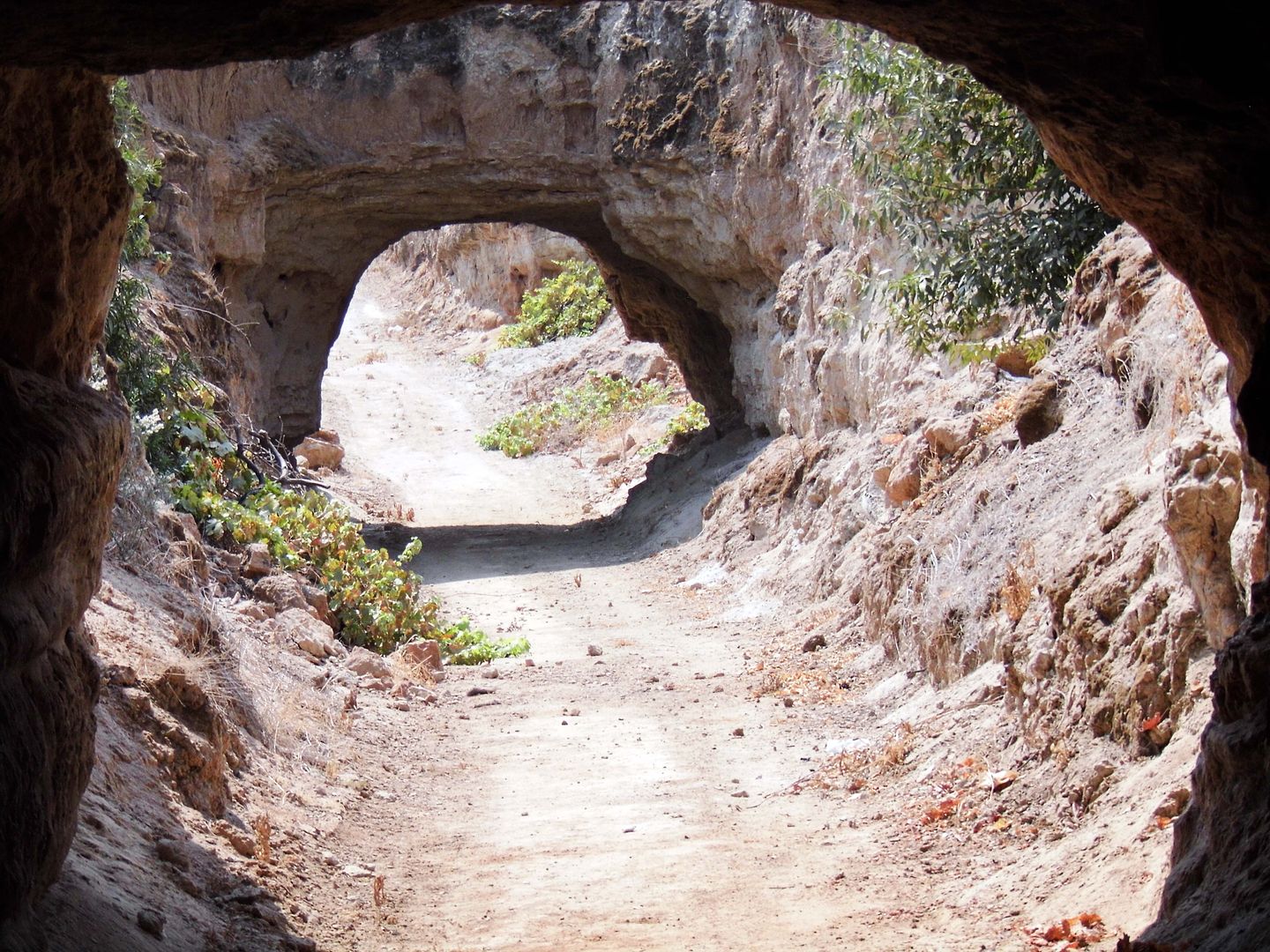
To accommodate visitors arriving in cars, he built a sloping automobile tunnel using a construction tool called the Fresno scraper, pulled by two mules. Because this revolutionary tool (invented in Fresno, of course) could move quadruple the volume of earth compared to manual excavation, it influenced the later designs of bulldozer blades and earth movers.
Although Forestiere never completed his motorist entryway—and never officially installed the valet service—some of the attractions he'd built for them to see on their way in are visible now on the guided tour visitors can take.
Located 20 feet below ground, there's the Tree of Seven Fruits, which once fruited lemons, sweet lemons, grapefruit, cedro, and Navel, Valencia, and sour oranges.
Only the oranges remain.
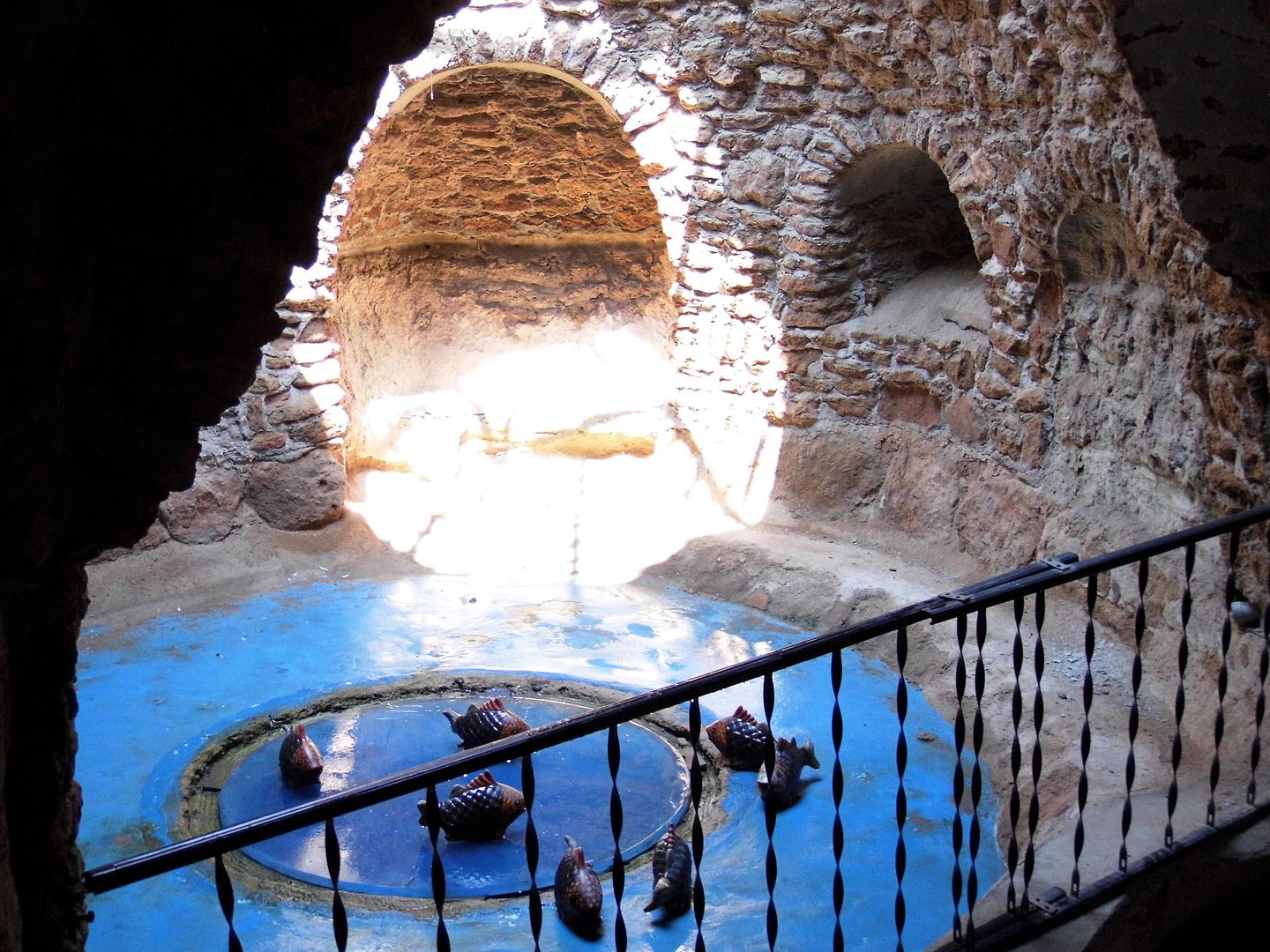
There's also the tri-level aquarium—a cemented pond with observation areas above it, at its surface, and below it (where Forestiere would often sit and watch the fish that were "too pretty to eat" swimming above his head through the former glass bottom).
After Forestiere died at the age of 67 in 1946, his underground gardens were targeted by vandals—though his younger brother Giuseppe tried to keep a watchful eye.
With no offspring to speak of, Uncle Baldy may rest in peace knowing that his great-nieces now own and operate his sculptural masterpiece, 40 years in the making, as a tourist attraction and cultural monument—preserving it as much as possible and restoring when necessary.
Now that I've experienced it firsthand, I wonder why more people don't carve their own dwellings out of the earth and live more sustainably, like they do in Tunisia and other desert environs. It seems like a nice life.
Especially when it feels like hell above ground.
Forestiere Underground Gardens's Photo Policy dictates that photos are only permitted for personal enjoyment. Photos may not be copyrighted, watermarked or sold either through web albums or other commercial or online venues (YouTube, Instagram, etc) without consent of the owners. Therefore, the photos on this blog post are not for sale and cannot be licensed for reprint or other commercial uses.