Search

Showing posts with label Childhood. Show all posts

October 28, 2025

The Things I Never Learned (A.K.A. Time Goes By So Slowly For Those Who Wait)

 
I was born knowing certain things—and knowing how to do certain things. 

I was born knowing how to laugh—and while I may have learned some things along the way, I think I naturally knew how to make others laugh. 

I had a certain understanding of the world once I emerged from the womb—to a certain extent, how to read peoples' minds, or at least grasp their true intentions, despite what they might say or do. I had a natural knack for mimicry—which made me a fast learner, and a deft impersonator. I naturally had a musical sense, which my Grammy praised during our piano lessons—but then I learned how to read music and play it on keyboard, horn, and voice.

But there are certain things I came out of the birth canal not knowing—and, having never been taught those things by my parents, I never learned them. 

April 07, 2025

A Load Off

It had been hanging over me for too many years—in retrospect, more than I ever thought it would. 

I stopped talking to my parents in January 2007 (I think, I don't remember exactly). At least, that's the last time I ever called them. And they just never called me back. 

But since then, I'd been wondering whether they'd ever try reaching out, try making amends. I thought that on my mother's deathbed, she might find God—truly find God, not that fake cult crap she put us through—and finally apologize. 

I've thought about her death a lot over the years, mostly because I've always known she always wanted to die. She constantly threatened death—either in a passive way, that ol' "Since this may be my last Christmas..." gag, or in an active way, openly fantasizing about drowning herself in the bathtub. 

After all, her physical health was pretty terrible—something I was acutely aware of as far back as third grade. And her mental anguish? Way before that, as far back as I can remember.

So I couldn't help but be curious as to when it would happen, how it would happen, how I would feel, what my dad would do. 

How would I even find out that she had died? And what would happen if my dad died first?

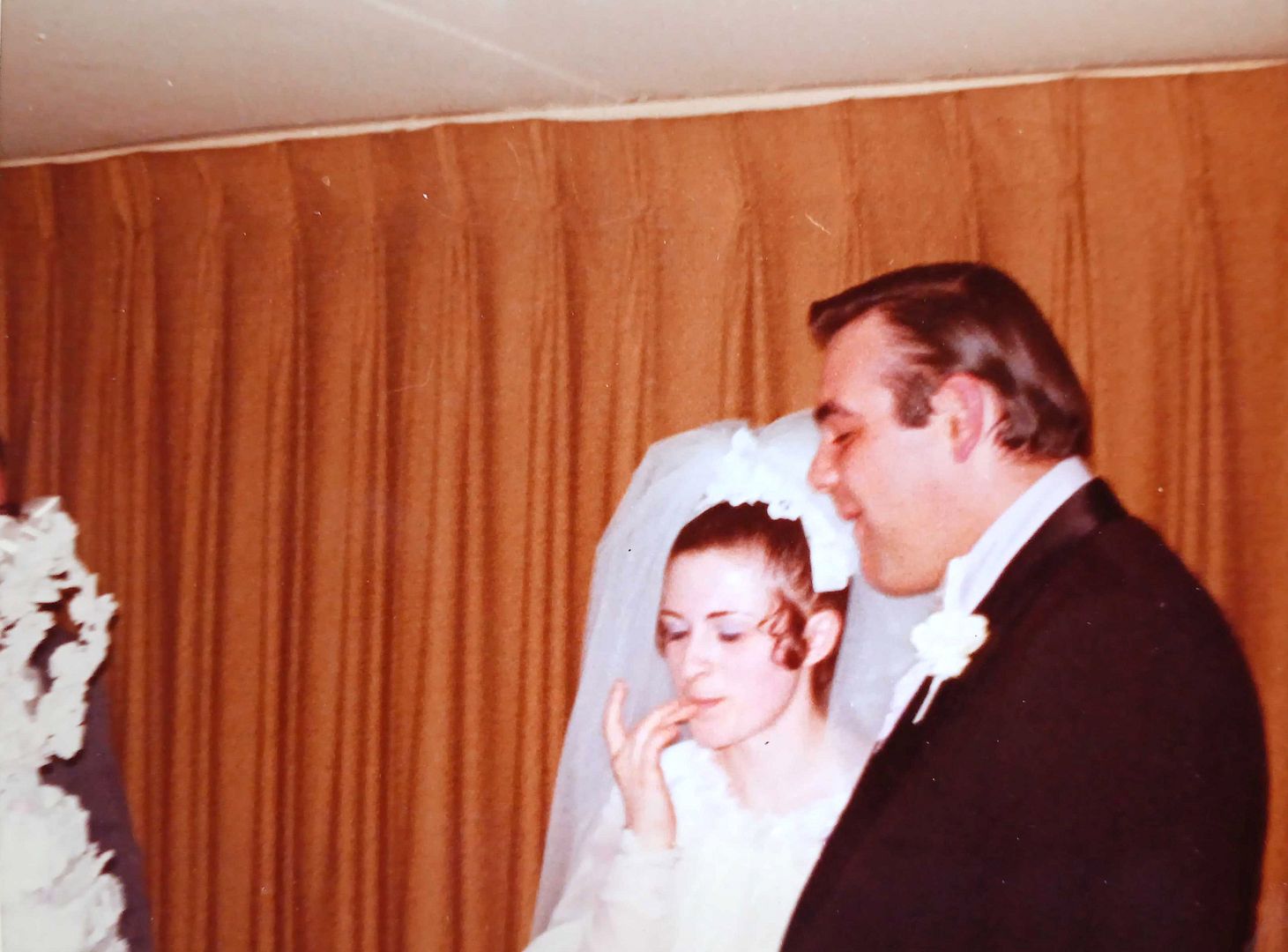
My parents eating cake at their wedding reception, May 4, 1973*

Well, many of those questions have now been answered. My mother died on March 3, 2025. I found out on March 11, when my cousin called me after the funeral service. 

September 22, 2024

Photo Essay: Bowlium, A 1950s Bowling Emporium That's Fit for the 21st Century

In the first year of the pandemic, I hauled my cookies a couple of times out to Montclair, California—about 45 miles east of where I live—to catch a movie at Mission Tiki Drive-In (which unfortunately closed in 2023). 

That's how I first became interested in the Bowlium bowling alley—which was fortunately nearby but unfortunately closed for COVID-19.

 *photo taken 2020

"The prominence of the building, which makes it clearly visible from the street on the parking lot's far side," writes Alan Hess in his book Googie Redux, "shows the importance of bowling alleys as community centers in the new suburban areas of the 1950s."

August 21, 2024

Photo Essay: Taking the CBS Out of Television City [Updated for 2025]

[Last updated 1/14/25 6:45 PM PT—An email from the Television City team confirmed on January 8, 2025 that the Los Angeles City Council had approved the $1.25 billion project, which will now move forward.]

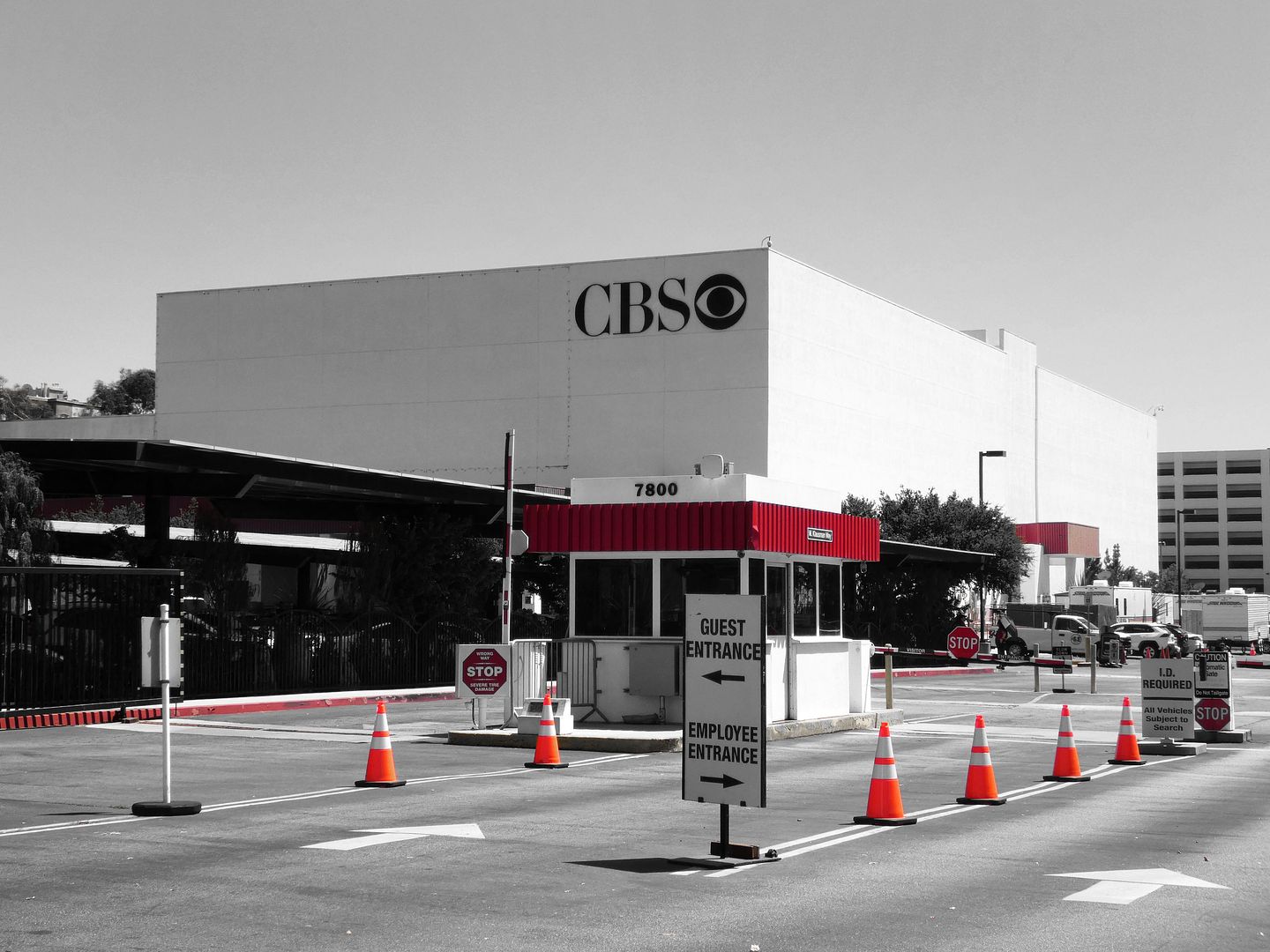
CBS Television was a big part of my childhood—whether it was summer mornings spent playing along with The Price is Right or every afternoon joining my mother to watch the soaps. 

circa 2024

So, it always kind of astounds me that CBS Television City is just down the road from me, now that I live in Los Angeles. 

March 31, 2024

Photo Essay: Little House on the Prairie 50th Anniversary Cast Reunion and Festival Weekend (Simi Valley, CA)

I first caught wind of the 50th anniversary of Little House in the Prairie, which debuted on television in March 1974, via an announcement from one of the Laura Ingalls Wilder accounts I follow—about an event in Walnut Grove, Minnesota. 

Great, I thought. I've got to head back. (I'd already visited once in 2007, and I still had other LHOTP sites to check off my list.)

But then the best-case scenario came about: A cast reunion was being planned where the series began, in Simi Valley, California. And although traffic could make that an hour-and-a-half trip from my home, the TV version of Walnut Grove is a lot closer than the real Walnut Grove.

 
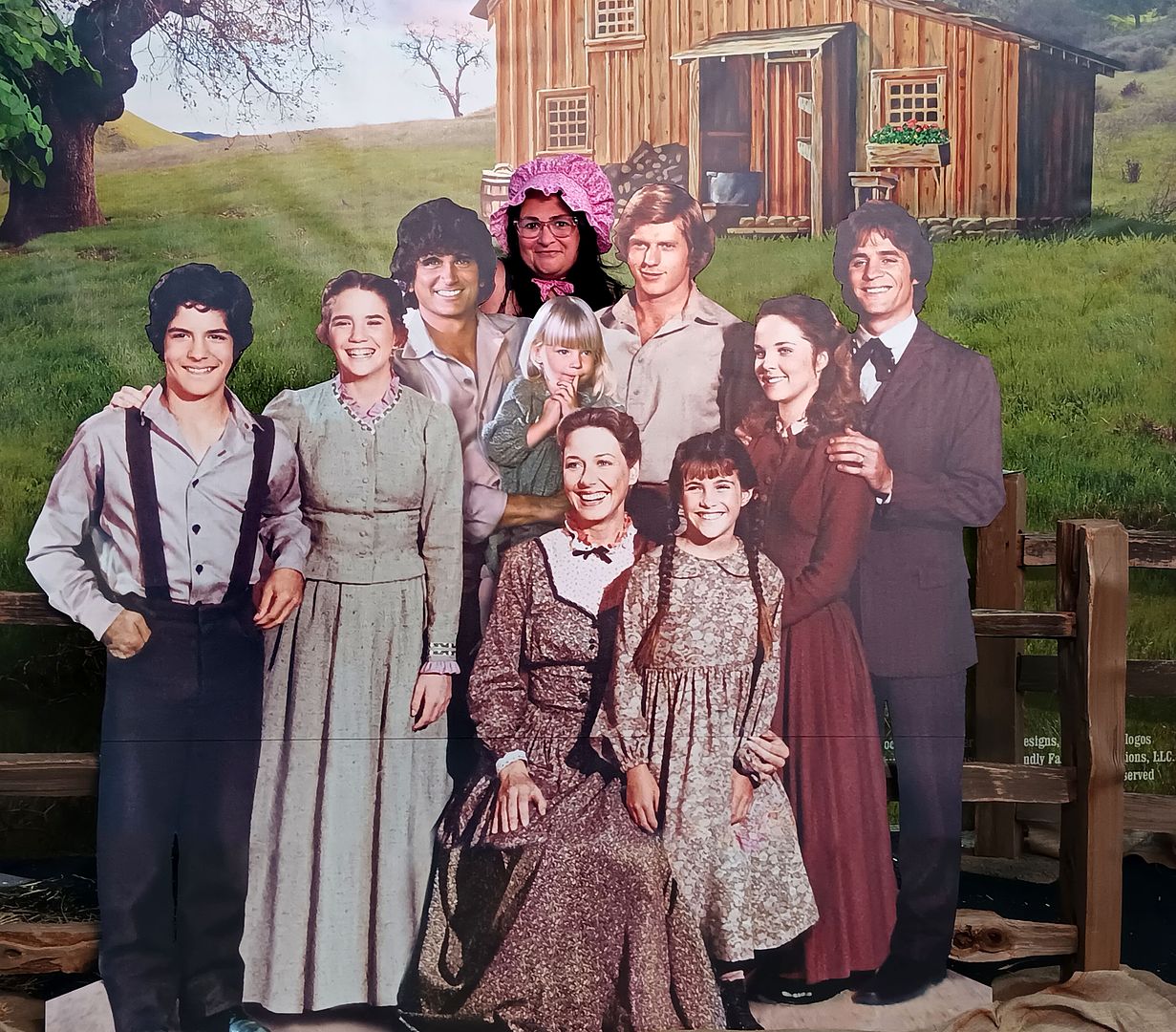
So, that is how I spent last weekend—taking every cheesy photo that opportunities would provide, wearing my bonnet the whole time. 

March 30, 2024

The Little House on the Prairie TV Series Converted This California Cattle Ranch Into Walnut Grove

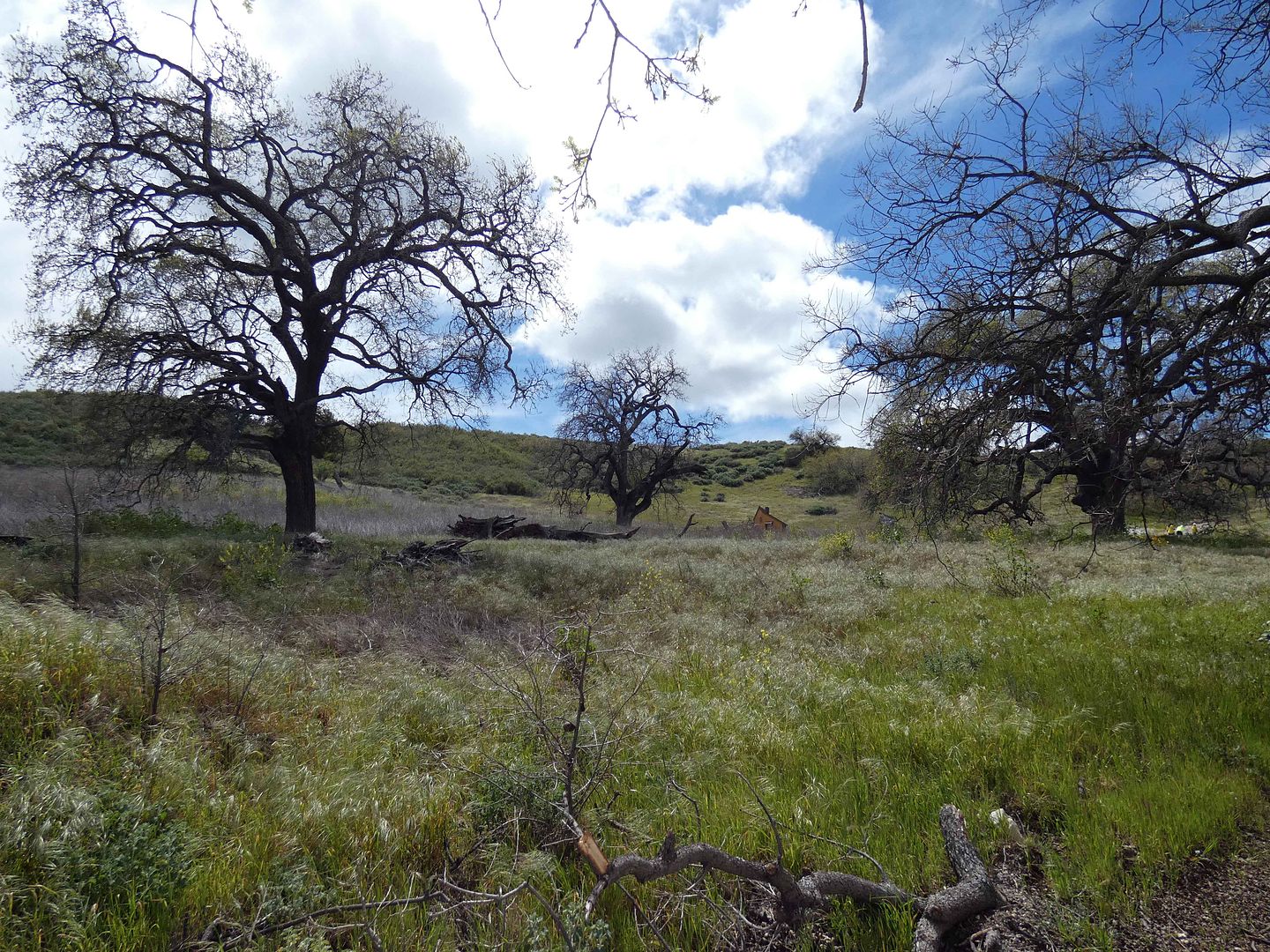
Last weekend, I returned to Simi Valley, California—and the Big Sky movie ranch—to celebrate the 50th Anniversary of the Little House on the Prairie television series. 

Since my sister and I were allowed to watch pretty much all the TV wanted—but weren't allowed to do much else, especially out in the "real world"—my memories of the show, and the books, have informed some of my adult travels and adventures. 

I still haven't made it to South Dakota, Kansas, or Missouri. And even though I've already crossed Wisconsin, Minnesota, and Iowa off my list (as well as Malone, New York, home of the Almanzo Wilder Farm), it feels like I'm always trying to get back to the prairie. 

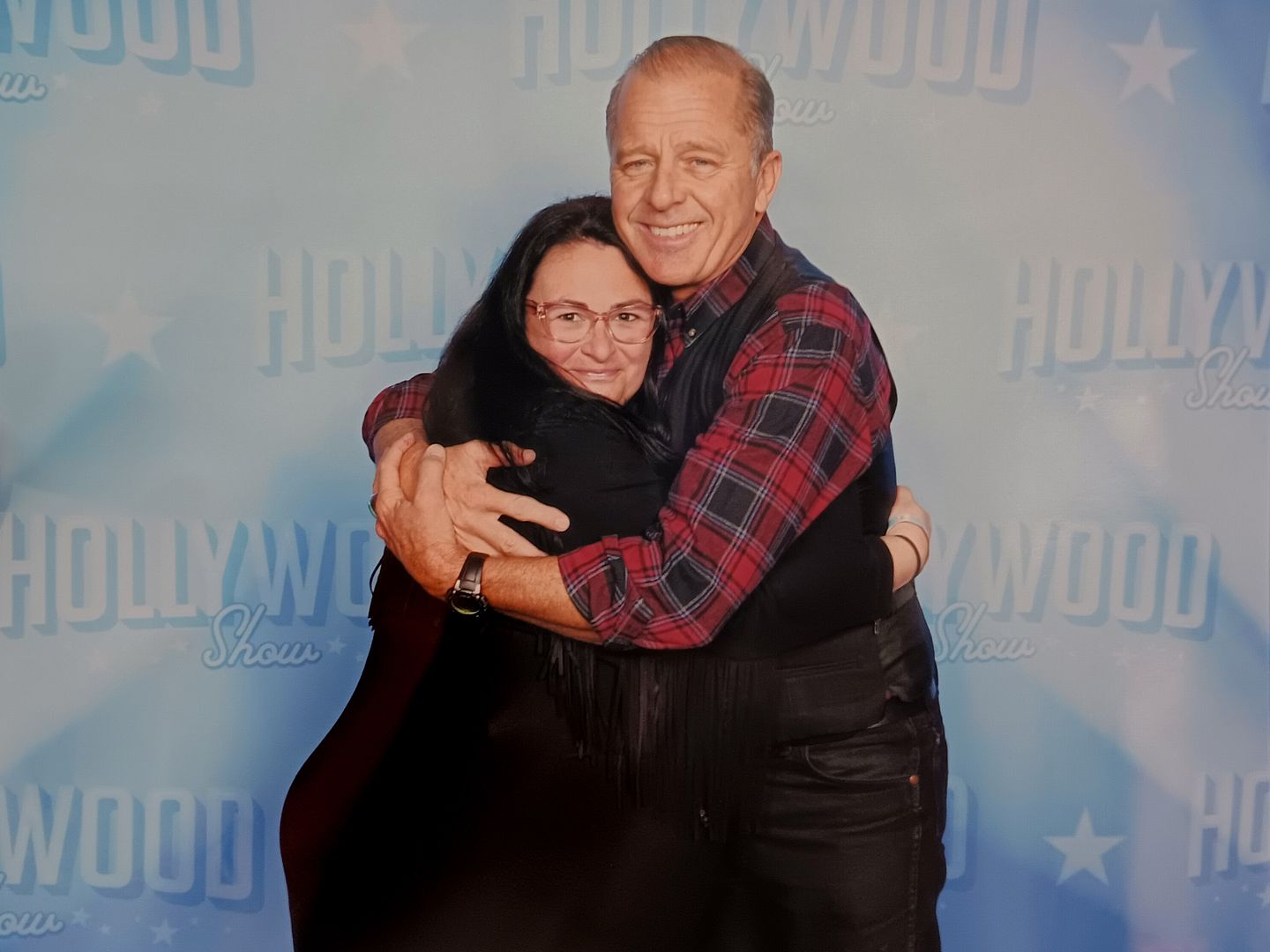
That happened—at least, in a Hollywood magic kind of way—this past weekend during the Little House festival, which included meet and greets and photo ops with most of the living stars of the show, as well as a bus tour of the old filming location from the 1970s and '80s.

But it almost didn't.

At first, I'd only bought a single-day ticket for Saturday of the three-day festival—and then as more and more stars got confirmed (including Melissa Gilbert, who never does these things), and panels got scheduled, I started to worry I wouldn't have enough time. So I upgraded to a weekend pass, knowing I probably wouldn't be able to break away from work for the Friday but having the peace of mind that I'd get all day Saturday and Sunday. 

I arrived under threatening skies—and, soon, rain—on Saturday morning around 10 a.m., not having to wait in a long entry line because I had a multi-day pass. I enjoyed the festival atmosphere for a bit (stay tuned for my blog post on that) before ambling over to the bus tour check-in. 

The morning rain had canceled all the buses that morning until at least 2 p.m.—and when I returned at 2 to try to ride standby later that day, the bad news was that the roads were still too muddy and unsafe, though the rain had ceased. 

That meant returning the next morning, Sunday, by 7:30 a.m. to try to squeeze an empty seat out of one of the buses that day, which would start running at 8 a.m. But that meant counting on the fact that a Sunday bus ticketholder might not show up, or turn up late, since all the spots for the tour had sold out in advance months before. 

After waiting in line for over three hours, I asked one of the event organizers what to do so as not to miss my professional photos with Melissa Gilbert (Laura Ingalls) and Dean Butler (Almanzo Wilder), which I'd also paid for in advance and whose time slots were narrow and immoveable. "You won't make it," the organizer said. "Go over there now and enjoy yourself."

Here's the only thing that made it work out in the end: The people behind me in line agreed to save my place and let me come back three hours later, without having to start over again at the back of the line.

Upon my return, we only had to wait about another 20 or 30 minutes before we found ourselves on a bus, everyone cheering, "We made it!" 

 
Sure, I'd been to Big Sky Ranch once before—but that was eight years ago, and this year, the festival had erected smaller-scale, painted façades to replicate the original sets, in the exact places where they once stood.

March 04, 2024

It Took 42 Years, But I Finally Met Maxwell Caulfield (a.k.a. the "Cool Rider") from Grease 2

"It's a lifelong dream to meet you," I found myself telling Grease 2 actor Maxwell Caulfield this past weekend. 


January 30, 2024

The Most Fun I've Had in California

I've just passed my "lucky" 13-year anniversary of moving to Los Angeles in January 2011—and when people hear where I'm from, they most commonly ask two questions:

  1. Do I miss New York?
  2. Which do I like better, New York City or LA?
Truth is, the two cities are so different, they're hard to compare. But in terms of where I'm at in my life right now, I find LA much better to live in.

But still, I had a lot of fun during my 14 years of 5 a.m. nights and boozy brunches in New York City. It was a different kind of fun than Southern California typically has to offer. 

When I have a good time nowadays, it feels more like the kind of fun I missed out on having as a little kid—before adult beverages would've come into play. 

So maybe my time in NYC was more about making up for a crazy adolescence I never had; and my time in Los Angeles is more about making up for a childhood I was never given, one that was bereft of playdates and playgrounds and playing in the mud. 

You'll see what I mean when you see my Top 13 list of the most fun I've had in California so far (in no particular order):
  1. Swimming with otters
  2. Riding a Jeepney
  3. Riding the Warner-Carrillo Ranch Stagecoach
  4. Riding the Ghost Train of Griffith Park
  5. Going to Disneyland
  6. Going to Universal Studios Hollywood Halloween Horror Nights
  7. Goat yoga (especially with baby goats in Halloween costumes)
  8. Climbing onto the Wienermobile
  9. Attending Bob Baker Marionette Theatre puppet shows (especially Halloween)
  10. Attending Rose Parade-related events
  11. Singing with the Magical Holiday Parade in Toluca Lake
  12. Touring Garner Holt Productions' animatronic factory
  13. Anything having to do with Krampus.
Honorable mention goes to paragliding at Torrey Pines, which I did in 2009—almost a couple of years before I moved here. 

And this doesn't, of course, include any trips I've taken out of state (like to Vegas, which is pretty fun for me).

So happy anniversary to me, no matter how long I may stay in this city, or in this state. I have no plans to leave—but life can change pretty quickly. 

After all, after 10 years in NYC I thought I'd be there the rest of my life. By the 12th year, I couldn't wait to leave. And by the 14th year, I ran screaming... all the way to LA.

Related Posts:

October 06, 2022

Glendale's Moonlight Rollerway Once Again Lights Up Tuesday Nights With Live Organ Concerts [Updated for 2024]

[Last updated 8/27/24 9:43 PM PT—Organ nights have ceased.]

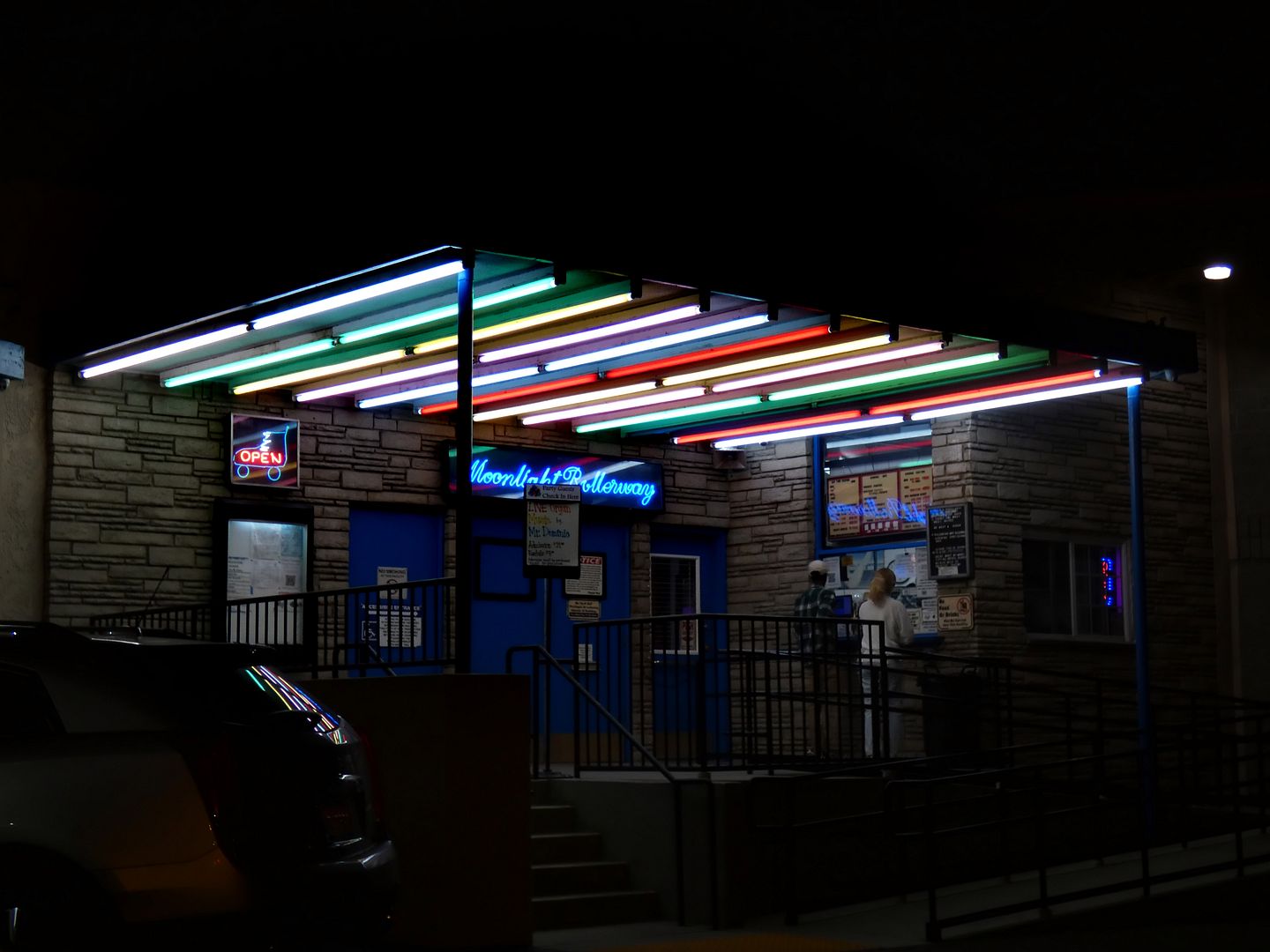
I recently included Moonlight Rollerway in Glendale, California as one of the top places to "feel like a kid again" in LA, in an article published on KCET.org. But that's not exactly accurate for me—because I didn't grow up getting invited to rollerskating birthday parties.

Or, if I had been invited, I wouldn't have been allowed to go. 

So although I had a pair of those metal strap-on skates that I'd wear over my sneakers as I plunked down the sidewalk in front of my childhood home, I never really learned how to rollerskate.

I tried once in college with some high school friends, but I fell so many times—and so spectacularly—that I got ejected from the floor.

 
Still, I can't shake my fascination with rollerskating—probably because of my lifelong love of Xanaduso this year I've made not one but two pilgrimages to Glendale's oldest roller rink, which has operated as Moonlight Rollerway since 1968.

September 14, 2022

Taking My Punishment

Image by Edward Lich from Pixabay 

As a child who was wrongfully accused and convicted of a number of household crimes—from scratching my mother's wooden rocking chair and new bathroom wallpaper to pitting the cover of a borrowed paperback book on the kitchen counter—I learned early on how to shut up and take my punishments.

August 31, 2022

A World Without Olivia Newton-John

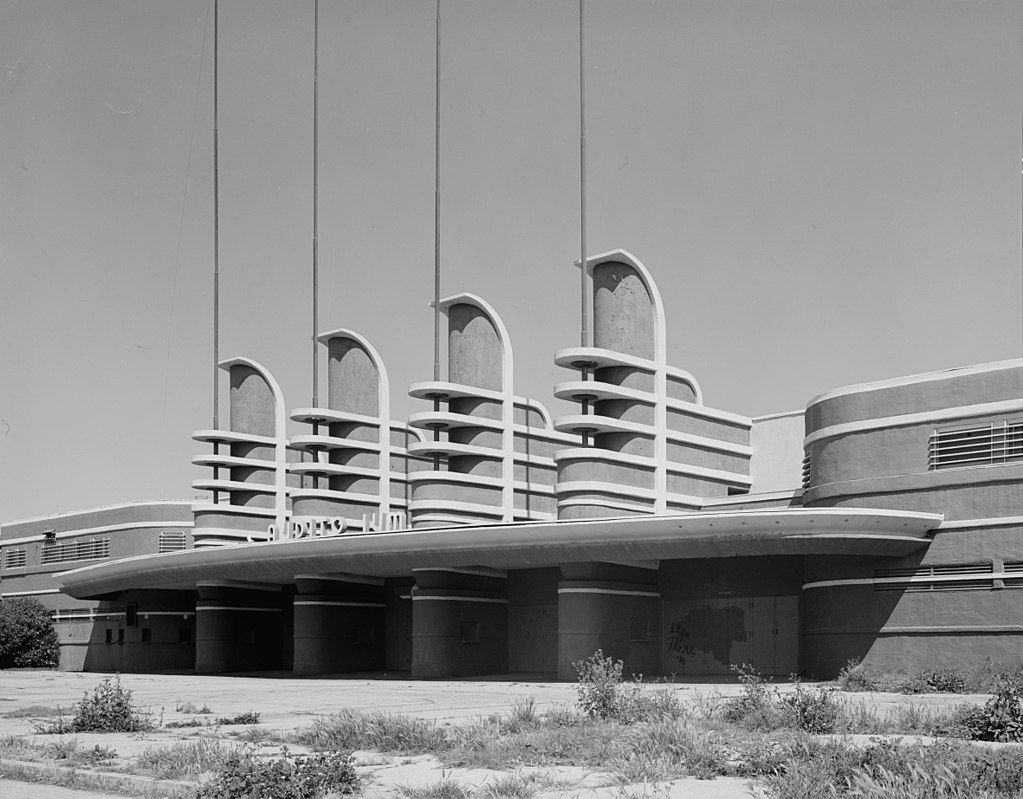
Pan-Pacific Auditorium, seen in Xanadu (Marvin Rand, Historic American Buildings Survey, Public domain, via Wikimedia Commons)
 
I don't remember a time when Olivia Newton-John hasn't been a part of my life.

May 12, 2022

Pandemic Reflections: My Body Is My Own

The last two years have been so crazy, we're still making sense of them. They probably won't make much sense to any of us for decades to come. 

But very early on, it became clear that one of the silver linings of mandated "social distancing" was the fact that I got my personal space back. 


January 27, 2022

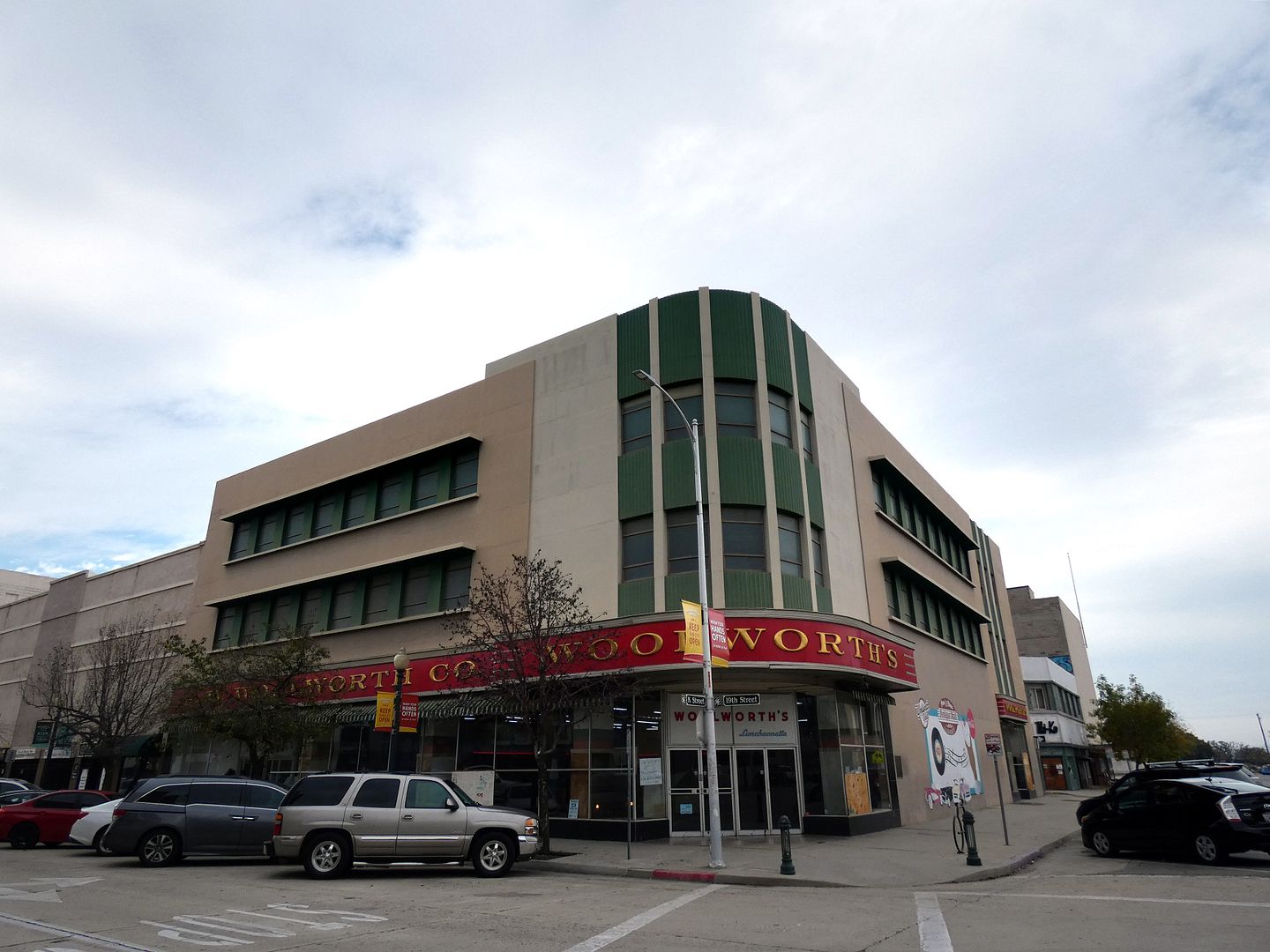
Photo Essay: America's Last Woolworth's Luncheonette Has Closed (But It's Supposed to Reopen Sometime Later) (Updated)

[Last updated 1/31/22 9:33 AM PT—The Woolworth Diner's last operating day was Sunday, January 30, 2022.]

I have some vague memory of going to a Woolworth's as a child—though perhaps only for shopping, and not for lunching. 

Indeed, there was a Woolworth's store and lunch counter on Salina Street in Downtown Syracuse that closed in 1979 (when I was 4 years old)—and the building still stands, having housed a Rite Aid pharmacy on its street level until 2018. 

But I feel a certain nostalgia for it regardless. I often feel the loss of things I don't really remember experiencing myself. 

circa 2022

So, after having visited the former Woolworth's building and restaurant in Oxnard in 2015, I didn't even think about grabbing lunch anywhere but the extant Woolworth's lunch counter when I was in Bakersfield for just a few hours in 2019. 

January 11, 2022

I Had So Much Potential

Sometimes I wonder how far I could've gone, had my parents just supported me a bit more.
   

May 23, 2021

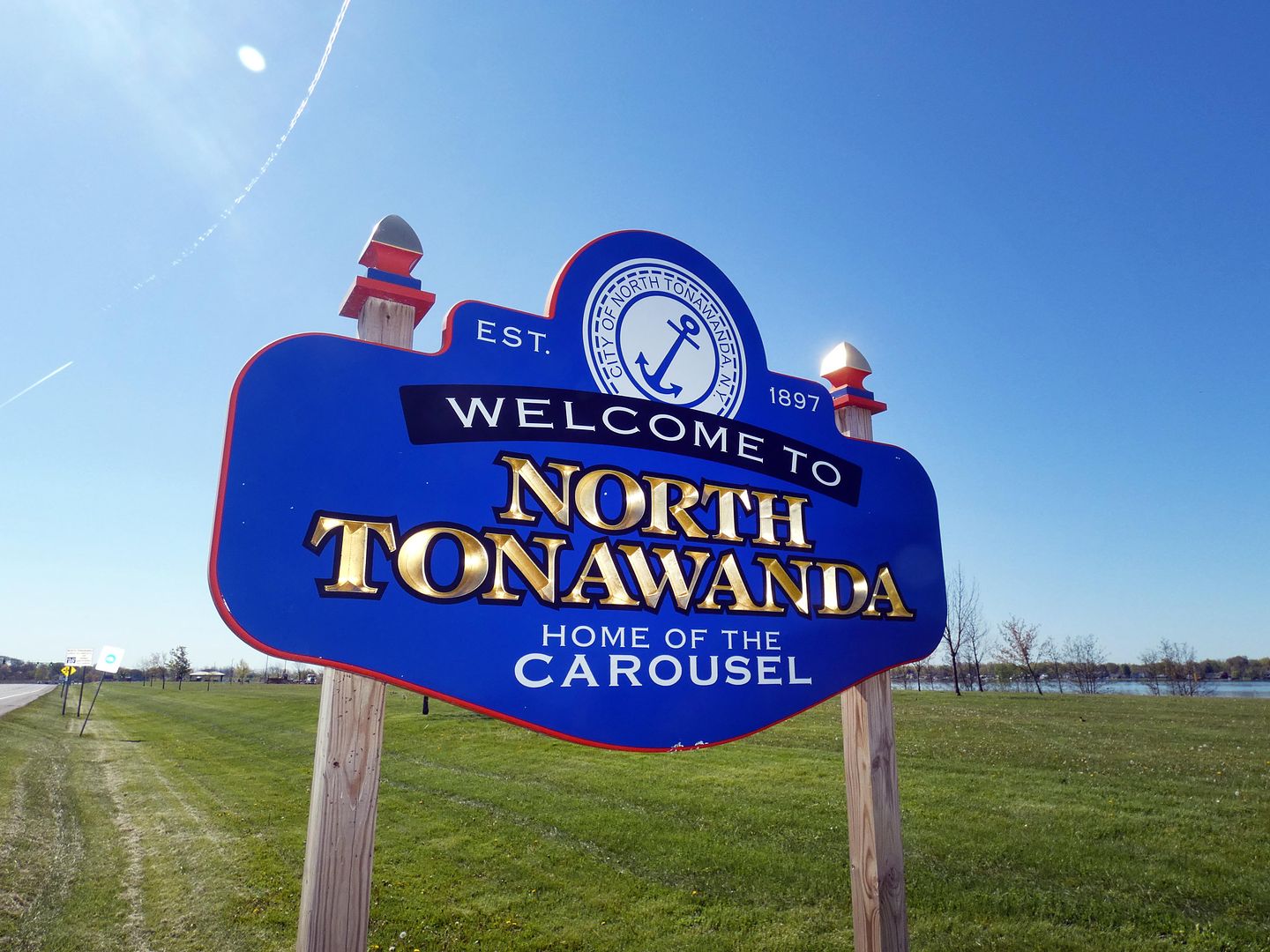
Photo Essay: Twice Around the 105-Year-Old #1 Special at the Herschell Carrousel Factory Museum

Despite having grown up in Syracuse, New York, I hadn't been to the Buffalo area since I was 5 years old, when my family visited my uncle in the town of Lockport and crossed the border into Canada to visit Niagara Falls and Marineland. 

 
So, last week, after having flown in an airplane for the first time since the beginning of the pandemic to visit Syracuse for the first time in years, I decided to avoid a layover at JFK Airport and fly direct into Buffalo-Niagara Airport—conveniently located near a bucket-list attraction for me, the Herschell Carrousel Factory Museum in the town of North Tonawanda. 

February 21, 2021

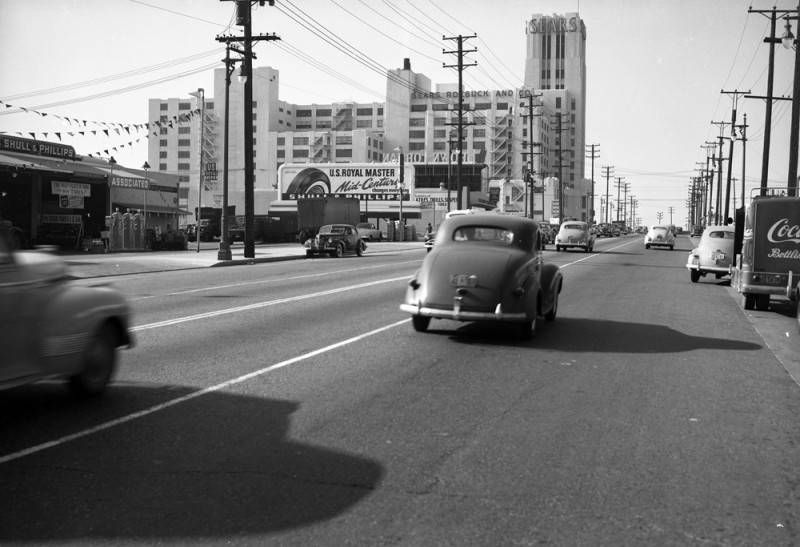
Sears Boyle Heights, A Bastion of Affordable Shopping For Nearly 94 Years, Is Closing

I'd spent I-don't-know-how-many years avoiding Sears stores.

My childhood was practically defined by my family's relationship with the mail-order catalogue and reasonably-priced retail chain—especially given the employee discount we got from Dad working nights and weekends in the credit department at the Fayetteville Mall location of Sears.

That one opened in 1974—the year of my sister's birth, when my parents were still living in Chittenango, New York and hadn't yet moved back to Syracuse. 

I don't know when my dad started working his second job at Sears, but I can't remember a time when he wasn'tscampering off at 5:45 for his 6 o'clock shift—every night except Fridays and Sundays.

That location of Sears closed in 1995—but by then, they'd already shut down their regional credit department and laid my father off (which I remember happening sometime while I was in high school).

I thought my history with Sears was over with.


Olympic Boulevard near Soto Street, circa 1950 (Photo: Los Angeles Photographers Photo Collection, LAPL)

But then in January earlier this year, I heard that the landmark Sears store in the Los Angeles community of Boyle Heights had been added to the company's closing list. According to Forbes, it's expected to close by April.  

June 25, 2020

An Abandoned Alpaca Bounces Back

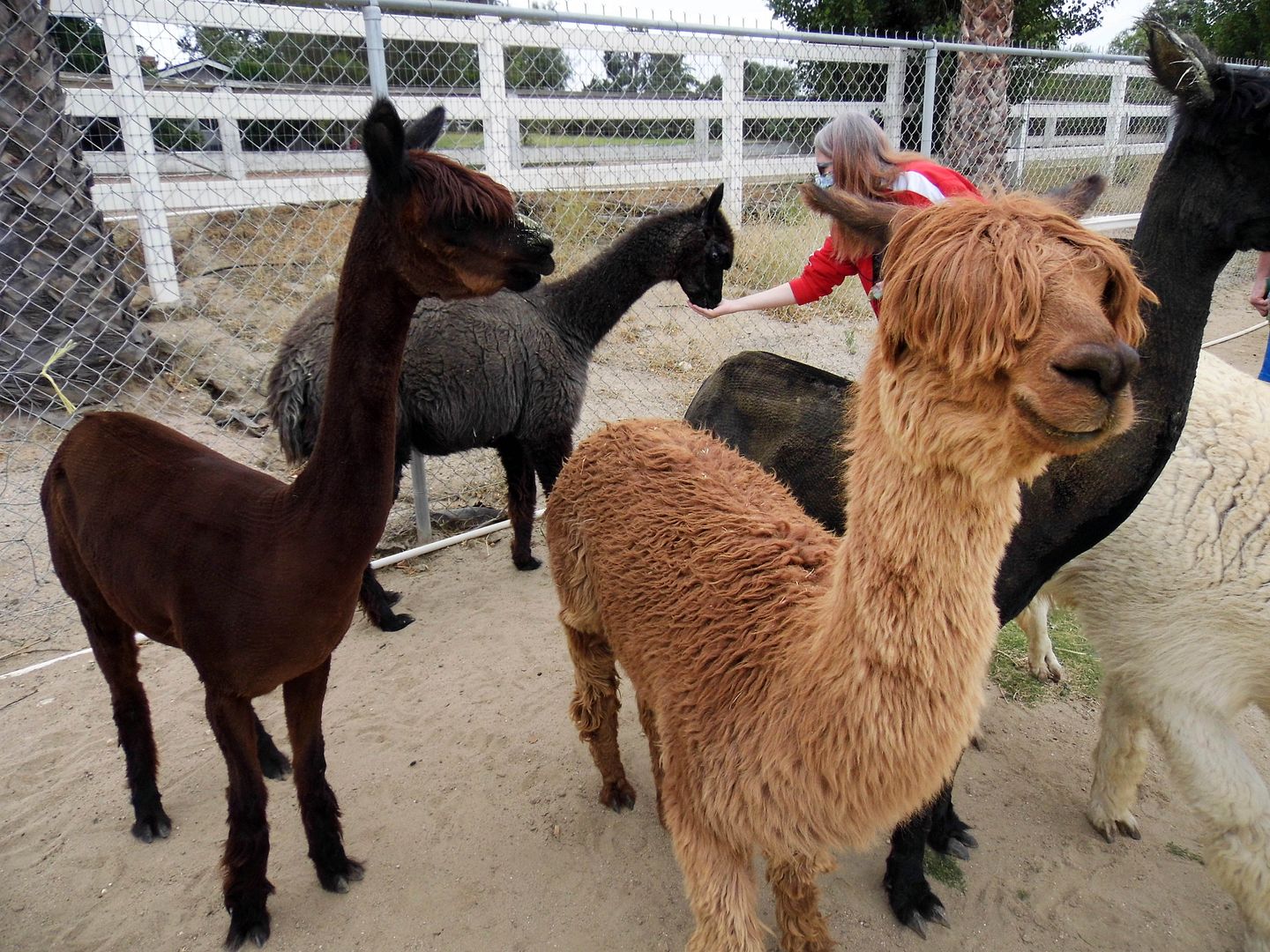
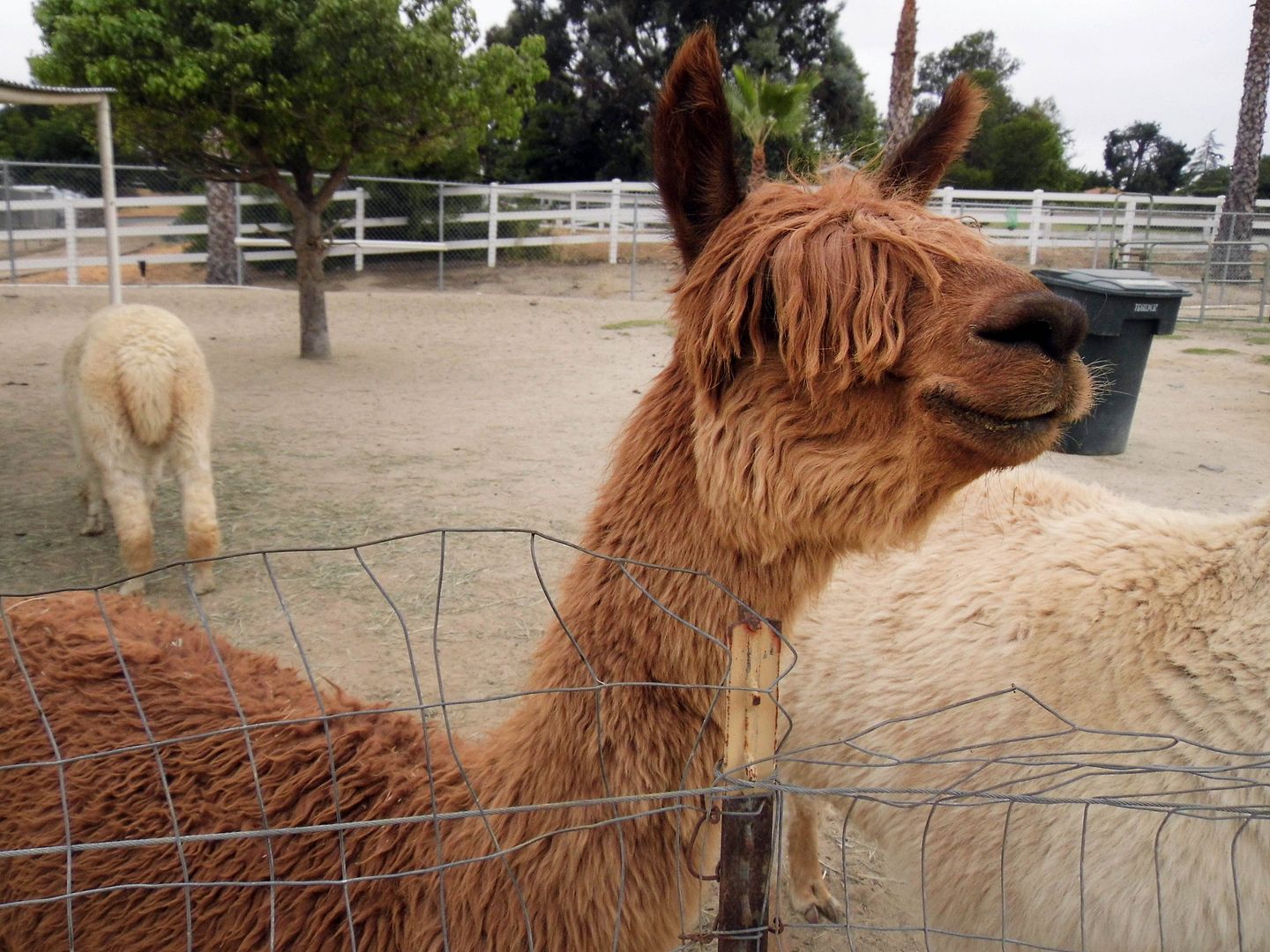
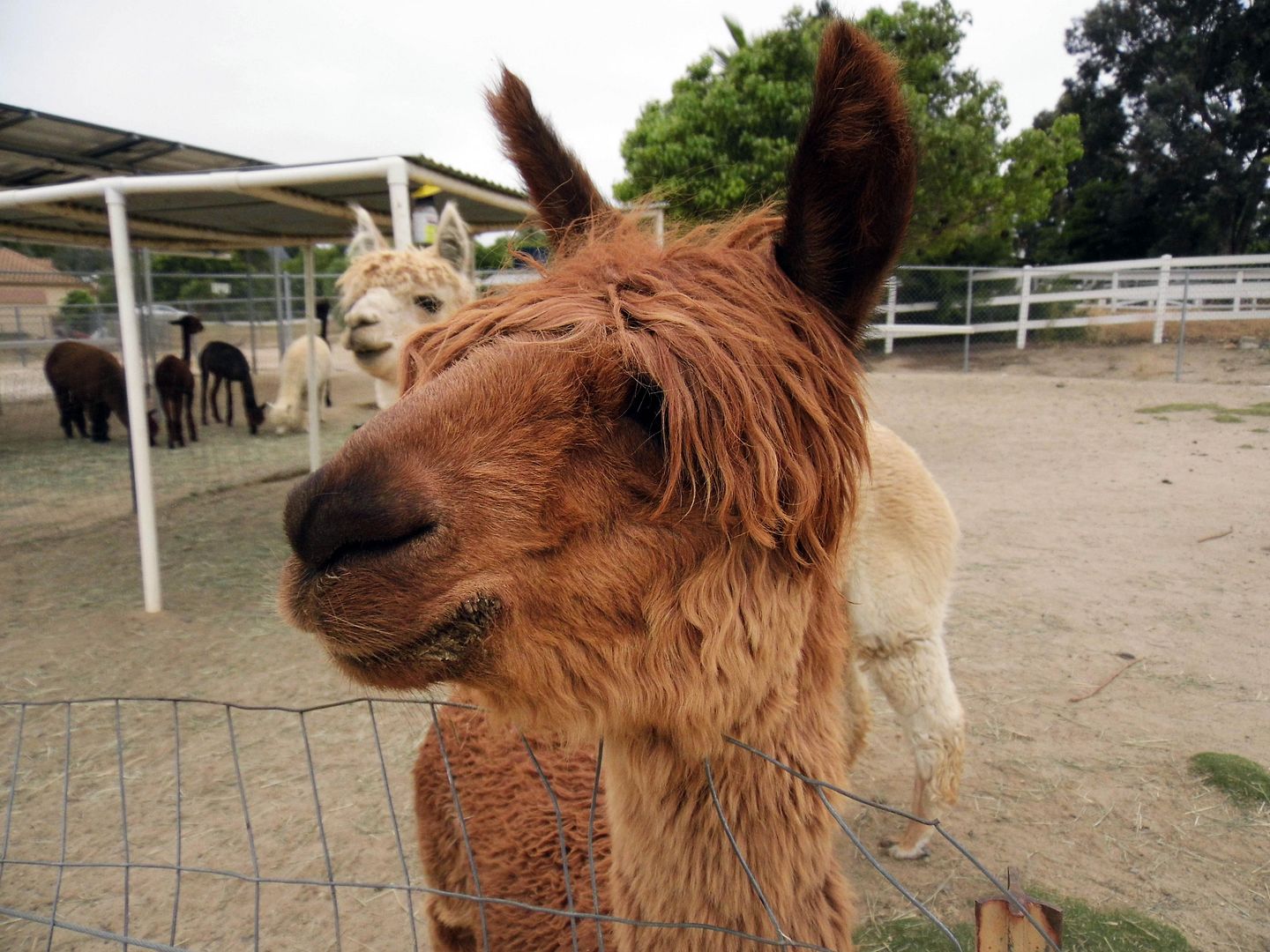
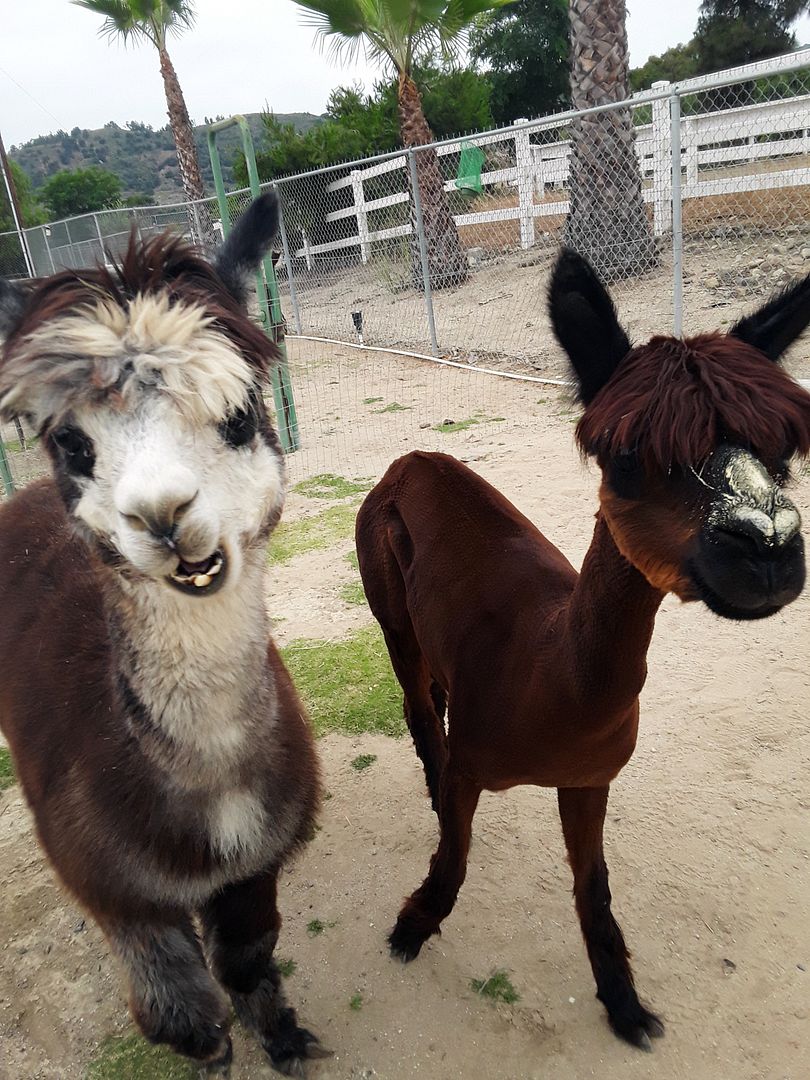
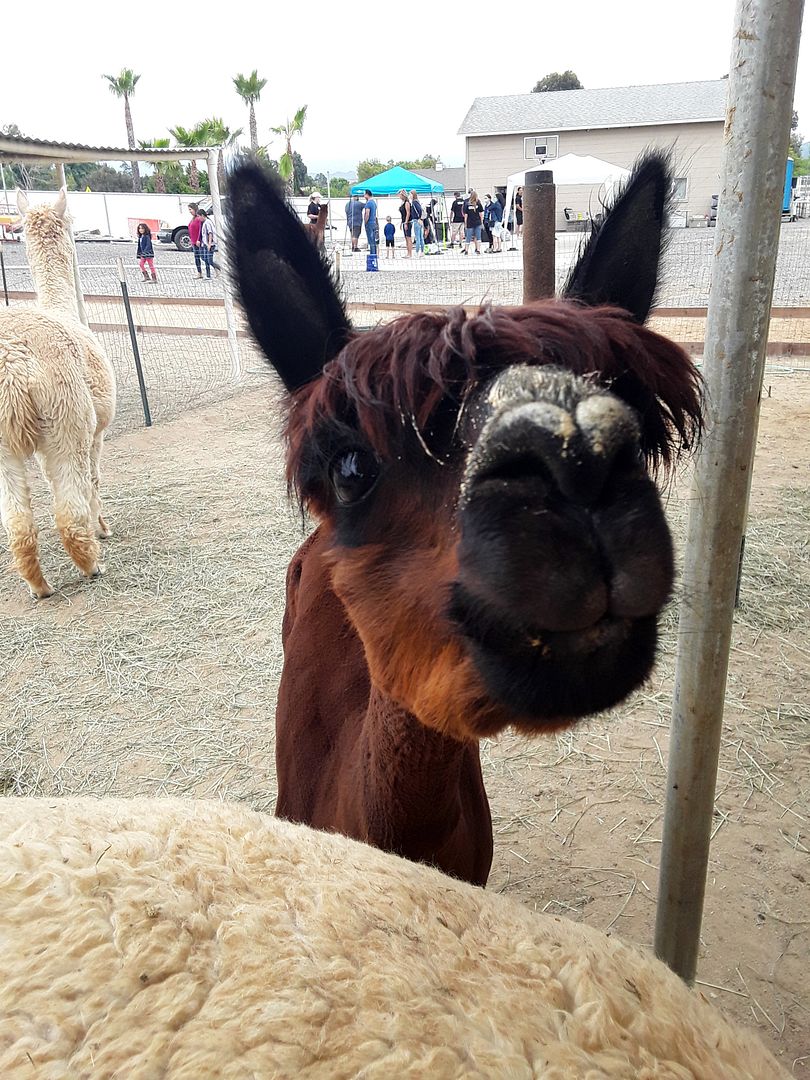
This is Annie.


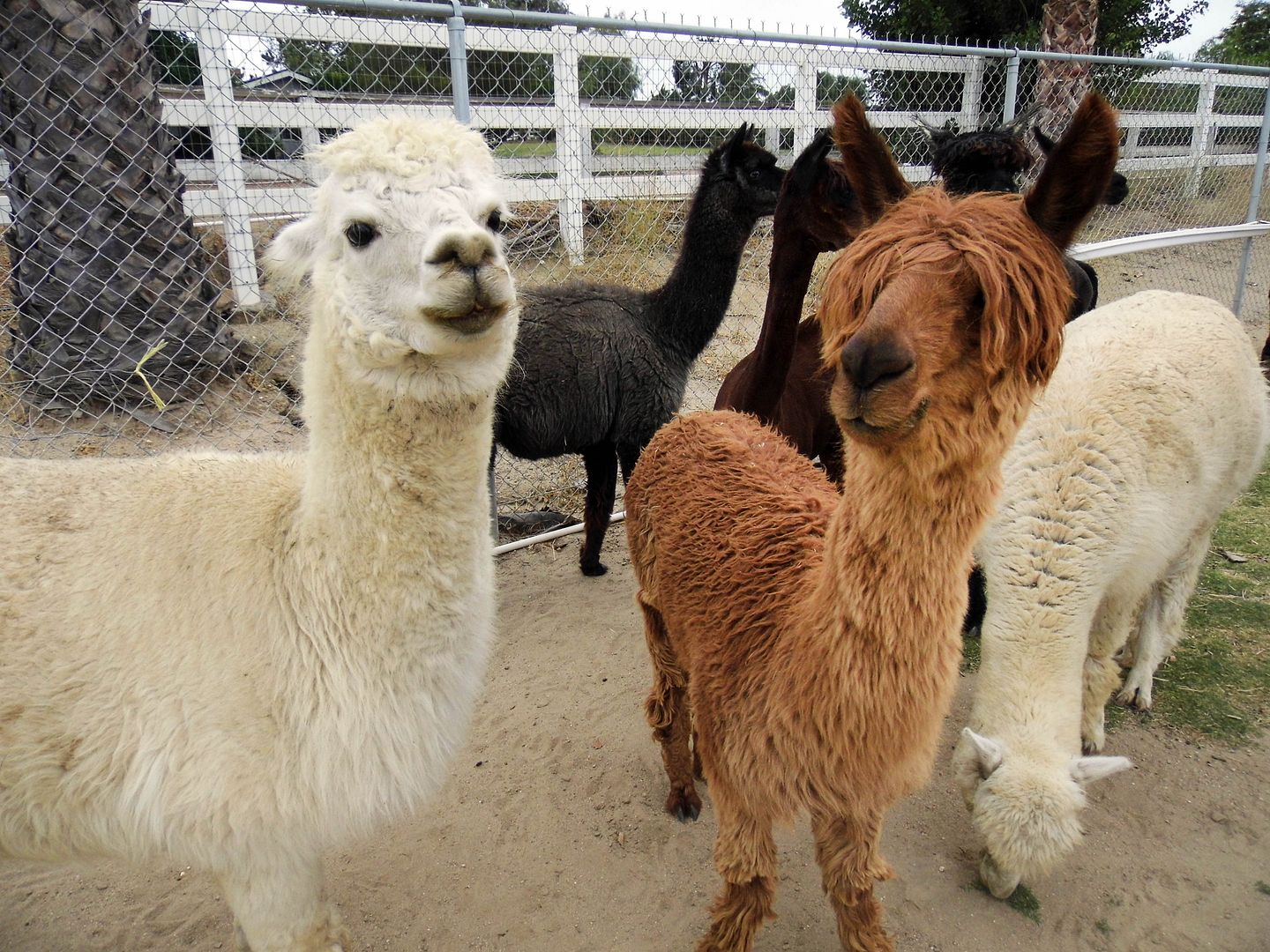
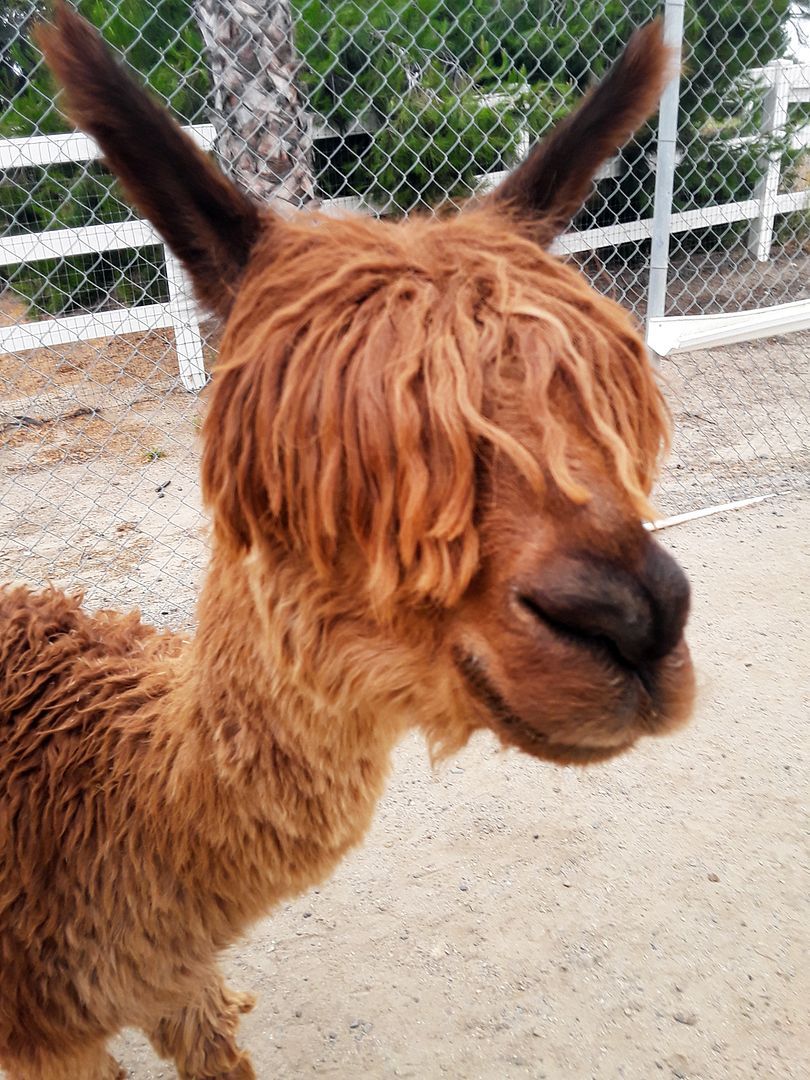
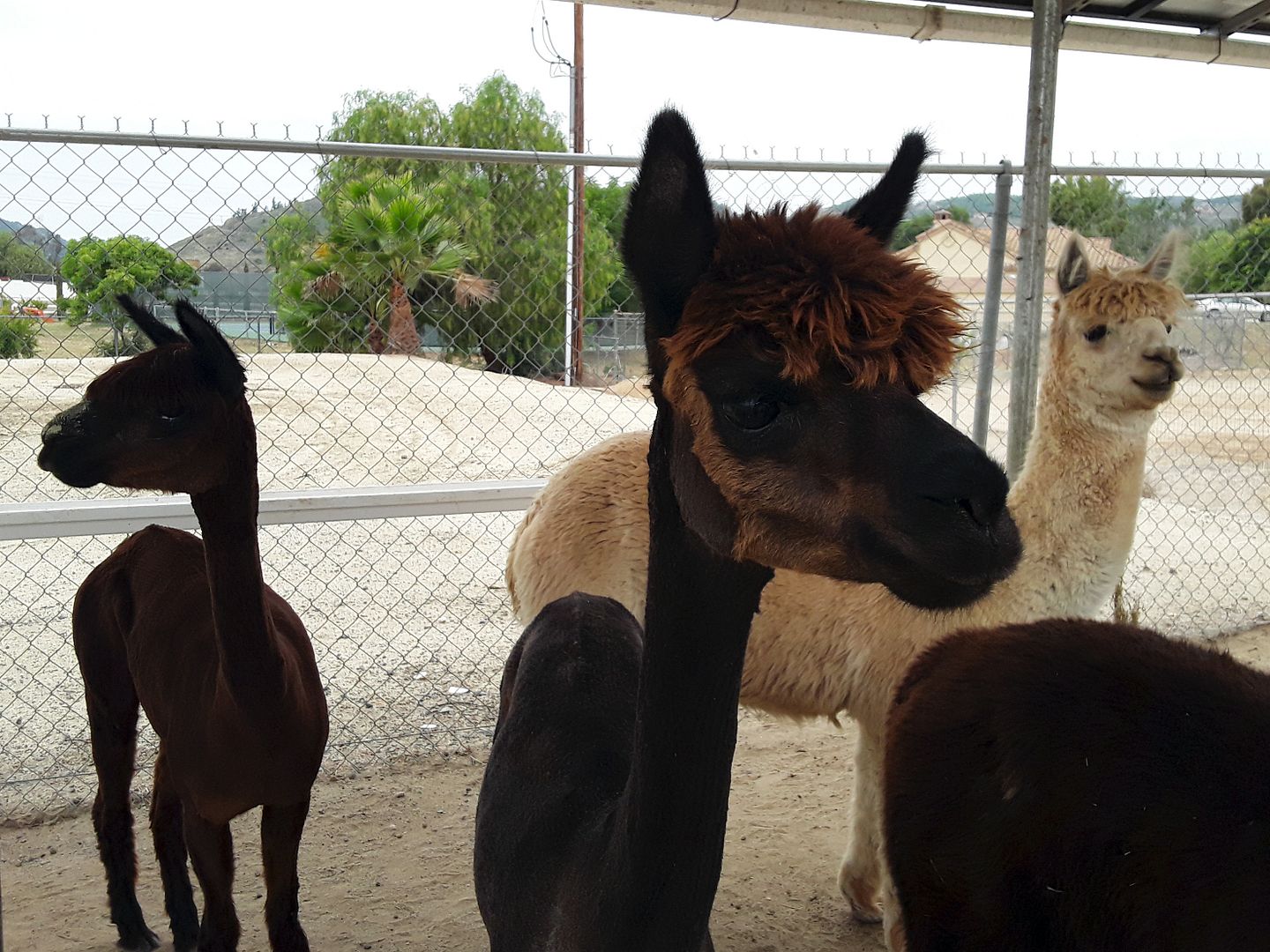
She really stood out from the rest of the alpacas at Temecula Valley Alapacas—and not just because of her bangs.


Turns out she's the most popular of all the Temecula Valley alpacas...


...but she didn't start out that way.


Temecula Valley Alpacas, a non-profit, took her in after her previous owners abandoned her on their nearby ranch, moving away without her and leaving her and some sheep behind.


In a miraculous turnaround, she's become the most social of their alpacas—acting as an ambassador and "therapy alpaca," if you will, at local hospitals.


But there's something else that sets her apart from the rest of this alpaca ranch...


And again, it's not the bangs, because some of the other alpacas do have bangs.


And some of the other alpacas are also very sweet.


Incredibly sweet, in fact.


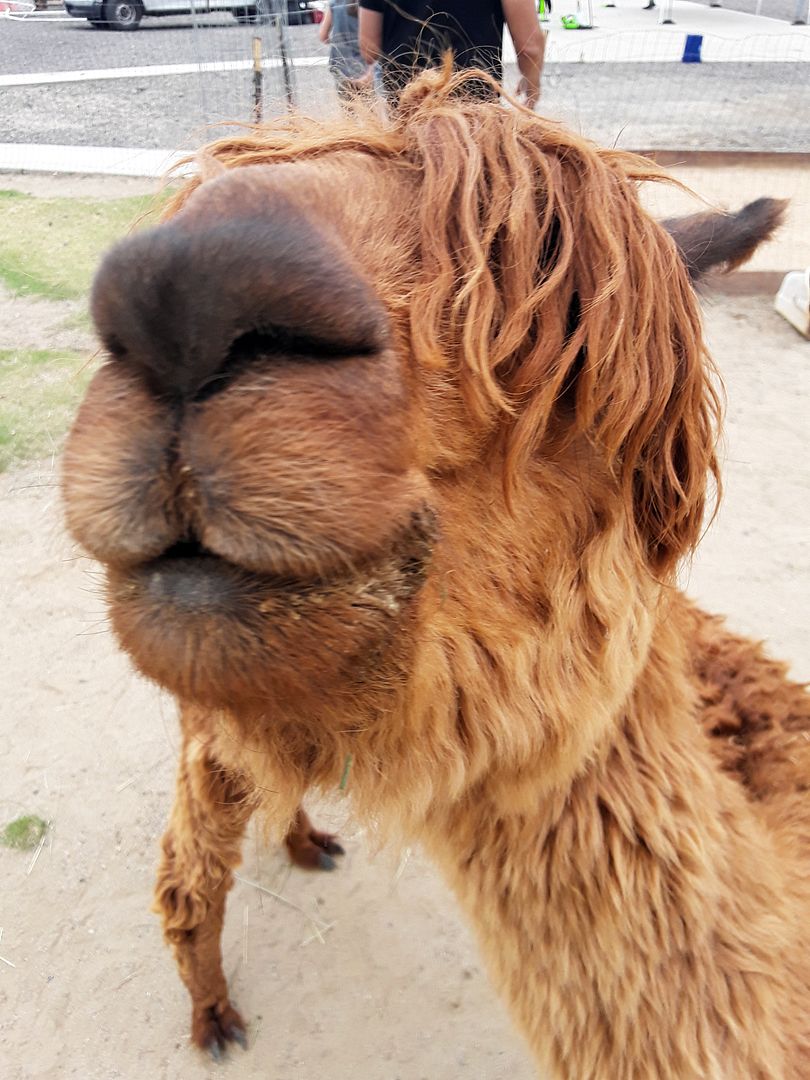
But they don't "sing" like Annie does.

The sound that Annie makes is generally associated with a baby (cria) calling out for her mother or a mother crying out for her baby.

Annie has neither baby nor mother.

Her keepers think it's her cry for food—and it's true, she stops when she's eating.

But I think something about her abandonment has stuck with her. And being fed only distracts her from it.

She is one of the most loving and affectionate alpacas I've met—and this is a species known better for its feistiness and competitiveness (read: spitting) than its even-temperedness.

Maybe this gives me hope.

Maybe hope can prevail.

Related Posts:
Photo Essay: Cria Season at Alpacas of Menifee Valley
Photo Essay: To Know An Alpaca Is To Love An Alpaca

June 11, 2020

Falsely Accused

I had a strong sense of justice as a kid, even as a little kid.

It wasn't just a matter of me crying out, "That's not fair!" and my parents shooting back, "Life isn't fair."

It was the vicious cycle I'd entered very early in my childhood and could never get out of.

You see, my parents always seemed really volatile when I did something wrong. There was never the inclination to excuse or forgive any behavior as that of, say, a toddler.

My mother would never be one of those to say to a stranger, "Well, she's only five."

But their use of force always seemed to be disproportionate to whatever I'd done.

So, in my little head, I thought the trick would be to make sure I never got caught doing something wrong. And if I had done something wrong—or failed to do something right—I tried lying my way out of it.

I was terrified of getting into trouble, but my attempts to evade trouble only brought more trouble my way.

My parents pegged me for a liar early on.

Sometime in kindergarten, I'd gotten a splinter in my leg at the babysitter's house and told my parents about it. They didn't believe me, not for days. In fact they didn't believe me until the splinter had festered in my leg to the point of erupting into a welt.

My dad had to painfully dig it out with some sharp implement, as I cried.

They blamed me for their not believing me.

Not getting the help I needed from those who were supposed to protect me would've been bad enough on its own. But it got worse.

Because they didn't believe my proclamations of innocence, either. And over the course of my childhood and adolescence, I got accused of a lot of weird, bad stuff that happened around the house.

There was the wooden, stick-style chair in the living room-style setup we had in the basement, a chair that I was responsible for dusting once or twice a week with an oiled cloth. My mother claims she found the seat of it all scratched up and presumed my guilt, giving me no opportunity to clear my name.

If not me, I couldn't explain what or who had scratched the wood. I suspected my mother had done it herself to set me up, but of course I could never say that out loud (or prove it).

There was the sky blue wallpaper with the white puffy clouds that our mother had foolishly paid to have hung on the bathroom walls—though not as foolishly as the money she'd spent installing wall-to-wall carpet on the bathroom floor.

She'd already lost her mind once when the hairspray my sister and I used to spritz our bangs into place caught the light—and her attention—after having splattered on that wallpaper. But she went absolutely bananas when she "discovered" a series of swirled lines carved just deep enough into the surface of the paper to show.

She said that she could just see me tracing my fingernail along that exact path. Never mind that I wasn't yet tall enough to reach the nearly invisible graffiti. Or that she hadn't actually witnessed it happening.

My punishment for that alleged crime was to remit some exorbitant sum of money—I remember it being hundreds but maybe it was only $50—out of my meager allowance to compensate my parents for the damage. But paying the fine wasn't the worst of it.

I got sent to the hot attic of our nearly 100-year-old house to clean it for hours on end. In my teenage years, this had become a popular punishment for me—because I was too easily entertained when sent to sit in the corner or to my room. Solitary confinement would've been a relief.

Instead, they had to send me to the hot box.

In between those incidents, I got blamed for saying things I never said—even unspecified things that were, according to my mother, too horrible for her to repeat.

"You know what you said," or "You know what you did," she'd say.

And when I professed my innocence—and quite frankly, my bewilderment—she'd claim that I must've blocked it out, blacked out during the encounter as though I was in some kind of fugue state.

She spent a lot of time trying to convince me I was crazy. And trying to make me confess to crimes I hadn't committed.

The injustice that stuck with me the most—and shook me up the most at the time—was when my father stormed into my bedroom late one night to drag me out of bed and downstairs. I remember the pendant light above the kitchen table glaring at me like the bare bulb of an interrogation room. It took me more than a minute to figure out what was going on.

My father was shaking a paperback book at me, snarling, "Did you do this?"

I didn't even know what the book was, much less what had been done to it.

Then his line of questioning changed, as he slammed the book down on the kitchen counter and grabbed me by both arms. "Why did you do this?"

All I could say was, "What?"

At some point, my mother or my father—I forget which—pivoted the book under the midnight chandelier glow to show that the soft cover had been pitted by something.

My mother had a hunch that I had been standing by the window—reaching over the trash can—to click a retractable ballpoint pen onto the book, some kind of self-help book that she'd borrowed from her counselor at Catholic Charities and would now have to return damaged.

This was the perfect storm of a crime—because not only was my mother obsessively materialistic after having grown up dirt poor, but she was also keenly focused on saving face.

Once again, I had no other explanation. They took that as an admission of guilt.

Nothing I ever did could ever prove my innocence, so at some point I'd given up. I knew the fix was in. It was easier to get slapped around, fork over the money, and head back into the attic than to fruitlessly fight the charges.

I'd do my time and pay my penance, just for some peace and quiet.

My parents would say, "If you really weren't guilty, you'd be pleading 'I didn't do it! I didn't do it!'"

But that's not how it works when you've been profiled, targeted, and given an unfair trial (or no trial at all).

Eventually, I embraced the strength that those punishments had given me—the calloused world view that helped me protect my sister when my parents shifted their gazes towards her.

When I became a boss early in my career, I always told my staff to not cover up their mistakes. Tell me, and I'll help you fix it. If it's unfixable, I'll take the blame.

If they were just honest, they'd never have to worry about getting "in trouble." I was strong enough to take the heat for all of us.

You'd think that an entire childhood of  being falsely accused would've taught me that there's no point in telling the truth—that is, as long as no one was going to believe me anyway. But actually, it's just the opposite.

I put my cards on the table and play it straight. I don't worry about anything I've done, as long as I did it with good intentions and integrity.

But I still worry about the things I haven't done, which might one day come back to haunt me.

Related Posts:
Don't Blame It On Me
The Persistence of Violence

June 05, 2020

The Persistence of Violence
I wouldn't characterize my father as a violent man. But one of my first memories is being spanked by him.

It wasn't just a little tap on the bottom to startle me, like you'd whack a puppy on the behind with a rolled-up newspaper.

It was brutal. And it was ritualistic.

His weapon wasn't his bare hand, but a bare plank—raw, splintery wood that he'd carved my name into. It hung from the beams of the basement ceiling near his work bench, where he kept all his tools, next to the table where my mother kept all her extra cleaning supplies.

And when I got spanked with the monogrammed board, I didn't benefit from the protection of pants or underpants. I had to strip down to my bare bottom and let my father lean me over his knee.

That seems to be the bit that alarms most people who hear the story—maybe because they thought there was something sexual about making me strip from the waist-down. It's impossible for me to know now what was going through my father's head back then, but I always assumed the no-pants rule was just to make the punishment as effective as possible.

I can't remember one thing I did to serve "the board." But I got it several times in my youngest years.

Only one incident really stands out to me—only once of actually being spanked with the board, and not just standing under it, looking up at it, knowing what it was for, and hearing my sister joke about it.

My dad got so violent while spanking me that time that my mother—the chief physical and mental abuser throughout my childhood—had to intervene and tell him it was enough. He'd lost control, his face straining and sweating, his black hair falling against his forehead where it was normally slicked back.

I hadn't thought about that one time until just recently, when depictions of person-on-person violence began to dominate the news cycle—one video of murder on repeat (the first time I think I've ever actually seen anyone killed close up) coupled with videos and images of brutality against those who protest it.
If you've been on the receiving end of violence, it really sticks with you.

It may go into hiding for awhile—even lay dormant so long you think it's finally gone for good. But like desert deadwood or the summer cicadas, it always comes back in one form or another.

Always.

It's worse when that violence doesn't just happen "in the heat of the moment" or in a fit of "temporary insanity." Authority figures often justify their tactics—as though you "deserved" it or it's for the "greater good." And my parents were no different.
My mother said repeatedly throughout our childhood, "Your father and I believe in corporal punishment." It was surprising to me and my sister, given my mother's own history of being abused by her father, often without provocation. But it turns out my grandfather trained her well—to exert an "absolute authority" over her two daughters.

She spanked us with wooden spoons, the vacuum cleaner, and her bare hands. She slapped me across the face so hard once, my eyeglasses bruised my nose. Otherwise, she was careful not to leave any marks that might be visible to teachers or guidance counselors at school, who thought she was such a good mother because we happened to excel in our classes.

She always insisted that she never struck us out of anger. The obscenities she'd spit out—and the tears that would stream down her face as she called us names—told a different story.

When we were a little older, we tried to argue against our parents' tactics. But you can't reason with authoritarian rule.

My one victory was that I came out of that nightmare scenario understanding how wrong it was. And that it wasn't my fault.

But somehow in my 20s, I fell into other violent situations, mostly with strangers. I got punched on the New York City subway, on my way to my first job after college. A person was blocking the exit door, and all I'd done is tap him with my umbrella after he didn't respond to my "Excuse me."

He knocked the wind out of me with his fist, but I went to work anyway. What else was I supposed to do?

I also got molested on the subway more than once on my way to that same job. All my boss could offer in comfort was the advice to choose a less-crowded car on the train the next time.

I spent years subjecting myself to the dangers of NYC nightlife—men who were rough with me when they reached into my panties and left me bleeding, men who secretly removed condoms before entering me, a male friend who crashed at my apartment and started having sex with me while I was asleep.

I may not have gotten beaten up—but every single one of those situations was an act of violence. And I blamed myself for letting it happen. I wondered why I didn't kick and scream then—and why, a decade or more before, I never found a way to escape my parents and their hatred for who I was as a person (or, I suppose, my mere presence).


So, in times like this—when riots and looting and police brutality is happening within earshot, a mile or two away—I'll admit I get triggered. My PTSD is raging, right alongside my anxiety.

I'm in full-on fight-or-flight mode, even though I'm not being directly attacked.

It feels like I could be. It feels like I will be.

For the last three months, the resounding message has been "Stay safe." I've even said it myself (usually adding on "and sane").

But how do you "stay" safe when you never felt safe in the first place?

None of what's happening in the streets of Los Angeles right now is about me or my childhood. And I don't want to make any of it about me.

But I know what it feels like to be targeted. And I know what it's like to feel trapped—and to witness the same horrible things happen over and over again while the perpetrators and their enablers deny, excuse, rationalize, and shift blame.

Most of all, I know all too well how the violence of the past persists, encircles, and comes roaring back with a vengeance. It never becomes "ancient history."
We still feel its repercussions after a lifetime has passed. Some viscerally experience the brutality of the past generations later.
And that was something I had to share—particularly with those lucky enough to have had the luxury of living a life free of violence.

Related Posts:
Standing With Those Who Choose To Not Stand
The Anxiety of Anxiety

May 29, 2020

Puckering Up For Old Hollywood Kissability at Besamé Cosmetics

I've never been much of a makeup wearer myself. As a little girl—all the way back in nursery school, I remember—I simply adored nail polish. It was enough to get me to stop biting my nails, so as not to ruin the manicure.

And I've always gotten a kick out of wearing stage makeup or getting camera-ready for a TV appearance or film cameo.
But otherwise, I've kept mostly to lipstick or, in more recent times, shiny pink lip balm, and a little line from an eye pencil or pen. I didn't start wearing mascara until I got contact lenses around age 30 because my naturally long lashes would just scrape against the inside of my glasses. And that just wasn't cute at all.

The few times my mother ever "went out" when I was a kid—maybe to my father's workplace Christmas party—she had her standard sparkly blue eyeshadow and under-eye highlighter (after all, it was the late '70s/early '80s), punctuated by some eyeliner and mascara. 

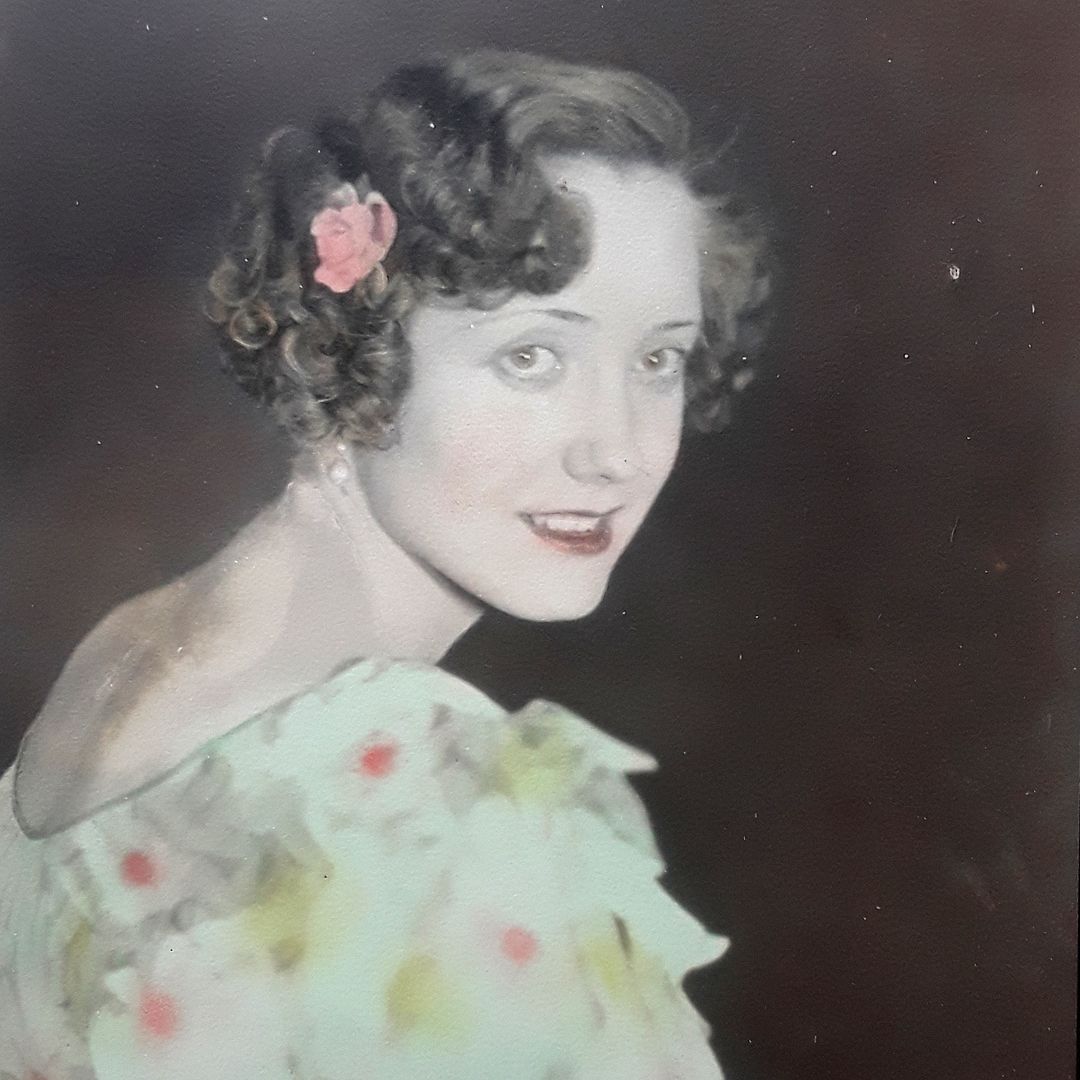
Virginia Weinheimer, age 18 (circa 1936)

But my mother wasn't exactly a beauty icon for me. Instead, I always admired my Grammy's beauty—her bright red lipstick that my Grampy hated, but that looked just fine to her in the mirror. Then again, Grammy was so colorblind, she had the rare form of the disease that rendered everything in black and white. So she was the star of her own silver screen.


Like me, cosmetics entrepreneur Gabriela Hernandez was inspired by her grandmother's beauty routine—one with a simple glamour that's somehow disappeared from modern makeup. With that vintage aesthetic in mind, she created her beauty brand, Bésame Cosmetics, and launched a single red lipstick circa 1920—later recreating historical details from several decades for contemporary versions of an entire line of her own makeup formulas.


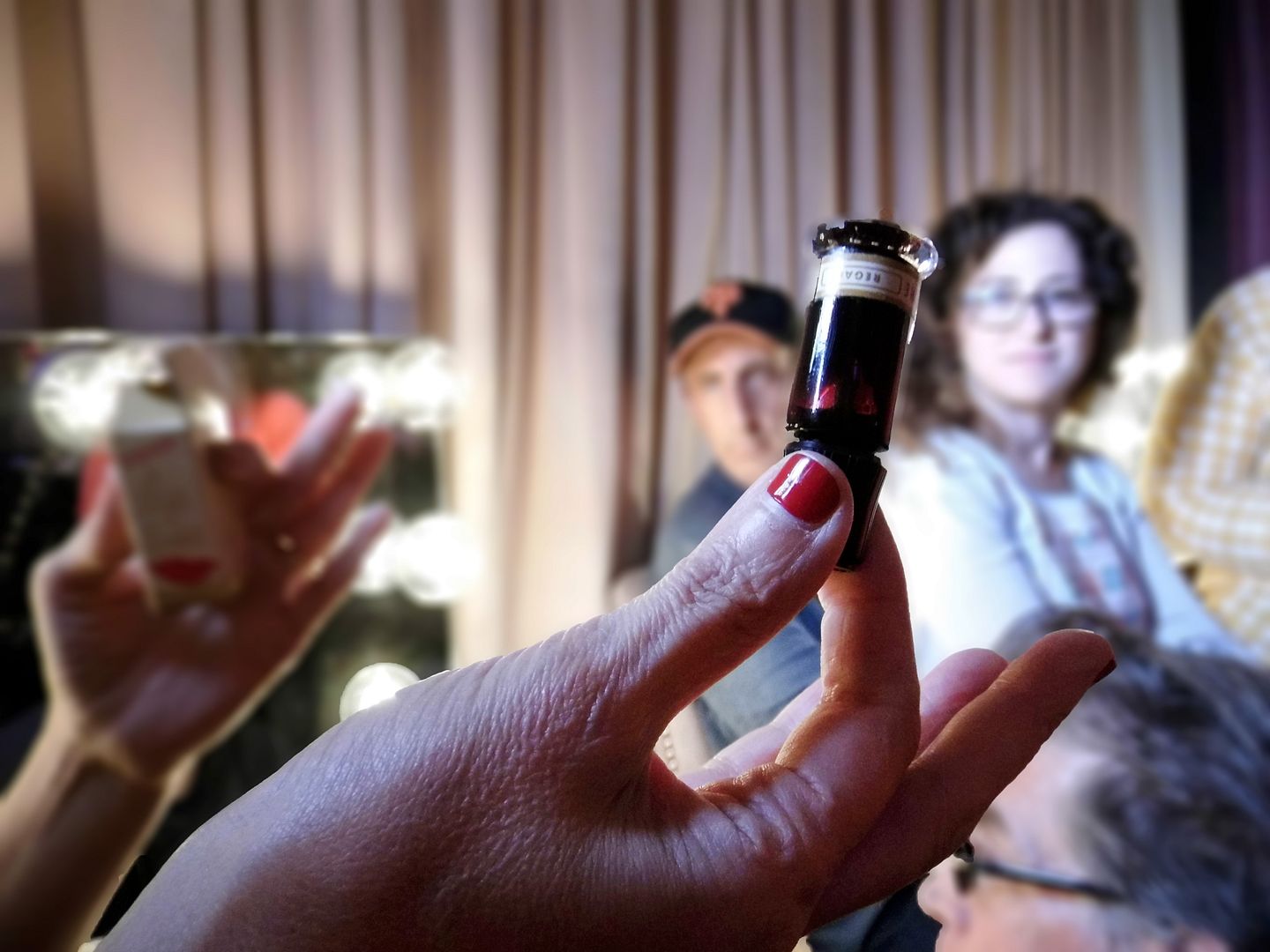
A unique combination of artist and historian, Hernandez has found herself in the role of "color detective"—analyzing old lipsticks and other cosmetics to unveil what the pigments are underneath. Because as anyone who's ever tried to wear red lipstick knows, no two reds are exactly the same.


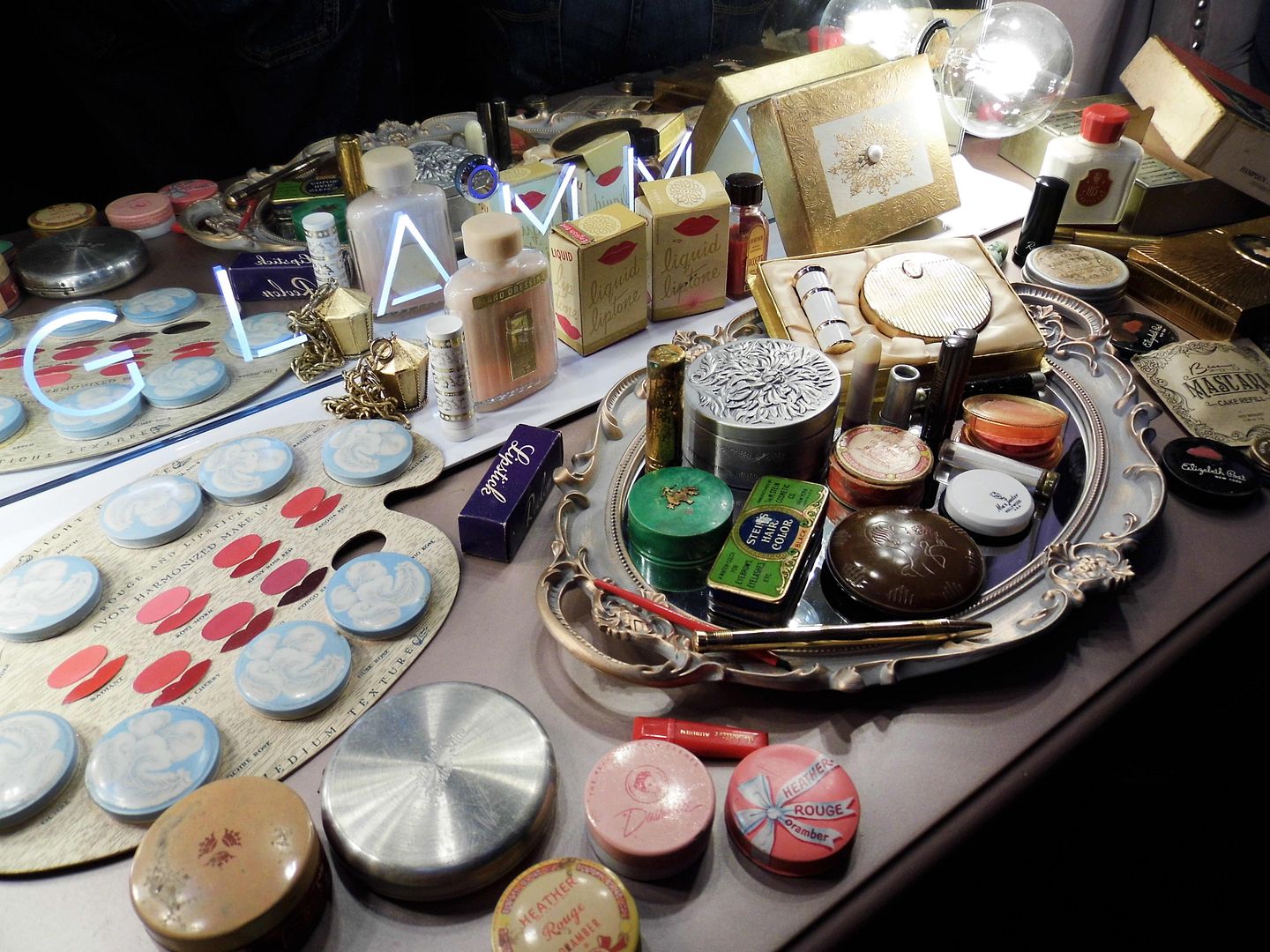
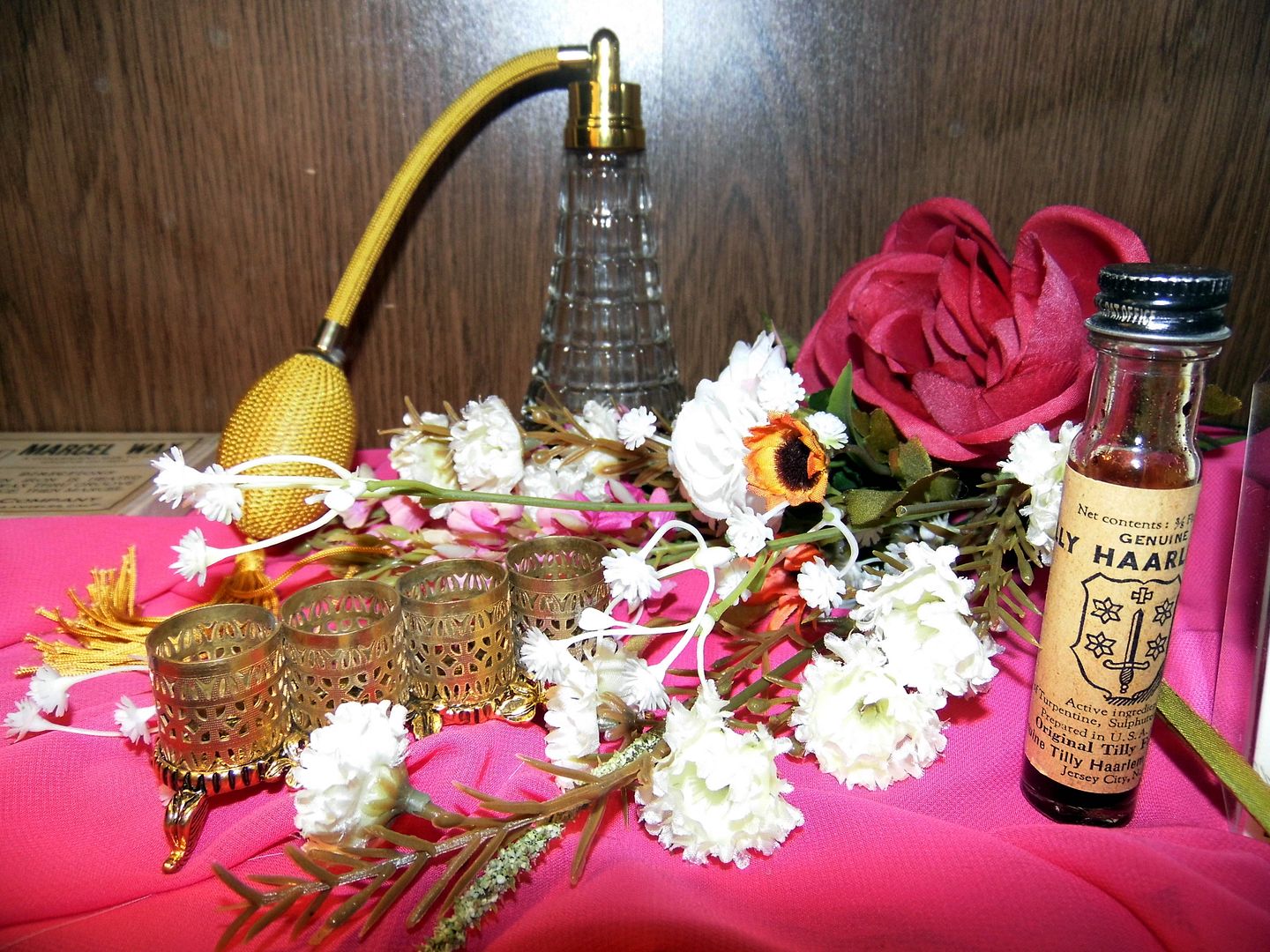
In the back of her Burbank storefront, Hernandez has got a kind of "hall of fame" of vintage cosmetic products—some of which might not be recreated exactly the same way because of where the pigments were originally sourced from (like, say, crushed bugs).


You can sign up for a makeup class, photo shoot, or makeup application in that back room when the store is open...


...or you can leisurely browse the front room...


...where Bésame-branded cosmetics are sold behind a nice old-fashioned makeup counter on one side...


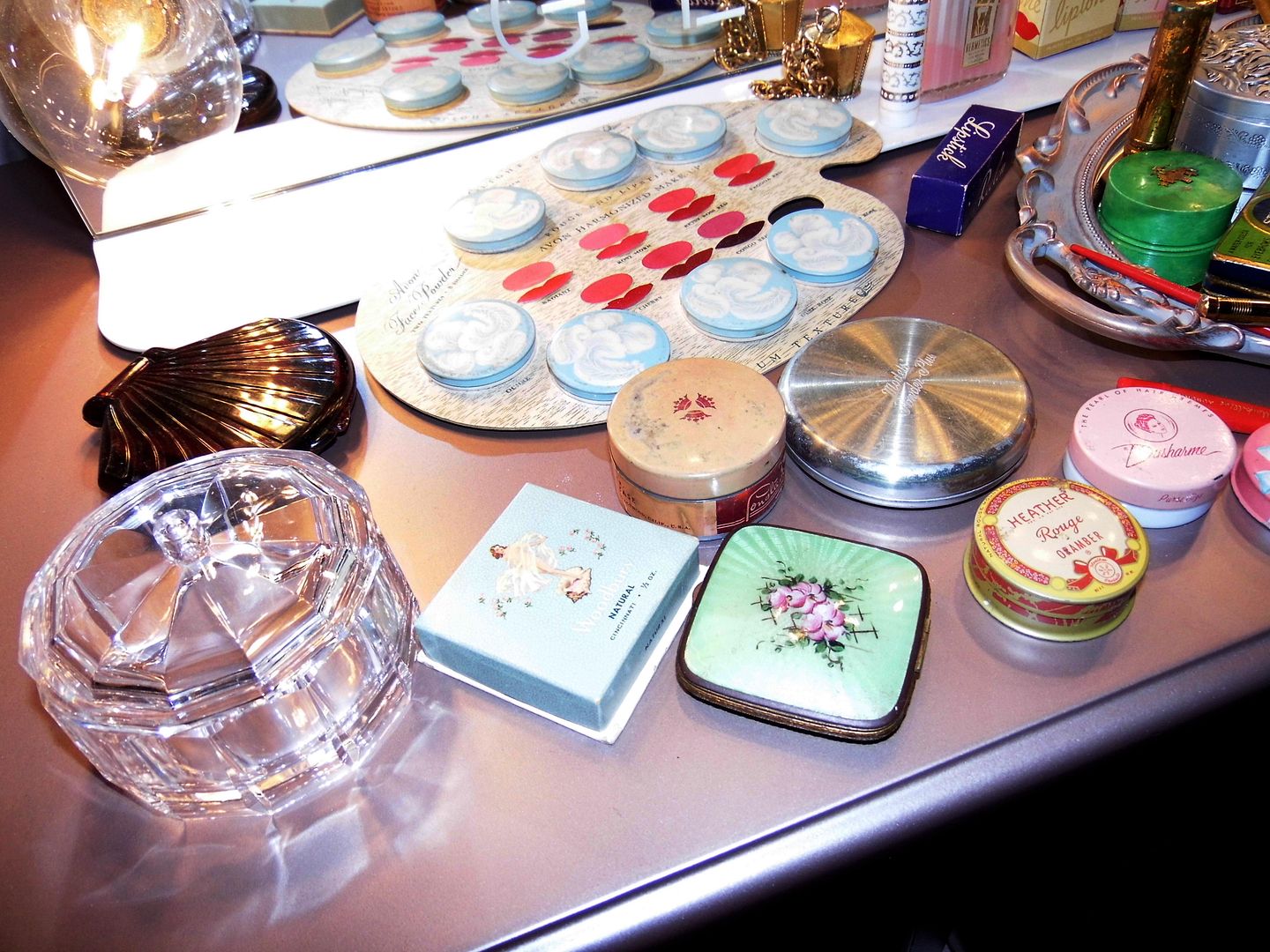
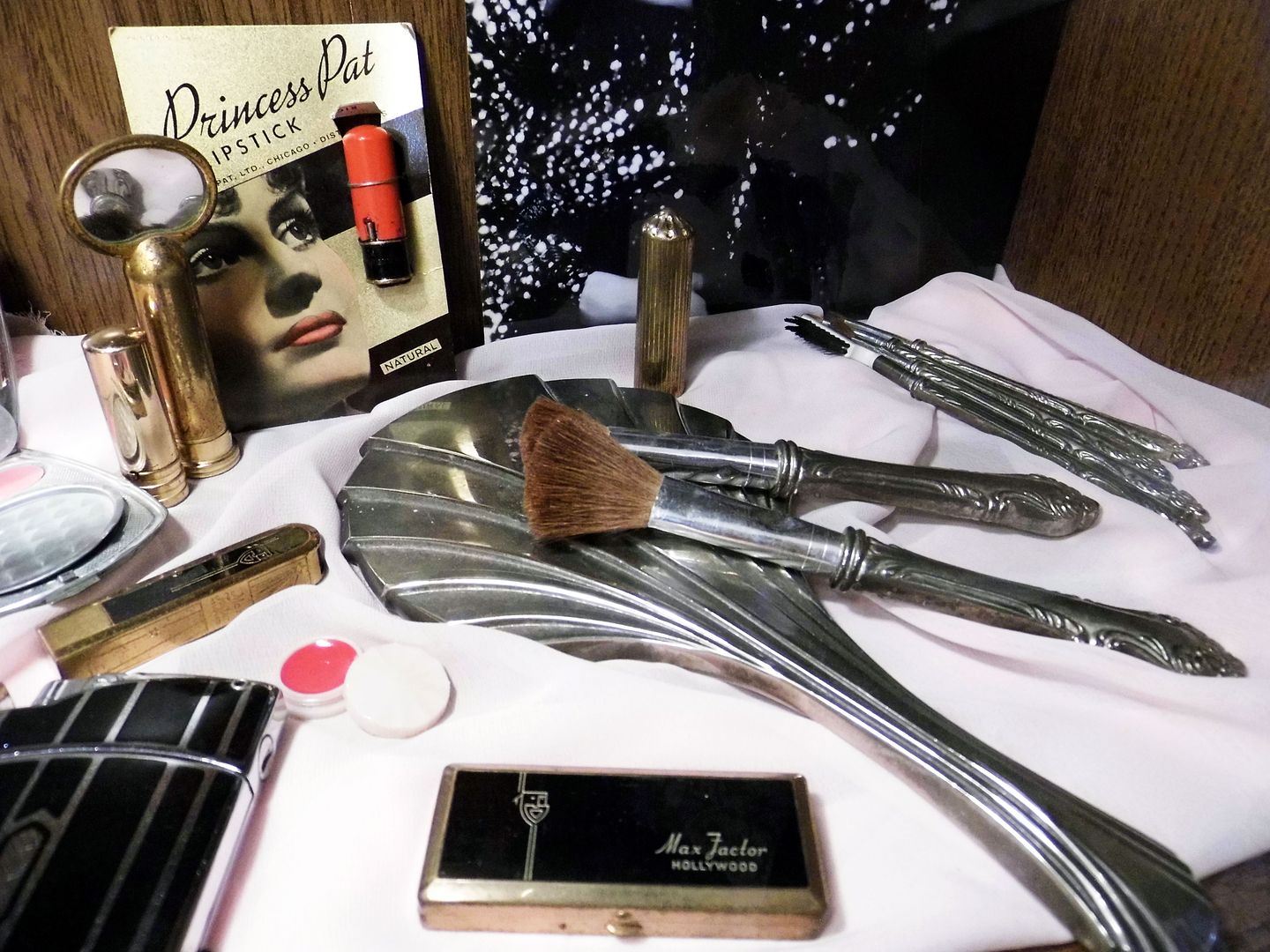
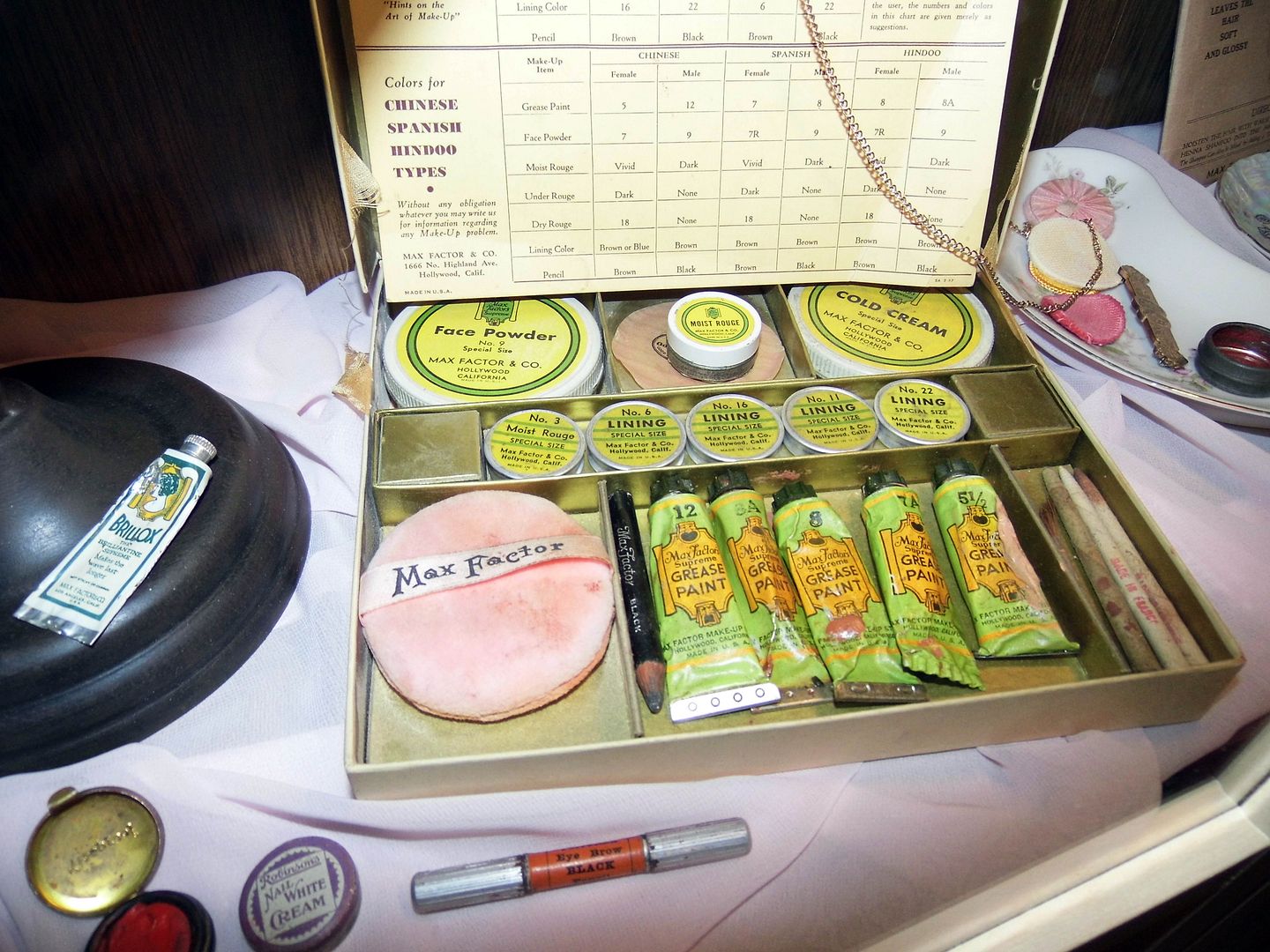
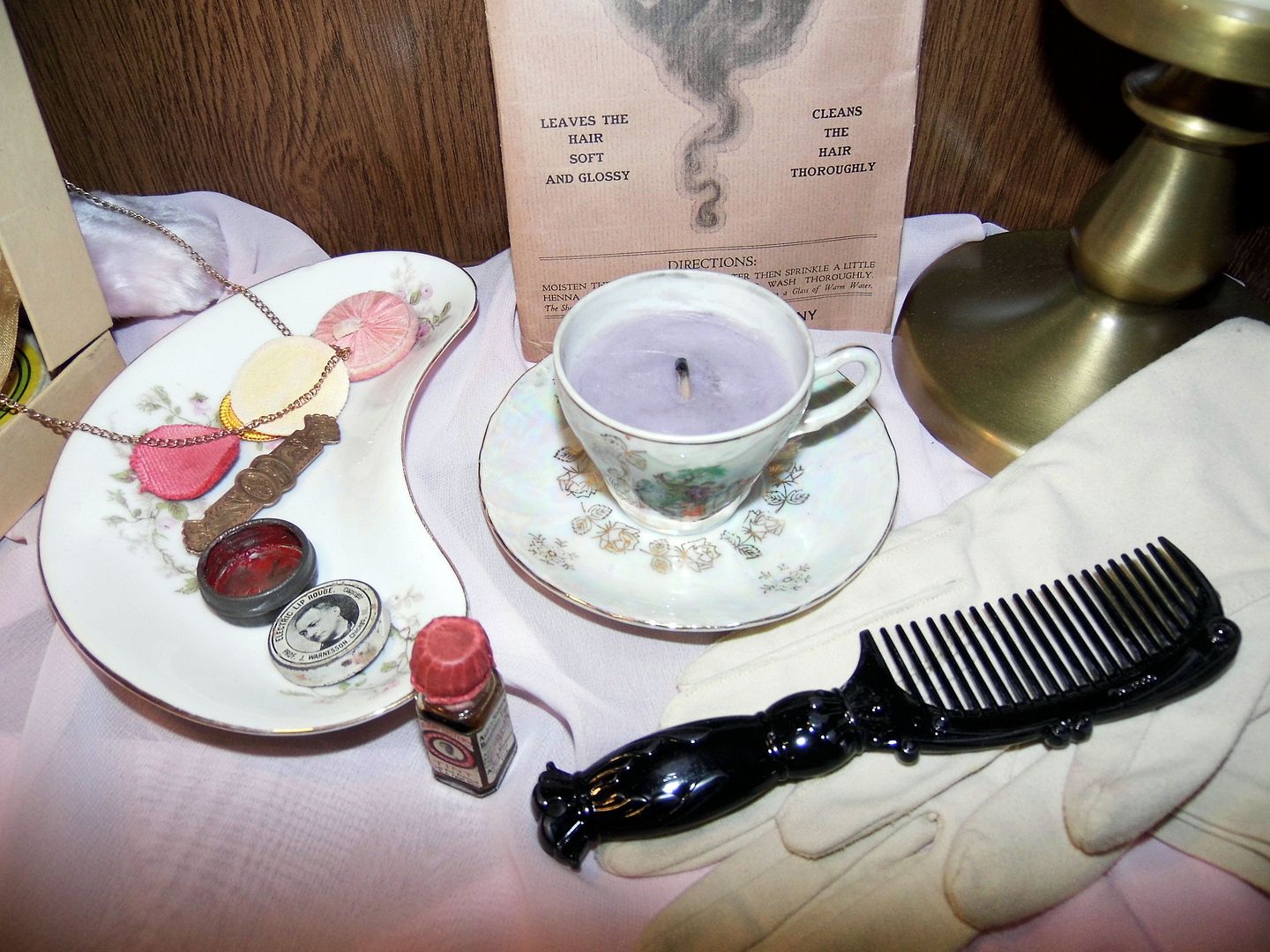
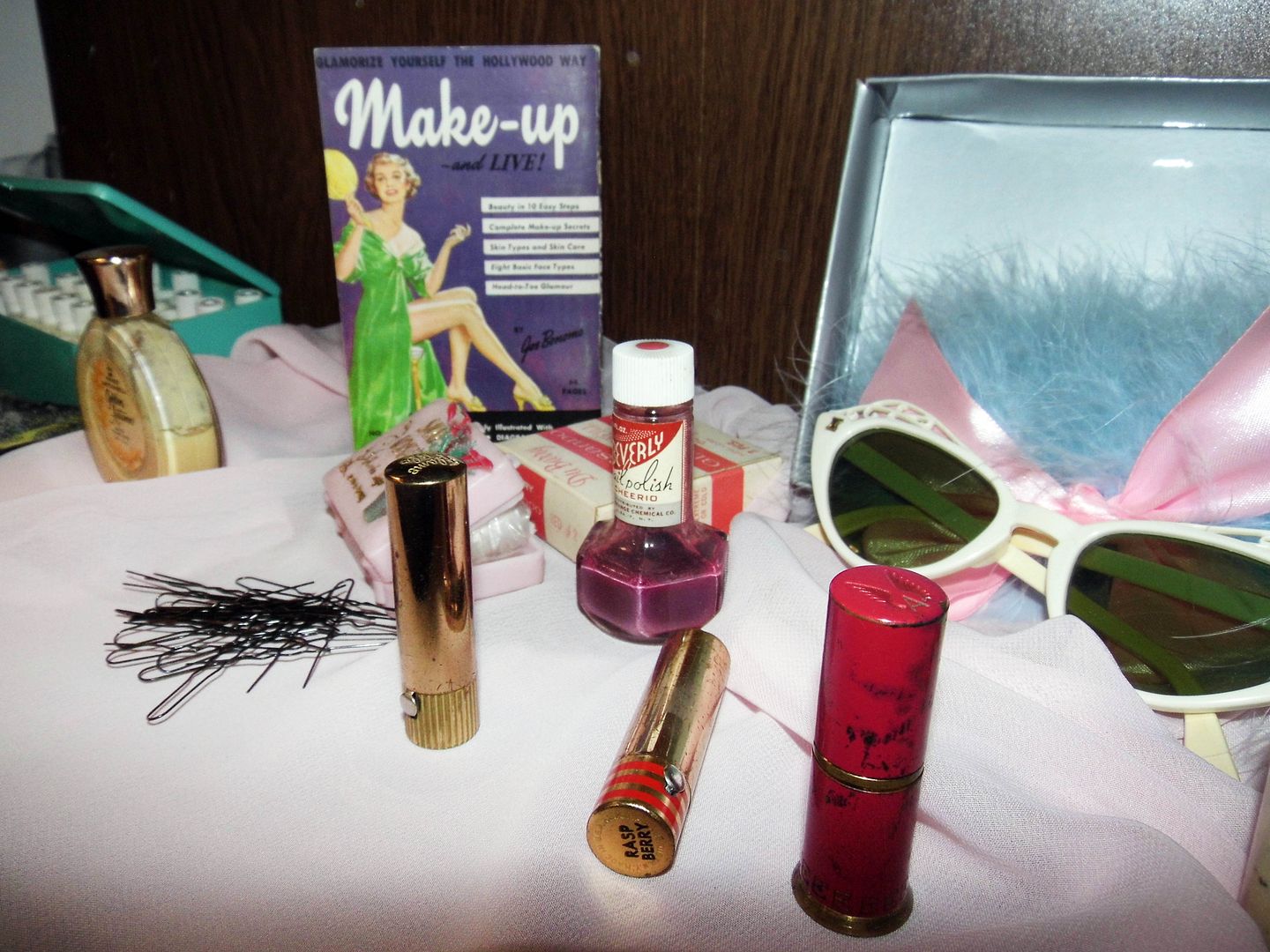
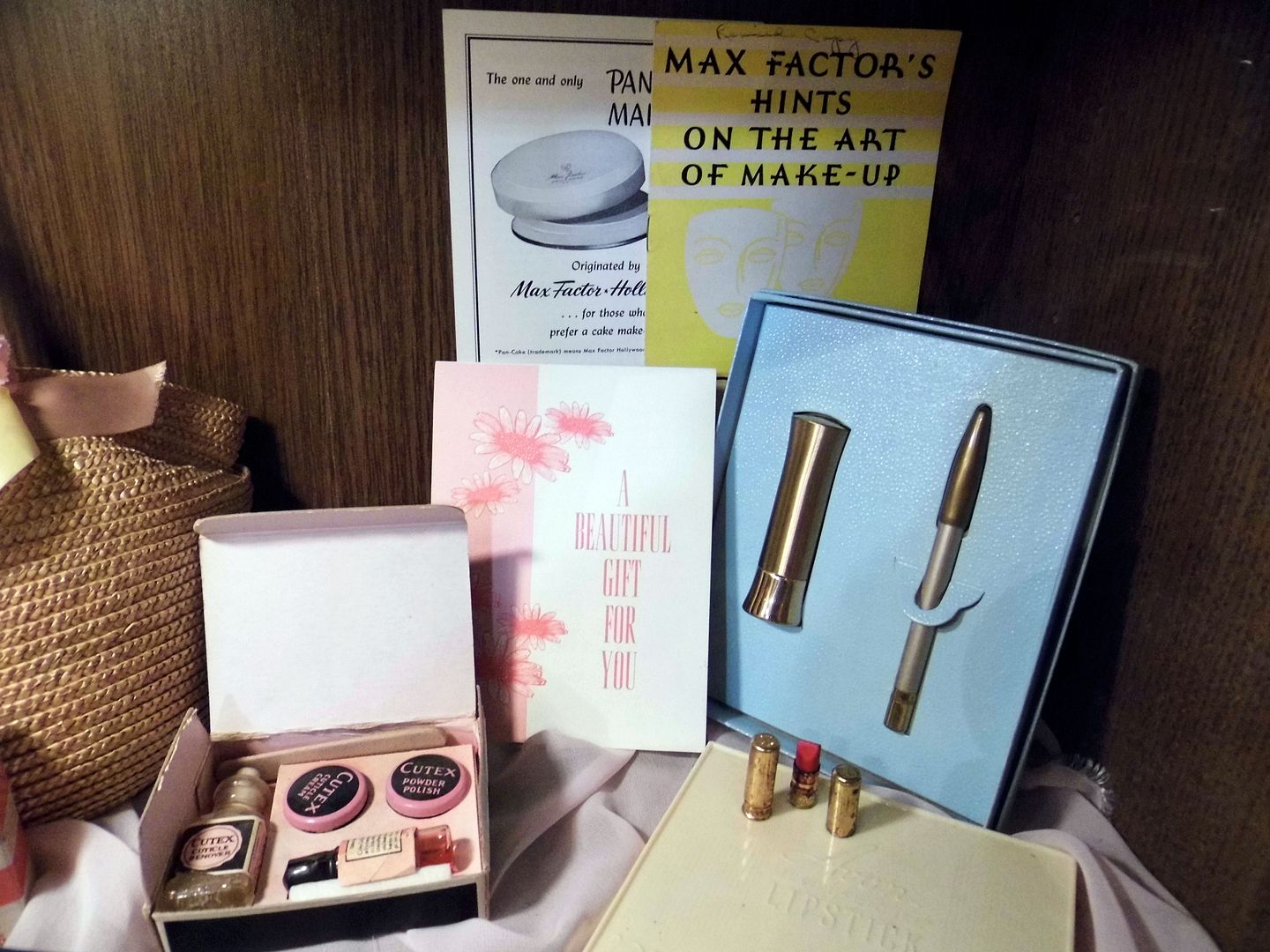
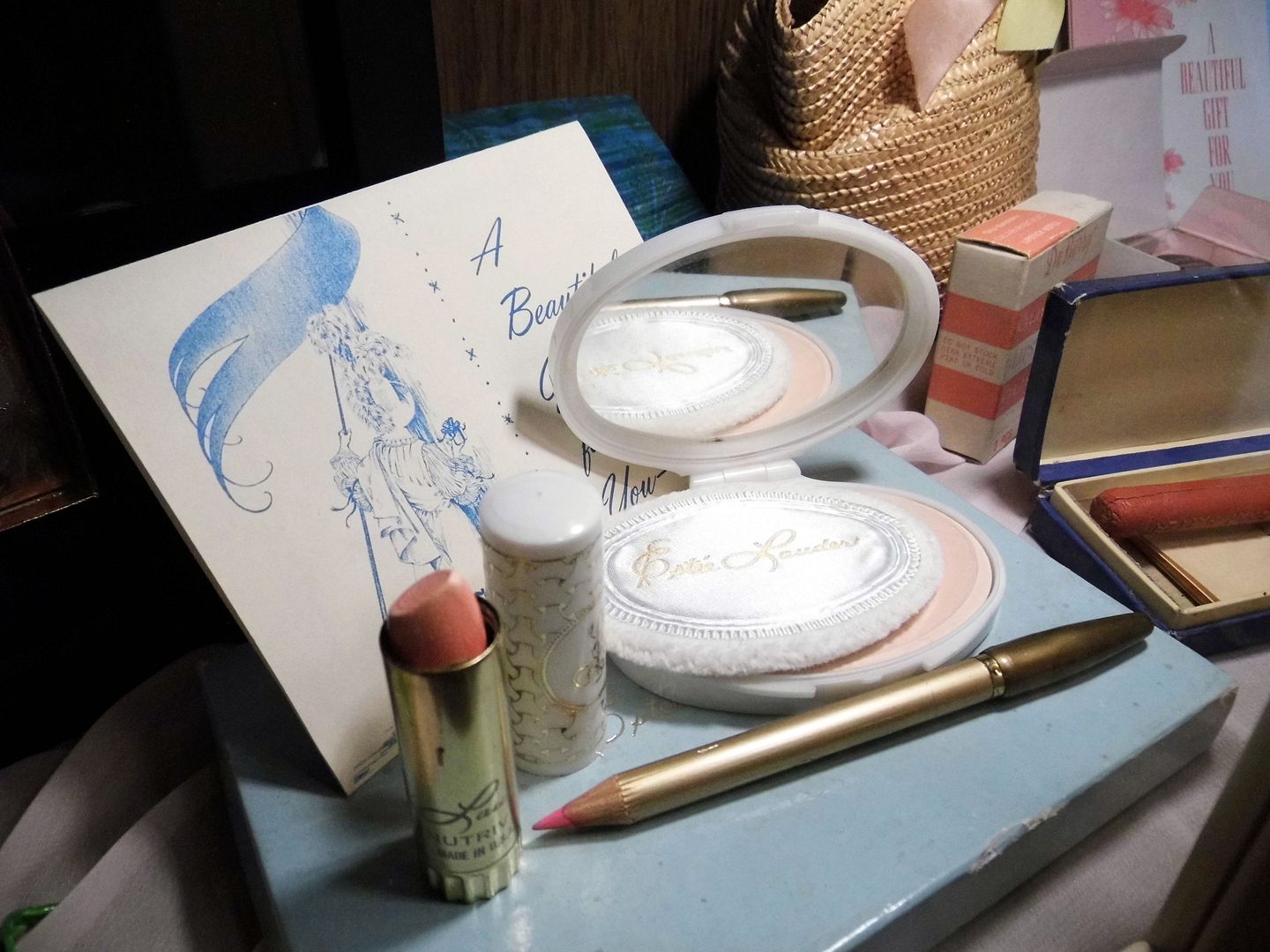
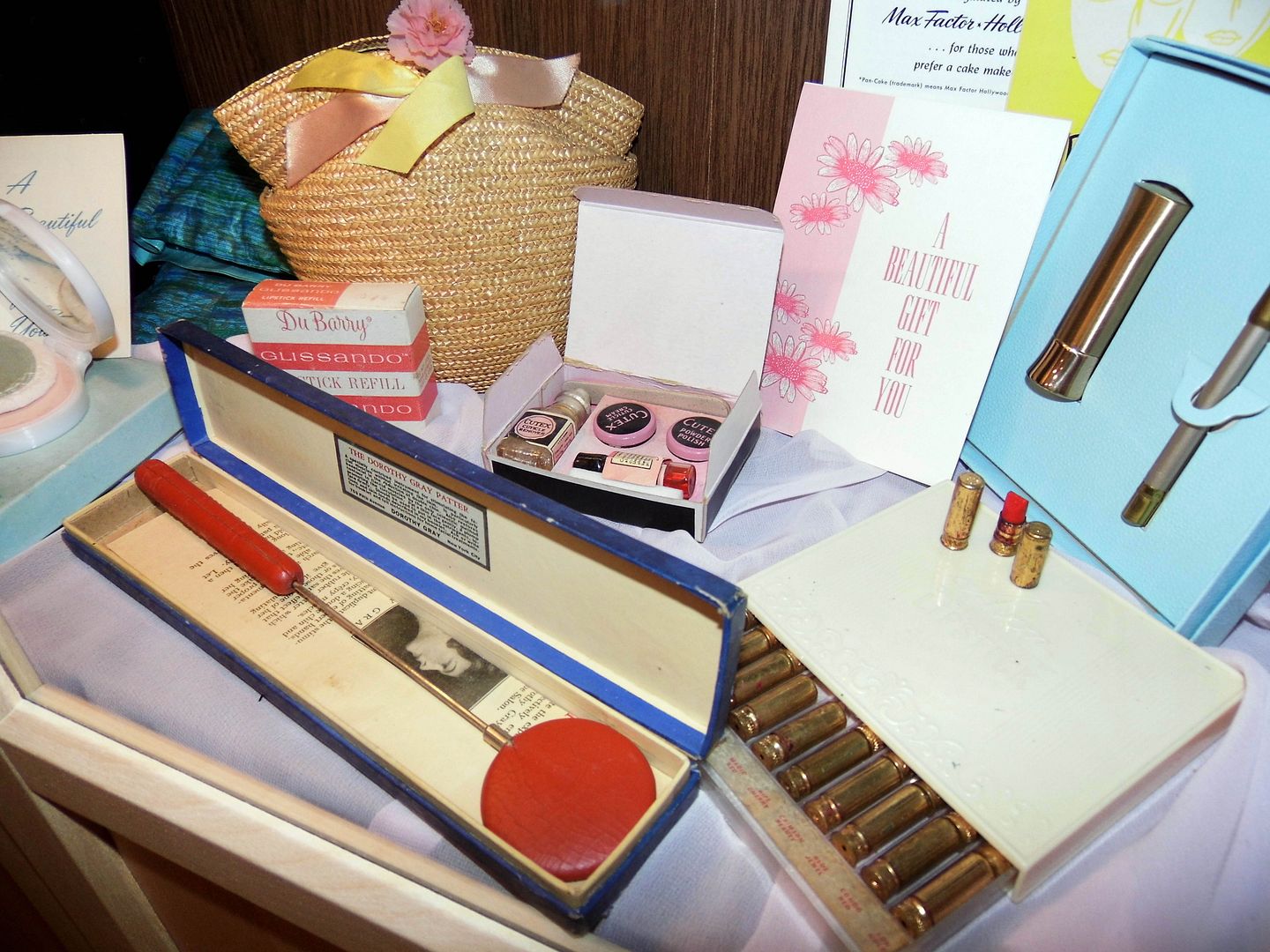
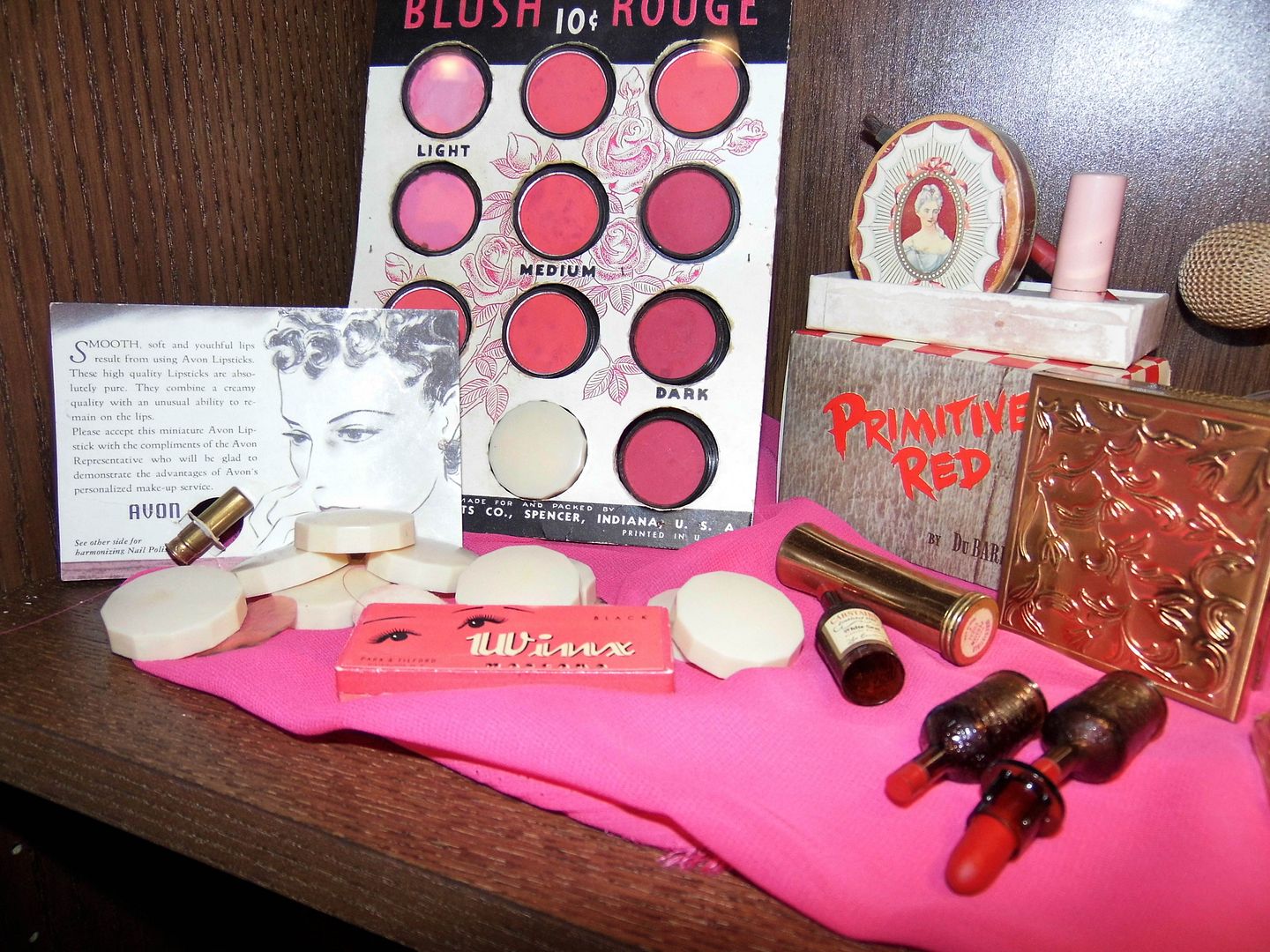
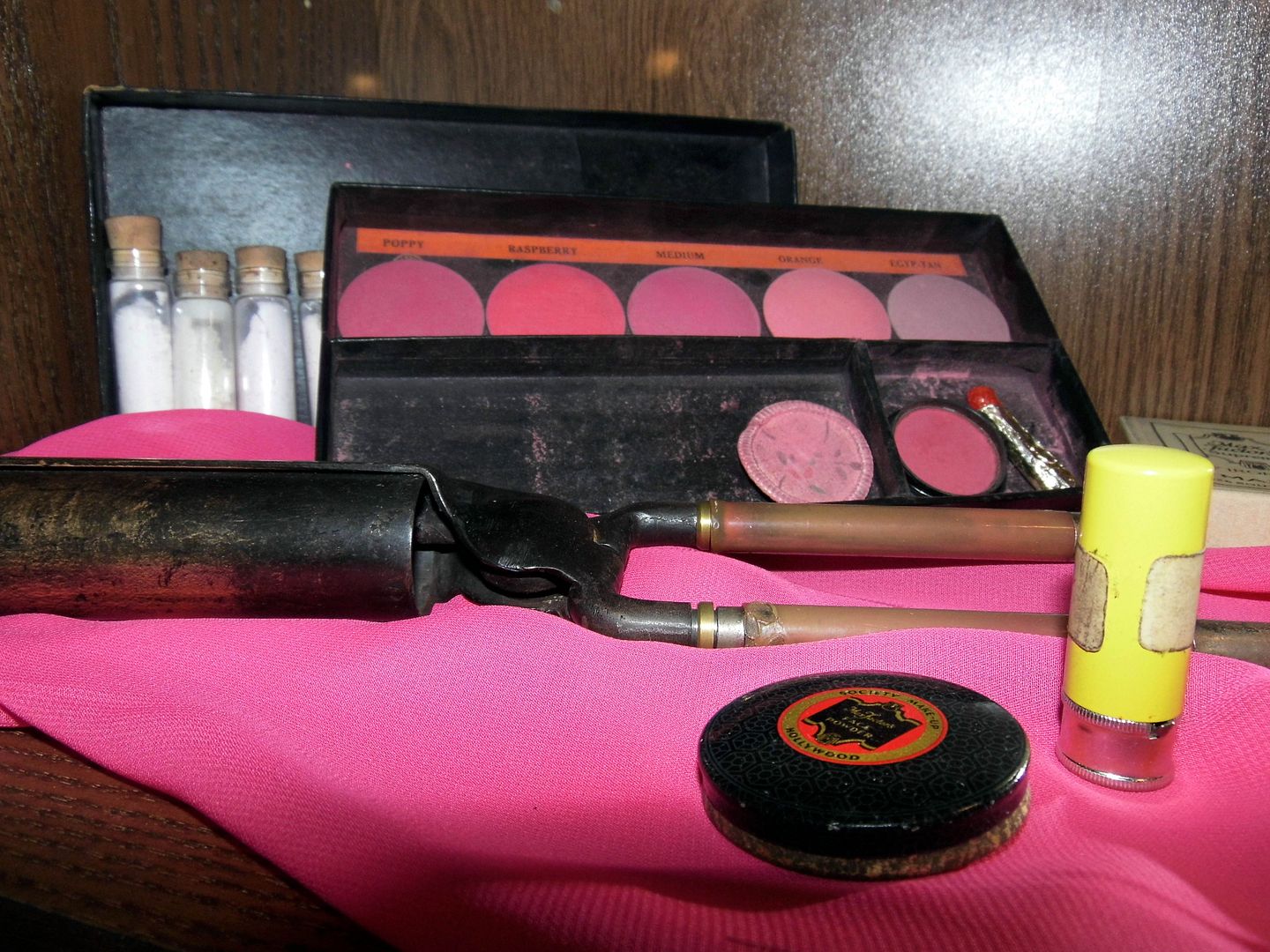
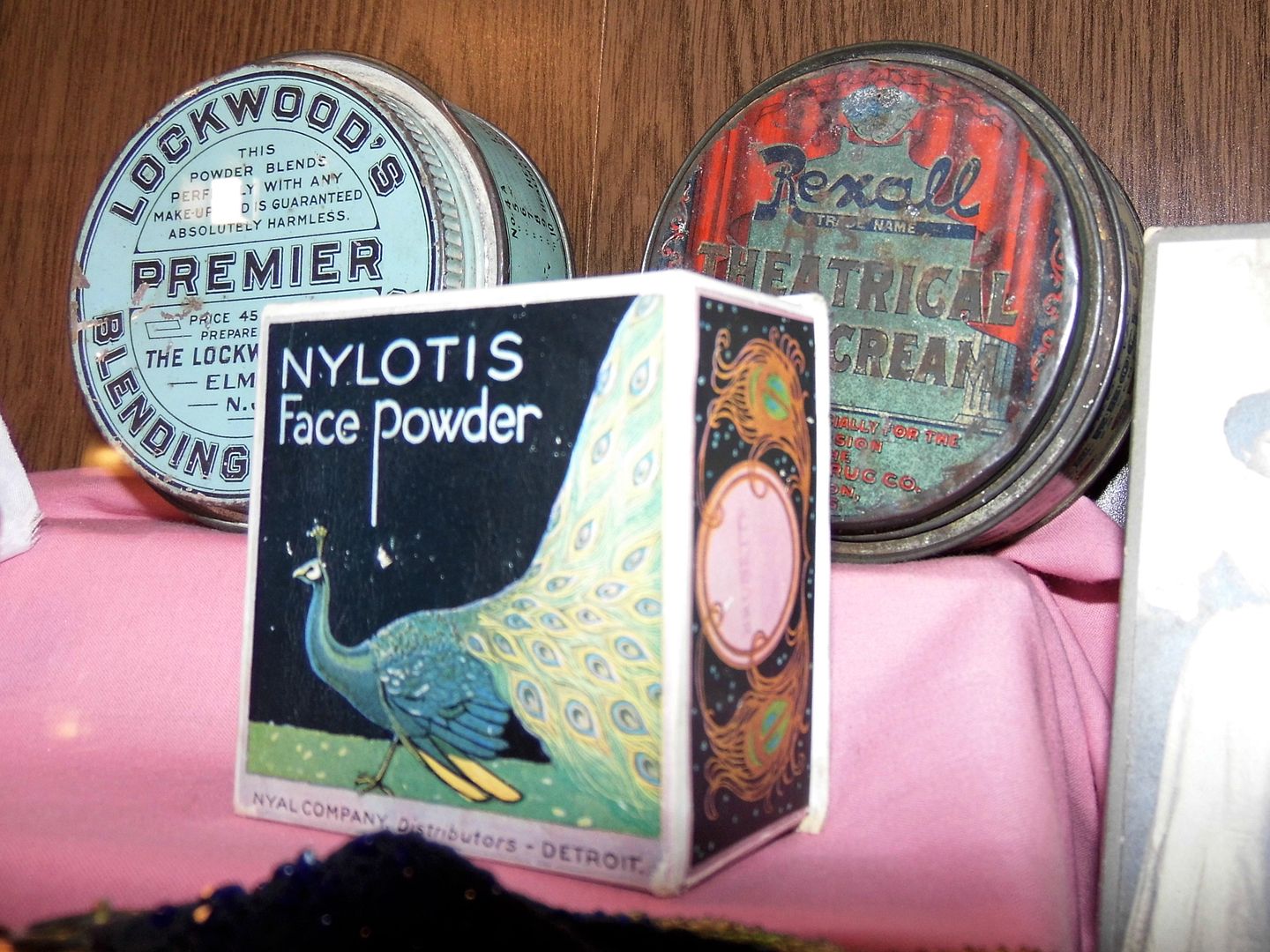
...and the other side displays selected makeup trends from the year 1900 to today, encased in glass cabinets in a kind of mini cosmetics "museum."


Of course, Max Factor is represented here, as are Avon and Cutex...


...and old "cake" forms of mascaras, like those sold under the brand name Winx.


Practically everything started out as a powder in some form or another, whether loose or compressed...


...and the formulations evolved as makeup started to be worn by more than stage or film actors...


...and entered the lexicon of "everyday" beauty.


I don't ever remember seeing my Grammy without her red lipstick on. And I rarely saw her outside of her own home.


Meanwhile, I haven't worn any makeup for two and a half months. And I'm not sure when I'll have the opportunity to again.


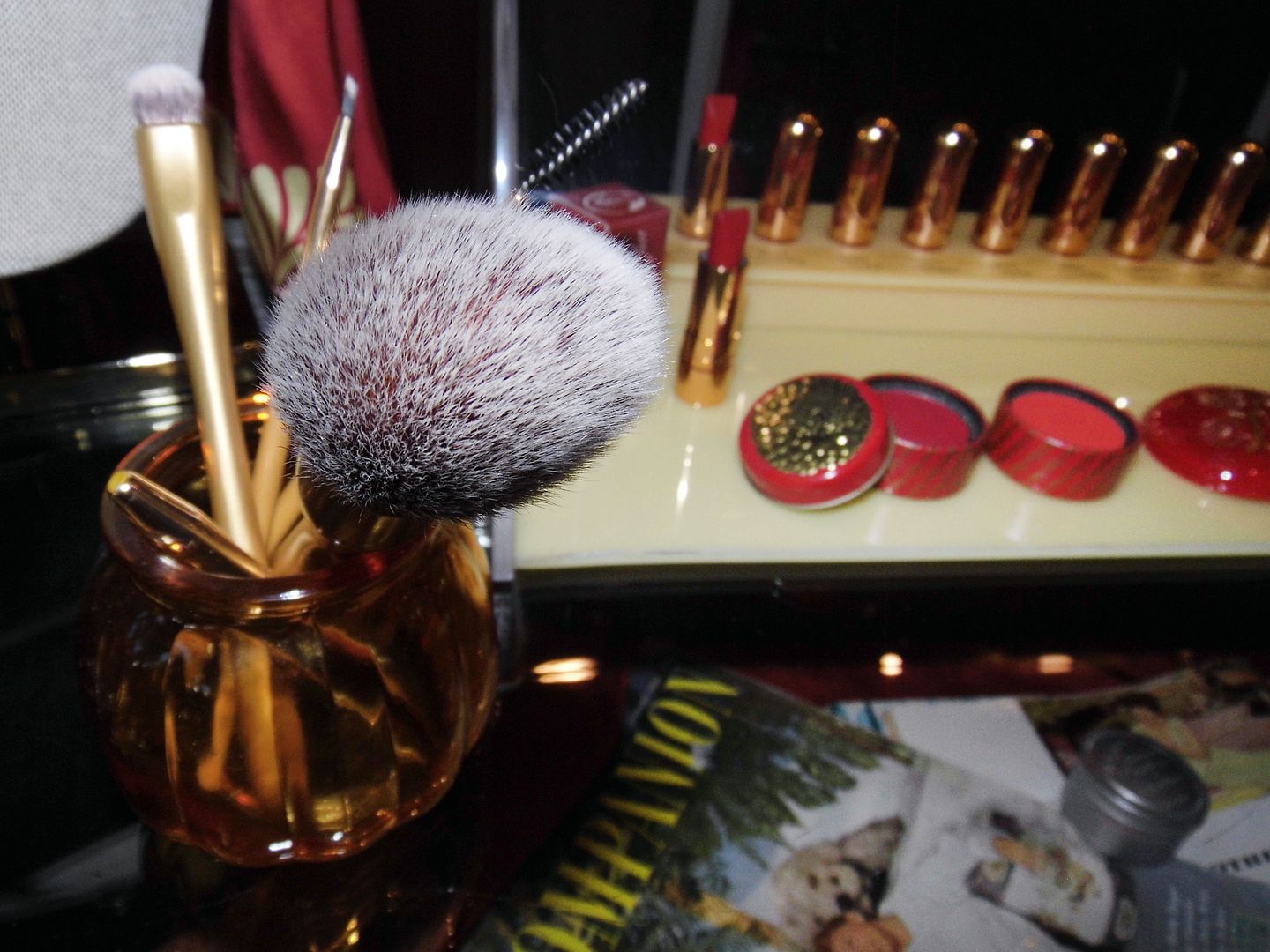
When I'm ready to emerge back out into the world—whatever that world will be like—maybe I'll splurge on something nice from Bésame, like its rouge brush made from soft, cruelty-free hair, and featuring a contoured wooden handle.

If I watched much TV, I might try to look like Jessica Lange on American Horror Story: Freak Show
or the multiple actresses featured in the Netflix series Hollywood who wore multiple shades of red from Bésame.

Or one day, maybe there will be an occasion special enough for me to get my makeup done there.

In the meantime, it's reassuring to know that someone values the beauty of "Old Hollywood"—and that there's enough of a consumer market to snap up the heirloom-inspired products that continue to be released.

Related Posts:
Photo Essay: The Jewel Box of the Cosmetic World and Its Pink Powder Puff
Meditations on Chroma