Search

Showing posts with label Work. Show all posts

December 29, 2025

Top Posts of 2025

Boy, it's been a rough year. Between writing my first book, struggling to manage my celiac disease, and losing my sense of smell and trying to conquer long Covid—all with no health insurance—it's been a lot. 

I tend to thrive in chaos, but at some point I just shut down. And that's what happened after I finished writing my manuscript (while I was sick with Covid, might I add). I just couldn't do anything else.

I've slowly tried to put my apartment back together after two years of neglect. I cleaned under the bed (where my cat hides and sometimes pukes) for the first time in I don't know how long. I still have to change my windshield wipers and put a cover on my car backseat and figure out why my turntable doesn't work and sand down my built-in cutting board. 

Oh and now that I'm 50, I've got to get a pneumonia vaccine and a mammogram. And a follow-up colonoscopy. 

And a permanent job that provides benefits.

With all of this going on, I've managed to blog a little this year—much less than I'd like, and much less than what I have to blog about. Funnily enough, this year also brought some of the highest traffic I've ever had—and, for the first time, to posts that aren't solely about Southern California. 

It's nice to see my Nevada and Northern California posts getting some well-deserved attention!

In case you missed any of them, here are my top posts of 2025—featuring a little architecture, a lot of adventure, and a bit of personal sadness, too.


June 30, 2024

A Dream Job... Deferred?

My professional life has experienced a lot of upheaval since I was forced to quit my job back in 2009. And I still haven't gotten back on my feet again.

It really feels like the guy that made it impossible for me to stay in that job back then didn't just destroy my career. He also ruined my life. 

But that's another story for another day. 

Photo by matthiasboeckel on Pixabay

I'd been so proud of myself when I got a full-time editorial job back in 2015 after being destitute in the wake of two layoffs and some poor career choices that led me astray. I was even more thrilled in 2018 to be able to say I was finally a full-time writer.

Then I got laid off from that job in July 2022—that's a whole 'nother story, too—and, lucky for me, the freelance writing I'd been doing for our local public TV station KCET for over seven years turned into an inhouse gig just two weeks later. 

December 31, 2023

In Case You Missed It: 2023 Edition

Happy New Year! (Almost.)
 

This year, a lot of my creative efforts shifted towards producing videos for KCET's "SoCal Wanderer" show instead of writing articles for the SoCal Wanderer blog, which meant I was doing a lot of retreading of old ground instead of exploring new places. 

December 23, 2023

Photo Essay: SoCal's Other Christmas Tree Lane, In Oxnard (ft. the F Street Railroad)

I'd already been to Christmas Tree Lane in Altadena, just northeast of the city of Los Angeles—but it's not the only Christmas Tree Lane around in Southern California. 

 
There's another one in the city of Oxnard in Ventura County, north of Los Angeles in the other direction—and this year I finally got to go (once again for a shoot for work).

December 08, 2023

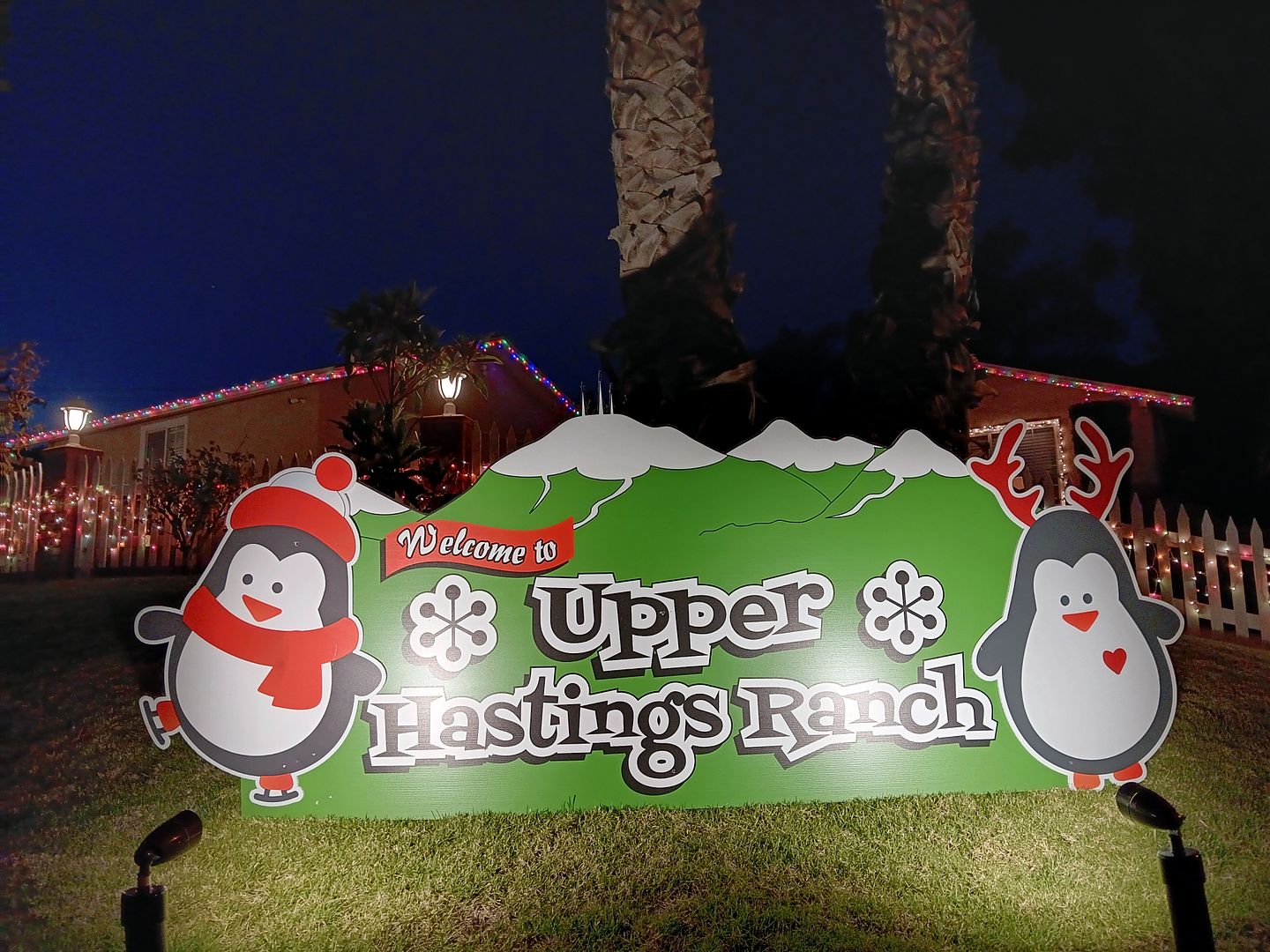
Photo Essay: Pasadena's Christmas Neighborhood, Lighting Up For 71 Years and Counting [Updated for 2025]

[Last updated 12/30/25 10:07 PM PT—At least 80 homes in Pasadena's Upper Hastings Ranch were lost or damaged in the January 2025 Eaton fire as of 1/20/25, according to Upper Hastings Ranch Association, mostly on Riviera Drive above Alegria Avenue (the street that abuts the Eaton Canyon Golf Course and the Sierra Madre Villa Debris Basin to the west) and the surrounding streets, particularly to the north. The light-up returned for the holiday season in December 2025.]

I don't remember how long ago it was that I drove through the Upper Hastings Ranch neighborhood of Pasadena, California looking for Christmas lights—and finding none.
 
But it's been years and years—and I've kept thinking I need to go back to figure out where they are.

 
Turns out, I think I was just too early in the season—because at least this year, the official start of the neighborhood Light Up is on Saturday, December 9. 
 

Although fortunately for me (and my plans to produce a video of it for work), a few houses were ready early this year—

October 06, 2023

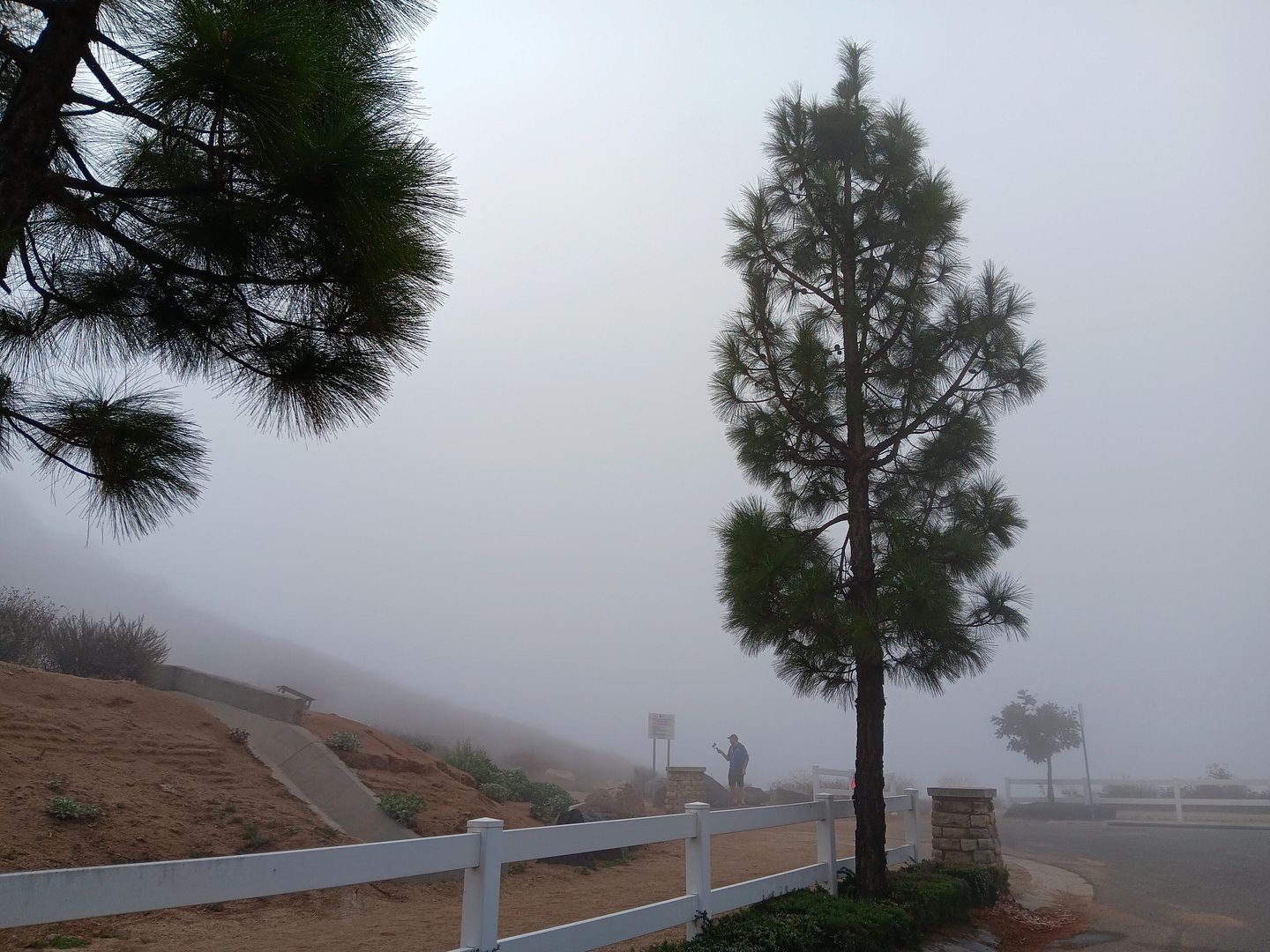
Photo Essay: Pumpkin Rock, Under the Cloak of Fog

Not all my adventures are winners. But sometimes that makes for great content to fall under the umbrella of "Avoiding Regret."

 
Take my recent hike to Pumpkin Rock in Norco, for instance. 

September 17, 2023

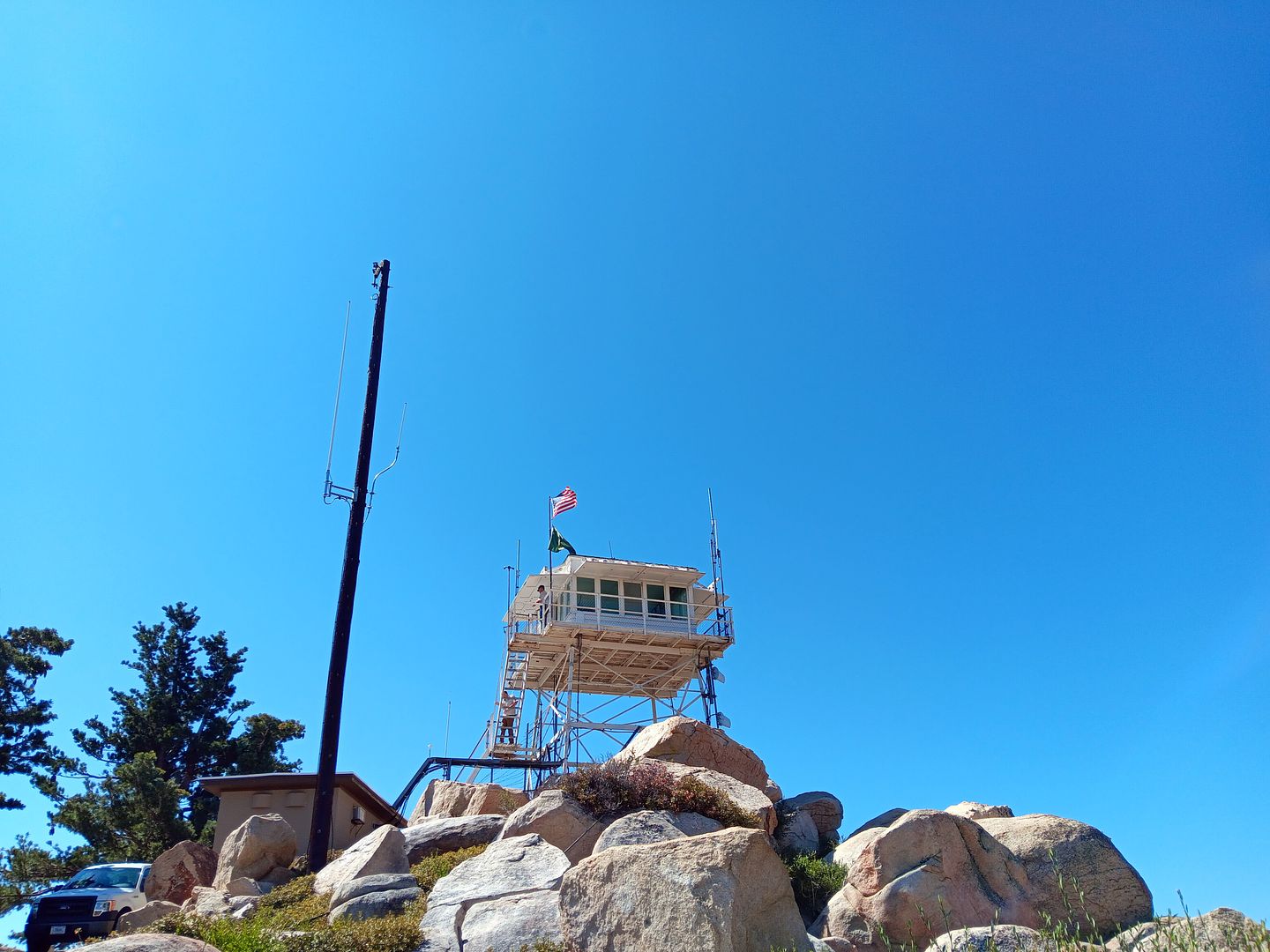
Taking In the View of 'Smoke Spotters' at Keller Peak Fire Lookout Tower, San Bernardino National Forest [Updated for 2024, Destroyed By Fire]

[Last updated 9/11/24 11:43 AM PT—On September 10, 2024, the Southern California Mountains Foundation announced on social media that the Keller Peak Fire Lookout had fallen in the wildfire known as the Line Fire and was out of service.]

Two years ago, I ascended to the Ancient and Honorable Order of Squirrels at the Strawberry Peak Fire Lookout Tower in the San Bernardino Mountains, near Lake Arrowhead.

It was such a fun experience, I wanted to return to shoot one of the videos I've been producing for our local PBS station, KCET, and its digital series "SoCal Wanderer."


But my contact at the Southern California Mountains Foundation, the non-profit organization that oversees the fire lookout tower program in the San Bernardino Mountains, suggested I visit a different lookout tower this time: Keller Peak, near the town of Running Springs.  

September 09, 2022

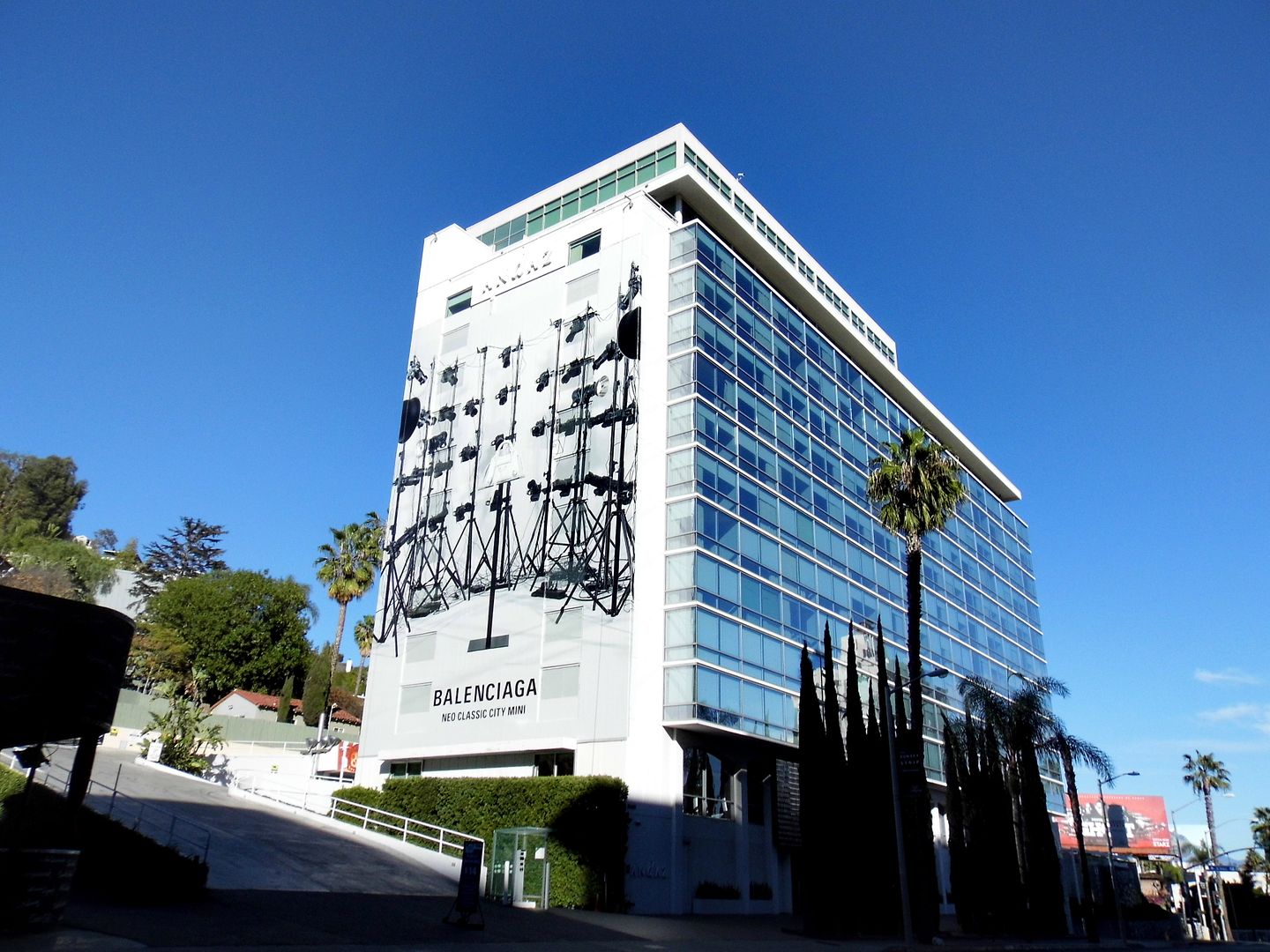
From Country to Rock and Glam: The Sunset Strip's First High-Rise Hotel (With the Tallest Rooftop Pool In All of L.A.)

When I would have to visit Los Angeles for my work in the music industry back in the late 1990s and early 2000s, it had become passé to stay at the Hyatt House, a.k.a. the Riot House—where bands like Led Zeppelin had famously partied in the 1970s.

But the Sunset Strip was still cool back then, even 20 years ago. We just stayed across the street at hotels like The Standard Hollywood (now closed), the Mondrian, or The Grafton on Sunset (now Hotel Ziggy)—and we felt the Riot House's presence, looming over Sunset Boulevard.

circa 2020

May 12, 2022

Pandemic Reflections: My Body Is My Own

The last two years have been so crazy, we're still making sense of them. They probably won't make much sense to any of us for decades to come. 

But very early on, it became clear that one of the silver linings of mandated "social distancing" was the fact that I got my personal space back. 


April 16, 2018

The Dome on Sunset Boulevard That Makes A Spectacle Out of Cinema [Updated for 2026]

[Last updated 7/22/26 8:33 PM PT—The Cinerama Dome and adjacent Arclight multiplex closed during Covid shutdowns and never reopened. Thanks in large part to a one-man campaign known as Save the Cinerama Dome, the family that operates the complex has leased it to Sony Pictures Entertainment's subsidiary Alamo Drafthouse Cinema, which will reopen it in 2028.]

The first time I went to the Cinerama Dome, it wasn't to see a movie (despite the fact that it is, by virtue of its name, a cinema).


January 25, 2018

Photo Essay: The Art of Performing at Lincoln Center

When you mention "Lincoln Center" to most people outside of New York City, you have to qualify it with "the place with the fountain in such-and-such movie."

Moonstruck. West Side Story. The Producers. Ghostbusters. That plaza is as iconic as any of Manhattan's skyscrapers and perhaps even more so than Central Park.

And I didn't appreciate it at all—or really know anything about its history—when I used to have to go there for work all the time.


Don't get me wrong: I was desperate to "belong" with all of the colleagues and artists who surrounded me in my four years working in classical music. I took every free ticket I could get to see the New York Philharmonic. I was crushed when my boss wouldn't allow me to attend opening night of the Metropolitan Opera, even though there was a spare ticket that ended up going to waste.


But I always seemed to be there at night, and I was always so focused on doing my job and not embarrassing myself or my boss (who clearly thought I might embarrass him) that I never bothered to stop and really appreciate all of the venues that make up this world-class performing arts center.


So, 16+ years after I got laid off from my job in classical music, 10 years since I last attended a show there (the miserable "standing seat" for The Magic Flute at the Met Opera), and seven years since moving away from New York City, I returned to Lincoln Center to experience it as a tourist.


In the time since I left New York, Avery Fisher Hall—that gorgeous but acoustically imperfect classical venue that debuted at Lincoln Center in 1962 as Philharmonic Hall—had become David Geffen Hall.


I didn't know who Avery Fisher was when I used to go to his hall all the time for work—or even that he was a real person (much less the founder of Fisher Electronics. It turns out he had donated a lot of money in the early 1970s to fix the acoustics in the auditorium—a project that was taken on by Philip Johnson, who, according to The New Yorker, practically demolished and rebuilt the house (but not the facade or any other parts of the superficial structure)—and got his name on the hall as a result in 1973.


I didn't know back then who Philip Johnson was, or that he would become one of my favorite architects (as the creator not only of the New York State Pavilion but also The Glass House and the Crystal Cathedral).


I don't even remember ever having been at Avery Fisher Hall during the day—or having looked out its monumental windows at the plaza down below.


Of course, back in the late 1990s, not only did I not really understand where I was when I had to go to Lincoln Center, but I also didn't understand that Lincoln Center had been built on top of a tenement community called San Juan Hill.


Low income housing had been razed in favor of high-end culture—classical orchestra players in their tuxedos replacing jazz musicians sitting on the stoops.


The residents of San Juan Hill were relocated, at least—just a stone's throw from the new performing arts complex, a bit closer to the Hudson River, and a bit farther away from white civilization.


In the 1960s, that was considered progress—"urban renewal," courtesy of President Dwight D. Eisenhower (who broke ground in 1959), "The Power Broker" and "Master Builder" Robert Moses, and billionaire John D. Rockefeller.


Of course, the construction of Lincoln Center and its plaza helped make the Upper West Side the desirable and affluent community it is today.


It even houses the northernmost "Broadway" theater in Manhattan, even though it's a good 10 or so blocks and nearly a mile uptown from the area of Manhattan technically considered "Broadway."


Among the treasures we discovered on our tour—pieces of Lincoln Center I never knew to explore—included the (barber) chair and desk of famed caricaturist Al Hirschfeld.


We found the historic display inside the New York Library for the Performing Arts, sandwiched in the back of Lincoln Center between the Metropolitan Opera and the Lincoln Center Theater.


Of course, we'd seen plenty of Hirschfeld's caricatures over the years—of classical musicians, actors, Broadway stars, and more—but it was something else to stand somewhere inside his ghostly aura.


As we proceeded farther into the library, we encountered yet another ghost: that of the dearly departed composer, pianist, and conductor Leonard Bernstein.


In celebration of what would have been his 100th birthday (though he died at age 72 in 1990), the NYPL has collected various artifacts from the very beginning of his life—including the hairdressing equipment business he was born into.


But wiring women's hair up to give them permanent waves wasn't Lenny's destiny.


It was music, despite the fact that he didn't get very good grades for it in school.


Fortunately, he had a 1917 Brewster upright piano from his Aunt Clara to practice on from the age of 10.


By the 1970s, he'd upgraded to a Baldwin baby grand...


...which he worked on in his home/studio in Fairfield Connecticut.


But it wasn't just about having the right equipment for his industry of choice (which, in this case, meant having the right instrument)—because he also needed his lucky cufflinks (which he'd kiss before every performance) and the pencils he considered his "soldiers."


And all of that was enough to earn him 16 Grammy awards (plus a Lifetime Achievement award), as well as a Tony Award and multiple Emmy Awards and nominations. Surprisingly, he was only nominated for one Oscar (for the score of On the Waterfront, which won for Best Picture) and didn't win.


As impressive as Bernstein's career was, though, it was interesting to get to know the man behind the baton...


...the humanitarian and human rights activist who (despite being called every name in the book, from liberal Jew to "commie-pinko-queer") celebrated the fall of the Berlin Wall in 1989 by conducting Beethoven's Symphony No. 9 in Berlin and nabbing a piece of the wall as a souvenir.

Throughout his career, he repeatedly created beauty in the face of the ugliness of the world—be it violence, hatred, greed, or evil.

The uglier the world, the more beautiful music he tried to compose, conduct, and record.

And much of that he did through his work with and at Lincoln Center—not only as the New York Philharmonic's conductor, but also in some way as the composer of West Side Story (whose lyrics by Stephen Sondheim namecheck "San Juan" and whose movie version featured the plaza fountain during the "Something's Coming" musical number).

Lincoln Center itself is beautiful, it's true. But there's also so much beauty that erupts out of it, out of its every corner—and not just from the fountain when the water decides to do its dance.

In fact, I'm still not done with it. Stay tuned for a behind the scenes tour of the Metropolitan Opera, which has been a long time coming.

Related Posts:
Photo Essay: The Spectacular Radio City Music Hall
Photo Essay: Frank Gehry's Walt Disney Concert Hall 
Photo Essay: The Temple of Academia at UCLA's Original Quad

November 19, 2017

True Colors


It can be heartbreaking when someone you like turns on you—but, when it comes down to it, it's a blessing.

Some people manage to get by wearing a mask of kindness or intelligence or charm—and even if their humor is occasionally blue, in general, they can seem innocuous.

But, as appearances aren't always what they seem, those well-liked and often respected people are actually the worst. Because underneath it all, they're red with rage, green with envy, yellow with fear, or black with hate.

Sometimes, they're a rainbow of all those things.

And when they finally show their true colors to you, well, it's better that you find out who they really are rather than be blindsided by it in a worse way later on.

No matter how much it may hurt.

There are certain times in life that bring out the worst in people. A death in the family, for example, is likely to tear even close siblings apart—especially when combined with yet another source of divisiveness, which is a fight over money.

And there's a reason why they say you should never discuss politics or religion. Both of those can really bring out the beast within.

Unfortunately, as I've discovered over the last few years, the same principle applies to the topic of sexual harassment and sexual assault.

As a general principle, I embrace spirited debate. I don't think everyone needs to agree with me, and I don't expect to agree with everyone else.

We are stronger in our diversity. And as long as the disagreement moves the conversation forward, it's OK.

It's better to talk about it than not talk about it. The secrecy and the silencing that surround these horrors just make the trauma worse and the problem more insidious.

So, I've braved the masses by speaking out about my own experiences in this arena, in hopes that I can give voice to those thoughts, feelings, and events that some others might not be able to so easily articulate. It's a dangerous path to follow, but it always seemed like the benefits to others outweighed the risks to myself.

Previously, it's aways been strangers or casual acquaintances who've belittled my experiences or blamed the victim—that is, blamed me for the abuse that's befallen me. And I've swiftly blocked them or removed them from my life. It hurts to hear things like "What did you think would happen?", but ultimately, you move past it and you make sure you never see that person again.

It's different when it comes from someone in your inner circle—maybe not a close friend per se, but a good friend of a good friend, someone who's around a lot and who might throw some cash your way if you were desperate.

And that's exactly what happened to me this week.

It's taken me a couple of days to wrap my head around the circumstances, but thanks to giving it some careful thought, I've come up with two helpful conclusions.

First, this person is not important enough to me to make me cry the way I did.

And second, it has nothing to do with me. This is all on them.

The statement I felt compelled to respond to was this:
"Let's not listen to the women who actually worked with him... Let's listen to an Ex-hooters waitress, Playboy bunny who has flashed her T and A for a living.... I've spent too much time with the Male species to know that Frat boy behavior is indemic [sic] in our culture and the male species.....sorry women...but men are pigs...not excusing it..just calling it what it is.... She wasn't a lily in the night."
This type of commentary sets a dangerous precedent and makes a slippery slope argument. Sure, there may be other reasons to discredit a woman who has claimed harassment or assault from a coworker. She may not be trustworthy at all.

But even sluts can be harassed and assaulted. And shaming them doesn't help.

So, while reading lots of comments and replies—some in agreement, others in vehement disagreement—I researched and verified the facts.

And after formulating my own opinion, I responded thus:
"Honestly I find your perspective on this appalling and disturbing and while I really am trying to understand where you're coming from, I think this is a very clear illustration of why this is still a problem and why it may always be.... There are untold numbers of people getting groped without their consent out there -- awake and asleep, male and female, gay and straight -- and it can very easily become a slippery slope argument....This was clearly "blue" humor but how many of these people would say "I was just joking"? Legally, the line is usually drawn at consent -- something that can't happen while you're asleep, high, drunk, or underage."
And furthermore:
"'Senstivity training' in a professional environment would tell you to not go there, at all, ever. No jokes, no comments about appearance, no questions about dating or romance or sex or anything. I really don't think any industry is or should be exempt from that -- entertainment, hospitality, sports, none of it. Even in the porn industry, if someone penetrates you while the cameras are NOT rolling and WITHOUT your consent. That's rape. It doesn't make it not rape just because you're a porn actor or even just because you may have had sex with the person in the past. (And that's an argument that dates back at least to the late 1970s/early '80s when judges had to be convinced that it was possible for a husband to rape his wife.)"
And finally:
"There's a lot to unpack here, and being a blowhard about it isn't helping. And I'm betting that I'm not the only female Facebook friend of yours that feels alienated and retraumatized by this thread."
I am somewhat of an authority on this matter, unfortunately. I've attended mandatory, staff-wide sensitivity training. I've worked in multiple industries, including entertainment. And I have been victimized by coworkers, bosses, classmates, dates, and friends.

Yet the person who I dared call out on the carpet, in a classic show of narcissism and lack of empathy, made it all about him, accusing me of vilifying him with rage. He reached out to me privately and told me I shouldn't have commented at all. And he scoffed at the notion of retraumatizing me.

At first, I chalked it up to a misunderstanding, so I tried to explain myself. I hadn't been angry at him for what he said. I just thought he was horribly and dangerously wrong.

But the more I responded to him with compassion and clarity, the more vitriolic he became. And then, of course, he pegged the vitriol on me.

He was so accusatory, in fact, that I told him he was scaring me.

His response? In essence: Give me a frigging break.

As horrible as I thought what he posted was, I hadn't been angry at him for that. This is a self-professed "progressive" father and husband who has marched for women's rights, so I thought that his intentions might have been good but that he'd been misled or misguided somehow, that his sense of feminism had somehow been warped in the heat of the moment.

But instead of illustrating a bad thing that someone may have done, he got trapped in that old virgin/whore complex.

It's understandable, and I can't even really blame him for that. This is why we speak up. Silence reinforces the misinformation.

What I can blame him for, however, is his abhorrent behavior in the aftermath. I didn't deserve to be attacked or belittled. Not for what's happened to me, and not for talking about it.

But that's what showed me his true colors. And for that, I'm grateful—despite the tears and the trauma.

Because this is not a person I want in my life.

Related Posts:
Don't Blame It On Me
Open Letter to Our New President

March 04, 2017

Sentimental Lady

Last night I went to see the reunion show of a band called Creeper Lagoon. Most people probably never heard of them, unless they lived in San Francisco or worked in the music industry, as I did, a couple of decades ago.

But as I was getting to go out on a Friday night—something I rarely do anymore—I couldn't help but remember the first time I saw that band, 20 years ago.

Or, rather, the first time I tried to see them.

The only reason I knew who they were was because the guy who sat two or three desks up from me while I was working as an assistant at Atlantic Records would play their CD over and over again at work. That's the advantage (or disadvantage) of working in the music industry: There's always music blasting.

And that was before everyone was in their own little world, wearing earbuds and headphones as they type and swipe. We used to share music, shouting over it when we answered our bosses' phones.

So, hearing this album day in and day out, I'd become a bit obsessed with it. And because I wasn't making much money, I was seeing as many free and cheap concerts as possible—and taking advantage of as many free meals and drinks as possible.

That, of course, ended up being my downfall when it came to seeing Creeper Lagoon for the first time at the Bowery Ballroom on the Lower East Side of Manhattan. I'd somehow managed to get myself an invite to some classical music-related reception at a fancy restaurant in the Flatiron District—and, since I'd been desperately trying to fit in at my new job in the two-person classical department surrounded by staffers from the pop and rock department, I went and whooped it up.

As I was apt to do back in those days, I drank too much and couldn't get enough tiny hors d'oeuvres to eat. And worse yet, I lost track of time a bit. I was still new to New York City, and I hadn't mastered the subway quite yet. I had a penchant for running late anyway (as I still do), but my plan to get to the Bowery Ballroom on time for the Creeper Lagoon show became sabotaged when, just before leaving, I realized that I'd left my cardigan sweater on the hook on the back of the stall door in the ladies' room at the restaurant.

I returned to the stall, but nothing. And I freaked out. The sweater had only cost me $12 at Strawberry on the first floor of the building I worked in, but I'd been wearing it every day. I loved it. And, at the time, $12 was a lot of money to lose in a public restroom.

I interrogated the bathroom attendant, who claimed ignorance. And, as I was also apt to do back then, I burst into tears.

But I couldn't waste any more time on the sweater, because I had to go see Creeper Lagoon.

I got on the subway but, per usual, it wasn't running as quickly as I needed it to. I knew I was running late, but I didn't think it was SO bad, since shows never seemed to start on time anyway.

But as I walked through the door after showing my ID, climbing down into the bar they make you pass through and then up into the main concert hall, I recognized the tune of "Wonderful Love," and I was crestfallen that I'd missed part of the show.

Rather than fighting through the crowd, I stood right there, far stage left, to catch as much as I could without distraction. And then the wrecking ball hit me: That was their last song.

I'd missed the entire show.

I was still a bit weepy from the loss of my sweater—and just general drunkenness and exhaustion of going out after a full day of work—so I completely crumpled into a stormy sea of sobs.

It didn't take long to draw a lot of attention to myself, particularly from the security guard who was standing right there at the end of the stage. He asked me what was wrong and I spilled the story out on him, probably somewhat incoherently, and he was so struck with how upset I was about not getting to see this band that he'd probably never heard of that he invited me backstage.

He kept telling me that it was OK and that I'd get to meet them.

And as the band members filed off the stage—right there, where we were, which happened to also be right by the stage door—they were quickly filled in on what was going on and what had led up to this moment of this terribly upset girl inconsolably crying on their doorstep.

They all introduced themselves and patted me comfortingly. The lead singer hugged me as I sobbed into his chest.

Those guys set the standard for me in terms of how musicians—or, really, any celebrity—should treat their fans. When I subsequently got the brush-off from other artists, it stung more, knowing how kind and generous they could've been.

I knew it was a choice, because a bunch of guys from across the country gave the royal treatment to a crazy, crying girl who ambushed them at the close of their set.

After that, I had the chance to see them in concert a couple of other times, though I was too embarrassed to try to say "hi" and introduce myself as the basket case from the Bowery Ballroom.

But now 20 years have gone by.

And I kind of wonder if they remember me. I kind of wanted to remind them of the story when I saw them last night.

But, you know, we've all moved on from those days. I haven't worked at a record label in four years, and I hope I never do again. The band members all have their own careers and companies, having broken up 15 years ago and giving up their rock star dreams.

They sure made a big impression on me, though—both in terms of music and humanity.

Now, I feel really happy when I listen to their music, even the sad songs. Maybe I'm just being sentimental, but now officially in "middle age," I've earned the right to sentimentality.

Related Posts:
My Rock Star Relapse
On Nostalgia
The End of an Era
Putting Pop Music on Pause
Pacific Standards

January 13, 2017

Photo Essay: Night of the Living Neon

There's always this struggle between art and commerce—a conflict nearly as old as Man versus Man and Man versus Nature.

If you love to create, you have to find a way to support yourself either by selling those creations or doing something else for money.

I love to write, but I can't live off poetry and photo essays. So, I've rented my writing skills out to proofread books that other people have written about estate planning, dentistry, fatherhood, religions, and so on.  I've edited tomes on diabetes and arthritis. I've written press releases about music I don't listen to.

I prefer taking money to do work-for-hire writing (or fixing someone else's writing) over forsaking my preferred art form and doing something else that sucks my soul.

If you're lucky, you get hired to do things your way, in your style, so that you can be proud of the end result—even if it's not exactly your thing.


Fortunately for neon artist Lisa Schulte, there's still a commercial demand for neon signs—even if it has waned since its heyday.


There are still Hollywood productions that need them...


...and pop stars who want to be photographed in front of them.


It's not that the neon signs aren't art...


...or that they don't have artistic value...


...because they most certainly do.


But when you're an artist, sometimes "selling" becomes synonymous with "selling out."


Schulte actually got into glass-blowing and -bending as not so much of a neon aficionado, but merely as a light junkie.


So, she taught herself neon, but also backlit plastic and incandescent bulb signs—all of which tend to fall under the same category of signage and commercial archaeology.


For over 35 years, Schulte has amassed a gigantic collection of her work...


...which can be seen in the 15,000-foot showroom of her company, Nights of Neon.


Pretty much everything there is for rent or for sale...


...although the collection feels pretty perfect, just the way it is—which is why it's not surprising that the company rents out the space, too.


Not everything at Nights of Neon is for show—because there are several works-in-progress...


...in various stages of completion.


Pretty much everything in the custom fabrication process is in-house, including the sketches...


...the glass tubes in various colors (that range from "Bromo Blue" to gold, green, red, pink, and white)...


......the noble gasses...


...and the electronics (and electricity).


But Schulte has got something else at Nights of Neon, too: her own art studio, for her own art.


It was only in 2010 that she started focusing more on exhibiting in galleries and museums rather than in movies and music videos...


...and what she's created so far is an interesting mix of what you'd expect with the commercial stuff (like words and letters, which have been jumbled up in her "Broken Promises" piece)...


...and what's a surprising representation of Art versus Nature.


Schulte salvages fronds from a queen palm tree, as well as other pieces of sturdy wood, and painstakingly wraps them in glowing glass tubing—without strangling them too tightly or burning them.


Schulte has earned the nickname "Neon Queen," but that's something of a misnomer.


After all, most queens don't actually do very much.


Obviously, she's also an entrepreneur, managing to stay in business since the 1980s. But she's also a collaborator, creating works with street artists (and building her "Warrior Army").

But none of that really detracts from the work that she and her team does at Nights of Neon—because when you see it, it's really spectacular.

It's not a shrine to a dead art form—or a "boneyard" of cast-offs—because pieces are constantly moving in and out. Some new ones get added, while others are sold off.

It's a living thing.

Related Posts:
Photo Essay: Behold, the Museum of Neon Art
Photo Essay: Hats Off to the Museum of Neon Art
Photo Essay: The Treasures of an LA Tourist Trap, Universal Studios