Back in 2012, I didn't have the lay of the land in Los Angeles yet—so, I just tried to take every opportunity to go anywhere that seemed cool, even if I'd never heard of it before.
That's how I ended up at Variety Arts Theatre in Downtown Los Angeles, thanks to a haunted house/immersive theater show for Halloween by horror movie producer Jason Blum called Blumhouse of Horrors.
I remember being led through an auditorium with seats—at one point, through one of those squeeze tubes that make it feel like you're traveling through a birth canal. And I remember someone in costume—maybe an usher? or a bellhop?—taking a group of us up the elevator to an upper level that felt more like a hotel than a theater.
But it was so long ago—and I only have one photo of the night, taken outside with a scare actor (jump to the photo ↓)—that I barely can recall any real details.
The Variety Arts Theatre has been open to the public very rarely since then, including for the Delusion haunt in Fall 2025—but it's had construction fencing up out front for years. Thankfully, that finally came down, and the theater doors swung open once again.
Back in 2012, I didn't have the lay of the land in Los Angeles yet—so, I just tried to take every opportunity to go anywhere that seemed cool, even if I'd never heard of it before.
That's how I ended up at Variety Arts Theatre in Downtown Los Angeles, thanks to a haunted house/immersive theater show for Halloween by horror movie producer Jason Blum called Blumhouse of Horrors.
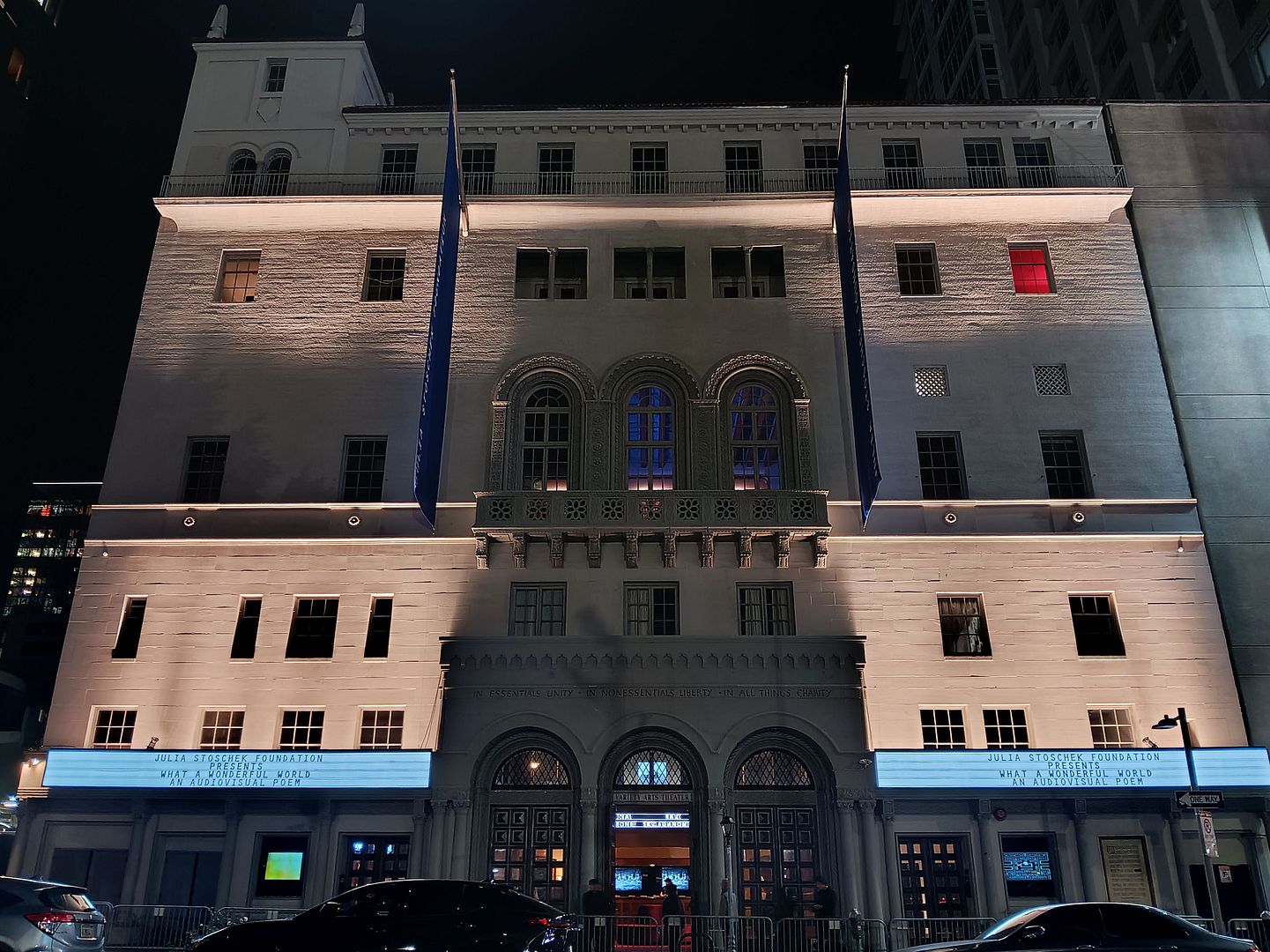
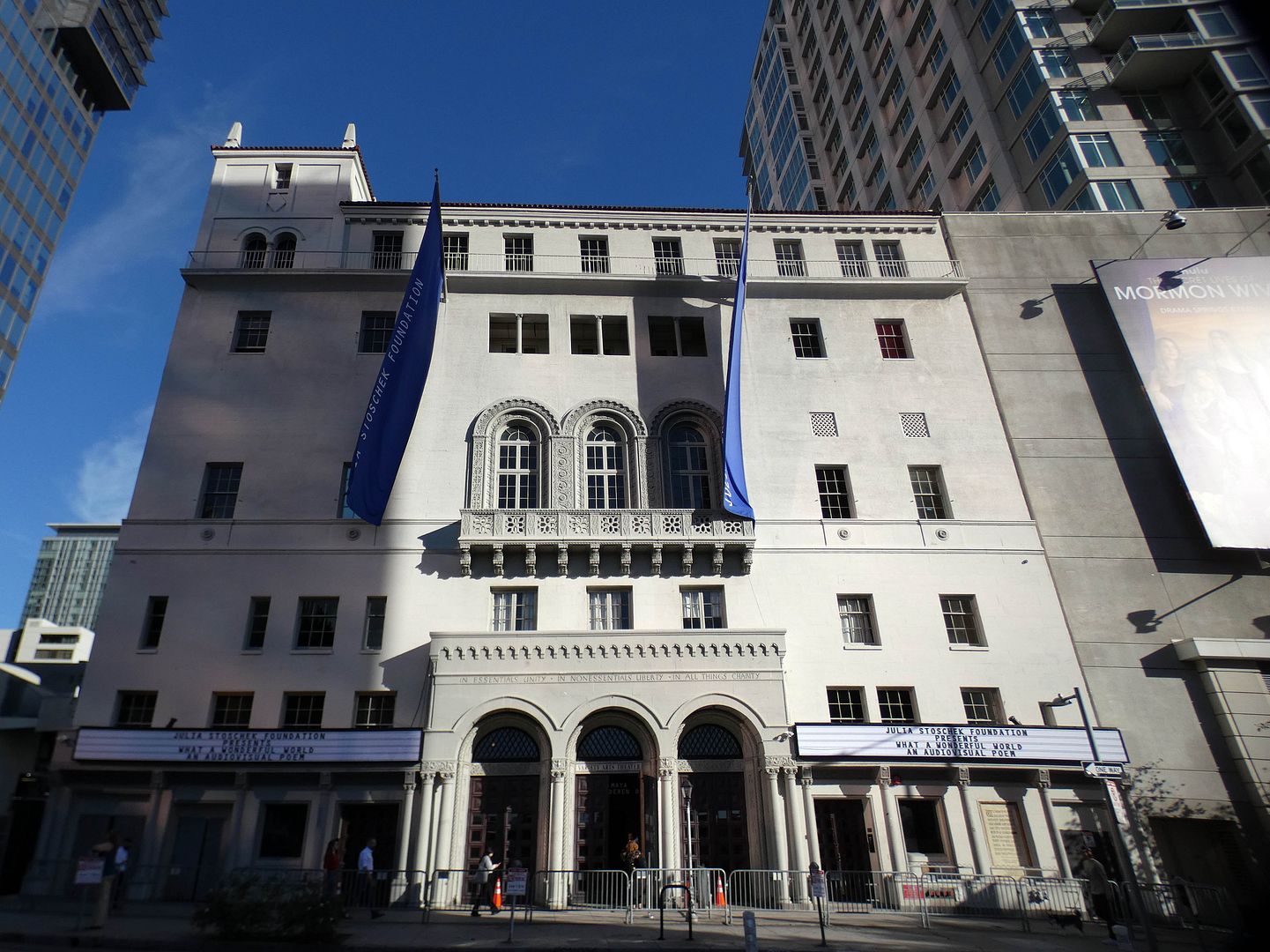
I only had one photo of the night, and I could barely recall any real details, so I was thrilled to be able to return for Julia Stoschek Foundation's six-week run of "What a Wonderful World: An Audiovisual Poem" video art installation during its opening weekend last month.
Only thing was, it was pretty dark in there. I didn't feel like I could really see the building (which was the main reason I went in the first place).
So I scheduled myself on another day, after Spring Forward, right when the place opens at 5 p.m., so I could partake in the playhouse under some daylight illumination.
The Los Angeles County Fair ranks as the country’s fourth-largest and is bigger than many state fairs. This year, it opens on August 31 and runs through September 23.
I've spent the last six years visiting the so-called "Fairplex," and I've discovered that there's more to it than meets the eye.
The medieval art of stained glass is alive and well in a forgotten 18th Century Northeast LA neighborhood!
I'm starting to get back into hosting events for my readers and fellow looky-loos, and I'm excited to introduce new people to the handiwork of The Judson Studios, which has been assembling art glass windows and other architectural glass decorative elements for over 100 years. And as stained glass windows made by other studios centuries ago start to sag, or shatter from earthquake damage, Judson Studios is still around to come to the rescue and embark on some serious restoration projects, keeping the art of the Middle Ages still alive today.
Sure, it's a bit obscure, but it's fascinating and beautiful. I feel like I'm on a scavenger hunt every time I visit some religious institution and stumble upon yet another example of Judson's craft.
So come join me and learn something. It'll be fun.
There are many hidden corners of LA that are ripe for exploring, and on January 29, the Los Angeles Obscura Society takes you to the little-known, long-forgotten northeast enclave of Garvanza, a once-thriving community along the Arroyo Seco named after the garbanzo bean plants that used to flourish there.
Today, this 18th century neighborhood is best-known as the birthplace of the Arts & Crafts movement – which is largely attributed to the contributions of The Judson Studios, the oldest family-run art glass company in the world. Judson's handiwork from the last century – both their original creations and restoration projects – can be found particularly all over Southern California in sacred and secular locations, as well as commercial and residential.
Join Field Agent Sandi Hemmerlein (that's me!) as we tour The Judson Studios' historic facility in Garvanza – originally built as the USC College of Fine Arts, and since 1920 a workshop for their stained glass projects, where they are actively drawing and tracing designs, as well as cutting and painting glass.
Established in 1897 and located in a landmark building with an interesting architectural history (having been completely rebuilt after being destroyed by fire), Judson is now in its fifth generation of family ownership, currently owned by David Judson. Just a handful of artists at Judson employ the same techniques that were used in the Middle Ages for small- and large-scale projects for a variety of clients around the world. Although David and his team bring a 21st century aesthetic to this medieval art, we will witness that the craft of architectural glass making hasn't changed much since the 12th century.
Notes for this adventure:
This event takes place on a weekday, specifically, a Thursday morning.
Plenty of free street parking available. Please arrive early to find a spot, and be courteous of the surrounding residential neighborhood.
The tour lasts approximately an hour, during which you will be standing, walking, climbing stairs and passing through tight spaces. Wear comfortable shoes and keep handbags, backpacks and other bulky items to a minimum.
Tour is family-friendly, but please – no touching!
This is an active art studio that uses lead, paints, enamels, and a variety of tools (including sharp objects for cutting). Please be careful and be aware of wet surfaces and possible odors / fumes.
[Last updated 4/13/26 8:00 PM PT—Well, after a rough few years—including a long Covid closure from 2020 to 2022 and shuttering again to repair flooding damage in 2023—Clifton's Cafeteria owner Andrew Meieran has finally bailed out. Los Angeles Magazinereports that Meieran has now sold the business to building owner Robhana Group, which also owns its DTLA neighbors The Oviatt Building and the Variety Arts Theatre. Apparently operating 5 themed restaurants/bars on six historic floors, with a max capacity of 2,000 in all of its 48,000 square feet, just ended up being too much in a declining Downtown Los Angeles. Clifton's open hours have been inconsistent for years—and now the venue seems to be open only for special events, if at all.
What's next? Robhana has declined to comment.
In the meantime, here's my original blog post below, mostly unedited—and does not include the tiki bar on the fourth floor, Pacific Seas, which opened later.]
I love a themed restaurant or bar.
In my adult years, I can't remember a time when I didn't delight in places like Beauty Bar or Barmacy or Otto's Shrunken Head or that weird sci-fi restaurant at 50th and 7th in Manhattan.
I even adored Planet Hollywood and Hard Rock Cafe (and occasionally still do).
I've ventured to nautically-themed establishments like Chez Jay, The Galley, Clearman's Galley, and The Warehouse Restaurant; the aeronautically-themed Idlewild bar (closed), Now Boarding (closed), Proud Bird (renovated beyond recognition), and 94th Aero Squadron in Van Nuys and Miami; two of the three Clearman's North Woods Inns; and Starlite in San Diego, purely because it was modeled after the house at Mount Rushmore in North by Northwest.
I will go to any tiki bar anywhere at any time, from Trader Vic's to Trader Sam's and from Tiki No to Tiki Ti. (See my map for more places.)
Somehow I missed Clifton's Brookdale for the few months it was open after I moved to LA.
circa 2020
I remember the last night it was open, I walked by during its sold-out screening of Chinatown.
I tried peering in to see what the place was all about, but I didn't realize what I was missing out on.
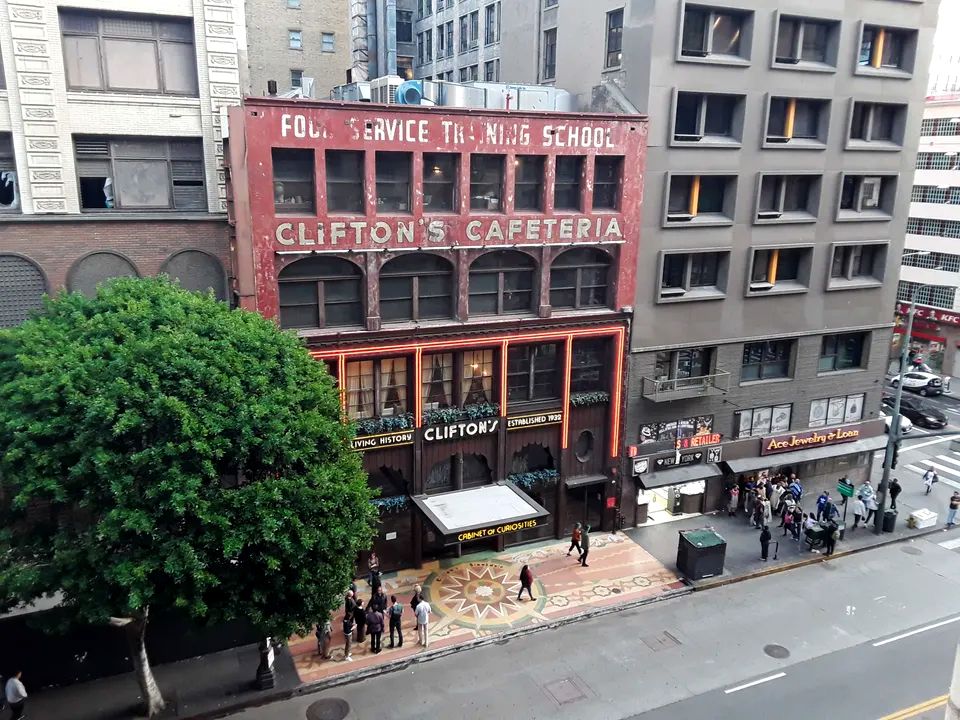
It's been under renovation for the last four years, its staggeringly elaborate terrazzo tile (Ed: circa 1934, created by Arthur D. Pizzinat Sr., president of Venetian Terrazzo and Mosaic Company of Alhambra) just peeking out a little bit from behind the scaffolding and construction barriers.
circa 2018
In addition to the foresty "Brookdale" location, there used to be several locations of what was known as "Clifton's Cafeteria," including the nearby "Pacific Seas," with branches as far flung as the Valley and Orange County.
But this one—now rebranded Clifton's "Cabinet of Curiosities" (or "Clifton's Republic")—is the only one to survive.
I can't compare it to what it was like before—either in the 1930s when it first opened, or in the 1960s, 70s, and 80s era which most people seem to be nostalgic for. But I can admire what appear to be vestiges of the old place...
...and perhaps new, vintage-inspired additions to the reopened place.
For those of us who missed its prior incarnations...
circa 2017
...there are reminders everywhere.
circa 2017
Souvenirs, memorabilia, collectibles, and other ephemera are displayed in museum-grade glass cases.
Much of the floor on the first level (the cafeteria level) is mosaic tile that thankfully wasn't replaced.
During construction, workers even excavated the remains of a neon signthat was still lit, despite being sealed inside a wall. It probably has been burning since 1935. And it's still on—the glass tubes still glowing with neon light at Clifton's, now exposed for all to examine.
The theme of Clifton's now feels less over-the-top hunting lodge and more...well, Clifton's itself.
It's kind of what you would imagine a Vegas version of Clifton's would be like. (And that's not a bad thing.)
circa 2019
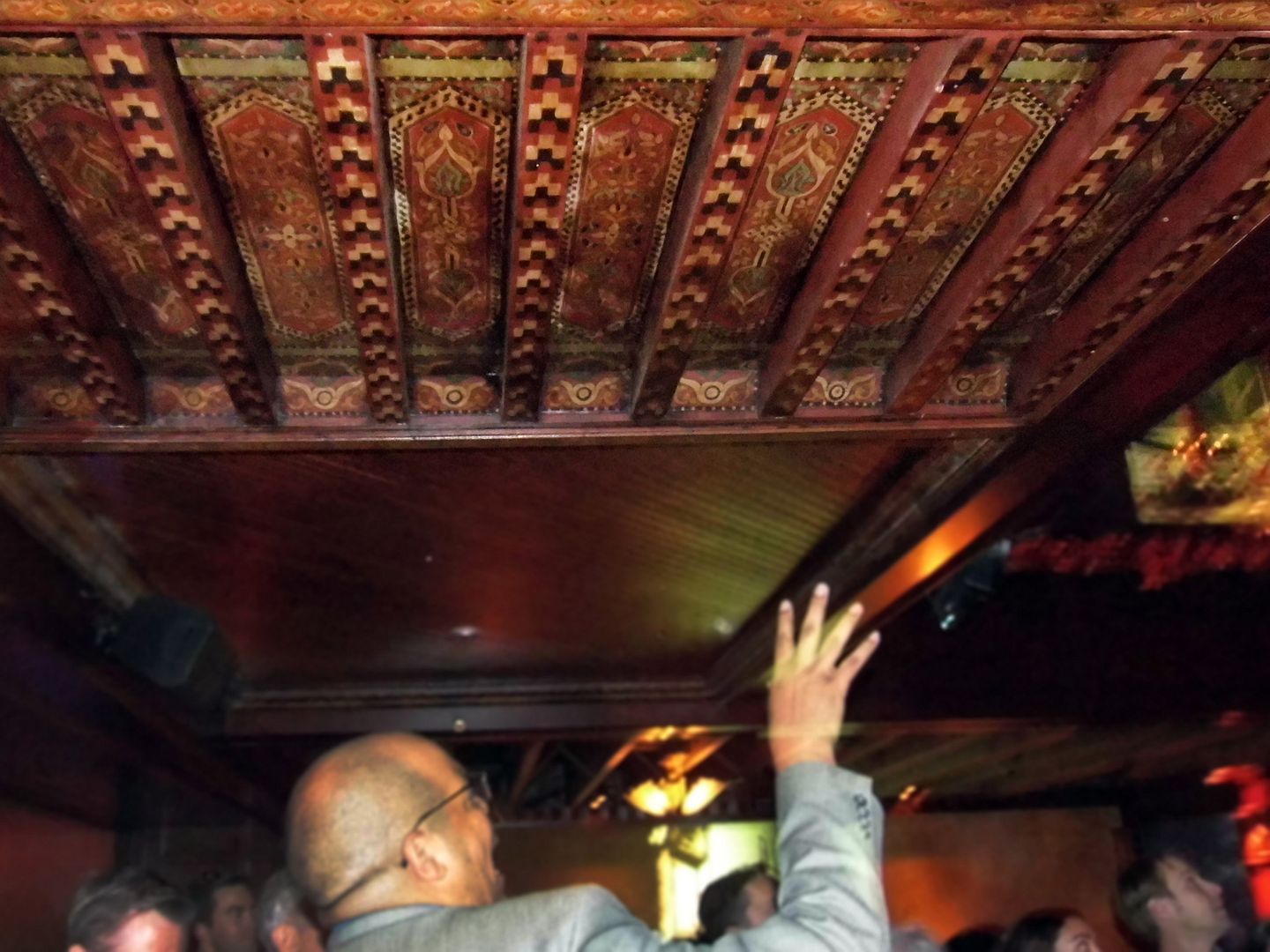
Some aspects of it are a treasure hunt, like recognizing the salvaged ceiling from Charlie Chaplin's former Beachwood Canyon estate.
circa 2024
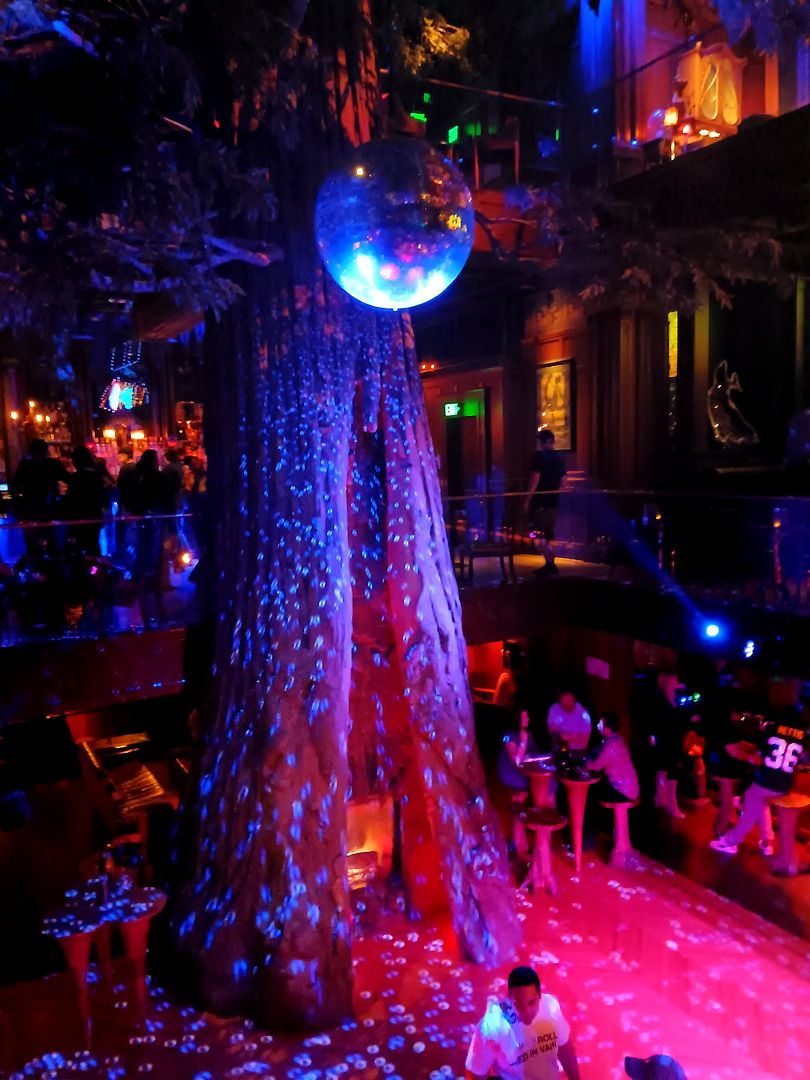
Everything there is big and bold, from the (fake) giant redwood tree in the middle of the dining room...
There are already three floors open for dining and drinks...
circa 2017
...which is more than Clifton's originally provided.
circa 2017
But at its heart, Clifton's wasn't exactly fine dining...
circa 2017
...though the original bandstands from the musical acts that once played there (and a tiny stage) remain.
Still, it was a cafeteria that offered comfort fare and, perhaps most famously, Jell-O.
The Jell-O has stayed at this new Clifton's, but although the food offerings are modestly priced, it's still a little bit fancy. [Ed: The cafeteria portion is now closed, perhaps permanently, although a kitchen still prepares food to be ordered at the bars.]
But does anyone really go to Clifton's now for the food? I mean, do people really want carrot-and-raisin salad? Waldorf salad? Macaroni salad? These are the characters of my childhood mealtime nightmares.
For me, the draw was more about getting my cocktail in a commemorative "Yosemetiki" grizzly bear mug that I could keep. I shall be back for the owl mug.
[Updated 2026] Clifton's once aimed to become a 24-hour establishment, with a steakhouse to operate on one of the upper levels. I'm not sure if that's what Clifford Clinton had in mind when he founded Clifton's, especially considering that he was offering meals on a "Pay What You Wish" basis. But maybe that's a moot point, because the steakhouse never happened.
[Last updated 2/25/23 9:12 PM PT—video embed added at bottom]
I've written before about Los Angeles City Hall—but the current landmark, circa 1927, wasn't LA's first. Not by a longshot.
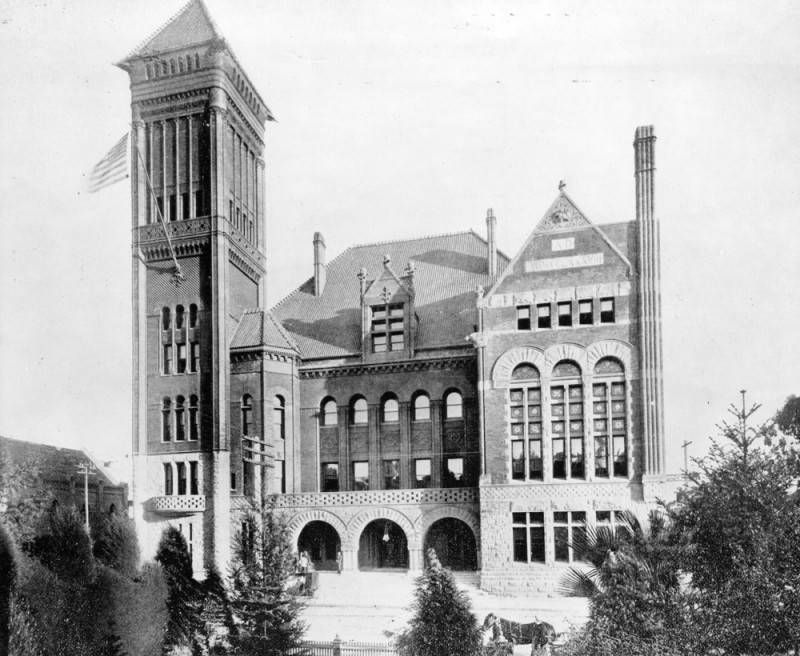
circa 1889 (Photo: Security Pacific National Bank Collection, LAPL)
It's actually the fourth. And its immediate predecessor—the third one, circa 1888—was dismantled in a massive spectacle after just 40 years of standing at Broadway (formerly Fort Street) and 2nd Street in Downtown LA.
There's a somewhat secret brotherhood that characterizes Los Angeles—a city of private associations that go beyond just your run of the mill country club.
When contemplating the Chernobyl disaster, I haven't been able to stop thinking about what it must've been like to live right there in the town of Pripyat, the Soviet vision of Utopia that was built as a company town for the nearby nuclear power plant.
It was an "Atom City." It was modern. It was the future.
But now that it's being consumed by over 30 years of overgrowth, it can be hard to envision what it was like back in 1986—when, though no atomic bomb was dropped, a "silent killer" hung heavy in the air and fell upon the belongings of all those who'd moved there (and some who'd been born there).
The pieces of the puzzle all come together based on the buildings that remain. And, as far as the casual eye can tell, all the buildings do remain, including the post office...
...and the high-rise apartment buildings, though most of their radioactive contents (furniture and personal effects) have been removed and buried elsewhere as hazardous waste.
Wood floorboards where families once walked to breakfast and to bed now sprout bright green moss.
And a red fox loiters around the outside of where Chernobyl workers and their families bought electronics for their new homes in their new, utopian city.
The field has lost its clearing for soccer balls to score, and the floodlight tower has got no power.
The Avanhard Stadium (Стадіон «Авангард») is monolith of wood rot—devoid of players from the Stroitel football club, a team comprised of local "builders."
In fact, aside from the occasional concrete that rises above, everything in Pripyat kind of looks like some kind of field or wooded area. You can barely recognize the divided boulevards that used to bring traffic in and out of town.
Ornamental gardens and fountains in town squares have been replaced by wild fungi and nightshades.
And while the water was only drained from the Azure swimming pool (Басейн Лазурний) in 1998...
...after a dozen years of liquidators charged with cleaning the Chernobyl mess swimming laps in its eight lanes...
...it's just as obscured and abandoned now as any of the other buildings that were vacated in 1986.
But the people of Pripyat did love their sport once.
Sports and sporting facilities and gymnasiums were so prized, in fact, that they were given their own space in Pripyat's own palace—that is, the Palace of Culture "Energetik" (Энергетик).
Among the "performing arts" variety of cultural institutions (which included a cinema, theatre, and concert hall)...
...there were also courts for shooting hoops...
...a gym, a boxing ring, a handball court, and even a firing range.
The grandeur was intended for both recreation and entertainment—but it was, at its core, a palace of the state.
There was no such thing as art for the sake of art to the Soviets. There was always meaning behind everything.
And the Soviet regime that designed the Palace of Culture made sure that its programming contained just the right balance of propaganda.
But as long as the people of Pripyat prospered, who would mind?
Perhaps at the Pripyat Cafe, at the marina along the Pripyat River, you could just have a meal without making a nationalistic statement.
But even so, the act of eating at "The Dish," as it was known, couldn't have been just a matter of nutritional intake.
Not with its colored-glass mural, "Radiance," to gaze upon.
It's one of the most beautiful and most horrific glimpses into the daily lives of the Pripyat townspeople...
...because its raw-edged, strip-cut construction is so delicate that it's pieces are disintegrating.
A few panels have fallen off the window and been cast aside, perhaps at one time propped up against the wall. But now, as the discarded pieces sinks into the floor, visitors traipse across the colored glass strips and shards—and the crunch is deafening.
It can be difficult to find "before" photos of Pripyat (for some of the cafe, click here)...
...but, in most cases, it's pretty easy to imagine, say, the water vending machine without the rust.
To really get a perspective of what Pripyat was like before the third trumpet of the apocalypse sounded, maybe you need to visit during the winter, after the trees have all lost their leaves.
Maybe you need to climb to the rooftops to get an aerial view. After all, you can see Reaktor 4 in its new safety containment structure from up there.
Or maybe there's no sense in preserving Pripyat—either in practice or in memory. Maybe it's okay to let the sun set upon this company town, to walk across the already-broken glass, and to tear down the railings as they rust.
But my inclination at a place like this is to preserve—not only what it used to be, but what it is right now.
Eventually, we will lose Pripyat—whether it's its black-and-white version or in full Kodak color.
The Hotel Polissya (Готе́ль Полісся) won't be habitable for thousands of years—and neither will any of the other buildings on Kurchatova Street, at the main square, or pretty much anywhere in Pripyat at all, for that matter.
Soon, nature will entirely obscure what became a command post for the Chernobyl cleanup effort (that is, once its guests were evacuated).
It's already started to happen.
The ecosystem has forged on—without us delicate humans to ravage its fruits and put them into supermarkets and restaurants.
And so, it's not far-fetched to think that what was once a palace will become merely a sacristy in a cathedral of trees—and, without its walls or windows, a portico that leads to a faded, forested folly in alternating shades of red, gray, and green.