Search

Showing posts sorted by relevance for query boulder city. Sort by date Show all posts

May 15, 2019

Photo Essay: The Town That Built The Hoover Dam

If you were going to build something big—really big—in the middle of nowhere, you couldn't expect your workforce to commute.

You'd have to build a town for them to live in—and ideally, people would want to live there even after construction had ceased.
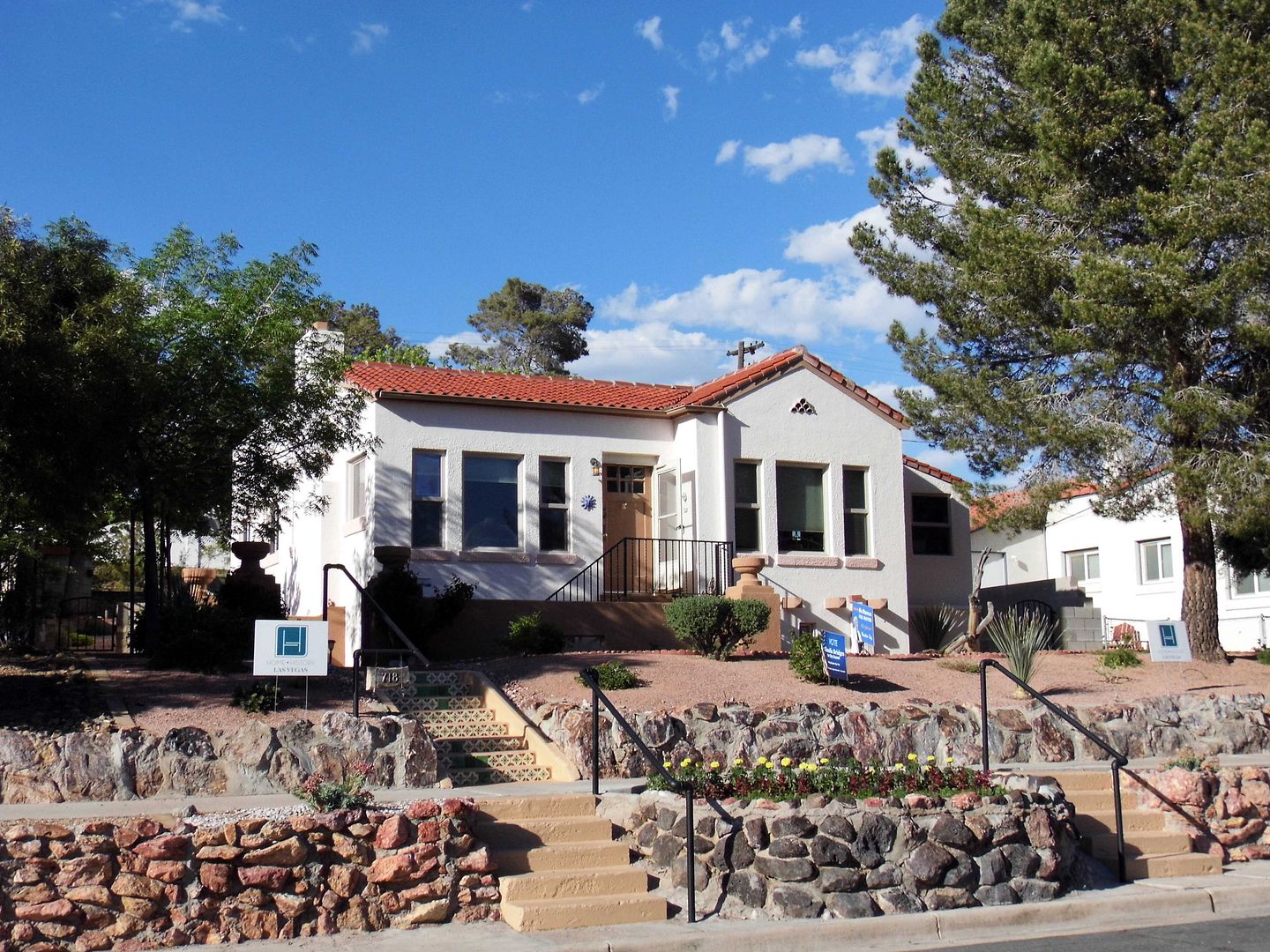


And that's exactly what happened with Boulder City and the construction of the Boulder Dam, which was completed in 1936 and renamed the Hoover Dam in 1947.
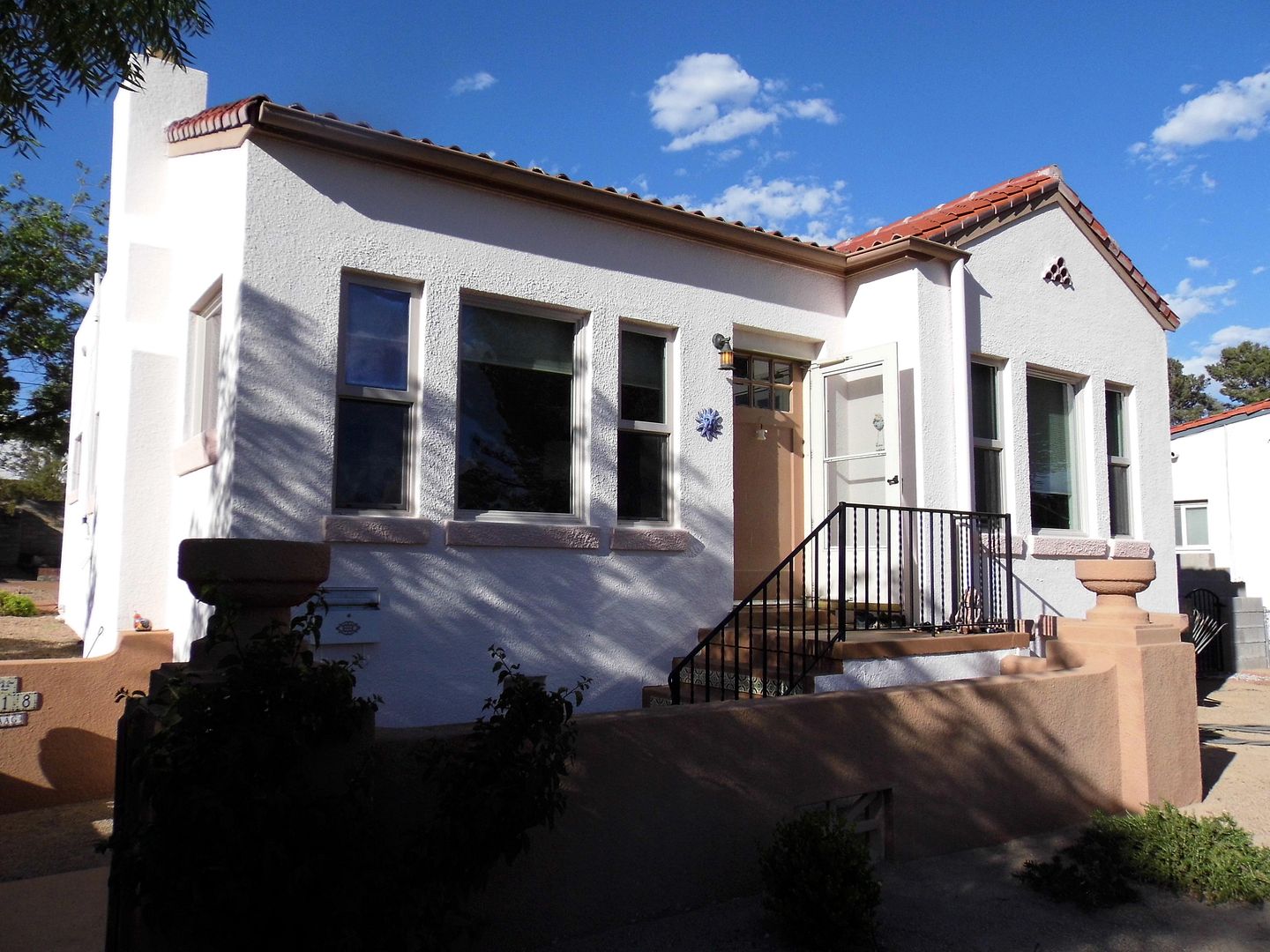


The U.S. Bureau of Reclamation constructed employee housing—putting single dam workers in dormitories and family men in newly-constructed houses. Mid-level managers (including high-ranking employees and field engineers) ended up in stucco single-family homes, many of which were built in 1931.
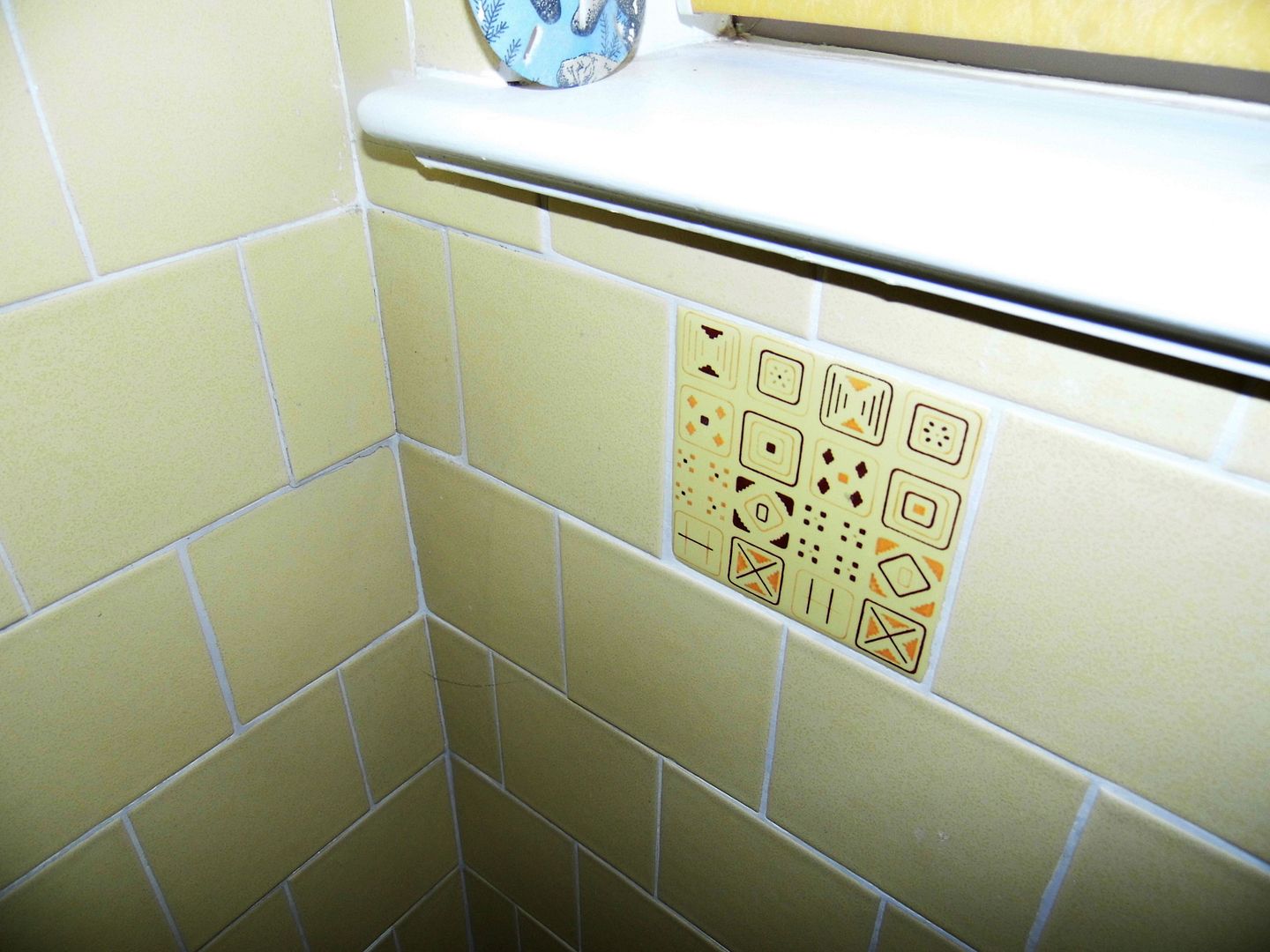


Eventually, ownership of this formerly federally-controlled housing turned over to private citizens—many of whom have kept original features like bathroom tile intact.
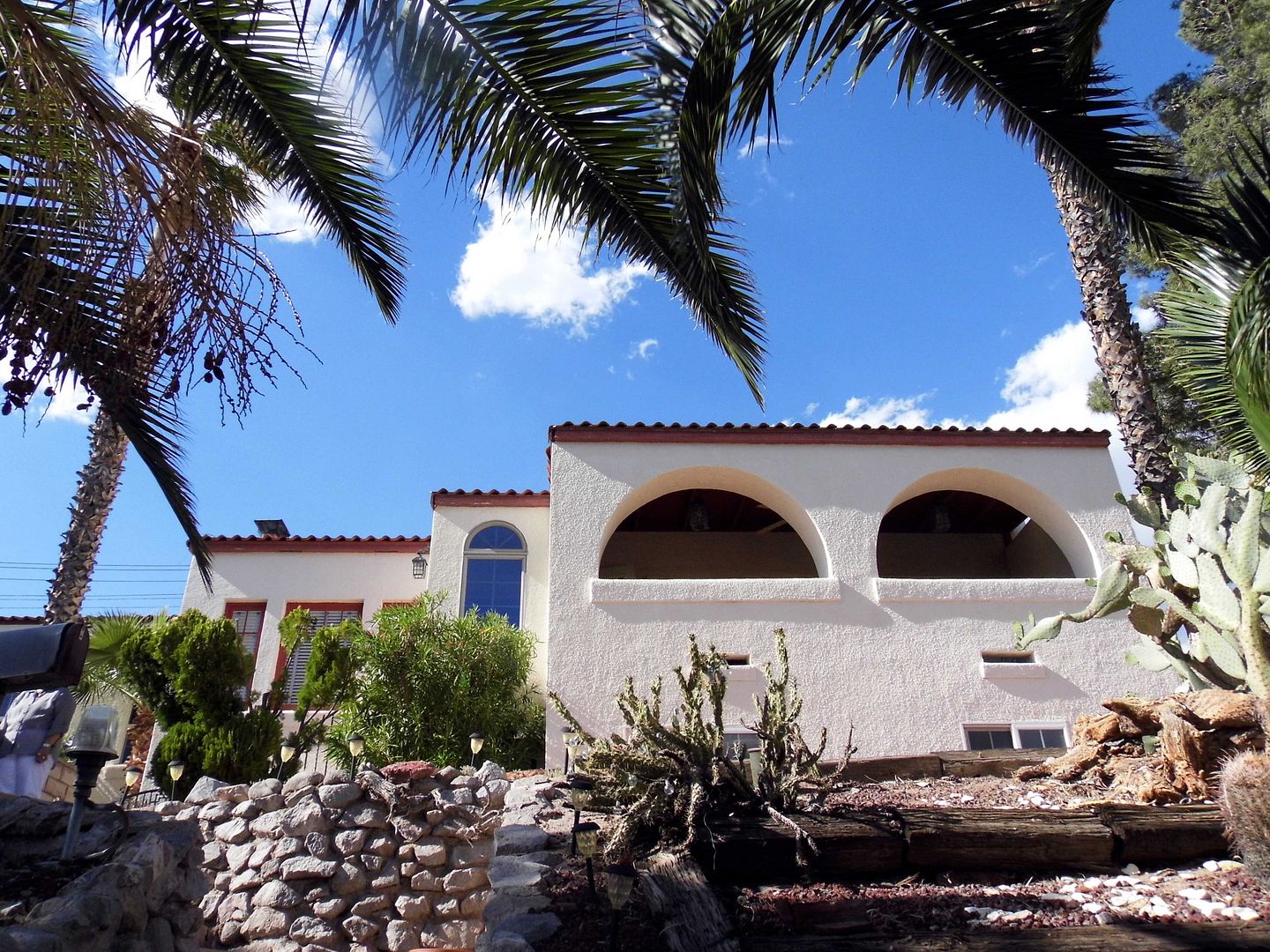


Others have built their houses out—for example, adding a steep terraced garden and arcaded porch to a "twin" 1931 stucco home that once had the same floorplan, built for dam electrician Ervin Aril ("E.A.") Felts and his wife Macie Pynes Felts.
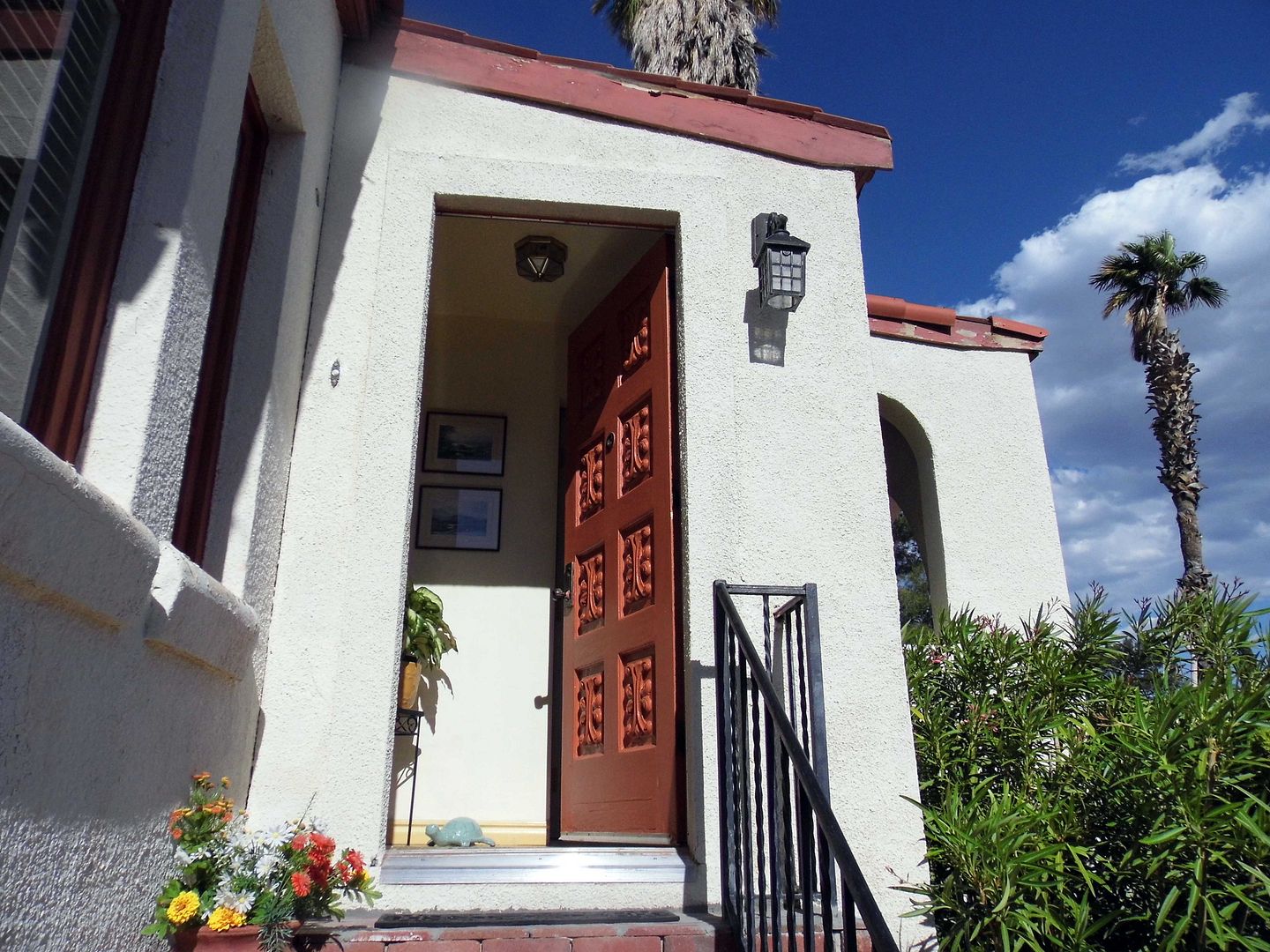


It was thanks to the Nevada Preservation Foundation's Home and History Tour—and its expansion from Vegas into Boulder City—that we got to take a peek inside some of the dam workers' former living spaces.
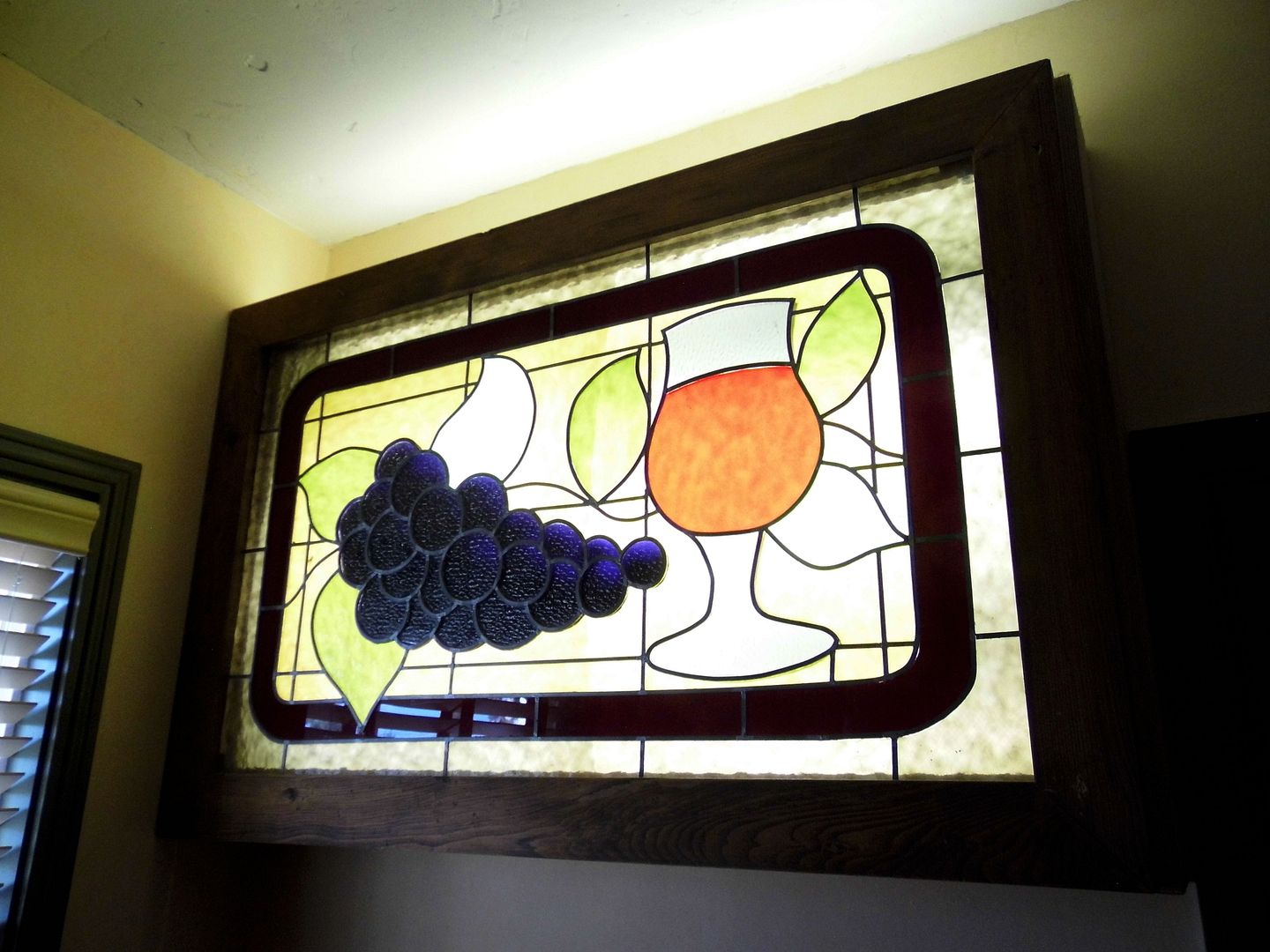


One homeowners even salvaged a stained glass window from the bar of the Boulder Hotel and put it up in a small dining area.
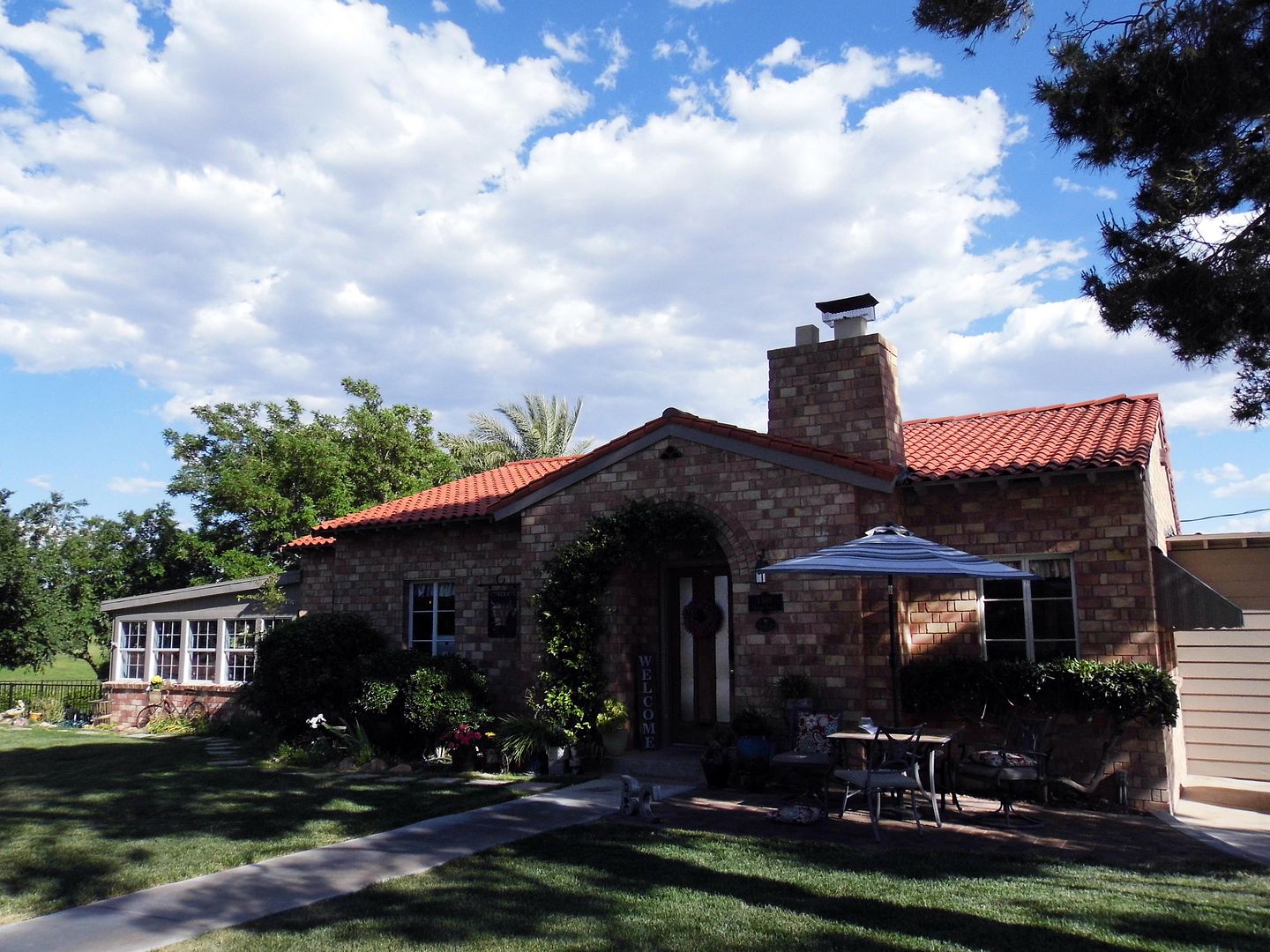


Although the assignment would eventually come to an end, the housing was built to be permanent—some of it quite nice, even by today's standards—as part of an ideal or "model" city.
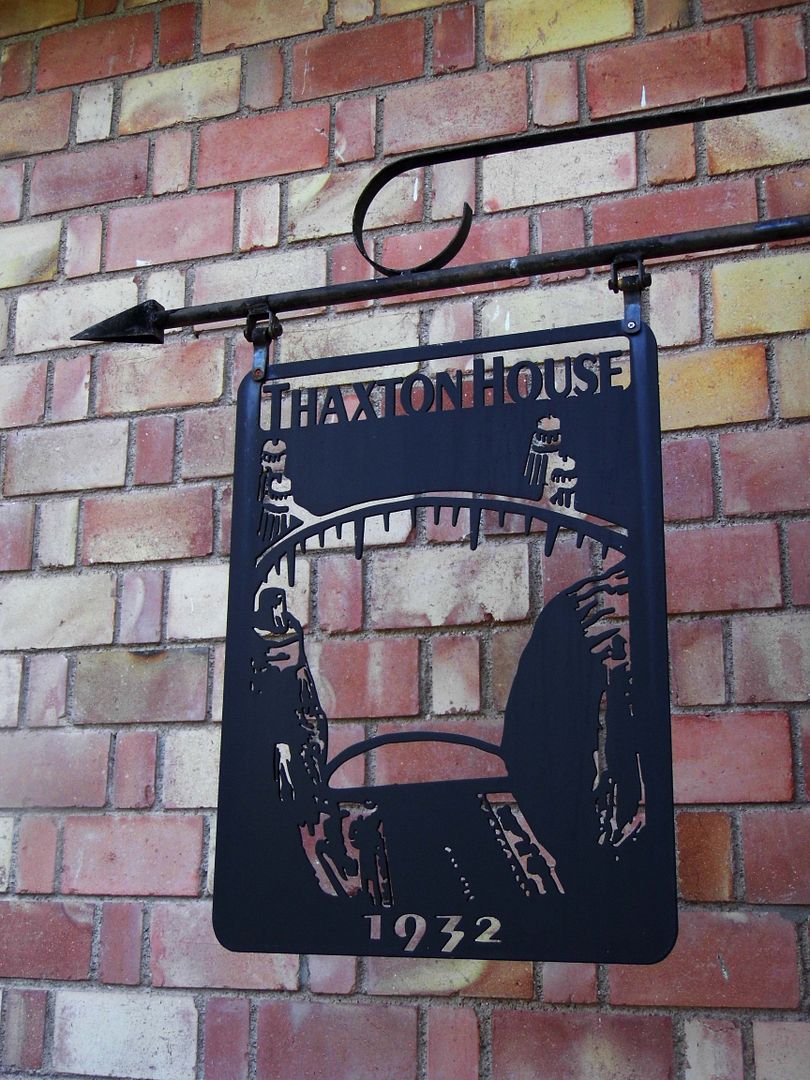


In 1932, an Eclectic Revival-style home with decorative rowlock brick was built as "executive class" housing for U.S. Reclamation Service Engineer Rufus C. (or "R.C.") Thaxton.
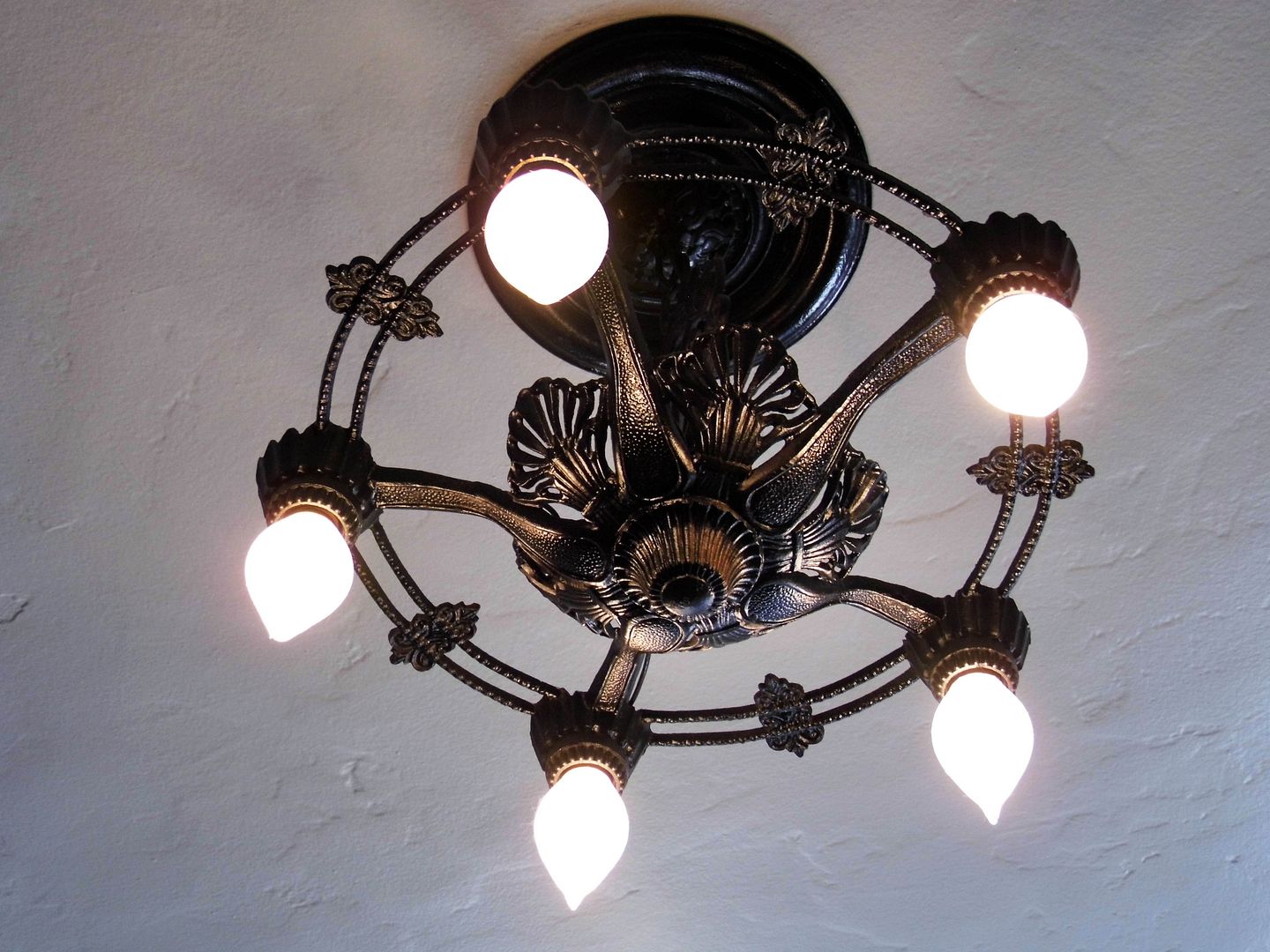


Its ceiling fixtures are still original...
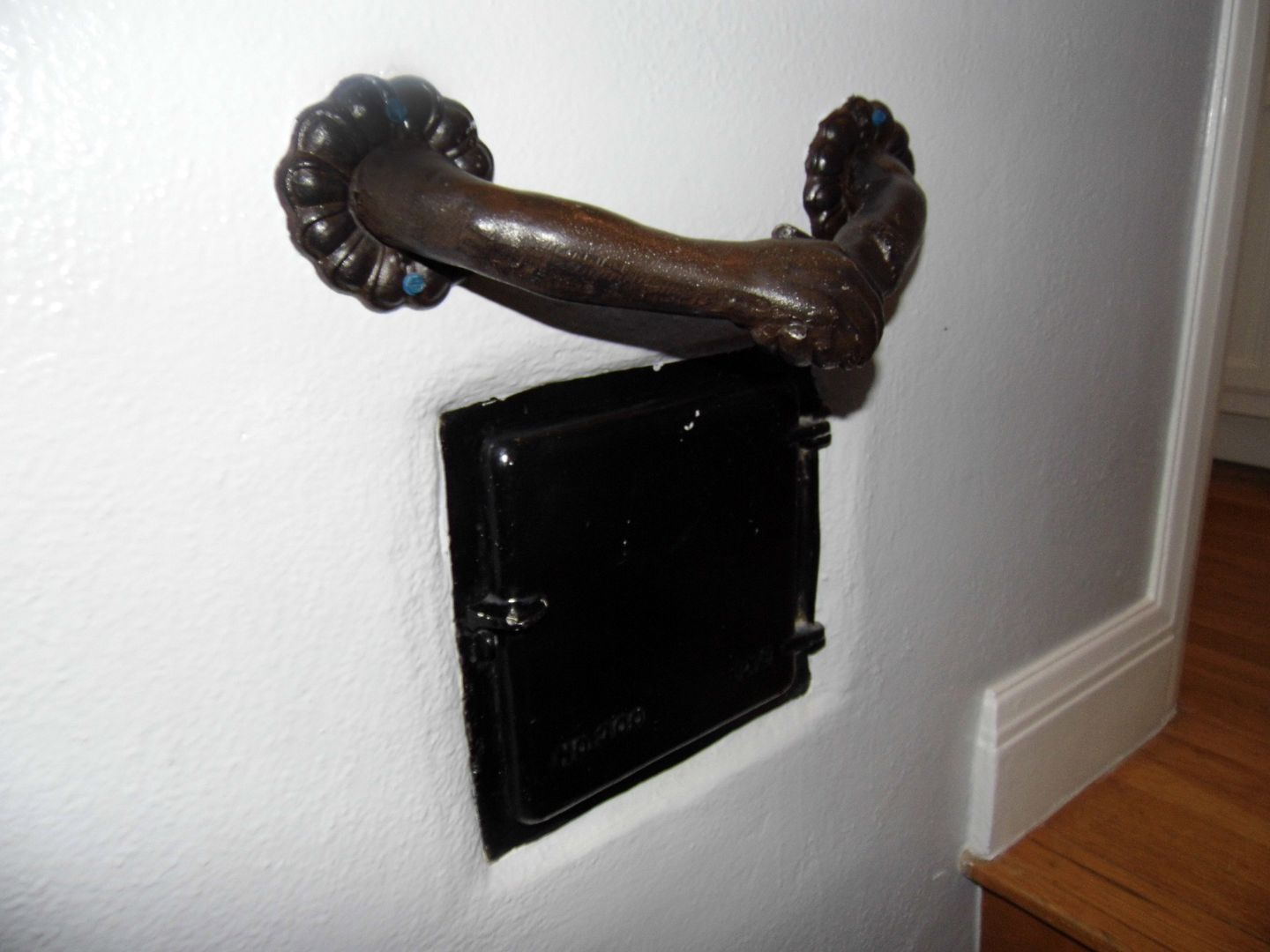


...and you can find an old milk door along the wall in the stairwell leading down to the basement.
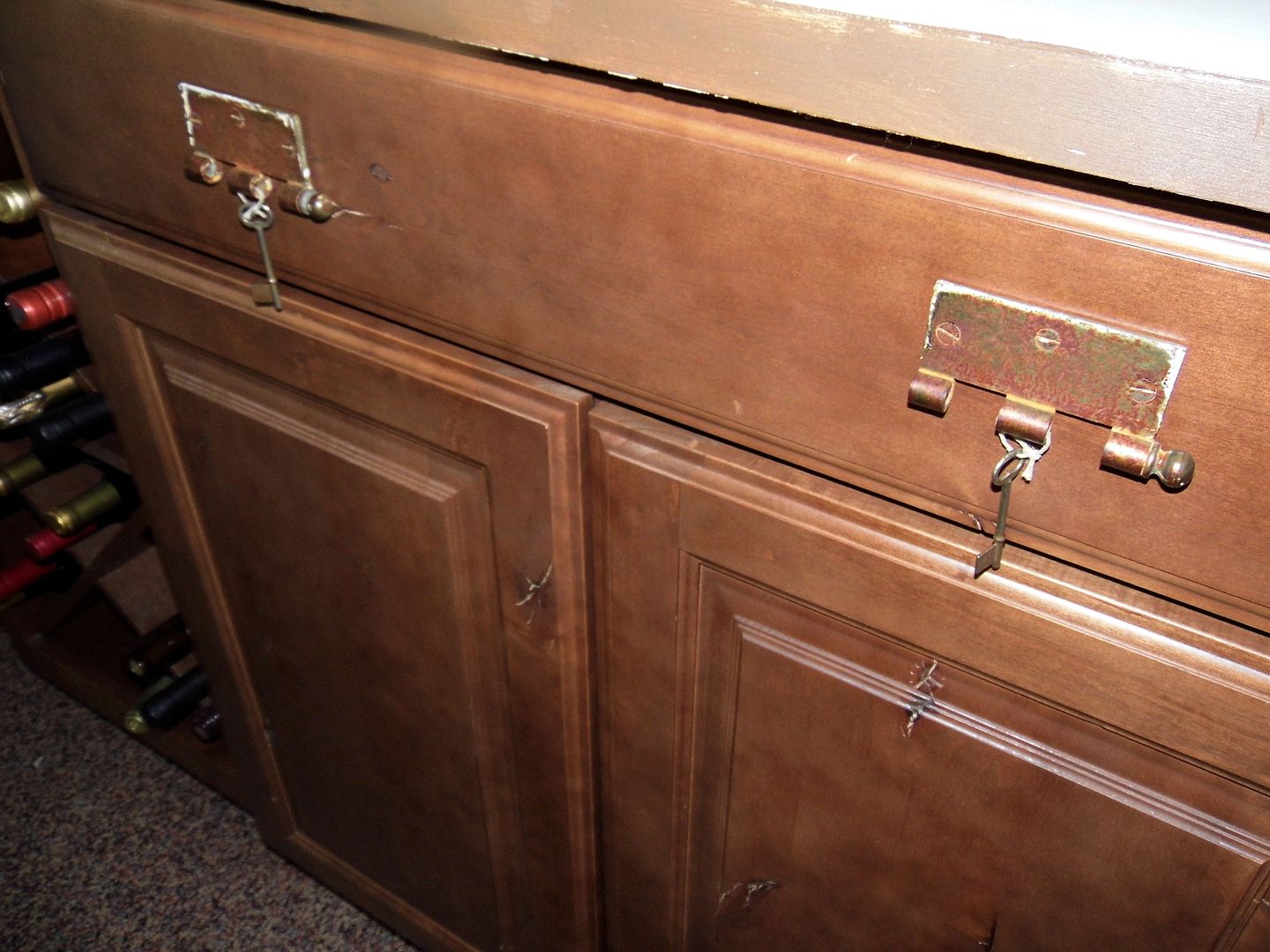


The current owner has created new furniture and cabinetry made from reclaimed materials—including doors, hinges, locks, and hooks—to preserve the original character of the home while making her own mark on it.
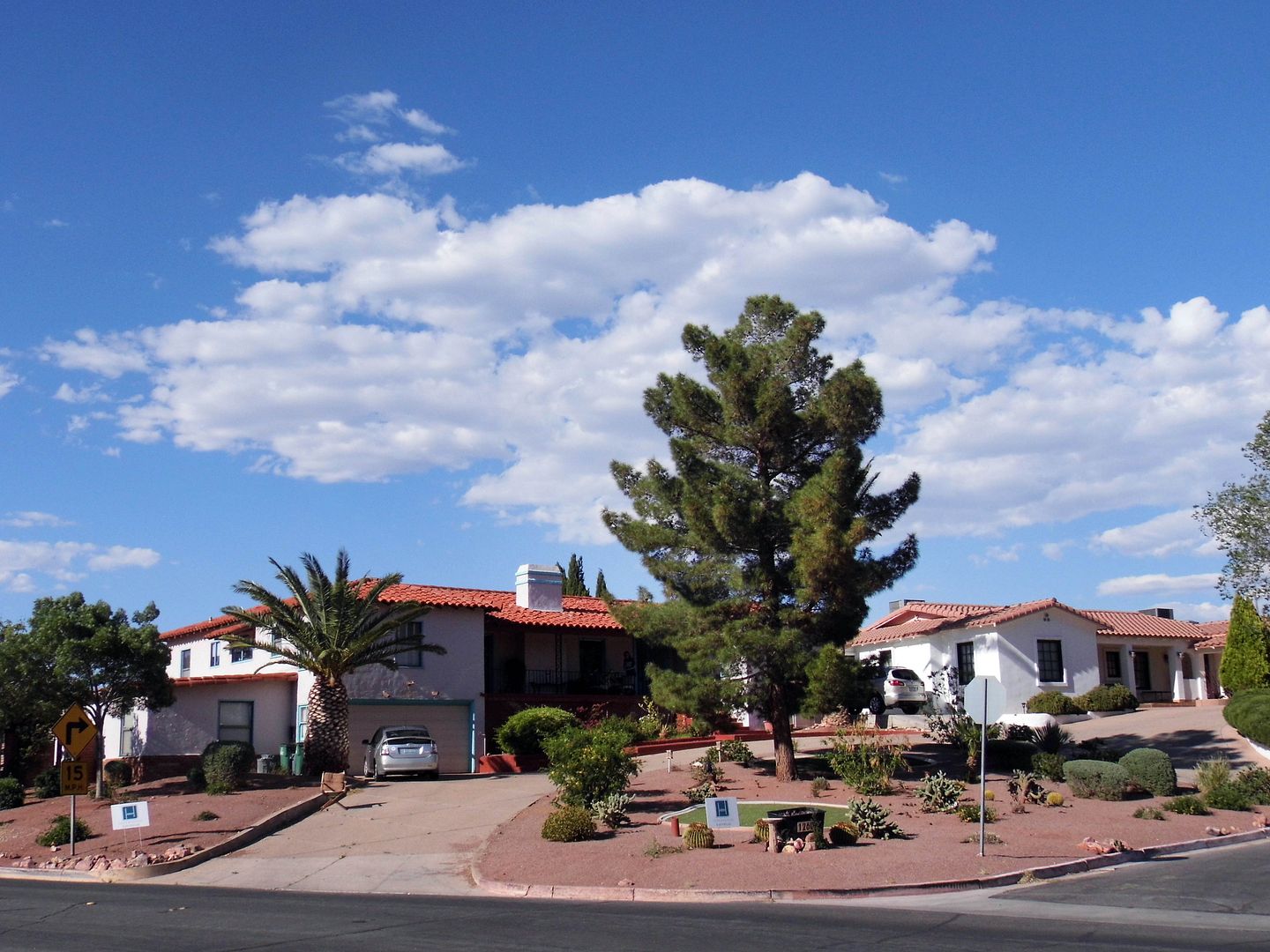


The first private Boulder City residence—that is, not built, owned, or otherwise controlled by the U.S. government—came a year after dam construction ceased. (Though, the feds didn't relinquish control over Boulder City until 1959.)
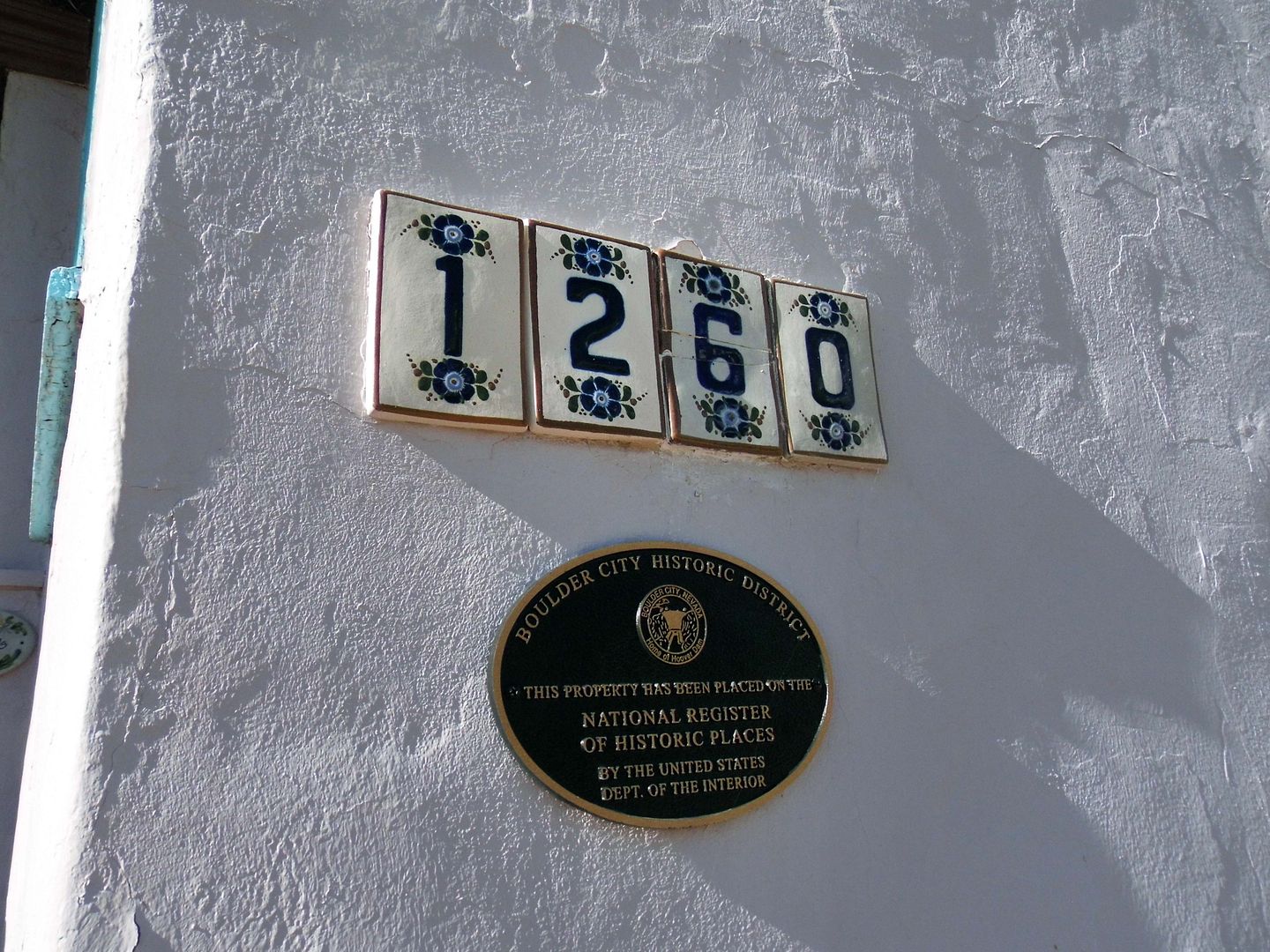


The Spanish Colonial Revival-style home was built in 1937 for Charles (or "C.H.") Cady, who'd invested a bunch of money in creating a tourist empire surrounding the newly opened dam, but then died in 1942 before he could reap all the benefits.
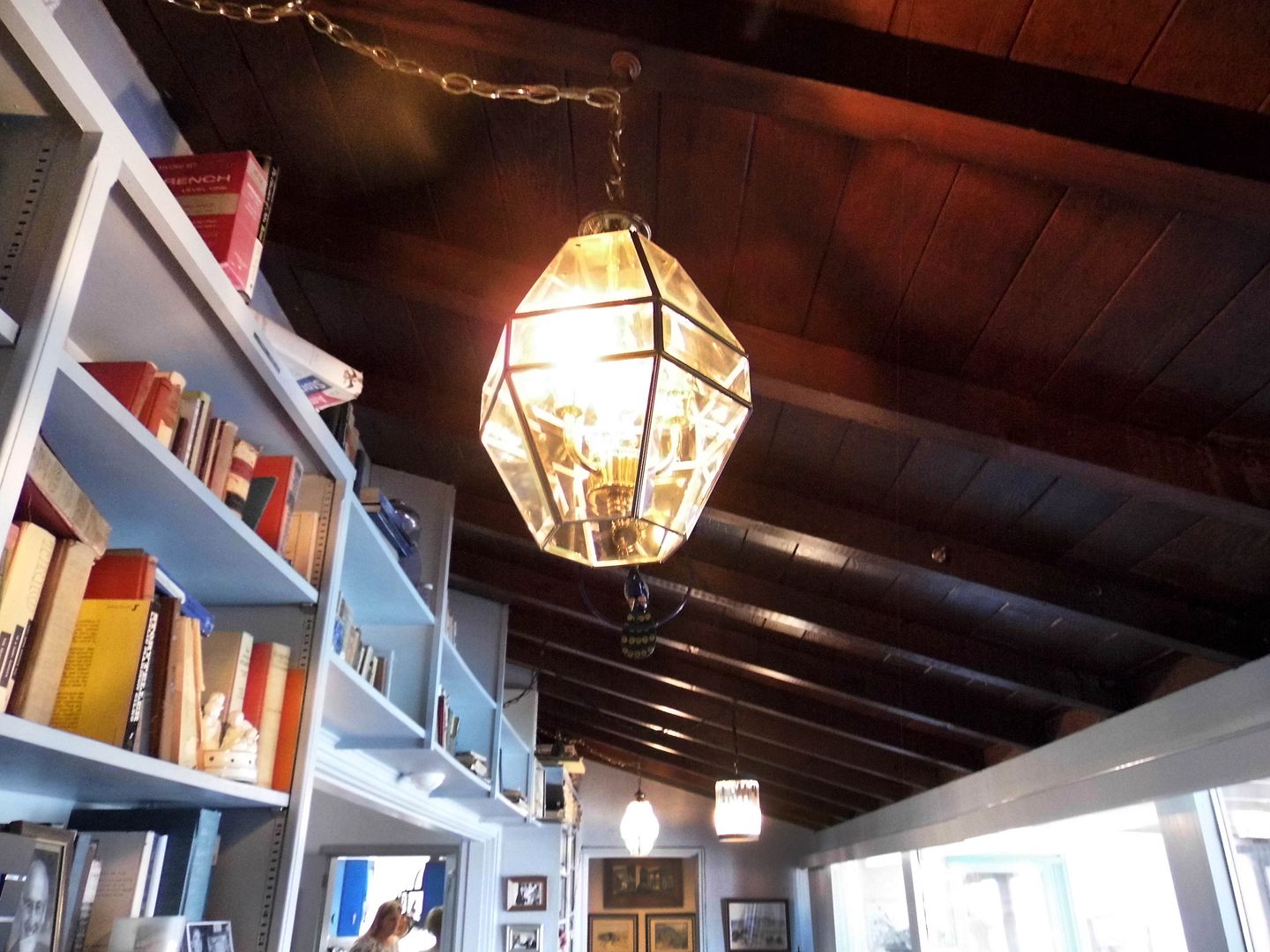


Between the wood beam ceilings...
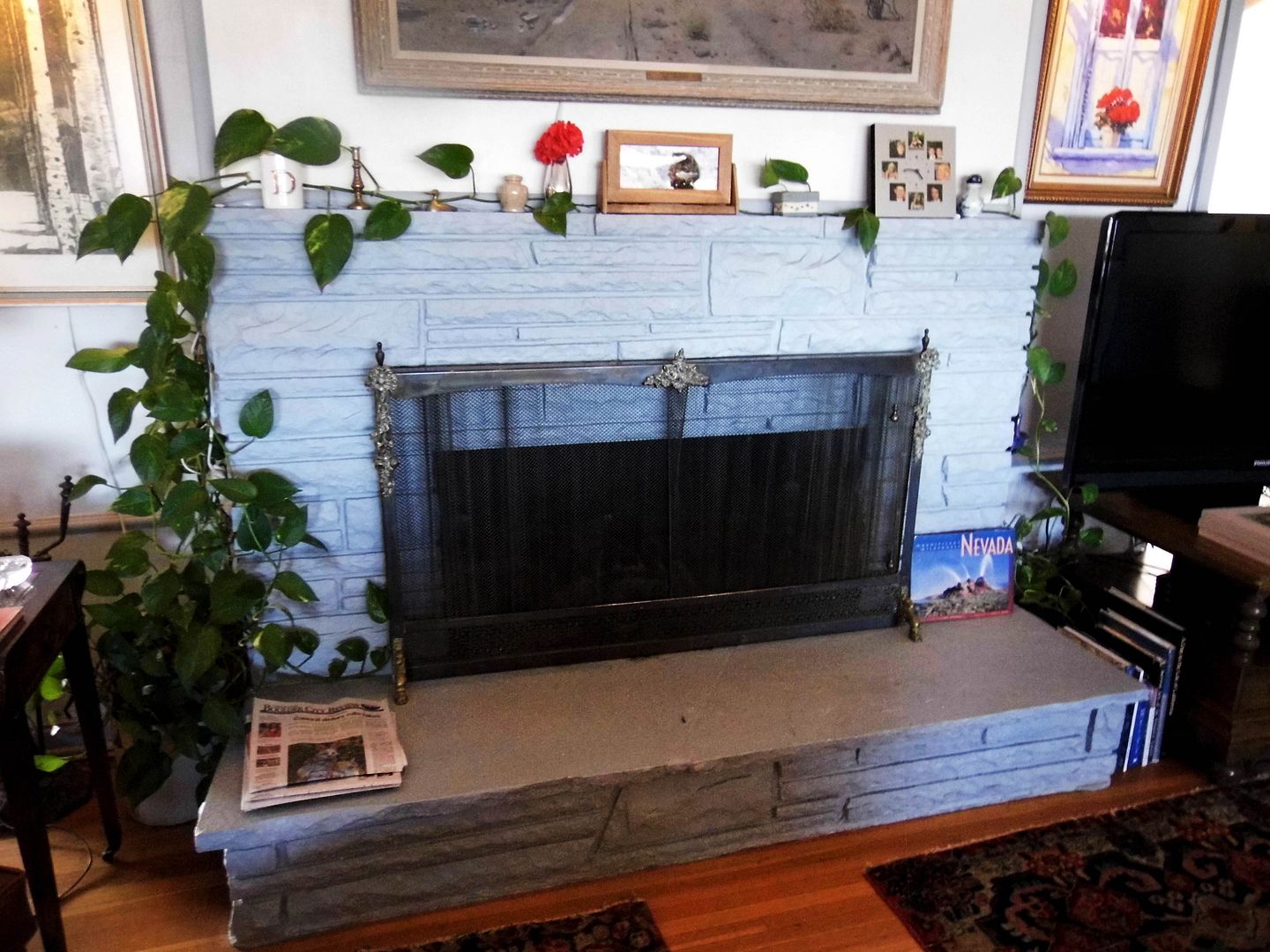


...original fireplace...
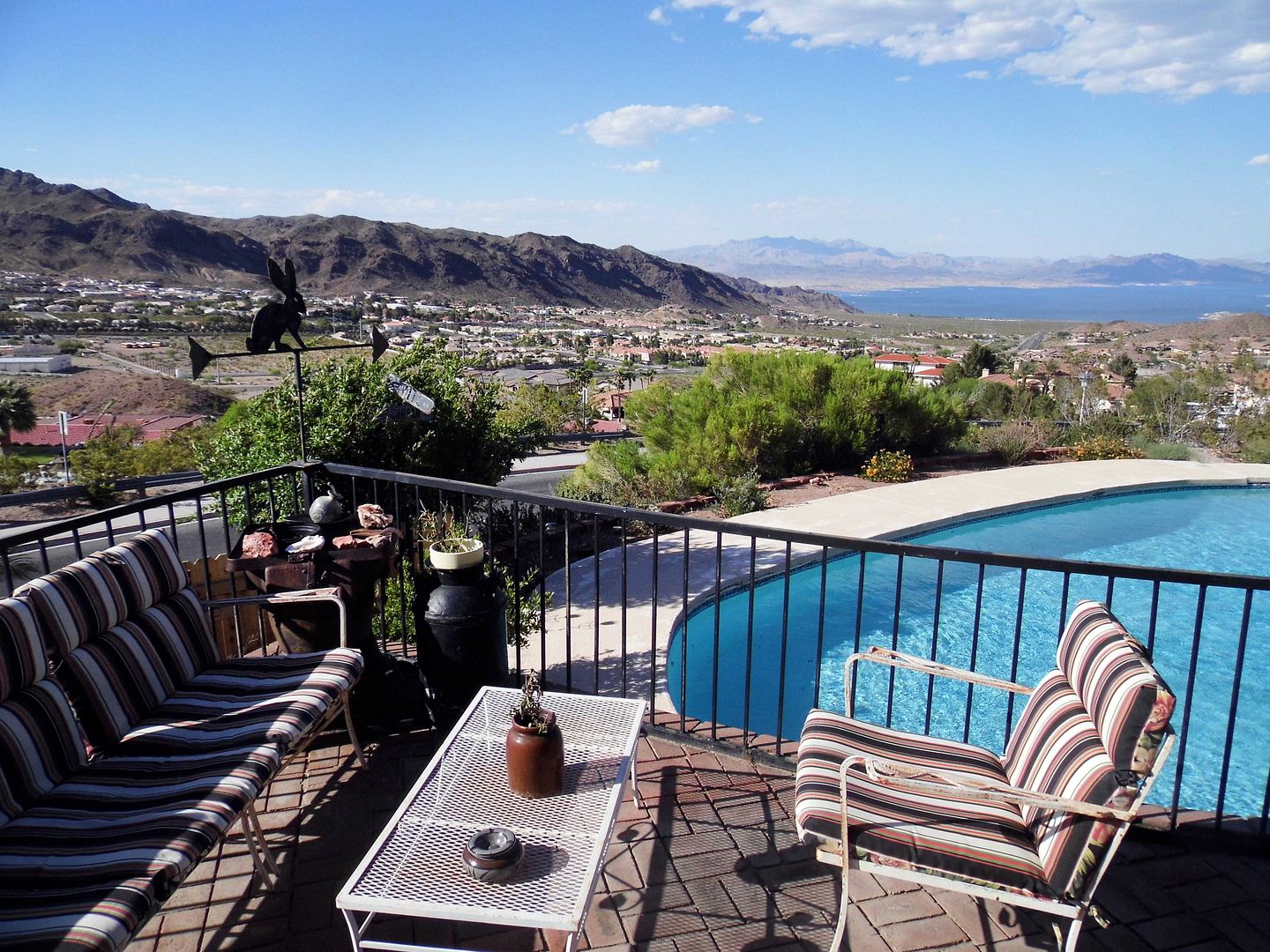


...and gasp-worthy view, this national historic landmark has a certain timeless appeal.
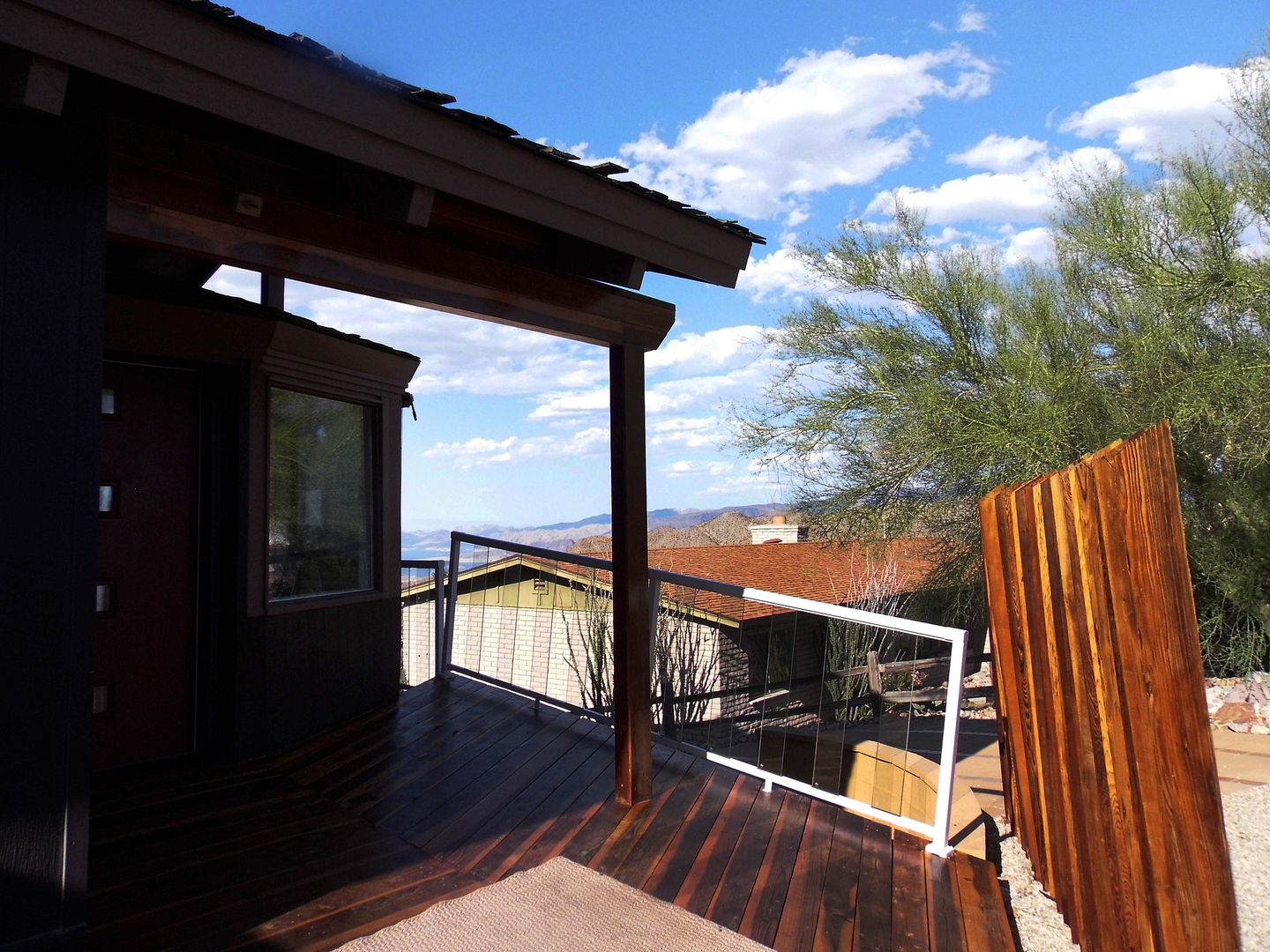


Perhaps more polarizing is its neighbor, the 1970 modernist retirement home of Cliff Segerblom (the Bureau's first PR photographer) and his wife, Gene Wines Segerblom.
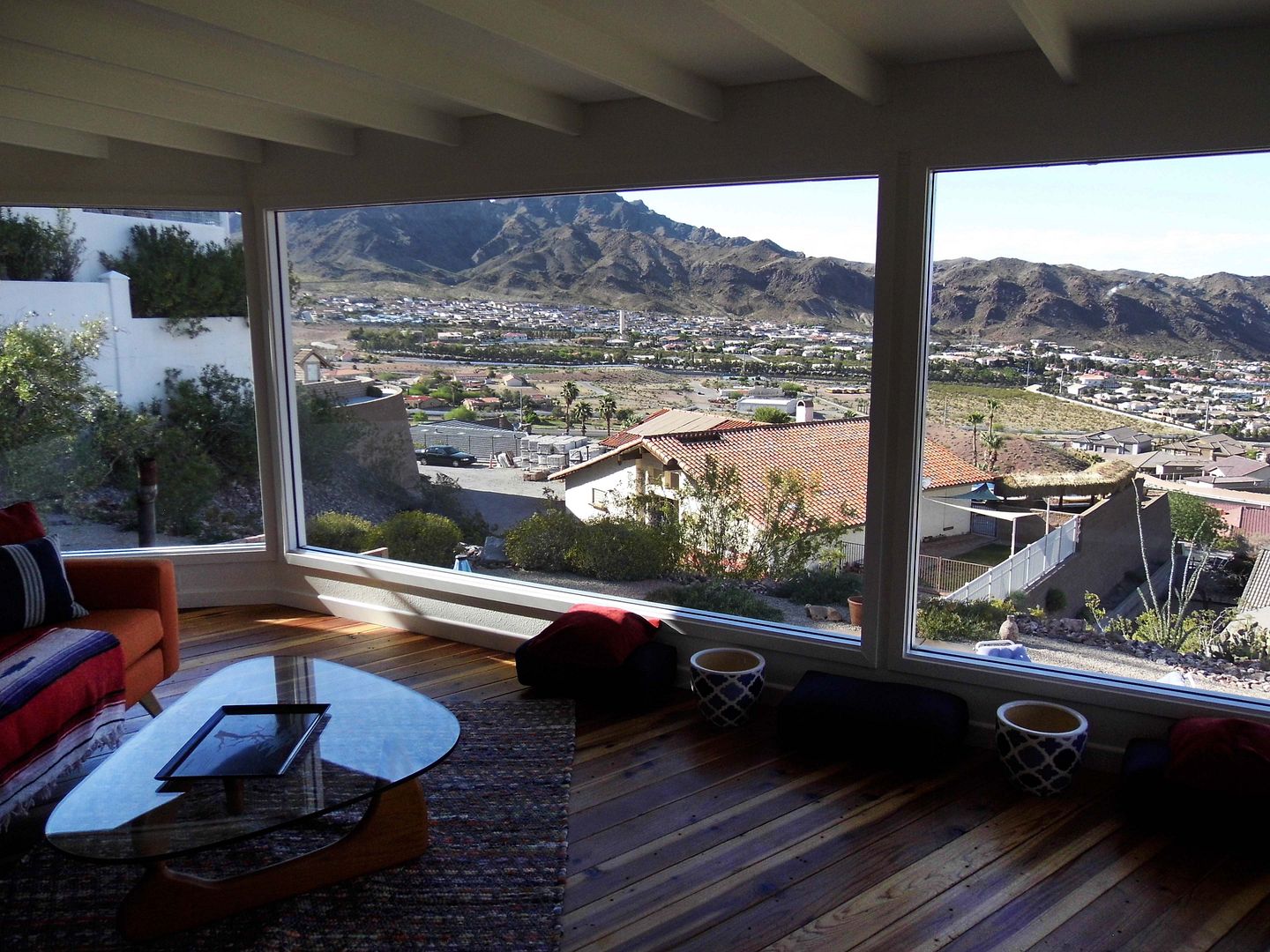


Another private residence, it also features wood beam ceilings and that spectacular view.
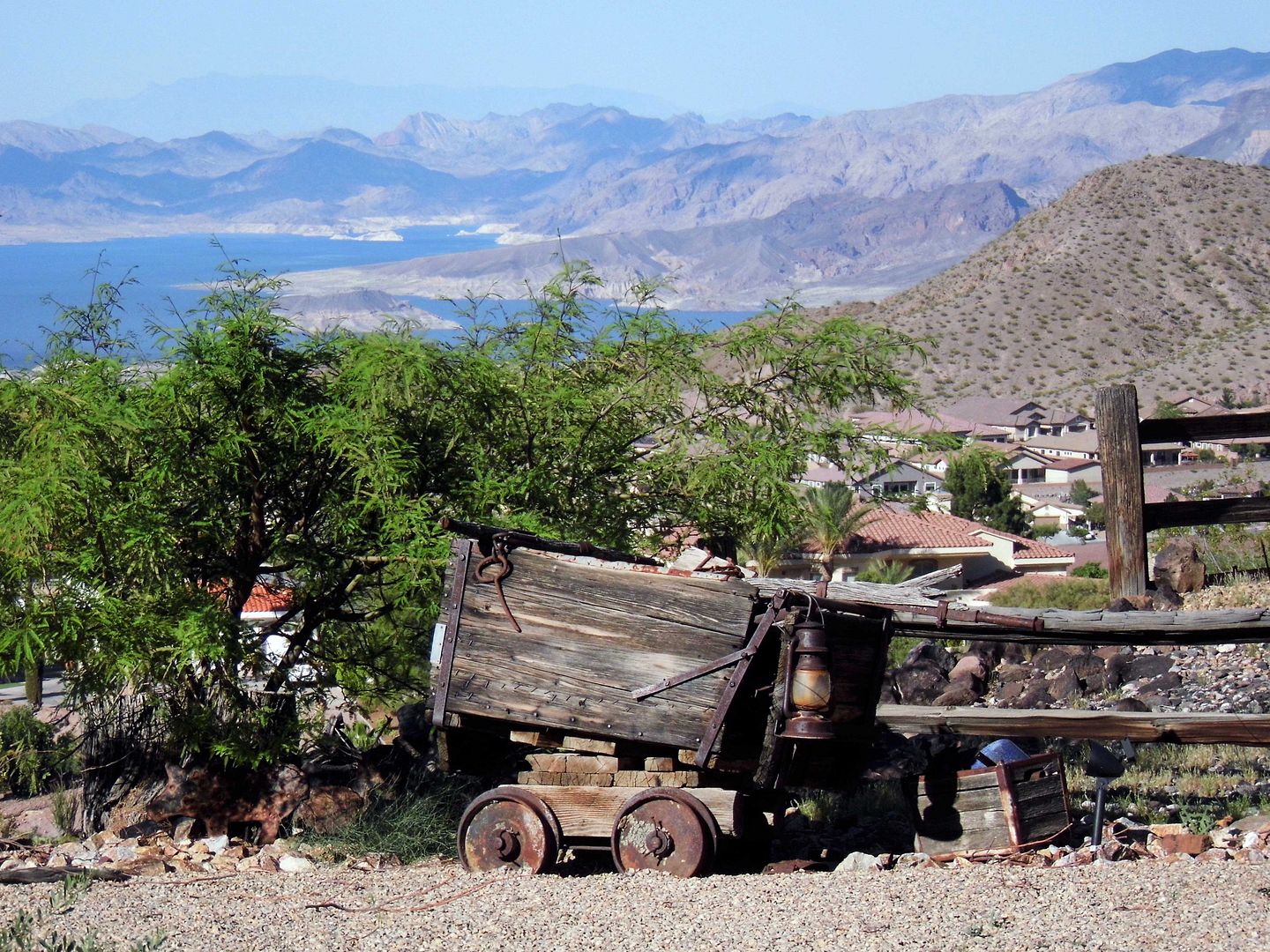


But there are fewer traces of Boulder City's history as a dam workers townsite...
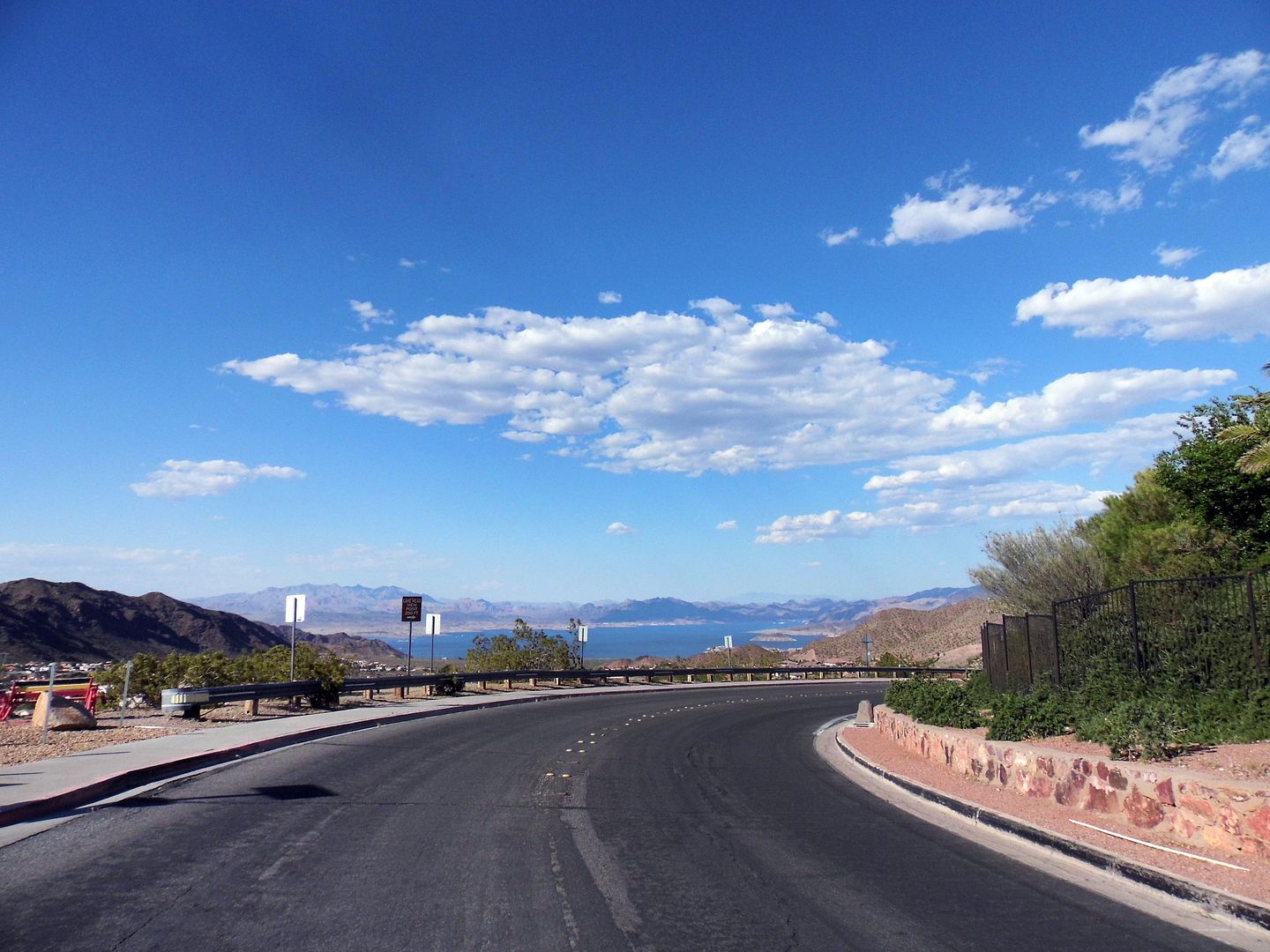


...despite the view of Lake Mead (a watery result of the Boulder Canyon Project) below.
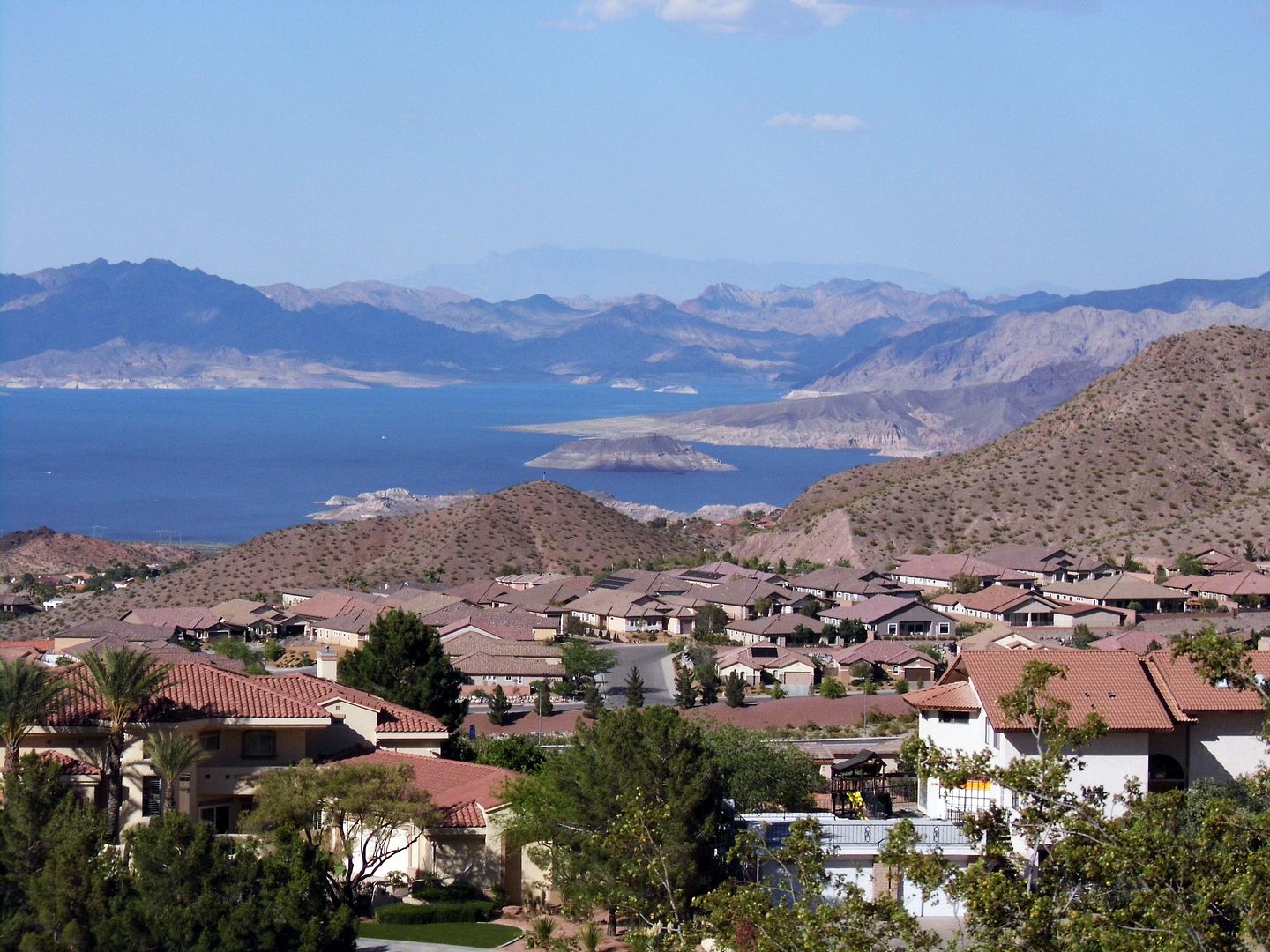


From the beginning, Boulder City was designed by Dutch city planner Saco Rienk de Boer as a wholesome town—in contrast to nearby Las Vegas, which hadn't really become "Sin City" yet but was heading there. It's still one of only two Nevada cities with an anti-gaming ordinance.

The clean-living environment was an ideal in the days following the repeal of Prohibition and the years when the country was still deep in the Great Depression. To keep the dam workers sober, alcohol was banned in Boulder City—and it wasn't legalized until 1969. (Hence the lore surrounding Bootleg Canyon.)

There's a local brewpub there now, but it still seems pretty unadulterated. It's been considered one of the best cities for retirement.

You could do worse, that's for sure.

Related Posts:
Photo Essay: Hoover Dam
Photo Essay: Lake Mead Railroad Trail
Photo Essay: Lost City of the Muddy Valley

May 31, 2022

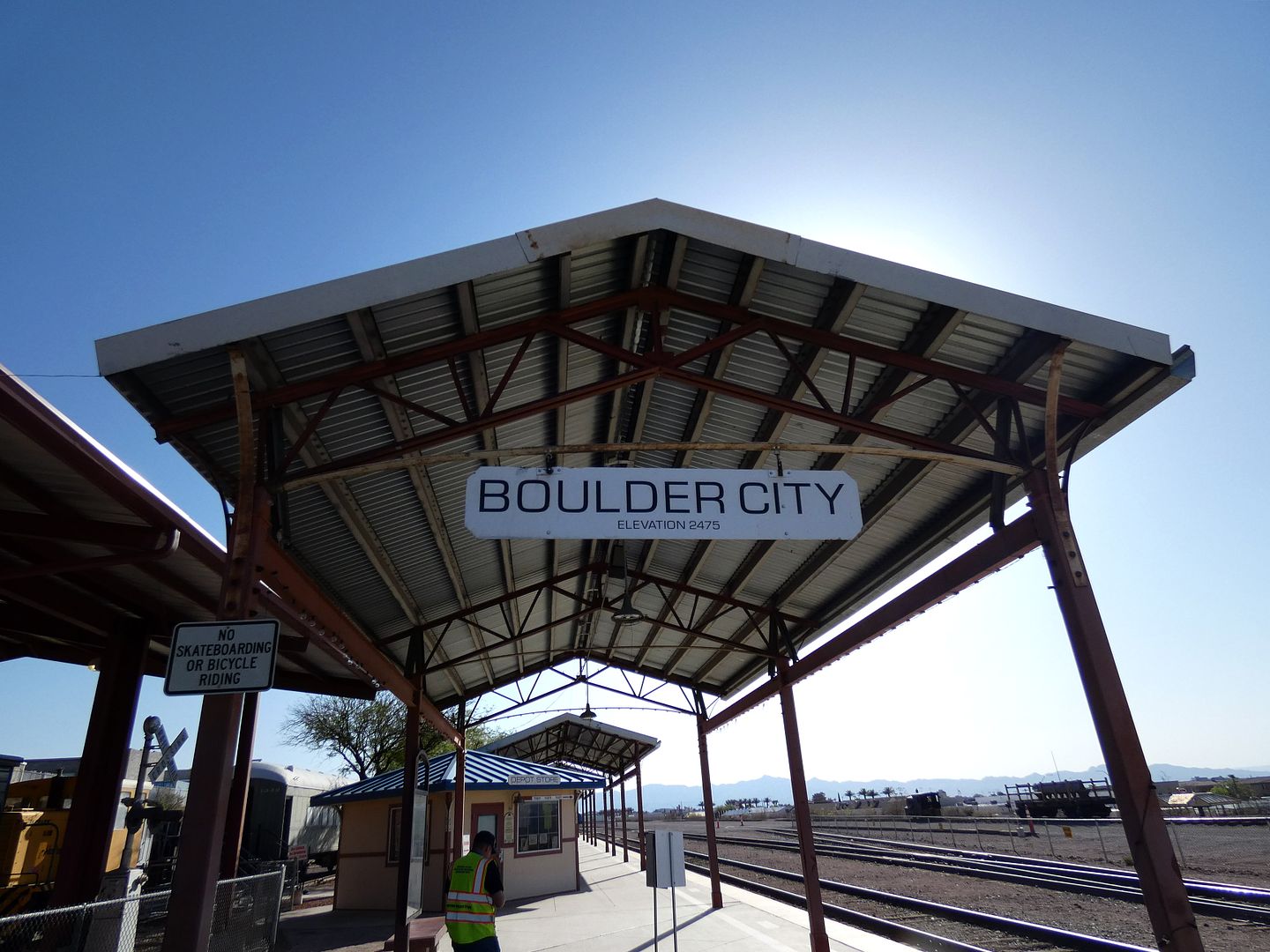
Photo Essay: The Historic Railroad Attraction Along the Tracks That Helped Build the Hoover Dam

One thing I'd wanted to do in Boulder City, Nevada since I first visited there in 2011 was to ride the Nevada Southern Railway at the southern outpost of the Nevada State Railroad Museum (its main outpost being in the state capital of Carson City, and the Nevada Northern Railway being in Ely). 


February 01, 2012

Photo Essay: Bootleg Canyon Zipline

After my ziplining experience in Catalina last spring, I was kind of dying to go again. 

Since I hadn't made it to Wrightwood in the Angeles National Forest yet (on my list for this spring), and I was looking for more non-Vegasy things to do while I was in Vegas for the Nevada Test Site tour, I jumped at the chance to test out the zipline in Boulder City, a half hour outside of Vegas.


Bootleg Canyon is home to some of the most epic mountain bike trails (some of an extreme downhill nature) in the country and in the world, as well as to some grisly lore dating back to the bootlegging days of Prohibition and a historic Railroad Pass.

June 07, 2025

Photo Essay: Nevada's Home of the 'Miracle Metal' That Helped the Allied Forces Win World War II

For as many times as I've visited Las Vegas, I still have a lot to learn about the Las Vegas Valley—and Southern Nevada as a whole. 

That's one of the reasons I like traveling for the annual "Home + History" weekend sponsored by Nevada Preservation Foundation—whose events have taken me to unexpected places on the Strip, just off the Strip, on Fremont Street, and even to nearby Boulder City. 

This year, the one big draw for me was the historic bus tour of Henderson, now Nevada's second-largest city. 

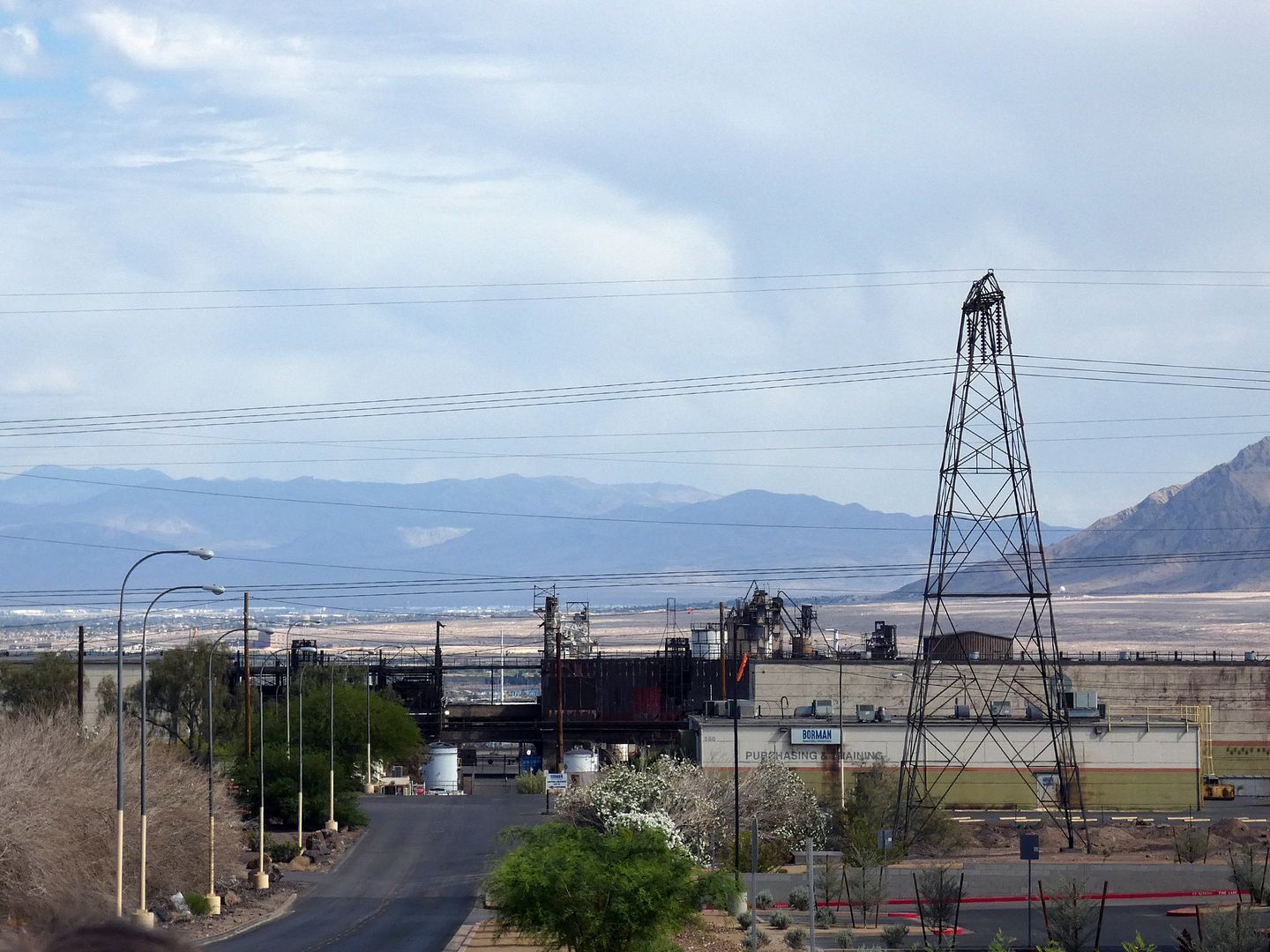
While Boulder City had the Hoover Dam to thank for its founding, Henderson had something completely different: magnesium.

In fact, although Henderson wasn't incorporated until 1953—named after Nevada Senator Charles Belknap Henderson—it began over a decade before that as the "Basic Townsite," home of Basic Magnesium, Inc. (BMI).

And the bus tour I'd driven five and a half hours for, which was co-presented by Nevada Preservation Foundation and Henderson Historical Society, took us through the old BMI plant.


May 11, 2022

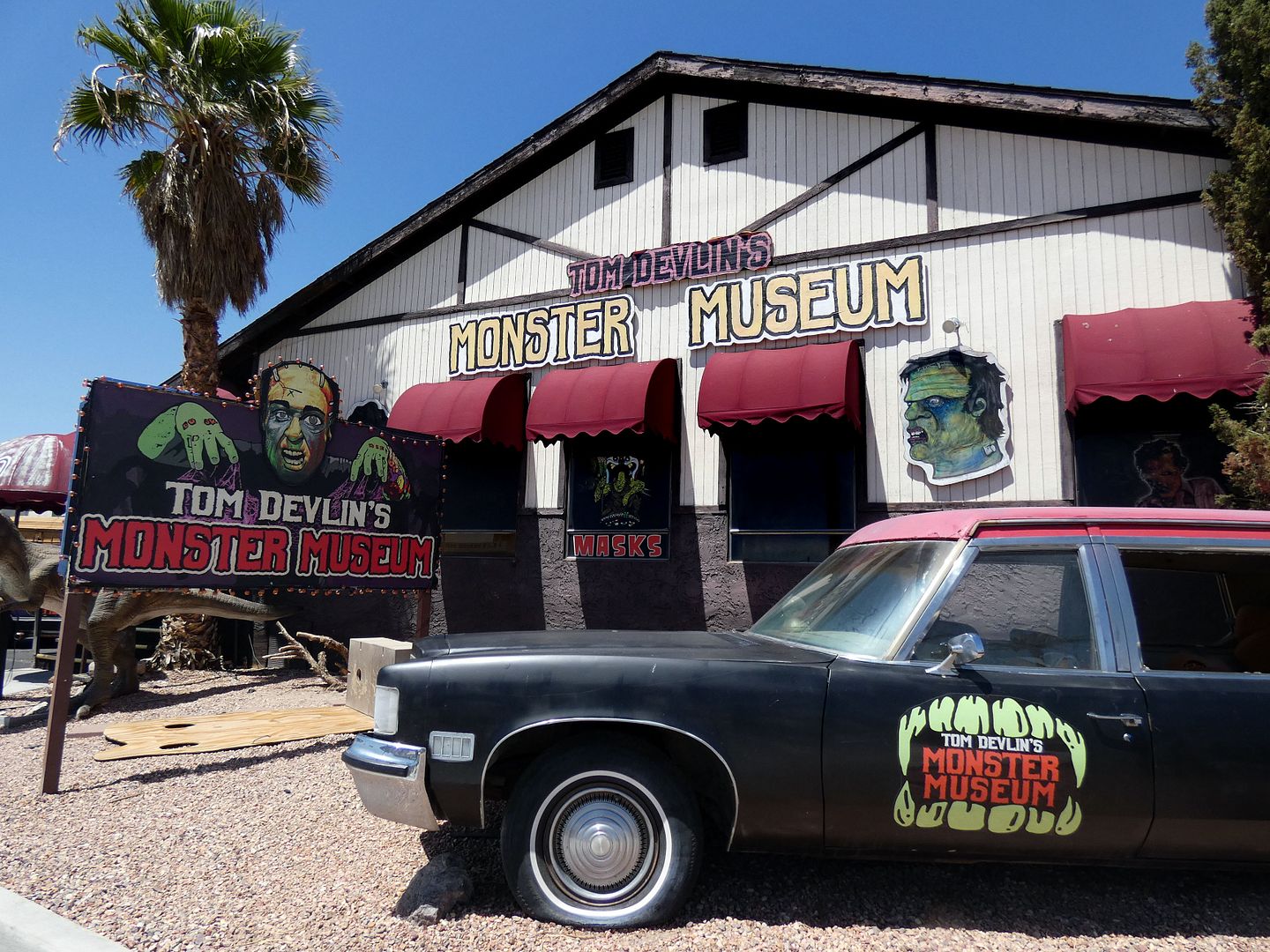
Photo Essay: A Special Makeup Effects Creator's Own Museum of Monsters

Most of the times I've been to Boulder City, Nevada, it's been for ziplining or something related to the Hoover Dam. 

 
But this time around, I managed an early morning visit to the railroad museum (photo essay forthcoming)—with just enough time to visit Tom Devlin's Monster Museum before returning to Vegas. 

January 12, 2021

Photo Essay: The Treasures of City Terrace Park, from Medieval to Mid-Century Modern

There's so much in LA that's been lost—that I'll never get to see in person.

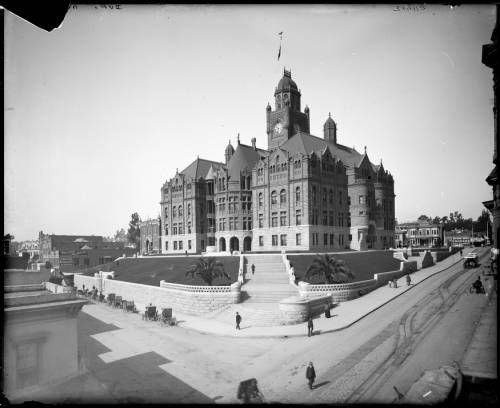
circa 1905? (Photo: William Henry Jackson, Denver Public Library)

August 16, 2021

Photo Essay: Where Robots Tell the Story of Old California and Steinbeck's Cannery Row (Updated for 2024—Closed)

[Last updated 12/23/24 12:47 PM PT—I just found out that this place permanently closed in 2022. What a loss.]

Honestly, I hadn't thought much about John Steinbeck since I read Of Mice and Men and The Grapes of Wrath and saw East of Eden as a teenager. 

 
I didn't know anything about the time he spent in Monterey, California at Cannery Row, yet I still felt drawn to the "Spirit of Monterey" wax museum that's often referred to by his name.   

October 03, 2011

Lost Vegas


Everybody thinks of Las Vegas as the crime scene of the "lost weekend."

Don't they?

Because whatever happens there...

...happens in movies like The Hangover.

I've been to Vegas a handful of times, but I've never had a crazy time there. I've shivered in bed with the flu. I've flirted with the sommelier of a fancy restaurant. I've dipped naked in a clothing-optional spa hot tub. I've watched myself sleep in a mirrored ceiling.

But I've pretty much remembered everything and regretted nothing.

In a land of intentional regrets, I guess I just don't belong.

I don't gamble.

I don't like comedy shows.

I don't walk around with a giant souvenir cup slung around my neck.

But I love the desert. I love hotels. I love bright flashing lights and sitting by the pool under the bright hot sun.

So I was happy to lure my two girlfriends from New York City to the Land of the Lost - to find myself again through the eyes of those who know and love me best, and to make some new memories that will last me through the lonely days in LA.

And I'll be happy to return to Las Vegas, and, like Los Angeles and San Diego, to use its metropolitan center as a jumping off point to other far-flung places like Death Valley, Boulder City, the Grand Canyon...

And I won't apologize for remembering every single moment.

To become a fan on Facebook, click here.

December 16, 2024

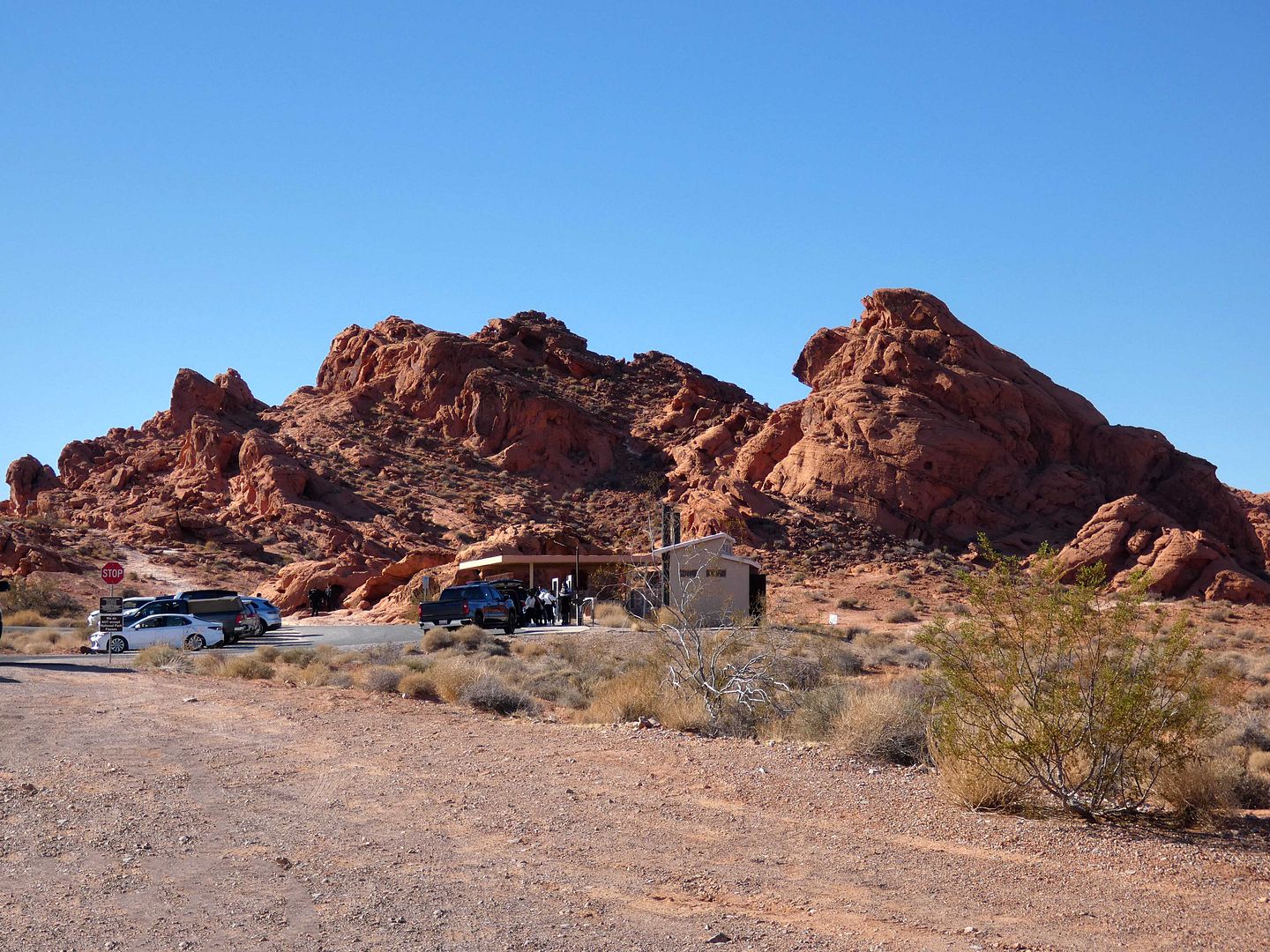
Photo Essay: Looping Through Nevada's Scenic Valley of Fire

I seem to visit Valley of Fire every 11 or 12 years—my first time in February 2001, my second in October 2013, and my most recent in November 2024. But since it spans a whopping 40,000 acres, there was plenty more I could see.

 
This time I was at the eastern end of it, staying at a hotel in Moapa Valley and entering the park from the Northshore Road Toll Gate off Highway 169.

April 10, 2017

Photo Essay: A Modernist Bachelor Pad Above Palm Springs

As much as I love music, I wouldn't be able to narrow down my "Top 5" favorite songs if I tried.

There are too many of them that I love for too many reasons—transcending all genres and demographics.

With music, I can argue to the ends of the earth the differences between "likable" and "popular" and "good"—and, taking it further, the vast expanse between "good-sounding" and how well it was written, performed, produced, mastered, or mixed in a recording studio.

I know too much about music—from being able to read standard music notation and having been trained on piano, French horn, and voice to knowing how the sausage is made from my years spent on the business side—to be able to rank and differentiate. Instead, I'll theorize forever about authorship and reception theory and ear worms and nostalgia and context.

But when it comes to buildings, though, I can pick a few favorites. I've never designed or built one myself, and I haven't studied physics or planning or anything architecturally academic (at least, not officially).

I just know what I like when I see it.

Such is the case with one of my favorite buildings, the former North Shore Yacht Club on the Salton Sea.


That one was designed by Desert Modernist architect Albert Frey (1903-1998), the namesake of the "Frey II" house (built 1964) that's now in the permanent collection of the Palm Springs Art Museum.


It was the second house that the Swiss architect designed for himself in Palm Springs, the city that inspired so many of his mid-century works (including the former Tramway gas station that now serves as the Palm Springs Visitor's Center).


He had it built onto the side of the mountains that now overlook the art museum, so he could look out upon the low desert city below and gaze out at the mountains, which he said reminded him of Switzerland.


Reportedly, he was somewhat of a desert eccentric: a vegetarian and yoga enthusiast who liked to sunbathe in the nude, necessitating a bell down by the carport to be rung when visitors were approaching.


At only 800 square feet, the Frey II house is relatively tiny, though it feels incredibly expansive up there (where it once was the highest hillside residence in Palm Springs).


Like some of the works earlier in his career, it's really nothing fancy, per se.


It's more or less a painted, corrugated aluminum roof...


...on top of a glass box.


But still, Frey had to get special permission to build it from the City of Palm Springs, whose officials called it "crazy" before ultimately approving it.


The yellow curtains were chosen to mirror the annual bloom of the brittlebrush flowers...


...and the ceiling painted blue more for a connection to nature rather than for fashion.


With built-in furniture, Frey took the opportunity to be incredibly economical with his use of space.


He could've built a bigger place. He just didn't want to.


He wanted to have as little impact on the natural surroundings as possible—and to make the most out of the least.


So, he crammed a tiny kitchen and a tiny bathroom in there...


...hid a record player behind the head of his bed...


...and slept in the same room as he ate, listened to music, sharpened his pencils, and drafted his drawings.

And, in that room, was a boulder that he built his house around, making Frey himself as much part of the landscape as the landscape was a part of his home.

Related Posts:
Retreading Old Ground
Land of Opportunity
Photo Essay: The Other Elvis of Palm Springs, The Elvis of My Childhood
Photo Essay: A Modernist Desert Dwelling

February 13, 2013

Photo Essay: Joshua Tree's Barker Dam, Closed to Public (Updated for 2020)

[Last updated 2/23/20 1:53 PM PT—Barker Dam underwent a major restoration to remove the graffiti in 2014-15 and is once again open to the public.]

It was announced today that Barker Dam, one of the more curious historical artifacts of Joshua Tree National Park, would be closed until further notice.


photo courtesy National Park Service

The dam itself, which has been placed on the National Register of Historic Places, has sustained quite a bit of recent damage due to vandalism. In the tradition of the Chumash Indians, modern visitors - perhaps one at first, and then others followed - have carved their modern version of petroglyphs into the stone, their names and other messages taking the form of vandalism.


It didn't look like that when I embarked on the Barker Dam Nature Loop last July.


Tucked away in the Wonderland of Rocks, although the trail was well-trodden...


...the entire area was pristine. Save for the actual petroglyphs you can find nearby.


Amidst the joshua trees...


...and boulders that rockclimbers adore...


...there lie relics of old ranchers' work...


...starting at the turn of the century, where Barker Dam - then called Big Horn Dam - was built upon a natural water tank, a catch basin for runoff that came through the rocks.


That was before the real desertification of Joshua Tree. There was more water back then.


Now, wildlife flock to Barker Dam, which still collects water in its reservoir at wetter times of year than  when I was there.


Even with the reservoir dry, vegetation is lush.


In the 1940s, the dam was raised and expanded by the Keys family...


...and in the dry season you can see how high the water line is against the concrete wall.


It must be surreal to find water so accessible in the desert, not hidden away in some deeply enshrouded palm oasis.


But for me, it was dry.


And now, for others, even when wet, it will be closed. At least, until the damage can be stabilized.

Nearby Attractions:
Wall Street Mill

Other Reservoirs & Dams:
Lake Hollywood Reservoir (Hollywood, Los Angeles, CA)
Baldwin Hills Reservoir (Closed) (Baldwin Hills, Los Angeles, CA)
Silverlake Reservoir (Silverlake, Los Angeles, CA)
Elysian Reservoir (Elysian Park, Los Angeles, CA)
Devil's Gate Dam (La Cañada Flintridge, CA)
Kensico Dam (Bronx, NY)
Hoover Dam (Lake Mead, Boulder City, NV)