Search

Showing posts sorted by relevance for query drive-in movie theater. Sort by date Show all posts

April 26, 2020

A Tropical Escape In a Time of Adversity: Mission Tiki Drive-In (Updated for 2023—Closed)

[Last updated 1/23/23 8:41 PM PT—Mission Tiki Drive-In's last day of operation was Sunday, January 22, 2023. The swap meet remains open for one additional weekend.]

In one form or another, Mission Tiki Drive-In was owned and operated by De Anza Land and Leisure Corporation since it first opened as the "Mission Drive-In" in 1956. The 9-acre, single screen drive-in was the brainchild of William Oldknow, whose daughter Teri rebranded it with a tiki theme in 2006.

But that all changed last year, when Mission Tiki was sold to a developer to turn it into a "technology park."

The initial announcement declared the drive-in theater would only operate until around Christmastime 2019. (Fortunately, SoCal weather makes the drive-in a year-round attraction.) But then at the end of last year, the drive-in announced it would stay open through Summer 2020.

And then the coronavirus pandemic hit. Public assembly of groups of any size—beyond members of the same household—were forbidden. All theaters closed—from movies to the opera to all of Broadway.

But there's one place in SoCal you can still catch a movie, without catching the virus—Mission Tiki Drive-In.

It took a major health crisis—and a dearth of other options—to get me to drive the 40 miles out east to cross the place off my bucket list. I'm glad it did—and I hope others follow suit.
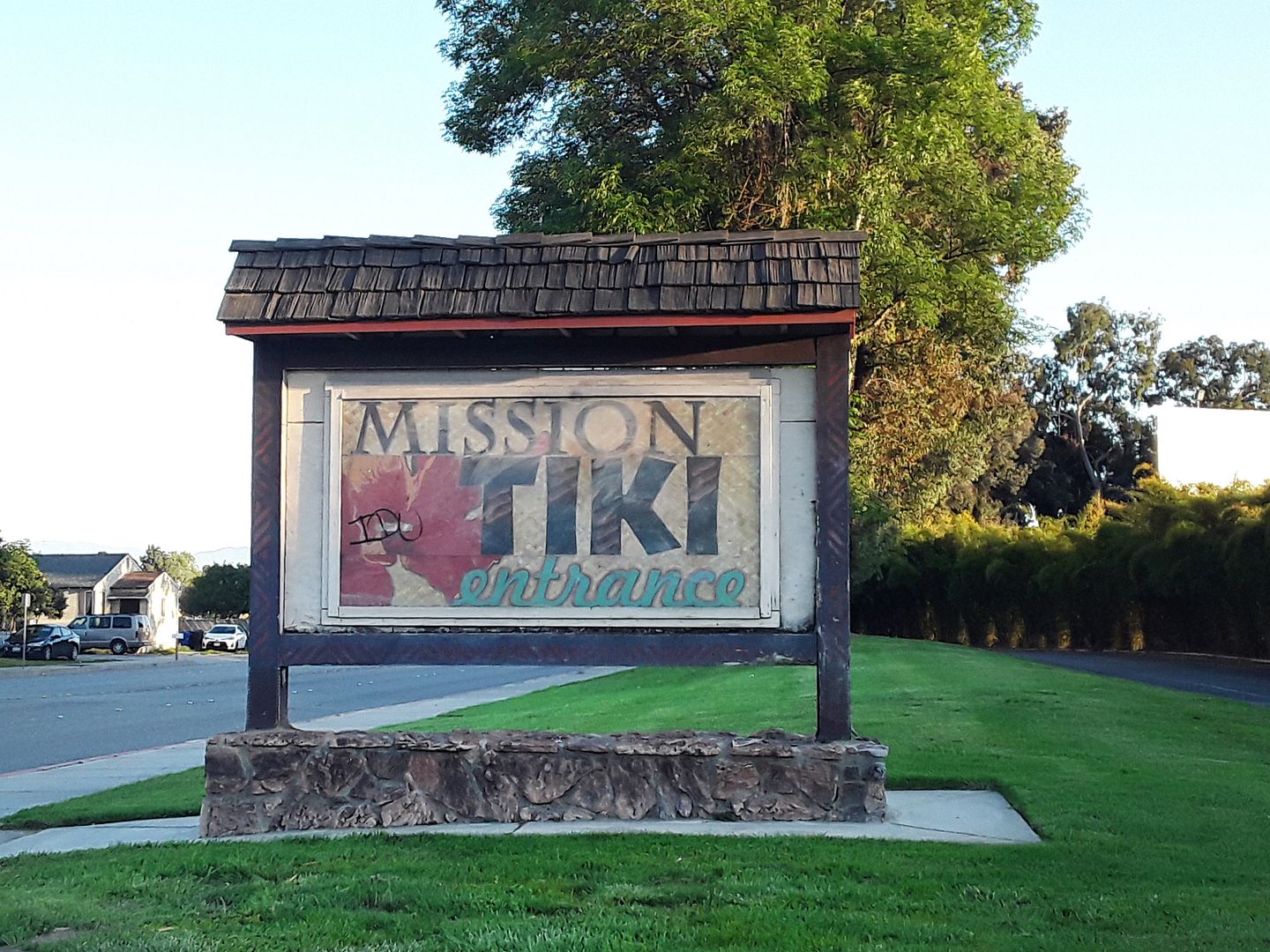


When The Mission Drive-In first opened, it was in what was then known as the Monte Vista tract—the far outskirts of any major city, surrounded by orange groves). Monte Vista incorporated as a city that same year, but it was renamed Montclair in 1958.
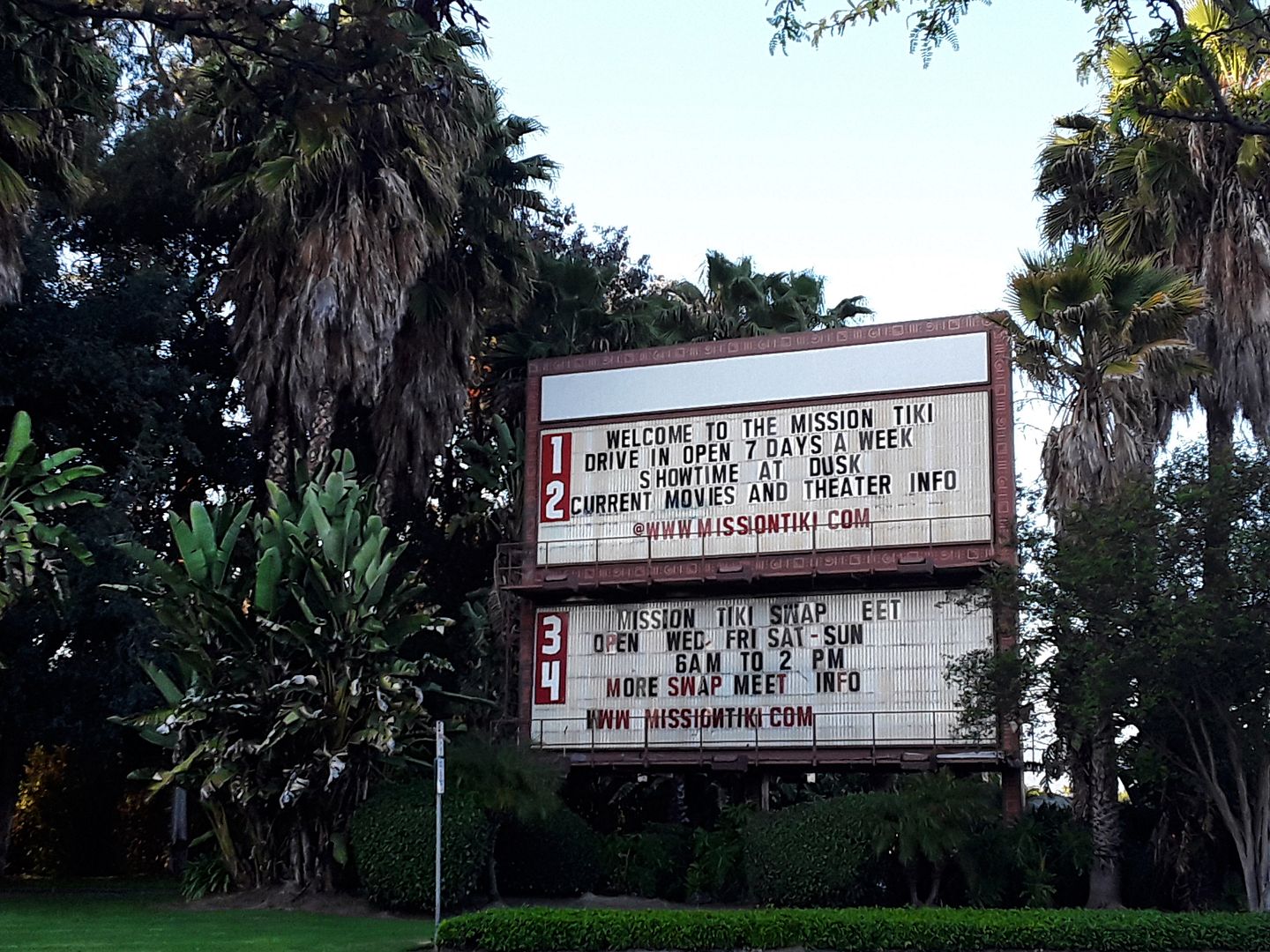


An open-air market (a.k.a. swap meet) was aded to its daytime operations in the 1960s. In 1975, the original screen was demolished and the drive-in theater was multiplexed. Now expanded to 27 acres, it shows double features of first-run movies on 4 screens, 7 days a week.


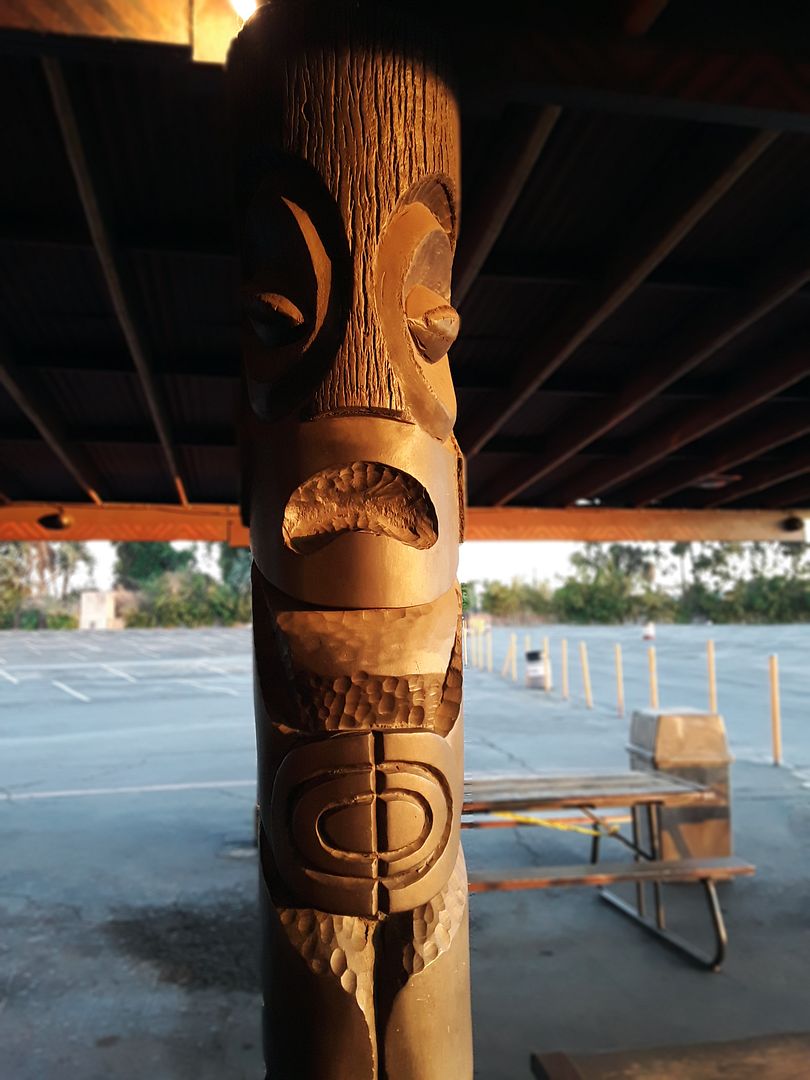
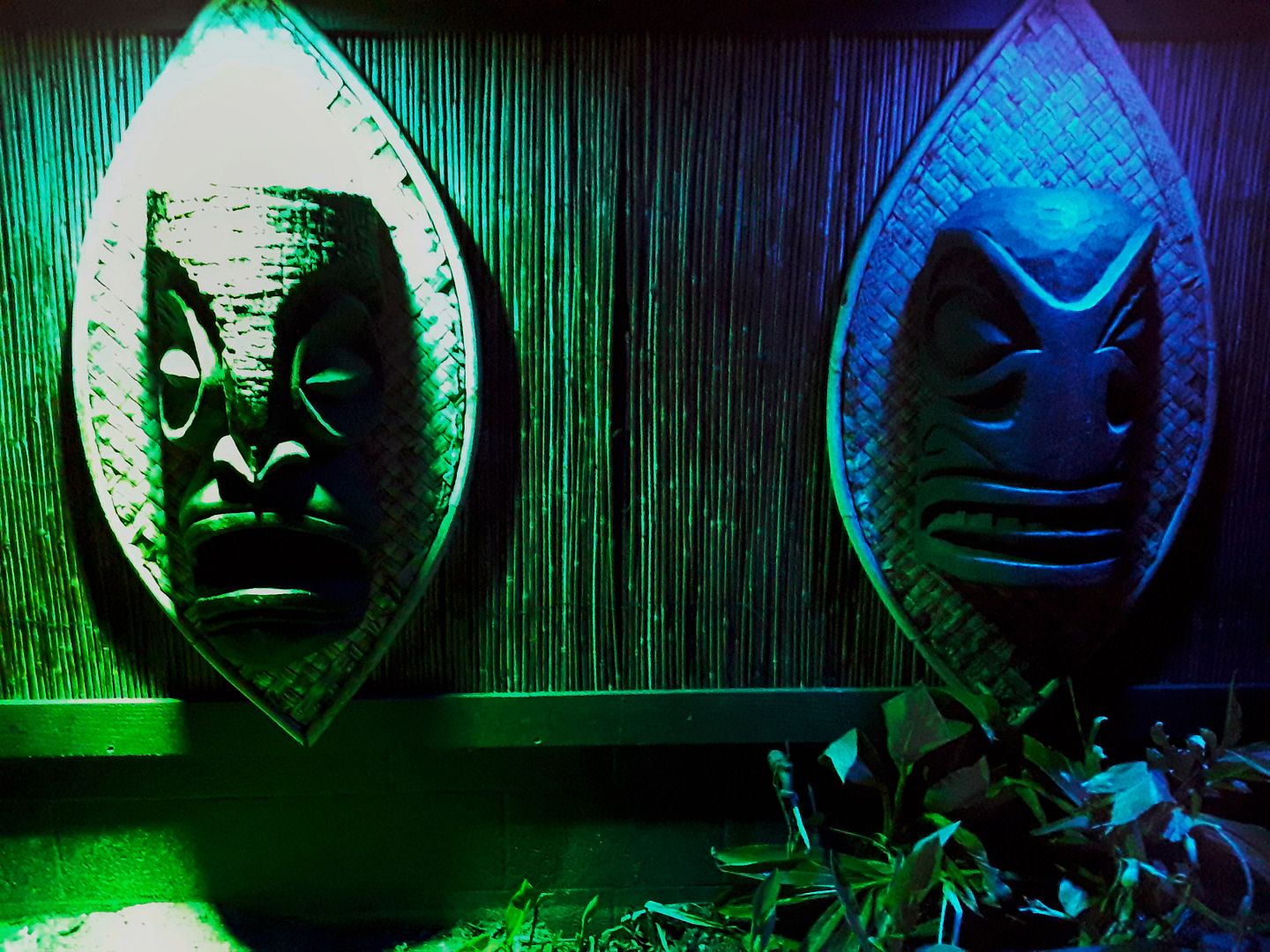
It wasn't until 2006—upon its 50th anniversary—that the Mission Drive-In became the Mission Tiki Drive-In, thanks to creative input from tiki artist Tiki Diablo.
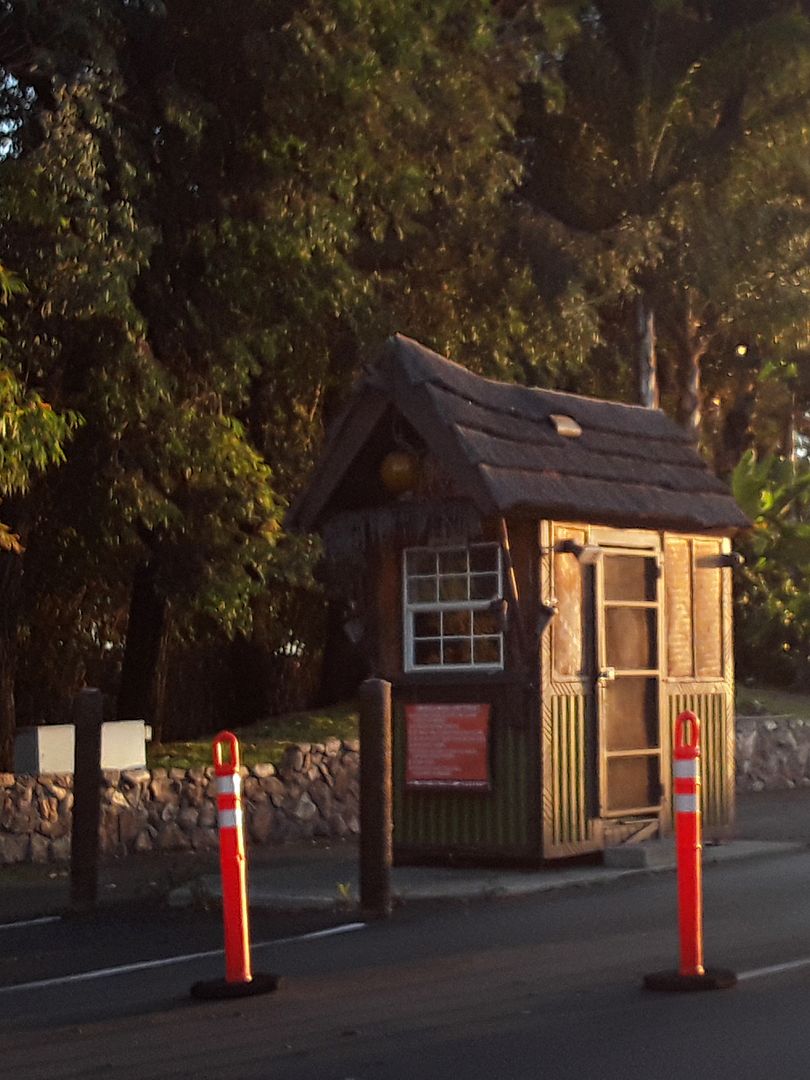
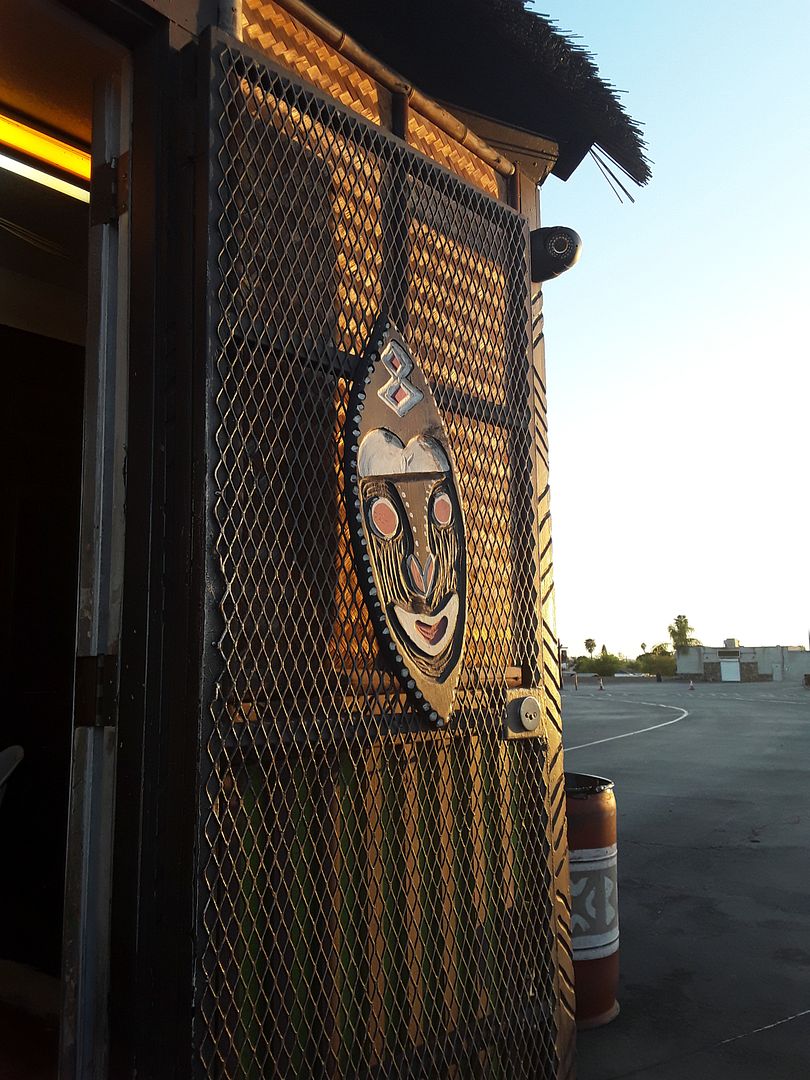

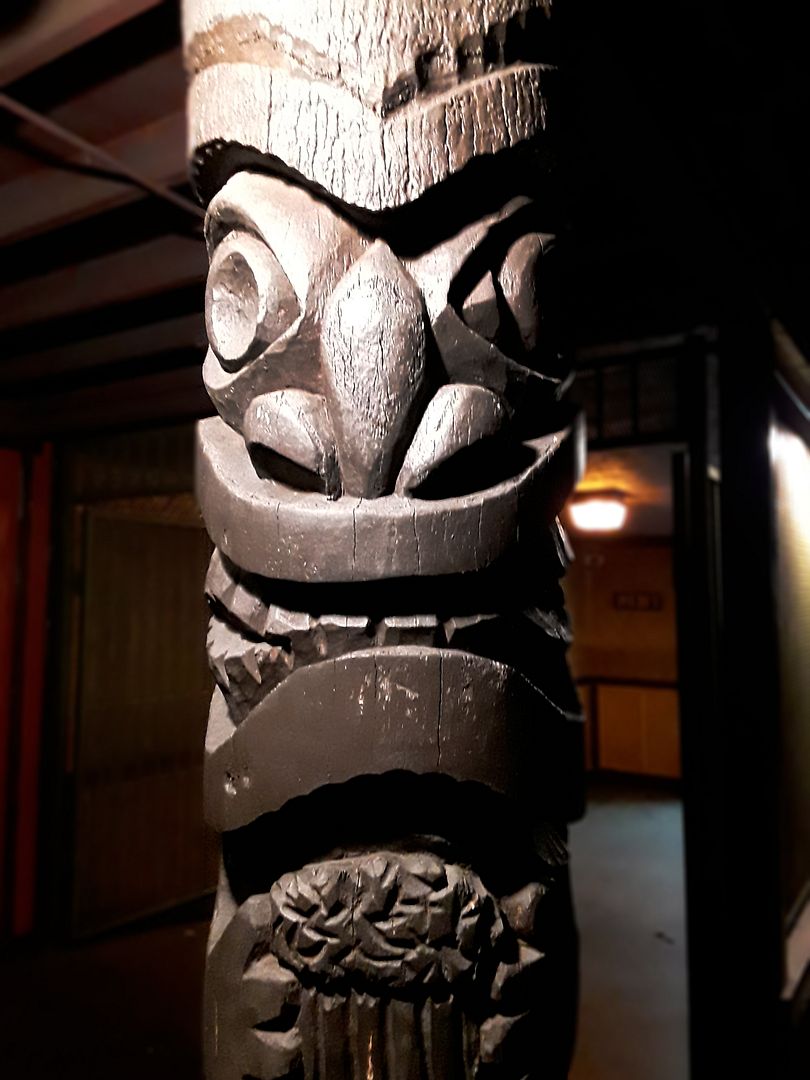
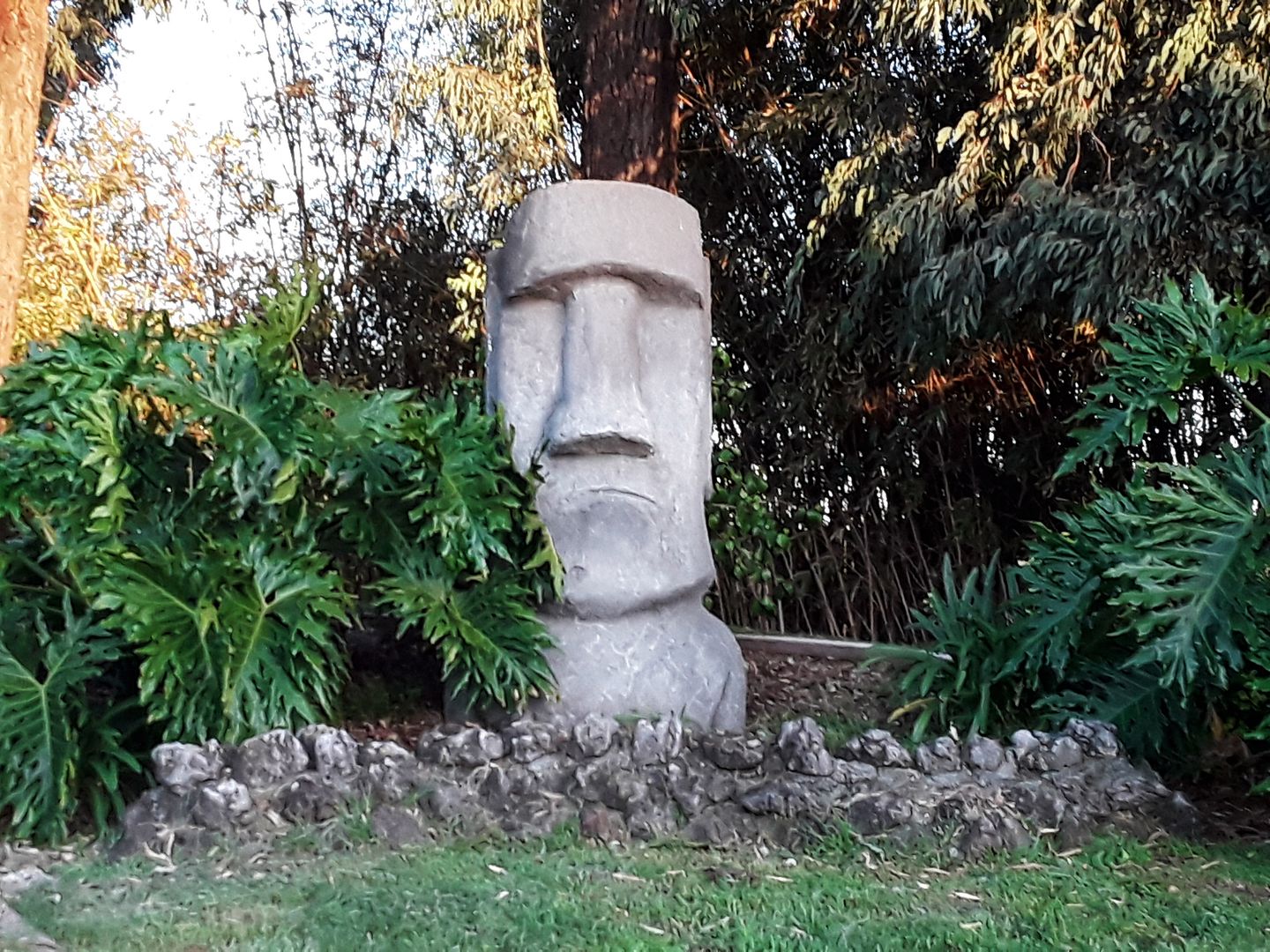
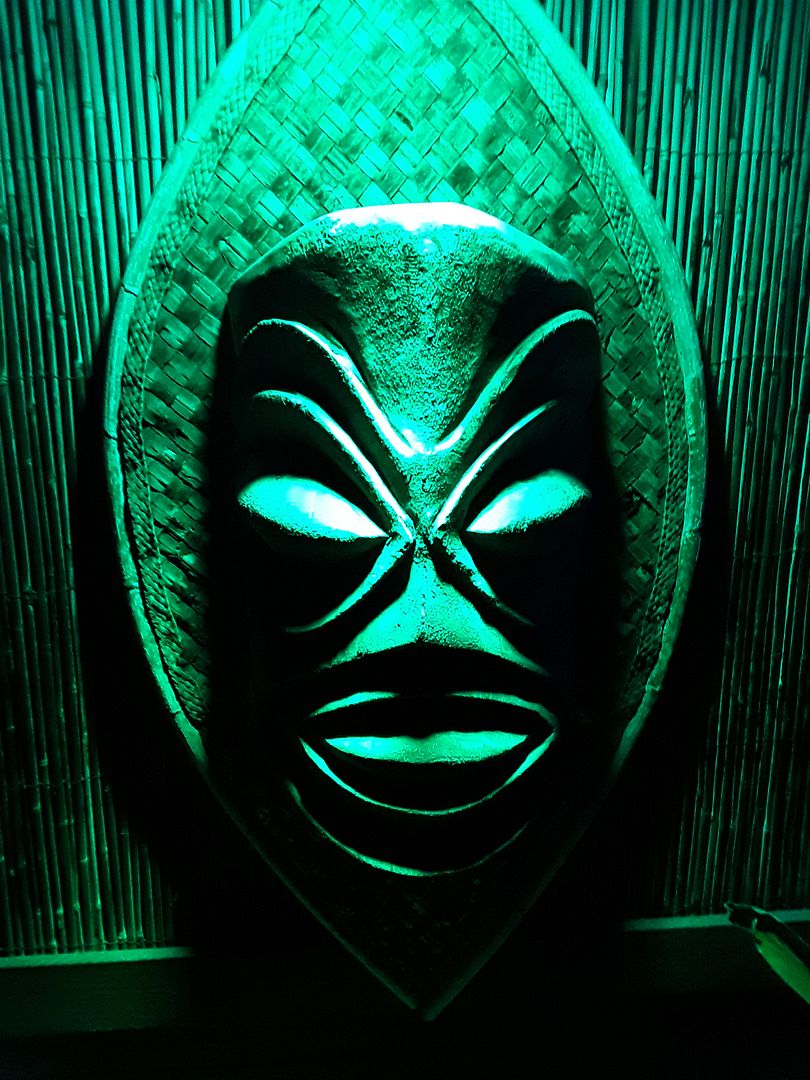
Besides adding an Easter Island-type Moai statue garden, Tiki Diablo redesigned the ticket boots with tiki masks and thatches roofs.
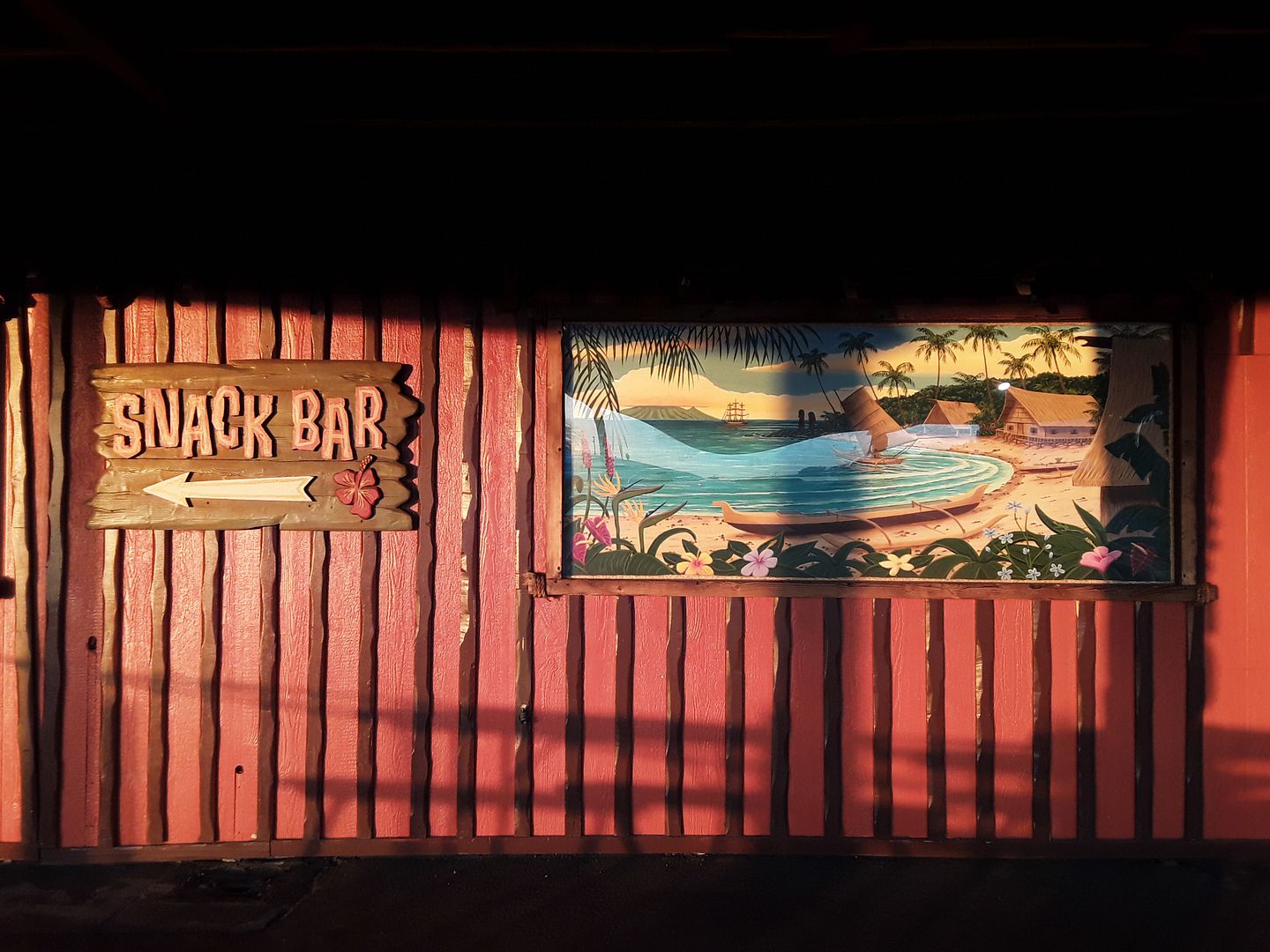


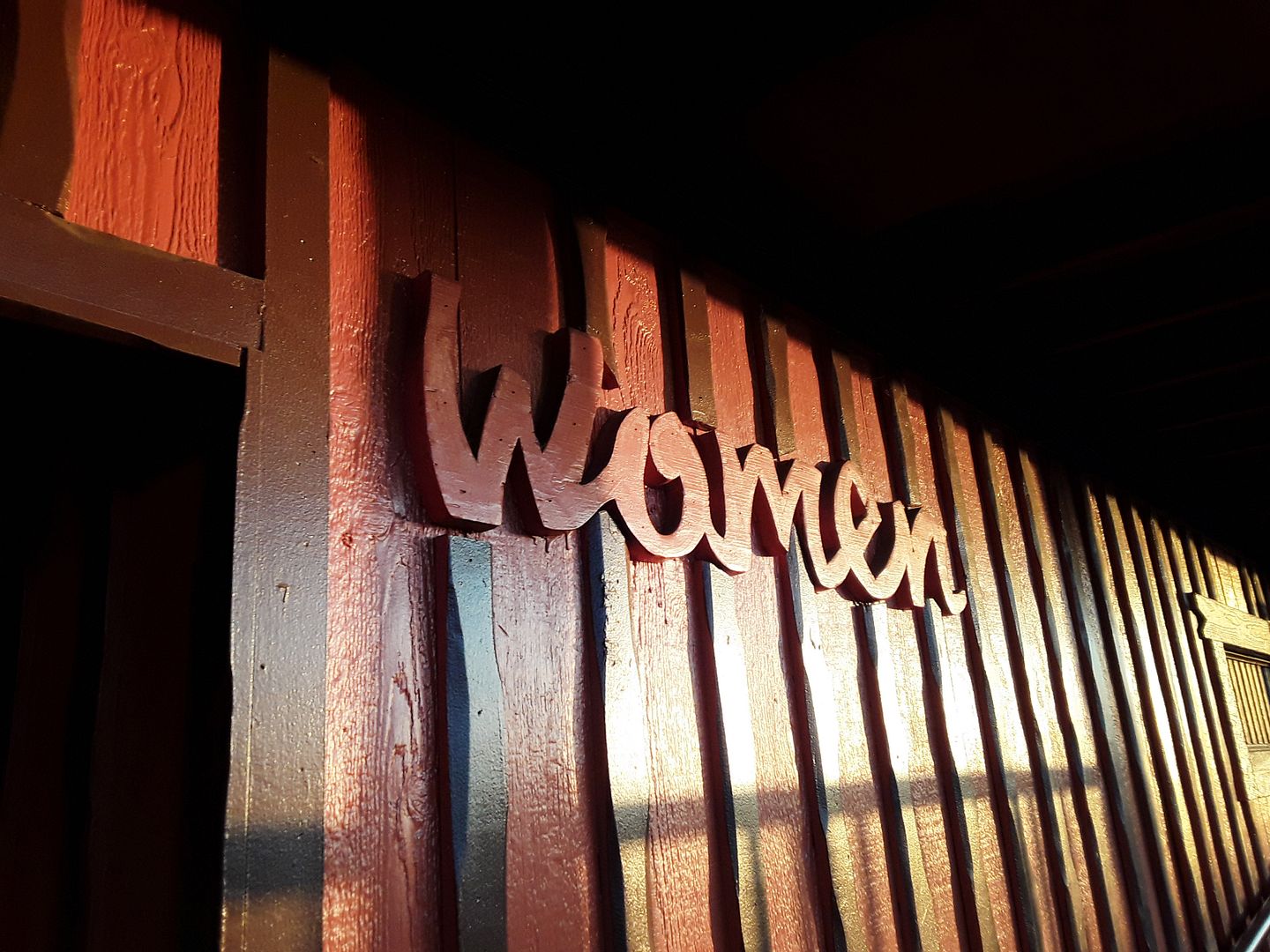
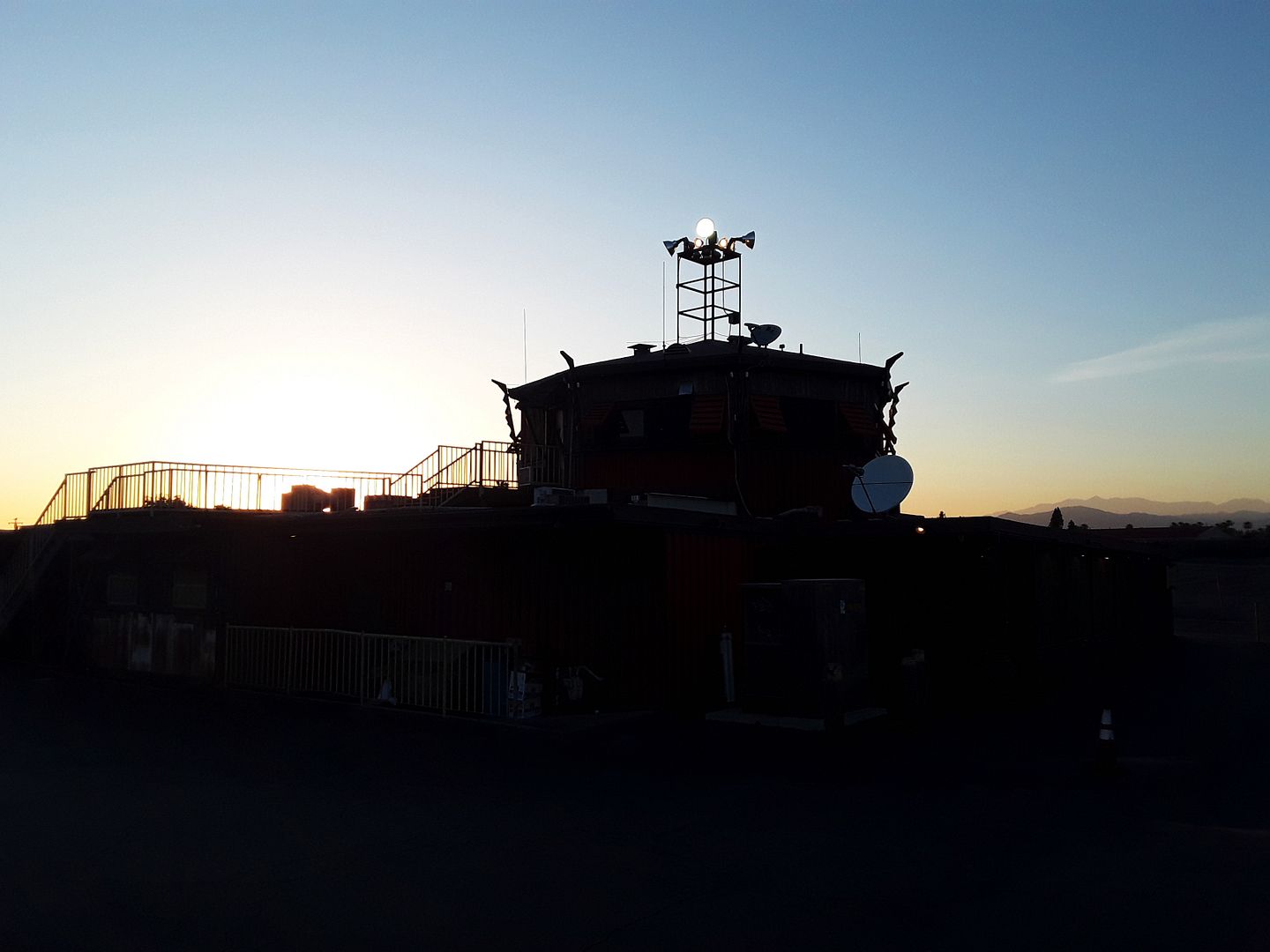
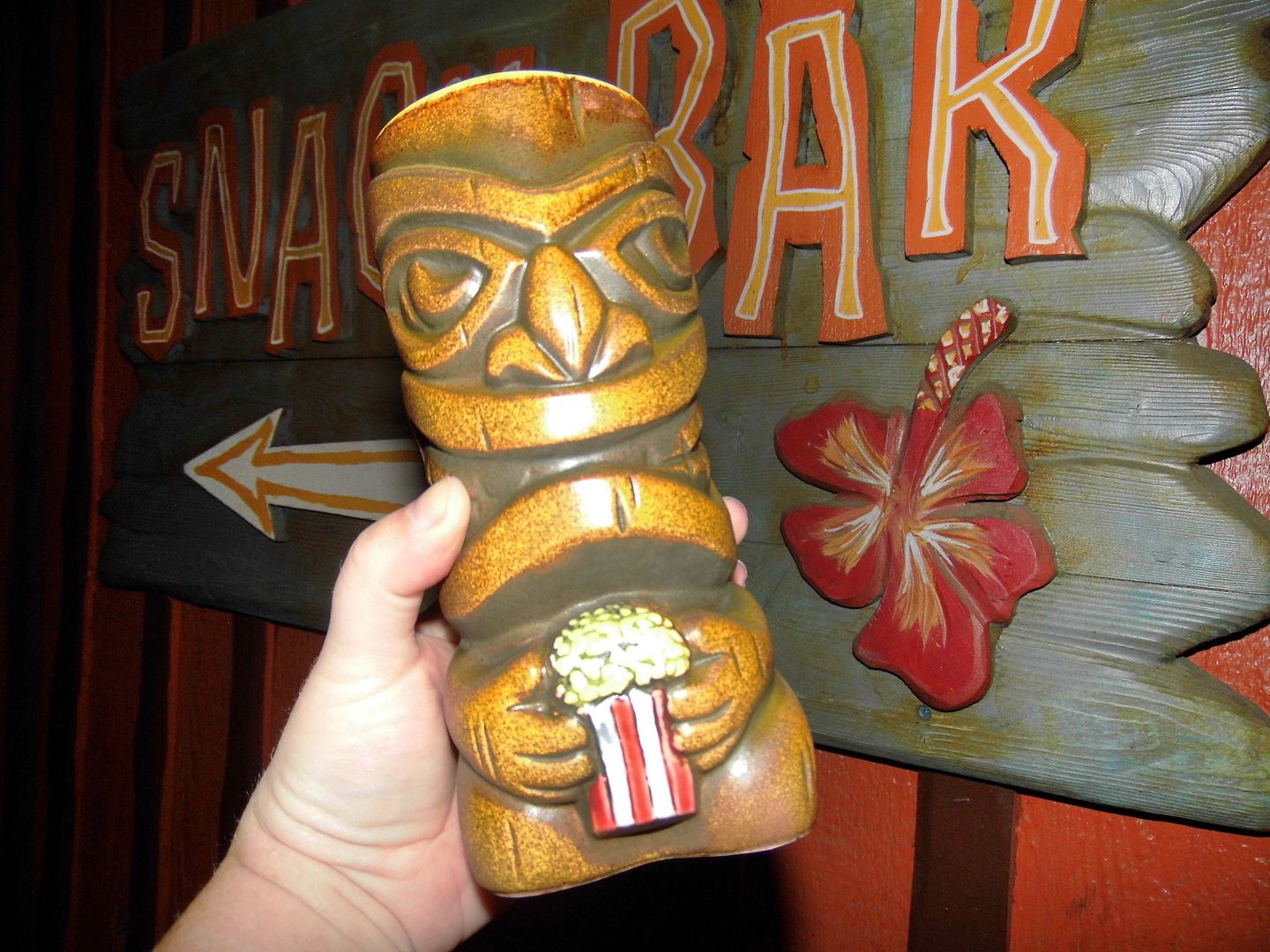
The snack bar and restroom building were redone as well...
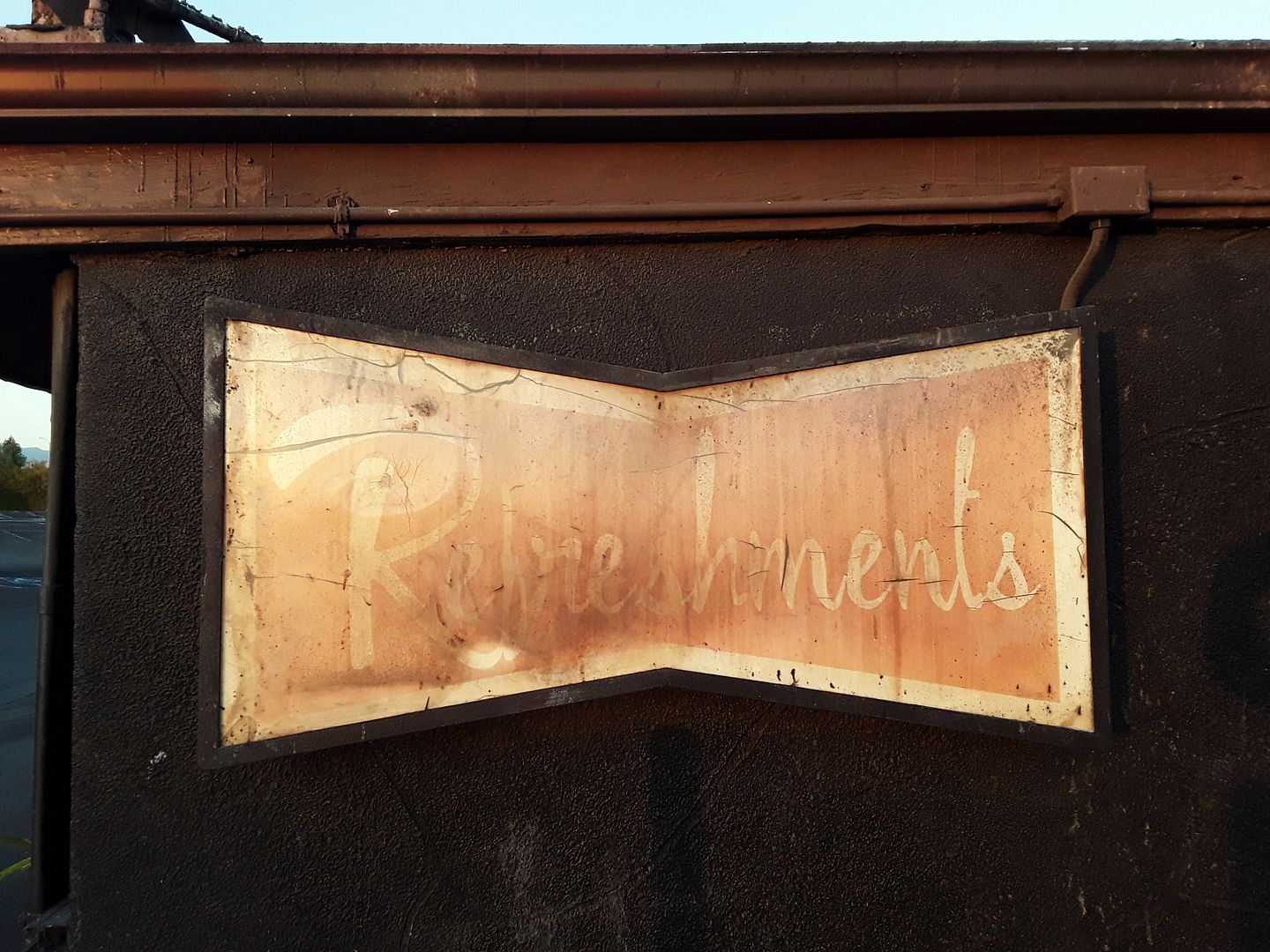


...while keeping some of its original 1950s flavor.


After all, drive-in movies weren't just for the high school greasers, girl gangs, and poodle-skirted goodie-goodies you'd find at the car hops and sock hops alike.
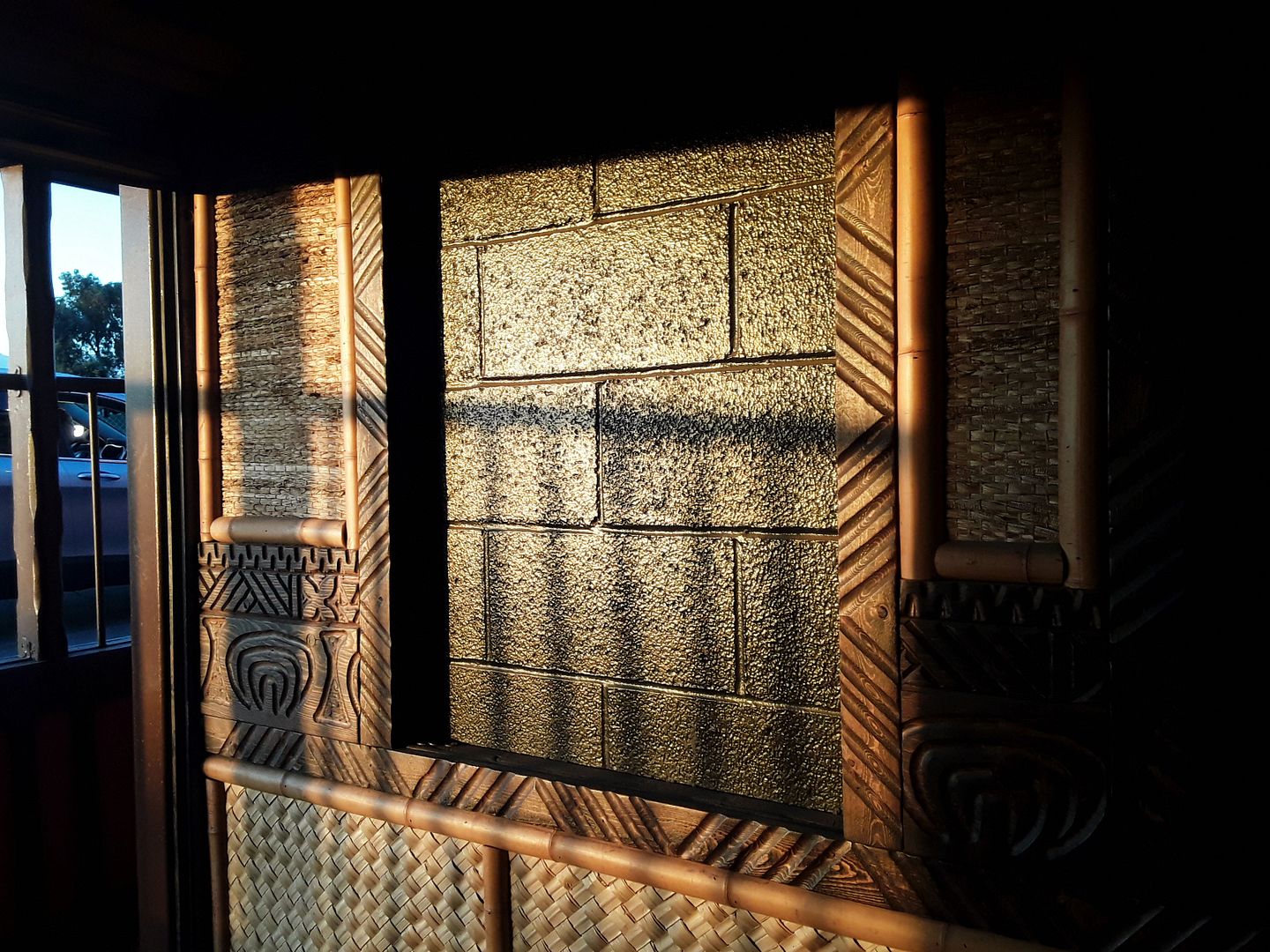


In terms of the historical timeline, the drive-in craze more or less coincided with the tiki craze. They pretty much emerged, peaked, and waned at the same time. I can't imagine a more perfect union.


And I can't believe I'd never gone before (though I had suffered through hot, humid, mosquito-ridden nights in the back of my father's car, windows rolled down and no A/C at a drive-in or two in Central New York as a kid).
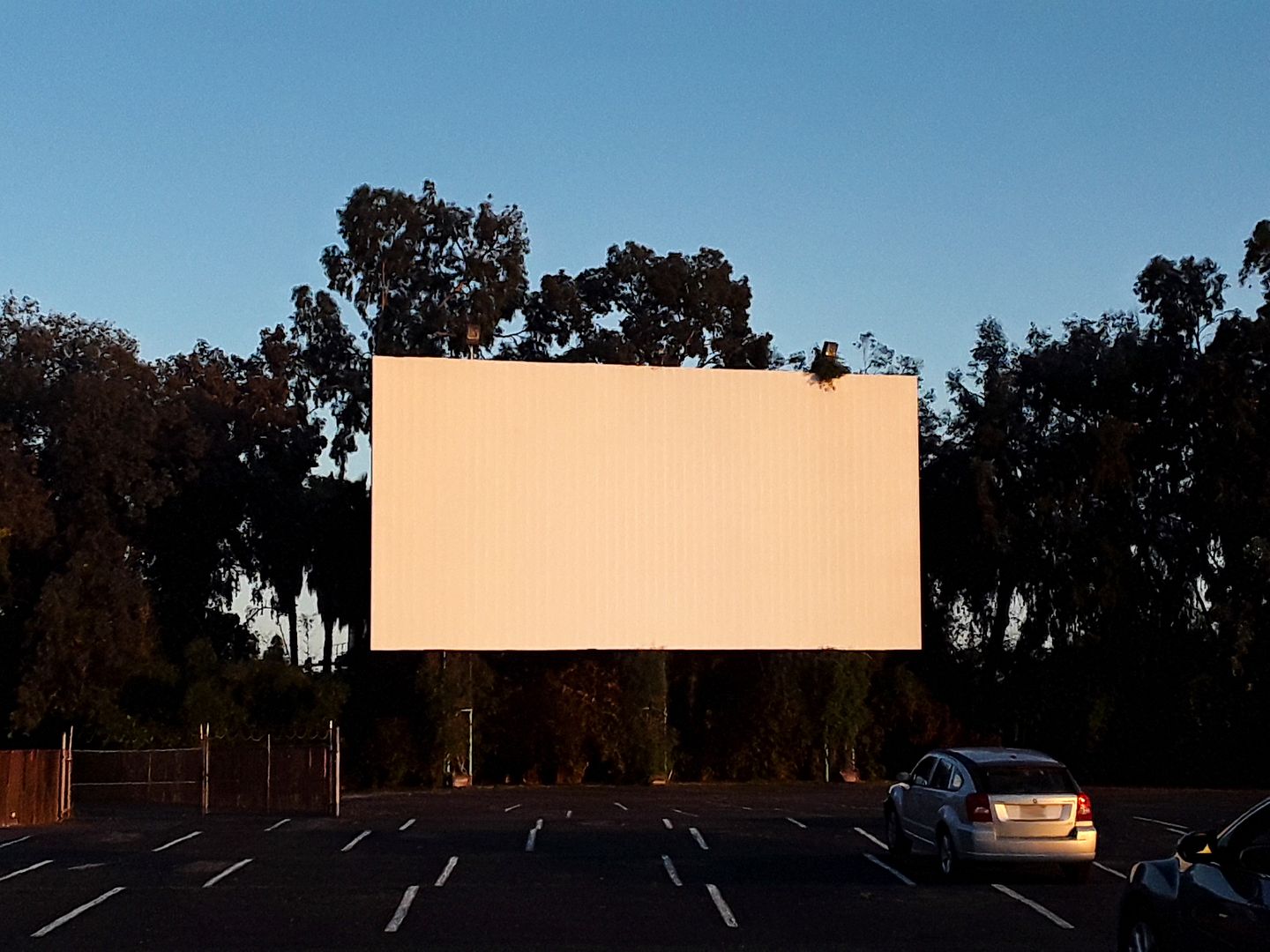


The 2006 rebranding and renovation also phased out the window-mounted car speakers in favor of broadcasting sound on the FM dial. The year 2013 brought the arrival of a digital projection system to replace the four film reel projectors.


The night we decided to get in our separate cars and give Mission Tiki a try, we caught a rare revival of Raiders of the Lost Ark (in a double feature with Indiana Jones and the Temple of Doom, which started and would end too late for us to stay on a Thursday night).


An adventure film—even one that takes place in Nepal and Egypt and not the South Seas—seemed terribly appropriate at a tiki-themed drive-in, during balmy weather.


And I thought that this drive-in could singlehandedly get a lot of people—unpaired individuals like me, and families too—through a potentially protracted period of time when there's nothing else we can do to distract ourselves.
 
Obviously, Mission Tiki had given up on itself when it sold, but the world was an entirely different place just a few months ago.

Is there any chance of saving it now? And if not in the long term, maybe just for a couple more years?

Movies thrived during the Great Depression, when people had no disposable income but found a way to scrounge up enough money for a ticket—just to get a laugh or be transported from the current day's hard time to somewhere, anywhere else.

At some point, masses of people are going to tire of watching TV and movies at home and will be desperate to go out.

And who knows when we'll be able to cram our germy bodies back into mall-based multiplexes again?

During all of this, I feel pretty much safer in my car than I do anywhere else outside my apartment. I can't be alone in that.

So, could this be the opportunity for others—maybe those who didn't grow up going to the drive-in, like I did—to discover the beauty and utter joy of watching a movie under the stars?

Someone started a petition to keep Mission Tiki Drive-In in Montclair last year. As of today it's got nearly 9,000 signatures (including mine). I don't know whether the horse has already left the barn, so to speak—but to add your signature and follow updates, see the petition here.

Update 1/23/23: Despite all efforts to save it, Mission Tiki Drive-In has finally closed for good—and we're back to going to the mall and movies as though nothing ever happened.

Here's the episode Huell Howser devoted to Mission Tiki Drive-In in its entirety:


Related Posts:
Photo Essay: The Warehouse Restaurant, A Marina Eatery for 50 Years and Counting
Photo Essay: California's Last Location of Don the Beachcomber, On Perhaps Its Last Day (Updated)

March 17, 2020

Photo Essay: The Jewel Box of the Cosmetic World and Its Pink Powder Puff (Updated for 2025)

[Last updated 2/8/25 9:43 PM PT—Added Mel's section to the bottom of this post.]

♫"...If you think that you can be an actor, see Mr. Factor, 
he'd make a monkey look good..."♫
- "Hooray for Hollywood"

Growing up in the age of drug- and department-store cosmetics like Revlon, Cover Girl, and Maybelline, it's easy to think that "Max Factor" was just another brand name.

In fact, some people have theorized that Max Factor is a kind of portmanteau of the medical practice of "maxillofacial" surgery, or "Max Facs."

But there was, indeed, a Max Factor—or, rather, a Maks Faktor.

Born in Poland, Maksymilian Faktorowicz is the man we should credit for inventing lip gloss—and many other staples of our everyday makeup cases.

He's the one who created the heart-shaped lips—like those of a Pierrot clown—for silent movie star and "It Girl" Clara Bow.

On the flipside, he also exaggerated Joan Crawford naturally thin lips, creating an overdrawn look nicknamed the "Hunter's Bow."

His pedigree was unmatched, having worked for the Imperial Russian Grand Opera's cosmetician at only age 14. Later, he became the on-call beautician to the family of Russia’s Czar Nicholas II.

After immigrating to the United States, and moving to LA with his family in 1908, he founded Max Factor & Company in 1909. Without a permanent headquarters, he set up shop in various different neighborhoods and in buildings that weren't his own (including, for a while, the Pantages building).

In 1913, he caught a break when he persuaded Hollywood director Cecil B. DeMille to rent the wigs he'd custom-made.

But in the land of make-believe, it was "make-up" that brought Max Factor the most attention.

Until he started "making up" both starlets and average women, the term "make-up" was only associated with theater actors and vulgar women with bad reputations.

That all changed after he settled into his own home—and threw the doors open to the public, welcoming them into an opulent setting that was perfect for lured high-society and professional women (and way too nice for hussies).


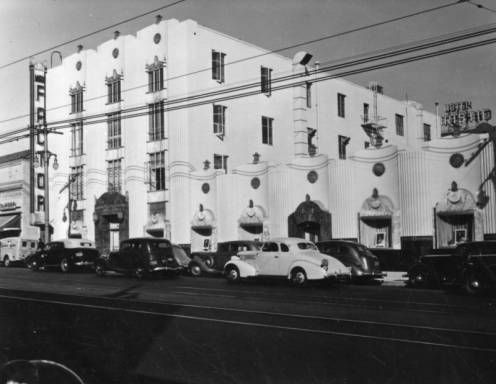
circa 1939 (Photo: Works Progress Administration Collection, via LAPL)

He chose the Hollywood Fire and Safe Building, built in 1913, as his future home in 1928—disastrously close to the stock market crash that would delay its opening until 1935. 

April 18, 2016

Photo Essay: The High Desert's Crystal Cave (Updated for 2024)

[Last updated 12/9/24 9:42 PM PT—Sky Village Swap Meet closed on December 1, 2024 after being sued regarding its ADA compliance. Its owner, Zena Carr (Bob Carr's daughter), says that it's too expensive to get the property to be compliant. A liquidation sale will follow.

According to Z107.7fm, the Crystal Cave will be sold and relocated.]

[Updated 1/22/19 7:09 PM PT to reflect the passing of Bob Carr]

[12/29/18 7:35 PM PT Updated with some additional historical information, courtesy of the Morongo Basin Historical Society]

[Photos added 10/17/16 7:03 PM PT]

I'm amazed at how many places I still haven't visited in the high desert—especially the Joshua Tree area—considering how much time I've spent there.


And you'd think that I'd have made the pilgrimage to an old drive-in movie theater before now.

April 20, 2020

Photo Essay: Back to the Future's 1955 and 1985 Locations, Upon the 35th Anniversary of Its Release [Updated for 2025]

[Last updated 5/18/25 9:18 PM PT—Photos of Courthouse Square at Universal Studios Hollywood and of the 2024 Enchantment Under the Sea dance added, and the entire blog post was rearranged to make more sense with the plot of the movie]

[Updated 12/29/24 10:22 AM PT—Links to photos of a recreation of the Enchantment Under the Sea dance added below.]

[Updated 9/4/24 11:34 PM PT—The Puente Hills Mall is about to be sold for redevelopment, according to Los Angeles Magazine. A recent site visit reveals it's not quite a "dead mall" yet—but the vast majority of businesses have closed, and the stores that are open (Ross Dress for Less, Hot Topic) are pretty empty or have very limited hours (opening as late as 2 p.m., perhaps to catch the after-school crowd). A Twin Pines Mall sign photo has also been added farther down the post.]

Back to the Future was a big deal to the 9-year-old me that I was when the movie first came out in theaters 35 years ago, in Summer 1985.

And since I'm still really in touch with my inner 9-year-old, the movie's impact on me hasn't really waned. I'm always thinking about how my actions today will impact the future. I'm still desperate to "Save the Clock Tower"—whatever form that "clock tower" may take.

So it comes to no surprise—to myself, or anyone who knows my inner 9-year-old—that I take opportunities to re-experience Back to the Future whenever I can.

Back in 1985, that meant re-watching it in the movie theater while it was still in its first run. I remember our mother asking my sister and me which movie we wanted to see—it was an occasional treat for us that extended into the late '80s—and we couldn't think of anything we wanted to see more than Back to the Future again.


circa 2019

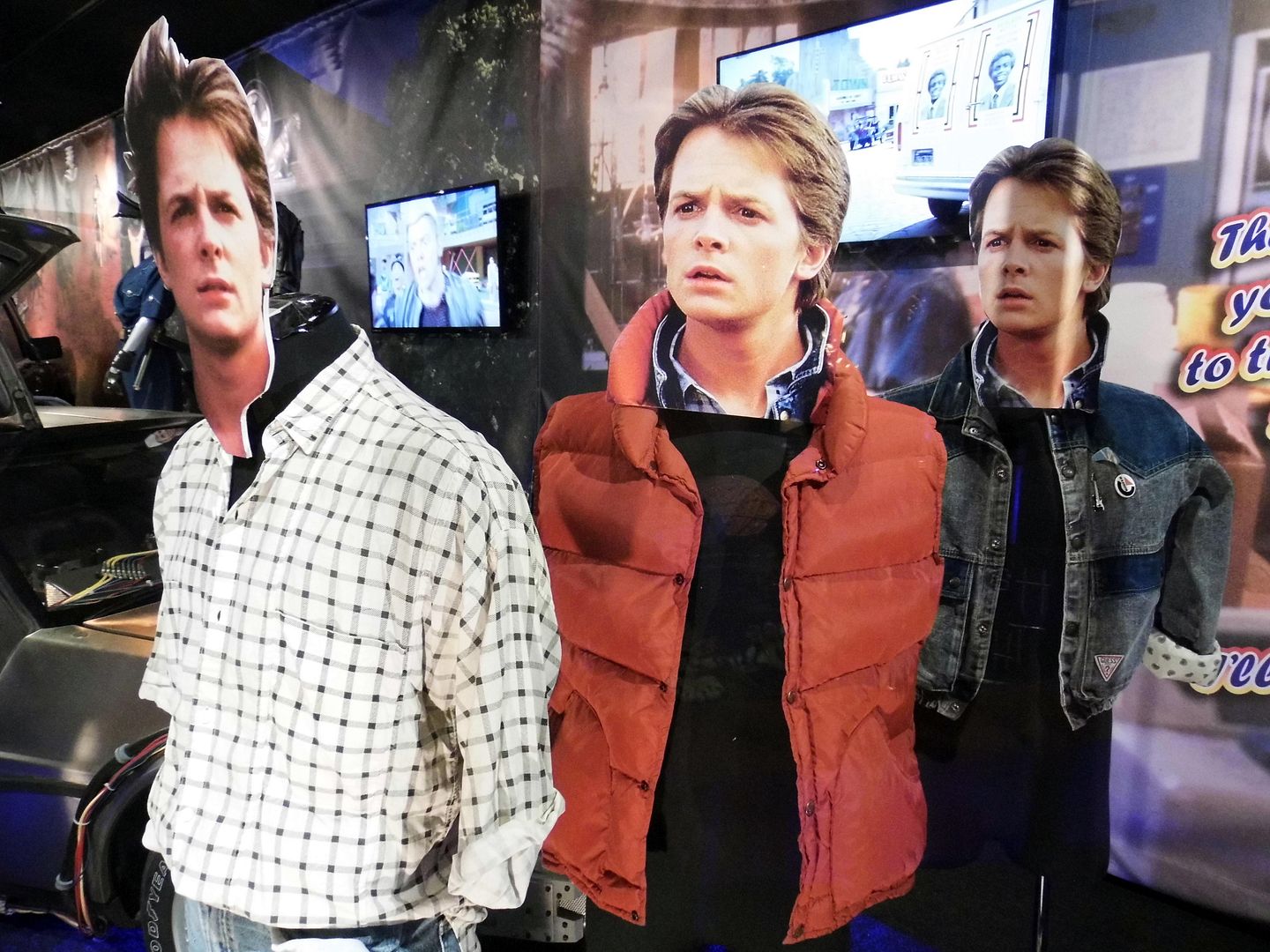
But now that I live just steps away from Hollywood, that means I've gotten the chance to see some screen-worn costumes...

February 27, 2023

Photo Essay: The End of the Line for the Last of Its Kind, Gardena Cinema

Large, opulent movie palaces aren't the only type of movie theatre that's nearly gone extinct in the advent of the multiplex cinema.

 
There's also the local neighborhood single screen theatre—smaller and more modest than the palaces, but crucial to a sense of community in suburbs, subdivisions, and other areas a little farther out from Los Angeles' downtown or, as development moved west, Hollywood.

 
An example of such is the Gardena Cinema, located in the tiny City of Gardena in the South Bay region of Los Angeles—once known for its greenery but now perhaps more famous as the site of a SpaceX facility.

September 02, 2020

Adventures on Pico: From a Chili Bowl to An Oil Well (Updated for 2022)

[Last updated 12/26/22 11:07 PM PT—Info on Wienerschnitzel closure added.]
[Updated 2/24/22 8:08 PM PT—The Chili Bowl was approved for demolition and was disassembled this week. Its fate remains unclear, although preservationists hope its pieces could be relocated and reassembled elsewhere.]

Lately I've been retracing what I thought was a familiar route through LA—but finding new aspects of it that I'd never noticed before.

For me, this has been a blessing of the pandemic. It's like the city is new to me all over again.

When I first moved to LA, it was for a job on Main Street in Venice, California—and the easiest way to get there was to take Pico Boulevard all the way west down to Gateway, which would dump me off on Main in Ocean Park, just a stone's throw away from the office.

It was a drive that required low cognitive load—essential for my morning haze and preference to sing along to the radio rather than navigate.

I'd take in what I thought were the main sights of Pico—the Fox Studios, the Ranch Park Golf Course across the street, Westside Pavilion, and The Apple Pan.

Before I'd make my left turn, I'd let my gaze linger on the former location of Kelbo's tiki restaurant, whose current tenant at the time—Fantasy Island strip club—kept the lighthouse architectural motif and tropical signage. (It was unfortunately demolished a few years ago, before I got up the nerve to go inside).

And that was about it. I rarely took the same way back home, instead cutting down Venice through Culver City to catch a drink or a snack there before calling it a day.

That was my routine for three months in 2011—before getting laid off.

Even when I worked at a different job nearby in 2014, and would head one boulevard south to Pico for after-work happy hour, I didn't discover much more than Billingsley's steakhouse and the SF Saloon—not before getting laid off after yet another three-month stint.

But my recent treks to Santa Monica to go swimming have brought me not only back down Pico, but farther down Pico, and even the other way down Pico to get back home.

And it has been a pandemic adventure!


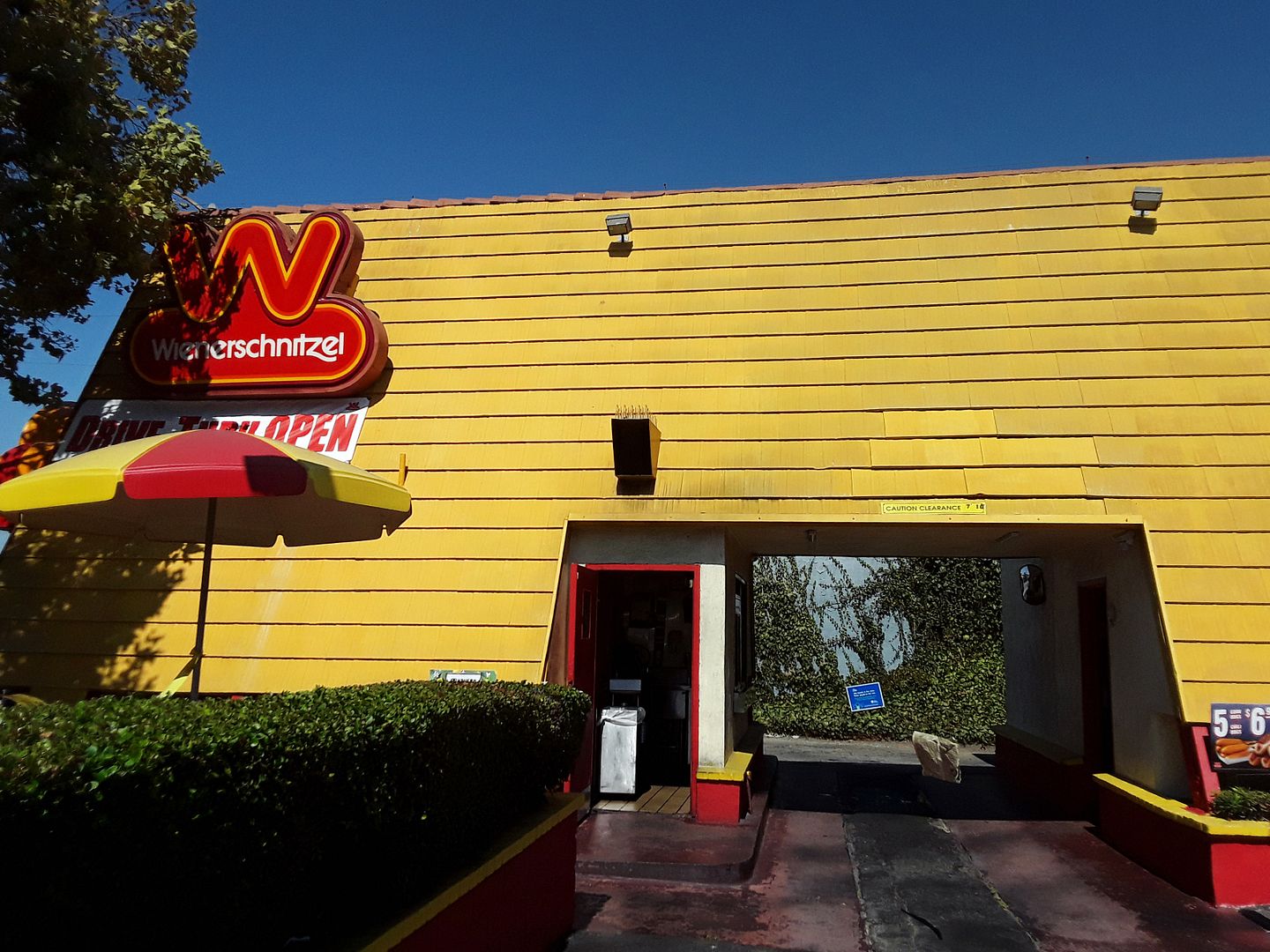
Coming from Santa Monica, almost before hitting the city limits at the 10 freeway overpass and crossing over into West LA, I stumbled upon a Wienerschnitzel fast food stand that impressed me more than even the first location in Wilmington, California—thanks to an A-frame structure that you can drive through.


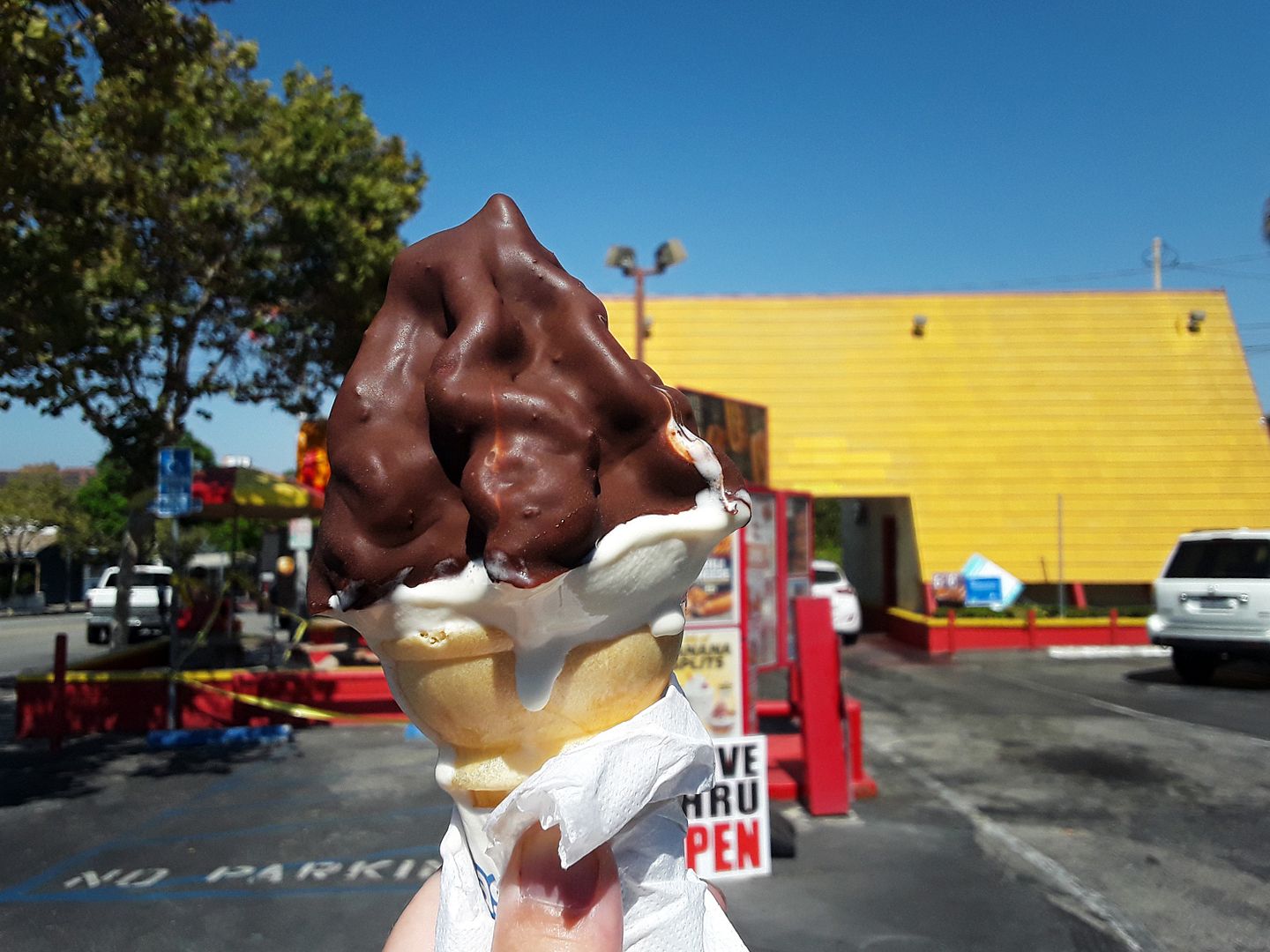
One of the silly items on my to-do list was to visit a Tastee Freeze—any Tastee Freeze, even one that's part of a Wienerschnitzel—so I would know what John Cougar (Mellencamp) was singing about in the song "Jack and Diane." I didn't order a chili dog, but maybe someday. [Ed: This Wienerschnitzel has closed but the Go Get 'Em Tiger chain has announced it will take over the space.]


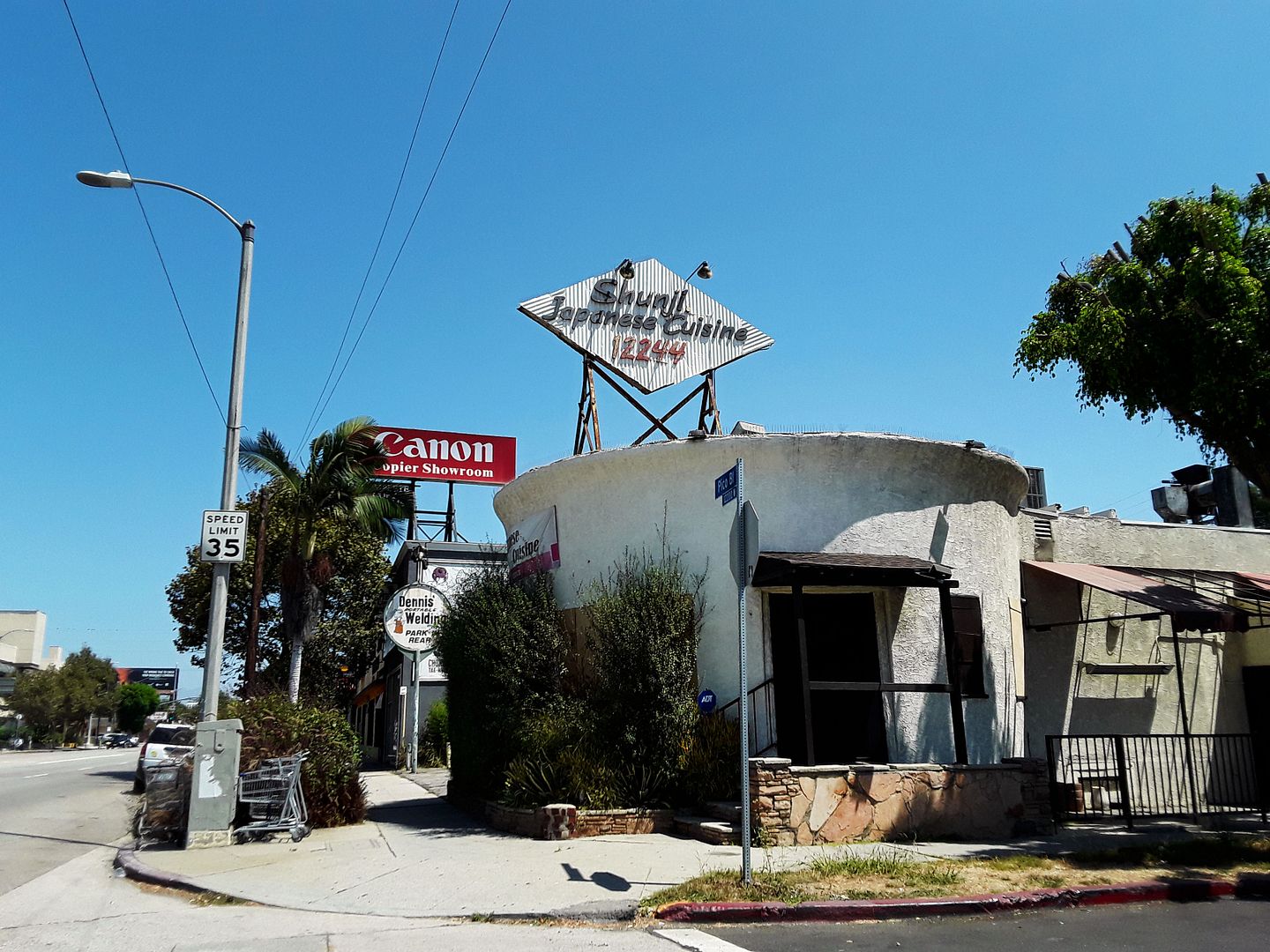
I can't get a bowl of chili anymore at the former Chili Bowl on Pico, just past the 10 overpass, but maybe I can get some Japanese food in the chili bowl-shaped restaurant when it reopens from the pandemic. [Ed: It never did.] Constructed in 1935, this "bowl" was relocated in 1939 from Silver Lake as part of Arthur Whizin's restaurant chain, all locations of which (18 at the time) closed by 1947.


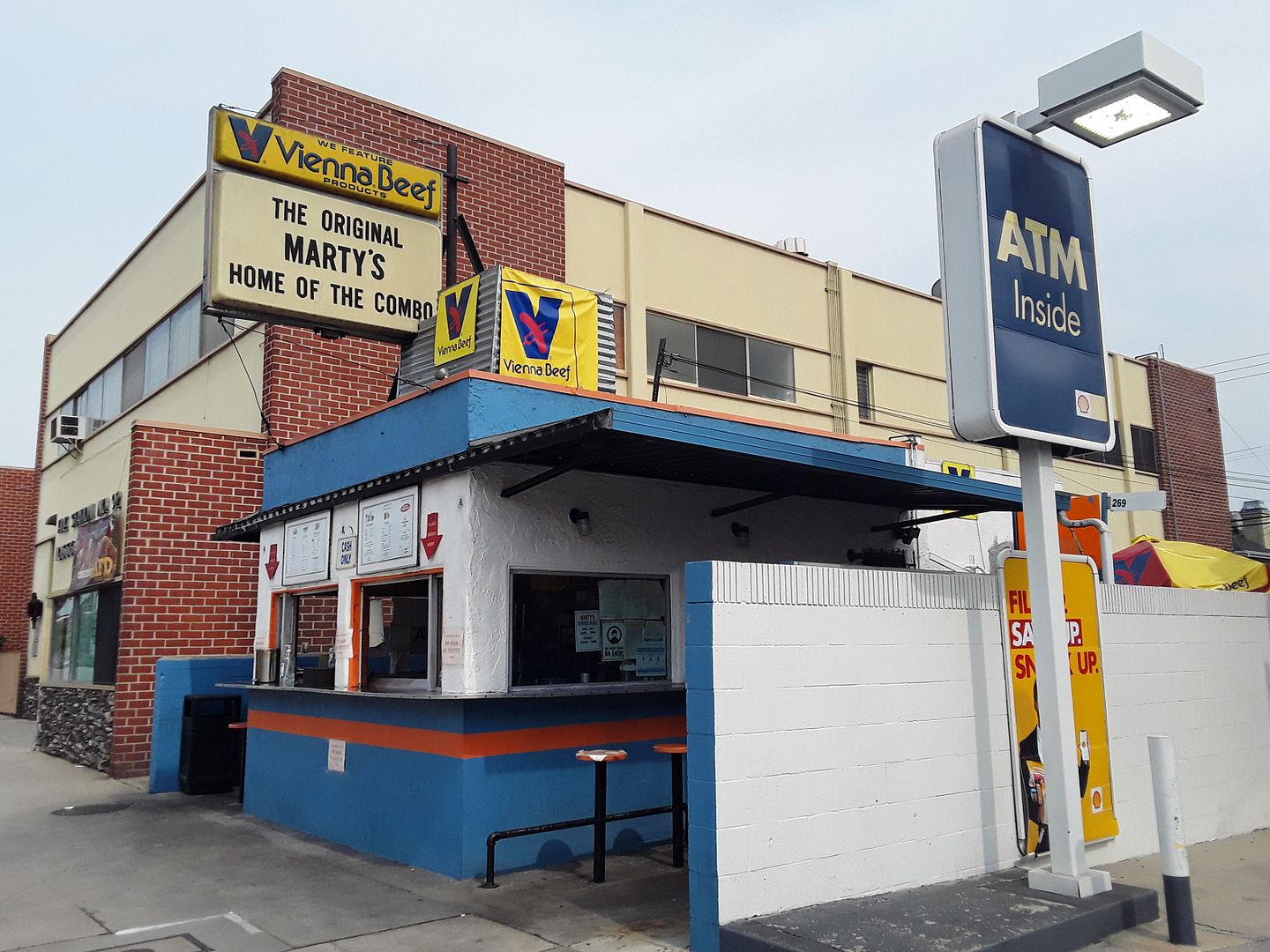
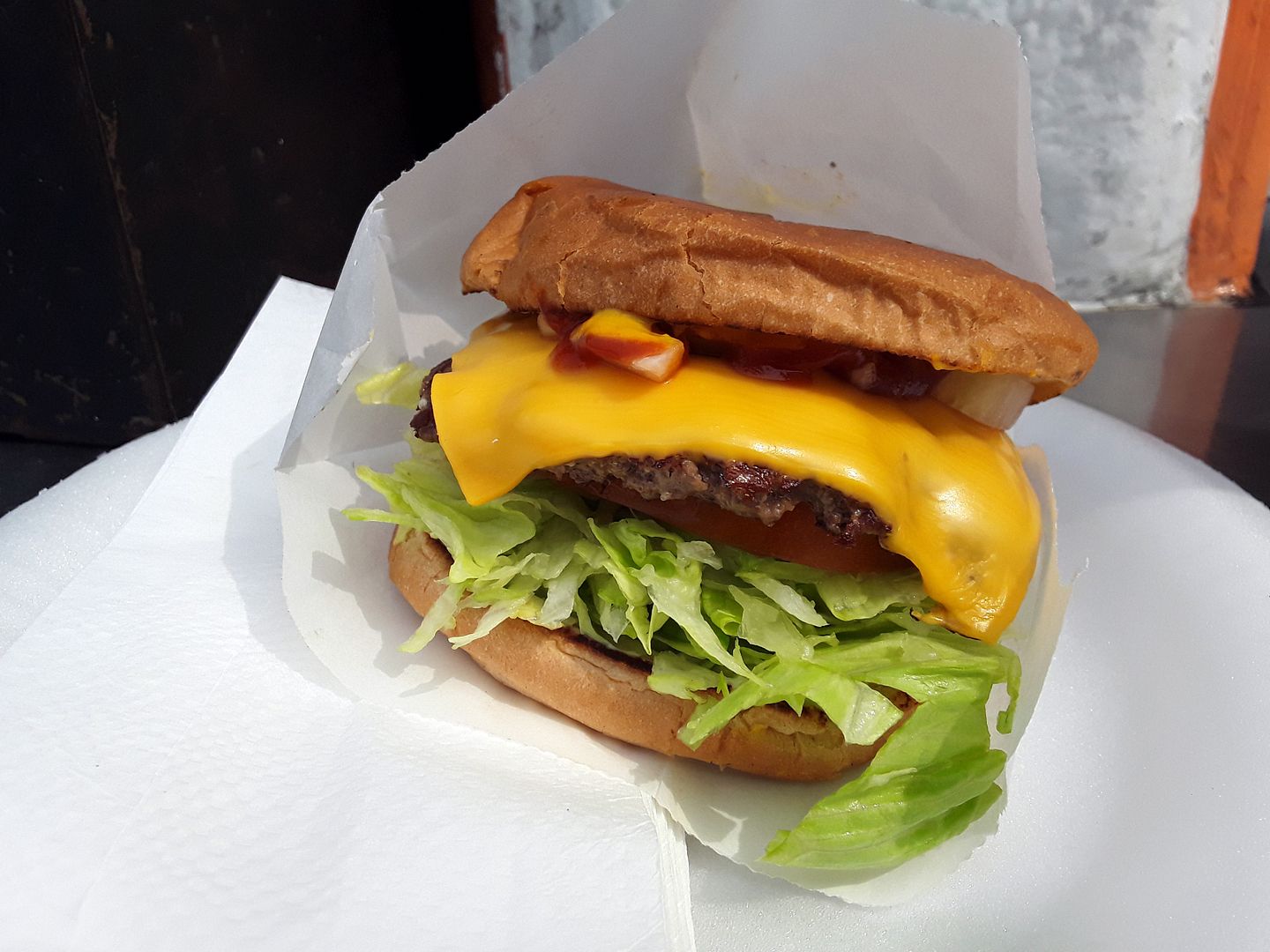
I could've gotten a chili dog at Marty's Hamburger Stand on Pico—but after driving by umpteen times and actually having this place starred on my map, when I finally walked up I resisted the call of Chicago's own Vienna Beef and ordered a cheeseburger instead.


I've learned that when a place like this—which has been slinging burgers since 1959—asks if I want everything, I tell them to give me whatever they've got. And in this cade, they've got the formula down—with mayo, lettuce, and tomato on the bottom and onions and ketchup on the top. (I now have them add mustard and pickles for good measure.)


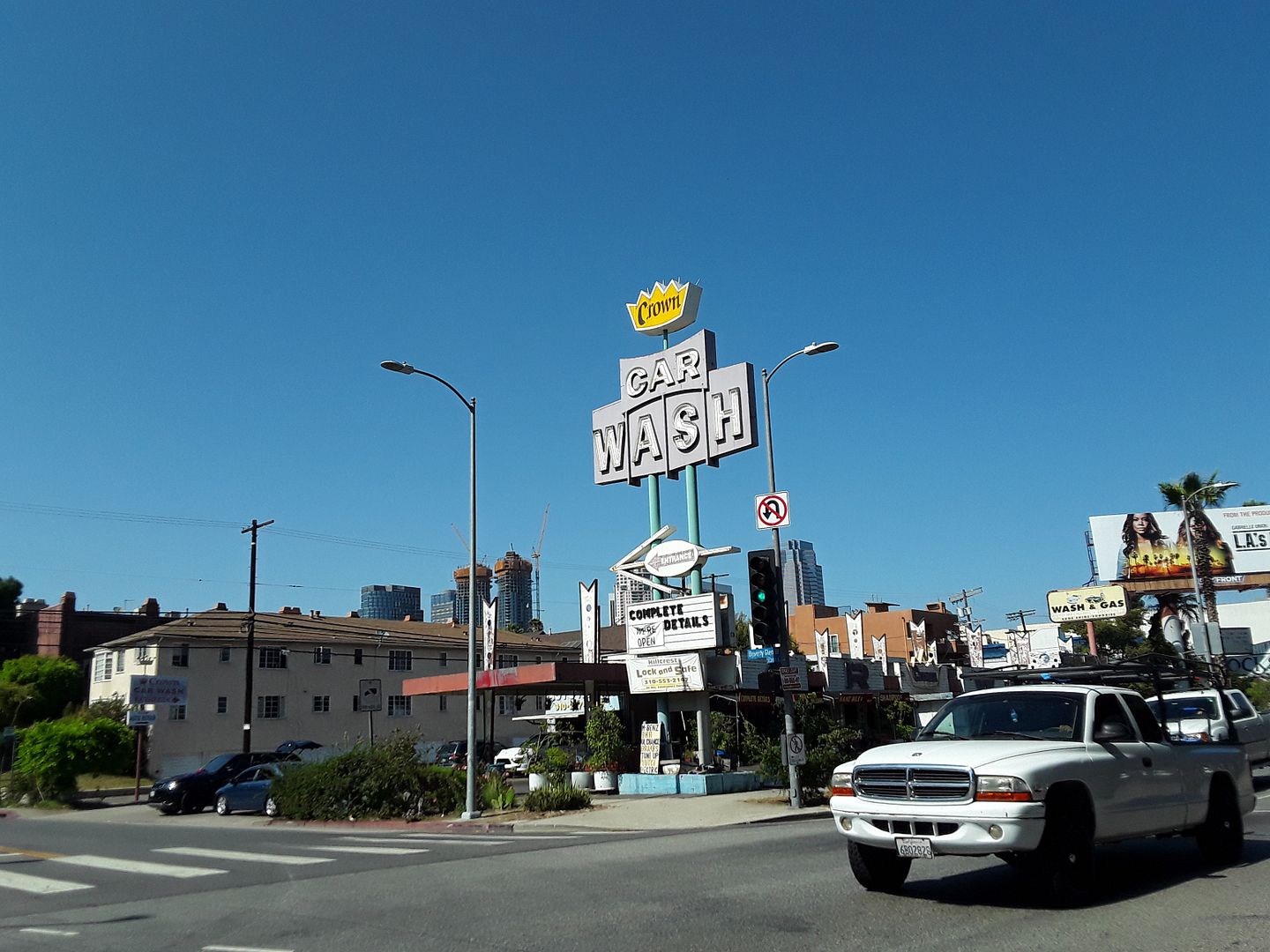
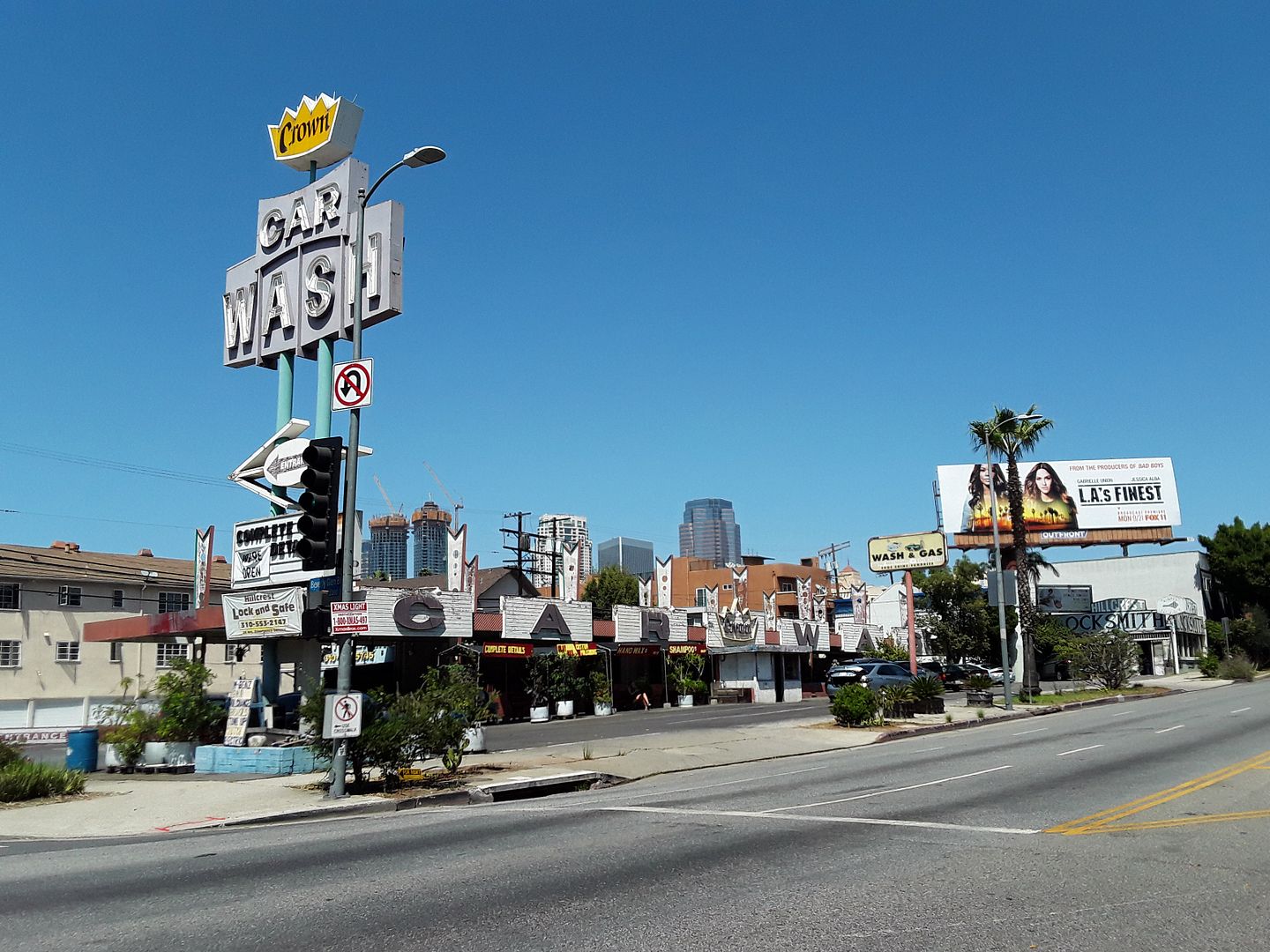
This seems to be a Los Angeles that locals say they long for but can't find anymore—roadside food with a single serving of a Mid-Century car wash (circa 1960) on the side. [Ed 12/26/22: The car wash has been fenced off for months for supposed renovations.]


I'm sure Pico has changed over time—and maybe it'll change even more once Google moves its offices into the old mall (which stands approximately where LA's first drive-in movie theater opened in 1934).


But right now, I'm relishing in the mom and pop shops, the low profiles, the weather-worn signage.


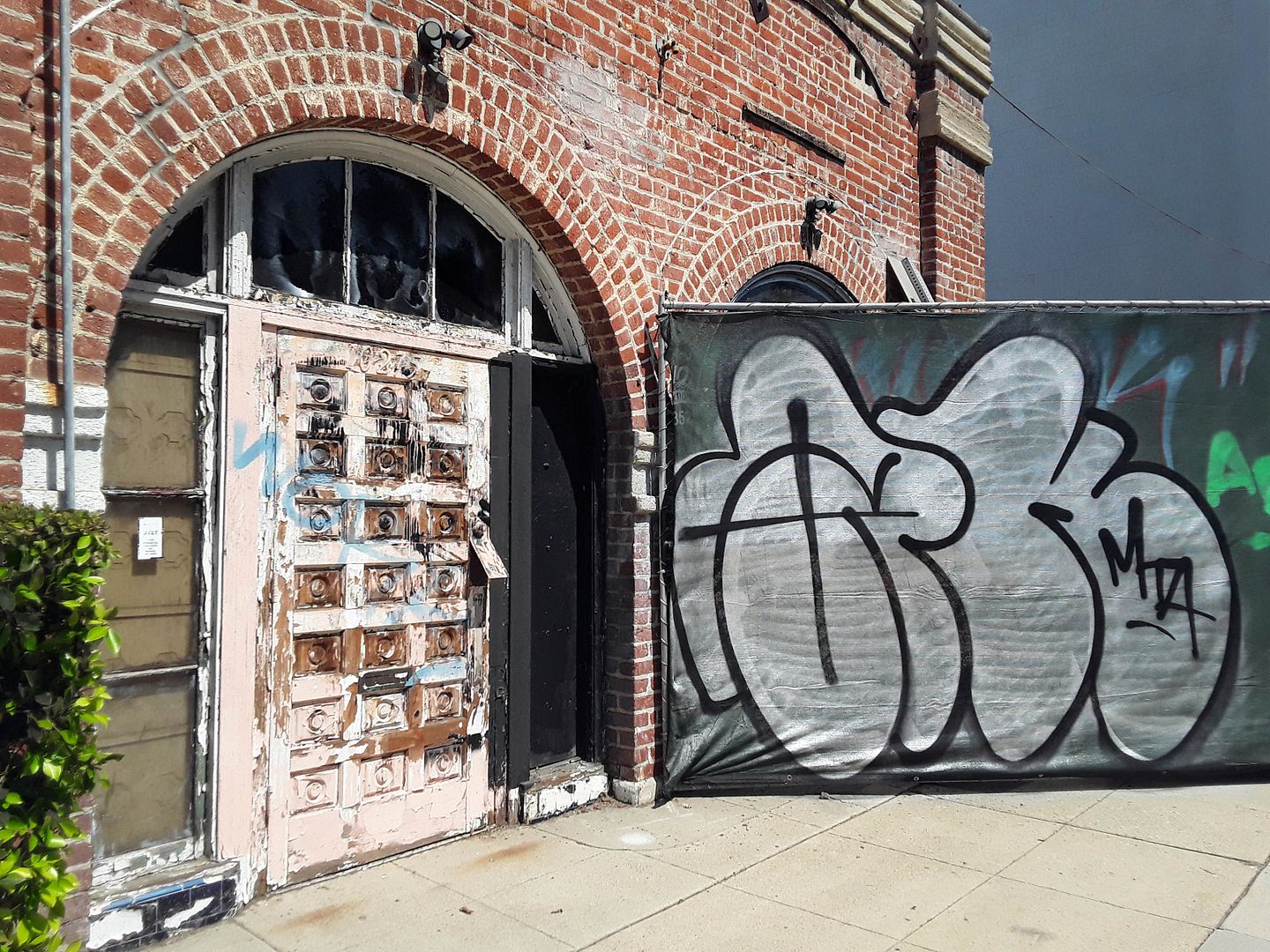
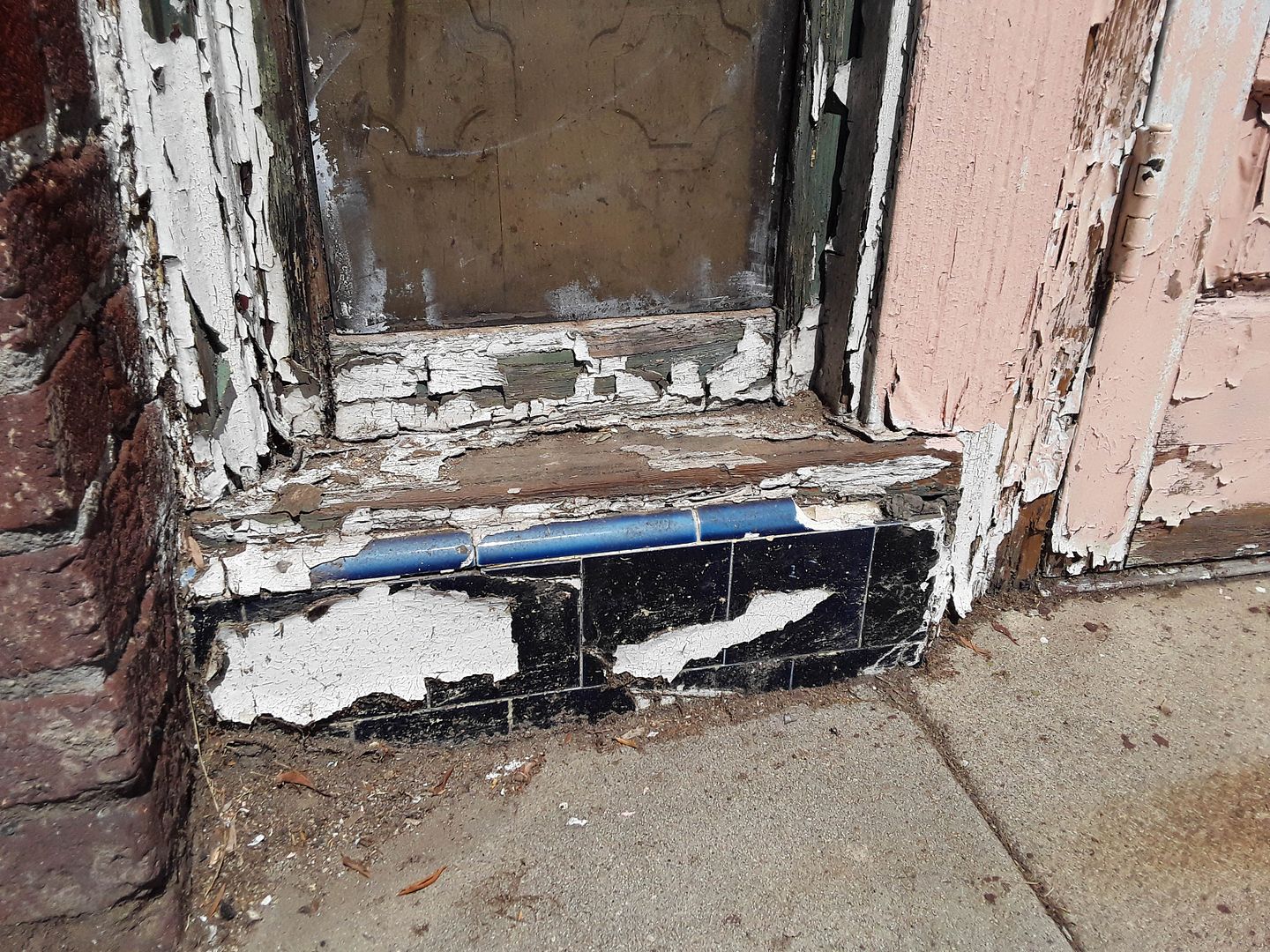
Take, for example, the exposed brick and peeling paint of a little box of a structure circa 1932, right next to Fox's front door—just 2,000 square feet of space that was built as a studio-adjacent cafeteria called Johnson's Buffet. It's the only existing example of this vintage of this type of vernacular architecture (besides the Chili Bowl, which is programmatic and not original) anywhere on this side of West Pico Boulevard.


By the mid-1930s it had become Russell's Studio Inn (a.k.a.  Russell's Cafe), which offered chicken and steak dinners and "special" dinners for just 50 cents. In the mid-1980s, it was Bruno's Chartreuse,
serving "continental cuisine"—but by the end of the 1980s, the business had relocated to Santa Monica under the new name "Chartreuse."


While the building also housed a Rams Restaurant from 1988 to 1992, it looks like it's been vacant a long time. Fox Hill Properties, which also owns the former LA Rams Football Club headquarters next door, has applied to reopen it as a tiny tavern with a patio in the back.


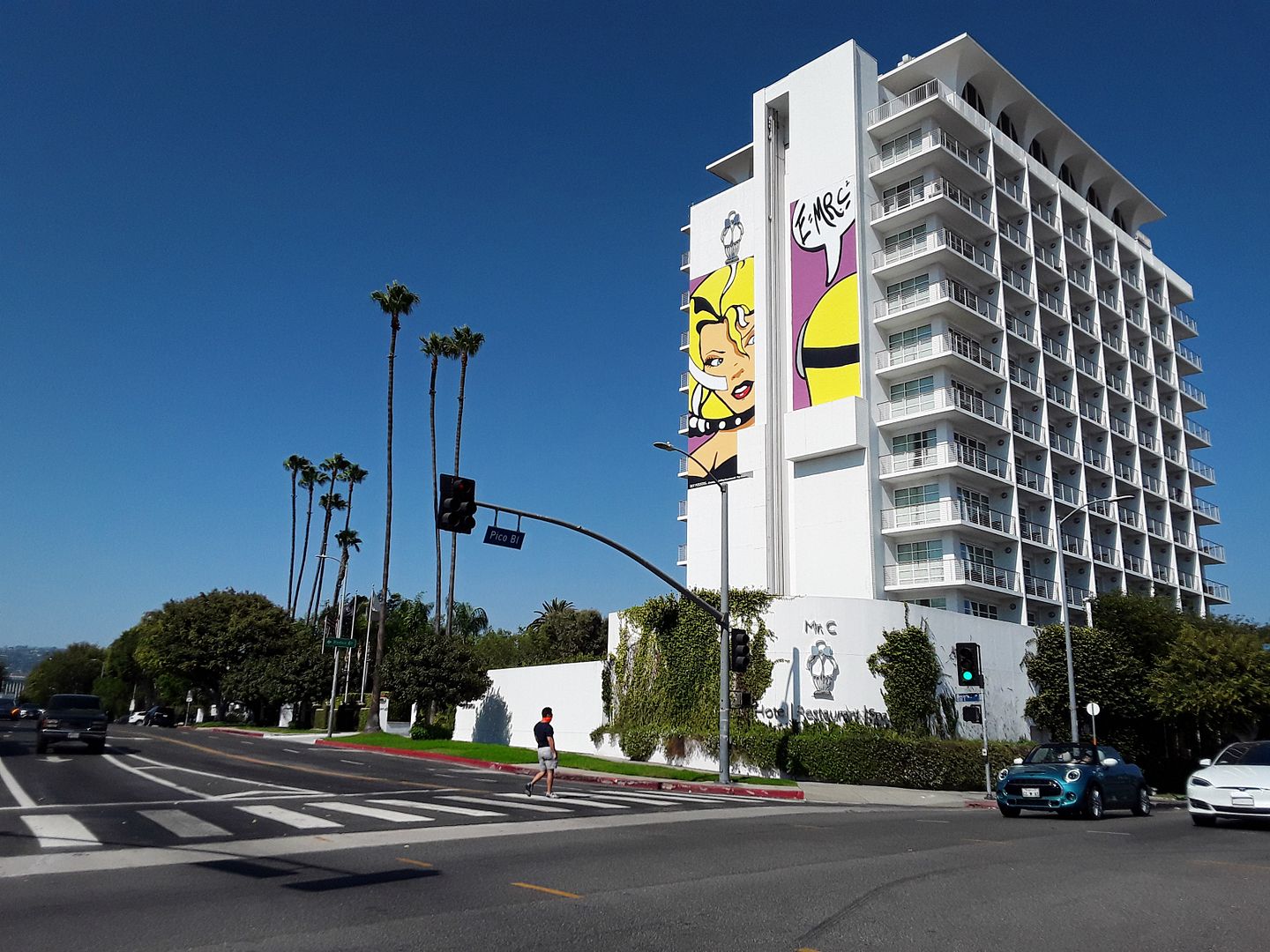
Even one of the more familiar sights to me—the Mr. C Hotel, operated by the Cipriani family, where I've actually had lunch—now looks brand new to me, even though the Kite and Overpeck-designed high-rise was was built in 1965 as the Beverly Hillcrest Hotel (which closed in 1991).


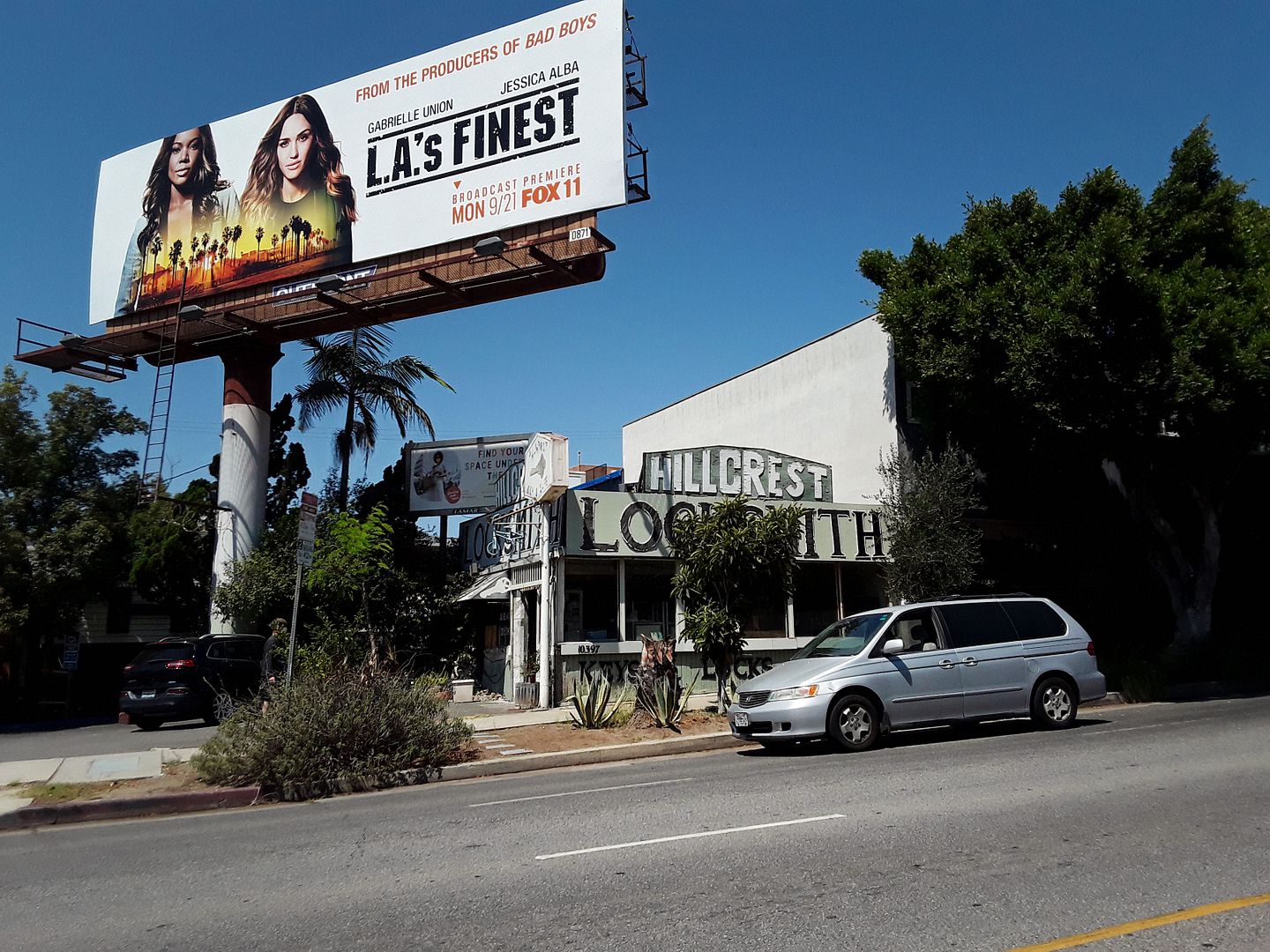
Driving back towards home, for the first time I began to wonder why everything seemed to be named "Hillcrest"—Hillcrest Locksmith, Hillcrest Country Club, but seemingly no connection to the Hillcrest Roads or Drives elsewhere in the Los Angeles area.

Maybe the names came simply from the area where the top hill of the Cheviot Hills neighborhood literally crests.

But my search for a real answer—one that's more than just a guess—led me to my last recent discovery along Pico.

Since the 1960s, Hillcrest Beverly Oil has been drilling on City of Los Angeles-owned property near the country club—part of the Cheviot Hills Oil Field.

And that's right next to the West Area of the Beverly Hills Oil Field, which is how an oil well got put on the grounds of Beverly Hills High

That one is currently being dismantled—but while it was in operation, it was camouflaged to look like a condo tower? A windmill that had lost its blades?

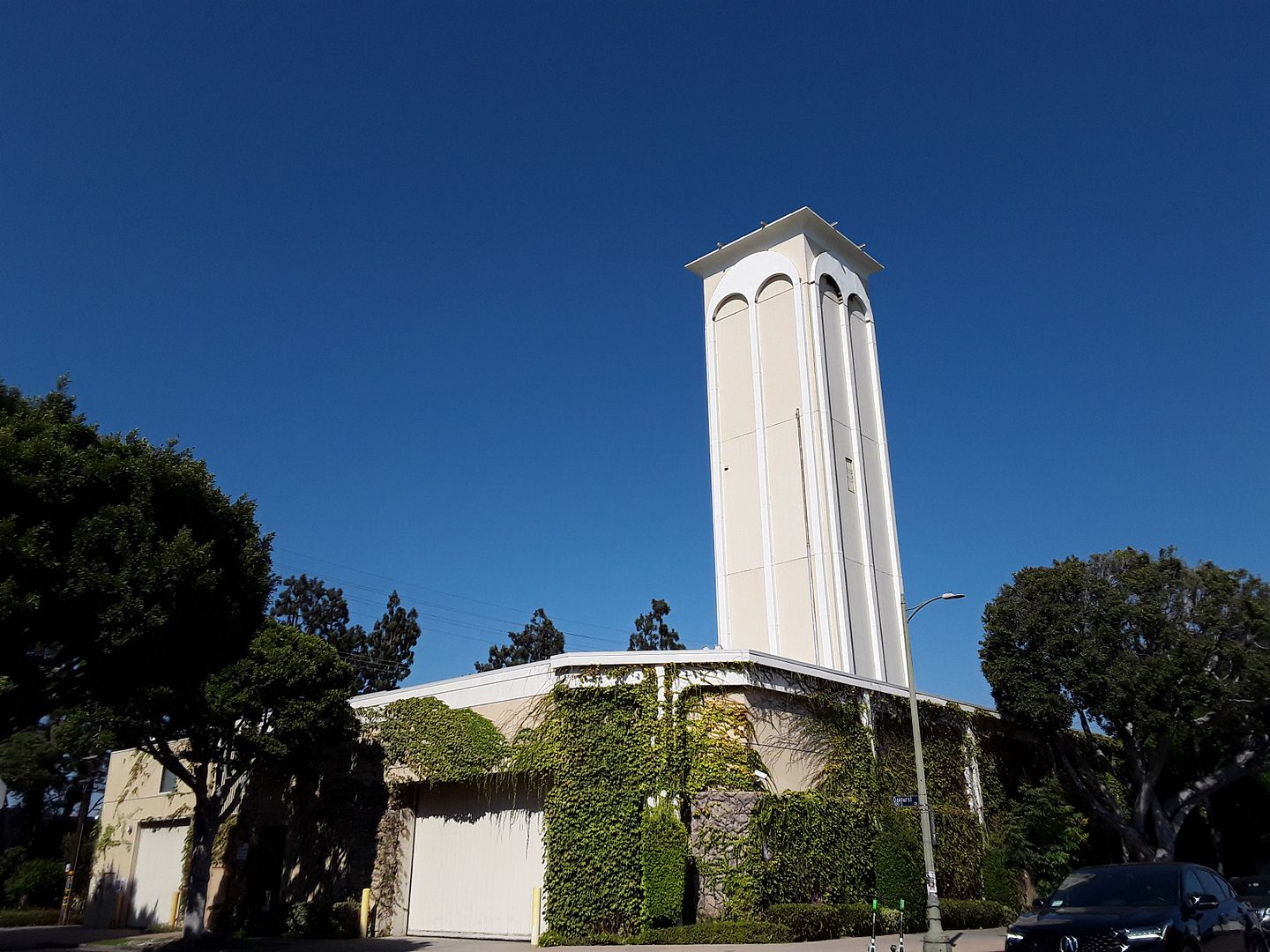
But there was a similarly incognito oil pump and drilling site that preceded the high school's "Tower of Hope." And that was the first "architecturally designed oil derrick," built on Pico near Doheny by Occidental Petroleum in 1966—the Cardiff Tower. 

Located in a traditionally Jewish neighborhood, people have literally mistaken it for a synagogue tower.

In 1988, BreitBurn Energy purchased a section of the Beverly Hills Oil Field and its successor, Pacific Coast Energy, now owns and operates the Cardiff Tower "drilling island."

Related Post:
Walking In LA

September 28, 2015

Riding the Red Line to Haunted Hollywood

As much as I love trains, I'd only ridden the LA Metro once before this weekend, and it made me cry. It reminded me too much of New York—not making me homesick, but reintroducing a past life that I think is better off left behind.

I don't live near a Metro stop (yet—if the Purple Line Extension ever gets to Beverly Hills), and generally it would take me nearly as long to drive to a train station and park-and-ride as it would to just drive to my destination and find parking.

But I'm somewhat of a subway tourist. I first fell in love with the underground at the London Transport Museum, and since then, I've taken advantage of special occasions to ride the subway in New York, just for the sake of riding the subway. It was more about the ride than the destination.

So, in keeping with that spirit, I decided to join a tour of the "Haunted" Red Line hosted by Ghost Hunters of Urban Los Angeles (GHOULA).


We began our journey at Union Station...


...which is even more gorgeous at night...


...and far less crowded than during the weekday commute.


From in front of Union Station, we looked out at the various haunted sites of Downtown Los Angeles, like City Hall—which was not only cursed by angry spiritualists, but was also built at the site of the city's gallows. Guards at the security monitors frequently catch a glimpse of someone wandering around in the locked rooms upstairs, and when they go to check, find nothing.


Pico House, the failed luxury hotel otherwise known as "Pico's Folly," is notoriously haunted. Ghost-hunters attribute this to the victims of the Chinese Massacre of 1871, and sure, some of them might've worked at the Chinese laundromat that delivered clean sheets to the hotel. But it's more likely that the ghost who lingers here is that of Pio Pico himself, the last governor of California when it was still Mexico, who fell from a position of great power and died a pauper.


Philippe the Original, the famous purveyors (and at least one of the originators) of the French Dip sandwich, now glows under an appropriately-colored red neon sign on the edge of Chinatown. This was once the Red Light District of LA, and the building that Philippe currently occupies used to be a high-class brothel. You might hear some "activity" if you take your meal upstairs to a dining room in one of the former bedrooms.


Of course, Union Station itself must be pretty haunted. Its construction displaced all of Old Chinatown. And if the victims of the Chinese Massacre are haunting any building, it's probably this one. The trees many of them were found hanging from were right next door. We could've spent all night talking ghosts in that one location.


But it was time to move onto the next Red Line station, two stops down at Pershing Square.


Each of the Red Line stations has kind of its own theme and own array of public art. Pershing Square has some nice neon.


It also has its share of ghosts.


There have been sightings of a naked woman walking through the front door of The Pershing Building, thought to be the ghost of a woman who'd been caught in the throes of passion with another woman. Unfortunately for her, she was on top when discovered, pulled off by an appalled policeman who'd responded to the "screams" coming from within, and thrown out the window. She fell to her death.


The Subway Terminal Building is also probably haunted, at least by a little red-headed girl who's been sighted on the tracks of the abandoned subway tunnels that go from there to the Millenium Biltmore Hotel and beyond. And The Alexandria Hotel (now Alexandria Apartments) can easily be considered the second most haunted hotel in LA (unless you count the Queen Mary, which is really more of a ship). Apparently every type of paranormal activity happens there all the time, and more than once, the bartenders downstairs have witnessed a collection of glassware rise up off the bar, levitate for a moment, and come crashing down—completely on their own.


Pershing Square is also the site of what could be LA's oldest ghost story—that of a Native American woman who insisted on bathing and washing her dishes in the LA River, where she contaminated the water that flowed through the Zanja Madre (LA's first aqueduct—the "Mother Ditch") to the farms, homes, and businesses in the area. She is also seen levitating, but that may be because the original zanja was a couple of feet higher than the sidewalk is now.


Bypassing MacArthur Park, Los Feliz, and East Hollywood, we got back off the train at Hollywood & Vine, where Lon Chaney (The Phantom of the Opera himself) used to haunt his favorite bus bench, until it was replaced by a new one that could carry advertising.


The Art Deco Pantages Theatre might be haunted by the ghost of Howard Hughes, who once owned the building and occupied one of its offices. He would sometimes step away from his desk and pop into whichever movie was playing to sit in the back of the balcony and clear his mind. Sometimes he still does.


But Hughes might have a turf war with the theater's namesake, Alexander Pantages himself. He's been seen poking around the auditorium, especially during construction and renovations. Who knows what's happened in the bar? And since the old Hollywood Mortuary used to be right across the street (now a parking lot), the dead bodies—if not the ghosts—of scores of movie stars have graced this section of Hollywood Boulevard at least once (including Bela Lugosi's final stroll, in a hearse whose driver had no control over it for several blocks).


When you finally reach the Hollywood & Highland station on the Red Line...


...you hit the mother lode of ghost stories.


The Hollywood & Highland shopping center was built on the site of The Hollywood Hotel, which was notoriously haunted by the ghost of Rudolph Valentino, who might place a "spirit kiss" on the lips of a woman who stayed in a particular room. But Valentino's ghost gets around: he's also been spotted at Hollywood Forever Cemetery and The Roosevelt Hotel, which is probably the most haunted hotel in LA.


Of course, the El Capitan Theatre must be haunted too, right? Legend has it that in the theater's glory days, patrons would purchase their tickets from the outer box office and then be held in the "outer lobby" under the marquee, outside the front doors, until a big crowd collected there. Nightclubs do this all the time now outside of the velvet rope—create a crowd to attract more people, because if that many people are waiting to get in, it must be good. The theater manager would sit perched in a second story window to monitor the crowd below, and when it reached a critical mass, he would signal to let them in.

Every now and then, someone walks up to the theater now (which is owned by Disney and runs all Disney movies) and asks the box office attendant, "Who's that guy in the window staring down at us?"

Related Posts:
Nostalgia Train Ride
Photo Essay: MTA Vintage Subway Train Ride for the Holidays
Photo Essay: A Last Ride on the Last Red Car
Photo Essay: Union Station, Open to the Public