Search

Showing posts sorted by date for query balboa. Sort by relevance Show all posts

July 06, 2026

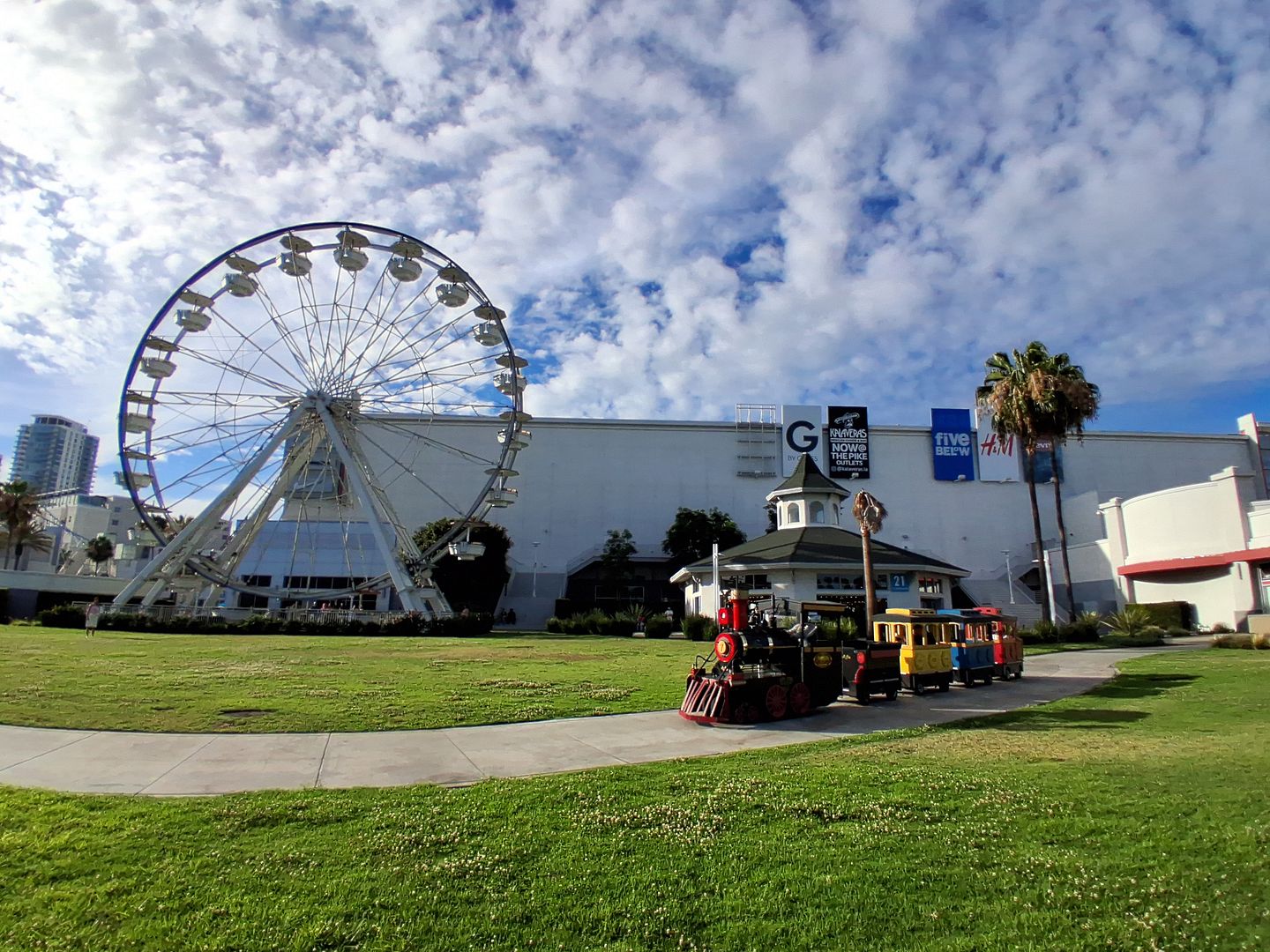
Photo Essay: Riding Every Carousel, Long Beach Pike Edition

I first remember spotting the carousel at the Pike in Long Beach in 2013, on my way to the Aquarium of the Pacific with a friend—one who was too cool for ferris wheels and merry-go-rounds. 

 
I figured I'd get around to going back—and I'm sure I did at some point, but I also remember getting a good look at it when it wasn't operating in 2021, during Covid shutdowns. 

September 11, 2024

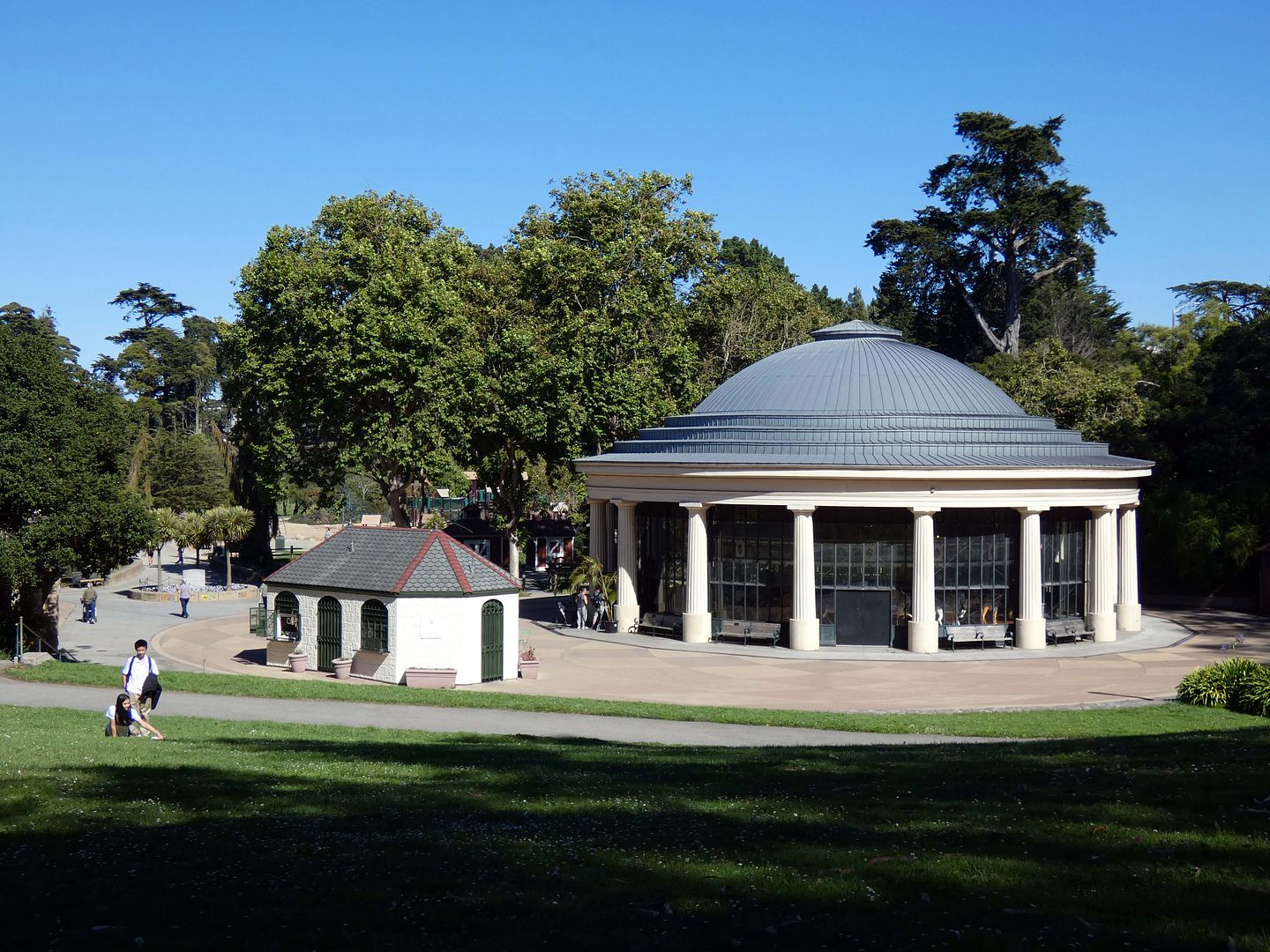
Photo Essay: A Los Angeles Carousel Has Made San Francisco's Golden Gate Park Its Home for Over 80 Years

This is just so typically me. 

I go years (or decades) without visiting a place—and then as soon as I go back once, I end up going back a bunch of times. 

Because it's so easy for me to shift my attention elsewhere. But once something gets back into the front of my mind, I realize how much I've missed out on. 

Such is the case with San Francisco. 

I was just there in January, after having not really been there since 2006—save for a couple of hours two years ago—and ever since, I've been itching to go back. 

This time, California Preservation Foundation's Doors Open California program gave me the perfect excuse to return. 

But first, I had a lot of places to cross off my list. 

 
Take Golden Gate Park, for instance. It feels very much like San Francisco's version of Central Park in New York, with meandering paths and sprawling lawns and a few historic points of interest—including its own vintage carousel. 

February 18, 2024

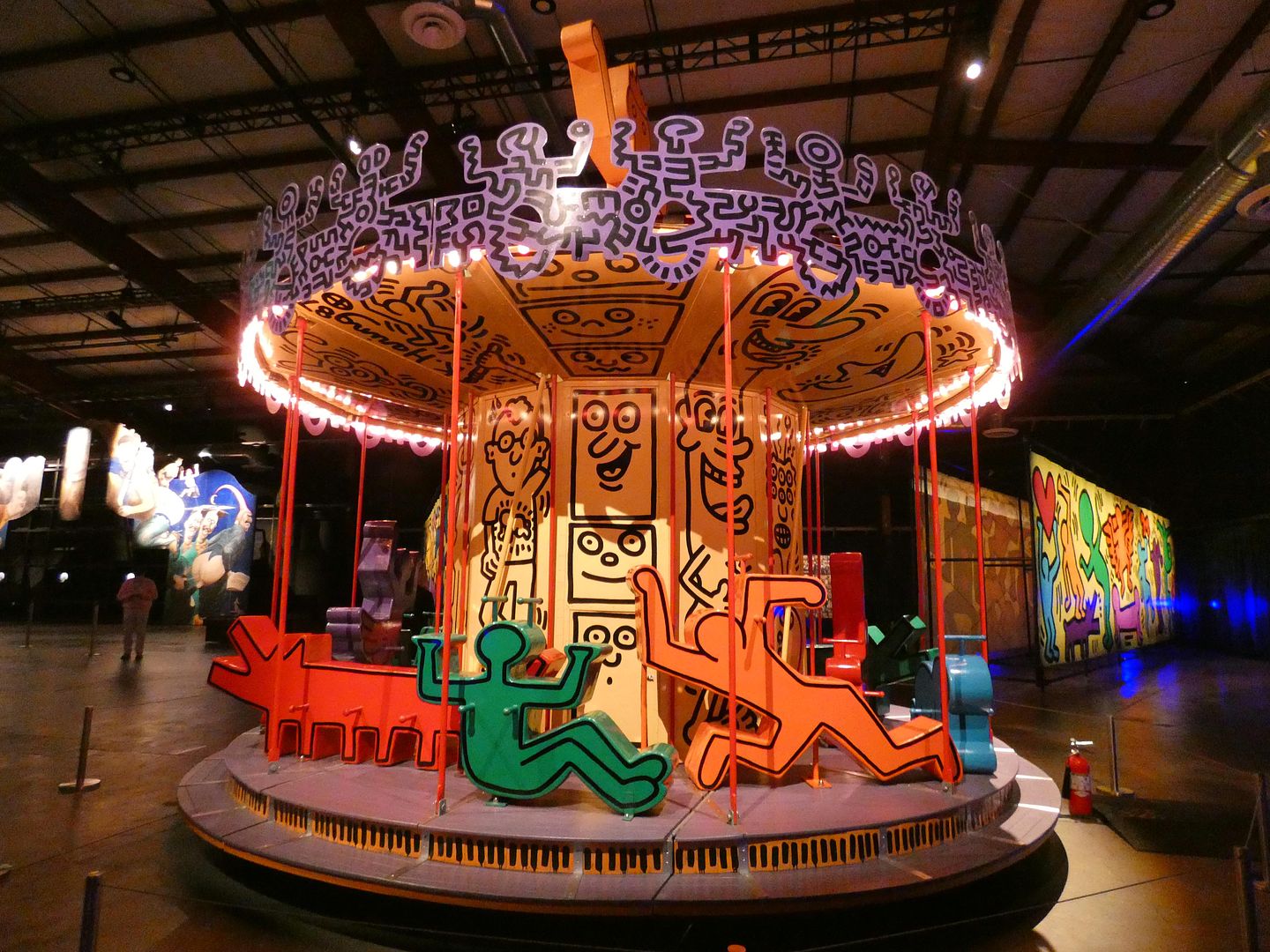
Photo Essay: Luna Luna, A Forgotten Fairground Fantasy That Spins Once Again

I love amusement parks. They absolutely fascinate me. 

Blame annual trips to the Great New York State Fair with my dad, the one trip to Marineland of Canada I barely remember, and school trips to Darien Lake (now Six Flags) in Buffalo, New York. 

 
But what I find absolutely irresistible is an amusement park that was locked away in storage for nearly 40 years (first in Vienna, then Texas)—and then later rediscovered and reassembled. 

May 29, 2023

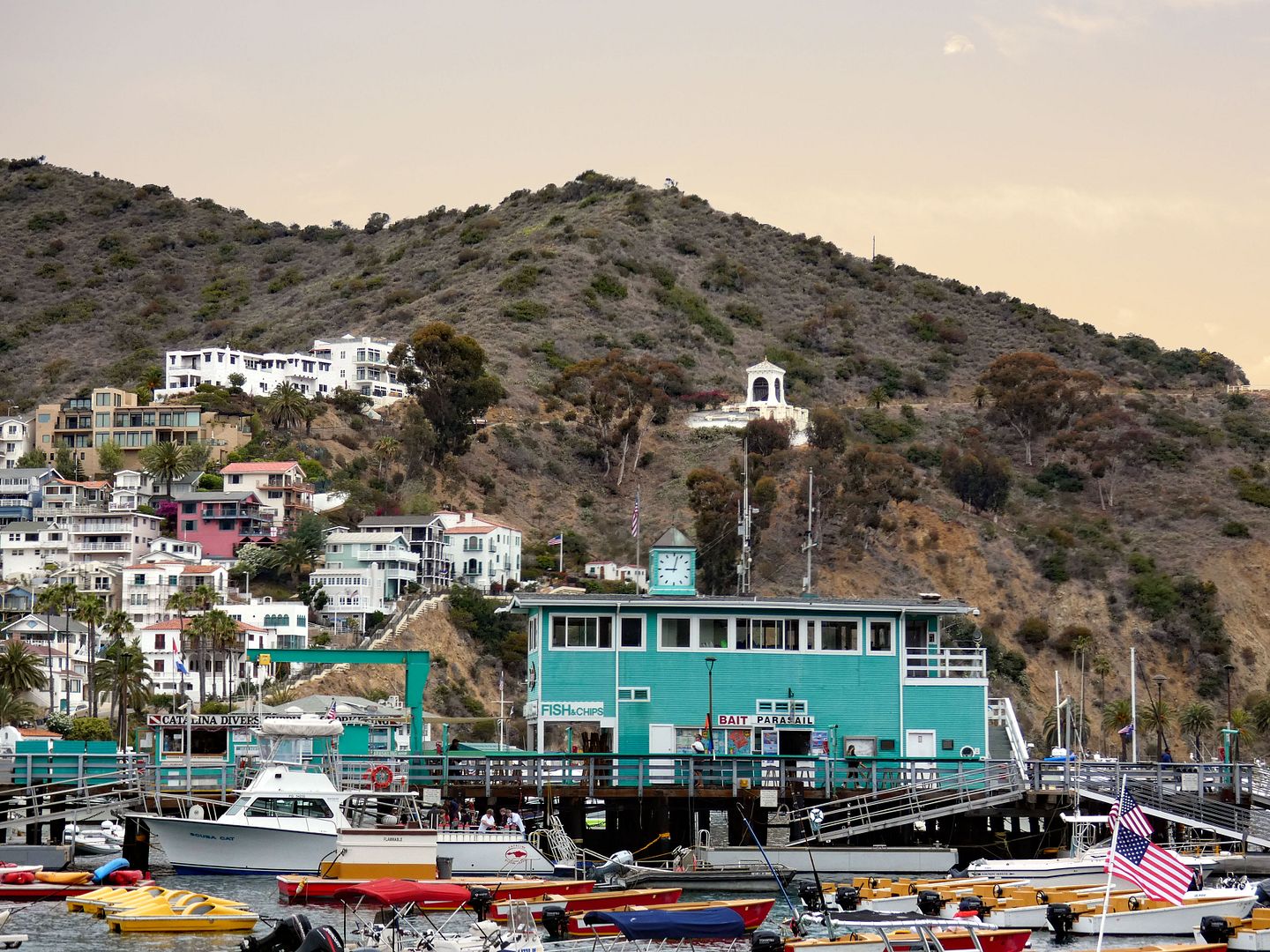
The Wrigleys' Timeless Gift of Timekeeping on Catalina Island: The Chimes Tower

In my last couple of visits to Catalina Island—the only developed tourist attraction in the Channel Islands archipelago off the coast of California—I've been trying to trace some of the remnants of the Wrigleys' time there.

But for all the looking I've done, there's been another clue to the Wrigley history on the island—and that can be found simply by listening

Every 15 minutes, you can hear the Westminster chimes of the Catalina Chimes Tower—a set of "cathedral chimes" (like those found at Westminster Abbey) ringing out from atop a hill. (They originally sounded four times an hour from 7 a.m. to 10 p.m. — but now they're only between 8 a.m. and 8 p.m.)

circa 2021, with some Photoshop magic

November 01, 2022

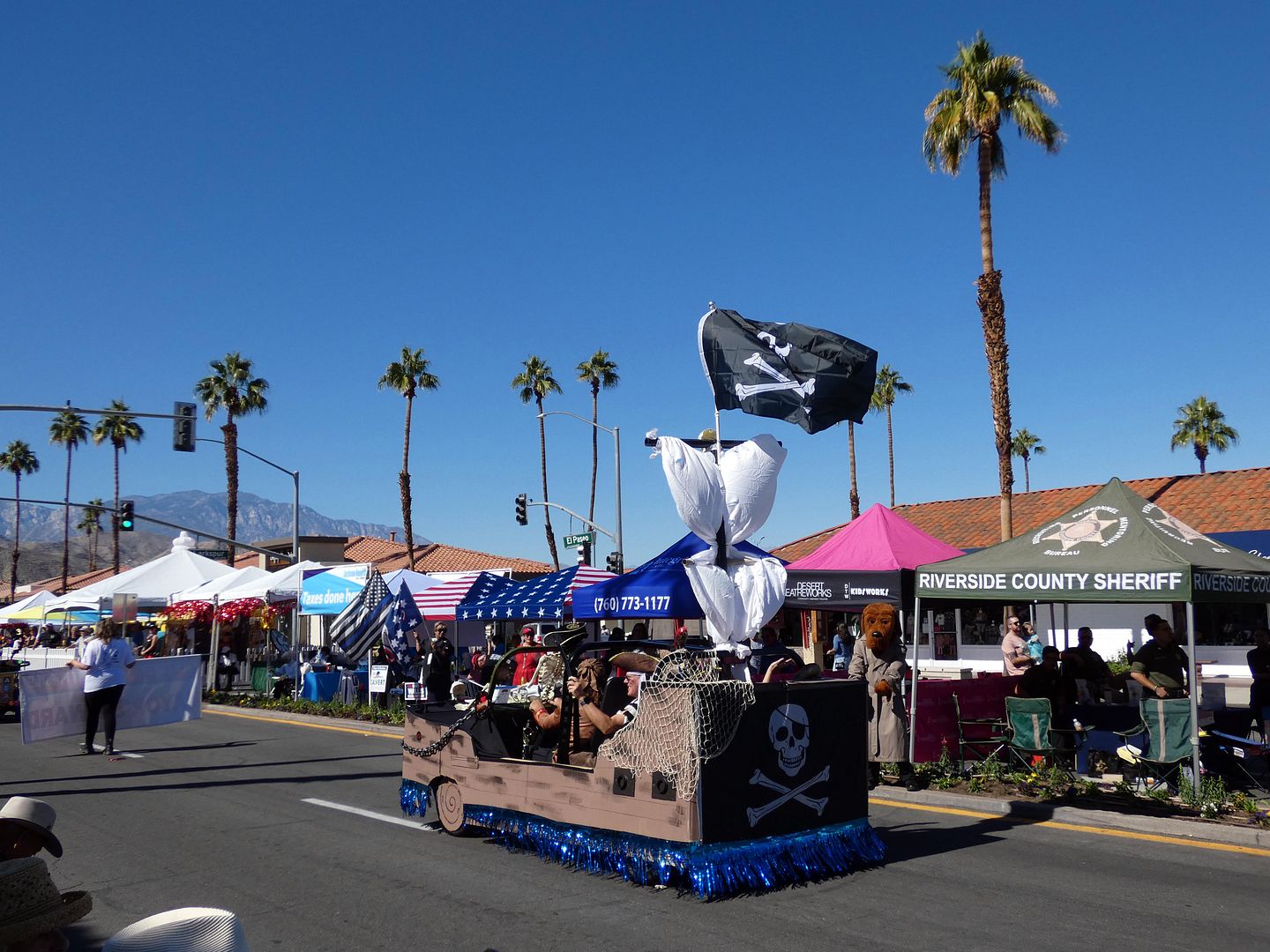
Photo Essay: Golf Carts on Parade in Palm Desert, Rolling Out of a Pandemic Hiatus

When I was researching golf carts for my post on the golf cart museum in La Quinta, California earlier this year, I came across some information about an annual golf cart parade that takes place just before Halloween in the nearby community of Palm Desert, also in the Coachella Valley. 


I knew I had to go.  

May 19, 2022

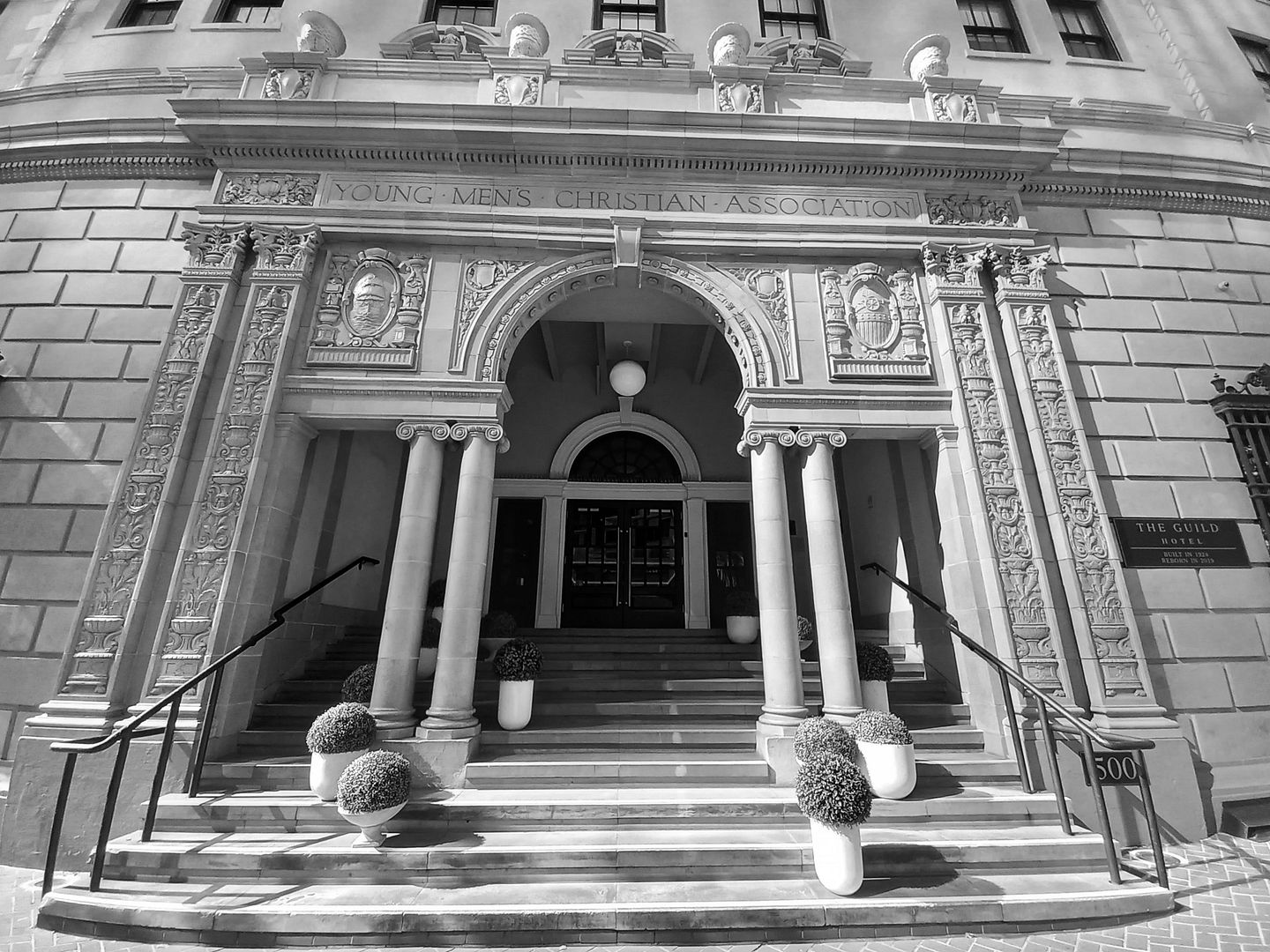
Photo Essay: A Wartime Recreational Facility and Dormitory in San Diego, Reborn As The Guild Hotel

With the Navy Bridge Run starting at 8 a.m.—and me having to come down to San Diego from LA—I needed to book a local hotel room for the night before. Ideally, one that would be either walking distance or a trolley ride from the starting line (as parking there would either be impossible or just grossly expensive). 

I also needed to make sure I'd get a good night's sleep the night before. I was worried enough about completing the race (even just walking it) and didn't need any extra factors working against me. 

In the past in San Diego, I've stayed everywhere from the budget-friendly Dolphin Motel on Point Loma (literally a fisherman's motel) and Motel 6 to the historic Sofia Hotel and Hotel Palomar and the luxury U.S. Grant. 

And then in my search, I came across one hotel in Downtown San Diego I hadn't heard of before: The Guild Hotel, which opened in 2019. (From 2003 to 2014, the property was home to a hostel called the 500 West Hotel.)

 
Owned by Marriott and operated as a luxury boutique hotel, it's located in a former YMCA building for the Army and Navy—which made it just seem perfect for a stay on a Navy-related trip

December 20, 2021

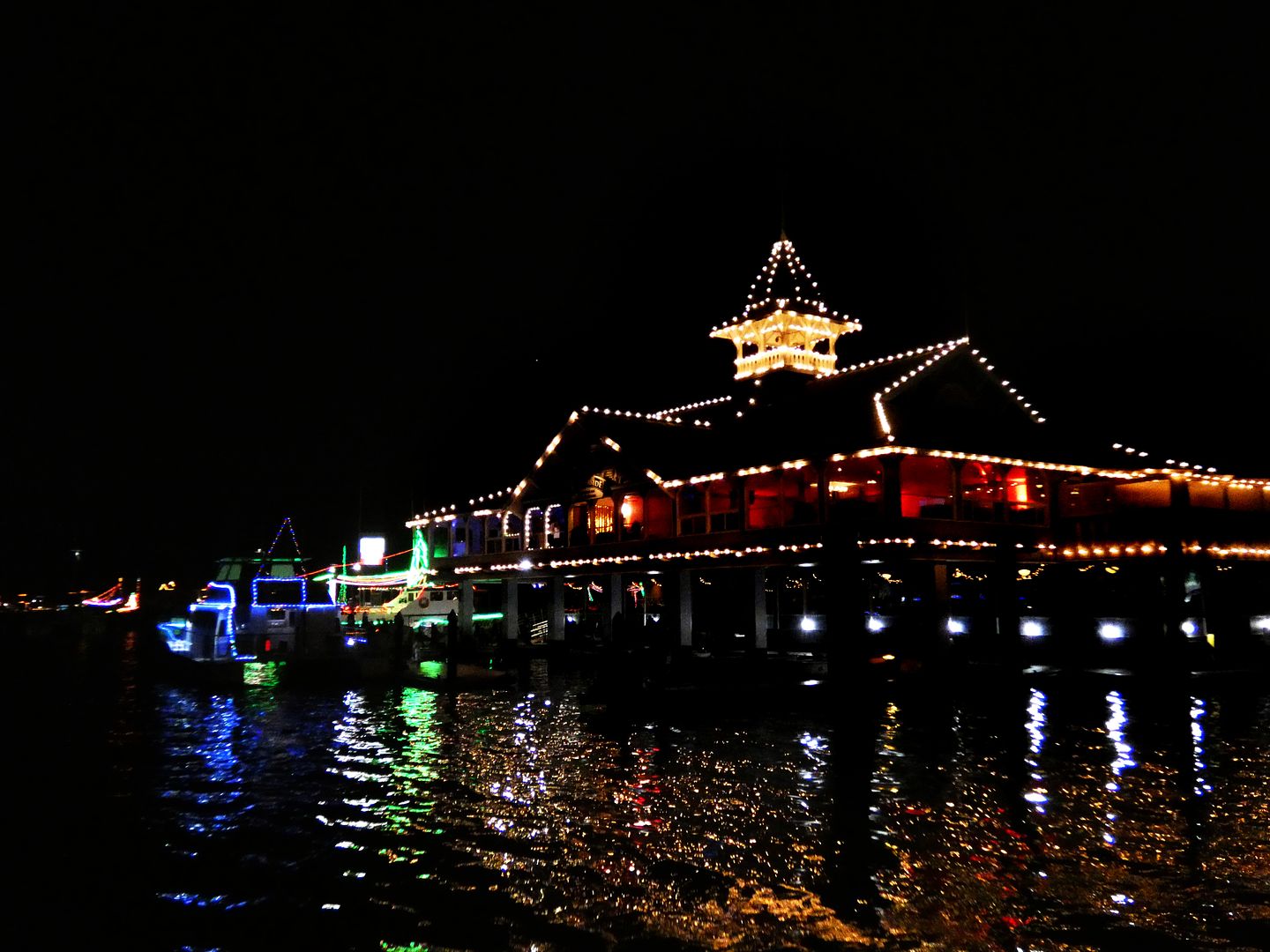
Photo Essay: Jingling On the Waves at Newport Beach Christmas Boat Parade

One holiday tradition that Southern California has that I don't recall ever happening in New York City is the Christmas boat parade. 

I'd watched one from Ports O' Call in San Pedro back in 2013—but I couldn't see much. Though I was relatively unimpressed, I was undeterred in my quest to find a better experience. 

I knew there were other Christmas boat parades in Dana Point, Huntington Beach, Ventura Harbor, and Newport Beach. I just didn't want to go alone. Or do all the planning myself. 

 
Fortunately, this was the year that my partner-in-crime decided she wanted to take up the gauntlet and figure out the best way to see the Newport Beach one—which, for us, turned out to be a spectator cruise offered by Davey's Locker on the Balboa Peninsula. 

May 23, 2021

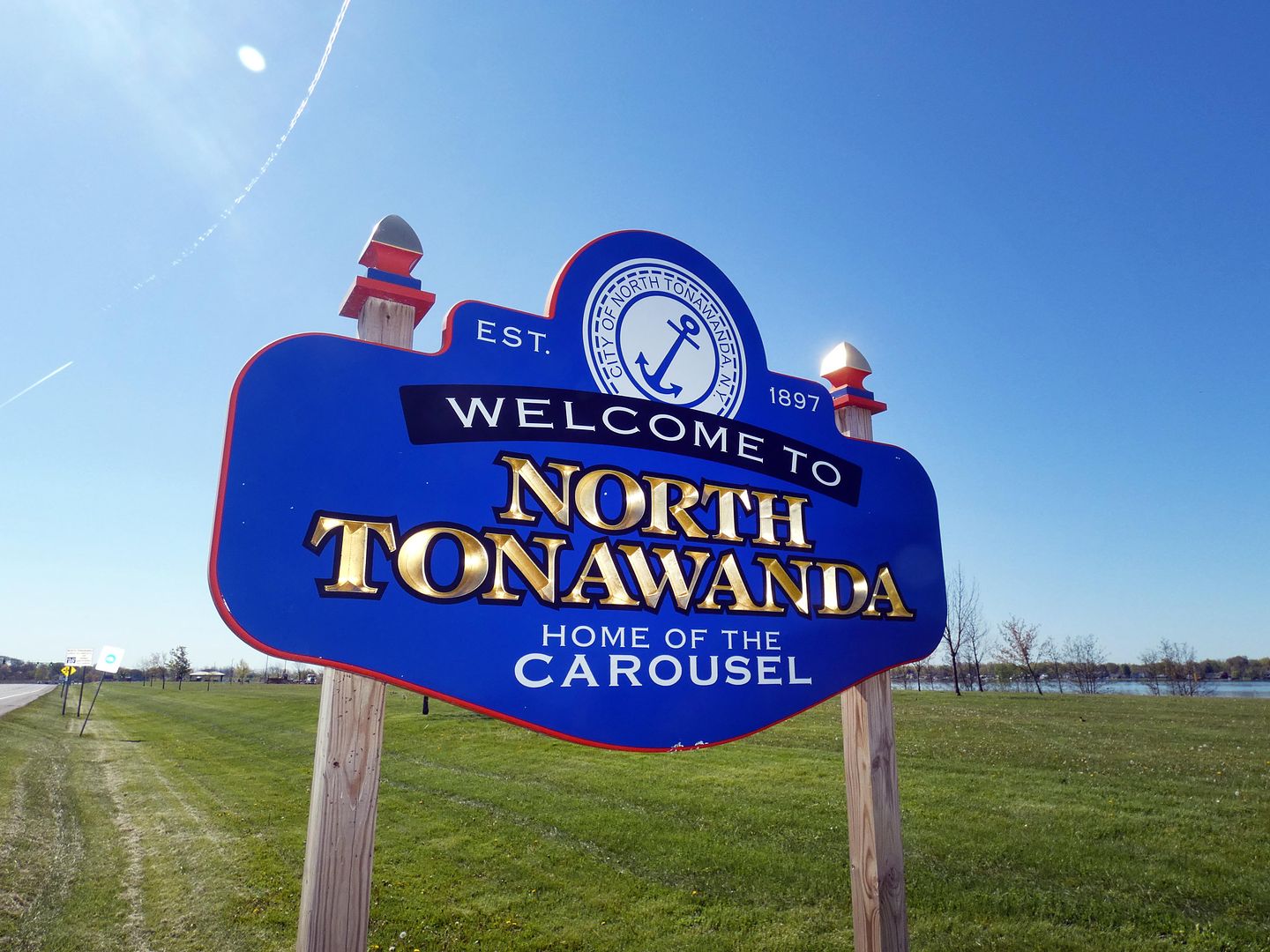
Photo Essay: Twice Around the 105-Year-Old #1 Special at the Herschell Carrousel Factory Museum

Despite having grown up in Syracuse, New York, I hadn't been to the Buffalo area since I was 5 years old, when my family visited my uncle in the town of Lockport and crossed the border into Canada to visit Niagara Falls and Marineland. 

 
So, last week, after having flown in an airplane for the first time since the beginning of the pandemic to visit Syracuse for the first time in years, I decided to avoid a layover at JFK Airport and fly direct into Buffalo-Niagara Airport—conveniently located near a bucket-list attraction for me, the Herschell Carrousel Factory Museum in the town of North Tonawanda. 

May 25, 2020

Photo Essay: Santa Barbara's Spanish Castle of Courts (And Its Ever-Ticking Clock)

I've had no official reason to visit the Santa Barbara County Courthouse, as I'm not a constituent of the county and haven't broken any laws therein.


I haven't even gotten the chance to get married there, though one of my ex-lovers has. I must admit, his heartbreaking nuptials piqued my interest about the place.


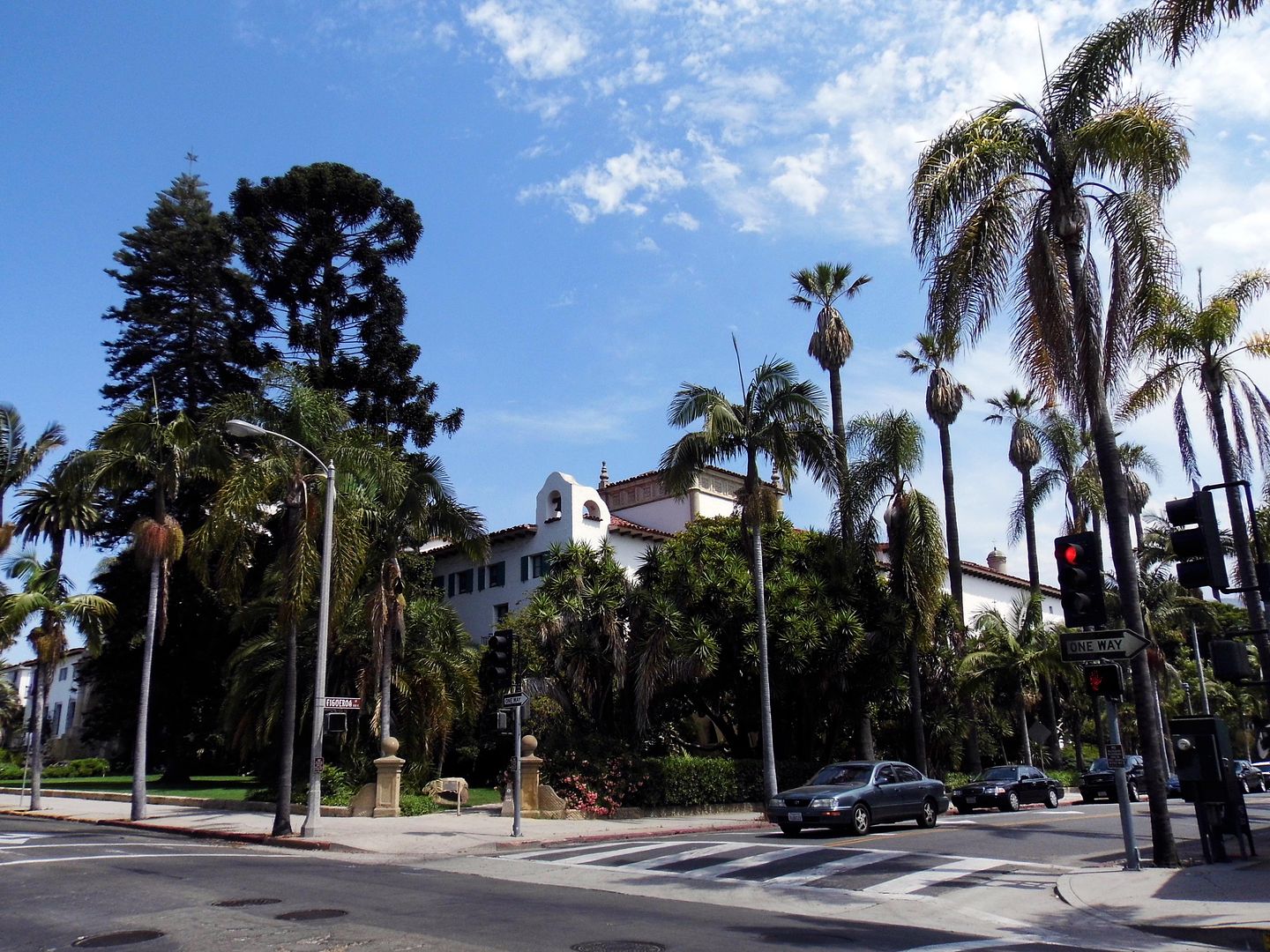
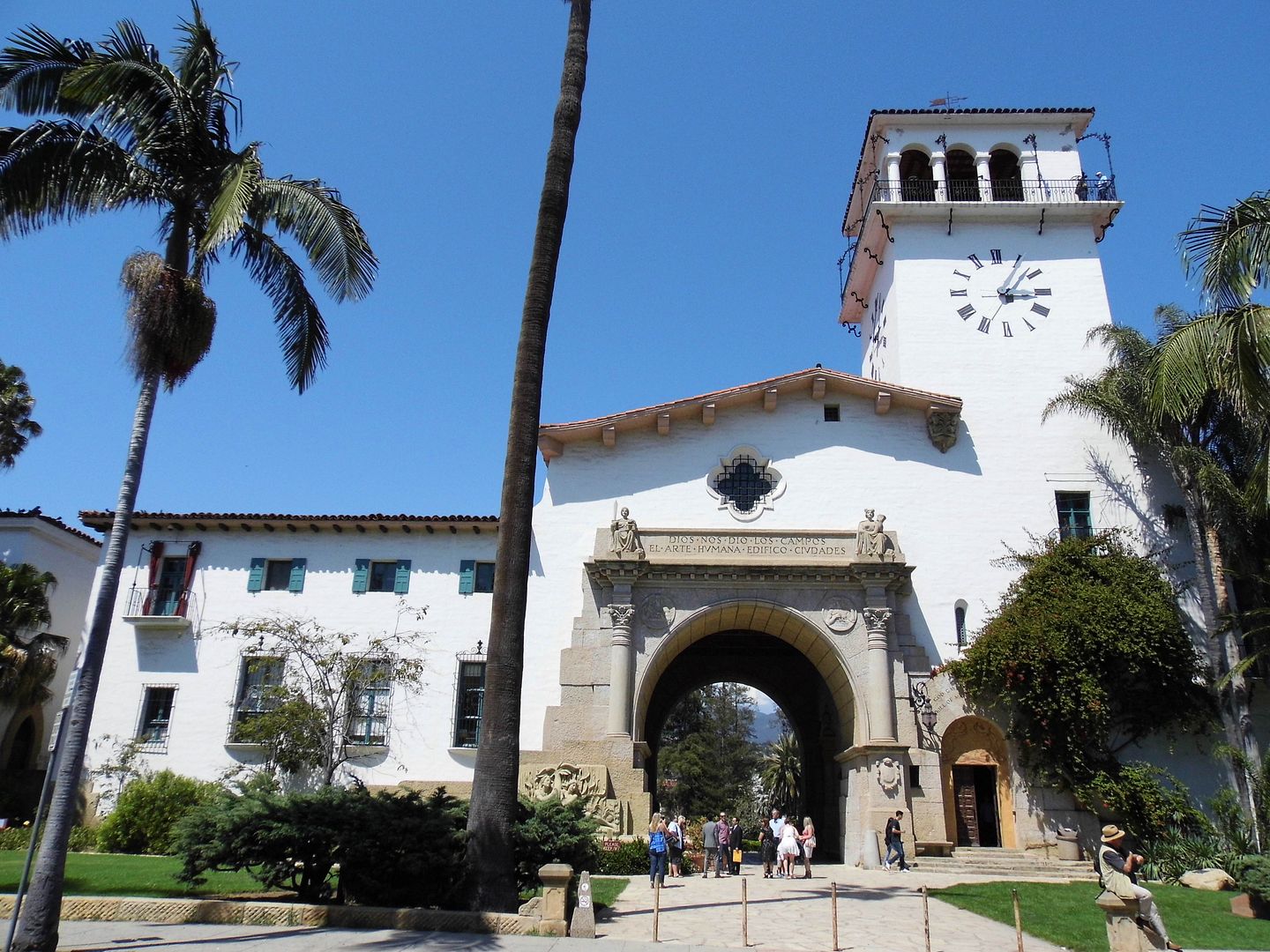
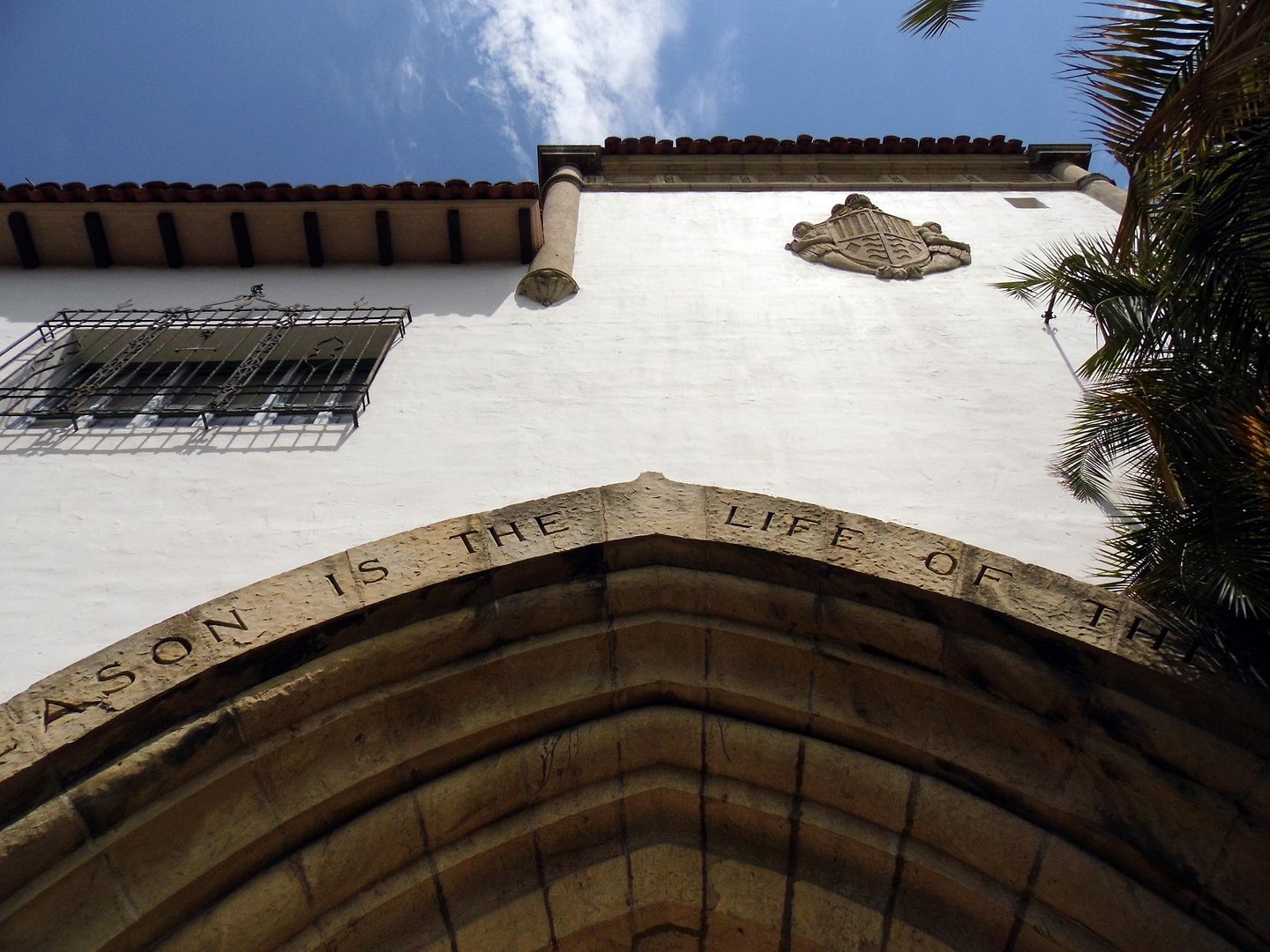
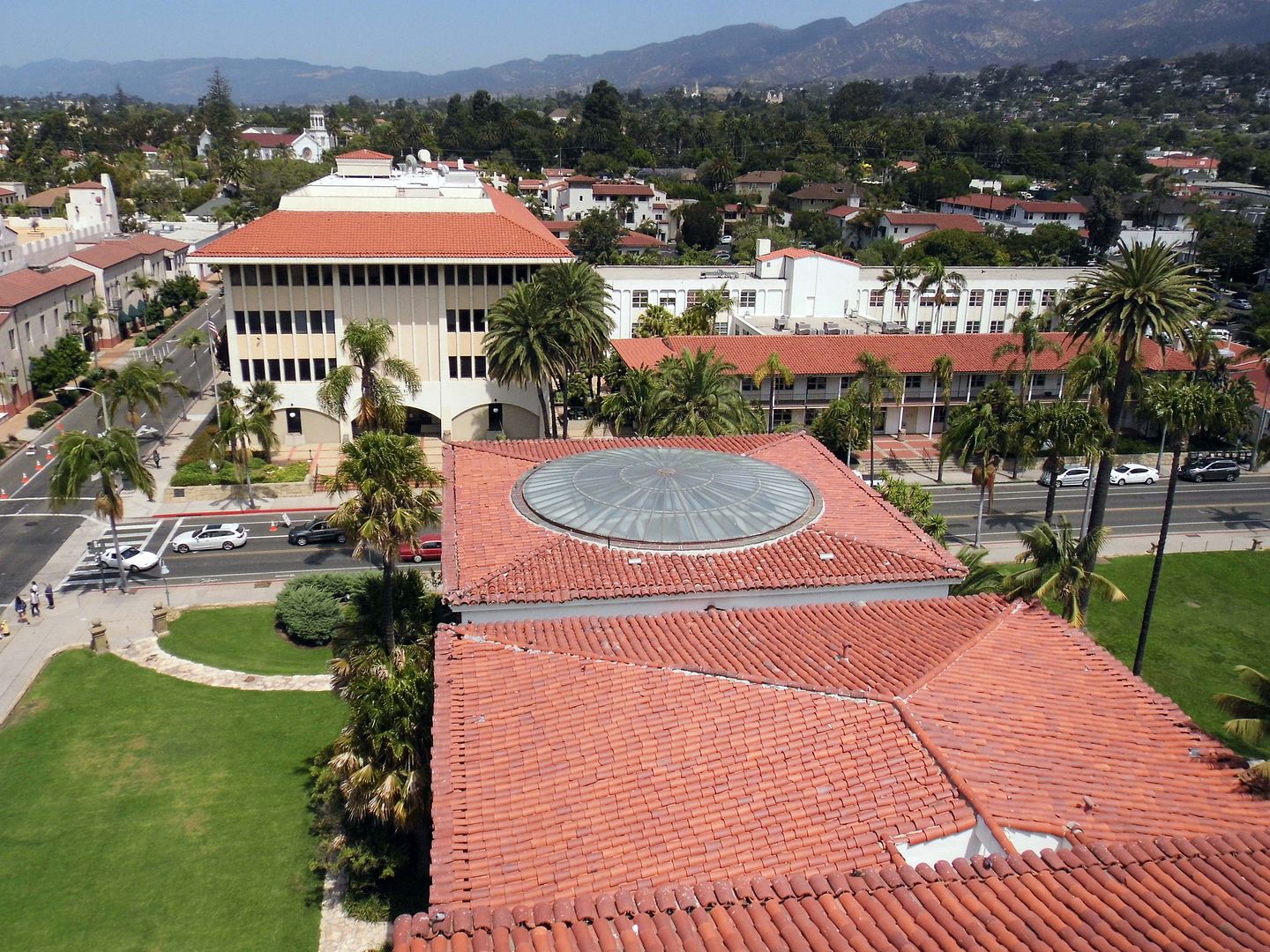
So, on two different occasions when I had some free time on my own to explore the historic core of the city of Santa Barbara, I chose to visit the 1929 Spanish Colonial Revival courthouse.*


Mostly, I went back a second time not to torture myself more—but to get into the clock tower, which was closed for visitors my first time around.


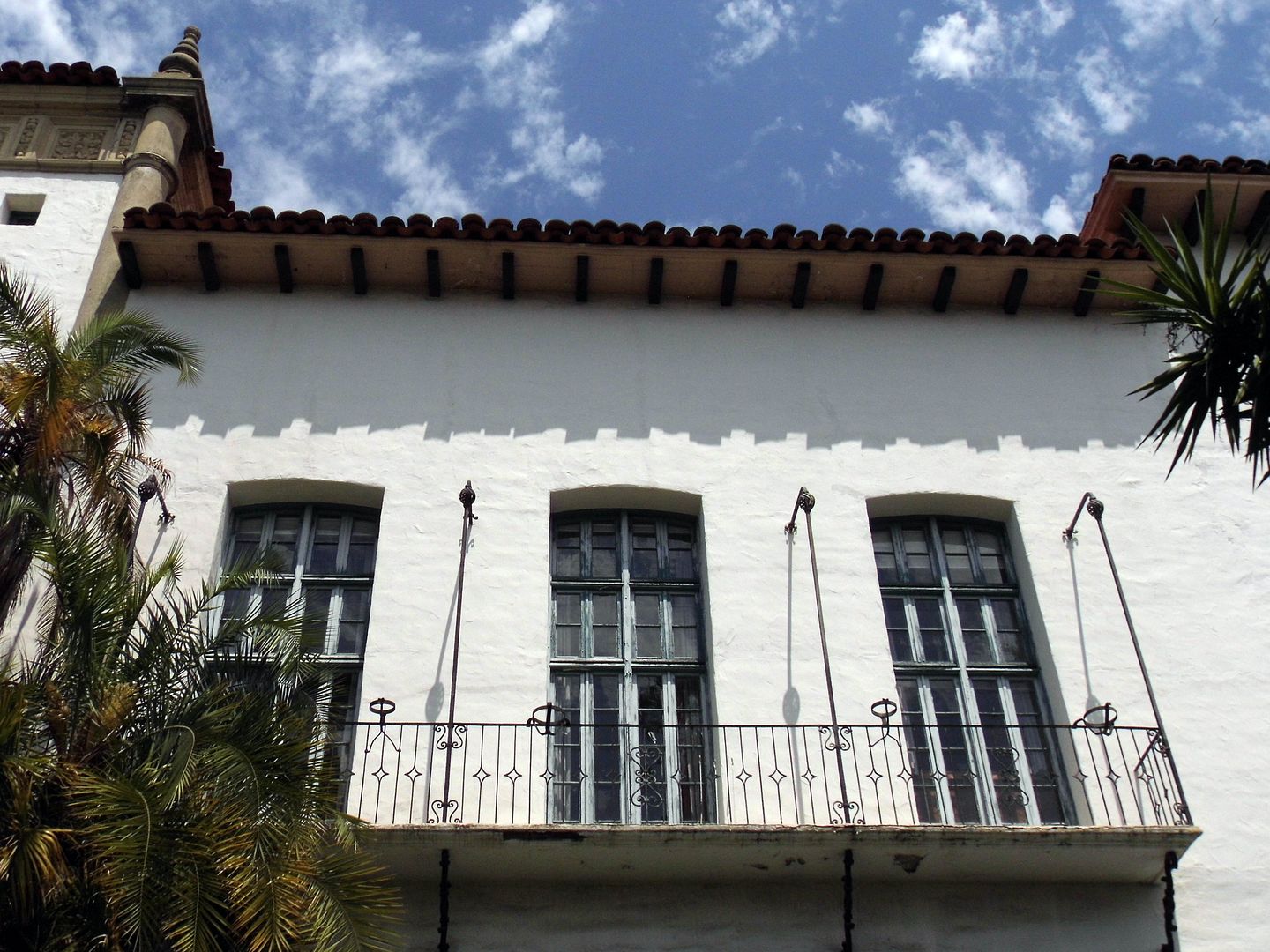
Under that red terra cotta tile roof—and beyond its white stucco walls and window grilles—there are the day-to-day operations of the Santa Barbara Courts and Public Administration.


But visitors like me want to see the structure itself—a national landmark that took only three years to build, starting in 1926.


Originally designed by Paris-trained architect William Mooser III, the courthouse as-built was reportedly more the result of modifications made by architect J. Wilmer Hershey. Unfortunately, Hershey died before he could see his work come to completion.


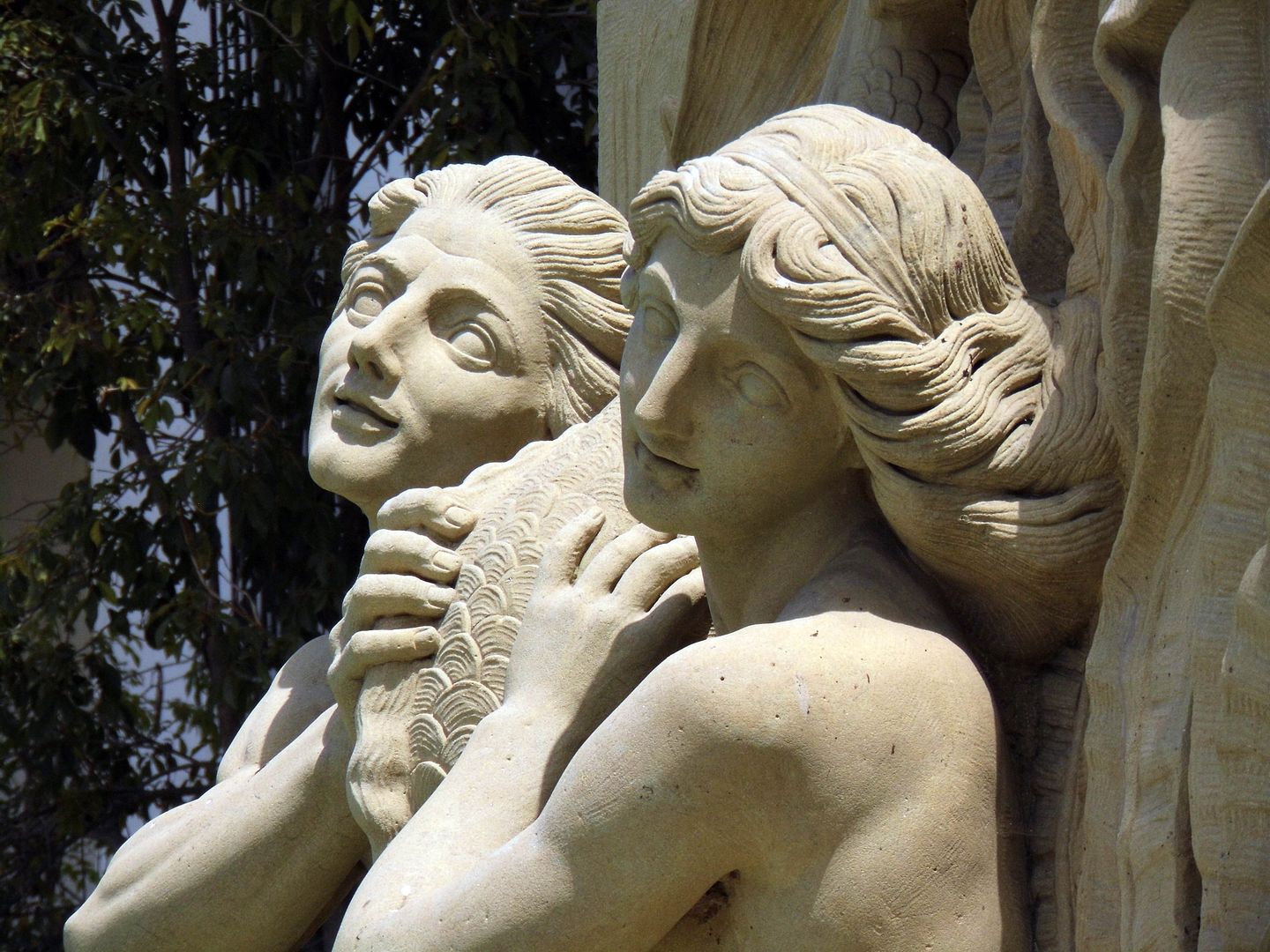
The Spirit of the Ocean fountain, by the Anacapa Arch

Finished at a cost of nearly $1.4 million, the courthouse was funded by oil tax revenue that had come in from the 1928 oil strike at Ellwood. And it's a good thing, too—because the courthouse was dedicated just two months before the 1929 stock market crash that kicked off the Great Depression. 


It could've been even more expensive, too—but using some local materials, like sandstone, helped defray some costs.


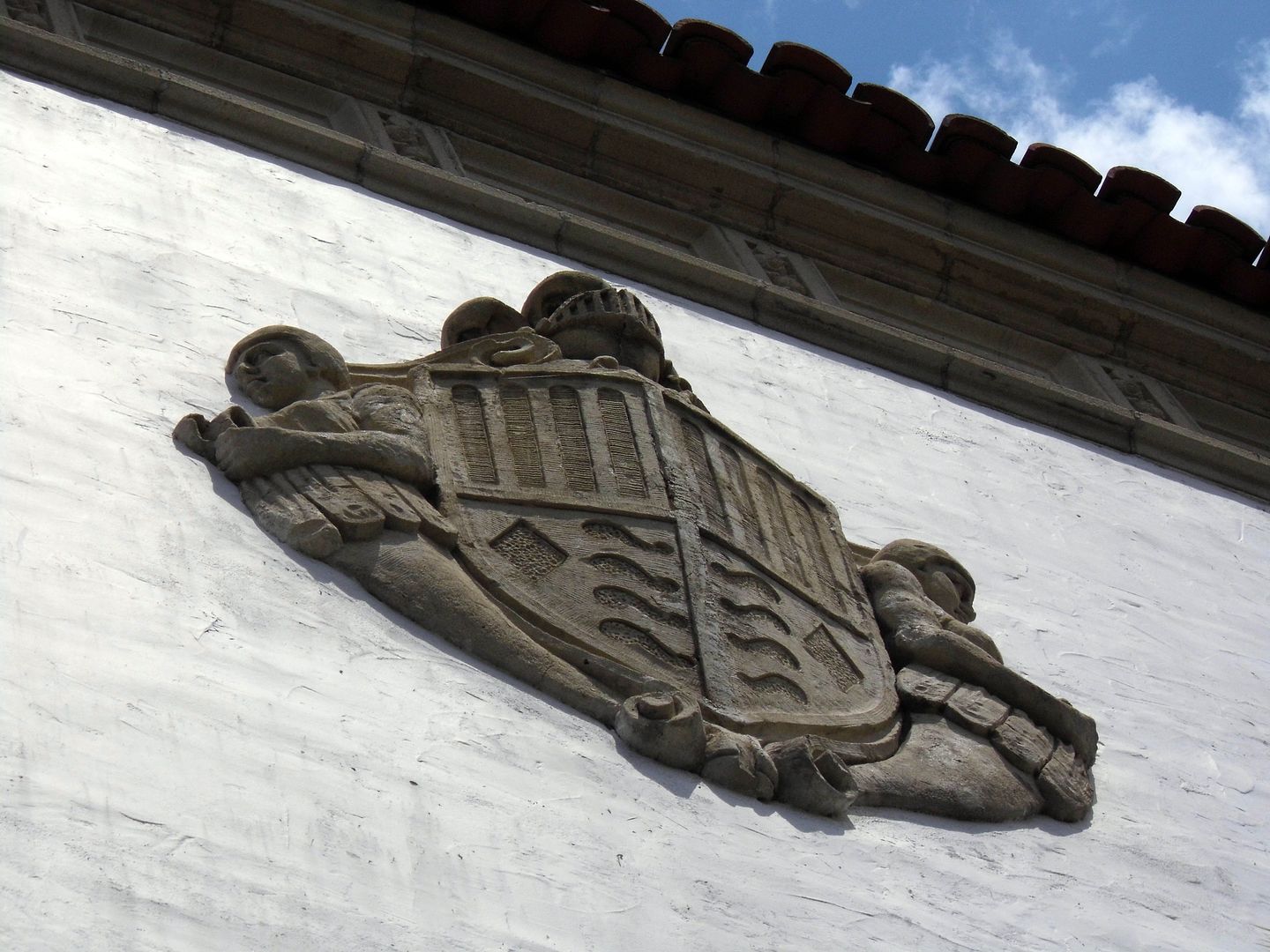
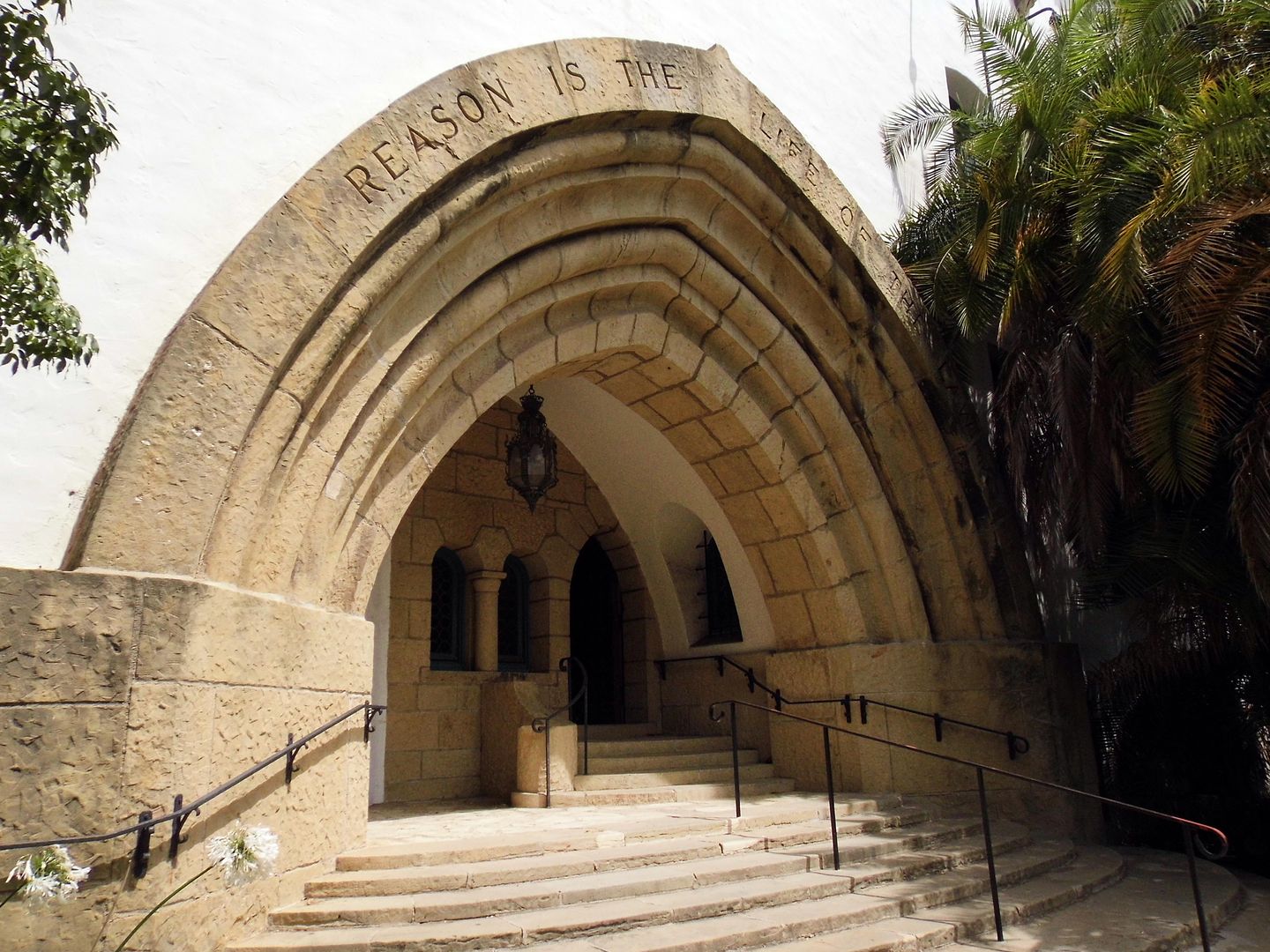
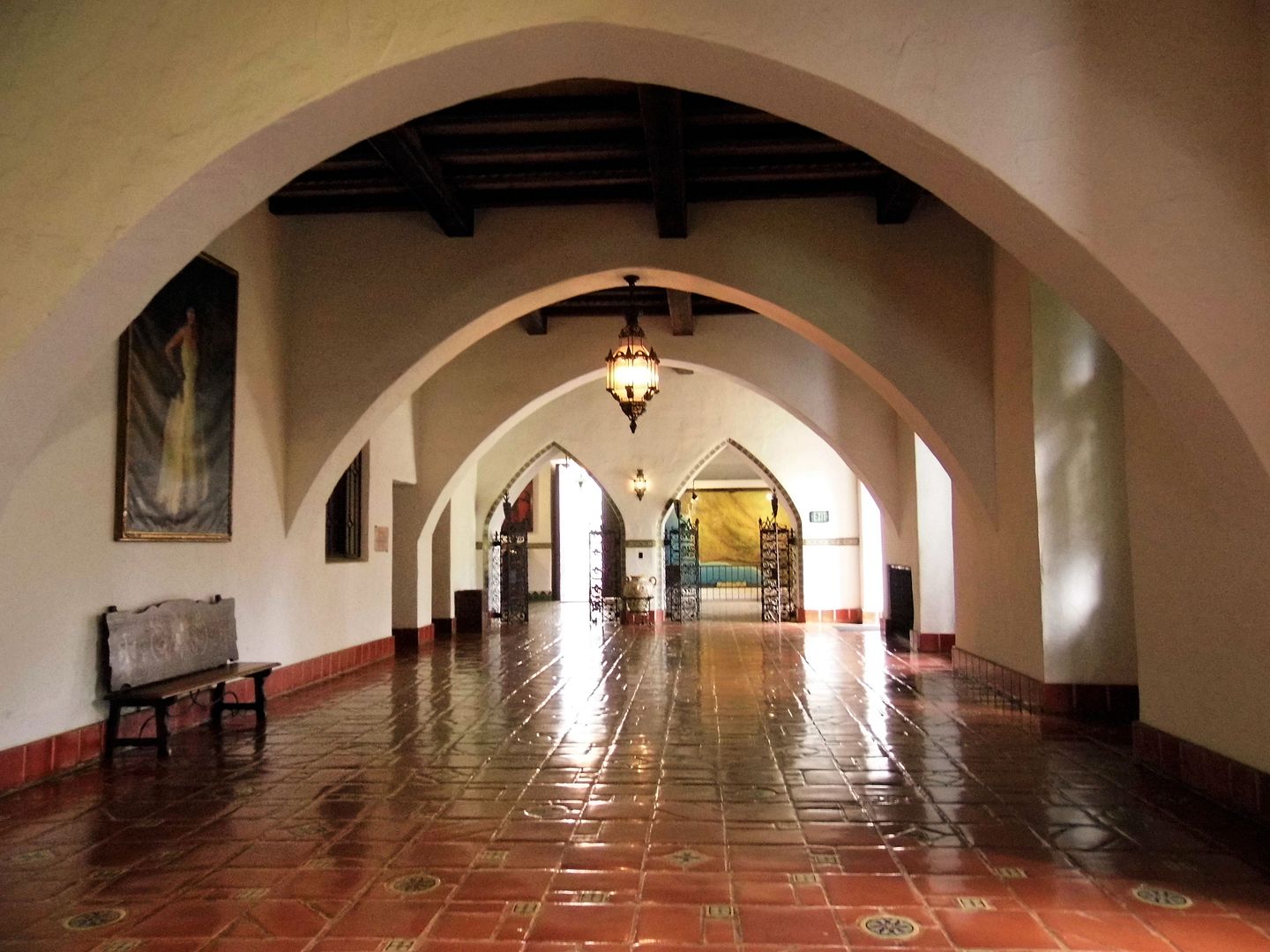
And while it's only three stories tall, it's actually an L-shaped amalgamation of four separate buildings, connected by arches, bridges, or breezeways.


In addition to the Superior Court proceedings, the Santa Barbara courthouse also handles small claims, civil, and criminal cases (including traffic court), as well as family law, juvenile court, probate, and appeals.


It no longer, however, houses prisoners in its "Jail Wing."


circa 2016
`
There are other county courthouses in Lompoc, Santa Maria, and Solvang—but as the City of Santa Barbara is the county seat of Santa Barbara County, this one is the flagship of the county's court system.


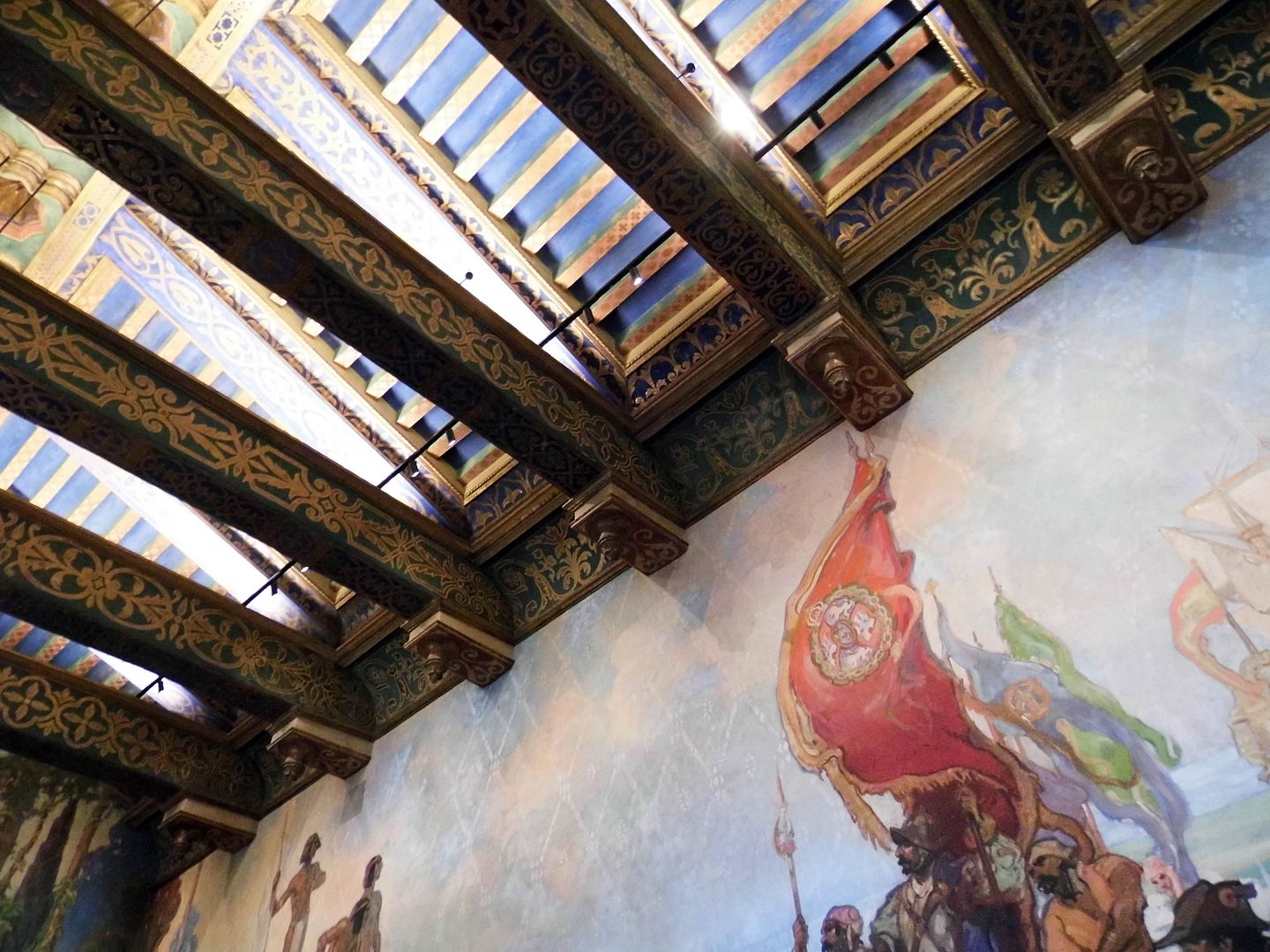
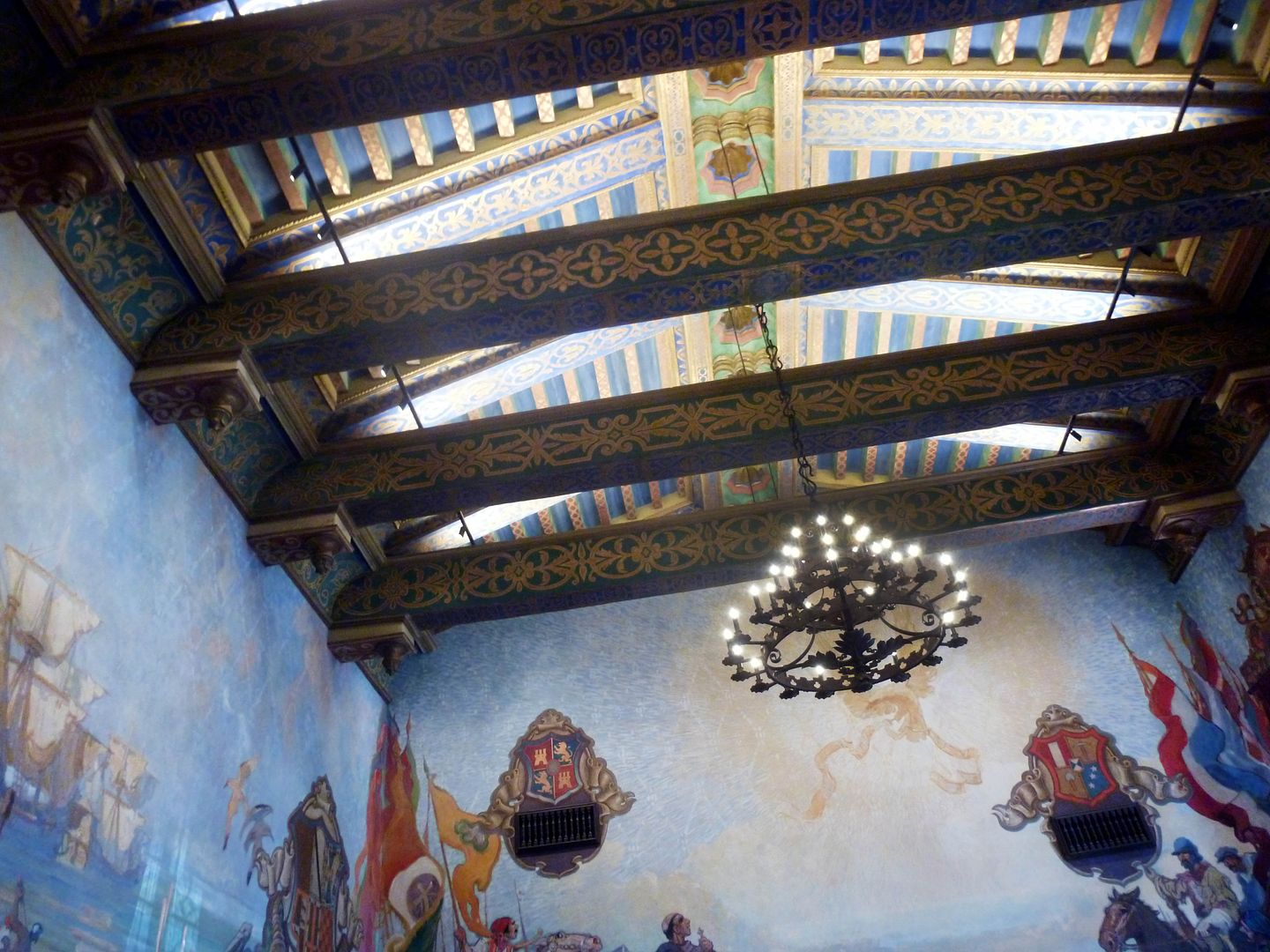
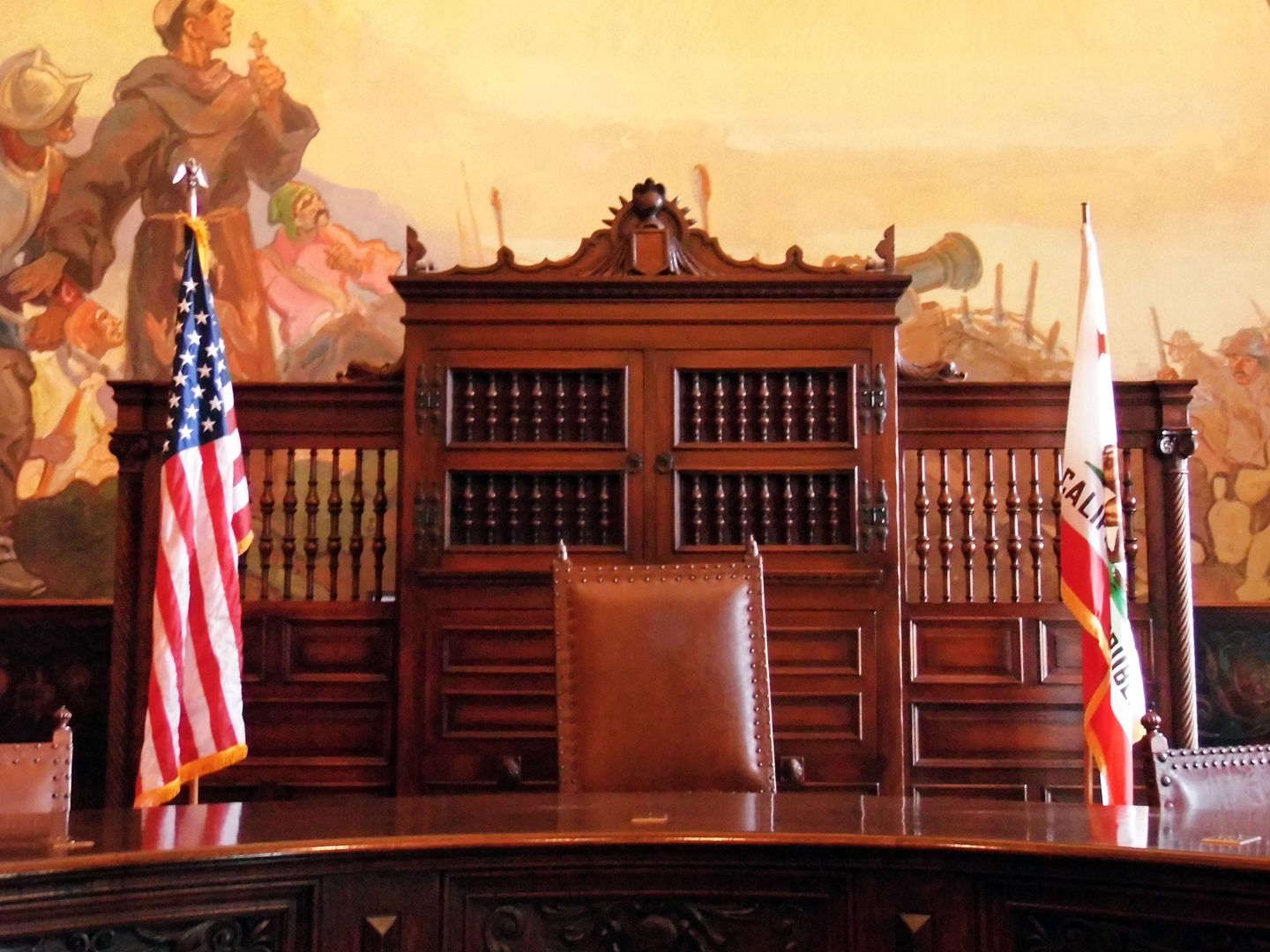
On the second floor, the former County Board of Supervisors' assembly room is now the Mural Room—featuring a 4200-square-foot mural depicting Early California (at least, the Spanish colonial period,  starting in 1542). Daniel Sayre Groesbeck hand-painted it in just four months. 


circa 2016

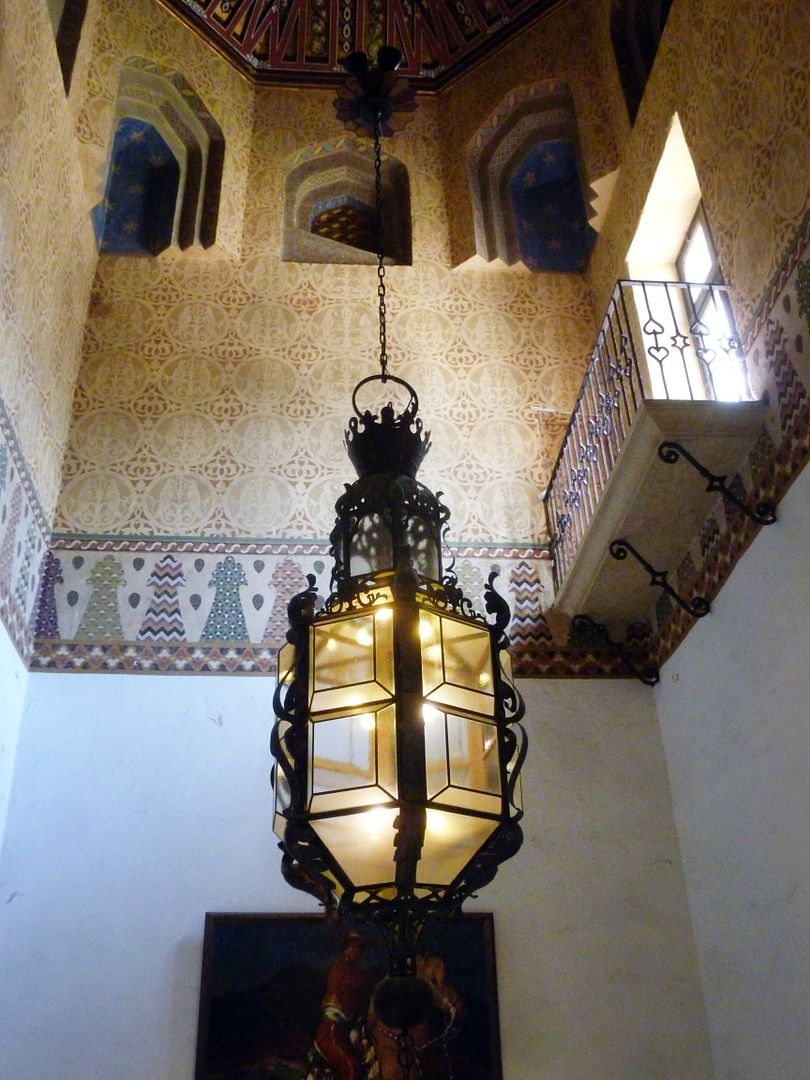
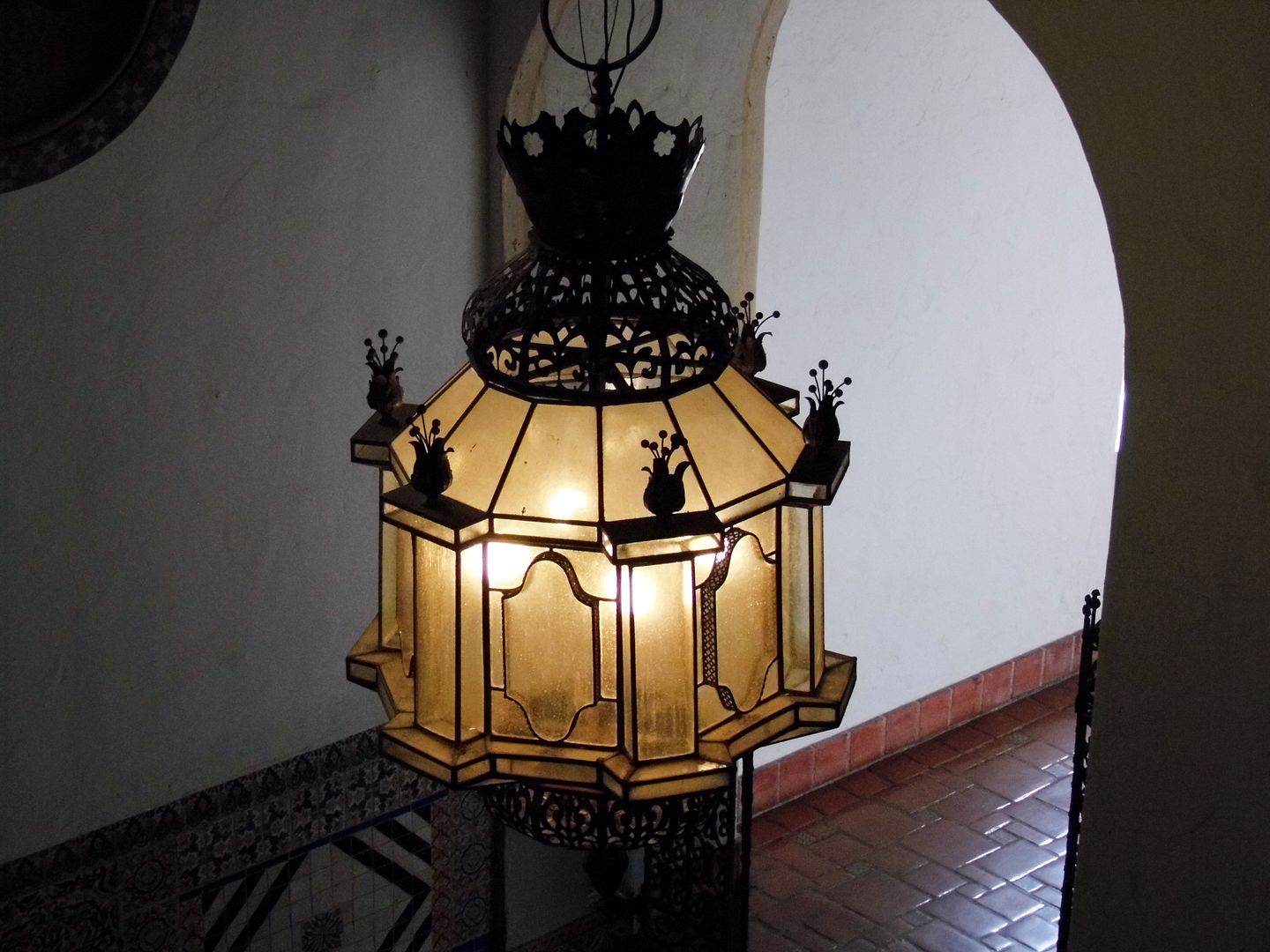
That's where the docent-led tours start—and that's where lots of people get married, right there under the wrought-iron chandeliers and 30-foot coffered ceilings, in front of depictions of explorers and conquistadors like Cabrillo and Vizcaíno and Frémont. 


When Mooser was working on the architectural plans for the courthouse, he considered this a kind of "throne room"—reinforcing the sense that you're in an Andalusian castle.


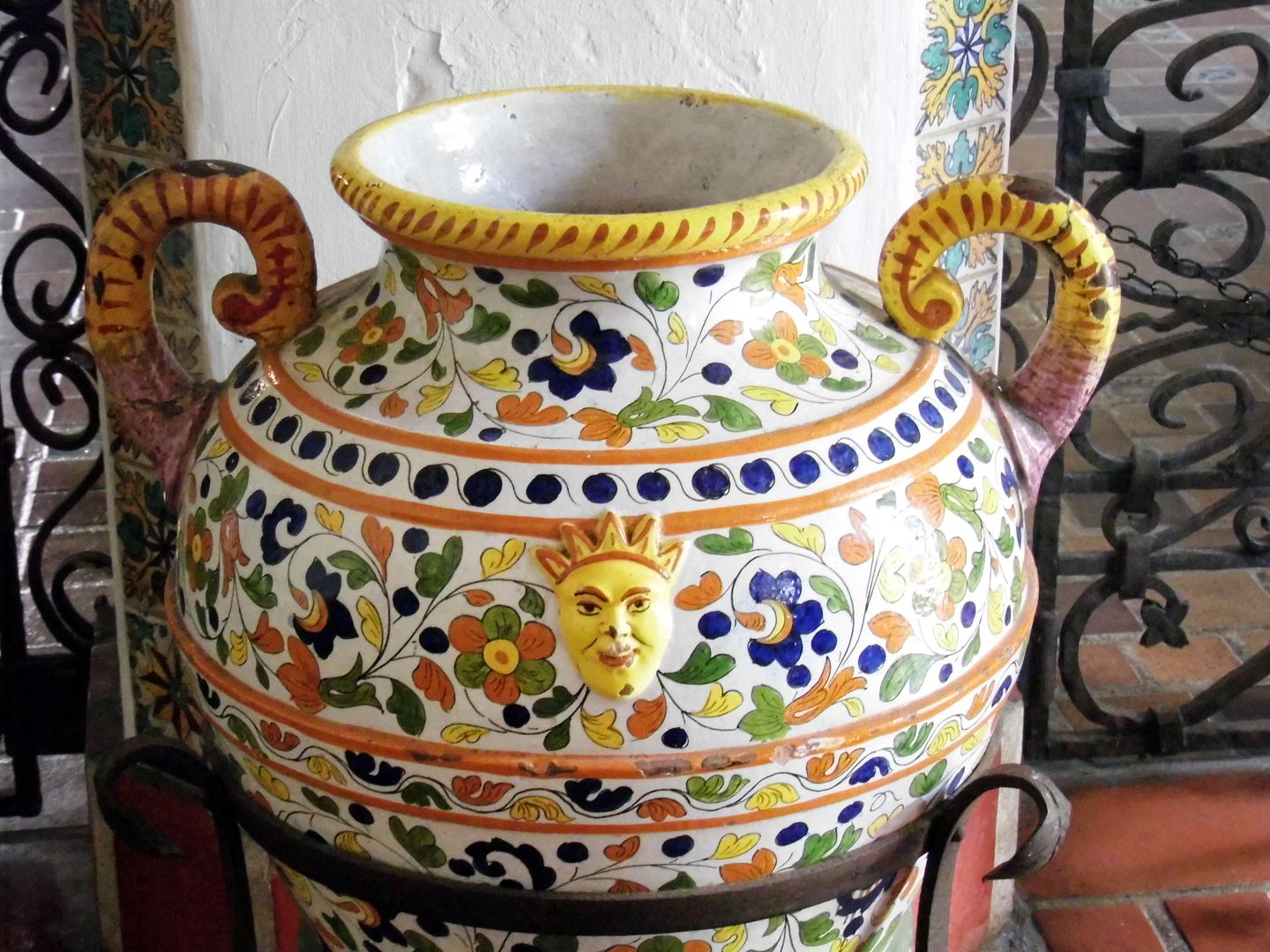
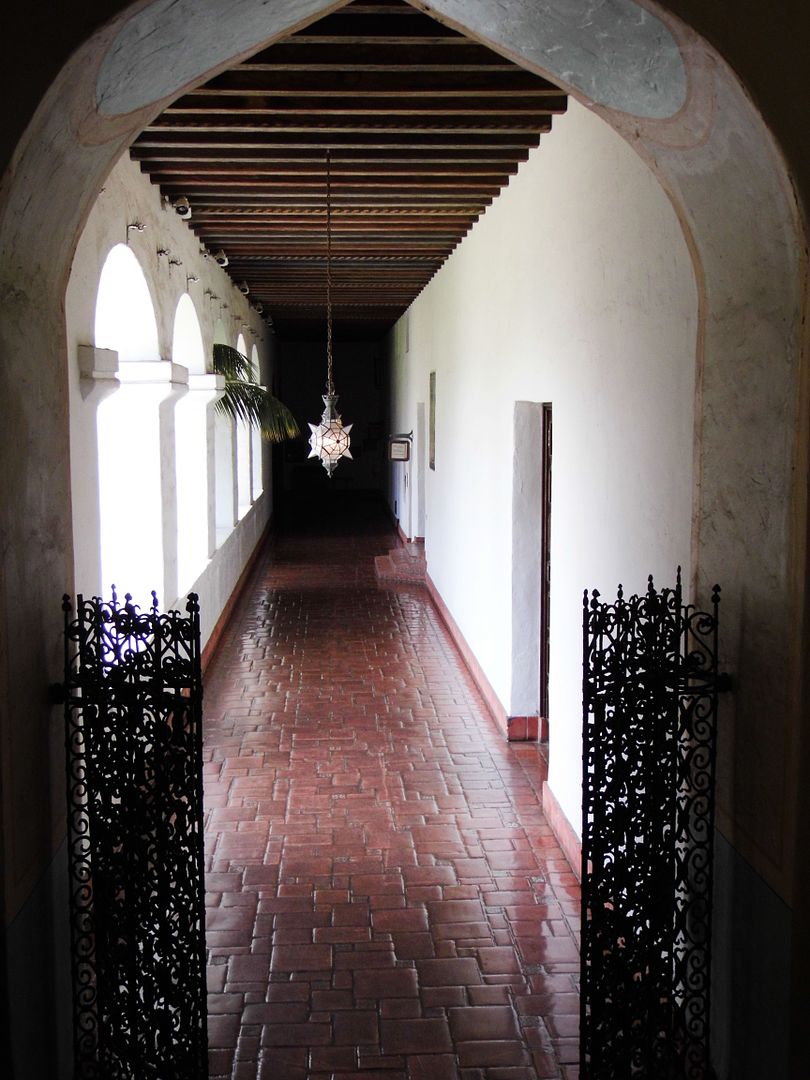
Hand-made terra cotta floor tiles throughout the building were made by Gladding McBean...


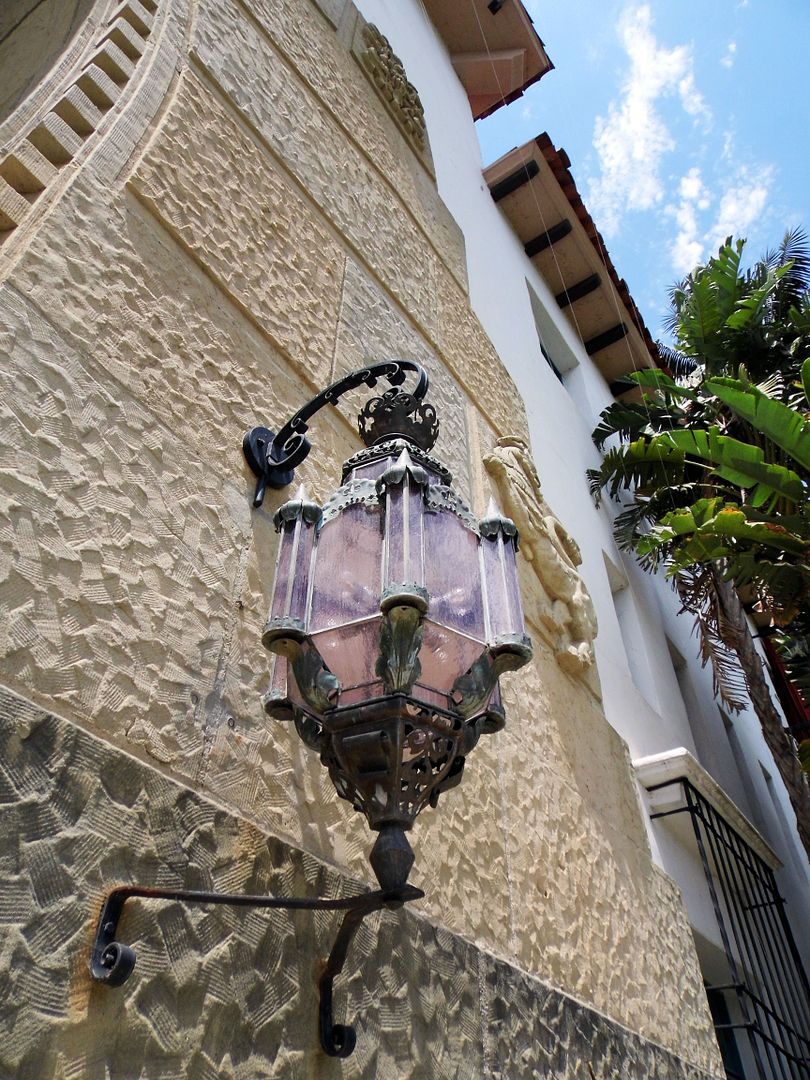
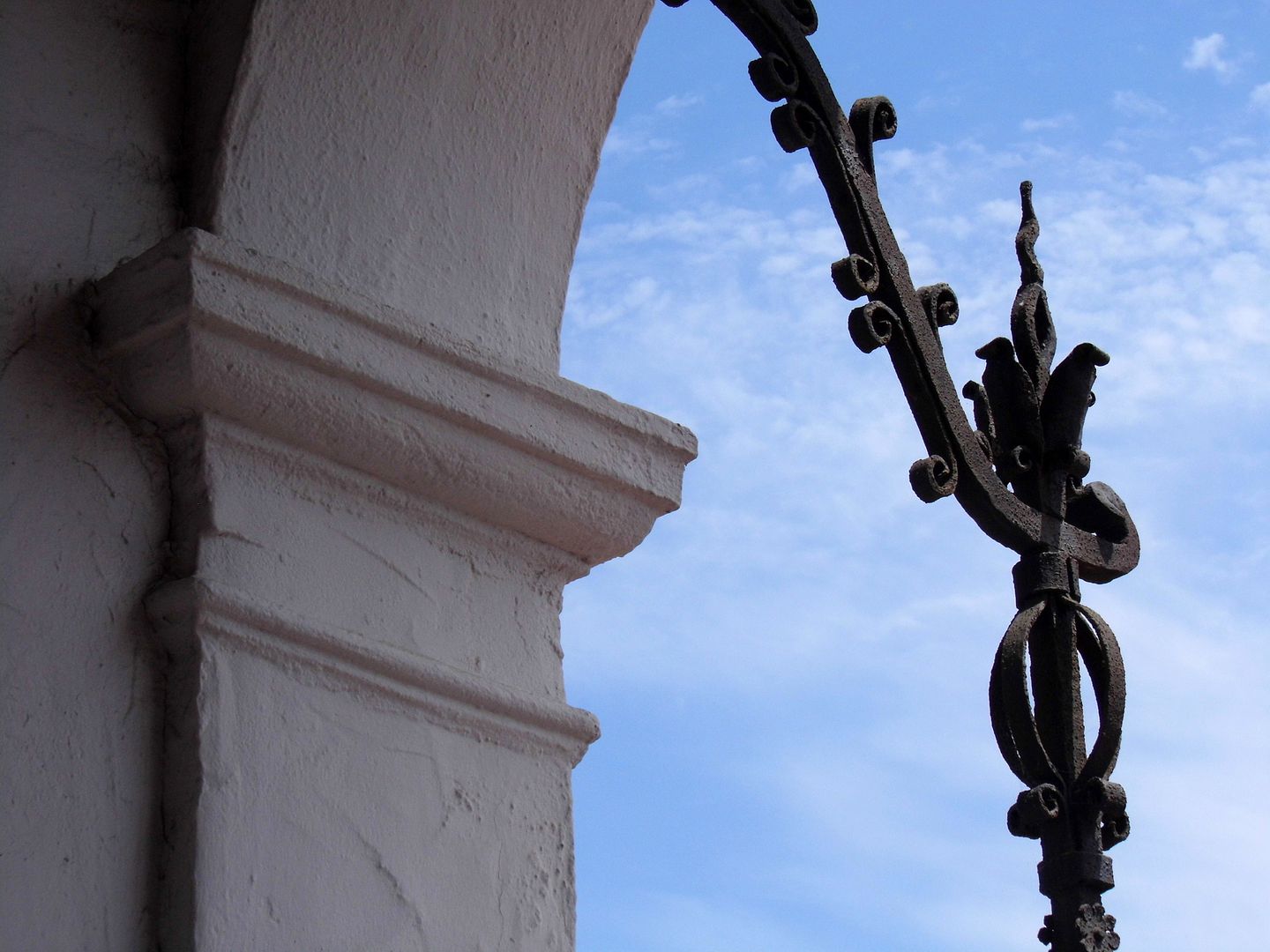
...and the feeling of "Old Spain" has been preserved inside and out, despite multiple renovations (including some ADA improvements).


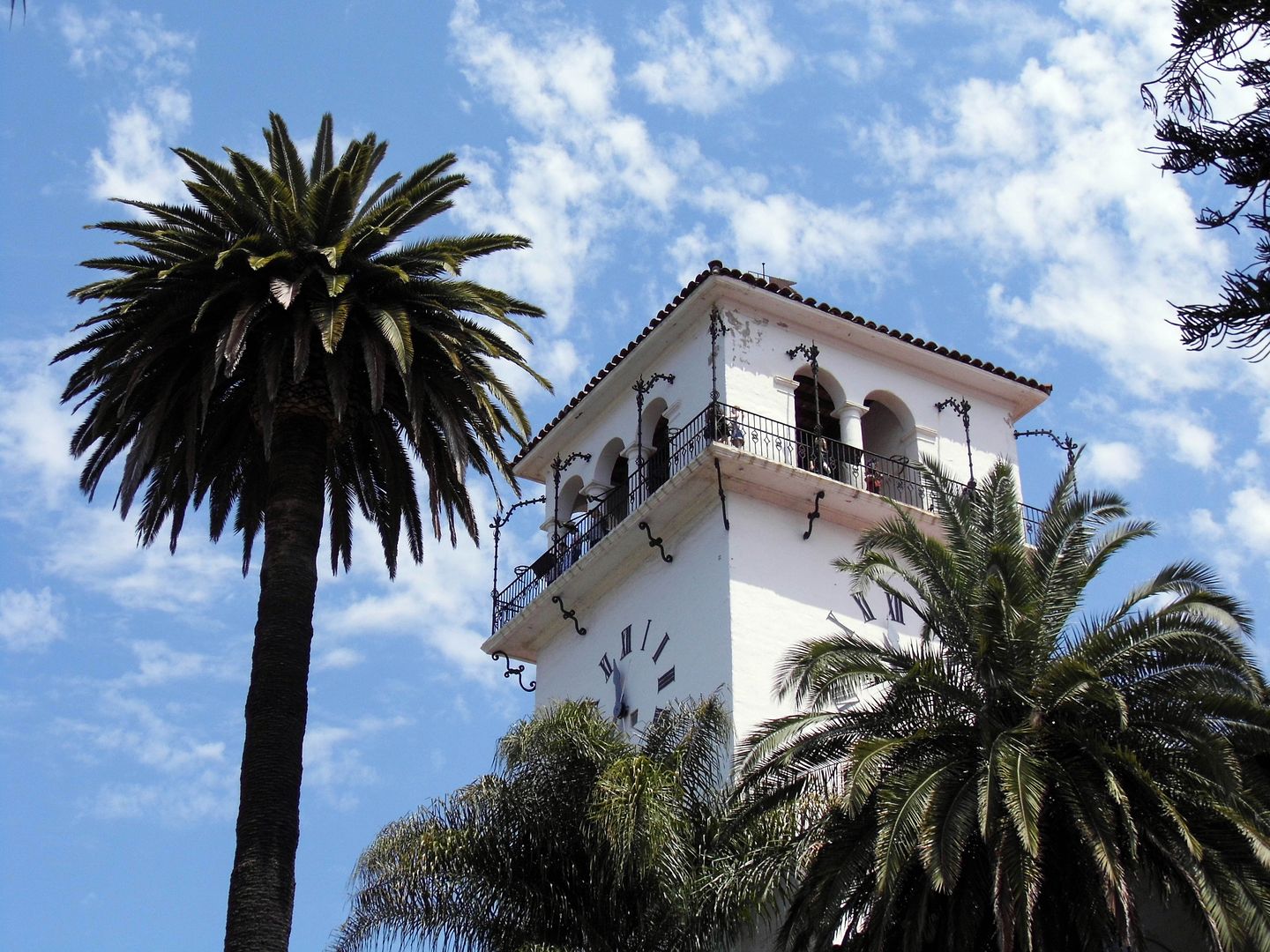
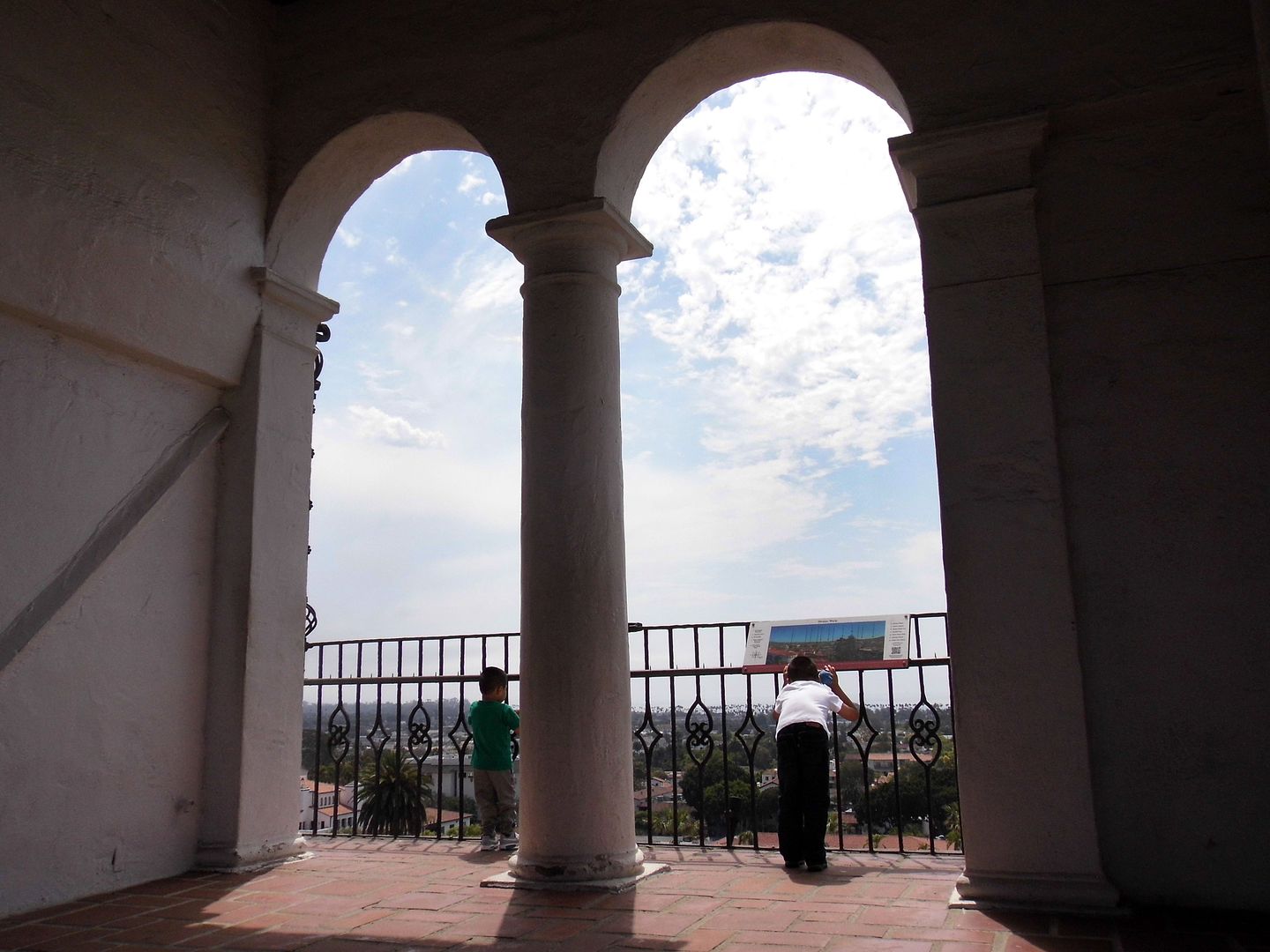
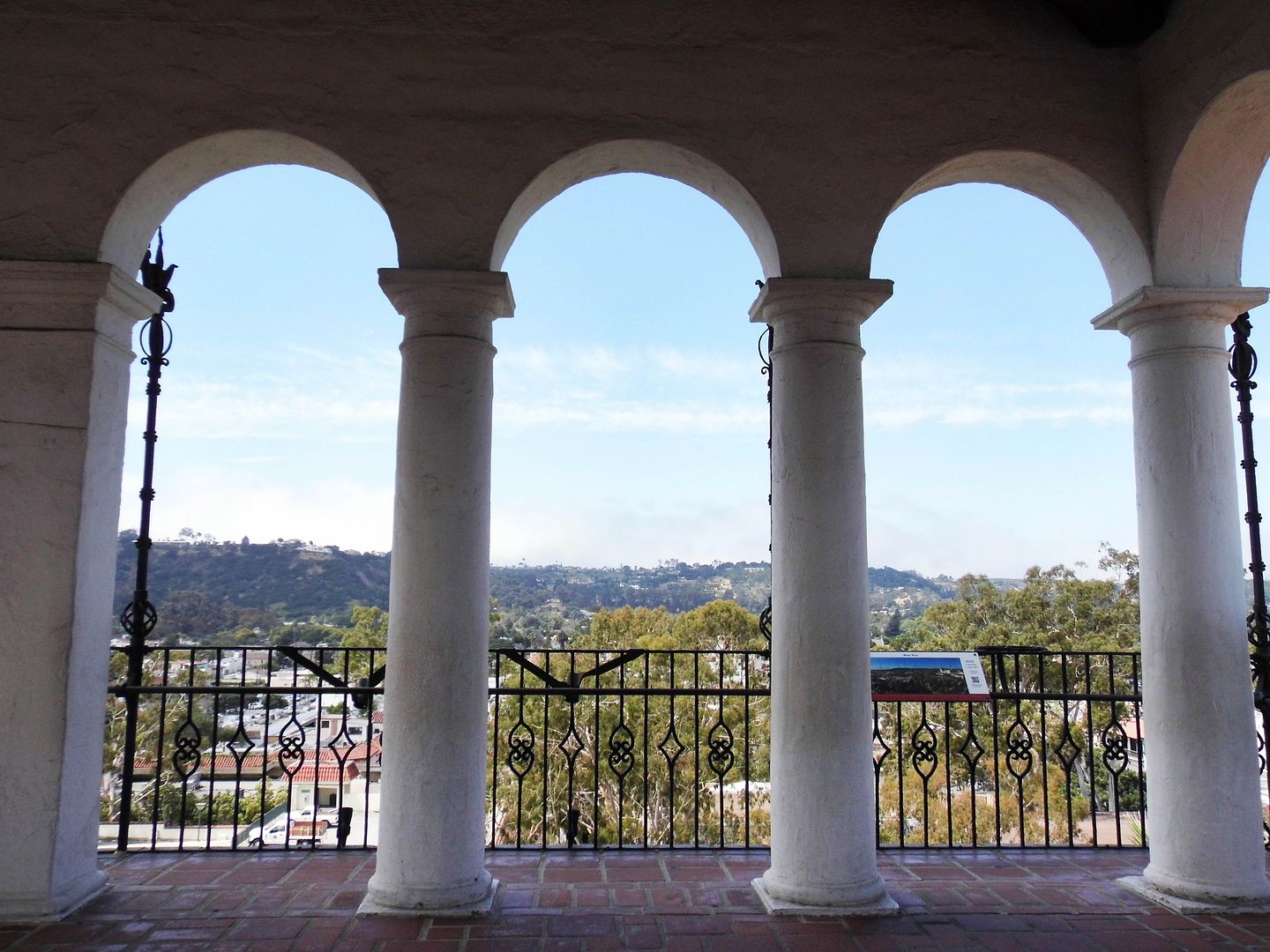
Adding to the romance of the structure—or, I suppose, its romanticized representation of Santa Barbara's founding—is the 85-foot-tall clock tower and "El Mirador" observation deck.


Up there, the Spanish fortress opens up a little bit.


The Seth Thomas mechanized clock is still ticking—and there's an entire gallery devoted to its inner workings.


Too bad they don't let you have weddings up there. That's where you've got the best view—and where you can see how the courthouse occupies an entire city block. Seems like a good spot to exchange vows.

Most public festivities take place in the Sunken Garden—where the original 1872 courthouse stood until it was destroyed in a 6.3 earthquake in 1925. Hopefully its replacement has received all the seismic retrofitting necessary to survive the next "big one" that's sure to come.

Modern engineering has figured out ways to keep a building from crumbling under massive shaking.

But modern medicine hasn't yet figured out how to keep a heart from breaking—or how to put a broken heart back together.

*all photos circa 2017 except where noted

Related Posts:
Photo Essay: The Gardens of the Blacksmith (Los Jardines del Herrero), A Slice of Spain Outside of Santa Barbara
Photo Essay: The View from Above Balboa Park's Former Expo Grounds

May 15, 2020

Photo Essay: A Slice of Colonial Spain In the Ever-Modernizing Downtown of San Diego

When the Balboa Theatre replaced the Gould Hotel at 4th and E in San Diego's Gaslamp Quarter, it was the Southern California city's first big downtown movie theatre.

And when the city government condemned it, evicted its current operator, and then purchased it in 1986, it became San Diego's longest-running empty stage at the time—closed for business for over 20 years.

That was four years before the nearby California Theatre shuttered in 1990. Now, that stage has been empty for 30 years—and all signs point to it never reopening again.

Fortunately, the Balboa found a way somehow to reopen on January 19, 2008, after a 3.5-year, $26.5-million renovation.

Under the hood, restoration architects Westlake, Reed and Leskowsky replaced all utilities with new and seismically retrofitted he entire structure, adding disabled access.
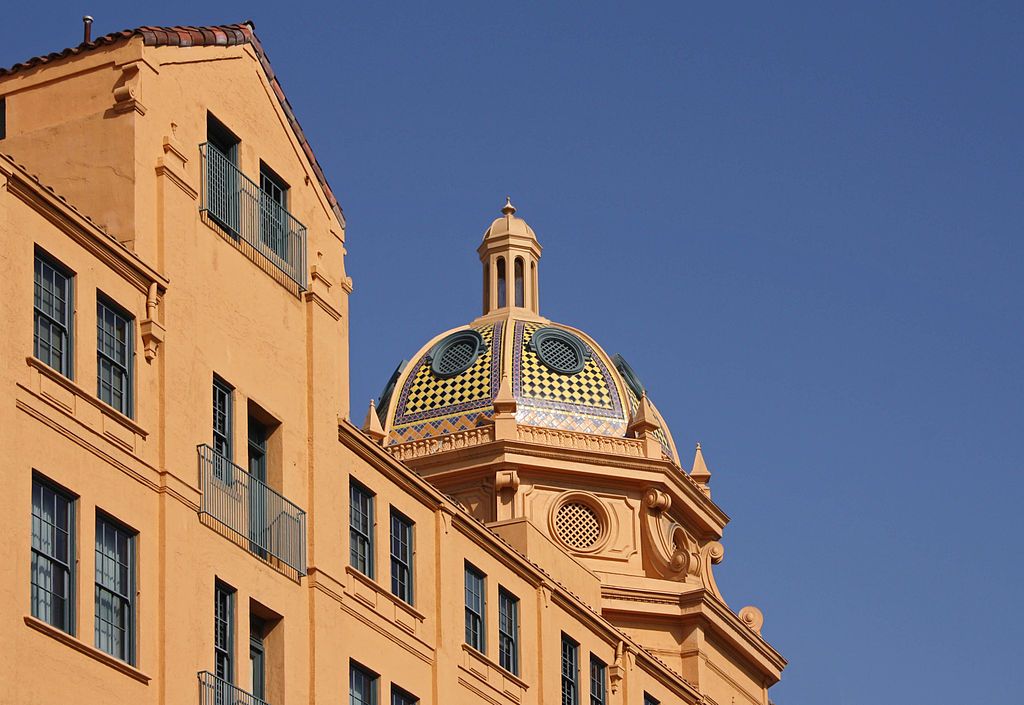

Photo: Bernard Gagnon via Wikimedia Commons (CC BY-SA)

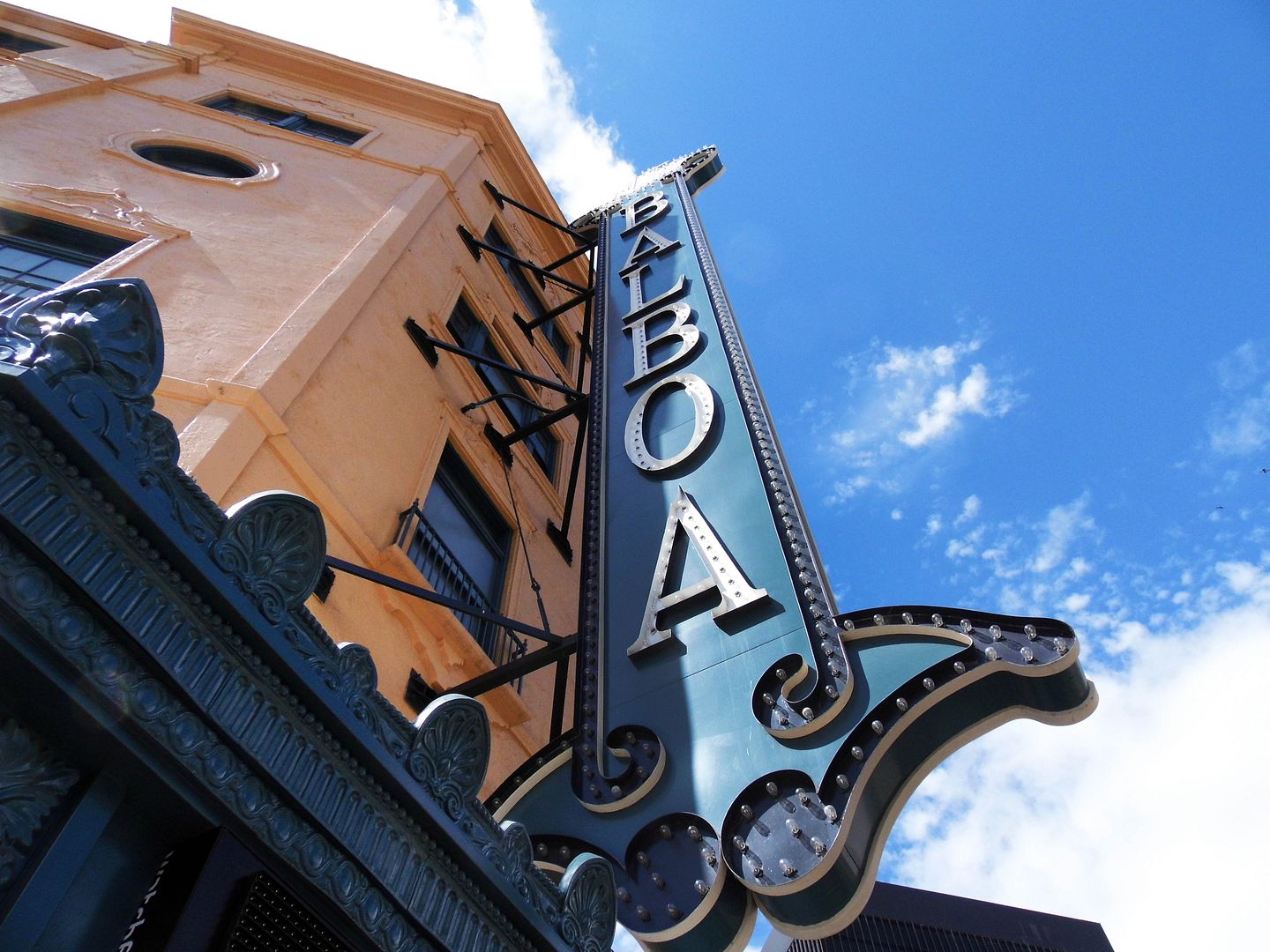
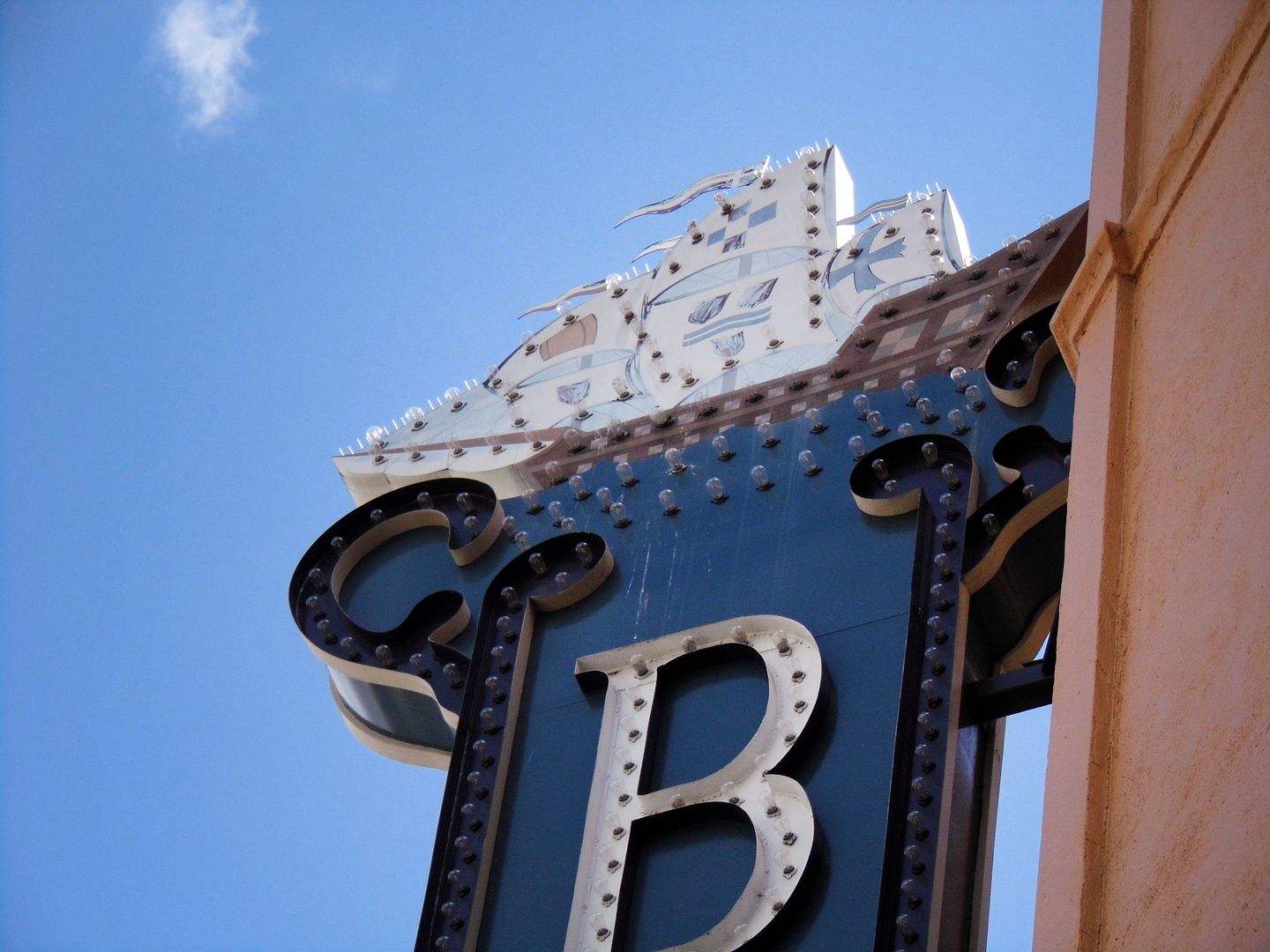
Outside, a historically accurate pumpkin-esque tone covers up the white of its non-historic exterior paint job. A replica hangs were the original marquee went missing sometime in the 1930s, though it's since been converted for digital display. The blade sign was faithfully reproduced according to the specs of the original.


Originally designed in the Spanish Colonial Revival Style by architect (and former "stage man") William H. Wheeler and built by building contractor C. L. Wurster of Wurster Construction Company, the Balboa Theatre building's 4th Avenue side featured six ground-floor retail storefronts, with the floors above housing 34 offices.


Reportedly completed at a cost of $800,000, the theatre opened on March 28, 1924 as both a vaudeville stage (with acts like the brother-sister duo Fanchon and Marco) and a movie house. Its initial owner Robert Ernest ("Bob") Hicks—a former Colorado newspaperman and San Diego Union editor—had been involved in exhibiting movies in San Diego since 1910 or so.
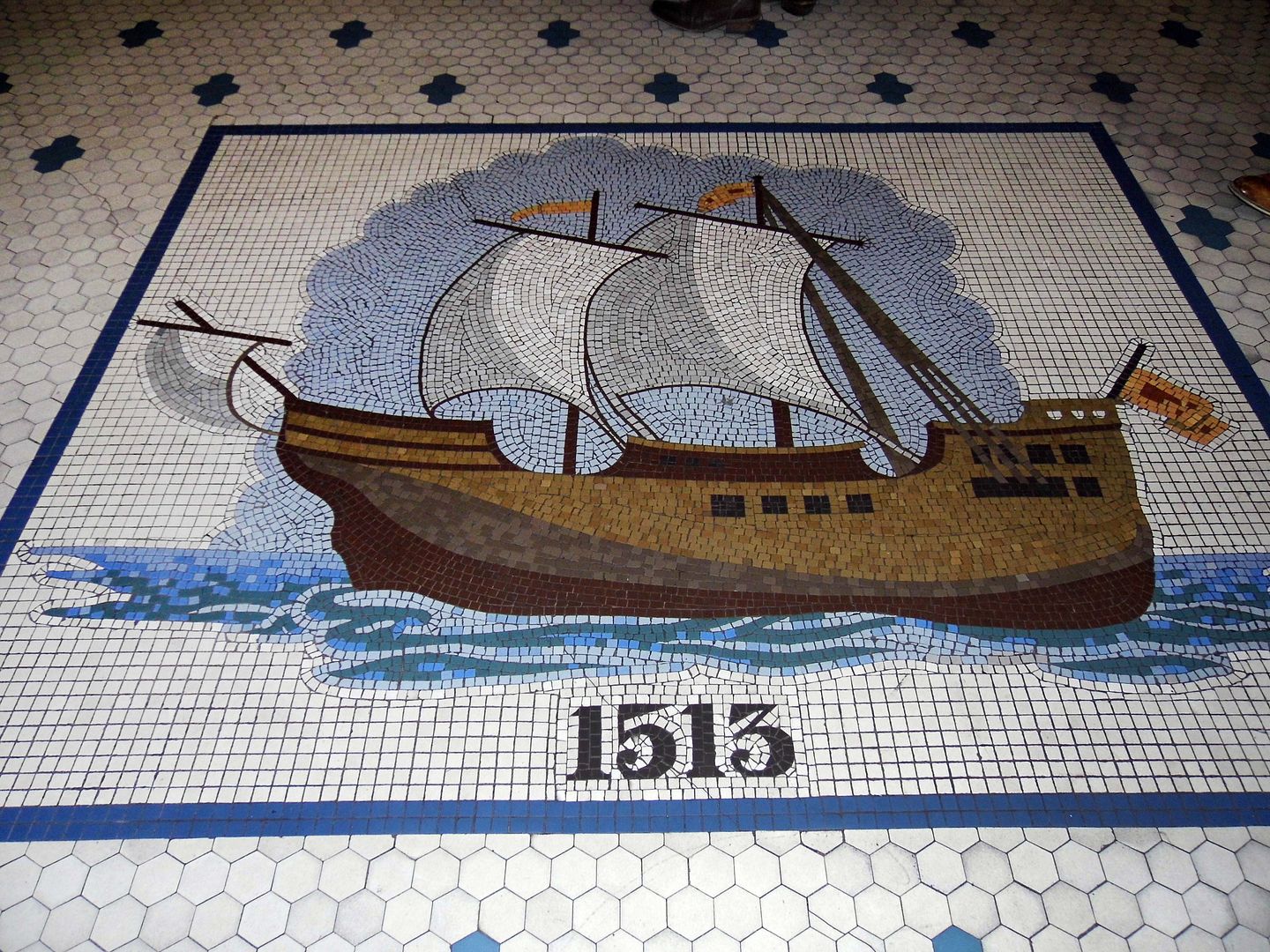


The theatre gets its name from Vasco Núñez de Balboa, first European explorer to reach the Pacific Ocean. His sailing ship is depicted on the exterior blade sign as well as on the historic mosaic tile floor in the entry rotunda.
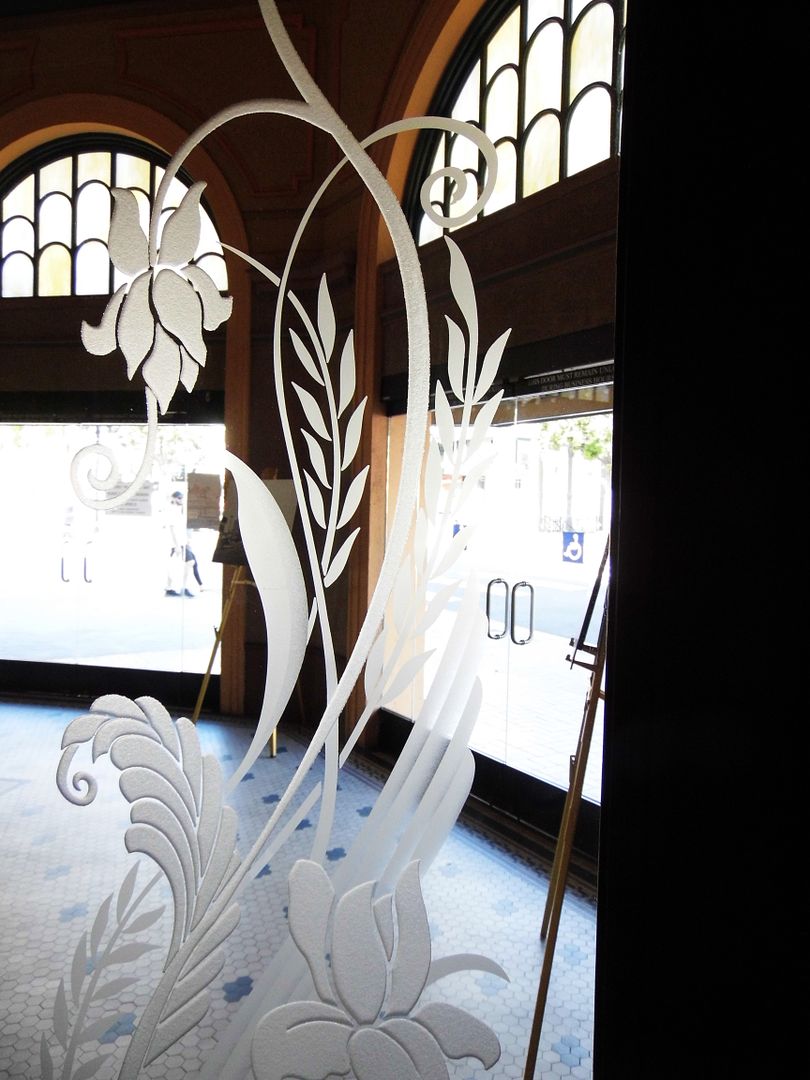


While the theatre sat in limbo waiting for its fate to be determined, its foyer was actually open air—exposing it to all sorts of elements. The restoration enclosed it with new exterior doors and restored the deeply etched glass doors that bring guests into the lobby.
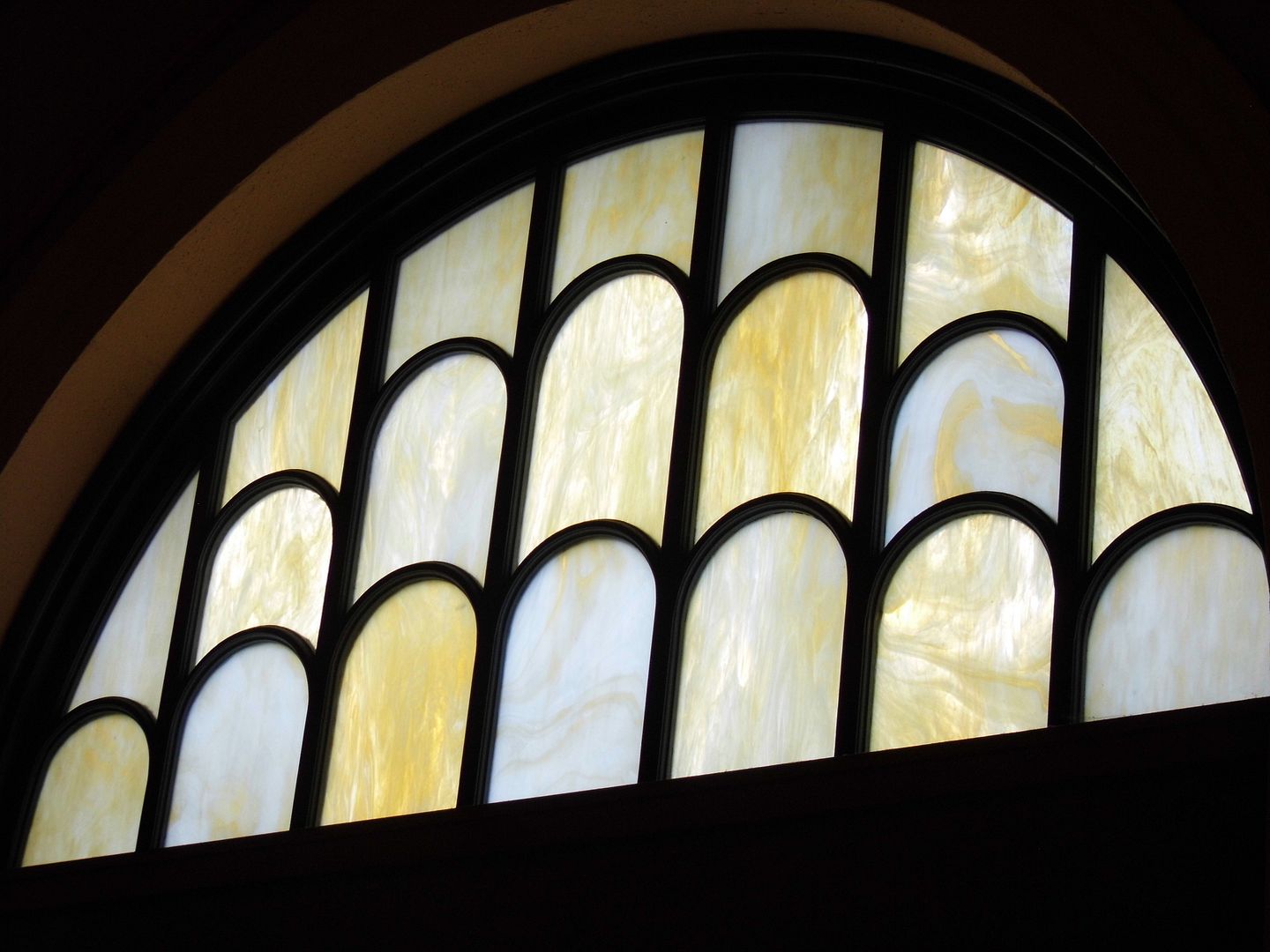


The historic clerestory windows facing the street above the marquee had suffered some damage, too—so they were also replaced by replicas.


In 1930, the theatre's programming of silent films accompanied by orchestra and organ gave way to "talkies" with the new involvement of Fox West Coast Theatres—which later remodeled the Balboa Theatre into the Teatro Balboa cinema, screening Spanish-language films ("todo en español," like El Dios del Mar from 1930) starring primarily Mexican talent (like Ramón Pereda). Just a few years later, the Navy commandeered the upstairs offices to house its bachelor sailors waiting to ship out during WWII.


In 1959, the Balboa almost met the same fate of the hotel that once occupied that same corner—demolition. This time, the plan was to flatten the theatre to make way for a parking lot. But it was saved when San Diego's Russo family bought the building for around $100,000 and ran it as a action movie house (with a hotel upstairs) until 1976, when they leased it out to another operator. It was threatened again in 1983, with a proposed conversion into an art museum/arts center.
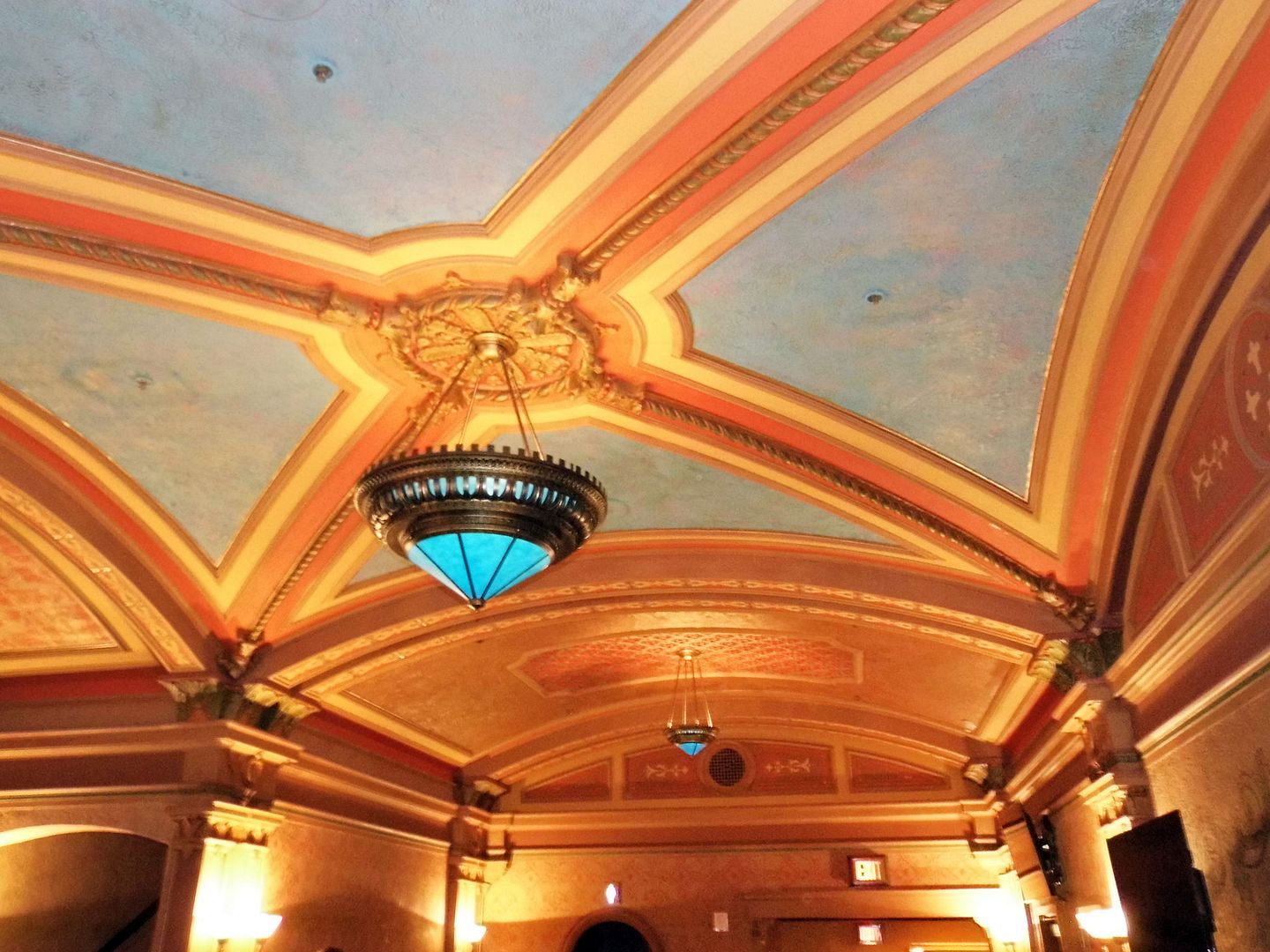


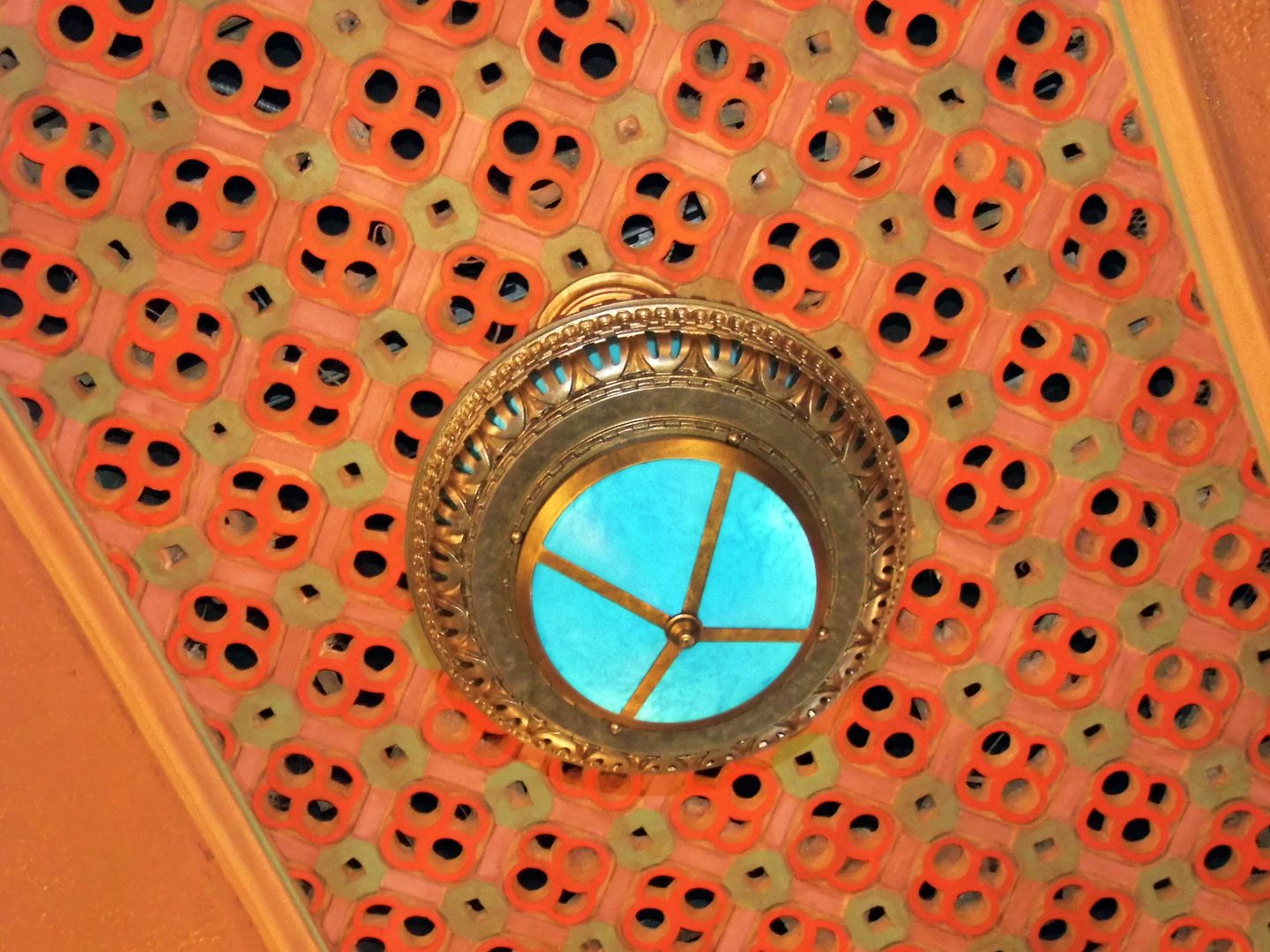
It's kind of amazing that after all that, the Balboa was able to reopen as a theatre—now promarily a performing arts stage. Audiences are now greeted by ornamental plaster in the second floor "Salon" lobby that's been restored by New York's Evergreene Studios, which sculpted new molds and cast new plaster elements to replace what had deteriorated or been lost.
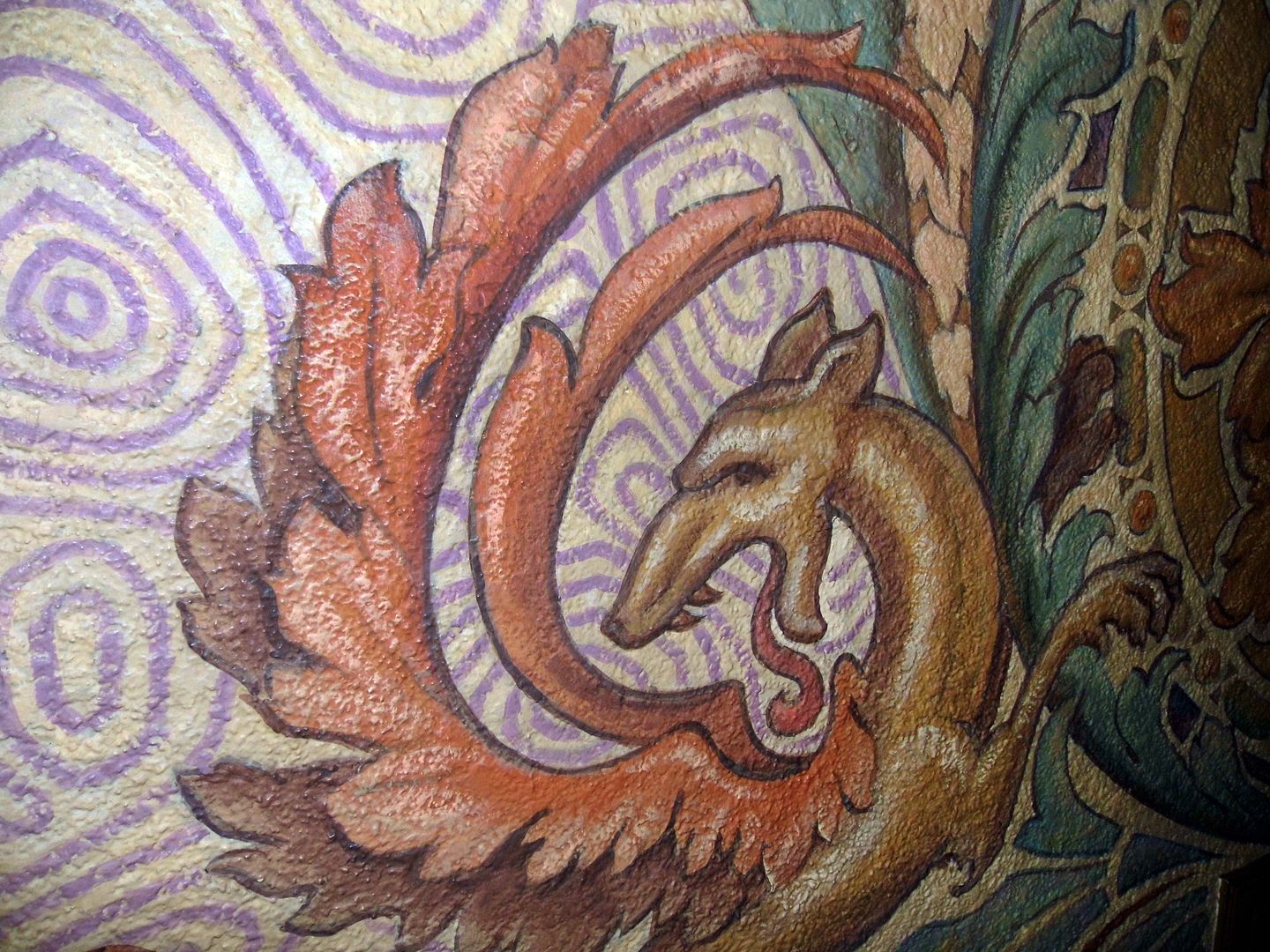


The original murals by Heinsbergen Decorating Company on both sides of the salon had been painted over, so in order to return the walls to their original designs...
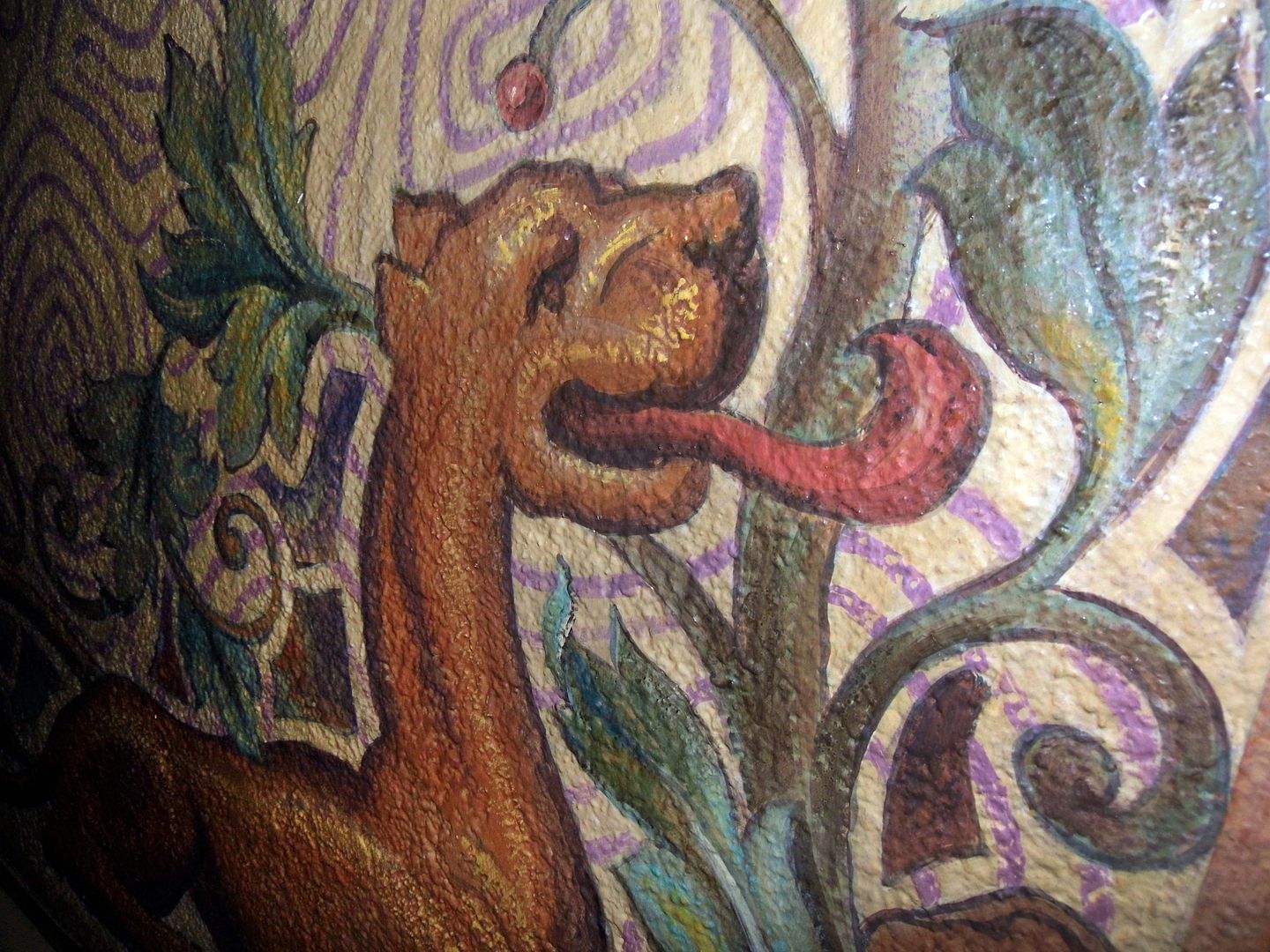


...Evergreene recreated stencils from a single 1924 photograph and established the color palette from paint scrapings.
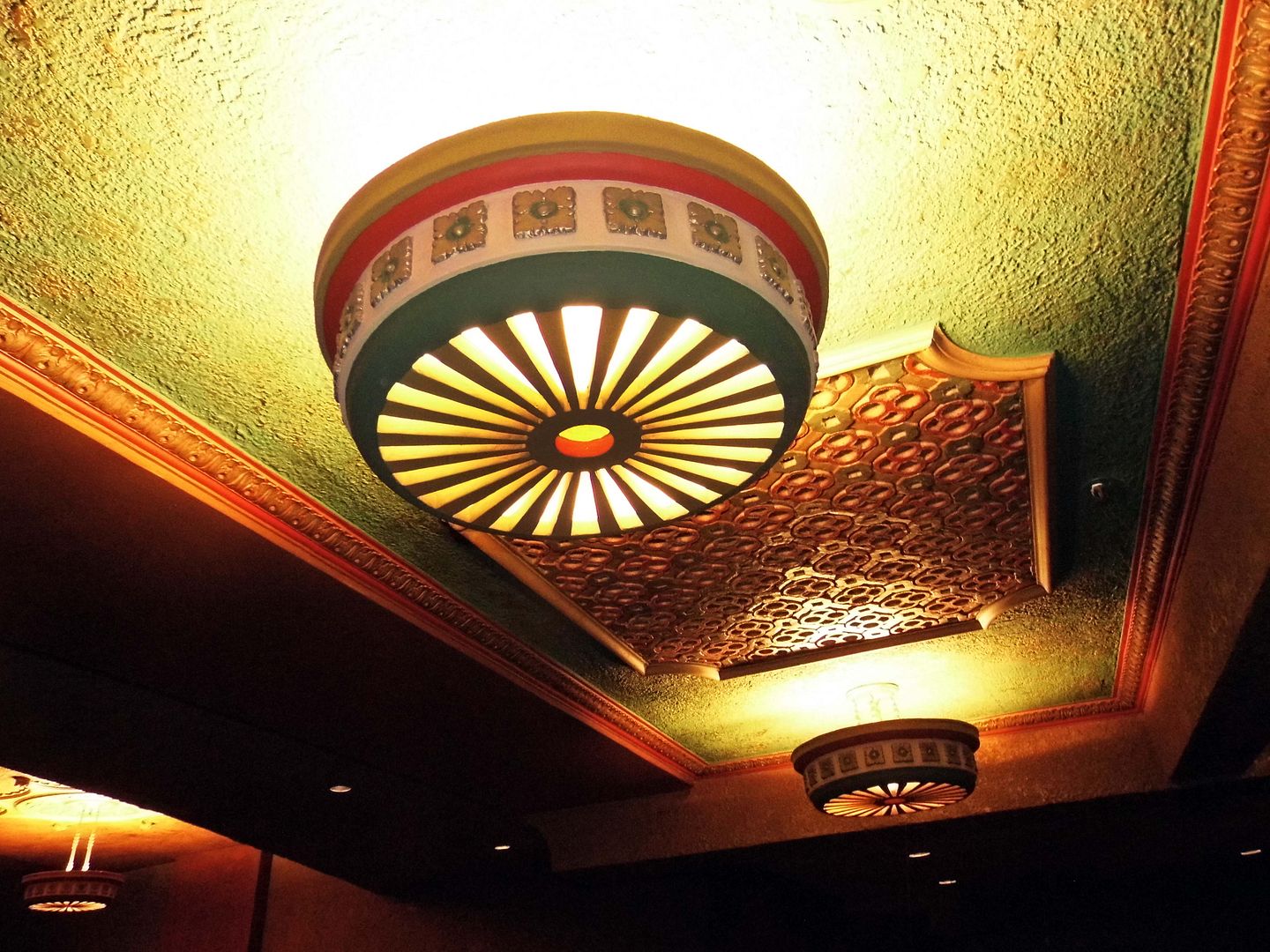


Inside the auditorium, the gilded historic appearance of the original bronze powder paint had lost its luster, having tarnished to a dark brown. In its paint restoration efforts, Evergreene recreated original color schemes using a bronze powder paint that supposedly won't tarnish.
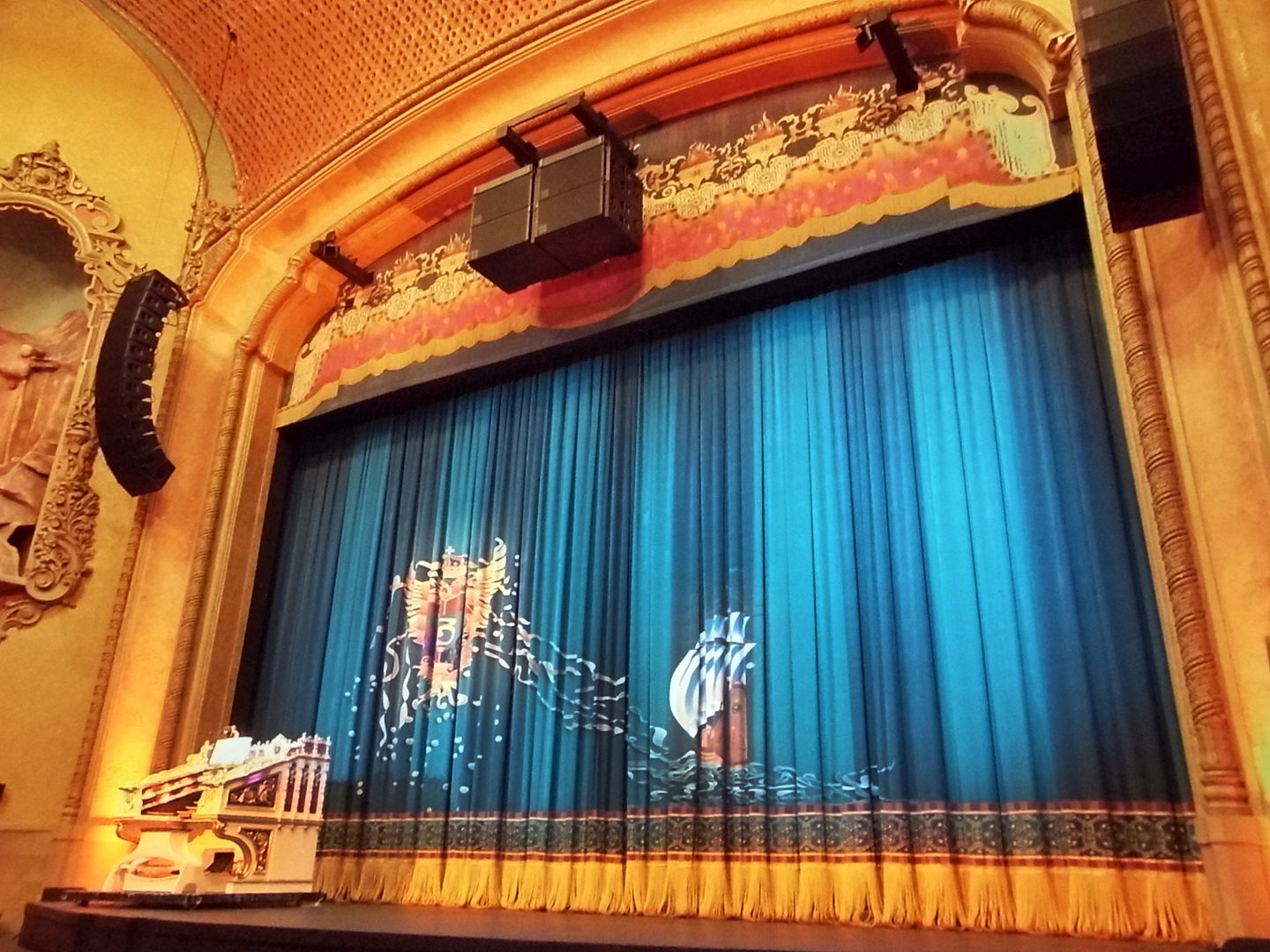


The Balboa's Spanish "ship" theme continues on the stage, where the curtain's design features the Balboa family coat of arms and a 16th-century Spanish caravel. On either side of the proscenium, real water trickles down ornamental mountains set inside 28-foot-tall grottos—at first a functional feature, as the water helped cool the audience, but now just decorative.
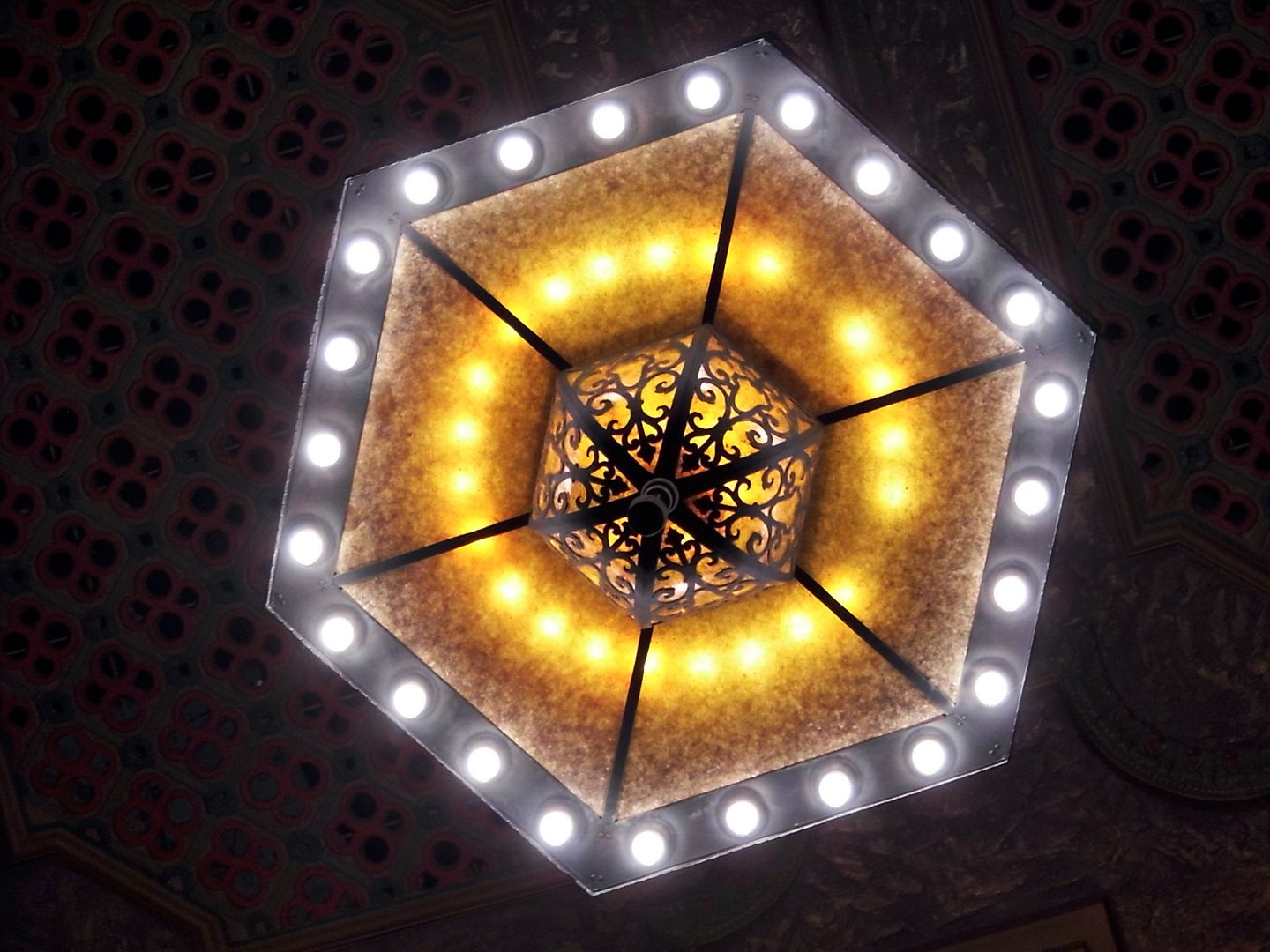


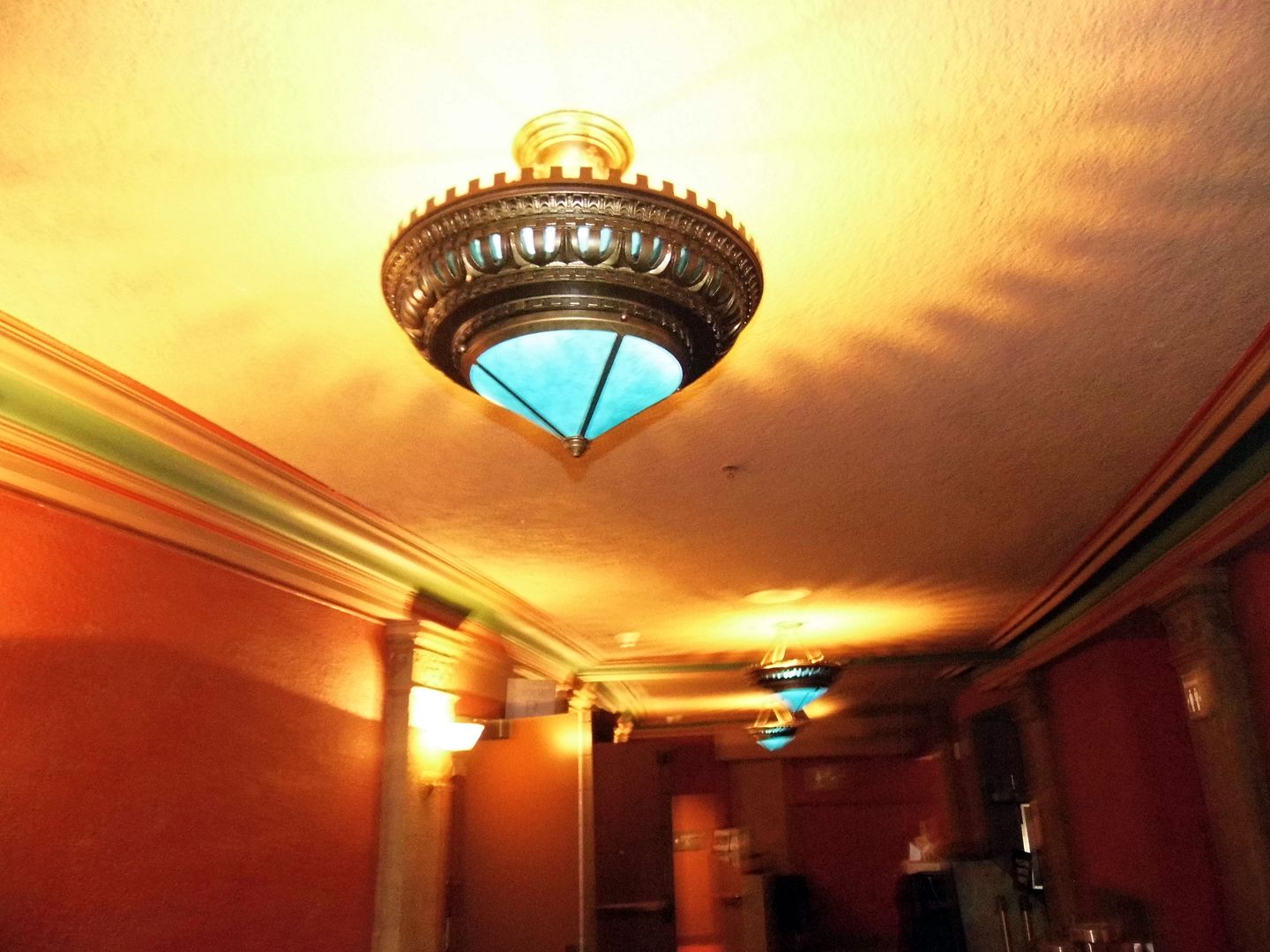
Hanging from the ceiling above are historic light fixtures that were restored and rewired by Gibson and Gibson Antique Lighting of Chula Vista. Unfortunately, "usherettes" dressed as Spanish cavaliers in boleros and sashes are no longer in the theatre's employ and strolling the aisles!
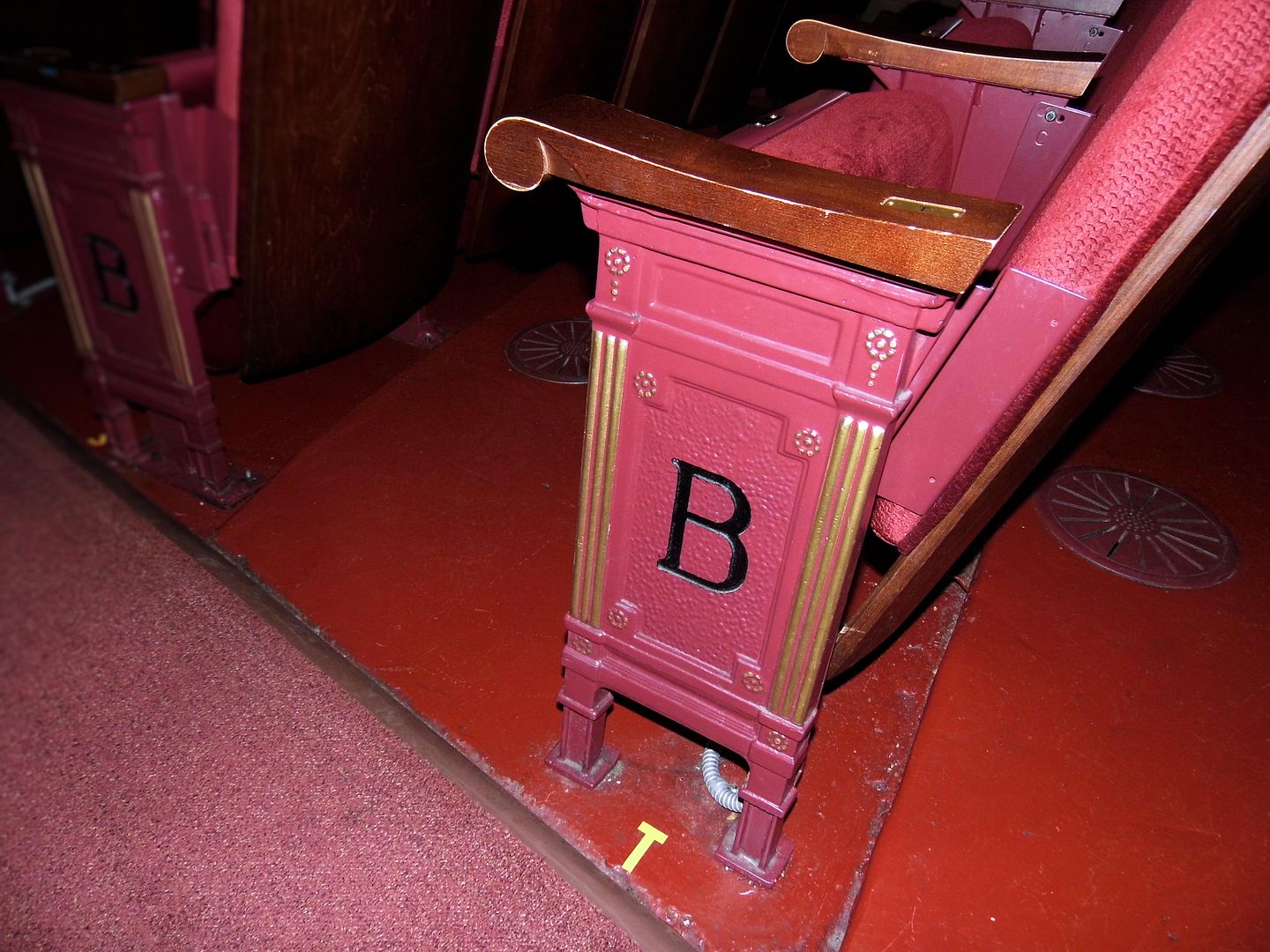


Between the orchestra section and the single balcony, the Balboa has downsized its seating capacity from 1,513 (a hat tip to the date of the Pacific Ocean "discovery") to 1,339.
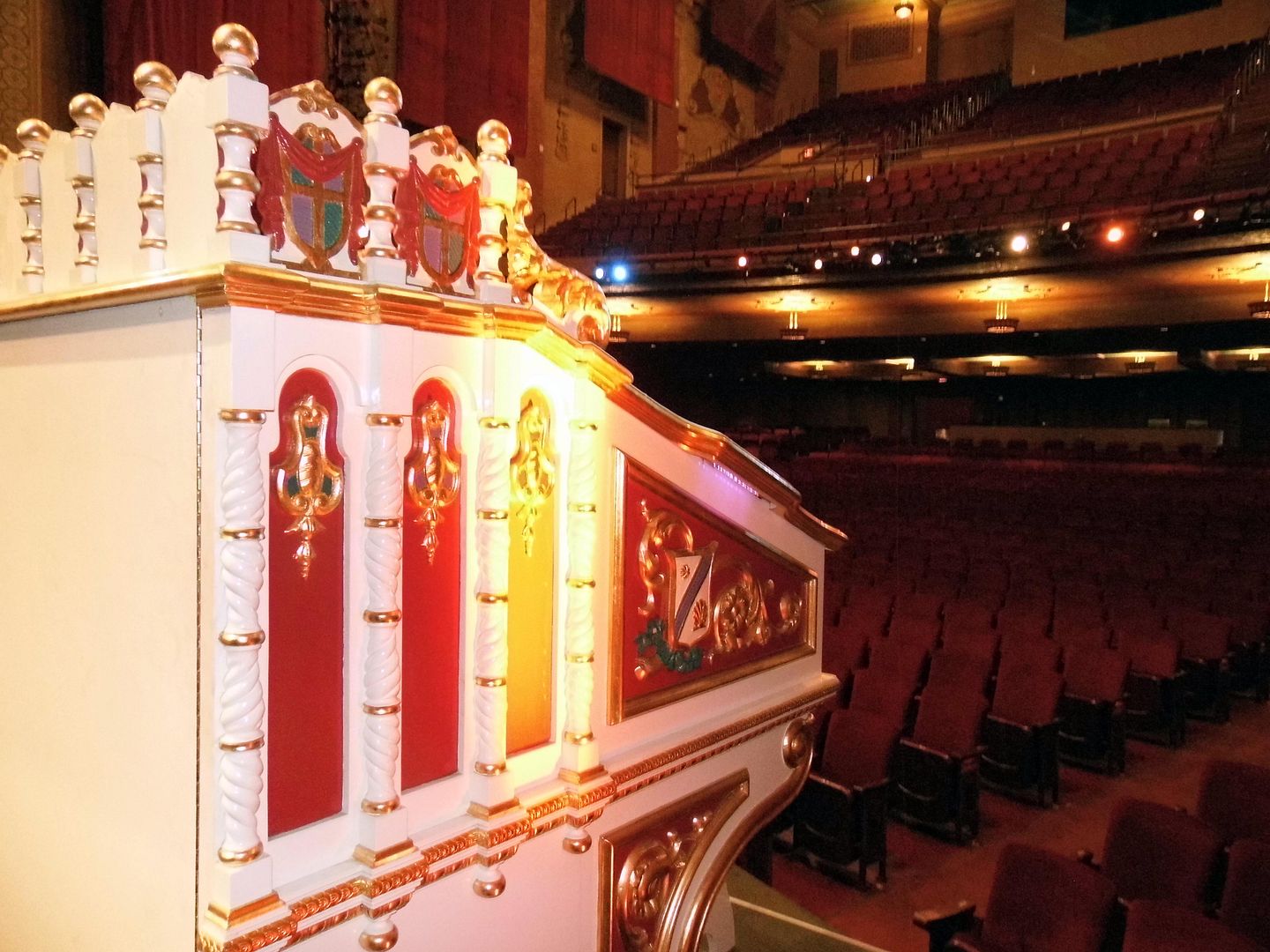


The original 426-pipe theatre organ (built by Robert Morgan in Van Nuys in 1922) was moved to the Fox Theatre (now Copley Symphony Hall) in 1929. Maker Robert Morton was second only to Wurlitzer in terms of volume of theatre organs—and the original's replacement is one of only four remaining "Wonder" models by the Morton Organ Company, now residing at the Balboa. Perhaps the first Wonder Morton to have been built, this Wonder Morton Organ's console contains more ornate carvings than the others in existence.
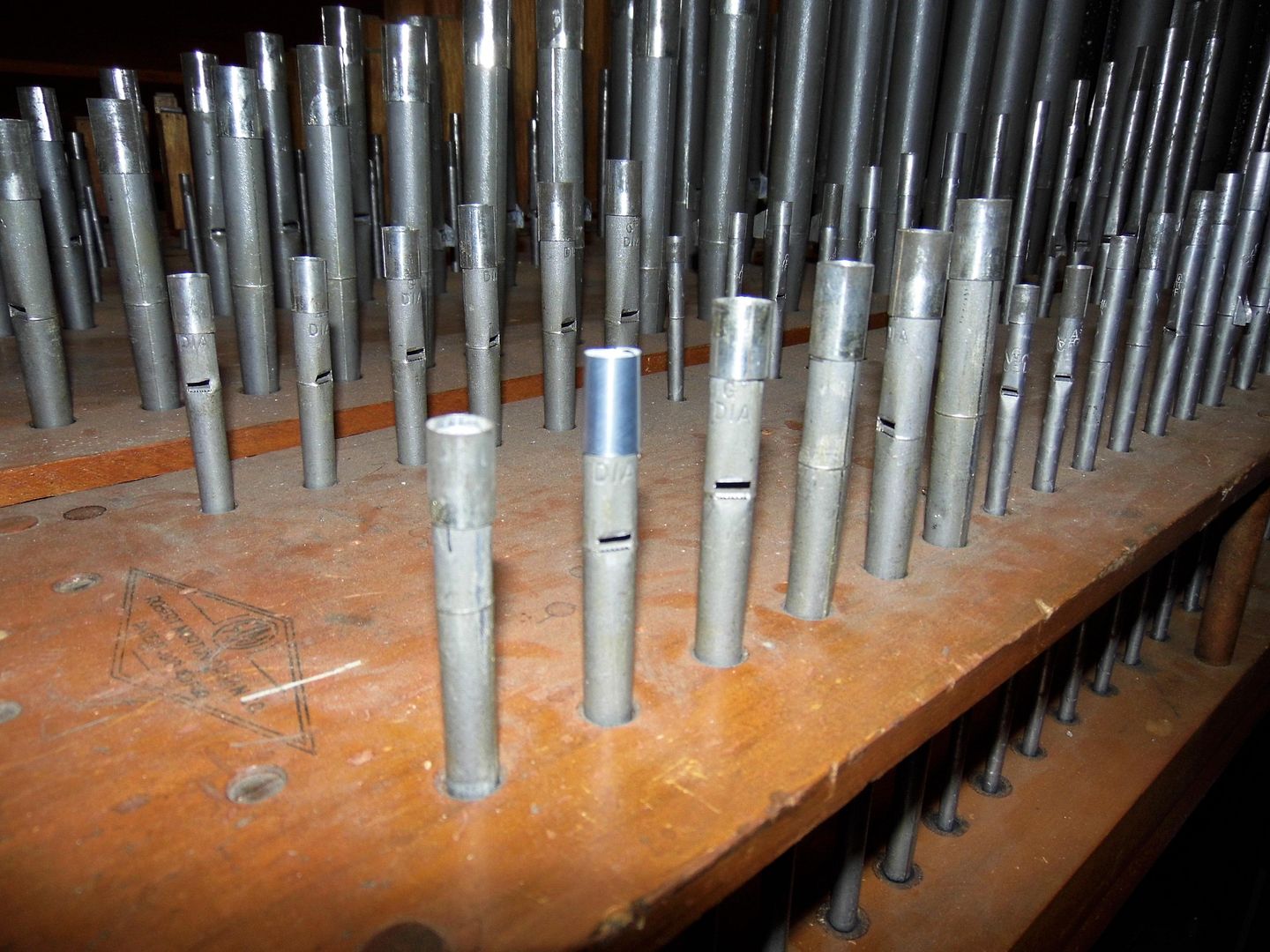


The 4-manual, 23-rank organ was originally placed in the Loew’s Valencia Theatre on Jamaica Avenue in Queens (now The Tabernacle of Prayer for All People). At some point (probably after the church conversion in 1977), it moved to Pennsylvania.
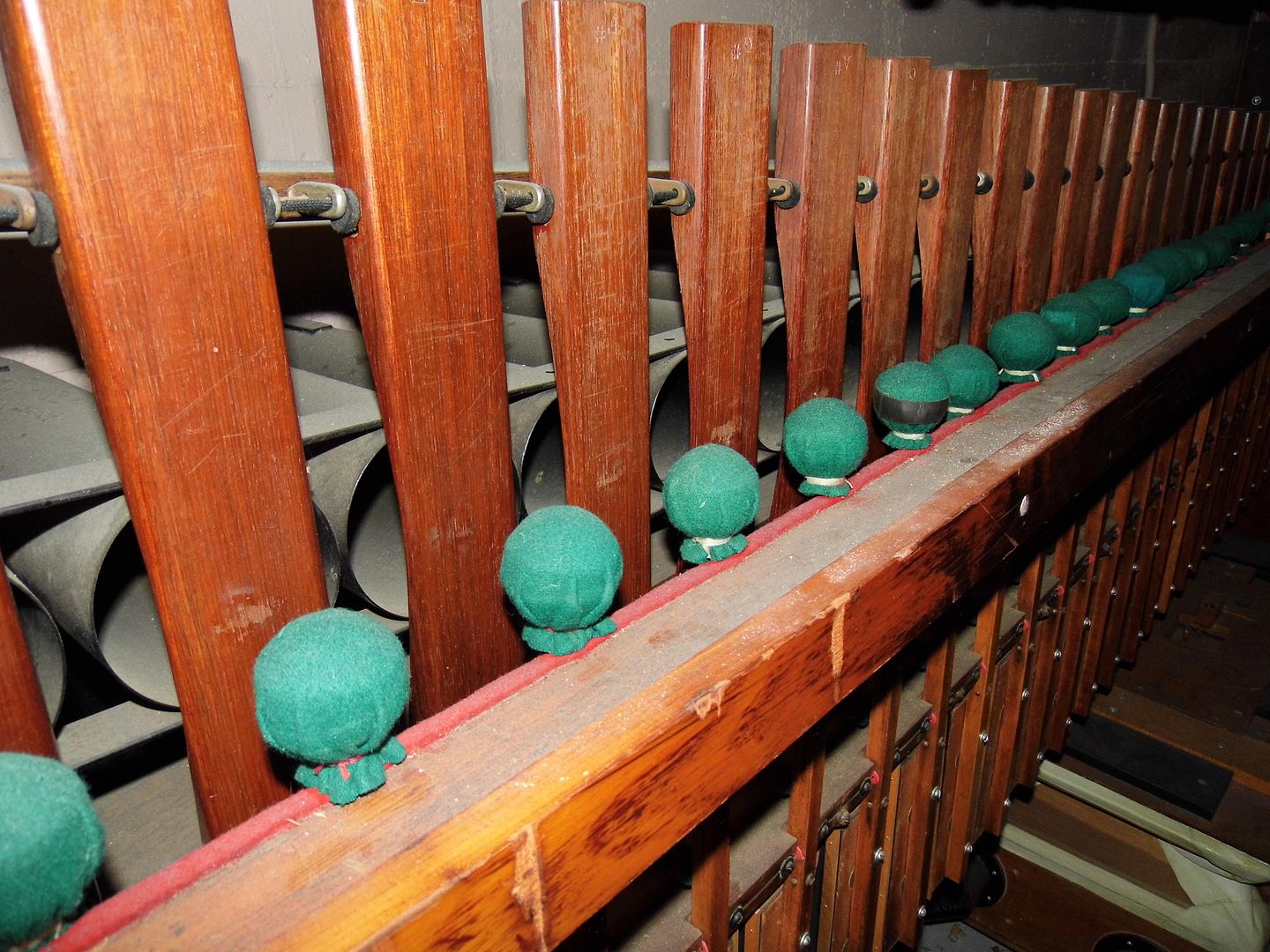


It then made its way all the way out to San Diego for a five-year rebuild by W.A. Shoberg and Company of Ramona. In September 2009, the rebuilt Wonder Organ debuted at the Balboa Theatre.
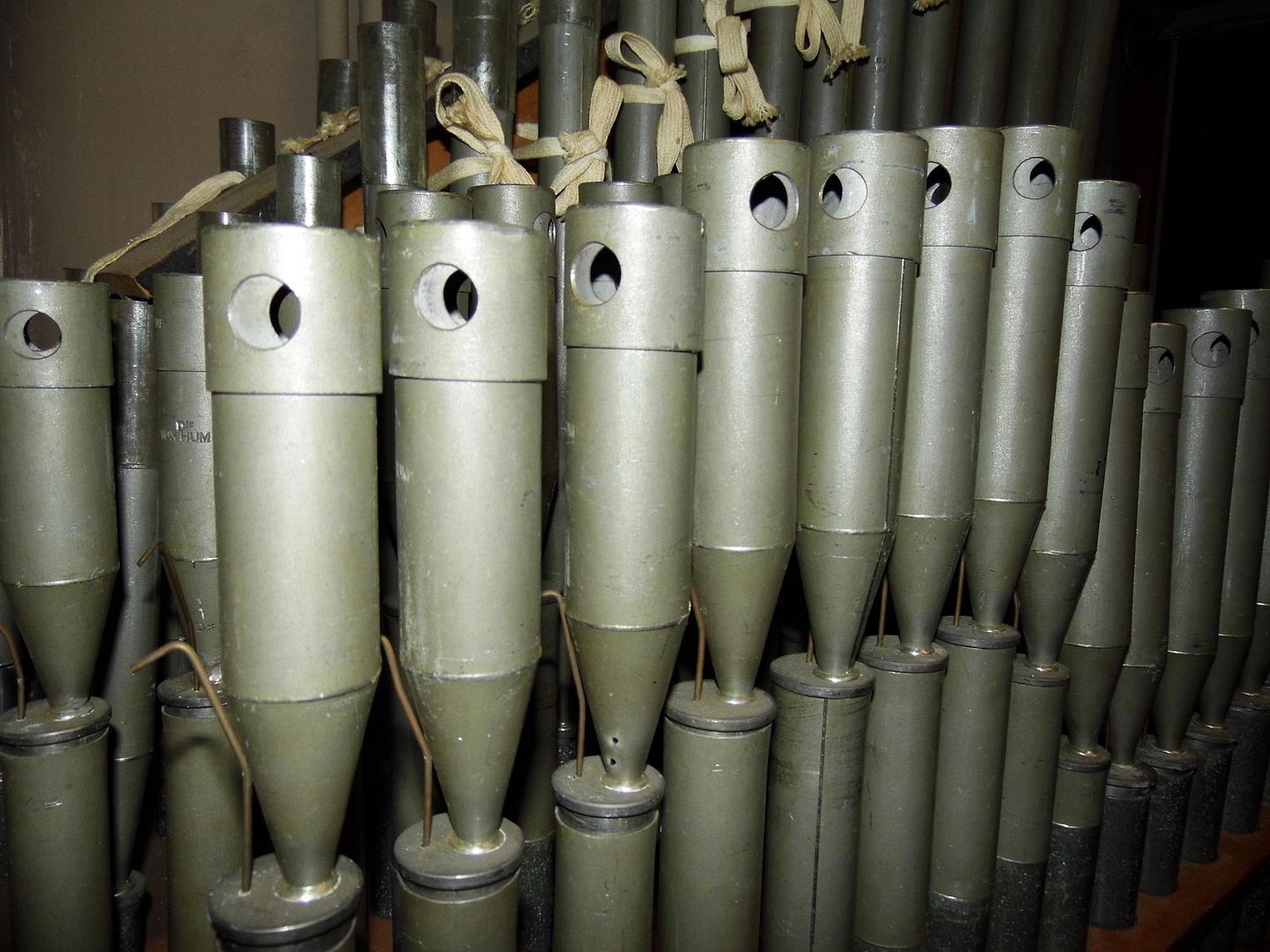


You've got to walk through the pipes a few levels up to get to the ladder that climbs up to the roof, timing it just right so they're not blasting sound while you're up there...
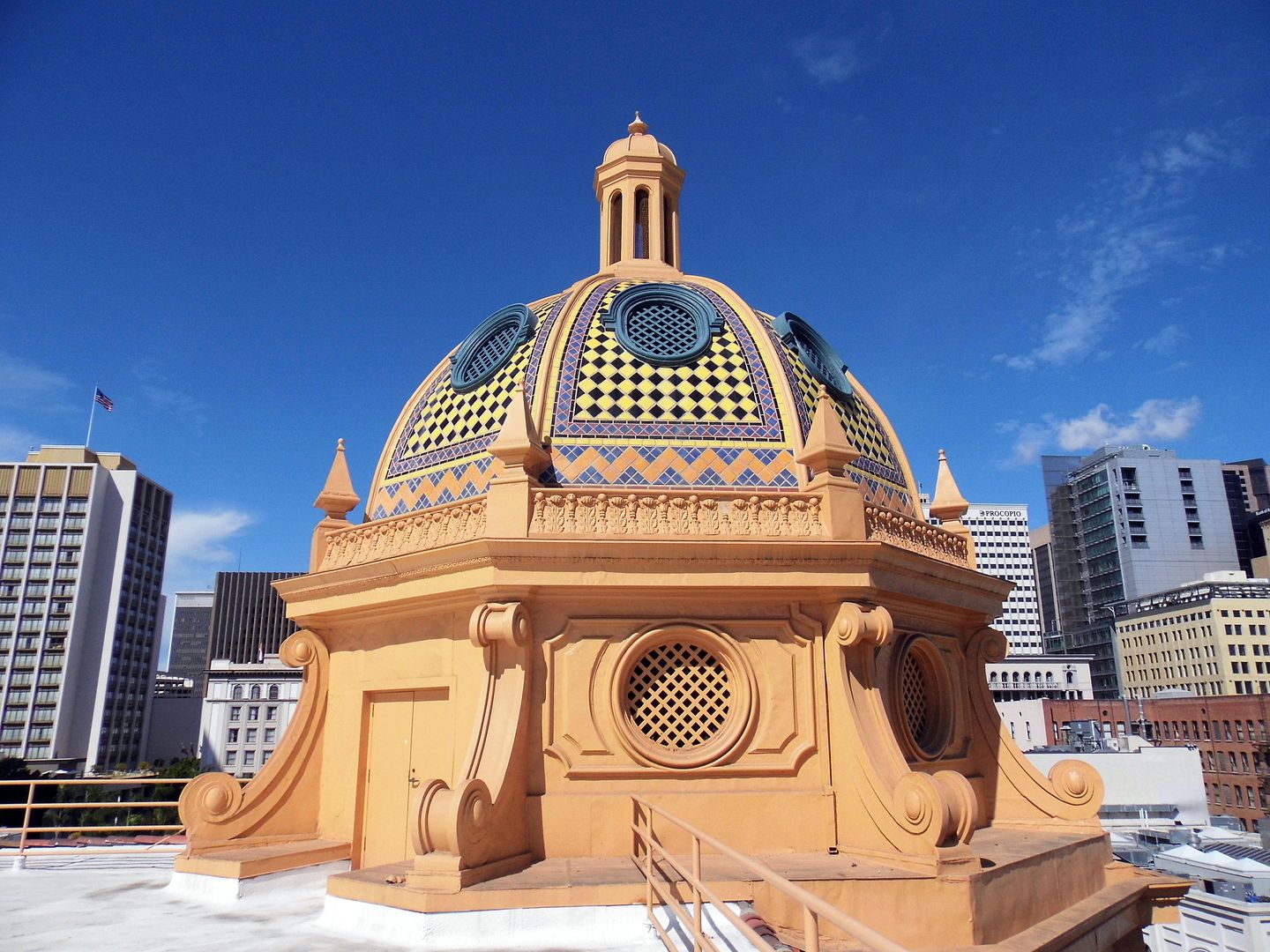


...which I was lucky enough to do thanks to being in the right place at the right time in March (and knowing the right people).
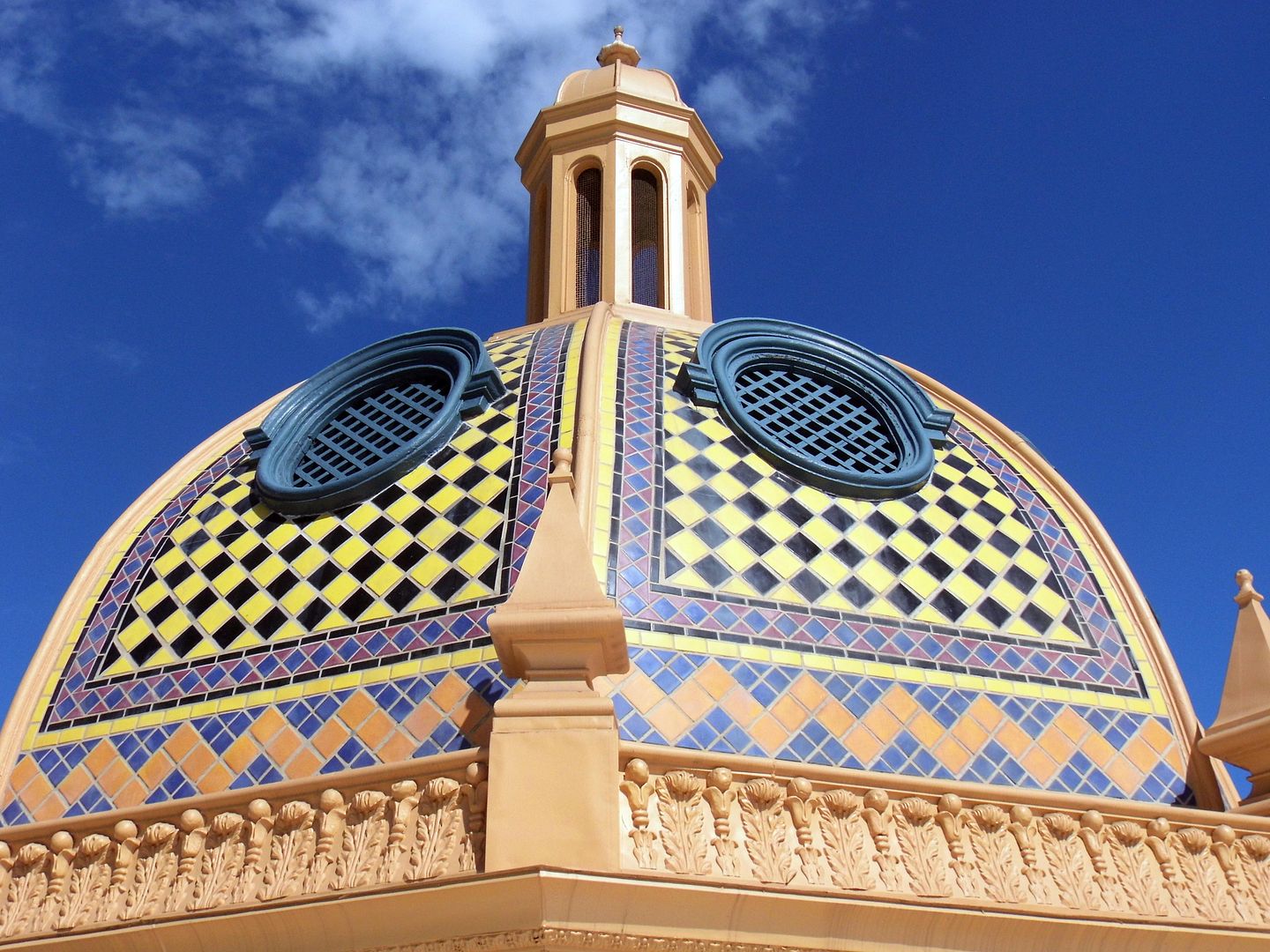


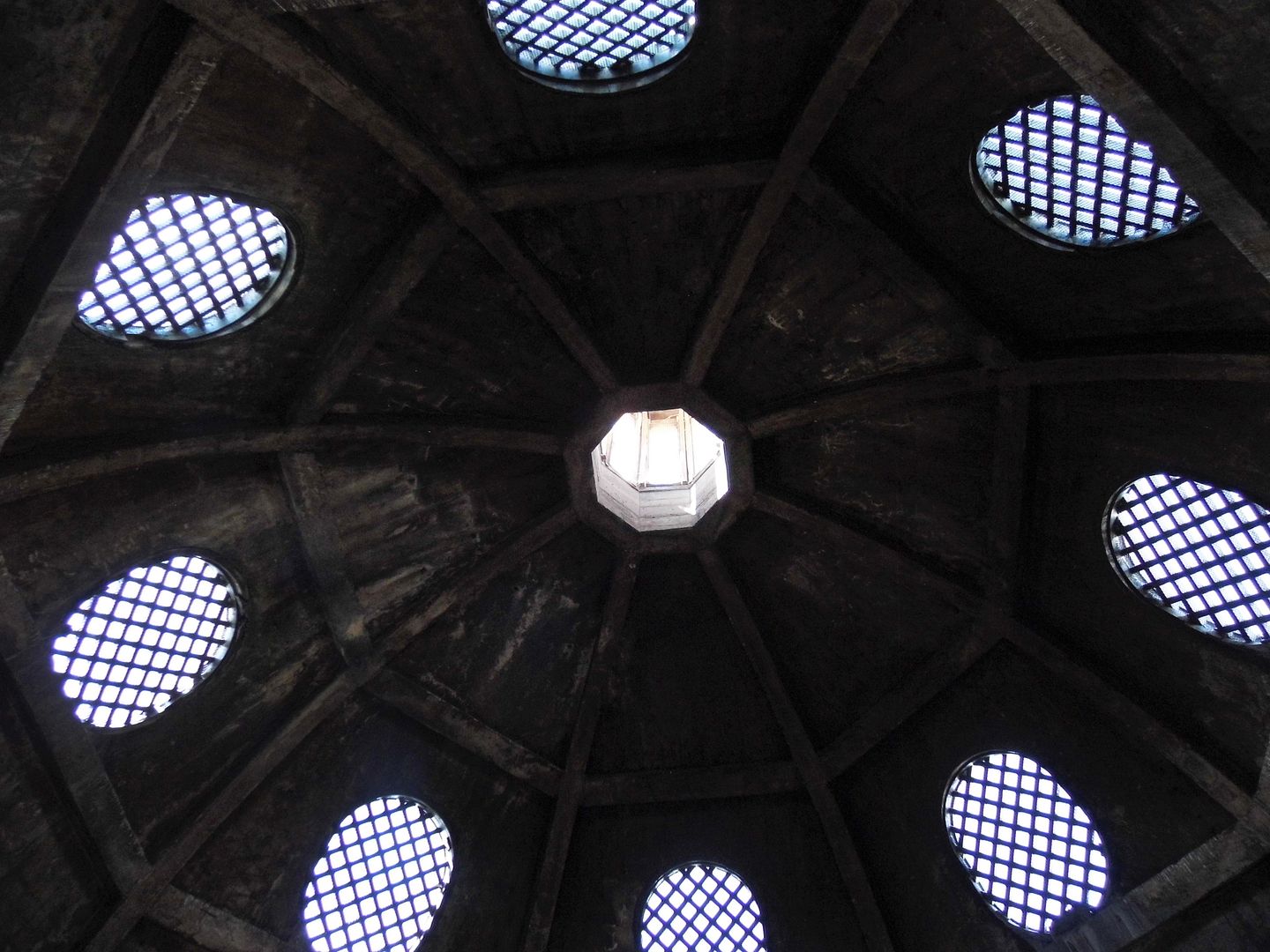
Inside that tile-domed, octagonal tower—whose motif is similar to the dome of the California Tower in Balboa Park—there's a new exhaust fan that just replaced a rebuilt one circa 2004 about three weeks ago.


During "normal times," the Balboa Theatre is home to a number of local cultural institutions—including La Jolla Music Society, California Ballet Company and San Diego Ballet, San Diego Gay Men's Chorus, San Diego Opera, and the annual Mainly Mozart festival.

All that's on pause right now.

Designated a national landmark in 1996, the Balboa Theatre celebrated its 95th birthday a little over a year ago. It's survived every effort to tear it down and reuse it for some other purpose so far. It was steadfast during the 1973 Horton Plaza Redevelopment Project; and it's remaining strong through this year's $330-million redevelopment of Horton Plaza from a shopping mall into a tech office campus.

It wasn't easy to save the Balboa Theatre. It was never, in fact, easy. To read just a slice of the saga as reported in the San Diego Reader in 1987, click here.

But hopefully people now understand why it's important—and how it contributes to Downtown San Diego, even as the area that surrounds it changes with the times.

Related Posts:
San Diego's Abandoned 'Cathedral of the Motion Picture'... On Its 'Boulevard of Broken Dreams'