Search

Showing posts sorted by relevance for query gladding. Sort by date Show all posts

January 29, 2023

Photo Essay: Riverside's Historic Weber House, Hiding In Plain Sight In a Hotel Parking Lot

Riverside, California has got plenty of historic architecture—from Victorian to Mid-Century Modern—but one of its most intriguing historic homes defies definition when it comes to architectural style. 

 
And what's more, it's located in the most unexpected of places: in the parking lot of the Courtyard by Marriott Riverside UCR/Moreno Valley Area hotel on University Avenue (a.k.a. Old Highway 395), in a former orange grove.

September 19, 2018

Photo Essay: The Largest Craftsman House in the U.S. Changes Hands

It was a gloomy day.


But then again, this summer has been unseasonably overcast and humid.


I might not have known that I was in LA at all, except for the fact that I was spending my weekend doing what's most familiar to me.


Once again, I was snooping around a historic property—this time, perched on a 300-foot cliff.


An estate sale had brought me to Beachwood Canyon in the Hollywood Hills to explore a sprawling craftsman mansion known as Artemesia, built in 1913 for Swedish-born construction magnate Franz (or "Frank") O. Engstrum, commissioned by his son (and partner in the family biz), Frederick.


But I wasn't there to buy any of the patio furniture on the porch or the internationally opulent wares that were tagged and displayed inside.


As usual, I was there for the historical, physical, architectural estate—which had just been sold for only the fifth time ever.


Once 12 acres but since subdivided, Artemesia still consists of the main house plus a carriage house, pump house, and former deer park.


I wanted to check out every little detail...


... from the outdoor sconces to iron vent coverings and the carved front door.


And at 13,290 square feet, with eight bedrooms (plus a sleeping porch) and seven baths, there was a lot of architect Frank A. Brown's design to look at.


Even if it's not all original.


Brown, a contract architect for Commonwealth Home Builders, created coffered ceilings (which have since been gilded)...


...and installed no less than six fireplaces, all of which are the work of the great ceramicist and tilemaker extraordinaire, Ernest Batchelder.


In fact, although Artemesia's architect never had the star power of, say, the Craftsman duo of Greene and Greene, its architectural history represents a certain coming together of the greats.


The master suite's leaded-glass skylight is rumored to be the work of Louis Comfort Tiffany (who also contributed to another Craftsman masterpiece, The Gamble House).


There are also bathroom tiles by Gladding McBean and a huge, house-encompassing player pipe organ (with sunken console and multiple echo chambers) by the "Father of Organ Building in the American West," Murray M. Harris.


Although the lower canyon has been taken over by a gated community (one that supposedly is called home by Brad Pitt), one of Artemesia's characteristic lanterns still marks the entrance at the bottom of the winding access road.


It's a shame that more people weren't lined up to check out this Hollywood "castle on a hill," as the sun finally decided to show its face.

Part of me wanted to buy something just to have a souvenir of the place—but I've been trying to scale down and scale back on my possessions, so I really don't need or want more stuff.

Maybe I don't need a memento. Maybe I'll get to go back someday.

Who knows what the new owner has planned? There have been so few owners in Artemesia's 105-year tenure.

And I doubt this next one will be the last.

Related Posts:
Photo Essay: The Gamble House, Pasadena (Updated for 2017)
Photo Essay: The Mysteries of the Pasadena Magic House & Museum

August 05, 2023

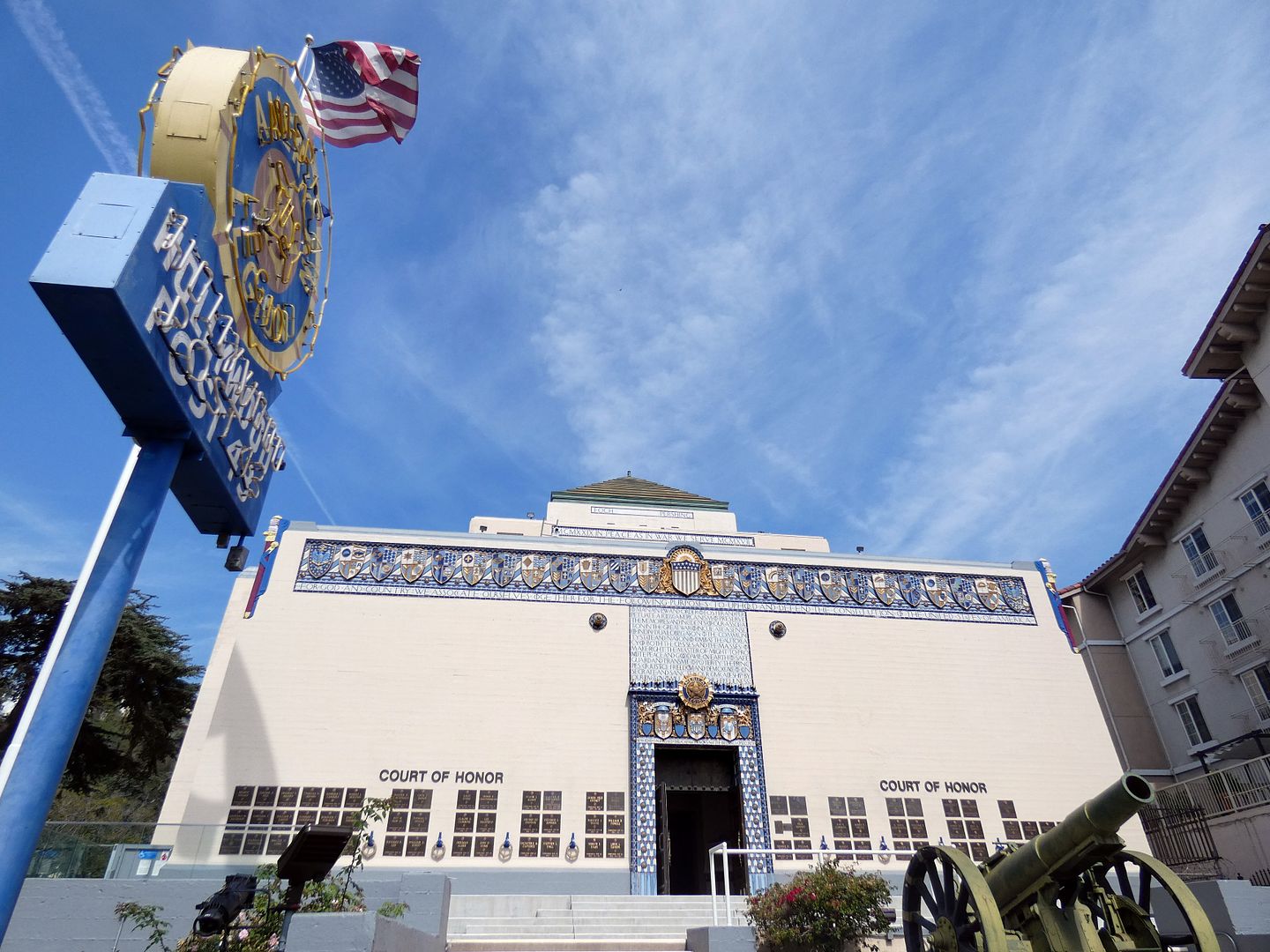
Photo Essay: Hollywood Post 43, A World War I Memorial Built By the Movies and Boxing Matches

It's been nicknamed the "Post of the Stars." 

 
Originally chartered in 1919 by Hollywood luminaries who'd returned from World War I, American Legion Hollywood Post 43 can count such luminaries as Clark Gable, Gene Autry, Mickey Rooney, Ronald Reagan, and Charlton Heston as its past members.

May 17, 2020

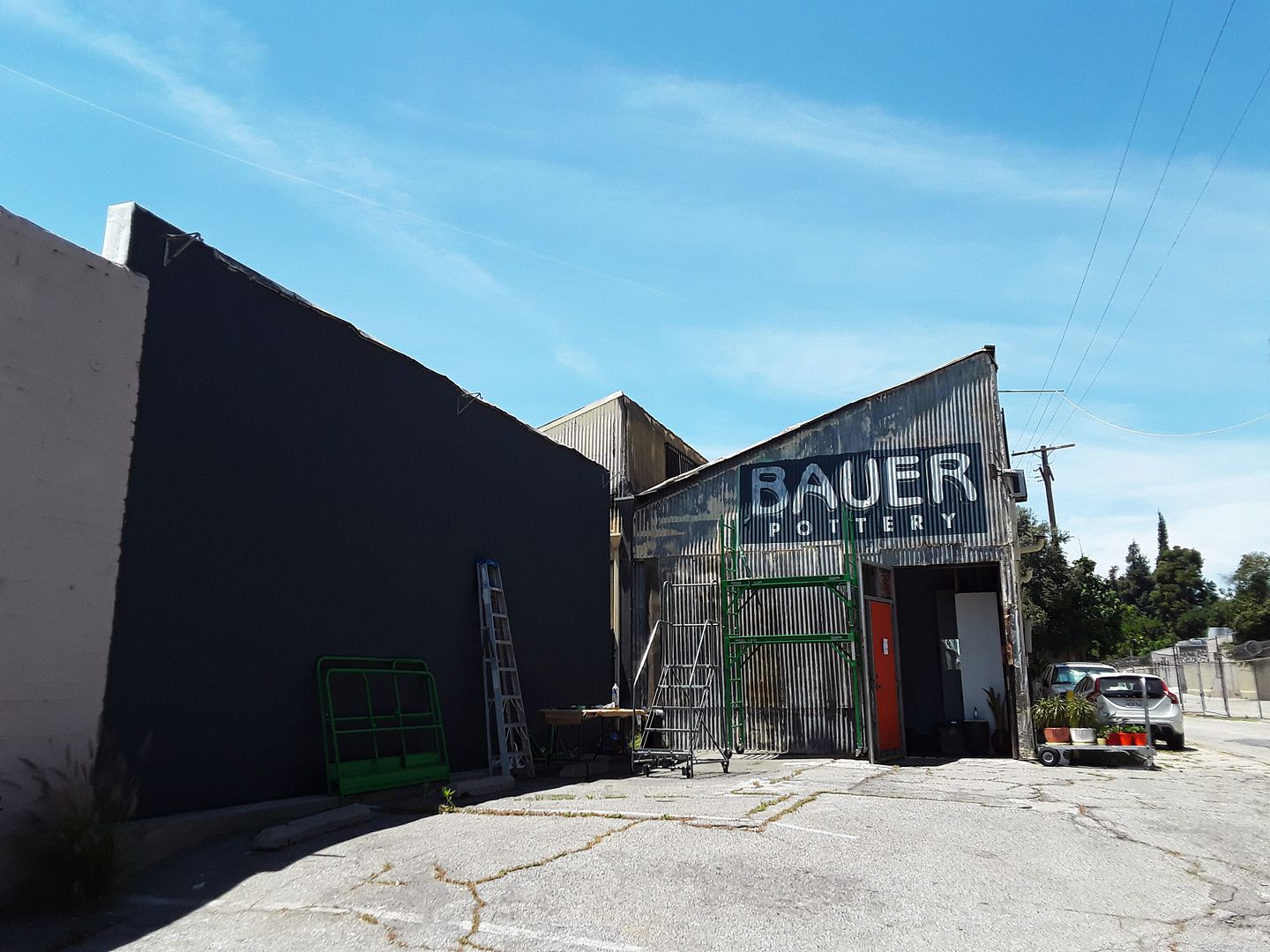
Depression-Era and Mid-Century Ceramics for a New Millennium at Bauer Pottery (Updated for 2024—Relocated)

[Last updated 12/28/24 11:36 PM PT—Bauer Pottery has reopened in Frogtown at 1767 Blake Avenue.]

[Updated 2/7/24 11:31 AM PT—Bauer Pottery lost its lease on its historic showroom location and closed in September 2023. Its factory in Highland, CA remains open, and it's working on relocating to a new showroom in the Los Angeles River-adjacent neighborhood of Frogtown.]

It was three years ago that I first got to Bauer Pottery's showroom by RSVPing to The Los Angeles Pottery Show's opening reception—an event I may not have had any business being at.

But it was my way to get into an LA ceramics institution—that has irregular open hours that I could never seem to coordinate with my own erratic schedule.

Three years later, I jumped at the chance to revisit Bauer's showroom to pick up an order, in a time when errands are precious and (physically distant) human contact is priceless.


You see, I've been spending my time and my money during the coronavirus pandemic trying to support local businesses from afar. If I can't buy tickets to events or run up a tab at my favorite restaurants and bars, I'll buy souvenirs or doo-dads or knick-knacks that might help keep them afloat.


Bauer Pottery got its start in Kentucky right before the turn of the last century, but it famously operated out of Los Angeles from 1909 (in Lincoln Heights) to 1962—introducing California Colored Pottery around the same time as Gladding McBean's Franciscanware and Homer Laughlin's Fiestaware.


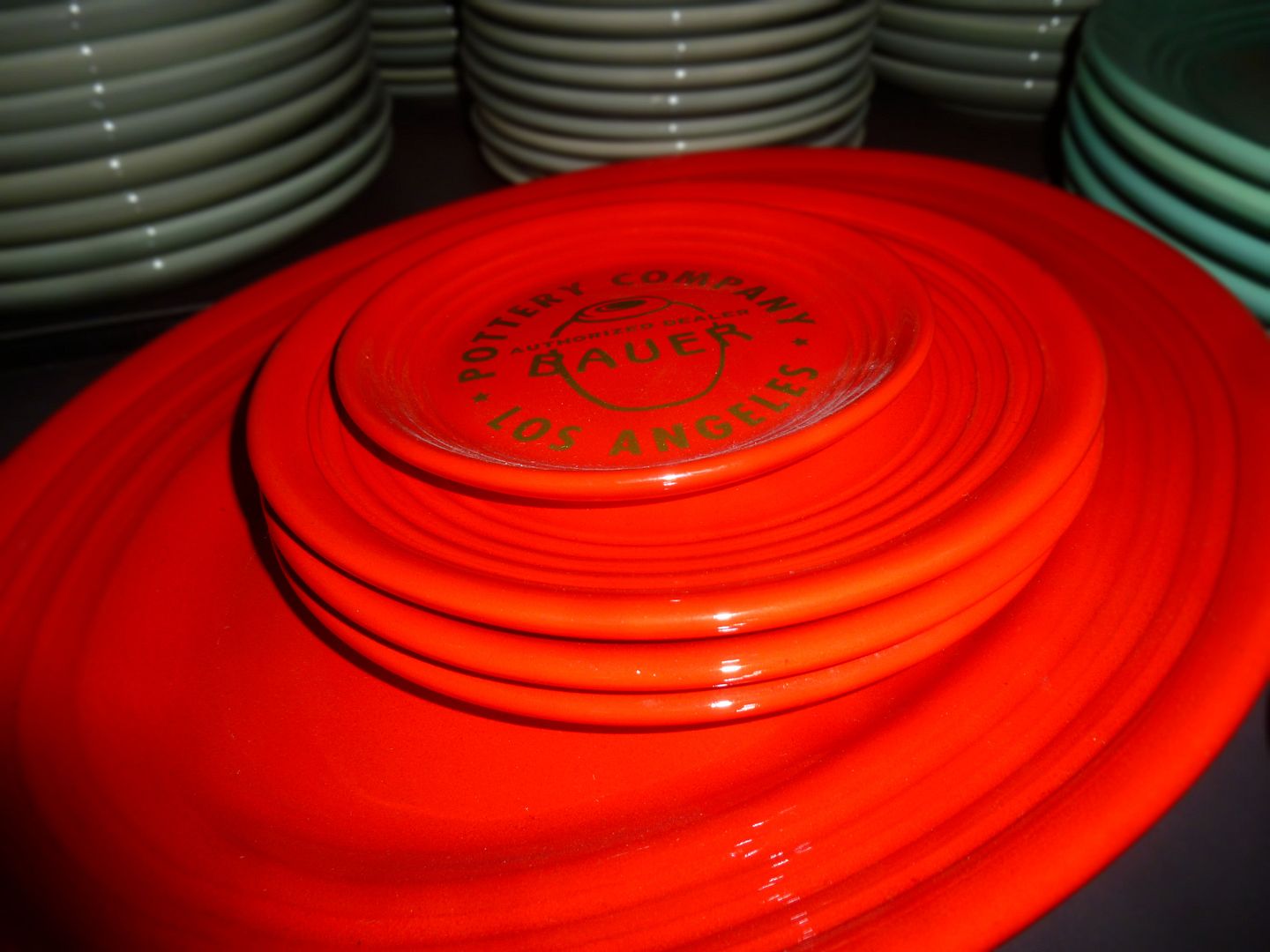
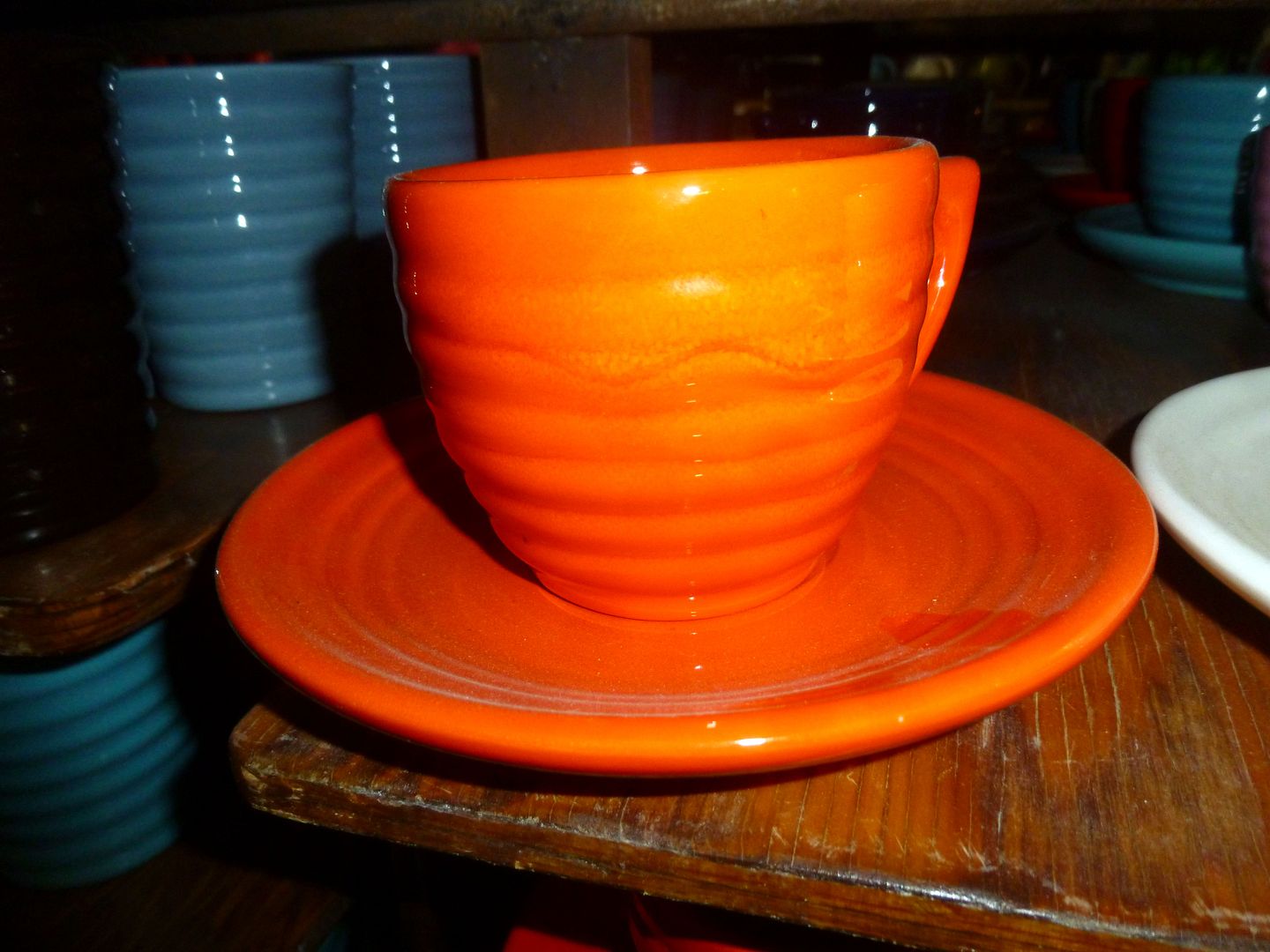
During the Depression Era and the American West post-WWII, Bauer became synonymous with "Ringware," named after rings of circles along the perimeter of its bowls, plates, and mugs.


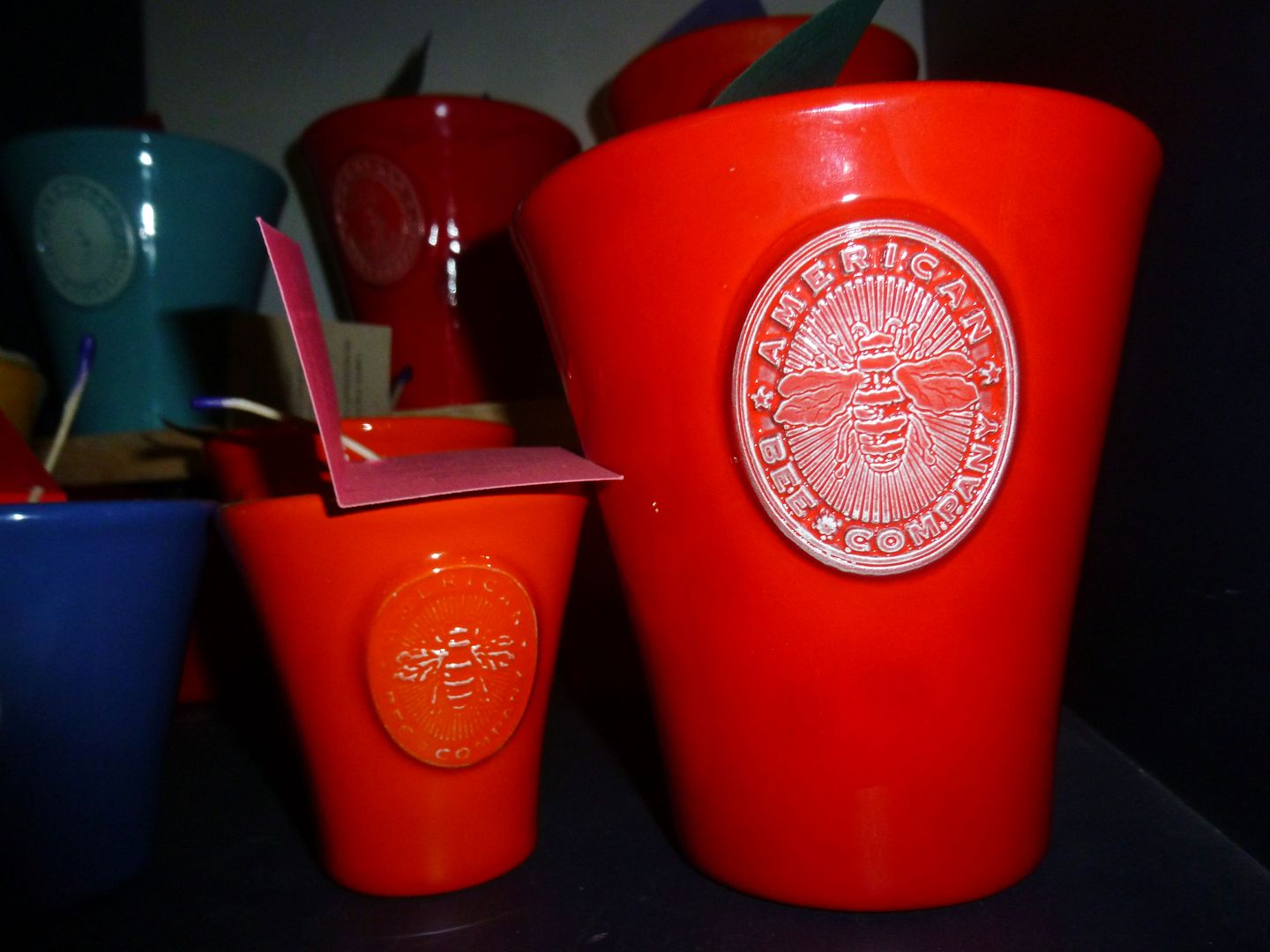
The pottery line spent nearly four decades dormant until collector Janek Boniecki re-registered the trademark before the new millennium and revived the brand in 2000. He'd already been using vintage Bauer designs and color palettes to inspire his line of ceramic-potted candles as part of his American Bee Company.


At the time, original Bauer molds had been lost to the ravages of time. So Boniecki did his best to reverse-engineer the designs based on samples he already had or could acquire.


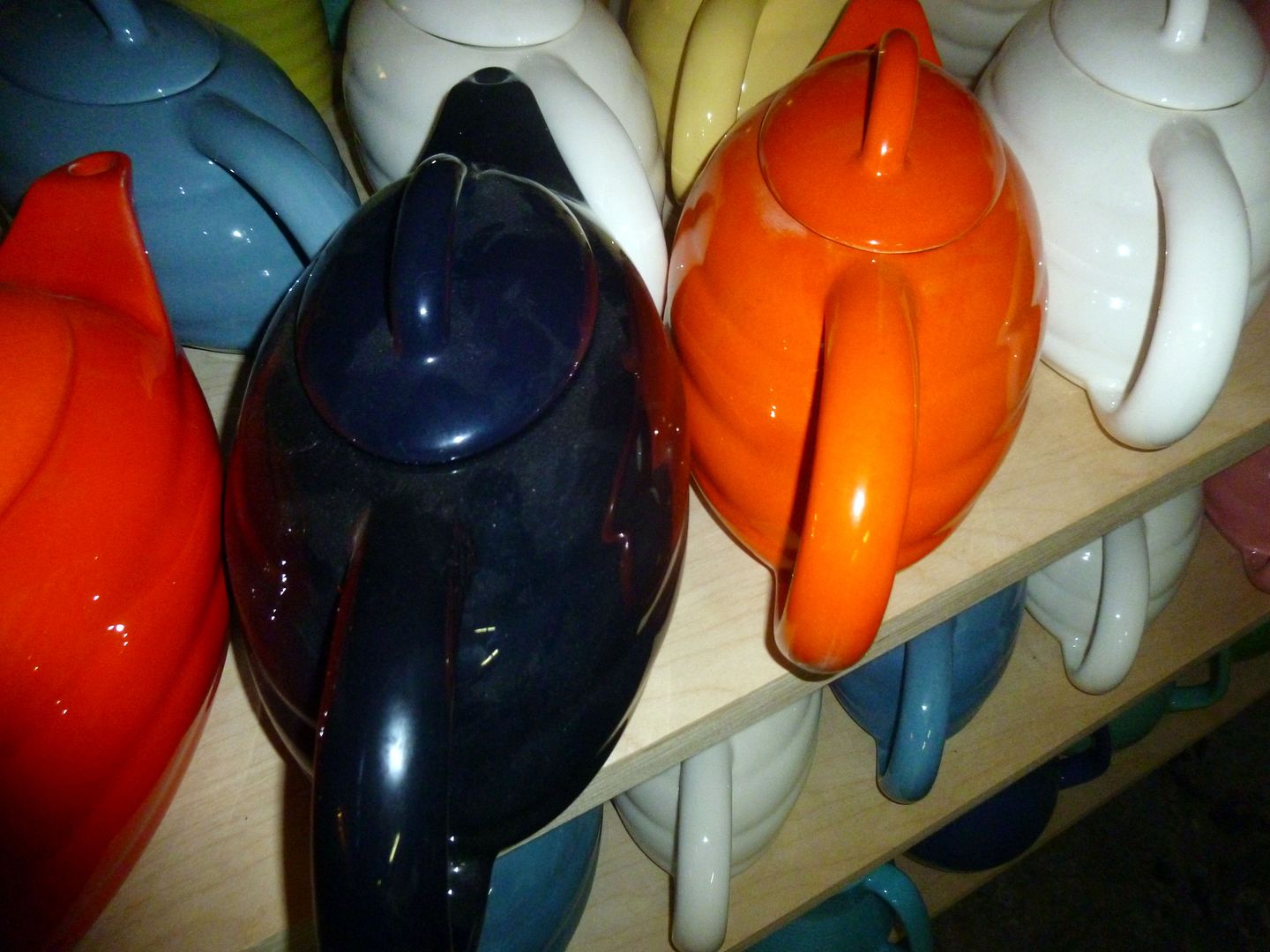
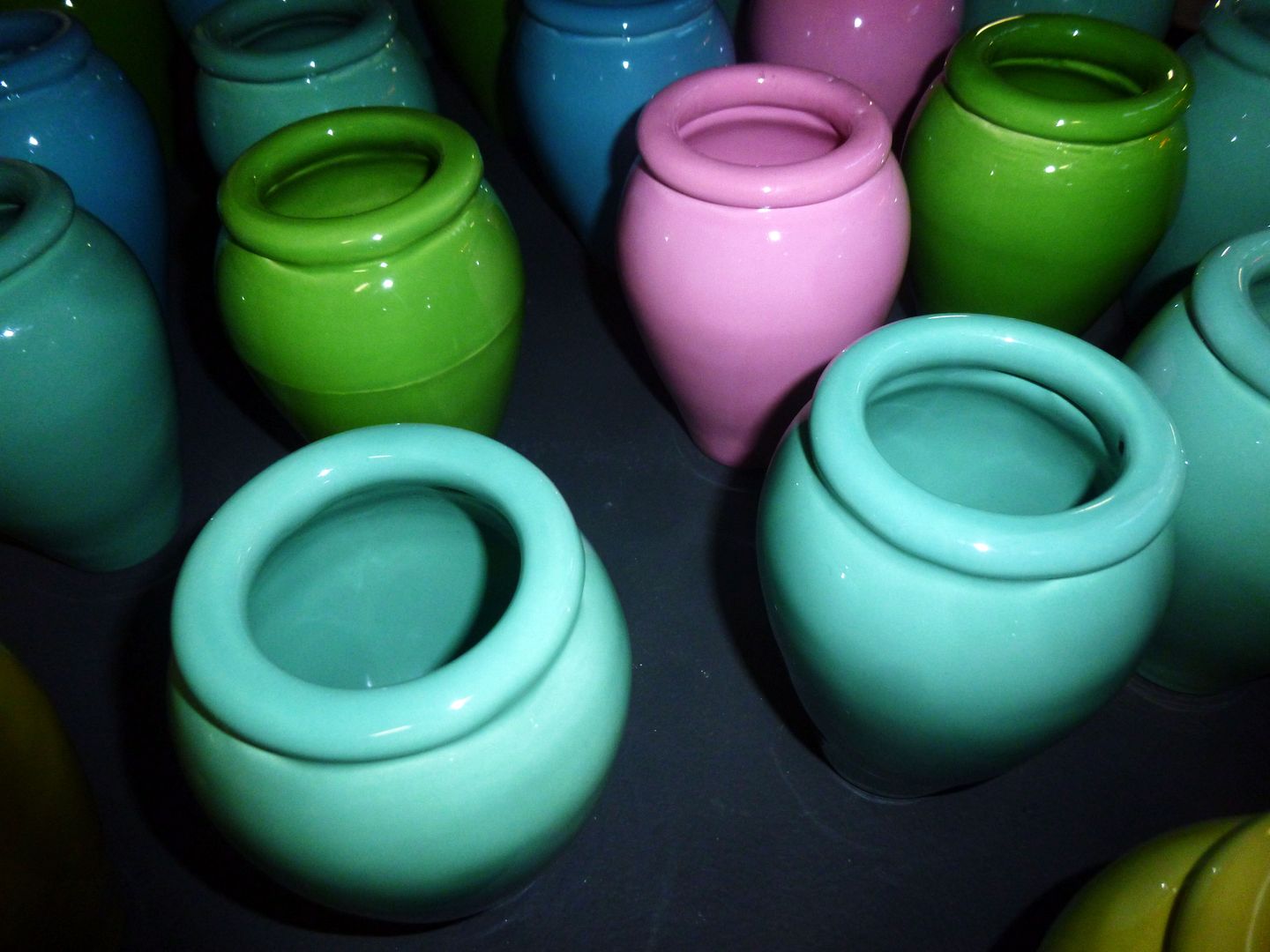
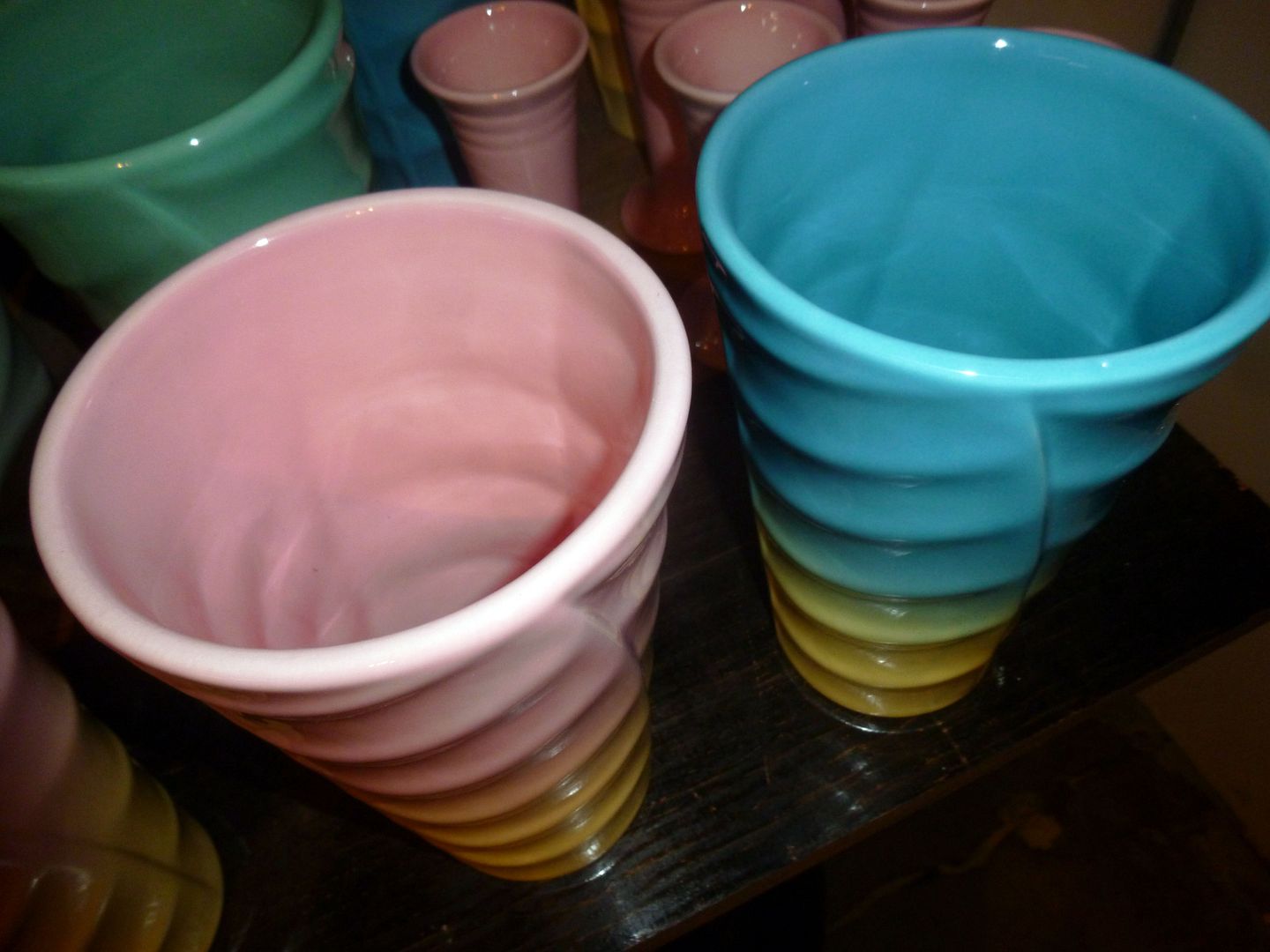
Now the Bauer line of ceramics touts pitchers...


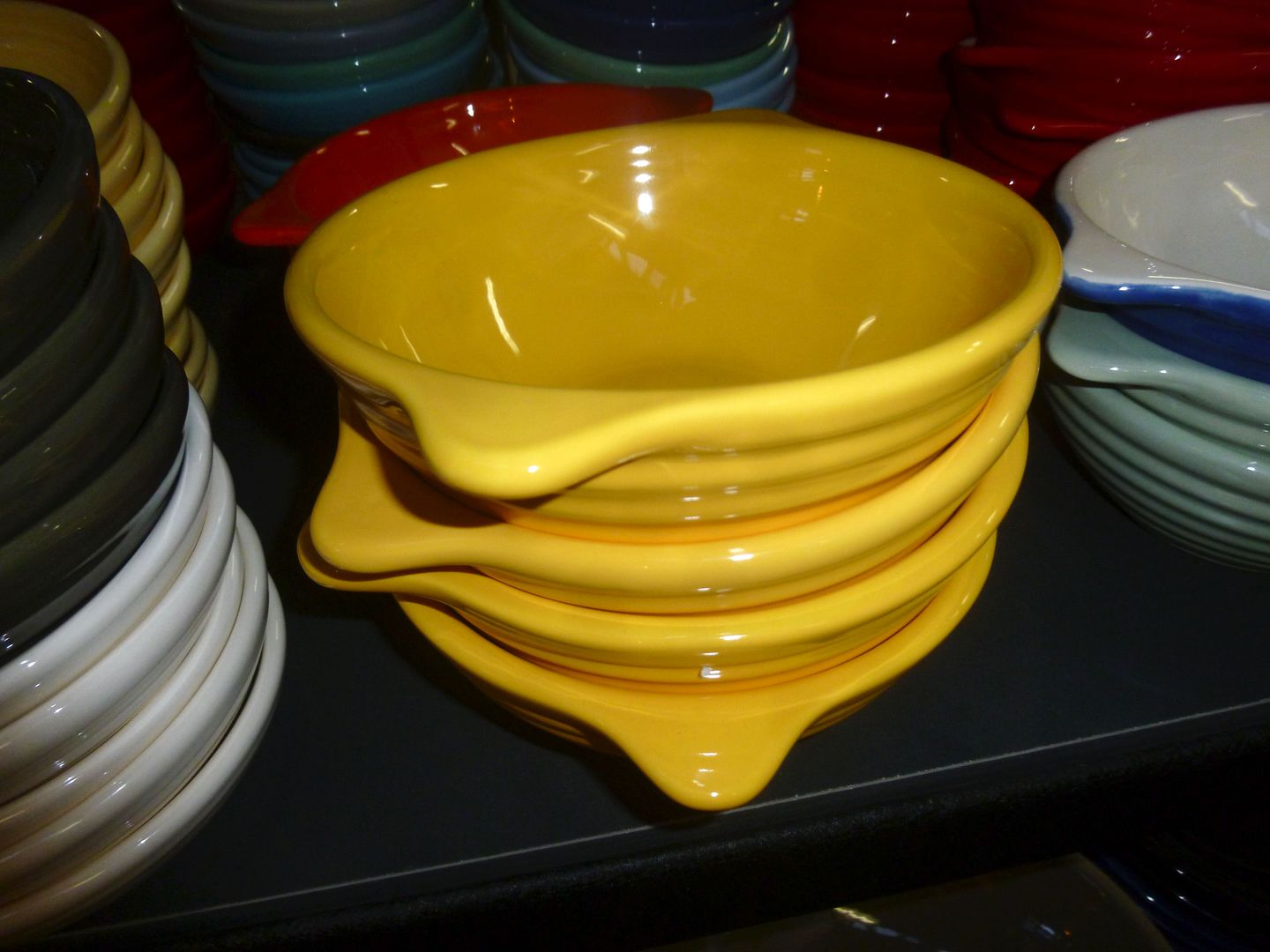
...bowls...


...and vases for both home and garden.


Many of them come in those classic colors people remember from the last century, like Bauer Orange, Bauer Yellow, Federal Blue, and Turquoise (but lead-free versions of them, of course).


Some unscrupulous sellers on the secondhand market represented the reproductions as originals to would-be collectors, so the year "2000" was added to many of the new editions to avoid any confusion. (You can also tell the difference because all original Bauer Pottery stamps at the bottom of products were impressed, not raised the way some of the new ones are.)


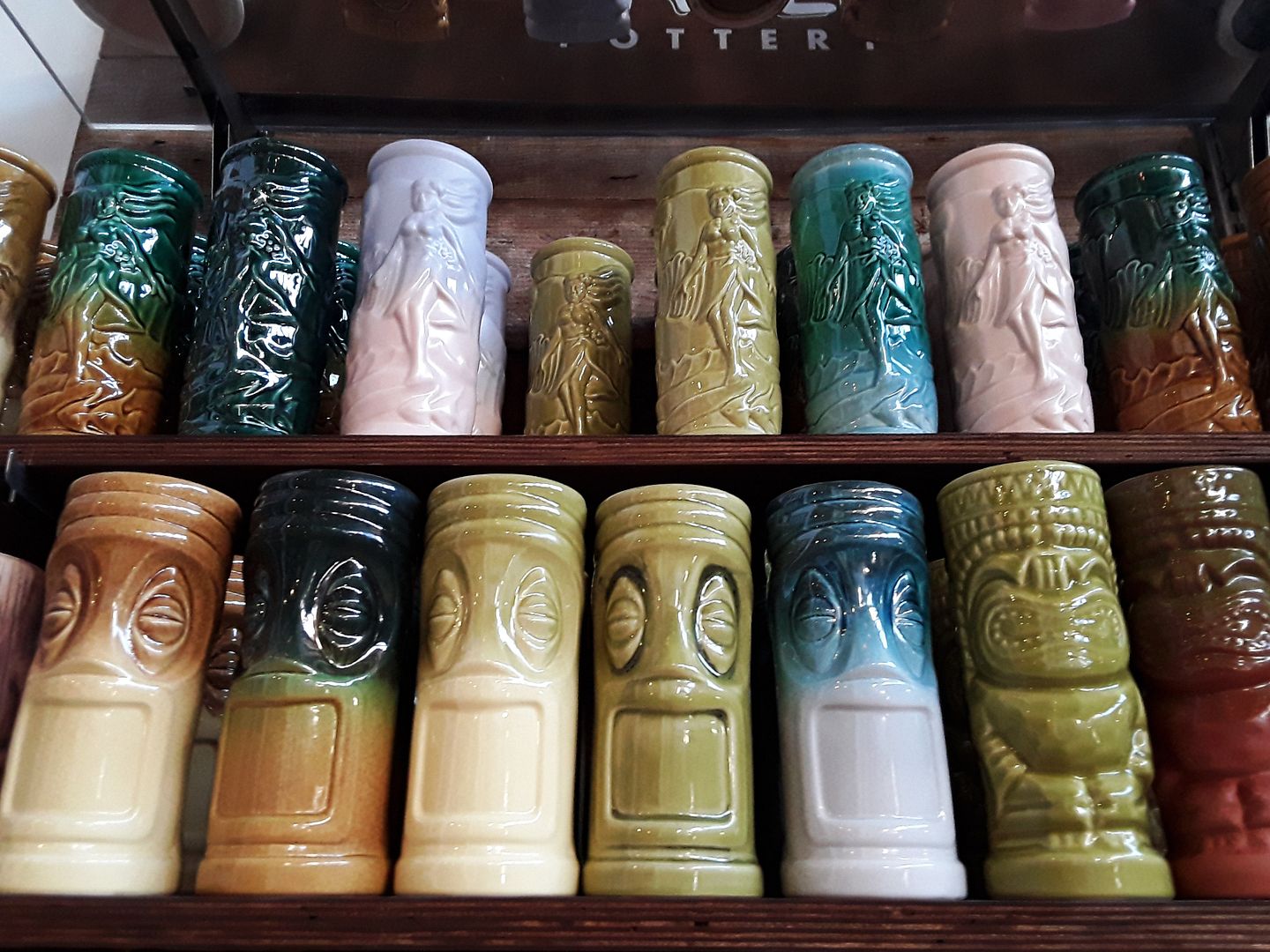
One of the newest developments to come out of Bauer is a line of tiki-themed wares, which debuted at the end of 2017—some of which are collaborations with tiki artist Squid (including the "Terror Tiki," which is now part of my personal collection) and others reproductions of classic tiki mugs (like "The Island Chief" by Spurlin Ceramics, which supplied it to L.A.'s Islander Restaurant for their "Husband Killer" cocktail).


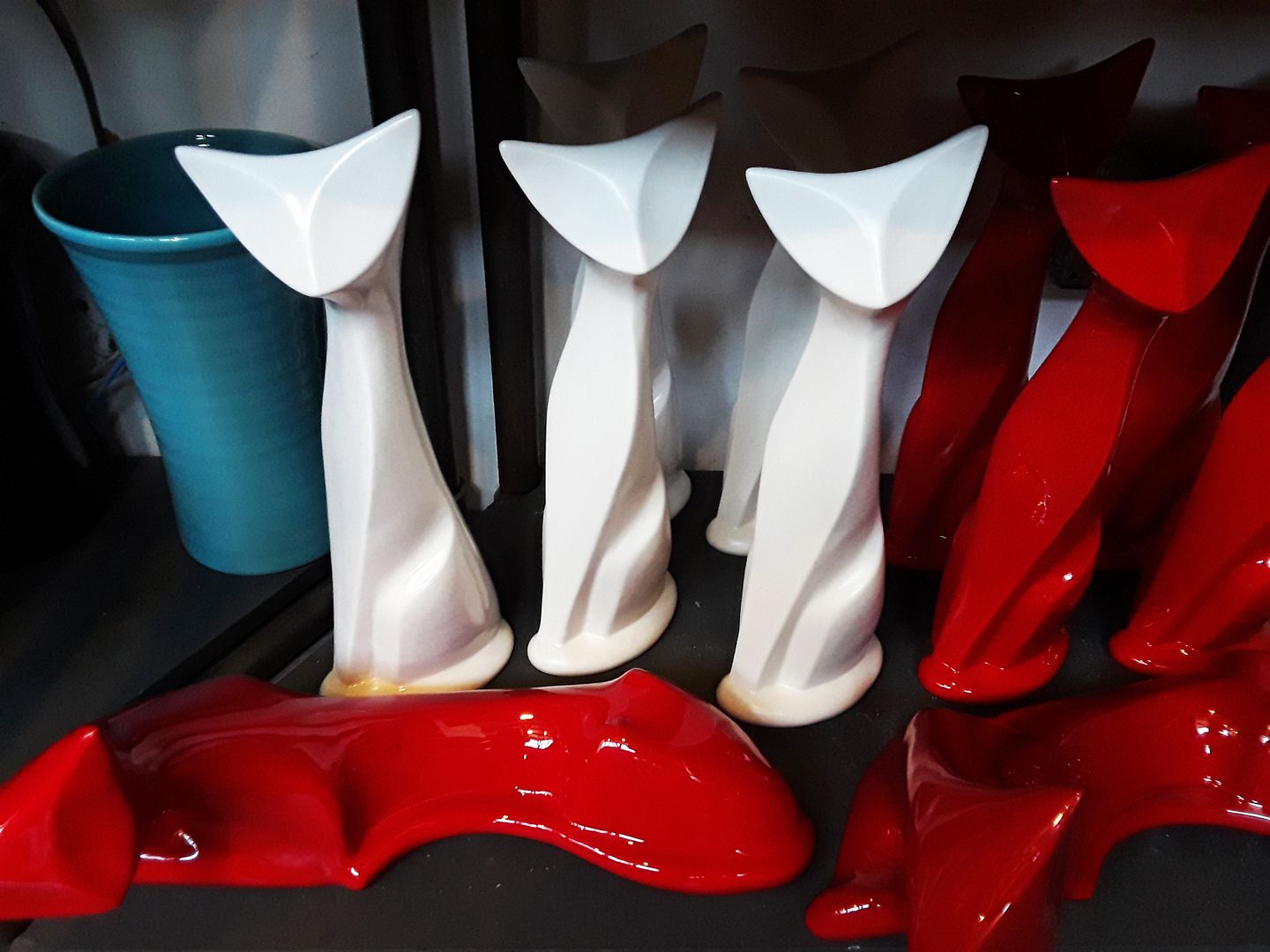
Also a little bit tiki, a little bit Mid-Century Modern is a reproduction of cat statues, cast from the original circa 1960 molds (or perhaps a year or two later) by Brayton Laguna Pottery in Laguna Beach (1927-1968).

So, even though all the original Bauer molds were destroyed sometime after the dissolution of the company, there are plenty of other abandoned ceramic molds out there, waiting to be given new life.

The current LA-area showroom for Bauer in Atwater Village is open certain Fridays and weekend days throughout the year (though only for curbside pickup of online orders from their website for right now).

Unfortunately, Bauer's 40,000-square-foot factory in Highland, CA near San Bernardino—a former fruit packing plant that purchased in 2007—isn't open to the general public for tours.

Yet.

I'm always holding out hope. Maybe I'll find my way into some future event hosted there like I originally did with the showroom.

Related Posts:
R.I.P. Robert Winter, LA Architecture's "Bungalow Bob" (1924-2019)
A Theme Park Legend Emerges From Behind the Tiki Mask

January 28, 2019

Photo Essay: These Towers That Bend, But Never Break


Photo: Historic American Buildings Survey, Library of Congress [Public domain], via Wikimedia Commons

Visiting Watts Towers was one of the first touristy things I did after moving to LA in 2011. I didn't know a thing about folk art then, and I didn't exactly understand the appeal of these sky-piercing spires.


circa 2011

I didn't think they were very pretty up close. At least, not from the sidewalk level.


circa 2011

Having driven past them and witnessed their shape-shifting firsthand many times over the last eight years, I'd begun to get it. Especially after brushing up on folk art and learning a thing or two about mosaic tile and glasswork.


circa 2011

By the time I was really itching to go back, Watts Towers had closed for restoration, leaving the gate locked and the site's admirers out in the cold.


circa 2011

Maybe Simon Rodia never intended tourists to wander under the towers he created from 1921 to 1954. After all, though it's now a state park, this was the Italian immigrant's private property, where he worked and slept. (His house unfortunately burned down in 1955 and will not be rebulit.)


circa 2011

Maybe he only ever meant people to see it from afar, in the distance—a beacon like the Eiffel Tower in the non-existent LA skyline. Or maybe he only knew what the towers looked like from his own eye level as he worked on it, having climbed up the edifice to the top as though he were on a set of monkeybars in his backyard.


Then again, he called his creation Nuestro Pueblo ("Our Town"), which suggests that he didn't build the towers just for himself. Besides, he reportedly used to let kids climb the towers.


Last week, I got to see the Towers as Rodia saw them—up close, at their peaks—and I gasped at their beauty.


I strapped on a hard hat (courtesy of Western Chapter of the Association for Preservation Technology) and embarked on a tour led by restoration project manager Dr. Mark Gilberg, director of the Booth Conservation Center at the Los Angeles County Museum of Art.


He's become intimately familiar with the found materials that Rodia used in the construction of Watts Towers—not only to ornament it, but to also fill the bases of the towers.


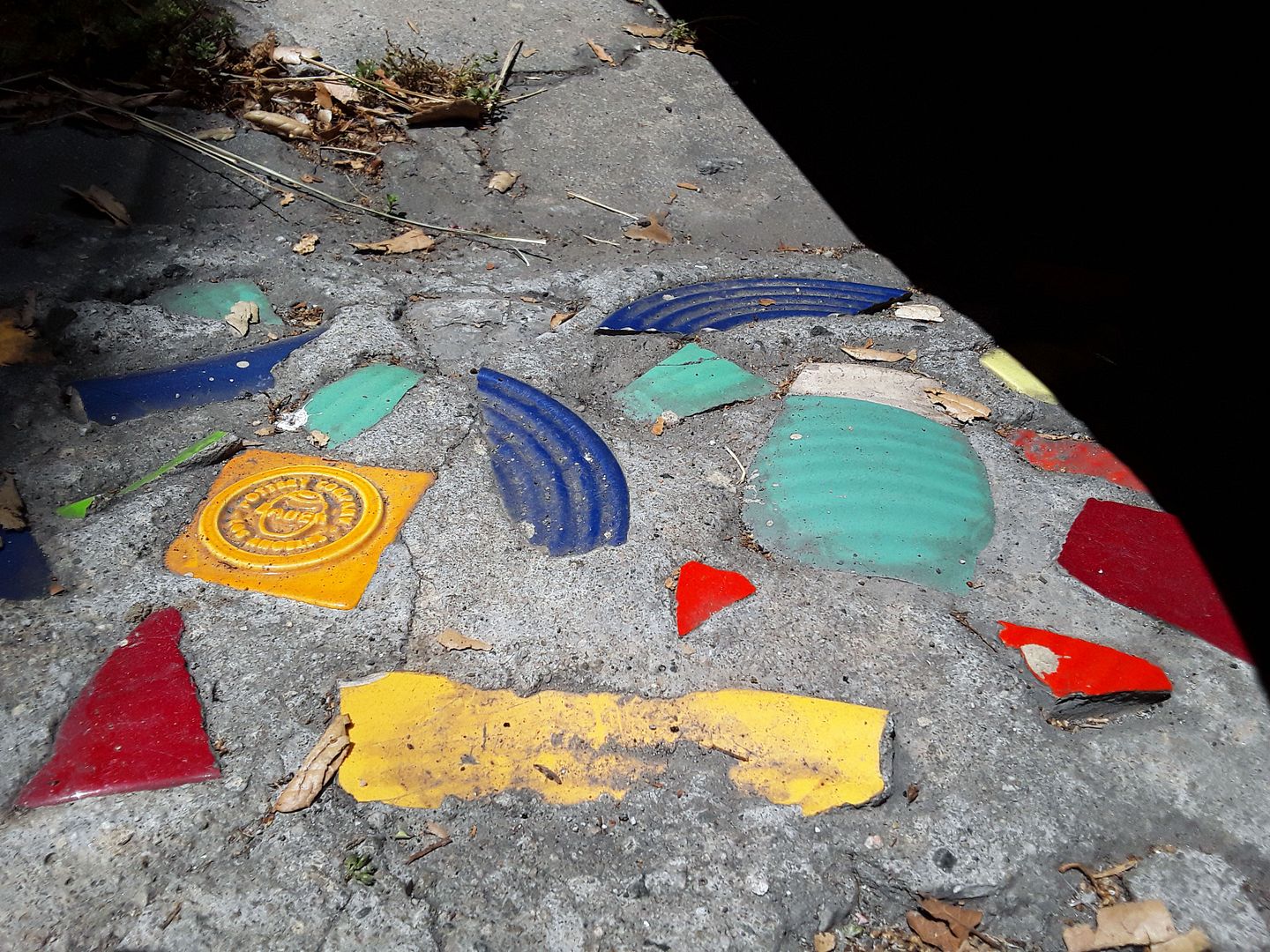
Though you can see Malibu tile (Rodia worked at Malibu Potteries for a time), Gladding-McBean, Batchelder, Bauer Pottery, Fiestaware, Metlox, Catalina pottery, and all sorts of other ceramics, porcelain, china...


...as well as bottles, insulators, and seashells of varying species (from mussels to clams and other bivalves)...


... apparently what you can't see under the buttresses, inside of the platforms and other structures (like the "wedding cake" and the "Ship of Marco Polo") includes rubble, sand, and pretty much anything else you can think of.


And Rodia poured concrete on top of it all.


Though Rodia’s larger-than-life sculptures had once been condemned and ordered for demolition, they were saved in the late 1950s when they withstood a stress test of a 10,000-pound load (equivalent to that of a full-blown hurricane).


That's not to say, however, that they haven't cracked. Or that they don't tilt with the wind—or lean away from the sun.


But that didn't keep us from climbing three stories up the scaffolding to look at the towers—two measuring nearly 100 feet tall—for ourselves.


Dr. Gilberg says that most of the actual restoration work the LACMA team is doing is over the patchwork done previously by California State Parks in the 1980s (mostly because the failure rate of repairs to concrete is "unacceptably high").


Fortunately, they haven't found a lot of new damage. At least, not that they can tell.


Then again, unlike a traditional building, there are no blueprints for Watts Towers. No one alive would remember Watts without the towers, before they were built.


So, quite a bit of detective work has gone into the rhyme and reason behind various shapes and features—whether decorative or infrastructural. (The rings that encircle the towers are probably both.)


There were some water features included on the ground level—including a fish pond at the North Wall—but they've long dried up, and documentation is scarce.


A lot of the piecing together necessary for the conservation of the towers is much like the assemblage of shards of broken colored glass and mirror, dishes, and teacups.


Sometimes you only get a fraction of the entire picture.


But together, all those fragments seem to make something cohesive that works.


In addition to filling the fissures with mortar, sharp edges will be filed down and everything will eventually be sealed to make it more watertight than it's ever been before. (When Rodia reinforced the concrete, it wasn't with solid rebar, but metal tubes that created a hidden system of plumbing that eventually self-destructed when water collected and corroded everything that sat in it.)


Other mysteries still abound—like whether there's a hidden fortune behind any of those broken pieces or if Rodia's wife is buried somewhere in the cement.


No evidence of either has been found. But that doesn't mean they don't exist. We're still learning a lot about Watts Towers.

"Their actual presence is testimony to a genuinely original creative spirit." 
—Reyner Banham, The Architecture of Four Ecologies

Related Posts:
Photo Essay: A Shrine of Sacred Garbage
Photo Essay: A Curious Collection of Castoffs as Craft