Search

April 25, 2020

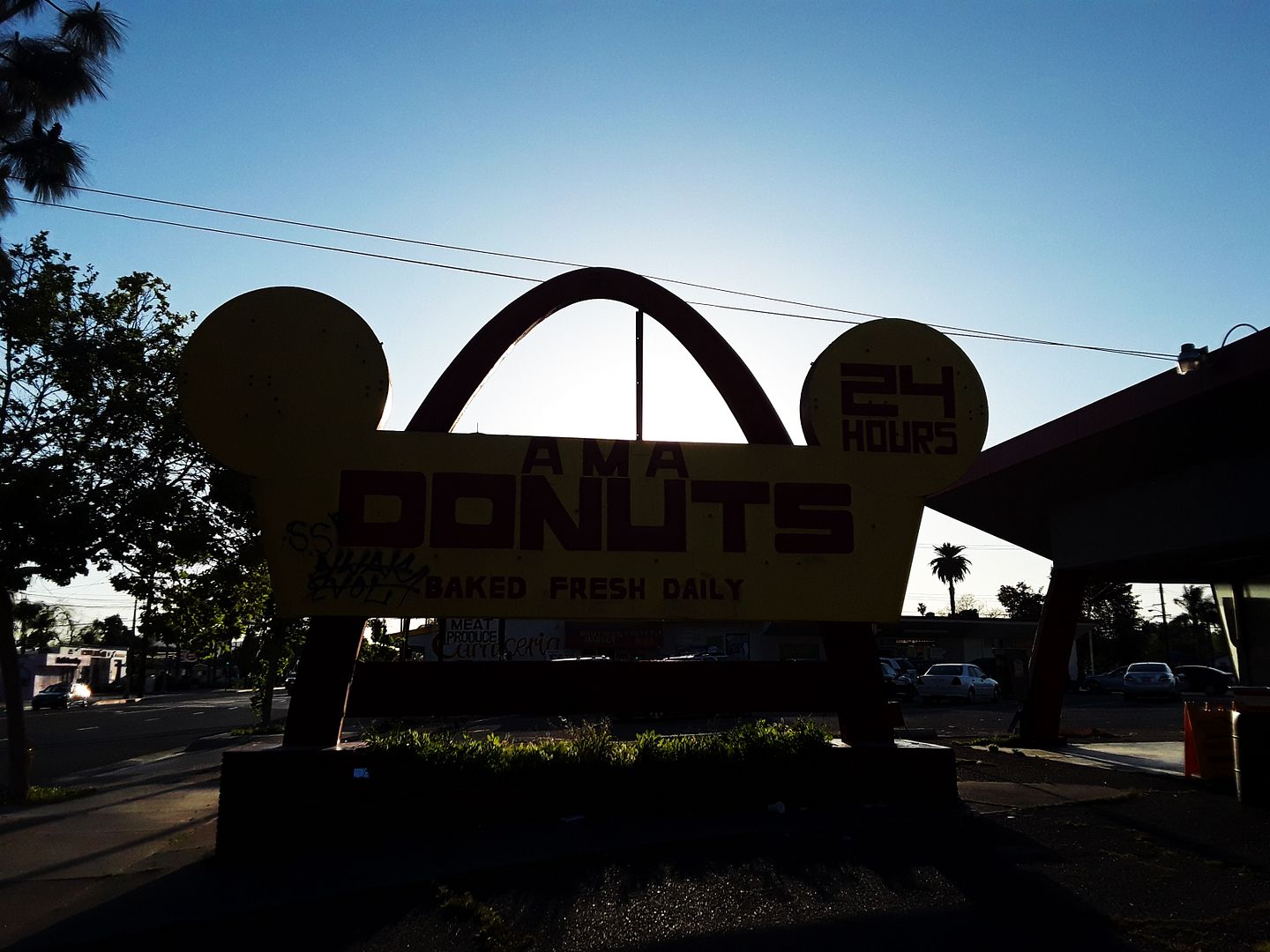
Could This Donut Shop Ever Flip Back to Its 'Golden Arches' Roots?

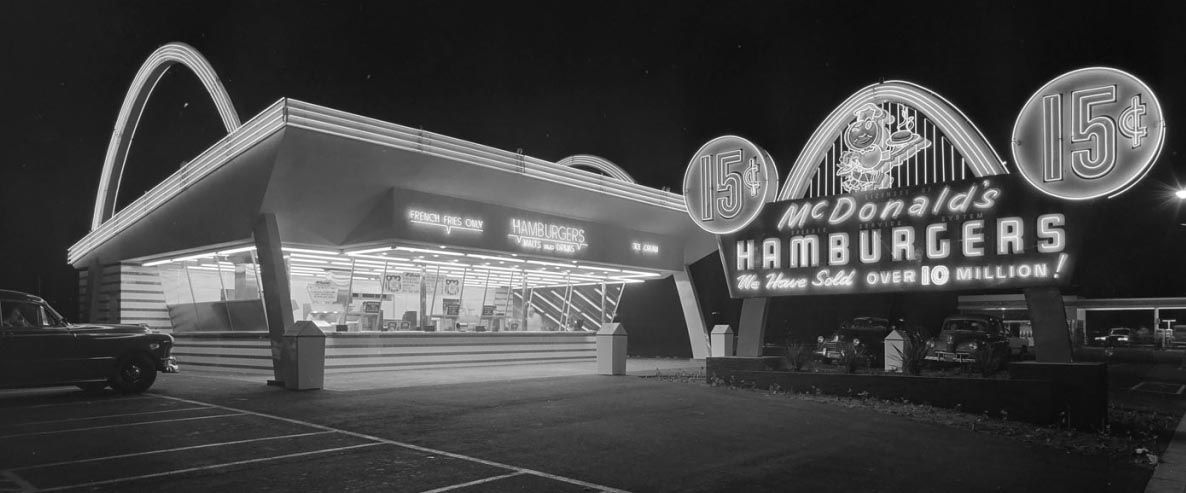
In 1954, the McDonald brothers opened up their 7th or 8th McDonald's location at 1057 E. 5th Street in Pomona, California—about 30 miles west of their very first burger stand in San Bernardino.


circa 1954 (original attribution unknown, via RoadsideArchitecture.com)

It was designed by architect Stanley C. Meston of Fontana—the same one who designed most of those first red-and-white-tiled stores for Richard McDonald, starting in 1952. 


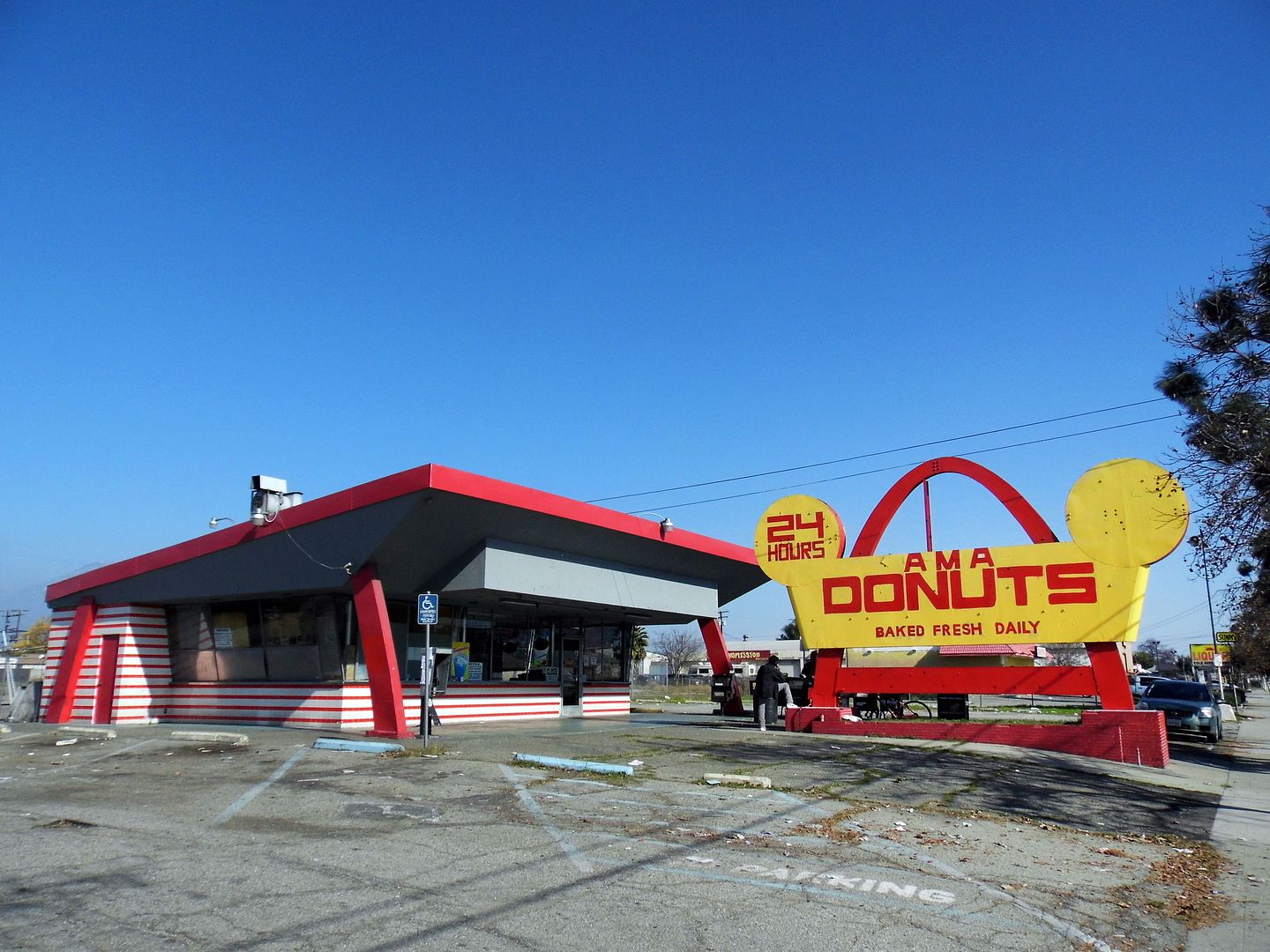
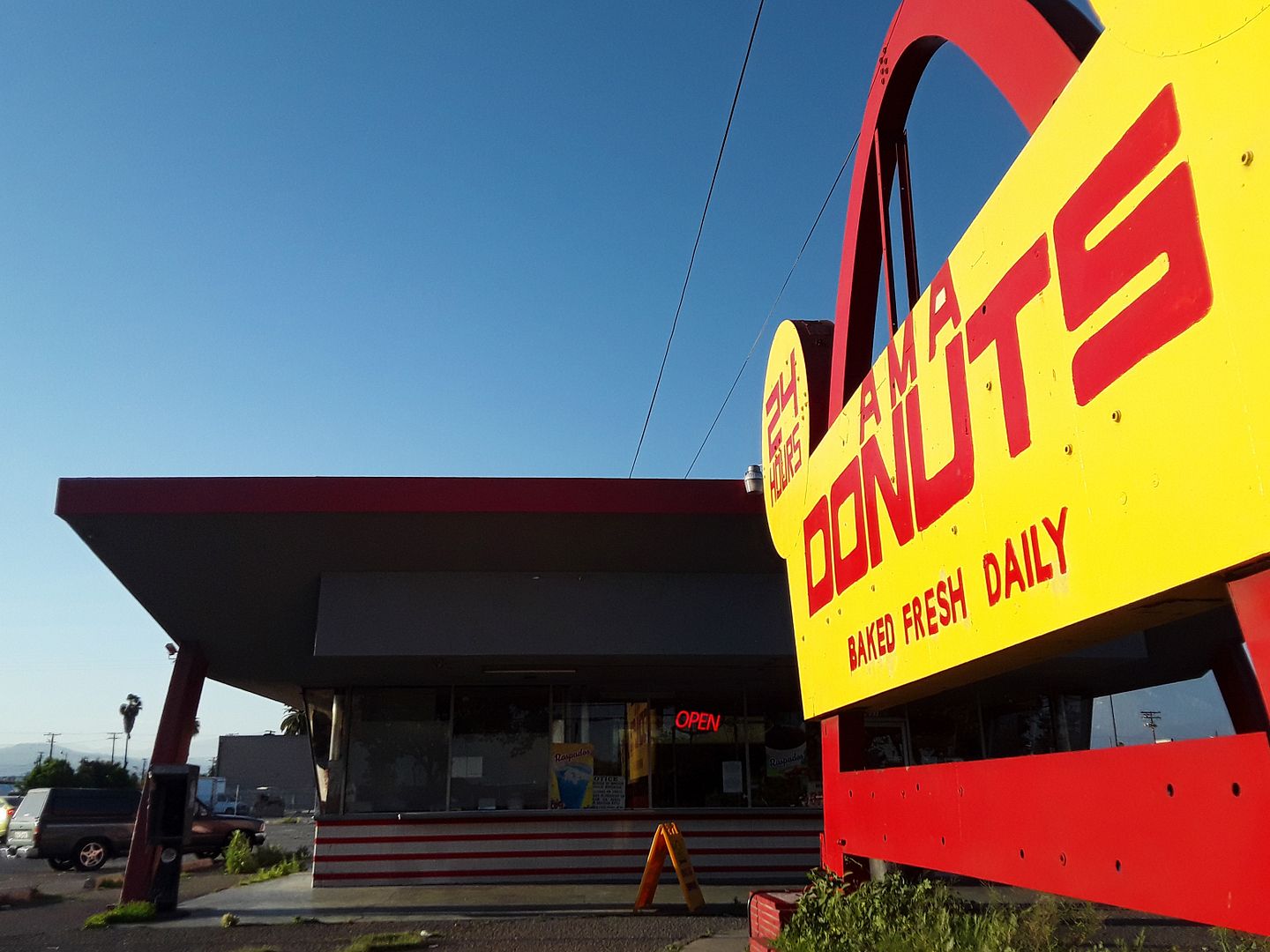
The McDonald's operation ceased at this location in 1968. The tops of the "golden arches" that burst through the roofline on either side of the building were hacked off sometime before the business became Star Taco—and 5th Street was renamed Mission Boulevard.


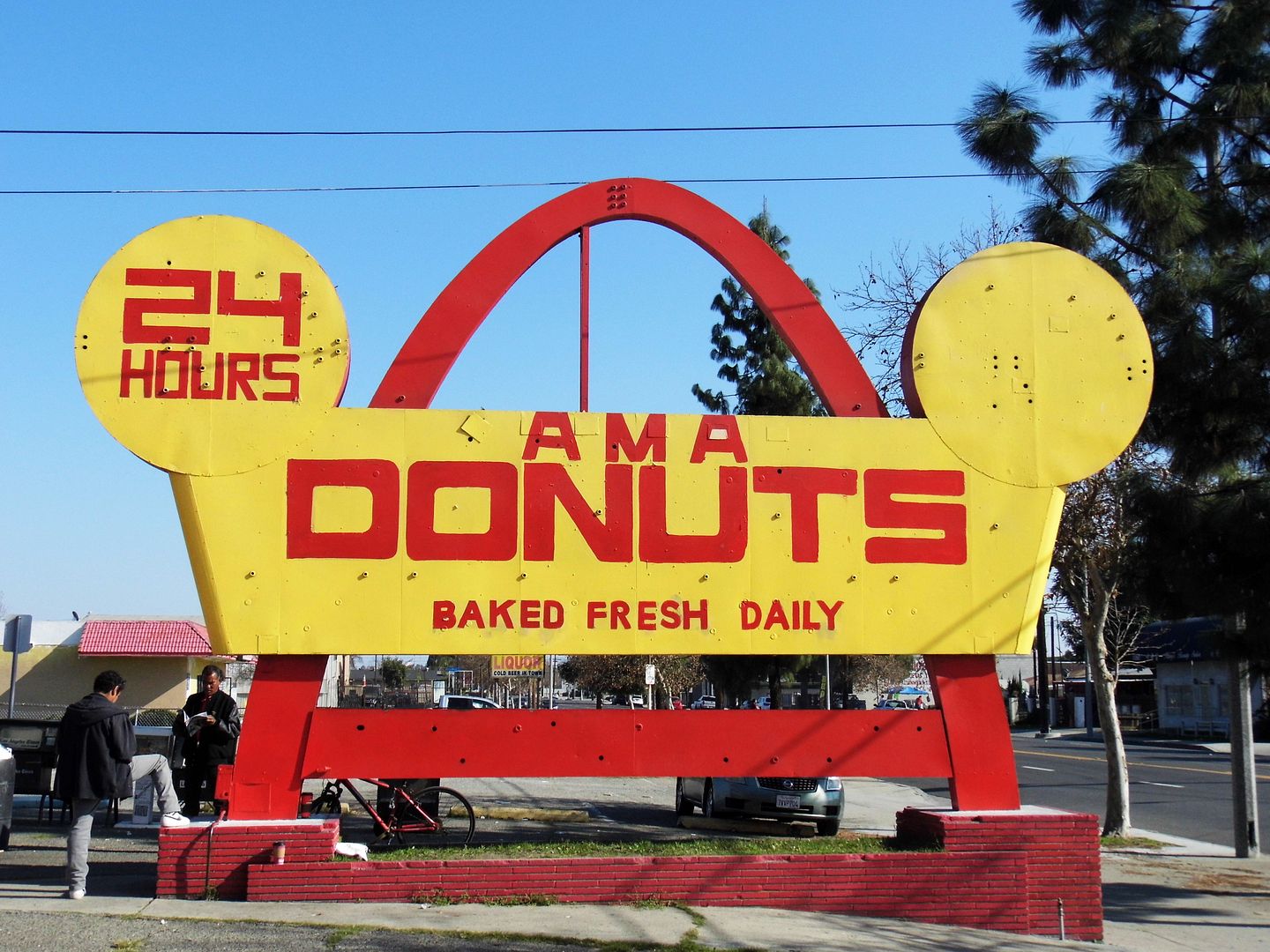
Star Taco occupied the former McDonald's building—and took over the Mickey Mouse-shaped sign, whose neon lettering and depiction of the chain's mascot "Speedee" were removed—through the 1970s and 1980s, until it closed in 1985.


Star Taco's owner, Jim Phillips, had gotten to collecting classic Chevy Corvairs behind his taco stand—as well as at the neighboring auto body shop, which he owned as well. Phillips told the Los Angeles Times in a 1991 article, "The Star Taco collection was known all over the country."


He claimed that 80% of his 120 Corvairs was restorable—but local authorities (at the time, the area was considered unincorporated San Bernardino County) deemed the "collection" a junk heap ("illegal auto storage yard") and, in 1992, stormed the property and towed and impounded the lot of them. Some of the cars went into the crusher; others sold at auction for scrap.


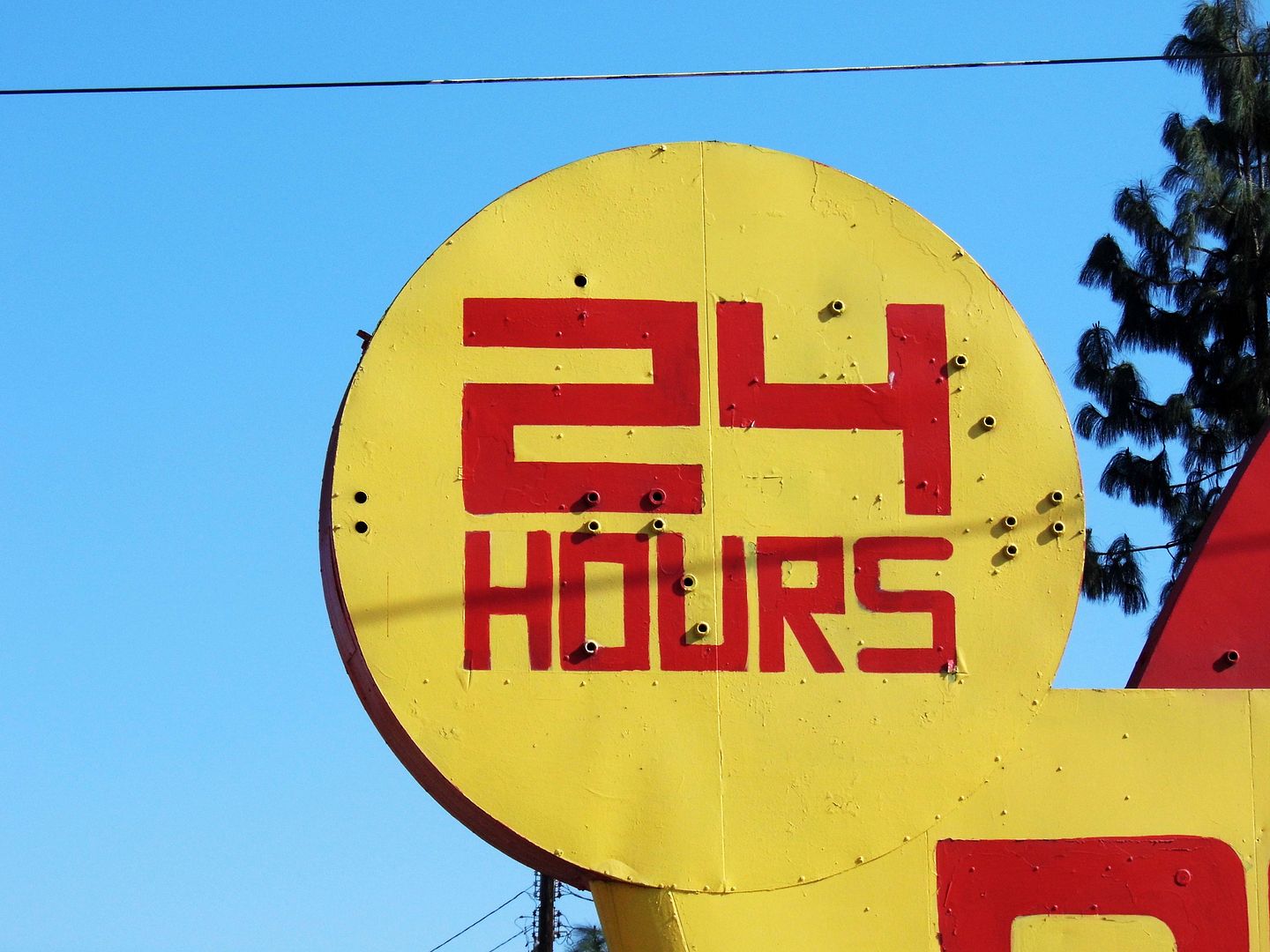
It's unclear how long of a gap there was between Star Taco and the current tenant, AMA Donuts—which has been operating in this location at least since 2004.


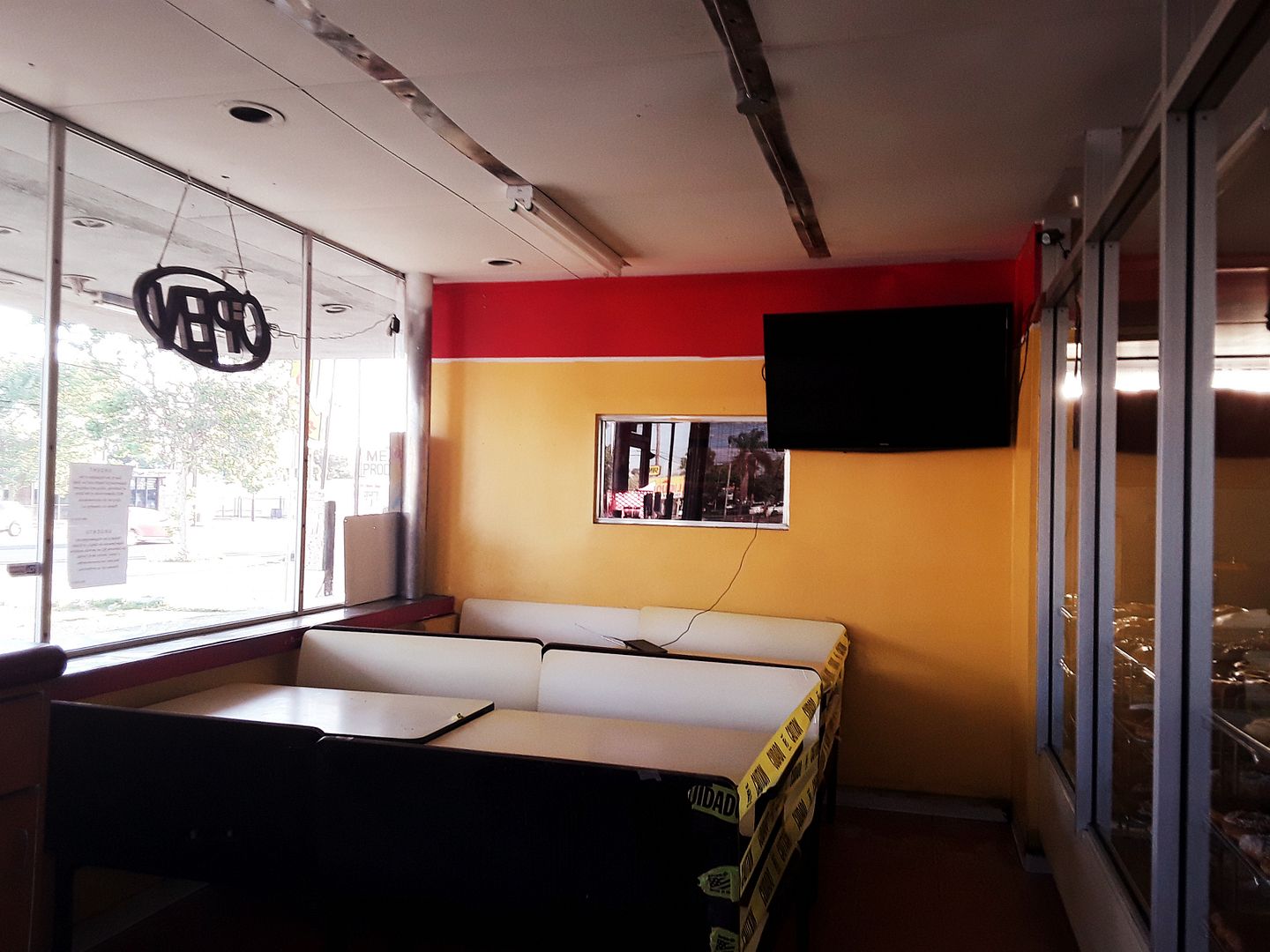
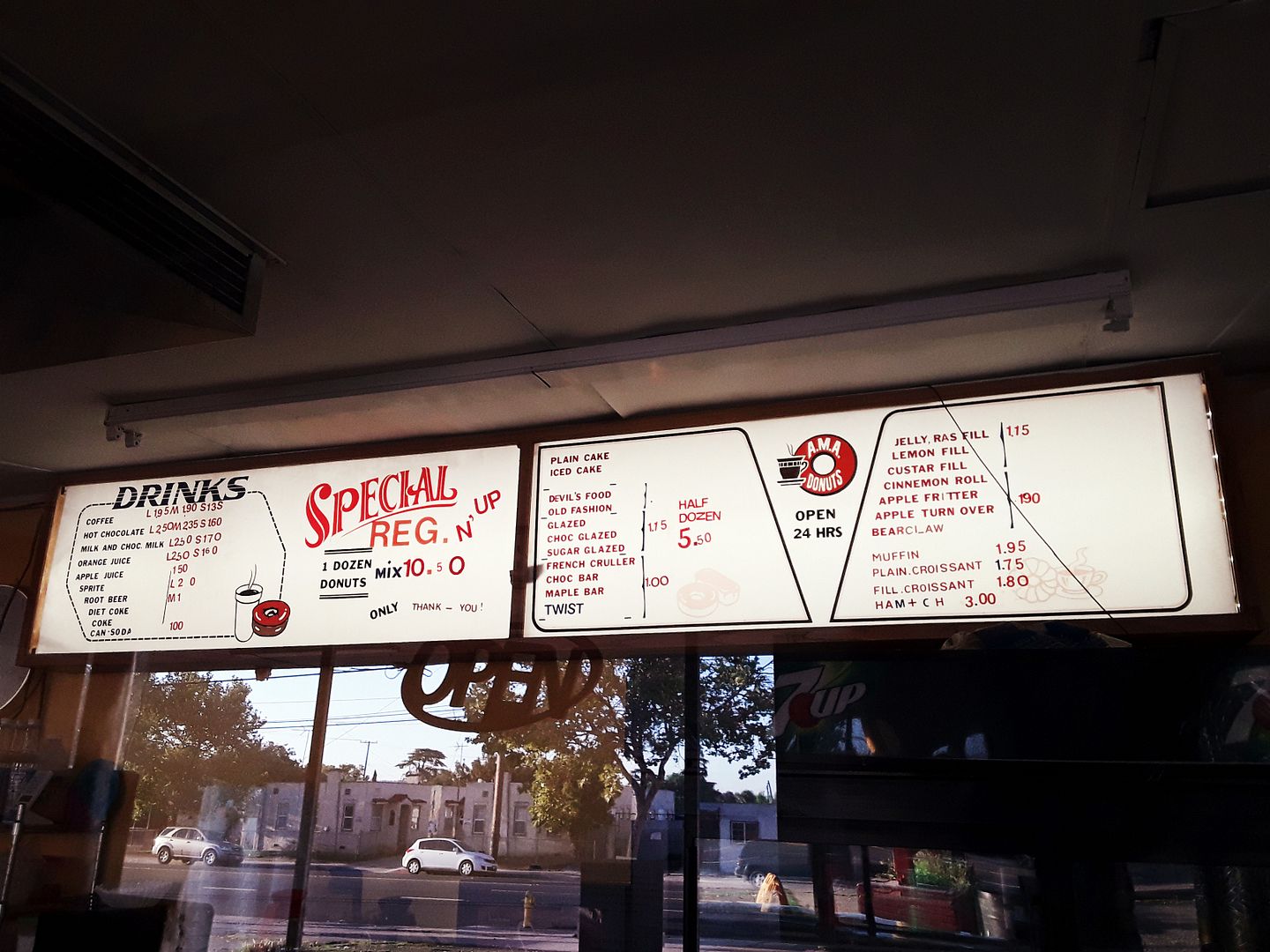
I've gone there twice this year alone—once in January to just see it in person after having read about it, and once in April during the coronavirus pandemic. Ironically, it was closed in January but open in April. Upon my second visit, I bought three donuts for $4-some-odd and gave them a $2 tip. Thank goodness for donuts during a health crisis.


Sure, the AMA Donuts sign looks a little shabby. But they should keep it. They shouldn't touch it.

Maybe one day a McDonald's could move back in—and it'll be brought back to life much in the way that the Downey location was. I'm going to put that possibility out into the Universe and see what happens.

In the meantime, if it can't be a McDonald's, it might as well be a donut shop. Both are so incredibly Southern Californian.

And that design is still so unmistakable.

Related Posts:
Photo Essay: How Billions of Burgers Got Their Start in Southern California
Photo Essay: The Oldest Golden Arches, 65 Years Later

April 20, 2020

My First Outbreak

The coronavirus pandemic may be the biggest outbreak I've been through—but it's not my first.


I'm now forced to recall growing up in Syracuse, New York at a time when wearing sanitary gloves at a restaurant or in a commercial kitchen wasn't required and certainly wasn't common.

And, apparently, neither was washing hands properly.

My parents, sister, and I rarely ever went out to eat at a restaurant—but there was a streak when it seemed like every time we dined out, we got exposed to hepatitis A.

The July 12, 1987 issue of The New York Times reported that Onondaga County—the Central New York county where Syracuse is located—had been besieged by hepatitis after the virus had already broken out in two neighboring counties.

Within one month, six workers at five restaurants had been diagnosed—bringing the total to 54 cases, compared to only 8 during the same time period the year prior.

Now, unlike COVID-19, hepatitis A is generally not deadly. But like the coronavirus, the hepatitis virus can spread by fecal shedding—which means a food handler who pooped and didn't properly wash their hands could infect an entire restaurant.

It happened at a Pizza Hut near Syracuse University. I'm not sure we'd gone to that one.

But it also happened at a Wendy's. And I do remember being forced to eat there as a kid.

And it also happened at Perkins in DeWitt. We could've been exposed there, but I don't remember exactly.

My parents might know. But I haven't talked to them since 2007.

One was definitely at the restaurant at the Ramada Inn in Salina—just outside of Syracuse, near the bank where my dad worked. Back then, the Ramada Inn was a pretty nice place, so we'd gone there for Easter Sunday 1988.

So did 1400 others, who also got exposed.

The outbreak was so bad at one point that Channel 9 interrupted a primetime episode of Perfect Strangers to run a 30-minute special on it.

I remember hearing the news reports warning patrons who drank a beverage with ice in it or ate from the salad bar (i.e. uncooked vegetables, as high heat generally kills the virus). We always qualified. And that meant we had to line up alongside 10,000 other people within the course of a month to go in for our gamma globulin shots, which was supposed to prevent the hep A infection from taking hold.

God, I remember that shot. I don't remember how many of them I got, but there were more than one. And they hurt like a mother.

They were embarrassing to get, too. They shot it into your butt cheek. And for a 12-year-old girl, pulling your pants down in front of anyone was just torture.

Hep A can be pretty contagious—and for the same reasons that the novel coronavirus is. It manifests in symptoms that masquerade as something else.

When it starts out, you might just think you have the flu. With hep A, you don't know yet that your liver is under attack. With COVID-19, you don't yet know that your lungs are in the crosshairs.

The gamma globulin only protects you if you get it within 14 days of exposure. Sometimes the restaurant wouldn't find out about the infected worker and report it in time to get all the exposed people to peel off their pants and expose their fannies for a shot.

As a result of the health crisis, the county enacted new legislation that required food handlers to wear plastic, disposable gloves. It's not that they're any better at protecting us from a virus than a good scrub with soap and water. It's just that the county government couldn't count on the fact that anyone handling food would actually wash their hands properly.

So there was a run on gloves. Restaurant suppliers reported selling 200,000 or 300,000 gloves in just one day.

Still, only 95% of county restaurants actually complied. Some thought it would hurt their business and complained that wearing gloves made it harder to work.

Not surprisingly, when the outbreak was declared "over" in November 1988, and rules were relaxed, more hep A outbreaks followed. And the glove rule was reinstated in 1990 and made permanent in 1992 (though it didn't become a New York State law until 1997).

You couldn't have bake sales at church anymore. You couldn't bring cupcakes for your classmates' birthdays. You just didn't know who was pooping, wiping, and cooking without washing in between.

After I moved out of Syracuse for college in 1993 and then permanently in 1997, I never again had to be told that I'd been exposed to hep A. That's even though food service workers on campus were clearly not wearing gloves (because they didn't have to in neighboring Madison County). That's even after eating countless slices of unsanitary pizza at 5 a.m. in New York City.

I never thought I'd have to think about sanitary gloves again. But now I find myself eyeing gloved workers who handle food and then money and credit cards and POS touch screens and then food again.

And I'm just hoping they change their gloves after going to the bathroom.

There's a lot about this "new normal" that I hope becomes permanent. Is it too much to ask for people to wash their hands properly and wear gloves?

Related Posts:
Quarantine Angst?
A Shot Into Another Dimension

Photo Essay: Back to the Future's 1955 and 1985 Locations, Upon the 35th Anniversary of Its Release [Updated for 2025]

[Last updated 5/18/25 9:18 PM PT—Photos of Courthouse Square at Universal Studios Hollywood and of the 2024 Enchantment Under the Sea dance added, and the entire blog post was rearranged to make more sense with the plot of the movie]

[Updated 12/29/24 10:22 AM PT—Links to photos of a recreation of the Enchantment Under the Sea dance added below.]

[Updated 9/4/24 11:34 PM PT—The Puente Hills Mall is about to be sold for redevelopment, according to Los Angeles Magazine. A recent site visit reveals it's not quite a "dead mall" yet—but the vast majority of businesses have closed, and the stores that are open (Ross Dress for Less, Hot Topic) are pretty empty or have very limited hours (opening as late as 2 p.m., perhaps to catch the after-school crowd). A Twin Pines Mall sign photo has also been added farther down the post.]

Back to the Future was a big deal to the 9-year-old me that I was when the movie first came out in theaters 35 years ago, in Summer 1985.

And since I'm still really in touch with my inner 9-year-old, the movie's impact on me hasn't really waned. I'm always thinking about how my actions today will impact the future. I'm still desperate to "Save the Clock Tower"—whatever form that "clock tower" may take.

So it comes to no surprise—to myself, or anyone who knows my inner 9-year-old—that I take opportunities to re-experience Back to the Future whenever I can.

Back in 1985, that meant re-watching it in the movie theater while it was still in its first run. I remember our mother asking my sister and me which movie we wanted to see—it was an occasional treat for us that extended into the late '80s—and we couldn't think of anything we wanted to see more than Back to the Future again.


circa 2019

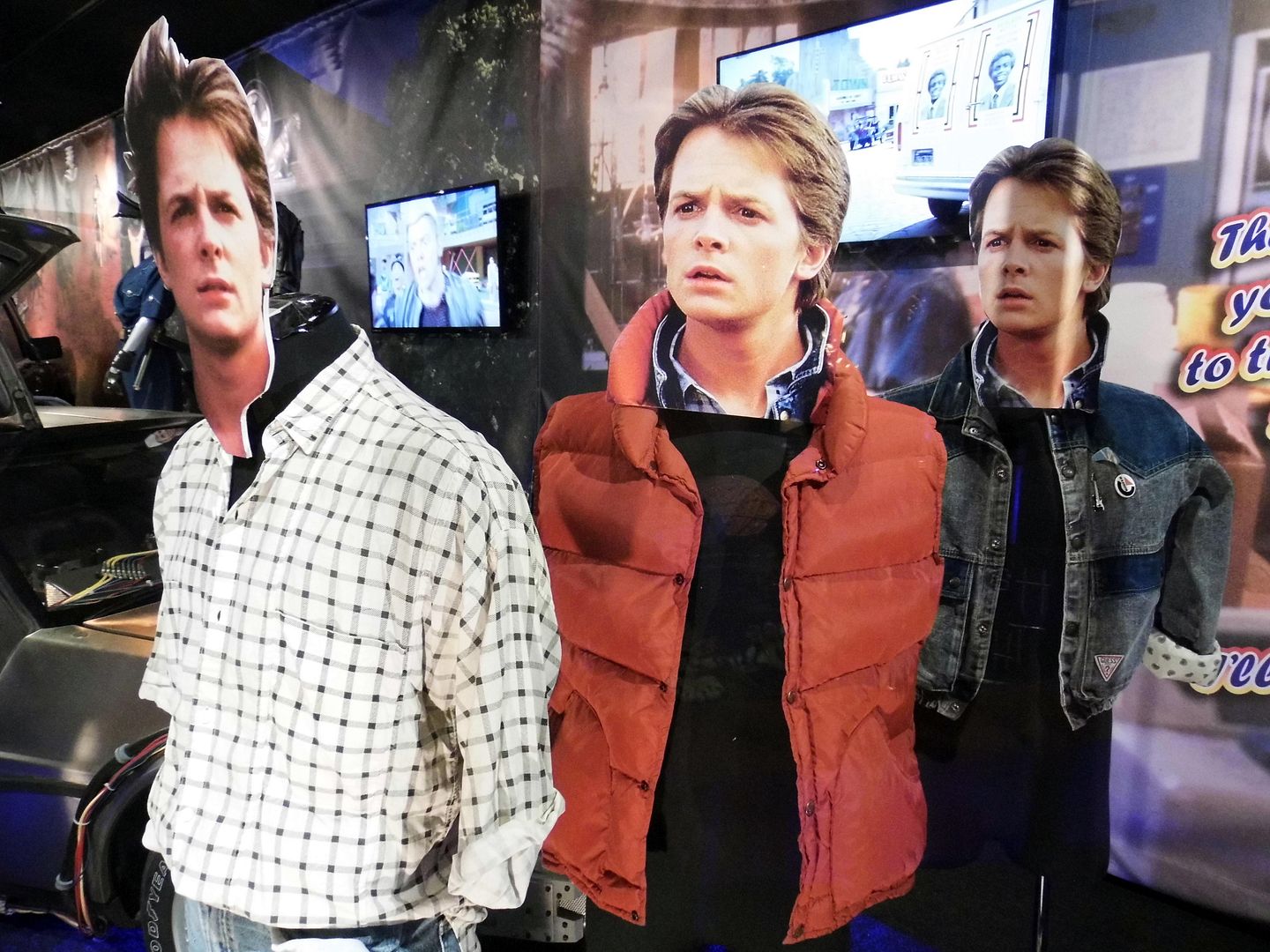
But now that I live just steps away from Hollywood, that means I've gotten the chance to see some screen-worn costumes...

April 18, 2020

Photo Essay: A Pioneer Ranch House, Displaced By 'Progress'

I've written before about the ghost town of Spadra, which got gobbled up by the City of Pomona. Its main two relics are the Spadra Cemetery and the Philips Mansion.

But there are other parts of Pomona that have been lost to changing municipal boundaries, invisible lines of demarcation that may mean something politically and economically—but not necessarily geographically, topographically, or even culturally.

After all, much of the area was all part of one contiguous chunk of land—until it got split up into the Mexican land grants of Rancho San Jose, Rancho La Puente, and Rancho Los Nogales (which translates from Spanish as "The Ranch of the Walnut Trees," not to be confused with Rancho CaƱada de los Nogales).

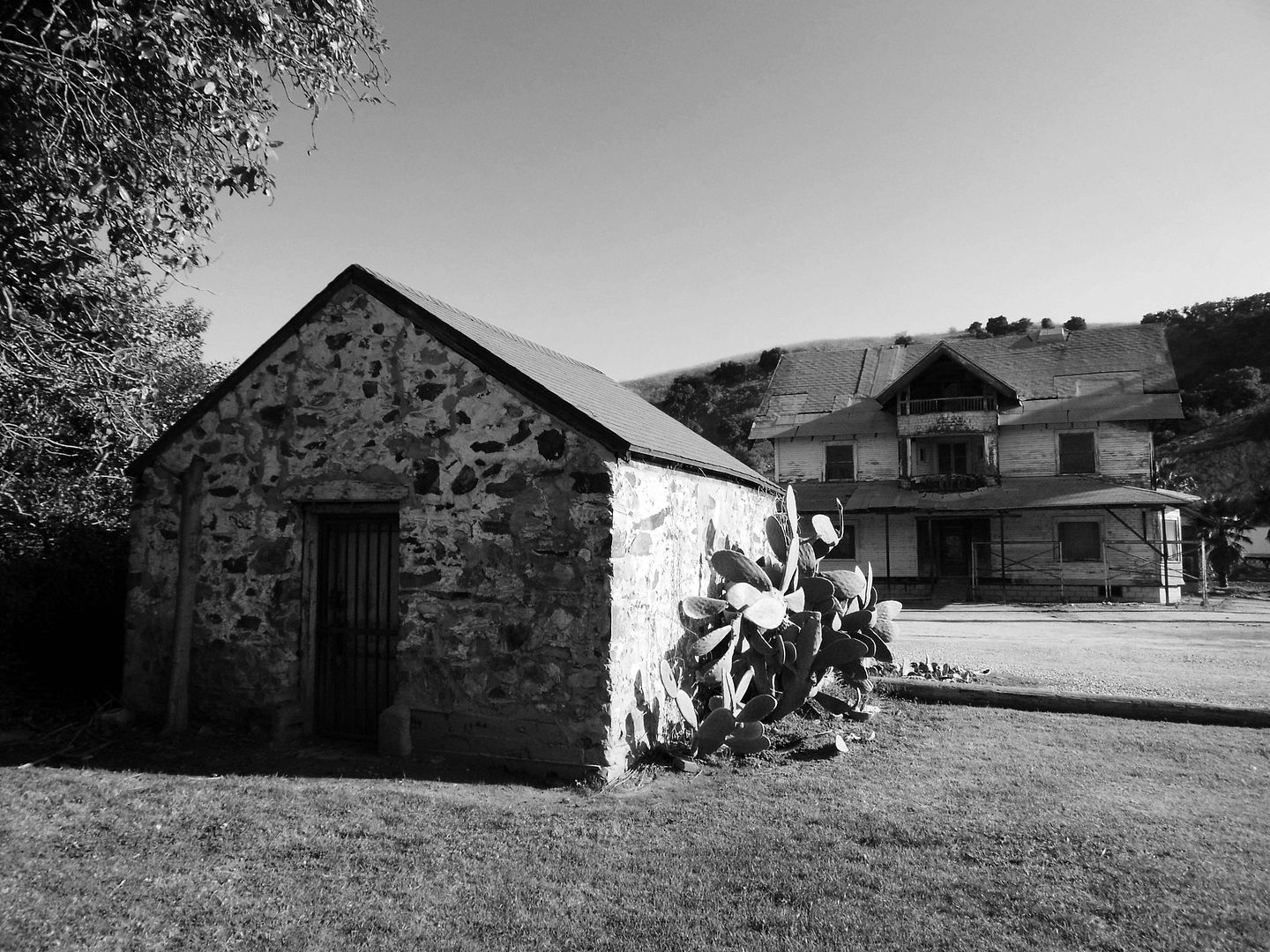
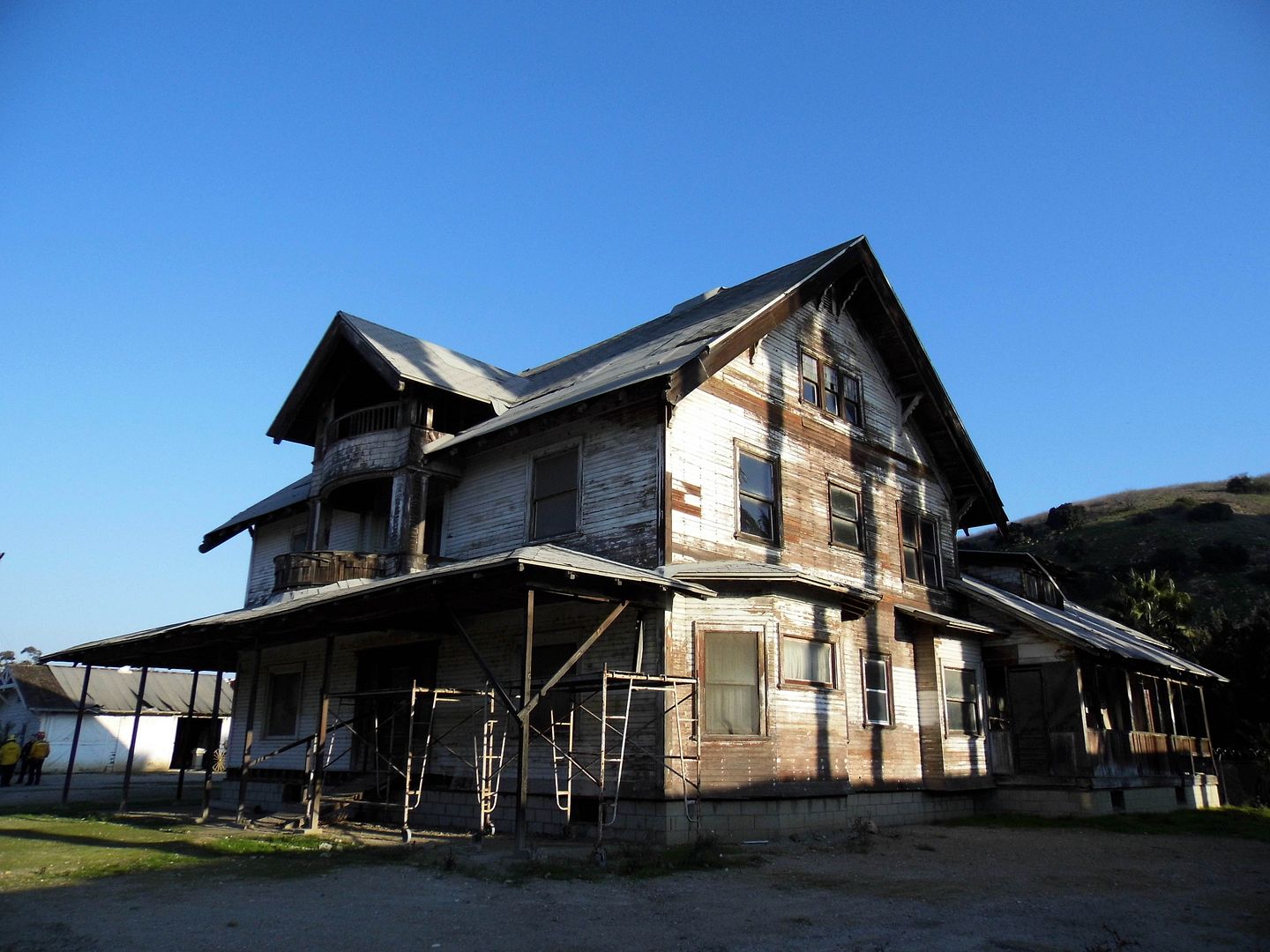
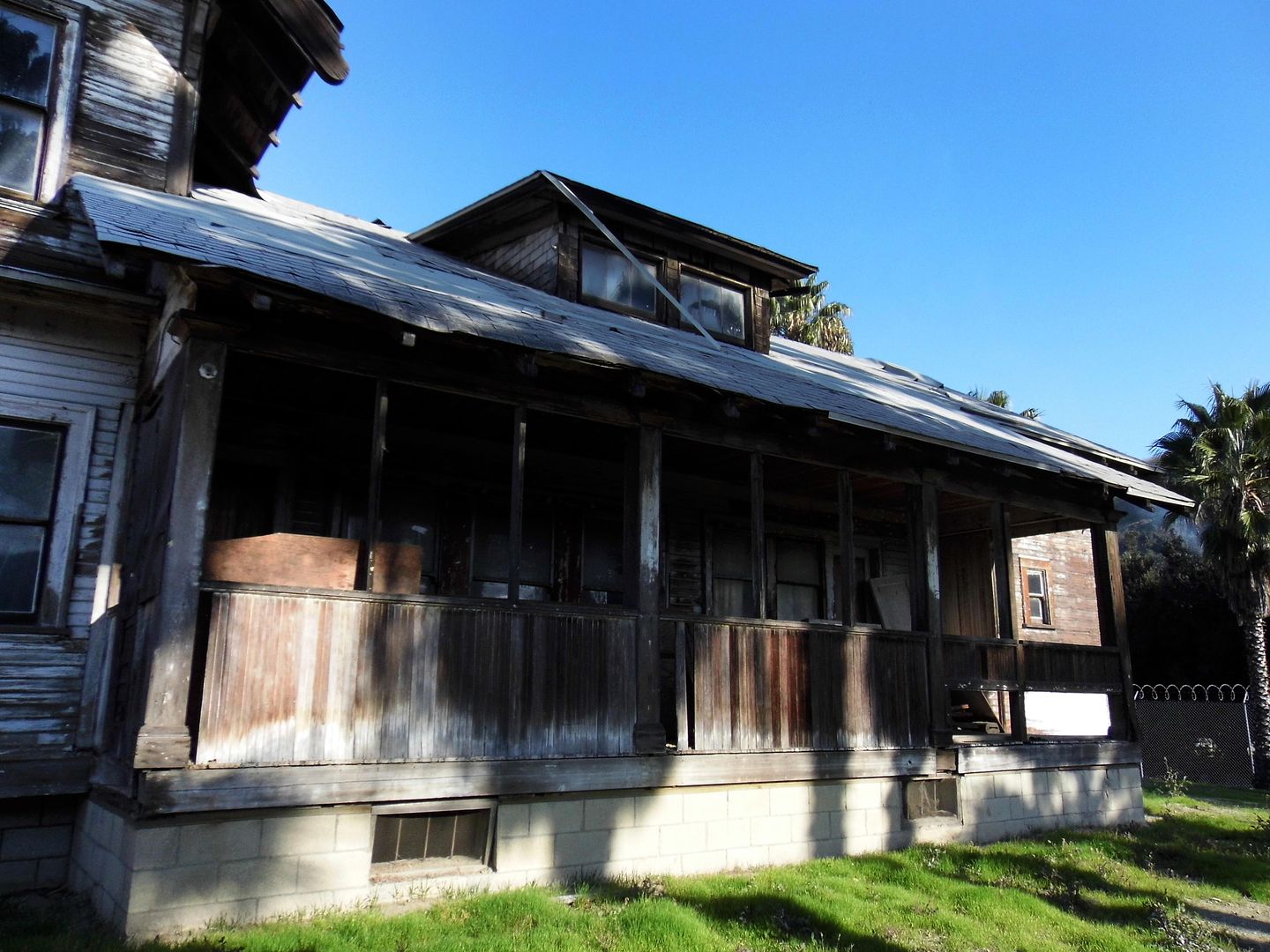
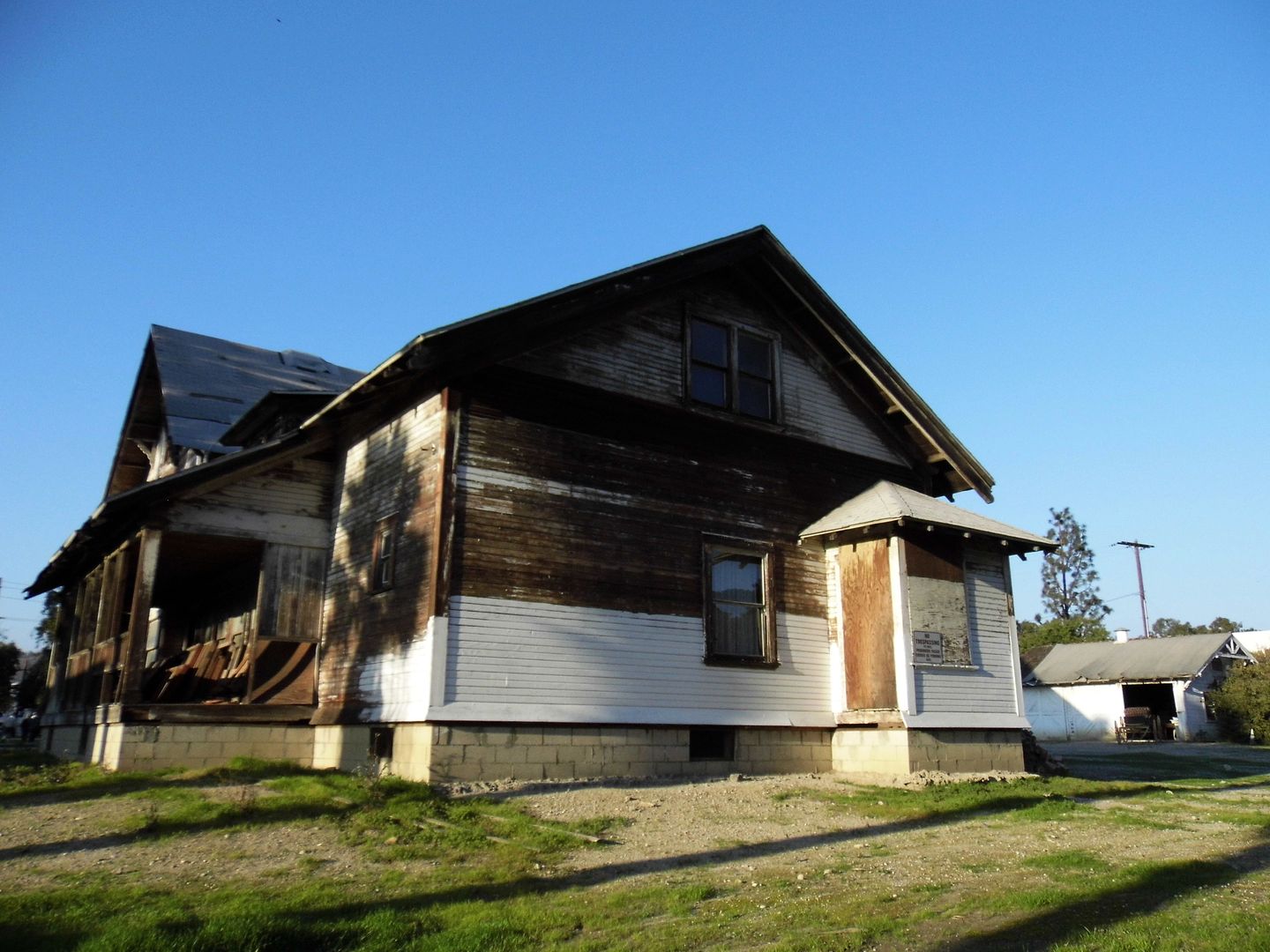
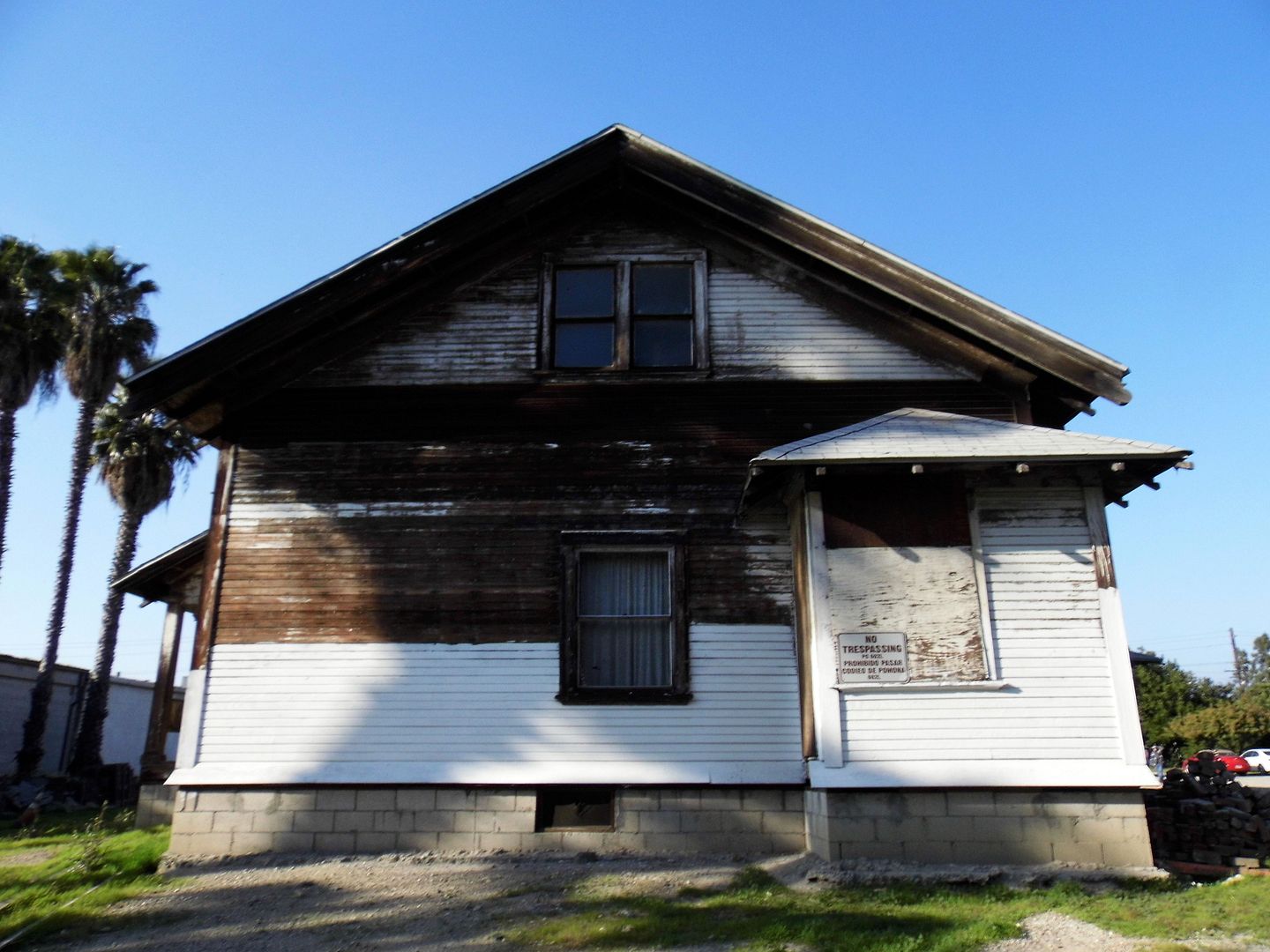
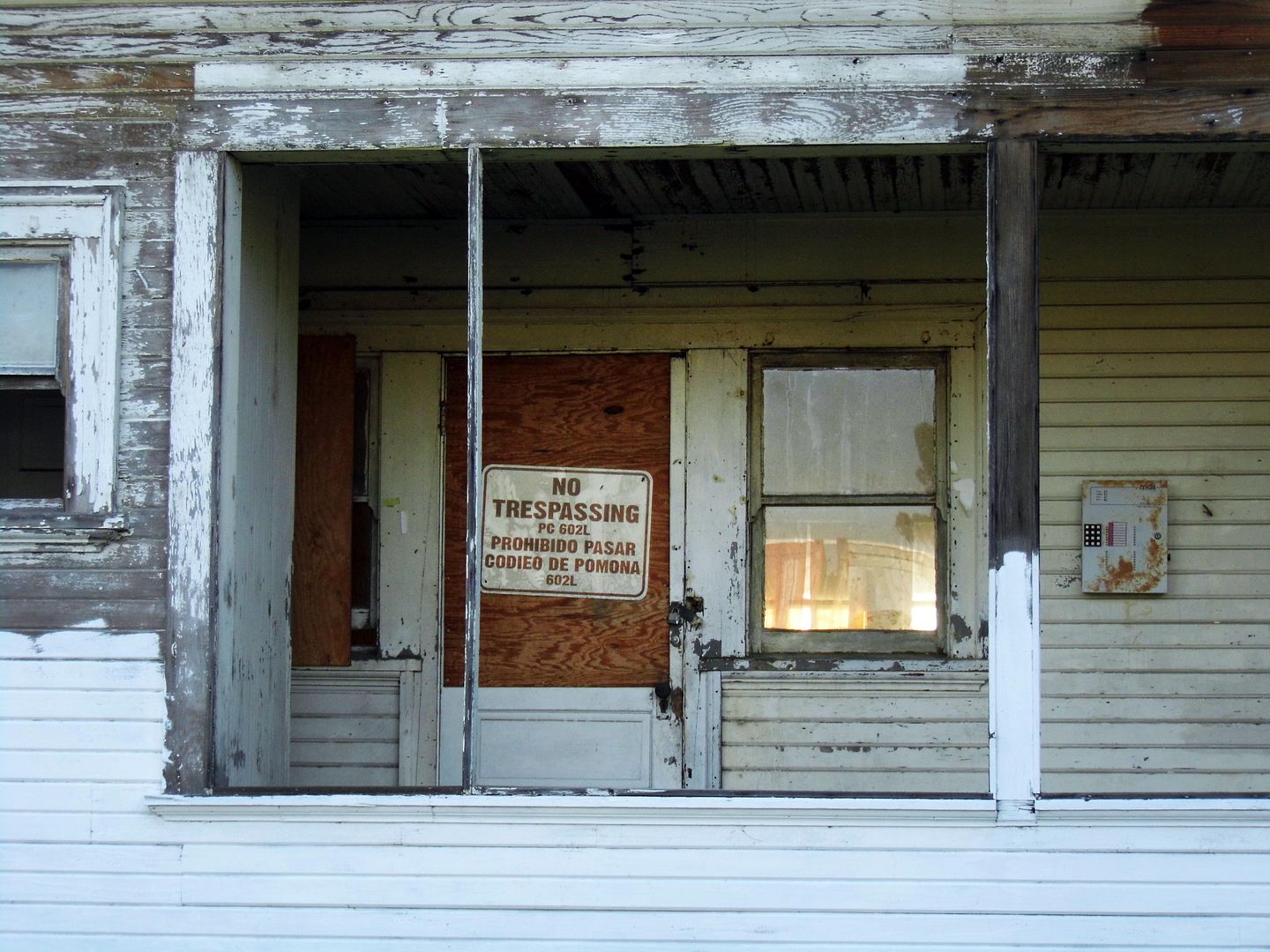
It doesn't seem so crazy, then, that a historic ranch house would be moved from another city—City of Industry—to Pomona and be plopped down in the yard between Philips Mansion and the train tracks.

It's part of Pomona history. After all, they only had to move it about 5 miles to its current location.


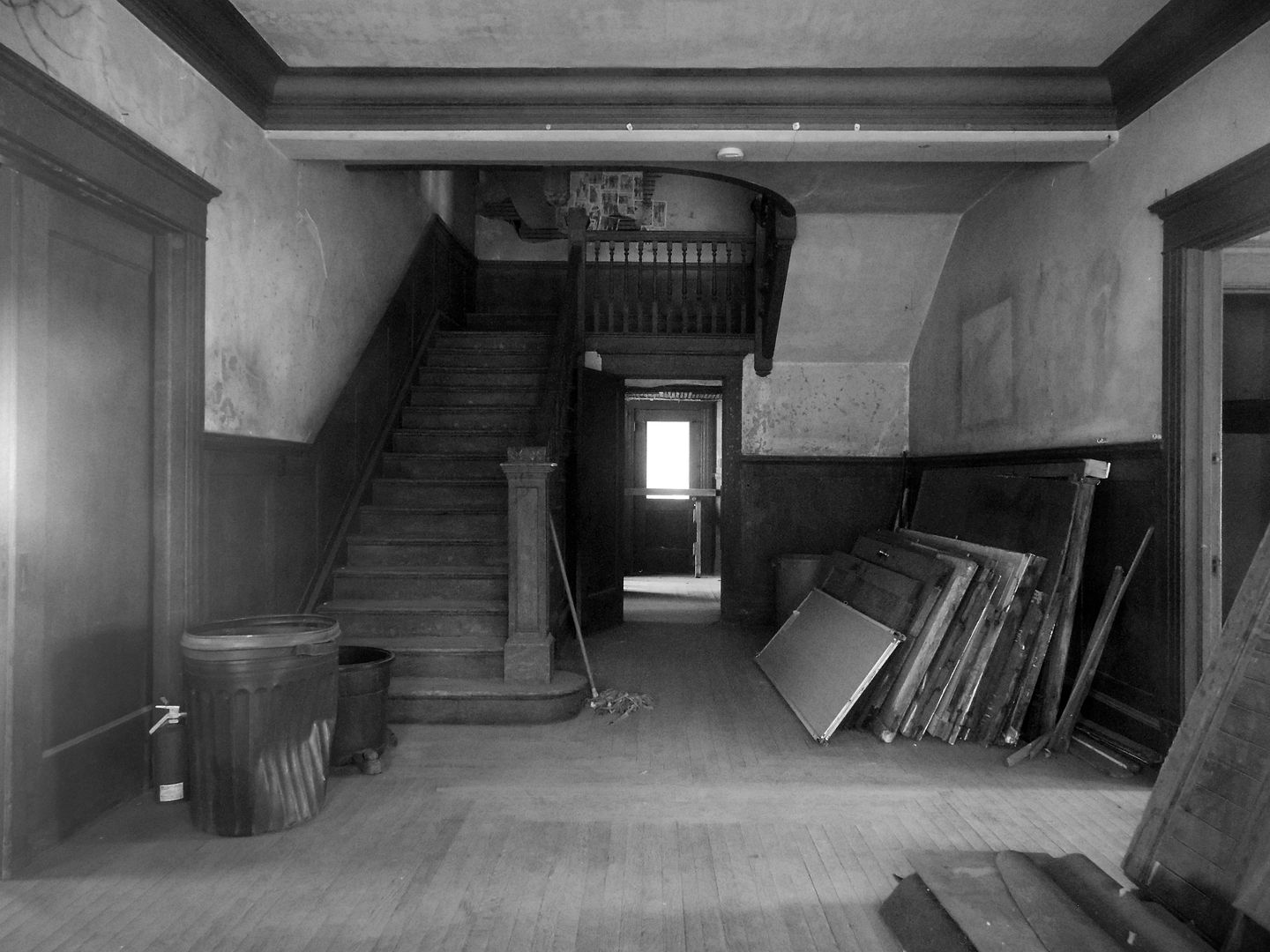
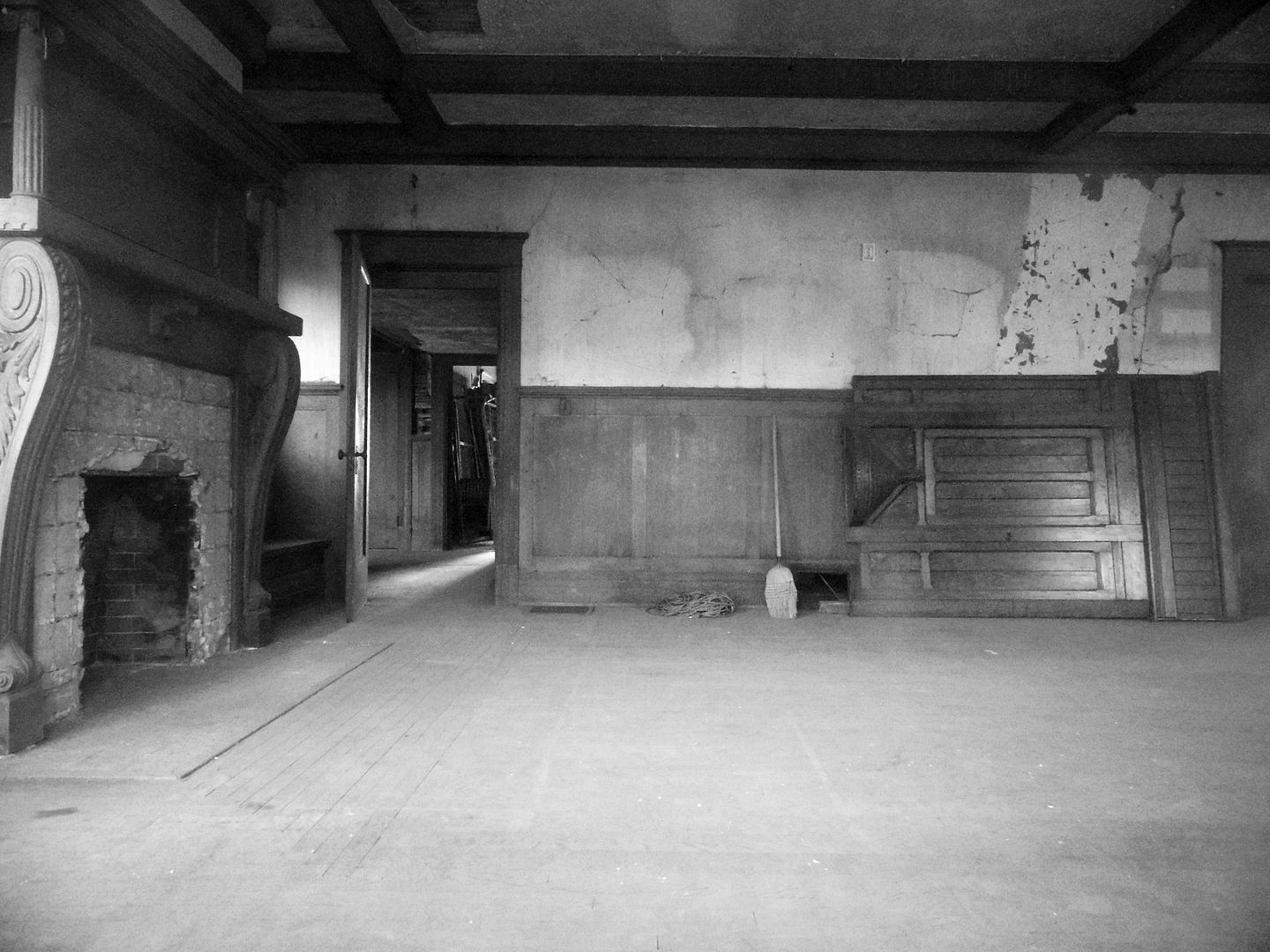
Known as the "Currier House" or the "Currier Ranch House," the City of Industry had acquired it—and the land it was on—in the early 1980s from Union Pacific Railroad (formerly Southern Pacific), which miraculously hadn't needed to plow it in order to run its railroad tracks alongside it.


But when developer Ed Roski Jr. of Roski’s Majestic Realty Co.—the man behind the development of the Staples Center in Downtown Los Angeles—set his sights on the property for his 400-acre industrial park, it could've been a death knell for the Currier House.


The Coalition to Save the Currier Ranch was formed to preserve the Currier House in situ—east of Valley Boulevard on Old Ranch Road, near the interchange of the Pomona/60 and Orange/57 freeways. The San Jose Creek flowed straight through the ranch property, which was also fed by water from artesian wells. Back then, it was located in a township known as "San Jose."


Preservationists lost the battle—but won the war, as the City of Industry paid to move the house in 2004 to Pomona. It's now owned by the Historical Society of the Pomona Valley.


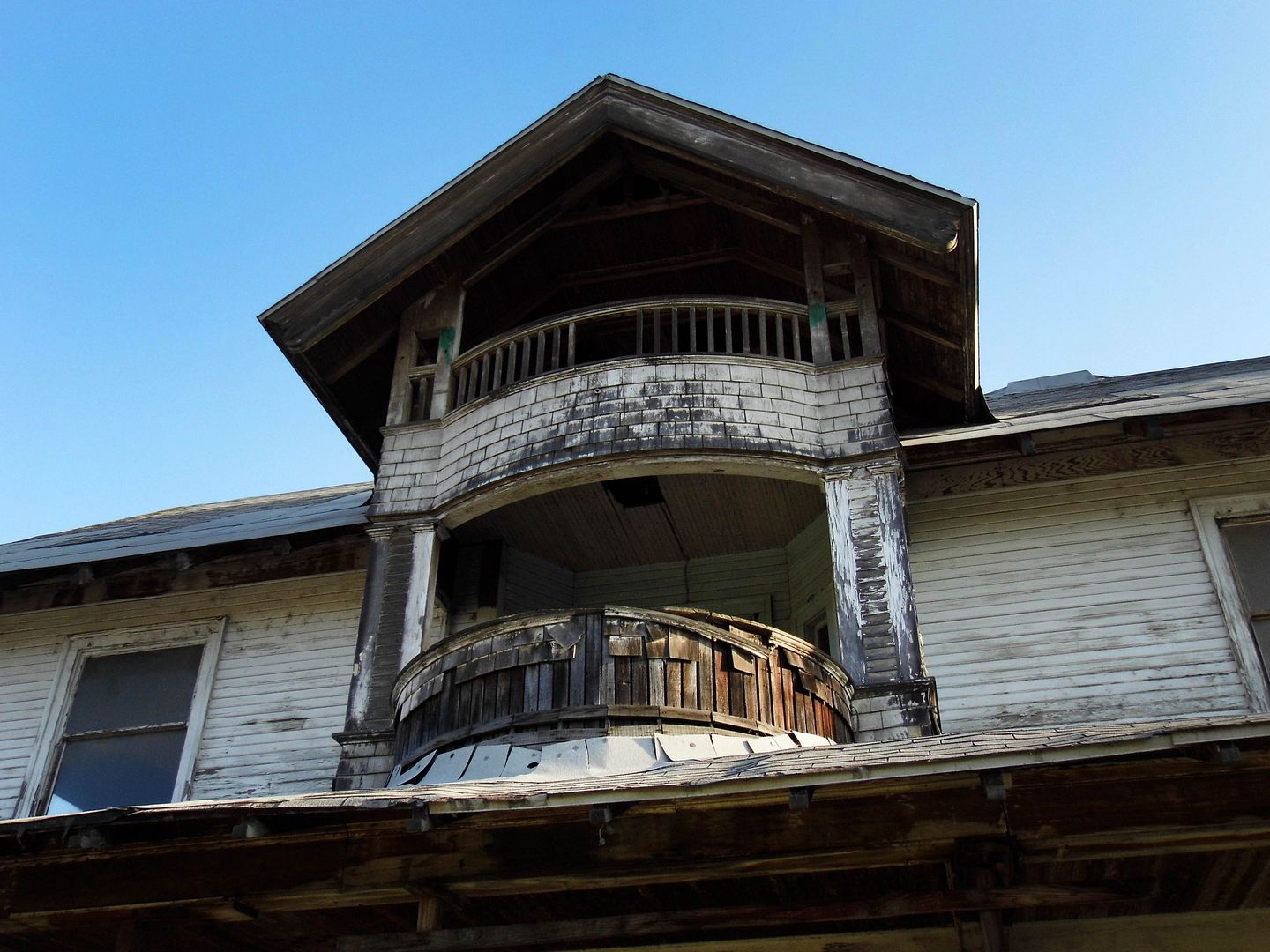
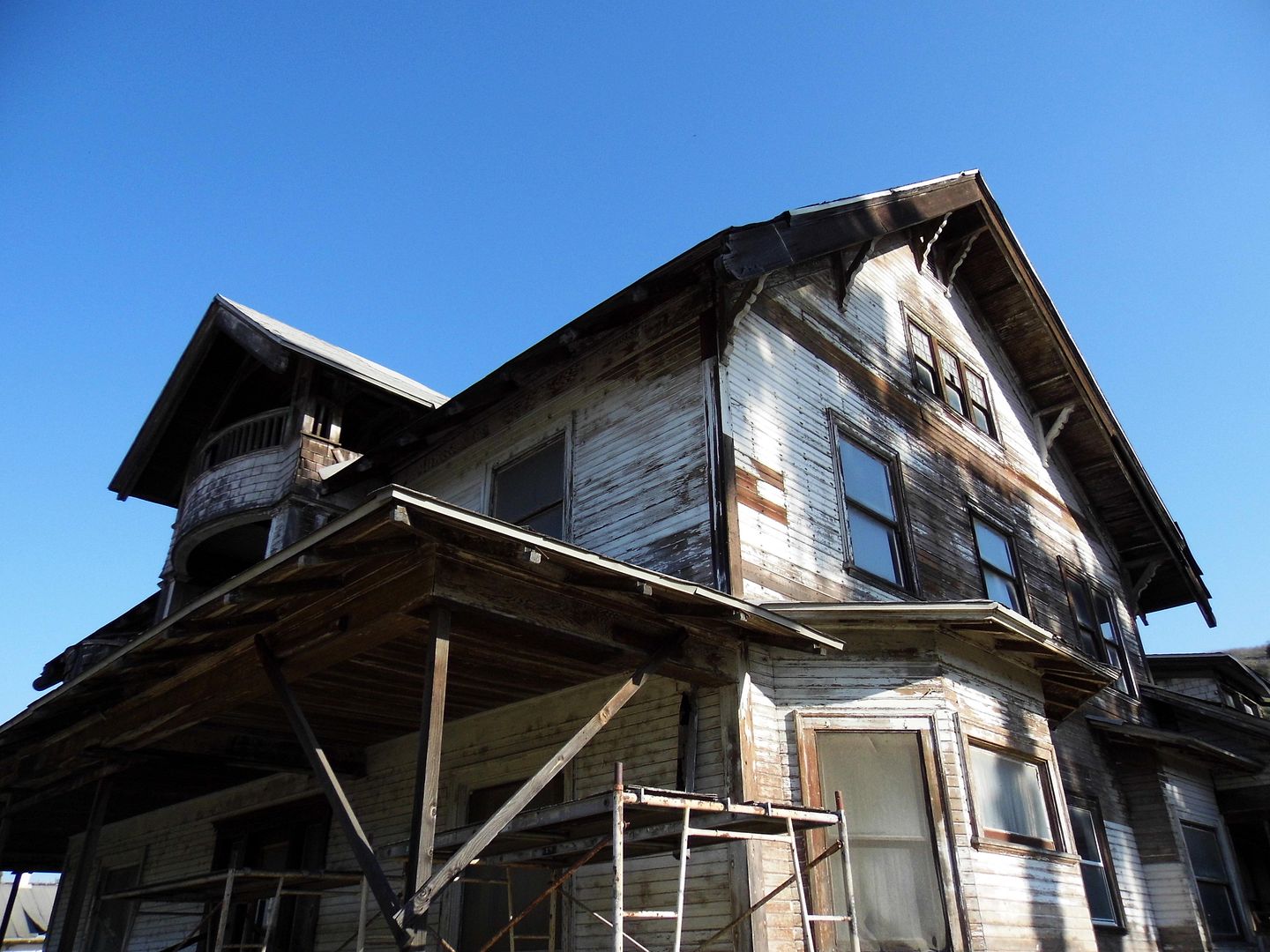
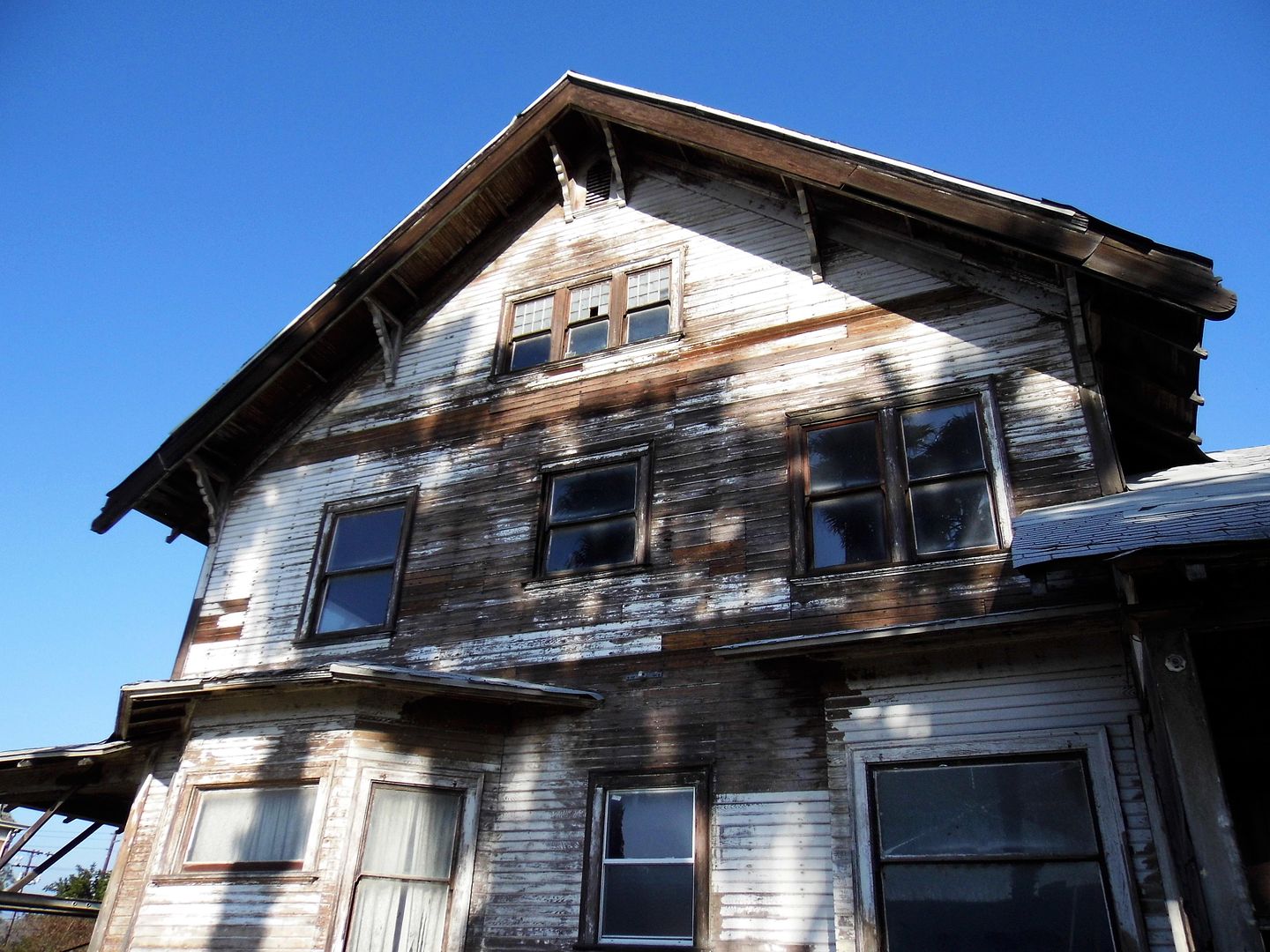
Why such a hubbub over a seemingly dilapidated, clapboard-sided dead ringer for a haunted house?


The 10,000-square-foot ranch house was constructed in 1907 at a cost of $12,000 for local historical figure Alvan Tyler ("A.T.") Currier and his wife. By then, he'd already served as Los Angeles County Sheriff (1882-4) and a Republican senator in the 38th CA district (1898-1902).


A native of Maine who came to the Pomona Valley in 1869, Currier made quite a name for himself—also owning valuable property in the cities of Los Angeles and Pomona and serving as president of Farmers' Mutual (Fire) Insurance Company of Los Angeles, Canyon Water Company of Pomona, Palomares Hotel Company of Pomona, and the fraternal organization of the Odd Fellows Hall Association of Pomona. He was also director of First National Bank of Pomona and donated land for the Pomona YMCA (post forthcoming).


Before settling in Southern California in 1869—where he stayed until he passed—Currier had mined for gold and silver in Idaho and even lived in Spadra for a while. But on his 2,400-acre ranch, just a couple of miles west of Pomona, he kept 80 head of horses, 125 head of cattle, and 200 hogs; and he raised alfalfa/hay and grain.


The house of Currier's Ranch was anything but modest—designed by Pomona architect Ferdinand Davis (of the firm Davis and Higgs), who also contributed other landmarks to Pomona such as the Ebell Club, Trinity Methodist Church, and Pomona City Stables.


Given the turn-of-the-last-century time period, the architectural style is understandably a transition from opulent Victorian to a more utilitarian Craftsman—expressed on an incredibly large scale.


With a total of 21 rooms, three staircases, and one sleeping porch—and ornately hand-carved wooden fireplace mantels in the interior (which has been described as "Mission style")—you can imagine what an endeavor it must've been to chop it up, move it, and put it back together in a new place.


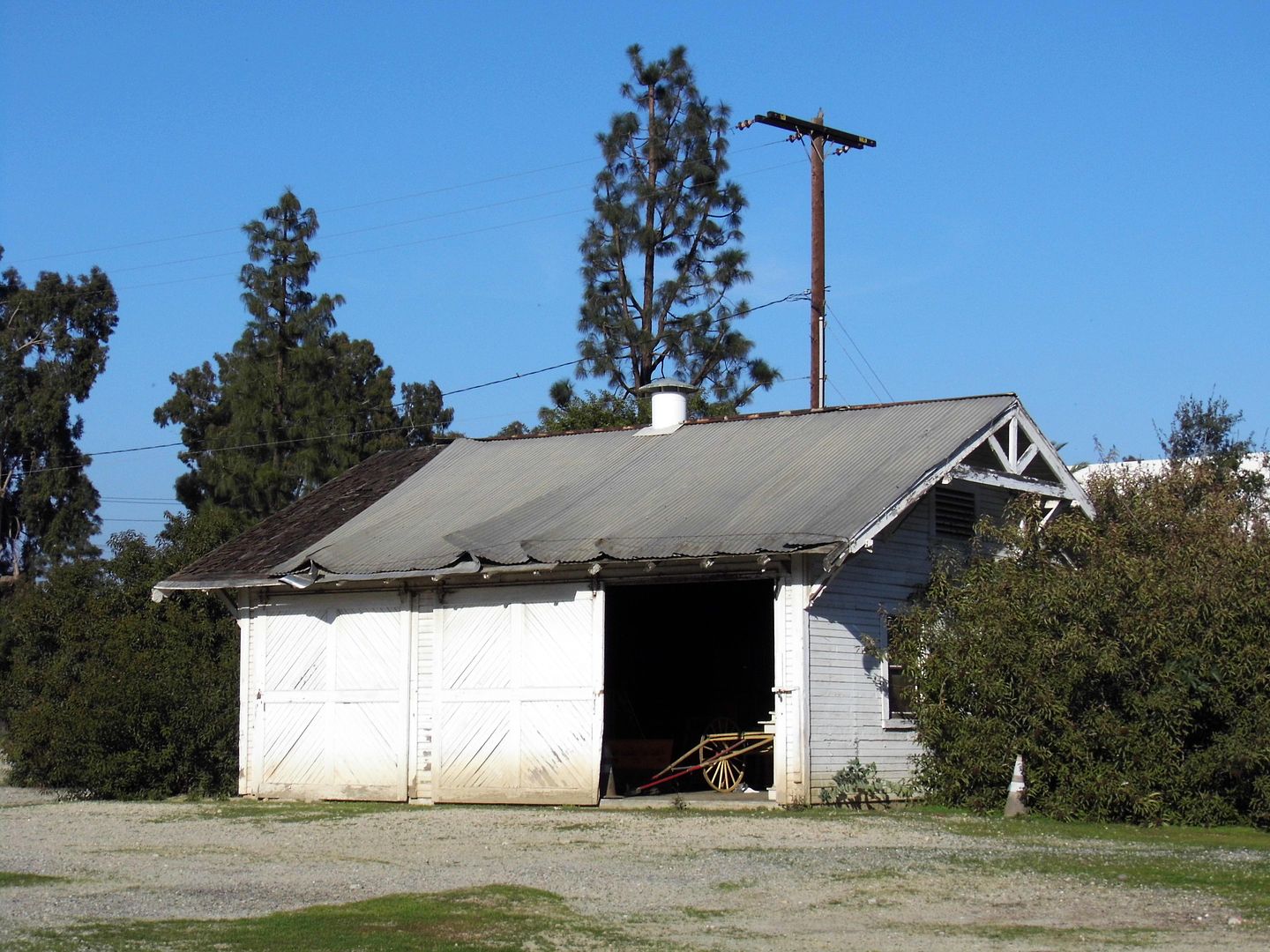
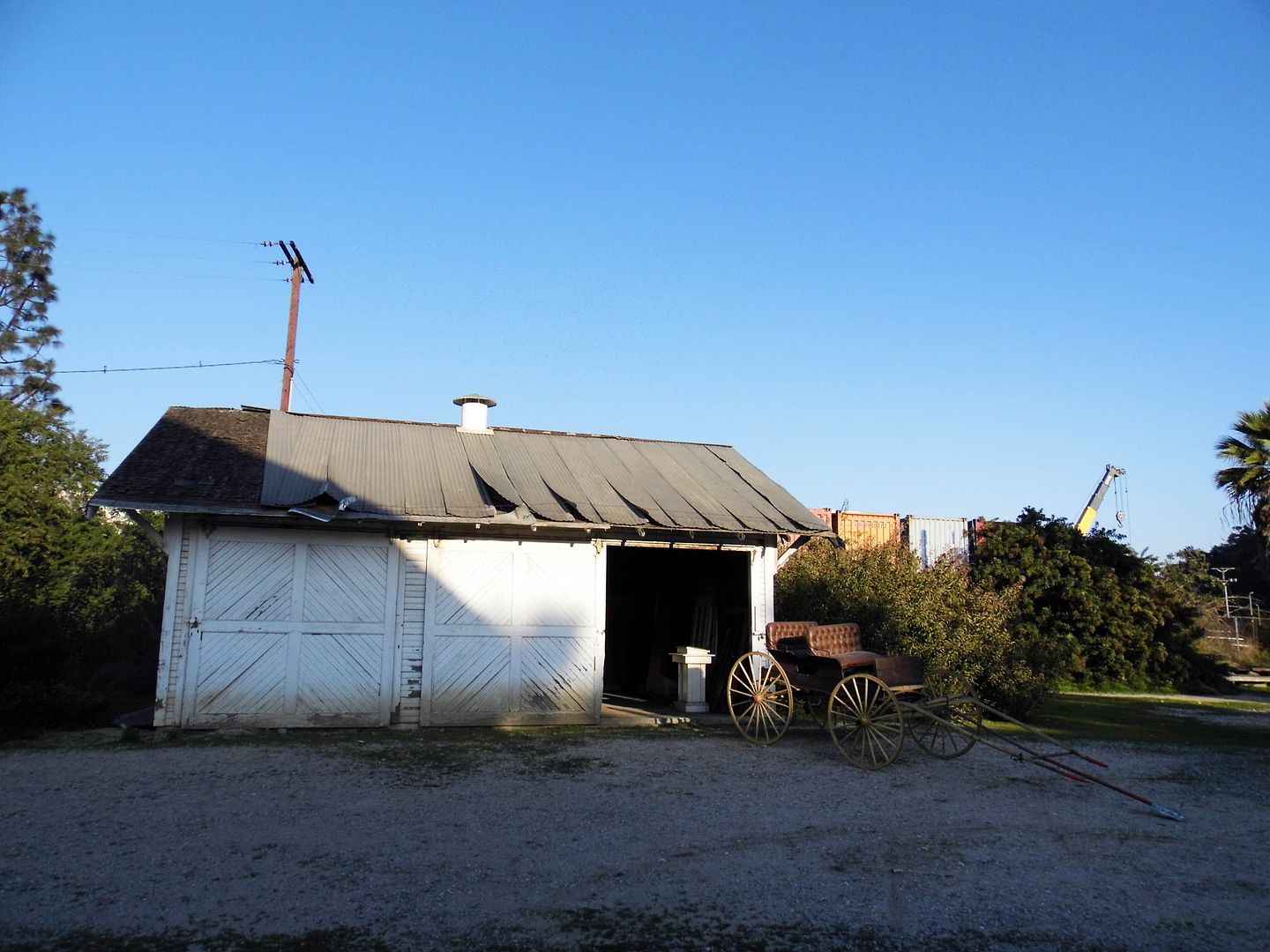
The Curriers' carriage house and barn also made the move to Pomona—and are now part of the outbuildings found behind Philips Mansion.


City of Industry first offered the historic structures to CalPoly Pomona—but got a lukewarm response. I guess they thought the campus didn't need yet another historic home.


So now most traces of Currier Ranch have been erased from City of Industry...


added 4/19/20 9:50 PM PT

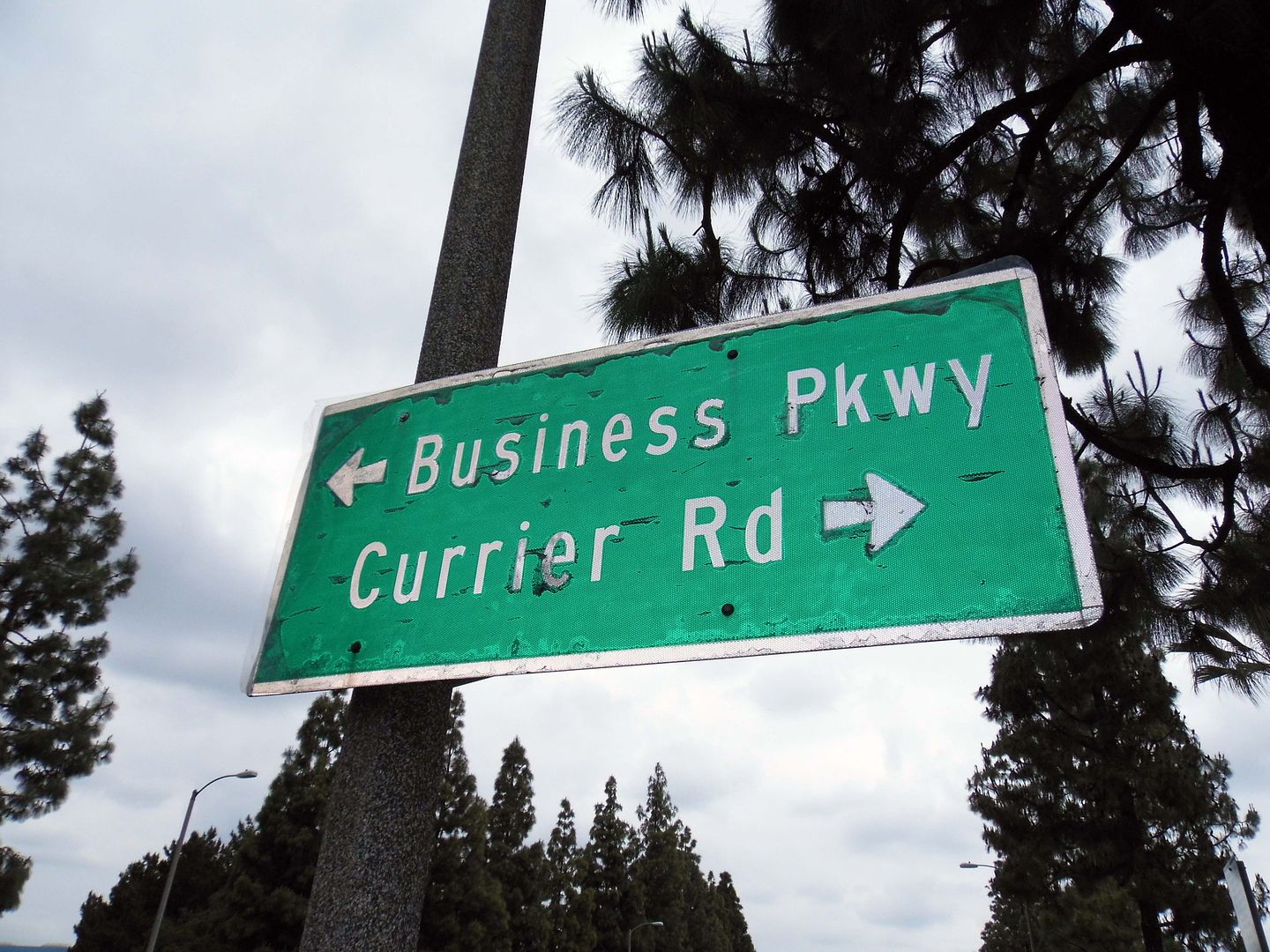
...except 0.3 mile that remains of Old Ranch Road (now by a huge FedEx facility) and about a half a mile of Currier Road, which turns into "Business Parkway" across South Lemon Avenue.

But it really only stayed intact until the death of A.T. in 1921 and his wife, "Aunt" Sue, in 1928. Having married in the 40s, the couple had no children to leave the ranch to. It subsequently got subdivided.

Parcels were sold off piece by piece (including 800 acres that became Diamond Bar Ranch).

Thank goodness the Philips Mansion had a big enough backyard to accommodate the most significant historical resources that are left of this pioneer's life.

[Ed. 4/23/20 1:31 PM PT—The Historical Society of the Pomona Valley tells me that there are some Currier family-related artifacts at the Pomona Ebell Museum of History, which I've yet to visit, and reminds me that Mr. and Mrs. Currier were buried at Spadra Cemetery.]

Related Posts:
The Forbidden Haunted Mansion of Spadra Ghost Town
Photo Essay: Where the Dead Rest in a Dead Village
This House Has a New Home

April 17, 2020

Photo Essay: A Trove of Sculptural Treasures at UCLA

Three weekends ago, I was still looking for every and any excuse to get out and do something. I found the pandemic restrictions almost liberating—freeing me from my "regular schedule" and allowing me to cross some places off my list.

The only challenge was finding someplace on my list that was actually open and unlocked—and where I was not only allowed to be, but also safe to be.

I didn't have to go far to finally make it to the sculpture garden on the UCLA campus.
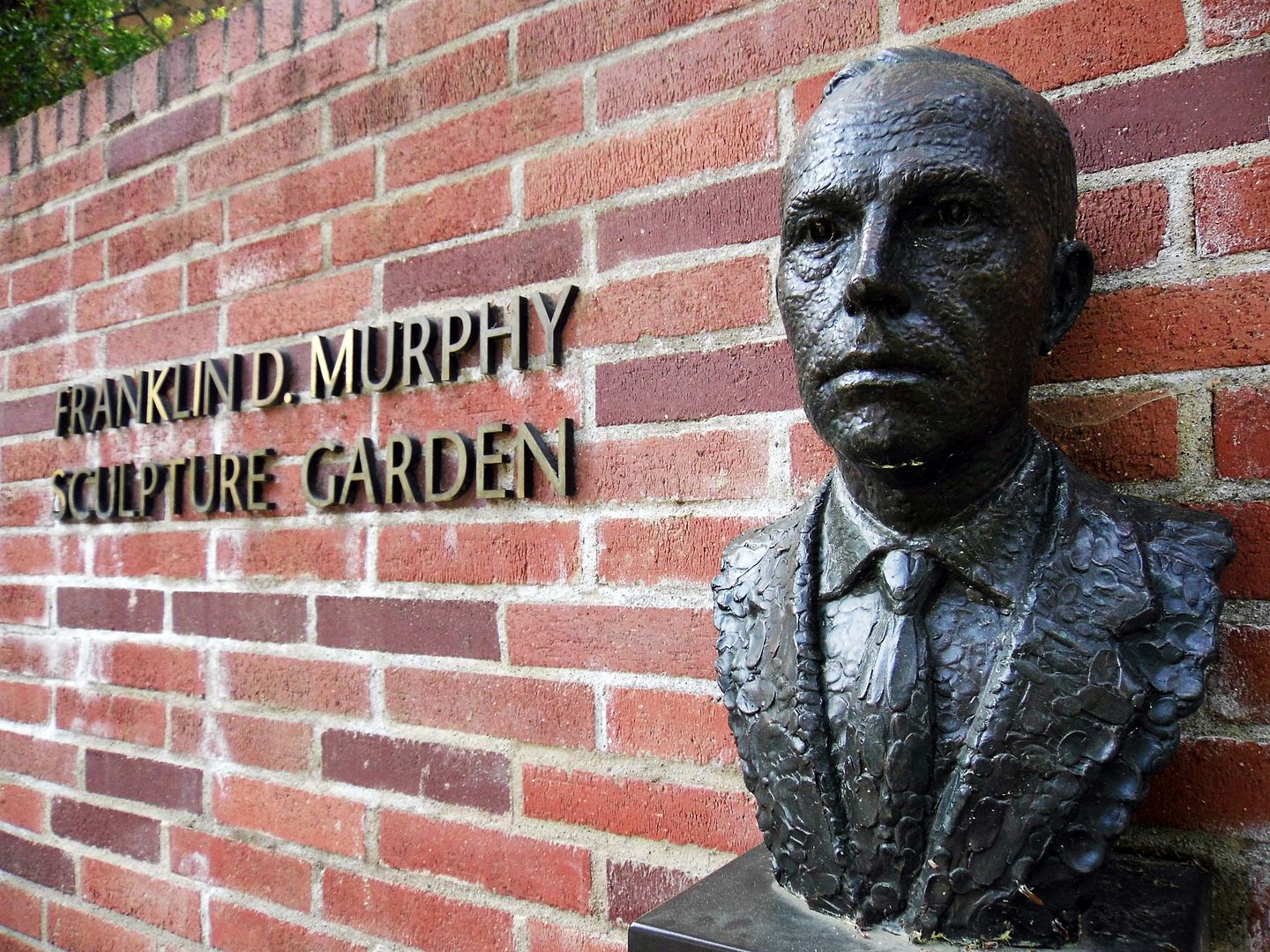


Technically part of the Hammer Museum, also in the Los Angeles neighborhood of Westwood, the Franklin D. Sculpture Garden was dedicated in 1967 and named after the university's third chancellor.
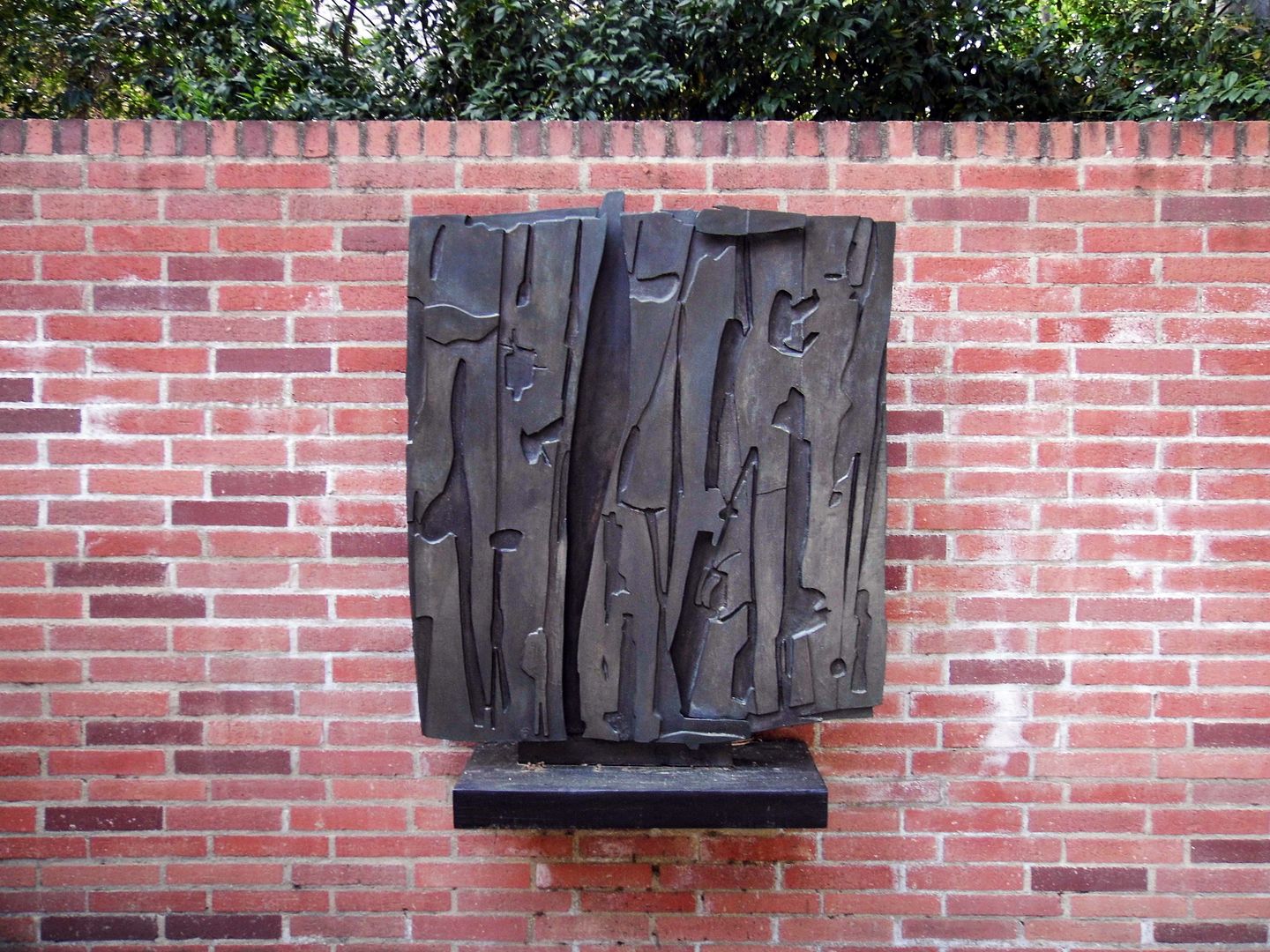


Located on UCLA's north campus, it's a 5-acre sprawl of both figurative and abstract works by sculptors from all over the world—like Italian Pietro Consagra, whose Colloquio Duro ("Difficult Dialogue") bronze relief from 1959 adorns the same wall as the bust of Chancellor Murphy himself (by Eldon C. Tefft, circa 1960).
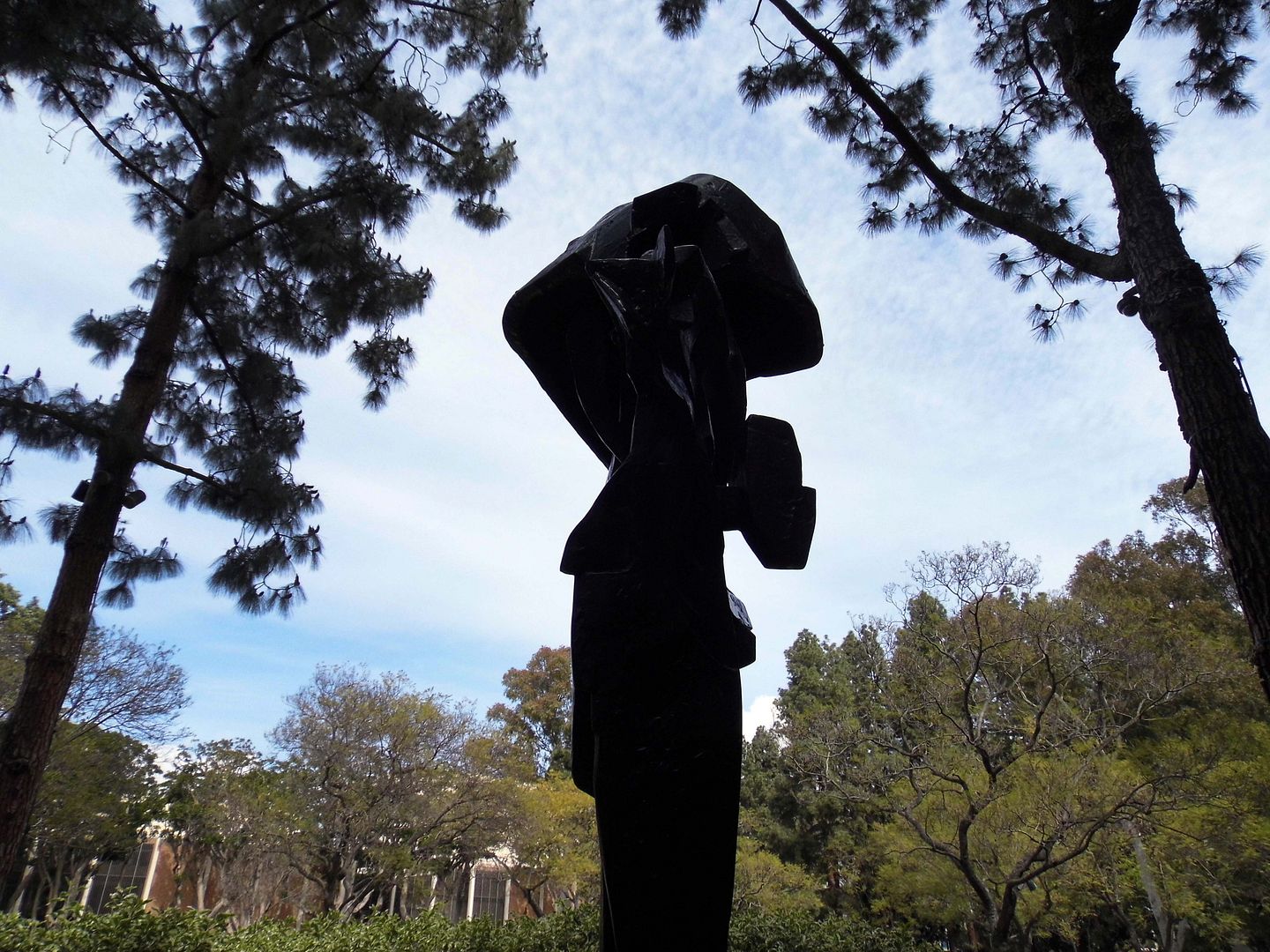


It's hard to believe that American sculptor Dimitri Hadzi's Elmo III, circa1960, now stands where there once was a parking lot.
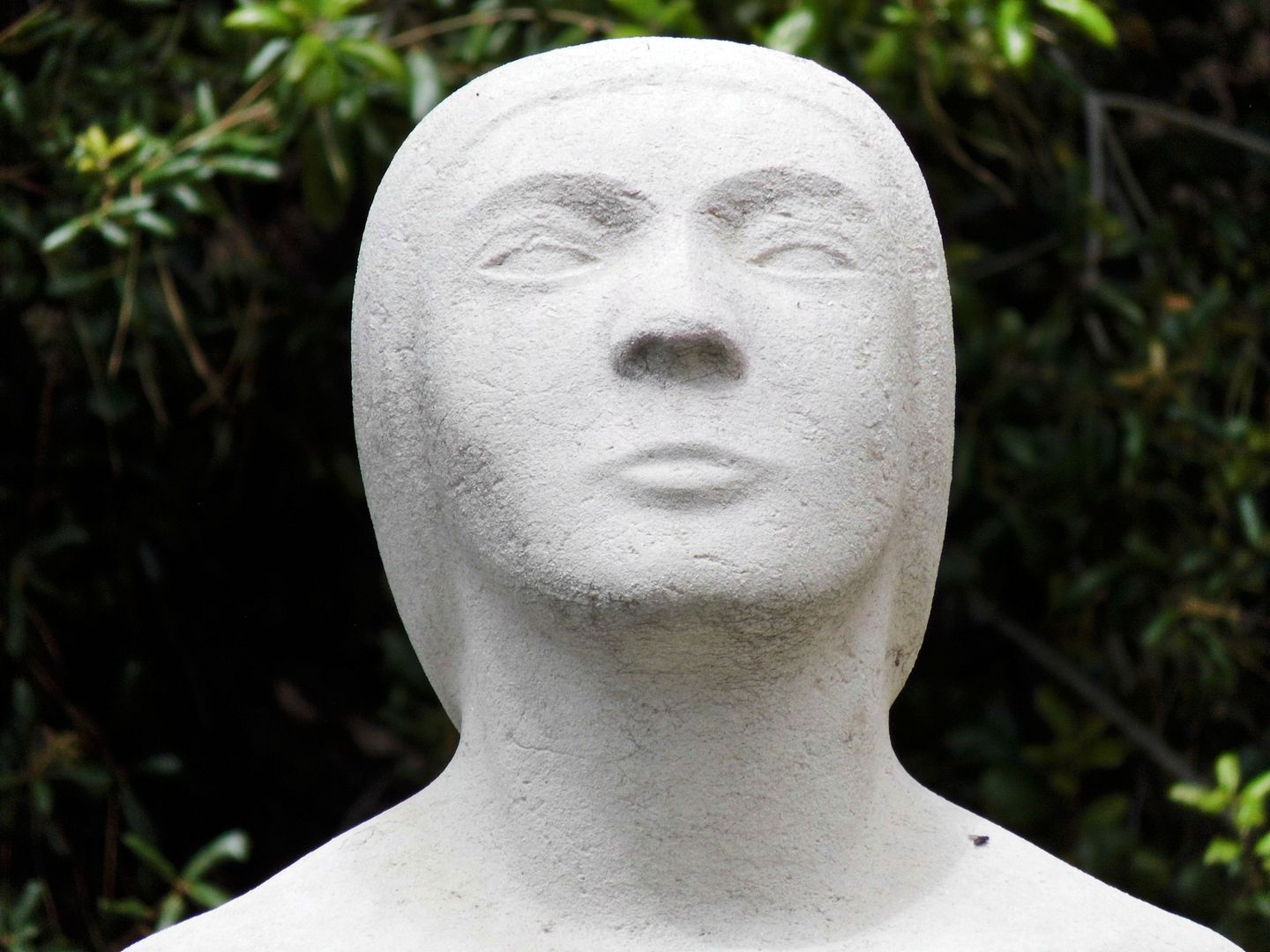


Supervisory landscape architect at the time Ralph Dalton Cornell (of the firm Cornell, Bridgers, and Troller) had to design the garden without knowing what was going to be placed there or where. And yet every placement—like British sculptor Eric Gill's Mulier ("Mother," undated but probably prior to 1911) at the head of a fountain in front of UCLA’s Young Research Library—feels just perfect.
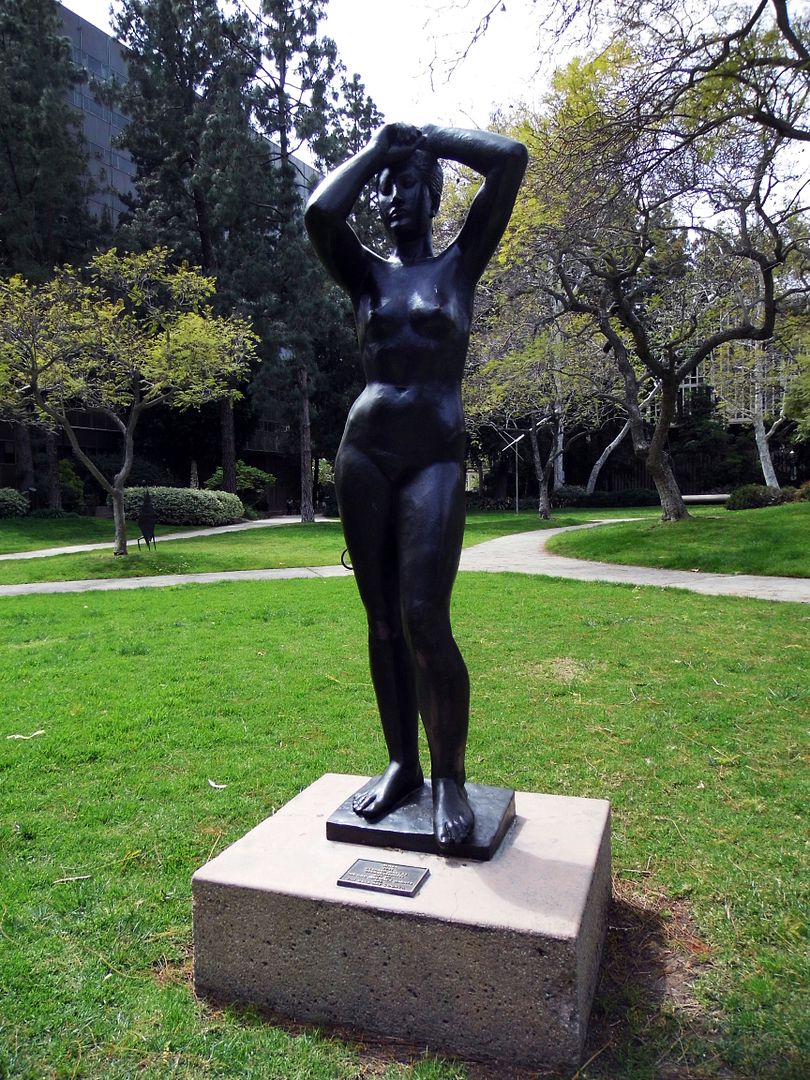


Some of the standouts among the more than 70 sculptures in the garden—for me, anyway—include the bronze Maja by German sculptor Gerhard Marcks (circa 1941)...
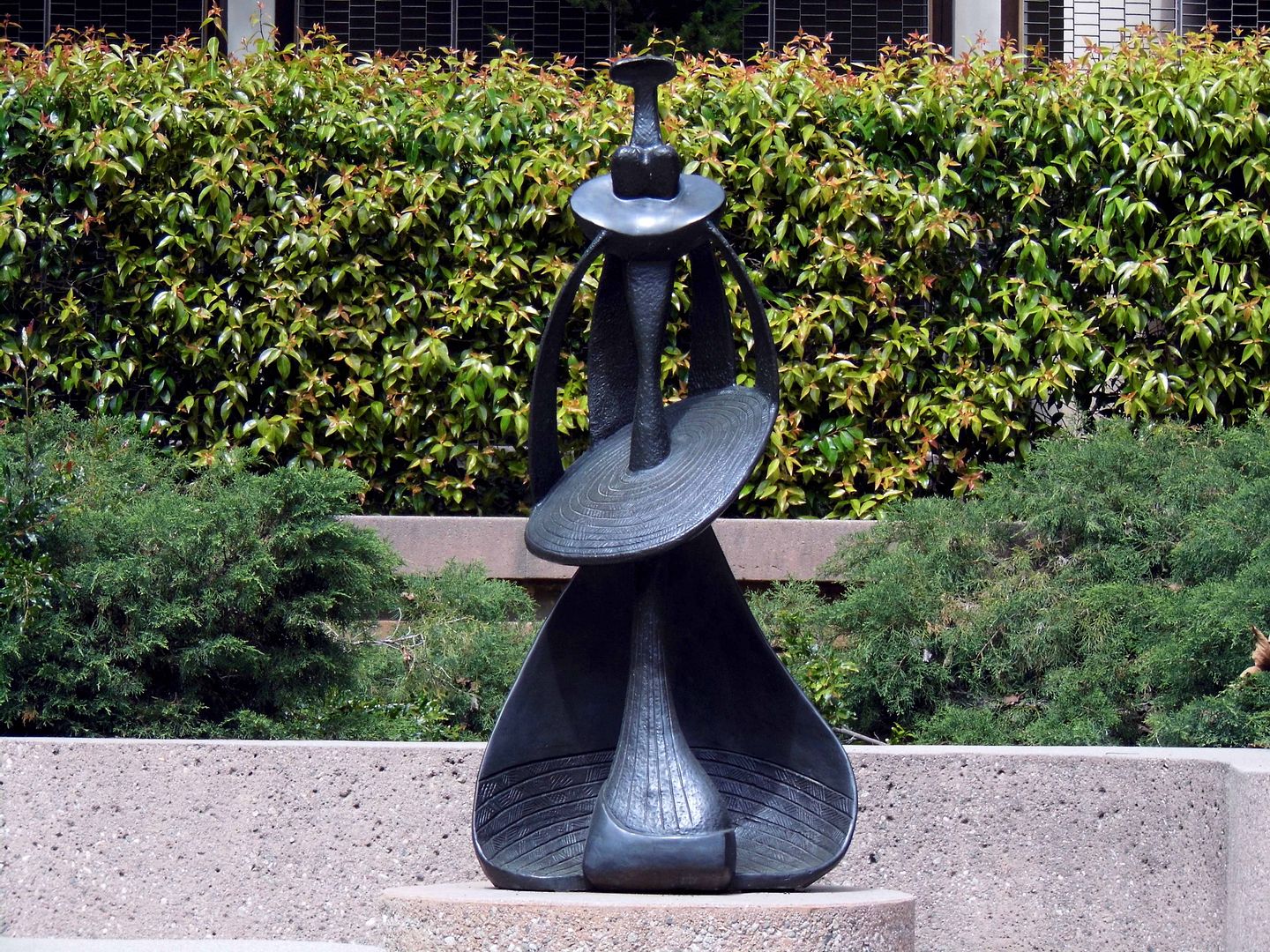


...the bronze Queen of Sheba by Alexander Archipenko, a Ukrainian-born American (circa 1961, and one of an edition of eight)...
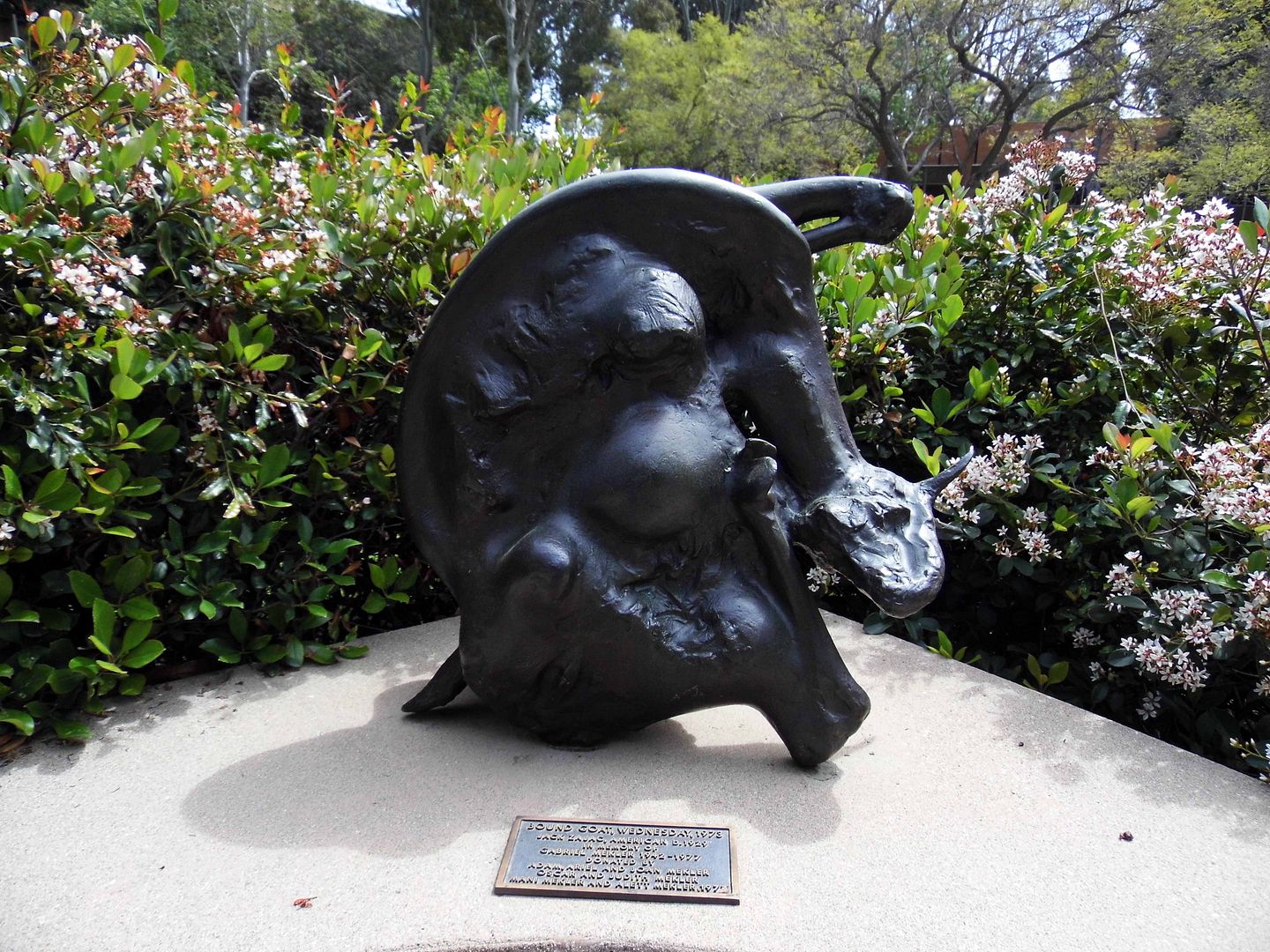


...and Californian surrealist Jack Zajac's Bound goat, Wednesday (circa 1973).
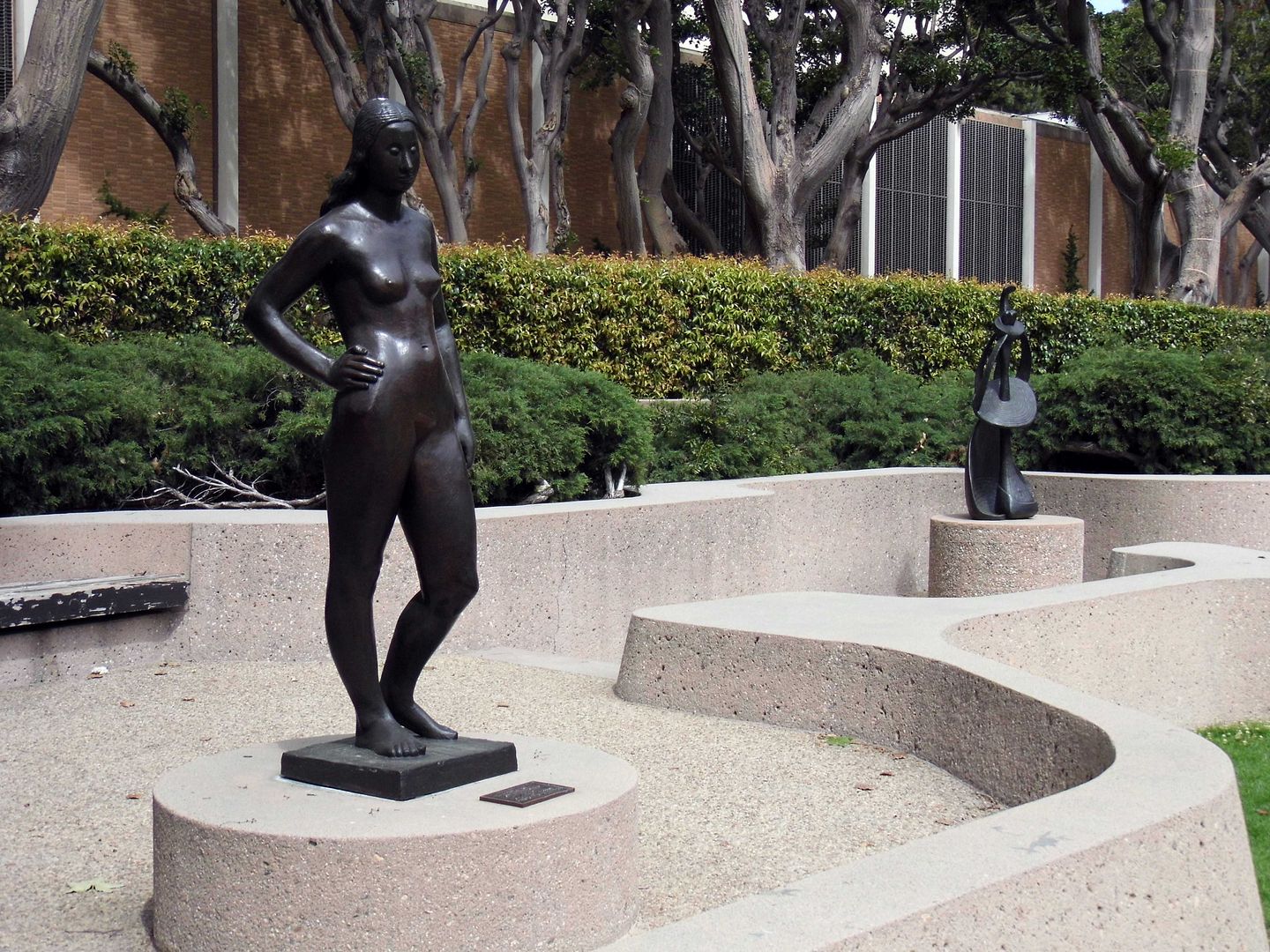

Gerhard Marcks Freya, 1949

The setting is thoroughly Modernist...
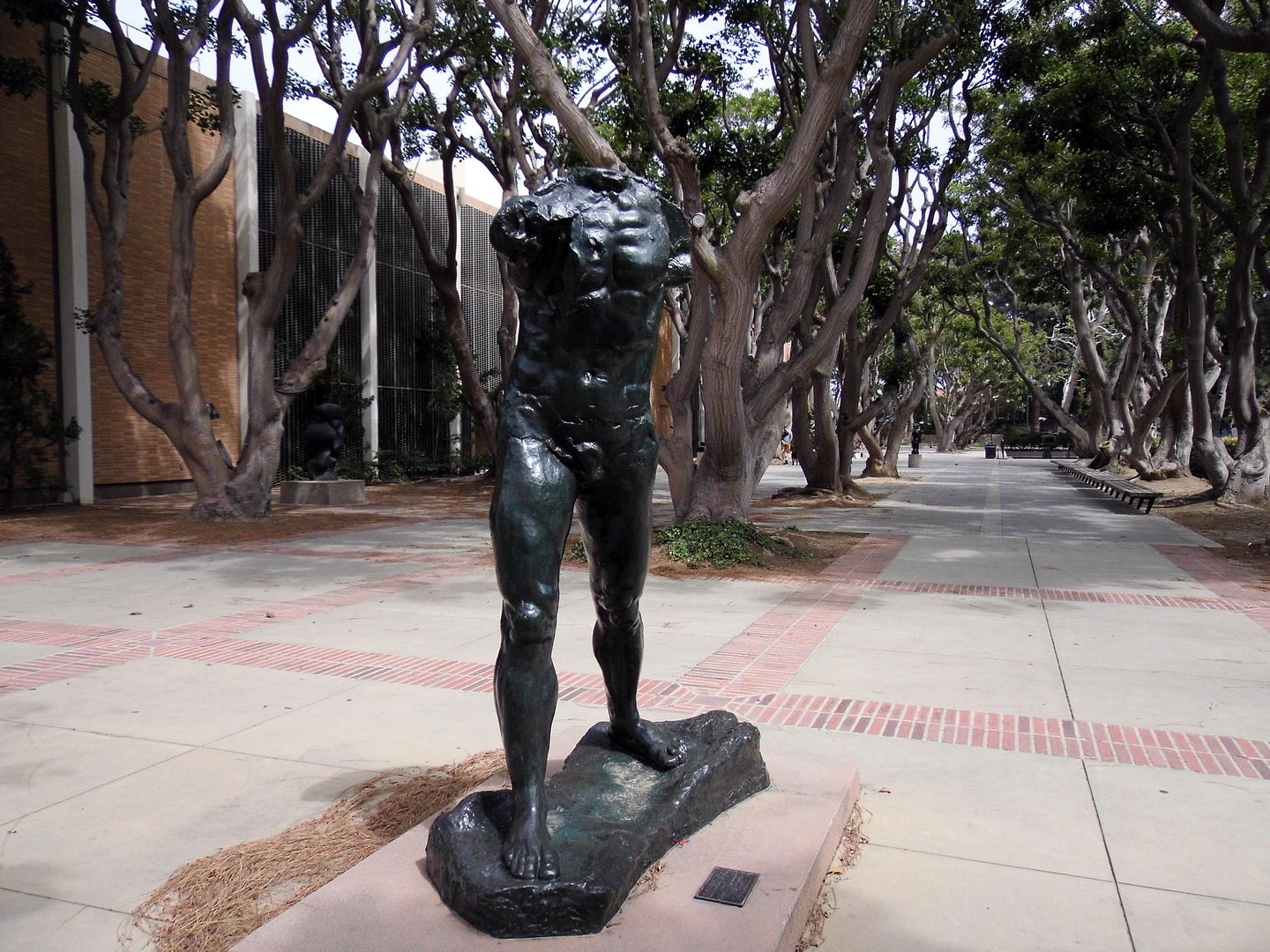


...though not all the pieces in the collection exactly match the setting, like The Walking Man.
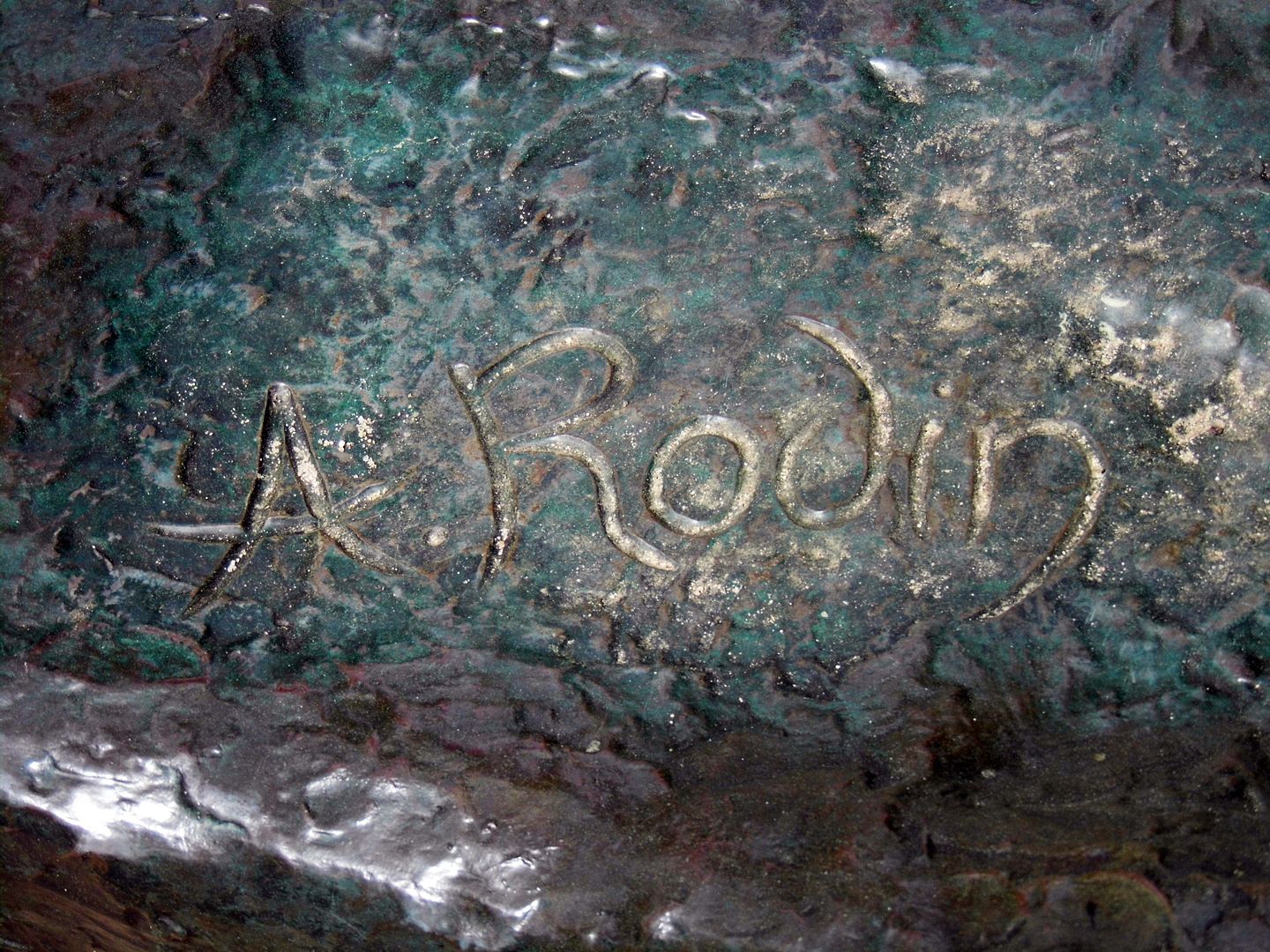


Located at the end of an allĆ©e of South African coral trees, Auguste Rodin's L'homme qui marche was first started by the French sculptor in the late 1870s.
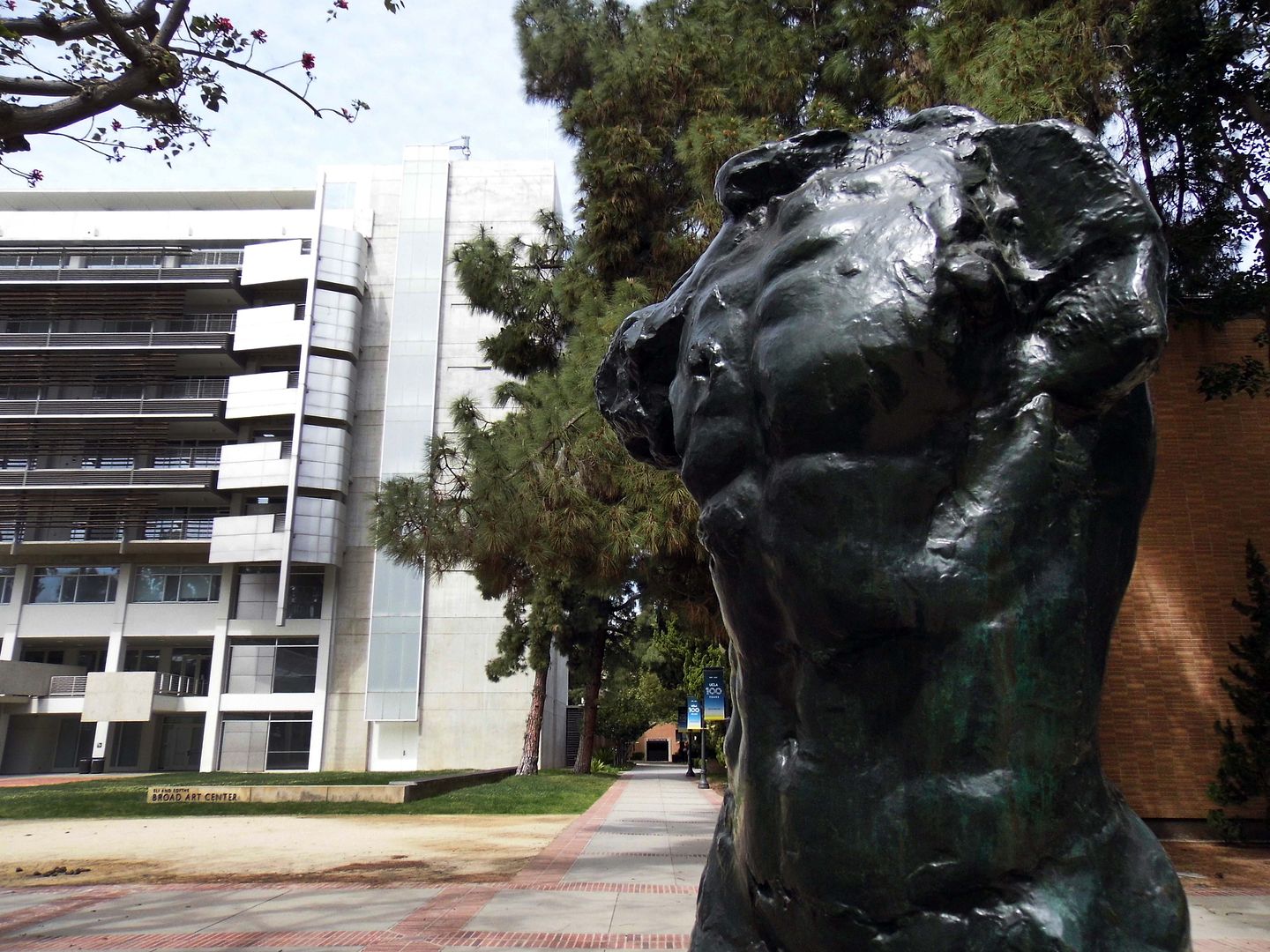


A headless depiction of St. John the Baptist also without arms, it's considered an "unfinished" work of Rodin. This bronze cast—one of an edition of 12, #7 located at the Norton Simon Museum in Pasadena—is dated 1905.
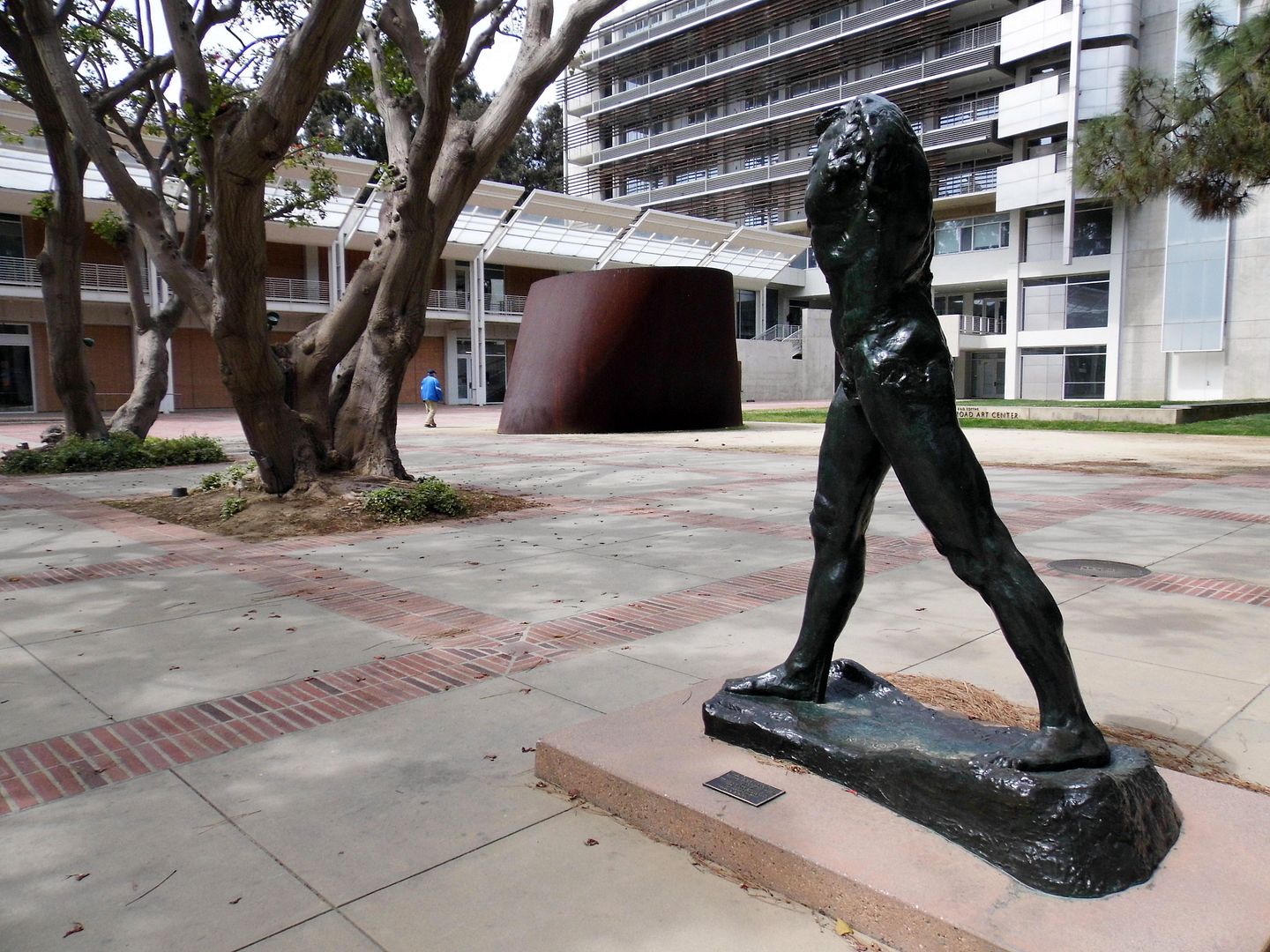


It seems to lead the way towards the campus's Broad Art Center...
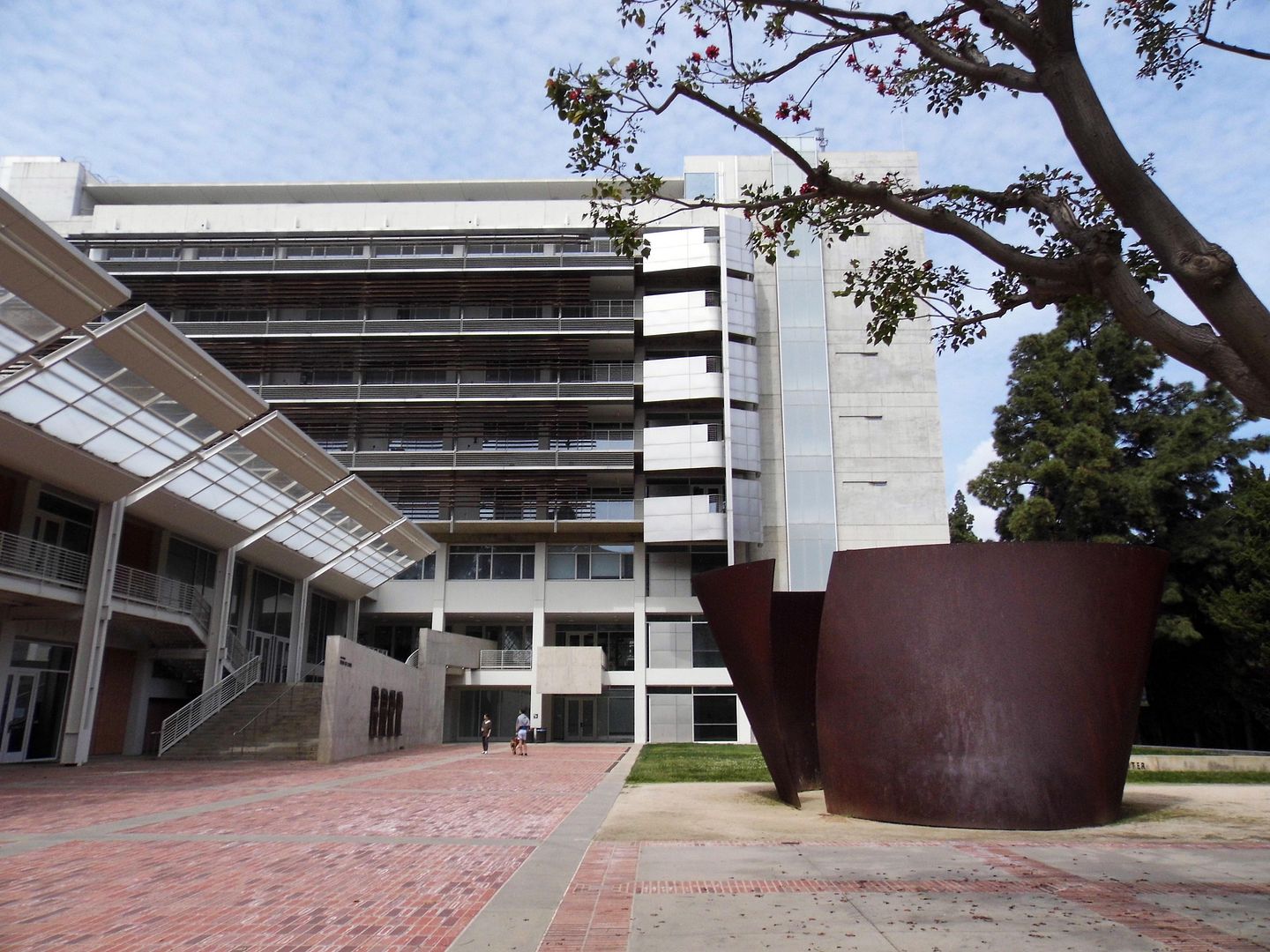


...whose front plaza is anchored by the site-specific installation of T.E.U.C.L.A. (circa 2006) by American artist Richard Serra.
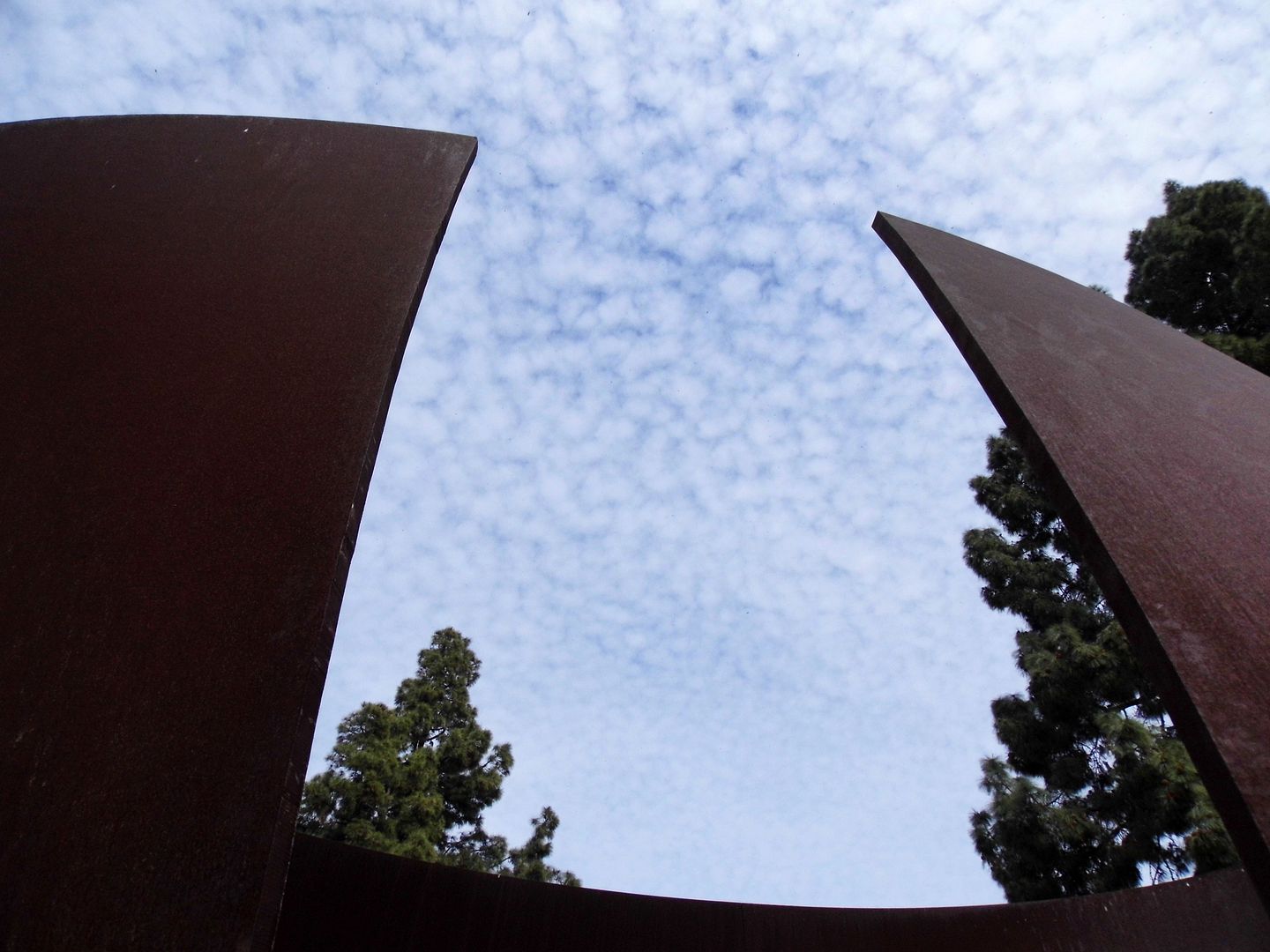


The 42.5-ton piece is part of Serra's Torqued Ellipse series, which he started in 1996—and his first to be on permanent public view in Southern California.
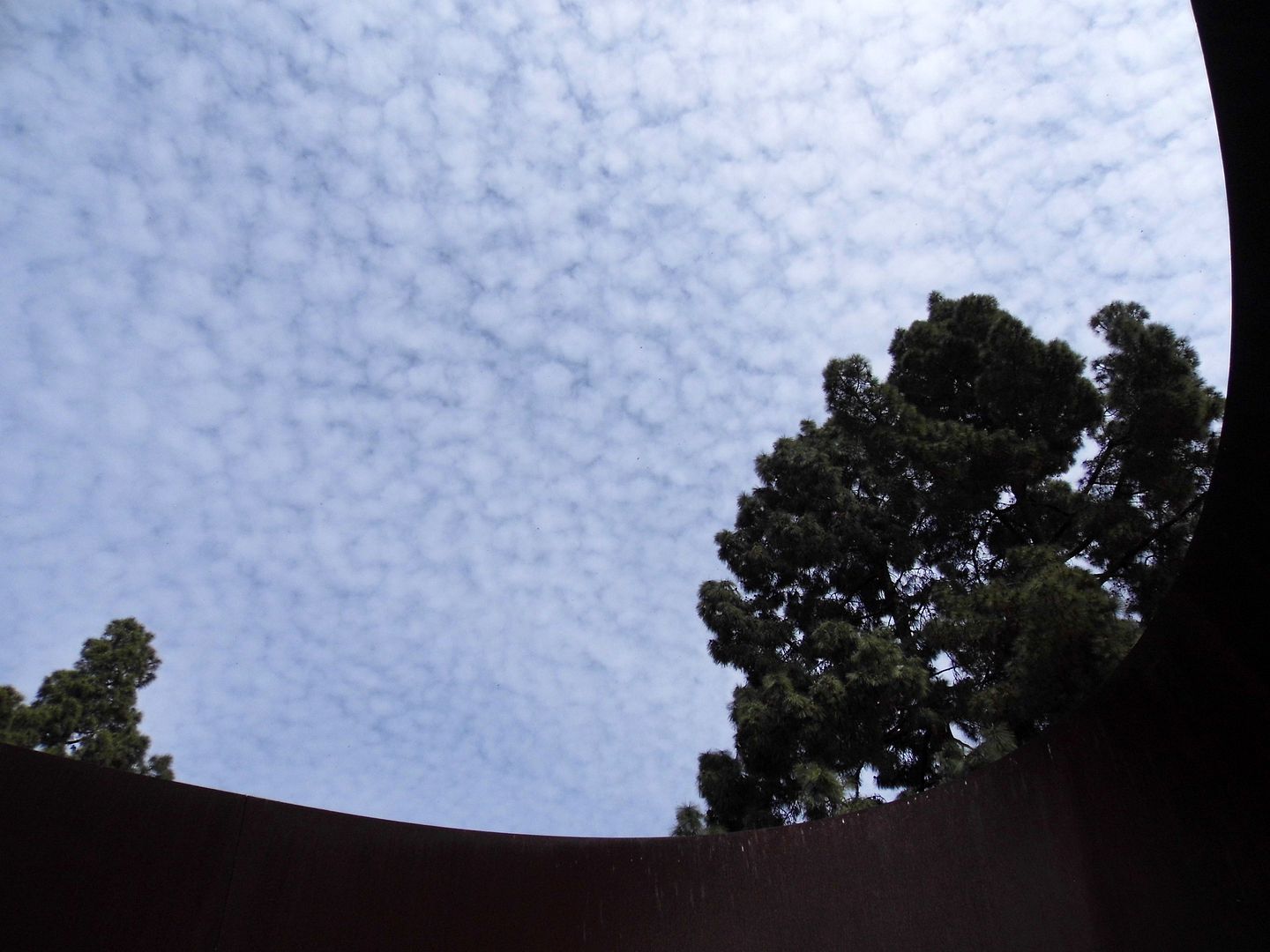


It predates the 360-ton steel Connector installation at Segerstrom Hall in Costa Mesa, Orange County by mere months.
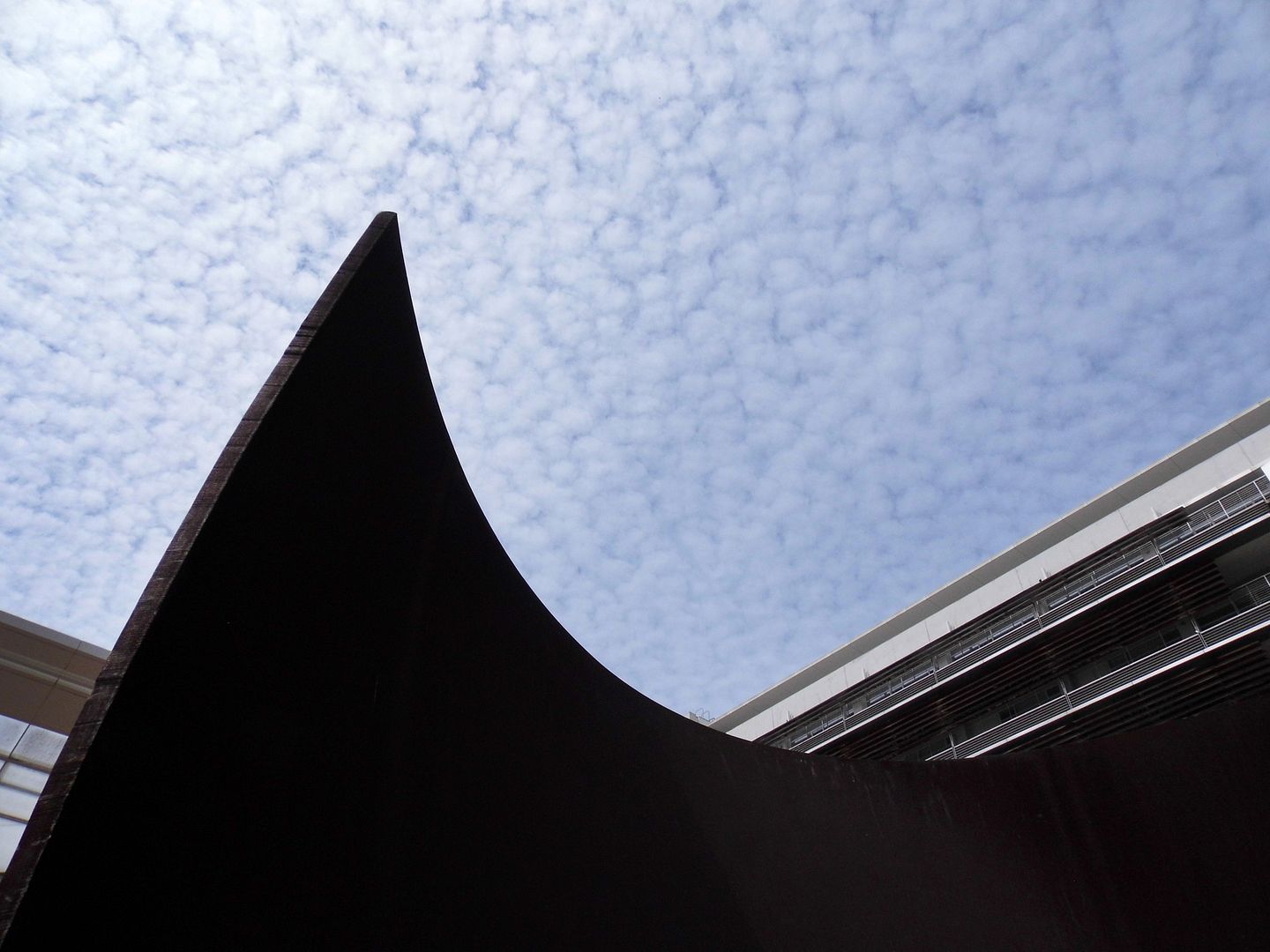


And like the rest of the pieces in the series, Serra created this installation by twisting huge COR-TEN (or "weathering") steel plates into circular or elliptical sculptures that you can walk into and gaze up at the wide-open sky.
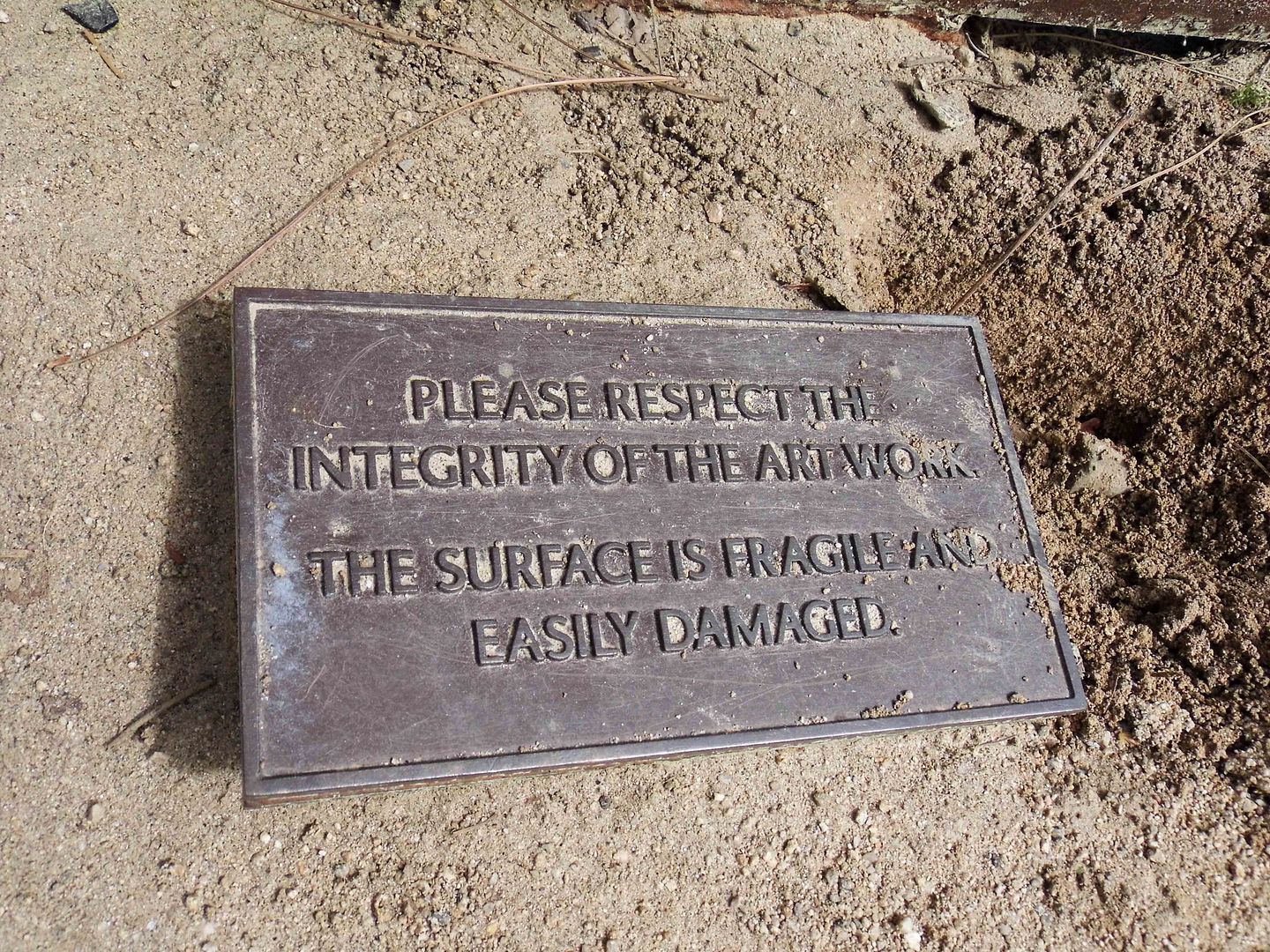


Its characteristic dark patina of rust—with nary an aberration in the color—could take as long as a decade to develop and fully oxidize. (So no touching, please!)


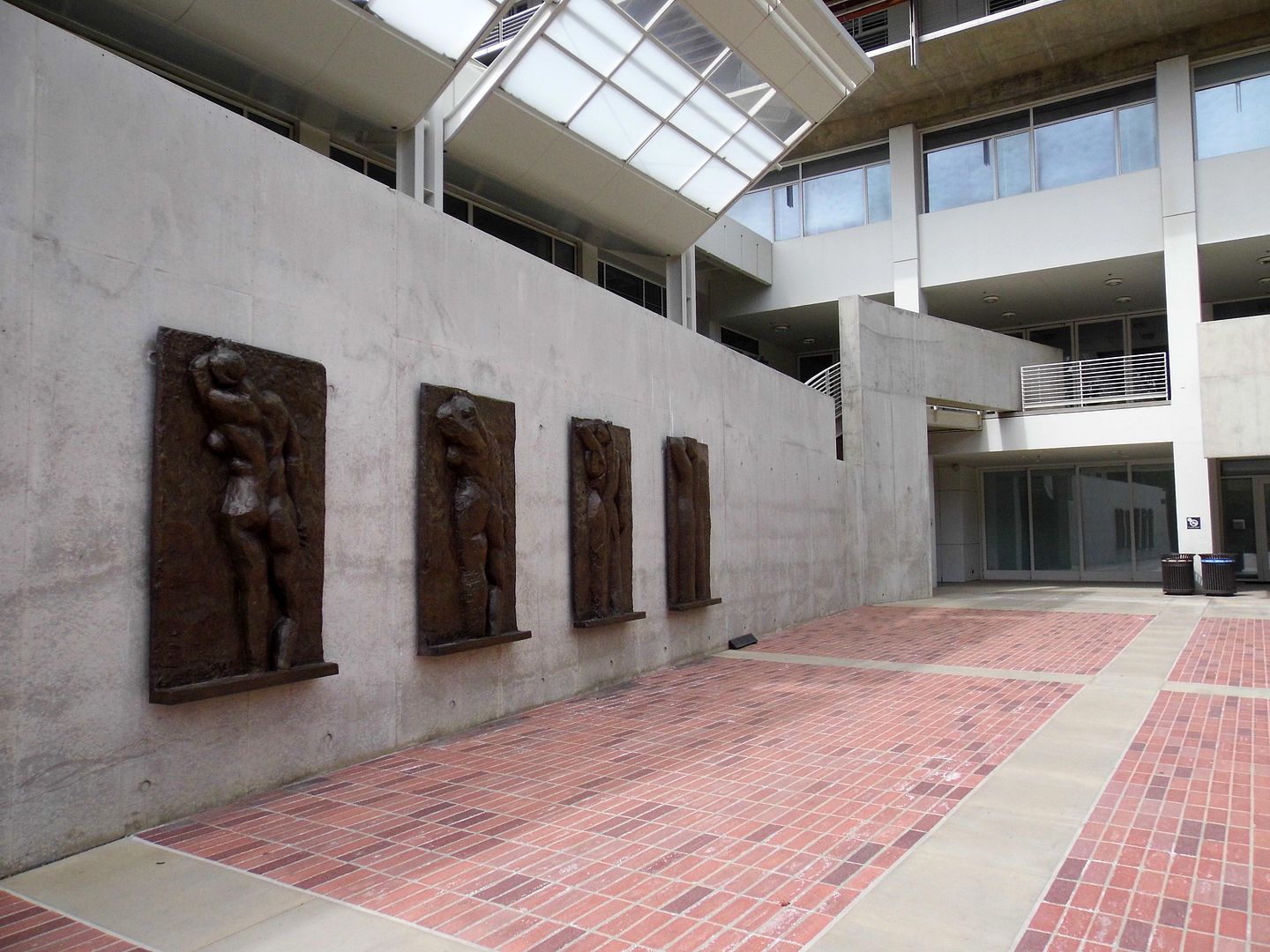
The Serra sculpture also serves as a kind of gateway to Henri Matisse's Bas Relief I-IV (The Back Series)—four bronzed plaster casts that were first modeled for and created, left to right, in 1909, 1913, 1916-7, and 1930.
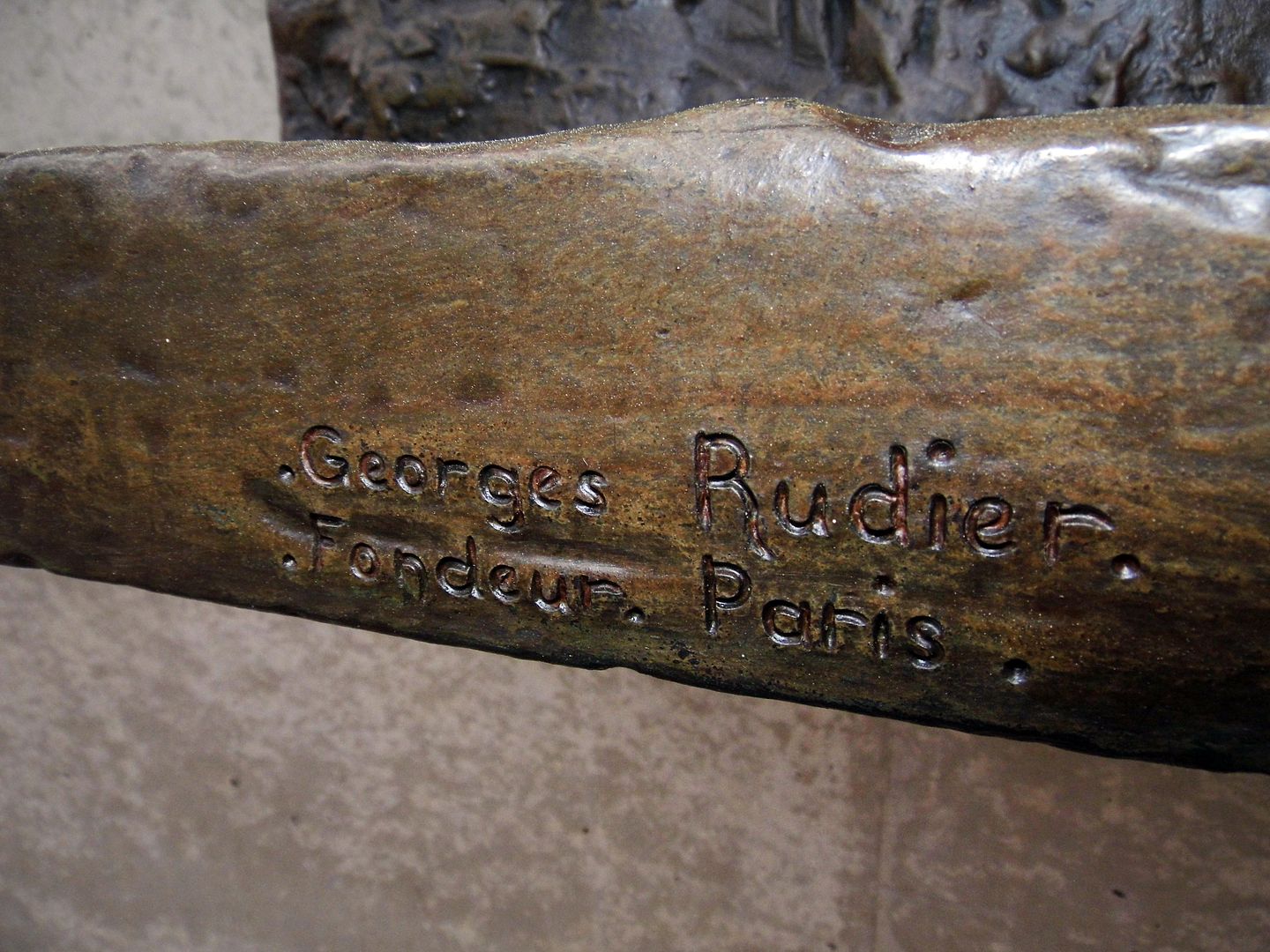


In 1950, three of them were cast in bronze. Five years later, the fourth one was discovered and also cast in bronze.
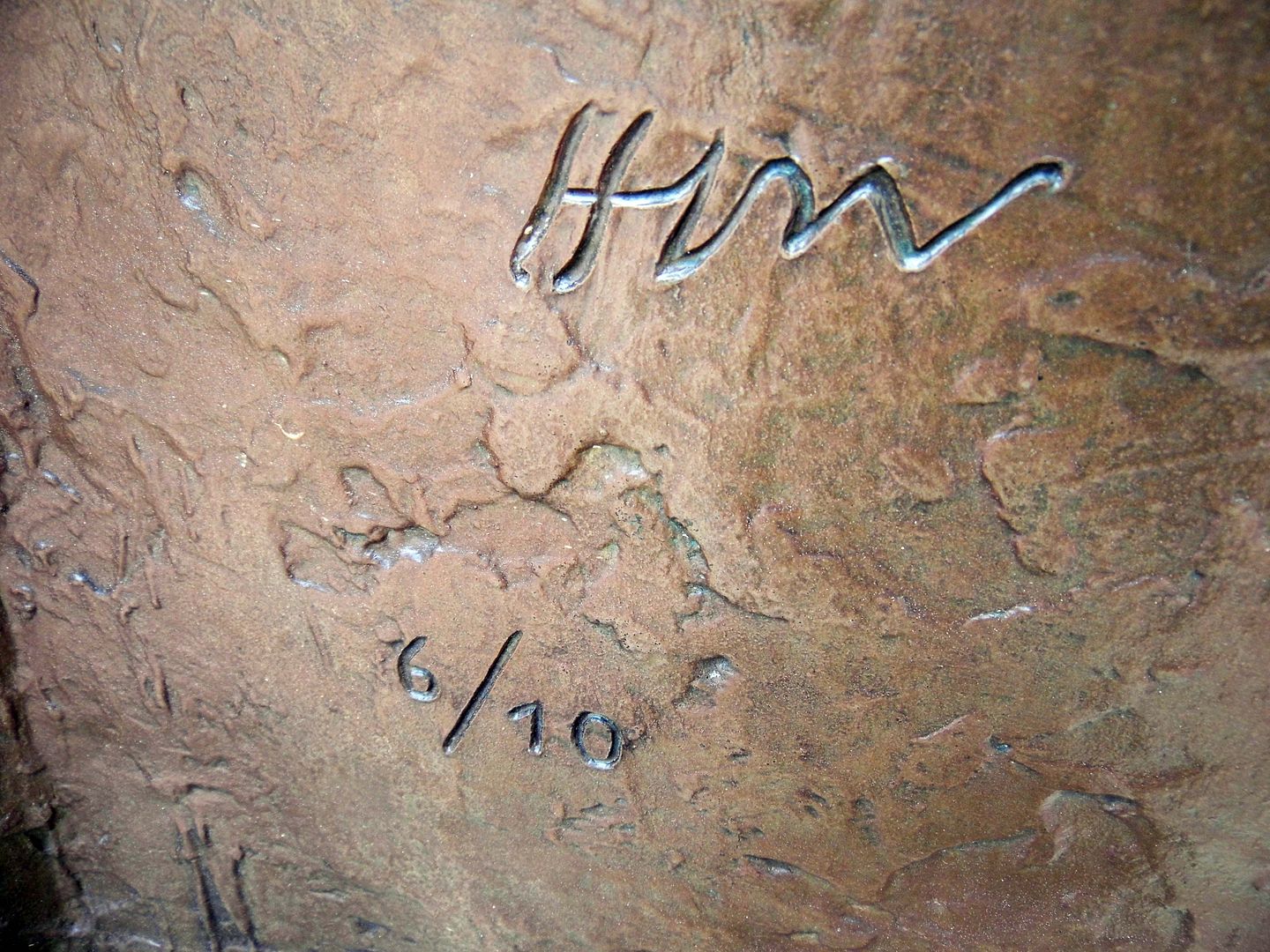


These monumental sculptures are also Matisse's largest—with other complete sets housed at MOMA in NYC, the Tate in London, and other major museums in Paris, Zürich, Stuttgart, Houston, Fort Worth, and Washington, DC.
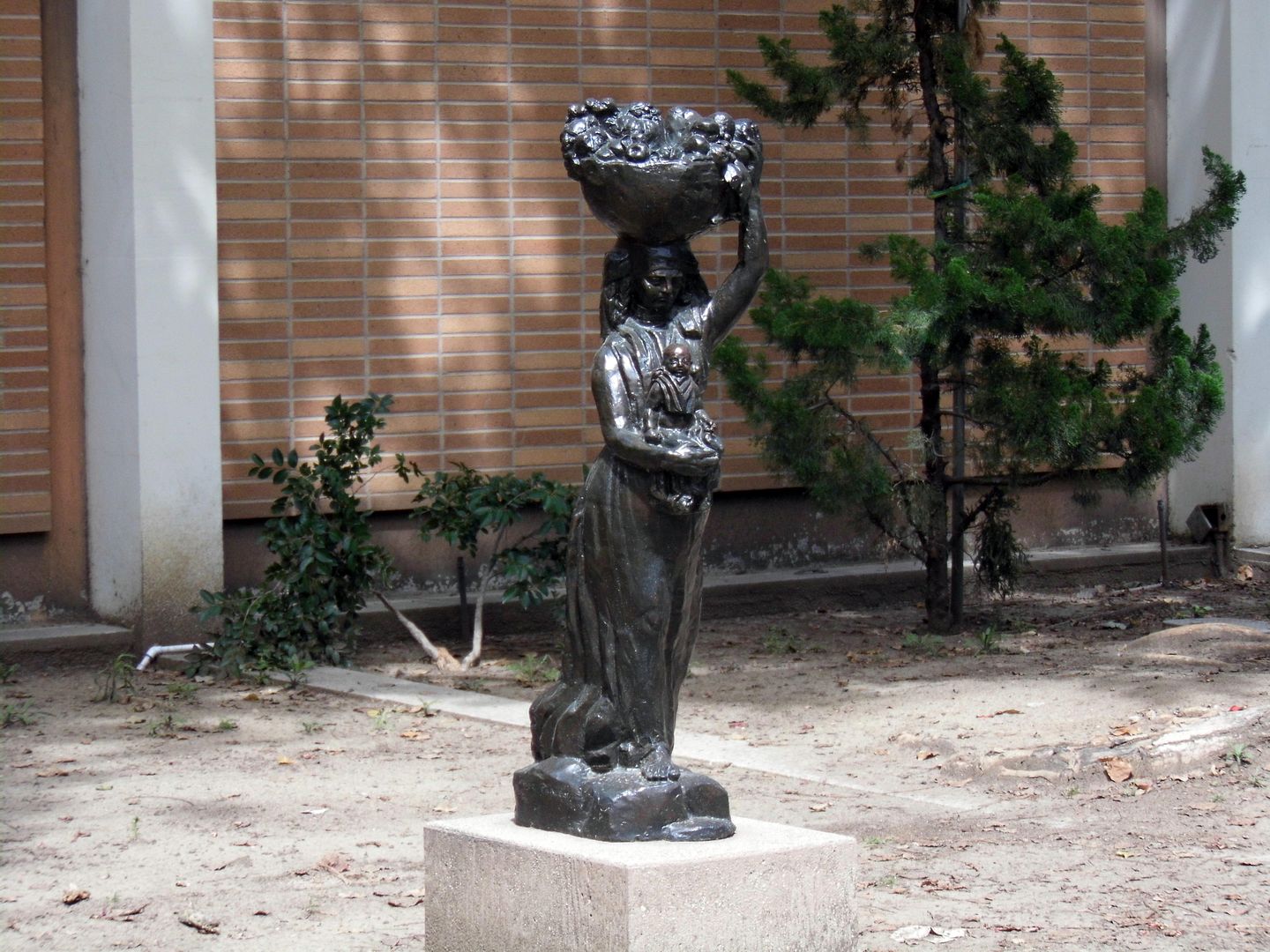


The collection seems particularly well-curated when you encounter works by certain artists that come full circle—like Noble Burdens (Les Nobles Fardeaux, circa 1911) by Antoine Bourdelle, a teacher of Matisse and student of Rodin.
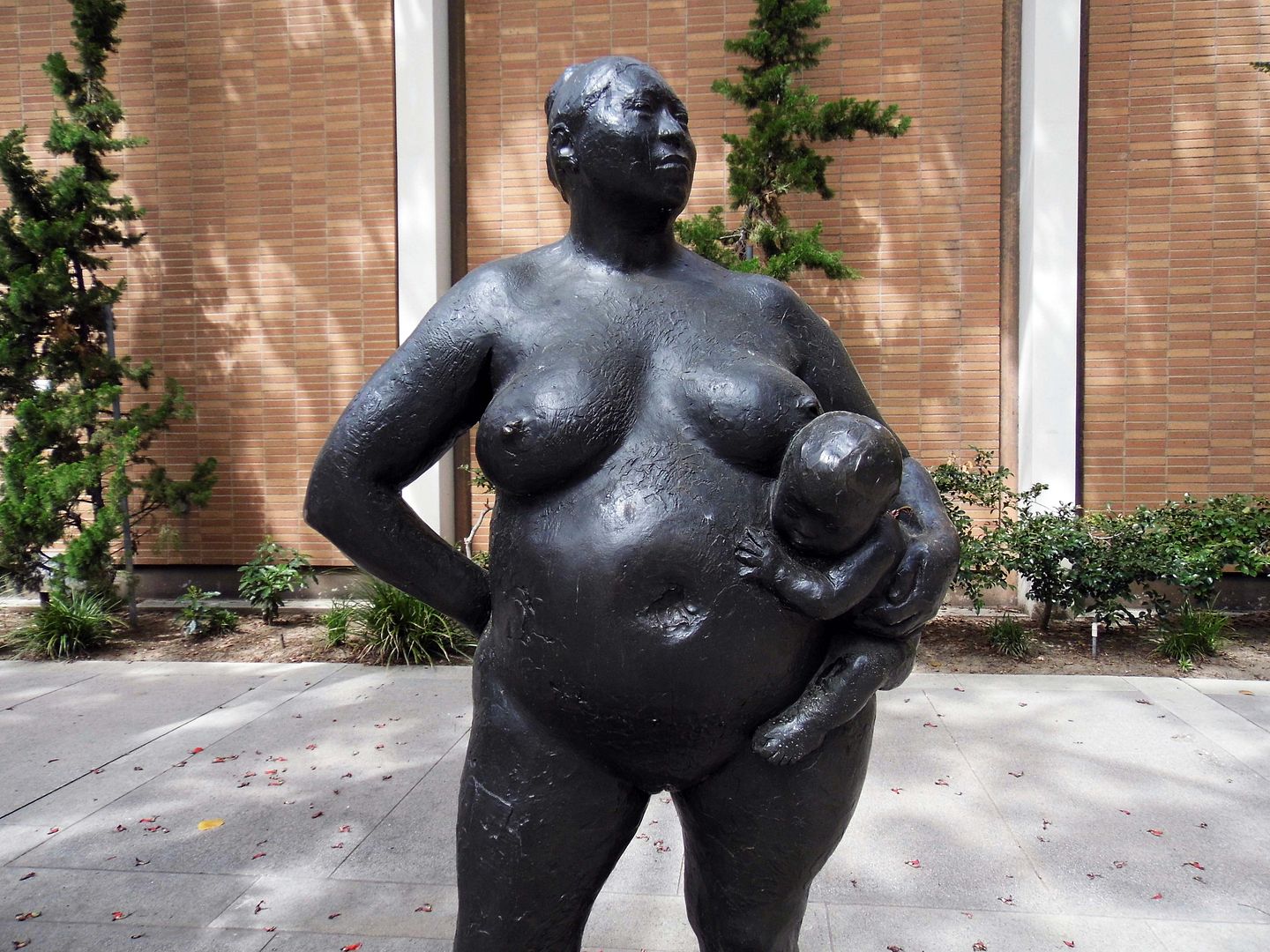


And yet the French masters intermingle with Latin American artists, like the Costa Rican-born Mexican sculptor Francisco Zúñiga, whose Mother With Child At Her Hip (Madre con niƱo en la cadera, circa 1979) exemplifies his artistic devotion to the female form.
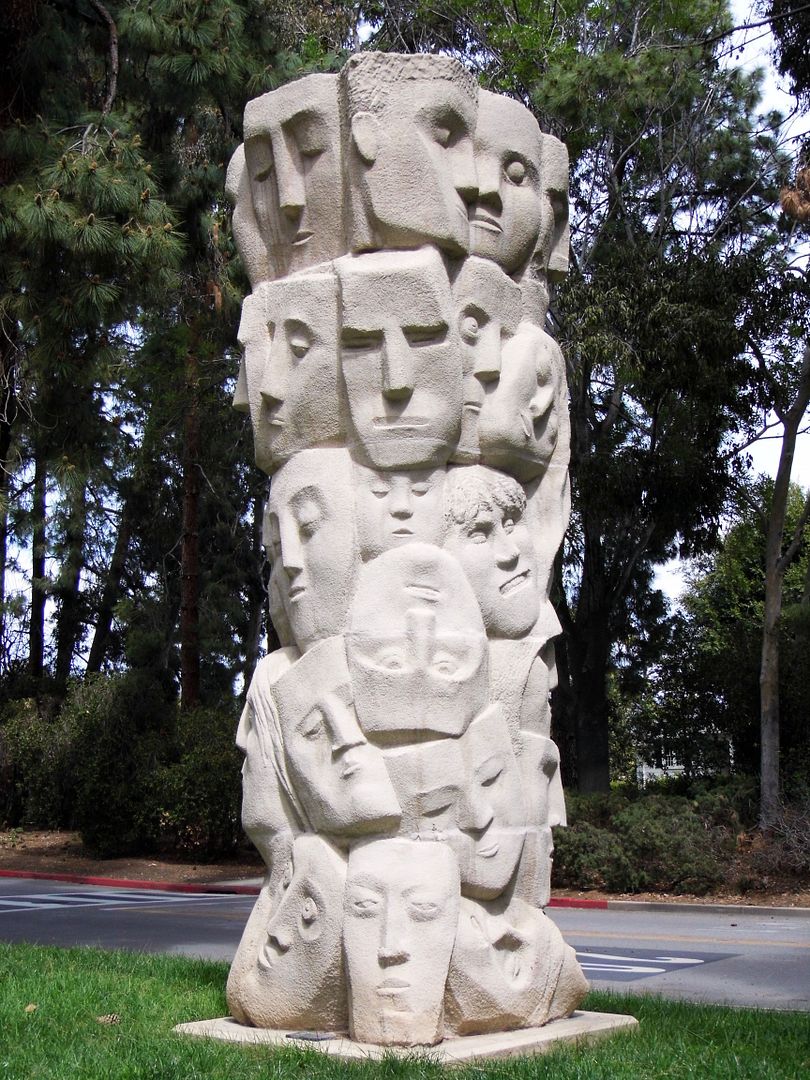


My favorite of all the works, though, was the first one I saw—well, caught a glimpse of as I was driving past a pedestrian entrance in search of a parking spot.
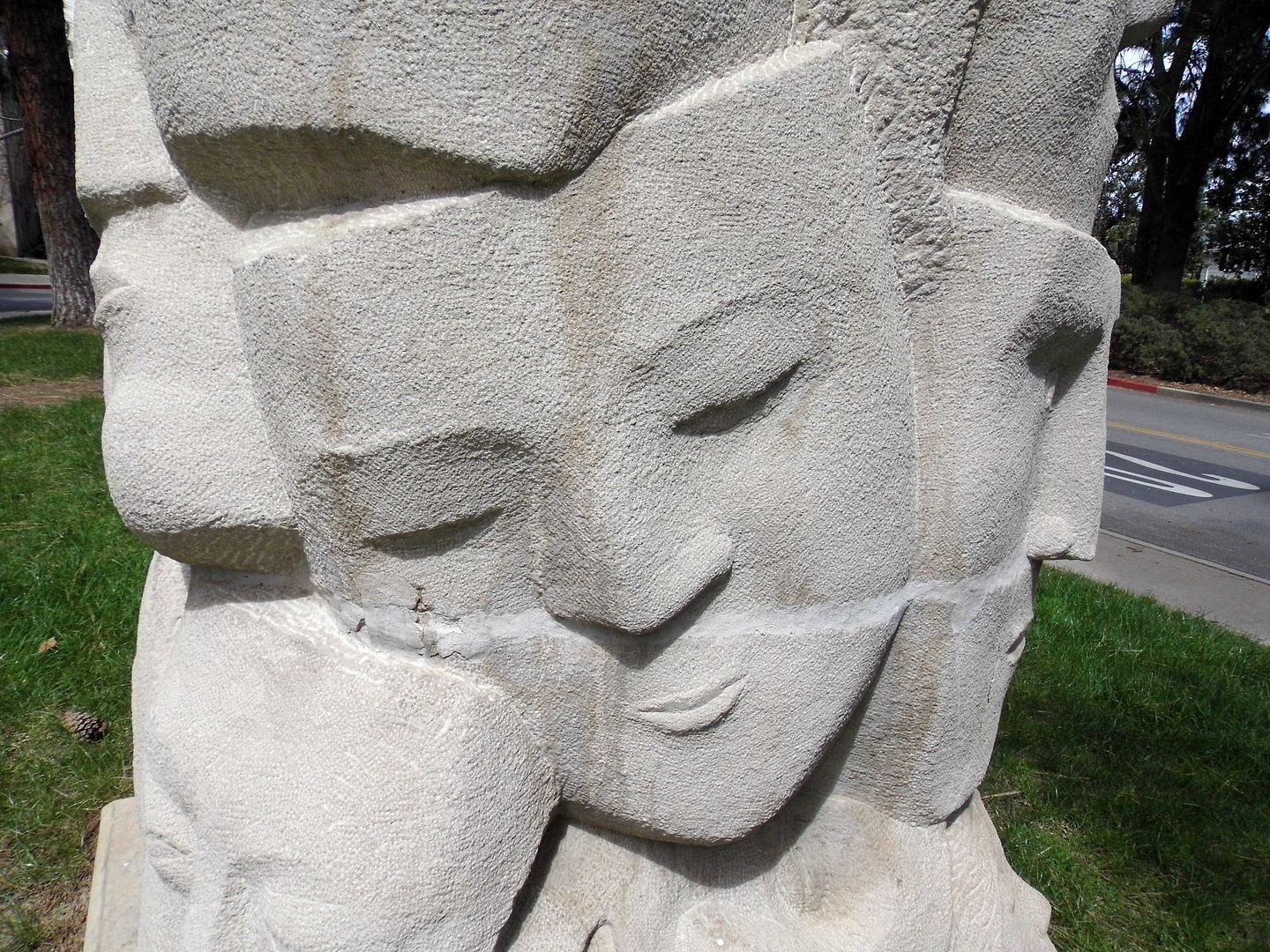


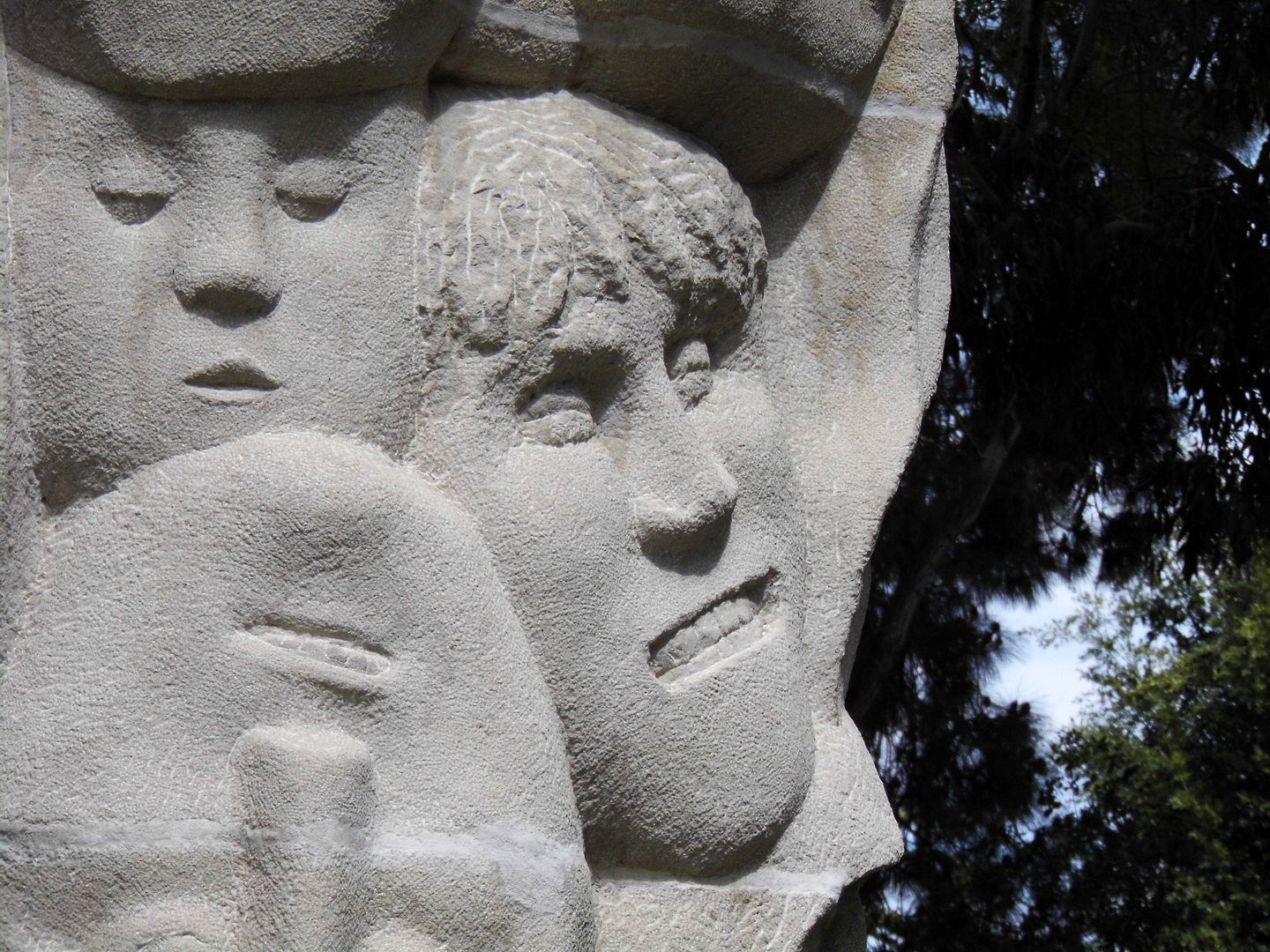
Vienna-born Anna Mahler—daughter of the Austrian composer Gustav Mahler—is the sculptor behind the stone carved Tower of Masks (circa 1961). She also taught art at UCLA in the 1950s, after relocating to Los Angeles from Europe.
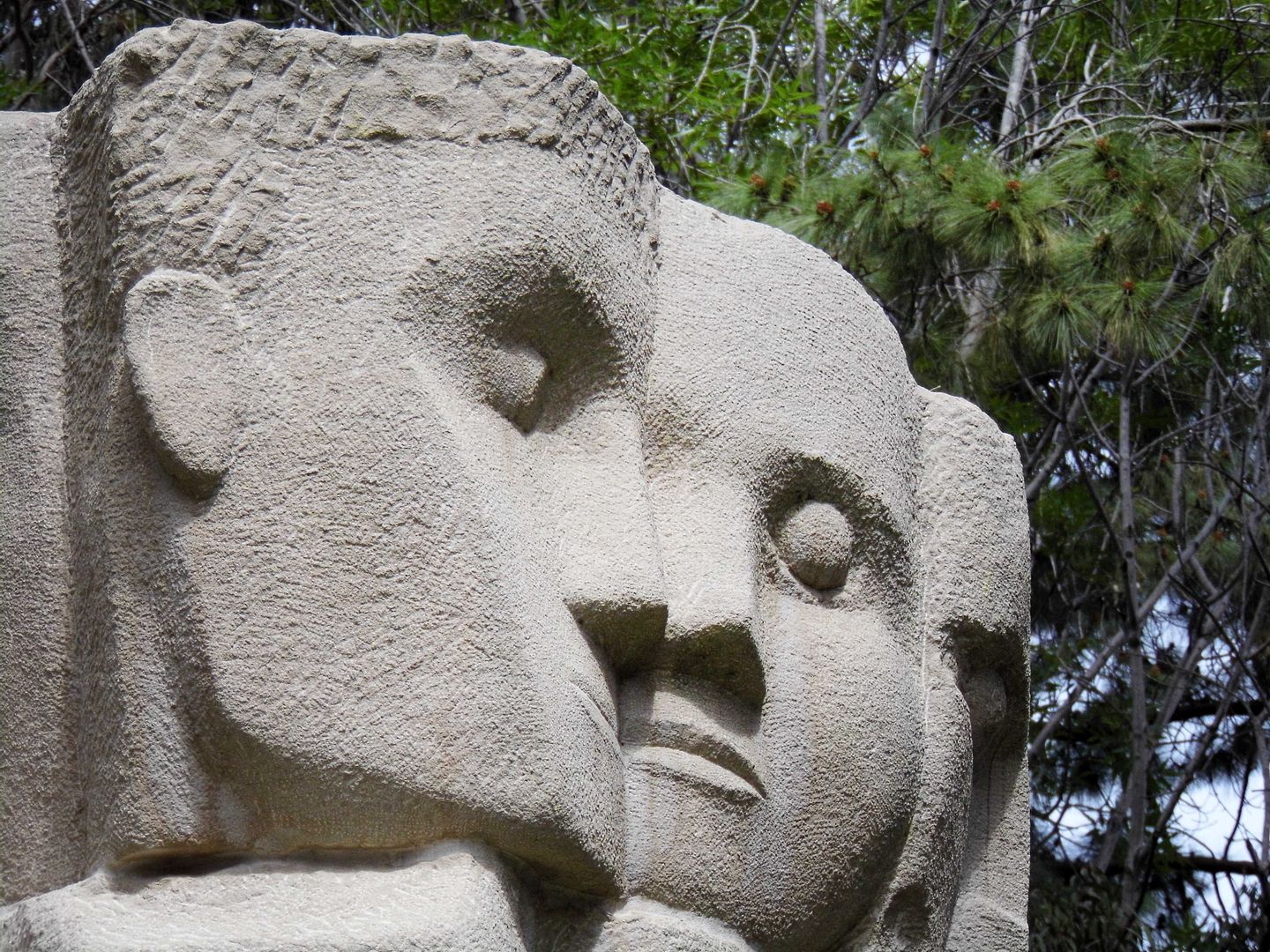


The 15-foot-high, 28-ton limestone totem was actually the first sculpture to be installed in the garden—in 1961, six years before its official dedication.


But its been relocated from the Theater Arts Court of Macgowan Hall, part of the UCLA School of Theater, Film and Television—a seemingly fitting setting for an assemblage of theater masks.
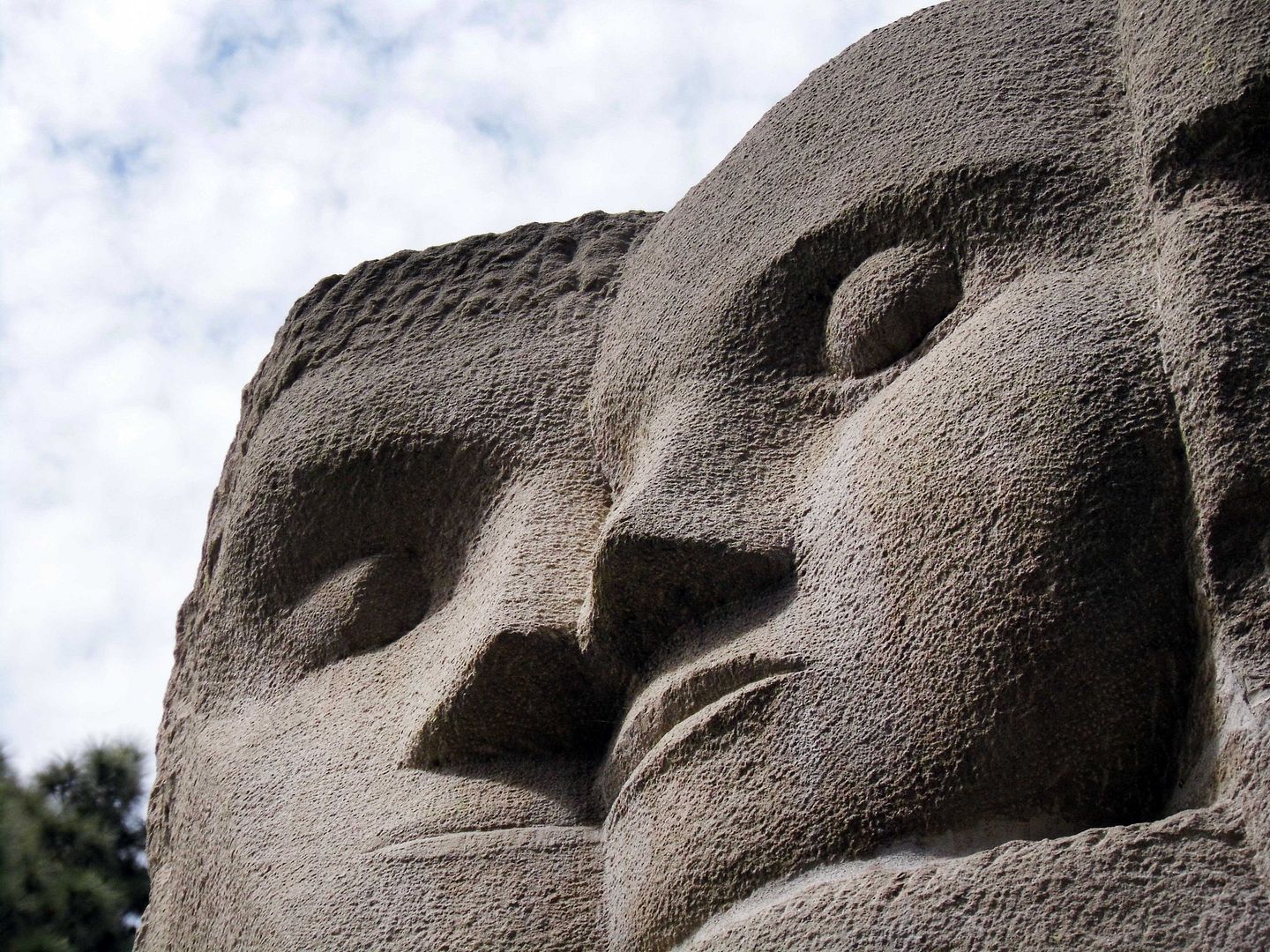


The stone pillar is now just east of the official boundaries of the sculpture garden, on an island land-locked between the Macgowan Hall Bus Turnaround and Charles E. Young Drive E.

I spent a long time at the UCLA sculpture garden—where else did I have to go?—but I still sense that I only saw a fraction of it.

I don't know what took me so long to get there, but I'm grateful for the cleared schedule that allowed me to finally make it.

Related Posts:
Photo Essay: The Donald M. Kendall Sculpture Gardens
Photo Essay: Mildred E. Mathias Botanical Garden, UCLA