Search

Showing posts sorted by relevance for query covid-19. Sort by date Show all posts

September 06, 2025

A Matter of Taste

With all the work that I've been doing writing The Los Angeles Breakfast Club centennial history book over the last two years, it's no surprise that I would get sick.

Having two autoimmune diseases puts me in the crosshairs for various illnesses anyway—but then I went to the Lady Gaga concert at the Forum—the first such thing I'd done in a long time—and I think that's where I caught a bug. 

But this wasn't just any bug. What started as a loss of appetite, sore throat, and the sniffles turned into the worst headache of my life—one that almost sent me to the emergency room.


April 20, 2020

My First Outbreak

The coronavirus pandemic may be the biggest outbreak I've been through—but it's not my first.


I'm now forced to recall growing up in Syracuse, New York at a time when wearing sanitary gloves at a restaurant or in a commercial kitchen wasn't required and certainly wasn't common.

And, apparently, neither was washing hands properly.

My parents, sister, and I rarely ever went out to eat at a restaurant—but there was a streak when it seemed like every time we dined out, we got exposed to hepatitis A.

The July 12, 1987 issue of The New York Times reported that Onondaga County—the Central New York county where Syracuse is located—had been besieged by hepatitis after the virus had already broken out in two neighboring counties.

Within one month, six workers at five restaurants had been diagnosed—bringing the total to 54 cases, compared to only 8 during the same time period the year prior.

Now, unlike COVID-19, hepatitis A is generally not deadly. But like the coronavirus, the hepatitis virus can spread by fecal shedding—which means a food handler who pooped and didn't properly wash their hands could infect an entire restaurant.

It happened at a Pizza Hut near Syracuse University. I'm not sure we'd gone to that one.

But it also happened at a Wendy's. And I do remember being forced to eat there as a kid.

And it also happened at Perkins in DeWitt. We could've been exposed there, but I don't remember exactly.

My parents might know. But I haven't talked to them since 2007.

One was definitely at the restaurant at the Ramada Inn in Salina—just outside of Syracuse, near the bank where my dad worked. Back then, the Ramada Inn was a pretty nice place, so we'd gone there for Easter Sunday 1988.

So did 1400 others, who also got exposed.

The outbreak was so bad at one point that Channel 9 interrupted a primetime episode of Perfect Strangers to run a 30-minute special on it.

I remember hearing the news reports warning patrons who drank a beverage with ice in it or ate from the salad bar (i.e. uncooked vegetables, as high heat generally kills the virus). We always qualified. And that meant we had to line up alongside 10,000 other people within the course of a month to go in for our gamma globulin shots, which was supposed to prevent the hep A infection from taking hold.

God, I remember that shot. I don't remember how many of them I got, but there were more than one. And they hurt like a mother.

They were embarrassing to get, too. They shot it into your butt cheek. And for a 12-year-old girl, pulling your pants down in front of anyone was just torture.

Hep A can be pretty contagious—and for the same reasons that the novel coronavirus is. It manifests in symptoms that masquerade as something else.

When it starts out, you might just think you have the flu. With hep A, you don't know yet that your liver is under attack. With COVID-19, you don't yet know that your lungs are in the crosshairs.

The gamma globulin only protects you if you get it within 14 days of exposure. Sometimes the restaurant wouldn't find out about the infected worker and report it in time to get all the exposed people to peel off their pants and expose their fannies for a shot.

As a result of the health crisis, the county enacted new legislation that required food handlers to wear plastic, disposable gloves. It's not that they're any better at protecting us from a virus than a good scrub with soap and water. It's just that the county government couldn't count on the fact that anyone handling food would actually wash their hands properly.

So there was a run on gloves. Restaurant suppliers reported selling 200,000 or 300,000 gloves in just one day.

Still, only 95% of county restaurants actually complied. Some thought it would hurt their business and complained that wearing gloves made it harder to work.

Not surprisingly, when the outbreak was declared "over" in November 1988, and rules were relaxed, more hep A outbreaks followed. And the glove rule was reinstated in 1990 and made permanent in 1992 (though it didn't become a New York State law until 1997).

You couldn't have bake sales at church anymore. You couldn't bring cupcakes for your classmates' birthdays. You just didn't know who was pooping, wiping, and cooking without washing in between.

After I moved out of Syracuse for college in 1993 and then permanently in 1997, I never again had to be told that I'd been exposed to hep A. That's even though food service workers on campus were clearly not wearing gloves (because they didn't have to in neighboring Madison County). That's even after eating countless slices of unsanitary pizza at 5 a.m. in New York City.

I never thought I'd have to think about sanitary gloves again. But now I find myself eyeing gloved workers who handle food and then money and credit cards and POS touch screens and then food again.

And I'm just hoping they change their gloves after going to the bathroom.

There's a lot about this "new normal" that I hope becomes permanent. Is it too much to ask for people to wash their hands properly and wear gloves?

Related Posts:
Quarantine Angst?
A Shot Into Another Dimension

November 03, 2020

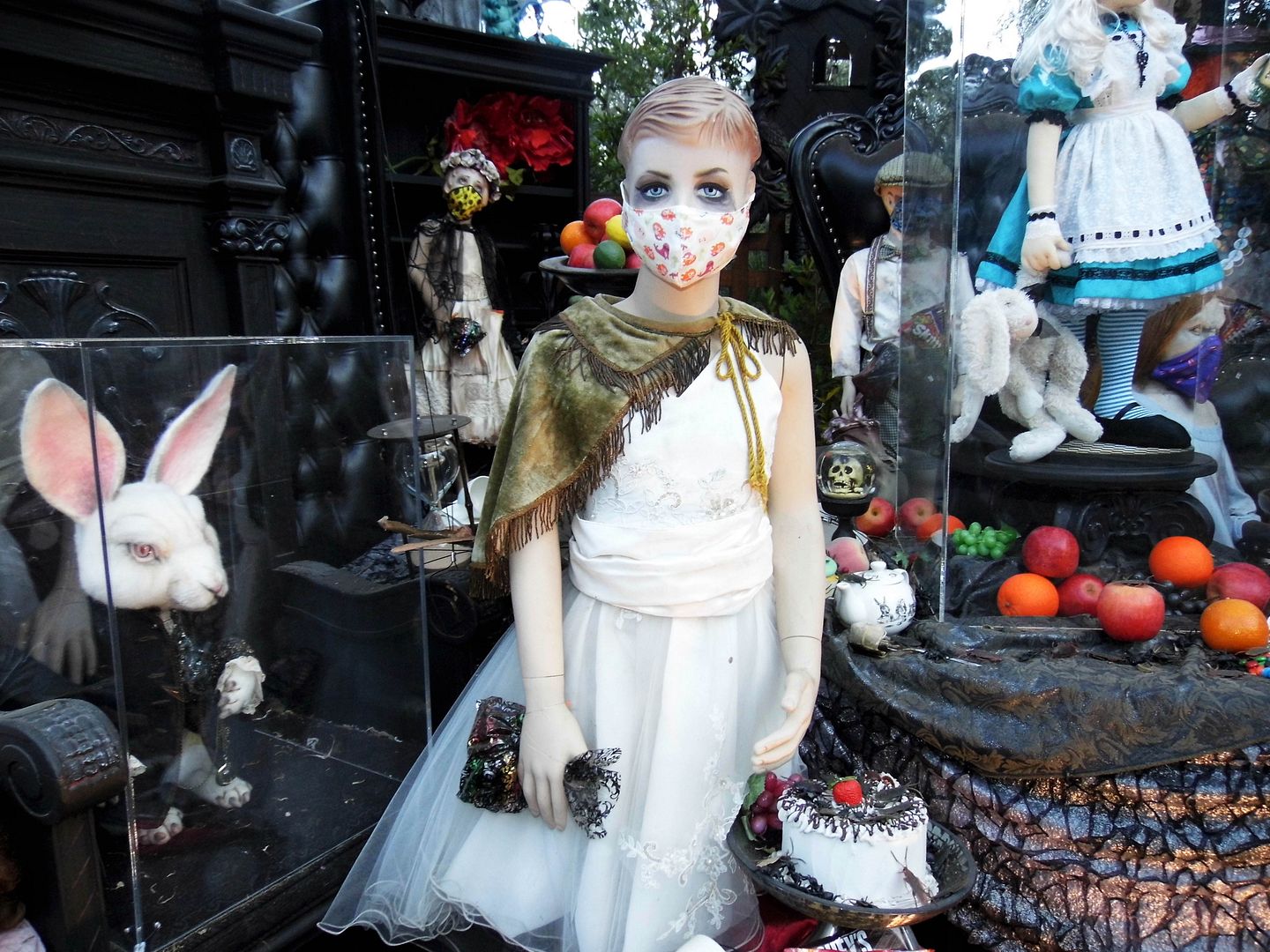
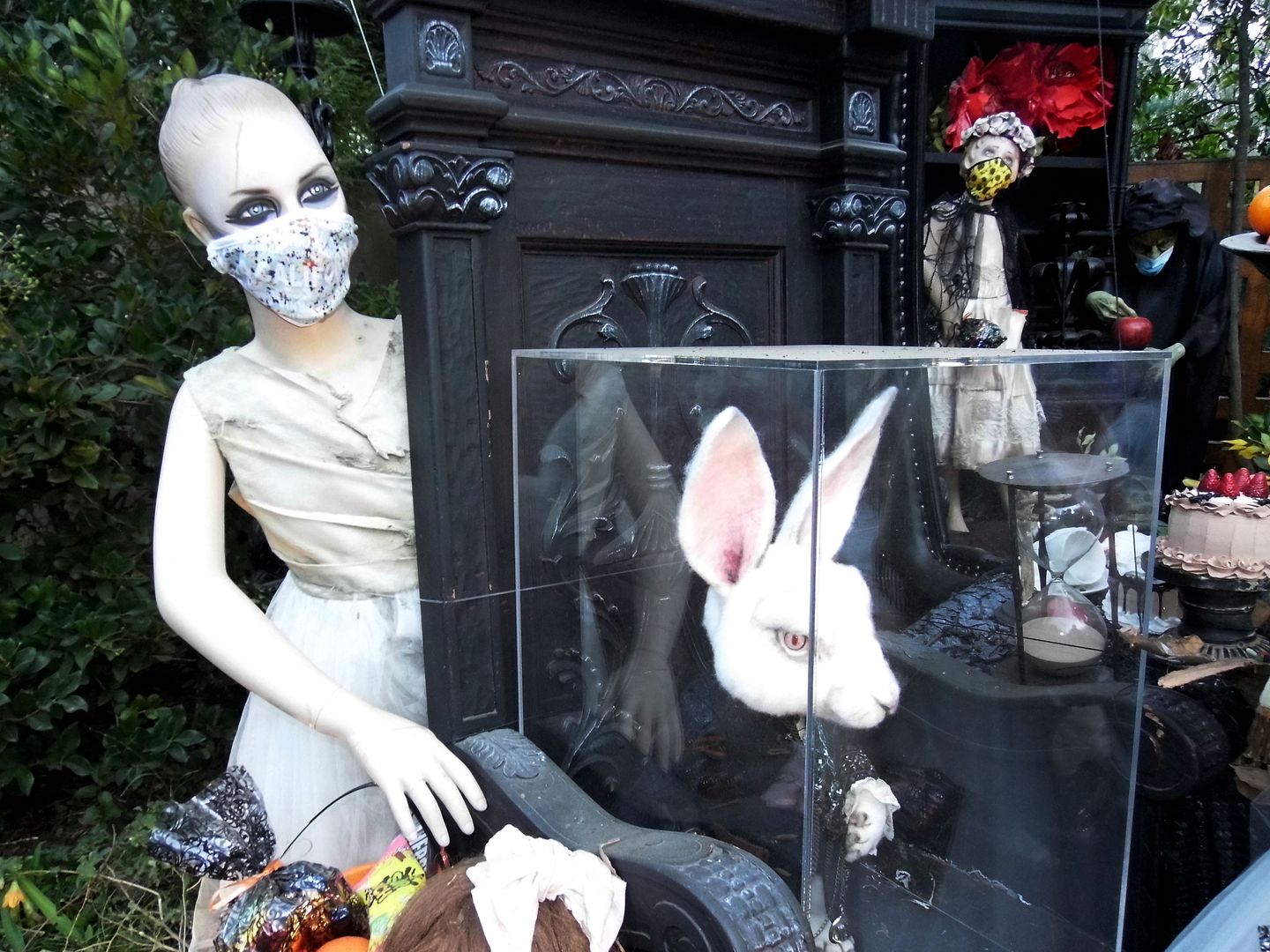
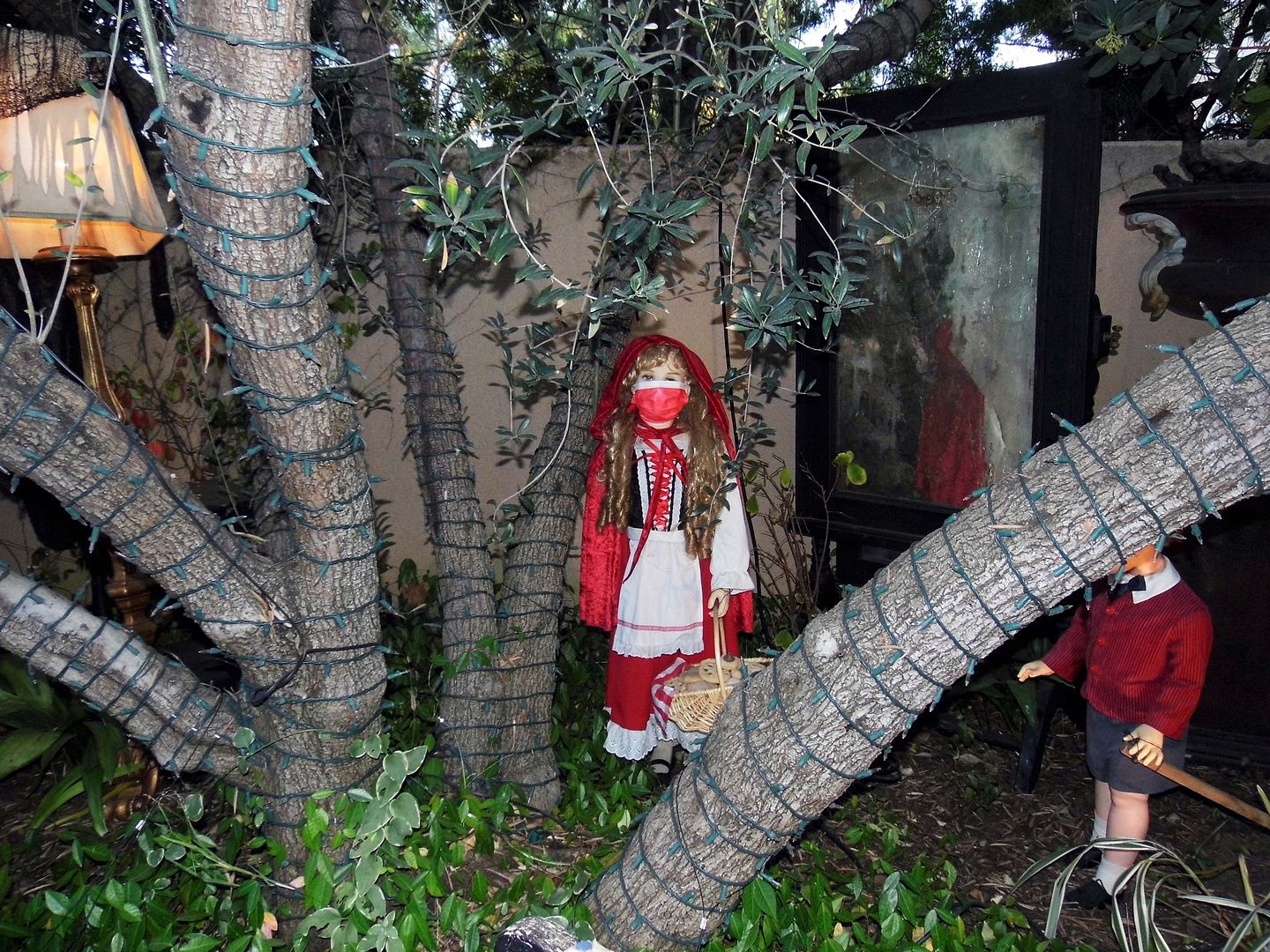
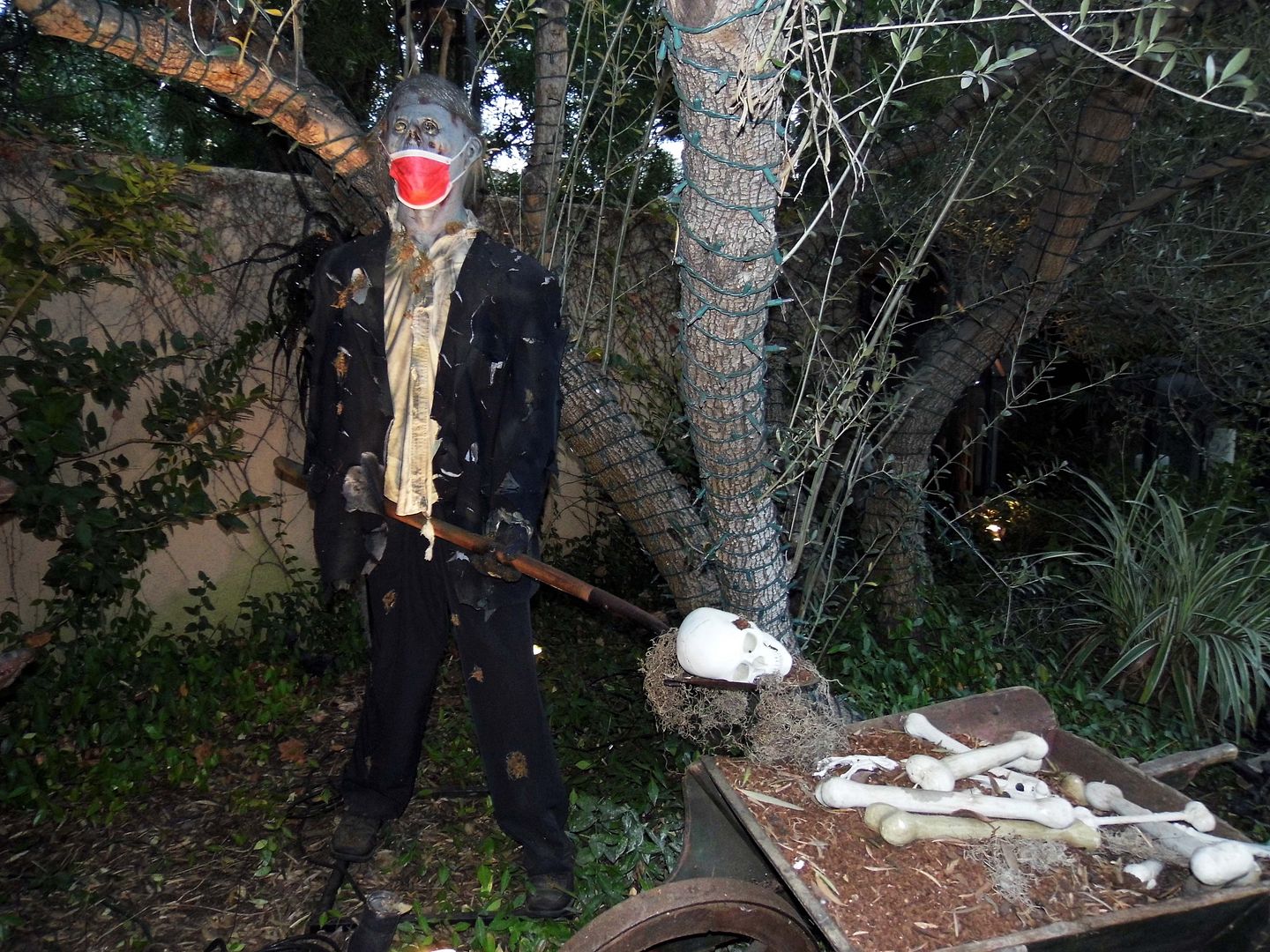
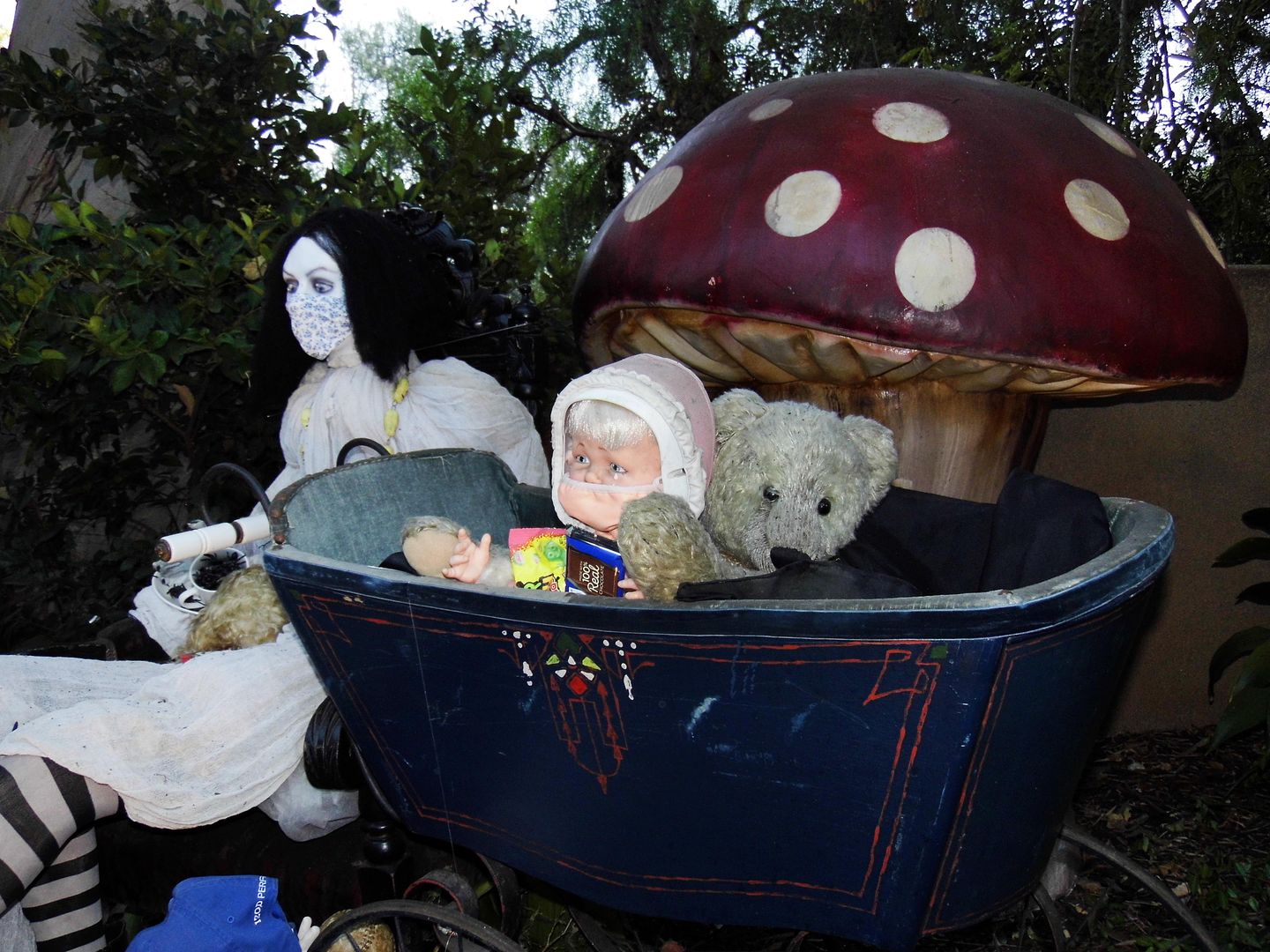
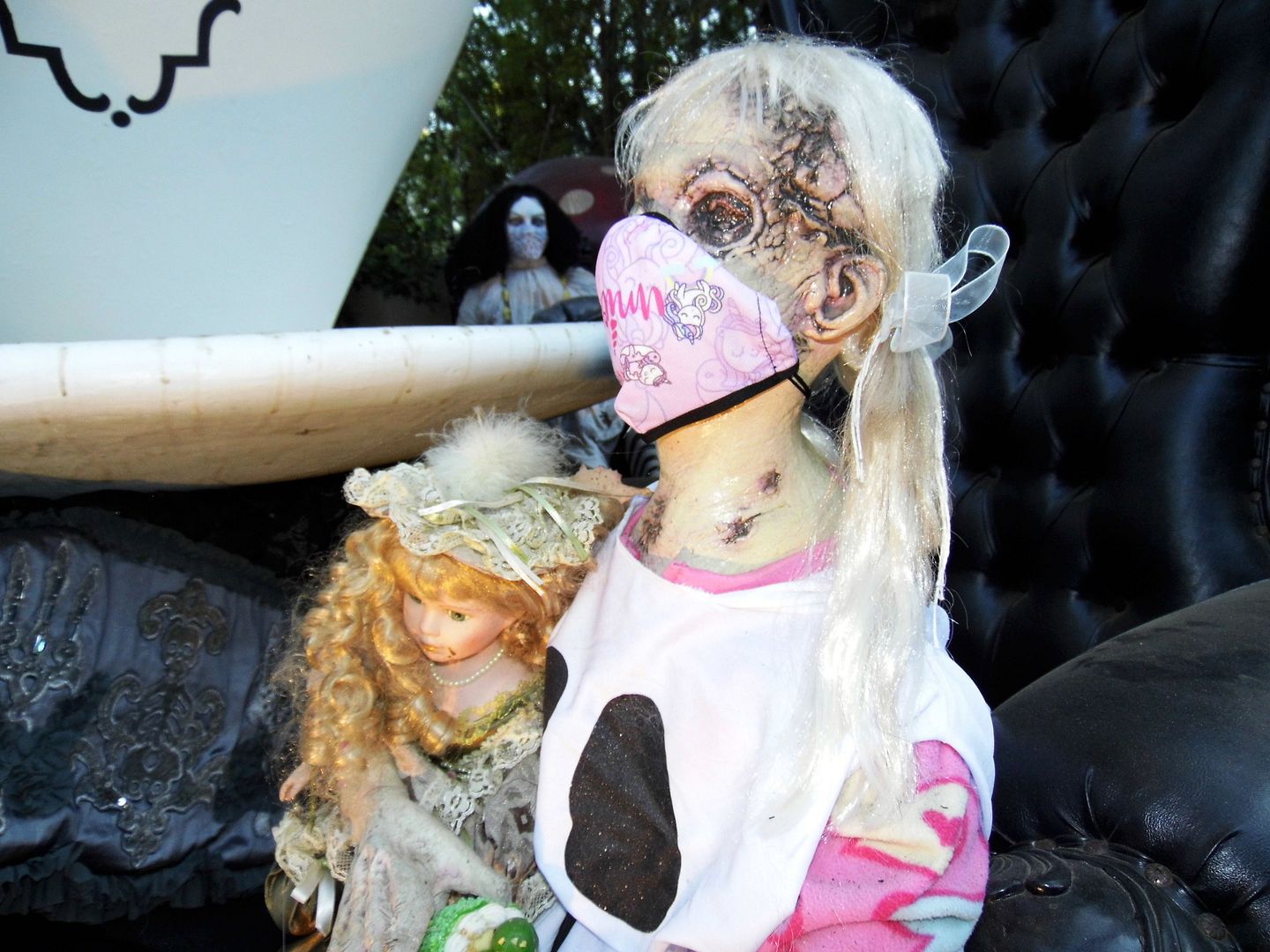
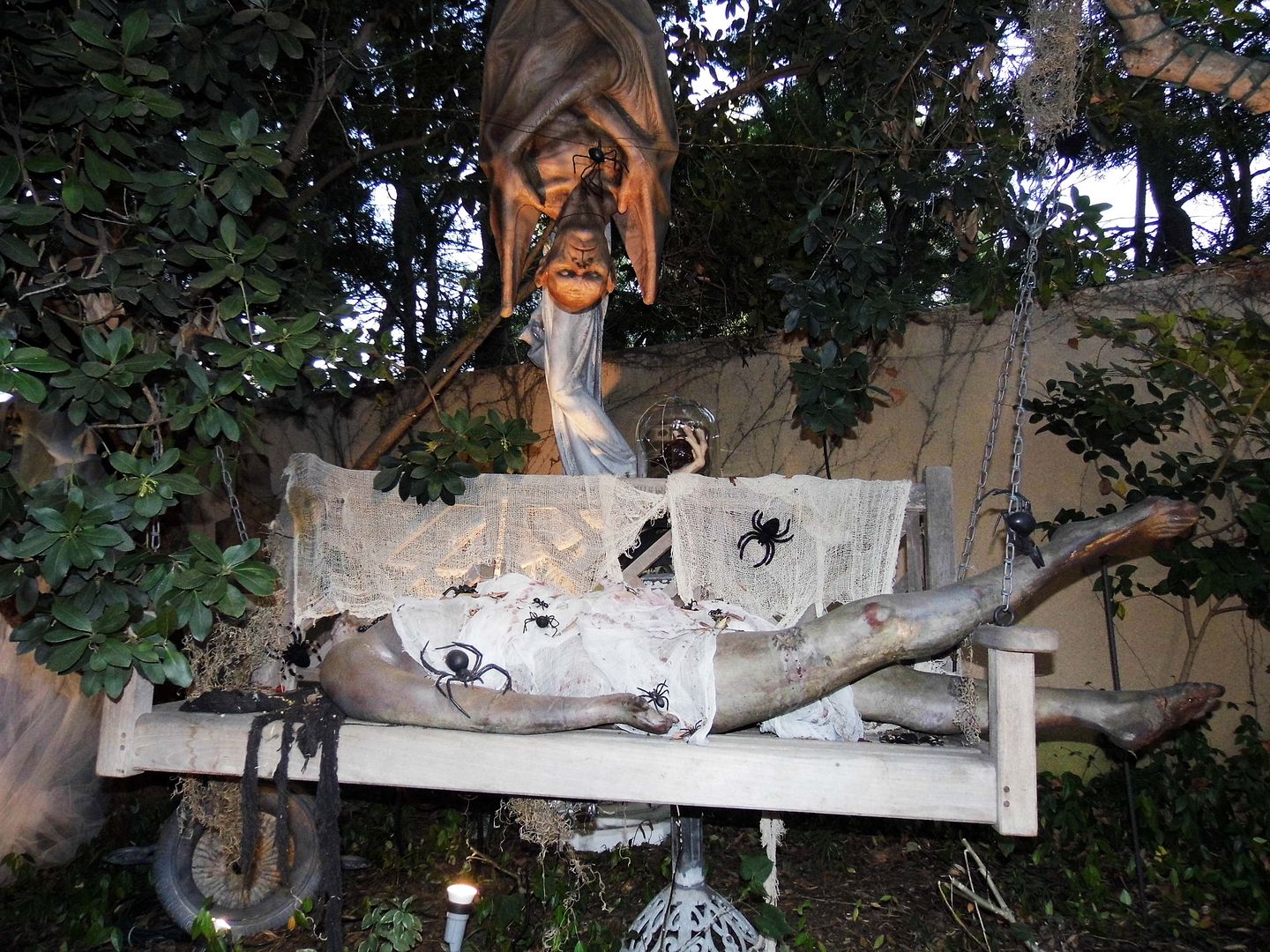
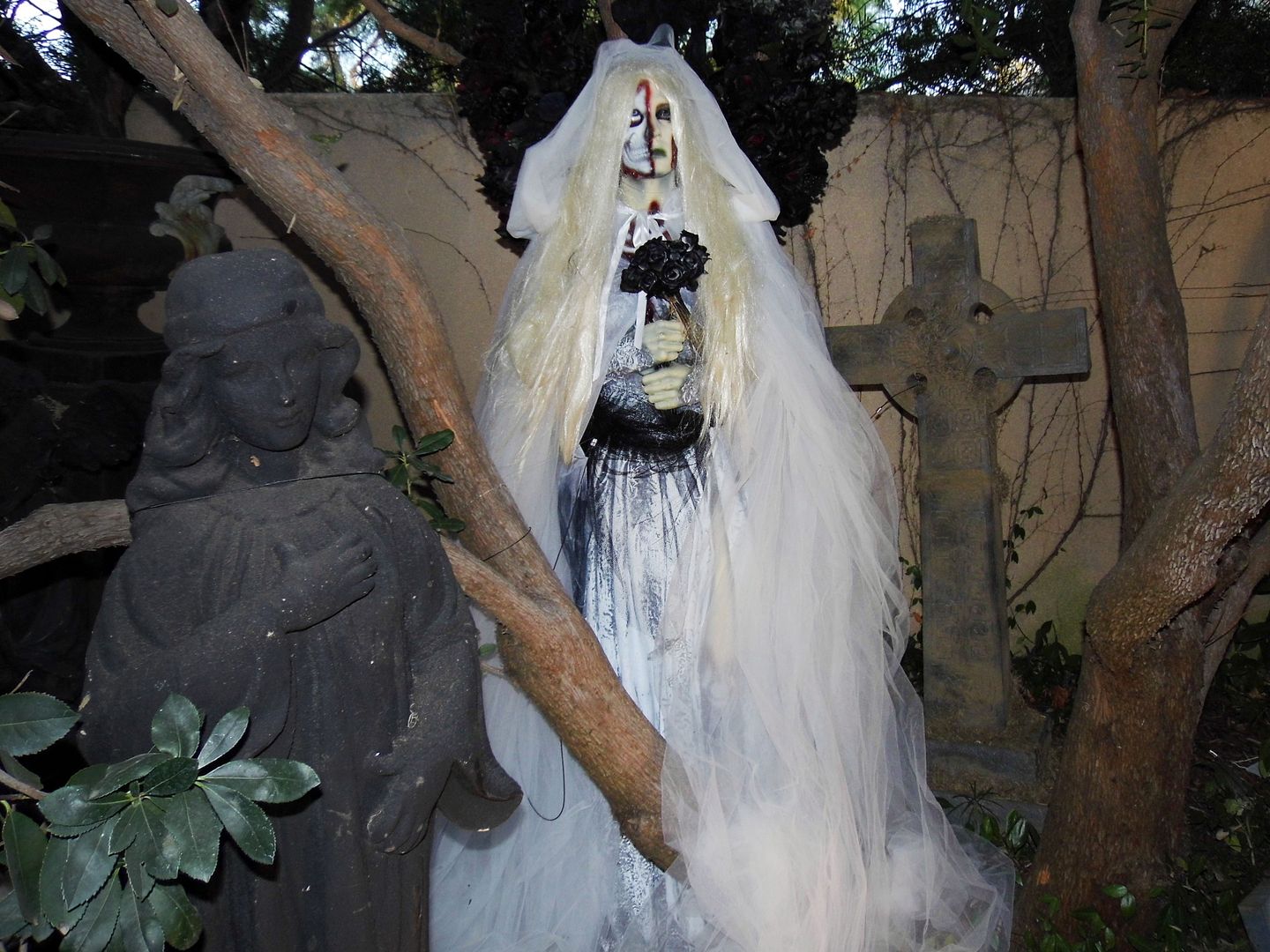
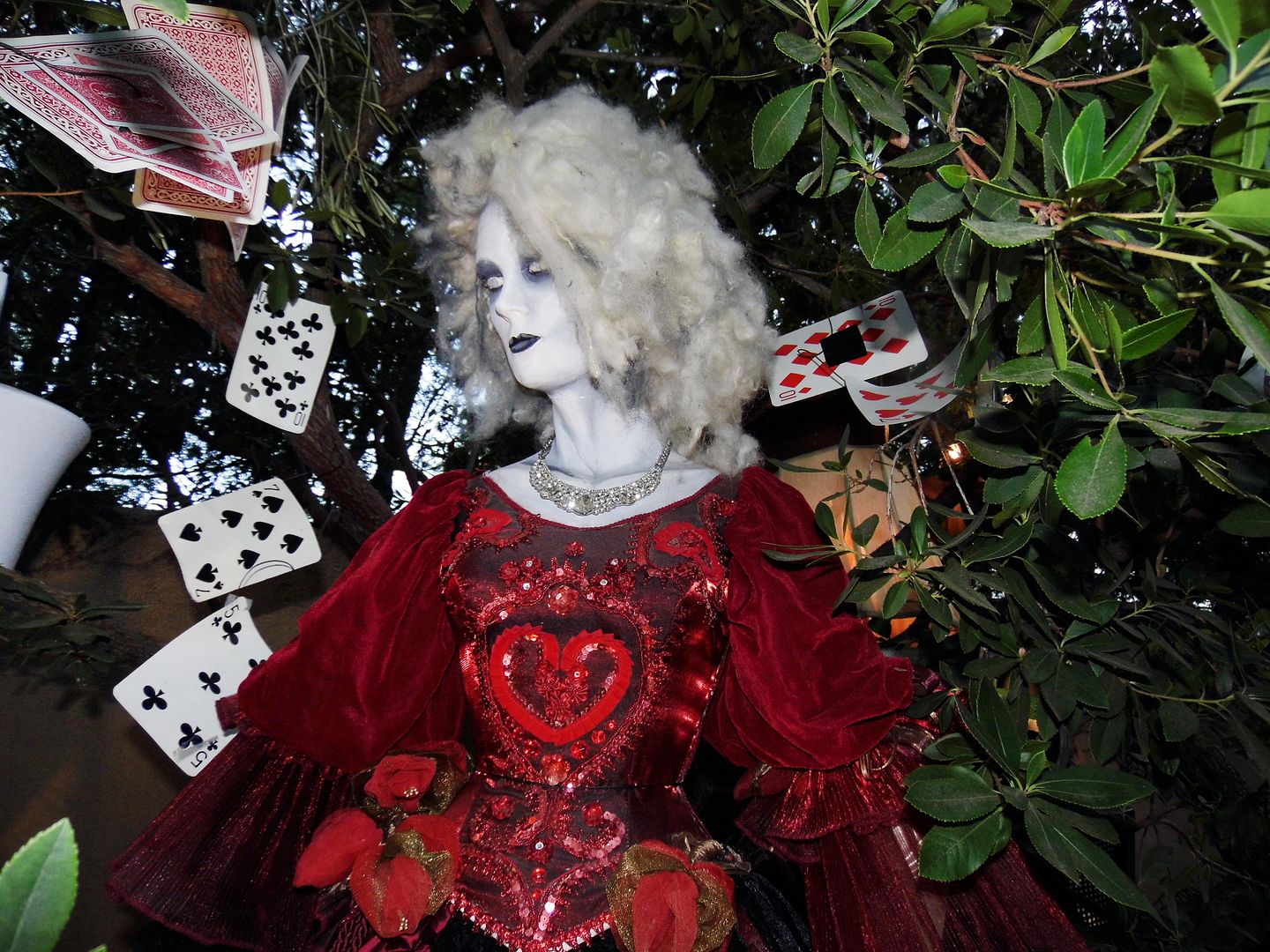
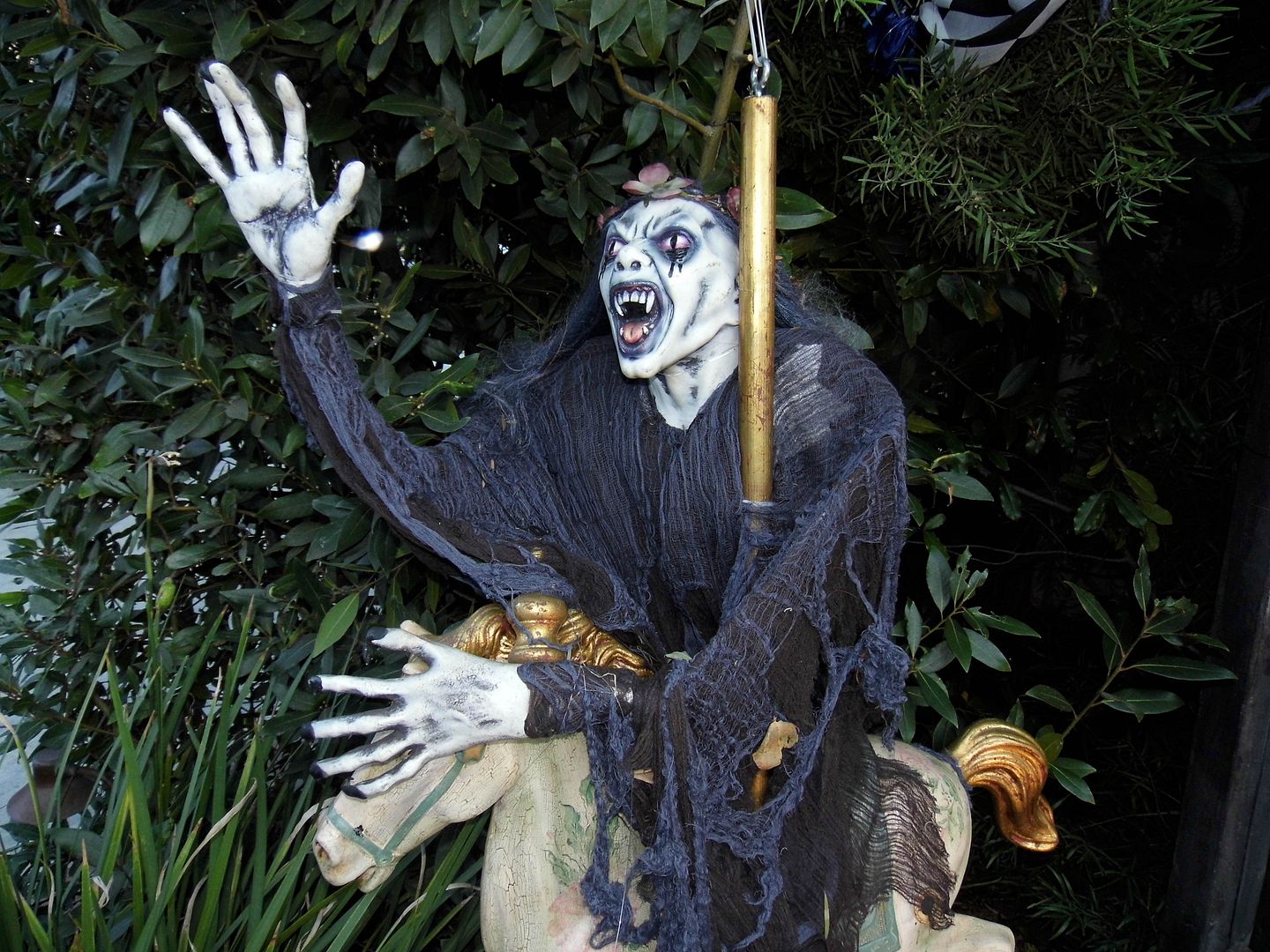
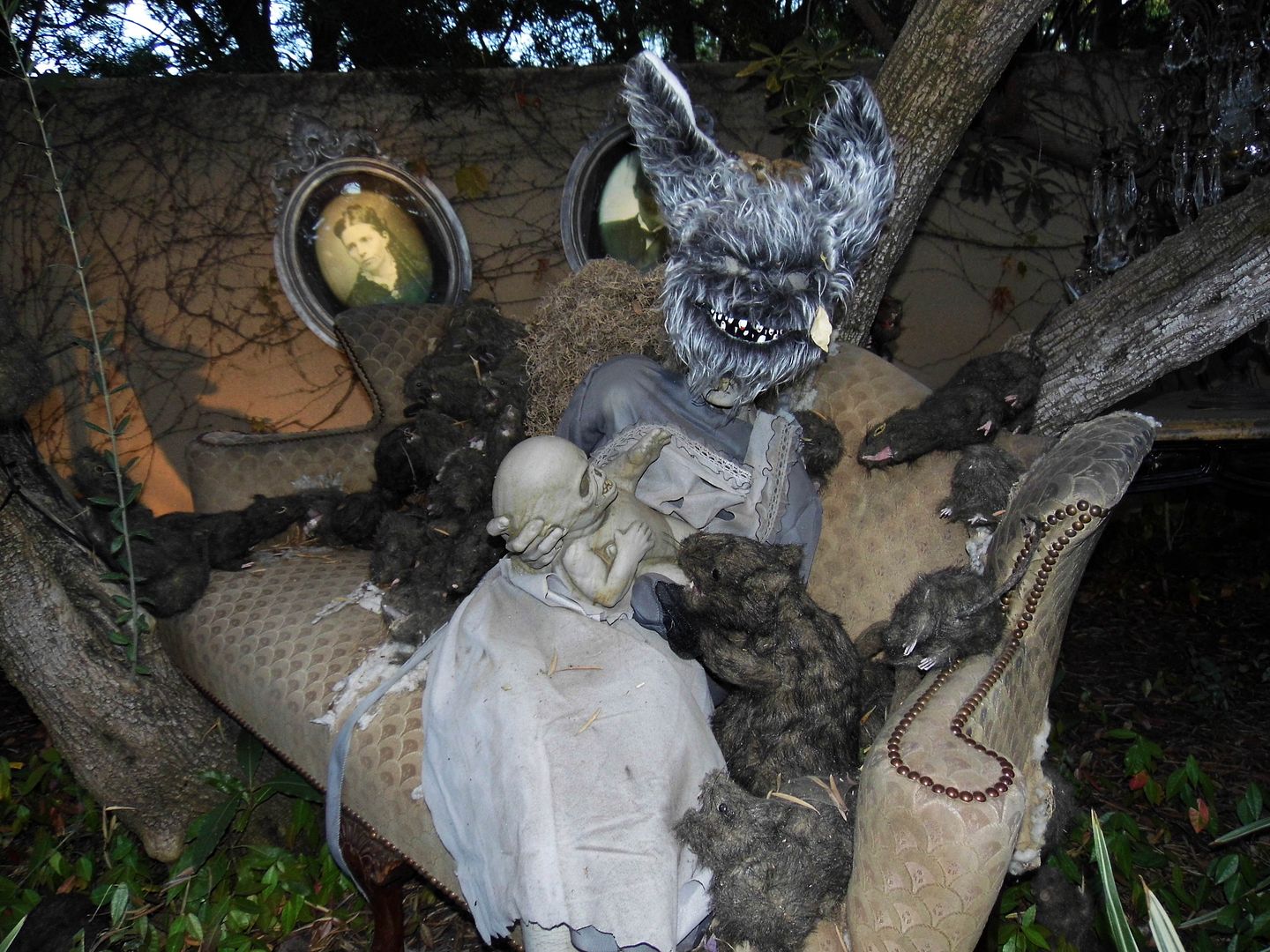
Photo Essay: The Most Halloweeny Yard Gets a COVID-19 Update for 2020 (Updated for 2021—Closed)

[Last updated 10/29/21 9:17 PM—The yard is not decorated this year. The house doesn't appear to have been sold, so I'm not sure why. Please do not disturb the residents.]

I discovered what I thought to be the most Halloweeny yard in LA back in 2018. 

I returned in 2019 to see how it might change from year to year—and I thought maybe I'd seen it all. 


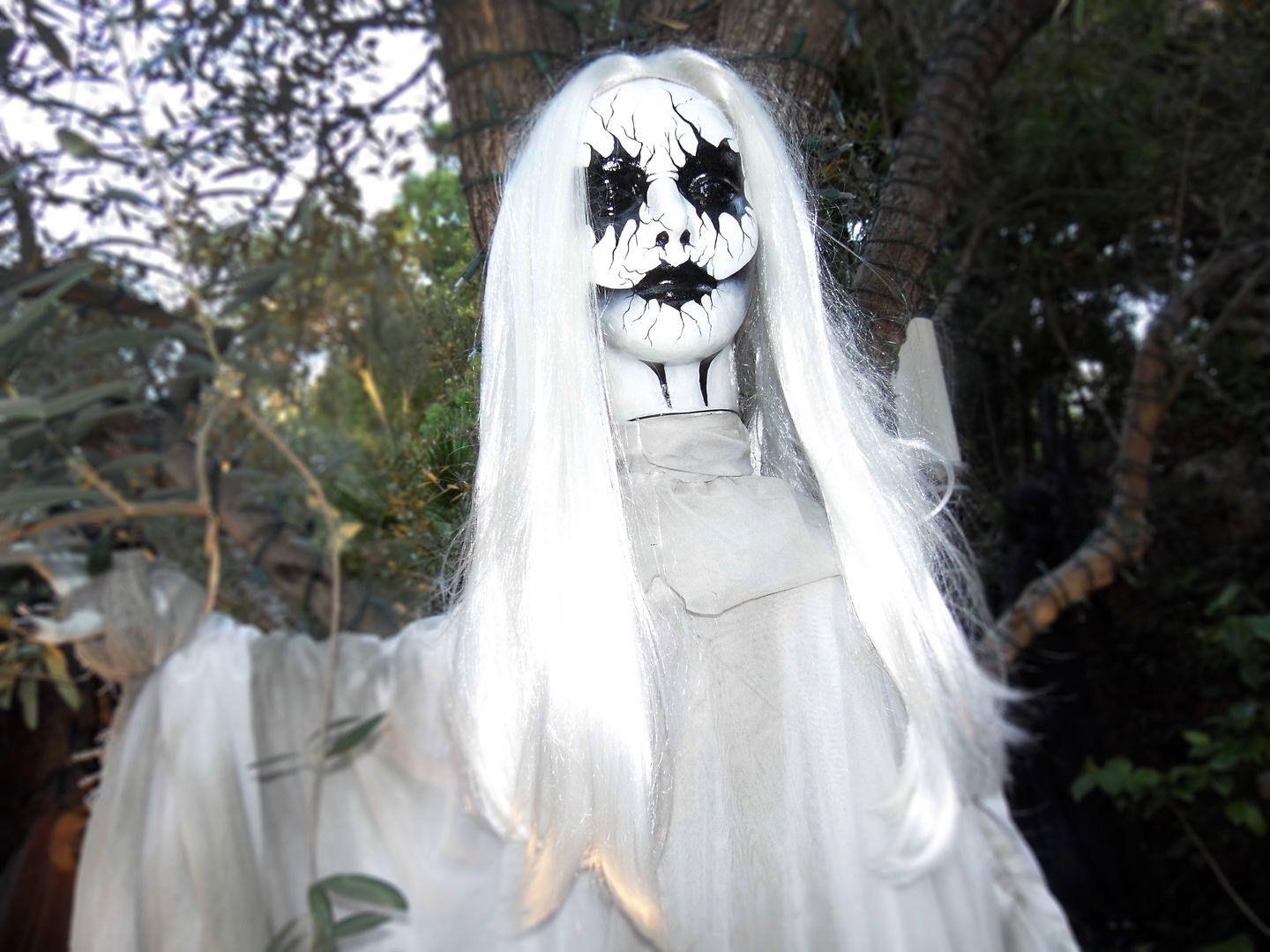
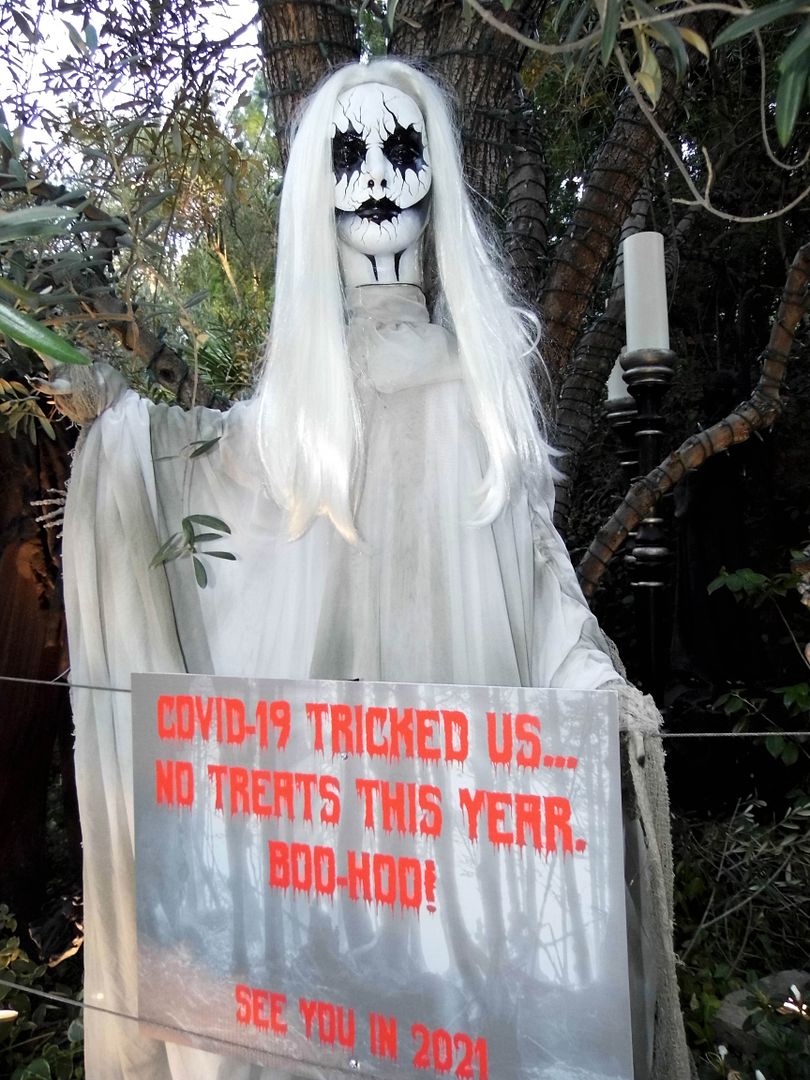
But then COVID-19 hit—and the yard was updated accordingly. 

  
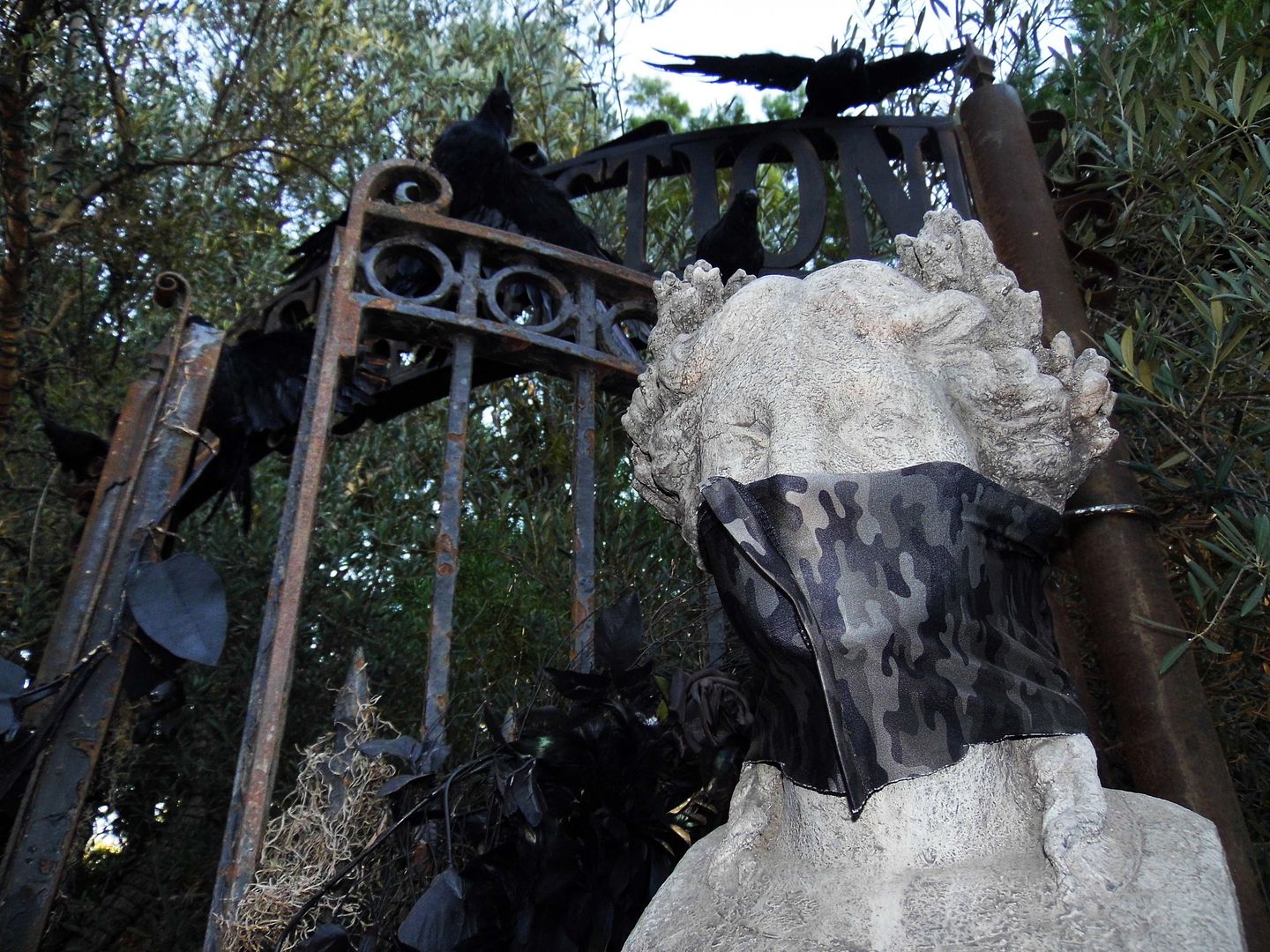
It's not just that the usual figures were donning masks. 


It's that the eyes of the figures seemed to star into my soul...


...and reflect back at me the panic we've all been feeling all year. 


With the pandemic chic overlay, this yard display in Brentwood was even scarier than the prior two years...


...even in daylight. 


The creepy baby dolls felt more desperate than ever before. 


And if I wasn't staring into a looking glass, I thought maybe I was catching a glimpse of my future self in a crystal ball. 

 
Or maybe this is something of a representation of the omnipresent unseen—that which haunts us, but we can't quite put our fingers on. 

  
Are we being watched? Or are we simply watching ourselves?

        
What lies down the rabbit hole? 


Is it better to follow the rabbit—and face our fears?

        
Or stay grinning in ignorant bliss?

Related Posts:

June 09, 2020

Peaking Poppies In a Pandemic

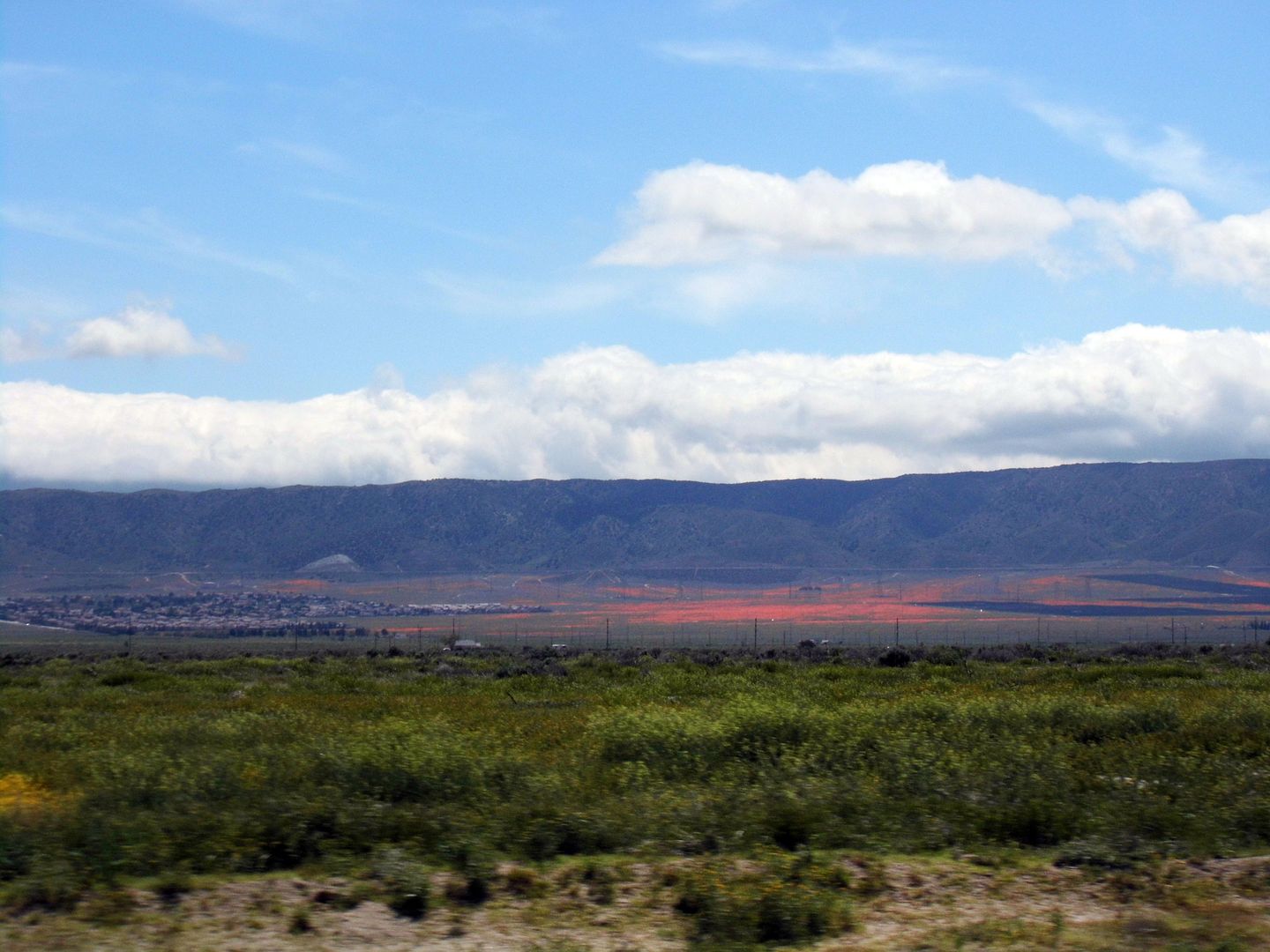
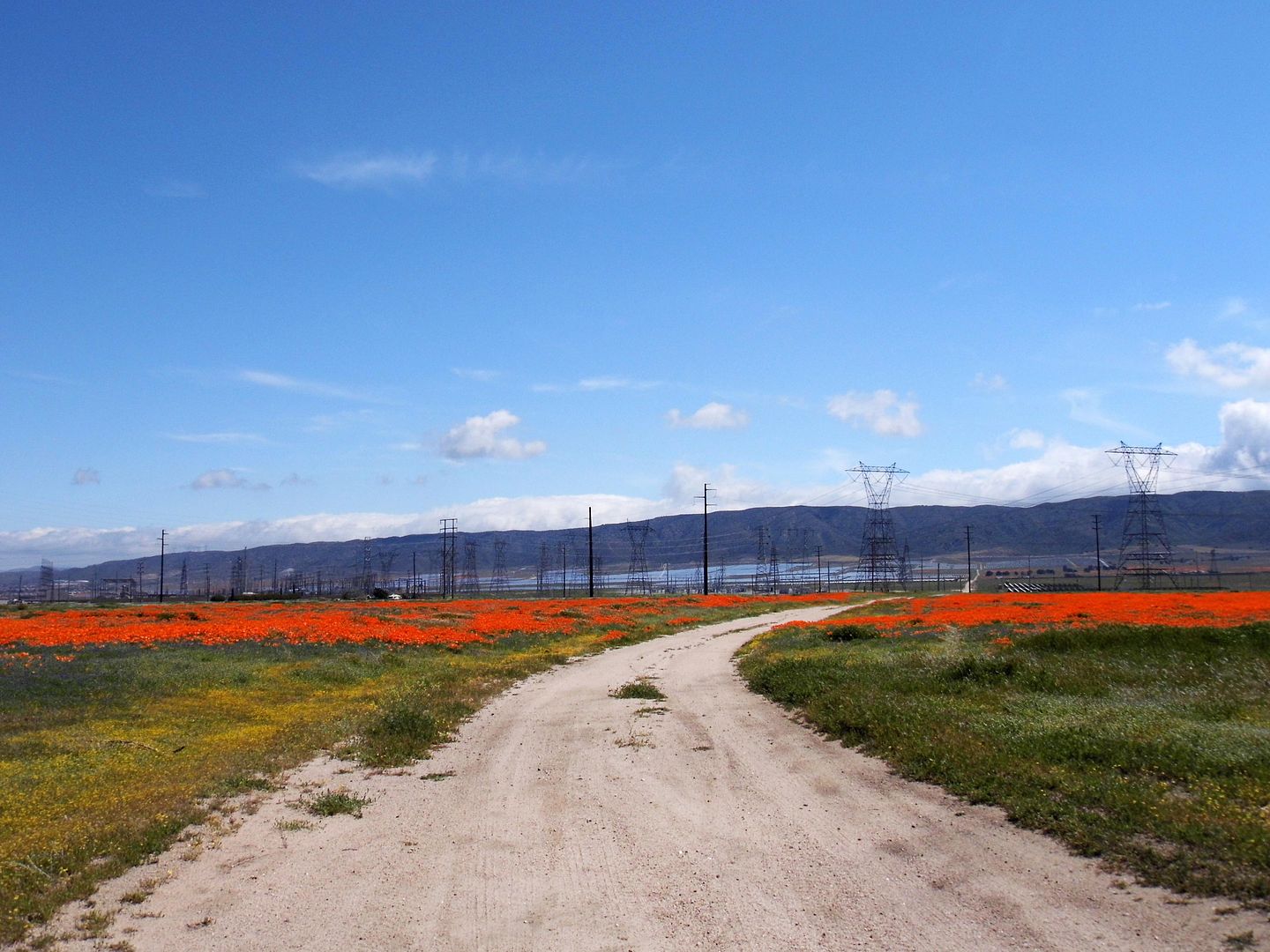
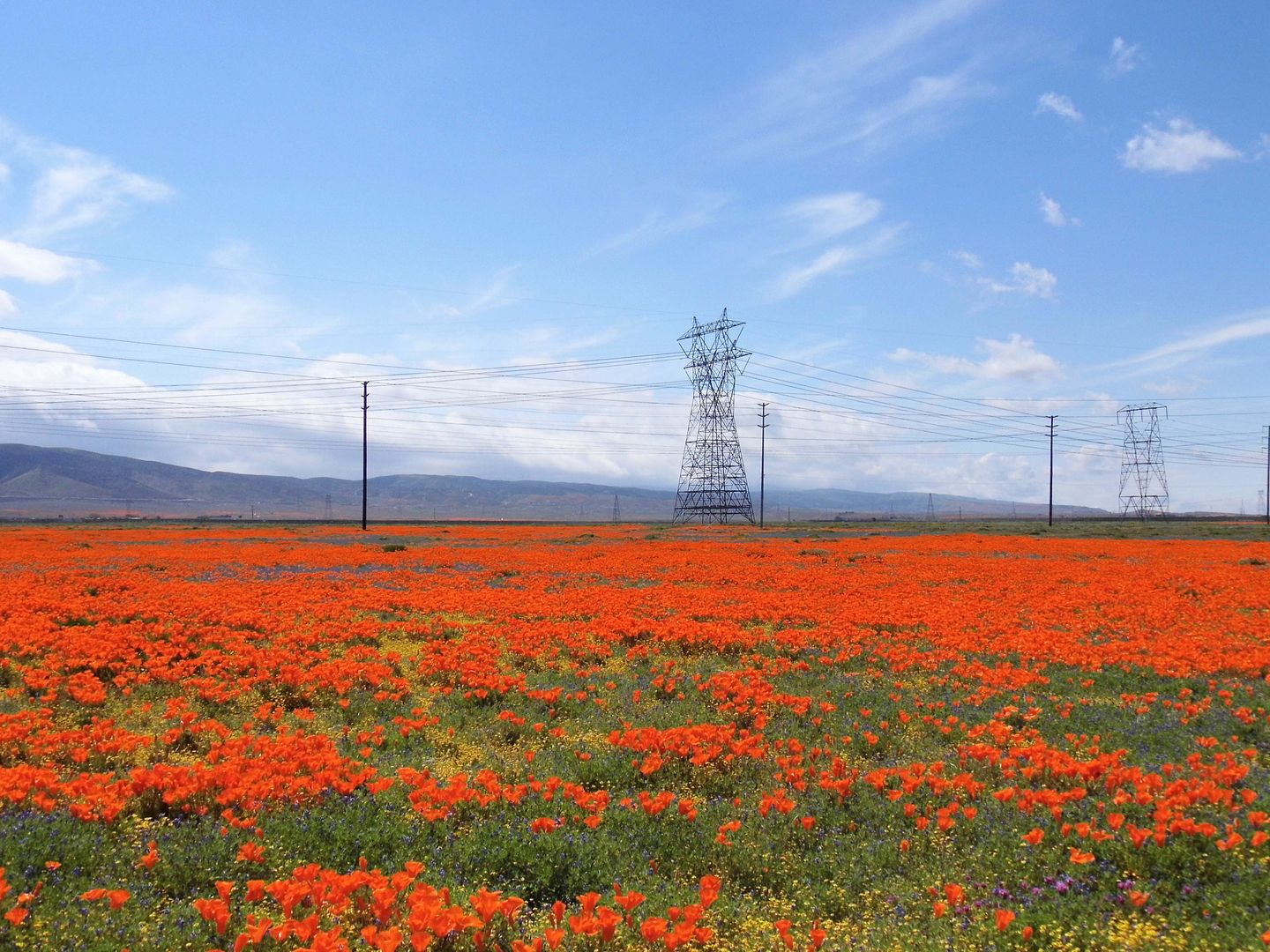
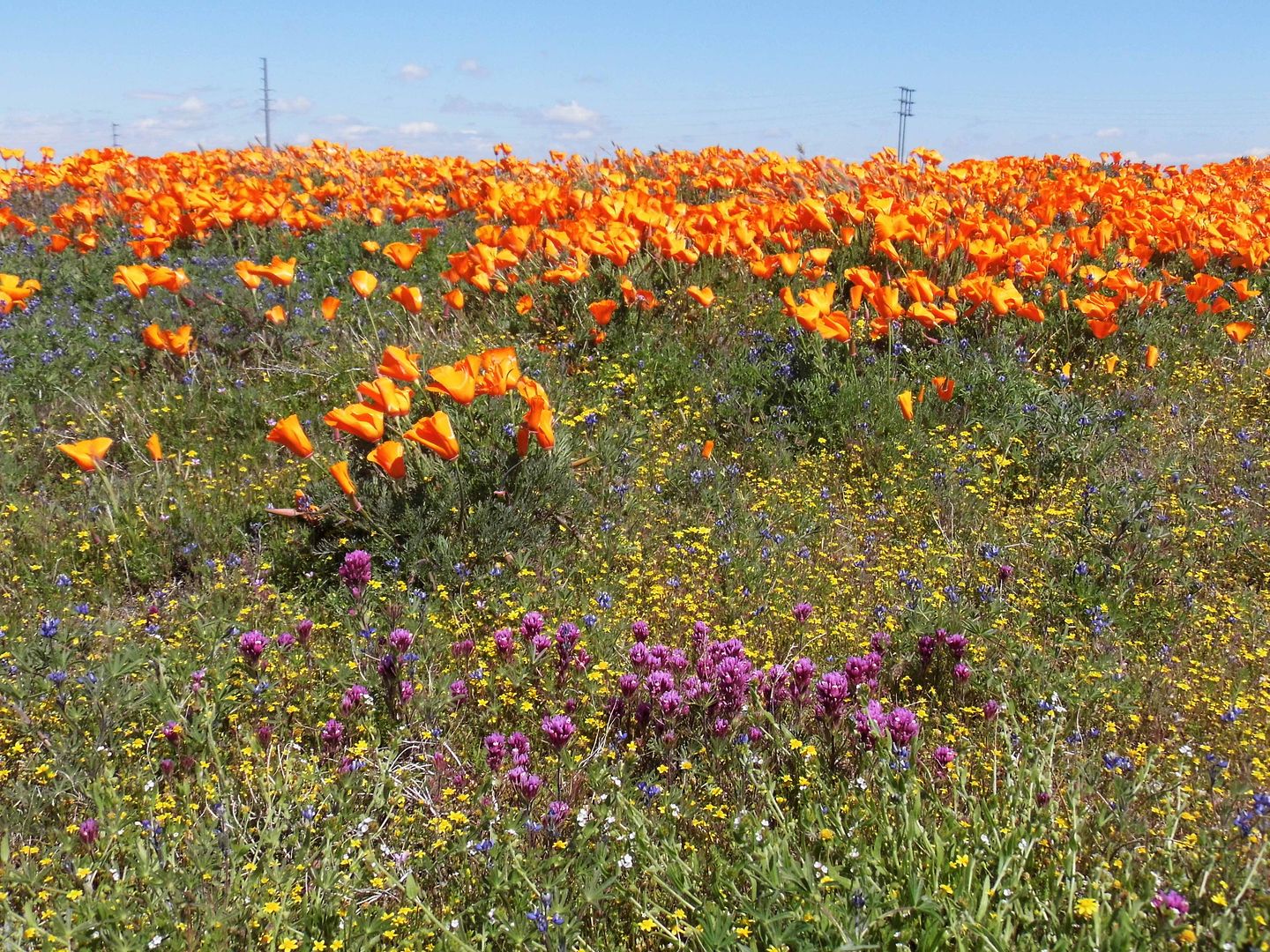
We had a mini superbloom in the Antelope Valley this spring—a late bloom boom that managed to stay incredibly intact because of the coronavirus "safer at home" guidance.


Maybe I should've stayed home. Maybe I would've been "safer" there. But after weeks of having my calendar curtailed, I realized there was something that COVID-19 hadn't canceled—and that I missed very much.


Nature had continued—and, in fact, thrived—without us.


I just wanted to see it in person—not on a live webcam from the Antelope Valley California Poppy Reserve's website, not from aerial photos or satellite images from space.


So, not knowing exactly where to go—where I could go, where I'd be allowed to go—I just drove to Lancaster, California in the direction of the state natural reserve, hoping to see a sign somewhere in the distance.


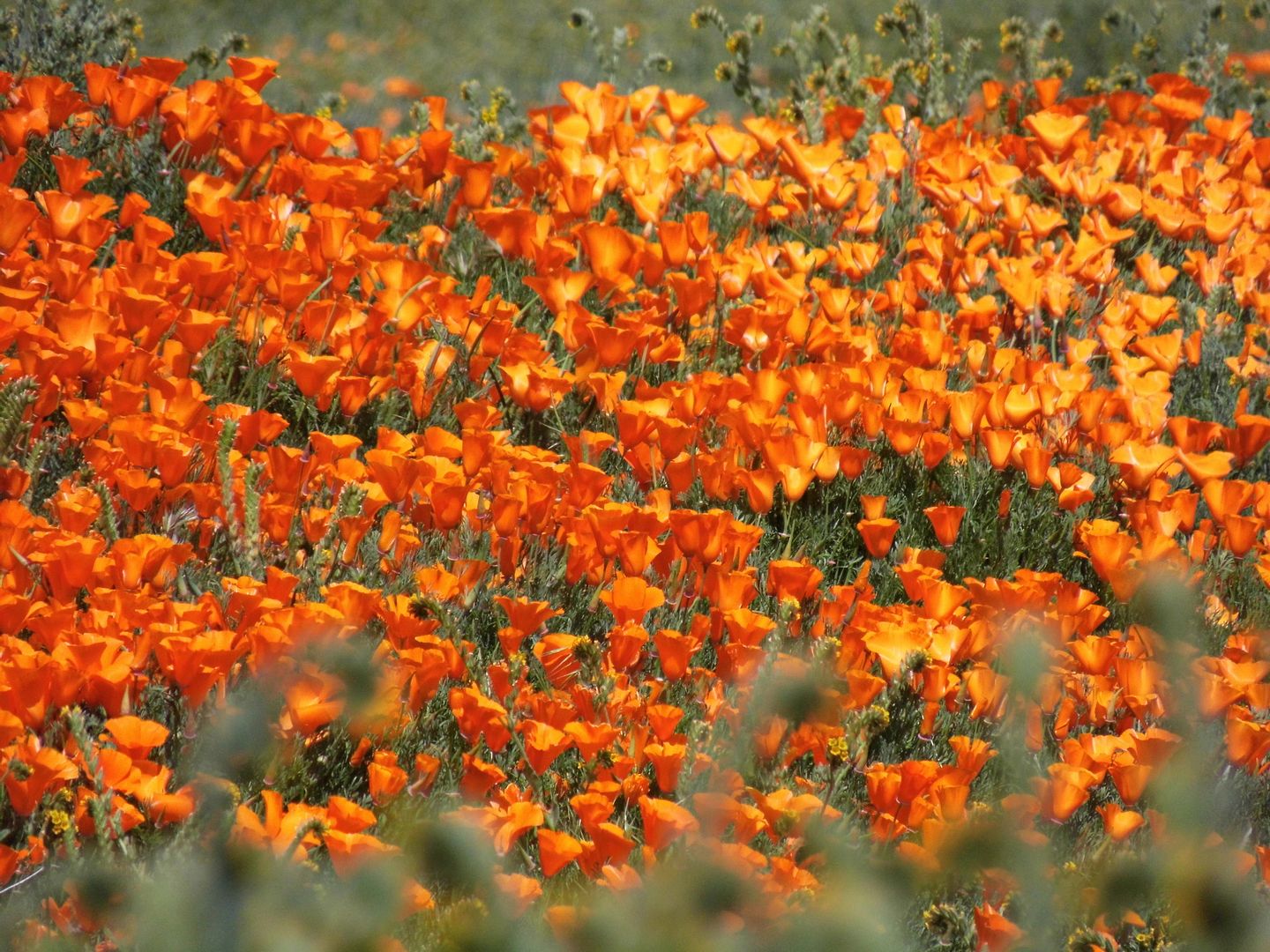
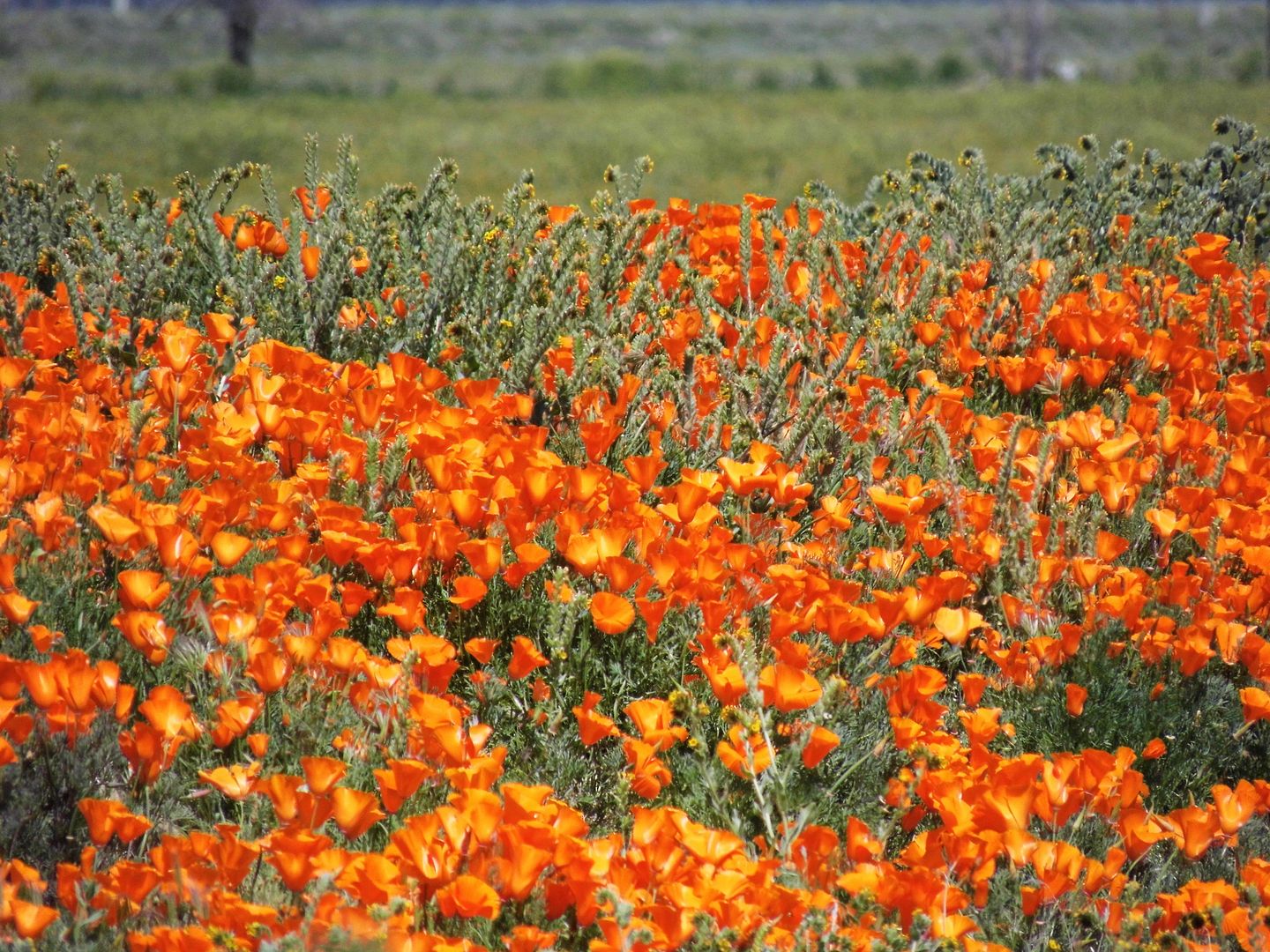
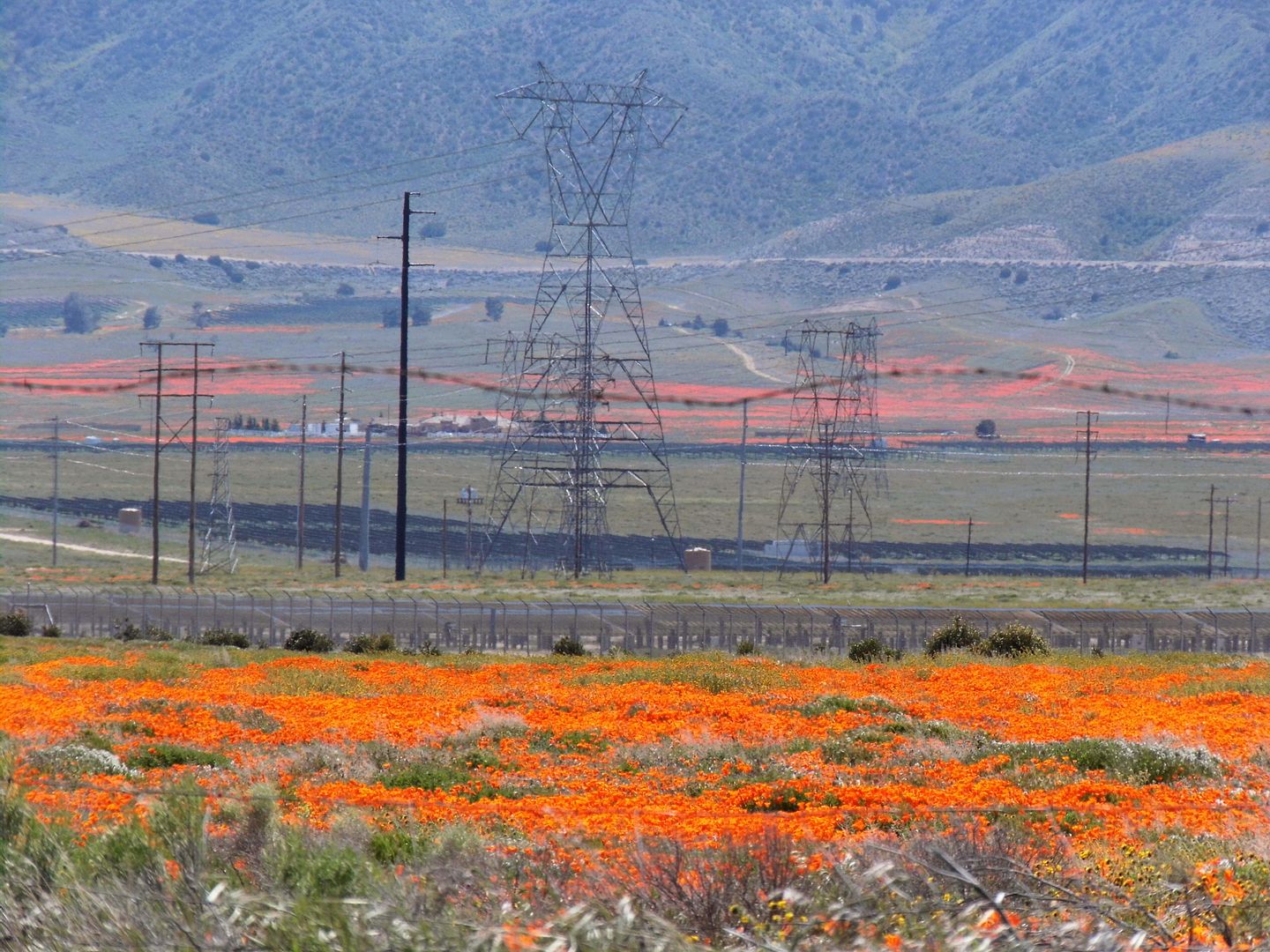
And, like last year, the Antelope Valley really delivered. I just drove with the orange straight ahead, which formed an artificial horizon in the foothills to help with wayfinding wayfarers.


The navigation was spot-on, it turned out—because I ended up on a dirt road with a stripe of orange cutting straight across it.


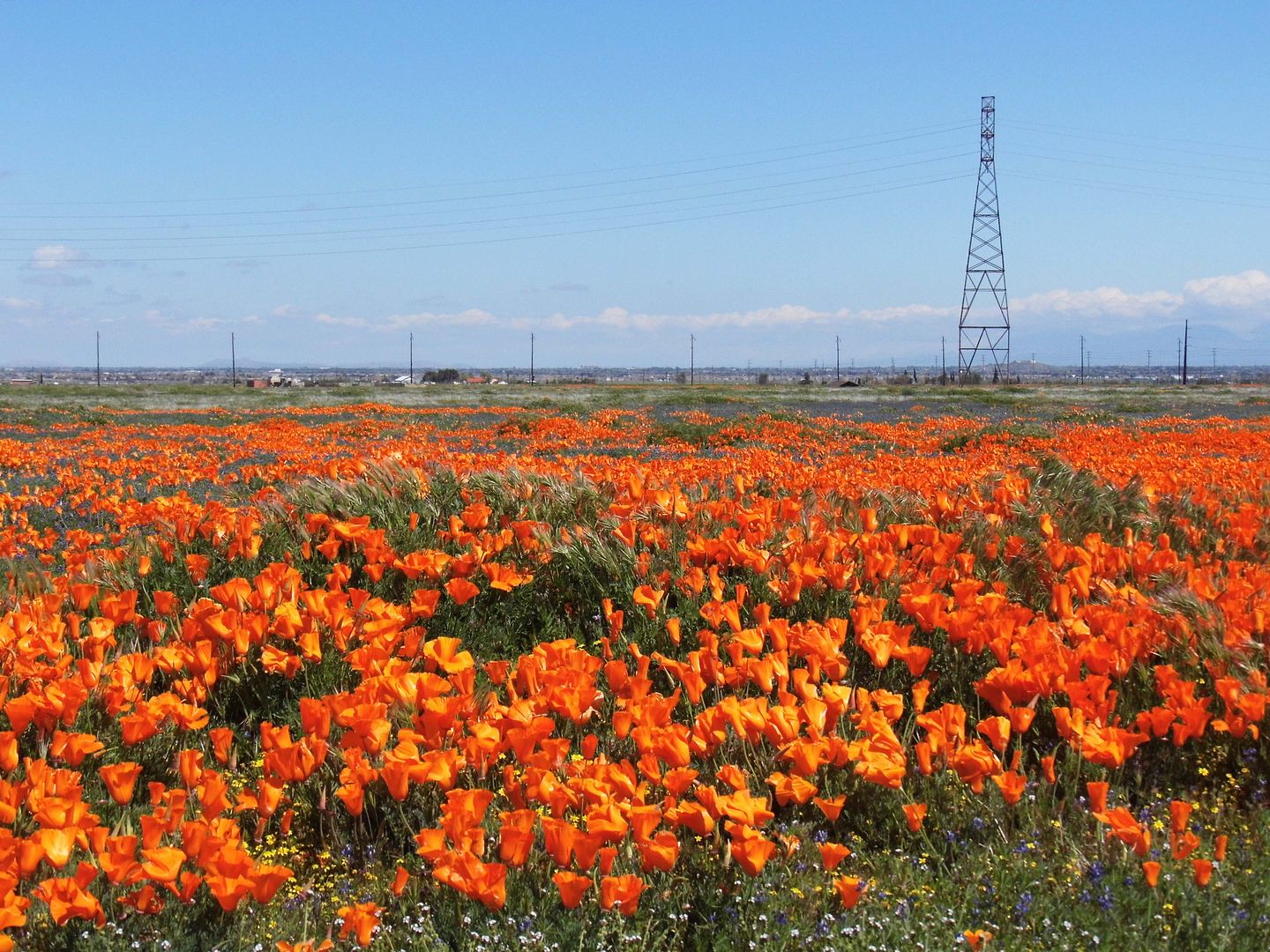
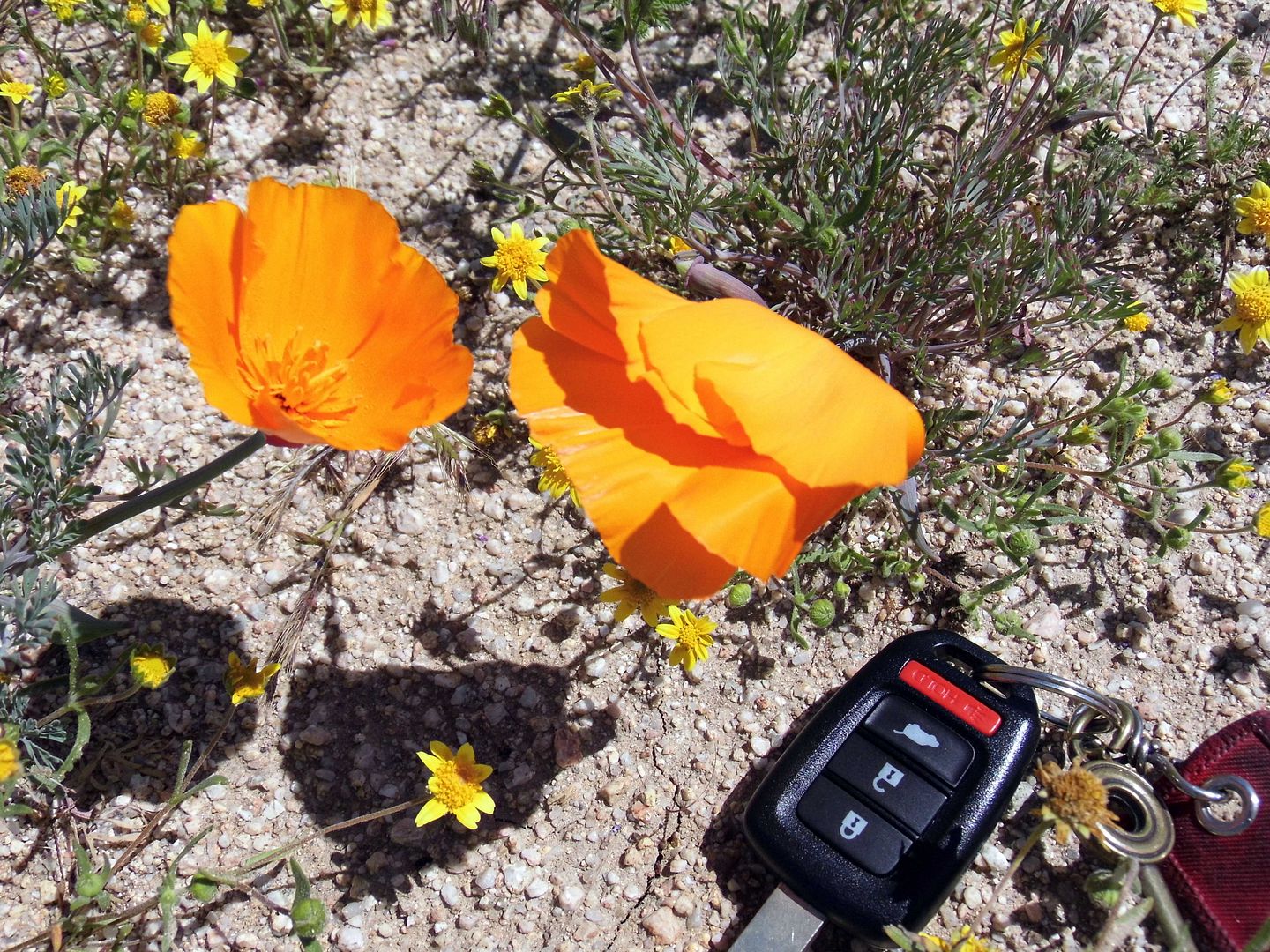
I was surrounded on both sides by the California poppy, the namesake of the poppy reserve that was closed due to COVID-19 but usually can be found in abundance outside the state park (in fact sometimes more so).


They were in full bloom on that April afternoon—a day in April I probably would've been trekking around the poppy fields anyway, had we not been advised to stay at home to stop the spread of the coronavirus.


I felt a little guilty for disobeying orders and maybe setting a bad example—but I also felt that my disobedience had been vindicated by the fact that this year's poppy bloom was different than any others I'd ever seen before.


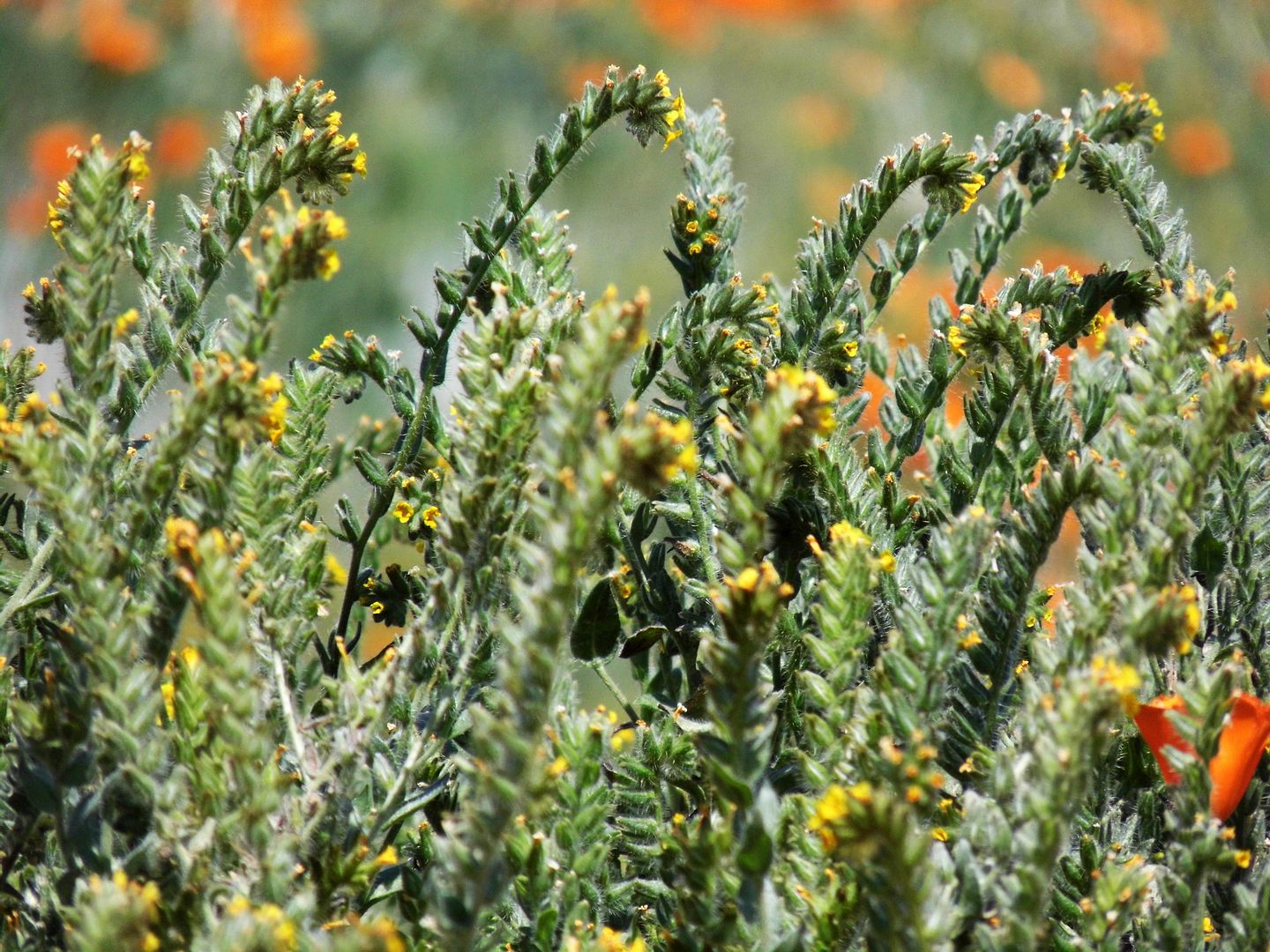
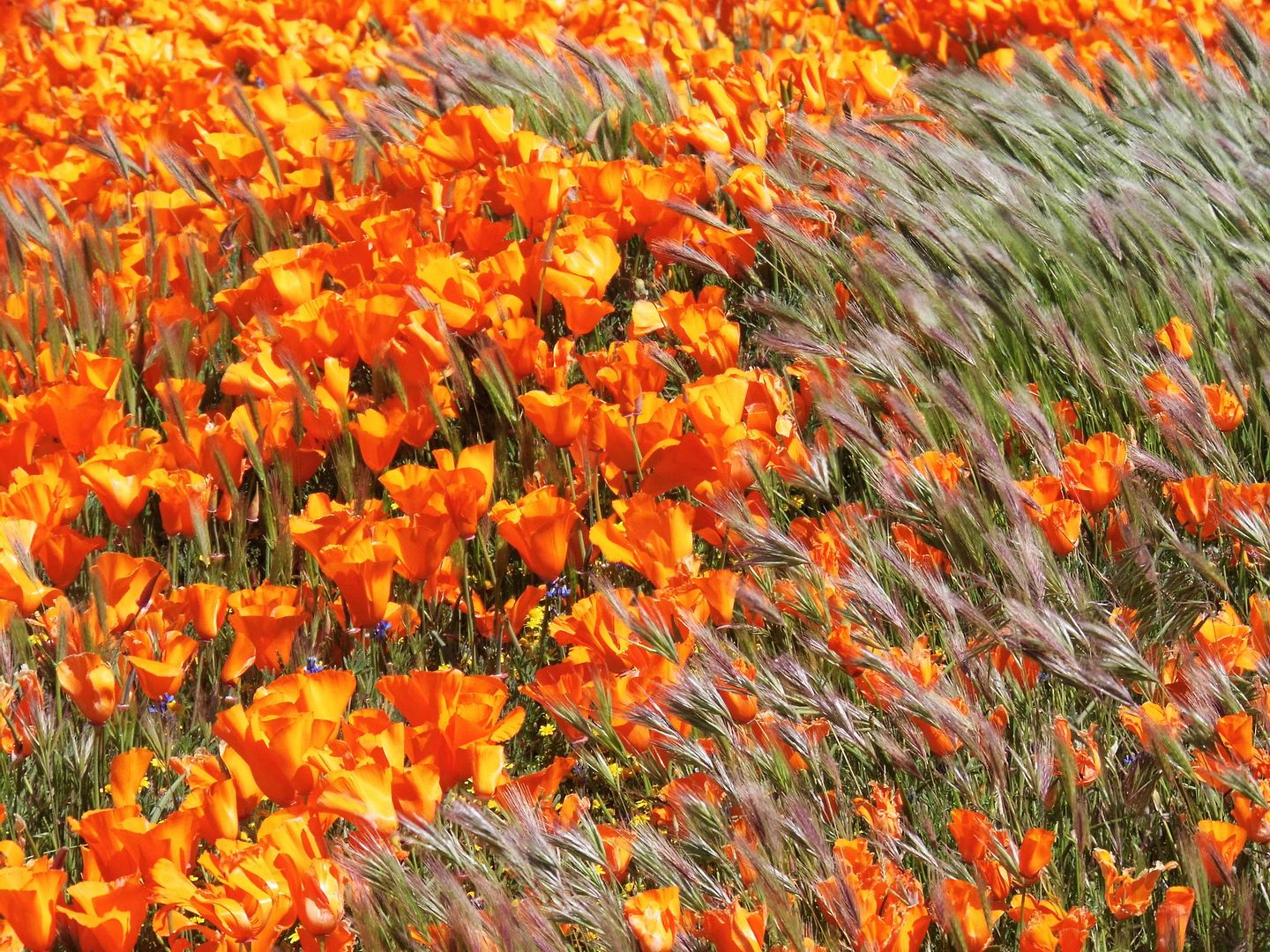
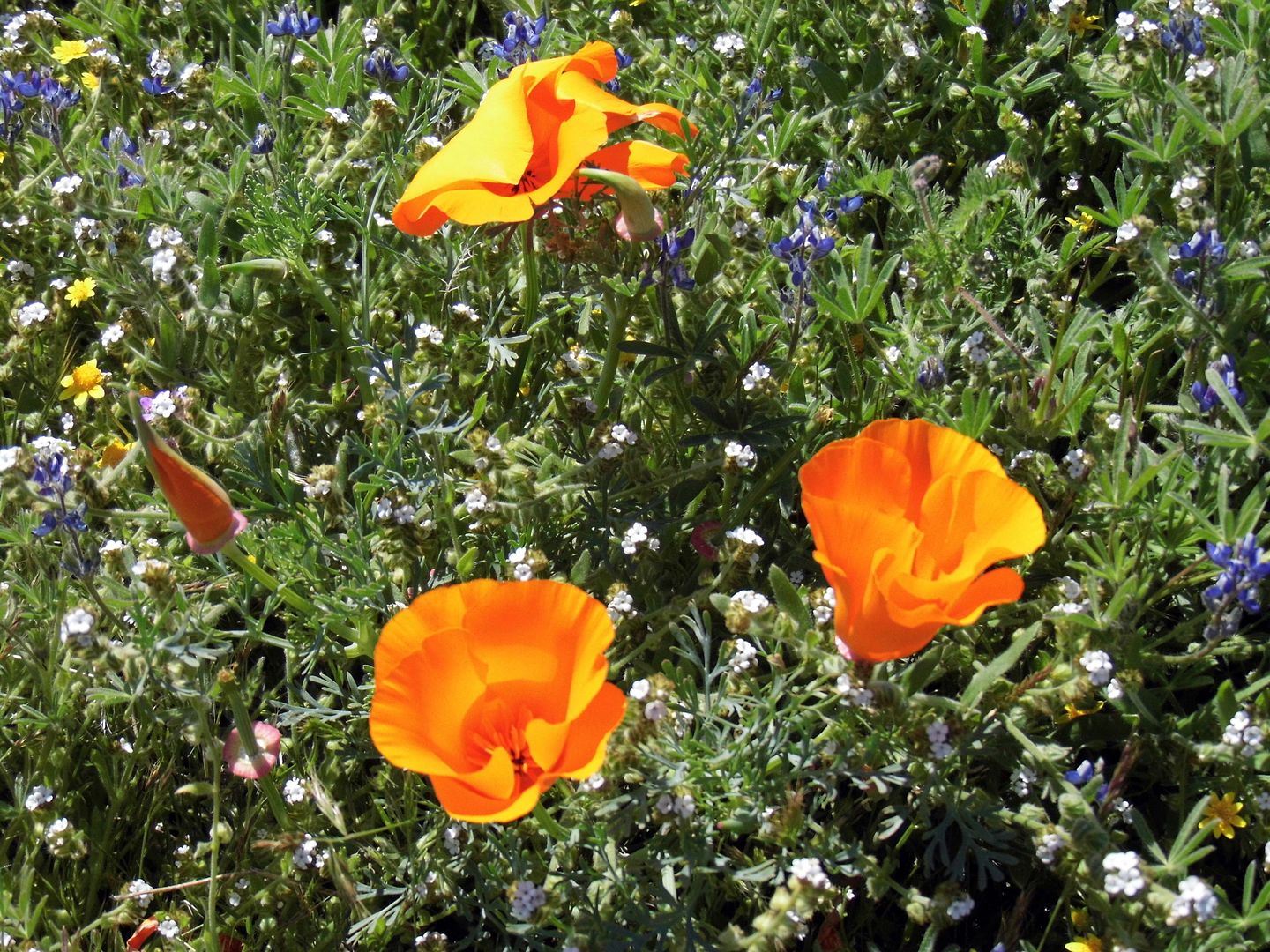
It wasn't just the orange poppies, but also purple owl's cover and yellow fiddlenecks, goldfields, and monolopia...


...set against the backdrop of blue and white pointillism that only becomes clearer, the closer you get.


For a long time, mine was the only car on that dirt road—until perhaps my presence alerted another carload to the scene and solitude.

I drove out shortly after their arrival, once I'd gotten my fill.

But I didn't join the groups alongside the paved road that were also breaking quarantine. I didn't need people yet.

I just needed to bear witness to life going on without me—even from a distance, even from just the dirt road.

The flowers were pristine from not being trampled by the masses. And I wasn't going to be the one to trample them.

I wasn't going to tell anybody, either—not until they were already long gone.

Next wildflower season, maybe the world will be somewhat "back to normal." But this year, it kind of felt like I got to keep the wildflowers as my own little secret.

Related Posts:
Photo Essay: Poppies Peaking in Antelope Valley
The Most Orangey Orange I've Ever Seen
Photo Essay: Wildflowering at Poppy Peak

March 13, 2021

Upon the One-Year Anniversary of the Pandemic Times

"How long do you think this is gonna go on?" my friend asked.

"At least a couple of months," I said, despite the authorities telling us it would only be three weeks. 

"Really? That long, you think?" she said. 

"Oh yeah."

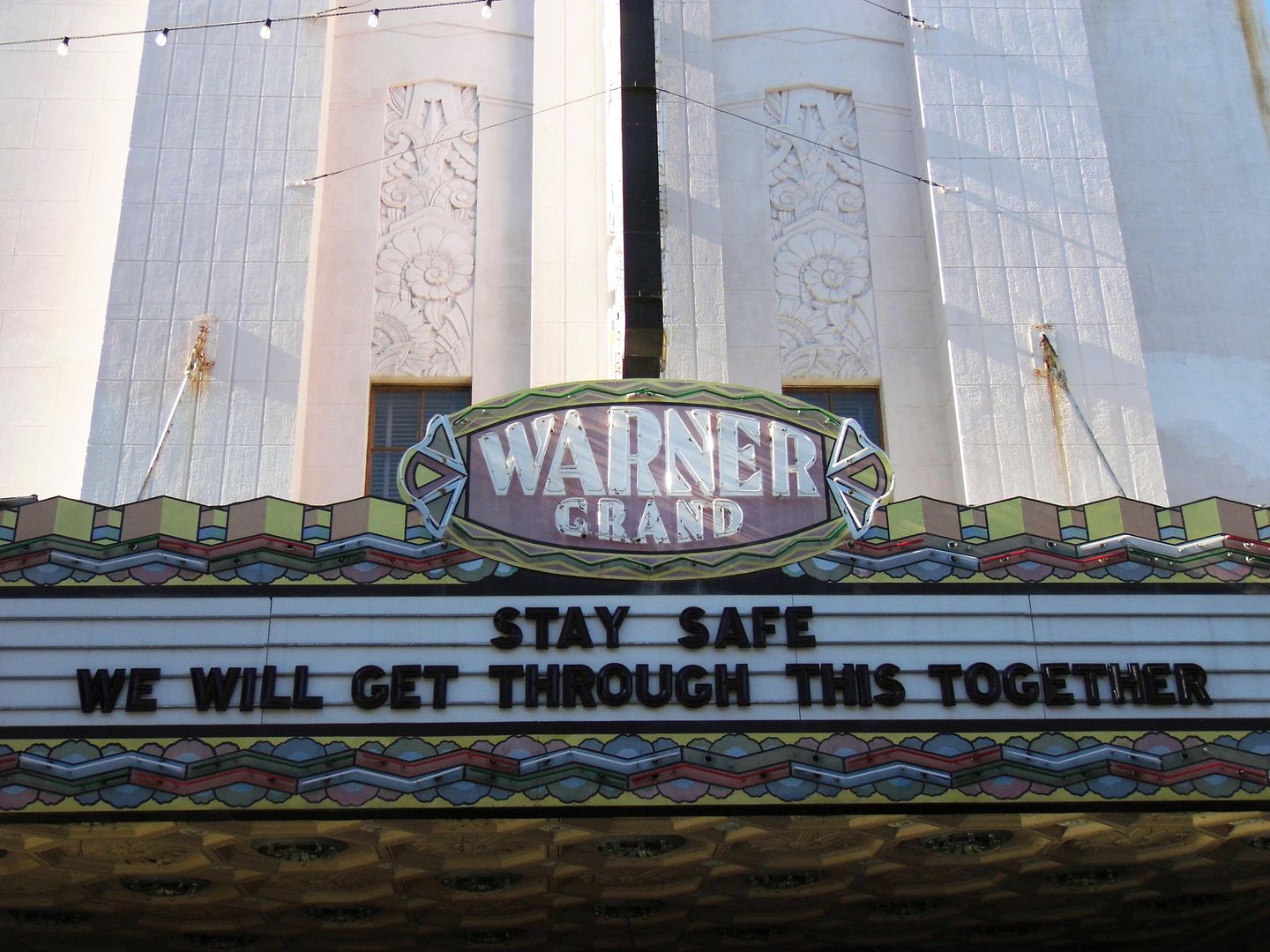
 Warner Grand Theatre, San Pedro (taken 4/25/20)

December 21, 2021

Year-In-Review: 2021 Updates to Past Posts

It feels like there were more changes to report on this year than in years past. Maybe that's just because I've gone to more places now.

But things have been changing pretty rapidly since the onset of the COVID-19 pandemic—and sadly, there have been a lot of closures. 

It's not all bad news, though. Some places have come back to life. And some places have managed to hold on this whole time. 

So you've got them all in one place, here are some updates to my past posts to try to keep them as current as accurate as possible. 

March 23, 2025

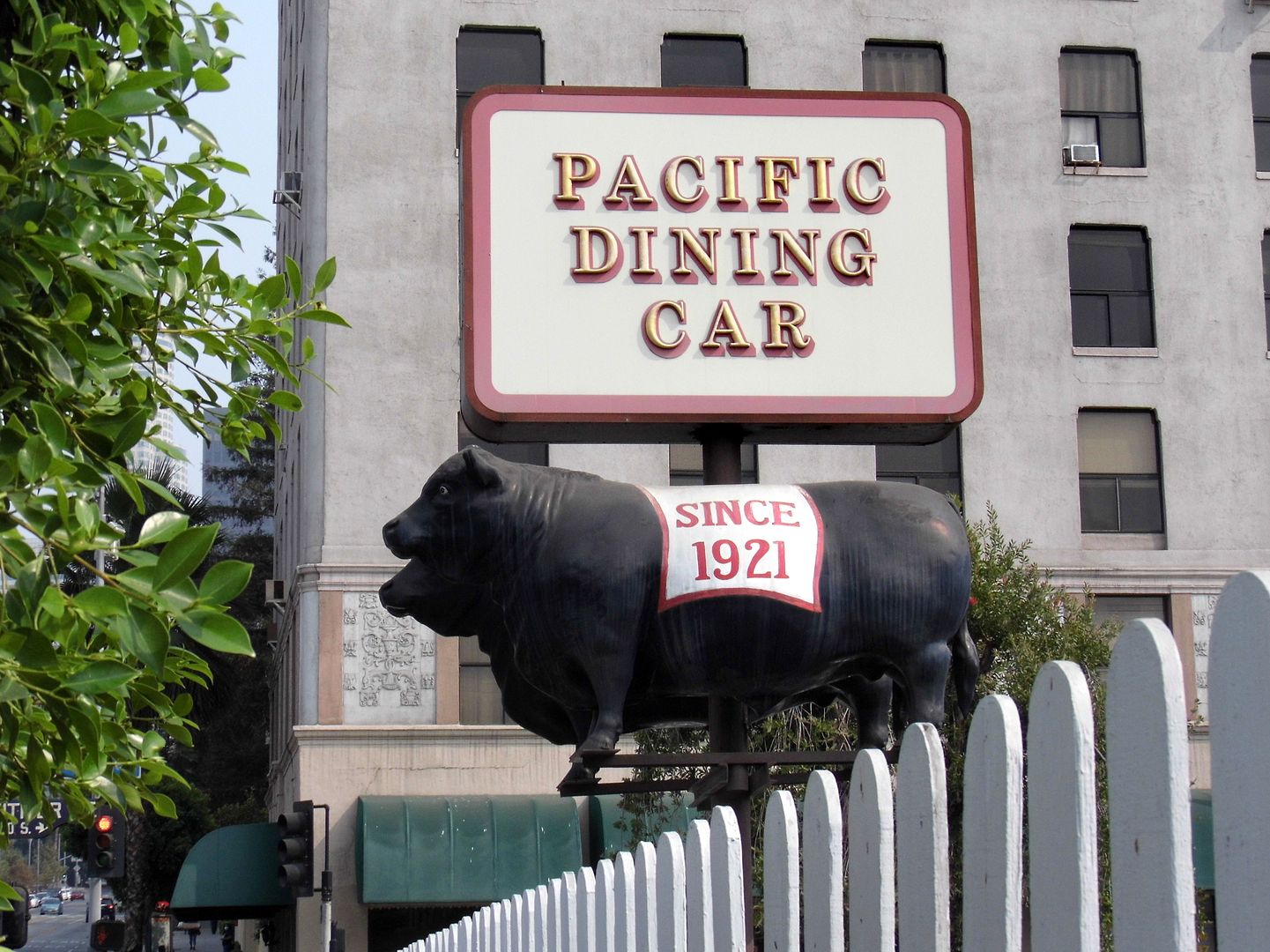
Photo Essay: The Long Goodbye to Pacific Dining Car

I hadn't yet written about the 2020 closure of one of my favorite LA institutions, Pacific Dining Car, because I was in denial. I thought once the COVID-19 pandemic was over, really over, it might reopen.


May 31, 2021

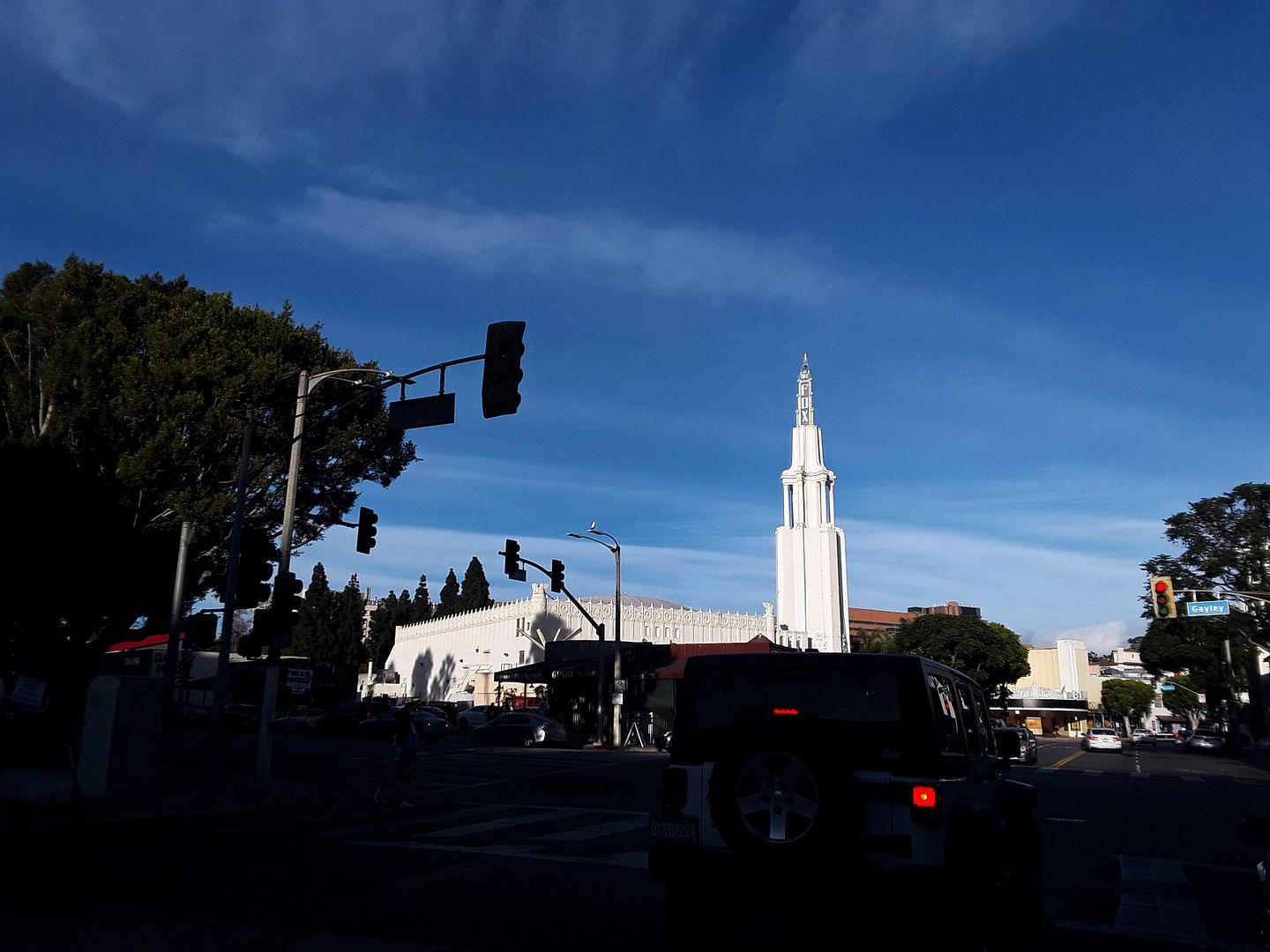
Photo Essay: The Former Fox Movie Palace in UCLA's Backyard [Updated for 2024—Temporarily Closed]

[Last updated 7/26/24 10:22 AM PT—The Regency Village has been purchased by a consortium of Hollywood directors and producers, including Jason Reitman, Steven Spielberg, and Bradley Cooper. It closed in July 2024 for a renovation and expansion under its new ownership.]

It's one of those LA places I'd passed by all the time—but never made enough of an effort to go inside. 


March 25, 2025

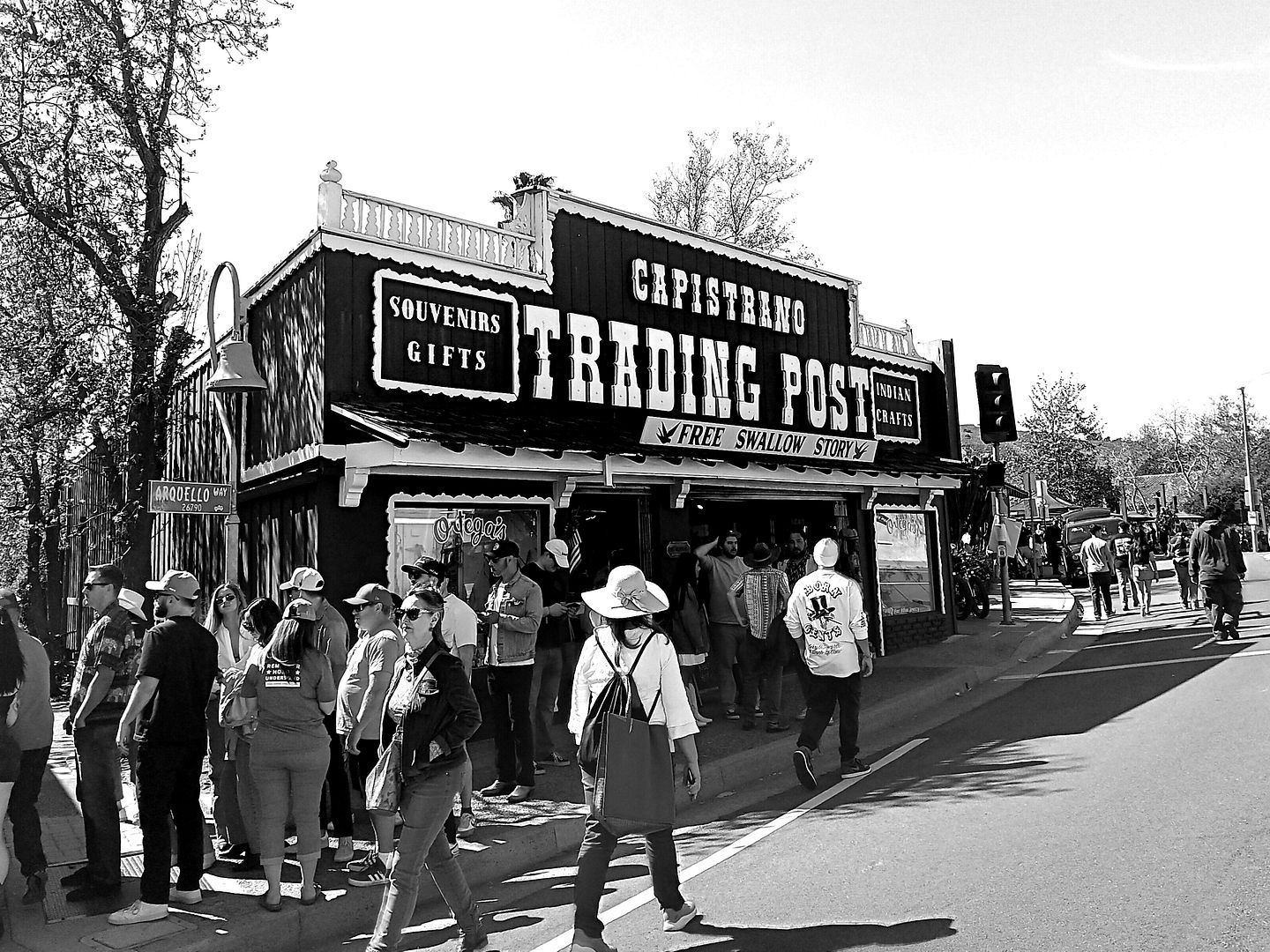
Photo Essay: Happy Swallows Day ( ¡Felicidades para la Fiesta de las Golondrinas! )

When you go shopping at Ortega's Trading Post in San Juan Capistrano, you get a free copy of the "Swallow Story," the tale of the local birds known as cliff swallows.


It goes like this:

"With the arrival of early dawn on St. Joseph's Day, the little birds begin to arrive and begin rebuilding their mud nests, which are clinging to the ruins of the old stone church of San Juan Capistrano...

After the summer spent within the sheltered walls of the Old Mission in San Juan Capistrano, the swallows take flight again, and on the Day of San Juan, October 23, they leave to return to their winter home in Goya, Argentina after circling the Mission bidding farewell to the 'Jewel of All Missions.'"

Legend has it that in the early 20th century, swallows had become such a nuisance to the townspeople that a shopkeeper started knocking down their nests with a broom. 

The pastor of the Mission at the time, Father St. John O'Sullivan, wrote in his story Capistrano Nights that he called out to them: 

"Come on swallows, I'll give you shelter. 
Come to the Mission. 
There's room enough there for all." 

Thus, celebrating the Return of the Swallows on St. Joseph's Day, March 19, has been an annual tradition at Mission San Juan Capistrano since the 1920s. 

And now, the Swallows Day Parade—held on the following Saturday—just celebrated its 65th year. (It had to skip 2020 and 2021 because of the COVID-19 pandemic; and it had to go on without horses due to an equine virus outbreak in 2022.)

November 27, 2022

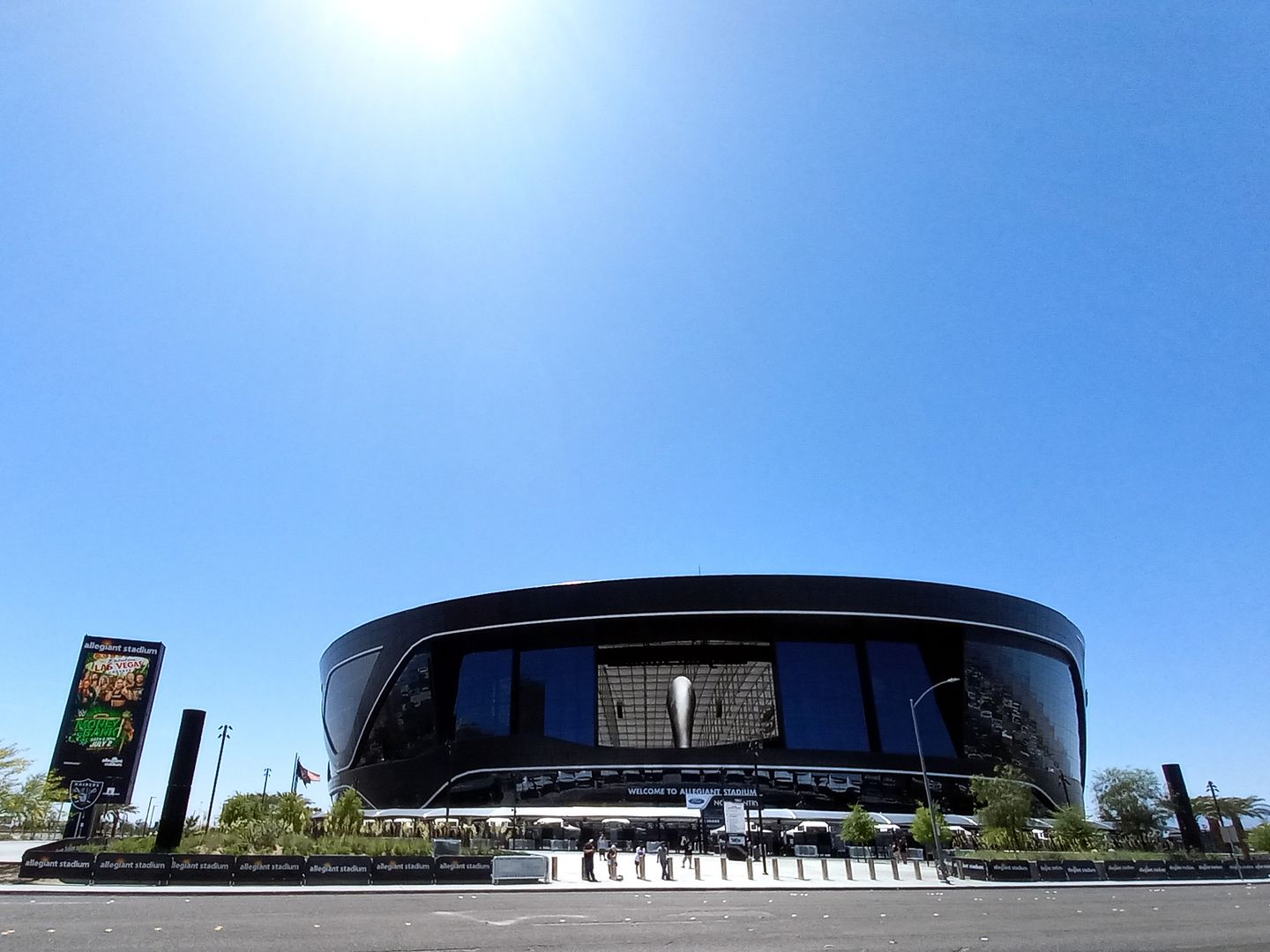
Photo Essay: The Most Vegas-y Football Stadium Ever Is Now Home to the Raiders (And the 2024 Super Bowl)

Once again, football season has rolled around—and although I took the tour of Allegiant Stadium in Las Vegas back in May 2022, I waited until now to post about it.

 
It was purpose-built (on land that's always been a vacant lot, according to HistoricAerials.com) as the National Football League stadium of the Las Vegas Raiders—formerly the Oakland Raiders (1960–1981 and 1995–2019) and, when I was growing up and watching American football with my dad, the LA Raiders (1982–1994). They relocated to Vegas in 2020, although that year they played to an empty stadium because of the COVID-19 pandemic.

April 21, 2018

Breathing New Life Into the Eyesores of Downtown LA (Updated for 2022)

[Last updated 12/11/22 10:19 PM PT—The NoMad Hotel closed in 2021 during the COVID-19 pandemic, and the Hotel Per La opened in its place in 2022. For photos inside the redesigned hotel, click here.]

They say that the "greenest" building is one that's already been built.


Because no matter how high of a LEED standard a new structure adheres to, the environmental impact of building it from scratch is far greater than reusing an extant one that might be less energy efficient.


Besides, when it comes to interior design—at least in LA—everything old is new again.


Why build something new, just to make it look old? (See also: all of our  newly constructed "Art Deco" and "speakeasy"-style bars and nightclubs.)


And yet so many buildings stand vacant for so long (something that's particularly painful when you see so many homeless camped out outside of them, in a time when we're experiencing a major housing shortage).


The Giannini Building, for example, had become an eyesore at the corner of Olive and 7th Street in Downtown Los Angeles, standing vacant for nearly two decades.


Formerly the Bank of Italy headquarters (named after its founder, Amadeo Giannini), the palatial, 12-story high-rise was dedicated in 1923 and opened to much fanfare—thanks in no small part to the neoclassical design by Morgan, Walls & Clements. At the time, Bank of Italy was the largest bank in the West (and would become Bank of America in 1930).


Its founder pioneered the idea that banking was for regular folk and not just the rich. So, the bank pursued potential customers whose banking potential had been heretofore underestimated—namely, women and children—to fill its 12,000 safety deposit boxes.


The main vault door is one of the only significant features of the opulent bank building that remains.


Weighing 50 tons, it now protects a small lounge area...


...and the public restrooms.


Upstairs, the former offices had already been gutted, leaving little of historical value to be preserved when the Sydell Group took over the building (with some help from billionaire investor Ron Burkle) and renovated it into the NoMad Hotel Los Angeles.


The rooms have been outfitted with vintage-inspired furnishings and decor (as have the public areas like the lobby and the Mezzanine restaurant). [Ed: Not sure how the Hotel Per La's rooms differ from the NoMad.] However, unlike Giannini's original vision for it, this building is no longer for ordinary people with just a little bit of money to sock away. Rooms start at $280/night ($320/night if you want the nice bathtub) and go as high as $800/night for a corner suite.


The rooftop bar has just opened up to the public...


...though the pool is still reserved for guests of the hotel.


Besides the sweeping views of Downtown LA, the rooftop also offers a little bit of Italy in the form of Orcus, god of the underworld. The statue at the far end of the pool is a replica of one found in the  16th century "sacred grove," Sacro Bosco, in northern Italy.


Up there, you can also get a good look at the Italiante cornice...


...which, though original to the building, also underwent some recent restoration work (as did the terra-cotta panels on the building exterior, some of which had to be replaced).


The Sydell Group wasn't satisfied with reinvigorating just one historic DTLA building by converting it into a fancy hotel—it also set its sights on yet another infamous eyesore, the Commercial Exchange Building.


Built in 1924, it, too, had stood vacant and languishing for 20 or so years...


...despite having a rich history, a solid architectural pedigree, and one of the tallest neon blade signs in LA.


Designed by Walker & Eisen (known also for their work on the Taft Building in Hollywood, the Fine Arts Building, the Oviatt Building, and Hotel Normandie), the 13-story, Beaux Arts-style building actually retained a lot of its original character, despite its extended vacancy.


A lot of original decorative features had been boarded up over the years...


...and were revealed when restoration work (which frequently means excavation) began.


And those original decorative features at the storefront level—particularly a long-hidden medallion over a doorway—were retained as the Commercial Exchange Building transformed into the Freehand Hotel.


In fact, according to preservation guidelines, they had to be saved—and, unlike its neighbor a block away, the interior of the Commercial Exchange Building was largely intact.


That means you'll see original coffered ceilings and marble stairways...


...as well as more original tile, which has been seamlessly integrated with new design motifs.


Upstairs, the former offices—including one once occupied by Tarzan author Edgar Rice Burroughs—have been converted into either traditional hotel rooms or shared, bunk-style hostel rooms.


Unlike the NoMad, the Freehand does welcome a more cost-conscious customer—particularly international travelers.


And while the Freehand embraces the style of "Old Downtown," it also brings the experience of staying there into the 21st century—with a mural that was painted by the art collective Cyrcle and that's only visible from certain guest rooms.


Anyone, however, is welcome to dine or drink at one of the Freehand's many establishments, both in the lobby (at the Exchange Restaurant) and on the roof (at Broken Shaker).

As with the NoMad, the pool is for hotel/hostel guests only, but the view is for everybody.

Related Posts:
Photo Essay: The Biggest Department Store in the West, Subdivided
Photo Essay: The Hotel Californian Neon Comes Back Home
Photo Essay: Farmers and Merchants, the Old Bank with Big Plans