
When you move from New York City to Los Angeles, everybody outside of LA says, "Oh, but you have to drive."
That's not a bad thing to me. I often wished I had a car when I lived in three of the five boroughs. And by the time I moved from Brooklyn to Manhattan in 2003, I'd been avoiding the subway ride home late at night for years already. At one point when I was making enough money, I took cabs to work every day.
But living in Beverly Hills since 2011, I have felt the pinch of not even having the option to ride the subway. If I wanted to, say, ride the Expo line to an event at the Coliseum (so as to avoid traffic and high parking fees), I'd still have to drive five miles (or 20 minutes) and park my car in the Metro lot.
Thank goodness for the bus lines, which have gotten me where I've needed to go many times when my car has been in the shop and I couldn't afford rideshare.
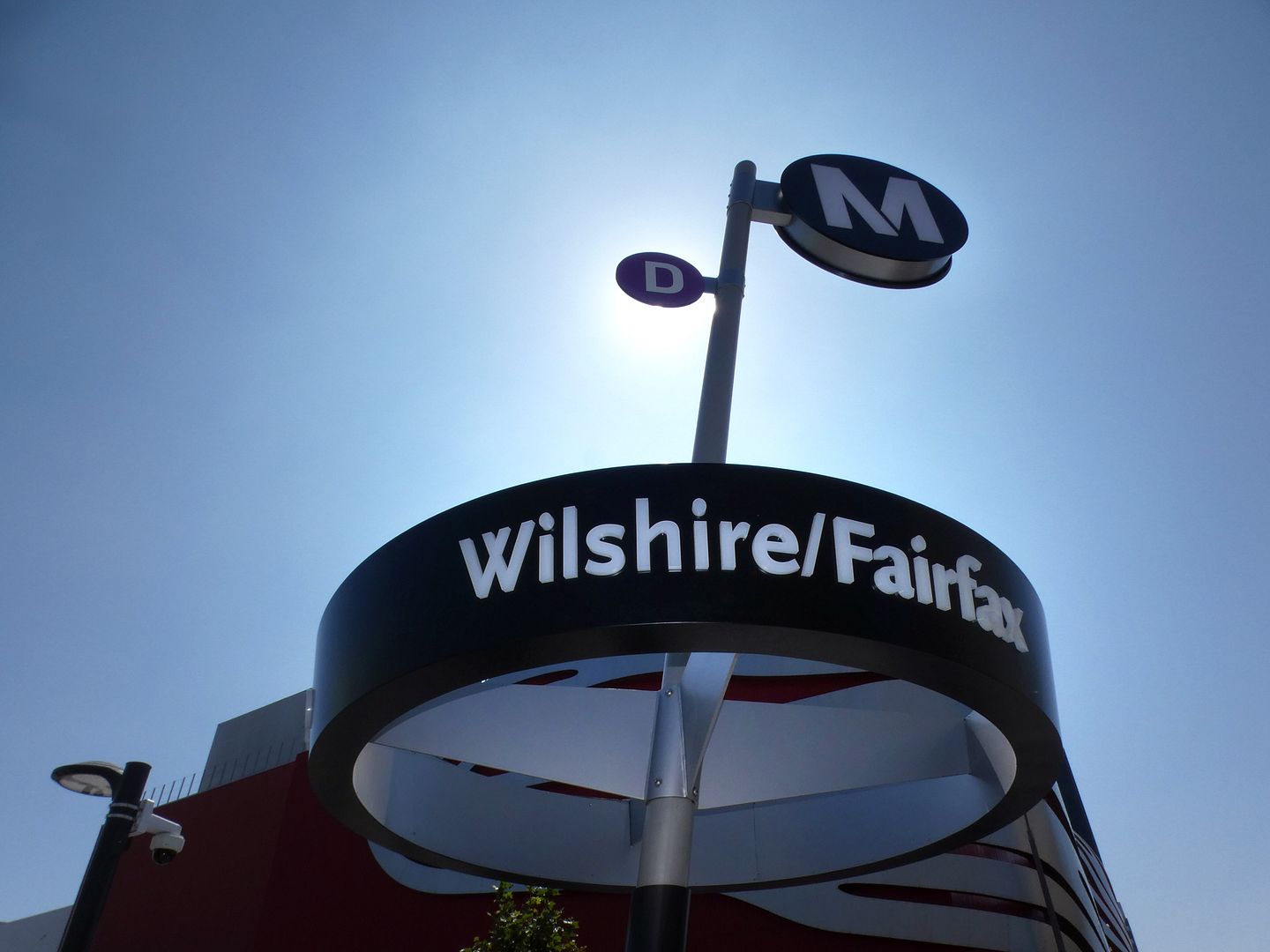
So even though public transit has not been part of my daily routine, I was still excited that the LA subway was finally coming to Beverly Hills, thanks to the Purple Line Extension—or what's now known as "the D."
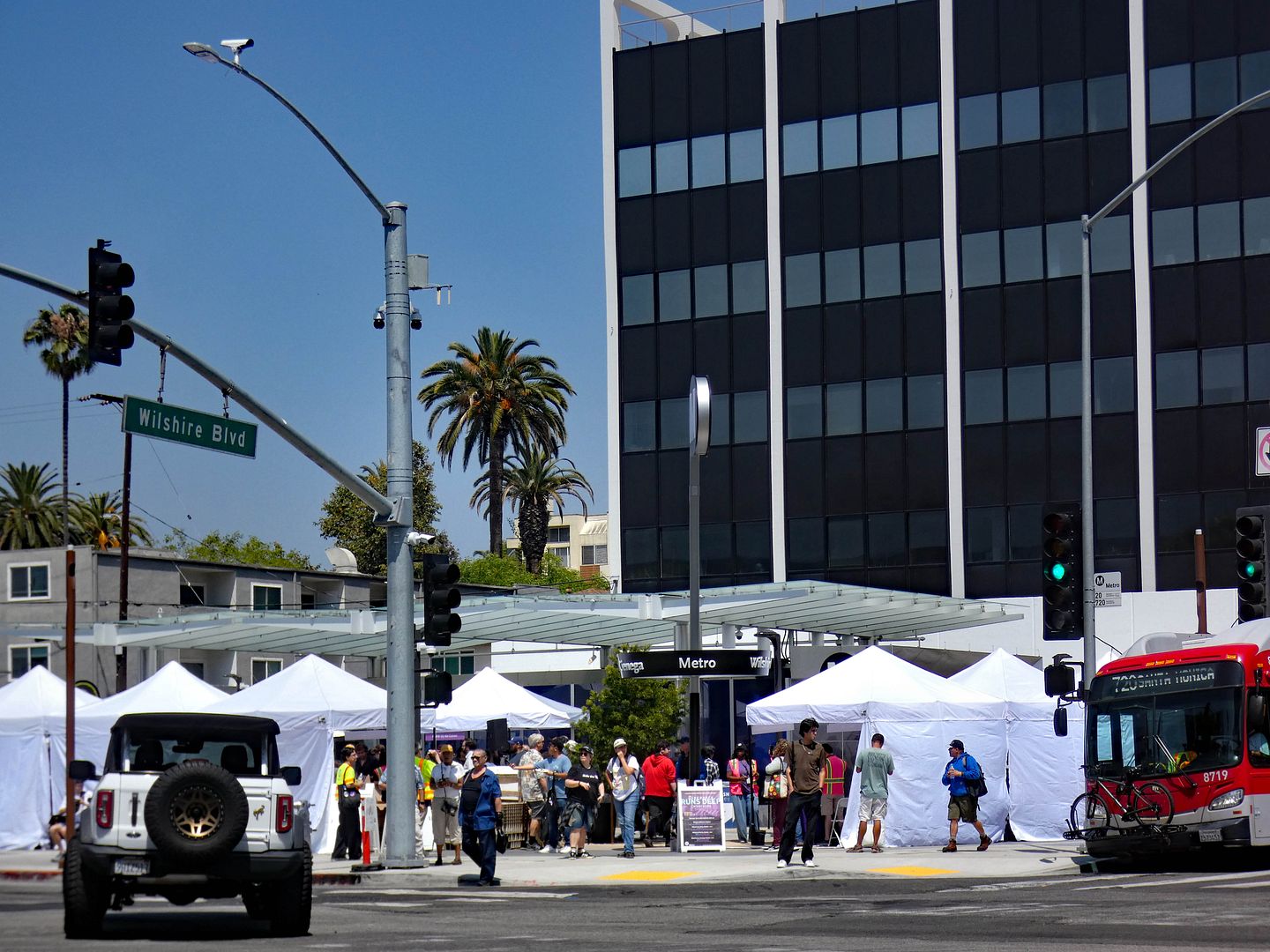
And last Friday, I finally had the chance to ride the D—starting in Beverly Hills, at the new underground station at Wilshire and La Cienega Boulevards.
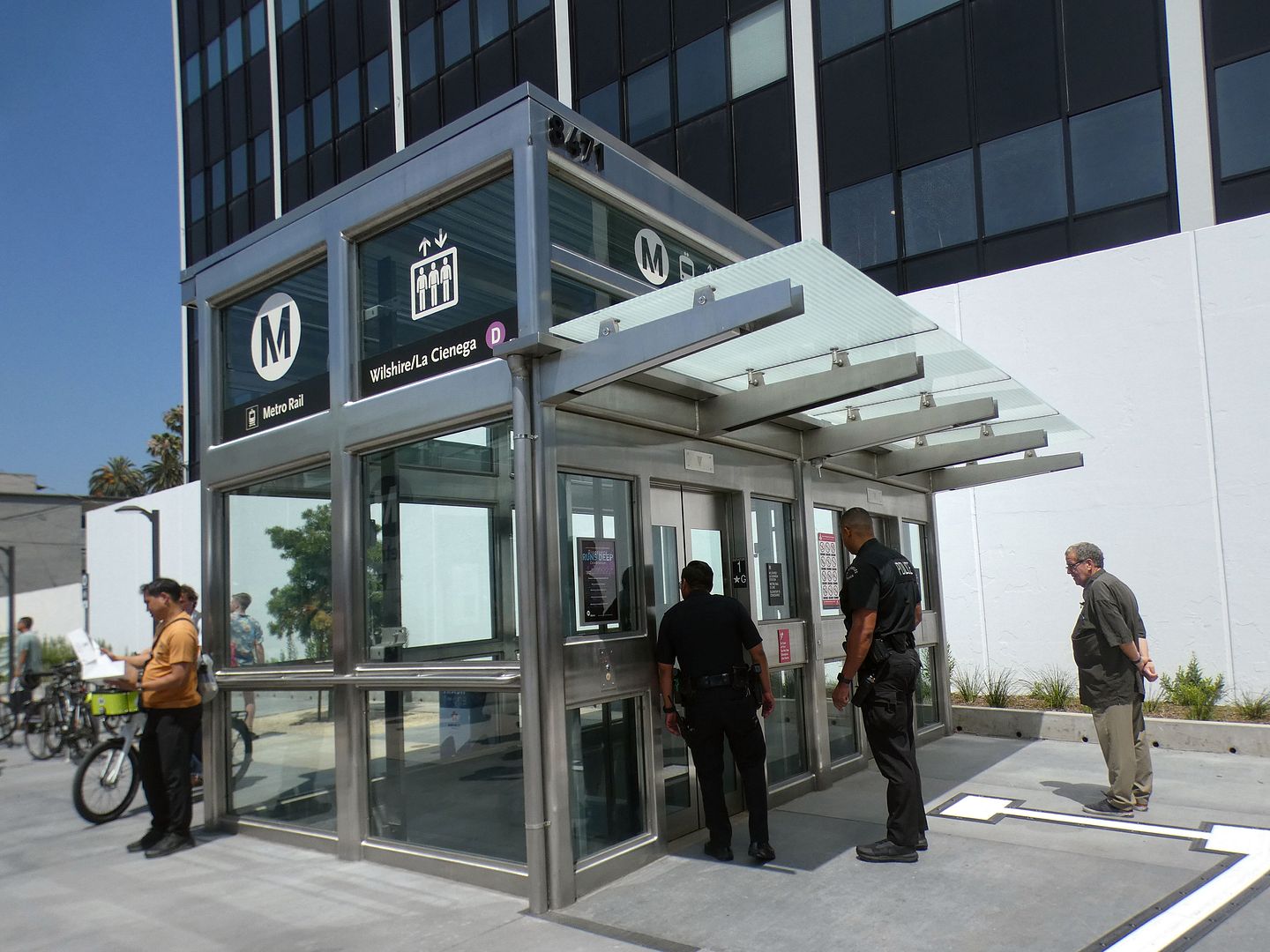
This is in the first of three new sections that will eventually (maybe by Fall 2027?) extend all the way to Westwood and the VA Hospital. They've been working on it since 2014, when funding was originally approved and ground was broken. (Funny enough, it's interrupted a lot of traffic flow along Wilshire for over a decade.)
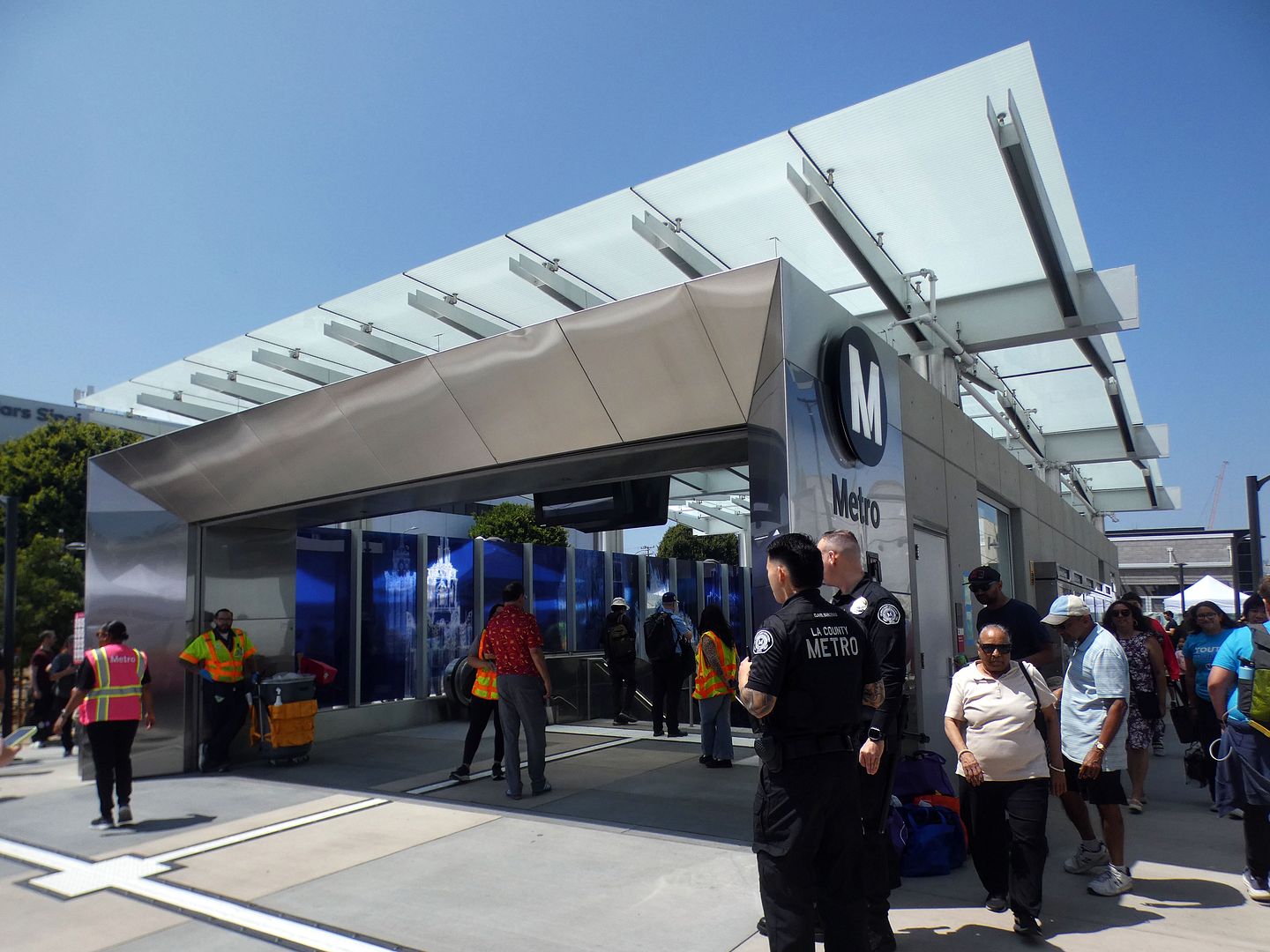
From the outside, the new station entrances look similar to the ones that opened in Downtown LA three years ago as part of the Metro Regional Connector project.
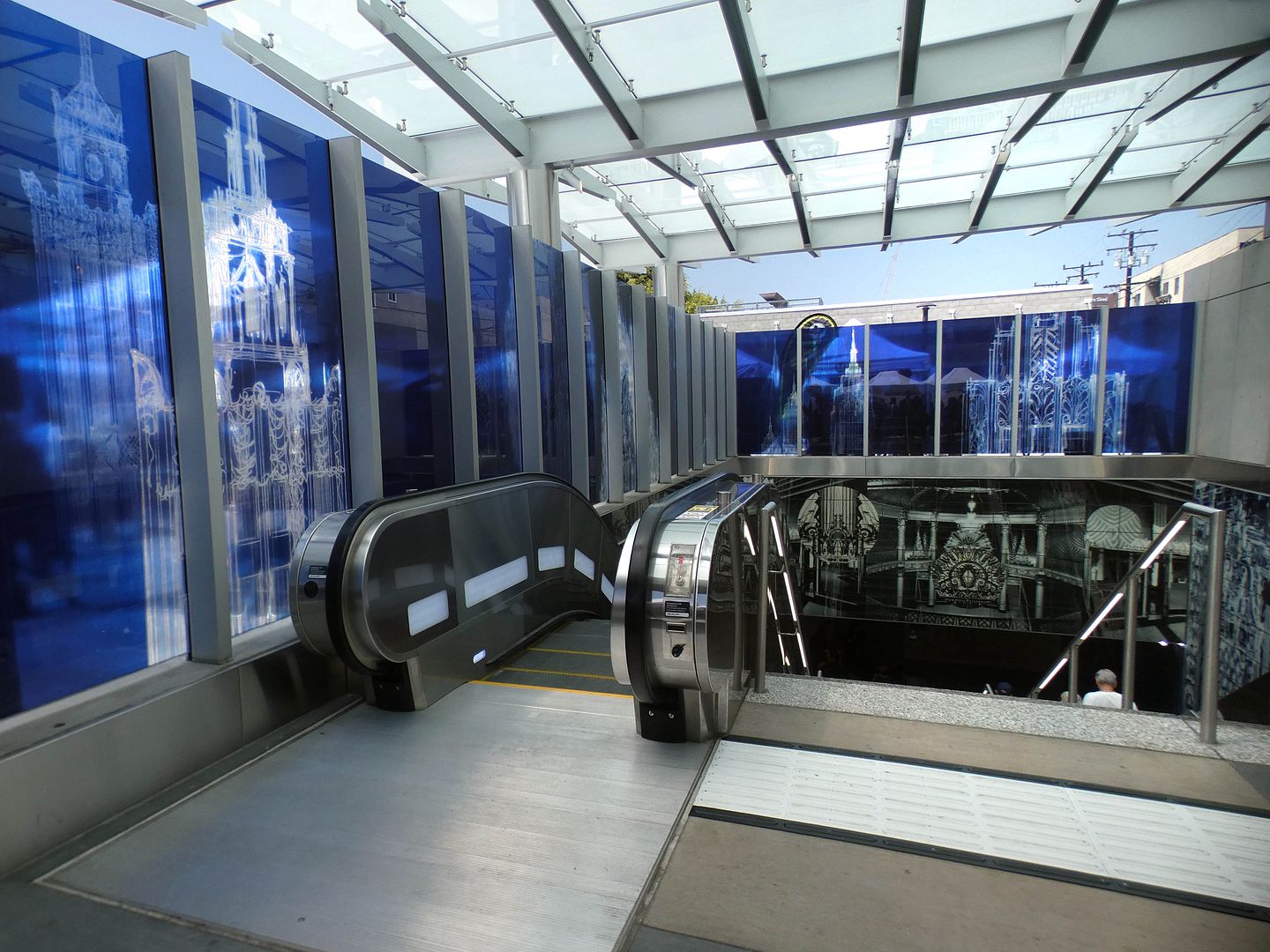
But, like those other stations, these new ones function almost as art galleries with each of their distinct commissions at the entrance plazas, on the concourses, and along the train tracks.
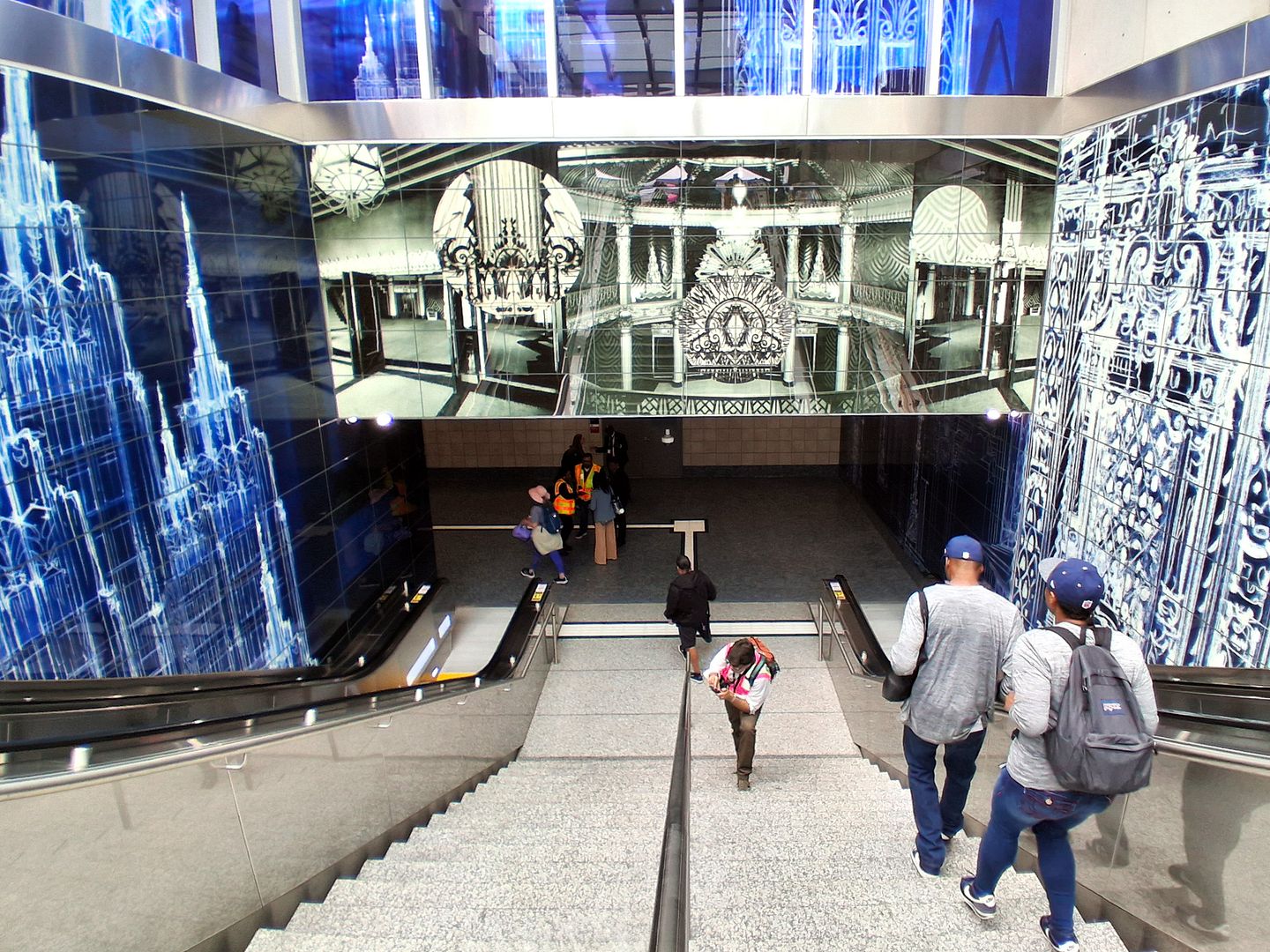
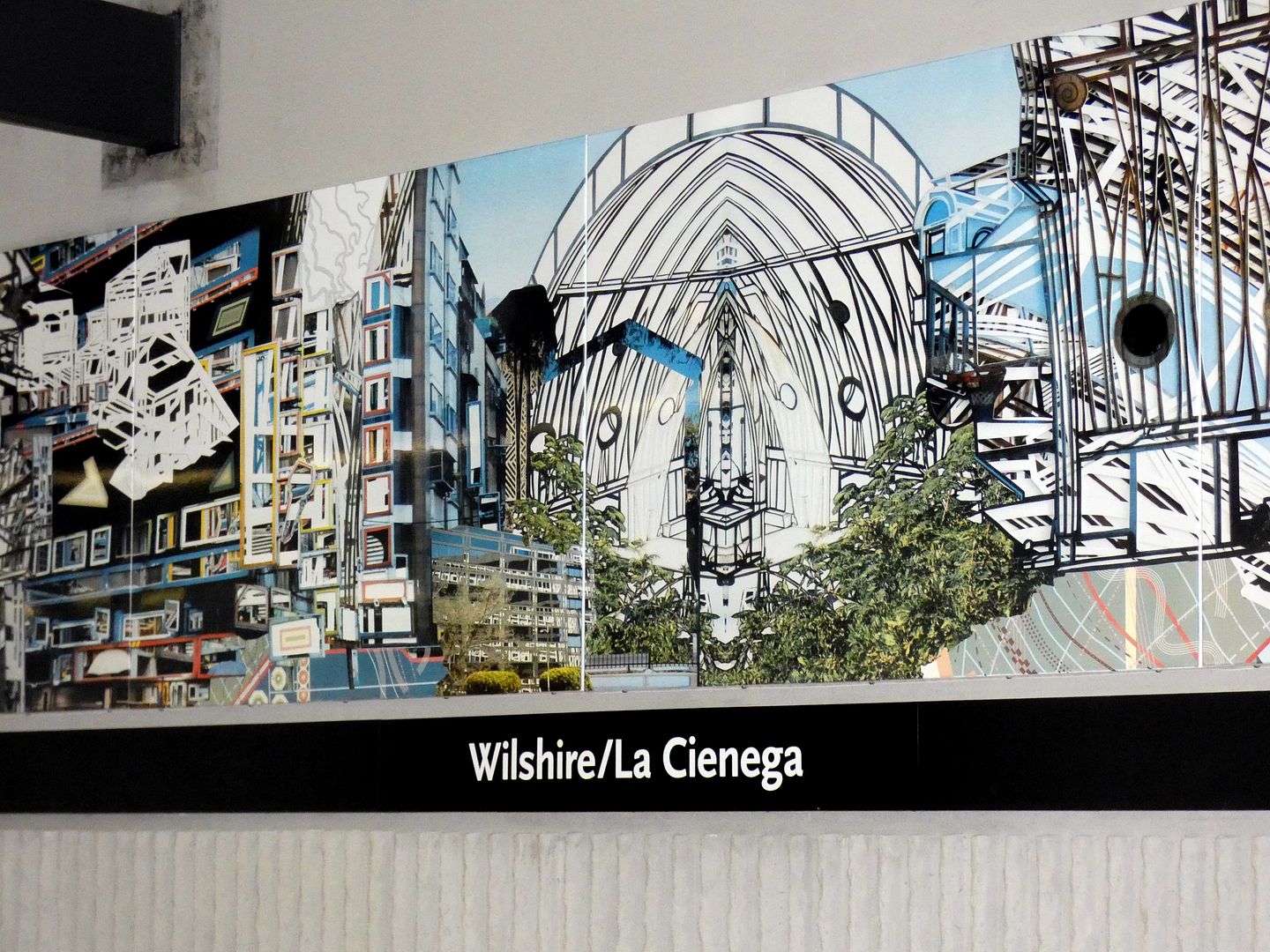
At the La Cienega station, artist Todd Gray covered the station’s glass entrance plaza and escalator landing walls with images from the nearby Saban Theatre—intermingling architect S. Charles Lee's drawings (rendered in blueprint-blue) with historic photographs and multicultural textile patterns.
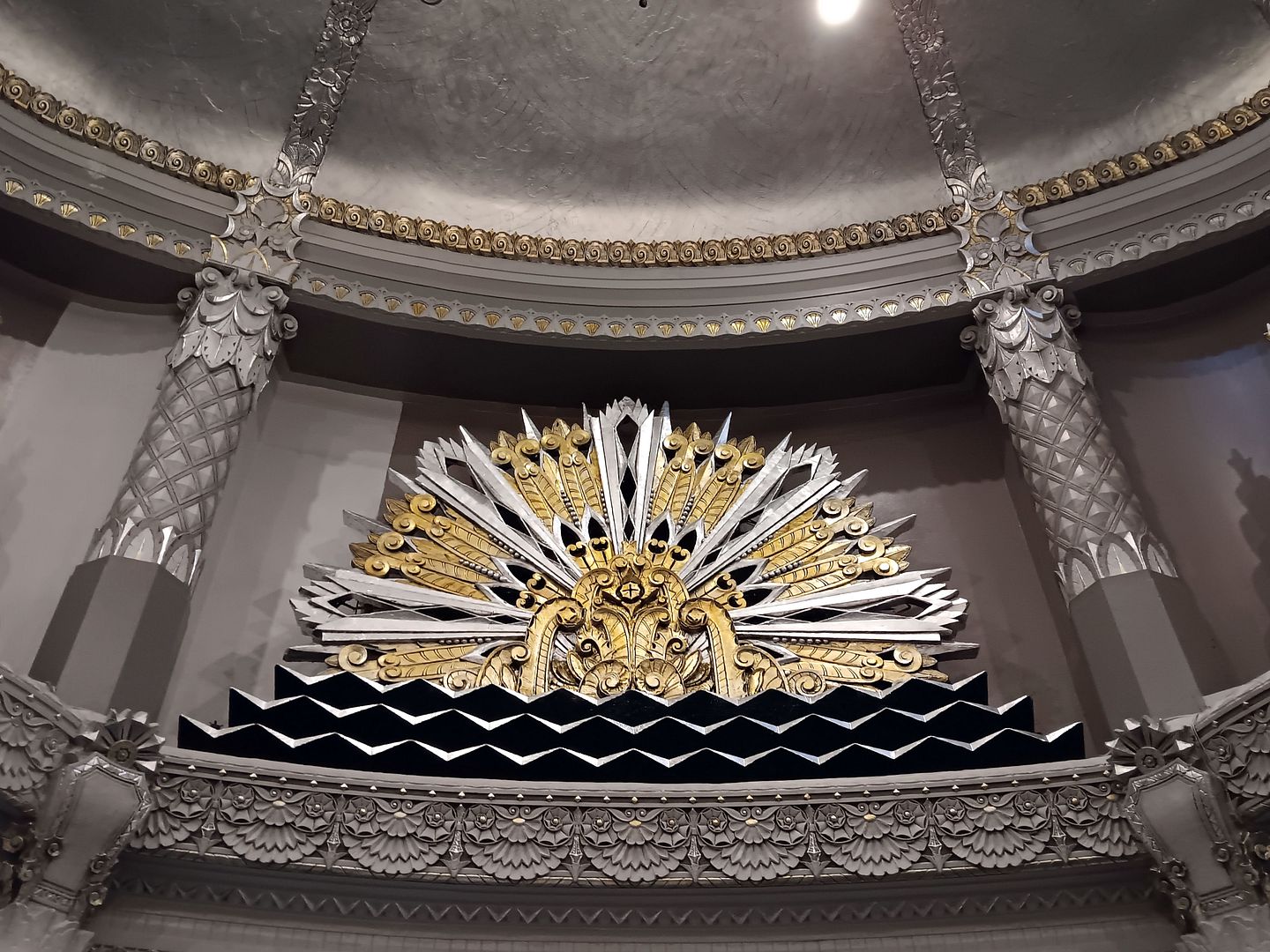
I recognized it right away from when I've attended concerts at the Saban (pictured above in 2023)—but maybe it'll help introduce others to a stunning former movie palace they might never have given a second thought to otherwise.
Either way, the entry is perfectly suited to Beverly Hills' own history and beauty, which perhaps more people will discover now that it's reachable by public transit.
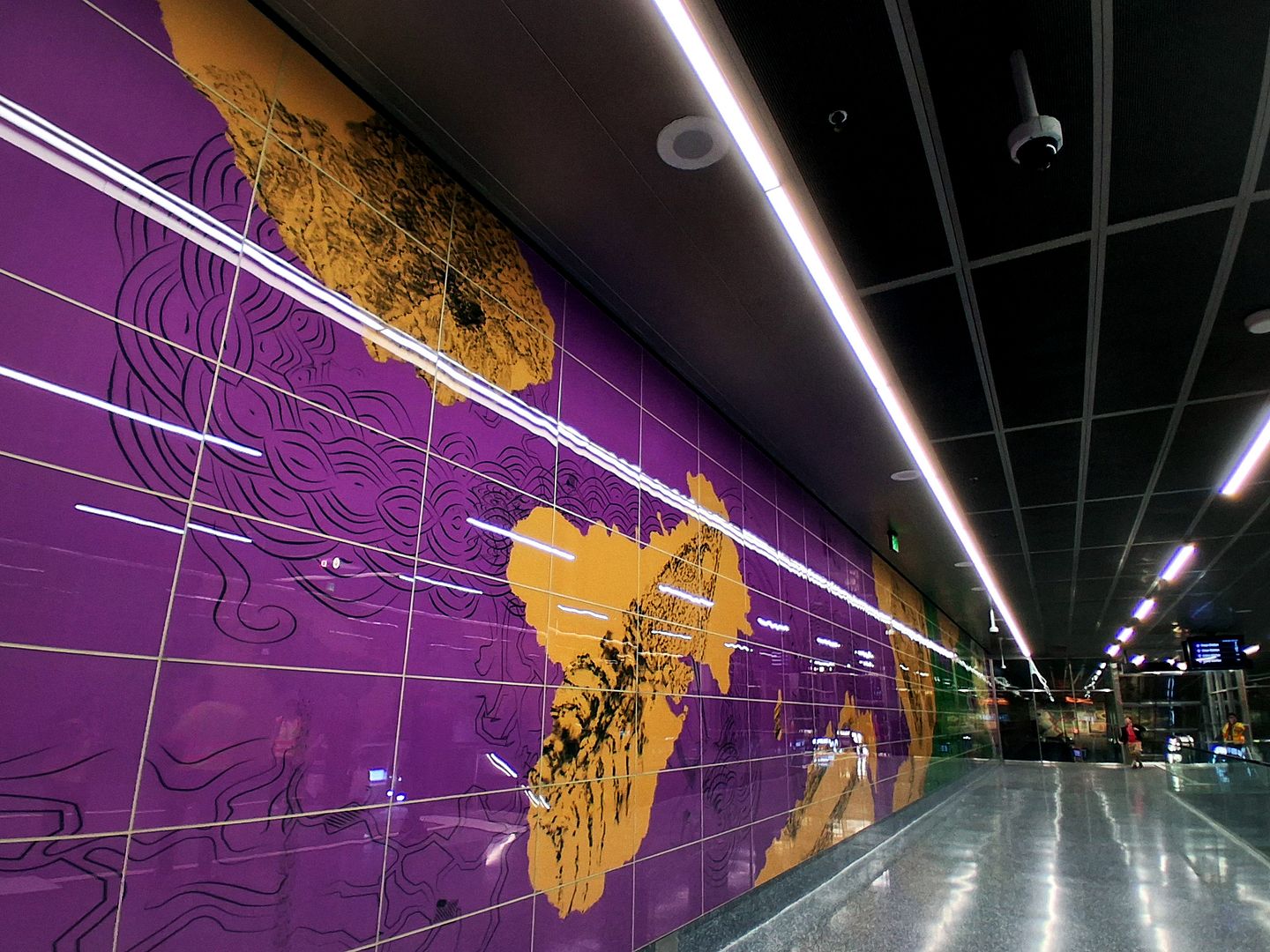
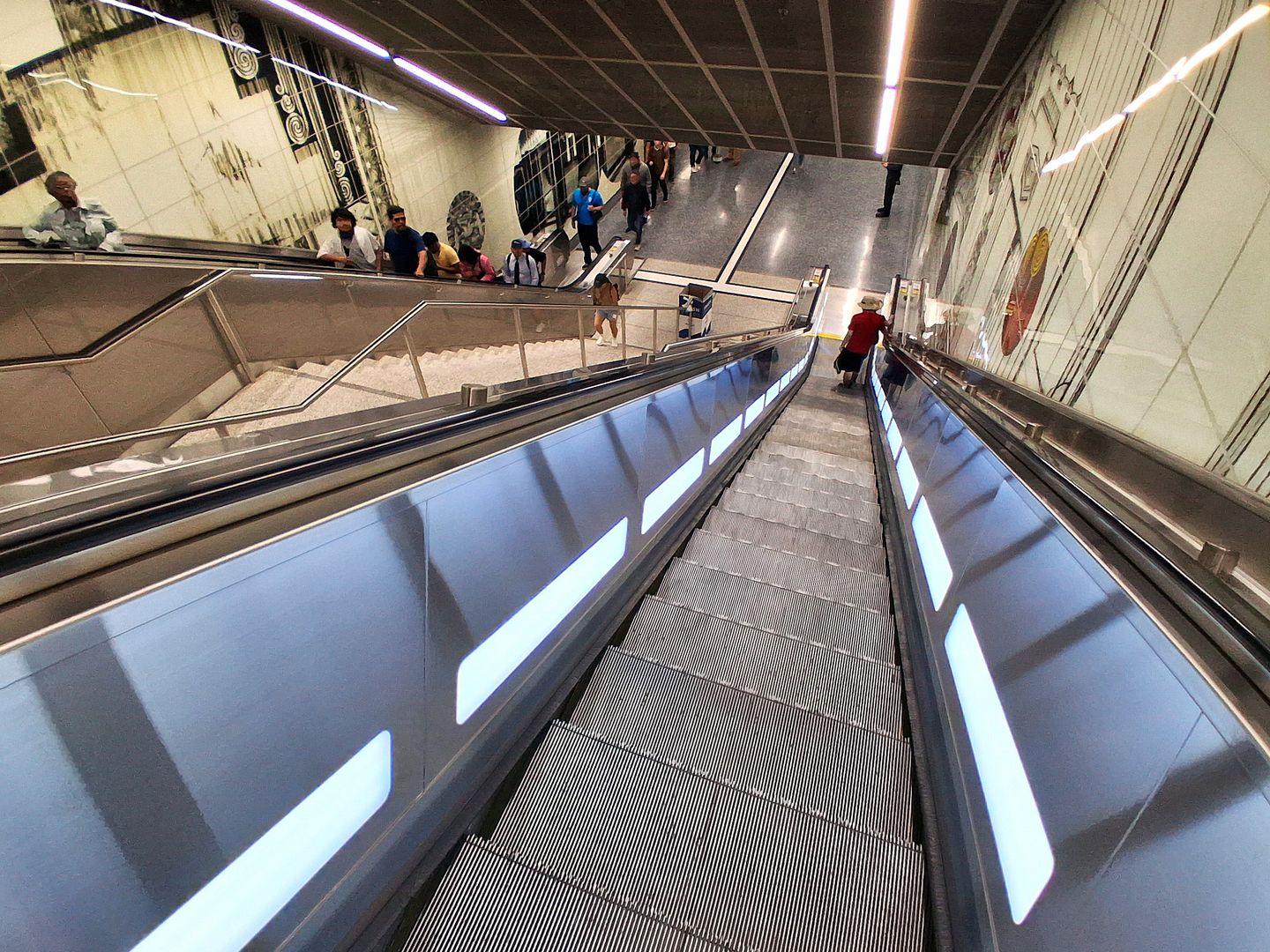
Down below on the concourse, artist Mariana Castillo Deball created a tableau of landscapes featuring fossil rubbings (inspired by actual fossils and bones excavated from the site during construction), cut paper shapes, and imagery of native animals, medicinal plants, and Indigenous artifacts of the former Rancho La Cienega.
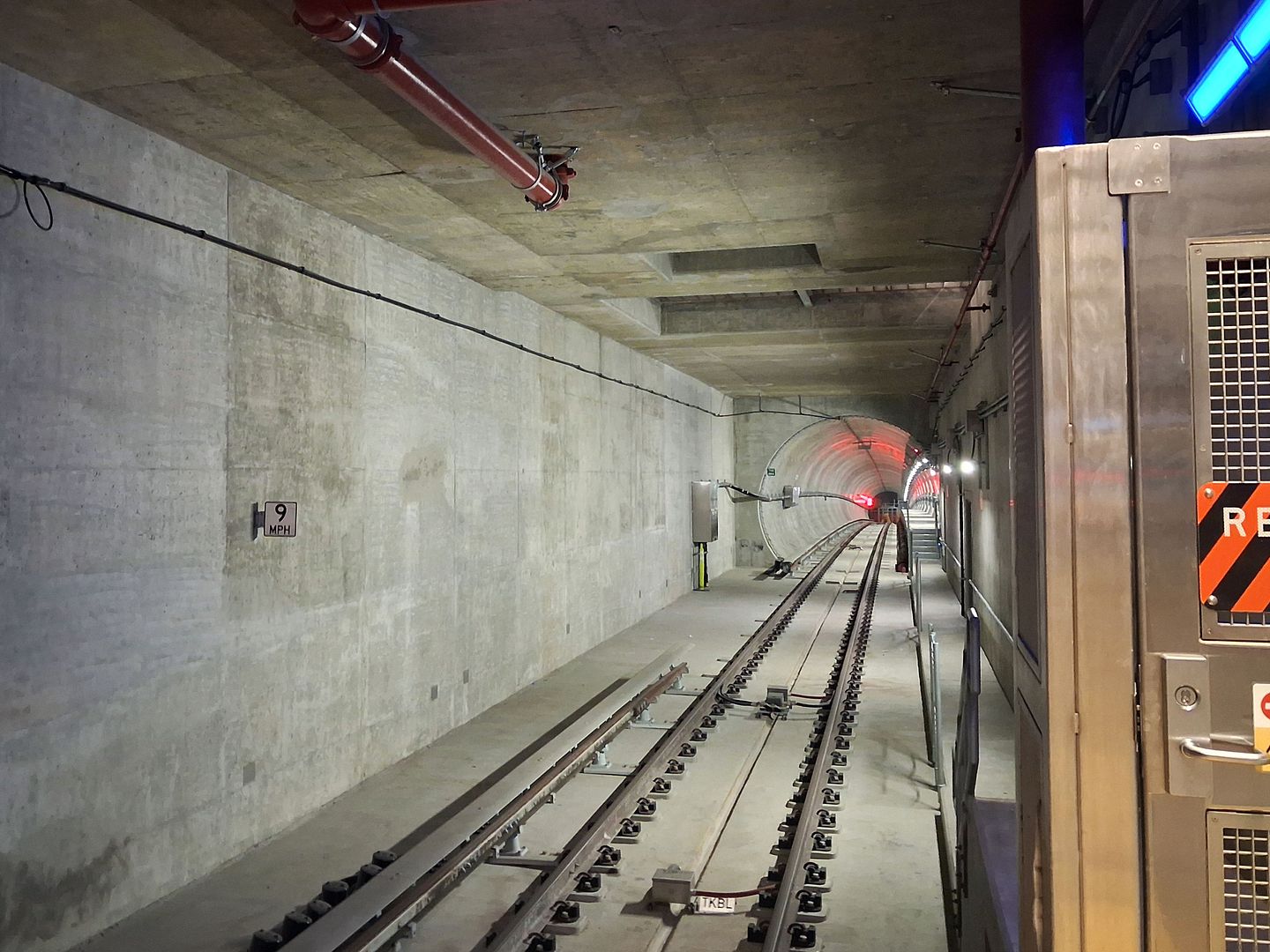
That tunnel project was something else—digging with a Tunnel Boring Machine (TBM) for five years to complete nine miles' worth, at a rate of approximately 40 to 60 feet per day. It was no easy task, considering they had to drill around sticky tar deposits, earthquake faults, and abandoned oil wells.
At nearly four miles long, however, Section 1 of the new extension, however, is just about half that distance—but probably the soupiest, gassiest part. (Cienega, after all, is the Spanish word for "swamp" or "marshland.")
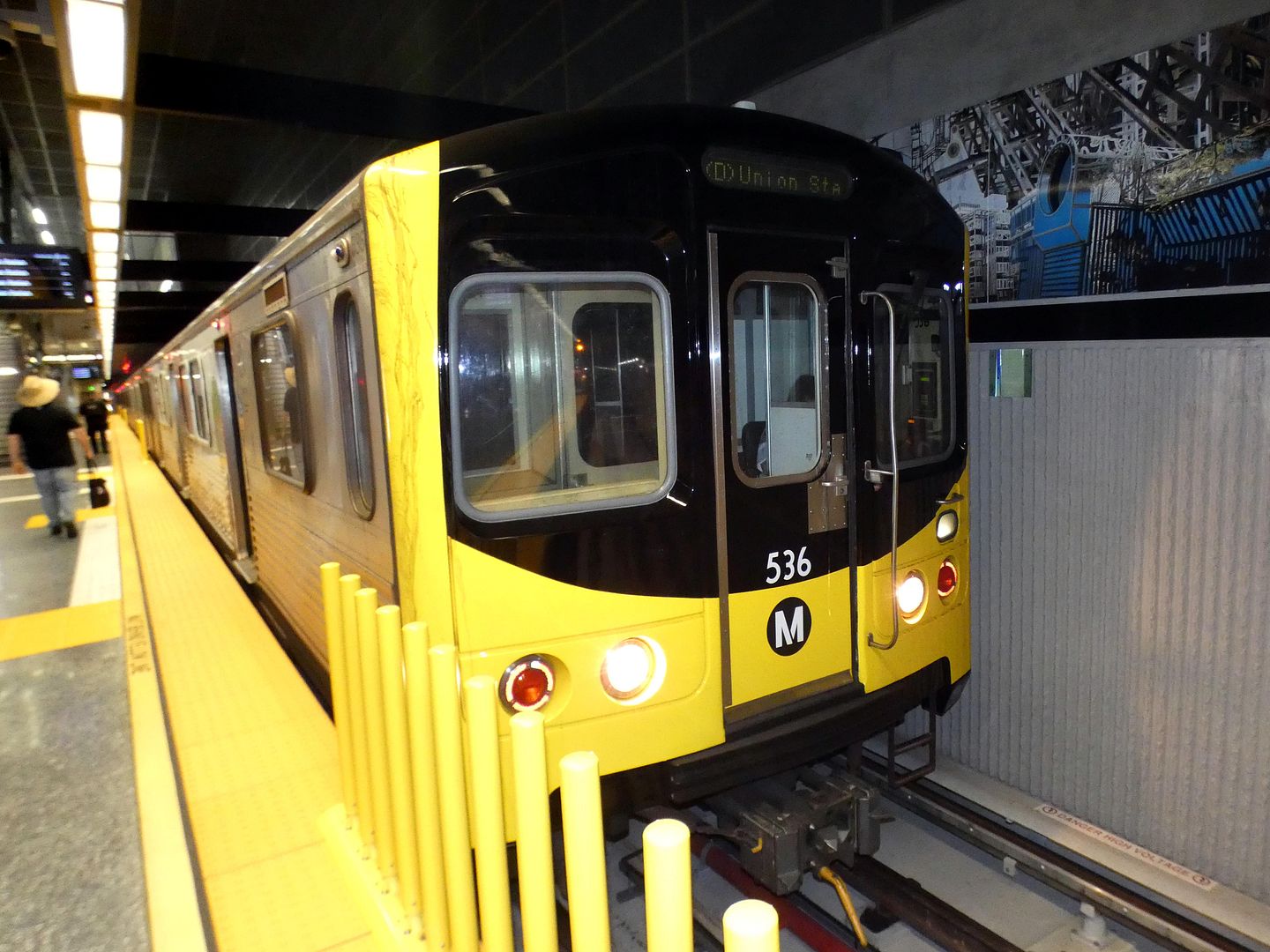
For those of us who feel more comfortable above ground, it takes a bit of a leap of faith to ride the underground trains—but I find that to be true pretty much in any subway system (especially traveling under the East River in NYC).
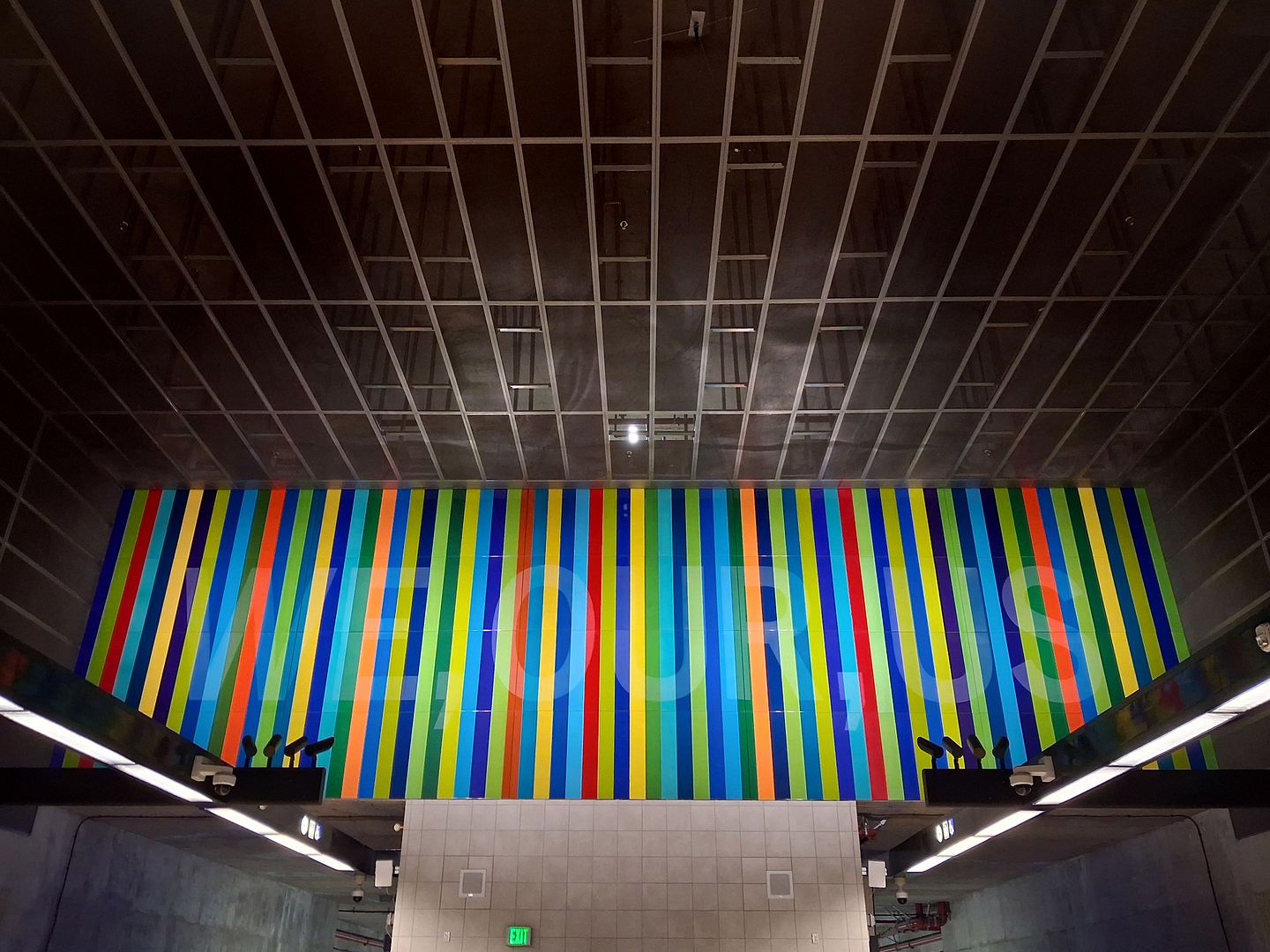
I hopped on a train at Wilshire/La Cienega—the current end of the line—and headed east to Wilshire/Fairfax, where artist Susan Silton's "WE,OUR,US" adorns the tunnel walls and the platform end.
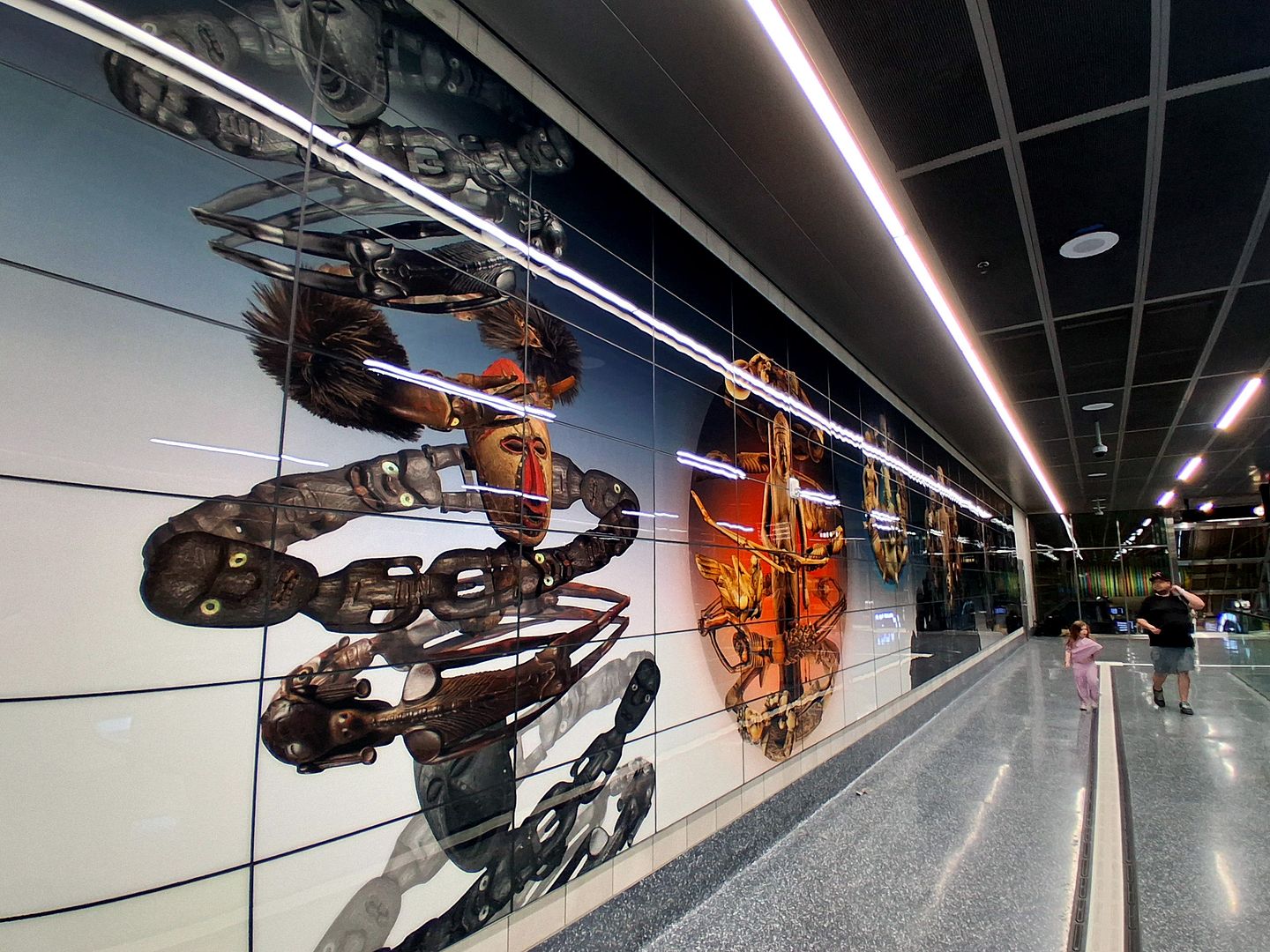
Up on the concourse, the glass murals of photographer Ken Gonzales-Day's "Urban Excavation: Ancestors, Avatars, Bodhisattvas, Buddhas, Casts, Copies, Deities, Figures, Funerary Objects, Gods, Guardians, Mermaids, Metaphors, Mothers, Possessions, Sages, Spirits, Symbols, and Other Objects" are inspired by the Tar Pits' nearby dig site, while depicting objects from LACMA's neighboring permanent collection at a monumental scale.
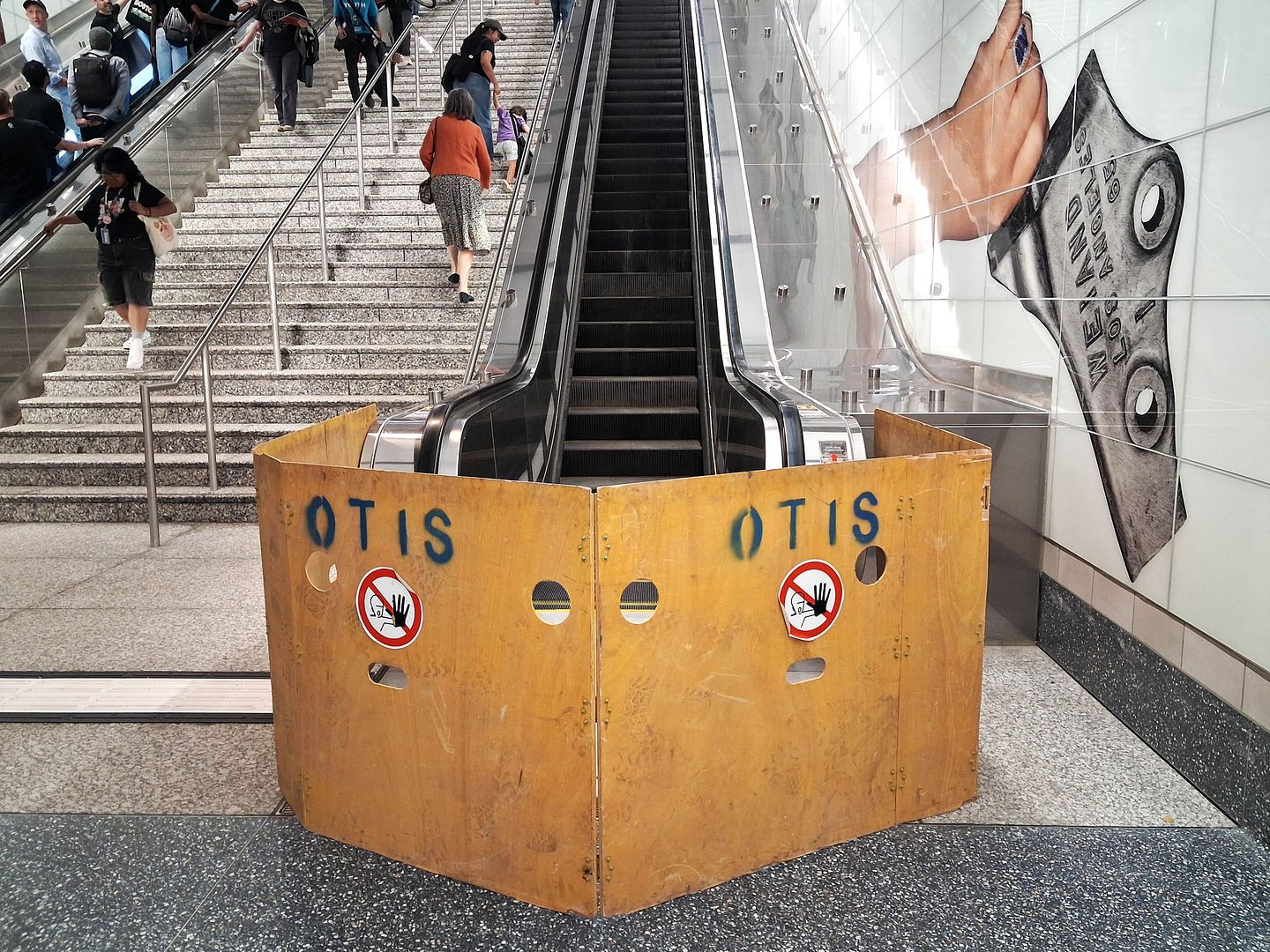
That leads nearly seamlessly into Karl Haendel's "Hands and Things," which pairs photorealistic pencil drawings with photographs of prehistoric and modern tools in local community members' grasp.
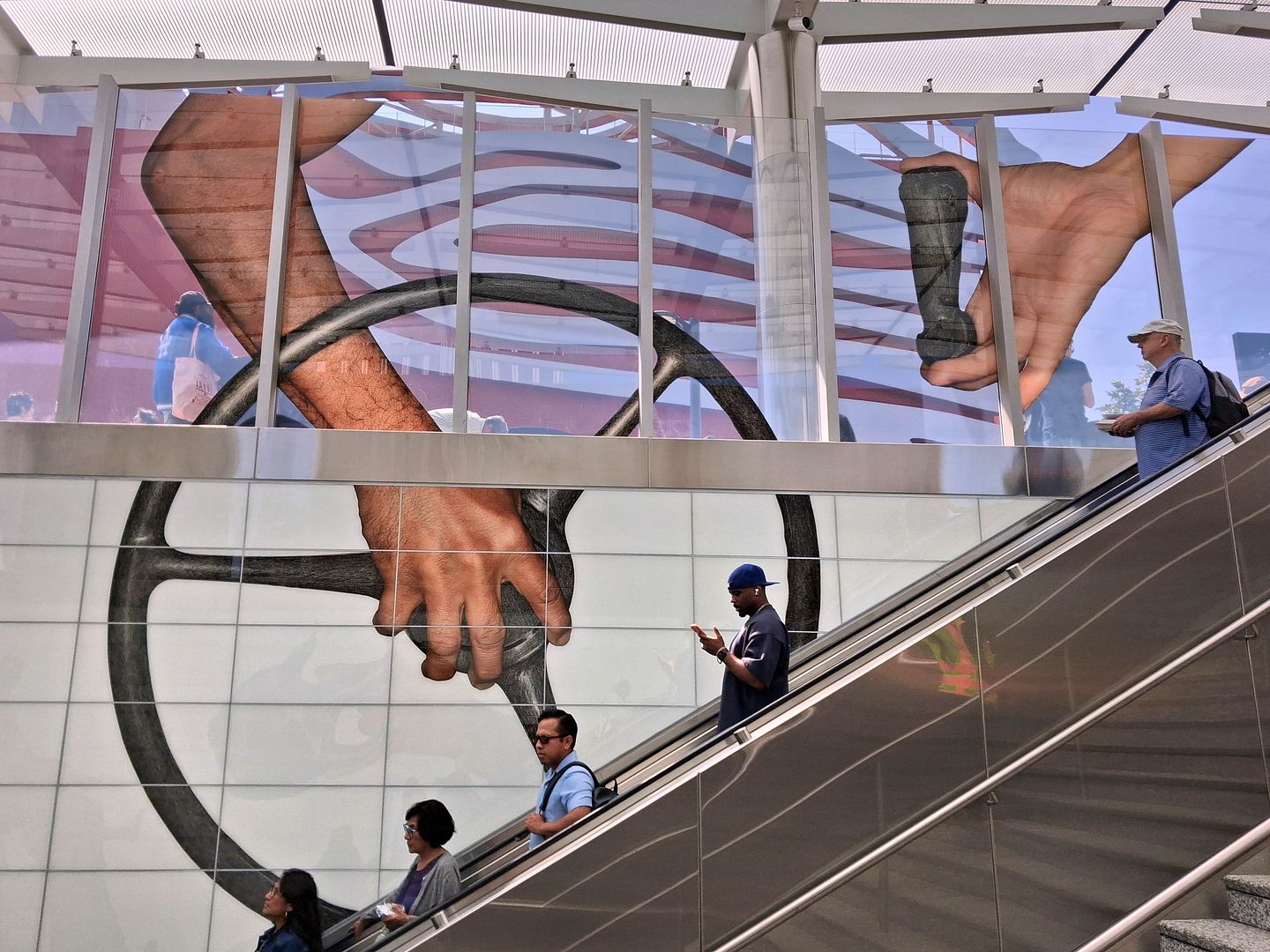
This was probably the most pivotal of stations in the new subway extension art-wise because of its proximity to Museum Row on the street level.
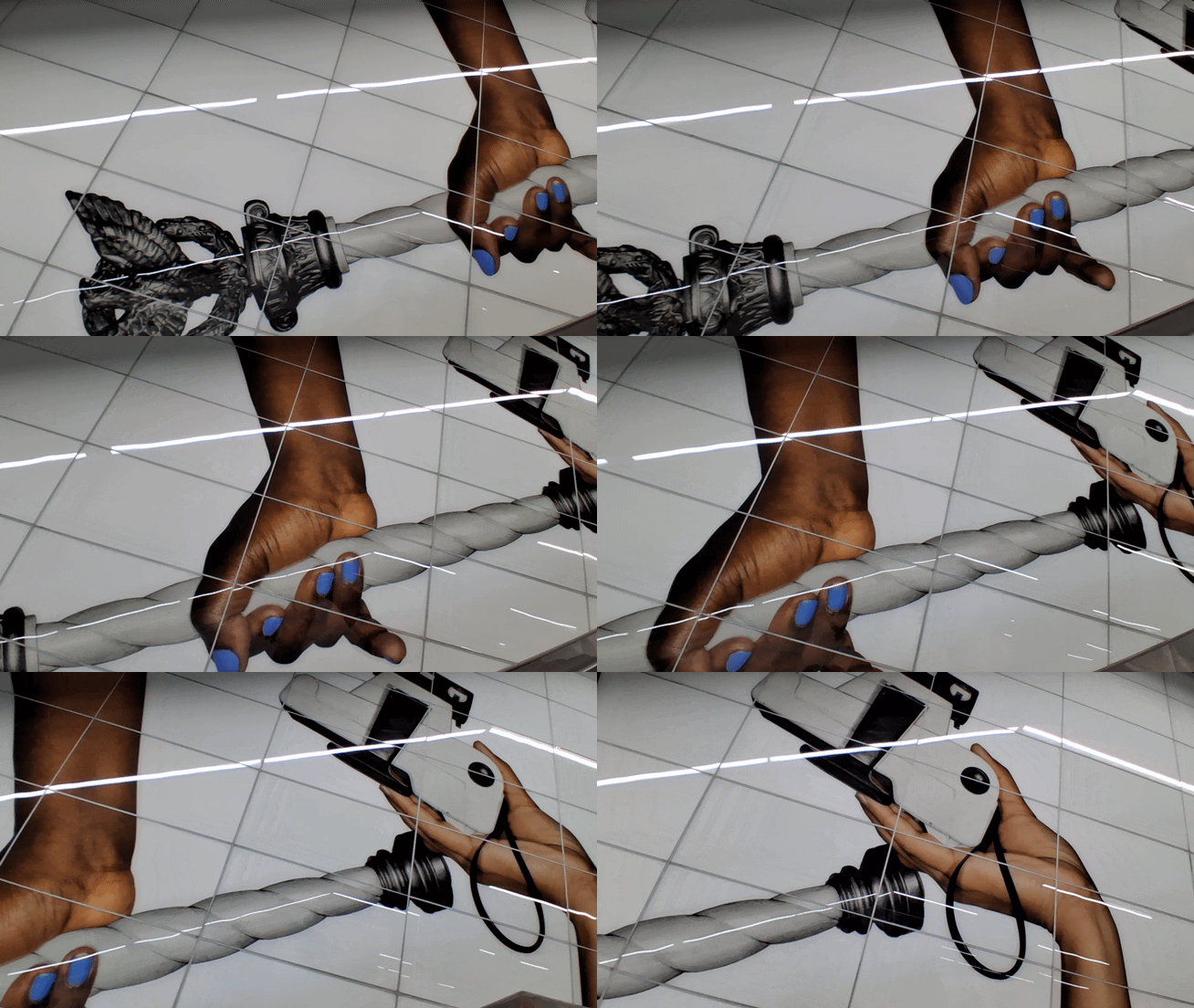
The escalator ride upwards provides a fitting gateway to LACMA (which has been mostly torn down and rebuilt anew) up above.
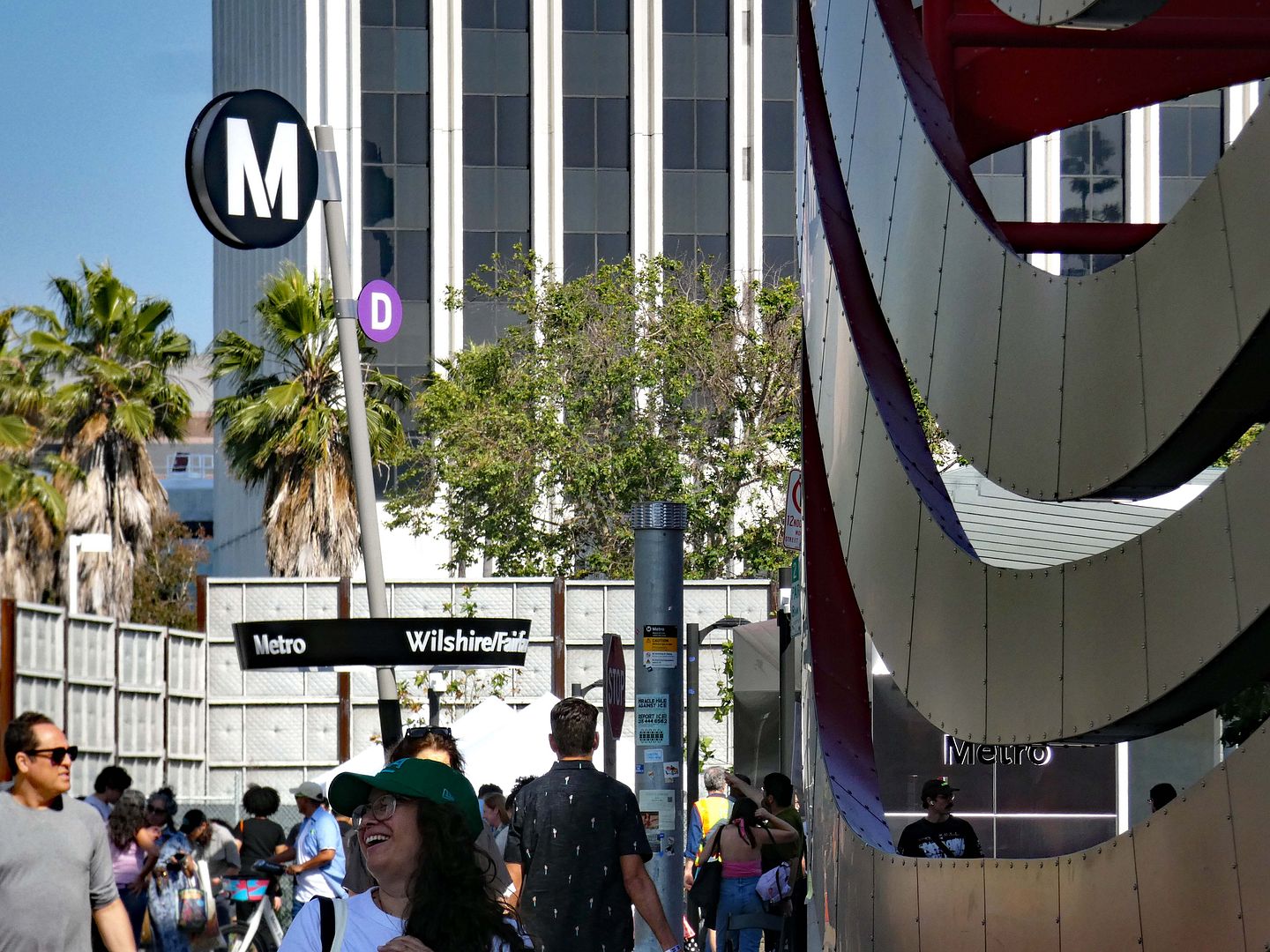
Besides that, you've got Craft Contemporary, the Petersen Automotive Museum, the Academy Museum, and a number of galleries lining Wilshire Boulevard in the Miracle Mile neighborhood.
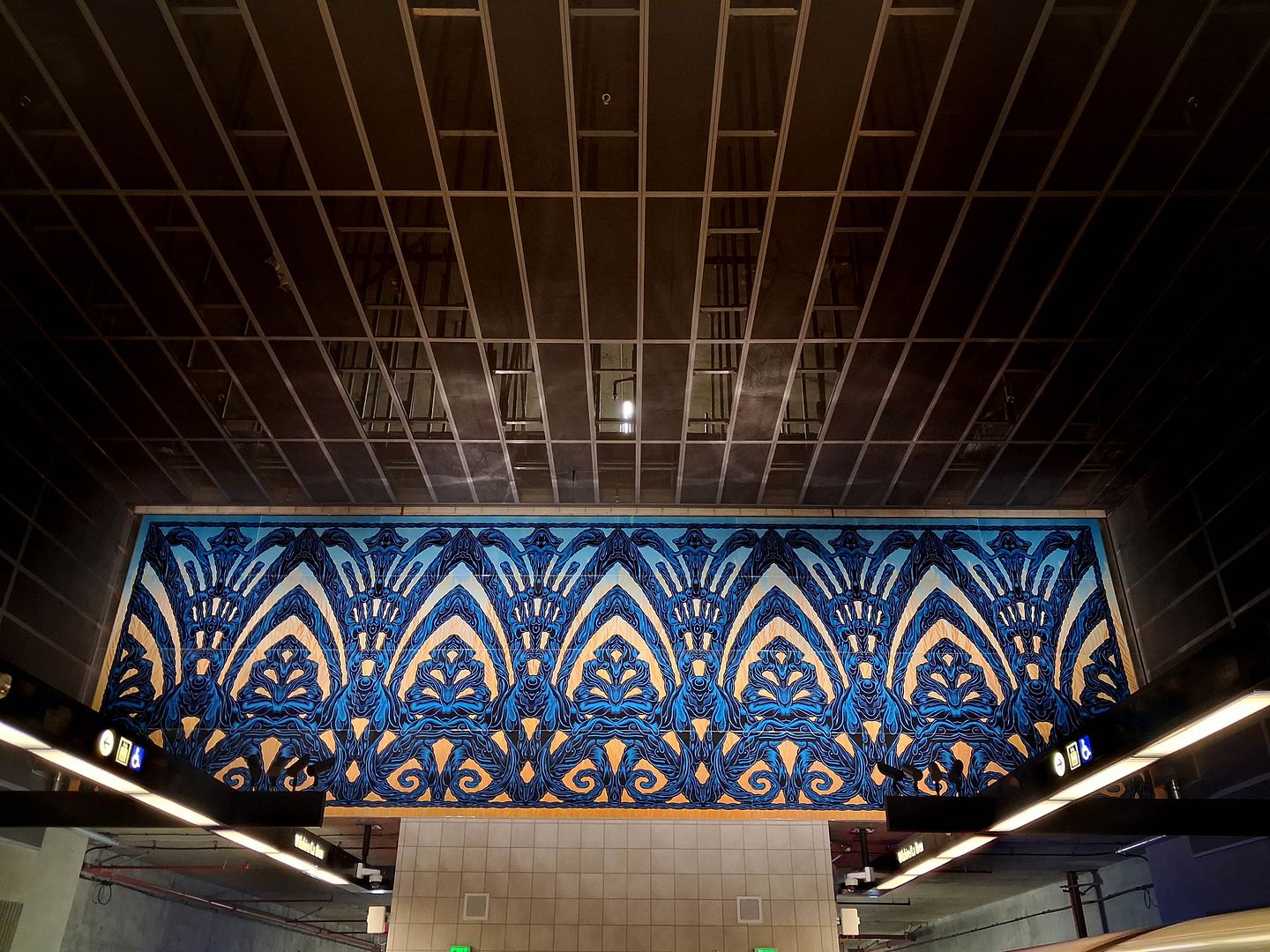
No museum-hopping for me, though—because there was one more station to explore, at Wilshire and La Brea Avenue. That's where Mark Dean Veca's hand-drawn "Miracle of La Brea" mural looms high above the train tracks on the platform level, recalling an Art Deco-style architectural motif of the Wilshire Tower.
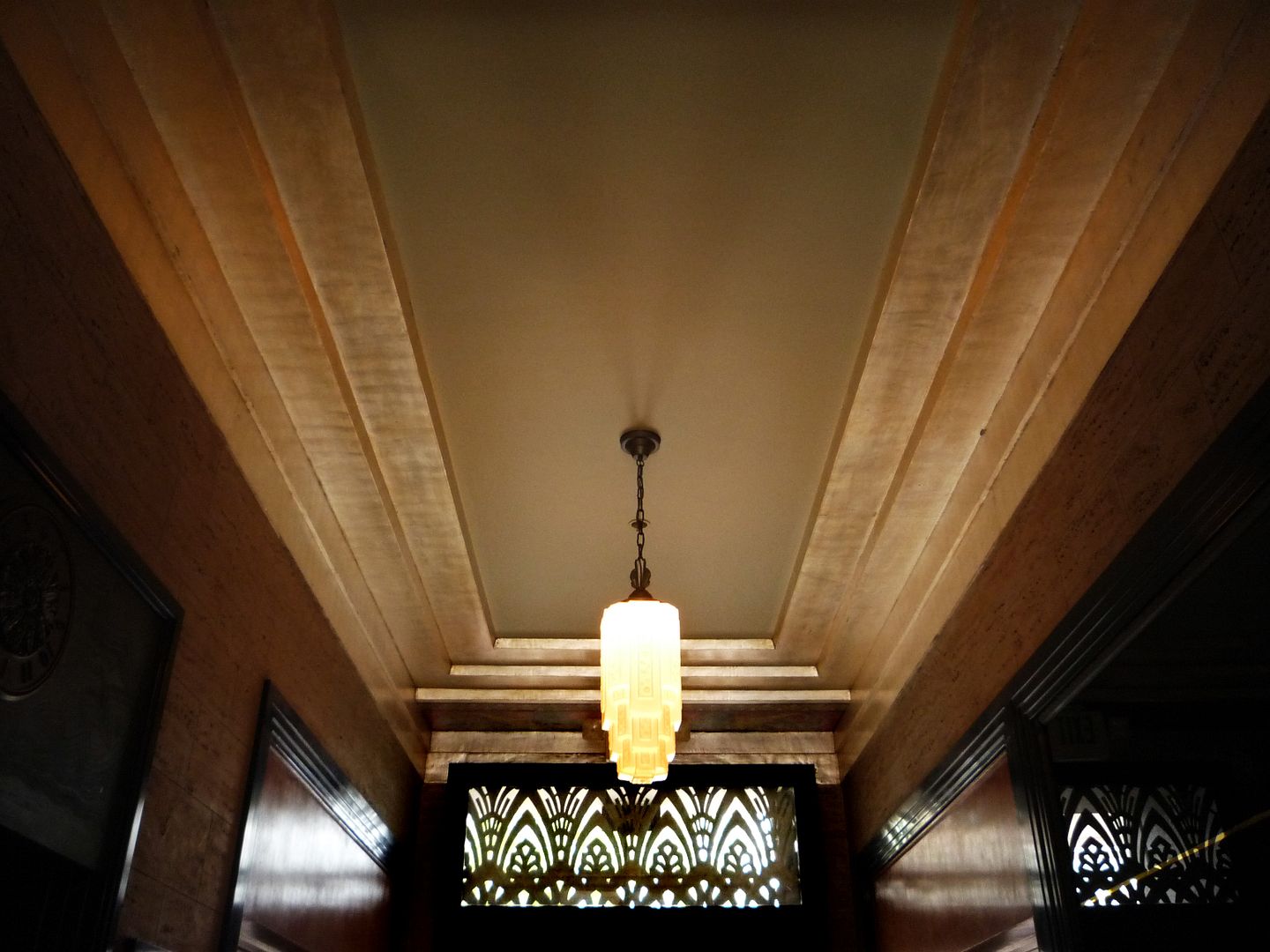
You can see it in real life, above the front door of what's now known as the Desmond's building (pictured above in 2011).
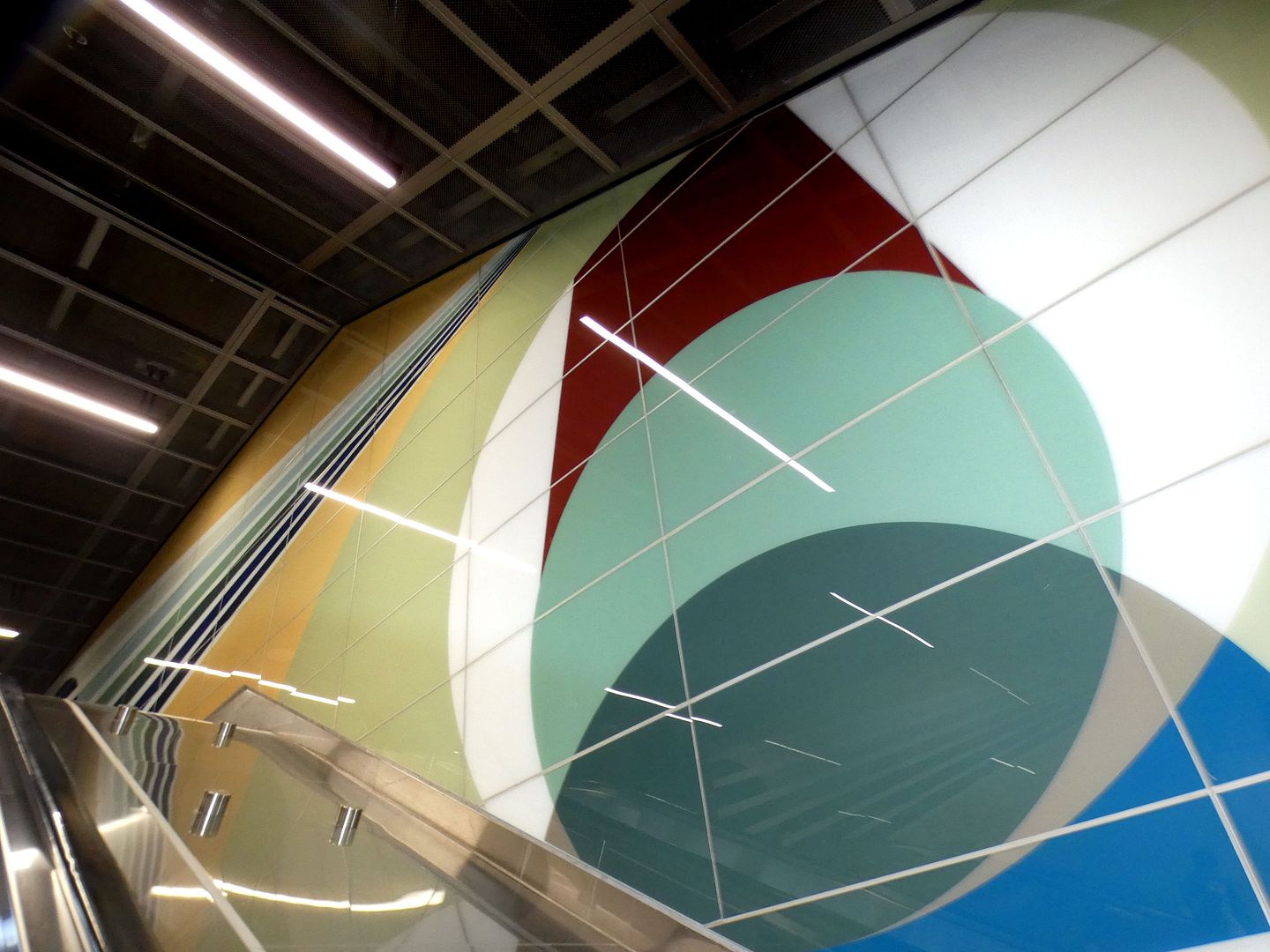
Art Deco also helped inspire artist Eamon Ore-Giron and his Wilshire/La Brea station entrance artwork "Infinite Landscape: Los Ángeles Para Siempre."
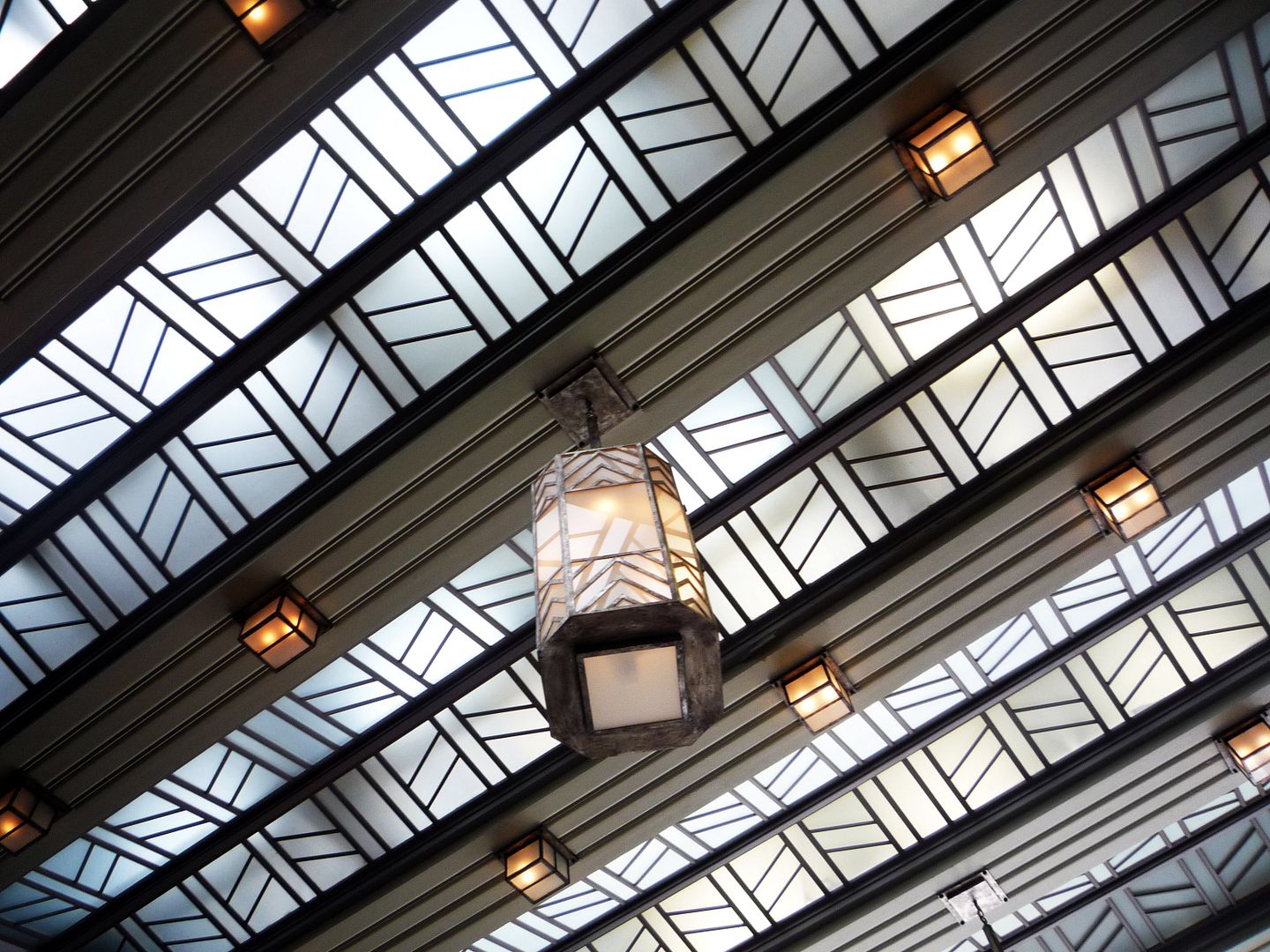
Specifically, he cites The Art Deco Building on Wilshire (pictured above in 2011) as his primary source material.
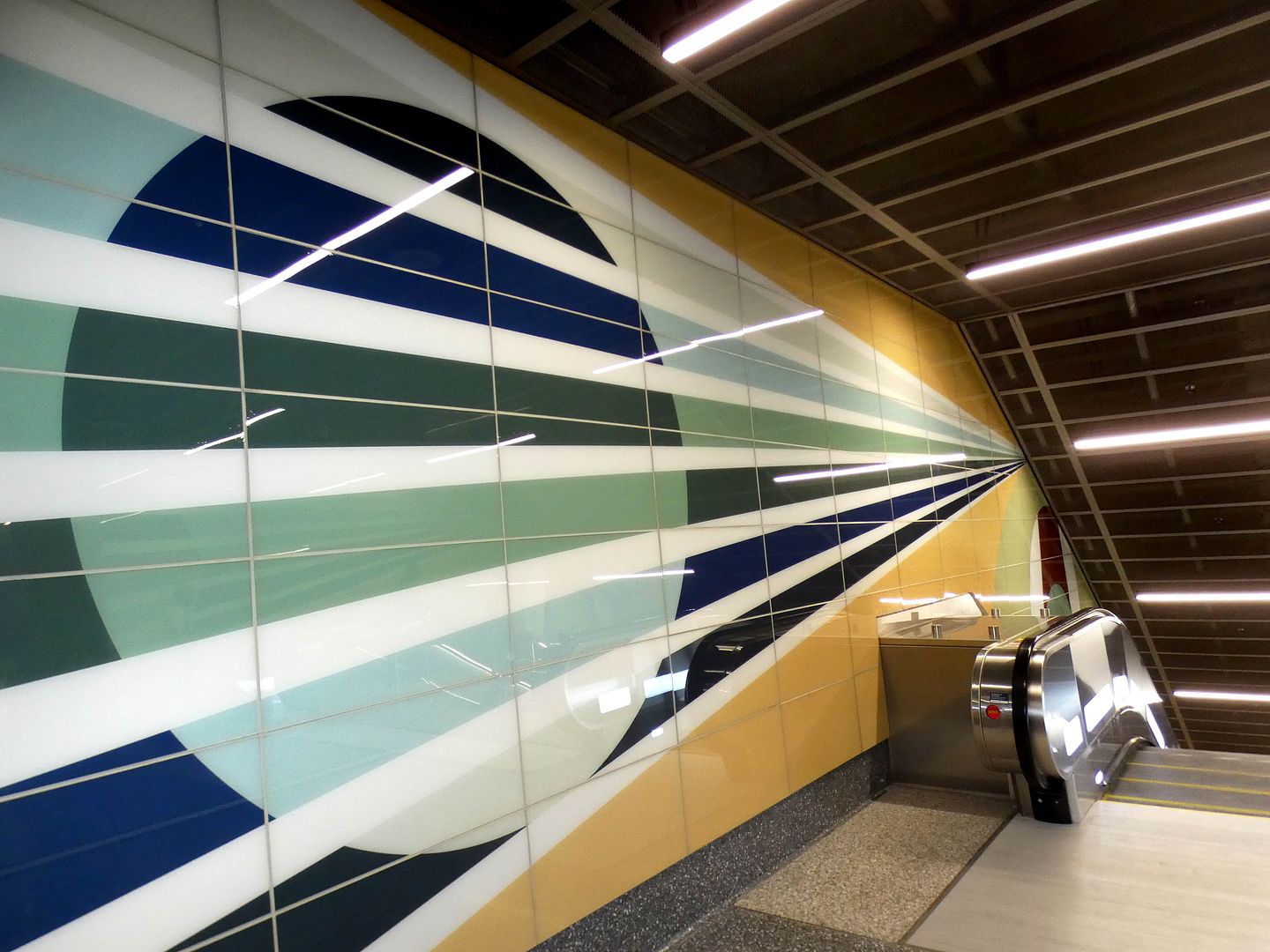
Even though he used circles and diagonals instead of zigzag forms, there's still a sense of movement in both directions at the same time.
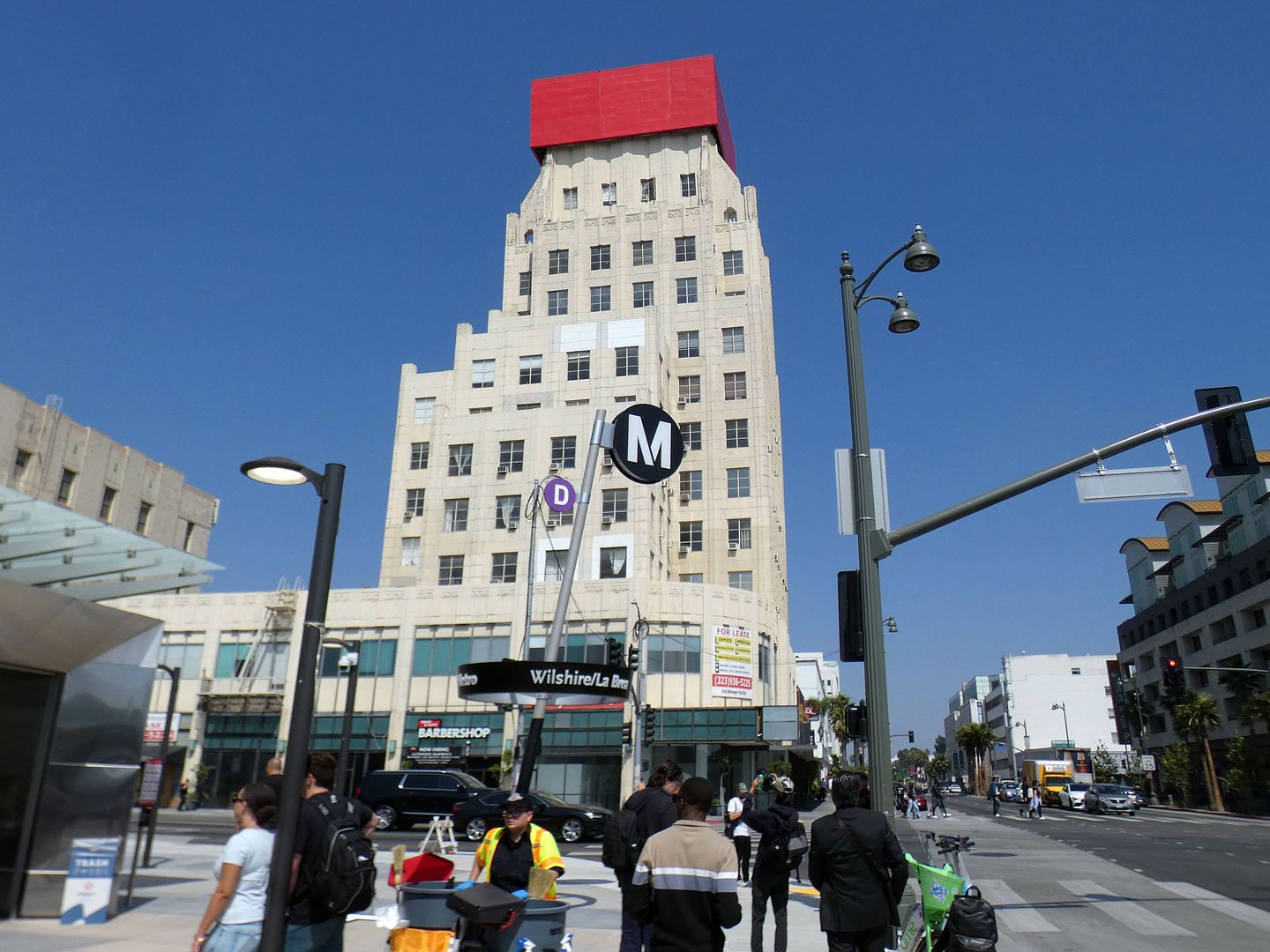
And when you emerge from the station, you face yet another Art Deco edifice: the E. Clem Wilson Building (1929-1930), which for too long was known as "the Samsung Building" because of a blue box with a neon sign that had been plopped on top of its ornate crown. (After being tagged, the box has been painted red but not removed.)
On opening day, it seemed perfectly reasonable to just take the train for funsies and not to get anywhere in particular (although I did stop at Johnie's Coffee Shop for a Gary Baseman art show). But will "the D" become an integral part of my life?
Or will I just feel its rumblings from afar?

No comments:
Post a Comment