Search

Showing posts sorted by date for query ronald reagan. Sort by relevance Show all posts

August 05, 2023

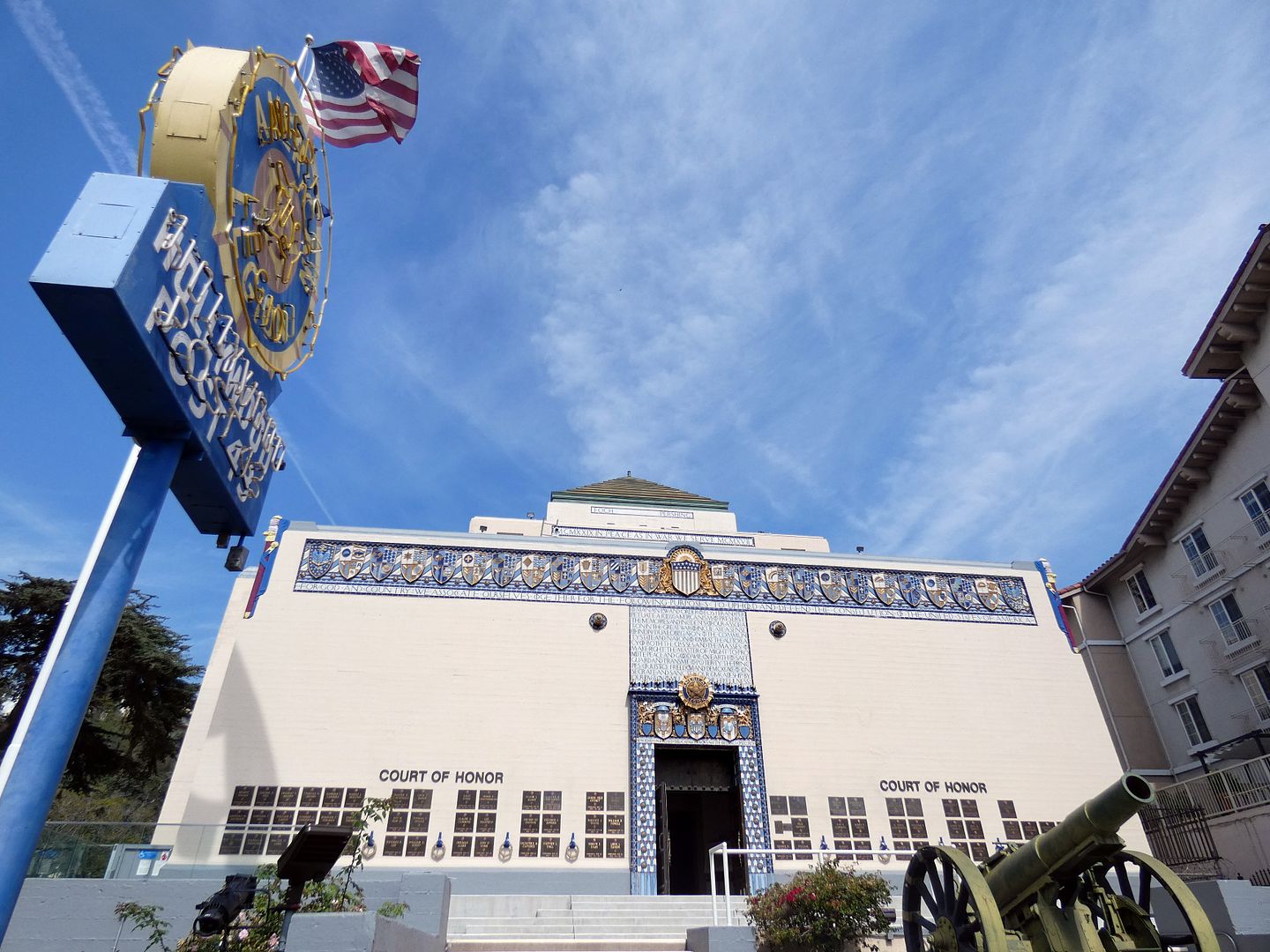
Photo Essay: Hollywood Post 43, A World War I Memorial Built By the Movies and Boxing Matches

It's been nicknamed the "Post of the Stars." 

 
Originally chartered in 1919 by Hollywood luminaries who'd returned from World War I, American Legion Hollywood Post 43 can count such luminaries as Clark Gable, Gene Autry, Mickey Rooney, Ronald Reagan, and Charlton Heston as its past members.

March 18, 2023

Photo Essay: A Reimagining of LA's Century Plaza Hotel, the Centerpiece of a 'City Within a City'

I started driving past the Century Plaza Hotel, along Century City's Avenue of the Stars, pretty regularly sometime in the year 2020, during the early months of the COVID-19 pandemic. 

circa Dec. 2021

It was on my way home from the Santa Monica College swimming pool—but it wasn't the most convenient way home.

April 24, 2022

Photo Essay: The Only Museum Devoted to President Abraham Lincoln West of the Mississippi

Every year in February around the commemoration of President Abraham Lincoln's birthday, I've wanted to visit the only museum west of the Mississippi dedicated to him for its annual open house. And every year, I've had something else to do (or just haven't wanted to make the 72-mile drive to Redlands, California). 

 
Somehow it hadn't occurred to me that the Lincoln Memorial Shrine would be open the rest of the year—or that I could visit anytime I wanted. 

May 05, 2021

Photo Essay: Hollywood's Newest Historic Movie Theatre, at the American Legion (Updated)

[Last updated 6/12/21 9:40 PM PT—projection booth photos added at bottom]

The American Legion Hollywood Post 43 has been nicknamed the "Post of the Stars." 

That's not just because of its current Tinseltown location—but also because it was originally chartered in 1919 by Hollywood luminaries who'd returned from World War I. 

Past post members have included stars like Clark Gable, Gene Autry, Mickey Rooney, Ronald Reagan, Charlton Heston, and more.

July 27, 2019

The State Capitol That Almost Never Was, And the Architect Who Went Crazy Trying to Build It

In 1866, the principal of the San Francisco firm Clark and Kenitzer, Architects—Reuben Clark—died while committed at California State Insane Asylum at Stockton, CA.
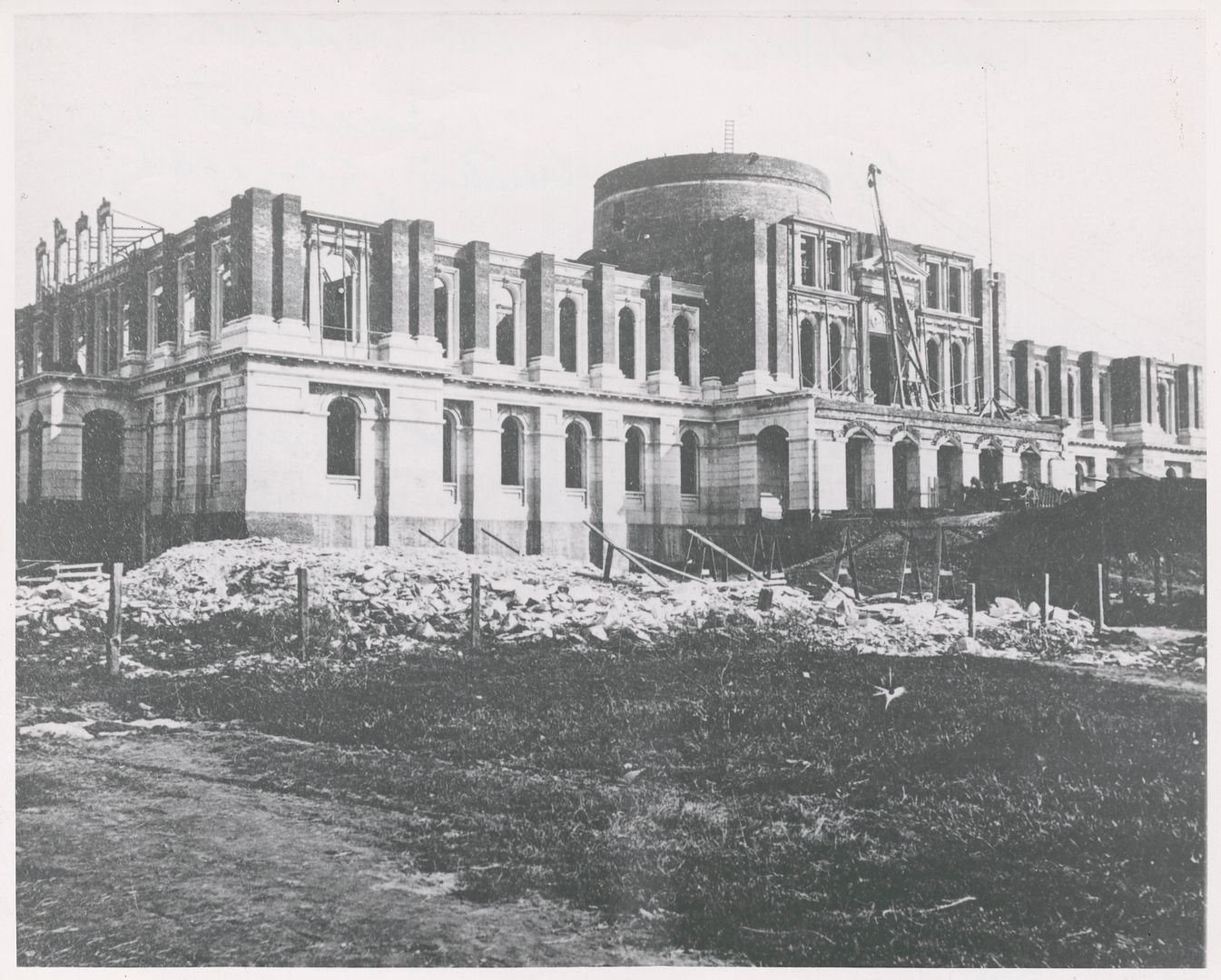

Construction photo: McCurry Foto Co. via California State Library

The state hospital had diagnosed the Maine-born architect and Sacramento transplant with insanity, due to “continued and close attention to the building of the State Capitol in Sacramento.”
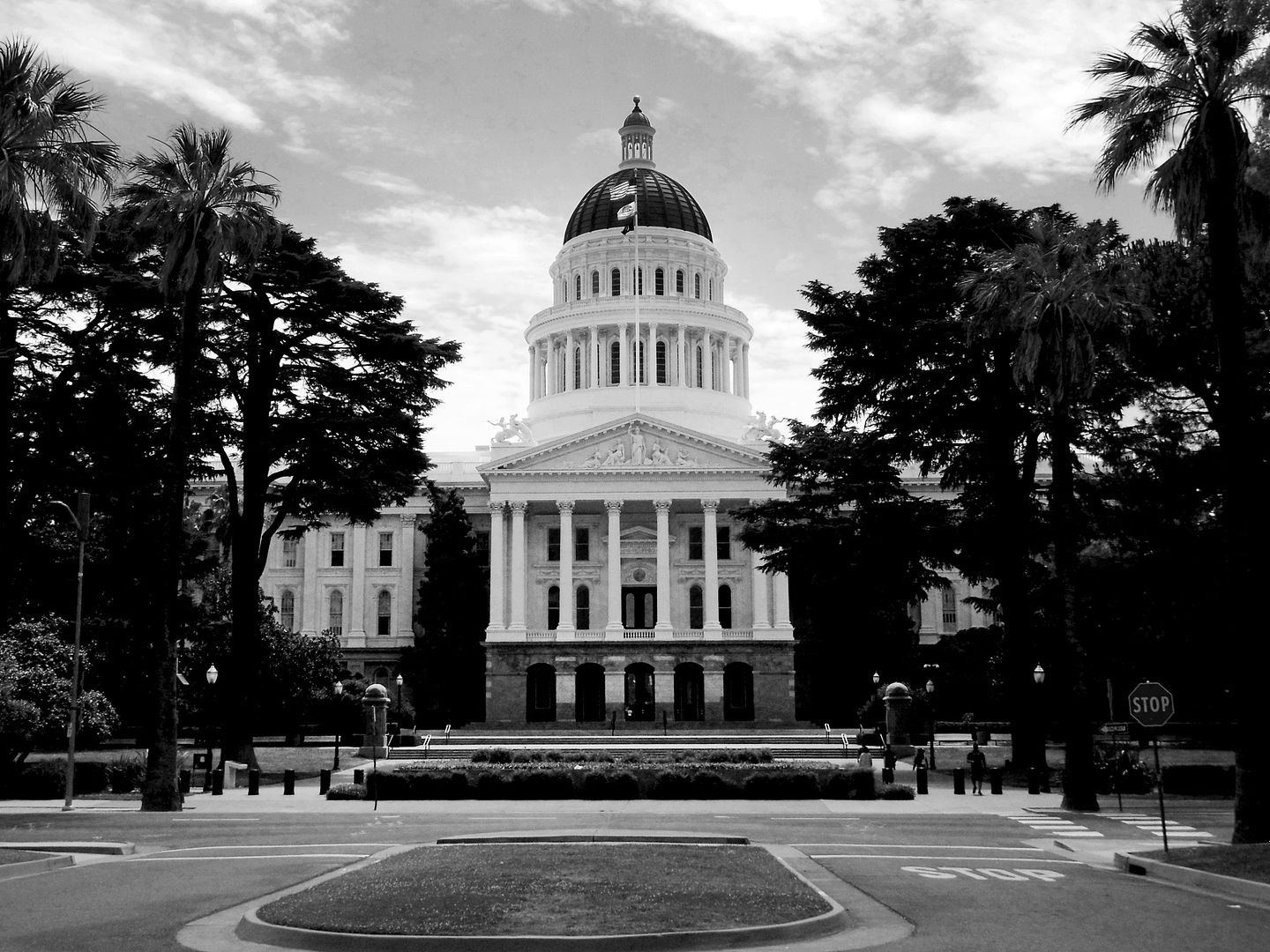


While working under San Francisco-based architect M. Frederic ("M.F.") Butler, Clark’s drawings of the neoclassical monument (based on the U.S. Capitol building in Washington, D.C.) were soaked in the floods of 1861-2. On top of that, the Civil War was already well underway, causing a shortage of building materials that Clark could no longer bring from the East Coast to California.
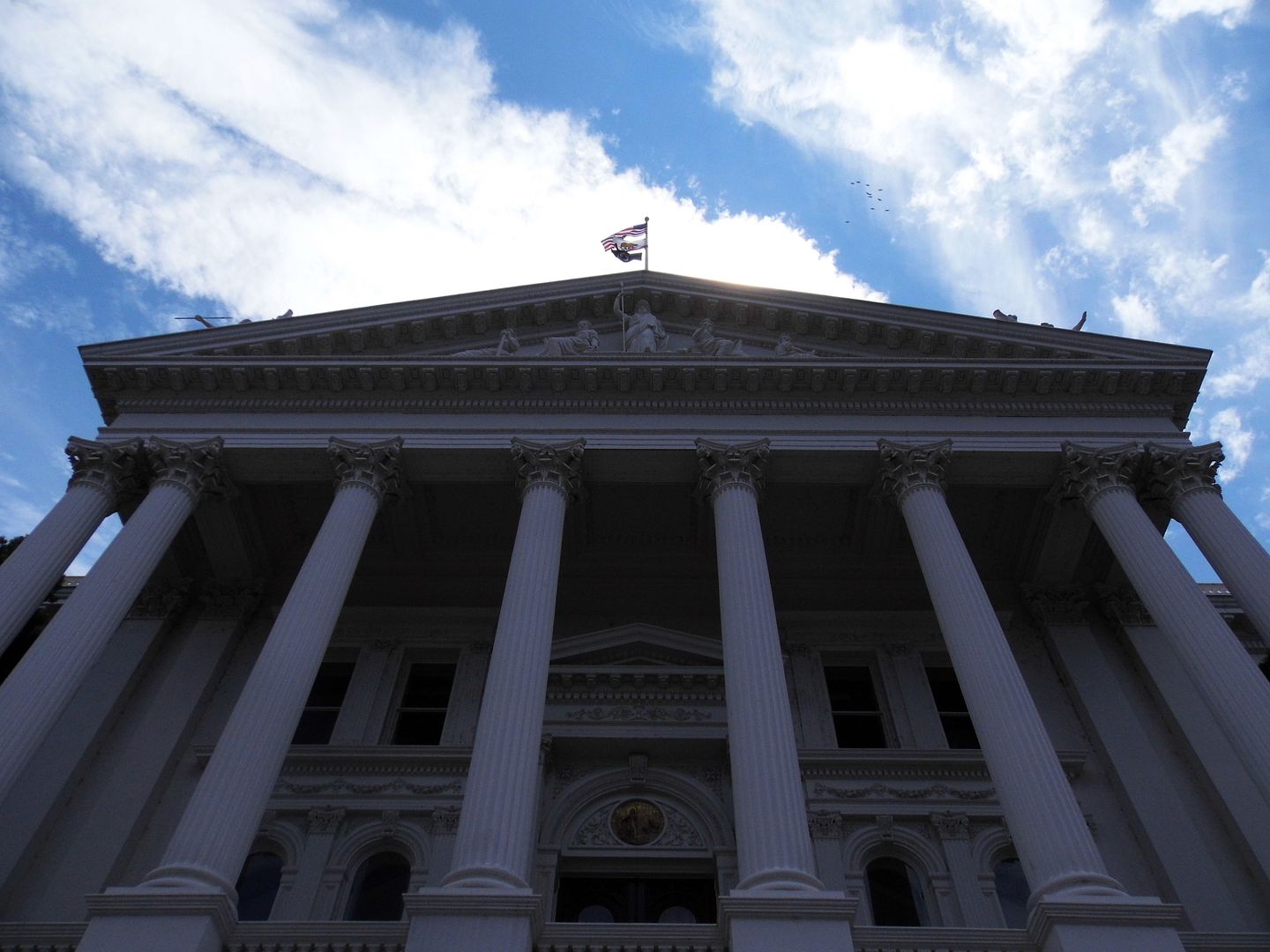


Perhaps the proverbial nail in the coffin occurred in the wake of Abraham Lincoln's assassination in 1865, when Clark was found guilty of "disloyalty to the Union" for hiring “known secessionists” and supposedly saying that he didn’t care which side won the Civil War.
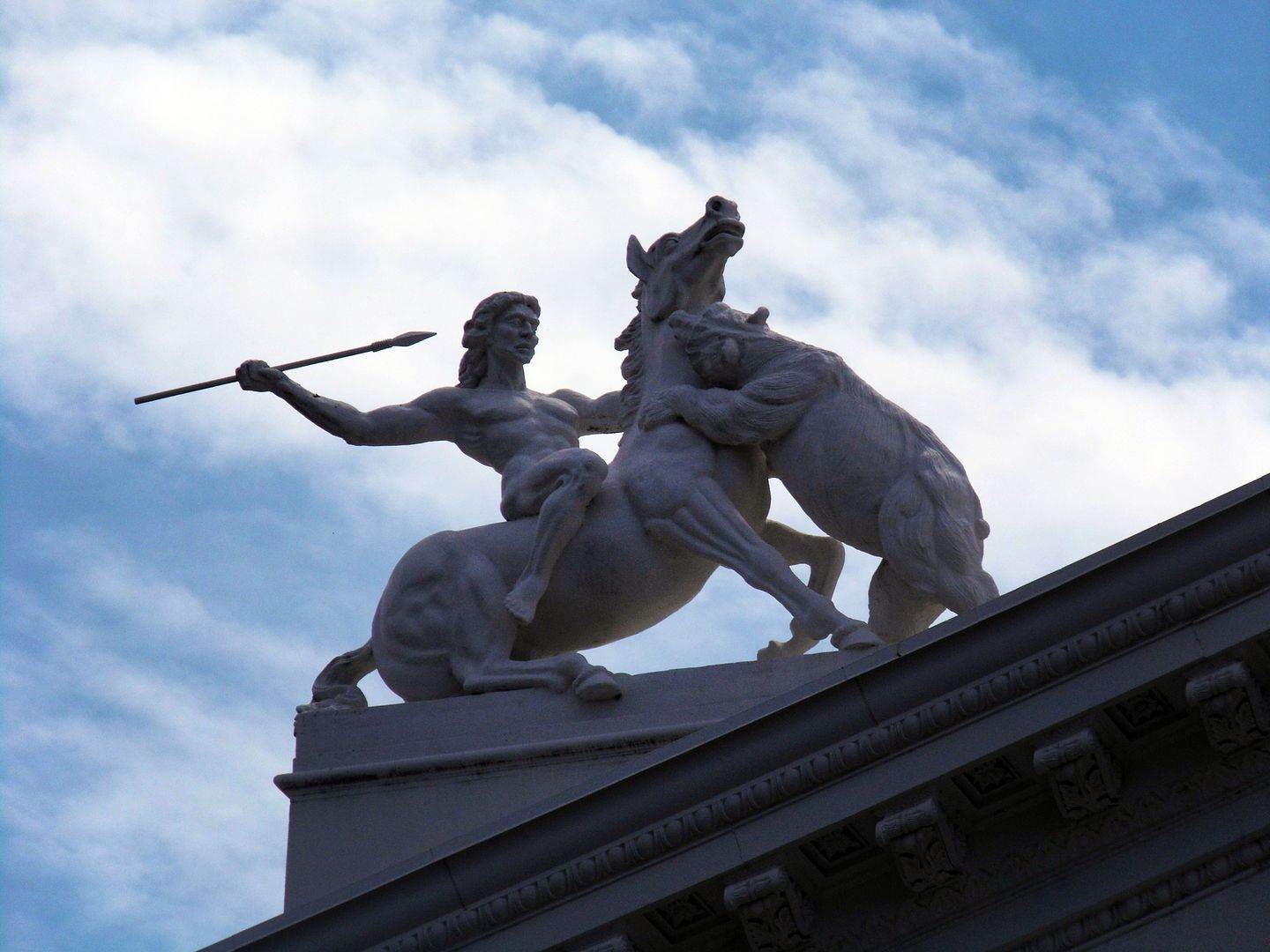


By the time Clark was exonerated for his treasonous statements, it was too late—he was already dead. And his former assistant, Gordon P. Cummings, had taken over as the supervising architect, completing the project over two non-consecutive stints (1865-1870 and 1872-1874).
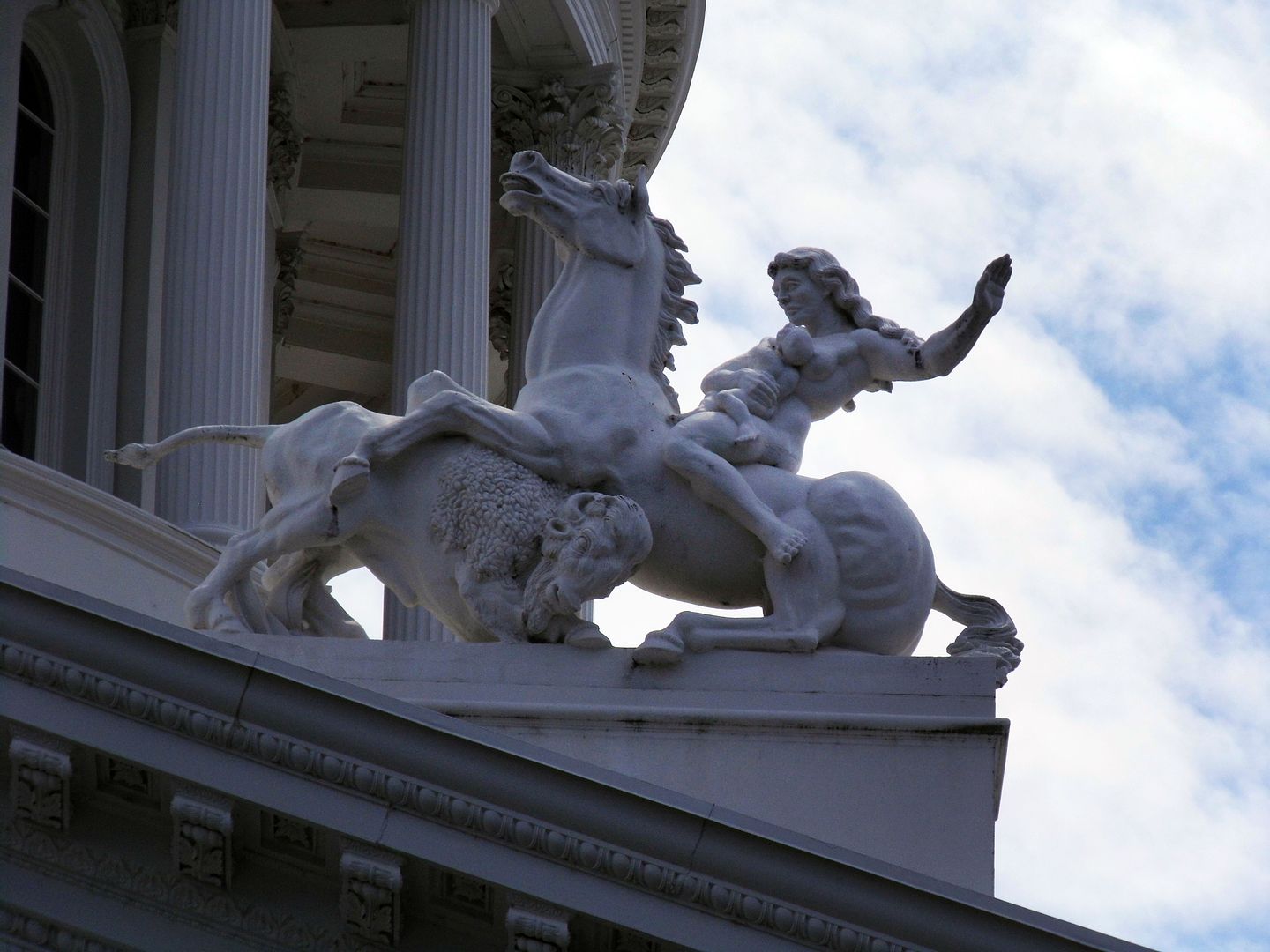


Between the two of them, the end result is a somewhat incongruous mishmash of Greco-Roman influences—with Cummings shifting from Roman to Greek, Doric capitals giving way to Corinthian columns.
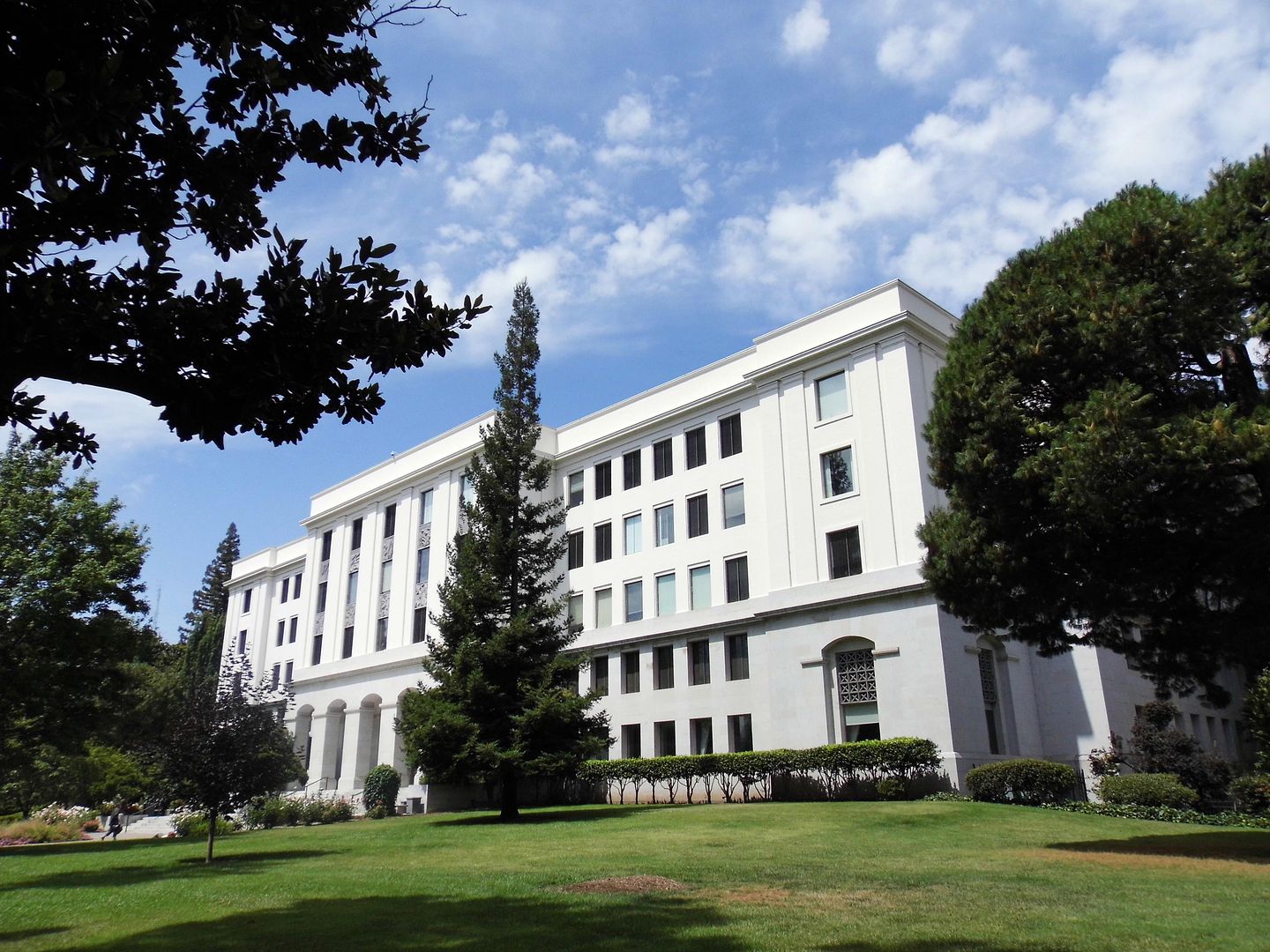


And while Clark had begun to use granite, Cummings switched to cheaper materials simulated to look like granite. Even the granite itself doesn't match—at least on the lower floor, where the governor's own railroad investments influenced which quarries it would be sourced from.
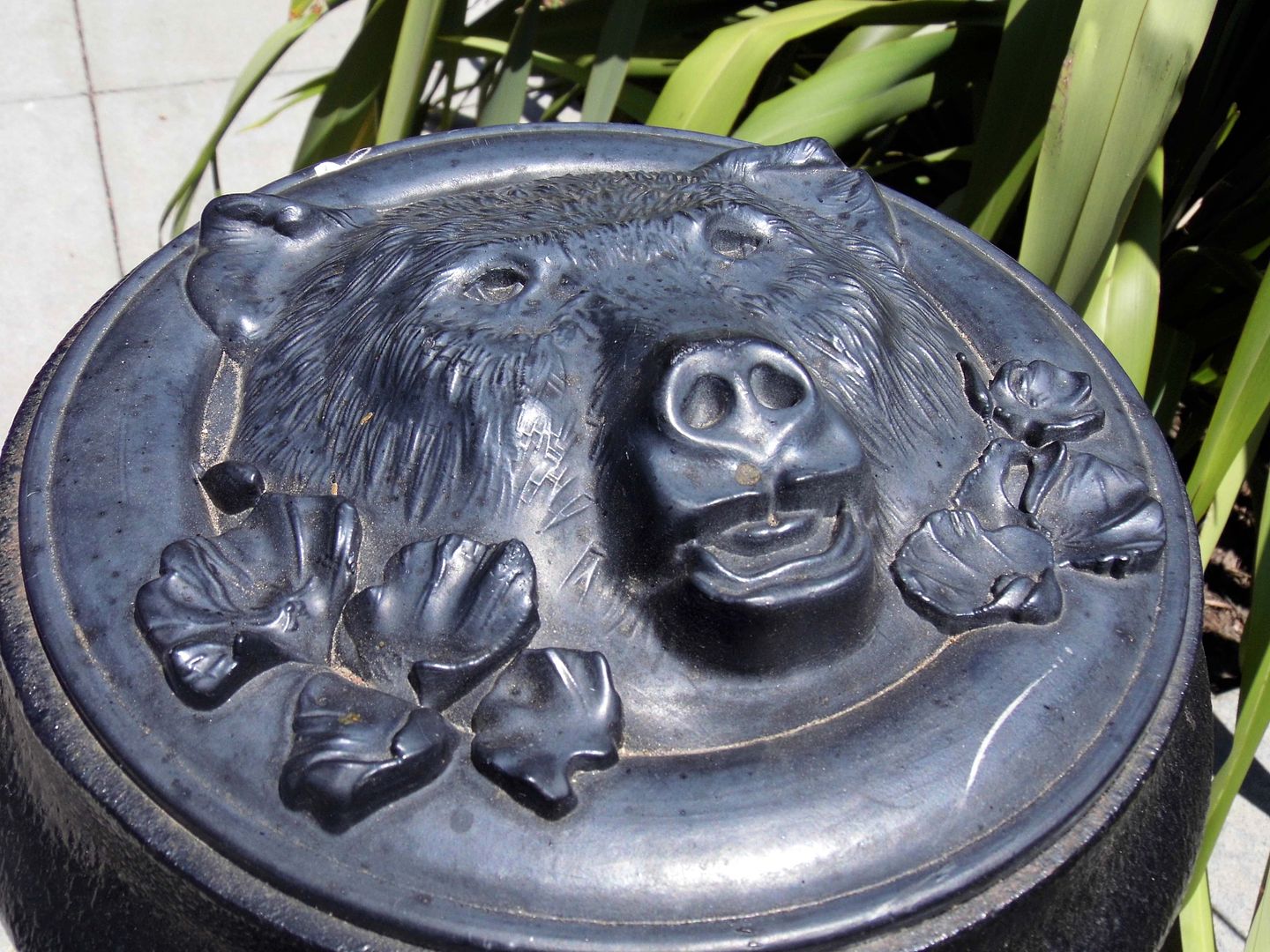


As the California state capitol building was under construction from 1860 to 1874—the last eight years proceeding without its original supervising architect—Clark rarely gets credit for its design.
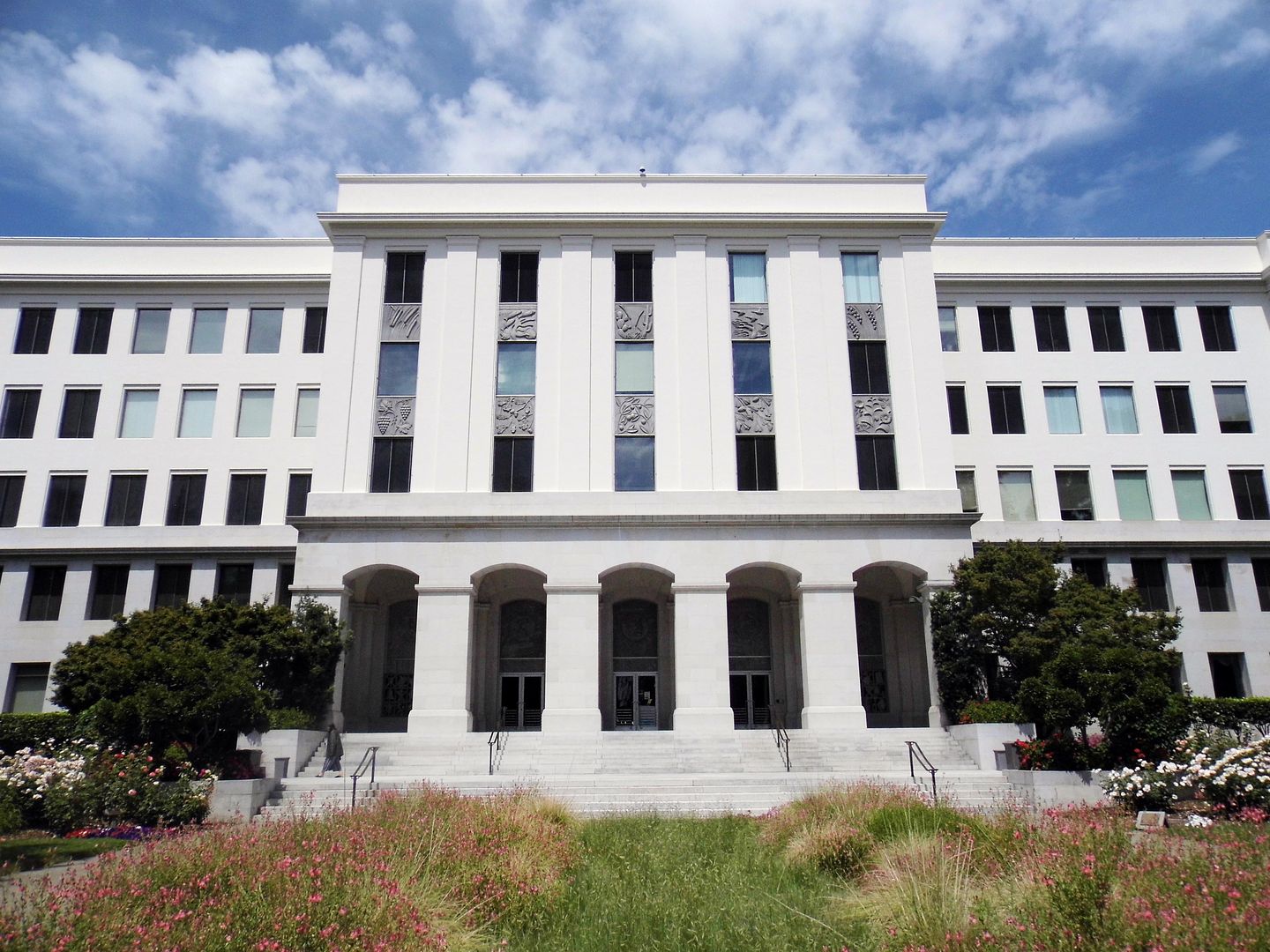

At a cost of $2.5 million—compared to Clark's original budget of $100,000—the final result wasn't exactly what the architect lost his sanity trying to accomplish.
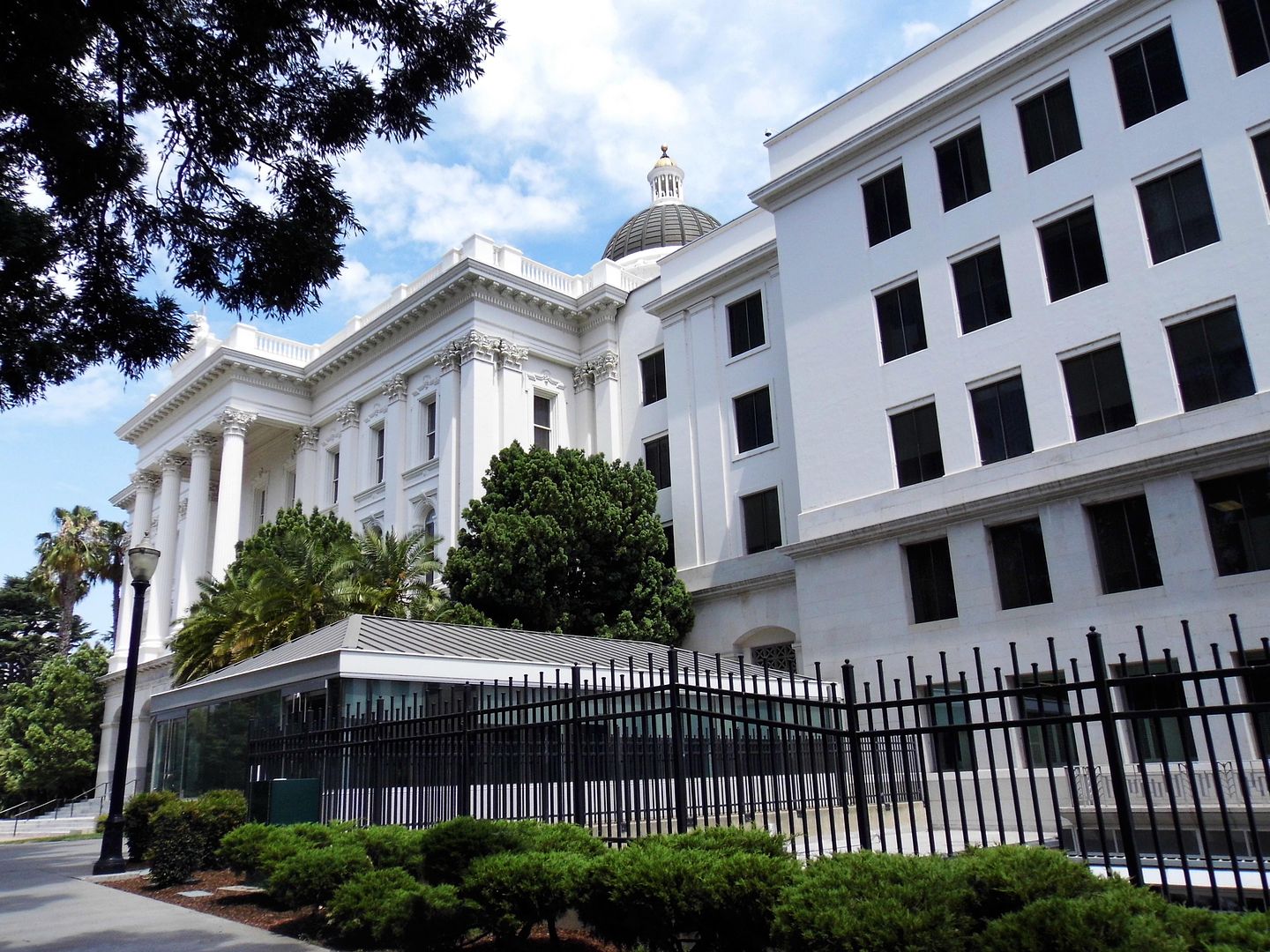


One posthumous victory for Clark came on October 29, 1871, when a gold-plated copper ball was affixed as he crowning ornament of the cupola at the apex of the Capitol. Nearly three feet in diameter and reminiscent of a gold nugget, he'd included the ball in his original plans—and his replacement, Cummings, tried to replace it with a bronze statue, a more traditional choice.
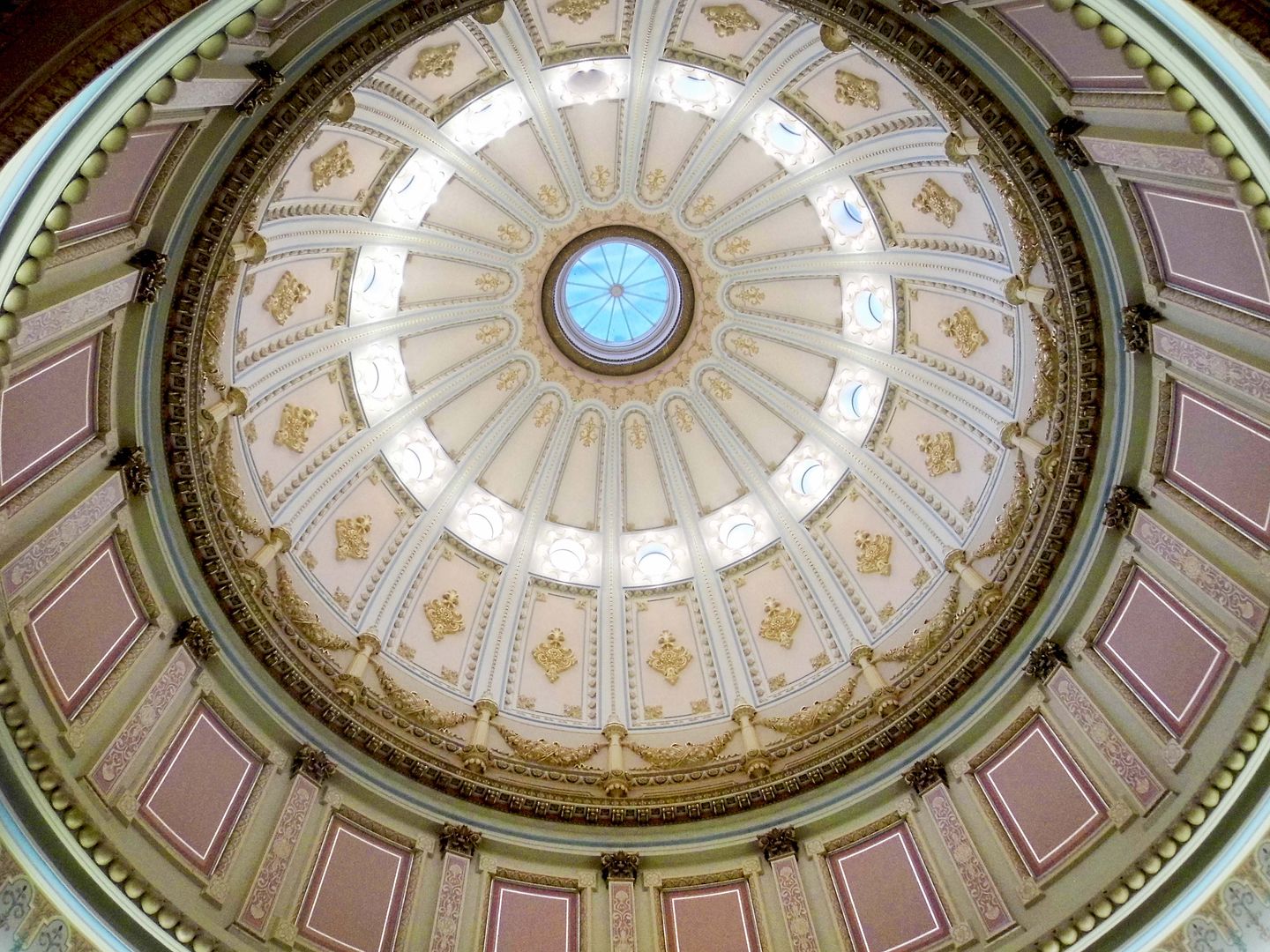


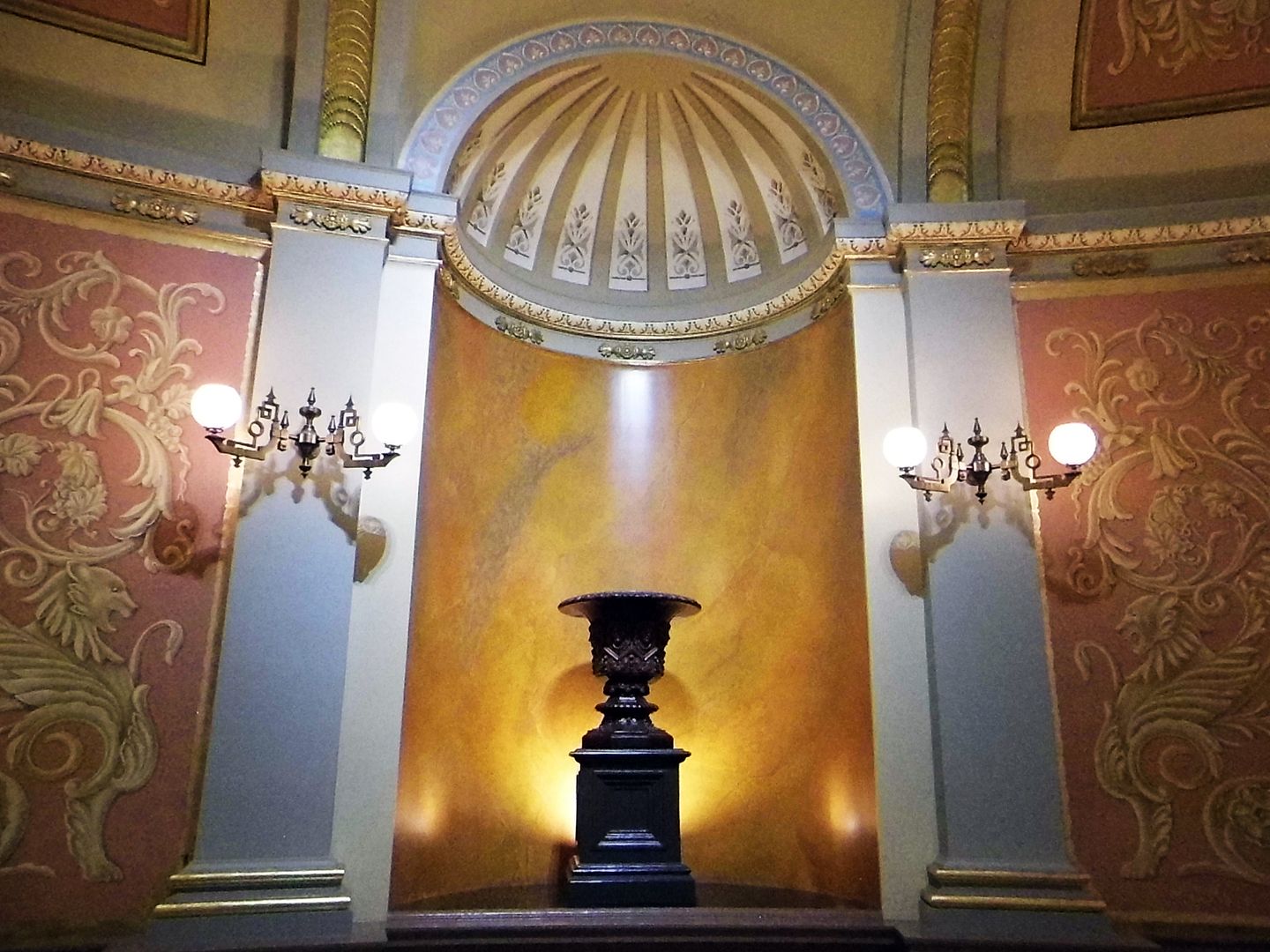
The ball won out—which seems appropriate, since the capitol's dome and rotunda are the crown jewels of Clark's design. Emblematic of the use of religious architecture for state capitols in the 18th century, the rotunda rises 120 feet high; and its dome features frescoing that reflects the Renaissance Revival style popular during the 19th century. But the frieze at the base of the dome is truly Californian—with depictions of grizzly bears, our state symbol and state animal.
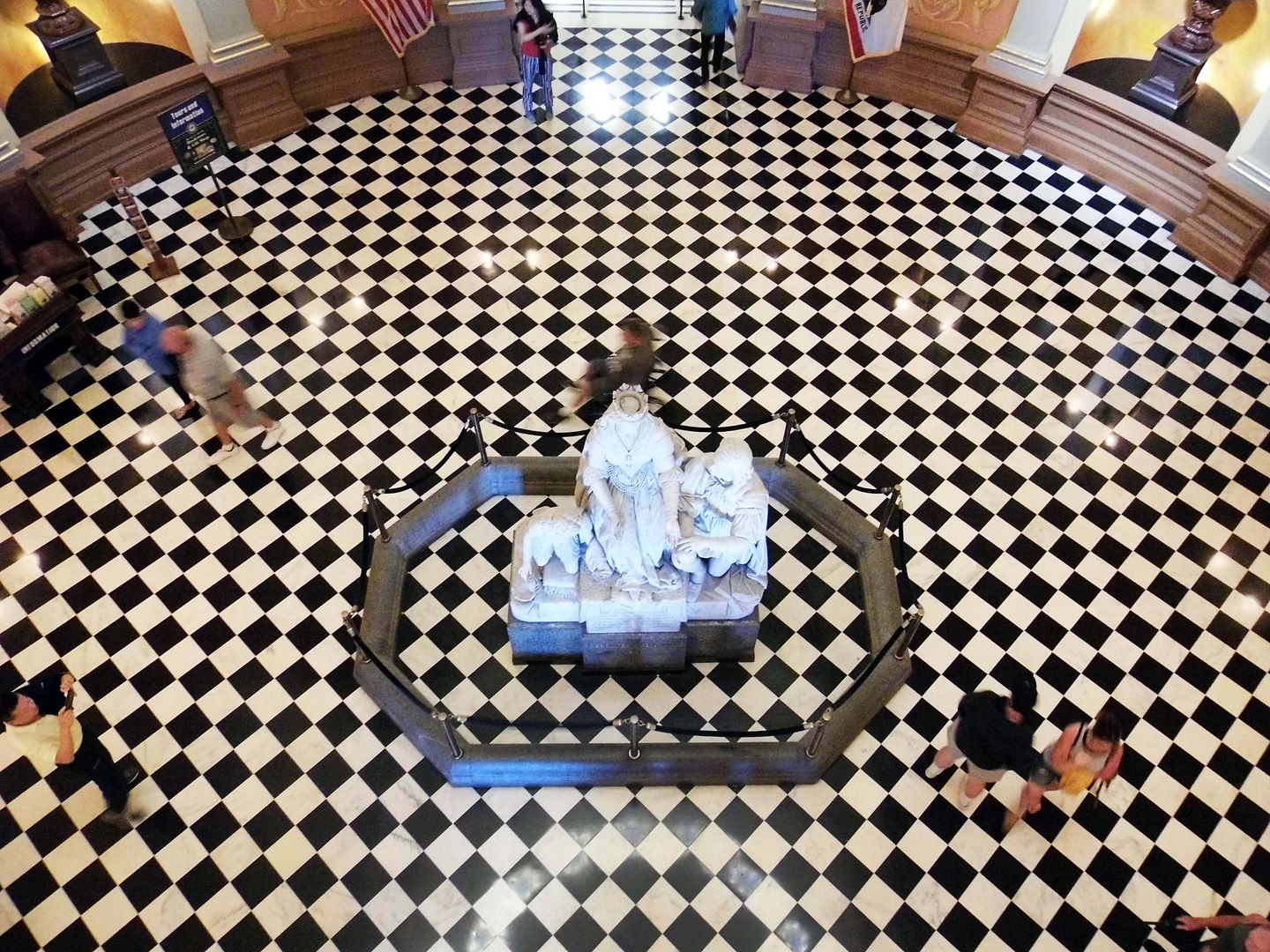


Clark himself was a Freemason and managed to incorporate a Masonic floor pattern in the circular room below the dome, surrounding the neoclassical statuary group, Columbus’ Last Appeal to Queen Isabella (carved of Carrara marble by sculptor Larkin Goldsmith Mead and gifted by Darius Ogden Mills in 1883). The Capitol's dedication ceremony was even Masonic.


The current building has served as California's state capitol building since 1874—but it almost didn't happen at all. The state government could be found "roving" from city to city within California over the course of a good two decades. First, the State Capitol was in San Jose from 1849-51. It moved to Sacramento for five months in 1852. Otherwise, from 1852-3, it was located in Vallejo.


The Benicia Capitol Building (circa 1853-4) is the only edifice still standing outside of Sacramento. In 1958, it was rededicated as state historic park—and for the occasion, the state capital was moved there for just one day (except for that other day in the year 2000, for the 150th anniversary of California's statehood).

replica ceramic tiles originally installed in 1896 from the Mosaic Tile Company of Zanesville, OH 

Sacramento was named permanent seat of the California government in 1854—but even that wasn't permanent. The December 1861 flooding sent the state government packing for San Francisco in 1862, while the current Capitol Building was under construction. 


The current capitol was almost demolished in 1975—but instead, a pricey renovation returned it to its grandeur circa 1906, the year of the San Francisco earthquake and fires. That meant rebuilding grand staircases that had been removed; reinstalling its California poppy mosaic tile floor; and recreating the 1906 governor's offices (which had been used until 1951) and 1906 treasurer's office (which once held $8 million in gold and silver coins, before they were transferred to a bank the following year).
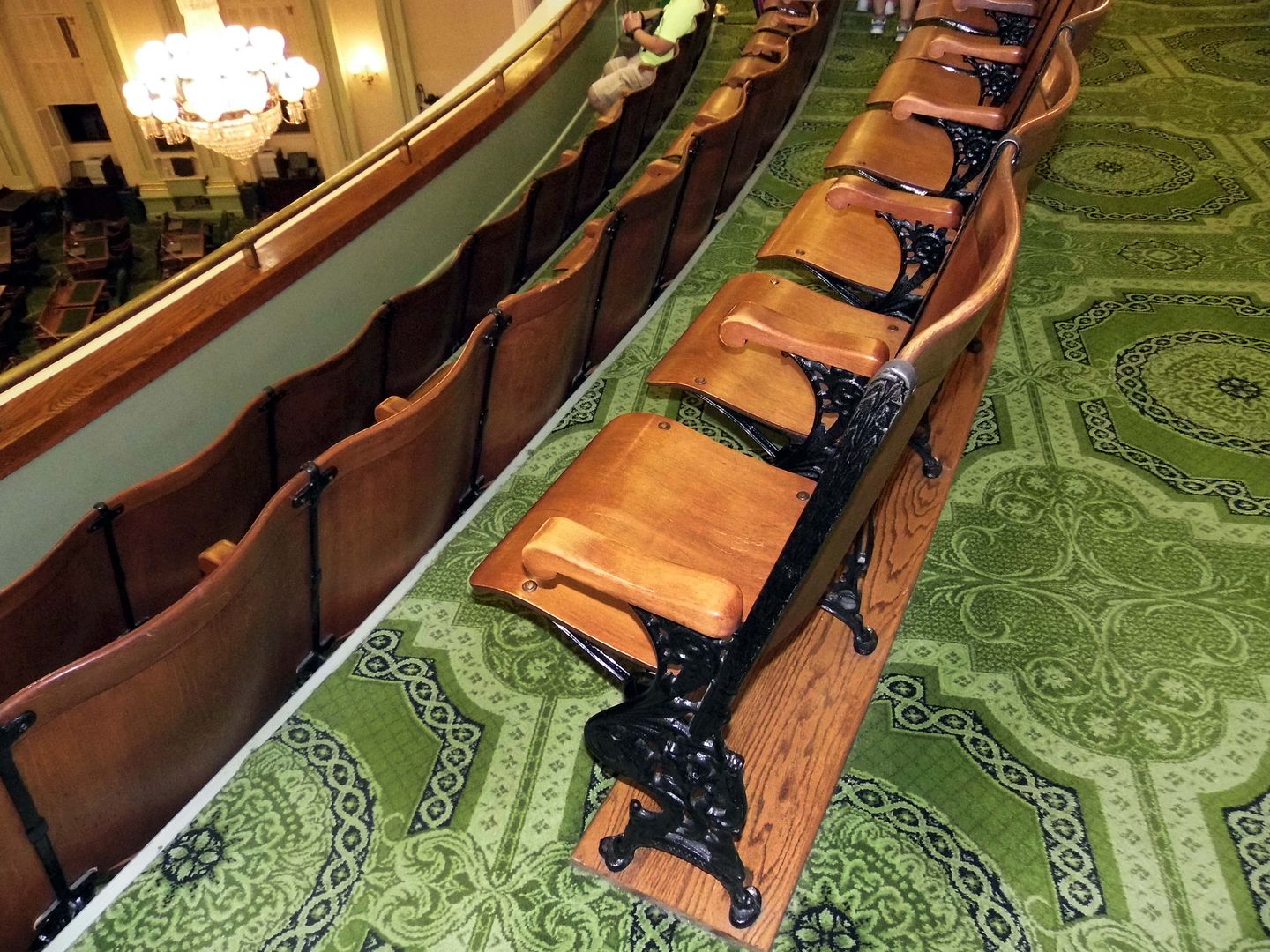


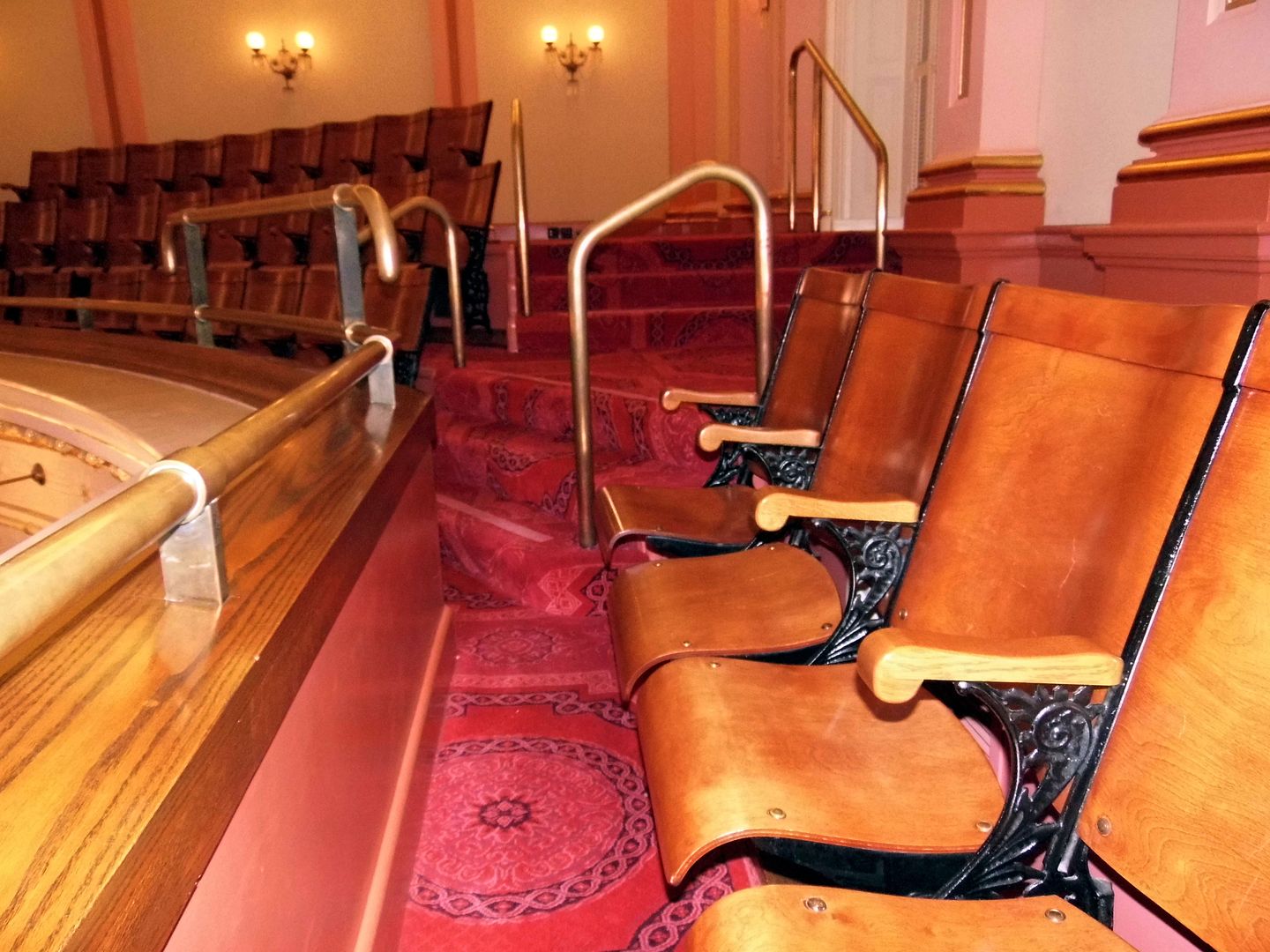
The Senate Chambers on the south side and the State Assembly on the north side of the building currently look as they did in the late 1800s, with color schemes that can be traced back to the British Parliament (red=House of Lords and green=House of Commons). Coffered ceilings loom over desks carved out of walnut and restored to their original splendor.
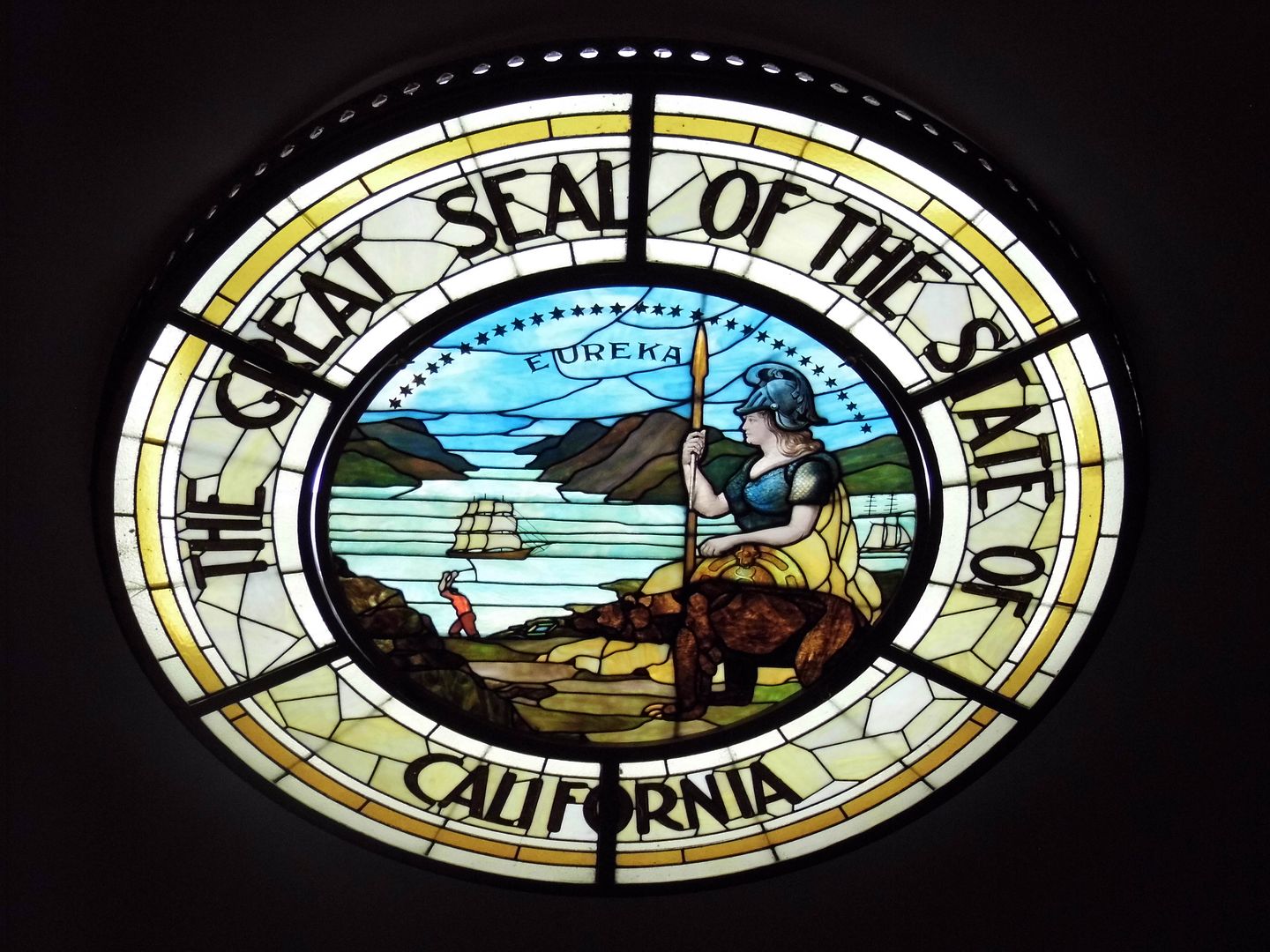


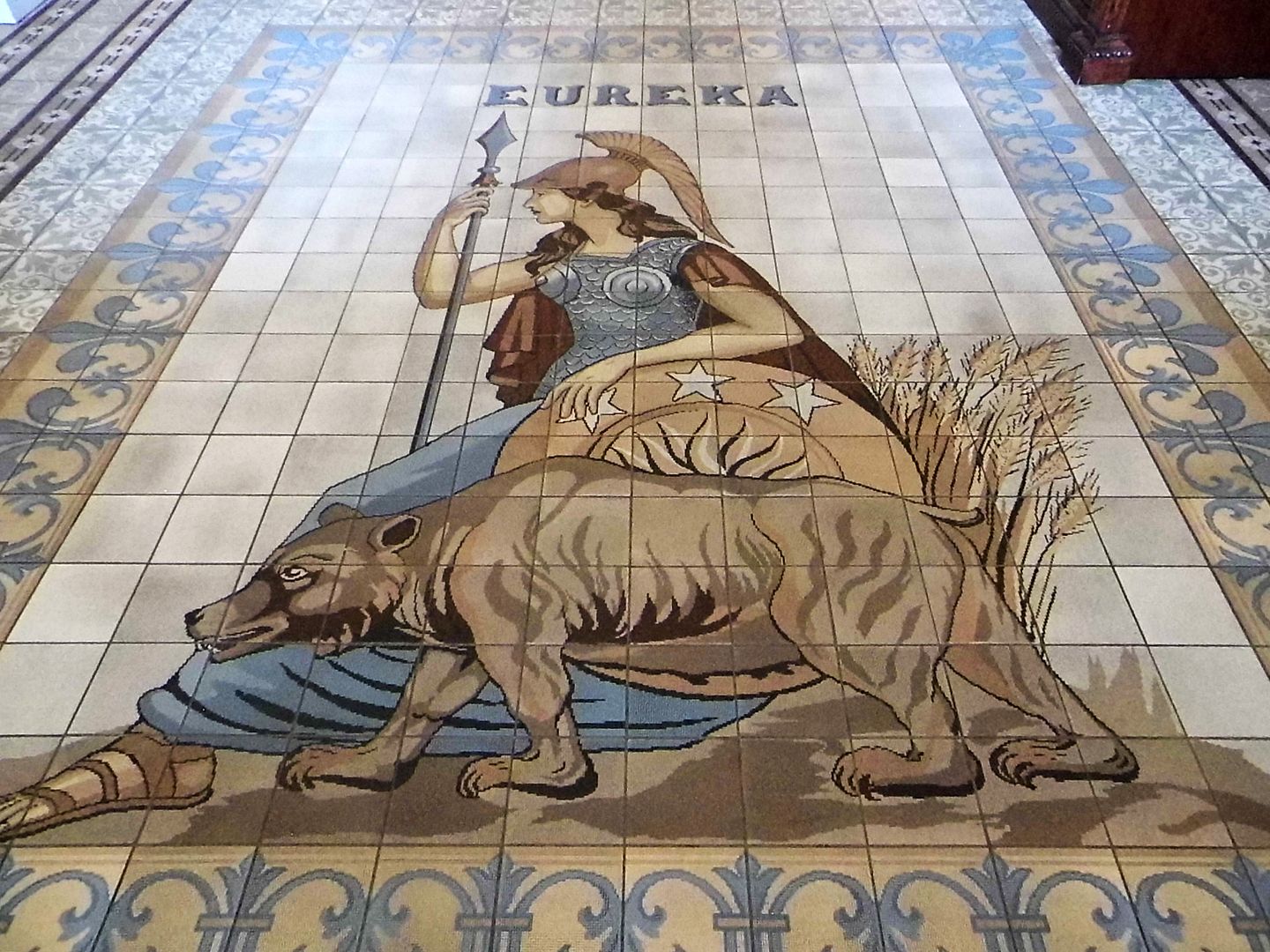
Outside of each gallery is the California state seal, fabricated out of stained glass and lit by electricity, not sunlight. Installed in 1907, they depict the Roman goddess Minerva under an arc of 31 stars (the of states in the Union upon California's annexation) and surrounded by such California state symbols as the grizzly bear, a grapevine, a (gold?) miner, and the Sierra Nevada mountain range. Of course, there's also our state motto, "Eureka" ("I have found it").


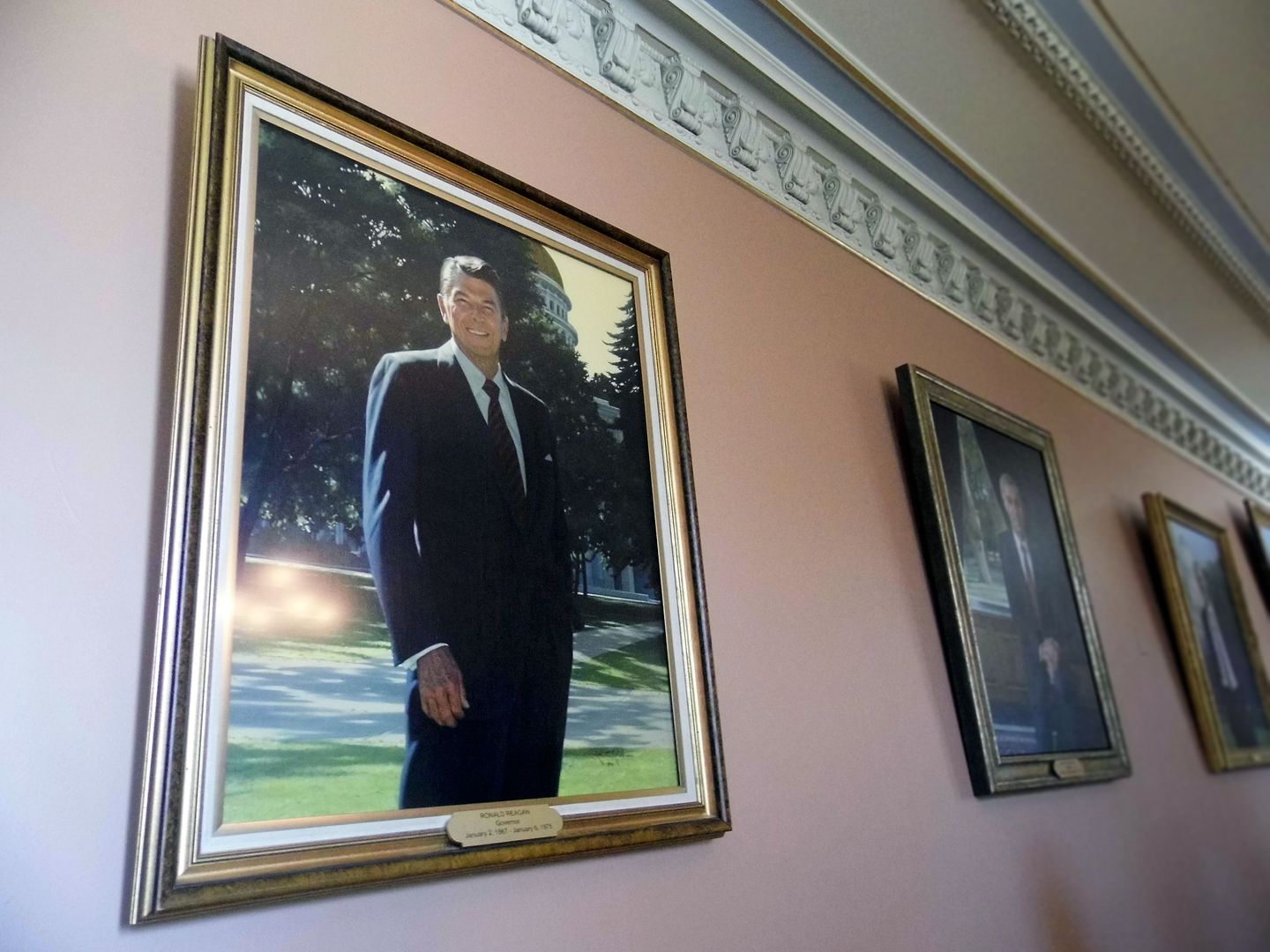
The tradition of commissioning portraits of California's governors wasn't formalized by the State Legislature until 1931, but you can still find portraits of 38 governors displayed throughout the West Wing—including Ronald Reagan and yes, Arnold Schwarzenegger.

After all, it's got to portray some recent history.

I wonder how many other people have been driven insane by their association with the California state government?

Related Posts:
Photo Essay: Glimpses of Sacramento, California
Photo Essay: The First Cathedral of the Colonies
Photo Essay: How A Metaphysical Religious Sect Brought a Glimpse of DC to LA
Photo Essay: City Hall at Sunset (Updated for 2017)

August 04, 2018

Photo Essay: The Final Resting Place For Ronald Reagan and His Presidential Artifacts

I've been thinking a lot about Ronald Reagan lately.


Our 40th U.S. President was elected in 1980 when I was only five years old—so, although I was aware of the existence of his predecessor, Jimmy Carter, it was Reagan who really served as my first president when I was old enough to understand what that meant.

July 28, 2018

Photo Essay: Is the Arizona Biltmore Actually a Frank Lloyd Wright? (Does It Matter?)

Maybe it's enough that Clark Gable and Carole Lombard honeymooned at the Biltmore in Phoenix...


...or that Ronald and Nancy Reagan celebrated their honeymoon there.


It's certainly has a storied history politically, with every president from Herbert Hoover through George W. Bush having been a guest...


...and Republican presidential candidate Senator John McCain conceding defeat on the lawn there.


But I didn't visit the Arizona Biltmore for any of that. I wasn't even that compelled to honor the legacy of the Wrigleys there, though they were heavily involved and built a mansion just up the hill, overlooking it.


To be honest, I squeezed the Biltmore into my last day in Phoenix for Frank Lloyd Wright, whose "Saguaro Forms and Cactus Flowers"design (which appeared on the cover of Liberty Magazine in 1926) was fabricated by Taliesin students into stained glass and installed as part of a 1973 restoration. (The hotel was renovated again by Taliesin Associated Architects in 1979, after a fire.)


That's the only real "official" tie that FLW had to the Biltmore—not the gold-leaf ceiling...


...nor the illuminated milkglass bricks...


...or even seemingly "Prairie-style" lighting fixtures on the upper mezzanine of the lobby.


Officially, Wright had nothing to do with how the hotel circumvented Prohibition in a men-only
smoking and drinking room up a back stairway and on the terrace—in the so-called "mystery room."


And yet, as I was skulking around the hotel resort on my own, opening unlocked doors and tiptoeing across perhaps that same terrace...


...all I could seem to find were signs and signals of Frank Lloyd Wright's involvement.


Officially, the architecture of the Biltmore is credited to a former draftsman for Wright in his Oak Park Studio, Albert Chase McArthur.


And Wright did design the inspiration for the "Biltmore Block," a geometric rendering of a freshly-cut crown of a palm tree.


But apparently McArthur modified so many contributions that Wright had made at the time—including creating 34 different pattern variations on the pre-cast blocks—that Wright repudiated any affiliation with the building once it was finished.


Reportedly, he was also unhappy with contractors who rebuked any suggestion of unconventional building methods (and wouldn't even test them).


Wright hated it so much that he declared the finished product "even worse" than he thought. Yet when it opened in 1929, it was widely considered the "Jewel of the Desert."


FLW changed his tune a bit after the resort was warmly received, further muddying the issue of how much he'd been involved.


Later, if you were to ask him whether he'd designed it—or how much of it he had—he'd more or less tell you, "Look at it. What do you think?"


Of course, it does look very much like a Frank Lloyd Wright-style design, with its textile blocks.


And apparently, the Aztec Room and cottages (some of which were refurbished in 1988) show few or no adjustments to whatever design Wright may have contributed or influenced initially.


The most recognizable Frank Lloyd Wright design at the Biltmore (besides the saguaro stained glass) may be the Sprites, designed in 1914 for the (now demolished) Midway Gardens in Chicago, and sculpted by Italian artist Alfonso Ianelli. Six new casts of the "Solemn Sprite" statue were added to the grounds in 1985.


But we can't forget about William Wrigley Jr., who'd initially invested in the Biltmore and became full owner in 1930. The Catalina Pool, opened 1940, was his idea—and it became infamous as Marilyn Monroe’s favorite pool (though likely not where Irving Berlin composed "White Christmas," despite claims to the contrary).


The Wrigley family sold the Biltmore in 1970, and it's now operated as a Waldorf-Astoria hotel.


The Frank Lloyd Wright Foundation embraces whatever affiliation FLW actually had with the construction of the hotel, and even contributed a Wright-inspired sculpture called "Wings of Phoenix" by Heloise Swaback from 1982.

We may never know what actually happened in Wright's collaboration with McArthur—but even if the Biltmore was merely inspired by FLW, it certainly feels like walking through the biggest of his textile block homes.

Related Posts:
Photo Essay: Frank Lloyd Wright Ennis House, Exterior (Updated for 2018)
Photo Essay: Frank Lloyd Wright's Ennis House, Interior (Updated for 2018)
Photo Essay: A Mansion Built By A Chewing Gum Fortune But Saved By Lunch Meat

April 21, 2017

Welcome to The Shrine of Friendship

It all started last October when I stumbled across something online about a group of people who were very serious about breakfast—so serious, in fact, that they would even have breakfast for dinner. Now that's an obsession I can understand, I thought to myself.


Photo: California Governor Ronald Reagan, blindfolded during initiation into the Los Angeles Breakfast Club, 1967 (Los Angeles Times Photographic Archive. Department of Special Collections, Charles E. Young Research Library, UCLA)

And so it didn't take me long after seeing a photo of a blindfolded Ronald Reagan sitting on a sawhorse with his hand in a plate of eggs to know that I wanted to recreate that scene for myself.


So, I grabbed a friend, and then another friend, and we started to meet up with the Los Angeles Breakfast Club nearly every Wednesday morning for some ham 'n' eggs and sing-alongs and secret handshakes and recitations of encrypted text. I knew from that first breakfast that I wanted to become a member.


So, a couple of weeks ago I finally found myself sitting on that sawhorse who's appropriately named "Ham," his woven tail in my hand, I blindfolded and pledging my allegiance to The Shrine of Friendship.


With palm pressed into a fresh-off-the-skillet fried egg, I promised to get up early Wednesday mornings and to do the wiggle-waggle.


Even better, my two friends who I'd commandeered as my breakfast co-conspirators also became members—and that meant that the three of us got to be initiated together. Runny yolk slime and all.


You know, I've joined lots of historical societies and preservation groups, but I've never really felt like a real member of anything. Until now.


I've spent a lot of time in the six years since moving to LA feeling alone and like I don't belong anywhere. To be honest, I've spent most of my life feeling that way—regardless of where I've lived.

But when it comes to the Islands of Misfit Toys that I've tried to inhabit, I don't feel like such a misfit at this one.

Related Posts:
The Democracy of Ham and Eggs
The Island of Misfit Toy