Search

Showing posts sorted by relevance for query torrance. Sort by date Show all posts

August 02, 2019

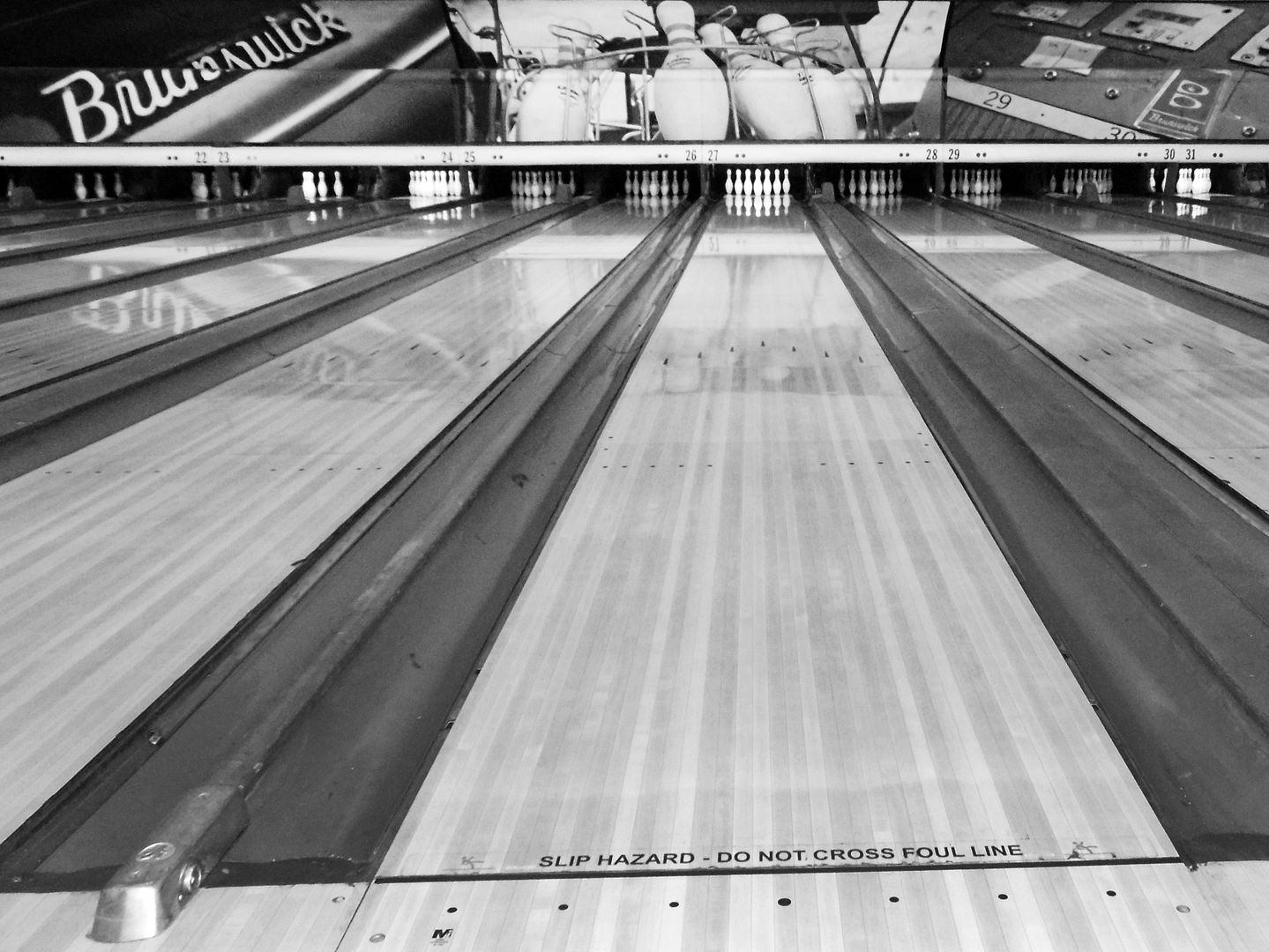
Photo Essay: Palos Verdes Bowl, Upon Its Imminent Demolition (Updated for 2022, Now Demolished)

[Last updated 3/24/22 3:28 PM PT—As of January 31, 2020, Palos Verdes Bowl had permanently closed. And as of January 2021, it had been demolished. ]


There were very few things I was allowed to do as a child—very few places my father would take me.

The beach was one.

Bowling alleys were another.

December 27, 2016

Photo Essay: The Former Navy Surplus Annex That Became a Mini Railroad

In 1945, World War II was coming to an end, and the U.S. Navy had a logistical problem: surplus property. The war was still on, so when one naval district had property it didn't need, there needed to be a way to redistribute it to another naval district that did need it.

Thus, the Navy formed its Material Redistribution Center in Torrance, a 90,000-acre annex to the (now demolished) Long Beach Naval Station on Terminal Island, in October 1945.

But just months later with the war over, the focus shifted from redistribution to disposal—but, in effect, the Naval Annex ended up being a dead end for that surplus, where it sat in storage for decades until it officially closed in 1973.

There, a cluster of buildings—including 15 Navy surplus warehouses—stood abandoned until 1979, with the sale of partial acreage to the City of Torrance and the formation of Wilson Park.


Meanwhile, Southern California Live Steamers had started in 1941, two years into World War II, as a miniature live-steam engine club. They didn't have a track, or even a clubhouse. They met in their founder's backyard in Beverly Hills.


In 1948, Walt Disney and fellow Disney animator Ollie Johnston joined the club.


Once the club had become more established, they moved to Lomita, where "Little Engines" were being built and sold by fellow Live Steamer Irene Lewis (who'd been befriended by Disney, thanks to their common interest in trains).


By 1989, Wilson Park—envisioned as a “central park for all people”—had been open for a decade...


...but five acres in the back were still vacant, save for those old abandoned Navy warehouses.


The City of Torrance asked SCLS to come and operate a tiny railroad in their neck of the woods...


...so the engine club laid 1000 feet of track along the newly-established "Crenshaw Line"...


...where their miniature trains would run—for free—at speeds of just 10 to 15 mph.


The City of Torrance has a rich history of railroads...


...including the Union Pacific Railroad...


... and the Harbor Subdivision, a historic line of the BNSF Railway that was built to connect the freight rail in Downtown LA to the Ports of LA and Long Beach.


The BNSF Harbor Subdivision still runs right next to Wilson Park.


The present-day SCLS home in Wilson Park features a number of tiny buildings in a kind of model train "village"...


...as well as an almost full-sized depot.


Twice a month, the Live Steamers host public run days, which are still free—even if you ride all three of their trains in one visit.


And you might as well ride them all, too, since it's not just one track you're riding.


There's an inner track, and outer track, and a spur track...


...the latter of which is a straightaway along the perimeter of the park...


...that dead-ends, forcing you to get up off your seat, turn around, and sit back down facing the other way while the engineer turns the engine around on a turntable.


Running multiple trains at the same time means there's a bit of traffic on the rails—and sometimes you've got to wait for another tiny train to make the switch and pass before you can proceed.


But there's one train at Wilson Park that doesn't run at all—and it's not a scale model, either.


Some of the tiny trains run past it, but it never moves.


It's an old Red Car from the Pacific Electric Railway, which, in the 1920s, was the largest operator of interurban electric railway passenger service in the world. But it's not one from the PE Torrance Branch (a spur off the Gardena Line) that brought passengers from LA to San Pedro, right through Torrance (its station now known as The Depot Restaurant).


This car in particular, PE No. 4601, originally hails from the Bay Area as part of the East Bay Electric Lines fleet.

Even though this Red Car isn't a native Angeleno, its history is fascinating. According to my fellow blogger, The Militant Angeleno:
This Red Car shell, originally built in 1911 as a 72-foot "Blimp" style car which ran in the Bay Area, was purchased by the PE and was involved in a crash with a freight train in 1946. Torrance resident Forest Wilson purchased it from the PE for $50 and converted it into a 60-foot long (wrecked section removed) house where he lived with his wife until his death in 1986.
Legend has it that after Wilson's wife sold the "Red Car House" to the City of Torrance (for $1), it suffered invasions of hornets and vandals, the latter of whom broke the windows and did what vandals do (and hornets don't).

Now, it's somewhat protected behind a tall, double chainlink fence. It won't ever run again. No one will ever live in it again. It hasn't been converted into a diner. But hopefully it will be restored at some point, so people can once again climb aboard the Red Car, whose fleet is nearly extinct.

Related Posts:
Photo Essay: Griffith Park's Holiday Light Train
The Ghost Train of Griffith Park
A Travel Town Birthday in Griffith Park
Photo Essay: A Last Ride on the Last Red Car
Photo Essay: Abandoned Naval Housing, Western Avenue
September 18, 2020

Another Month of the Pandemic, A New Swimming Pool to Try


We just passed the six-month-mark of the coronavirus pandemic this week. It's starting to feel like it's never going to end. 

Sometimes it feels like I'm drowning in anxiety. 

And the only thing that helps me come up for air is getting in the water. Even when it stresses me out

It's still better than life on dry land. 

The City of LA's aquatics facilities haven't reopened yet. The West Hollywood Pool has been demolished. And reservations for the Culver City and Santa Monica public pools have become increasingly hard to come by—especially when residents have first dibs.

So, I've returned to my routine from when I first moved to LA—which is to try any pool I can get into that's new to me, no matter where it is. 

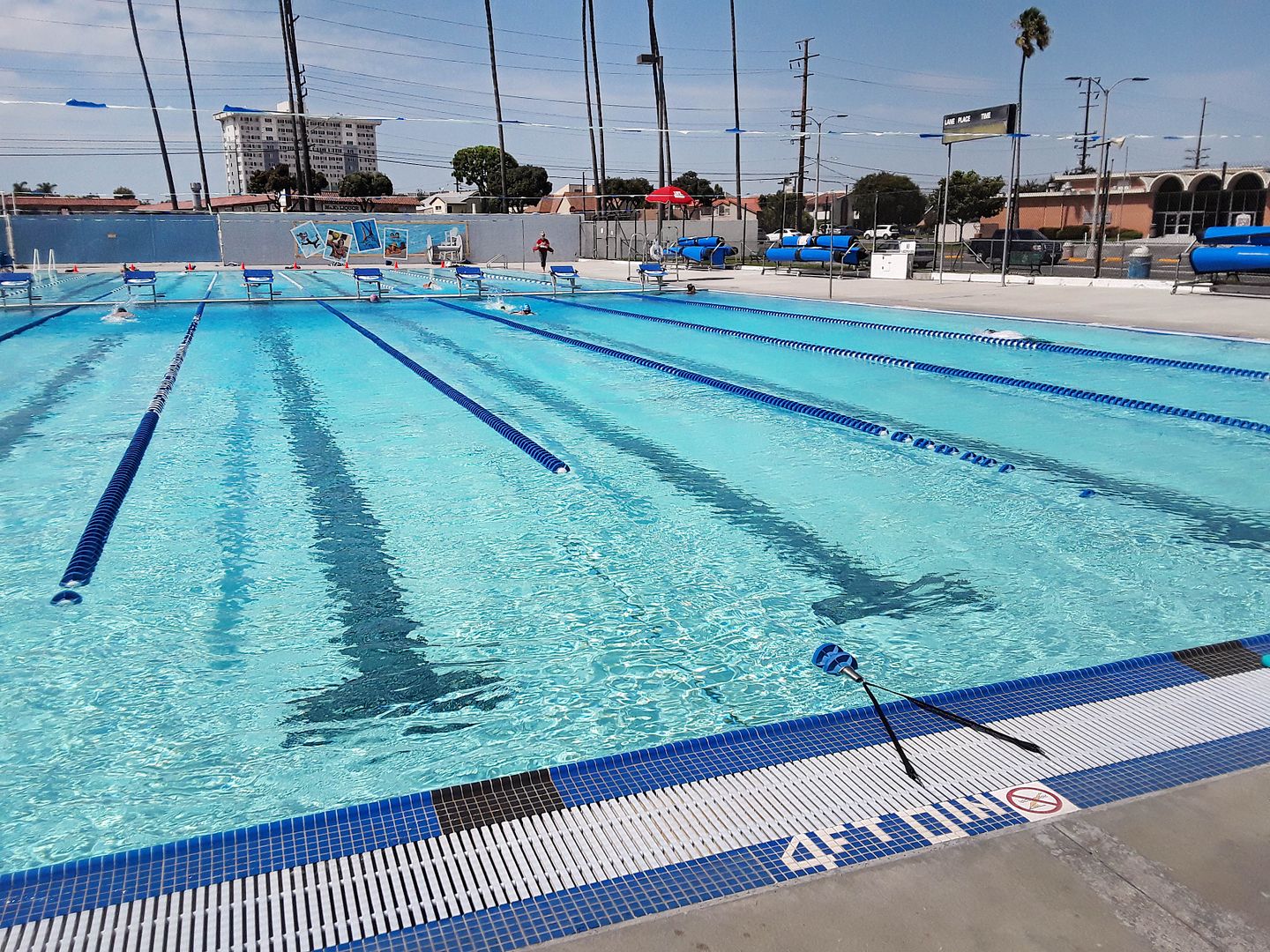
Today, my swimming took me to the South Bay municipality of Torrance, California. 

Instead of driving 20 minutes to swim for 40, today I had to drive an hour to get to my time slot. 

It was slightly quicker getting back home—but I still questioned my sanity. 

After a week of swim session cancelations because of poor air quality—with smoke from the wildfires that are raging up and down the Pacific West and Northwest blanketing us in a milky-white haze and an orange glow—I was willing to drive pretty much anywhere, as long as I could find a pool that would take me. 

The Torrance Plunge is named after former Torrance City Councilman Victor E. Benstead, who served from 1952 to 1964. It was his idea to build the Plunge. It was even part of his campaign platform—the one that helped him get elected to city council. 

After he fulfilled his campaign promise, his fellow council members surprised him with the renaming. And the name has stuck since it was originally dedicated in 1956. 

Despite the pandemic, the Torrance Plunge offers the chance to swim laps in half the length of its Olympic size—and, as with the other pools during the pandemic, in a lane all to yourself. 

The west wall of the plunge—at the deep end—features a mural by artist Emily Bradley, which was unveiled late last year. 

But I didn't notice much of anything beyond the first blue sky I'd seen in two weeks. 

That, and the blue and white backstroke pennant flags above me, flapping in the ocean breeze. I stared at them as I counted to 25 and reached out my hand to brace myself against the wall behind me. 

So, where to next?

I'm open to suggestions. 

Related Posts:

June 30, 2016

Photo Essay: The Secret Street Legal Collection at Vic's Garage (Updated for 2023)

[Last updated 6/6/23 11:51 AM PT—Otis Victor Edelbrock, Jr., the son of Edelbrock founder Otis Victor Edelbrock, Sr., passed away in June 2017. Its Torrance facility has closed, and its Southern California operations are now headquartered in Cerritos and the annual car shows no longer take place.]

In LA, every celebrity probably has their own secret car collection.

The question isn't so much, "What kind of car do you have?" but, "How many cars do you have?"

And unless you're friends with Jay Leno, you'll probably never get to see them in person.

Fortunately, we've got access to some fabulous car museums that are open to the public (the Petersen, Automobile Driving Museum, Nethercutt, and Mullin, just off the top of my head)—even if some of them are hiding in secret, and take some finagling to get in.

The Petersen Vault is considered a "hidden" collection, but all you really need to get in is an advance reservation and a paid ticket. (And don't even try to take photos.)

But what about the Honda Museum in Torrance? Or its neighbor, the Toyota USA Automobile Museum?

Once again, the secret to getting in seems to be knowing the right people.


But there's another private car collection in Torrance that's not allowed to be called a "museum"...


...because all of its cars are gassed up and ready to roll at any given time.


And it's not that the public isn't welcome at Vic's Garage—you just have to figure out how to get in.

January 04, 2023

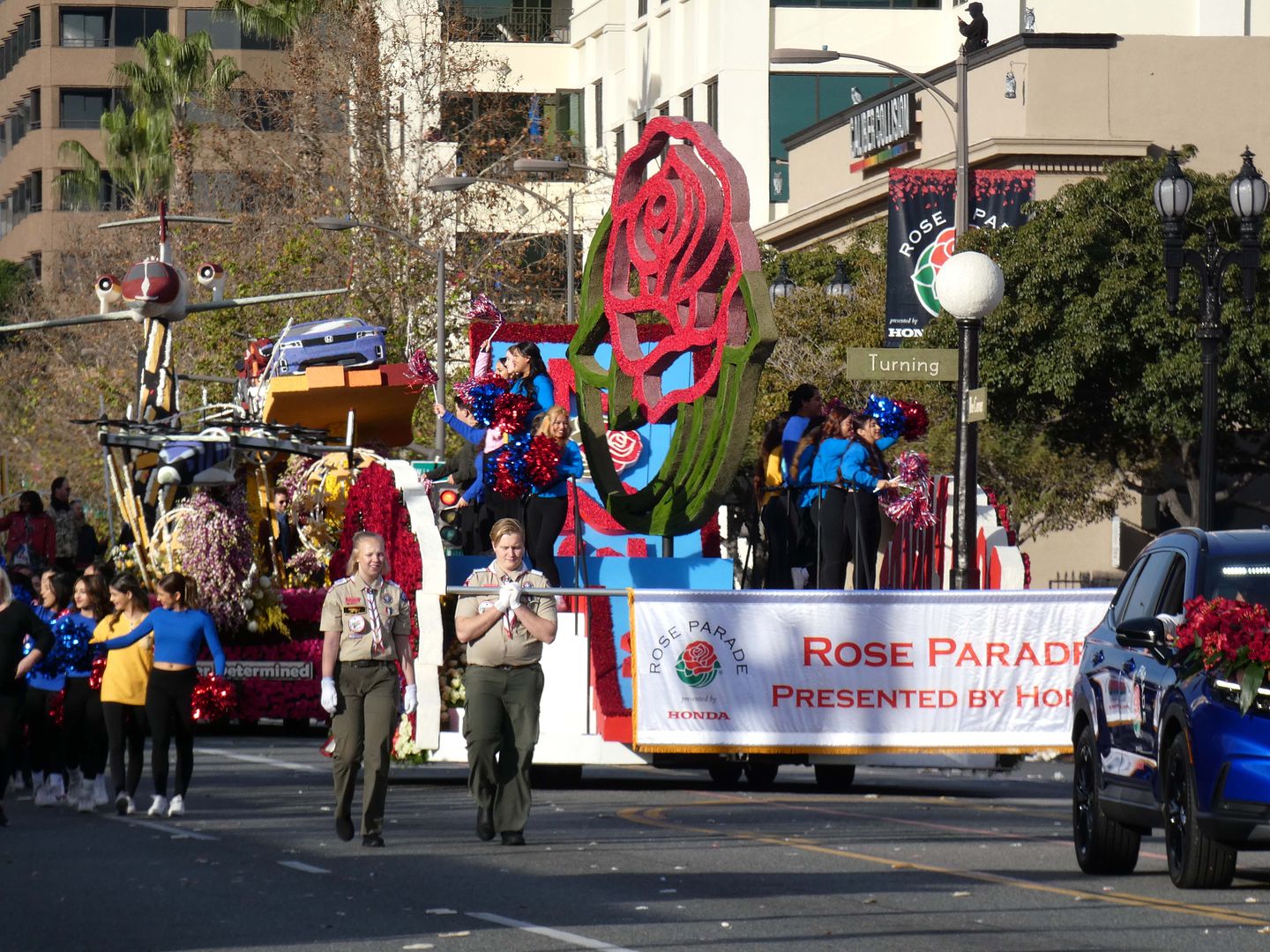
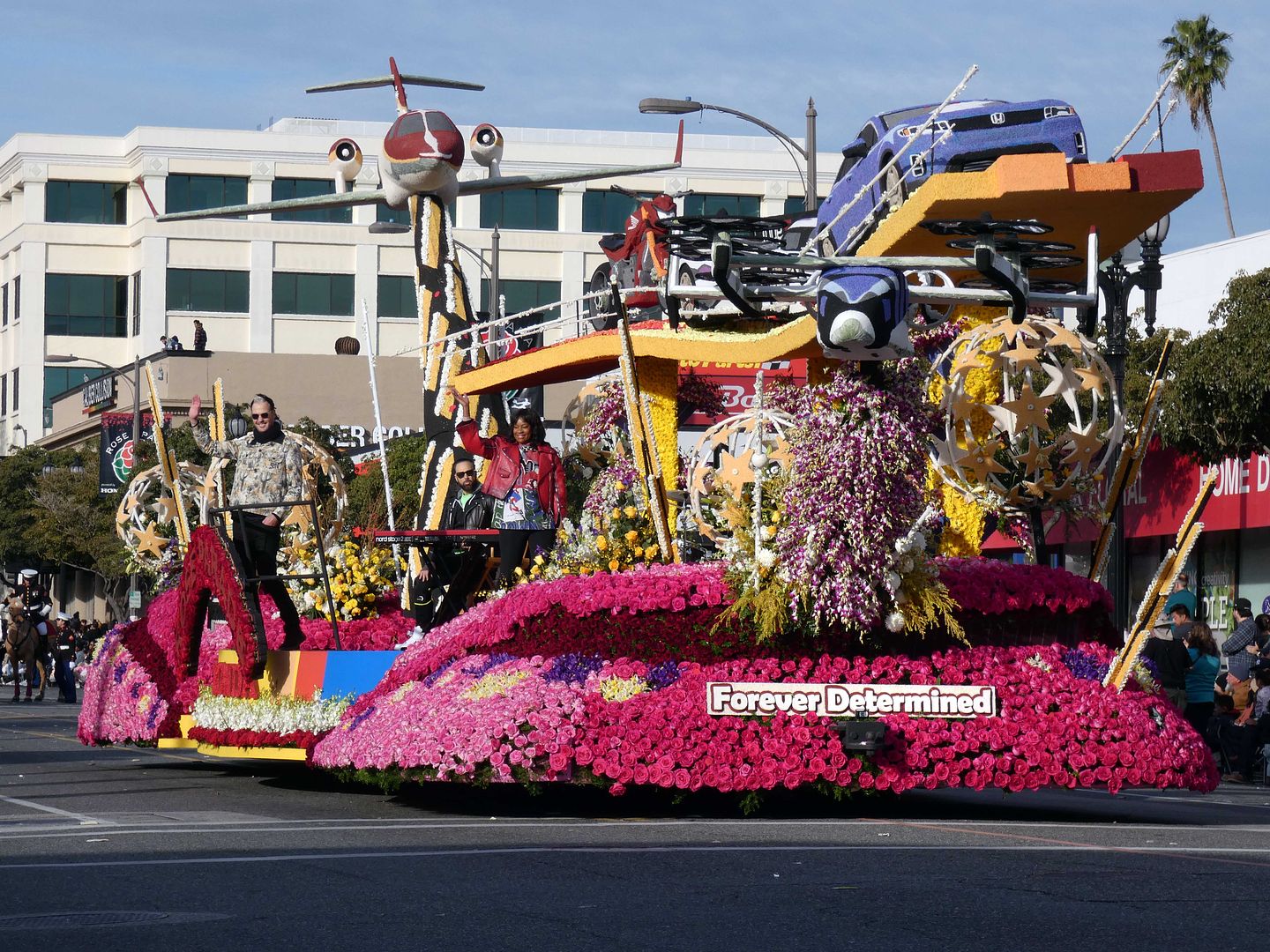
Photo Essay: The First Monday of 2023 at the Pasadena Rose Parade

The last time I'd gone to the Rose Parade, it was 2020—and the year had already started off weird, even before the COVID-19 pandemic had taken hold. 


In 2021, it was canceled because of the pandemic. And in 2022, I'd had such a good time celebrating New Year's Eve the night before, I couldn't bear to get up early enough to make it to the parade on time. 
 
 Parade sponsor, Honda

But this year, New Year's Day once again fell on a Sunday—as it did in 2017—so the Rose Parade took place on Monday, January 2, giving me a one-day buffer/recovery day. 

April 25, 2017

Photo Essay: Hatchlings In the Marsh

I'd been meaning to visit Madrona Marsh in Torrance ever since I first saw it on the map. But what finally drew me there was the promise of baby birds.


I knew that there had been some recent hatchlings spotted at the 43-acre preserve in the South Bay area of Los Angeles, but I didn't realize what a good birding spot it would be in general.


Right by the entrance, I spotted several low-lying lesser goldfinches, though they certainly weren't the only songbirds I heard.


It helps that there's plenty of vegetation for them to perch onto and hide in, like the dune lupine (a.k.a. bush lupine, or Lupinus chamissonis)...


...and clarkia...


...and, of course, poppies.


Although wildflowers in the vernal marsh (so named because the temporary freshwater pools are only wet in the spring, thanks to rainwater runoff) are already past peak bloom...


...I still spotted some nice yellow sweet-clover (Melilotus officinalis) and garland daisies.


And while the butterflies were out in full force, so were the bloom-loving bugs.


But I had come to this rare, undeveloped parcel of land (part of which was formerly an oil and gas recovery site) in a highly commercial area of the City of Torrance for birds...


...and, in my quest, I got sightings of house finches...


...female red-winged blackbirds (somewhat a misnomer, given their brown and white color pattern)...


...and, perhaps most spectacularly, male red-winged blackbirds.


I found them singing in thickets of reeds...


...and perching on black willows.


Madrona Marsh is literally across the street from Del Amo Fashion Center Mall, so it's prime real estate for developers. Over 90 percent of California's wetlands have been lost to development.


But environmentalists fought—as far back as 1972—to preserve and restore the marshland for native species that would make it their home as well as for non-natives that would use it as a stopover on their migratory paths along the Pacific Flyway.


In 1989, the open space was cleaned up, with over 200 tons of junk being trucked out. But it didn't officially open to the public—accompanied by a nature center—until 2001.


And now, coots are having babies. Mallards are having babies.


And breaking up the symphony of songbirds with their own unique cacophony are a flock of Canadian geese also starting their families...


...feeding and protecting their young.


These curious little darlings didn't seem disturbed by visitors to their cordoned-off area...


...and went about their business, exploring the marsh around them...


...having a bite to eat...


...and snuggling up tight.


But soon enough they were roused to move on...


...and take a little swim...


...and glide off into the sunset.


I suspect that I only saw a fraction of the bird, insect, and plant life that's at Madrona Marsh (not to mention the mammals and reptiles I never saw, and the amphibians I only heard).

This "island habitat" had been hit hard by the drought, but now it seems to have recovered.

At least for now, it's nice to know that its residents are safe, and visitors are welcome—just like in Los Angeles, and just like in California.

That can all change so quickly, though.

Related Posts:
Photo Essay: Birding Anza-Borrego During the Superbloom
Damage Control
Photo Essay: Invasive Plants, Parasitic Birds, and Giant Stinging Nettle at Prado Wetlands
Basking in the Gloom at Bolsa Chica Wetlands