Search

Showing posts sorted by relevance for query paul r. williams. Sort by date Show all posts

September 16, 2016

Photo Essay: Oakridge, An Old Hollywood Celebrity Ranch (Updated for 2021)

[Last updated 3/20/21 10:18 PM PT—new Jack Oakie memorabilia photos added at bottom of post]

In the northern part of the San Fernando Valley in an LA neighborhood called Northridge, there's an English country manor (with Tudor Revival elements) that the "Architect to the Hollywood Stars," Paul R. Williams, designed for film (and, later, TV) actress Barbara Stanwyck. 


April 11, 2015

Photo Essay: Into the Abyss of Downtown LA's Underground Tunnels

[Last updated 11/26/19 7:32 PM PT]

Los Angeles is a town that has gotten away with hiding behind a veneer of glitz and glamour, a silver screen sheen that makes it seem like everything here is fancy. But this city has a seedy underbelly: it will go down in history as the site of the most mysterious and grisly murders, home to the notorious and the nefarious (Mickey Cohen, Al Capone, Charles Manson, O.J. Simpson, the Black Dahlia).

After all that, a little bootlegging during prohibition doesn't seem so bad.

Speakeasy-style cocktail lounges have become popular with the renewed interest in classic mixology, but LA is home to some actual, real speakeasies – many of which have sat in hiding for years, and are still being discovered – as well as the underground tunnels that once led to them. Reportedly, there are at least 11 miles of those underground walkways, plus the abandoned subway tunnels and equestrian tunnels used to transport criminals (or anything illicit) safely and securely.

I set out to find one of the best-known, and shortest, of such tunnels: between the Hall of Records and the Kenneth Hahn Hall of Administration in the Civic Center area of Downtown LA.

It took me two tries on my subterranean adventure, but I got there...eventually.


It turns out, I could've started at either building and end up in the other one...


...but I began my journey (on both tries) at the 1962 Richard Neutra-designed Hall of Records, noted for its Joseph Young-designed "Topographic Map of Water Sources in County of Los Angeles"...


...and its cool Modernist screen by Malcolm Leland (which is supposed to be a freestanding sculpture but now abuts the building).


The tunnels can't be so secret, because there are several signs throughout the park about them...


...even though technically they're condemned because of sustained earthquake damage.


I took a scary elevator down to every floor below ground...


...weaving through stacks and stacks and boxes and boxes of records and archives...


...but my misdirected wanderings led me into the parking garage, stuck and lost. I had to abort and return later.


Three months had passed, and I finally made my way back, actually finding the tunnels this time, identifying them by those unmistakable "SOUND HORN" signs.


Apparently carts like this would once zoom down these long hallways and clip around corners...


...making it necessary for them to announce themselves so as not to crash on a blind curve.


But these days, there's hardly anything moving down there, except the cool breeze from the air conditioning...


...which soon turned into a warm blast of air as I went deeper, past a disturbing chute...


...some fenced-off areas...


...and equipment...


...until the path dead-ends.


But with all those corners, the tunnel isn't just a straight line to the Hall of Administration...


...so I wandered down there for a while, poking around every turn...


...until ascending the escalator which was to be my egress...


...and emerging on the other side into the Paul R. Williams-designed Hall of Administration, just across the street from the Hall of Records.

In this town, you never quite know what might be underfoot.

Related Posts:
Underneath the City (Hall)
Photo Essay: Searching for Gold Under Scotty's Castle
Photo Essay: Eagle Mining Company's Underground Tunnels
I've Outdone Myself Again
Downtown LA's Upwards Build into the Open Air
Looking Up from the Streets of Downtown LA

October 13, 2016

Photo Essay: Sin City's Guardian Angel Cathedral

I've got this map.

It's not a map of the places I've been, which you can find here on my site. No, it's a private map, visible only to me, of the places I want to go.

And it can become a little overwhelming.

I've bookmarked a lot of museums, historical sites, diners, bars, and so on in case I find myself somewhere with a little time on my hands. They're not necessarily items on my bucket list—they're just places I think I might like to go if I'm nearby and have got the time.

The problem with this map is that I don't always remember why I've bookmarked something. That means that sometimes I go there without knowing what I'm looking for once I arrive.

That's what happened when I decided to go to the Guardian Angel Cathedral in Las Vegas, on the northern end of the Strip. I couldn't remember what about it had interested me, but I went to check it out anyway.


The moment I saw this A-frame modernist structure, I started to take notice...


...but it wasn't until I took a closer look at the colorful mosaic tile mural on the face of the Catholic church that I knew I'd stumbled upon something really special.


I've seen lots of liturgical art in my day, but nothing quite like this.


It looked like something out of a comic book, or perhaps rendered by a pop artist. You might even say it's downright Cubist.


Its subjects of Peace, Prayer, and Penance were solemn, but the corresponding figures—and namesake guardian angel—depicted in tile looked more like superheroes than the sad and pious characters you normally find adorning a Catholic edifice.


But the staggering work of sacred art outside the cathedral was only the beginning—because inside, a series of 12 triangular niches were filled with mid-20th century stained glass windows (dated 1965) that illustrated the Stations of the Cross with the same daring approach as the mural out front.


It turns out that the tile and the leaded glass were the work of two different artists—that is, two sisters from Hungary named Isabel Piczek and Edith Piczek. Edith designed the murals (which were executed by the Favret studio in Pietrasanta, Italy) while Isabel created the windows.


The two sisters worked out of their "Construction Art Center" studio in Echo Park, Los Angeles,  creating liturgical art for many churches throughout LA and Orange counties—but the Guardian Angel Cathedral is considered the crowning achievement of their careers.


And, looking at the painted faces and the shadows and shading used in window installations like "The Birth of New Humanity," it's easy to see why.


The church actually opened in 1963, before Las Vegas even had its own diocese. But what it did have was lots of tourists and local workers from the casinos wanting to go to church nearby.


Its A-frame design is the work of Paul R. Williams, the architect who designed everything from celebrity ranches to the Murphy Ranch gate and the Solstice Canyon estate (that unfortunately burned to the ground).


While the building structure is decidedly modern, the Piczek sisters have described their combined aesthetic as "Mystic Realism."


As they've said, their artwork "is the kind of art which does not want to exist for its own sake."


In fact, they've argued, "The real artwork is not made from glass, paint or tile."


It has much more to do with an "inner existence" and "the monumentally recreated world of Man’s Super nature." It's no surprise that Isabel was also a theoretical physicist.


But, when it comes down to it, the real purpose of the art is to create happiness.


And by that measure, judging by my own reaction to it and all metaphysics aside, the art was successful.


Like most stained glass, the windows are only visible during daylight while the sun's rays are beaming through. Later in the day, when the sides of the A-frame are cast in shadows, al you can see from the inside is a dark outline, illuminated only slightly by artificial light.


And like many traditional ecclesiastical leaded glass windows, these were meant to be read as much as viewed...


...though the facial expressions therein seem to tell stories of a thousand words each.


Still, the commands are simple, clear, and emphatic: Go forth, teach all nations.


If you look at the windows closely, you can see a few references to gambling and the other vices that may take hold of the parishioners of this cathedral—whether they're based in Sin City or just passing through.

At least there's somewhere to go for some penance and contrition after all that sin.

Related Posts:
Photo Essay: Stained Glass Crawl Through a Cathedral Crypt
Photo Essay: Climbing to the Top of The Cathedral of St. John the Divine
Photo Essay: Blessings for the Poor in Spirit
Photo Essay: The Way of Sorrows
Photo Essay: The Monastic Life at St. Andrew's Abbey

June 02, 2011

Photo Essay: Murphy Ranch in Rustic Canyon (Updated for 2021)

Update 9/11/21 2:11 PM PT—I'm not 100% sure of the status of some of these structures, as I haven't been able to get down there and see them for myself. 

circa 2011

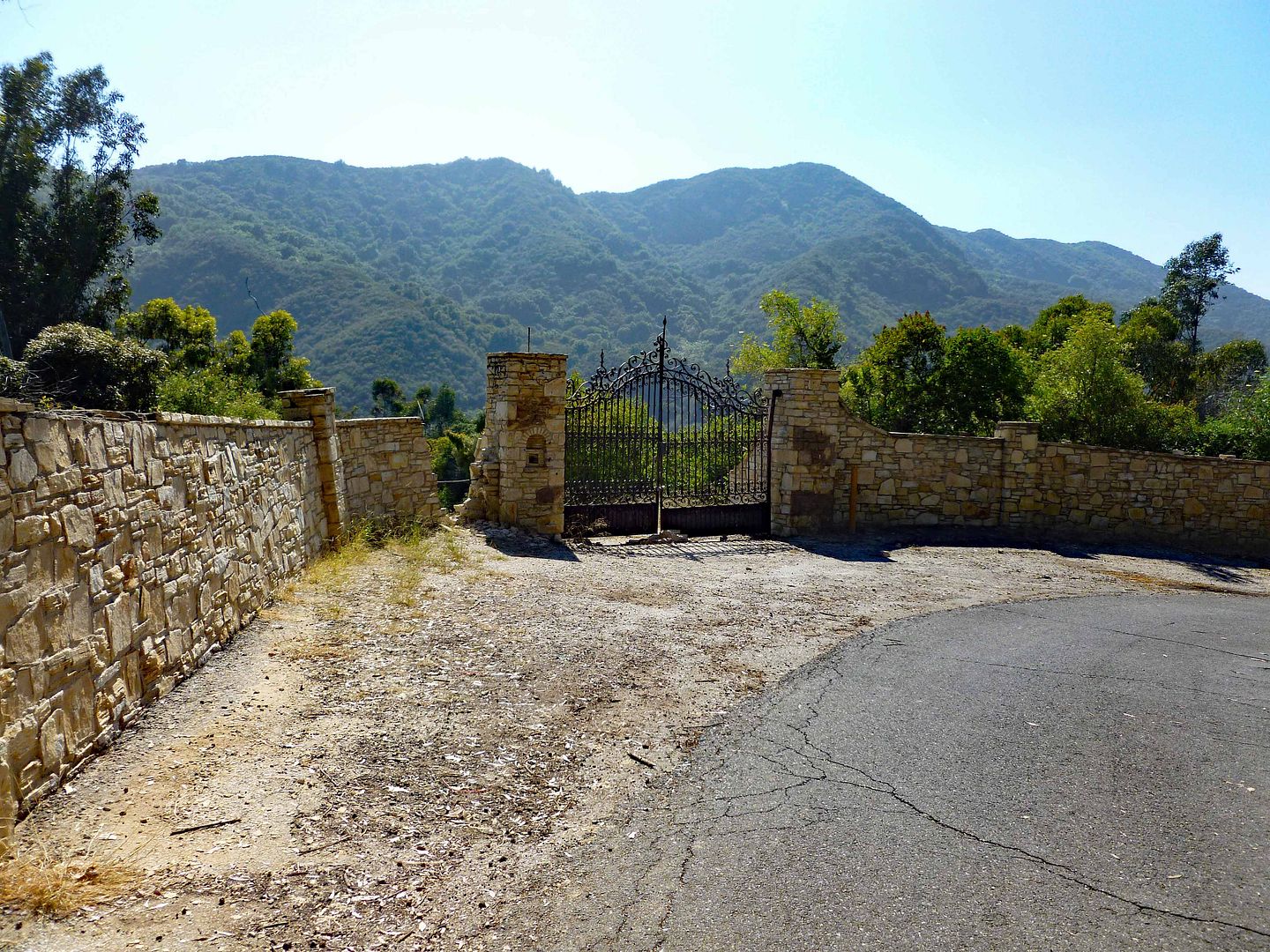
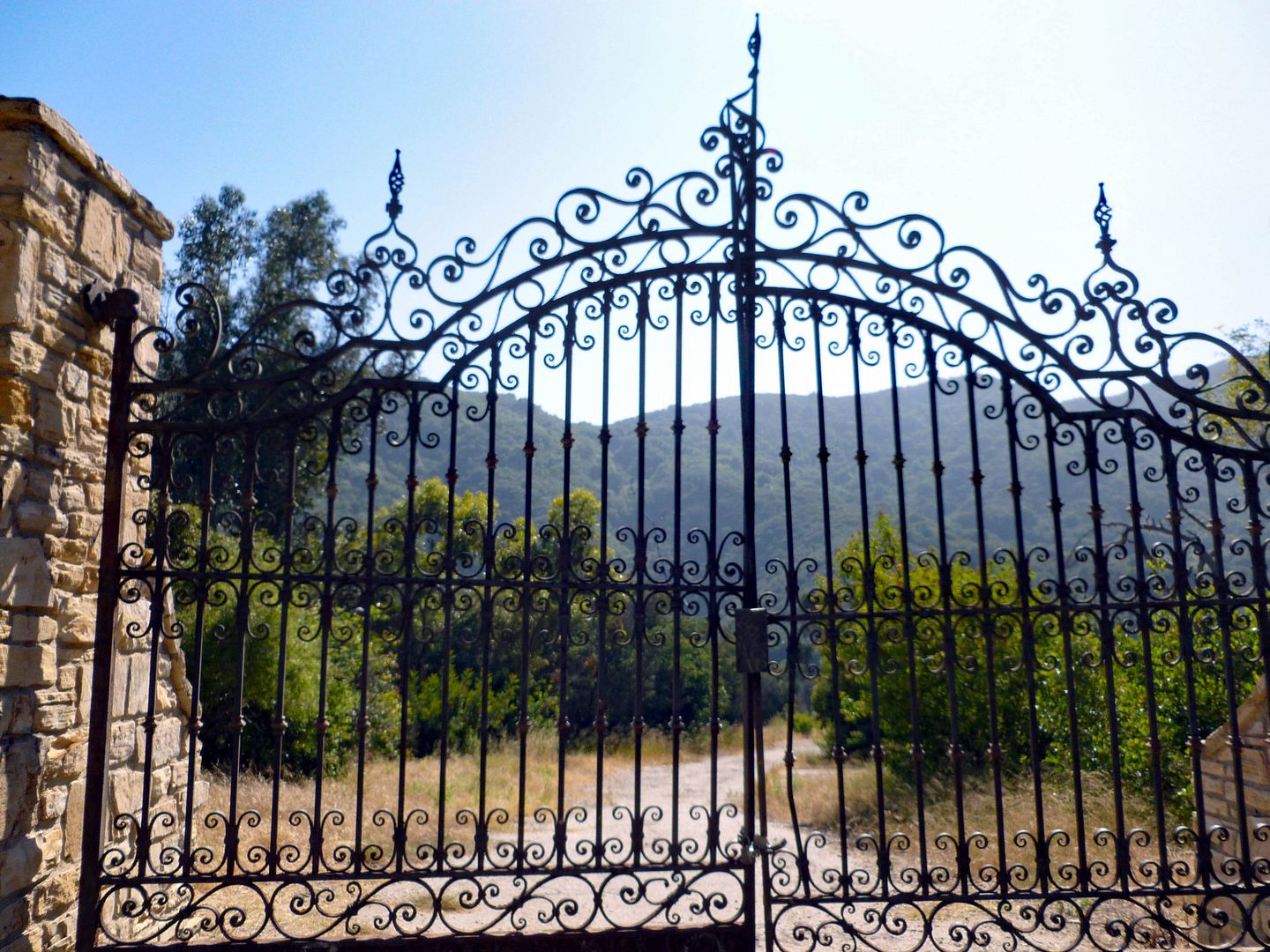
Unfortunately, it's been confirmed that the Paul R. Williams-designed gate (made of wrought iron and stone pillars, anchored by a long stone wall) was removed without notice in 2016. 

circa 2011

In 2011 and 2012, it was intact.

circa 2011

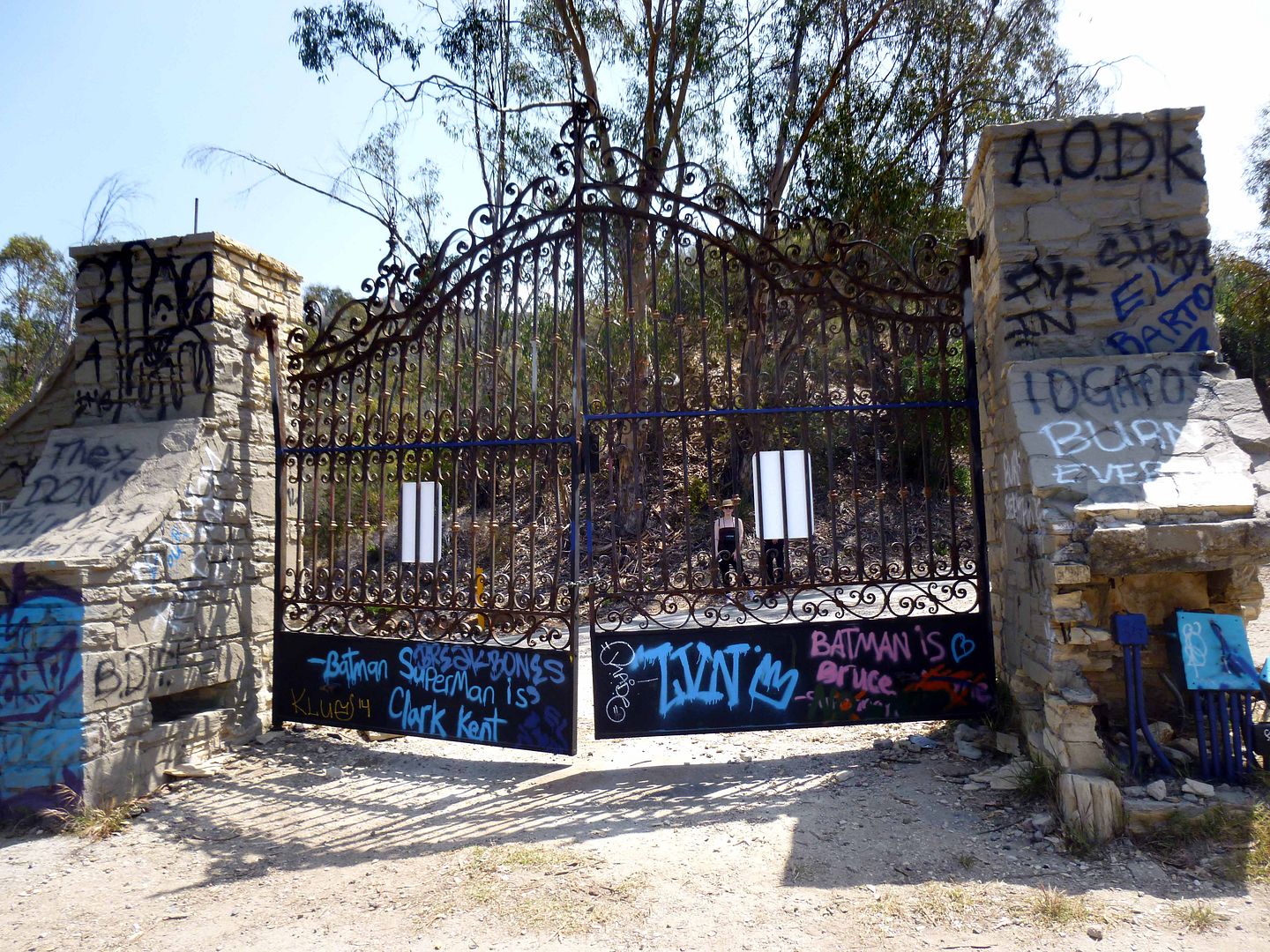
But time and foot traffic had not been kind to the gate, which became increasingly tagged and unstable by the time of my last visit in 2014.

circa 2014

Whether any of it was salvaged is currently unknown. And I have heard from reliable sources that some of the other ruins at Murphy Ranch have also been razed or removed. I'll update this post when I have a definite confirmation.

In the meantime, here's my original post from 2011:


When I heard that there was a mysterious, graffitied, abandoned building hidden in Rustic Canyon, near the Rustic Canyon Trail I couldn't find during my hike from Will Rogers into Topanga, I knew I had to go.

June 07, 2025

Photo Essay: Nevada's Home of the 'Miracle Metal' That Helped the Allied Forces Win World War II

For as many times as I've visited Las Vegas, I still have a lot to learn about the Las Vegas Valley—and Southern Nevada as a whole. 

That's one of the reasons I like traveling for the annual "Home + History" weekend sponsored by Nevada Preservation Foundation—whose events have taken me to unexpected places on the Strip, just off the Strip, on Fremont Street, and even to nearby Boulder City

This year, the one big draw for me was the historic bus tour of Henderson, now Nevada's second-largest city. 

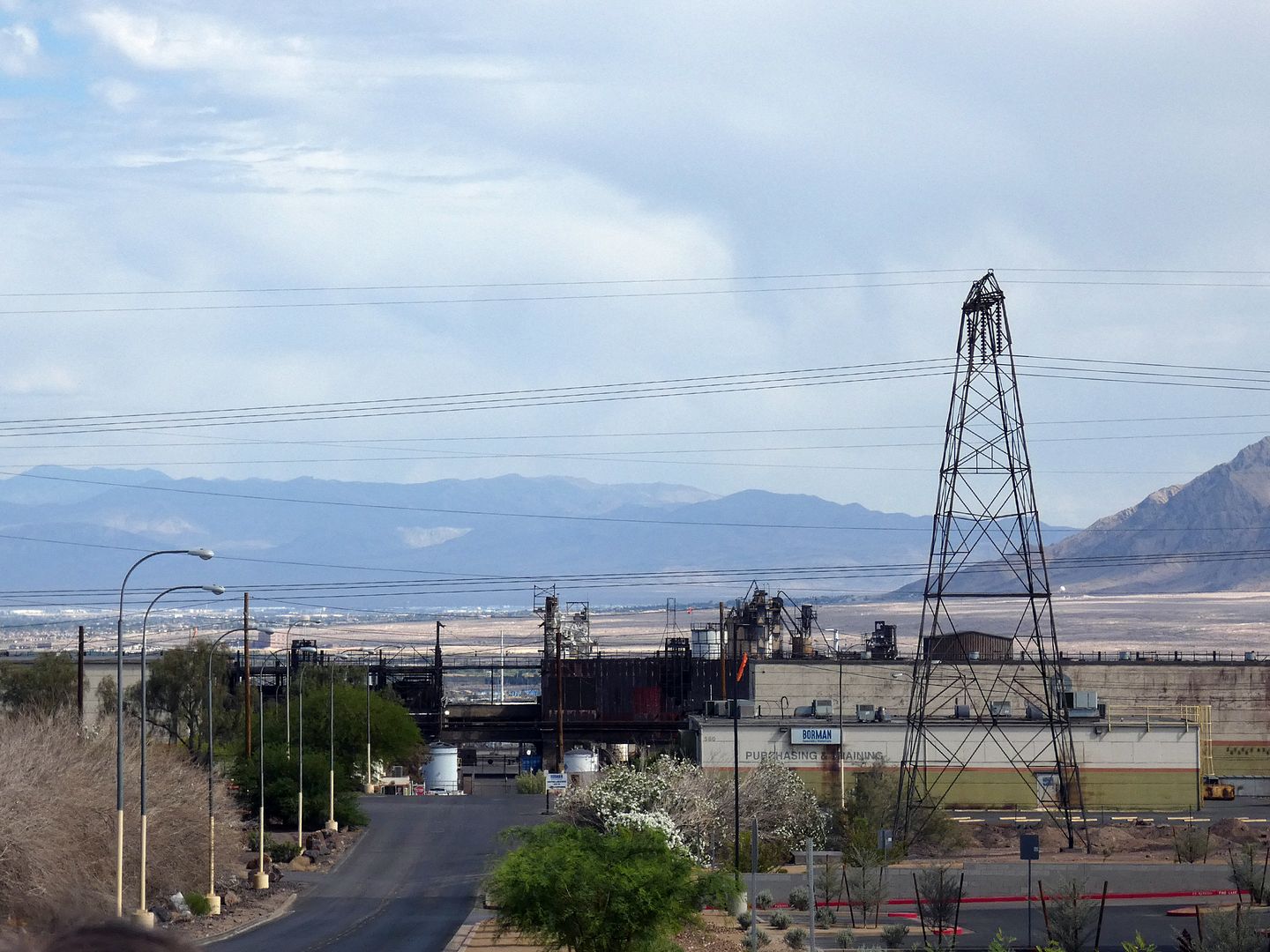
While Boulder City had the Hoover Dam to thank for its founding, Henderson had something completely different: magnesium.

In fact, although Henderson wasn't incorporated until 1953—named after Nevada Senator Charles Belknap Henderson—it began over a decade before that as the "Basic Townsite," home of Basic Magnesium, Inc. (BMI).

And the bus tour I'd driven five and a half hours for, which was co-presented by Nevada Preservation Foundation and Henderson Historical Society, took us through the old BMI plant.