Search

April 17, 2020

Photo Essay: A Trove of Sculptural Treasures at UCLA

Three weekends ago, I was still looking for every and any excuse to get out and do something. I found the pandemic restrictions almost liberating—freeing me from my "regular schedule" and allowing me to cross some places off my list.

The only challenge was finding someplace on my list that was actually open and unlocked—and where I was not only allowed to be, but also safe to be.

I didn't have to go far to finally make it to the sculpture garden on the UCLA campus.
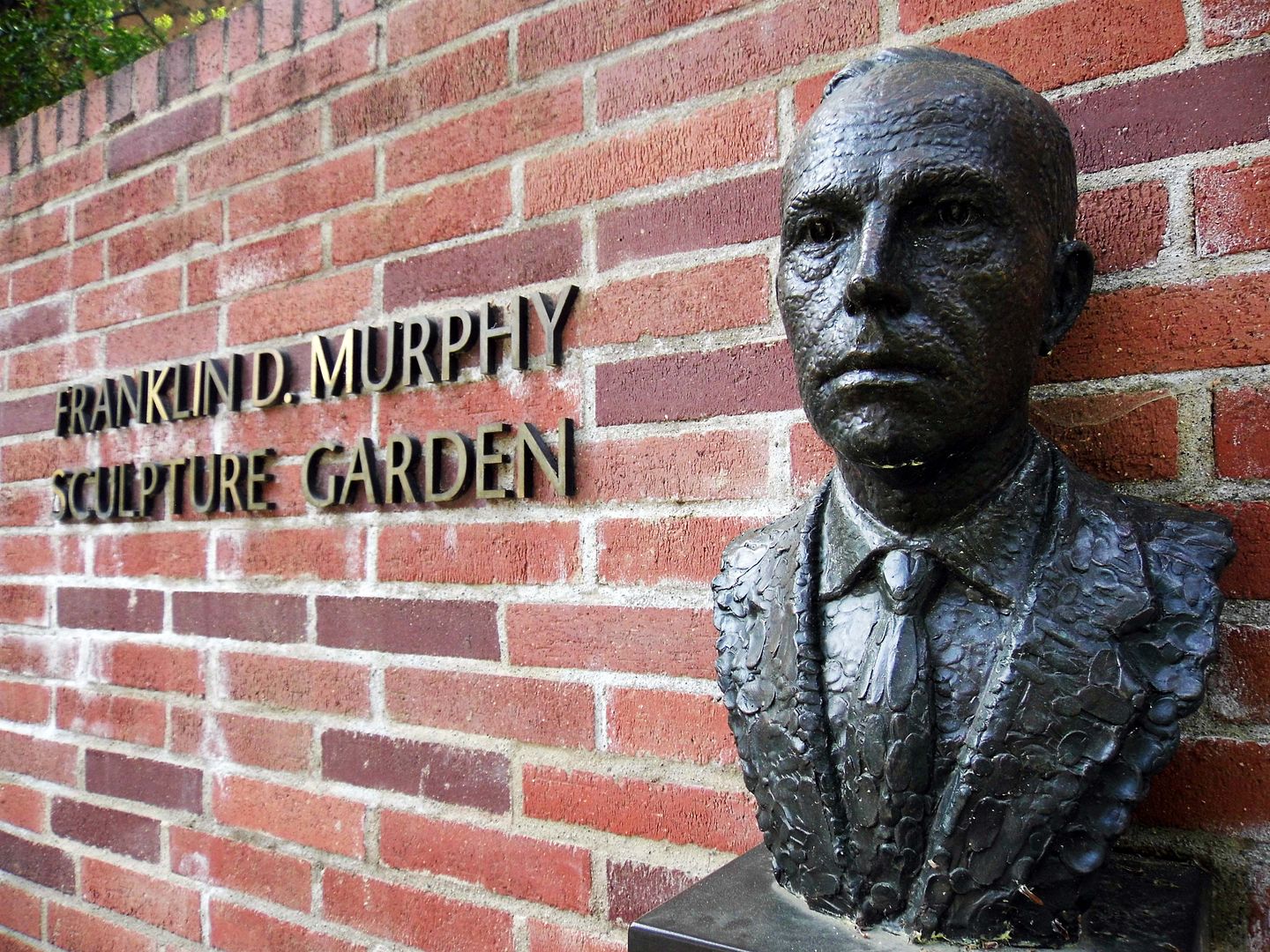


Technically part of the Hammer Museum, also in the Los Angeles neighborhood of Westwood, the Franklin D. Sculpture Garden was dedicated in 1967 and named after the university's third chancellor.


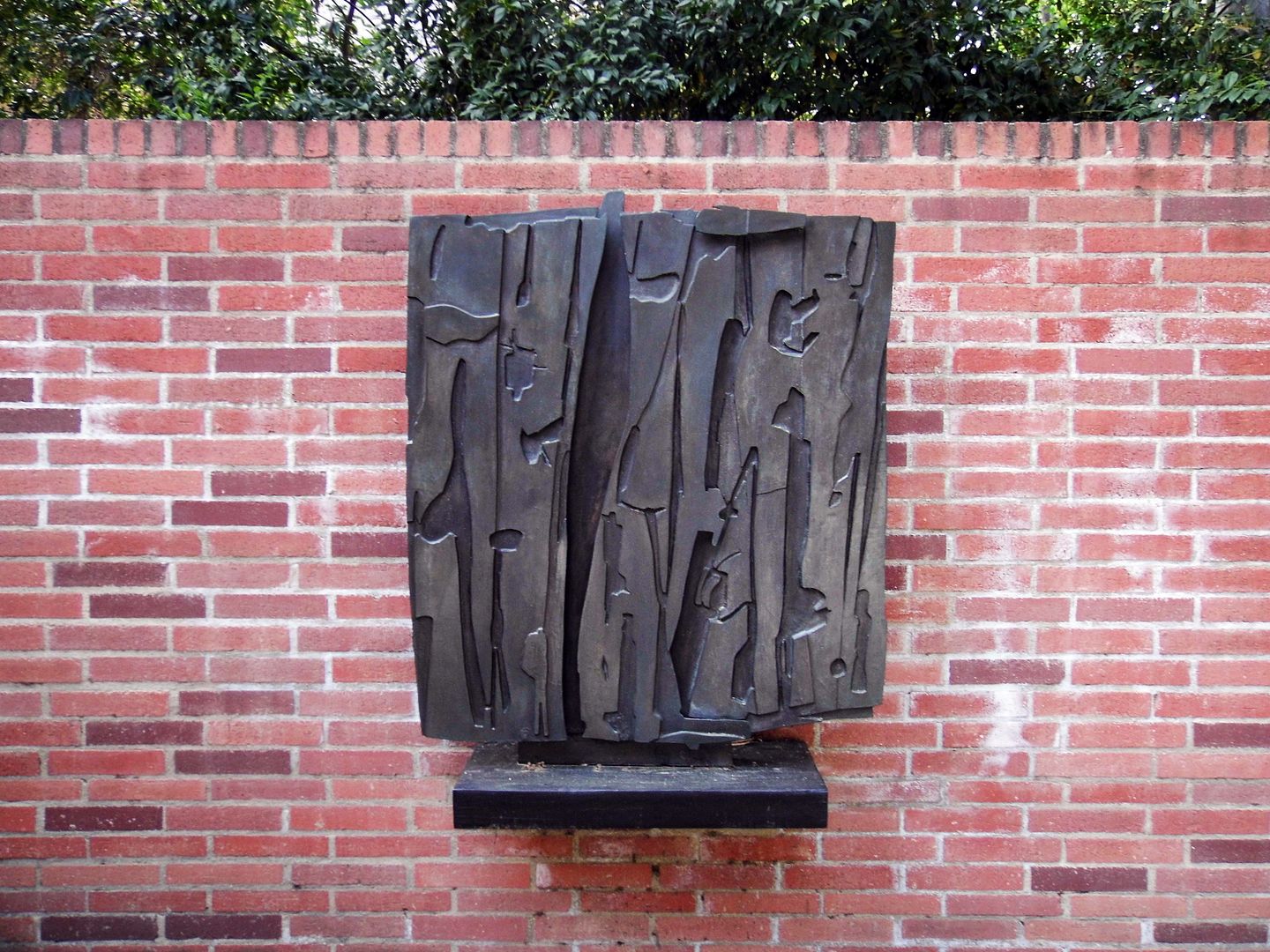
Located on UCLA's north campus, it's a 5-acre sprawl of both figurative and abstract works by sculptors from all over the world—like Italian Pietro Consagra, whose Colloquio Duro ("Difficult Dialogue") bronze relief from 1959 adorns the same wall as the bust of Chancellor Murphy himself (by Eldon C. Tefft, circa 1960).
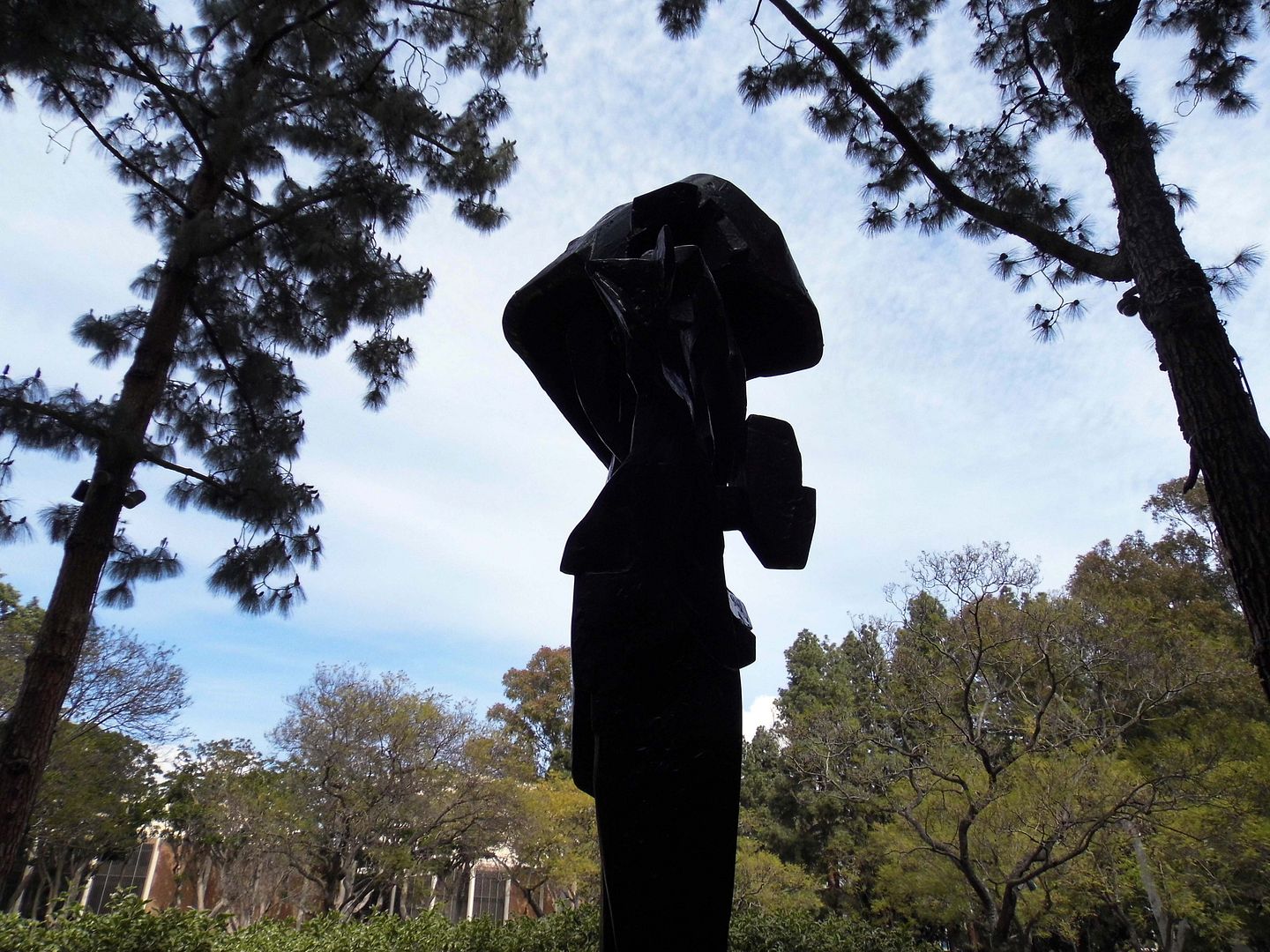


It's hard to believe that American sculptor Dimitri Hadzi's Elmo III, circa1960, now stands where there once was a parking lot.
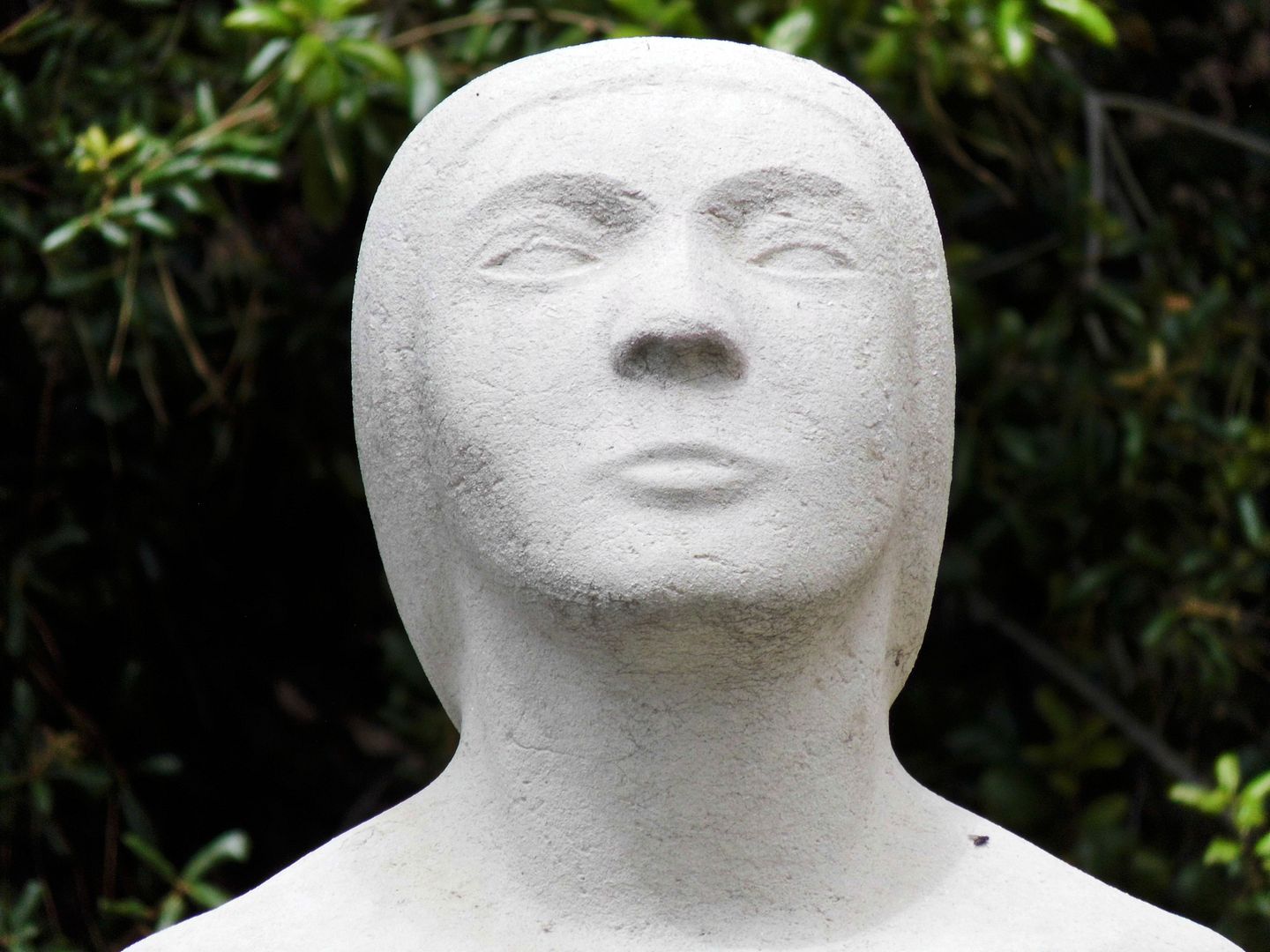


Supervisory landscape architect at the time Ralph Dalton Cornell (of the firm Cornell, Bridgers, and Troller) had to design the garden without knowing what was going to be placed there or where. And yet every placement—like British sculptor Eric Gill's Mulier ("Mother," undated but probably prior to 1911) at the head of a fountain in front of UCLA’s Young Research Library—feels just perfect.
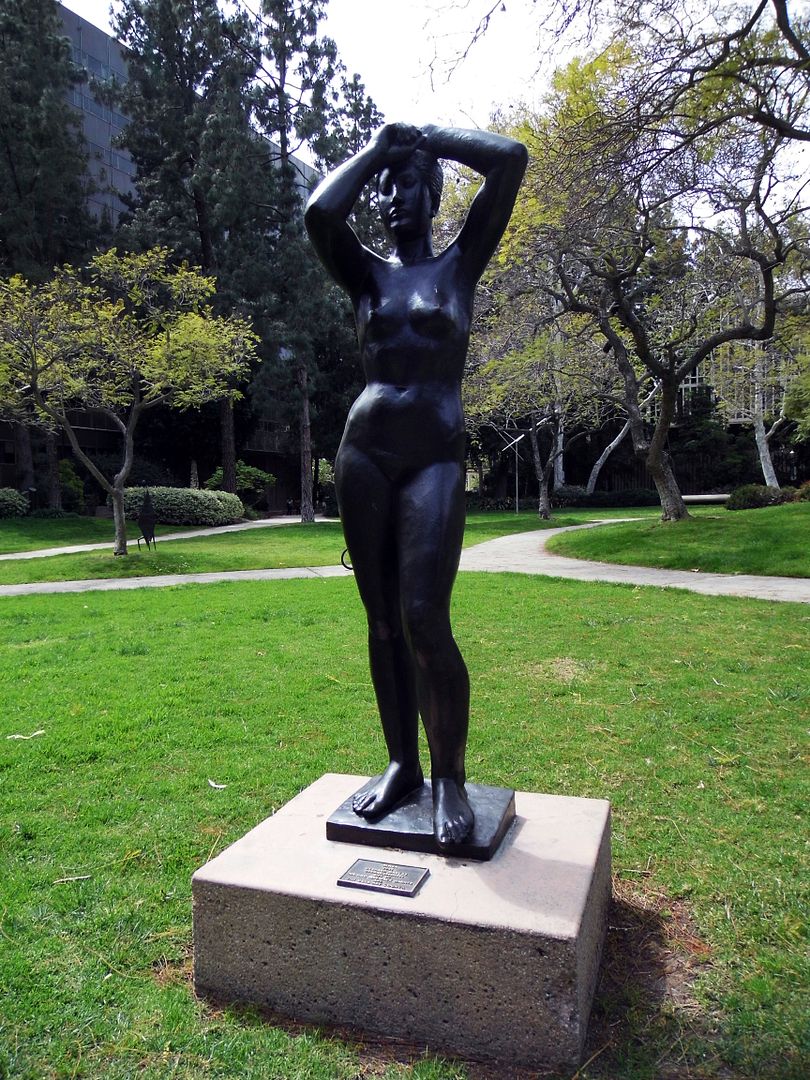


Some of the standouts among the more than 70 sculptures in the garden—for me, anyway—include the bronze Maja by German sculptor Gerhard Marcks (circa 1941)...
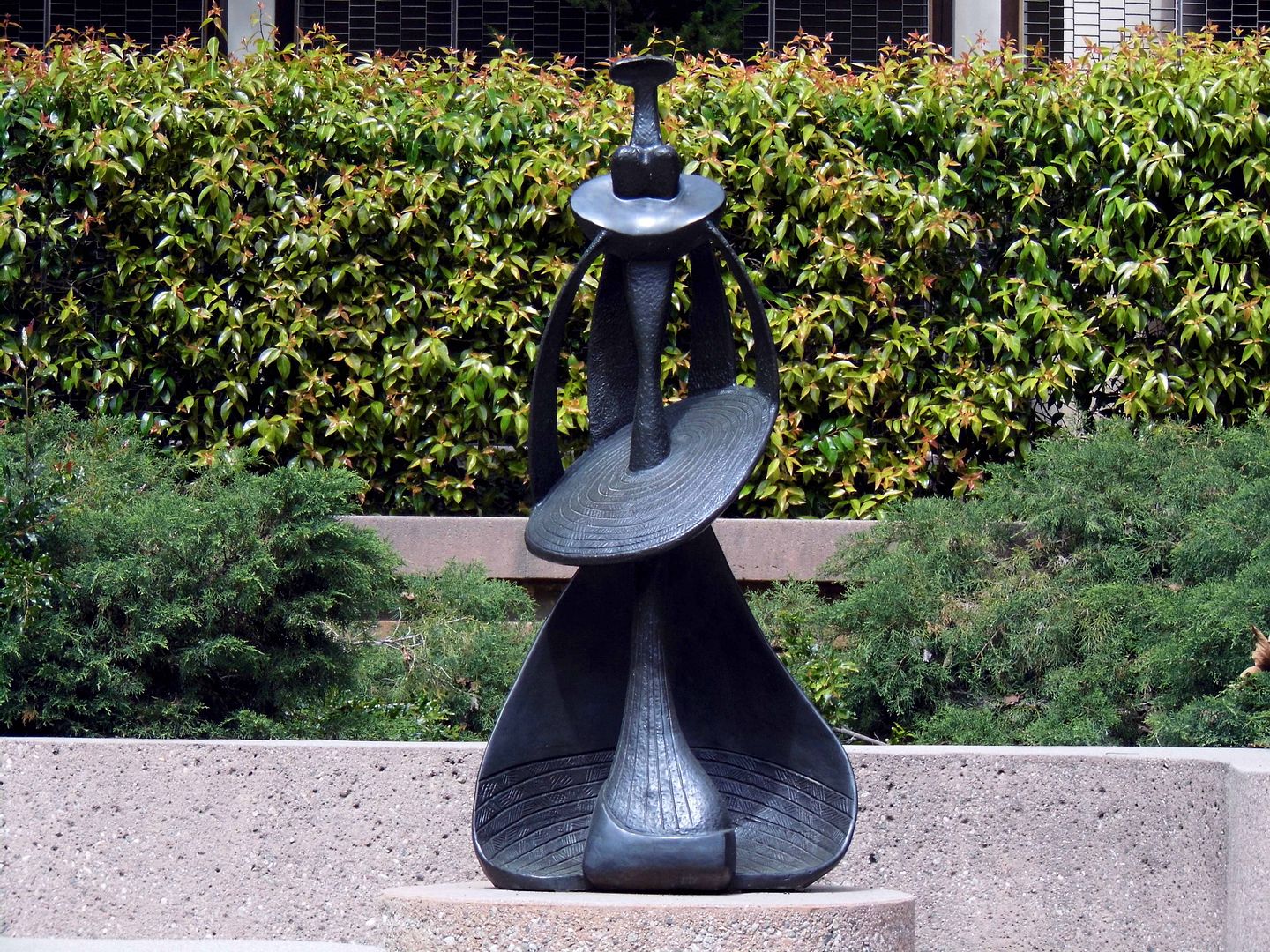


...the bronze Queen of Sheba by Alexander Archipenko, a Ukrainian-born American (circa 1961, and one of an edition of eight)...
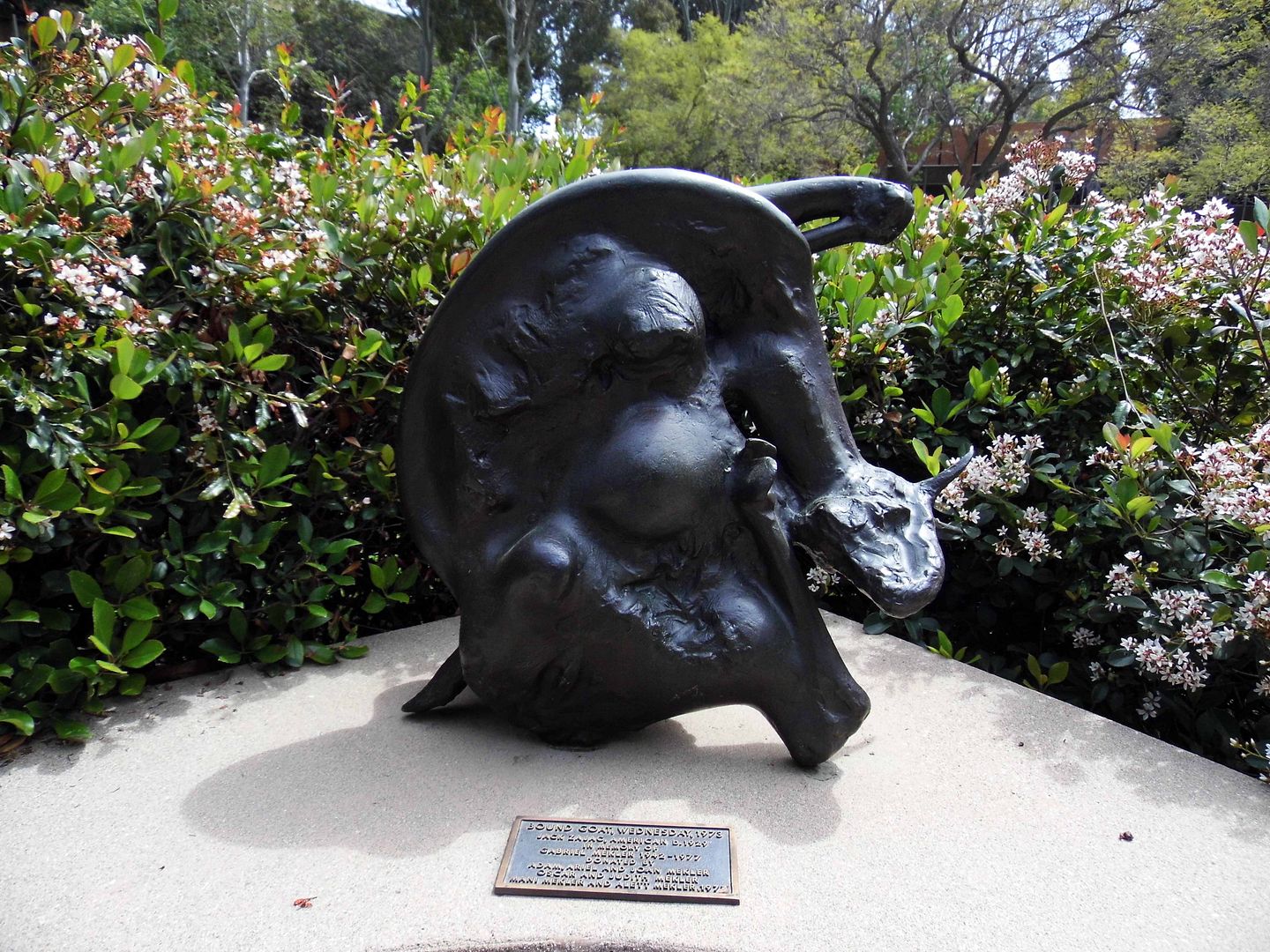


...and Californian surrealist Jack Zajac's Bound goat, Wednesday (circa 1973).
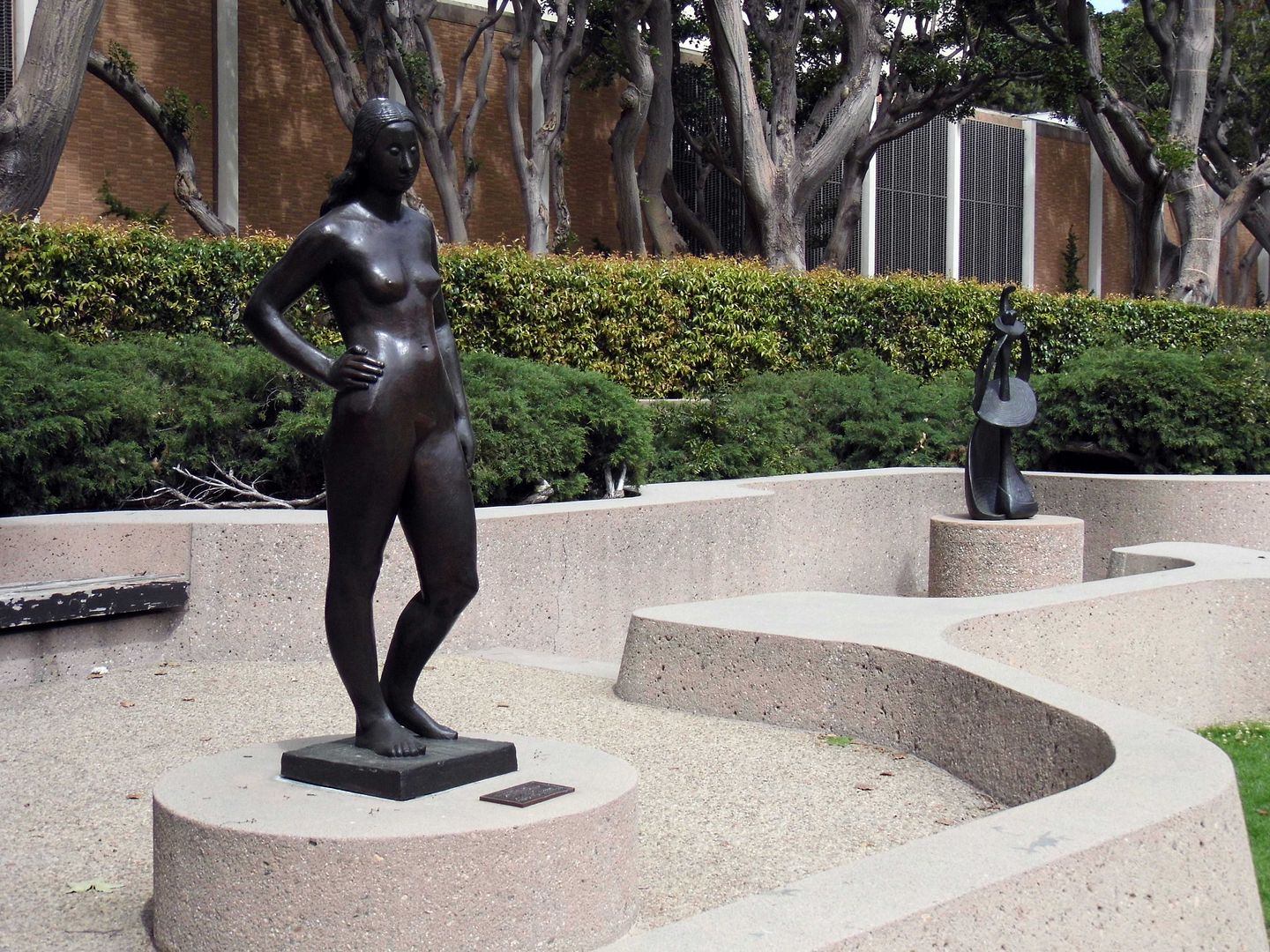

Gerhard Marcks Freya, 1949
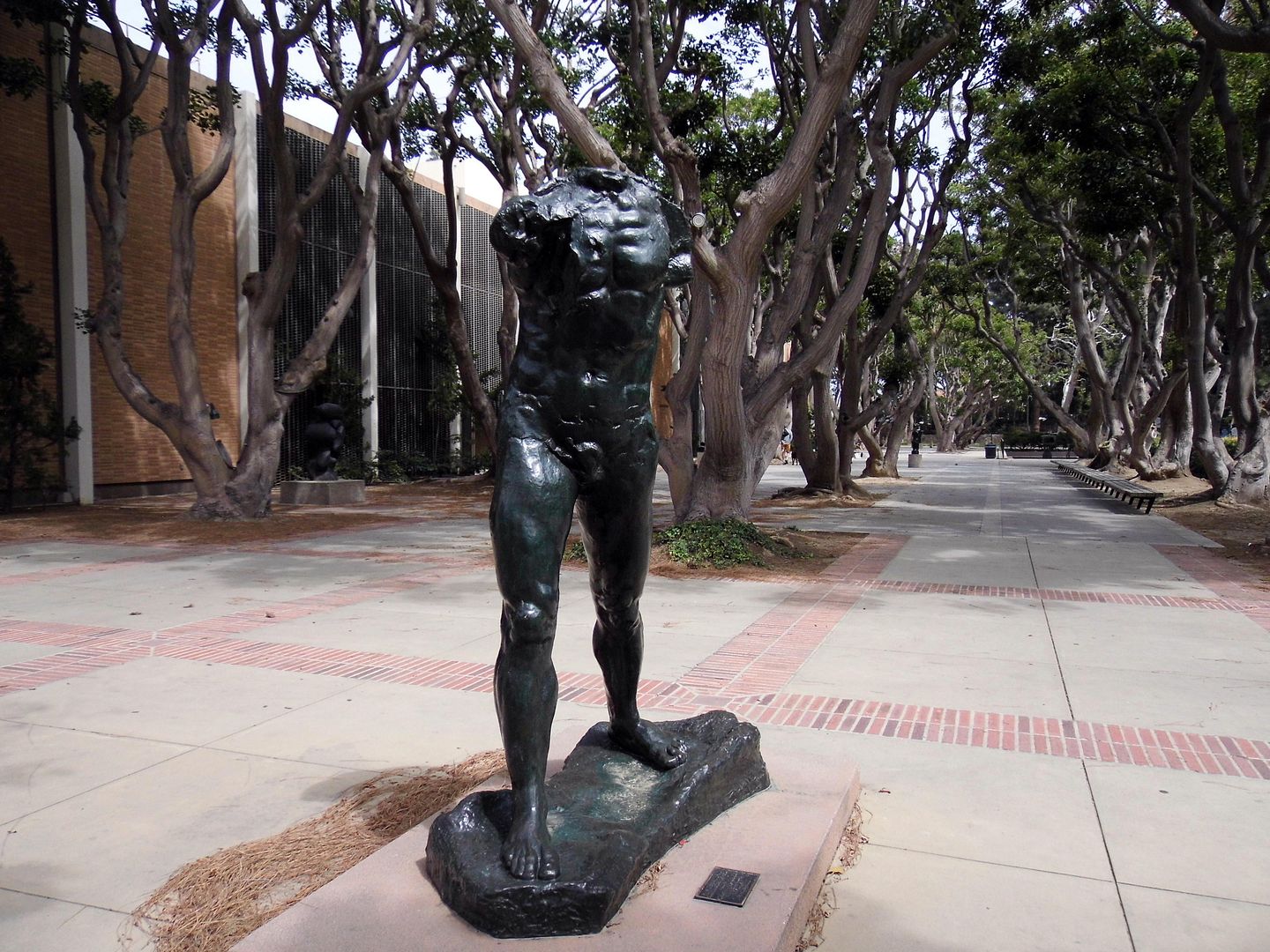
The setting is thoroughly Modernist...


...though not all the pieces in the collection exactly match the setting, like The Walking Man.
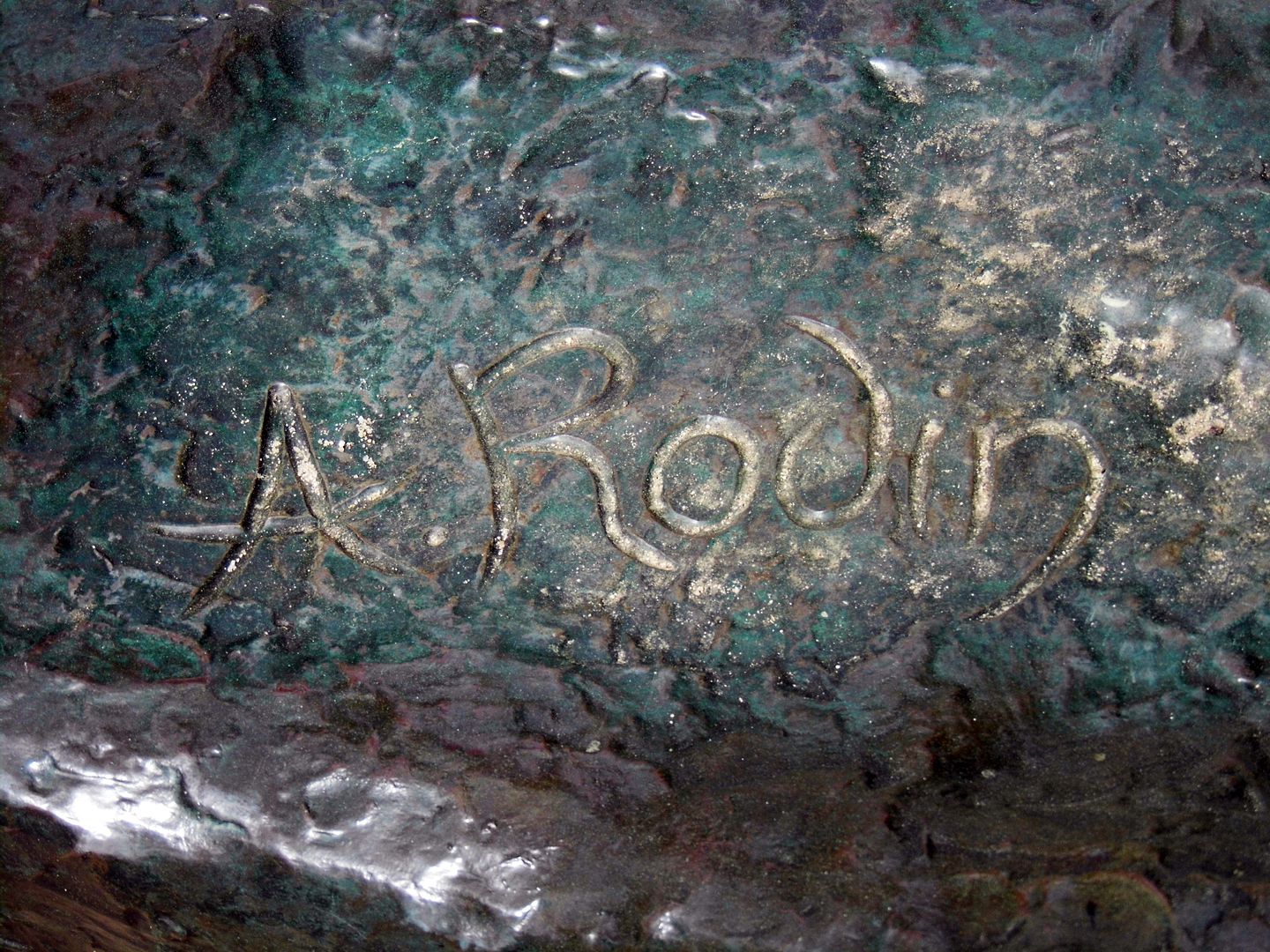


Located at the end of an allée of South African coral trees, Auguste Rodin's L'homme qui marche was first started by the French sculptor in the late 1870s.
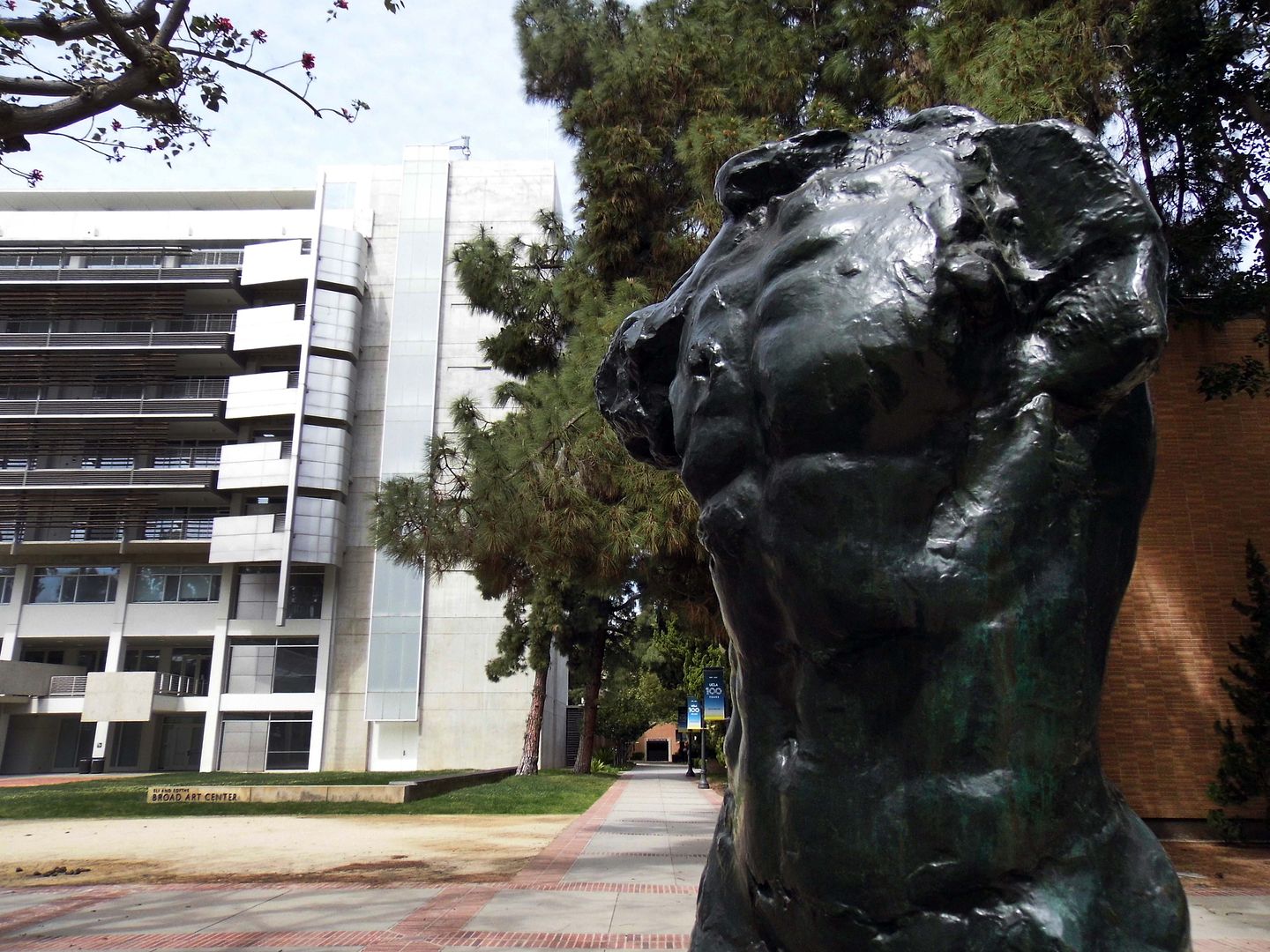


A headless depiction of St. John the Baptist also without arms, it's considered an "unfinished" work of Rodin. This bronze cast—one of an edition of 12, #7 located at the Norton Simon Museum in Pasadena—is dated 1905.
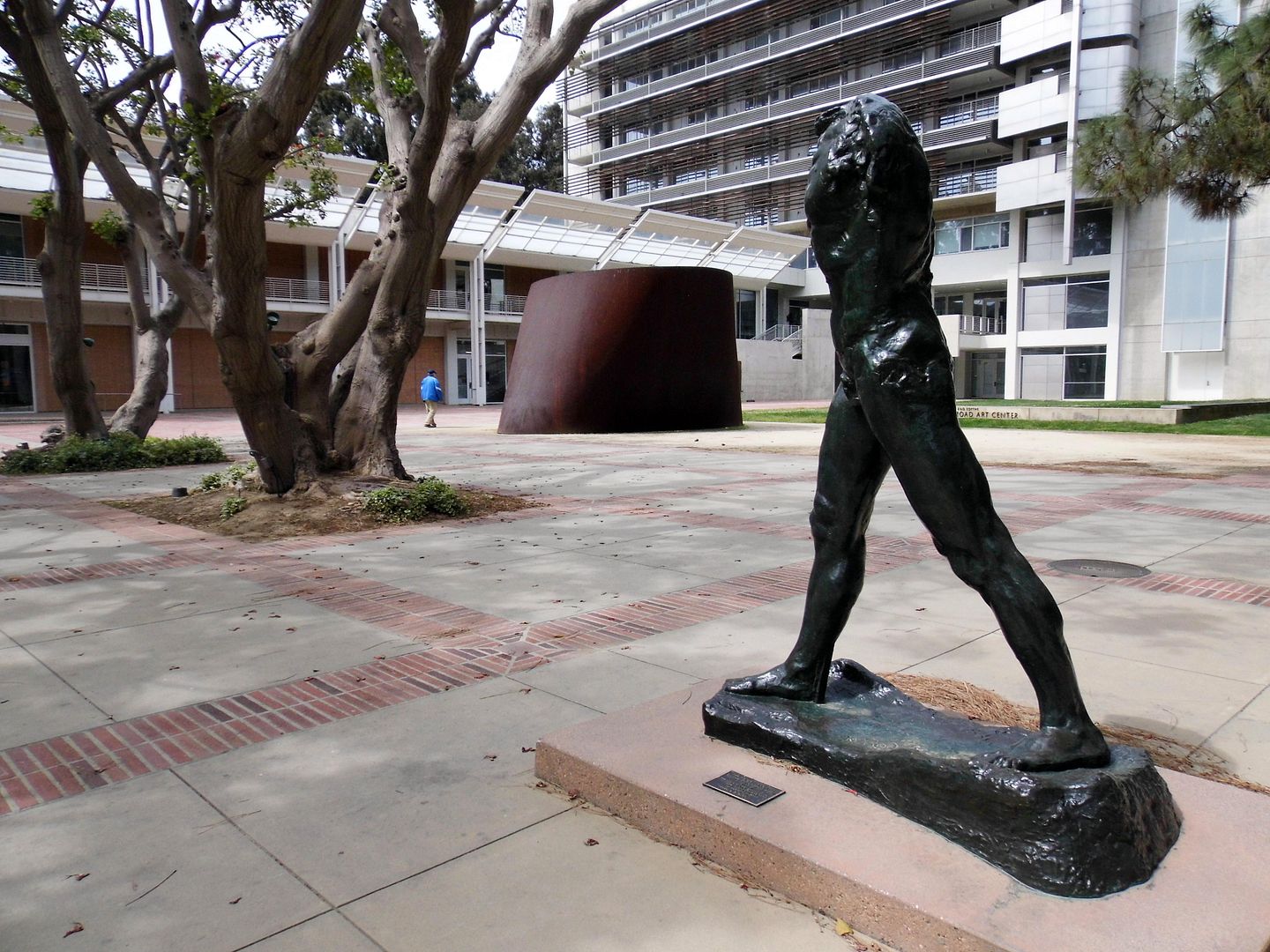


It seems to lead the way towards the campus's Broad Art Center...
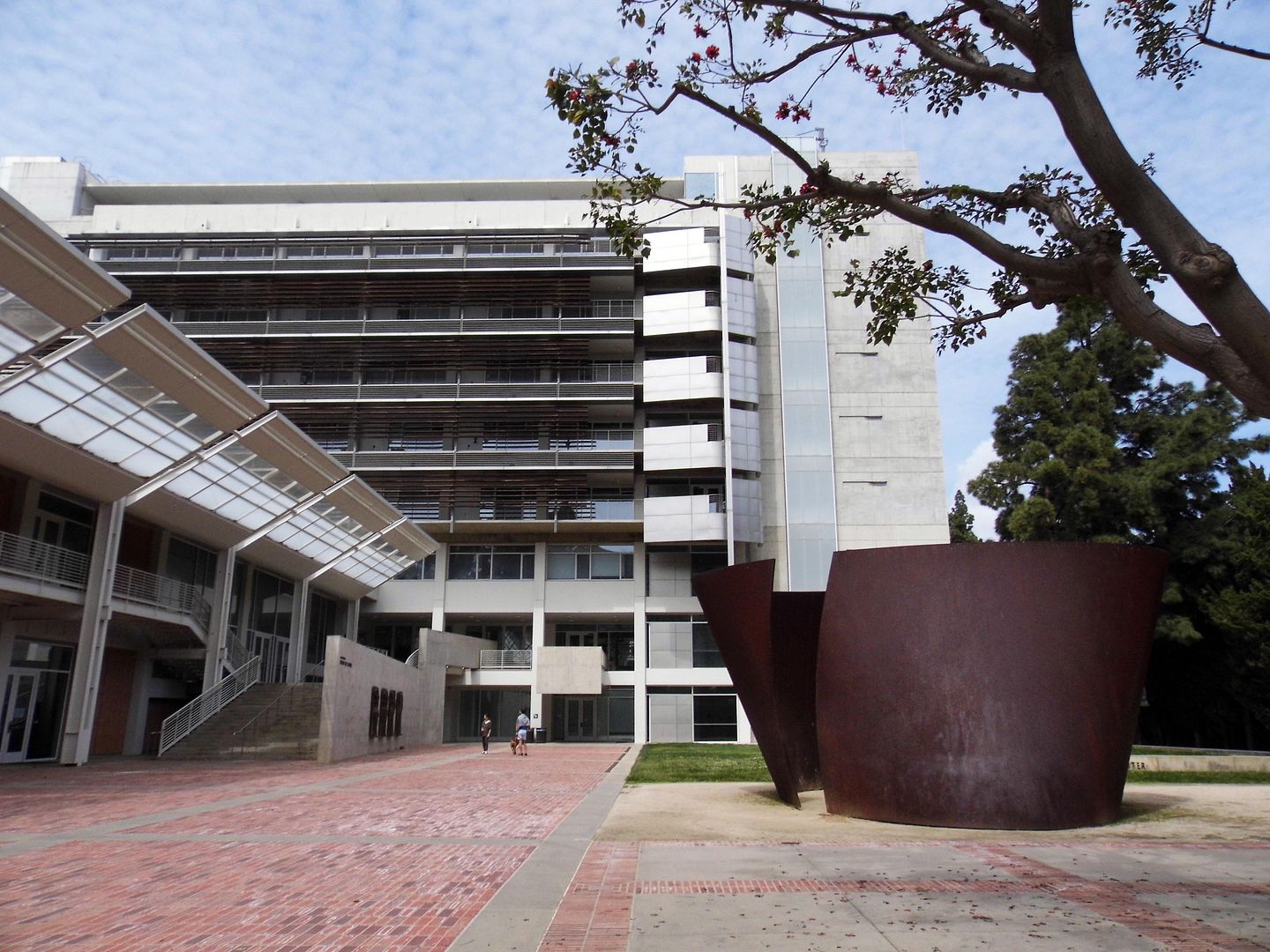


...whose front plaza is anchored by the site-specific installation of T.E.U.C.L.A. (circa 2006) by American artist Richard Serra.
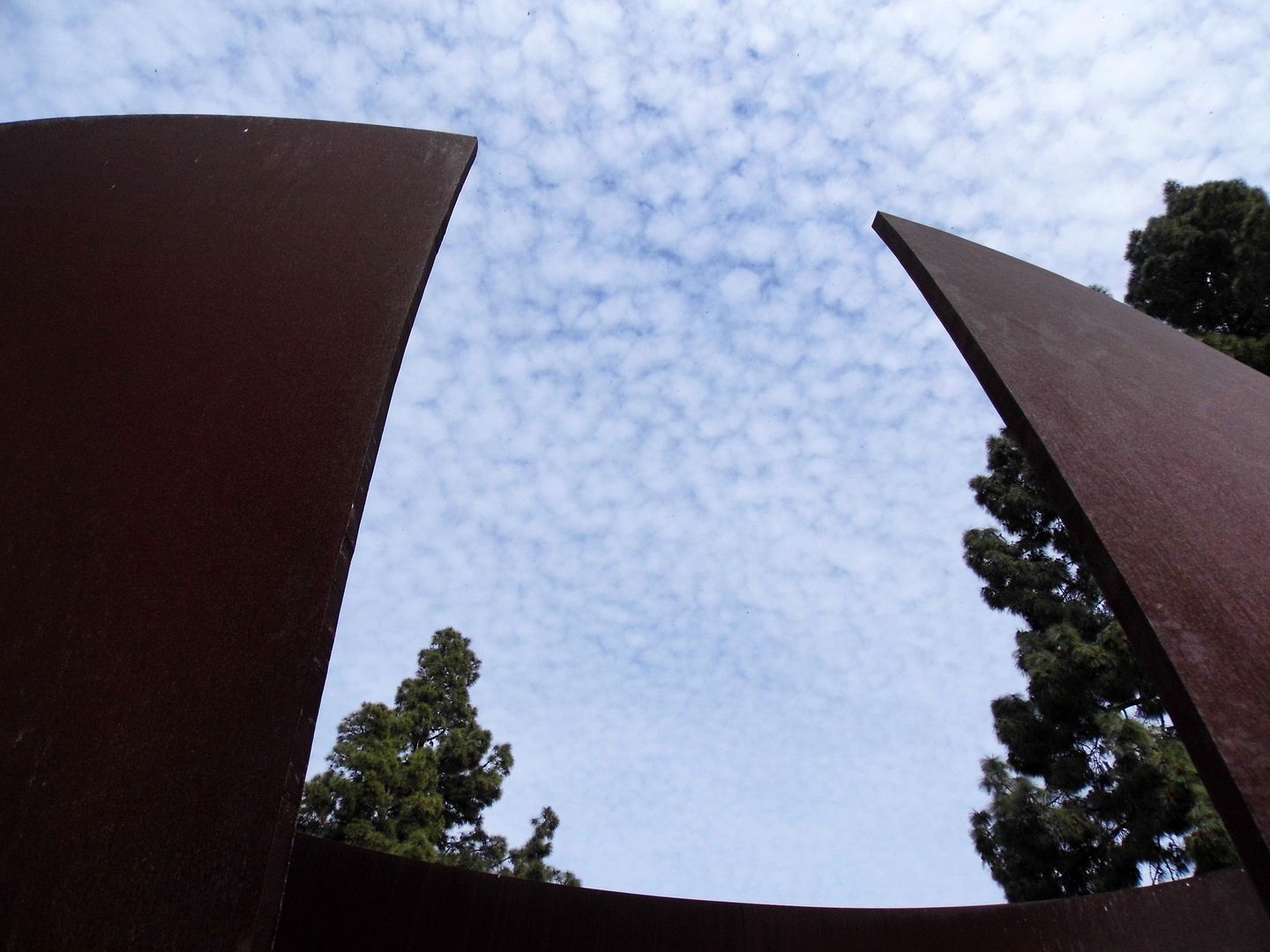


The 42.5-ton piece is part of Serra's Torqued Ellipse series, which he started in 1996—and his first to be on permanent public view in Southern California.
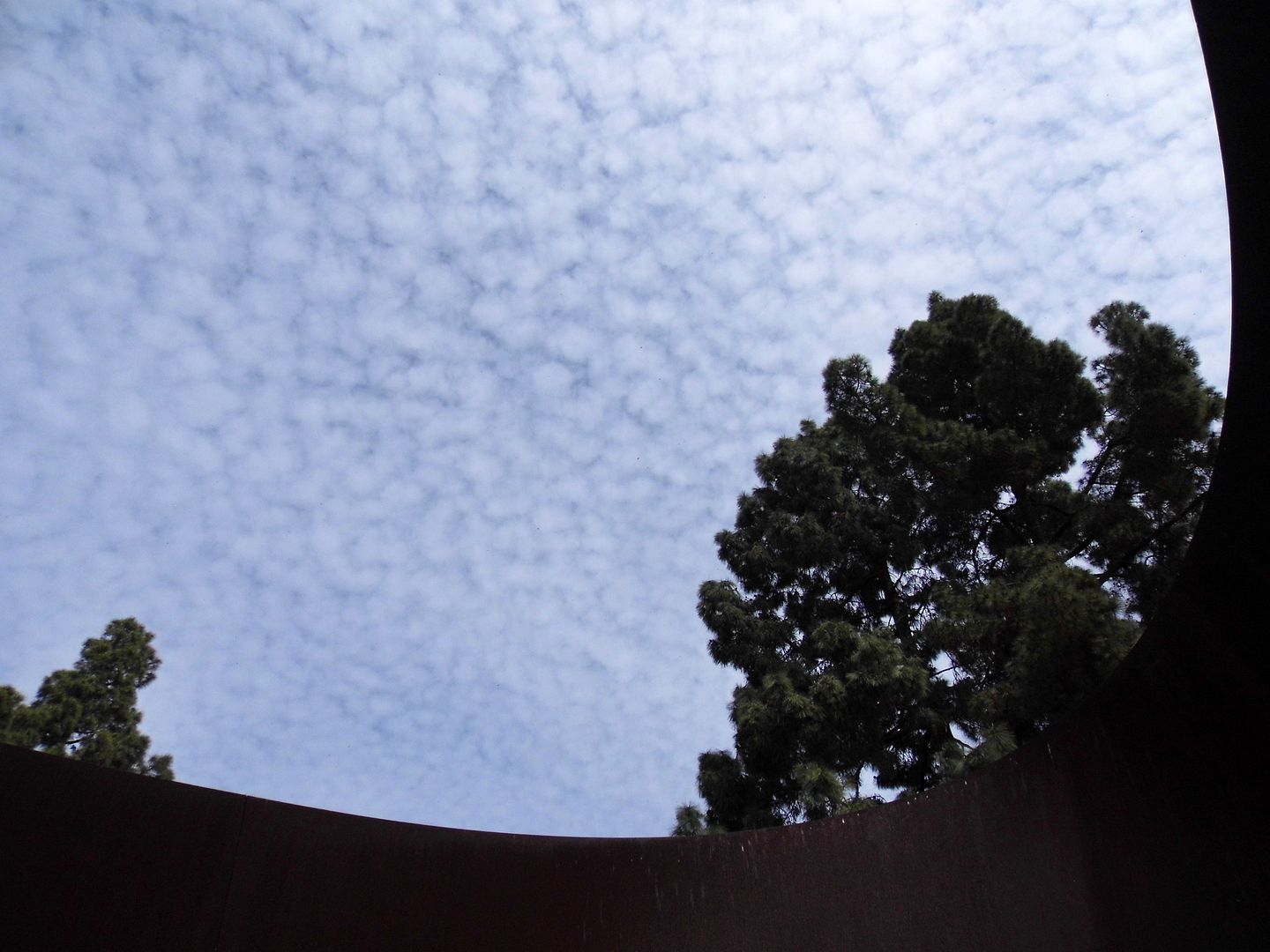


It predates the 360-ton steel Connector installation at Segerstrom Hall in Costa Mesa, Orange County by mere months.
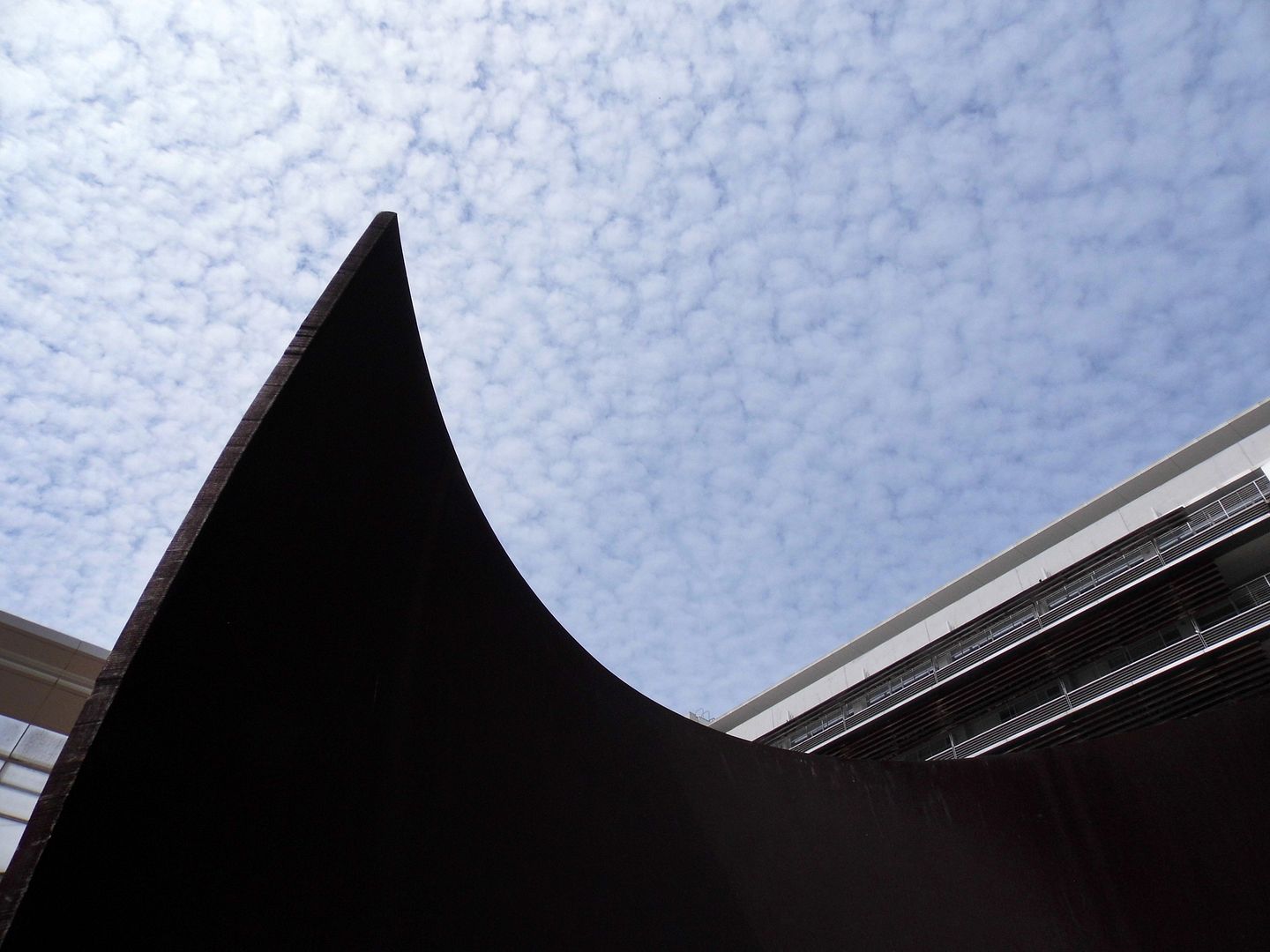


And like the rest of the pieces in the series, Serra created this installation by twisting huge COR-TEN (or "weathering") steel plates into circular or elliptical sculptures that you can walk into and gaze up at the wide-open sky.
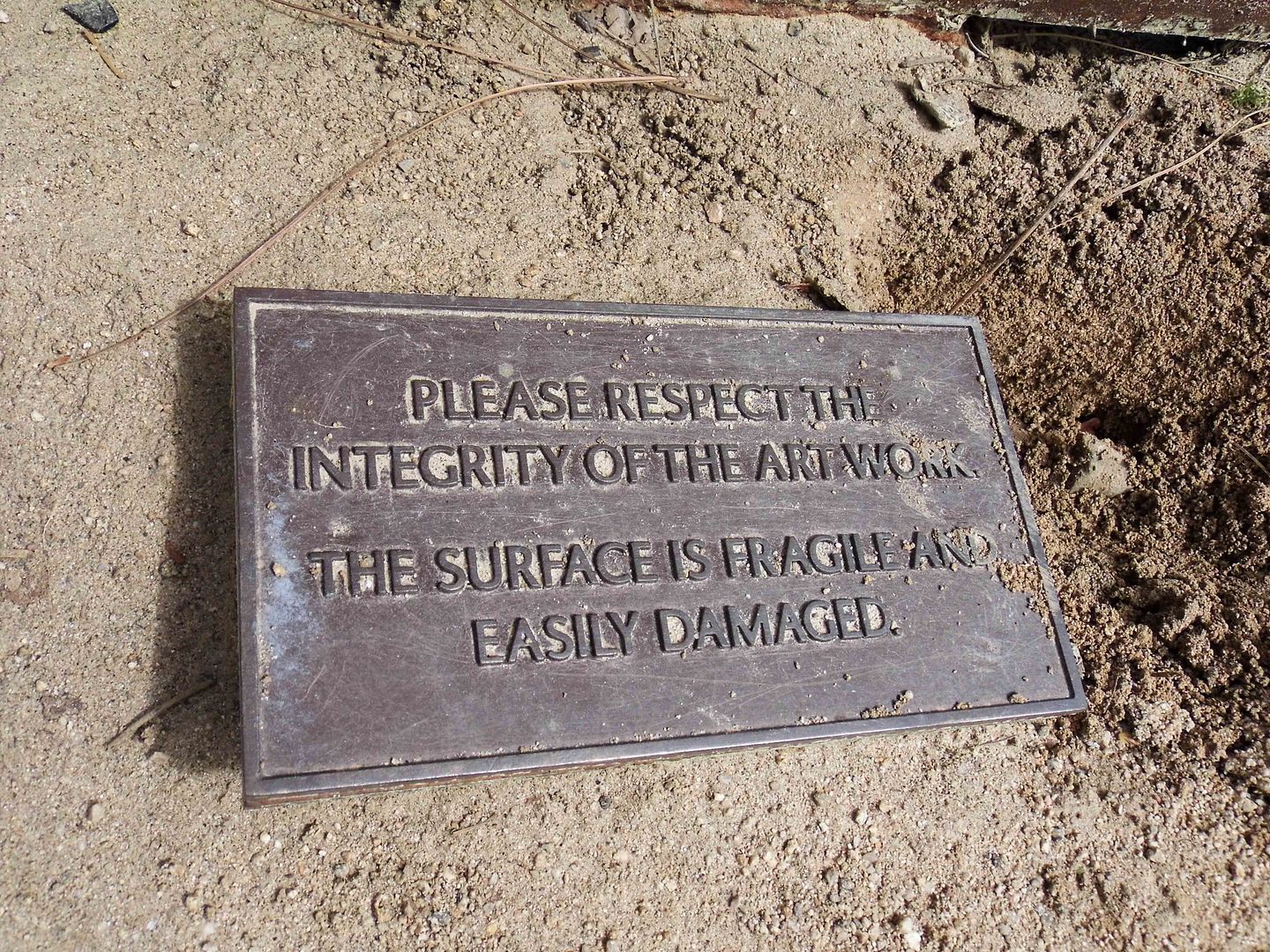


Its characteristic dark patina of rust—with nary an aberration in the color—could take as long as a decade to develop and fully oxidize. (So no touching, please!)
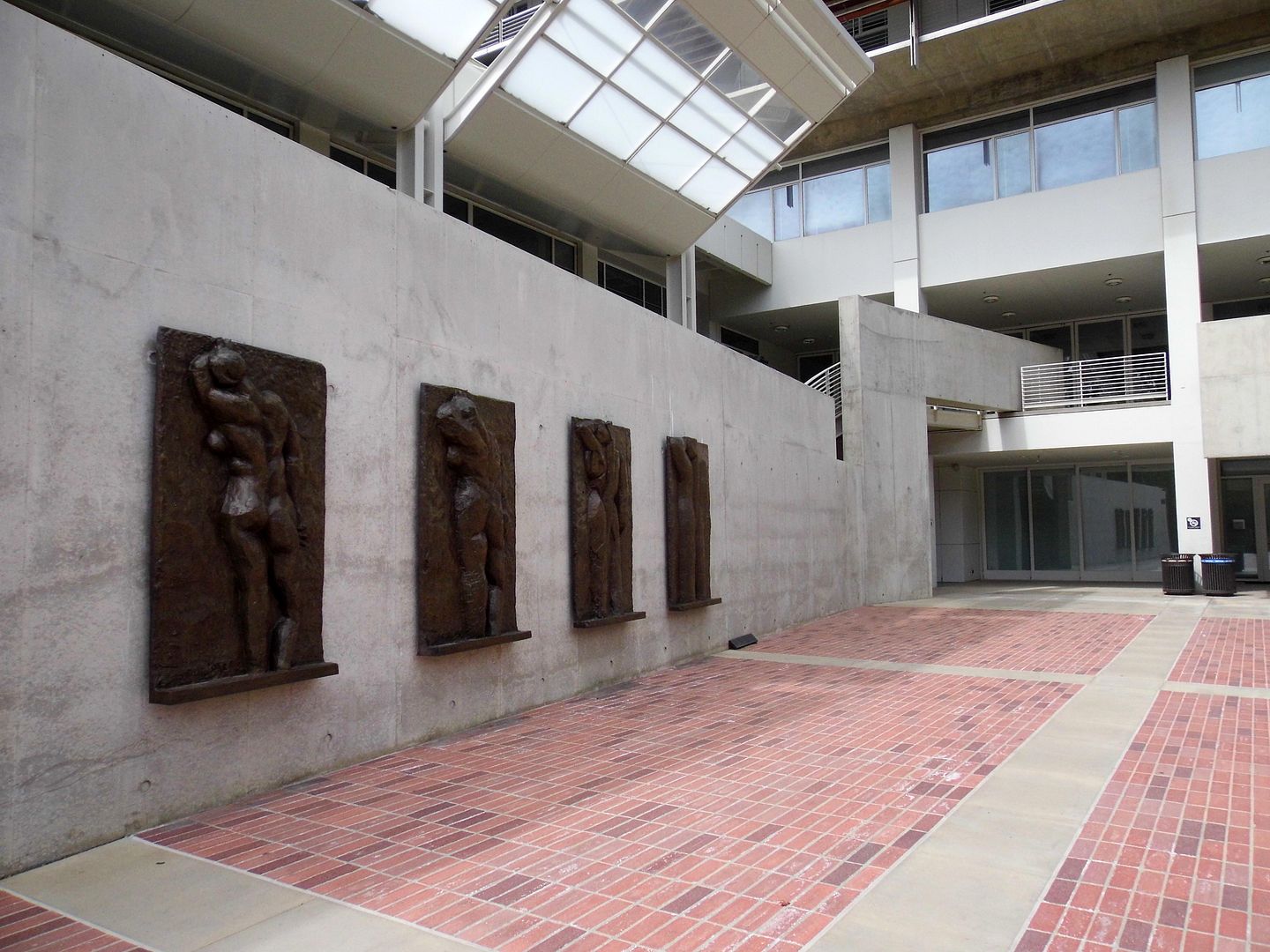


The Serra sculpture also serves as a kind of gateway to Henri Matisse's Bas Relief I-IV (The Back Series)—four bronzed plaster casts that were first modeled for and created, left to right, in 1909, 1913, 1916-7, and 1930.
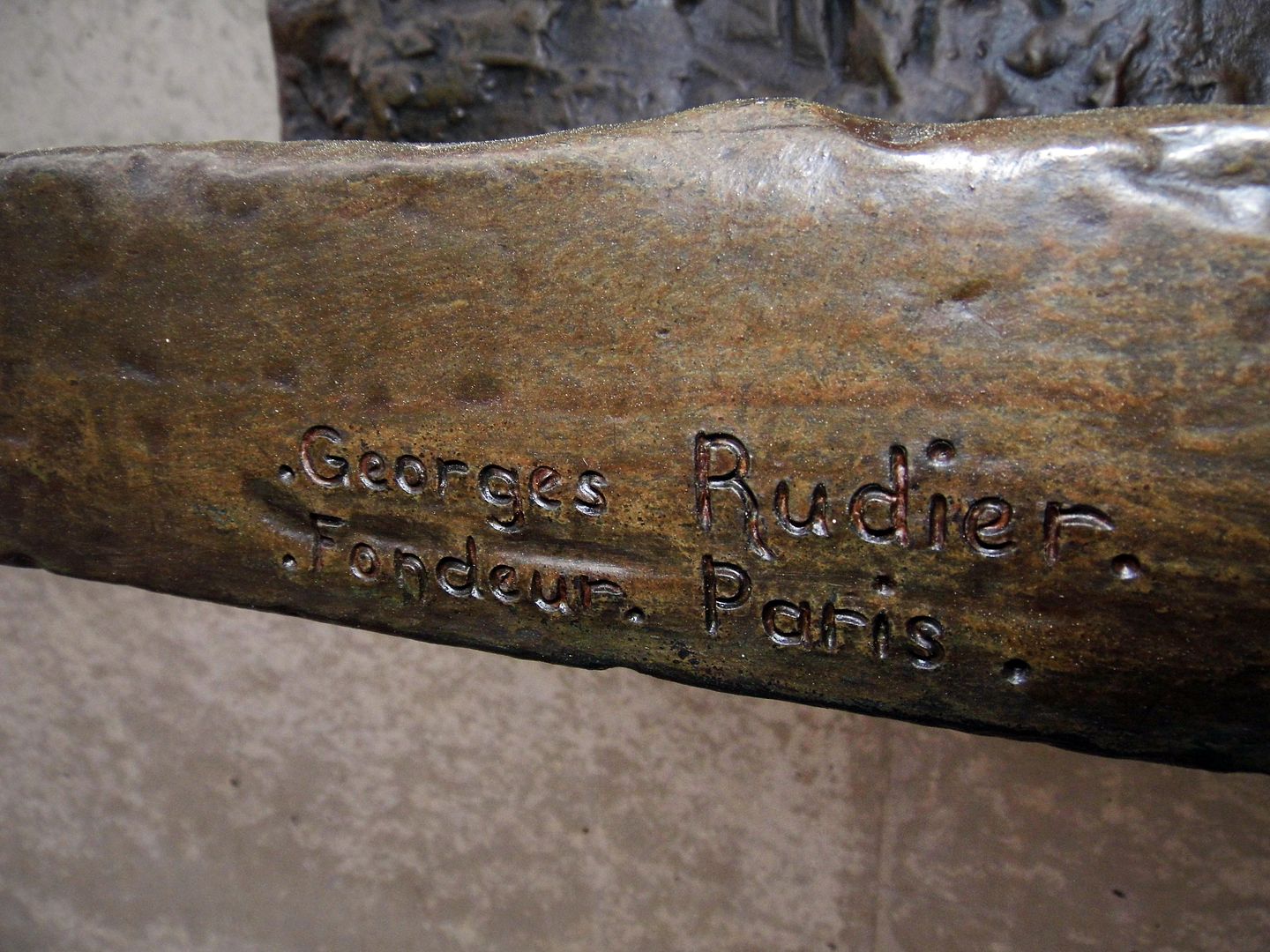


In 1950, three of them were cast in bronze. Five years later, the fourth one was discovered and also cast in bronze.
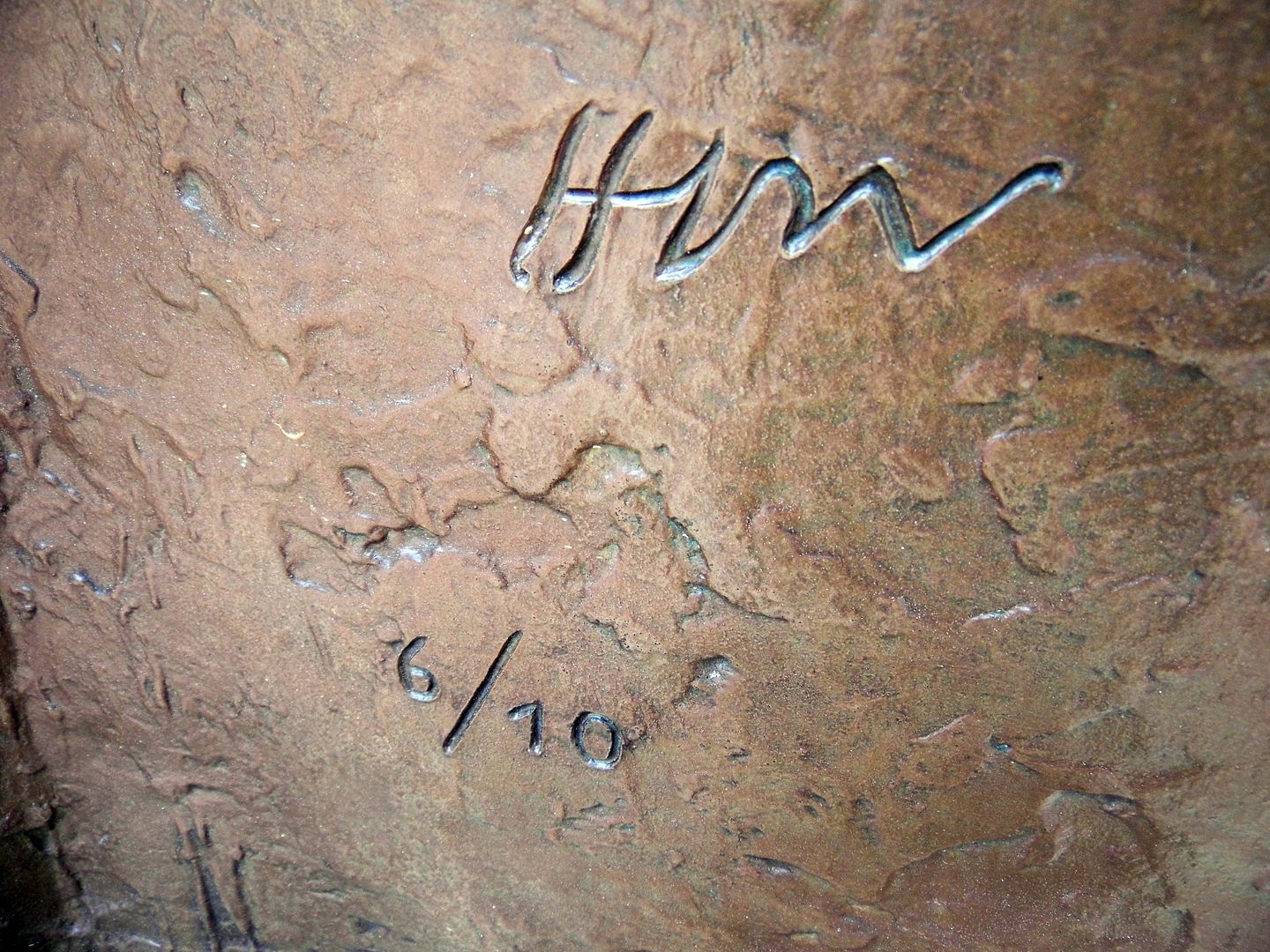


These monumental sculptures are also Matisse's largest—with other complete sets housed at MOMA in NYC, the Tate in London, and other major museums in Paris, Zürich, Stuttgart, Houston, Fort Worth, and Washington, DC.
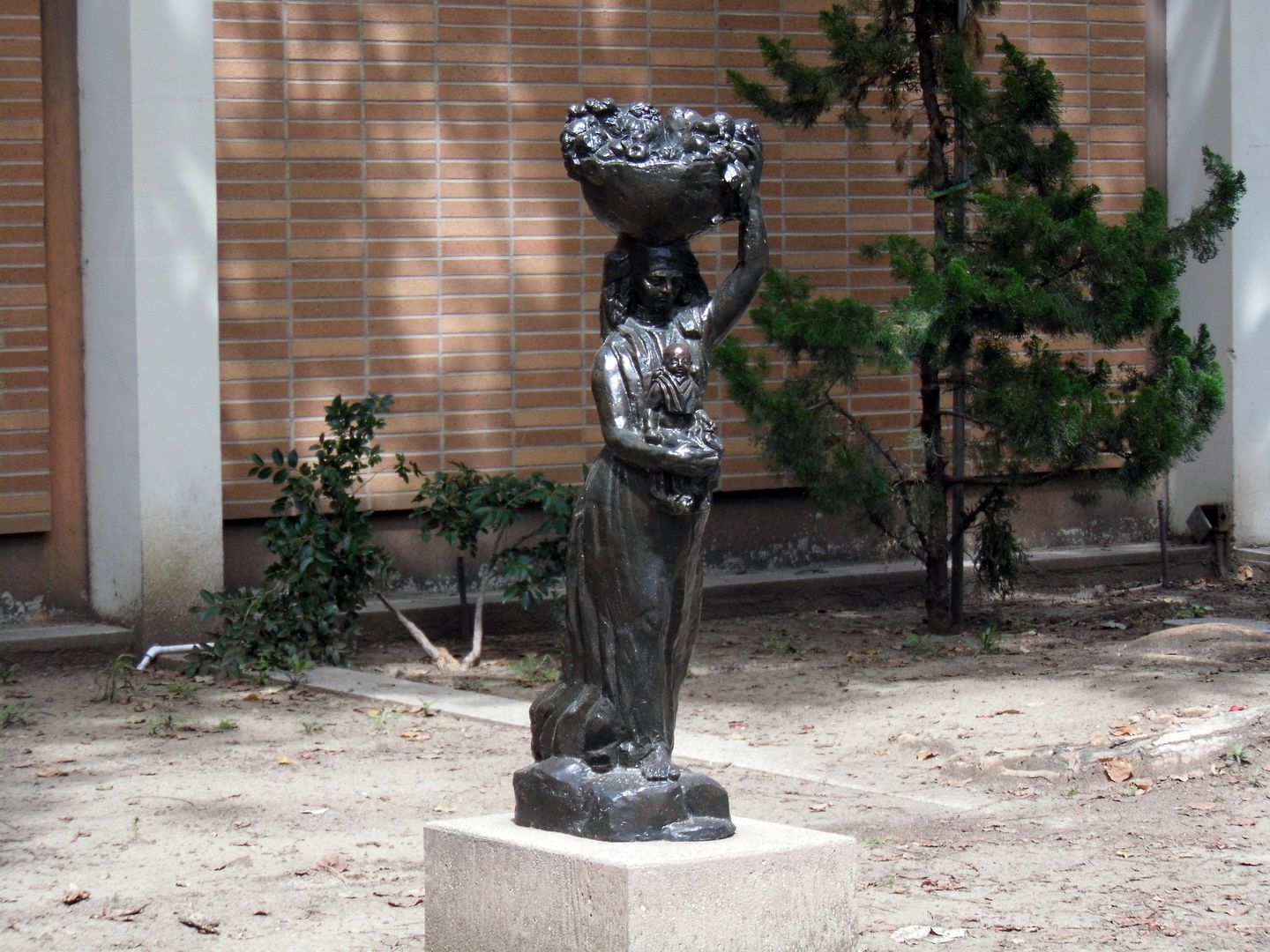


The collection seems particularly well-curated when you encounter works by certain artists that come full circle—like Noble Burdens (Les Nobles Fardeaux, circa 1911) by Antoine Bourdelle, a teacher of Matisse and student of Rodin.
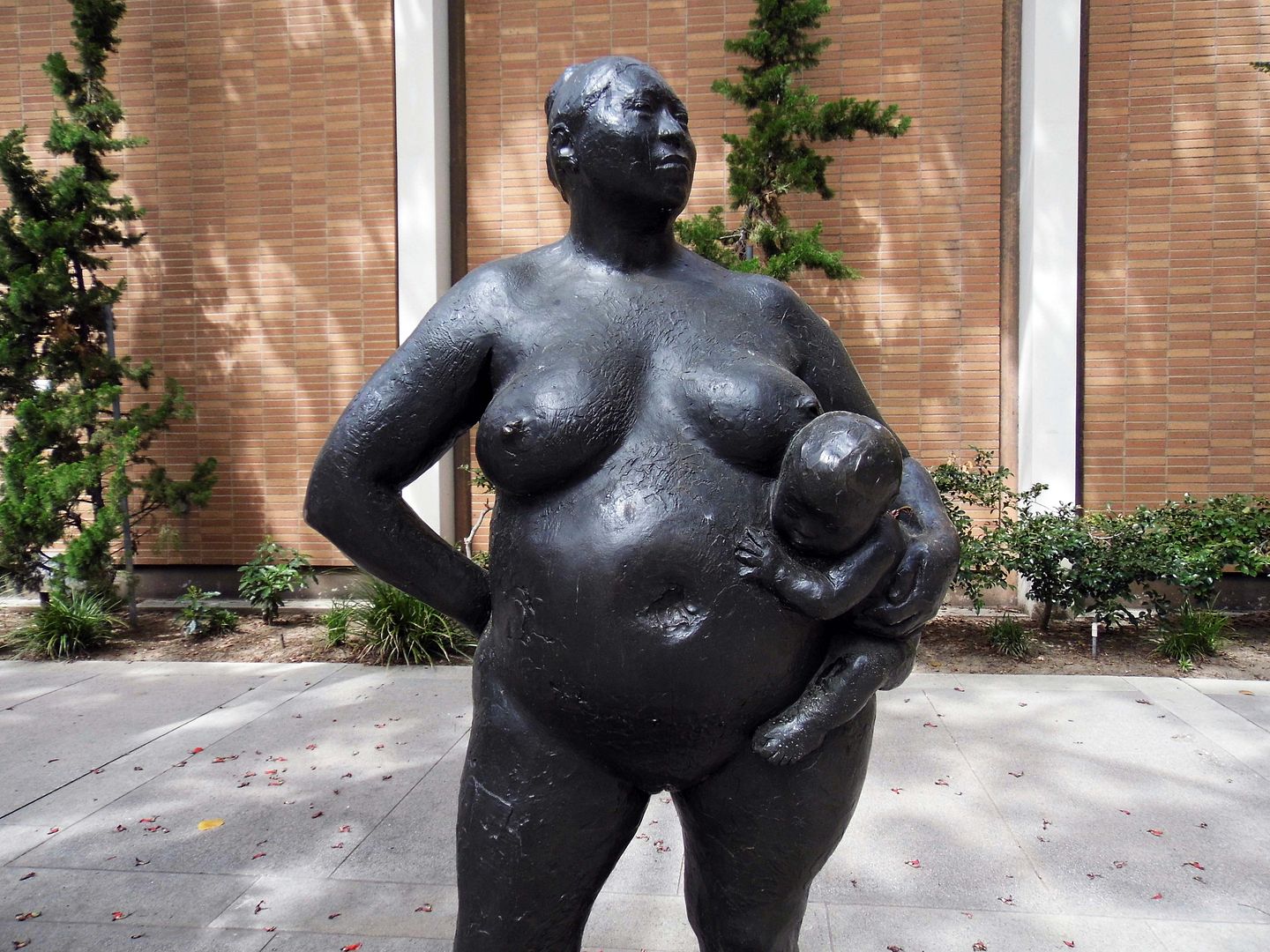


And yet the French masters intermingle with Latin American artists, like the Costa Rican-born Mexican sculptor Francisco Zúñiga, whose Mother With Child At Her Hip (Madre con niño en la cadera, circa 1979) exemplifies his artistic devotion to the female form.
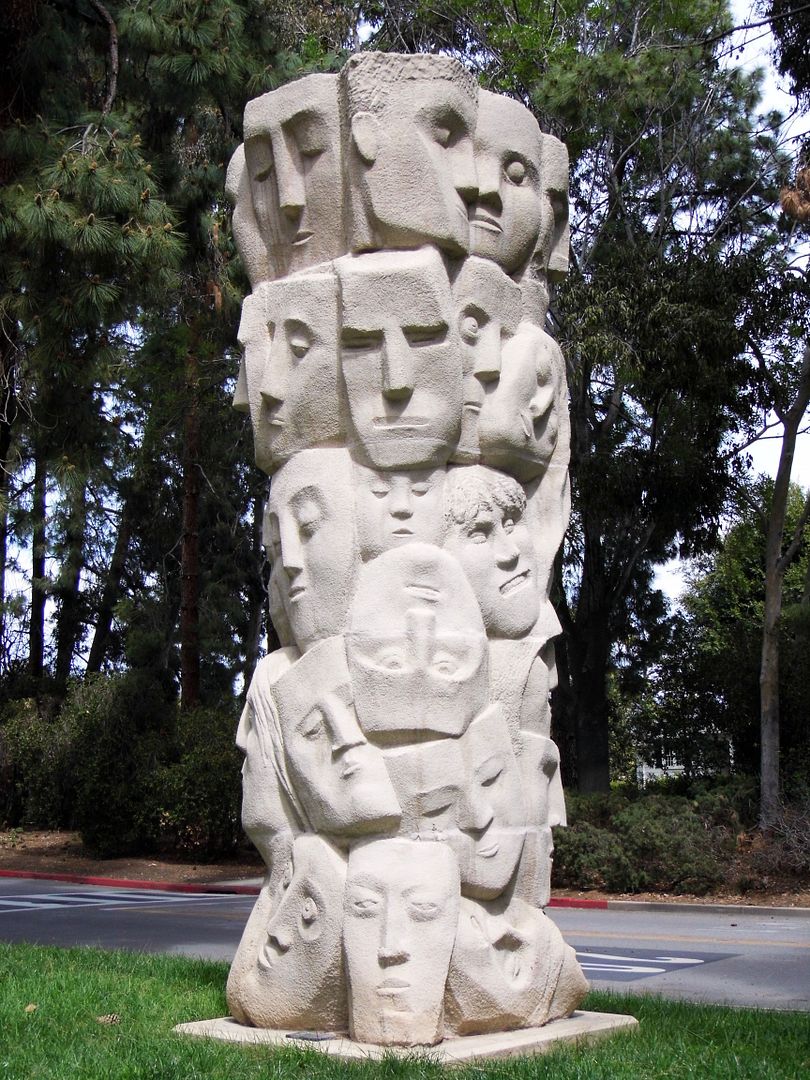


My favorite of all the works, though, was the first one I saw—well, caught a glimpse of as I was driving past a pedestrian entrance in search of a parking spot.
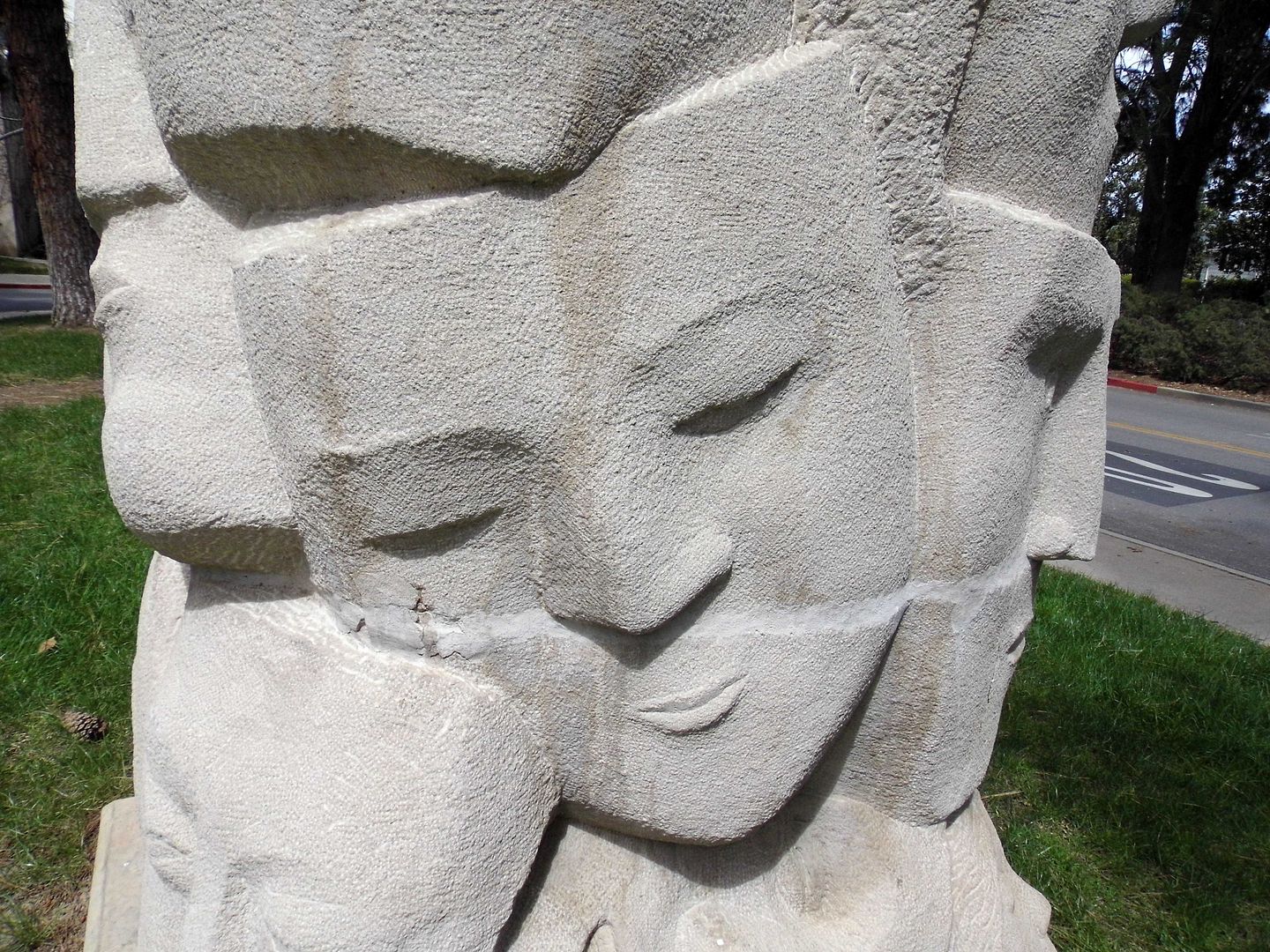


Vienna-born Anna Mahler—daughter of the Austrian composer Gustav Mahler—is the sculptor behind the stone carved Tower of Masks (circa 1961). She also taught art at UCLA in the 1950s, after relocating to Los Angeles from Europe.
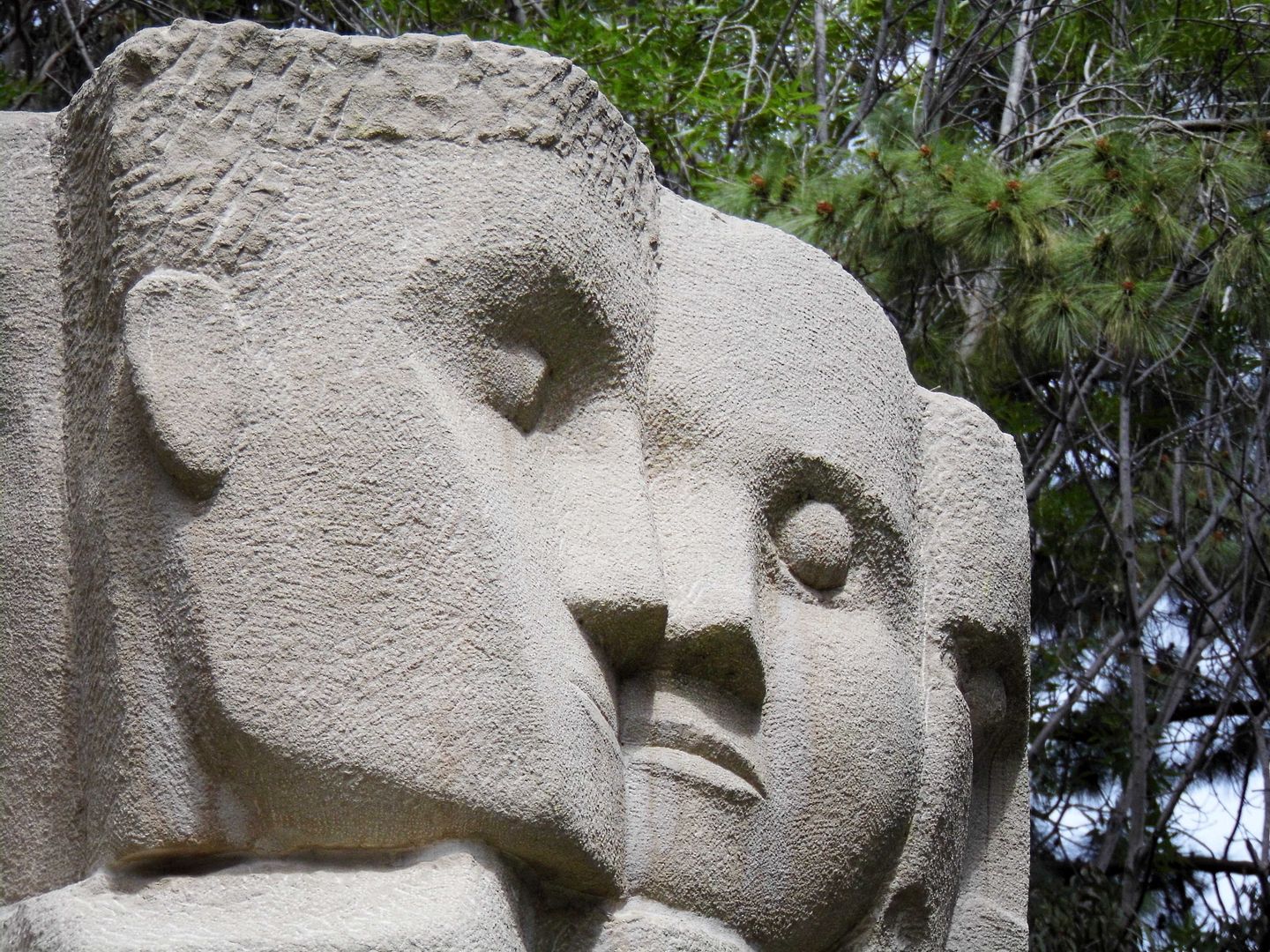


The 15-foot-high, 28-ton limestone totem was actually the first sculpture to be installed in the garden—in 1961, six years before its official dedication.
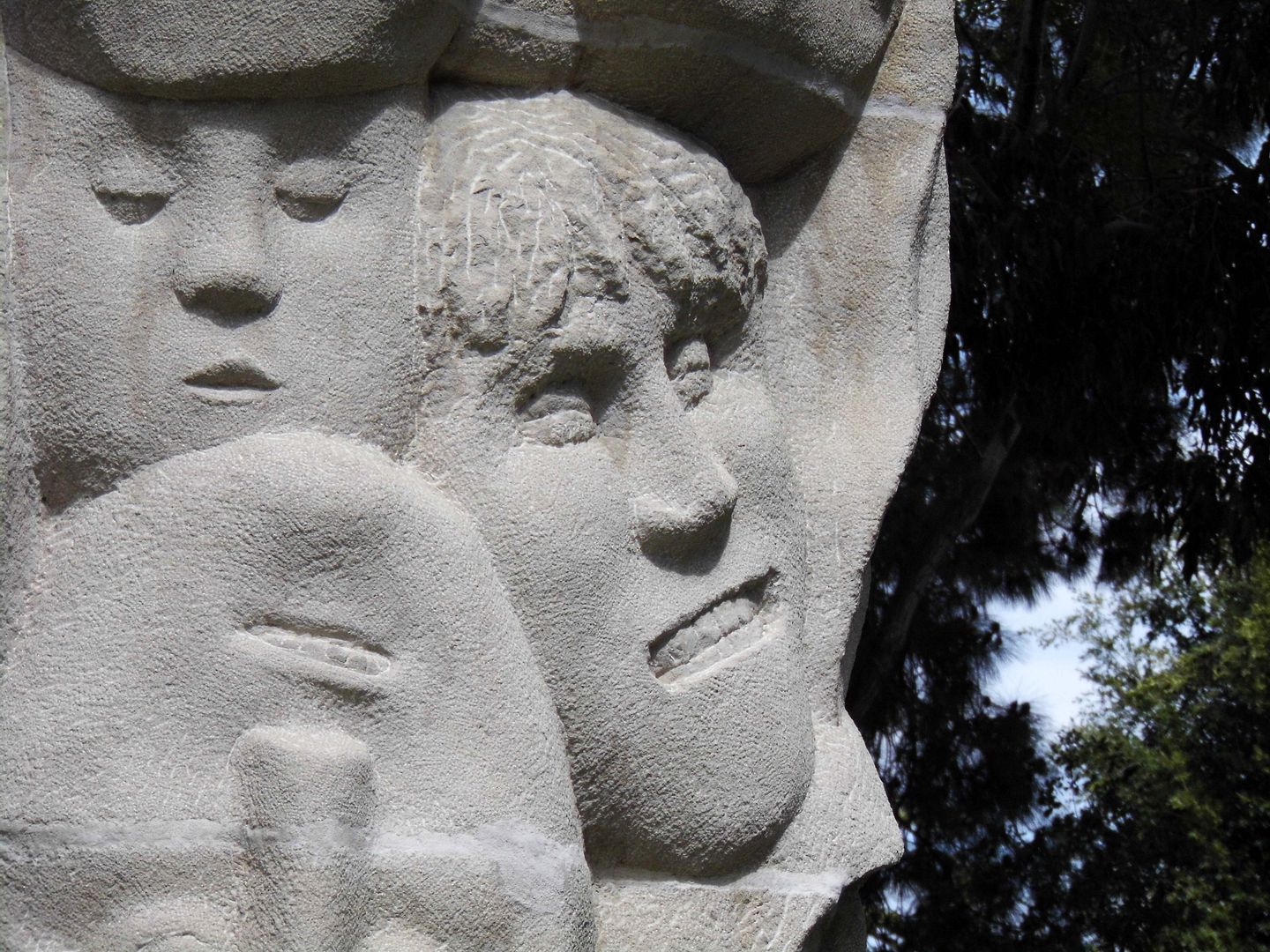


But its been relocated from the Theater Arts Court of Macgowan Hall, part of the UCLA School of Theater, Film and Television—a seemingly fitting setting for an assemblage of theater masks.
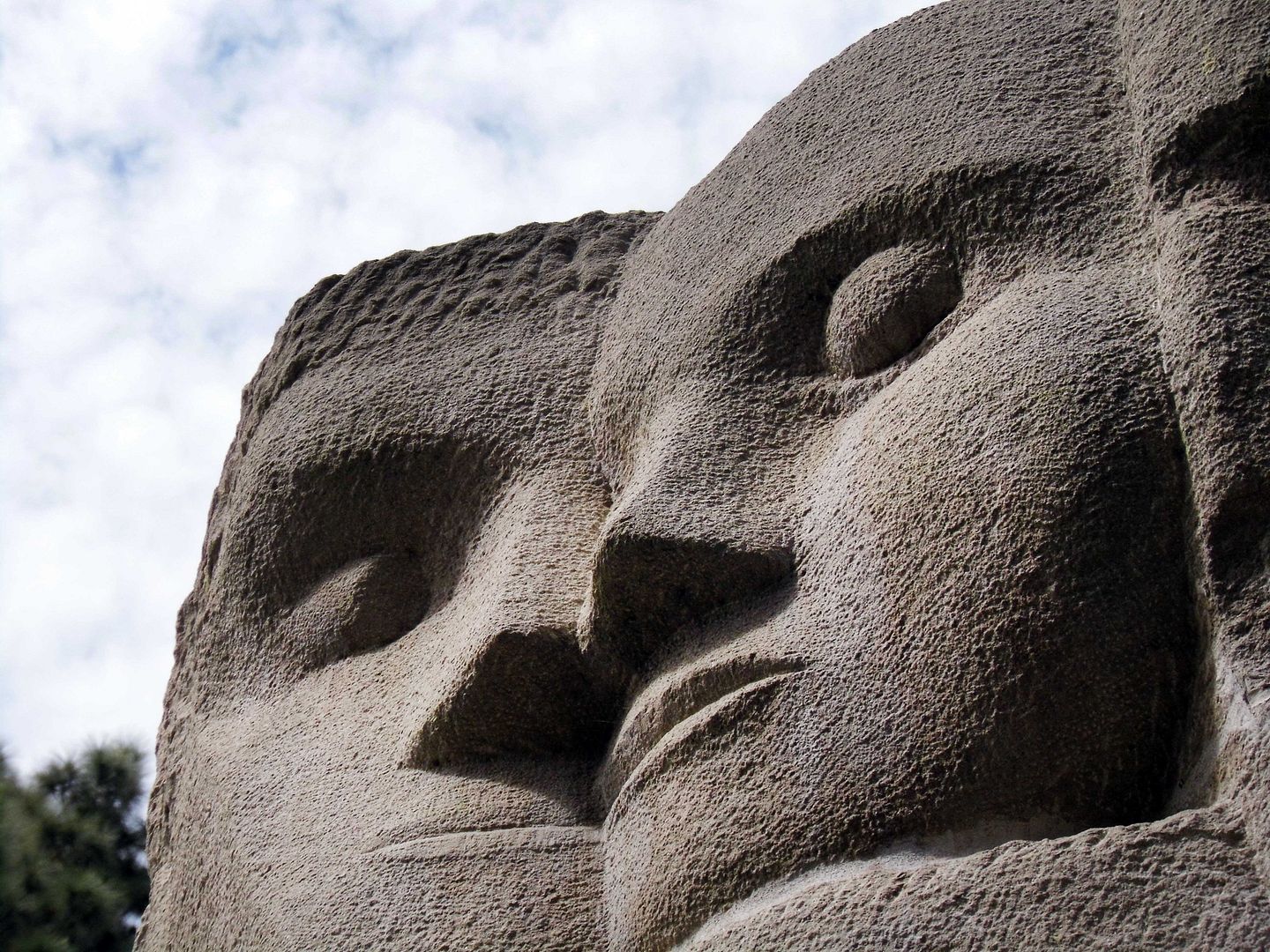


The stone pillar is now just east of the official boundaries of the sculpture garden, on an island land-locked between the Macgowan Hall Bus Turnaround and Charles E. Young Drive E.

I spent a long time at the UCLA sculpture garden—where else did I have to go?—but I still sense that I only saw a fraction of it.

I don't know what took me so long to get there, but I'm grateful for the cleared schedule that allowed me to finally make it.

Related Posts:
Photo Essay: The Donald M. Kendall Sculpture Gardens
Photo Essay: Mildred E. Mathias Botanical Garden, UCLA

April 14, 2020

Quarantine Angst?

The last time I "went out," so to speak, was a month ago—on Saturday, March 14. I decided to celebrate St. Patrick's Day a little early, in case I wasn't able to the following Tuesday, on the proper date. (Turns out I was right.)

I'd gone out the night before to Tom Bergin's for the same reason.

And out to Lono the night before that because it felt like the last chance I might ever have to go out for tiki again.

By then, events had already started to be canceled. Some businesses had started closing—like the gym where I've been seeing a personal trainer every two weeks for over a year—but miraculously bars and restaurants were still open.

My friends were telling me to stay home. But I wasn't ready yet.

I wasn't sure how I'd respond to being told to "shelter in place"—or, in the case of Los Angeles, that I'd be "safer at home."

After all, I'd been told to—forced to—stay at home for the first 17 years of my life. And I've spent the 27+ years that followed rebelling against that order. 

People who know me would think I'd have a very hard time not going out all the time.

But what's occurred to me in this time of solitary reflection is that I was really made for this. Those first 17 years trained me how to be alone—and how to entertain myself. I'm never so bored that I'm looking for something to do. There's always too much to do. 

So this has been kind of a welcome break for me. I'm not constantly running from here to there. I have time to think and time to feel.

After all, I've been living my life as though someone's going to take it all away from me. I've crammed in as much as I possibly could whenever the opportunity presented itself. 

And while I truly am prone to cabin fever, it's really only when I think I'm missing out on an experience that other people will have or are having. 

If the whole world is shut down, there's nothing to miss. Sure, there's been a litany of cancelations—but most of those events will get rescheduled, eventually. 

Before it all set in, I couldn't comprehend that I'd be OK with any of this. But it turns out that I am.  

So I've been home, writing and organizing photos, working my dayjob as well as my freelance gigs. On paper, it appears to be business as usual.

Things are, of course, different. My usual baseline of existential dread and anxiety has been heightened. Some night terrors have returned. Some nights, it feels as though my heart will pound out of my chest.

But if I've got to be housebound, it might as well be in my charming 1929 Art Deco apartment, with my handsome 6-year-old rescue cat. 

I've managed to actually lose a little bit of weight—or, at least, maintain it—without dieting or suffering through painful workouts.

I'm lonely, but actually less so than I was before. I'm not having empty conversations with anyone. I'm either connecting with beloved friends or expressing my gratitude to the staff at Bristol Farms and Jersey Mike's who are literally risking their lives so I can still eat. 

Sometimes I worry that I'm getting a little too comfortable with the homebody life. 

This is what I've spent so long cultivating a backlash of.

But honestly, I've done so much—both in life and here in Southern California—that I'm still basking in the glow of those past experiences. Sometimes the new ones eclipse the ones I've just had—so it's nice to relish in them for a little while longer than I normally do.

Although I've been writing during these last four weeks, I've been reticent to write about life in "quarantine"—a word that gets overused in this context.

Very few of us are actually quarantined. We can still get in our cars and drive. Go get donuts on a Saturday. Fill our tanks with gas. Wander the aisles of Target (even if we can't try any of the clothes on just yet).

There's no curfew. No roadblocks or checkpoints. No having to prove that whichever errand you're running is "essential."

Some people, though, truly are suffering. And I haven't wanted to be flippant about that. The current pandemic hasn't "hit home" for me in the way it has for others. But that doesn't make it any less scary.

Here in California, there's a very strong sense of impending doom. But there's a certain familiarity in that—to me, anyway, after having spent the last 9 years trying to prepare myself mentally for an earthquake. 

I've always known "The Big One" was coming. I just didn't think it would be a virus. 

So, a month after initially being "locked down"—which, again, is a huge exaggeration—we've got at least another month to go. 

Who knows when things will return to "normal"?

But maybe I'm OK with whatever changes come. At least, more OK than I ever thought I'd be. 

Related Posts:

April 05, 2020

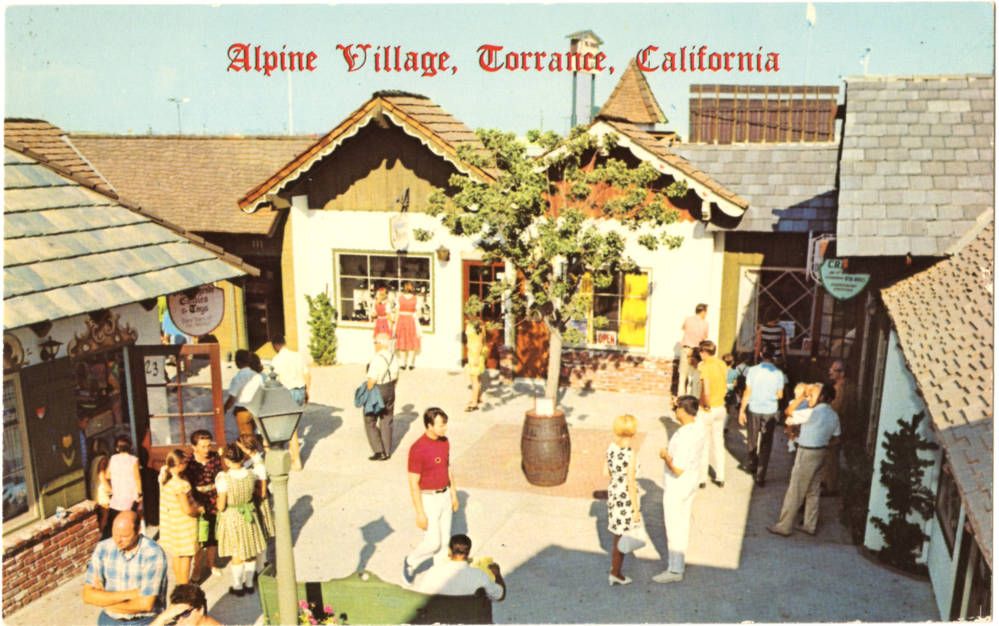
Photo Essay: Is It Auf Wiedersehen For Alpine Village, Our Little Slice of Bavaria in LA's South Bay? (Updated for 2023)

[Last updated 3/3/23 9:01 PM PT—The Alpine Village Market officially closed this week.]
 
Postcard: James H. Osborne Photograph Collection, The Gerth Archives and Special Collection at the CSUDH University Library

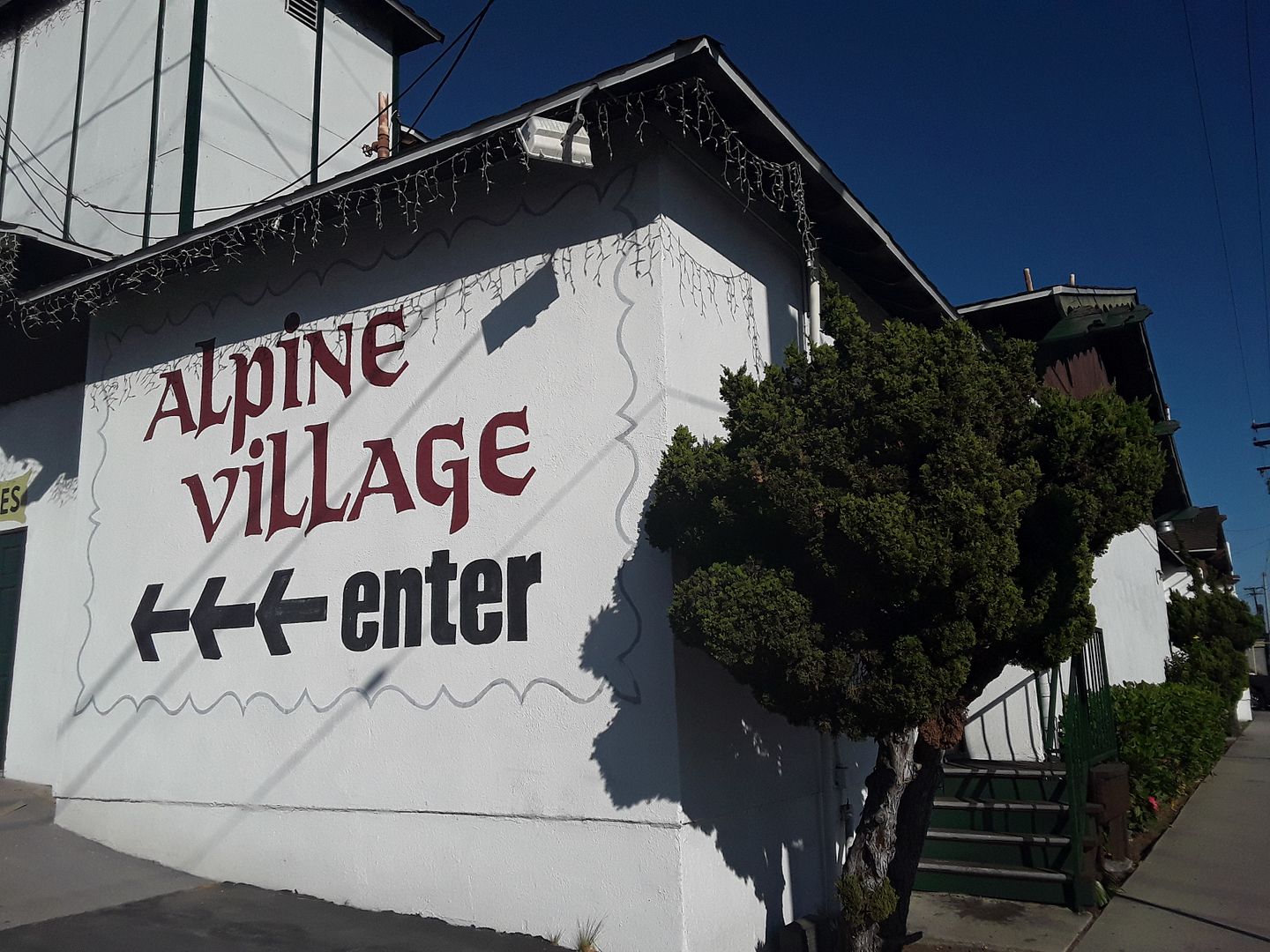
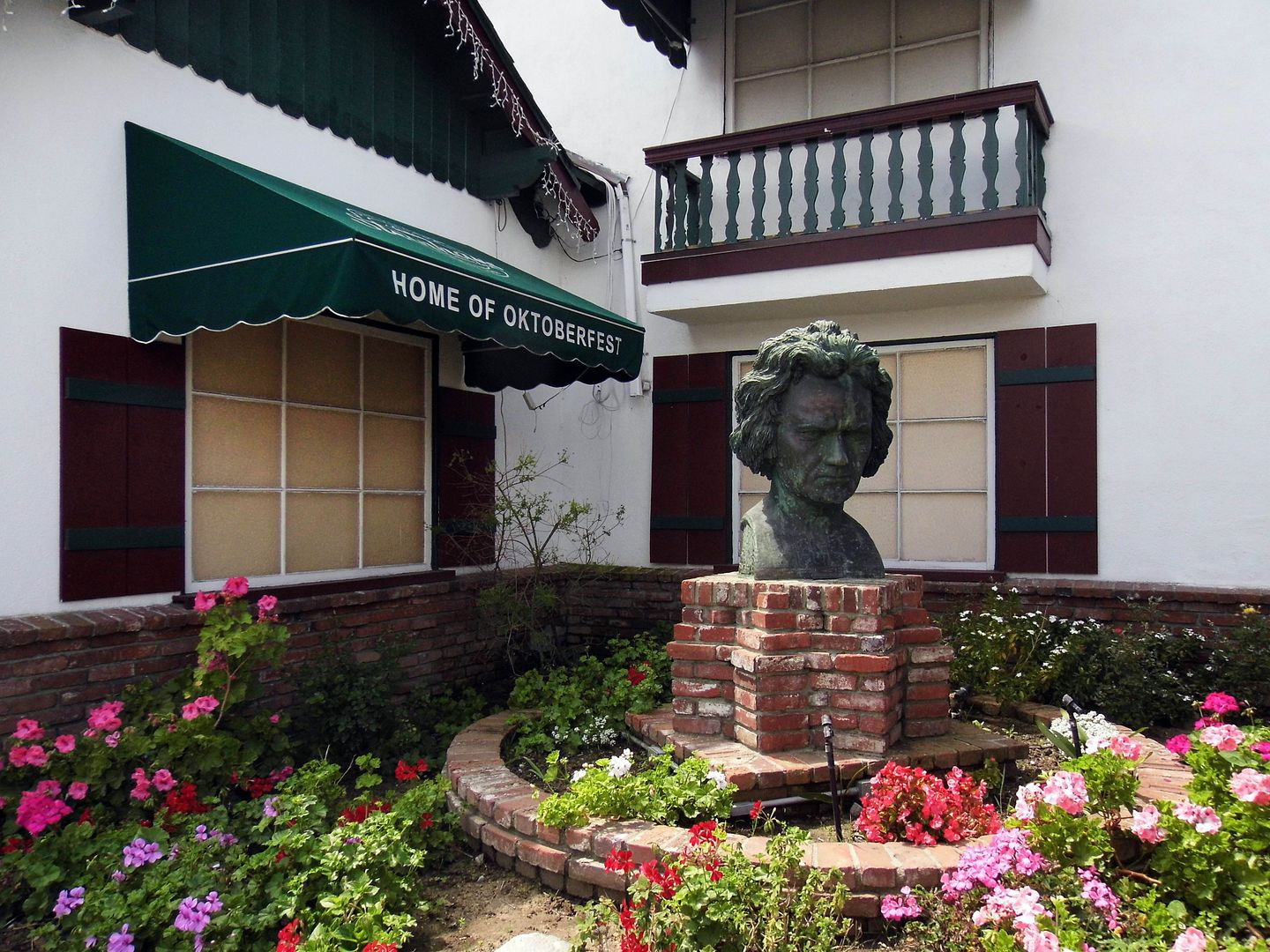
Alpine Village in the South Bay may promote itself as the "Home of Oktoberfest Since 1968"—but this "little slice of Bavaria" is so much more than that.

Replete with a German restaurant, market, shops and even a chapel, it’s also been ground zero for German-American Day LA and where you can catch televised soccer games played by the Deutscher Fußball-Bund and pick up some German trinkets for your tannenbaum all year long.

Although it has condensed its operations over the years, it’s still the premier destination in the Southland for German celebrations, German music (ranging from rock bands to the accordion-laced oompah sounds of Volkstümliche Musik), German bier, and, of course, Krampus.

Unfortunately, the 14-acre property is in the crosshairs for demolition—because of a development project that would repurpose the site for truck storage and cargo container storage.

Alpine Village was founded more than half a century ago by two German immigrants—Josef Bischof, who came here in 1952, and and Johann “Hans” Rotter, who arrived in 1955.

While Bischof dreamed of sharing his German heritage and homeland with the Southland—inspired by the Danish-themed town of Solvang, California— Rotter was a soccer player who wanted to create his own soccer field on the former Gardena Valley No. 4 landfill property.

Fortunately, there was room to spare along Torrance Boulevard to develop an Alpine-style European village of their own—now located a few blocks east of Torrance in a section of unincorporated Los Angeles County (which some call "West Carson").


Never mind that it's at sea level. All they needed to create "The Little City from the Alps" was to employ a Swiss chalet architectural style—that "Old Building Look"—four different architects, all using a common Bavarian Alpine design motif.


The result—seven buildings completed between 1969 and 1974—is excellent example of the "Themed Shopping Court" property type.


And it's a dying breed in Southern California, where people prefer the sparkling new themed environments of "Star Wars: Galaxy's Edge" at Disneyland to anything that reminds them of the "olde world." (Though how the Renaissance Faire survives is beyond my comprehension.)


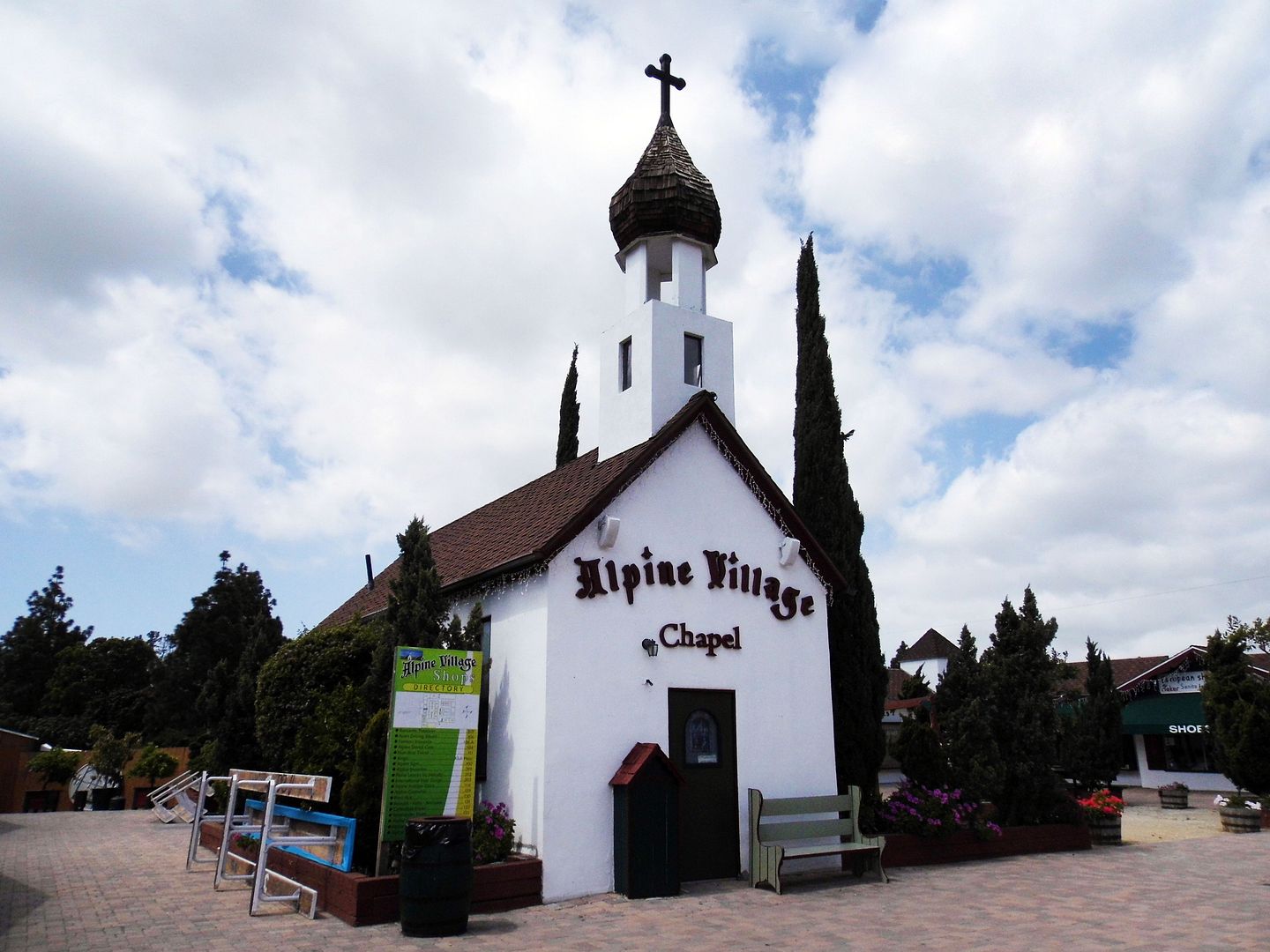
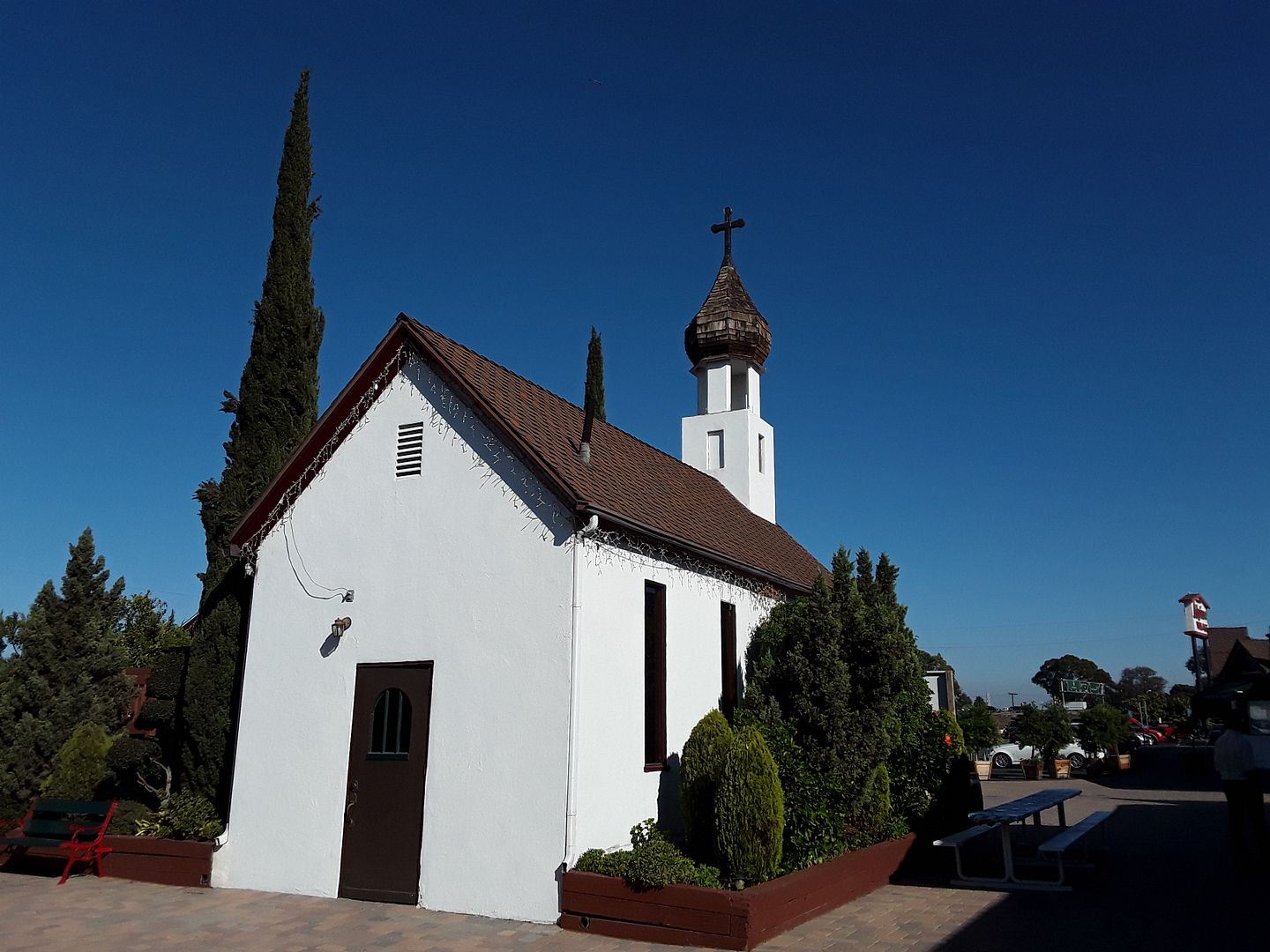
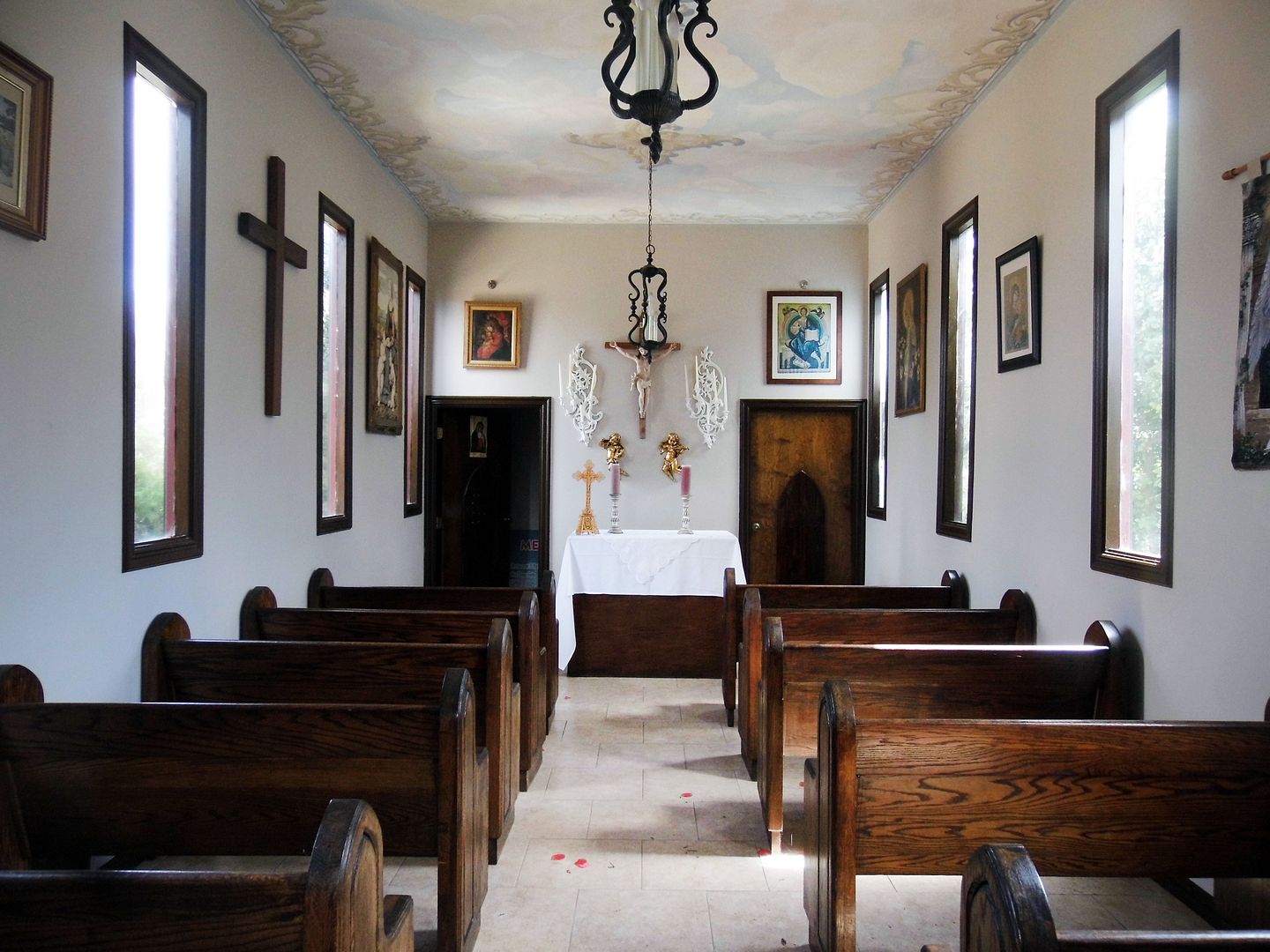
For instance, architect Joe Sing contributed a 400-square-foot chapel (whose façade once bore letters spelling out "Wedding"), which was completed in 1971 and now serves as the village's centerpiece.


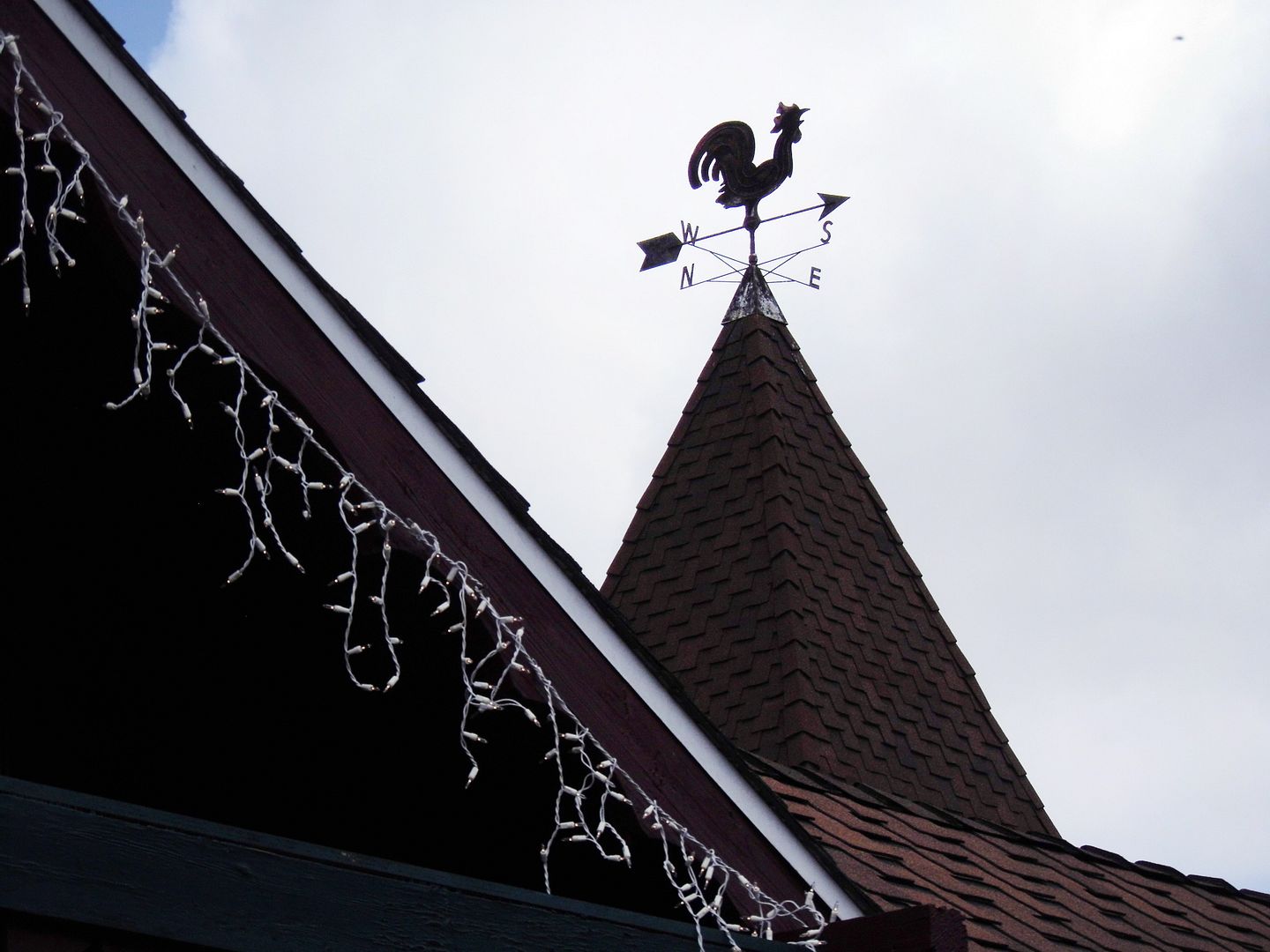
Sing was inspired by the design of the Klausenkirche (Klaus Church) in Engfurt, Germany, near Rotter's birthplace—and mimicked it, right down to the onion-shaped spire covered in wooden shakes.


It still hosts weddings with up to 30 guests...


...with plenty of extra room in the landscaped courtyards...


...and by the fountain for more guests.


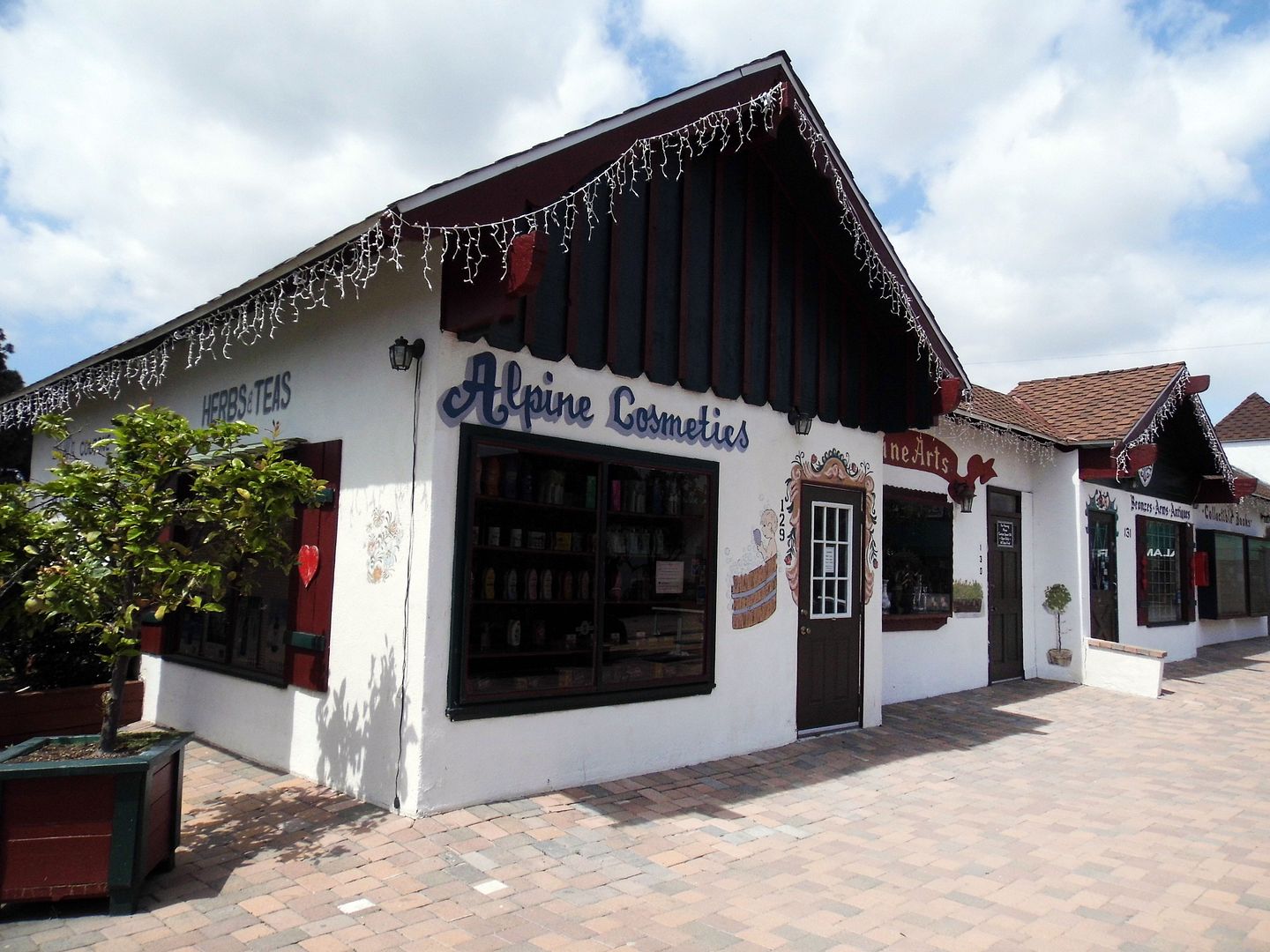
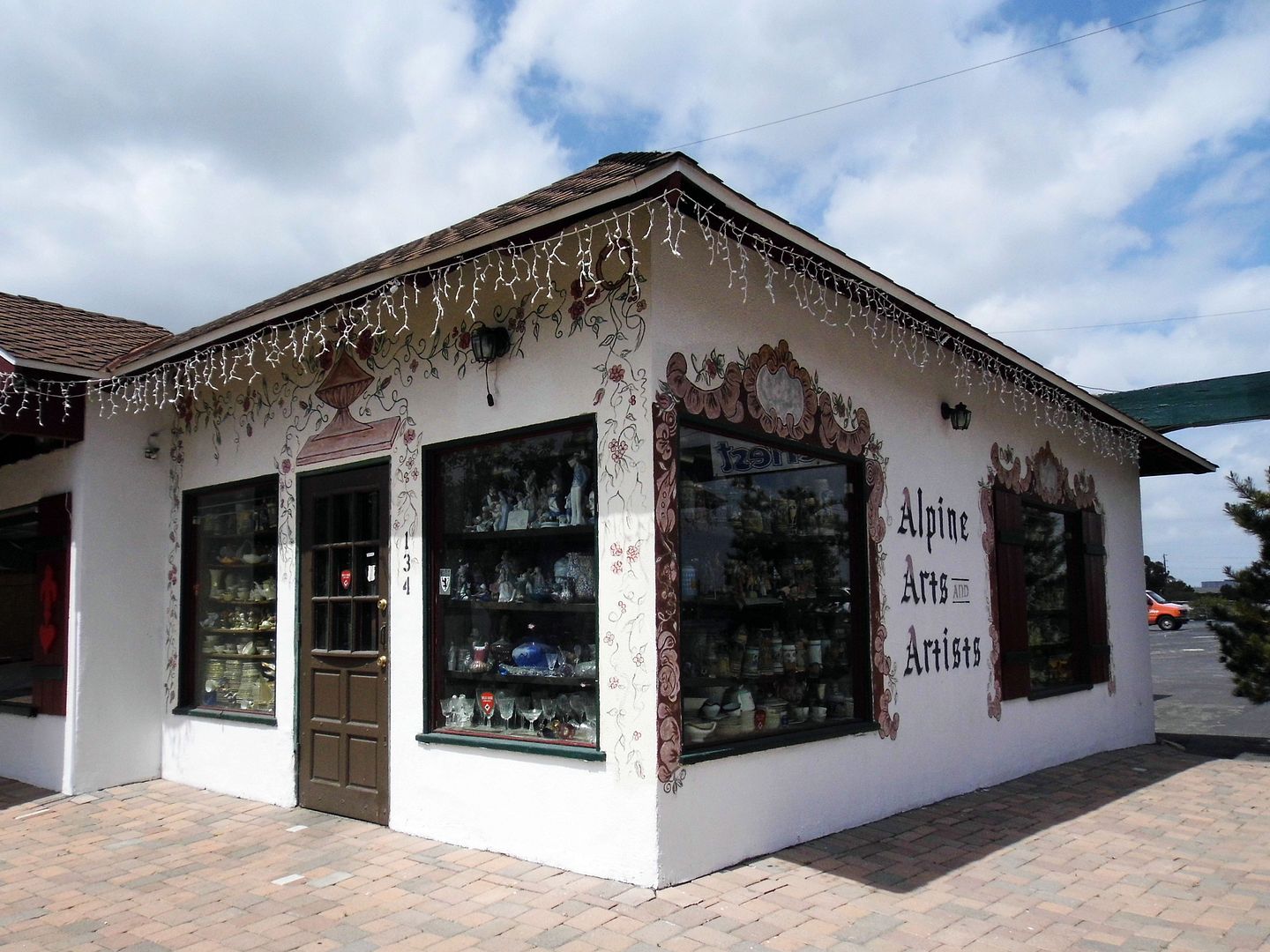
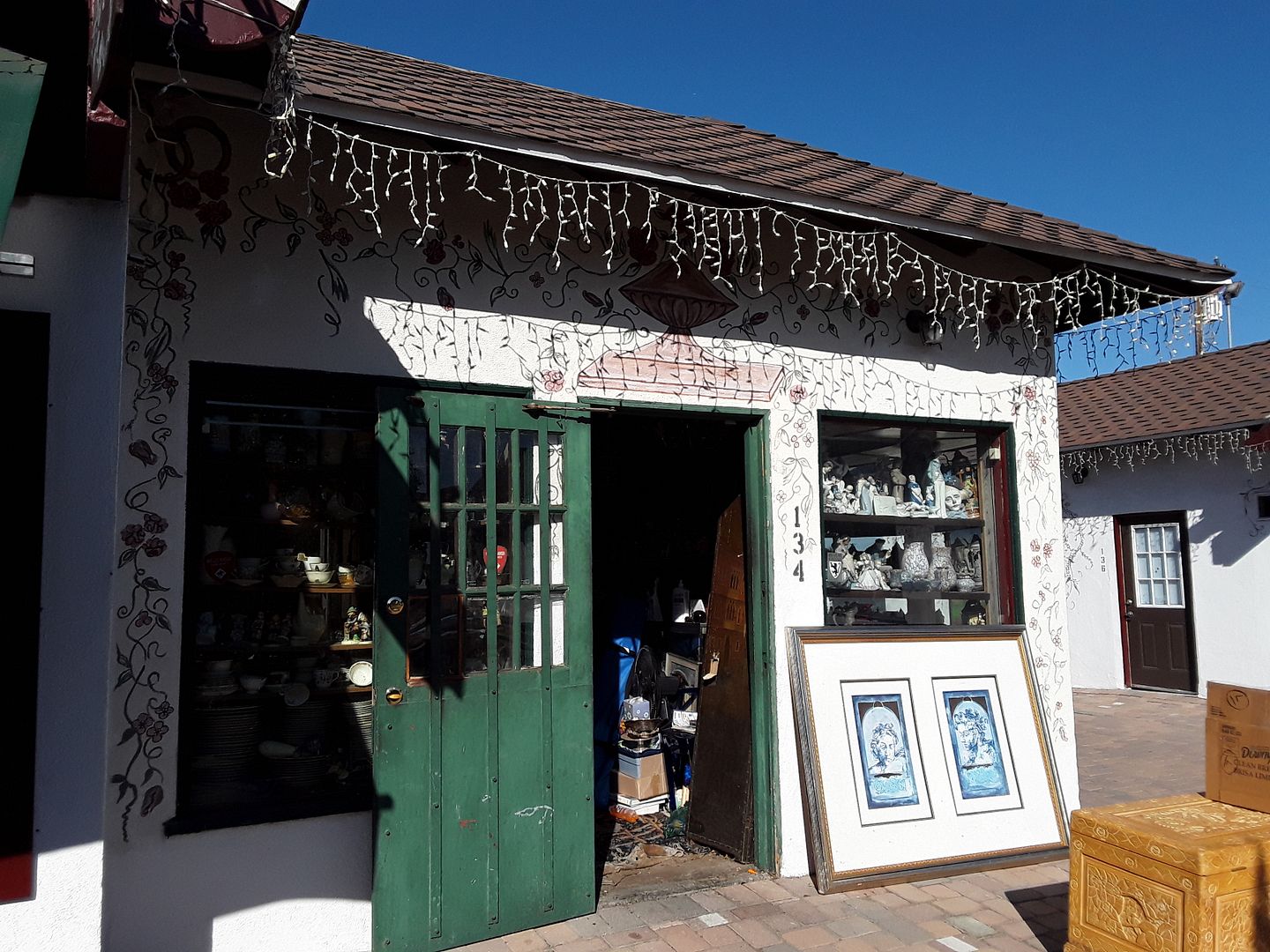
All the while you'd be surrounded by stucco-clad exteriors with windows and doors embellished by painted frames...


...gables with scalloped bargeboards...


...vertical wood boards in the gable ends...


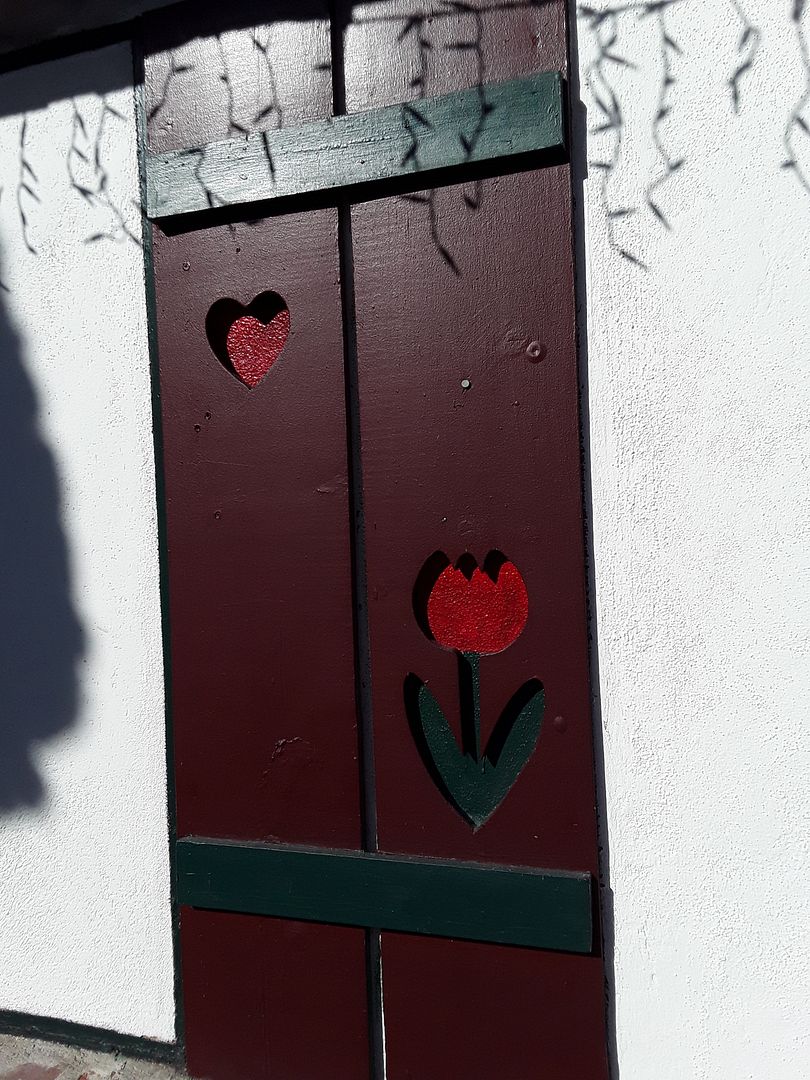
...and decorative shutters, some with a tulip design.


Much of those touches were the work of Yugoslavian architect Bruno Bernauer, who immigrated to LA in 1956. He drafted the designs for the first two buildings at Alpine Village—and then moved on to other local projects.


Joe Sing, the architect of the chapel, took that aesthetic and ran with it with the design of the newer buildings to retain as immersive an experience as possible.


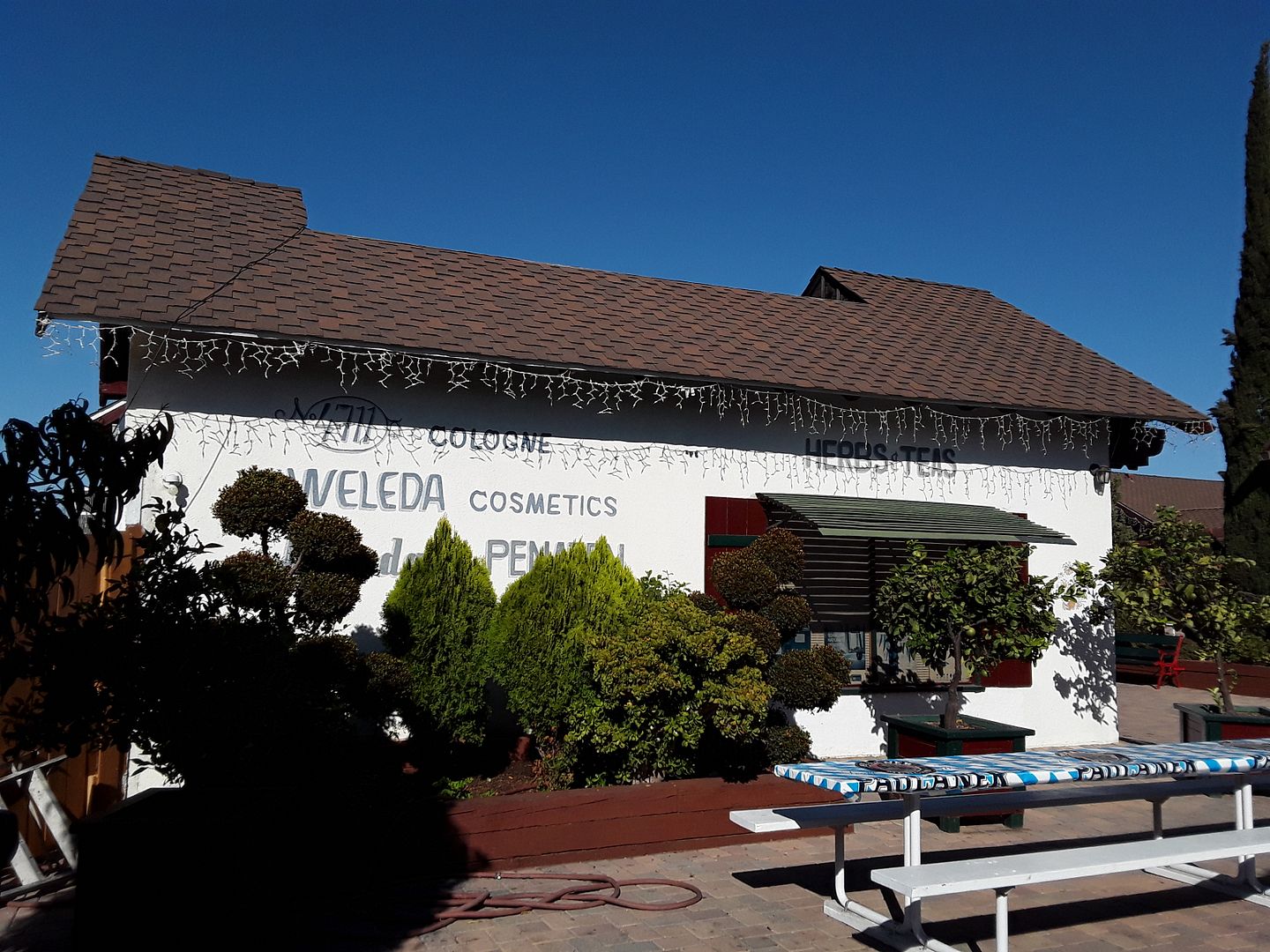
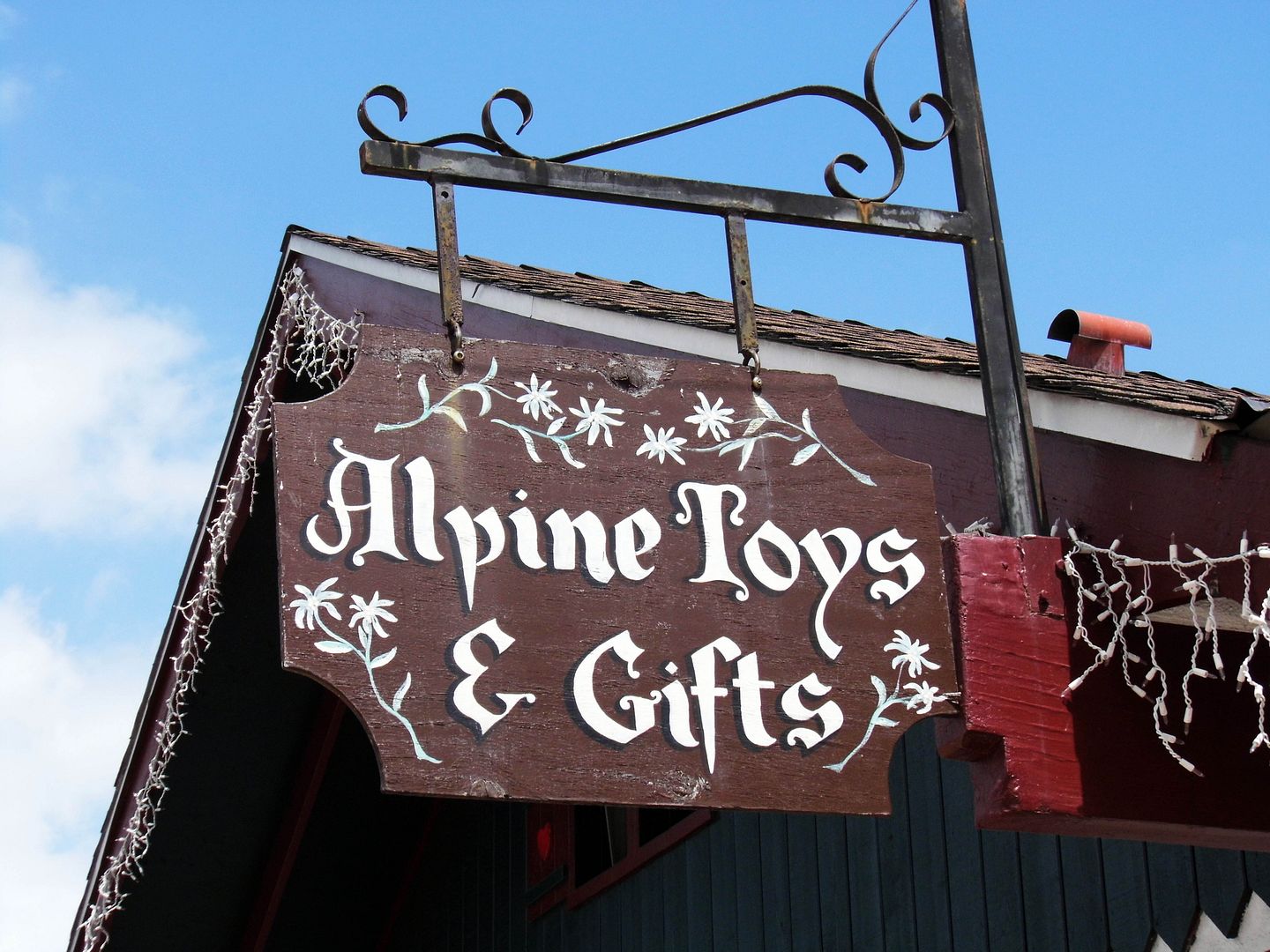
Today, there's a German cultural museum (LA Turners) and shops that sell traditional German garments, cosmetics, toys, shoes, and other gifts—as well as businesses offering travel services, dentistry, clock repair, and more.


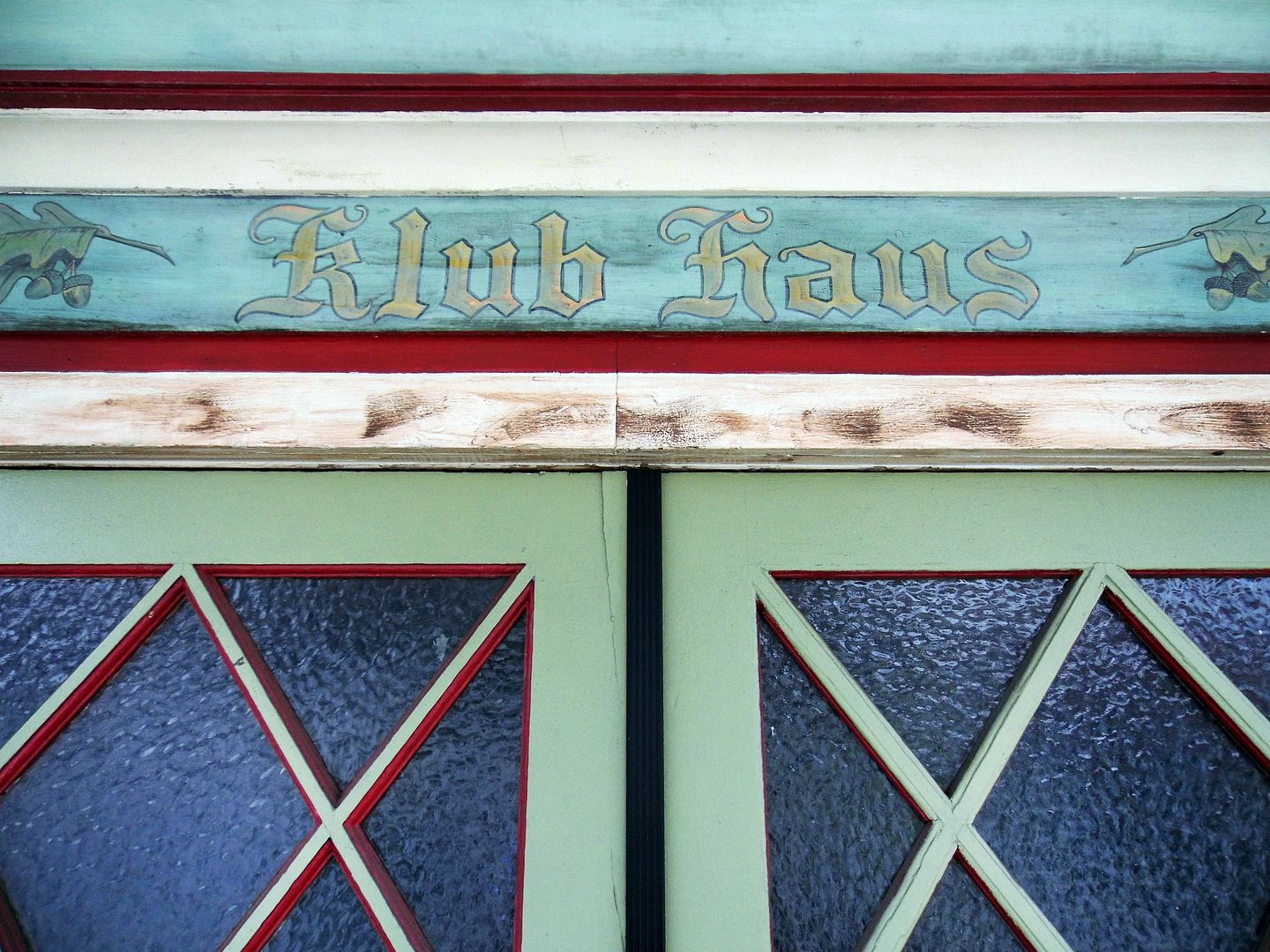
Among the other areas available for rent is the Klub Haus, now a banquet room for up to 250 guests located in Building 1. It was the first building to be added in 1968, by Bernauer—and was a movie theater until 1980.


Look for the bronze bust of Beethoven [Ed: The internet reports this has been removed], and around the corner you'll find the recently (and permanently) shuttered Alpine Inn Restaurant.


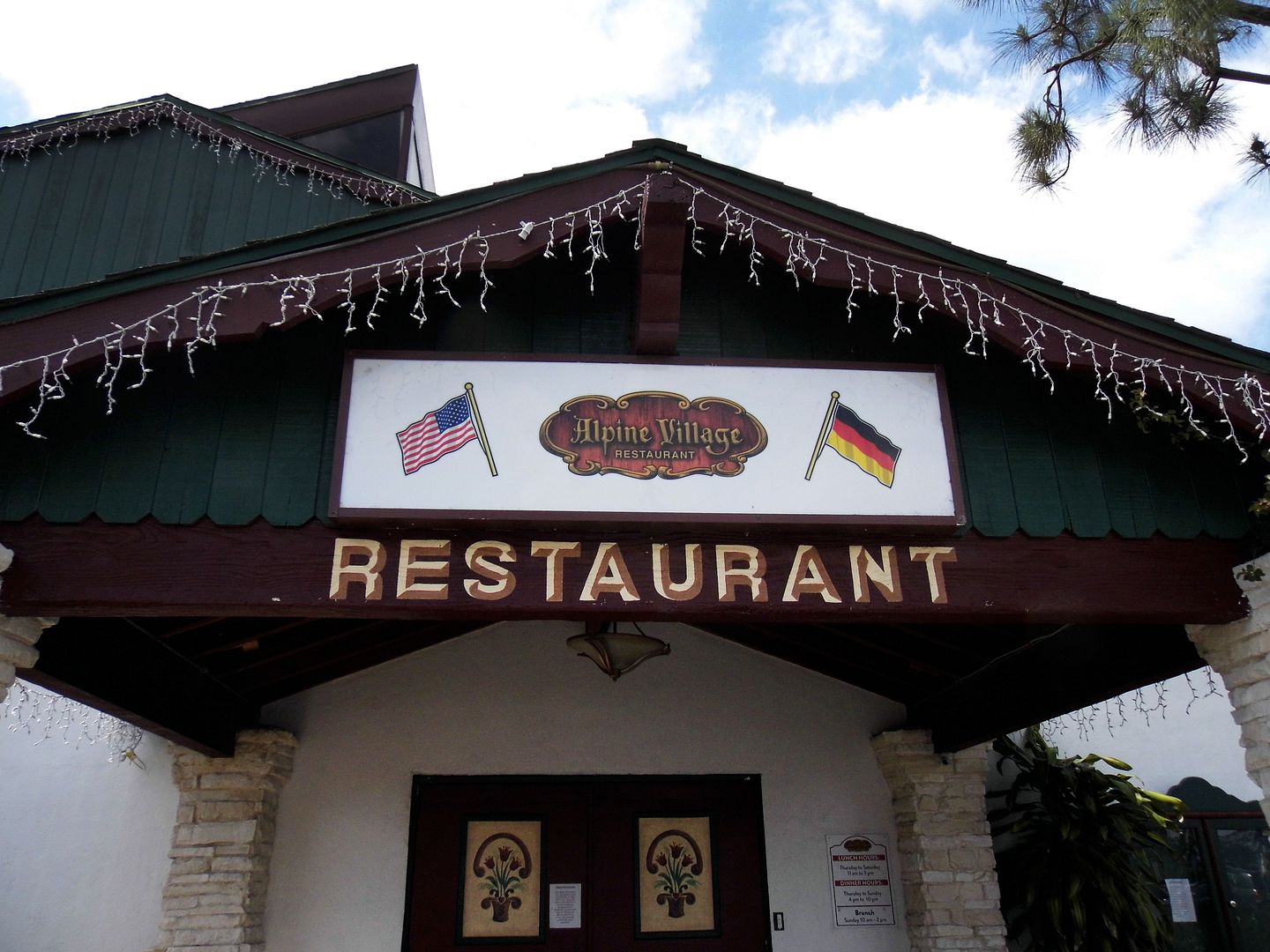
The restaurant has hosted festivities since Alpine Village first opened in 1968—though it was in Building 2 at the time and in 1984 moved to Building 7 (originally added in 1974 as a clubhouse or "Heimet House"/"Heimathaus" for the German American League, designed by architect W.A. Altmann of Stuttgart, Germany).


Structural engineer Peter Erdelyi led the 1980s renovation of the new restaurant building, which added a 8,170-square-foot two-story addition to the existing space—which had been the last building completed at Alpine Village.


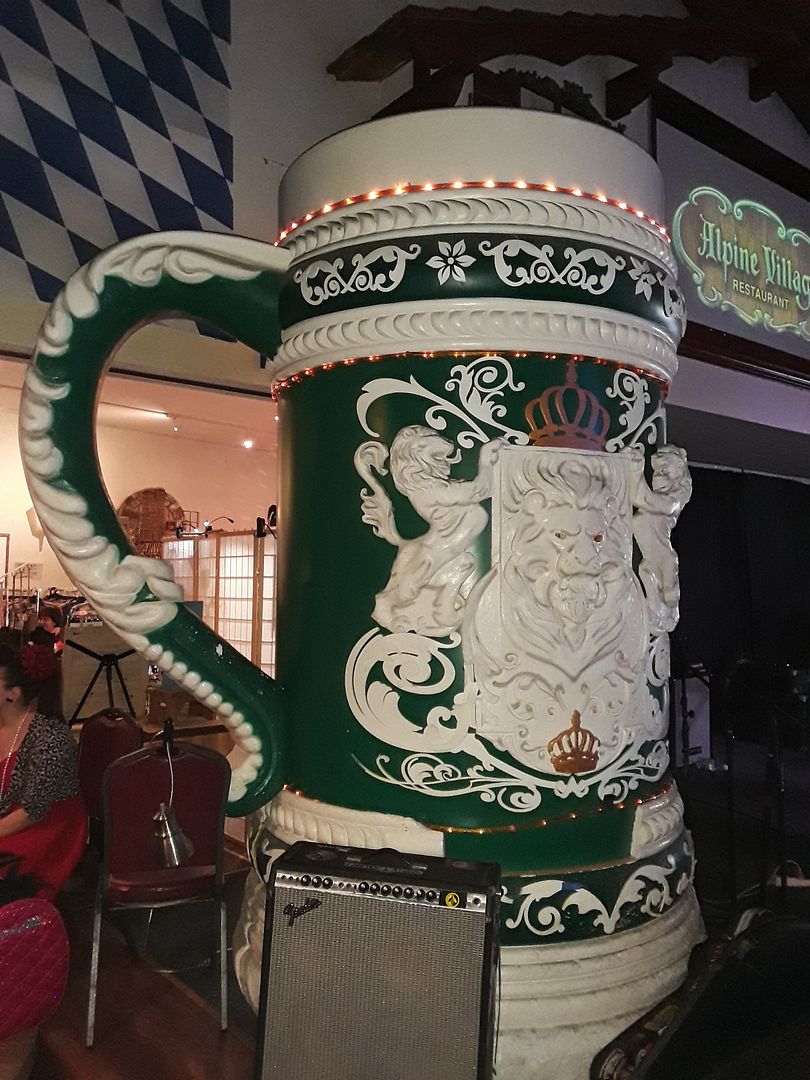
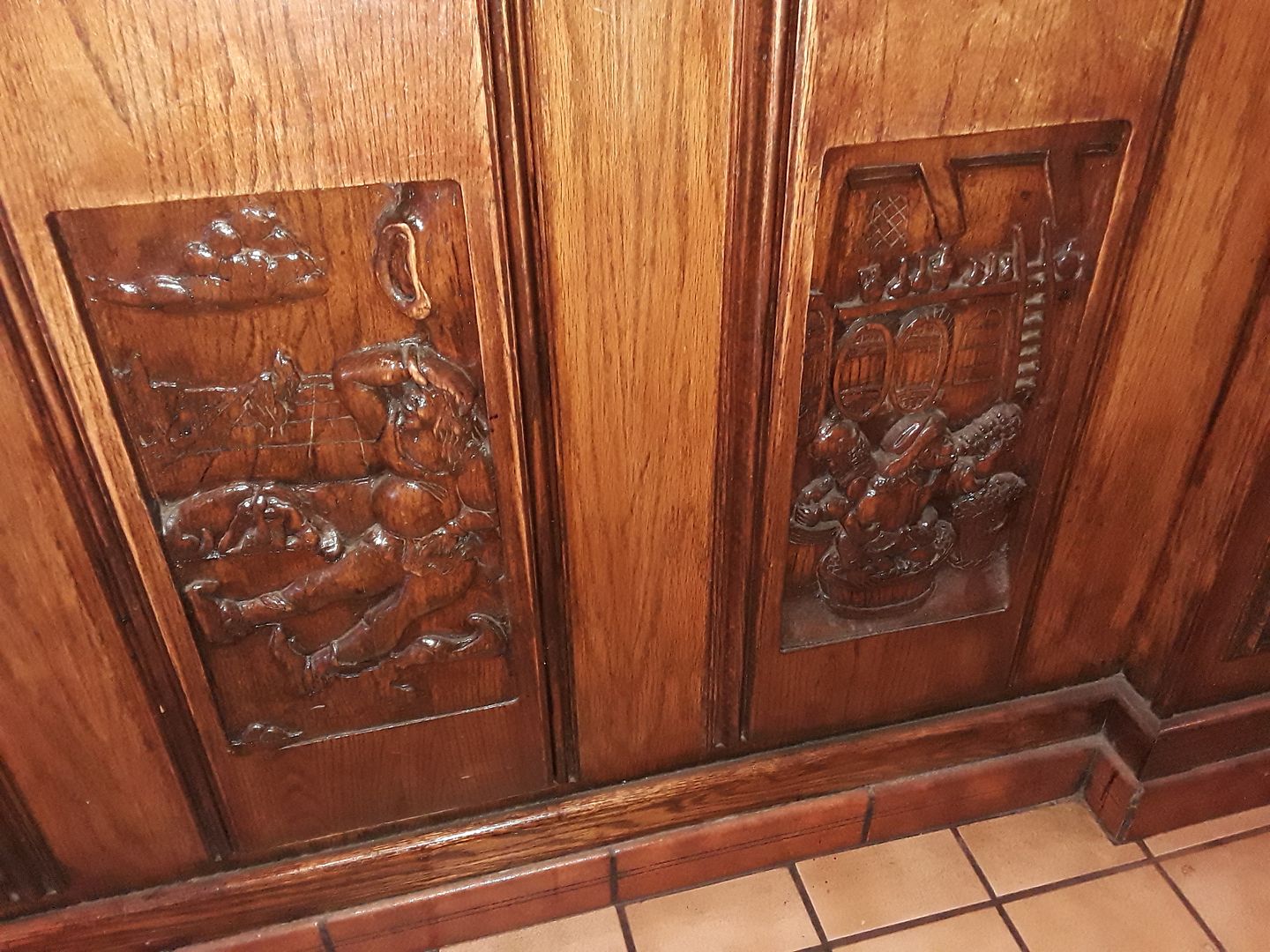
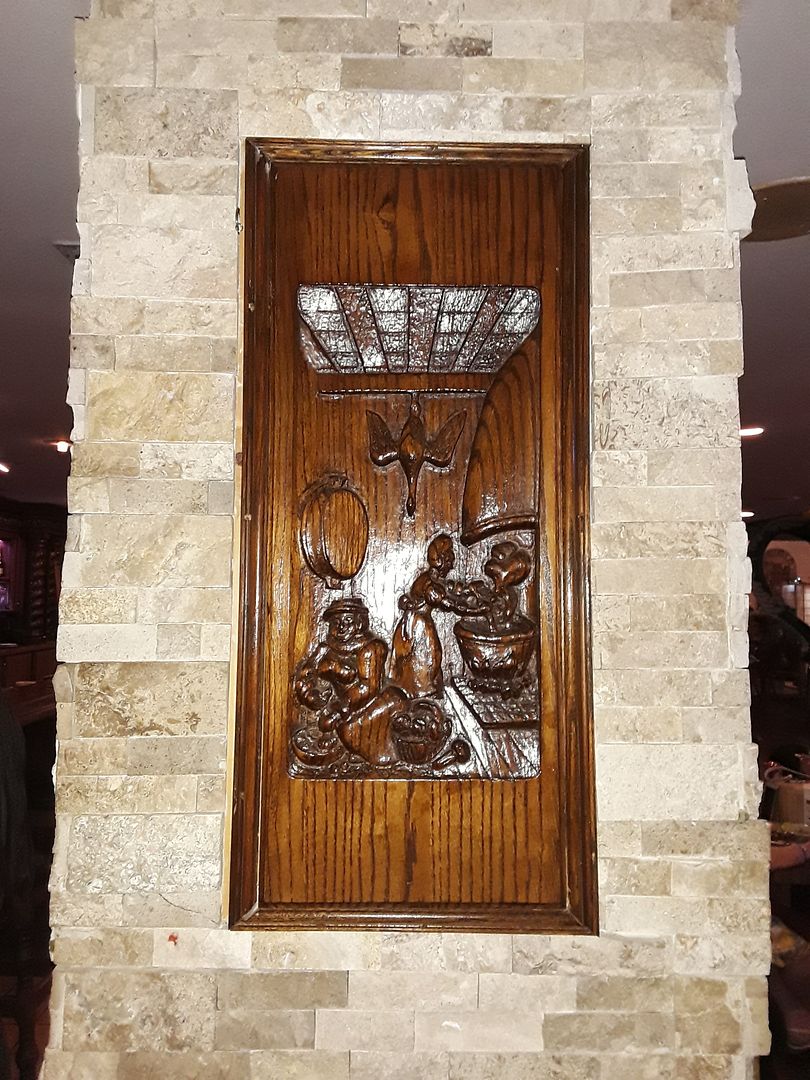
Now a tavern or "steinhaus," much of what's inside dates back to the 1980s expansion and aren't original...


...though once again, yet another designer took the German theme and played it up to the hilt with carved wood decorations, both at the base of the wooden bar...


...and mounted on the interior stone-tiled columns.


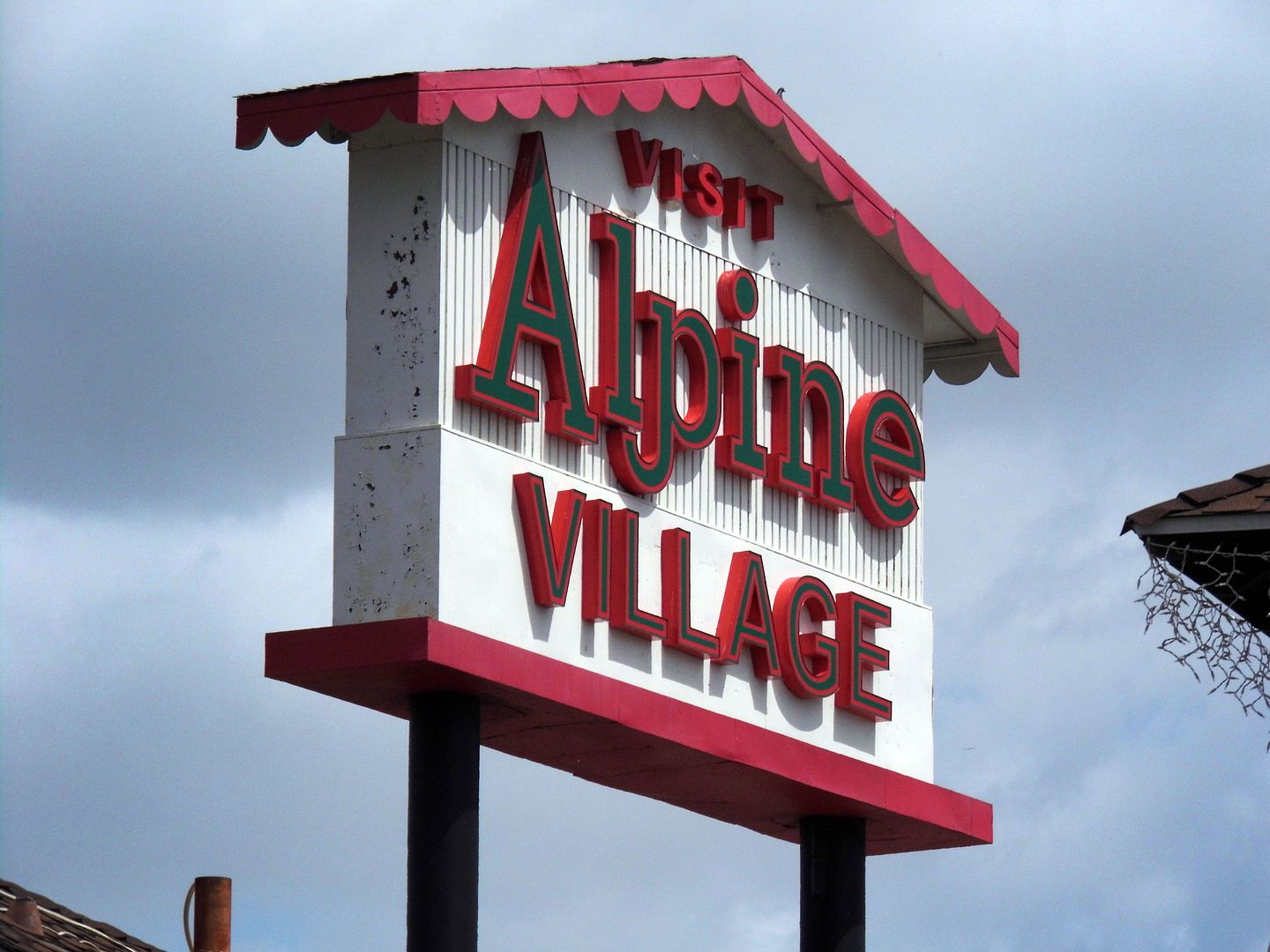
You couldn't ignore Alpine Village even if you were to try—thanks to its Chalet-shaped signage mounted on a 70-foot-tall pylon, visible from where the 405 meets the 110. Designed by Arthur L. Bergey, it features a sheet metal fringe "roof" and neon illumination (made by Chief Neon of Gardena, California) for night visibility. It's original to the opening in 1968 and virtually unchanged since.


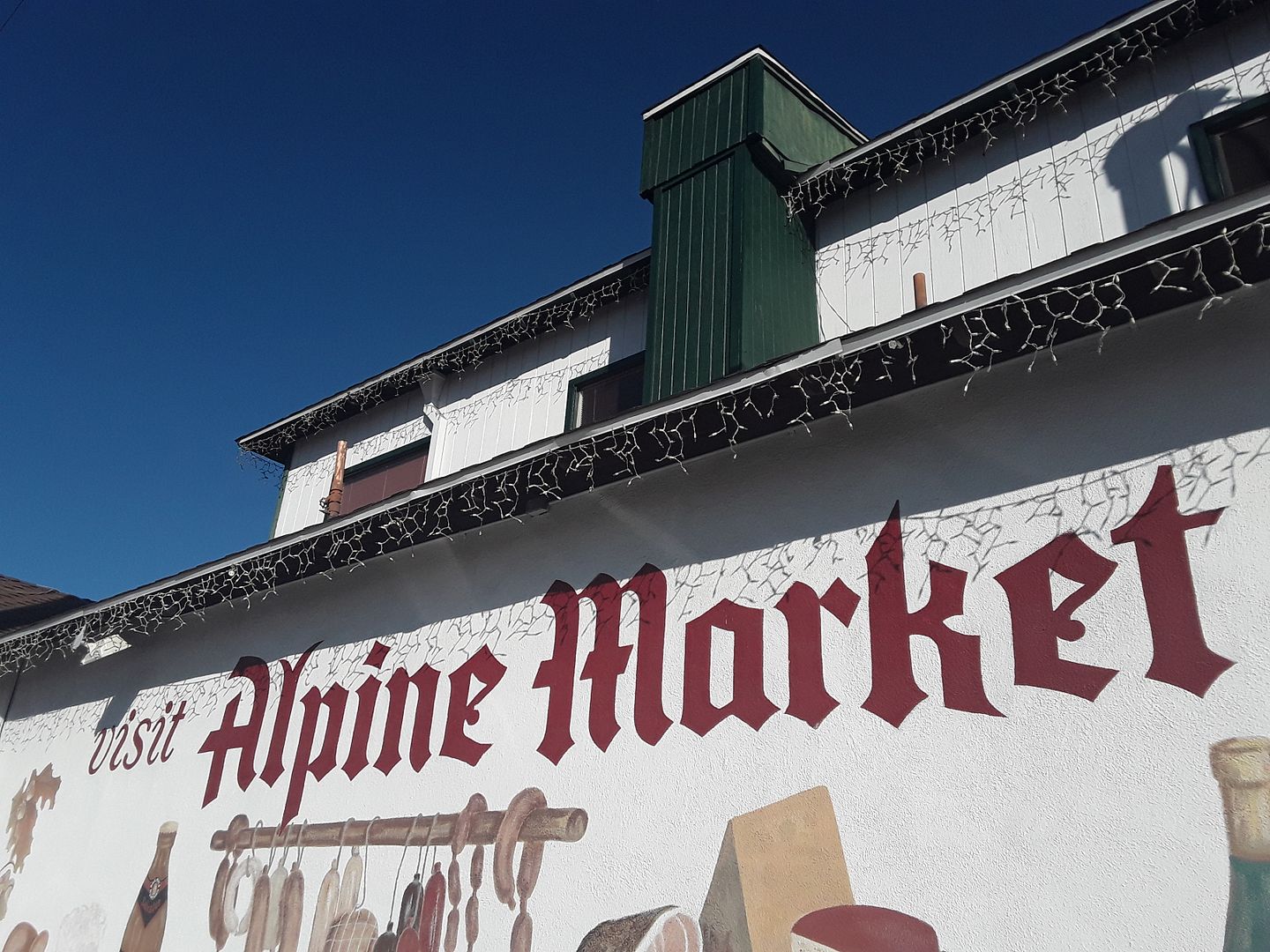
Although the restaurant has closed for good, the Alpine Market (in Building 6, erected 1973) is still open for business to satisfy Village regulars' yen for German specialties—even during our current pandemic lockdown. [Ed: The market has since permanently closed.]


The 21,000-square-foot market (also designed by Sing, with a second story of offices added in 1988) offers fresh German meats and baked goods...


...as well as jarred staples like sauerkraut and red cabbage...


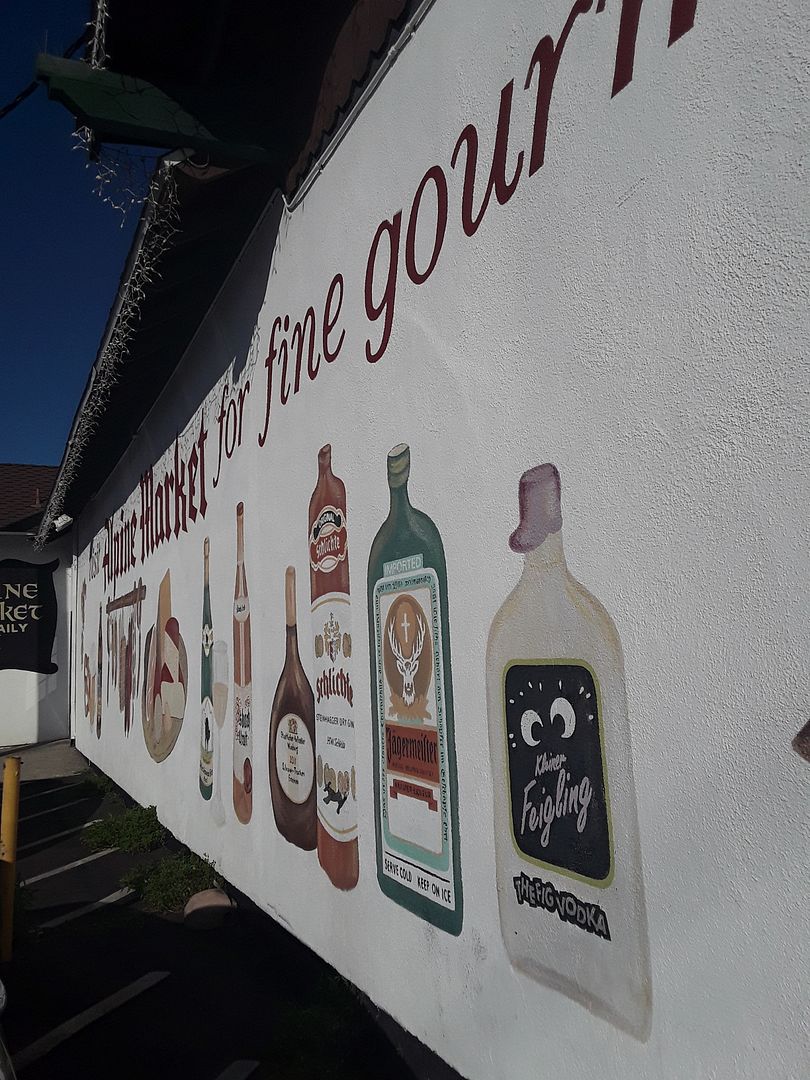
...and plenty of fig vodka, Glühwein, and different types of herbal digestif drinks (Kräuterlikör).

So what of this impending threat of demolition?

Well, by no means is it a done deal. And Alpine Village has struggled before and come out the other side.

It's already been downsized from the full-fledged German theme park it had expanded into in the 1970s—losing not only its soccer field and batting cages, but also its carnival rides, Fairytaleland, and Children’s Animal Farm.

And a group of preservationists believe it's important—not just because it's a themed shopping court, but a rare example of a Bavarian one, at that. Especially in LA County.

(Alpine Village's co-founder Josef Bischof later brought the Bavarian style to Orange County—with Old World in Huntington Beach, which his family still runs.)

But then there's also the association with commercial development and the automobile—that is, roadside architecture and especially roadside markets.

And finally, there's the importance of Alpine Village as the center of European-American social and cultural activity—not just German, but also Austrian, Polish, Ukrainian, Hungarian, Croatian, and more (as evidenced by the offerings for sale in the market). 

Update from Los Angeles Conservancy: 
On January 24, the Los Angeles County Historical Landmarks and Records Commission voted 5-0 to recommend that the County Board of Supervisors designate Alpine Village as a County Landmark. This follows the Commission’s nomination of Alpine Village for landmark consideration at their meeting on October 25, 2019.
This would make Alpine Village the fourth designated landmark for LA County since the year 2000—the first being the Hollywood Bowl.

But as we've seen in the past, landmark designation doesn't always save a historic property.

For an in-depth history of Alpine Village, click here. 

Related Posts:
Photo Essay: The Oktoberfest Running of the Weenies
Photo Essay: Old Hollywood's Crossroads of the World, Before It Gets Swallowed Up By 'New' Hollywood
Photo Essay: The Many Lives of LA's Original Farmers Market
These Memories That Reek

April 03, 2020

San Diego's Abandoned 'Cathedral of the Motion Picture'... On Its 'Boulevard of Broken Dreams'

The California Theatre in Downtown San Diego is on death row.

Demolition permits were granted in April 2017. Construction on a new development that would take over the historic site was supposed to start last month and be completed by 2023.

And yet there it stands, a ghost-in-waiting—not in purgatory or limbo, and not even on life support.

It's been hanging on by its own volition since it closed for business all the way back in 1990—thanks only in part to it being added to San Diego's Register of Designated Historical Resources that same year.

But somehow, its designation as a local landmark hasn't been enough to get it a stay of execution.

Even though the required environmental impact report (EIR) of razing the structure failed to comply with the California Environmental Quality Act (CEQA).

That only bought preservationists some time. But they haven't been able to get clemency granted for the historic structure.


Maybe it's because it occupies prime real estate in Downtown San Diego—almost half a block of it—right across from city hall in the C Street corridor. It's a section that's been called San Diego’s "Boulevard of Broken Dreams"—and calls for the buildings demolition insist that removing the so-called "blight" will help upgrade the street from a "C" to an "A." [insert groan here]


An online petition called the area "frightening to tourists and residents," with frequent mentions of dangerous, drug-carrying "vagrants" and "transients" who use the sidewalk as a bathroom and break all sorts of other laws. It claims that the California Theatre is the crux of the problem—and "the only answer to this blighted sight" (emphasis mine) is this new development.


But who and what let the California Theatre get this way? And who let the neighborhood devolve into such dangerous territory that you supposedly can't walk through it? After all, it opened in 1927 as San Diego's premier movie palace—a Spanish Colonial Revival style single-screen theatre that the San Diego Union newspaper reported to be "more imaginative and dreamlike than anybody's Spanish castle."


Designed by architect John Paxton Perrine for Fox-West Coast Theatres, and built by Edwards, Wildey and Dixon Building Contractors of LA at a cost of $340,000, the 9-story office building boasted a women’s apparel store (Bernard’s Inc.) on its second floor as well as the largest vaudeville (discontinued in 1937) and movie palace in San Diego at the time, with the capacity to seat 2200. Obviously, the neighborhood was once able to draw quite a crowd.


Although it opened as the "New California Theatre" (because the other California Theatre in San Diego didn't change its name to The Aztec until 1930), it's unmistakably been The California Theatre for San Diegans—starting with its grand opening of the silent, black-and-white film The Venus of Venice, accompanied by a huge Wurlitzer theatre organ (relocated and now long gone).


The last operator was Mann Theatres, which ceased its movie screenings in 1976. After a stint as a shabby concert venue and a renovation in 1988, it finally shuttered for good in 1990. That seemed like the death knell for the California Theatre, which everybody expected to be demolished any day after that.


But by 2006, the owners had foreclosed, and investors Sloan Capital Partners of Beverly Hills took over the lease. The 2008 recession put the kibosh on any plans for new development—and in the meantime, leaving the site exposed to squatters, rodents, pigeons, and weather resulted in devastating  water damage. It was a stunning example of demolition by neglect—conveniently making restoration costs an estimated $40 million and therefore better economical sense to start from scratch and build anew.


So now, it appears that the California Theatre will have to make way for the largest-ever Downtown San Diego condominium tower—a 40-story, 474-foot high-rise with 444 residential units, plus retail space at street level.


It was supposed to be called "The Overture"—developed by Caydon Property Group from Australia—but its social media presence (including hashtags) has stalled.


By all available reports, though, it appears as though the new development will preserve some of the building’s exterior and lobby—but how much is debatable. Will it be a "façadectomy," as with the ghost wing of the Alexandria Hotel in Downtown LA? Or will it be a "faithful" reconstruction?


Maybe some combination of both—as reports state that it will reconstruct the lobby in its entirety and rebuild much of the exterior to look exactly like it was, based on laser scans.


There's one thing that's for sure—the interior and new tower will be modern, and there will be no theater.


Even if the developers mount a new glittering marquee and blade sign—as is the plan—the building will be an imposter.


The California Theatre won't be reincarnated—and neither will the Barbary Coast, San Diego's "in spot" a.k.a. topless go-go bar at the corner of 4th and C from 1968(?) to 1976 or so.


And even the ghost sign for Agua Caliente thoroughbred horse racing in Tijuana (a.k.a. "Old Mexico") on the west-facing exterior wall of the fly loft won't survive the reconstruction—despite having become a beloved piece of public art inextricably linked to the neighborhood and San Diego's history as a border town. (The greyhound dog racing ghost sign on the fly loft's south wall won't be preserved, either.)

They say the developer will attempt to recreate it on a new wall. But I kind of wonder what the point is.

When I visited the exterior with some friends early last month (I've never been inside, and its pretty well boarded up now), I just kept saying how sad it was.

"It's really sad," I said, again and again.

"It is," my friend said.

To read a relatively scathing architectural appraisal, click here. 

For contemporary interior photos, click here and here.

Related Posts:
Photo Essay: The Inland Empire's Last 'Golden Age' Movie Palace, Saved from Demolition
Photo Essay: The 1980s Skyscraper That Ate the San Diego Fox Theatre
Photo Essay: The San Diego Theatre Built By A Sugar Fortune