Search

Showing posts sorted by relevance for query temecula. Sort by date Show all posts

August 25, 2018

Photo Essay: To Know An Alpaca Is To Love An Alpaca (Updated for 2024)


Screenshot from KCET.org/SoCalWanderer

[Last updated 10/16/24 3:04 PM PT—The Alpaca Hacienda announced its closure in May 2024. Its animals have been moved to Hawk Ranch in Murrieta near Temecula, where they act as animal ambassadors and can be visited on a farm animal tour.]

I love animals, but I don't love all animals equally. I feel like I should, but I don't.

I've already established that I'm a crazy cat lady and that I go gaga for goats and cuckoo for camels—but I also go bonkers for baby alpacas.

Oh, let's face it, I lose it for pretty much any alpaca.

I'd previously encountered them at Malibu Wine Safaris, Wildlife Waystation, and maybe another sanctuary or zoo or two—but in my deepening alpaca adventures, I'd found it much better to get the full immersive experience at a dedicated alpaca farm or ranch like Sweet Water Alpaca Ranch or Alpacas at Windy Hill.

I knew there must be more alpaca ranches around SoCal to visit, but I hadn't focused on crossing them off my list.

And then, I had the opportunity to write about them for KCET, an assignment that sent me on three more alpaca adventures.

I've already written about one of them here: William S. Hart Park, which includes five alpacas in its barnyard, though that's not necessarily the focus of the place (or of my piece).

And since the nature of my articles for KCET's SoCal Wanderer column doesn't allow enough room to publish all the good photos I submit from any given place, I frequently use my blog to fill in the gaps.

After all, every story has a story behind it. 


I almost didn't get to go to The Alpaca Hacienda at all, given my lack of transportation over the last month (that's a whole other story) and the wildfire that had been raging just off the 15 freeway, which we'd have to drive right past (though fortunately not exactly through).


And that would've been a real shame, because The Alpaca Hacienda in Temecula is a really magical place.


Of course, I already loved Temecula and have frequently fantasized about moving there.


But what Beth Osborne has done with her sprawling, hillside ranch and her herd of fluffy animals is really a dream come true.


Her story is a familiar one to me and most of my friends of a certain age—at some point, you wonder whether this (whatever "this" is) is really what you want to be doing for the rest of your life.


Isn't there something more? Or better?


Yes, there is. There are alpacas.


Raising alpacas on a ranch in Riverside County isn't an easy life, per se.


There are feedings and shearings and breedings and birthings. And in a climate with hot days and potentially cold nights, anything could go wrong at any time.


But you get to look at those sweet faces every day.


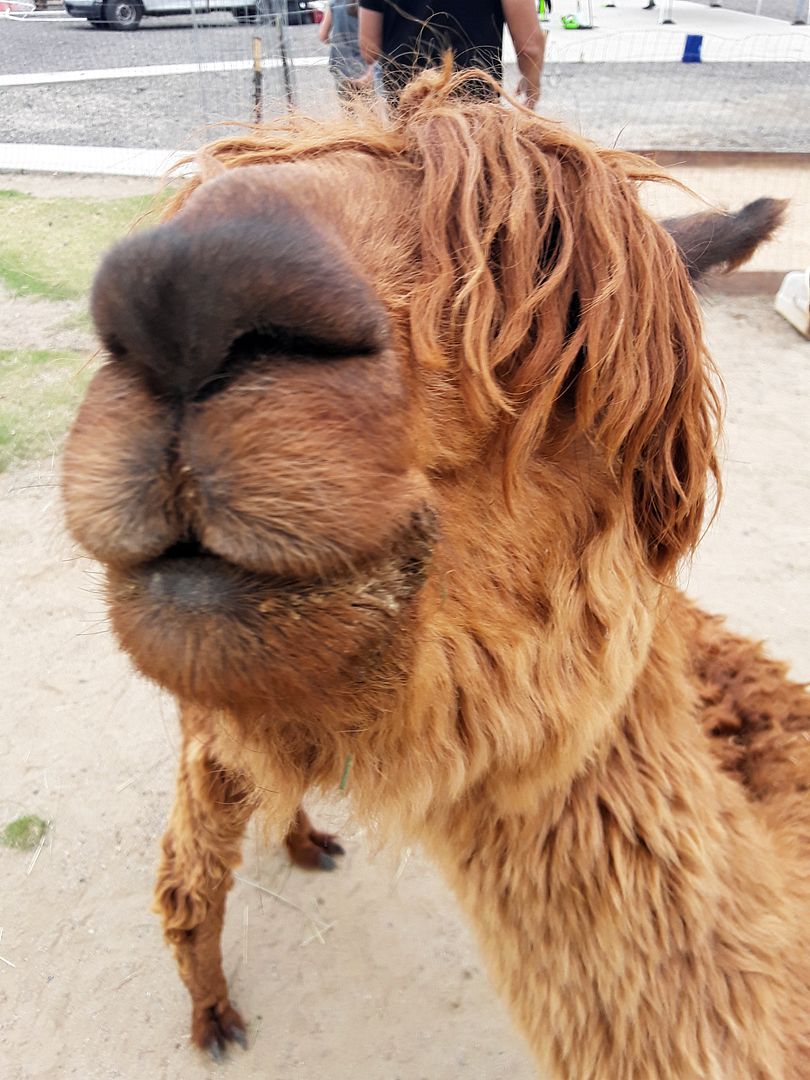
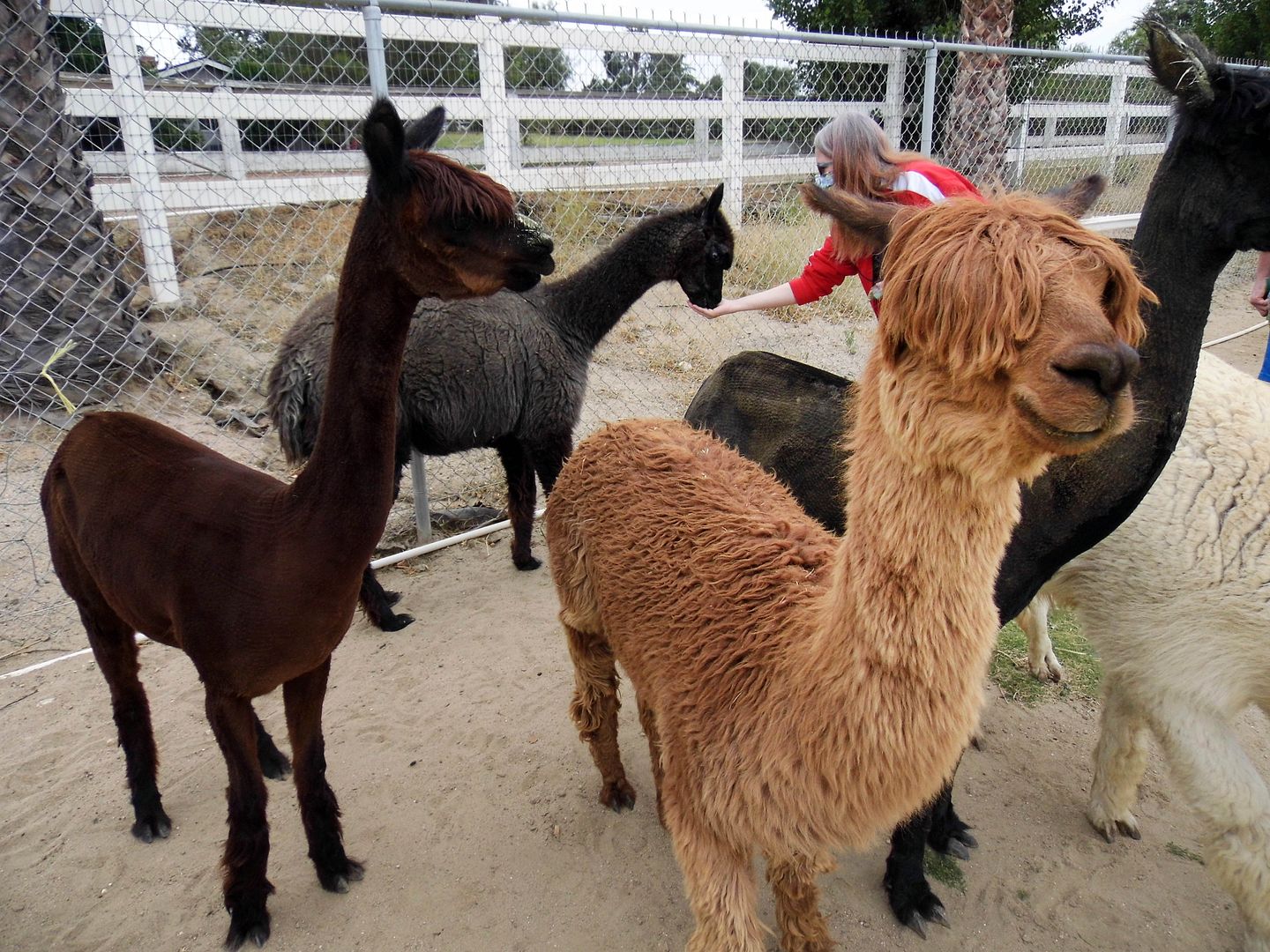
And if you've got the right snack, they'll eat right out of your hand, using their lips to grab whatever pellet or feed you've got in your outstretched palm.


They've only got four bottom teeth, which get filed down yearly, so there's not much risk of getting nibbled.


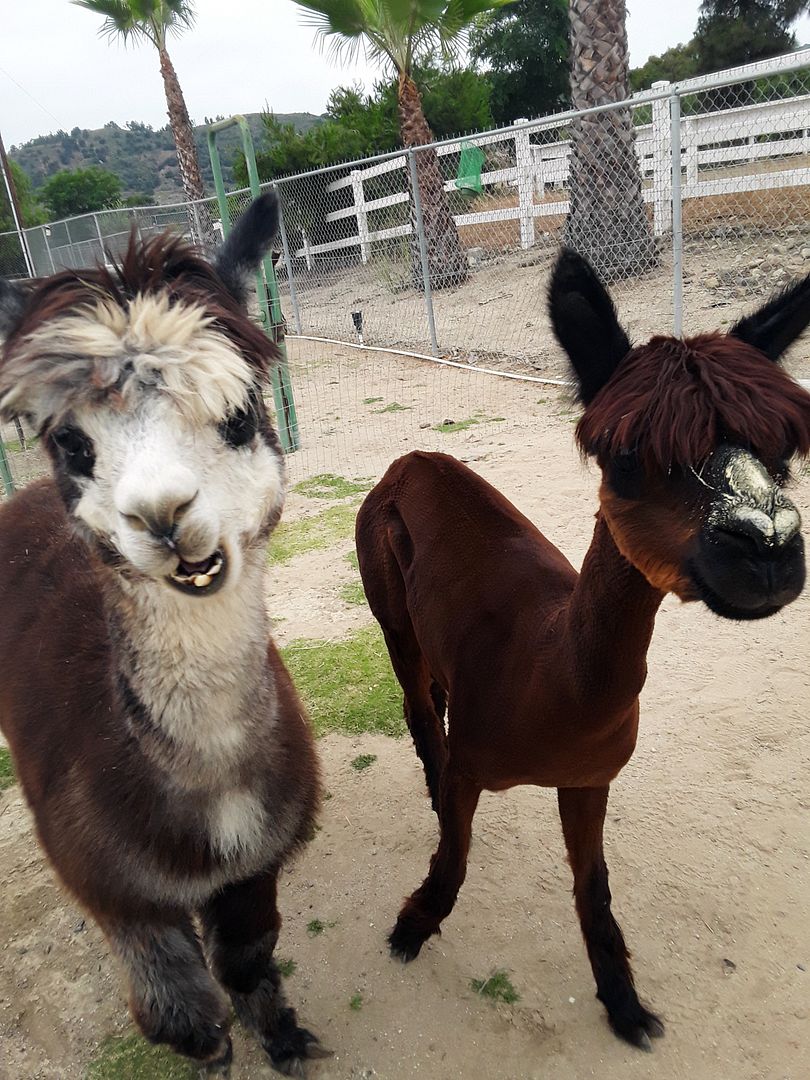
And because each alpaca has its own personality—like goats, cats, and dogs, they're incredibly individualistic—one of them might not want to eat out of your hand but will be perfectly happy to let you watch him feed out of a trough.


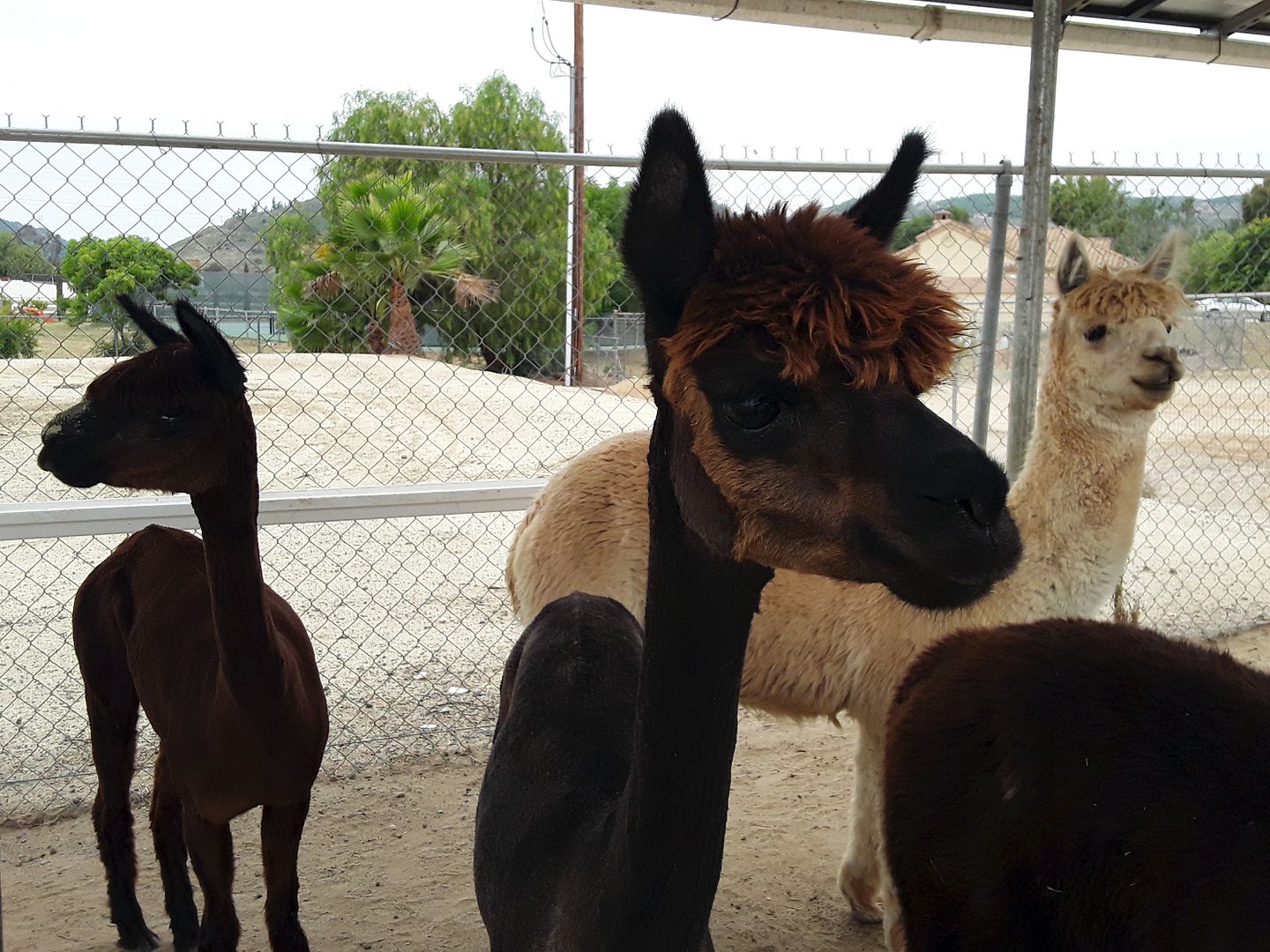
At The Alpaca Hacienda, the animals are used for their fiber, which is either sent out for spinning into yarn or felting or spun right there on site. At Canzelle Alpacas in Carpinteria, however, these camelids are bred to be prize-winning, ribbon-wearing beauty queens and breed stock.


Though it’s literally three quarters of a mile away from the 101, it couldn’t feel farther from civilization. Located in the foothills of Los Padres National Forest in Carpinteria, over 50 alpacas reside on the 20 acres here.


Since you can actually get into the enclosures of the two different female herds, there’s nothing separating you from being mobbed by hungry alpacas all at once while you clutch a fistful of baby carrots.


It can get a little intense.


But I found the shy ones...


...the cautiously inquisitive ones...


...and the ones that let me pet them on the neck and scratch into the lower part of their head locks.


And when I headed over to the other herd of ladies, lazing in the shade...


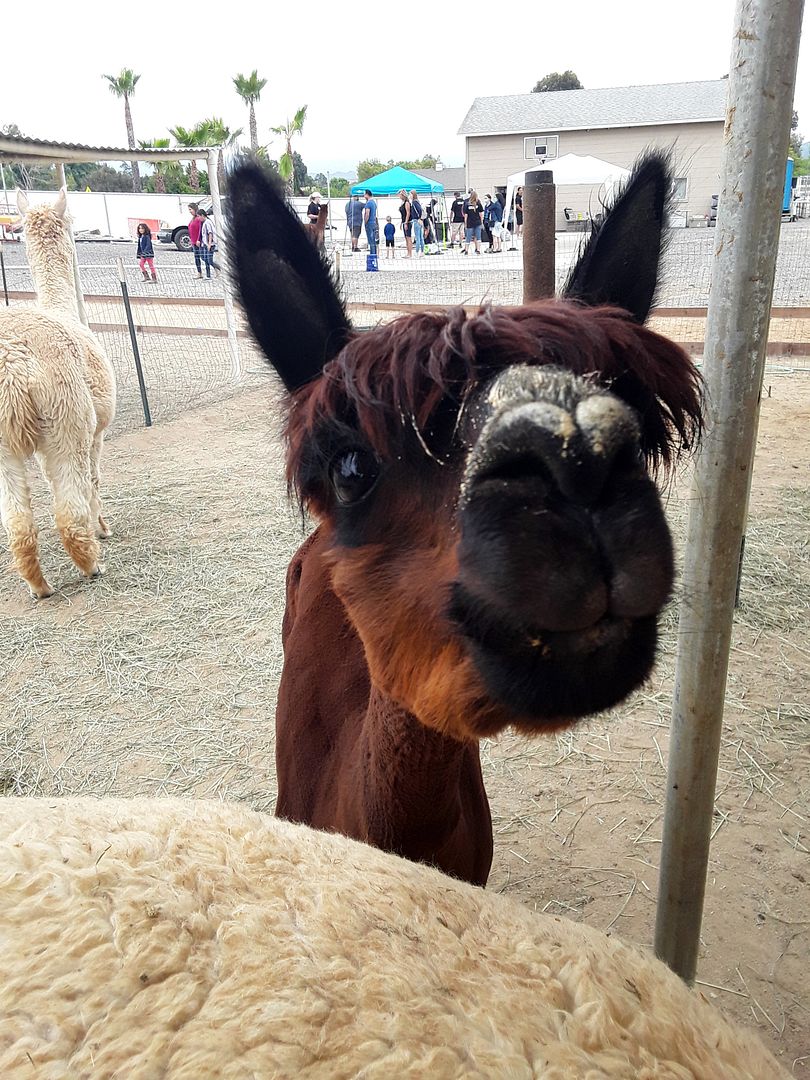
...I managed to not get spat on (though one of the girls was not so lucky, as evidenced by her hanging lower lip)...


...despite being up close and face-to-face with these magnificent creatures.


At Canzelle, I was able to literally wrap my arms around and nuzzle right up into the furry cheeks of some of the alpacas...


...and I was lucky enough to encounter one of the kissy ones, too.


For me, that was enough to find myself falling in alpaca-love.


Then again, I've always fallen in love too easily. I'm too good at loving the one I'm with.

 
And I'm rarely with the same alpaca twice.

One day, maybe I'll have a herd of my own. That's the dream: a tiny house, with lots of land for livestock to roam.

[Last updated 10/16/24 3:04 PM PT—The Alpaca Hacienda announced its closure in May 2024. Its animals have been moved to Hawk Ranch in Murrieta near Temecula, where they act as animal ambassadors and can be visited on a farm animal tour.]

Related Posts:
Photo Essay: A Ranch of Sweet Alpacas
The Threshold of Fright and Flight: Lessons From An Alpaca

June 25, 2020

An Abandoned Alpaca Bounces Back

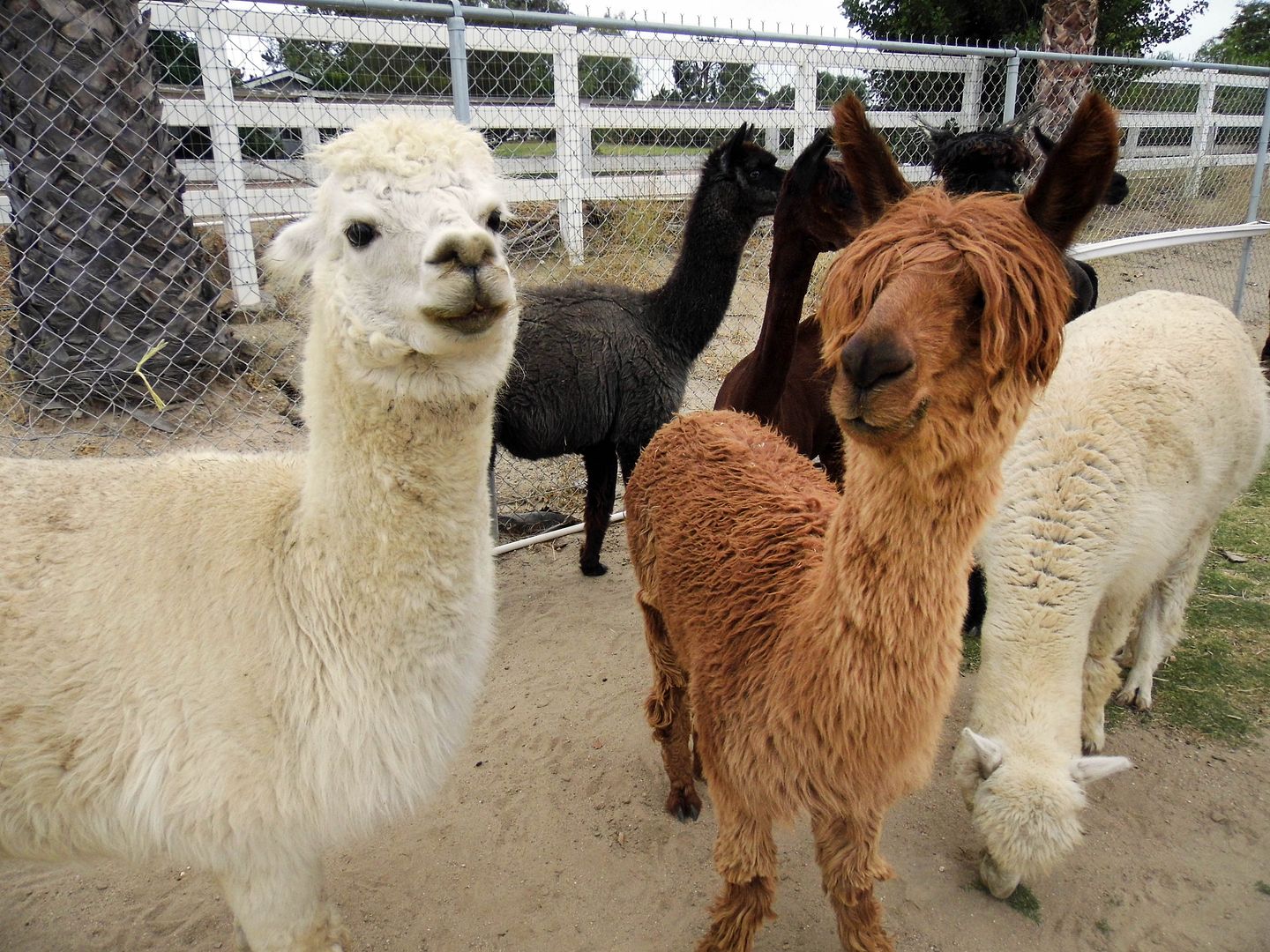
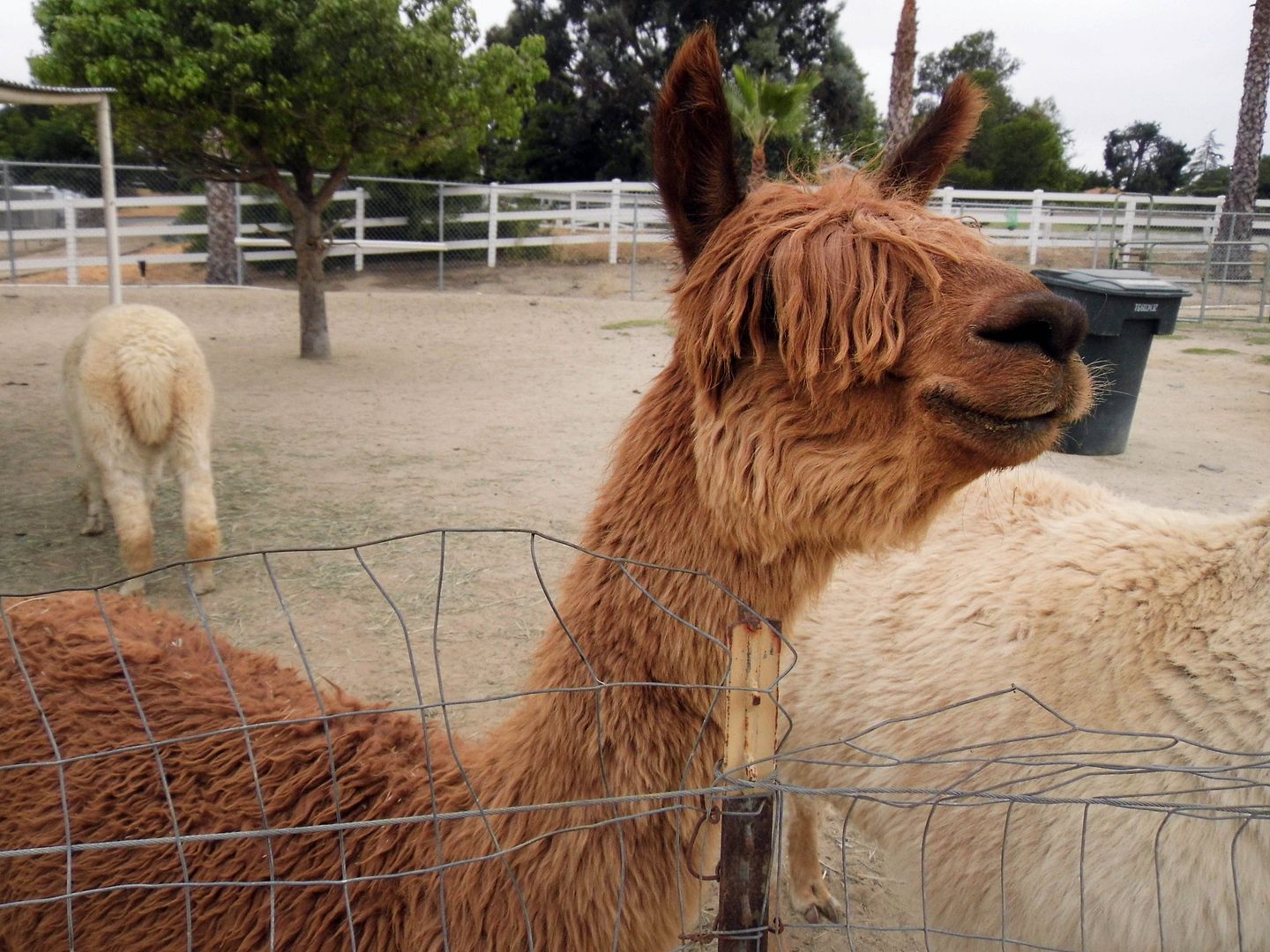
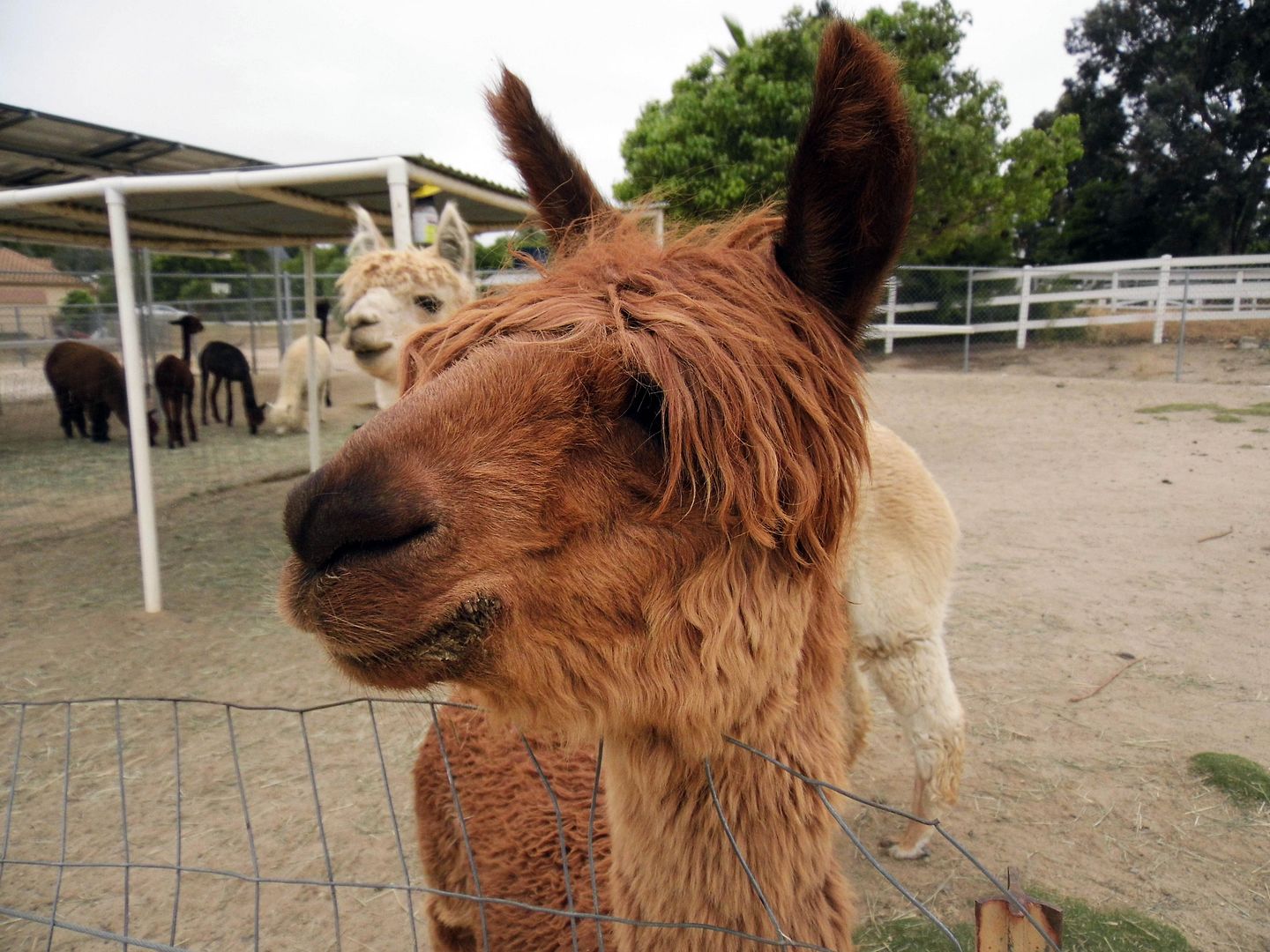
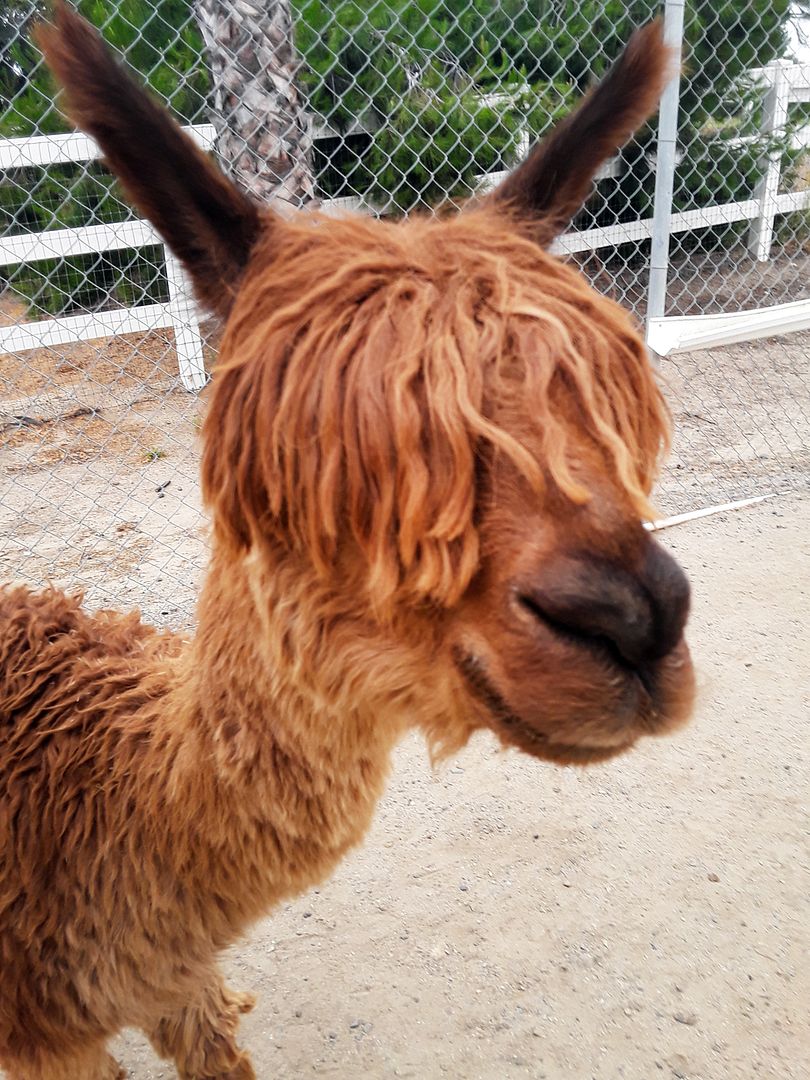
This is Annie.


She really stood out from the rest of the alpacas at Temecula Valley Alapacas—and not just because of her bangs.


Turns out she's the most popular of all the Temecula Valley alpacas...


...but she didn't start out that way.


Temecula Valley Alpacas, a non-profit, took her in after her previous owners abandoned her on their nearby ranch, moving away without her and leaving her and some sheep behind.


In a miraculous turnaround, she's become the most social of their alpacas—acting as an ambassador and "therapy alpaca," if you will, at local hospitals.


But there's something else that sets her apart from the rest of this alpaca ranch...


And again, it's not the bangs, because some of the other alpacas do have bangs.


And some of the other alpacas are also very sweet.


Incredibly sweet, in fact.


But they don't "sing" like Annie does.

The sound that Annie makes is generally associated with a baby (cria) calling out for her mother or a mother crying out for her baby.

Annie has neither baby nor mother.

Her keepers think it's her cry for food—and it's true, she stops when she's eating.

But I think something about her abandonment has stuck with her. And being fed only distracts her from it.

She is one of the most loving and affectionate alpacas I've met—and this is a species known better for its feistiness and competitiveness (read: spitting) than its even-temperedness.

Maybe this gives me hope.

Maybe hope can prevail.

Related Posts:
Photo Essay: Cria Season at Alpacas of Menifee Valley
Photo Essay: To Know An Alpaca Is To Love An Alpaca

March 10, 2008

Operation Exploration

[Ed: Some edits made 9/15/16 for clarity and quality]

Somehow being out in the West made me feel like an explorer—like I wanted to blaze new trails of my own.

Standing on the beach behind the Hotel Del Coronado, being blinded by the gold flecks in the sand even through my sunglasses, I started dreaming of the Gold Rush and cowboys and every type of rancho I could think of.

During our San Diego trip, we used our downtown hotel, The Sofia, as a base camp for our many adventures - and not just the 59-Mile Scenic Drive that took us through La Jolla, Mission Beach and Pacific Beach.

Formerly owned by a groundbreaking stagecoach company, and currently located in the same building as Greyhound, it seemed appropriate as a launching point for our many travels (despite its very weird position near the County Court buildings, the law library, and several bail bond providers).

On Friday we drove about an hour north to Temecula, Southern California's wine country situated between San Diego and Los Angeles, serving both communities with lush rolling hills, strawberry patches, and, of course, vineyards.

Trying to curb our intoxication so we could actually drive home, we visited four wineries:
  • the Hart family-run winery
  • Callaway, the area's first winery
  • La Cereza, where we found a great bottle of "Girlfriends," a Gewurtztraminer blend, to ship home
  • Falker, where we found a great bottle of Riesling to bring back to the hotel with us, and spotted a bunny rabbit hopping across their outdoor tasting area


Filled up on wine, we decided to leave the rest of the wineries for another day and head into Old Town Temecula, where we happened upon the annual Rod Run which took over the streets with tricked-out lowriders and convertibles with their shiny inner workings hanging out for all the world to see.


Amidst the revving engines and hooting and hollering, we stopped into the Temecula Olive Oil Company for one more tasting, where they gave us shot glasses of olive varietals, sometimes with balsamic chasers and mixers.

Historic train

The next day, we took the harrowing route 94 south, taking winding roads through mountains and canyons and big boulder rocks to Campo, CA, where we met up with the Pacific Southwest Railway Museum for their "Ticket to Tecate" historic train ride to Mexico.

I'd really wanted to go to Mexico but had no interest in tourist trap Tijuana nor in driving there, fully aware of police corruption, so this group excursion was perfect. The volunteer conductors and trainmen were personable and informative, and although Edith and I felt very young amongst our mostly-retired fellow travellers, we loved every minute of it. No matter how weird it was.

Border
The old San Diego Arizona Railway was renowned at its launch and even featured in a bunch of silent movies, but it was a horrible failure and victim to natural disasters and sabotage. We rode one of the later San Diego & Arizona diesel locomotives through the border into Mexico, past factories and innumerable shacks from which kids ran out to wave at the passing train, right into Tecate, namesake for the popular Mexican beer. With just about three hours to waste in Tecate, we grabbed margaritas and lunch (and an extended serenade of "Imagine" by a busker) at Lolo's near the plaza, took the Tecate brewery tour clad in hard hats and safety goggles (free 16 oz tallboy can included), and stopped at the town's only bakery for some delicious pastries and dulce.

On our way out of Tecate I noticed the Mexican kids waving again, but on this side of the train they ran right up to it, arms outstretched, and the Americans in the back of the train threw change out to them (the American dollar is accepted in Tecate in addition to pesos). Edith and I remarked about it and the couple across from us no sooner confirmed what was happening than actually took out a dollar bill, shouted out, "Hey, amigo!" and then chucked it out the window to a little boy, which was met with squeals and screams. These are kids that are being brought up in houses made of cinder blocks and tarps with advertisements printed on them, so they could surely use the money, but the whole thing felt like a petting zoo to me, treating those poor kids like animals.

When we got back to Campo, we decided we wanted to extend our Mexican experience so after rinsing off at the hotel, we took the Trolley to the flipside experience, San Diego's Old Town. A big tourist destination because of the strip of Mexican joints and all the Mexican-themed souvenir shops (which look nothing like Mexico), Old Town is considered the "birthplace" of California, the site of the first Spanish settlement.

We visited at night, so we missed all the historical elements and instead went off the beaten path to eat at El Agave, a Mexican restaurant with a bit more haute cuisine and over a thousand tequilas.

Balancing out eating/drinking with adventure, I think I could have spent at least one more day on this trip, and I can definitely foresee another trip in the future. There's still whale-watching, paragliding, hot air ballooning, hiking, and all sorts of other activities to be done. And maybe even the chance to poke my head into the BBQ restaurant that Top Gun made famous.

But I'm glad to be back in NYC. Ask me today, and I'll say that life is good.

June 07, 2009

Adventure Is Out There! Wine Country Edition


As I approach turning 34 and my metabolism slows, my joints ache and my hair sprouts bright white roots every three weeks, I think my brain tries more and more desperately to retain its childlike appreciation of the simpler excitements in life. Whether that’s by way of making up for lost time by driving me to do things now I never did as a child, or by clinging to those things that I always loved as a child, there’s a big part of my mind that feels and thinks exactly as it did when I was a child.

I still can’t get enough fireworks.

I’d been campaigning to myself and others around me for a while to take a hot air balloon ride. After my 30th birthday skydiving trip when I realized that I liked the gentle parachute sail down a lot more than the dive itself, I figured a nice relaxing lift into the sky would be nice, especially when lifted by a nylon rainbow. A couple years ago I actually booked a ride in Jamesville over Maria’s birthday weekend, but the weather forced a last minute cancellation. Since Maria was terrified – though very willing – I didn’t push the issue again.

It seems like since then, brochures, flyers and advertisements for balloon rides have been dropping from the sky all around me, so when I saw that the annual Temecula Balloon & Wine Festival was this weekend, I couldn’t resist going.

Ballooning is a relatively common and popular activity over wine country, so I suppose I could have gone any of the times that I was in San Diego County last year, but booking our ride as part of a festival seemed like such an event. When we were driving our Malibu at 5:30 a.m. down Warren Road in Lake Skinner National Recreational Area along with a line of other cars, we thought, “Are all these people ballooning too? Or just coming to watch?”

We had plenty of fellow aeronauts join us for sunrise, not only in our own balloon’s gondola (which fit 12 plus the pilot) but for lots of balloons – more than 20 of them ready to launch around the same time as us, some from the festival grounds, some from a vineyard a short drive away.

It seemed like we drove around forever looking for the right spot to launch our balloon. Our driver would pull our van over, inflate a small black balloon, get out and release it and watch which way it went. As the wind shifted from southernly to westernly, so did our plans and we did more than a few U-turns to pick a new spot.

A few of the passengers got antsy in the van, asking a ton of questions, requesting the windows to open, shifting around in their seats, but I just kept telling myself it was worth the wait. As the sun rose higher in the sky, other balloons started popping off the horizon all around us – a blue one with a yellow star and moon they called “Fantasia,” a bright yellow one marked “California Dreamin’” after the company responsible for our launch, and even one with a lion’s head on it. They all sailed off into the cloud line as we watched our crew inflate our rainbow-colored balloon with a sunset on it, called “Daydreamin’ in San Diego.” Perfect.


When we finally climbed and crammed ourselves into the gondola, I felt like I should have been wearing flight goggles and a helmet, or a lifejacket or some kind of World’s Fair-era protective gear for our “first flight.” The physics of the hot air balloon are relatively simple, but it still baffled me into a blissful, wondrous state.

The Temecula wine country is gorgeous – beautiful, rolling hills with green orchards and vineyards and mountains in the distance. Our pilot chose to give us the most scenic view possible rather than letting the balloon sail to too impressive heights. We probably never got above, say 1200 feet off the ground, but it seemed like we went far, and we saw a lot. No scary acrobatics for this pilot: he gave us the smoothest ride he could, enough so that when we poured our champagnes and mimosas mid-flight, we lost not a drop.


All of the balloons were quite an attraction locally. People pulled over their cars and got out to watch. Workers at the wineries waved hello and shouted greetings up to us. I’m sure the other balloons watched our flight pattern as much as we watched theirs, marveling at the balloon-dotted sky and at our own shadow on the rugged California terrain below.


On our return trip, we got almost as far as the lake, but ran out of juice just before it, so our pilot targeted a thistly hill upon which to set us down. Caught up in some crosswinds and what he kept referring to as a “thermal,” our balloon touched down on top of the hill, then lifted back up, touching down again and eventually sliding all the way down. I positioned myself at the back of the gondola, so when we were landing with a gentle crash, I saw the brown, twiggy earth rising before my eyes as our balloon descended farther and farther down. Just enough peril to make a great story.

Over the crest of that hill, we saw another balloon close by getting ready to take off again, and we watched it lift off and sail right towards us. We all cast our gazes upwards to watch their gondola graze our deflating balloon, which had started to whip in the wind and seemed to thwap them a little bit. No harm done. Just a little balloon traffic in the sky today, folks.

After we were returned safely (and a little drunk off champagne) to the festival grounds, I didn’t really want to do anything else. I didn’t even want to leave the balloon behind. We finished the last bottle of champagne with another couple and the pilot and exchanged stories and let the feeling of the ride – that gentle lilt – linger just a little while longer.

For more photos, click here.
For video of the takeoff, click here.
For video of the landing, click here.

To become a fan of Avoiding Regret on Facebook, click here.

July 12, 2009

The Departure Begins

I didn't sleep well last night. Maybe it was the anxiety of packing, cleaning my room, and leaving the abode I'd called home for nearly a month. Maybe it was Vern's margaritas. Or maybe it was a gift from the universe, helping transition me out of the desert without feeling too attached.

I still got kind of choked up this morning.

If the universe was trying to make it easy for me to leave with a bad night's sleep, something else was trying to force me to stay. As I drove down 62W - through the "High Gusting Winds" warning signs - I had a particularly hard time driving through the wind. By the time I blinkered onto the 10W exit, I was gunning it, foot on pedal, pedal on floor, and still could only get to 60 mph. Rather than the natural shake and sway of the wind whipping from side to side, it felt like a wall that was pushing me from the front, if not pushing me backwards then doing a damn good job of slowing down my exit off the highway and out of the desert. Trucks passed me on the right. Compacts loomed in my rear view mirror. But I simply could not go any faster.

I eventually broke through the wind wall and began my journey down to San Diego, where I'm spending a couple nights before flying out on Tuesday. On the lesser-known De Portola wine trail in Temecula, the folks at the Frangiapani Estate Winery were having a slow Sunday morning and were so happy to see me. They didn't even keep track of my servings and just kept pouring more, asking me about my travels, inviting me to participate in their bocce tournament (for which no contestants showed up, despite their advance sign-ups). In a final gesture of hospitality, they set up a lunch for me using the food prepared for the bocce match-that-wasn't: herbed potatoes, chorizo burrito, blueberry muffin and a slice of orange. And, of course, more wine (and chocolate to accompany their delicious Late Harvest Zin).

Now how do I find a way to spend a month in Temecula? One could surely be inspired by its rolling hills, undulating white fences (some that hold no horses), and unique varietals. And one could sustain themselves on not only wine, but locally-grown and crafted cheese, berries, bread, and olive oil. I could think of a worse life.

The driving got easier throughout the day (perhaps thanks to the wine) but the rest of the day was not without sadness, wistfulness, or tears. Still, if I must leave, and I must return to New York, this is definitely the way to do it. And as I try to cram in some more experiences, hike some more trails, and meet some more people, I'll start dreaming about the next place in which to set up camp...

To become a fan on Facebook, click here.

June 24, 2013

Losing the Loss

I'm learning to let go.

At least, I'm trying.

I grew up in a house where nothing was actually mine.

My parents often took away (or broke) my beloved possessions as punishment.

They withheld privileges and, ultimately, their own love.

I left a lot behind to get away from them. I moved around a lot after I got away from them. I lost some things in the shuffle.

I was heartbroken for years that I'd left my yearbooks behind at Nicki's house, when I was asked to leave as unceremoniously as when my own parents suggested I "find somewhere else to sleep." I managed to get them back this past Christmas, 16 years later.

But I still lose things all the time. I leave sunglasses behind in bars. I leave credit cards behind in restaurant billfolds. I've left umbrellas, wool gloves, and earmuffs nearly everywhere I've gone in cold climates. Luckily, I usually remember, and can go back and retrieve them.

I left a nightgown once at a motel. I'd already left town when I realized it, so I called and begged them to ship it to me. (They capitulated.)

But most recently, when I left my beloved pig stuffed animal at a motel in Temecula, its absence discovered only upon my return home, I decided to leave it there. I didn't call. I figured I was too old to be sleeping with a furry pink pig anyway. I figured it had no actual sentimental value, having received it from my parents during a debilitating illness my sophomore year of college, when they'd come to have a look at me to make sure I was alive before heading off  to Lake Placid on vacation. I only slept with Piggie because I wanted to sleep with something in my arms, and Piggie was the perfect size. But Piggie was showing his age, and the wear and tear of night after night soaked by my tears and sweat and drool and leftover perfume had taken its toll on him. Laundering him didn't wash me off of him anymore.

So maybe it was best that he was left behind. I didn't have the heart to give him away. I couldn't tear him from my own clutches, desperate to hold onto something as I slept. But the fact that I was able to forget him - even for a moment while packing, even for a day until I returned home - meant something. It was time to move on.

Not every loss is so easy. The dry cleaner just destroyed my silk red dress, the first dress I bought after losing enough weight to fit into my first Size 4, a dress I still wear now that I'm a little heavier, when I want to feel good, when I want to remember how proud I was back then. The edges of the capped sleeves are frayed, possibly beyond repair. The color is faded at the elastic waist. It's quite possibly done for, a loss I was not prepared for, a loss I had never hoped for. But, I remind myself, it's a materialistic loss that I should not mourn with my tears. After all, it's not worth it. It's just a dress.

And, honestly, I don't need things. Not really. I long since lost the need to receive gifts, though I still love giving (and wrapping) them.

But I do want certain things.

I want to keep certain things.

But there are certain things over which I have no control.

There are other losses, less tangible and materialistic. When I recently rejoined Weight Watchers, a glitch wiped out my entire weight lost record (including my starting weight 35 lbs heavier), all the foods I'd ever added, all of my favorites, and any trace of ever having lost any weight at all. I burst into tears and sobbed and sobbed. I wanted credit for all that I had done. Keeping off 35 pounds, despite having gained 15 back, was an accomplishment of which I was trying to be proud. Now, every time I attend a meeting and someone new checks me in, I have to re-explain my situation over and over again, and the tears return.

I'm trying to convince myself that a clean slate is a good thing. Starting over means not focusing on how I've failed, but on the future accomplishment I have before me.

Is it possible to lose your sense of loss? Or do you always feel the absence of that which you would have never given up willingly?

Can we detach ourselves completely? Or does our attachment to certain things, people, events, memories, tastes, whatever, simply make us human?

Related Posts:
Letting Go
A Tale of One Dress
Life for Rent
The Things I Left Behind: LA Edition
The Things I Left Behind
Leave No Trace: Workplace Edition

To Like Avoiding Regret on Facebook, click here.

March 23, 2021

Photo Essay: The Agricultural Beginnings of a Classic Car Collection

The Motte Historical Museum in Menifee, California had its grand opening in 2013, after being founded by John Victor and Evelyn Motte through their estate.   

 
The Mottes are one of the oldest pioneering families in Riverside County's Perris Valley, not too far from Temecula. They established Motte's Romola Farms in 1910—and in the 1940s, Frank, Charles, and John Victor partnered up to create the Motte Brothers agricultural enterprise.

July 24, 2010

Photo Essay: Brooklyn Winery, Under Construction


There's a new urban winery under construction in an industrial space in Williamsburg, Brooklyn once occupied by a car repair shop and a nightclub.

Yesterday Edith and I got to take a hard hat tour of Brooklyn Winery's active construction site.

A lot of wineries you visit out in wine country - whether that means the North Fork, Finger Lakes, Temecula or Napa and Sonoma - are attached to their own vineyard, and so conversations about their wines are very focused on the grapes themselves and the growing process. But an urban winery imports its grapes grown elsewhere - in Brooklyn's case, New York State, California, and South America - so it becomes very focused on the wine-making process.

Brooklyn Winery is building a facility where you can develop your own vintage in your own barrel (and actually select your grapes, taste from the barrel, and bottle and label yourself!) or participate in a communal barrel with a minimum two-case commitment. They're also opening a wine bar and tasting room that will be open to the public by the end of the year.

It's exciting that these days, an entrepreneur can still quit his job, fall in love with wine, and start a major manufacturing facility in Brooklyn. As a wine enthusiast, it's exciting to get a peek into a growing business, even if you can't watch the grapes themselves grow.


future front courtyard, where we tried to convince them to turn their dumpster into a swimming pool


future production room, former conduit for distribution of foam at the former nightclub's foam parties


current concrete floor, which lay hidden under a wooden dancefloor

Because of the cracks and holes, this concrete will be torn out and a new concrete floor will be poured, featuring a very necessary drainage trench.


future wine bar / tasting room


future kitchen

It's nice to see them reusing as many elements from the former occupants as possible - everything from the bar to the insulation. What they didn't need or couldn't use (like scrap metal and a lot of tires) they managed to recycle.

Brooklyn Winery's hard hat tours are open to the public, but they're pouring the concrete floor next week so there will be limited access to the future production room and other interior areas.

Thanks to Sasha and Conor for the great tour!

Click here for some before pics of the space's former life as Supreme Trading Company

To become a fan on Facebook, click here.