Search

Showing posts sorted by relevance for query salt marsh. Sort by date Show all posts

July 21, 2012

Photo Essay: Corral Canyon Loop (Updated for 2021)

[Last updated 5/12/21 11:14 PM PT—Corral Canyon has reopened with a new, improved trailhead. Stay tuned for a new photo essay from the restored trail.]

circa 2021 

[Update 11/22/18 9:40 PM PT—The Woolsey Fire wiped out the Corral Canyon hillside all the way down to the salt march at the creek bridge. The trail is currently closed. For photos of the burn area, click here.]

coastal salt marsh

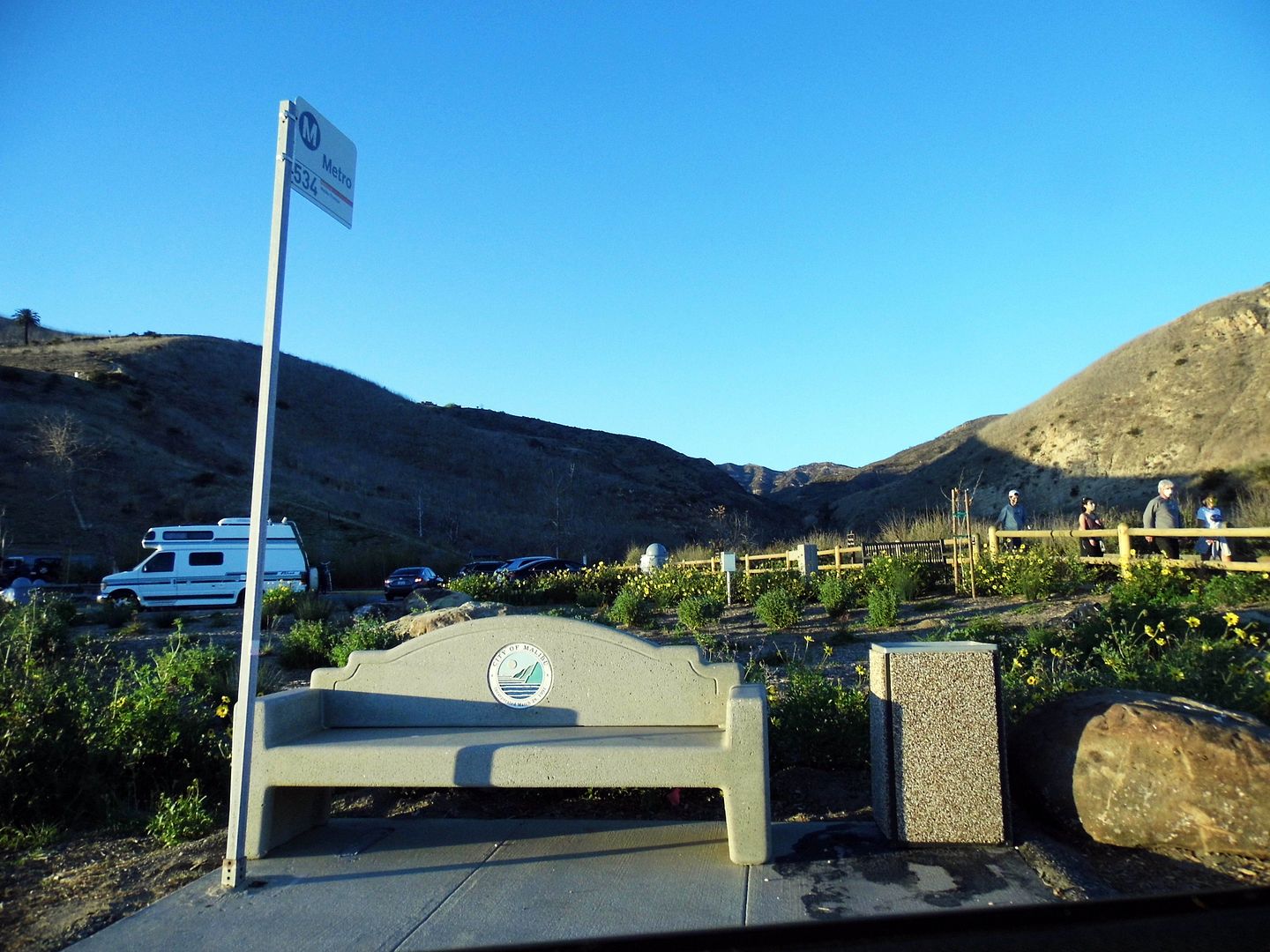
In my quest to conquer the under-appreciated hikes of Malibu, this week I stopped by Corral Canyon—the last undeveloped canyon that flows freely to the ocean.

April 10, 2017

Damage Control

I found myself back in a kayak today for the first time in nearly four years.


August 14, 2009

A Narrow Escape

Let me just put this out there, foregoing all suspenseful narrative structure: I was grabbed in Inwood Hill Park today.

I managed to escape with my life and my possessions, but something inside of me died back there.

I'd chosen to spend the day outdoors in the gorgeous, sunny weather instead of meeting up with old co-workers for drinks. The last time I'd attended a happy hour sponsored by my former employer, I was mauled by one of the young assistants, who drunkenly threatened to give me a "cunt punch" (with accompanying gesture) and then placed his palm over my mouth when I tried talking to someone else. I decided not to subject myself to that kind of treatment again this afternoon (especially considering the circumstances under which I left my last job), and instead go to the park, where I could enjoy nature, and a bit of solitude.

After my treks through many of New York City's parks, which often have placed me frighteningly alone in deep woods, I thought I would take it easy with a little meander through the park at the very tip of Manhattan, in Inwood - a neighborhood which, as I discovered last weekend our walk through Fort Tryon, is quite nice, and not as foreboding as the neighboring Bronx. Inwood Hill Park promised a salt marsh, stunning views of the Palisades and of Henry Hudson Bridge, as well as the northern terminus of the Harlem River - plus a rock marking the historic purchase of Manhattan island, supposedly in the exact spot on which it happened.


The park entrance at 218th Street was bright and airy, full of families lighting their charcoal, bicyclists, and Canadian geese.

There aren't technically hiking trails in the park, just running and biking paths, which is perfect for the kind of stroll I was looking for. I headed north on one of the paths to the base of the Henry Hudson Bridge, hoping for a footbridge but instead encountering a lot of construction (and a sign from 2007 a little farther in, saying that the HHB pathway would be closed for three years). Although I was looking for nature and solitude, I felt safe seeing the Parks Department trucks parked along the pathway, saying hello to a couple workers hauling two-by-fours and sweating under their hard hats. (At least one of their projects was installing or rehabilitating fire hydrants in the park.) "Nice day..." we said to each other, as I plodded along, hoping that the path wouldn't be closed like so many others around the city had been.

Henry Hudson Bridge

I was following a clear, paved path - wide enough for construction trucks - along the westernmost perimeter of the park. At the end of the construction, where the final truck was parked, I could have crossed under the Henry Hudson Parkway through a tunnel to go deeper into the park, but instead I went a bit further and to the footbridge that crossed above the Amtrak train tracks to what looked like a riverside park. A nice-looking, athletic man with salt-and-pepper hair was walking his curious spaniel across the bridge towards me and said hello as the dog gave me a sniff. I was hoping for a shot of an Amtrak coming towards the bridge, so I climbed up to its crest and gave a look in both directions. No train, but I startled a man walking up to the bridge from the river's entrance, walking with his arms heavy on each side, holding something that looked like a pair of shorts and smelling like he hadn't showered in a day or two. When he saw me, his face didn't move, except his eyes, which flashed only for just a second. The rest of his face was stone, pushed forward in a kind of pout, empty, disturbing.

footbridge

I didn't like the way that he looked, and since he was lingering on the footbridge, I decided to go back into the park rather than hang out with him there. I backtracked to the tunnel and crossed under the Henry Hudson Parkway, and the man from the bridge followed me, his longer legs bringing him there more quickly than mine could. I saw that what he'd been carrying was actually a blue-and-white striped sweater, which he'd put on. It was a bad sign to me, because I was sweating in my tee shirt, and I could only imagine that he was trying to disguise himself from something he'd already done, or something he was about to do.

In the distance, up the path, I spotted the friendly man with the dog and hiked quickly towards him, so quickly that my shuffle and heavy breathing startled him, excusing himself and letting me pass as his dog continued to explore. I wanted to stick close to him, seeking shelter or at least solidarity to discourage the now-sweatered man from following me any further, but he'd managed to get in between me and the man with the dog and was trudging along, with purpose, without expression.

I slowed down and let him pass me, walking fairly closely behind him so I could monitor his movements. The three of us, and the dog, walked like that for a while, til the sweatered man followed a fork in the path to the left. It was less paved and more remote over there, so I continued south, keeping one eye on the highway below to my right, and turning back occasionally to make sure he was gone.

I was anxious to get out of there, and I was certain if I followed that path, it would lead me to the southernmost entrance to the park, so I stayed the course. I also knew that if I had to, I could run down the steep cliff onto the highway and seek help, especially if chased. The entire time, I knew I was in danger, and I was plotting. Sure enough, I turned around one more time and faced the sweatered man, who again was walking behind me. The dog-walker was nowhere in sight.

We were alone, and his intention was clear. He was not just out for a walk. He was out for me. What did he want? My camera? My money? My soul?

In a last ditch effort, I tried to shake him. I spotted what looked like the ruins of a building foundation, and I veered off to the left to investigate. I only walked a step or two and then turned around quickly enough to be face-to-face with my stalker, who placed each of his hands on each of my forearms and looked at me intensely.

I shook him off and invoked my best set of crazy eyes as I shouted at the top of my voice, "HEY - WHAT ARE YOU DOING?" He uttered something, murmured it, maybe in English or maybe not, and started backing away. I advanced.

"GET THE FUCK OUT OF HERE. WHAT THE FUCK DO YOU THINK YOU'RE DOING?"

He didn't run and I didn't chase him. He just backed away, and then retraced his steps at the same pace he'd been walking the whole time. I was clutching onto my camera, desperate to get a photo of him, but terrified at what would happen if he heard the click of the shutter. So I just watched him walk away, shouting obscenities and threats at him. I was convinced that he would turn around and head back for me a second time, so I stood there in place for a while, until he was out of sight.

When I couldn't bear to stand there any longer, I turned around and headed south again, praying for another footbridge or park entrance, which I reached quickly after striding down the winding path a short distance. I kept looking over my shoulder, ponytail swinging, waiting to see him peering at me again, but he was gone, and I was out of the park.

But was I safe? Have I ever been, and would I ever be?

What was he going to do to me? And what was that that he said to me? While walking behind him, I'd examined his hands to see if he was carrying a weapon - a knife up his sleeve or something like that - but they were relaxed, cupped loosely, dangling. Surely in most circumstances like this, I would have been knifed, drugged, beaten, held at gunpoint, raped, slaughtered, dragged through the mud and buried. Was he just an amateur, to be scared off so easily? And if so, what attracted him to me as his first victim in the first place? My nonathletic build? My gender? Am I automatically a prime target just because I'm a woman? As a woman, am I already a victim by nature?

I held it together in the park pretty well, my anger fueling my escape, but once I exited onto the street, I cried a little. I composed myself enough to find the 207th Street subway station, and boarded the downtown A train, cursing that my day had been cut so short. I've thought of death often, have imagined many lovely ways of fading into the abyss - from car crashes, bathtub electrocutions, faulty amusement park rides and overwhelming ocean waves. And I've always said that I do not fear death, which is true. But today, I feared not death, but dying. Worse yet, I feared dying at the hands of another human being, someone who would enjoy my pain, and the extinguishment of my life, my hope, my plans, my potential. I looked all around me on the subway and the bus ride home, examining each face for its own malicious intent, the thoughts that boil inside and cause the feet to plod in despair, destruction, demonic possession. But they all looked the same as they always do, mouthing along to songs on their iPods, mumbling complaints about people who sit too close to them, meeting my gaze and rolling their eyes at my stare.

I couldn't wait to get home, but once I got there, what then? I stopped for a beer and a dozen oysters on the half shell to calm my nerves and procrastinate my return. But eventually, I had to return.

And now that I'm home, what now? What do I do Monday, when the weather is nice, I'm dying to get out, and there's no one to accompany me? Do I stay home? Make do with Madison Square Park, which is embarrassingly small, flat, and overrun by babies and dogs? Get out of town? Get a job? Get a can of mace?

For now, I think I'm staying in this Friday night. I've had enough of New York City's excitement for one day.

Help me become a blogger in Antarctica - vote here!

To become a fan on Facebook, click here.

Bookmark and Share

July 01, 2018

Photo Essay: Endangered Species In a Disappearing Habitat, Under Naval Protection

"It's like this pretty much every day," Rick said as he was driving me back to my car at the Naval Weapons Station Seal Beach.


I'd just taken one of the monthly free tours of the Seal Beach National Wildlife Refuge (which more or less provides a necessary buffer zone for the Navy's weapons storage)—and in just three hours, the weather had gone from gloomy and dark to sunny and bright, breaking through the typical June gloom that we were just riding out the tail-end of.


Then again, I've come to appreciate the cool gloom of spring and early summer. After all, I'm a girl for all seasons.


And that meant the plants in the refuge's native garden were still blooming.


The California buckwheat had just begun to turn from white and light pink to rust.


The air smelled of flowers and not the fragrance of the sea.


Each of the plantings in the garden serves a purpose, whether to attract butterflies, birds, and other pollinators...


...or to provide habitat for cottontail bunnies, ground squirrels, and other rodents that the nearby birds of prey hunt for food.


Of course many of the plants there have culinary and medicinal uses dating back to the indigenous tribes that inhabited these tidal wetlands...


...like the California coffeeberry (Frangula californica), an antidote to poison oak.


And then, of course, there's the prickly pear cactus (Opuntia), whose fleeting blossoms are beautiful...


...and whose paddles (nopales) and fruit are delicious.


But although the garden is full of California natives, they're not exactly representative of the wetlands themselves. For that, you have to cross the train tracks of the abandoned right of way (once used to transport weapons from the ships at Anaheim landing, since replaced by trucks).


There, you'll find where Bolsa Avenue meets Signal Drive—inside the gates of the Navy base, though Bolsa Ave. used to provide a main thoroughfare to get directly from what's now Long Beach, through Seal Beach and into the rest of Orange County. That is, until the PCH was built, and the military took over much of our coastline and open spaces.


Now, Bolsa Ave. is the location of a box culvert that allows the seawater tides to come in from the Pacific Ocean and fill the mudflats on either side of the road, turning them into ponds.


The tidal pulses create a whirlpooling effect—and, over the course of six hours or so, raise the water levels dramatically.


This, in turn, creates some excitement among the marine life living in the mud...


...just a scoop of which reveals striped shore crabs, ghost shrimp, worms, bugs, and practically infinite invertebrates.


That gives the fish plenty to snack on, which in turn provides plenty of seafood for shorebirds like the great blue heron and snowy egret (which "fishes" with its yellow feet in the mud) to dine on.


When the tide ebbed later in the day, the shirebirds would have plenty more to fish for.


It's kind of a quiet time of year for migratory birds along the Pacific Flyway, which meant the native species—the terns, stilts, rails, killdeer, turkey vultures, and Belding's savannah sparrows—were the stars of the show. And surprisingly, we even saw one family of Canadian Geese (three juveniles, not yet fledged) crossing the street—probably in search of some freshwater somewhere, since they don't favor seawater.


While our ancient hunter-and-gatherer ancestors would come down to this salt marsh in the Anaheim Bay estuary to fish, the European settlers who drove them out brought with them an entirely different approach:  agriculture. They began to farm the shoreline (which was practically an artificial island of centuries of discarded shells and fish bones) by bringing in dirt and then planting crops.


The Navy changed all that with its weapons station—starting near the end of World War II, it was where weapons were not only stored but also manufactured, assembled, and tested. In fact, an artificial island that was used for rocket testing has since been covered in sand for use as a breeding sanctuary for the endangered California least tern (Sternula antillarum browni). (That doesn't, however, mean that all the contamination is gone.)


Since the official declaration of the area as a national refuge in 1972, the native pickleweed (Salicornia virginica) has been allowed to grow back, providing necessary habitat for the endangered western pygmy blue (Brephidium exilis), one of the smallest butterflies in the world (along with the El Segundo blue butterfly, Euphilotes battoides allyni).


So, what actually endangers creatures like these? Sure, there's predation—but no amount of red foxes could eat all the least terns without something threatening them first. (In the 1990s, all the red foxes in the area were trapped and killed to protect the birds, eradicating one species for the sake of two, I guess.) But the much bigger problem is loss of habitat from human encroachment.


The Navy wasn't the first to destroy the salt marshes in this area, but it certainly contributed to it. Fortunately, over the years it's allowed a lot of dirt that doesn't belong there to be hauled out. And it being a military base that's not exactly accessible to the public, it can prevent further damage and development from happening.

Because protecting us also means protecting our resources

Related Posts:
Basking in the Gloom at Bolsa Chica Wetlands
Damage Control
Photo Essay: Invasive Plants, Parasitic Birds, and Giant Stinging Nettle at Prado Wetlands

January 26, 2019

Photo Essay: Birding Morro Bay's Parks, Estuaries, and Harbor

I think it was nearly two years ago, during the Owens Lake Bird Festival, when someone suggested I try the bird festival in Morro Bay.


I'd been to the area only once before, having taken a good look at Morro Rock—a volcanic plug that's one of the Nine Sisters of San Luis Obispo, a.k.a. the "Gibraltar of the Central Coast"—and turned around and gone on my merry way.


But my experience in the Owens Valley taught me that a bird festival could be a great way to get to know any particular area—even if all I ended up seeing were familiar favorites (like the Western gull, above).


But Morro Bay had much more than that in store for me, as the king tide sent waves crashing against the cliffs, drowning the beach and sending lots of fish to the shore in its gigantic swells.


At Montaña de Oro State Park, the cormorants were poised and well-positioned to go fishing.


California scrub jays (Aphelocoma californica, formerly known as the western scrub jay) perched and screeched, swaying to the wind and the waves.


House finches, song sparrows, and wrentits sang out in the open, while bushtits stayed under cover.


I'm good at spotting where a bird is—but not necessarily what it is—so I'd ask, "Who's that guy over there?" and one of our guides would get it in the 'scope to have a closer look (like at the California thrasher, above).


We'd then examine beak shape and plumage feeding behaviors and mating rituals.


Watching birds is like fishing, but without the murder. Sometimes you've got to wait a while before something tugs on your line. Sometimes to have to really search for and stalk the birds. And then other times, a California towhee just poses for you on the roof of a park structure.


Unashamedly, I'll admit that among the highlights of the morning bird trip along the Bluff Trail and the state park campground was spotting two peahen, an exotic species that have taken up residence in the park...


...and the multitudes of cottontails that dined and dashed along the trails we treaded.


Another fruitful excursion turned out to be at the Morro Bay State Park marina...


...were we plopped ourselves down in tandem kayaks (to keep the water traffic to a minimum)...


...and were led on a watery tour around the bay by Central Coast Outdoors.


Before we even started officially birding, I spotted my first sea otter of the trip—all alone out there, clapping merrily to itself, causing quite a splash and clatter.


Just beyond it erupted a feeding frenzy of pelicans diving down and fish leaping up out of the water, right there between the sand bar and the shore.


Because the tide was so high, we could take our kayaks over the submerged pickleweed and get closer to the shorebirds—like the long-billed curlew in the salt marsh—than normally possible.


Intriguingly, the sandpipers, sanderlings, willets, and white pelicans—not to mention the great egrets and great blue heron—in the back bay didn't seem to mind us gliding across the surface of the water, even as we paddled, even as we gawked and pointed at them.


Being on a bigger boat—especially a motorized one—is a little more disturbing to the loons and grebes in the water below. But the bird festival's boat cruise did offer yet another way to see Morro Bay from the water, so I gladly came aboard.


It was also a good opportunity to get an even better look at a peregrine falcon, like the one I'd seen high up in a tree above the marina...


...as well as an osprey or two...


...since they like to hang out on the top of the masts just as much as the falcons do.


In this light—and this up close—we could see how iridescent cormorant feathers can be...


...and how much preening it takes to keep them that way.


The brown pelicans and the gulls hung out lazily on the sandbar...


...though they were nothing compared to the napping sea lions that lounged on a former dock they've commandeered.


The sea, however, was restless—beating up against the black oystercatchers on the rocks of the breakwater.


The surf sent smaller boats into topsy-turvy mode...


...and left the cormorants to spread their wings in order to dry off.

Related Posts:
Birding Without Binoculars
Photo Essay: Birding Anza-Borrego During the Superbloom
Photo Essay: Birding the Channel Islands