Search

Showing posts sorted by relevance for query gunite. Sort by date Show all posts

April 05, 2025

Photo Essay: Wallace Neff's Once-Affordable Bubble House Hits An Inflated Real Estate Market

Los Angeles has been experiencing a housing shortage for decades—with many of the new residential structures being built offering a larger proportion of luxury housing than affordable units. And that shortage has worsened in the wake of the January 2025 wildfires that wiped out nearly the entire communities of Altadena and the Pacific Palisades.

There was a severe need for housing in the U.S. in the 1940s, too—with building materials being rationed for the war effort and then all those soldiers coming home after World War II and starting families with much enthusiasm (launching the "baby boom" generation). 

Back during the war, one answer to that housing shortage was offered by architect Wallace Neff: the Airform house, which could be constructed in just two days.

All it took was to cover a giant balloon (made of rubberized nylon) with chicken wire and spray it with concrete (a.k.a. gunite). Deflate the balloon and boom, you've got a house—or, as it was called, a "Bubble House."

 
Despite their speed and affordability, fewer than 3000 Bubble Houses (or "Balloon Houses") were built in this country. Only one of them remains, built at a cost of $16,000—and it just went on the market for a whopping $1.85 million. 

March 05, 2017

Photo Essay: A Modernist Desert Dwelling

"Do you like my Lautner?"


Those were the first words I heard uttered by the current owner of a property in Desert Hot Springs by architect John Lautner.


"I don't even really rent out single rooms anymore," she said, contrary to the place having been once known as the "Desert Hot Springs Motel" and "Hotel Lautner."


She's since renamed it "The Lautner" (which is better than "My Lautner," I suppose) and, as she explained, just rents out the entire compound for "weddings, parties, Coachella, whatever..."


I bristled. Lautner built this four-room residence in 1947 as a refuge—in what was, at the time, the middle of nowhere—from the craziness of LA (and, presumably even from Palm Springs).


He designed it as a safe harbor from the heat, the wind, and the other unforgiving elements of the Low Desert...


...that still allowed you to enjoy the desert...


...rather than hiding from it.


But its current owner, interior designer and set decorator Tracy Beckmann, seems to have gotten caught up in the "Hollywood" of it all.


It's true, this Lautner in Desert Hot Springs is lovely.


It's gone through a couple of restorations—one in the early 2000s by then-owner Steven Lowe (who had the wooden privacy separators painted a stark desert while, and most recently by Tracy and her partner, Ryan Trowbridge (who ended up having to replace the redwood altogether, in an undertaking that took nearly four years).


But just because Tracy has preserved the gunite roof and the I-beams that keep it held up...


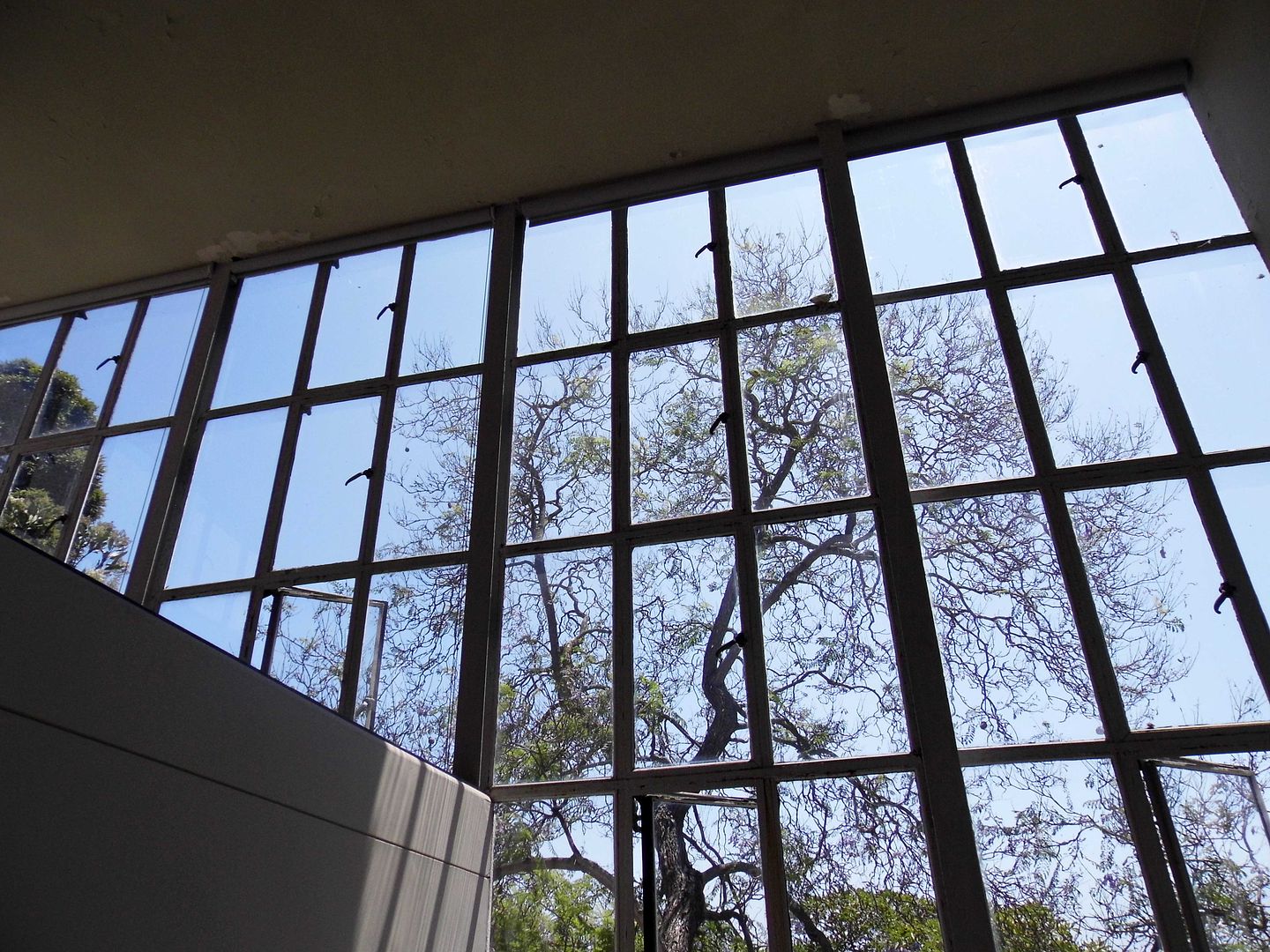
...as well as the clerestory windows...


...doesn't really make it her Lautner.


No matter how many furnishings she's dressed it with, or how hard she tries to sell it, or how wonderful it may be to stay in this Modernist retreat made of concrete and steel...


...she can't really lay claim to it entirely.


Anyone who buys it, rents it, or throws parties in it is simply borrowing it—not from the famed architect himself, nor from the Oscar-winning movie producer who commissioned him to build it.

It's on loan from the sky above and the sand below. And, one day, they'll choose to take it back.

Related Posts:
Photo Essay: Hiking Through a Dream Home in the Hills
Photo Essay: California Dream Homes

August 10, 2017

Photo Essay: A California Country Home In a Long-Lost Orange Grove

It's funny how pretty much anyplace you go in Southern California—particularly in the greater LA area—ends up being a goldmine of history.

And sometimes it takes a while after visiting for me to really understand the importance of a place.

Sometimes, even when I think I've got it figured out, I end up changing my mind after my second, third, fourth, or other subsequent visits.

Take Downey, for instance.

I'd first visited the southeast suburb of LA more than six years ago—having remarked that it was home to not only the oldest standing McDonald's but also Bob's Big Boy Broiler (formerly Harvey's and Johnie's), a sibling location to the one in Burbank I'd become obsessed with back in 2006.

I thought it was a roadfood metropolis, and nothing more.

At the time, I had no idea about the rural beginnings of Downey—something I didn't find out about until just two years ago.

Yet it's only now that the story of La Casa de Parley Johnson in Downey has started to make sense to me.


In Downey, this so-called "California country home" was once home to a prominent local citrus farmer from Riverside, Alexander "Parley" Johnson, whose family was heavily involved in the development of the Valencia orange. At that time, ranching was synonymous with business and profitability.


Johnson's widow Gypsy lived in the house until her death in 1986—and it's been preserved thanks in part to the stewardship of the Downey chapter of the Assistance League. Gypsy had bequeathed the house to the all-female non-profit community service organization, of which many of her friends had been members.


The 6,000-square-foot residence of reinforced gunite (a concrete aggregate) was built for the wealthy citrus grower and his wife between 1924 and 1926, when it was surrounded by 50 acres of orange groves—most of which were eventually sold off for commercial and residential development in the 1940s, 50s, and 60s. What remains now is about an acre and a half.


The "country house" itself—which is more like a Spanish hacienda—was designed by architect Roland E. Coate, known for his expression of the "Monterey" architectural style (a subset of Spanish Colonial Revival) in the many residences he built throughout the Southland. Many of them were occupied by members of the Hollywood elite like Howard Hughes, Barbara Stanwyck, and David O. Selznick.


One of Coate's best-known public structures is the headquarters of the Automobile Club in the West Adams neighborhood of Los Angeles. Johnson's uncle, Frederick Orson Johnson, served two terms on the club's board of directors. (There's some debate as to whether Parley Johnson himself was or was not a founding member of the Club.)


Surrounding the hacienda are a formal lawn as well as a walled garden area by Florence Yoch—a landscape designer for Hollywood movie sets, as well as for Rancho Los Alamitos in Long Beach. She was joined in her landscape architectural business ventures by her partner in business, life, and love for 43 years, Lucille Council.


The pergola is no longer festooned with crawling vines, and the fountain in the forecourt is no longer enshrouded in potted succulents.


As you stand in the courtyard on the patio, you can still look up at the exquisite wooden balcony, behind while you'll find the master bedroom, two bathrooms, two dressing rooms, and a sitting alcove on the upper level.


Before WWII, ranching wasn't just a business—it was good business. And Parley Johnson, like many other successful ranchers and "growers" of the era, was pretty well-to-do.


At the house (now christened "La Casa de Parley Johnson"), he and his wife provided accommodations for both a live-in chauffeur and a maid.


Gypsy herself was an avid gardener and a member of the Los Angeles Garden Club...


...and was largely responsible for creating such an environment of idyllic Southern California living.


The interior and exterior are covered in nature-inspired and floral-patterned decorative tile, a different design in every room.


That includes a water basin (possibly used as a "flower sink") in the outdoor dining area.


According to local "Tile Man" Brian Kaiser, the tile at Casa de Parley Johnson is by-and-large of Mexican origin—which was actually uncommon at the time, in part because California tile was so geographically close and of such high quality (sometimes referred to as "everlasting").


How can you tell? Well, look for the telltale trio of chips from three little balls (a.k.a. tres pies, or three little feet) that separated layers of tiles while the wet glaze was being fired in the kiln.

It's an ancient Persian ceramic glazing technique found only in two places in the world, at least during the 1920s: the capital city of Tunisia, Tunis, and the Spanish colonial city of Puebla in Mexico.

And it's a good way to differentiate between cities of origin and between different potters' work.

But how did Islamic art find its way "south of the border"?

We can only guess that the Moors must've brought the knowledge to Spain when they conquered the Iberian Peninsula and that, centuries later, the Spanish conquistadors must've shared the technique after they landed in Mexico.

But only half the tiles at Casa de Parley Johnson actually have those chips. The rest are sometimes rumored to be Malibu Tile, but it's more likely that they're also Mexican—just not from Puebla.

And so yet another mystery of Southern California begins to unfurl.

For more on Casa de Parley Johnson, visit my friends at Esotouric who brought me there on one of their bus tours and who provided extensive information in their "You Can't Eat the Sunshine" podcast.

Related Posts:
Photo Essay: The Ranch That Built An Empire of Oranges
Photo Essay: The Birthplace of Santa Monica Canyon

August 08, 2019

Photo Essay: Neutra's Lovell Health House and Hollywood Supervillain Lair, Upon Its 90th Anniversary (Updated for 2020)
Last updated 8/20/20 9:44 PM PT—real estate listing and tour availability updated

"Design me a house that will enhance by its design the HEALTH of the inhabitants of this house!"

circa 1929 (Public Domain, Department of Special Collections, Charles E. Young Research Library, UCLA)

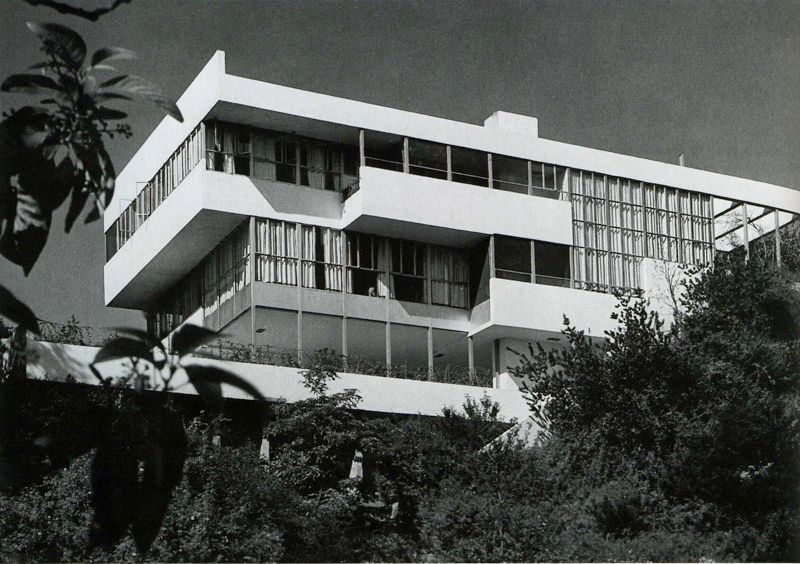
According to Dion Neutra, that's what naturopathic doctor Philip Lovell—the "Drugless Practitioner"—told Richard Neutra (Dion's father) when he commissioned the architect to design what was to become the Lovell "Health" House, where he was to live with his wife Leah.


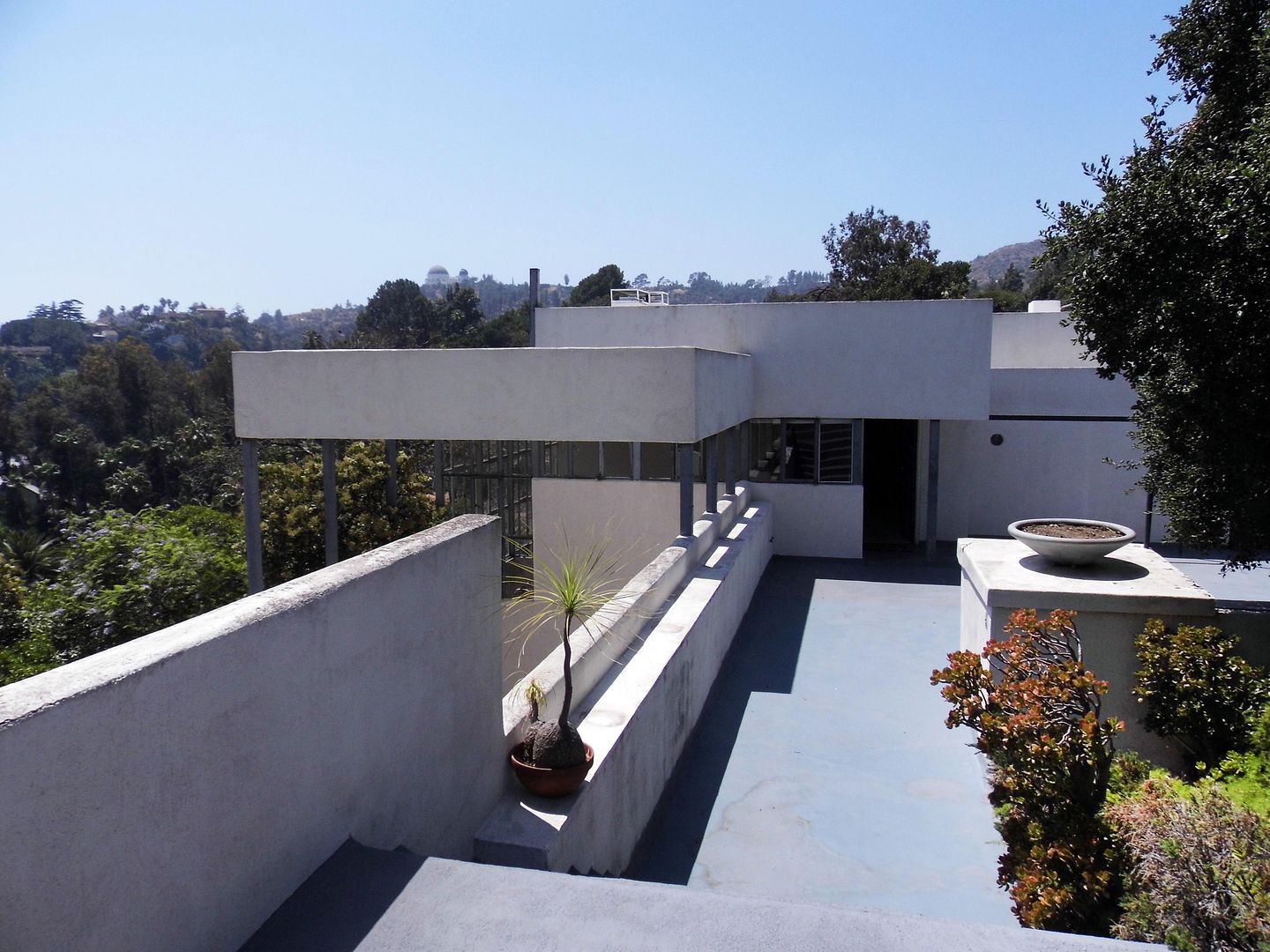
Located in the Los Feliz hills near Griffith Park, some know it better as the home of Pierce Patchett in the 1997 film L.A. Confidential—where the pimp of Hollywood starlet lookalikes could be seen on a putting green, and Bud White and Ed Exley entered the upper level of the house at the end of a concrete walkway.


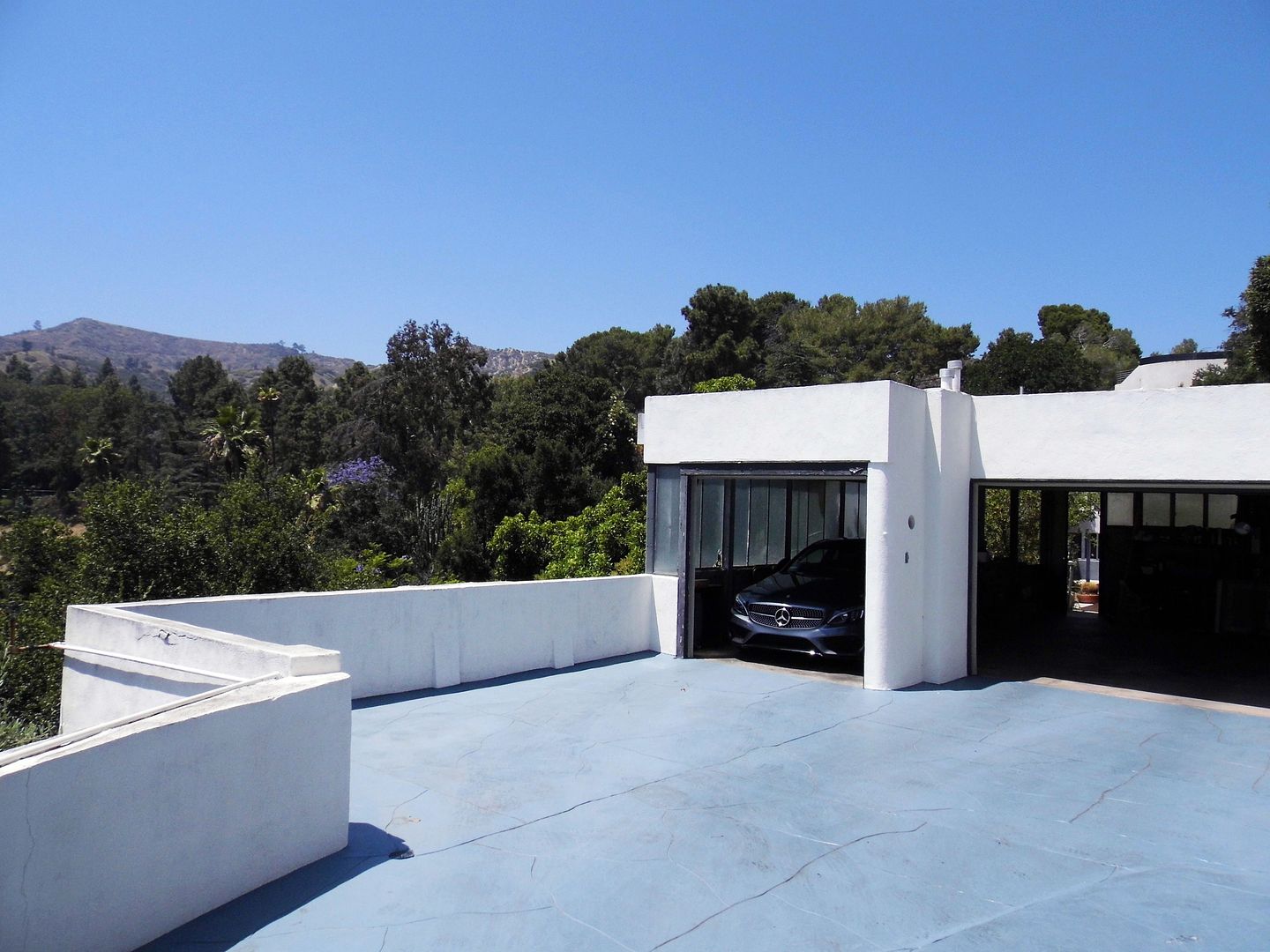
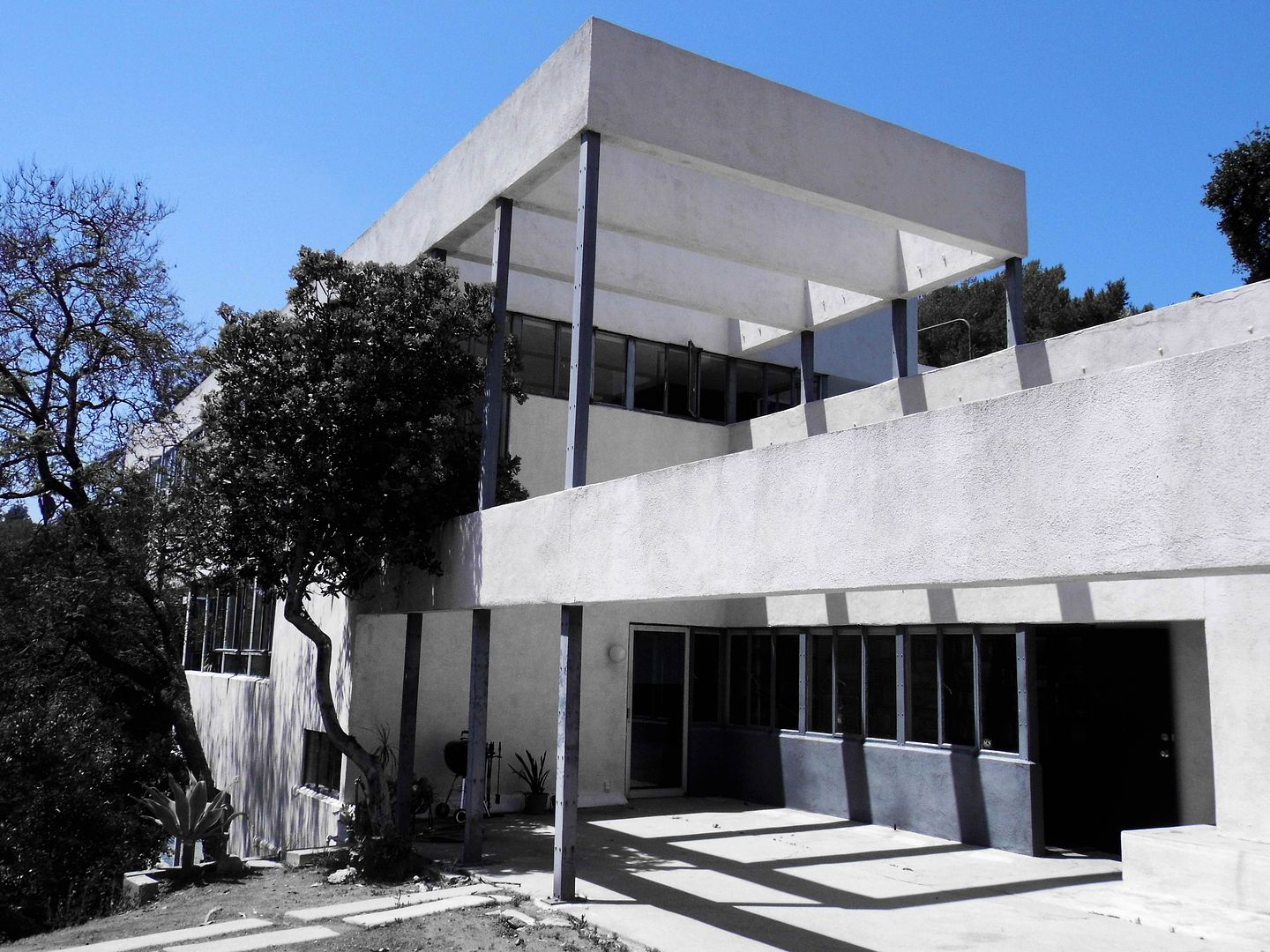
It's one of those gravity-defying houses in the hills that seems to practically float on air—this one tethered to a cliff by a tension cable and supported by a 12-foot-thick reinforced concrete foundation that also acts as a retaining wall.


Dr. Lovell had treated newspaper publisher Harry Chandler for tuberculosis without drugs—and, perhaps as a kind of "thank you," wound up the author of the "Care of the Body" column in the Los Angeles Times Sunday Magazine. There, he could extol the virtues of natural healing practices like nude sunbathing—something for which he demanded his own flat, open roof from Neutra.


The approach was avant-garde, to say the least—and manifested in the creation of a basketball and handball court, swimming pool, and exercise yard and equipment outside as well as sleeping porches (to reap the benefits of fresh air) and hydrotherapy equipment like sitz baths inside. The kitchen also featured a water purifier and juicers—common nowadays, but considered a lot of woo-woo back in the 1920s.


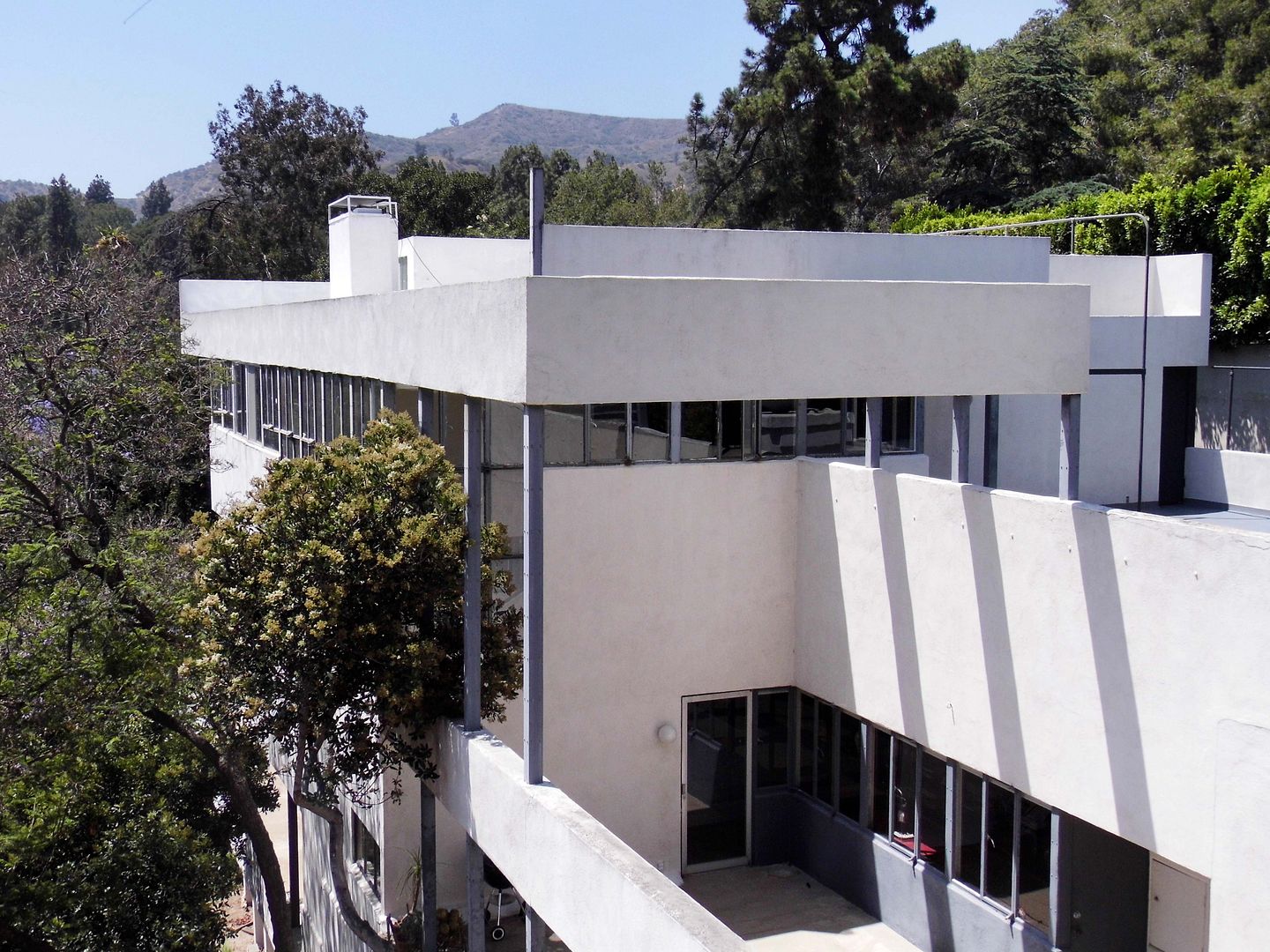
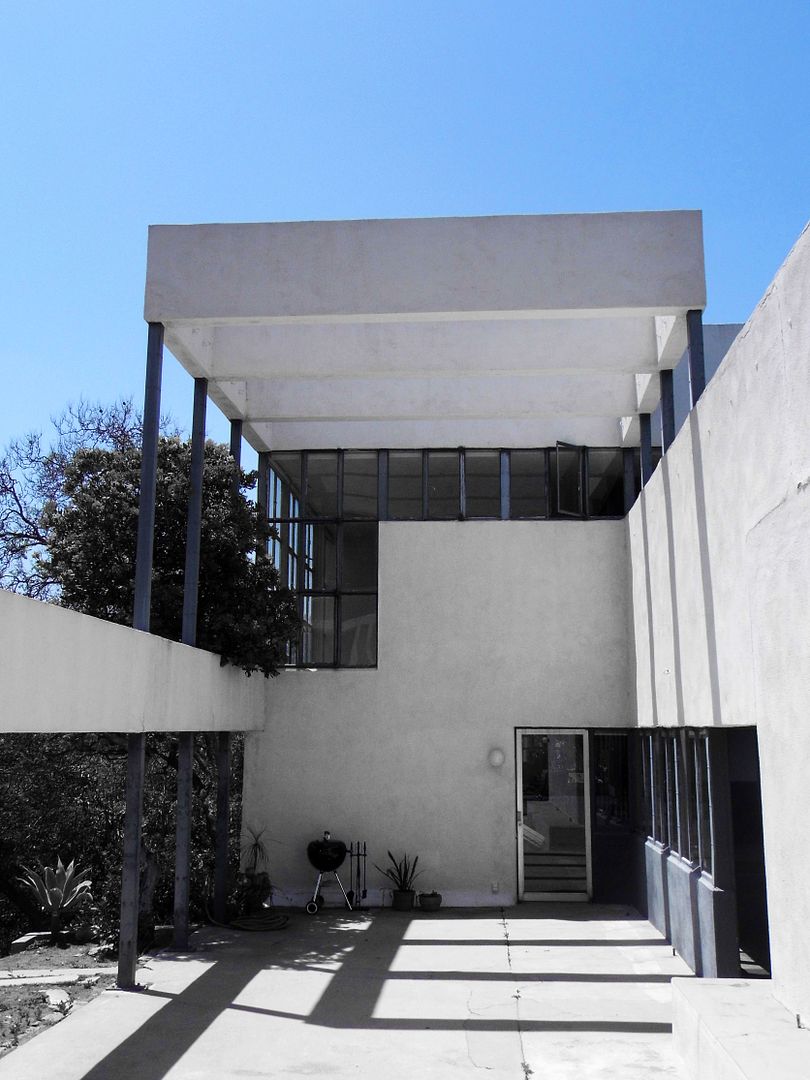
Neutra paid close attention to the health needs of the Lovells—but he also had to break convention to successfully build the 4807 square-foot home on such a hillside. Reportedly, the Lovell House was the first American home to be built with a steel frame typical of skyscraper construction.


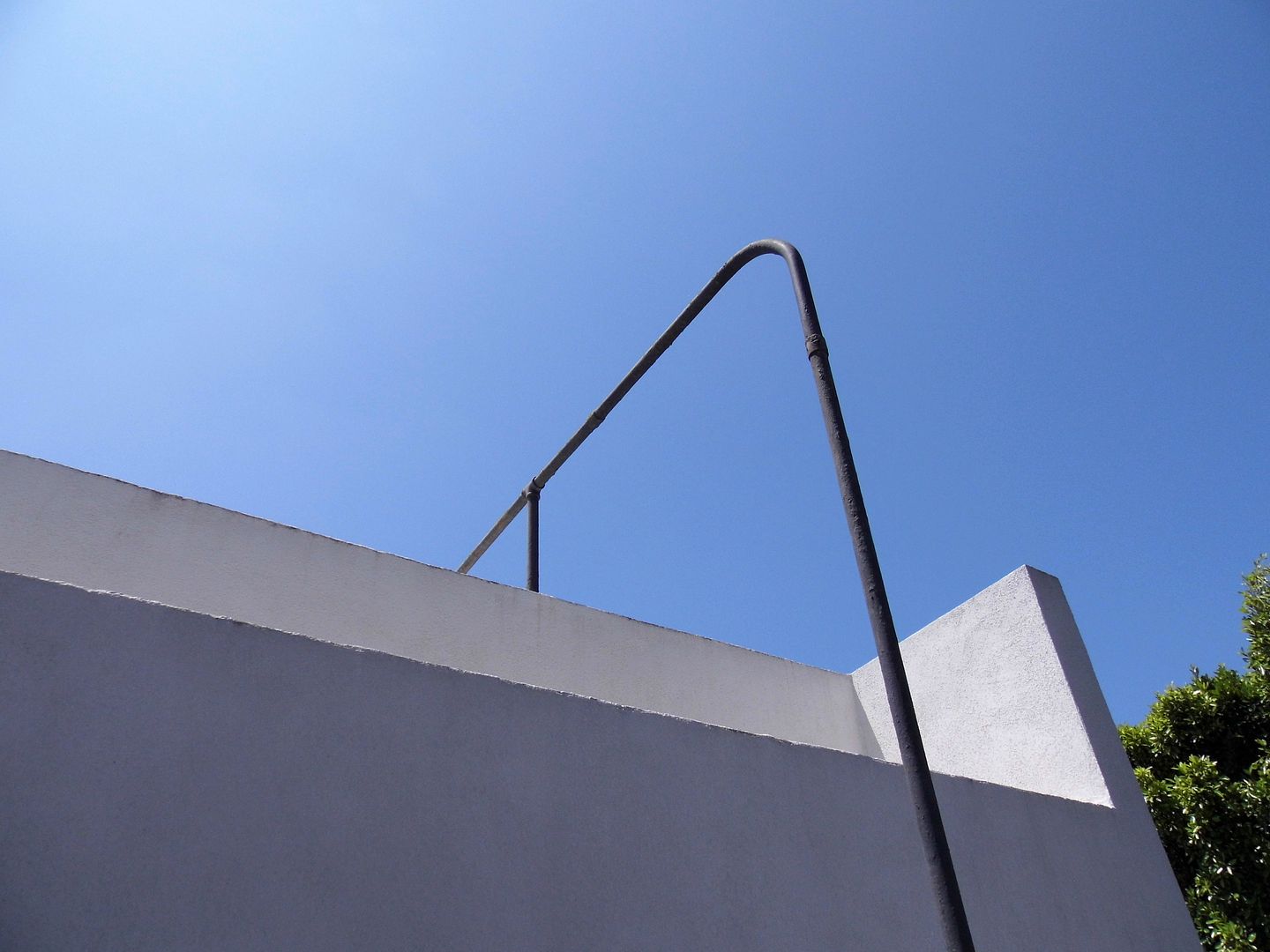
That was the best—if not only—way to prefabricate a frame off-site and assemble it onsite, a feat that took just 40 hours. Once the steel frame was secured in place and covered in wire mesh, 1.25" of a type of concrete called gunite was sprayed onto it and then covered with a spray-on layer of stucco.


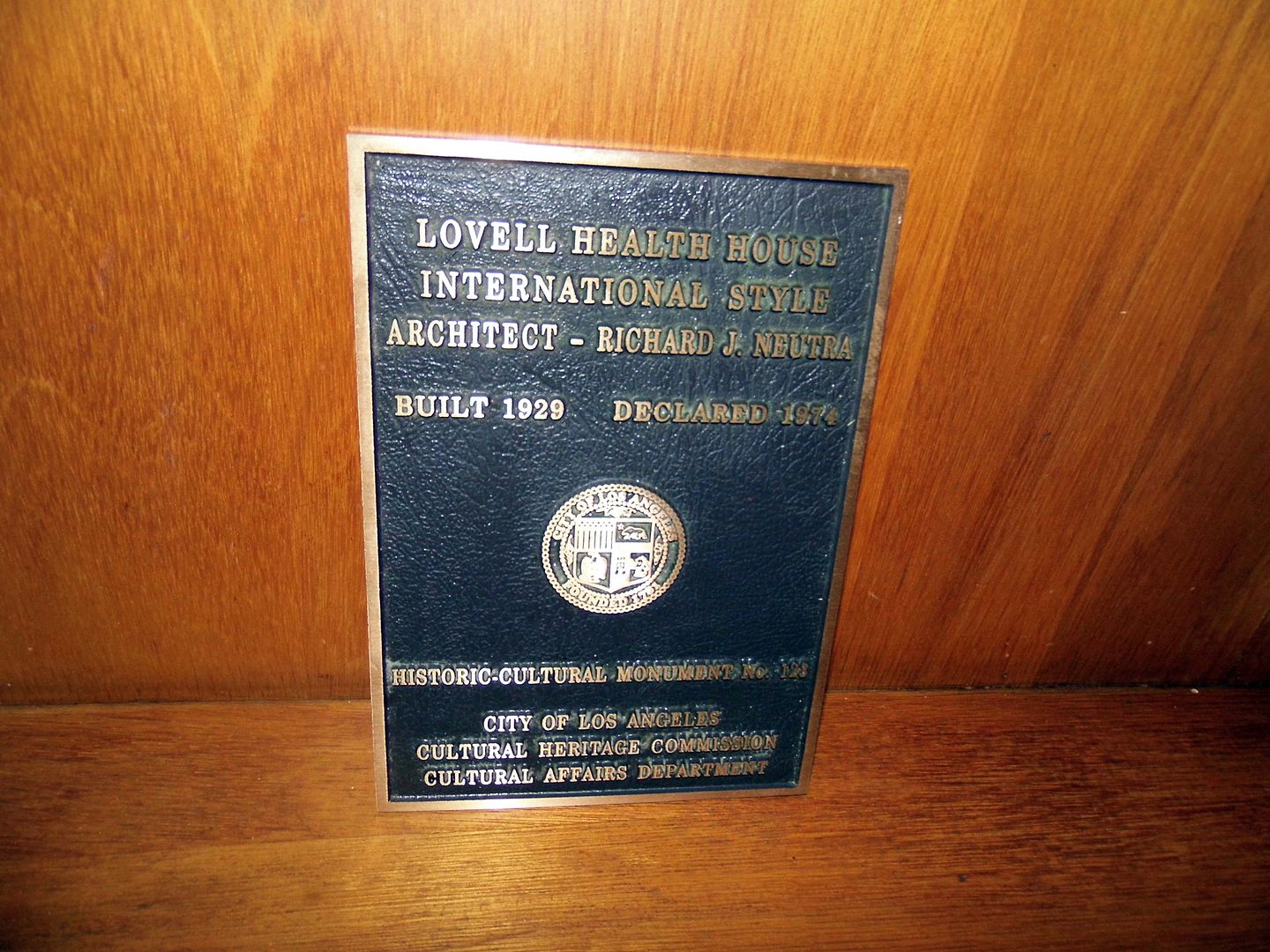
When it was completed in 1929 (after two years of construction), the result was a pioneering example of International Style architecture—a kind of Cubist sci-fi anomaly when the fashion in LA residences was primarily Spanish Colonial.


The final cost was under to $60,000—with no applied decoration and a design that primarily served the owners' utilitarian needs of "transparency" and "hygiene."


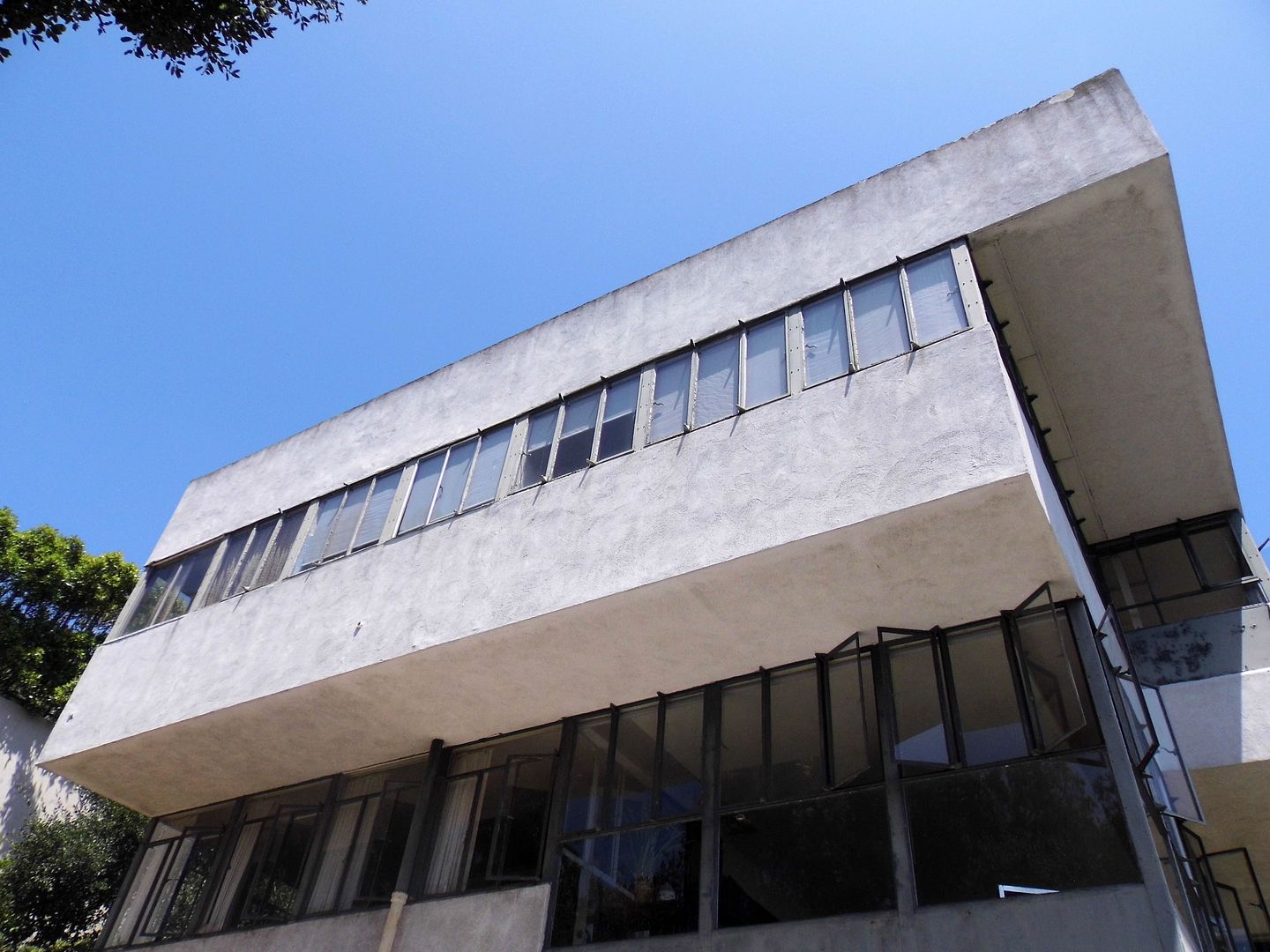
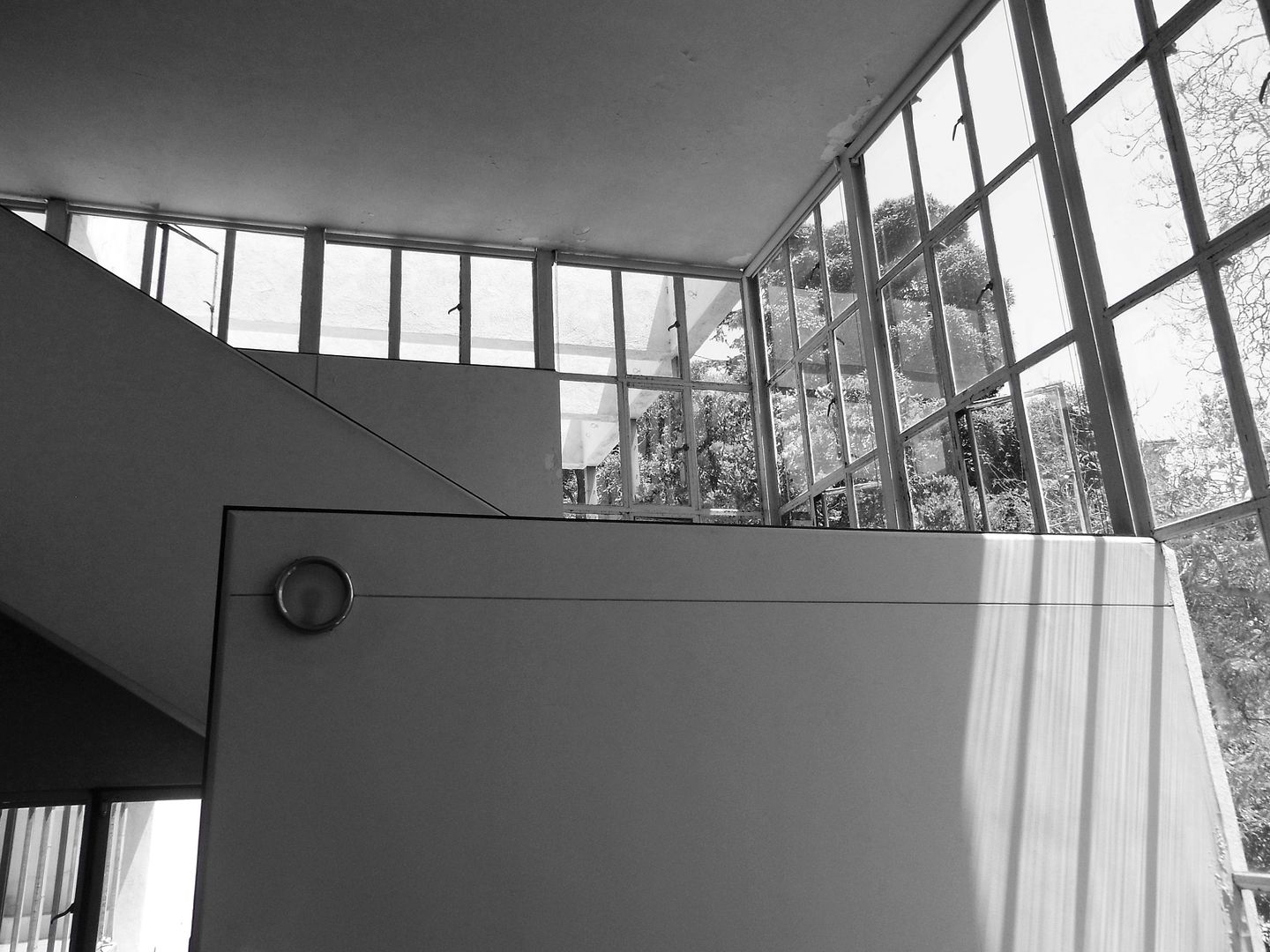
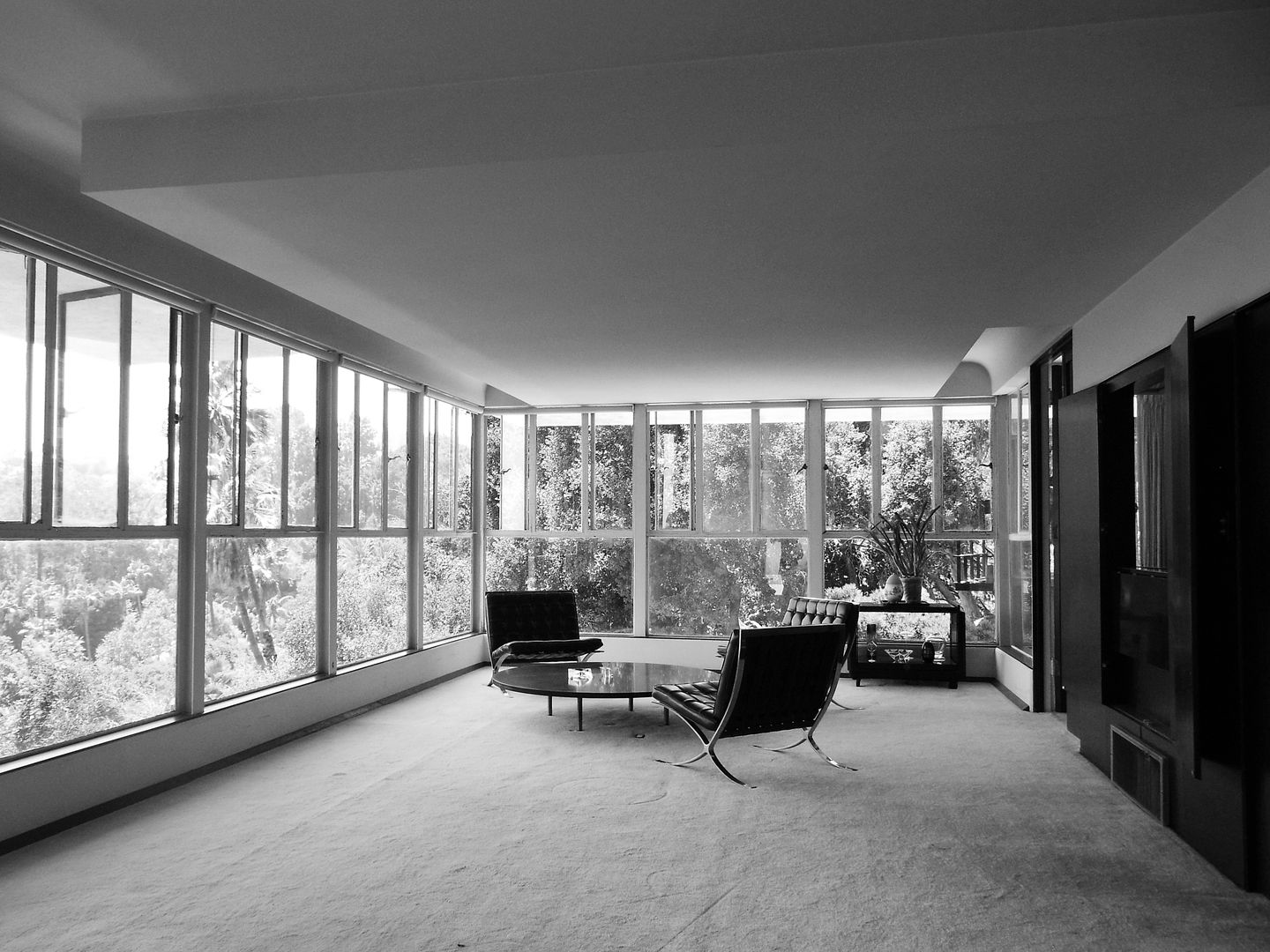
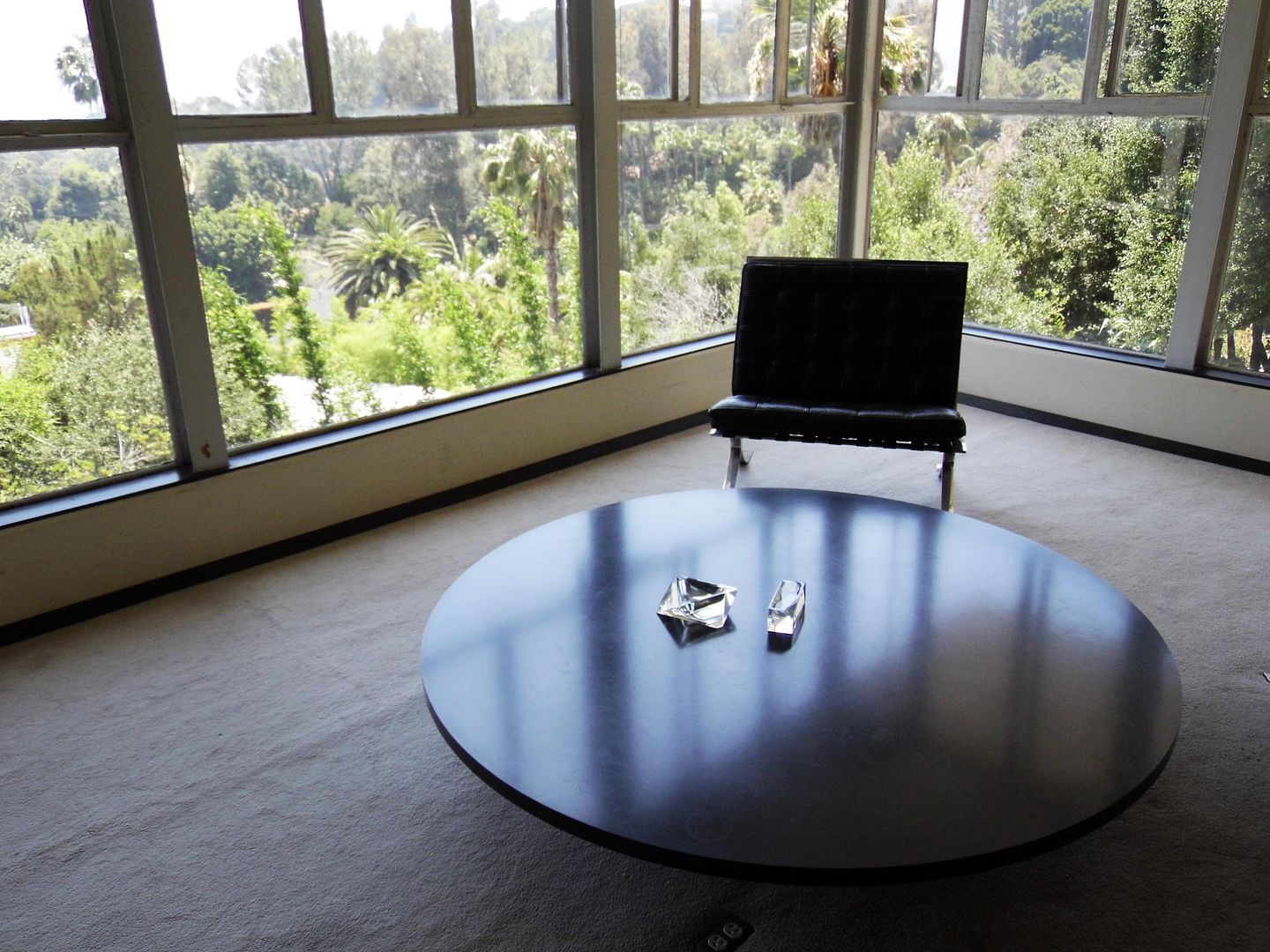
Entire walls of glass were installed to expose the home's inhabitants to as many UV rays as possible...


...even when they were inside (and fully clothed).


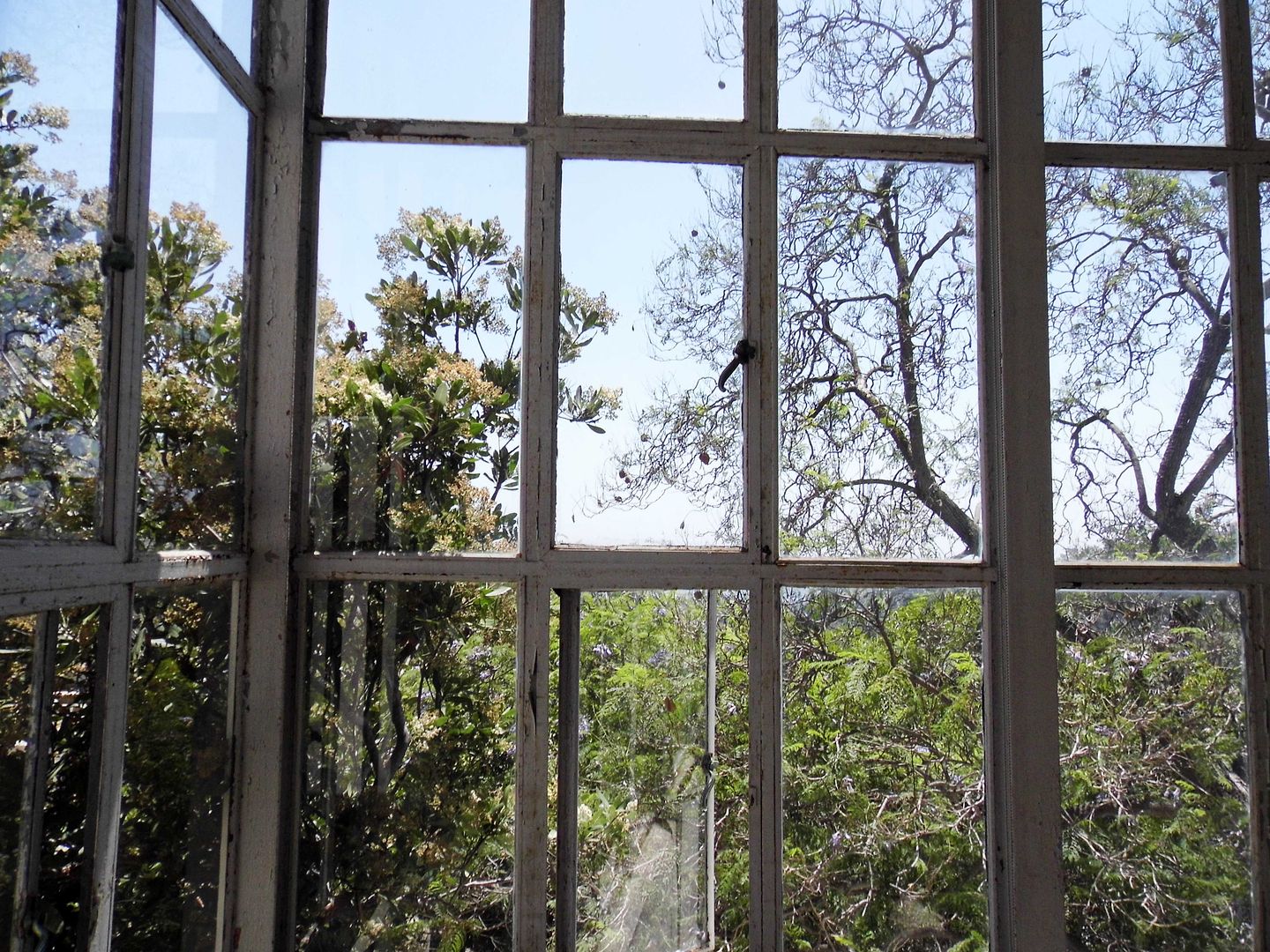
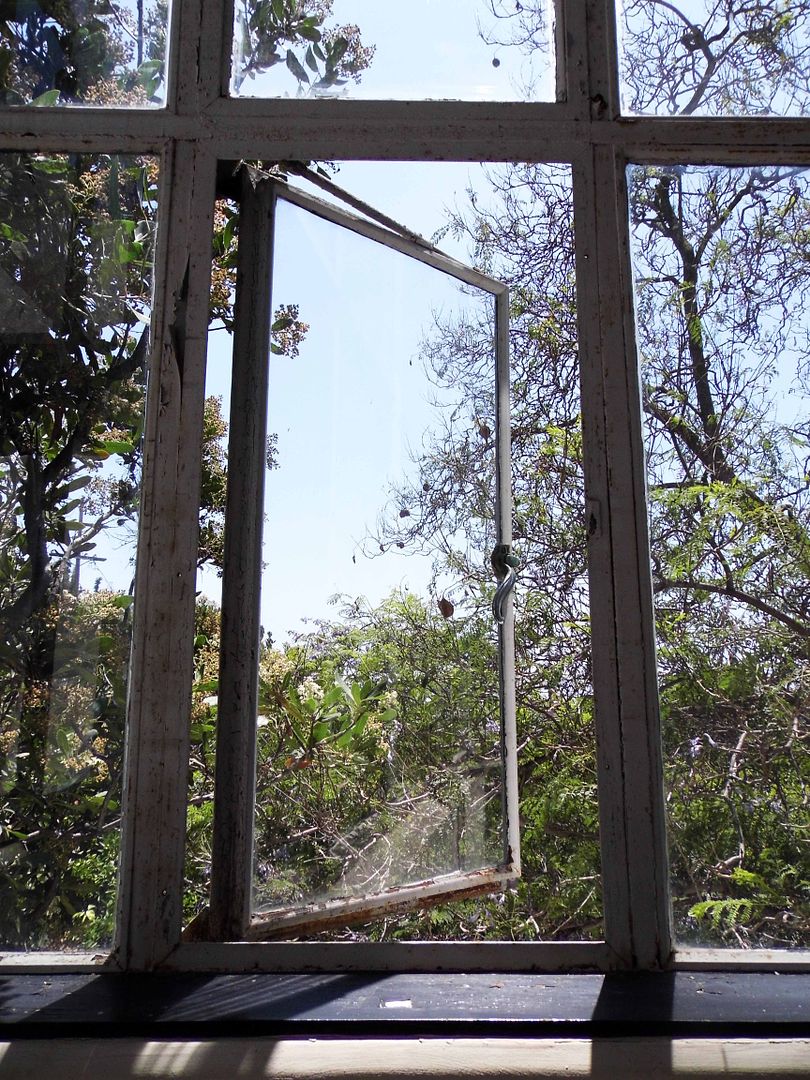
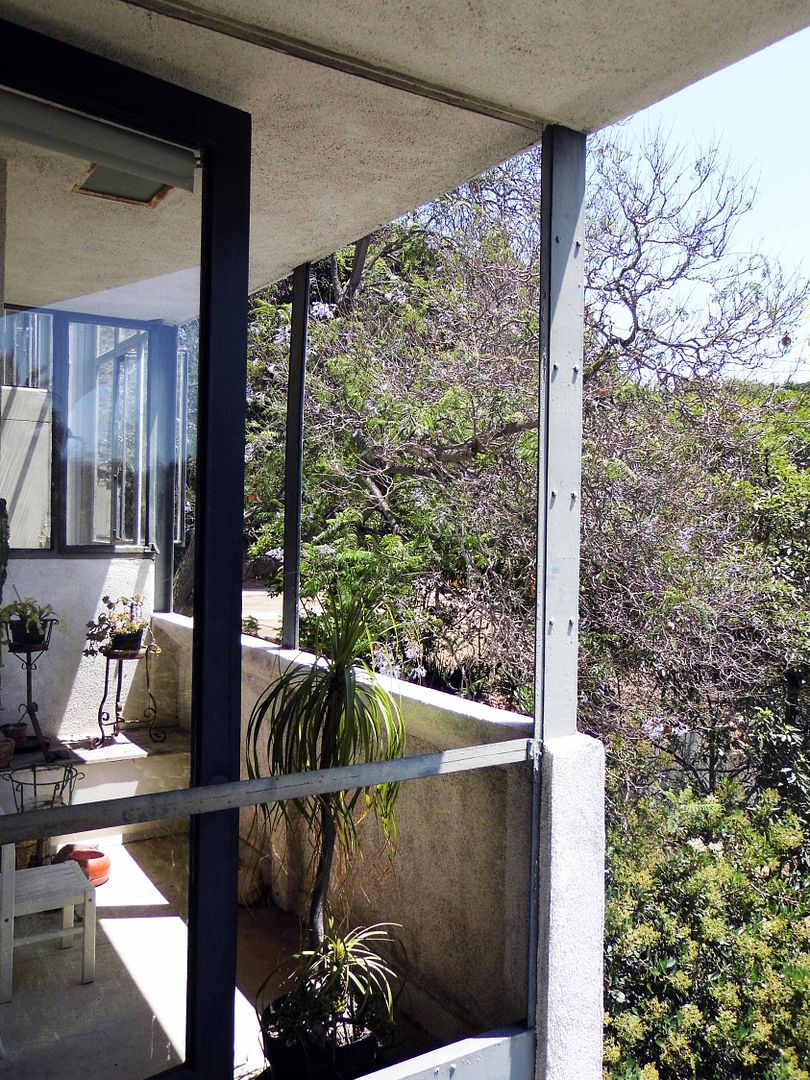
Ribbons of casement windows provide proximity to nature...


...while other touches reference Neutra's fascination with mass production and products from factory lines in the "machine age."


Hence the two Ford Model-A headlights in the main stairwell.


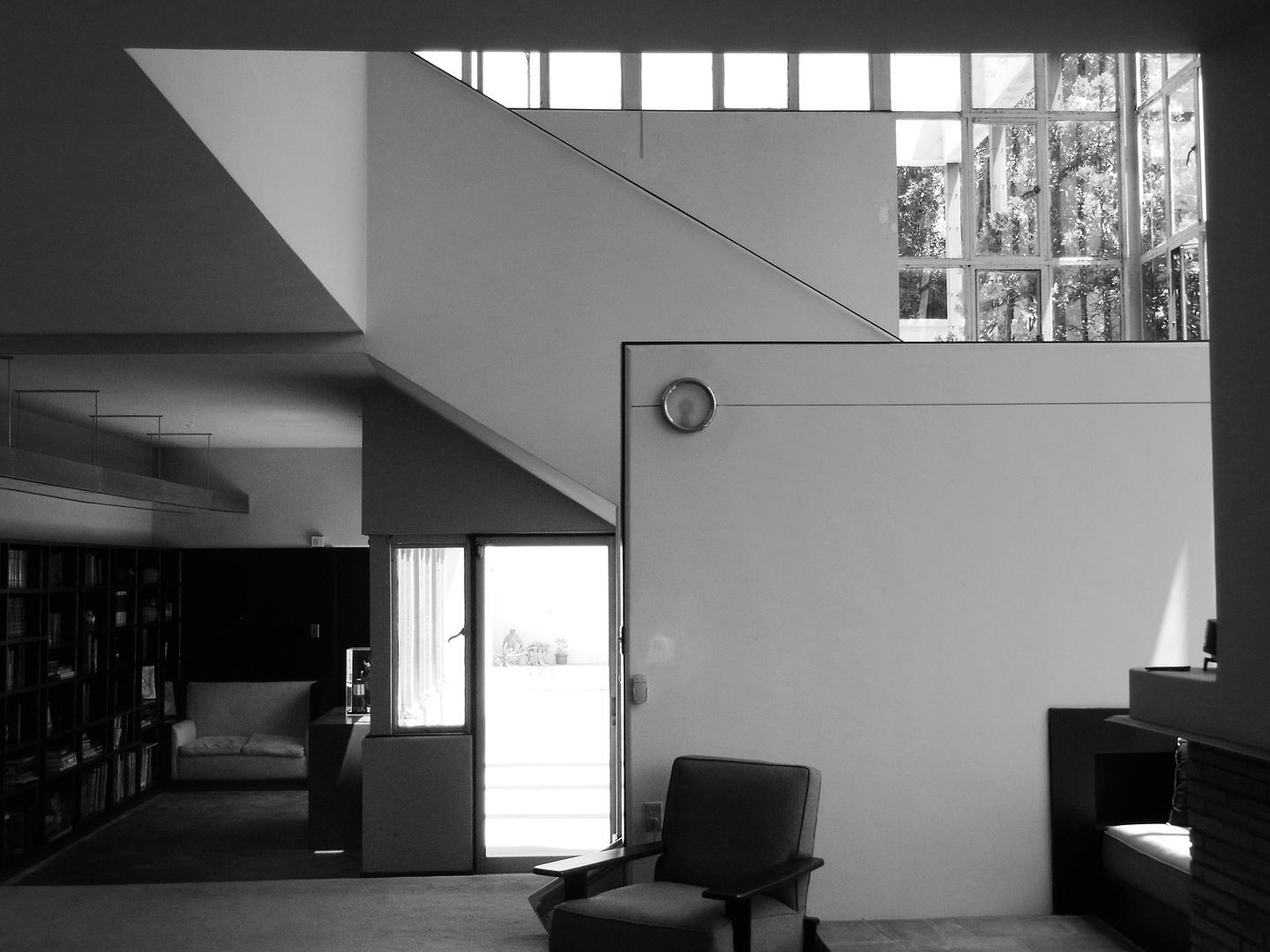
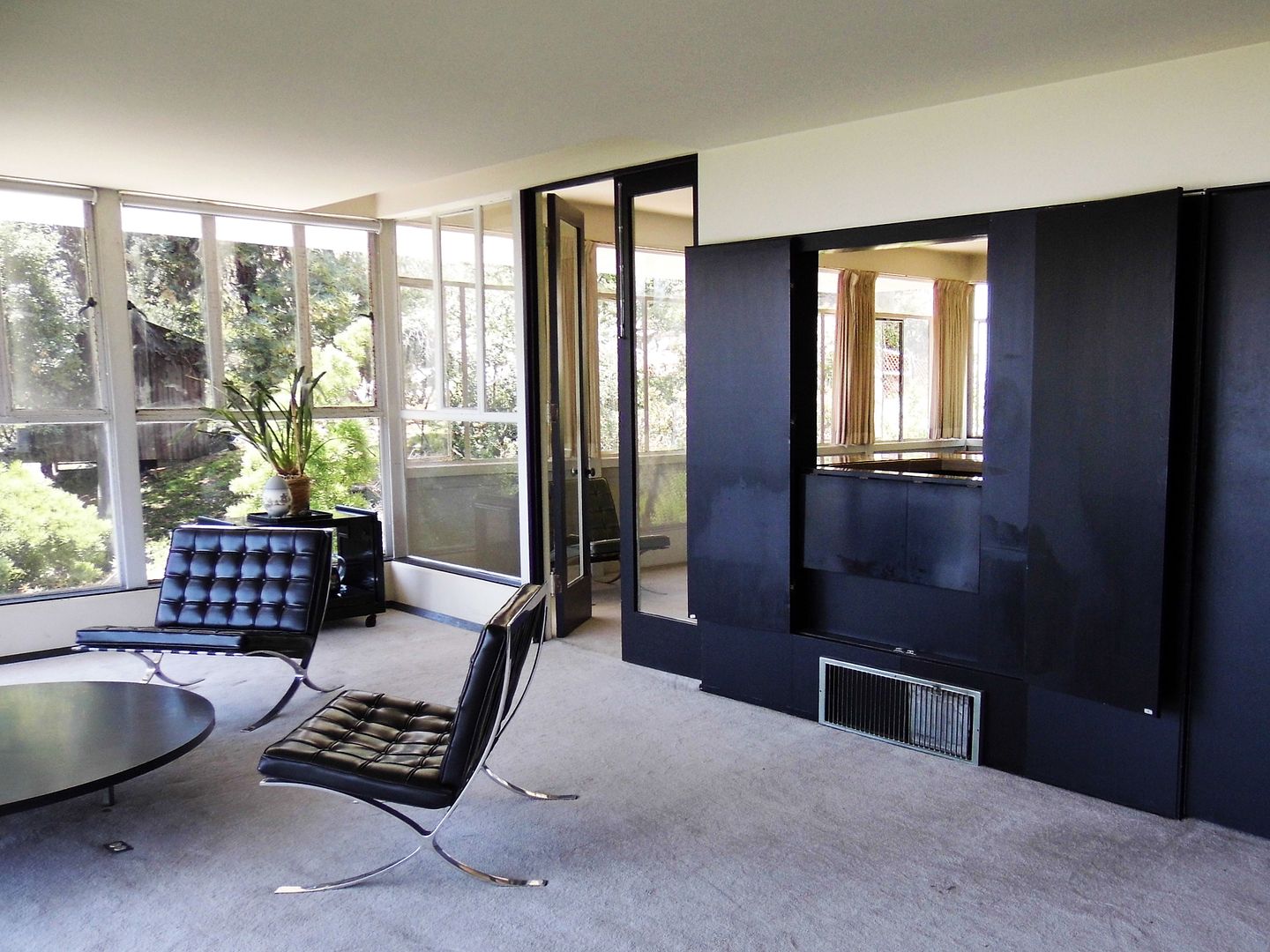
The second floor's open plan makes the transition between the living and dining areas pretty seamless...


...though closer inspection reveals the "peek-a-boo" wall into the kitchen, ideal for entertaining.


The second owner of the Lovell Health House, Mrs. Edith Bland, moved in in the 1930s; the third owner, Leo Goldberg, occupied it from about 1951 to about 1960. It's still the home of its fourth owner, nonagenarian Betty Topper and her son Ken (from her marriage to Dr. Morton Topper, who died in 1971). [Update: On August 23, Dion Neutra announced the passing of Betty Topper. On November 24, Dion himself passed away.]


Amazingly, little has been changed in the house, except for the balconies—suspended from the roof frame—are all now enclosed.


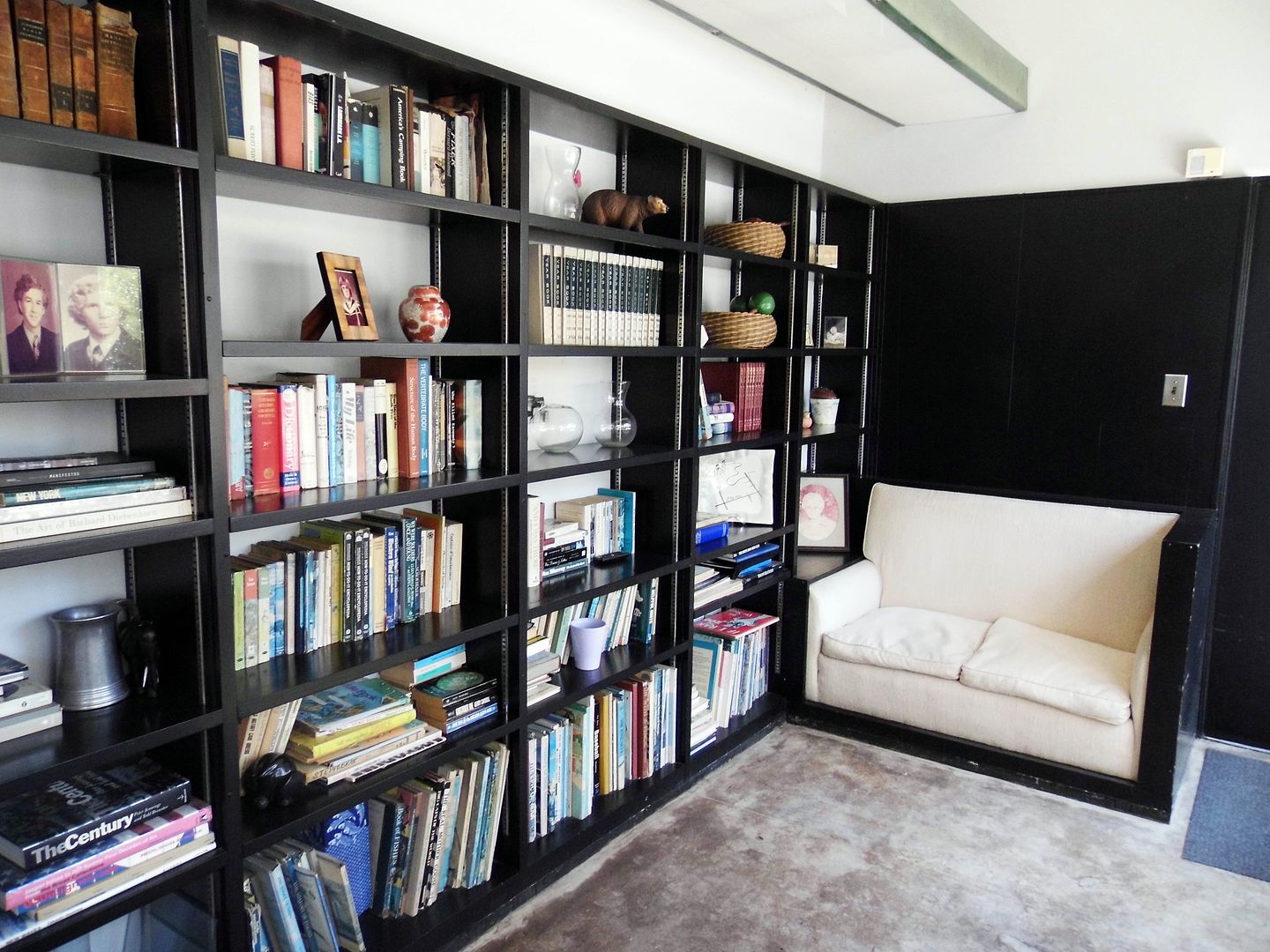
The library with its glossy, black enamel built-in shelves is original...


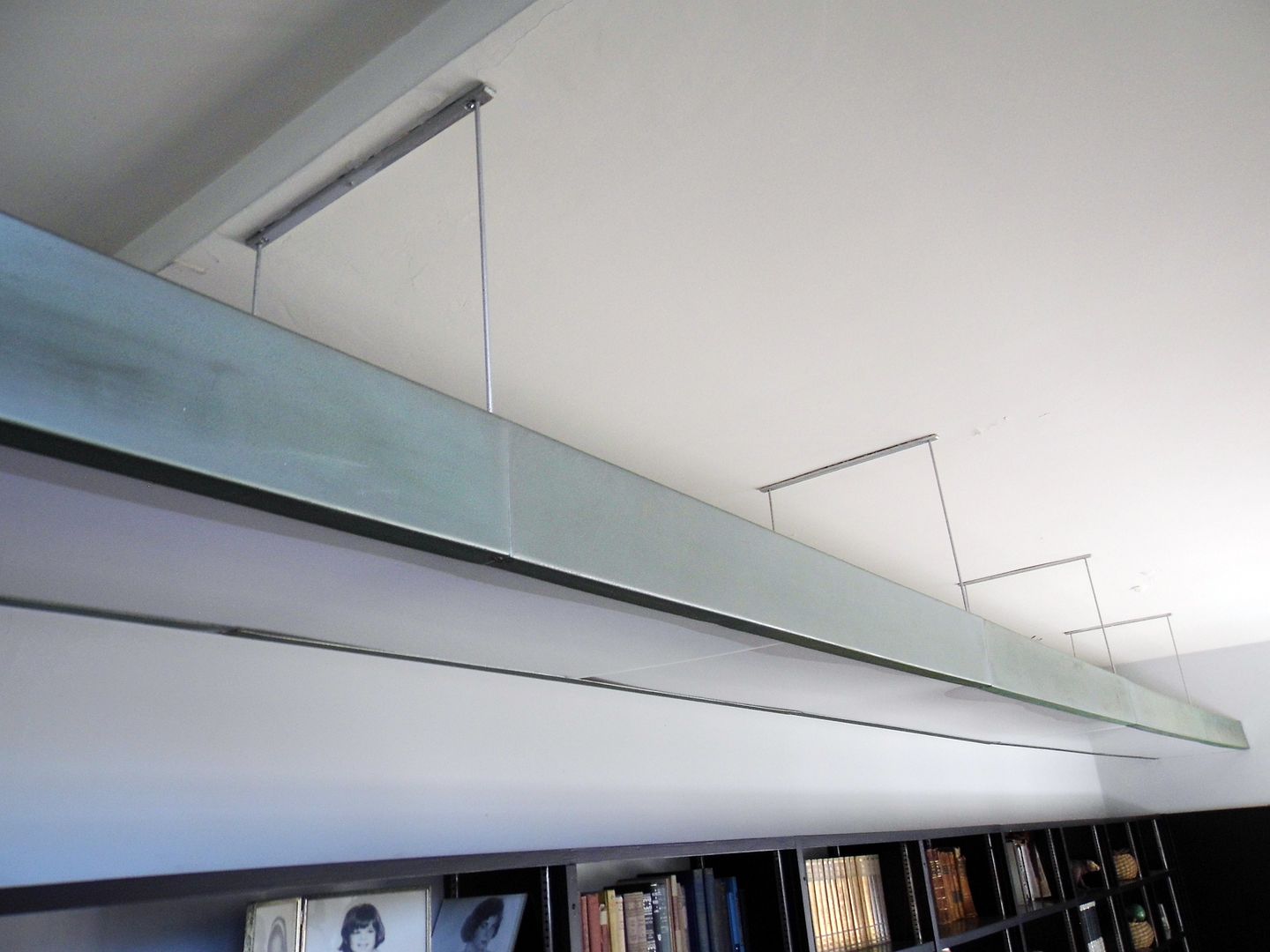
...as is the lighting fixture above it.


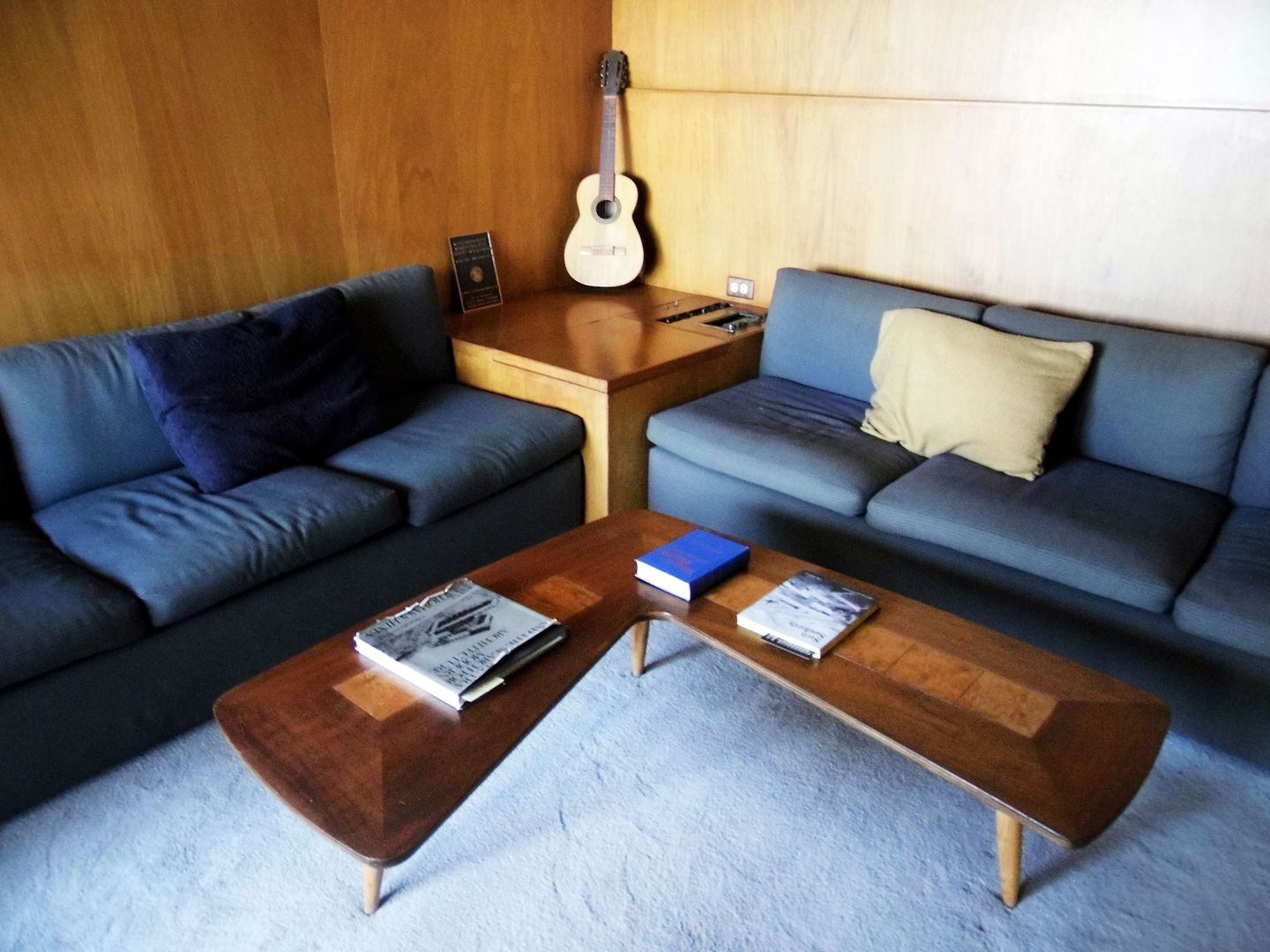
On the third floor—which is, in practice, the ground floor—the den isn't exactly original to Neutra's designs.


According to the home's resident historian, the Lovells commissioned some early—perhaps immediate—changes from Neutra's assistant, Gregory Ain.


He reportedly made some of the "living" spaces a bit more livable.


Because even a "health house" needs some music and comfy seats to make its residents want to stay.


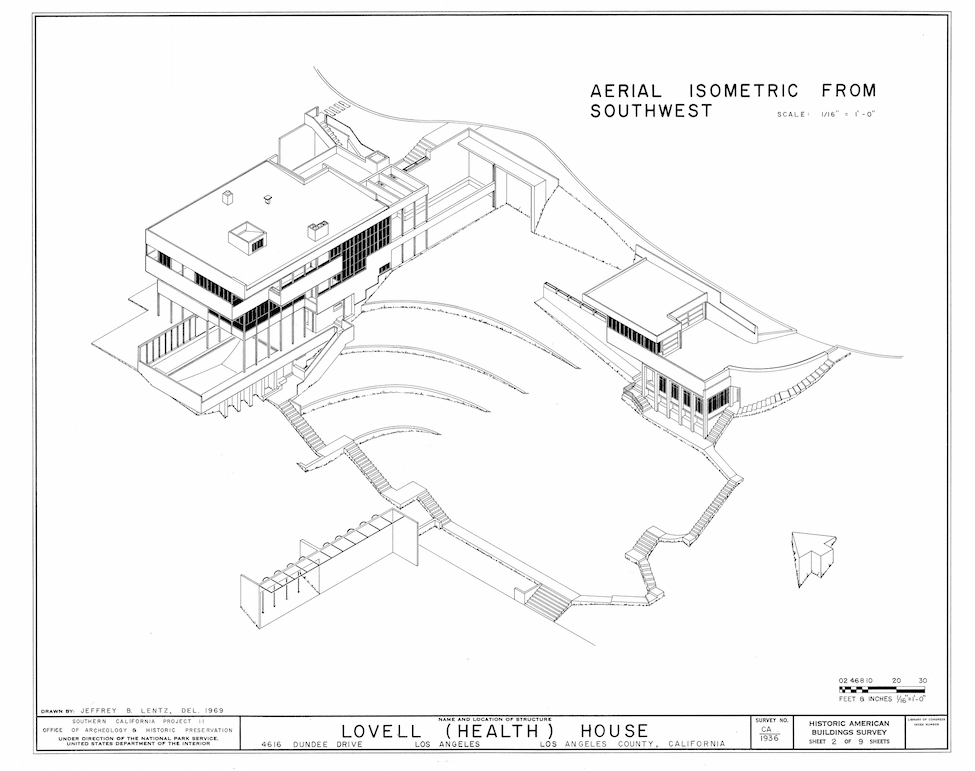
Drawn by Jeffrey B. Lentz, circa 1969 (Southern California Project II, Office of Archaeology and Historic Preservation,
National Park Service, U.S. Department of the Interior) via Library of Congress

The future of the Lovell Health House is currently up for debate. It was not exactly not for sale, for a while—until now. View the official listing here.

Weekly public tours have just launched to help build awareness for the preservation of the site, which needs some TLC.

The public has had little-to-no access to the interior of the house for the greater part of 90 years since it was first completed—when visitors showed up in droves to marvel at it on a tour led by Richard Neutra himself.

To arrange a tour by appointment, email LovellHealthHouseTours [at] gmail [dot] com. [Ed: Tours currently suspended during the COVID-19 crisis.]

Related Posts:
Photo Essay: The Healing Powers of Zzyzx (Updated for 2019)
Photo Essay: Neutra's VDL II Studio and Residences