
Since my accommodations during my recent superbloom trip to Death Valley National Park were in Beatty, Nevada—and not inside the park or in one of the surrounding towns in California—my geography gave me the opportunity to explore some of the environs east of and in the eastern end of the park for the first time in a long time.
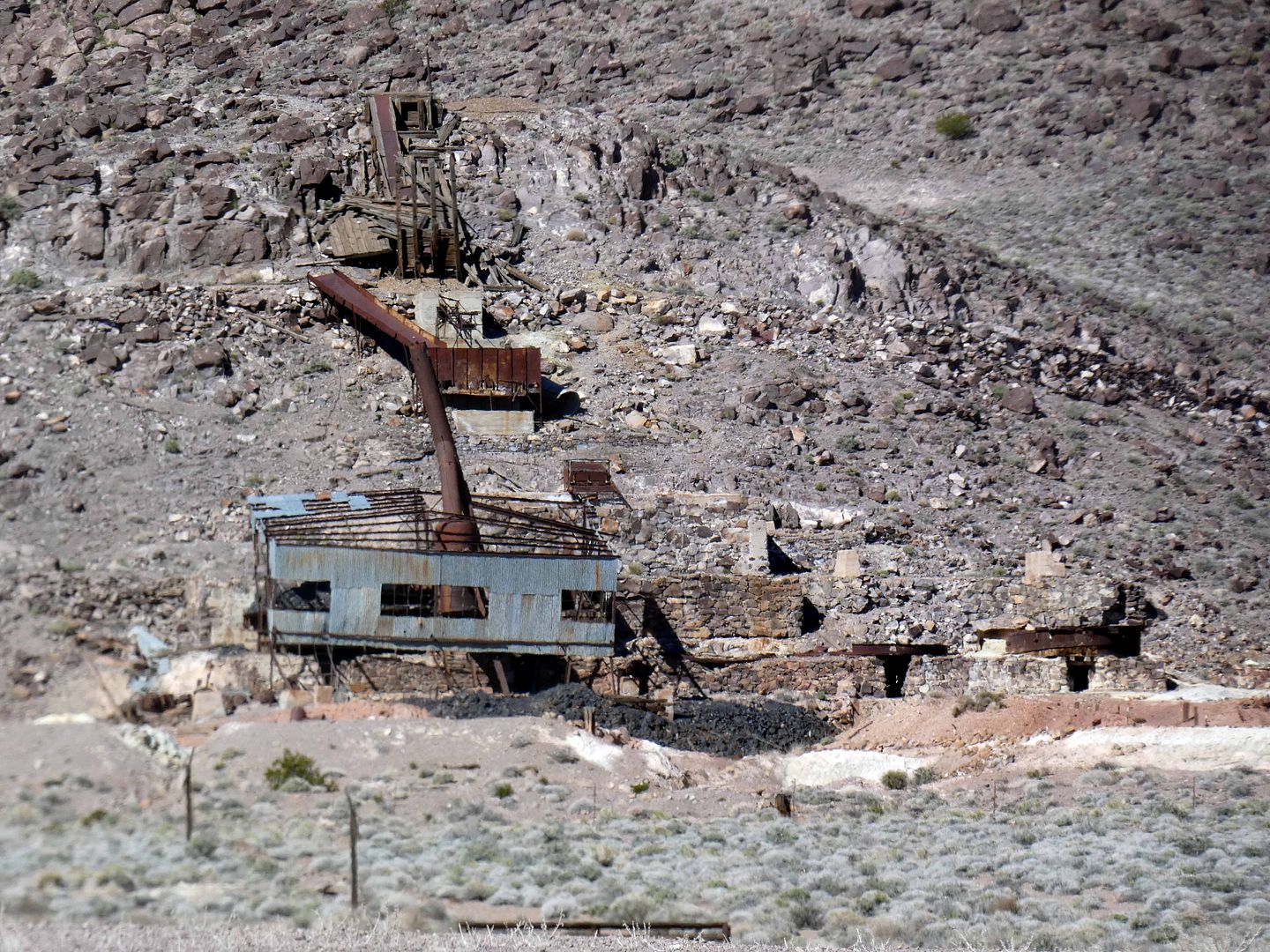
I'd had the ghost town of Bonnie Claire (sometimes spelled "Bonnie Clare") saved on my map, although I didn't really remember why—other than the obvious prospect of spotting some ruins (click here for a historic photo).
Turns out, the old gold mining site (established circa 1906) saw a second life as a waystation for the construction of Scotty's Castle in the 1920s. (Unfortunately, Scotty's Castle is still closed while it recovers from flood damage—as is much of Scotty's Castle Road past Bonnie Claire.)
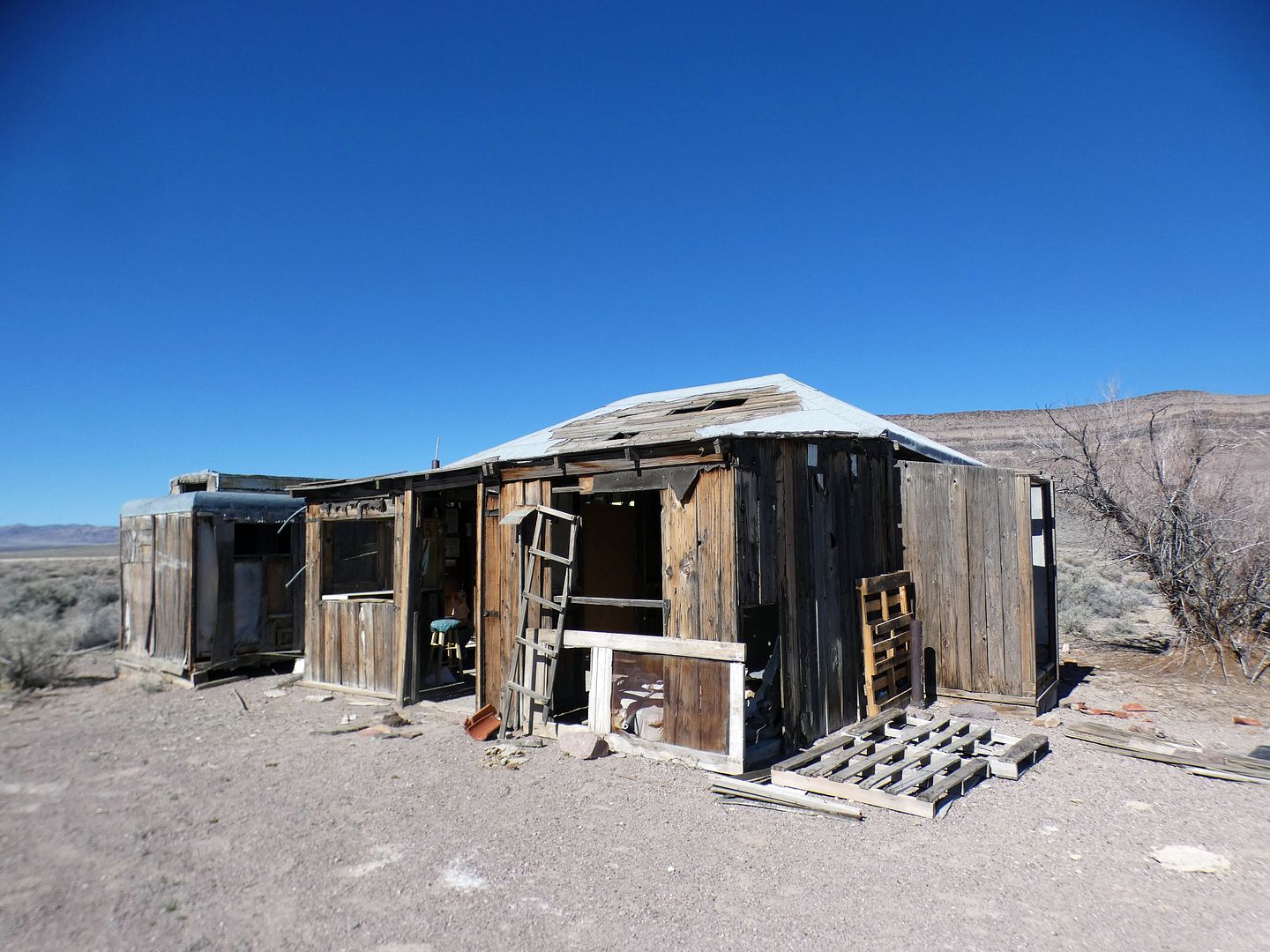
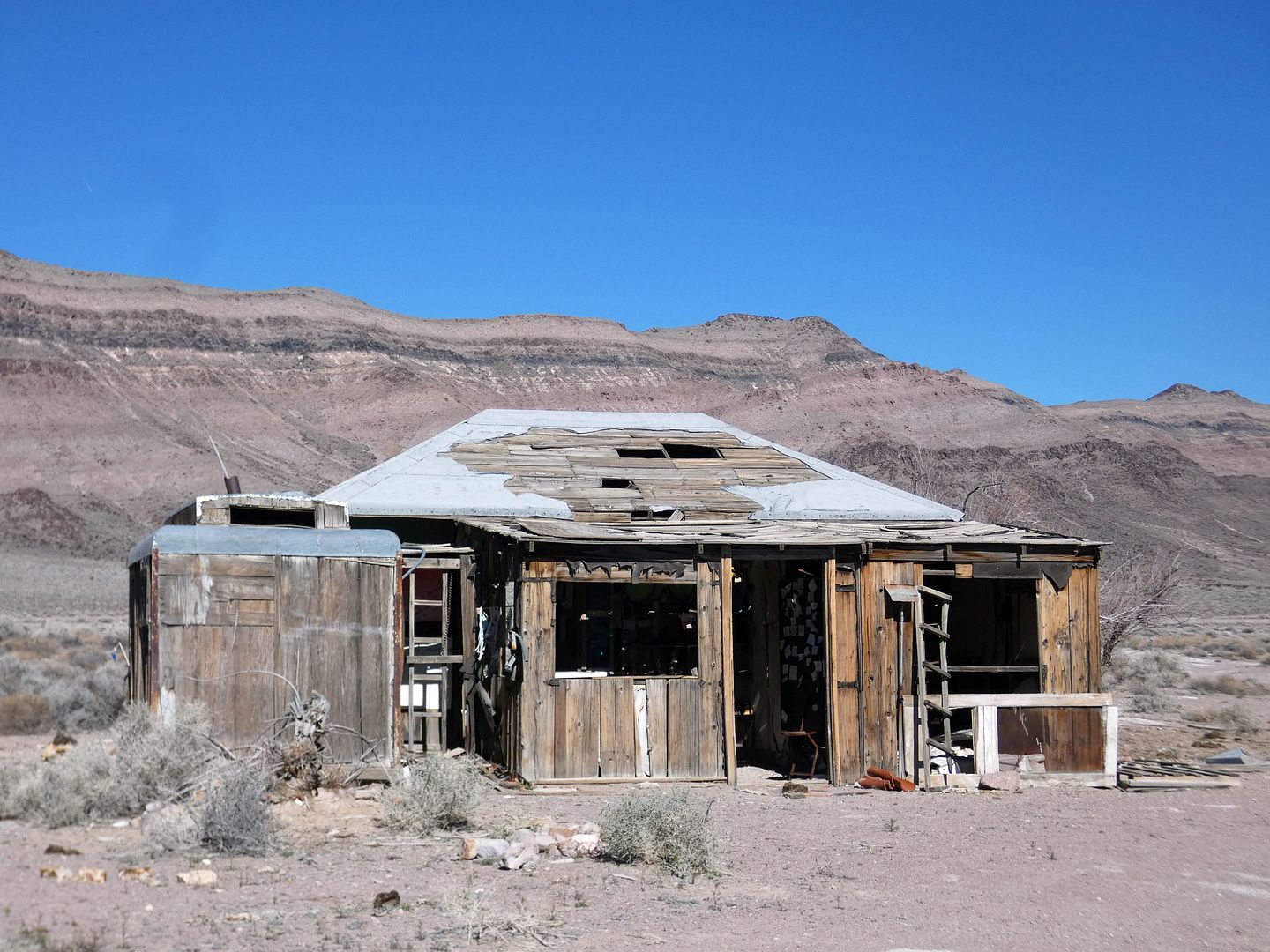
But what really attracted my attention was the old cabin built by Victor A. Huson—the miner behind Bonnie Claire's mill operations in the mid-20th century.
Born in Beatty and buried in the Beatty Cemetery, "Vic" erected it in the 1940s or '50s (sources disagree) and lived there with his wife Mellie.
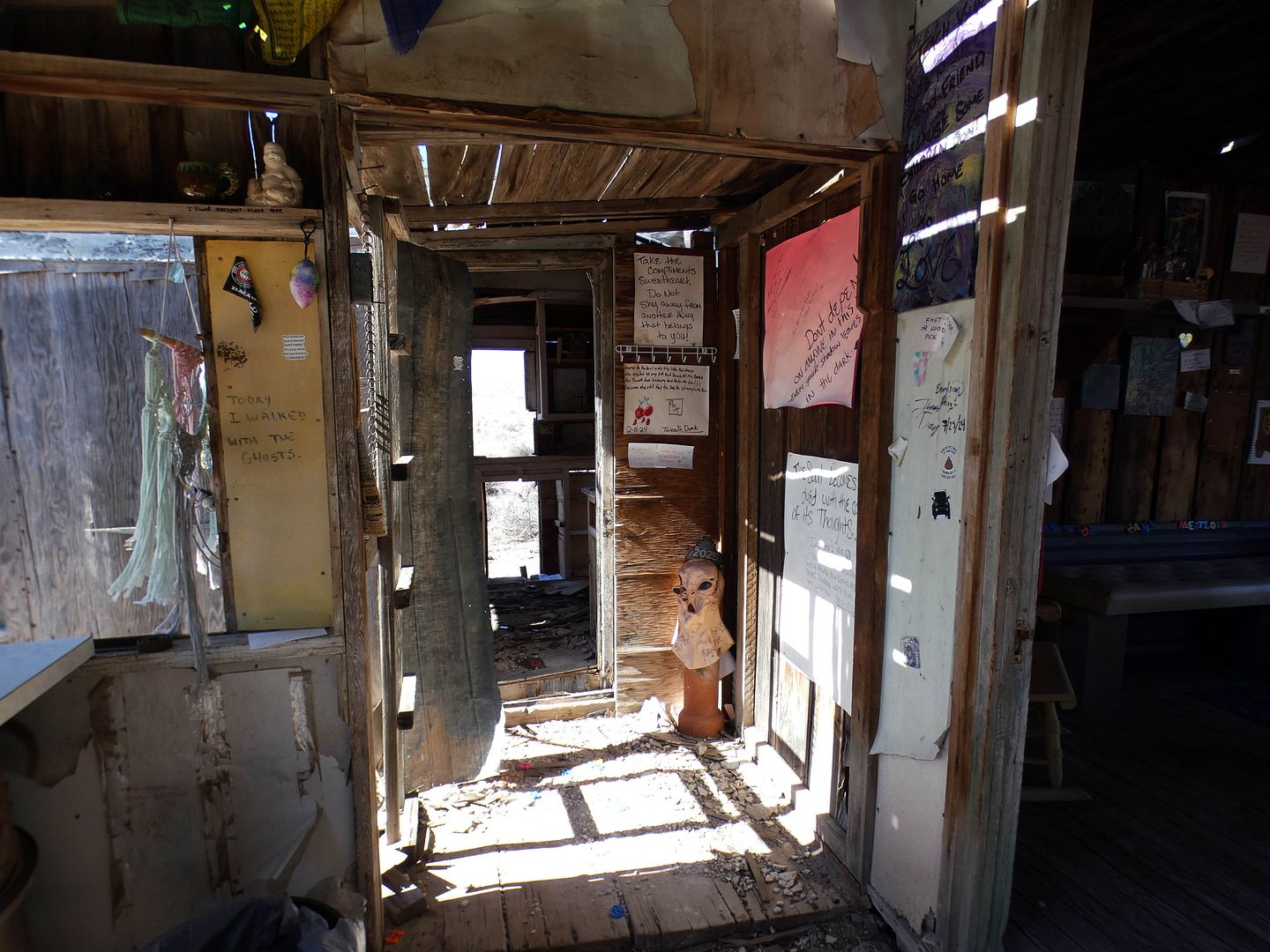
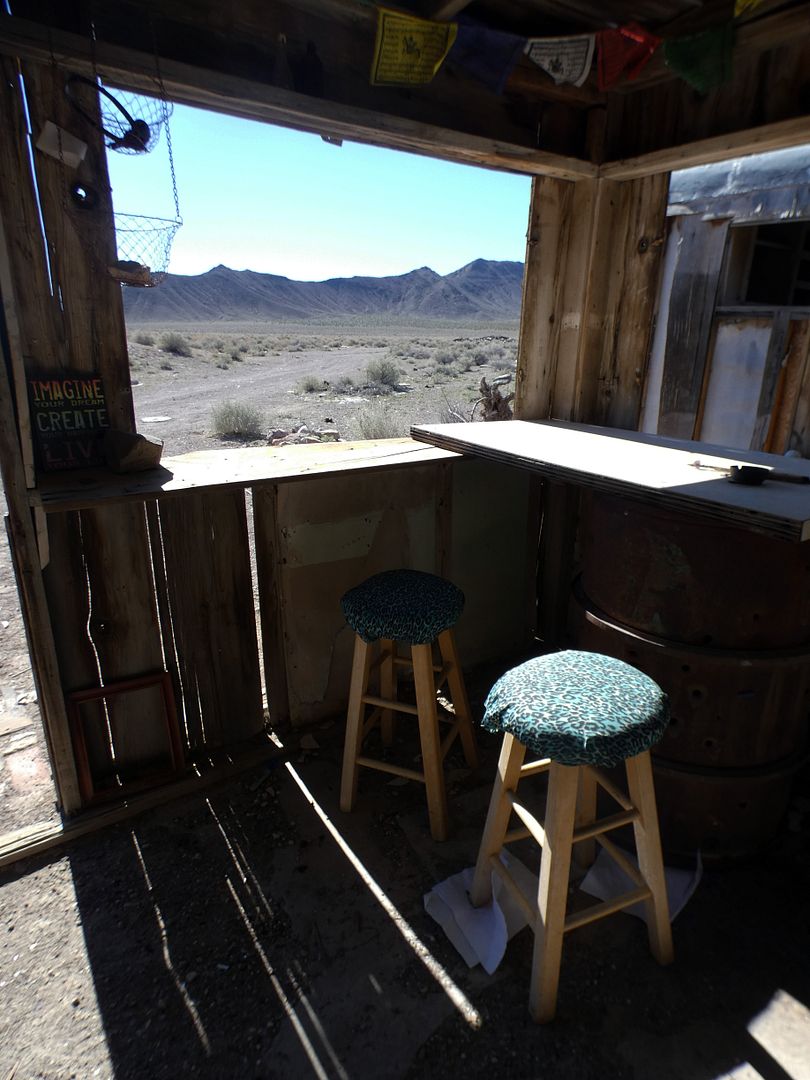
But sometime in the last 10 years, the abandoned home has been transformed into a community art project known as the "House of Quotes."
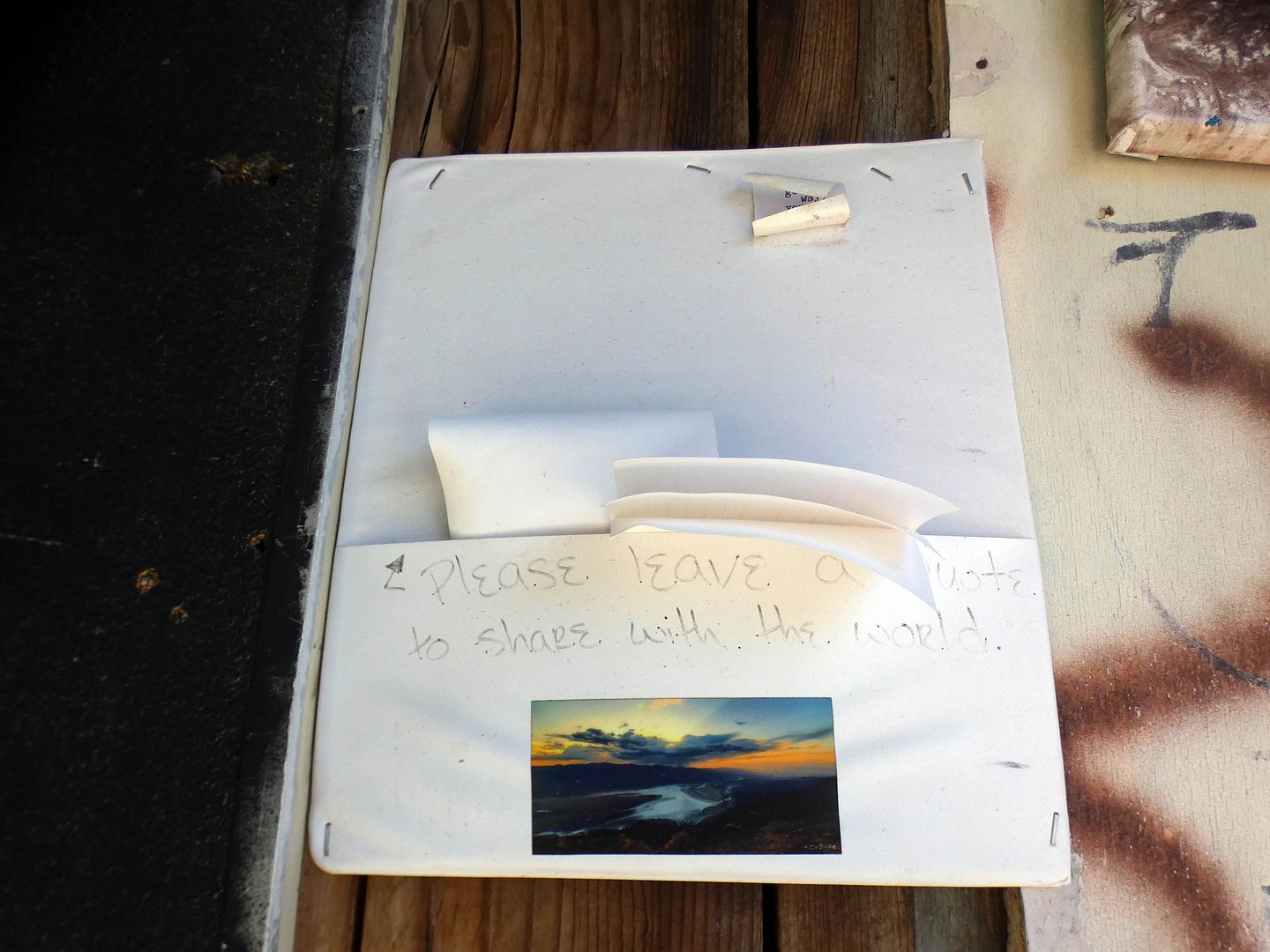
"Please leave a quote to share with the world," reads a makeshift display that offers blank slips of paper to visitors who want to leave their mark.
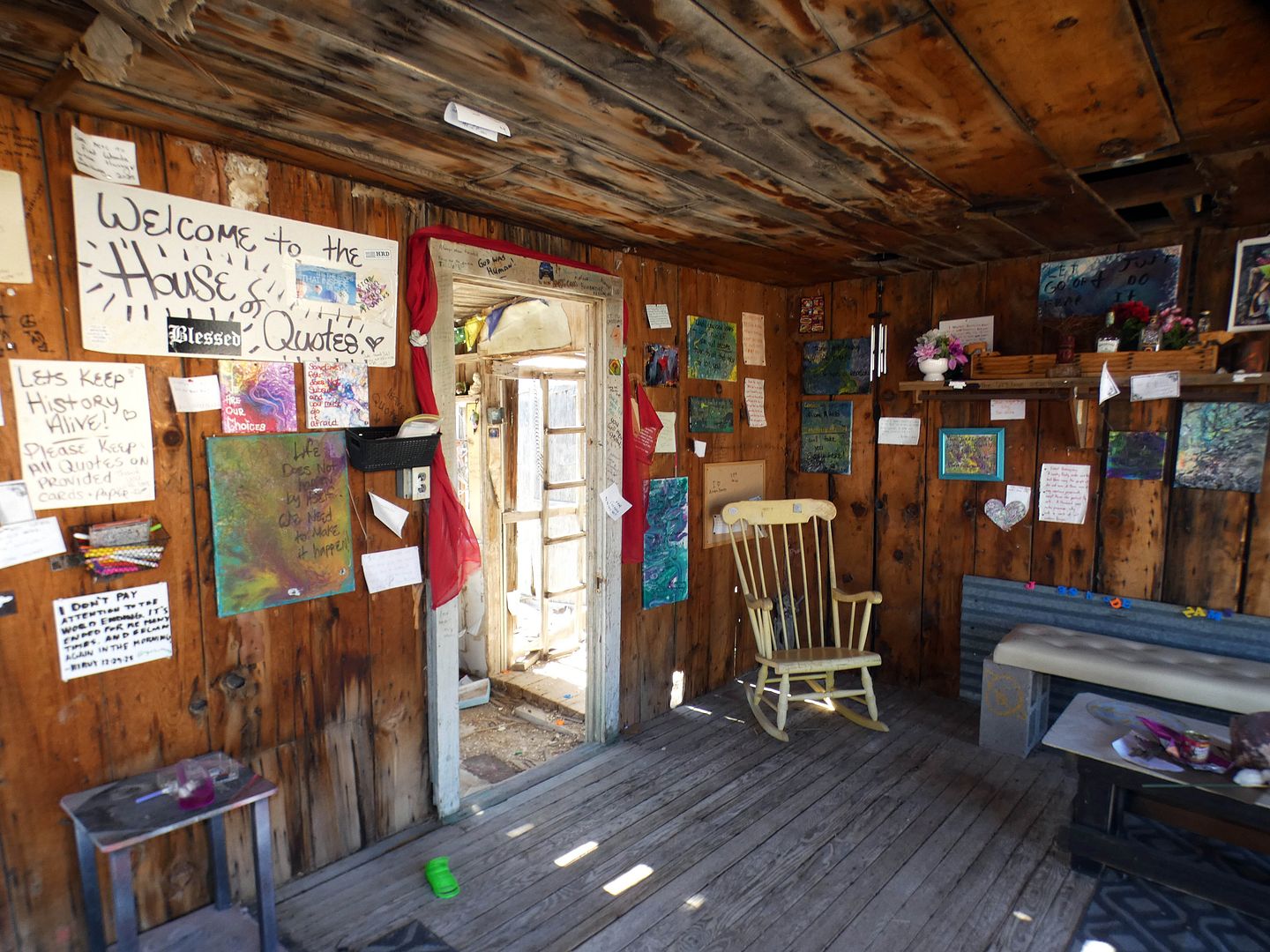
It's not clear who created it, or who's been maintaining it, but clearly someone is in charge.
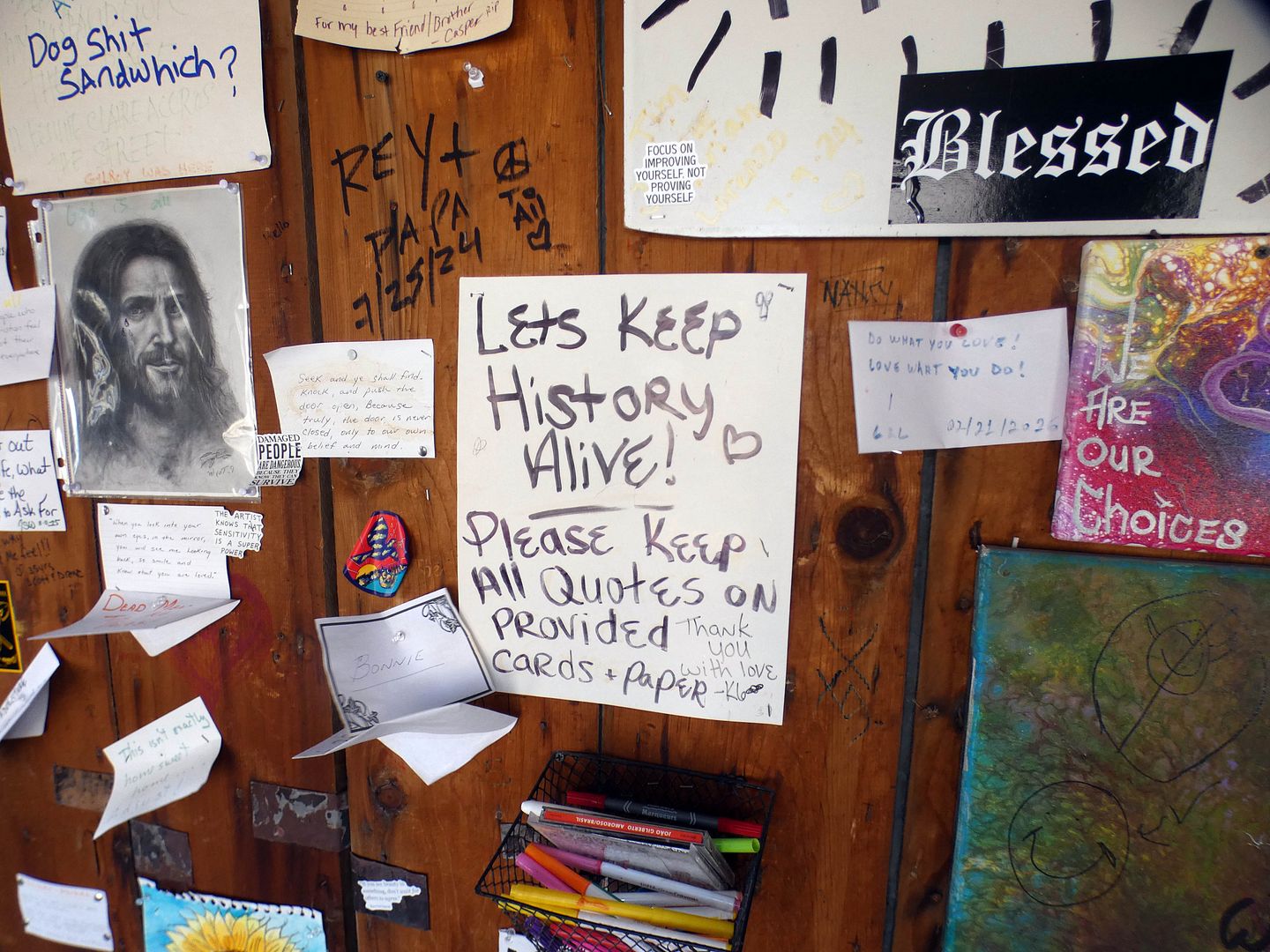
Is it someone named "Klo" who wants to "keep history alive" and asks us visitors to "keep all quotes on provided cards + paper"?
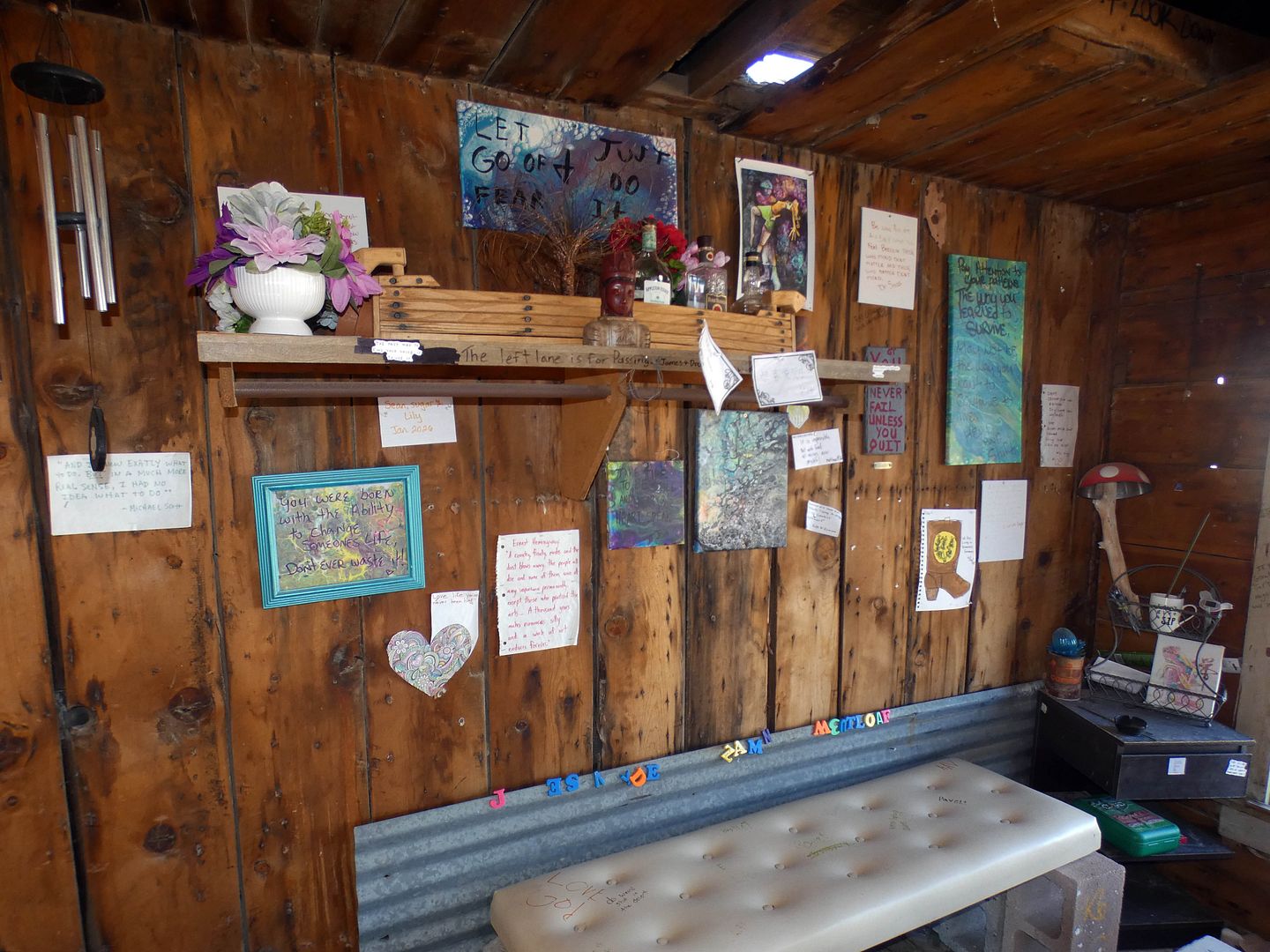
Some of the quotes feel planted—pre-populated, perhaps as a conversation starter.
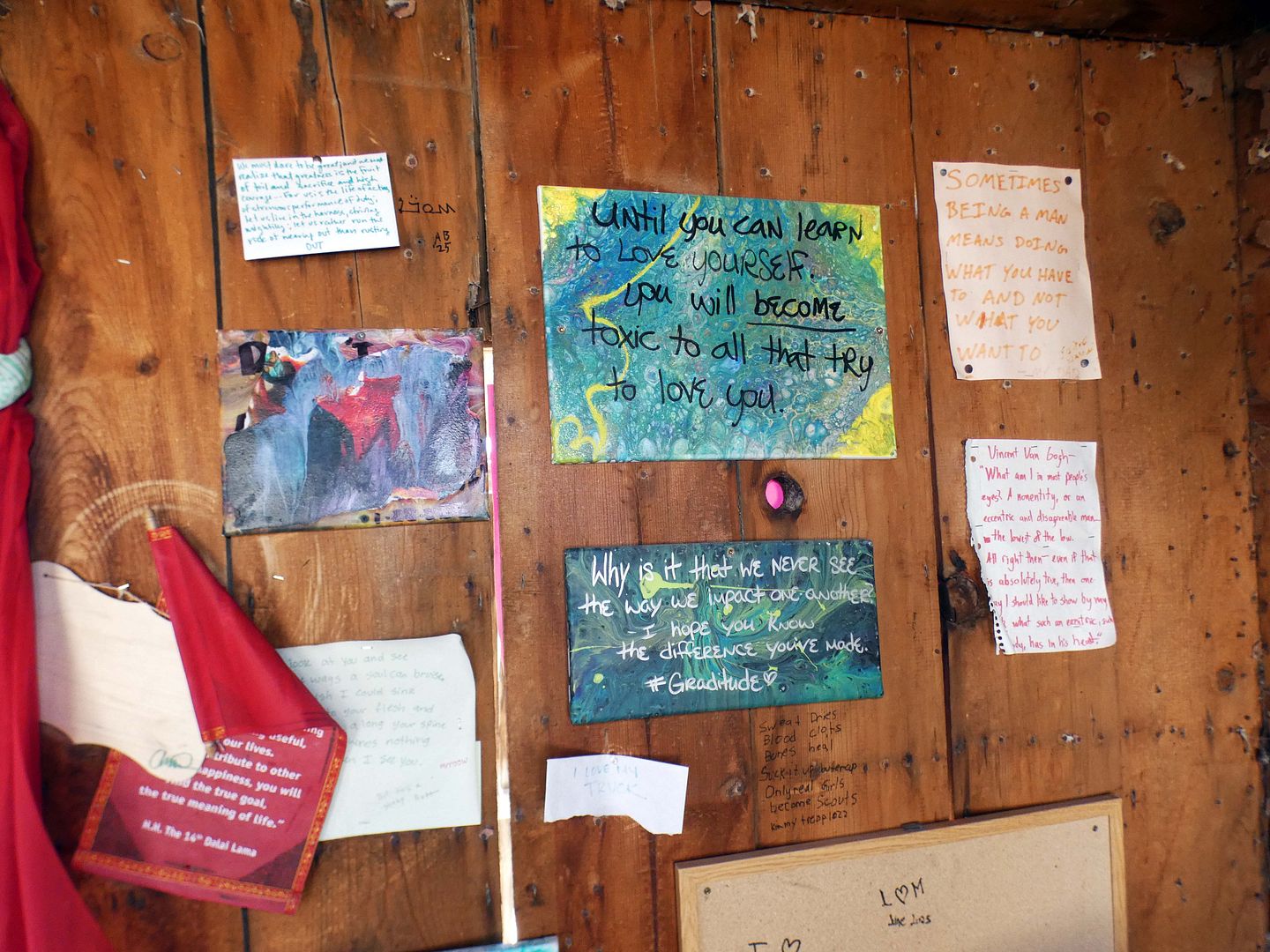
They appear scrawled across painted canvases, affixed more permanently to the walls than those that are simply tacked or taped. But as far as I can tell, the creator is anonymous.
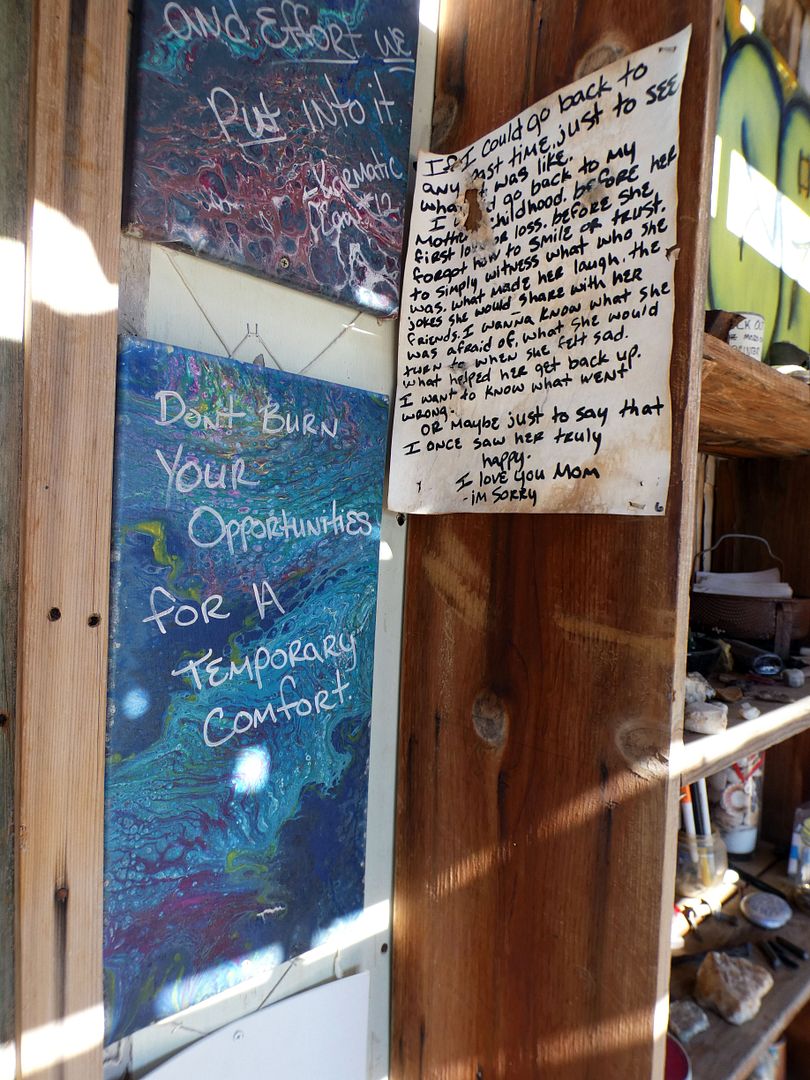
Others have left their life stories behind, memoirs that remain unsigned, unattributed.
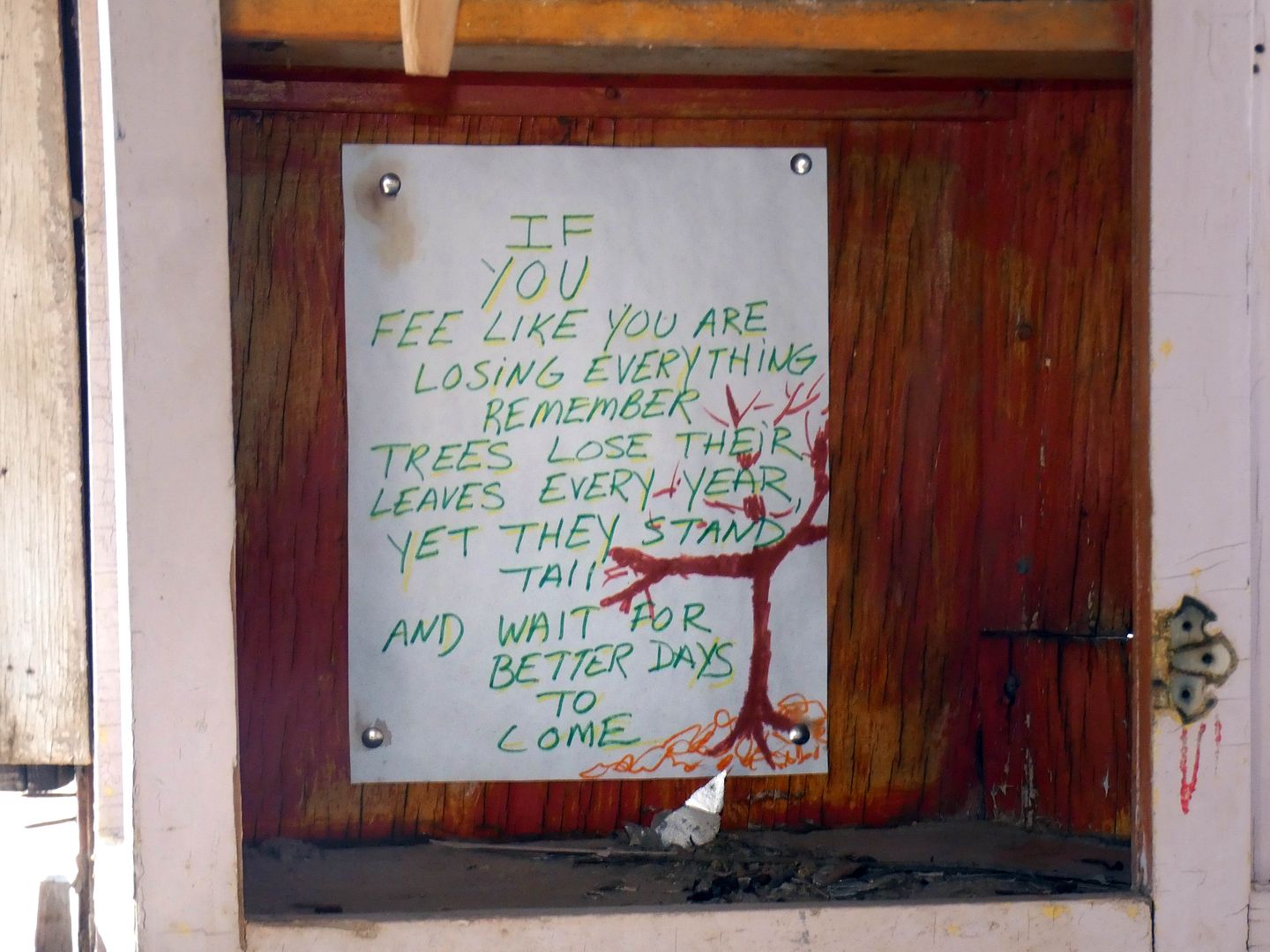
I actually felt quite inspired by some of the quotes, which seemed as though they were written as personal messages to me, delivered across space and time. It was the kind of stuff I needed to be told, or reminded of, like "Trees lose those leaves every year, yet they stand tall and wait for better days to come."
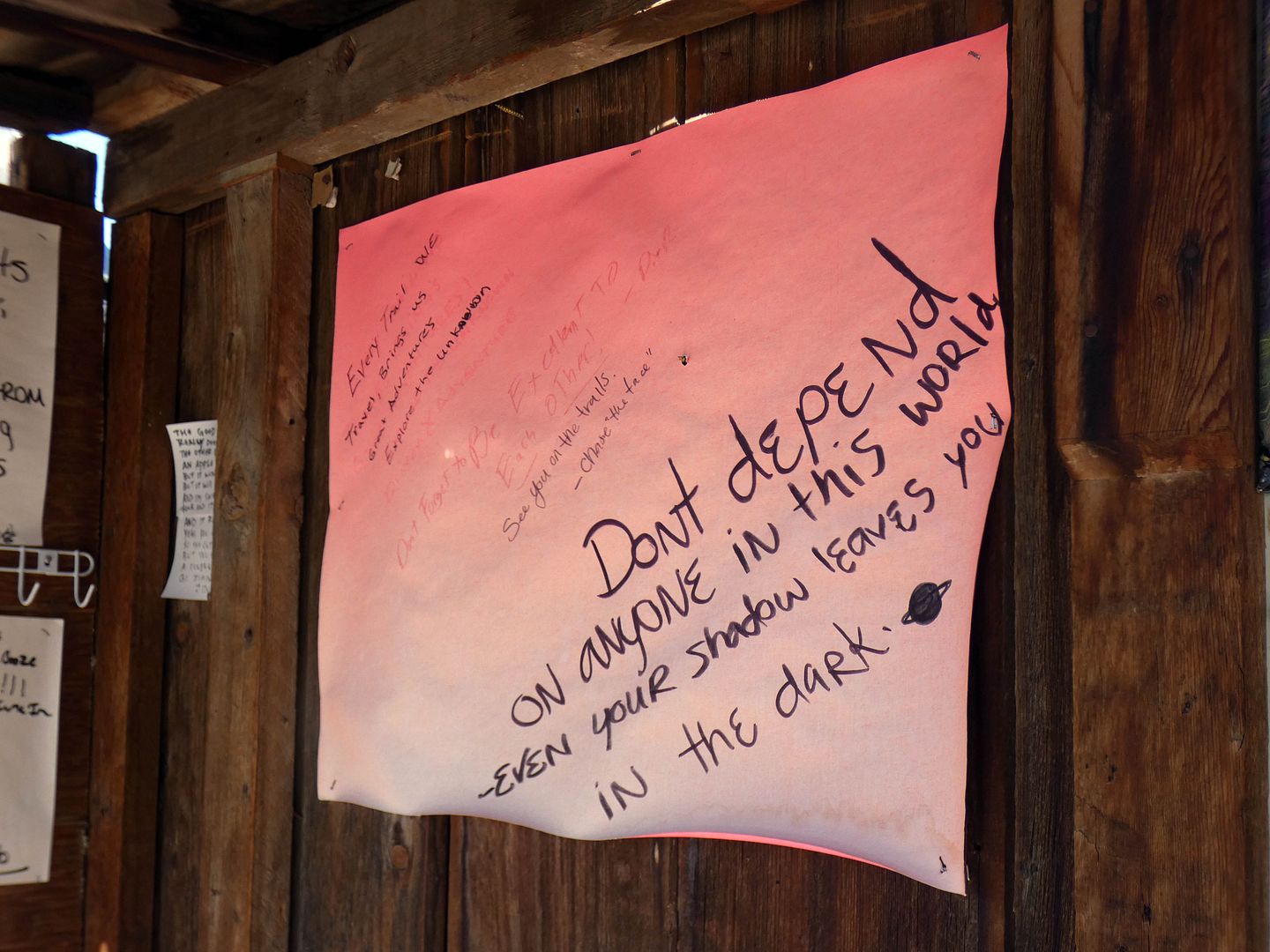
"Don't depend on anyone in this world. Even your shadow leaves you in the dark."
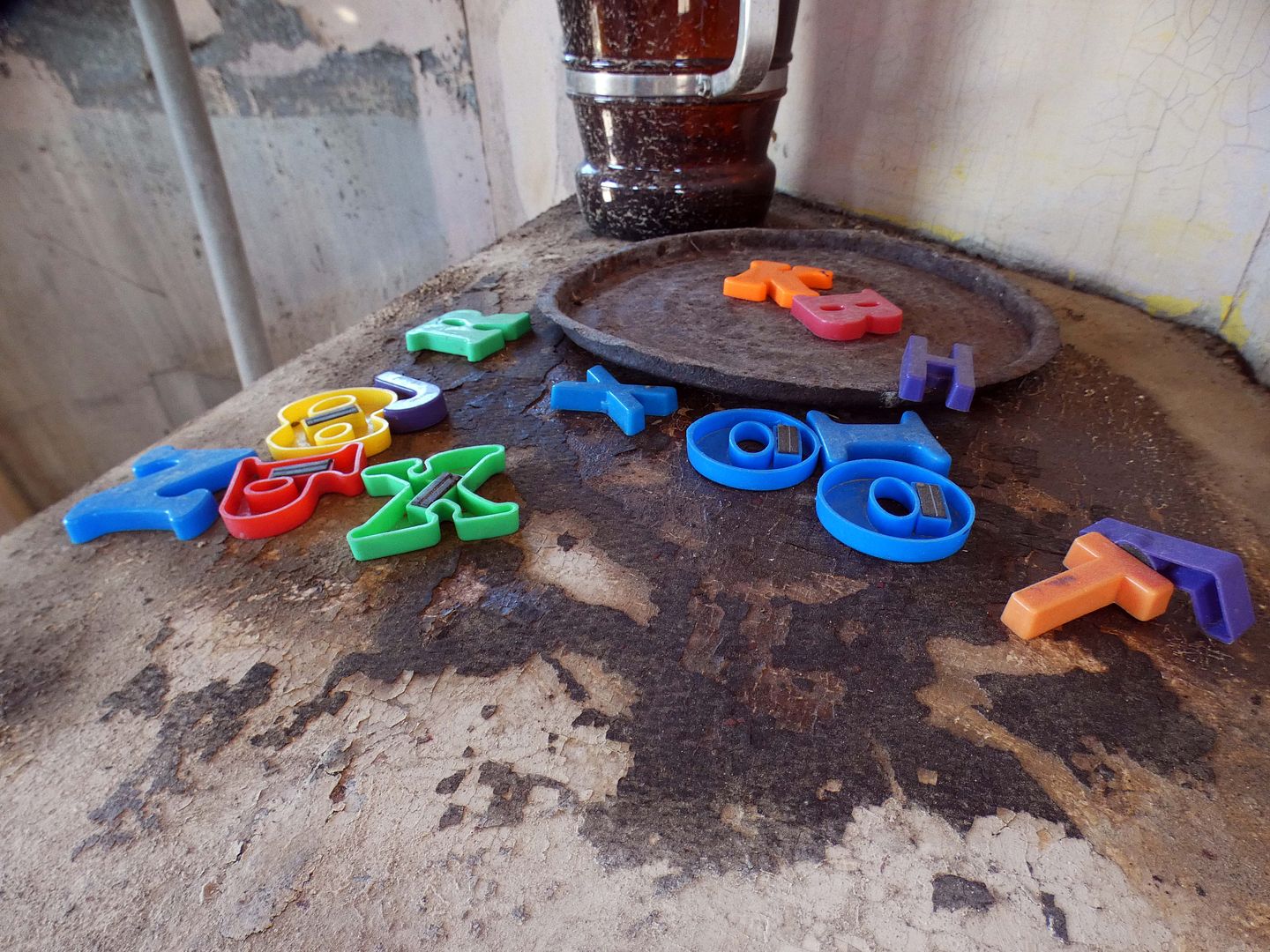
But, as in life, some of the messages were unintelligible—a scattered array of magnetic letters with nothing to attach themselves to.
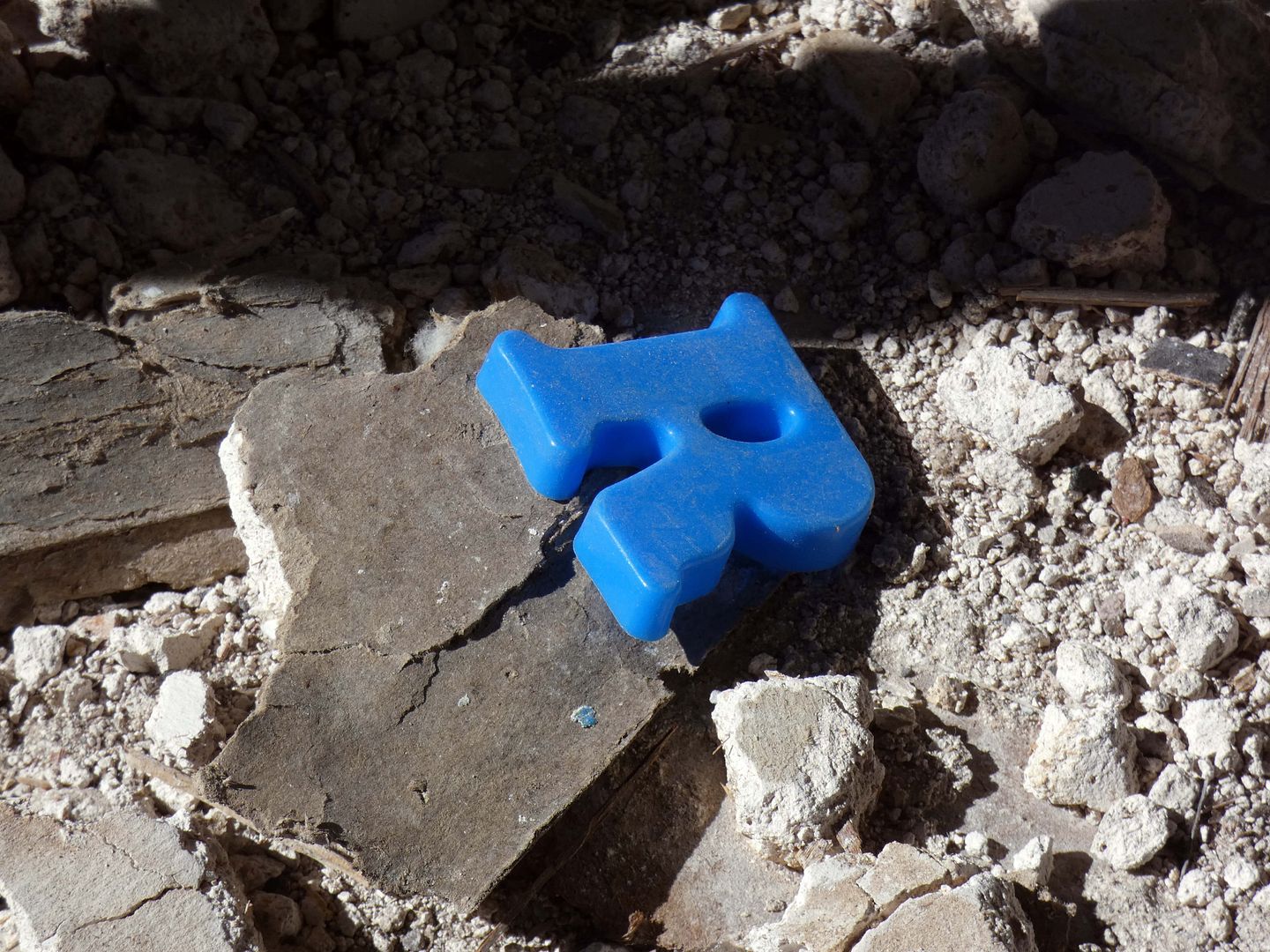
A single, wordless letter, discarded on a broken floor, making neither sound nor sense.
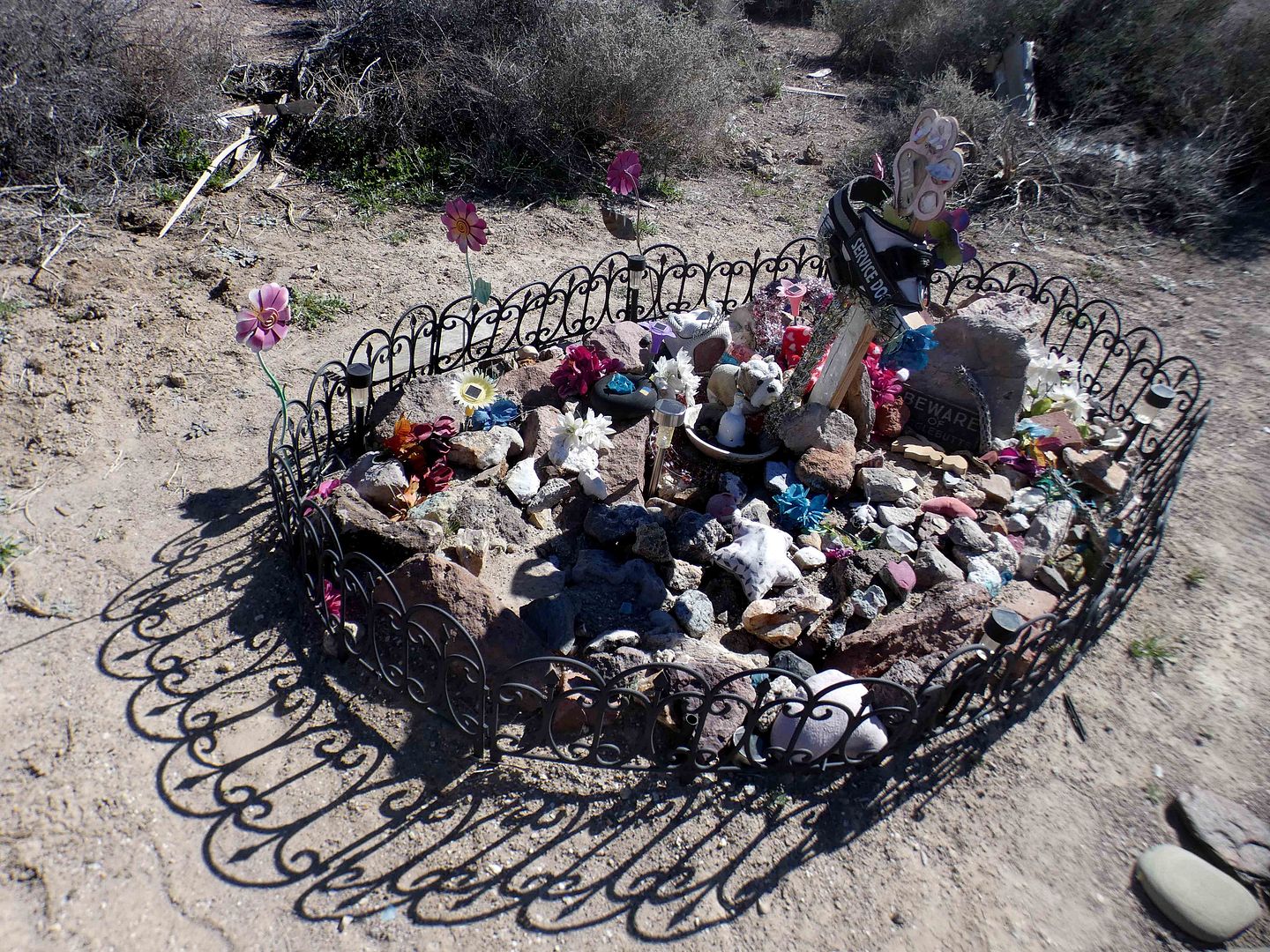
Another curiosity of the Bonnie Claire site is the adjacent pet cemetery, featuring a burial site for a service dog—or maybe even a mass grave for several animals.
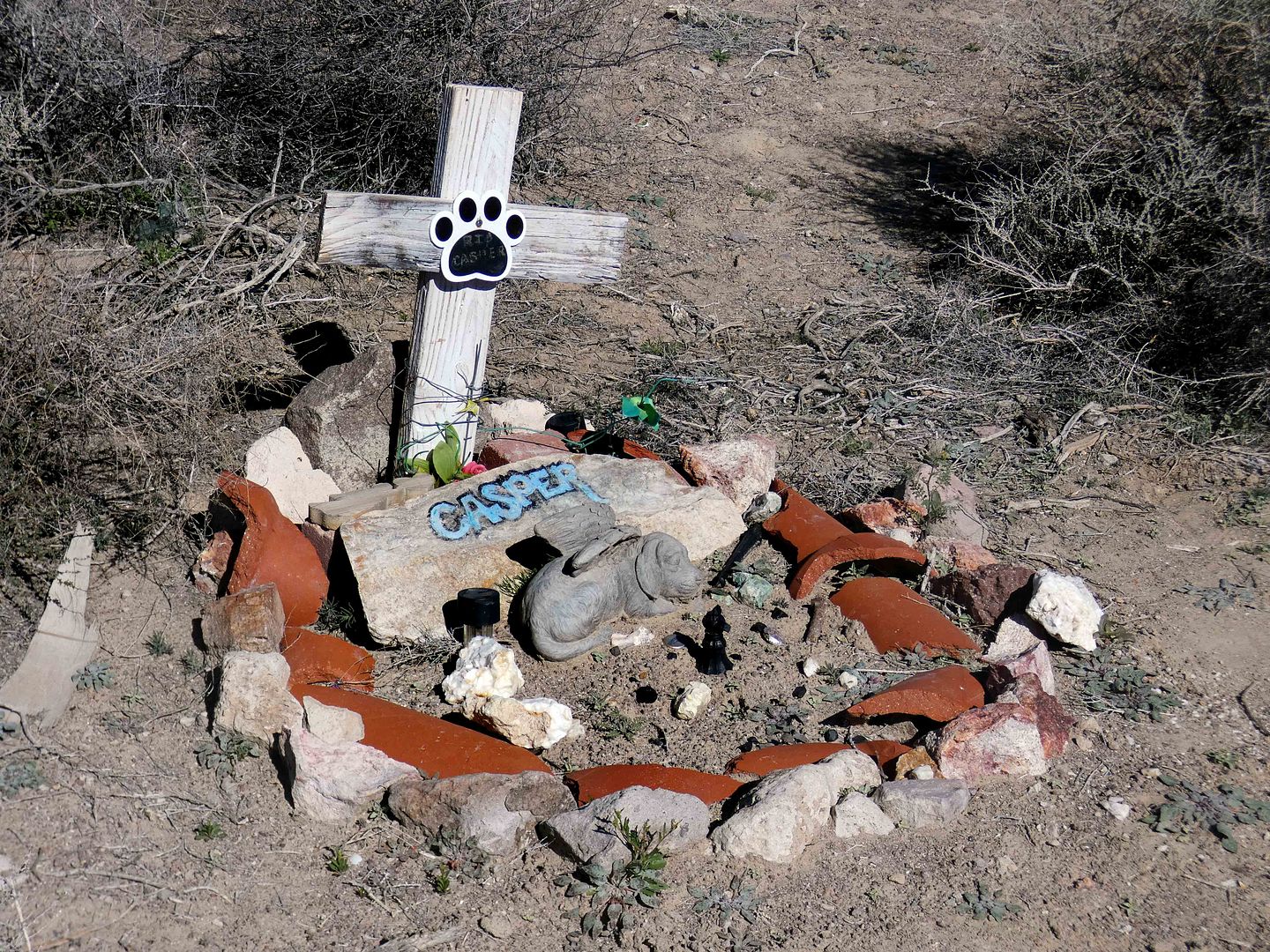
Casper appears to be interred in an adjacent plot.
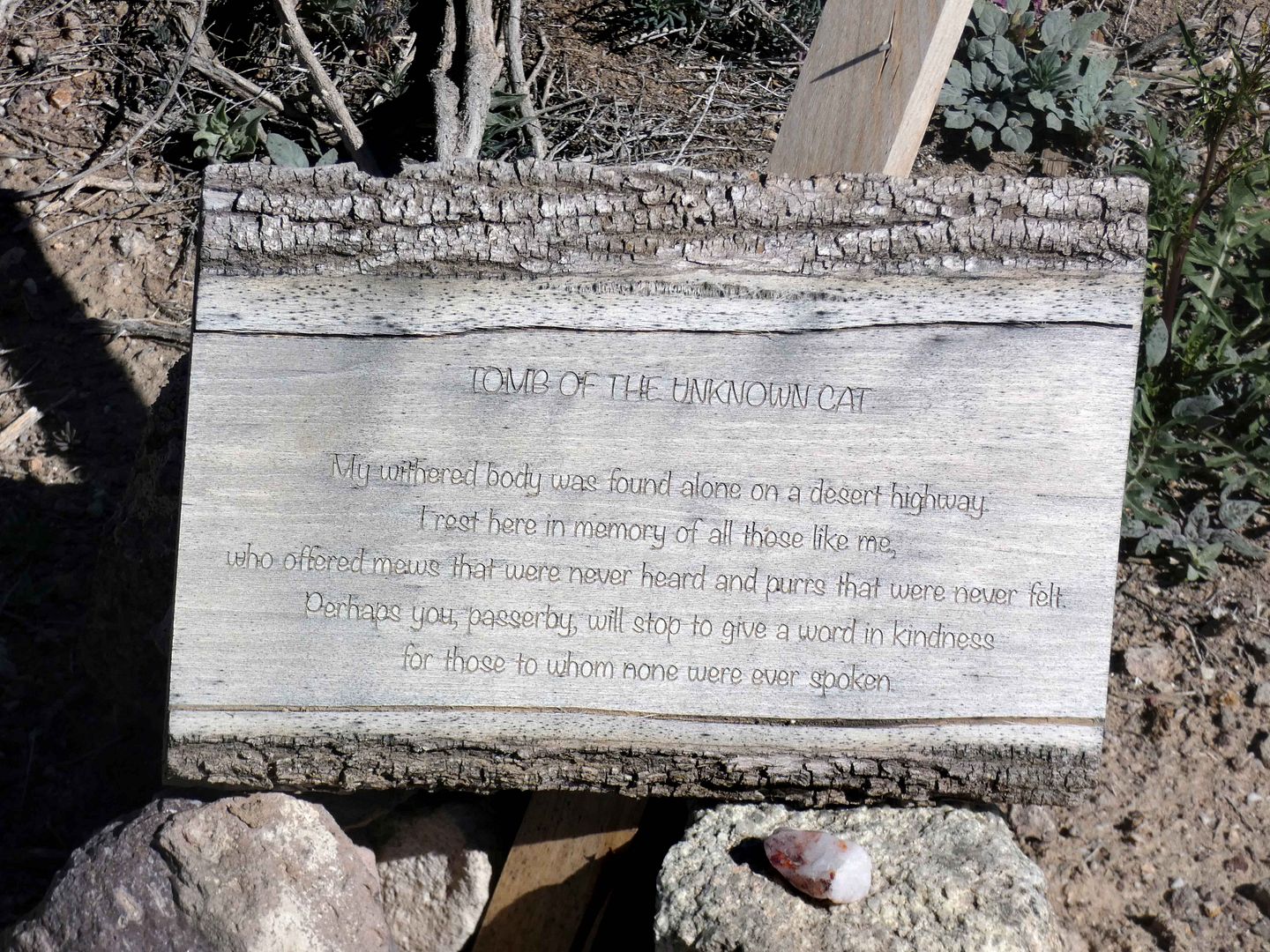
And a marker tells the story of an "Unknown Cat"—one who "offered mews that were never heard and purrs that were never felt." It's a generous tribute to a creature who'd been found alone on a desert highway, who in death might finally receive the words of kindness it never heard in life.
Sometime I'll go back and explore more of the mining ruins and the Bonnie Claire dry lake bed, with its sailing stones. But on this trip, once I experienced the House of Quotes, I was so moved that I wanted to keep the experience precious and undiluted. I sat with it for a while as I drove to my next spot, and resumed my search for wildflowers.
Related Posts:

Thank you so much for sharing this. H.O.Q. has become my sacred space to write and let go, over the last 3 years it has bloomed. my intention was to simply create a space where the world could come amends know there are not alone. Even for a moment. -K6
ReplyDeleteIt was you?! Xoxoxo
Delete