Search

Showing posts sorted by relevance for query balboa. Sort by date Show all posts

May 15, 2020

Photo Essay: A Slice of Colonial Spain In the Ever-Modernizing Downtown of San Diego

When the Balboa Theatre replaced the Gould Hotel at 4th and E in San Diego's Gaslamp Quarter, it was the Southern California city's first big downtown movie theatre.

And when the city government condemned it, evicted its current operator, and then purchased it in 1986, it became San Diego's longest-running empty stage at the time—closed for business for over 20 years.

That was four years before the nearby California Theatre shuttered in 1990. Now, that stage has been empty for 30 years—and all signs point to it never reopening again.

Fortunately, the Balboa found a way somehow to reopen on January 19, 2008, after a 3.5-year, $26.5-million renovation.

Under the hood, restoration architects Westlake, Reed and Leskowsky replaced all utilities with new and seismically retrofitted he entire structure, adding disabled access.
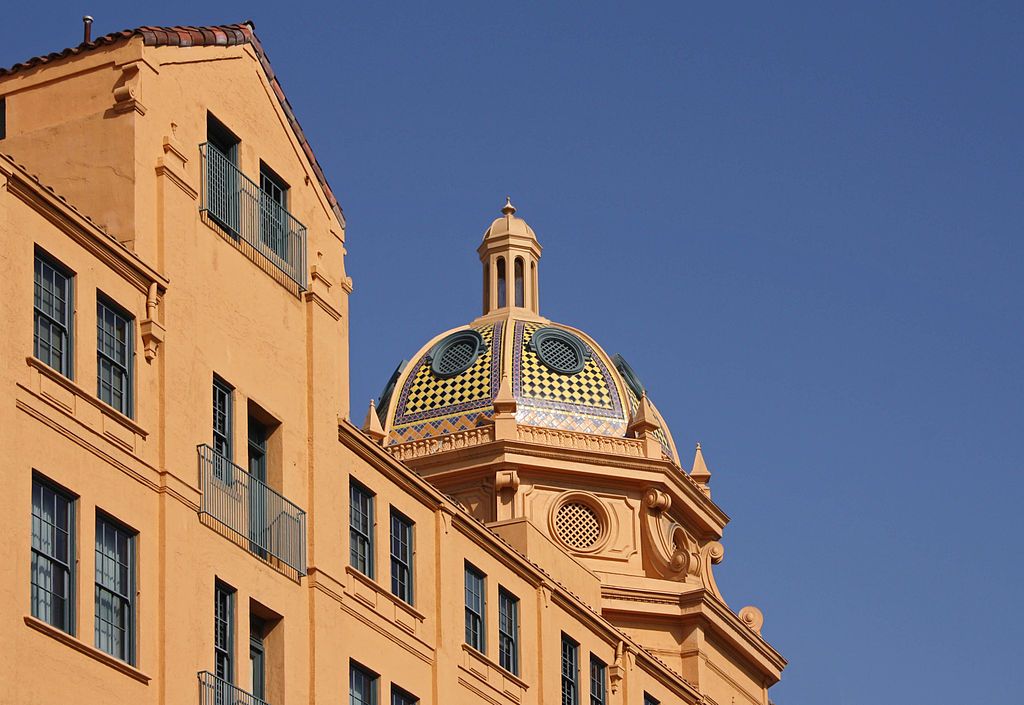

Photo: Bernard Gagnon via Wikimedia Commons (CC BY-SA)
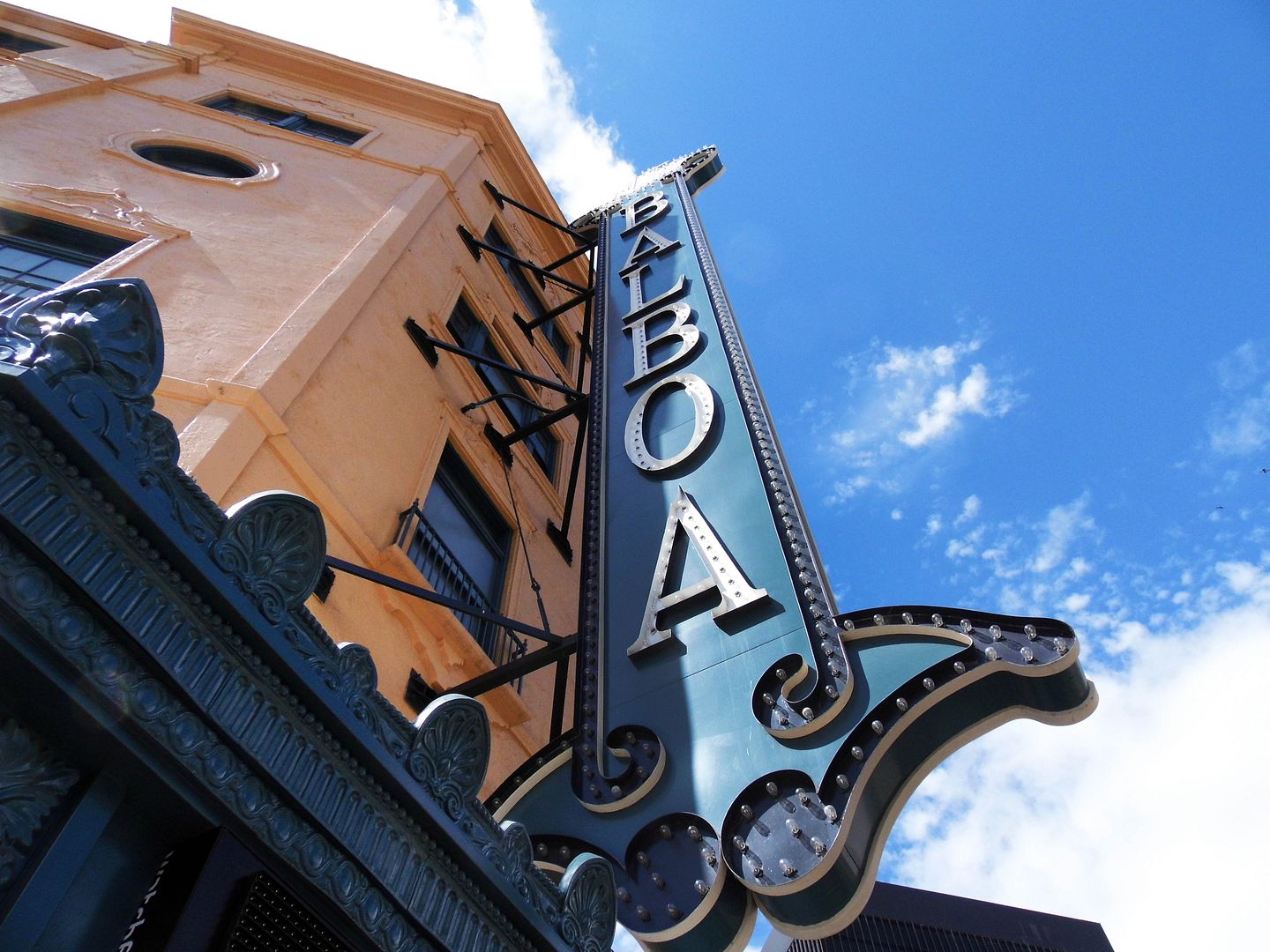
Outside, a historically accurate pumpkin-esque tone covers up the white of its non-historic exterior paint job. A replica hangs were the original marquee went missing sometime in the 1930s, though it's since been converted for digital display. The blade sign was faithfully reproduced according to the specs of the original.


Originally designed in the Spanish Colonial Revival Style by architect (and former "stage man") William H. Wheeler and built by building contractor C. L. Wurster of Wurster Construction Company, the Balboa Theatre building's 4th Avenue side featured six ground-floor retail storefronts, with the floors above housing 34 offices.


Reportedly completed at a cost of $800,000, the theatre opened on March 28, 1924 as both a vaudeville stage (with acts like the brother-sister duo Fanchon and Marco) and a movie house. Its initial owner Robert Ernest ("Bob") Hicks—a former Colorado newspaperman and San Diego Union editor—had been involved in exhibiting movies in San Diego since 1910 or so.
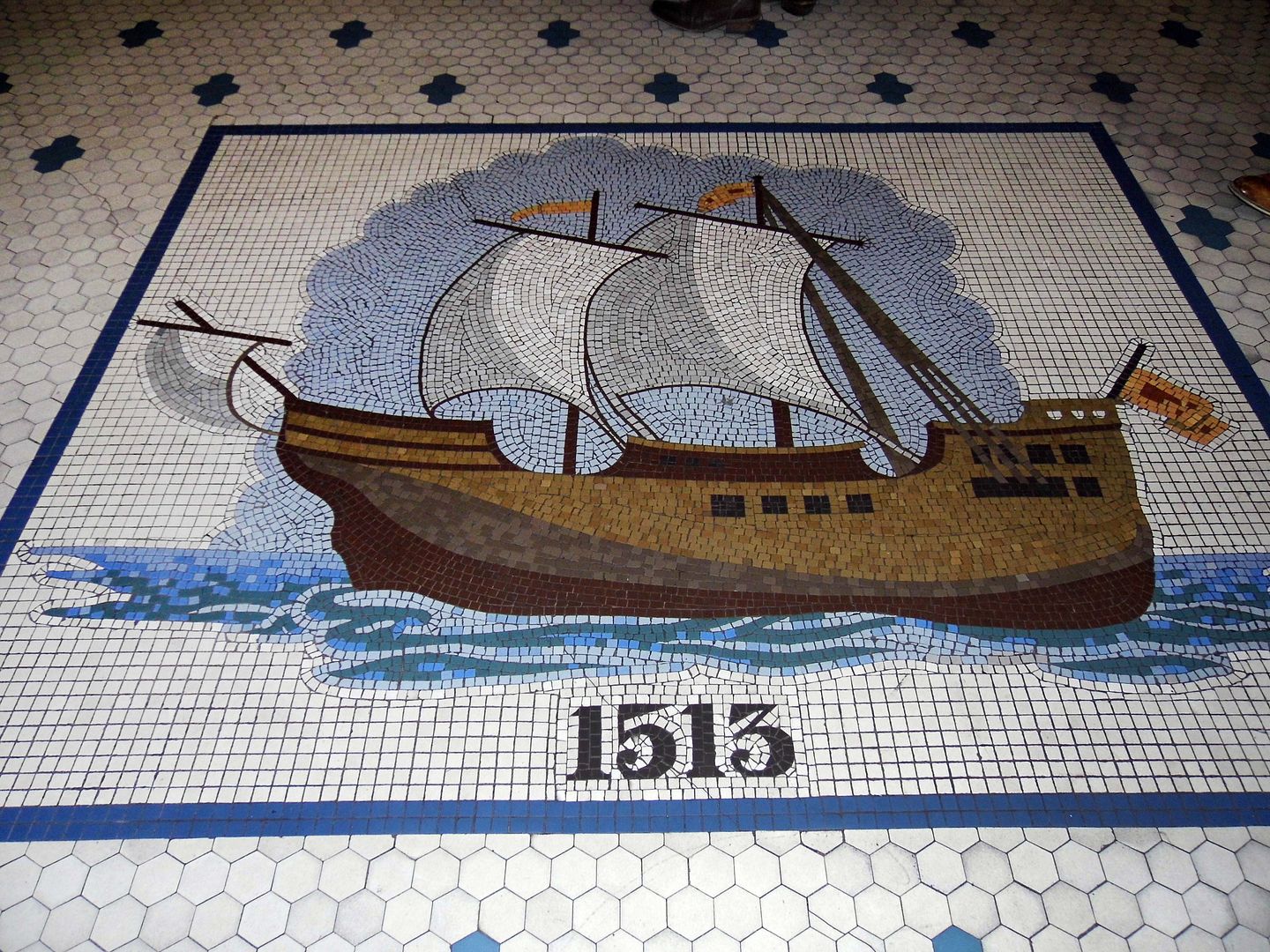


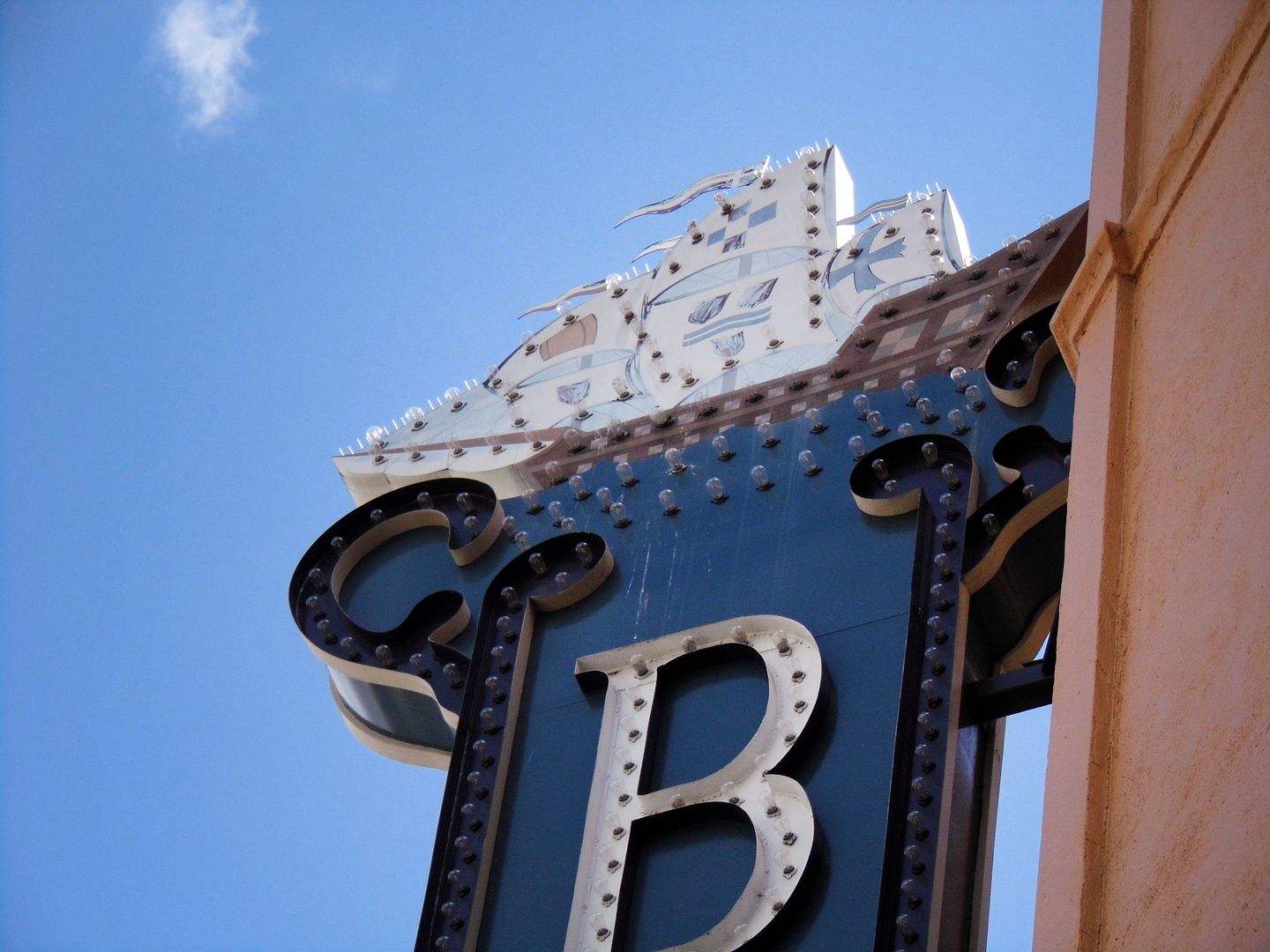
The theatre gets its name from Vasco Núñez de Balboa, first European explorer to reach the Pacific Ocean. His sailing ship is depicted on the exterior blade sign as well as on the historic mosaic tile floor in the entry rotunda.
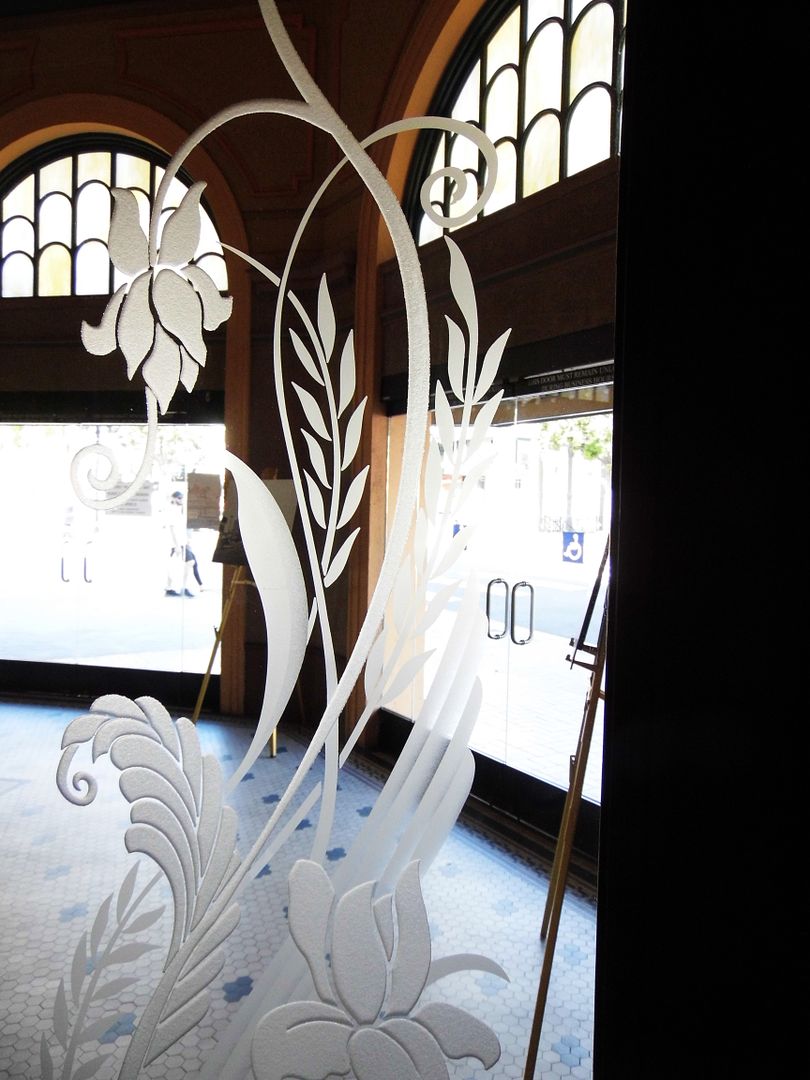


While the theatre sat in limbo waiting for its fate to be determined, its foyer was actually open air—exposing it to all sorts of elements. The restoration enclosed it with new exterior doors and restored the deeply etched glass doors that bring guests into the lobby.
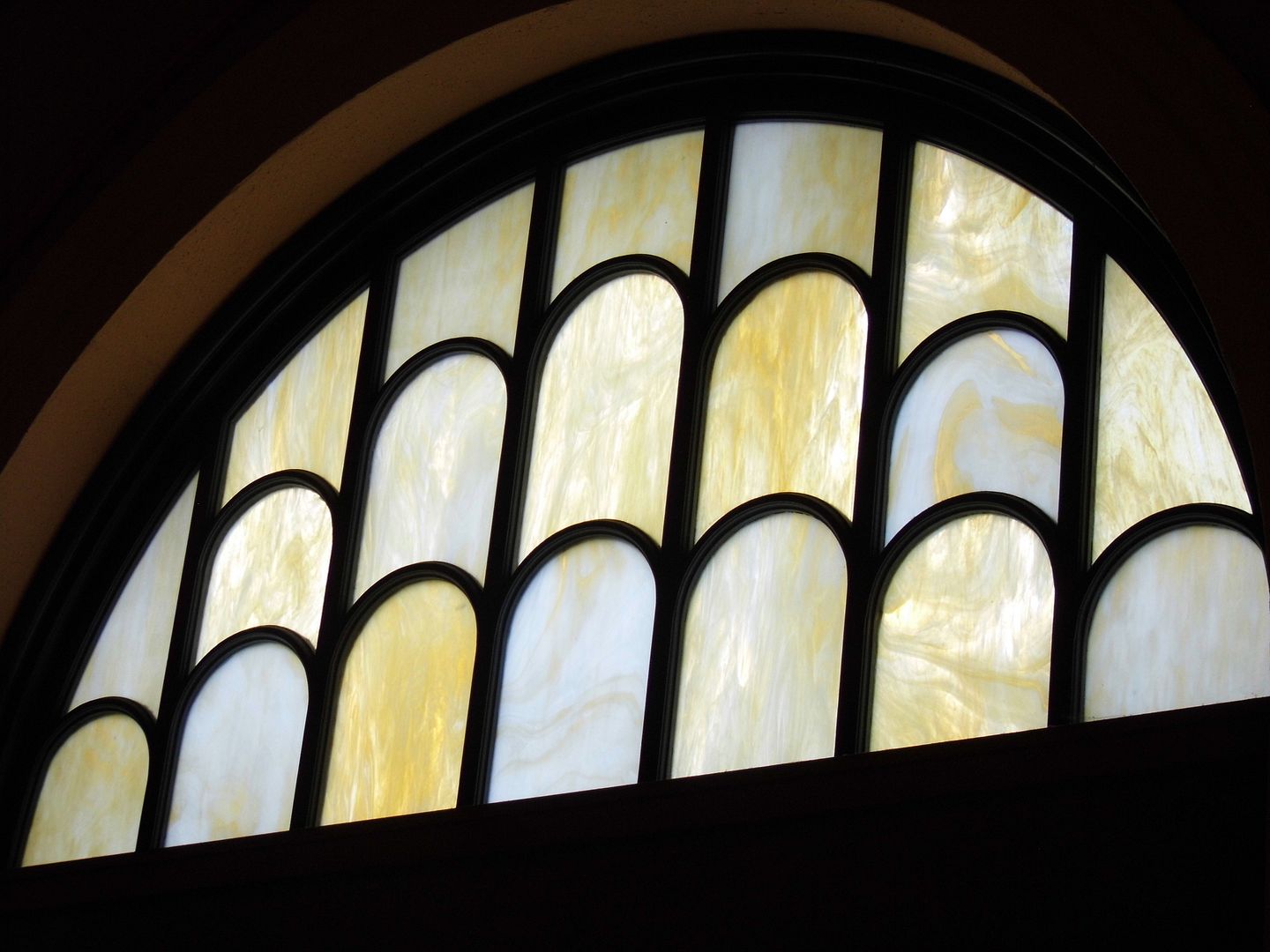


The historic clerestory windows facing the street above the marquee had suffered some damage, too—so they were also replaced by replicas.


In 1930, the theatre's programming of silent films accompanied by orchestra and organ gave way to "talkies" with the new involvement of Fox West Coast Theatres—which later remodeled the Balboa Theatre into the Teatro Balboa cinema, screening Spanish-language films ("todo en español," like El Dios del Mar from 1930) starring primarily Mexican talent (like Ramón Pereda). Just a few years later, the Navy commandeered the upstairs offices to house its bachelor sailors waiting to ship out during WWII.


In 1959, the Balboa almost met the same fate of the hotel that once occupied that same corner—demolition. This time, the plan was to flatten the theatre to make way for a parking lot. But it was saved when San Diego's Russo family bought the building for around $100,000 and ran it as a action movie house (with a hotel upstairs) until 1976, when they leased it out to another operator. It was threatened again in 1983, with a proposed conversion into an art museum/arts center.
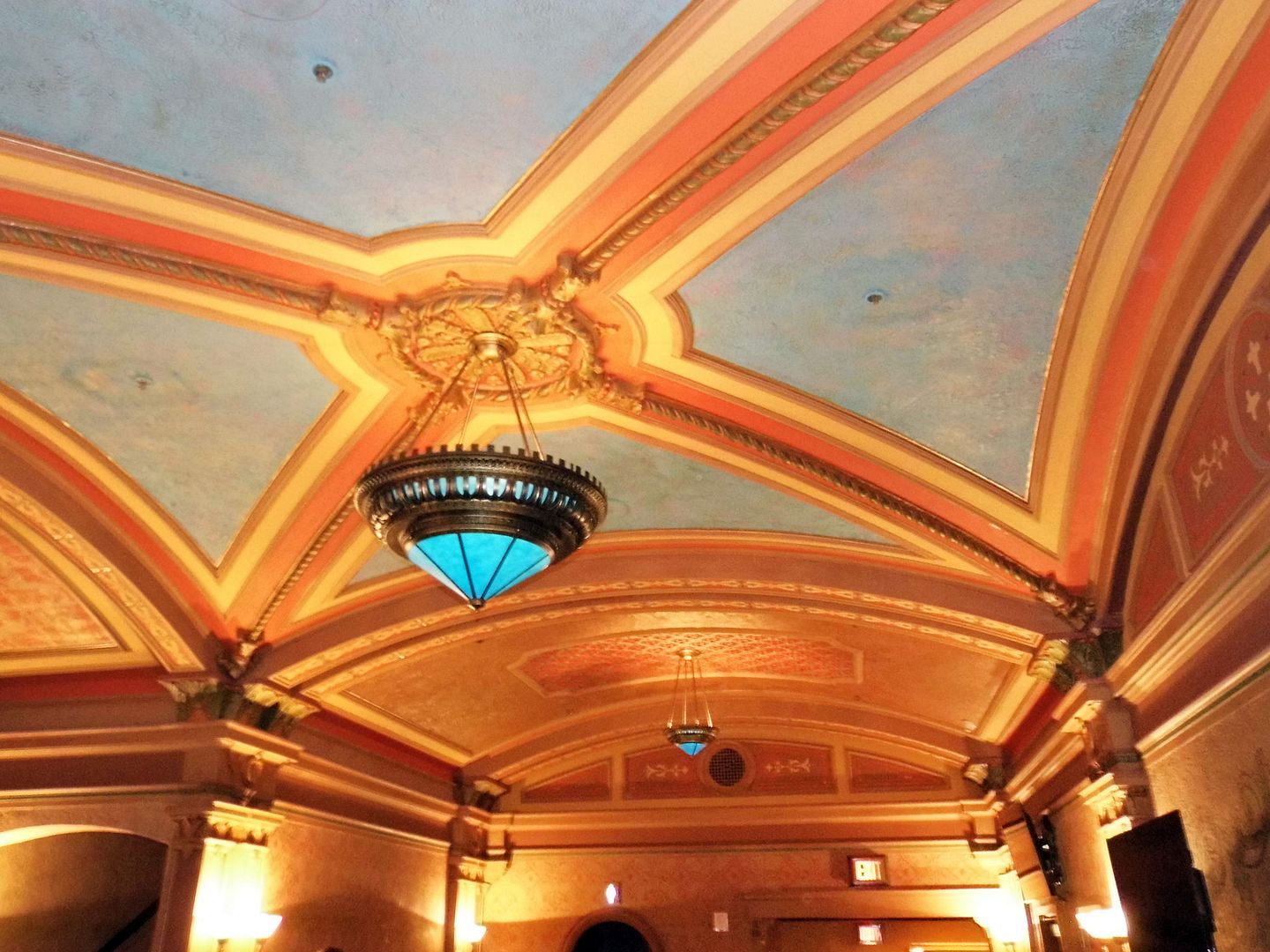


It's kind of amazing that after all that, the Balboa was able to reopen as a theatre—now promarily a performing arts stage. Audiences are now greeted by ornamental plaster in the second floor "Salon" lobby that's been restored by New York's Evergreene Studios, which sculpted new molds and cast new plaster elements to replace what had deteriorated or been lost.
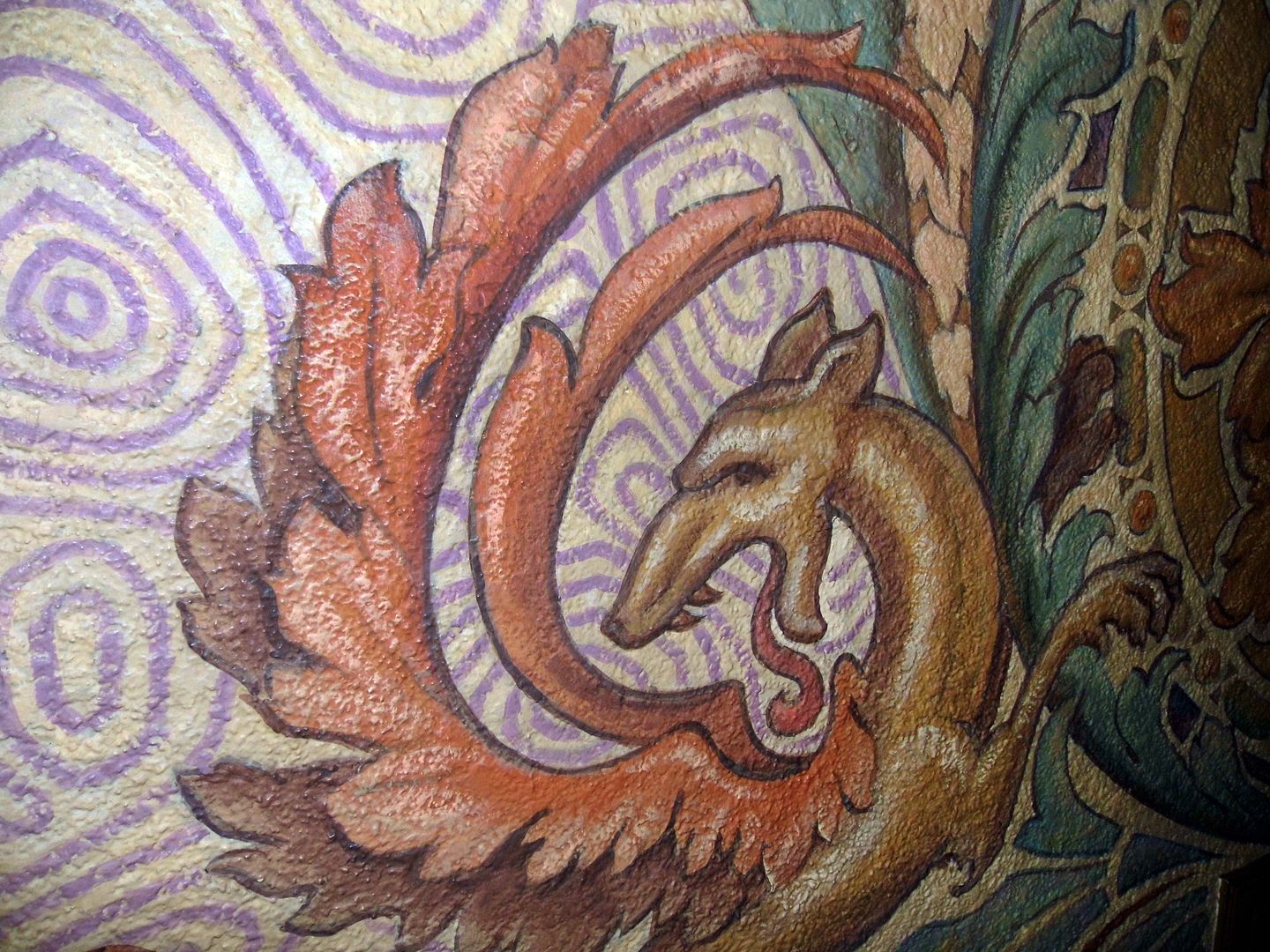


The original murals by Heinsbergen Decorating Company on both sides of the salon had been painted over, so in order to return the walls to their original designs...
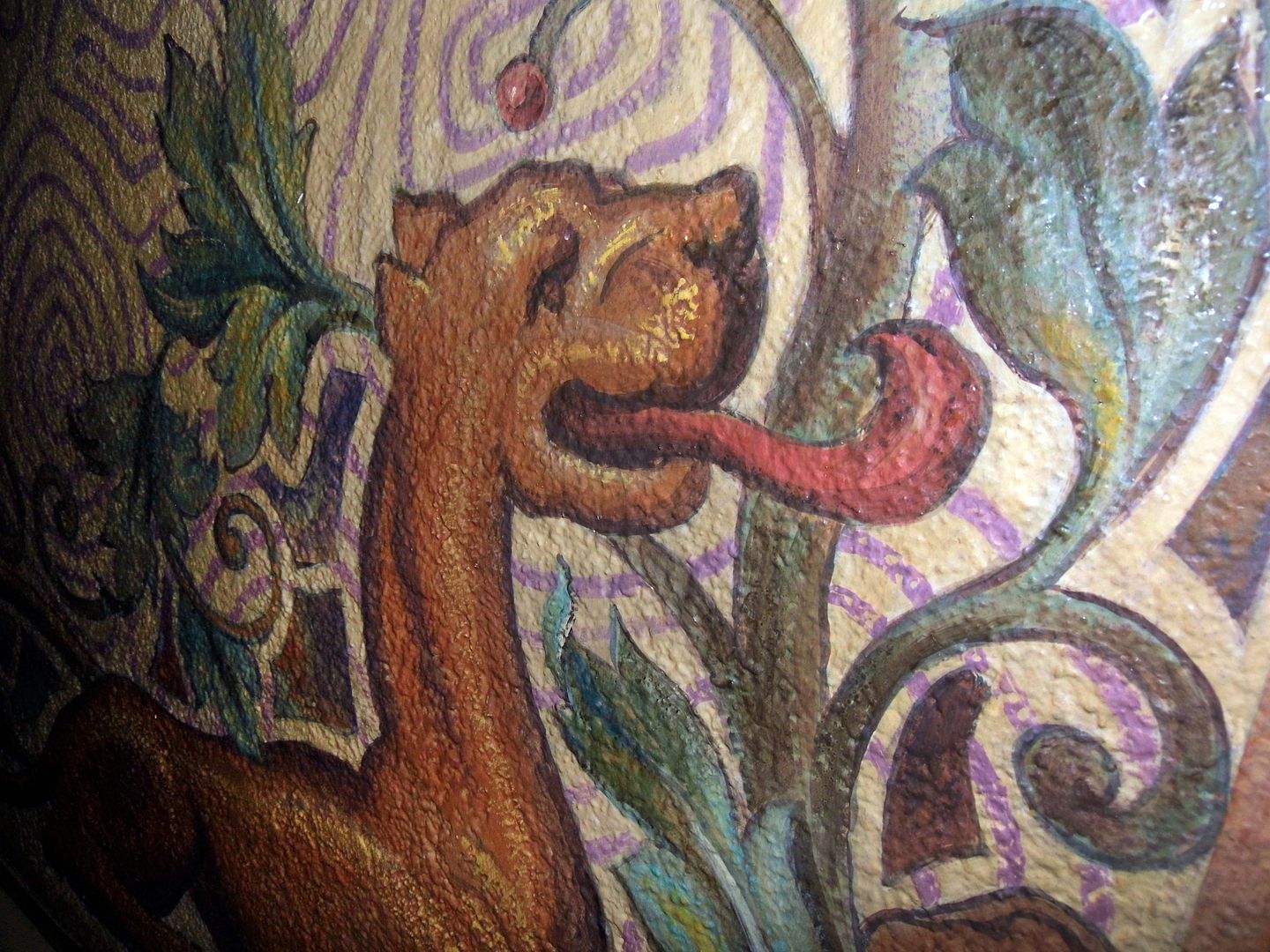


...Evergreene recreated stencils from a single 1924 photograph and established the color palette from paint scrapings.
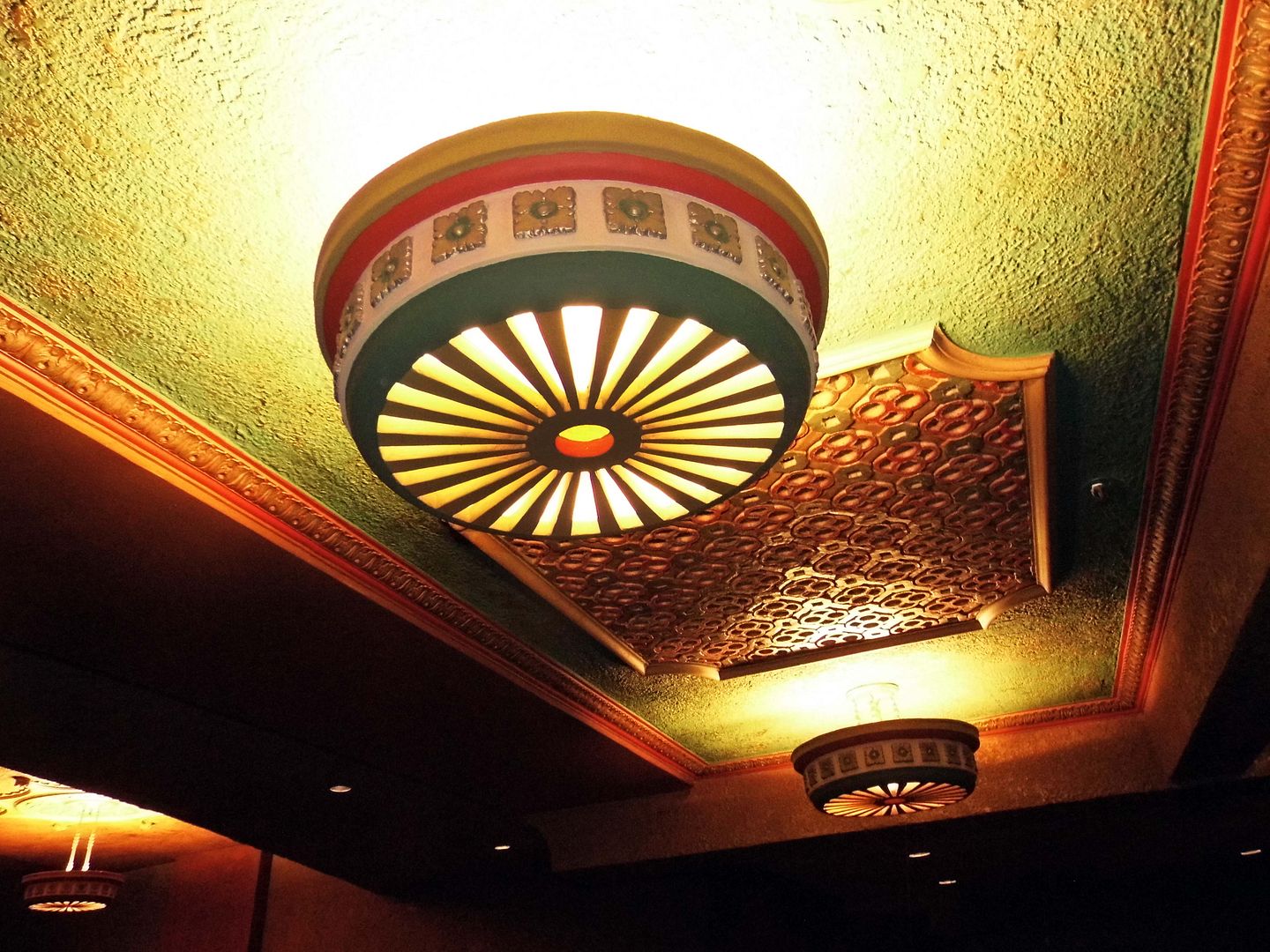


Inside the auditorium, the gilded historic appearance of the original bronze powder paint had lost its luster, having tarnished to a dark brown. In its paint restoration efforts, Evergreene recreated original color schemes using a bronze powder paint that supposedly won't tarnish.
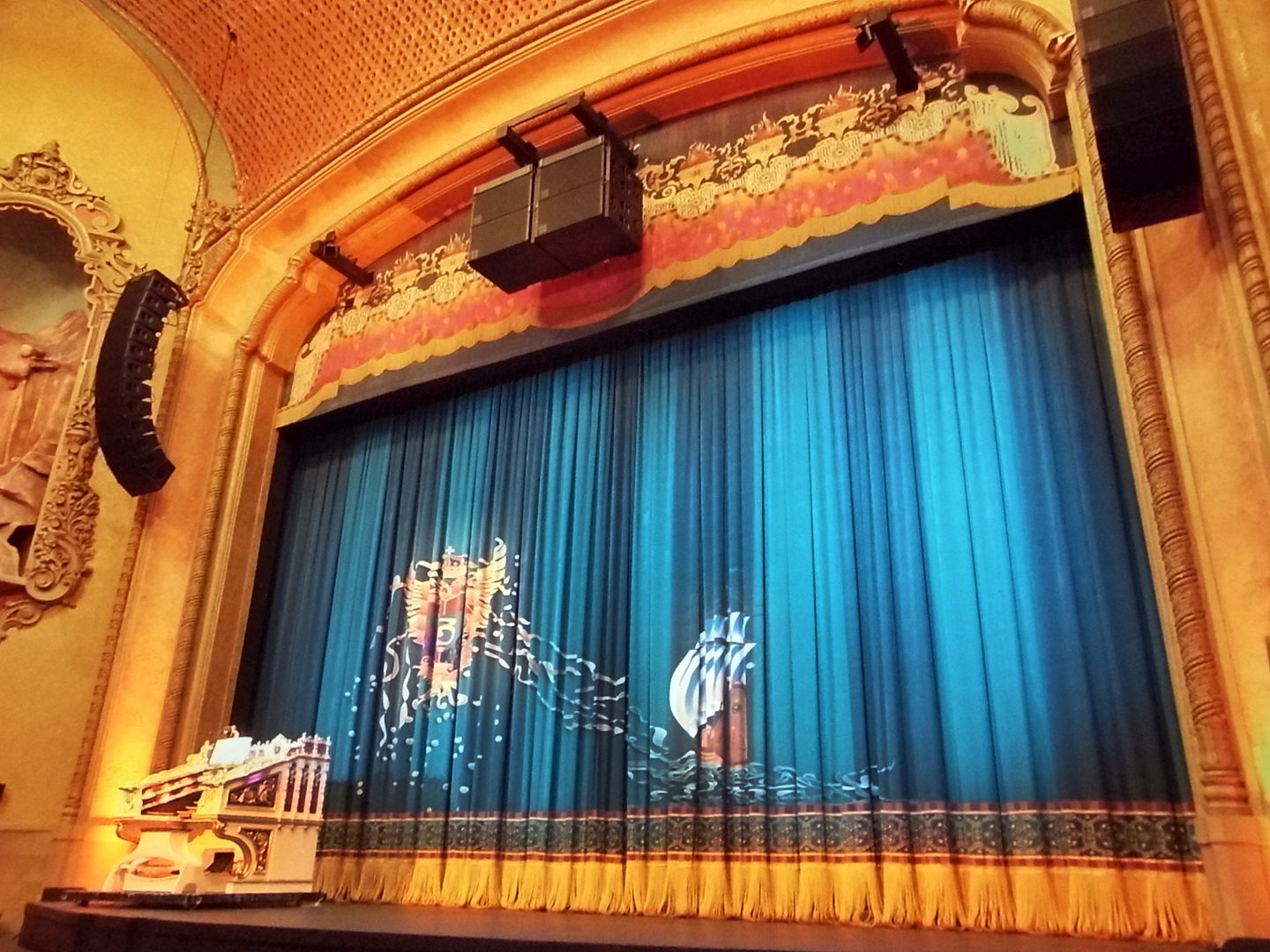


The Balboa's Spanish "ship" theme continues on the stage, where the curtain's design features the Balboa family coat of arms and a 16th-century Spanish caravel. On either side of the proscenium, real water trickles down ornamental mountains set inside 28-foot-tall grottos—at first a functional feature, as the water helped cool the audience, but now just decorative.
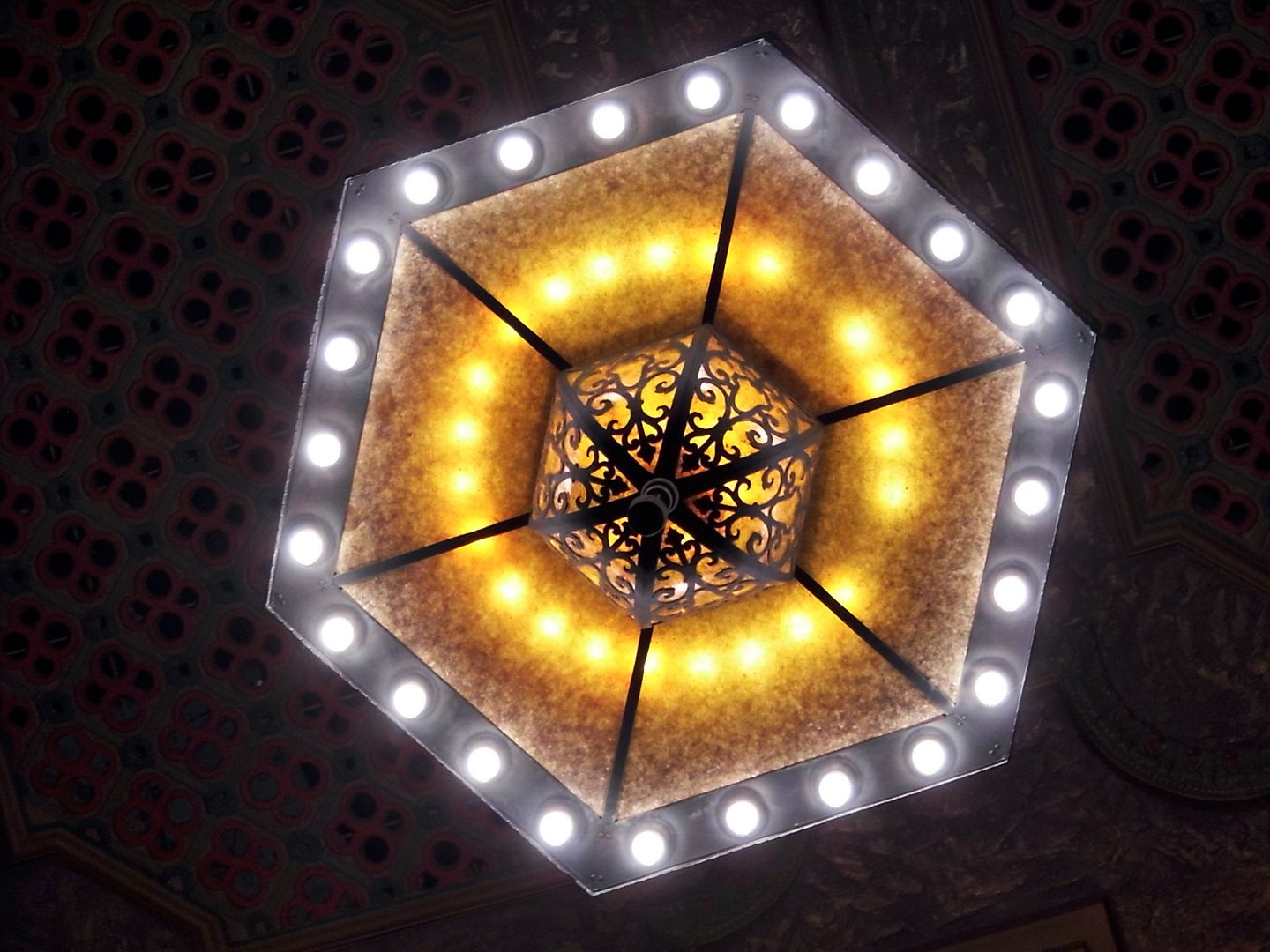


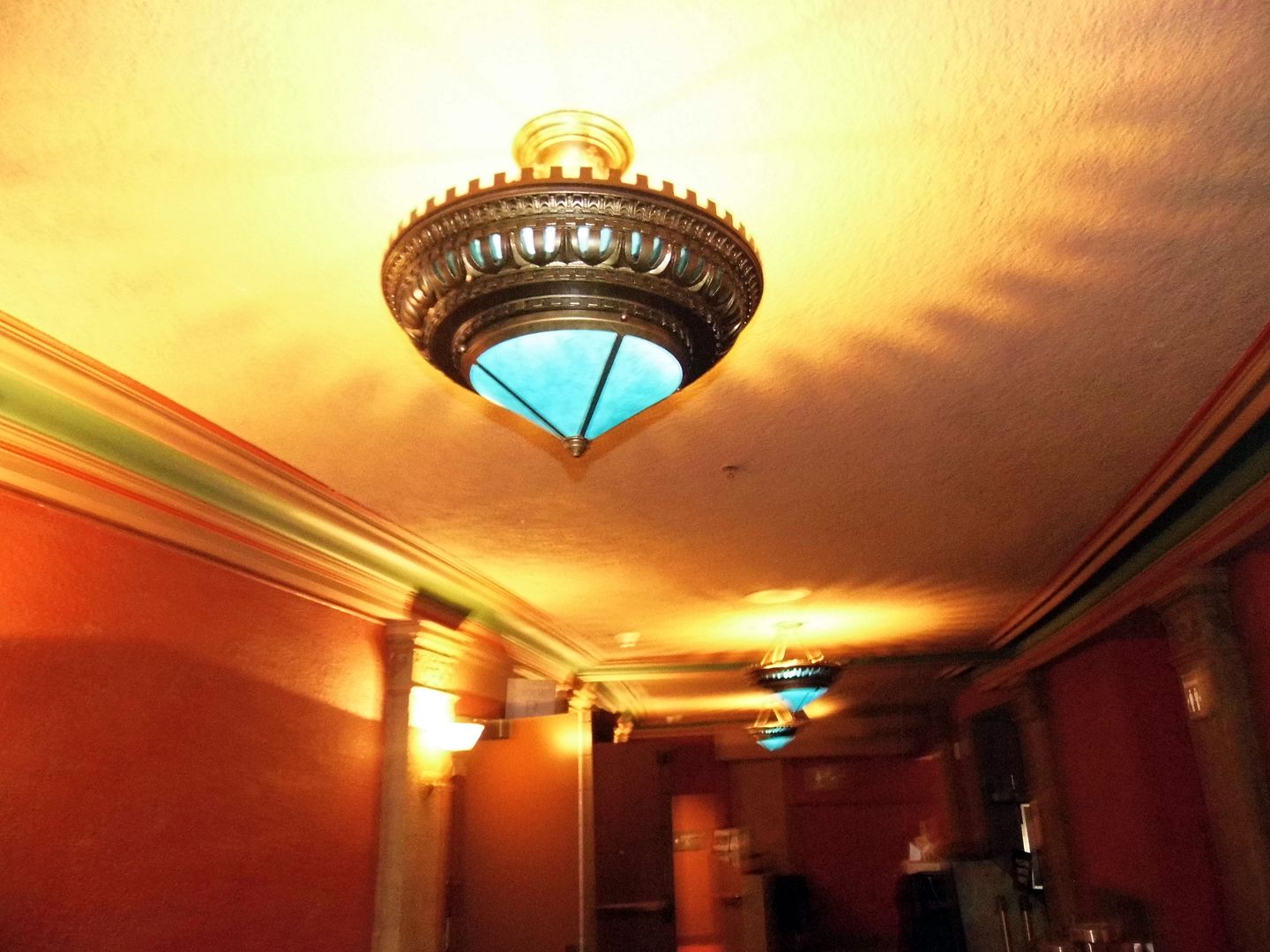
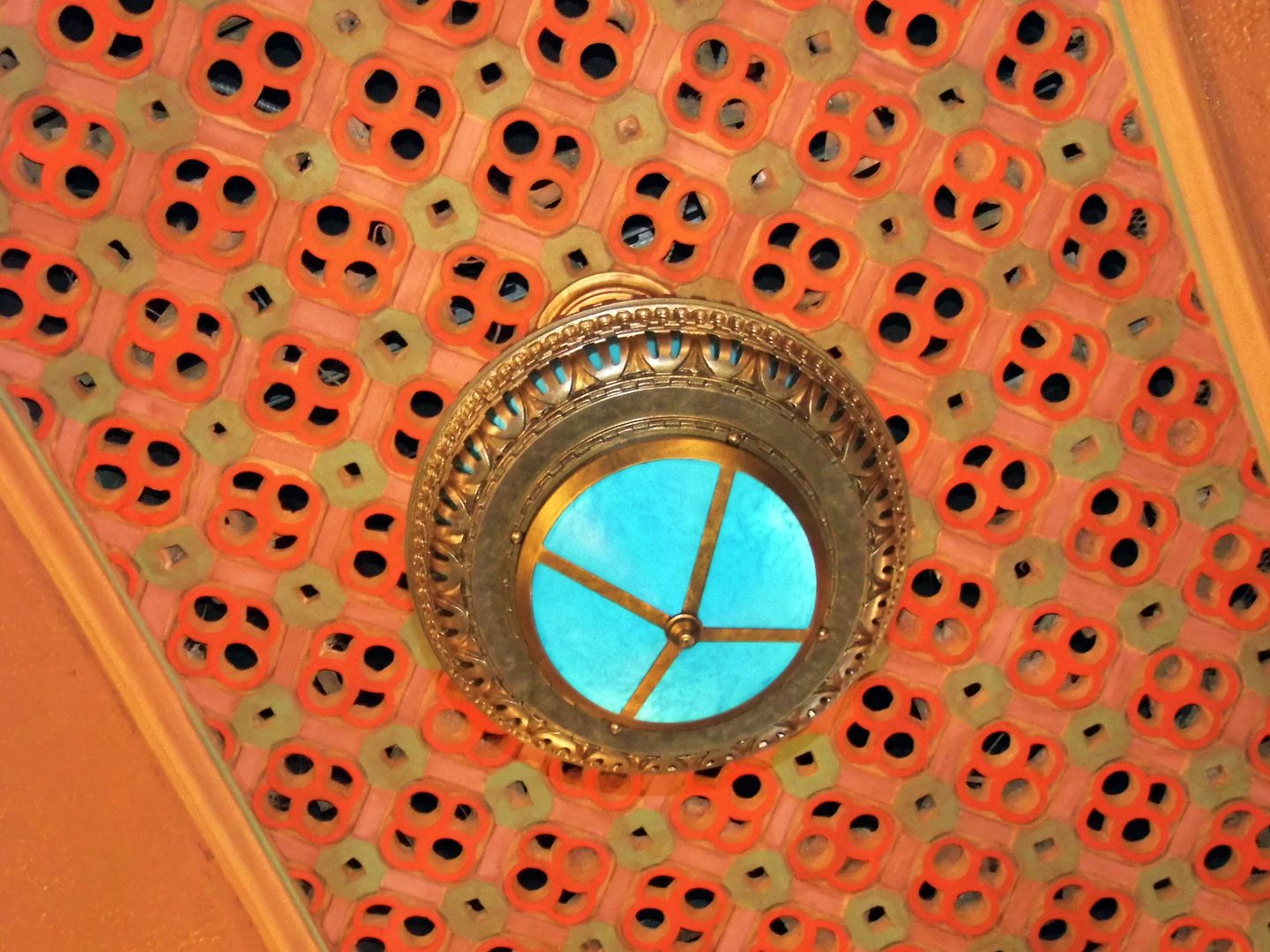
Hanging from the ceiling above are historic light fixtures that were restored and rewired by Gibson and Gibson Antique Lighting of Chula Vista. Unfortunately, "usherettes" dressed as Spanish cavaliers in boleros and sashes are no longer in the theatre's employ and strolling the aisles!
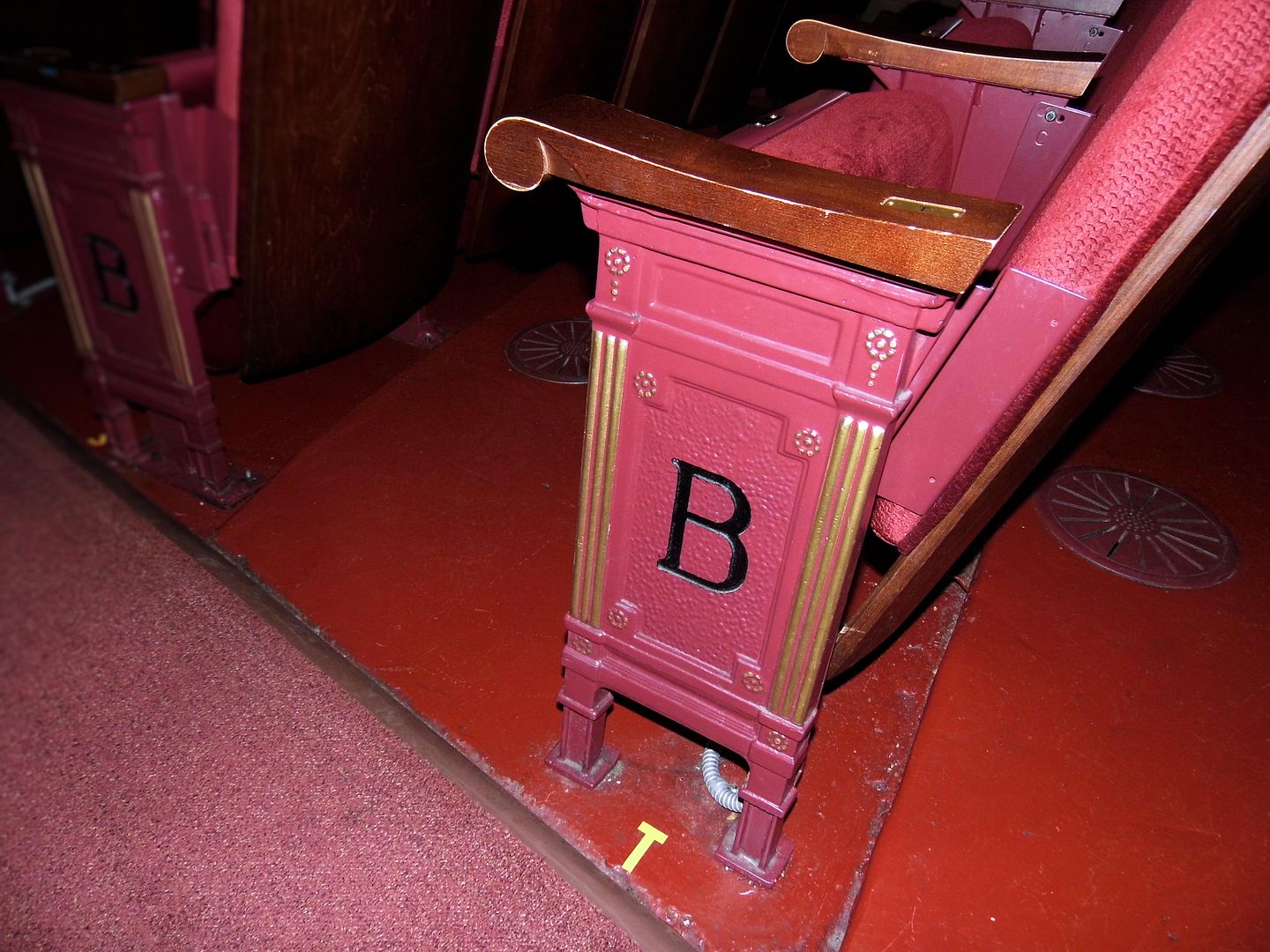


Between the orchestra section and the single balcony, the Balboa has downsized its seating capacity from 1,513 (a hat tip to the date of the Pacific Ocean "discovery") to 1,339.
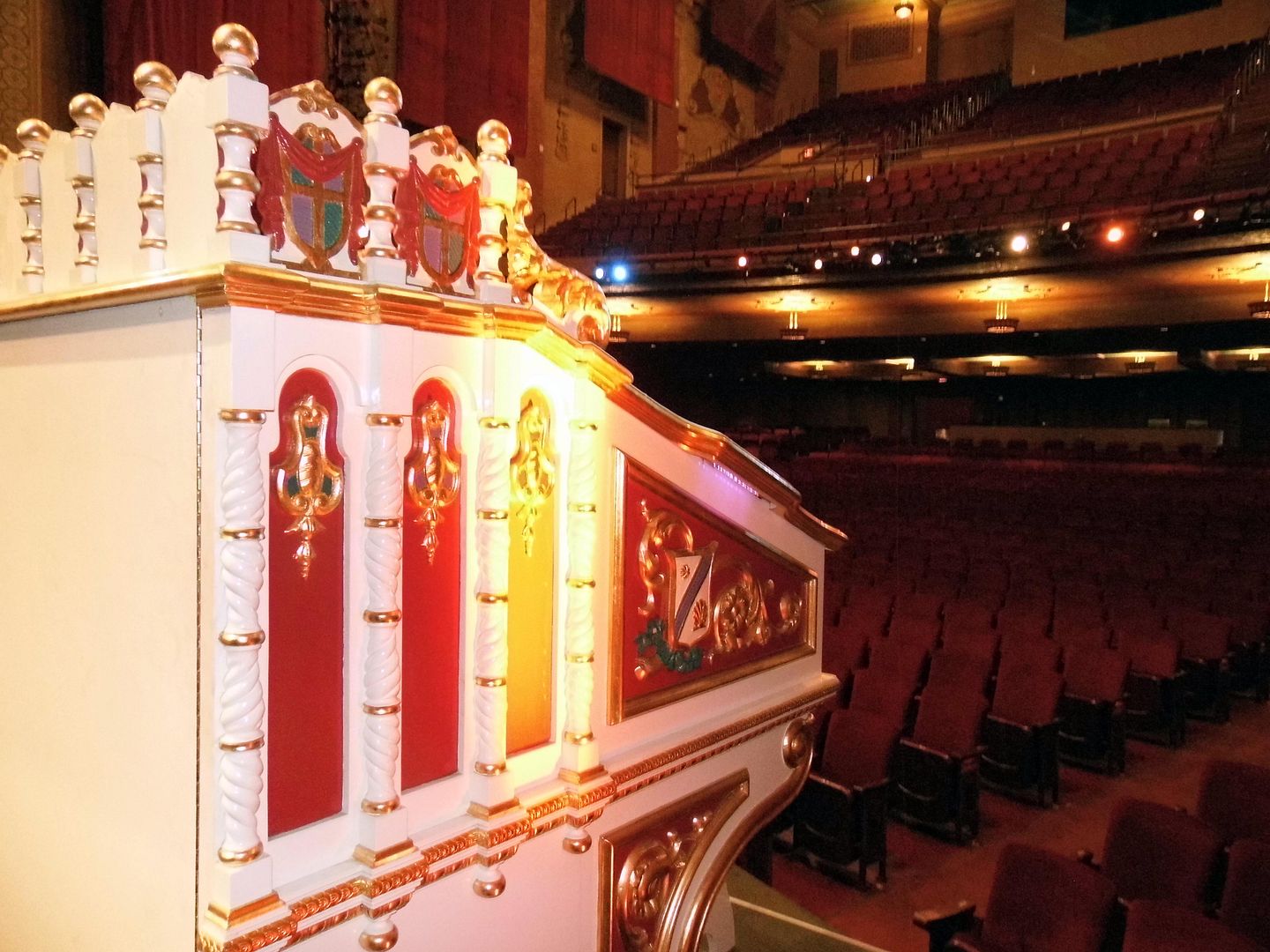


The original 426-pipe theatre organ (built by Robert Morgan in Van Nuys in 1922) was moved to the Fox Theatre (now Copley Symphony Hall) in 1929. Maker Robert Morton was second only to Wurlitzer in terms of volume of theatre organs—and the original's replacement is one of only four remaining "Wonder" models by the Morton Organ Company, now residing at the Balboa. Perhaps the first Wonder Morton to have been built, this Wonder Morton Organ's console contains more ornate carvings than the others in existence.
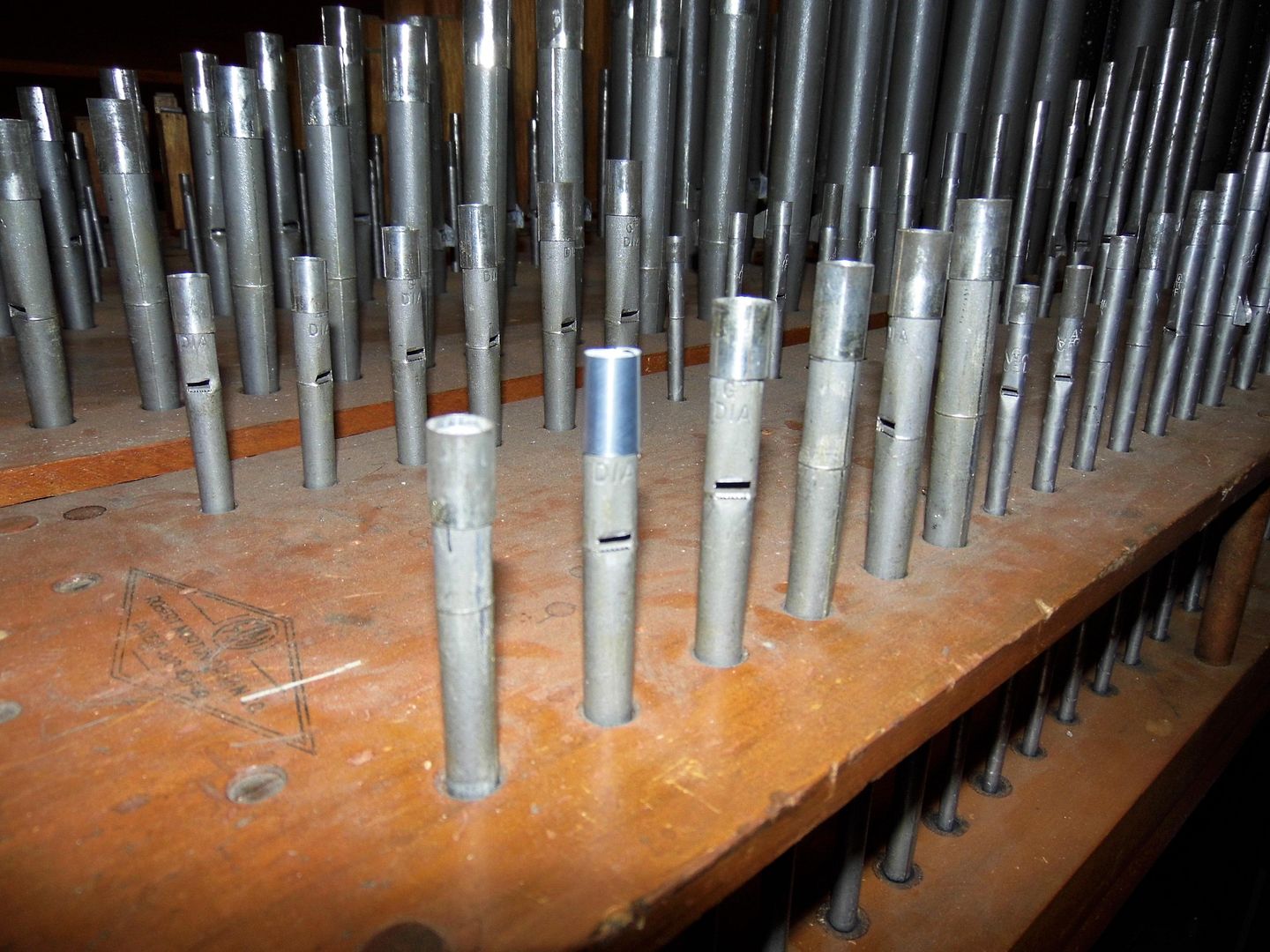


The 4-manual, 23-rank organ was originally placed in the Loew’s Valencia Theatre on Jamaica Avenue in Queens (now The Tabernacle of Prayer for All People). At some point (probably after the church conversion in 1977), it moved to Pennsylvania.
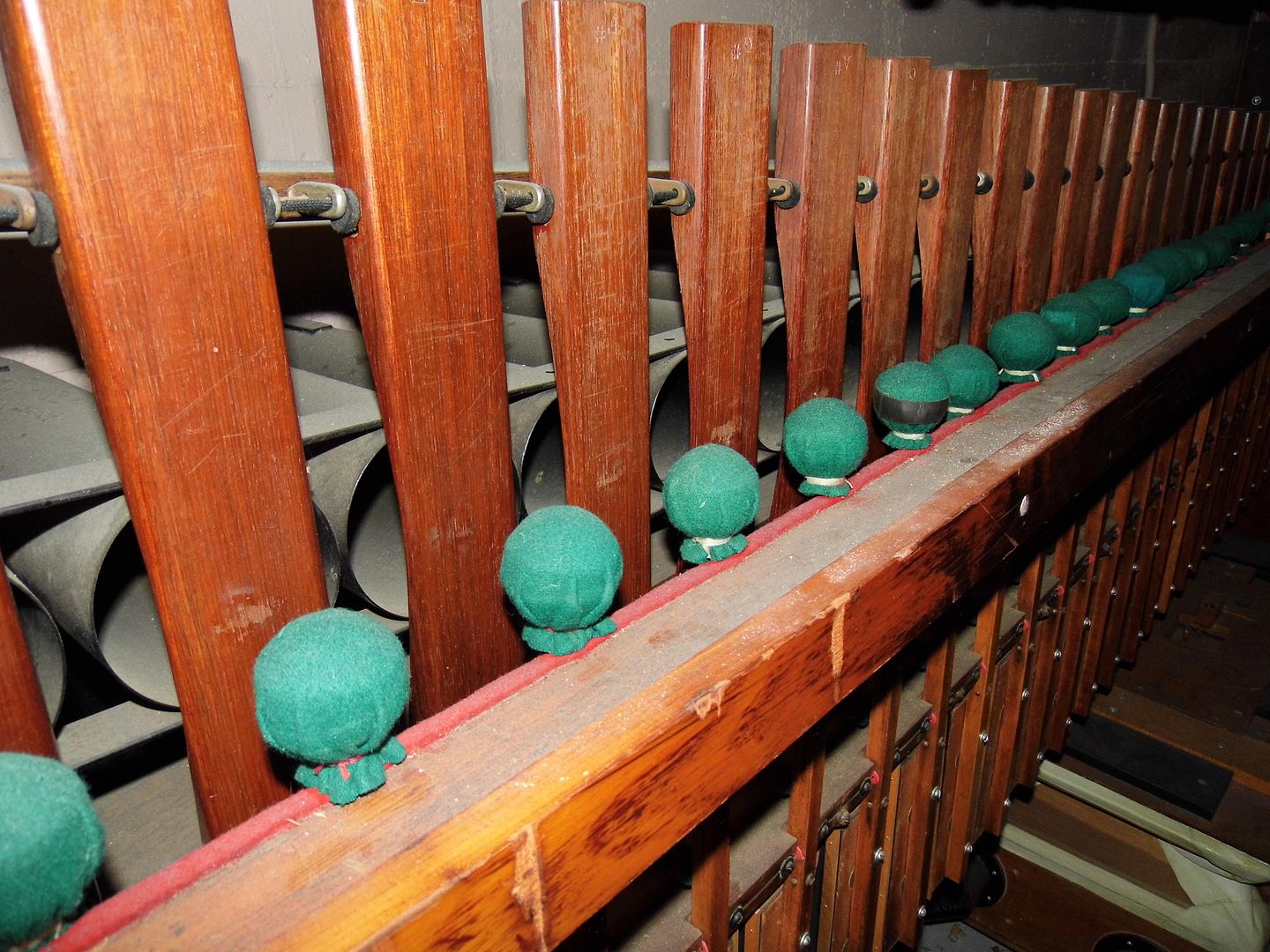


It then made its way all the way out to San Diego for a five-year rebuild by W.A. Shoberg and Company of Ramona. In September 2009, the rebuilt Wonder Organ debuted at the Balboa Theatre.
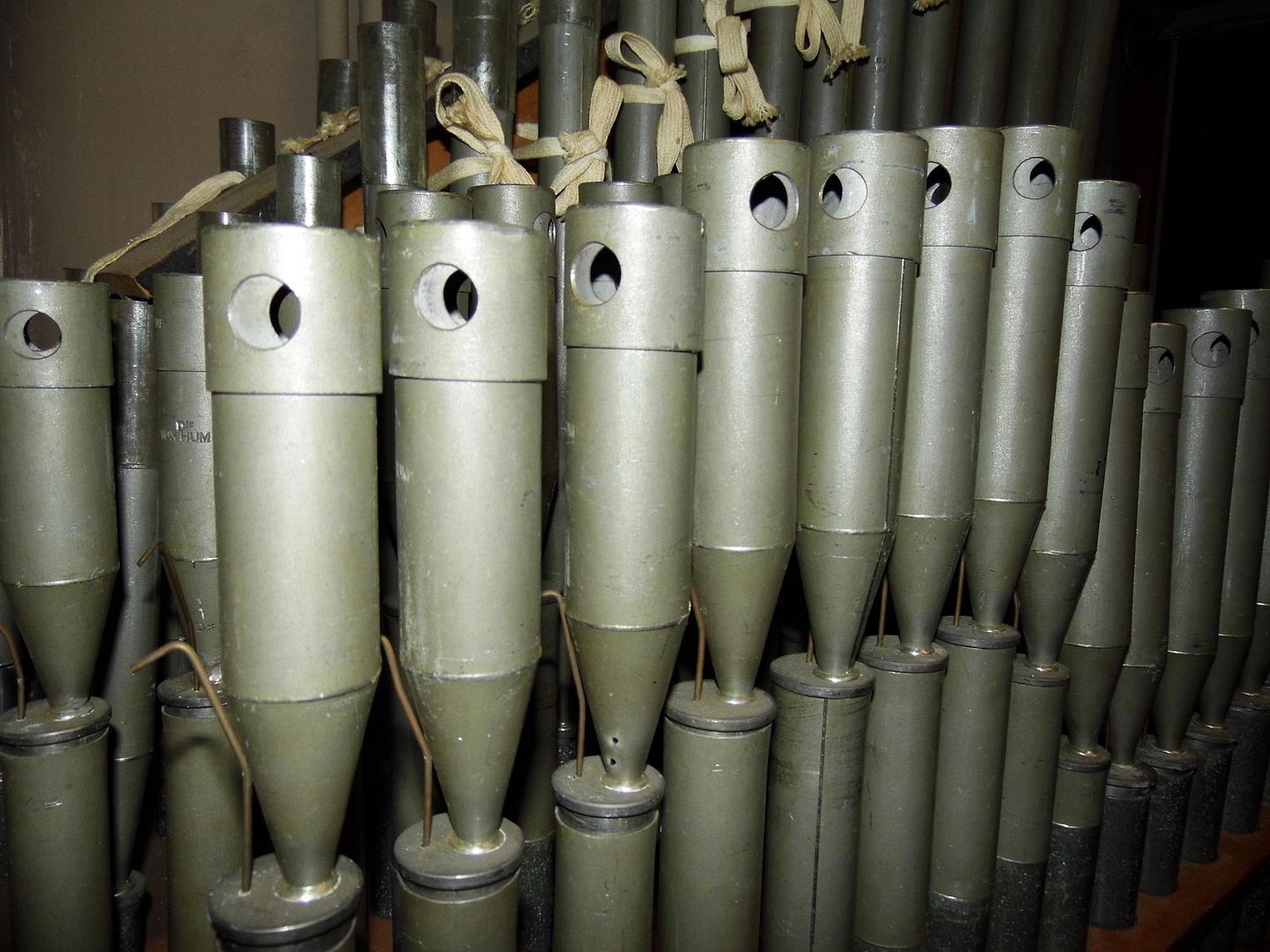


You've got to walk through the pipes a few levels up to get to the ladder that climbs up to the roof, timing it just right so they're not blasting sound while you're up there...
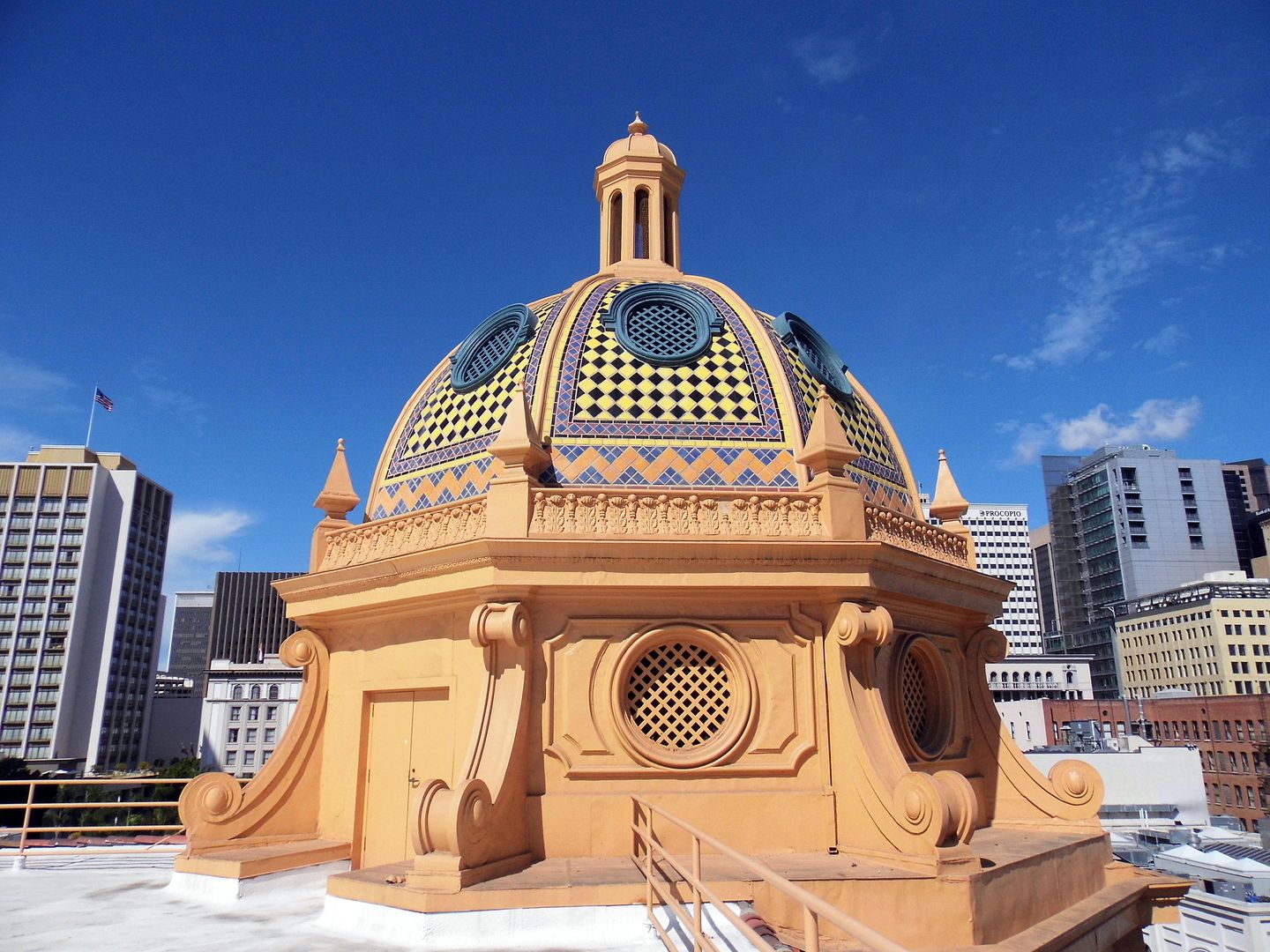


...which I was lucky enough to do thanks to being in the right place at the right time in March (and knowing the right people).
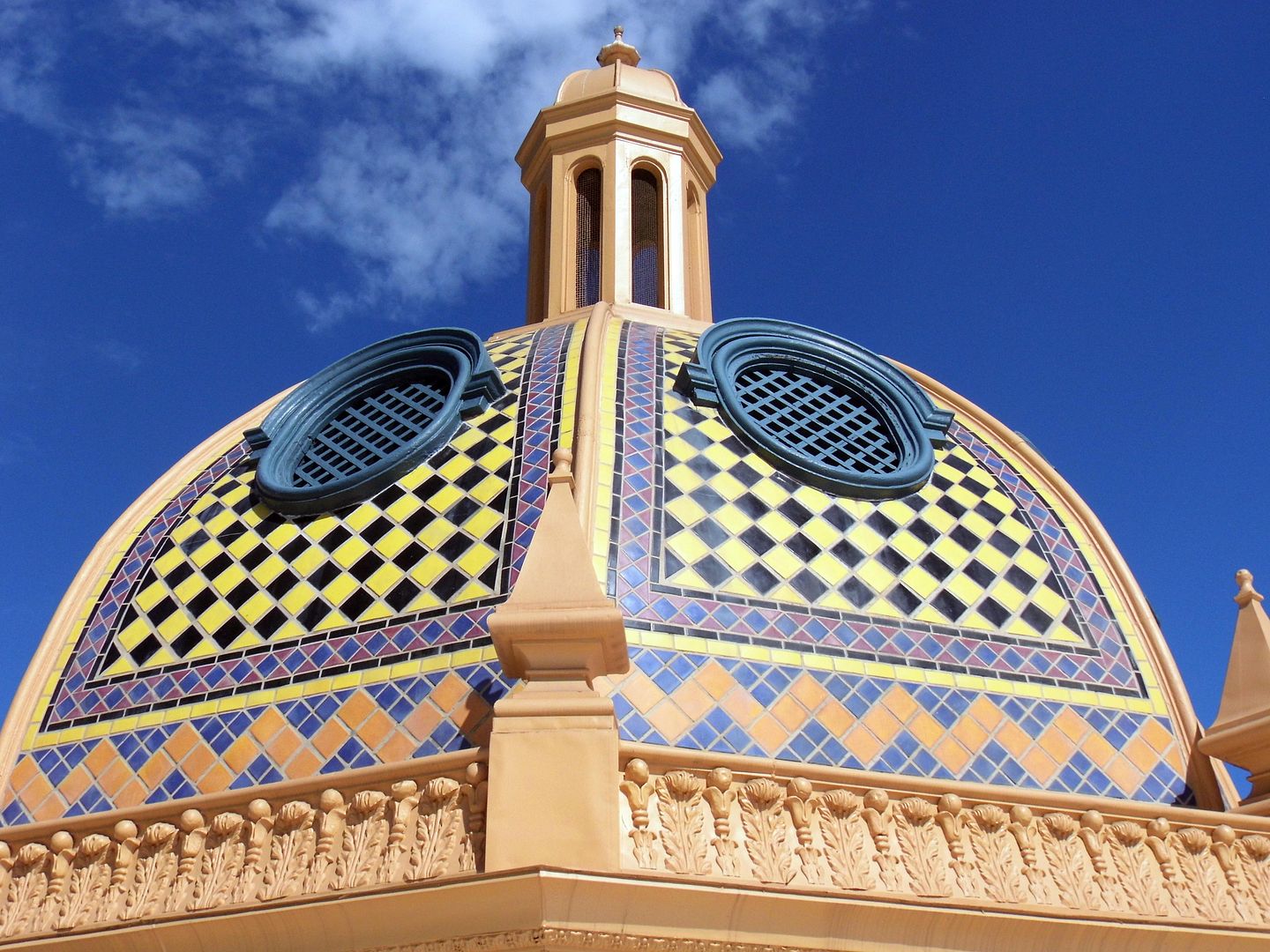


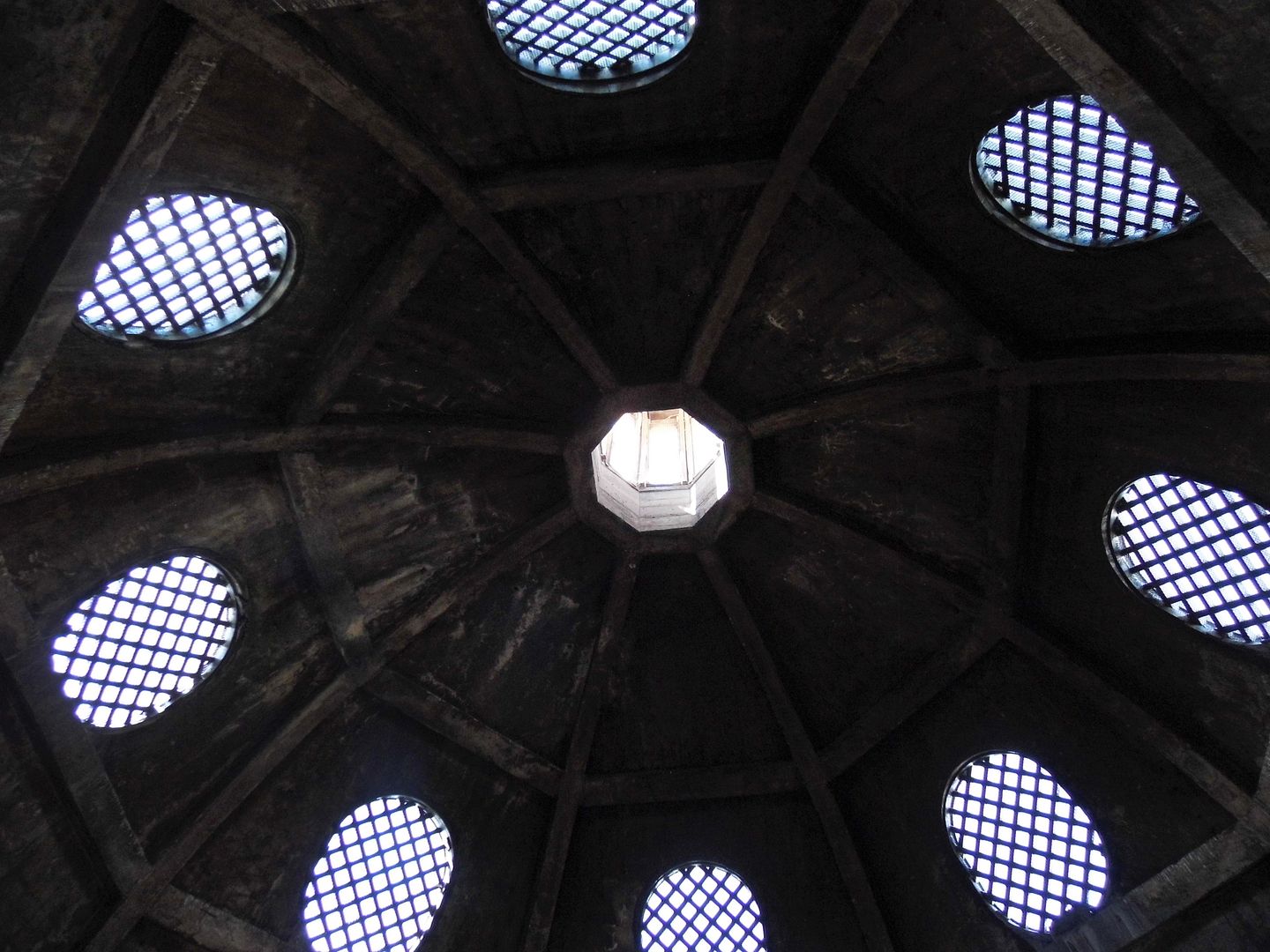
Inside that tile-domed, octagonal tower—whose motif is similar to the dome of the California Tower in Balboa Park—there's a new exhaust fan that just replaced a rebuilt one circa 2004 about three weeks ago.


During "normal times," the Balboa Theatre is home to a number of local cultural institutions—including La Jolla Music Society, California Ballet Company and San Diego Ballet, San Diego Gay Men's Chorus, San Diego Opera, and the annual Mainly Mozart festival.

All that's on pause right now.

Designated a national landmark in 1996, the Balboa Theatre celebrated its 95th birthday a little over a year ago. It's survived every effort to tear it down and reuse it for some other purpose so far. It was steadfast during the 1973 Horton Plaza Redevelopment Project; and it's remaining strong through this year's $330-million redevelopment of Horton Plaza from a shopping mall into a tech office campus.

It wasn't easy to save the Balboa Theatre. It was never, in fact, easy. To read just a slice of the saga as reported in the San Diego Reader in 1987, click here.

But hopefully people now understand why it's important—and how it contributes to Downtown San Diego, even as the area that surrounds it changes with the times.

Related Posts:
San Diego's Abandoned 'Cathedral of the Motion Picture'... On Its 'Boulevard of Broken Dreams'

May 11, 2016

Photo Essay: The View from Above Balboa Park's Former Expo Grounds

I think most of the towers I've ever climbed have been lighthouses, clock towers, or cathedrals. Sure, I've visited observation decks on skyscrapers like LA's City Hall, the Empire State Building, Top of the Rock, Windows on the World, and Baltimore's World Trade Center, but I don't recall ever having climbed a tower that was just...a tower.

I've stood at the bottom of Coit Tower in San Francisco, the Old Baltimore Shot Tower, Seattle's Space Needle, Toronto's CN Tower, Hollywood's High Tower, and Bowman's Hill Tower in New Hope, Pennsylvania, but for whatever reasons of time, place, or money, I haven't gone up in any one of them.

Of course, the ultimate tower for climbing would be the Space Age, blinking towers of the New York State Pavilion and Tent of Tomorrow from the 1964/65 World's Fair in Flushing Meadows Corona Park in Queens.


So last year when I heard that the California Tower from the Panama-California Exposition of 1915-17 was reopening to visitors after being closed for 80 years, I thought, Eureka!


I'm ashamed to say that although I'd been to Balboa Park twice before, I had never heard of the Panama-California Expo and had no clue that Balboa Park shares a similar origin story with Flushing Meadows. Both were planned with the event in mind. Both events were similarly focused on the theme of progress: "To Show What Will Be by What Has Been" and "Man's Achievement on a Shrinking Globe in an Expanding Universe," respectively. And finally, for each event, structures were built that were meant to be temporary and subsequently torn down.


And this is where their stories diverge, because Balboa Park became more popular than ever, the crown jewel of San Diego. The Expo's architecture (primarily Spanish Colonial) was so beloved that the temporary structures (like the Casa de Balboa and Casa del Prado, made cheaply out of chicken wire and other flimsy materials) were reinforced and kept, rather than being torn down—which is what happened in Queens. A century and two more expos later, Balboa Park still thrives, while Flushing Meadows has largely been abandoned and forgotten in just 50 years since the fair.


San Diego originally wanted to host a World's Fair—but when the city was deemed "too small" for such a large, international public exhibition, they decided to put on an official one, celebrating the opening of the Panama Canal, first used in late 1914. The resulting Panama-California Exposition gave rise to the baroque California Building and the California Tower. Always intended to be a permanent fixture of Balboa Park even after the expo was over, it became a centerpiece of the expo, and it's now a centerpiece of the park.


From its somewhat neo-Gothic facade (designed by architect Bertram Goodhue, of LA's Central Library fame), ornamented with statuary and gargoyle-like faces (all made out of concrete poured into molds), it looks like a church—but it's actually a non-denominational "hall of fame" of prominent historical figures like Serra, Cabrillo, Portola, and two kings of Spain. In fact, it's never served as a church—although it did briefly serve as a hospital for the Navy and double as Xanadu in Citizen Kane.


No, this place doesn't focus on heavenly creatures, but rather on the study of earthly humans and their societies, in its current iteration as the San Diego Museum of Man. Its permanent collection includes mummified human remains.


But from that 180-foot tower (198 feet above the ground), I wanted to see the California Building's 60-foot dome, which is inscribed with the biblical phrase Terram Frumenti Hordei, ac Vinarum, in qua Ficus et Malogranata et Oliveta Nascuntur, Terram Olei ac Mellis ("A land of wheat and barley and vines…a land of live trees and honey").


I wanted to see the rest of Balboa Park—and beyond—from that tower.


And so, I climbed 125 narrow and sometimes harrowing steps to concrete block observation deck on the seventh floor, which is as far as visitors can go these days (since the upper two floors are not currently up to code).


Up there, past the dome, you can get a good view of the Old Globe (built for The 1935-36 California Pacific International Exposition—but more on that later).


The dome's tiled design was inspired by the Church of Santa Prisca y San Sebastian in Taxco—a distinctly Mexican dash of color on an otherwise gray edifice. The tiles were fired locally by California China Products Company, based in nearby National City.


The tower feels like a belfry, but actually no music ever came from it until 1947. Now, it's got a 100-bell carillon operated by a keyboard located on one of the lower levels of the tower. Speakers mounted up at the top of the tower broadcast Westminster chimes every quarter hour and a series of instrumental songs every day at noon. (The carilloneur even takes requests.)


The California Building and Tower were originally part of the California Quadrangle (Plaza de California) of the Expo, along with Evernham Hall and St. Francis Chapel of the Fine Arts Building across the street (and now taken over by the museum).


They provided a grand entrance to the Expo for pedestrians crossing the Cabrillo Bridge, a concrete and redwood walkway specifically built for it.


The Cabrillo Bridge was the first multiple-arched cantilevered bridge of its kind in California. Now open to cars as "El Prado," it provides one of several entrances to Balboa Park. Having survived three fires (one arson in 2004), it's been designated a civil engineering landmark.


While it once traversed a creek (which park officials dubbed a "lagoon"), San Diego just didn't have enough water to keep it going.


circa 2018

And now, Cabrillo Bridge crosses over the Cabrillo Freeway (SR-163), built on the floor of Cabrillo Canyon and completed in 1948.


Circa 1915 (Image courtesy of The Commitee of One Hundred)

At some point, I've got to go back to explore the grounds of the Great Depression-era California Pacific International Exposition of 1935-6, so stay tuned for more dispatches from Balboa Park and San Diego.

Related Posts:
Photo Essay: Taking a Spin Into the Last Century in Balboa Park
Photo Essay: An Inn for Presidents, Padres, and Patron Saints
Falling In Queens

May 10, 2016

Photo Essay: Taking a Spin Into the Last Century in Balboa Park

I've always been overwhelmed by too many choices.

I don't want the world to be my oyster. If someone asks me, "What would you like?" I'll answer their question with another question: "What are my options?"

I do better working within some kind of constraint.

That's probably why I feel so overwhelmed every time I visit Balboa Park in San Diego. It's just too big. There's just too much to do there.

The first time I visited, I treated it like a hike. I just walked the pathways, took in the views, and made it back to my car when I was too tired.

This time, a specific event -- a tour of the world's largest outdoor musical instrument (photos forthcoming) -- brought me back to Balboa Park. But, instead of leaving afterwards and gallivanting around the rest of San Diego, I decided to stay and try to conquer at least a portion of the behemoth.


My first stop was an obvious choice: the carousel. I've stopped being shy about riding carousels by myself and being seen as the weird old lady. Who cares? As long as I don't surpass the weight limit and break a horse (or a seahorse), I'm good.

May 14, 2018

Photo Essay: A Leap of Faith Despite Depression

When I started spending some real quality time in Balboa Park two years ago, it became clear that for all I'd seen, I'd still only scratched the surface.

Because while I learned a lot about the Panama-California Exposition of 1915-17, the park actually hosted two expositions in two decades' time—and that meant I'd have to head on down to the southern section of Balboa Park's central mesa, a plateau known as The Palisades, to investigate what remains of the California Pacific International Exposition of 1935-36.

And you can't really talk about either expo independently, without mention of the other, as their histories are inextricably tied to one another.

Let me set the scene a bit: In 1933, Prohibition had been repealed, but the end of the Great Depression wouldn't come until 1939. In 1934, it had been 20 years since the last expo, and the temporary structures that had been built for it were slated to be torn down. But in a stunning about-face, those buildings were not only saved but restored and reused for yet another expo.

Given the economic conditions at the time, mounting such a large-scale ordeal was, perhaps, a foolish endeavor. But after the fact, once it proved successful, exposition president G. Aubrey Davidson called it an "achievement of faith, courage, and enthusiasm unparalleled in the history of similar enterprises."

Thankfully, seven million people attended. And the year this second expo opened coincided with the creation of the Works Progress Administration, part of FDR's economic recovery plan under the auspice of the New Deal (1933-1937).

Of course, work didn't really start coming out of the U.S. government's "Work Relief" divisions until the California Pacific International Exposition was wrapping up—which makes the creation of the "Plaza de America" even more of an achievement.

And fortunately, although some of it has been lost or modified beyond recognition, there's still enough left there in the Palisades to give an inkling as to what this team of hopeless optimists managed to accomplish despite all odds, 80 years ago.


May 13, 2016

I Won't Let Youth Be Wasted on Me

Back in 2009, when I first explored Balboa Park, I noticed a tiny train chugging along. Its only passenger was a giraffe.


circa 2009

I think at that point, I'd never ridden on a miniature railroad—certainly not in my adult years. And if I ever rode a tiny train as a child, the memory of it has vanished.


After having made a lot of progress in this business of "making up for lost time" (and trying to unearth memories of things I'm pretty sure I actually did do as a kid), I'm convinced that some of life's best experiences—Disneyland, carousels, puppet shows—are wasted on the young.


I never understood anything as a kid—I was in a constant state of confusion. And having been bullied into silence and submission by my parents, I was too afraid to ask "what," "why," or "how" most of the time.


So I don't really mourn some of those childhood experiences I never had, because now I have the ability to create memories that will last—and that I can piece together in some kind of narrative, so as to attempt to understand my life as a whole.


To put it simply, I took a ride on that Balboa Park railroad seven years later, at 40 years old, because I could. I had the motive, the means, and the relatively recent memory of a similar experience that I'd enjoyed very much.


This time around, I started giggling from the moment our conductor blew the train whistle and sat at the helm.


The San Diego Miniature Railroad runs along a half-mile track right next to the grounds of the San Diego Zoo...


...so it's been designed as a somewhat "wild" excursion.


Though the entire trip takes only three minutes to complete, you end up traveling the entirety of San Diego County, through towns like Julian, Jacumba, Valley Center, and so on.


This miniature train looks remarkably like a full-size train—and not a "toy" train—but riding it through four acres of Balboa Park kind of feels like you've been transported into one of the worlds of the San Diego Model Railroad Museum.


The railroad was installed in this exact location in 1948, just two years after the The Miniature Train and Railway Company introduced the "G-16" model that runs here (the "G" for "GM locomotive" and "16" for a 16-inch track gauge).


Hundreds of G-16s were manufactured until 1963, but now a few dozen remain (and not all of them in operation). There were G-16s installed and running in Griffith Park for decades, but now the Travel Town Railroad runs a relatively modern (circa 1993) locomotive inspired by those of the early 20th century—though also on a 16 gauge track.

Here, the cars have been restored and are still operating in their original location.

The train ride went by so quickly that I was inclined to ride it again immediately afterwards, feeling like a kid who can't get enough of something amusing, asking for "More!" and "Again!"

But I had more of Balboa Park to explore, so I moved onto the next adventure.

Related Posts:
Photo Essay: The Tiny World of the San Diego Model Railroad Museum
A Travel Town Birthday in Griffith Park
The Ghost Train of Griffith Park
Photo Essay: Taking a Spin Into the Last Century in Balboa Park