
[Last updated 1/19/26 11:34 PM PT—New photos added]
I've lived in Los Angeles long enough to see quintessentially quirky Southern Californian architecture either demolished or saved by Corporate America.
Googie landmarks like the Holiday Bowl coffee shop, Mission Hills Bowl, and Friendly Hills Lanes are now a Starbucks, a Ross Dress for Less, and a BevMo. Norm's has been threatened with a hostile takeover by Raising Cane's.
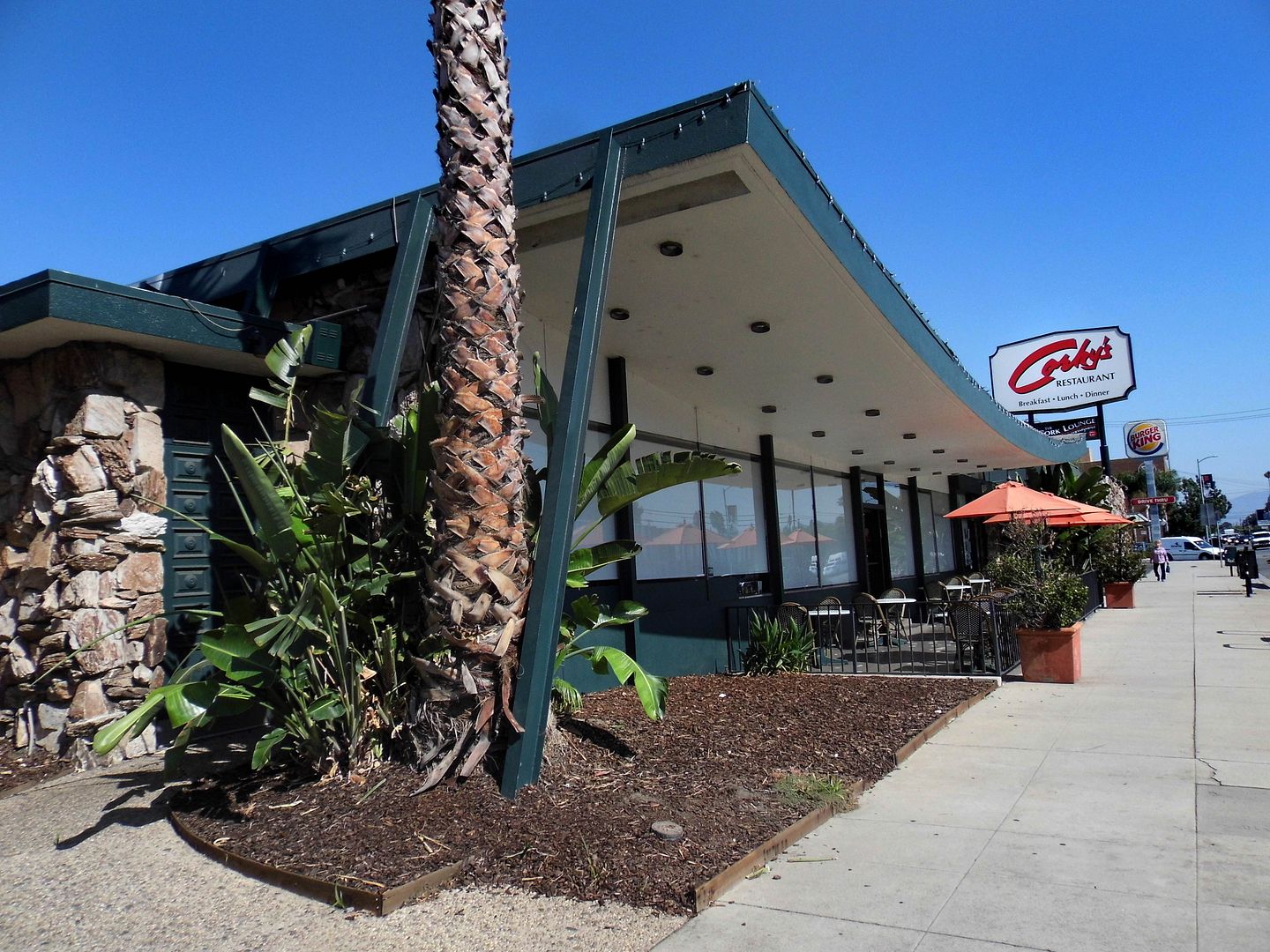
Photo taken 2018
And to save Corky's in Sherman Oaks, a.k.a. the former Stanley Burke's and Lamplighter restaurants...
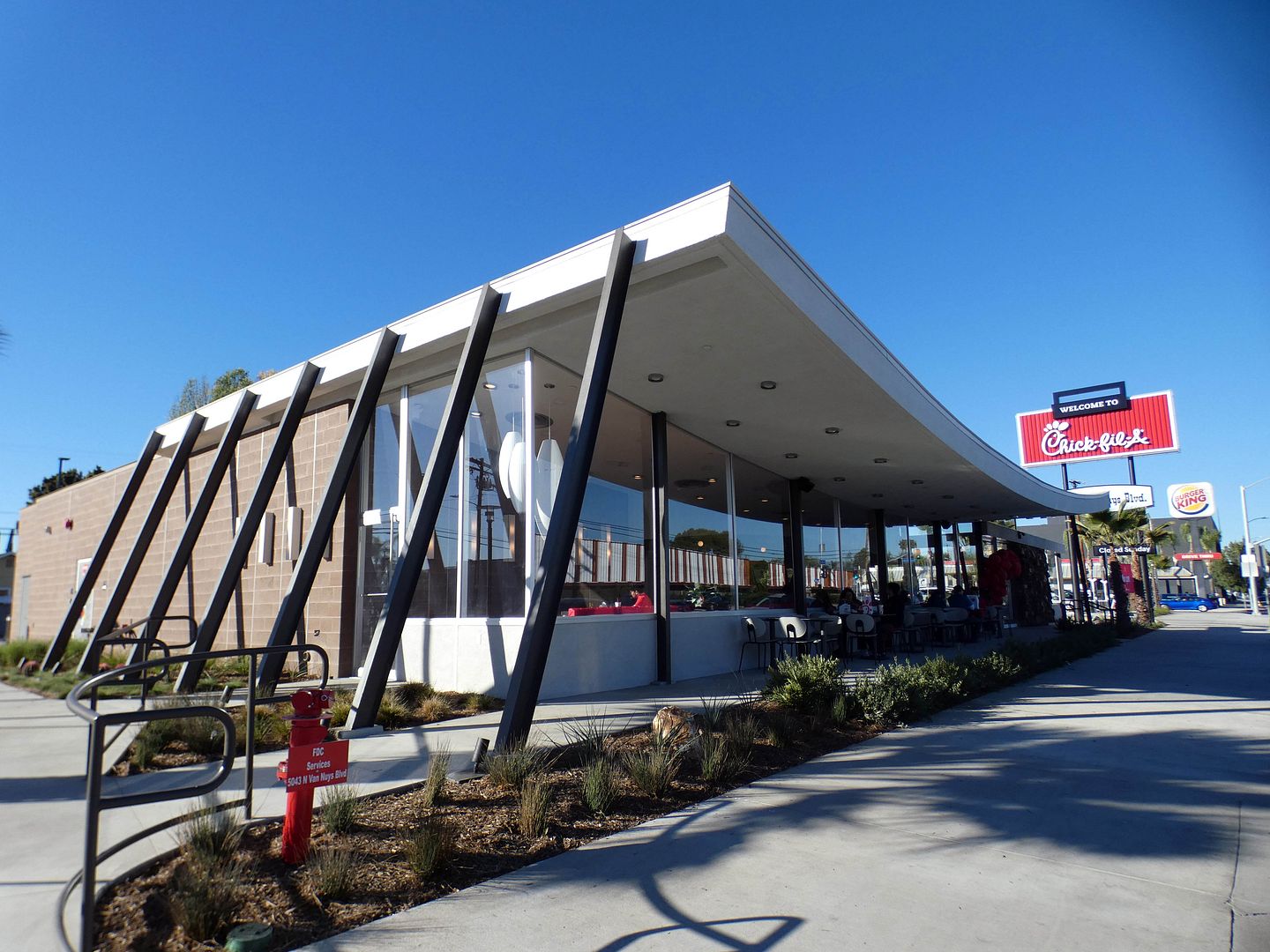
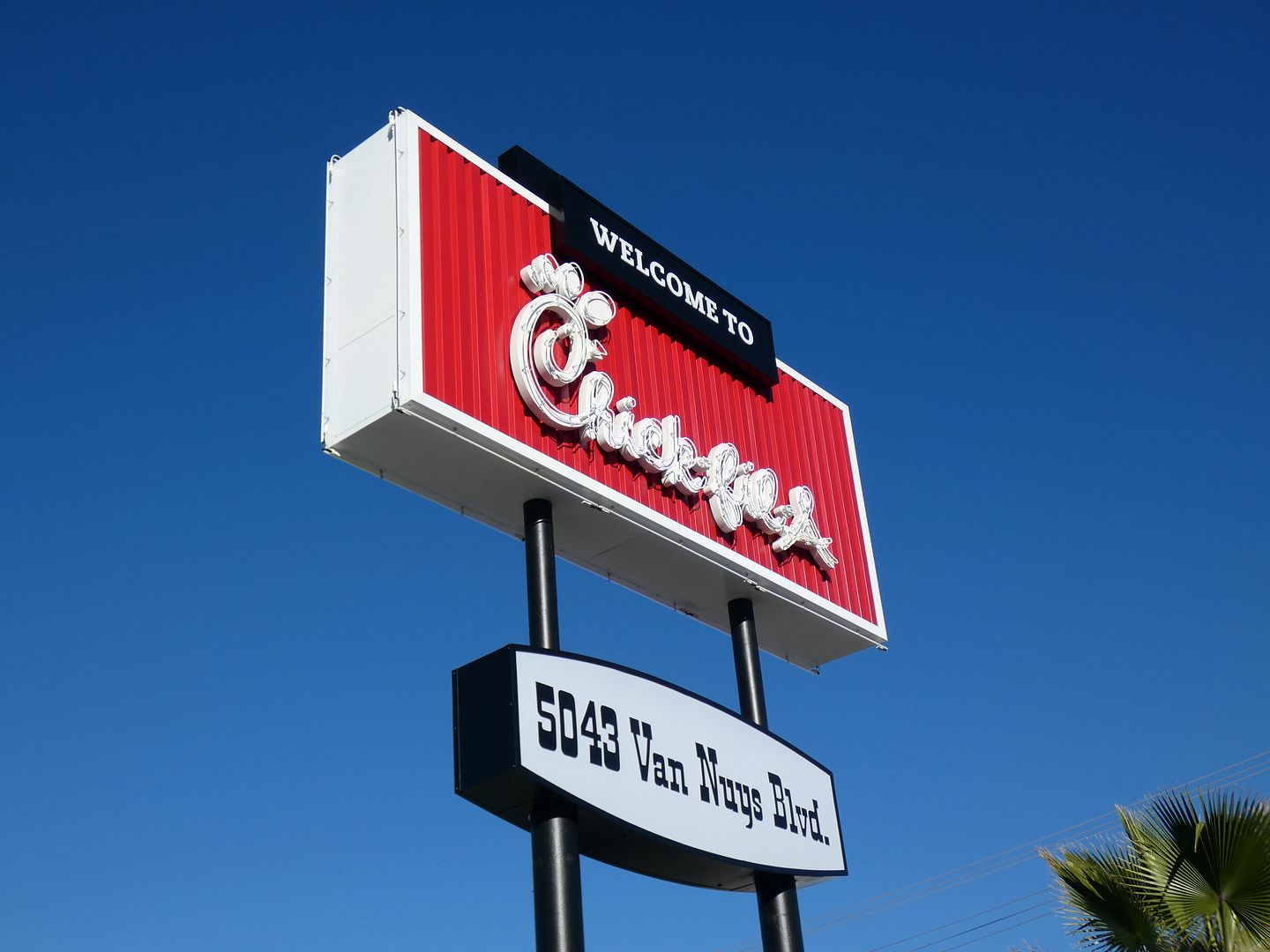
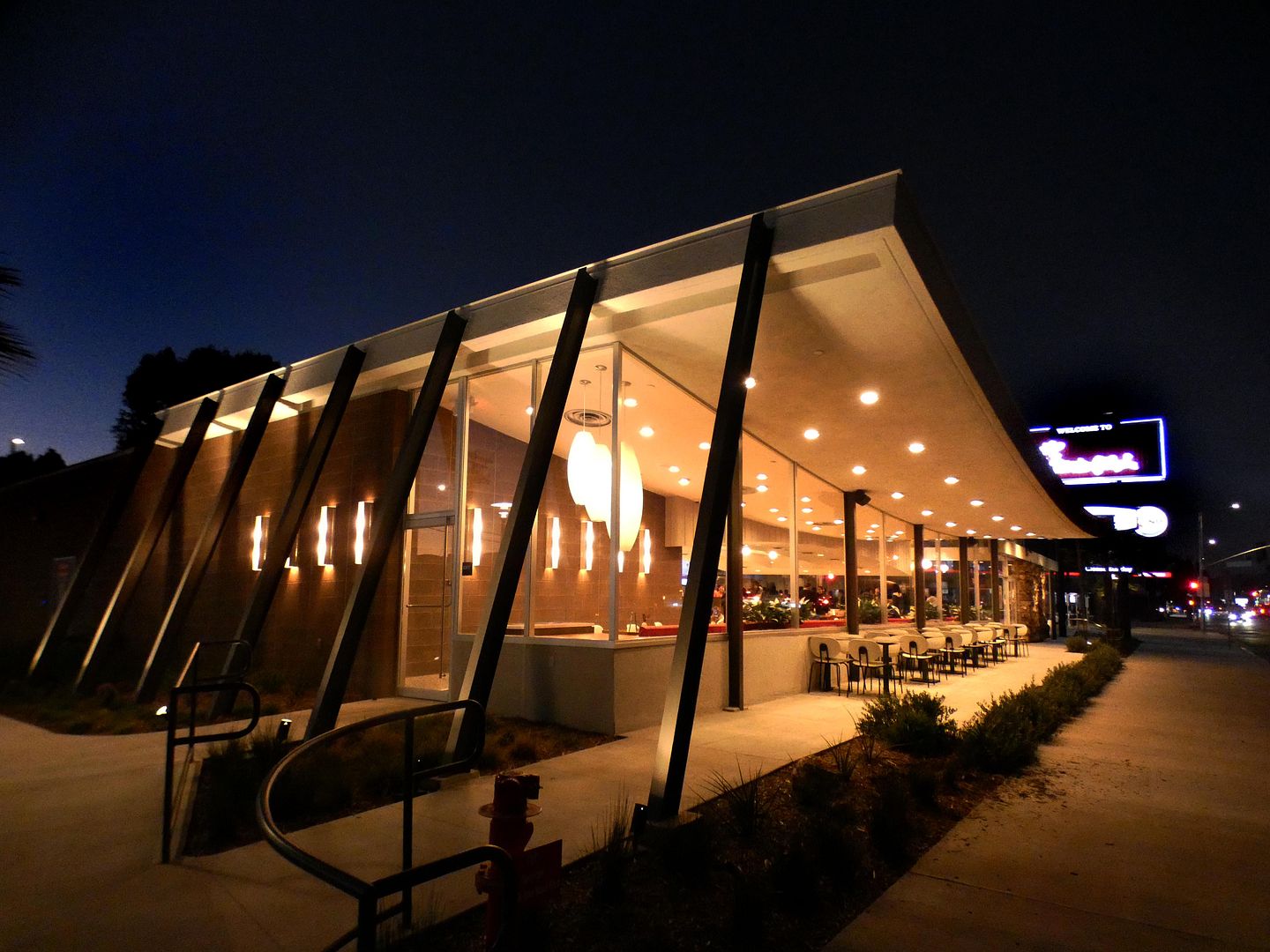
Fortunately, the operators of the fast food chicken joint franchise wanted to retain much of the restaurant's history, right down to the massive pylon sign with bona fide neon tubing.

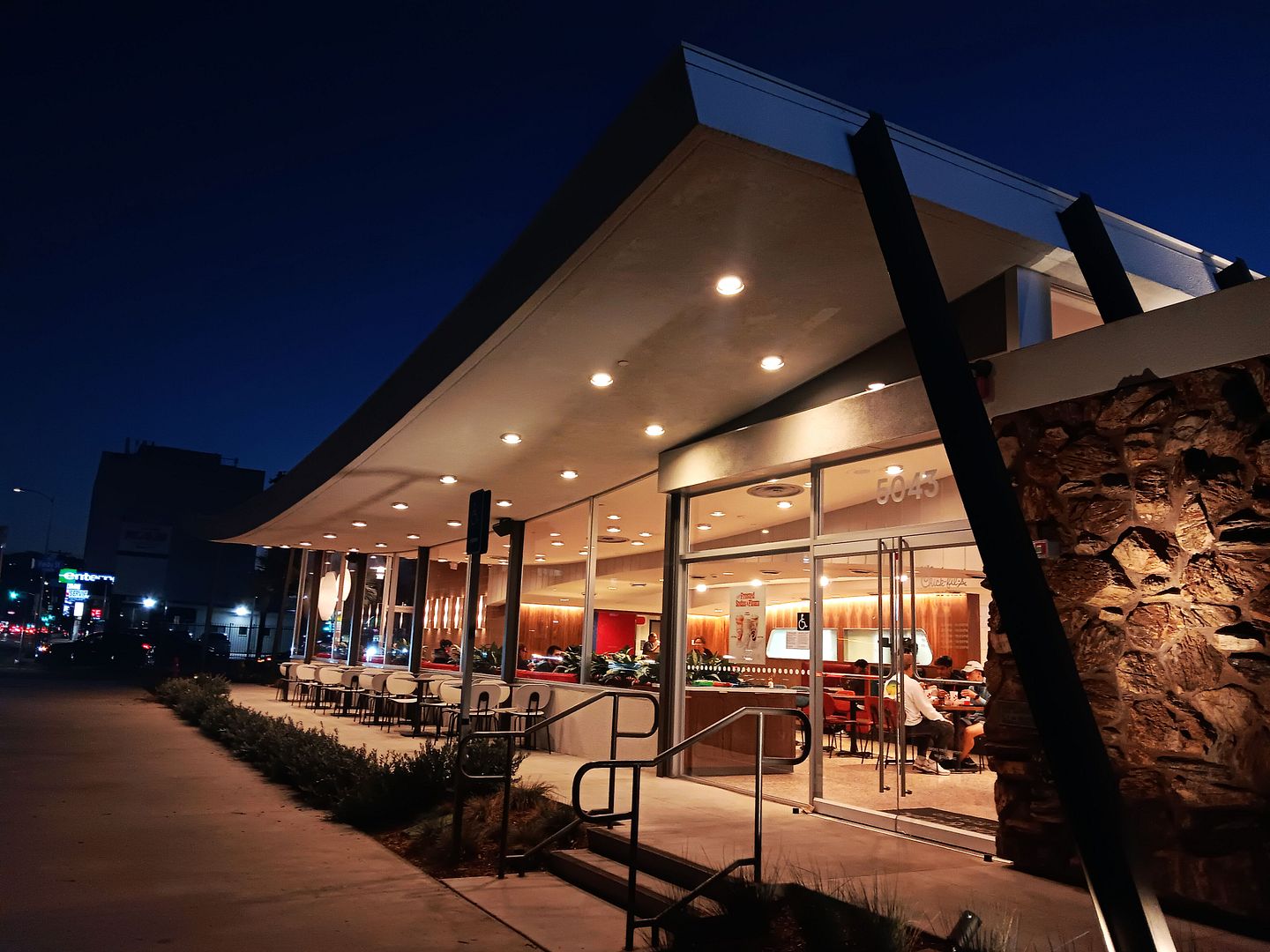
And from the outside, the footprint of the 1958 structure—designed by the architectural firm of Armet & Davis—is still pretty recognizable, from the catenary roofline to the spider leg supports (a.k.a. "dog legs," some of which were put back in after a later renovation had removed them).
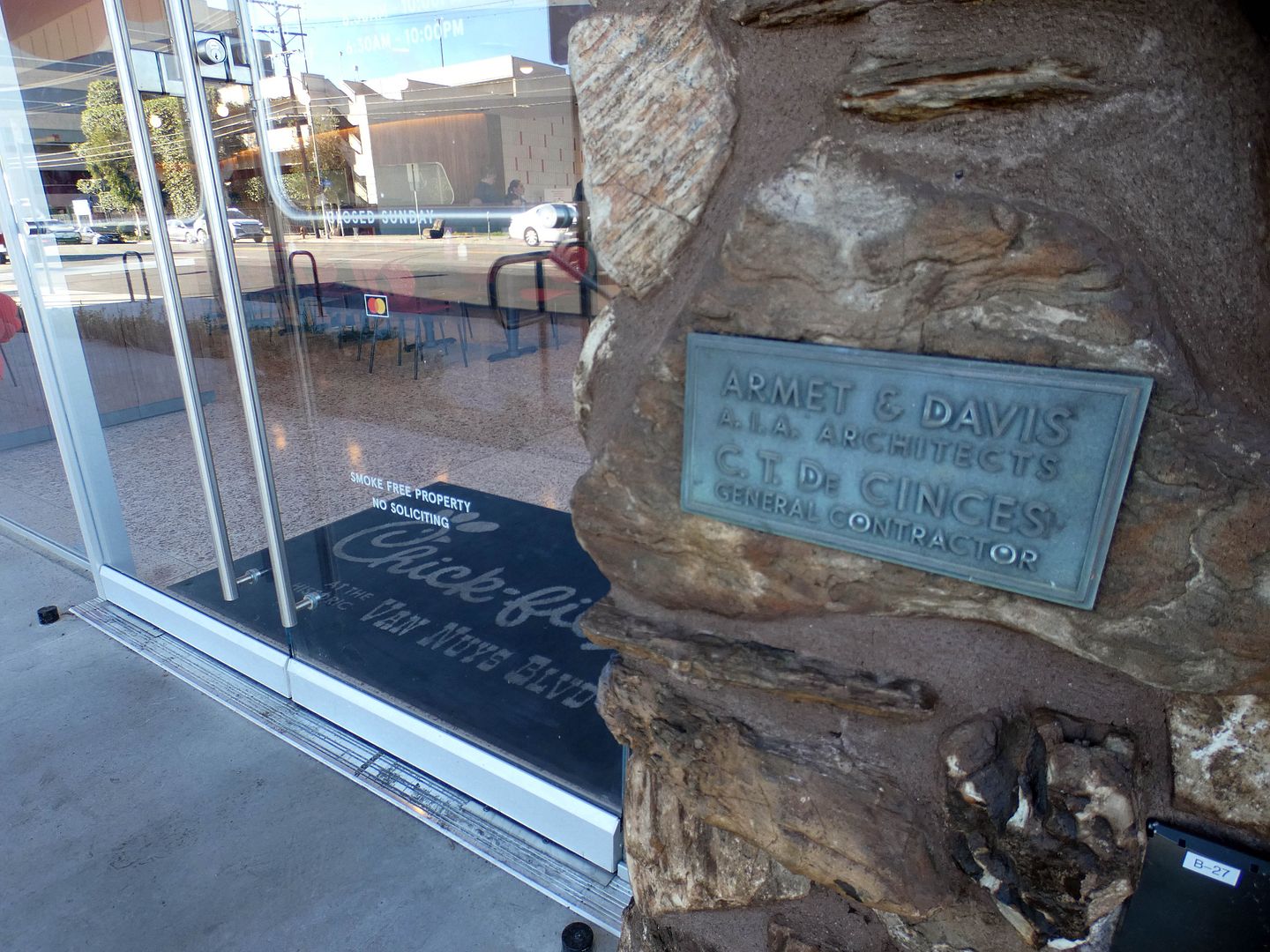
Their names are still on the plaque that's still mounted on the Palos Verde stone wall.

But there are plenty of contemporary differences afoot, too—and not just the demolition of the bar area once known as "The Cork Lounge," where Billy Joel once played piano.

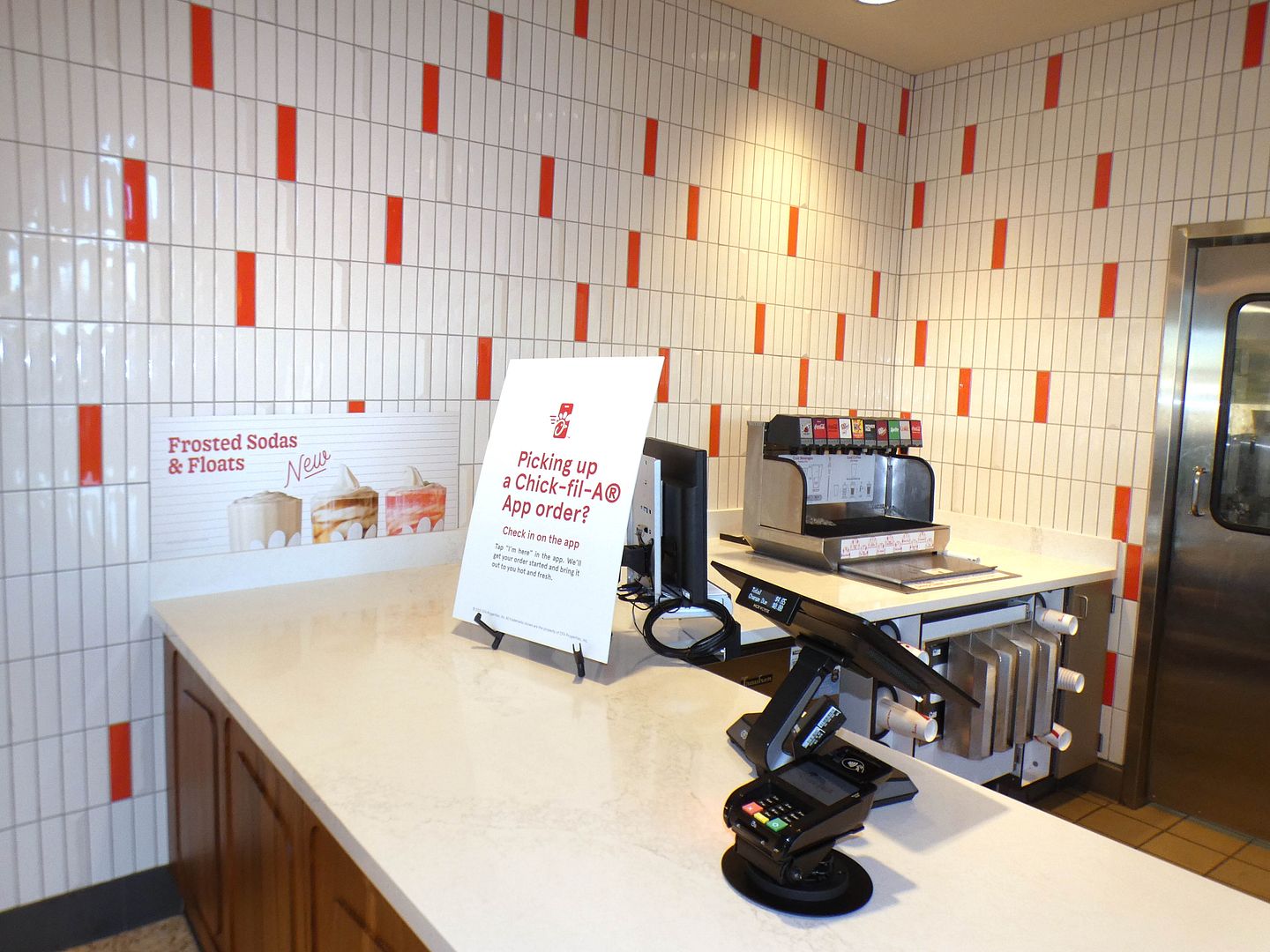
Its highly anticipated reopening brought me in for some grilled chicken nuggets, camera in tow...




Corky's the coffee shop closed in 2019—I was there on its last day of service—and the structure managed to survive Covid-era work moratoriums, civil unrest, and the homelessness crisis that has ignited fires that have claimed far too many buildings in LA in the past.
Its highly anticipated reopening brought me in for some grilled chicken nuggets, camera in tow...
...though I think most other people were there for the poultry and not the preservation win.
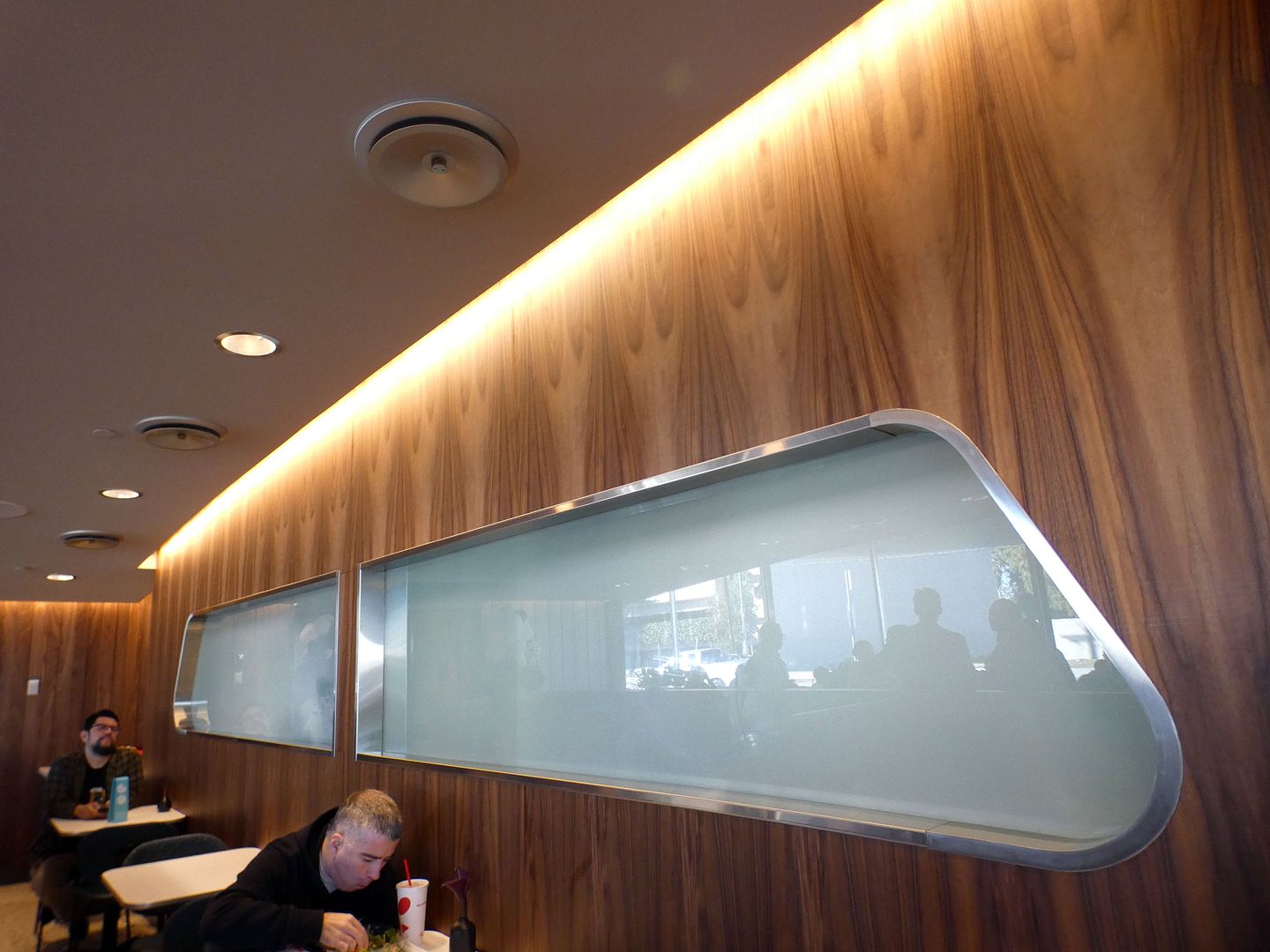
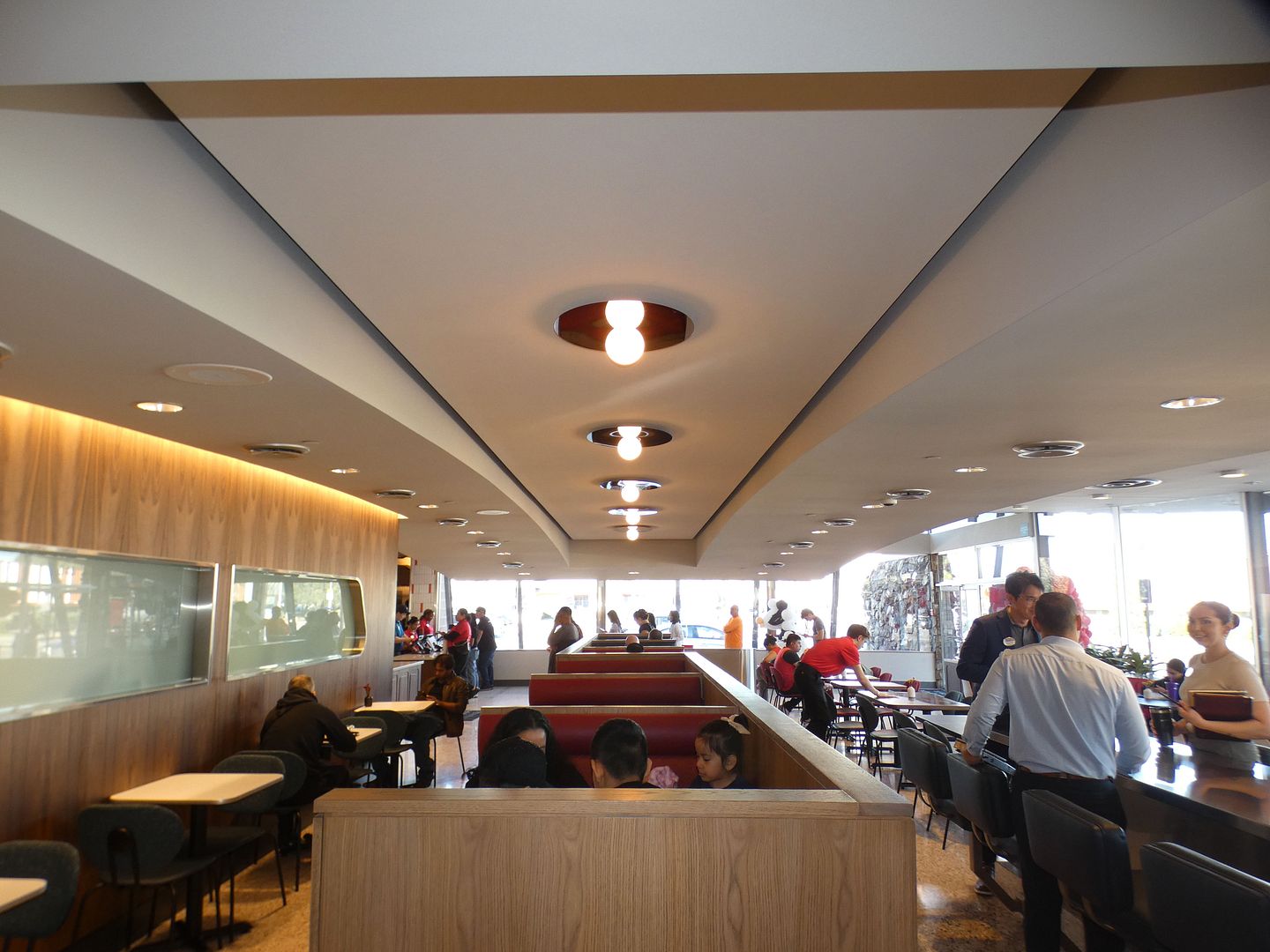
It's nice to see the dropped ceiling removed and some languid curves along the line of lighting bulbs...
...and some wood paneling with a curved window that somehow evokes both a station wagon and a lowrider.
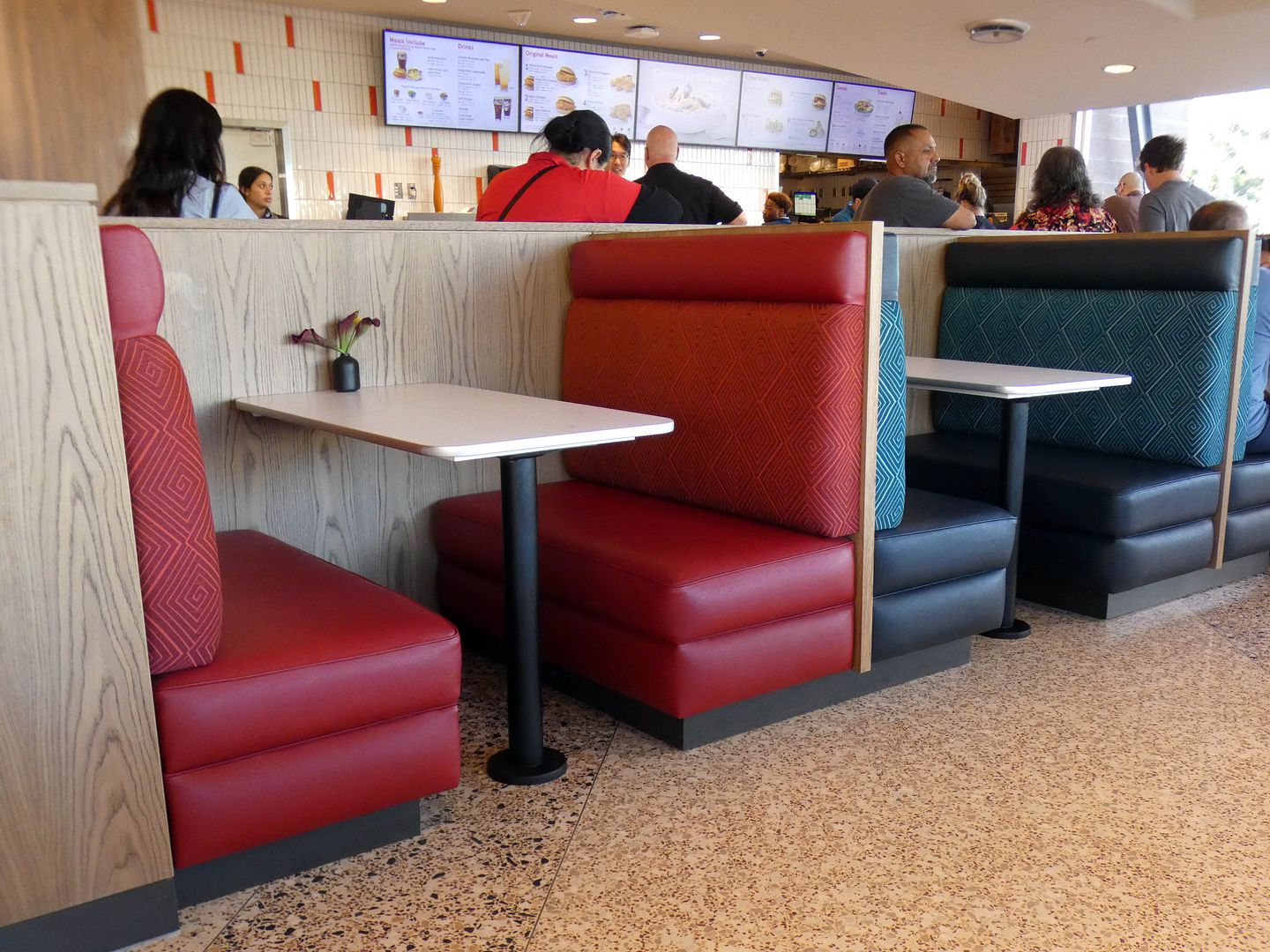
I tried to piece together where the kitchen and counter used to be, and the configuration of the old booths and colored glass screens, but everything just looked so different inside.
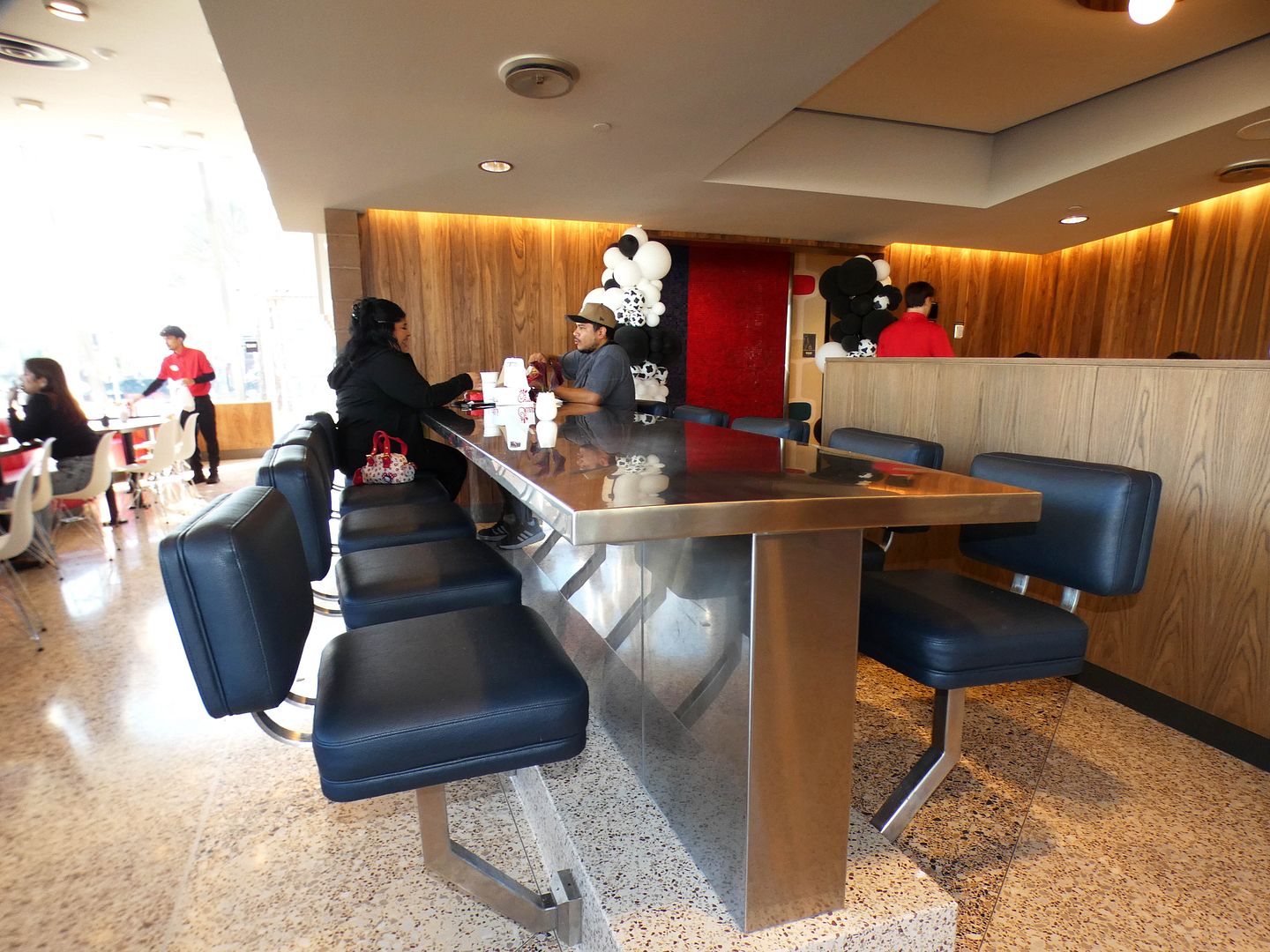
I didn't even recognize that the barstools have the same supports that the old counter seating had.
The blue and red mosaic tile wall by the bathrooms is original...
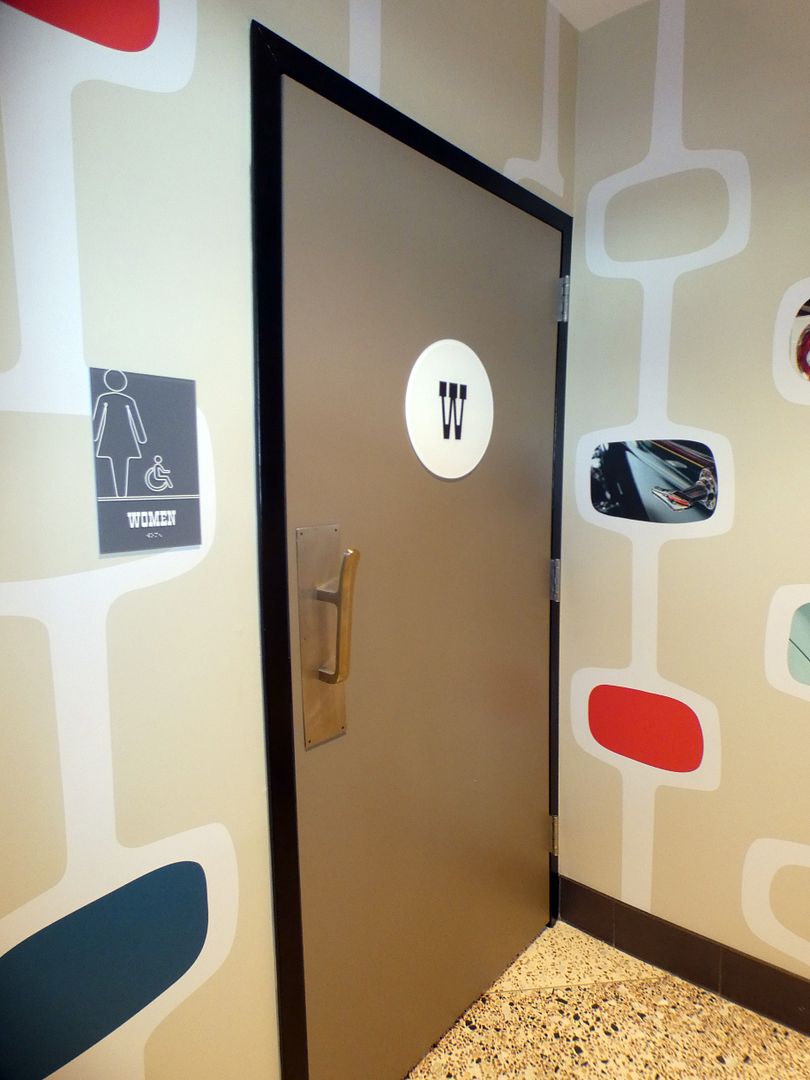
...but the entire restroom area has been redone in tribute to the car culture that characterized Van Nuys Boulevard, particularly in the 1950s and 1960s (an important nod, especially since the planned drive-thru at this location did not come to fruition).
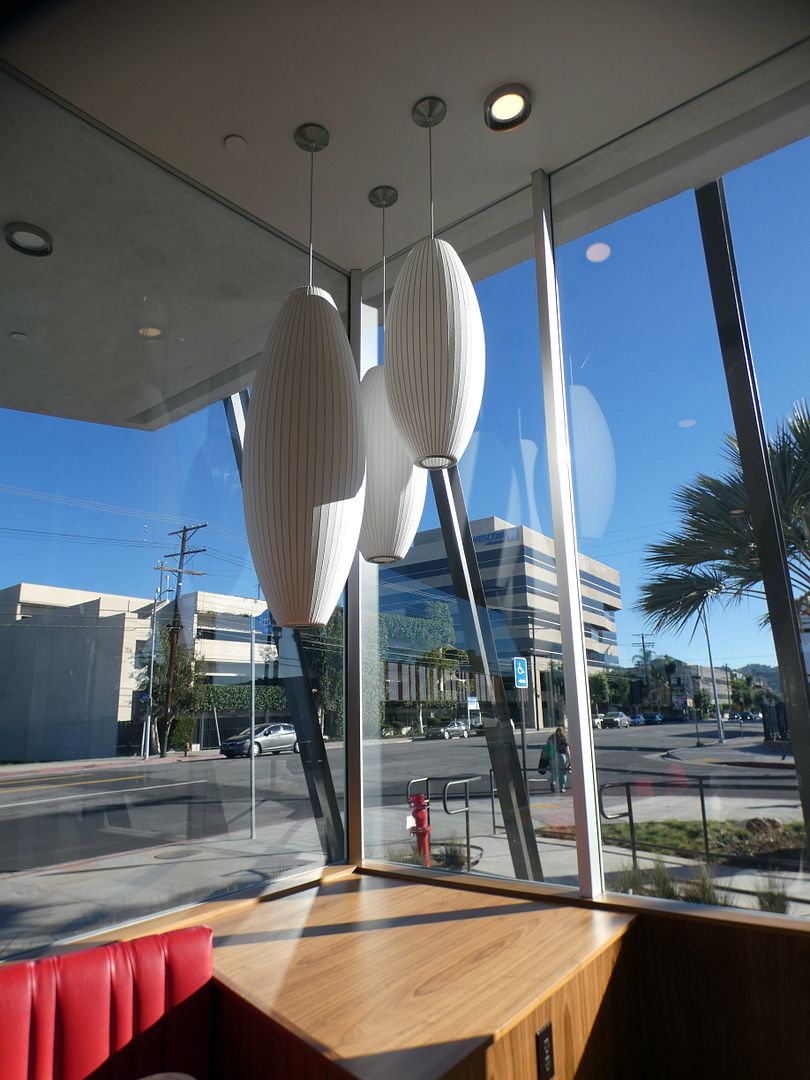
Most of the interiors, however, are new—although Chick-Fil-A has attempted to recreate what was perhaps Helen Fong's original vision for the decor, aided by the original construction drawings and the know-how of architect and historian Alan Hess. The Herman Miller/Nelson Bubble Lamps hanging in the corner window are a nice touch.
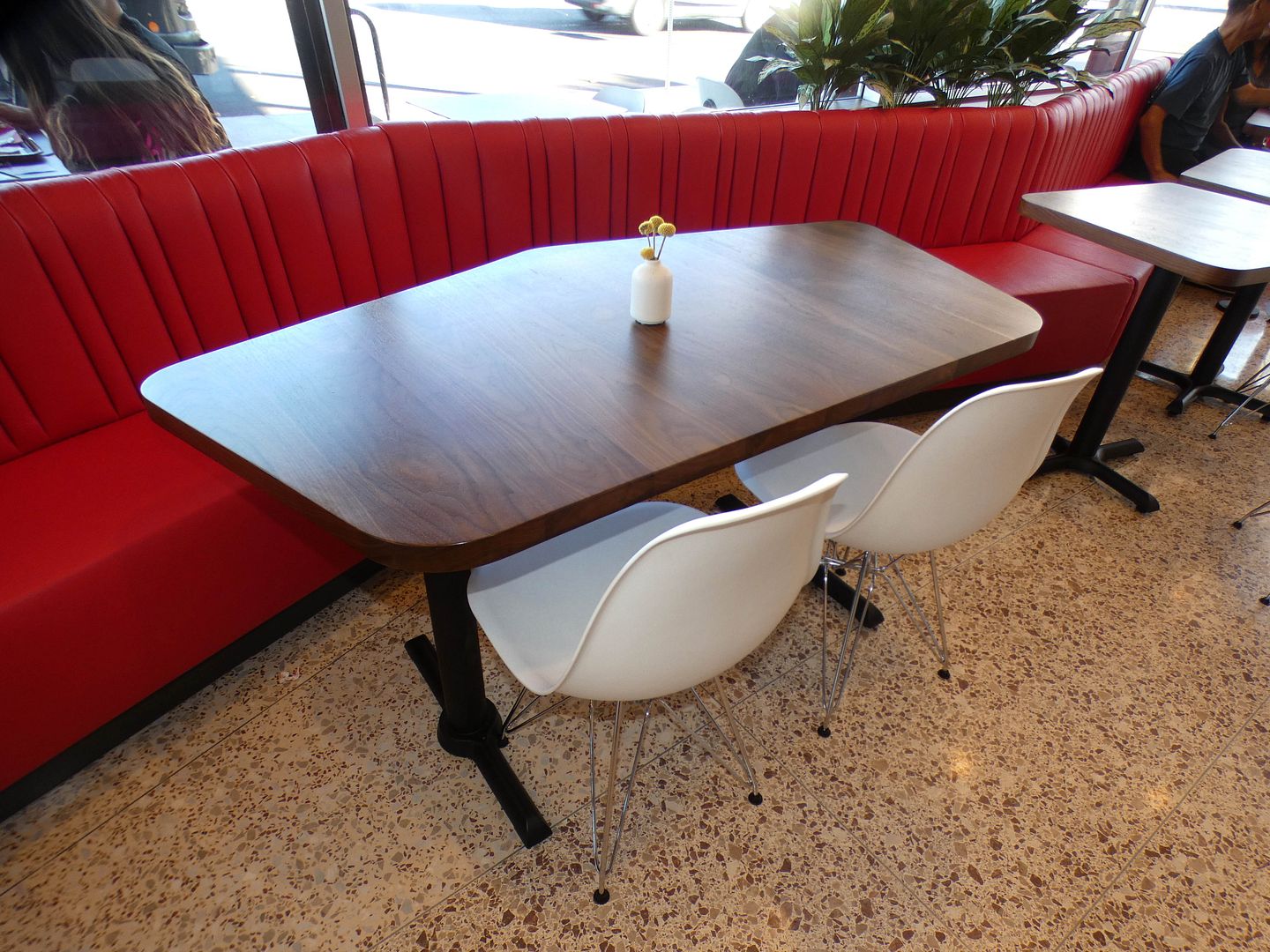
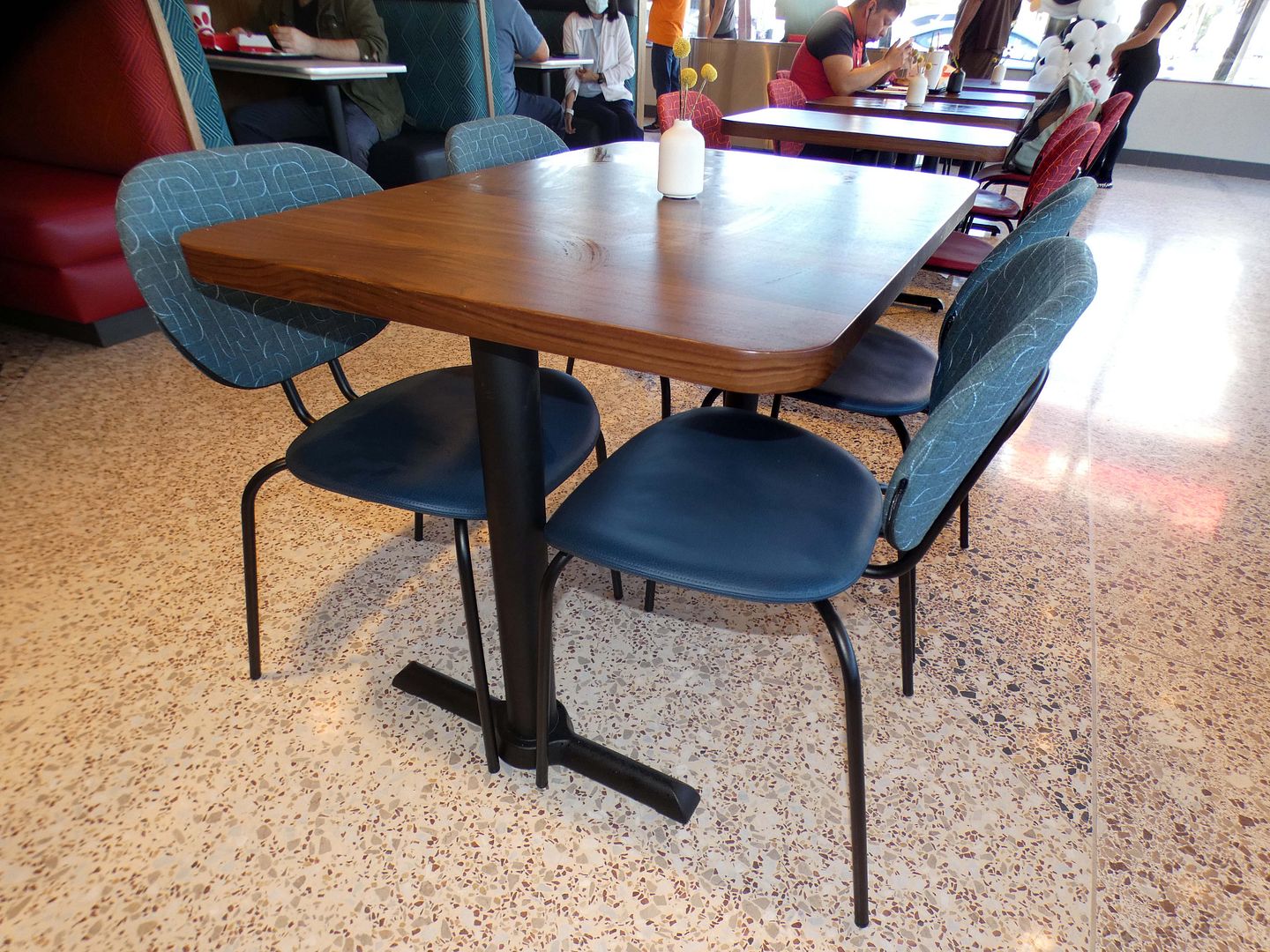
So are the Eames-style molded plastic chairs that line up against the red, folded plate banquette (or, what Hess describes as "sawtooth").
There's an airiness and a lightness to the space now, though not exactly a coziness. It feels smaller, though the panoramic glass windows bring in the outside with great enthusiasm. Later additions that had expanded the original space, like a banquet room, have been removed.
When the former Corky's was designated a Los Angeles Historic-Cultural Monument in 2020—thanks to a nomination written by Hess with Chris Nichols—part of the criteria was about the "feeling." I think with so many new materials, it's going to take some time for it to reabsorb some energy from the community.
The restaurant's operators say that they hope that people come and hang out at this Chick-Fil-A, making it a little less "fast" than its Quick Service Restaurant counterparts.
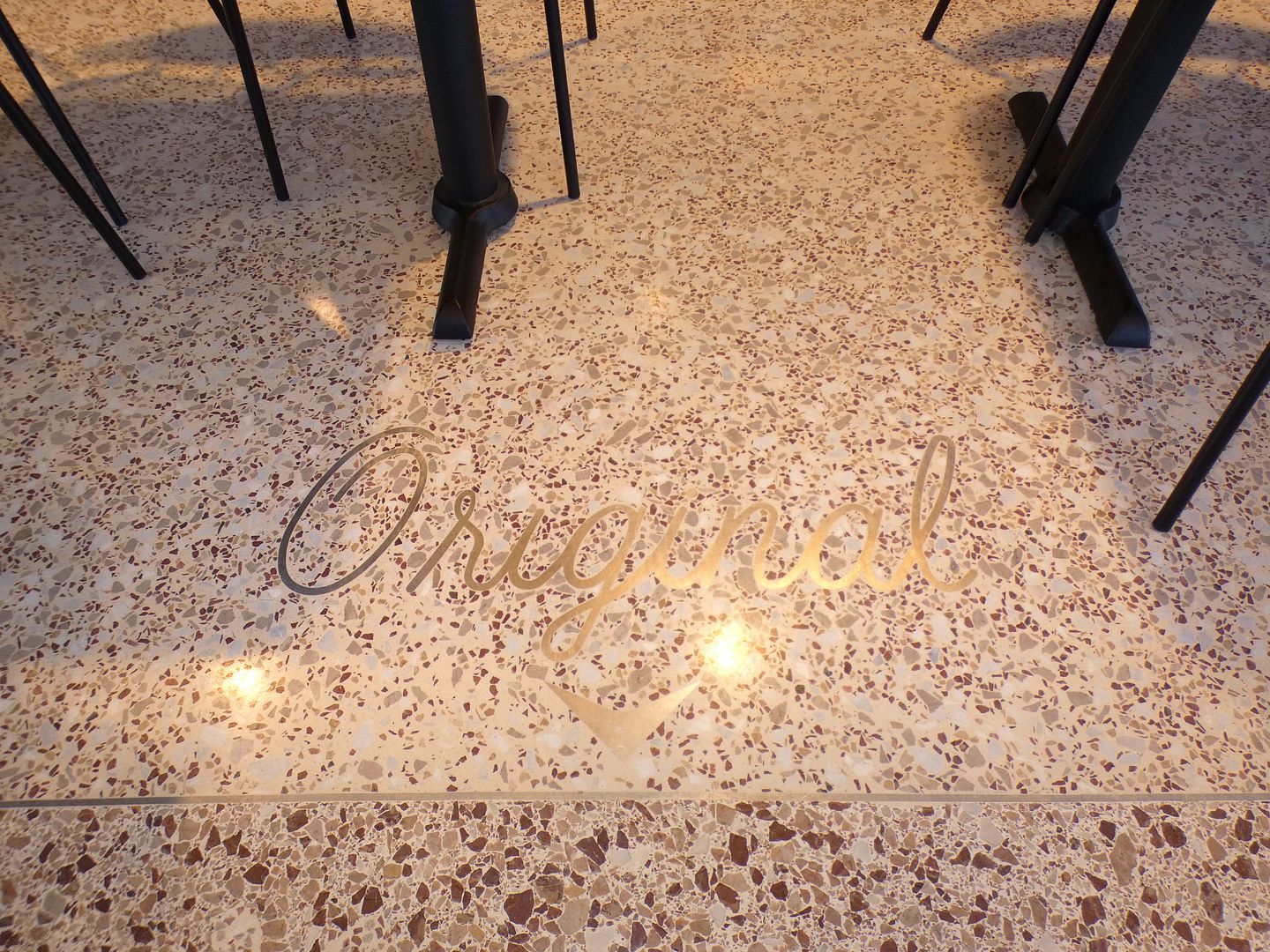
And when they do, I hope they notice the sections of original terrazzo flooring which were painstakingly preserved (from being carpeted over for decades). An inlay in the "new" section points it out, but I had to really look to find it.
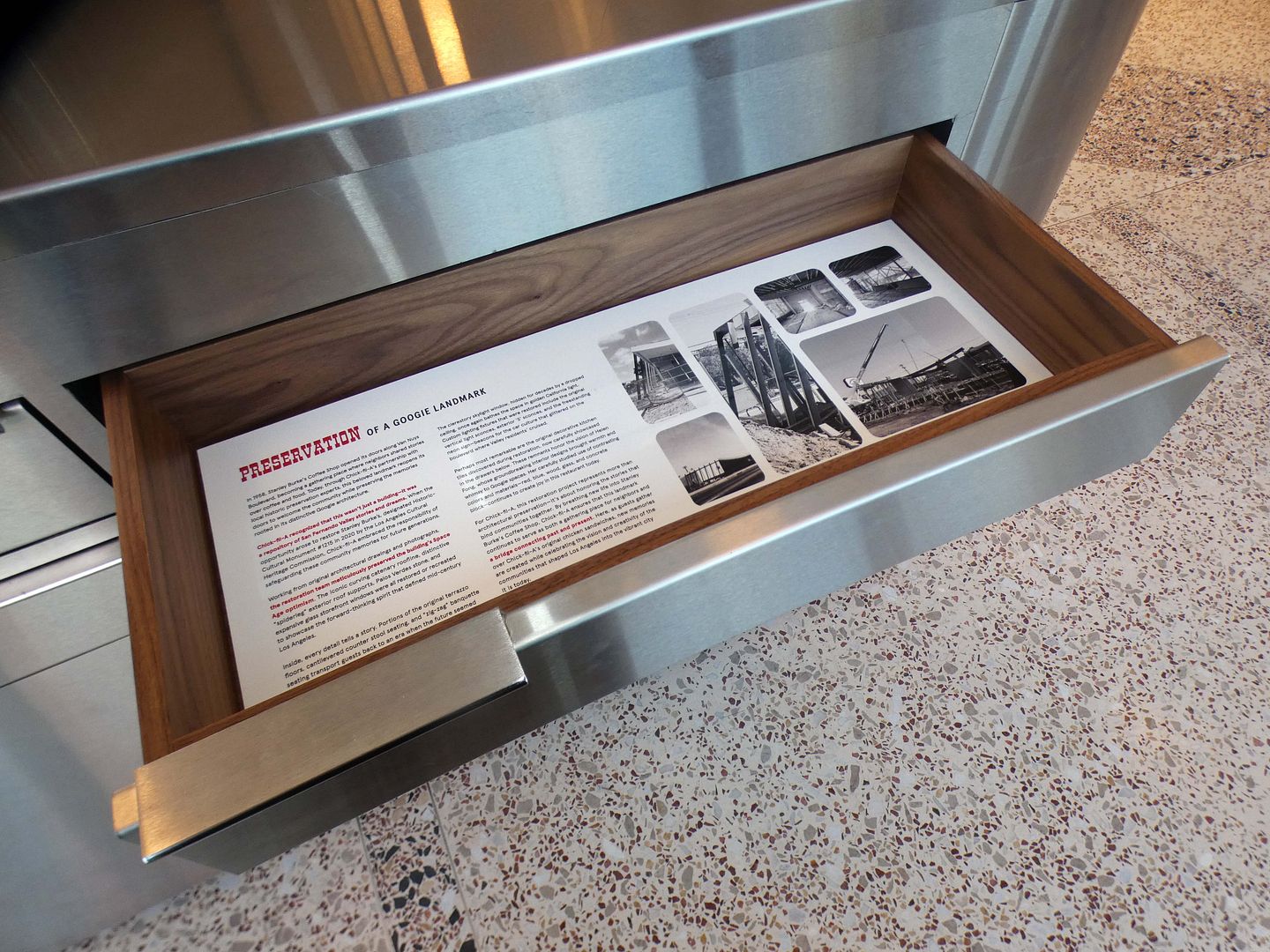
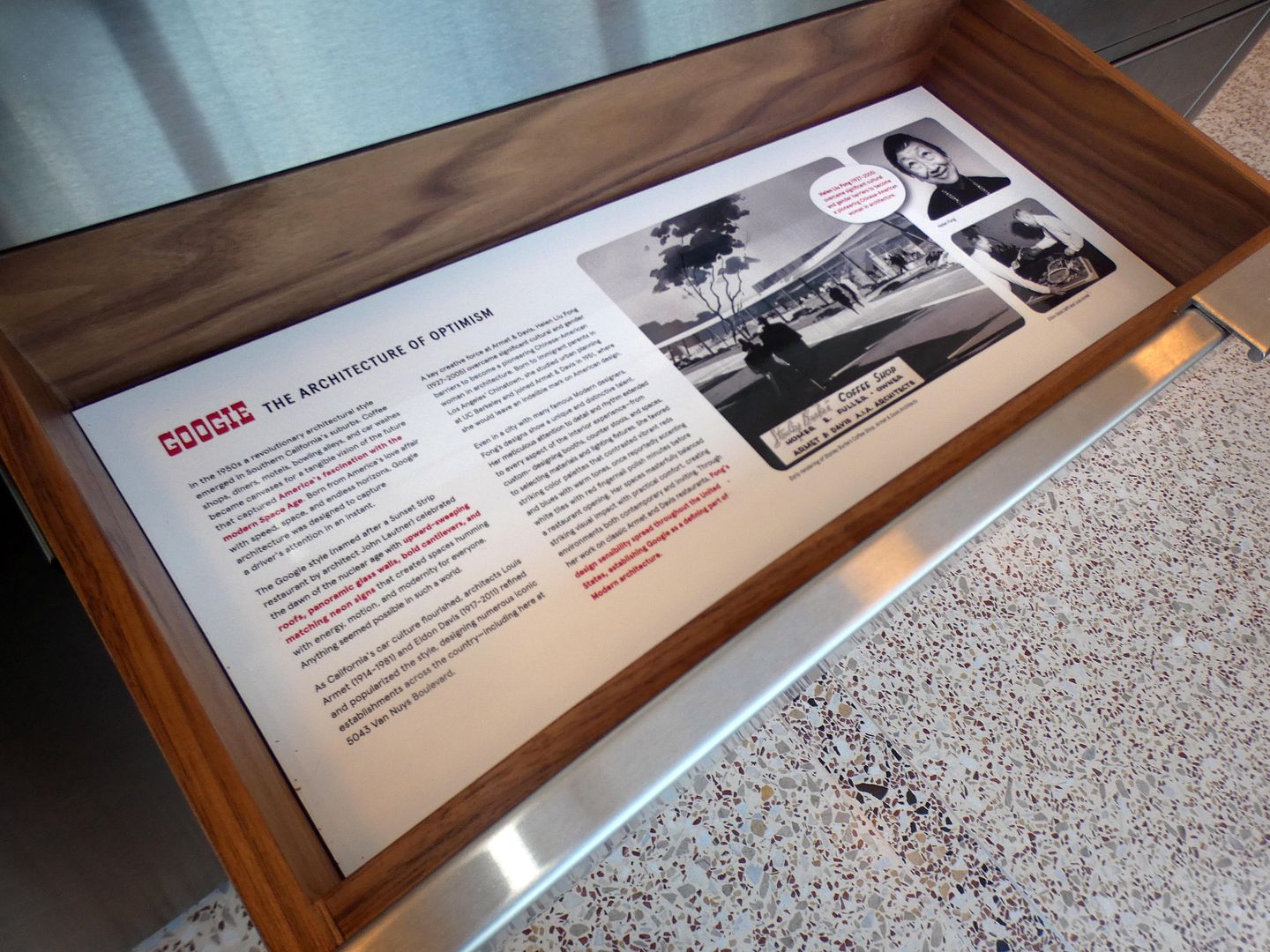
[Update 1/19/26] The historical display, too, which is apparently hidden away in some drawers you have to pull out.
I myself didn't come across those during my first visit—and had to go back to find them.
But it was a good excuse to return to see the Googie landmark lit up at night, something I'd never seen (at least as I recall) when it was Corky's.
And that, I think, is when it really shines.
Related Posts:

No comments:
Post a Comment