Search

March 23, 2020

Photo Essay: Battery Osgood-Farley, Beyond the Guns and Into the Airwaves

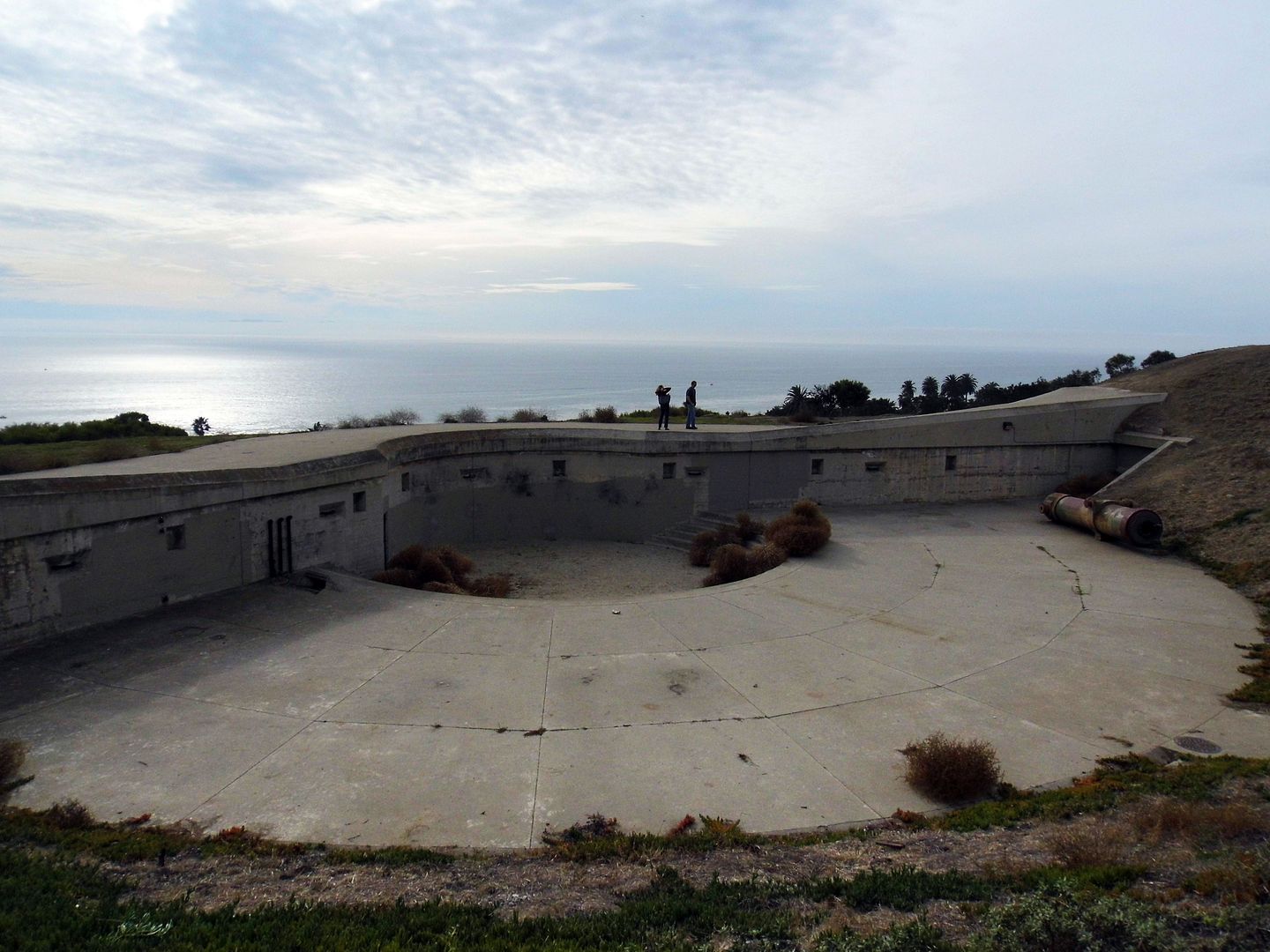
I'd been fascinated by Fort MacArthur in San Pedro—part of LA's coastal defense system—since I first visited one of its former outposts in 2012.


And although I'd thoroughly visited the Fort MacArthur Museum (located in the fort's Upper Reservation) a few times over the last few years, people kept telling me they thought there was more to see.


Turns out they were right—because in 2018, I returned to the Battery Osgood-Farley and got into some rooms I never knew existed.


Of course, it's all been declassified now—but these are areas that aren't usually open to the public, like the Battery Commander's Station. That's where the B.C. could observe the firing of the guns from a observation station that afforded him a clear view of the field of fire (accurate to 1/100th of a degree).
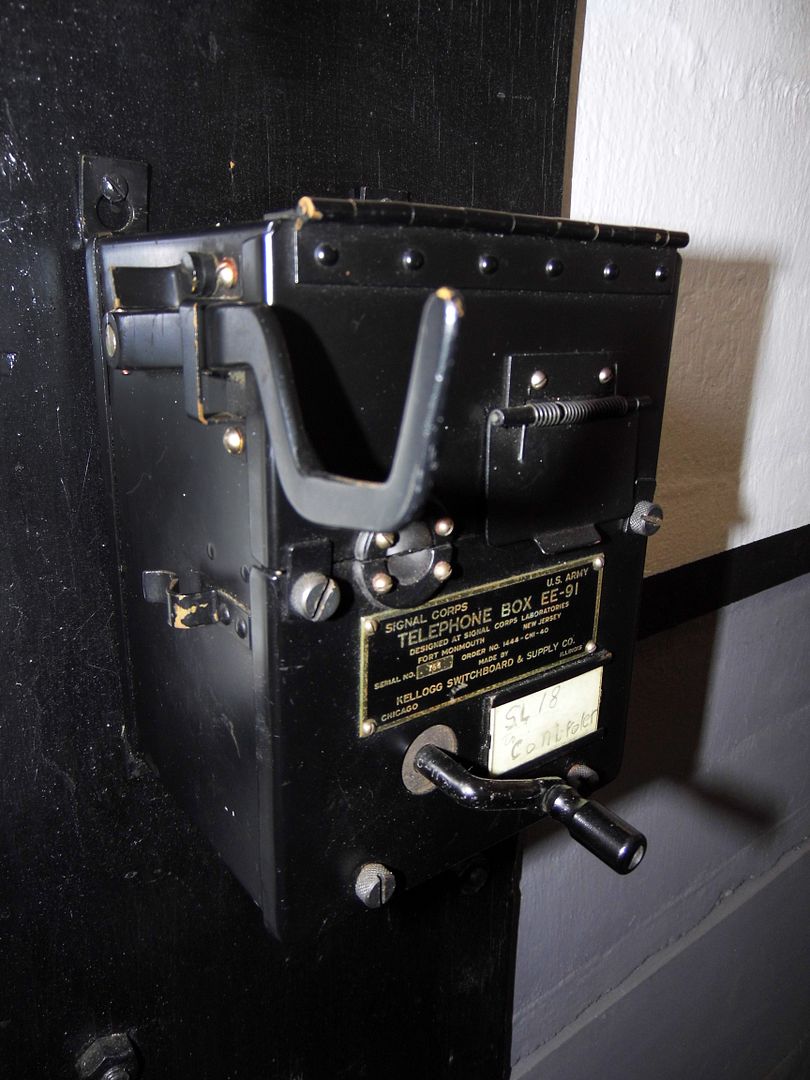


It's also where they could track targets and report their positions to the plotting room, located directly below them, so they can triangulate the targets and point the guns properly and accurately (in terms of both distance and direction, or azimuth, as measured from the artillery).
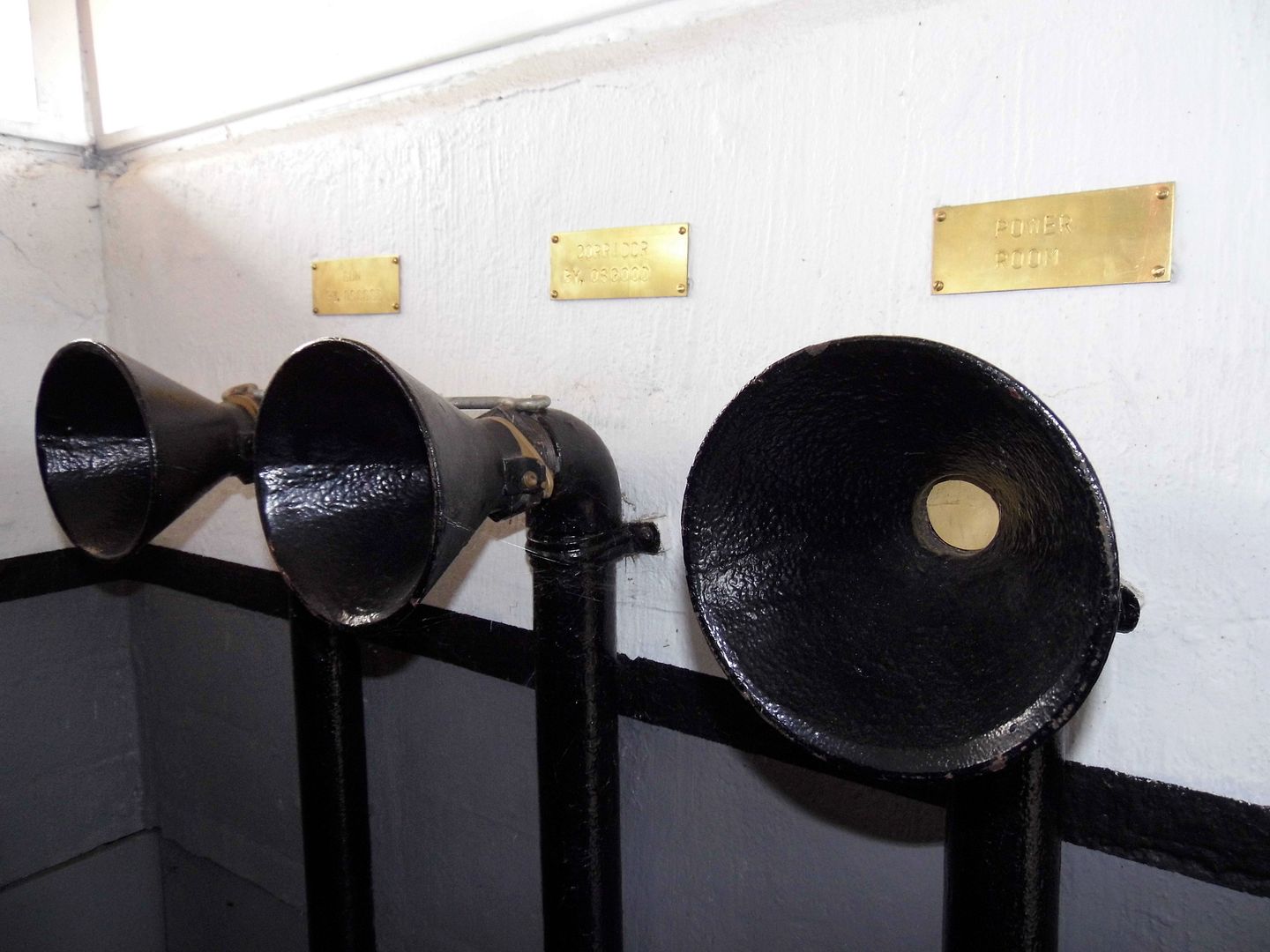


From there, they had complete control over the battery's operation—thanks to a series of seven "speaking tubes."


This U.S. Army post guarded the LA harbor from 1914 to 1974.


And sometimes, the most basic technology turned out to be best.


I also knew that there were some tunnels that ran from the Ft. MacArthur Museum to elsewhere in San Pedro—but whenever I asked anyone in charge about them, they'd say things like, "Oh, there's nothing down there to see" or "It's just used for storage now."
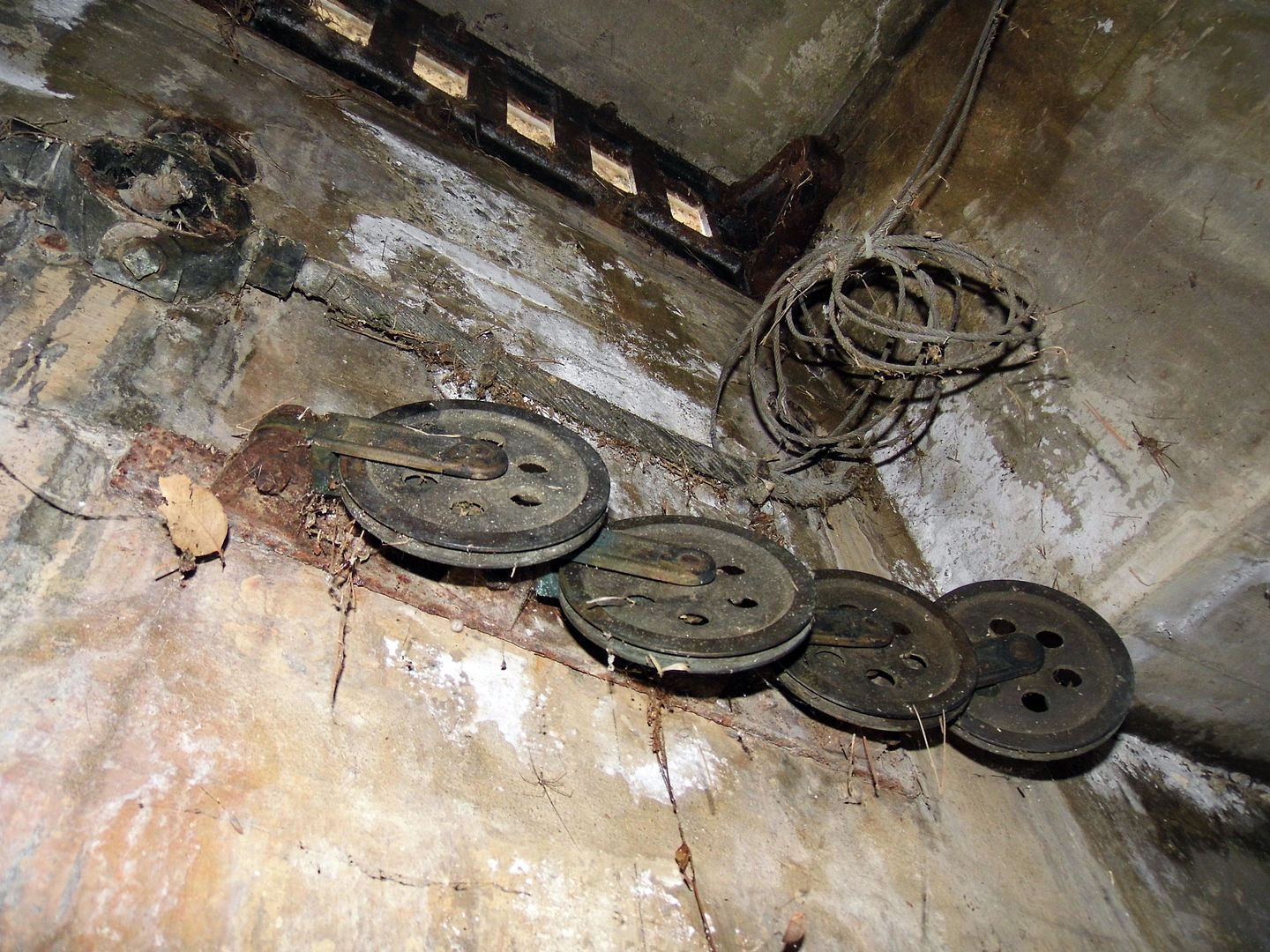


That wasn't, in fact, true—which I would find out later in my explorations beyond the public eye.


But first, I had to hit the Communication Room. Fortunately, it's no longer "gas-proof"—so a hard blast of air didn't have to "blow off" any poison gas in the decontamination room before I entered.
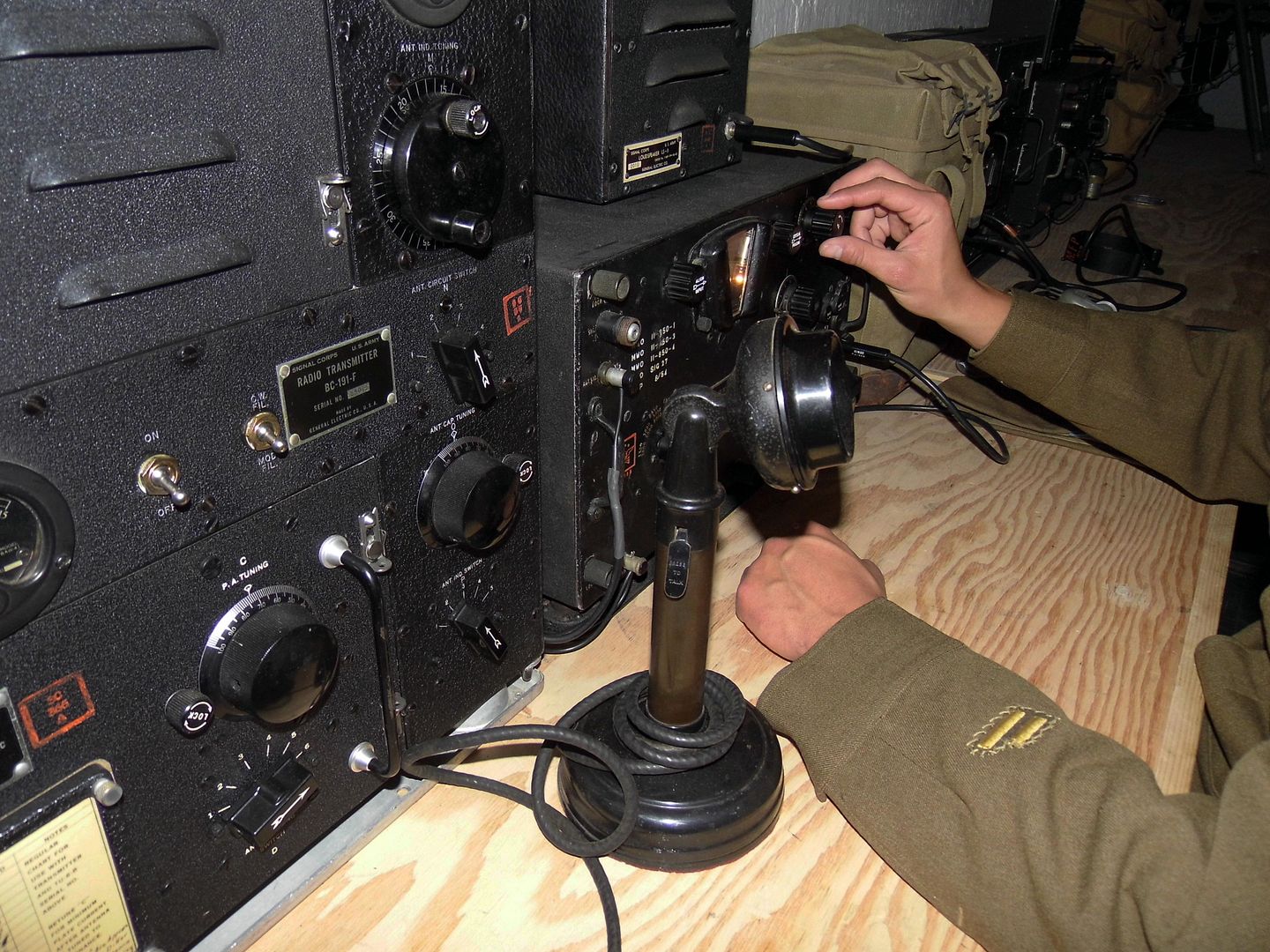


This was "ground zero" for the United States Army Signal Corps (USASC)—critical for detecting an approaching enemy they couldn't see (not even with a telescope). That meant aircraft.


This is where communication specialists and, essentially, information technology personnel would use radio receivers and transmitters—not only tuning but also calibrating and encoding across multiple frequencies.
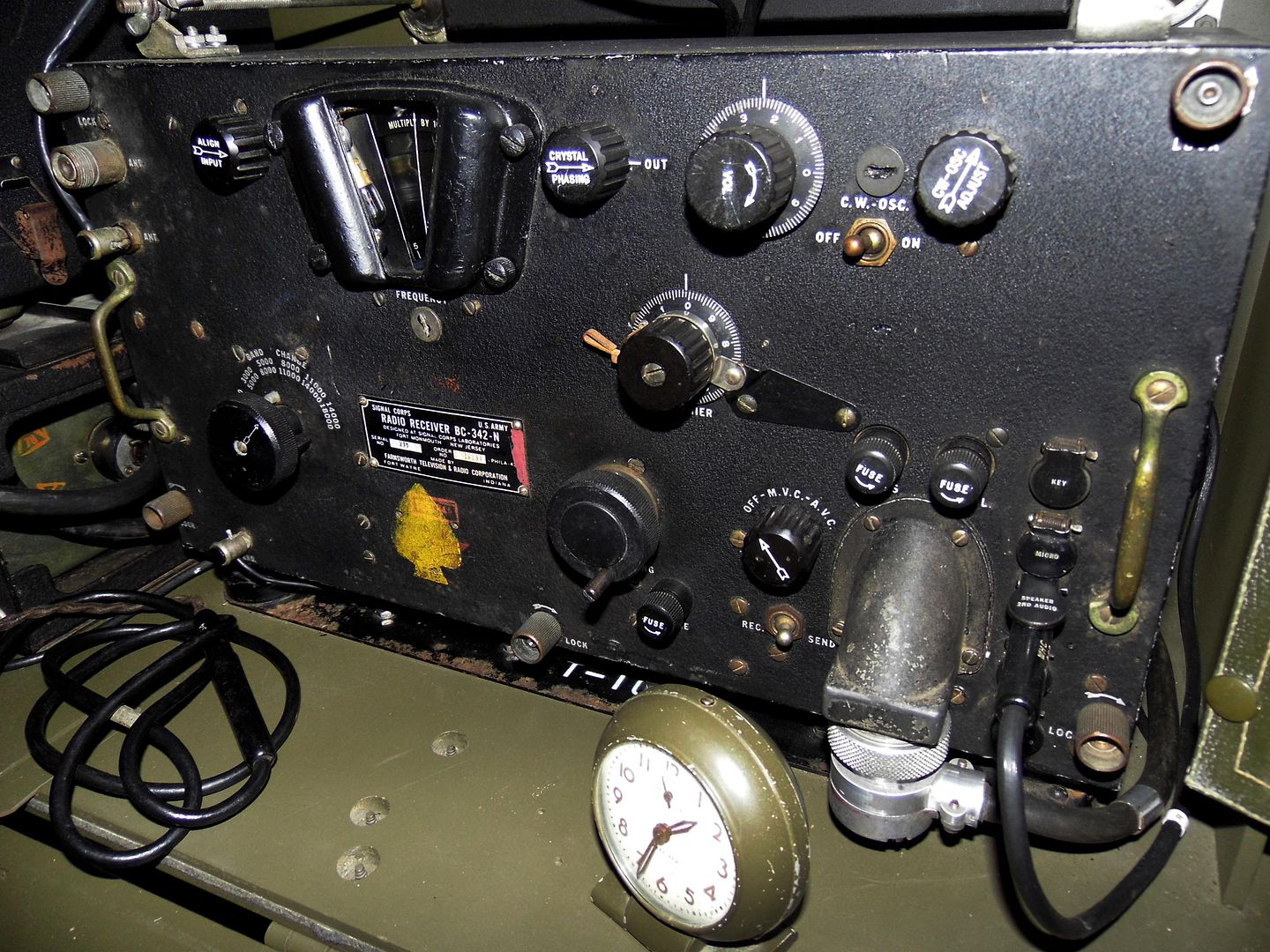


In terms of detecting an incoming threat, obviously this is where RADAR (Radio Detection And Ranging) would really come in handy.


But switchboards—for both telephone and telegraph—were also critical to the missions.
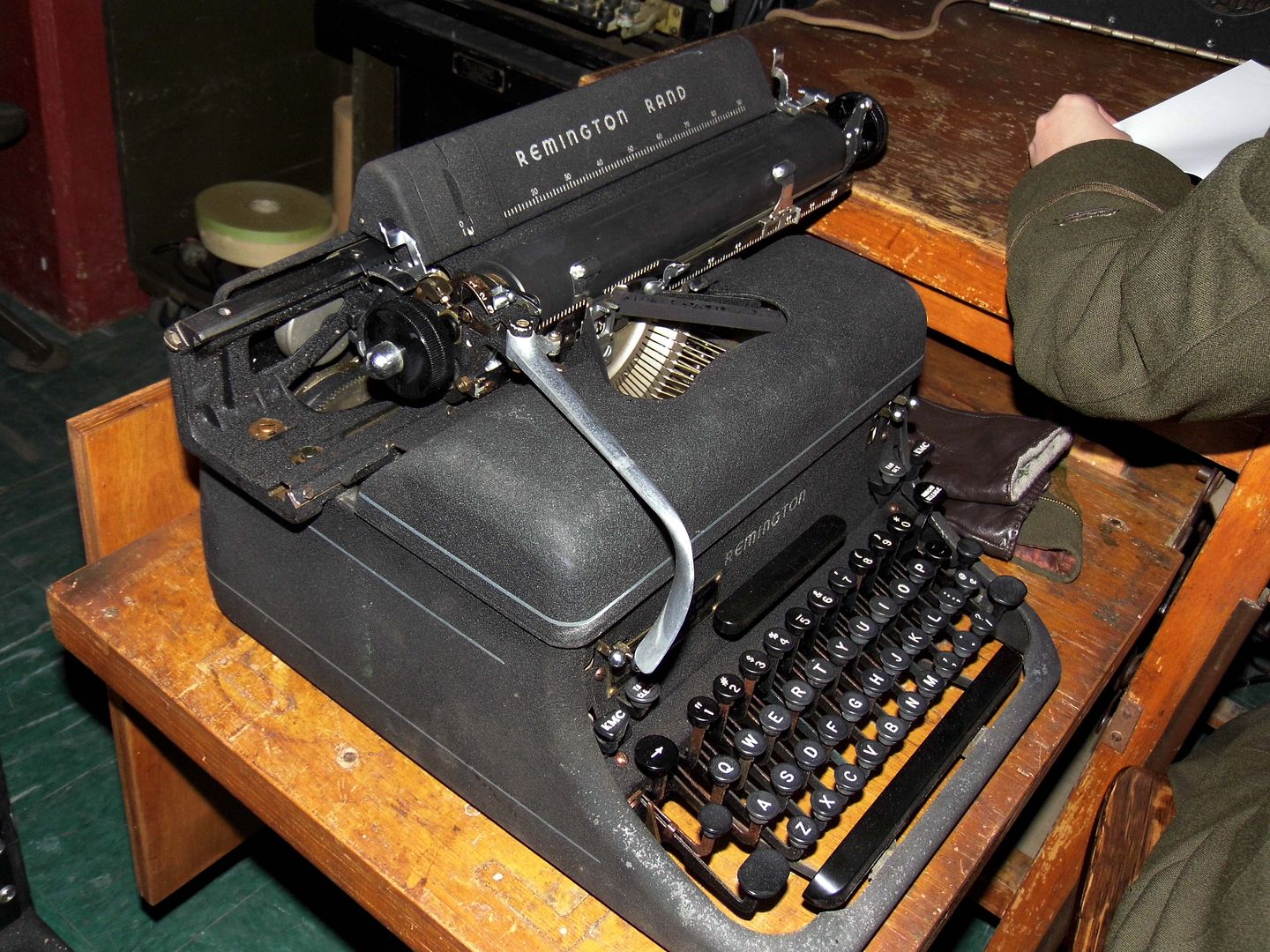


And sometimes communications boiled down to a more analog form of communication—namely, typewriters.
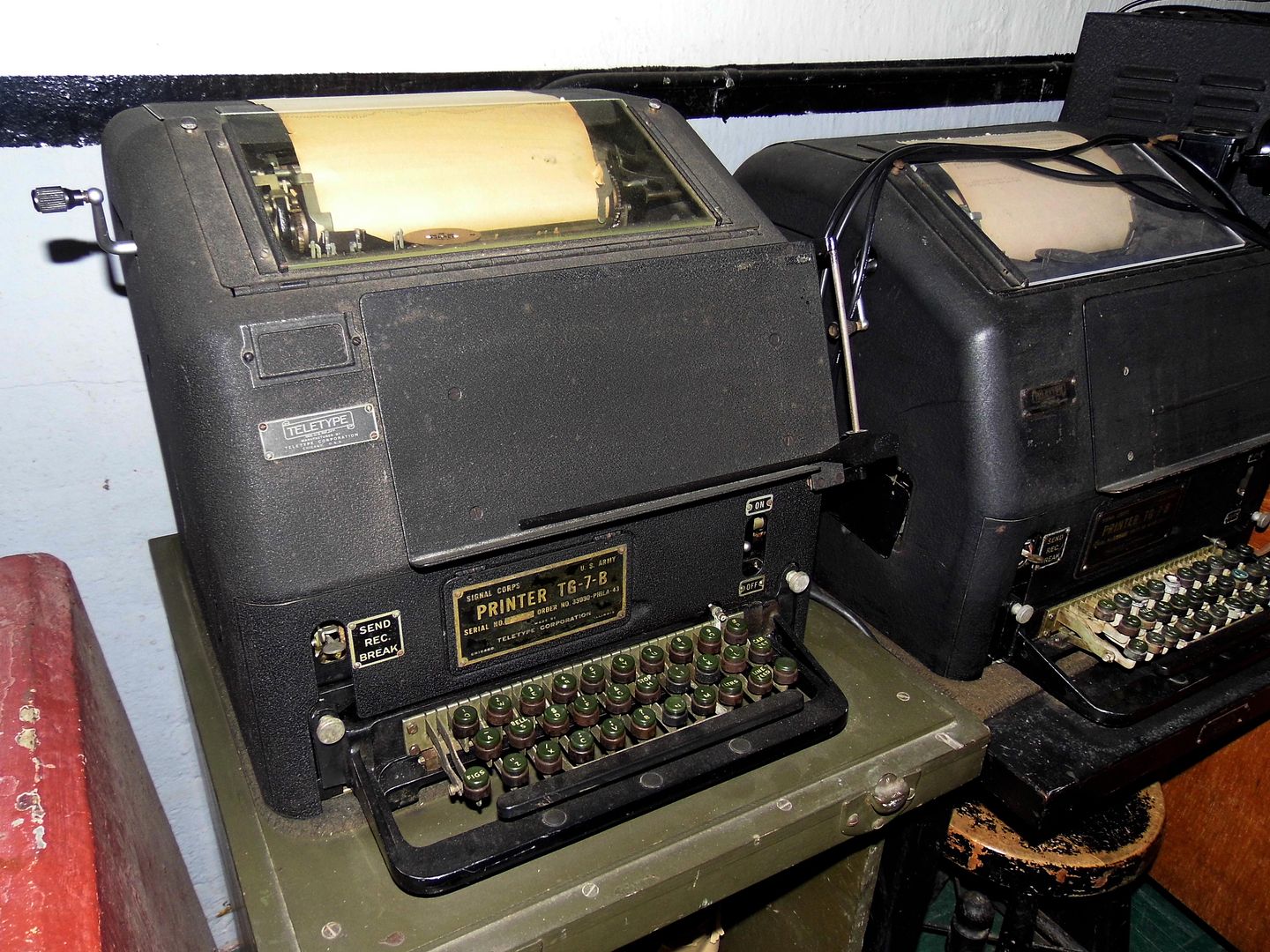


Oh, and don't forget about Teletype (TTY)—the great-granddaddy of email.
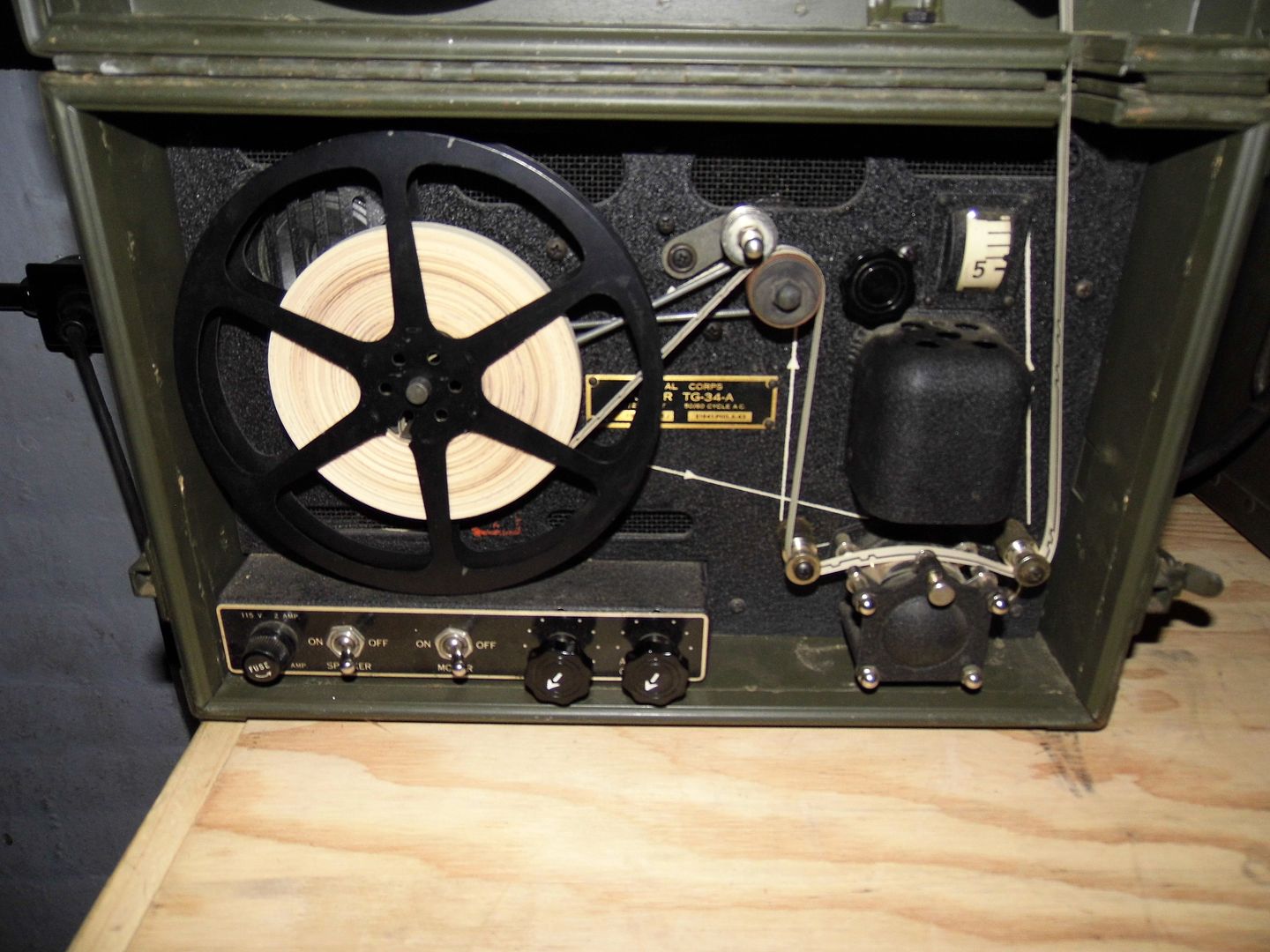


And of course there was also Morse code...
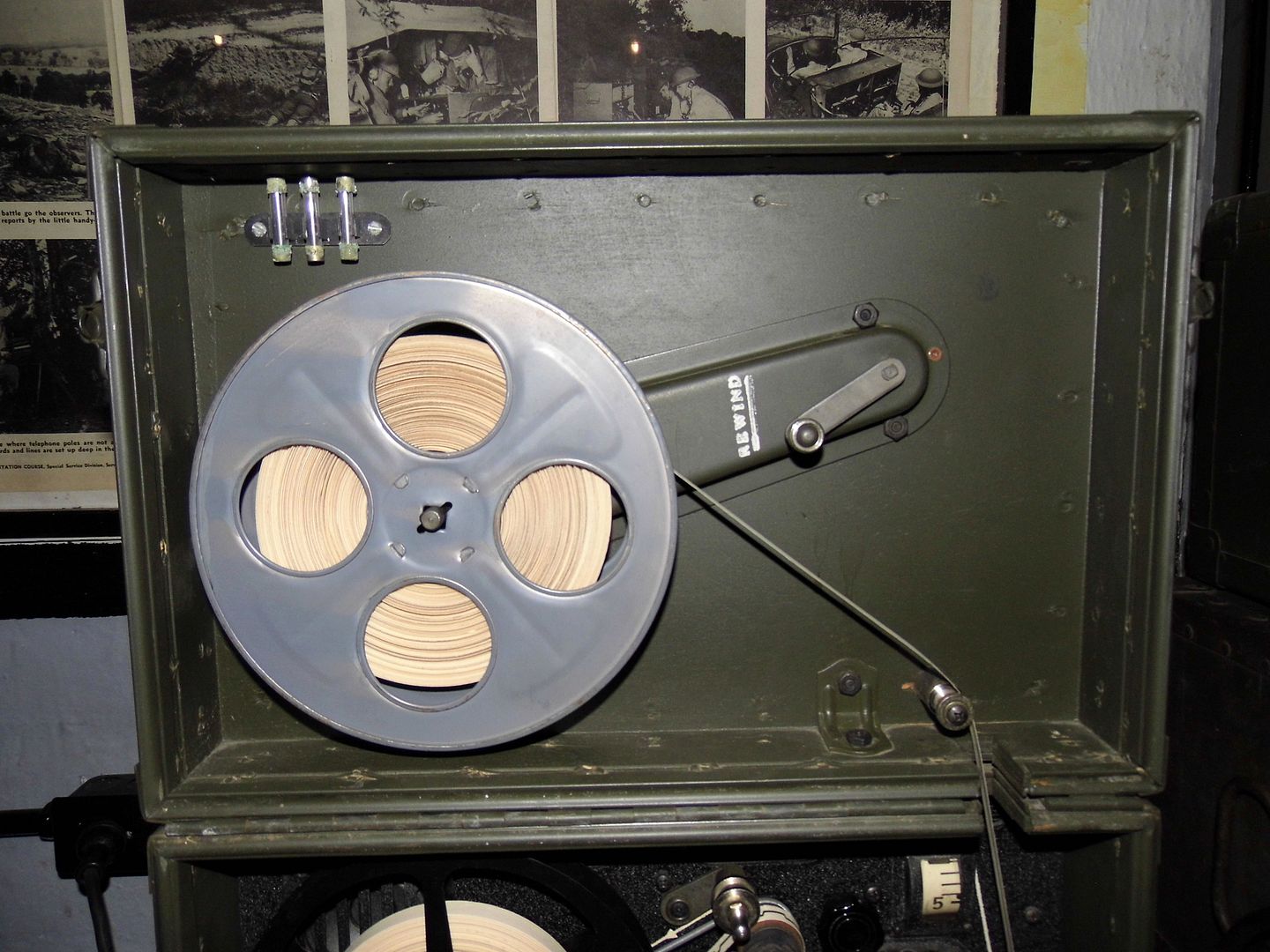


...which radio operators (or "keyers") would learn on a special Signal Corps "learning machine"...
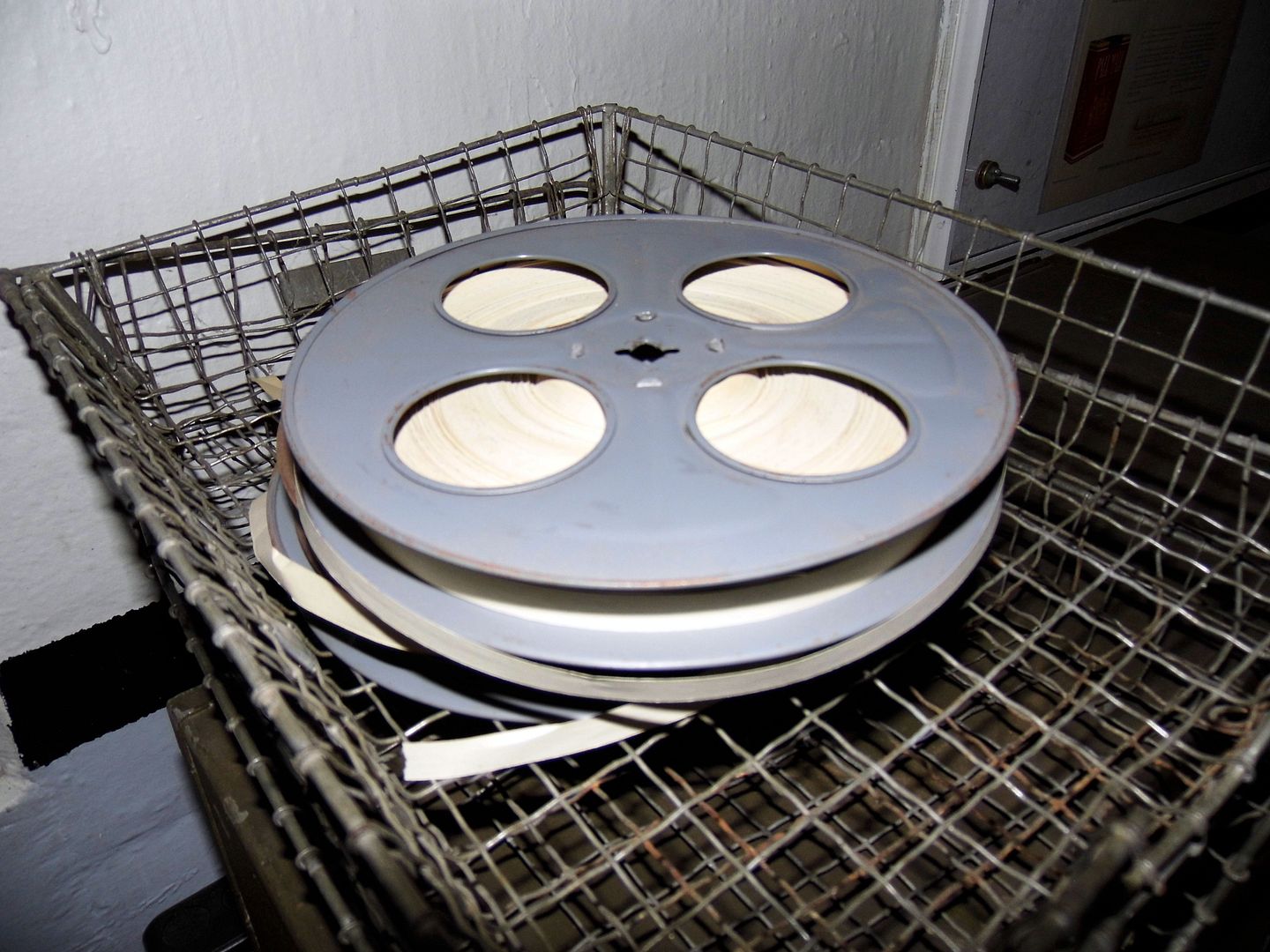


...as paper "practice tape" spat out signals recorded in ink for playback.
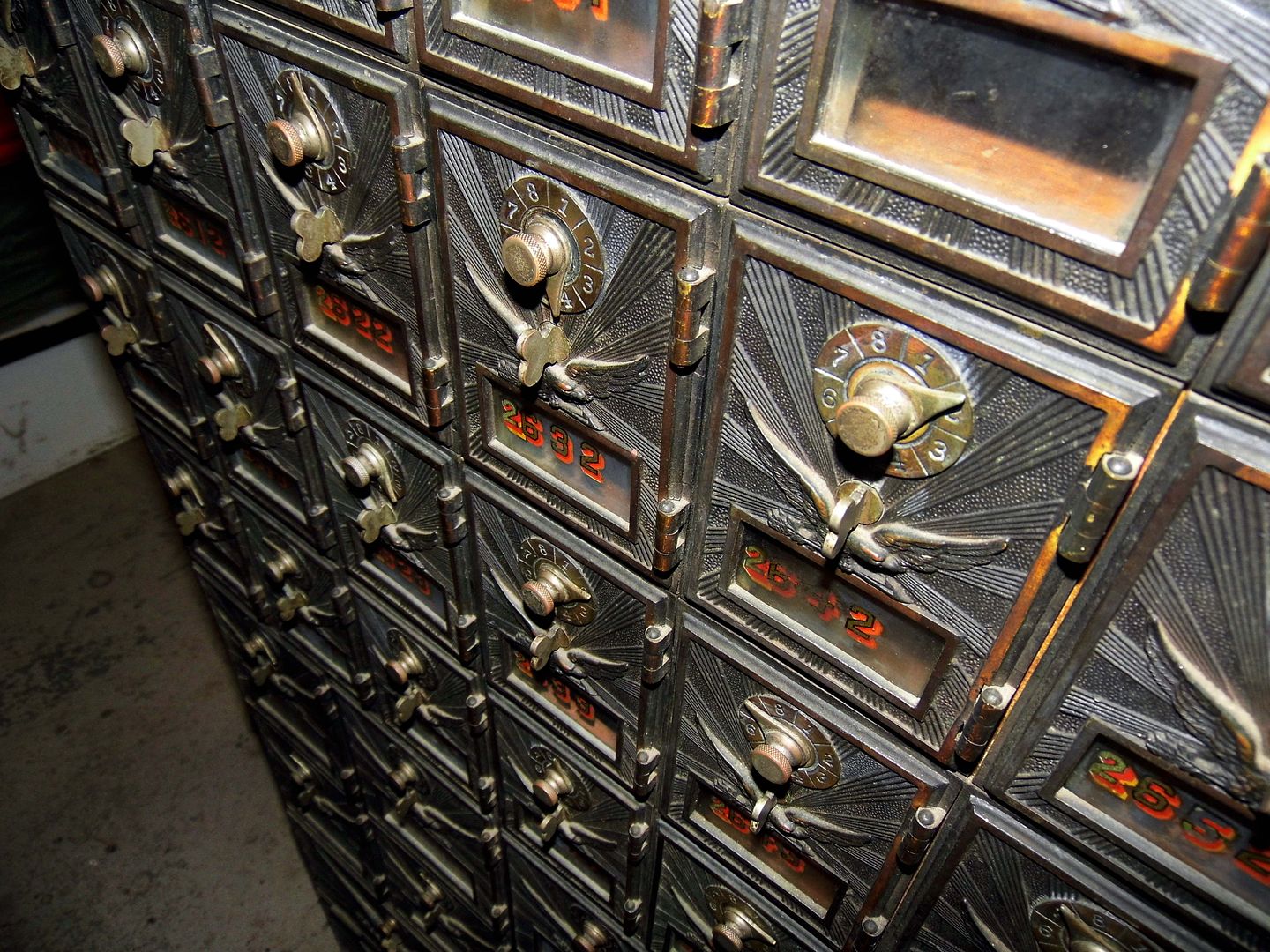


But what better communication was there for those enlisted in the U.S. Army than good ol' paper mail? Handwritten letters on perfumed paper in lipstick-sealed envelopes beat electronic communiqués any day.
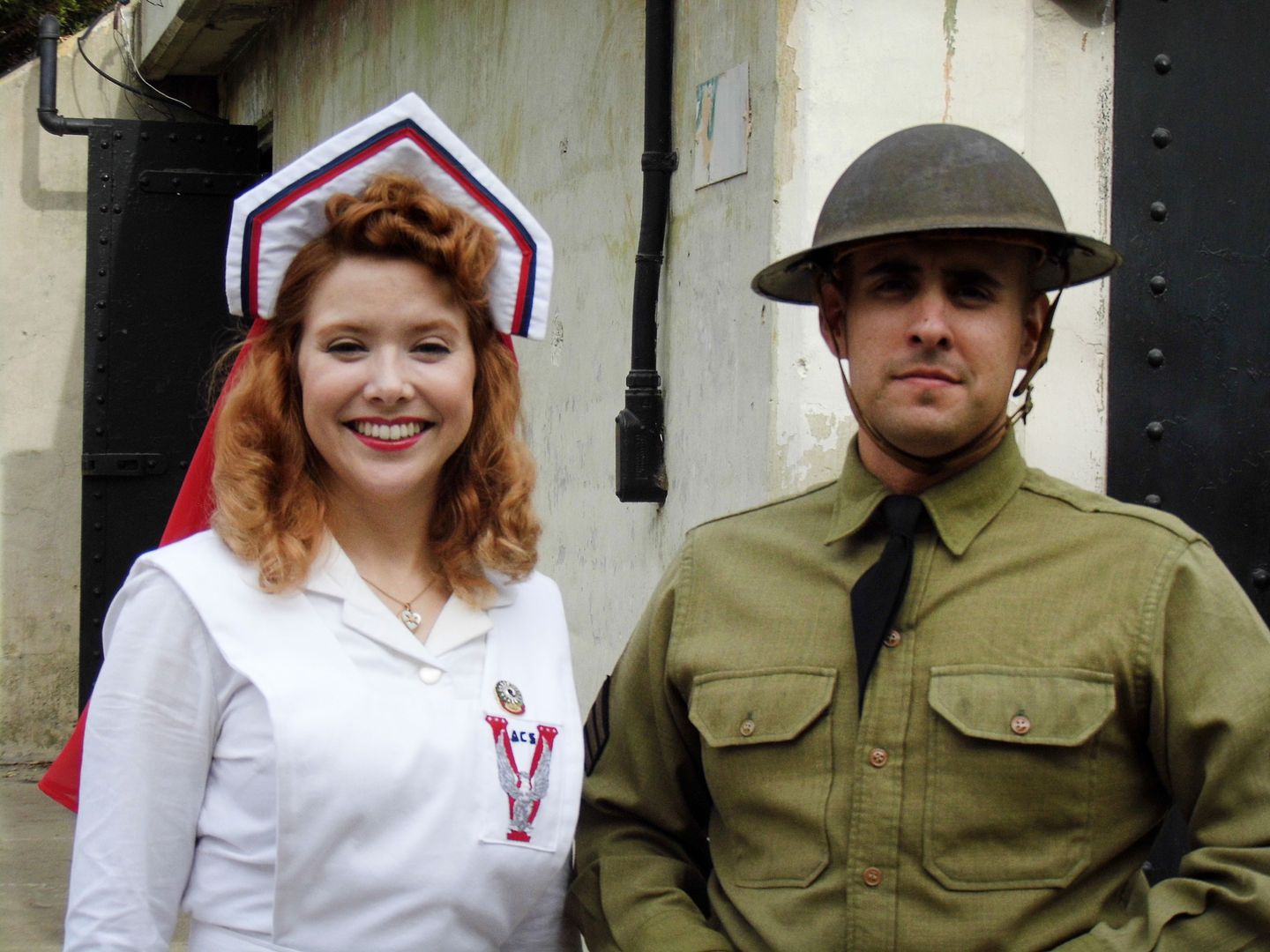


This was the first time in recent memory that the Fort MacArthur Museum had opened up these areas (formally, anyway) to the public. And it hasn't again in the last two years, as far as I can tell.

Stay tuned for more dispatches from other "underground" areas around the various reservations of the former Fort MacArthur. 

Related Posts:
Photo Essay: Fort MacArthur and The Battle of Los Angeles
Photo Essay: Trespassing Through Southland's Military History

March 22, 2020

Photo Essay: Sowden House, The Great White Shark Fortress of Franklin Avenue

People have called it the "Jaws House"—probably only since the movie came out in theaters in 1975 (or maybe the year before, when the book came out).

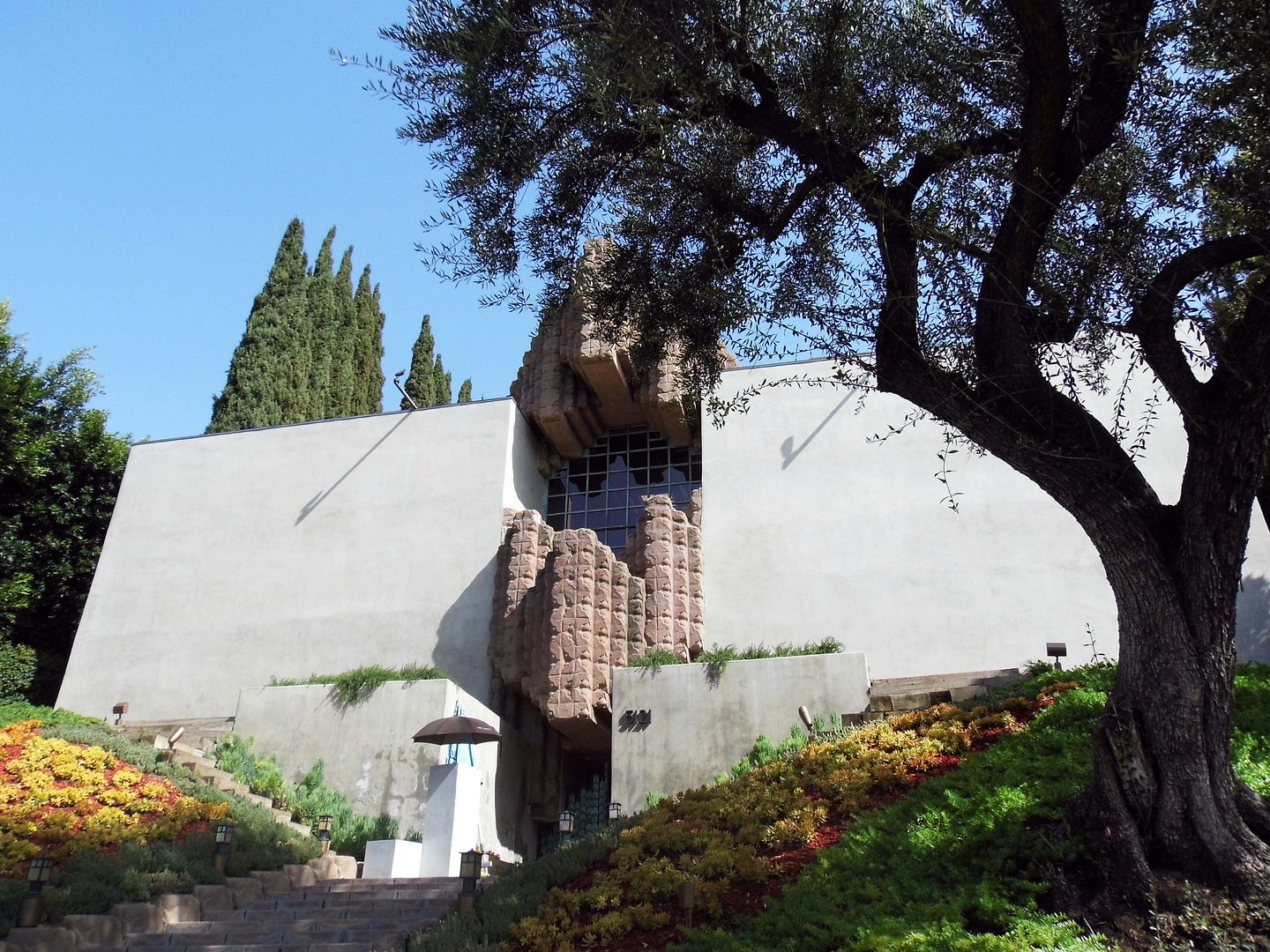
But even before that, the Sowden House in Los Feliz, Los Angeles probably looked like a shark to passers-by.

And maybe its architect, Lloyd Wright (son of FLW), intended it to look that way.

After all, the Mayan Revival style incorporates iconography and symbology that would've been important to the pre-Columbian civilization. And apparently, the Mayans were terrified of the shark (or xoc)—their mighty jaws and impossibly large teeth used as hunting trophies and for trade, even in the inland parts of Mesoamerica.


The Sowden House was the last home built by the elder or younger Wright in this Mayan style, subsequently having come to be known as "Wrightian." And it sure made a splash.


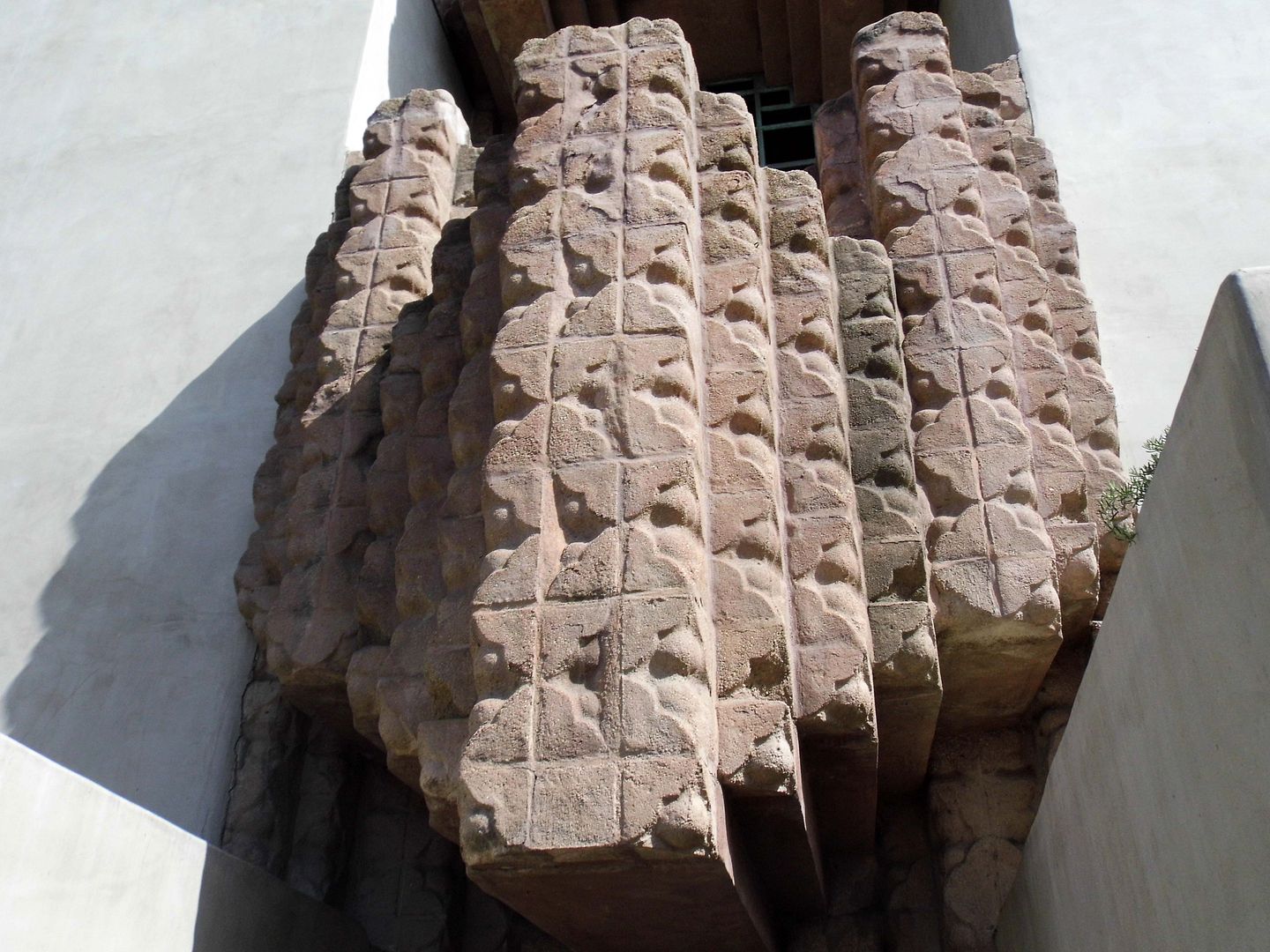
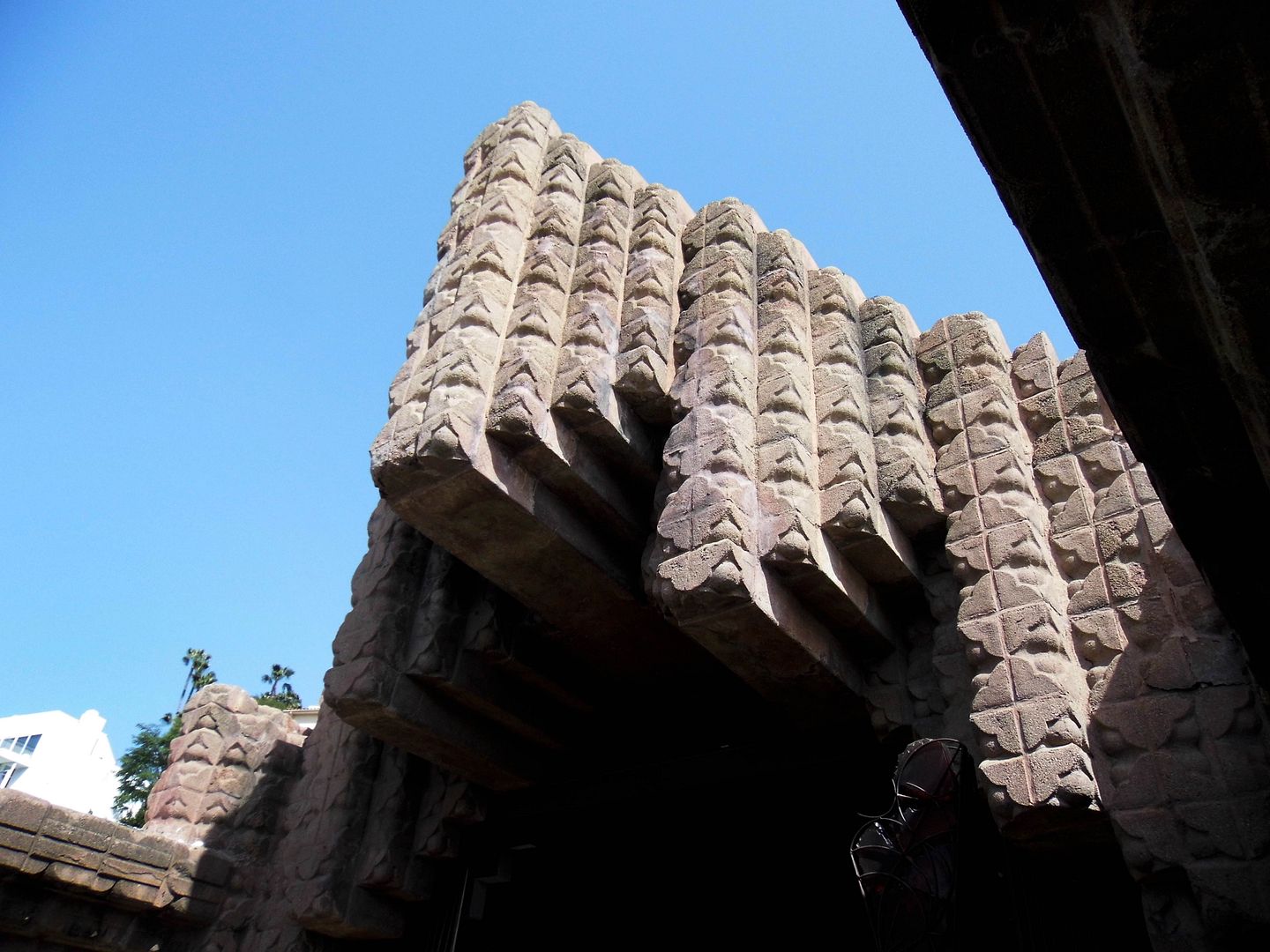
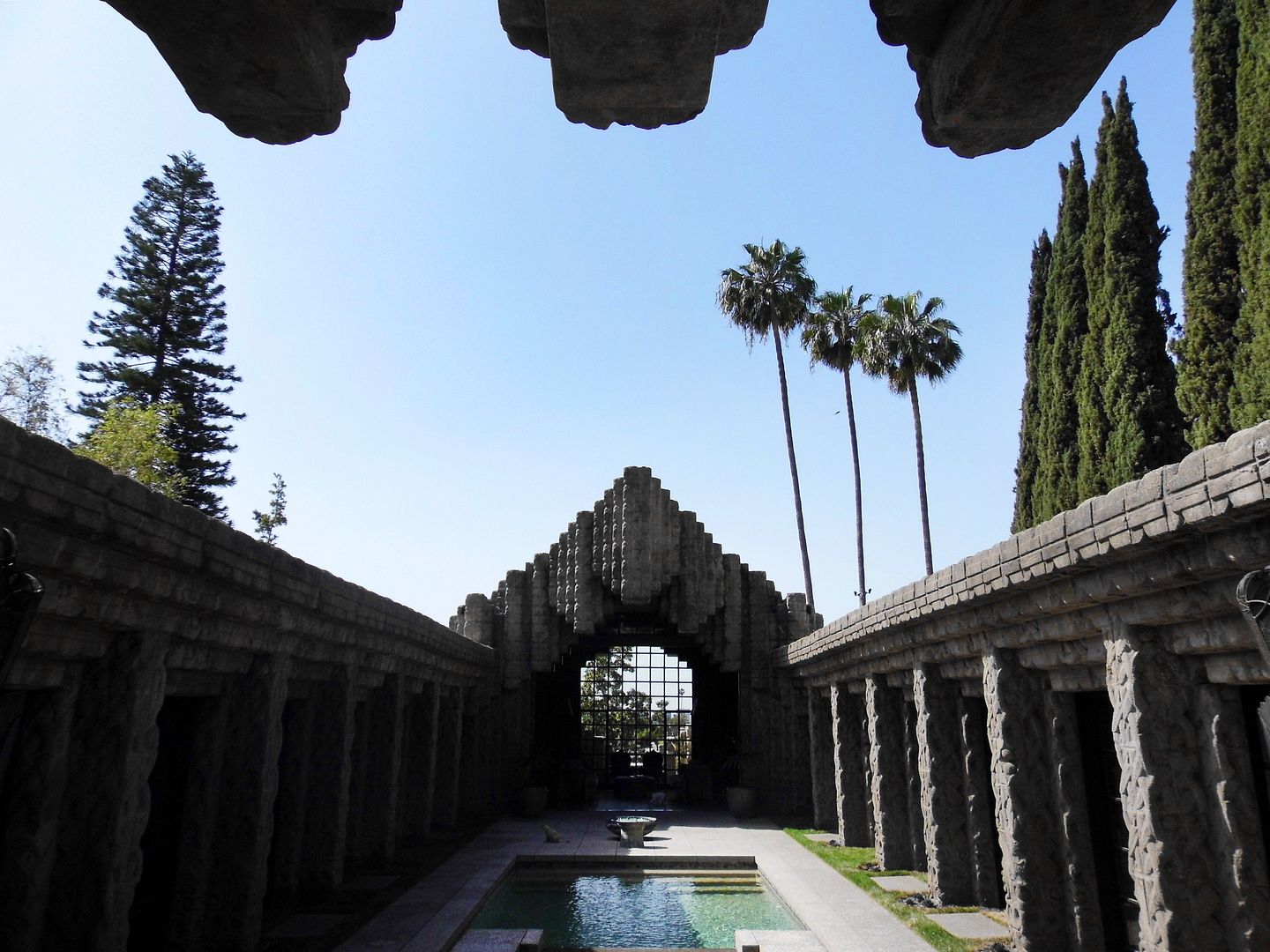
Completed in 1926 at the behest of Wright's friend, photographer John Sowden, and his wife Ruth, the Sowden House—as it's still called, though they sold it in 1930 and it's currently on its 10th owner—greets you from the street with stepped pyramids, zigzags, and jagged peaks like teeth. You can't miss it, now that the overgrowth of yucca, palm, bird of paradise, and banana leaves no longer obscures the sidewalk or street view and leaves it starkly unenshrouded.


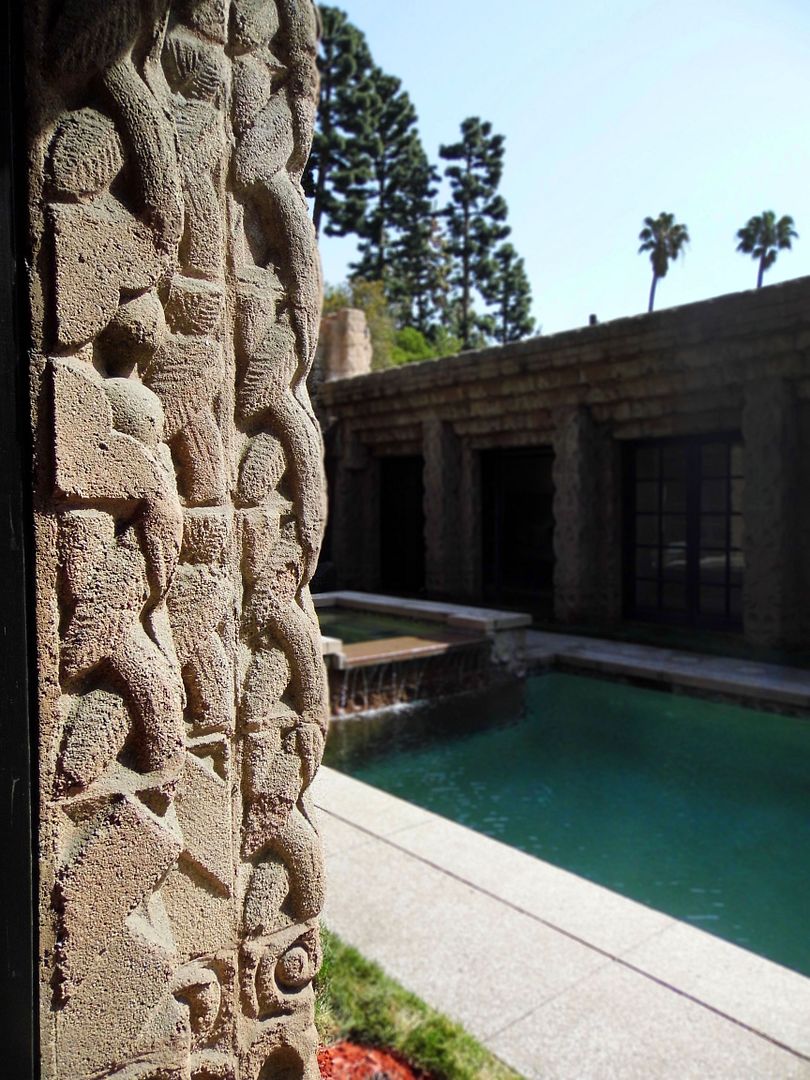
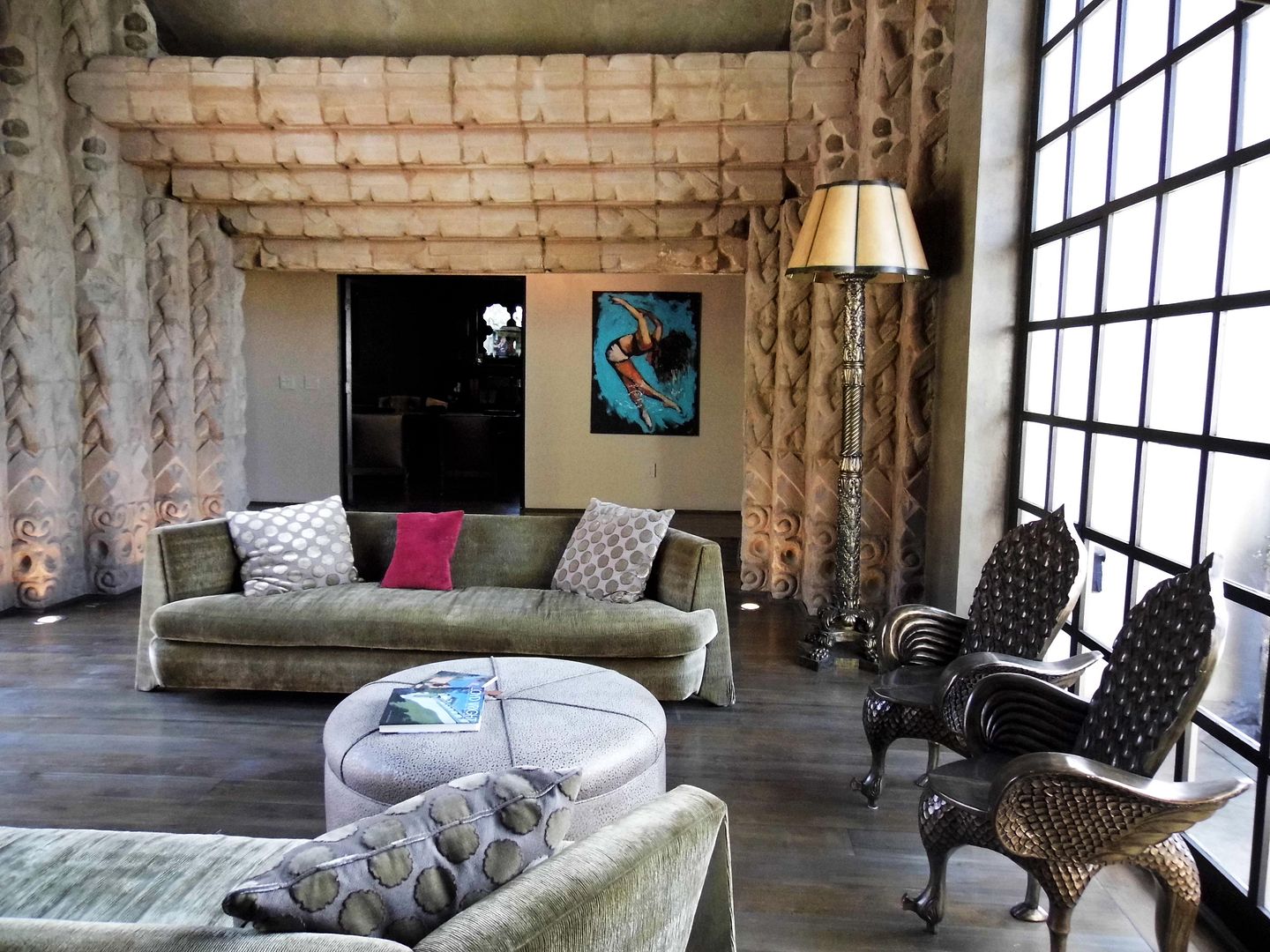
That's the first taste of the textured concrete or "textile" block ornamentation that the Wrights were, for a time, notorious for using. And you must pass underneath it—into the gaping mouth—in order to explore the rest of this fortress on Franklin Avenue.


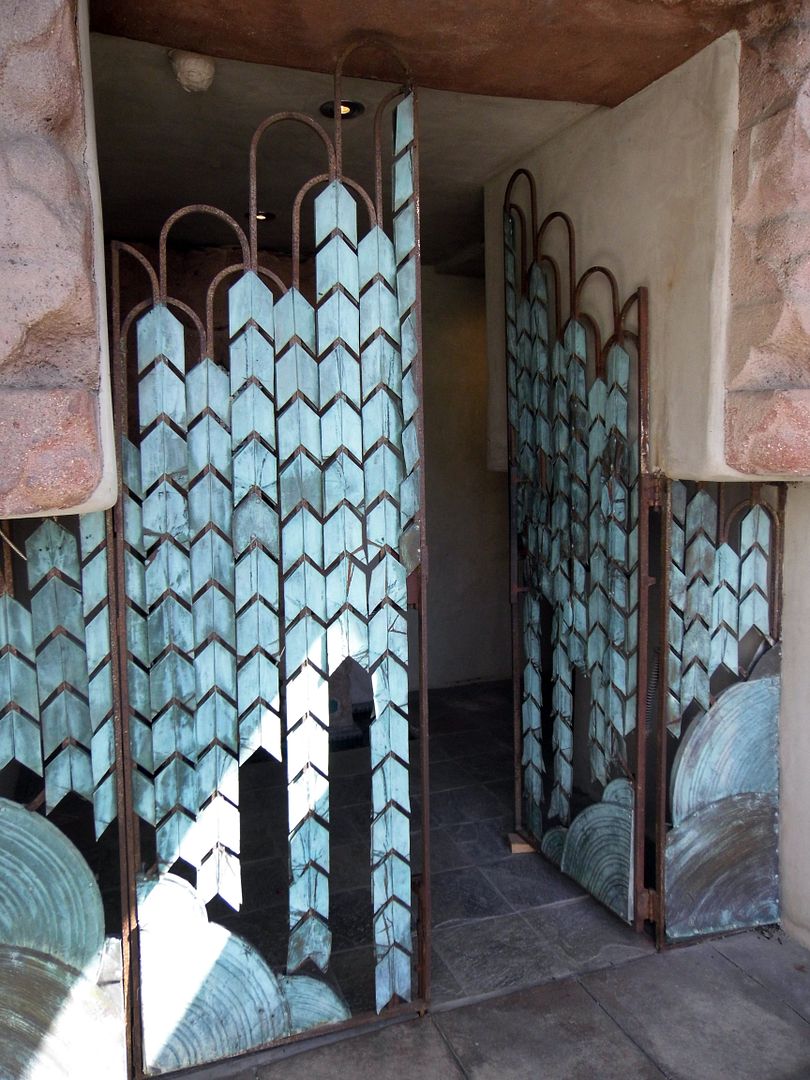
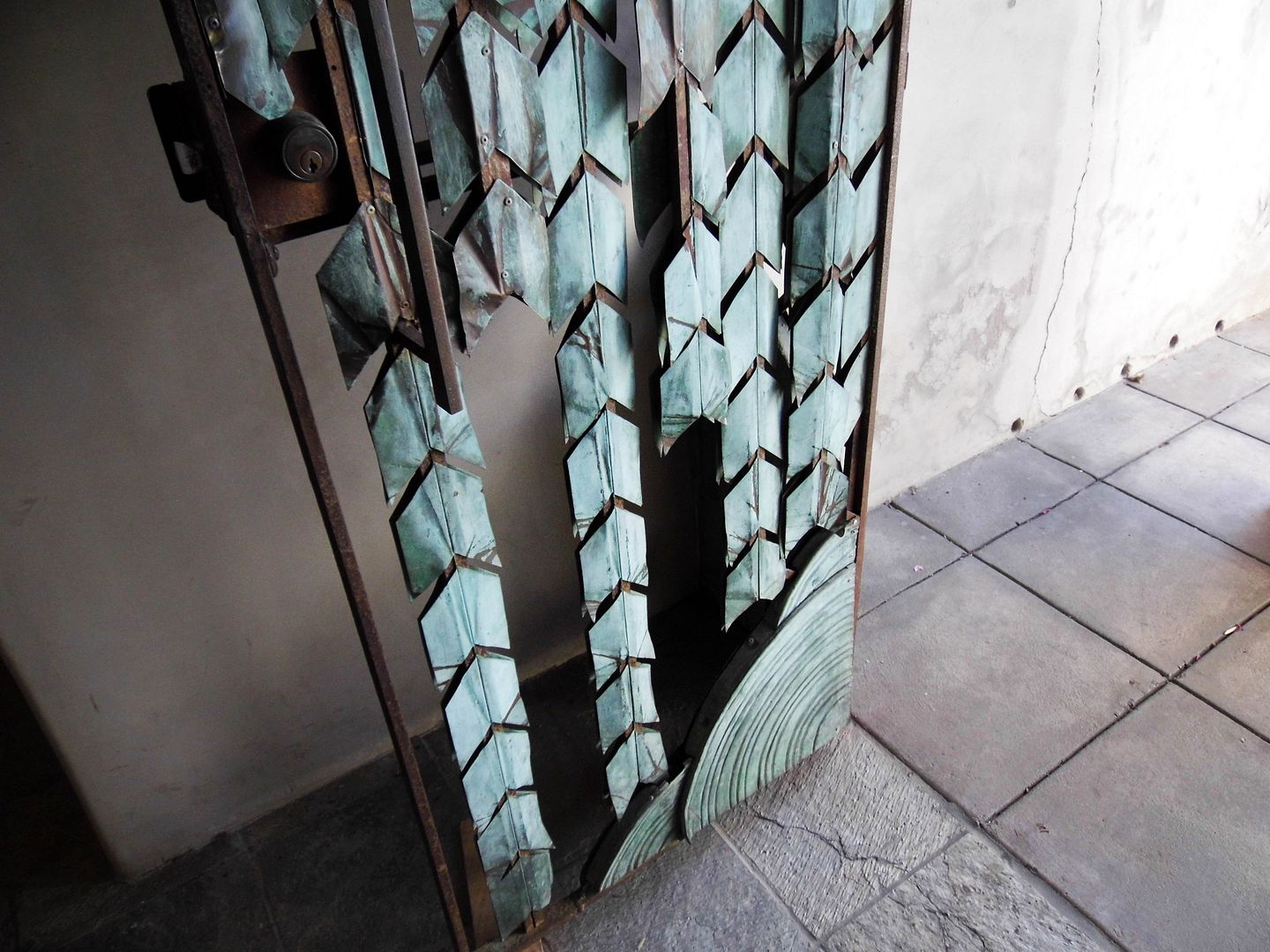
First, you're greeted by entry gates of sculpted copper, with their green patina highlighting chevron-shaped plates lined up on vertical bars (the most Art Deco part of the entire house).


After entering a "cave-like" purgatory...


...and emerging out from under the interior "hood"...


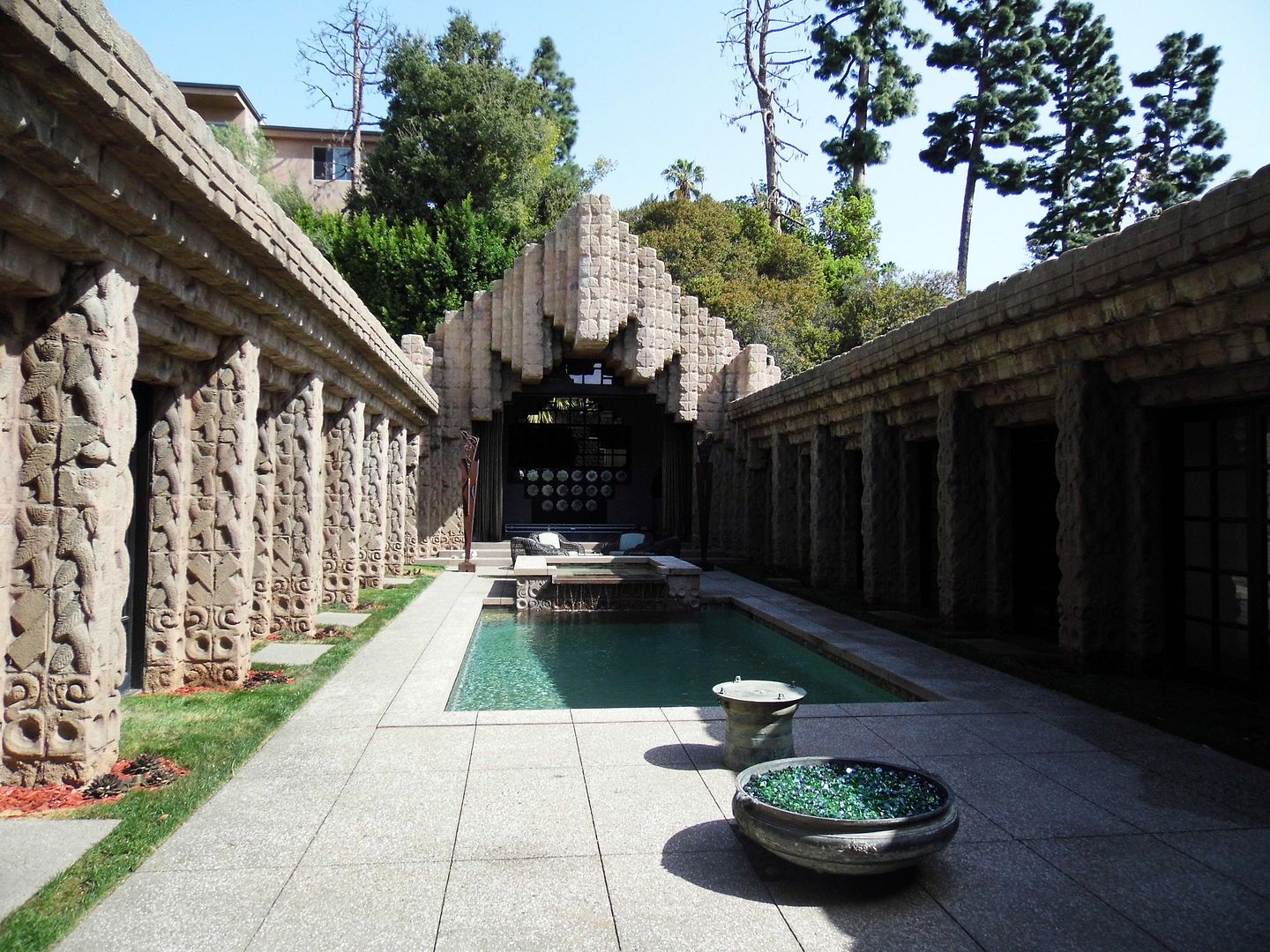
...you walk out into the 6000-square-foot "rectangular doughnut," whose courtyard is no longer festooned with cascading bougainvillea in shocking pink, hacked away with nary a stubble left.


The water features out there have pretty much always been a point of contention, as Wright and the Sowdens disagreed on what should be there (if any at all). For a time, the courtyard featured water organs—but now there's a pool (which seems more ornamental than utilitarian).


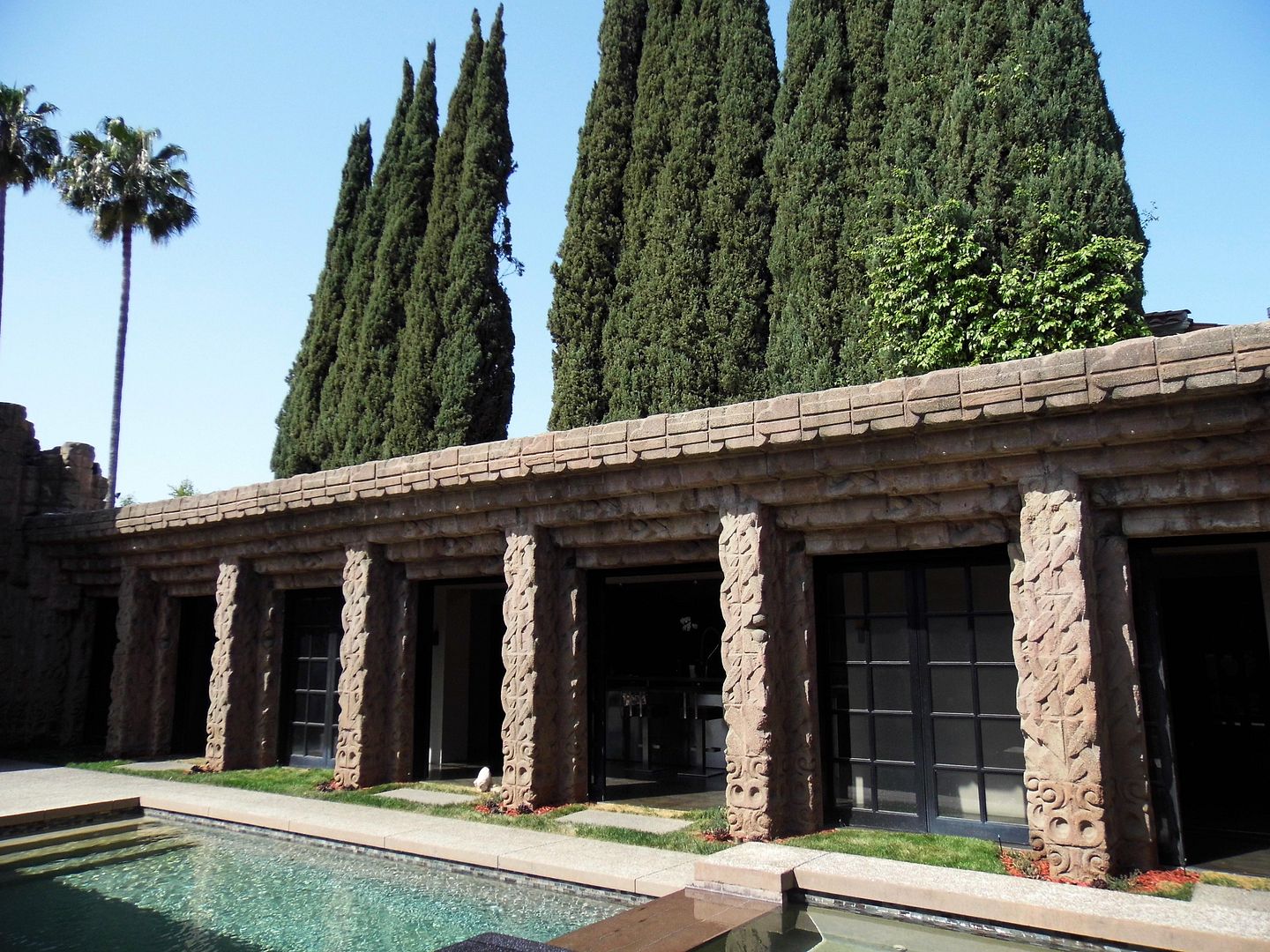
Courtyard pillars help make the Sowden House resemble, say, the Palace of Sayil or The Governor's Palace of Uxmal—but looks can be deceiving. It's not the Mexican state of Yucatán; it's Hollywood!


And just like the Mayans, we like to celebrate the sun, water, harvest, and clouds here, too. Wright even incorporated their respective Mayan symbols into the textile blocks that surround the pool.


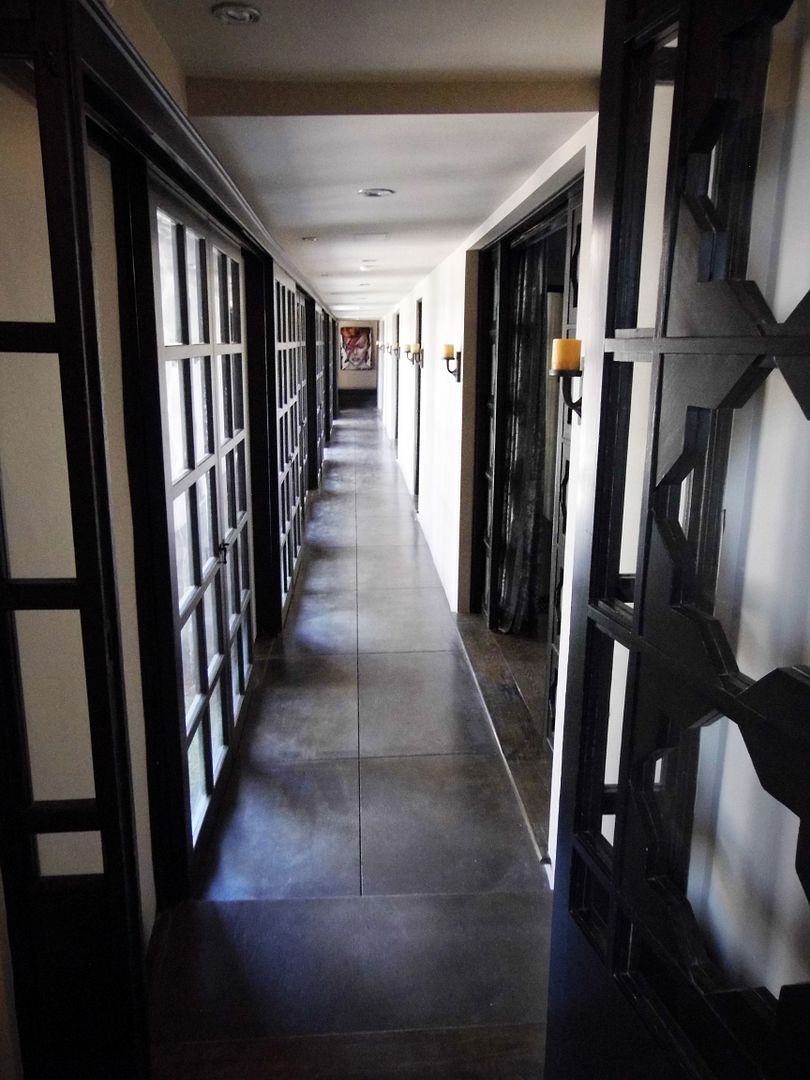
The open floor plan of the Sowden House is marked by side rooms—lit by skylights and accessed through sliding pocket doors—situated along a colonnade. Somewhere in there, there's a secret passageway, too.


And although the interior has been "updated" for "modern living," it hasn't yet been scrubbed of its secrets.

There are still those who believe that Elizabeth Short—a.k.a. "The Black Dahlia"—was slaughtered here, in the partial basement below the living room, before her remains were dumped in Leimert Park in 1947. She was only 22. Her murder is still officially unsolved.

And there may have been others, some of whom may have never left the basement.

Some are quick to point their fingers at the fifth owner of the Sowden House—Dr. George Hill Hodel, the "Hollywood gynecologist" who served as chief of staff and checked patients for venereal diseases (or "blood-sex diseases") at the First Street Clinic in Little Toyko/"Bronzeville," Los Angeles.

Funny enough, Dr. Hodel was also accused of hosting crazy "sex parties" while he lived at the Sowden House from 1945 to 1950.

But he was never convicted of any wrongdoing—sexual or otherwise.

Nevertheless, his fictionalized story was recently told by the TV series I Am the Night, shot in the Sowden House for historical accuracy.

L.A. Confidential, The Aviator, and other productions have also used it as a filming location.

Despite its possibly grisly history, it doesn't seem to scare people away. In fact, it seems to draw visitors and owners in—even though some who came before them never escaped.

Related Posts:
A Lloyd Wright Masterpiece, Commissioned By a Murdered Silent Film Star
Photo Essay: Neutra's Lovell Health House and Hollywood Supervillain Lair, Upon Its 90th Anniversary (Updated)

March 20, 2020

Photo Essay: The St. Francis Dam Flood Plain, Upon the Anniversary of the Disaster

On the night of March 13, 1928, there were 145 men—maybe as many as 185—sleeping at a work camp called Kemp, set up by the Southern California Edison Company on the slope of the dry bed of the Santa Clara River near an area known as the  "Blue Cut" Promontory. (Not to be confused with the Blue Cut of the Cajon Pass.)

During the day, they were setting up new power lines; at night, they slept in tents.

But that one night, the enormous flood was coming from the St. Francis Dam break, raging on its way toward the Pacific Ocean. And by the time anybody knew enough about the danger to warn them, it was too late.

Most of them died, and nearly all of them were stripped of their clothing from the force of the debris flow.

The few survivors there were came to Rancho Camulos for help (and dry clothing).


Ranch owner August Rubel—a New York-born son of Swiss immigrants—and his wife Mary were awakened by a ranch foreman, who alerted them to a lot of water running through the normally dry river. The truth is that along its path, the water flooded over the river banks and—although no one lost their life at the ranch itself—created extensive damage to their agricultural operations (which included citrus orchards and cattle ranching).


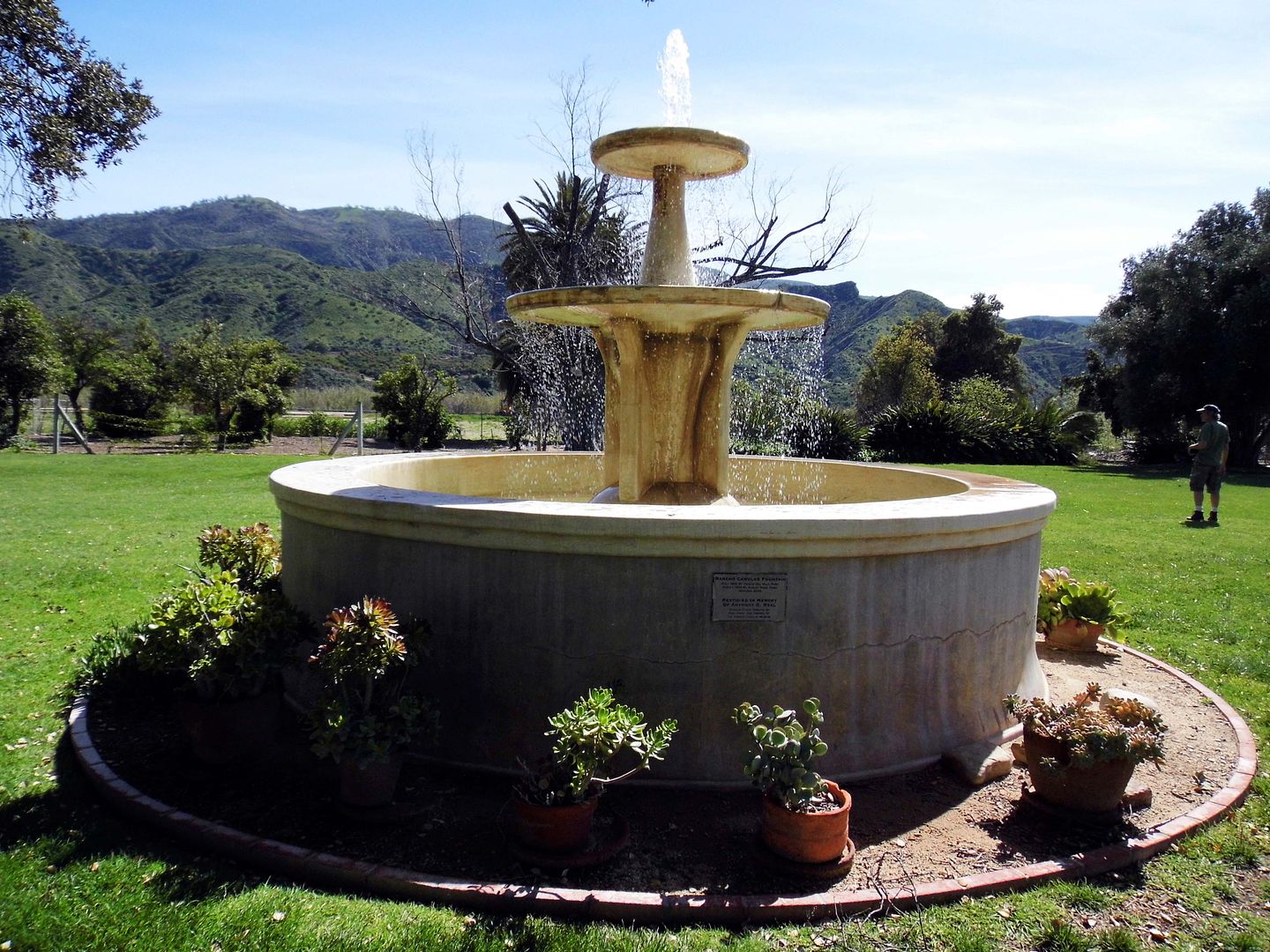
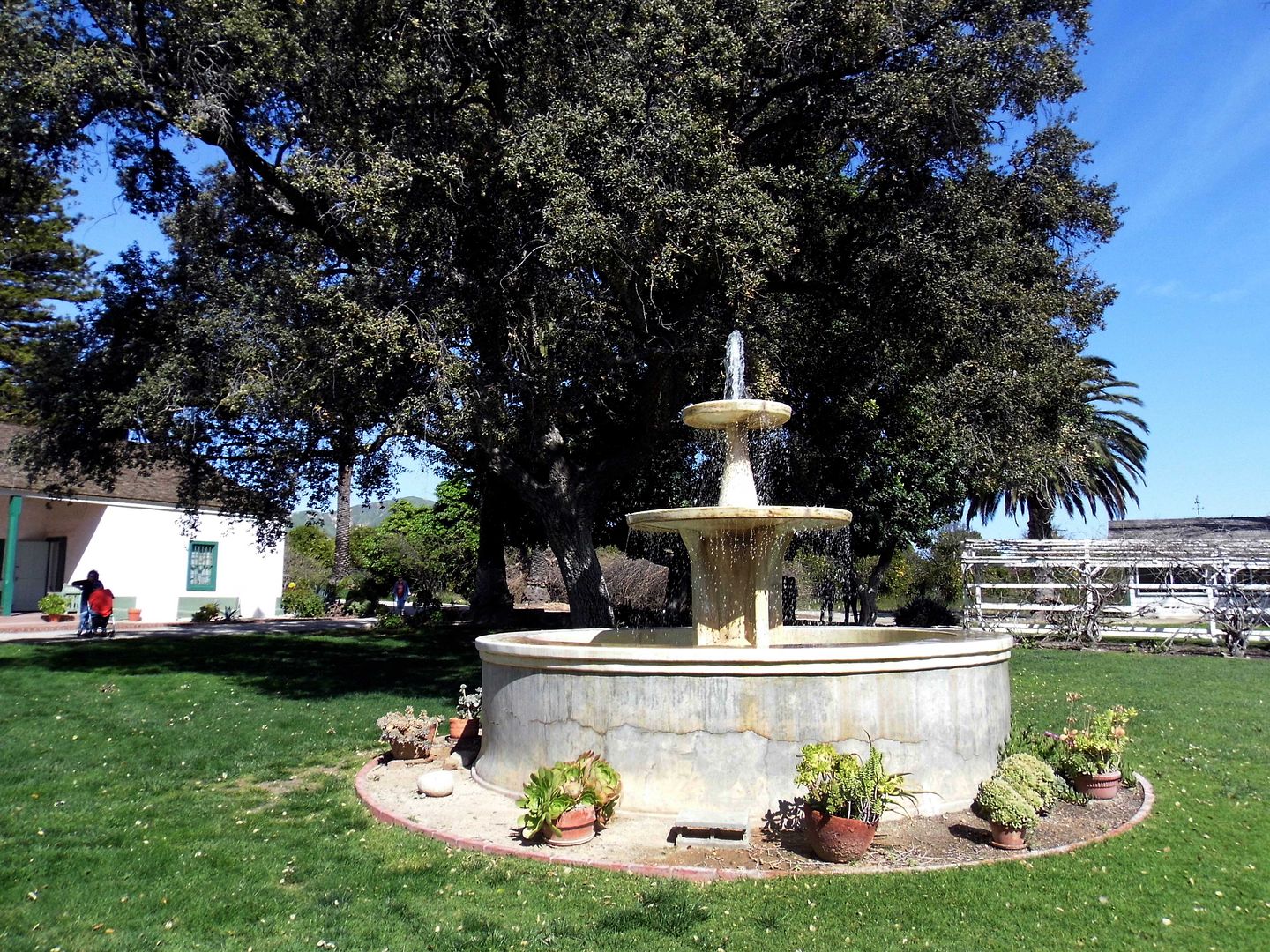
The flood waters washed up past the old fountain that had been built in 1852 by Ygnacio Del Valle, the son of the original recipient of this westernmost part of the 48,000-acre Rancho San Francisco Mexican land grant in 1839—Antonio Del Valle. Both members of an important Californio family during the Mexican period and early California statehood, Ygnacio had inherited it from his father in 1841.


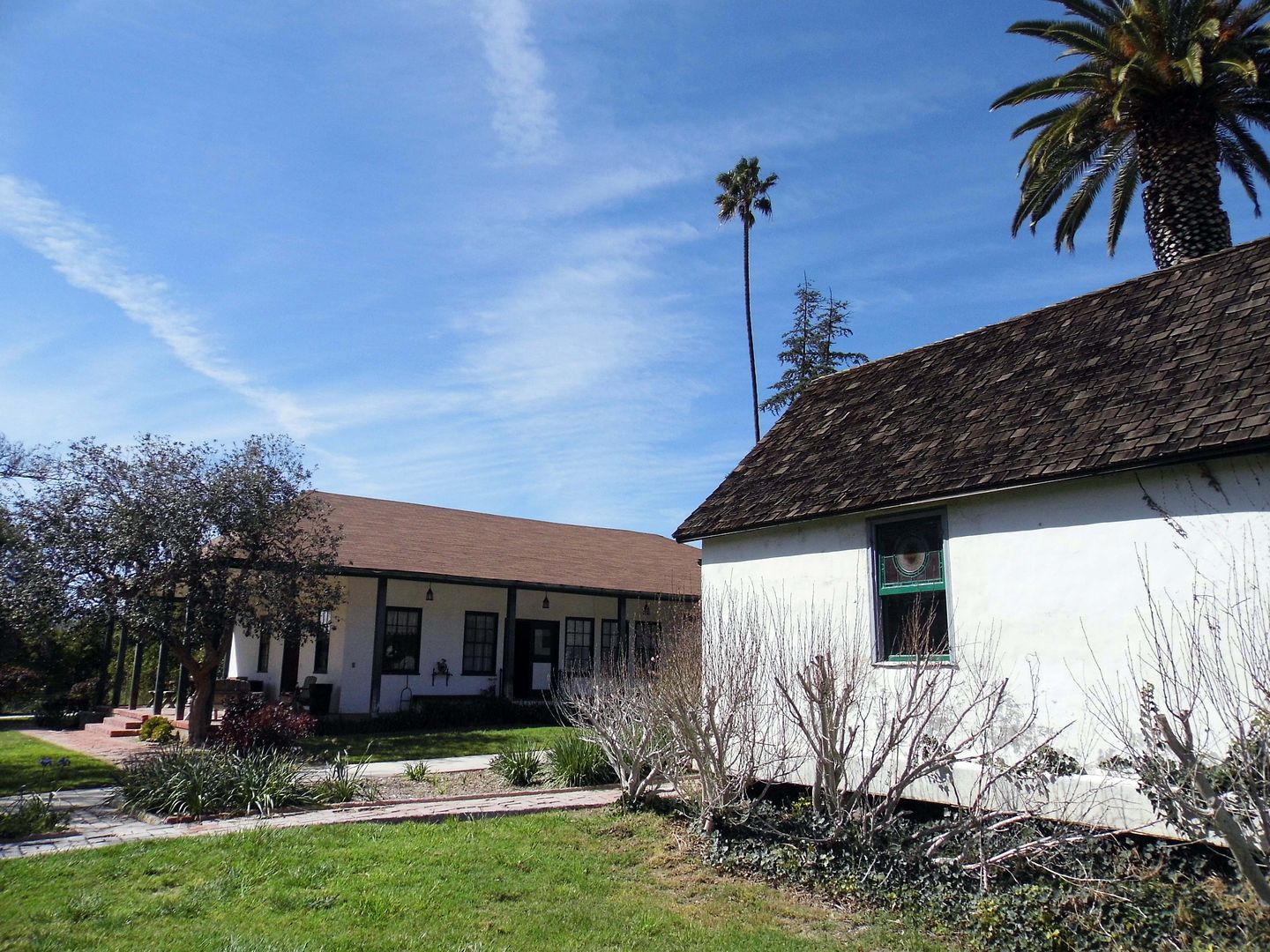
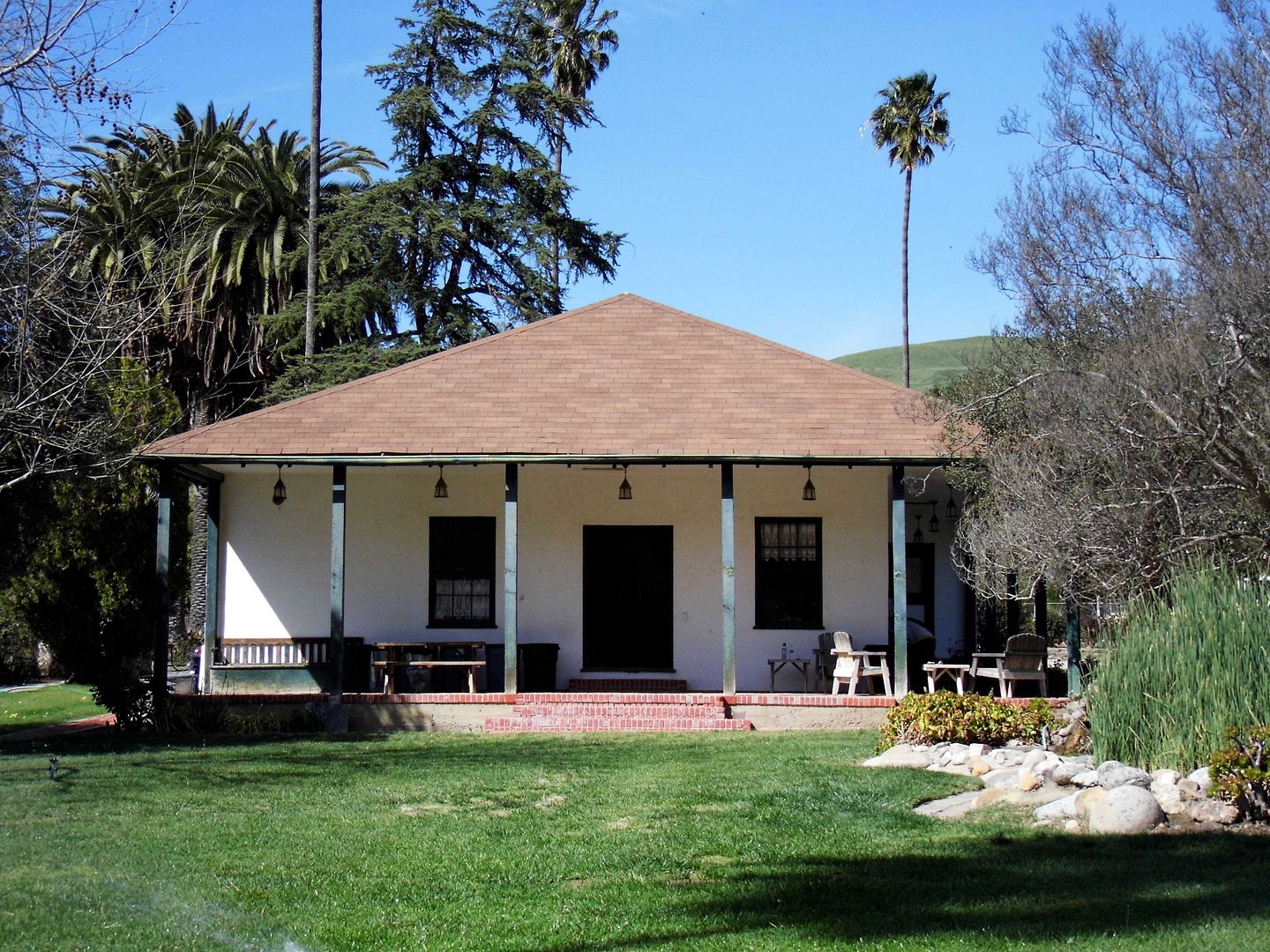
In fact, the water came nearly right up to the ranch house, sparing the dwellings by just inches. And while the fountain took a pretty big hit, the Rubels—who'd purchased the property in 1924—rebuilt it in 1934. (It was later restored in 2009.)


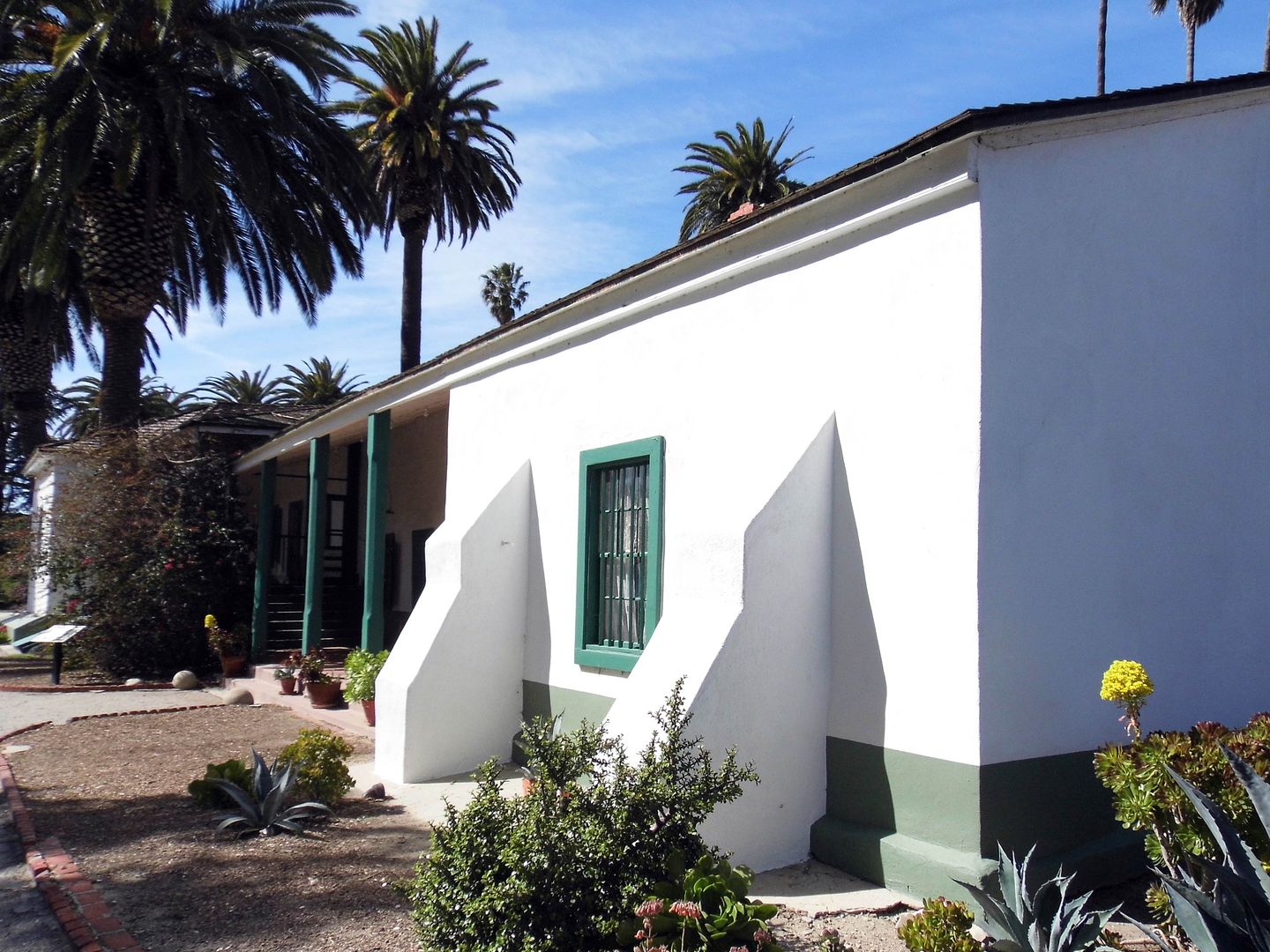
By then, Rancho Camulos had already been a historic property for decades—especially since novelist Helen Hunt Jackson, who visited the last of the "real" Spanish ranchos in 1882, based part of her wildly successful book Ramona there. D.W. Griffith also shot part of his 1910 movie version starring Mary Pickford at the ranch.


In the wake of the St. Francis Dam disaster, there was a lot of misinformation and no easy way of correcting it. The living were scrambling to identify the dead and locate the missing. And in that chaos, the false rumor spread that Rancho Camulos had been destroyed by the flood waters.


In fact, that wasn't true at all—but fans of Ramona far and wide were up in arms and besides themselves. Rubel had to make an announcement assuring the public that "The Home of Ramona" still stood.


And, in fact, it still stands today—after a massive preservation effort to save it in the aftermath of the 1994 Northridge earthquake.


In 1853, Ygnacio Del Valle had built a small 4-room adobe for his majordomo and, 8 years later, expanded it to accommodate his wife Ysabel and kids moving from their townhouse at the Los Angeles Pueblo.


By 1880, what began as an adobe with 2-foot-thick walls—constructed by Mexican laborers and members of the Fernandeño Tataviam Band of Mission Indians—grew to a 20-room, hacienda-style estate that sprawled across more than 10,000 square feet. And that example of Spanish-Mexican vernacular architecture is what, in part, inspired the tale of Ramona, first published in 1884.


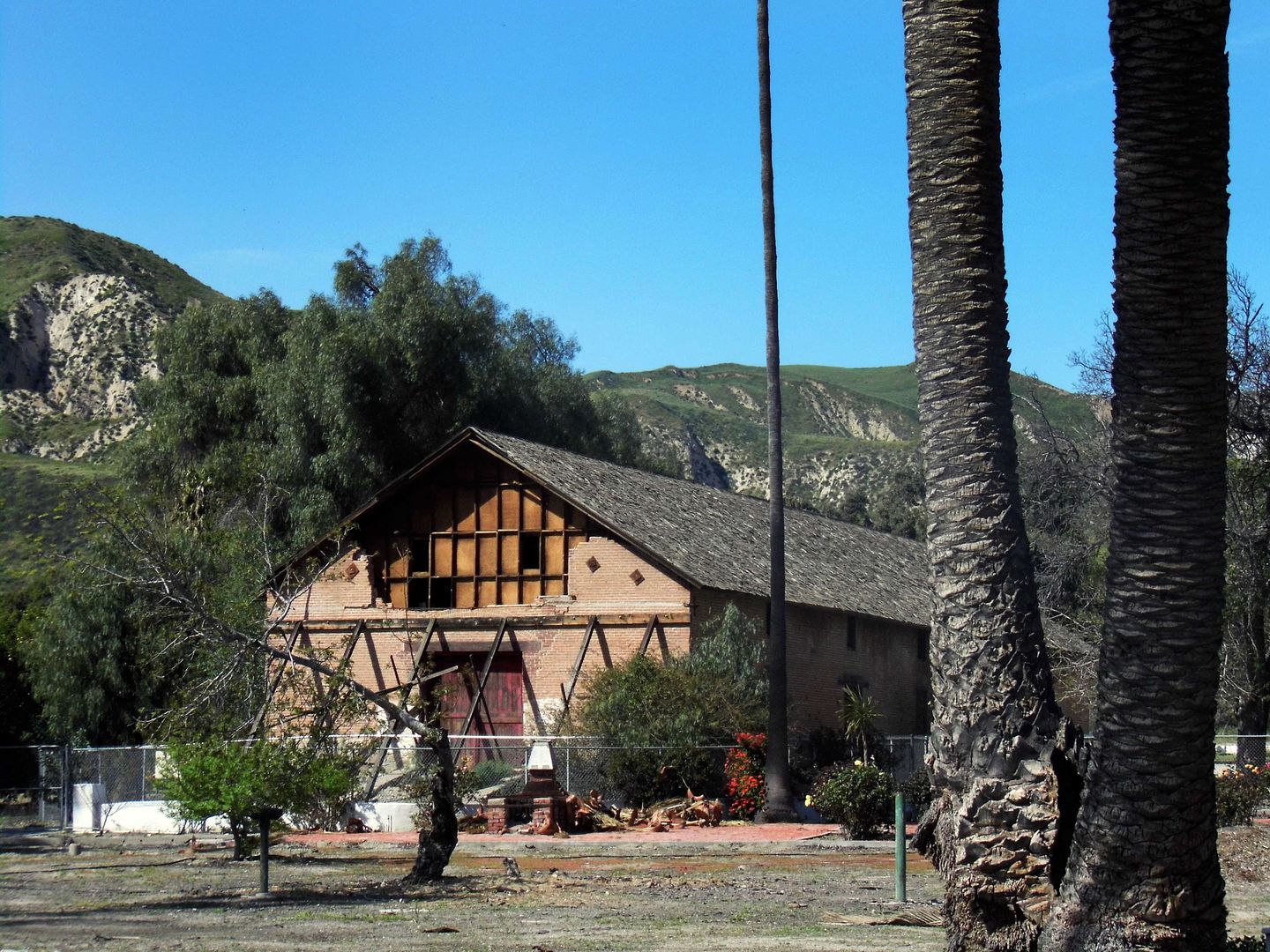
Today's "Ramona seekers" can admire the old, crumbling brick winery (circa 1867) from afar...


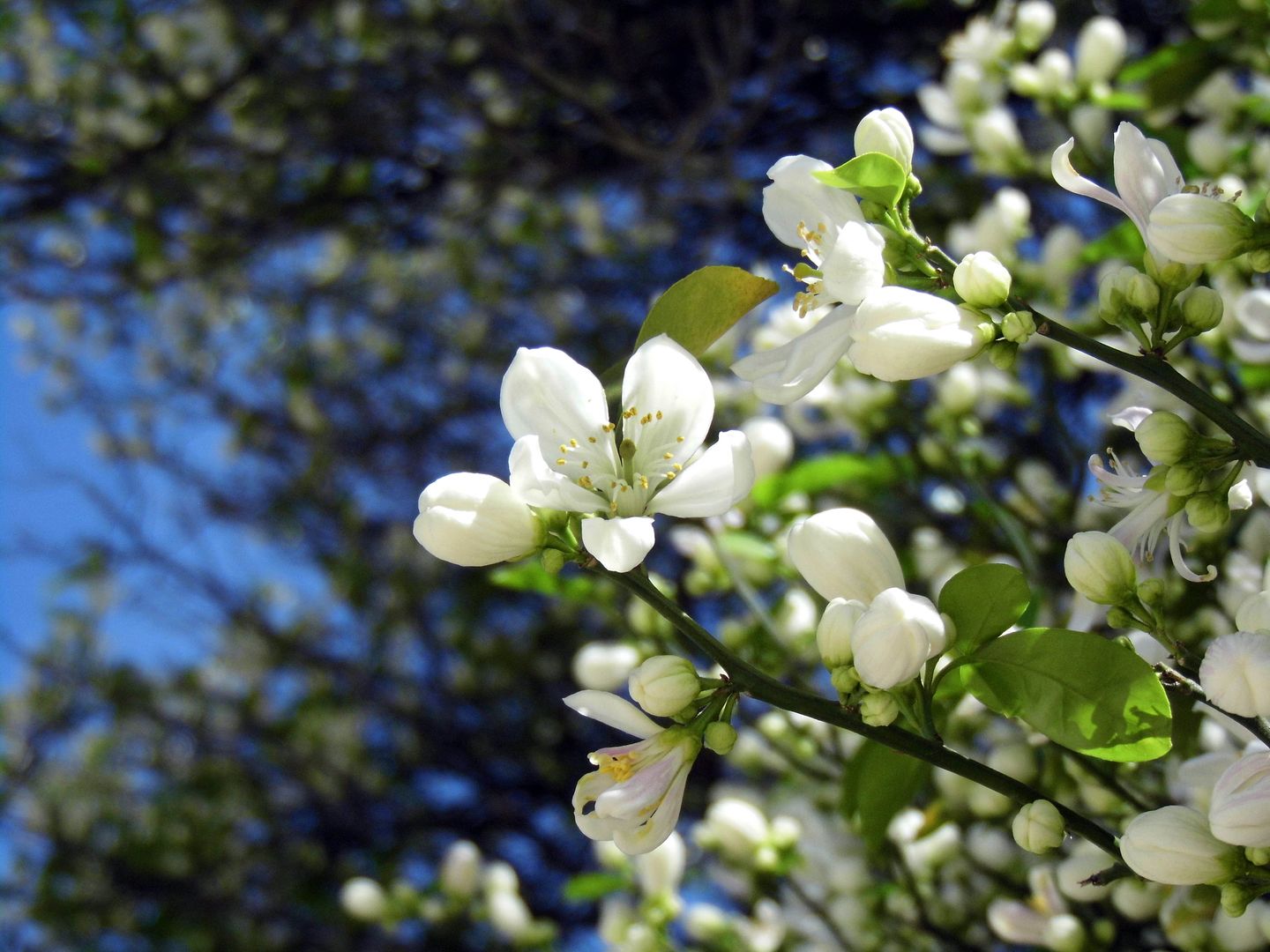
...and inhale the sweet and floral perfume of the orange blossoms, which are in full bloom this time of year.


About three miles away from the Santa Clara River (still dry) and across what's now Highway 126 is the town of Piru, whose cemetery contains the tragic remains of many of the victims from this part of the flood plain.


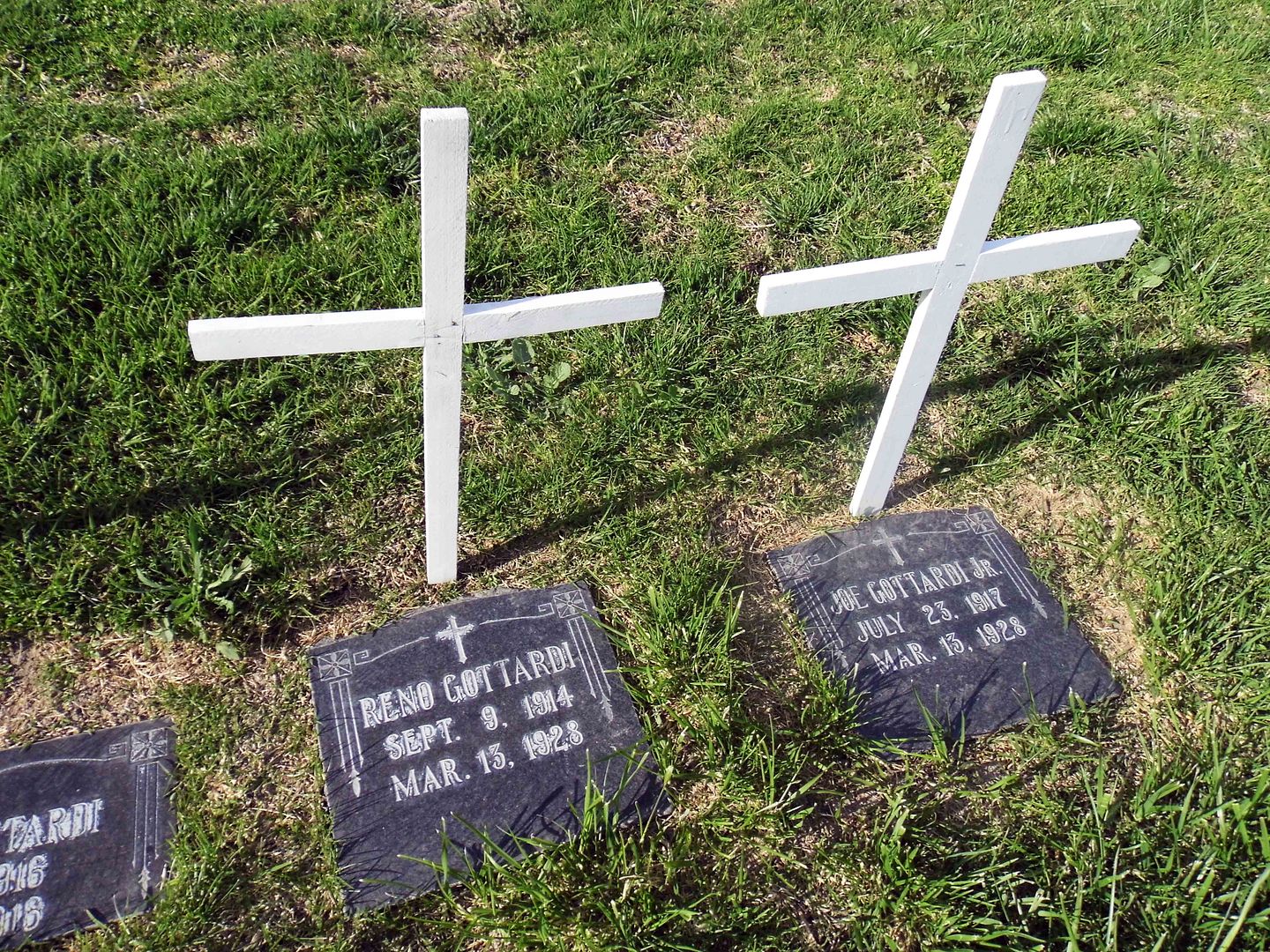
There's the wife and 5 children of Italian immigrant Joe Gottardi, who leased a property just west of the Edison camp from Newhall Land and was in his home as it got carried away by the flood. Only he and one daughter, Vena, survived.


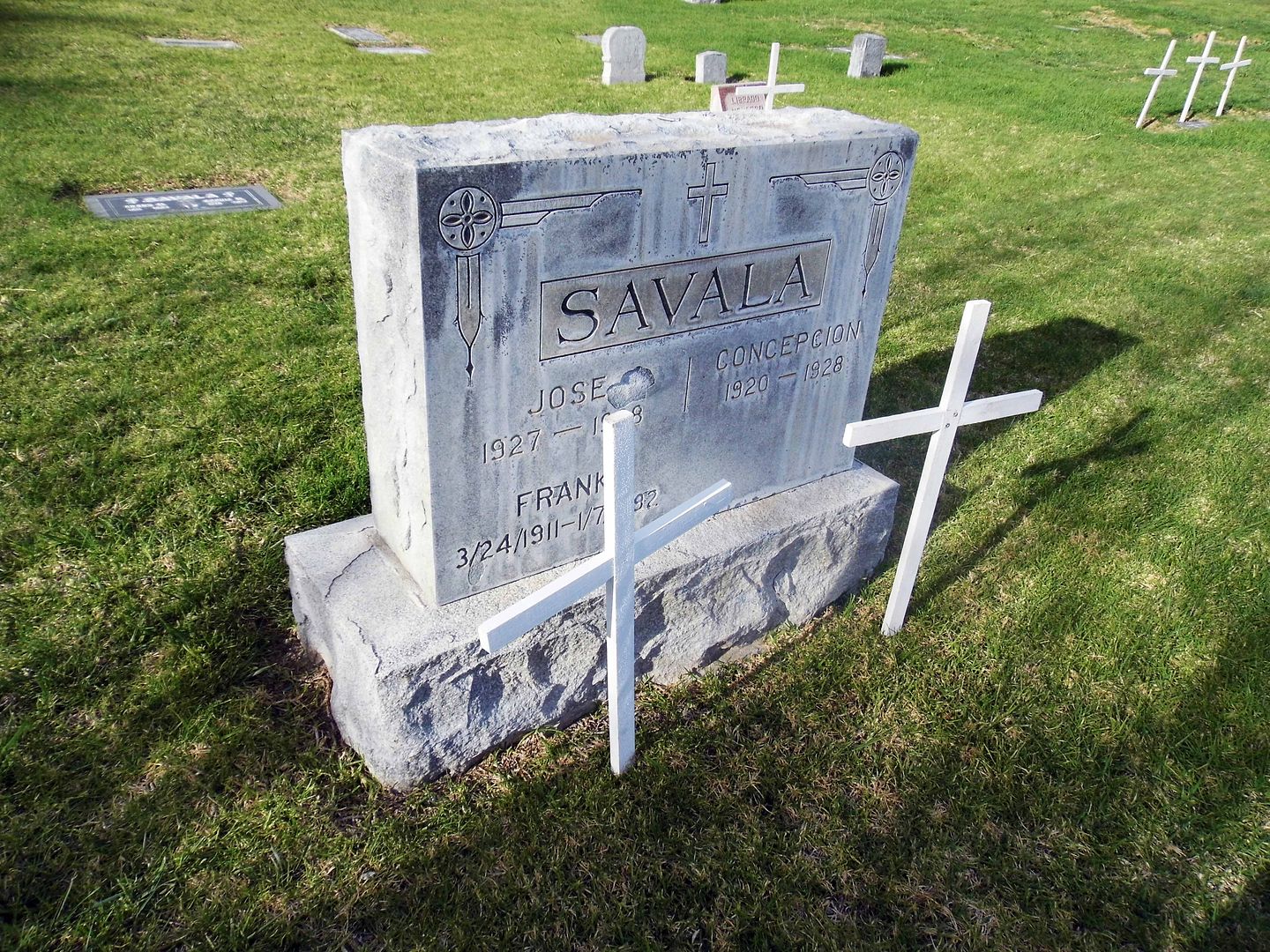
Esteban "Steve" Savala was also living with his family on Newhall Ranch land the night of the flood...


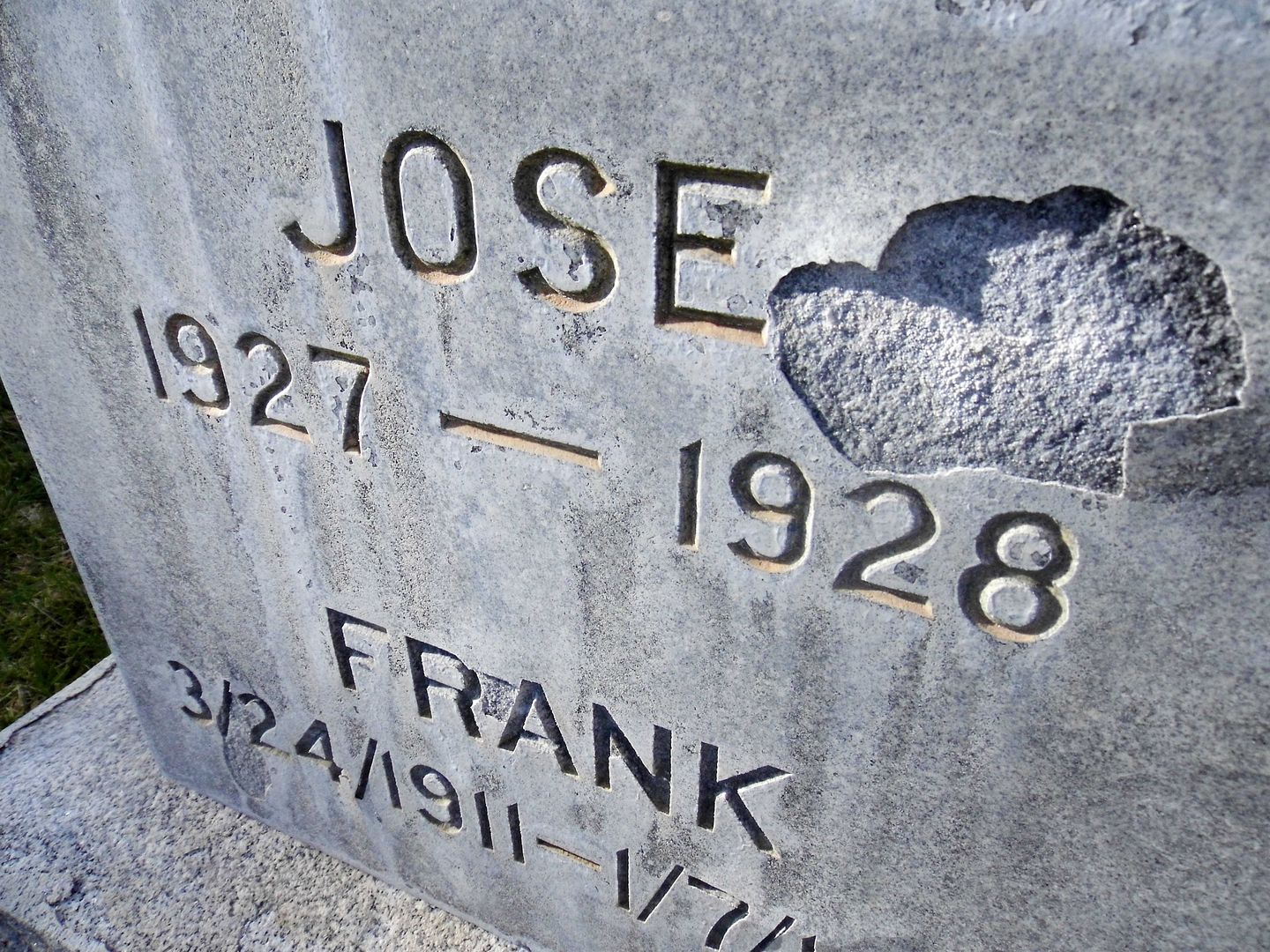
...and lost his wife Carlotta (Lopez) and children Juanita, Lucy, Rosa, Concepcion, Juanita, and Jose that night.


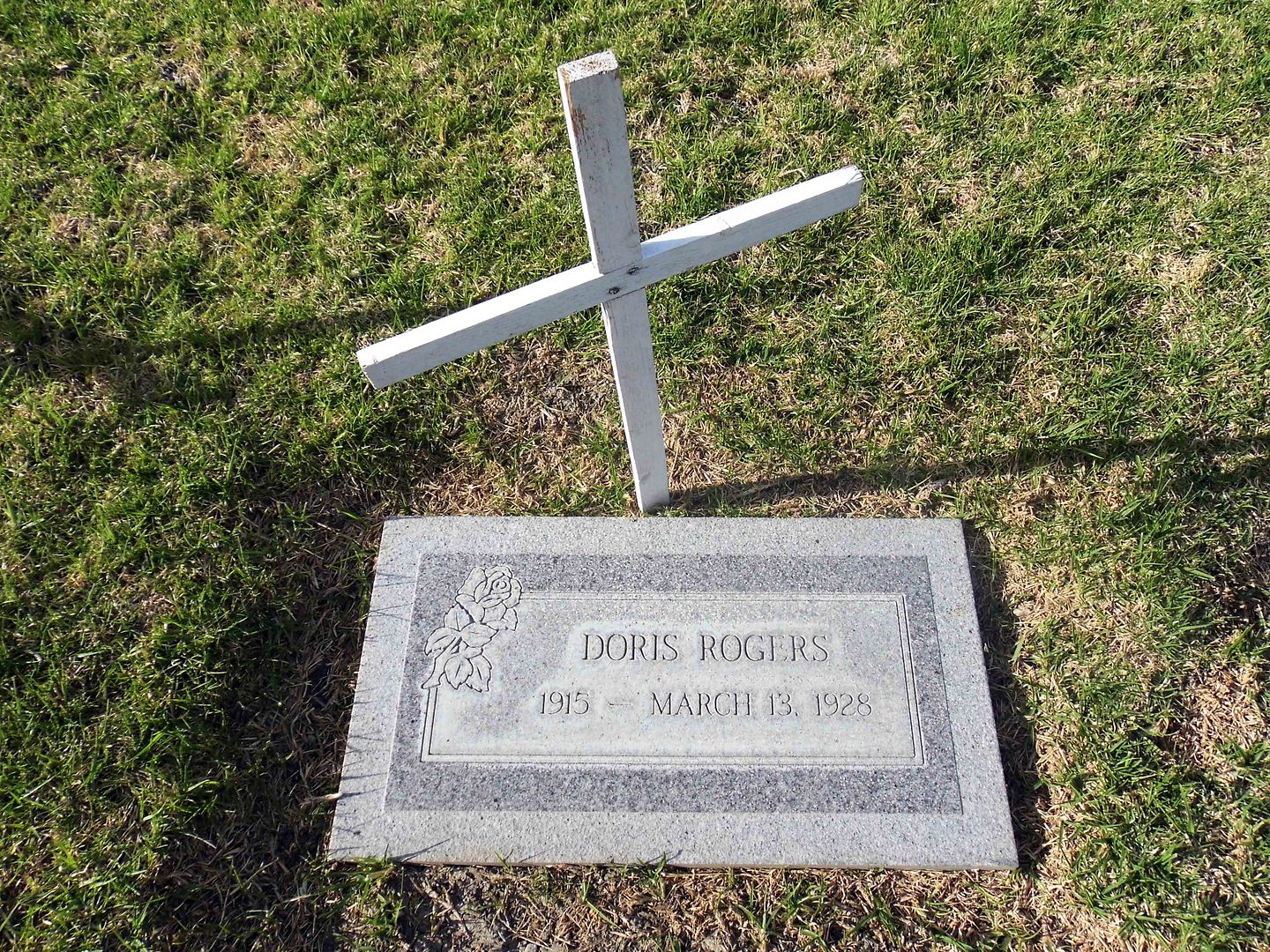
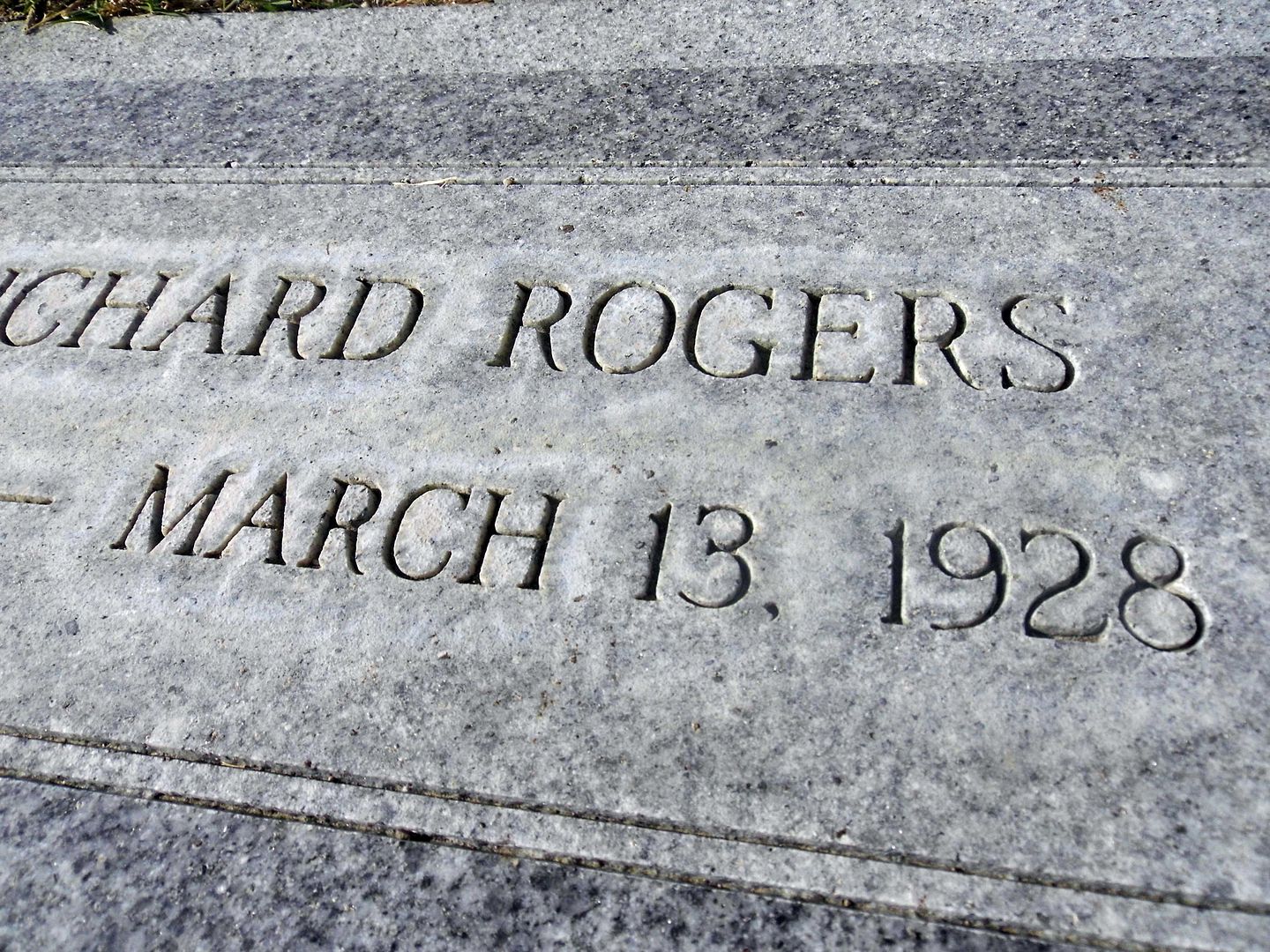
Chester R. Rogers and Velna E. Topley survived, but lost their four children to the flood—Doris, Chester, Margaret, and Richard—and Velna's mother, Rozetta.


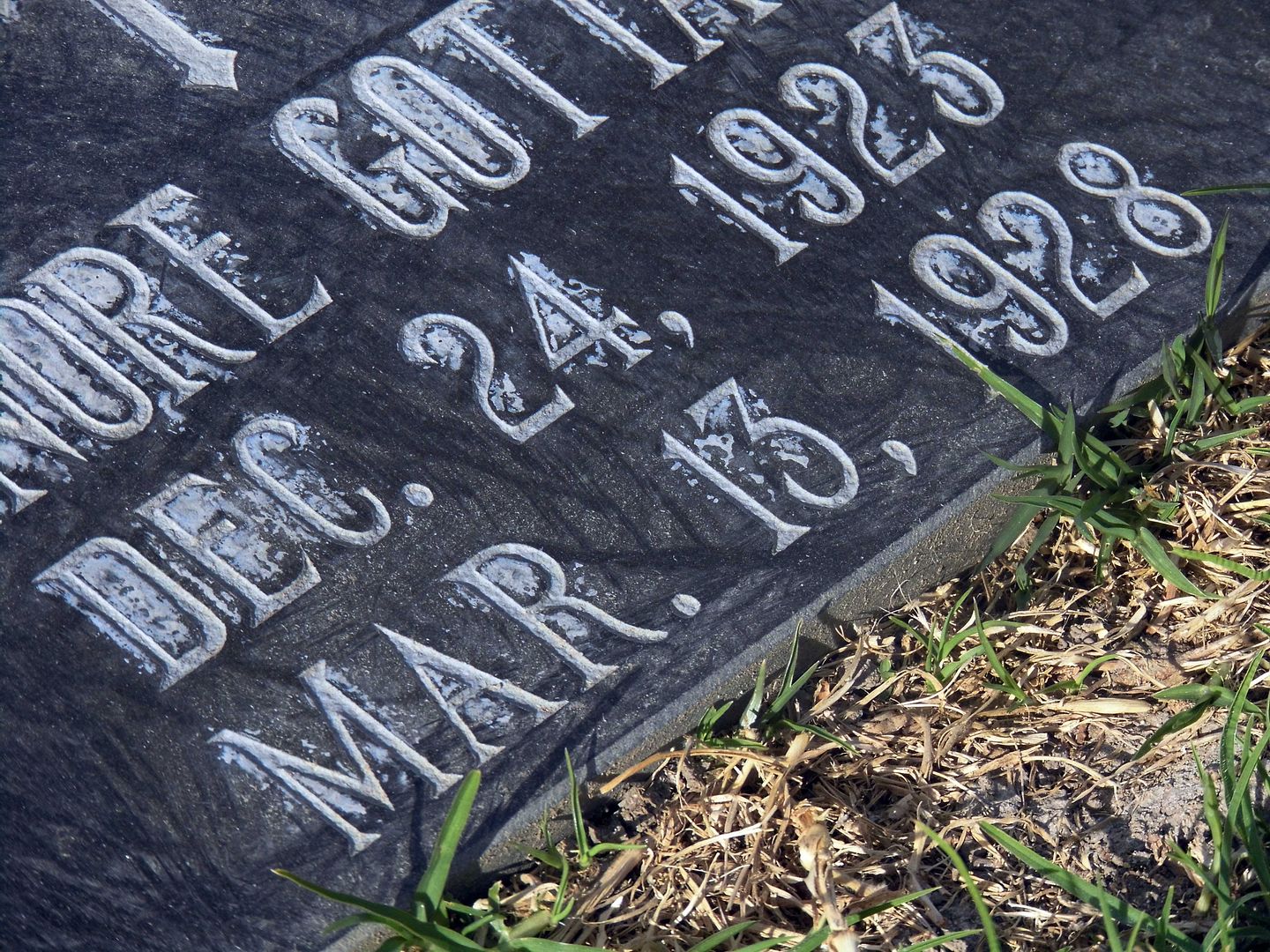
A monument to the victims of the St. Francis Dam Disaster was dedicated at Piru Cemetery upon its 90th anniversary in 2018. To find the gravestones of the victims, look for those marked with the exact date of March 13, 1928.

Even more victims are buried at Pierce Brothers Santa Paula Cemetery, Pioneer Cemetery in Sylmar [Ed 3/24/20: An expert tells me this has been disproven], Oakwood Cemetery in Chatsworth, and the Ruiz family cemetery (on private land).

People tend to go in March every year around the anniversary date, and the Santa Clarita Valley Historical Society usually hosts a lecture and bus tour or two this time of year. But this time of year this year, we're experiencing our own disaster-in-the-making.

So, let's remember the St. Francis Dam Disaster and honor its victims beyond just the month of March—even if we have to do so from afar.

Related Posts:
Photo Essay: The Path of Destruction of the St. Francis Dam Flood, 86 Years Later
Photo Essay: A Pilgrimage to the St. Francis Dam Victims' Final Resting Place (Closed to Public)