
I haven't written about the Biltmore Hotel in Downtown Los Angeles yet—despite having taken a tour with the Los Angeles Conservancy—because I just didn't think I had anything to add to the existing reporting.
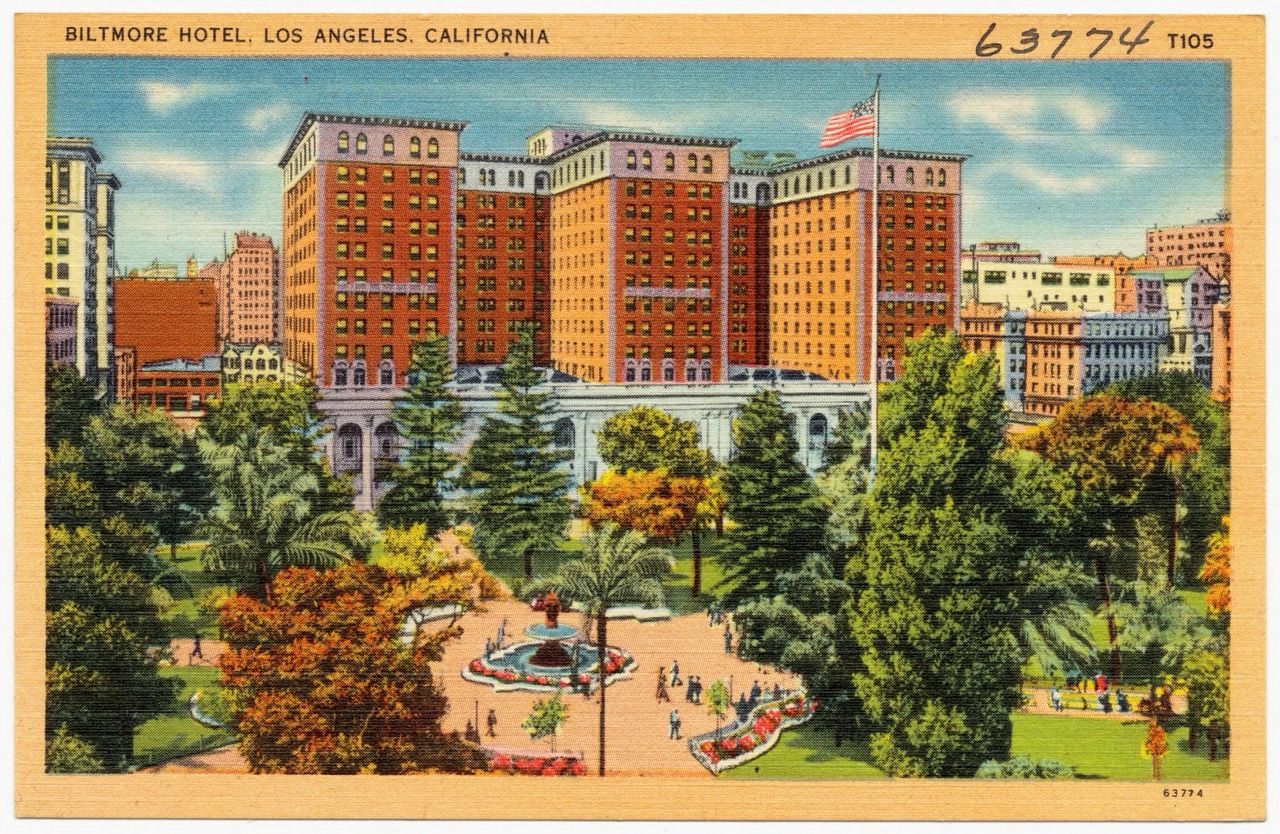 Tichnor Brothers, Publisher, Public domain, via Wikimedia Commons
Located opposite of Pershing Square—once Downtown LA's "Central Park"—the Beaux Arts-style hotel by Schultze and Weaver gets a lot of press coverage, and for good reason. Today, this architectural masterpiece provides luxury accommodations much as it did back in 1923, when it was the largest hotel west of Chicago.
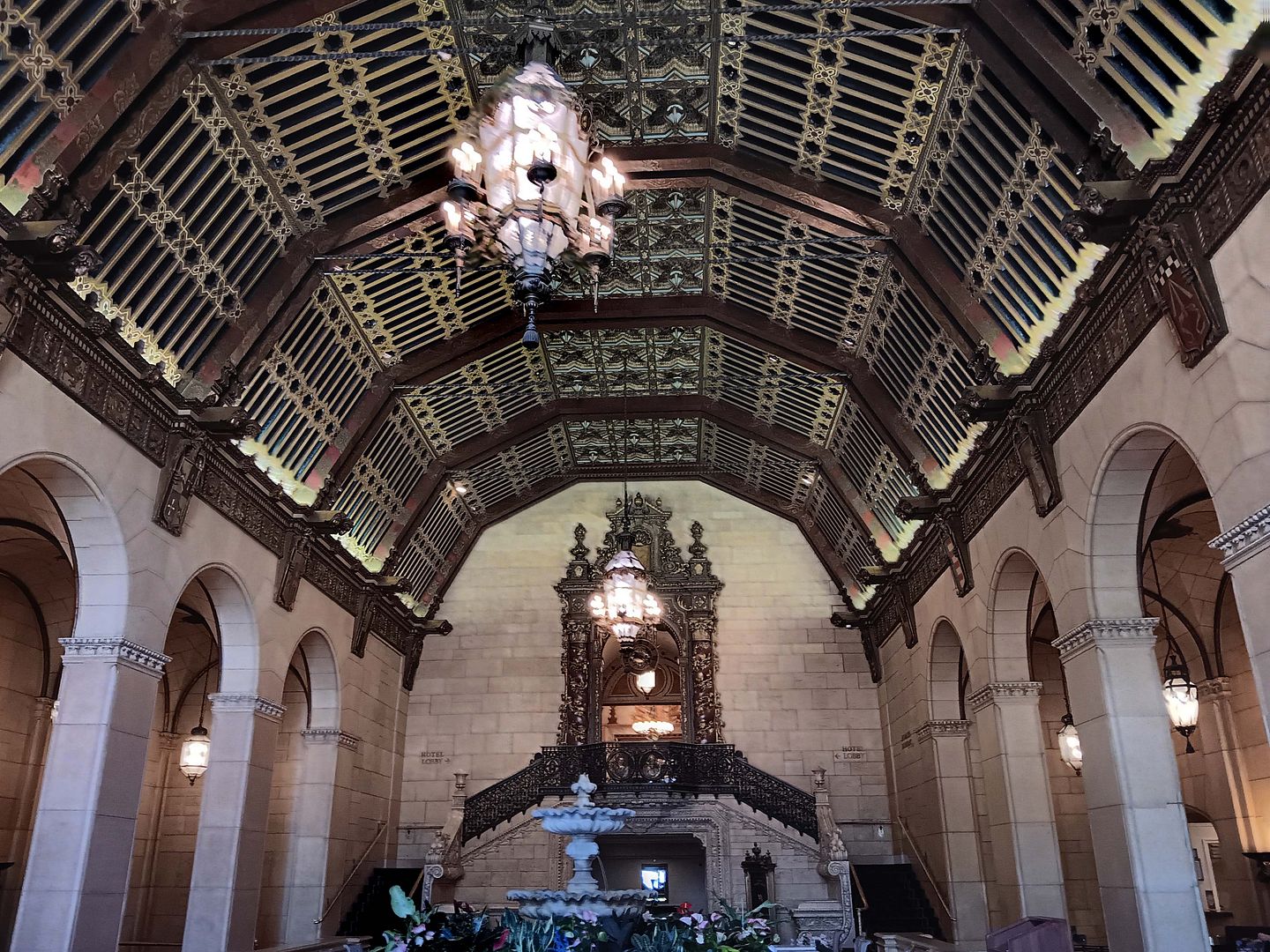
But for as many times as I've been there, I feel like I still haven't fully experienced all it has to offer—like tea service in the Moorish-style Rendezvous Court (formerly the hotel's main lobby).
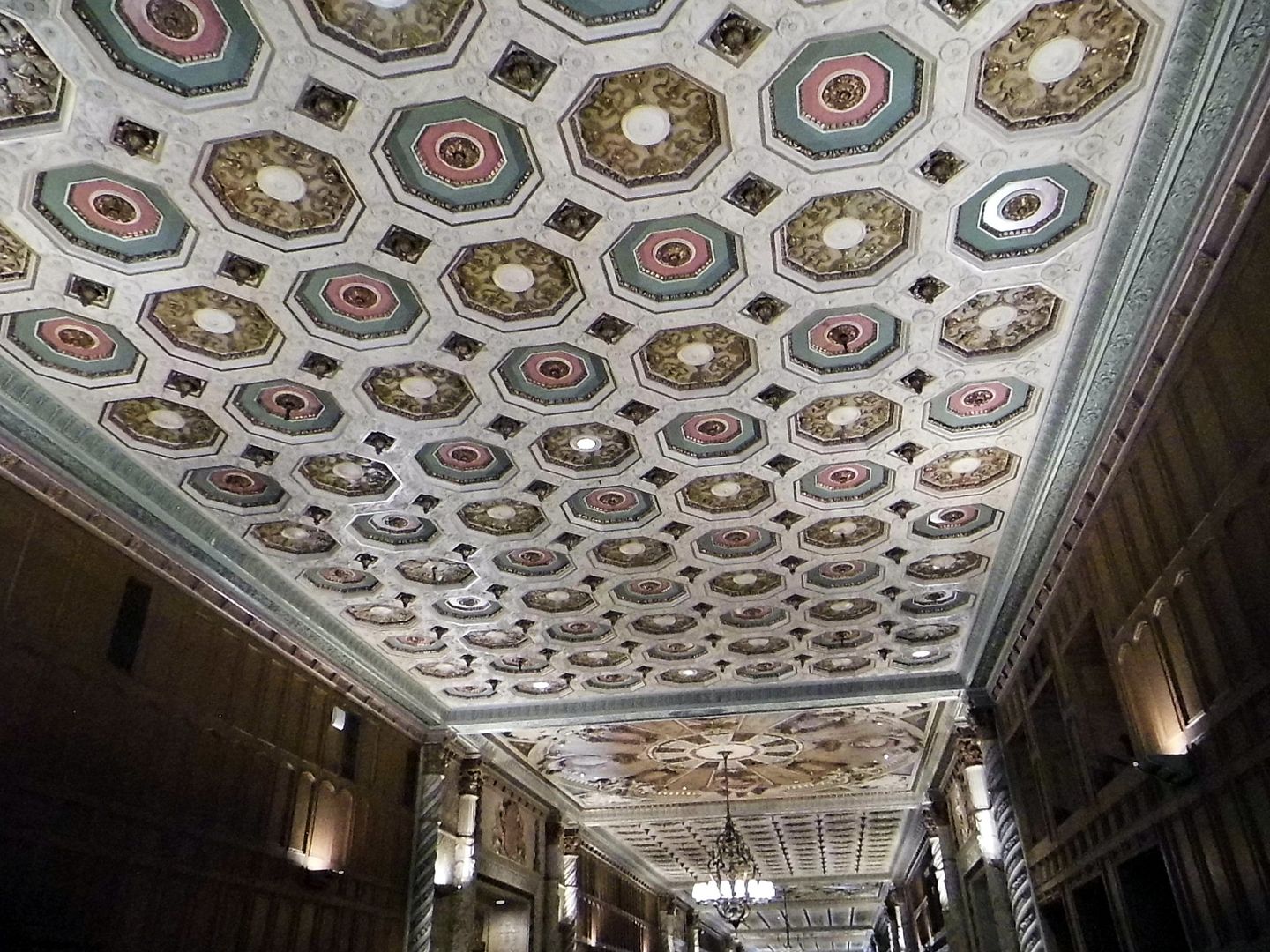
But I have roamed the 350-foot-long promenade known as the Galeria, under its coffered ceilings and ornate frescoes by Italian artist Giovanni Battista Smeraldi.
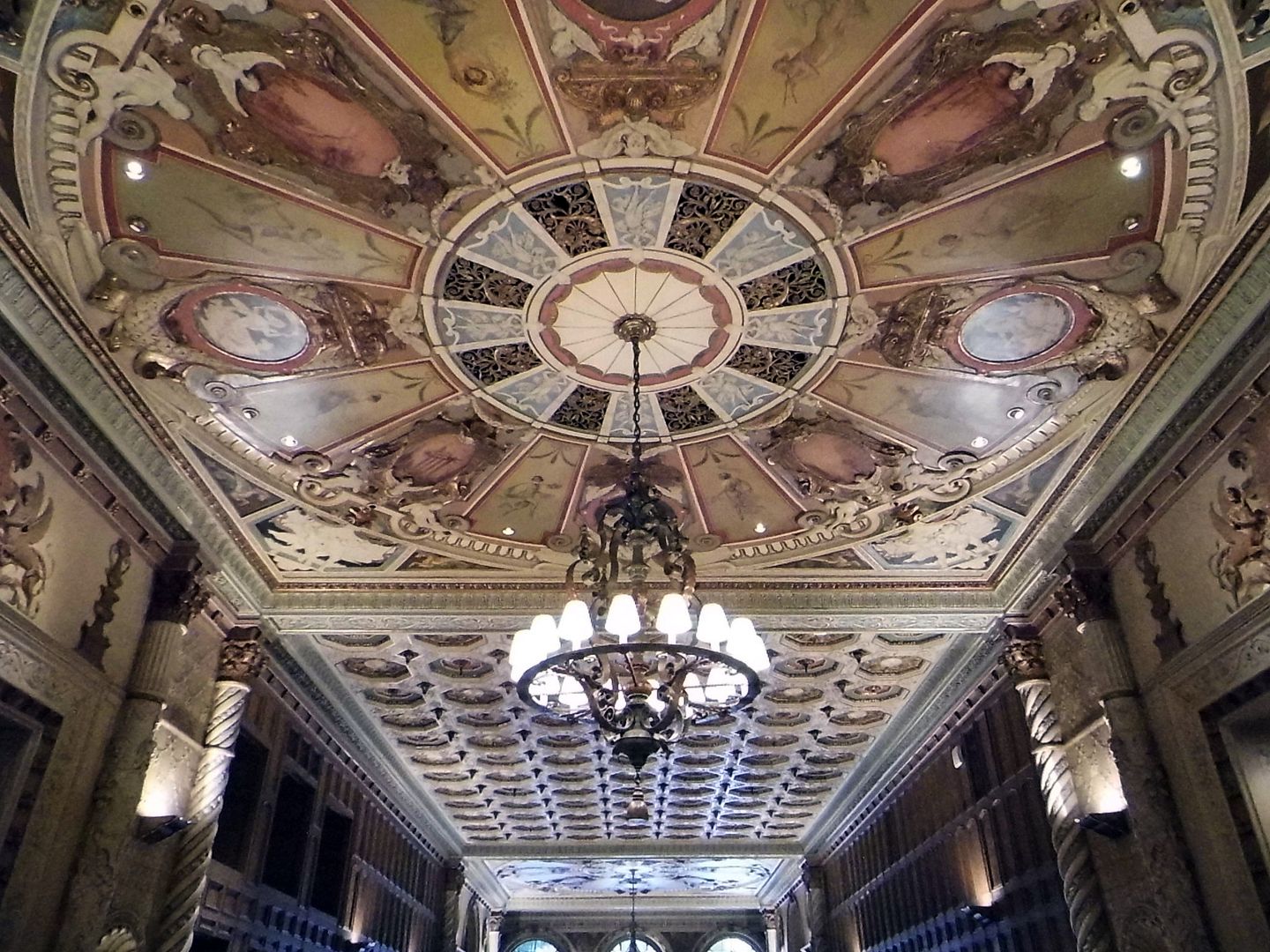
And I've slipped into the adjacent Gallery Bar occasionally for a cocktail or a snack.

I've celebrated the holidays in the former Music Room, which was converted into the new hotel lobby in 1987.
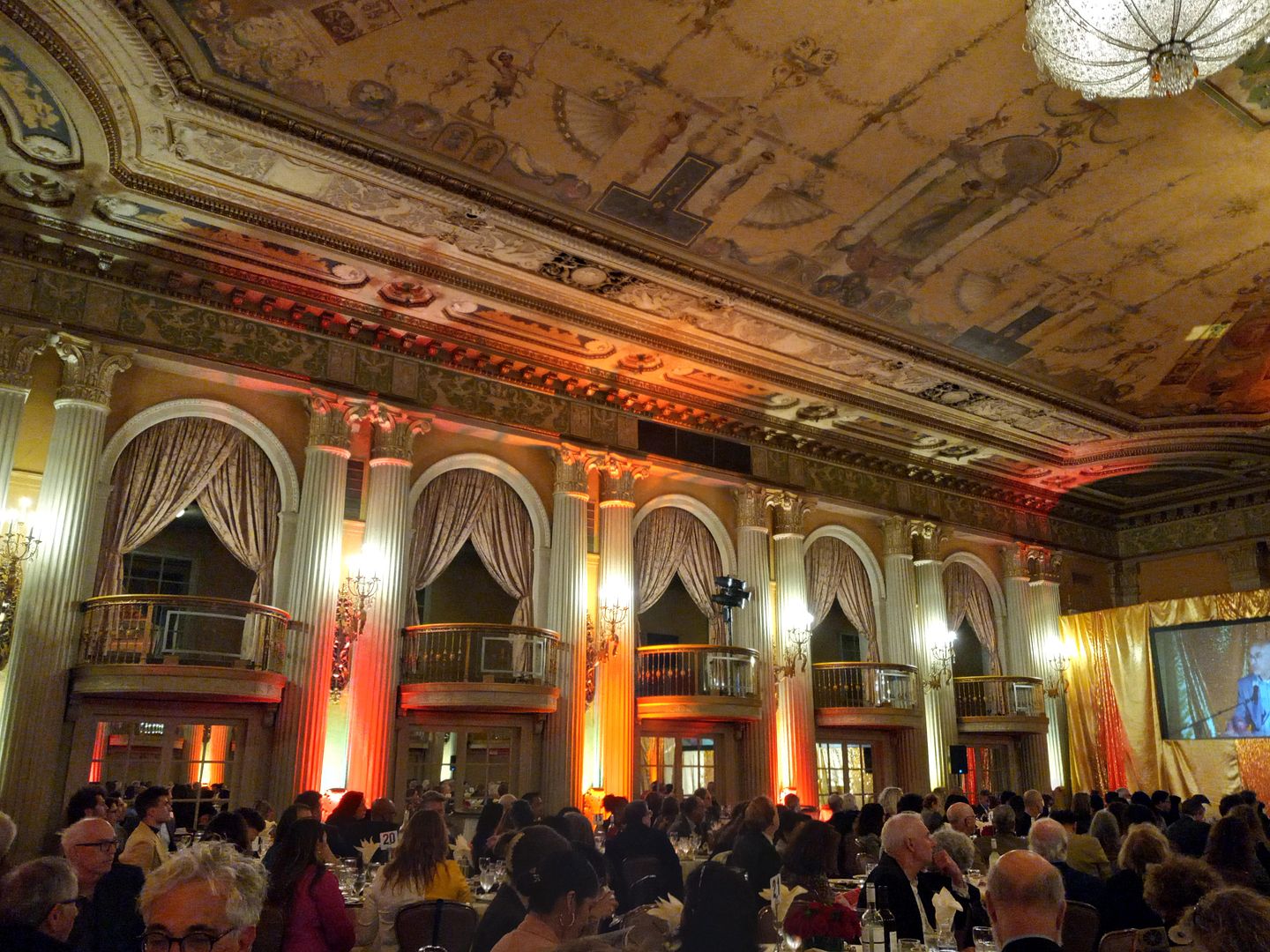
I've attended press awards ceremonies in the Crystal Ballroom (where the Academy of Motion Picture Arts and Sciences was founded in 1927)...
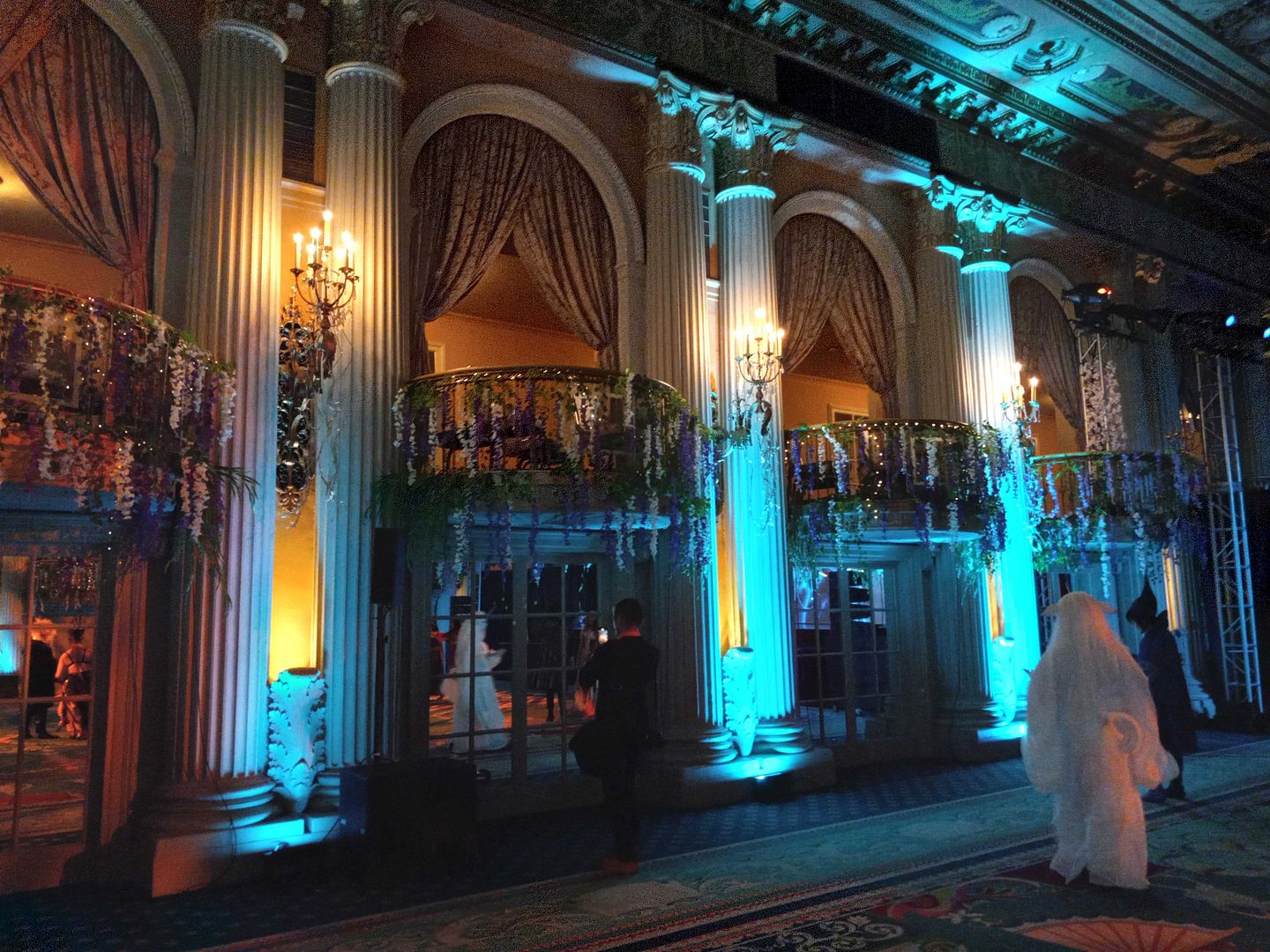
...and even partied with elves and goblins in nearly every space on two floors during the Labyrinth Masquerade.
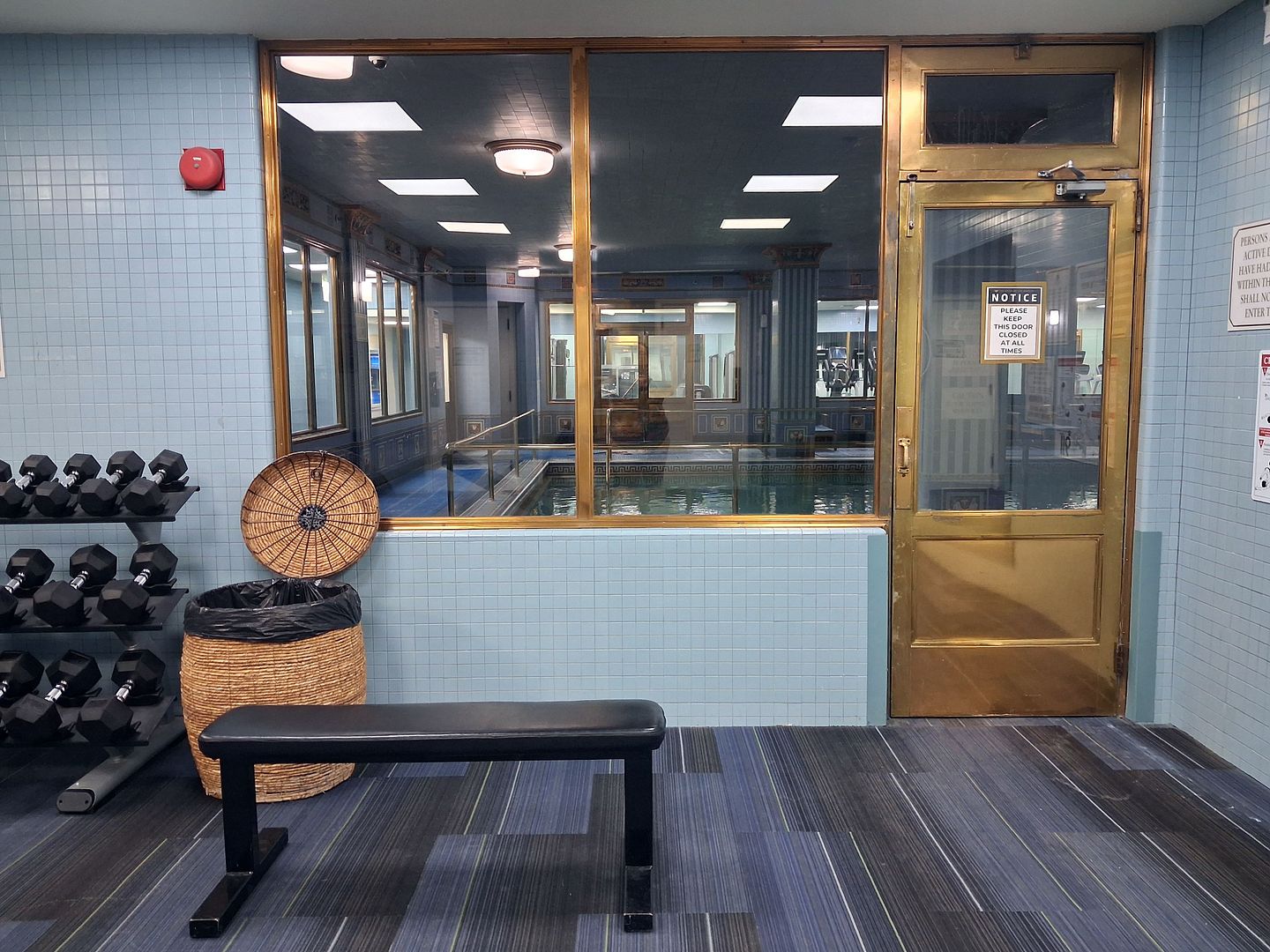
But this week was the first time I'd ever made it downstairs to check out the historic swimming pool, added to the hotel in 1926.
Honestly, I've gotten a bit lax in my swimming tourism of Southern California, settling into my routine of doing noontime laps at the newly rebuilt West Hollywood pool, just a half mile from my apartment.

But with the WeHo facility closed for the first two weeks in June for Pride celebrations, I found myself once again in search of somewhere to take a dip.
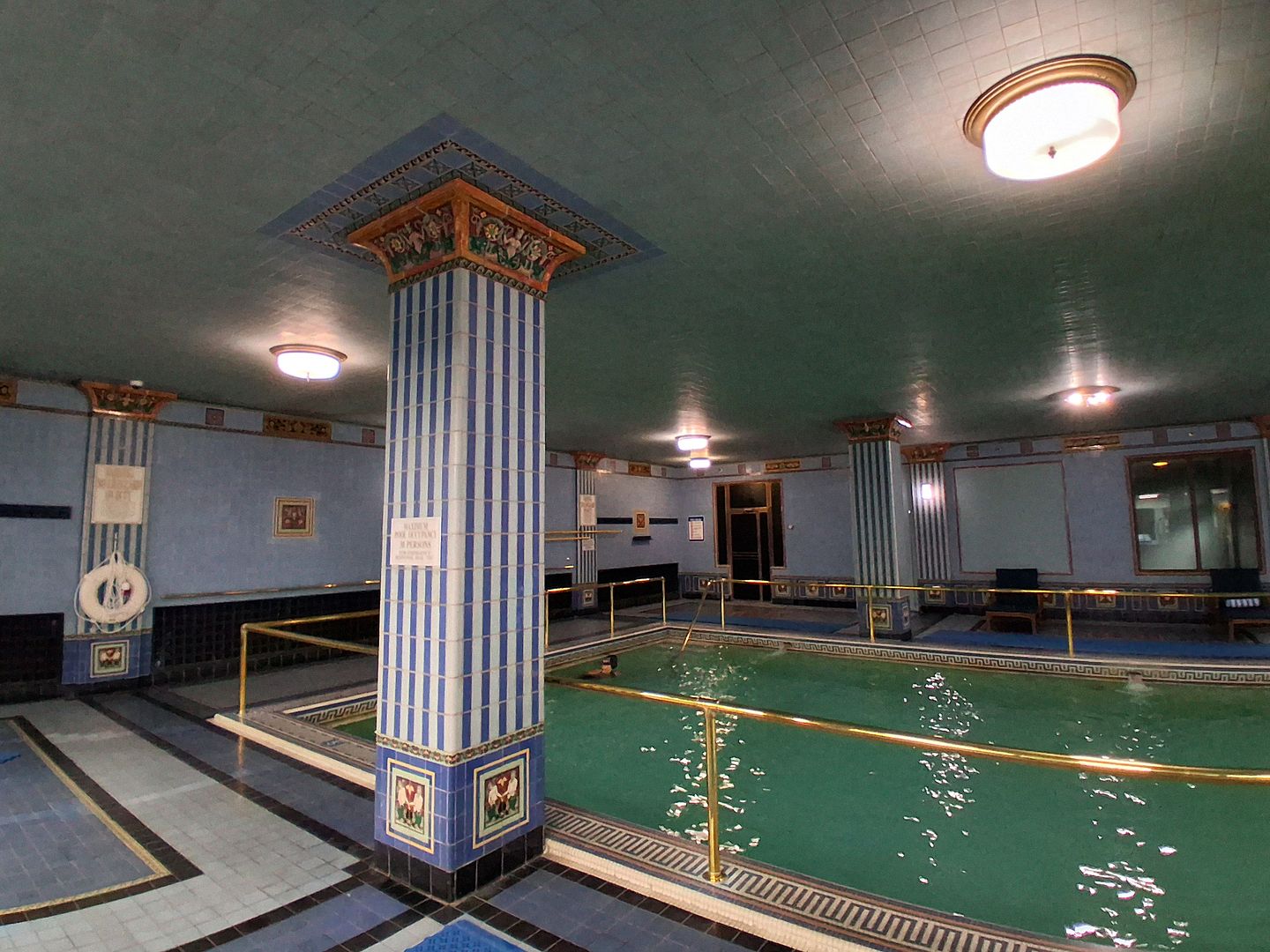
I could've booked an overnight stay at the Biltmore and gotten access to the pool—a lesser-known, infrequently-visited, and rarely reported on area of the hotel— but fortunately, I could also take the plunge without spending big.
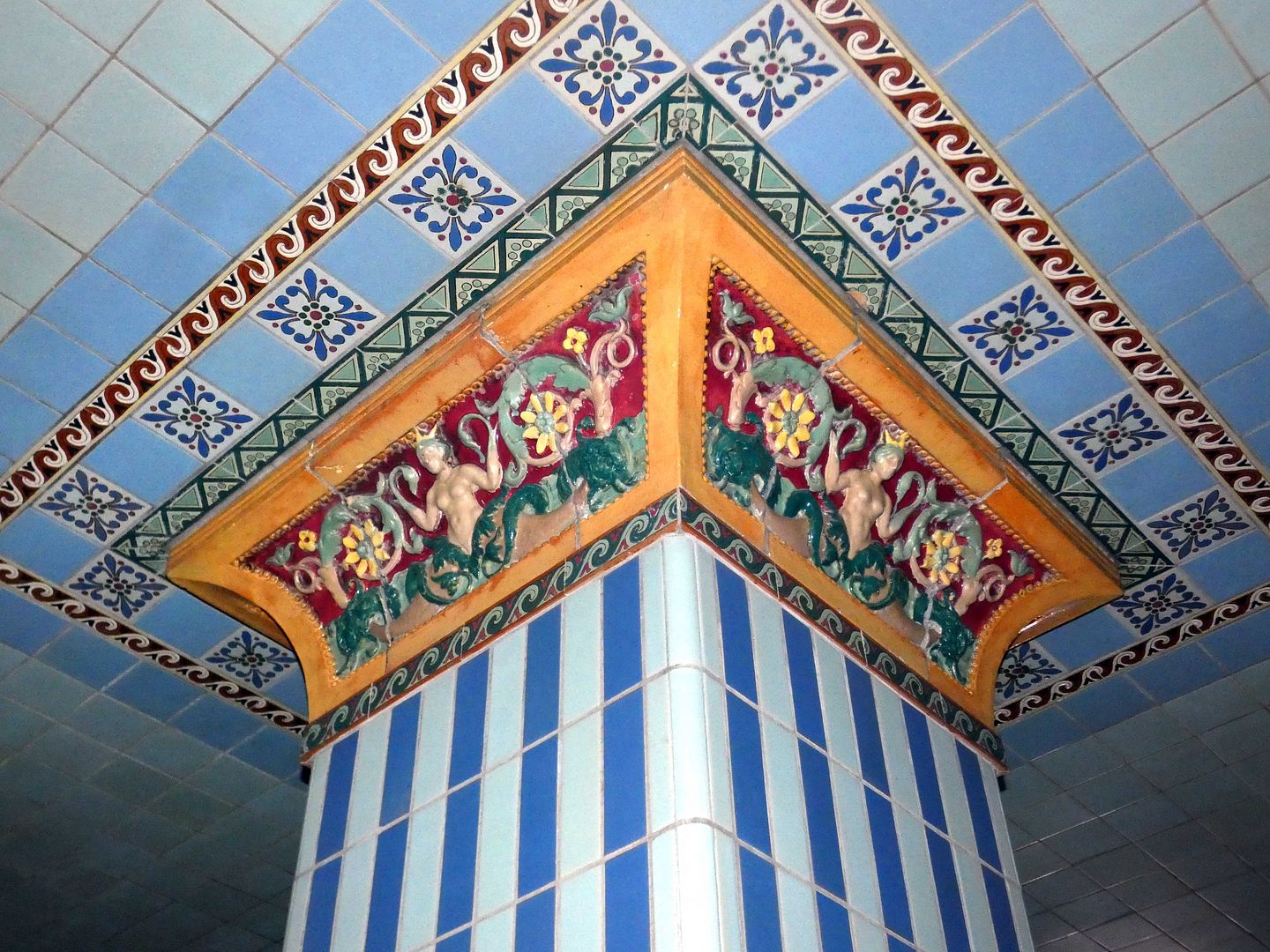
Thanks to a day pass, I got an entire afternoon to soak it all in—the blue Italian faience tilework, the ceramic sea creatures surrounded by waves in glaze on the Polychrome terra-cotta column caps, all of it. And that gave me plenty to write about.
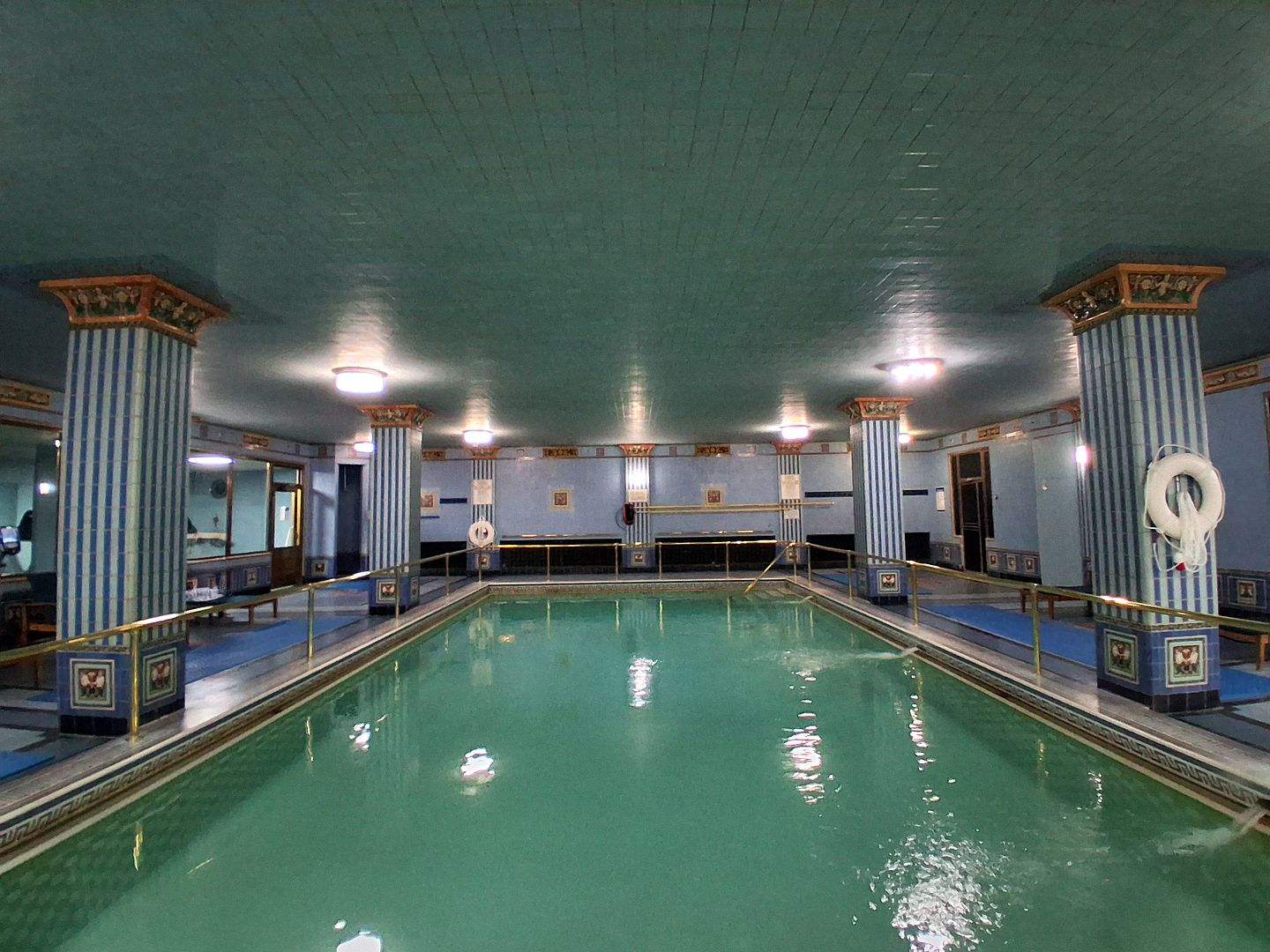
The pool was modeled after those found on ocean liners, like the Queen Mary. At the time of its opening, it was for men only.
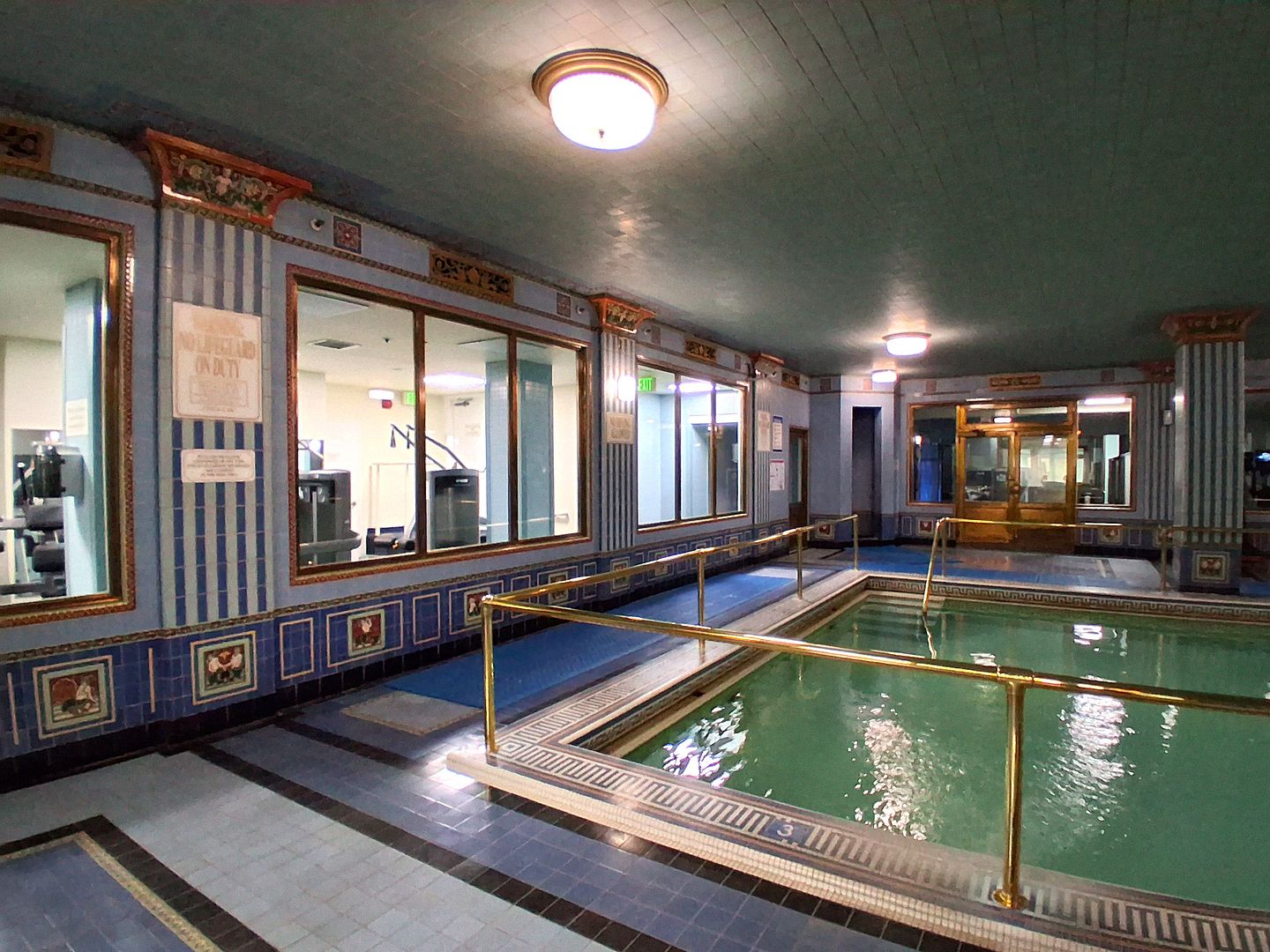
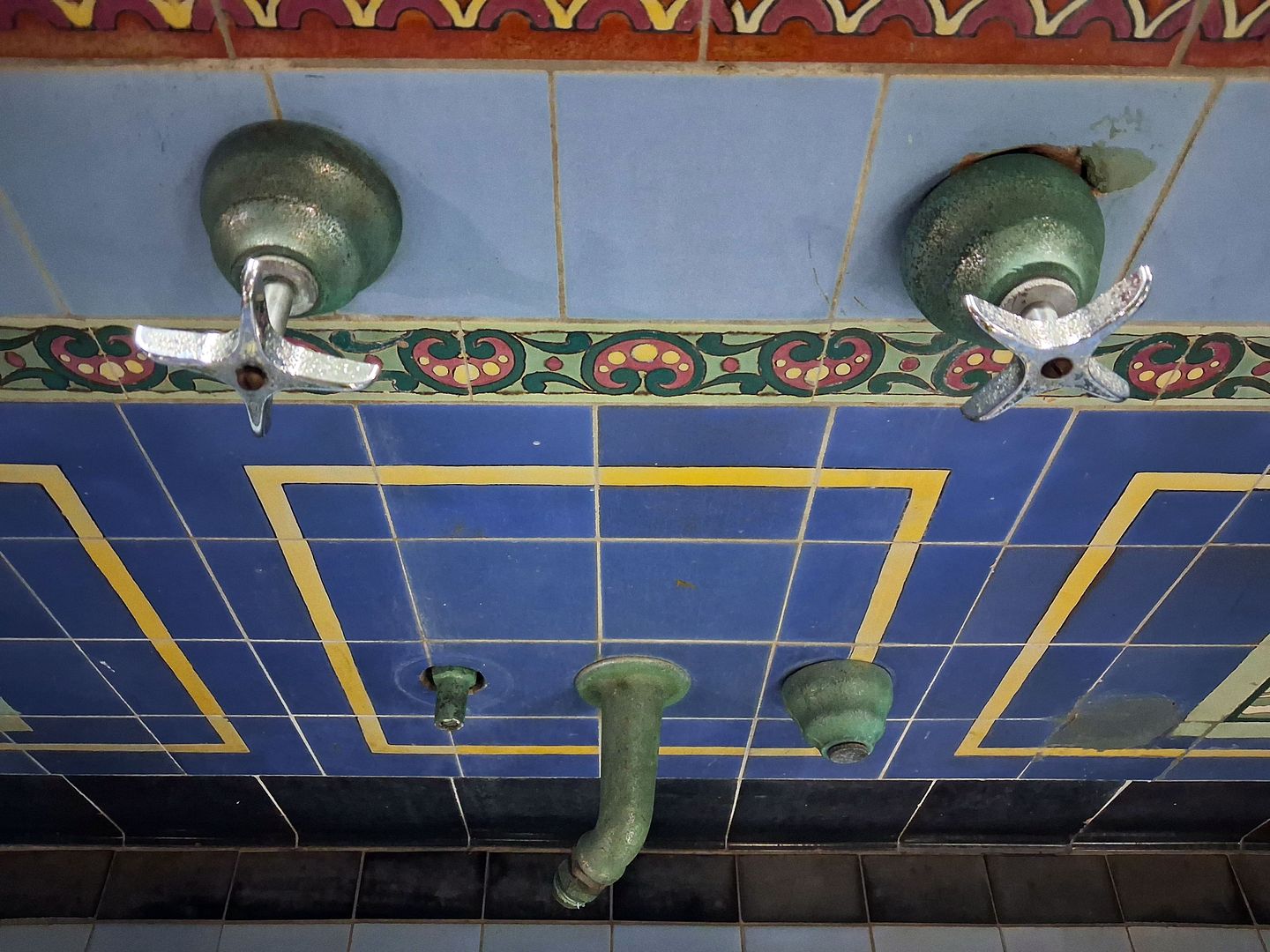
Today, it's very much in its original condition. That includes the tilework, the brass rail, and the window casings—although the teakwood deck chairs (modeled after those on the Queen Mary) have been replaced. The adjacent fitness center has been modernized.
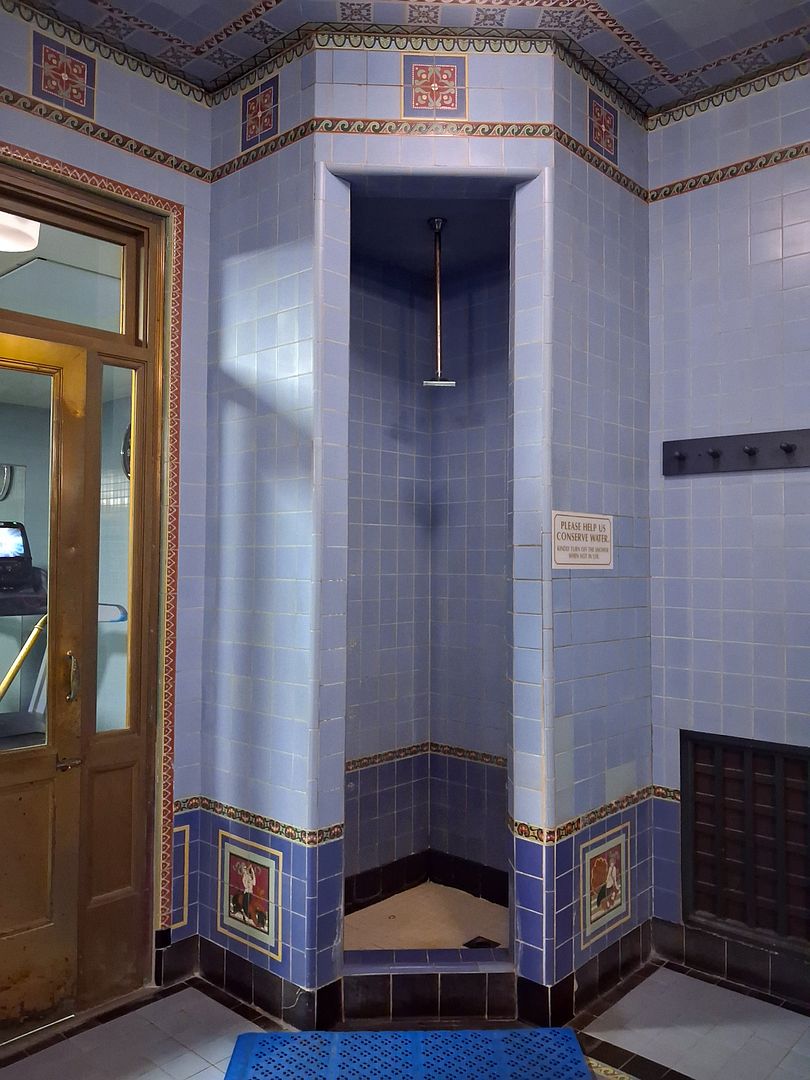
Built-in shower stalls can be found in two corners, although the facility offers full contemporary locker rooms with showers through the gym area.

Mermaids and mermen—perhaps Pompeiian sirens—frolic in fine detail throughout the space. (There was renewed interest in Pompeii as of 1924, when the excavation site became modernized and efforts became reinvigorated.)
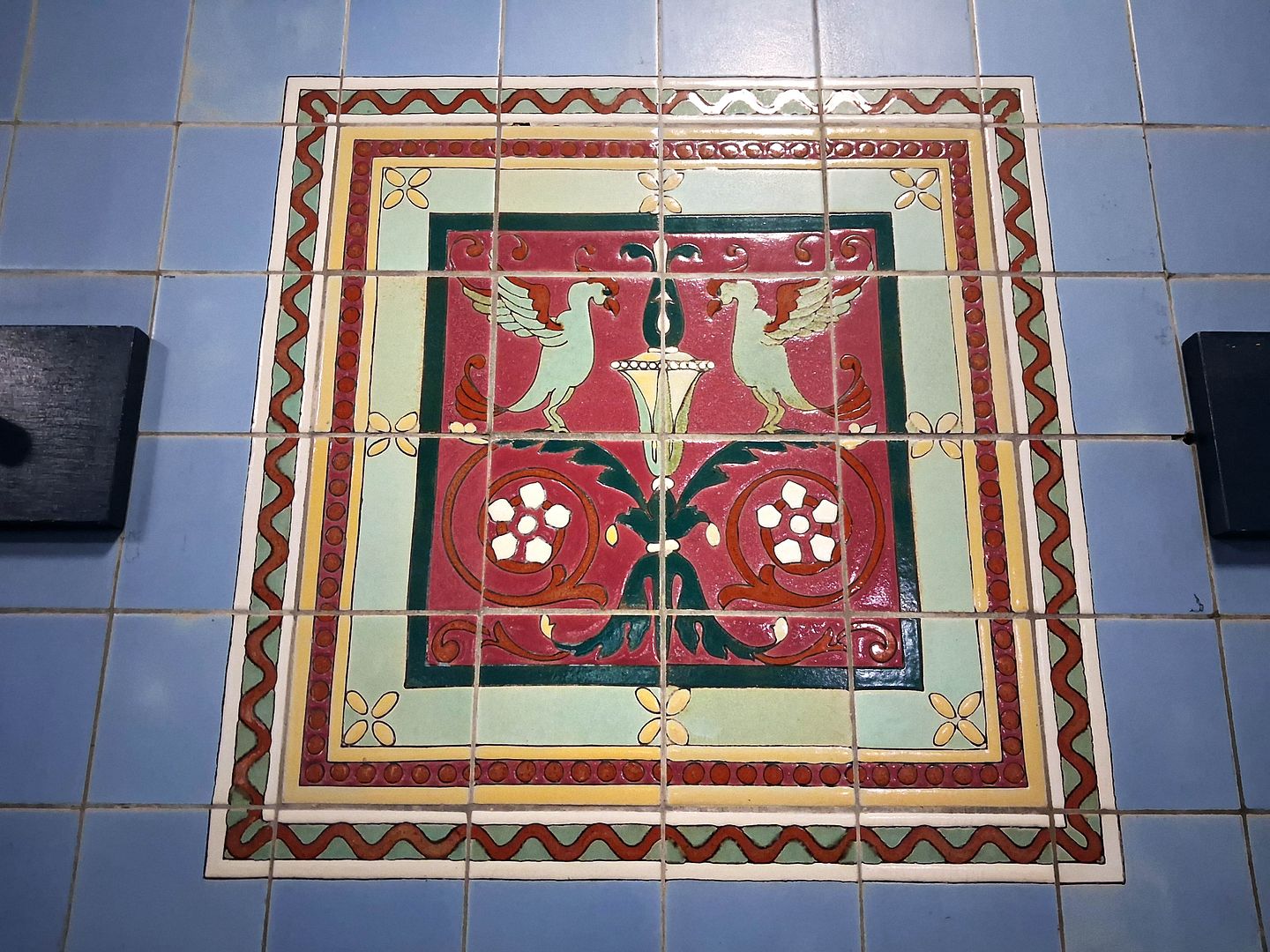
There's no lifeguard on duty, but pairs of protective griffins line the walls...
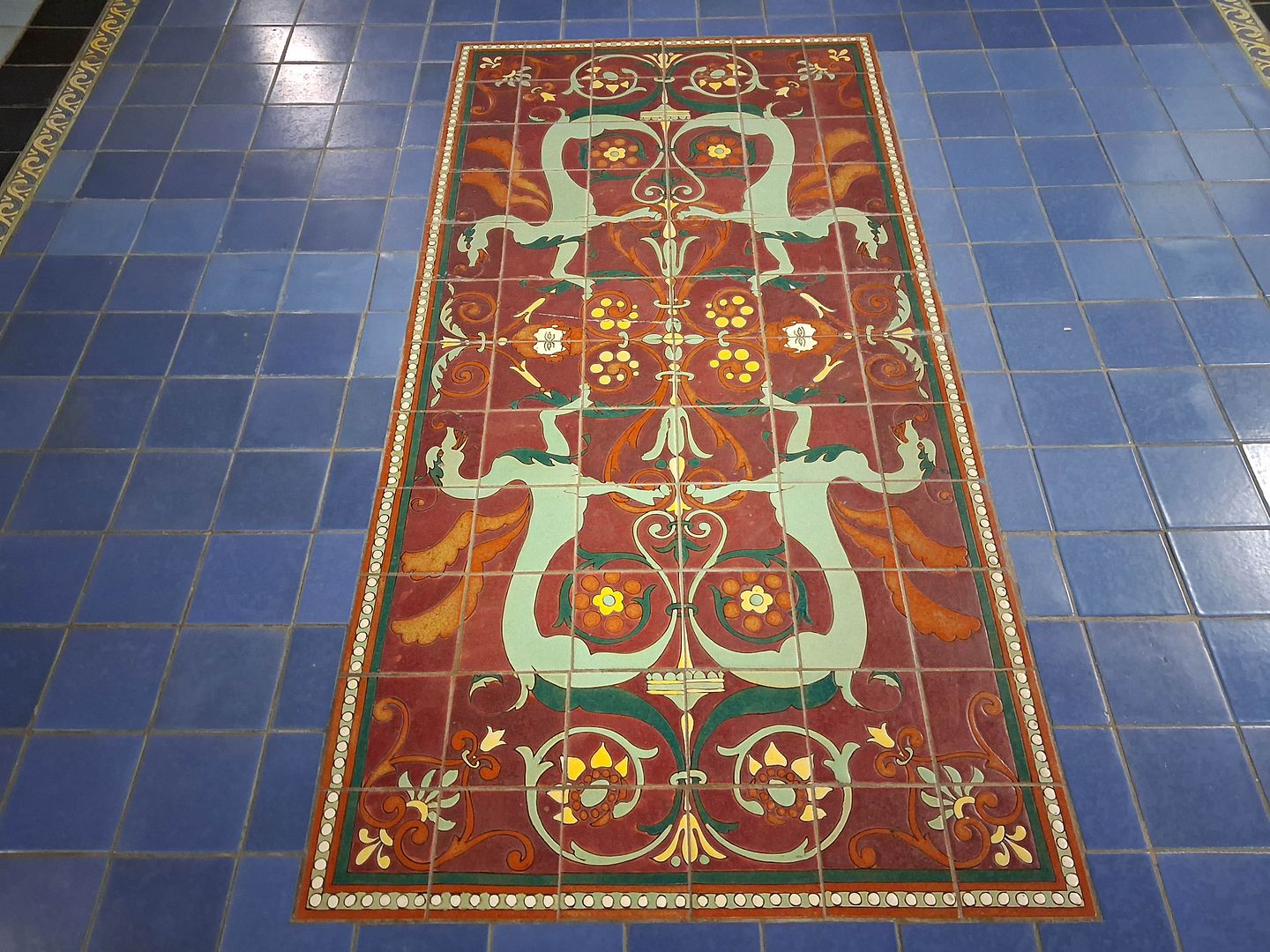
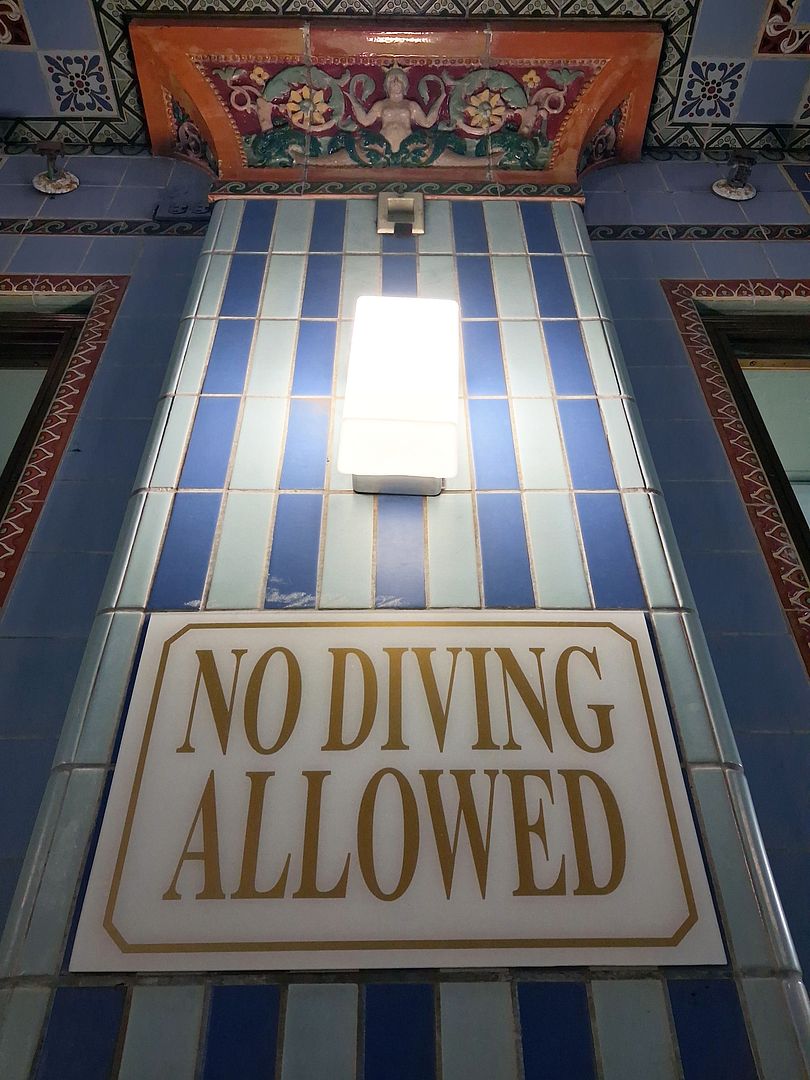
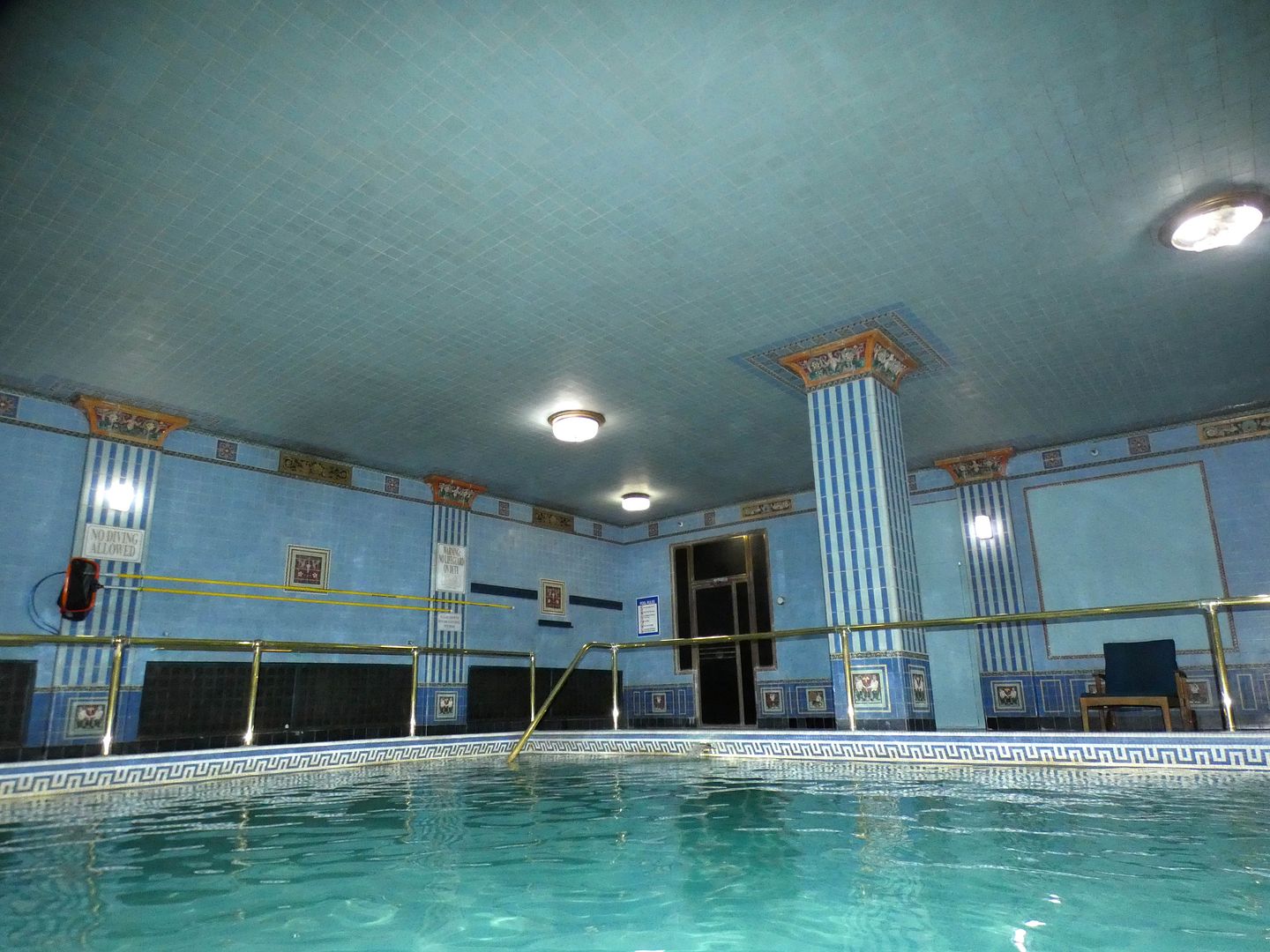
...and you have to tiptoe across a pair of dragon-like wyverns (I think) without slipping to get into the pool.
The entire motif is a 1920s version of a Moorish swim palace with Arabesque ornamentation, a Hollywood fantasy of far-off lands often only visited on the silver screen.
It's no wonder that the swimming pool been been used as a filming location, in such movies as Cruel Intentions (above), Bugsy, Cocoon, and more recently the Apple TV series Palm Royale.
It's one thing to be able to see it—and admire it thoroughly—in person. But it's entirely another to be able to swim in it!
Back in December, while attending Art Deco Society of Los Angeles' annual Cocktails in Historic Places holiday edition at the Biltmore, I had just ordered an espresso martini when someone asked me, "Hey do you want to go see the pool? There's a group going." I needed to settle up my tab, so I told them I would catch up—but by the time I made it out to the Galeria, I didn't see anyone I recognized and didn't know how to get to the pool.
That missed opportunity had been nagging at me for nearly six months.
And now I think I got the better end of the deal.
Related Posts:

Fabulous! Thank You for this tour thru the hotel!
ReplyDelete