Search

Showing posts sorted by relevance for query lax. Sort by date Show all posts

April 17, 2022

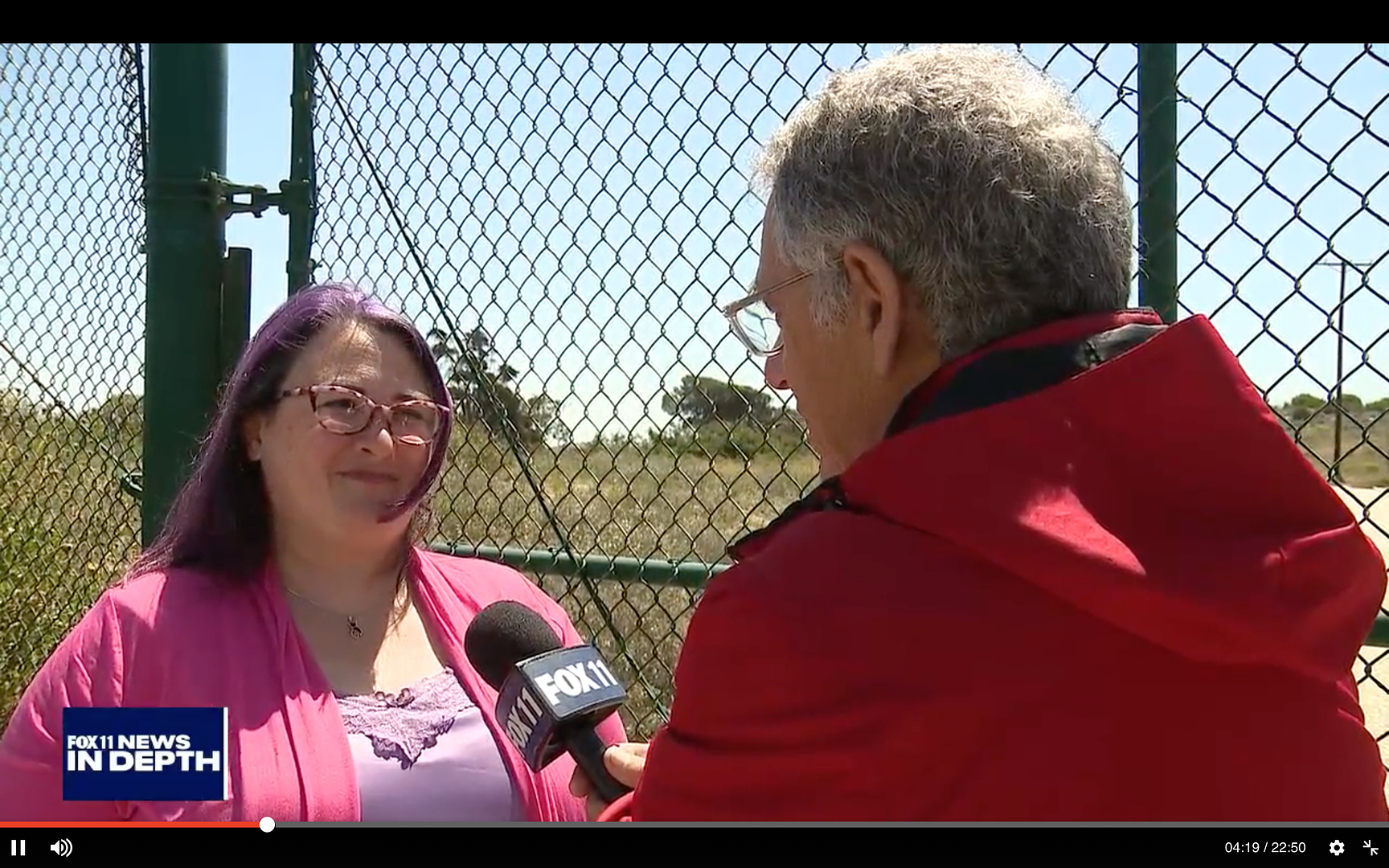
Video: Avoiding Regret on TV Talking About Surfridge Ghost Town, Next to LAX

I always really enjoy the opportunity to share my discoveries with a wider audience—and sometimes beyond the written word, like at speaking engagements or via television appearances.

It feels like an opportunity to connect on a more personal level. 

And it gives me an excuse sometimes to return to a favorite spot—like Surfridge

Screenshot: Fox 11 Los Angeles

August 04, 2019

Photo Essay: Inside the Fence at Surfridge Ghost Town, LAX Adjacent

In many ways, it was a dream come true for me...


...at the site of the worst nightmare for others.


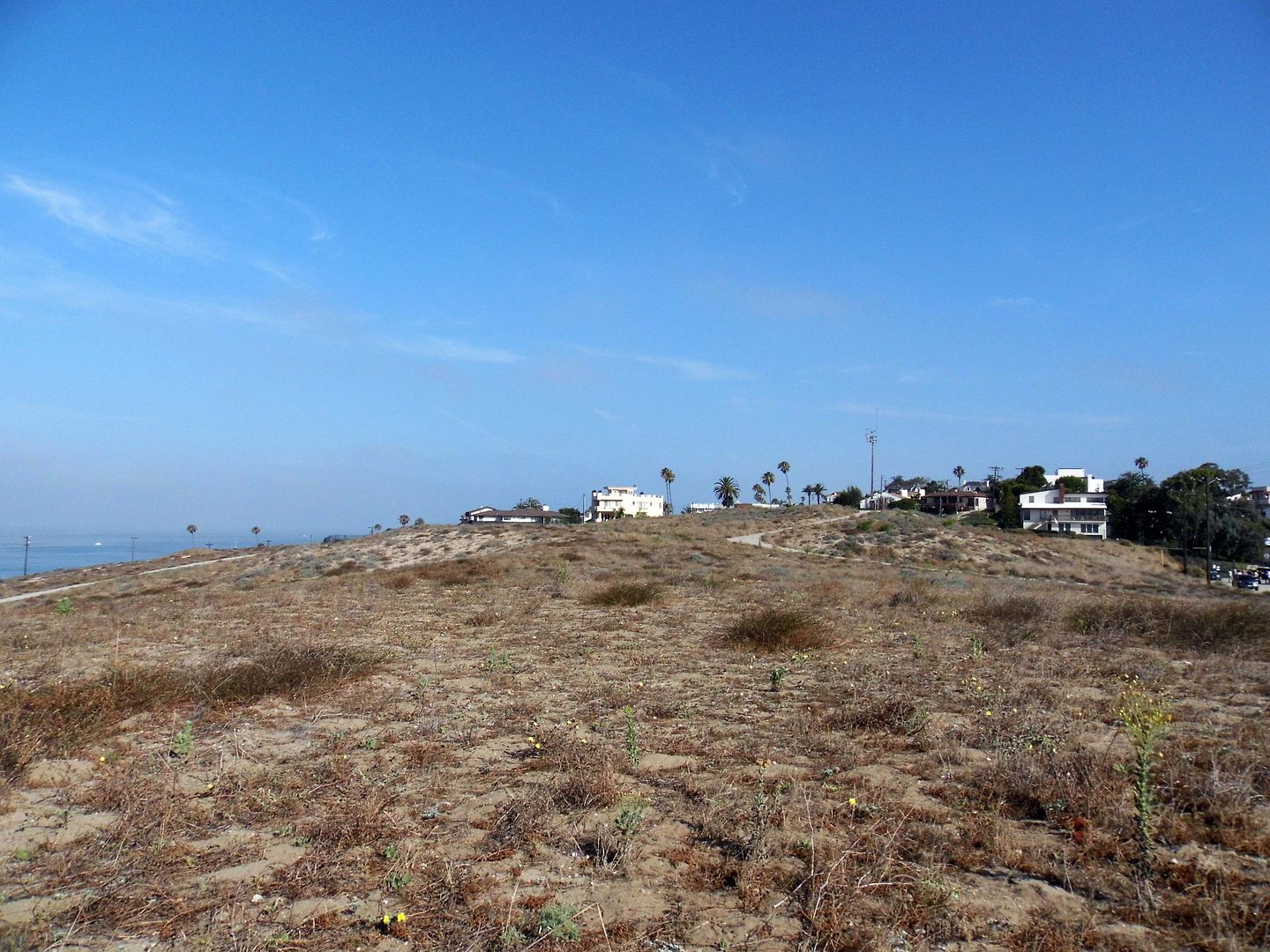
Ever since I first heard about Surfridge—the former bedroom community across from Dockweiler State Beach in Playa del Rey that had been evicted in the 1960s and razed in the 1970s—I've wanted to get inside the fence.


The only hitch was that I wanted to do it legally, rather than invoke the wrath of the LAX airport police, who patrol the area owned by Los Angeles World Airports. And after seven years, I found a way in.


I knew that The Bay Foundation had been doing restoration work on the dunes owned by LAX—but I wasn't convinced that I'd actually get in, so I didn't go until my friend Erin invited me to join her.


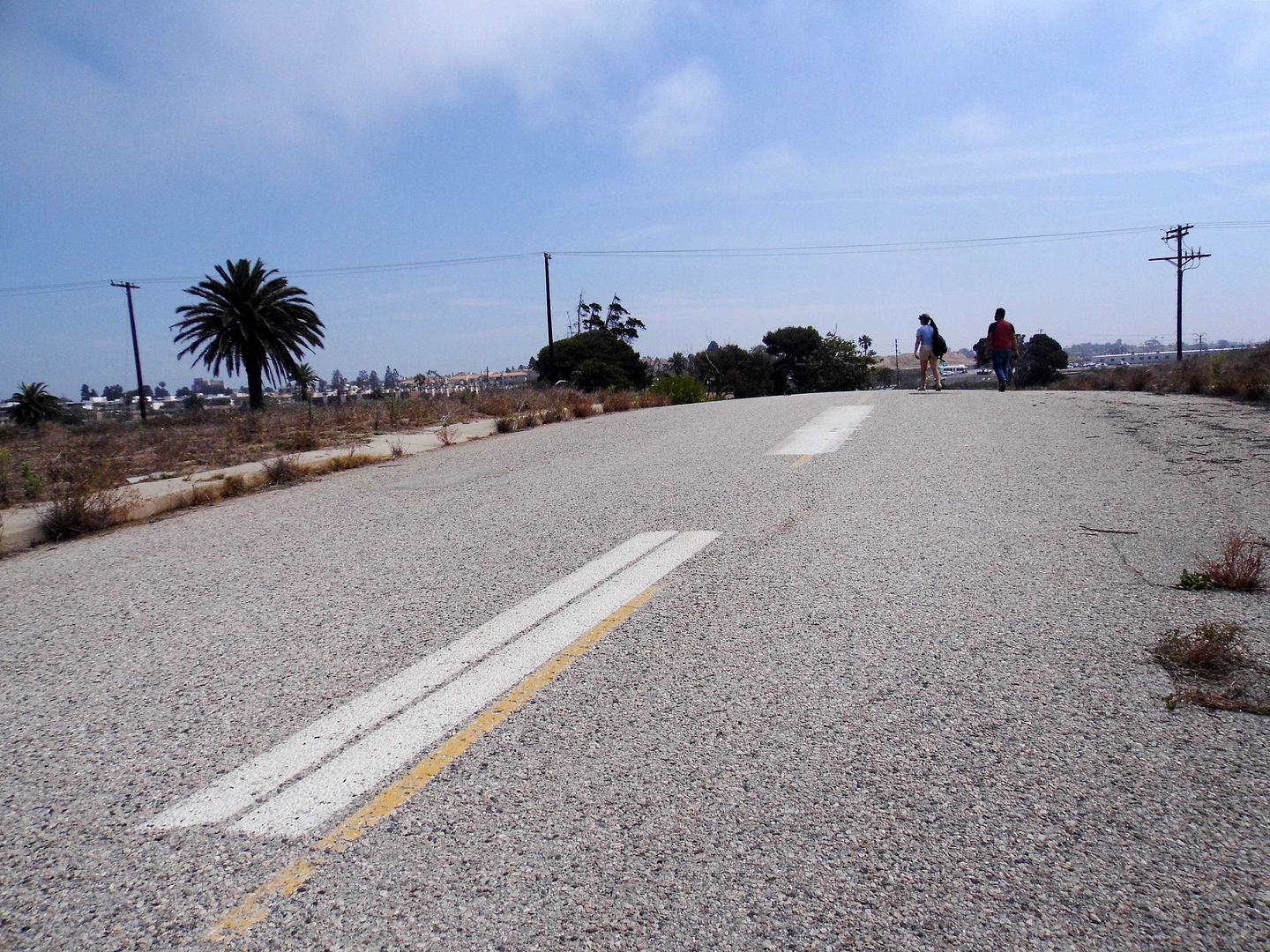
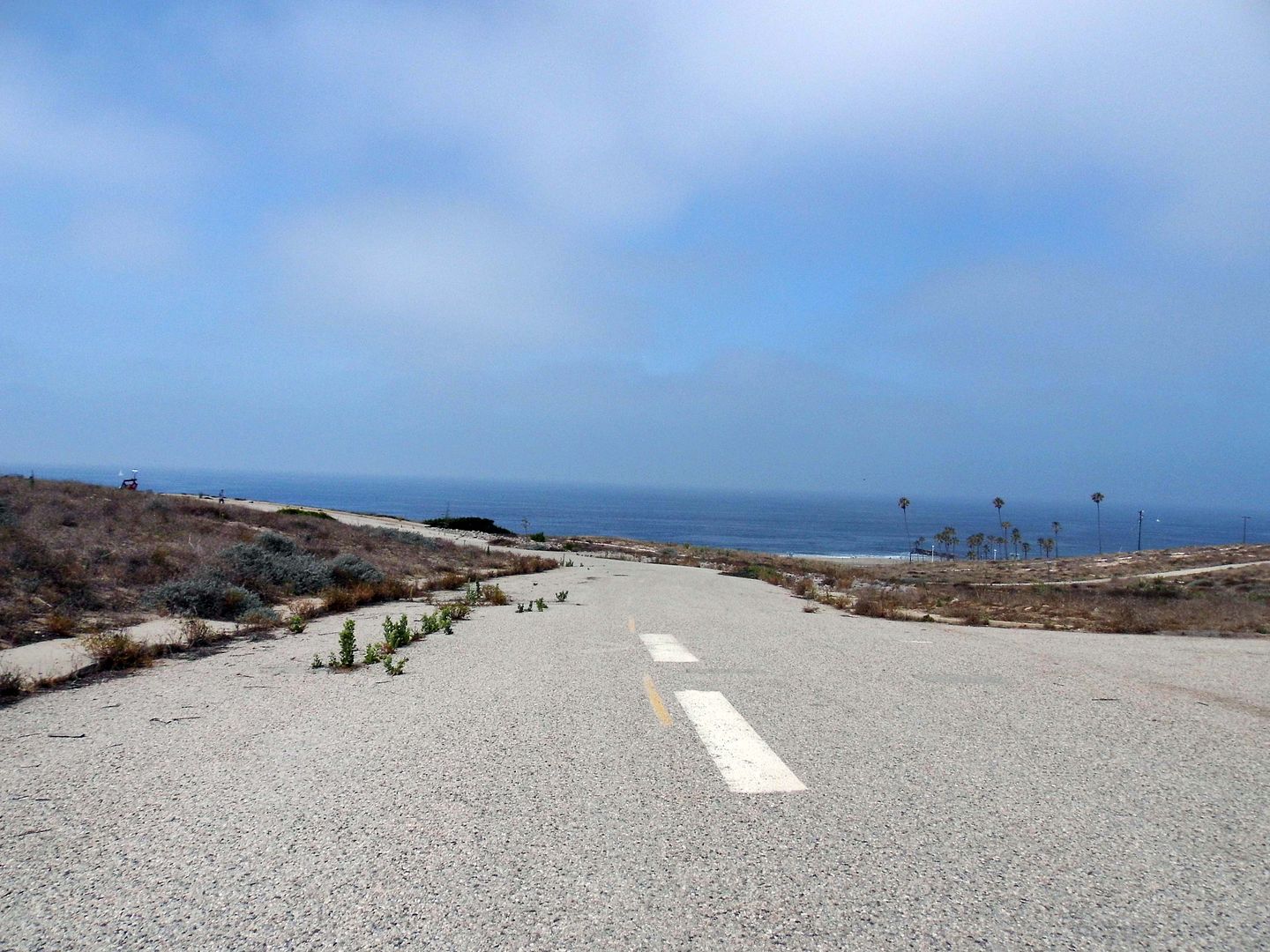
I hadn't been to the perimeter in three years; and I hadn't taken a good, hard look through the fence since 2012. I didn't realize that in 2013, even more of Surfridge had been razed—including removing some of the city streets and filling them in with dirt.


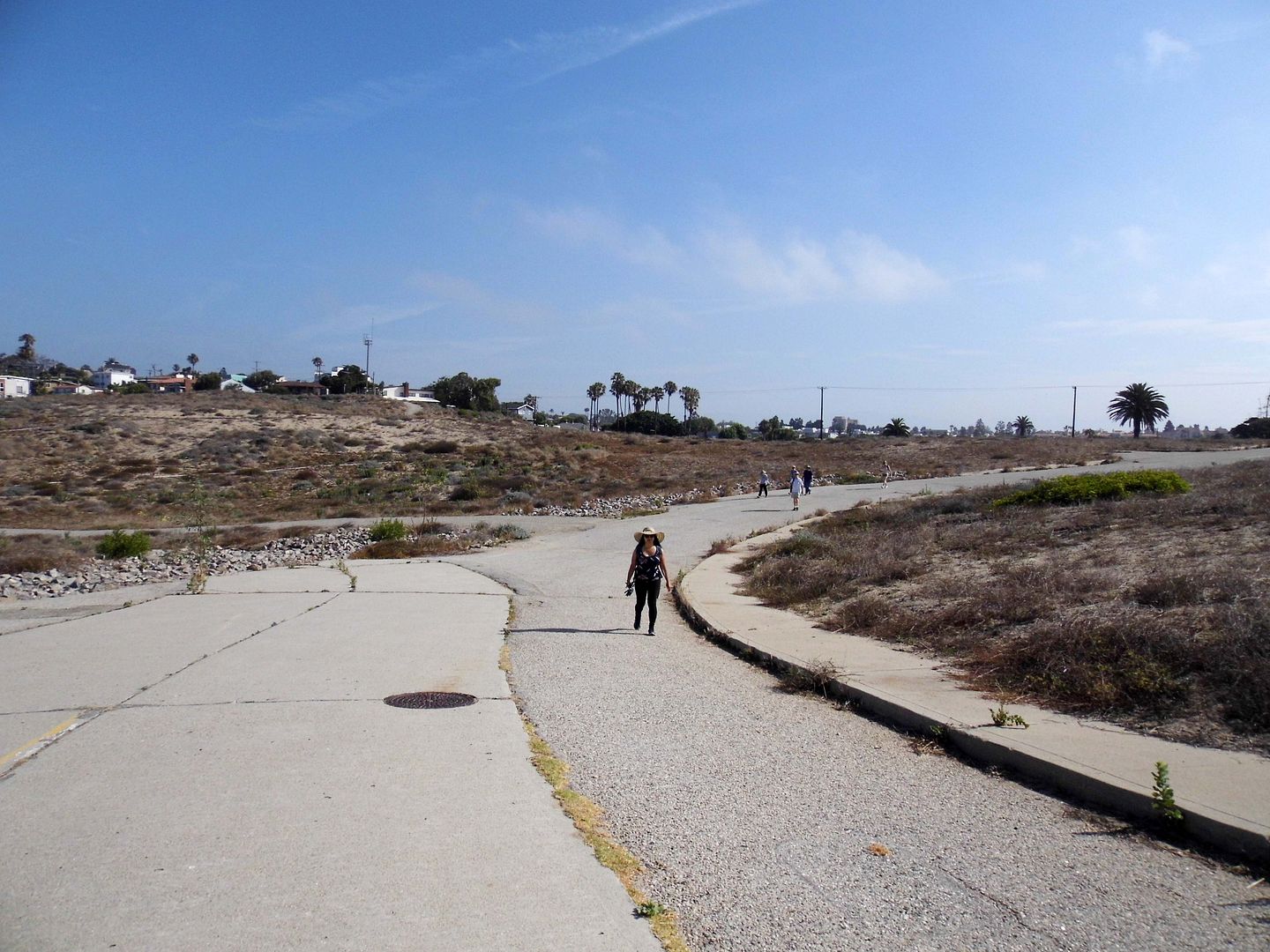
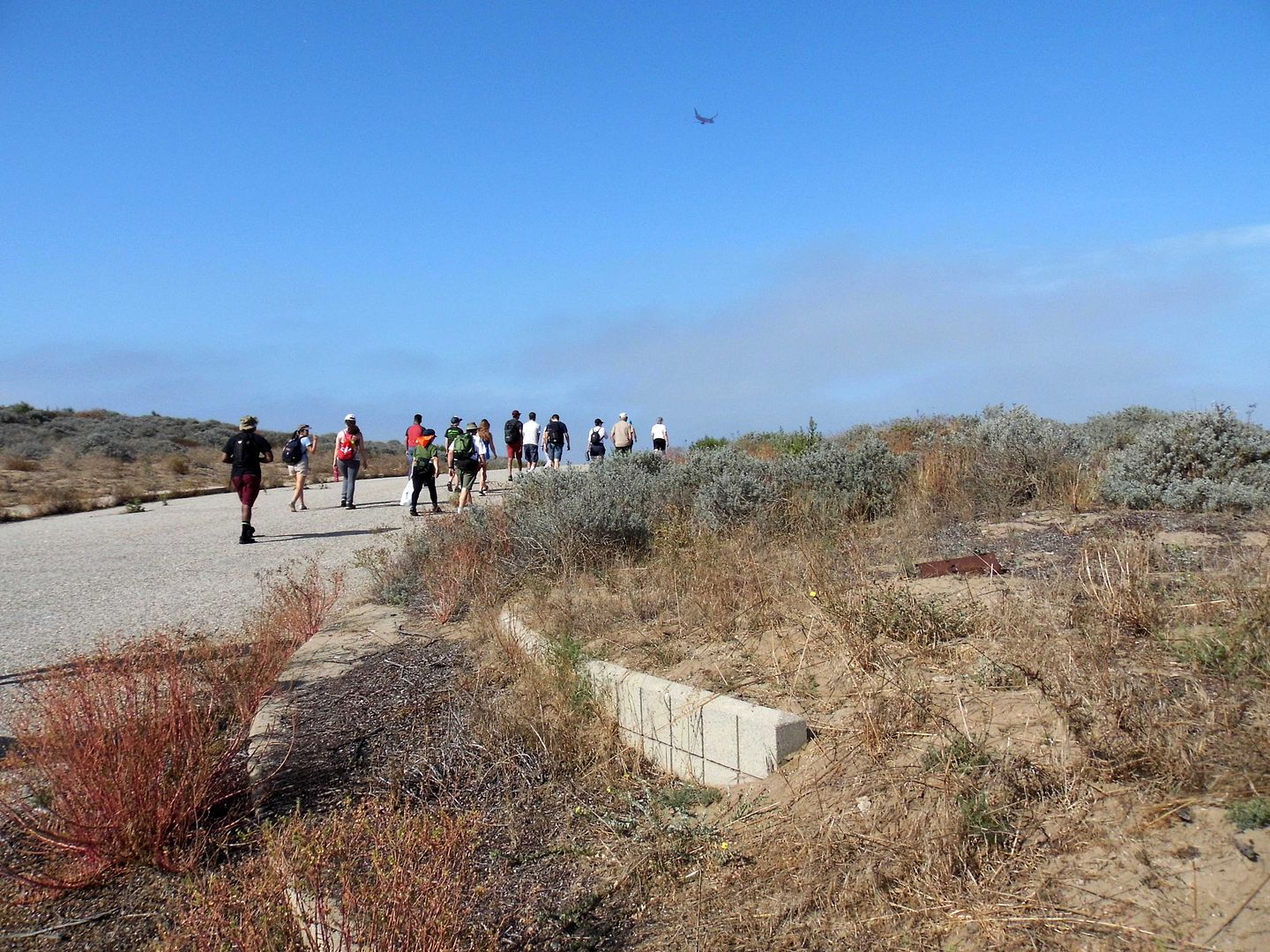
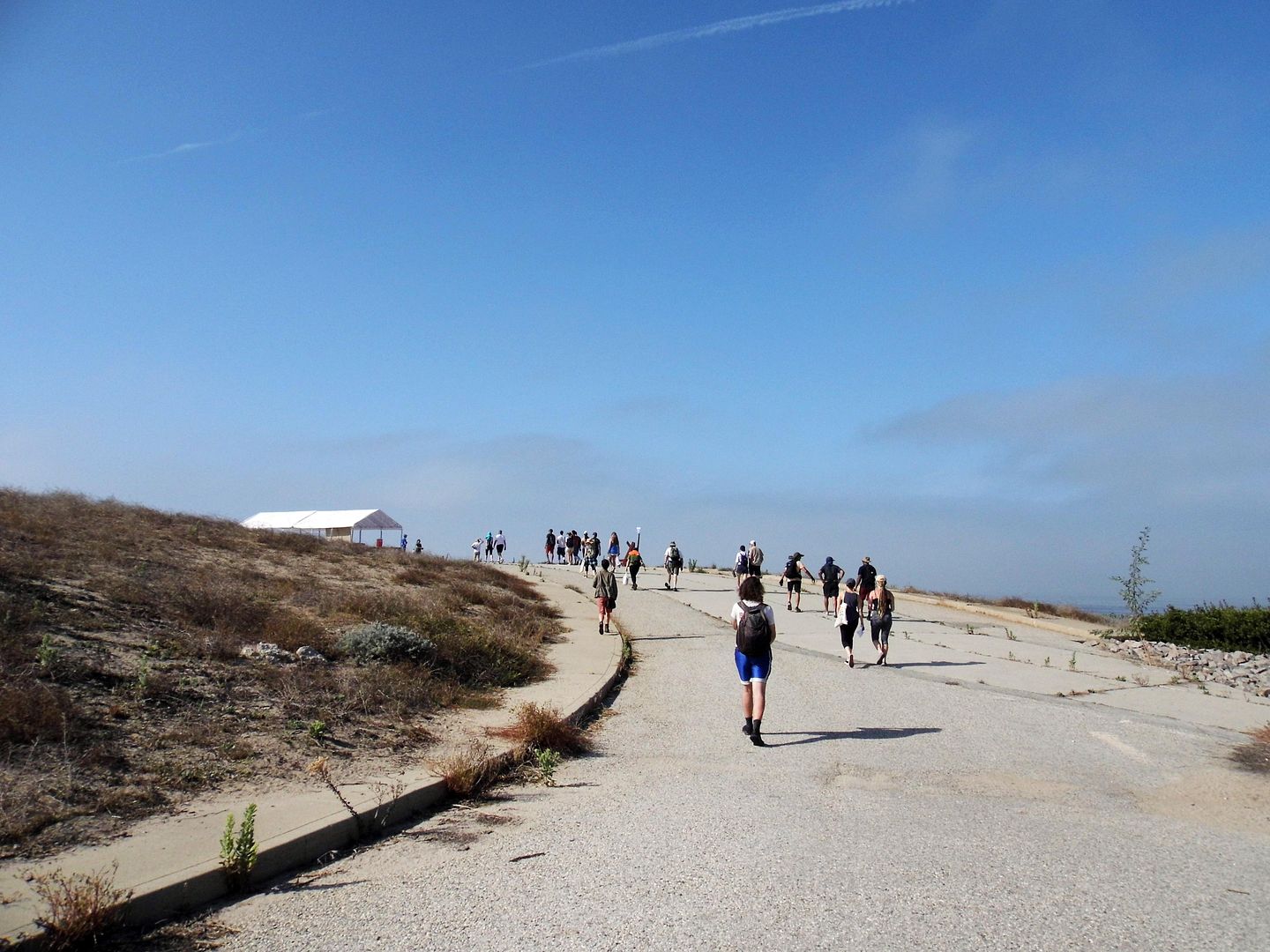
Walking up one of the remaining streets—inside the fence, beyond the locked gate—I had a hard time orienting myself without the outlines of old foundations in pink and green tile that I'd practically memorized from seven years ago.


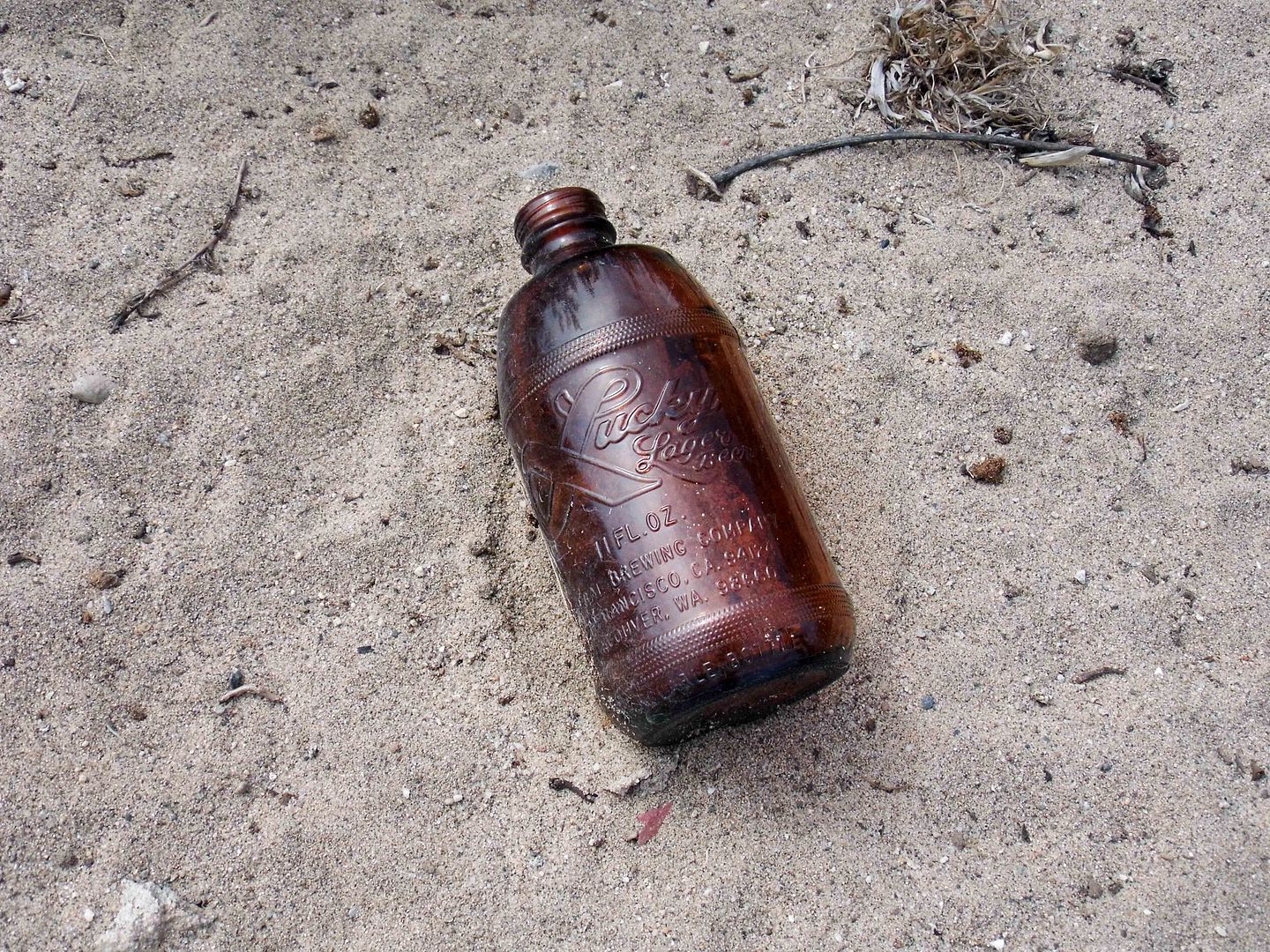
I could tell that Nature had continued to take over—obscuring the sidewalks, bursting through the pavement, erasing the human traces (with just a few exceptions).


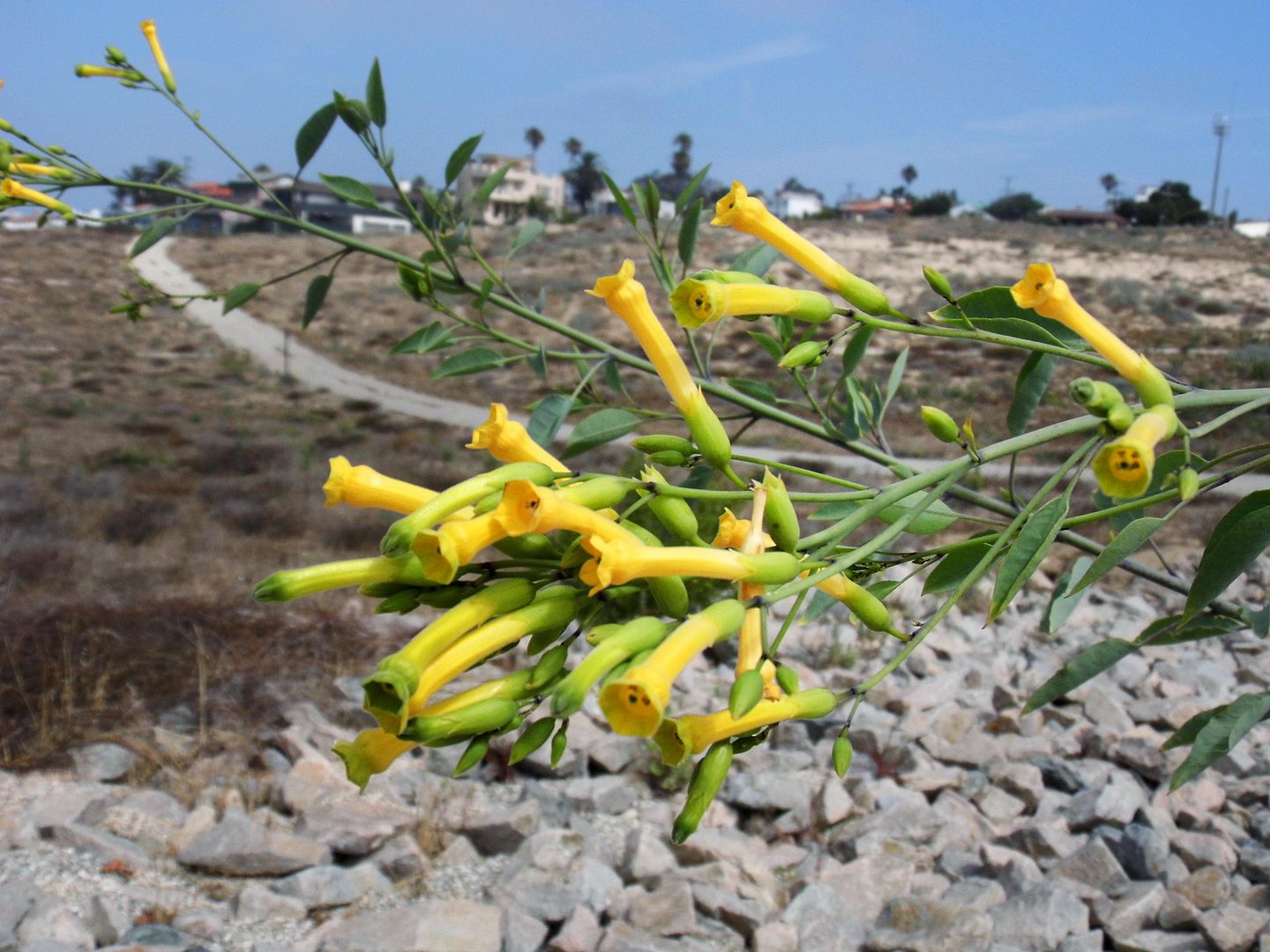
Unfortunately, Nature had taken over in some of the wrong ways—with invasive plants choking out the natives that our delicate dune ecosystem so desperately relies on.


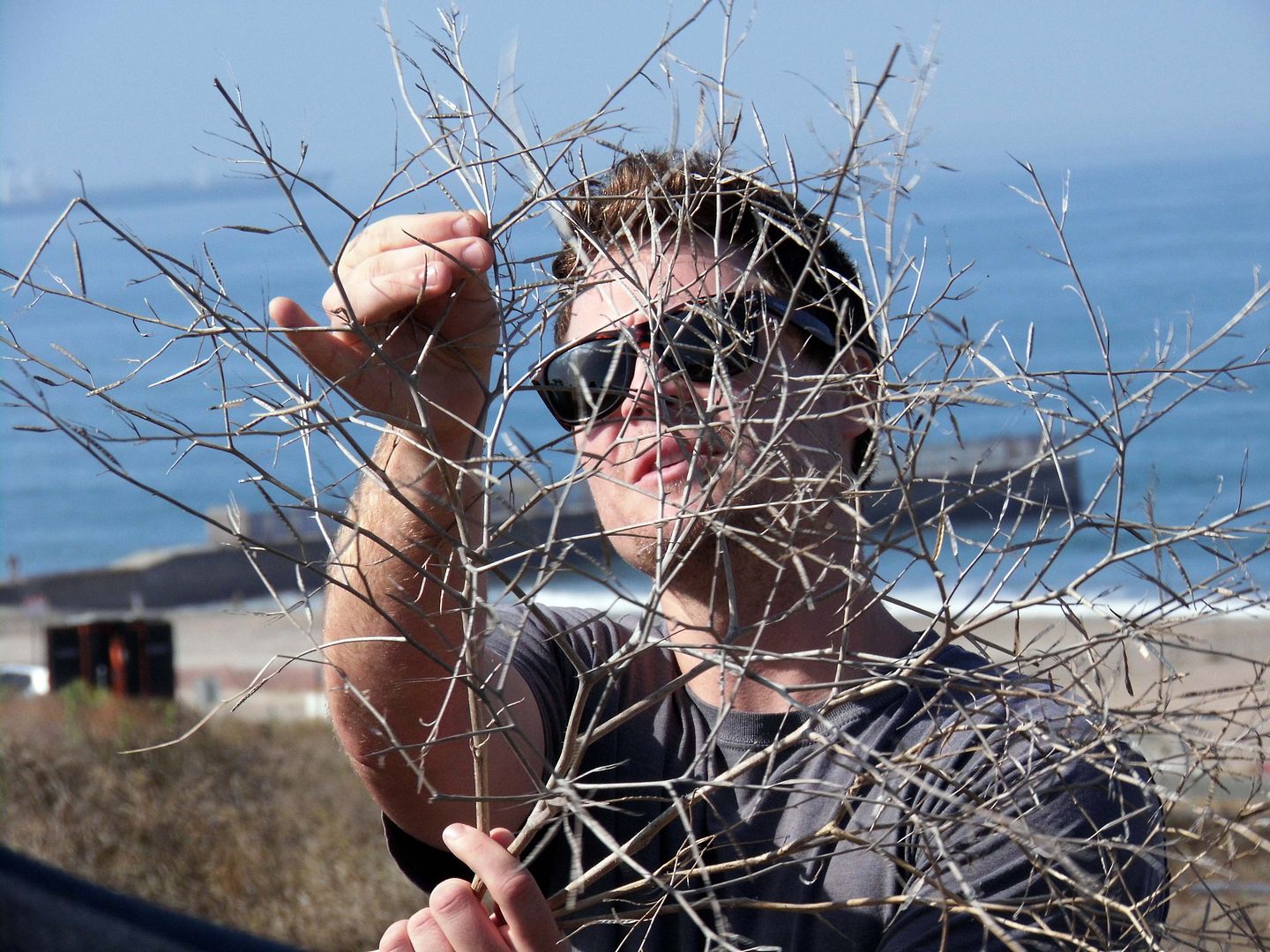
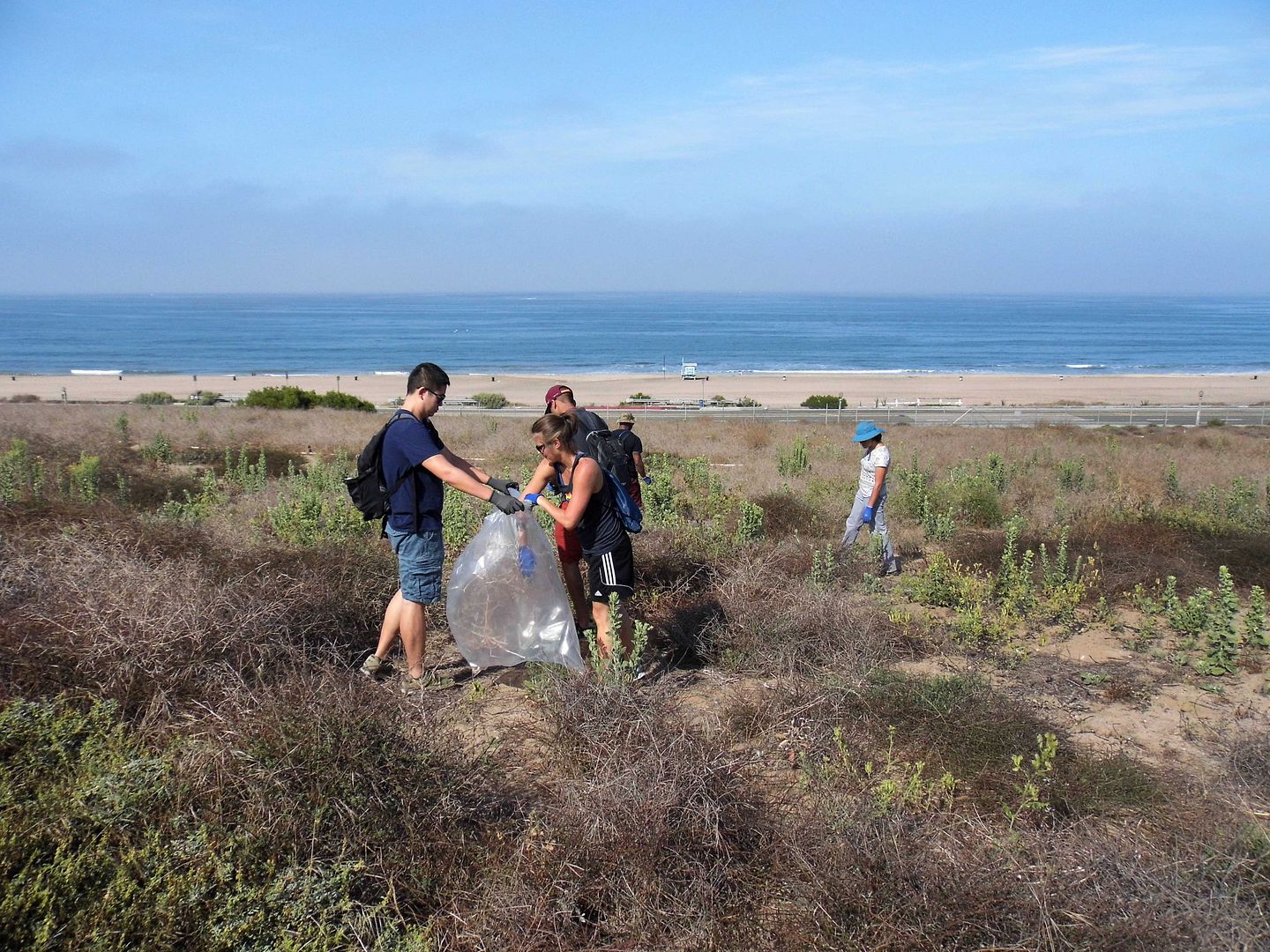
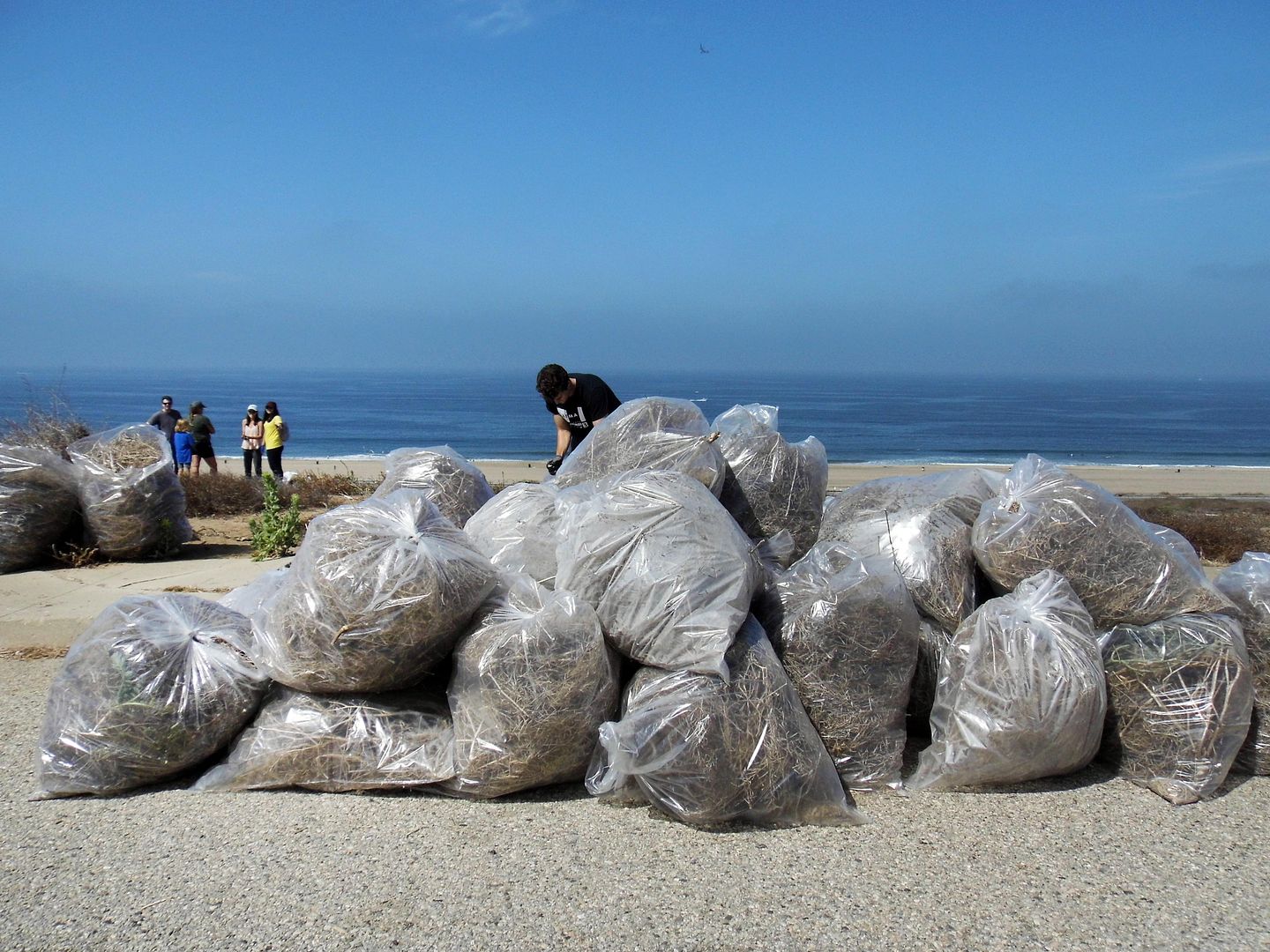
On Saturday, we were there to gather the dead remains of black mustard (Brassica nigra), which had clumped together in giant tumbleweeds and lie in dormancy, waiting to spread its seed into the next season.


The invasives are shockingly easy to pull up and out—and not just because of the sandy dunes they grow in. Native plants just have a better stronghold on the earth beneath them because they're supposed to grow there.


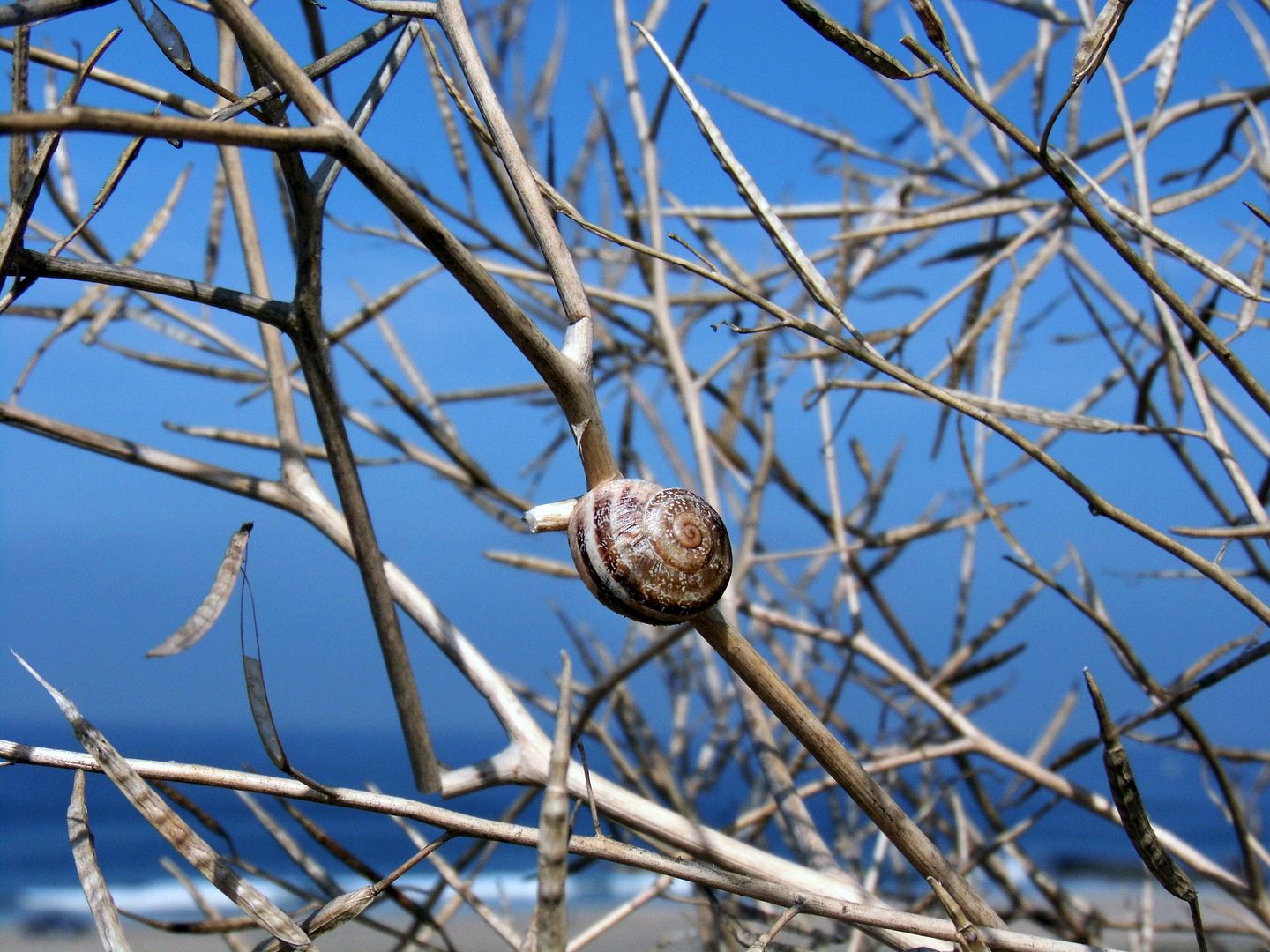
Unfortunately, another non-native species invading the dunes is the snail, some of whom stuck like glue to the black mustard branches and got bagged right along with the weeds.


It's amazing how much a dedicated group of volunteers can do in such a short period of time. And it felt good to get to snoop around a place while actually doing something good.


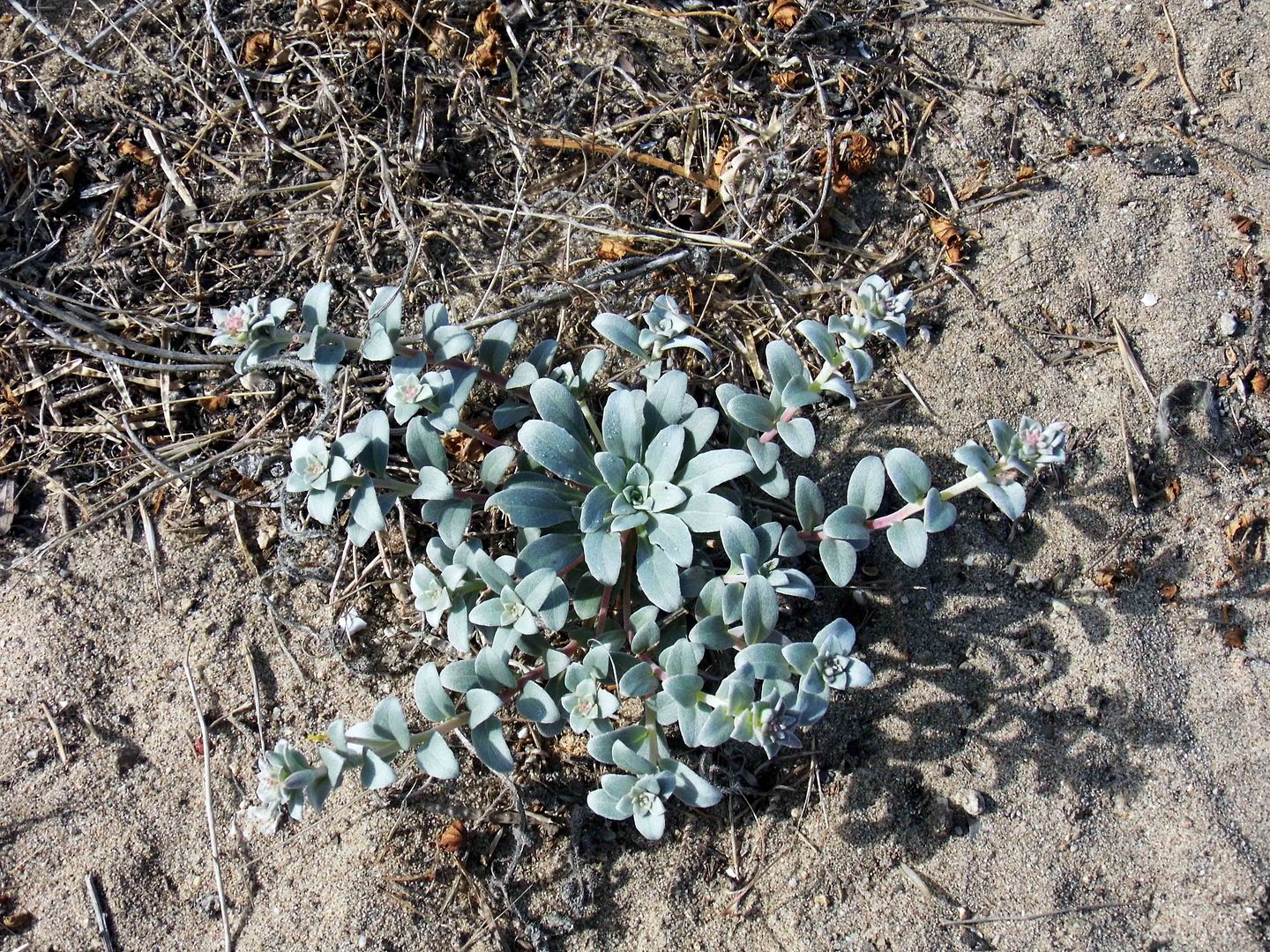
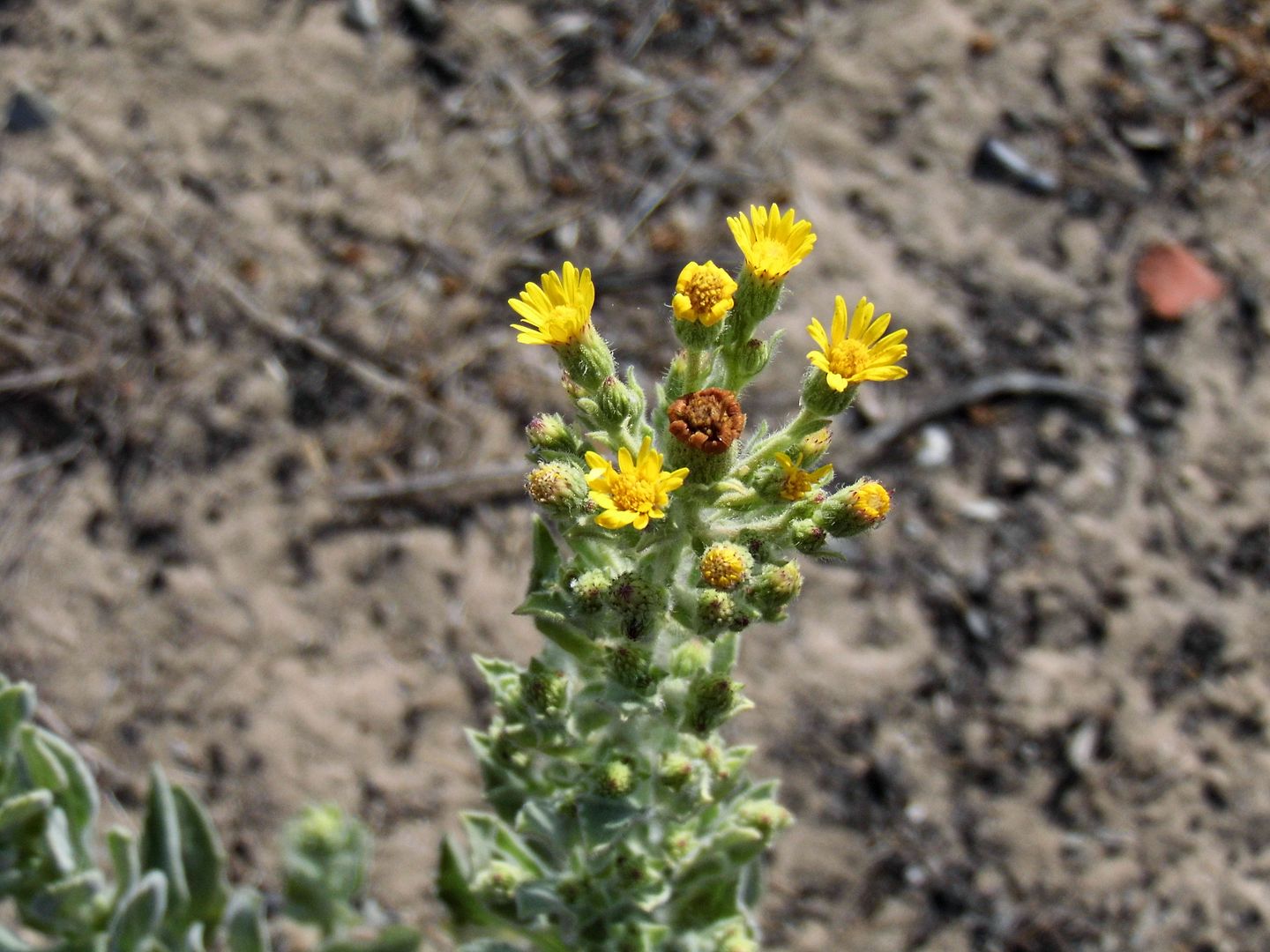
But Erin and I were so easily distracted by the biodiversity of the dunes...


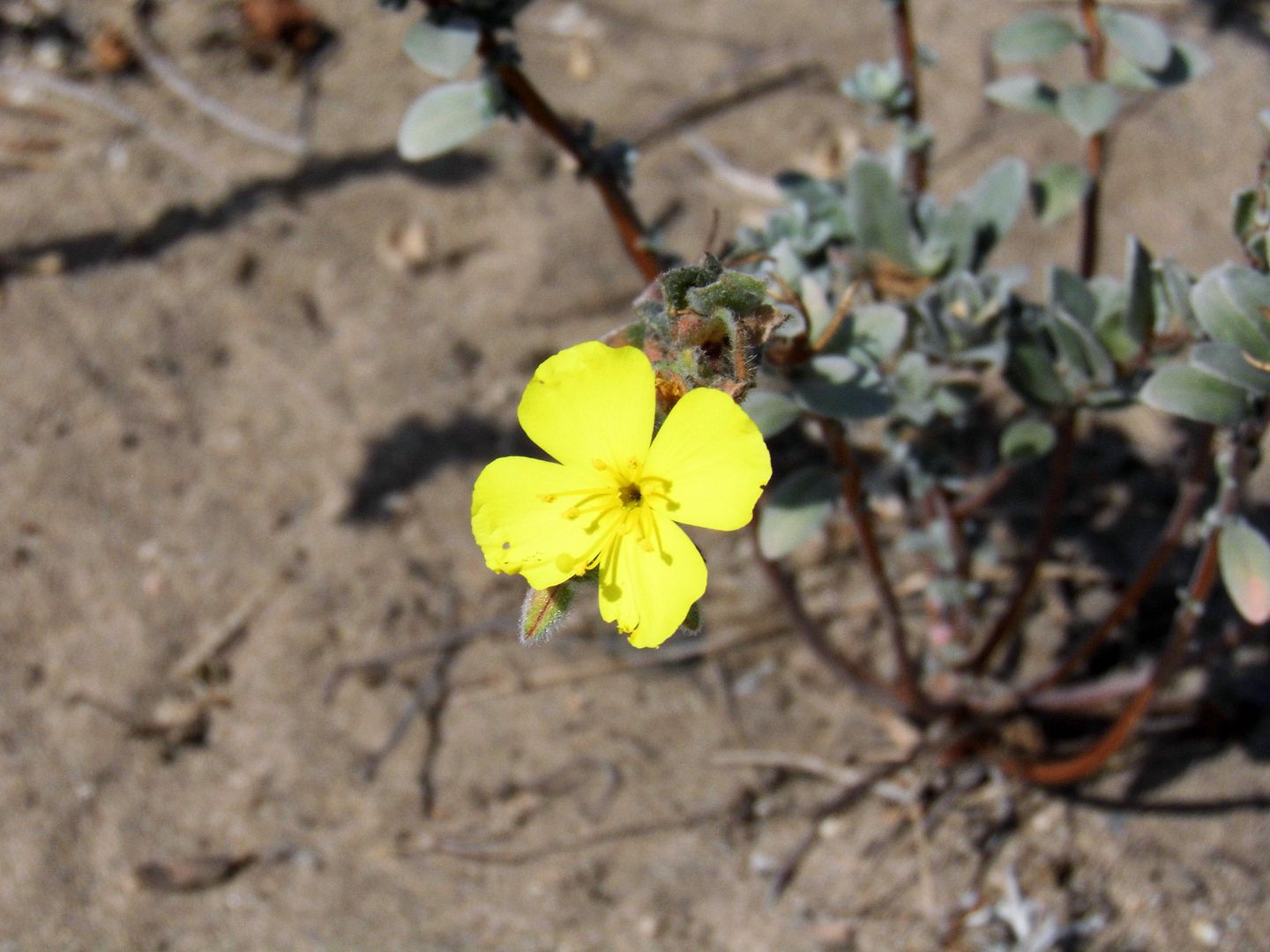
...trying to identify every plant...


...like the late-blooming evening primrose...


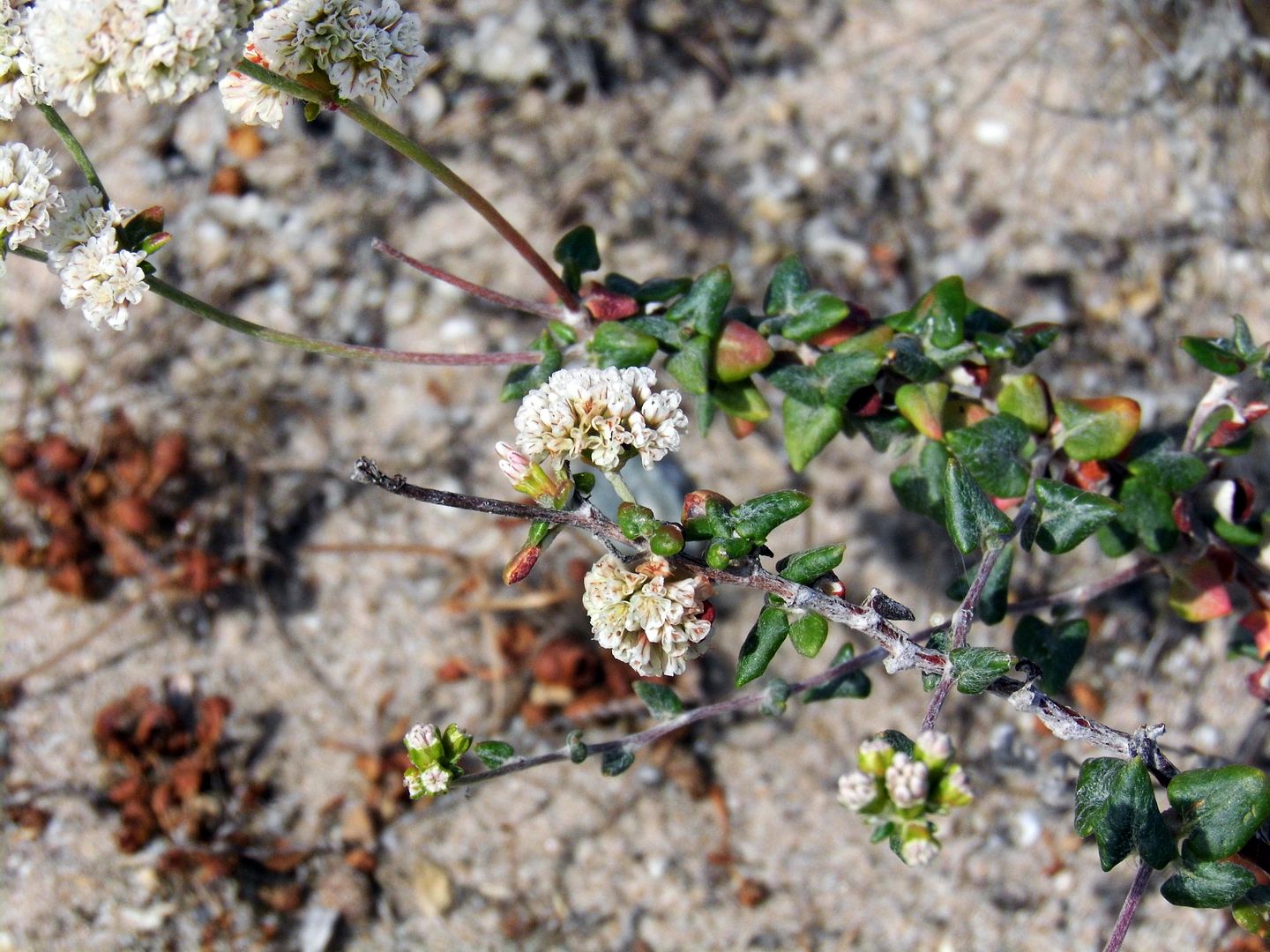
...and the Seacliff buckwheat (Eriogonum parvifolium) that the El Segundo blue butterfly exclusively relies on.


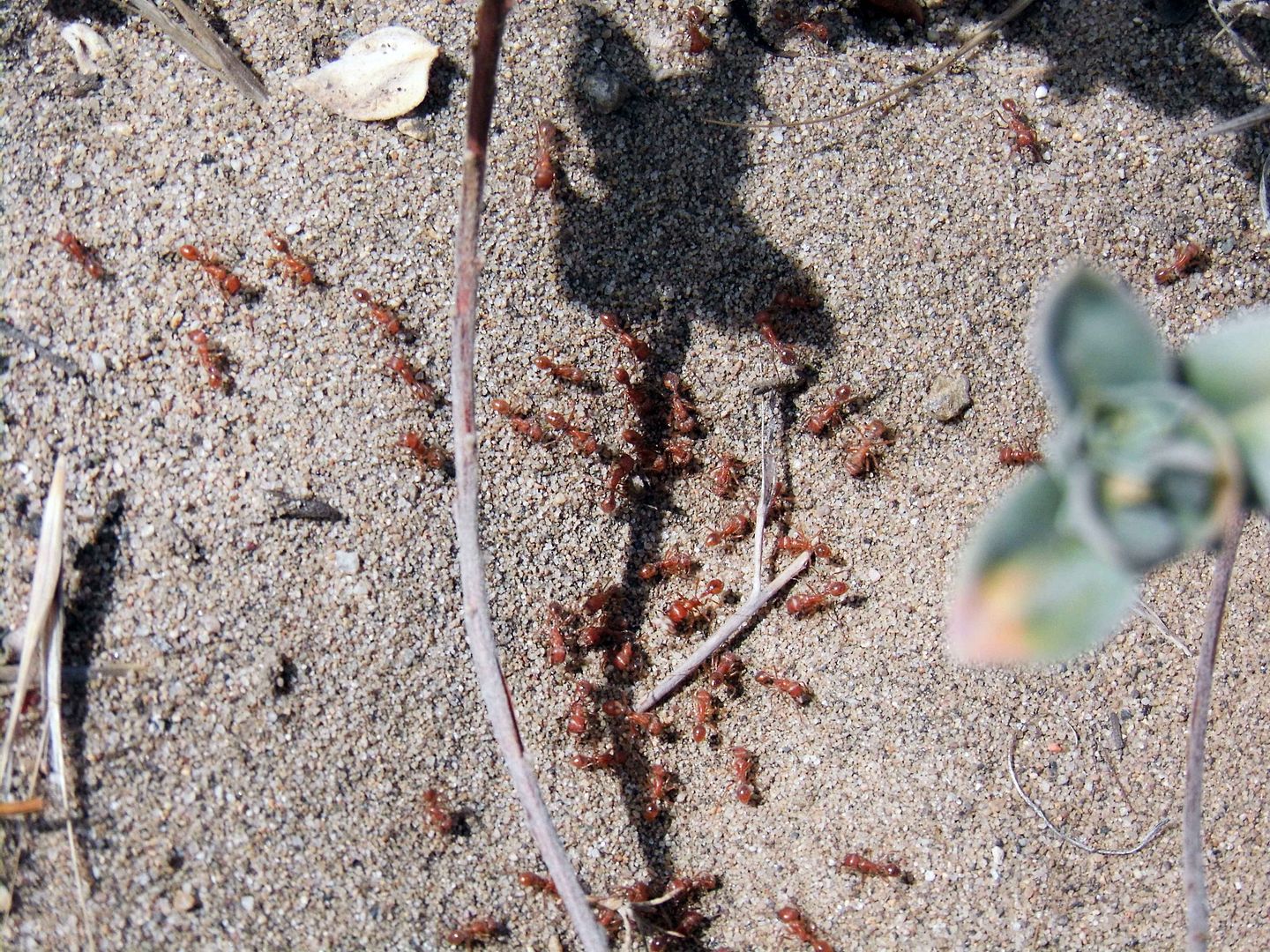
We were too late in the season to catch the endemic species of butterfly mating, but we did observe an army of ants normally feasted on by the horned lizard.


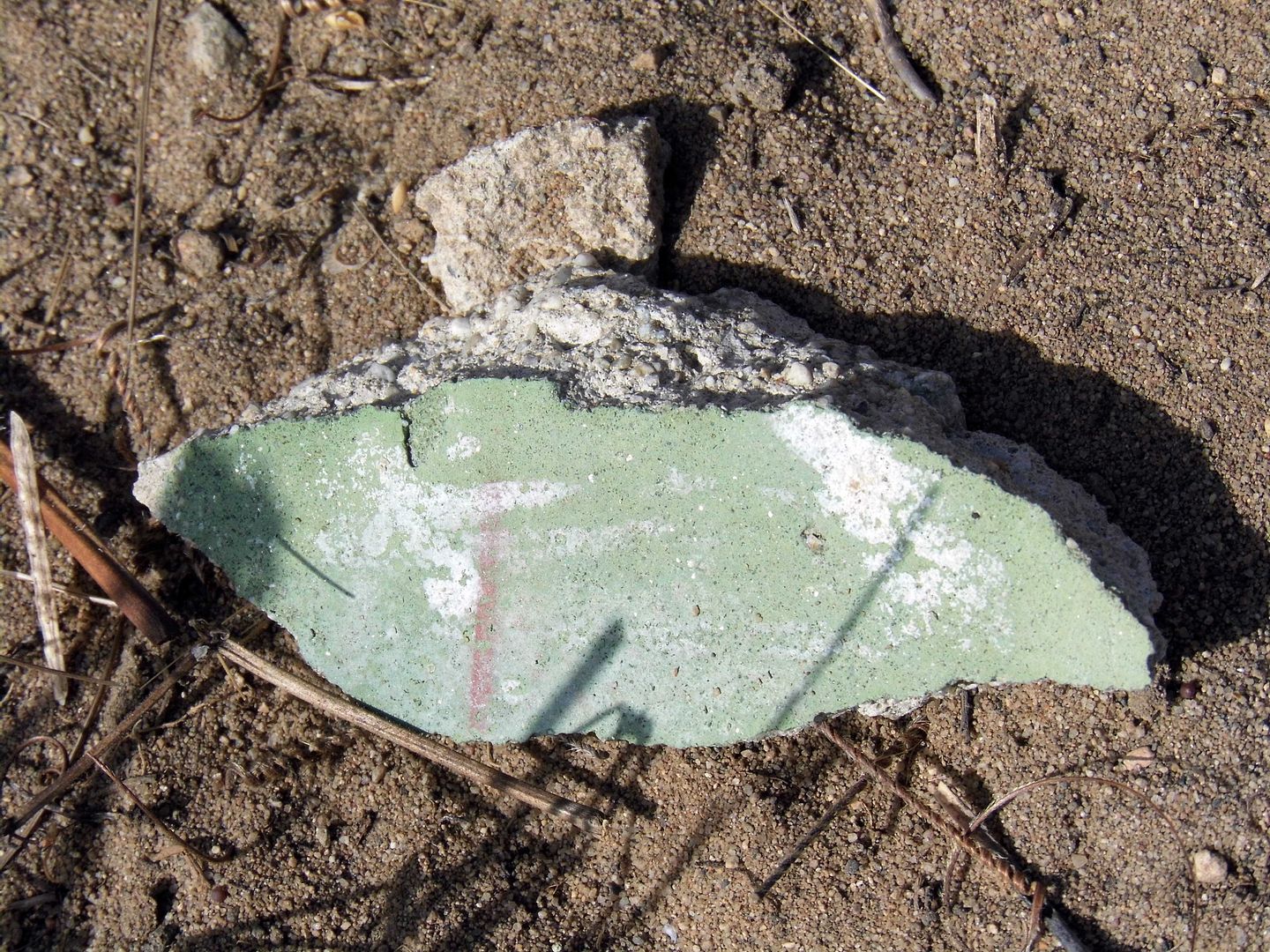
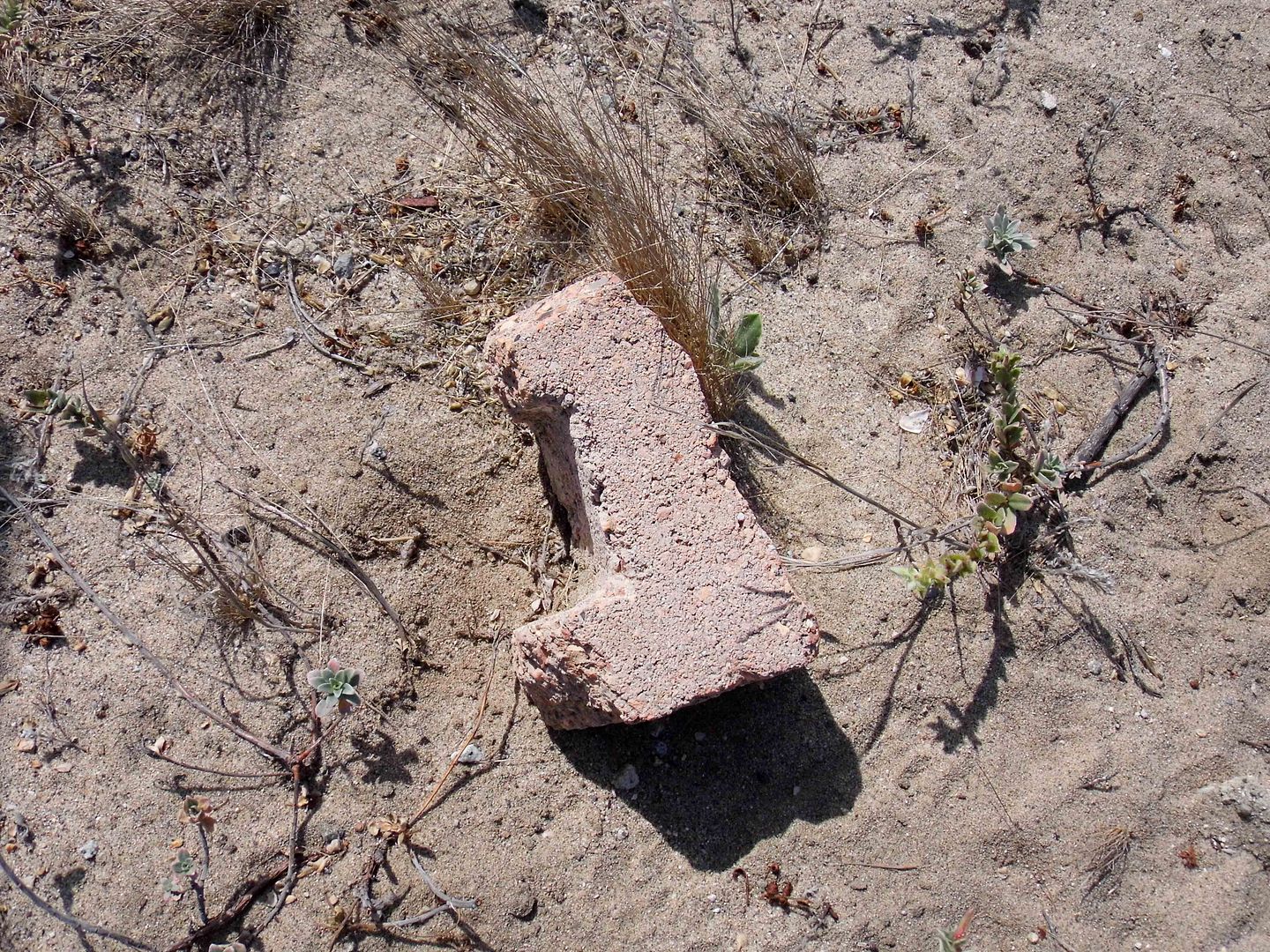
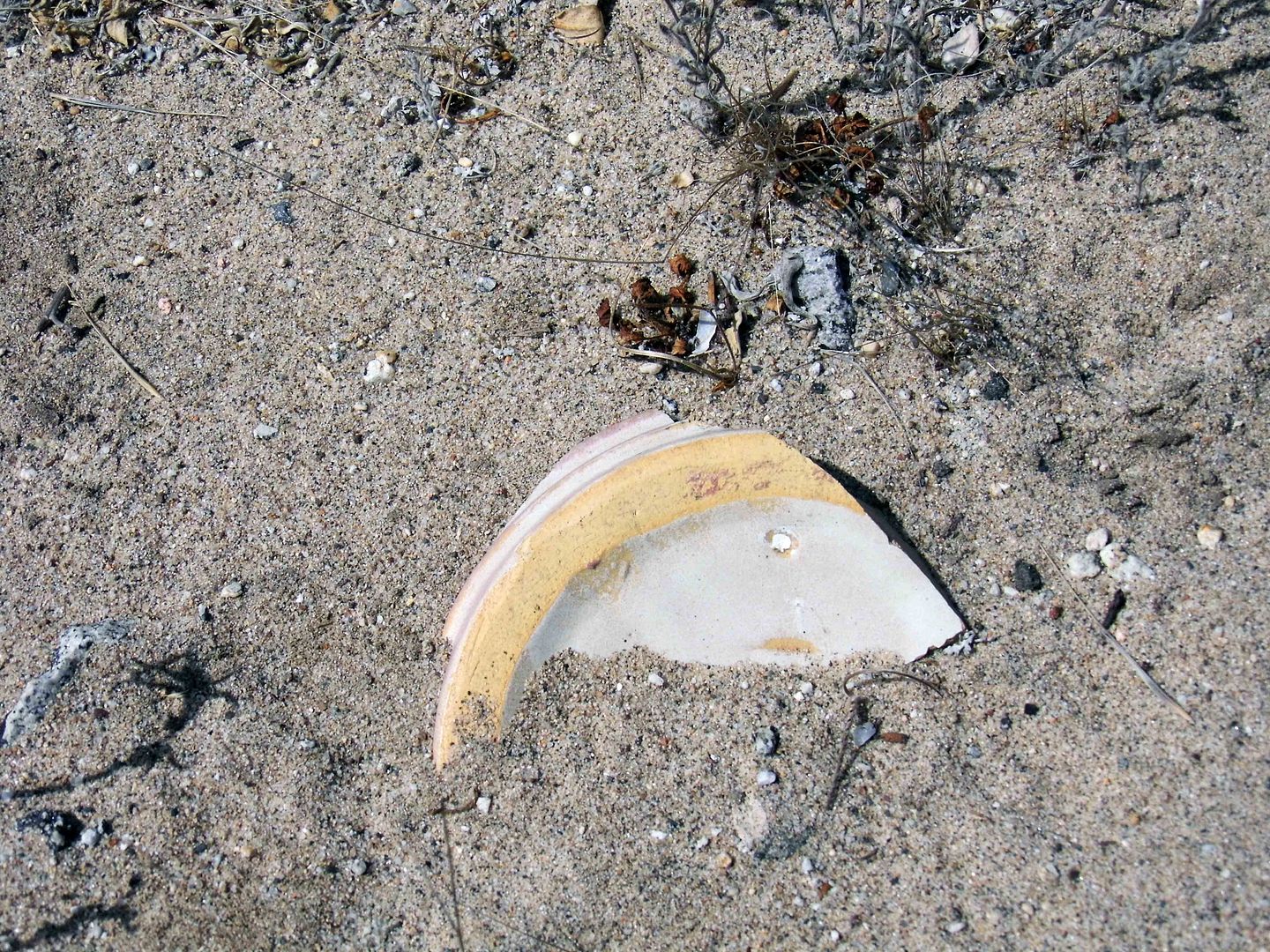
I was too distracted by shards of those familiar tiles to even look for a horned lizard...


...or any of the burrowing owls that now call Surfridge home (and are thriving there).


Surfridge really has become a wildlife preserve—and its ownership by LAX (and the airport's inactivity surrounding its development into runways) has really helped Surfridge come to life in new ways after being abandoned so many decades ago.

Some former residents have even come to help restore the habitat.

It's nice to see something good come out of something bad for once.

Will they ever let people back in on a regular basis? I hope not.

Let's just give it back to Mother Nature and see what she does with it, while commercial jets fly over every two minutes.

To sign up for one of the future monthly restoration events, visit The Bay Foundation online.

Related Posts:
Photo Essay: Surfridge, LAX's Beachside Ghost Town - Part One

September 26, 2012

Photo Essay: Surfridge, LAX's Beachside Ghost Town, Part 3

[Last updated 8/16/21 4:59 PM PT—video embed added at bottom of post]

...continued from Parts One and Two...


The last time I visited Surfridge, I made it as far as Sandpiper Street, its last remaining street with an actual sign that's not fenced off. Although currently blocked to traffic, and prohibits pedestrians, it's not exactly closed.

Per se.

But because I cut through Sandpiper, there remained a whole chunk of Surfridge I hadn't seen: the section that lies closest to LAX, bordered by the Imperial Highway.


Because I was certain there must be a way in—a way in to see nothing, because really there is nothing left to see—I had to go back. I am a completionist.

April 28, 2020

Photo Essay: A Close Encounter of the 'Jet Age' Kind at LAX

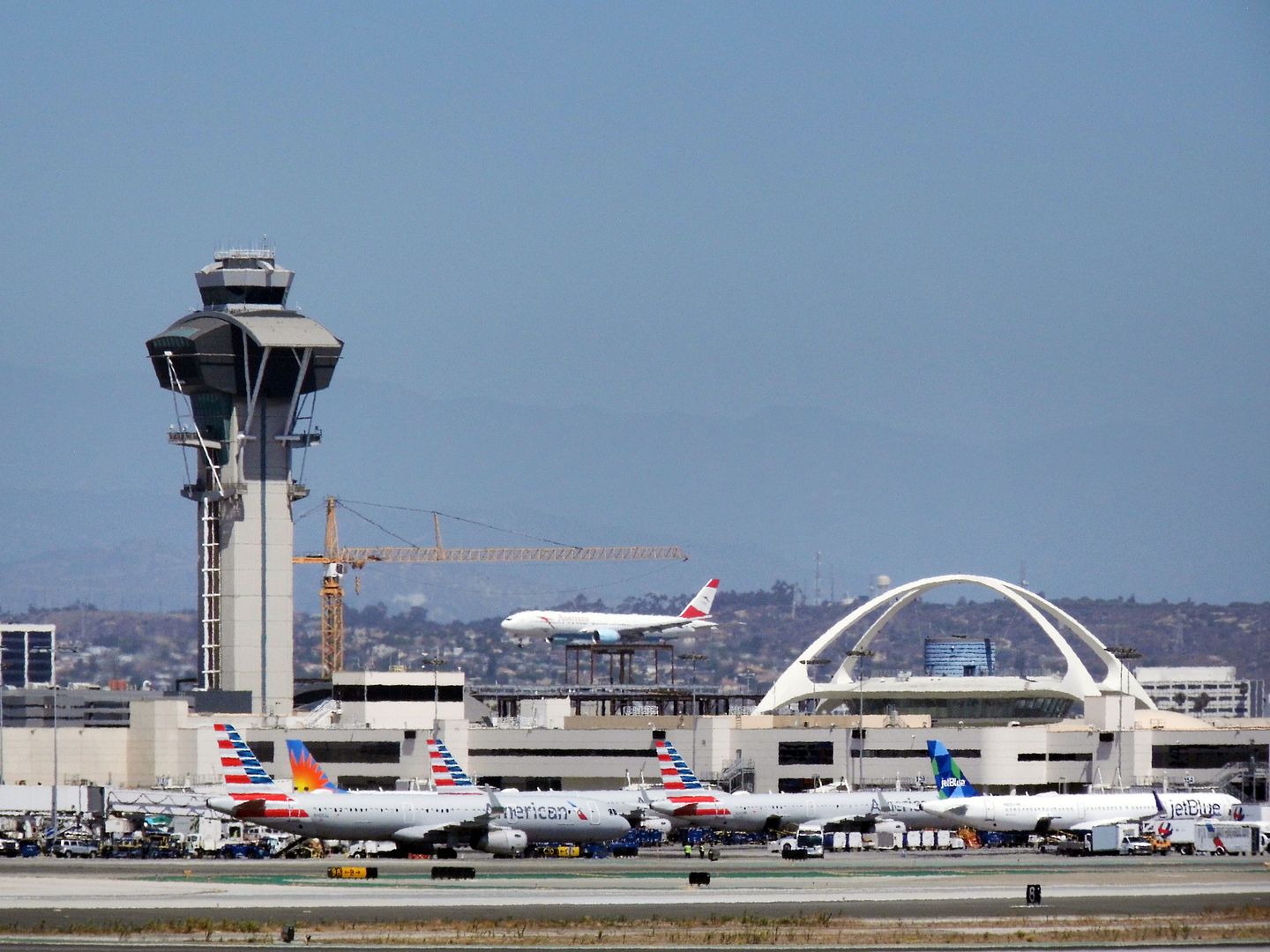
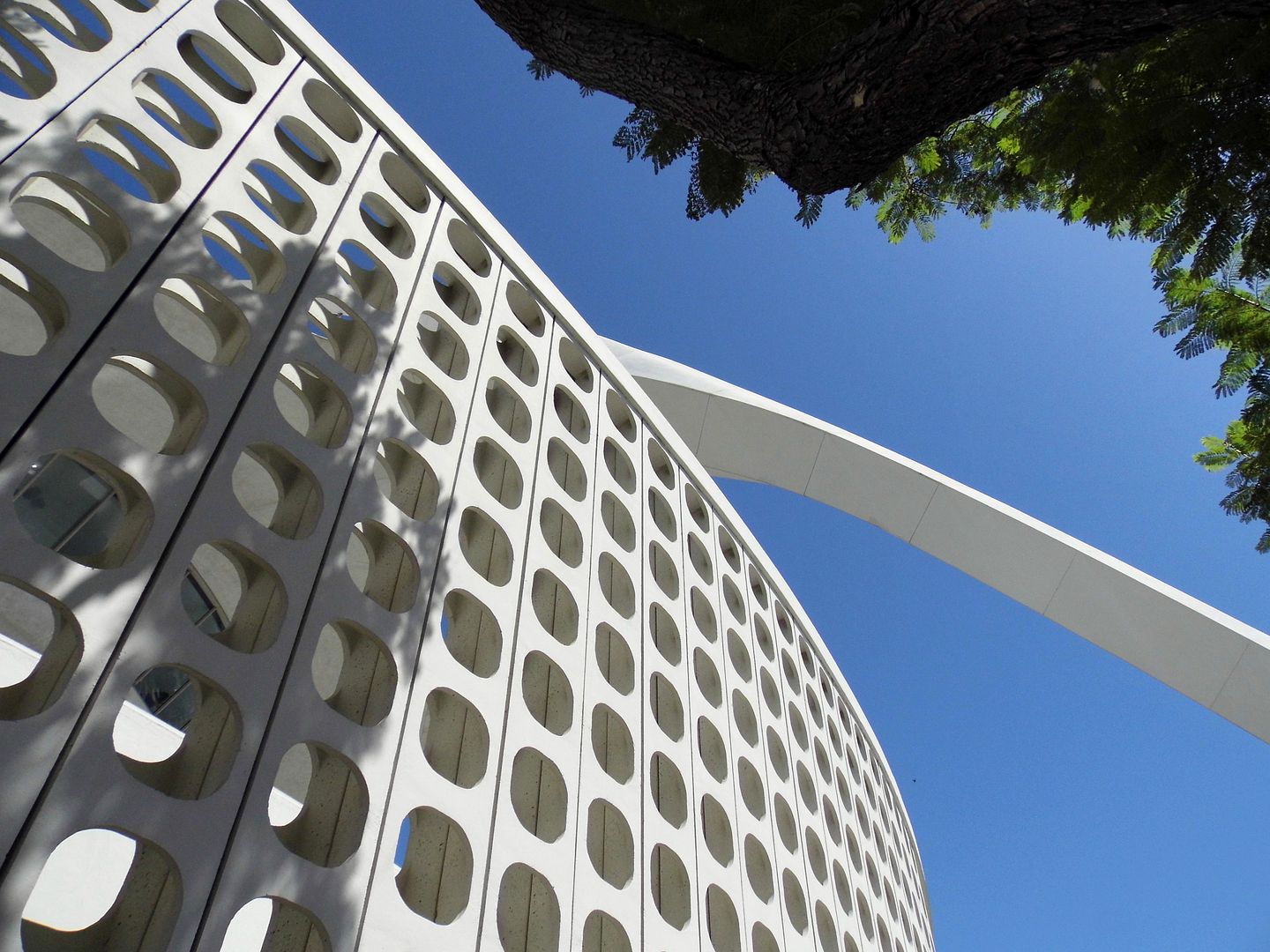
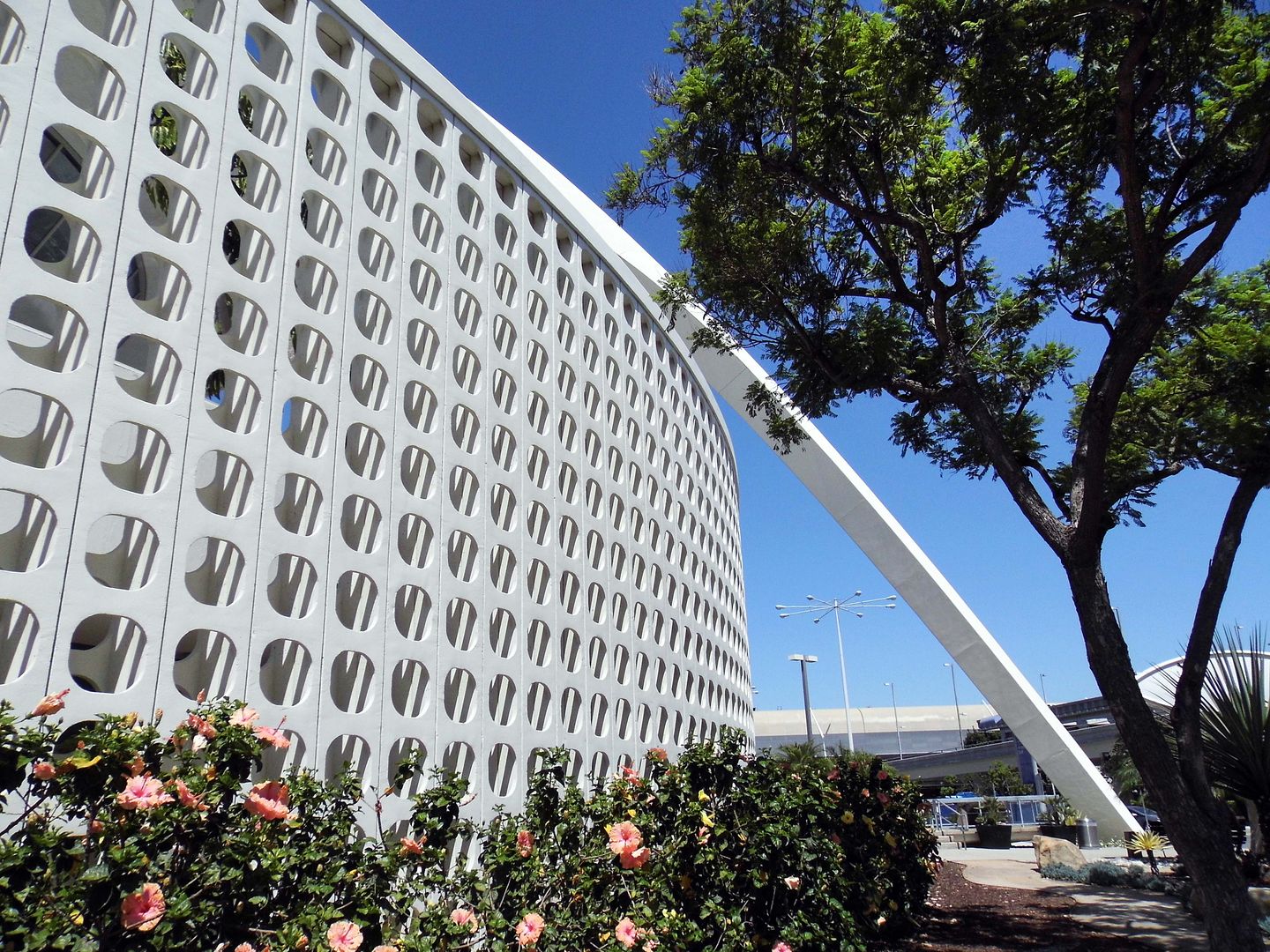
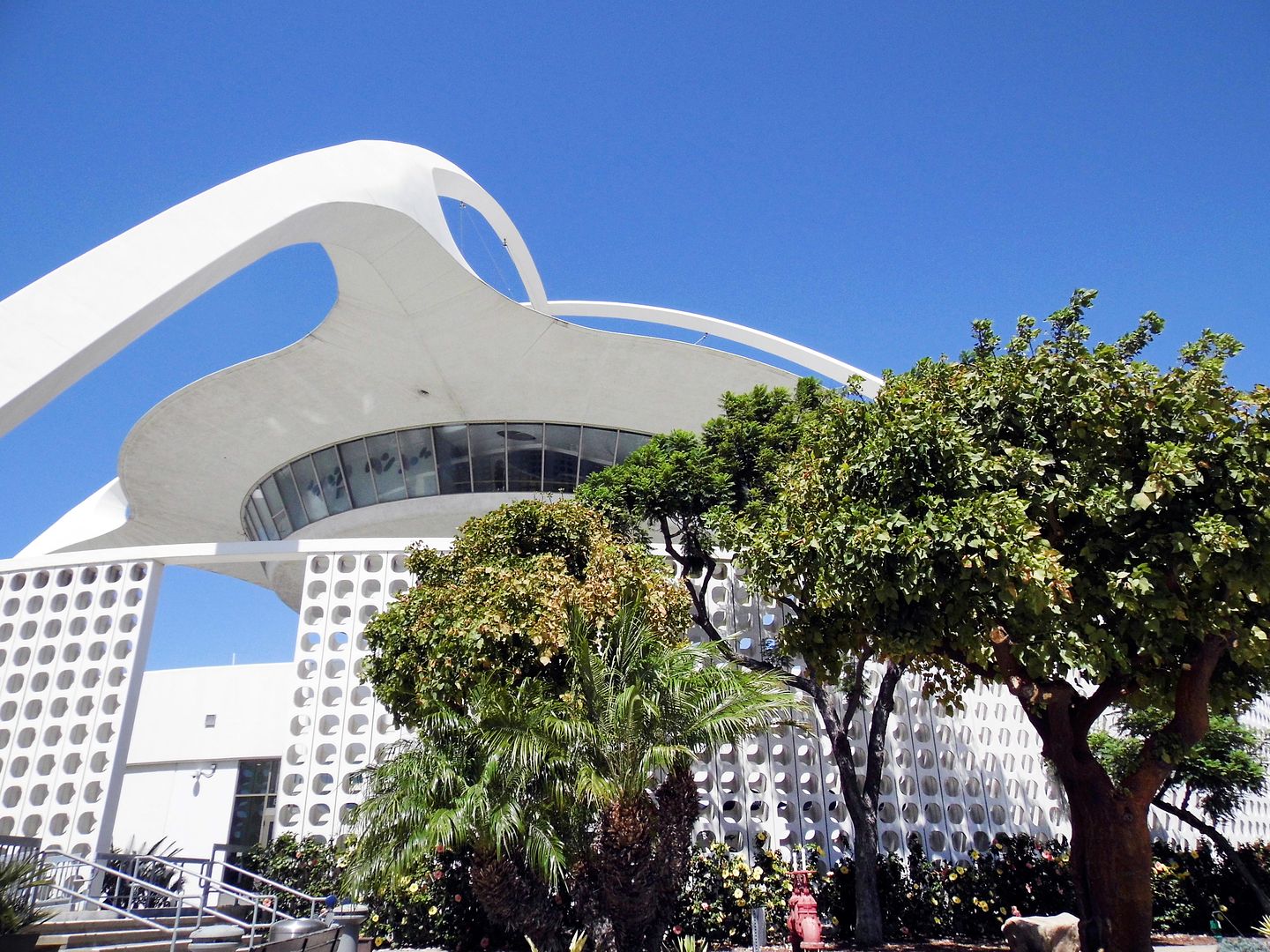
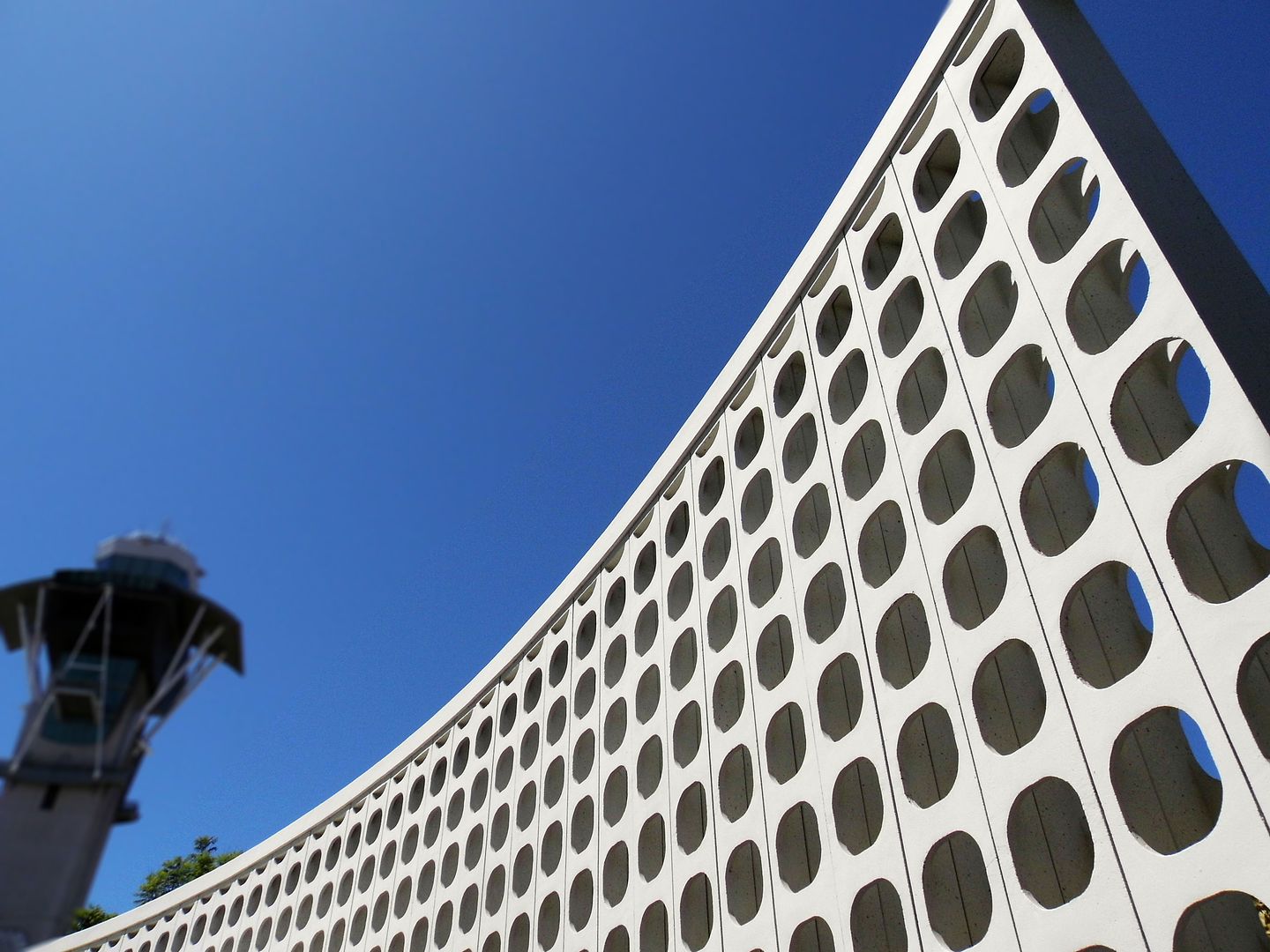
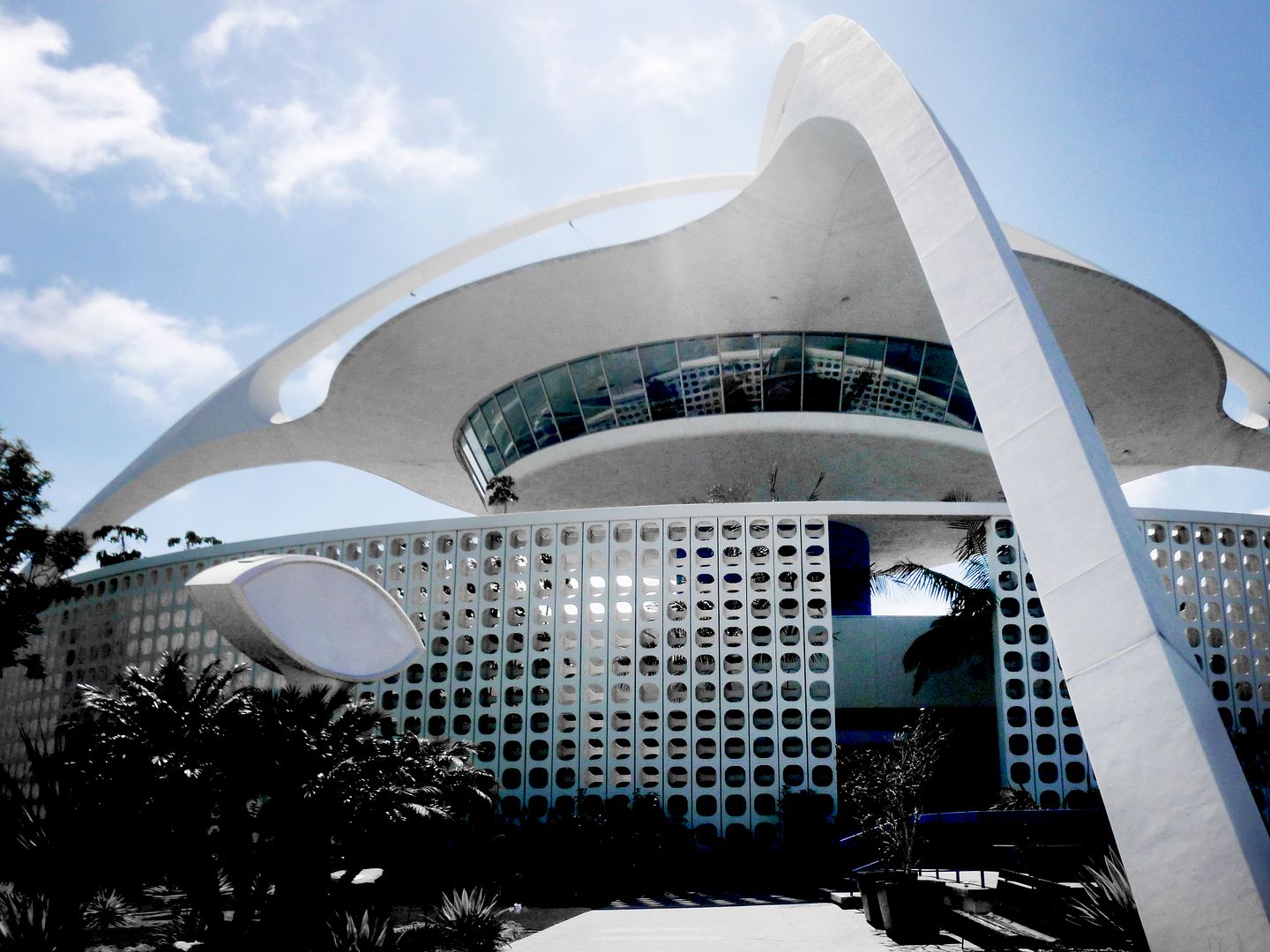
No matter which gate or terminal your airline directs your arriving flight to at LAX, there's something you're sure to see—the Theme Building.


circa 2019

It's at the center of it all at LAX—hovering like a space ship while all the rental car and hotel shuttles and taxis and rideshares encircle it on World Way, bobbing and weaving around the parking structures and the ill-marked exits that simply have you return to the airport instead of heading to your destination.


circa 2019

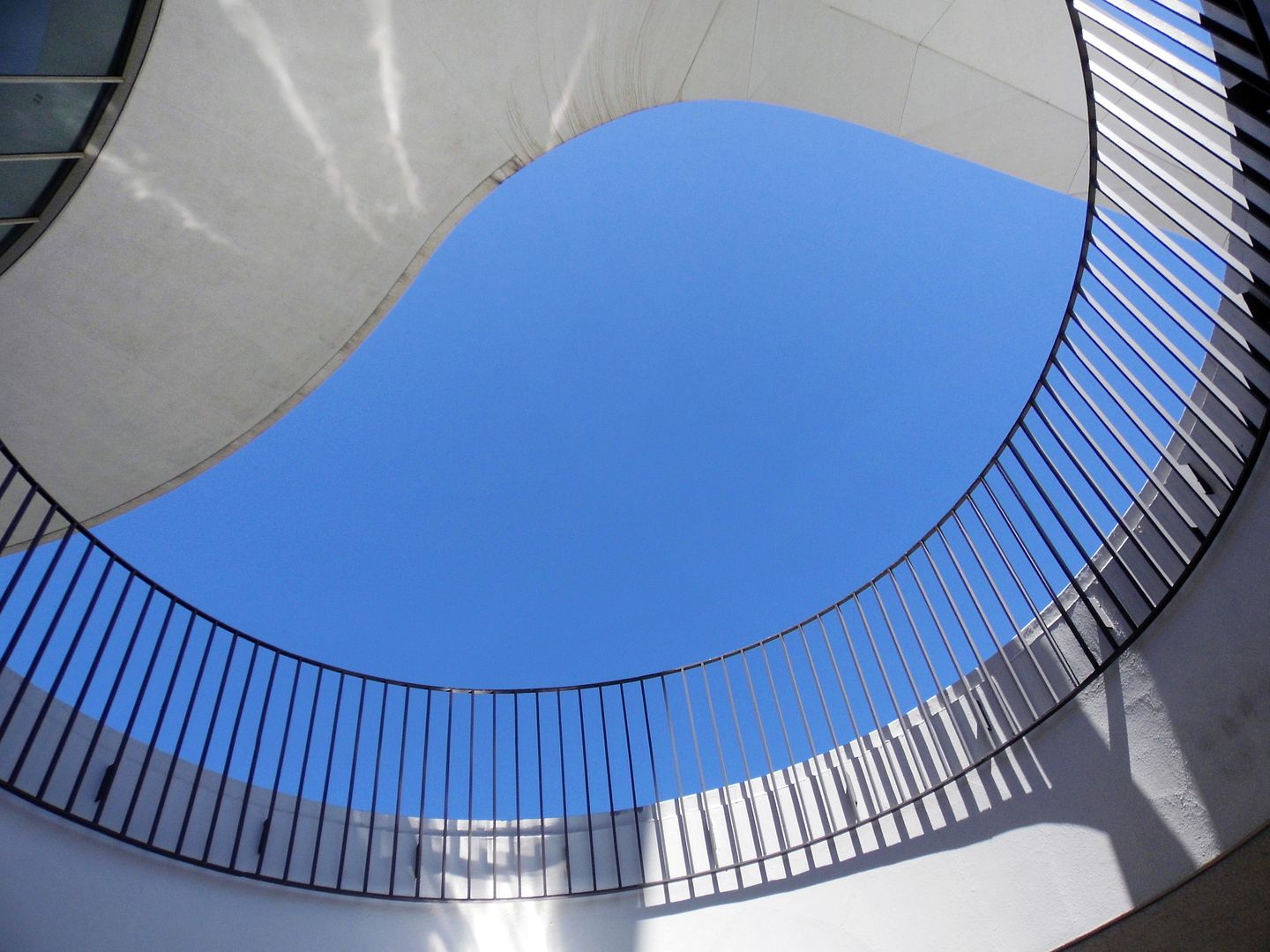
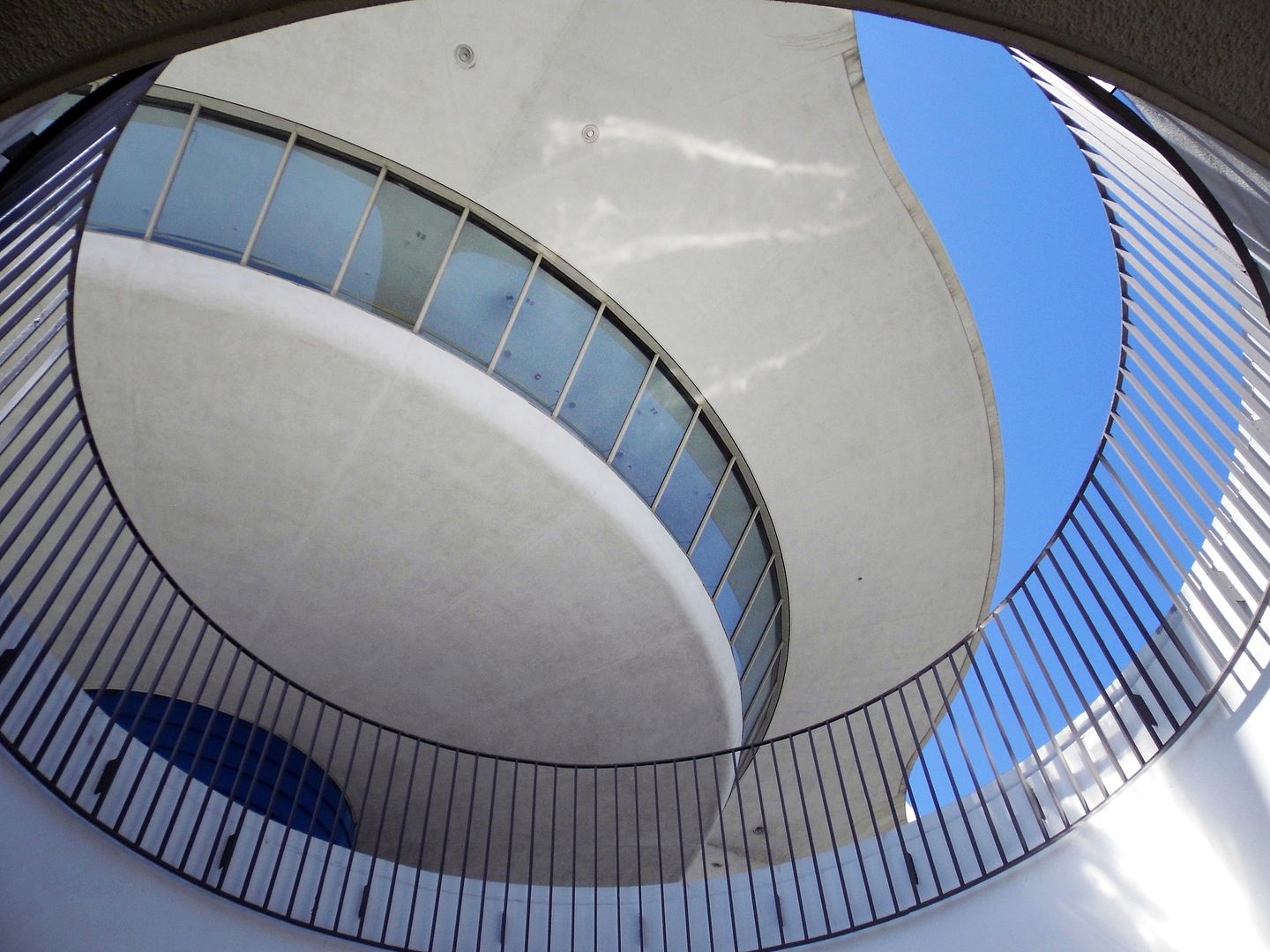
Situated on an island of sorts between West Way and East Way, the Theme Building is the kind of beacon—day or night—that makes you say "What the heck is that?" and then become obsessed with it. I don't think that's just me. I think it's pretty much everybody.


circa 2019

Completed in 1961 as a joint venture between architects Charles Luckman, William Pereira, Welton Becket, and Paul Revere Williams (though some say Williams has been given more credit than he deserves on this particular project), the "new terminal facilities" were dedicated by none other than Lyndon B. Johnson, the sitting Vice President of the United States at the time (and future POTUS 1963-9).


circa 2019

And the Theme Building was an essential part of the plan to bring LA's international airport into the "Jet Age" with state-of-the-art facilities and a futuristic, Googie vibe.


circa 2019

LAX had come a long way from its first iteration as Mines Field—a mere landing strip built in the late 1920s out of a clearing in the bean and barley fields of the former Mexican land grant, Rancho Aguaje de la Centinela.


circa 2019

And in keeping up with the new jet set, there was no telling what new heights this flight facility could reach.


circa 2019

Also known as the "Theme-and-Arch Building," the LAX spaceship (whose initial design is credited to draftsman James Langenheim of the Pereira-Luckman firm) ultimately became nothing more than a symbolic center of the airport—and not a functional one.


circa 2019

In fact, it's kind of hard to get to on foot, especially with luggage in tow. And there's not much reason to go there if you're not flying in or out of LAX.


circa 2019

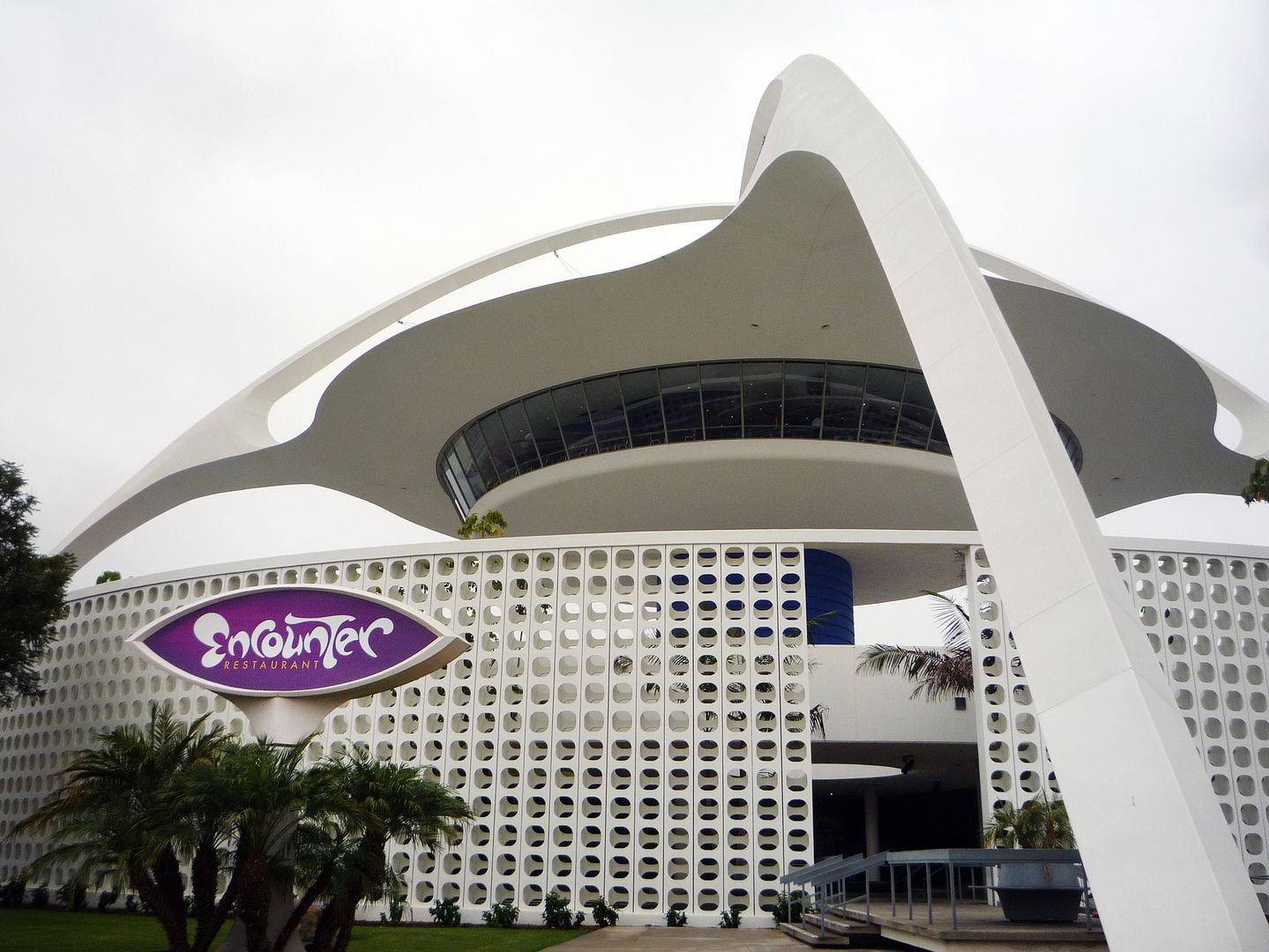
There used to be, however, an exception—the circular Encounter Restaurant and Bar.


circa 2019

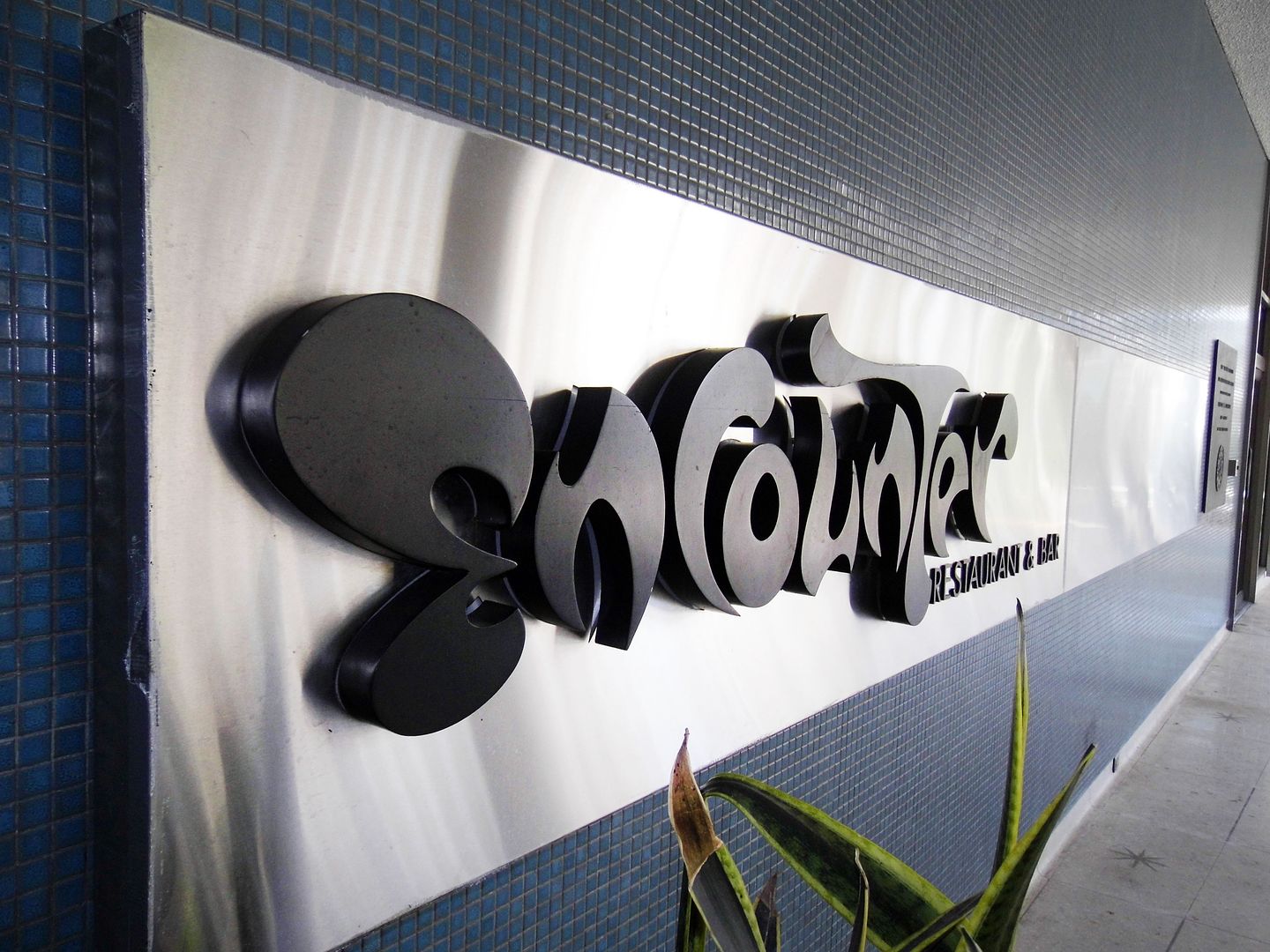
Encounter closed permanently in December 2013, but its signage persists on the tiled wall outside the (now locked) glass entry doors...


circa 2019

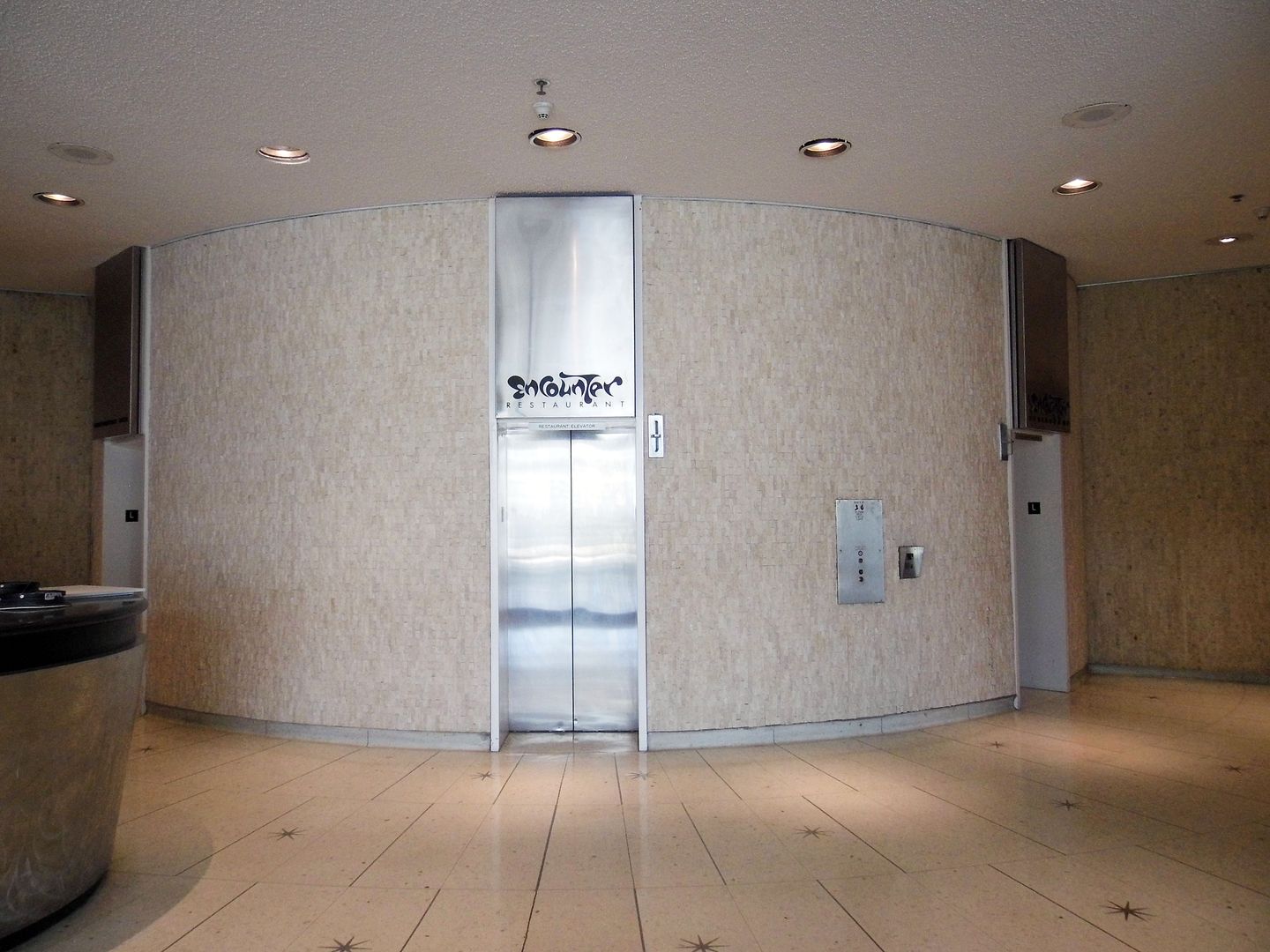
...and outside the elevator that would take you to the top while playing some Star Trek theme-inspired soundtrack (or a copycat version thereof, listen at the bottom of this post).


circa 2015

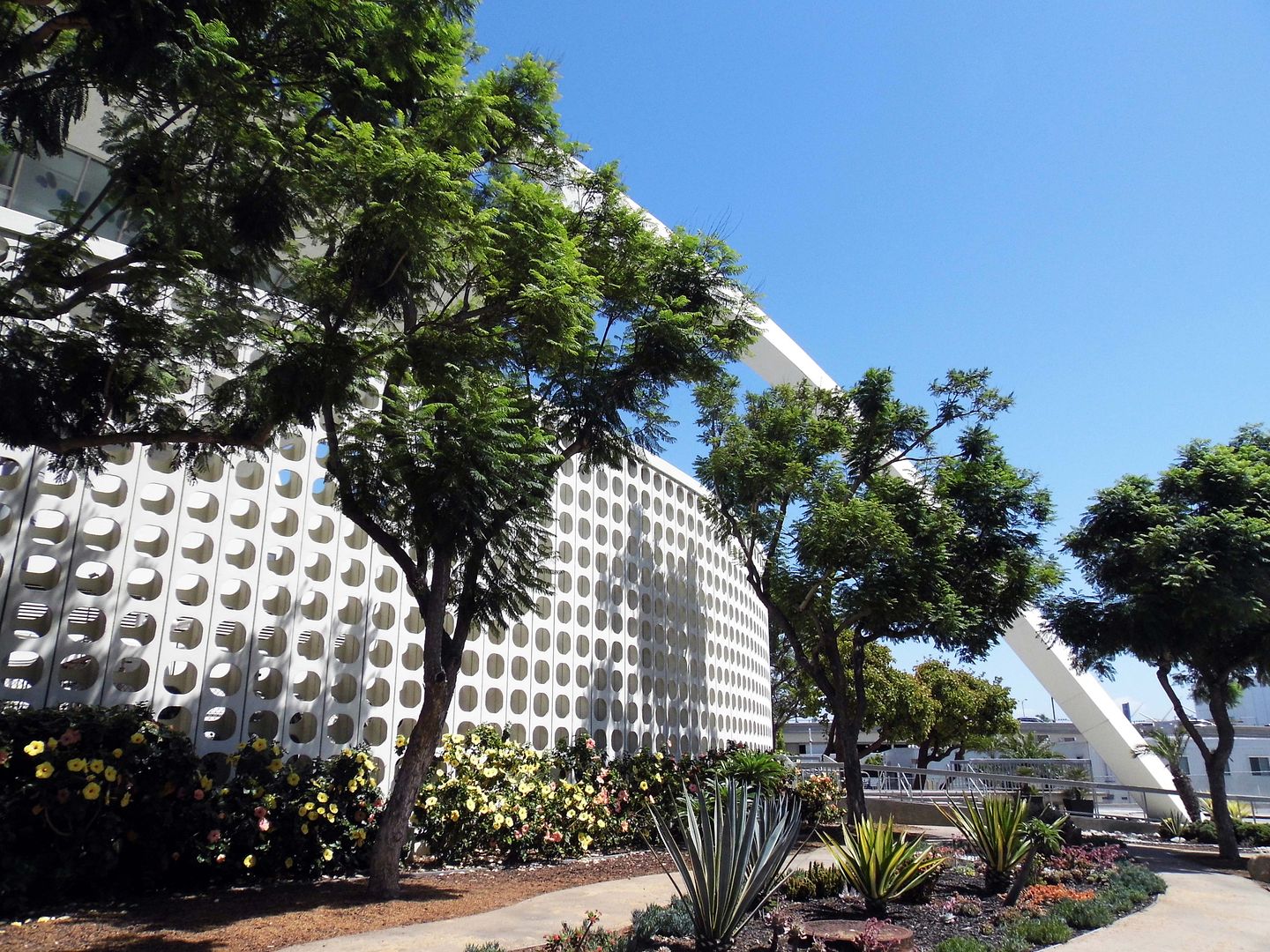
Standing under those stuccoed arches, encircling the flying saucer like the rings of Saturn, visiting is truly an "out of this world" experience.


circa 2010

I had the foresight to go out of my way to get up in there back in October 2010. Although Encounter had originally opened in 1997, the building itself later needed renovations in 1999 and seismic retrofitting and other structural reinforcements in 2007. It didn't reopen until July 2010.


circa 2010

I was living in NYC at the time but had ramped up my West Coast visits in anticipation of moving here. And after flying back and forth so many times over the course of that year, I just had to visit that UFO-shaped restaurant suspended in the air.


circa 2010

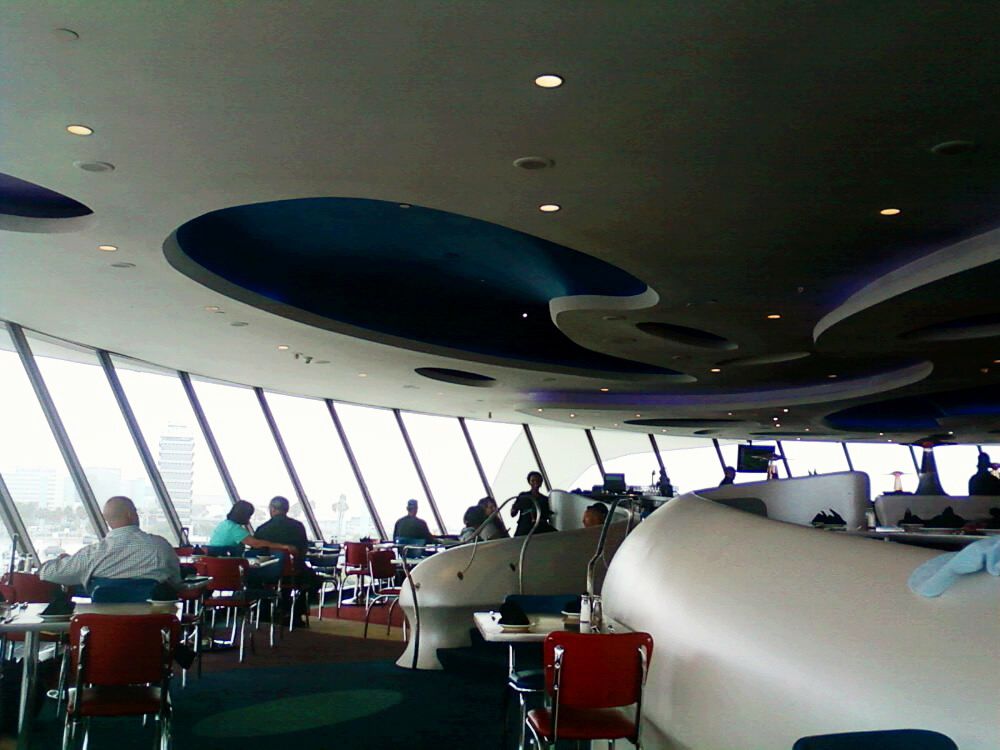
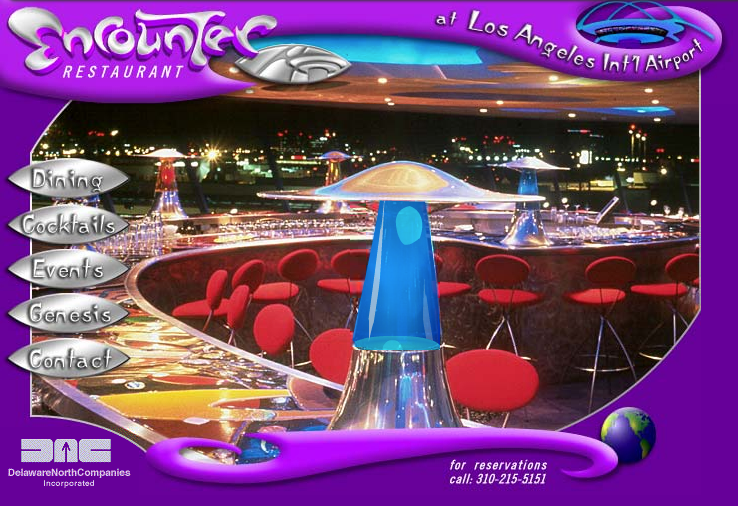
The Jetsons-like interior was accented by the spaceship's exterior lighting design—contributed by Michael Valentino of Disney Imagineering, circa 2000. The lava lamps on the crater-shaped bar were a bit much, as were the laser-beam bar guns and alien beer taps. And the themed menus—except the one for "junior space cadets"—offered cocktails like "The Black Hole" and the "Bossa Supernova."


circa 2010

And at the time, I didn't appreciate that much of the spacey-chic I was witnessing was the work of other Disney imagineers, too—like Eddie Sotto (who designed the textured walls to look like the moon's surface) and Ellen Guevara (who worked with Sotto on the flowing carpet patterns).


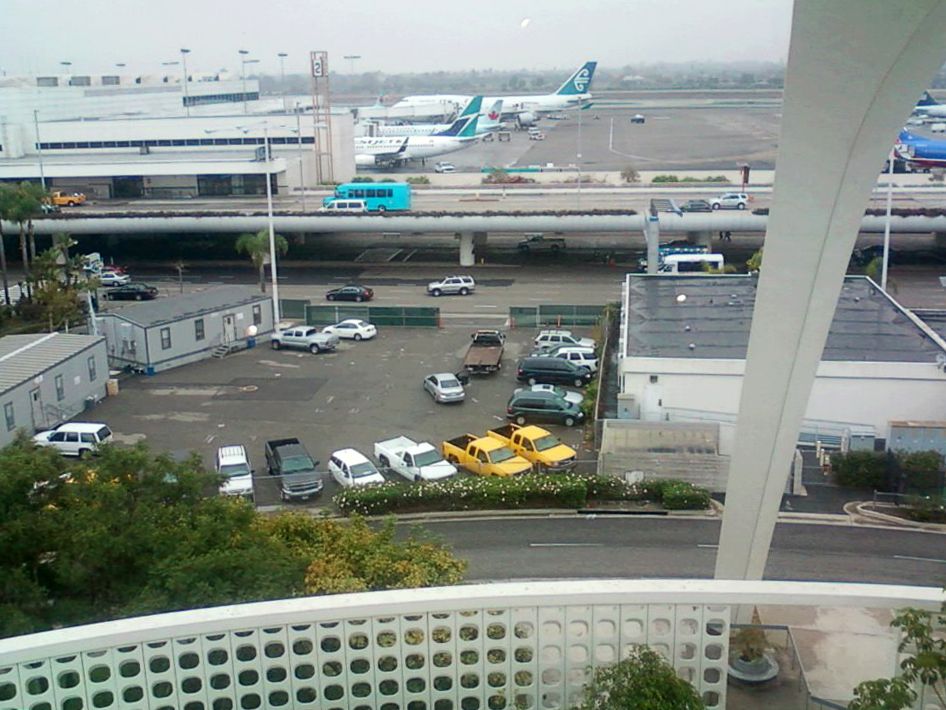
But oh, what I wouldn't give to ride that elevator again—and listen to that kooky sci-fi music—and get a good look at all the crazy design elements inside—and watch all the planes taking off and landing on the runways outside.


Encounter website circa 2007 (Screenshot via Internet Archive)

I did actually dine at Encounter one more time—that same year, in fact, when I'd returned to LA to interview for the job that ultimately moved me here. I was staying at a hotel near LAX and my future boss met me at the airport for dinner.

Considering the business nature of our meeting, I didn't get the chance to take any nighttime photos of the Theme Building or its restaurant. But to be honest, I was so obsessed with collecting new experiences from 2010 to 2014 that I didn't really feel the need to go back. I thought I'd been there and done that.

In fact, it didn't occur to me to go back to Encounter ever again—until it was too late.

Nothing has replaced the Encounter Restaurant in the Theme Building, although there's been talk of how it might be reimagined—especially with the success of the newly reopened (and preserved) TWA terminal at JFK. The observation deck is even closed. The only signs of life are the Bob Hope USO operations on the ground level.

So what could be next?

If I had endless amounts of money, I'd try to open a tiki bar there. I'd probably even keep the space theme. Outer space and underwater are strikingly similar sometimes.

Aesthetically, there's not a huge difference between the the bottom of the sea and the surface of the moon.

Related Posts:
Photo Essay: Retro Digestion in LA's Most Futuristic Restaurant Designs (Updated for 2019)
Photo Essay: The Triforium, A Disco Spaceship Gone Dark

November 11, 2013

Photo Essay: The Proud Bird Restaurant (Updated for 2019)

[Last updated 9/14/19 7:36 PM PT—new photos added]

It's easy to take places for granted, never visiting because they'll always be there, won't they?

But even long-standing institutions close. And sometimes, it's the announcement of their demise that is just enough impetus for me to finally go. I hate to have to say, "I never got to go."

In the case of Proud Bird Restaurant, I'd never heard of it or even driven by until I heard it was closing. So I went for the first and probably final time. [Ed: Not my final time!]


It's hard for a restaurant like the Proud Bird to survive when competing with gourmet offerings now added to the food court of the new Tom Bradley International Terminal that are quick, easy, and onsite. It's a huge property, a fixture on the south side of LA's airport that celebrates its aviation theme, now decades past the jet age and the aerospace heyday of the 1960s-1980s.


Centered along Aviation Blvd—where flights landing at LAX come in so low, you duck your head—Proud Bird Restaurant has been a layover watering hole, a planespotter outpost, and a welcoming home to aerospace employees, military, and civilians alike since it opened in 1958.


It's a historic restaurant just shy of a half century old, but it's also somewhat of a plane museum and memorial to the various airmen (and women!) who have contributed to aviation history in various ways, including renowned test pilots.


The original owner, David Tallichet, was a pilot himself, having flown a B-17 (the "Memphis Belle") over Europe in World War II, and was once considered a leading collector of military aircraft.


The restaurant is now owned by David's son John Tallichet, who planned to close the restaurant on November 21, 2013 after a long battle with LAX over the rent.


So what will happen to the vintage aircraft that the restaurant sports at its front entrance and back lawn?


Some of them are fiberglass replicas built by the Tallichet-owned Military Aircraft Restoration Corp., but others are originals.


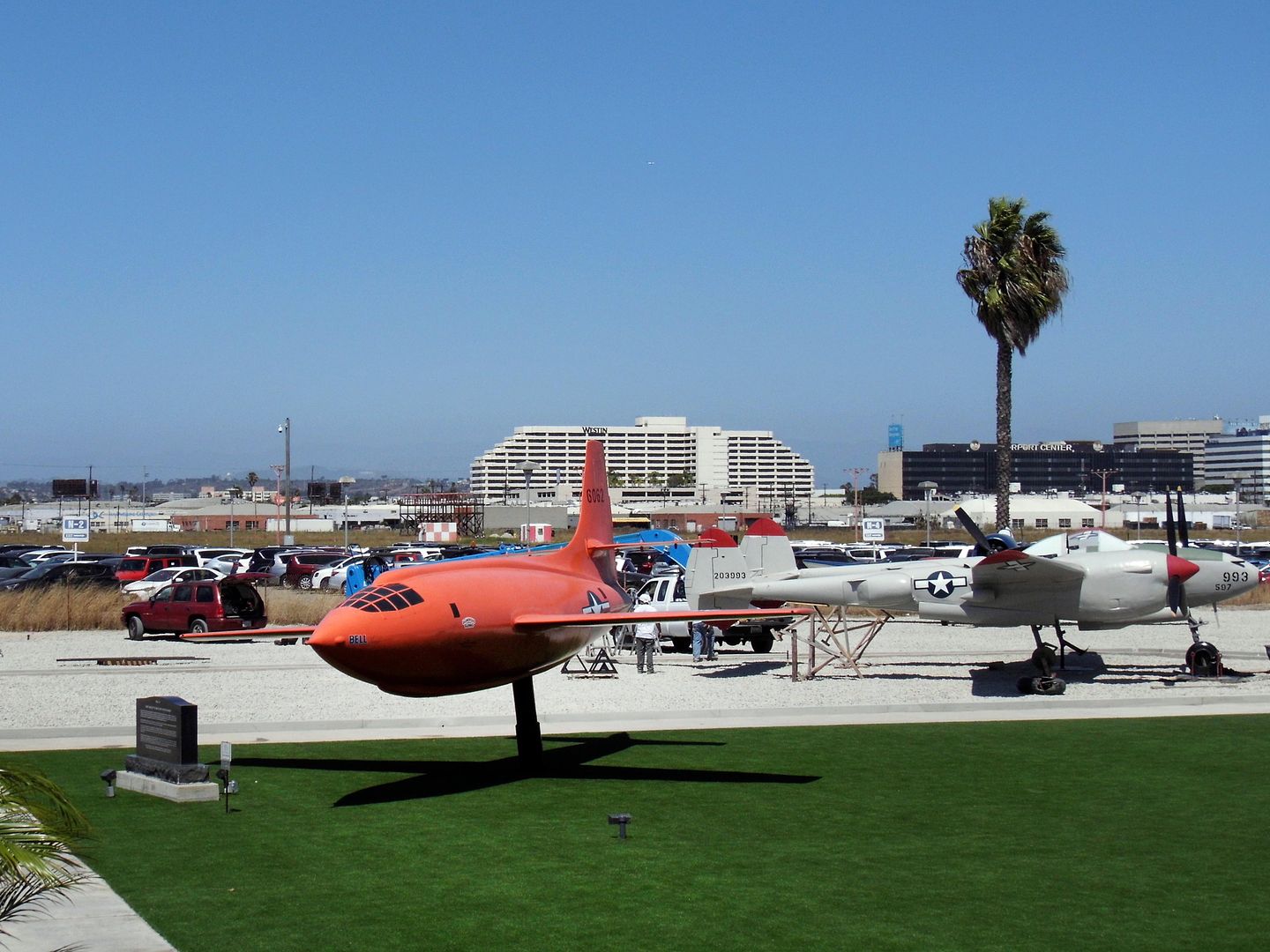
In the back, you can see their reproduction of a Fokker D.VI, a World War I-era German fighter aircraft...


...the P-38 Lightning...


...a Lockheed-built World War II-era fighter aircraft...


...and an example of the first aircraft to break the sound barrier, Bell's single engine, single seat, mid-wing rocket plane, the X-1.


You can also spot the SPAD S.XIII, a French biplane from World War I...


...the Grumman F6F Hellcat, manufactured for the U.S. Navy, flown by the Americans to fight the Japanese...


...a Blue Angels-branded craft...


...and lots of jets (and jumbo jets) flying overhead.


The planespotting in the air is just as good as on the ground, with a variety of airliners and cargo transporters dipping down low, so close you feel like you can reach out and grab them right there from the Proud Bird's patio.


Because the Proud Bird is technically on Los Angeles World Airports' property but is not in LAX, it not only must pay rent (which, under the current lease, is under $20K per month but, under the new lease, would be raised to market value of over $500K per year) but also additional fees, covered in part by a surcharge they pass back to the customer on their bill, duly noting that it is not a service charge and gratuity is very much expected and welcomed.

UPDATE:
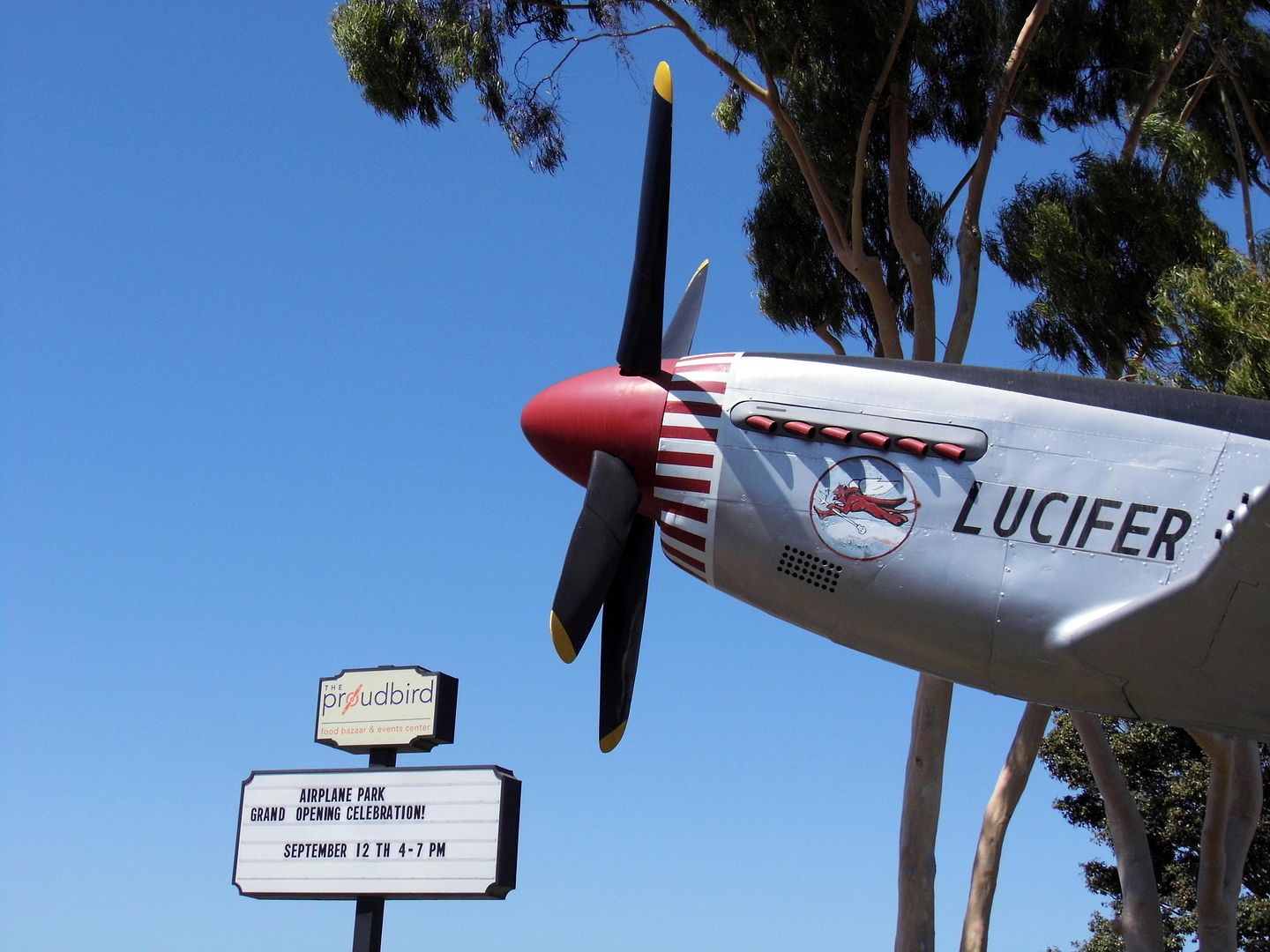

circa 2019

The Proud Bird was open for one more year on a lease extension, but then it did close for good, get gutted, and reopen as a food hall in 2017.
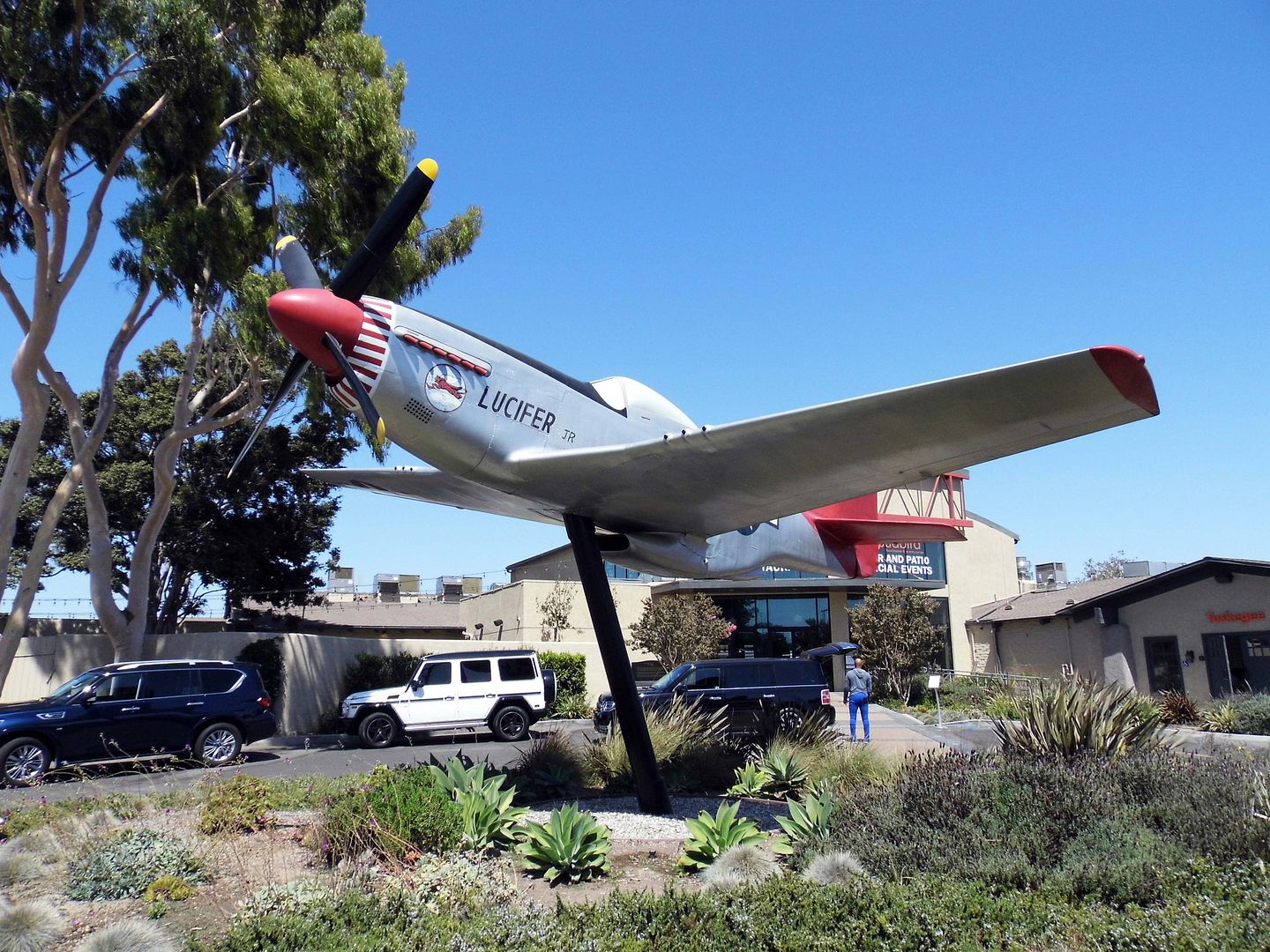

circa 2019

 I didn't make it back to check it out until 2019.
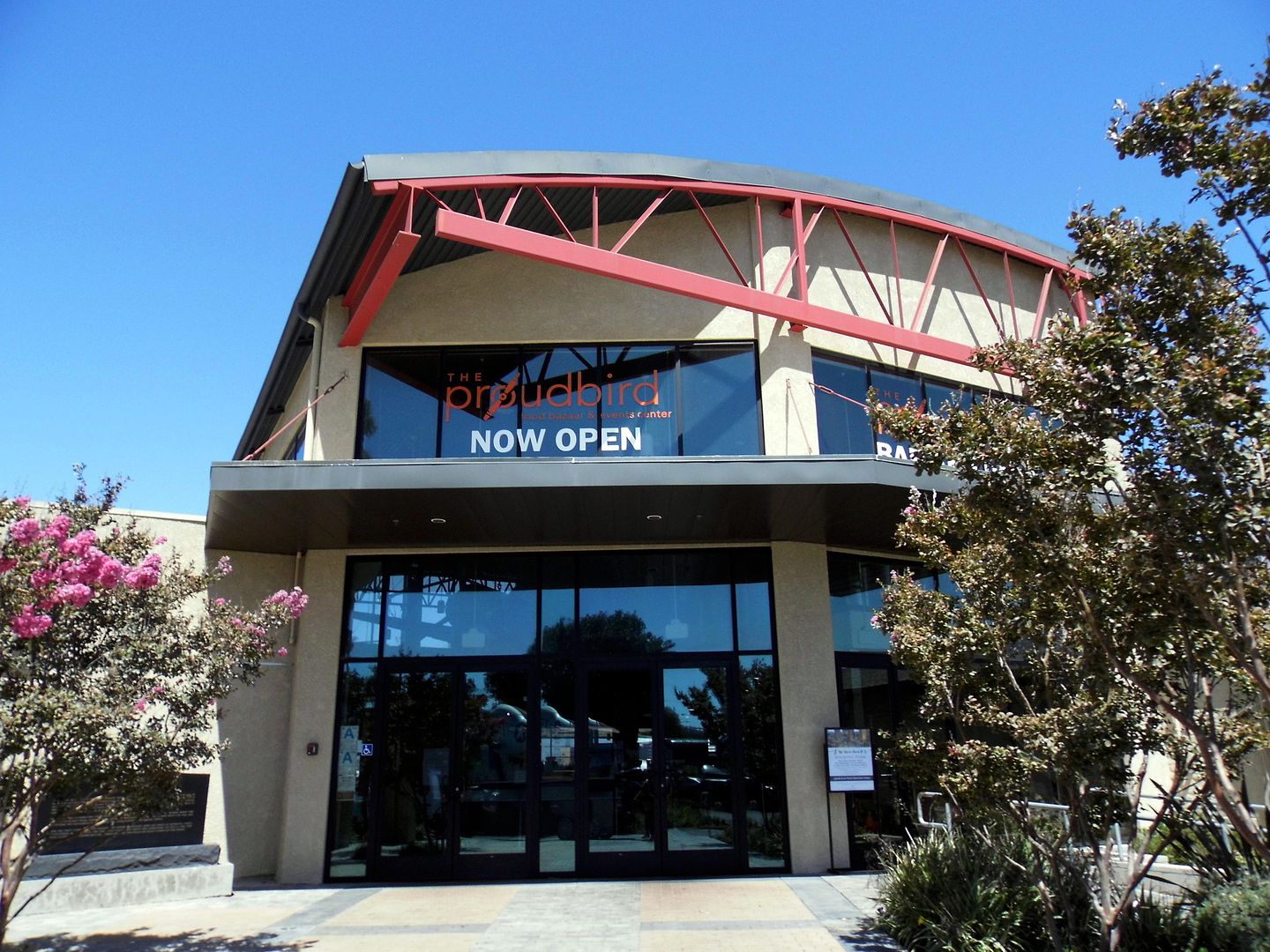

circa 2019

From the outside, it doesn't even look like the same place.
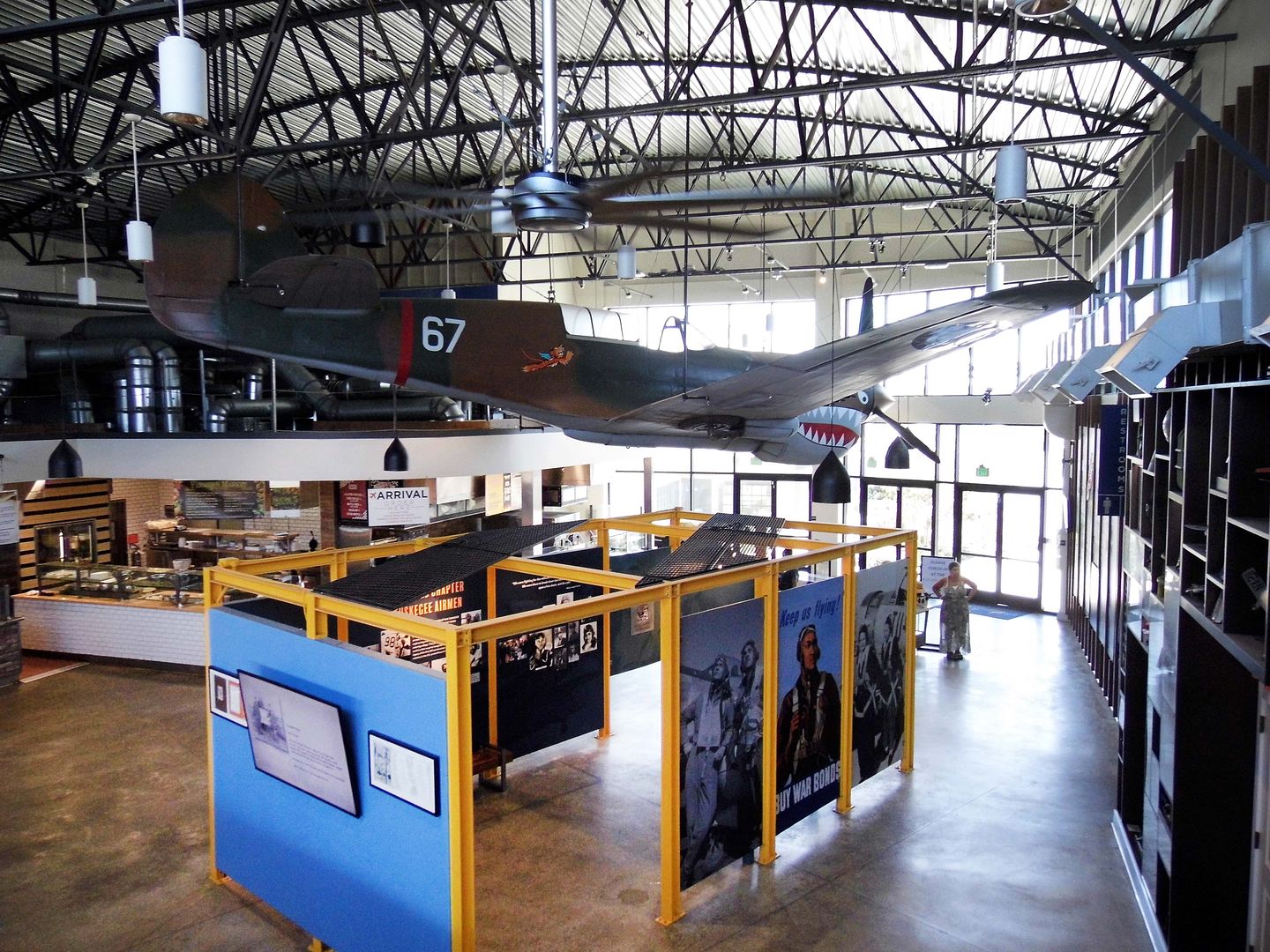

circa 2019

And from the inside, it resembles an airplane hangar much more than a food hall or eatery.
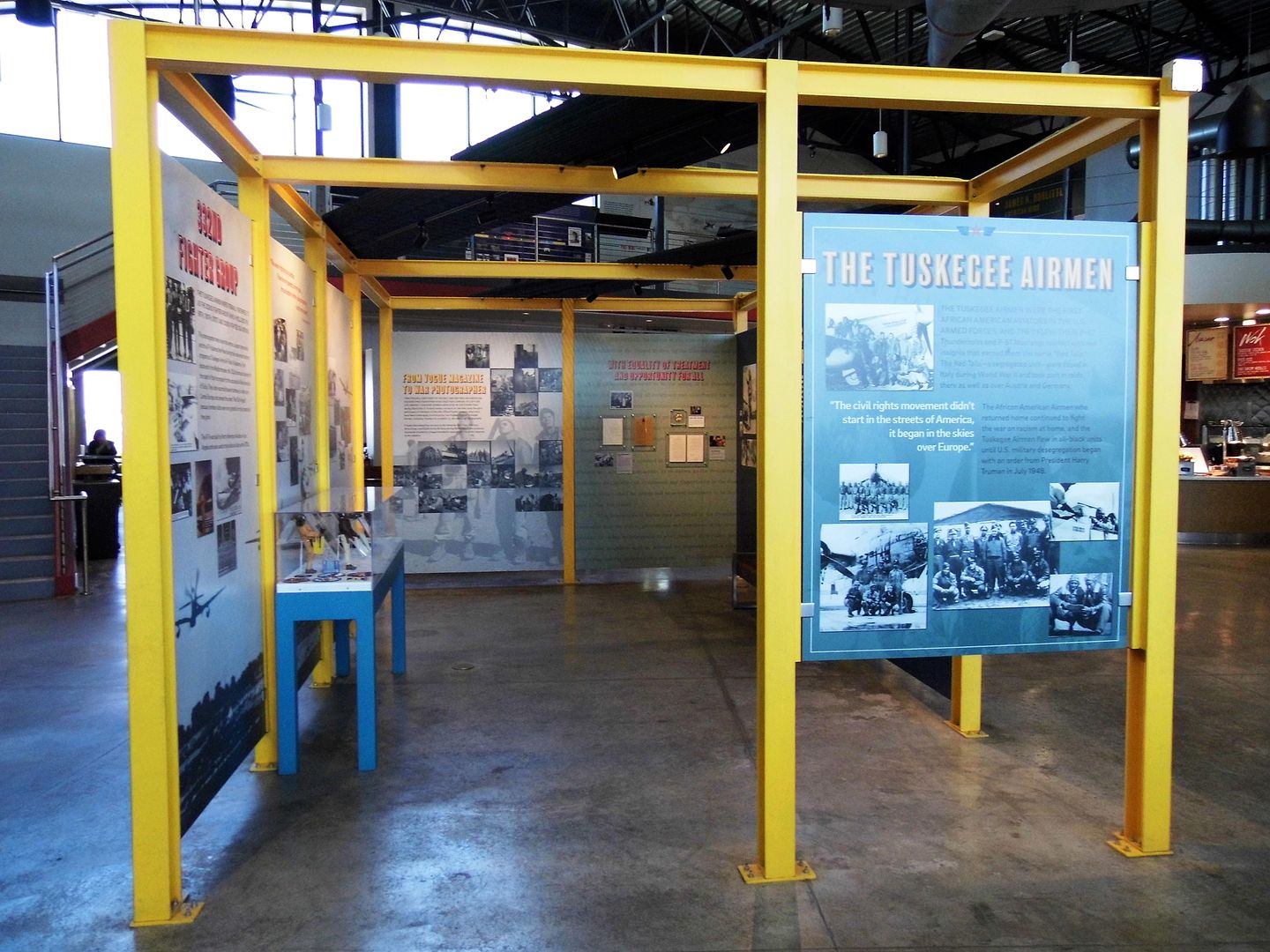

circa 2019

In a way, that's to its advantage.
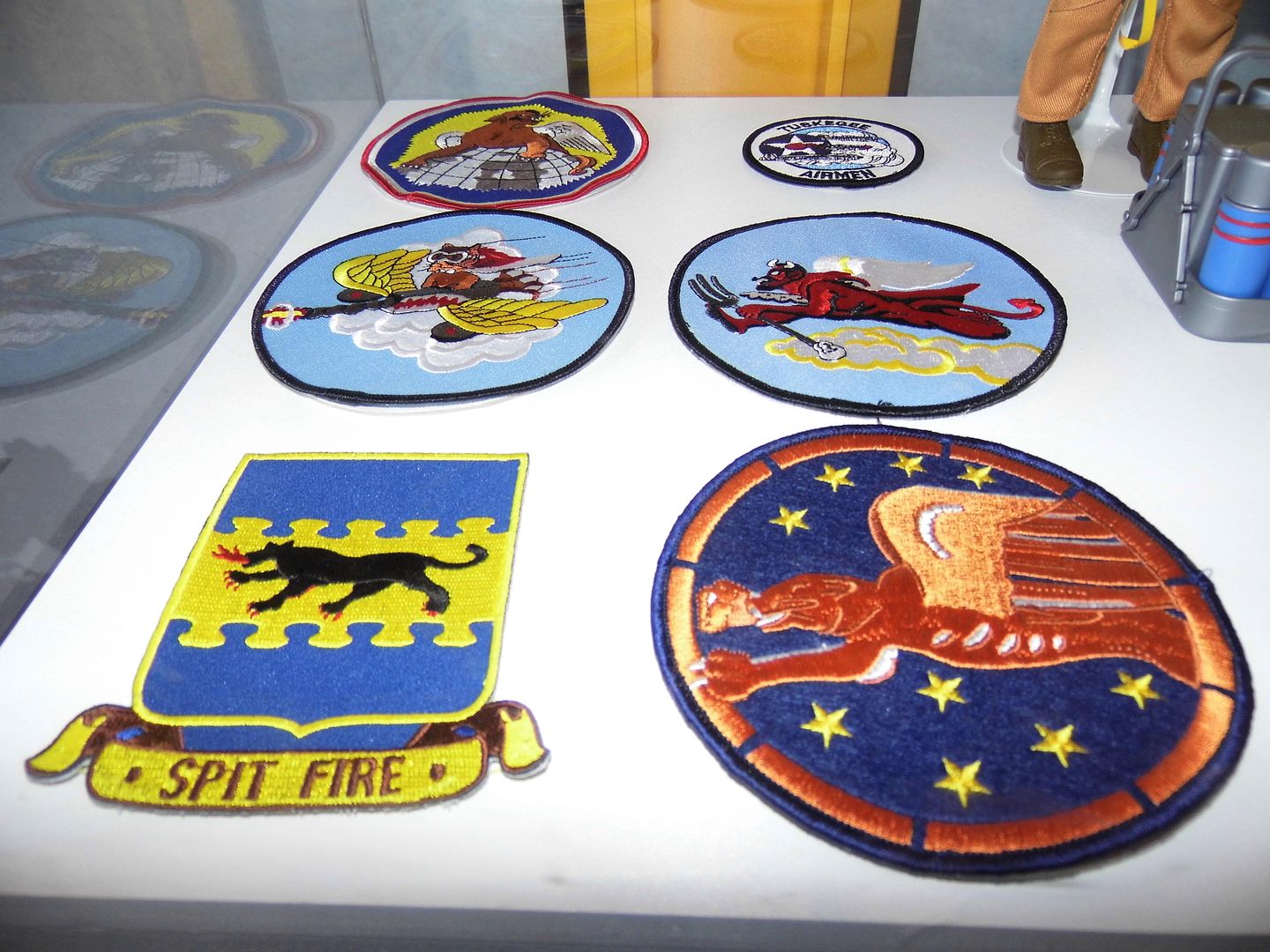

circa 2019

The displays and artifacts are fascinating.
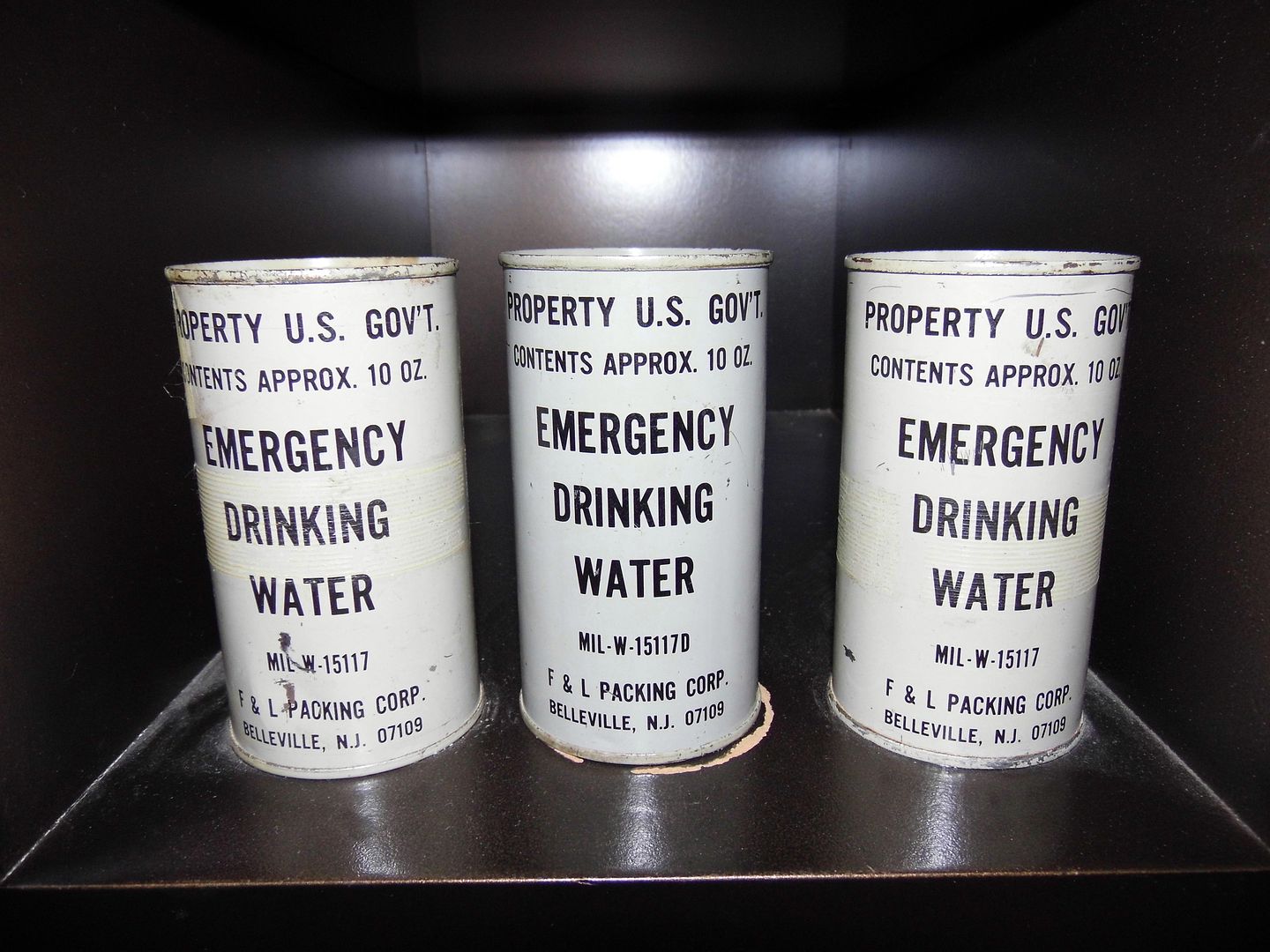

circa 2019

And they stretch from floor to ceiling.

circa 2019

The "Airplane Park" out back has been preserved and renovated...
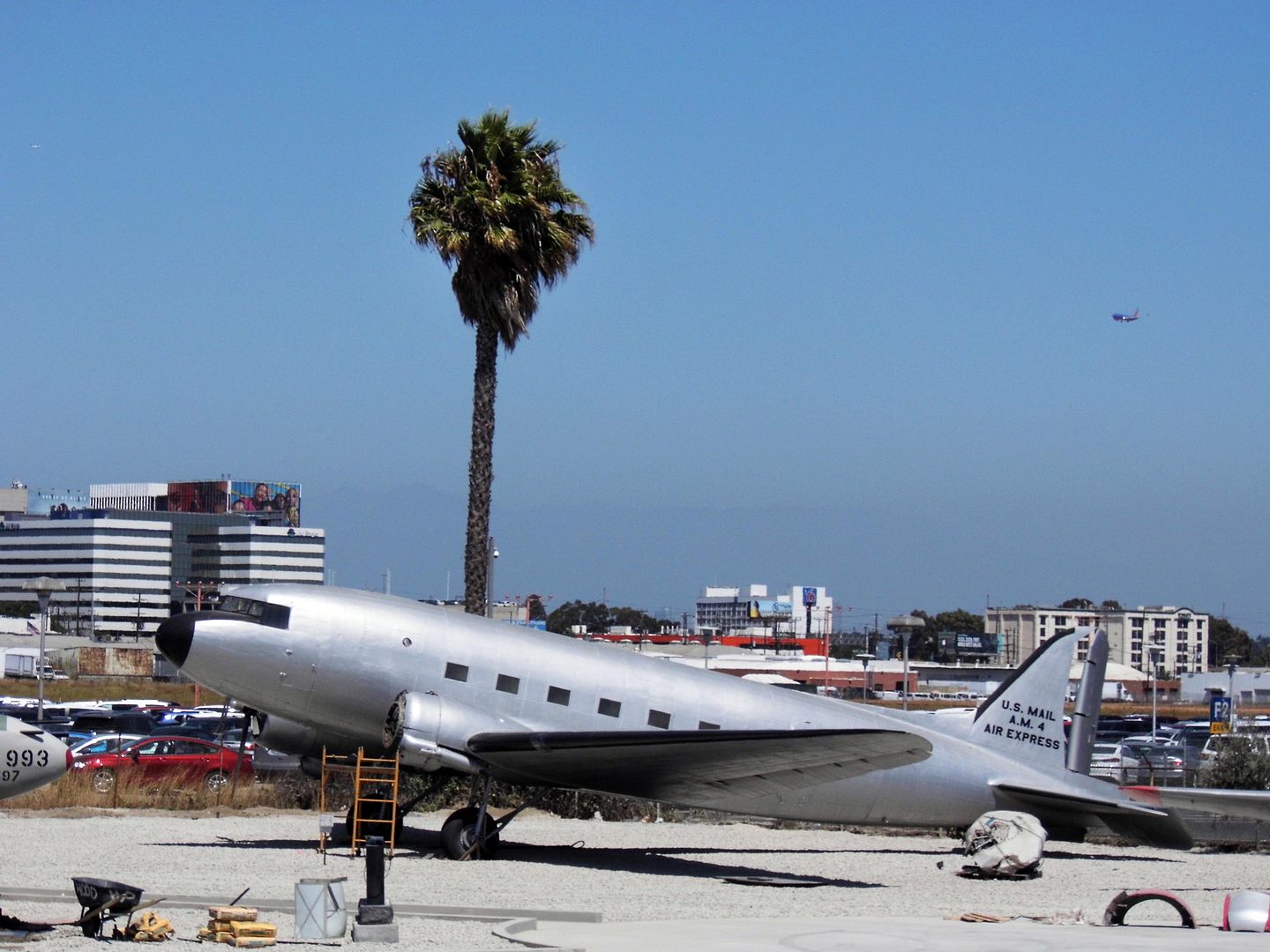

circa 2019

...with patio seating still allowing for planespotting...
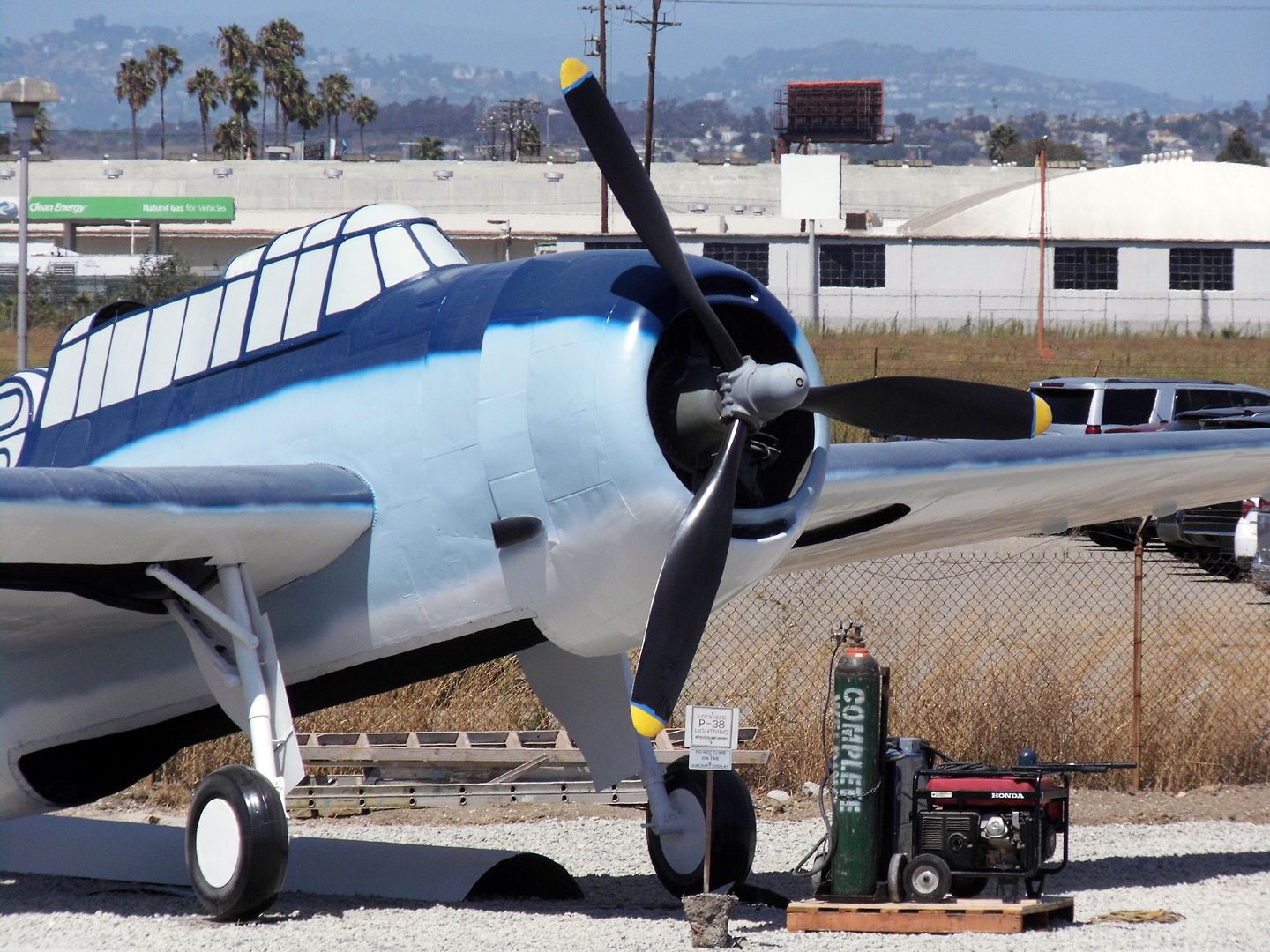

circa 2019
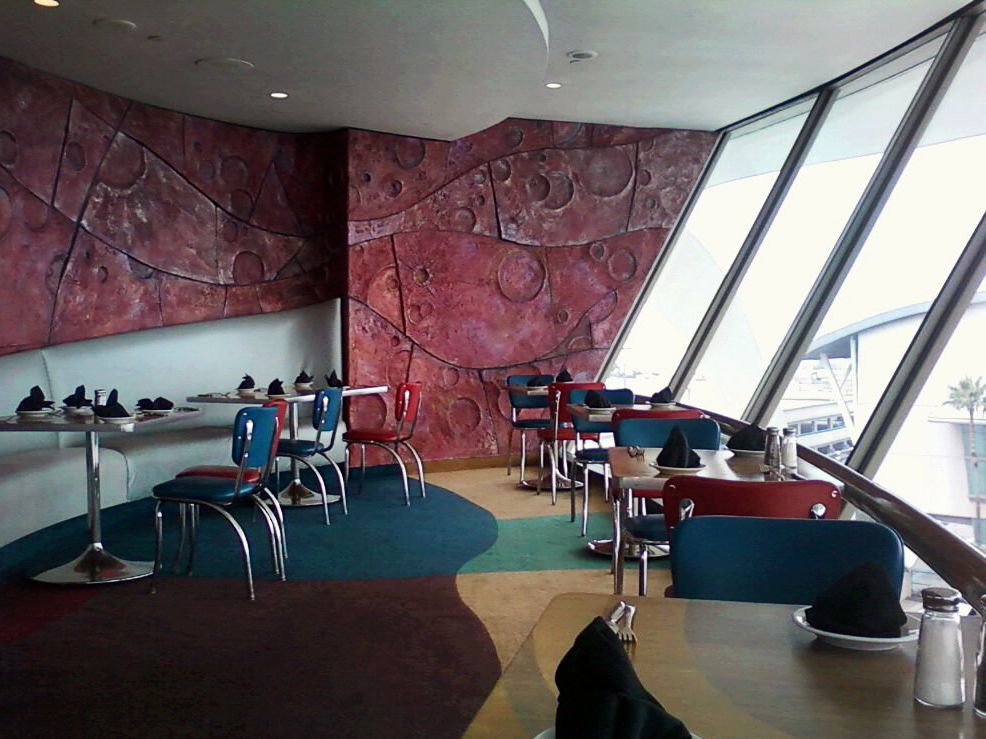
...and fast casual food options being offered in bottomless buffet style on Sundays during brunch, alongside a full bar and comfy seats.

It's not the same as before, but it's unlike any other food hall we have in the LA area.

And it's still a quirky stopover for anyone in the LAX area.

Related Posts:
Photo Essay: LAX's New International Terminal
Photo Essay: Blackbird Airpark, Before Open Hours
Photo Essay: The Planes of LAX's Flight Path Learning Center Museum
Photo Essay: Flight Crew Fashion of a Bygone Era