Search

Showing posts sorted by date for query gene autry. Sort by relevance Show all posts

March 08, 2024

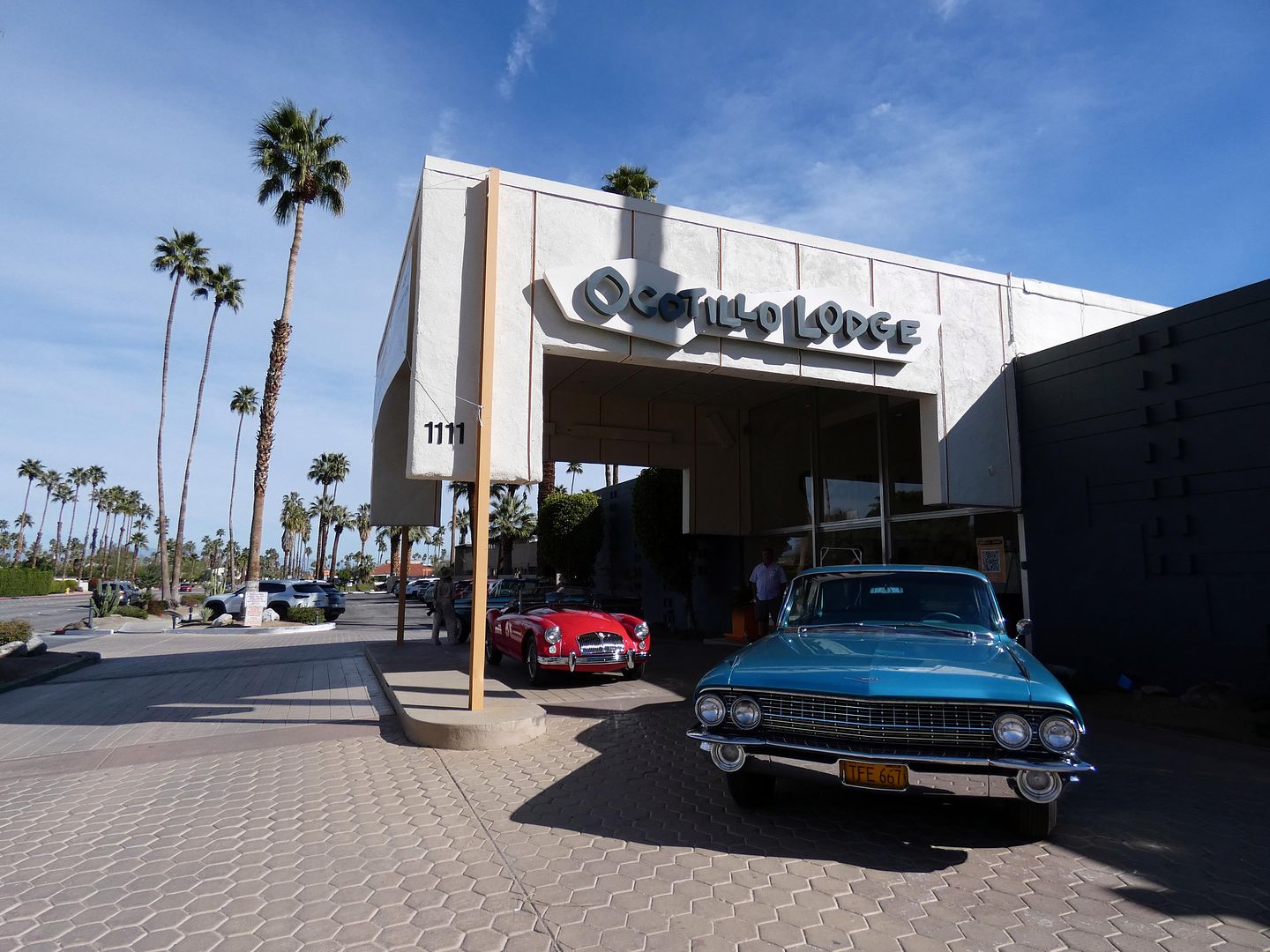
Photo Essay: Desert Resort Living In a Mid-Century Modern Lodge

It's one of those places I'd drive past so many times—and never really understood what it was. 

I thought the Ocotillo Lodge on East Palm Canyon Drive in Palm Springs was a motel, and that it was being converted into condos. 


The real story is that it was a hotel (kind of)—and then it was converted into condos in the 1990s. But right now, it's going through an upgrade/restoration. 

August 05, 2023

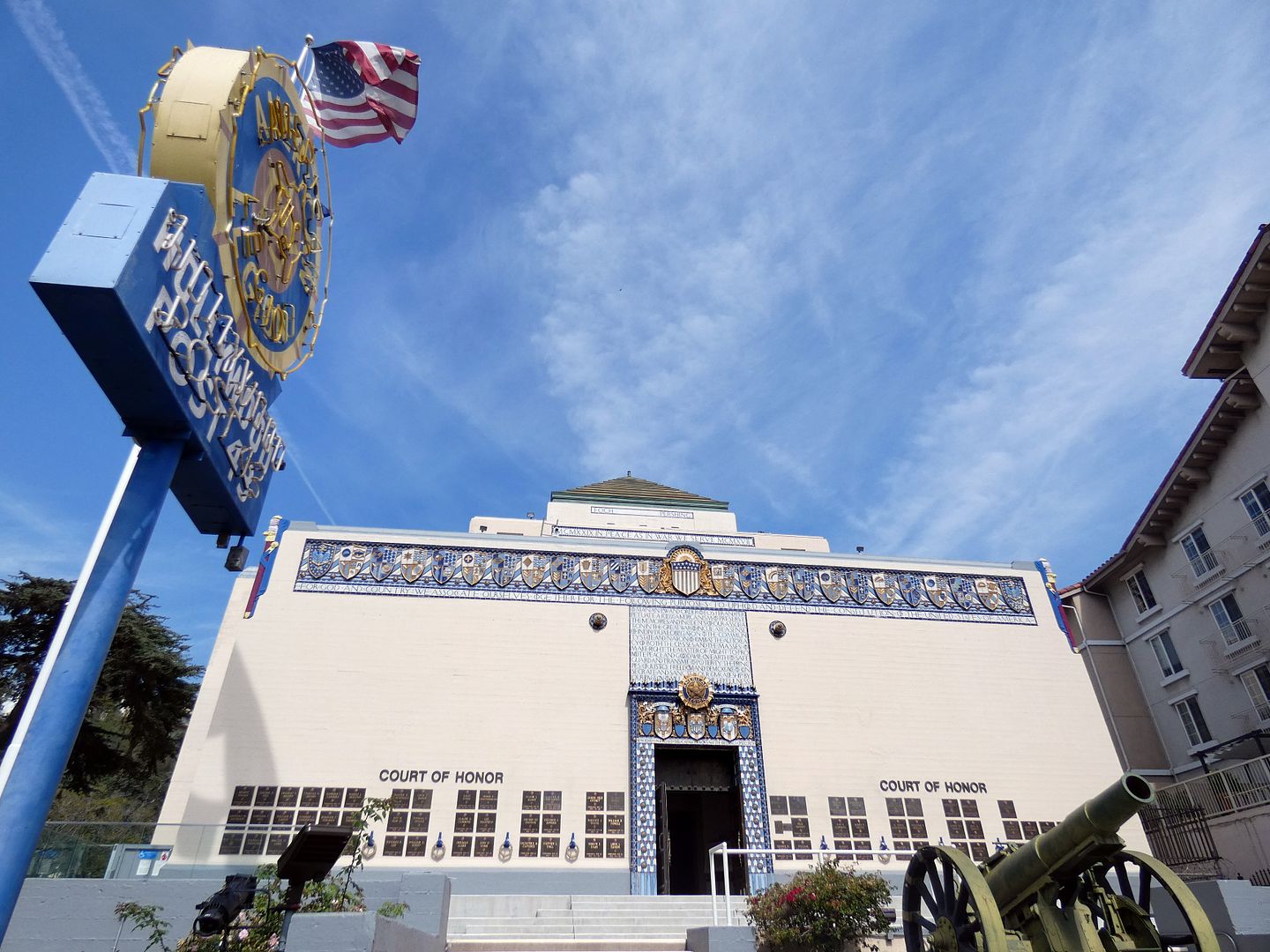
Photo Essay: Hollywood Post 43, A World War I Memorial Built By the Movies and Boxing Matches

It's been nicknamed the "Post of the Stars." 

 
Originally chartered in 1919 by Hollywood luminaries who'd returned from World War I, American Legion Hollywood Post 43 can count such luminaries as Clark Gable, Gene Autry, Mickey Rooney, Ronald Reagan, and Charlton Heston as its past members.

November 17, 2022

Photo Essay: Melody Ranch Movie Ranch Evolves Beyond Its Western Town Legacy

When I last toured Melody Ranch Motion Picture Studio in 2014, it was during the Santa Clarita Cowboy Festival. But the movie ranch, located within LA's "30-Mile Zone" for filming, no longer hosts that festival—and it's gotten progressively hard to access it at any other time.

 
But Historical Society of Crescenta Valley managed to catch it during a rare quiet time of production, when no filming was taking place and previously super-secret sets from the Westworld TV series were being dismantled (and mostly still couldn't be photographed).

September 09, 2022

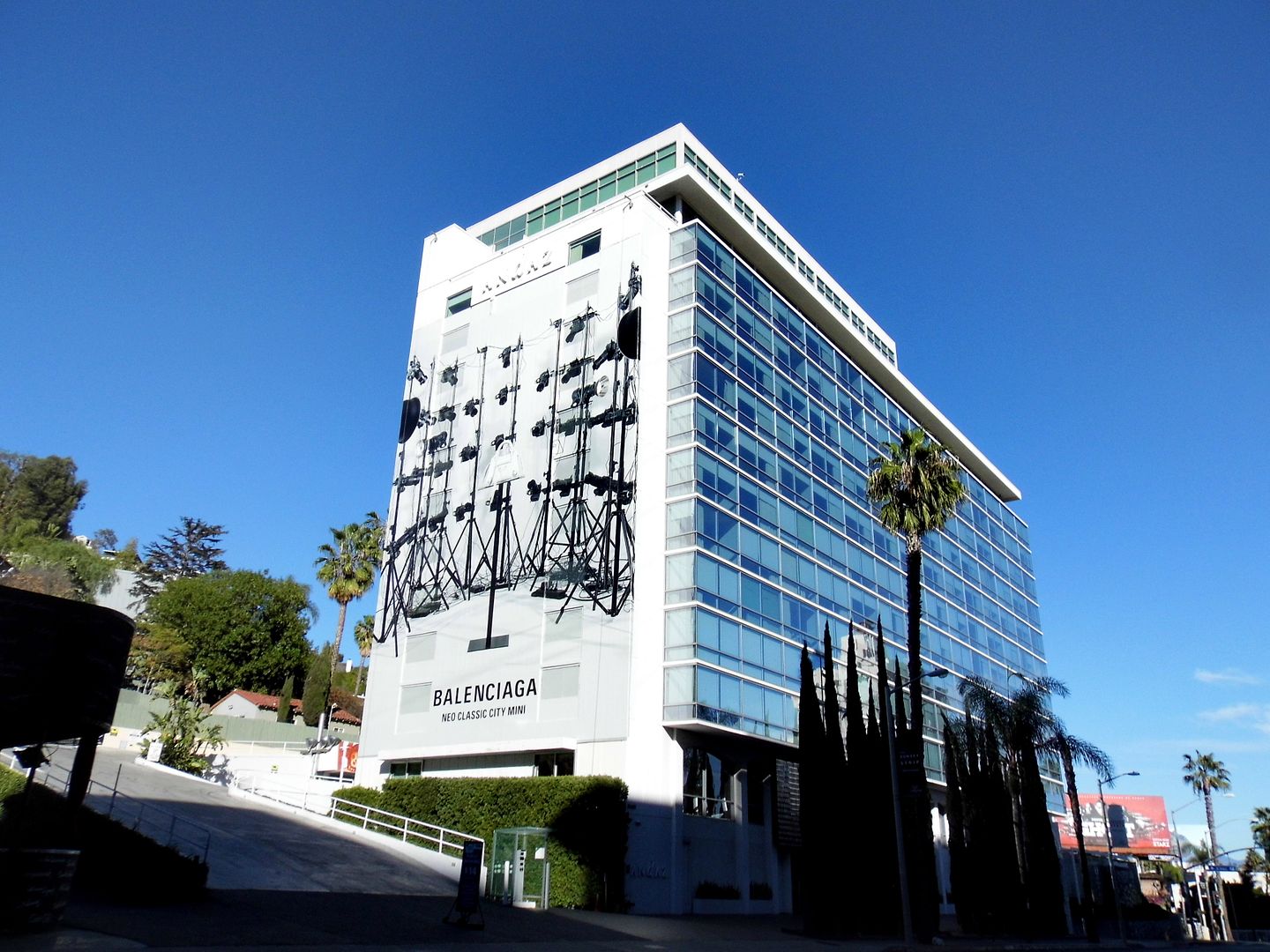
From Country to Rock and Glam: The Sunset Strip's First High-Rise Hotel (With the Tallest Rooftop Pool In All of L.A.)

When I would have to visit Los Angeles for my work in the music industry back in the late 1990s and early 2000s, it had become passé to stay at the Hyatt House, a.k.a. the Riot House—where bands like Led Zeppelin had famously partied in the 1970s.

But the Sunset Strip was still cool back then, even 20 years ago. We just stayed across the street at hotels like The Standard Hollywood (now closed), the Mondrian, or The Grafton on Sunset (now Hotel Ziggy)—and we felt the Riot House's presence, looming over Sunset Boulevard.

circa 2020

December 05, 2021

Photo Essay: Hark! The Blow-Mold Choir Sings at Lilley Hall (Or, "The White Christmas House")

In 1954, Joseph J. Lilley saw the release of the classic holiday film, White Christmas, for which he served as musical director and vocal arranger. 

 
That same year, he bought a two-story Tudor Revival home built in 1927 in the Los Angeles neighborhood of Toluca Lake, just on the other side of the Hollywood Hills in the San Fernando Valley.

May 05, 2021

Photo Essay: Hollywood's Newest Historic Movie Theatre, at the American Legion (Updated)

[Last updated 6/12/21 9:40 PM PT—projection booth photos added at bottom]

The American Legion Hollywood Post 43 has been nicknamed the "Post of the Stars." 

That's not just because of its current Tinseltown location—but also because it was originally chartered in 1919 by Hollywood luminaries who'd returned from World War I. 

Past post members have included stars like Clark Gable, Gene Autry, Mickey Rooney, Ronald Reagan, Charlton Heston, and more.

February 29, 2020

Photo Essay: The Mystic Shrine for the Brotherhood of Ancient Angels [Updated for 2025]

[Last updated 11/17/25 1:05 PM PT—Added new photos from the Art Deco Society of Los Angeles tour on November 16, 2025.]

It’s the oldest and largest fraternal organization in the world, and yet most of us who aren’t a part of it are still mystified by its symbols, rituals, and clandestine operations.


But recently, Freemasonry seems to have piqued the interest of newer generations—and it’s shown signs of rebounding in the 21st century, with former lodges and temples getting reused for new purposes and introducing the uninitiated to the cryptic and enigmatic world of secret handshakes and ancient iconography.


The Al Malaikah Shriners are still headquartered in the same auditorium near Exposition Park that they've called home since 1926.

September 08, 2019

From Cattle Drives to the Silver Screen: The Mythology of The Singing Cowboy (via PBS SoCal)


Excerpted from my article for PBS SoCal, 


For lots of people, the nickname “The Singing Cowboy” conjures memories of and nostalgia for Gene Autry.

But while Autry left an indelible mark on SoCal with his film career (and patronage of L.A.’s Autry Museum of the American West), this second-generation Texan wasn’t the only celluloid cowboy of song.

Nor was he the first....

....And Hollywood screenwriters and composers didn’t invent the singing cowboy archetype out of nowhere, either.

Unknown to many, real-life cowboys on cattle drives from Texas into western states actually sang from the 1870s to the 1890s.

Not only that — but they had to sing.

According to pioneering musicologist and folklorist John A. Lomax, if a cowboy couldn’t sing back then, he wouldn’t get hired in the first place. Those who led the drives wanted melodies that would be ideal to ride by (and would lull the cattle to sleep at night)....

....These cowboys rode along the Utah, Navajo and Santa Fe Trails of the Great Western Cattle Trail “with a song on their lips,” and they gave voice to “the freedom and the wildness of the plains.”

To read the rest of the article, visit the PBS SoCal website here. 

September 03, 2018

Preservation Means Saving the Stories Beyond the Siding

I know we can't save every building. But I think we can try to save more buildings.

A place like Heritage Junction—on the Hart Park property, leased from LA County by the Santa Clarita Valley Historical Society—shows that homes, train stations and trains, churches, and schoolhouses with good stories behind them can be saved and relocated.

As long as you have somewhere to put them.

And regardless of the density of Los Angeles and San Diego, there's actually quite a bit of room out there—once you get a little outside those cities.

Take, for example, Newhall, where Heritage Junction is located: It's within Hollywood's designated 30-mile zone for shooting (hence its rich history in movie ranches and famous cowboys), but it feels like a world away. And there's still room in the area—and specifically at Heritage Junction.


There, the Saugus Train Station, built in 1887 across the street from where The Saugus Cafe is now, greets visitors to the heritage park and serves as the headquarters of the Santa Clarita Valley Historical Society.


The two-story redwood depot had a good, long run for passengers and freight (livestock, produce, ore), until the last passenger train rolled through in 1971. Southern Pacific officially closed the depot in 1978 and deeded it to the SCVHS two years later. Relatively newly-formed at the time, the historical society just had to figure out where to put it and how to finance the two-mile move.


In 1982, once the station had been saved and relocated, it got a proper train display: the Mogul Engine 1629 (circa 1900, built in Schenectady), a Class M4 engine that had passed through this area on Southern Pacific runs from Yuma to Portland.


Gene Autry bought the 75-ton train in 1957 and used it at his nearby movie ranch until donating it to SCVHS in 1982.


Inside the depot, there's plenty of Southern Pacific history for the docents to show off, as they guide visitors through the various areas—including the former baggage room at the north end that housed the predecessor of The Saugus Cafe, known then as the Saugus Eating House.


Because it's not just a train museum.


It's also the home of the local historical society, so it also includes relics from the various industries of Newhall's heyday.


...which included railroading as well as oil drilling, mining, and, of course, moviemaking.


Why build something new when there's a perfectly good but decommissioned train station sitting empty and threatened with demolition somewhere?


Sure, we can't save every building—but can we save the buildings with really interesting architecture and stories? Even if they're more or less a movie set version of what they're supposed to be?


The Ramona Chapel, designed by songwriter Carrie Jacobs-Bond in the "dollhouse style" to match the chapel depicted in the Helen Hunt Jackson novel Ramona, wasn't ever meant to be a real house of worship.


It was simply added by Old West collector and Ramona superfan Robert E. Callahan as the centerpiece of the Mission Village amusement park in the northeast tip of Culver City. That's where the Early California-themed attraction stayed until construction of the 10 Freeway evicted it in 1962 and forced it to relocate en masse—chapel and all—to the Mint Canyon area of Santa Clarita.


Two of the Mission Village structures—the chapel and the Little Red Schoolhouse (a.k.a. Callahan Schoolhouse)—found their forever homes at Heritage Junction in 1987, but the school brought an extra layer of history with it. Callahan had reportedly acquired it from a 19th-century copper mining camp, the Emma Consolidated Mining Company's Emma Mine in nearby Acton at Parker Mountain and outfitted it with period-appropriate antique school desks that he'd acquired from up north.


The circa 1858 desks are still inside the wood-shingled schoolhouse, which has also been used in its fair share of movie shoots.


And then, of course, there are the houses at Heritage Junction—like the Edison House, which is in the same cluster as the chapel and the school.


This single-family residence—with its shingled, gabled roof and clapboard siding owing to a kit design that had been ordered out of a catalogue—doesn't seem like much from the outside.


But there's a good reason why this cottage, out of a whole group of six them, was moved to Heritage Junction in 1989 while the rest of them were burned by LA County Fire department training exercises.


Besides the fact that it's been largely unmodified since it was first built in 1925 to house employees of the Southern California Edison / Newhall Substation...


...this particular cottage was probably saved because of the particular SCE employee it housed.


It was occupied by Assistant Edison Patrolman Raymond Starbard, who's credited as being the first to sound the alarm about the 1928 St. Francis Dam break...


...the flood of which was headed downstream from San Francisquito Canyon.


Starbard is considered one of the heroes of the St. Francis Dam Disaster, who helped prevent it from becoming even worse than it already was (the second-worst disaster in the state of California, right behind the San Francisco Earthquake and resulting fires).


And for that, it's an honor to visit his home.


The St. Francis Dam Disaster story has somehow escaped the curriculum and the memories of most people outside of the Santa Clarita Valley—and especially outside of LA County—but it's not the only story to tell about Newhall. There also was its namesake: railroad investor and landowner Henry Mayo Newhall, who established both his home and the operations for his Newhall Land and Farming Company in the Newhall Ranch House (circa 1865). By 1990, the two-story stick Victorian—with its gabled roof and wraparound porch made of redwood—had lost its usefulness, so all 4000 square feet of it was moved to Heritage Junction.
`


And let's not forget the strange tale of Henry Clay Needham, who founded the Newhall Water Company and, in 1890, built a "Lodge Hall" for the pro-temperance fraternal organization, the Independent Order of Good Templars.

This came right after a failed attempt to establish Newhall as a Prohibitionist Colony by the National Prohibition Party, which later was more successful in getting alcohol banned by the 18th amendment in 1919, though it was repealed in 1933.

Needham's political aspirations brought him far afield from Newhall—he later ran for a Senate seat and even for U.S. President—and in the meantime, his fellow prohibitionists in the area suffered infighting and a fraternal split, leaving the hall dry and lonely.

In 1893, a pioneer oil man named Ed Pardee (hence its moniker, the Pardee House) was scavenging local abandoned properties to improve his own setup—and upon discovering the neglected hall, he not only relocated it but also moved into it.

In 1946, Pardee's daughter sold it to the Pacific Telephone Company (later known as Pacific Bell), which used it as the second location to house its main switchboard. But by the early 1960s, the phone company's operations outgrew the Pardee House, which it demoted to the role of business office and then ultimately let go of entirely. (For a wonderfully written account of the building's comings and goings, click here.)

One hundred and two years after it was originally built, the Needham/Pardee/Pacific Bell building was moved once again—hopefully for the last time—to Heritage Junction.

As Santa Clarita Valley historian Arthur B. Perkins wrote in 1965, "Every Newhall landmark seems to have some bull-dozer waiting around the corner to junk the job for the trash dump. Sometimes, a story gets carted away with the remnants."

But that's true nearly everywhere—not just in Newhall. And it doesn't have to be that way.

Related Posts:
Photo Essay: A Silent Movie Cowboy's Retirement Ranch (And His Horse's Final Resting Place)
Photo Essay: The Museum of Misfit Houses
Photo Essay: A Victorian Stroll at Twilight
Photo Essay: Oxnard Heritage Square
This House Has a New Home
Back to Bakersfield

May 07, 2017

In the Footsteps of the Great Movie Cowboys

When people travel to the Owens Valley, it's often to go to the mountains.

They're either on their way up the 395 to Yosemite or Mammoth Mountain, or they're sticking around Lone Pine to climb the tallest mountain in the lower 48, Mount Whitney.

But when I was in Lone Pine last weekend for the Owens Lake Bird Festival, I took off on my lunch break to explore a set of nearby hills.


The Alabama Hills.


Named after a Confederate warship named the CSS Alabama, these hills are about as old as the Sierra Nevada mountain range (one of Earth's oldest!)—but something kept them from pushing up nearly as high.


And that means that late in spring, when the peaks are still frozen and topped with snow and the valley has browned into its summer char...


...the hills are still alive...


...with the bright bloom of wildflowers.


But the Alabama Hills haven't been made famous by any "superblooms."


And while its geologic formations aren't quite as otherworldly as others...


...the landscape fascinated moviemakers enough in the 1920s...


...to transform this area into a natural "back lot" for Hollywood.


Its distinctive rocks and a dozens of arches—including the famous Mobius Arch in the "Movie Flats" section of the hills—have served as the backdrop for over 400 films and TV shows, including Hopalong Cassidy, How The West Was Won, Gunga Din, The Gene Autry Show and The Lone Ranger.


But while the public lands are currently managed by the BLM, you still might find yourself in the middle of a Hollywood film shoot—with the more modern-day productions of Django Unchained, Gladiator, Iron Man, Maverick, and Tremors having also been shot there.


Standing there, looking through Mobius Arch at the ancient landscape, it certainly feels like being in an old western movie with the likes of John Wayne, Gregory Peck, Humphrey Bogart, Kirk Douglas, and Errol Flynn—all of whom have areas around Movie Flats and Movie Road named after them for the movies they starred in that were shot here.


Or maybe you're in an old sci-fi B movie, where these arches and niches are home to some prehistoric monster that's escaped detection by park rangers, geologists, seismologists, and archaeologists—released from the earth's core through a fault line during some seismic event (like the big 1872 Lone Pine earthquake, which changed the area's topography visibly).


It's disorienting out there, looping through the rocks, some of which rise so high as to block out the sun.


But thankfully, Mount Whitney and the rest of the Sierras will always rise above the Alabama Hills, showing you the way back to Planet Earth in the 21st Century.

But while you're in those hills—no matter what time of year or even what year, for that matter—you'll still be in the great western landscape that's part of the ancient geologic record of an existence that predates even us.

And it's one that most other people only ever get to see on a screen, and not in real life.

Related Posts:
Photo Essay: Garden of the Gods
Photo Essay: Corriganville Movie Ranch, Burned to the Ground
Photo Essay: Stoney Point, at the Santa Susana Pass
Photo Essay: Landing on Another Planet, An Hour Outside of LA

October 17, 2015

Photo Essay: A Spirited Jaunt to The Derby

After you spend a day at the races—especially the home of the Santa Anita Derby—you kind of have to go have a drink or a snack at the nearby restaurant called The Derby.


As though the vintage neon signage weren't inviting enough...


...topped with its own derby hat...


...the "cavalier spirit" style lawn jockeys make it clear that all are welcome...


...though no one needs a hitching post for their horses anymore.


Inside, The Derby is as much a museum of horse racing as it is an historic restaurant.


Although it originally opened in 1922 as the "Proctor Tavern" (or "Proctor Chicken House"), The Derby became a place where fans could intermingle with the jockeys who'd raced at Santa Anita—including its new owner, George Woolf, the famed jockey of Seabiscuit.


That was 1938, the same year that Seabiscuit became a thoroughbred legend, and Woolf became known as the greatest jockey of the time.


The races were big news back then, and the horses and their jockeys—big stars.


This is where Woolf would hold court—but only for a few years.


Woolf, a diabetic in the early days of insulin treatment, died tragically in 1946 after falling off his horse during a race at Santa Anita. Gene Autry sang at his funeral.


It is said that his spirit haunts the restaurant, which has become more or less a shrine to Woolf—and Seabiscuit, of course. Woolf had purchased it as an investment for his retirement, but could it be the gift that keeps on giving, even in the afterlife?


And what if Woolf isn't the only ghost at The Derby? Some patrons hear horse hooves clopping past  the restaurant as they enjoy their steaks and garlic cheese bread. Where else would a famous horse haunt, other than the restaurant located just seven furlongs from Santa Anita Racetrack?


Related Posts:
Photo Essay: Santa Anita Park & Racetrack
Photo Essay: A Day at the Races