Search

Showing posts sorted by relevance for query ocotillo. Sort by date Show all posts

March 21, 2019

Photo Essay: Dispatches from the Superbloomin' Anza-Borrego Desert

There was one surefire way I could tell that this year's wildflower season was a superbloom.


I saw it from above, as we pulled over from the Montezuma Grade and looked down at the valley floor of Borrego Springs.


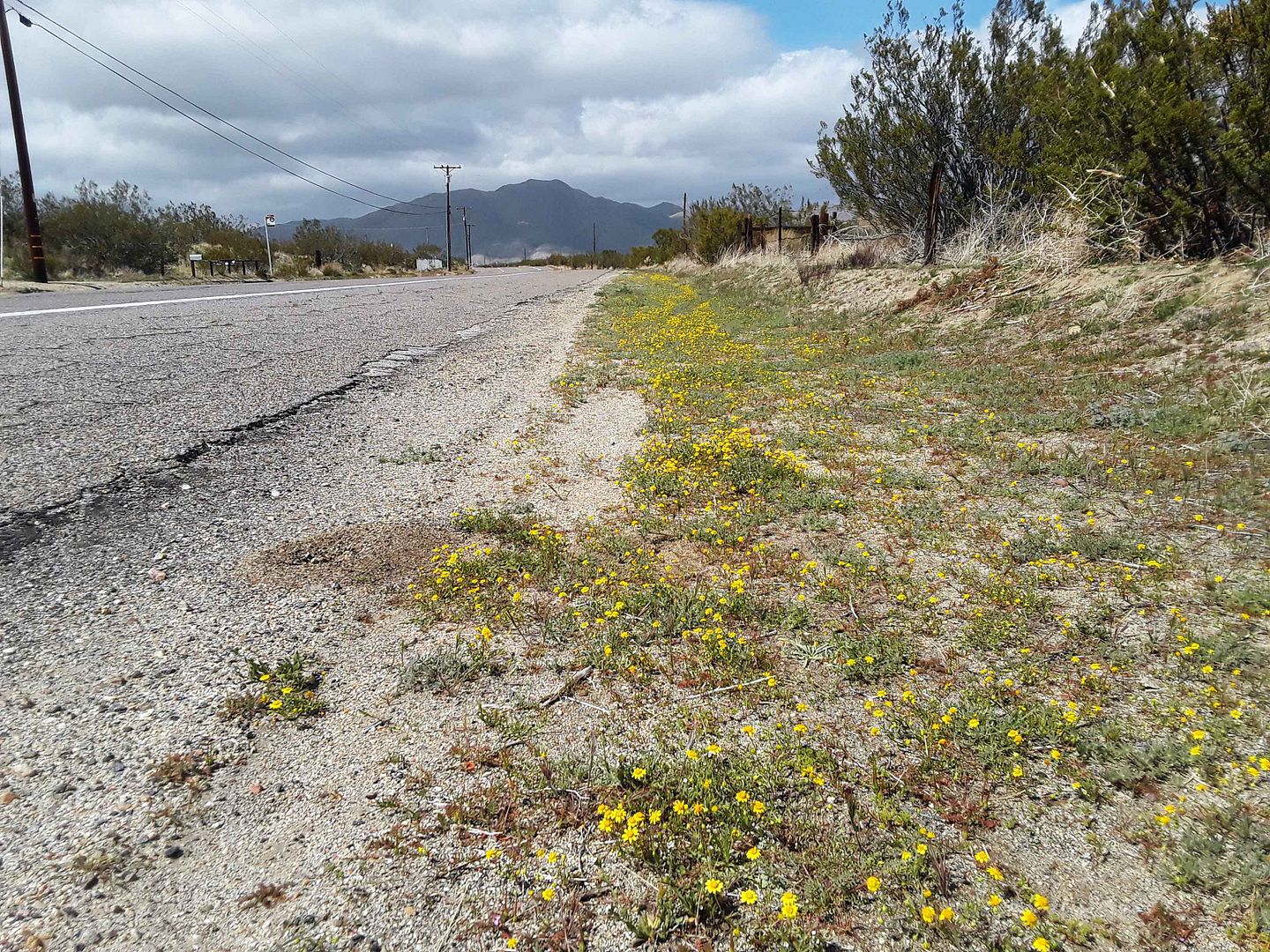
And when we got up close to those patches of yellow (mostly desert dandelion), they did not disappoint.


But unlike two years ago, when everything in Anza-Borrego Desert State Park bloomed pretty much all of the same time and blanketed many fields with flowers, this year's superbloom is more of a "growing bloom."


That means we encountered just one really great field during our weekend there (except of course for the poppy-filled Cactus Loop Trail).


But there will be more great fields for those who go after me.


Superbloom or not, I always love this time of year in Anza-Borrego, even despite the crowds that descend upon California's largest state park every year.


The creosote bushes are all abloom in yellow, not having formed their little white puffy balls quite yet.


This year, the sand verbena (Abronia villosa) was particularly showing off in the sandy roadsides (and pretty much everywhere else we looked, too).


And we got some desert chicory (Rafinesquia neomexicana) for some nice white contrast, too.


I told my companion to keep her eyes out for the desert lily (Hesperocallis undulata), since it's so uncommon that I had to go birding on the golf course to see any last year. This year, I saw three.


But even common wildflowers, like the blue phacelia (a.k.a. wild heliotrope, Phacelia distans), are pretty special when you get to see them.


And one of the best places to see them—as well as purple chia sage (Salvia columbariae), whose flower balls hadn't all fully blossomed—was at the Anza-Borrego park visitor center.


During a superbloom, the park headquarters is probably the busiest place of all—if not for its wild landscaping (and blooming barrel cactus), then for its public restrooms, maps, and volunteer-provided information.


So on our second day, we went a little farther off the beaten path and drove down the road that cuts through the Ocotillo Forest and dips between fields of yellow poppies (a.k.a. the Texas Dip).


I've seen—and drip-irrigated—plenty of red ocotillo in my day, but I've never witnessed such a dense concentration of them.


And they all appeared to be green-leafed and blooming red.


Among the desert flora I've ever encountered, I never get sick of red ocotillo.


But I did want to see something new, so we headed farther east on Highway 78 than I've ever been (save for driving through Brawley) to check out Ocotillo Wells.


The area is best-known for its off-roading, but the Discovery Center offers a really nice interpretive trail for plants.


And this time of year, it was full of goldfields and Arizona lupine, among others.


But Ocotillo Wells is also where I could envision the end of the superbloom coming quickly—because that was where we witnessed several caterpillars of the sphinx moth.

And once those start munching away, it's like a death knell for wildflower season.

I'm glad we went when we did.

Related Posts:
Photo Essay: Yellow Poppies Take Over the Cactus Loop Trail in Anza-Borrego
The Worst of the Superbloom, At Walker Canyon
A Desert Reappearance
Photo Essay: Birding Anza-Borrego During the Superbloom
Dispatches from the Butterfly Boom

March 08, 2024

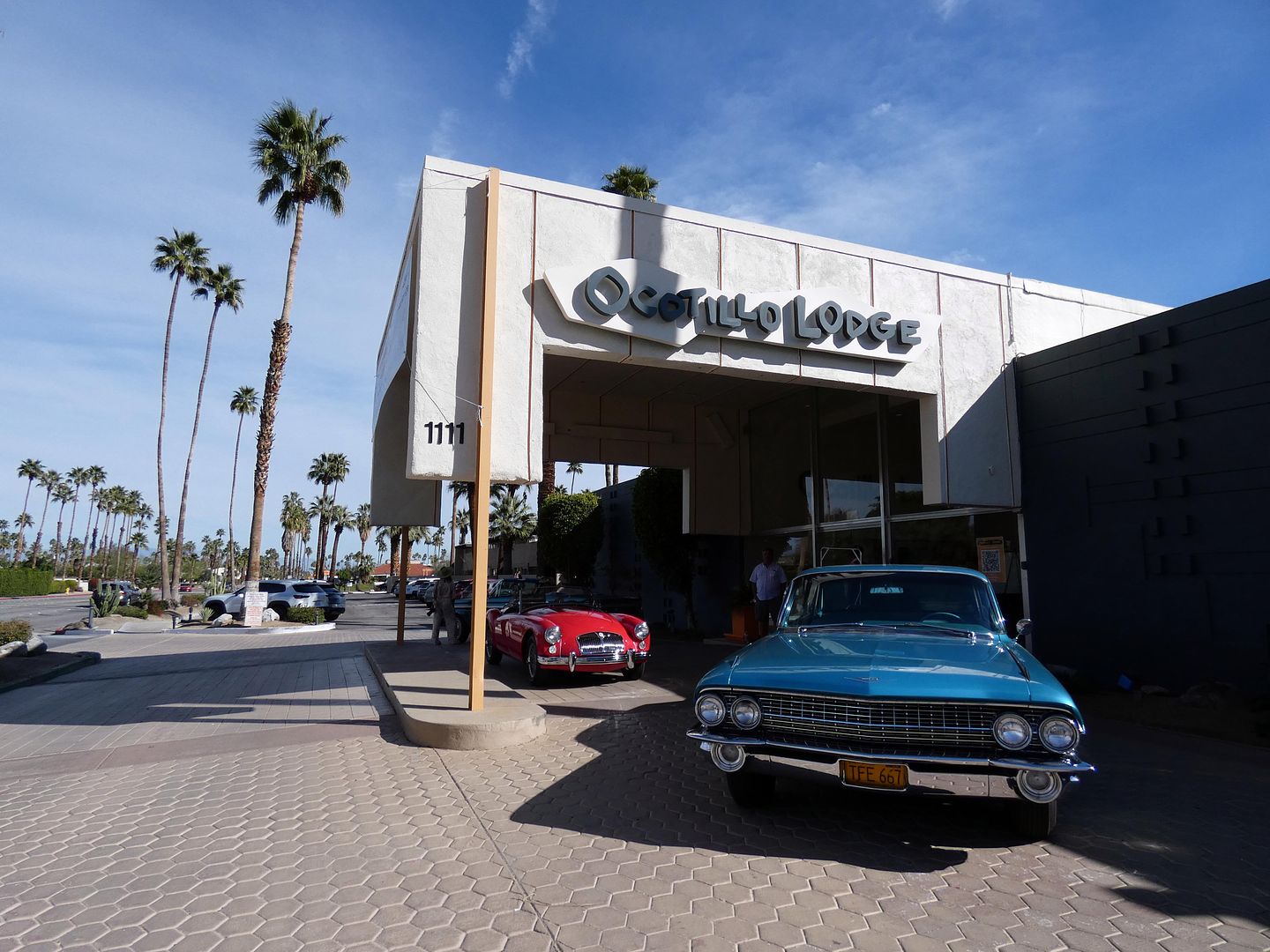
Photo Essay: Desert Resort Living In a Mid-Century Modern Lodge

It's one of those places I'd drive past so many times—and never really understood what it was. 

I thought the Ocotillo Lodge on East Palm Canyon Drive in Palm Springs was a motel, and that it was being converted into condos. 


The real story is that it was a hotel (kind of)—and then it was converted into condos in the 1990s. But right now, it's going through an upgrade/restoration. 

February 15, 2009

Last Desert Day


I was so sick before this trip, I wasn't sure that I would make it. Even as I arrived at the gate at JFK, I was sweating and teary, dreading the long flight and drive ahead.

But practically as soon as we landed, I magically recovered.

As I approach my impending return to NYC, I'm starting to feel a little sick again.

I'm going to take one last nature walk this morning after breakfast before I depart Joshua Tree, to refill my lungs with fresh, dry air and clear my sinuses before I head to the more polluted, economically depressed western portion of the Inland Empire (also known as "Foreclosure Alley").

I thought we'd gotten our fill of nature on Thursday when we meandered down all the paved roads of Joshua Tree National Park, but I'm longing for it again. If I were more of a hiker or rockclimber, there'd be plenty more for me to do there, but I won't go back, not on this trip.

When we drove up Quail Springs Road (which explains all the quails I've seen) to the park entrance, we popped a copy of The Joshua Tree into the CD player. It didn't occur to me what a cliche we were til I had to roll down my window and pay the park fee, looking sheepishly at the park ranger who took our money. It's hard not to think of U2 when you're in this area, after having grown up listening to that album and associating the name with the place all these years. But in truth, The Joshua Tree was recorded in Dublin, not here. And the cover photo was shot in Death Valley, where the actual joshua tree that inspired the logo was from.

Still, as the Harmony Motel loves to advertise, U2 did stay here while they were working on the album (probably after it was recorded), and did an entire promotional photo shoot here.

Red Ocotillo cholla

It's no wonder - even the Twentynine Palms Highway is photogenic. In the park itself, I couldn't not take a photo of a joshua tree, rarely snapping anything that didn't have one in the foreground. As we drove farther south, the joshua trees became sparser (not only where there had been wildfires) and we came across other bizarre forms of desert vegetation like the blooming red ocotillo or terrifying cholla cactuses, which look fuzzy and loveable but will pierce your skin with their projectile prickly spines without thinking twice.

I don't know if I'm ready for city life yet, but heading back out west today to stay in a teepee tonight near the historic Route 66 will provide an interesting and perhaps bizarre segue.

For more photos of Joshua Tree, click here

March 27, 2021

Photo Essay: The Delightfully Uncrowded Bloom at Anza-Borrego Desert State Park

Anza-Borrego hasn't had a "superbloom" since Spring 2019—but I still wanted to go check it out this year, just in case I could find some blooms.
 

September 27, 2008

Just Deserts.

Photo: Edith Bellinghausen
I just got back from the desert less than a week ago and I'm already planning my next trip. I think next I'll check out Arizona - slightly harder to get to from a work-related trip, but within reach of a JetBlue destination so I can use one of the two free trips I've racked up.

My trip to San Diego in March seems to have set the tone for most of my travels throughout the remainder of the year, following it with trips to Death Valley and Morocco, which reminded me very much of Southern California and Mexico. I've gone back to San Diego twice now since the spring, last month for work and then last week for a weekend vacation after working in LA the entire week. This time I convinced Edith, who accompanied me to my first San Diego trip, to once again join me in my desert adventure.

I wasn't really aware of the Anza-Borrego Desert State Park, California's largest state park, until my friend Ken suggested I go there when he found out I was in San Diego last month. I figured I wouldn't have enough time to just daytrip it up there, so I was looking forward to giving it the full treatment in September, which, though still considered the "off-season," would be much more liveable temperature-wise.

I chose to drive up to Anza-Borrego from San Diego the same way most people do: up through the Cuyamaca Rancho State Park to an old goldmining town called Julian, whose famous apple harvest was just beginning and was sure to produce some amazing apple pies. I had tried to actually find a hotel in Julian, but everything was curiously sold out - though explained later by the apple harvest and the bluegrass festival which is one of the biggest events of the year there. We stopped in town for a quick lunch at Miner's Diner, an old school soda fountain where I had the Pioneer Pastrami sandwich, which was as fat and soft as I was eating it, on what tasted like freshly-baked rye bread with a pickle spear on the side. Edith chose a turkey sandwich called the "Banner Queen," named after a mine in a nearby ghost town that we drove through but didn't really see anything in. Sitting at their lunch counter (they don't serve dinner), it was great because we were surrounded by high school students and other locals, not tourists, though the town has retained the character of a historic, tourist-worthy town full of kid-friendly activities like panning for gold and cider-making.

Lucky for the locals who live there, Julian is a haven for locally-produced jams, jellies, butters, ciders, and of course pies, as well as cider doughnuts that kick the Greenmarket's ass - and not only because they're chocolate-frosted. It's also a burgeoning wine communicider doughnutty, with several wineries converging near the orchards to make hard cider, apple wine, and a variety of other grape-based wines. Like Temecula to the north, the area isn't as European-influenced as Napa and Sonoma, and the wines can really only be described as...Southern Californian. Sometimes a bit rough, often complex, smacking you in the palate a bit before you find one you like. It's the tryingthat's the fun part, and although you enjoy the visit, you're not sure if you could experience it all the time. But we did find a Viognier at Orfila that we liked enough to buy and bring back to San Diego with us...and lots of free wine glasses from all the local tasting rooms we visited.

Once we drove into the desert and to the palm tree-lined oasis of Borrego Springs, I was glad we hadn't found a room in Julian and chose to stay inside the state park instead. The New York Times had recommended a recently-restored mid-century modern resort called The Palms at Indian Head, and once I read about the Hollywood elite visiting there - similarly as they visited Death Valley - I knew it would be the place to stay. Even better, Borrego Springs was once destined to become the next Palm Springs, but of course never did. And knowing me, always to root for the underdog, it was the perfect place for me to escape the Hollywood hustle as well.

The Palms was originally built in 1947 as the Hoberg Resort, but the 50+ cabins and bungalows that dotted the expansive property burned down in 1958, to be rebuilt that same year, but with fewer places to stay. Of course like anything else in a little-visited town whose weather requires properties to forcibly close in 125 degree summer heat, it fell into disrepair and was as forgotten as the oasis itself, with all eyes on Palm Springs instead. In the late 90s, a couple decided to restore the property to its original splendor, naming it "The Palms" after all the palm trees that rose up out of the desert in the spring-fed town, and "at Indian Head" after the mountain that rises up behind it, shaped somewhat like the head of a Native American chief.

We knew the place would be cool, but we had no idea we would stumble upon our own little ghost town, especially after our failed attempt at exploring nearby Banner. You can still see the ruins of much of the original property, and even walk right through them, despite how architecturally unstable they may be. Original shower stalls and even toilets are still standing, sheltered by salmon- and mint green-colored tile walls, with rusty spikes sticking out at every turn. The paint is peeling everywhere, yet there are few signs of trying to demolish the old remains. It was fascinating to try to piece together the plot of the old Hoberg Resort, walking on sidewalks that led to nowhere, standing behind walls with huge chunks missing out of them. As if our location weren't remote enough - especially with the staff of the hotel never around, us checking ourselves into the hotel and drinking hot coffee which mysteriously appeared on its own in the morning - we had the spooky feeling of walking through someone else's memory, piecing the bits together as the details crumbled around us.

One of the remarkable elements of the original property is the Olympic-sized pool, which we dove into both at twilight (despite the bats dive-bombing the water around us) and at sunrise. We discovered that it had been built with two plexiglass windows in the deep end of the pool, providing a kind of underground observation deck for spectators to surreptitiously watch swimmers through a deep blue, chlorine lens. I dragged my toe along the far wall of the pool until I felt a window, and once I'd verified that the windows in fact did exist, I had to find the underground passage to them.

It wasn't difficult, actually: I spotted a pile of cinder blocks with some construction materials around them and an old, faded yellow warning sign above a subterranean flight of stairs. In my wet bathing suit and slippery flip flops, camera in hand, I walked sideways down the dirt-piled steps, digging my toes into the dark sandy dirt for leverage as I grabbed the rough stone walls on either side of me. I expected some kind of cocktail lounge or something down there, but instead I found a dirt floor, a couple of lawn chairs, some plastic buckets, and two cruddy windows that could form the backdrop of a really terrifying slasher flick. It looked like this:


Of course, we were giddy at the discovery, laughing hysterically, causing all kinds of ruckus in the normally-quiet pool area visited only by a couple of other resort guests, all of whom were retirees, I think. Which makes sense since that's pretty much who I see wherever I go these days.

Unlike Death Valley, Borrego Springs itself is far from a ghost town. There are quite a few resorts and motels and even a strip mall. It actually seems quite liveable, though there's basically one singular, fantastic place to eat, The Red Ocotillo (also owned and operated by the same folks from The Palms). With so many plots of land for sale, and real estate signs everywhere, I started to dream about what it would be like to live in this place, whose center of town is a roundabout called "Christmas Circle." It just seemed like paradise to me.

Mornings were idyllic too. The first day we set our alarms to watch the sun rise from our terrace, but the next day we woke up on our own and got to see it again, with golden light pouring over our faces and kissing the palm trees. I can't imagine anywhere else that I would want to wake up at 6:30 in the morning.

I wanted to live while I was there. I couldn't wait to spot the bunnies that emerged by the pool as the sun set, or to hop in the car and find some canyons or scenic overlooks. Most of the other people staying at the resort seemed to just hang out by the pool all day, and that seemed nice too. And the thought of eating every meal at The Red Ocotillo - whether it was the bacon crumble benedict with garlic rosemary potatoes or the Peg Leg breakfast with too much butter on the cinnamon French toast - seemed just delightful.

For more photos, click here.

November 17, 2012

Photo Essay: Cactus Lights

When I drove out to Vegas for a couple of nights this week, I wasn't looking for Christmas. But in my travels across the desert, I stumbled upon it.


Of course one of the main draws of Vegas for me is the lights, but normally I find them in the form of the city's neon signs, or perhaps its classic pinball machines.


I was looking for some more offbeat touristy things to do during my second solo visit to Vegas, so I left and headed east for the suburb of Henderson, where visitors can tour the Ethel M Chocolate Factory. I watched them drizzle chocolate-covered apples from behind a glass window. I witnessed the demolding of the finished chocolates. It wasn't that interesting.


But outside the factory, there is a cactus garden ripe for ambling during the day, and lit up like a Christmas tree at this time of year at night.


I returned that night.


"You could just come here even without the kids..." I heard one of the visitors say. They were all marveling at the display. I snickered.


Indeed, what Ethel M's calls "Cactus Lights" brings together two of my favorite things: Christmas and the desert, a delicious combination.


Amidst the gingerbread men...


...and lollipops...


...and birds and deer...


...some turning their heads or leaning down...


...there is nearly every variety of cactus and succulent:


...aloe...


...red barrel cactus...


...joshua tree...


...ocotillo...


...yucca...


...and rabbit-ear and beavertail cactus...


...making even the prickliest, spiniest plant a welcoming, softly lit attraction.


It wasn't very cold out...


...but it felt like Christmas.


Even amongst the menacing cholla...


...whose cylindrical stems are ready to spawn tiny spiny death balls...


...trained to leap out and grab you...


...and never let go.


I wish I could walk around that garden all night, every night, all year long.

Related Post:
A First Time for Everything

To Like Avoiding Regret on Facebook, click here.