Search

Showing posts sorted by relevance for query butterflies. Sort by date Show all posts

April 18, 2021

Photo Essay: Soaring With Butterflies at South Coast Botanic Garden

I first encountered butterflies up close—really up close—in New York City at the American Museum of Natural History's Butterfly Conservatory, maybe 20 years ago. 


I've spent the last couple of years chasing the annual monarch migration—just when the species has become so critically endangered, the millions of butterflies have dwindled down to thousands, hundreds, or even just dozens. 

December 13, 2023

Upon the Monarch Migration

I've been chasing monarch butterflies in California for a few years now. But I've largely failed.

I've never seen the hoards of migrators that used to fill the skies—and trees—of Central and Southern California on their way down to Mexico. I've only heard the stories.

 
Honestly, by the time I started really looking for them, their population had dipped so much, I'd be happy to see just a single monarch.

December 25, 2019

Two Missed Connections With the Migrating Monarch Butterflies

I can't seem to get my timing right when it comes to the monarch butterfly migration.

But then again, I've only made two attempts so far—both this year.

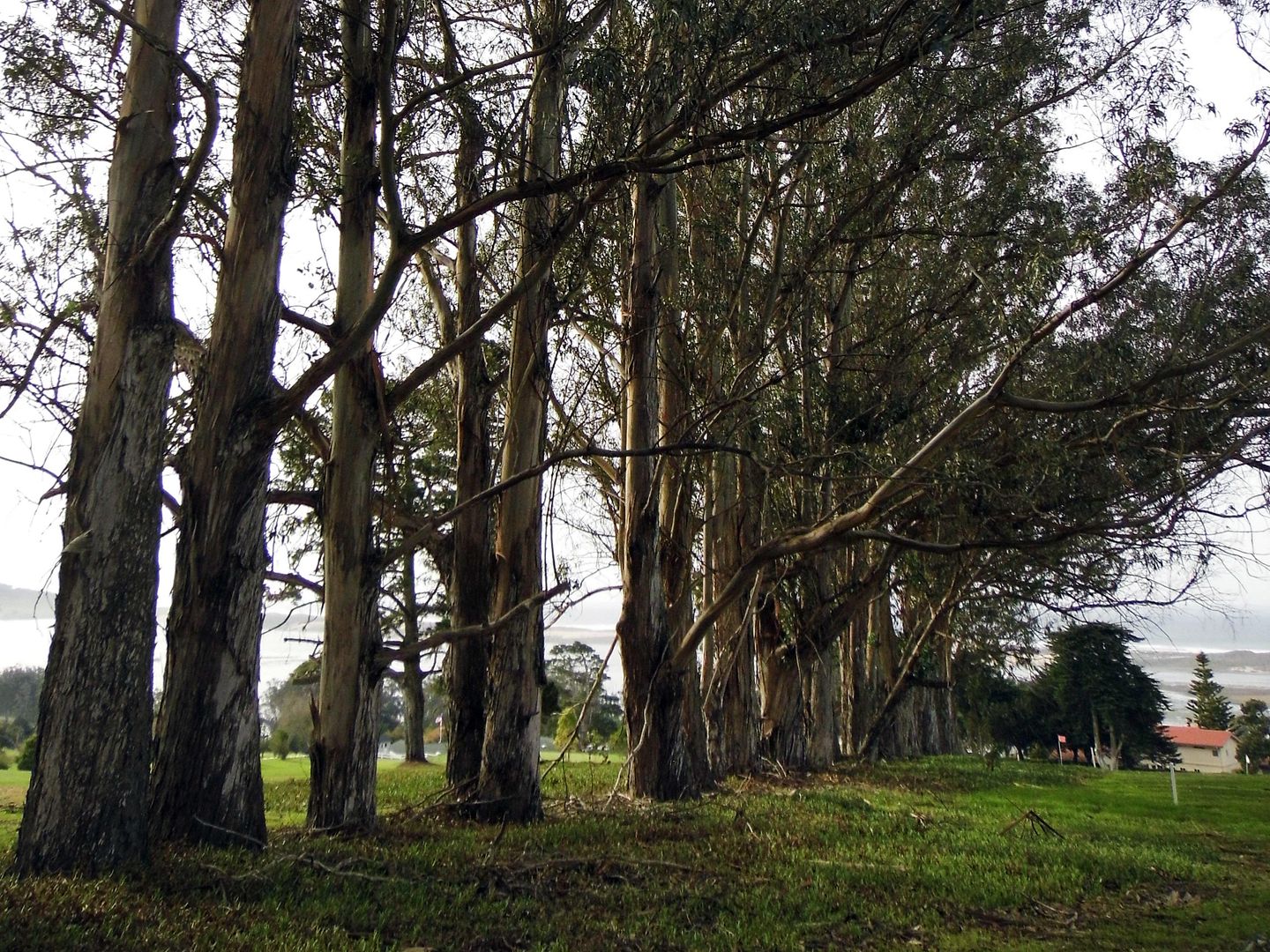
Back in January, I'd driven up to Morro Bay for its annual bird festival in the pouring rain. So, when I made a pit stop in Pismo Beach to check out its butterfly preserve, the few butterflies they had were all clustered high up in a eucalyptus tree, barely visible without somebody aiming at laser pointer at them.


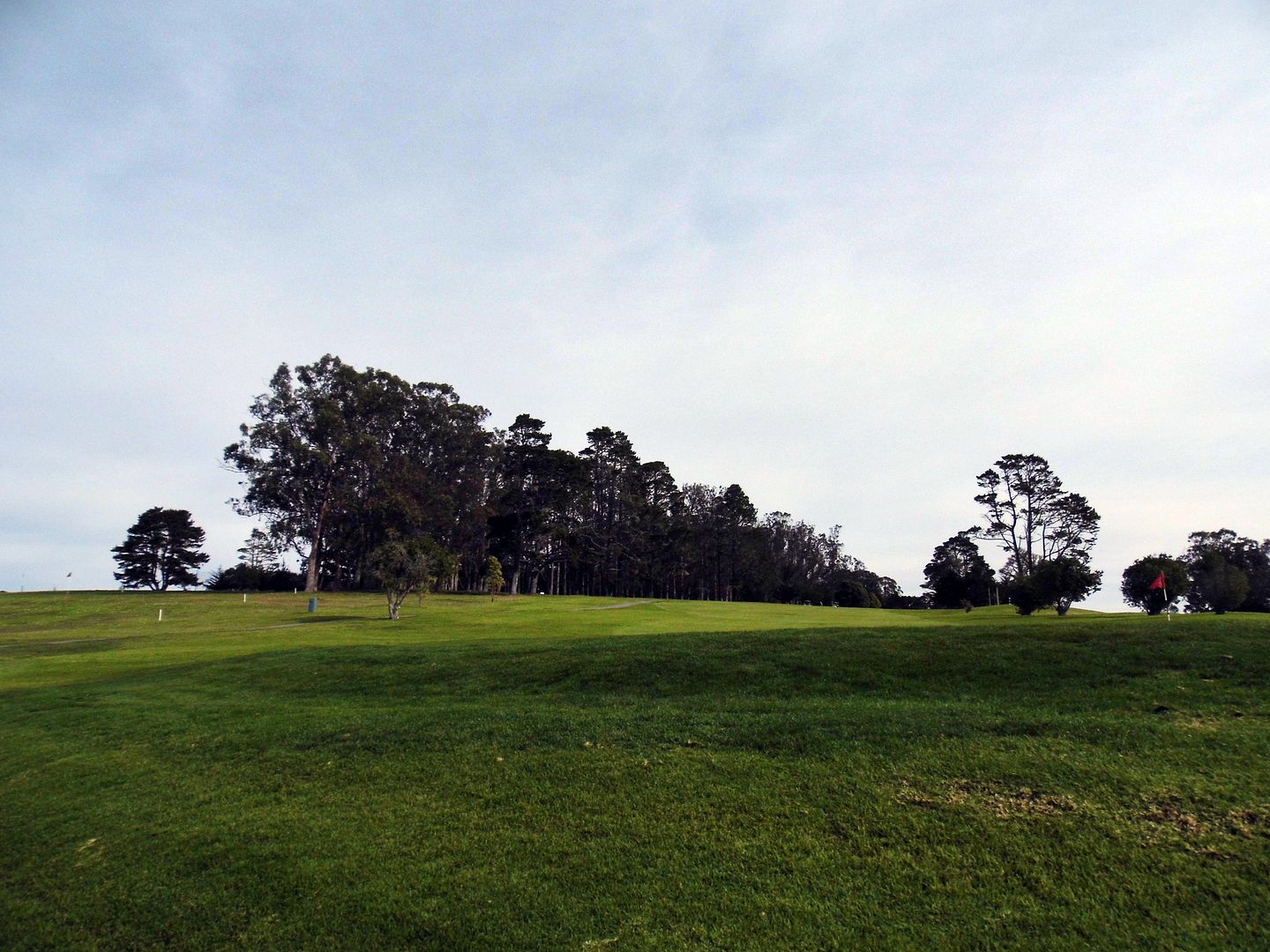
I'd hoped to have better luck at the Morro Bay Golf Course, which is attempting to conserve its migrating butterfly population.


"You should've been here back in November," our guide told us. "They're all gone now."


Of course, I'd heard the reports that the monarch butterfly population had declined by 86%. What used to be millions had dwindled down to thousands. But when I returned to Morro Bay Golf Course in December of this year, I'd hoped to see hundreds.


"You should've seen them a couple weeks ago," our guide told us. "But that last wind storm we got blew them all away. And only a few have returned."


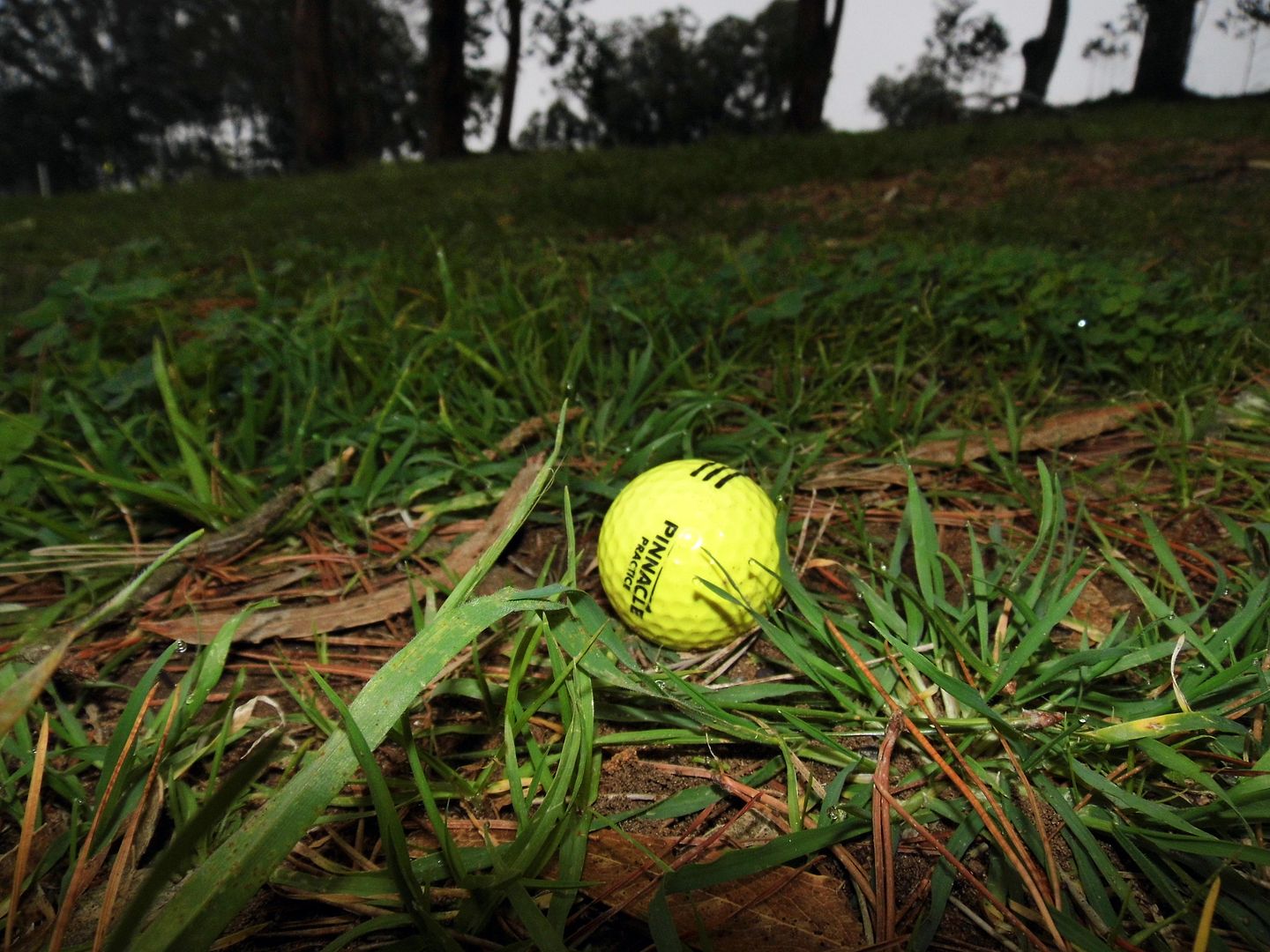
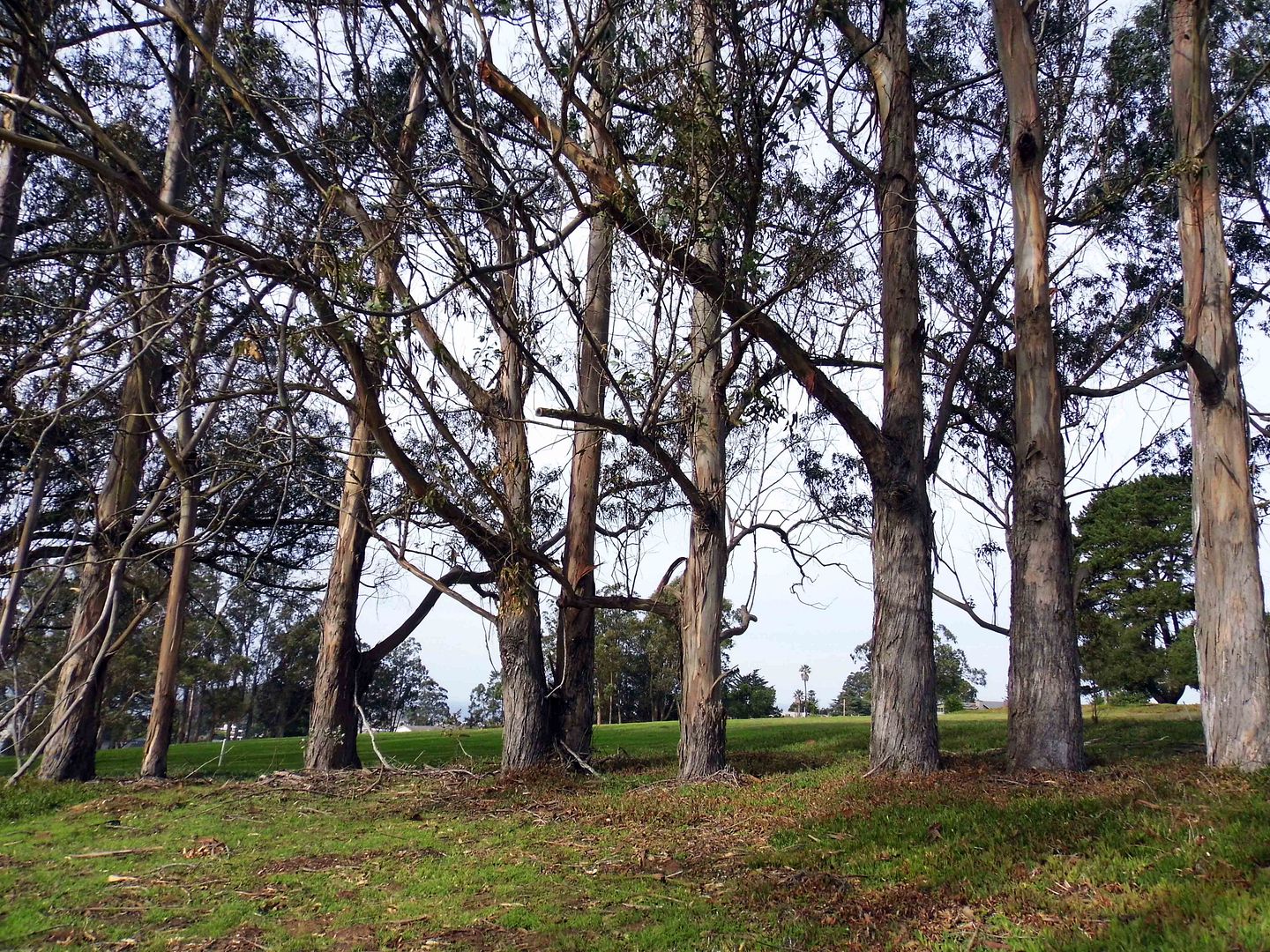
I was on a free tour offered by the golf course for the public to visit its eucalyptus tree grove—not an easy journey on your own, as it requires walking between the driving range and the 9th hole, right in the crosshairs of golfers that may not necessarily have great aim.


The tours are scheduled at 11 a.m. because that's when the monarchs tend to "fly out" of their clusters—but by the time we arrived on that day, they'd already "flown out."


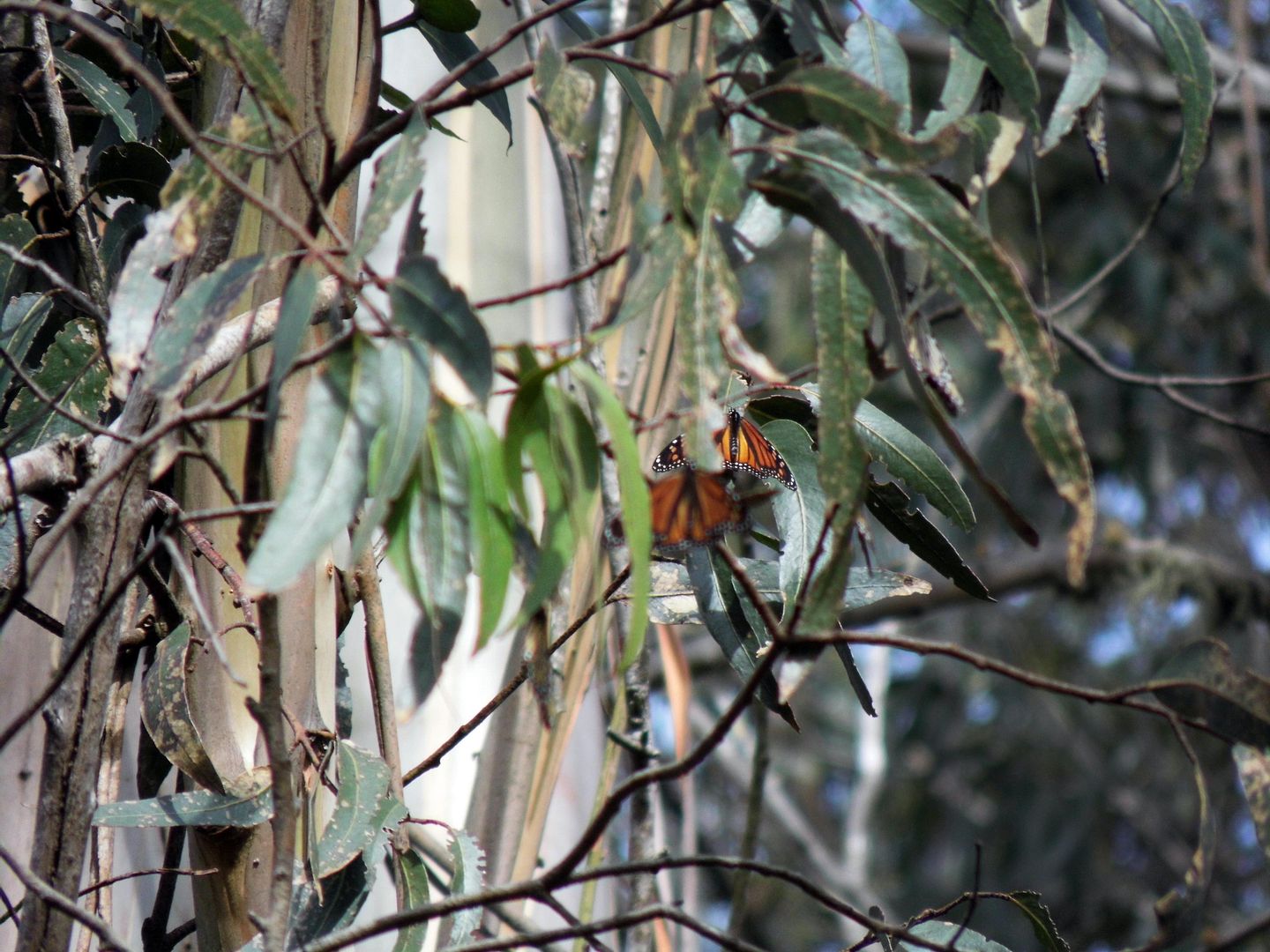
And once again, I felt lucky just to spot one or two individual monarchs flitting about, maybe in silhouette against the blue sky, landing on an ice plant that covers the ground below or on a eucalyptus leaf in a tree above.


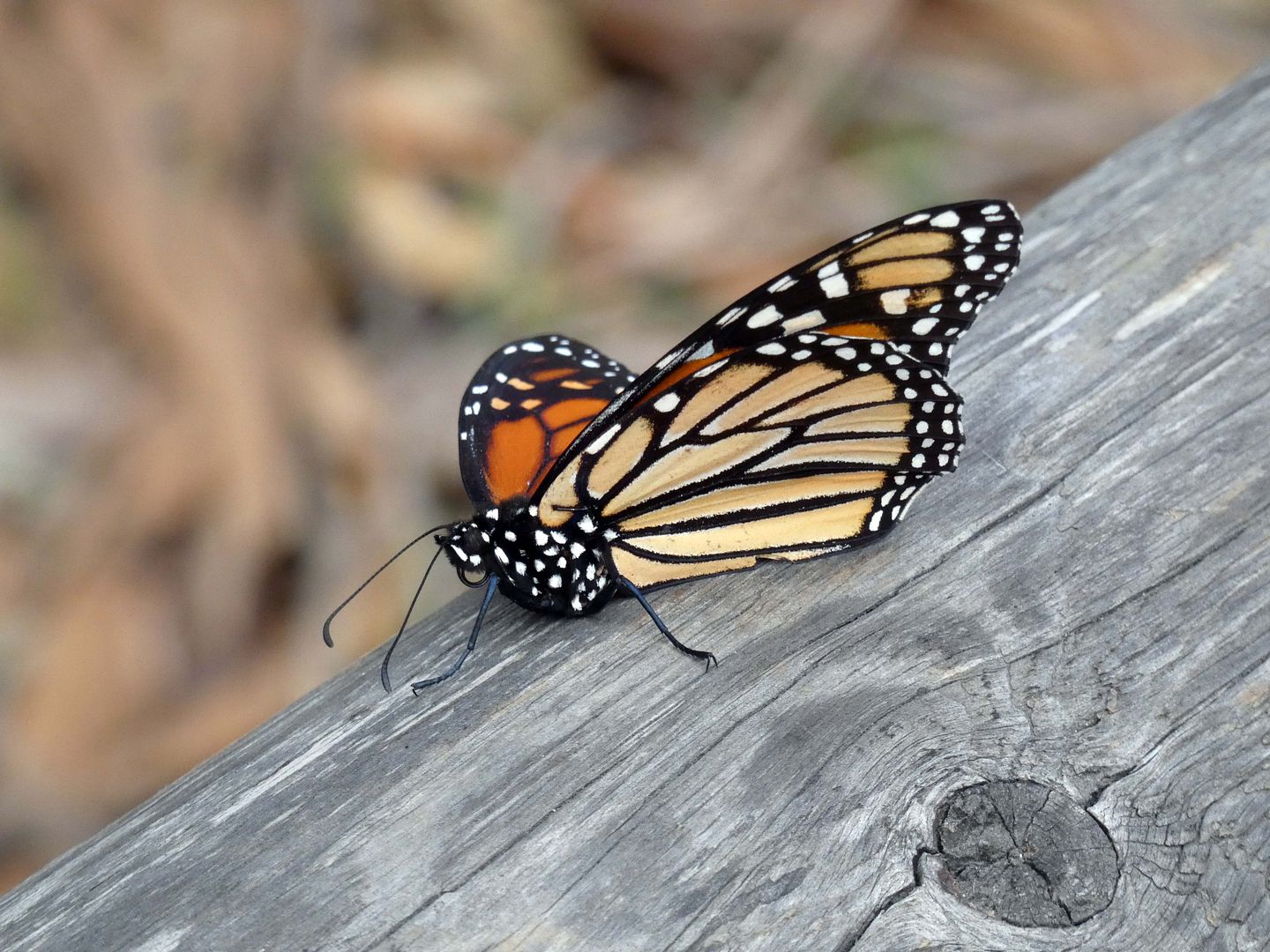
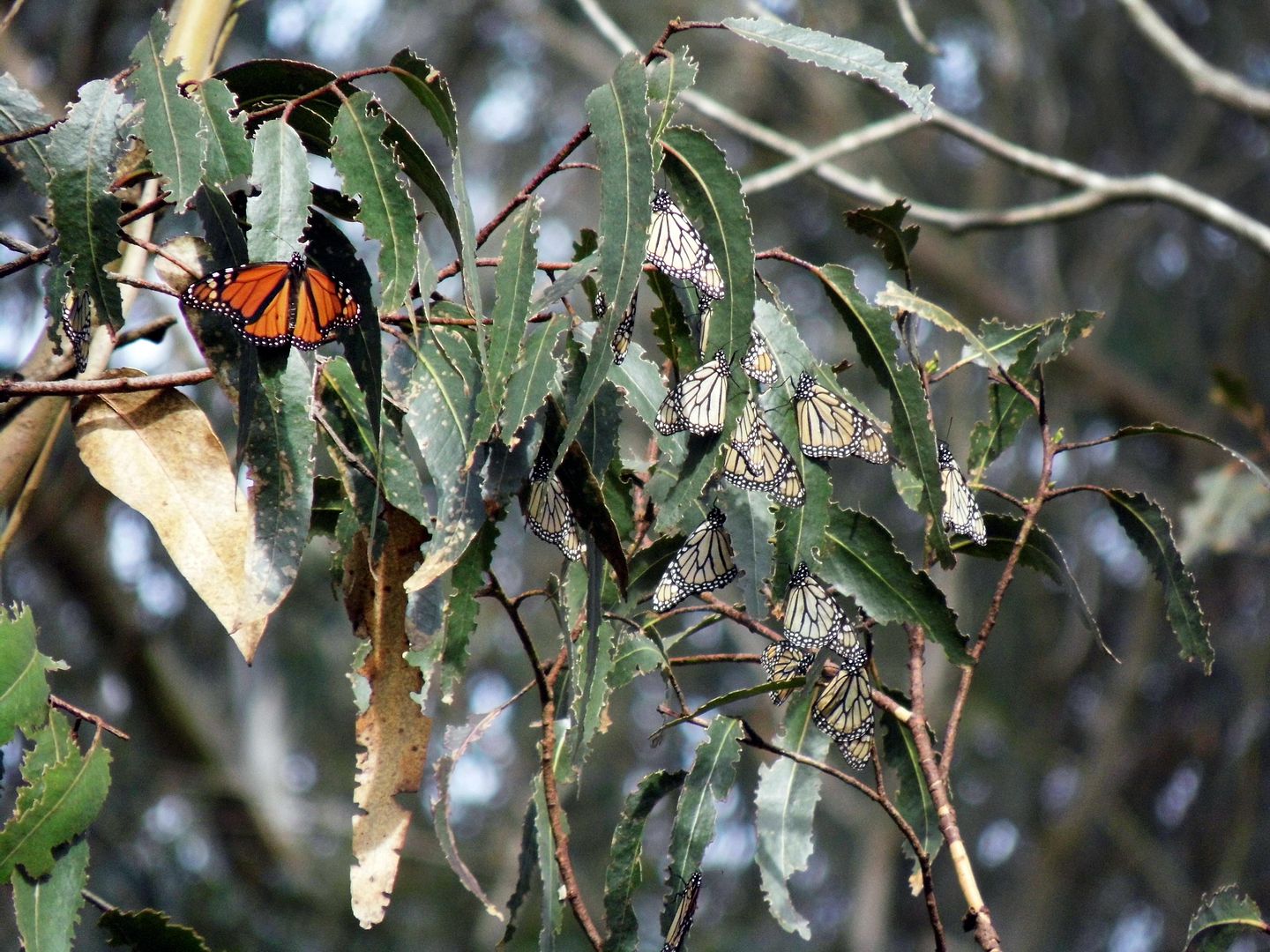
It turns out the main attraction was a cluster of no more than a dozen monarchs—only one of which had opened its wings to reveal its orange and yellow hues. The rest of them, exposing only the undersides of their wings, just look like leaves from afar.

It was better on my second try than on my first. But it was still disappointing.

And it still burned me up when our guide said, "Oh, just wait for February, when it should get really good after they mate, and you'll see the males on the ground."

I can't take my chances and go back again in February. I live too far away—at least a 3-hour drive—to keep chasing this moving target.

I need more of a "sure thing."

So next, maybe I'll just have to go to Mexico City—the destination for the monarch butterflies migrating from east of the Rocky Mountains.

Seeing a multi-million-strong swarm of orange wings, interrupted only by the pattern of black spots, just seems like something I need to do before I die.

Related Posts:
Dispatches from the Butterfly Boom
A Deer Sighting in the Valley of the Bears

November 09, 2020

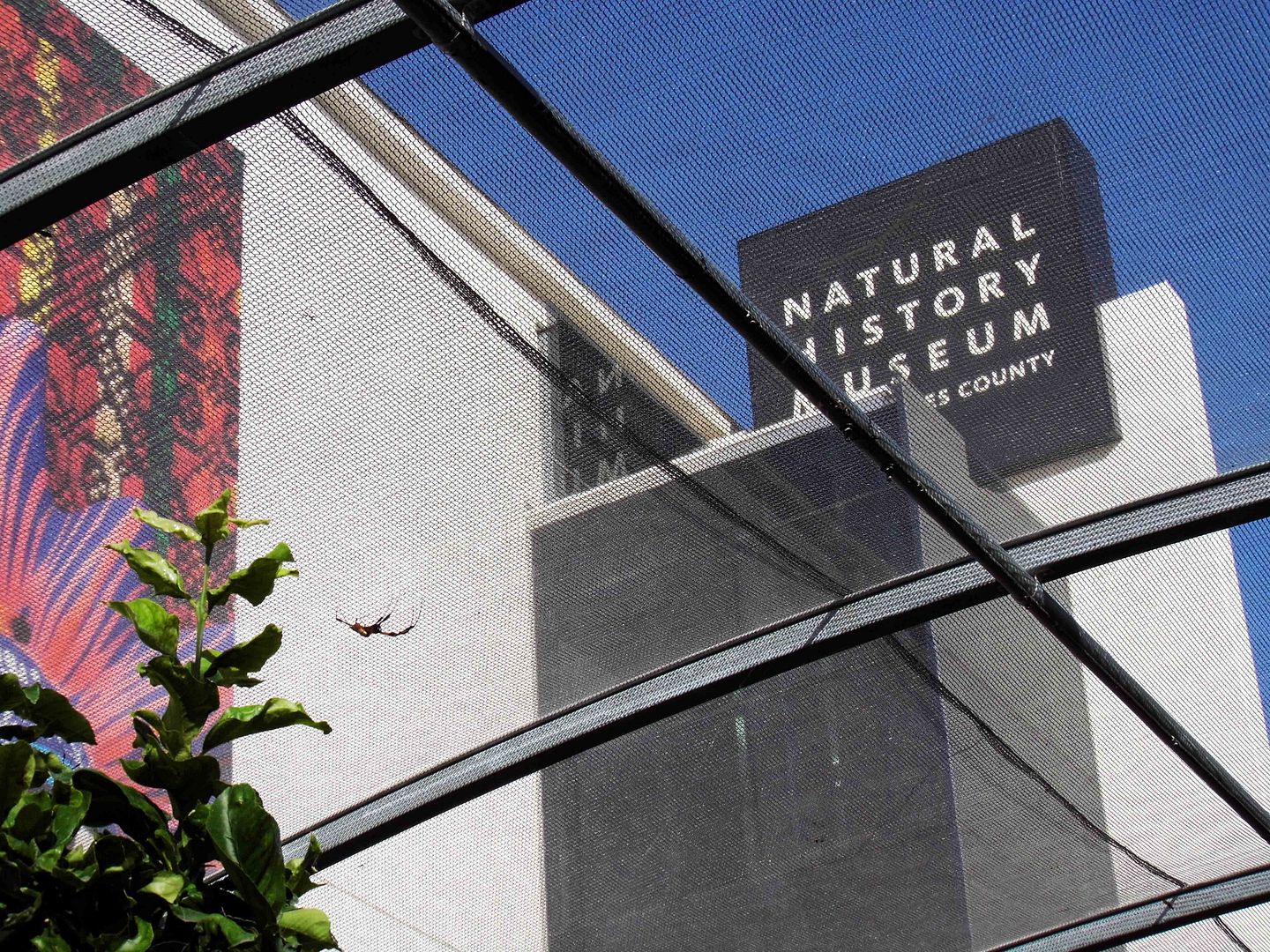
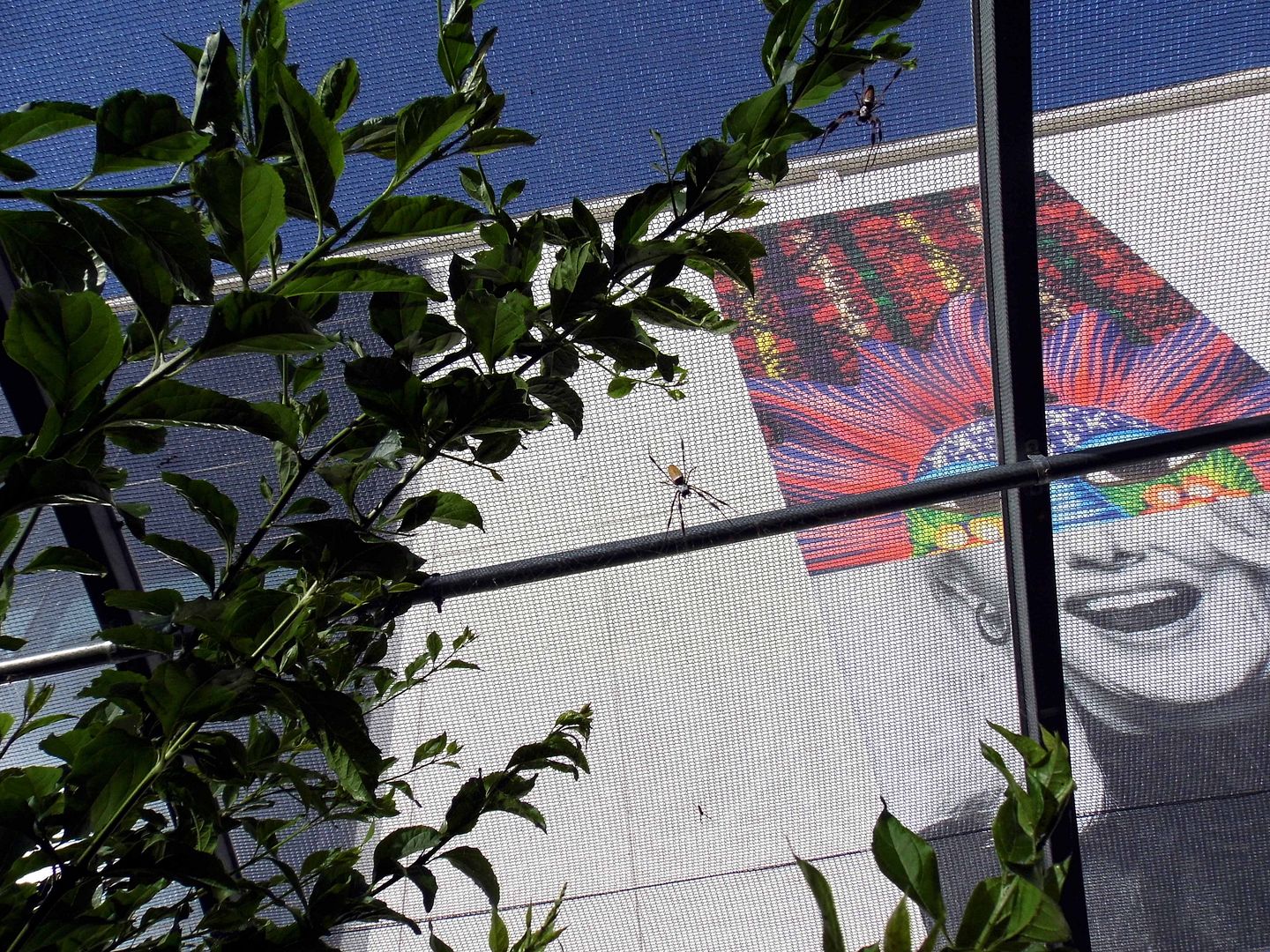
Photo Essay: Among the Spiders at NHMLA

A few weeks ago, I popped over to the Natural History Museum of Los Angeles County in Exposition Park to visit its Butterfly Pavilion.  

 
It seemed like a good excuse to support the museum—and to meander through its nature gardens, which I hadn't remembered ever doing before. 


Of course, I've been on an epic failure of a search for monarch butterflies for the last couple of years. But when I visited the American Museum of Natural History's Butterfly Conservatory in New York City several years ago, I absolutely loved it.  


In the Pavilion, I had better luck at spotting some spectacularly colored butterflies, some of which even fluttered pretty close to me—but I got no good photos to show for it.
 

But this past weekend, I returned to the pavilion—for its new exhibit of arachnids. 


Similarly to the Butterly Pavilion, the Spider Pavilion is an open-air experience that gets you up close with some creepy crawlies in an outdoor enclosure with just seven other visitors. 

 
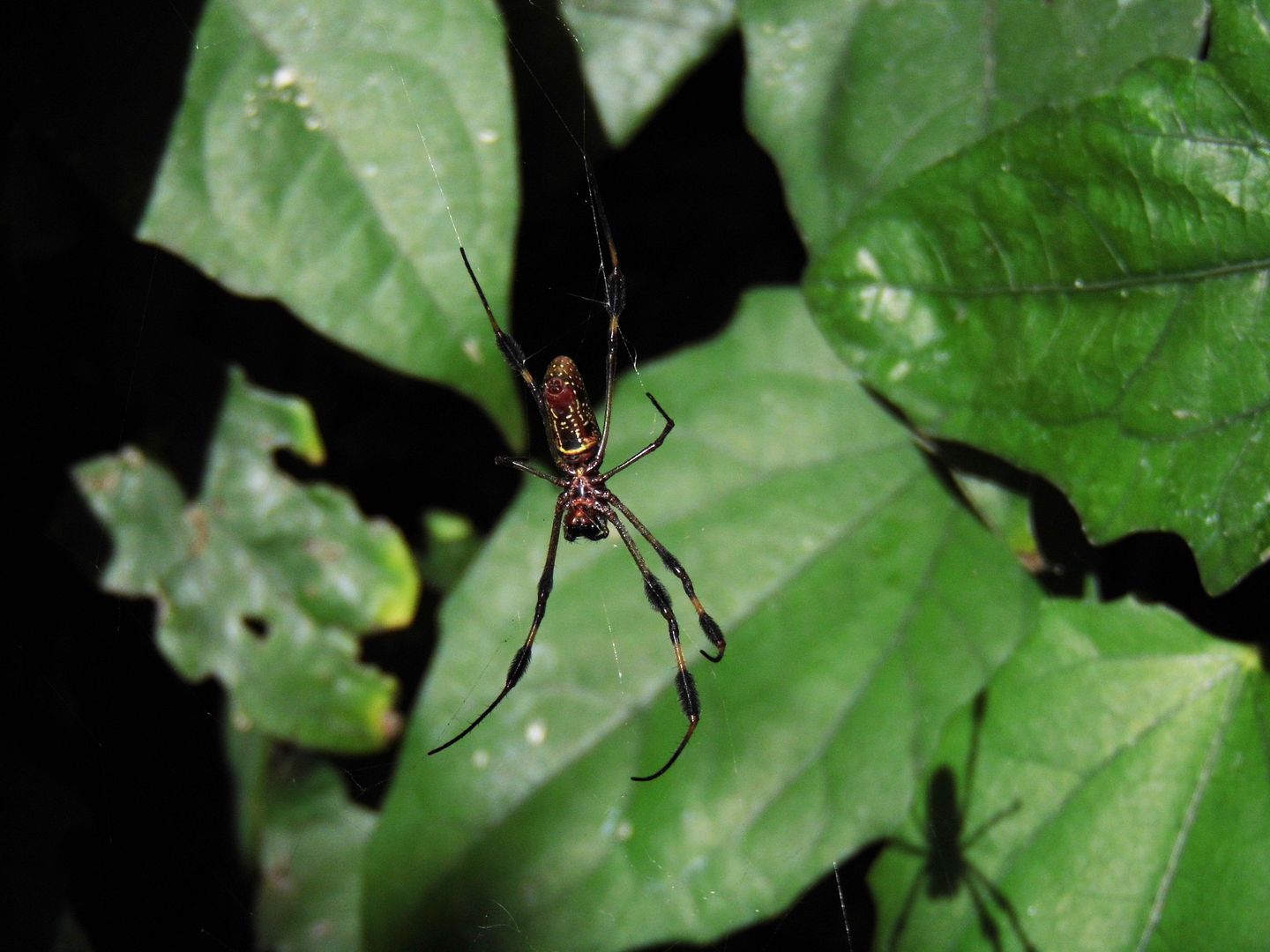
I'm not an arachnophile by any means—but nevertheless, I relished the opportunity to get up close and personal with several eight-legged species. 


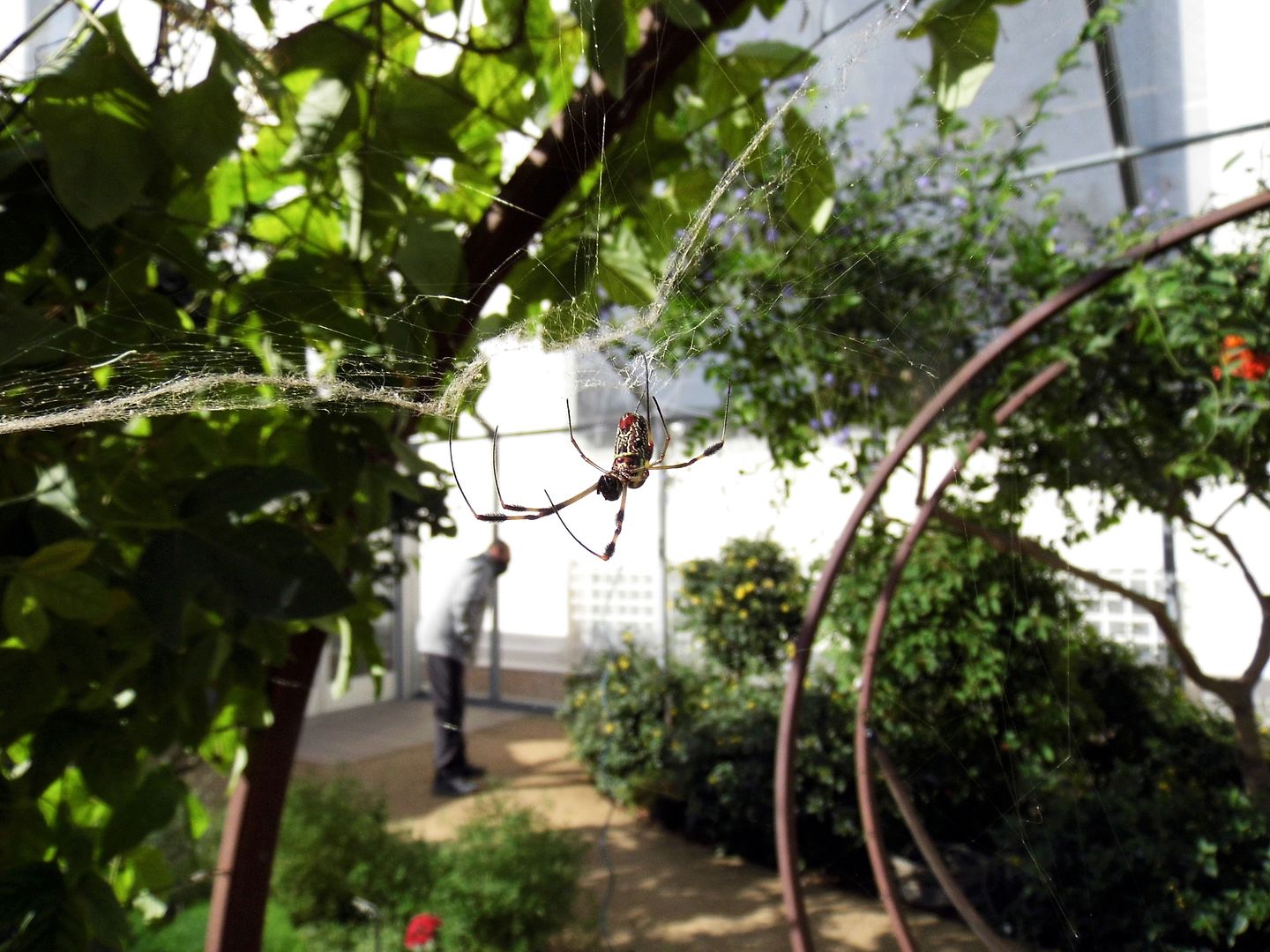
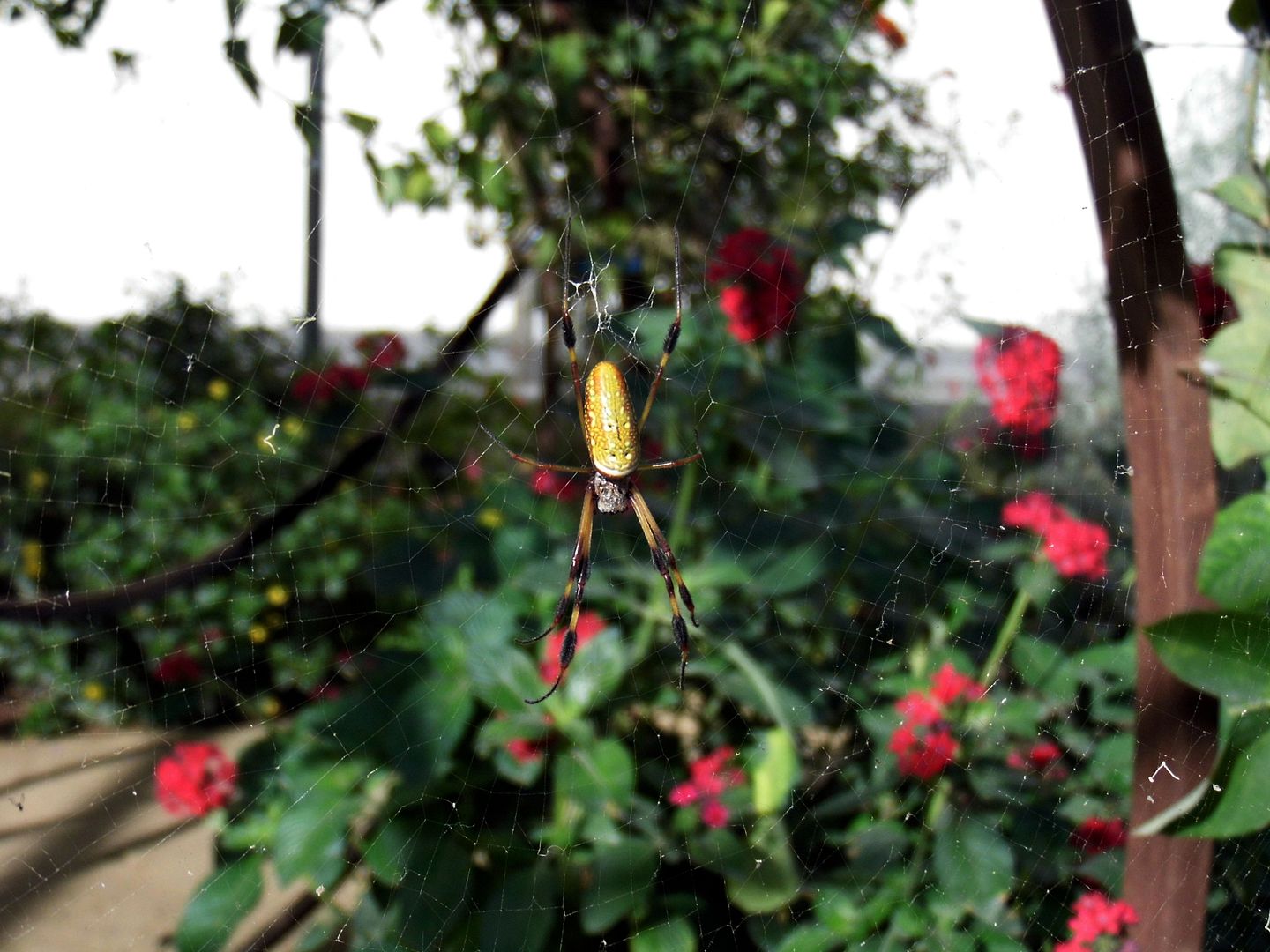
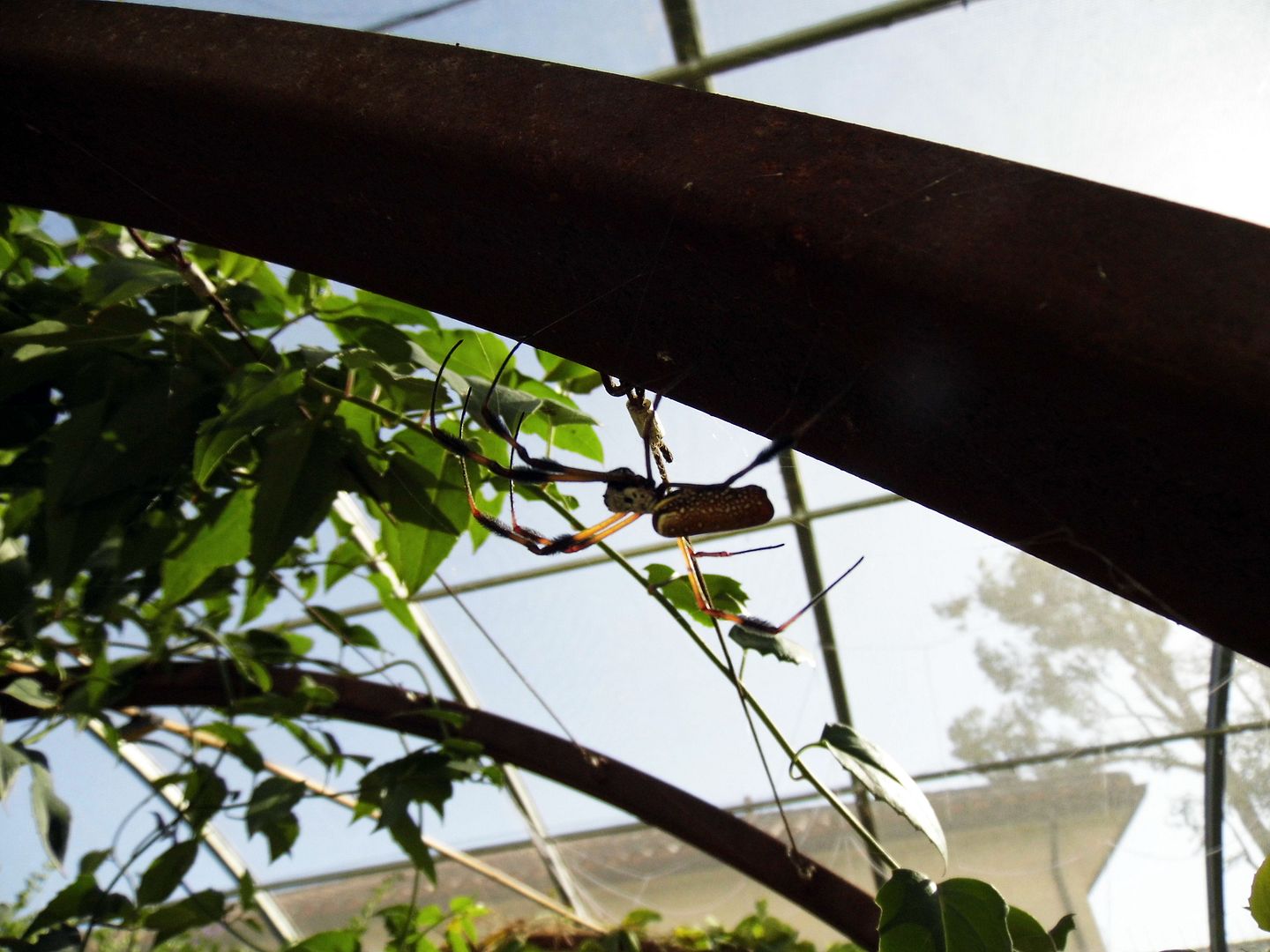
There were literally hundreds of orb-weaver spiders and the spiral webs they’ve woven (including my favorite, the spinybacked orb-weaver Gasteracantha cancriformis, unfortunately not pictured here)...

 
Plus other garden spiders, wolf spiders, jumping spiders, and God only knows what else. 


The spiders kept to themselves, snatching up a snack and laying egg sacs, holding on for dear life as the wind whipped their webs around. 

But I still would've liked to have been checked for “hitchhikers” before I left!
      
Related Posts:

March 18, 2019

Dispatches from the Butterfly Boom

This was supposed to be my year for monarchs.

I'd driven up north to Pismo Beach and Morro Bay this winter to see their migration.

But this year, there wasn't anything to see. The monarch population is down 80% or more.

What used to be millions of butterflies has been reduced down to thousands.

I didn't even see hundreds along the Central Coast. I barely saw a few stray individuals.

So my butterfly dreams were dashed—or so I thought.

And then after the wettest (or maybe second-wettest) winter seemed to draw to a close, a different butterfly came up to SoCal to visit from Mexico.


It looks like a smaller monarch, but it's actually the painted lady butterfly, heading all the way up the West Coast to Oregon (though some say they've seen them as far north as Alaska).

There are millions—or perhaps billions—of them making their way through Southern California.

They're not as picky as the monarchs are when it comes to feeding time. Pretty much all that's green and yellow and white and blooming and dripping with nectar will do just fine for these little ladies.

On Wednesday afternoon, I was stuck in stop-and-go traffic heading south on the 405, just past the 101 interchange, when I saw a mass migration of them literally crossing the freeway.

I don't know exactly where they were going, but it appeared to be westward—maybe towards the Pacific Ocean.

It was the one time I was glad that freeway traffic was just crawling, because I got to actually see them and enjoy them from behind my windshield.

And I didn't have to worry about any of them smacking into my windshield as I cruised at a steady 72 mph. They can handle car speeds of around 40 mph and actually catch the updraft—but anything faster than that, and they're toast.


We witnessed that this weekend driving along Borrego Springs Road through Anza-Borrego Desert State Park, rising up and over the Texas Dip, yellow pollen streaks splattered on the windshield and the front bumper.

First there was one painted lady caught in the car grill, still alive. We tried to free her, but I think we just made it worse.

Then there were two.

This is the reality of nature. Millions may be migrating, but none of them will make it the whole way.

Even if they survive the traffic, their adult lifespan ouy of the cocoon is just two to four weeks (not days, thank goodness!). They've got to mate and reproduce as much as possible along the way.

And when the caterpillars get their wings, they've got to continue the relay.

The sight is both heavenly and apocalyptic. It's an in-your-face display of nature that you don't often get to see. And when you hear stories about mass migrations of insects—plagues of grasshoppers, the cicada season—it sounds like a horror story.

But these butterflies are beautiful. And they go where the flowers are.

The sight of them together is quite moving.

It's heartbreaking, however, to know how doomed they are.

And then you wonder what the point of it all is.

Why go up to Oregon at all? Just for more food? What's the point of eating if you're going to die in two days?

Is it really just about the survival of the species?

Leave it to me to overthink something like this and not just enjoy the show.

When something so unusual happens, it's hard not to try to find meaning in it. Of course people throughout history have seen events like this as a sign from God.

For me, it's just another way that California keeps me guessing. Just when I think I get it and I've got the routine down, the game changes.

But frankly, I'm grateful for something so beautiful to chase (and document).

And I know their populations will be thinning out here pretty quickly, but the onslaught sure was nice while it lasted.

Related Post:
A Deer Sighting in the Valley of the Bears
Pinning It Down

July 01, 2018

Photo Essay: Endangered Species In a Disappearing Habitat, Under Naval Protection

"It's like this pretty much every day," Rick said as he was driving me back to my car at the Naval Weapons Station Seal Beach.


I'd just taken one of the monthly free tours of the Seal Beach National Wildlife Refuge (which more or less provides a necessary buffer zone for the Navy's weapons storage)—and in just three hours, the weather had gone from gloomy and dark to sunny and bright, breaking through the typical June gloom that we were just riding out the tail-end of.


Then again, I've come to appreciate the cool gloom of spring and early summer. After all, I'm a girl for all seasons.


And that meant the plants in the refuge's native garden were still blooming.


The California buckwheat had just begun to turn from white and light pink to rust.


The air smelled of flowers and not the fragrance of the sea.


Each of the plantings in the garden serves a purpose, whether to attract butterflies, birds, and other pollinators...


...or to provide habitat for cottontail bunnies, ground squirrels, and other rodents that the nearby birds of prey hunt for food.


Of course many of the plants there have culinary and medicinal uses dating back to the indigenous tribes that inhabited these tidal wetlands...


...like the California coffeeberry (Frangula californica), an antidote to poison oak.


And then, of course, there's the prickly pear cactus (Opuntia), whose fleeting blossoms are beautiful...


...and whose paddles (nopales) and fruit are delicious.


But although the garden is full of California natives, they're not exactly representative of the wetlands themselves. For that, you have to cross the train tracks of the abandoned right of way (once used to transport weapons from the ships at Anaheim landing, since replaced by trucks).


There, you'll find where Bolsa Avenue meets Signal Drive—inside the gates of the Navy base, though Bolsa Ave. used to provide a main thoroughfare to get directly from what's now Long Beach, through Seal Beach and into the rest of Orange County. That is, until the PCH was built, and the military took over much of our coastline and open spaces.


Now, Bolsa Ave. is the location of a box culvert that allows the seawater tides to come in from the Pacific Ocean and fill the mudflats on either side of the road, turning them into ponds.


The tidal pulses create a whirlpooling effect—and, over the course of six hours or so, raise the water levels dramatically.


This, in turn, creates some excitement among the marine life living in the mud...


...just a scoop of which reveals striped shore crabs, ghost shrimp, worms, bugs, and practically infinite invertebrates.


That gives the fish plenty to snack on, which in turn provides plenty of seafood for shorebirds like the great blue heron and snowy egret (which "fishes" with its yellow feet in the mud) to dine on.


When the tide ebbed later in the day, the shirebirds would have plenty more to fish for.


It's kind of a quiet time of year for migratory birds along the Pacific Flyway, which meant the native species—the terns, stilts, rails, killdeer, turkey vultures, and Belding's savannah sparrows—were the stars of the show. And surprisingly, we even saw one family of Canadian Geese (three juveniles, not yet fledged) crossing the street—probably in search of some freshwater somewhere, since they don't favor seawater.


While our ancient hunter-and-gatherer ancestors would come down to this salt marsh in the Anaheim Bay estuary to fish, the European settlers who drove them out brought with them an entirely different approach:  agriculture. They began to farm the shoreline (which was practically an artificial island of centuries of discarded shells and fish bones) by bringing in dirt and then planting crops.


The Navy changed all that with its weapons station—starting near the end of World War II, it was where weapons were not only stored but also manufactured, assembled, and tested. In fact, an artificial island that was used for rocket testing has since been covered in sand for use as a breeding sanctuary for the endangered California least tern (Sternula antillarum browni). (That doesn't, however, mean that all the contamination is gone.)


Since the official declaration of the area as a national refuge in 1972, the native pickleweed (Salicornia virginica) has been allowed to grow back, providing necessary habitat for the endangered western pygmy blue (Brephidium exilis), one of the smallest butterflies in the world (along with the El Segundo blue butterfly, Euphilotes battoides allyni).


So, what actually endangers creatures like these? Sure, there's predation—but no amount of red foxes could eat all the least terns without something threatening them first. (In the 1990s, all the red foxes in the area were trapped and killed to protect the birds, eradicating one species for the sake of two, I guess.) But the much bigger problem is loss of habitat from human encroachment.


The Navy wasn't the first to destroy the salt marshes in this area, but it certainly contributed to it. Fortunately, over the years it's allowed a lot of dirt that doesn't belong there to be hauled out. And it being a military base that's not exactly accessible to the public, it can prevent further damage and development from happening.

Because protecting us also means protecting our resources

Related Posts:
Basking in the Gloom at Bolsa Chica Wetlands
Damage Control
Photo Essay: Invasive Plants, Parasitic Birds, and Giant Stinging Nettle at Prado Wetlands

April 25, 2017

Photo Essay: Hatchlings In the Marsh

I'd been meaning to visit Madrona Marsh in Torrance ever since I first saw it on the map. But what finally drew me there was the promise of baby birds.


I knew that there had been some recent hatchlings spotted at the 43-acre preserve in the South Bay area of Los Angeles, but I didn't realize what a good birding spot it would be in general.


Right by the entrance, I spotted several low-lying lesser goldfinches, though they certainly weren't the only songbirds I heard.


It helps that there's plenty of vegetation for them to perch onto and hide in, like the dune lupine (a.k.a. bush lupine, or Lupinus chamissonis)...


...and clarkia...


...and, of course, poppies.


Although wildflowers in the vernal marsh (so named because the temporary freshwater pools are only wet in the spring, thanks to rainwater runoff) are already past peak bloom...


...I still spotted some nice yellow sweet-clover (Melilotus officinalis) and garland daisies.


And while the butterflies were out in full force, so were the bloom-loving bugs.


But I had come to this rare, undeveloped parcel of land (part of which was formerly an oil and gas recovery site) in a highly commercial area of the City of Torrance for birds...


...and, in my quest, I got sightings of house finches...


...female red-winged blackbirds (somewhat a misnomer, given their brown and white color pattern)...


...and, perhaps most spectacularly, male red-winged blackbirds.


I found them singing in thickets of reeds...


...and perching on black willows.


Madrona Marsh is literally across the street from Del Amo Fashion Center Mall, so it's prime real estate for developers. Over 90 percent of California's wetlands have been lost to development.


But environmentalists fought—as far back as 1972—to preserve and restore the marshland for native species that would make it their home as well as for non-natives that would use it as a stopover on their migratory paths along the Pacific Flyway.


In 1989, the open space was cleaned up, with over 200 tons of junk being trucked out. But it didn't officially open to the public—accompanied by a nature center—until 2001.


And now, coots are having babies. Mallards are having babies.


And breaking up the symphony of songbirds with their own unique cacophony are a flock of Canadian geese also starting their families...


...feeding and protecting their young.


These curious little darlings didn't seem disturbed by visitors to their cordoned-off area...


...and went about their business, exploring the marsh around them...


...having a bite to eat...


...and snuggling up tight.


But soon enough they were roused to move on...


...and take a little swim...


...and glide off into the sunset.


I suspect that I only saw a fraction of the bird, insect, and plant life that's at Madrona Marsh (not to mention the mammals and reptiles I never saw, and the amphibians I only heard).

This "island habitat" had been hit hard by the drought, but now it seems to have recovered.

At least for now, it's nice to know that its residents are safe, and visitors are welcome—just like in Los Angeles, and just like in California.

That can all change so quickly, though.

Related Posts:
Photo Essay: Birding Anza-Borrego During the Superbloom
Damage Control
Photo Essay: Invasive Plants, Parasitic Birds, and Giant Stinging Nettle at Prado Wetlands
Basking in the Gloom at Bolsa Chica Wetlands