Search

Showing posts sorted by relevance for query Chumash. Sort by date Show all posts

October 11, 2012

The Steep Climb Through the Cave of Munits to Castle Peak

I hadn't been doing much hiking over the last few weeks. I'd come up with every excuse not to hike - it was too hot, I didn't have a car, gas was too expensive, I was too tired - all of which were true, but as much as I missed hiking both physically and mentally, it was easier to keep not hiking than to hike.

At least by myself.


Fortunately, I had the opportunity to join a group last weekend on a cave hike in the Santa Monica Mountains. Although the group leader promised it would not be a "difficult" hike, he did warn that if we were afraid of heights or not used to hiking boulders, this might not be the hike for us.

Of course, me being who I am, that meant it was exactly the hike for me. At least if I freaked out or fell, I wouldn't be alone.


Castle Peak is imposing, even from the street...


...though it's an easily graded hike through the Upper Las Virgenes Canyon Open Space Preserve to get to the Cave of Munits, which you hike through to get to the ridge trail that leads you up to the peak.


The cave still holds great significance to the Chumash Native American people, who occupied the area for 10,000 years.


It's a steep - and difficult for me - climb up into the cave, requiring fellow hikers lifting me by my upper arms as I scraped knees, shins, and elbows across the rock.


Once inside the cave, it's easy to imagine a Chumash shaman making the cave his home and never leaving.


Through the other side of the cave, the elevation gain isn't tremendous to get to Castle Peak, and the entire distance of the hike is only about three miles, but it is a tightrope walk along the ridge trail, and requires lots more climbing.


At the top, there are stunning 360 degree views of the canyon and the West Hills community below.


If I hadn't been with a group, I wouldn't have been able to complete the hike. At times, the trail seems to disappear altogether. On the rocks, you have to find just the right spot to rest your boot toe and dig in your fingers, and sometimes you need someone standing next to you to tell you where that spot is.

At one point, I had to ask Mike, our hike leader, "Am I going a normal way or a crazy way?" because it just seemed too vertical and too difficult to be right. He assured me, "That's normal way."


Sometimes, you need a hand to hold onto, or a boost from behind. Sometimes, you just need to know that hand is there if you need to use it.


But for all of the difficulty I had - with the strain of climbing, the sweating, the scraping, the vertigo - completing the hike was a satisfying personal challenge for me. At no point was I way in the back of the group, or (God forbid) left behind (see: the Bridge to Nowhere). I didn't quit, nor did I consider quitting (though a small group of fellow hikers did quit).


And thankfully, we didn't have to go back down the way we came, skipping the passage back through the cave in favor of a gentle trail through a dry, brittle prairie...


...where we laughed and smiled and congratulated each other on a job well done.

Three hours later back at my car, covered in dirt, sweat, scratches and bruises, I was ready to conquer the world.

To Like Avoiding Regret on Facebook, click here.

September 04, 2012

Photo Essay: Before Malibu Was Malibu

[Last updated 8/13/20 6:02 PM PT—some minor edits to text and layout]

Malibu is now known for its scenic beaches, active surf, and imposing mountains whose rocky soil gives rise to enough grapes for an entire wine industry to spring forth. Vista-seeking celebrities and socialites have flocked there since parcels were first leased to the public in the late 1920s (and still populate what's now the gated community of Malibu Colony).

But before that, Malibu secured its place in Southern California history in surprising and fascinating ways: the former native Chumash settlement became a sprawling rancho operated by May K. Rindge and her husband Frederick, who purchased it as the final owners of one of the last Spanish land grants.

Frederick preserved the integrity of his land by warding off the encroachment of the Southern Pacific Railroad with the construction of his own tiny, private railway. After his death, the Widow Rindge couldn't prevent the future Pacific Coast Highway from being built right down the middle of her prized rancho, which she was now running.

And so the pristine beachfront property, once known to the Chumash as Humaliwo ("where the surf sounds loudly"), evolved into present-day Malibu.

The Adamson House, situated at what was the center of the rancho, was originally built in 1929 not only as a vacation home for May's daughter Rhoda Rindge Adamson and her husband Merritt Huntley Adamson, but also primarily as a showcase for the tiles from the factory May founded, Malibu Potteries.

Although it only operated for six years during the heyday of California's decorative tile manufacturing before burning down in 1932, Malibu Potteries established Malibu Tile in the world of ceramics, a legacy that is being honored by several modern tile manufacturers (e.g. Malibu Tile Works, Catalina Classic Tile Co., Malibu Ceramic Works, Native Tile and Ceramics).


Neptune Fountain

But there is nothing like the original. And so, on the beach by the Malibu Lagoon at the mouth of Malibu Creek, the Adamson House stands as a reminder of what Malibu once was.


Designed by architect Stiles O. Clements with a number of Moorish influences in the Spanish Colonial Revival style, the house features decorative elements derived from Islamic art.


The original paving stones are still set in the courtyard...


...and both the interior and exterior of the house resemble a combination of a castle...


...and a ship.


There's even a turret.


But while even the windows are ornate in their design...


...including some stained glass...


...the real attraction of the Adamson House is the tile.


At the front entrance, a cacophony of broken tile pieces confuse evil sprits at the doorstep (which apparently can only travel along straight lines).


There are tiles everywhere - both inside and out - and in every style offered by Malibu Potteries at the time, including the distinctive cuerda seca style of keeping the colors from running by outlining them in black (a technique also seen in art of the Islamic world) and the cuenca method of depressing the pattern into the clay so the colors would sink in and not run into each other (also seen in Spanish tile).


Unfortunately, photos are not allowed inside the house...


...but there are plenty of tiles to be seen outside...


...lining every fountain...


...on every patio...


...and even at the poolhouse and pool...


...to which you need a docent to give you access.


The pool, with its stunning ocean view, was constructed by combining decorative and utilitarian tiles...


...those immediately surrounding the pool's edge having a non-slip surface.


The original wooden diving board still hovers over the honeycomb tile pattern at the bottom of the 10-foot deep end...


...as does the original ladder, which descends all ten feet down to the bottom.


It's really a shame...


...because the only light of day that the pool house ever really sees anymore is through a couple of original windows...


...and it's been a long time since any clothes hung off the rods in the outdoor laundry room.


In fact, although the Adamson House has been carefully preserved (including its furnishings, which were painstakingly catalogued and locked away during the years after Rhoda's 1962 death, after which the State of California leased the property to Pepperdine University), it really has not undergone any restoration. Amazingly, it doesn't seem to need it: The only tiles that really show any wear and tear  (despite many of them exposed to constant sunlight and moist air conditions) are those on the kitchen floor, presumably because of heavy foot traffic.


Among the historic relics outside the house along the rest of the property include an original railroad tie which was found nearby...


...the original greenhouse of Rhoda, who was an avid gardener...


...and a relic of original flooring from the burned-down Malibu Potteries factory, which washed ashore out of the Pacific Ocean.

The Adamson House's presence on Malibu Beach is now somewhat eclipsed by the surfers on Surfrider Beach, sportfishermen on Malibu Pier, affluents at upscale restaurants and shopping, and lots of cars passing by on the highway.

But if you look beyond the trees, behind the stone wall that marks the estate, you'll find one of the many treasures of LA's historical past.

Related Posts:
Photo Essay: Mosaic Tile House, Venice
Photo Essay: Tile House, Hollywood Hills

November 29, 2021

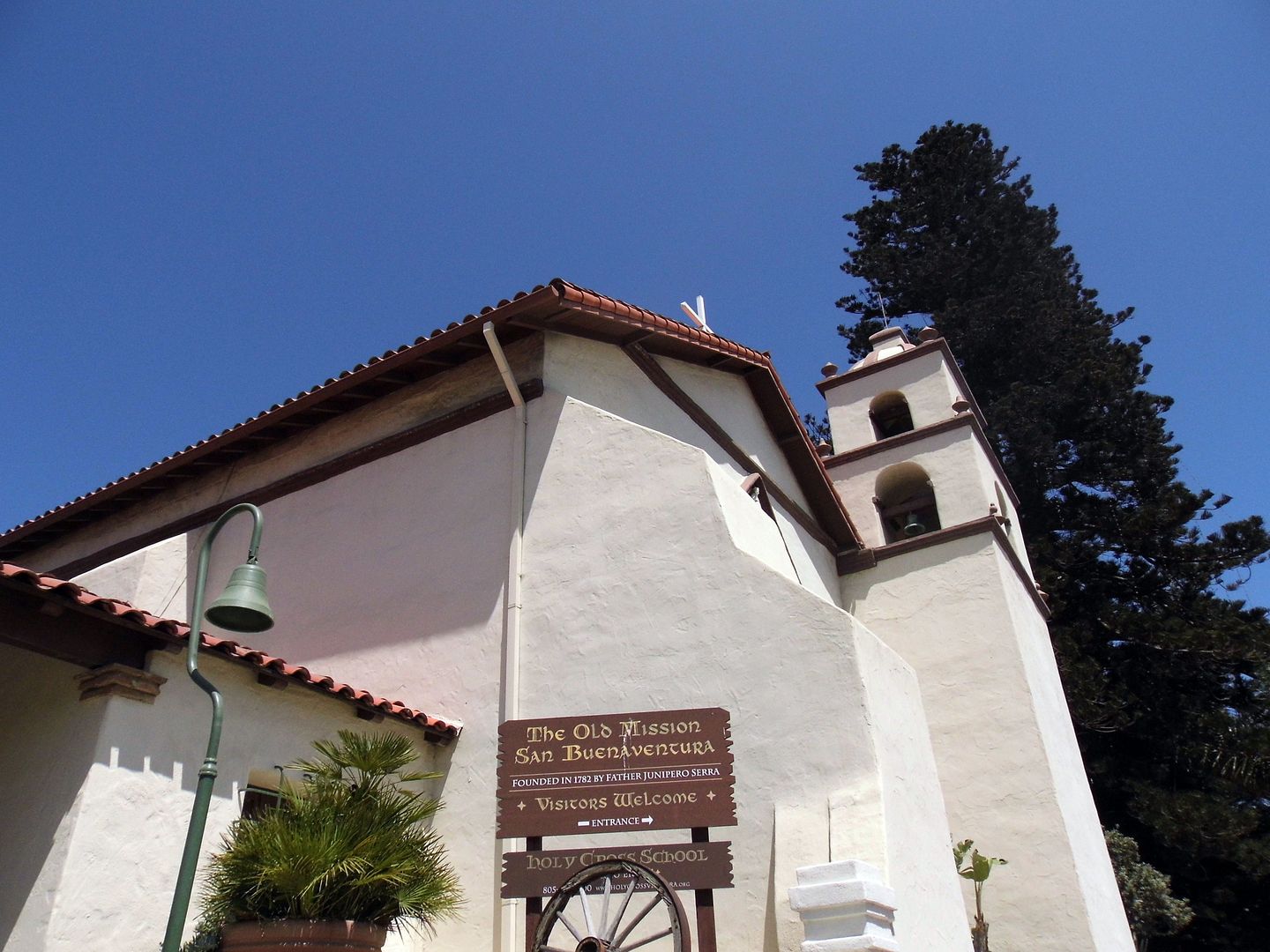
Photo Essay: Good Fortune Helped This California 'Mission By the Sea' Survive Seismic Surges and Secularization

Incorporated in 1866, Ventura is a 152-year-old coastal city along California’s Mission Trail.

 
In fact, the Old Mission San Buenaventura—in the city's historic downtown, just a little more than a half-mile inland from the nearest beach, as the seagull flies—really put Ventura, California on the map. 

November 08, 2015

Photo Essay: The Wildflowers, Oaks, and Rare Pines of Santa Rosa Island

On the Channel Islands—including Santa Rosa Island, where I got the chance to spend four days volunteering for the National Park Service—the climate can be so variable and unpredictable that the wildflowers get confused.


Case in point: there were some California poppies that had sprouted their orange and yellow blossoms in October, because the weather made it seem to them like it might be February.


But there's another wildflower on Santa Rosa Island that has to work a little harder: the island phacelia, a variation on the purple wildflower that I'd seen amongst the poppies in the Antelope Valley during spring.


It turns out that our voluntourism wasn't just about hard labor, but also science. Biologists, botanists, and ecologists working for the NPS or the USGS have been figuring out ways to bring native plants back after being torn apart by the sheep, cattle, feral pigs, deer, elk, and horses that once roamed—and chewed up—these fields over the last 250 years.


But it turns out that phacelia thrives in soil that's been somewhat disturbed—but just not too much. So one of our jobs was to rake the field where the phacelia is supposed to grow, clearing out all the dead grasses, and disturbing the soil just enough to maybe allow the rare wildflowers to sprout up.


The native plants aren't the only endangered species on the island. There's also the island fox, which was brought back from near extinction through a captive breeding program. The last of the captive foxes were released back into the wild in 2008.


And now, you can't leave your shoes or your pack out unattended because, as we were constantly reminded, "the foxes will get it." Apparently they'll not only steal your lunch, but also your stuff. And they're not shy around humans—they won't run away as you approach, which we saw first-hand when we were hauling our yard equipment back to the trucks. Arms full of scissors and tarps and a rake, I couldn't scramble for my camera when I finally spotted one of those adorable foxes—the only one I saw over the course of my trip.


Pretty much the entire shoreline of Santa Rosa Island is protected, surrounded by a total of 11 marine reserves, including our lunch stop, Carrington Point. Santa Rosa Island was once the site of quite a bit of abalone fishing, an industry the Chinese established in 1860. But, like all the other natural resources at Santa Rosa, the abalone was overfished, and harvesting was outlawed—ending the industry. Now, fishing and commercial harvesting are only allowed in two conservation areas.


The focus of our four-day trip, however, was on the flora—not the fauna. And some of the work was utterly backbreaking, blistering the tender tissues between fingers even through heavy duty work gloves.


At one point, the 4WD trucks that were carting us volunteers around the island stopped abruptly in the middle of a debris-filled road on a hill. "We're here?" we asked. And so began the task of taking bags woven out of coconut husk fiber, filling them with rocks, and hauling them into the flatbed of a truck.


This was one of those moments when you think to yourself, "I chose to do this?!" Hauling sacks of rocks is the kind of thing you see chain gangs do in old movies. It feels akin to indentured servitude.


But then, in the oak grove near the top of Radar Peak (where the old Air Force station was, also known as Signal Peak), we could see what the rock bags were being used for: to trap and divert flooding waters to reduce erosion and foster growth of new plant life (which would hopefully anchor the soil so it wouldn't blow or wash away so much).


This oak grove was what brought us to the island. It was the elusive "Cloud Forest," named because of the fog that rolls in when the air and temperature are right, and that gets trapped in the trees, creating rainforest-like conditions.


The regular exposure to high moisture in the air is what makes so much moss grow around the trees....


...and so much lichen grow on the tree trunks.


It's hard to imagine what these hillsides must've looked like when the Chumash were here, before the Russian furriers came, before the Spanish conquistadors and missionaries brought measles, before the ranchers were given the island as part of the land grant system.


Using limited materials (like repurposed fence posts that we pulled up from old ranch boundary lines) and somewhat makeshift engineering and hydrology principles, we were trying to right nearly two centuries of environmental wrongs. We amateurs were pounding fence posts, fitting together cut pieces of wood like a jigsaw puzzle, and trying not to staple-gun ourselves before we lost the light of day.


At least we stayed long enough to see the fog start to roll in.


At other times, working on the island felt incredibly civilized, intellectual, and even nurturing. I could imagine living here in the housing, where Park staffers typically stay for eight-day stretches.


I wanted my daily office to be the Foxpital, where scientists bring foxes for regular physical examinations and testing to make sure they're healthy and disease-free.


I found it so meditative to dig my gloved hands into the soil, irrigating it with a hose, turning it over in a wheelbarrow like a giant vat of cake mix or bread dough.


I loved planting the tiny seeds harvested from the fallen cones of bishop pines, trying to grow new seedlings. It was the first time I ever felt like I could be giving life to something. I've never felt closer to our planet, and I could not imagine experiencing the Channel Islands by any other means.


I was also going through a massive allergy attack, though it didn't occur to me that it might be the pine seeds (as I get sneezy around sappy Christmas trees) until I reached the grove of a different evergreen: the Torrey pine.


It was our last assignment of our trip, and I was not about to miss out on anything, so I braved the forest and dove into those tree branches, collecting mature needle samples....


...from cone-bearing trees...


...and got sap all over myself.


But my nose was already running non-stop, and this was my chance to get up close and personal with the rarest pine species in the country, which only grows in two places: here on Santa Rosa Island and in La Jolla, CA.


Hence why the scientists are keen to study them.


Santa Rosa island is so incredibly diverse, from oaks, pines, and cypress to Island red buckwheat, Island red paintbrush, Island monkey flower, and everything in between.


No one really knows what the island looked like when the Chumash were here, before they were killed off or driven out. But give it a few years, and if we're careful, and we work hard, maybe we'll be able to return the island close to its natural condition.

As our volunteer leader said, "Humans are the biggest invasive species there is."

I have to think our restoration project is doing more good than harm, but I wonder what would happen if we could just leave something alone, for once....

Related Posts:
Photo Essay: The Island the Ranchers Left Behind
Photo Essay: Wildflowering at Poppy Peak
Photo Essay: Torrey Pines Beach Trail's Unstable Cliffs
Photo Essay: Dangerous Bluffs