Search

January 25, 2019

Photo Essay: A Rustic Stagecoach Stop, Bypassed By a Freeway and a Giant Bridge

Time may march on but here at the Tavern we do our best to stop it.
Menu from Cold Spring Tavern, Santa Barbara, California


No one really has to travel the San Marcos Pass anymore. But you'll want to divert off Highway 154, if only just to visit the old stage stop of Cold Spring Tavern, just 15 miles north of Santa Barbara in Los Padres National Forest.


Along what is now known as Stagecoach Road, Cold Spring Tavern was a stagecoach stop starting in 1868, while the old stagecoach route was still being built by the Santa Barbara and Santa Ynez Turnpike Road Company (under the leadership of Llewellyn Bixby)...


...and the Chinese immigrants it employed (and housed in the Road Gang House, still located on the site).


Beside the Gang House, there's a old ore car that was used at a silver and gold mine from the early 19th through the early 20th centuries.


Construction on the route was completed by 1870—and the horse-drawn stage line once carried both passengers and mail between Santa Barbara Mission and the mission's farm in Rancho San Marcos, now known as the Santa Ynez Valley. But once motor vehicles took over—and the pass had been paved—the stage line ceased operation in 1901.


Nowadays, this former stage stop is a time capsule of the late 19th century—between both its original structures and some relocated ones, like the Ojai jail, built in 1873. It was relocated to Cold Spring in 1959 after the City of Ojai wasn't interested in keeping it as a historical artifact. So, the two-room pokey was trucked over the Santa Ynez Mountains and parked here (making it "the only jail that ever crossed a mountain," according to Ripley's Believe It Or Not).


Several railroad packing crates were bought in 1941 and brought here as well—including one that was used as a tavern from 1942 to 1947, until the owner at the time decided to move in and use as her residence. She named it "Blisshaven"—which loosely translates as "safe harbor" or "peaceful home."


Completing the compound are relics from the ghost town of Gopherville, which got plowed with the widening and shoring up of the Gaviota Pass, a popular route through the Santa Ynez Mountains that led to the Santa Inés Mission.


Whatever was left of the town's buildings were relocated here after 1951.


Although there are some original structures, much as changed over the years—either from trees falling or annexes being added on as the use of the property changed from restaurant to rest stop to hotel (1893-7) to restaurant, with some ownership changes and vacancies in between.


The antiques/gift shop used to be a bunkhouse for the "mudwagon" drivers, who usually had to stop to switch out their horses.


The San Marcos Pass was so steep that every stage stopped at the tavern (then known as the "Cold Spring Relay Station") to add two more horses to the team.


Near it outside, there's an old piano of unknown origin or date...


...played only perhaps by the black-and-white cat who roams the roadhouse grounds.


If you want to go back to the earliest days of Cold Spring Tavern, people have guessed that the oldest original structure might've been built back in 1860.


Although no one really knows, every effort has been made to run and maintain the tavern in a historical state. It helps that members of the Ovington-Wilson family have been in charge continuously since 1941.


Old West blacksmithing and artifacts abound—even if they came from somewhere else.


The tavern still uses gas lanterns...


...even though it's had electricity since 1954 (which you can see illuminating the buggy wheel chandeliers).


To fully understand the undertaking that making this journey once was, you've got to take a side trip to Cold Spring Canyon Arch Bridge—by going a bit further down Stagecoach Road to view it from below or crossing it while driving on Highway 154.


Constructed for $2 million in 1963 as a “shortcut” to span 700 feet across the gorge below and circumvent the sharp curves of the old route, the welded steel bridge was cheaper than the original CalTrans plan to build Highway 154 by burying the Tavern under 125 feet of dirt.


At 400 feet above the canyon floor, it’s the highest arch bridge in the country and the highest of any bridge in California.


Standing under this massive marvel, you can see its reinforced concrete foundations up close and gaze up at the clean, geometric lines of its girders, trusses and arches. The result is a bridge that’s efficient, structurally sound and aesthetically pleasing.

And yet after it opened to traffic in 1964, so many motorists ended up bypassing Cold Spring Tavern altogether. Now it takes a special trip, instead of just pulling over on impulse.

But the detour is worth it.

Photos above from both 2017 (sunny) and 2019 (overcast).

Related Posts:
Photo Essay: Along the Old Stagecoach Pass
Photo Essay: Chasing Phantoms in Malibu Creek State Park
Photo Essay: The End of the Old West at Gilman Ranch
Photo Essay: The Healing Powers of Highland Springs

January 22, 2019

A Deer Sighting in the Valley of the Bears

On the drive up to Morro Bay, on a particularly cold and wet Thursday, I stopped by Pismo Beach to check out the monarch butterfly grove.

And there were, indeed, monarchs there. I saw two individuals flying.

But the rest of them had already roosted for the night.

It was 3:30 p.m. and about 52 degrees F out. They can't really fly under 55 degrees, so they were huddling with each other for warmth, way high up in a eucalyptus tree.

When they're like that, they look like dead leaves hanging from the branches. I only knew they were there because of a fellow visitor with a laser pointer.

Disappointed, I left in defeat—but I consoled myself knowing that there were other winter nesting sites farther north in and around Morro Bay, where I'd be the rest of the weekend.

The next day was gloriously sunny—and with a couple hours of daylight left, I headed to Sweet Springs Nature Preserve in Los Osos. My birdwatching guide that morning had pointed me there instead of another local monarch grove, promising both butterflies and birds.

But after spending about an hour among the eucs, I'd only seen one flying monarch and no birds (though I swear I heard an owl).

I was batting zero.

Defeated once again, I returned to my car and opened the driver's side door. When I looked up to get in, I saw something straight out of a Disney movie.


It wasn't just one black-tailed deer, nibbling on the crazily green grass. There were four of them.


I tiptoed toward them to get a better look and maybe snap some photos—and while they did notice me, they didn't seem to mind.


I kept my distance, so they trusted me enough to even turn their backs on me.


At least one of them was a juvenile, maybe two or three. Maybe they're too young to fear humans. Maybe they just knew I didn't pose a threat to them.


So they snacked and roamed, making occasional eye contact with me in between as I not-so-stealthily followed them around.


Los Osos may have been known historically as the "Valley of the Bears," but local miners killed the last bear long ago.

Maybe the town should consider renaming itself Los Ciervos.

Related Posts:
Photo Essay: Sea Otter Spotting in Morro Bay
Photo Essay: In Search of Tule Elk

Photo Essay: In the Pink at the Madonna Inn

[Last updated 12/25/19 11:07 PM PT—photos added]

*All photos by the author except where noted.


Photo: Cory Doctorow via Flickr (CC BY-SA 2.0)

"This must be documented," I've found myself saying a lot lately. The sense of urgency surrounding my time in California has waned, but not by much.


And after realizing it would take me a half-dozen years to get back to California's Central Coast, I figured I'd better make this most recent trip count.


So of course, since I was staying in San Luis Obispo for the Morro Bay Winter Bird Festival, I had to return to the Madonna Inn (though I was staying about three miles down the road at the Motel 6).


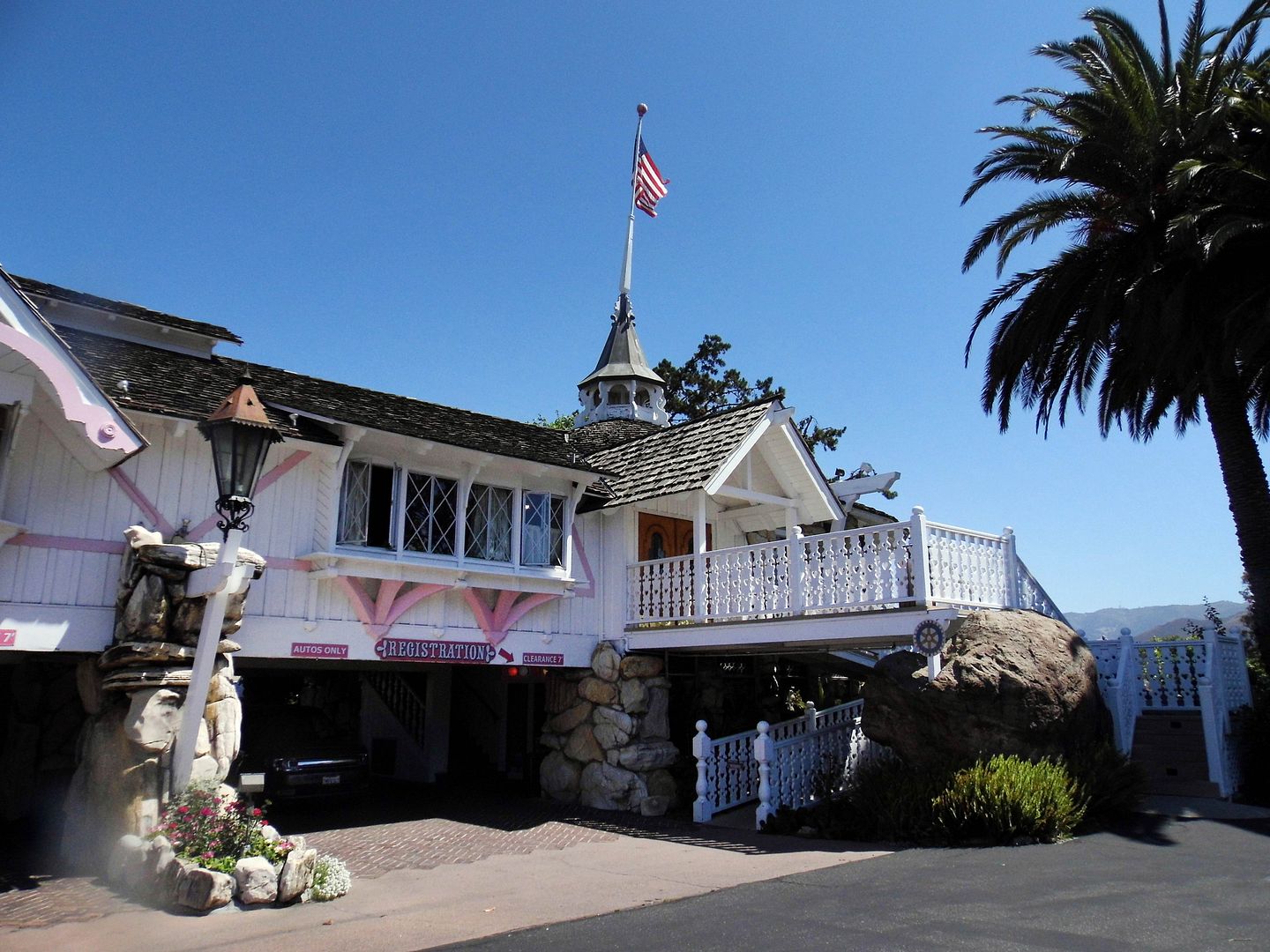
Built by local rancher Alex Madonna and his wife Phyllis in 1958 as a motor lodge with a whole lot more panache...


...most of the Madonna Inn as it stands now dates back to the late 1960s.


A fire had wiped out most of the accommodations in 1966—and Madonna, having made his fortune in construction, simply rebuilt (again, without the help of an architect).


Only after he replaced what was lost in the fire, he kept going.


The Madonna Inn became so popular that he continued to expand the guest quarters to encompass three separate buildings and a total of 110 rooms...


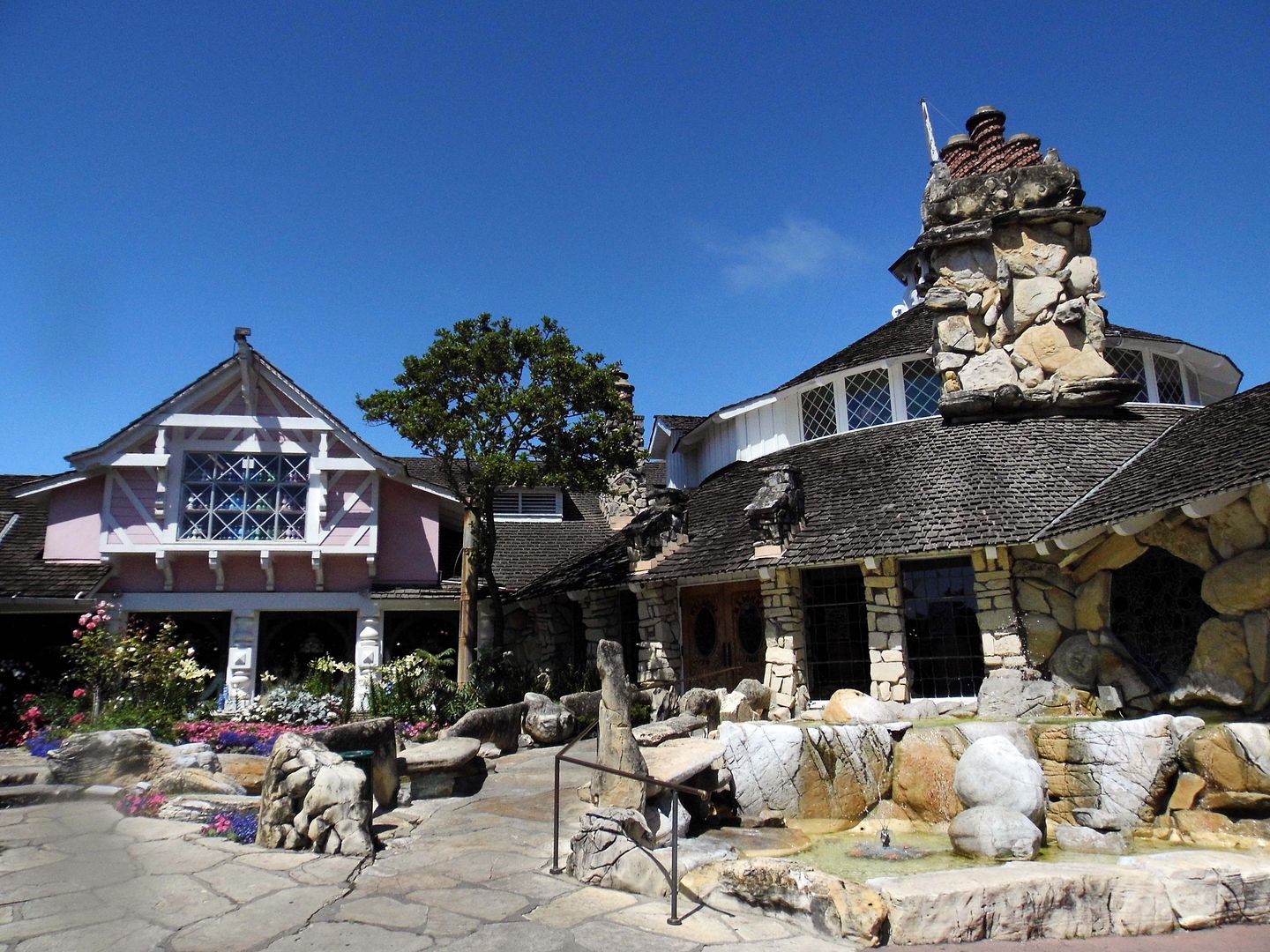
...in addition to the check-in/reservations office and "Round Room" and attached dining establishments (built circa 1960).


At the top of the hill (the lower eastern portion of Cerro San Luis Obispo, one of the Nine Sisters of the city), there's Building One—with its spiral staircases and storybook railings and flamingo pink golf carts that give just a teensy glimpse of the opulence that lies inside each of the uniquely deco-ed guest rooms, each with their own theme (chosen by Phyllis).


Loosely based on the design of a Swiss chalet, the Madonna Inn is a kitschy roadside attraction made of local rock during the day.


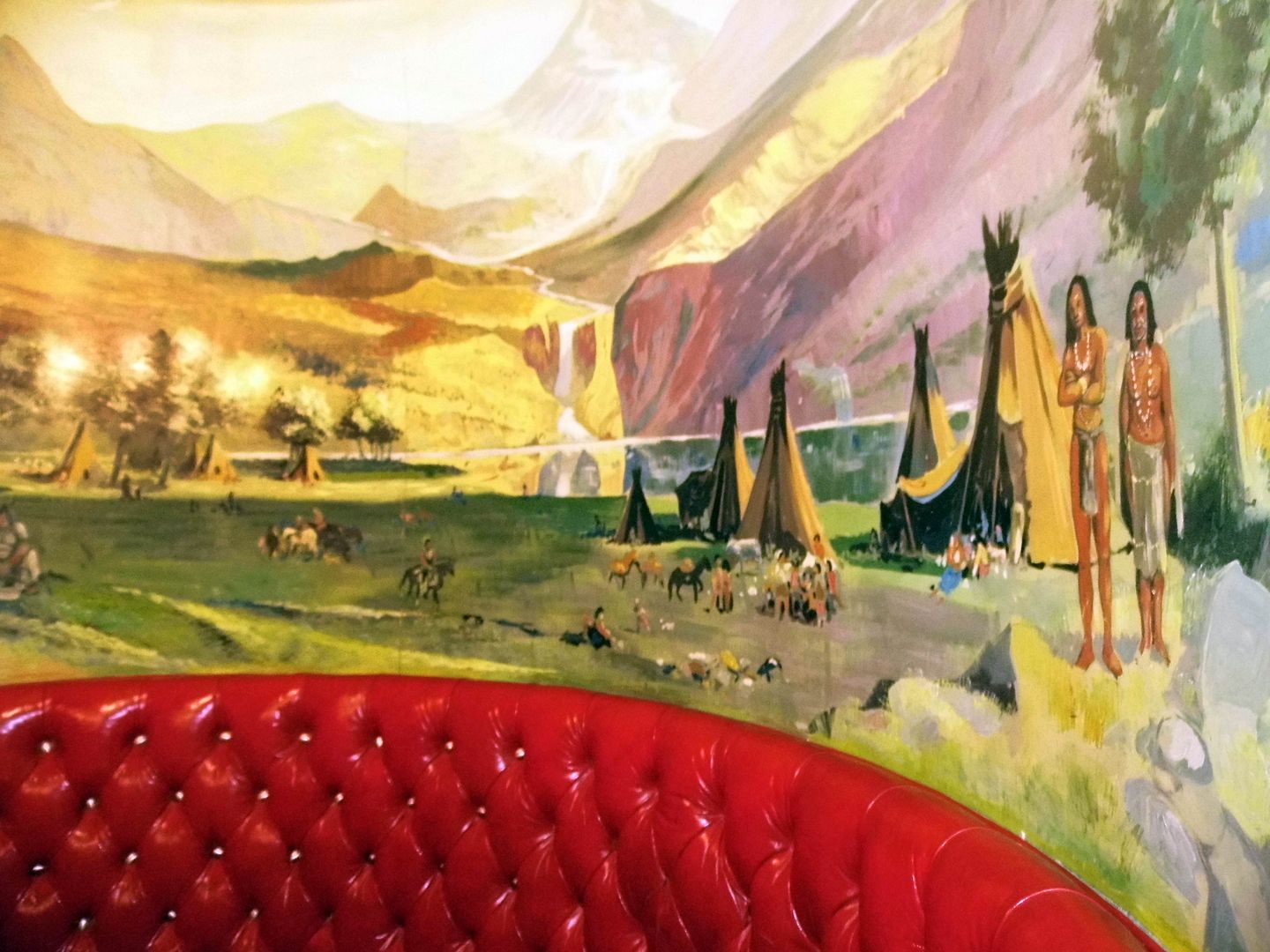
It features a renowned bakery and breakfast and lunch spot, the Copper Cafe, where you can dine in a booth lined with painted murals depicting California history...


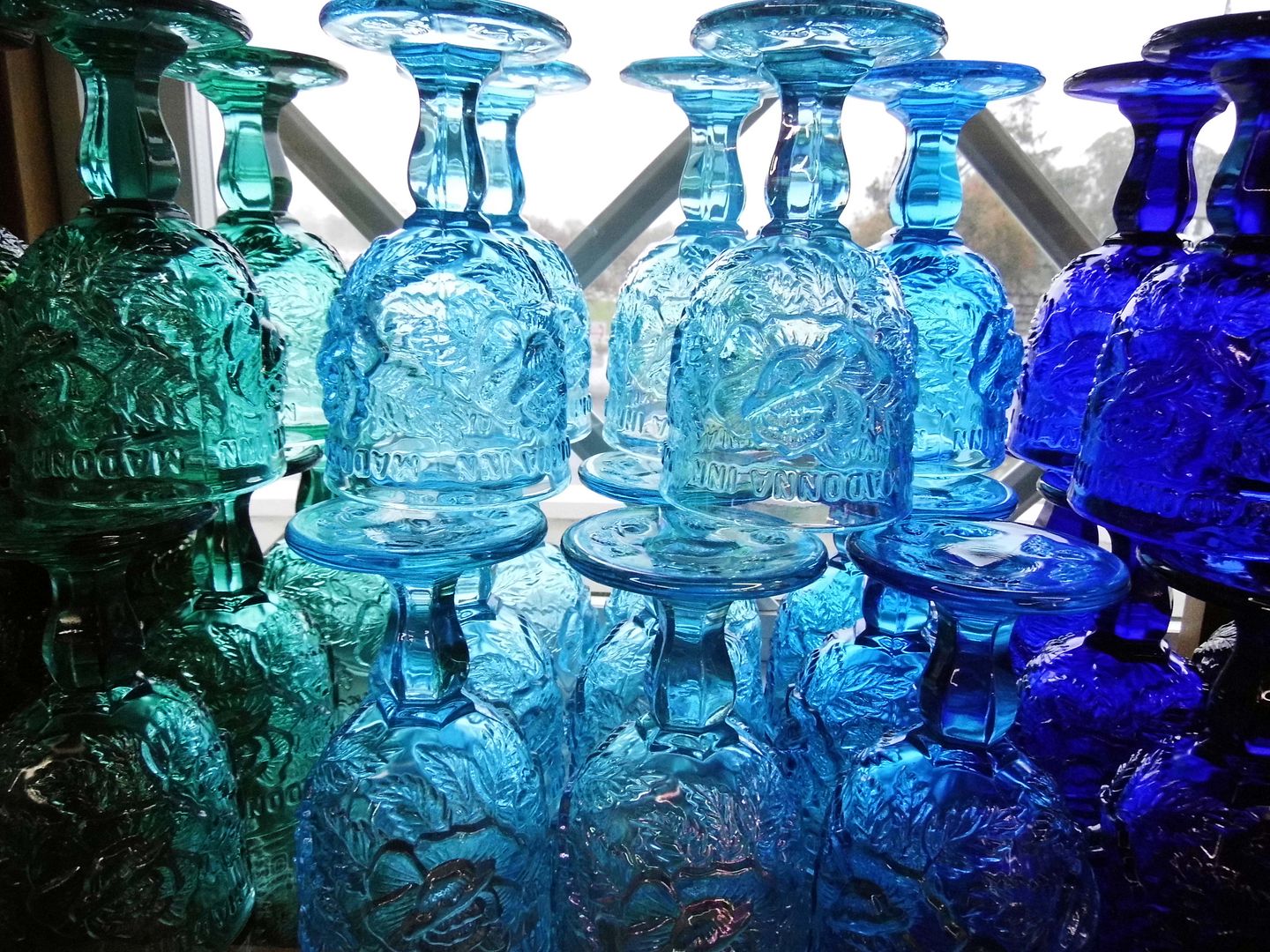
...and drink out of glass goblets that come in every color of the rainbow (not just pink).


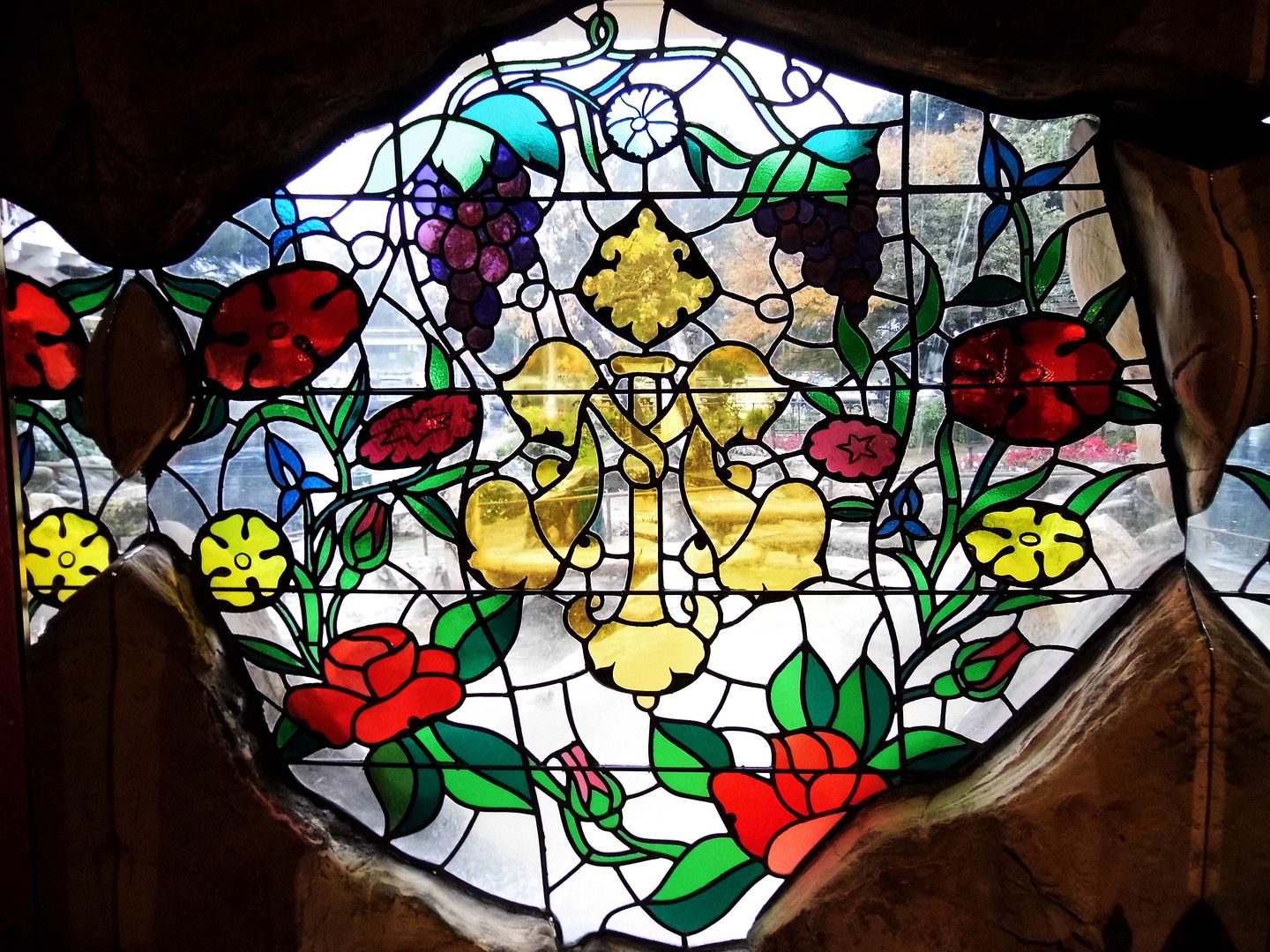
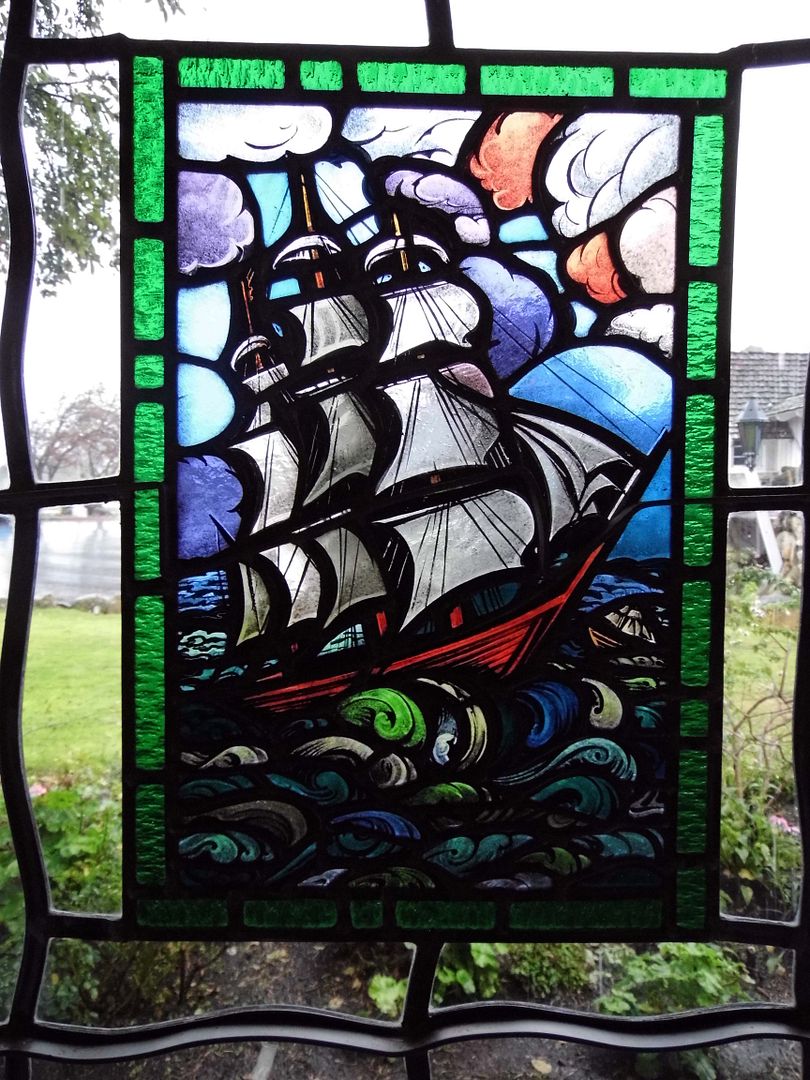
During daylight is the best time to admire the custom leaded glass windows that enclose the dancefloor, dining room, and lobby...


...with more historical depictions.


But at night, The Madonna Inn simply sparkles. And it's quite the destination even if you're not spending the night.


The lobby is adorned with a gleaming bronze bust of Alex Madonna, of course...


...as well as seraphim...


...and cherubim.


One such cherub beckons you to approach a staircase heading downstairs...


...past the painted portraits of Alex and Phyllis Madonna...


...for a tasting of some local Central Coast wines.


More of these little baby angels point the way upstairs along a white marble balustrade to the gift shop, where you can splurge on various pink wares (including goblets).


It's all angels, wine, and roses at the Madonna Inn.


At the Silver Bar Cocktail Lounge, you can order any number of pink cocktails—from the Daisy Mae (kind of a tequila sunrise, with house-made raspberry syrup) and the Flora Dora (a raspberry gin mule) to the Raspberry Gimlet (above).


Perched upon a pink leather stool, above a red carpet festooned with pink roses...


...you can admire the work of Bavarian wood carver Alexander Zeller, one of the many artisans hired to provide custom woodworking for the Madonna Inn.


In the outrageous Gold Rush Steakhouse...


...you can dine in a hot pink booth under the branches of a gold tree that stands more than 16 feet tall and nearly 30 feet wide...


...as you sip a quartino of pink wine...


...and, on a Saturday night, listen to the swinging stylings of The Rose Garden band.


When they're busting out big band classics like "Sing, Sing, Sing" or "In the Mood"...


Photo: Waifer X via Flickr (CC BY 2.0)

...it's hard not to get up and jump, jive, and wail yourself out there on the dancefloor, even if you don't know exactly the right moves, and even if you don't feel like dancing with a partner.


If you leave at night rather than staying in the Safari Room, Austrian Suite, or the room with a carousel horse suspended from the ceiling, a neon stagecoach with a galloping team of horses will send you on your merry way to wherever you lay your head.

But if you can get a reservation early enough and can afford the nightly rate, it sure is a more complete experience to wake up and shower in one of those crazy rooms.

Related Posts:
Photo Essay: Low Visibility Hiking at Bishop's Peak
Photo Essay: An Inn for Presidents, Padres, and Patron Saints
Photo Essay: Haunted Accommodations In A Silver Mining Ghost Town