Search

October 18, 2016

Photo Essay: Hammargren Home of Nevada History (Updated for 2022—Permanently Closed)

[Last updated 5/6/22 8:26 PM PT—The Lonnie Hammargren Museum closed in 2017 when two of them homes went into foreclosure and many of the museum items were sold at auction. That same year, Amber and Mike Softing purchased the complex and are in the process of converting it into Pacific Crest Manor. See bottom of post for new photos of the street-facing façade.]

Some people like to do stuff, and some people like to have stuff.

And if they've got enough storage space, they get to have a LOT of stuff.

Such is the case with Lonnie Hammargren of Las Vegas. As a former lieutenant governor of Nevada, he's managed to collect monumental pieces of the state's history and put them on display in his home as a museum.

That is—a museum for him and his wife that only opens to the public once a year.


I, however, recently managed to weasel my way into a private tour of the place. I arrived a little early—and my friends were late—so I got to see the neighborhood looky-loos slowing down as they drove by the stark white behemoth glaring out on the quiet residential street of the Pacific Crest subdivision.


The moment Lonnie walked outside to greet me, he was mobbed by a truck full of dudes who seemed to appear out of nowhere. They were asking for tour information, and they were asking to have their photos taken with him.


And it wasn't because of Lonnie's history in politics. It was—and always is—because of the stuff he's amassed.


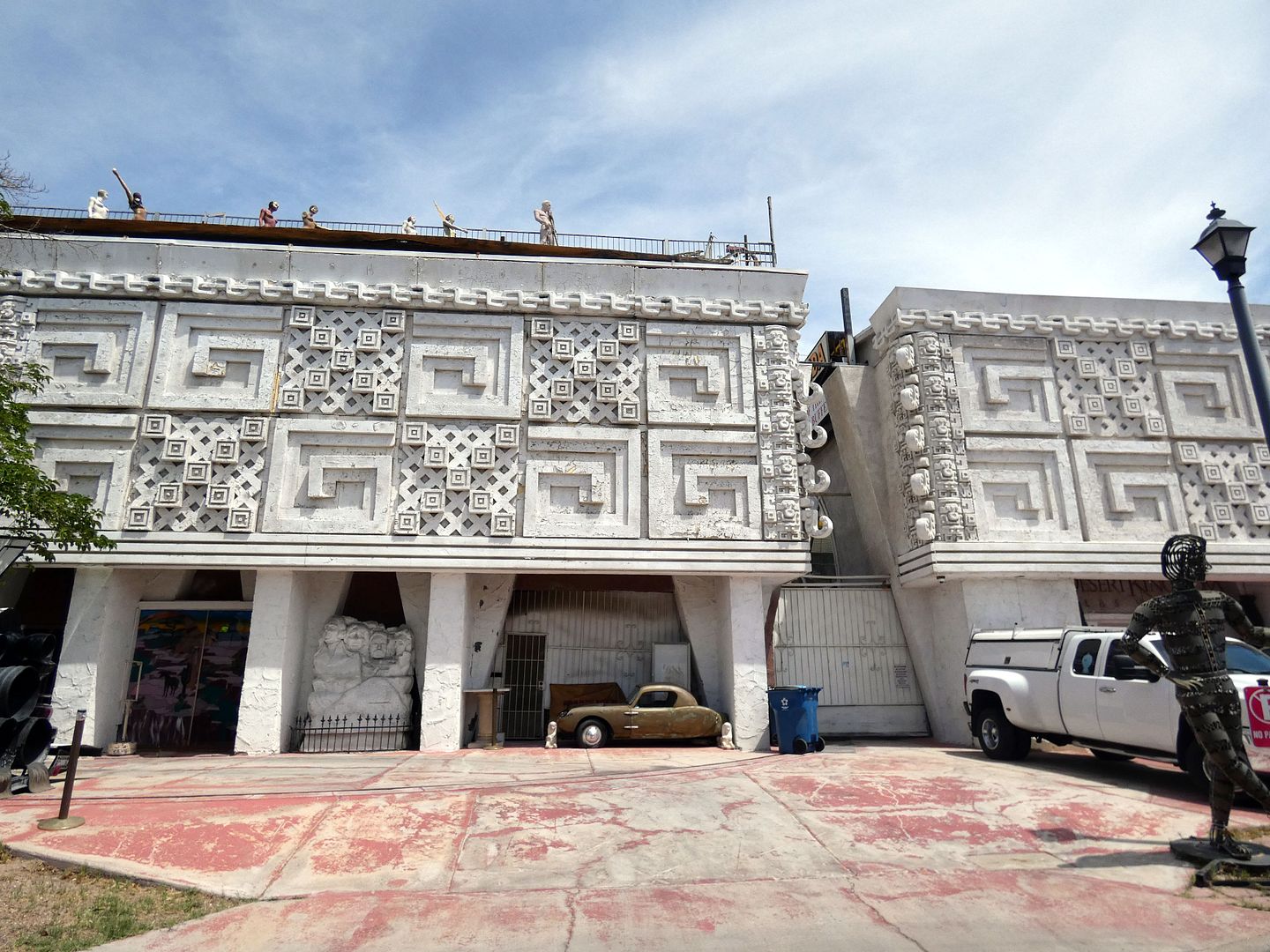
Of course, there's also the Mayan facade of the house, which Lonnie calls "Castillo del Sol" and which takes up three different lots, the third of which was purchased in 1989.


Then in 1971, Lonnie began collecting seriously, the same year he became licensed as a neurosurgeon—over 15 years before the start of his political career.


He worked for years as flight surgeon first in Vietnam and then for NASA, as flight surgeon to the astronauts. Later, he became the neurosurgeon to the stars of the boxing ring, mostly working to remove blood clots. His roster of former patients also includes a number of other athletes and daredevils.


The first room you walk into inside the house contains lots of Nevada state memorabilia (as does the rest of the property) and bears the flag of the micro nation Lonnie started (ever the politician).


It's also got one of Liberace's former pianos, a singing Hillary Clinton doll, a talking Elvis head, and various knick-knacks and Egyptian stuff.


Somewhere else in the labyrinth is an entire multi-level room devoted to religious artifacts and ephemera, on display under the stained glass dome rescued from the demolished Dunes hotel and casino.


Outside, up on the roof, it can be hard to make sense of what you're looking at—but Lonnie actually does have it all curated into sections, by category.


As he demonstrates some makeshift telescope contraption that somehow indicates the solstices and equinoxes in his "observatory"...


...you have no sense of your precise location until you catch sight of Ridgecrest Drive below.


Up there, you'll find the mannequins you saw from down there...


...including those who are perpetually riding a rollercoaster...


...that just happens to be the "High Roller" from the Stratosphere observation tower.


Is this The Planet of the Apes?


Is it the Rapture?


Nah, it's just Vegas, where old places are always being torn down and there's enough interesting stuff worth salvaging (without costing a thing other than hiring the crane to lift and drop it in).


The first house—the one on the right, the one he actually lives in—has a backyard that's a bit more manicured and subdued...


...but there's still room over there for a red chili pepper hanging from a tree, and for an elephant.

It seems like every year, Lonnie threatens that it'll be his last open house. After all, he turns 79 this year. Preparations must be exhausting.

But barring any rains (it's happened before) or complaints from neighbors (also happened before), Lonnie will open his house once again the weekend before Halloween in celebration of the 152nd "Nevada Day," commemorating when Nevada became a state on October 31, 1864.

And when Lonnie has lived his final day, he plans to be buried in an Egyptian tomb under the house (which is apparently legal in Clark County).

"But what happens to the house after you die?" I asked him. I wondered if it would be sold and then the new buyers would have Lonnie's corpse hanging out in the basement.

"Oh, I don't know about that..." he said, as he wandered toward the next thing he would show us (which was not, unfortunately, the sarcophagus).


According to Las Vegas Weekly and the Pacific Crest Manor website, Hammargren gifted many of his items to the Softings—which explainms why there's still some stuff out front and visible from the street. 
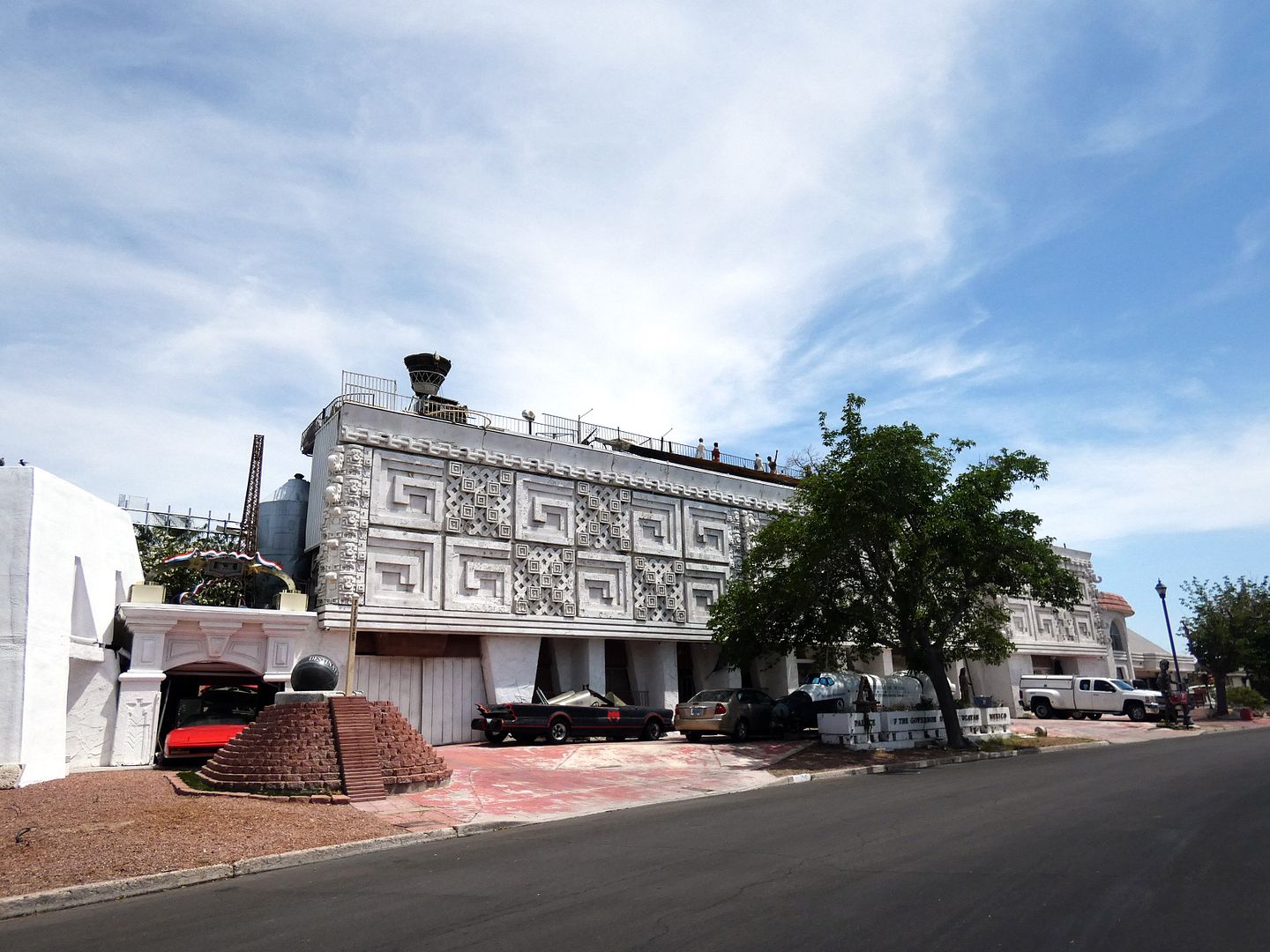
 
 
Reportedly, the couple is also trying to reacquire some of the items that were auctioned off. 
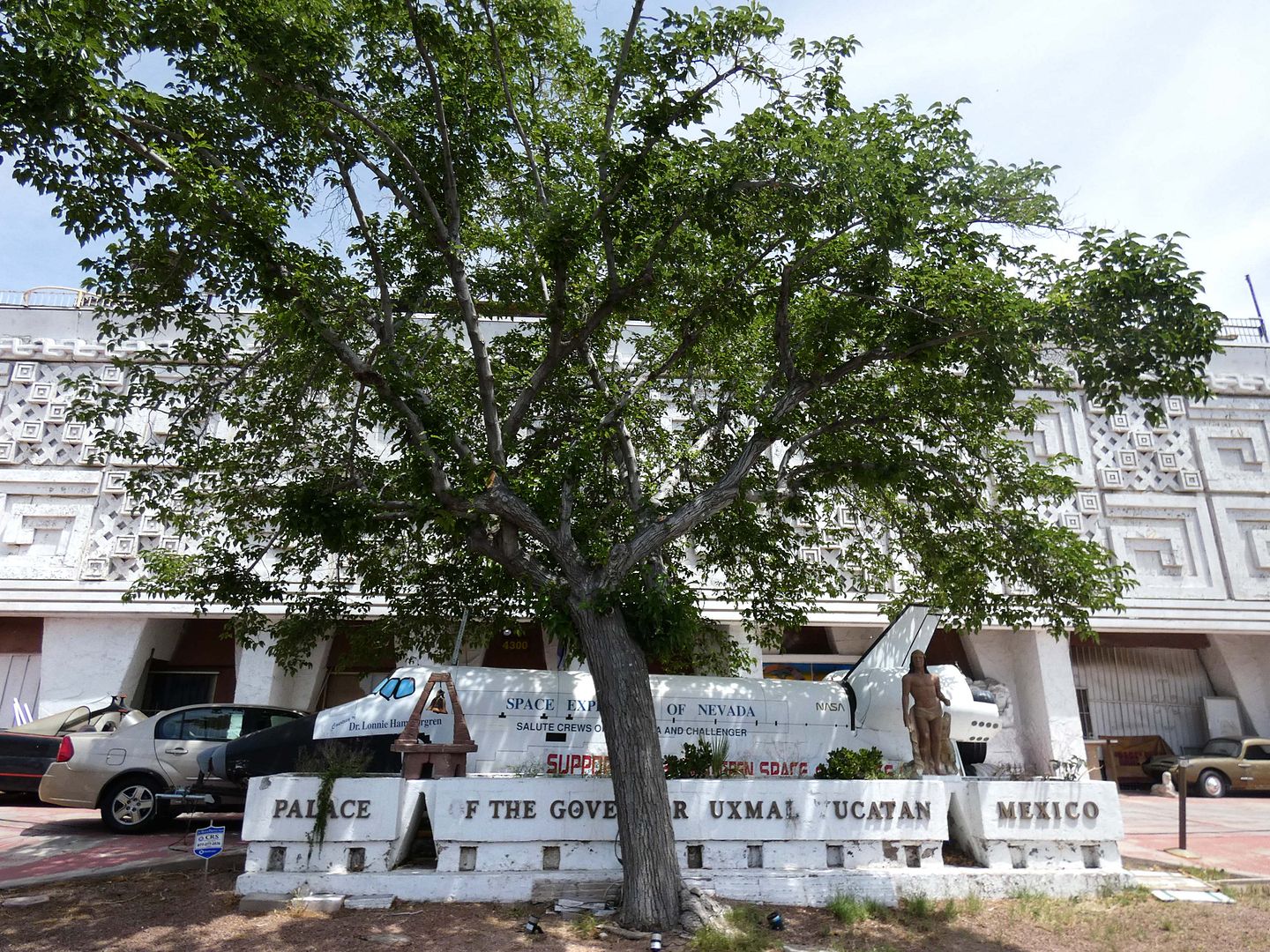
 
They also do some collecting of their own—but they don't plan to allow the public to tour their home. (Although the exterior has been opened for Halloween events, and they plan to throw parties inside.)
 
Signs posted outside read, "This is a private residence, Please do not disturb the owners or guests."
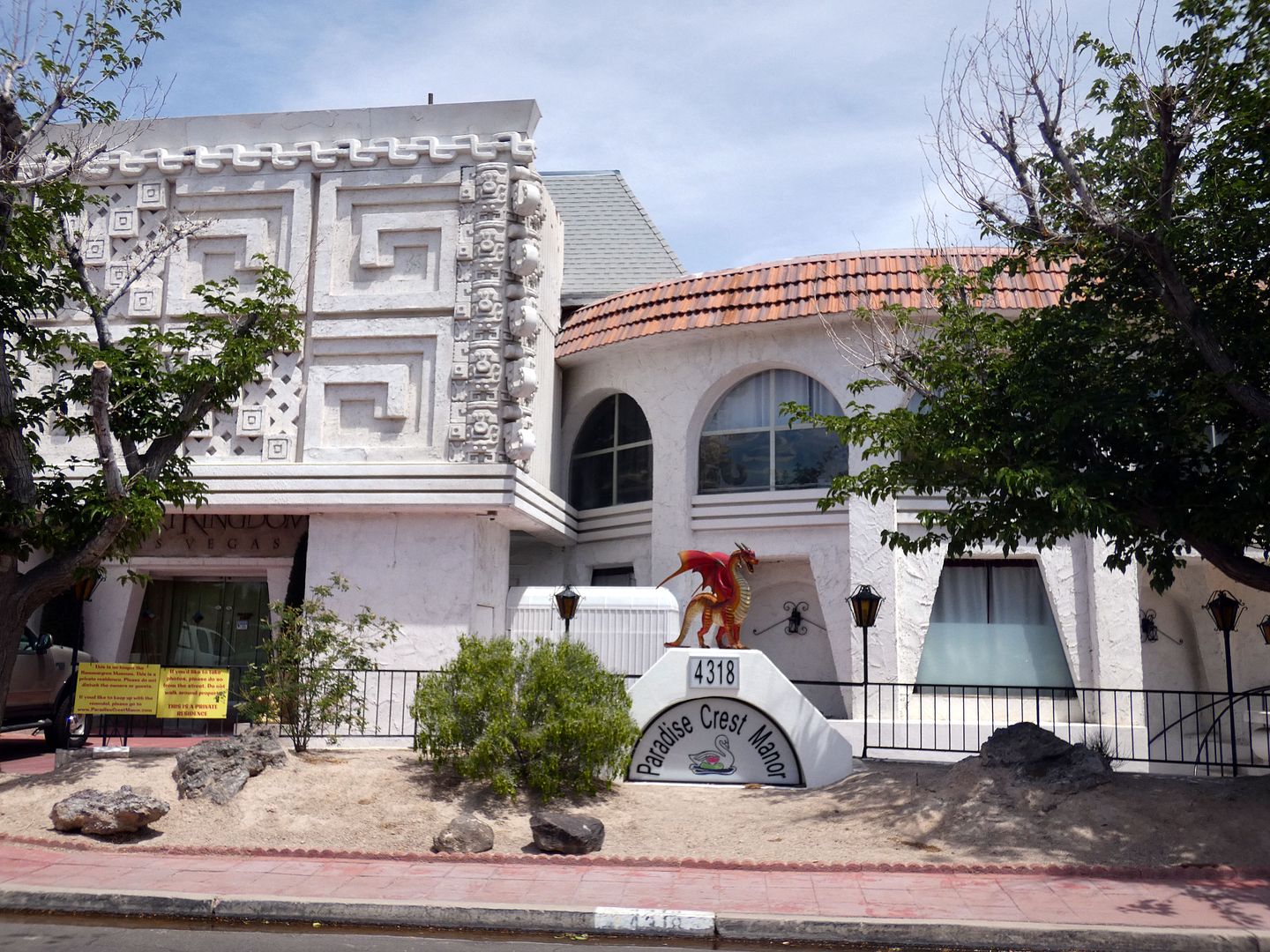
 
"If you'd like to take photos, do so from the street." (Which is what I did.) "Do not walk around property."
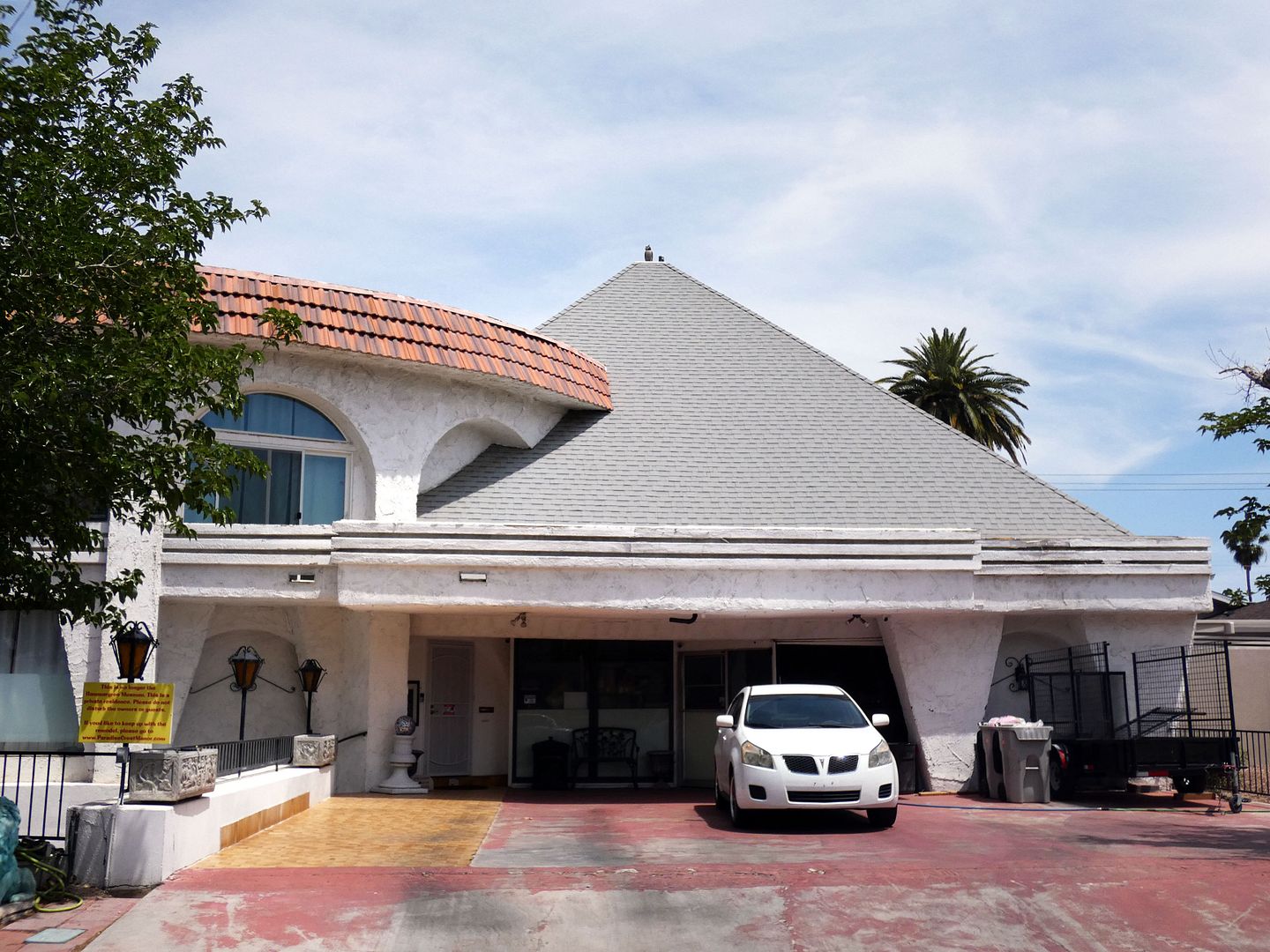
 
For now, Lonnie Hammargren is still alive and kicking at age 84—so his wish to be buried there hasn't been fulfilled (yet?). In fact, he still lives next door, in the house that was already paid off (and hadn't gone into foreclosure). 


To meet Amber and see the house as they transform it, watch the video above (shot in 2021).

October 17, 2016

Photo Essay: Taking a Toxic Spin Around Three Kids Mine

You might think that the city of Henderson, Nevada exists because it's a suburb of Las Vegas. And while that may have contributed to its continuing success, the reason it was ever formed in the first place was its natural supply of magnesium.


October 14, 2016

Photo Essay: Lost City of the Muddy Valley

I feel like I've only scratched the surface of Southern California in my five and a half years of living here—and I have just barely started to explore the Central Coast, Central Valley, and Bay Area.

So I find myself getting a little overwhelmed when I think about how much there is to see in our neighboring states of Arizona (which I just got to explore really for the first time) and Nevada.

There's so much there now—and, as it turns out, there's so much that's already been lost.

An area known as the Pueblo Grande de Nevada—which exists today as a series of adobe ruins that stretches for 30 miles—was once inhabited by the ancient Anasazi Indian Civilization as early as 300 B.C.


In fact, there's an entire museum devoted to the "lost cities" of Nevada that was created in 1935 to preserve their history, as they were slowly disappearing with the construction of the Hoover Dam (then known as the Boulder Dam), which opened the following year.


Archaeologists and historians scrambled to save what they could and relocate it to the museum. They were literally just steps ahead of the bulldozers that were clearing the way for the area to be flooded and turned into Lake Mead.


Ancient petroglyphs were recovered from a nearby canyon and moved here for display in the 1930s (although now we know that artifacts like this should never be moved from their original location). Starting with the "Basketmakers" and ending with the "Pueblos," ancient civilizations built communities here and even farmed. Relics from a pithouse were found on the site where the museum now stands that dated back to 655 A.D. Later, they lived in multi-room adobe structures.


And then all traces of human inhabitation vanished as of 1150 A.D. The valley had gotten its water from a muddy river fed by natural springs (hence the name "Muddy River Valley," now the Moapa Valley), but it's presumed that widespread drought drove the peoples of the Pueblo to settle elsewhere.


But there are really two layers to these lost cities of the former Pueblo Grande de Nevada: the first native inhabitants who left, and the non-native pioneers (the Mormons) who came to settle here.


There are a number of former Mormon towns in the Moapa Valley, but the first to be settled by the Mormons was St. Thomas, founded in 1865. It was to be a stopover point between LA and Salt Lake City, which was about five and a half hours northeast.


They thought the Muddy Valley was in Utah. They even paid Utah taxes. But when a survey in 1870 determined St. Thomas to lie within the state boundaries of Nevada instead, the Mormons promptly fled. They'd struggled to survive there with floods and drought and other harsh elements, but they actually returned to St. Thomas just 10 years later.


And then they abandoned the town a second time in 1938, when it became submerged by the waters of Lake Mead.


Today, Lake Mead has receded so much that the ruins of St. Thomas have been exposed once again.


Walking along the trail through the town is like walking on the sea floor. The ground alternates between the cracked alkali surface of a dry lake bed and the loose sand of a beach.


A lot of tamarisk seems to have grown here, with all that water.


A lot seems to have died here, too.


And it's not certain how long the remains of St. Thomas will be exposed. Maps haven't been updated to show the town or the trails. By all matters of GPS, you're standing in the middle of the blue lake when you're in St. Thomas now.


People say there's not much to see in St. Thomas anymore, but actually there's much more than you might expect...


...like multi-level houses and homes, a garage, ice cream parlor, hotel, post office, stores, and a school (above).


This isn't the first time that St. Thomas has reemerged from the depths of Lake Mead. Droughts in the mid-1940s, early 1950s, and mid-1960s also exposed the remains to curious onlookers.

But this is probably the longest that the ghost town has been exposed since it first vanished. It started to peek up out of the water surface of Lake Mead back in 2002 and has been playing a game of peek-a-boo ever since. But during my October 2016 visit, there was no water to be seen—anywhere.

Nature has a way of correcting itself. It can both consume and retreat.

Related Posts:
Photo Essay: Llano Del Rio Company Colony, Abandoned
The Ruin of Ryan Ranch
Photo Essay: Corriganville Movie Ranch, Burned to the Ground

October 13, 2016

Photo Essay: Sin City's Guardian Angel Cathedral

I've got this map.

It's not a map of the places I've been, which you can find here on my site. No, it's a private map, visible only to me, of the places I want to go.

And it can become a little overwhelming.

I've bookmarked a lot of museums, historical sites, diners, bars, and so on in case I find myself somewhere with a little time on my hands. They're not necessarily items on my bucket list—they're just places I think I might like to go if I'm nearby and have got the time.

The problem with this map is that I don't always remember why I've bookmarked something. That means that sometimes I go there without knowing what I'm looking for once I arrive.

That's what happened when I decided to go to the Guardian Angel Cathedral in Las Vegas, on the northern end of the Strip. I couldn't remember what about it had interested me, but I went to check it out anyway.


The moment I saw this A-frame modernist structure, I started to take notice...


...but it wasn't until I took a closer look at the colorful mosaic tile mural on the face of the Catholic church that I knew I'd stumbled upon something really special.


I've seen lots of liturgical art in my day, but nothing quite like this.


It looked like something out of a comic book, or perhaps rendered by a pop artist. You might even say it's downright Cubist.


Its subjects of Peace, Prayer, and Penance were solemn, but the corresponding figures—and namesake guardian angel—depicted in tile looked more like superheroes than the sad and pious characters you normally find adorning a Catholic edifice.


But the staggering work of sacred art outside the cathedral was only the beginning—because inside, a series of 12 triangular niches were filled with mid-20th century stained glass windows (dated 1965) that illustrated the Stations of the Cross with the same daring approach as the mural out front.


It turns out that the tile and the leaded glass were the work of two different artists—that is, two sisters from Hungary named Isabel Piczek and Edith Piczek. Edith designed the murals (which were executed by the Favret studio in Pietrasanta, Italy) while Isabel created the windows.


The two sisters worked out of their "Construction Art Center" studio in Echo Park, Los Angeles,  creating liturgical art for many churches throughout LA and Orange counties—but the Guardian Angel Cathedral is considered the crowning achievement of their careers.


And, looking at the painted faces and the shadows and shading used in window installations like "The Birth of New Humanity," it's easy to see why.


The church actually opened in 1963, before Las Vegas even had its own diocese. But what it did have was lots of tourists and local workers from the casinos wanting to go to church nearby.


Its A-frame design is the work of Paul R. Williams, the architect who designed everything from celebrity ranches to the Murphy Ranch gate and the Solstice Canyon estate (that unfortunately burned to the ground).


While the building structure is decidedly modern, the Piczek sisters have described their combined aesthetic as "Mystic Realism."


As they've said, their artwork "is the kind of art which does not want to exist for its own sake."


In fact, they've argued, "The real artwork is not made from glass, paint or tile."


It has much more to do with an "inner existence" and "the monumentally recreated world of Man’s Super nature." It's no surprise that Isabel was also a theoretical physicist.


But, when it comes down to it, the real purpose of the art is to create happiness.


And by that measure, judging by my own reaction to it and all metaphysics aside, the art was successful.


Like most stained glass, the windows are only visible during daylight while the sun's rays are beaming through. Later in the day, when the sides of the A-frame are cast in shadows, al you can see from the inside is a dark outline, illuminated only slightly by artificial light.


And like many traditional ecclesiastical leaded glass windows, these were meant to be read as much as viewed...


...though the facial expressions therein seem to tell stories of a thousand words each.


Still, the commands are simple, clear, and emphatic: Go forth, teach all nations.


If you look at the windows closely, you can see a few references to gambling and the other vices that may take hold of the parishioners of this cathedral—whether they're based in Sin City or just passing through.

At least there's somewhere to go for some penance and contrition after all that sin.

Related Posts:
Photo Essay: Stained Glass Crawl Through a Cathedral Crypt
Photo Essay: Climbing to the Top of The Cathedral of St. John the Divine
Photo Essay: Blessings for the Poor in Spirit
Photo Essay: The Way of Sorrows
Photo Essay: The Monastic Life at St. Andrew's Abbey