Search

Showing posts sorted by date for query tejon ranch. Sort by relevance Show all posts

December 29, 2025

Top Posts of 2025

Boy, it's been a rough year. Between writing my first book, struggling to manage my celiac disease, and losing my sense of smell and trying to conquer long Covid—all with no health insurance—it's been a lot. 

I tend to thrive in chaos, but at some point I just shut down. And that's what happened after I finished writing my manuscript (while I was sick with Covid, might I add). I just couldn't do anything else.

I've slowly tried to put my apartment back together after two years of neglect. I cleaned under the bed (where my cat hides and sometimes pukes) for the first time in I don't know how long. I still have to change my windshield wipers and put a cover on my car backseat and figure out why my turntable doesn't work and sand down my built-in cutting board. 

Oh and now that I'm 50, I've got to get a pneumonia vaccine and a mammogram. And a follow-up colonoscopy. 

And a permanent job that provides benefits.

With all of this going on, I've managed to blog a little this year—much less than I'd like, and much less than what I have to blog about. Funnily enough, this year also brought some of the highest traffic I've ever had—and, for the first time, to posts that aren't solely about Southern California. 

It's nice to see my Nevada and Northern California posts getting some well-deserved attention!

In case you missed any of them, here are my top posts of 2025—featuring a little architecture, a lot of adventure, and a bit of personal sadness, too.


May 28, 2025

Photo Essay: A Springtime Make-Good at Tejon Ranch

It was a disappointing spring for wildflowers. The only ones I'd seen were along Highway 178 between Inyokern and Lake Elizabeth—and I hadn't had much time to stop and enjoy them during my drive.

So when I was invited to once again tour Tejon Ranch, I was hopeful I'd see some spring blooms. After all, some of the best wildflower displays I've ever seen have been there. 

Then again, I've also seen Tejon Ranch totally brown and dried up. So there were no guarantees.

 
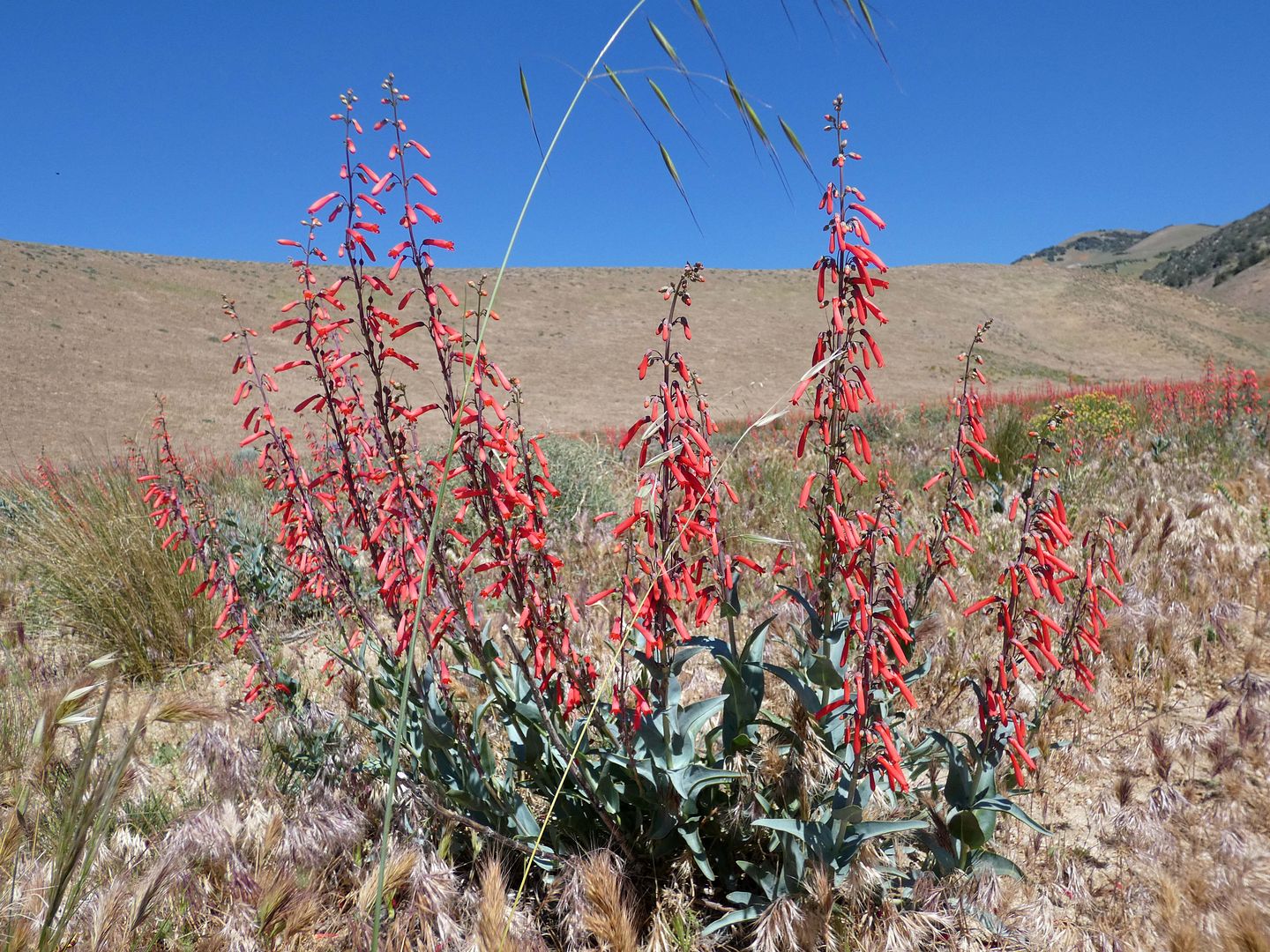
I was pleasantly surprised what awaited us. No superbloom by any means, but plenty of color in a feast for the eyes, like the red penstemon...

April 08, 2024

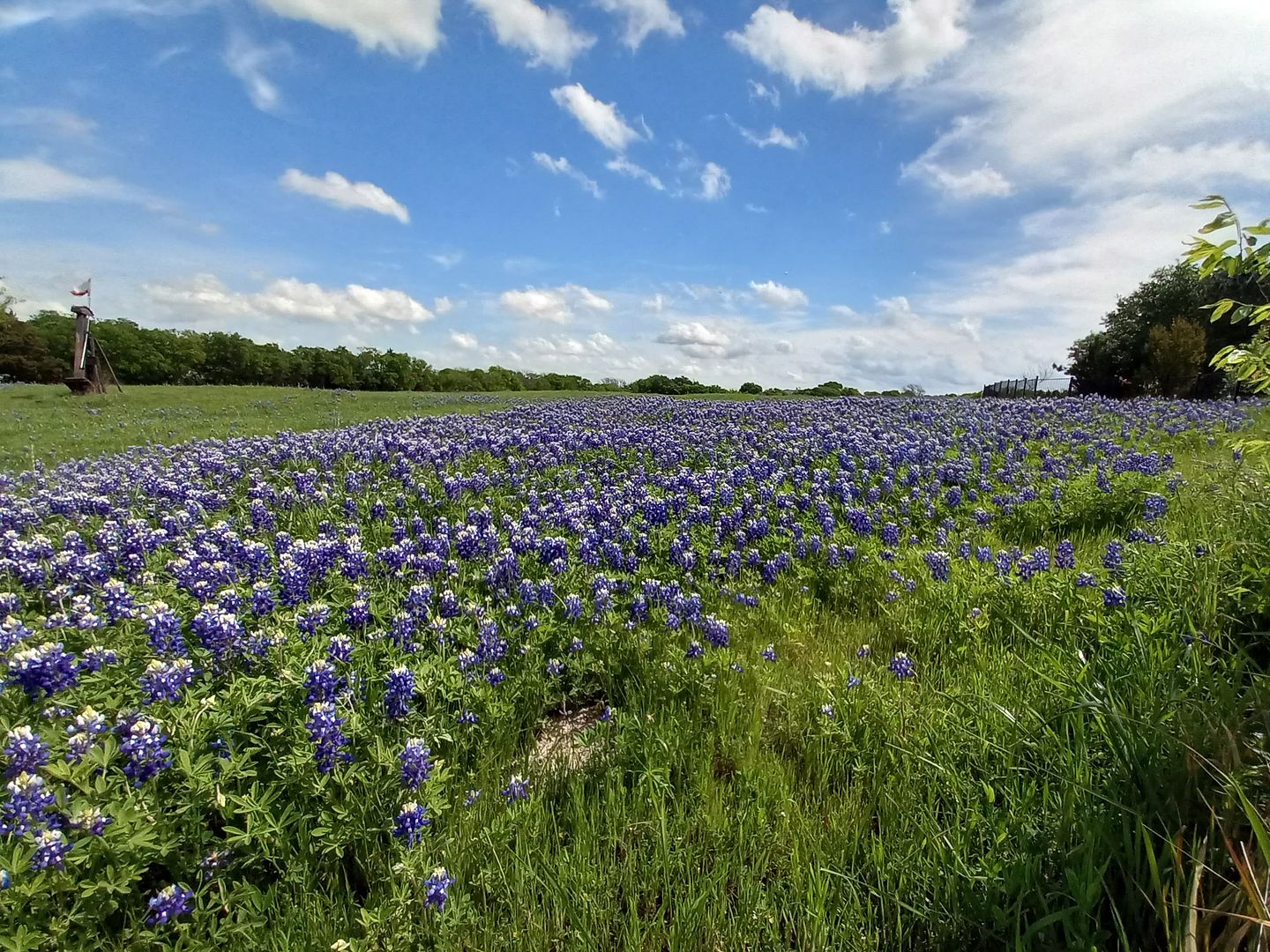
Photo Essay: A Texas Superbloom of Bluebonnets in April

Had I known how spectacular the Bluebonnet Trail was in Ennis, Texas, it would've been on my bucket list. 

 
Even after I'd landed at DFW—and been looking out of the backseat window of my rideshare cars driving around to my various destinations—I hadn't yet realized what a big thing bluebonnets are in Texas, where all six species of them have served as the state flower since 1971.

April 17, 2023

Photo Essay: A Condor Takes Flight at Bitter Creek National Wildlife Refuge

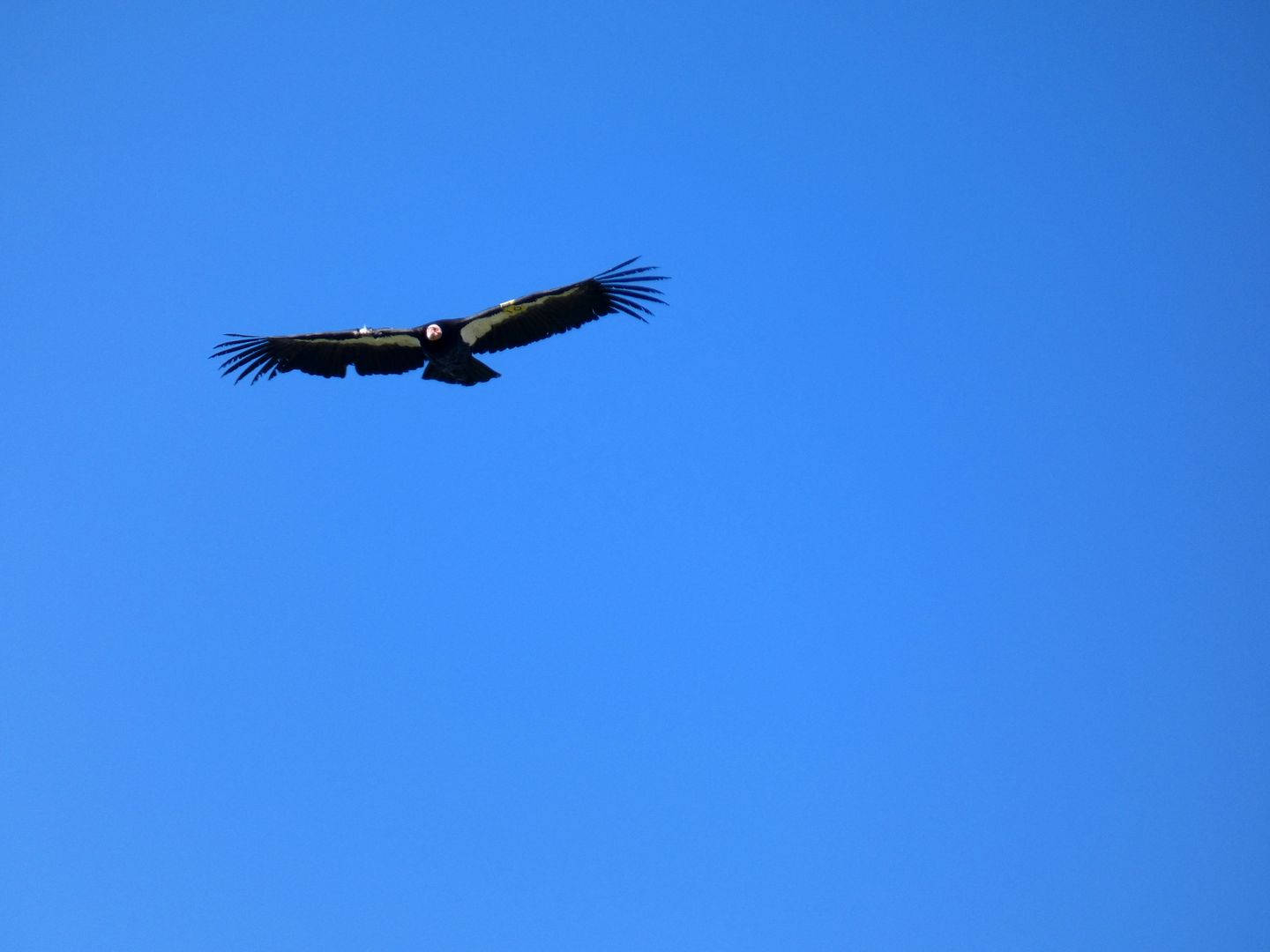
They say that if you ever think you may have spotted a condor in the wild, it was probably a turkey vulture. Those are far more common than condors.

There are only 90-some-odd California condors in the SoCal "flock," which is composed of two main sites: Hopper Mountain and Bitter Creek. 

I got the chance to see some condors at Hopper Mountain in 2018. But I've been waiting almost five years to get to Bitter Creek. 

 
And this past weekend, I finally got my chance.

June 24, 2019

A Sense of Place at Field of Light

I was driving through the rolling hills of California's Central Coast, heading inland from Cambria to Paso Robles, I wondered to myself, Is this paradise?


I'd forgotten how much I like it up in that area, not having visited since 2011 and having tasted enough wine and olive oil to drown my sorrows and perhaps bury my memories.


This time, I was running a little early and had time on my side, so I could enjoy the view—so much so, that I arrived to Bruce Munro's "Field of Light at Sensorio" installation while the sun was still up and before the fiber optics had been switched on.


The timing was actually perfect, so see the transition into night and watch those hills—still rolling—disappear from underneath a blanket of solar-powered, colored light orbs.


Was it Christmas in June?


Practically—and it's scheduled to run throughout the 2019 holiday season, into January 2020.


It's the inaugural art installation (or, er, "artainment") in this mostly empty parcel along Highway 46.


It's too bad they're going to build a hotel, conference center, and God knows whatever other developments in that spot. The joy in visiting it is its remoteness, the absence of distraction. But I guess it's better than the golf course that had been planned for here.


Sensorio is to become some kind of "discovery garden"—a "playground for the mind and body," Forbes says—within the next five or six years, according to the reported plans of local developer Ken Hunter, co-owner of the nearby Hunter Ranch Golf Course.

I just hope they don't flatten it once they remove the current array.

Related Posts:
Rising Above It
Photo Essay: The Speedway Magic of Lights

April 11, 2019

Photo Essay: The Forgotten Highway Between LA and Bakersfield

Before the Castaic-Tejon Route opened, there was no good way to get from LA County to Bakersfield (or back). Stagecoaches and wagons could make it, but the trek over the Tejon Pass was harrowing. And because of drainage issues, dirt roads to the north of LA often became muddied or downright flooded.


As "automobilists" (as they were called) began taking over the roadways with motorized vehicles, those dirt paths just no longer cut it—and they began to complain.


The solution offered by the newly-formed State Bureau of Highways? Carve out a road, high up along a mountain ridge to keep the puddles away (not taking into account the snowpack of the harsh winter seasons), by using horse- and mule drawn-scrapers and grader.


German Point in background

Today, a very civilized, paved portion of the old "Ridge Route" runs alongside the 5 Freeway—its eventual replacement—in Gorman, a common pit stop for travelers needing to fill or empty their tanks.


Since renamed Gorman Post Road, it passes the former sites of the Gorman Inn, the first store in Gorman, and the home of Oscar and Mary Ralphs (brother and sister-in-law of the grocery store chain founder).


You can even see some original curbs along the road shoulder, some dated 1924 (although the Ridge Route's first iteration actually opened in 1915). In the beginning, the Ridge Route was so narrow that some joked it was just one long sidewalk.


Today's Gorman Post Road is also where a lot of the construction camps were set up for the workers who first put down the gravel and oil road bed—and would later lay reinforcing rods and tamp the wet concrete down (circa 1919).


Between the construction works and the travelers, there was plenty of business for the free water given away at German Station, as well as the goods for sale at Caswell's Road Stop, the services provided by mechanics, and the gas pumped at Holland Station #1.


But like many of those early roads, it quickly became obsolete. The two-lane engineering feat of the Old Ridge Route was bypassed in 1933 by a straightened, three-lane alternate (with a center "suicide lane" for passing) that became Highway 99.


Even Highway 99—which shortened the journey by nearly 10 miles—gave way (mostly) to the eight-lane 5 Freeway, which began construction in 1963 and opened in 1970. Though the Ridge Route was abandoned, it wasn't erased.


In fact, at the southeastern terminus of Gorman Post Road, west of where Quail Lake reservoir is now and in the general vicinity of the former Bailey Ranch, you can actually drive on a flat, well-preserved stretch of the Ridge Route. It just doesn't go anywhere.


To follow the original path of the Ridge Route, you've got to get off of Gorman Post Road and turn left onto Lancaster Road (a.k.a. Hwy 138) and drive 2.5 miles to the signed juncture with Old Ridge Route Road.


That's where the old route finally begins to climb the ridge, looking down over the former General Petroleum (later Mobil) pumping plant and Pacific Telephone and Telegraph Relay Station. This is the future site of Centennial, California—a master-planned community on land owned by Tejon Ranch—in the westernmost portion of the Antelope Valley.


It's actually not that easy to follow the entirety of the Old Ridge Route because, like Route 66, its alignment did change—and portions of it were even buried with the construction of the California Aqueduct.


But a stretch of this "miracle of modern engineering" that runs through Angeles National Forest is both drivable and maintained.


It's a fun destination for vehicular tourism...


...but it also provides access to some recreational and historic sites (as well as campgrounds).


In fact, the most famous stop between LA and Bakersfield was a midpoint waystation known as Sandberg, whose lampposts across the street beckoned travelers (no truckers or dogs allowed) to stop at its Summit Hotel, located near the peak of the Ridge Route at 4100 feet of elevation. (The streetlights' concrete footers still stick out of the hillside.)


Sandberg's Summit Hotel—which was later sold and rebranded The Sandberg Lodge—was set to reopen in 1961 as a children's camp when it burned to the ground. Nothing has ever been built in its place.


And that's where the Ridge Route really starts to get interesting.


Although the county no longer maintains the road, you can still drive on it—at least, until you hit a locked gate.


This is also where you get a good feel for a few of the route's 697 curves that you could really only take safely at 15 mph in a car.


And even so, some of these stretches have since been widened, their hairpin turns more gentle, with even some blacktop that was added later (though now crumbling, revealing the original concrete in astonishingly better condition).


As you round Horseshoe Bend, with Liebre Mountain in the distance and the ghosts of the former Liebre Construction Camp as your guides...


...you've got to swerve and snake your way past the rockslides that nobody has cleared, trying not to drive off a cliff as you take in the scenery.


Up there, long-gone guard rails would save some careless drivers—sometimes.


The big payoff for your drive are the ruins of the Tumble Inn (later, the Mountainview Lodge).


Although the landmark arch is some rebuilt version of the original, the edifice of native stones still marks a nice turnaround point.


If the road south of the Tumble Inn is open, you can take it past the site of the former Kelly's Halfway in, and all the way down to Castaic. But when you get there, you might find the gate at the other end closed, forcing you to make a two-hour drive back the way you came.


By 2005, the road had suffered so many rockslides and washouts that it's been officially closed—but sometimes the gate is open. (And even when you can't drive on it, you can walk/hike on it.)


I'm banking on it being open the next time I come to the area, so I can see the rest of it (as well as any sections north of Gorman that are still open).


Photo: Circa 1922, Automobile Club of Southern California collection, USC Libraries (Public Domain, via Wikimedia Commons)

Stay tuned for dispatches from my visit to the Ridge Road Communities Museum and Historical Society. 

Related Posts:
Photo Essay: Hiking Old San Francisquito Canyon Road, Along the Path of the St. Francis Dam Flood
Photo Essay: The Road That Google Maps Forgot, Old Hwy 62

December 08, 2018

Photo Essay: 1000 Lights (Or More) at Sherman Library and Gardens

This weekend, I went to the Sherman Library and Gardens, a fixture in Corona del Mar, California since 1955...


...but I wasn't researching the Southern Pacific Railroad, Tejon Ranch, or even Newport Beach.


I didn't even know what the research library had in its collection.


I just wanted to see the historical adobe architecture...


...and check out the landscaping and gardens, partially the former home of Norman's Nursery.


There's a small window in December when you can visit the library during normal operating hours during the day and see it decorated for the holidays at night, too.


So, I planned my visit accordingly.


This time of year, the season really takes over the garden...


...but you can still visit the orchids in the Tropical Conservatory...


...including the ones featured in Smell-O-Vision...


...that give off perfumes of fruit and chocolate.


But in the Tea Garden and the Central Garden, the horticultural point of interest flips to Christmas trees.


And the library's mascot otter dons a Santa Hat.


Having been to some of the larger garden light displays around SoCal (including ZooLights), I didn't expect much out of the 2.2 acres that the Sherman Library occupies along the Pacific Coast Highway.


But I was impressed with how the Fern Grotto had been transformed into a Disco InFERNo...


...and how the light tunnel offered a colorful respite...


...from the Santa visits, s'mores station, and selfie wall that surrounded it.


The holiday event at this historic site is billed as "Nights of 1000 Lights"...


...but while I was inside of it, it felt more like millions or billions.


From the Noel Bleu in the Sun Garden, right down to the Rainbow Tree in the otherwise dormant Rose Garden.


Norman's Nursery—and eventually all the surrounding lots in the entire city block—were purchased by Arnold D. Haskell, who named Sherman Library and Gardens after his mentor, Moses Sherman.

While working as a bellboy at the Mission Inn in Riverside, Haskell became Sherman's assistant and then his successor after his retirement.

The library's namesake is the same as Sherman Oaks and West Hollywood, which was once known as Sherman.

Moses Sherman was an Upstate New Yorker who headed out West, penniless. After landing in Phoenix and building a streetcar system there, he began to amass some real estate and some serious holdings in railroad ventures.

And then he moved to LA and did the same thing.

For some reason, I had to go all the way to Orange County to learn about him.

Related Posts:
Photo Essay: Lighting Up the LA Zoo
Photo Essay: Cactus Lights