Search

Showing posts sorted by date for query ocotillo. Sort by relevance Show all posts

March 08, 2024

Photo Essay: Desert Resort Living In a Mid-Century Modern Lodge

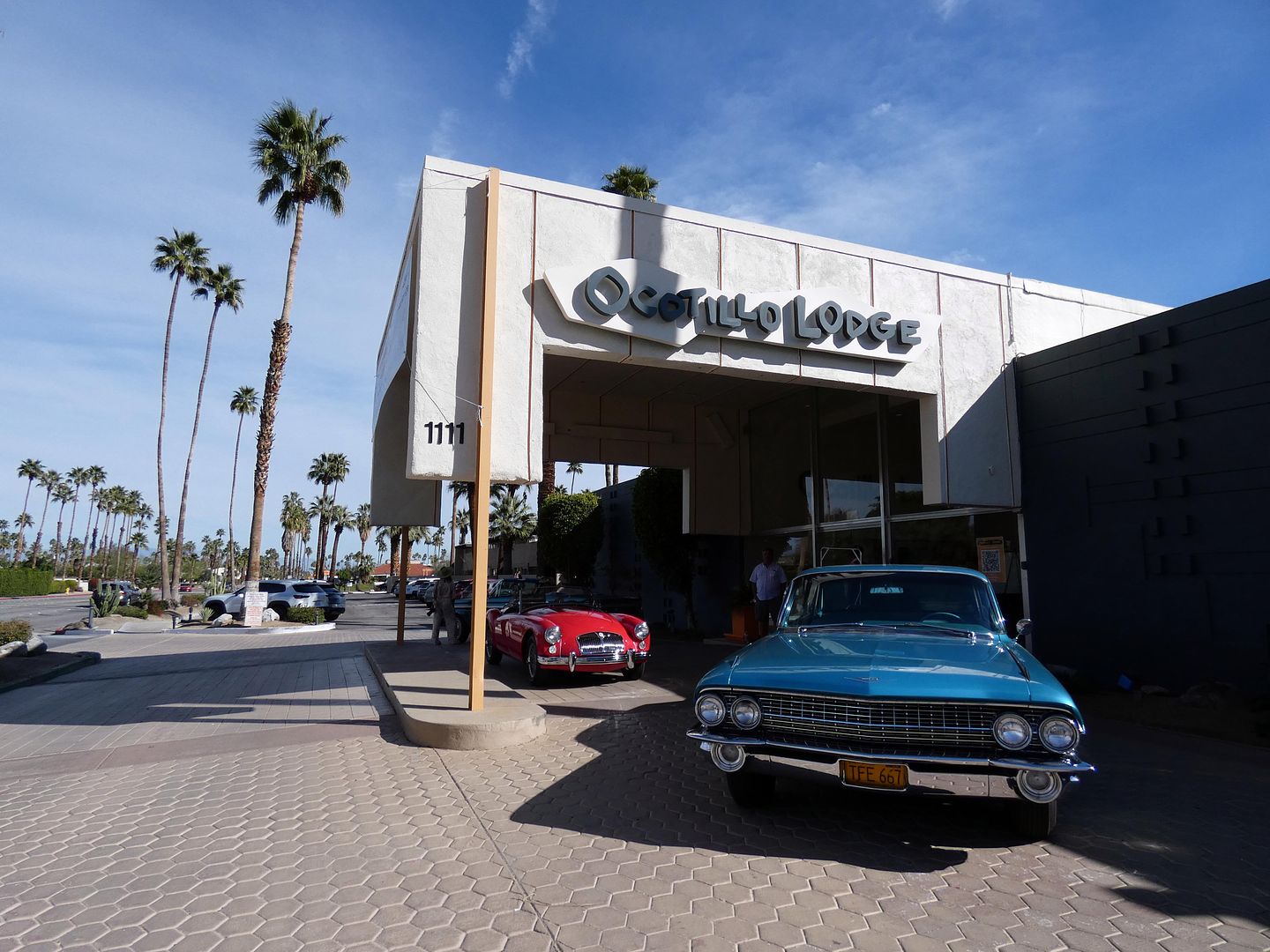
It's one of those places I'd drive past so many times—and never really understood what it was. 

I thought the Ocotillo Lodge on East Palm Canyon Drive in Palm Springs was a motel, and that it was being converted into condos. 


The real story is that it was a hotel (kind of)—and then it was converted into condos in the 1990s. But right now, it's going through an upgrade/restoration. 

March 27, 2021

Photo Essay: The Delightfully Uncrowded Bloom at Anza-Borrego Desert State Park

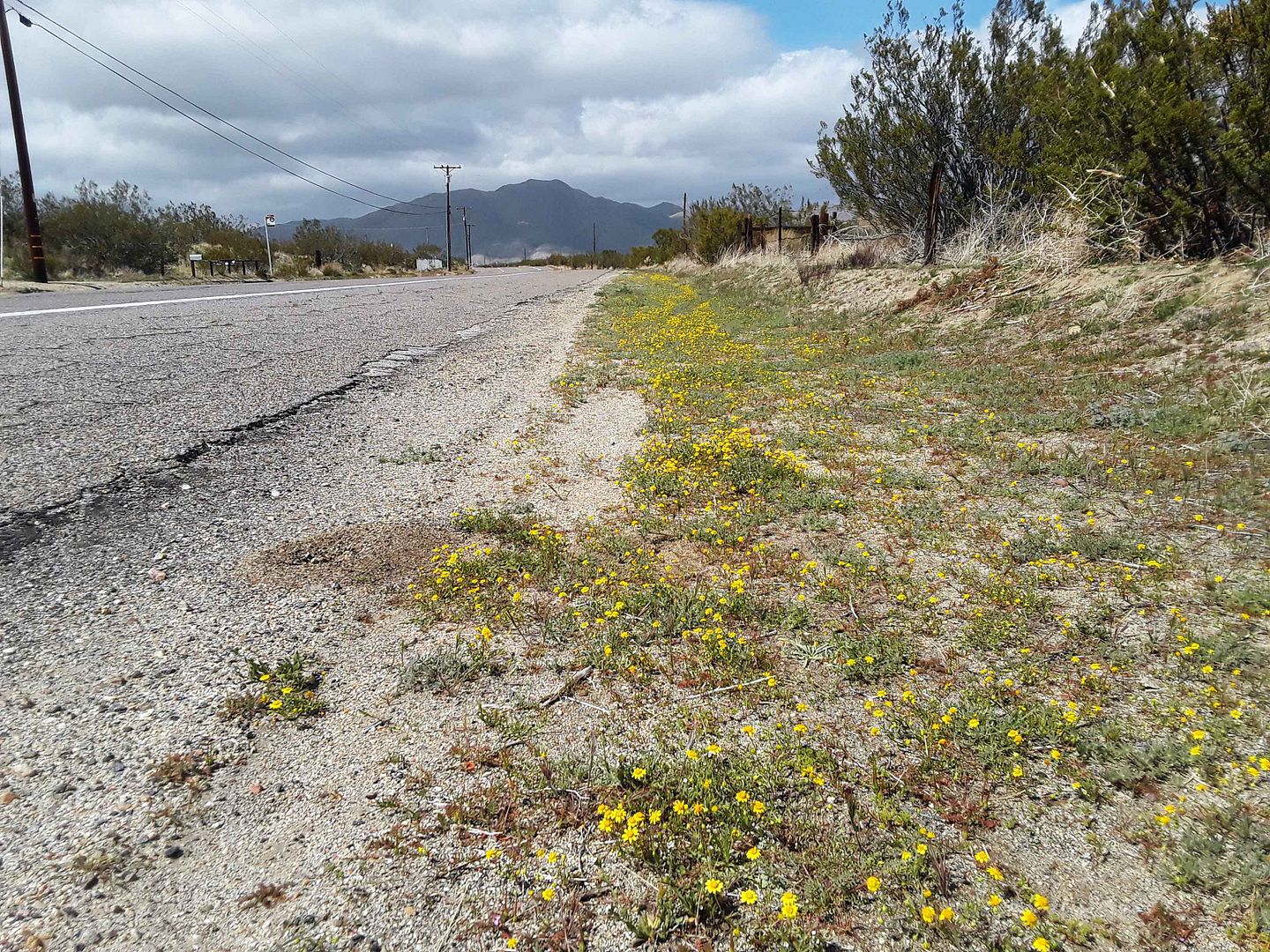
Anza-Borrego hasn't had a "superbloom" since Spring 2019—but I still wanted to go check it out this year, just in case I could find some blooms.
 

April 22, 2019

Photo Essay: The Past Lives of Anza-Borrego Desert State Park

Located in the Colorado Desert portion of San Diego’s East County—between the Cleveland National Forest and the Salton Sea—lies California's largest state park, Anza-Borrego Desert State Park.


Most people just go for the superbloom to look at wildflowers and flowering cacti...


...and miss out on all there is to learn about the history of human (and animal) use of the canyons, dry lakes, valleys, and badlands of the area.


Occasional public tours of the Begole Archaeological Research Center reveal the secret lives of Anza-Borrego's first inhabitants, the Kumeyaay...


...how they gathered food...


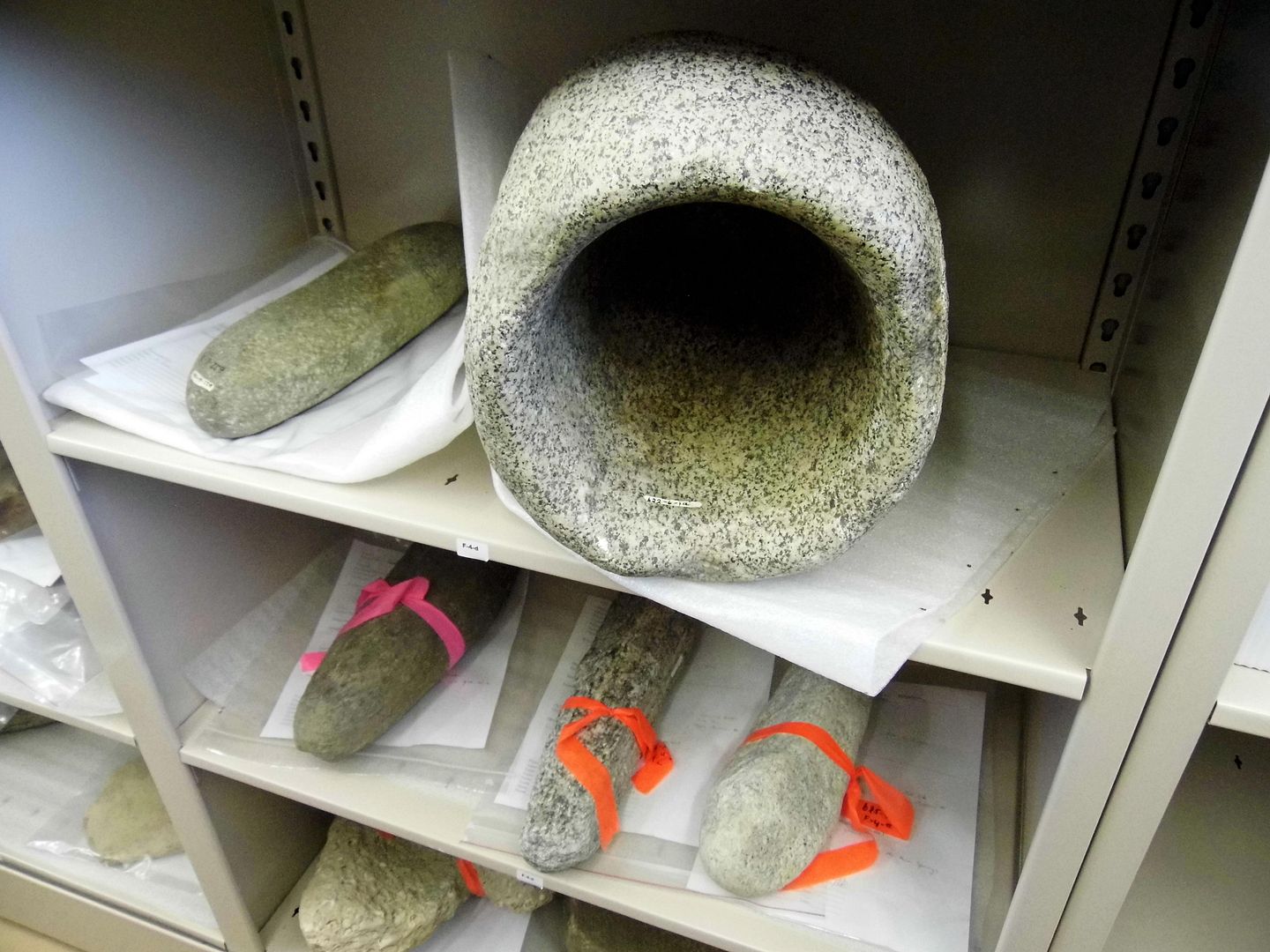
...and prepared it using groundstones (a.k.a. metate, or mortar)...


...and other tools (e.g. mano, or pestle).


More recent human use of the land is now part of the archaeological record, too, from soldiers stationed nearby during World War II...


...to miners looking for a form of calcium carbonate, calcite, which was used in the Norden bombsight technology to improve bomb-dropping accuracy in the wake of the attack on Pearl Harbor.


Traces of the more common lifestyle of the 20th century everyman can be found in the Begole Archaeology Library, which is open to the public on Tuesdays from 10 a.m. to 2 p.m.


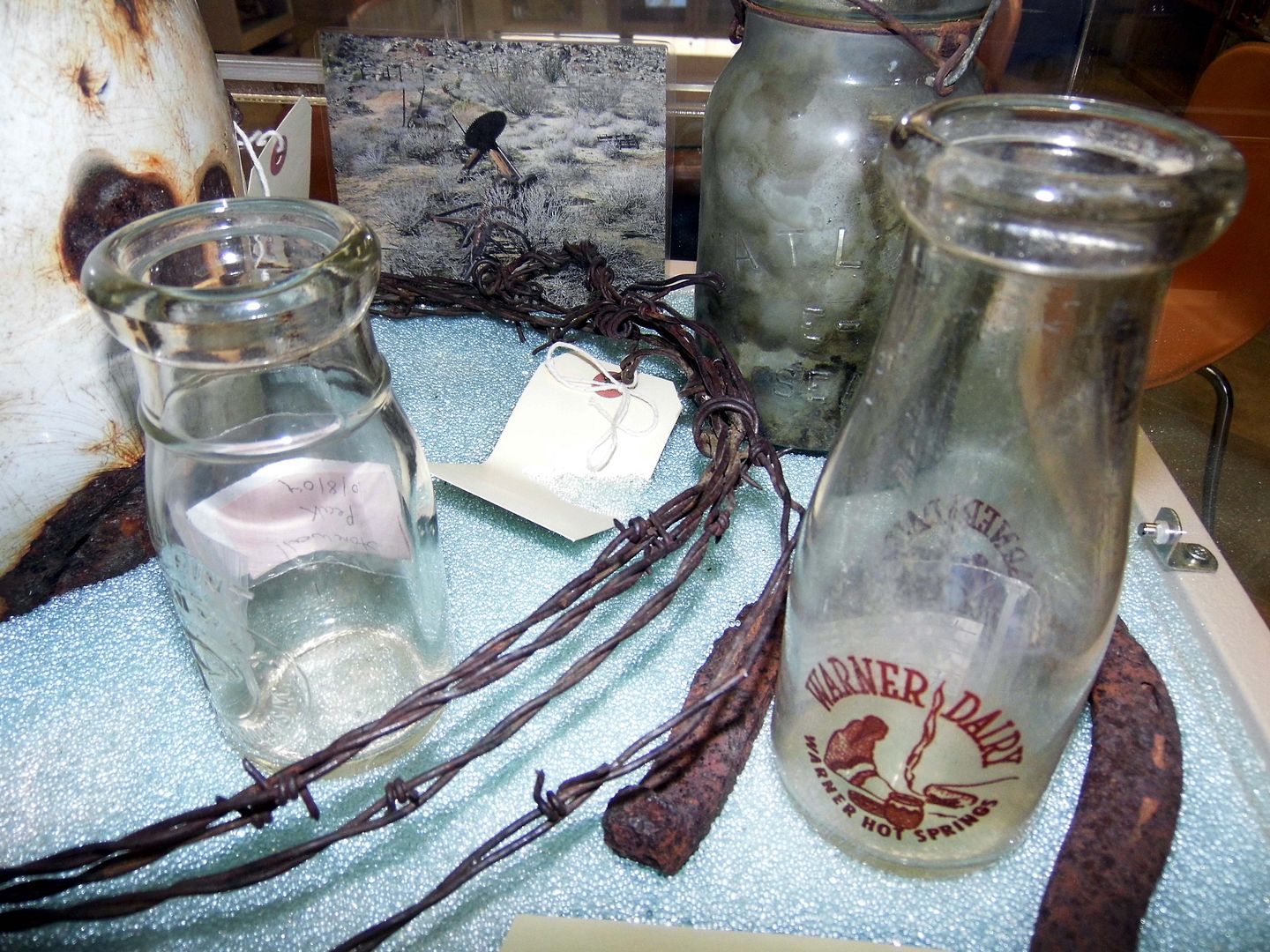
In addition to occasional talks, this non-circulating library also displays rotating exhibits...


...the current one focusing on the Butterfield stagecoach line that ran through Warner Springs and the Carrizo Corridor (now Ocotillo) along the Southern Emigrant Trail.


In The Stout Research Center Laboratory and Paleontology Collection Hall, however, the focus is on non-human animals. 


From modern-day reassembled skeletons of a local mountain lion (Puma concolor) from the early 2000s...


...and a Greater roadrunner (Geococcyx californianus)...


...to examples of the fauna of days gone by, like the fossil cast of a Harlan's giant ground sloth, Paramylodon harlani)...


...and plenty of skulls with jaws of varying sizes...


...you can explore a fraction of what comprises the longest continuous fossil record in North America.


In addition to the ancient and extinct saber-toothed cat (Smilodon fatalis, the California state fossil)...


...there's also the short-faced bear (Arctodus), camels, mammoths, horses and the biggest tortoise you’ve ever seen (Hesperotestudo, a giant relative of the desert tortoise from the Pleistocene).


Their traces have been discovered and catalogued, whether an actual bone (or, say, tooth)...


...or a preserved footprint in prehistoric mud (like that of the large-headed llama, Lamaichnum borregoensis).


In some ways, it feels as though their work has just begun.


A current excavation work in progress is of a mammoth, for which researchers perform precision fossil cleaning with the help of tabletop micro-sandblasters, a dry process also known as "pencil blasting."


Because Anza-Borrego remains undeveloped—and even many of the roads and trails are considered backcountry—new discoveries are coming to light all the time.

And selfishly, I'm glad that most people don't consider the park a major destination outside of the spring wildflower season. Despite its enormous size, Anza-Borrego still feels like a well-kept secret.

I'd kind of like to keep it that way. I'd kind of like to keep it all to myself.

But I'm not very good at keeping secrets.

Related Posts:
Photo Essay: The Creatures That Conquered the Desert
Photo Essay: Antelope Valley Indian Museum, Built into a Butte

March 21, 2019

Photo Essay: Dispatches from the Superbloomin' Anza-Borrego Desert

There was one surefire way I could tell that this year's wildflower season was a superbloom.


I saw it from above, as we pulled over from the Montezuma Grade and looked down at the valley floor of Borrego Springs.


And when we got up close to those patches of yellow (mostly desert dandelion), they did not disappoint.


But unlike two years ago, when everything in Anza-Borrego Desert State Park bloomed pretty much all of the same time and blanketed many fields with flowers, this year's superbloom is more of a "growing bloom."


That means we encountered just one really great field during our weekend there (except of course for the poppy-filled Cactus Loop Trail).


But there will be more great fields for those who go after me.


Superbloom or not, I always love this time of year in Anza-Borrego, even despite the crowds that descend upon California's largest state park every year.


The creosote bushes are all abloom in yellow, not having formed their little white puffy balls quite yet.


This year, the sand verbena (Abronia villosa) was particularly showing off in the sandy roadsides (and pretty much everywhere else we looked, too).


And we got some desert chicory (Rafinesquia neomexicana) for some nice white contrast, too.


I told my companion to keep her eyes out for the desert lily (Hesperocallis undulata), since it's so uncommon that I had to go birding on the golf course to see any last year. This year, I saw three.


But even common wildflowers, like the blue phacelia (a.k.a. wild heliotrope, Phacelia distans), are pretty special when you get to see them.


And one of the best places to see them—as well as purple chia sage (Salvia columbariae), whose flower balls hadn't all fully blossomed—was at the Anza-Borrego park visitor center.


During a superbloom, the park headquarters is probably the busiest place of all—if not for its wild landscaping (and blooming barrel cactus), then for its public restrooms, maps, and volunteer-provided information.


So on our second day, we went a little farther off the beaten path and drove down the road that cuts through the Ocotillo Forest and dips between fields of yellow poppies (a.k.a. the Texas Dip).


I've seen—and drip-irrigated—plenty of red ocotillo in my day, but I've never witnessed such a dense concentration of them.


And they all appeared to be green-leafed and blooming red.


Among the desert flora I've ever encountered, I never get sick of red ocotillo.


But I did want to see something new, so we headed farther east on Highway 78 than I've ever been (save for driving through Brawley) to check out Ocotillo Wells.


The area is best-known for its off-roading, but the Discovery Center offers a really nice interpretive trail for plants.


And this time of year, it was full of goldfields and Arizona lupine, among others.


But Ocotillo Wells is also where I could envision the end of the superbloom coming quickly—because that was where we witnessed several caterpillars of the sphinx moth.

And once those start munching away, it's like a death knell for wildflower season.

I'm glad we went when we did.

Related Posts:
Photo Essay: Yellow Poppies Take Over the Cactus Loop Trail in Anza-Borrego
The Worst of the Superbloom, At Walker Canyon
A Desert Reappearance
Photo Essay: Birding Anza-Borrego During the Superbloom
Dispatches from the Butterfly Boom

July 06, 2018

Photo Essay: A Desert Trek to Frank Lloyd Wright's Winter Home and Office

For a self-trained architect, Frank Lloyd Wright had quite a racket going.


In 1931, he'd established Taliesin in Spring Green, Wisconsin to afford budding architects to do exactly what he did—"learn by doing."


After all, the best way to learn how to build a house is to start trying to build one.


But since neither Wright nor his students (or, "apprentices," as he called them) wanted to study anything as far north as the 43rd parallel during winter, Wright set his sights on Arizona...


"Whirling Arrow"

...and, in 1937, began building Taliesin West in what's now known as Scottsdale.


"Red Ocotillo"

Of course, it wasn't the resort community back then that it is now.


It was just a wide expanse of dry, clean, rocky desert up on a mesa.


That meant he could start building whatever he wanted and as much as he wanted—with help, of course, from not just the free labor of his apprentices in a traditional internship setup, but architecture students who paid to be there.


And some still do—as evidenced by the drafting studio, where a portrait of FLW peers over each workstation as the master architect might've once done in person.


Architecturally, the studio is a standout among the buildings of the Taliesin West compound...


...though FLW's own drafting table most likely was located in the bedroom he kept all to himself.


Each of the other buildings share a similar theme of "organic architecture," with exterior walls built of locally-sourced rock...


...though they were all purpose-built as an office, a conference room, and so on (and outfitted with FLW-designed furnishings).


But as this was one of the original live/work environments, it's hard to know where the living started and the working stopped (if it ever did).


Everything feels connected.


Of course, FLW and especially his wife Olgivanna used spaces like the garden room to show off his style to current and potential clients and business partners...


Letting in plenty of light (as there were originally no glass windows or even window coverings)...


...and providing a means to music in nearly every public space.


The architectural commune is a little quieter now than it used to be—especially in 100 degrees near the start of summer when school is out of session.


But the belltower still calls the students to gather at the dining hall for mealtime...


...where they'll sweep the floors, clear the tables, and tidy things up after being sufficiently fed.


What other types of tasks did students perform while studying at Taliesin West under FLW?


"Whatever the master asked," one former apprentice told our tour group. And we understood that didn't necessarily mean designing anything or even giving any opinions. They were there to do everything as FLW wanted (or, in the current case, as he would have wanted)—and not to develop their own style.


And sometimes, that meant actually supporting some of the non-architectural and non-educational activities happening on campus...


...including in the Music Pavilion, which once hosted salons and various performances....


...as well as the cabaret...


...a kind of dinner theatre space for guests...


...which now doubles as a movie theater.


It's interesting to visit Taliesin West because FLW built it (or had it built) on his terms, rather than trying to make someone else happy. And, as he conceived it as a "desert laboratory," it was meant to change, evolve, fail, and most of all, teach.

I get the sense that FLW was still learning, even as master at Taliesin West, until he died at age 91 in 1959.

Making changes upon each return to the desert and even continuing to add buildings, he never seemed to rest on his laurels. 

Related Posts:
Photo Essay: (Frank) Lloyd Wright's Joshua Tree Retreat
Photo Essay: How Bellfounding Helped Build an Unfinished Utopia