
After nearly 15 years of living in Los Angeles, you'd think I've seen everything there is to see. But I'm constantly reminded of how much more there is, hiding beneath all those layers.
Take Union Station, for instance. I thought my "holy grail" was getting back into the bar space that had become the Streamliner Lounge—which I finally got to do during this year's TrainFest in September.
But as it turns out, this great train station had even more in store for me—revealed to me during a recent tour I took with Los Angeles Railroad Heritage Foundation (LARHF).
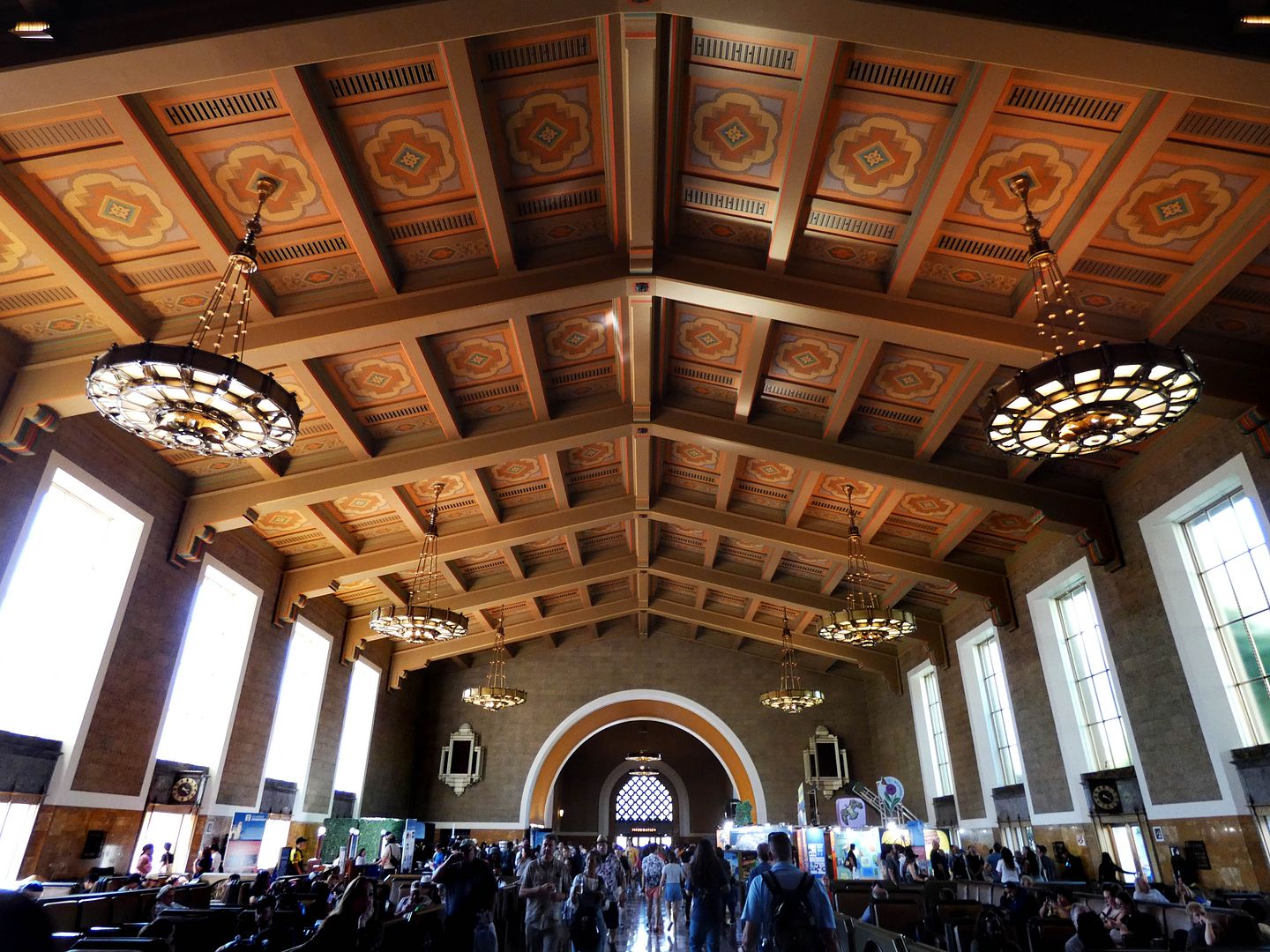
Now, all I knew was that it was going to be led my a former station master—so it certainly would be different than the architecturally-focused Los Angeles Conservancy tour I took all the way back in 2012.
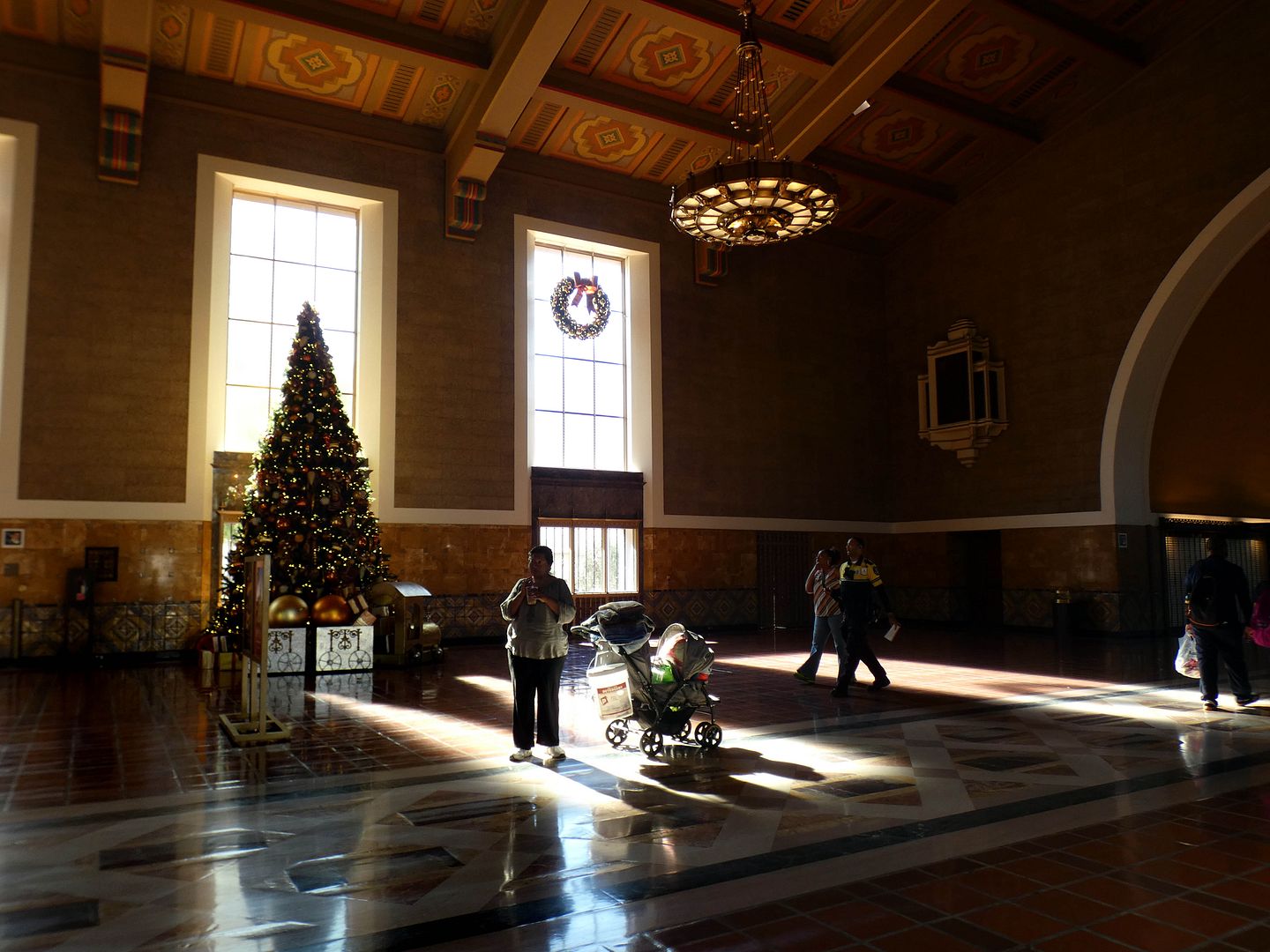
Besides, I'd never visited the station at Christmastime—so, at the very least, I could see it lavishly decorated for the holidays and cross that off my list.
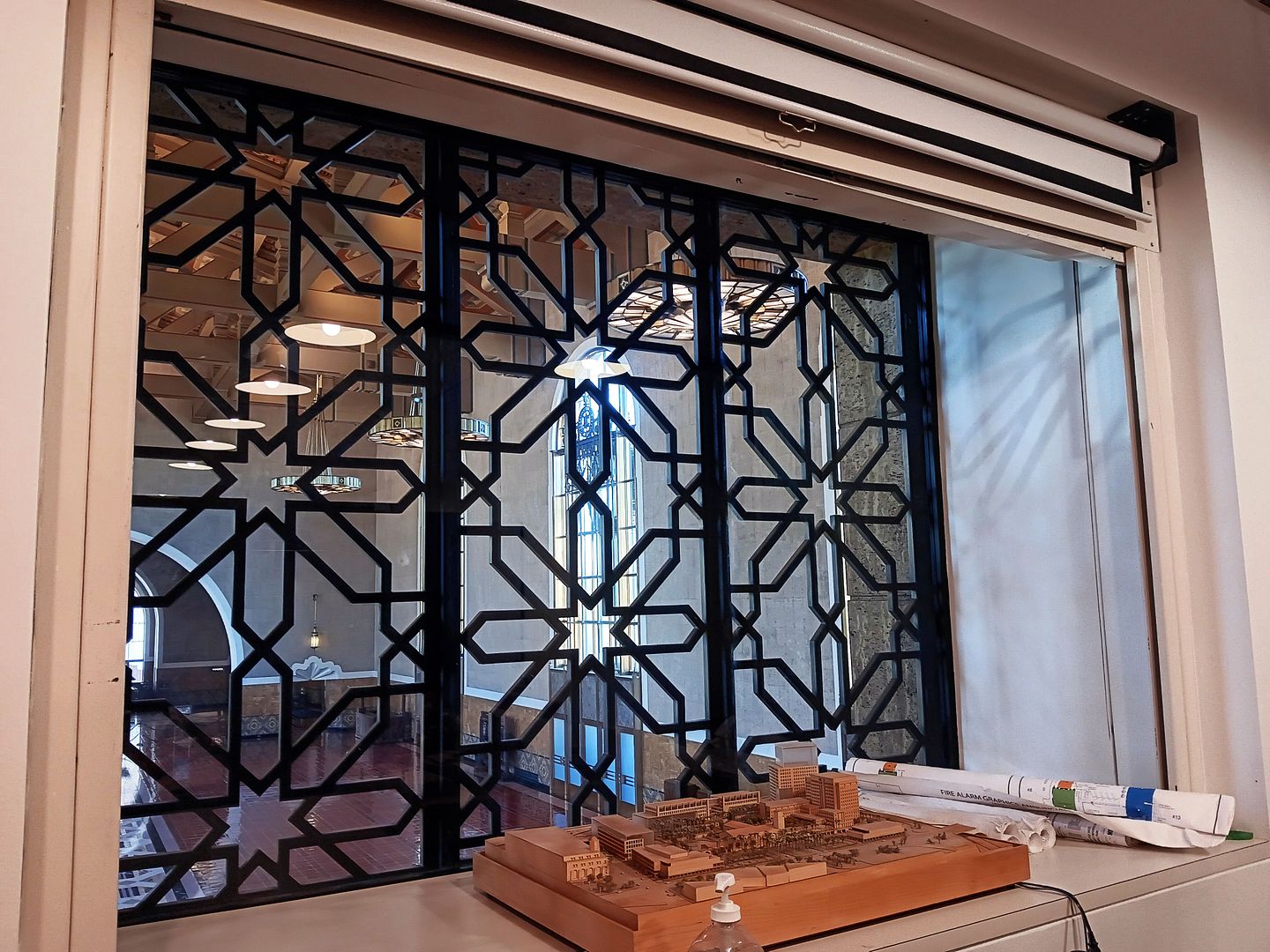
Imagine my delight when the tour started off in a conference room overlooking the historic ticketing lobby, a perspective I'd never seen before (although I'd explored the lobby itself).
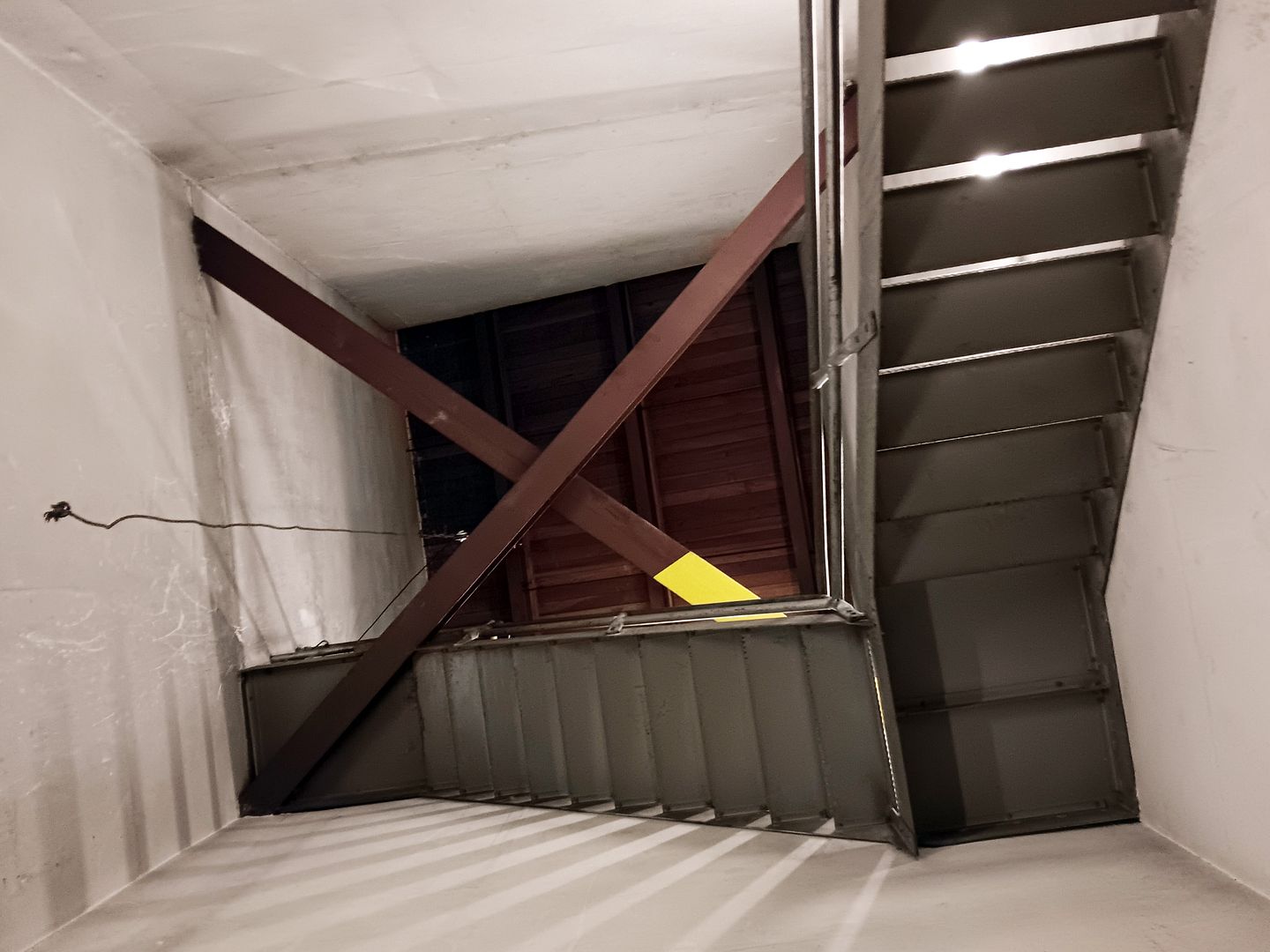
But when I really lost my mind was when we climbed up into the clock tower...
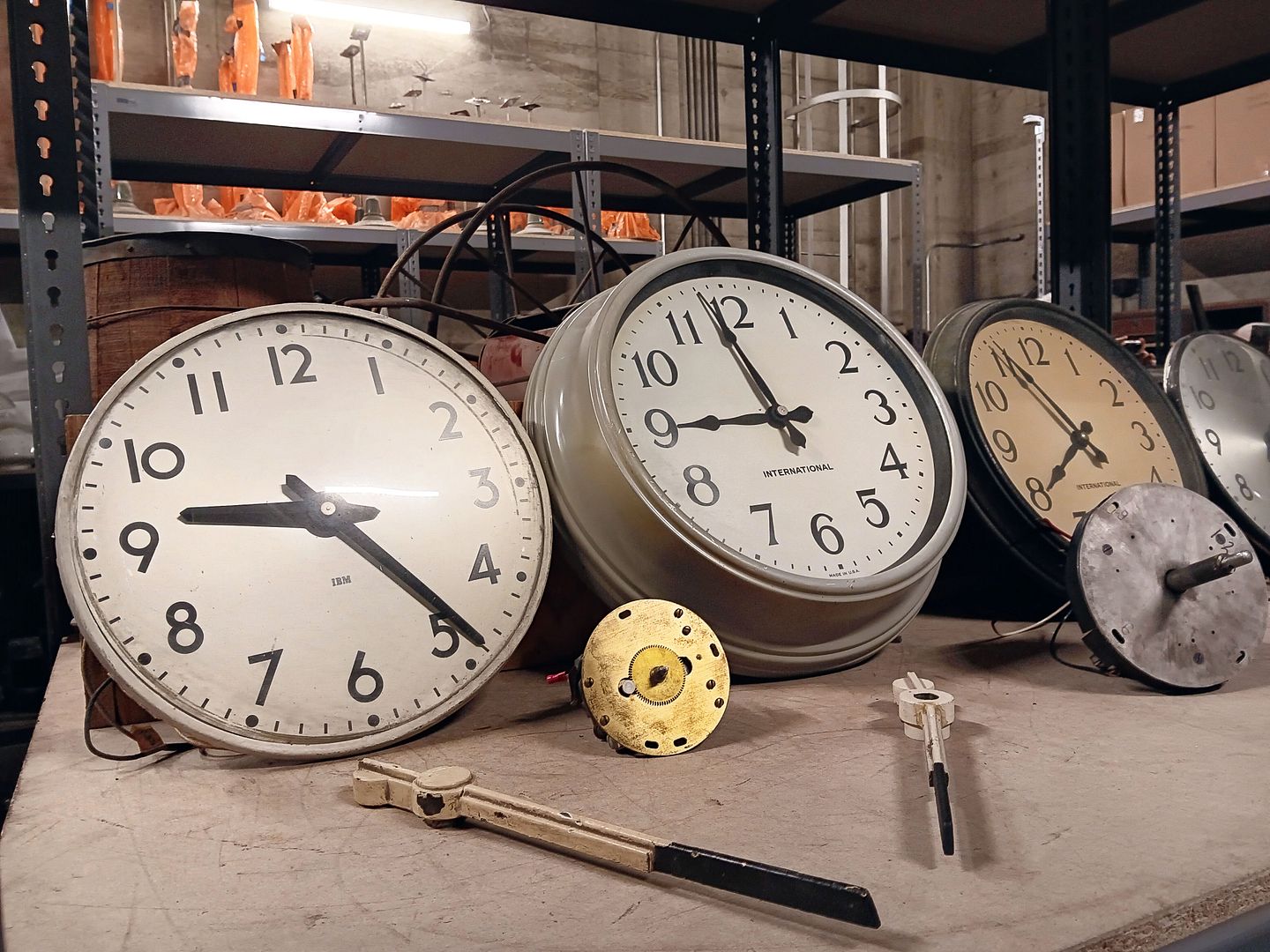
...and came across an archival collection of Union Station artifacts, including actual clocks (some dating back to the 1930s, despite looking relatively contemporary).
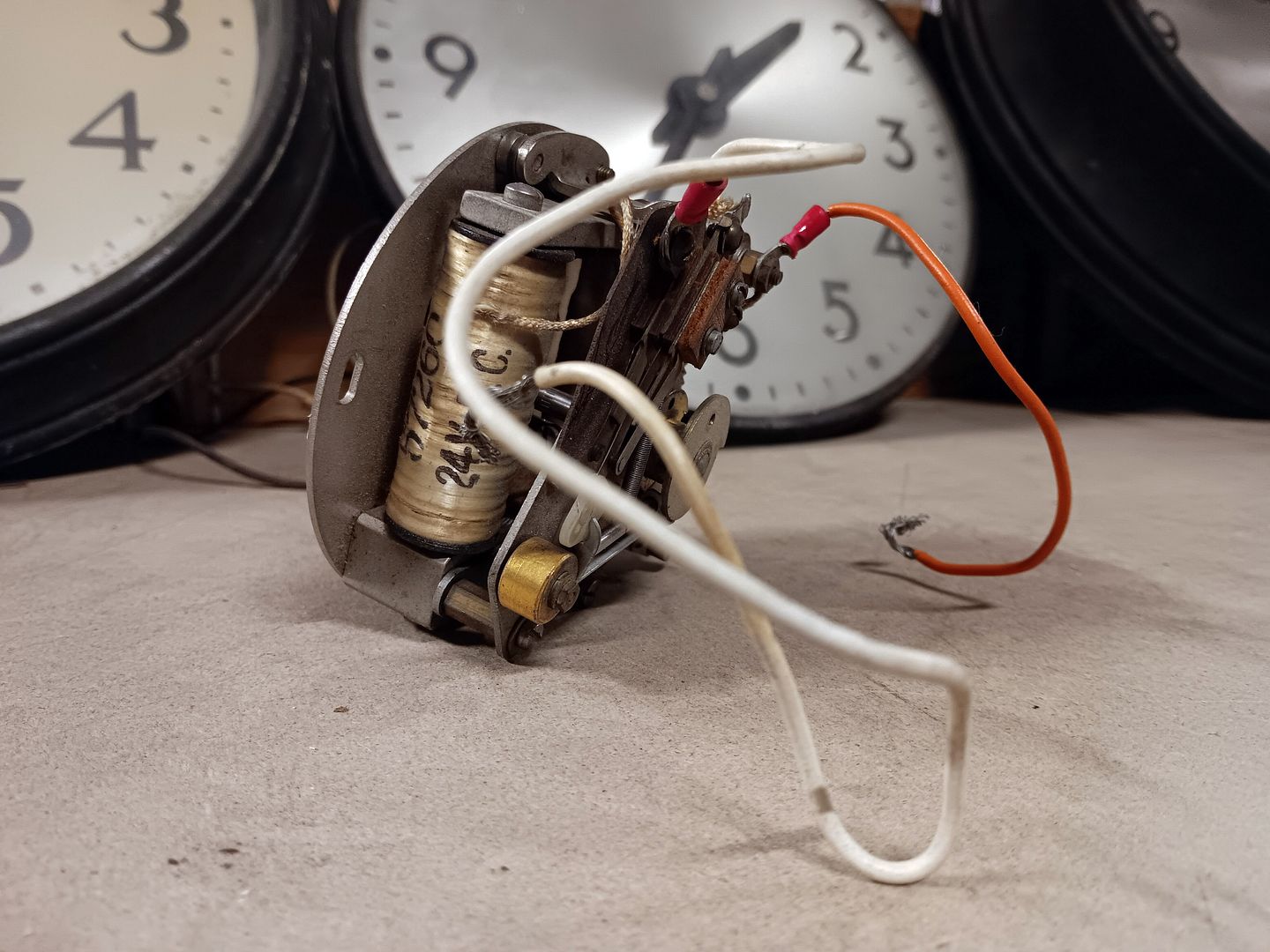
Over the years, various bits and bobs in and around the station—both decorative and functional—have been upgraded or otherwise replaced. And fortunately, much of what's been removed has been saved.
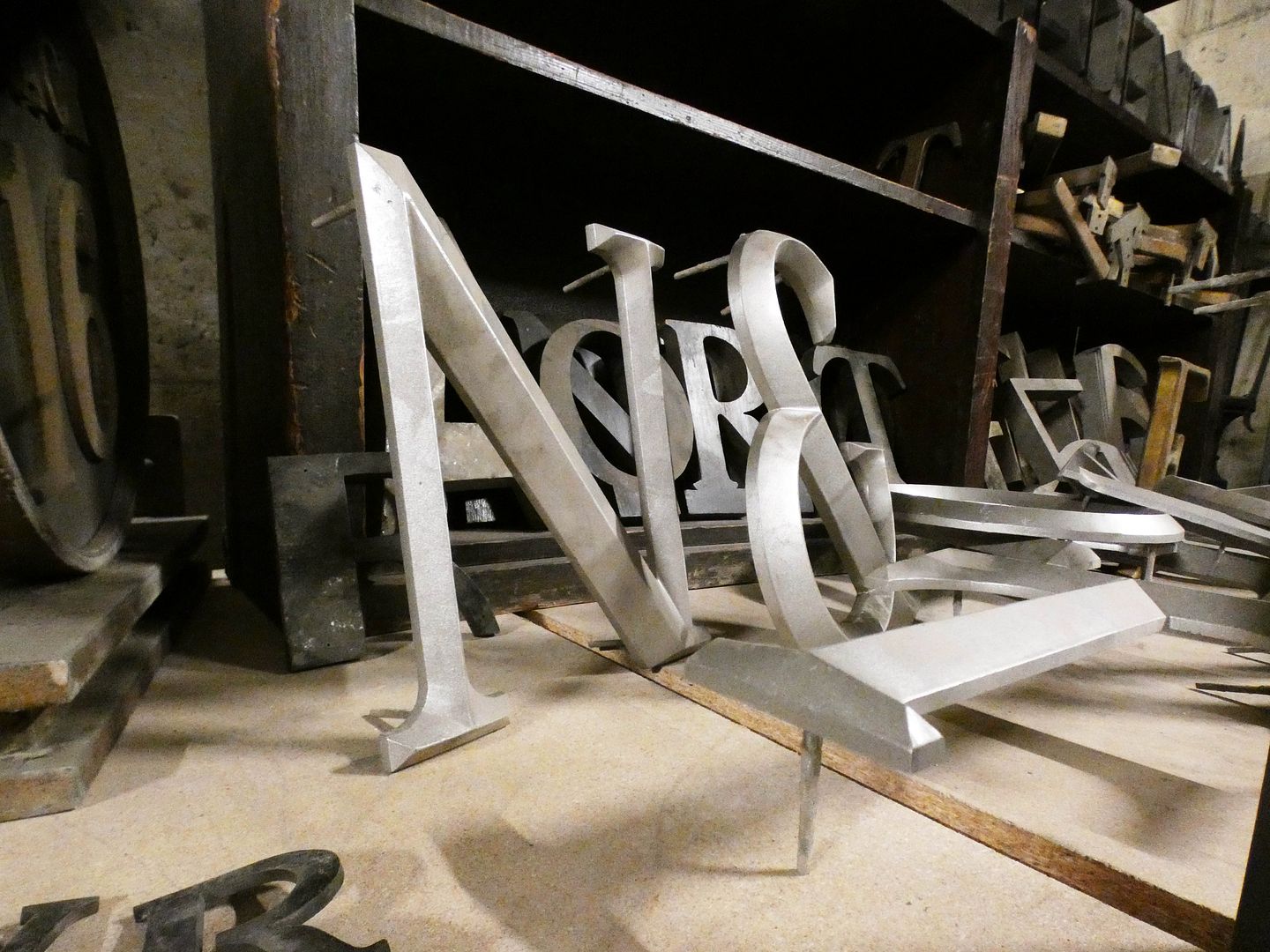
Up there we found old letters of varying typographies...
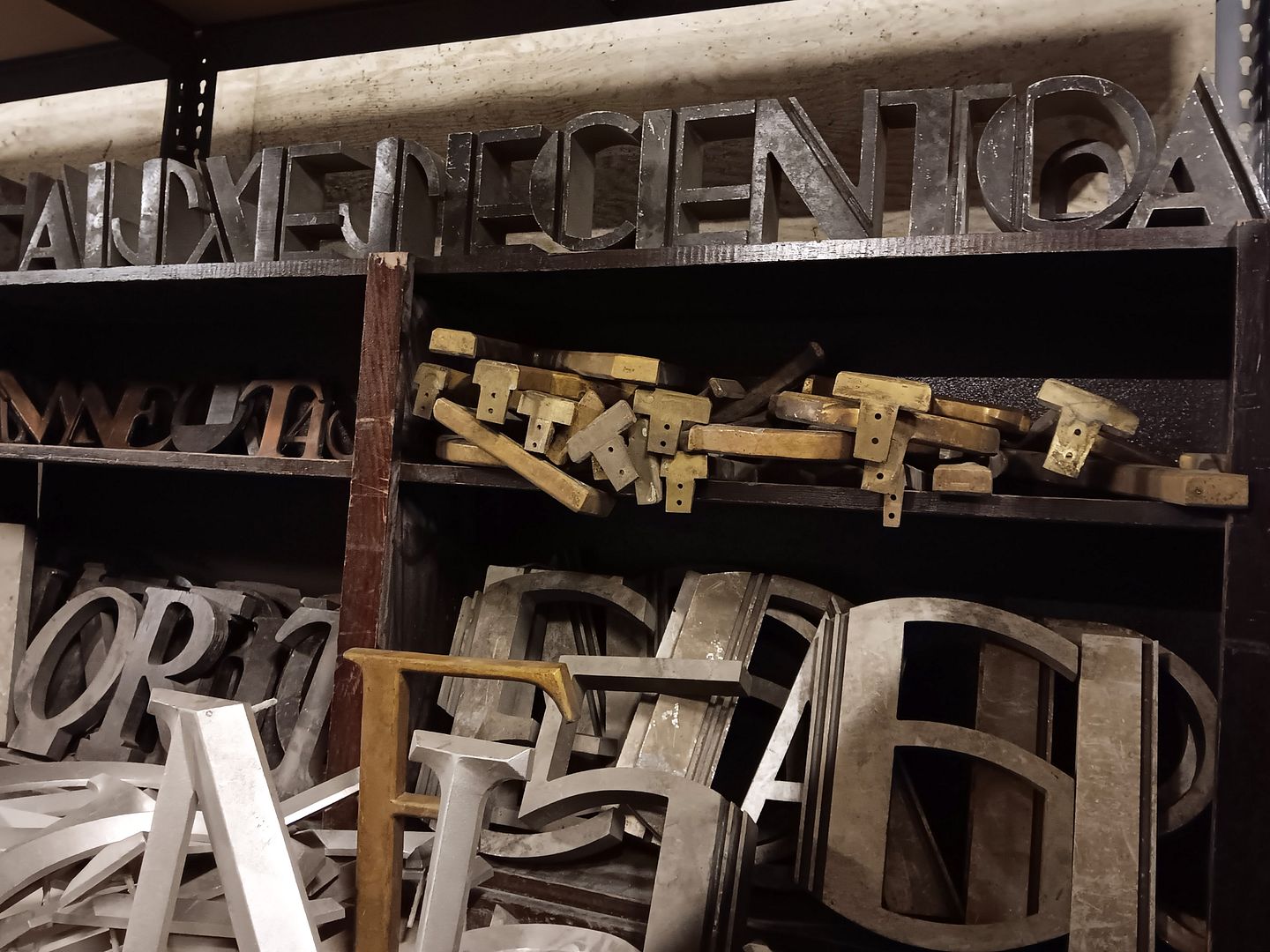
...from serifed to deco...
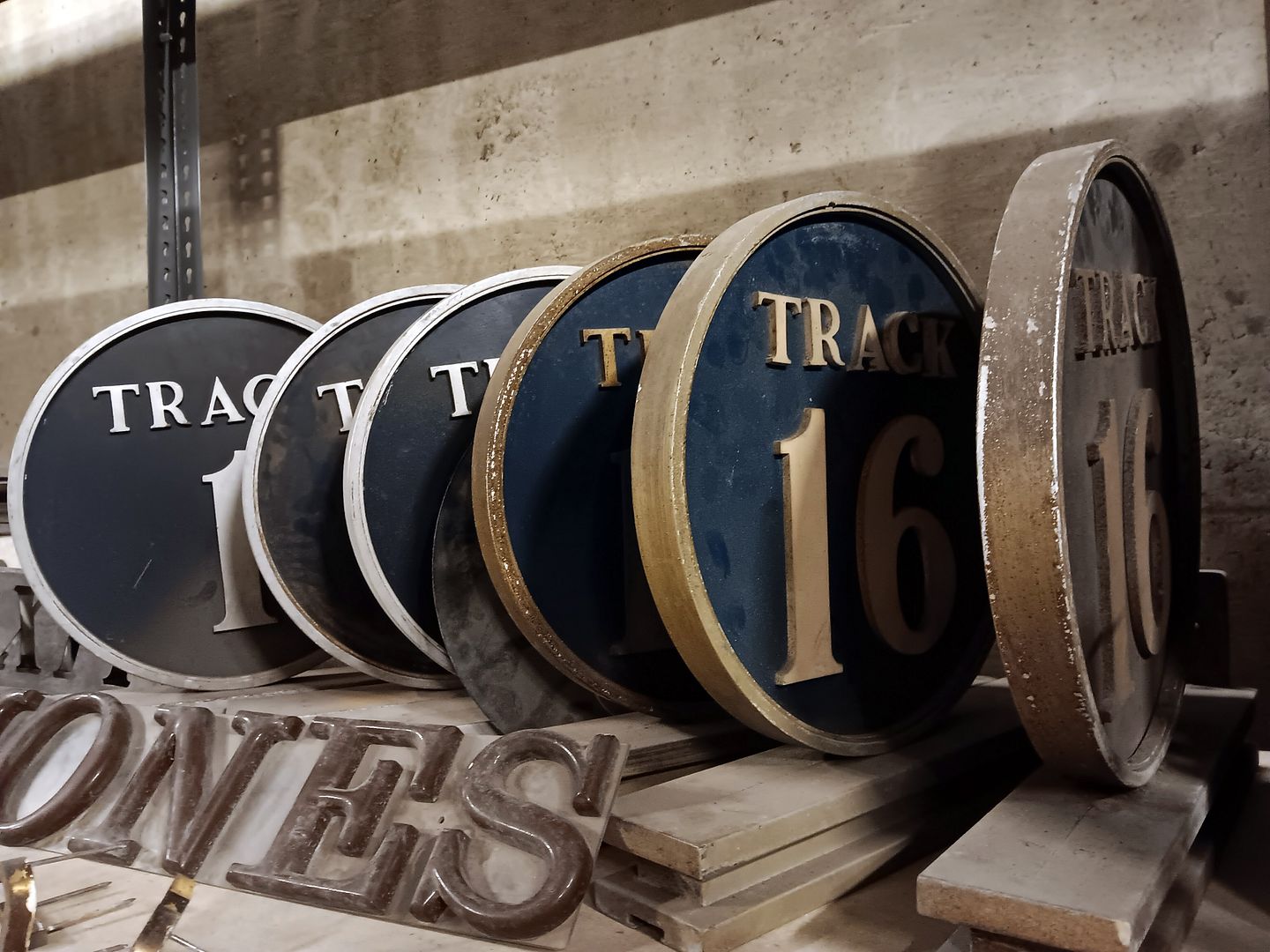
...and even some track numbers, too.
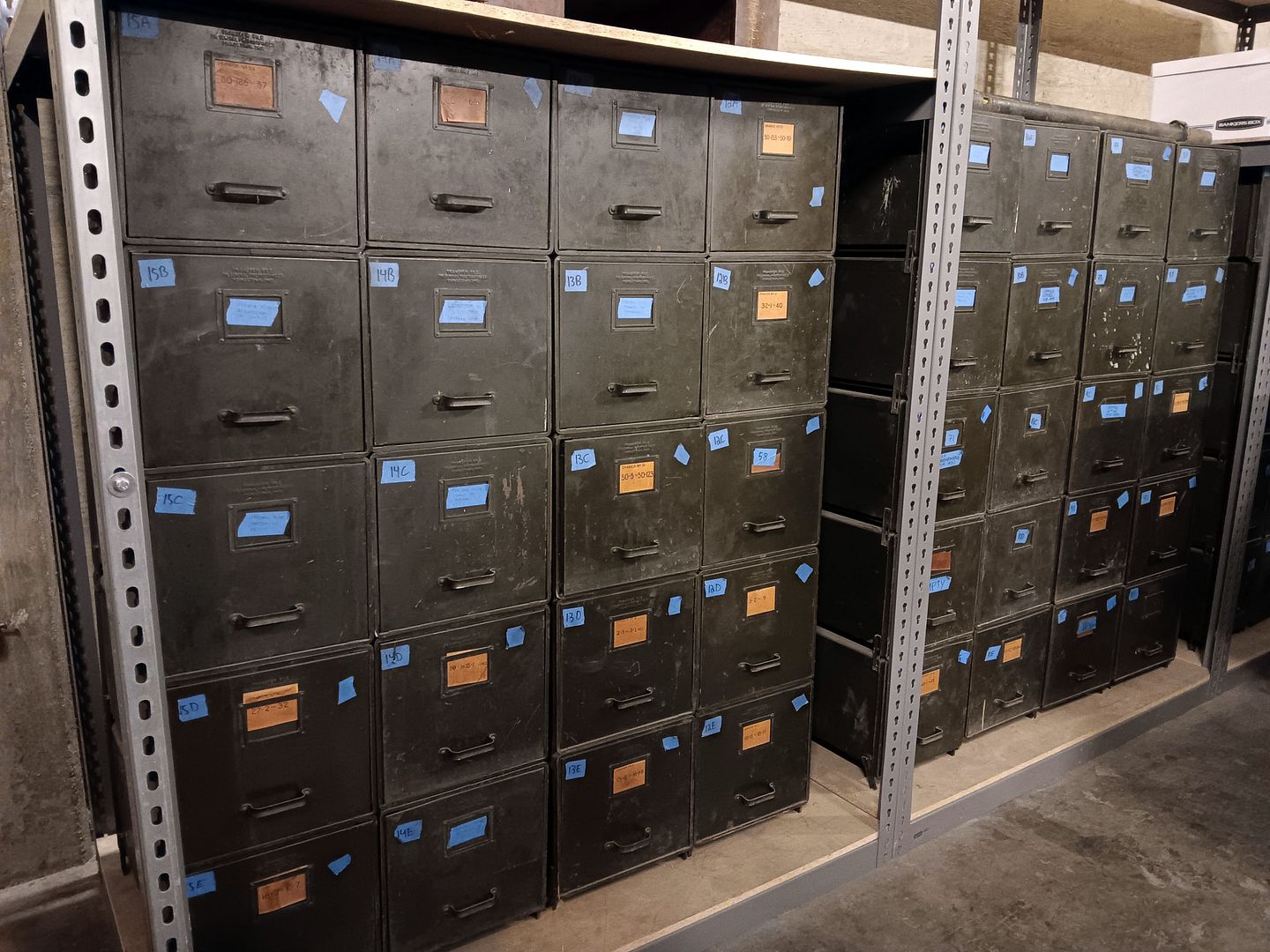
This is where all the personnel files and original plans for Union Station live, too—a treasure trove that's surely waiting for a researcher to dig into to try and piece together the landmark's early history.
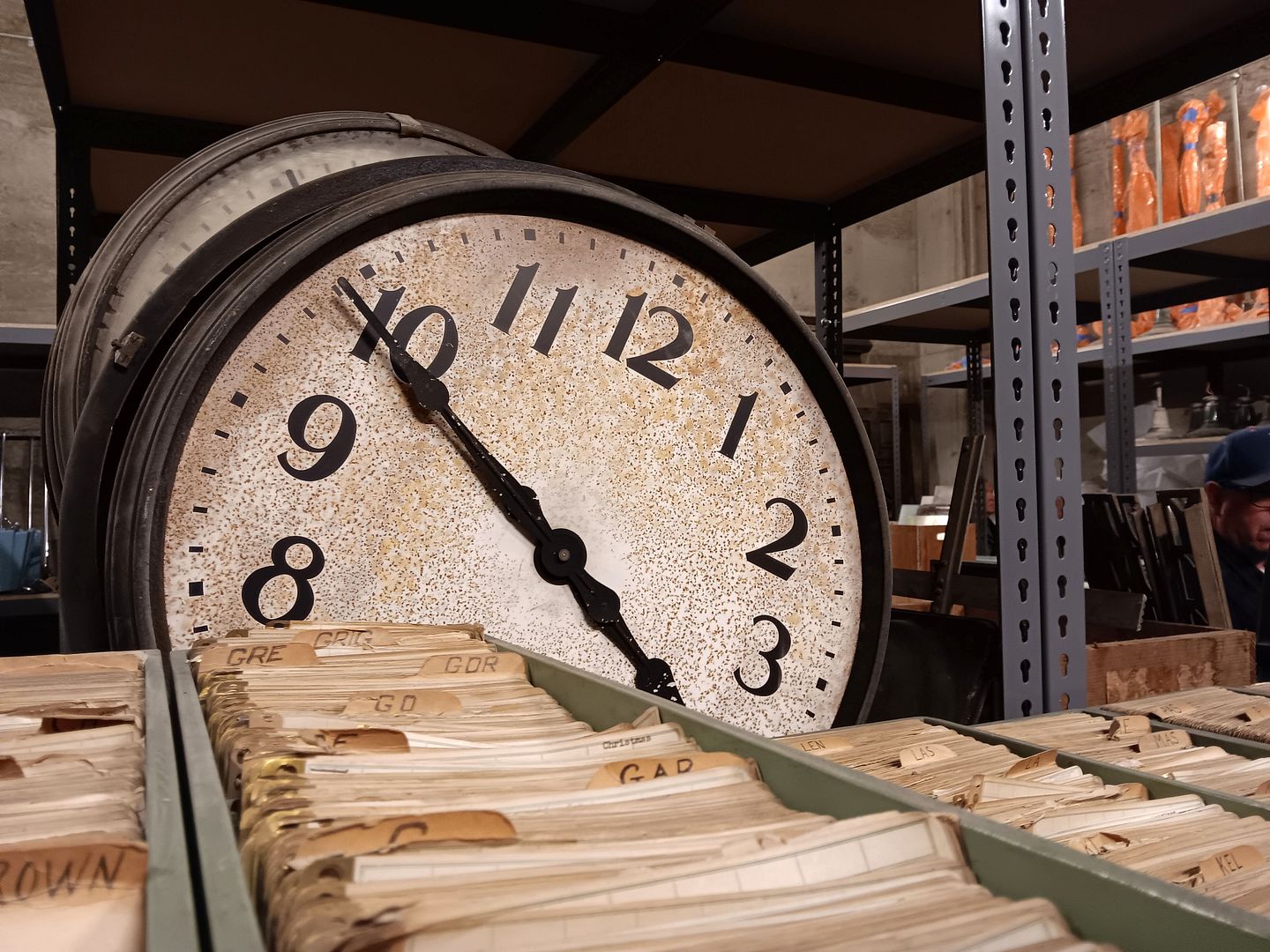
None of this stuff is digitized, and probably only a few people know what's actually in there. But the important thing is, it hasn't been trashed. And those who work there now know where to find it if they were to ever need it.
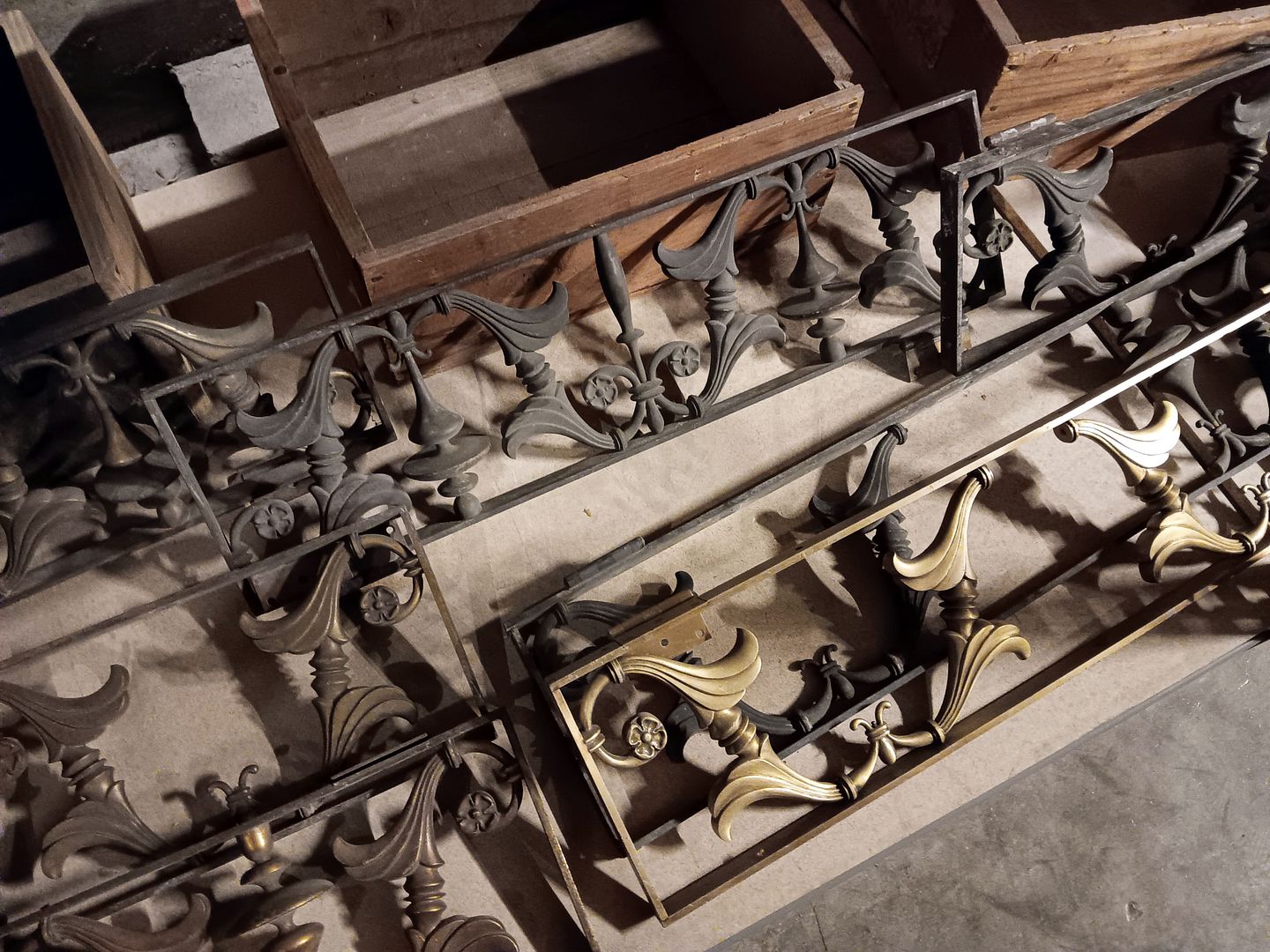
The clock tower functions as a bit of a boneyard for defunct and derelict grillwork of brass and iron...
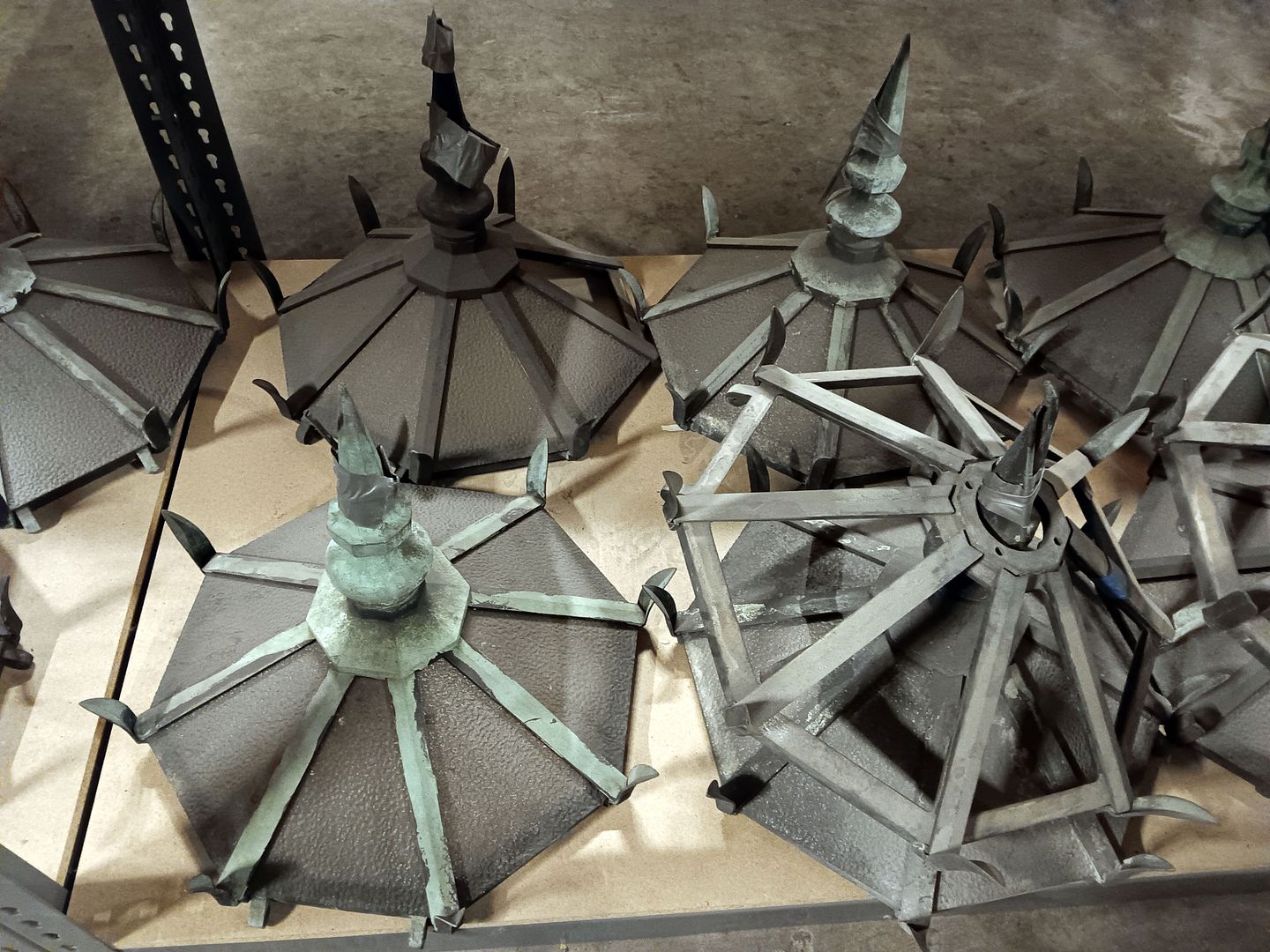
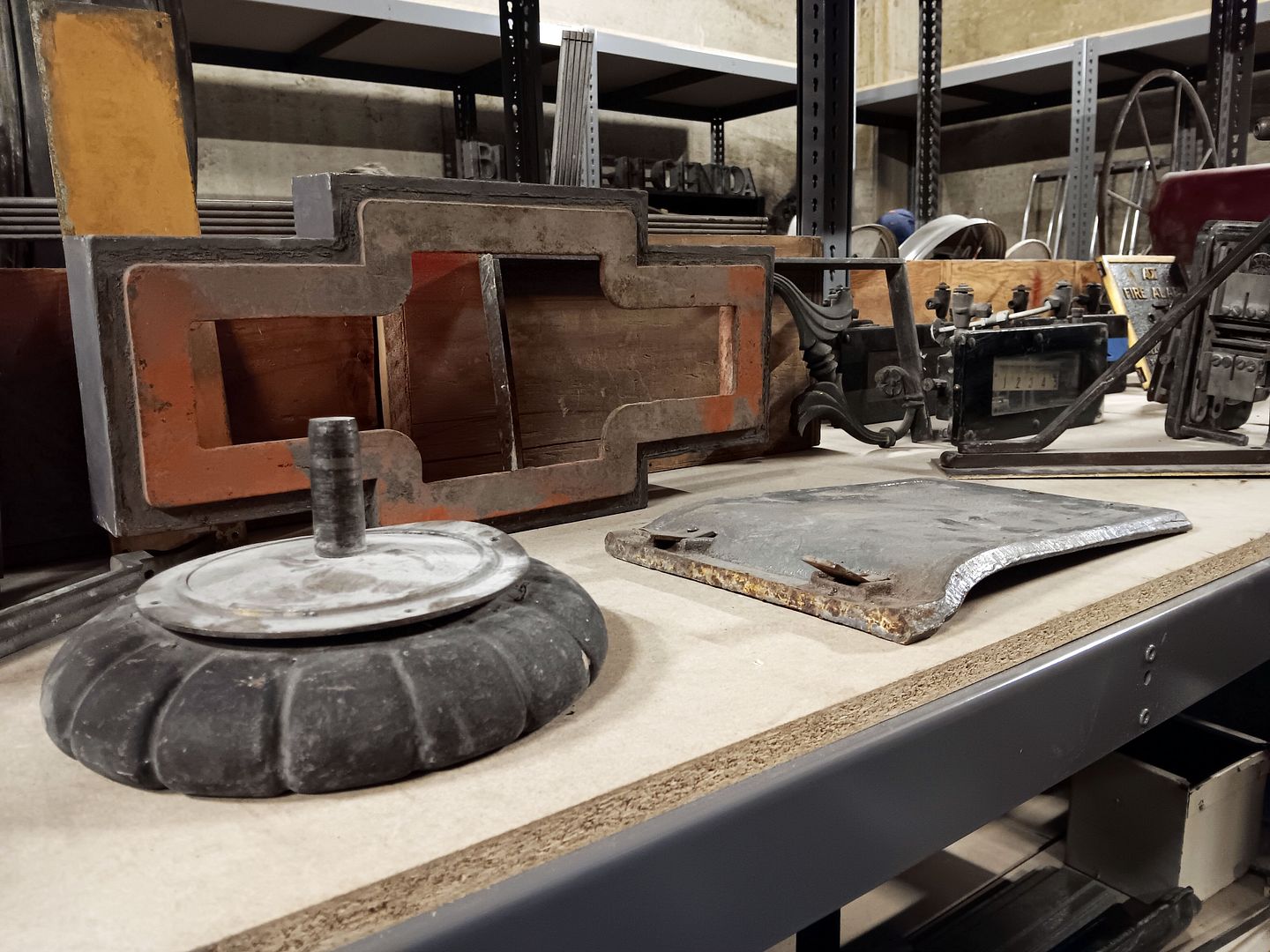
...as well as lighting fixtures (some of which are reminiscent of if not identical to some items found in the Historic Streetlight Museum in the Public Works Building in Downtown LA).
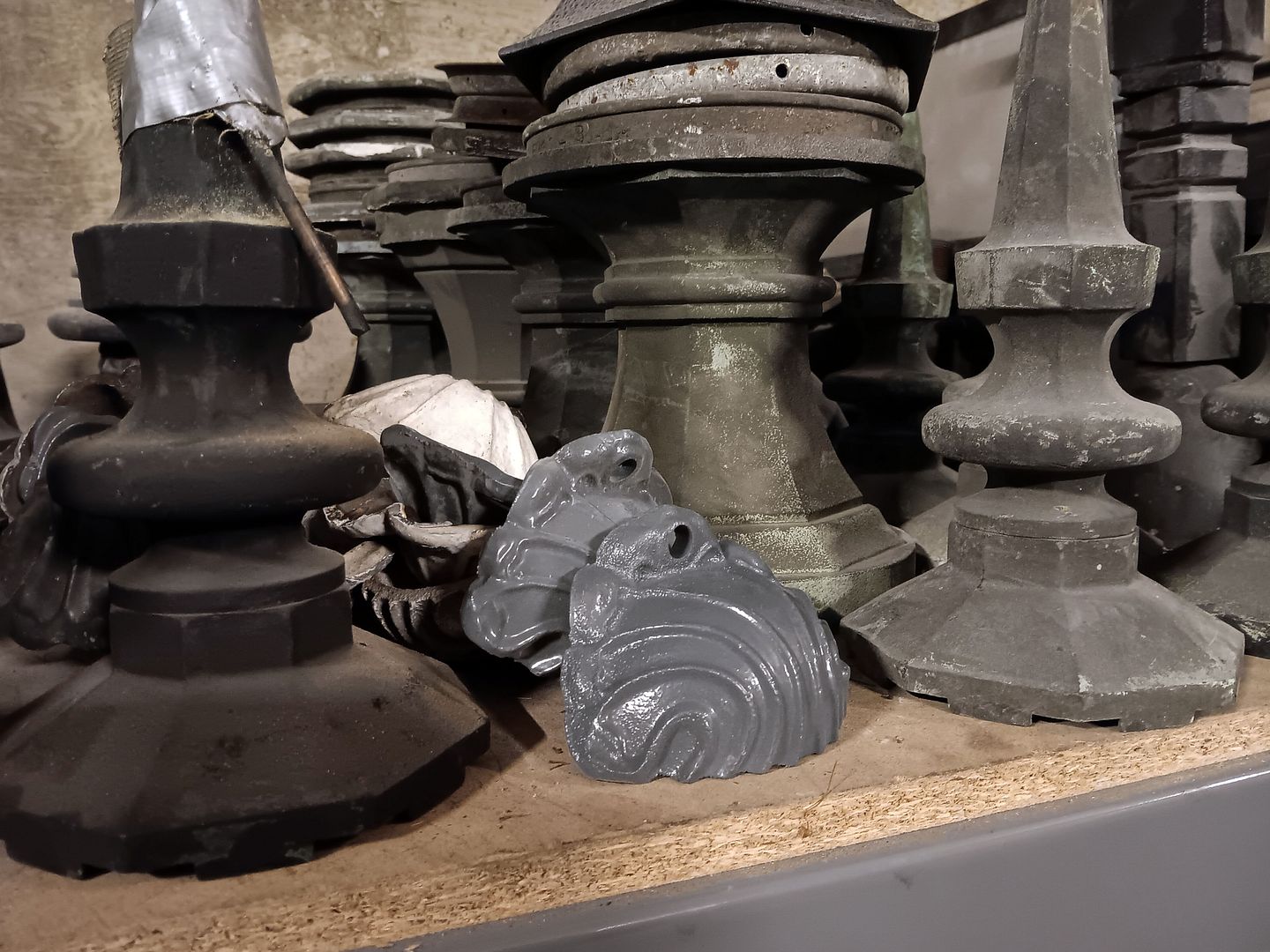
I didn't always know exactly what I was looking at...
...be it finial or plinth.
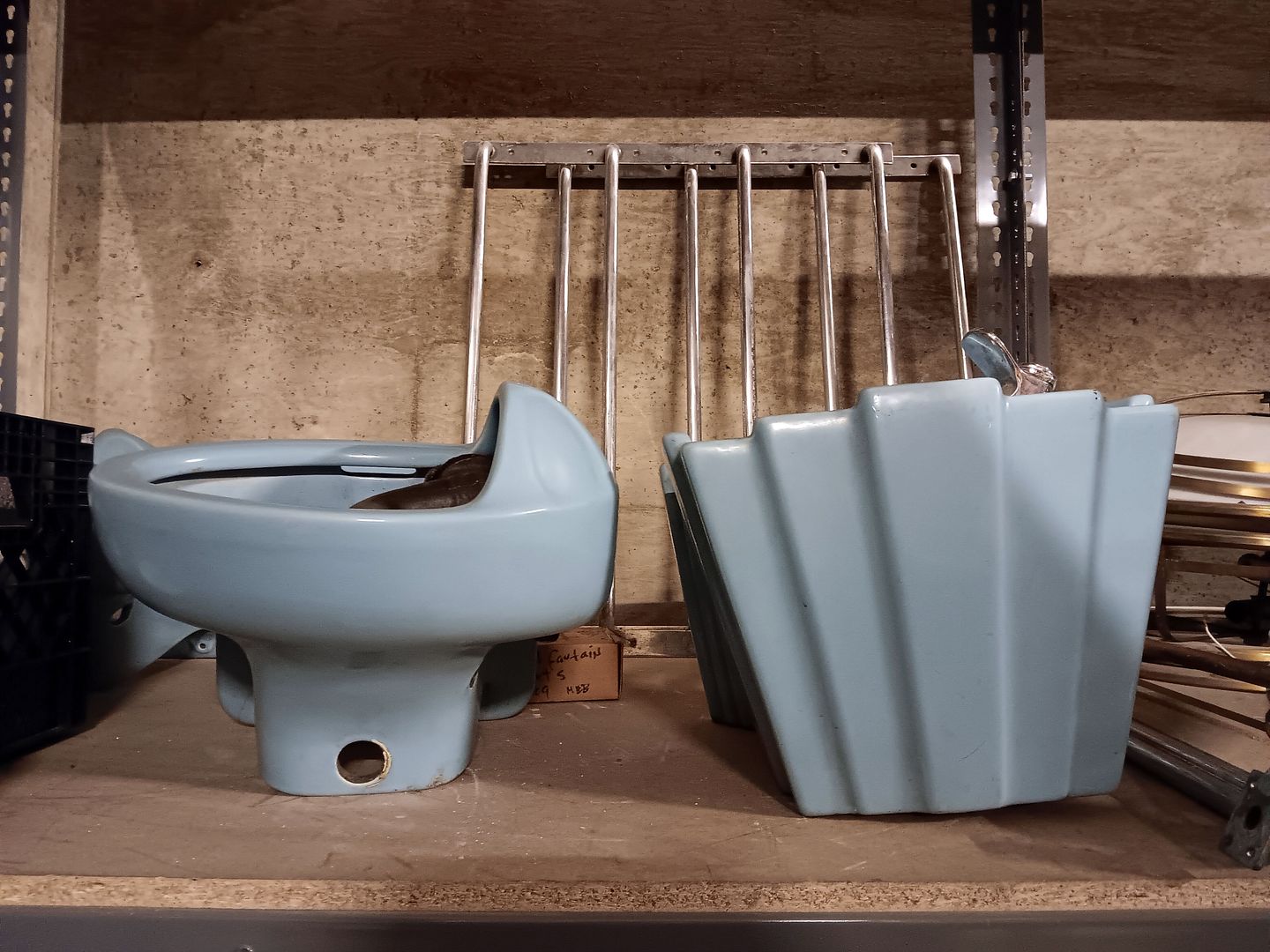
But a pair of Art Deco drinking fountains just about bowled me over.
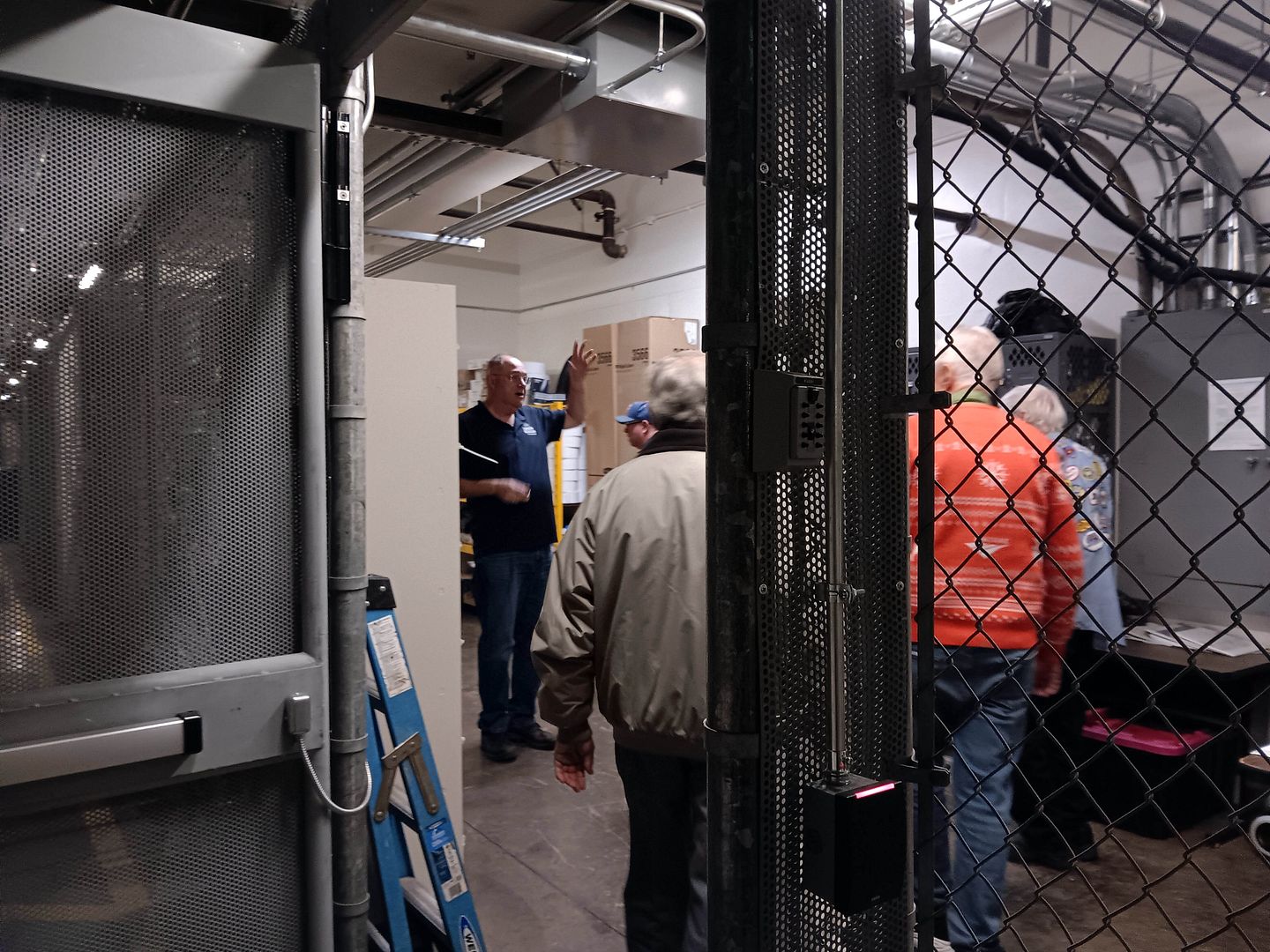
I thought I'd been freaking out with delight in the clock tower, but then our tour took us down into the basement...
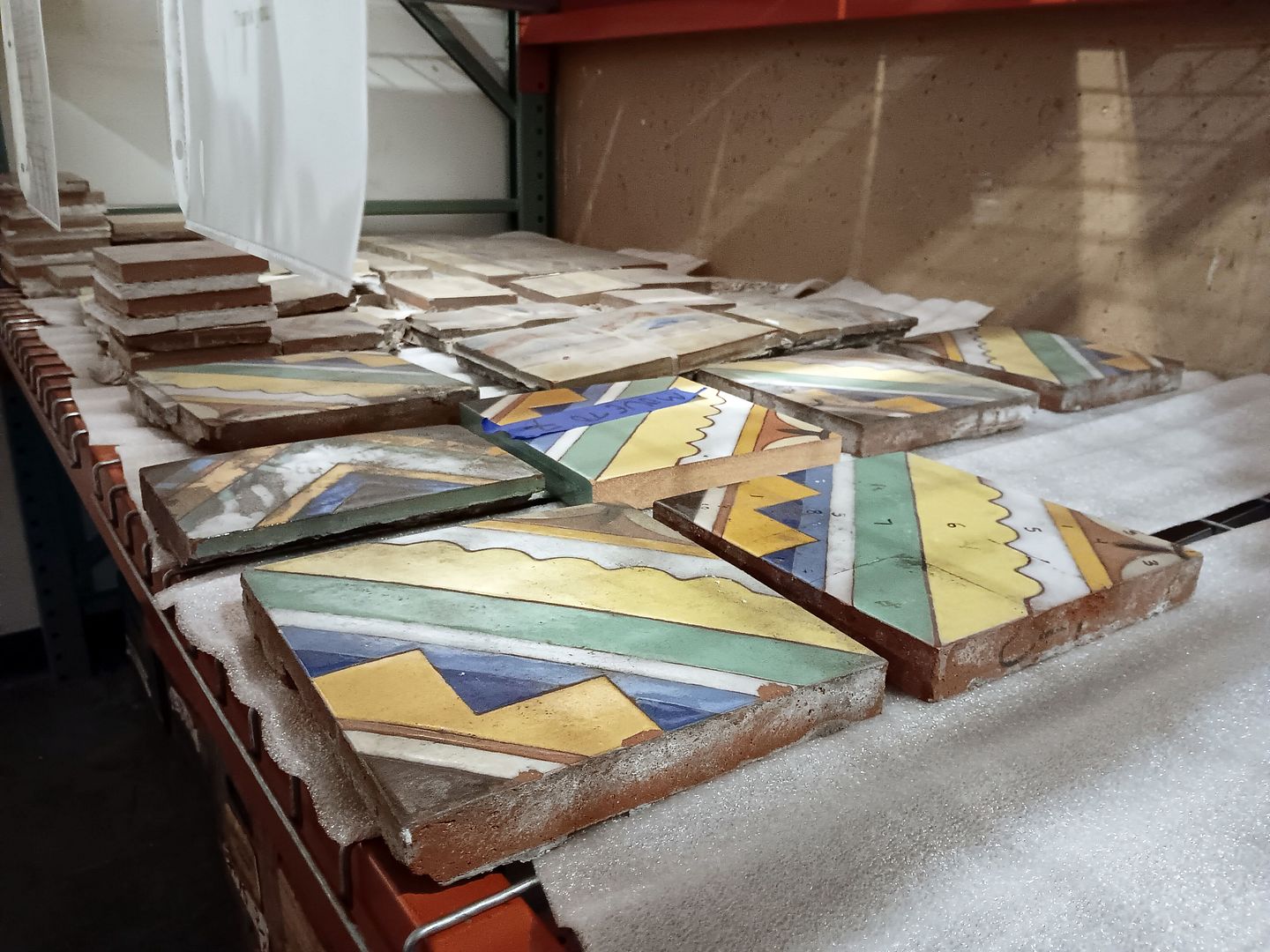
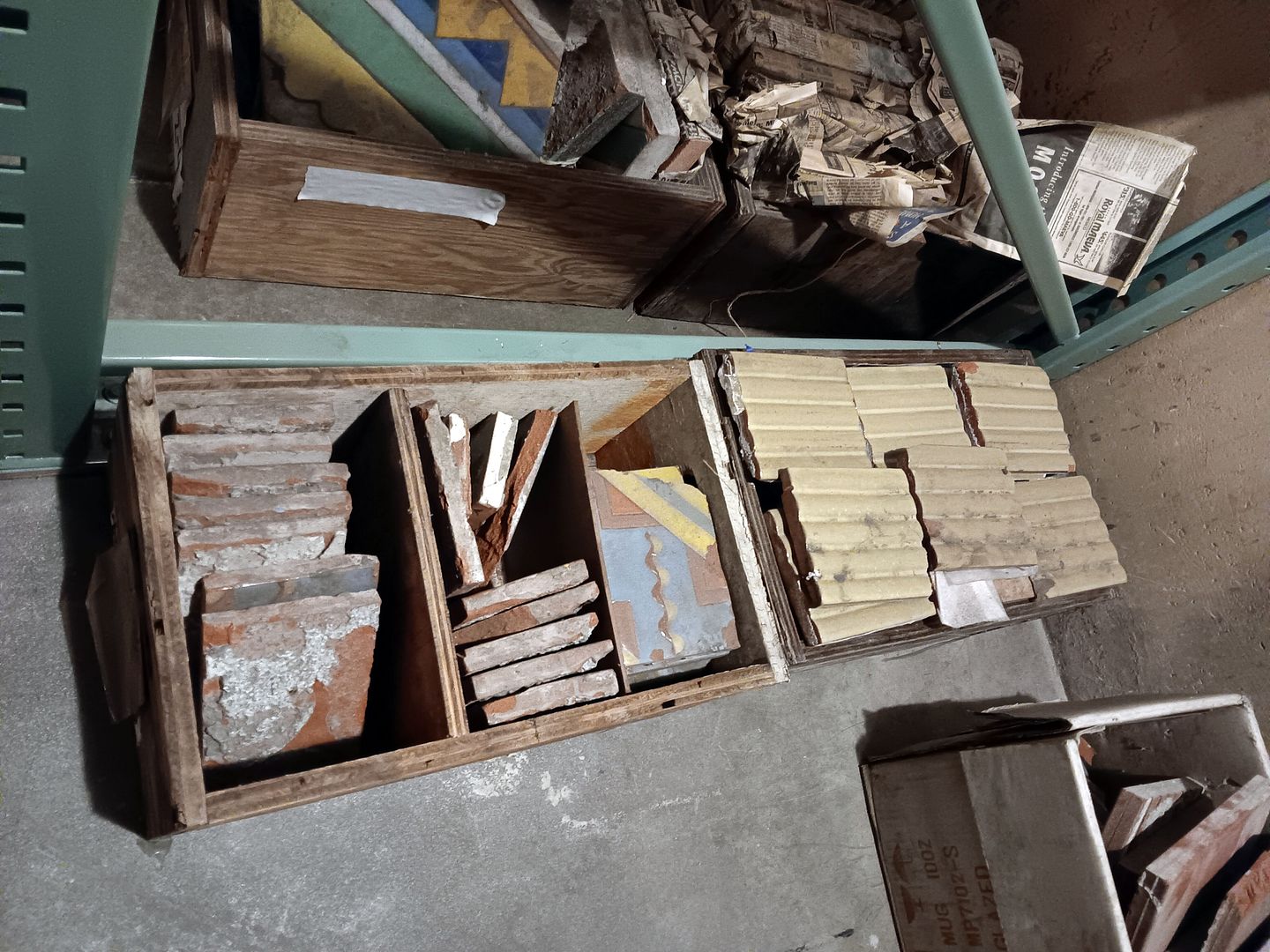
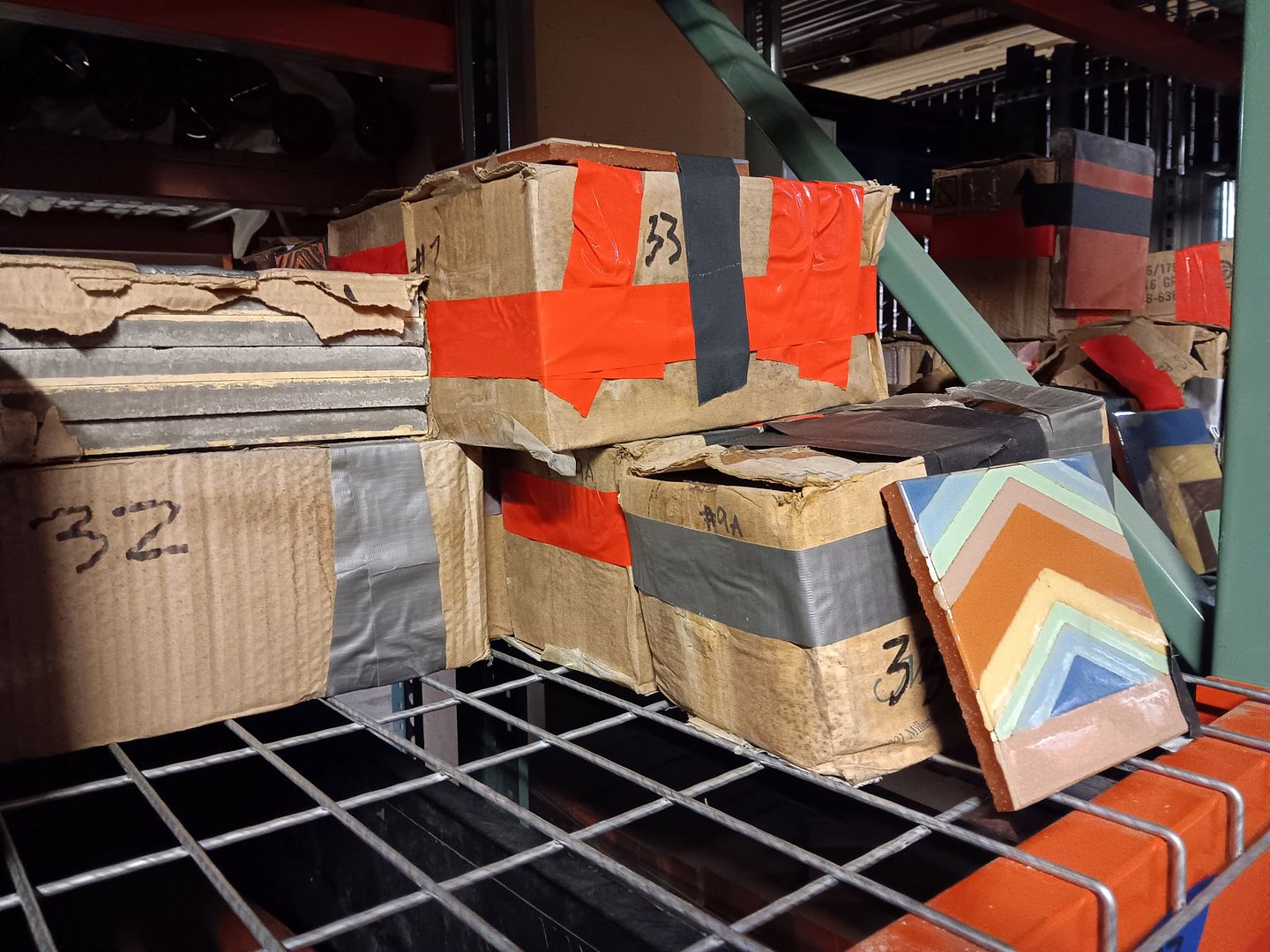
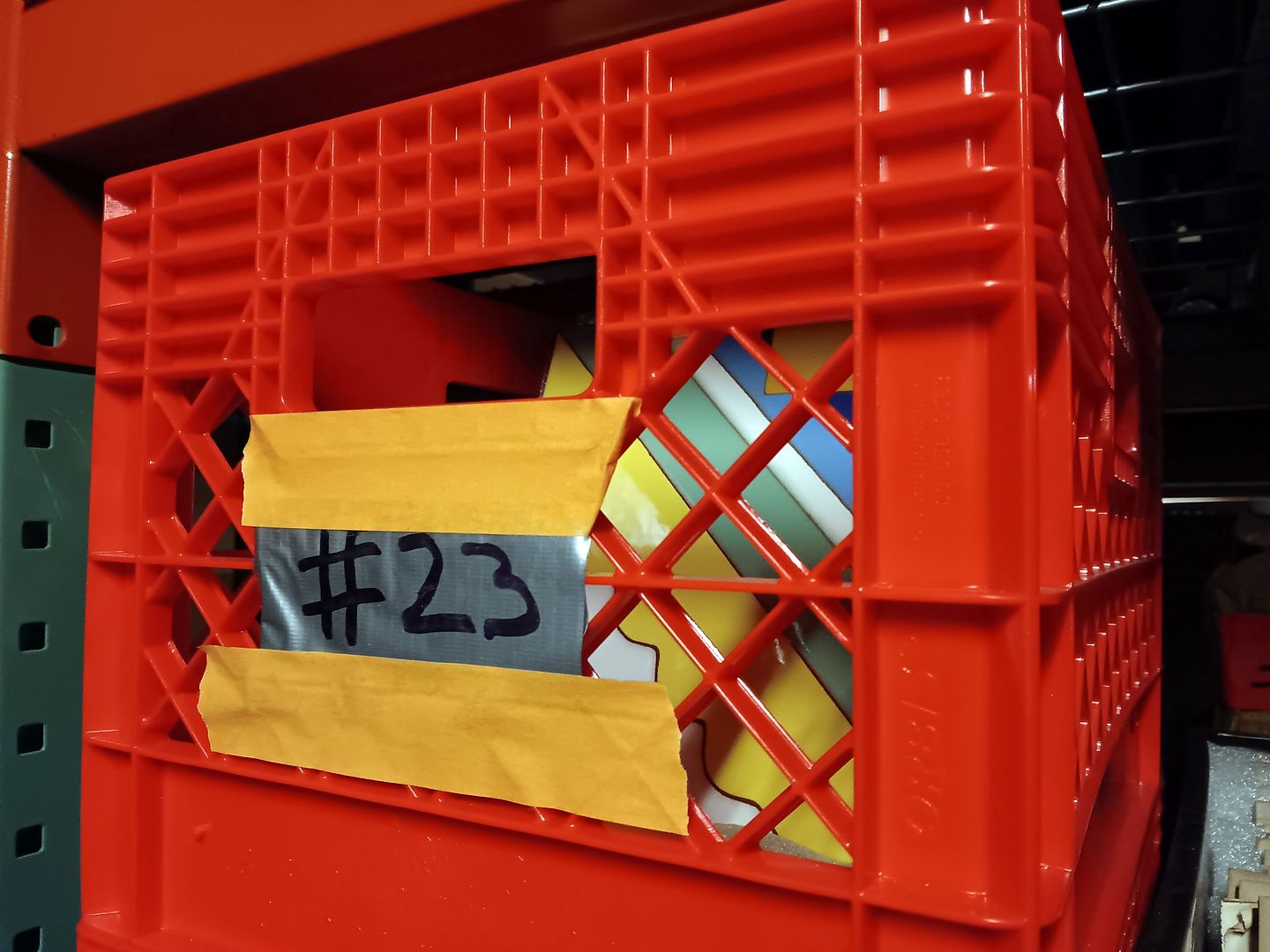
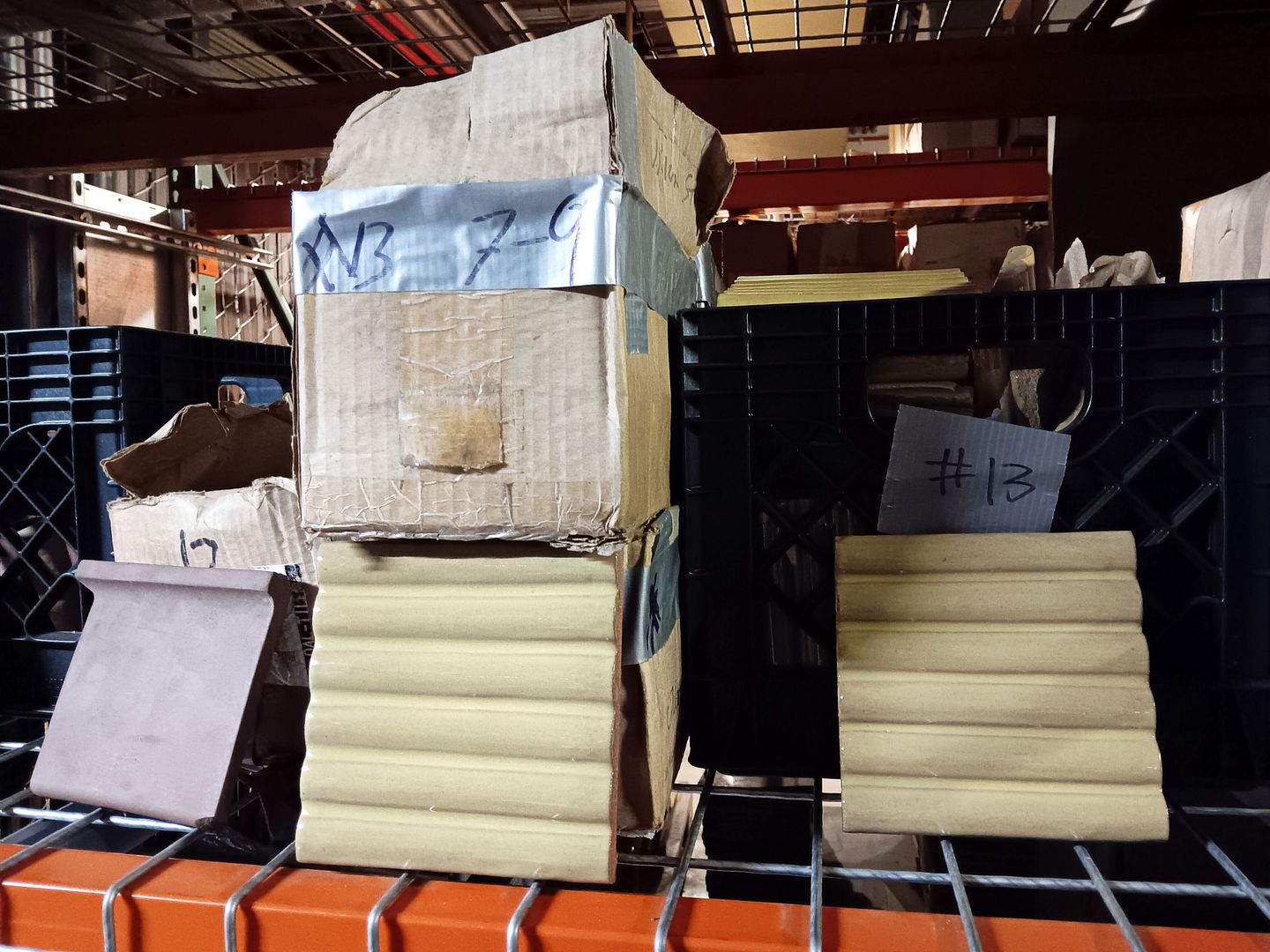
...where my chin hit the floor at the sight of the archive of original tiles...
...which are so packed with lead, workers can't touch them without gloves and are warned not to move them around too much so as not to kick up too much dust.
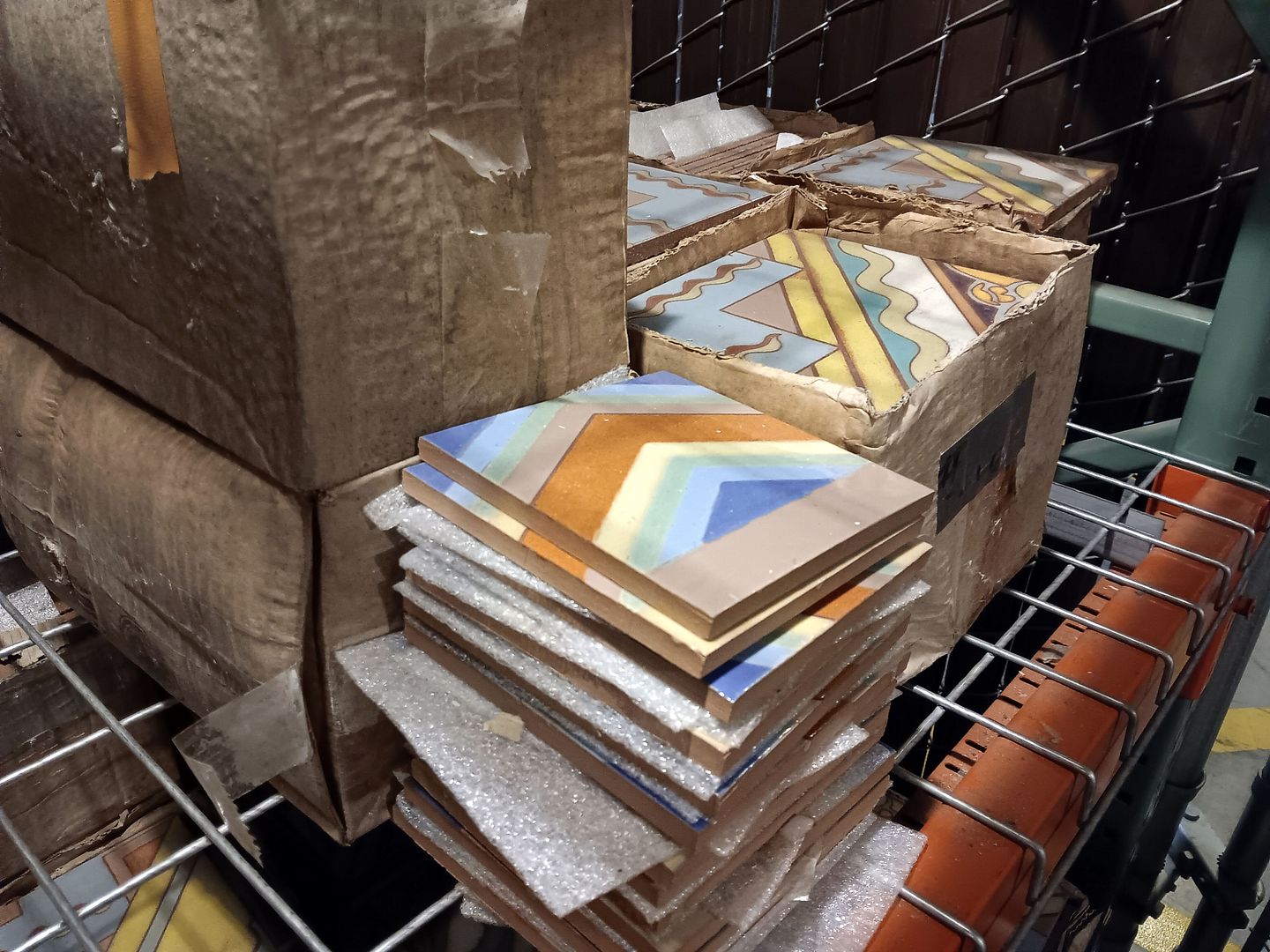
The replacement tiles are a bit safer...
...catalogued by number and ready to be plucked out of their storage boxes and put into service at any given moment.
I never noticed how many different tile designs constituted the overall look of Union Station...
...until I saw them all stacked up together, down there in that basement.
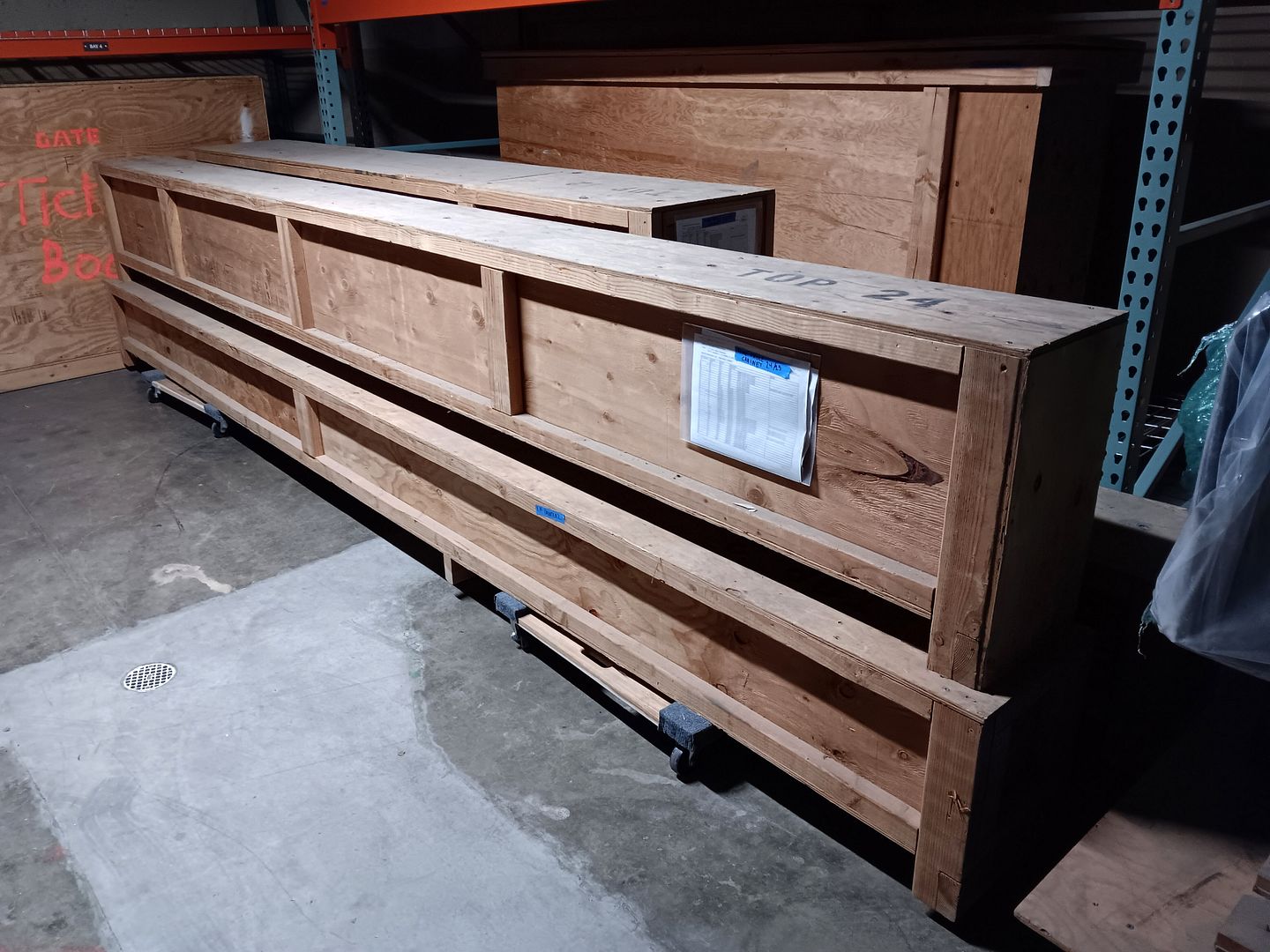
Other, larger items are also stored down there—including furniture and replacement glass panels—which are too big and bulky to haul up the stairs to the clock tower.
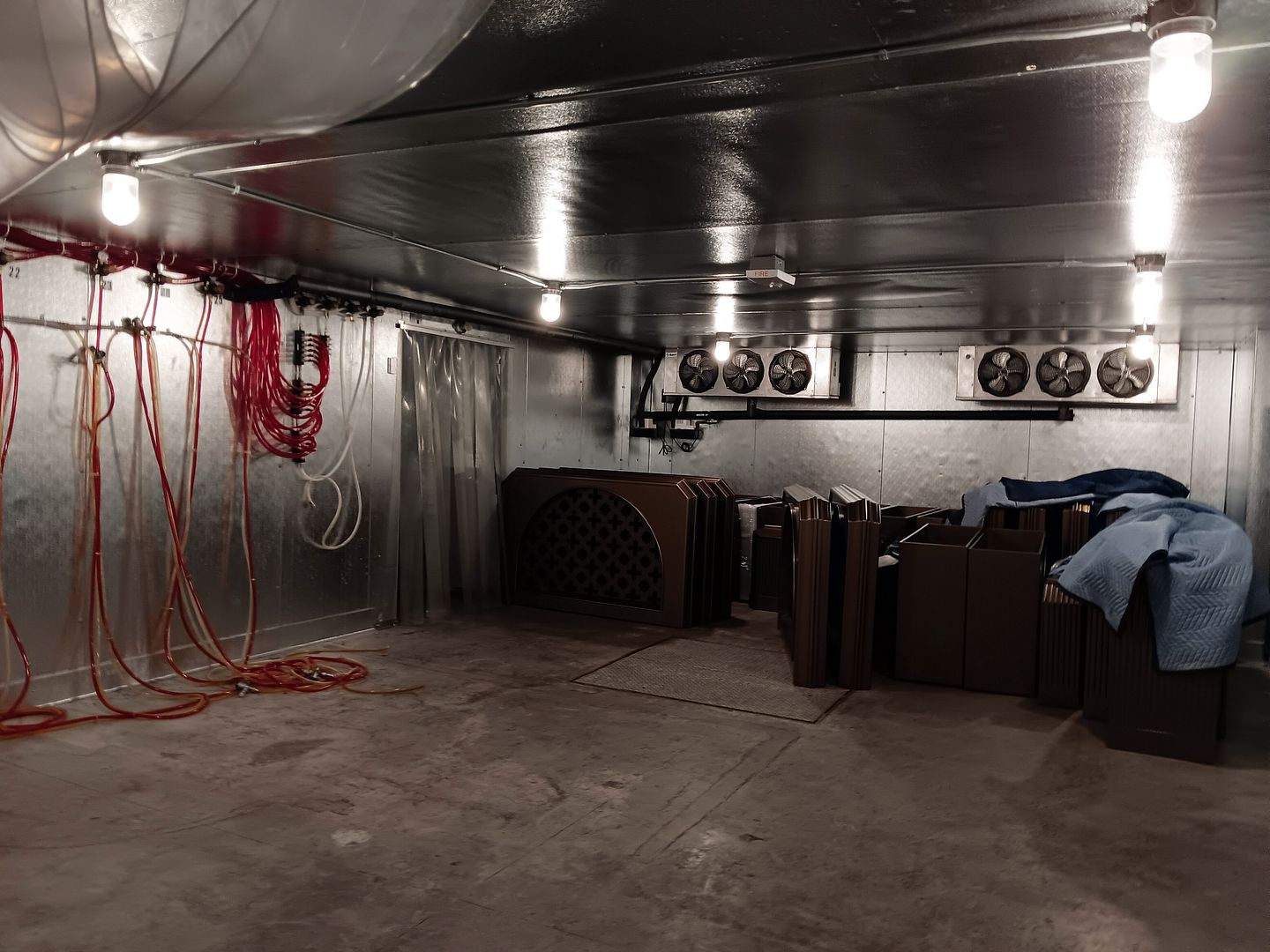
Also hidden down in the basement is the storage for the former Fred Harvey restaurant space (a.k.a. the Harvey House), which was most recently operating as a brewery (actually two breweries in succession). After Homebound moved out, they were contractually obligated to leave all the brewing equipment and beer lines behind—which will make it easier for another brewery to potentially move in.
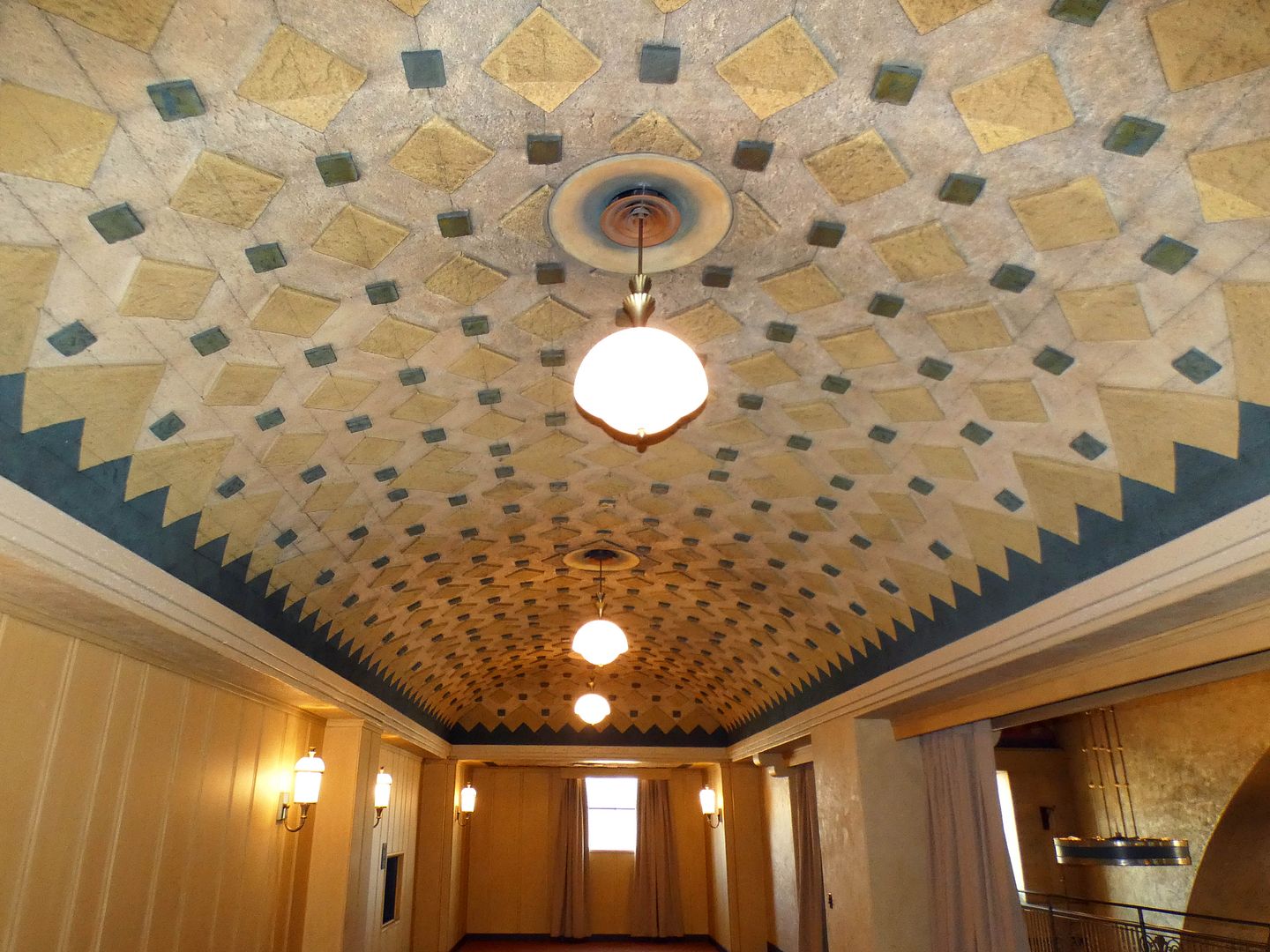
One elevator ride up and we found ourselves in the space above the Harvey House, once used for events.
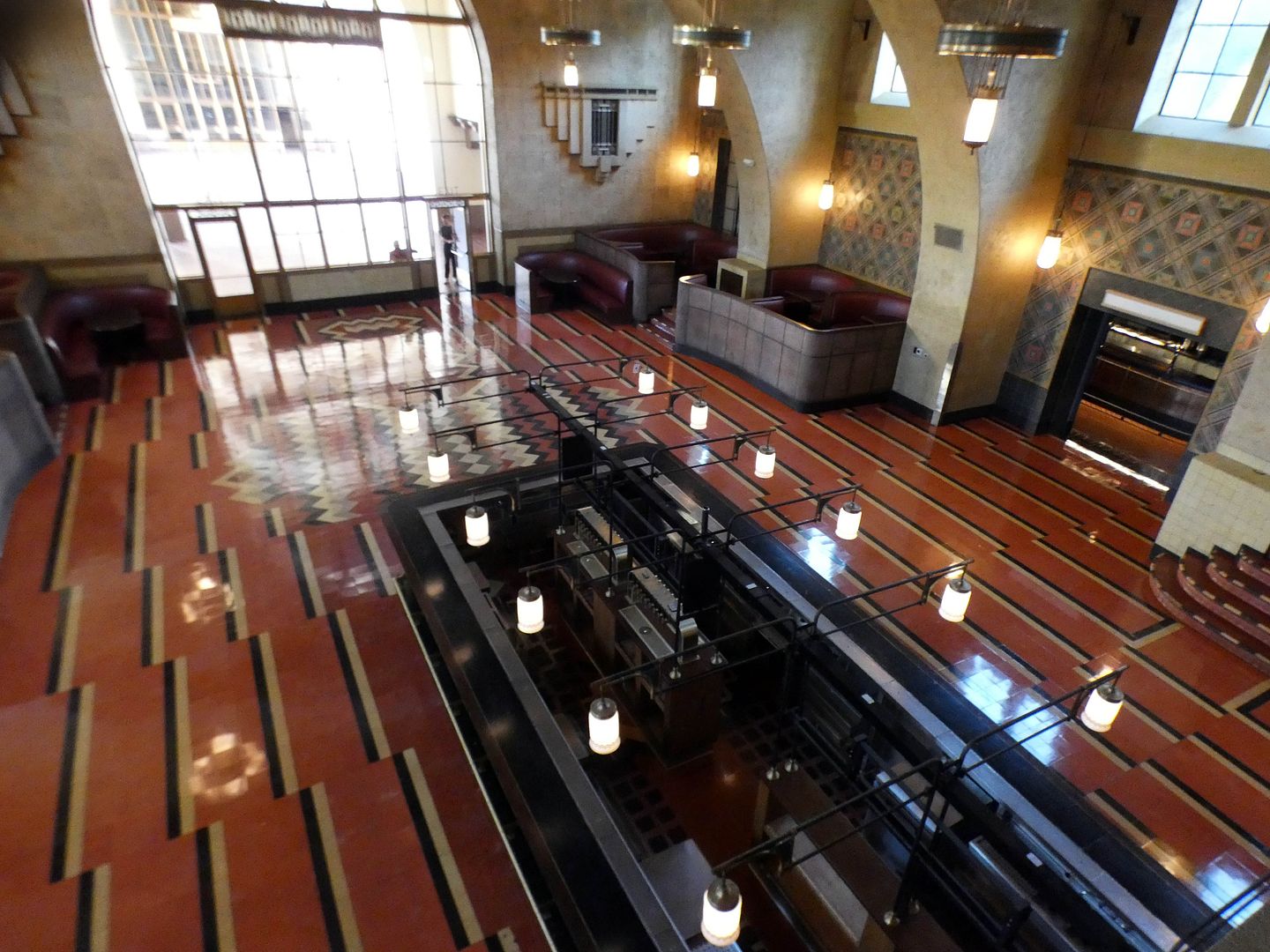
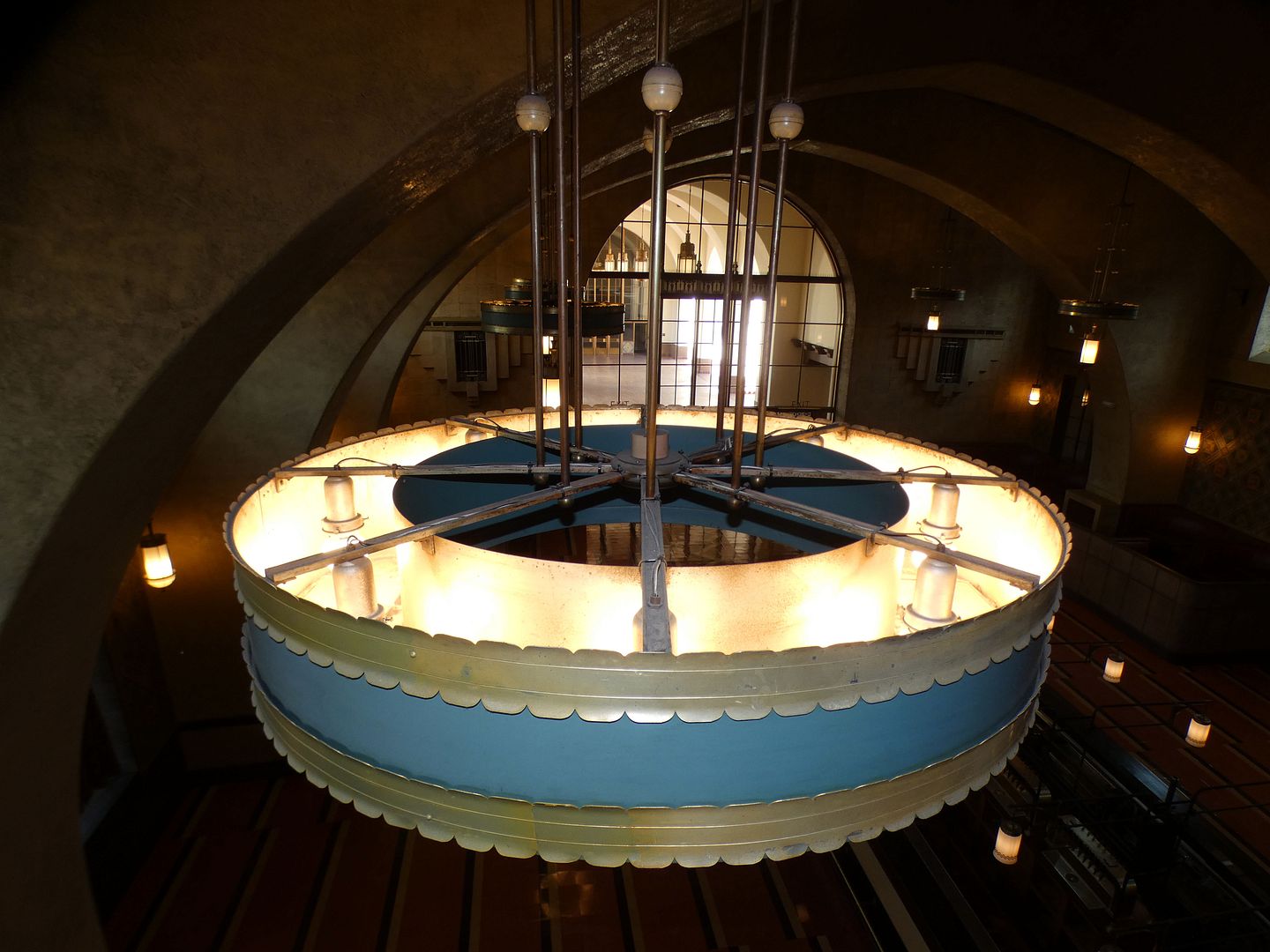
Looking down from the balcony, we could see the original restaurant bar in the center of the room, with that Navajo pattern in the tile floor. Everything is original, except the bar lights.
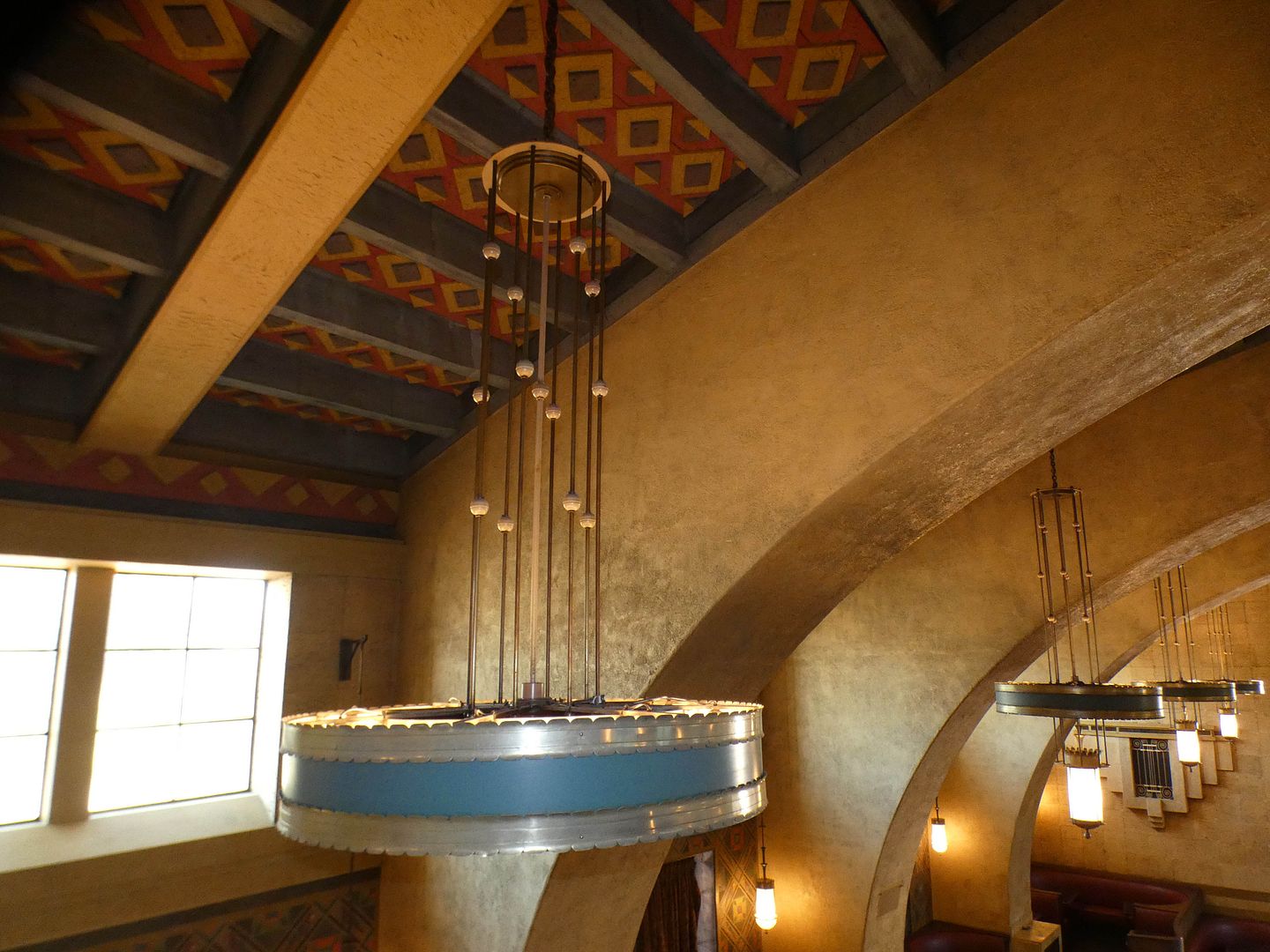
That includes the chandeliers, which were suddenly at eye level...
...providing an entirely new perspective of Union Station that I never knew I needed to see.
Related Posts:

Absolutely wonderful! Thanks, Sandi!
ReplyDelete