
[Last updated 1/24/25 8:45 PM PT—Made some corrections based on an email from the real estate agent behind the 2014 sale—Steven Gutierrez-Kovner, who also grew up in the home—and a photo received from a friend who visited the home during its pre-2014 ownership.]
Back in October, I heard about an opportunity to visit a "Lost Lautner"—that is, a house designed by architect John Lautner that was missing from the official record of his works.
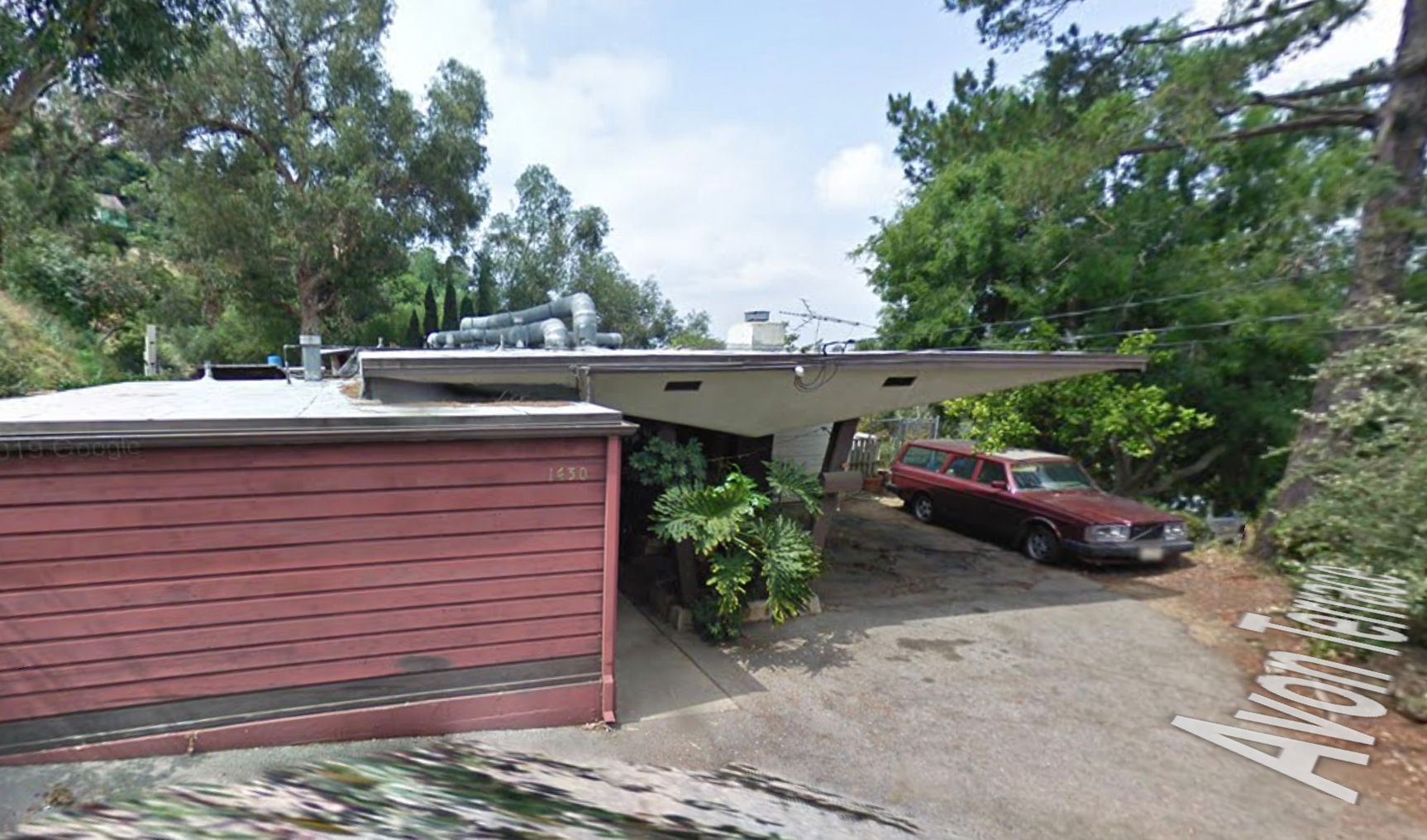
circa April 2009, via Google Street View
It was the Salkin House, located on Avon Terrace and tucked into the crook of the neck of upper Elysian Park. Completed in 1948, somehow it had disappeared from public memory for decades—until it was "discovered" again in 2014, when it hit the market for the first time basically ever, confirming the rumors of its existence to be true.
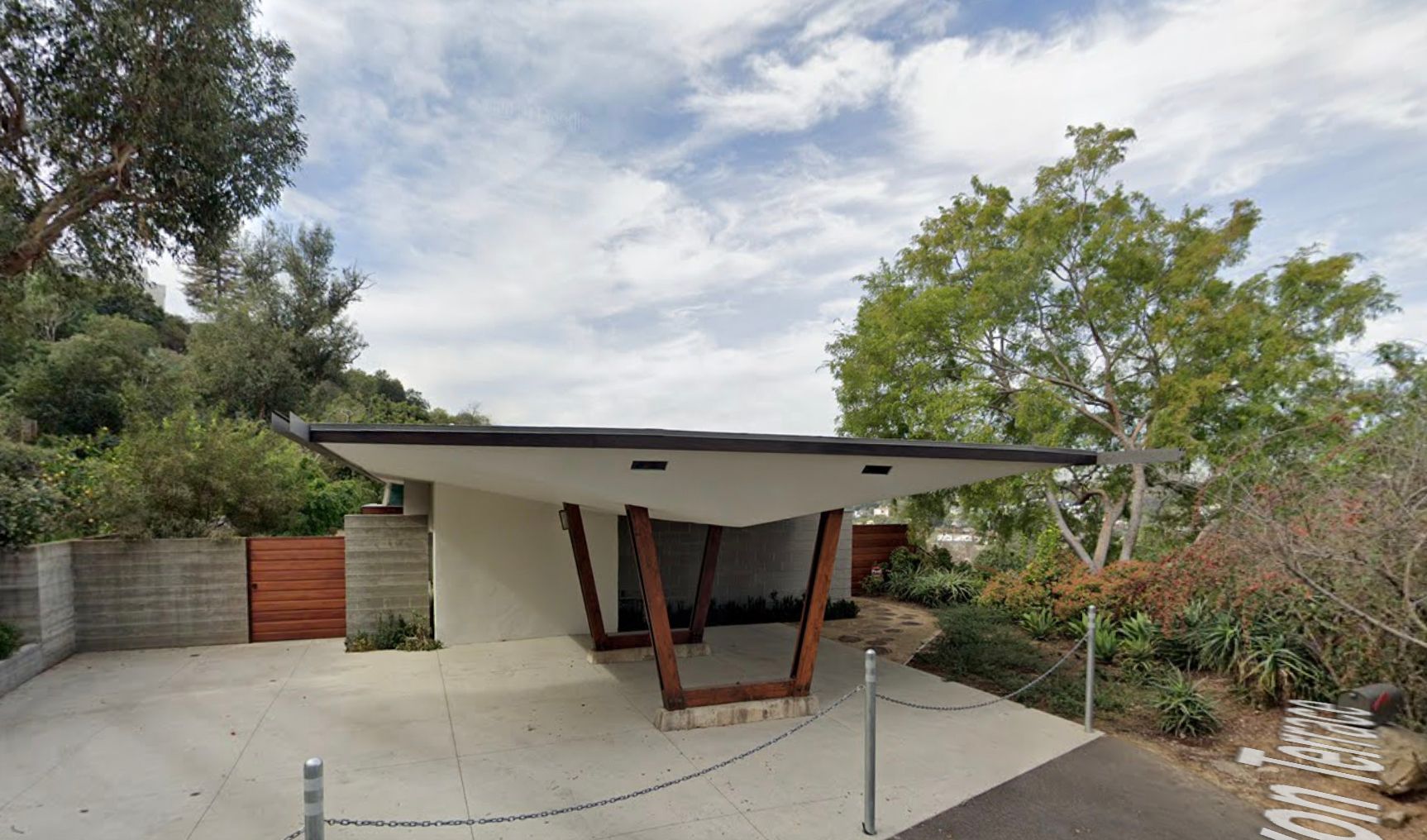
circa March 2018, via Google Street View
Fashion designer Trina Turk and her (now late) husband Jonathan Skow purchased it for $1.2 million (with the adjacent lot, $1.5 million) and embarked on a preservation-minded restoration. They secured its designation as a Los Angeles Historic-Cultural Monument in 2016.
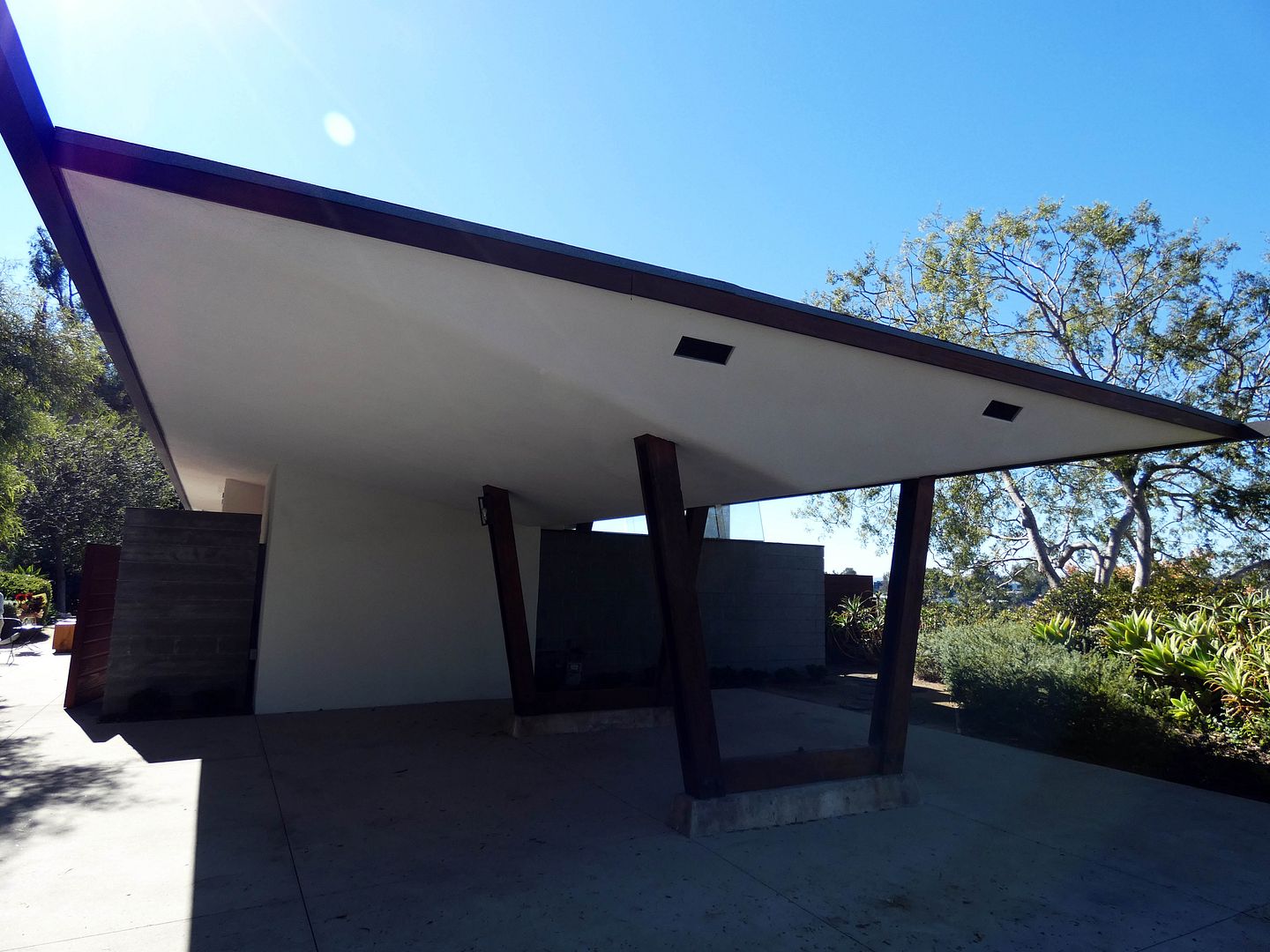
So how does one "lose" a Lautner house? Well, according to the Los Angeles Conservancy, the famed architect wasn't licensed yet when real estate developer Jules Salkin commissioned him to design it. In order to get the thing built, he had another architect sign the permits.
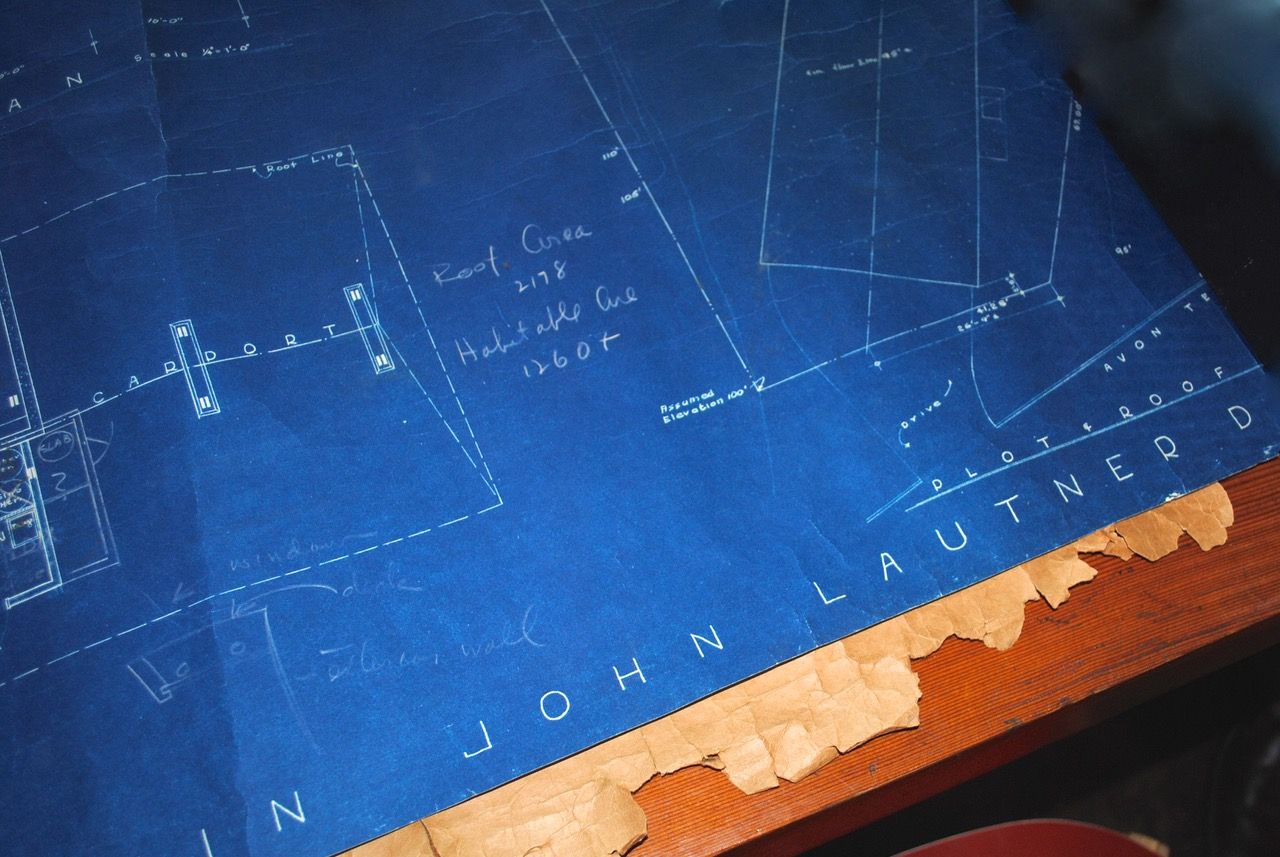
circa 2013 (Photo: Escott Norton)
[Update 1/24/26] But, as my friend Escott Norton shared with me after reading this blog post, there was a paper trail tying the house to Lautner. The architect's name was all over the architectural plans (pictured above, courtesy of Escott), which the family had had all along. (They were also publicly listed in the Getty archives.)
The headline of the 2014 real estate listing, written by realtor and former resident of the home Steven Gutierrez-Kovner, sparked an intrigue that still resonates today: "Long Lost Lautner-First Time on Market in 65 Years."
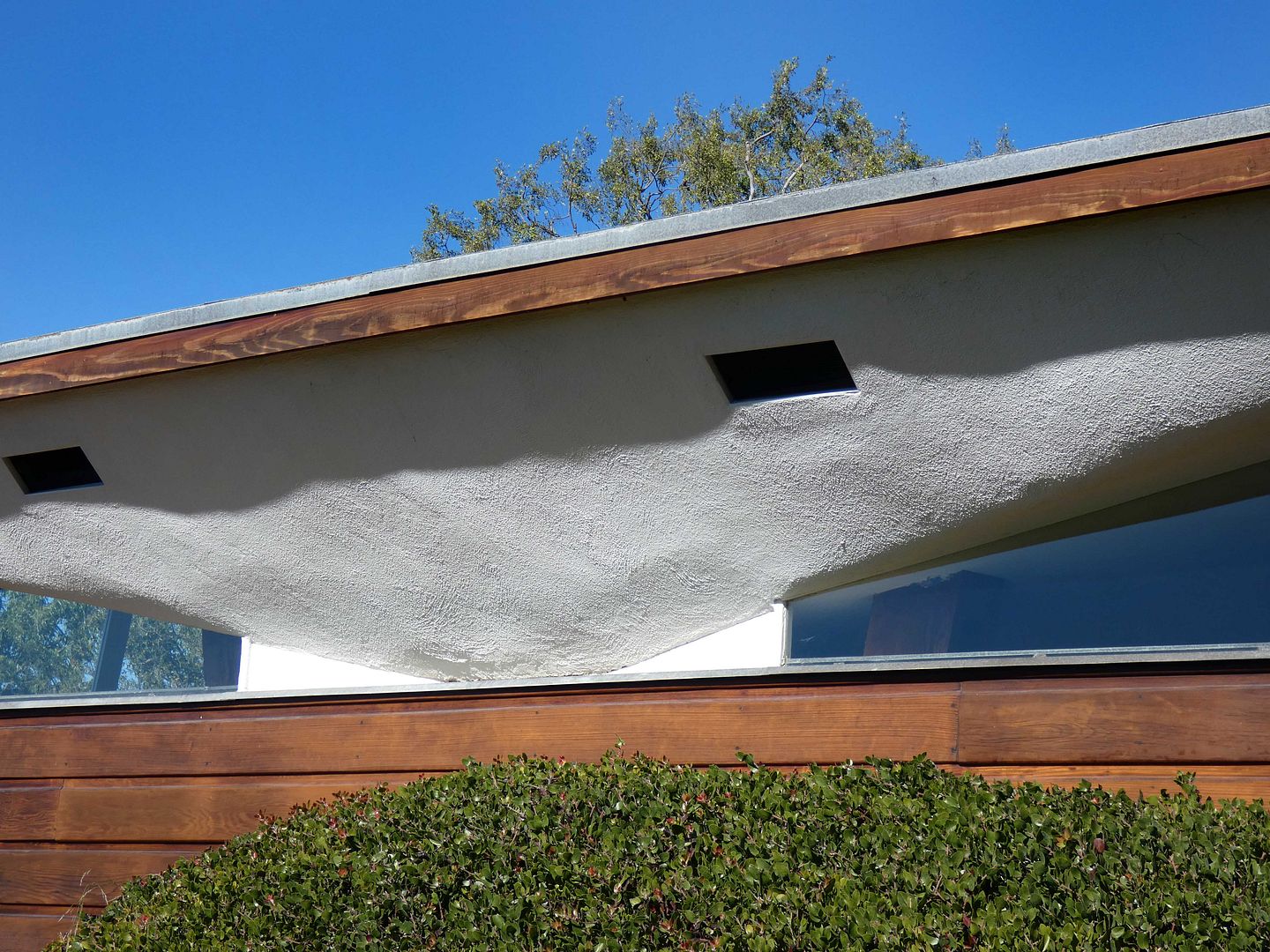
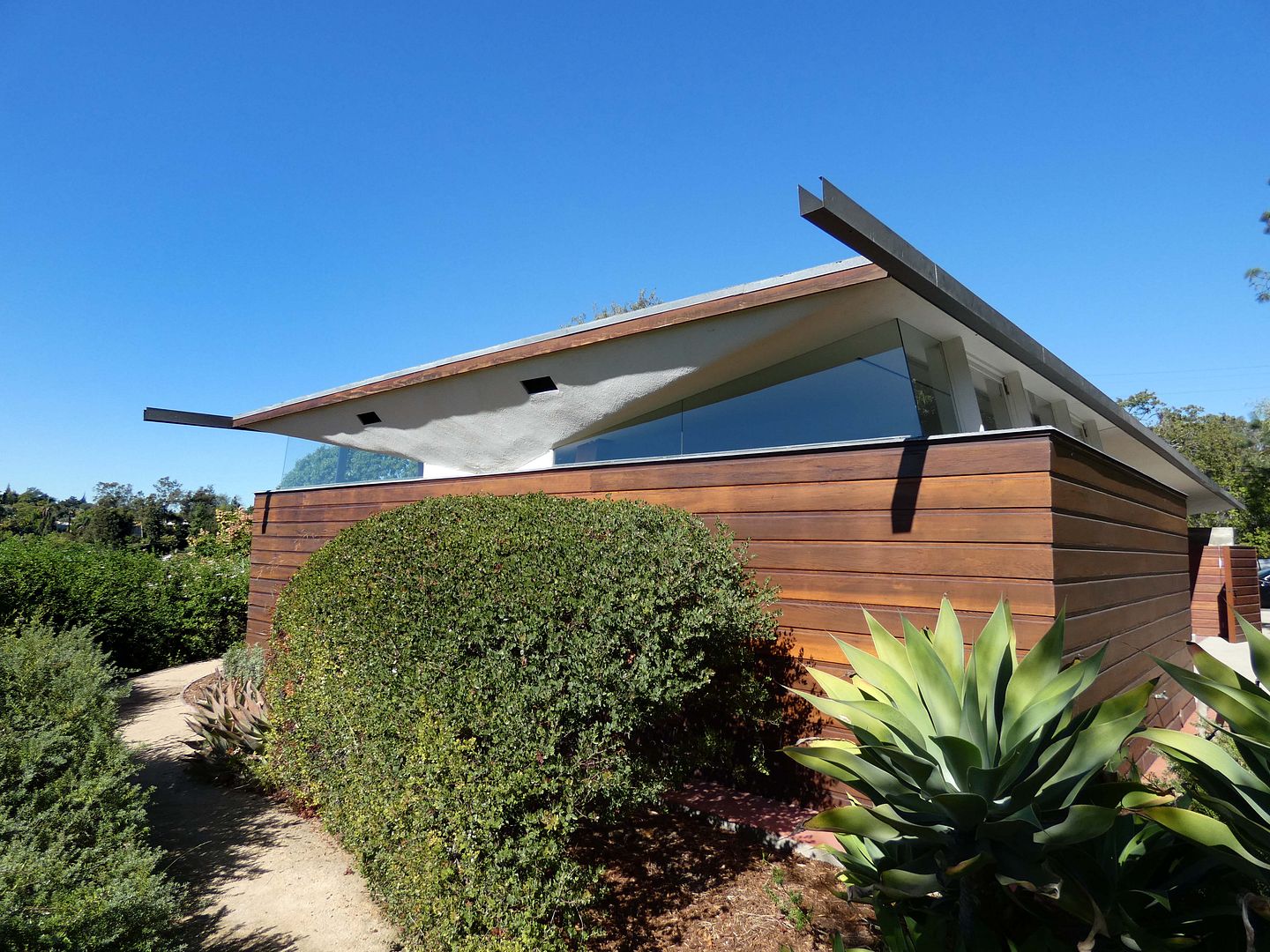
Of course, viewing the completed project in the rearview, to me the Salkin House kind of looks like a Lautner—bearing some similarities to the Ub Iwerks House of the Future (completed 1958), but with a roof that somehow evokes both a butterfly and an outrigger. (From the back, I think it looks like a ship. With wings. And redwood siding.)
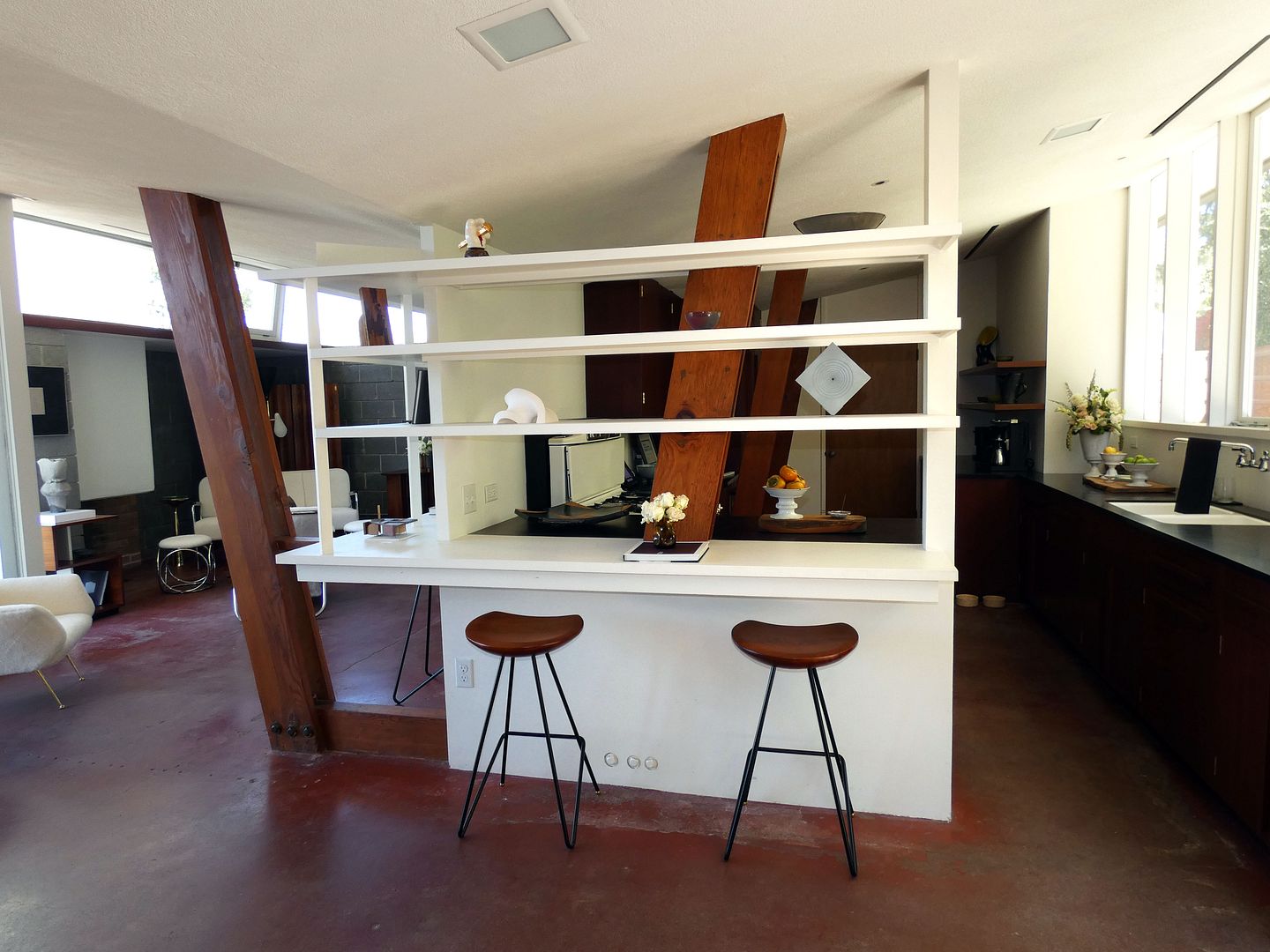
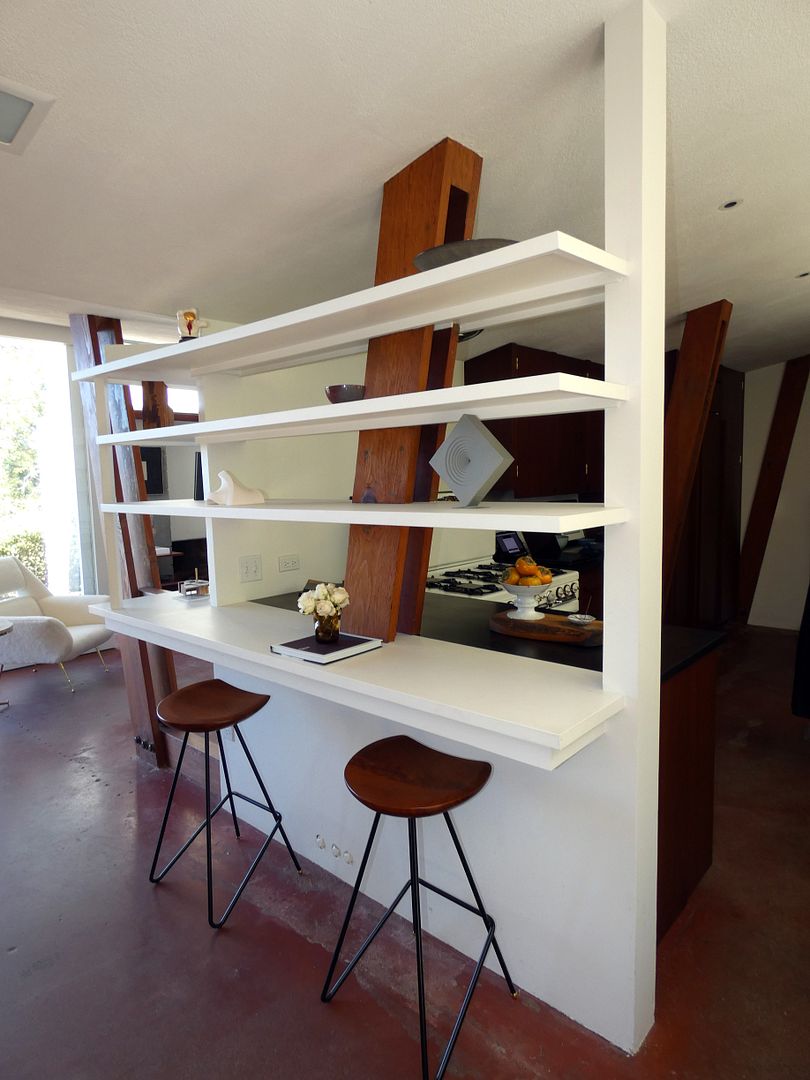
The interior is a bit cattywampus, with diagonal support beams interrupting the linear forms of an open shelving unit. Much of the original design had been covered up for decades—the shelves filled in and enclosed—but was revealed in the restoration, right down to the red-stained concrete slab floor.
The Howard Maxwell family purchased the house in 1949 and, after a divorce, Howard's wife Barbara retained ownership of it from 1954 to 2014—but rented it out to a family for the last 17 years of that time period, according to The John Lautner Foundation which meant a lot of comings and goings . A circa 1966 bedroom addition by architect Arthur Silvers, which obscured the space-age carport out front, has since been removed.
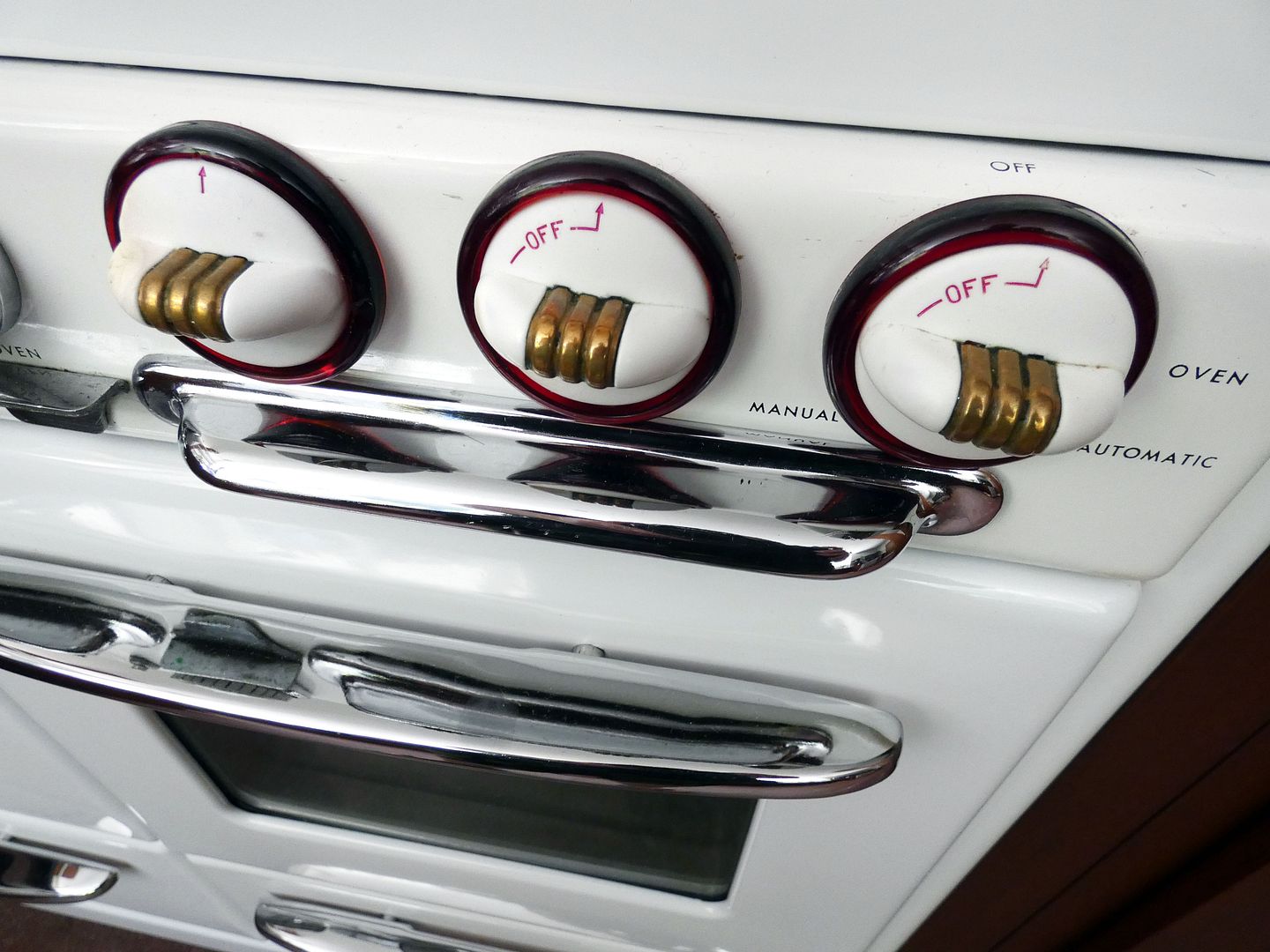
Newly-added vintage touches feel as though they could've been there forever. [Update 1/24/26] But Gutierrez-Kovner reports that the O’Keefe & Merritt/Tappan deluxe stove has been in the kitchen at least since 1962.
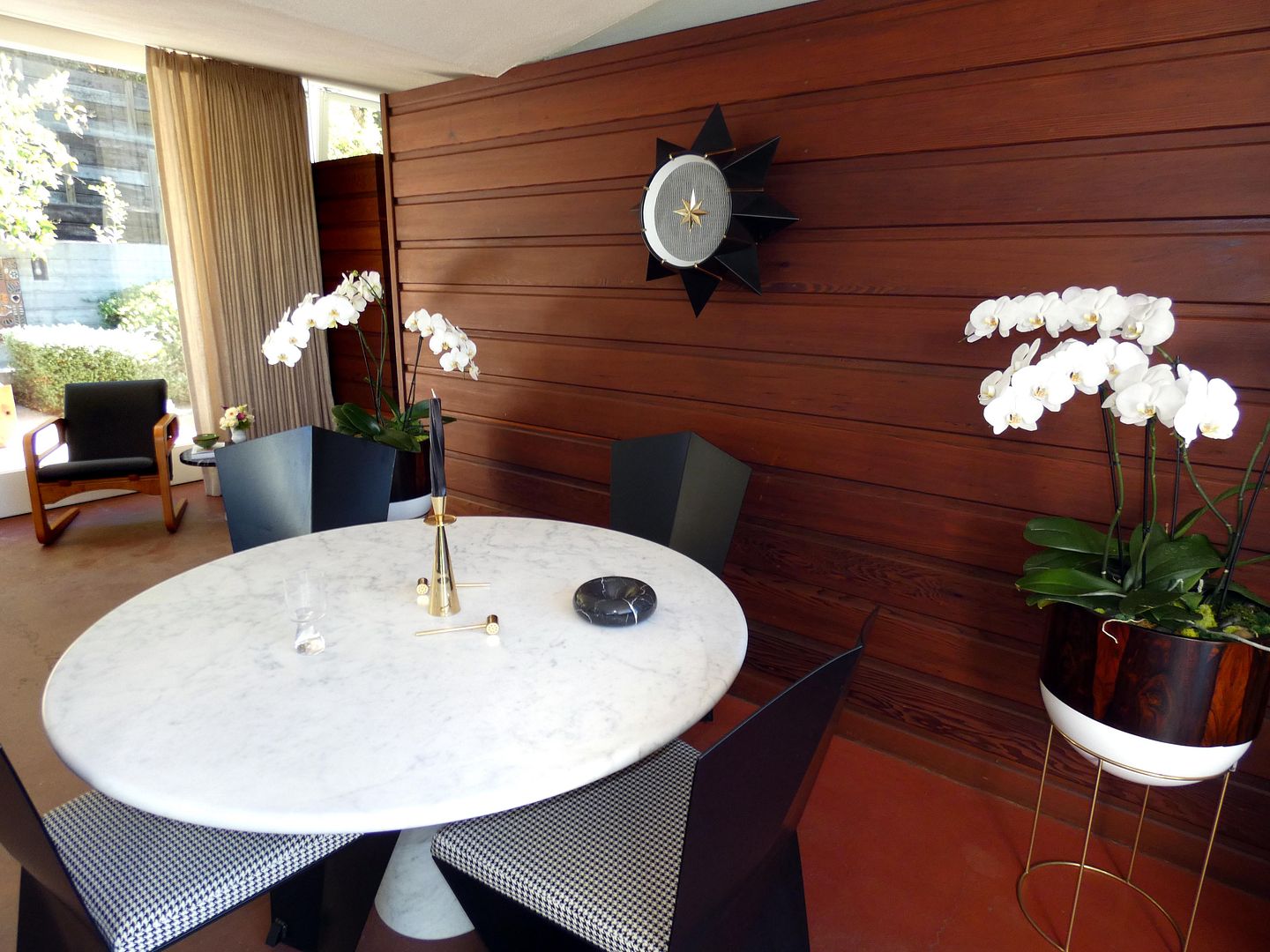
The house opened to the public last fall as part of Peter Blake Gallery's Blakehaus program, whose art exhibits take over Mid Century Modern homes—seamlessly integrating furniture, paintings, vessels, and objets d'art into architecturally significant spaces.
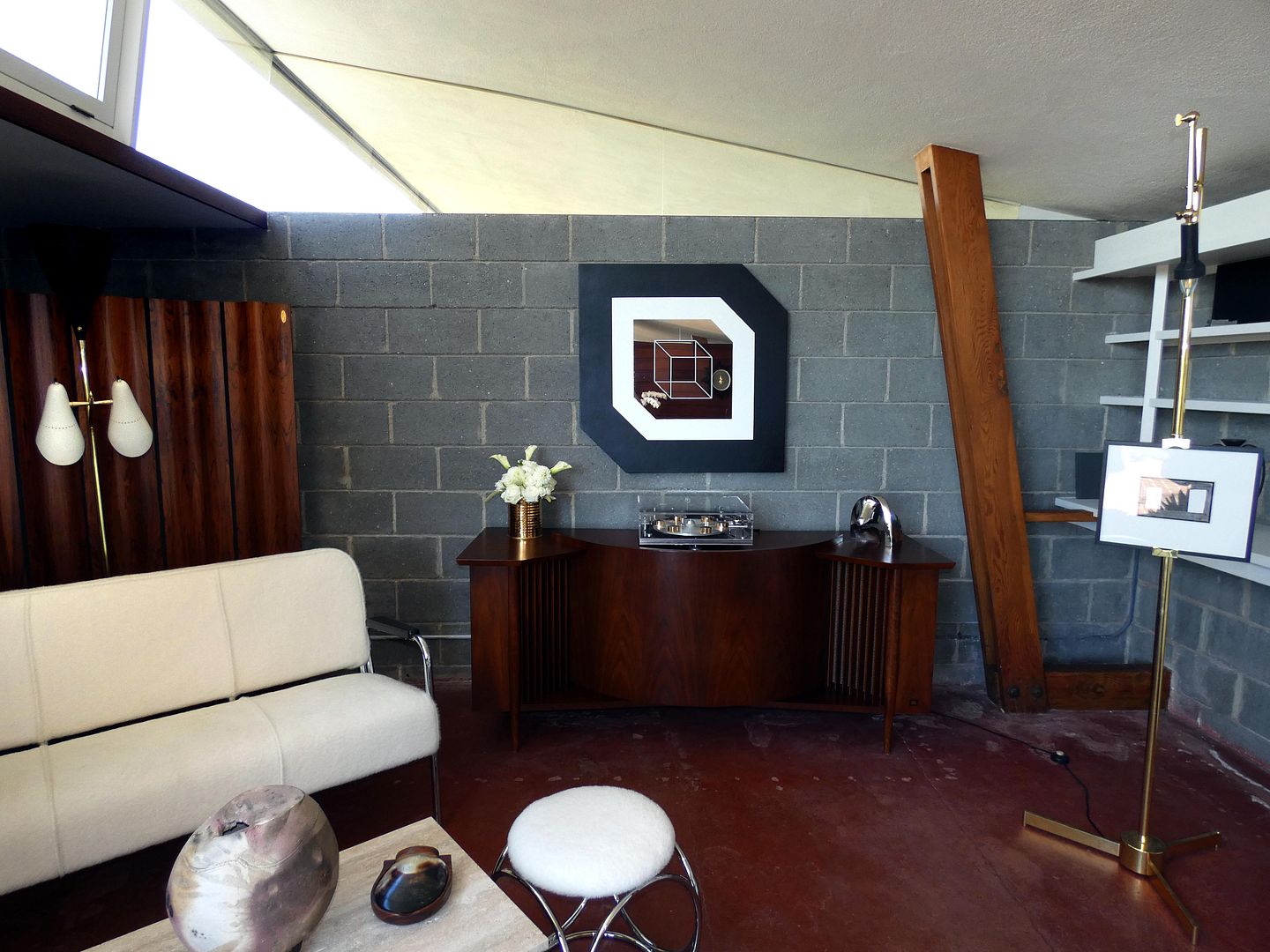
Bathed in sunlight from the clerestory windows, each room blended modern with vintage modernism...
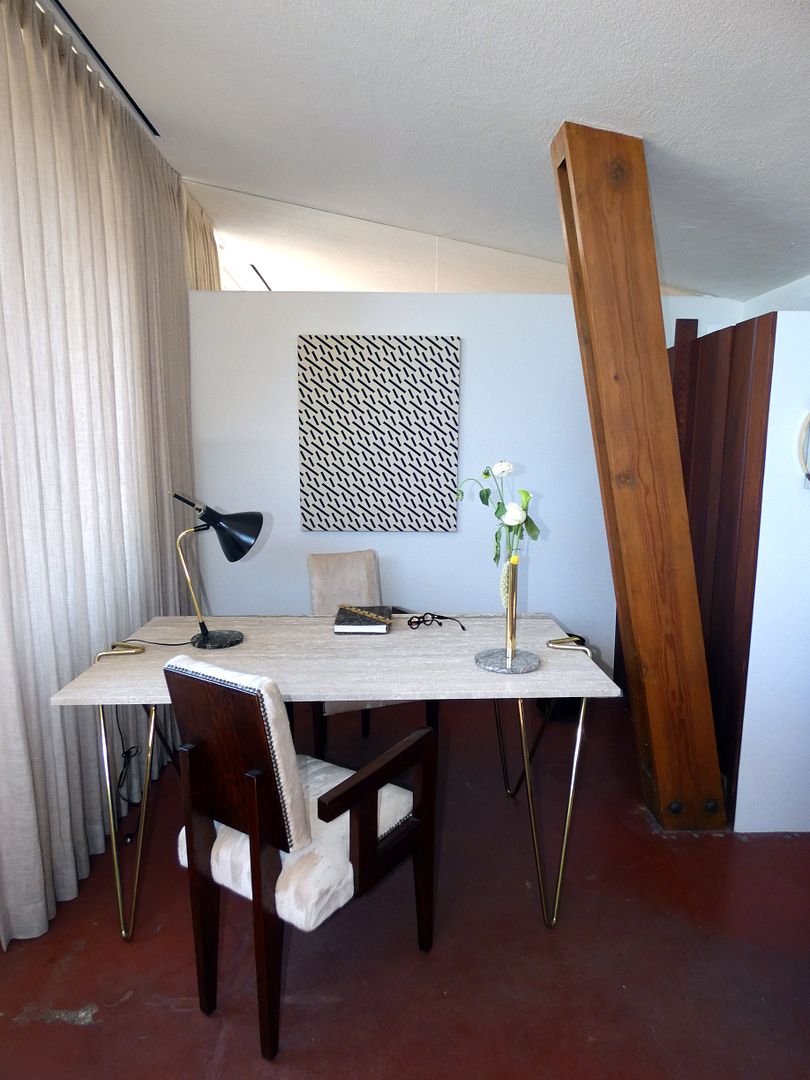
...with new designs alongside antique touches like circa 1935 armchairs by Andre Sornay, under a ceiling that slopes in reverse.
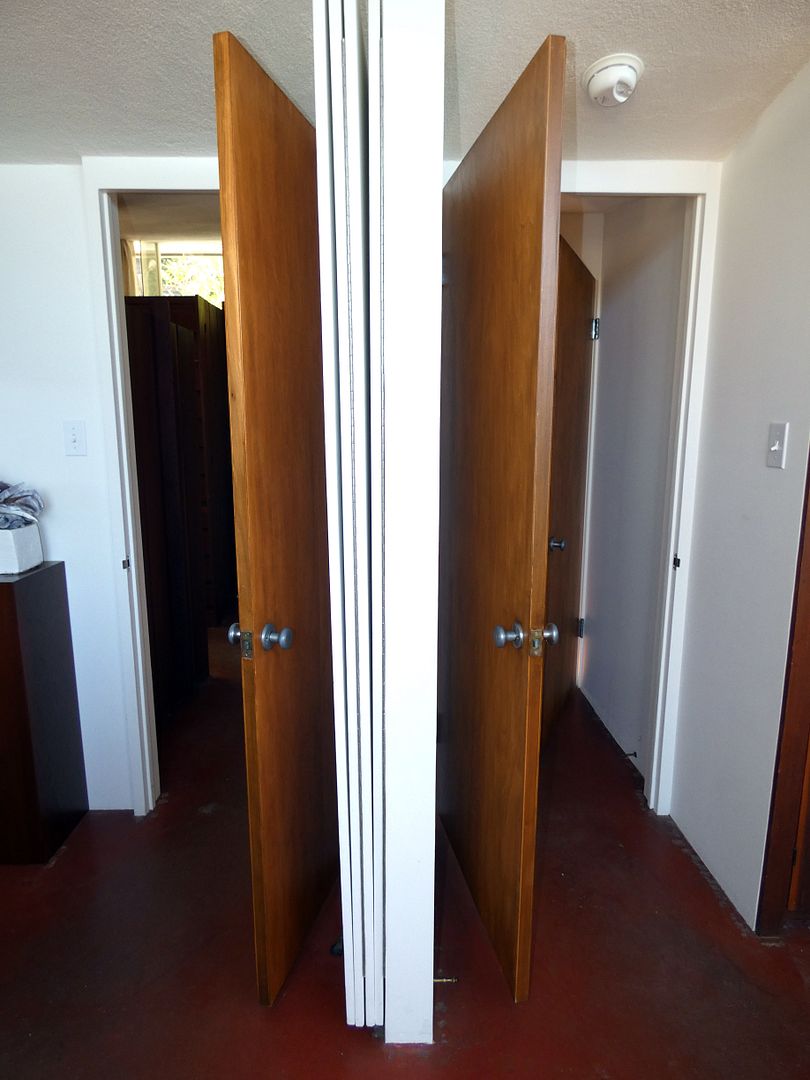
There are many aspects of the Salkin House that are, say, architecturally confusing to the contemporary eye. But back then, it was considered downright weird. Someone noted on a County Assessor form that it had "odd construction."
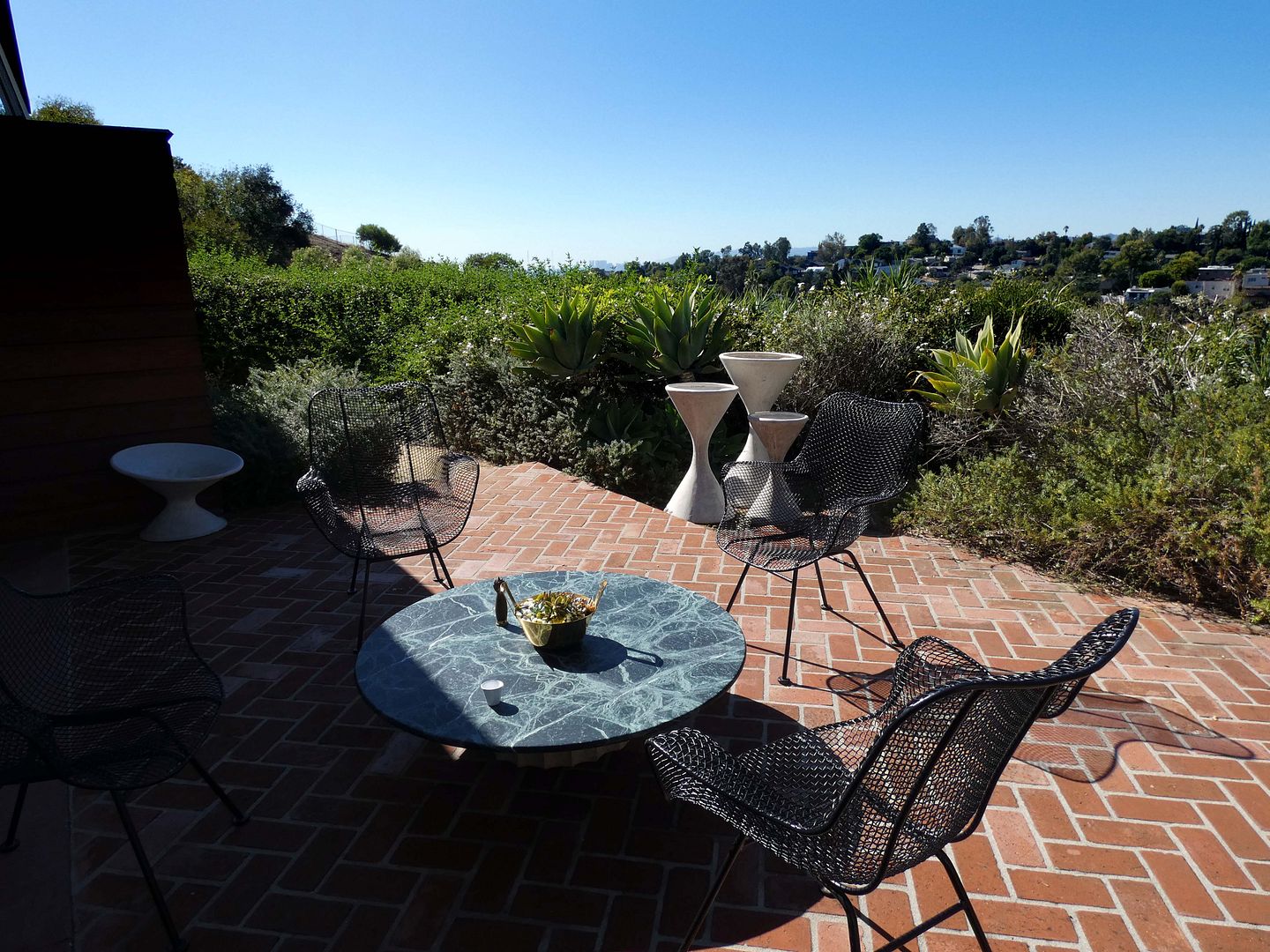
While originally conceived as a low-cost family home, it recently sold for $2.4 million. For some really incredible real estate photos from the listing, click here.
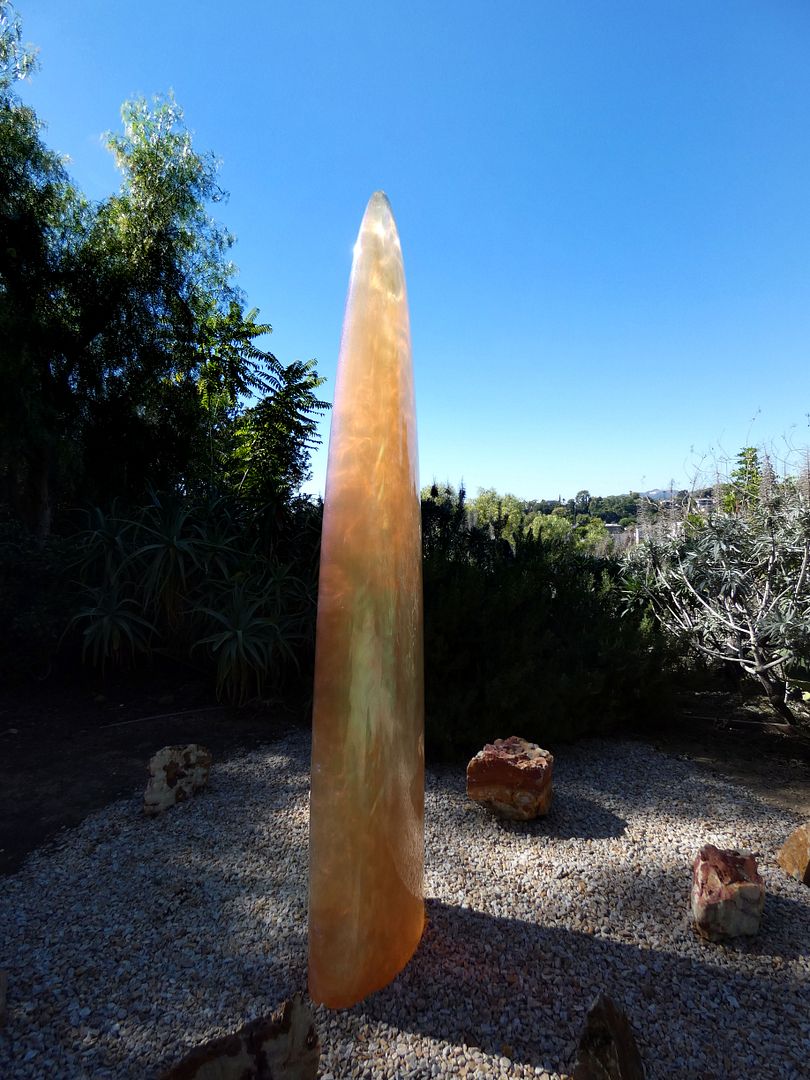
You could blame the million-dollar view, or the fact that the smallish house lives on a lot includes some terraces and outdoor patio areas—which were also used to exhibit art from the Peter Blake Gallery, like "Luminous Earth" by Puerto Rican-American (and LA-based) visual artist Gisela Colón.
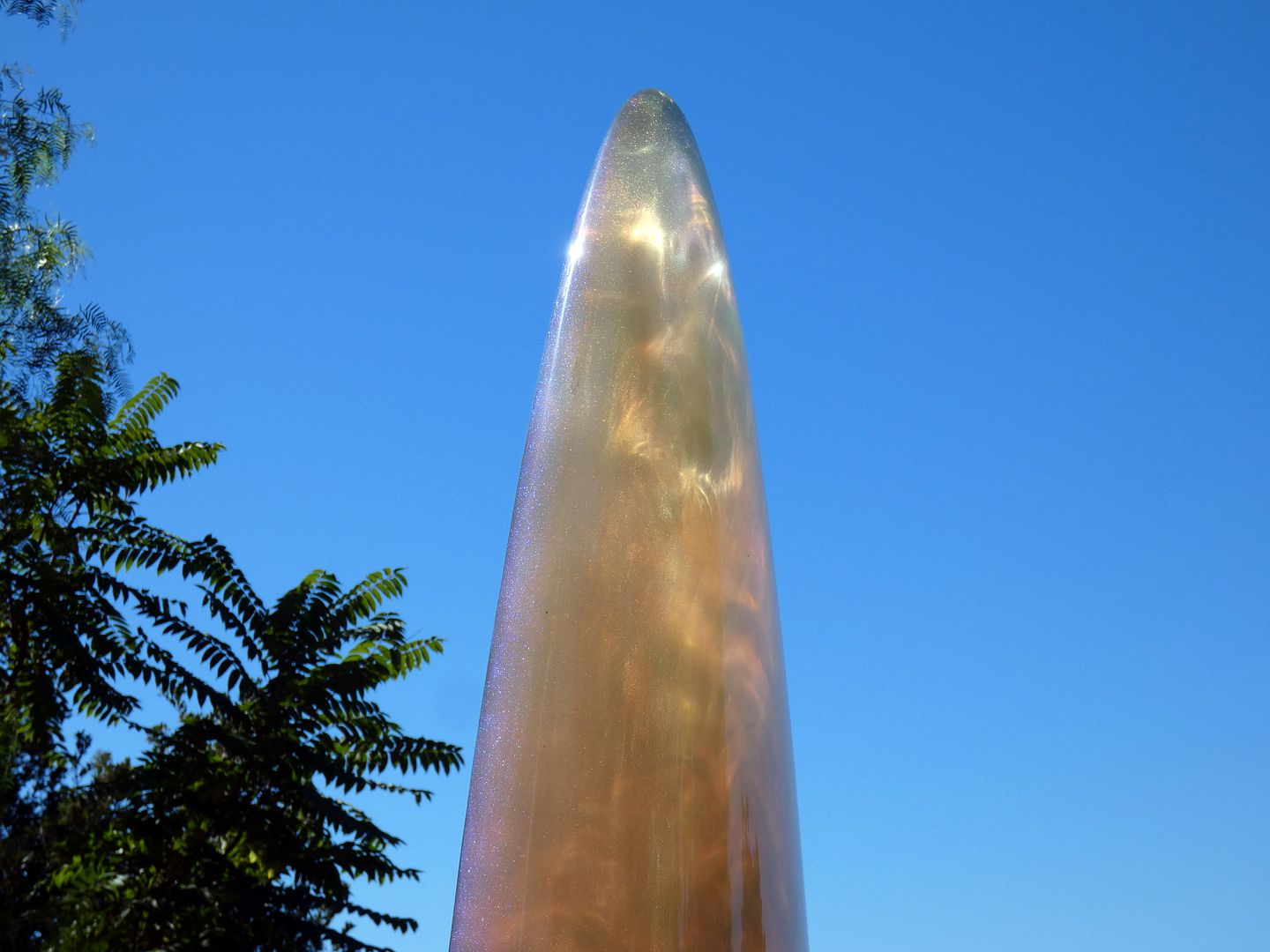
It's a site-specific art installation of one of Colón's "luminous" large-scale sculptures made from optical acrylics—totemic structures she calls "parabolic monoliths," which seem to both absorb the sun and reflect the sky.
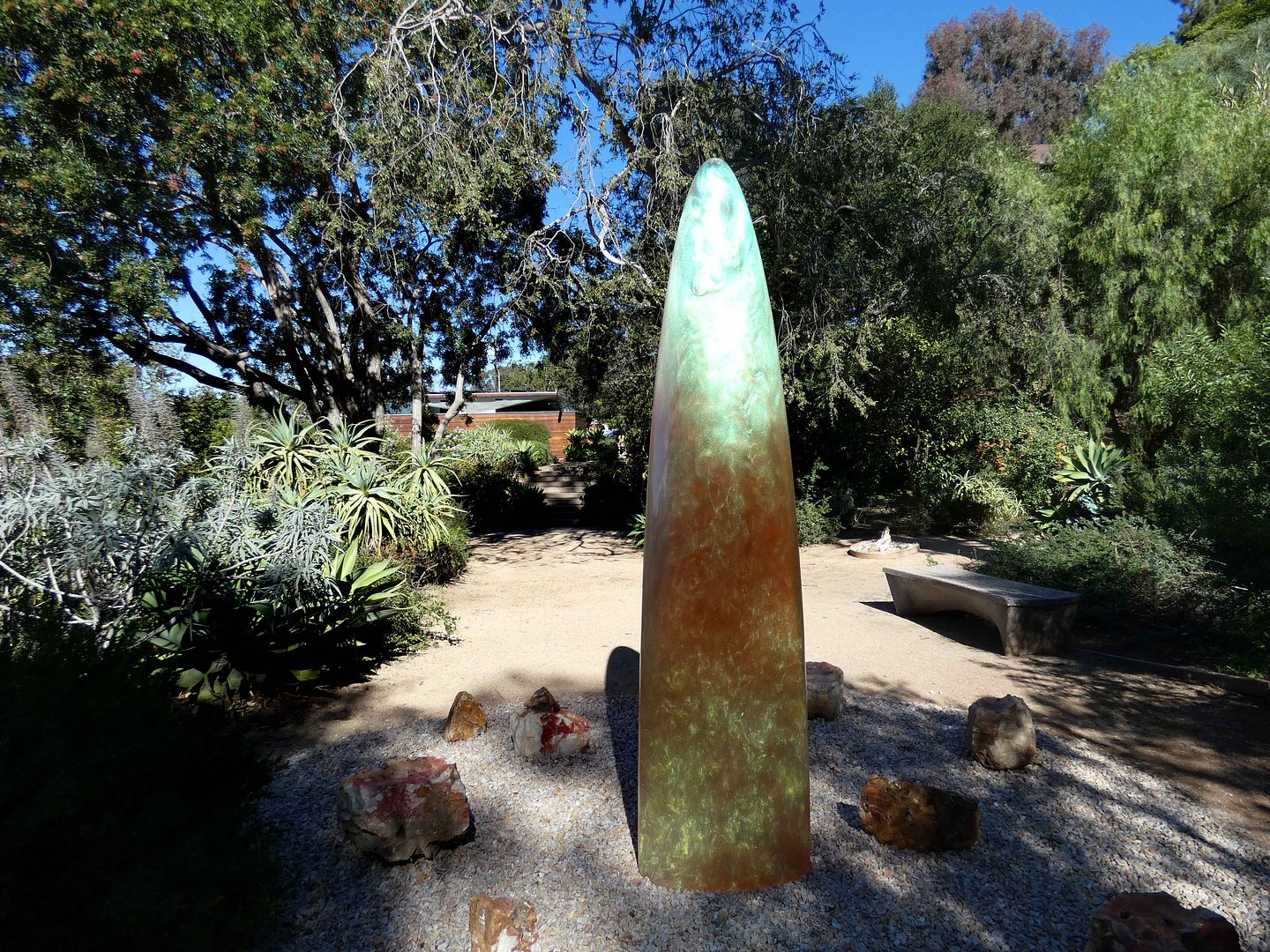
"With its aerodynamic contours," the official description of the work explains, "the singular form suggests both projectile and mountain, spacecraft and obelisk, evoking dualities of force and endurance, presence and memory."
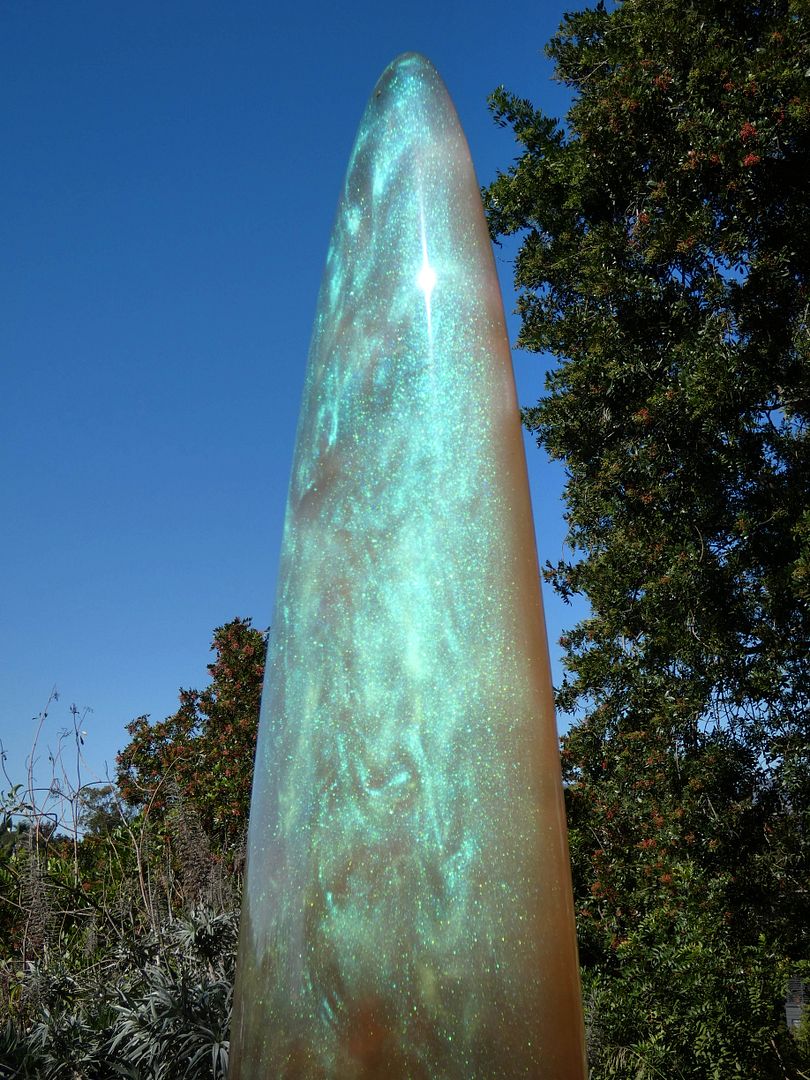
It's a fitting companion to an architectural design that both thinks to the future and embraces the nature that surrounds it—that persisted long enough to reclaim a new remembering.
The Salkin House is private property located on a residential street. It is not open for tours, so please don't disturb the owners or the neighbors.
Related Posts:

Thanks loved Lautner
ReplyDelete