Search

Showing posts sorted by relevance for query bugsy. Sort by date Show all posts

May 02, 2019

Photo Essay: Waking Up in Vegas (On Fremont Street)

Out of all the times I've traveled to Vegas, I've always stayed at one of the hotel casinos on the Strip (or, like the Palms, Rio, and Hooters casinos, just off of it).


For this most recent trip, I figured if I wanted an authentic Vegas experience, I'd have to stay in Old Vegas—Downtown Las Vegas—the "old" strip of Fremont Street.


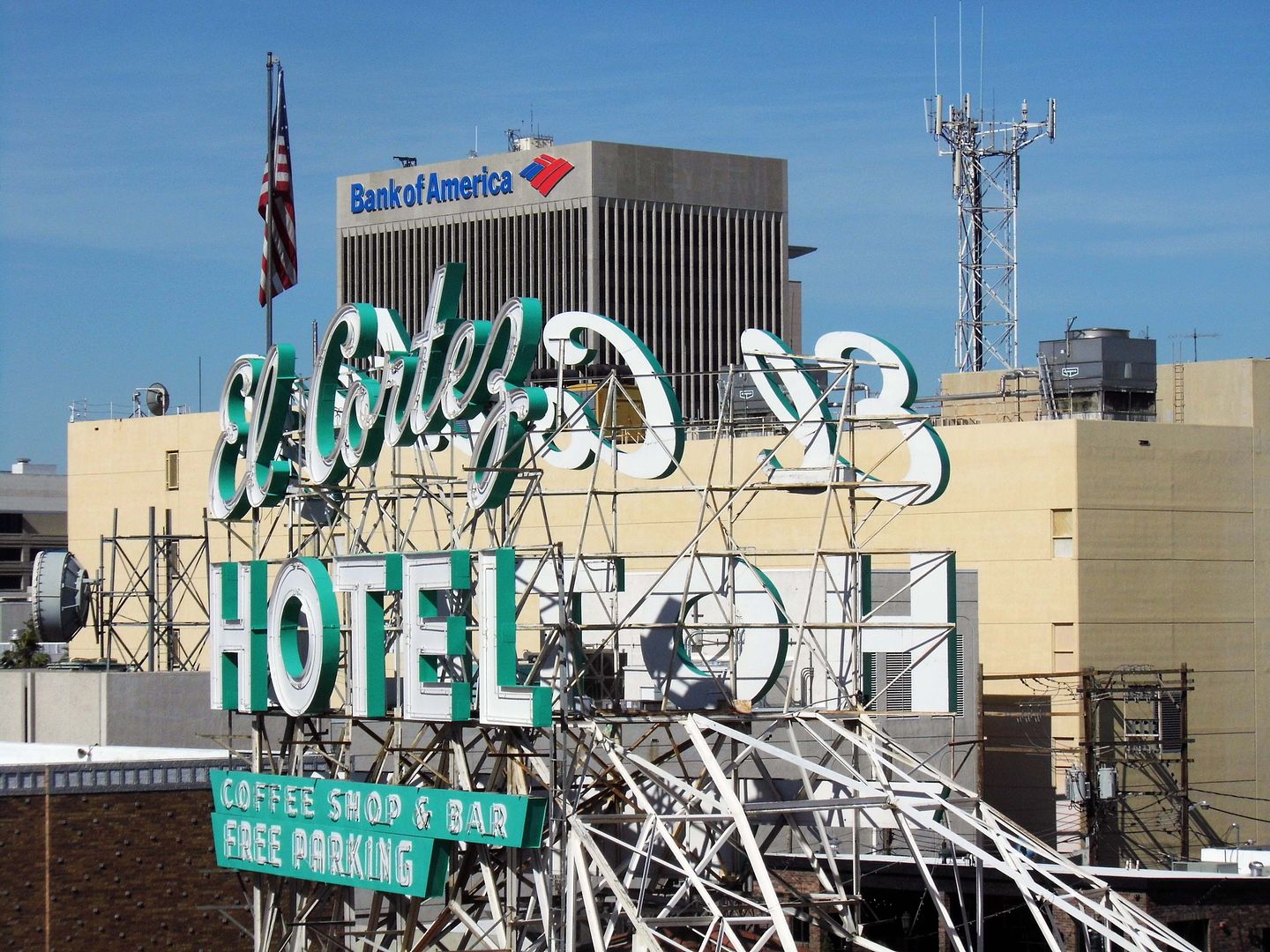
Two nights at the El Cortex afforded me the opportunity to stay in a national landmark (circa 1941) once owned by Bugsy Siegel...


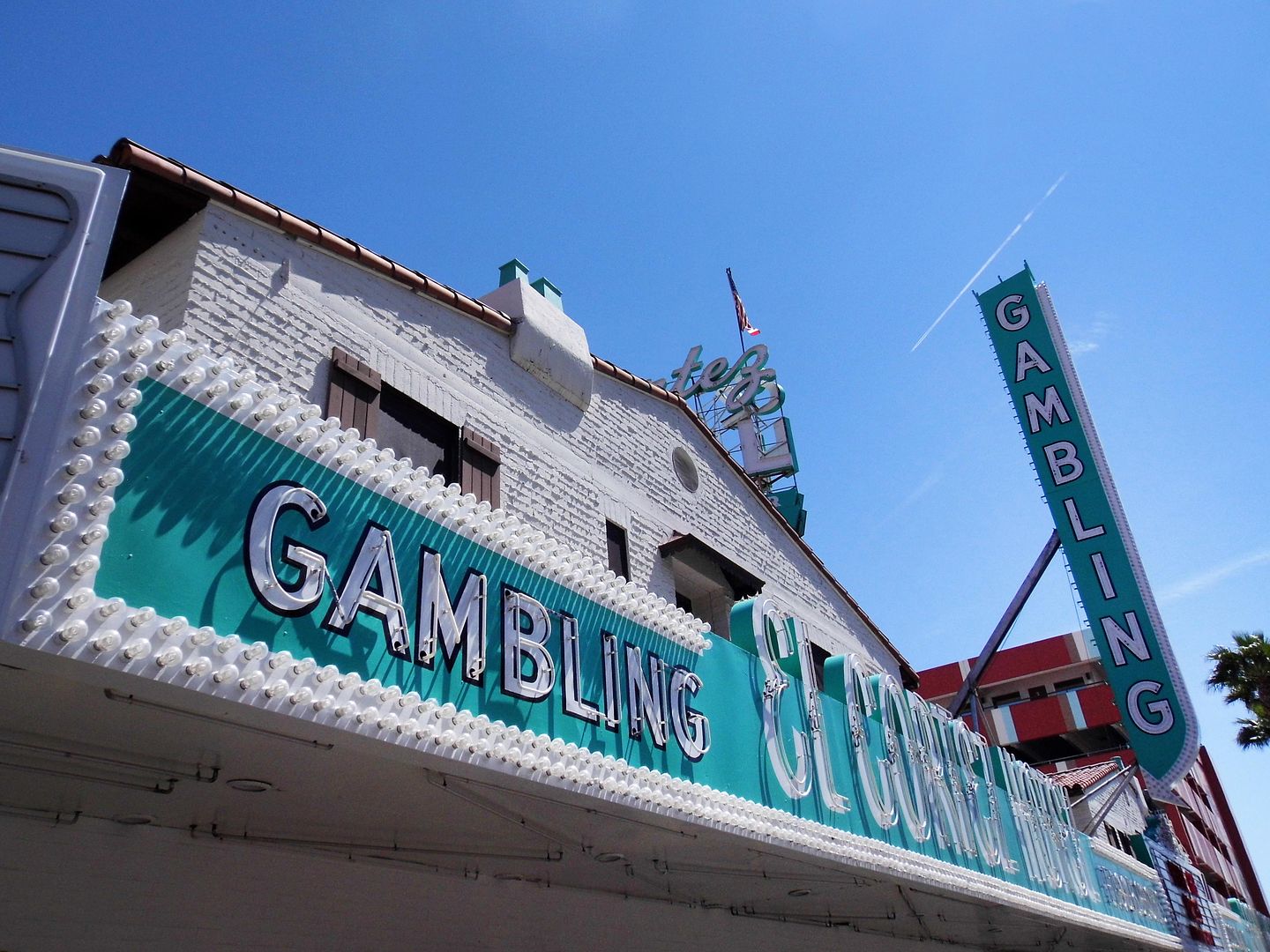
...and wake up on Fremont Street—an area I'd only previously explored after dark.
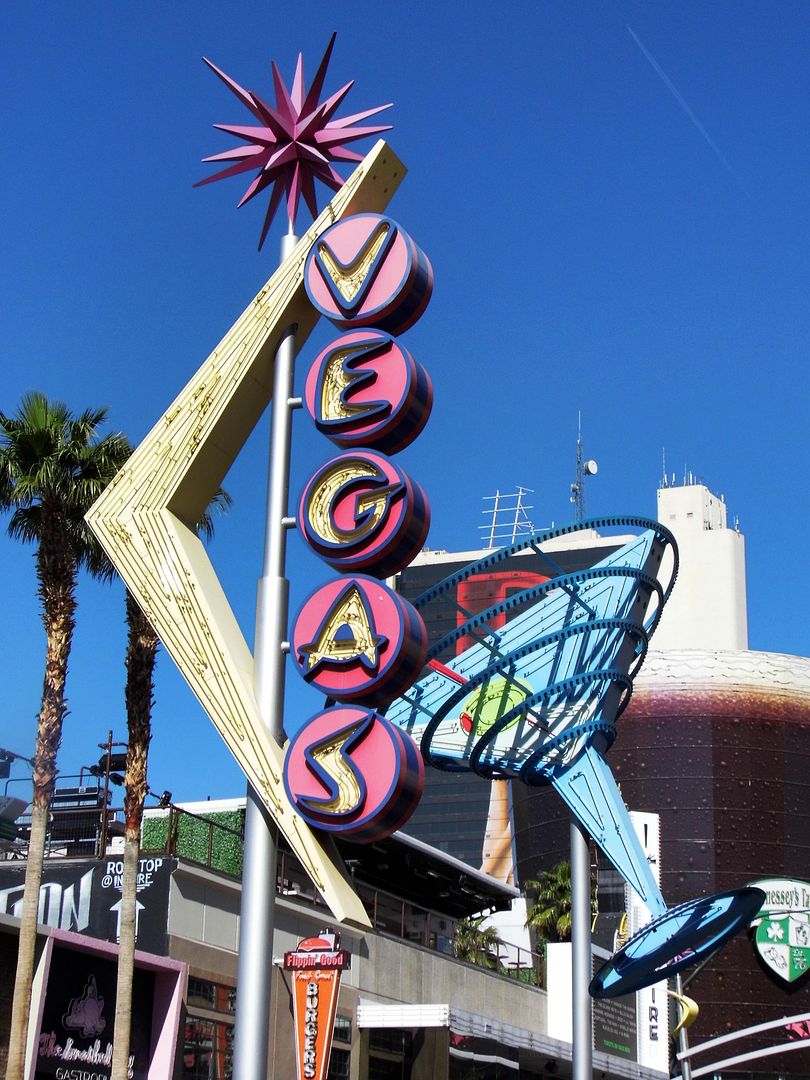


El Cortez is technically located in the recently-designated Fremont East district...
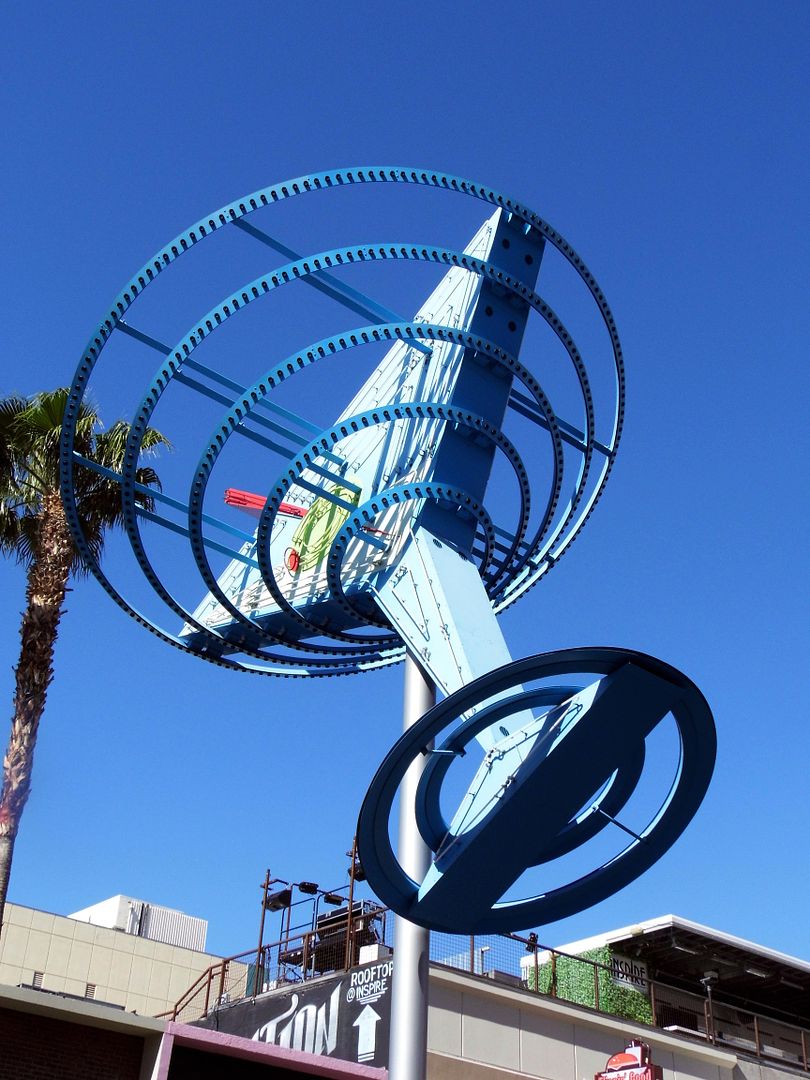


...just a short walk from Las Vegas Boulevard...
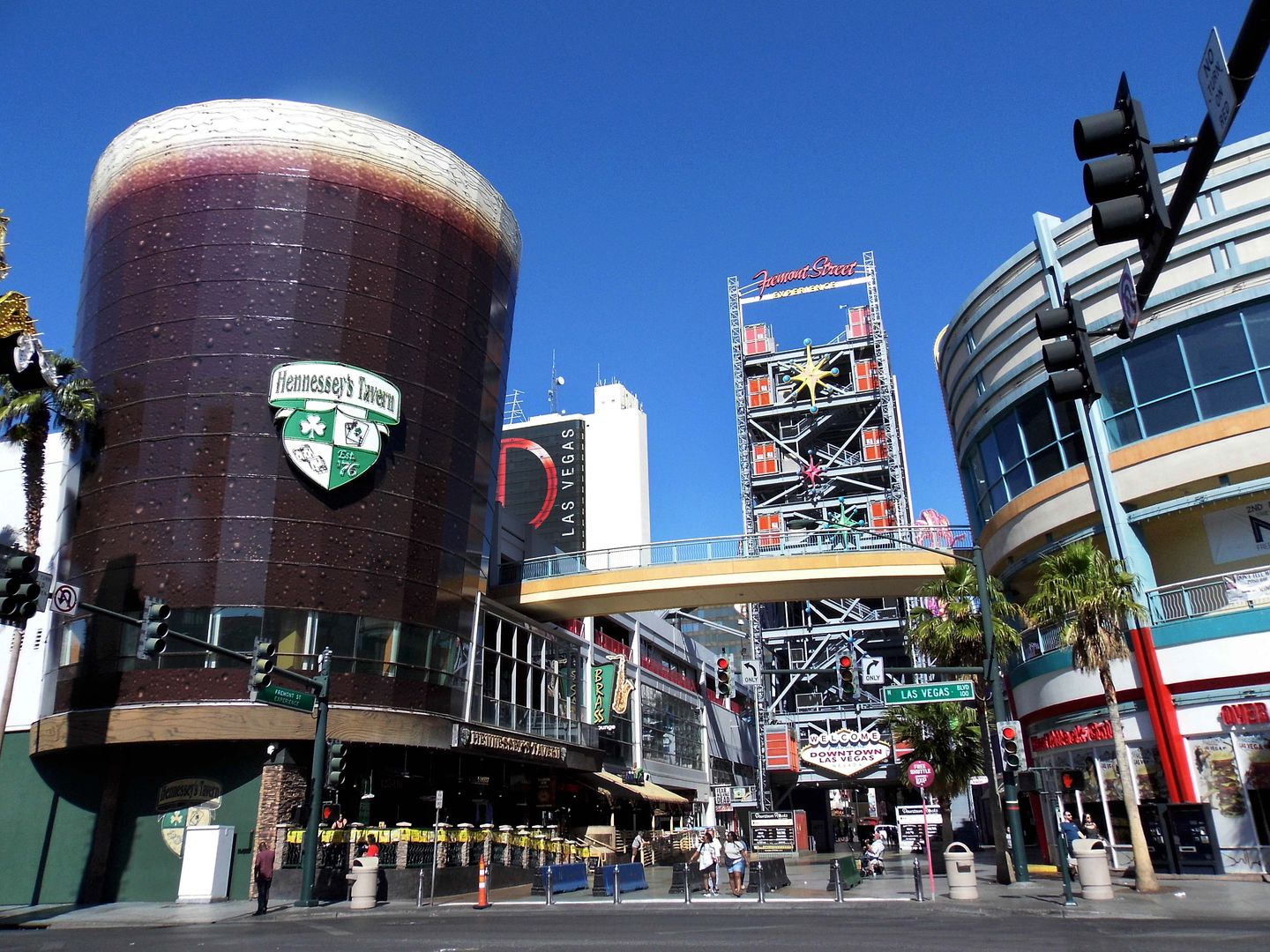


...and the official entrance to the Fremont Street Experience.
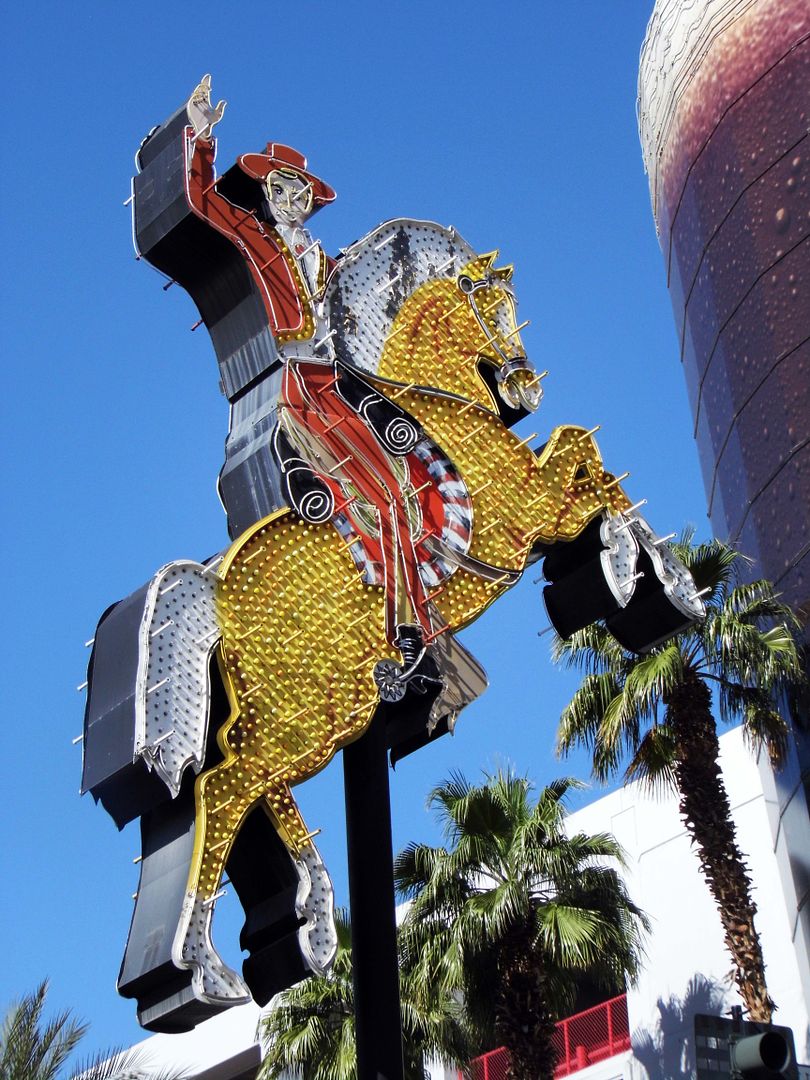


That's where the neon The Hacienda Horse and Rider (circa 1967) greets visitors and passers-by with a silent "Howdy!" and a glittering wave. The refurbished sign was first installed by zThe Neon Museum in 1996.
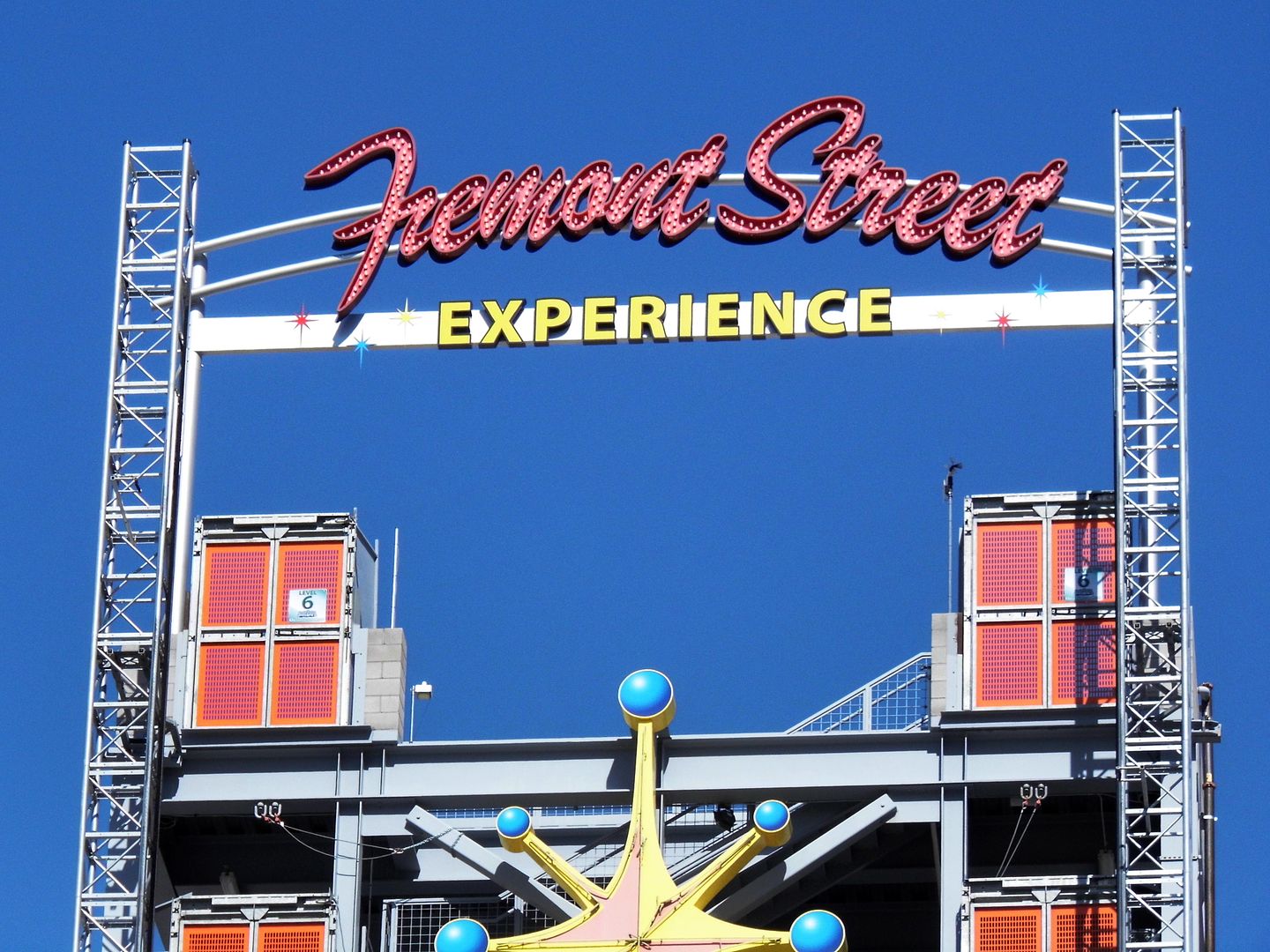


These days, Fremont Street isn't quite what it used to be...
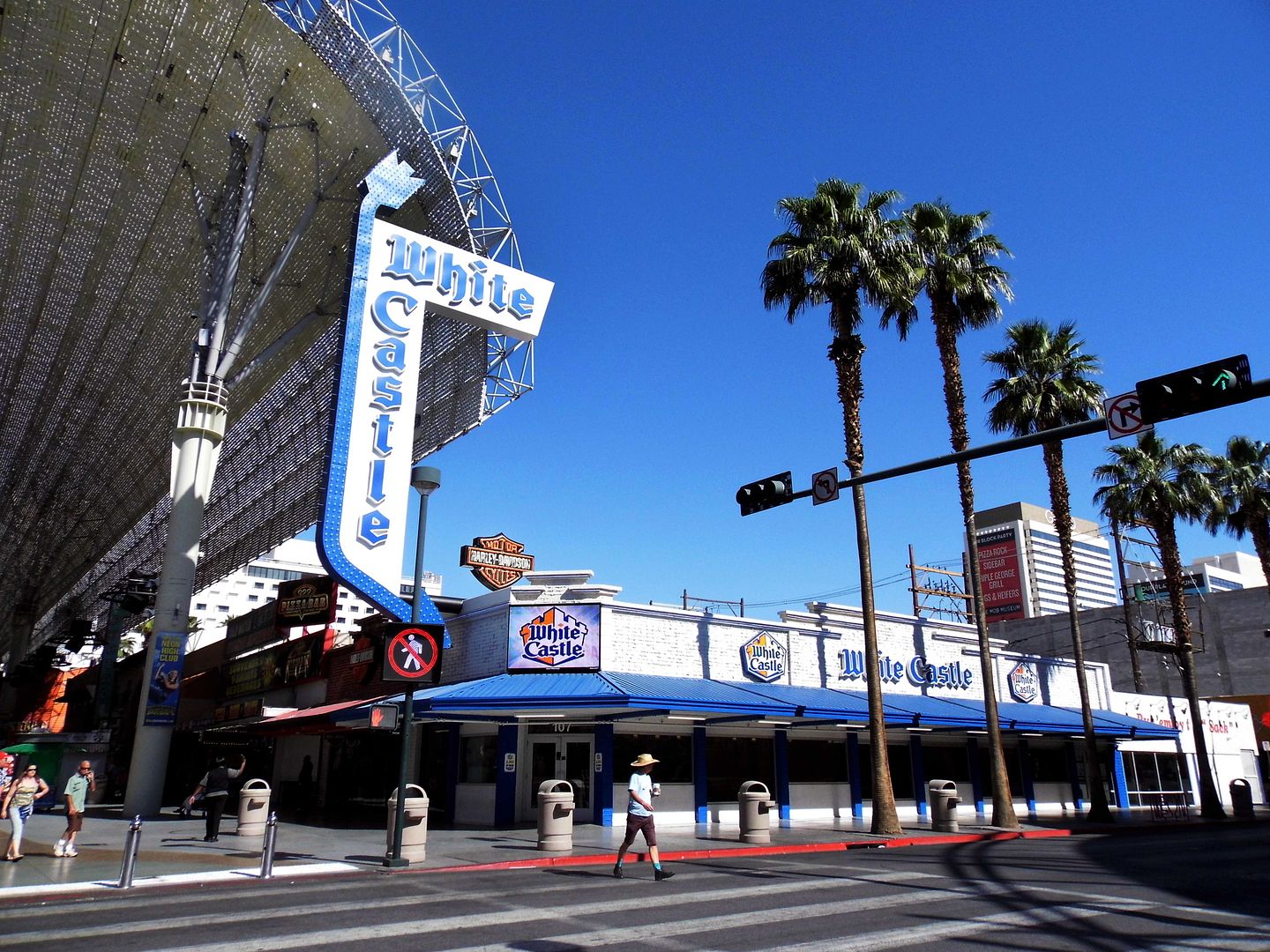


...as the now pedestrian mall (closed to motorized traffic) has been capped (with zipliners sailing above at a near-constant pace).
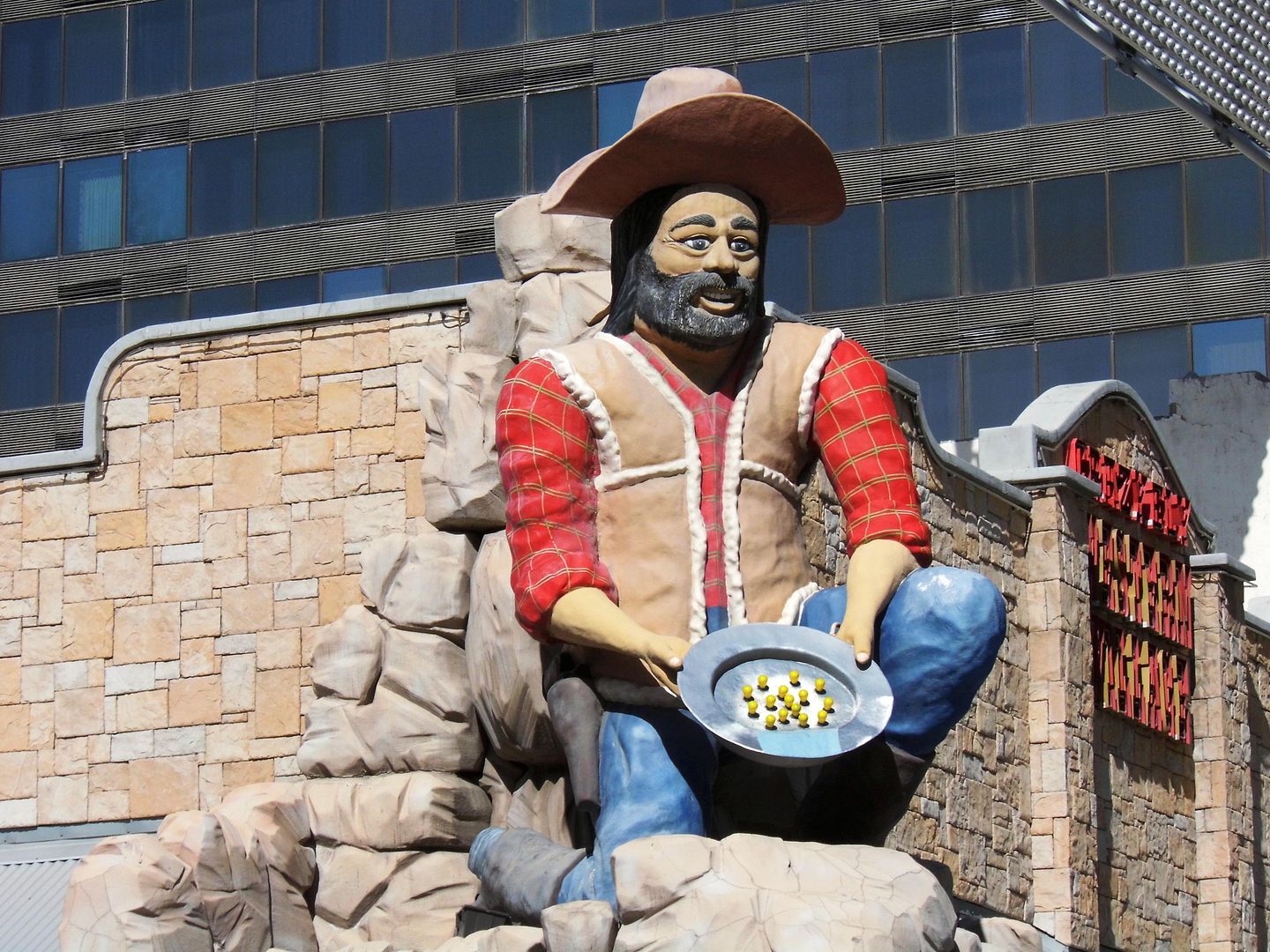


The "Crazy Ely" Western Village no longer sells "Indian jewelry" or moccasins, operating solely as a souvenir shop full of mostly the same crap you'll find at all the other local gift stores. But at least the statue of the gold-panning prospector still hovers over the sidewalk.
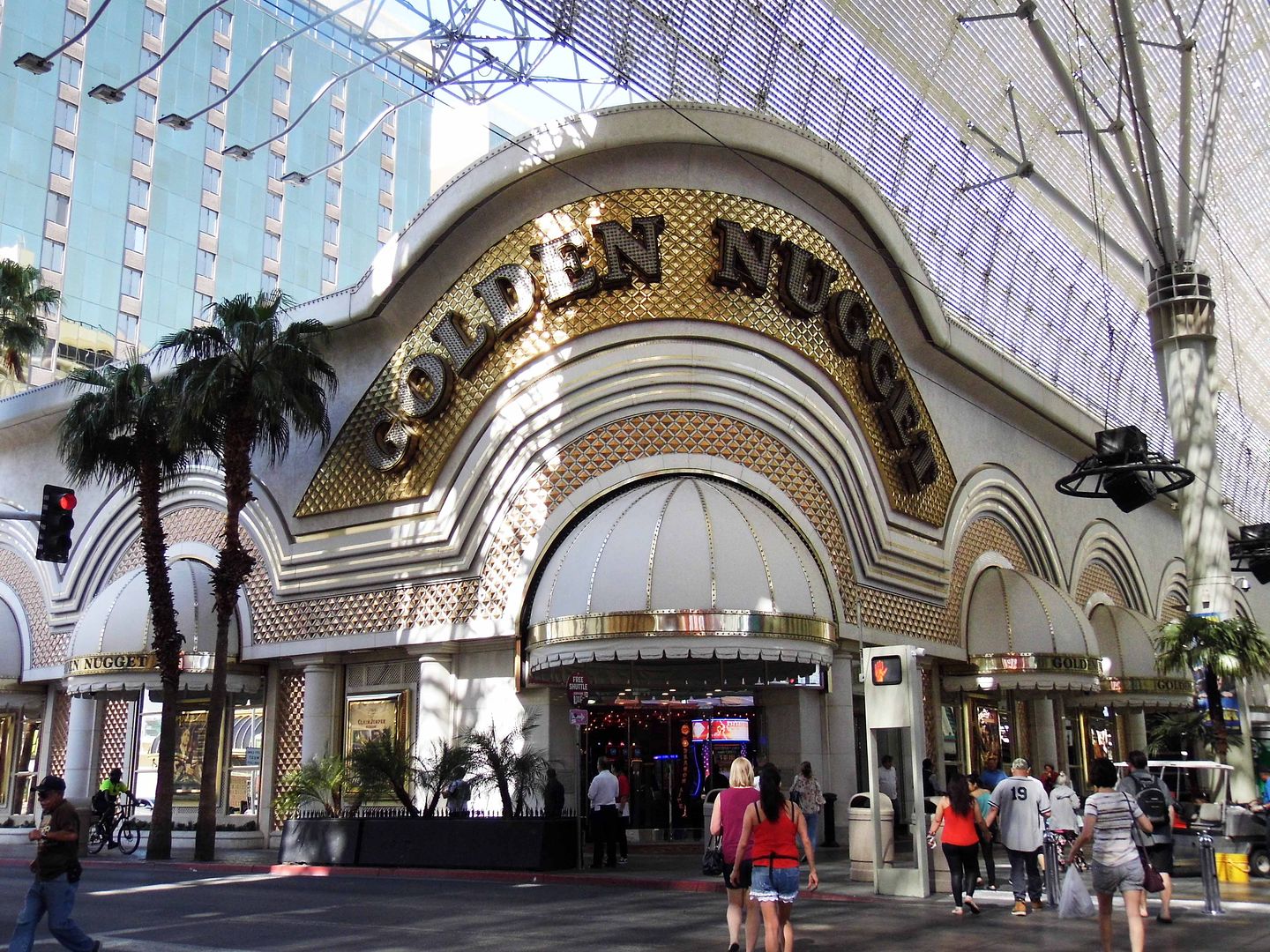


The facades of these casinos are still far more appealing to me than the Epcot-esque themed environments of, say, the Excalibur on the Strip.
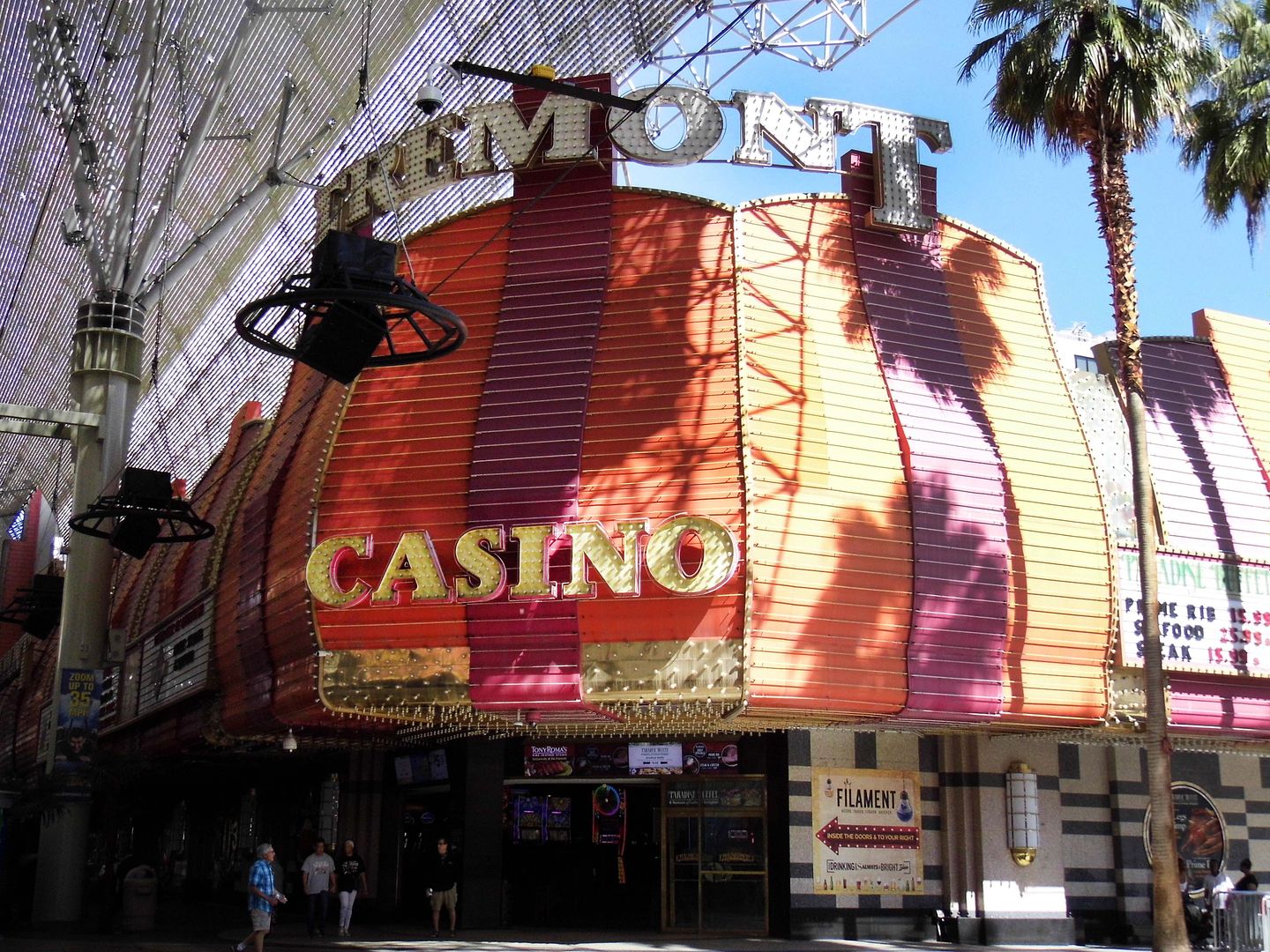


I think the only casino on the strip to retain any semblance of a wraparound neon marquee is the Flamingo (also once owned by Bugsy Siegel). And that's probably an endangered species.
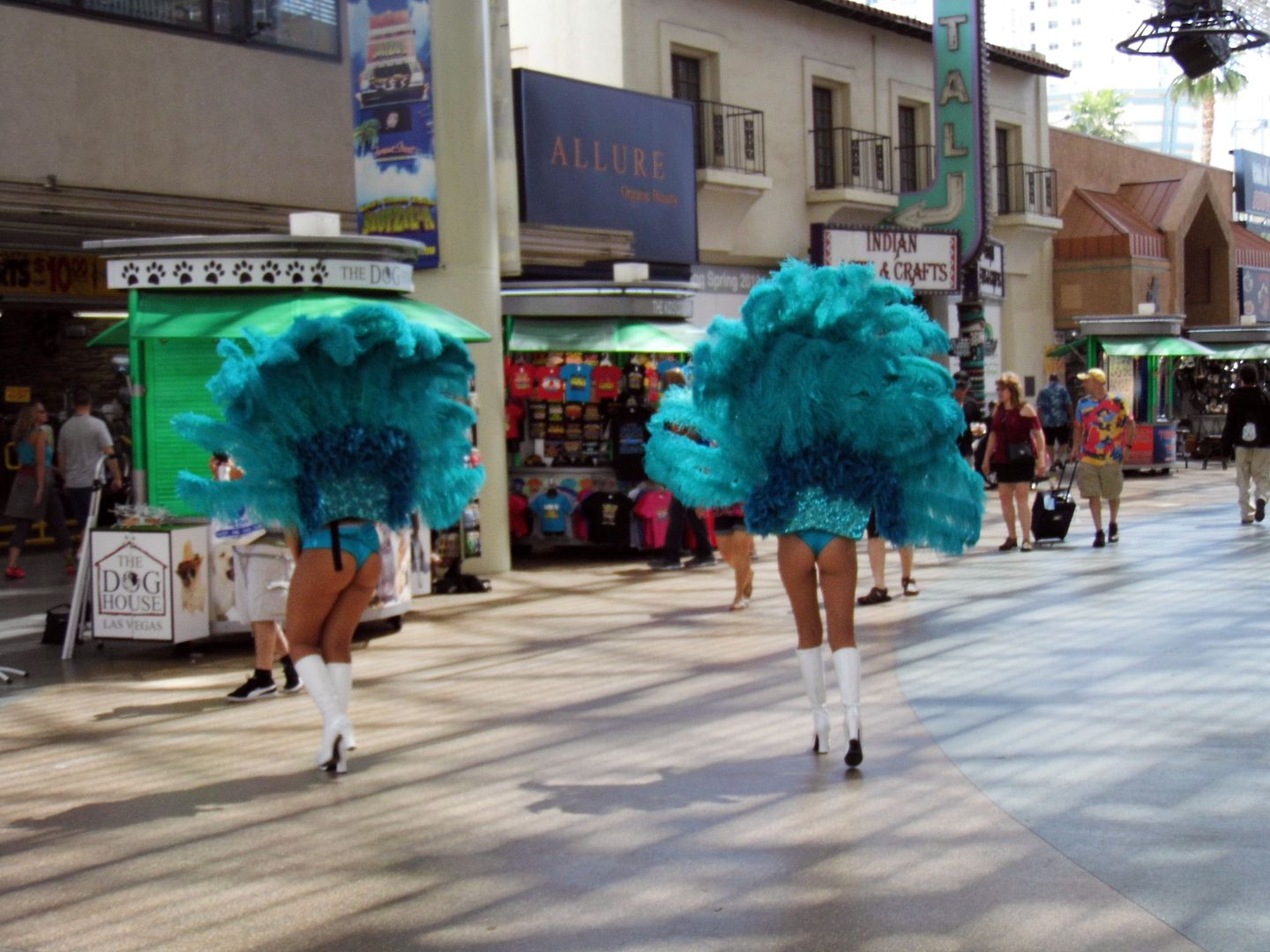


I loved walking around Fremont Street first thing in the morning on my way to and from breakfast...
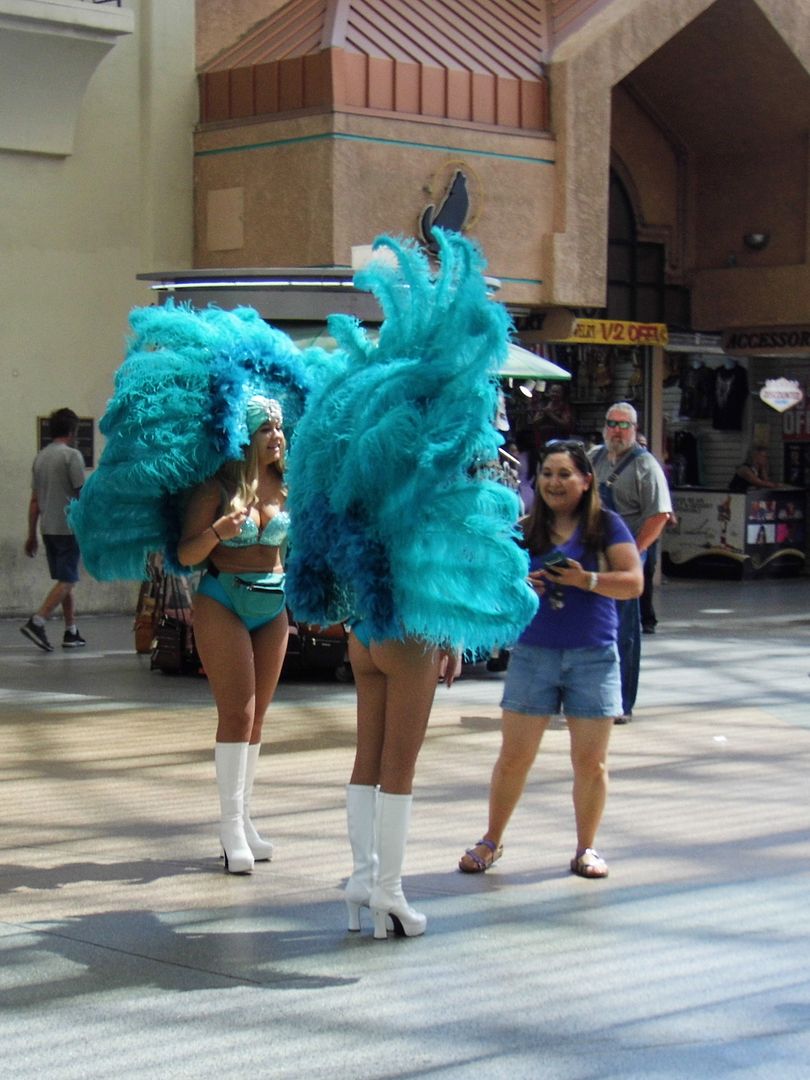


...especially since it wasn't too early for the "showgirls" to come out.
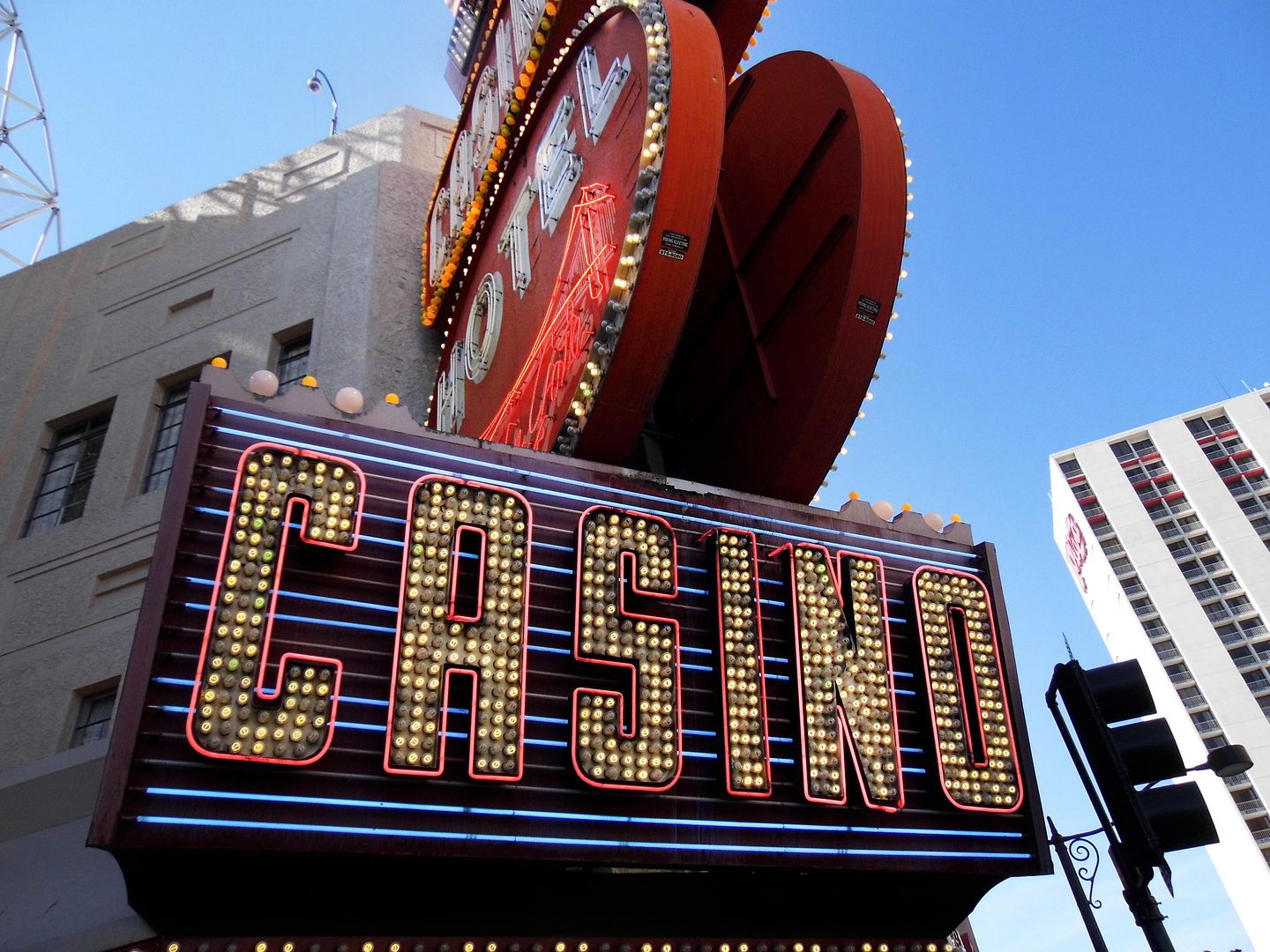


We ended up strolling all the way down to the end—to the Golden Gate Casino (circa 1906) at One Fremont Street—and turning around and going back.

We'd hoped for pancakes at Dupar's, but the front desk told us it closed in 2013 (though in truth, it just moved to the Suncoast Hotel and Casino).

We asked the desk attendant where we could get breakfast and told him we were looking for something historic nearby.

"Uh... historic?"

He came up empty.

So we took a gamble on Magnolia's Veranda, the cafe in the Four Queens, which ended up being delightful.

By the time we headed back to the El Cortez to take our showers and get ready for the rest of the day, Fremont Street was already getting too crowded for my taste.

I can't be nostalgic for the old version of Las Vegas, because I never experienced it firsthand.

But I can try to make up for lost time by seeking out what's left of it and enjoying it while I still can.

There's already a big fat hole on Fremont Street where the Las Vegas Club and Golden Goose used to stand.

Seems like nothing can escape "progress."

Related Posts:
Photo Essay: Fremont Street Experience, Vegas
Photo Essay: Neon Boneyard, Vegas

December 17, 2011

Photo Essay: Beachwood Canyon, In Search of the Hollywood Sign

The first time I drove up through Beachwood Canyon, it was in search of Hollywoodland. I found the old gate that marked it, and lots of signs that read "No Access to Hollywood Sign," though you could see the tall, white letters peeking out from atop Mt. Lee in the distance.

My second time in Beachwood Canyon, it was for a late night tryst, and it was too dark to see the Sign.

I actually made it to the Hollywood Sign once - well, behind it - when I actually climbed Mt. Lee in Griffith Park, still one of my favorite LA area hikes.

So last weekend, when I found out there was a way to hike up under the shadow of the Sign, through Beachwood Canyon, down some public stairs, of course I printed out my directions, parked my car on the street, and set off.

Of course I got lost.

The hike technically starts at the main commercial intersection of the neighborhood known as Beachwood Canyon, and takes you through the residential streets of the Hollywood Hills. Since I don't have much interest in houses that aren't abandoned, I started taking photos upon entering Griffith Park by the Norman chateau known as Wolf's Lair.


I was looking for a T-intersection, where I was supposed to turn right down a wide path, but the only T I saw lead down a narrow path to the right. I walked down it a little bit as it narrowed through overgrown brush, and decided I hadn't gone far enough. I returned to the T, which maybe wasn't really a T, and went left, which maybe could be considered straight.


As I passed the fence on my right, I caught glimpses of the Lake Hollywood Reservoir, surrounded by water tanks and cell phone towers instead of the Hollywood Sign, which I was supposed to be approaching...


When I kept approaching the reservoir instead of the Hollywood Sign, I decided I'd gone in the wrong direction and went back to the T.


But upon second glance, going right still seemed wrong to me, so I decided I hadn't given my prior path enough of a chance, so I went back, this time all the way down to a locked gate, with the reservoir on the  other side.

So I went back again, this time the fence on my left, with the Hollywood Sign peeking out in the distance.


Back at the T, as wrong as right seemed, I went down that narrow path, looking for signs of the old Mulholland Highway. It was so overgrown, I couldn't imagine even a dirt road passing through there, until I found telltale crumbling remnants of asphalt on either side of the path.


Soon, the trail opened up, revealing the Hollywood Sign tucked behind Castillo del Lago, a Mediterranean villa once home to both Bugsy Siegel and Madonna (though not at the same time).


From the driveway of Castillo del Lago, I exited Griffith Park onto Canyon Lake Drive, where lots of tourists have figured out you can get a great view of the Hollywood Sign (much better than from Beachwood Canyon Drive).


Down Canyon Lake Drive, past all the tourists, I looped back into the park...


...and hiked right under Mount Lee and the Hollywood Sign...


...winding through the park and back out through basically a private backyard, onto Mullholland Drive (whose asphalt is very much intact right now).


From there, the hike took me through more neighborhood streets, to the first public staircase off Durand Drive...


...which leads down to Belden Drive, near where the hike begins.

Except apparently there's another staircase that takes you from Belden to Beachwood (where my car was parked), but for the life of me I couldn't find it. Instead of pacing back and forth as I'd done in the park, I just kept walking, knowing that Belden would eventually hit Beachwood again, but there's something mysterious and confusing about those Hollywood Hills, whose streets look like driveways and aren't always marked and whose house numbers don't seem to go in chronological order.

Even with my GPS in hand (which was confused by me walking on the left side of the street instead of the right), I could not figure out how to get back to my car, though I had a general sense of the direction it was in. The light of day was waning, the chill of the air was advancing and I was wondering if I once again had to consider calling a cab.

But somehow I found my way, without having to trace my steps all the way back through the park, ask for help, or call a cab.

I'm not sure how.

But I always seem to find my way in LA, no matter how often I get lost.

To become a fan on Facebook, click here.

June 17, 2019

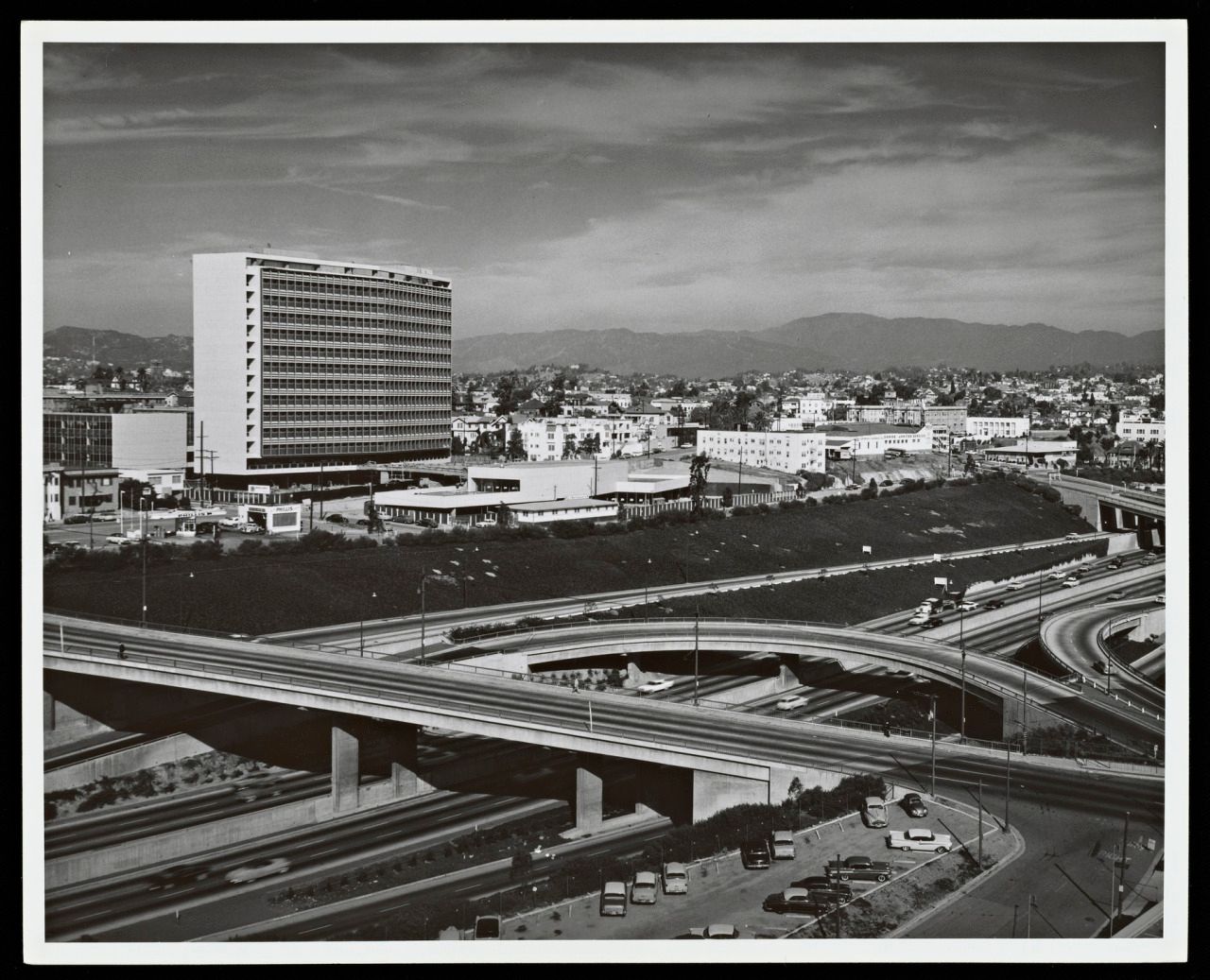
Photo Essay: A Mid-Century Cathedral of the Oil Industry, Saved By Hollywood

In 1955, the Four Level Interchange that connected the 101 with the 110 had only been open for a couple of years. The section north of it had just been designated the Pasadena Freeway, and the section south of it—the Harbor Freeway—continued to inch towards San Pedro.

The area immediately to the west of the 110 near the stack interchange was a bit of a "no man's land" at that point—too far east to be MacArthur Park or Westlake, and too far west to be Downtown Los Angeles or Center City (and now cut off from it by the freeway).

Some people still call it "City West." Lots of people don't even know it's there.


circa 1957 (Photo: Julius Shulman, Julius Shulman Photography Archive. Getty Research Institute.)

And that's where the former Union Oil Company of California chose to build its LA headquarters, known as Union Oil Center (and after 1983, as Unocal Center).

October 10, 2017

The Formosa Cafe Gets Ready To Step Back Into the Spotlight

One of the most stalwart mainstays of Hollywood nightlife has been the Formosa Cafe...


... located along Route 66, across the street from the movie lot that was, at one time or another, Pickford-Fairbanks Studios, United Artists Studio, or Samuel Goldwyn Studio.


That is, until recently.


The Cantonese-themed bar and restaurant, known for its appearance in the Lana Turner scene in L.A. Confidential, has been closed since January.


But the closure is only temporary, as the 1933 Group—also known for its restorations of Highland Park Bowl and the barrel-shaped Idle Hour—has taken over ownership of it, under the leadership of co-founder Bobby Green. In addition to saving old buildings, Green has relatively quickly established himself as the King of LA Theme Bars (Bigfoot Lodge, Bigfoot West, Sassafras, etc.).


Although the condition of the Formosa Cafe appears to be pretty good, Green says that a lot of the work that needs to be done is on stuff that you can't see.


But the one thing you can see is the old Pacific Electric Red Car trolley-turned-dining room, which needs a little TLC.


That's why the Formosa Cafe is in the running to win preservation funding from the "Vote Your Main Street" competition as part of the National Trust for Historic Preservation's Partners in Preservation program...


...which is being co-sponsored by National Geographic and American Express.


First opened in 1925, Formosa Cafe was more or less family-run from 1945 to 2014. But it's always been kind of a bumpy ride for the movie star haunt.


It was preserved as a historic landmark in the early 1990s when its lease expired and it was threatened with demolition as plans to expand The Lot attempted to encroach on the restaurant's footprint.


In 2004, the developer of the "Gateway" shopping mall next door agreed to build around it after being wooed by its charms.


A decade later, new management took over with a major overhaul of the menu. It was OK then, but it wasn't great.


And then in 2015, the interior was—as its biggest fans claimed—"gutted," with the ceiling having been painted black and the walls being covered with new faux Chinese (but more like Victorian bordello) red velvet wallpaper.


Maybe those in charge thought that they were "modernizing" the vintage eatery.


But these days, everything old is new again. We Angelenos prefer vintage—so much so that even when a new place opens, it does its darnedest to look as though it's been there for ages.


And the Formosa has been there for ages—so why not celebrate that?


As the oldest section of the restaurant, the train car—PE #913, in service from 1902 to 1906—is key to preserving the history of the Formosa.


In fact, when it first opened, the Formosa—then known as The Red Post Cafe—was just that old red streetcar!


Now, of course, the ravages of time are a little more than visible. Its grey roots are growing in, and the crevices of its wrinkles are deepening.


It happens to the best of the Hollywood starlets—but there's no reason that the Formosa should retire from the spotlight.


Not only is there so much history here—including past ties to organized crime (including regulars Mickey Cohen and Bugsy Siegel)—but a lot of what's been done to its interior can be undone. (And fortunately, the infamous safe in the floor still peeks through the laminate flooring that was recently slapped down on top of the original hardwood.)


And Green reports that much of the original decor and memorabilia—including all those photos of all those celebrities who've passed through the doors of the Formosa—were saved from the last (historically inappropriate) renovation.


He's just got to get them back from the last owner.


The fundraising campaign runs through October 31—and, until then, fans of the Formosa can give it up to five votes on a daily basis.


Sure, the Formosa's heyday is long gone—and was so way before I moved to LA in 2011. But I'm hoping that, if its other projects are any indication, the 1933 Group can bring a new heyday to the Formosa.

After all, Hollywood loves a comeback story. And there's still a lot of life left in this ol' girl.

Click to Vote!

Related Posts:
Photo Essay: A Hollywood Diner Campaigns for a Hollywood Candidate
Photo Essay: A Vintage Drinking Den In a Historic Irish Cottage
LA's Grand Central: Where Old and New Neon Collide
Scenes From An Italian Restaurant