Search

Showing posts with label Towers. Show all posts

July 23, 2026

Photo Essay: A Rare Pipe Organ Hides Inside a Fake Spanish Village in Santa Barbara

I'm less spontaneous than I used to be. My calendar has gotten more filled with scheduled events, rendering me less likely to wake up and ask myself, "What should I do today?"

But when I saw a last minute notice that the Santa Barbara Theatre Organ Society was having an open console event at the Arlington Theatre in Downtown Santa Barbara last weekend, I knew what I had to do.
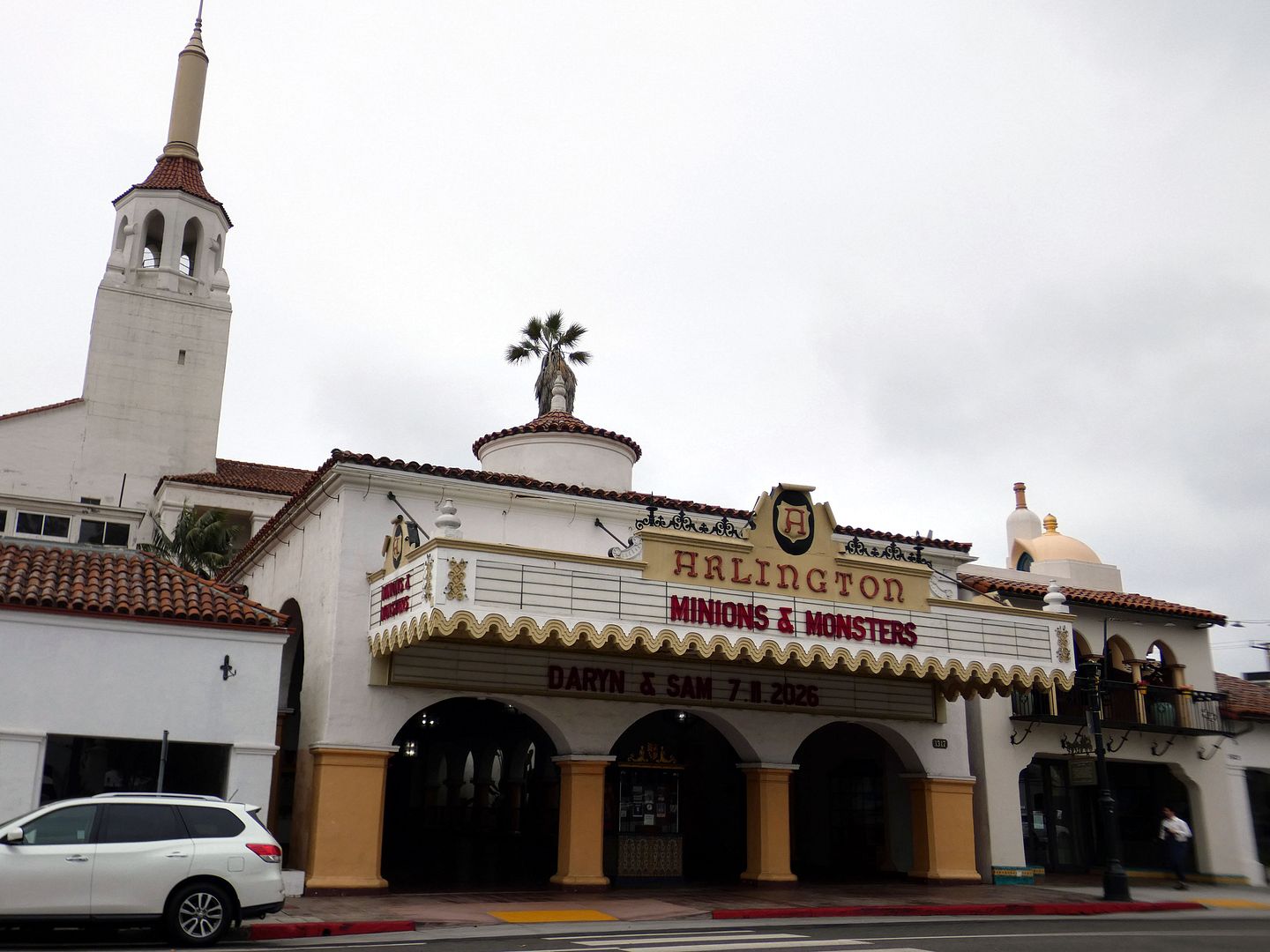
 
I don't get to Santa Barbara that often, despite it being only 90 miles north of me, and I hadn't been to any of its historic theatres yet. Besides, we'd been having heat advisories in LA for days—so I was grateful for the cloud cover and cooler temperatures up the coast.
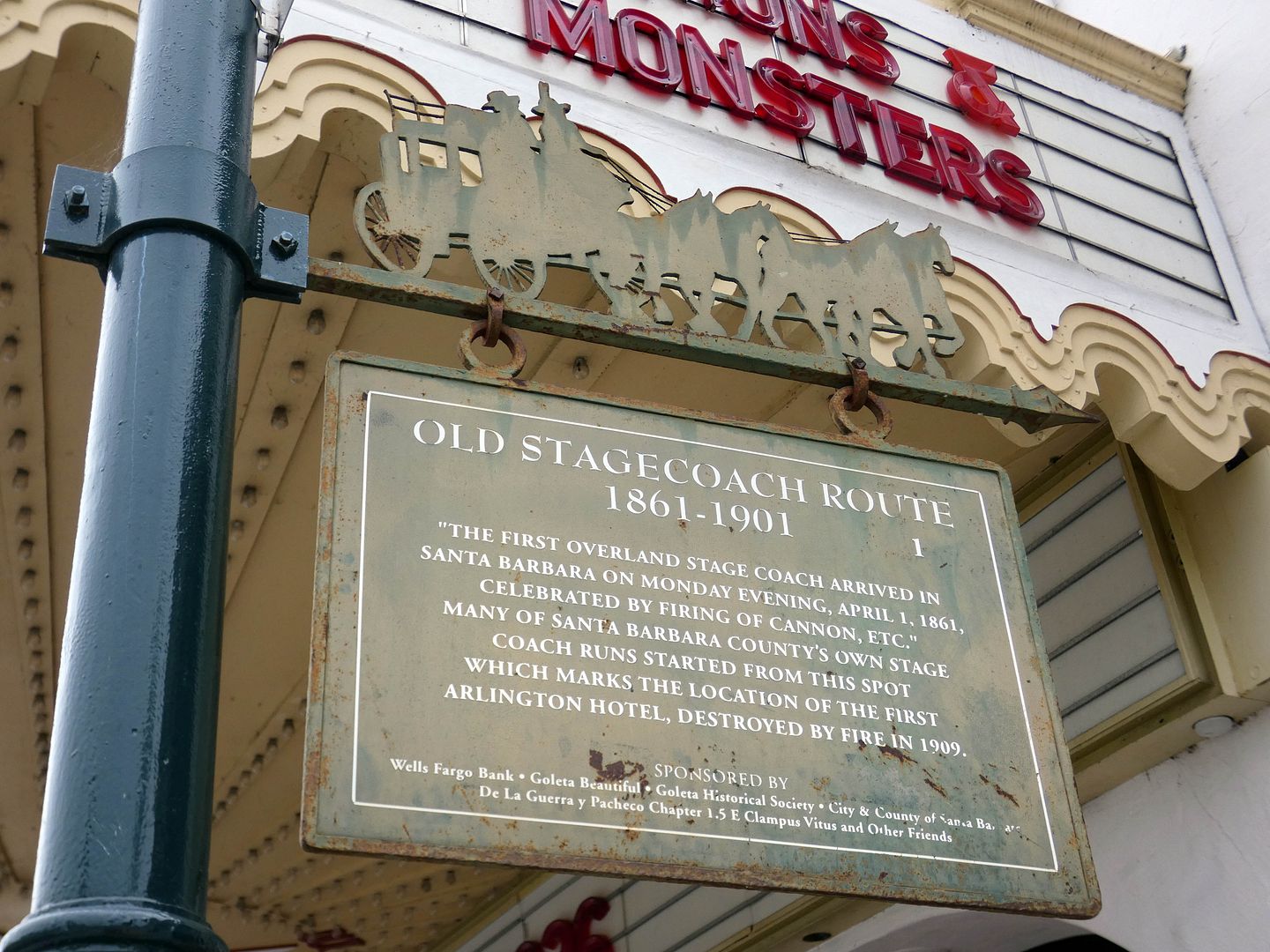

The Arlington is located along the old overland stagecoach route that ran from 1861 to 1901—when the Arlington Hotel stood in this very spot. In 1909, an electrical fire burned the wooden structure down; and in 1911, a newly rebuilt hotel rose in its place. The 1925 Santa Barbara earthquake destroyed the second Arlington Hotel, the remains of which were subsequently razed (along with much of the rest of downtown).

 
The (hopefully quake-proof) Arlington Theatre was built in 1931 for Fox West Coast Theatres—and in those early years, the studio used it to preview its movie releases outside of LA with major test screenings shown here.
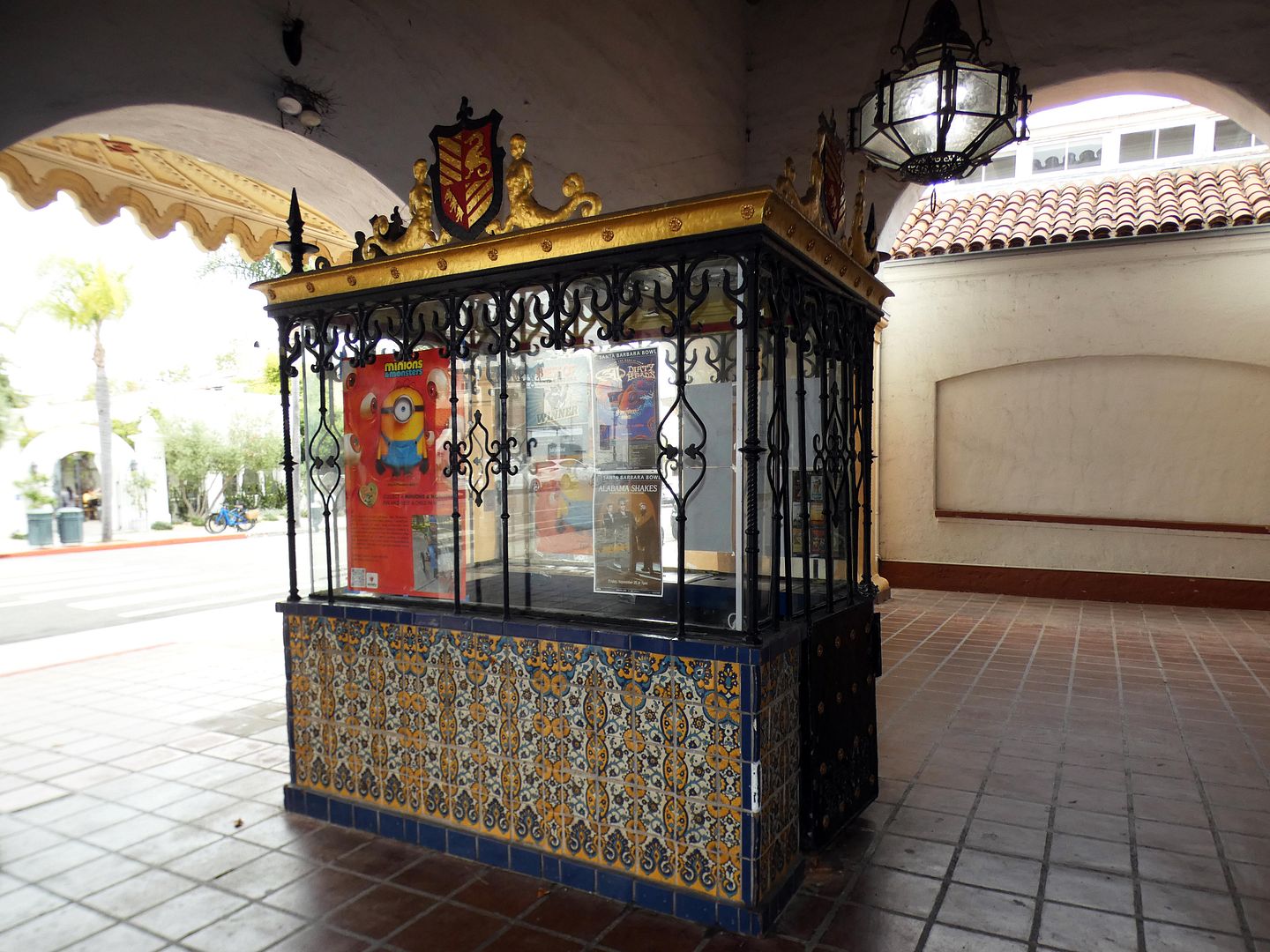
 
 
Today, the former Fox Arlington (Metropolitan Theatres took over sometime in the 1950s and bought the building in 1975) operates as a performing arts theatre and first-run cinema...


...showing summer blockbusters like Minions & Monsters and screening selections for the Santa Barbara International Film Festival.

 
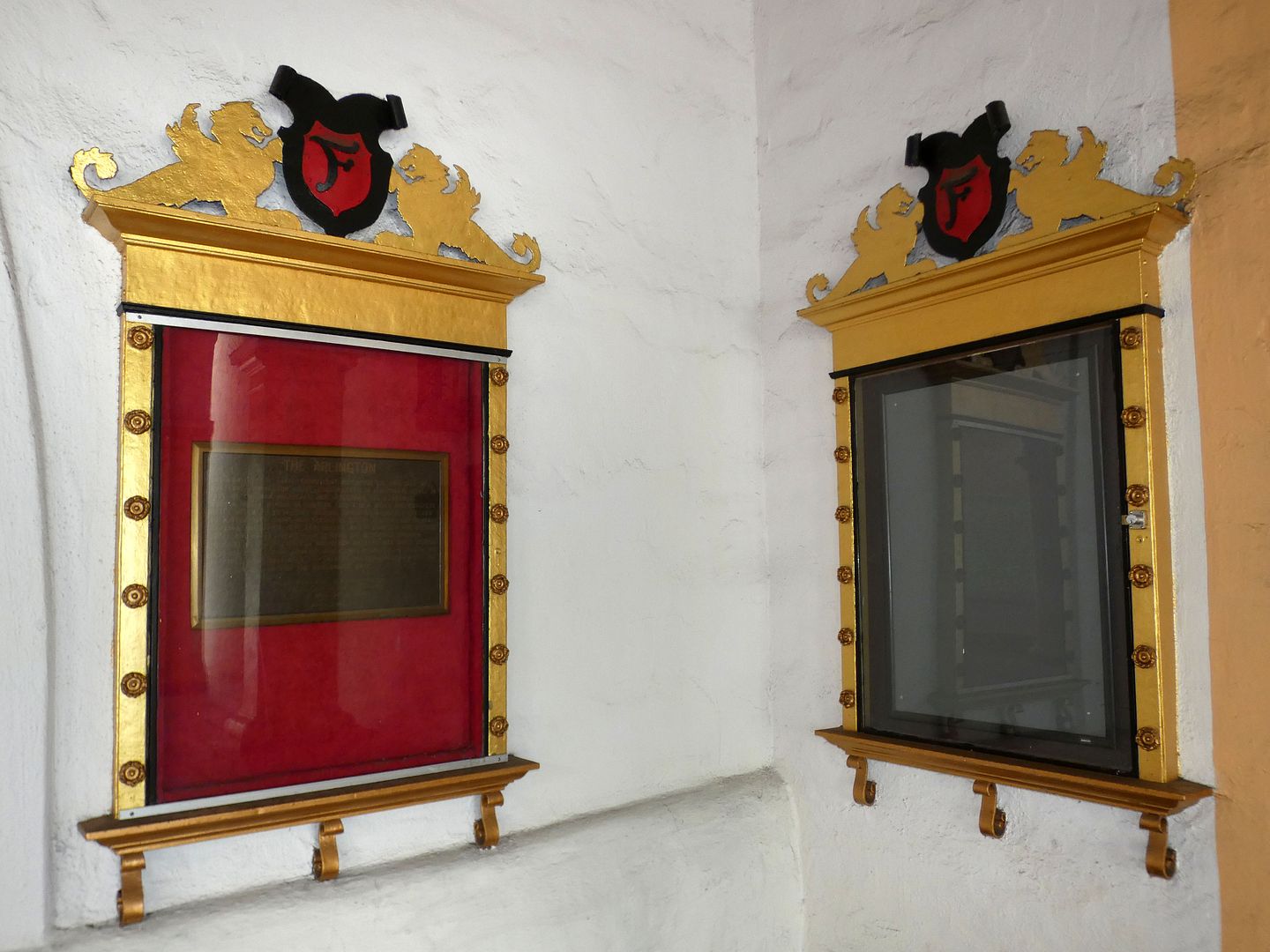
It no longer has official ties with the Fox studio, but you can still find a few "F" letters around.

 
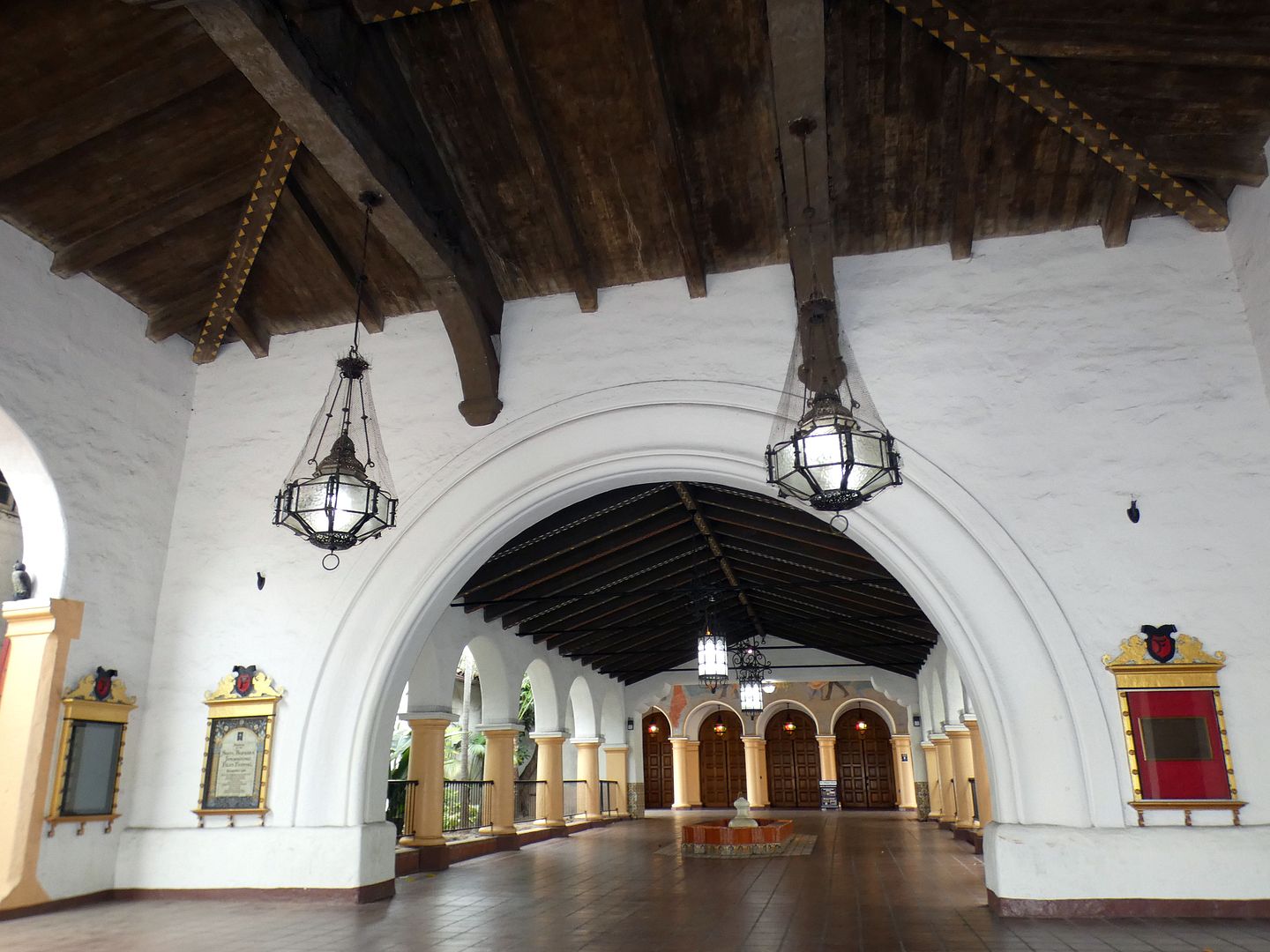
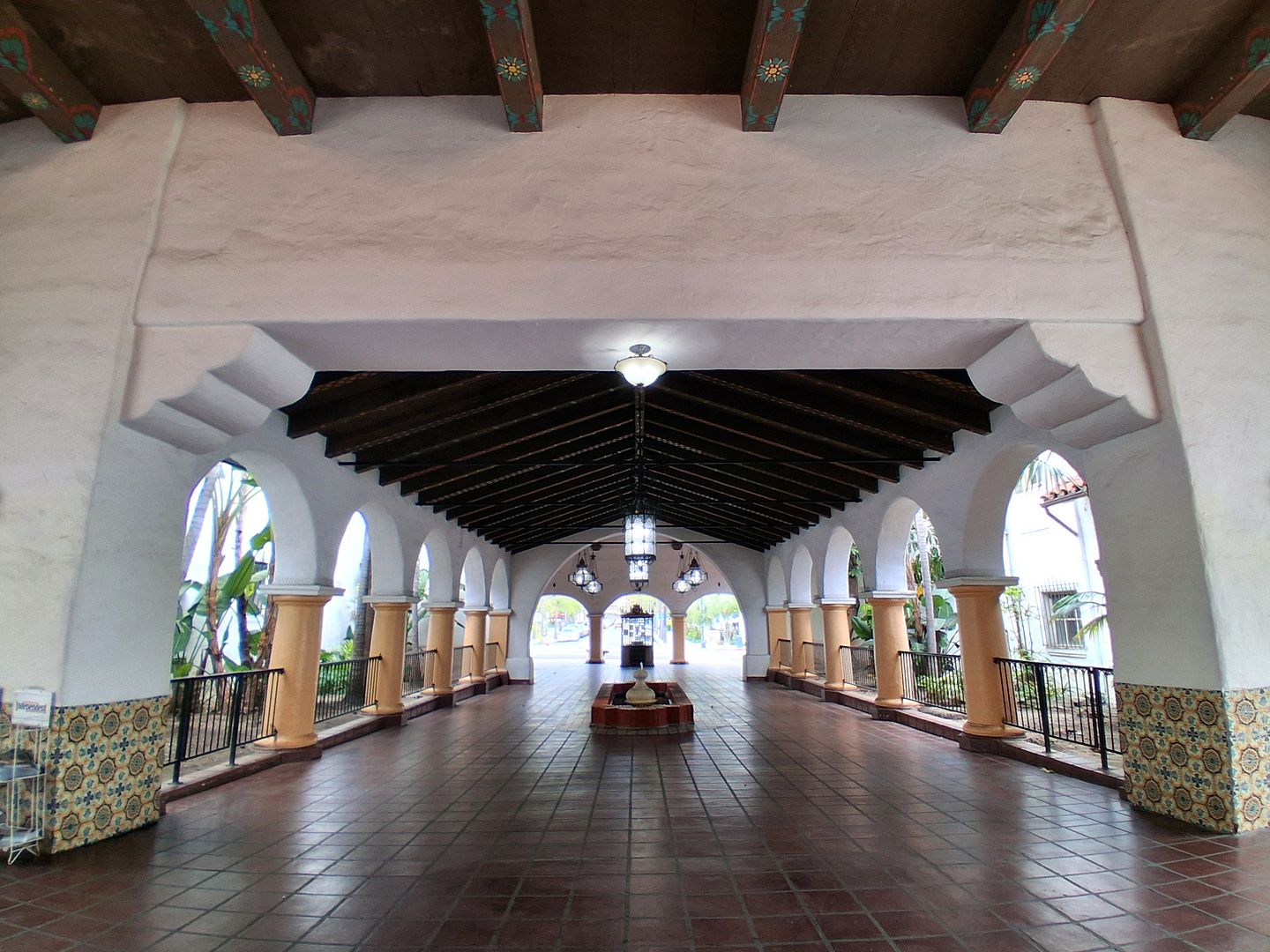
Like the Egyptian and the Chinese Theatre in Hollywood, the Arlington has a large forecourt...

 
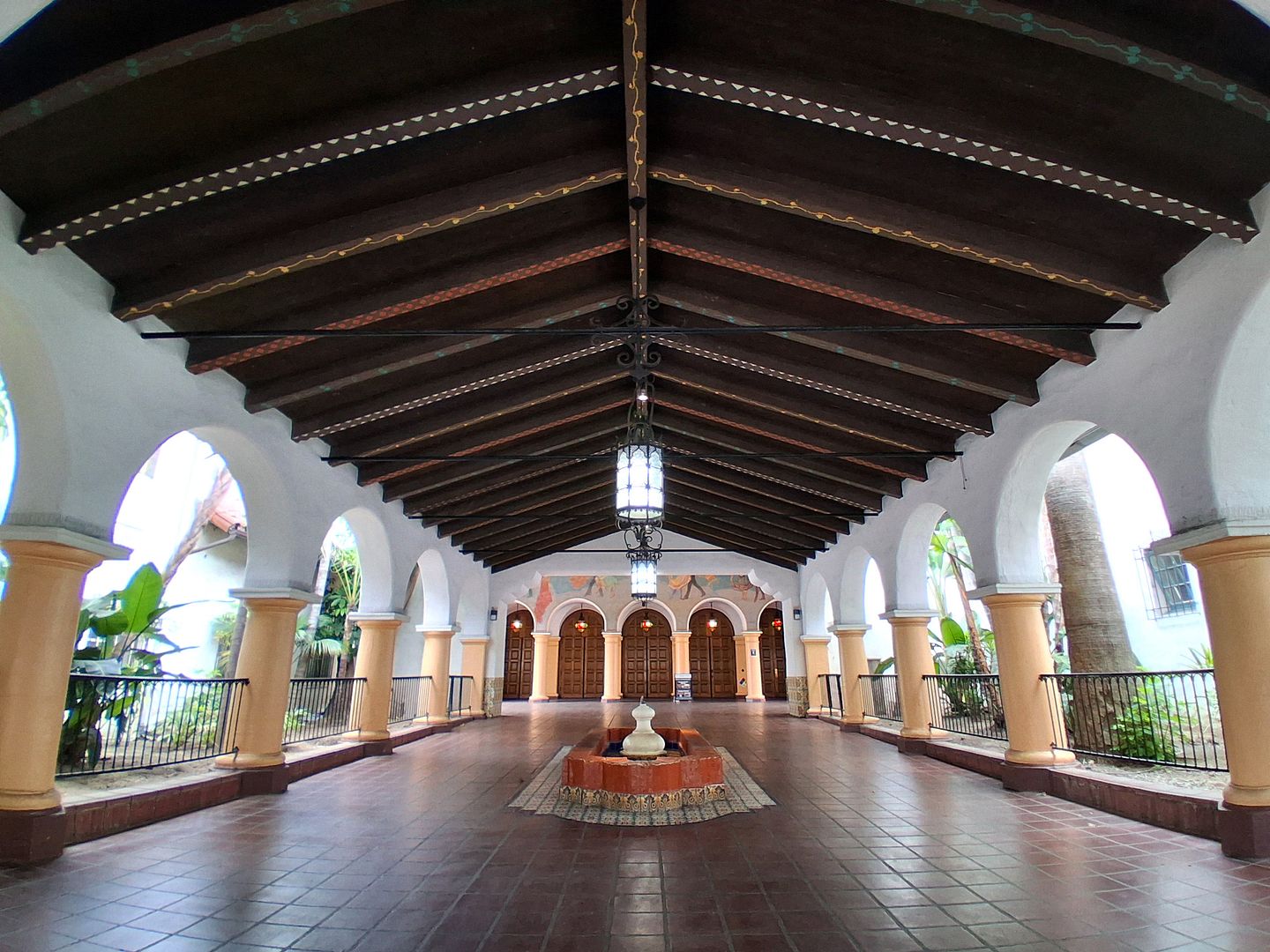
...but this Paseo is a covered courtyard lobby, replete with soaring Spanish arches and a prototypically Spanish tiled fountain in the center.


It's sometimes attributed to the Mission Revival style of architecture, but it's really a Spanish atmospheric fantasy—evoking less of the California Missions and more of a village in Andalusia. (Spanish Colonial Revival is sometimes used interchangeably with Mission Revival, but in this case I think it's the more accurate term. A 1932 article in Motion Picture Herald called it "truly Spanish.")
 
 
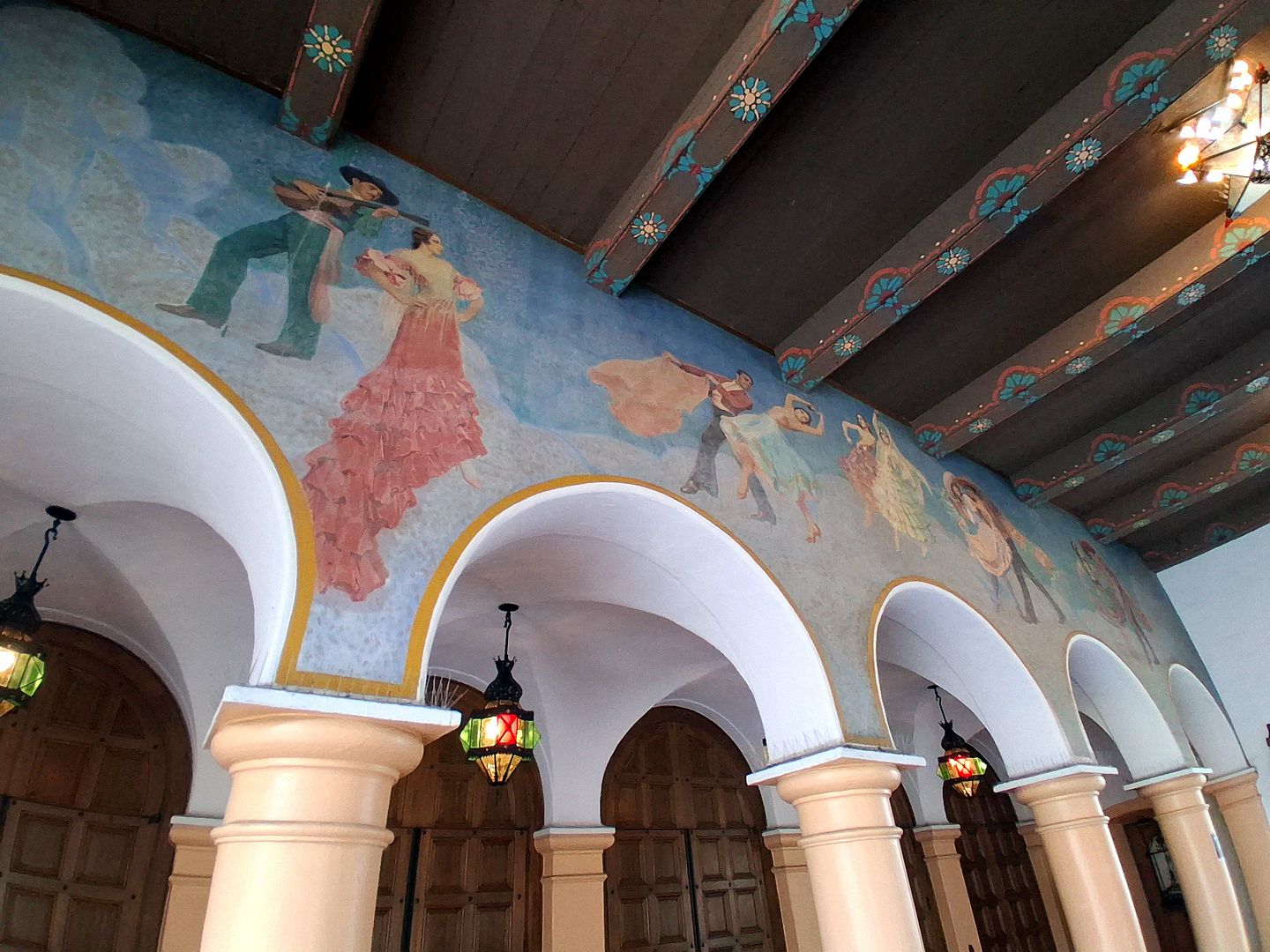
But the architectural team of Edwards and Plunkett included a bit of that Rancho Period nostalgia so associated with Santa Barbara, too—including a mural at the entrance loggia, with traditional Spanish dancers as depicted by artist Samuel Armstrong.

 
It had taken me two hours to drive there from Beverly Hills, so of course I was running late and showed up with only 30 minutes left to the open house.

 
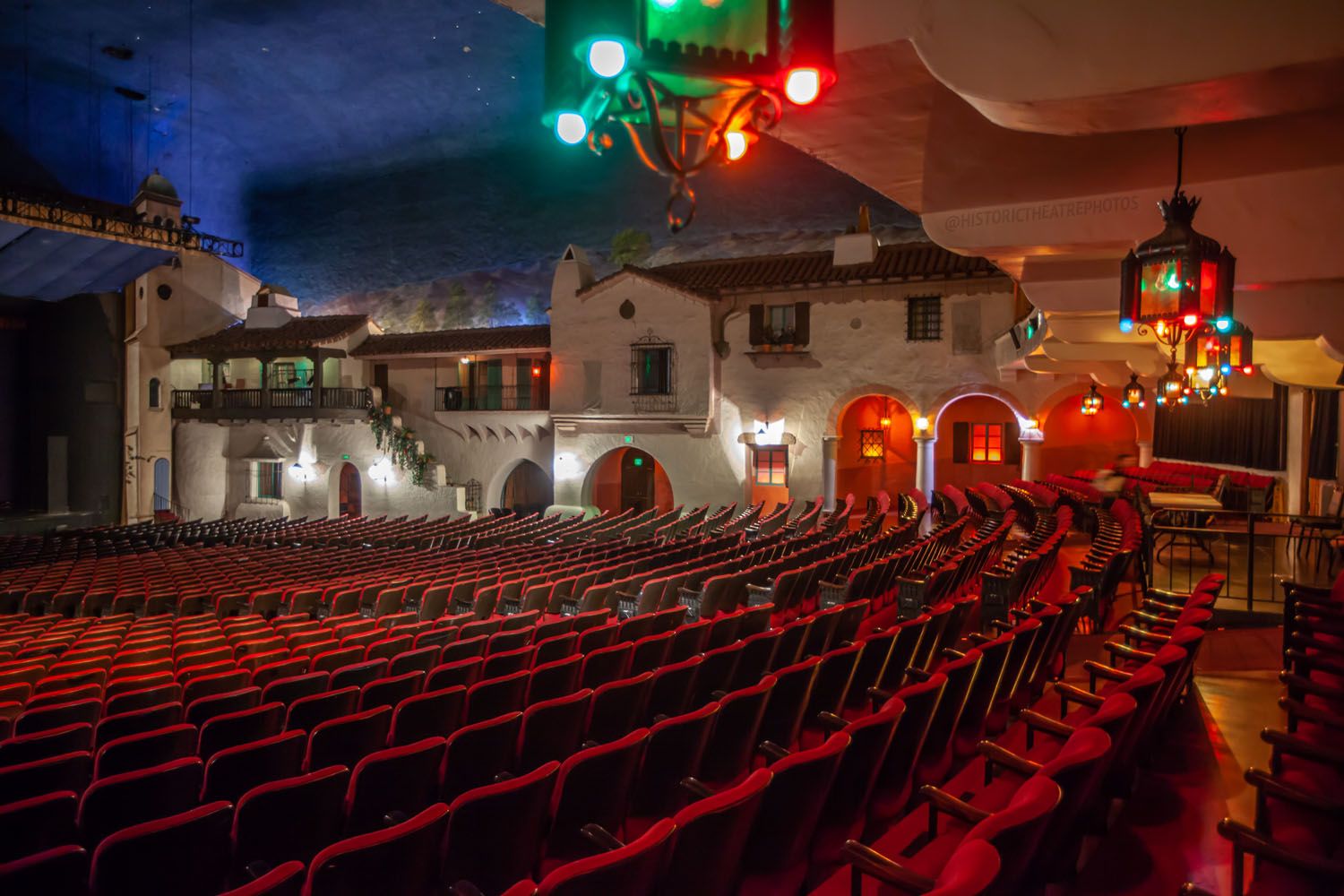
I scrambled to the front of the auditorium, barely noticing that the side walls were formed by three-dimensional Spanish village buildings—roofs, balconies, windows, and all.
 
Photo: Mike Hume's Historic Theatre Photography (used with permission)

Reportedly the lighting fixtures were painstakingly replicated from measurements of Catalonian street lamps of the 14th, 15th, and 16th centuries. 

 
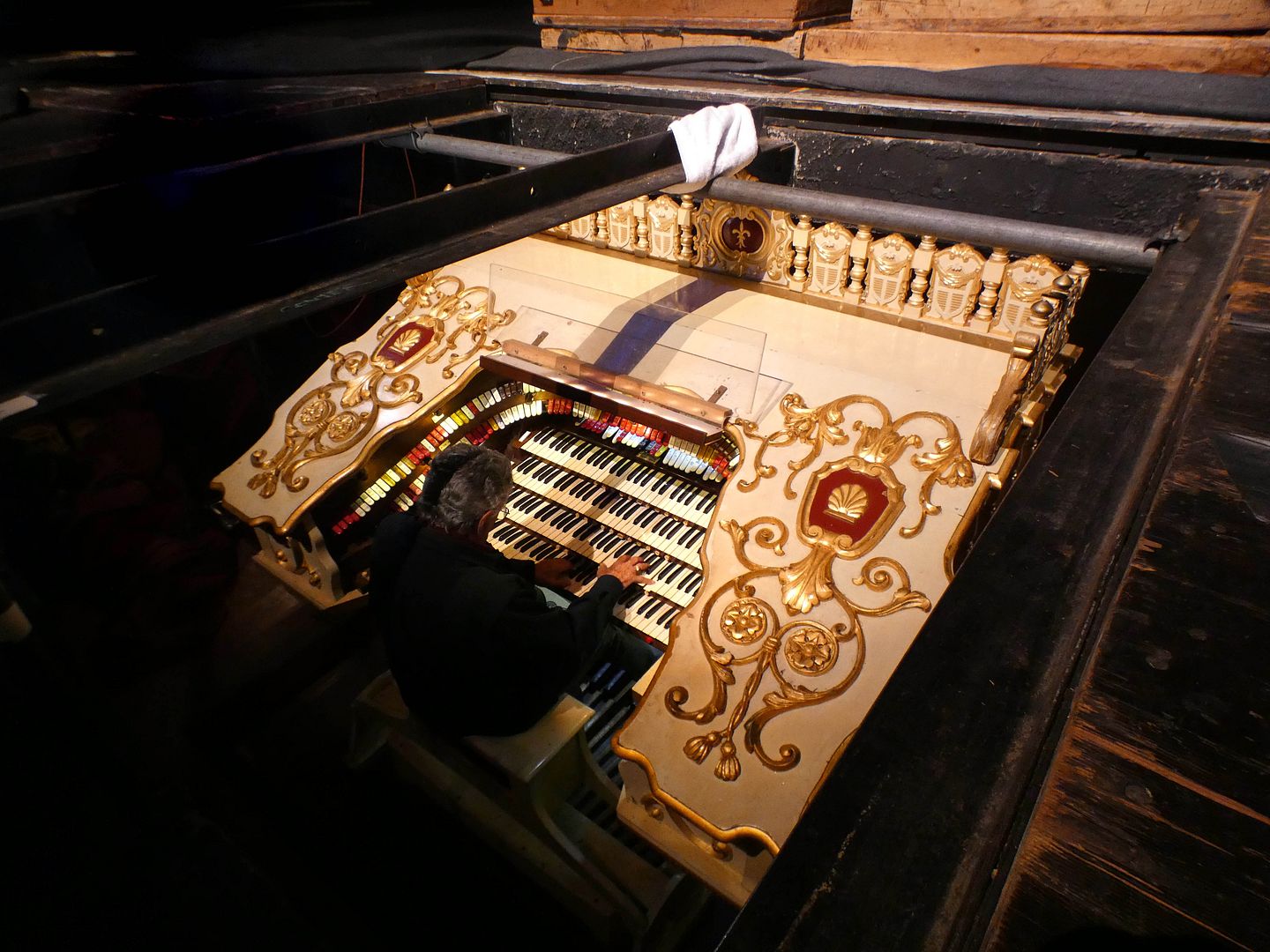
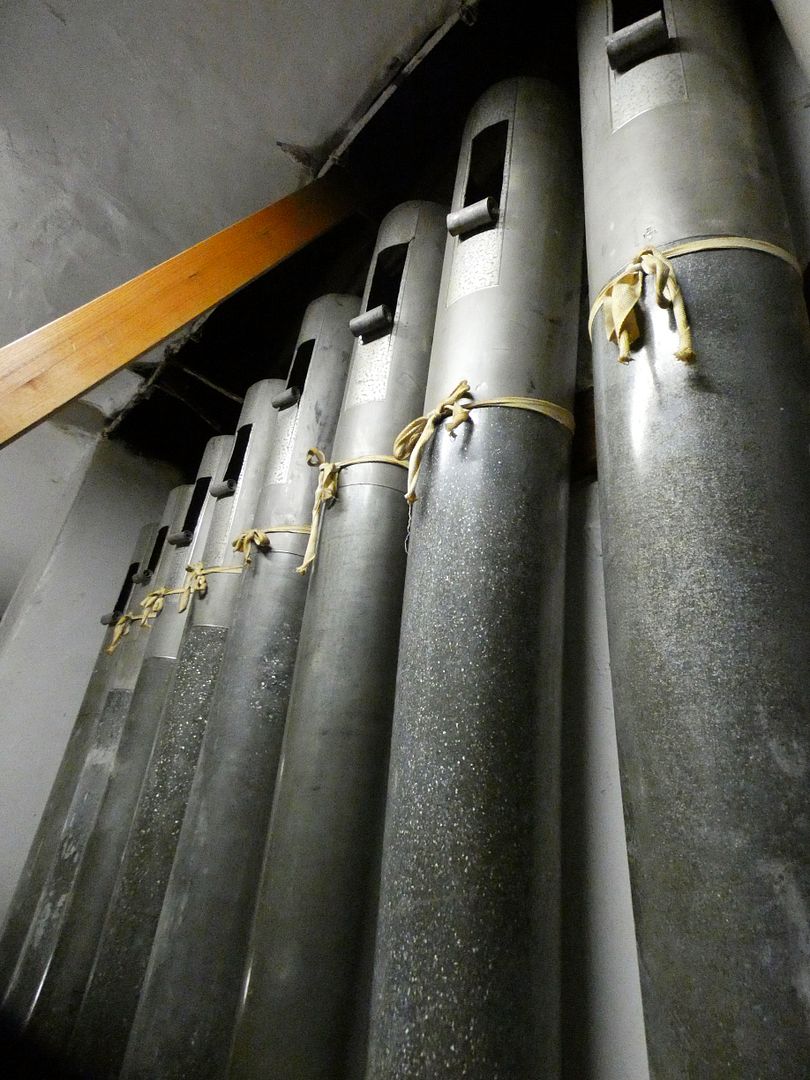
I made a beeline to the organist, who was playing a circa 1928 "Wonder Morton" theatre organ (not a Wurlitzer) from the organ lift located in the center of the curved orchestra pit. It's one of only five of its kind manufactured by Robert-Morton of Van Nuys, California—that is, before the company went out of business in 1931. Because it's an organ meant to accompany silent films, it has some fun practical sound effects like a police whistle, birds chirping, horse hoofs, and an airplane motor.


Originally built for and installed in Loew's Jersey Theatre in Jersey City, New Jersey, it was moved into storage in Dallas in 1977 and brought to Santa Barbara in 1986, when the Santa Barbara Theatre Organ Society lovingly restored it to as-new condition.
 
 
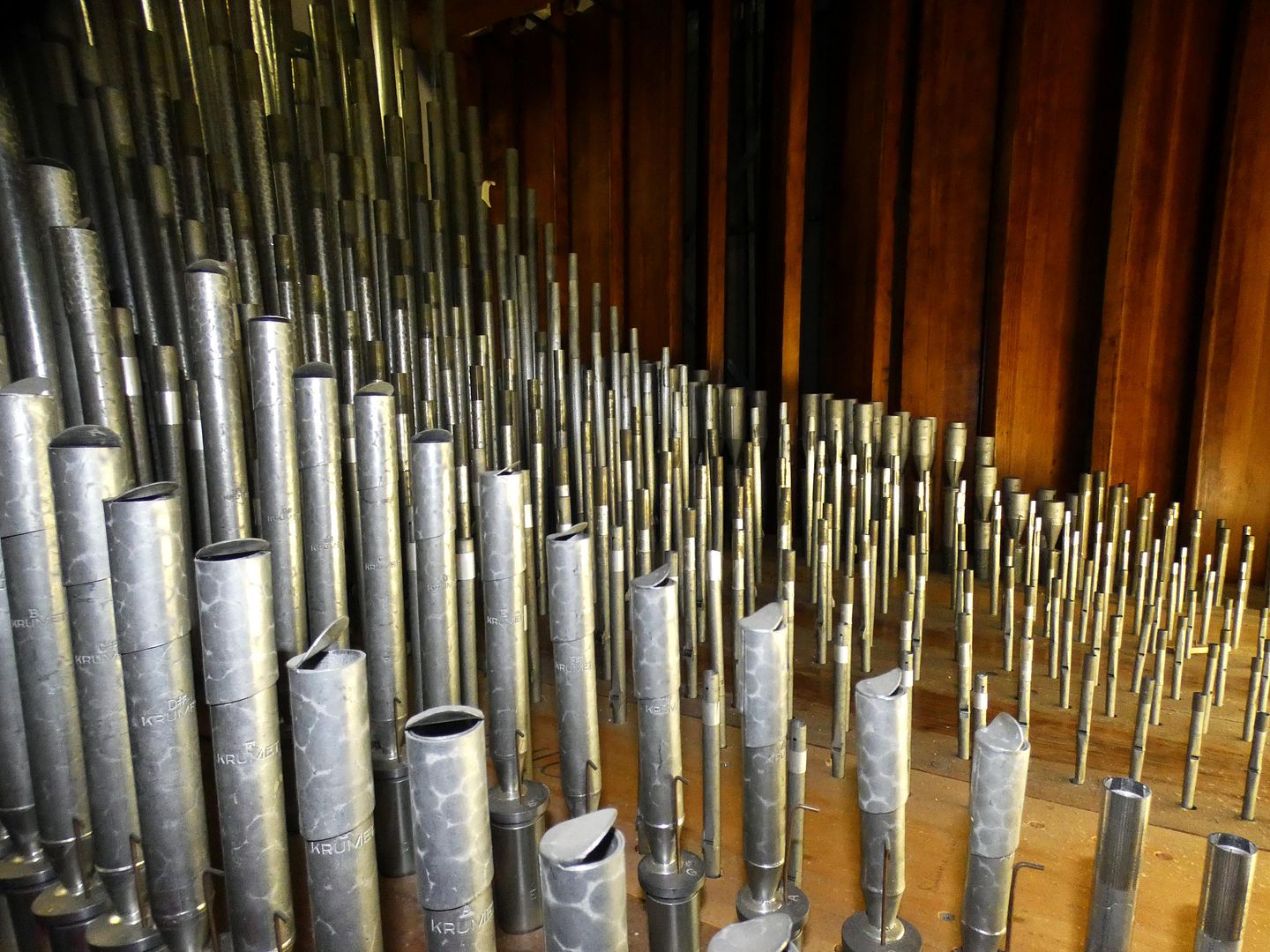
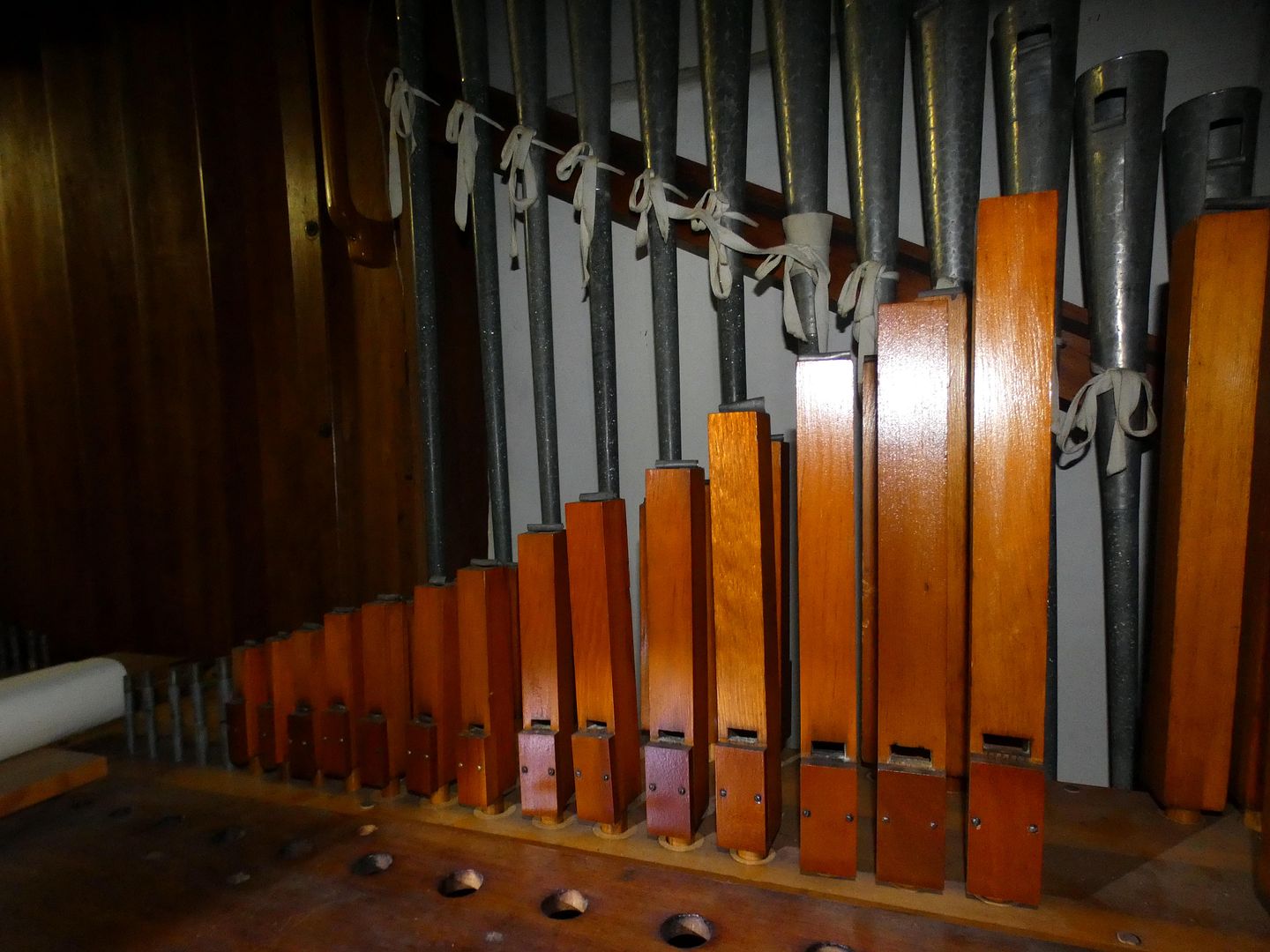
As it was built nearly 100 years ago, it had four keyboards (4-manual) and 24 ranks (individual sets of wind-blown pipes sharing the same tone, like trumpet or some other horn)—but sometime since, it's been expanded to 27 ranks of about 2000 pipes. 

 
This, like many theater organs, is electro-pneumatic—meaning all the pipes (both metal and wooden) and other instruments (including some actual drums and bells) are all air-operated by air valves that are controlled via electrical wires.

Photo: Mike Hume's Historic Theatre Photography (used with permission)

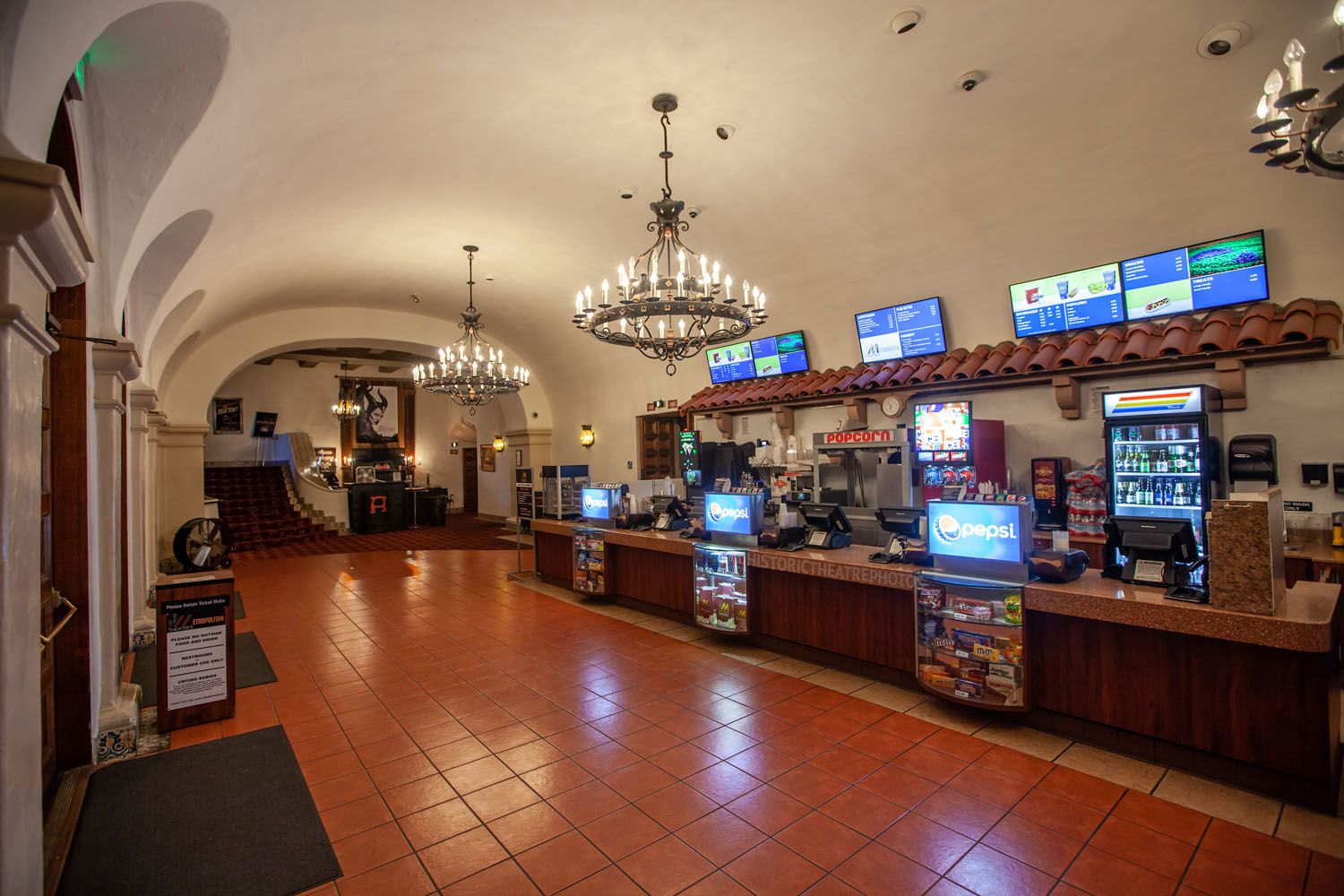
An impromptu tour took us through the pipe chamber at stage right—but there was so much more to behold. My guide could sense my enthusiasm—and since he could tell that I like history, he walked me through the lobby, under those handmade Catalonian chandeliers hanging from a vaulted ceiling, and headed upstairs yet another way. 

 
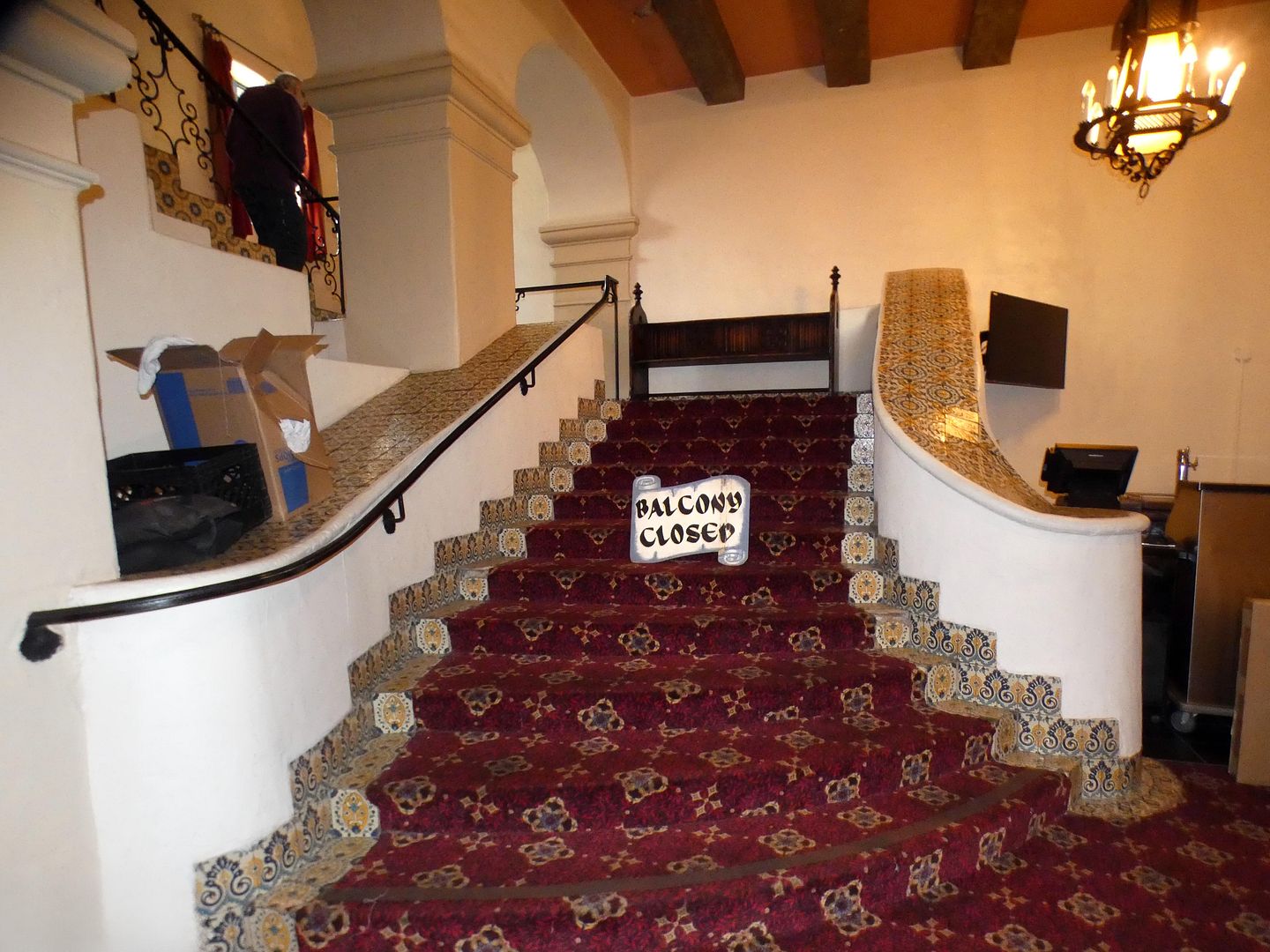
Although the upstairs is officially closed (reportedly they don't use it anymore), we climbed the balcony stairs, admiring the ironwork handrails...


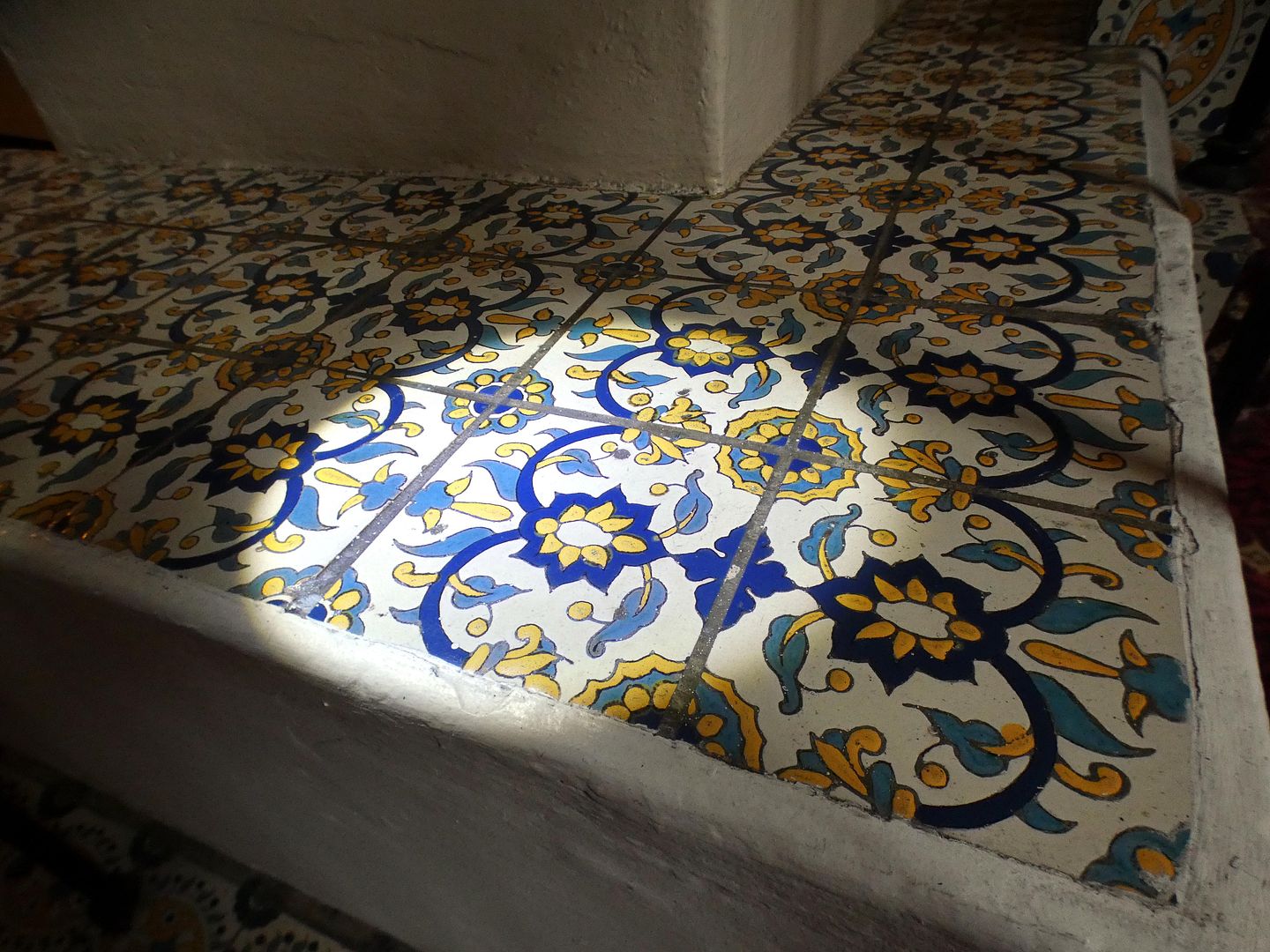
...and glazed Tunisian tiles (as were common at the time at such Santa Barbara locales as Casa del Herrero and the Santa Barbara Courthouse)...
 
 
...until we reached the projection room. 


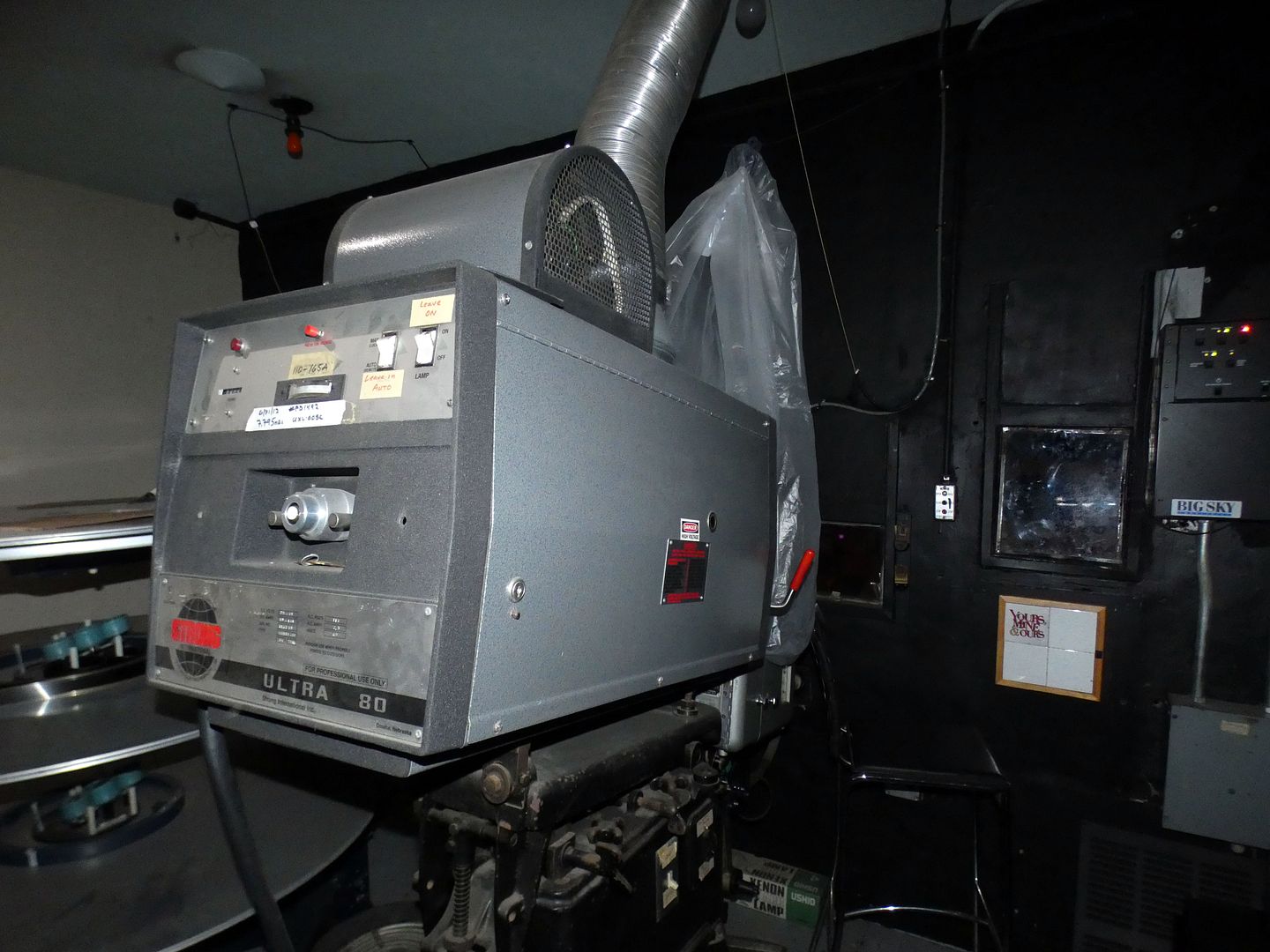
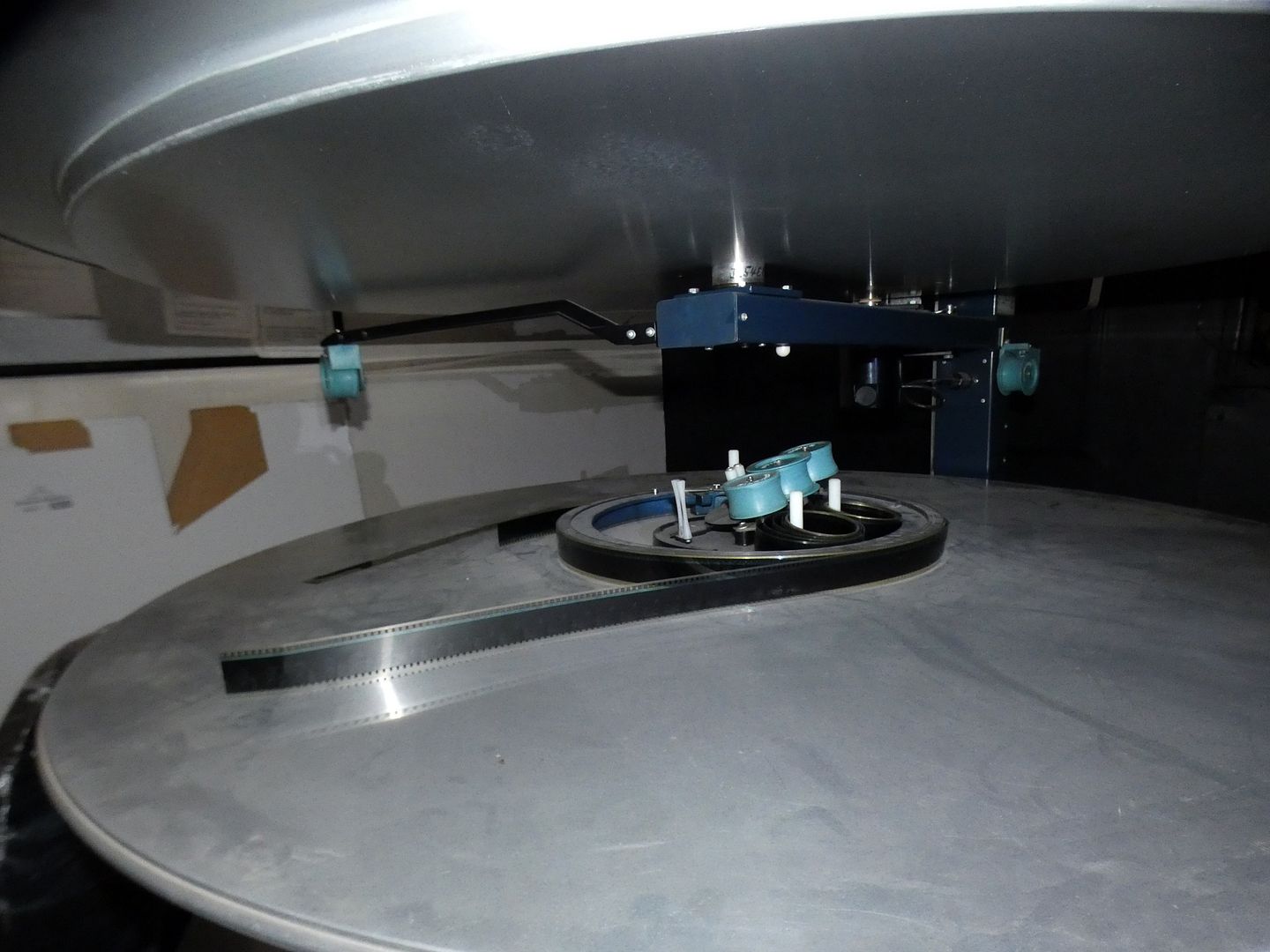
Because the theatre still occasionally screens 35mm film, it's got a Strong International Ultra 80 projector with a platter system in addition to its digital projection equipment. 
 
 
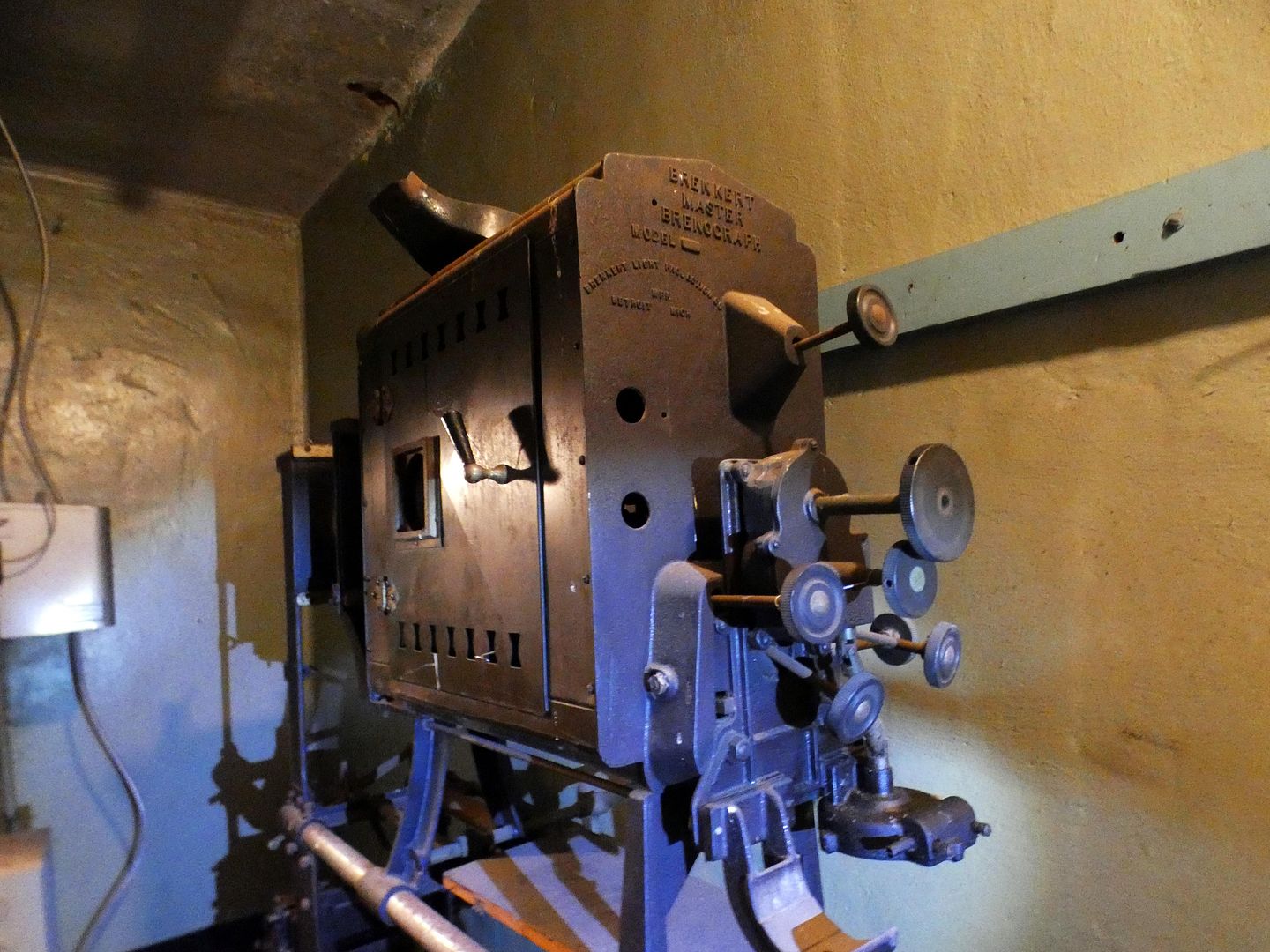
It's also got a couple of antiques tucked away up there, including a Brenkert Master Brenograph projector of special lighting effects, once adding to the atmospheric ambiance of the Andalusian village below. 

 
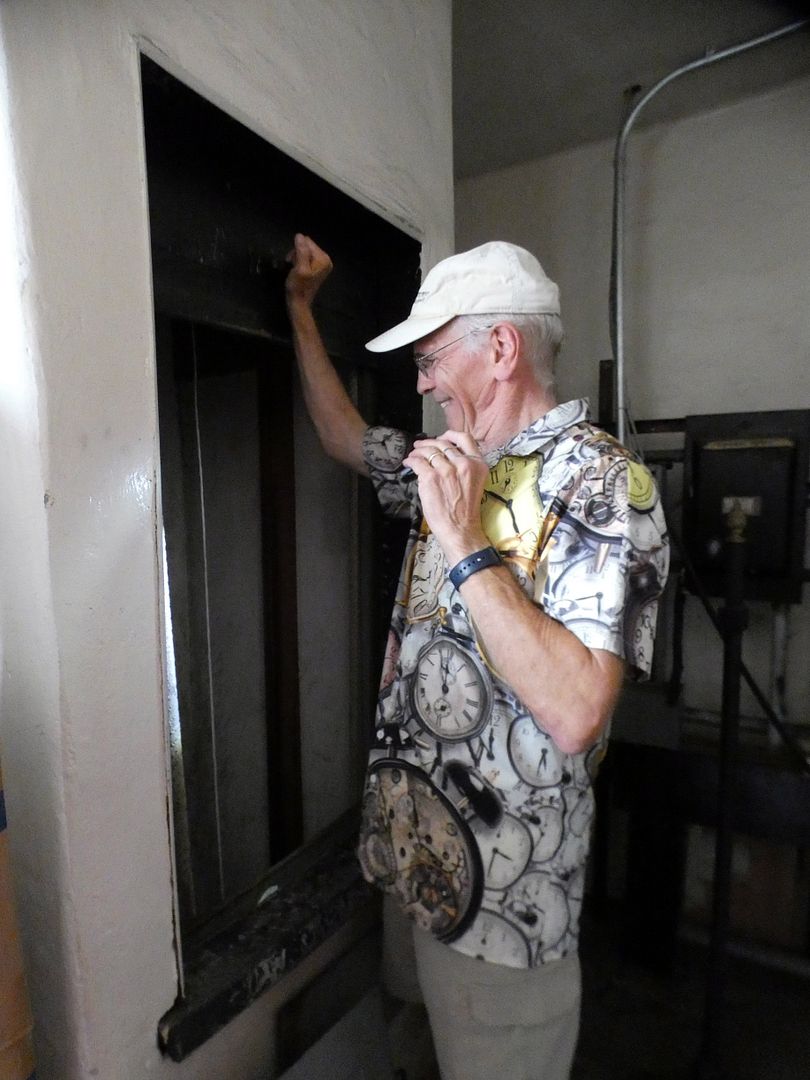
Those 35mm platters were pretty heavy, so the theater used to employ the help of a dumbwaiter (no longer in use, but the shaft is still there). 


Among the other areas that are now off-limits to the public are a patio that overlooks the city towards the mountains, reportedly once used by celebrities attending their big Hollywood screenings as nightclub or speakeasy. 

 
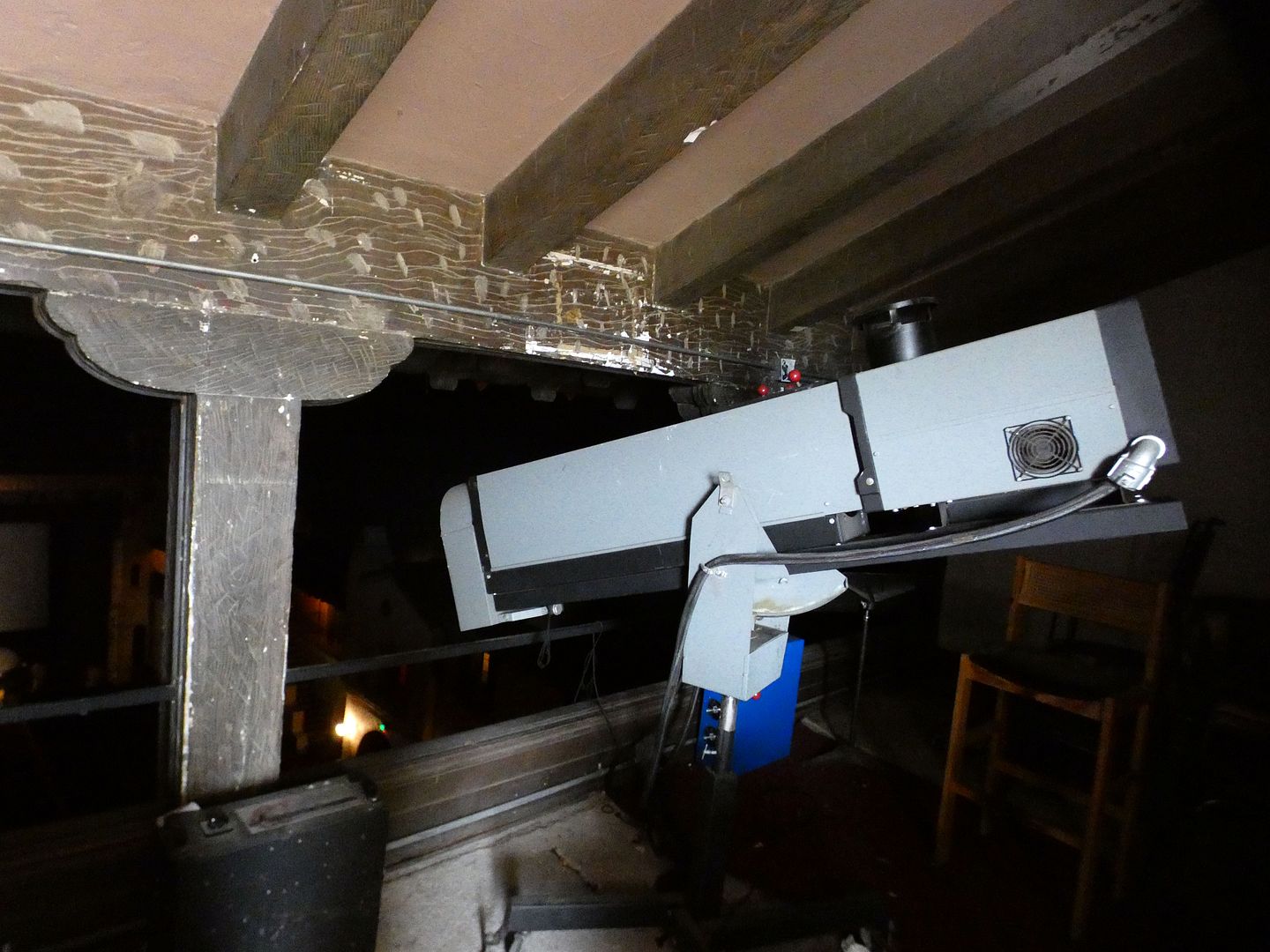
They could watch their movies (and observe audience reactions) from a private balcony up there...


...but now it's just used for the back-of-house spotlight. 
 
 
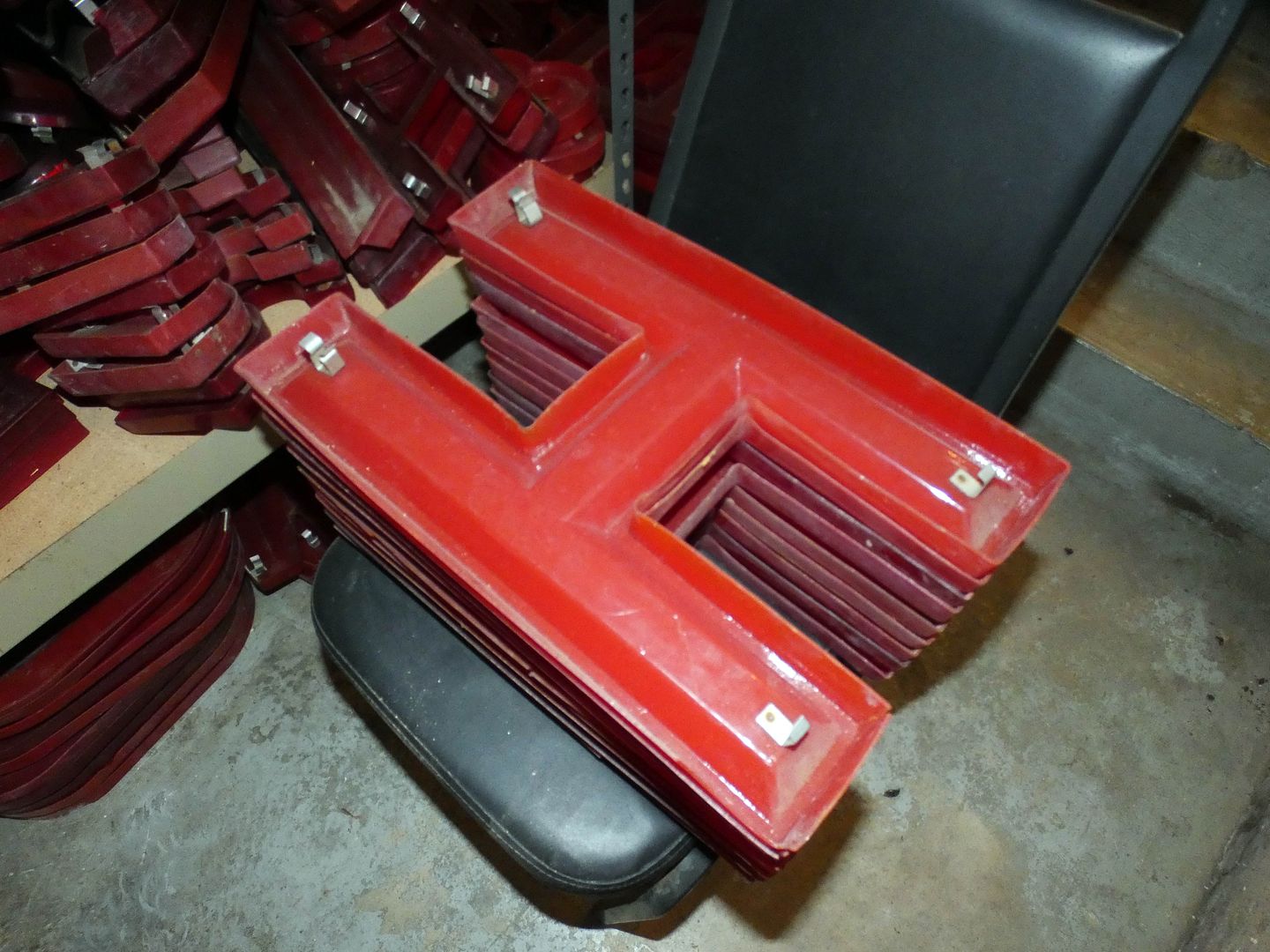
There were so many things to see in such little time, but I delighted at every little detail I could soak in, from the red plastic marquee letters...

 
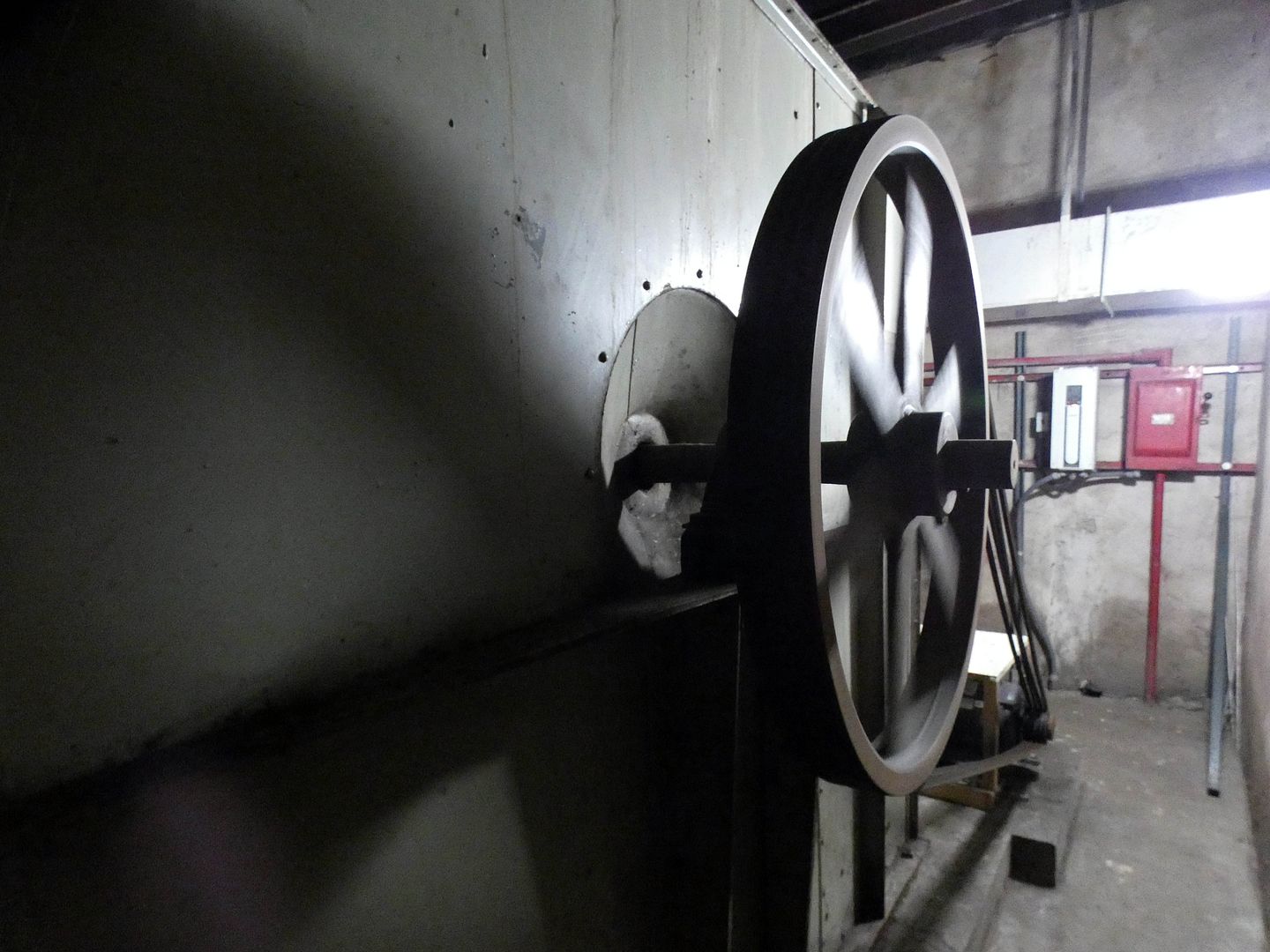
...to the blower that puffs the wind that makes the pipes sing...


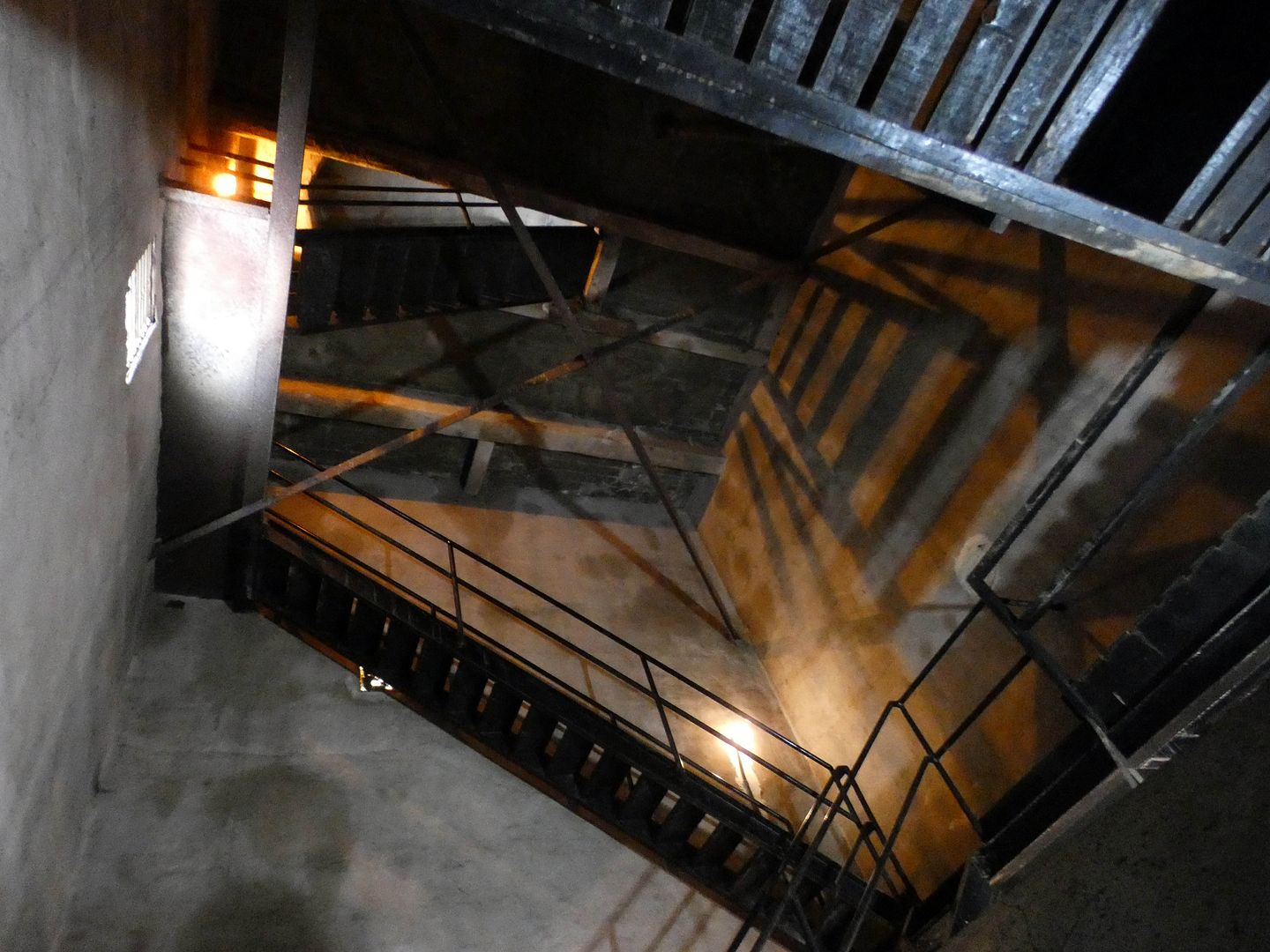
...the bottom of the bell tower that never housed any bells (but used to sport a neon sign that spelled F-O-X)...
    
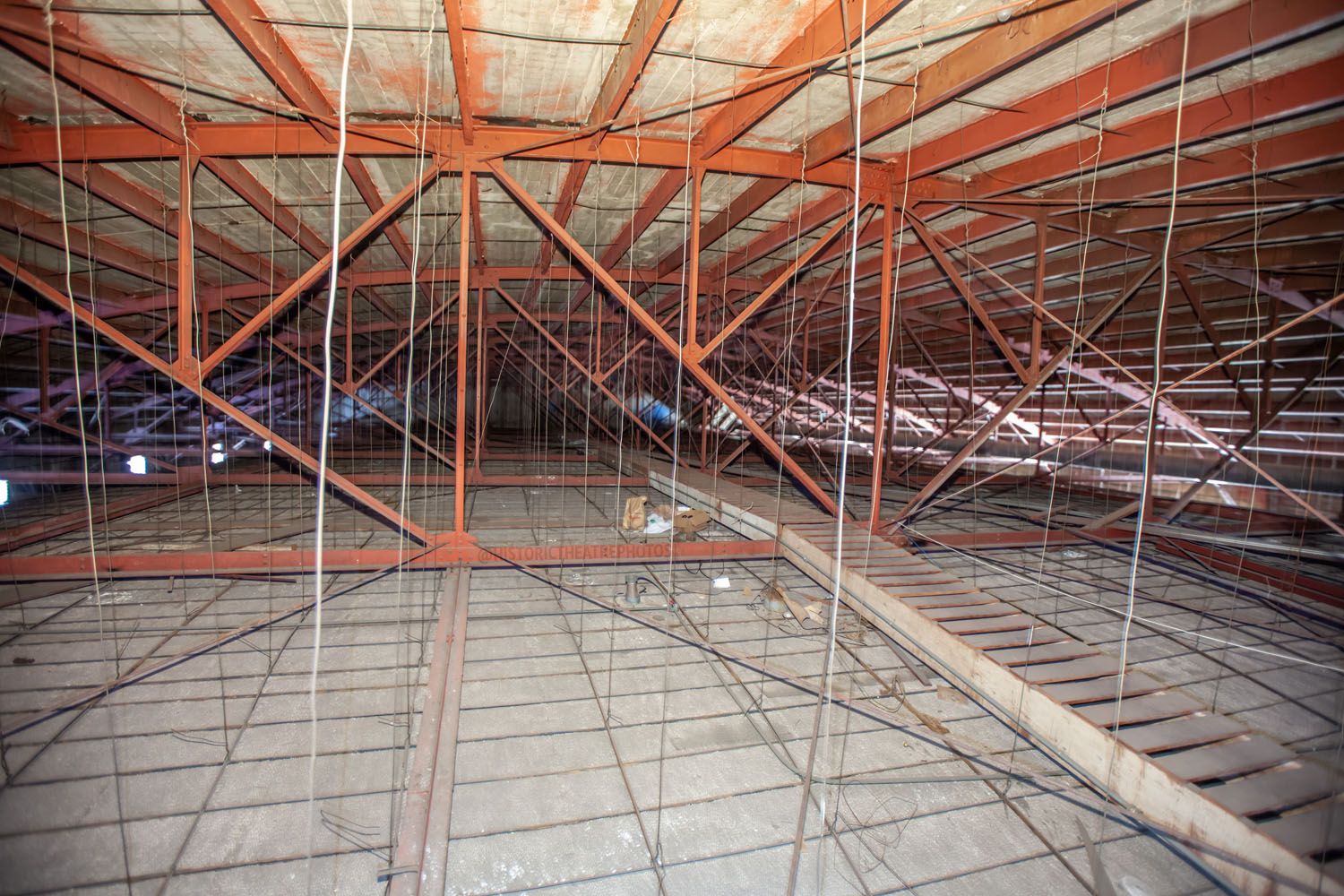
Photo: Mike Hume's Historic Theatre Photography (used with permission)

...and the attic above where the ceiling used to twinkle. 

There's so much more to say about this theatre, and my visit was by no means comprehensive, but I do think I crammed in a lot in less than an hour—and much more than I ever expected.

For a much more exhaustive exploration, check out my friend Mike Hume's Historic Theatre Photography blog. (And thanks to Mike for letting me share some of his photos on this post, which are credited to him above.)

Related Posts:

June 25, 2026

Photo Essay: Riding An Elevator to Hollywood Streets Too Steep to Drive On

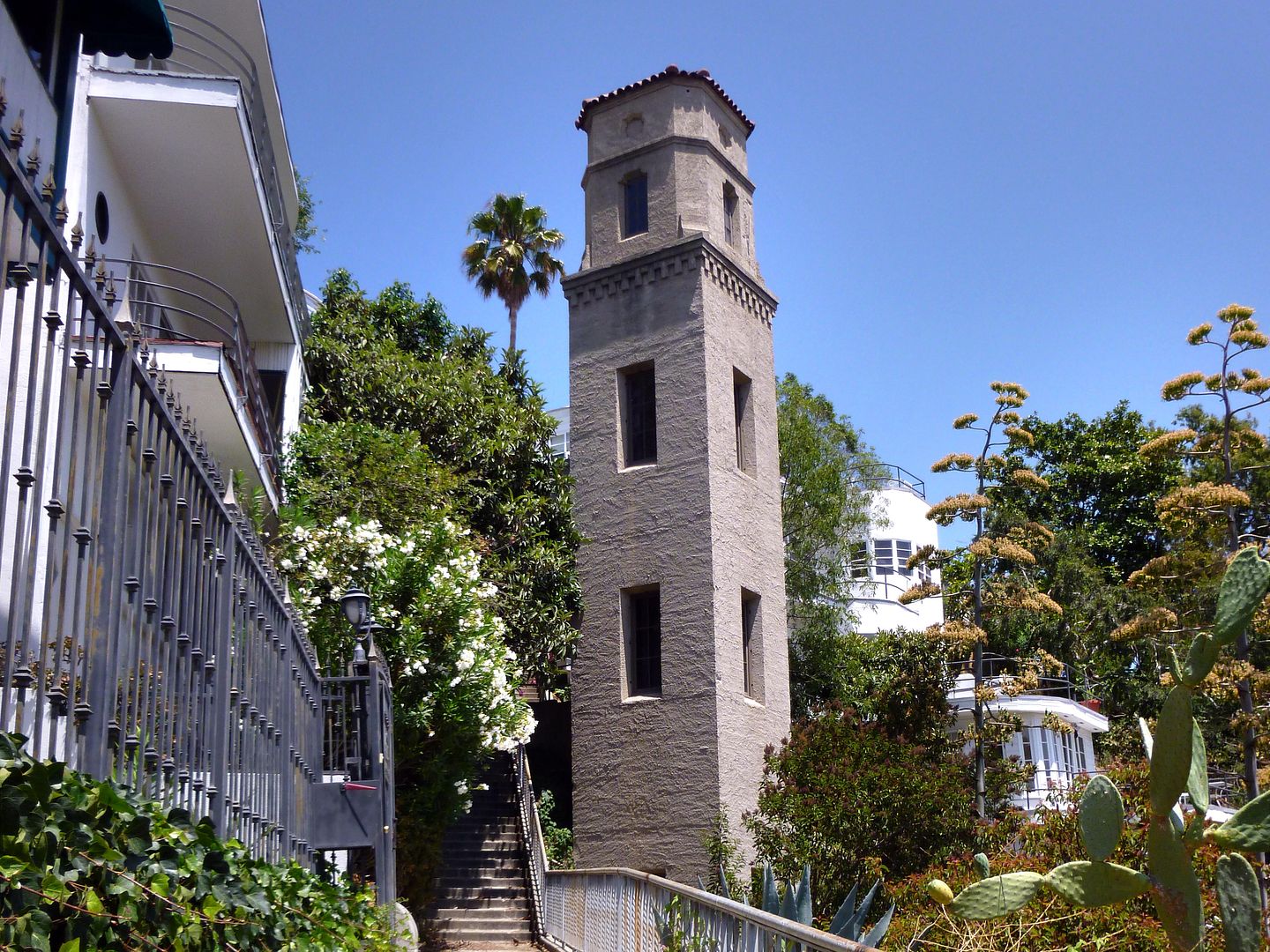
Back in 2013, I became fascinated with a tower in the hills behind the Hollywood Bowl, after coming across it on one of Charles Fleming's Secret Stairs walks. I vowed then that someday I would ride the elevator inside that tower. 

And it's been on my bucket list ever since. 


December 09, 2025

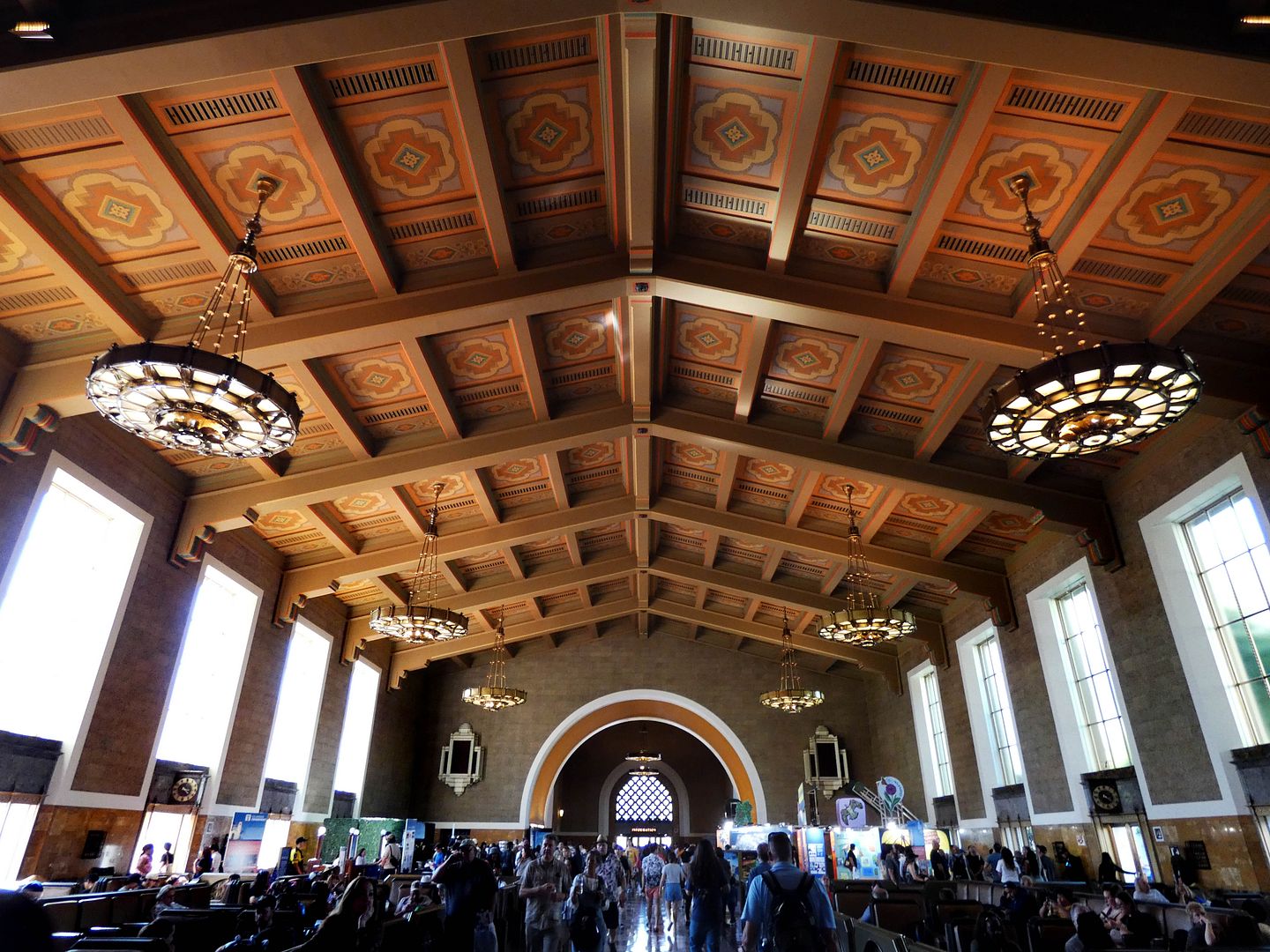
Photo Essay: A Station Master's Tour of LA's Monumental Train Terminal

After nearly 15 years of living in Los Angeles, you'd think I've seen everything there is to see. But I'm constantly reminded of how much more there is, hiding beneath all those layers. 

Take Union Station, for instance. I thought my "holy grail" was getting back into the bar space that had become the Streamliner Lounge—which I finally got to do during this year's TrainFest in September.

But as it turns out, this great train station had even more in store for me—revealed to me during a recent tour I took with Los Angeles Railroad Heritage Foundation (LARHF). 

 
Now, all I knew was that it was going to be led my a former station master—so it certainly would be different than the architecturally-focused Los Angeles Conservancy tour I took all the way back in 2012.

September 17, 2023

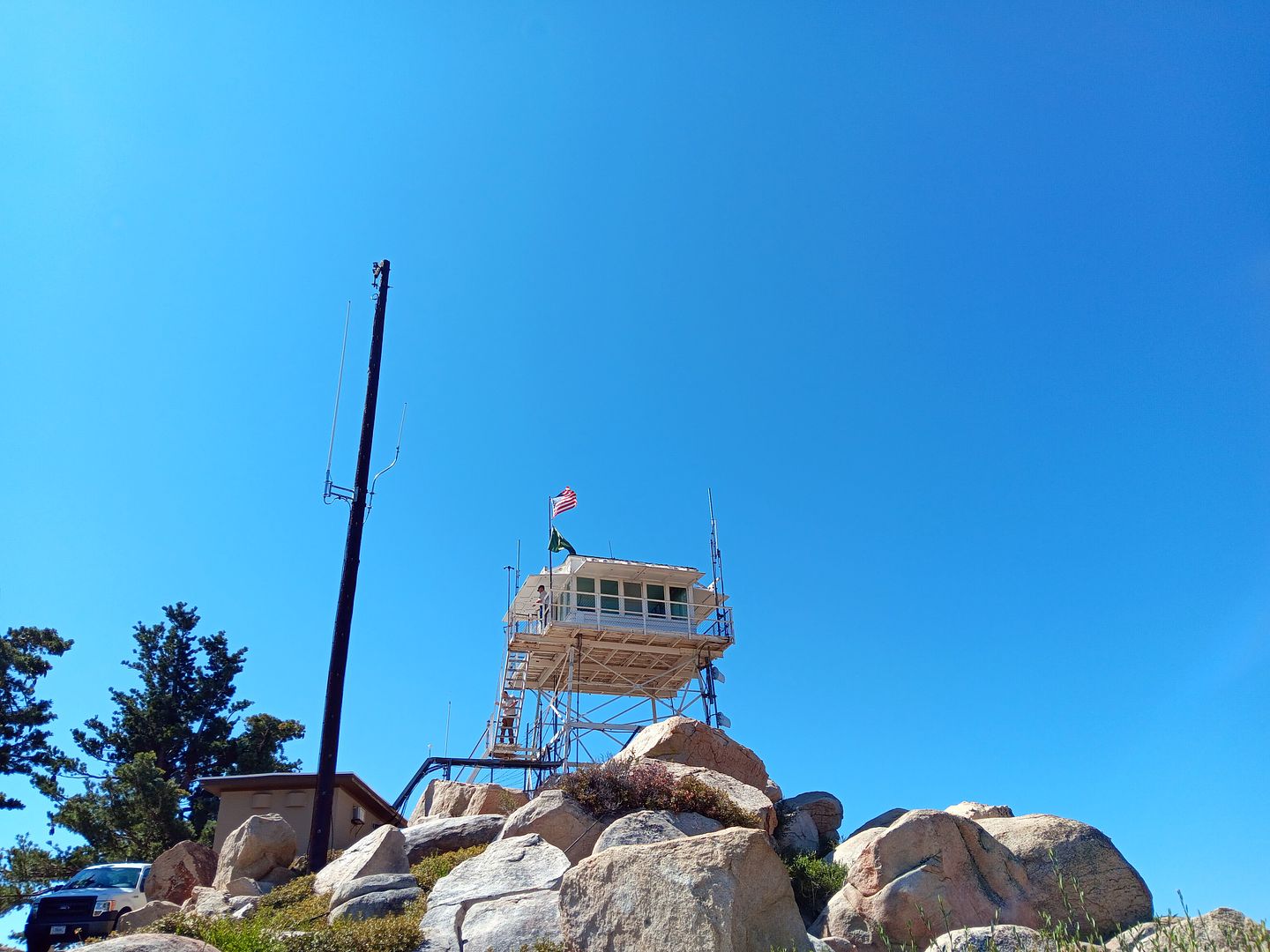
Taking In the View of 'Smoke Spotters' at Keller Peak Fire Lookout Tower, San Bernardino National Forest [Updated for 2024, Destroyed By Fire]

[Last updated 9/11/24 11:43 AM PT—On September 10, 2024, the Southern California Mountains Foundation announced on social media that the Keller Peak Fire Lookout had fallen in the wildfire known as the Line Fire and was out of service.]

Two years ago, I ascended to the Ancient and Honorable Order of Squirrels at the Strawberry Peak Fire Lookout Tower in the San Bernardino Mountains, near Lake Arrowhead.

It was such a fun experience, I wanted to return to shoot one of the videos I've been producing for our local PBS station, KCET, and its digital series "SoCal Wanderer."


But my contact at the Southern California Mountains Foundation, the non-profit organization that oversees the fire lookout tower program in the San Bernardino Mountains, suggested I visit a different lookout tower this time: Keller Peak, near the town of Running Springs.  

September 05, 2023

Photo Essay: Hanging Out In 'Hangtown,' Or Maybe Getting Sick in Placerville

Now that I've got some distance from it, I've been thinking a bit about what happened in the days before I came down with COVID-19 last year. 

I'm still not sure where I caught it, or how—but since I was traveling and bopping around to a lot of different spots, I may never know.

 
It was 4th of July weekend, and I was headed up to the Great Western Steam-Up in Carson City, Nevada. But first, I made a pit stop at the tiki bar in Sacramento (a.k.a. The Jungle Bird) and spent the night in the "Gold Rush" town of Placerville, California.

June 27, 2023

Photo Essay: La Venta, The 100-Year-Old Inn That Once Helped Sell the Palos Verdes Peninsula

"Temperate climate, fertile black soil, and... sea air that contains just the right amount of moisture."

That's how a 1930 issue of the Palos Verdes Homes Association's Palos Verdes Bulletin described the conditions on the hilltop where La Venta Inn now stands, overlooking Malaga Cove, in present-day Palos Verdes Estates, California.


June 21, 2023

Photo Essay: A Stone Tower Gateway to the 'Riviera of America,' Palos Verdes

Palos Verdes Estates is one of four cities that comprise the Palos Verdes Peninsula in the South Bay region of Los Angeles, California. 

And at the entrance to the city on Vía Valmonte (formerly known as Vía Mirlo), there's a tower that marks its eastern border shared with the City of Torrance: the Mirlo Gate Tower, or the "Tower House."


June 10, 2023

May 29, 2023

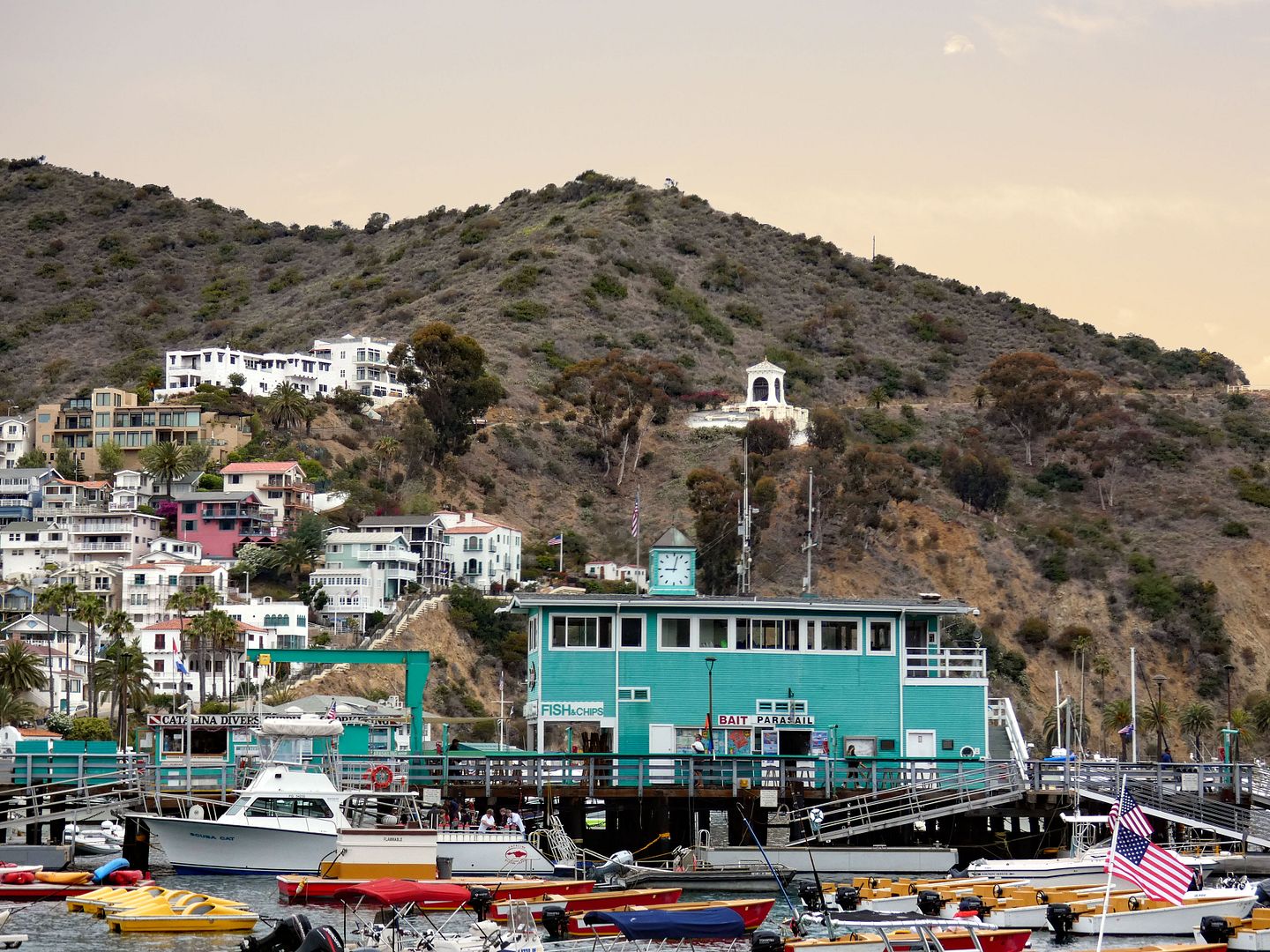
The Wrigleys' Timeless Gift of Timekeeping on Catalina Island: The Chimes Tower

In my last couple of visits to Catalina Island—the only developed tourist attraction in the Channel Islands archipelago off the coast of California—I've been trying to trace some of the remnants of the Wrigleys' time there.

But for all the looking I've done, there's been another clue to the Wrigley history on the island—and that can be found simply by listening. 

Every 15 minutes, you can hear the Westminster chimes of the Catalina Chimes Tower—a set of "cathedral chimes" (like those found at Westminster Abbey) ringing out from atop a hill. (They originally sounded four times an hour from 7 a.m. to 10 p.m. — but now they're only between 8 a.m. and 8 p.m.)

circa 2021, with some Photoshop magic

April 08, 2022

Photo Essay: A Privately-Funded Public Library Built On Borrowed Money, In the 'Jewel of the Inland Empire'

What is a library—besides its collection? In the case of the A.K. Smiley Library in Redlands, California, it's the nationally-landmarked building itself (added to the National Register in 1976 and the California state register in 1990) as well as a significant chapter in the founding of a California citrus town, the "Jewel of the Inland Empire."

Known as the "Patron Saints of Redlands," East Coasters—and identical twin brothers—Alfred Homans and Albert Keith Smiley arrived there in 1889, just after the city had been incorporated. More and more people were relocating to Redlands for its citrus estates and other developments—so, in response to the growing need for a library, "A.K." donated 16 acres of land and the building in 1898. 

Photo: circa 1900 (Public Domain, via California Historical Society Collection, USC Digital Libraries)

January 29, 2022

Photo Essay: The 91-Year-Old Bakersfield Fox Theatre Glitters Just As Brightly As In 1953

It really says something about the city of Bakersfield, California that it was, at one time, on the radar enough to receive one of the Fox theatre chain's movie palaces...
   
 ...and also that it fell off the radar enough for that palace to be left alone for over 90 years and be spared from the wrecking ball and development.

January 11, 2022

Photo Essay: Climbing Magic Mountain to the Sky Tower (But Not Getting to the Top)

My one biggest regret from my one visit to Six Flags Magic Mountain in Valencia, California in 2011 isn't that I didn't take any photos (besides a selfie with a friend). It's that I didn't visit the Sky Tower while it was still open and while the elevator was still taking park visitors to the top observation deck. 


October 10, 2021

Photo Essay: Ascending to the Ancient and Honorable Order of Squirrels at Strawberry Peak

While in Lake Arrowhead in August, I had a little bit of extra time before heading home—and my top priority was to visit the Strawberry Peak Fire Lookout. 


December 27, 2020

Photo Essay: The 1920s-Era Treasures of Laguna Beach's Victoria Cove


California hasn't been known for being pillaged by pirates as much as, say, the Caribbean—but we still have Pirate's Cove Beach (in both Malibu and Corona del Mar), a Pirate's Lair in Disneyland, and the Pirates Dinner Adventure in Buena Park. 

But the Orange County town of Laguna Beach also has a "pirate tower," tucked away under the cliffs at Victoria Cove on Victoria Beach. 

And after knowing about it for a couple of years, I decided it was finally time to find it for myself. 

It was the day after Christmas and—having no other plans—I was fully prepared to lose my way or not even make it to the tower. A friend described it as a "walk" and not a "hike," but you never really know until you face it yourself. 

The biggest challenge, as with many parts of Southern California, was the parking. 

But after snaking my way through the narrow, winding streets above Victoria Beach, I finally snagged a spot on the other side of the PCH and set off on foot. 
     

I walked down Sunset Terrace to reach the public access staircase between 2703 and 2713 Victoria Drive—only to find that it was closed, with a sign posted redirecting me to Dumond Drive.

 
Of course, there had been signs posted on the PCH that public beach access would be closed until May 2021—but either I didn't believe it or I was certain that there'd be some other way to get down there. 

 
I'd even driven past that closed staircase and Dumond Drive while searching for a parking spot, but hadn't noticed anything but the lack of parking. 
 
 
So I double-backed up Victoria Drive and back to Dumond...


...where I descended an emergency vehicle access ramp...

 
...all the way down to the beach. 


I was nearly ready to quit as soon as I reached the sand, having no idea how much farther down the shoreline the pirate tower would be. 


What a pain!

 
And although I'd tried to time my visit to coincide with low tide, I was running late (as usual). 


The tide was already coming back in, which meant that I couldn't walk the beach to the tower. I'd have to climb the rocks, up and over the tide pools, directly along the bottom of the cliffs. 


The hassle I experienced was exactly what Senator William Edward Brown was trying to avoid when he had the 60-foot tower built in 1926 to enclose a staircase that led down to the beach from his Normandy-style Norman House (a.k.a. "La Tour," a name that means tower in French and that sometimes also refers to the tower itself). 
       

Senator Brown—who represented the 37th district of California, which is the greater part of Los Angeles—spent summers in Laguna Beach with his family and is also thought to have built a circular, concrete pool just adjacent to his property.


The former swimming pool's wall is now partially buried—even in the winter, when the tide erodes much of the beach away. 


And in the summertime, the pool sometimes still fills with ocean water (and swimmers). 


The tower was built with poured concrete atop a foundation made of ocean stones and capped by a cone-shaped spired covered in shingles.  
  

The Medieval-looking door is now locked. 


It's in the stones, however, where the secret to the tower's "pirate" nickname is revealed—because it's where its second owner, retired naval officer Harold Kendrick, would dress up in pirate cosplay and tuck away coins for the neighborhood children to find as "buried treasure."


It looks as though visitors continue to dig and chip away at the mortar, hoping to keep the current owner to the rule of "finders keepers."


Although you can't go inside the tower—as it's still privately owned, by the current owner of the house above it—it's still quite an unusual and fascinating landmark to go visit. 


As the 1981 Laguna Beach historic register states, the architecture of the tower is "closely interwoven with the natural precipitous quality of the cliffs."

The only problem with making it all the way down there?

I had to climb back up the way I'd come, with the incoming tide having advanced even further. But it was worth it, even just to dip my toes in the ocean once before the end of the year. 

Watch a video I produced, featuring the scenery at low tide, below:

 
Related Posts: