Search

Showing posts with label Route 66. Show all posts

November 01, 2025

Photo Essay: WeHo Halloween Carnaval 2025

I've lived in the same Los Angeles neighborhood for 15 Halloweens—and for almost half of them, I've spent the night of October 31 at the West Hollywood Halloween Carnaval.


November 02, 2024

Photo Essay: The Pageantry and Personas of the WeHo Halloween Carnaval, 2024 Edition

The Halloween Carnaval has been drawing crowds to the streets of West Hollywood since 1987 (with a couple years taken off during the COVID-19 pandemic). 

Is it a parade? Well, not exactly—because there's no determined order of the participants and people walk in both directions. 

But is it really a carnival? Well, there's definitely some masquerading and "riotous excess."

I like to describe it as kind of a walkabout.


November 18, 2023

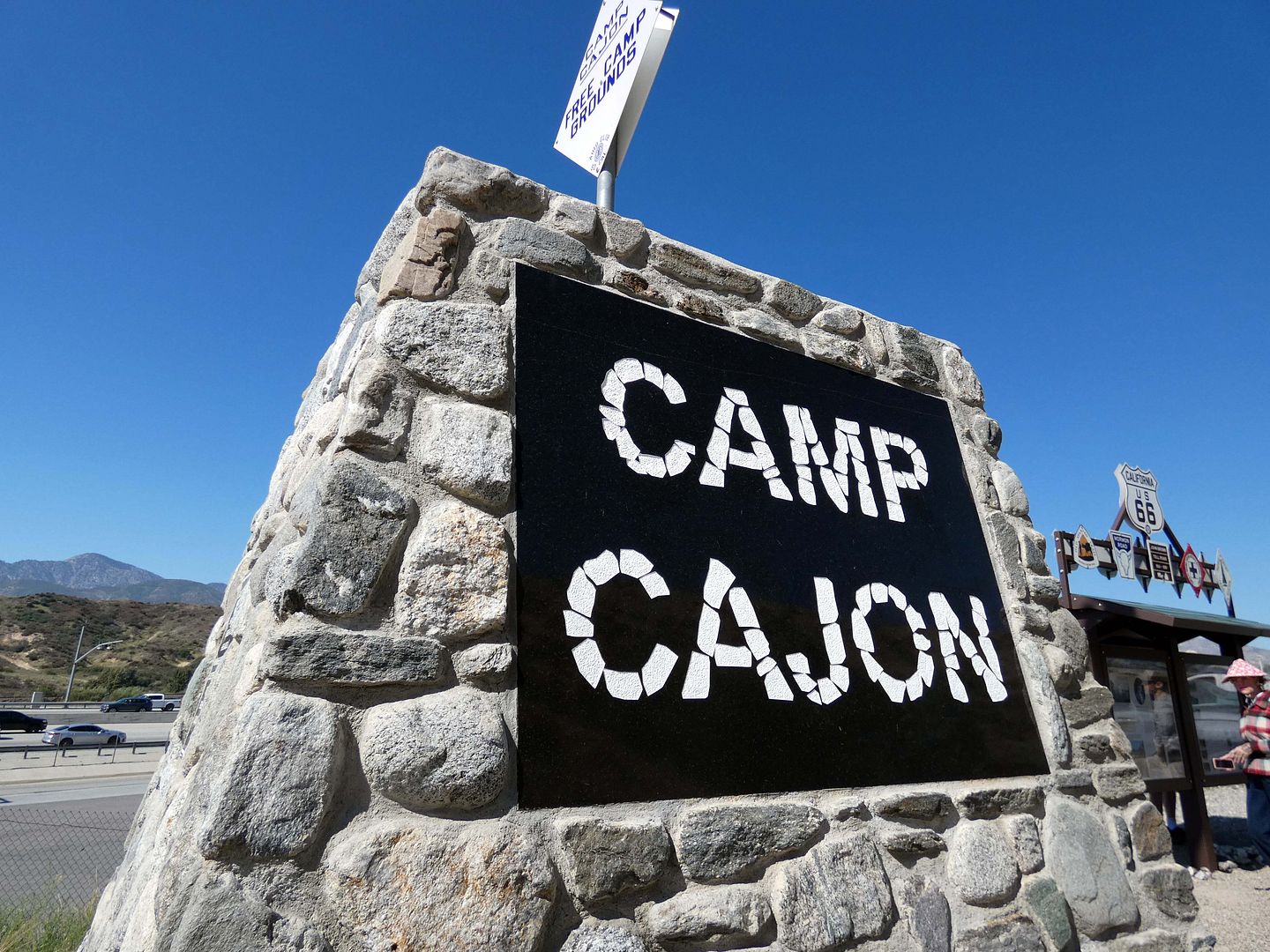
Photo Essay: Tracing the Remains of the "Gateway to Southern California" at Cajon Pass

"I'm going to take a tour of the former Camp Cajon," I told my friends, when they asked why I had plans in the Inland Empire. 

"What was it?" they asked. 

"I'm not sure, so I guess I'll find out!" 
 

November 08, 2023

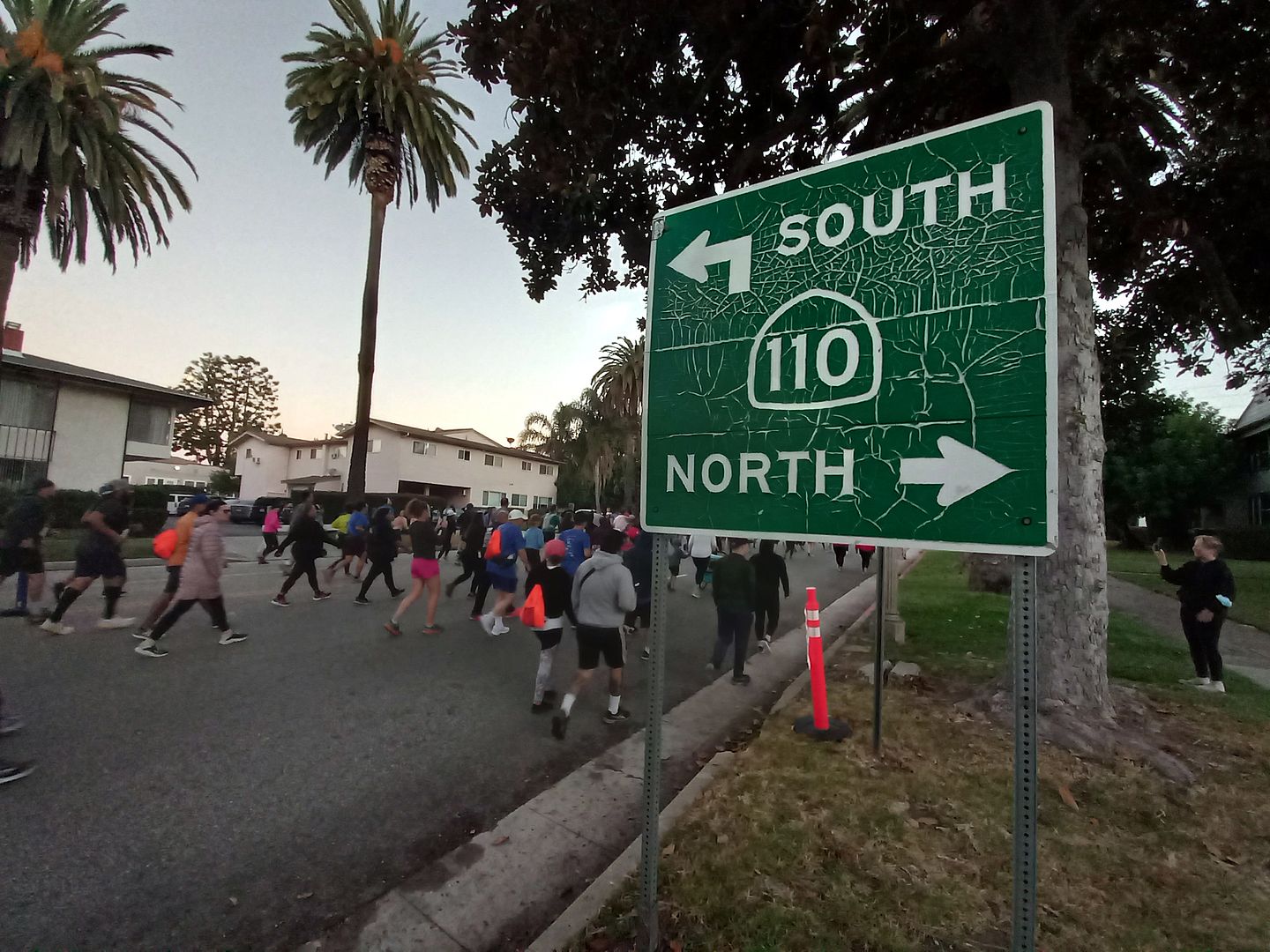
Photo Essay: Stepping Foot on America's First Freeway, the 110 (a.k.a. Arroyo Seco Parkway) — Updated for 2024

[Last updated 4/6/24 7:38 PM PT—Added two photos of the Avenue 60 exit.]

Why do I do this to myself. 

That's what I was thinking as I sat waiting for the Gold Line (a.k.a. "A Line") Metro train at the Heritage Square station, numbered bib safety-clipped to my tank top. 

I'd parked just three stops away from the starting point of the "Run the 110" race I'd signed up for—a 10K, though I'd never done a 10K before, and although I had no intention of actually running it. 

But it was a special way of experiencing the 110 Freeway when it was closed to traffic—and for the first time in 20 years. 

Sure, I could've just walked on the 110 at my leisure, not gotten up at 5 a.m. and not hightailed it to South Pasadena for a 7 a.m. starting time. I could've just joined everybody else during the event known as "ArroyoFest," part of the 626 Golden Streets open street event. 

But I wanted to be held accountable to do the whole thing. I wanted to make sure I would go at all—knowing my habit of bailing on myself when I haven't gotten enough sleep or when I'm in a flare-up. 

And that meant paying good money to get a T-shirt, be assigned a number, and receive a medal for finishing. Even though I wasn't sure if I could finish the whole thing. 


March 09, 2023

Photo Essay: All Saints Episcopal Church, Beverly Hills

I've visited churches of many different faiths all over Southern California—and even in Las Vegas—but somehow in the 12 years that I've lived in Beverly Hills, I'd never stepped foot inside any of the three historic churches that line Santa Monica Boulevard right in the center of town. 

 
This past Presidents' Day, I decided to maximize my day off and not only visit all three of those churches—but do so by attending the annual Presidents' Day Organ Festival, hosted by Los Angeles Chapter of the American Guild of Organists and the Los Angeles Theatre Organ Society (which I'd been wanting to do for several years but could never muster the energy nor the time to make it there).

March 04, 2023

Photo Essay: Beverly Hills Historic Cactus Garden, Restored

It's one of those places that I've driven past a hundred, maybe hundreds of times—and yet until recently, I'd never stopped and gotten out of the car to take a look around. 

 
It's the Beverly Hills Historic Cactus Garden, part of the Beverly Gardens Park, north of the area of Beverly Hills known as the "Golden Triangle"—and I finally took a stroll through on my way to the Church of the Good Shepherd on my day off on President's Day. 

July 24, 2022

Photo Essay: Tail O' the Pup Once Again Unleashes Frankfurters Out of A Giant Hot Dog—This Time on Route 66

The Tail O' the Pup hot dog stand has been in storage ever since I moved to LA in 2011 (technically it got mothballed in 2005).

But I've always felt something of a connection to it. 

Maybe it's because its prior two locations were both in my neighborhood, at intersections I pass on a nearly daily basis (Beverly and La Cienega, basically where the Sofitel is now, and, after 1986, Beverly and San Vicente).

 
And now it's back in my neighborhood—in a new location on Santa Monica Boulevard, the old Route 66 in West Hollywood. 

May 07, 2022

Photo Essay: Tracking Down Del Taco's High Desert History in the Mojave (Updated for 2026)

[Last updated 8/10/26 11:03 PM PT—Photos of the First Street location added.]

Driving east down Main Street (a.k.a. Route 66) in Barstow, California—taking a short detour on my way to Vegas last week—I spotted a sign advertising "The Original Del Taco Barstow," since 1964. [Ed: As of 2026, that crusty old sign has been replaced with a more modern billboard.]


February 26, 2020

Photo Essay: The Inland Empire's Last 'Golden Age' Movie Palace, Saved from Demolition

In the entire Inland Empire of Southern California, the California Theatre is the only movie palace of its kind that remains. (Especially now that the Fox Riverside has been given a major makeover, though it was never as "palatial" as the California.)


circa 2009 (Photo: Amerique, CC BY-SA 3.0)

June 28, 2019

Photo Essay: Welcome Back, Formosa Cafe!

Until 2017, one of the most stalwart mainstays of Hollywood nightlife was the Formosa Cafe, located along Route 66...


...across the street from the movie lot that was, at one time or another, Pickford-Fairbanks Studios, United Artists Studio, or Samuel Goldwyn Studio.


The Cantonese-themed bar and restaurant, known for its appearance in the Lana Turner scene in L.A. Confidential, has been closed for two and a half years.


But the closure was only temporary, as the 1933 Group—also known for its restorations of Highland Park Bowl and the barrel-shaped Idle Hour—took over ownership of it.


The nightlife group completely restored the the old Pacific Electric Red Car trolley-turned-dining room...


...and made it actually look like a train again.


Of course, lot of work was done on stuff you can't see, too.


The Formosa Cafe was preserved as a historic landmark in the early 1990s, when its lease expired and it was threatened with demolition as plans to expand The Lot attempted to encroach on the restaurant's footprint. In 2004, the developer of the "Gateway" shopping mall next door agreed to build around it after being wooed by its charms.


It's satisfying to see it survive another preservation threat—and keep the floor safe belonging to Bugsy Siegel intact.


First opened in 1925, Formosa Cafe was more or less family-run from 1945 to 2014.


But the oldest section of the restaurant  the train car—PE #913, in service from 1902 to 1906.


And it's key to preserving the history of the Formosa.


In fact, when it first opened, the Formosa—then known as The Red Post Cafe—was just that old red streetcar!


Fortunately, much of the original decor and memorabilia—including all those photos of all those celebrities who've passed through the doors of the Formosa—was saved from the last (historically inappropriate) renovation.


1933 Group managed to get them back from the last owner.


If there's anything new that's been added, it's hard to tell. The restoration is that seamless.


In fact, the entire back bar area was added on, enclosing an outdoor portion of the restaurant's former iteration.


The pagoda looks as though it could've been there for ages.


And based on the renovations to both the structure and the menu, it looks like the Formosa is ready to have a new heyday.


There's still a lot of life left in this former Hollywood starlet.


And Hollywood sure does love a comeback story.

 
The Formosa Cafe has been in "soft open" for a week...

March 24, 2019

Photo Essay: Welcome to The Real Radiator Springs, Old National Trails Highway

Well, it's not exactly Radiator Springs. There is no real Radiator Springs, the fictional town created for the movie Cars.


But Cool Springs, Arizona comes pretty darn near close.


Driving east along Oatman Highway—a former alignment of Route 66—along the hairpin turns through Sitgreaves Pass between Oatman and Kingman feels much like racing on the Radiator Springs ride at Disney's California Adventure.


But there's no Cozy Cone Motel here, nor a Flo's V8 café—just an old Mobil station that acts as a rest stop...


...with a mini-museum and gift shop...


...and no gas.


Cool Springs Camp, located on the eastern slope of the Black Mountains, was abandoned in 1964—just over a decade after the new Route 66 alignment bypassed Sitgreaves Pass. Although the camp burned down in 1966, its rubble subsequently attracted the attention of Hollywood location scouts (including those for the movie Universal Soldier).


In 1997, Chicago real estate man Ned Leuchtner drove through town and somehow ended up adopting the site, purchasing it in 2001, rebuilding it to its former circa 1926 glory, and reopening in 2004.


Eight tourist cabins were built in the 1930s by James Walker and his wife Mary, who later operated them in the 1940s with her second husband, Floyd Spidell—but those are long gone.


But Thimble Butte is unquestionably still there—looking unmistakably like one of the geologic formations in the animated landscape of Cars.


And then, of course, are the cars themselves at Cool Springs...


...one of which may have been the original "Tow-mater."


Just like Radiator Springs, Cool Springs has struggled to survive without a steady flow of traffic coming through.


But now, tourists come for the delicious abandonment more than for travelers' services.


So pack a lunch and kick back for a nice picnic. There'll be plenty of peace and quiet—at least, until the old Nash starts talkin' to ya.

Related Posts:
Photo Essay: The Ghost Town That Won't Die, And the Animals That Keep It Alive
Photo Essay: Amboy, A Quintessential Ghost Town Along Route 66
The Cult of the Happiest Place on Earth

January 05, 2019

Photo Essay: Amboy, A Quintessential Ghost Town Along Route 66 (Updated for 2023)

[Last updated 2/2/23 11:17 PM PT—Amboy owner Albert Okura sadly passed away on 1/27/23.]
[Updated 2/29/20 10:03 PM PT—info about restored neon sign added.]

If your dream is to buy a ghost town, let Amboy give you hope that dreams really do come true.


November 19, 2018

Photo Essay: The Ghost Town That Won't Die, And the Animals That Keep It Alive

"Have you been to Oatman?" Robert asked. "No, but it's on my list."

A typical response from me.

Someone else asked, "What's in Oatman?" and all I could say was "I ferget."

Also typical.


But pulling up into the town of Oatman, Arizona early Sunday morning, it quickly became clear what attracts visitors to this Old West town along the Mother Road.


The burros.


"You can pet them," one of the shopkeepers said, "but they are wild."


In reality, they're incredibly habituated to the townspeople of Oatman as well as those who're just passing through.


They don't budge unless you've got food.


And then, they'll make a beeline for you.


Between feeding them directly and selling bags of pressed pellets...


...the locals keep the adult wild donkeys munching away...


...and discourage visitors from giving any food to the babies who are still nursing.


And what babies there were! Opal had been born three days before. She was too new to the scene to ask for food or to fear humans. Her coat was so soft.


The burros are a living reminder of the town's legacy as a late bloomer in the Gold Rush—first as Blue Ridge Camp, then renamed Oatman in 1909.


From about 1906 to the mid-1930s or early 1940s, their ancestors were used as livestock and labor—they worked in and around the mines, hauling rock, ore, and water.


By 1942, all the mines had closed.


When the prospectors and miners moved on, they left their hardworking companions behind, releasing them into the hills.


So what you see now is just a fraction of the herd of once-domesticated animals gone wild, coming down into town for a snack...


...timing their journey with the arrival of carloads and busloads of tourists exploring Route 66.


Like similar living ghost towns like Randsburg and Oro Grande in Southern California, Oatman embraces its history in spades...


...with thriving businesses like a saloon, roadside museums, and antique shops...


...with names like Jackass Junction, The Classy Ass, and The Buck Tooth Burro.


In the center of town, there's the Oatman Hotel, which lives in infamy as where Clark Gable and Carole Lombard cozied up in the honeymoon suite of what was then known as the Durlin Hotel, in 1939.


Built in 1902 and rebuilt after a fire in 1924, it's supposedly haunted by the ghosts of both of them.


It's one of the only places in town you can get breakfast and a cup of good, hot coffee...


...which you'll enjoy in the "dollar bill bar," surrounded by an undetermined amount of dollar bills signed by tourists and stapled to the walls...


...and nearly every other surface, too.


Back in the town's heyday, the miners would tack their dollars up on the wall and sign them when they had the money; and when they didn't, they would go looking for their signed bills to pay their tabs.


Although the focus of Oatman shifted away from mining in the advent of World War II (when materials for the war effort were far more valuable than precious metals), the town continued to thrive during the 1940s with all the folks in cars getting their kicks on Route 66 and passing right though the center of town.


But in 1952, Interstate 40 essentially replaced the Mother Road and bypassed Oatman. The town would've fallen off the map entirely if it hadn't been for the periodic return of mining to the area, which even persists today.


But of course, the biggest draw for those outside the mining industry is the burros. And even if you weren't planning on stopping in town, the burros will block the road and stick their noses in your car windows.

After that, it's hard to resist staying for awhile.

Related Posts:
In Search of the Mother Lode Along the Mother Road
Photo Essay: Randsburg, a Living Ghost Town?
Photo: Feeding the Wild Horses
Photo Essay: Welcoming 100 Mules to LA After Walking the Aqueduct