Search

March 31, 2018

Photo Essay: The San Diego Theatre Built By A Sugar Fortune [Updated for 2026—Up for Auction]

[Last updated 2/12/26 10:24 PM PT—The Spreckels Theatre never reopened after its pandemic closure—and the building has been for sale since March 2024. Now, The San Diego Union-Tribune is reporting that it's hit the auction block, with a two-day bidding window from March 23 to March 25, 2026. The minimum starting bid is $5 million.

The new auction listing for the "mixed-use landmark" reads: "Cushman & Wakefield, in conjunction with RealINSIGHT Marketplace, is pleased to present for sale 121 Broadway, a landmark mixed-use property located in Downtown San Diego’s Gaslamp District. The six-story asset occupies a full city block and totals approximately 218,601 square feet, consisting of ground-floor retail, upper-floor commercial space, the historic Spreckels Theatre, and subterranean parking. The Property is partially occupied, generating in-place income while offering significant upside through lease-up and repositioning of the vacant upper floors."

[Updated 1/11/19 8:58 PM PT]

The founder of San Diego may have been Alonzo Erastus Horton...


Photo: Circa 1971, Library of Congress

...but no other man helped the city grow as much as John D. Spreckels.


circa 2017

One of the sons of the wealthy "Sugar King" Claus Spreckels, who made is fortune off sugar beets and therefore beet sugar, the younger Spreckels left his hometown of San Francisco in the wake of the 1906 earthquake and fires and relocated his family to San Diego.

Photo Essay: A Paradise of Whimsy and Water at San Diego Bay

I had Waterfront Park in San Diego saved to my map, but I couldn't remember why.

And last December—when I visited the harbor area at San Diego Bay, took a tour of the Maritime Museum, and found myself across the street—I decided to walk through.
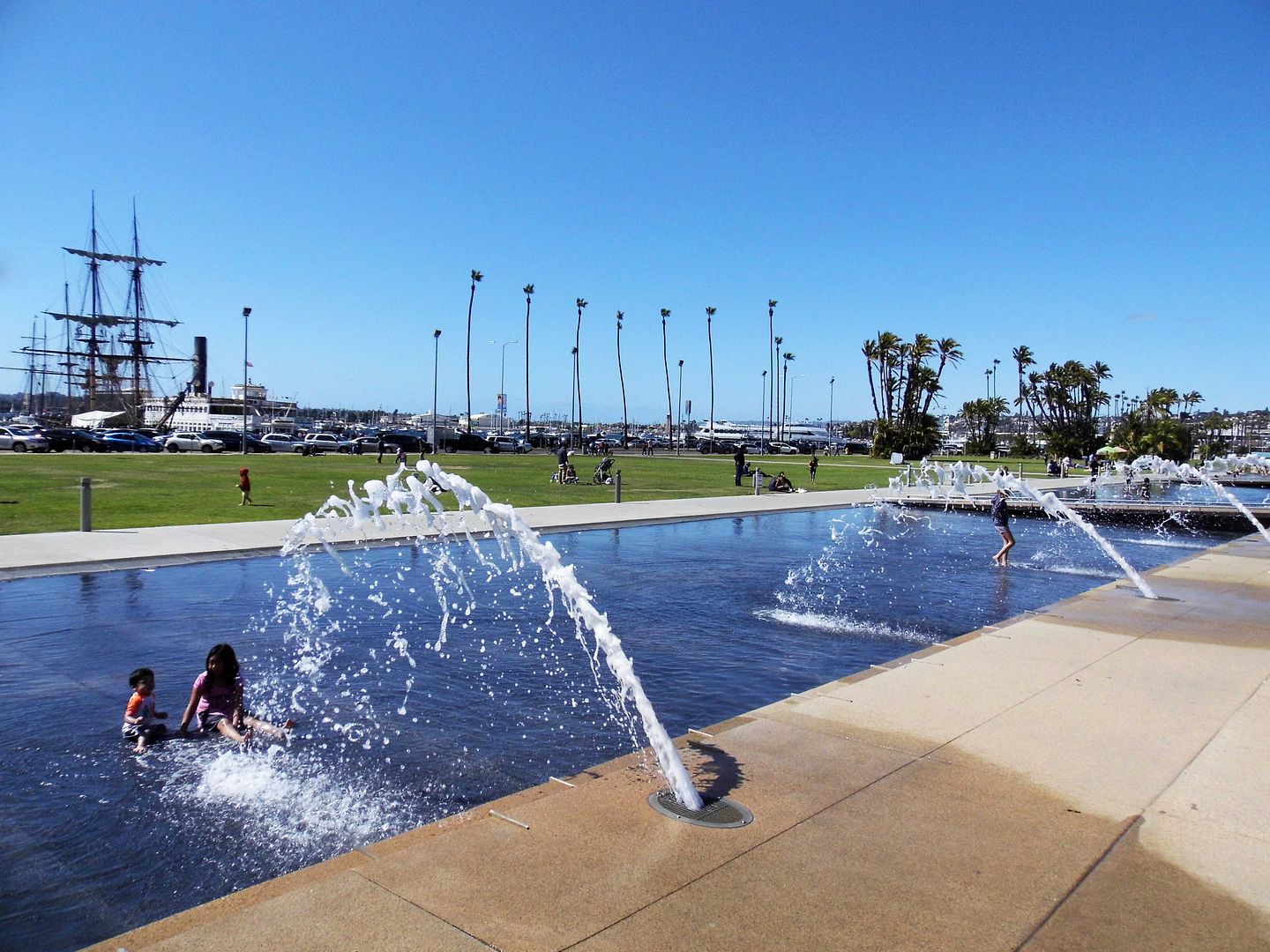


But at the time, I was with a friend, and we were on our way to get lunch, so I didn't stop to really look.
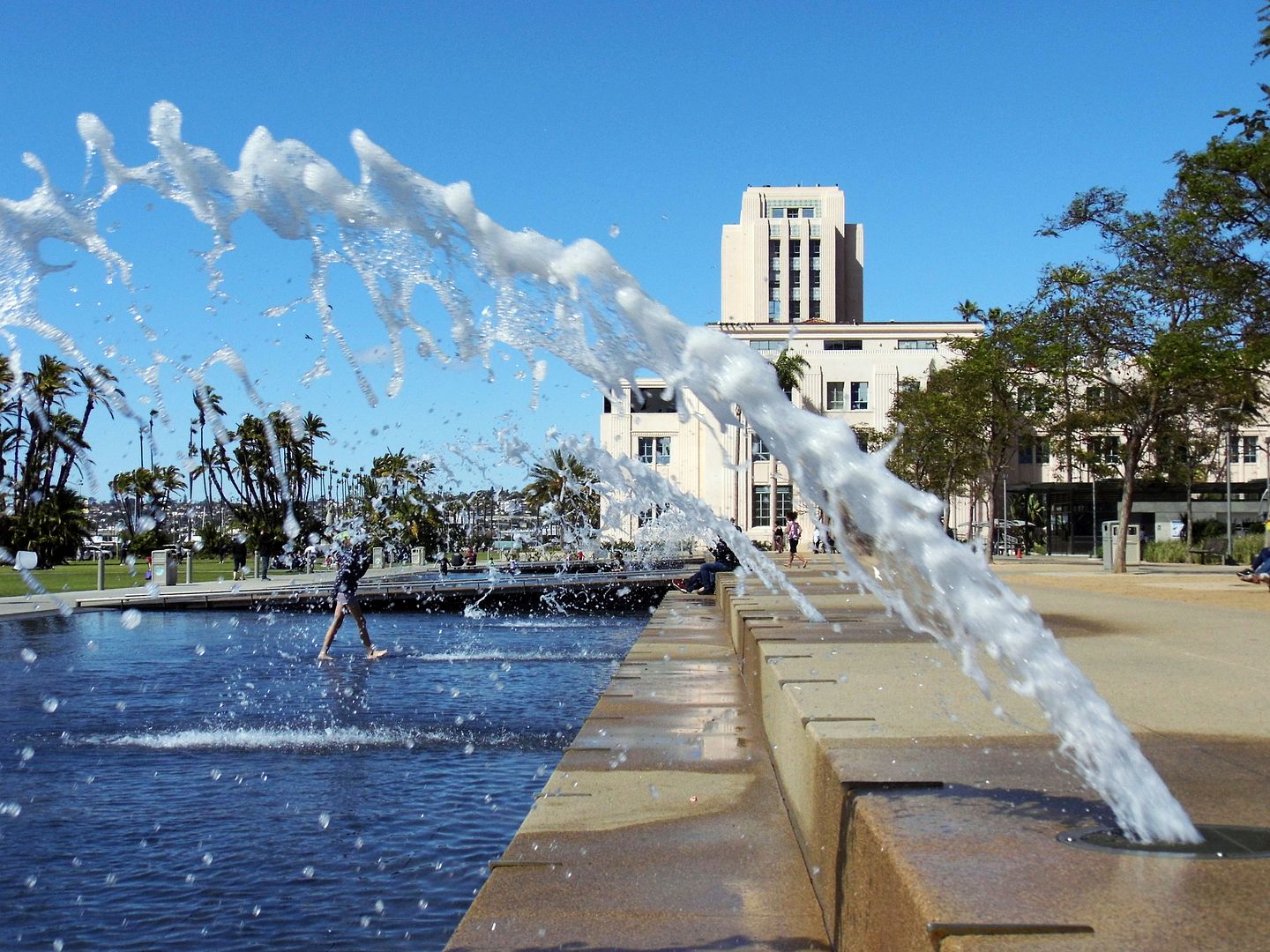


Making only a cursory survey of the area, I admired the WPA-era architecture of the 1938 San Diego County Administration Center...
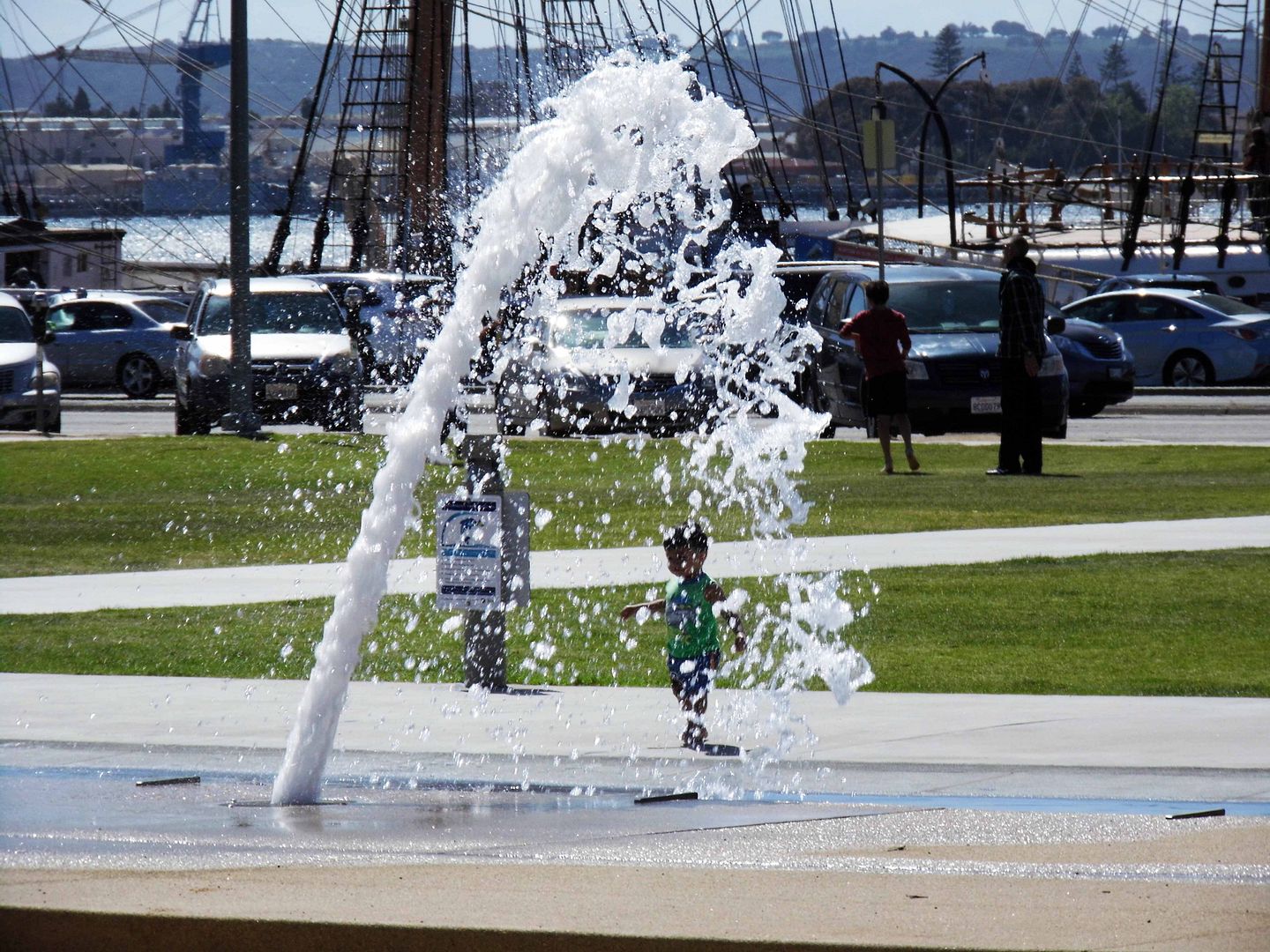


...as I strolled past dozens of children playing in the wide-open space...
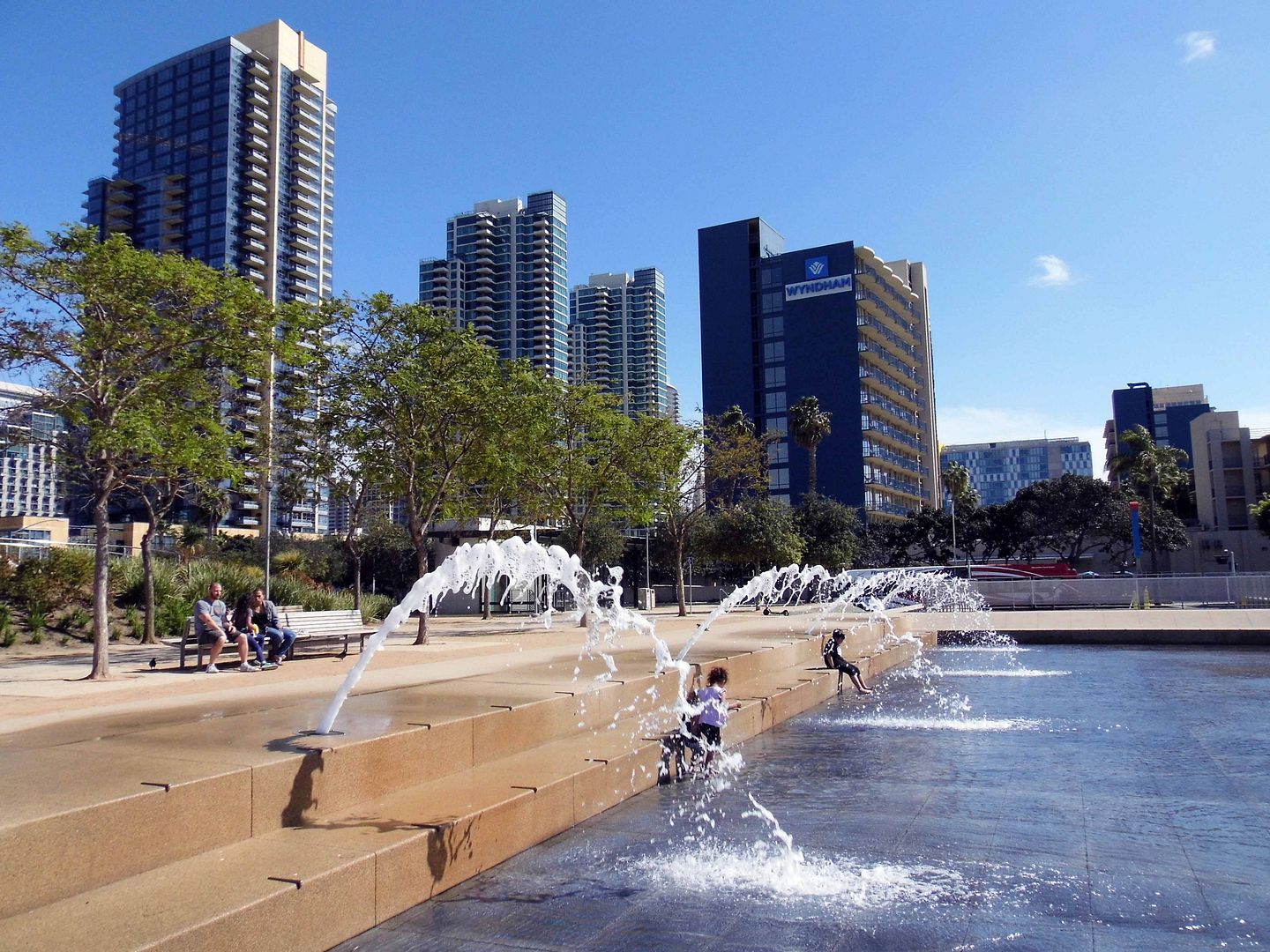


...and I remarked, "It's nice."
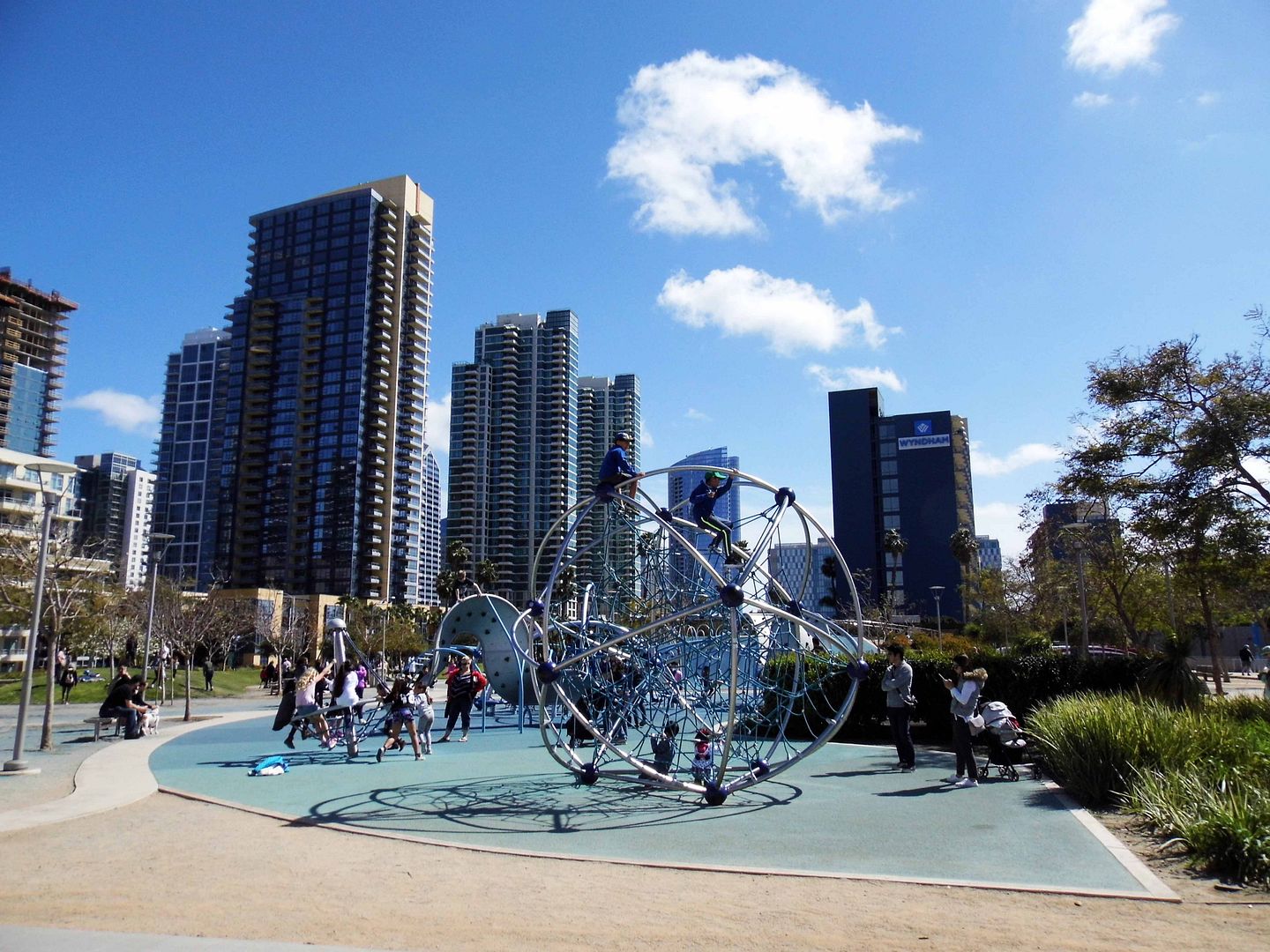


I hadn't remembered that where I was walking had been...
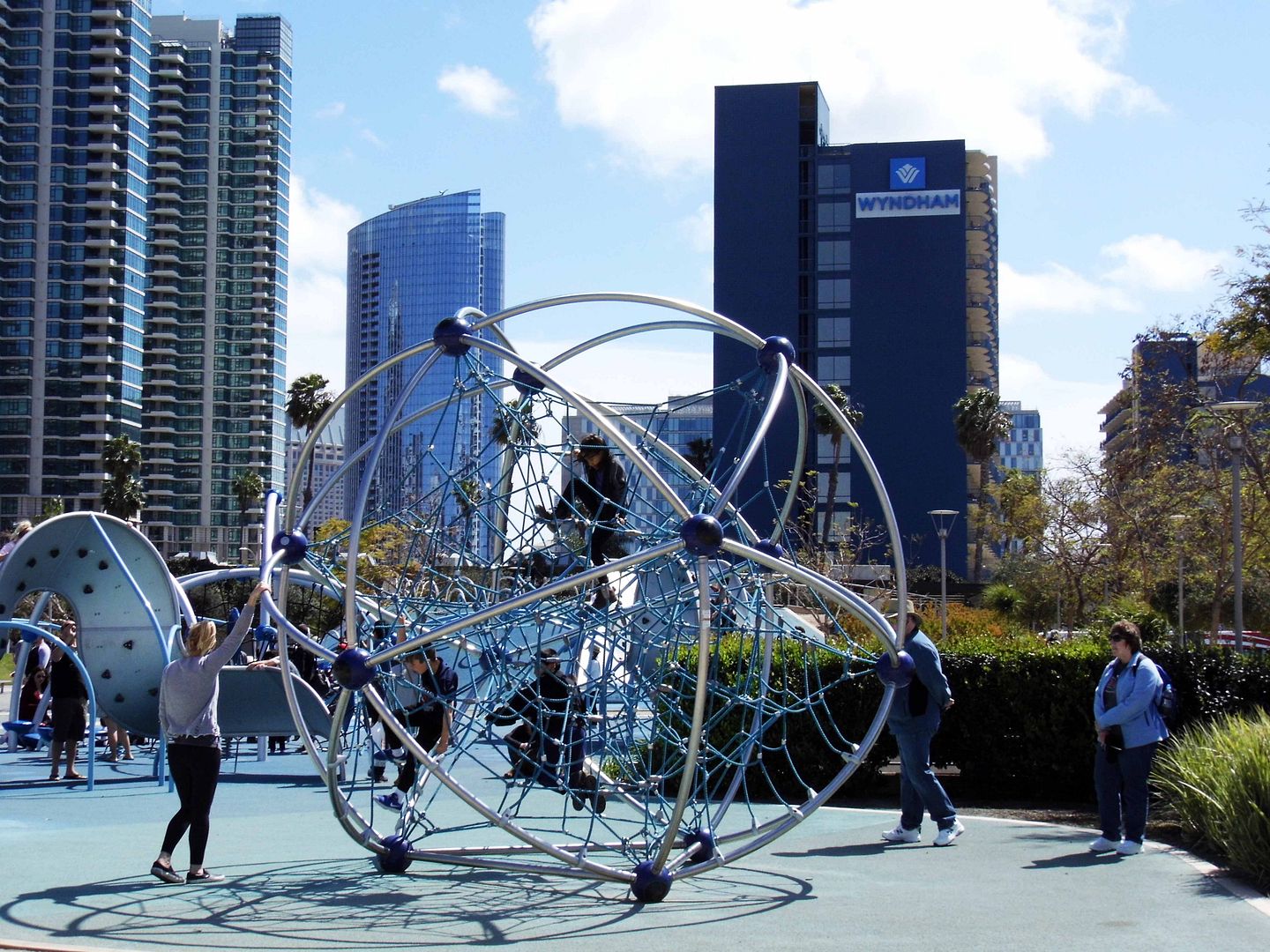


...at least until 2014...
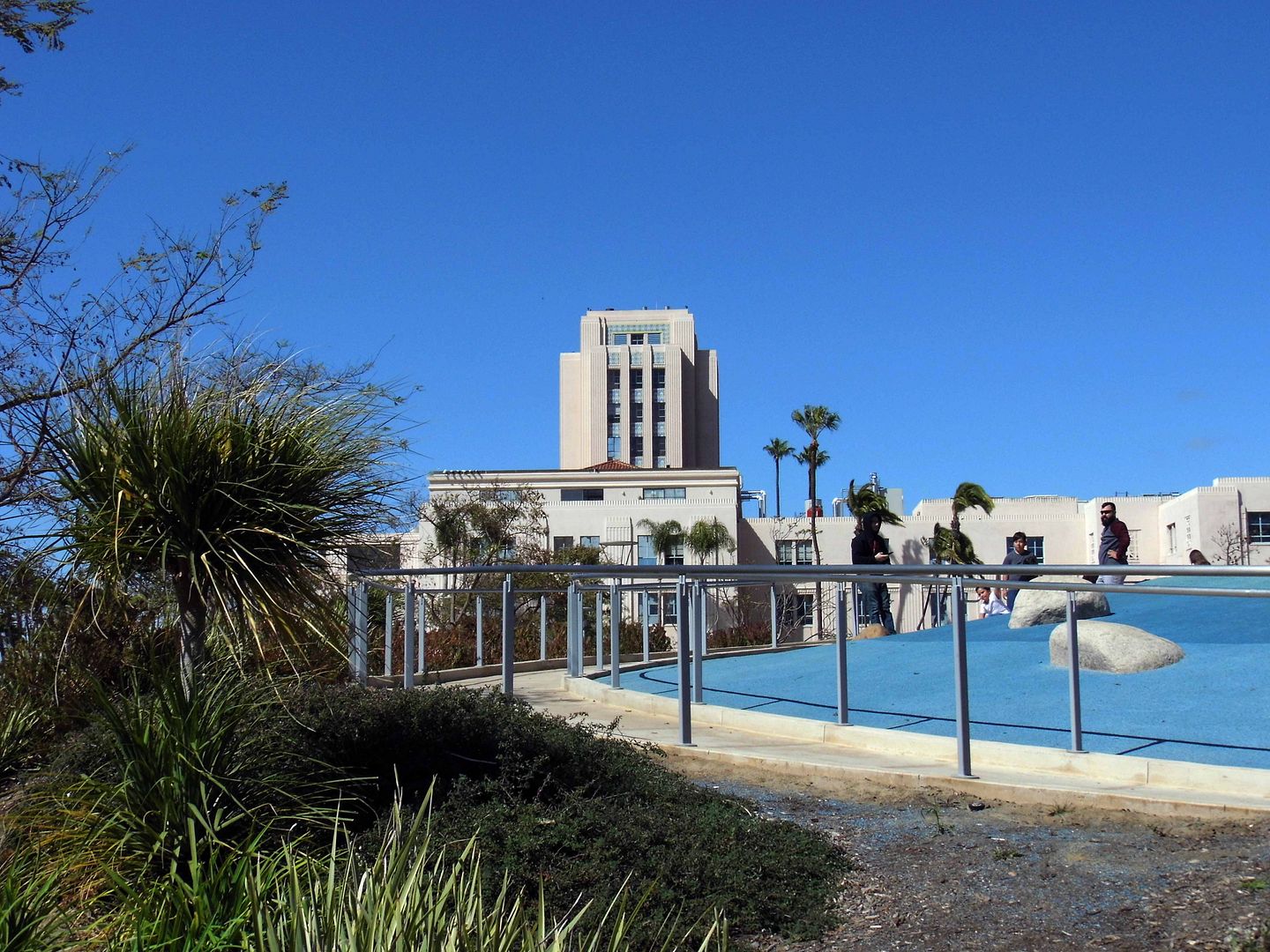


...a giant public parking lot.


And it wasn't until I returned to Waterfront Park in March to take a tour as part of Open House San Diego that I realized why I'd saved it to my map in the first place.
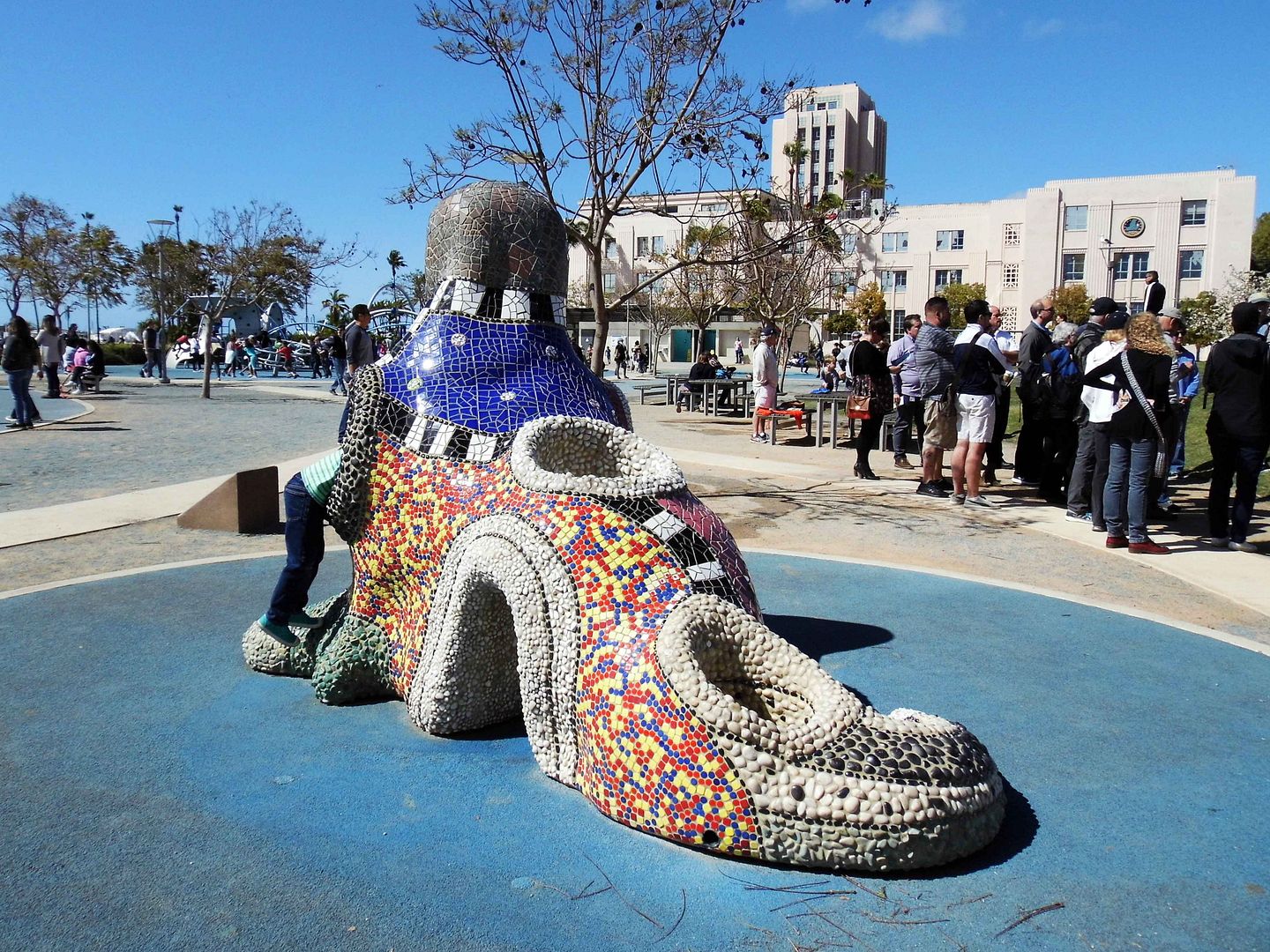


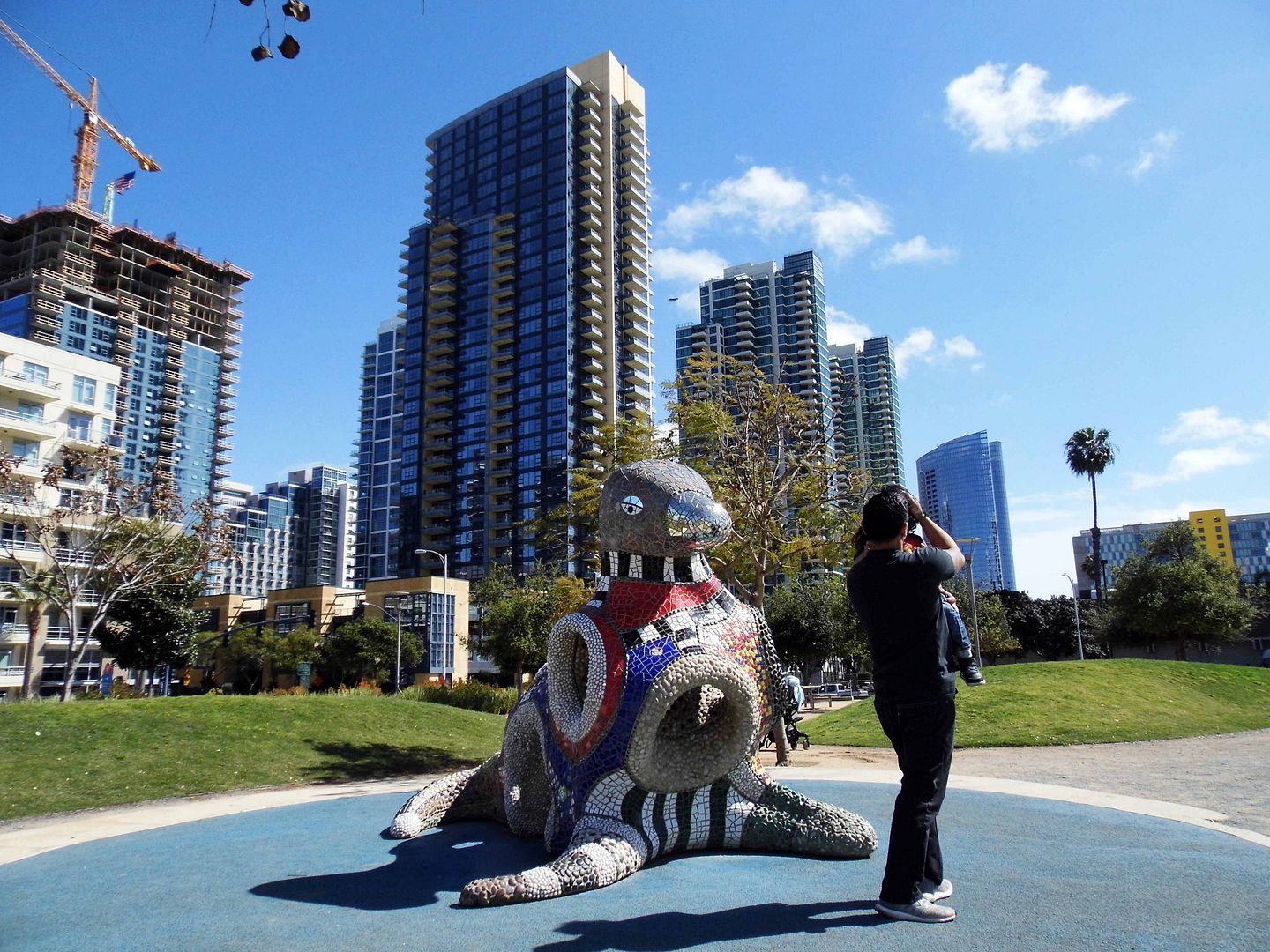
There are three incredible playground sculptures by French-San Diegan self-trained artist Niki de Saint Phalle (1930–2002), which bring a whimsical quality to the park that was once intended to pay tribute to Dr. Seuss (until the deal with his widow fell through).
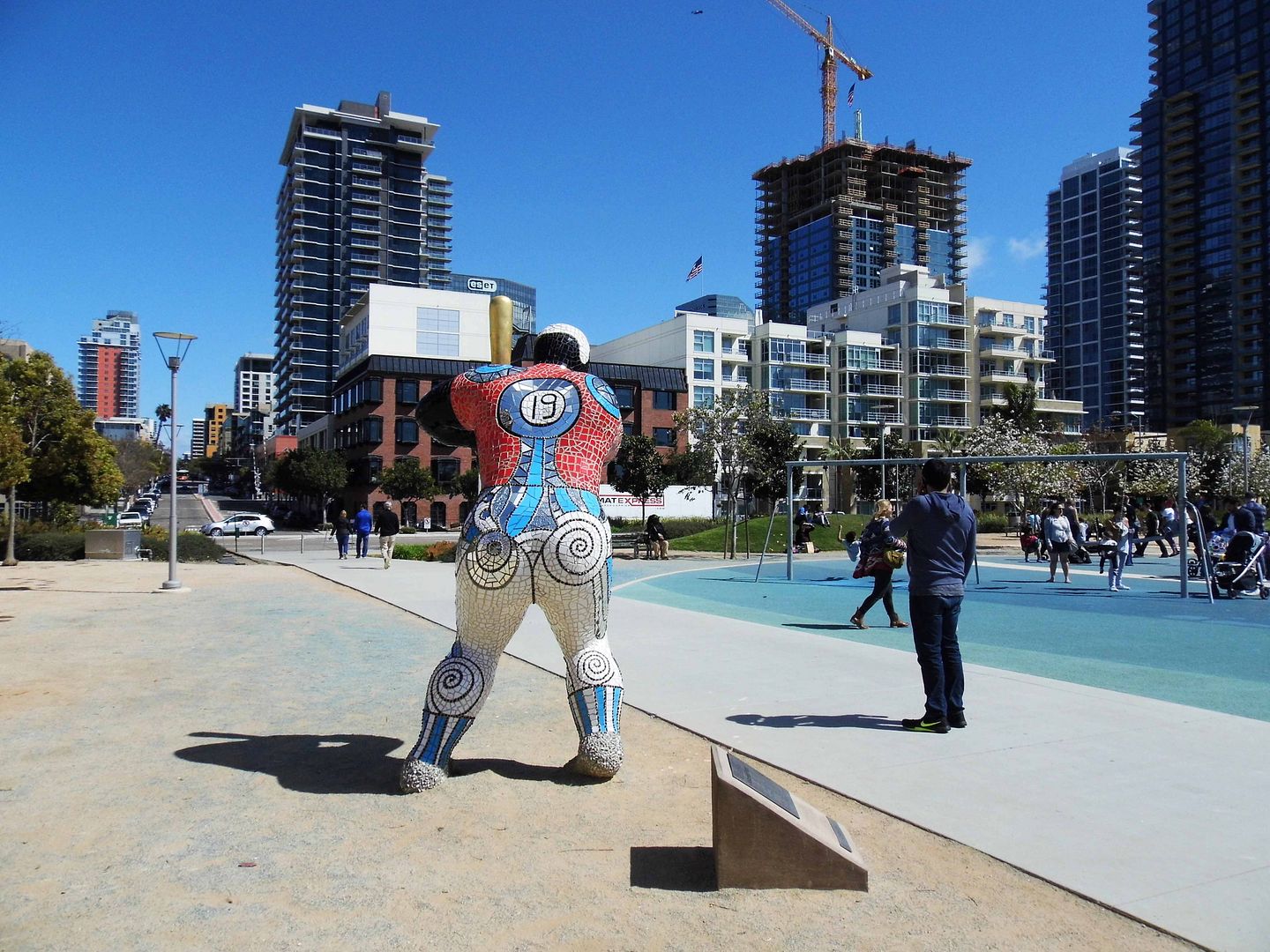


In addition to "Large Seal" (which is just one element of her "Seals" series) there's also "#19 Baseball Player"—part of her "Black Heroes" series, this one inspired by San Diego Padres right fielder Tony Gwynn.
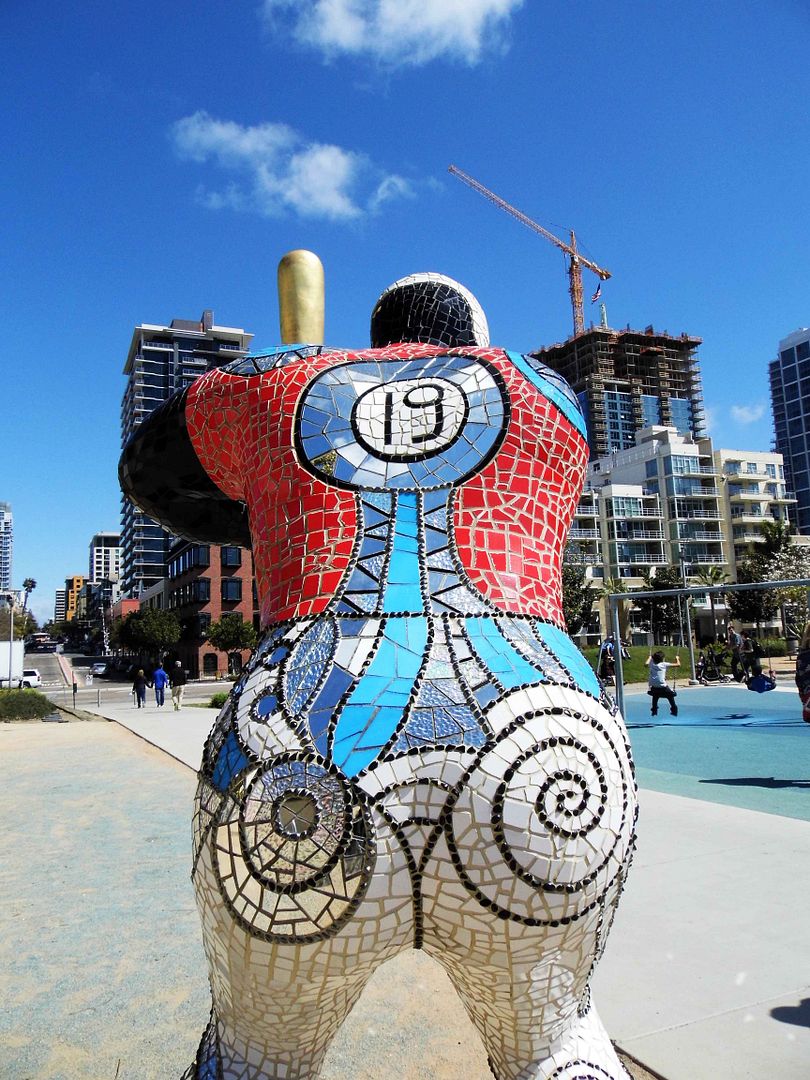


Also from 1999 and also on loan from the Niki Charitable Art Foundation (for a dozen or so years)...
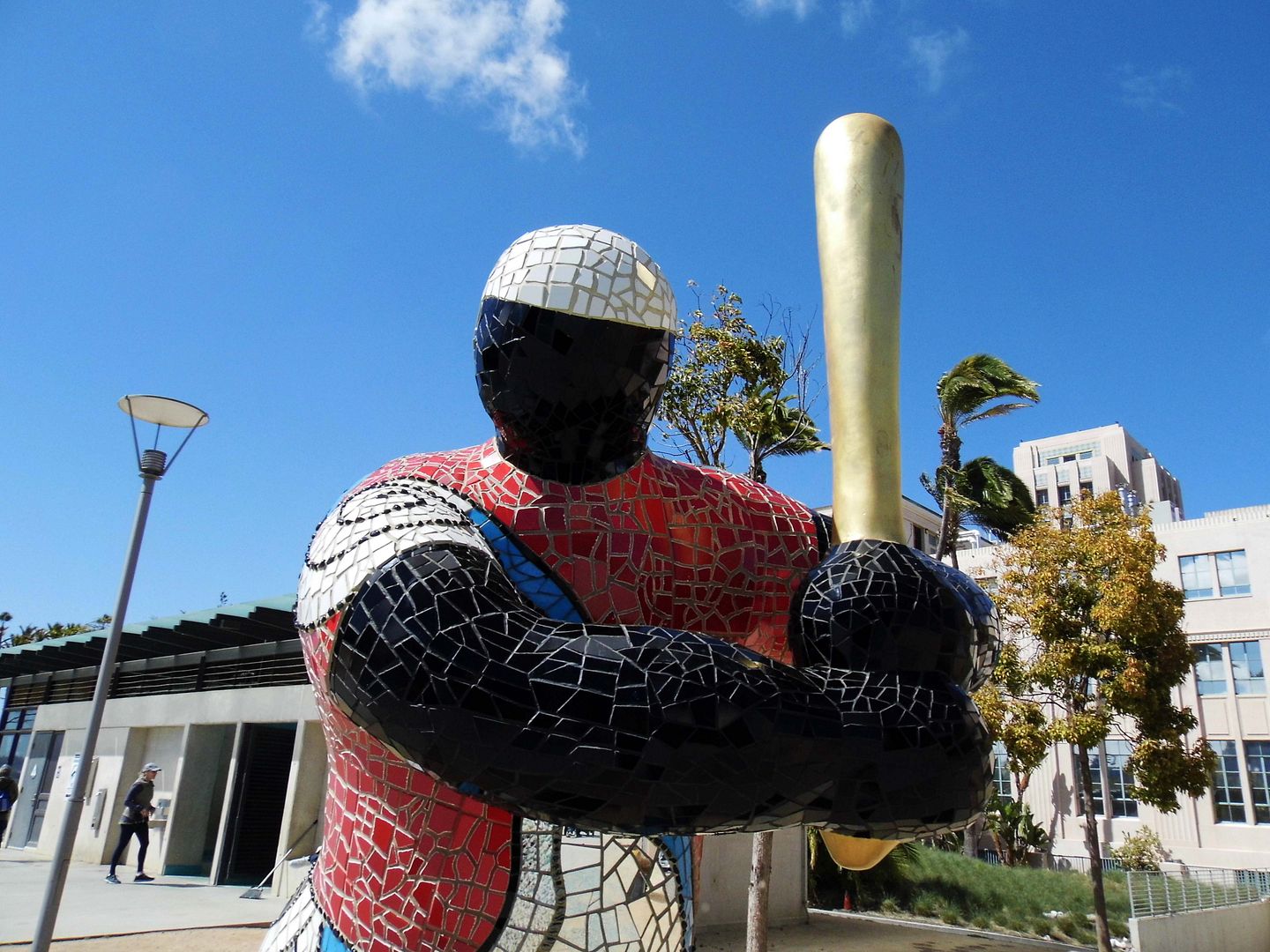


...it's similarly constructed of ceramic tile, mirrored glass, and stones embedded into fiberglass and resin on a steel frame that rises more than nine feet off the ground.
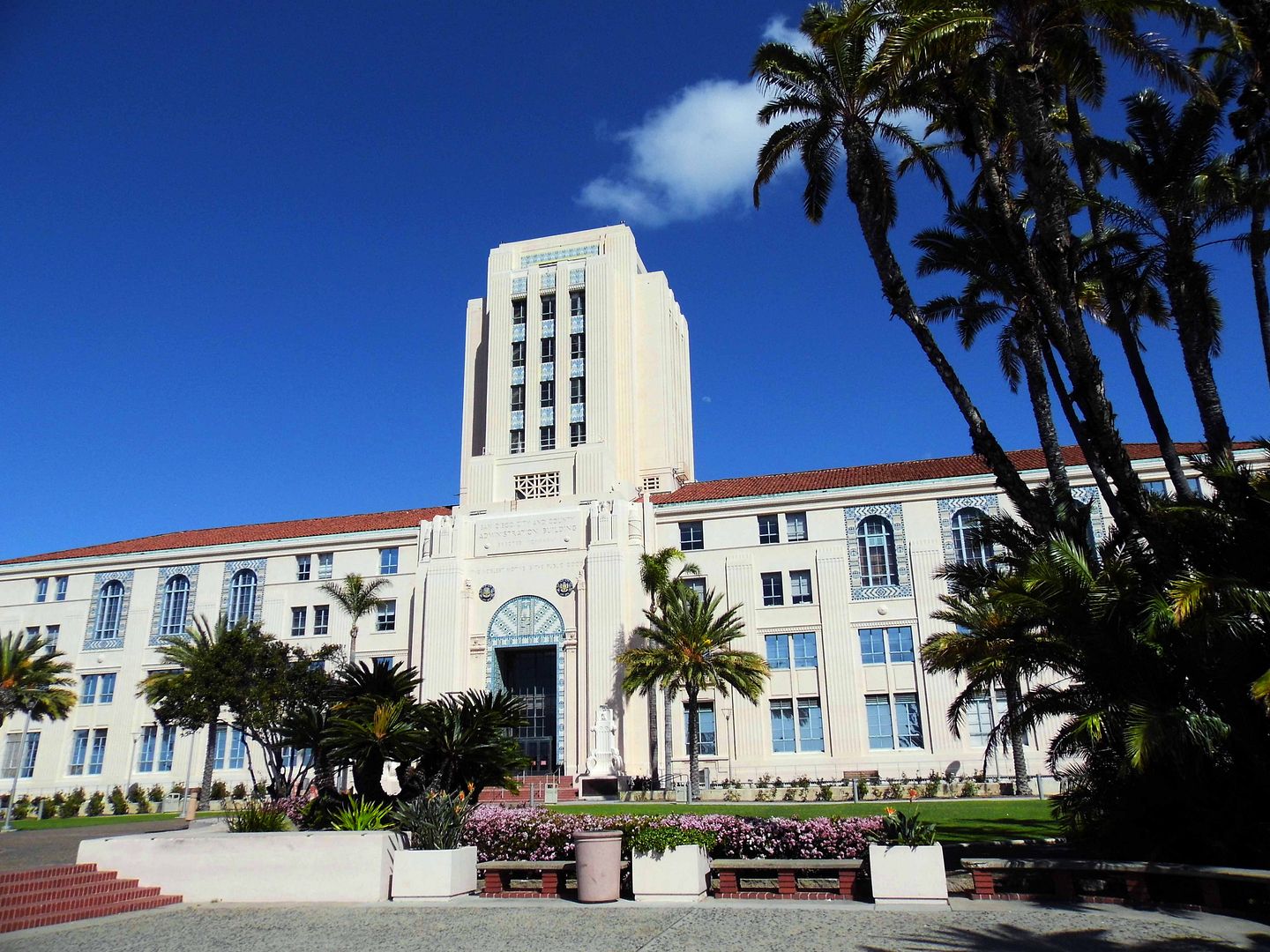


The playground takes up the former south parking lot for the county building...
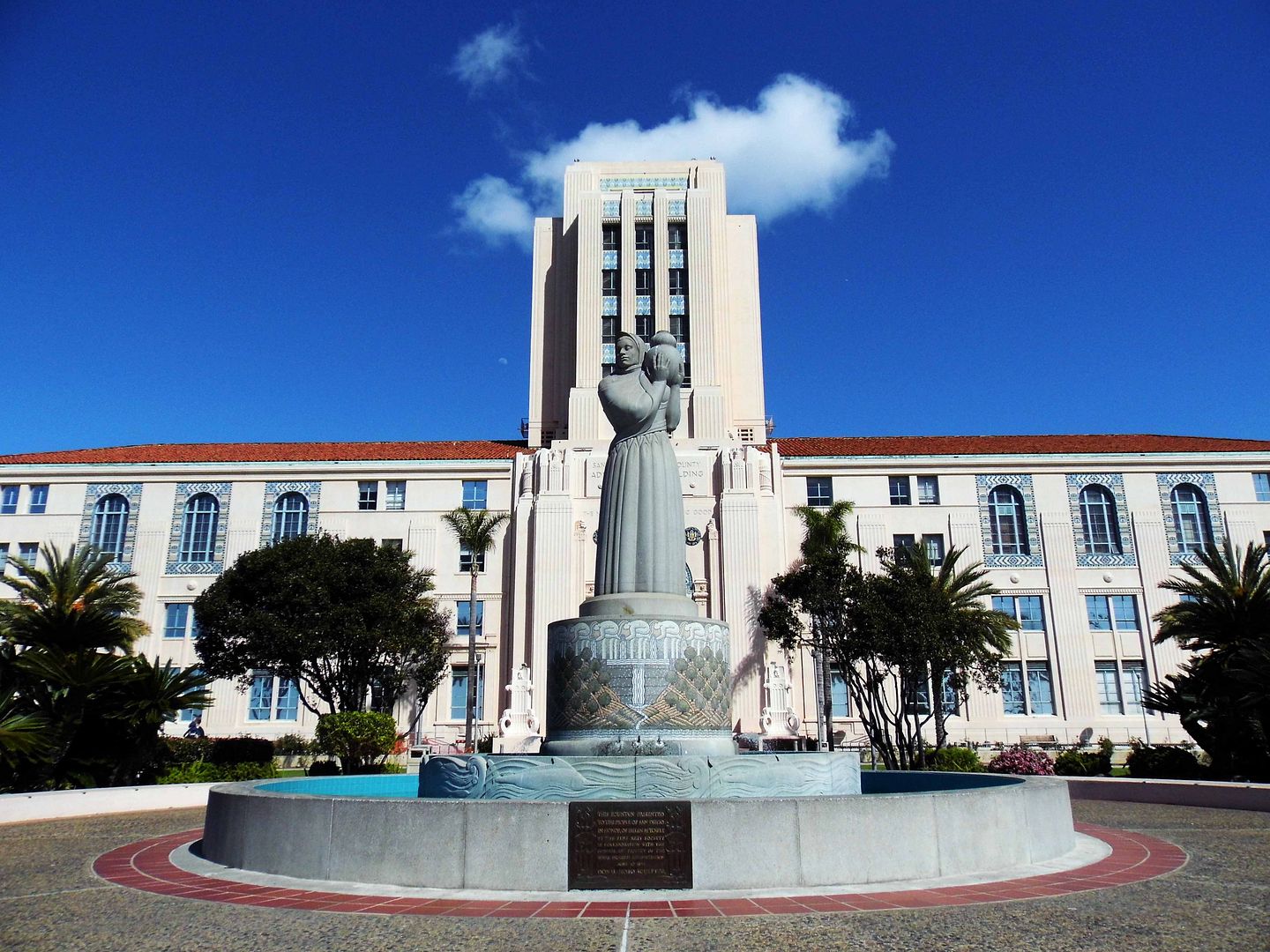


...but the entire park (which took 14 years to complete) actually consists also of the building itself and its "Guardian of Water" sculpture...
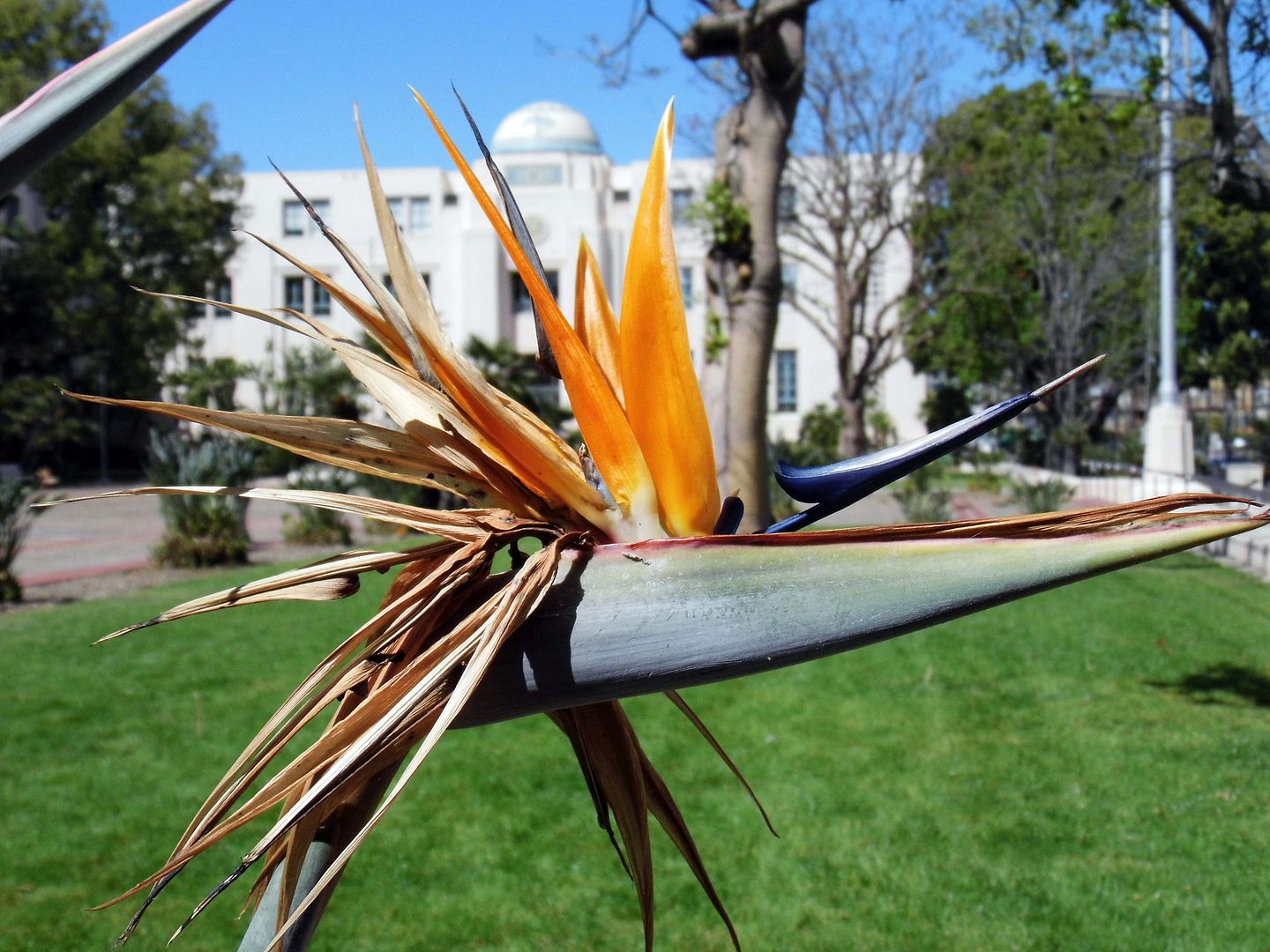


...its east-facing courtyard...
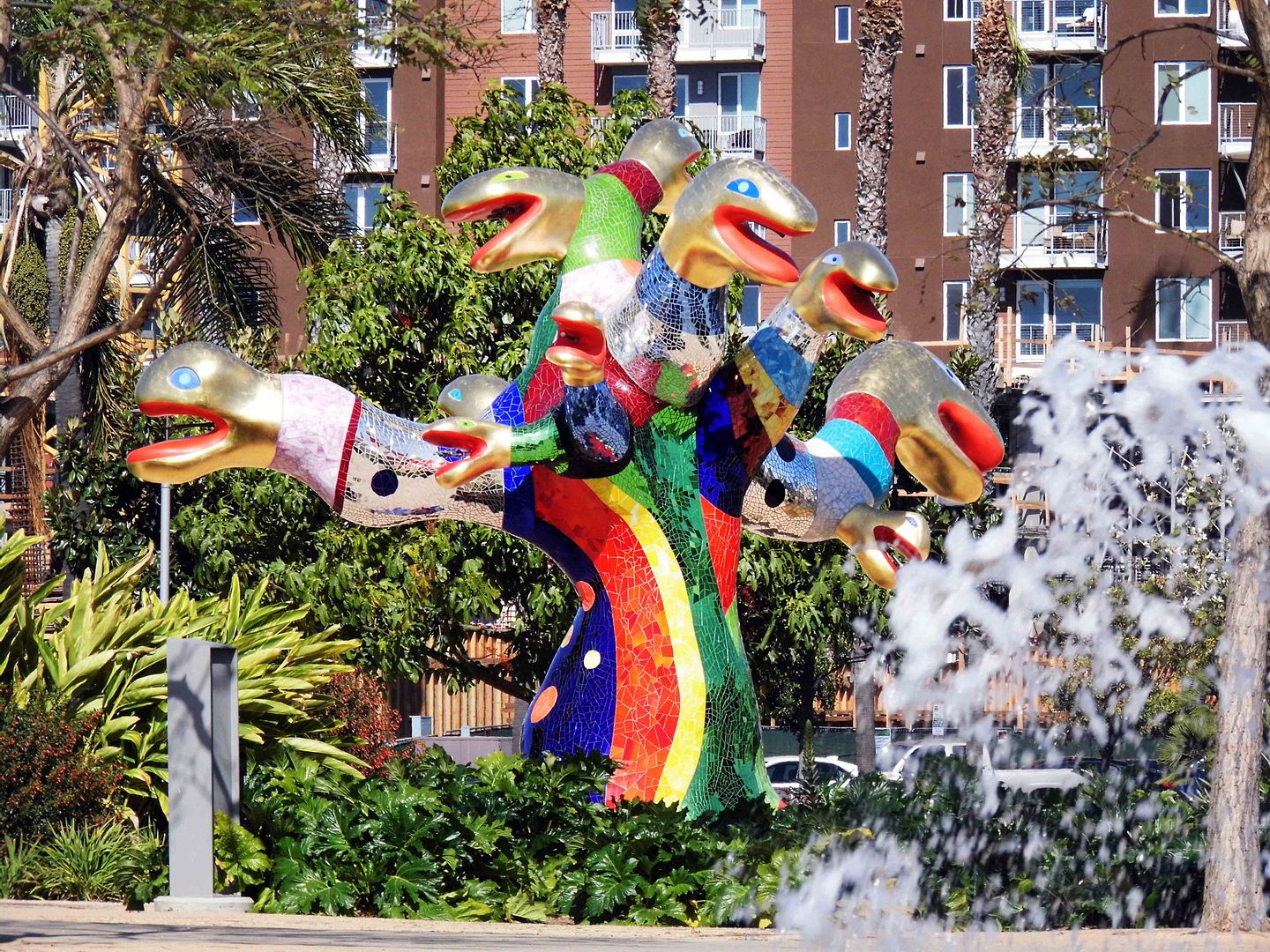


...and the former north parking lot, where a third Niki de Saint Phalle sculpture rises shockingly out of the serene walking garden area.
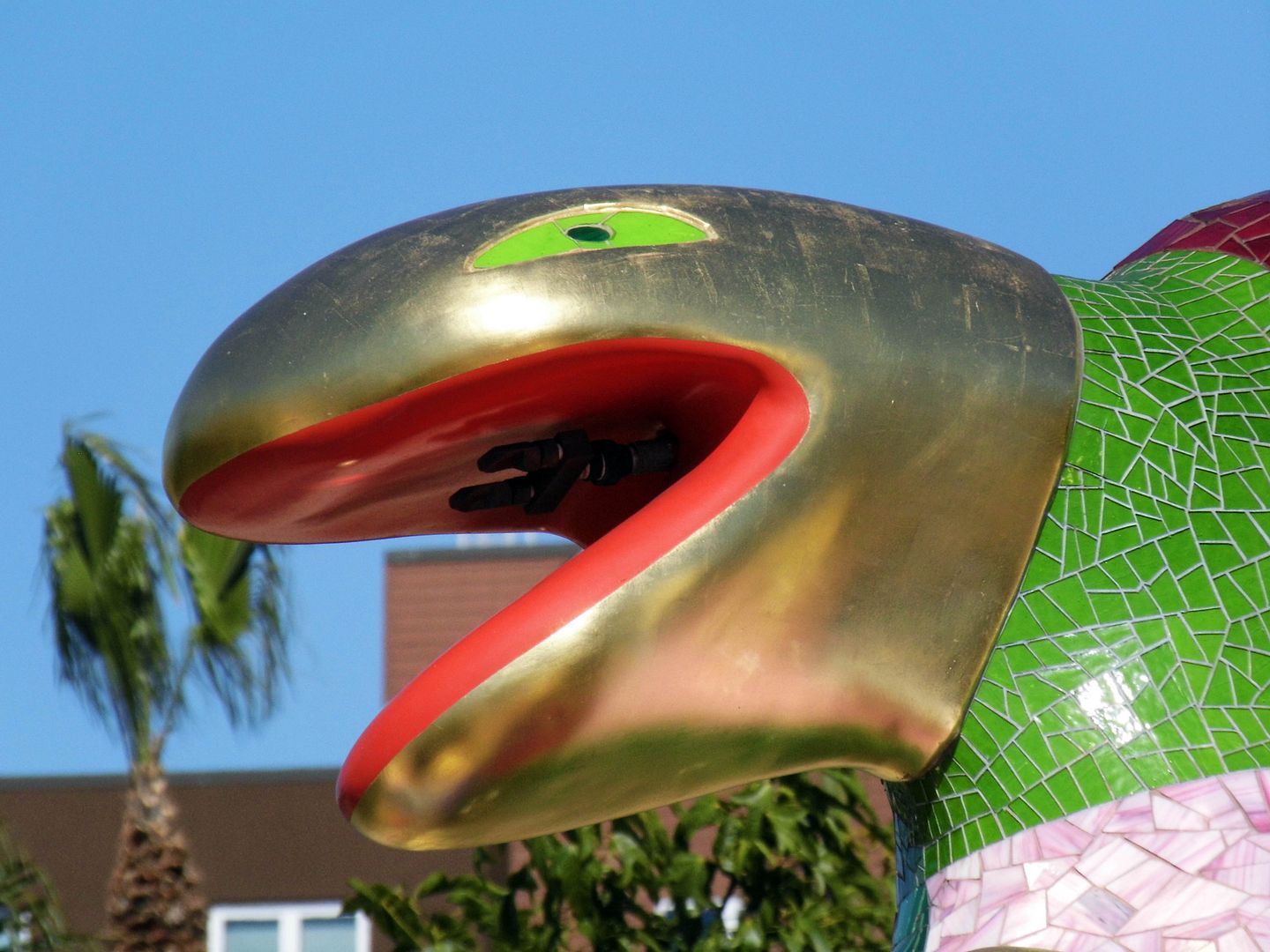


Like the other two sculptures in the park, "The Serpent Tree" (L'Arbre aux Serpents) had also been on display at the Missouri Botanical Garden in St. Louis in 2008...
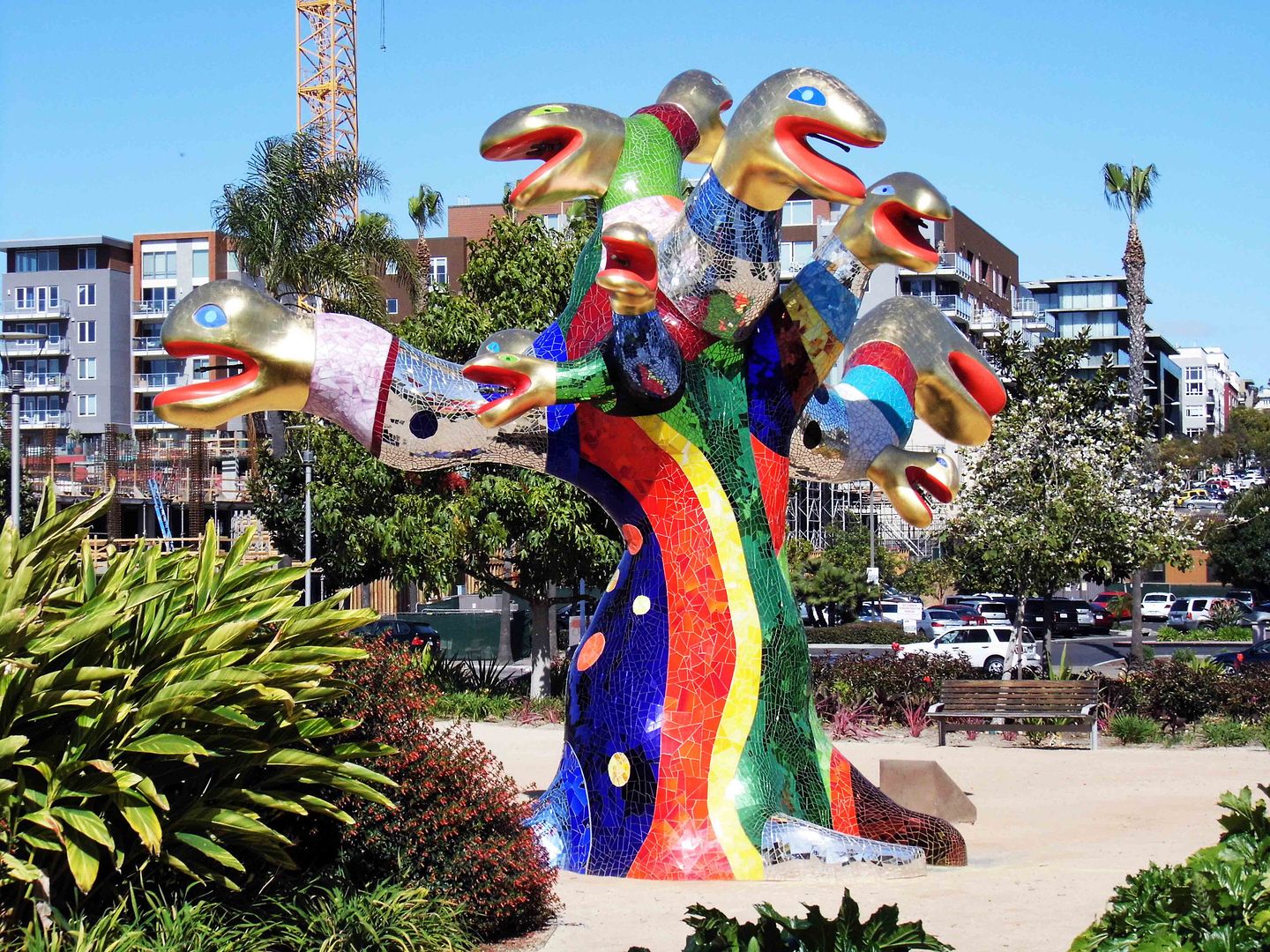


...where it spouted water as a fountain.
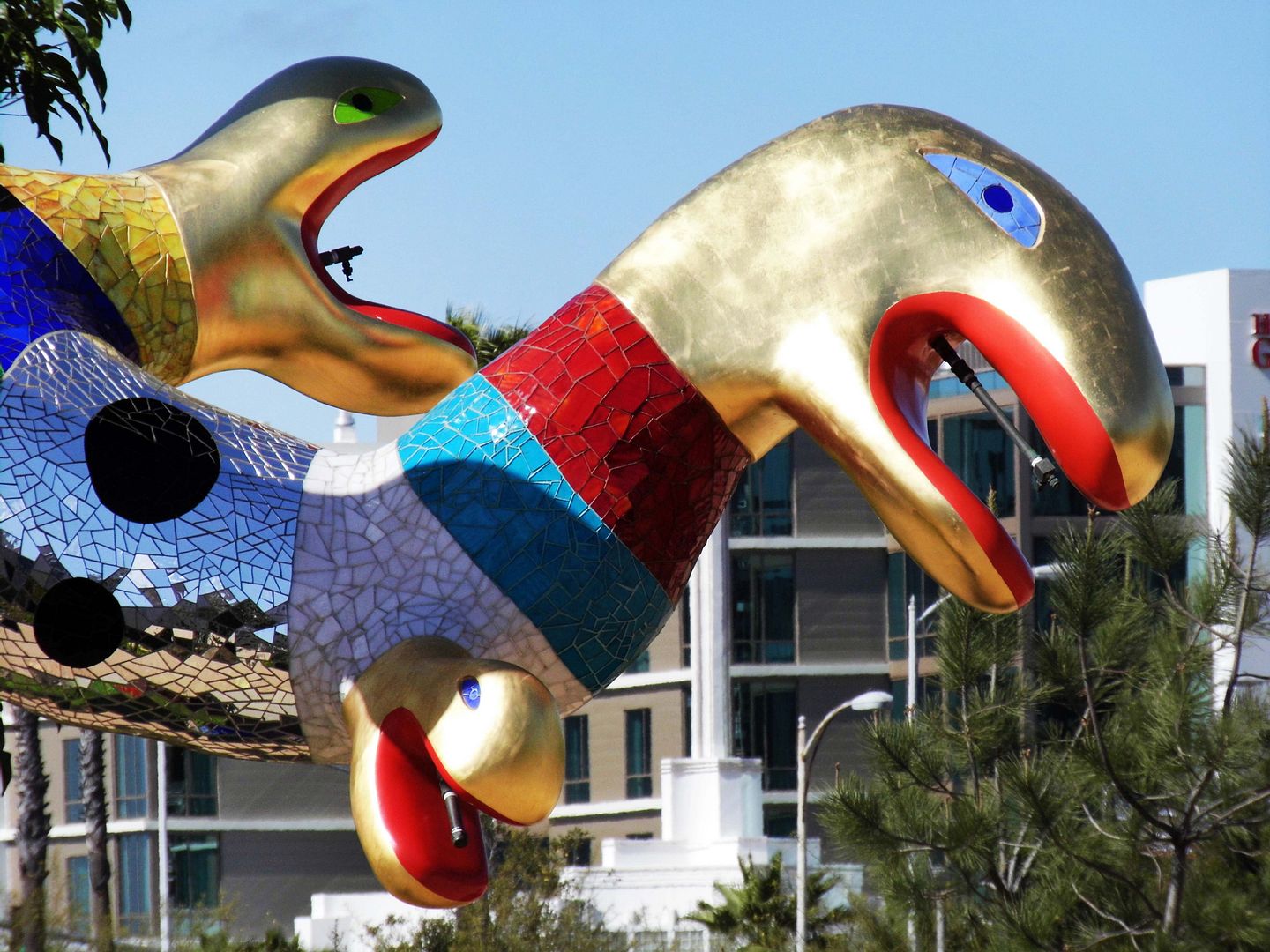


But Waterfront Park has got its own fountains (a.k.a. "free water parks") on both its north and south ends...
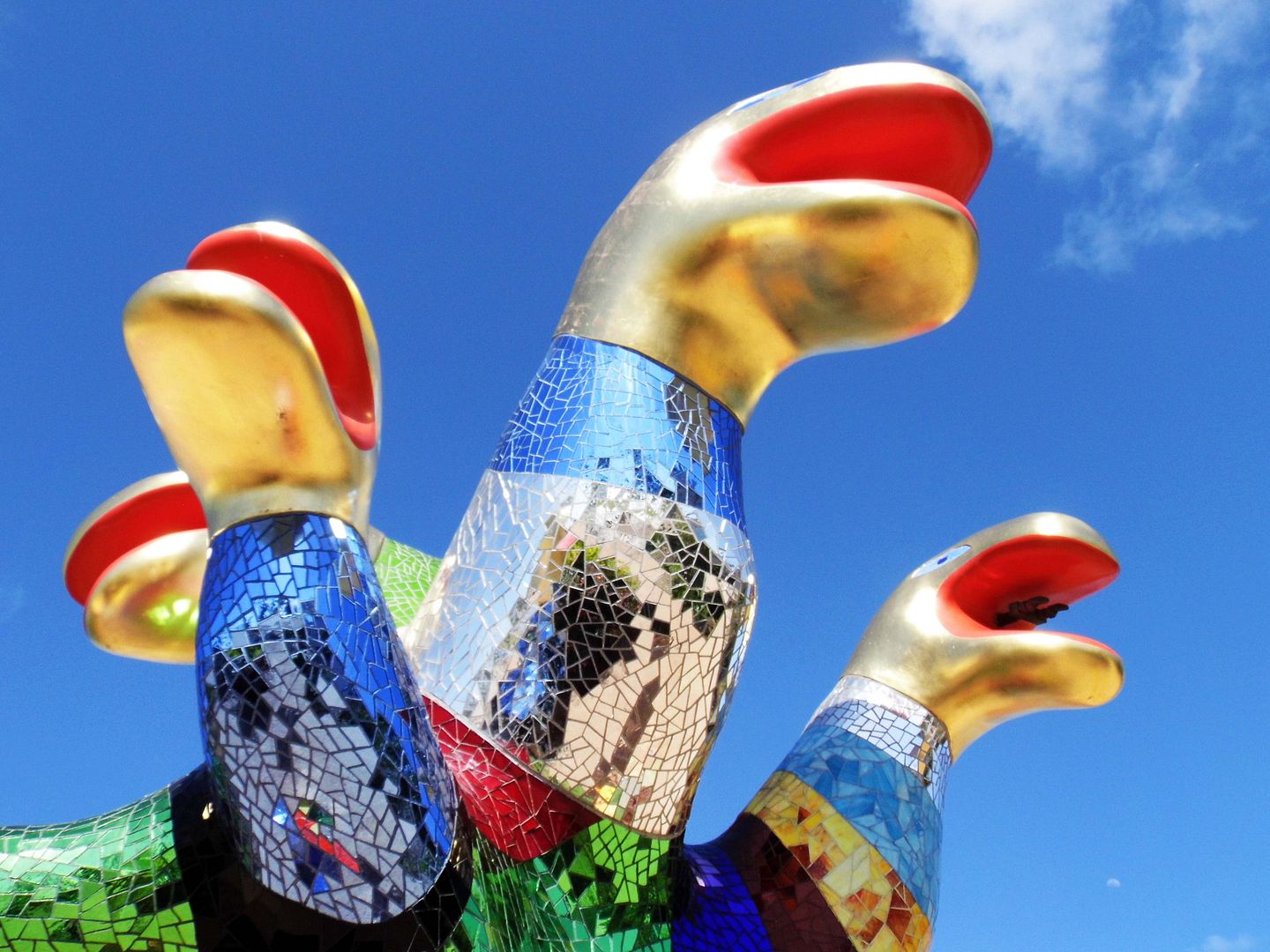


...so these water snakes are, at least for the timebeing, dry-docked.
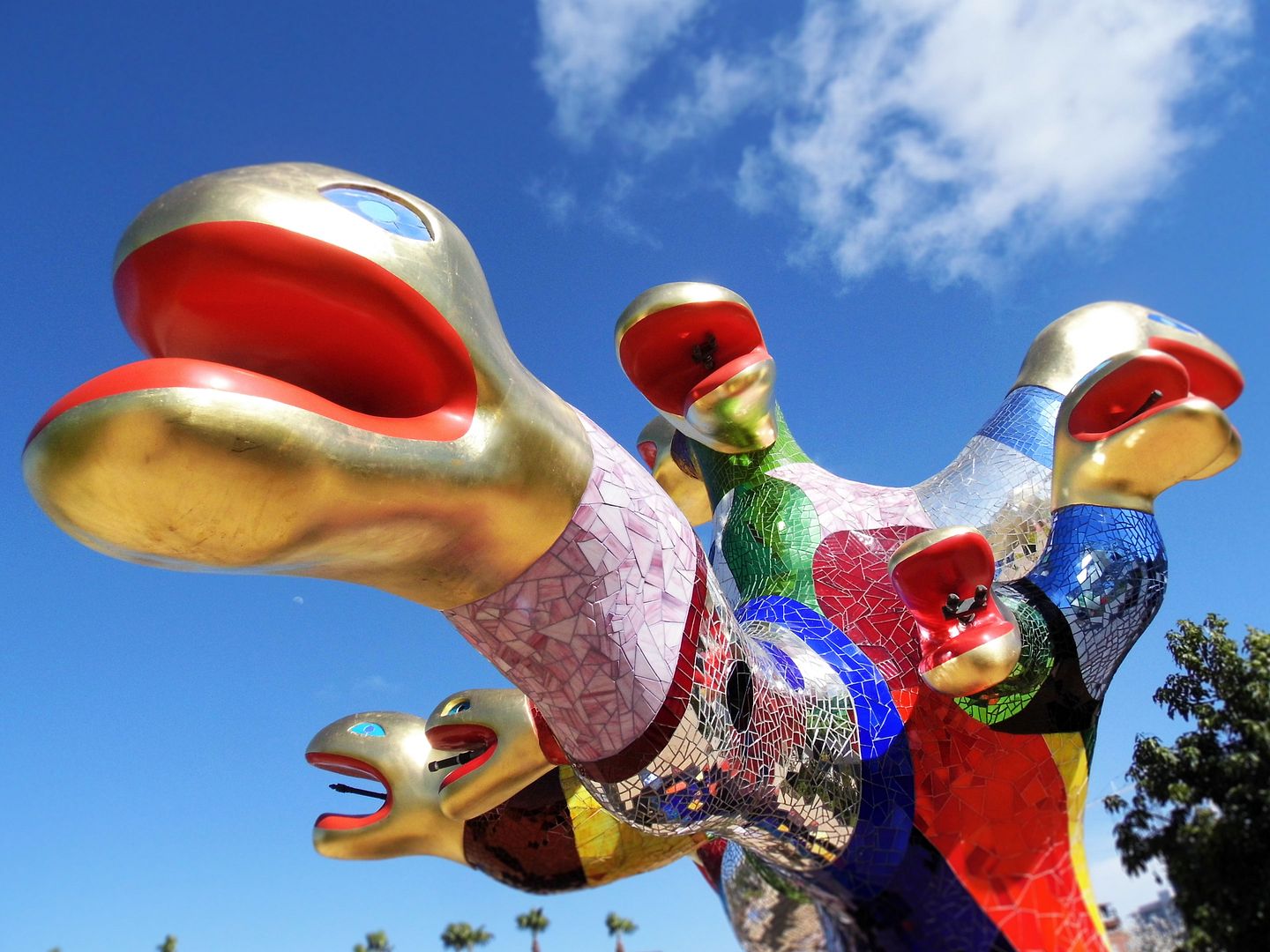


Made of polyester and a mosaic of stained and mirrored glass, they are spellbinding even without water shooting out of their mouths.
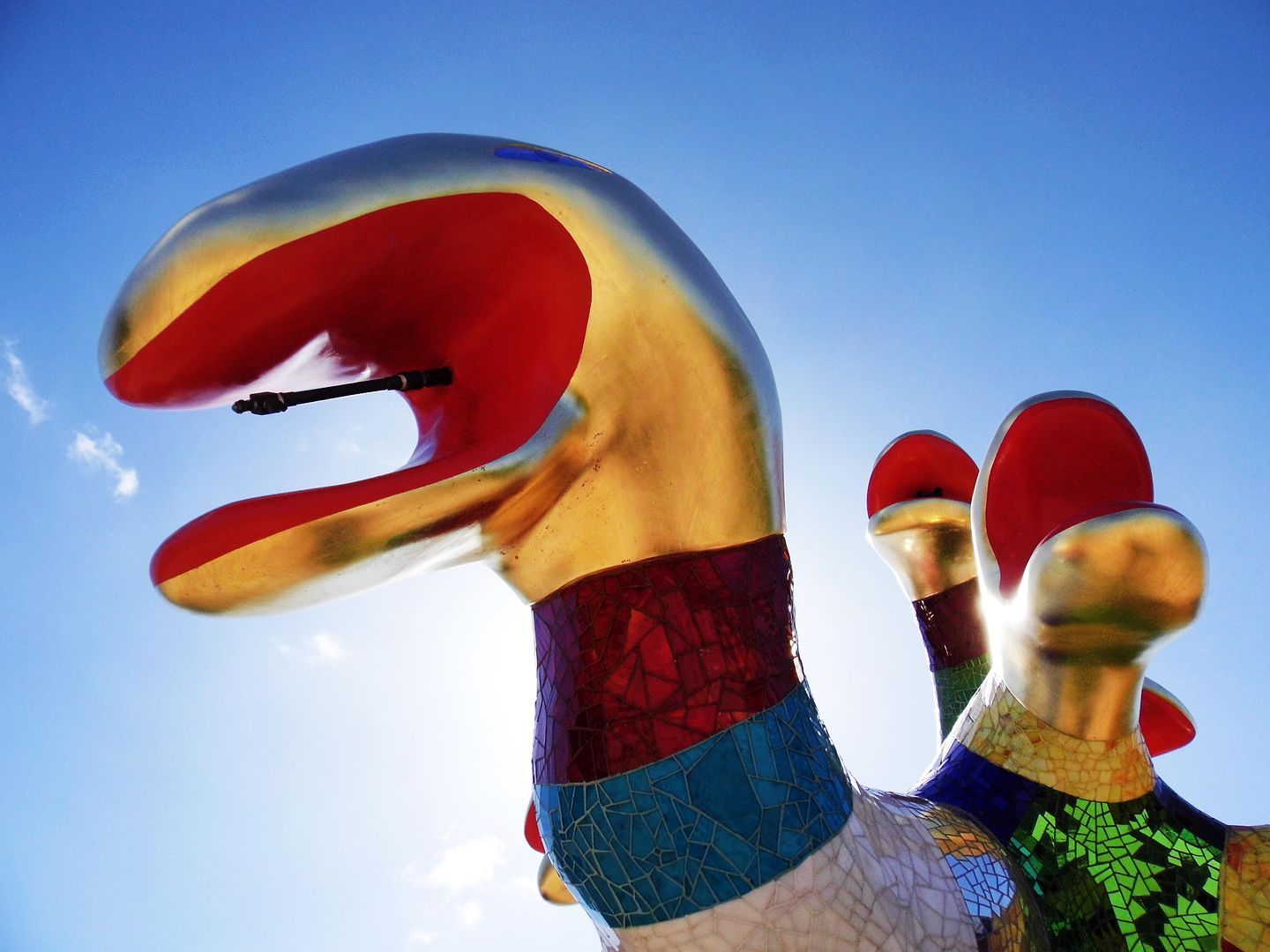


And they're probably the quintessential creation of Niki de Saint Phalle, who used snakes as a recurring feminist motif to represent the exertion of feminine power (as with the nine-headed Hydra from Greek mythology).
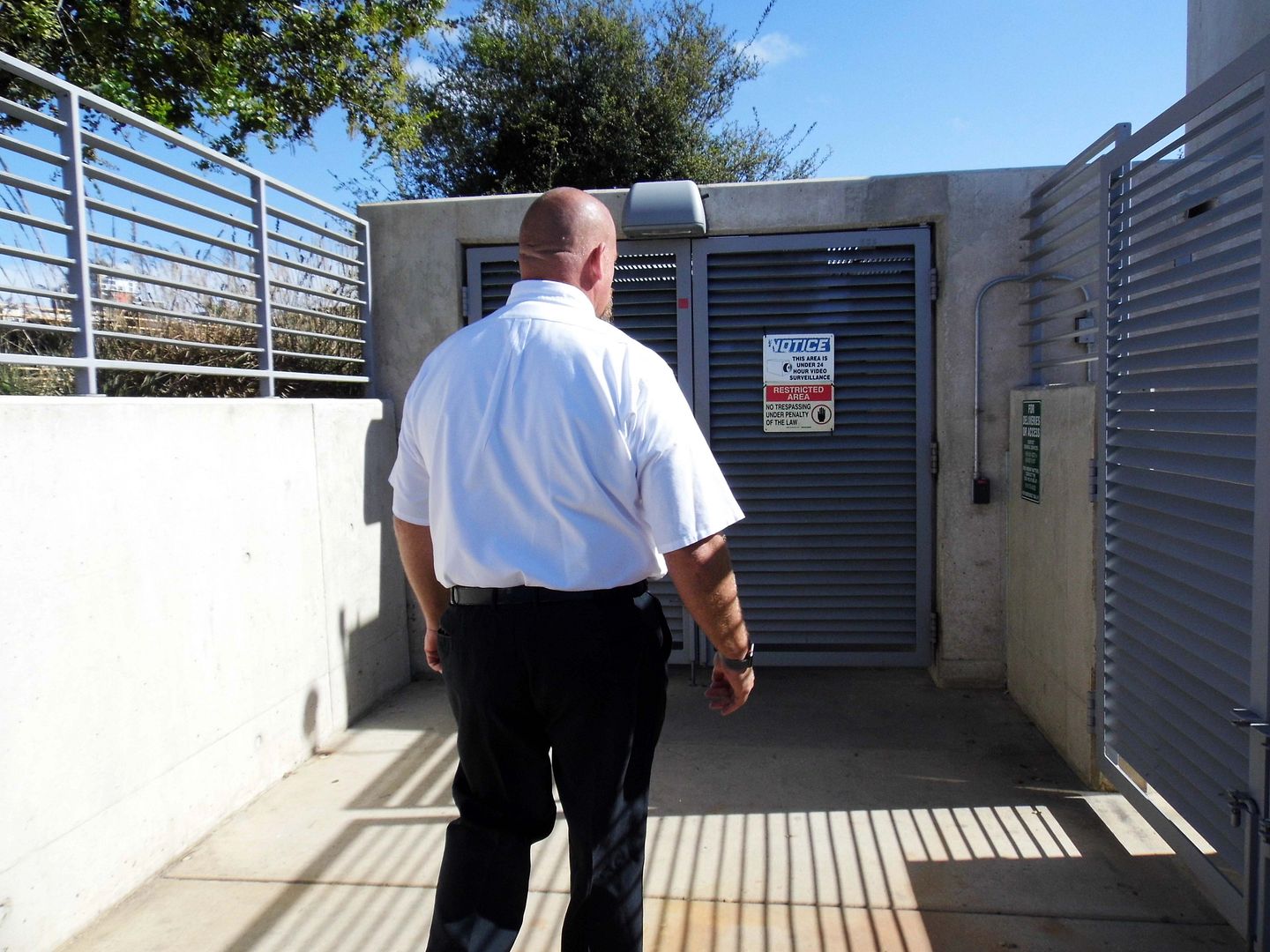


But it turns out there's another fascinating aspect to Waterfront Park that I didn't even know about when I'd saved it to my map: There's an entire pumping station and water treatment plant located under the park.
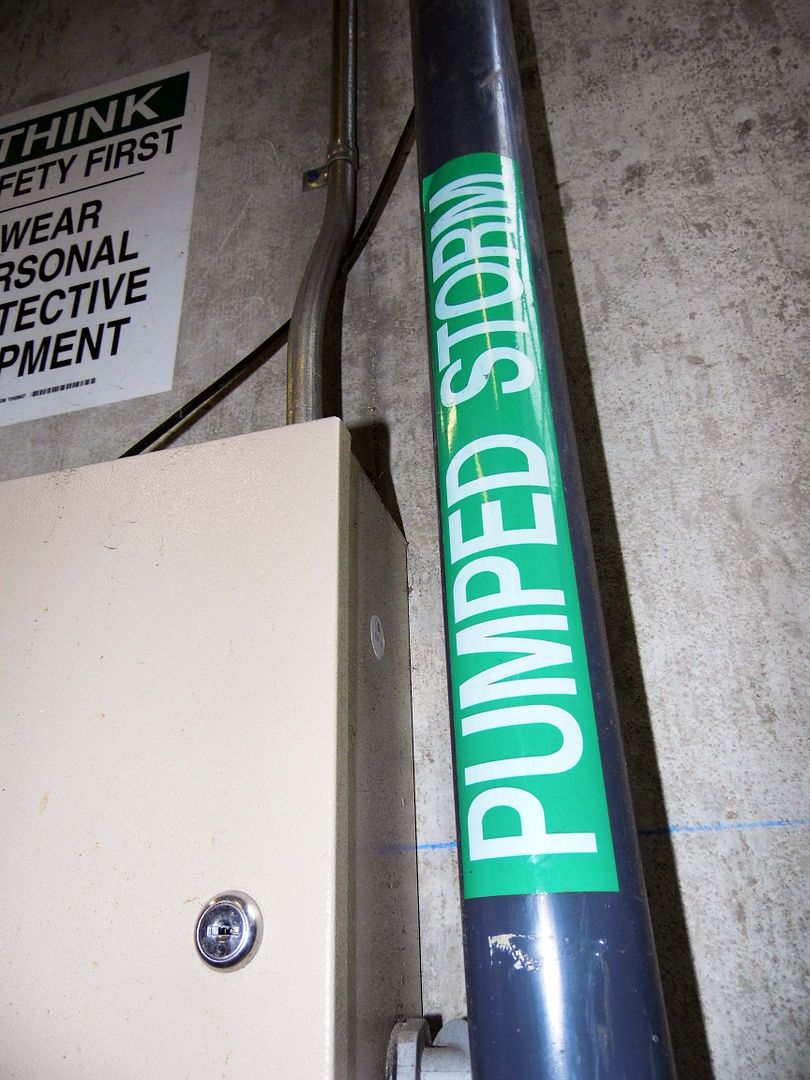


It not only circulates the water from the fountains within a closed circuit but also pumps storm water out if it rains.
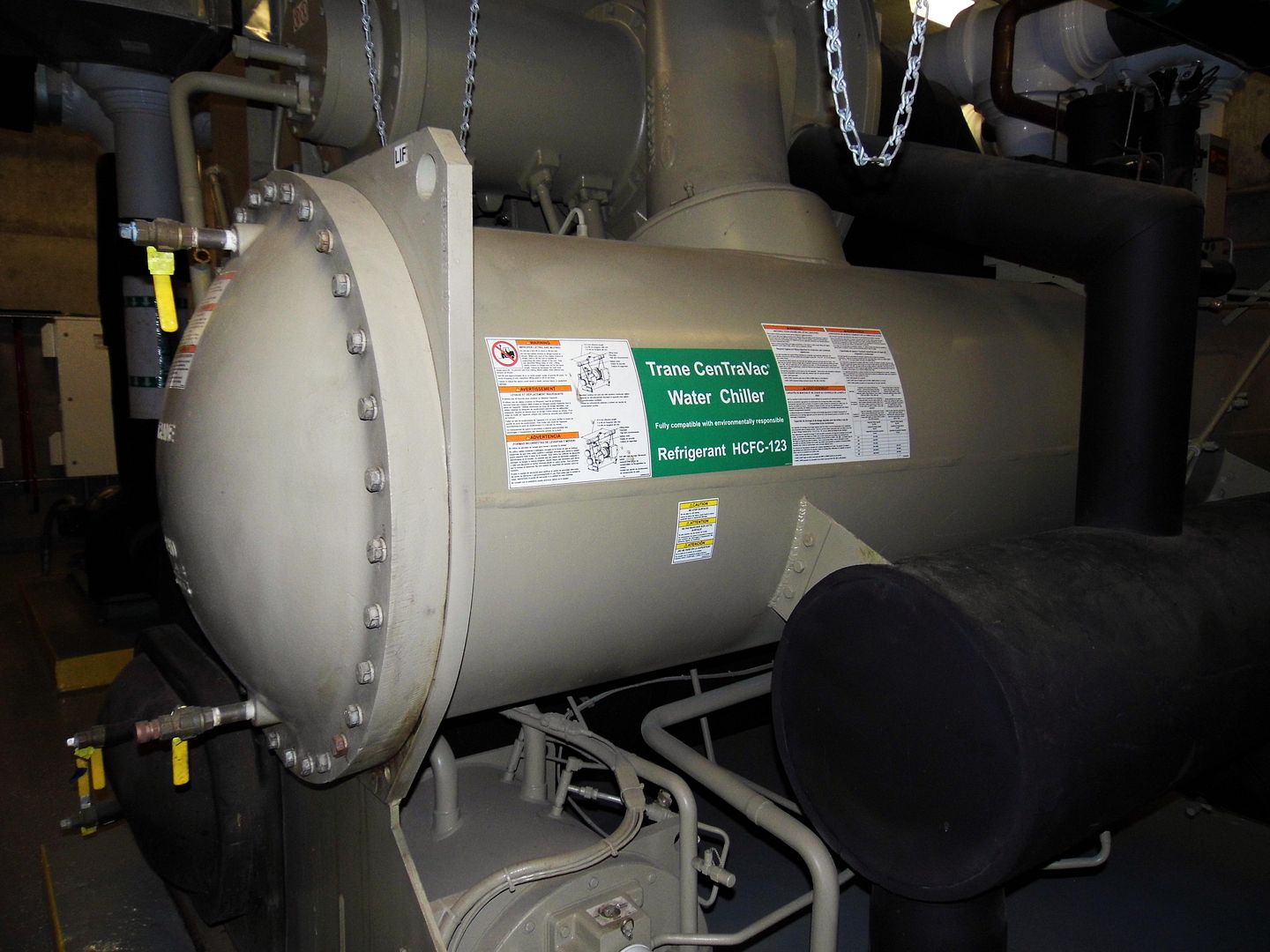


The water that feeds the fountains (which you can dip your toes into or stand right under the cascading streams) is temperature controlled...
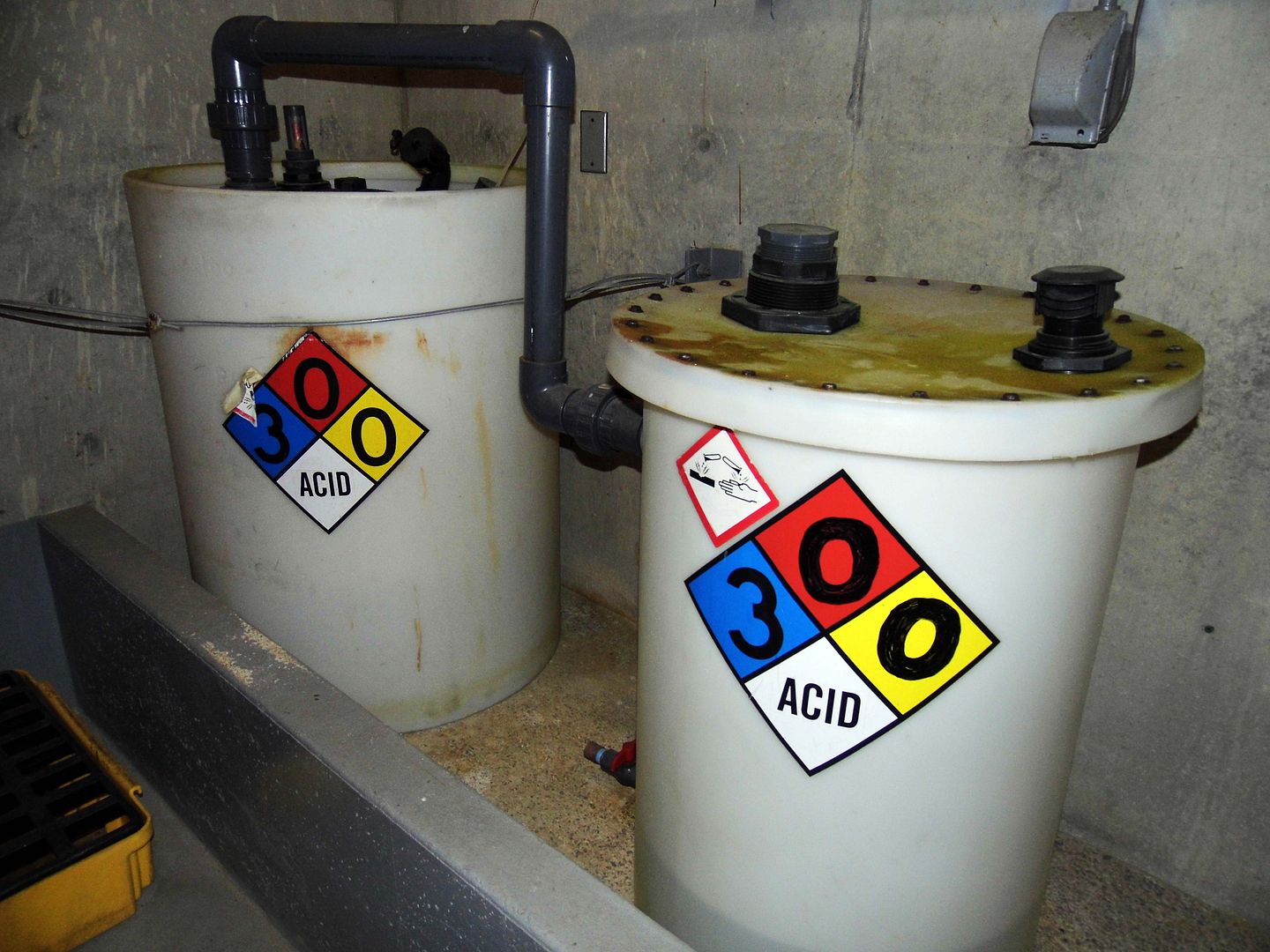


...and pH balanced, with just the right amounts of chlorine and muriatic acid to keep it from becoming too alkaline or too acidic for the kiddies who play in them.
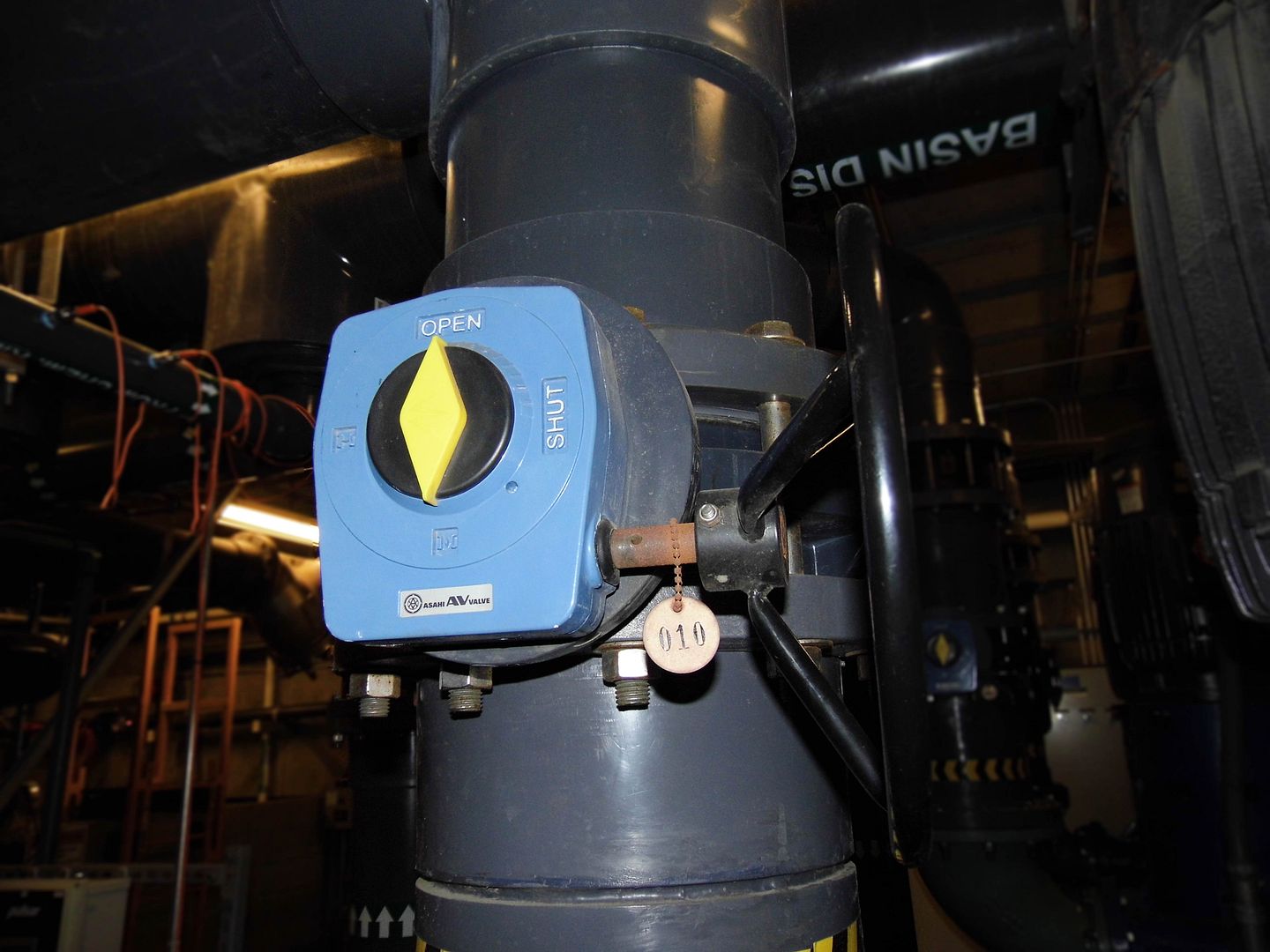


The flow of the water is also controlled, depending on the weather. High winds will trigger a shorter stream in the interactive water feature. Lightning will shut it off completely.
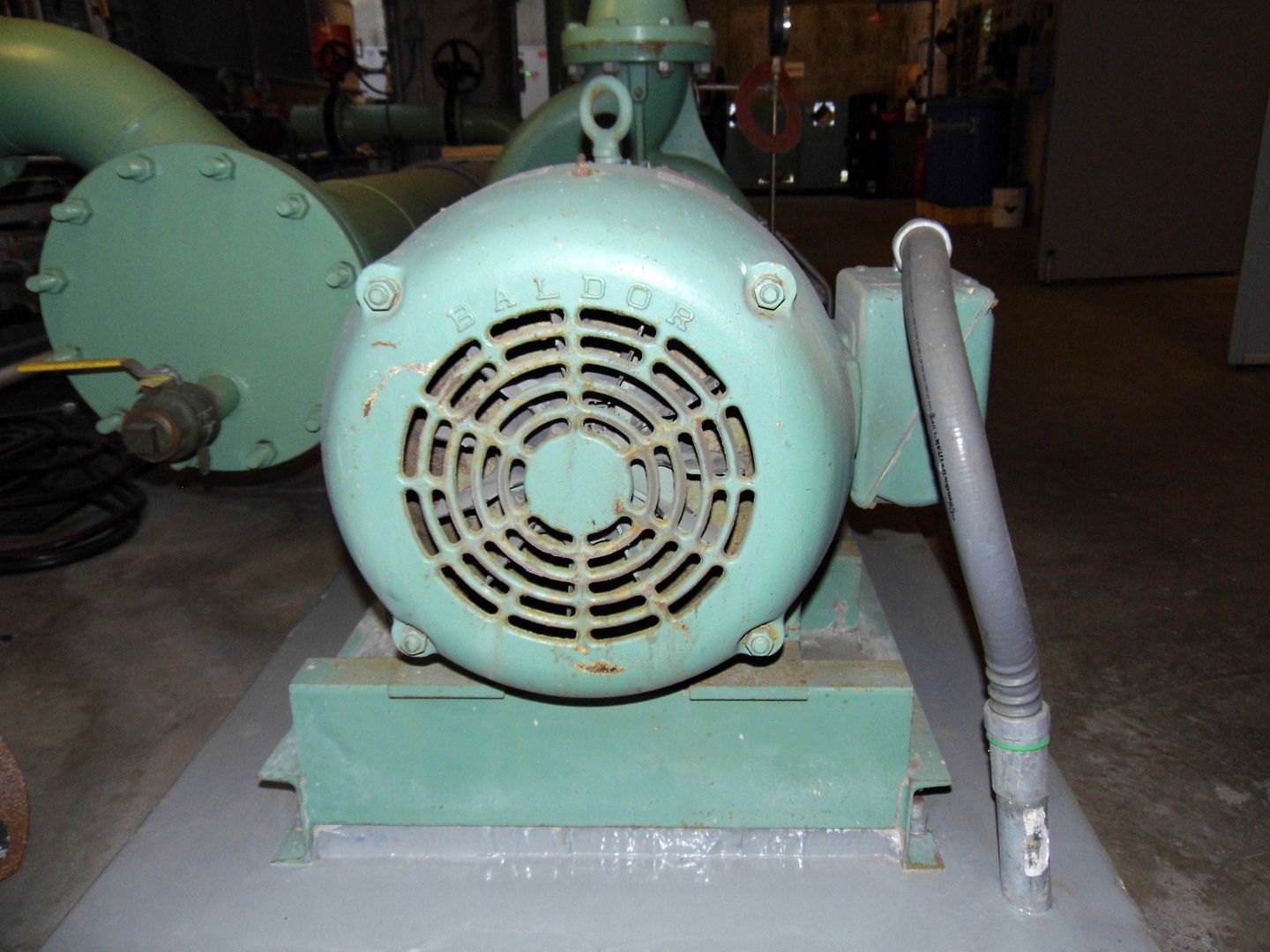


When water flows into the pumping station, engineers remove any biosolids (likely, bits of bird poop that weren't big enough to be scooped out by hand)...
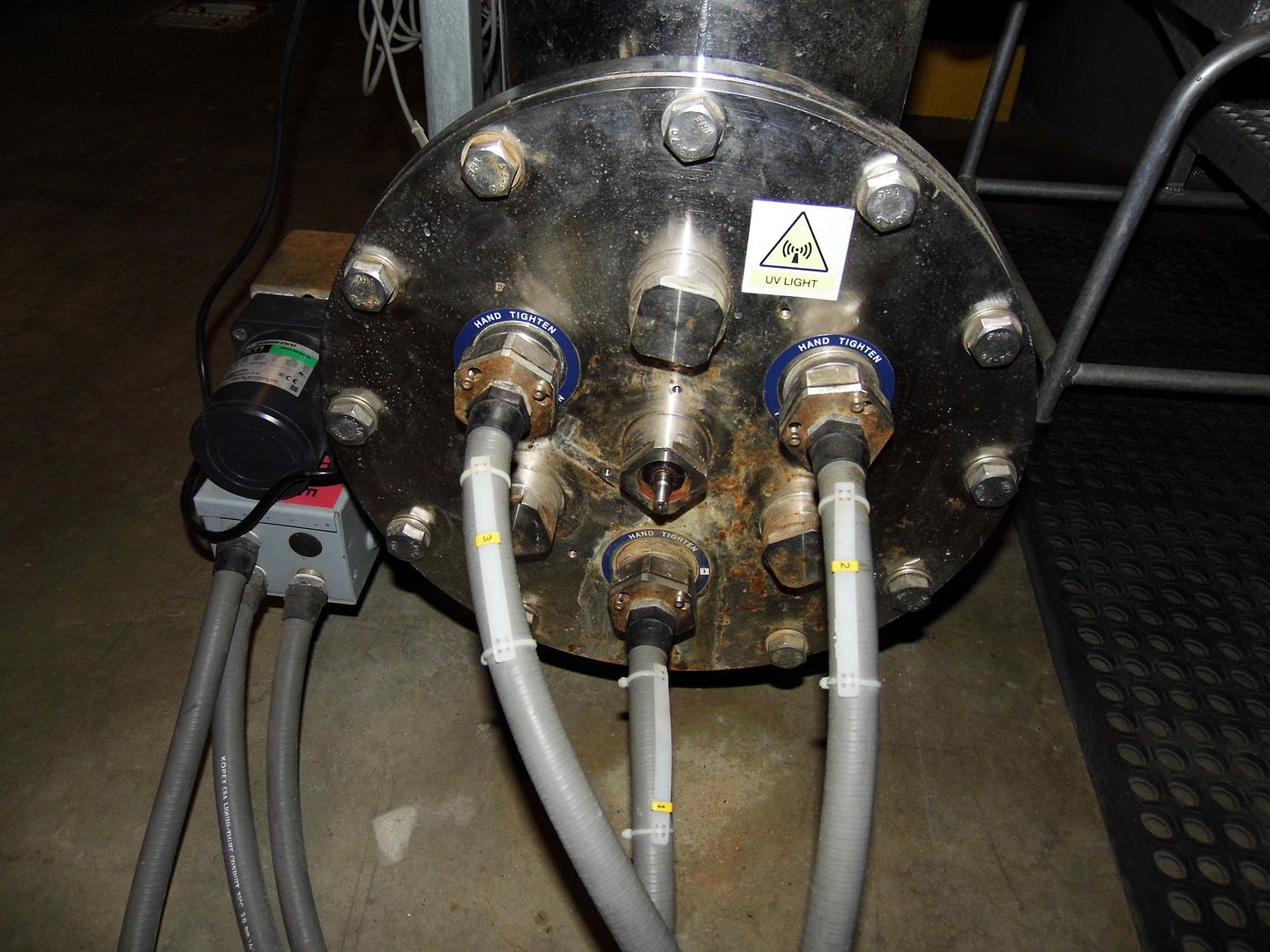


...and treat the water with UV light.

Technically, the water could be potable—but you probably wouldn't want to drink it.

And finally, there's one more thing that can be found under Waterfront Park, hidden from view but just as important to its function: an underground parking structure.

After all, you can't build paradise on a parking lot without having somewhere else for the cars to go.

Related Posts:
Photo Essay: A Post-Soviet Playground Grows in Kiev
Two Minutes Till Our Doom (Or, The Art of Buying Time)

March 27, 2018

Photo Essay: The Little Valley of Ancient Art and Astronomy

I'd been to Tecate on my first-ever trip to Mexico back in 2008—but only to the city for a tour of the brewery, lunch, and something sweet from the panadería.

I hadn't been back until returning as a guest of Tijuana-based tour company Turista Libre, when I got to venture beyond the city limits of the border town...


...to experience the crown jewel of Baja California’s archaeological sites, the Sitio Arqueológico El Vallecito in the La Rumorosa village of the Tecate Municipality.


El Vallecito—literally, the "little valley"—has been and still is a sacred site for the Kumeyaay (a.k.a. Kumiai or Diegueño, as the Spanish called them) people, whose nomadic tribes spent time here when lower desert elevations were too hot and these higher elevations weren’t too cold.


Their territory once stretched way up into Alta California’s Imperial Valley—that is, when there was nothing keeping them to one side or another of any official boundaries that would eventually come to be.


The bands of hunters and gatherers who spent time here left behind a number of pictographs in mostly red (hematite), black (manganese dioxide), and white (gypsum), though also some orange and yellow.


The Peninsular Range representational rock art is both geometric and cosmic, sometimes seeming to map the sky and the stars (as with the Solecitos a.k.a "little sun" cave).


The cave paintings (a.k.a. pinturas) also depict both human and animal forms (or some combination thereof)—including most famously "El Diablito" (the "little devil who was more likely a deer hunter camouflaged as his game).


Many of them seem somewhat mythical or even supernatural—which stands to reason since the Kumeyaay were renowned for their cosmological beliefs and "sky knowledge," using their markings to communicate significant times of the year like the fall equinox or winter solstice.


There are five caves that are open to the public and marked with signage and historical displays, though many more exist beyond the official trail. Some might've been used as ceremonial sites, based on the soot that still remains overhead.


In this northernmost area of the Sierra de Juárez mountain range, you'll find time-weathered rock formations...


...split boulders...


...and natural cairns...


...but it's not all just geological.


In addition to small granite caves used as shelters (a.k.a. resguardos)...


...as well as the pitted stones used as mortars...


...there's also a multitude of plants that thrive here...


...including piñon pine (from which the Kumeyaay derived pine nuts to grind)...


...agave, cactus, buckwheat, Manzanita, and other natural materials they used for pigment, food, clothing, shelter, rituals and medicine.

But more importantly, this ancient and perhaps prehistoric community seemed to understand something about the cosmos beyond its constellations, and its members tried to communicate that here.

That's what makes El Vallecito something like the Stonehenge of Mexico (or at least of Baja).

But thanks to vandalism, displacement, and genocide of indigenous peoples, we may never know for sure.

Related Posts:
Offbeat Travels in the Offseason: Carrizo Plain
Photo Essay: Garden of the Gods
Photo Essay: Stoney Point, at the Santa Susana Pass

March 26, 2018

Rocking the Boat Without Getting Seasick

"Don't rock the boat!" I called out, as I was crossing the Spruce Street Suspension Bridge in San Diego's Bankers Hill neighborhood and some troublemakers decided it would be funny to make it swing back and forth.


But why? That's the entire draw to this 106-year-old footbridge, popular for its notorious "wiggle."


But apparently, the natural sway of the suspension just isn't enough for those who step foot on it.


Some people feel the need to test the technical prowess of former City Engineer (and San Diego Mayor) Edwin Capps, who designed it.


And sure, I've been known to rock the carriage on a ferris wheel and shift my body for some extra spins on a Tilt-a-Whirl...


...but I'm afraid enough of heights.


Why tempt fate?


While I was out there, danging 70 feet over Arroyo Canyon below, I had to remind myself that bridges like these were built to move.


All I'd have to do is sway with the bridge, and I wouldn't fall off (nor would the bridge collapse).


Just like riding the New York City Subway. Just like building structures on rollers in case of earthquakes. Just like rocking with the waves rather than trying to remain steadfast despite them.

Out on the water, the less you try to move, the more likely you'll get seasick.

So, just go with it. And try not to break any steel flanges while you're at it.

The bridge closes daily at 10 p.m. Please don't dump trash into the ravine below or leave your drug paraphernalia lying about.

Related Posts:
Photo Essay: Walkway Over the Hudson
Conquering LA's 'Golden Gate' Bridge
Photo Essay: Glimpses of Yuma Territory
Reaching My Limit