Search

Showing posts with label Jails. Show all posts

September 19, 2020

Välkommen to Highway 99's Turn-of-the-Last Century Swedish Village, Kingsburg

I've been to IKEA maybe three times in my life, and I just don't get Americans' fascination with this Swedish brand. It's got to be more than the hot meatballs they serve in the marketplace. 

And it can't be that we have so many Americans of Swedish descent. Although the Swedes did arrive to the New World in waves—from the mid-1600s (the New Sweden Company trade expedition) to the late 1880s—they mostly stuck to certain Scandinavian communities where they could farm, as they had back home. 

That explains the Swedish colonies of the Midwest, surrounding the Great Lakes—with "Little Sweden" towns still located in Minnesota and even Illinois. At the turn of the last century, Chicago was the second-largest Swedish city in the world. 

Immigrant Swedish farmers also found their way to the agricultural riches of California's San Joaquin Valley—a.k.a. the "Central Valley," specifically to the town of Kingsburg, just south of Fresno along historic Highway 99. 

In its heyday, having been officially designated in 1926, Highway 99—the "Golden State Highway" before it was replaced by the 5 Freeway between LA and Bakersfield—had earned the nickname "The Main Street of California." 

And driving through Kingsburg, it's clear why. 

It was officially established as a town in 1908, after a group of Swedish immigrants settled in what used to be called "Kings River Switch" along the Central Pacific Railroad's Valley Line in the 1870s. 
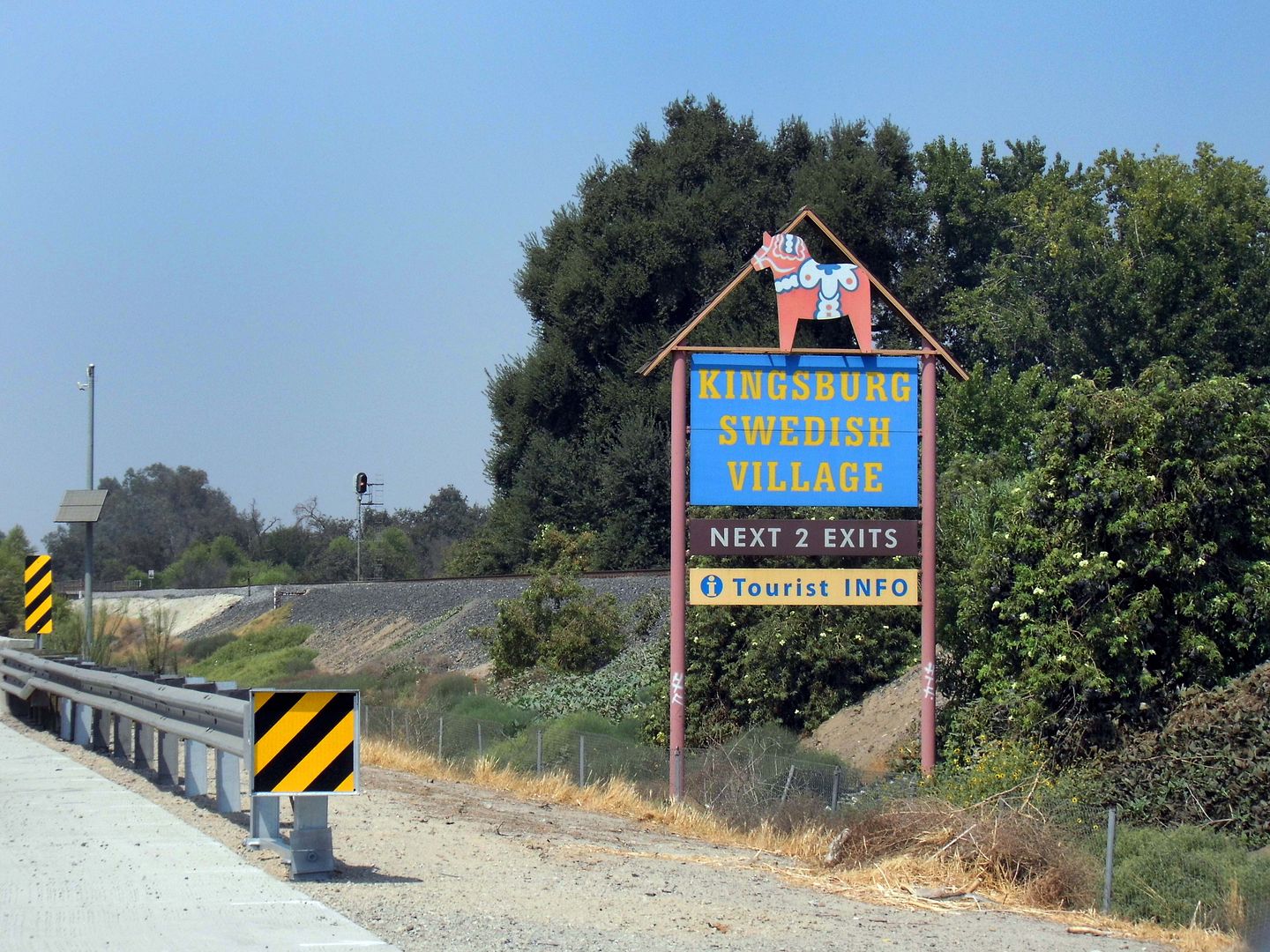


But it wasn't until 1921 that Kingsburg really earned its "Little Sweden" nickname—when 94% of the population within a 3-mile radius was classified as Swedish-American. 
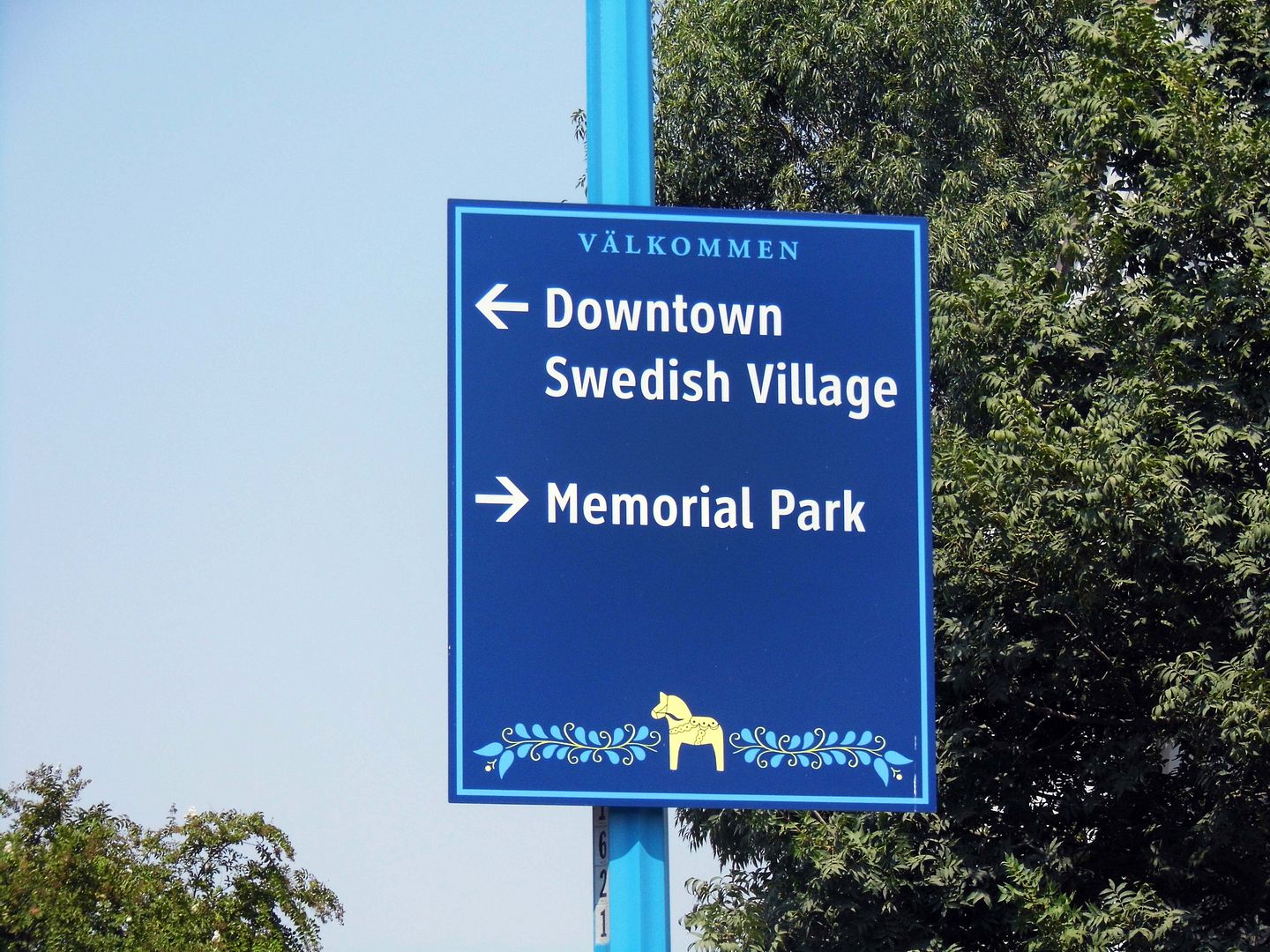


Nearly 100 years later, its Scandinavian population may have dwindled...
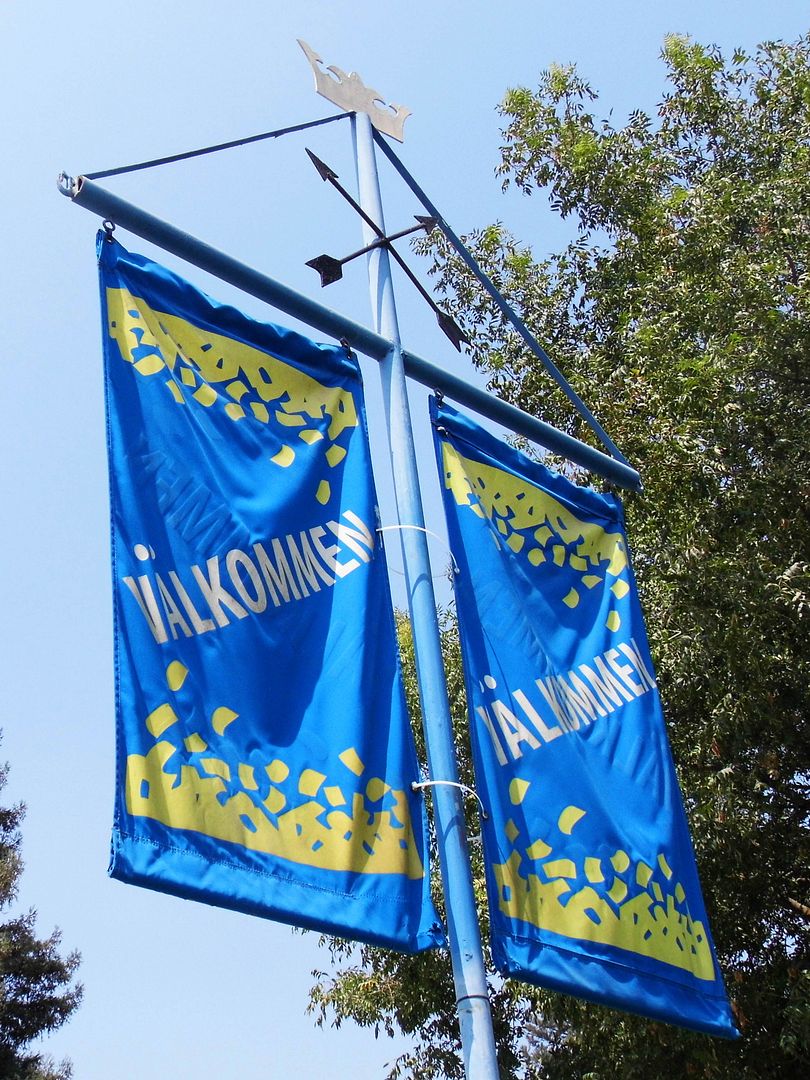


...but signs off the 99 and throughout town still greet visitors and passers-by with a "Välkommen."
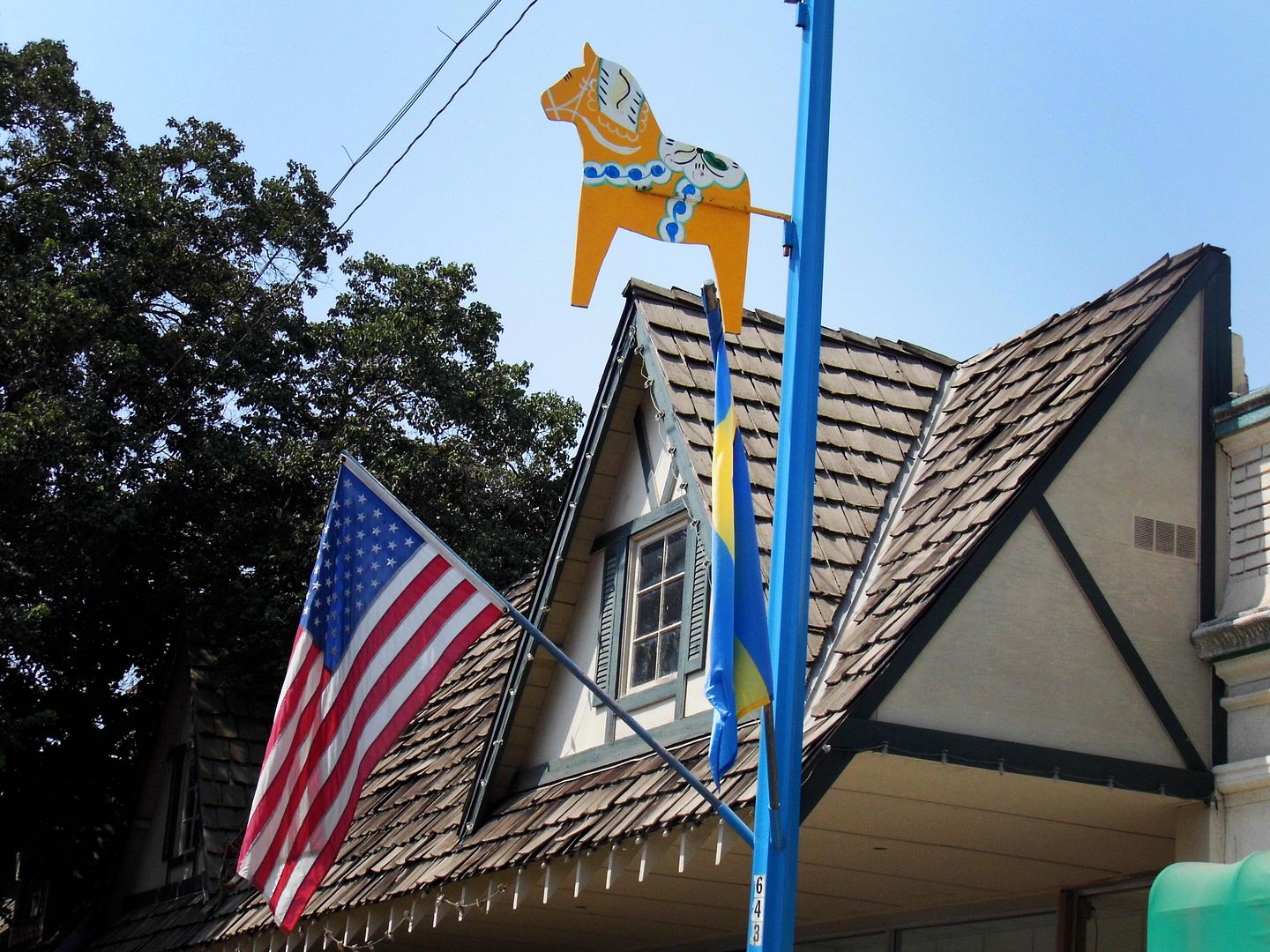


Depictions of dala horses (a.k.a. Dalecarlian horses, or wooden horses originating from the Swedish province of Dalarna/Dalecarlia) dot the town...
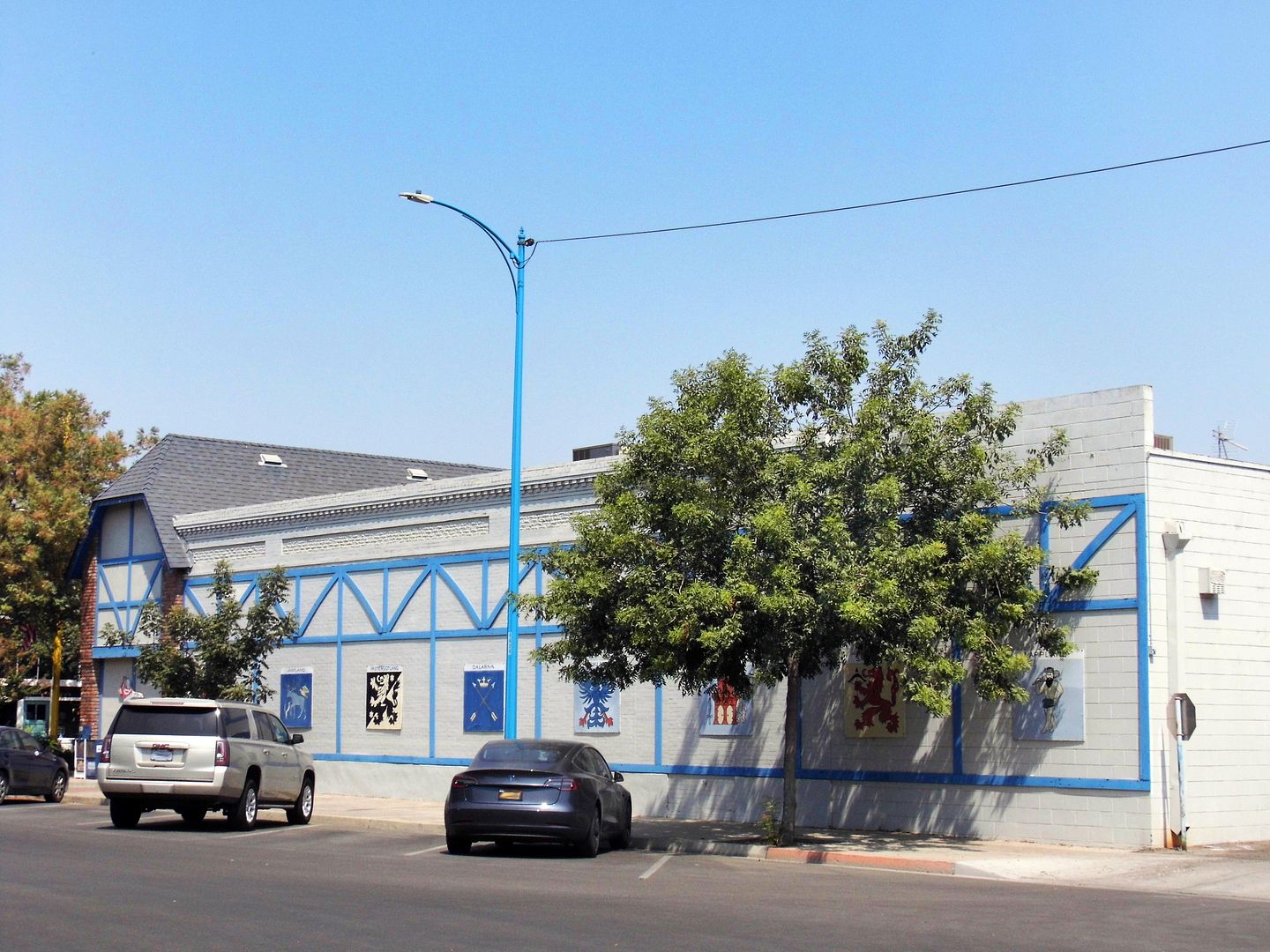


...on flagpoles and lampposts, sides of buildings...
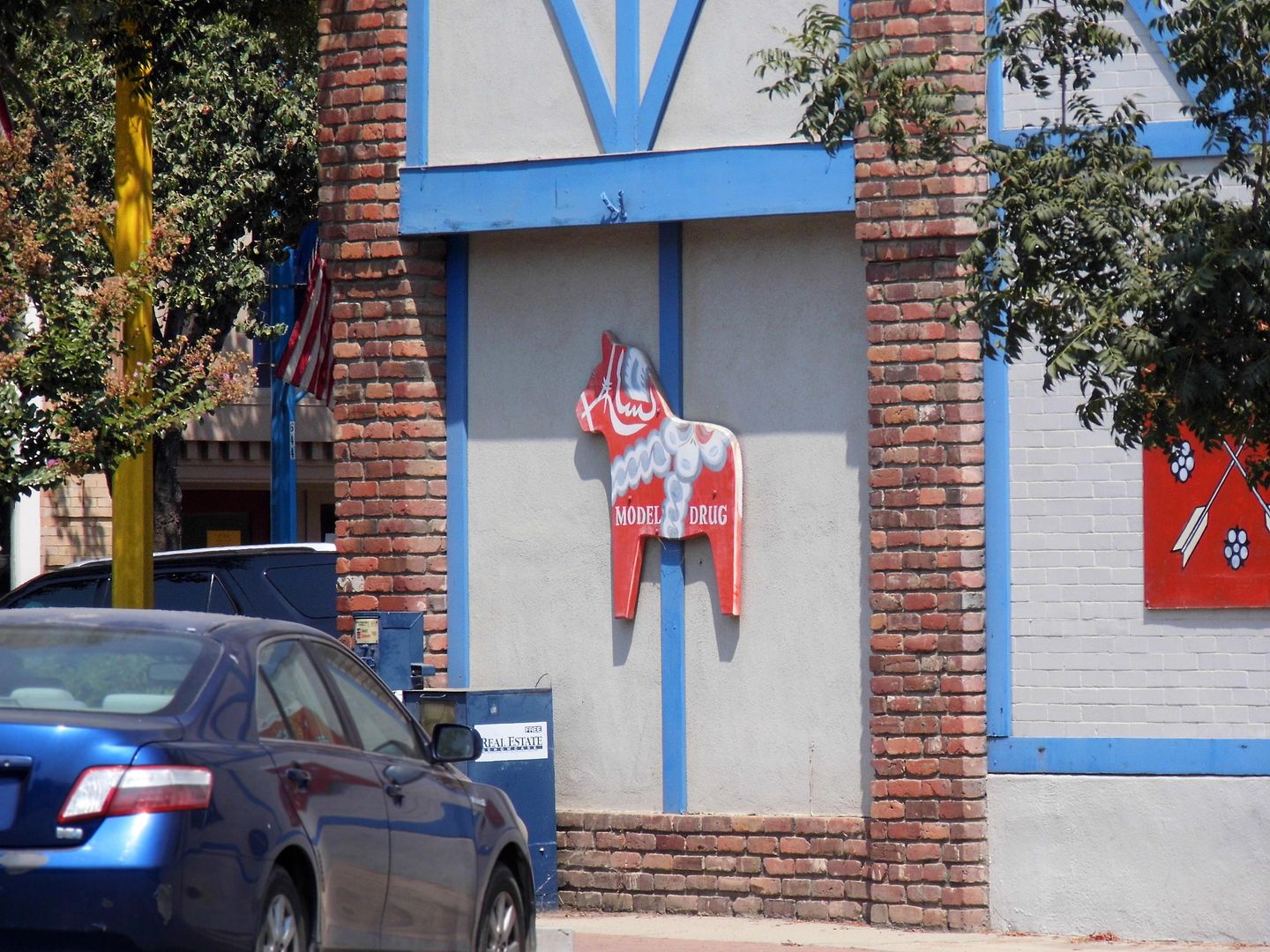


...and inside and outside the Swedish Village's butiks. 
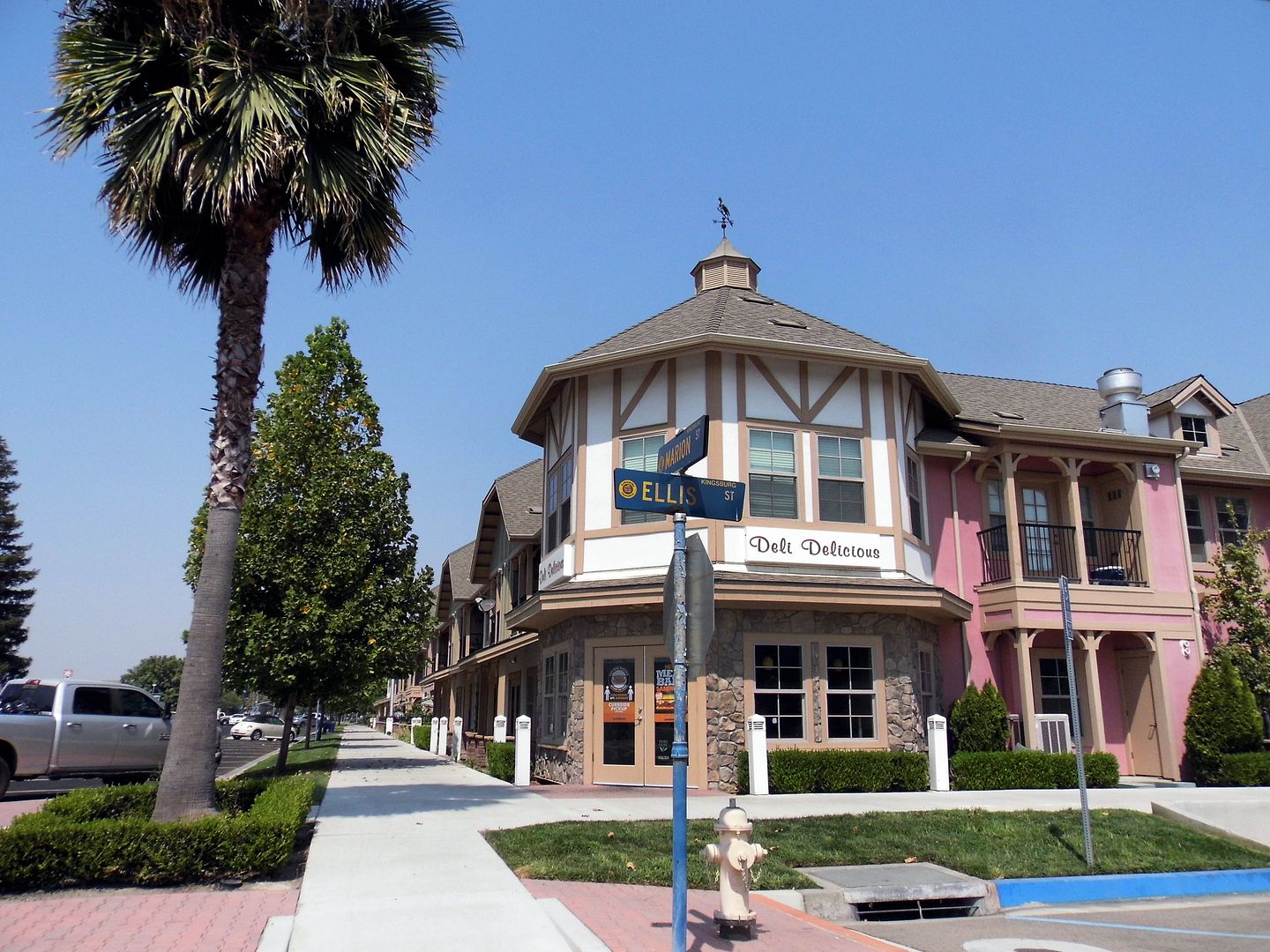


Kingsburg keeps the Swedish theme alive not only through its architecture—but also its events, with the annual Swedish Festival having occupied the third weekend in May since it launched in 1924 as an early celebration of the midsummer/midsommar harvest. What began as a simple luncheon has evolved into a tourist draw that features, of course, a smorgasborg as well as the raising of the maypole and traditional Nordic dance.
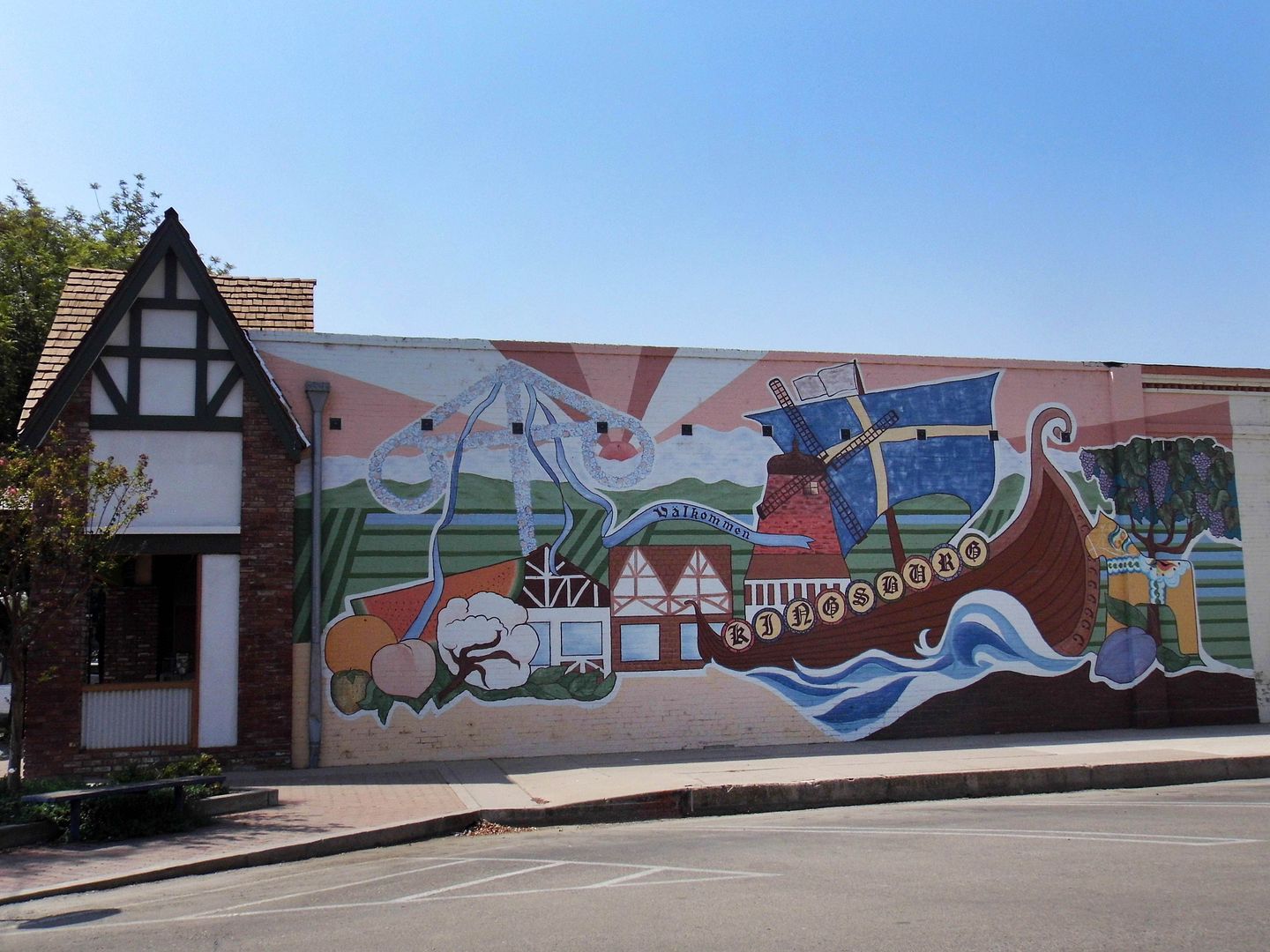


There's also the Julgransfest annual lighting of the Kingsburg Christmas tree (julgrans) and Santa Lucia Day—December 13, the feast of the 4th-century Christian martyr Sankta Lucia, considered the kickoff for "Christmastide" (the 12 days before Christmas).  
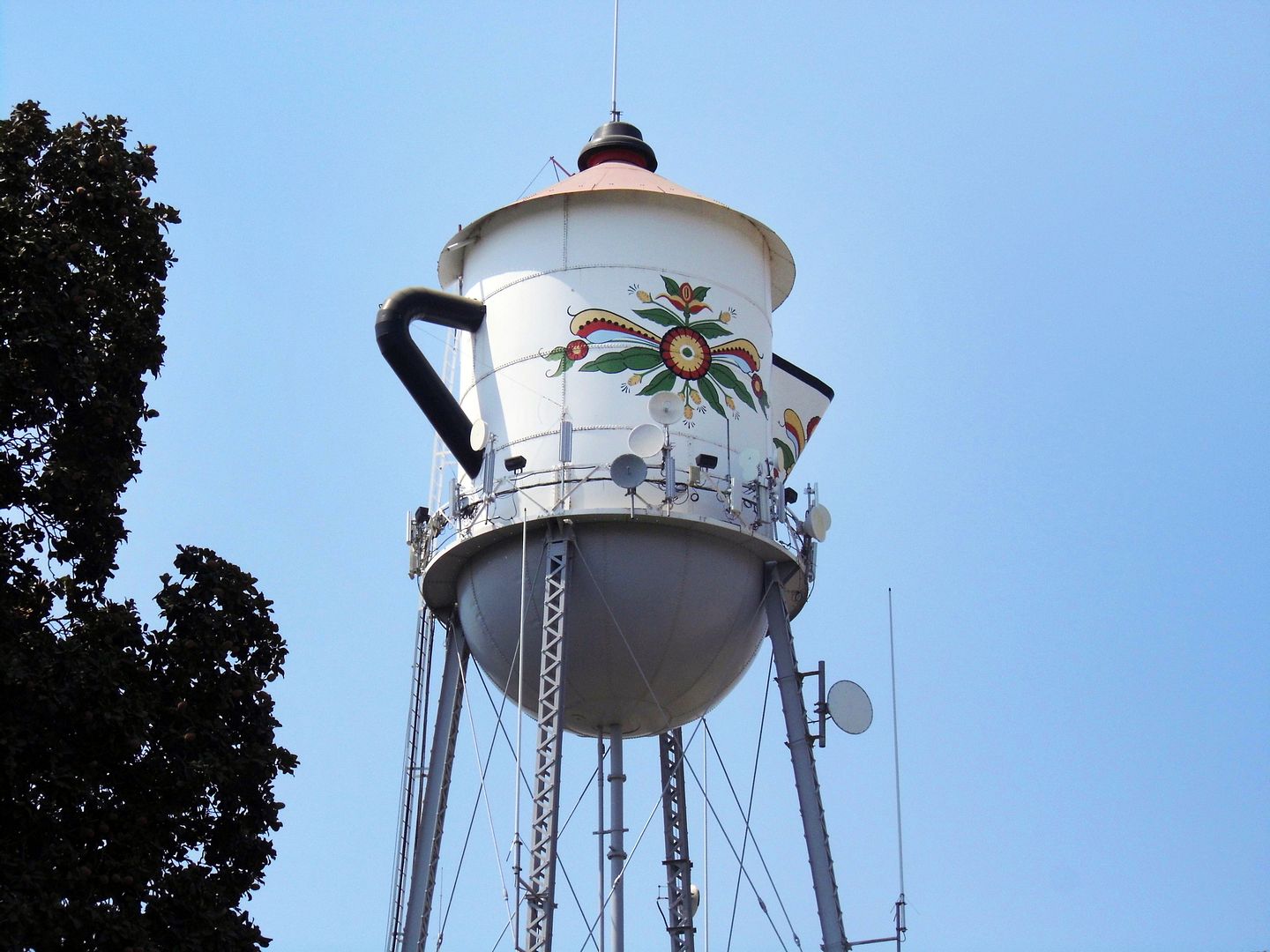


But on a day-to-day basis, roadtrippers exit the 99 at Kingsburg to do a little shopping and a little gawking—like at the town's circa 1911 water tower, which has been a coffee pot since it was remodeled in 1985. Standing 122 feet off the ground, it pays tribute to Sweden's obsession with coffee, which rivals most countries in the world in terms of per capita consumption. For Swedes, having a coffee—a ritual known as fika—is a way of life!
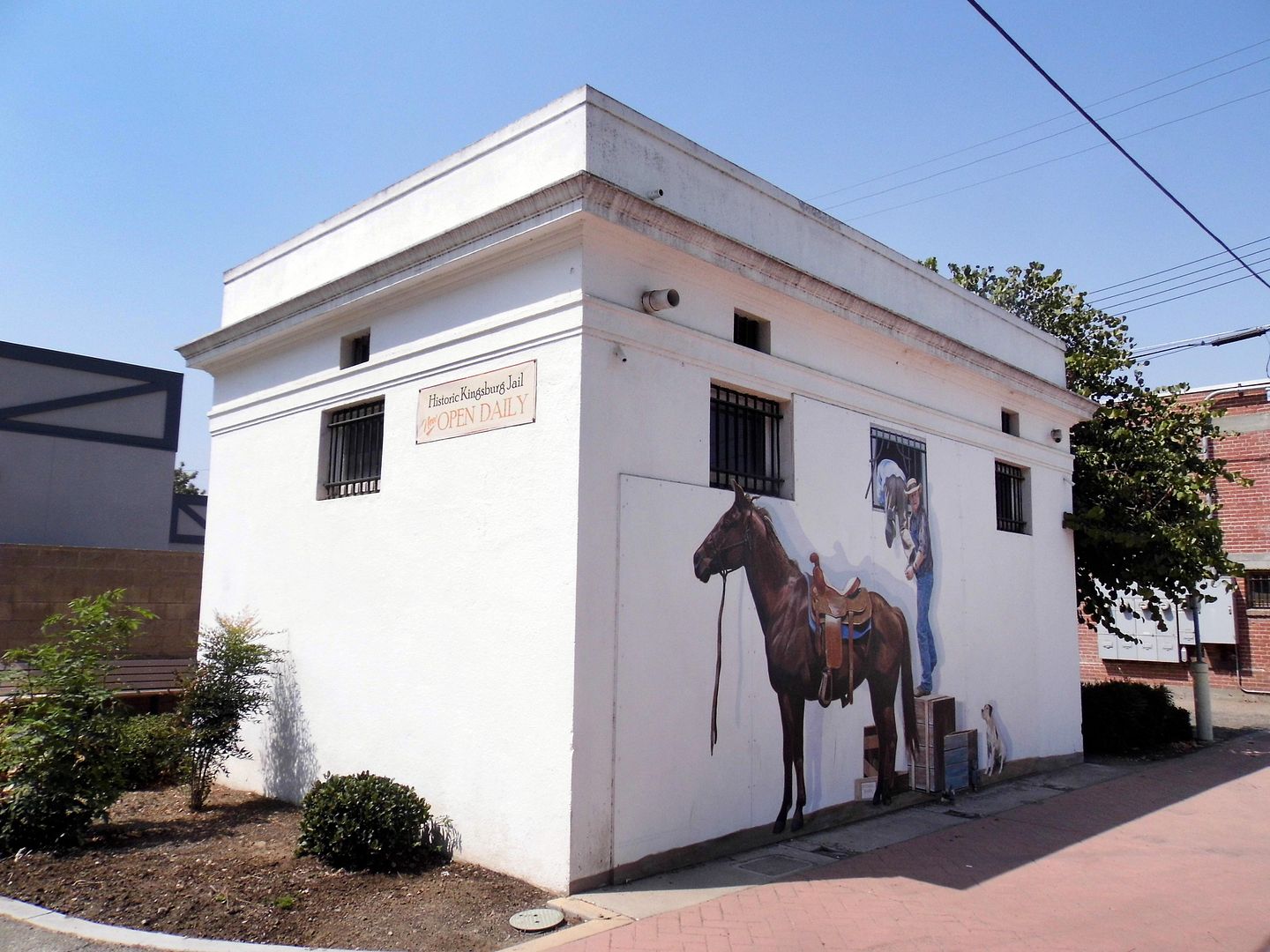


The coffee pot water tower is conveniently located near the decommissioned Kingsburg City Jail, built 1925 and now leased to Kingsburg Historical Society as a historical exhibit. 
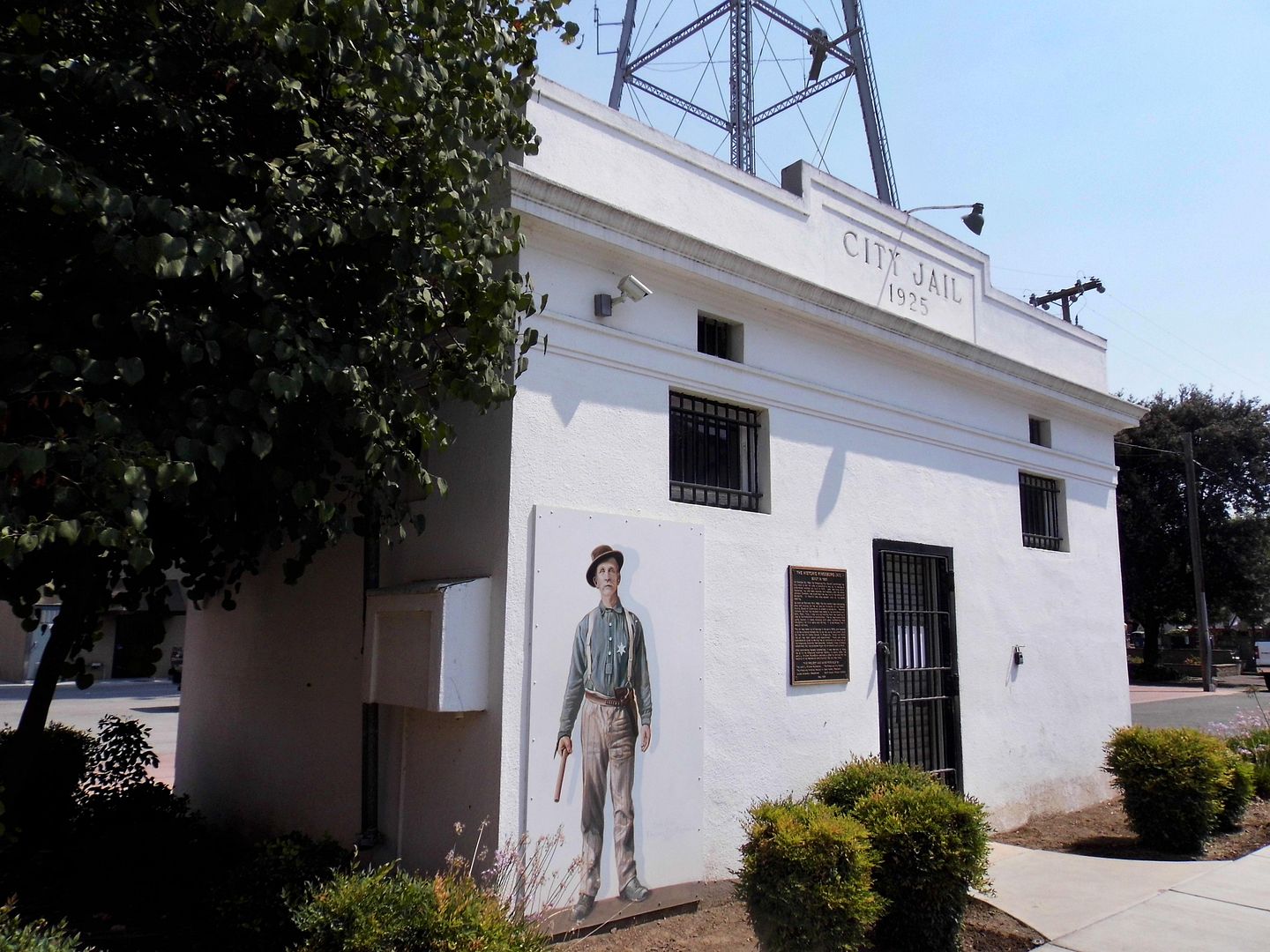


The poured, reinforced concrete box replaced a circa 1874 wooden jail—and shockingly was in active service until the early 1970s! After that, it temporarily became storage for police evidence. 
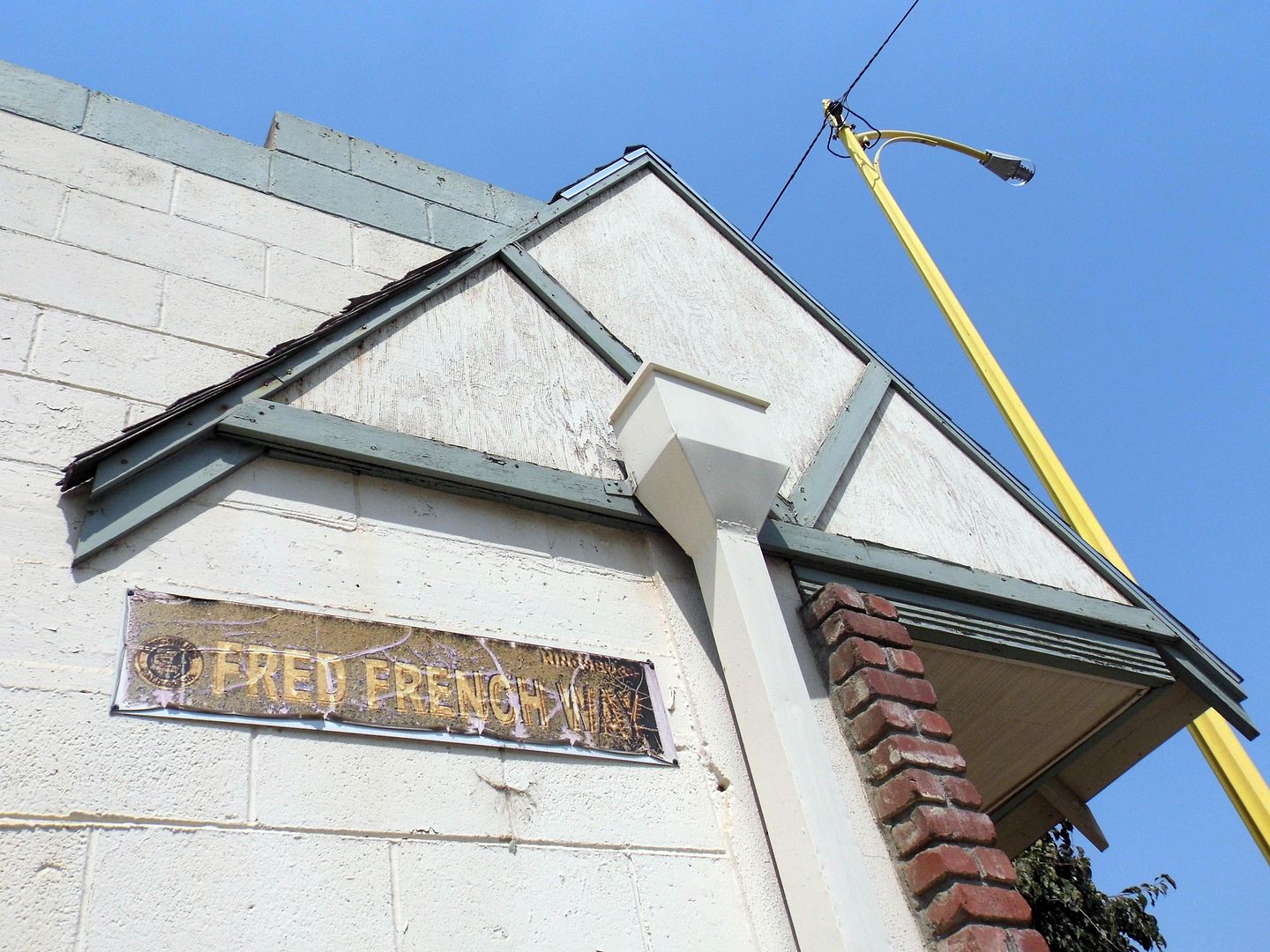


It's also located adjacent to the Kingsburg Historical Society's Walk of Fame, which honors some of the town's fallen heroes—like Constable George Boyle, who succumbed to gunshot wounds while pursuing escaped prisoners, and Deputy Night Watchman Fred French, who was shot in the head by a drunk and disorderly patron of the pool hall who'd been released and sent home. 
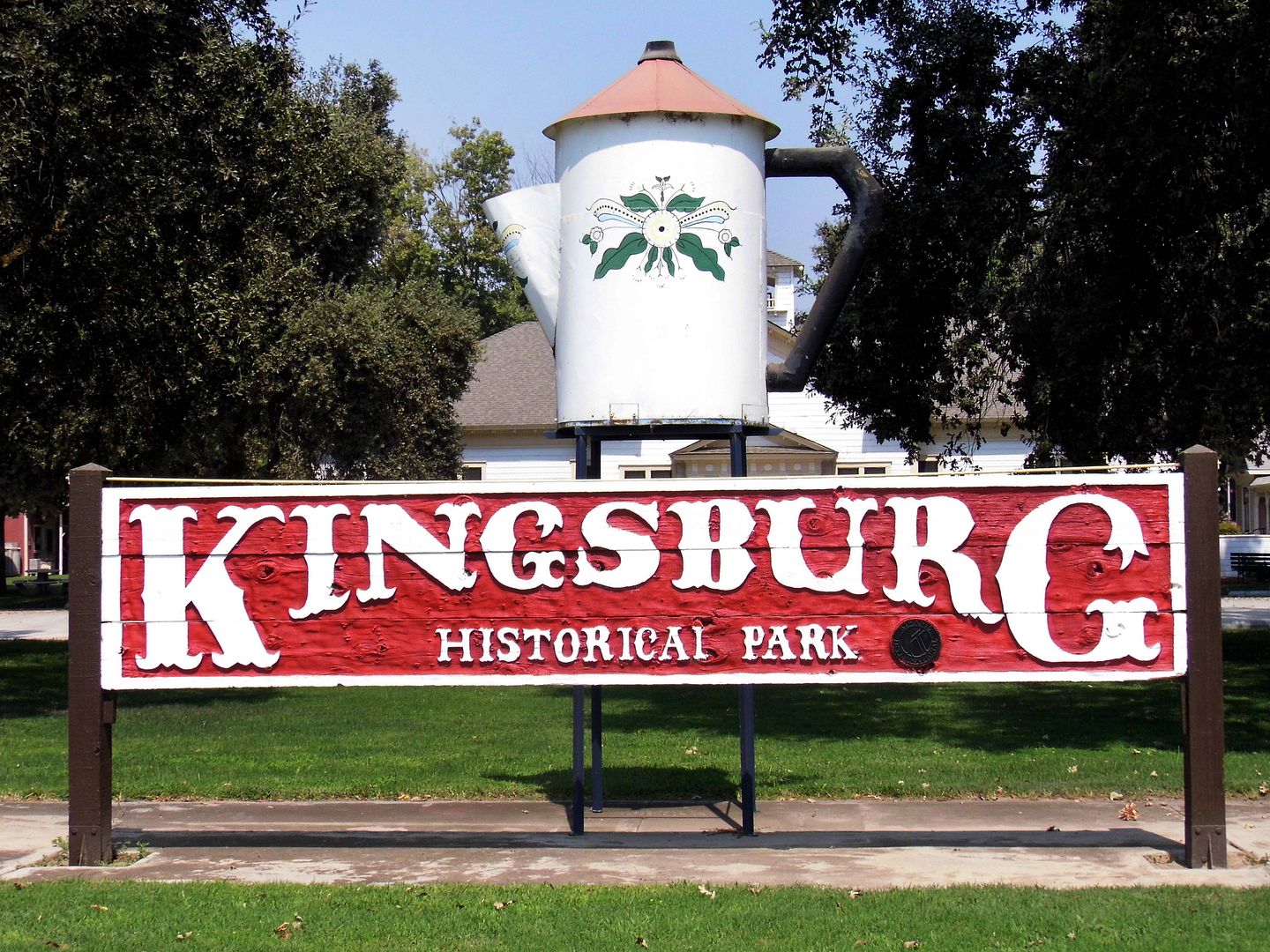


There's a mini coffee pot, too—planted on top of the sign for the Kingsburg Historical Park, which features vintage farm equipment, artifacts from Del Monte peach cannery (which closed in 2012), and the relocated Clay School Building (built 1913, arrived 1975 as the park's first building), the Olson/Ball House (built by carpenter Peter Olson in 1908, arrived 1981), and Riverbend Church (built 1911, relocated 2016). 
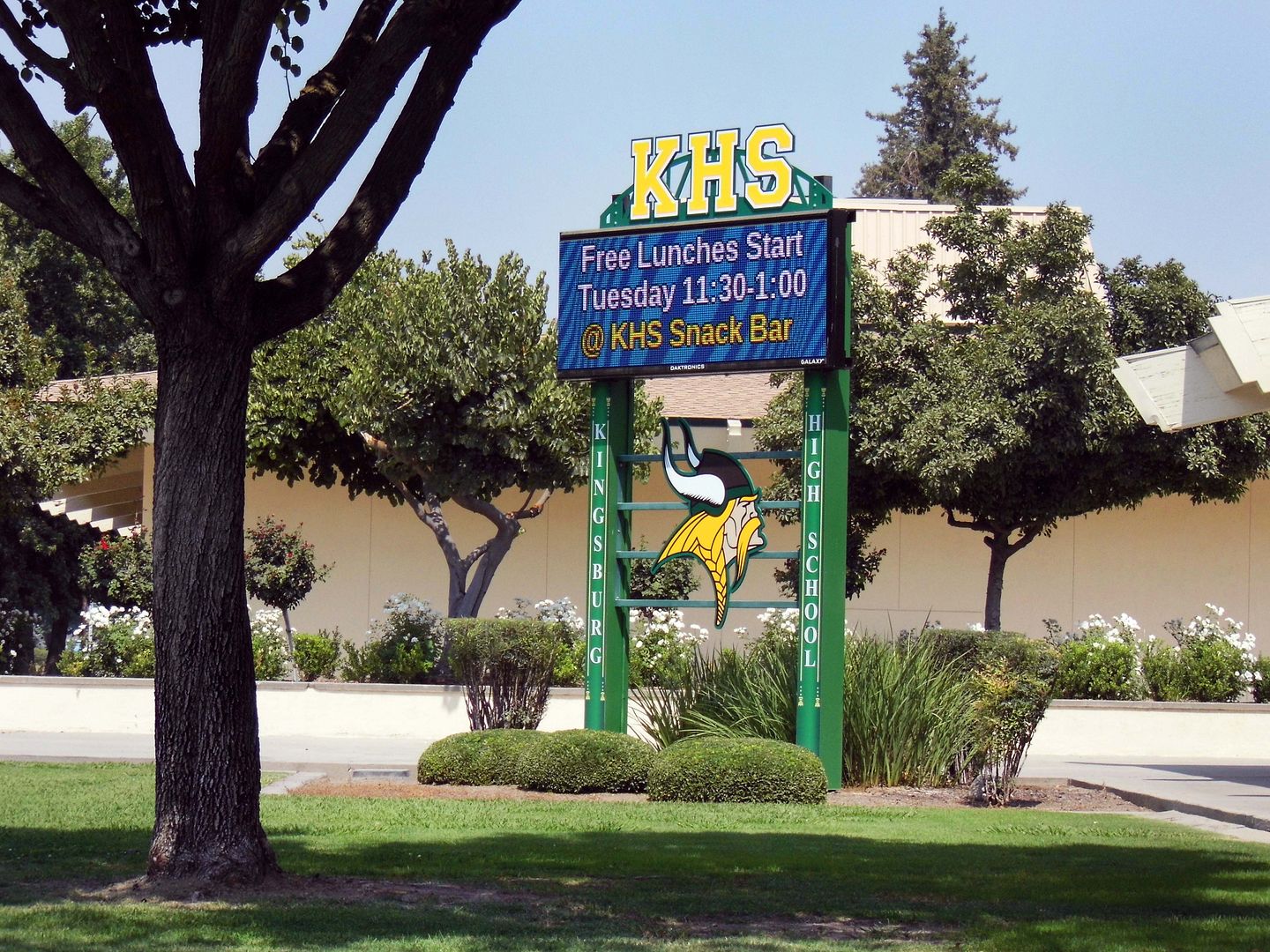


There is, however, one aspect of Swedish history that's earned a prominent place in Kingsburg as well—and that's thew Vikings. 
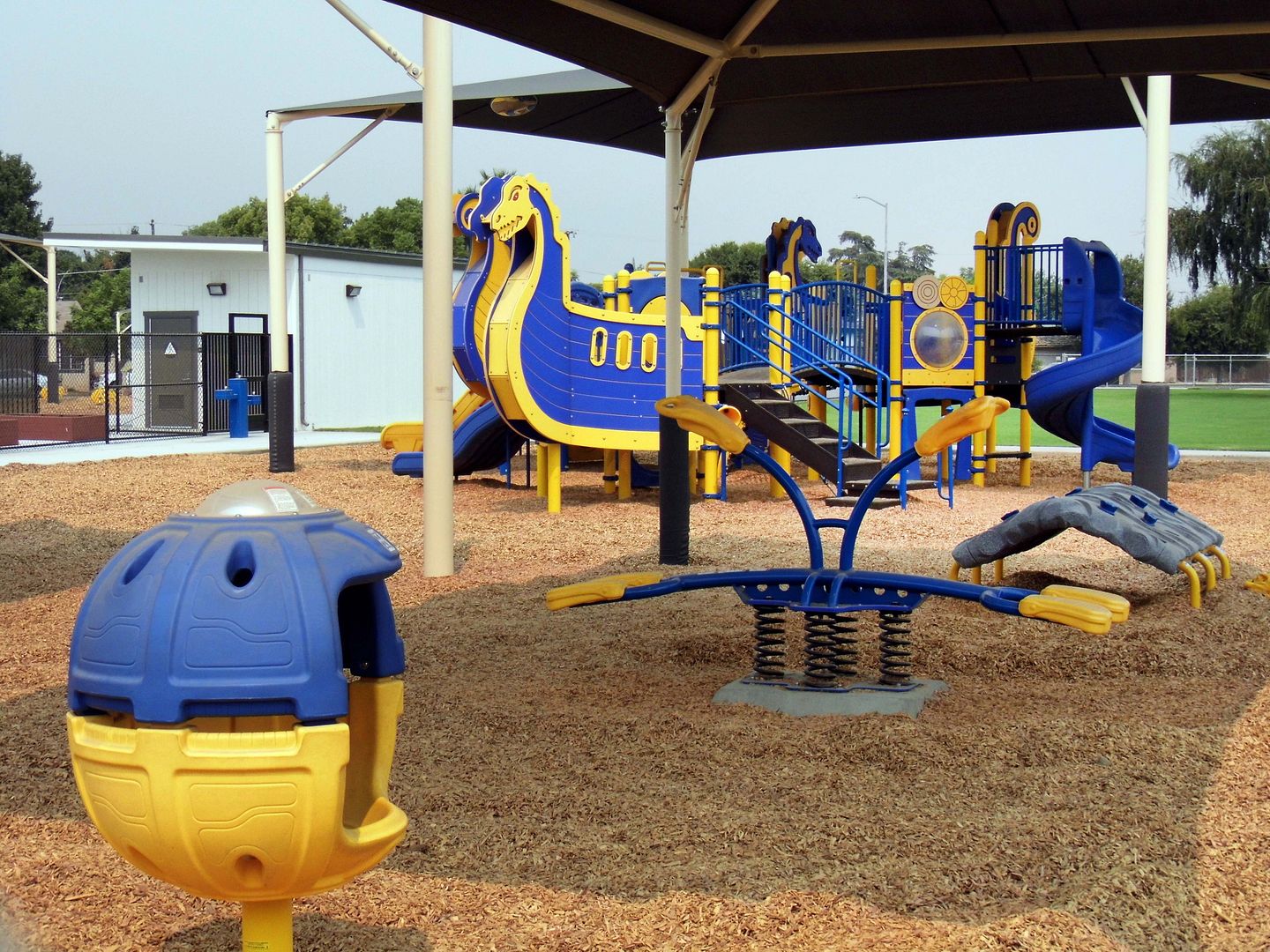


Not only does a Viking serve as the mascot for the local schools, but the town's central playground has taken the form of a Viking longship—in the gold and blue colors of the Swedish flag. 
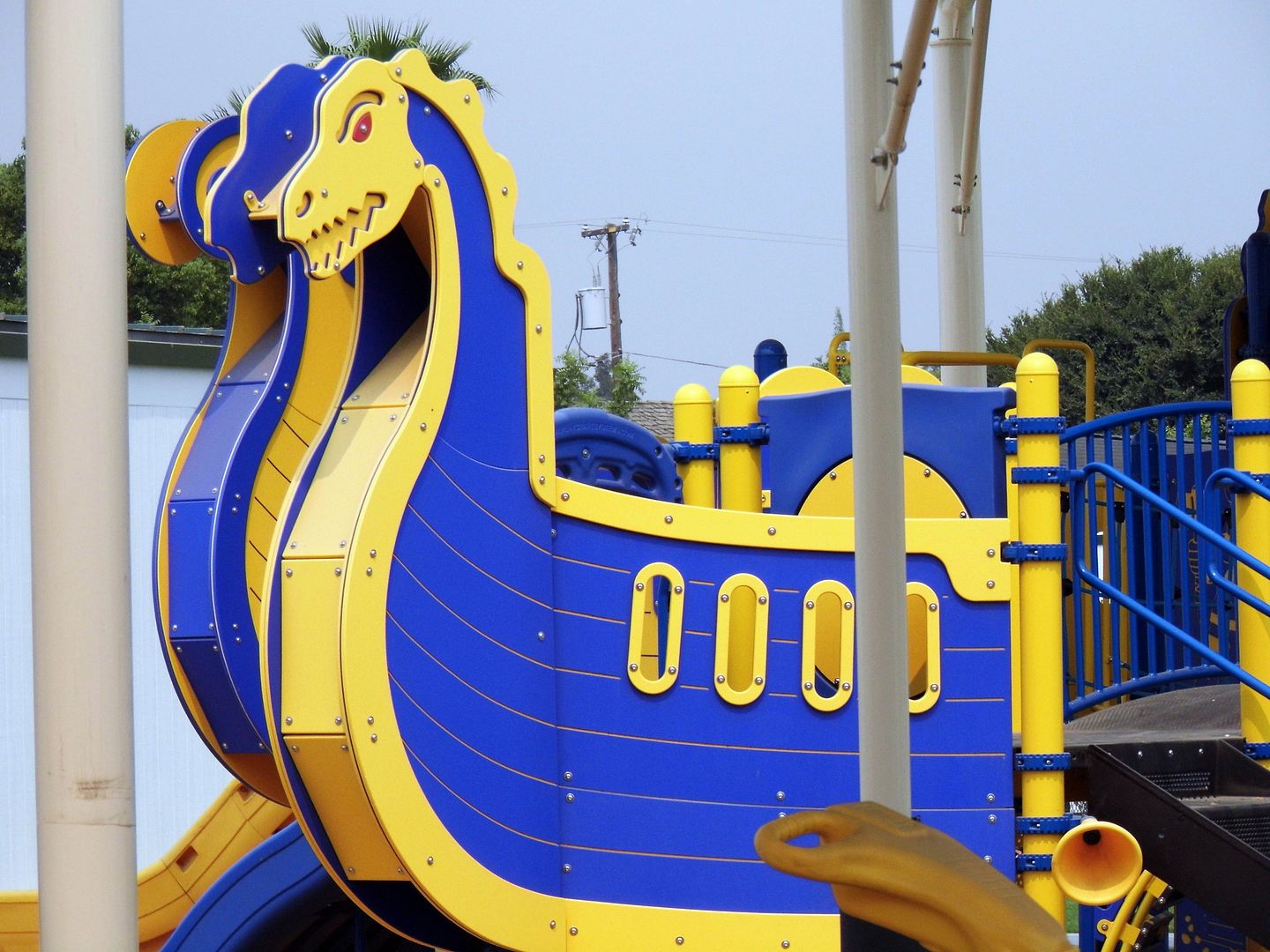


And like the dragonships or drakeskips of the Viking era (say, the 8th through 13th centuries), this playground version features a dragon (or drakkar/drakar) head mounted on the ship's bow to protect her and her crew at sea. 
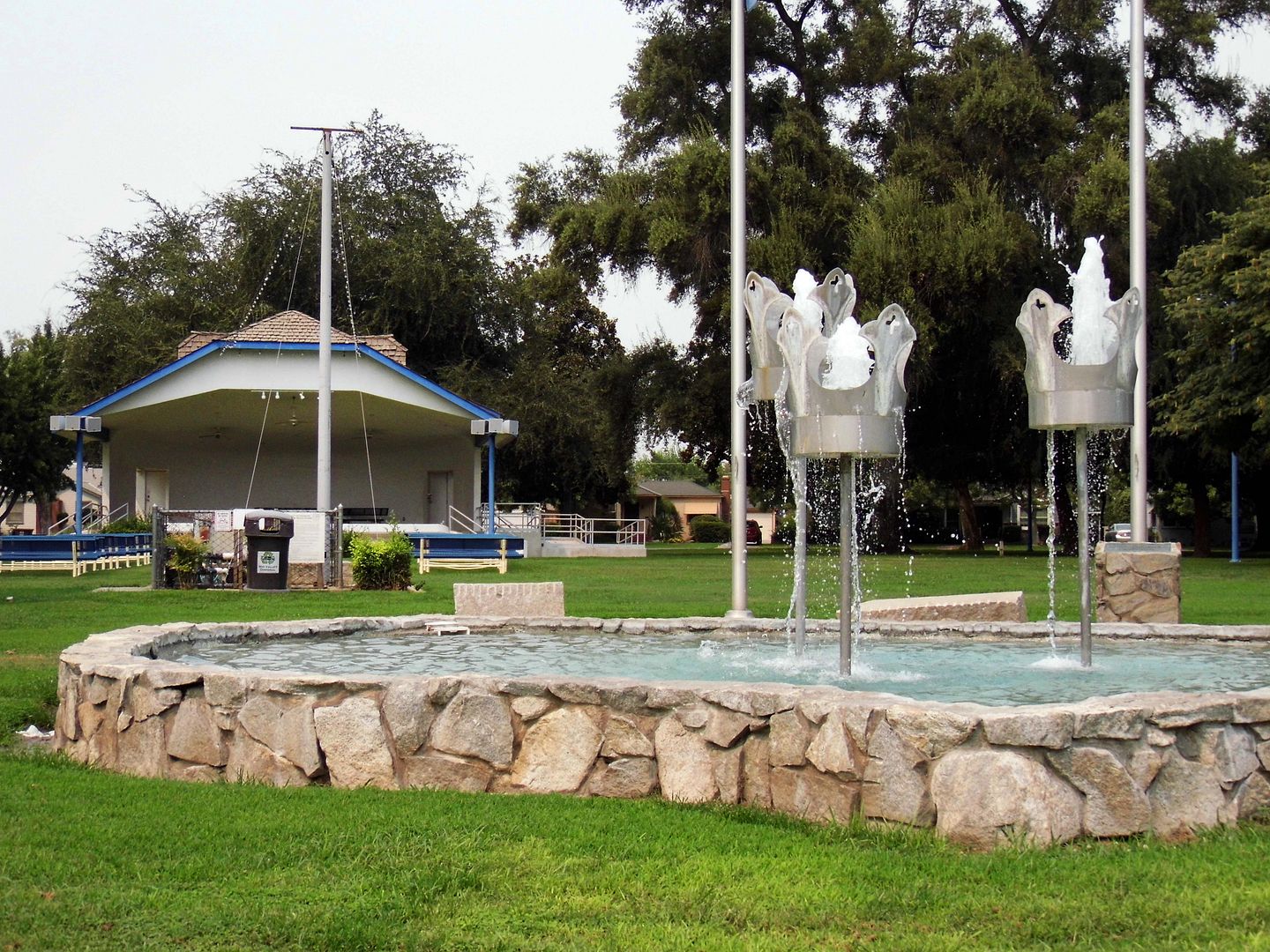


For all the Swedish immersion of Kingsburg, the town does acknowledge its home-away-from-home with its Three Crowns Fountain. In Memorial Park, a trio of metal crowns (tre kronor) represent the national emblem of Sweden (and the country's coat of arms) as they hover above a U.S.-shaped pool. 

Although I'd heard of and even visited California's Danish-themed town of Solvang, I might never have stumbled across Kingsburg had I not mentioned to some friends that I was heading up north to Fresno for Labor Day weekend. 

It's amazing when people can introduce me to something as entirely new—and captivating—as Kingsburg, after wandering through the lower half of California for over a decade now. 

And honestly, getting even a little bit of Sweden in the desert is just a magical thing. 

P.S. But it's nothing like IKEA. 

March 09, 2020

Photo Essay: A Beacon of Banking That Got Reincarnated As a Hotel

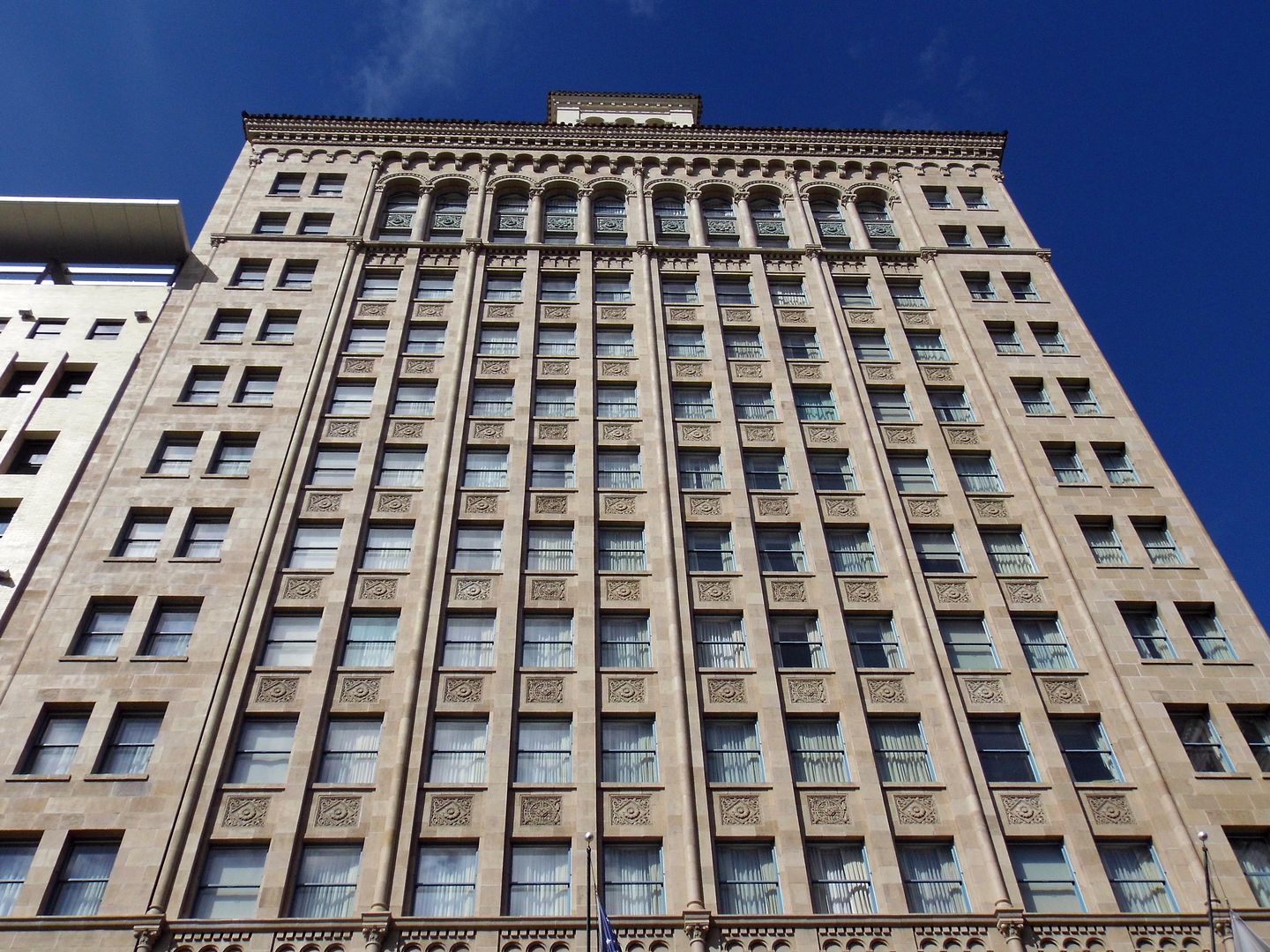
Founded in 1889, the former San Diego Savings Bank got a new name in 1925, officially becoming San Diego Trust and Savings Bank.

In 1928, it was about to get a new home, too—its fourth in San Diego, and its most magnificent yet.

There had been just one obstacle to its construction. The Hotel Beacon was standing on the corner lot at 6th and Broadway, which SDSB had purchased in 1924.

So, the old hotel got demolished; the new 13-story bank headquarters got built as the tallest building in San Diego at the time. (It would hold that honor until 1960.)

The funny thing is, though the bank building is still there, it's no longer a financial institution—but a hotel!

It's now the Downtown/Civic Center Marriott Courtyard (and probably the nicest Marriott Courtyard anywhere).

What goes around, comes around, I guess.


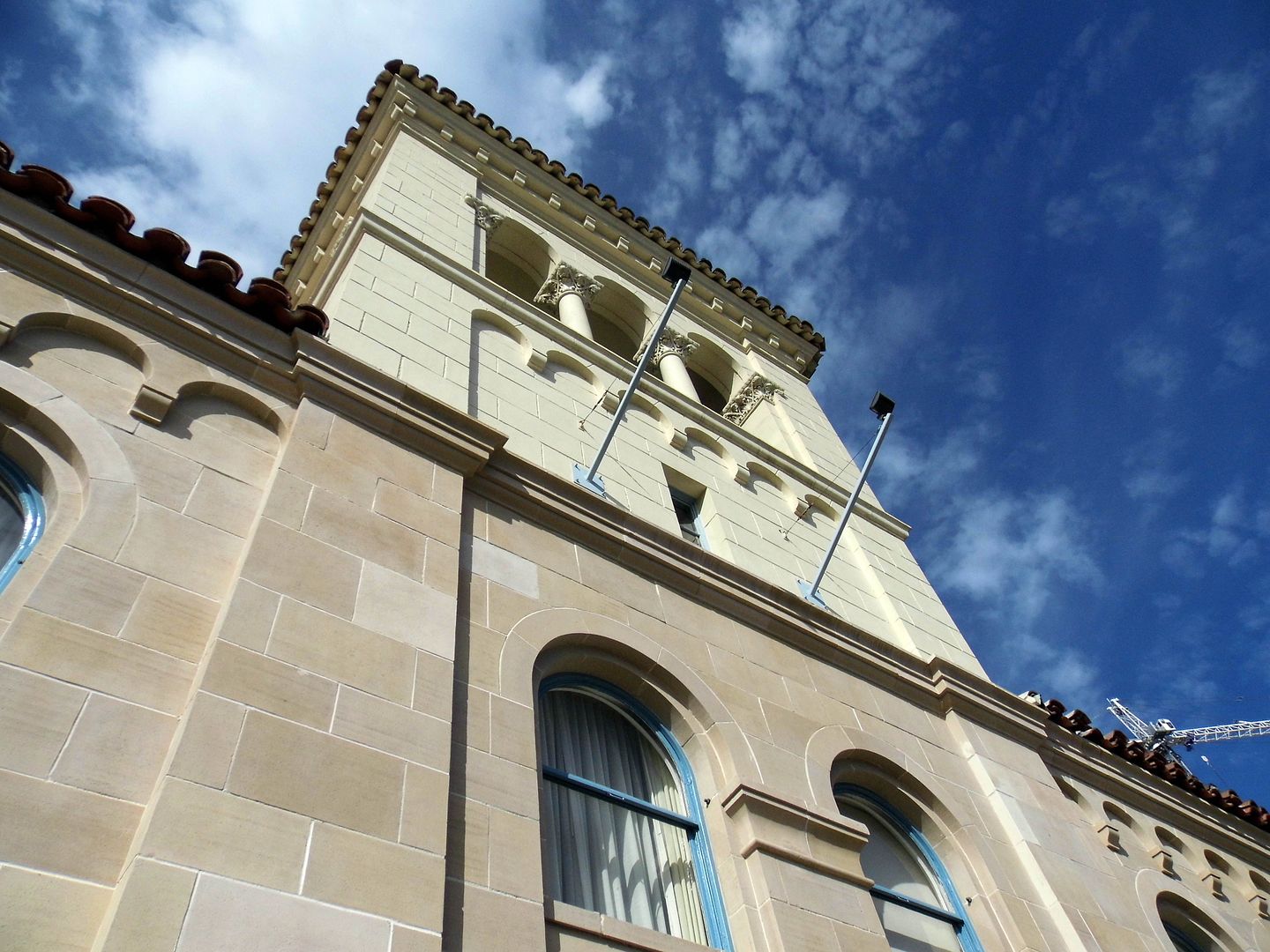
Built by William Simpson Construction Company at a cost of approximately $1.4 million, the San Diego Trust and Savings Bank building is one of only three banks ever designed by master architect William Templeton Johnson. Most would probably agree it was his best.


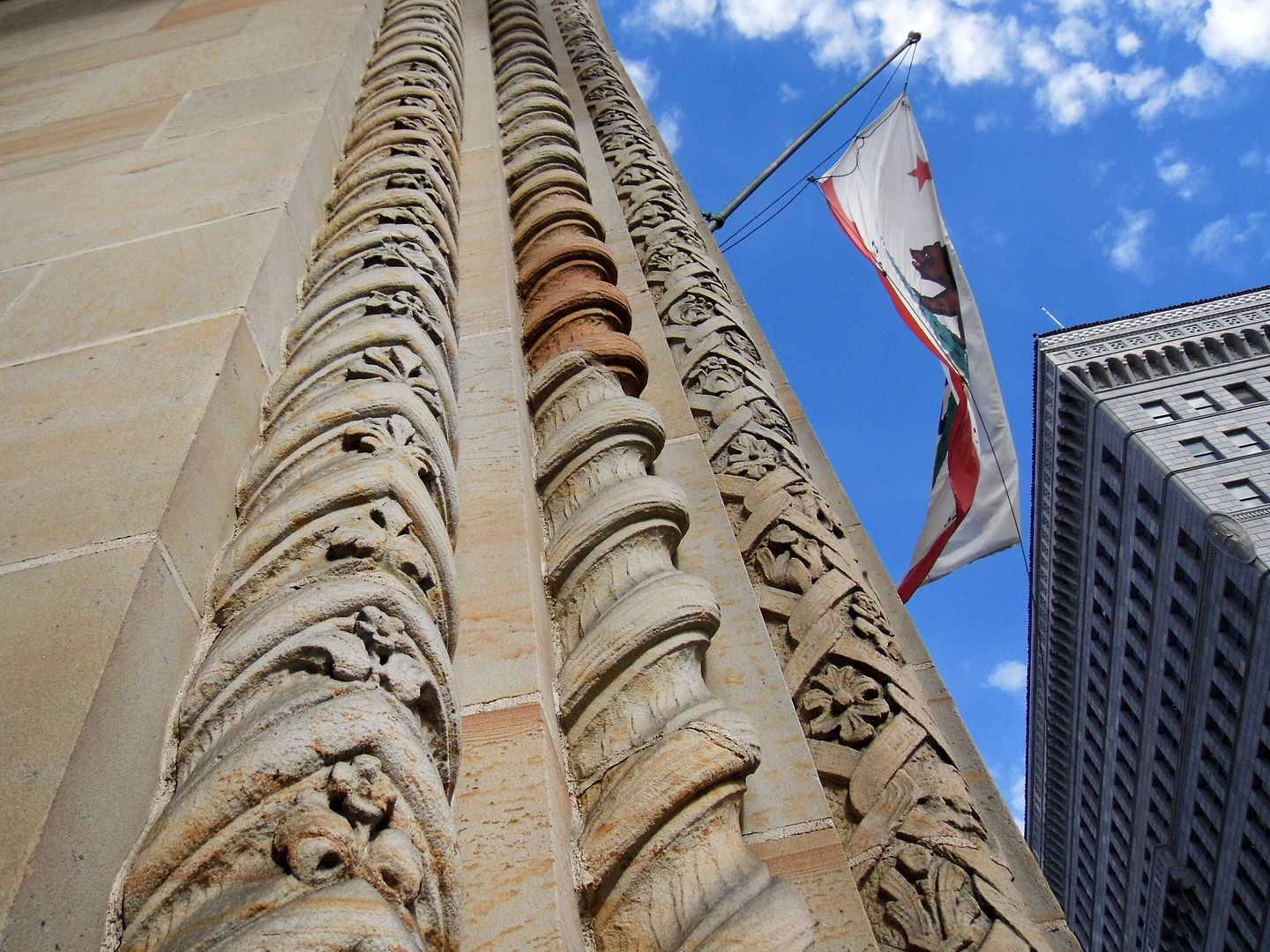
Its "bones" are made of steel reinforced concrete, but what you see on the outside is two stories of buff-colored sandstone quarried from Briar Hall in Ohio (perhaps its first exterior use on the West Coast)...


...perched atop a base of pink granite known as Scotch Rose.


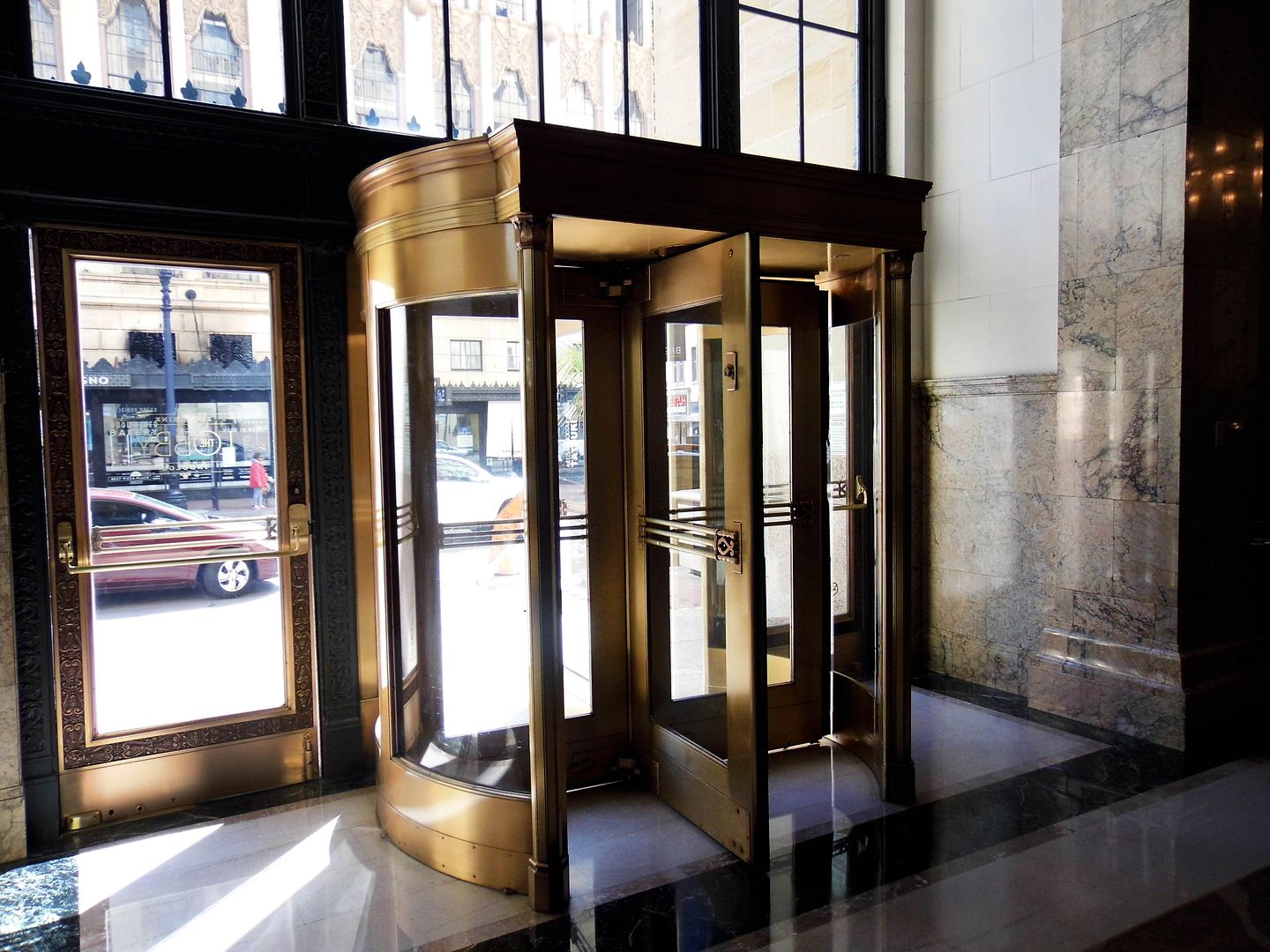
The experience of walking through the bronze revolving door of the main hotel entrance now is meant to be quite similar to when the building functioned as a bank.


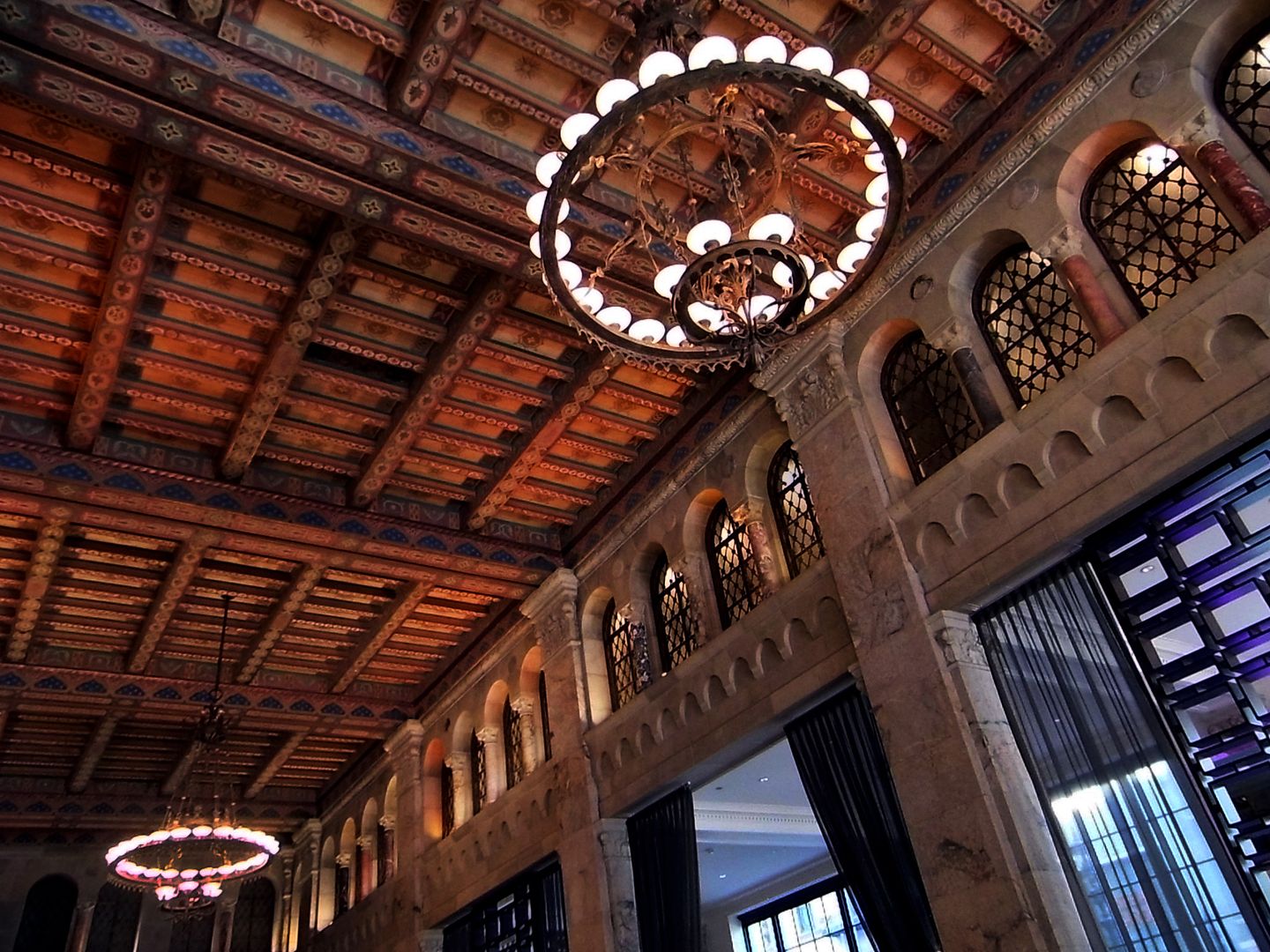
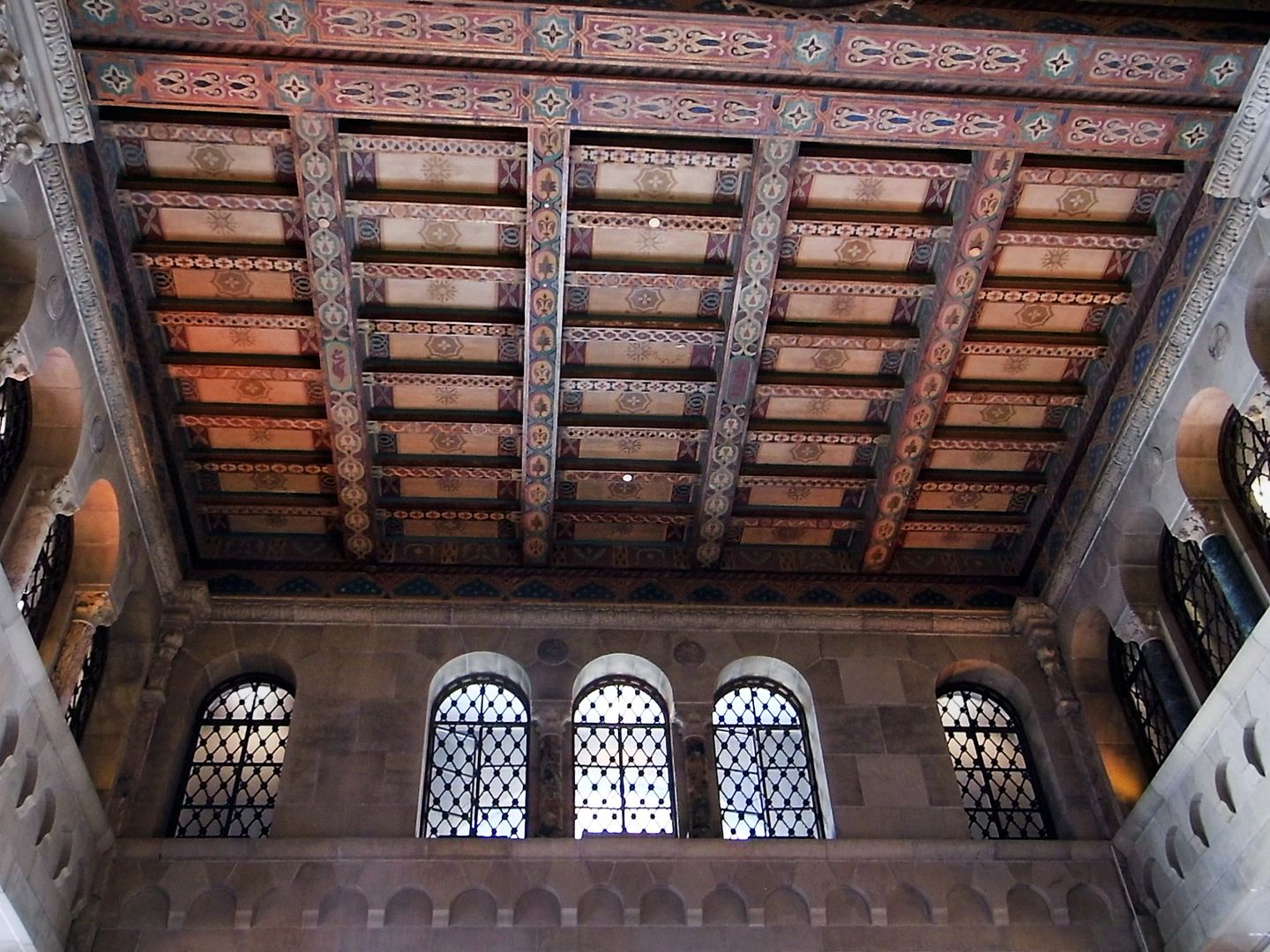
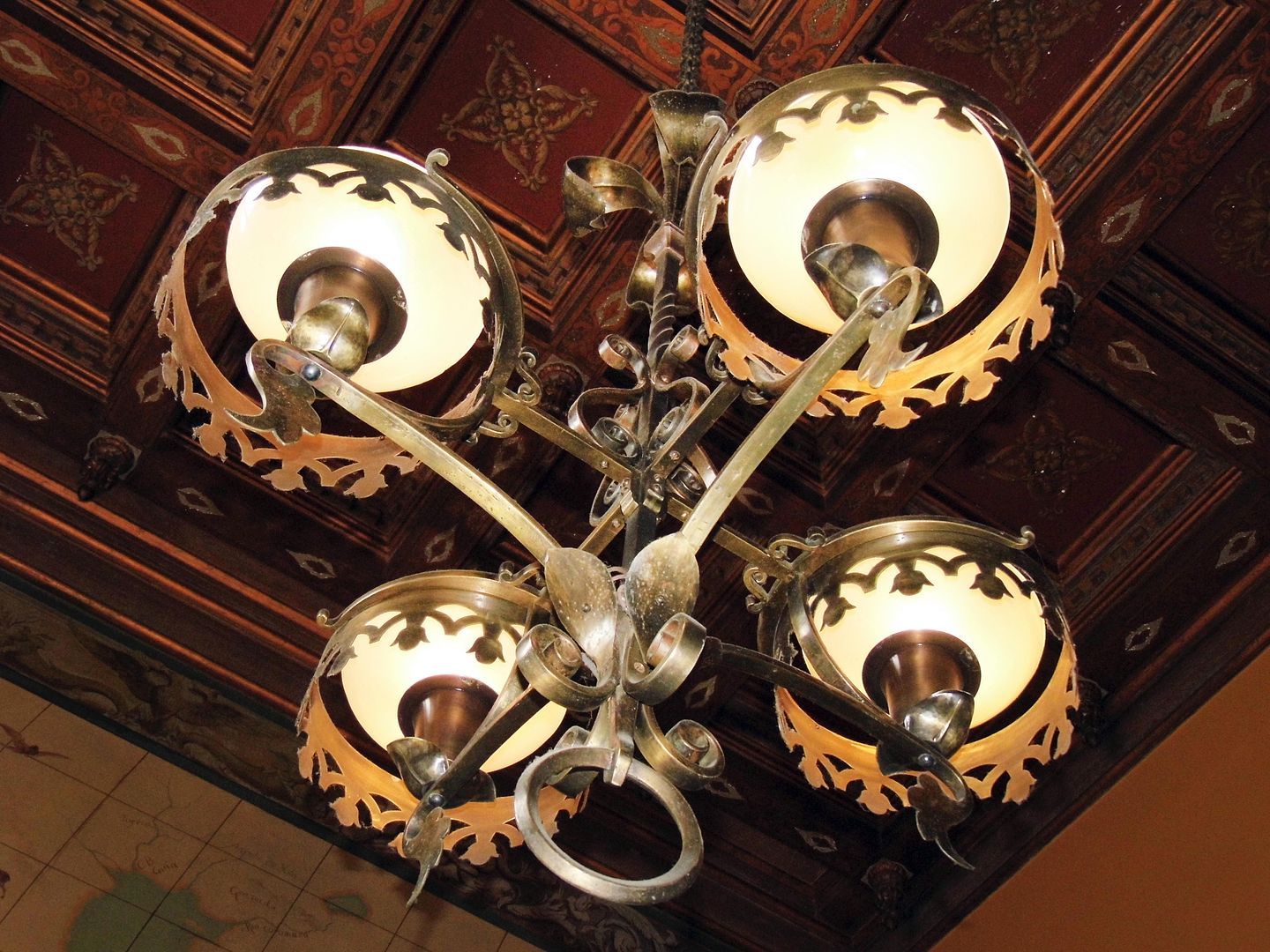
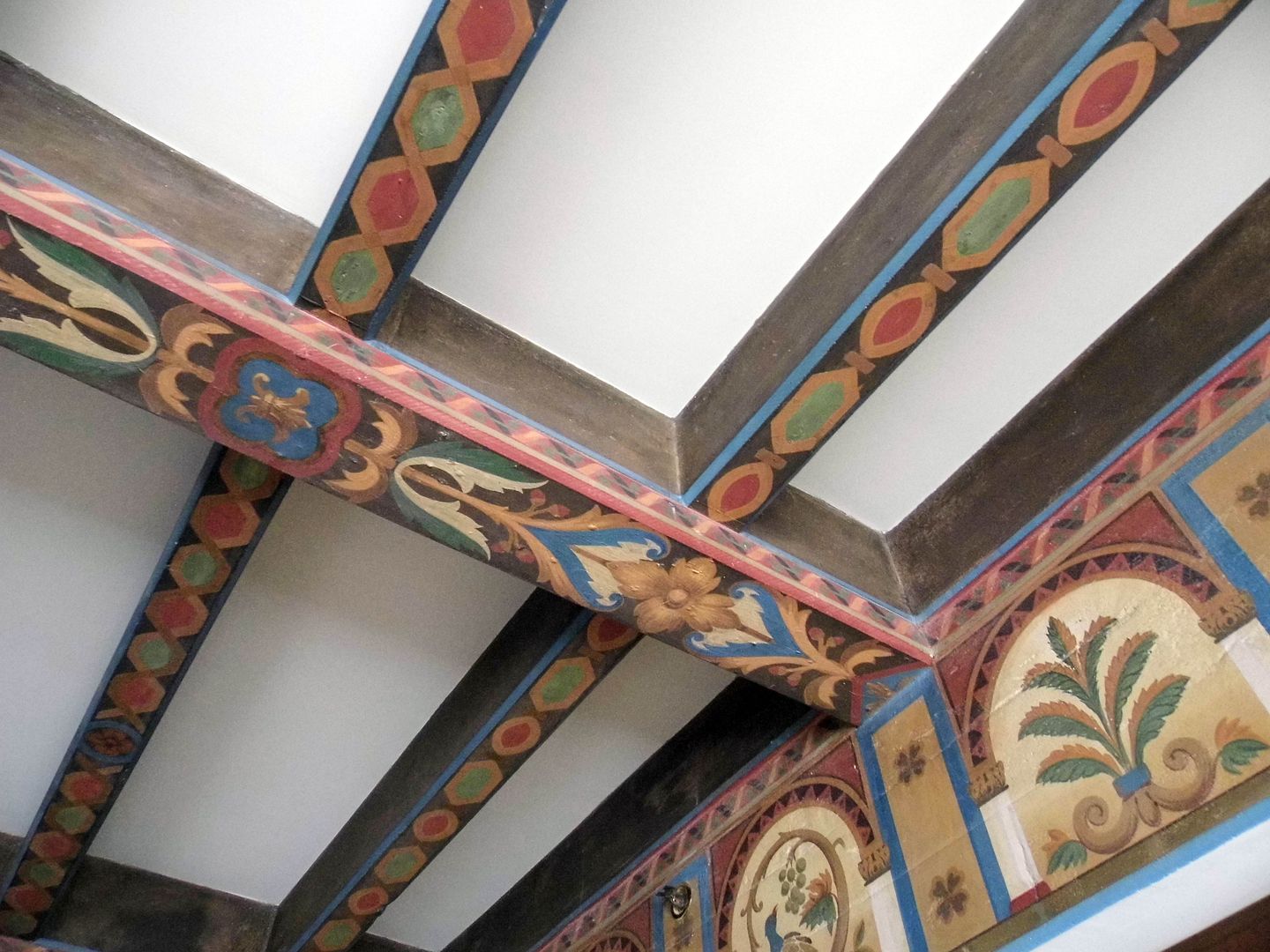
The Grand Lobby is largely intact from its former financial function—the circular antique chandeliers still hanging from the hand-painted, coffered plaster ceiling (rising 32 feet in height) and surrounded by 35 marble columns topped with Corinthian capitals. In all, 19 different types of marble were quarried from several Mediterranean countries as well as other sources around the world.


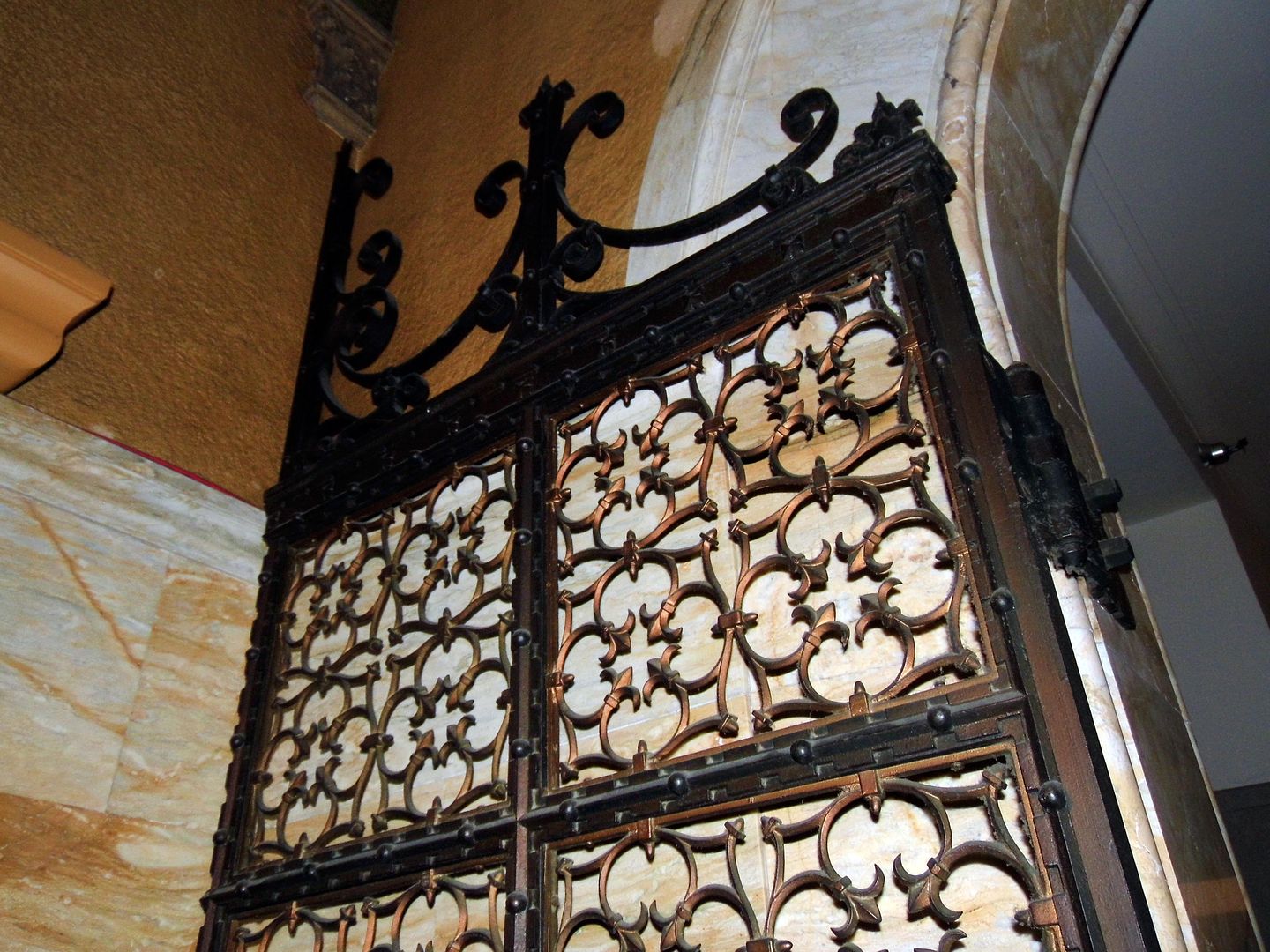
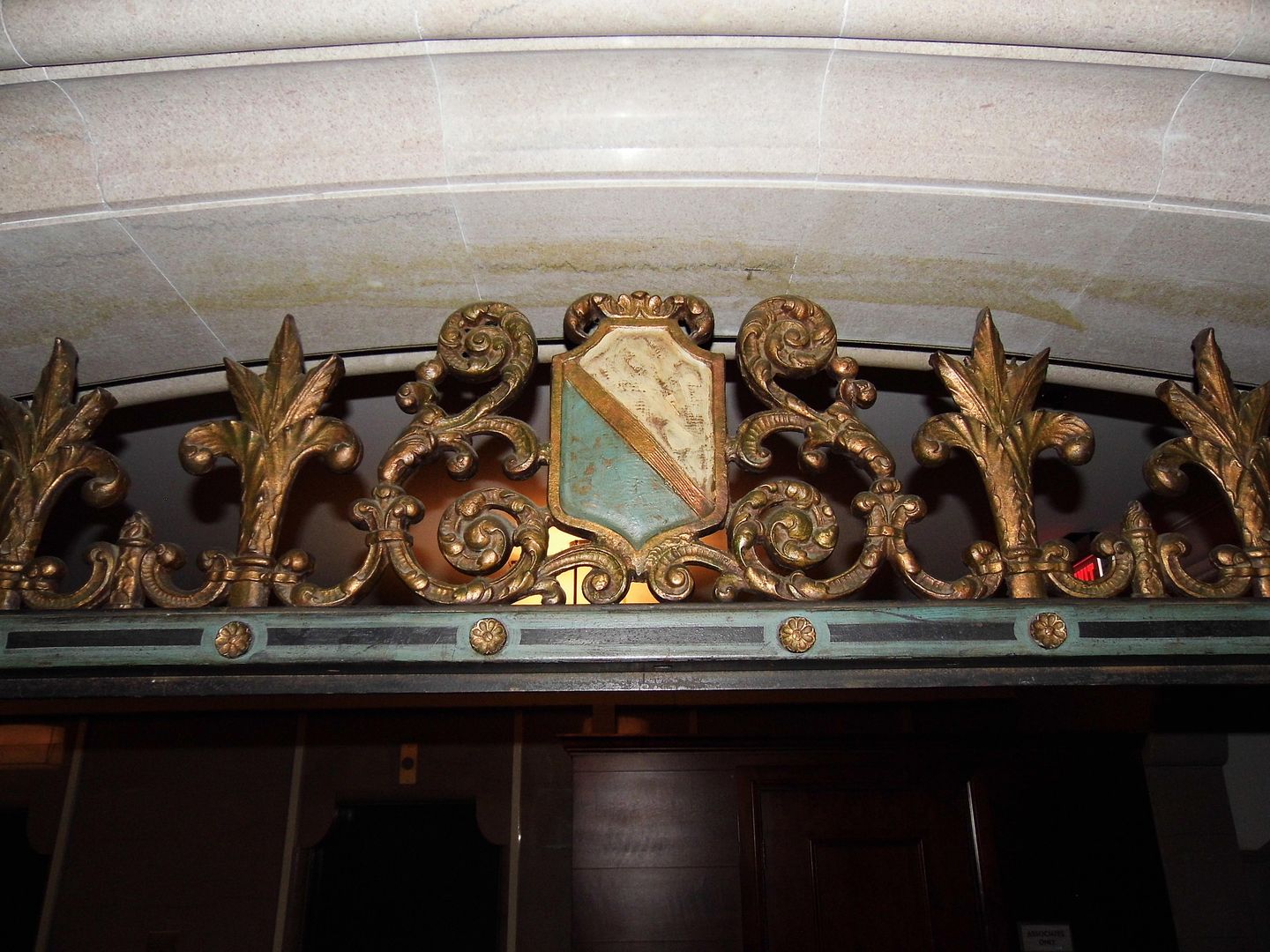
The lobby in particular evokes a medieval atmosphere, as it features all the ornamentation that came into fashion in the Middle Ages—clerestory windows behind iron grilles, grand arches, medallions, and such. Much of those arise out of the Italian Romanesque Revival/Italianate Renaissance Revival architectural style (the The San Diego Union called it "Lombard-Romanesque" at the time of its opening)—less common in commercial buildings like this one and more frequently found in churches.


In addition to the banking services offered to the public (from the basement through the mezzanine levels), the building also housed offices in its upper stories...


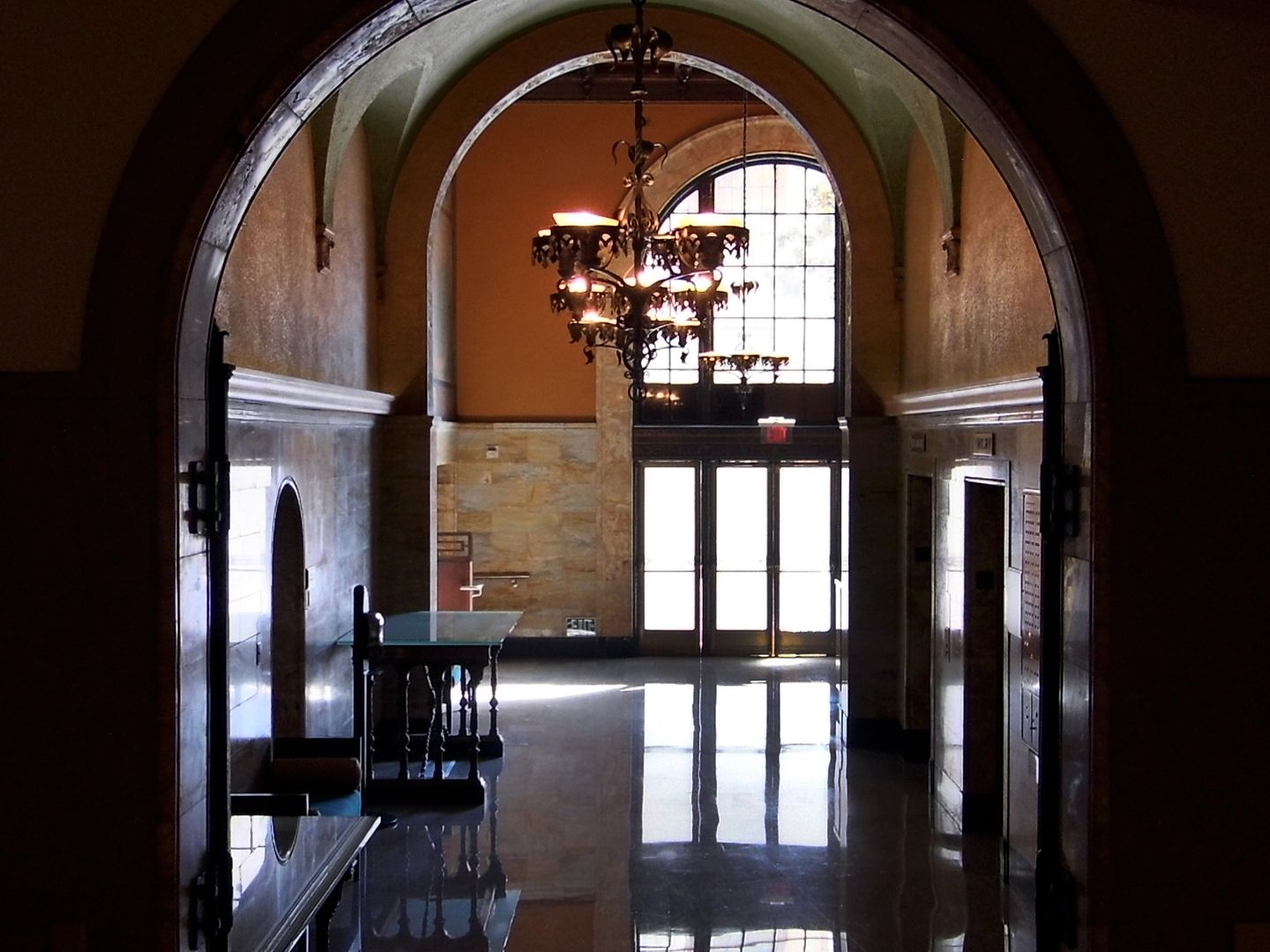
...and its original office building entrance is still there, just beyond the massive arches of the elevator lobby, the wall paneling of Italian marble, and the floor of Tennessee marble (from Gray Eagle Quarry).


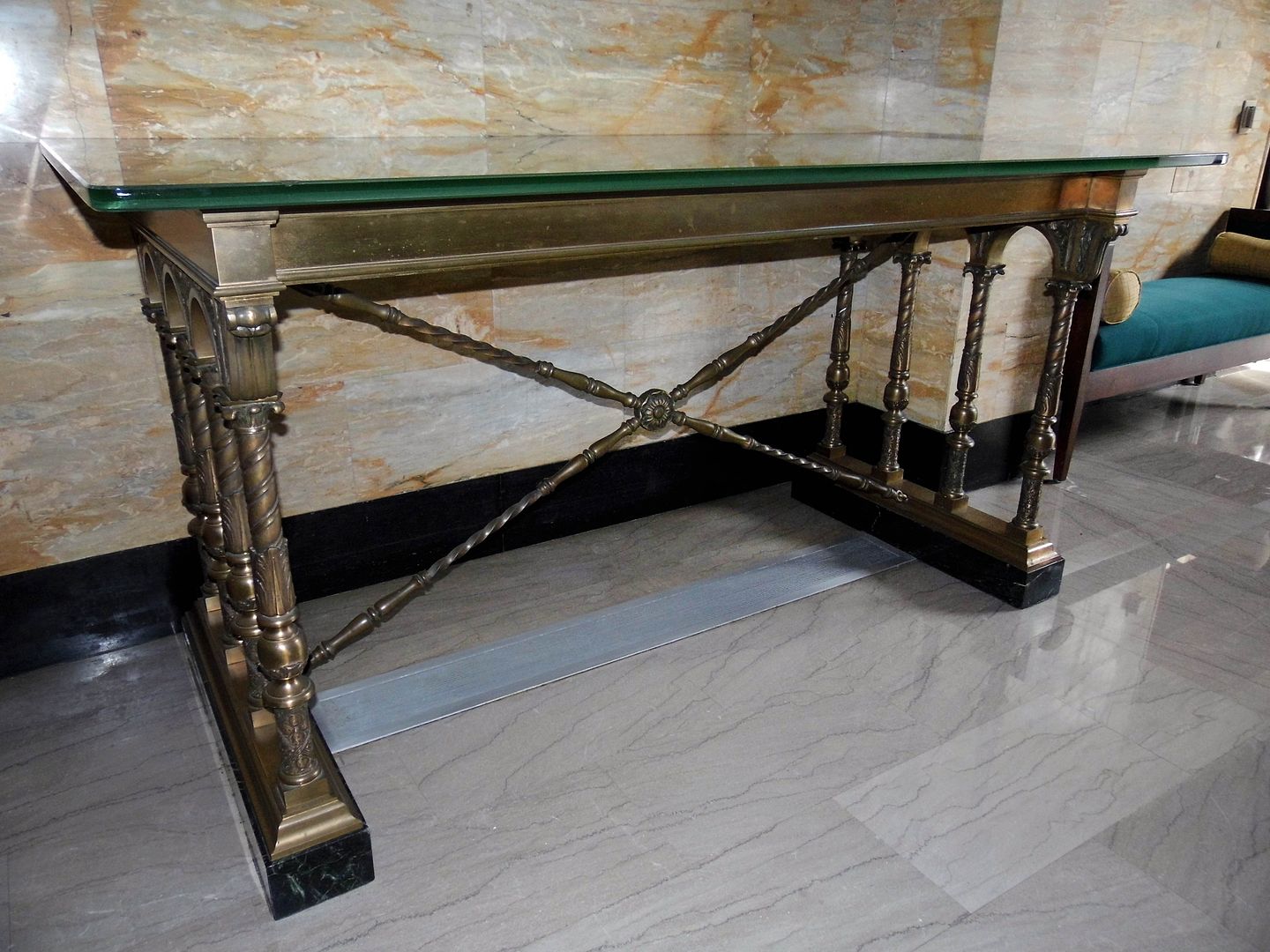
One of the original bank tables—once positioned near the teller cages for customers to fill out their paperwork and sign checks—has been relocated to the elevator lobby, with others sprinkled throughout the current hotel as well.


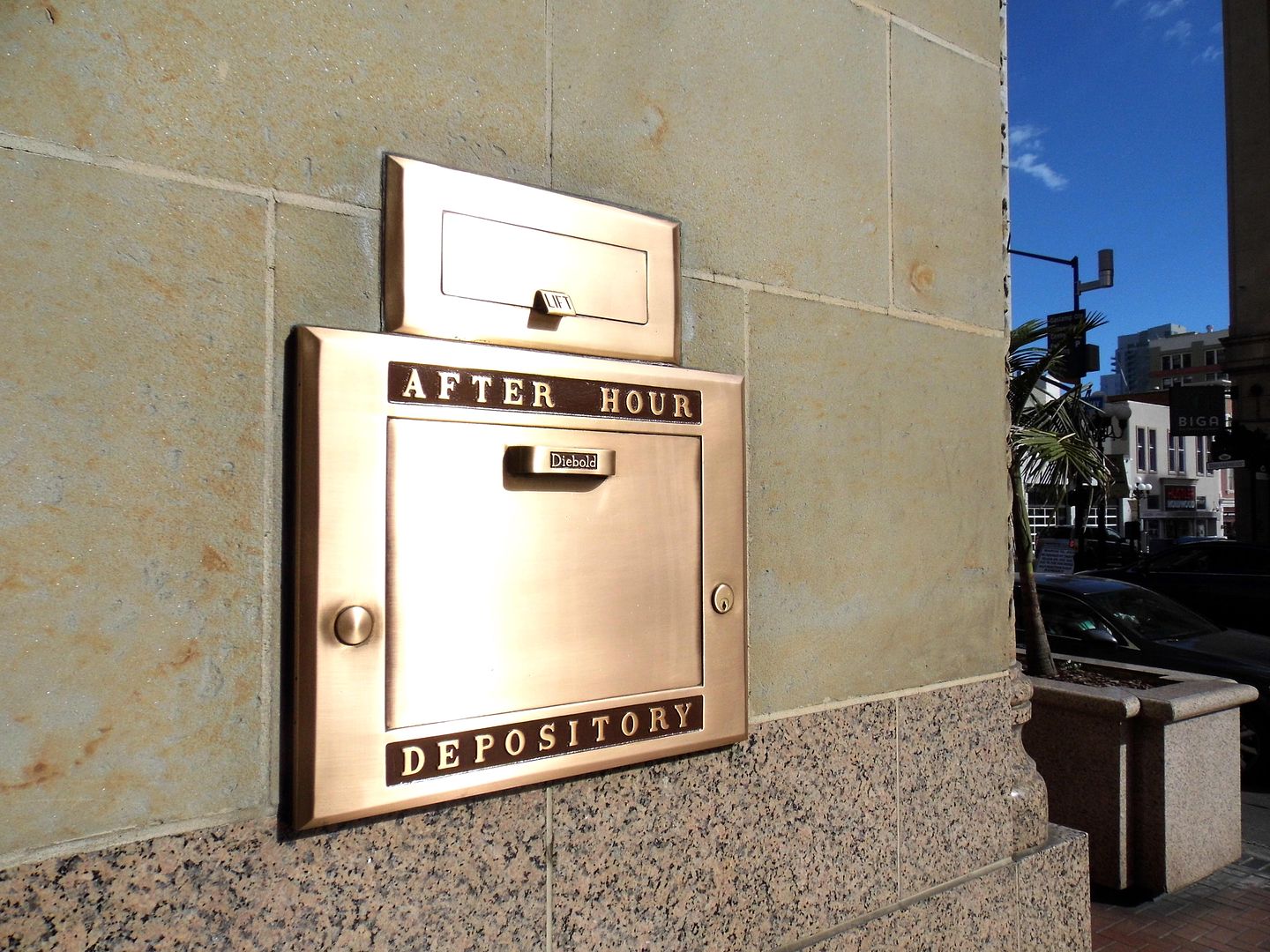
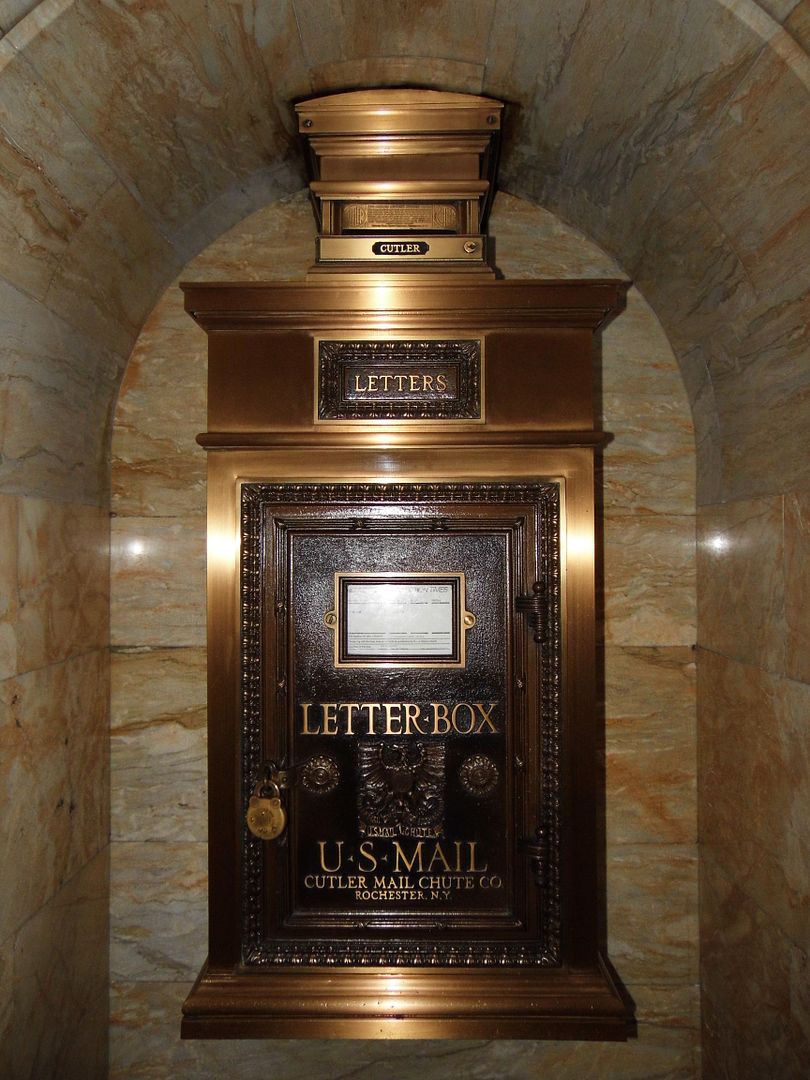
The original mail chute is still mounted in a recessed niche in the elevator lobby—and the post office still picks up the mail every afternoon at 1 p.m.


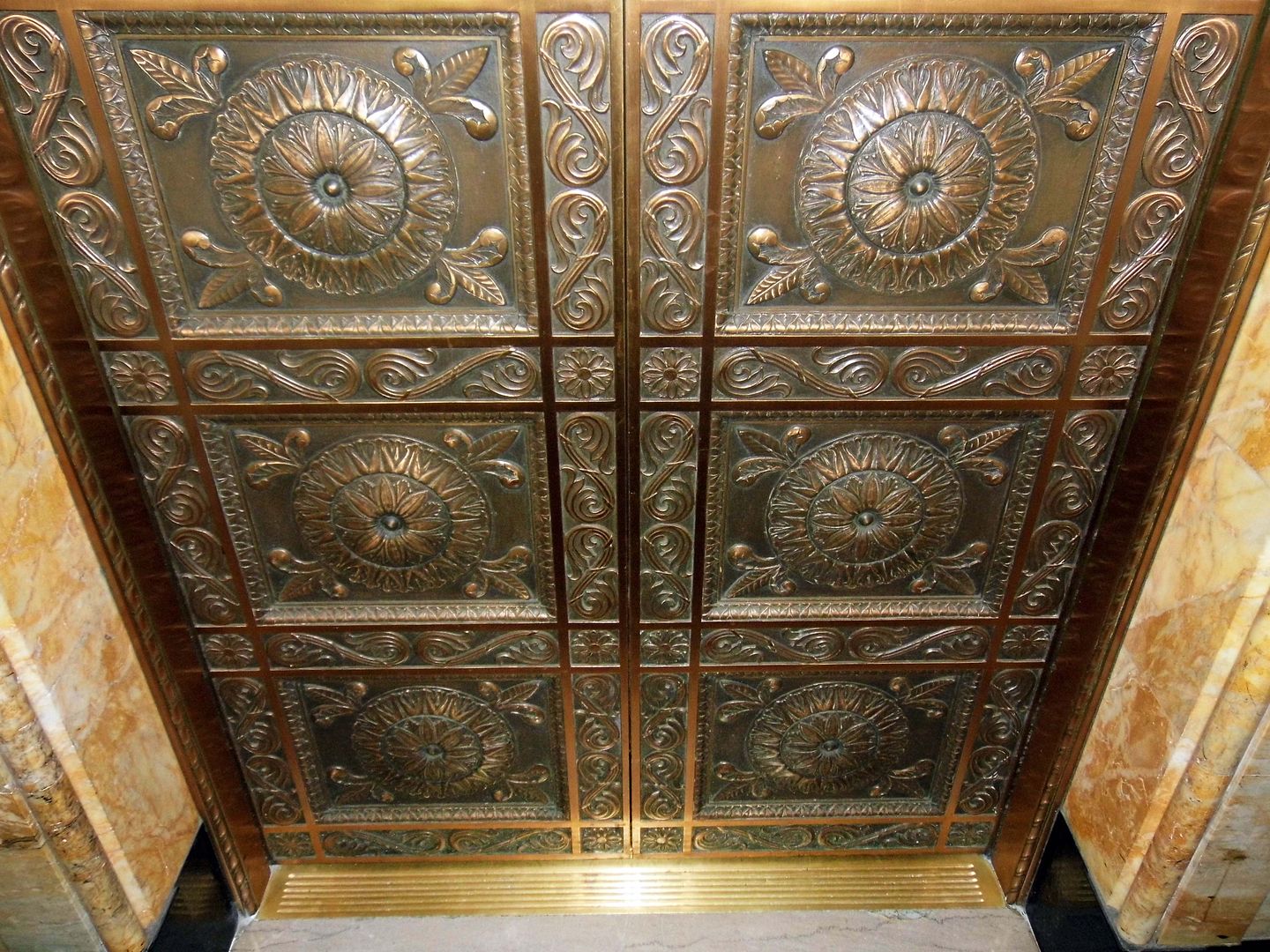
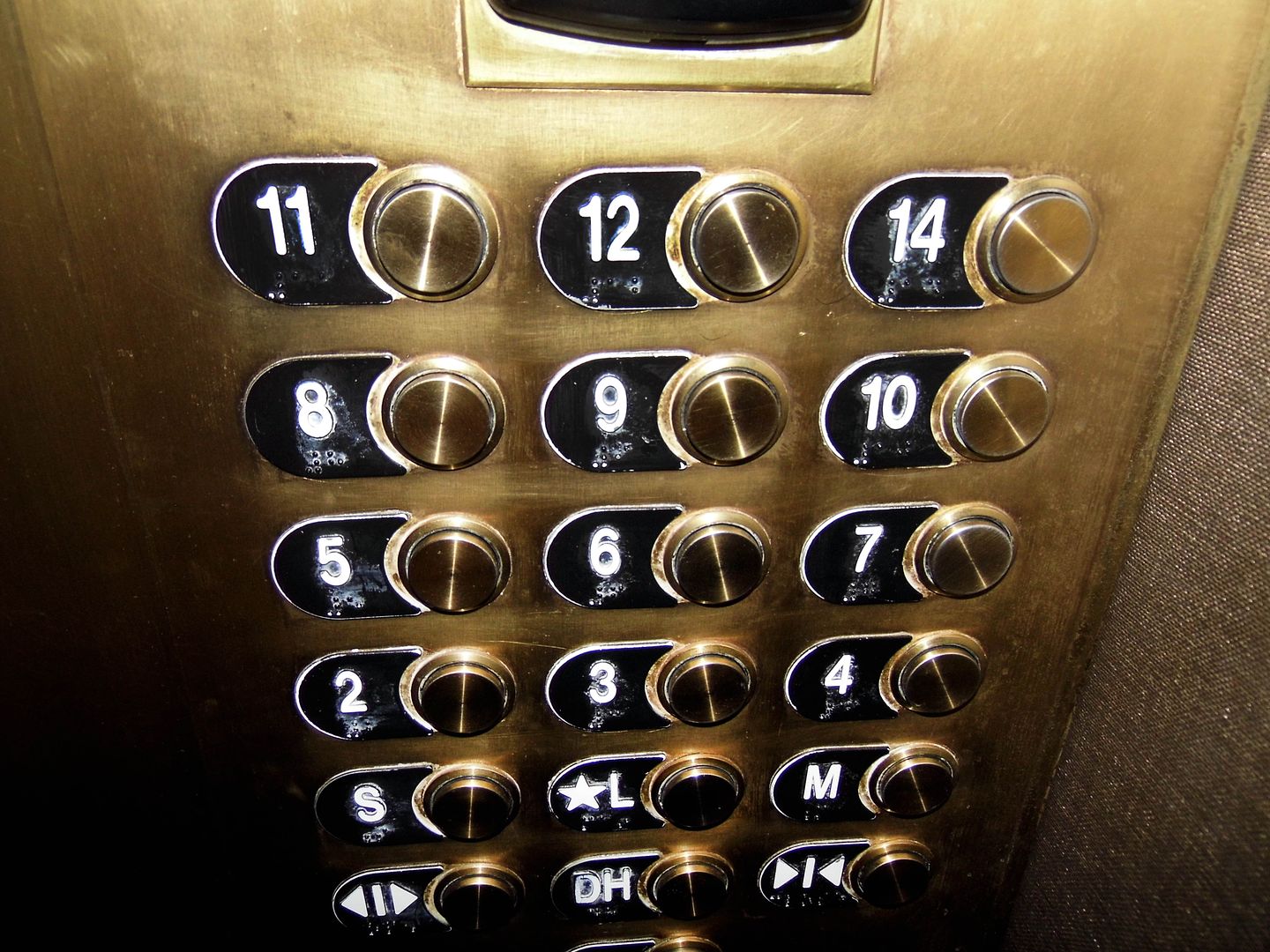
Behind sculptured bronze doors, hotel guests would find the most technologically advanced, high-speed elevators, which traveled at a maximum rate of 660 feet per minute—more than double most other buildings at the time.


By comparison, the first-ever commercial passenger elevator (in NYC) took a full minute to climb just 40 feet.  Today's fastest elevator in the world (China's Rosewood Guangzhou, Guangzhou Chow Tai Fook Finance Centre) travels more than 4100 feet per minute. 


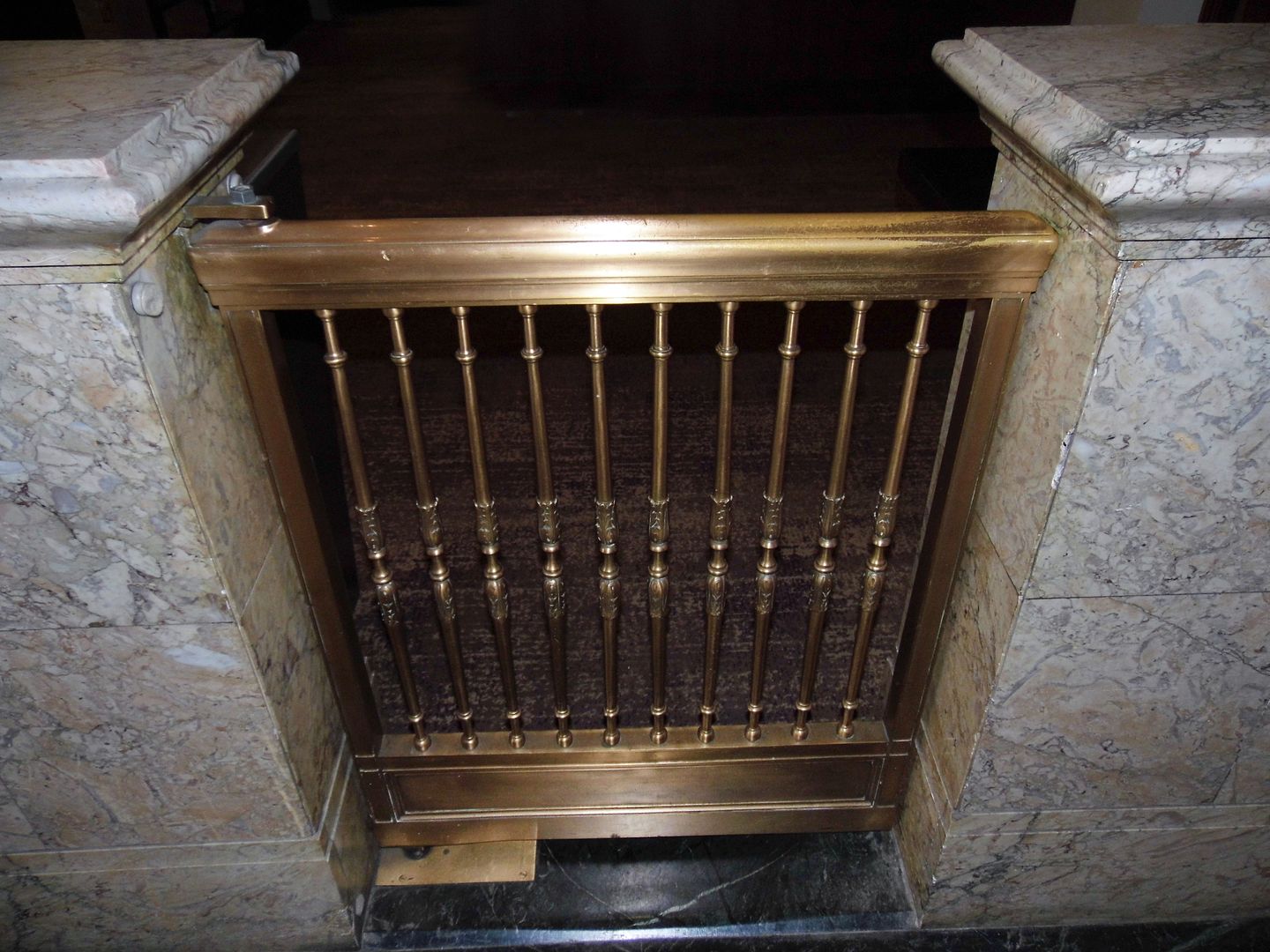
The heavy gates leading to the Bond and Investment Service and the one-on-one meeting area still swing—though now they only separate the public from the snacks for sale and a billiard table surrounded by framed, historic photos.


You can still walk down the stairs to the basement in search of the Safe Deposit Department...


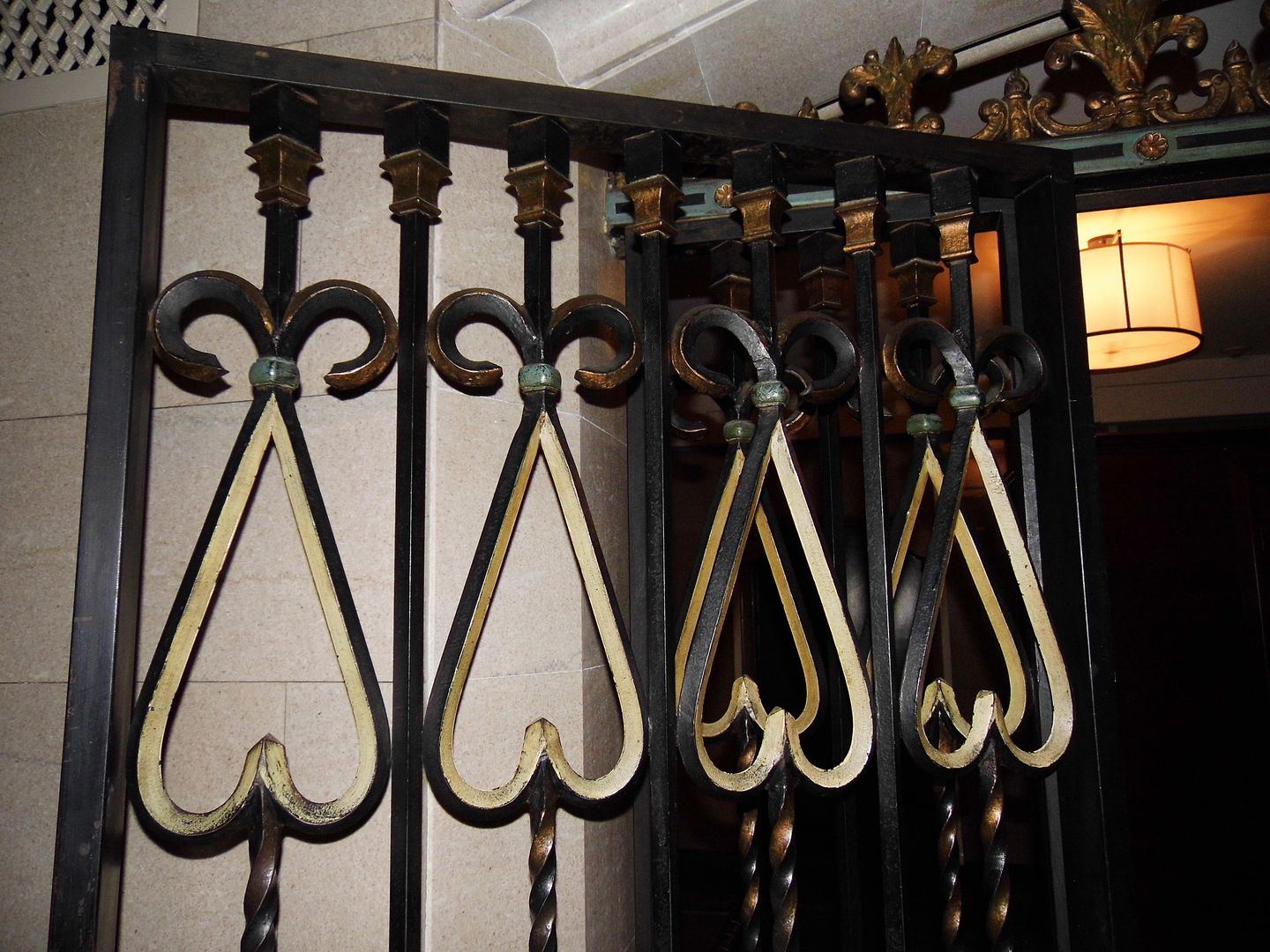
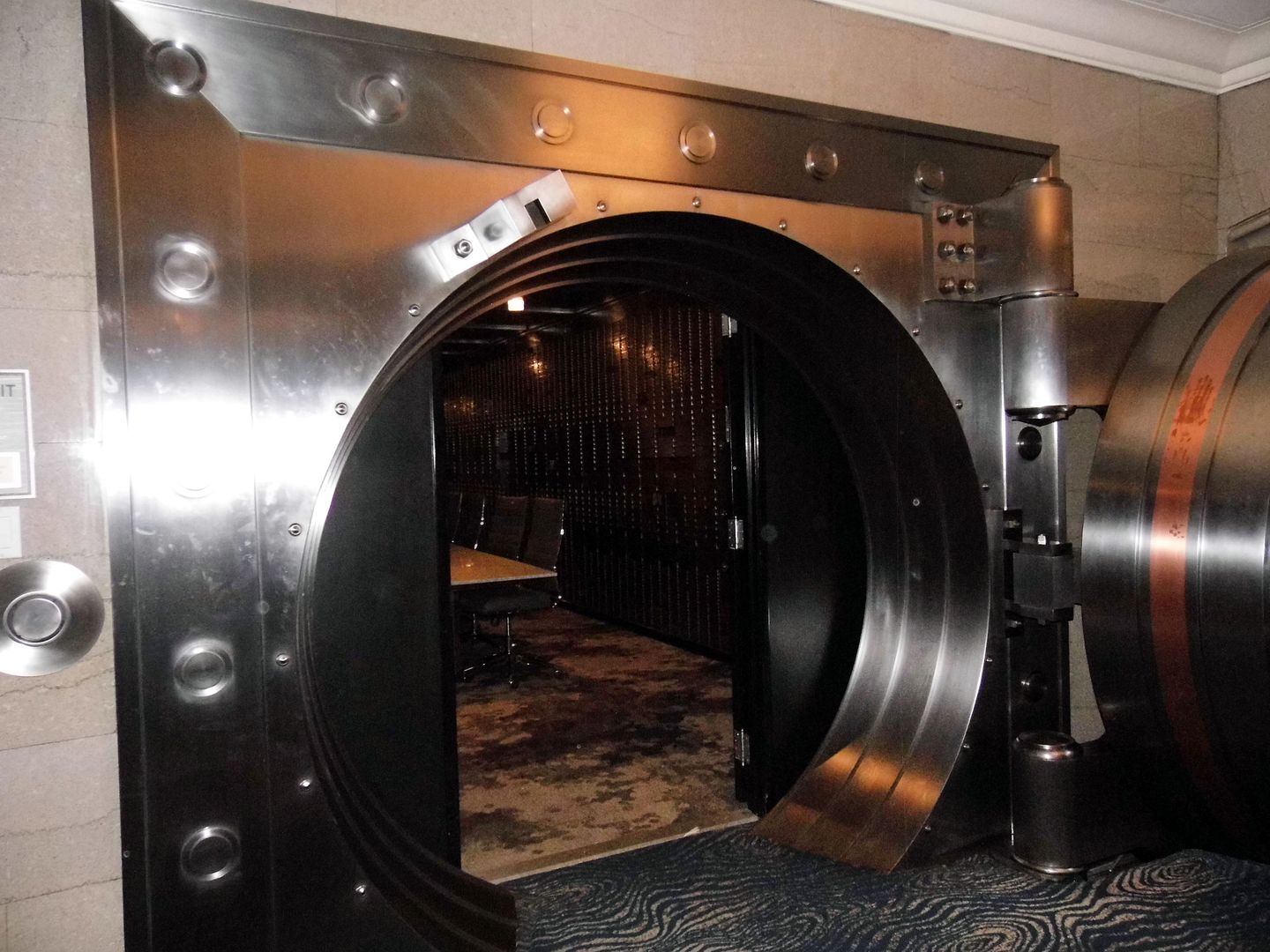
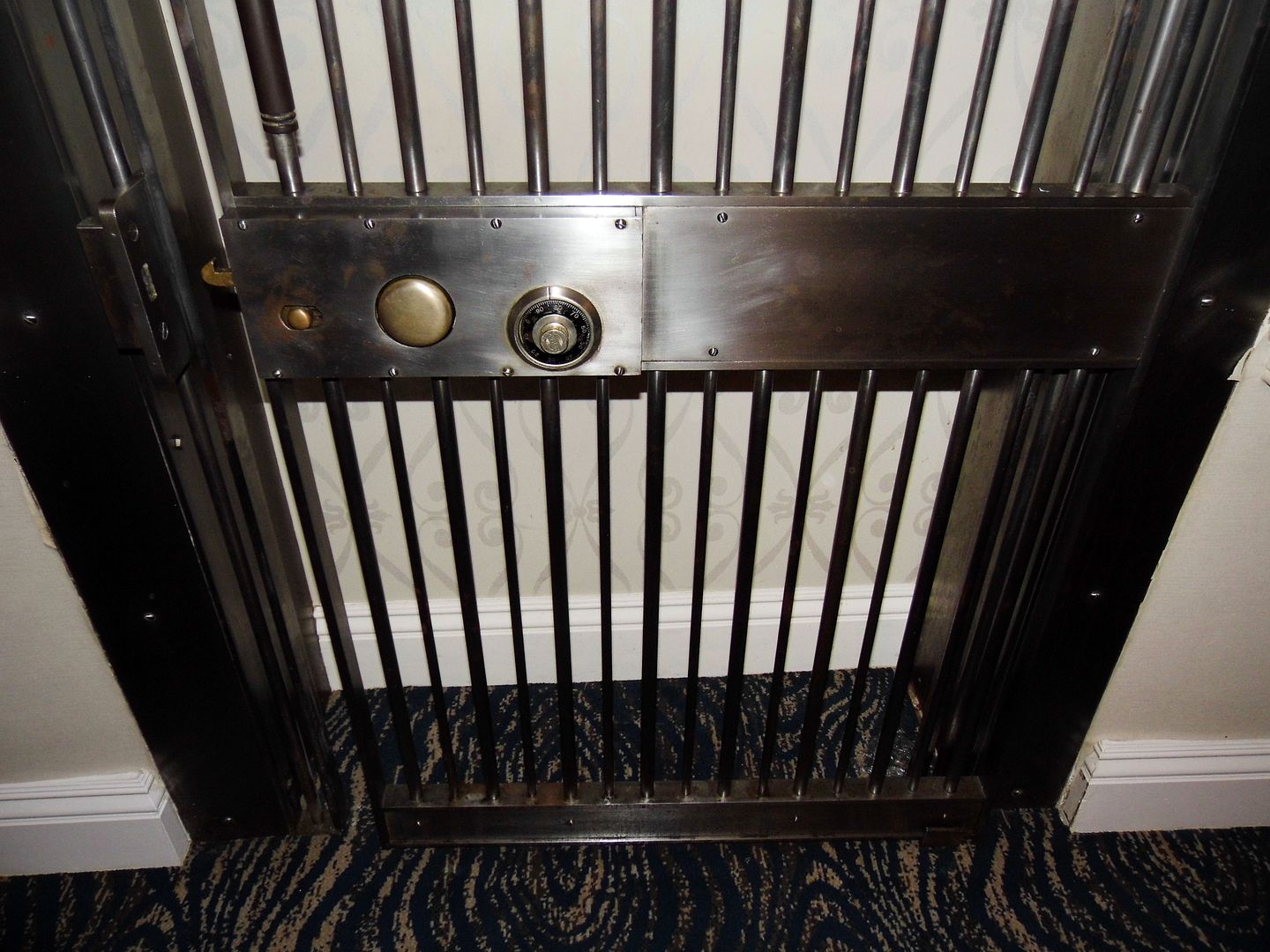
...but when you walk through the painted metal vault gates...


...which are no longer locked...


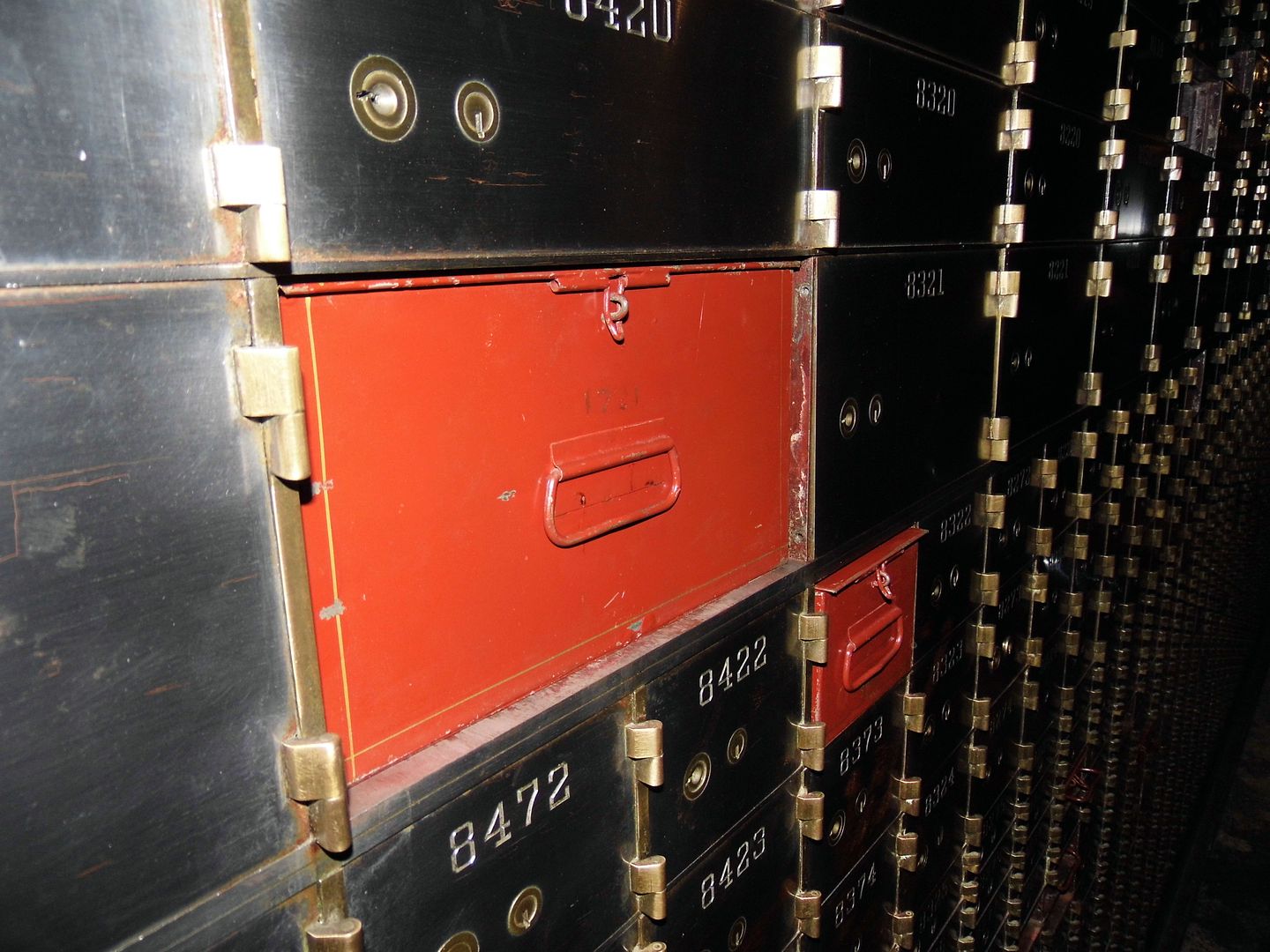
...you'll find the Safe Deposit Room...


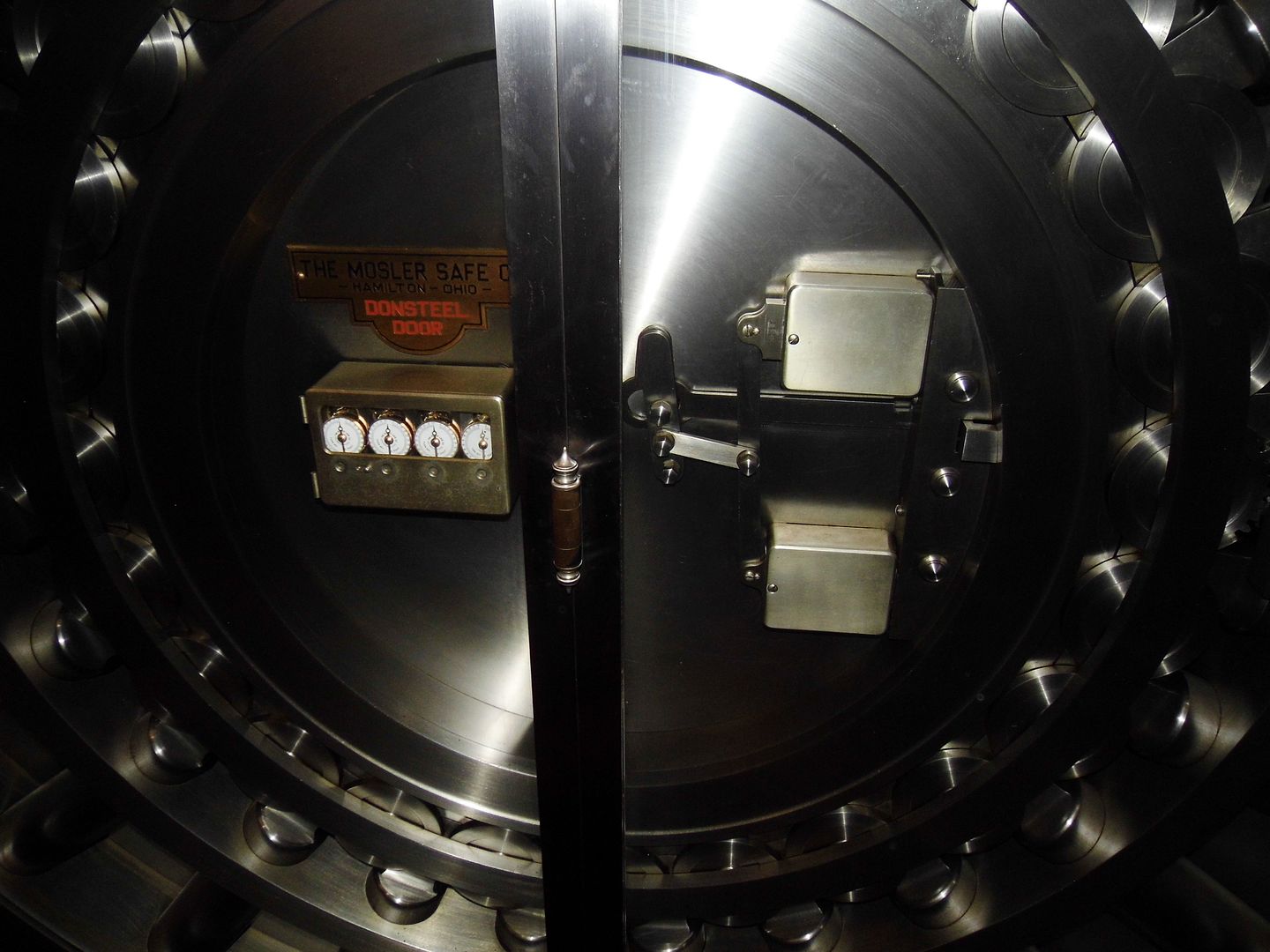
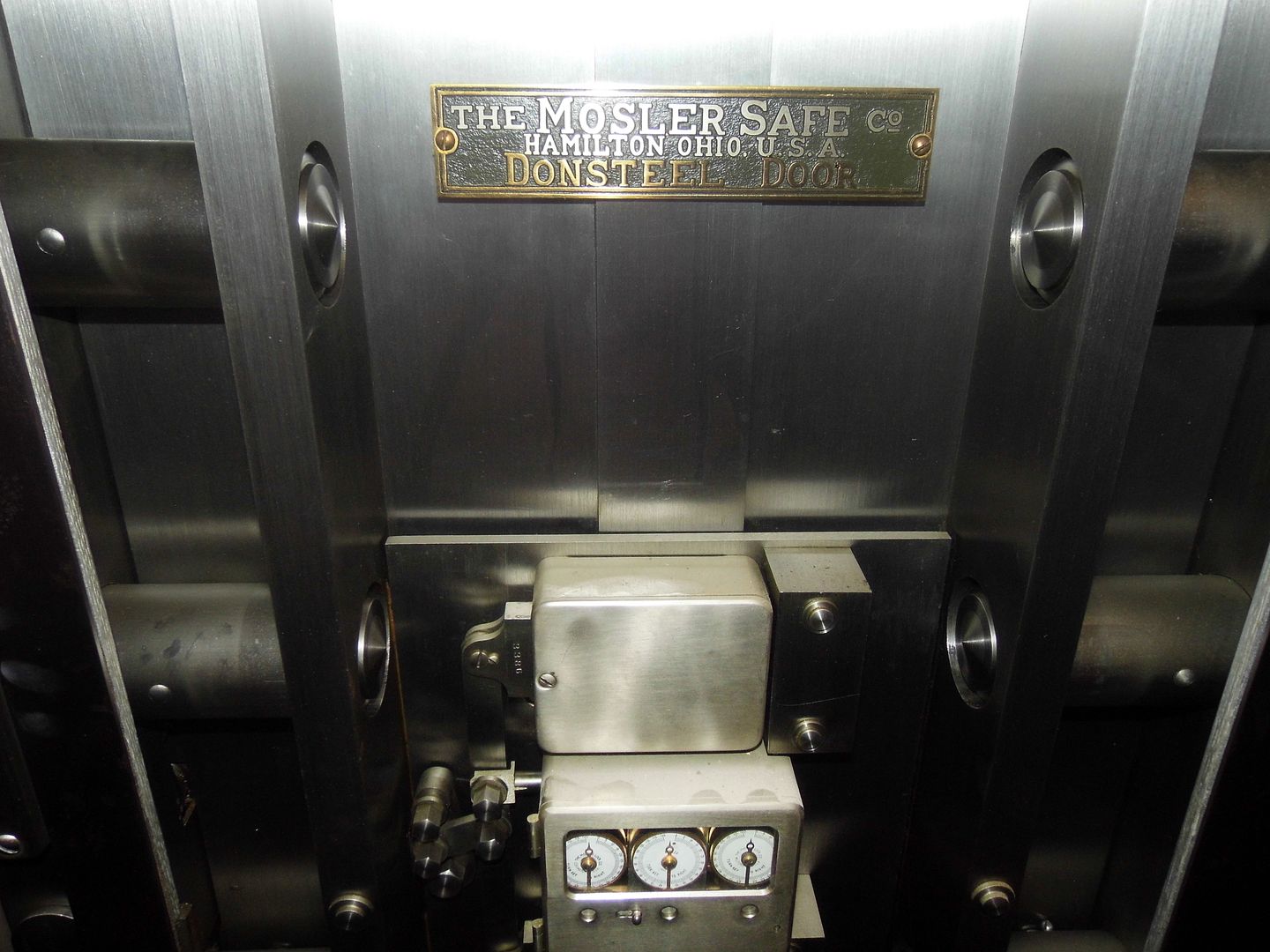
... its original 47,000 lb, stainless steel door (manufactured by the Mosler Safe Company of Ohio, which also provided secure storage for Fort Knox) permanently in the "open" position.


Inside, the safe deposit boxes are empty, but you can still pull them out like the drawers of a cabinet of curiosities, hoping to find something secret, special, or valuable inside.


Although the bank catered to customers of all economic status (including children, who could open an account with a starting deposit of 10 cents), the safe deposit boxes attracted some pretty big-ticket valuables that shouldn't be flashed around out in the open.


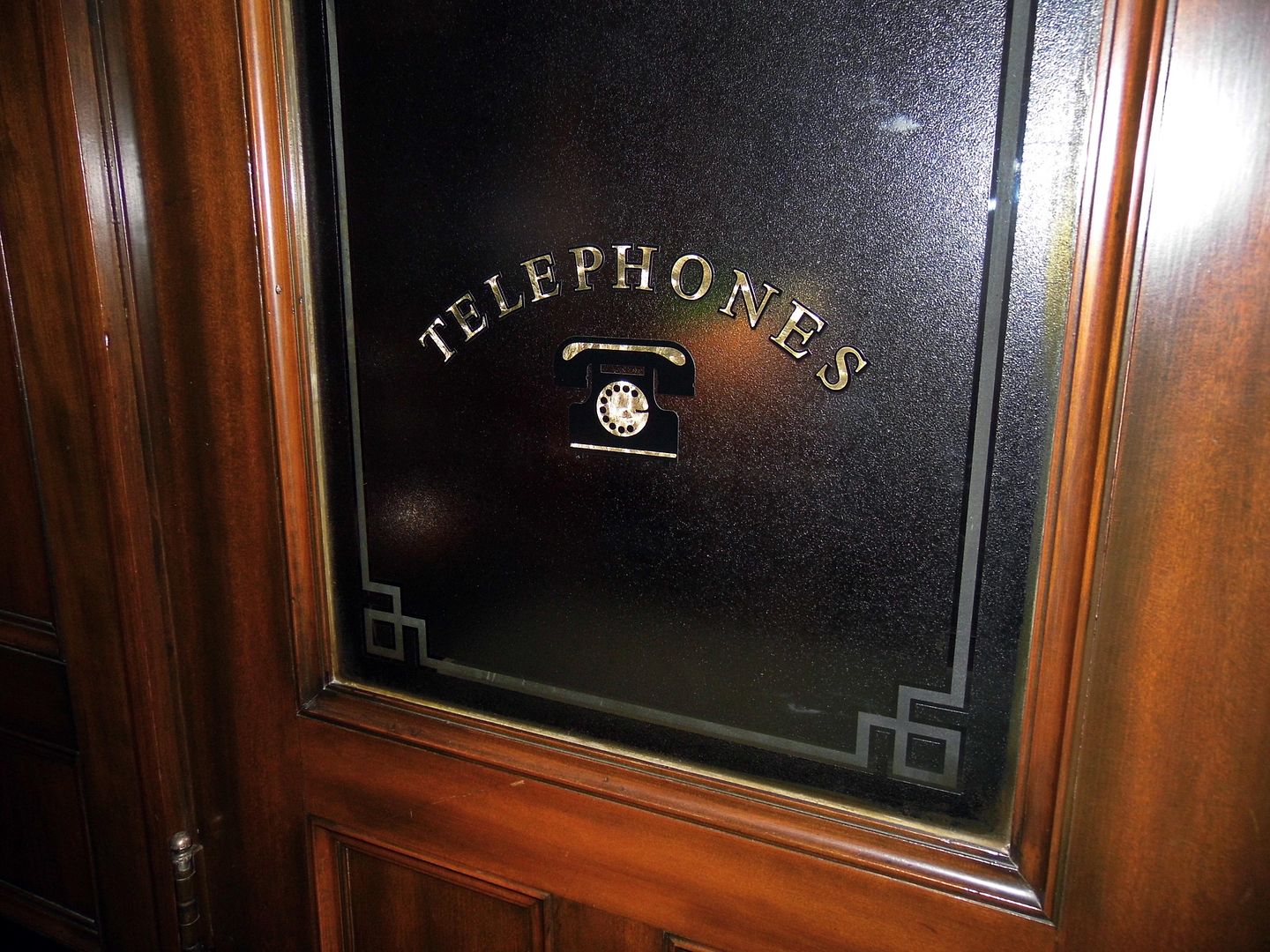
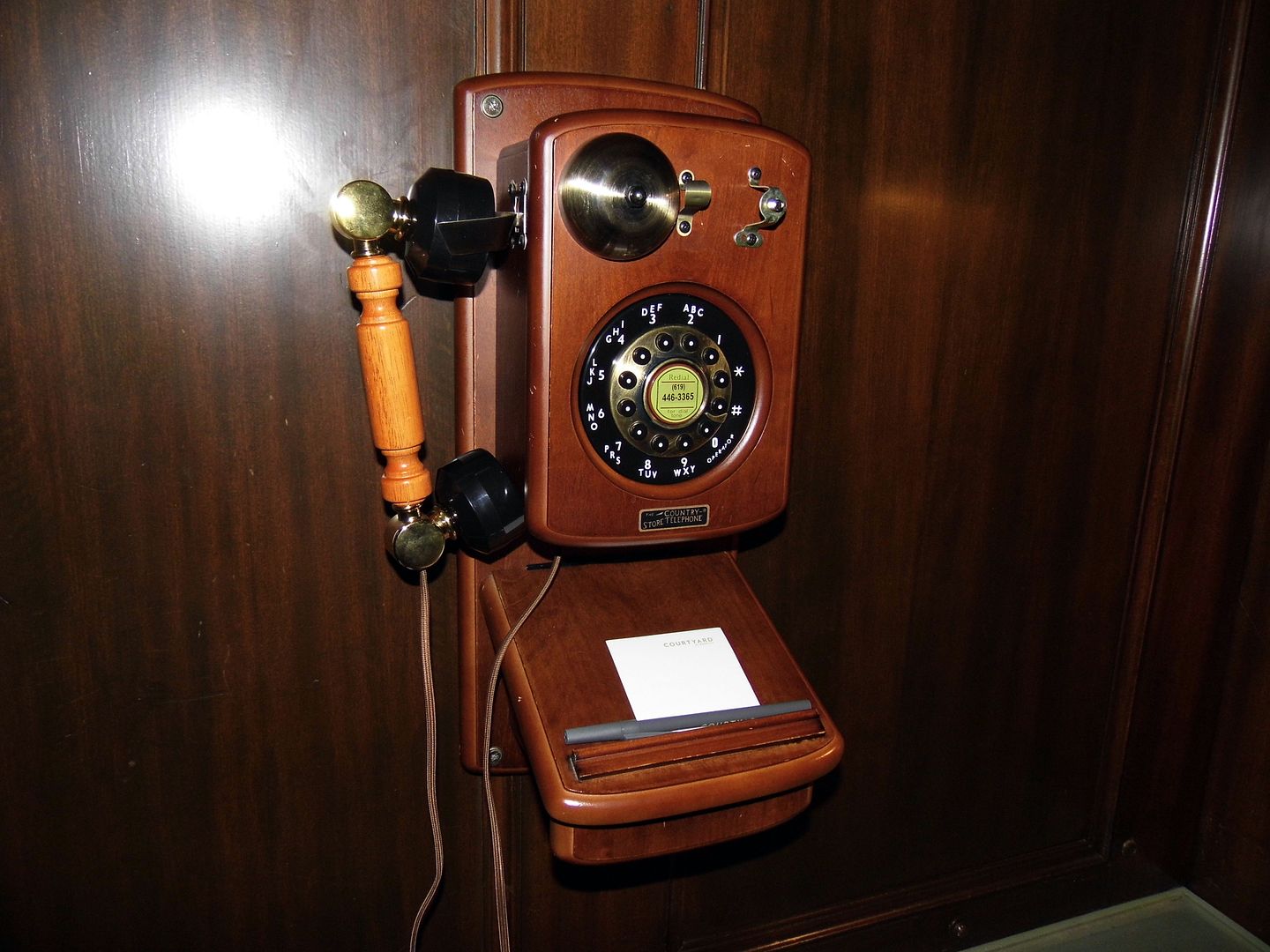
Their respective owners would be ushered into tiny offices outfitted with telephones to do their business in private. The three booths are still there—but the old style phones are now push-button, and lifting the receiver directs you to the front desk.


The bank theme continues in the Vault Meeting Room...


...though the "Donsteel" security doors on display are just for show.


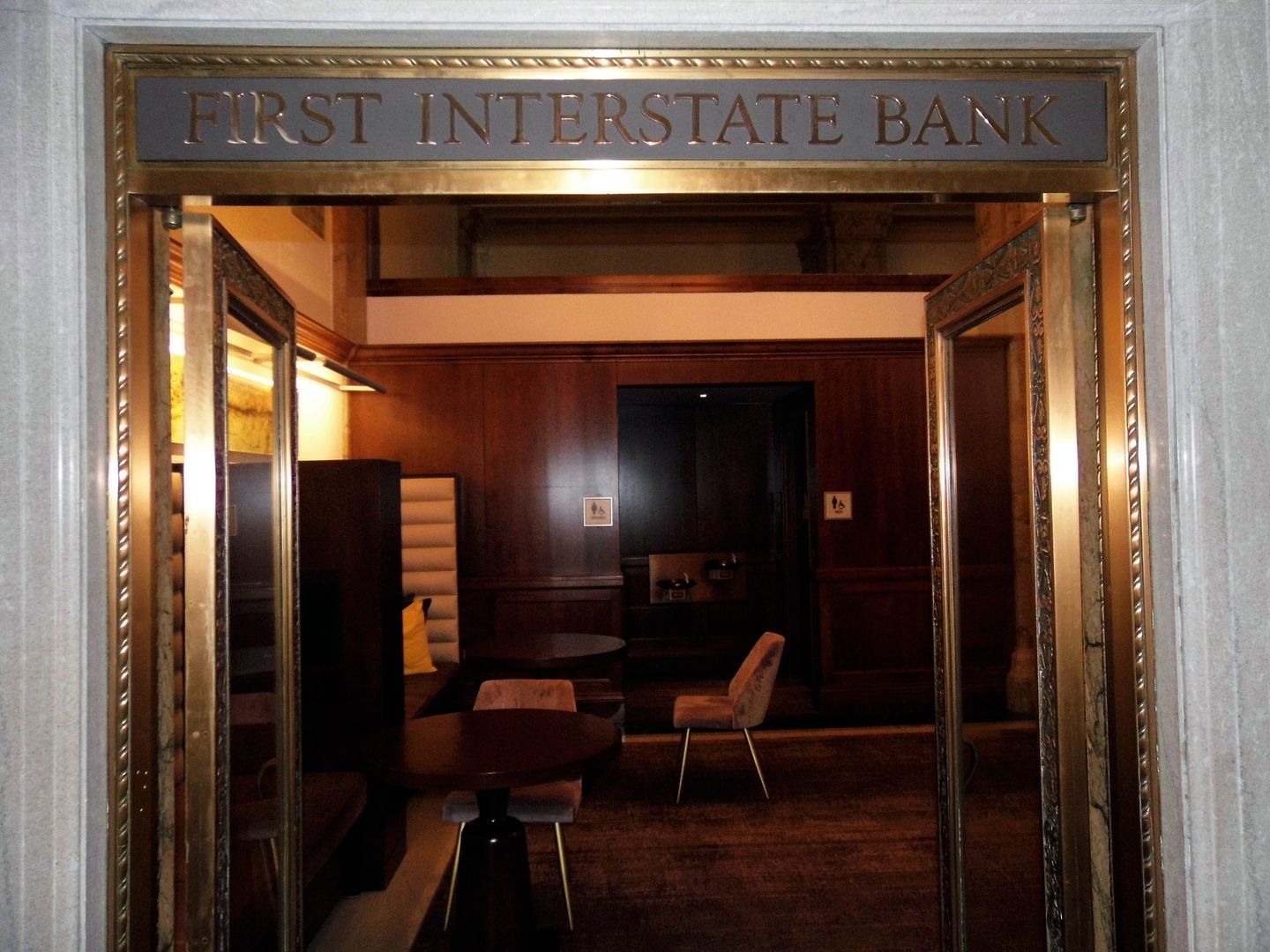
San Diego Trust and Savings Bank managed to stay a family business—run by descendants of the bank's co-founder and first president Joseph Weller Sefton, Sr.—until 1994, when the Sefton family decided to get out of banking and sold all 53 branches to the LA-based First Interstate Bank, which was later acquired by Wells Fargo. In 1996, Wells Fargo unloaded several of its San Diego properties and closed up shop on SDTSB.


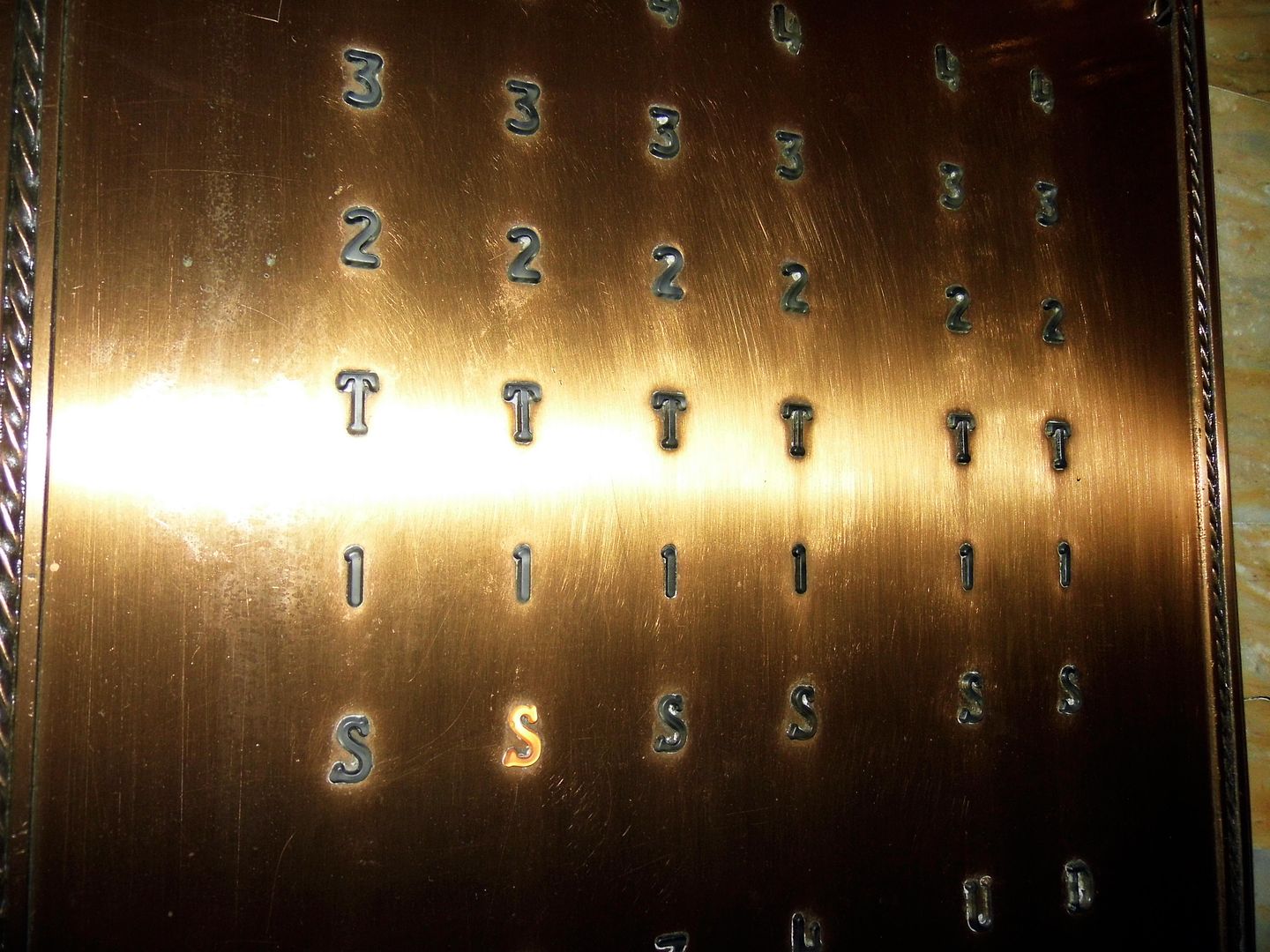
In its heyday, the bank owned the entire building and occupied most of it—with the exception of the 7th floor's FBI offices and holding cells! (Note how the elevator eliminates the 13th floor, which was rechristened the 14th floor.)


A shooting gallery (for lady tellers to practice their aim in case of a bank robbery) shared the top floor with architect William Templeton Johnson, who occupied a 1,000-square-foot office until 1954. The space is now used as the hotel's Presidential Suite, its master bedroom located in Johnson's former library (decorated with the same kind of hand-painted ceiling as in the Grand Lobby).


Exit onto the patio outside the Presidential Suite, and the view reveals yet another level, above the 14th floor.


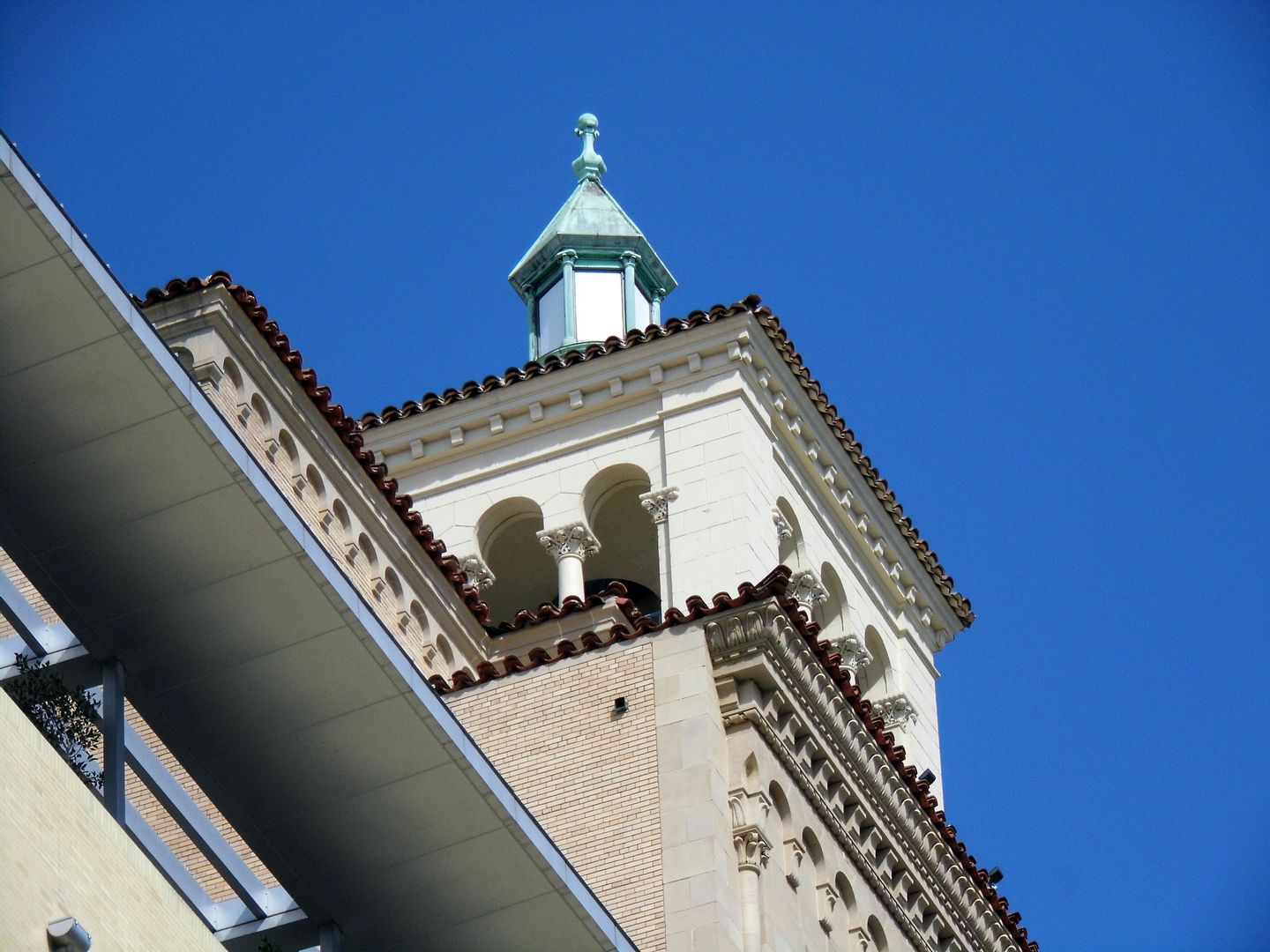
It's the copper-domed cupola, a.k.a. the "Lantern," which housed San Diego's first aviation beacon—243 feet above where the Hotel Beacon once stood. This was a really biug deal for San Diego, which had become known as "The Air Capital of the West" in World War I.


Appropriately, the "Father of San Diego Aviation" Major T.C. Macaulay dedicated the beacon, and pioneering aviator Eddie Stinson first switched it on. Visible for more than 25 miles, it revolved from dusk till dawn to guide aviators and navigators trying aim their planes toward the airport—but only during its first five years.


They'd also light the beacon when a ship was coming into the Port of San Diego—not only to help it avoid getting wrecked but to also notify local laborers that jobs were opening up.


Today, the cupola still provides one of the best panoramic views of Downtown San Diego—certainly the best I've seen. Unfortunately, you can't just go up there on your own.

But ask a bellman to give you a tour, and he'll gladly oblige.

When the new San Diego Trust and Savings Bank building opened in 1928, it was the year before the stock market crash that kicked off the Great Depression. But the bank was steadfast.

The bank's second president, M.T. Gilmore, assured its customers that "the present situation is not nearly so perturbing as a more restricted view might suggest"—recalling that in the nearly 40 years since its founding, they'd already experienced five periods of "panic," two wars, and mixed periods of revival and recession.

"This, too, will pass" were the words that continued to carry San Diego Trust and Savings Bank through the next 66 years until the later generation decided to throw in the towel.

Fortunately, the doors on the bank didn't close forever—because it reopened as a hotel in 1999, preserving and reusing a large majority of original elements for the building's new purpose.

Related Posts:
Breathing New Life Into the Eyesores of Downtown LA

June 17, 2019

Photo Essay: A Mid-Century Cathedral of the Oil Industry, Saved By Hollywood

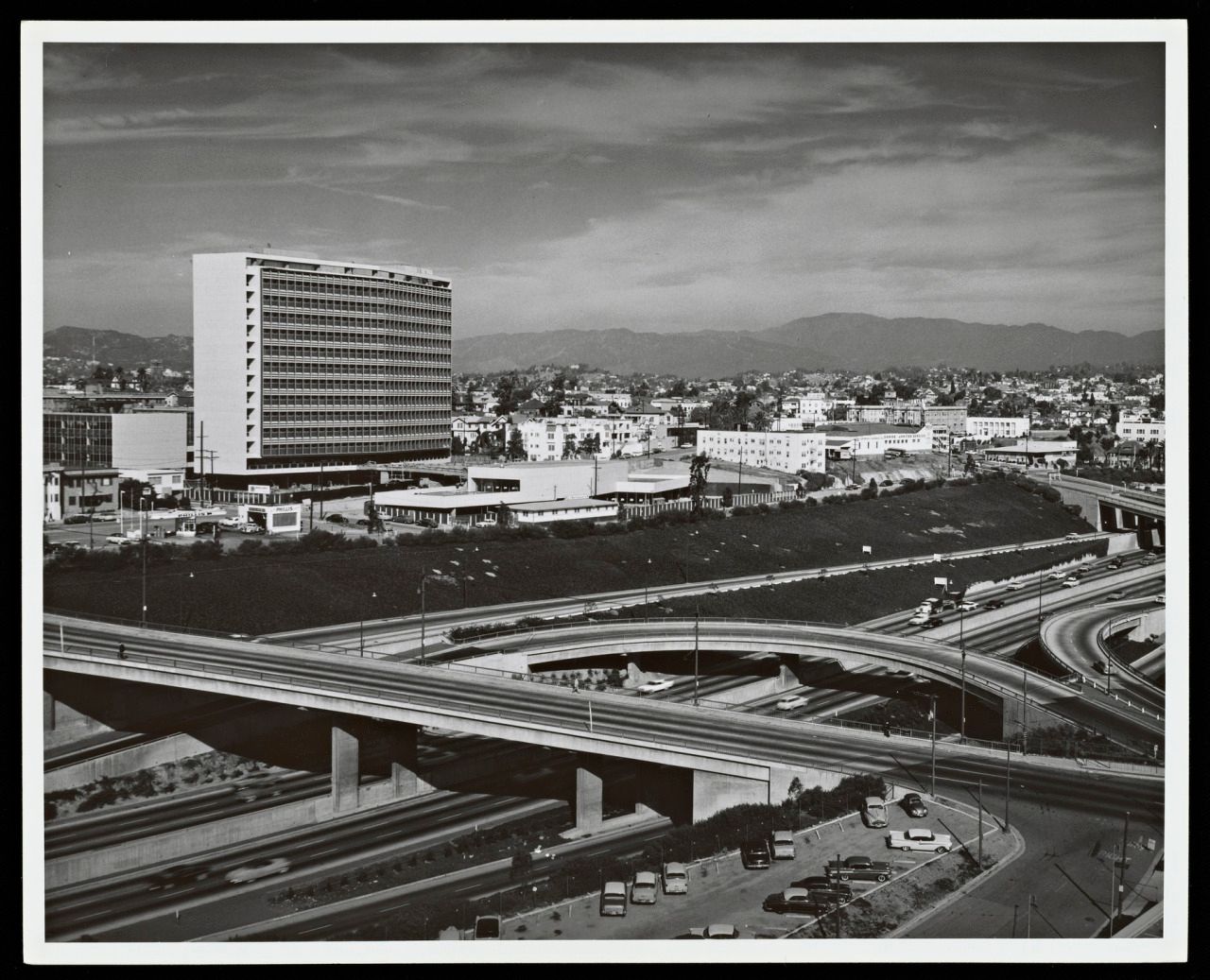
In 1955, the Four Level Interchange that connected the 101 with the 110 had only been open for a couple of years. The section north of it had just been designated the Pasadena Freeway, and the section south of it—the Harbor Freeway—continued to inch towards San Pedro.

The area immediately to the west of the 110 near the stack interchange was a bit of a "no man's land" at that point—too far east to be MacArthur Park or Westlake, and too far west to be Downtown Los Angeles or Center City (and now cut off from it by the freeway).

Some people still call it "City West." Lots of people don't even know it's there.


circa 1957 (Photo: Julius Shulman, Julius Shulman Photography Archive. Getty Research Institute.)

And that's where the former Union Oil Company of California chose to build its LA headquarters, known as Union Oil Center (and after 1983, as Unocal Center).

August 25, 2018

Photo Essay: LAPD's Parker Center, Upon Its Imminent Demolition (Updated)

[Last updated 6/14/20 11:33 AM PT—info on completed demolition added]

I guess I'm fortunate enough to have not ever had any legal reason to visit the inside of Parker Center before its closure in 2013.


The Police Administration Building/Police Facilities Building, designed by Welton Beckett in the International Style, has come to symbolize the civil unrest and police abuse of minorities in Los Angeles...


...which came to a head during the Watts Rebellion of 1965, the East LA Walkouts in 1966 (for unfair treatment of Chicano students in the LA Unified School District), and the LA Riots in 1992 (in response to the "Not Guilty" verdict of the Rodney King/LAPD beatings).


No civilian ever wanted to go past any of Parker Center's 12 blue, tiled isolated columns and into the eight-story, reinforced concrete structure on official business.


But the post-war facility has probably attracted more than a few looky-loos who've identified its exterior from episodes of Dragnet, Perry Mason, or Columbo. And when it first opened in 1955, it sparked such interest among the public that the LAPD had to hire a full-time police officer just to give daily tours of the facility.


circa 2008 (Photo: jericl cat via Flickr, CC By 2.0)

I do wish I'd seen the Joseph Young mosaic mural, "Architectural History of Los Angeles" (a.k.a. "Theme Mural of Los Angeles") up close and in person, not just from pressing my face against the glass front doors last summer, when everything was locked up and the building had been denied status as a Historic-Cultural Landmark.


circa 2008 (Photo: jericl cat via Flickr, CC By 2.0)

And now, with demolition seeming imminent (save some last minute Hail Mary), that 36-foot-long, six-foot-wide mosaic of 250,000 pieces in 50 different colors has been relocated from the reverse side of a pay telephone bank to off-site storage.


Some people would gladly see Parker Center bulldozed.


Its construction, which necessitated the eviction of a commercial district of Little Tokyo by eminent domain less than a decade after the Japanese internment camps of WWII, left a bitter taste in more than just the Japanese-Angeleno community.


And besides rioting and protests, Parker Center's ugly history includes its role in the OJ Simpson interrogations and its namesake, notorious hard-ass police chief William Parker. Though Chief Parker worked to abolish other forms of corruption within the force, if he didn't order it directly, he was at least complicit with the racist behavior of the officers under his charge.


Those who wish to preserve Parker Center—despite its gnarly associations—cite its exemplary Southern California Modernism style, it's towering presence in the open air, its influence over the civic center plaza layouts that would subsequently follow suit, and its public art.


In addition to the bronze sculpture on Parker Center's front facade and the lobby mosaic mural, there's also Sook Jin Jo's adjacent sculpture from 2009, "Wishing Bells / To Protect and To Serve."


The Korean-born artist has contributed pretty much the only reference to Japanese culture at the Parker Center plaza, with her tribute to the Japanese Buddhist tradition of ringing bells to dispel the desires that cause human suffering.

In this case, 108 bells and ribbons—featuring words contributed by the community—hang suspended from a central trellis, which is supported by nine cedar columns.

Technically, the sculpture is part of the LAPD Metropolitan Detention Center next door and not Parker Center, though the line of demarcation between the two isn't clear. Hopefully, this nod to the lost section of Little Tokyo will remain, despite what the wrecking ball does to Parker Center.

The plan right now is to replace the former police headquarters—which is considered outdated, reportedly having reached the "end of its service period" in the 1990s, though it was once so ultra-modern that Popular Mechanics called it "the most scientific building ever used by a law enforcement group."

In its place? A spanking new, exorbitantly priced office tower—a proposal that stings, particularly in a time when we've got homeless encampments a stone's throw away and more people in need of housing than we know what to do with.

Unfortunately, the arguments of whether to save or destroy Parker Center—and the resulting decision—have been emotional rather than pragmatic. 

And all that the Los Angeles Conservancy says it can hope for now is a delay of the destruction of the historic structure until the plans for the new building are approved—so as not to leave us with a gaping hole in the landscape. [Update: Demolition was completed July 2019 and we now have a gaping hole in the landscape.]

For more perspective on this issue, read "Should We Preserve Places We Would Rather Forget?" by Jonathan Haeber here.

And here's that Popular Mechanics article from 1956 in full:


Popular Mechanics, July 1956 via Google Books

Related Posts:
Photo Essay: LA's Oldest Standing Police Station
Photo Essay: The Triforium, A Disco Spaceship Gone Dark
Photo Essay: City Hall at Sunset (Updated for 2017)
Photo Essay: Lincoln Heights Jail, Closed to Public (Updated for 2017)