Search

Showing posts with label Sacramento. Show all posts

July 27, 2019

The State Capitol That Almost Never Was, And the Architect Who Went Crazy Trying to Build It

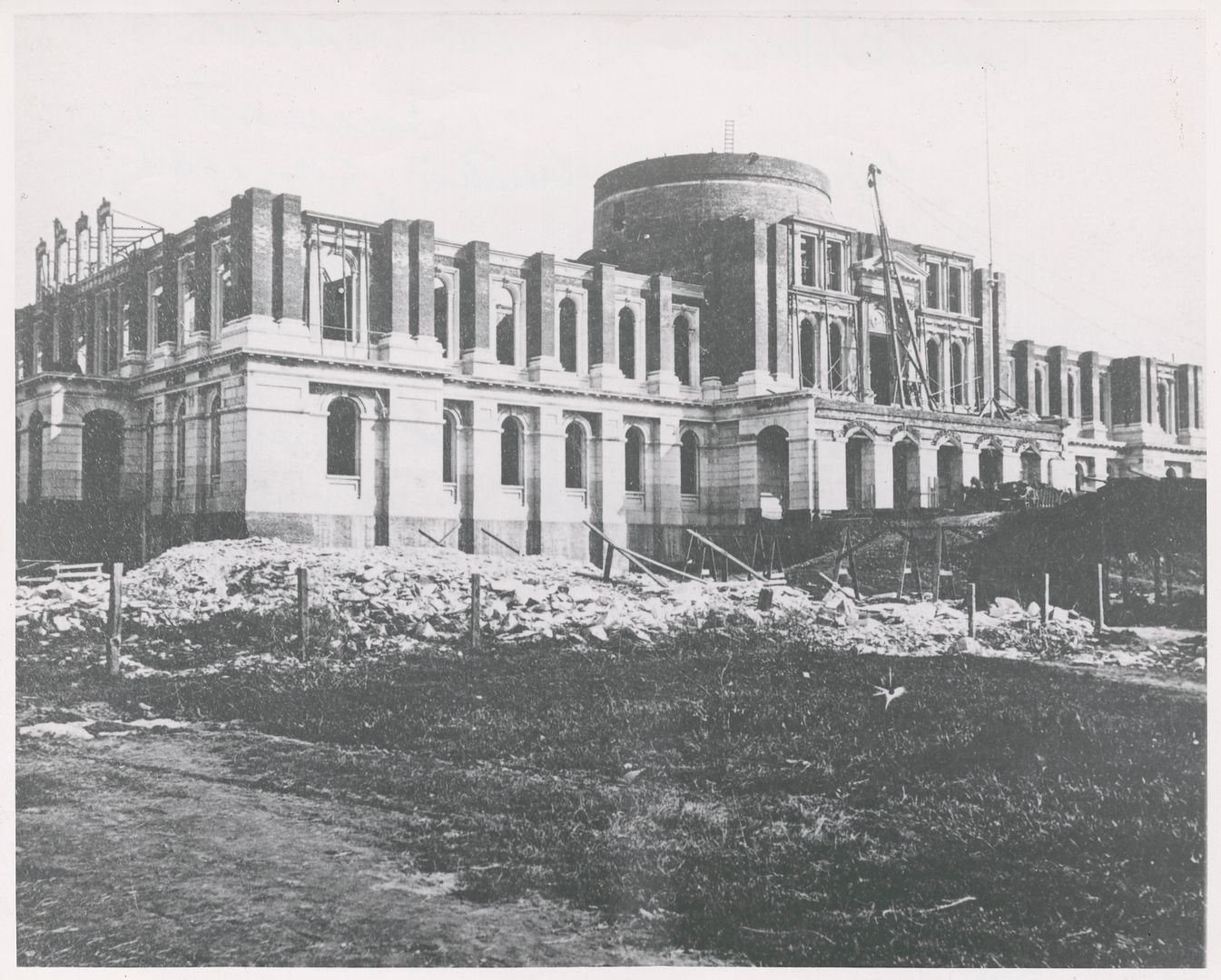
In 1866, the principal of the San Francisco firm Clark and Kenitzer, Architects—Reuben Clark—died while committed at California State Insane Asylum at Stockton, CA.


Construction photo: McCurry Foto Co. via California State Library
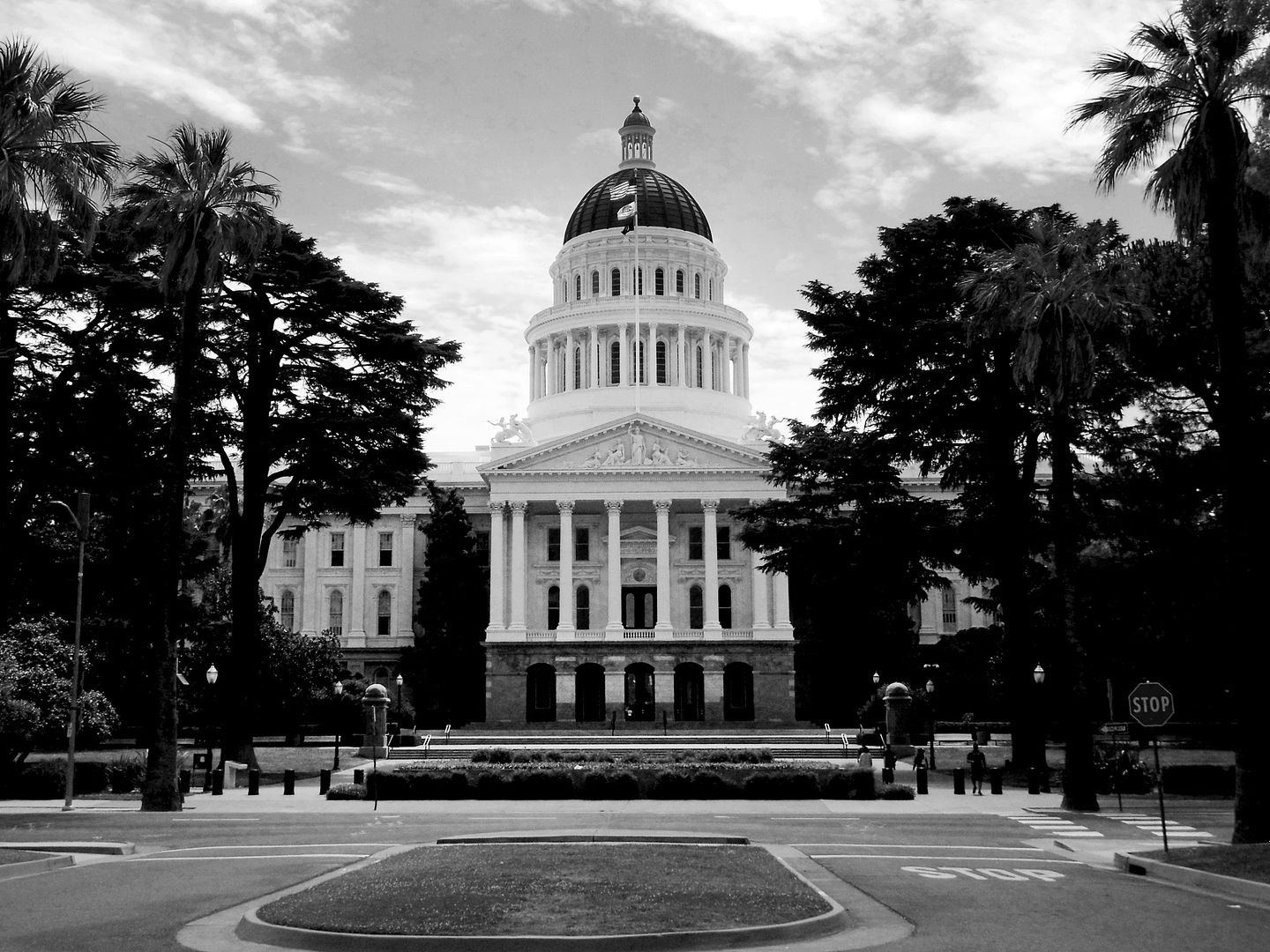
The state hospital had diagnosed the Maine-born architect and Sacramento transplant with insanity, due to “continued and close attention to the building of the State Capitol in Sacramento.”


While working under San Francisco-based architect M. Frederic ("M.F.") Butler, Clark’s drawings of the neoclassical monument (based on the U.S. Capitol building in Washington, D.C.) were soaked in the floods of 1861-2. On top of that, the Civil War was already well underway, causing a shortage of building materials that Clark could no longer bring from the East Coast to California.


Perhaps the proverbial nail in the coffin occurred in the wake of Abraham Lincoln's assassination in 1865, when Clark was found guilty of "disloyalty to the Union" for hiring “known secessionists” and supposedly saying that he didn’t care which side won the Civil War.


By the time Clark was exonerated for his treasonous statements, it was too late—he was already dead. And his former assistant, Gordon P. Cummings, had taken over as the supervising architect, completing the project over two non-consecutive stints (1865-1870 and 1872-1874).
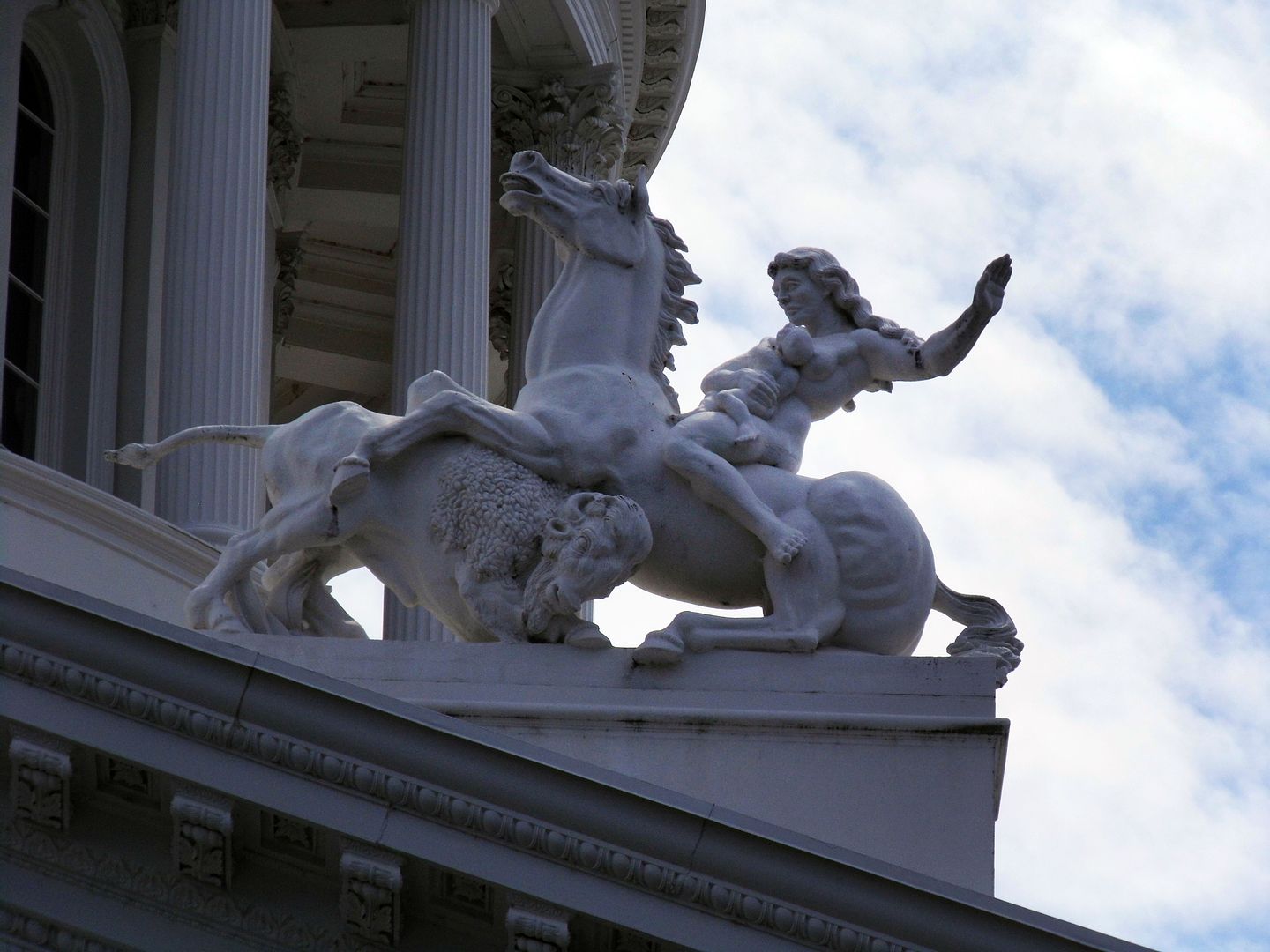


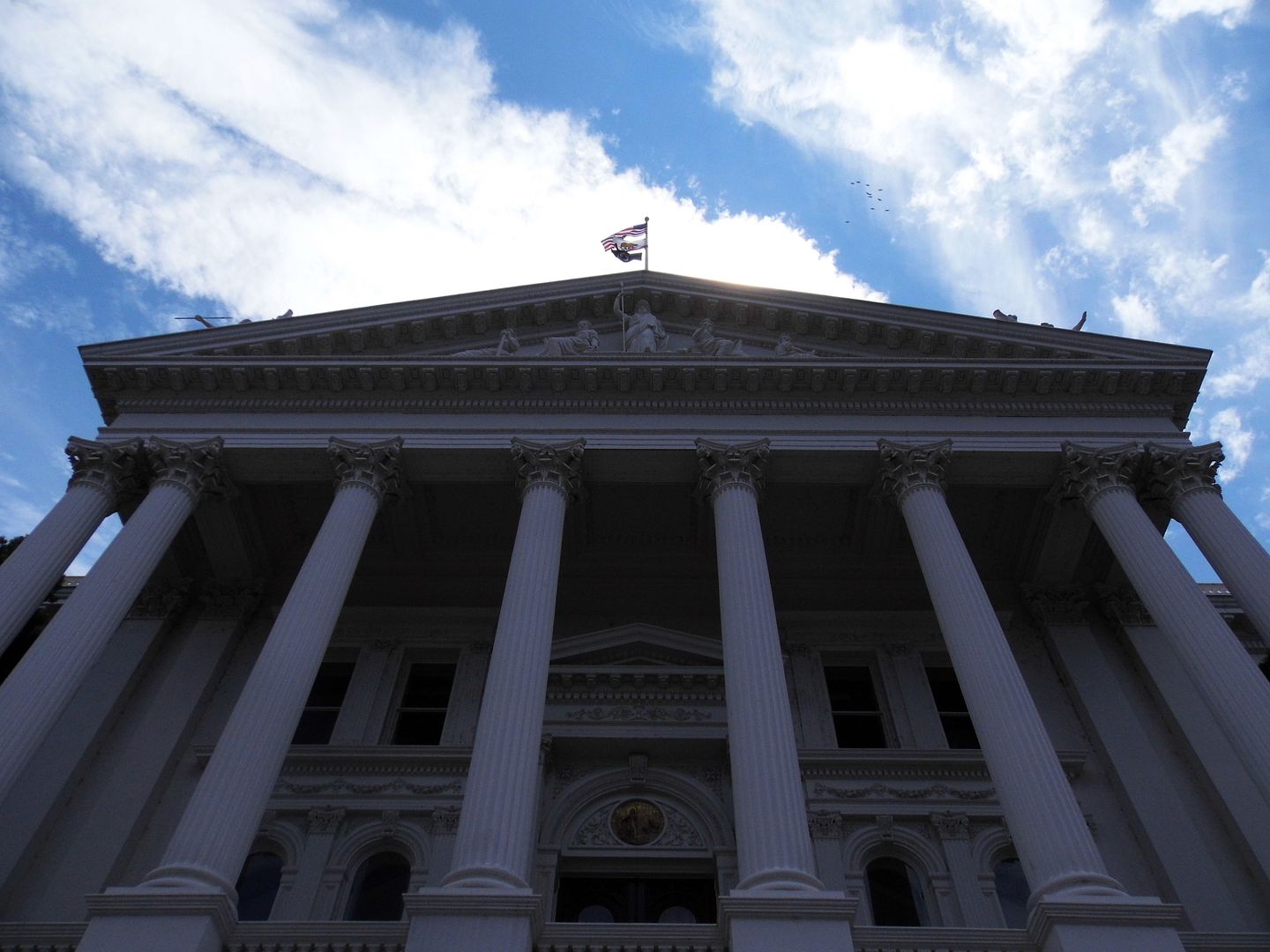
Between the two of them, the end result is a somewhat incongruous mishmash of Greco-Roman influences—with Cummings shifting from Roman to Greek, Doric capitals giving way to Corinthian columns.
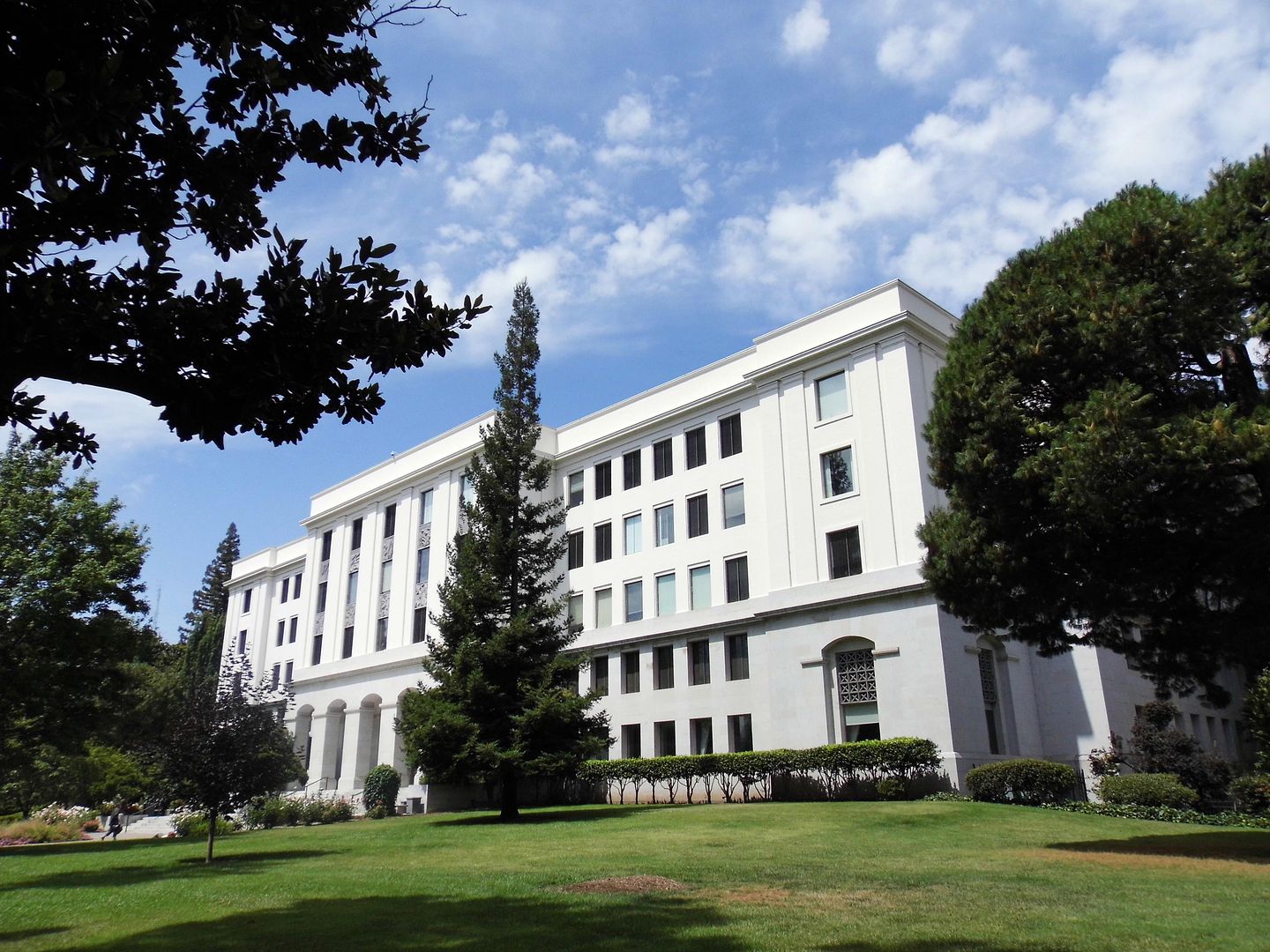


And while Clark had begun to use granite, Cummings switched to cheaper materials simulated to look like granite. Even the granite itself doesn't match—at least on the lower floor, where the governor's own railroad investments influenced which quarries it would be sourced from.


As the California state capitol building was under construction from 1860 to 1874—the last eight years proceeding without its original supervising architect—Clark rarely gets credit for its design.
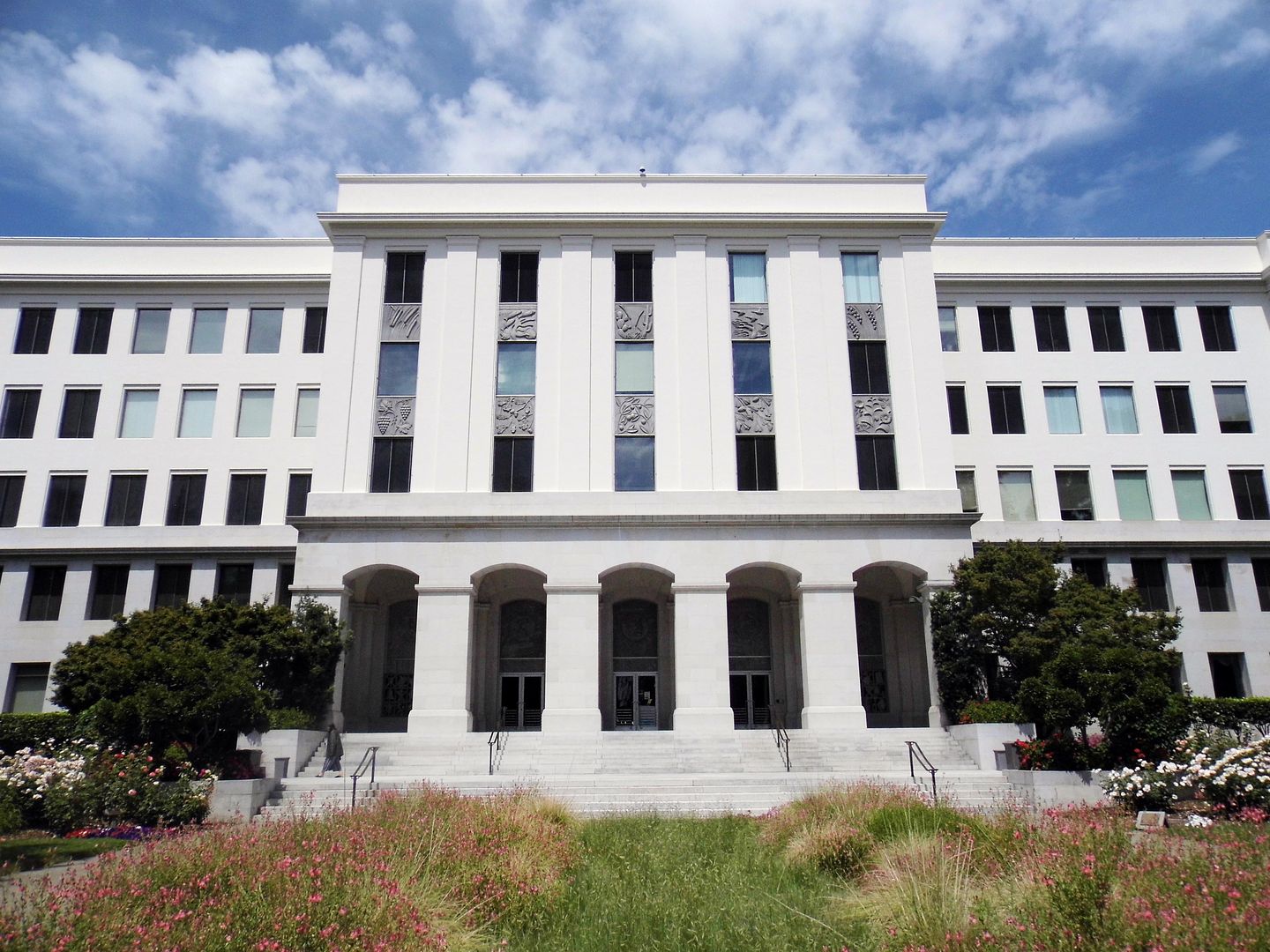

At a cost of $2.5 million—compared to Clark's original budget of $100,000—the final result wasn't exactly what the architect lost his sanity trying to accomplish.
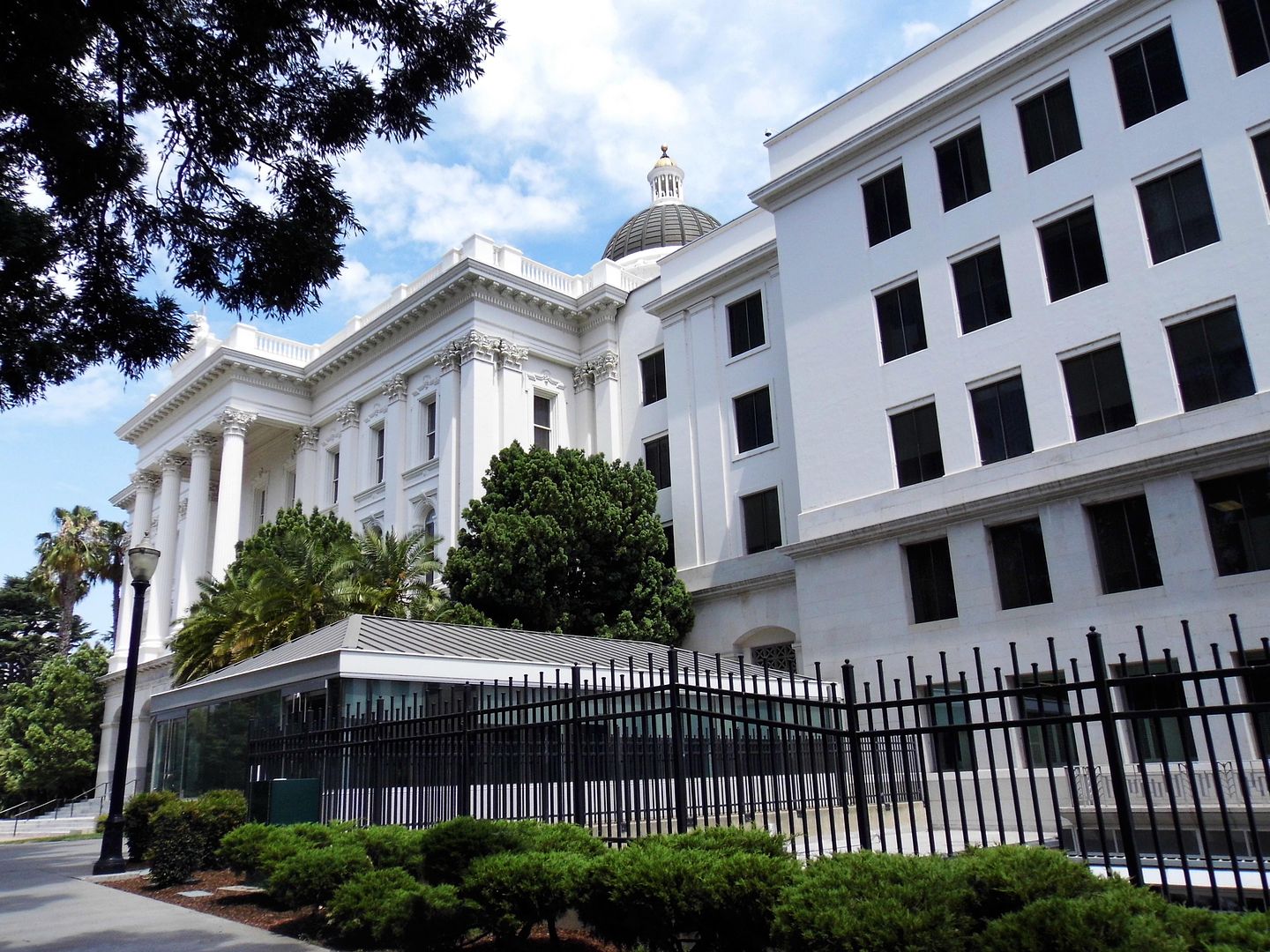


One posthumous victory for Clark came on October 29, 1871, when a gold-plated copper ball was affixed as he crowning ornament of the cupola at the apex of the Capitol. Nearly three feet in diameter and reminiscent of a gold nugget, he'd included the ball in his original plans—and his replacement, Cummings, tried to replace it with a bronze statue, a more traditional choice.
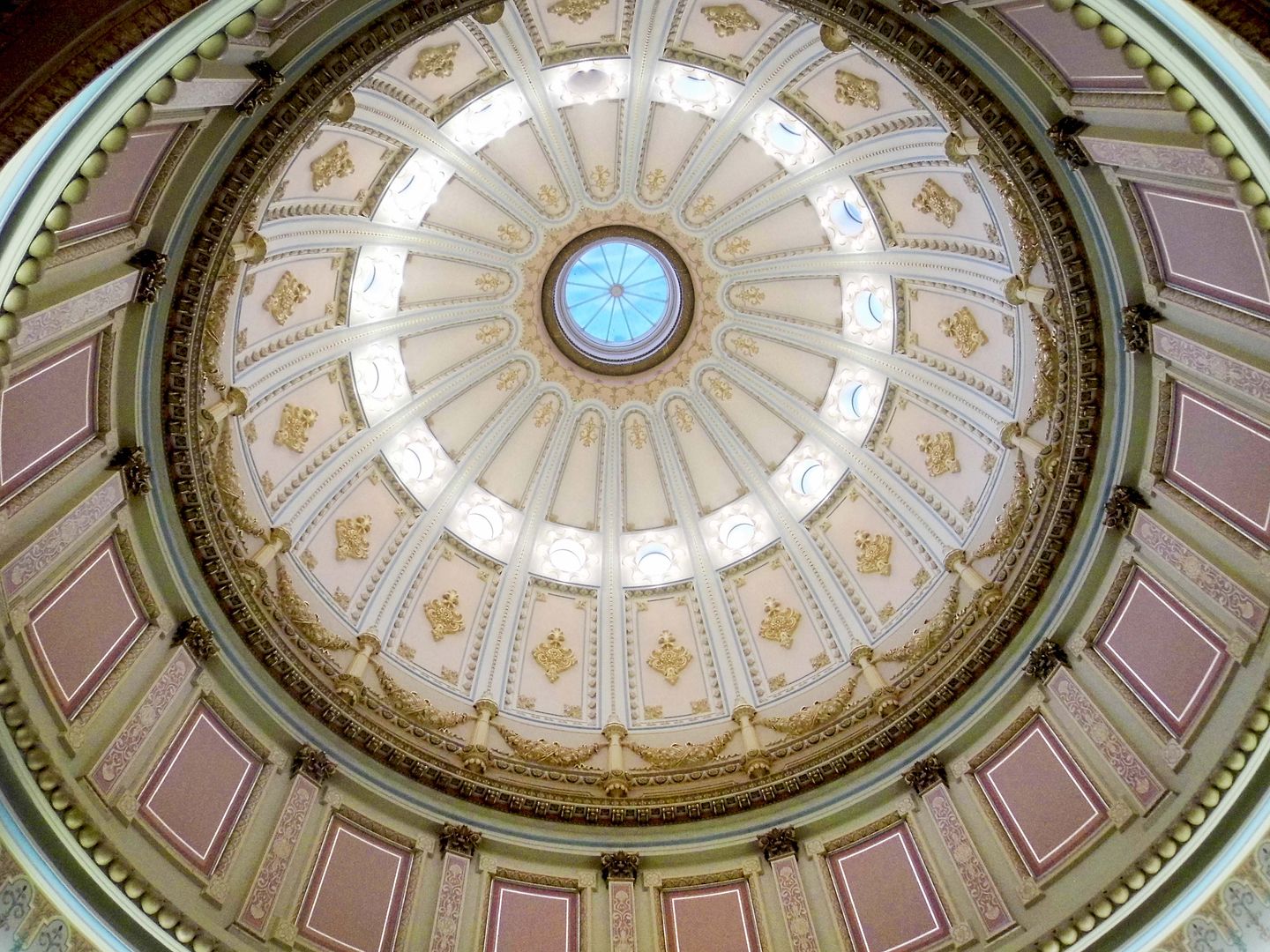


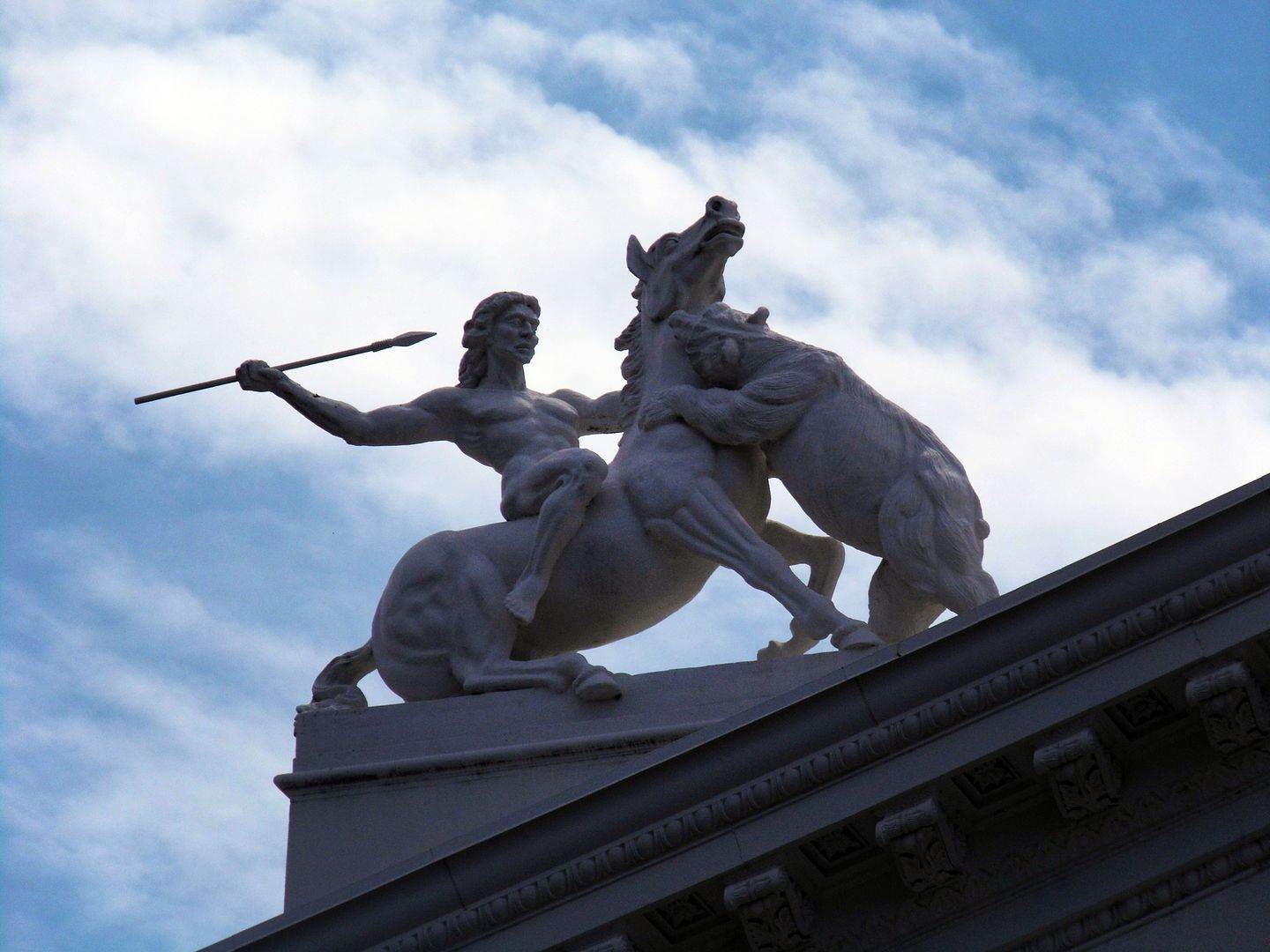
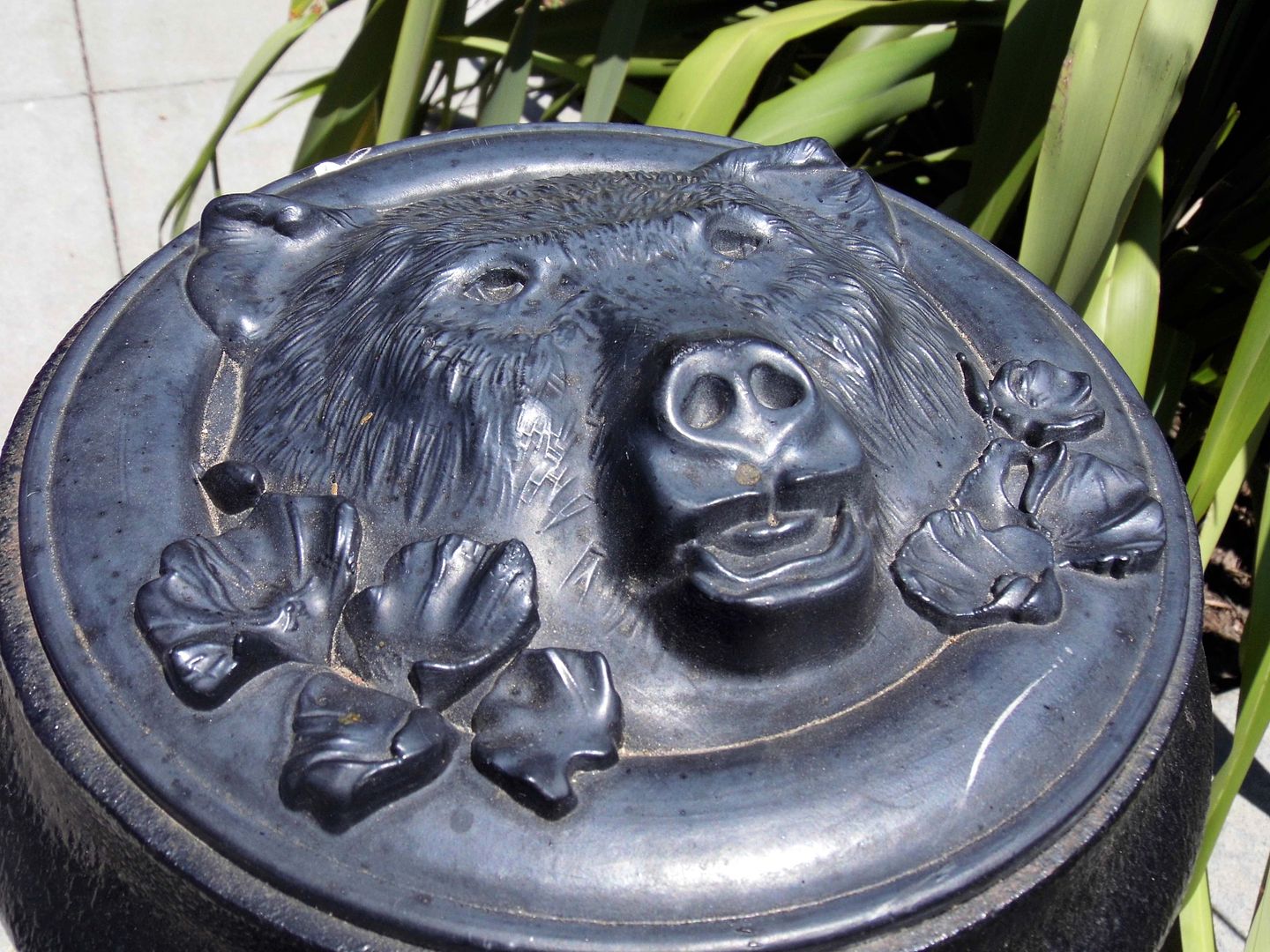
The ball won out—which seems appropriate, since the capitol's dome and rotunda are the crown jewels of Clark's design. Emblematic of the use of religious architecture for state capitols in the 18th century, the rotunda rises 120 feet high; and its dome features frescoing that reflects the Renaissance Revival style popular during the 19th century. But the frieze at the base of the dome is truly Californian—with depictions of grizzly bears, our state symbol and state animal.
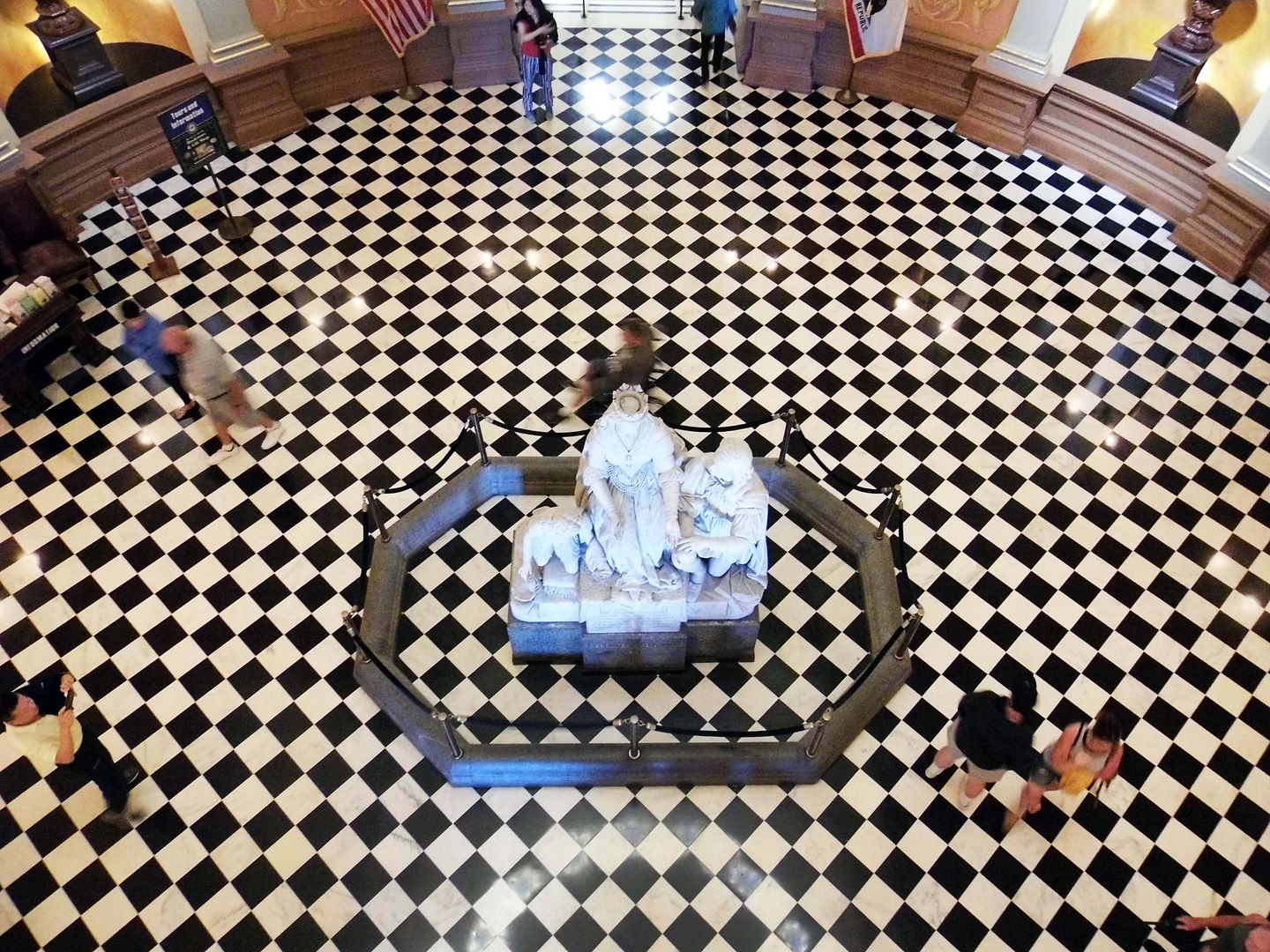


Clark himself was a Freemason and managed to incorporate a Masonic floor pattern in the circular room below the dome, surrounding the neoclassical statuary group, Columbus’ Last Appeal to Queen Isabella (carved of Carrara marble by sculptor Larkin Goldsmith Mead and gifted by Darius Ogden Mills in 1883). The Capitol's dedication ceremony was even Masonic.


The current building has served as California's state capitol building since 1874—but it almost didn't happen at all. The state government could be found "roving" from city to city within California over the course of a good two decades. First, the State Capitol was in San Jose from 1849-51. It moved to Sacramento for five months in 1852. Otherwise, from 1852-3, it was located in Vallejo.


The Benicia Capitol Building (circa 1853-4) is the only edifice still standing outside of Sacramento. In 1958, it was rededicated as state historic park—and for the occasion, the state capital was moved there for just one day (except for that other day in the year 2000, for the 150th anniversary of California's statehood).

replica ceramic tiles originally installed in 1896 from the Mosaic Tile Company of Zanesville, OH 

Sacramento was named permanent seat of the California government in 1854—but even that wasn't permanent. The December 1861 flooding sent the state government packing for San Francisco in 1862, while the current Capitol Building was under construction. 
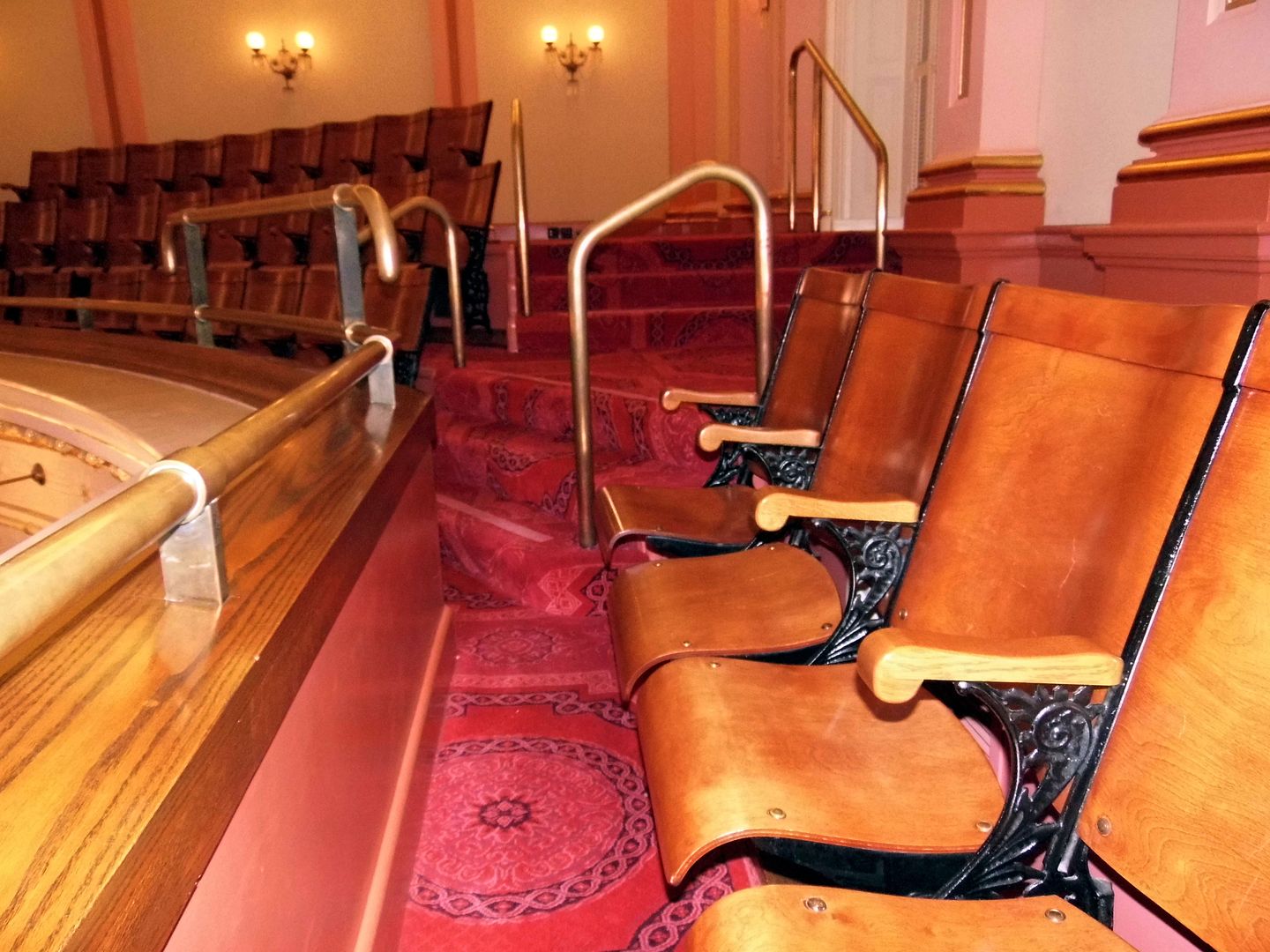


The current capitol was almost demolished in 1975—but instead, a pricey renovation returned it to its grandeur circa 1906, the year of the San Francisco earthquake and fires. That meant rebuilding grand staircases that had been removed; reinstalling its California poppy mosaic tile floor; and recreating the 1906 governor's offices (which had been used until 1951) and 1906 treasurer's office (which once held $8 million in gold and silver coins, before they were transferred to a bank the following year).
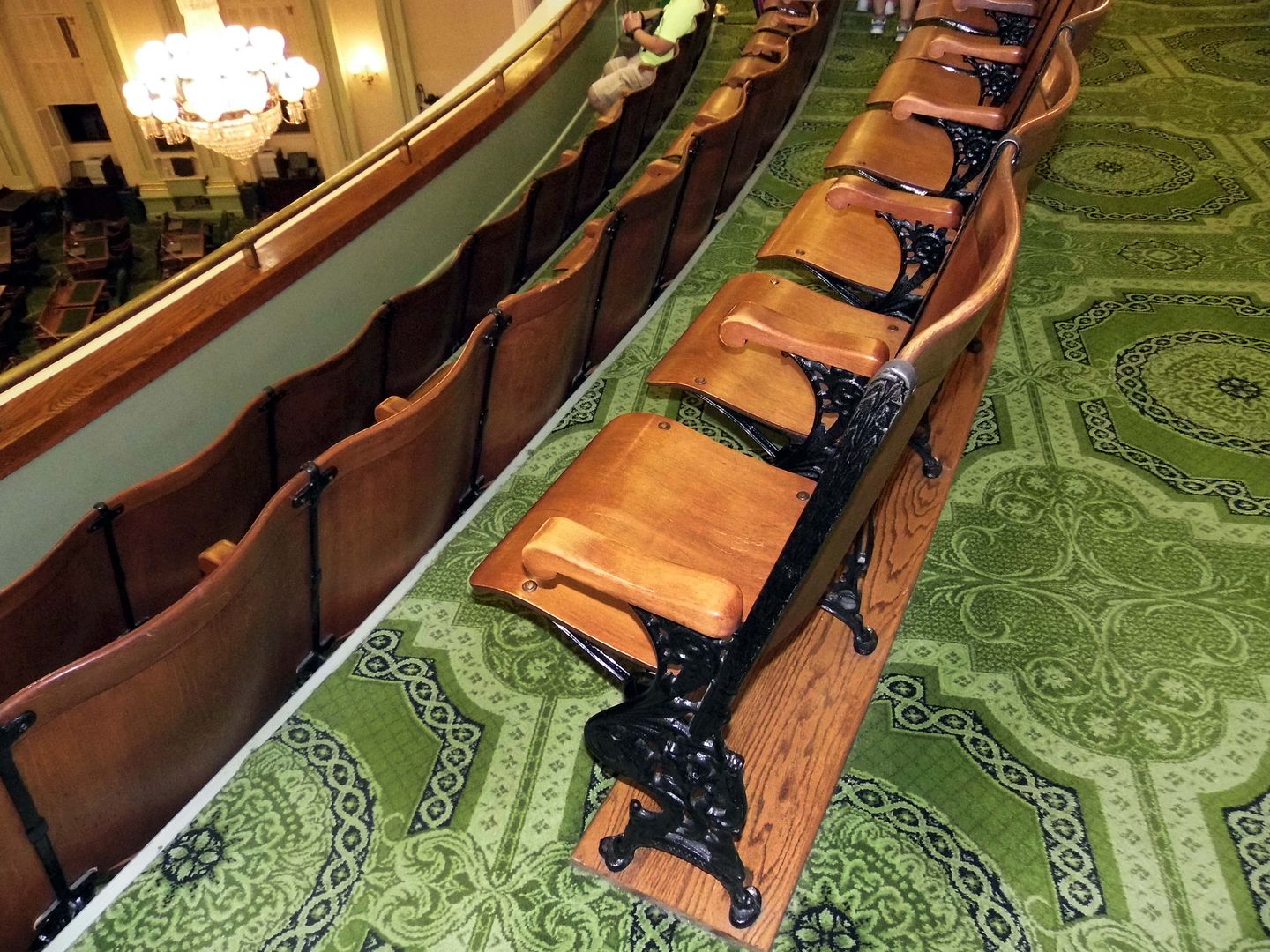


The Senate Chambers on the south side and the State Assembly on the north side of the building currently look as they did in the late 1800s, with color schemes that can be traced back to the British Parliament (red=House of Lords and green=House of Commons). Coffered ceilings loom over desks carved out of walnut and restored to their original splendor.
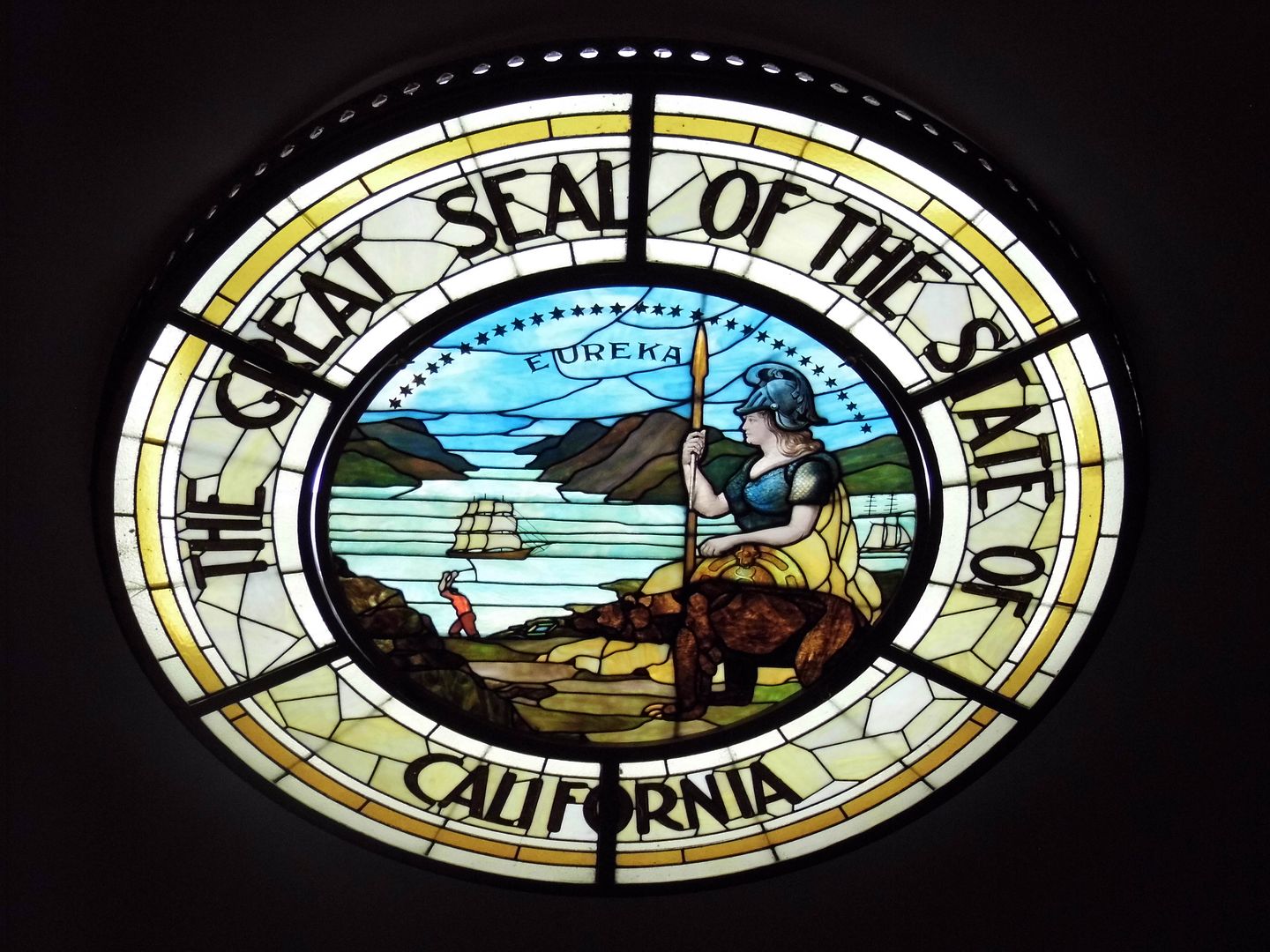


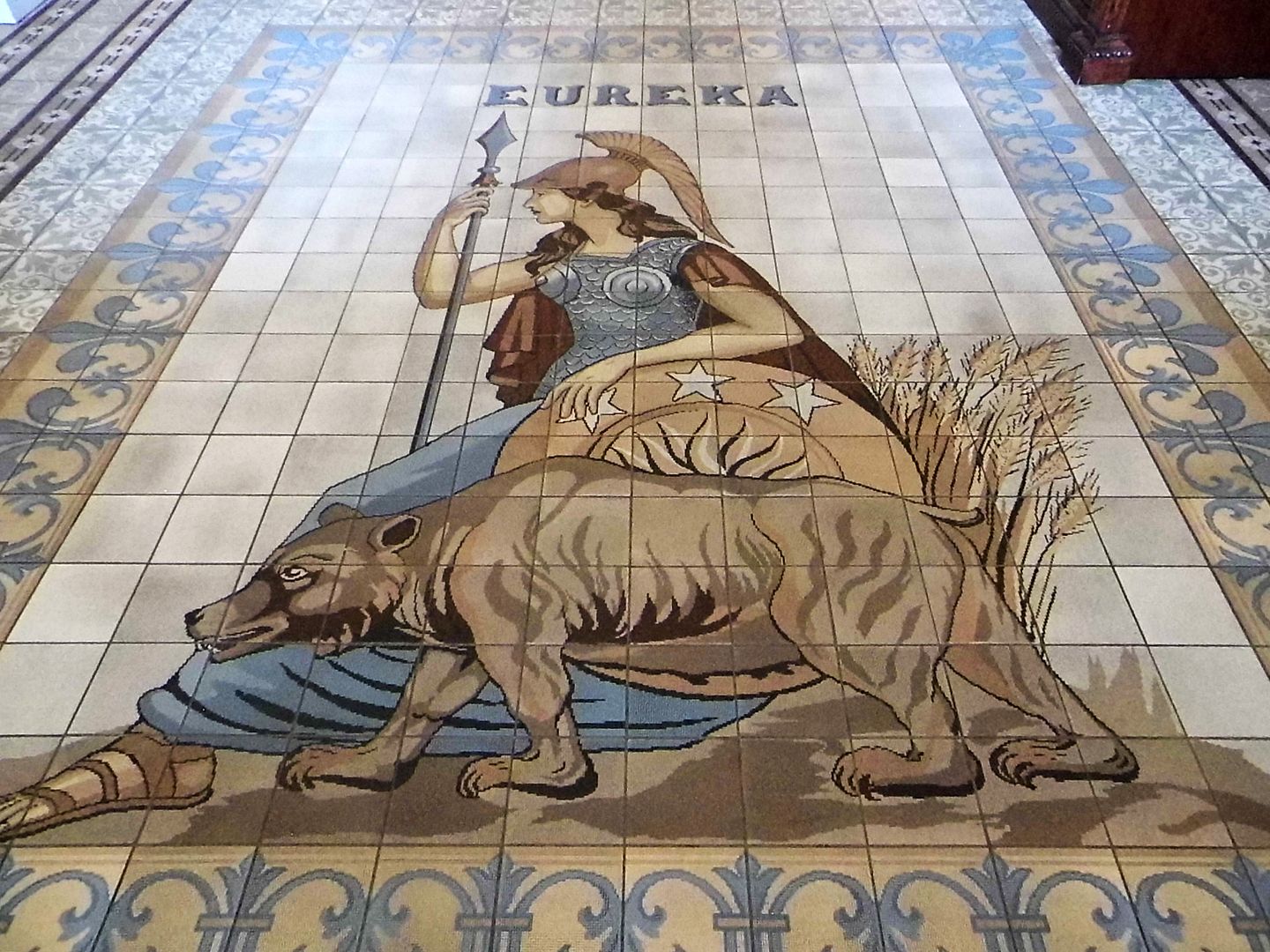
Outside of each gallery is the California state seal, fabricated out of stained glass and lit by electricity, not sunlight. Installed in 1907, they depict the Roman goddess Minerva under an arc of 31 stars (the of states in the Union upon California's annexation) and surrounded by such California state symbols as the grizzly bear, a grapevine, a (gold?) miner, and the Sierra Nevada mountain range. Of course, there's also our state motto, "Eureka" ("I have found it").
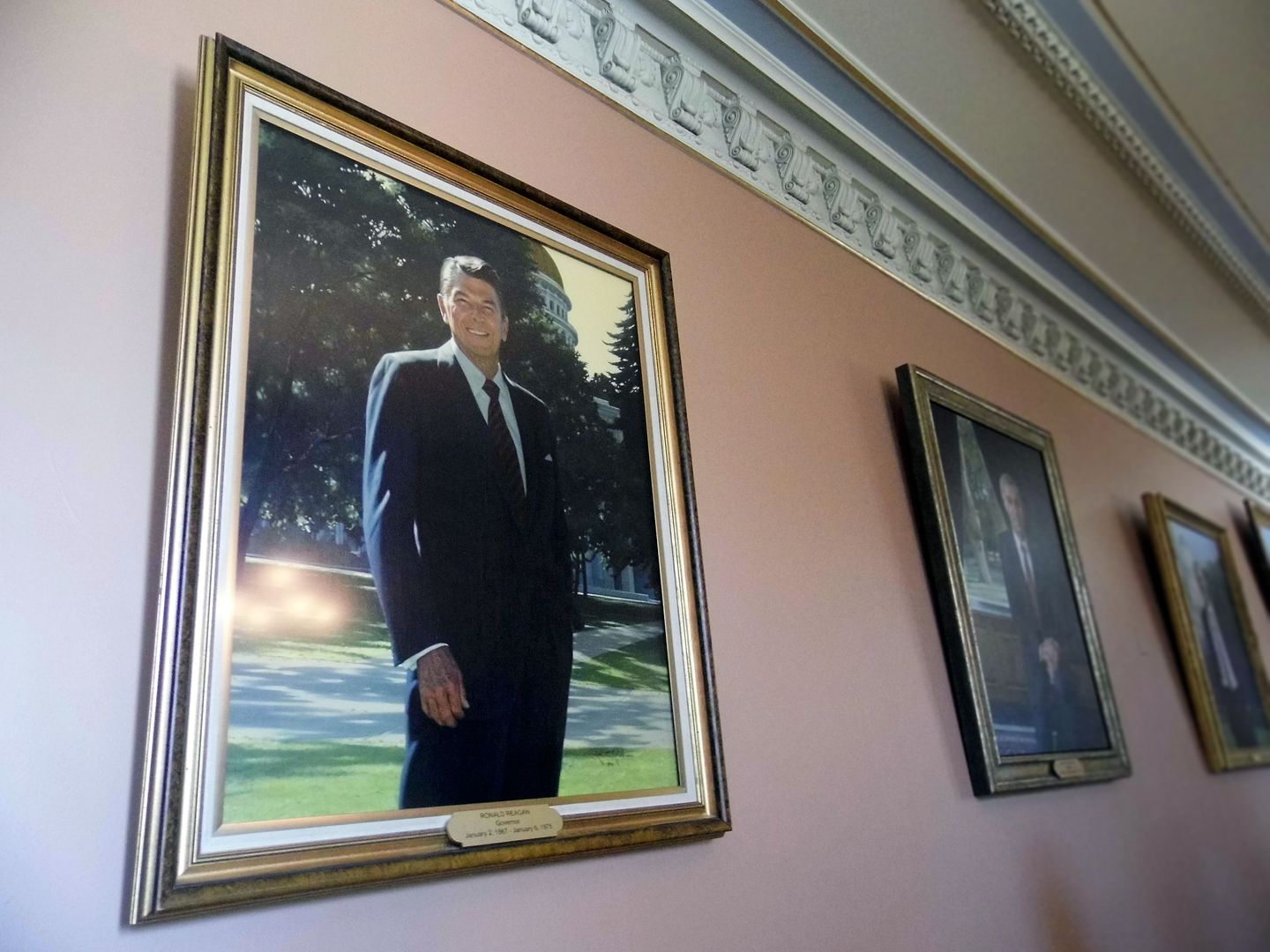


The tradition of commissioning portraits of California's governors wasn't formalized by the State Legislature until 1931, but you can still find portraits of 38 governors displayed throughout the West Wing—including Ronald Reagan and yes, Arnold Schwarzenegger.

After all, it's got to portray some recent history.

I wonder how many other people have been driven insane by their association with the California state government?

Related Posts:
Photo Essay: Glimpses of Sacramento, California
Photo Essay: The First Cathedral of the Colonies
Photo Essay: How A Metaphysical Religious Sect Brought a Glimpse of DC to LA
Photo Essay: City Hall at Sunset (Updated for 2017)

July 15, 2019

Photo Essay: Glimpses of Sacramento, California

You might think that the first place I'd visit during my first time in our state's capital city of Sacramento would be its capitol building.


I eventually got there...


...but the first thing I did was ride the historic train.


The California State Railroad Museum provides scenic excursions along the the Sacramento Southern Railroad...


...pulled by a vintage locomotive.


Not knowing I had a choice, I bought a ticket for coach class...


...and sat in one of the closed cars (rather than the first-class observation car)...


...and watched as we passed through Old Sacramento along the Sacramento River, down two miles of track to the turnaround at Baths (just south of Miller Regional Park).


At that point, our steam locomotive (Granite Rock No. 10) detached from the front and scooted past us to reattach to the back...


...so we could go back the way we'd come, back to the Central Pacific Railroad Freight Depot.


The starting and ending point is just about at the location of the "first spike"—or the groundbreaking—of the Transcontinental Railroad, which celebrates the 150th anniversary of its completion this year.


The "last spike" was driven at Promontory, Utah in 1869.


And finally, the U.S. was linked by rail—from West to East.


I was surprised to see how much of "Old Sac" had been preserved, looking like an Old West movie set straight out of Hollywood.


There are the Victorian-style residences (like Clarendon House) with patios and balconies...


...as well as dusty old storefronts and saloons...


...which harken back to the days when Mark Twain dubbed Sacramento the "City of Saloons."


Twain was renowned for his contributions to The Sacramento Union daily newspaper in the 19th century. Ultimately, the Union was put out of business by The Sacramento Bee, whose early equipment is on display at the Sacramento History Museum.


For me, the stronger draw to the museum was its guided walking tour, which took our group outside, past a replica of Sacramento's first performing arts theater, the Eagle Theatre (made from salvaged materials from ships left abandoned on the river)...


...to Pioneer Park, a sunken public space (where a butcher shop once stood, facing J Street) that gives clues to the "hidden city" below Sacramento.


From there, we headed down Firehouse Alley, past fire escapes foolishly constructed of wood...


...and down into the subterranean level of the B.F. Hastings building (now the Sacramento Visitors Center), which once served as Sacramento's original street level.


Like Seattle, Sacramento suffered such severe flooding (here, from the Sacramento and American Rivers in 1861 and 1862) that city officials voted to "jack up" its waterfront district buildings and raise the level of the streets and sidewalks.


That left sunken alleyways and abandoned basements galore—some of which have been excavated and preserved as part of the legacy of this "City of Floods."


Fortunately, Sacramento no longer floods, thanks to a series of reinforced levees and the historic realignment of where the Sacramento and American Rivers converge. At the time, there was so much disagreement as to which of the three fixes would be best that they ended up doing all of them.


Some buildings that succumbed to floods, however, were simply razed and never rebuilt—exposing underground spaces, like the courtyard at Pioneer Square, below Danny's Mini Donuts and at the entrance to the Underground Tasting Room (home to Twisted Twig and Rendez-vous wineries). An assay office serving Gold Rush miners probably stood here until the 1860s.


There's no less history, of course, when you head away from the River and explore the area east of the Capitol Building—where Sacramento's European history began with the arrival of Captain John A. Sutter in 1839.


The Swiss pioneer (born Johann August Suter) and Native American slavemaster established a fort and called the settlement "New Helvetia" (or "New Switzerland")—though he's more famous for his mill in Coloma, where the "Gold Rush" reportedly began in 1848.


The Cathedral of the Blessed Sacrament (completed 1889)—one of the largest cathedrals west of the Mississippi—has been considered one of the capital city's three most historic buildings, next to the Capitol Building and City Hall (which the cathedral is situated directly between).


Funerals for California state governors, including Pat Brown, have been held here as well—making it a civic as well as religious landmark.


Around the corner, towering above a Claim Jumper restaurant at street level, is the Sacramento Benevolent and Protective Order of Elks (B.P.O.E.) tower—a 14-story brick temple erected in 1926.


An example of Italian Renaissance architecture from the early 20th century, the Elks Temple has been rebranded as the Elks Tower Casino and Event Center and no longer serves as the Elks Lodge #6.


But Freemasons can find their lodge next door, separated from the Elks Tower by only a parking lot.


Built over the course of five years, completed in 1918, and dedicated in 1920, the three-story temple's features (including terracotta from Gladding McBean) is largely intact and mostly unmodified...


....save for the addition of a neon sign.

It's hard to take in a new city when you haven't got any real reason for being there. Whenever I visit a city for the first time, it's really just a scouting mission—because I can only take in glimpses of what it has to offer.

And then I use those to plan for my next visit. And the one after that. And so on.

So, next time I'll take a guided tour of the cathedral and a river tour by boat to hear more about the flooding, catch a good look at the I Street Bridge, and learn about the long-gone floating prison barge.

Stay tuned for detailed photo essays of the Sacramento Capitol Building and Tower Bridge.

Related Posts:
Photo Essay: Glimpses of Arizona
Photo Essay: Glimpses of Yuma Territory
Photo Essay: Glimpses of Baltimore
Glimpses of Havana in the Final Days of Fidel