Search

Showing posts with label Olympics. Show all posts

June 03, 2025

Photo Essay: LA's Underdog Basketball Team Gets a Billion-Dollar Dome

There have been lots of new stadiums and arenas popping up all over—and the Los Angeles-adjacent city of Inglewood is home to two of them. 

I already toured SoFi Stadium in 2021, shortly after it opened. And now it was time to tour its neighbor, the $1.8-billion Intuit Dome.*


It opened in August 2024 as the new home to the Los Angeles Clippers, the NBA team that used to have the Los Angeles Memorial Sports Arena all to themselves (and later shared the Staples Center with the team that usually overshadows them, the LA Lakers).

August 17, 2024

Photo Essay: The Camarillo White Horses and the Ranch They Once Called Home

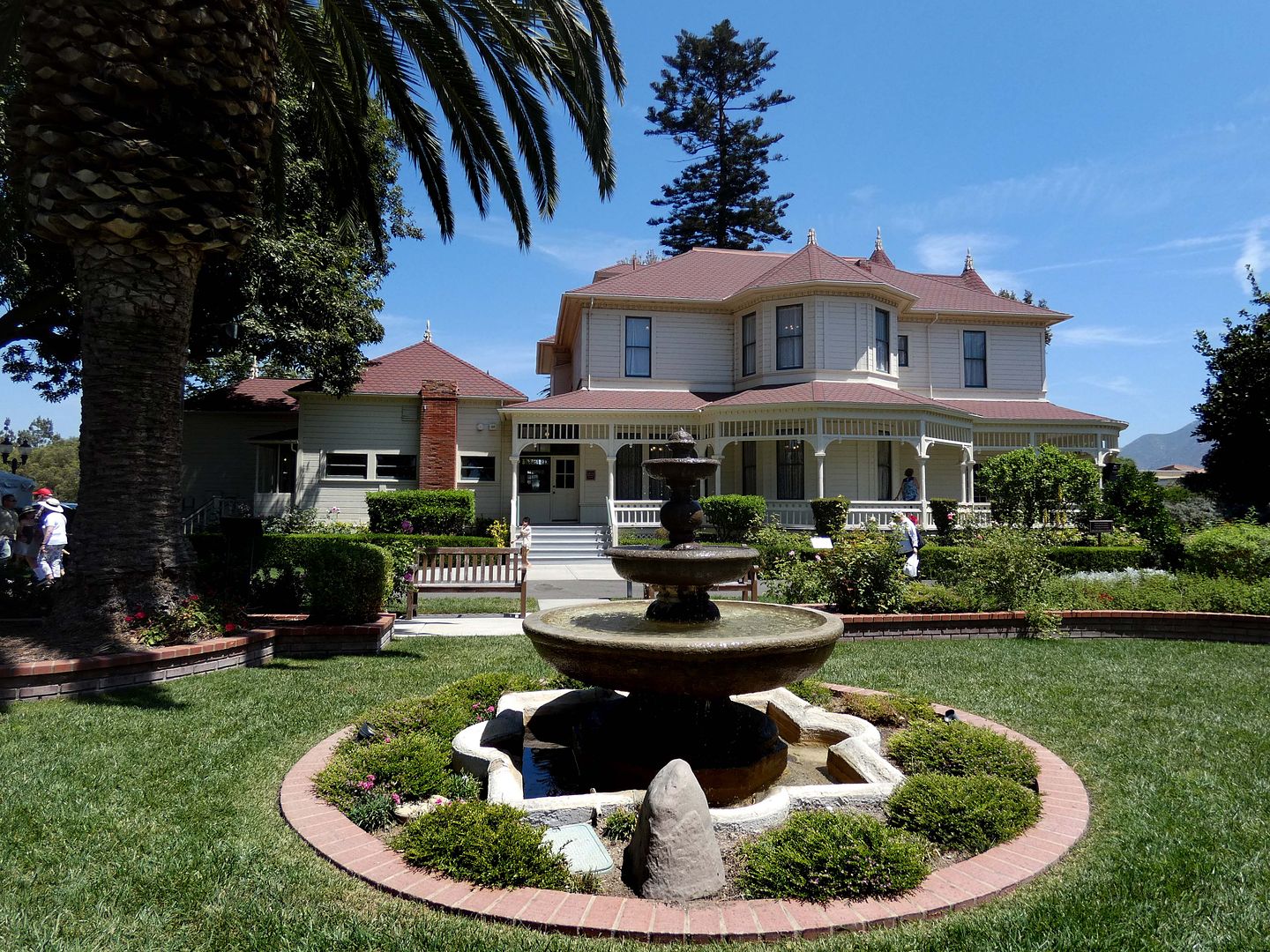
The "ranch house" of Adolph Camarillo is really a Victorian mansion—built in the Queen Anne style by the architecture duo Herman Anlauf and Franklin ("F. P.") Ward in 1892.

 
I'd seen it once, at night, at Christmastime, back in 2018—but I knew I had to go back and see it in the broad daylight.

September 07, 2022

Photo Essay: Where L.A. Traded a Racetrack For Rose Bushes (And Almost Dug Them Up For Stadium Parking 60 Years Later)

Despite all the tragedy and inconvenience of it, the pandemic gave me the chance to refocus my efforts on exploring places I'd been putting off for far too long. And one of those was the Exposition Park Rose Garden. 


June 10, 2022

Photo Essay: Dodger Stadium, Home of The First Sports Arena Botanic Garden In the U.S.

LA's newest botanic garden isn't in the mountain foothills or on the grounds of some grand, historic estate. 

 
It's at Dodger Stadium—the first sports arena in the country to qualify for botanic garden accreditation (which took five years). 

March 31, 2022

Photo Essay: The Grub, Grottos, and Gunfire of the Los Angeles Police Academy, Elysian Park

[Last updated 2/25/23 11:21 PM PT—Video embed added to bottom of post]

The Los Angeles Police Academy is one of the most recognizable landmarks of LA's Elysian Park...

 
...starting with its "Academy Arches," which have appeared in many TV and movie productions, including American Beauty and episodes of Dragnet and T.J. Hooker.

July 05, 2021

Photo Essay: World's Most Expensive Stadium Lands in Inglewood, City of Champions

During pandemic closures, it felt as though much of the world had stopped.
 

But it turned out to be a great time for construction projects—considered essential business, exempt from lockdowns—like the new SoFi Stadium in Inglewood, California.  

March 17, 2020

Photo Essay: The Jewel Box of the Cosmetic World and Its Pink Powder Puff (Updated for 2025)

[Last updated 2/8/25 9:43 PM PT—Added Mel's section to the bottom of this post.]

♫"...If you think that you can be an actor, see Mr. Factor, 
he'd make a monkey look good..."♫
- "Hooray for Hollywood"

Growing up in the age of drug- and department-store cosmetics like Revlon, Cover Girl, and Maybelline, it's easy to think that "Max Factor" was just another brand name.

In fact, some people have theorized that Max Factor is a kind of portmanteau of the medical practice of "maxillofacial" surgery, or "Max Facs."

But there was, indeed, a Max Factor—or, rather, a Maks Faktor.

Born in Poland, Maksymilian Faktorowicz is the man we should credit for inventing lip gloss—and many other staples of our everyday makeup cases.

He's the one who created the heart-shaped lips—like those of a Pierrot clown—for silent movie star and "It Girl" Clara Bow.

On the flipside, he also exaggerated Joan Crawford naturally thin lips, creating an overdrawn look nicknamed the "Hunter's Bow."

His pedigree was unmatched, having worked for the Imperial Russian Grand Opera's cosmetician at only age 14. Later, he became the on-call beautician to the family of Russia’s Czar Nicholas II.

After immigrating to the United States, and moving to LA with his family in 1908, he founded Max Factor & Company in 1909. Without a permanent headquarters, he set up shop in various different neighborhoods and in buildings that weren't his own (including, for a while, the Pantages building).

In 1913, he caught a break when he persuaded Hollywood director Cecil B. DeMille to rent the wigs he'd custom-made.

But in the land of make-believe, it was "make-up" that brought Max Factor the most attention.

Until he started "making up" both starlets and average women, the term "make-up" was only associated with theater actors and vulgar women with bad reputations.

That all changed after he settled into his own home—and threw the doors open to the public, welcoming them into an opulent setting that was perfect for lured high-society and professional women (and way too nice for hussies).


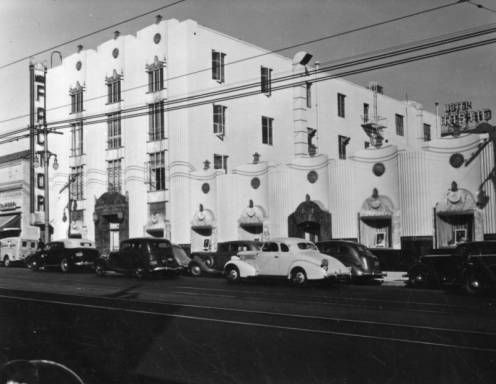
circa 1939 (Photo: Works Progress Administration Collection, via LAPL)

He chose the Hollywood Fire and Safe Building, built in 1913, as his future home in 1928—disastrously close to the stock market crash that would delay its opening until 1935. 

October 21, 2019

Photo Essay: The Horror Collection Hiding In a Prohibition-Era Basement Bowling Alley

One of my favorite buildings in LA is the four-story Max Factor Building in Hollywood, built in 1914 and purchased by the cosmetics king in 1928. It was then known as the Hollywood Fire & Safe Building.


But by the time Max Factor had his grand opening in 1935, architect S. Charles Lee had turned the cosmetics company headquarters into the "Jewel Box of the Cosmetic World"—with curved windows, ornamental lamps, bas-reliefs, imported marble, and more ornamentation in the Hollywood Regency style.

August 30, 2018

Photo Essay: Upon the Opening of the 2018 LA County Fair

The Los Angeles County Fair ranks as the country’s fourth-largest and is bigger than many state fairs. This year, it opens on August 31 and runs through September 23.


I've spent the last six years visiting the so-called "Fairplex," and I've discovered that there's more to it than meets the eye.

April 18, 2018

Photo Essay: The Riches of Birding and Railroading at El Dorado Park, Long Beach

It took me two visits, one year apart to see everything I wanted to see in El Dorado Park, Long Beach—just east of Long Beach Airport (LGB) and the historic site of archery competitions for the 1984 Summer Olympics.


circa 2017

I came for two things, really: birding and railroading. 

March 17, 2018

Photo Essay: At the Center of A City of Stadiums (Updated for 2021)

[Last updated 11/21/21 3:29 PM PT—Name has changed to Crypto.com Arena]

Los Angeles is becoming a city of stadiums.

Or, maybe it just always has been—but it's particularly noticeable now that construction of the LA Stadium at Hollywood Park (the $2.6-billion future home of the Rams and the Chargers) is well underway and now that the Banc of California Stadium at Exposition Park will be ready for the Los Angeles Football Club to start playing this year.

Of course, we've also got our stalwart athletic facilities (the LA Coliseum, the Rose Bowl, Dodger Stadium) and our former arenas-turned-concert-venues (the Fabulous Forum).

But there's also this middle class of sports complexes that don't get much attention—at least, not anymore.

For one, there's the StubHub (formerly Home Depot) Center, erected just 15 years ago and still the second-largest soccer-specific stadium in Major League Soccer. Of course, once the Chargers appropriated it as the team's temporary home (until their shiny new Inglewood stadium is move-in ready), it also became the NFL's smallest stadium.

::Sad trombone::


And then there's Staples Center. [Update 2021: The naming rights have changed to Crypto.com]


It hasn't hosted any Olympic competitions—yet, though it's slated to host the men's and women's basketball competitions in the 2028 Games.


Its architect, Dan Meis, hasn't really earned international, legendary repute for his structures, as functional for civic purposes as they may be. Then again, living architects are usually under-appreciated, as are buildings that are just 20 or 30 years old. (Staples Center was built in 1999.)


But what Staples Center has going for it is a history that transcends its walls, as the ice where the LA Kings won their first Stanley Cup in 2012...


...home court for the Lakers, whose Hall of Famer and 14-time All-Star player Jerry West is familiar to anyone who's seen his dribbling form in silhouette on the NBA logo)...


...and the hoops where Shaq made his legendary and game-changing alley-oops...


...which earned the now-retired player a nine-foot tribute in bronze that forever immortalizes his inimitable dunk.


This is also where Kobe Bryant scored his career high—81 points in one game, putting him right behind Wilt Chamberlain's 100-point game in 1962.


Having moved to LA after 14 years in NYC, I couldn't believe there was a sports and concert arena that was so centrally located—plopped down, in fact, right in the middle of Downtown Los Angeles.


In fact, Staples Center—and its Master Plan sibling, LA Live—is credited with initiating the revitalization of DTLA and the South Park neighborhood. And it has become one of the most successful facilities of its kind.


There's something incredibly accessible about Staples Center—and not just its geographic location or the fact that you can actually find parking nearby.


Although it has all the VIP amenities that any contemporary sports complex needs to offer to its big spenders and season ticket holders (just like the latest incarnation of Yankee Stadium)...


...you can pretty easily get single-ticket premium seating at a discounted price (if not for the Lakers, then at least for the Clippers)...


...and, at around 20,000 seats (depending on the configuration for the sporting event or concert) and with a 94'x200' floor...


....it actually feels kind of small and intimate.


And while it's hosted everything else from the Grammy Awards to the Democratic National Convention, this arena is still centered on its sports...


...as a place where Southern Californian hockey players are anachronistic kings and their fans can be treated like royalty (at least, for the right price).

Even if it is in the middle class of LA's stadium explosion.

For preservationists and naturalists—and I identify as both of those things—the word "development" usually carries a bad connotation. But I'm also an urbanist, so I can appreciate having a place that's safe and well-lit at night where I can have some dinner, see a show, get a drink, and make it back to my car alive.

We're allowed to have nice things sometimes. It's OK.

In fact, it's pretty nice.

Update for 2021: The Staples Center has been renamed Crypto.com Arena.

Related Posts:
Photo Essay: LA Memorial Sports Arena, Upon Its Demolition
Photo Essay: LA's Art Deco Olympic Stadium

April 10, 2017

Photo Essay: LA Memorial Sports Arena, Upon Its Demolition

A couple of weeks ago, I was out with an out-of-town friend on a Friday night when we realized we'd stumbled into some kind of big night out for soccer fanatics.

At the bar, I met someone who handed me a branded tote bag and introduced himself as part of the new Los Angeles Football Club.

"We tore down the old sports arena," he said, proudly, "and we're building a new stadium in Exposition Park right now."

Ah yes.


Until then, I'd practically forgotten that I'd gotten permission to document the Los Angeles Memorial Sports Arena right after its final hurrah (three Bruce Springsteen concerts)...

Damage Control

I found myself back in a kayak today for the first time in nearly four years.


October 14, 2015

Photo Essay: Santa Anita Park & Racetrack (Updated for 2019)

[Last Updated 8/25/19 9:43 PM PT]

Ed: The New York Times reported that 30 horses died at Santa Anita Park from December 28, 2018 to June 6, 2019, making it one of the deadliest horse tracks in the country. Many were euthanized after sustaining catastrophic injuries. 

As a result, Hall of Fame trainer Jerry Hollendorfer has been barred; but his horses only account for three of the deaths (10%). Many other trainers were responsible for the fallen horses.

Clearly, something is wrong at Santa Anita. Yet the track refuses to cease racing in order to protect the animals.

Santa Anita is a historic place with significant architecture and cultural significance, so I encourage anyone to take a tour or attend one of its special events (which include food festivals and the like). But I can no longer stand behind its racing business. 

Here's what I wrote in 2015...
—Sandi

Santa Anita Park and Racetrack was one of those key local landmarks I had not yet visited, but I felt conflicted about visiting. As with any establishment exploiting animals for commercial purposes, I worried about the treatment of the horses. I enjoy the pageantry of derbies and such much more than the actual racing of the horses.


But I decided to go anyway, to see what I would see—at the very least the building. After all, I'd already made the rounds to some of the other historic sports facilities in Southern California, and the completionist in me did not want to abstain from visiting this one.

March 25, 2015

Photo Essay: LA's Art Deco Olympic Stadium (Updated for 2019)

[Last updated 4/29/20 9:33 PM PT with naming rights to the field]
[Updated 7/12/19 8:44 PM PT with new info on the zodiac mural]

A couple weeks ago, I spotted a tweet about historic tours being offered at the Los Angeles Memorial Coliseum, and I jumped all over it. I'd long been fascinated with that place, maybe because I'd already visited the site of the 1984 Winter Olympics in Lake Placid, and the completionist in me needed to also see where the 1984 Summer Olympics took place.

Or maybe it's because many of the other traces of the 1932 Olympics – including the world's first-ever Olympic Village, in Baldwin Hills – have vanished.

Or maybe it's just because I'd never been there before, but I've been to an actual Roman coliseum. Feeling a bit wistful for the Roman ruins of Tunisia, this is as close as I can get in Southern California.

I was actually the first member of the media to take the tour, and so I wrote an article about it for KCET's Travel Excursions section which you can read here. But, in typical fashion, I took so many great photos that haven't been published elsewhere, and it's just so hard for me to visit any place and not show it to you.

So here, take a gander.


My first visit to the Coliseum was exciting, replete with an actual printed Ticketmaster ticket (even though I had a press pass) and a wristband—and access through those darned locked gates.


I'd tried to ride my bike around the Coliseum once before, past the nude athlete sculptures of the Olympic Gateway by Robert Graham...


...and got booted out by security.


Now I could walk right through those arches of the peristyle.

July 29, 2013

Photo Essay: Dodger Stadium, A Brooklyn Team's LA Home


When you go to a baseball game, you actually get to see very little of the stadium you're in. You get ushered directly to your section, and even if you wander about looking for variety in the concessions, you probably never leave your own level.

And it's usually so crowded, you can't make much of the stadium out from the sea of people occupying it.

So it's nice to go take a tour on a sunny, game-free day.

Dodger Stadium in particular is interesting because it's the country's third-oldest major league baseball stadium (behind Fenway Park and Wrigley Field), and, in its 52nd season, is the oldest baseball stadium in the West. 

By seating capacity, it's also the largest extant ballpark in the world.

July 12, 2013

Photo Essay: Rose Bowl Stadium, Renovated Again, and Open for Tours!

I haven't made it to the Rose Bowl fireworks for the 4th of July yet...


...though I viewed them from a local hillside back in 2010 when I was housesitting in Mt. Washington.


I haven't sat in one of its 90,000 pink seats yet to watch a UCLA Bruins football game, or the Super Bowl, or the Olympics, or a soccer match...


...but I will be there soon, at night, for a Justin Timberlake concert.


Since the Rose Bowl just opened up for historical tours, I thought I might get a good look at it in daylight first.


Completed in 1923 in a ravine of the Arroyo Seco, the Rose Bowl was originally not a bowl at all, but a horseshoe. The seats under the historic south scoreboard were added later to complete the bowl...


...and the entire elliptical-shaped stadium has undergone multiple renovations over the last 90 years to replace wood with concrete and to both increase and decrease seating capacity (which once surpassed a record-breaking 100,000).


Among the recent renovations includes the premium seating...


...which includes a private, higher view of the coliseum-inspired structure below, as well as a butler, if you want one.


Another level up, at the highest point of the stadium, is the new-fangled press box, a definite upgrade from the original wooden 1961 version, now with all of its technological amenities and plug-ins.


But what better view is there than from the field itself?


The field is a rare, natural green turf, only half-seeded now but will be fully piled for football season, today painted white for footie.


Down below the stadium, through a door that looks like part of an archaeological dig, construction workers and historians discovered the tiny old locker room dating back to the 1920s, which, until recently, had been used for storage.


Now it exhibits some original plumbing, and memorabilia and ephemera that have also been uncovered.


In contrast, from another tunnel, the current, clean, spacious locker room is accessible...


...down the hallowed halls lined with rock from the Arroyo...


...scattered with rose petals...


...that have blown in from the gardens above.


Although the Rose Bowl was built in the 1920s (and the Tournament of Roses had been happening for decades before that), football didn't actually rise to prominence in the U.S. until it started being televised—and enough people had enough televisions to actually watch it.

Then, in 1977, the first Super Bowl was played in Pasadena (Oakland Raiders v. Minnesota Vikings).

In 2014, the Rose Bowl will host the 100th Rose Bowl Game and the 125th Rose Parade.

Considering how many (modern) stadiums have been torn down—and, in the case of Yankee Stadium, multiple times—and are currently threatened, it's nice to see a historic athletic facility getting the attention it deserves.

Related:
Photos: Yankee Stadium: In Progress