Search

Showing posts with label Hospitals. Show all posts

November 03, 2025

Photo Essay: The California Museum That Celebrates the Art of the Clown

There's something so appealing to me about single-genre museums—like the Bunny Museum or the Banana Museum—and narrowly-curated collections, like the Crochet Museum or the Beauty Bubble Salon and Museum. 


So, despite having no particular affinity to clowns (other than dressing up as one last Halloween), visiting a clown museum in Barstow was still a must-do detour on my way back from Death Valley this past summer.

September 26, 2020

Photo Essay: Pasadena's Vacant Hospital of St. Luke, Patron Saint of Physicians, Doctors, and Butchers

Its a sad but common story in Southern California. 

A beautiful old hospital can't keep up with increasing demand for beds or modern amenities. It no longer makes enough money, so it stands vacant—while patients needing care have to travel farther to bigger hospitals with less personalized care. 

In the case of the circa 1930 Cedars of Lebanon Hospital, it gets taken over by the Scientologists.

In the case of the circa 1924 Linda Vista Hospital, it provides housing to low-income seniors. 

In the case of the circa 1888 land donation to the Veterans Administration in Westwood, its buildings are still vacant. 

And one of the first hospitals in the San Gabriel Valley—St. Luke Hospital of Pasadena, circa 1933—has been used for nothing but film shoots for so long, it couldn't even be revived to care for COVID-19 patients when we were facing the prospect of a bed shortage. 

As of right now, there's no plan to use St. Luke's for anything other than a film location. 

But it deserves notoriety for more than as the setting for movies like Kill Bill, Million Dollar Baby (where it stood in for the Serenity Glen Rehabilitation Center) and La La Land—or TV shows like Grey's Anatomy, Dexter, and Scream Queens. 

 
St. Luke's was founded as a non-profit, Catholic hospital by the Sisters of St. Joseph of Orange—a congregation of nuns whose mission of helping the poor and sick dates back to the 17th century in France. 


It wasn't just one building—but an entire enclave or campus of buildings that continued to grow into the decades that followed its original dedication. 
 
Postcard image circa 1960s: eBay

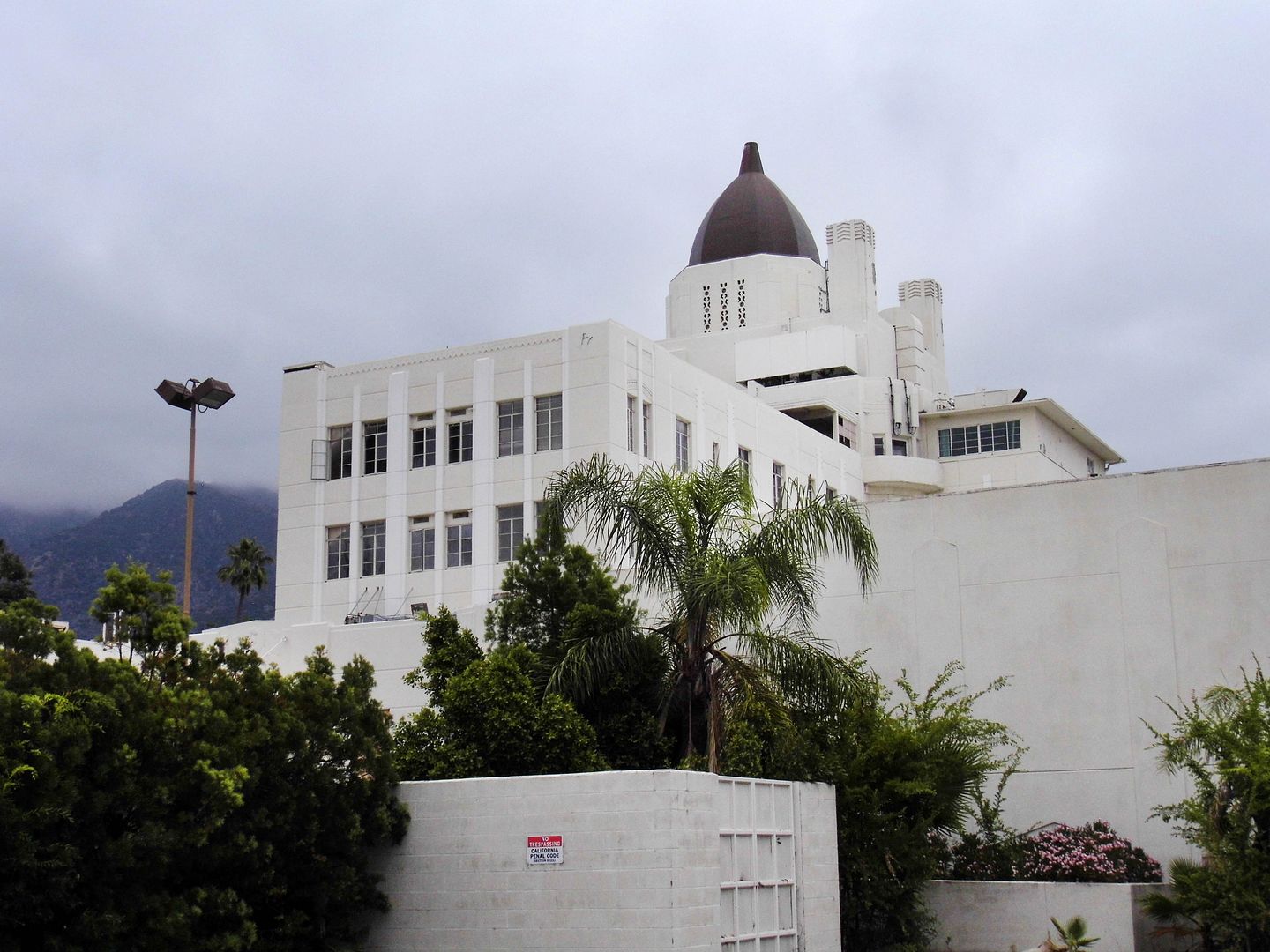
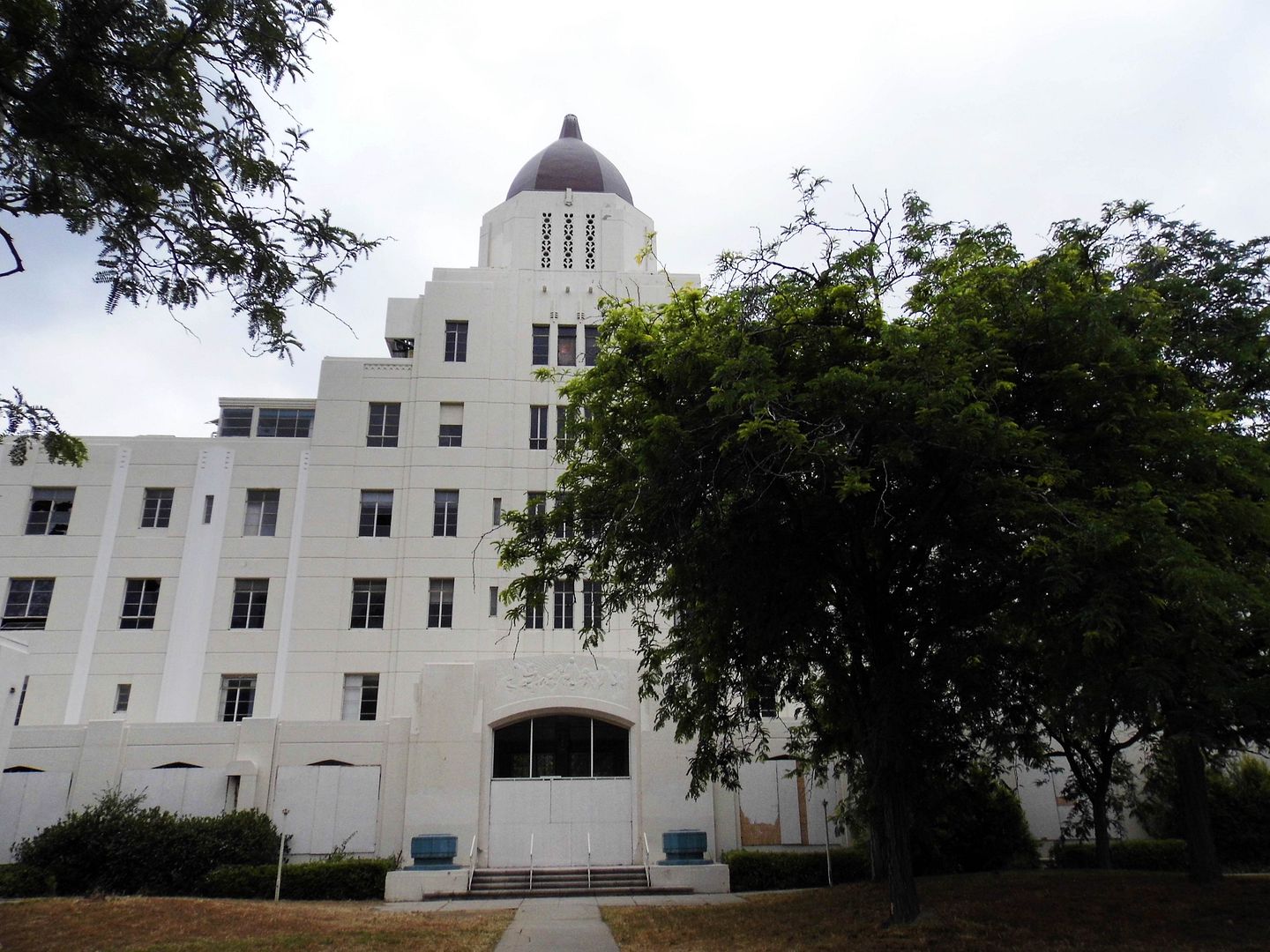
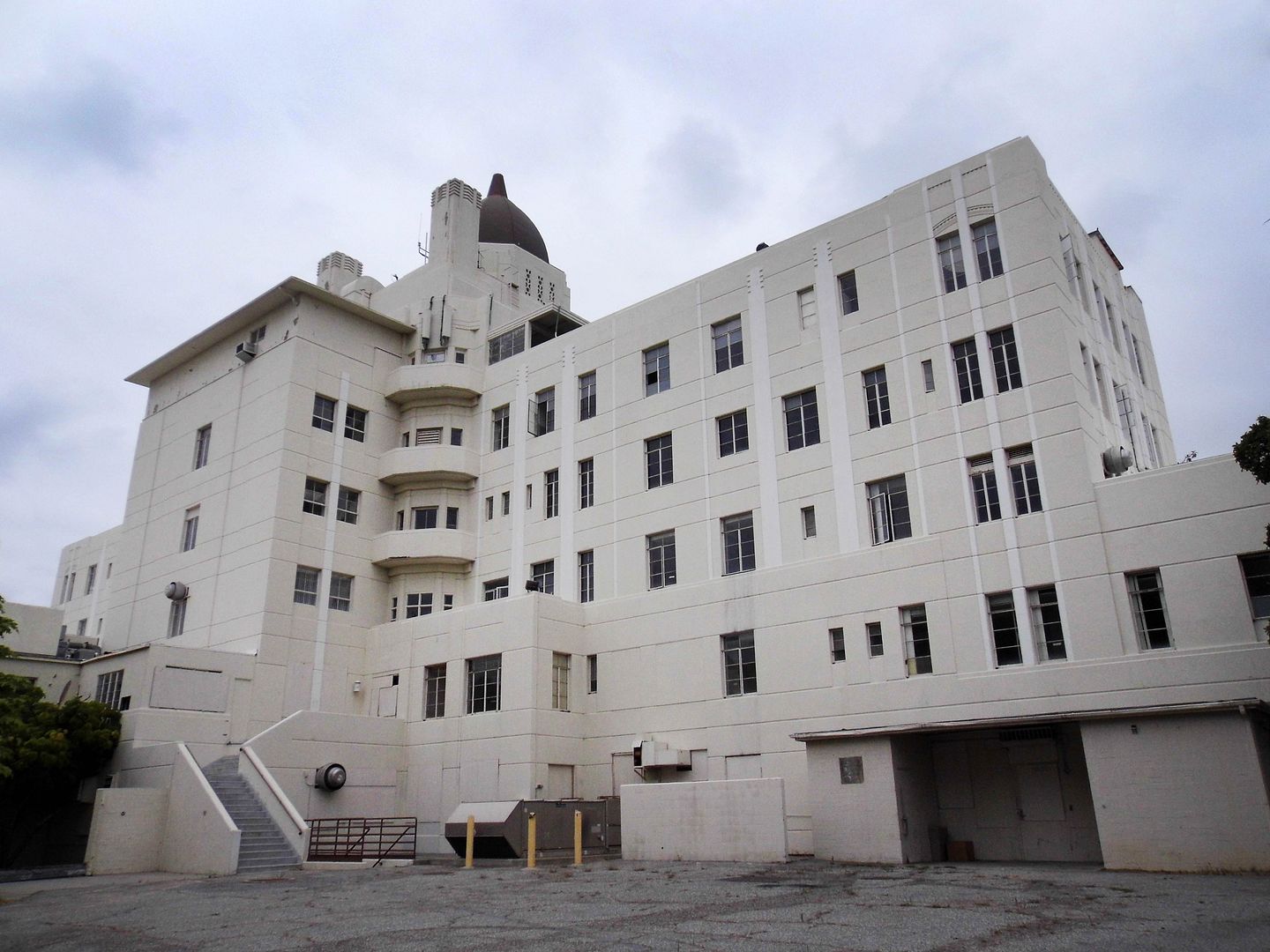
The original monolithic hospital was designed in the Moderne style by Canadian-born architect Gene Verge, Sr. At seven stories high and 74,000 square feet, it was exemplary of modern concrete construction at the time. 


Although at some point it was seemingly white-washed, it remains a postcard-worthy landmark—even on a gloomy day. 


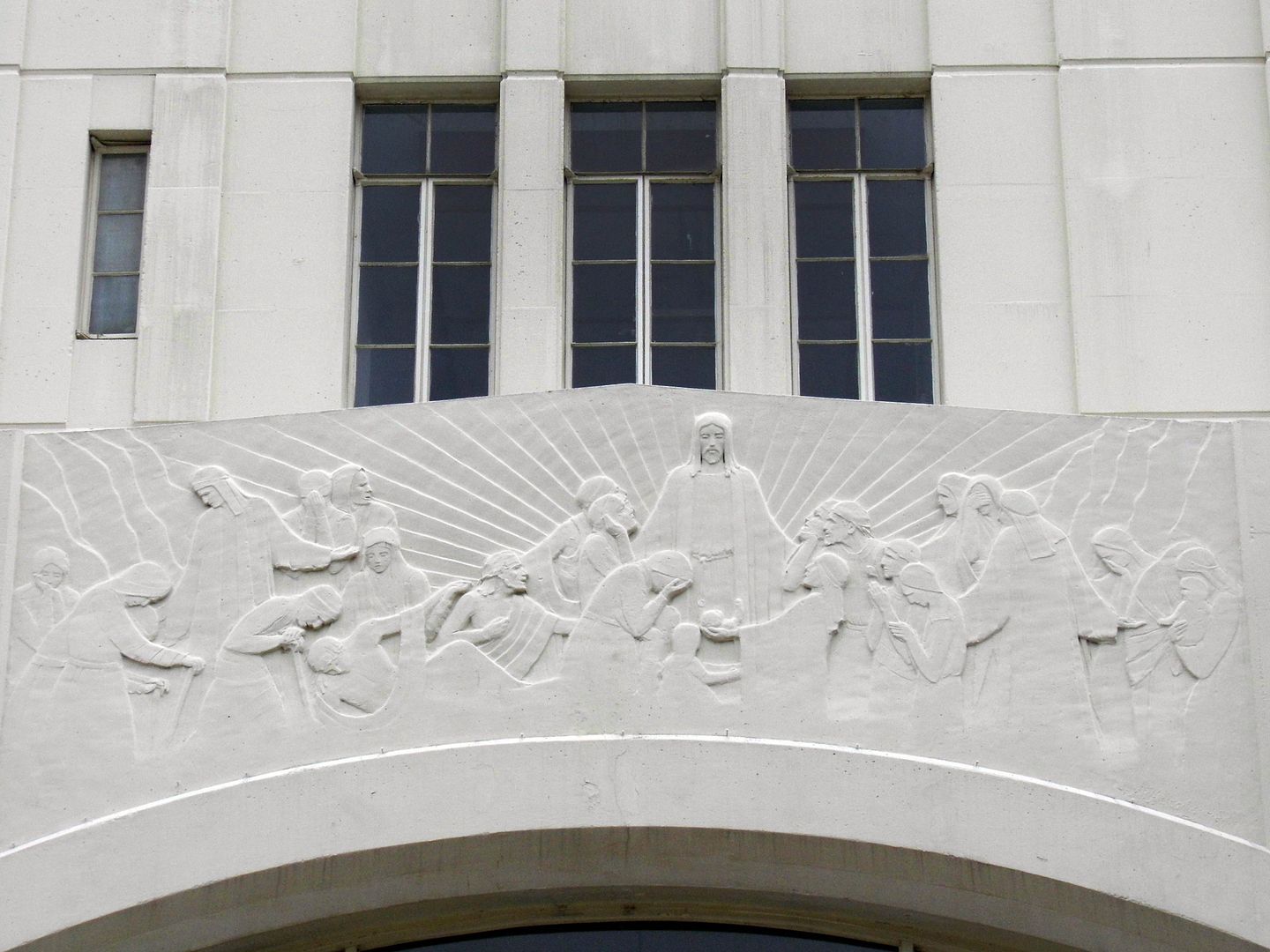
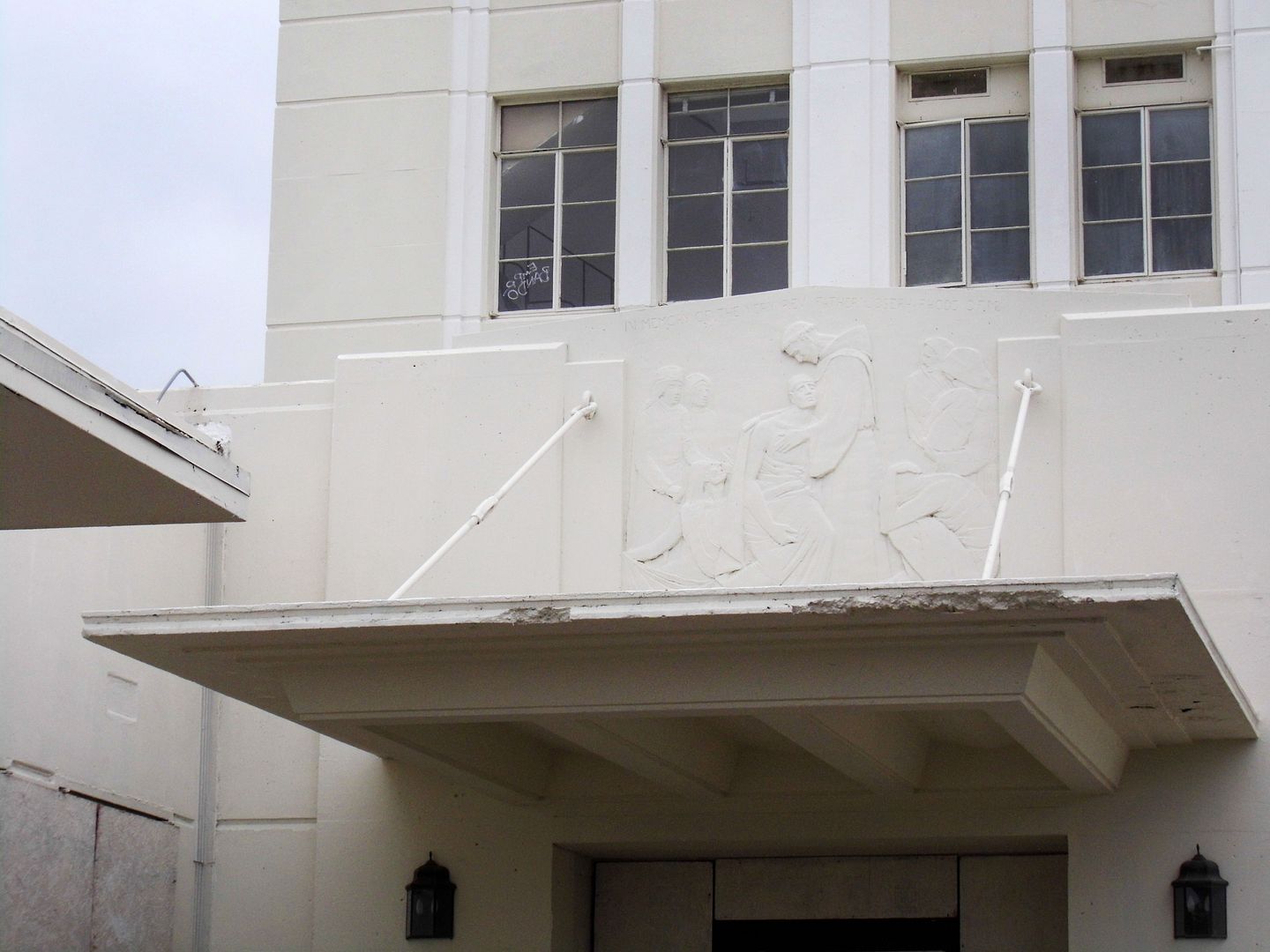
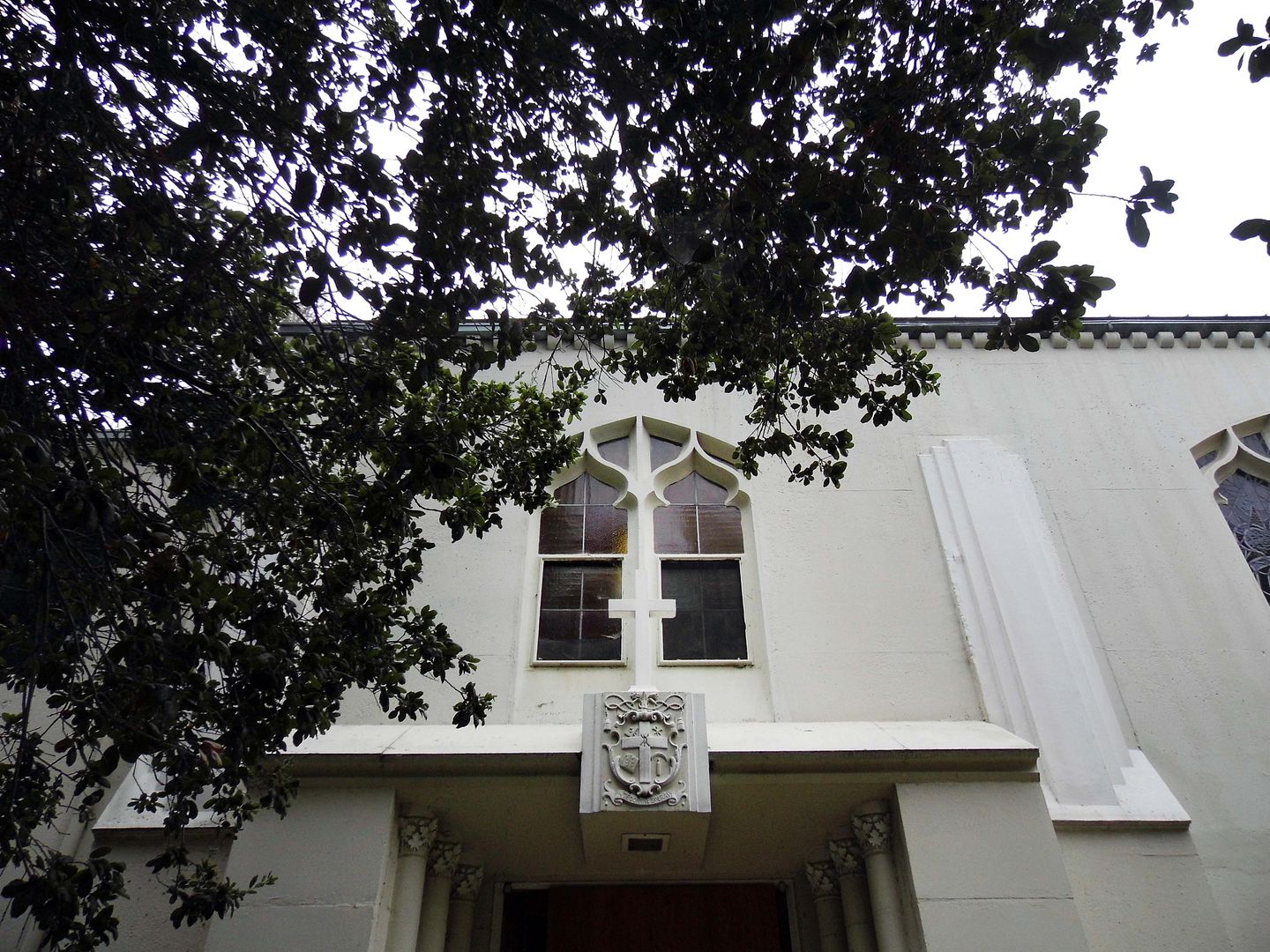
Cast concrete bas-reliefs depicting the life of Jesus beckon visitors to take a closer look...


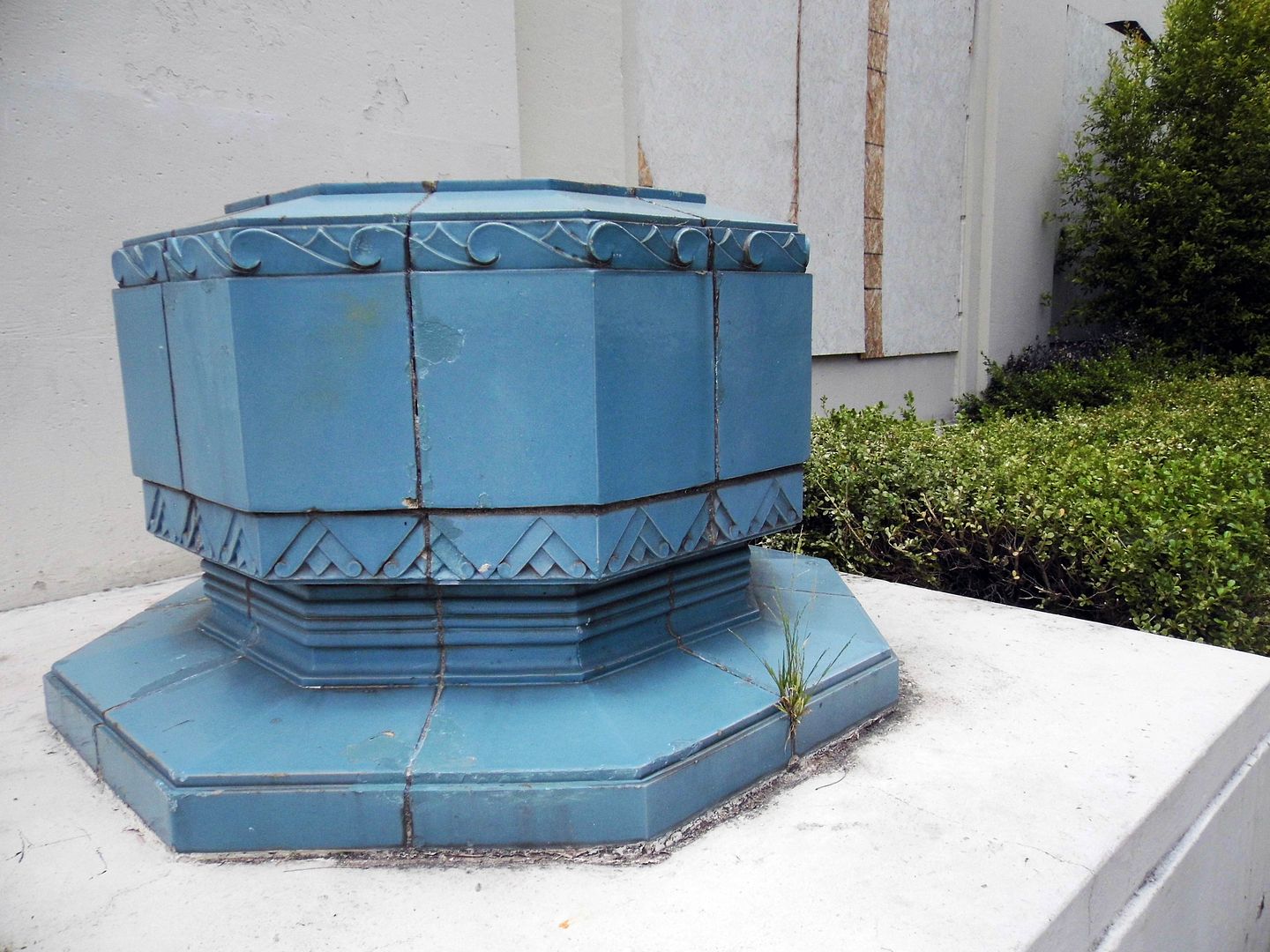
...as do two planters clad in turquoise-colored terracotta tile, ornamenting each side of the front door with chevrons and wave patterns. 
 

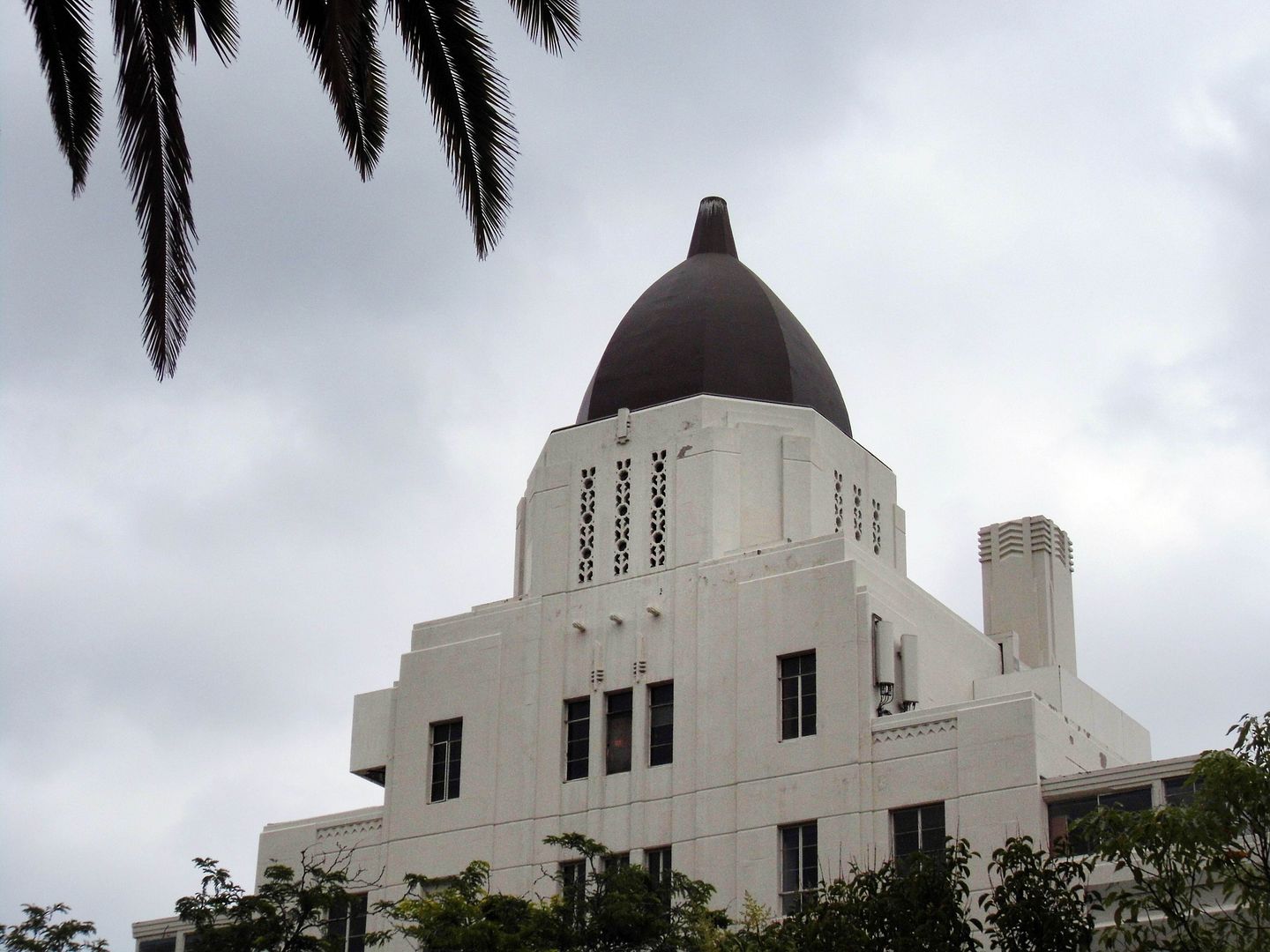
The beacon for most Pasadena locals is the dome (or cupola), which was considered Spanish-style when it was covered in terracotta tiles—even when a neon cross was installed on top of it in 1965. But now, the current lead- and copper sheeting-clad dome dates back to only 1997—when it was replaced in the wake of the 1987 Sierra Madre Earthquake. 
   

Through the 1980s, St. Luke's expanded to include five wings and annexes...
      

...including emergency and acute medical care, surgical services, and obstetrics/a birthing ward. 


But none of them were nearly as architecturally significant as the Gene Verge-designed additions of the mid-1940s, which included a chapel (replete with stained glass windows, still extant) and a convent for the nuns. 
 
  
The 1980s, however, marked a huge change in the historical trajectory of St. Luke's—and not just with its rebranding as the St. Luke Medical Center. 
  

In 1985, the founding Sisters—and therefore, the Catholic Church— sold it (with the Vatican's approval to the non-sectarian, for-profit, private firm Summit Health Ltd. 


In 1986, the Los Angeles Times reported that the hospital was already "antiquated and inefficient" and "badly in need of renovations" to "correct the ravages of age."


In 1994, ownership transferred to OroNda Healthcorp, which was bought by Tenet Healthcare Corporation in 1996. Tenet closed the 165-bed hospital in 2002 and sold it a year later to Pasadena-based educational institute Caltech, which intended to use it for office and research space. 

When that didn't work out, Caltech sold St. Luke's in 2007 to Beverly Hills-based real estate developer DS Ventures, which attempted to convert it into an assisted senior facility while an opposing group pushed for an urgent care facility.

None of that has happened yet. 

And when officials visited St. Luke's to determine whether they could commandeer it during the pandemic, they discovered that the plumbing has been stripped out. (It's unclear whether that was intentional or the work of copper thieves.)

Presumably, the terrazzo floors and wide, winding stairways remain inside. I've yet to get in to confirm that one way or another. 

But I haven't lost hope. 

Fortunately, the Pasadena City Council declared St. Luke's hospital, convent and chapel a local Cultural Heritage Landmark in 2002—which offers it some, but not absolute, protection. 

Im the meantime, it's nice to imagine what it was like when the gardens were kept up and the lawns were manicured, the dome tiled and its cross all lit up. 

Drone video via Getty Images, for editorial use only

Related Posts:

June 17, 2019

Photo Essay: A Mid-Century Cathedral of the Oil Industry, Saved By Hollywood

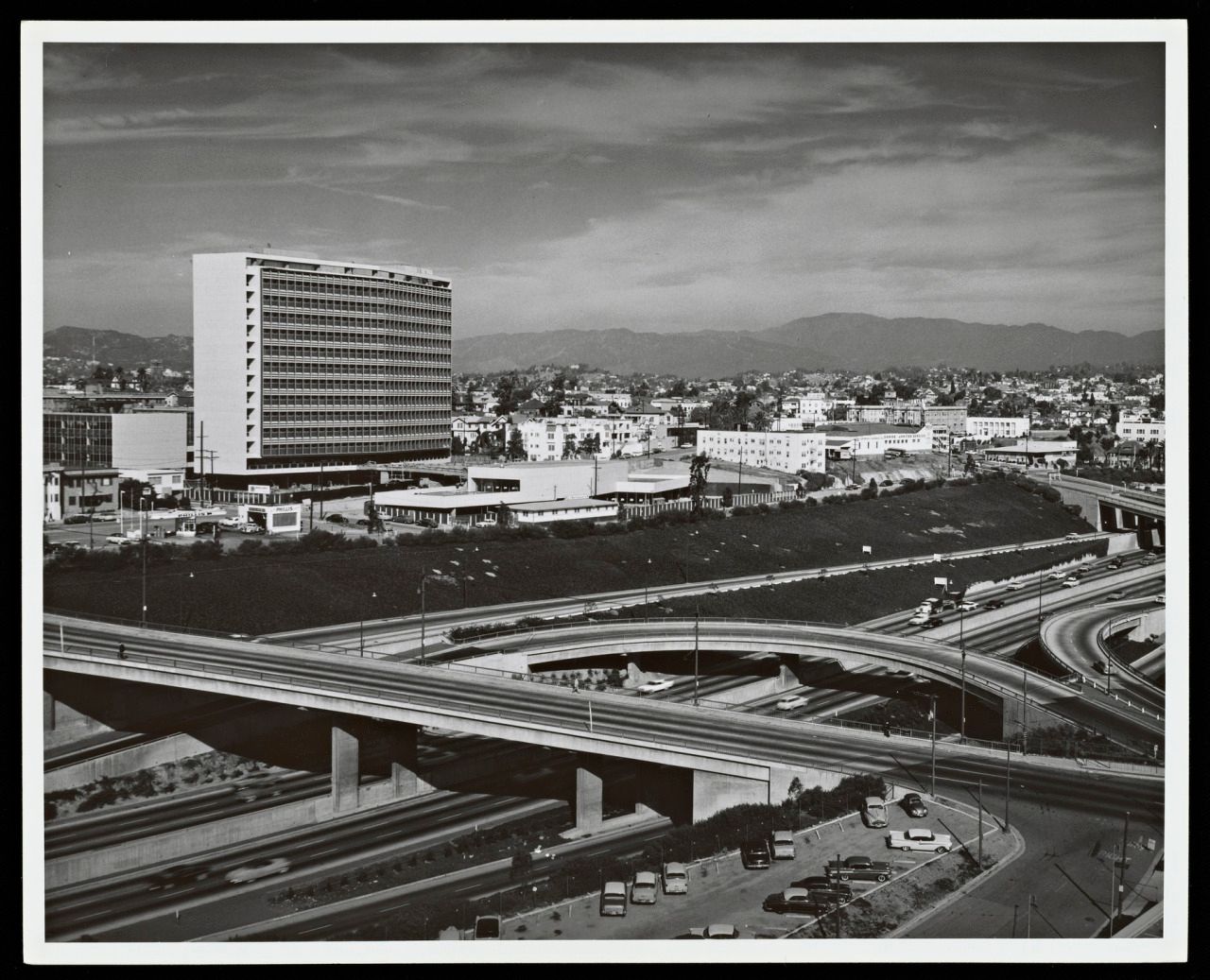
In 1955, the Four Level Interchange that connected the 101 with the 110 had only been open for a couple of years. The section north of it had just been designated the Pasadena Freeway, and the section south of it—the Harbor Freeway—continued to inch towards San Pedro.

The area immediately to the west of the 110 near the stack interchange was a bit of a "no man's land" at that point—too far east to be MacArthur Park or Westlake, and too far west to be Downtown Los Angeles or Center City (and now cut off from it by the freeway).

Some people still call it "City West." Lots of people don't even know it's there.


circa 1957 (Photo: Julius Shulman, Julius Shulman Photography Archive. Getty Research Institute.)

And that's where the former Union Oil Company of California chose to build its LA headquarters, known as Union Oil Center (and after 1983, as Unocal Center).

March 14, 2019

Photo Essay: A Repository of Cures and Quackery, In Times of War and Peace (Closed—Updated for 2021)

[Last updated 10/9/21 10:20 PM PT—The museum lost its lease in 2019 and is currently closed, with its collection in storage in Redlands, California. It plans to relocate.]

When I was actively applying for the Peace Corps more than 10 years ago, they made me take care of a few medical things before they'd approve my application.

My dentist was thrilled that something finally made me relent and agree to gum graft surgery to fix the exposed root of one tooth on the bottom right of my mouth.

Since 28 months abroad might've put me somewhere exotic—and without easy access to Western healthcare—Peace Corps also required I get inoculated for certain diseases I wouldn't normally have to worry about.

One of them was polio.

I was anxious because my mother had been crippled by polio as a child—and even as an adult, the virus continued to ravage through her body instead of remaining dormant. I knew the virus contained in the vaccine was supposedly "inactive," but I wasn't thrilled with the thought of even getting near it.

Poliomyelitis had been officially extinct in the U.S. since I was four years old.

But just as I submitted to the periodontal surgery, I rolled up my sleeve, let my primary care physician stick me in the arm, and tried to ignore the muscle aches and mild paralysis (real or imagine) that I felt in its wake.


Given that experience, it was a little crazy for me to see a Drinker-Collins iron lung in person at the Southern California Medical Museum (the only museum of its kind in SoCal), where it stands as the collection's centerpiece.

August 31, 2018

Photo Essay: Whispers of Madness at a Hilltop Dungeon for the Sick

Today, most tourists find themselves in the remote, rural town of La Rumorosa—part of the Tecate municipality—to visit the nearby cave paintings.


But in the mid-1920s, Governor Abelardo L. Rodríguez traveled to La Rumorosa to escape the blistering heat of Mexicali...


...and he brought the federal headquarters with him.


With its closer proximity to the Pacific Ocean and its high elevation, La Rumorosa was known to be much more temperate than where the Mexican government had been headquartered farther inland.


In fact, La Rumorosa (a.k.a. "The Whisperer," known for its whistling winds) was downright chilly compared to Mexicali—and so, at the highest point of the village, Campo Alaska was established.


Functioning as both a military base and Mexican government administrative offices, barracks and even a school were built and used by federal workers, military staff, and their families—at least, until the mercury dropped enough for them to return to Mexicali.


As much as the cooler temperatures must've been a relief for those who were forced to relocate twice a year...


...you can imagine what a hassle it was to move staff, paperwork, and supplies across the Sierra de Juárez mountain range...


...even if the Camino Nacional toll road supposedly made travel across the Northern Territory of Baja California easier.


Eventually, it made more sense to use the hilltop facility in the tiny village (with no proper border crossing to the U.S., though it's situated at the border across from Jacumba Hot Springs) to house people who wouldn't be going anywhere else—at least, not anytime soon.


So, in 1931, Governor Carlos Trejo Lerdo de Tejada converted Campo Alaska into a facility for patients without much hope: the insane and those infected with TB and other infectious diseases. 


It's unclear whether the whispering wind would have comforted or further maddened the "idiots" and "imbeciles" of the asylum (a.k.a. manicomio, La Casa de los Locos or "House of the Madmen").


The tuberculosis infirmary (Hospital Antituberculoso del Distrito Norte) ran concurrently with the asylum, as both types of patients had been receiving "treatment" in squalor at the nearby Civic Hospital and were subsequently evicted and rehospitalized at Campo Alaska. Nobody wanted to have much of anything to do with the crazy or contagious, so they got lumped in together.


The Rumorosa Hospital, like many facilities at the time, was fraught with corruption and the perceived unfair treatment of its patients—something that's now obvious, given the nickname it was known by and its use of seclusion as treatment of "madness."


In fact, the operation of the hospital didn't differ too much from a military operation, as it was necessary to keep the manicomial patients under constant surveillance.


A local paper published an editorial criticizing the hospital's "terrible conditions," citing famine and theft of blankets and other supplies that made the sanitarium unlivable—particularly during the unseasonable freeze of the winter of 1935-6.


Doctors and nurses weren't held accountable for their actions, and patients were held in corrals that weren't fit for any human being. But then again, at the time, the mentally ill weren't considered deserving of humane treatment because they weren't human.


Of course, all of that negligence only aggravated the patients' suffering—and eventually (though not soon enough), the abuses were denounced.

But there was such a deluge of complaints that pretty much all of them got lost in the shuffle and didn't survive bureaucracy.

So, instead of improving conditions at La Rumorosa, the patients were simply relocated—again—in 1955.

By 1958, the site was completely abandoned.

In 2004, Campo Alaska was designated an important cultural site. The federal building was restored and converted into a museum of local history (though not of local insanity and infection) and the other structures have been preserved in a state of arrested decay.

And despite all of the travelers who head west to Tecate or east to Mexicali over the National Road, most of them don't know that Campo Alaska ever existed—or that the site is open to visitors now.

Related Posts:
Photo Essay: The Little Valley of Ancient Art and Astronomy
Photo Essay: Lanterman Developmental Center, Pomona, Haunted & Closing
Photo Essay: Rancho Los Amigos, Abandoned County Poor Farm, Downey (Exterior—Updated for 2018)

May 30, 2018

Breathing Easy in the Sonoran Desert

I'd spent the weekend in Phoenix, and I was ready to get out of the city and into the desert.


On my way to spending the night at Arcosanti (post forthcoming), a self-proclaimed Old West town called Cave Creek seemed like a good lunch stop...


...with its late 19th century-era buildings preserved as part of its Frontier Town.


Besides, the saguaro cacti were blooming...


...and since that's one species of succulent we don't have in Southern California...


...I was more than prepared to stop and smell the cactus flowers for a while.


I drove through town looking for somewhere to eat, and after considering the diner place with pancakes and the Mexican hacienda place, I settled on the spot with the best sign.


It also happened to be one of three historic landmarks in the town of Cave Creek: the former Cave Creek Service Station.


Where you once filled up your tank, now you can fill your belly with a burger or a sandwich or, as in my case, a salad.


It's adaptive reuse at its finest...


...and the ultimate road food.


But since I discovered that the old gas station wasn't the only historic landmark in town, I headed over to the Cave Creek Museum to see another one.


Lo, there is the last tubercular cabin in the state of Arizona.


That is, the last of the cabins that once housed patients with tuberculosis who'd been sent out to the desert for better air quality and other recuperative characteristics. 


Although several TB camps had been set up throughout Cave Creek in the early 20th century...


...this cabin was from the most famous one, the Desmount Sanitarium (its name a portmanteau of "desert" and "mountain").


Its current interior furnishings are either from this one, circa 1920, or others from the same area and era.


In total, there were 16 buildings in the former tuberculosis colony, which was run by Sam and Helen Jones until 1929.


The encampment actually changed locations along Cave Creek Road a few times, as the cabins were lightweight enough to be portable.


Today, the bend in the road where tuberculosis convalescents once sought rehabilitation is now marked by such landmarks as the Horny Toad, the Buffalo Chip Saloon and Steakhouse, and Stagecoach Village.


And its clean, dry air makes it a nice rest stop for locals, tourists, and bikers alike who need to escape urbanity for a while.

Related Posts:
Photo Essay: Barlow Sanitorium, Neglected
Photo Essay: The Rock Art of Dunsmore Park, Former Home of Mt. Lukens Sanitarium